According to Peter Hunt, the first example of teaching the English alphabet with illustrations appears to be John Hart’s A Methode, or Comfortable Beginning for All Unlearned (1570); it is even the first instance of “A is for Apple”. John Amos Comenius’ Orbis Sensualium Pictus (1658), a later example of a pictorial Latin alphabet, was translated into English is 1659. But these are not the earliest alphabet tutorials. In History of the Horn-Book (1897), still the most authoritative book on the subject, Andrew White Tuer traces the earliest record “of a real horn-book with horn and not a mere alphabetical table” back to an equally important date in the history of printing and publishing: 1450. See the Online Exhibition Bonus below, however, for Erik Kwakkel’s challenge on this date.
The display case in Oxford for “Alphabets Alive!” included some of the Bodleian’s earliest examples of the horn-book. Here are some of the other works also shown there as well as some novelties and Tuer’s book. [Links in the captions will take you to more images and details.]
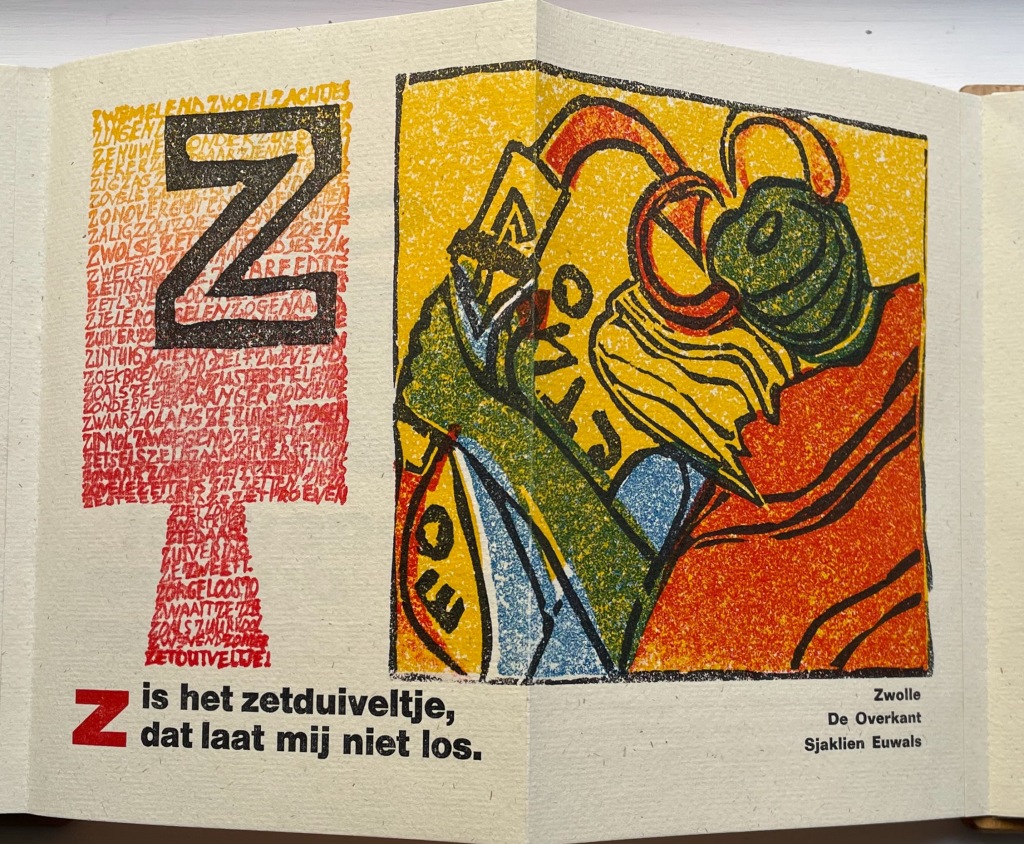
Van Hornbook tot ABC-Prentenboek (2003) Kees Baart, Dick Berendes, Henk Francino and Gerard Post van der Molen

Battledore (2019)
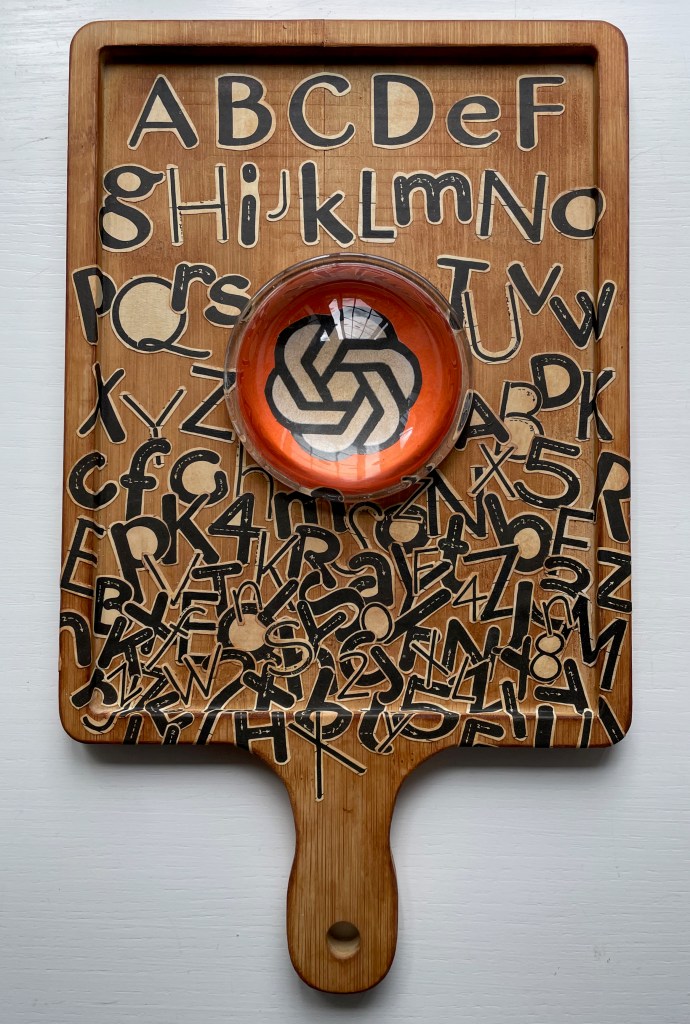
Takeover (2023)
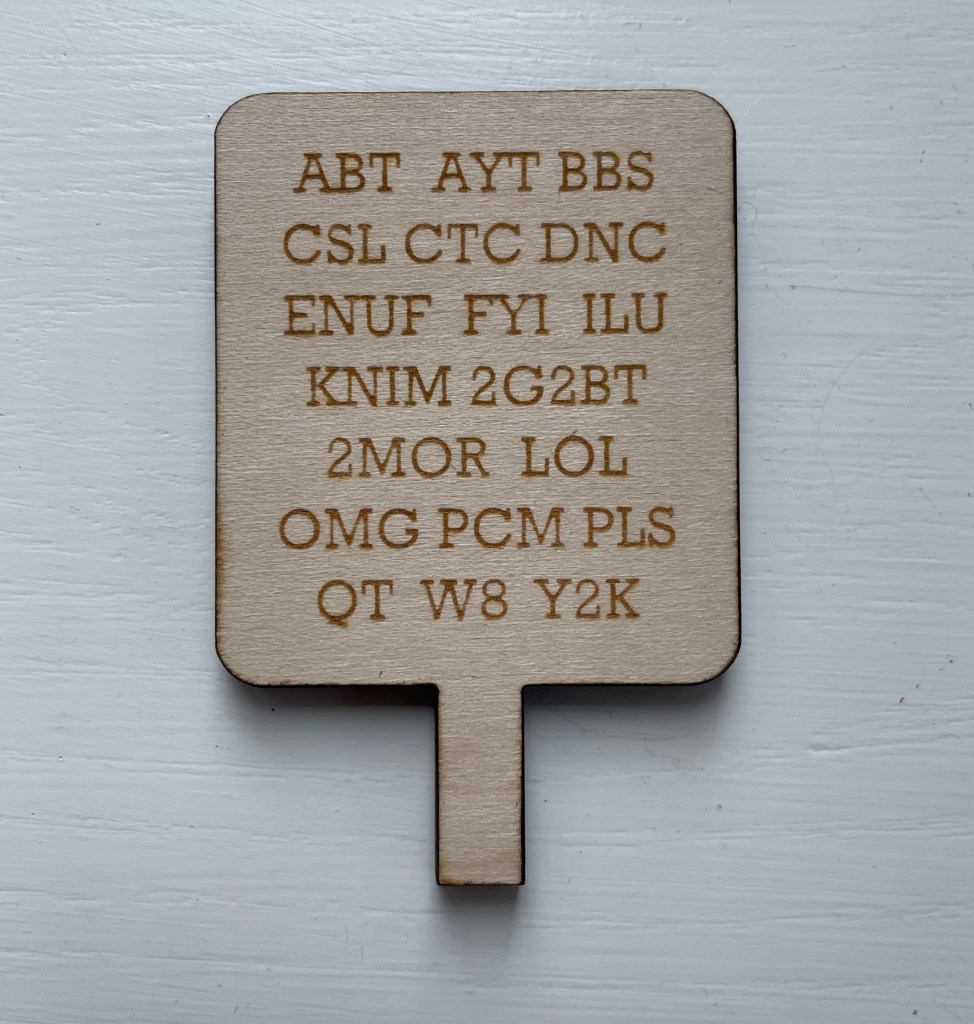
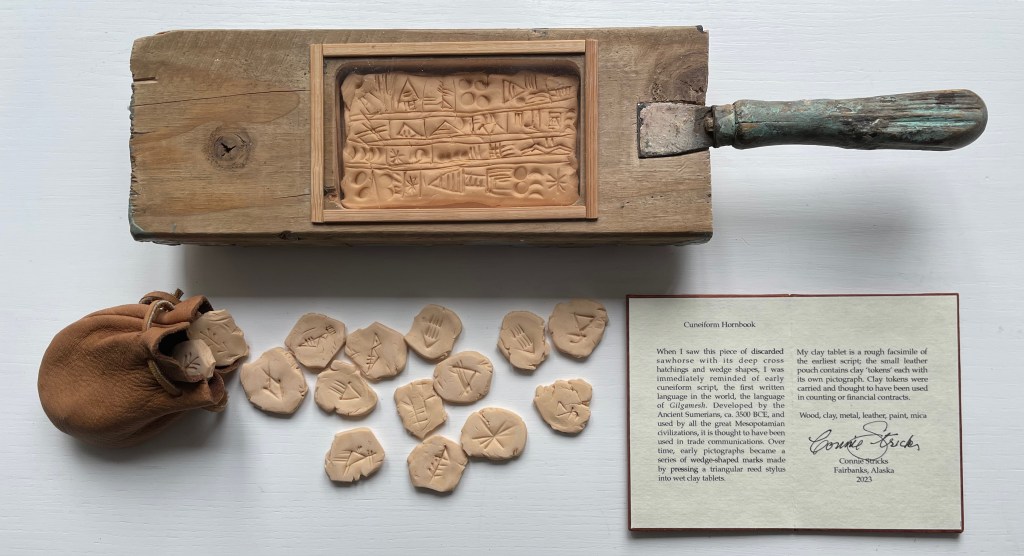
Cuneiform Hornbook (2023) Connie Stricks
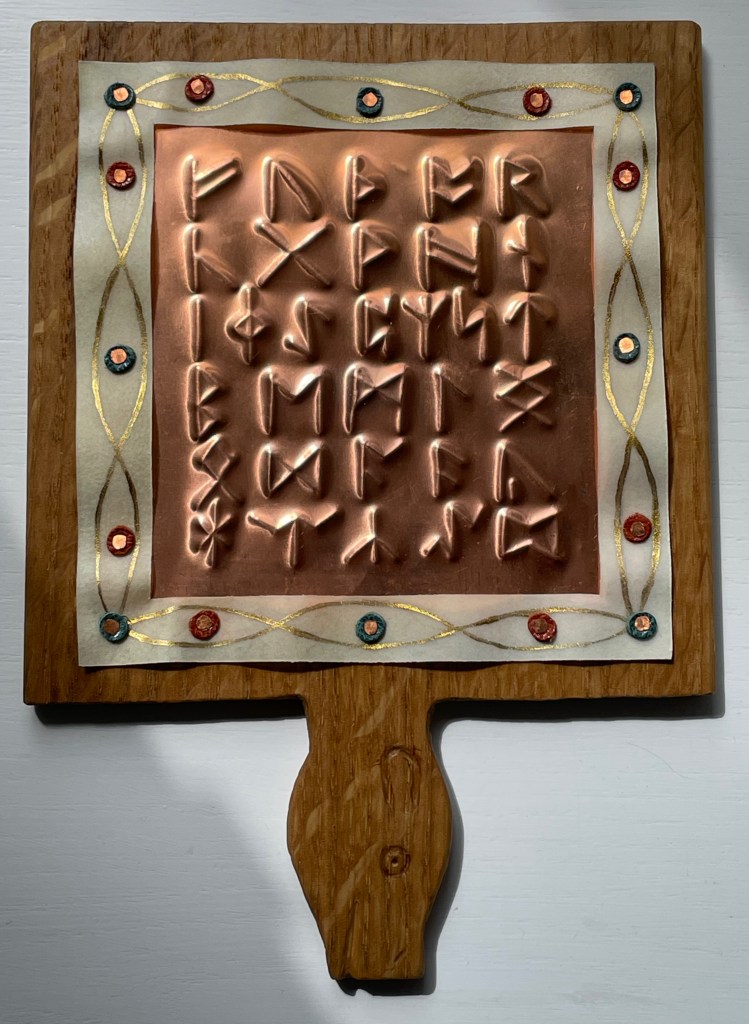
Runic Alphabet (2023)
Ashley Rose Thayer
Online Exhibition Bonus!
On his website Medievalbooks, Professor Erik Kwakkel has challenged Andrew White Tuer’s estimated date for the horn-book’s first appearance. Here is his discovery from the treasures in the Bodleian, right under the nose of the Alphabets Alive! exhibition:
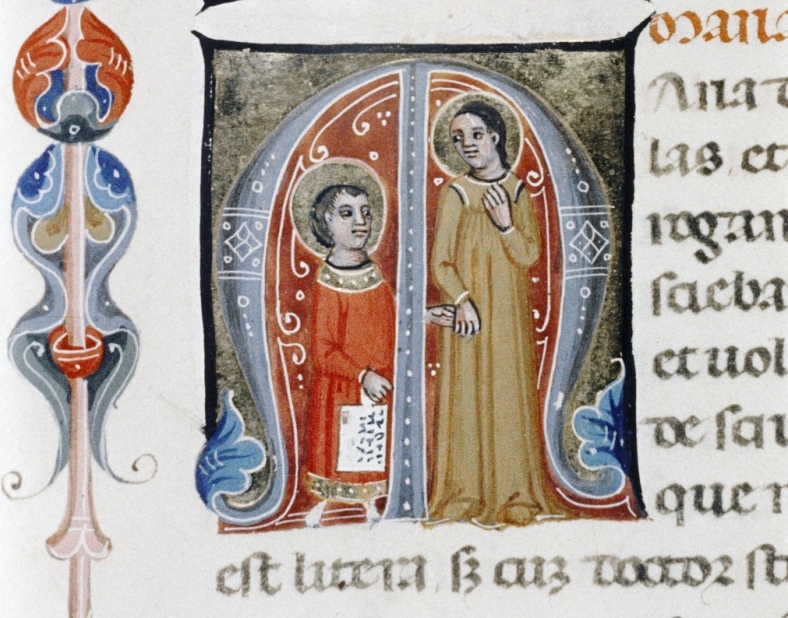
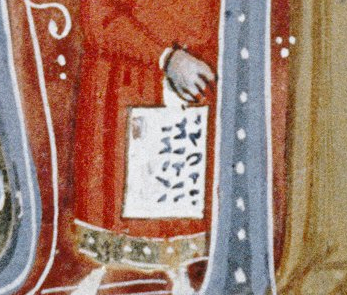
Vita gloriossime virginis Mariae atque venerabilis matris filii dei vivi veri et unici (unidentified work).Italian manuscript, Venice. Oxford, Bodleian Library, Canon. Misc. 476 (14th century). Folio 047v.
Noted by Erik Kwakkel, “Book on a Stick“, Medievalbooks (Leiden), 10 April 2015 and accessed 10 November 2025.
As for the earliest ABC primer, Evelyn Shuckburgh proposed this mid-16th century candidate:
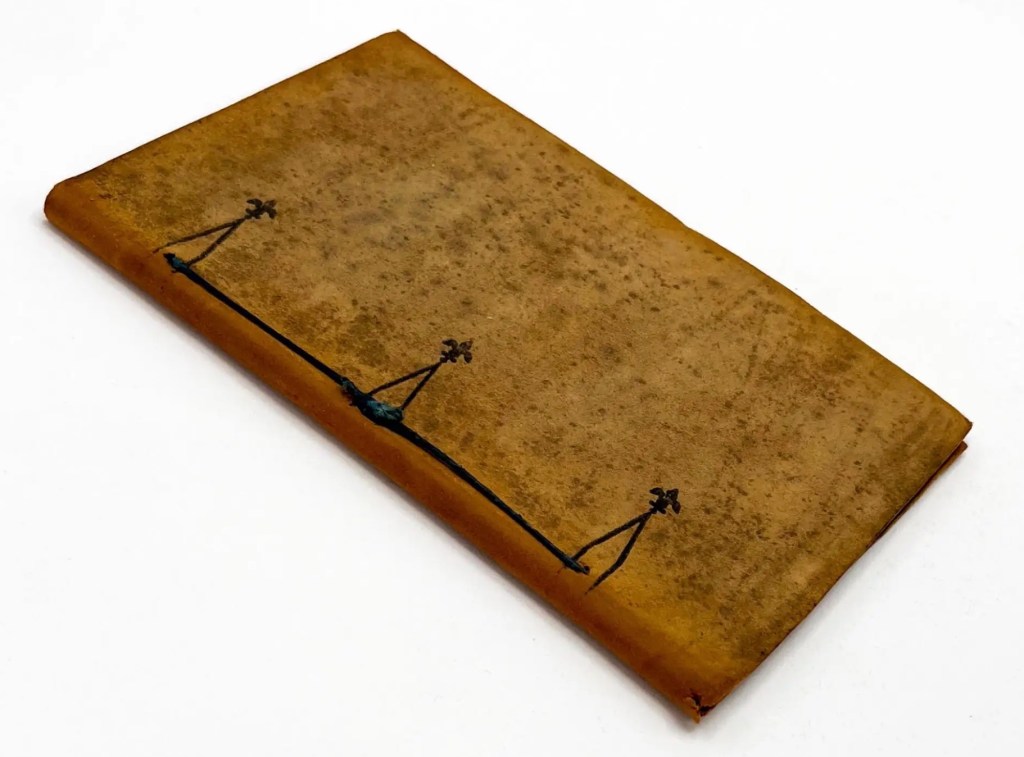
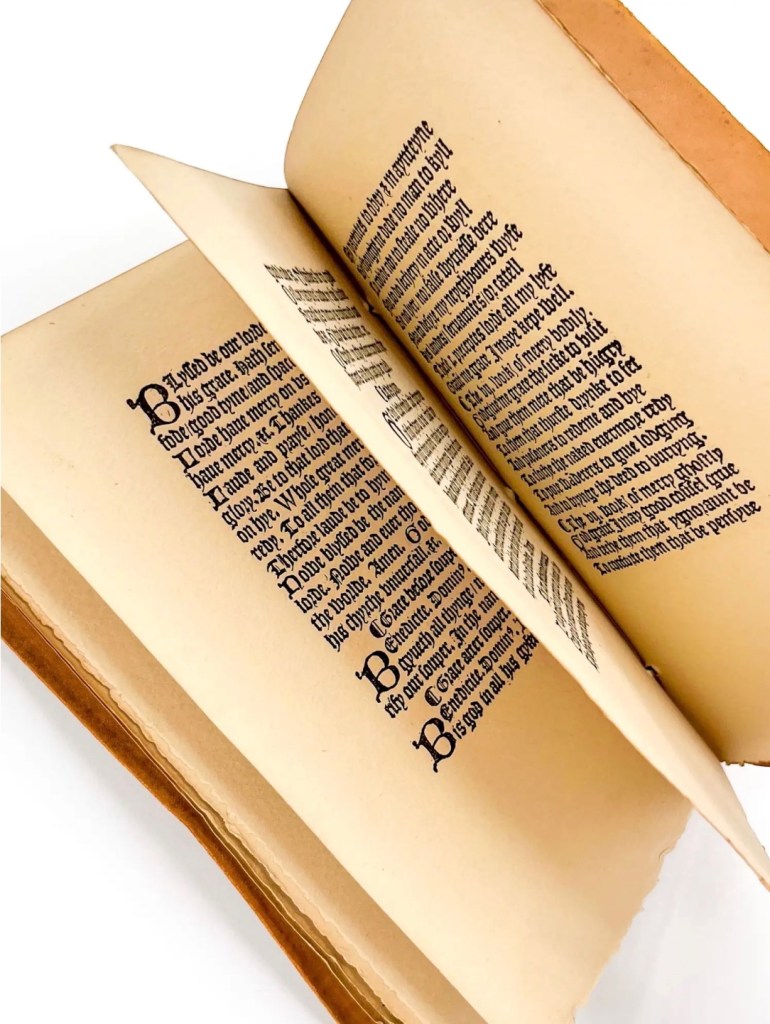
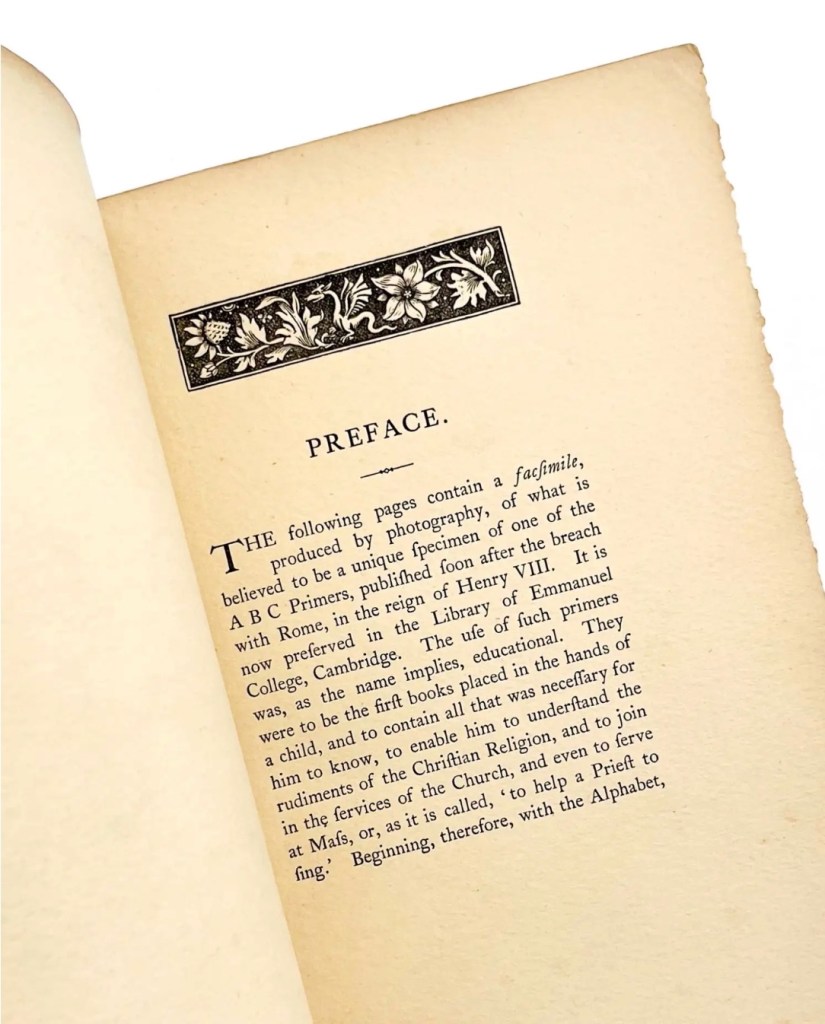
Evelyn S. Shuckburgh, ed. The ABC Both in Latyn & Englyshe (1889). A facsimile edition of a mid-16th century alphabet book and reader.
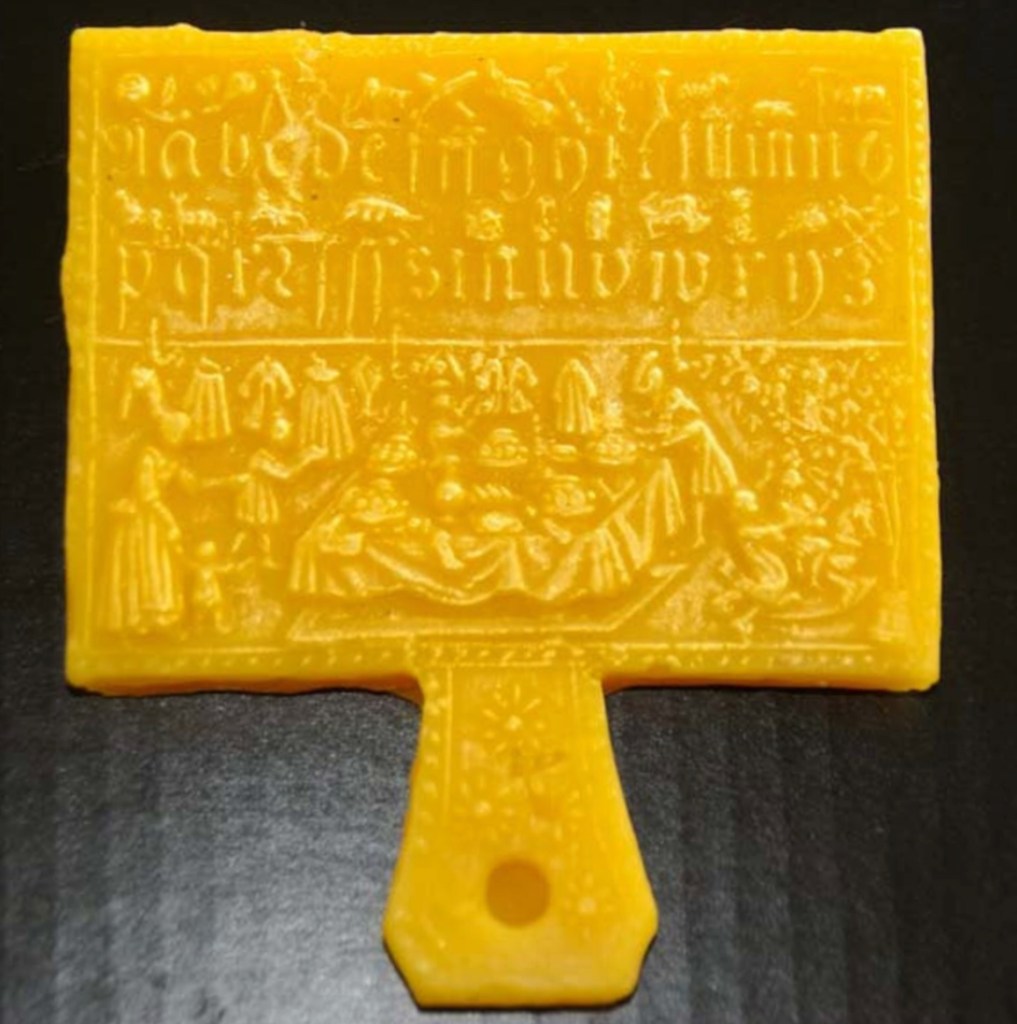
A horn-book beeswaxer, dusted with gold mica, 152 x 152 mm. The design comes from an antique Springerle cookie mould.
Although Tuer (below) devotes several pages to gingerbread horn-books made from cookie moulds, he does not mention any predecessors to this other home craft spin-off.
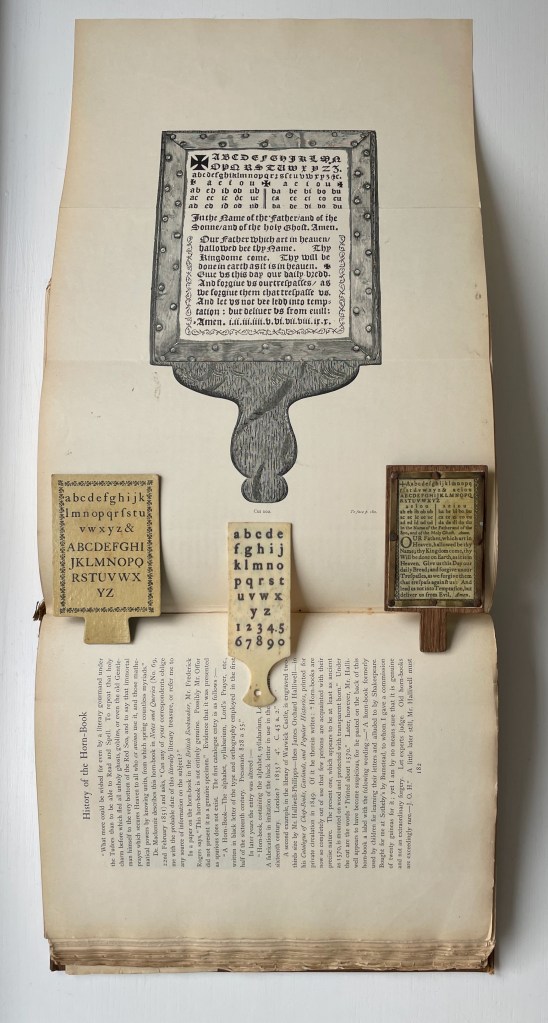
History of the Horn-Book (1897)
Andrew White Tuer
In the upper left corner of the image on the double-page spread can be seen the image of the cross from which the horn-book picked up its nickname “criss-cross row”. The three horn-books displayed atop the double-page spread were included in the limited edition of the book. The deluxe edition included five!
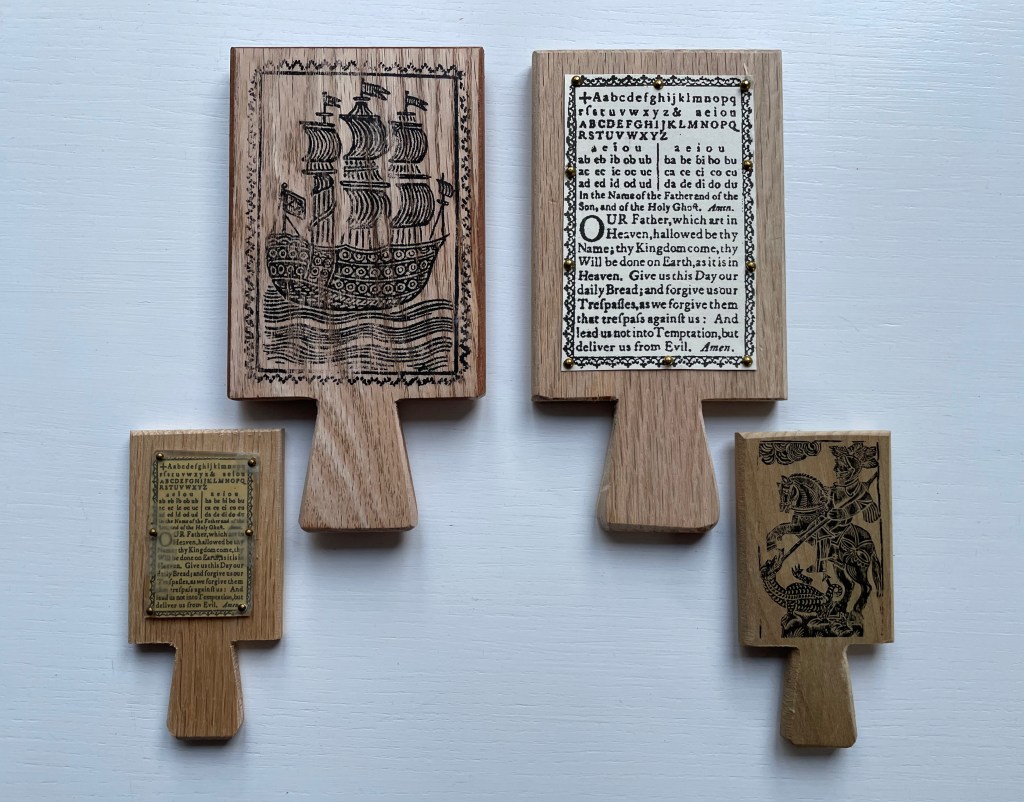
Facsimile horn-books. Real cow horn is used for the cover of the horn-book at the lower left.
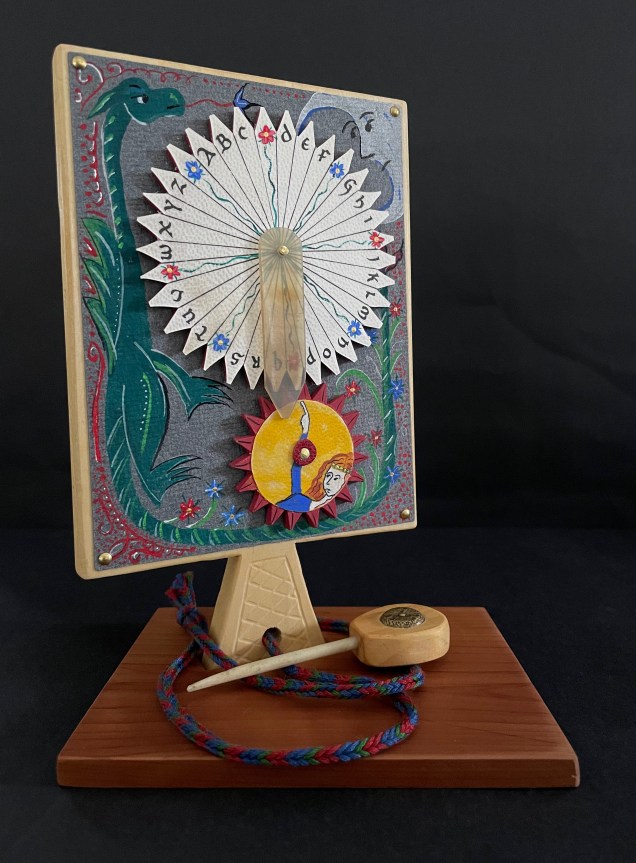
With Mechanical Horn-book (2025), an homage to Anglo-Saxon times, Ashley Thayer has added an historical stepping stone from her Runic Alphabet above.
 Books On Books