Books On Books Collection – Kara Walker

Freedom: A fable: A curious interpretation of the wit of a negress in troubled times: with illustrations (1997)
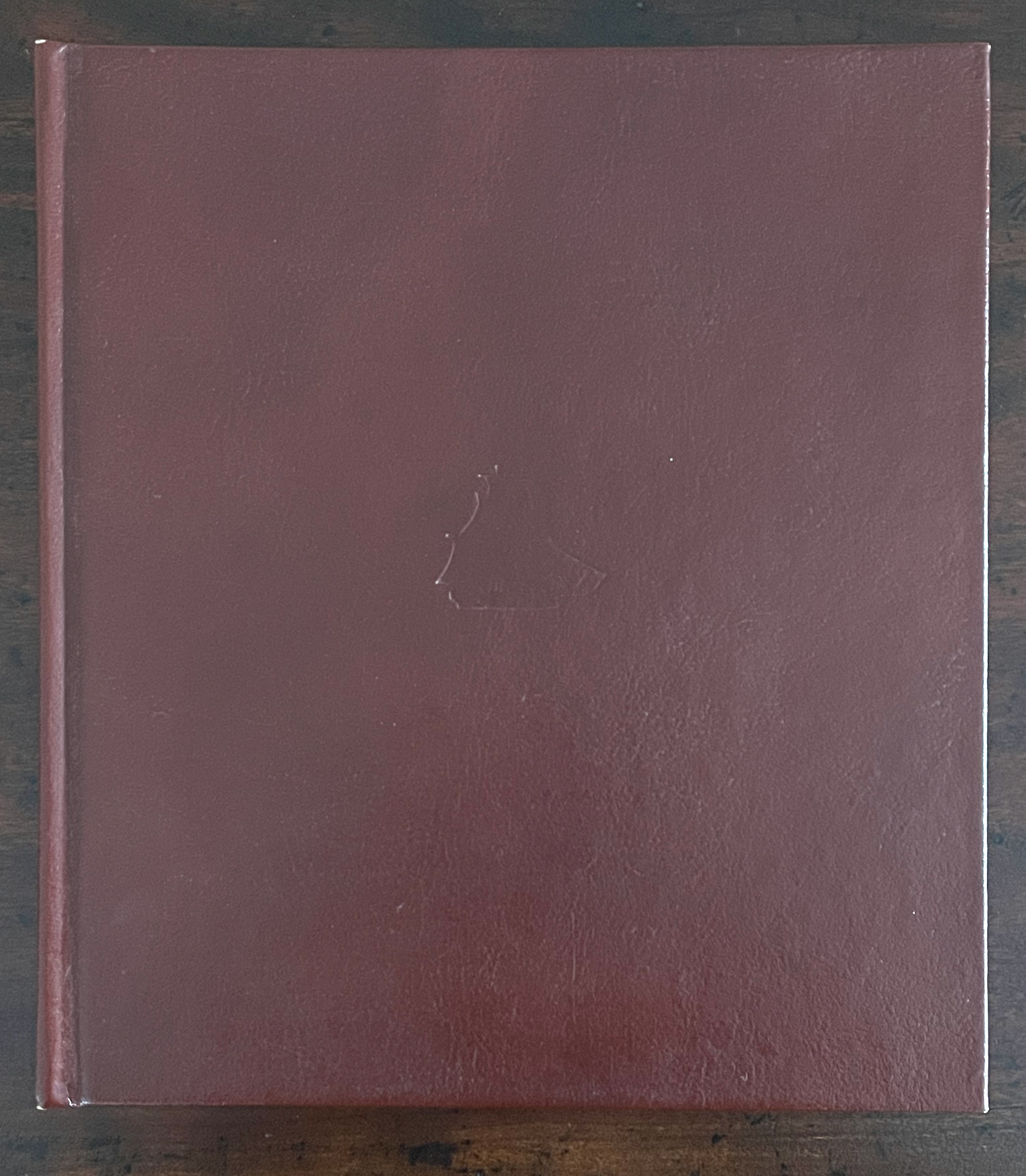

Solid maroon hardcover book lying flat on a wooden surface.
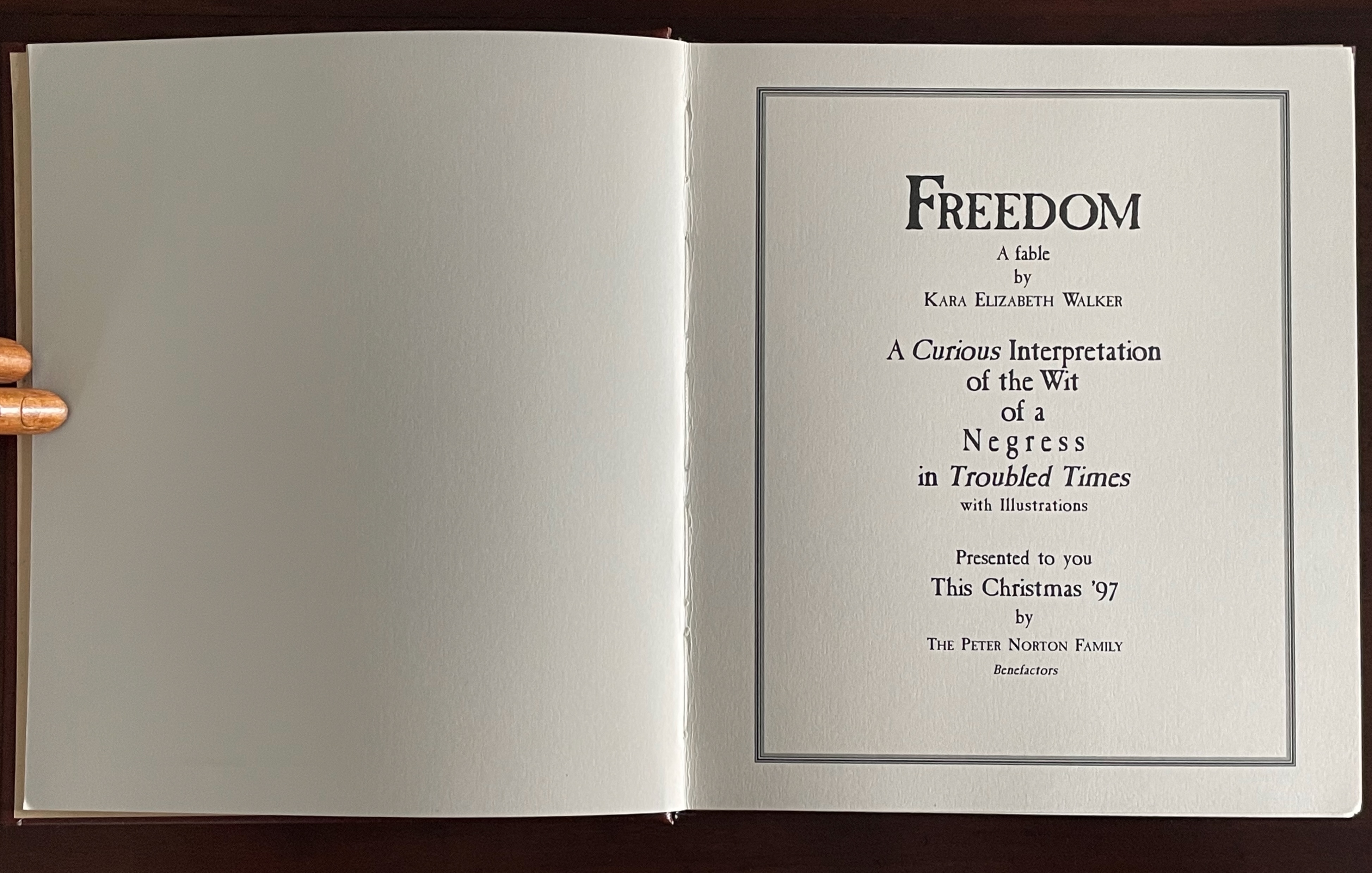
An open book page featuring the title 'Freedom' by Kara Elizabeth Walker, with the subtitle 'A Curious Interpretation of the Wit of a Negress in Troubled Times' and presented by The Peter Norton Family. The design includes elegant typography with borders.

Freedom: A fable: A curious interpretation of the wit of a negress in troubled times: with illustrations (1997)
Kara Walker
Casebound, leather over boards, with plain doublures. H238 x W210 x D20 mm. [28] pages. Edition of 4000, published by the Peter Norton Christmas Project. Acquired from Los Angeles Modern Auction, 3 September 2025.
Photos: Books On Books Collection.

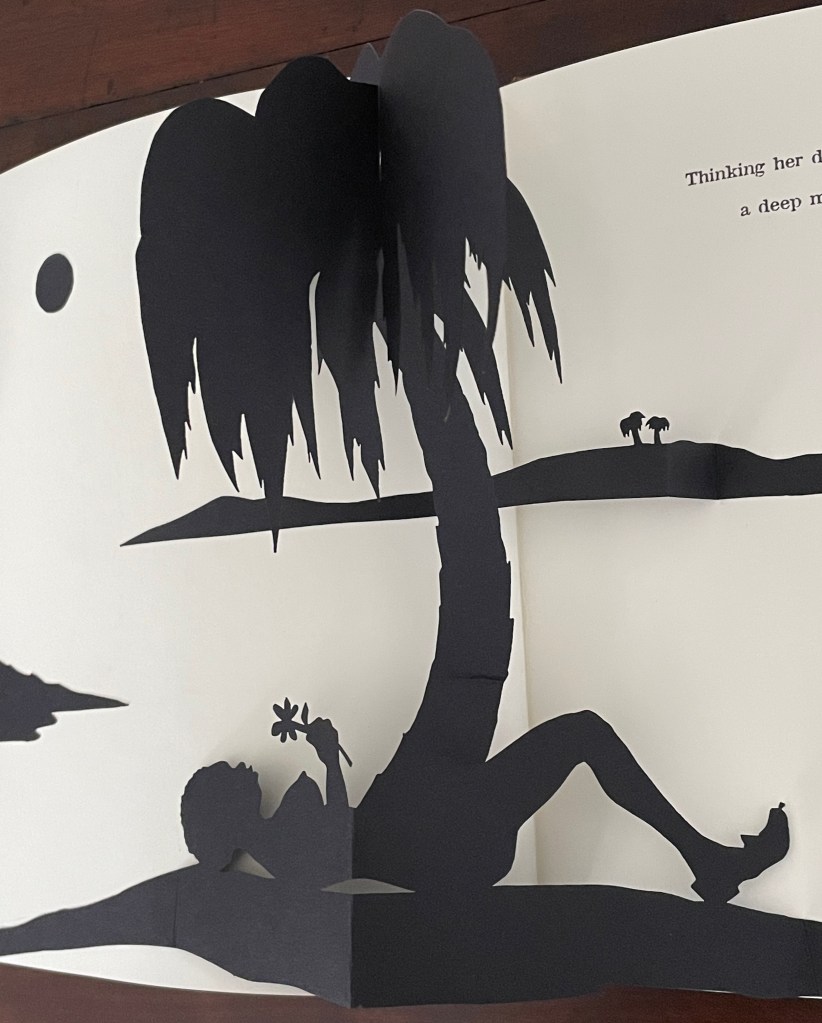
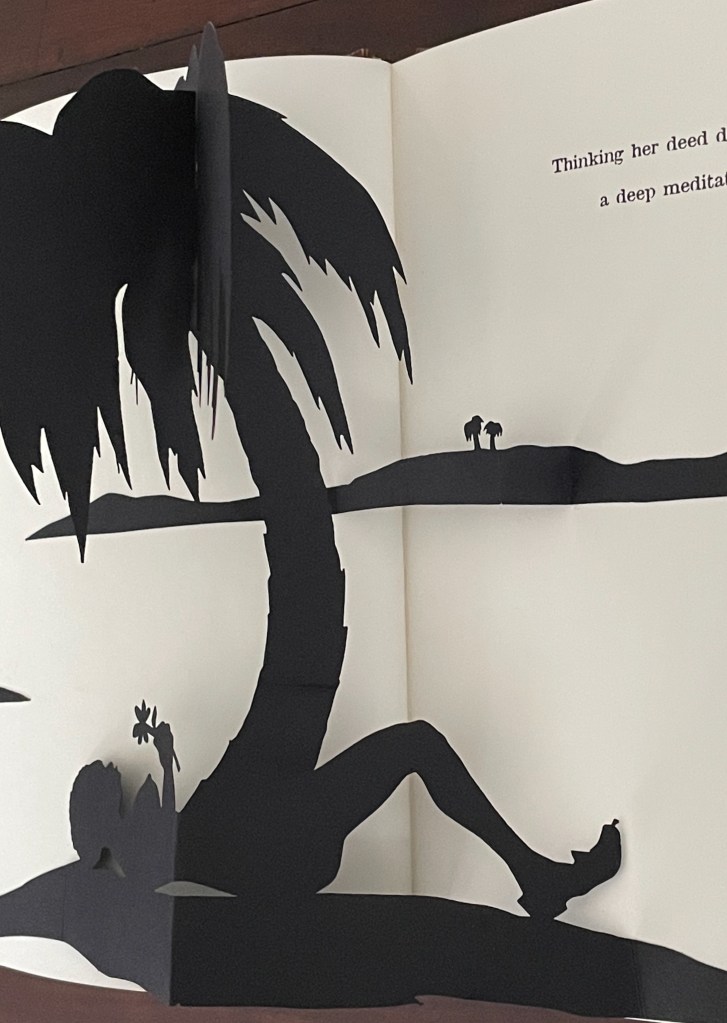
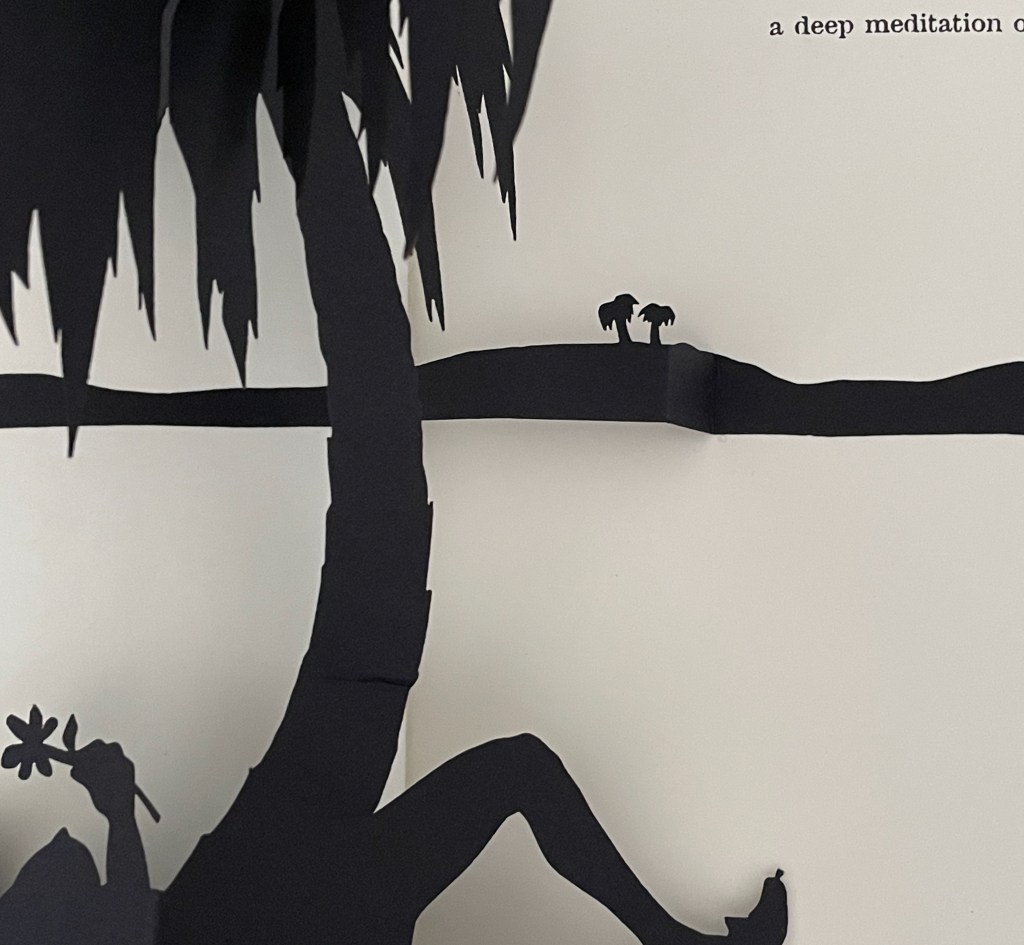
The book as medium has played a minor adjunct role in Kara Walker’s art. Freedom: A fable … (1997) is one of the few exceptions. Its paper engineering lifts Walker’s signature silhouettes off the page physically, and the pop-up’s association with children’s books fits well with Walker’s uneasy blend of humor, horror, the individual and the stereotype. It is also the first of her three-dimensional works, which emerged more frequently around 2007-09 and rose to the monuments of Fons Americanus (2019) and Unmanned Drone (2025).
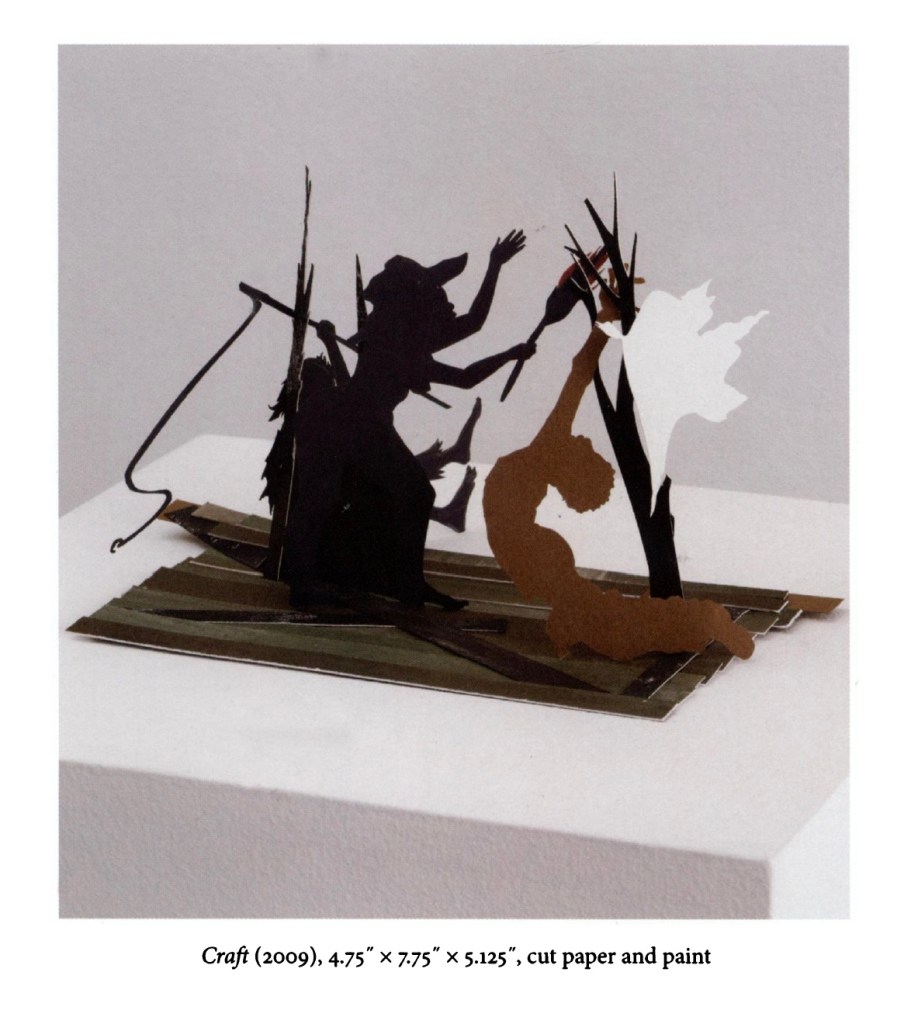
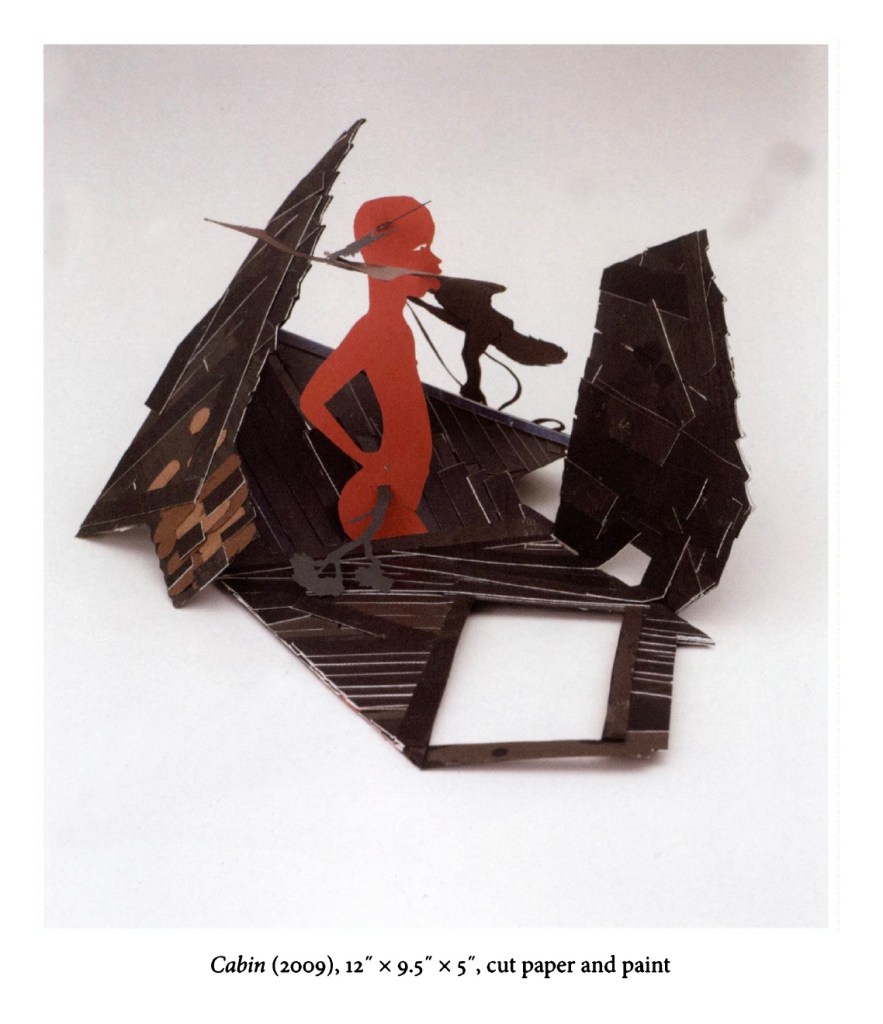
Source: Kara Walker, “Riots and Outrages”, The Georgia Review , Spring 2010, 64:1, pp. 59-68. Images courtesy of Sikkema Jenkins and Company, New York.

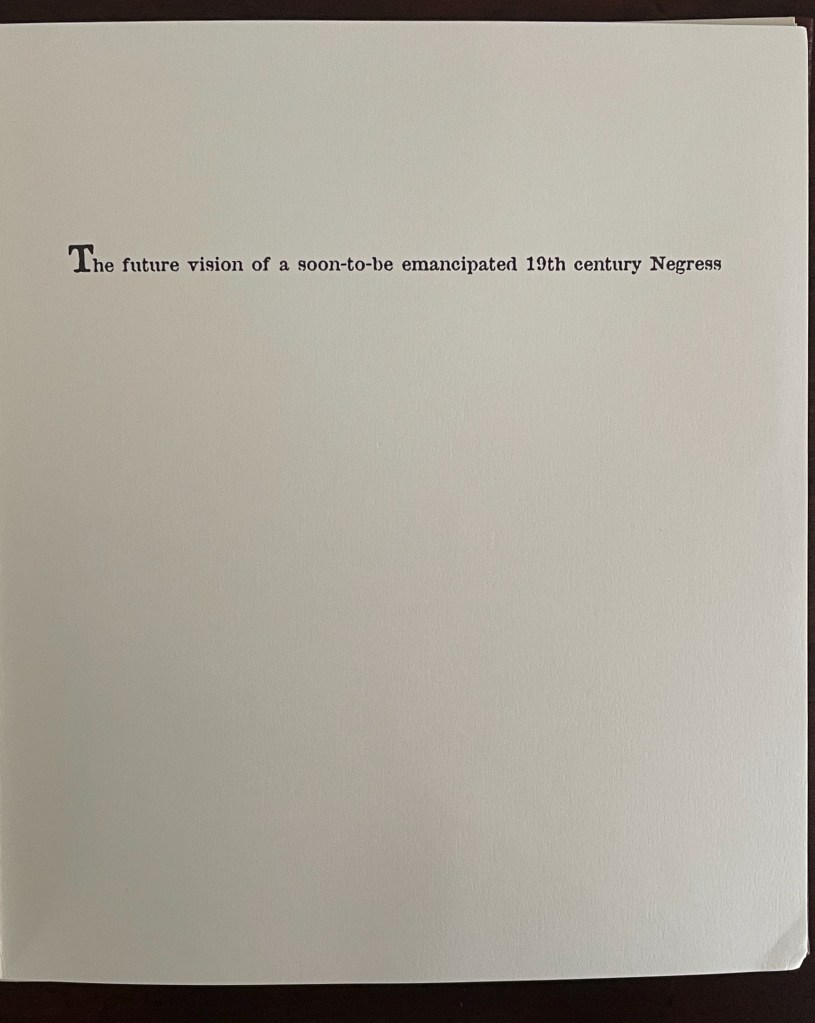
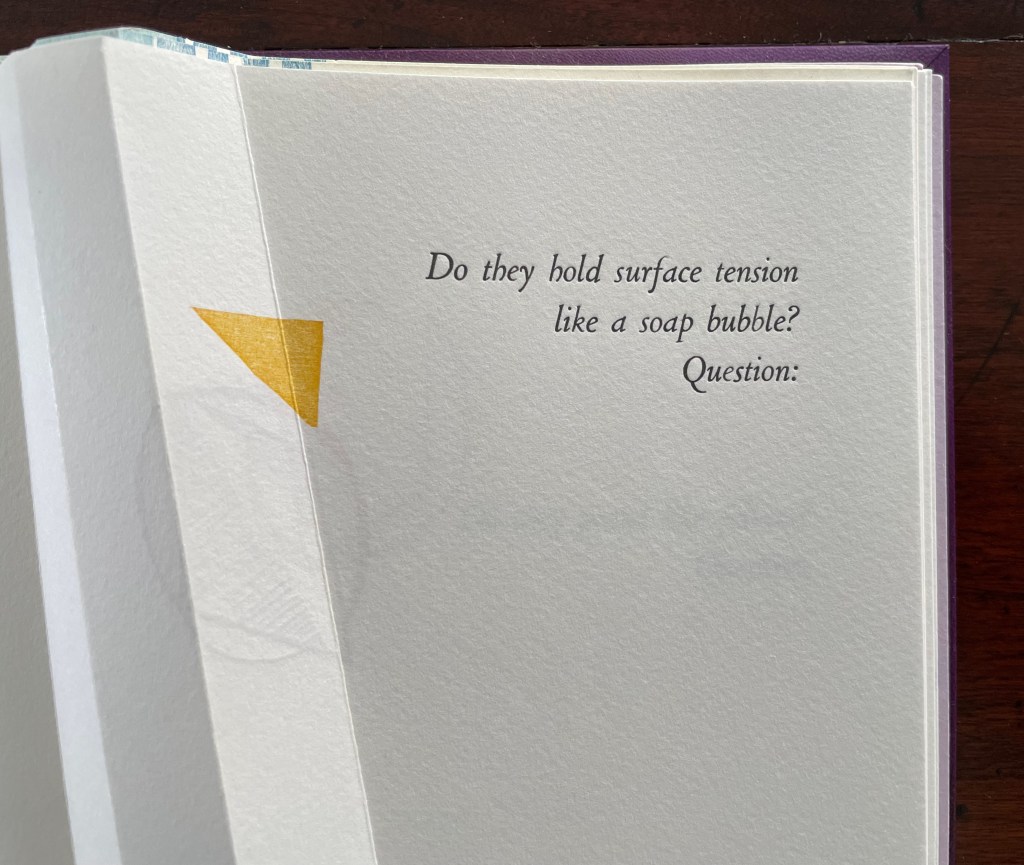
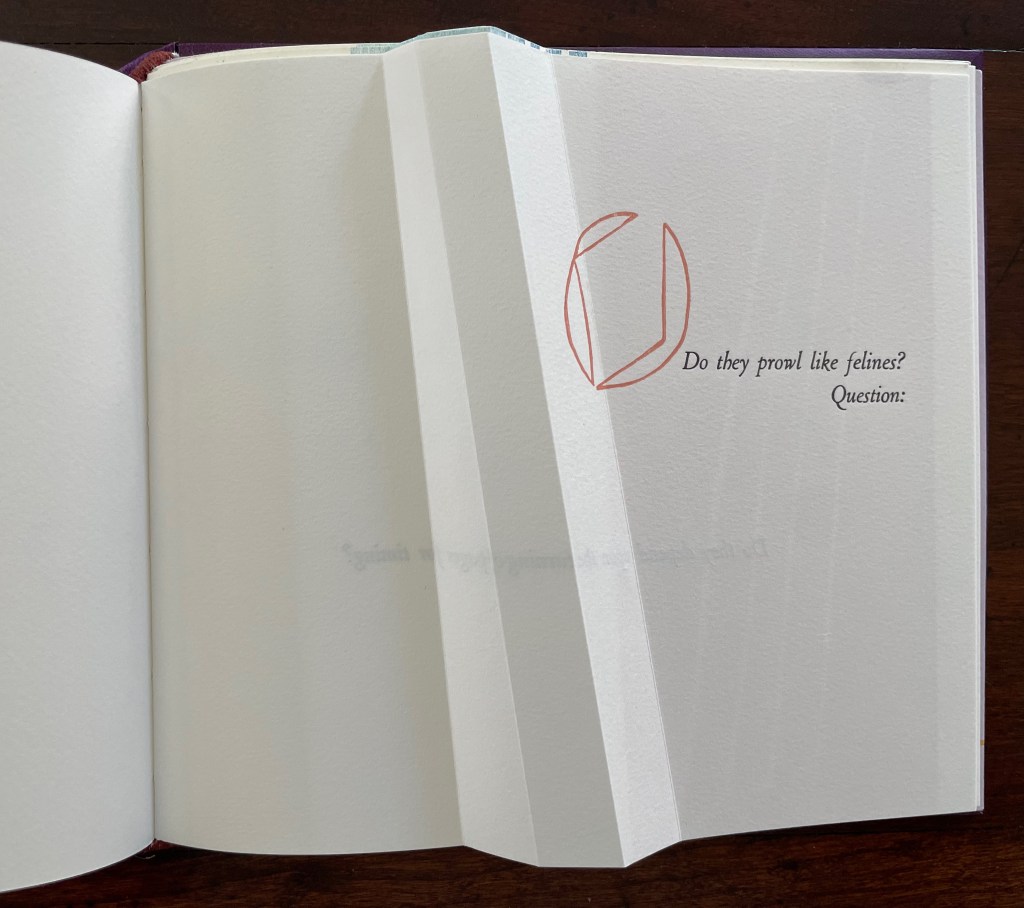
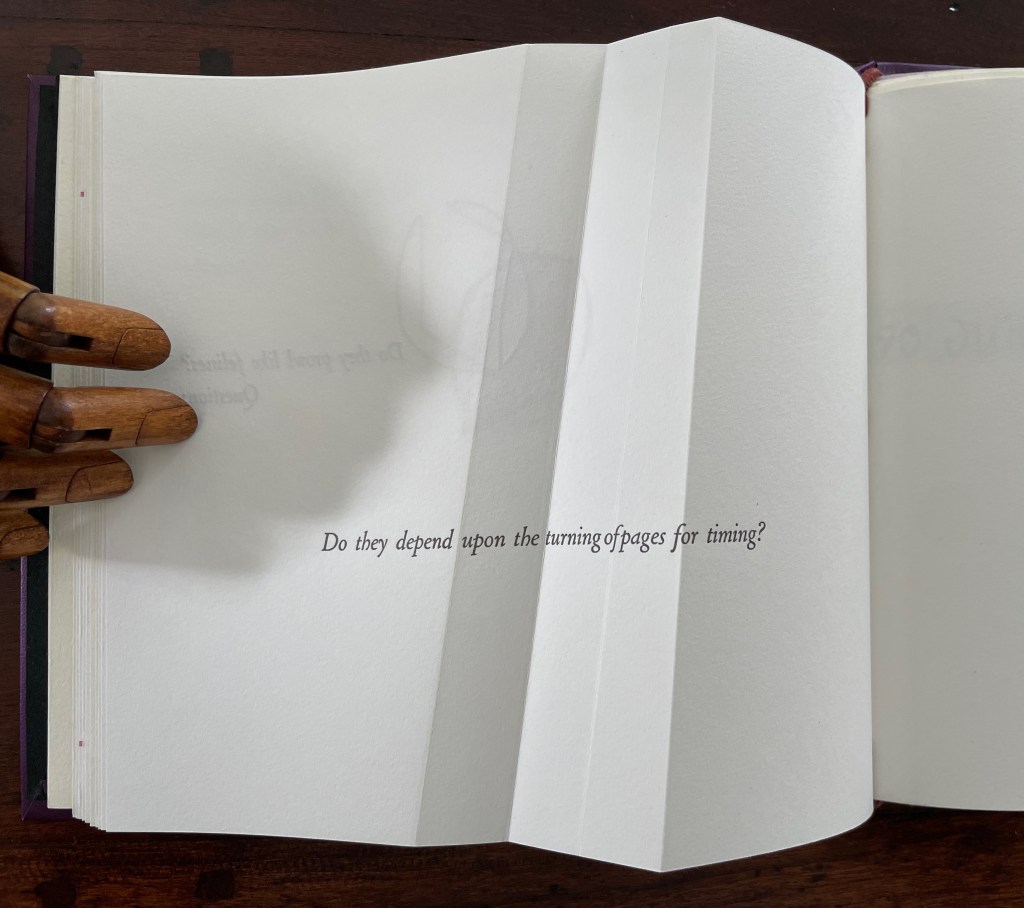
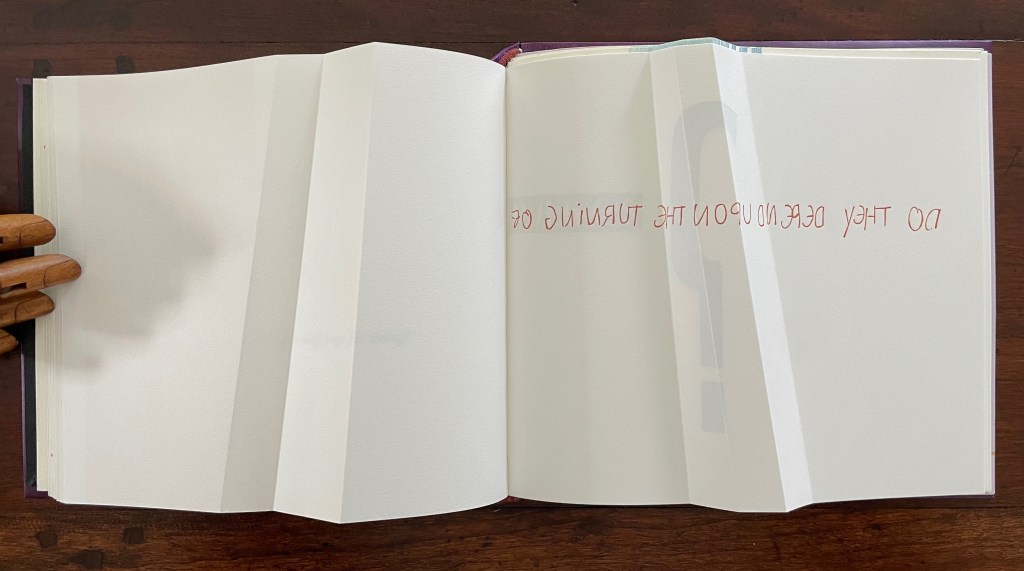
Freedom goes beyond an illustration of text. Its offset lithographs and five laser-cut pop-up silhouettes on wove paper extend and complicate the fable in the self-reflexive manner often found in artists’ books.
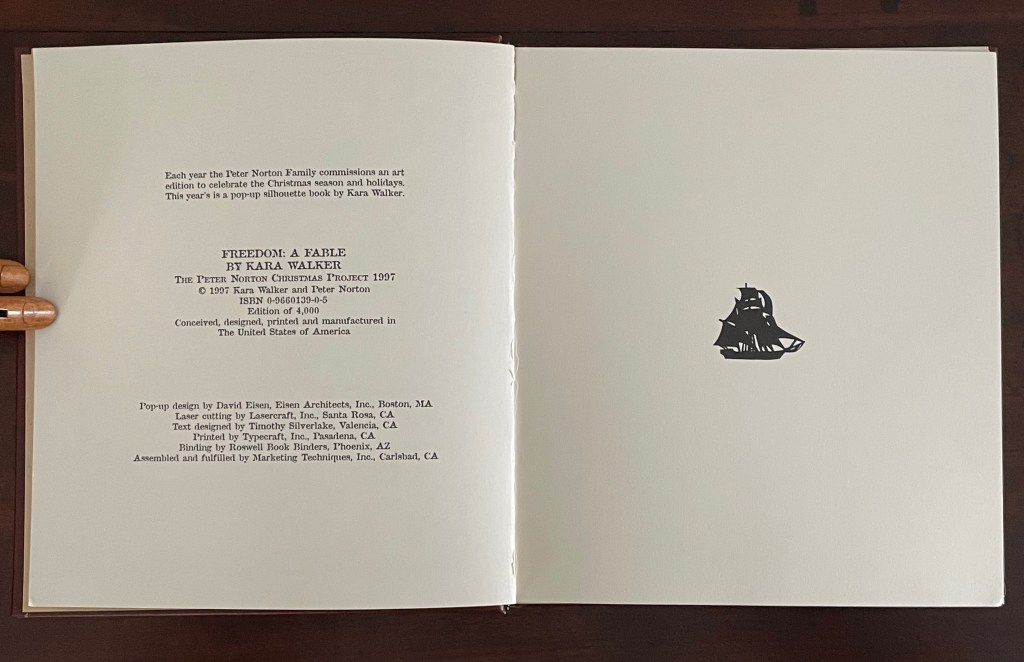
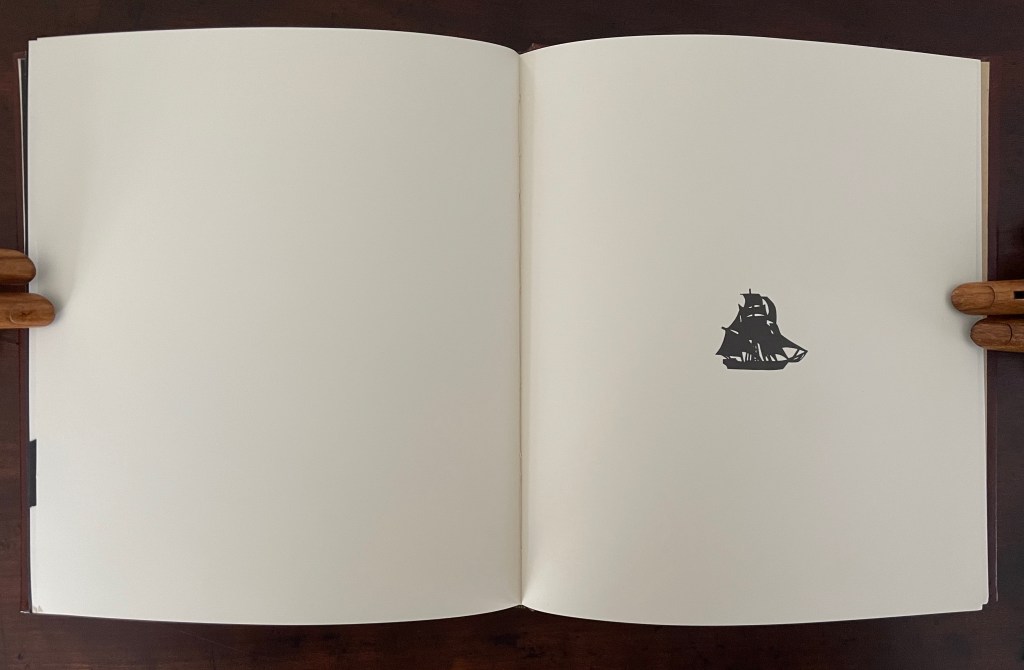
First and last image of the book: the “Freedom” ship; opening line of the book.

An open book displaying text on a dark background, discussing themes of identity, race, and personal struggle, with a focus on a character's reflections about her brown skin and the societal implications of race.

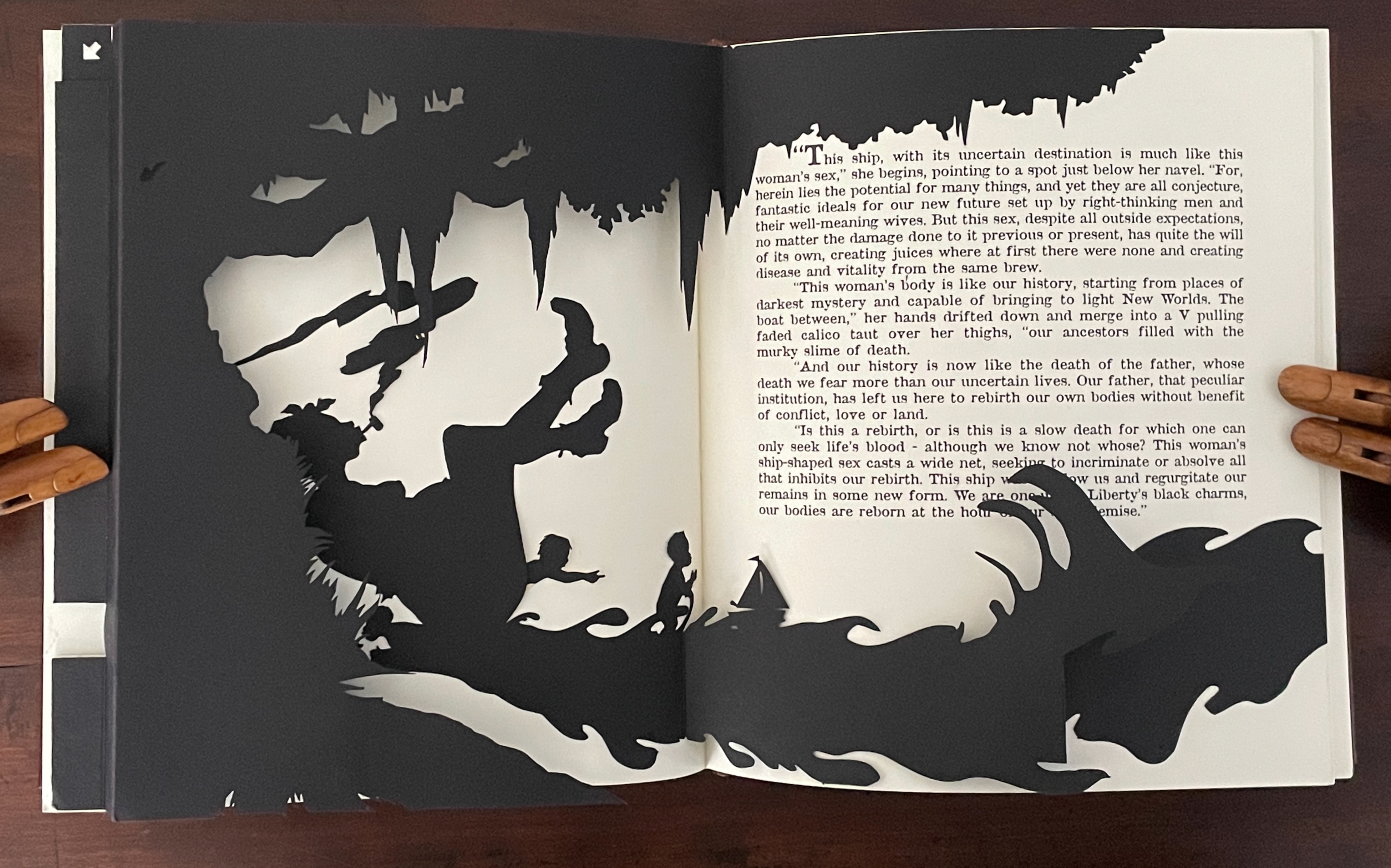
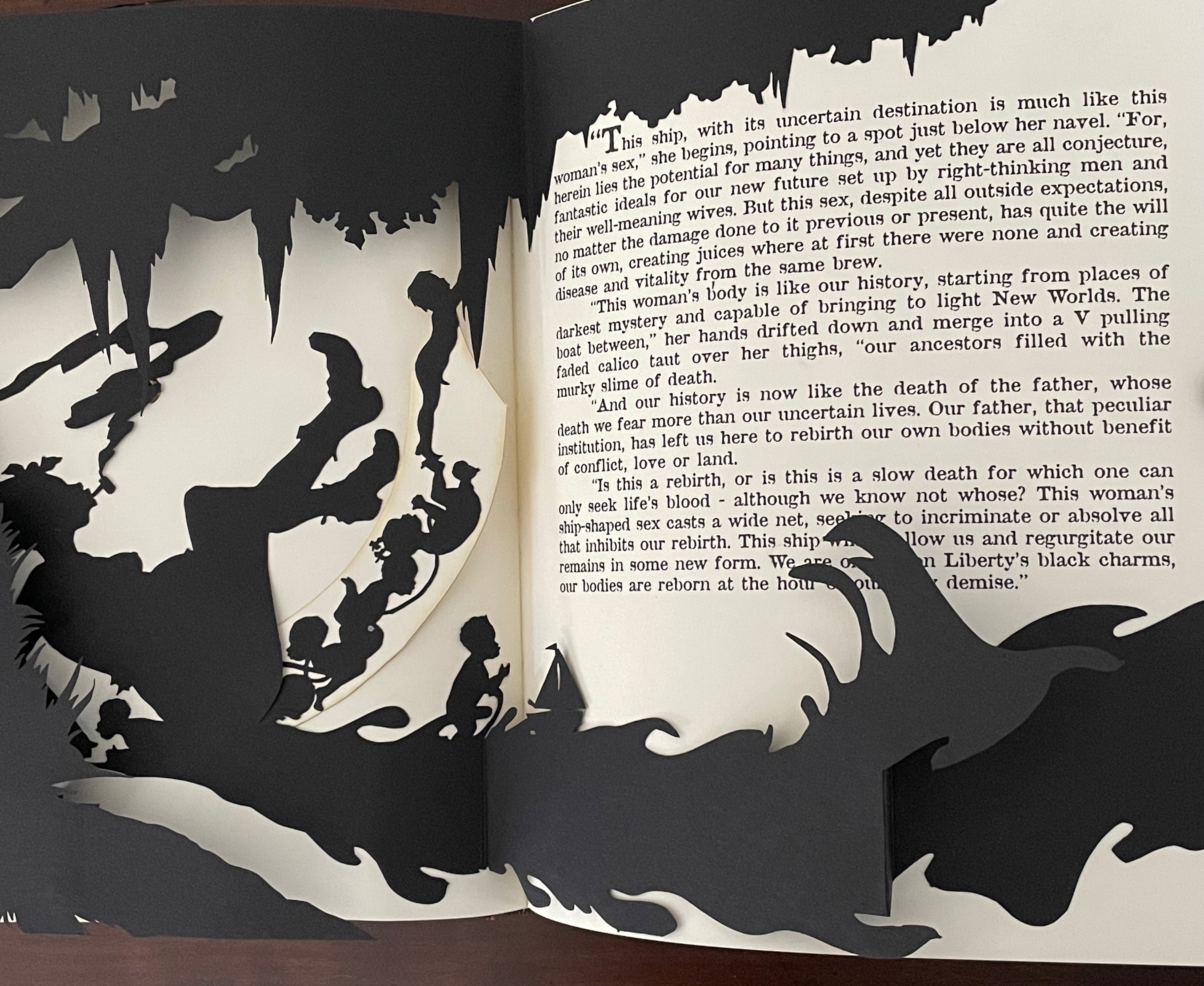
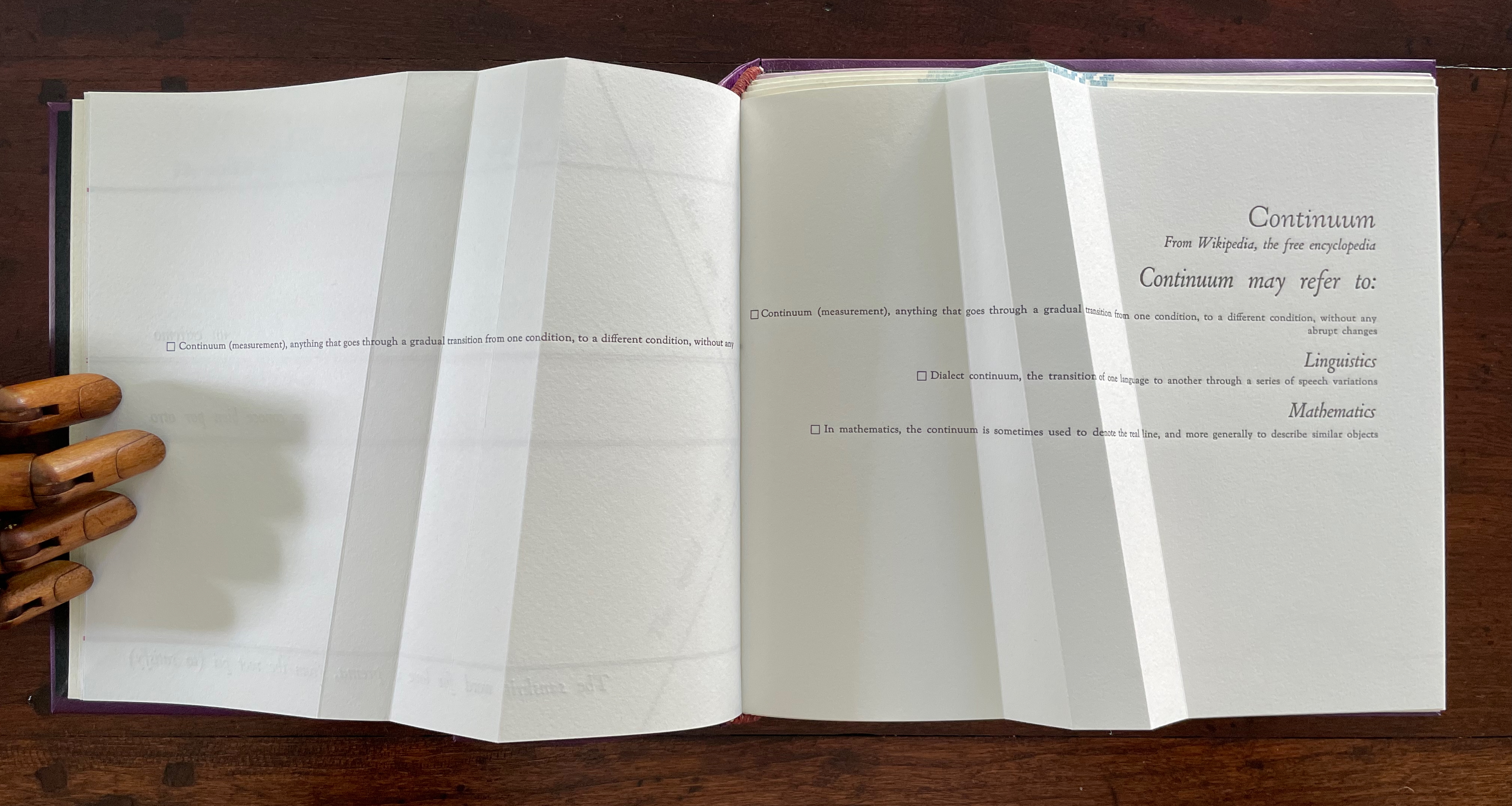
The book’s title taunts the reader, artist, and narrator all at once (both the narrative and freedom are fables). Likewise, the black-on-white cutouts and lithographs trip up every party’s sensibilities, racial prehensions, and cultural memories. The opening display may evoke Gone with the Wind, but the heroine is the Negress. The narrator and artist matter-of-factly elevate the sexualization of “N____” to bisexual, scatological Creator/Mistress status. The abbreviated name, as if in a 19th-century tale of erotica, evokes denigrating of the “N” word. Designed to make the viewer tilt the book every which way to see what can be (and is meant to be) seen, the pop-ups evoke a feeling of prurience. In the final spreads, Walker and David Eisen, the collaborating paper engineer, use a pull tab to involve that prurience in a procreative delivery.

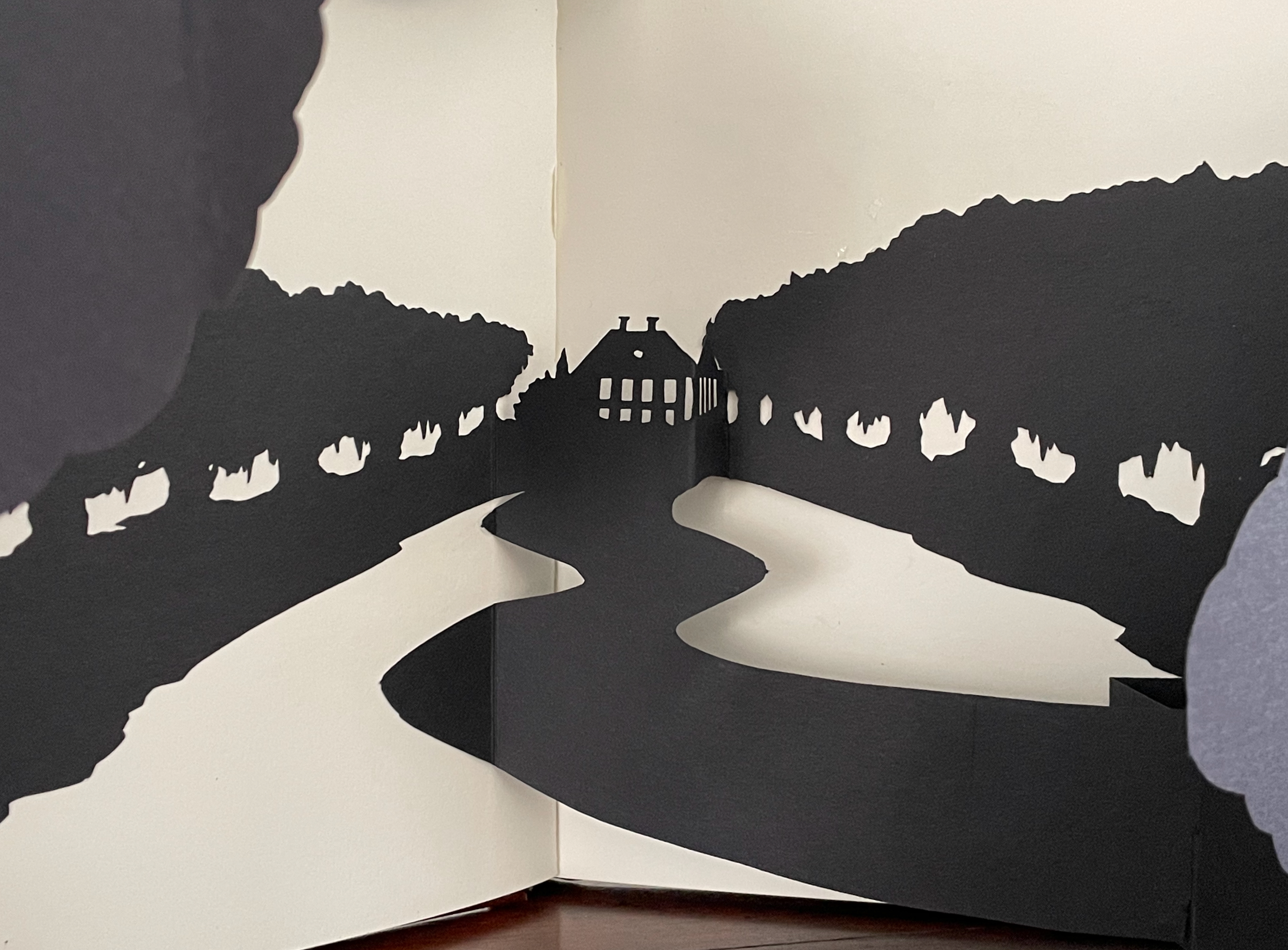
A book open to a page featuring intricate black silhouette cutouts of figures, depicting a woman with a pail and a child, alongside text that highlights themes of identity and social dynamics.
An open book with layered black cutouts creating a silhouette of figures and a ship against a white background, accompanied by text on the right page discussing themes of rebirth and mystery.
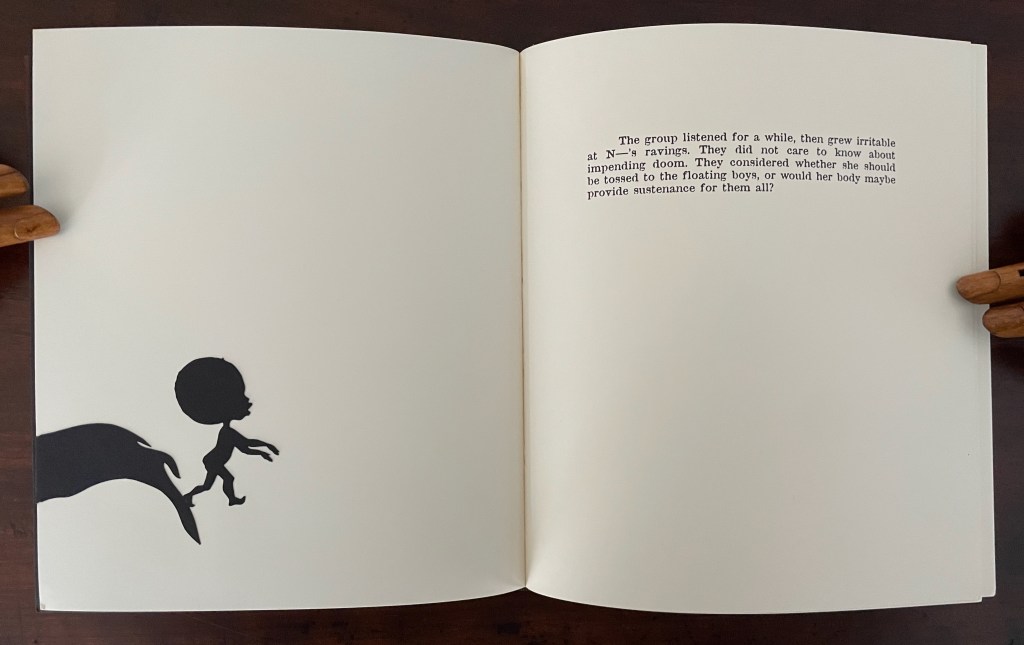
A book page displaying a shadowy silhouette of a child walking hand in hand with an adult figure, along with a narrative text discussing the group's contemplation of a troubling scenario.

The power of this artwork is that it merges the self-reflexivity of the artist’s book with a self-cannibalizing societal condition.

After the Deluge (2007)

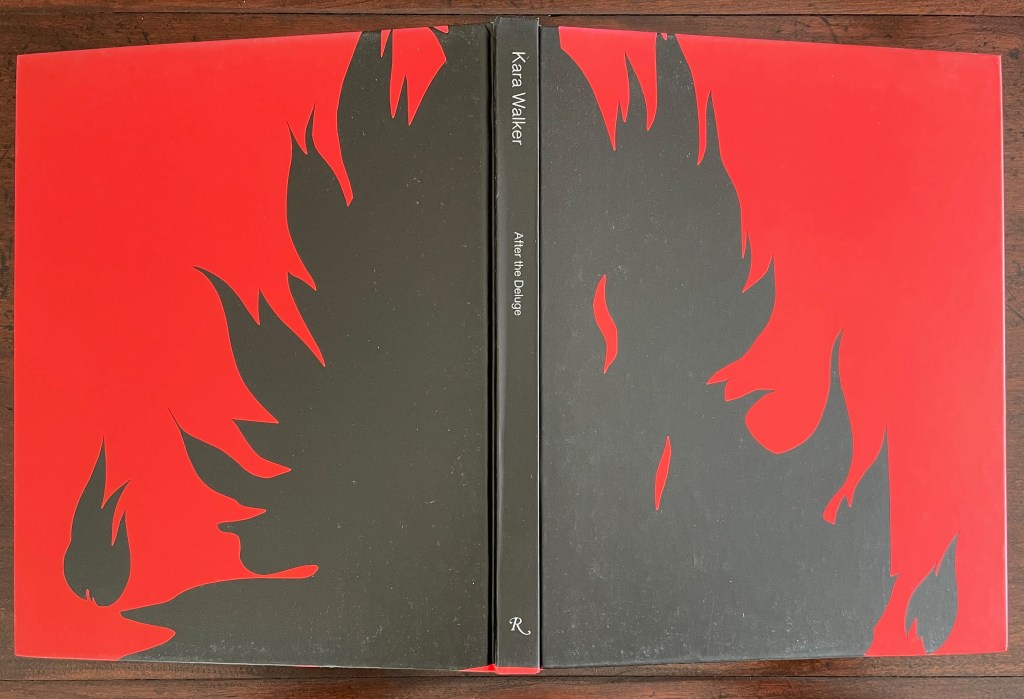
Book cover of 'After the Deluge' by Kara Walker featuring a silhouette of a woman against a backdrop of flames.
An open book resting on a wooden surface, featuring a striking cover design with red and black colors. The front cover displays the title 'After the Deluge' by Kara Walker in a stylish font, with an abstract flame-like pattern.

After the Deluge (2007)
Kara Walker
Casebound, illustrated paper over boards, black doublures. H270 x W225 mm. 120 pages. Acquired from Lacey Books, 26 August 2025.
Photos: Books On Books Collection.

The immediate spur to After the Deluge (2007) and its associated exhibition was the aftermath of Hurricane Katrina in 2005. The book is not a straightforward catalogue of the exhibition. Several works in the exhibition are not included; in fact, an entire wall is missing, and juxtapositions in the exhibition differ from those in the book. It is one of those books that goes beyond its proximate cause and differs from the exhibition that occasioned it.

Walker labels it a visual essay. While its blending of original work and appropriations with collage nudges it toward being an artist’s book, its structural principle is uncertain. Even the Table of Contents is puzzling. Preceded by a single-page black bleed, “Murky” begins with Walker’s brief introduction on page 7. The last page of that text concludes, however, on page 9, which is assigned to the visuals of pages 9 to 107. Perhaps 9 is a typo and should be 10. Whatever the case there, the individual labels in the Table of Contents are not given specific page references, and it is not always easy to match up the visuals with the labels.
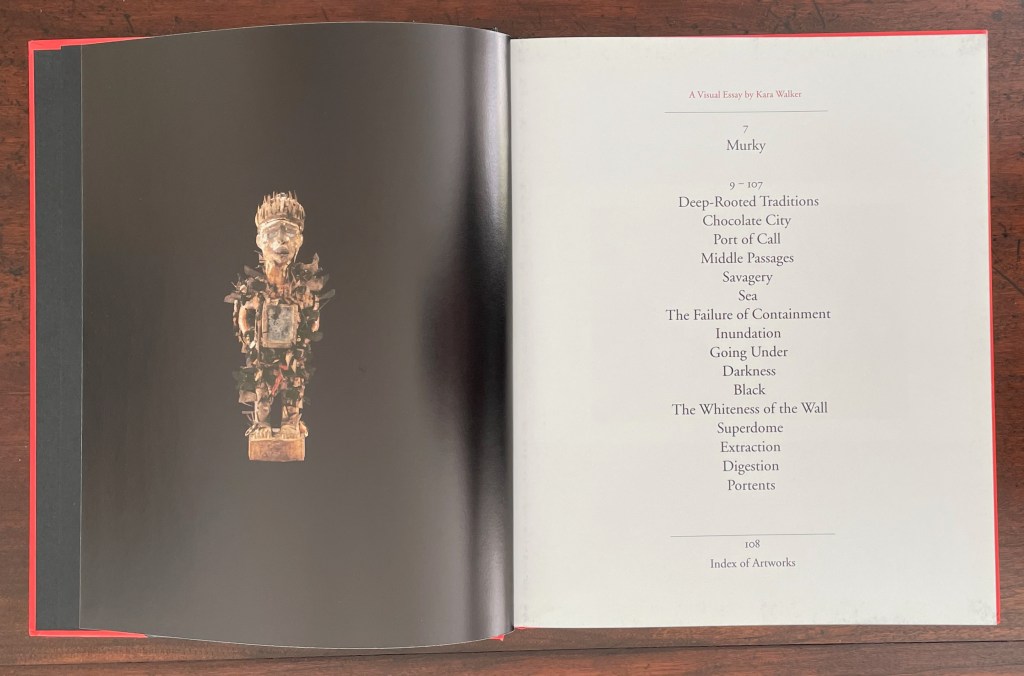
A visual essay by Kara Walker featuring a page with a sculpture on the left and text on the right, including a list of topics such as 'Deep-Rooted Traditions' and 'The Whiteness of the Wall.'

Male Power Figure; Table of Contents.
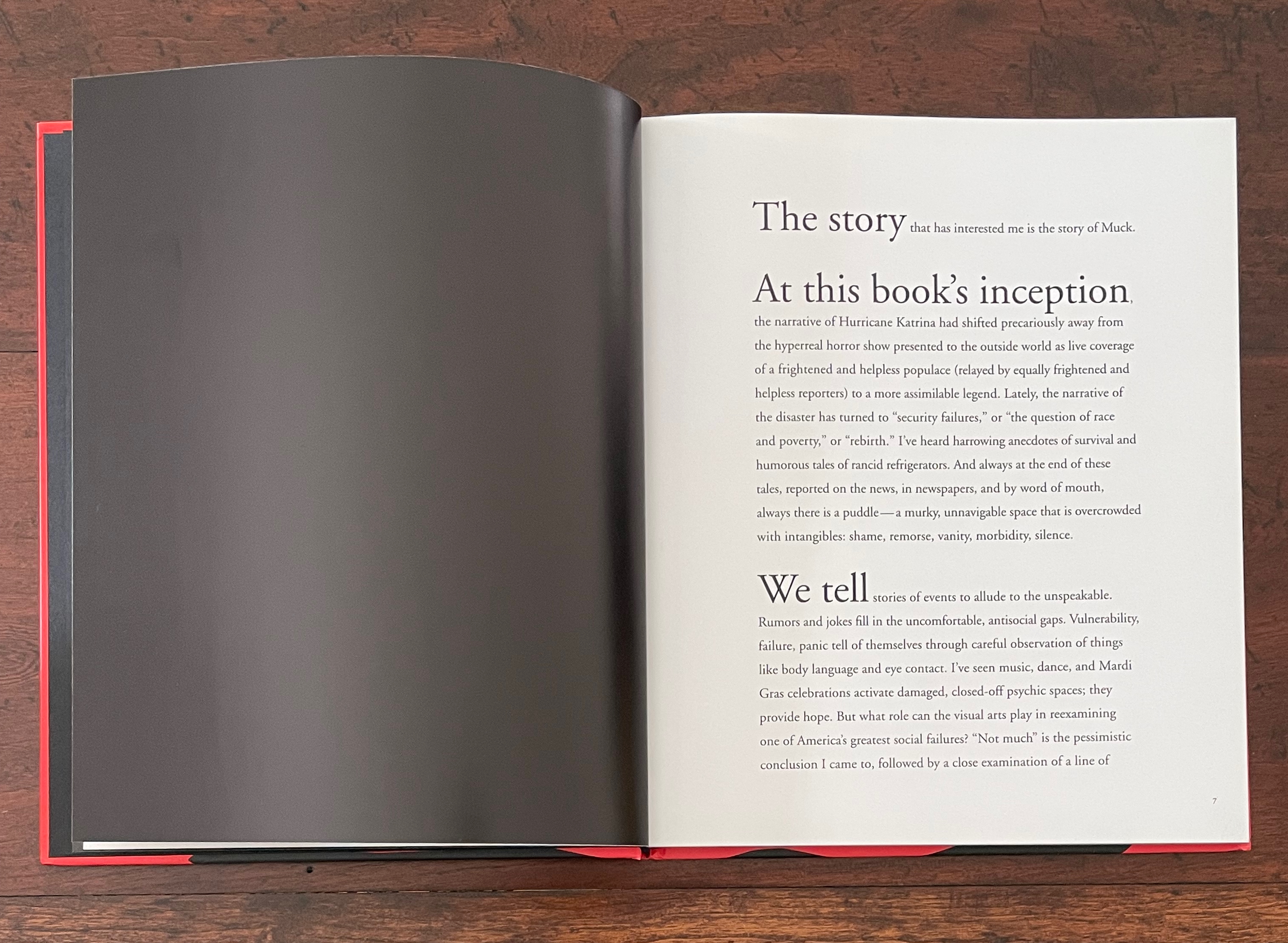
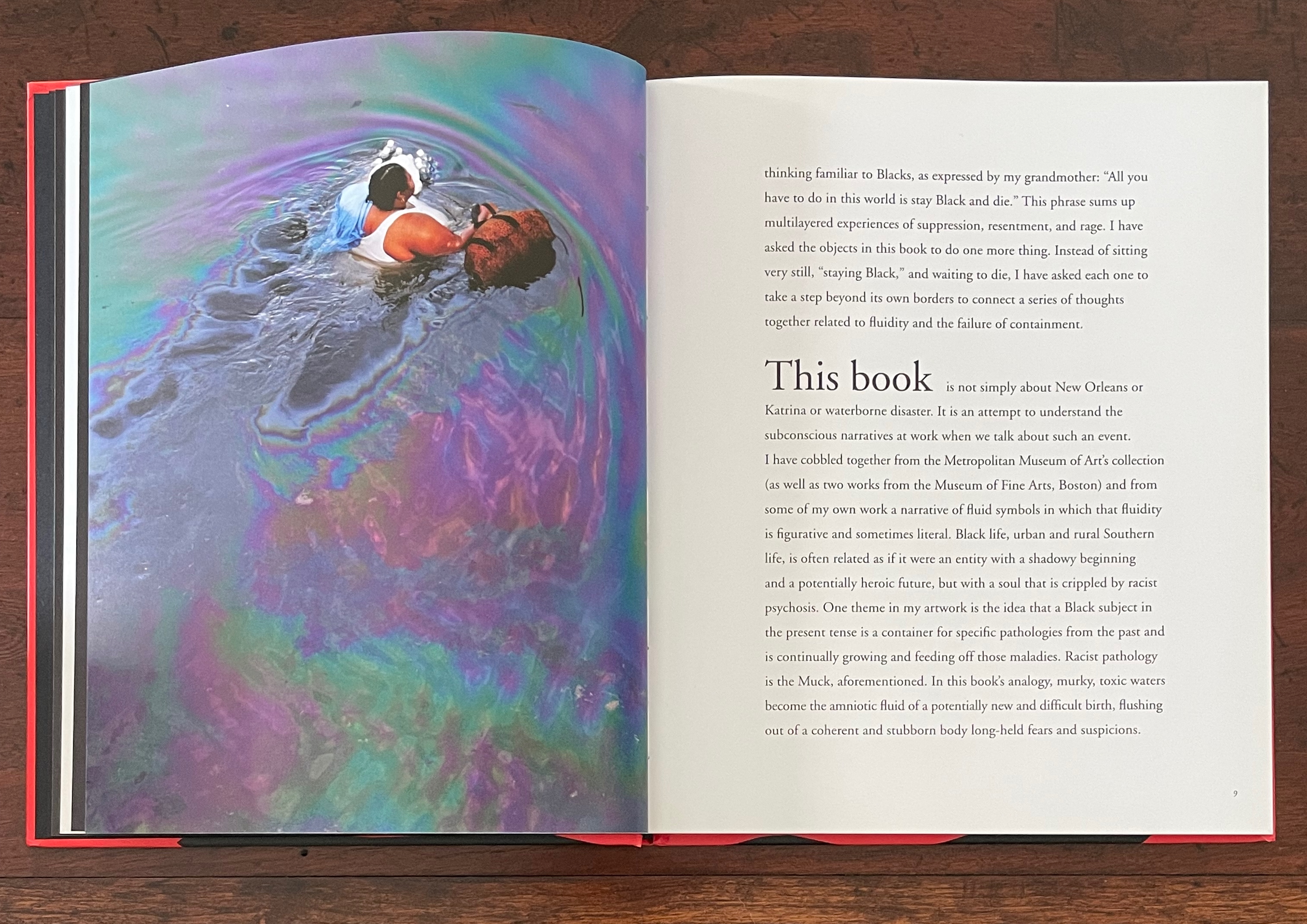
Introduction; AP Images/Bill Haber.

The brief introduction sets out the driving analogy clearly enough though. Perhaps, when we cannot pin down the organization at every point, we have to fall back on the analogy of a murky muck:

Racist pathology is the Muck, aforementioned. In this book’s analogy, murky, toxic waters become the amniotic fluid of a potentially new and difficult birth, flushing out of a coherent and stubborn body long-held fears and suspicions.

Among the book’s other signals are the placement and handling of full-page bleeds. Contrasts of bleeds of black ink with white pages often serve to underscore juxtapositions of white western art with African artifacts and Walker’s works. Above, the single-page bleed of black preceding the Table of Contents presents us with Nkisi, a large African male power figure. In the exhibition, it loomed under a glass cover for viewing in the round. As can be seen above, and underscoring the difference between book and exhibition, it is a reduced figure, although Nkisi returns as a larger presence toward the end of the book.

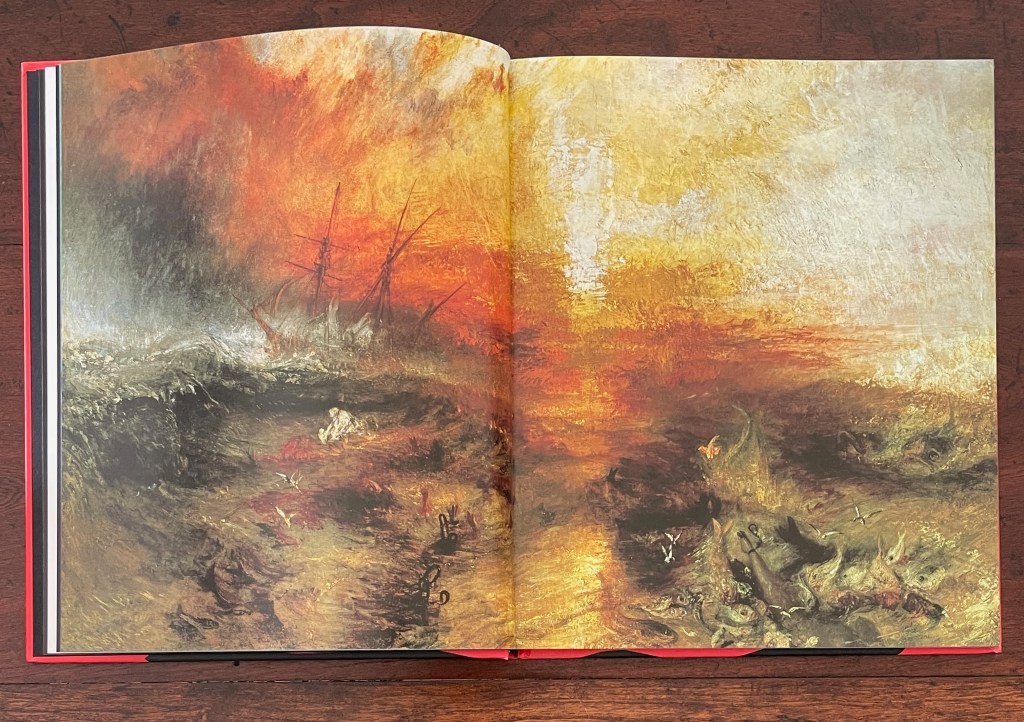
The first double-page bleed is one in full color and does seem to match up with the label “Deep-Rooted Traditions” in the Table of Contents. It presents JMW Turner’s 1840 Slave Ship (Slavers Throwing Overboard the Dead and Dying, Typhoon Coming On). In the following double-page spread, Walker’s 1996 Untitled, a cut-out silhouette and pastel on a white background, is crowded to the right and surrounded by a full-bleed margin of black. Its pastel double-stack steamboat spews fire in the background, perhaps frightening a black silhouetted horse into a fall in the foreground. Whatever the cause, the black silhouetted girl with an upraised cudgel becomes a visualization of the expression “beating a dead horse”. In Walker’s typical perverse irony, it’s a 19th-century white painter’s condemnation of slavery followed by a 20th-century Black artist’s black cutouts, shoved off center and shoving us to conclude that slavery is a dead horse she is beating. Deep-rooted traditions, indeed.
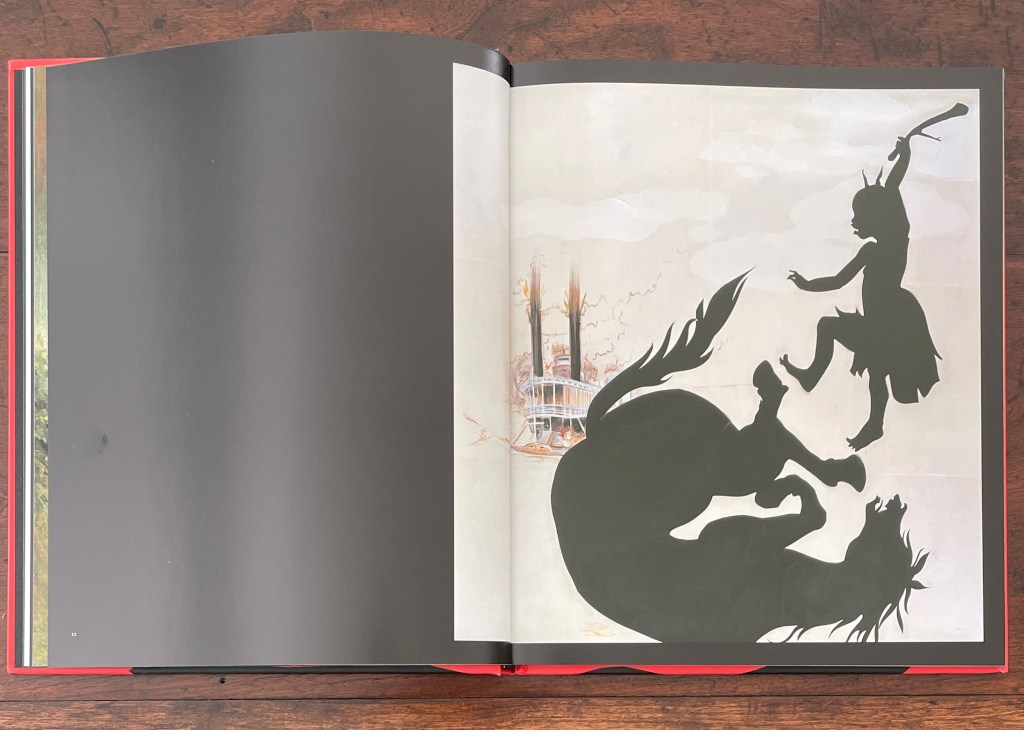
But slavery is not a dead horse. Its carcass has mutated into the historical, cultural, and personal condition that Walker calls “the Muck” and amniotic fluid in her introduction. The Muck and fluid juxtapose works from Walker’s American Primitives series and Middle Passages series with selections from the Metropolitan Museum of Art and Boston’s Museum of Fine Arts. The full-bleeds of black on single pages and double-page spreads punctuate this maelstrom of art that includes white American primitives such as JW Barber (1798-1885), John Carlin (1813-91), WP Chappel (1800-80); the European-influenced JS Copley (1738-1815), Winslow Homer (1836-1910), and Joshua Shaw (1777-1860); the French silhouettist Auguste Edouart (1789-1861); and earlier artists such as Jean Audran (French, 1667-1756), RN Zeeman (Dutch, 1623-63), and Pieter Nolpe (Dutch, 1614-53).

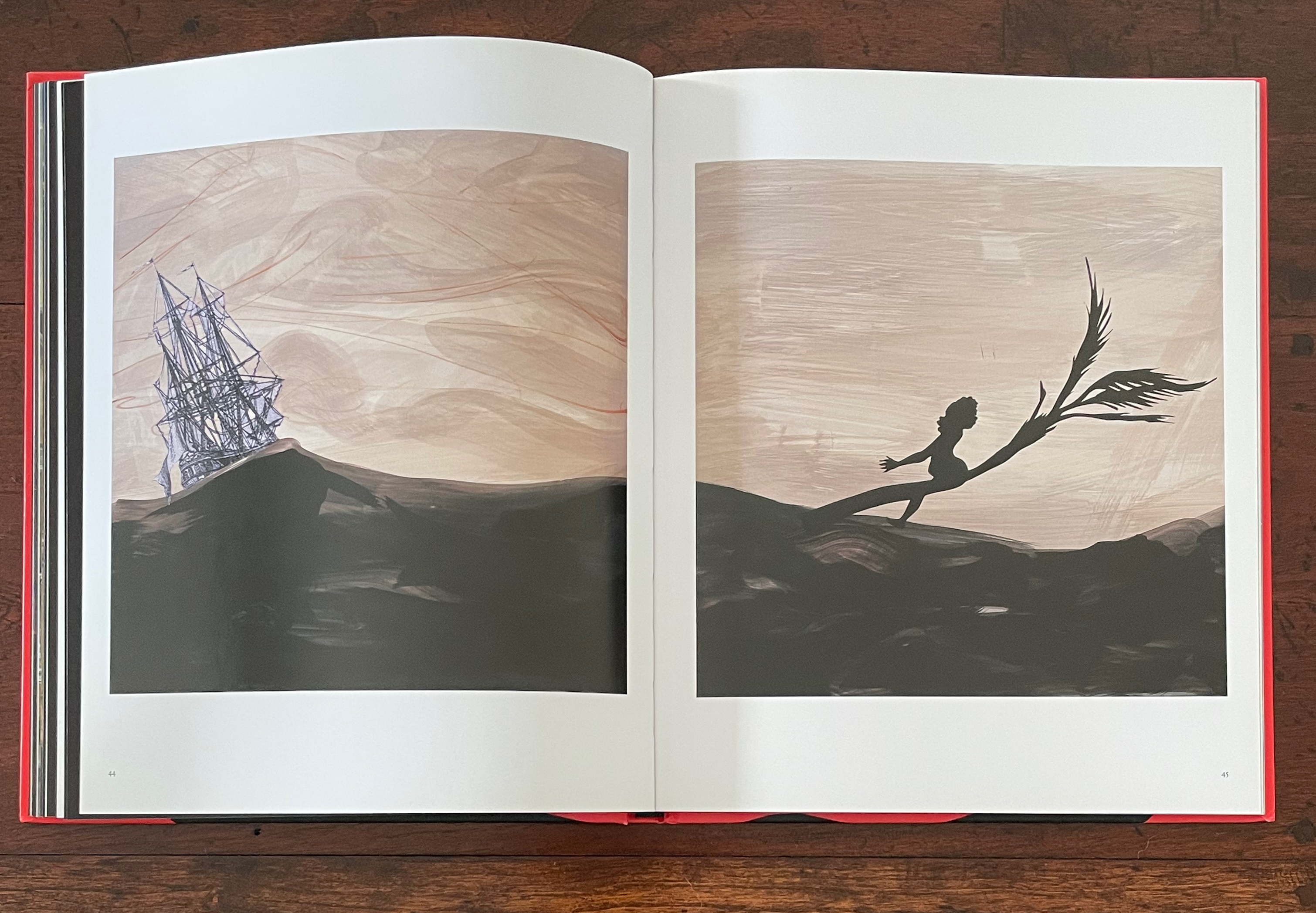
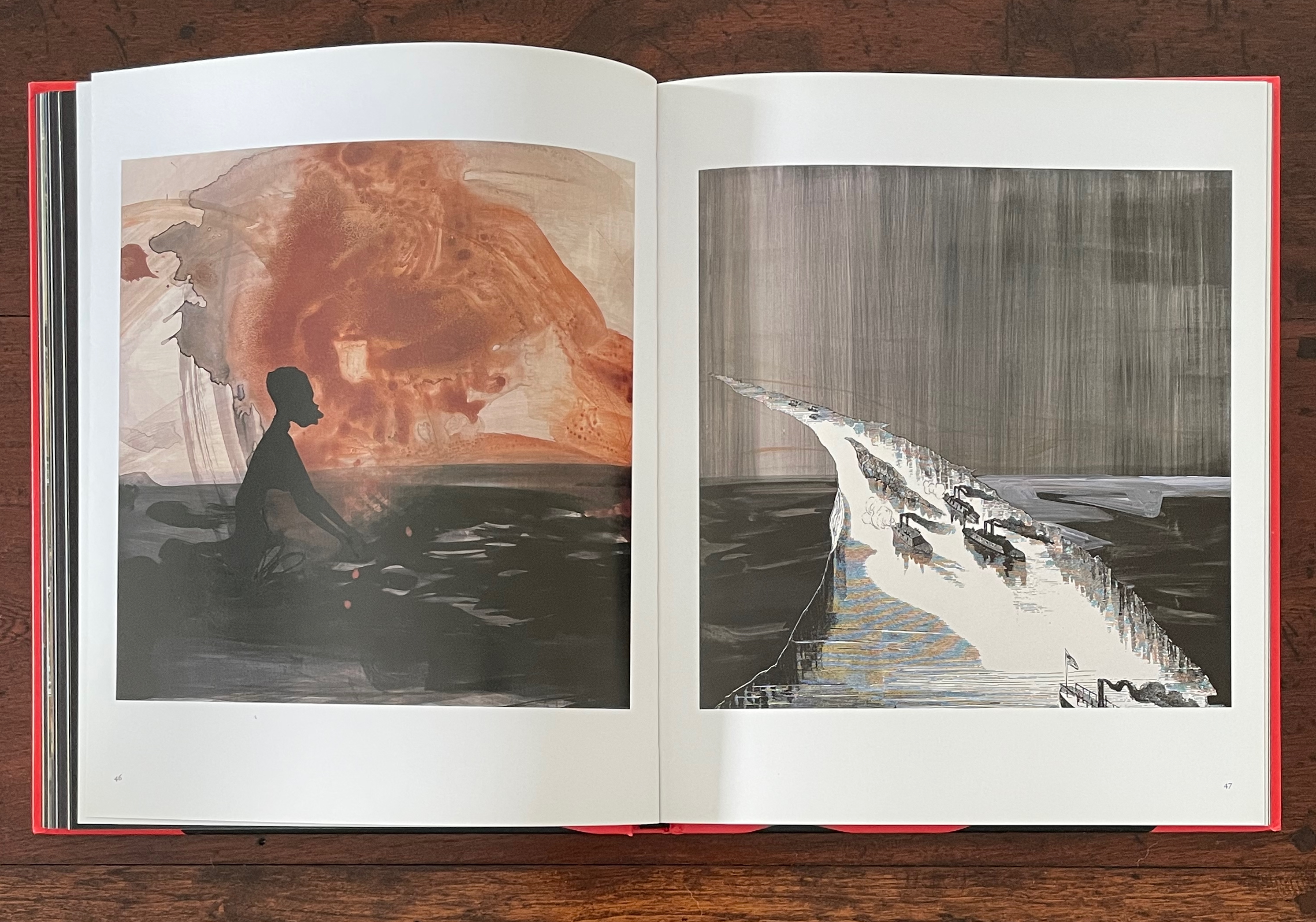
The Table of Contents’ label “Middle Passages” clearly refers to the images on pages 43 to 49 and matches up with Walker’s five Middle Passages works in the upper left of the exhibition wall below. In the exhibition, however, the images proceed in an order different from that in the book.
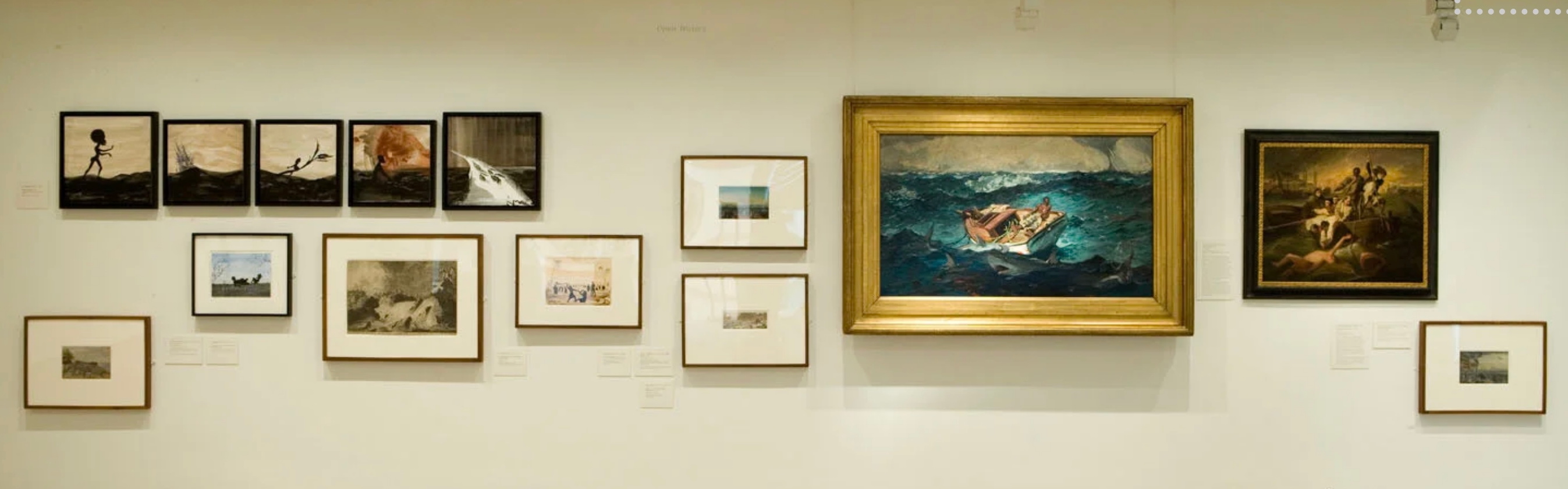
A gallery wall displaying a variety of framed artworks, including sketches and paintings, with a focus on maritime themes.

The exhibition wall matching up with pages 43-49 (“Middle Passages”) in the book.
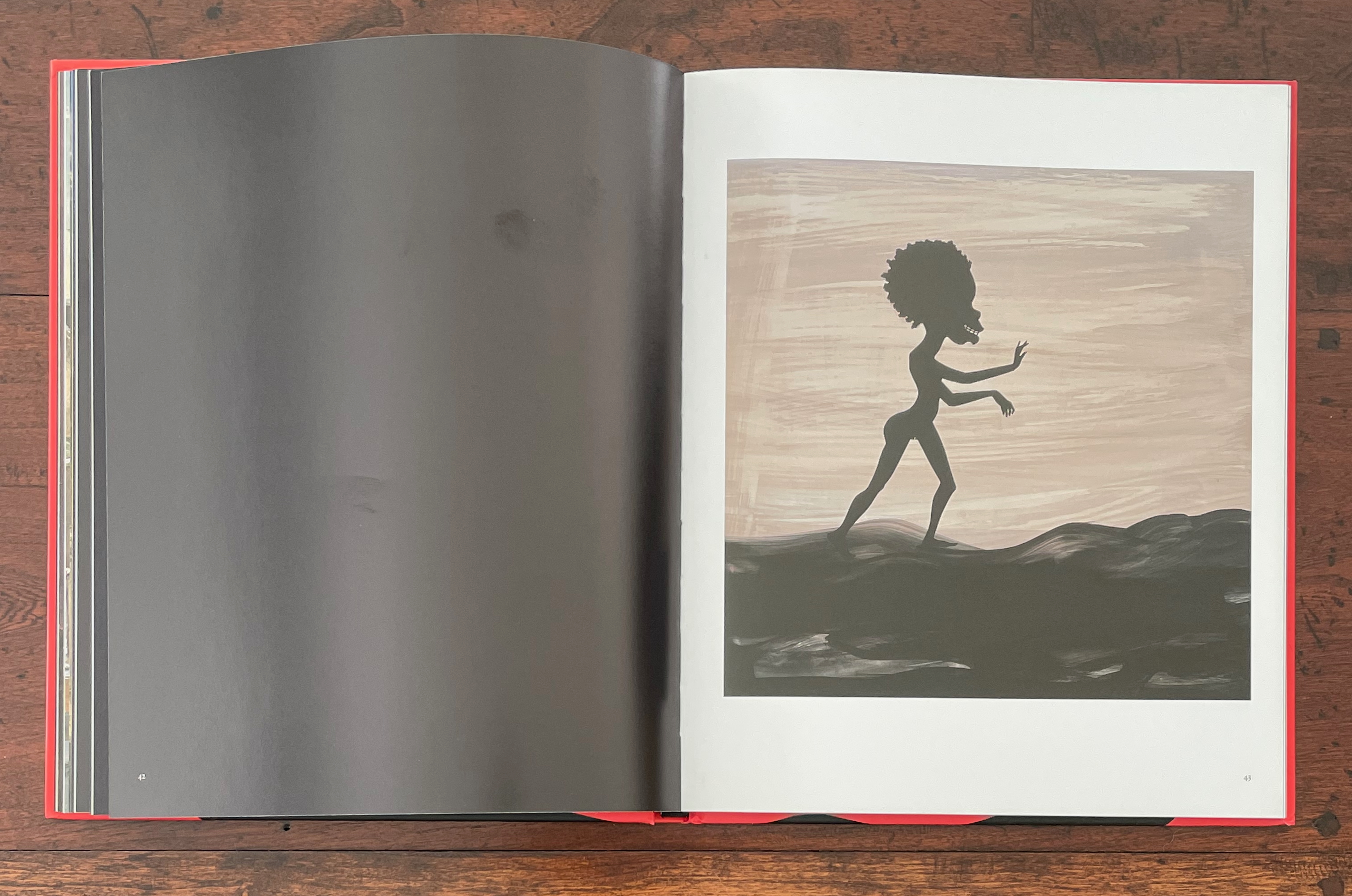
The order of images in pages 43-49 differing from their order on the exhibition wall, the last two of five Middle Passages works now coming after the Homer.

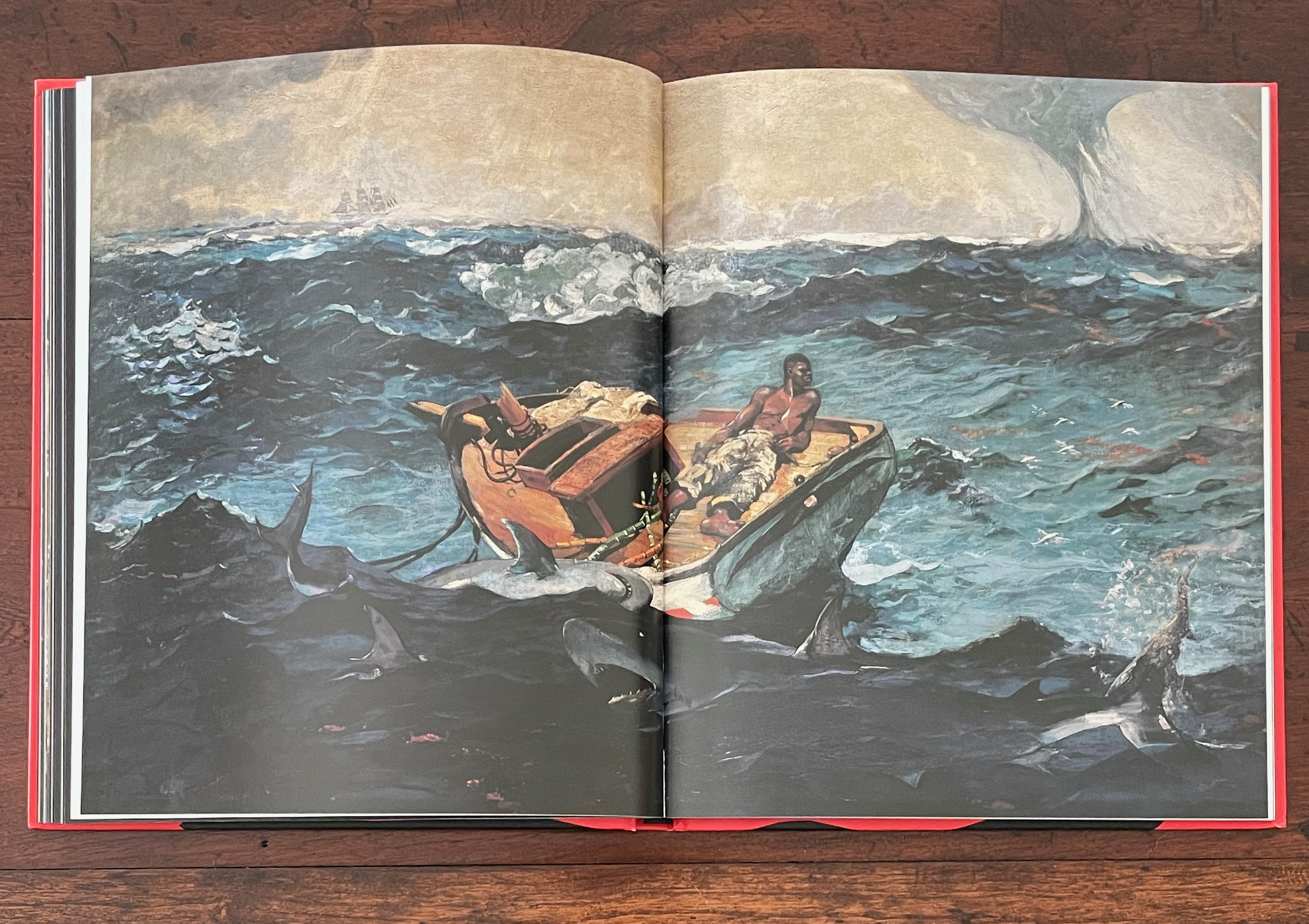
Also, later on, the book uses enlarged details from three of the works on this wall: RN Zeeman’s Water from his series Four Elements (ca. 1651-52), Pieter Nolpe’s The Bursting of St. Anthony’s Dike, 5 March 1651, and Winslow Homer’s The Gulf Stream (1899). Zeeman’s and Nolpe’s works are only represented by enlargements in the book, but this is not just a case of trimming to fit the book. Both are displayed across double-page spreads. Also, a full image of Homer’s The Gulf Stream appears in a double-page spread between the pages displaying three then two of Walker’s Middle Passages works. Moreover, an enlarged detail from The Gulf Stream also appears toward the end of the book. Clearly, the change of order and handling of enlargements are intentional and thematic, not simply forced by the format.

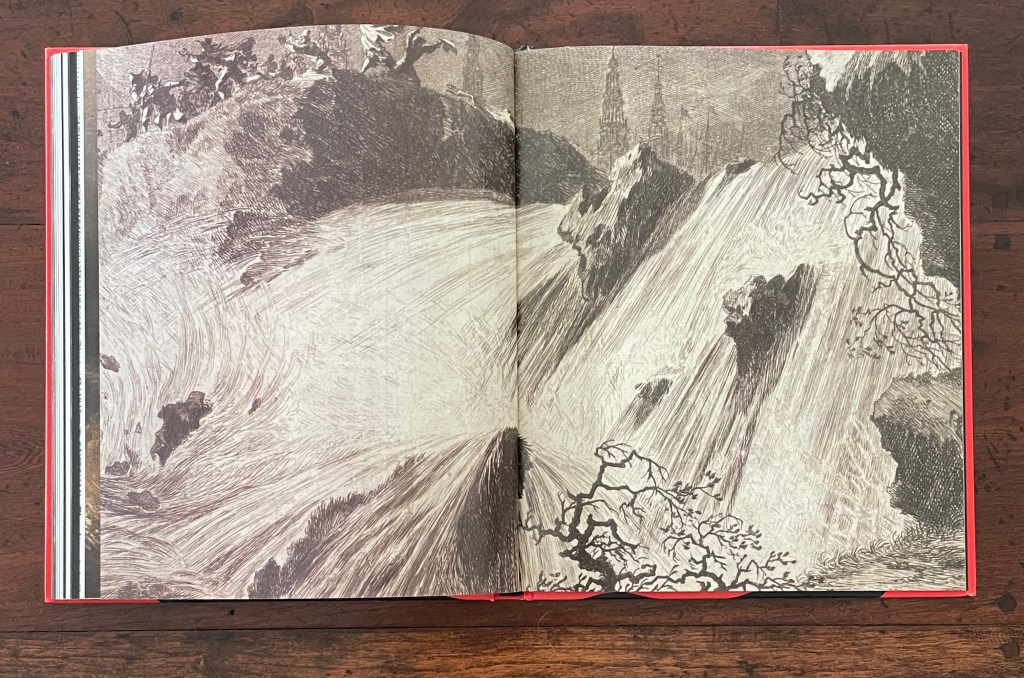
Details from Nolpe’s The Bursting of St. Anthony’s Dike, 5 March 1651; from Zeeman’s Water; and from Homer’s The Gulf Stream used later in the book.

Walker’s use of the typewritten index cards from her American Primitives series may shed light on the labels in the Table of Contents that seem difficult to align with the images in their order in the book. On the dustjacket, Walker writes:

I brought together the art in this book (and the exhibition that preceded it) thinking like a draughtsman, perhaps absurdly so, as even the typewritten texts are from an ongoing series of text pieces I think of as drawings.
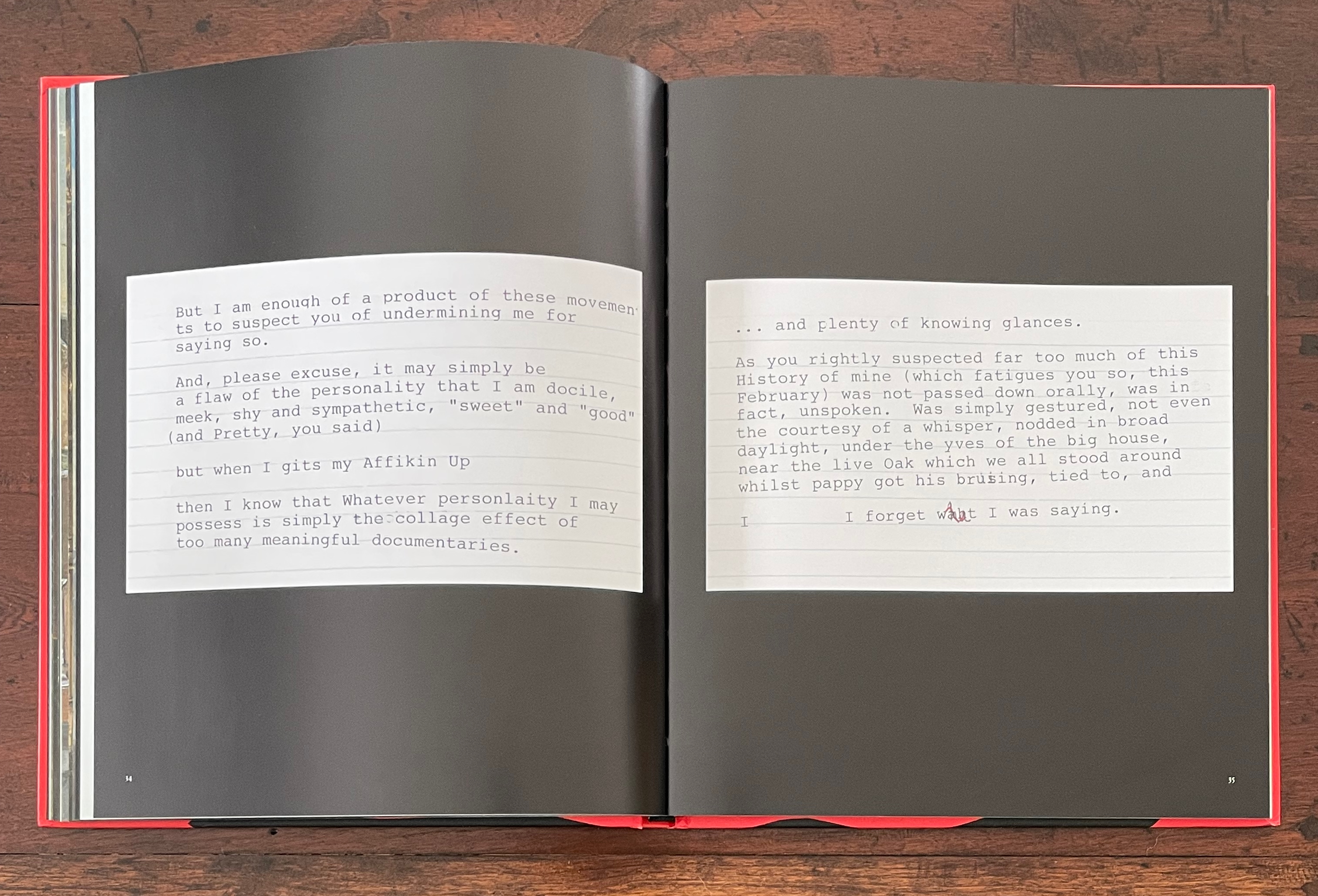
An open book displaying two pages of text written in a handwritten style on lined paper, discussing themes of personality and memory.

If Walker thinks of the American Primitives index cards “as drawings”, might we ought not consider the centered labels without pagination in the Table of Contents as textual drawing, too? Stacked as they are, they certainly echo the totemic Nkisi on the facing page. In Walker’s mind, labels such as “The Failure of Containment”, “Inundation”, “Going Under”, “Darkness”, and “Black” could also be strokes of charcoal, ink, or paint as evocative of Hurricane Katrina or any natural disaster such as those used by the genre painters. The power of After the Deluge lies in its collage of the commonplaces of such disasters with the silhouetted savagery and perversity of our racist pathology. After the Deluge presents that muck as the commonplace landscape (or Lands Cave) that is the US.
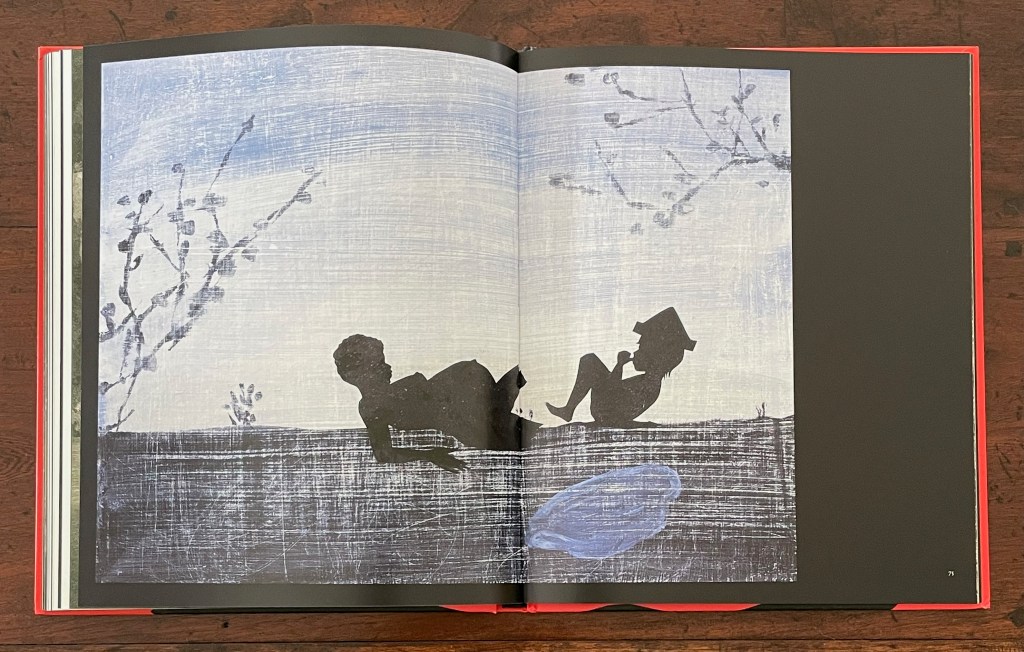
An open book showing a double-page illustration featuring silhouetted figures of a boy and a girl under a branch. The background has a textured, light blue and gray color scheme.

Kara Walker’s Lands Cave from the series American Primitives (2001), pairing silhouettes of a sailor-hatted, thumbsucking white boy with a mutilated Black woman about to give birth.

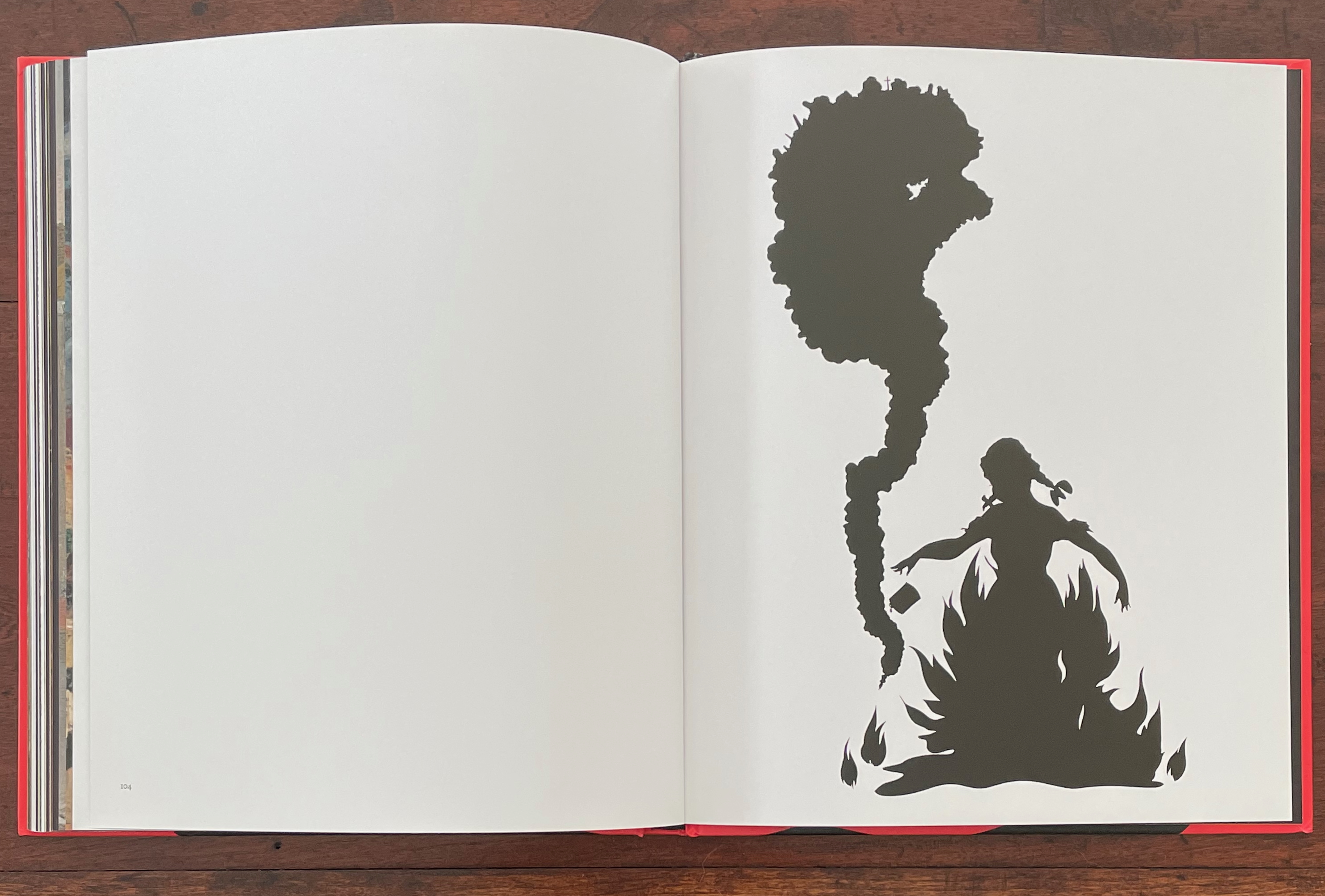
If it is not easy to match up all of the images with the labels in the Table of Contents, the final three double-page spreads align unmistakably with “Portents”: a single white page facing a single black page with Nkisi looming larger now than at the start, a double-page spread of white with Walker’s Burn (1998), a silhouette image of a pig-tailed girl immolating herself as a column of smoke rises in the shape of a Black female, and then the double-page spread of black that concludes these scenes and the entire book.
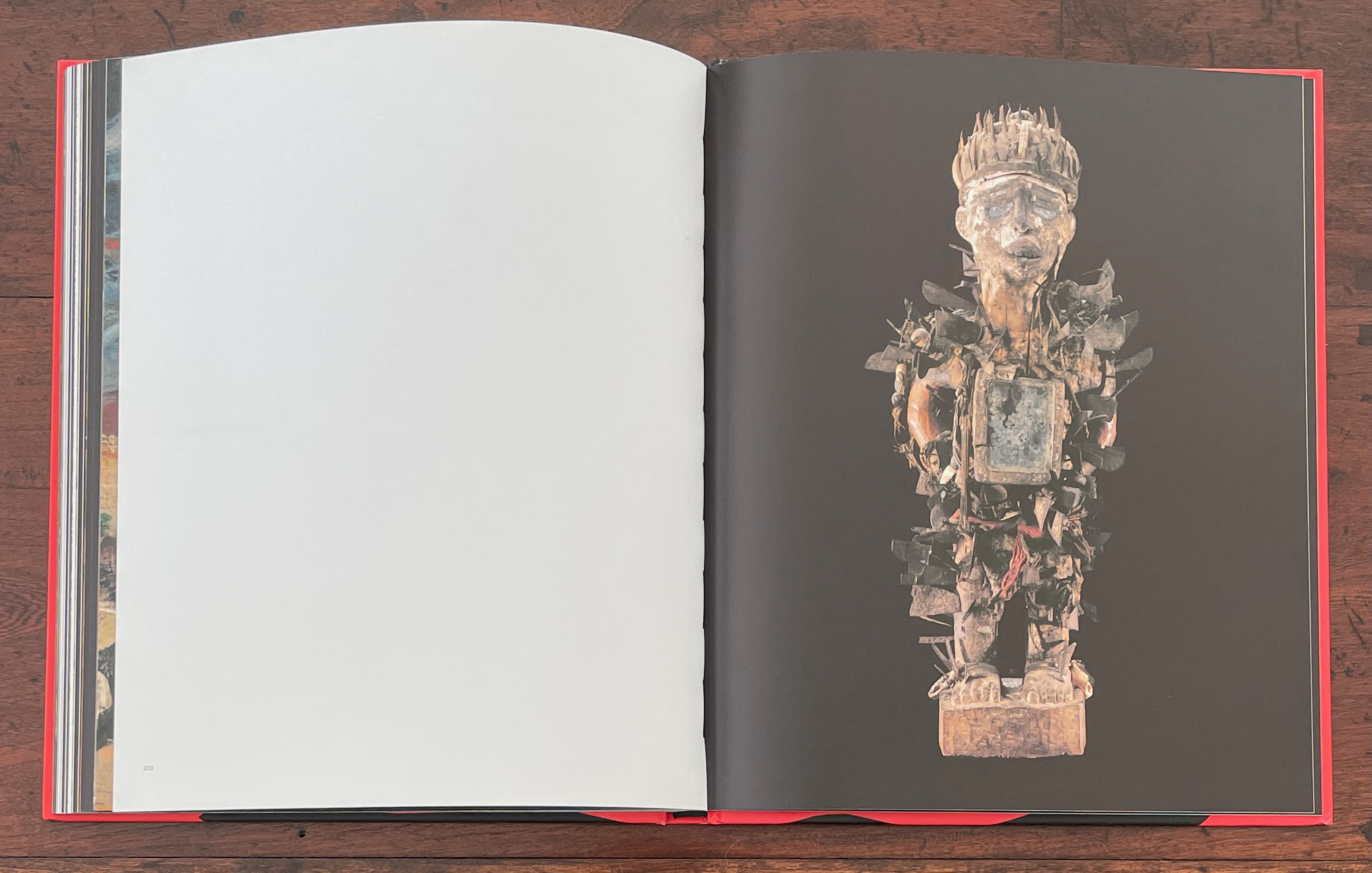
An open book displaying a page with a large, intricate statue surrounded by various elements, set against a dark background.
An open book page featuring a silhouette of a girl surrounded by flames and smoke, illustrating a dynamic scene.
Open book with blank black pages on a wooden surface.

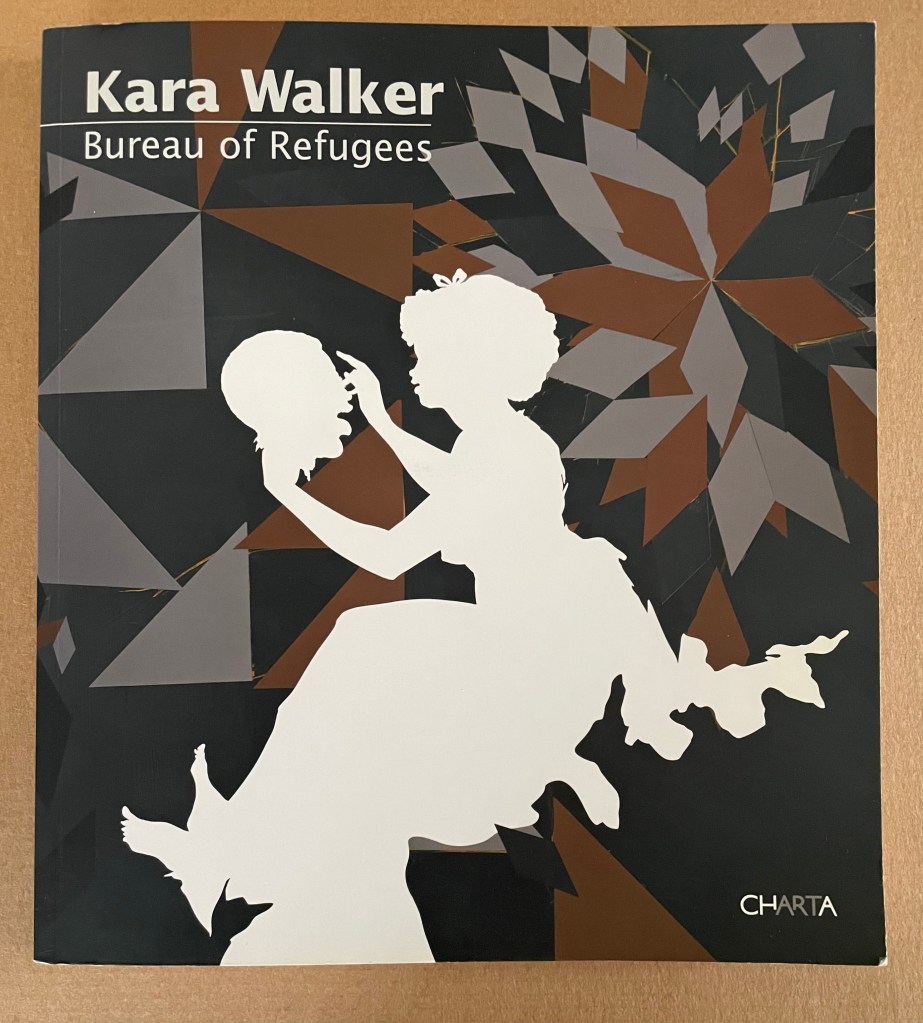
Bureau of Refugees (2008)

Cover of the book 'Kara Walker: Bureau of Refugees' featuring a silhouette of a woman holding a head, set against a geometric background in shades of brown, black, and gray.

Bureau of Refugees (2008)
Kara Walker
Casebound paperback, sewn and glued. H240 x W215 mm. 120 pages. Acquired from Judd Books, 3 March 2024.
Photos: Books On Books Collection.

To judge from images of the exhibition at Sikkema Jenkins & Co., 20 October – 21 November 2007, in New York, Bureau of Refugees (2008) does go beyond an aim at replicating that experience. But it barely exploits or challenges the codex form — less than do After the Deluge and Freedom, respectively.
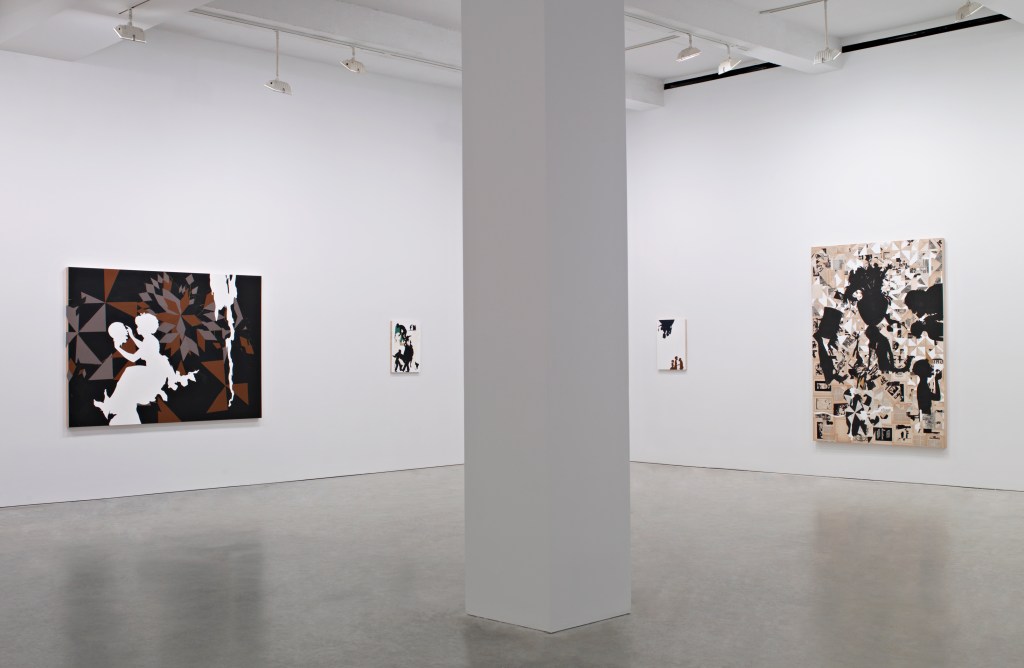
A contemporary art gallery featuring abstract paintings on white walls. The artworks include geometric designs with dark tones and shapes, showcasing a variety of artistic styles.

Installation view: Bureau of Refugees
New work, Kara Walker, Sikkema Jenkins & Co., New York, NY, 2007
Photo: Luciano Fileti, courtesy of Sikkema Malloy Jenkins.

The exhibition was divided between primarily figurative works and others entirely text-based. Large-scale figurative works like Authenticating the Artifact and The Treasure Hunters, left and right above, dominated one room. The show took its name, however, from a series of smaller figurative works, which in turn took its name from its source: The Bureau of Refugees, Freedmen and Abandoned Lands that operated from 1865 to 1872. Groupings of these smaller scale works occupied their own walls. In the Bureau’s Records, “Miscellaneous Papers” National Archives M809 Roll 23, Walker found a list of “Riots and Outrages”, and from this list, she incorporated into the titles of the figurative works the descriptions of the events and acts inspiring the images.
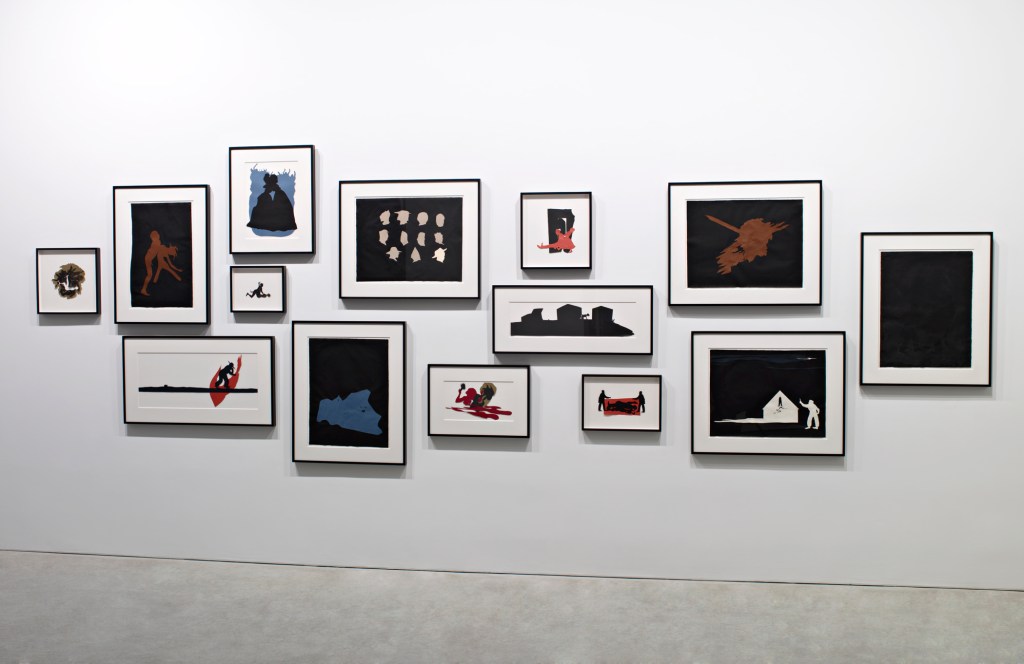
A collection of framed artworks arranged on a white wall, featuring contrasting silhouettes and abstract designs in dark and muted colors.

Grouping of the figurative works from the series Bureau of Refugees, Freedmen and Abandoned Lands- Records, “Miscellaneous Papers” National Archives M809 Roll 23
New work, Kara Walker, Sikkema Jenkins & Co., New York, NY, 2007
Photo: Luciano Fileti, courtesy of Sikkema Malloy Jenkins.
Titles of the five works on the left, Committed an outrage and July 16 Black Girl Beaten and Threatened to kill her and her sister if they did not leave the county and Committed an outrage on a freedwoman and Mr. Alexander, colored preacher brutally beaten and forced to leave.
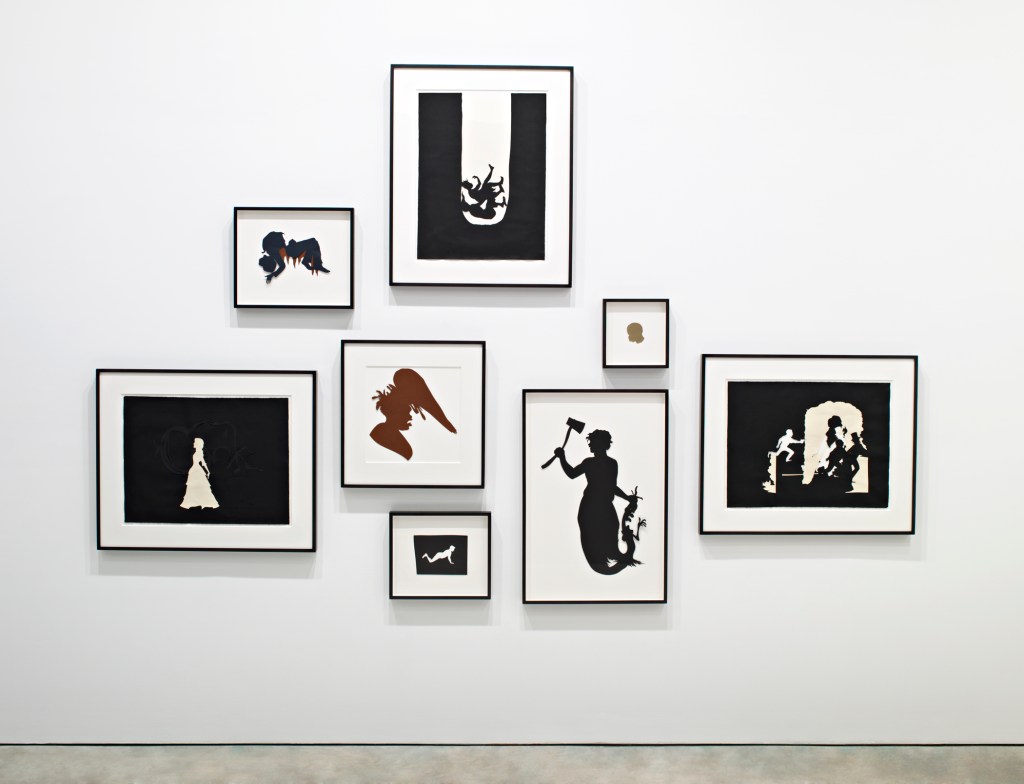
A collection of framed silhouette artworks displayed on a white wall, featuring various figures including a bride, a mermaid, and dynamic scenes in black and white.

Another grouping of the figurative works from Bureau of Refugees series
New work, Kara Walker, Sikkema Jenkins & Co., New York, NY, 2007
Photo: Luciano Fileti, courtesy of Sikkema Malloy Jenkins.
Titles of the four larger works, clockwise from the top, Freedman and Freedwoman thrown into a well in Jefferson Co. and A gang of ruffians and Bradley killed freedwoman with an axe and Between Danville + Somerville.

The second series in the show was the 52-panel Search for ideas supporting the Black Man as a work of Modern Art/Contemporary Painting. A death without end: an appreciation of the Creative Spirit of Lynch Mobs. Its title comes from the search string that Walker entered into Google to generate content for a series of panels handwritten in Sumi-e ink. Each panel (measuring 22.5 by 28.5 inches) compiles phrases that Walker culled from the search string’s results.
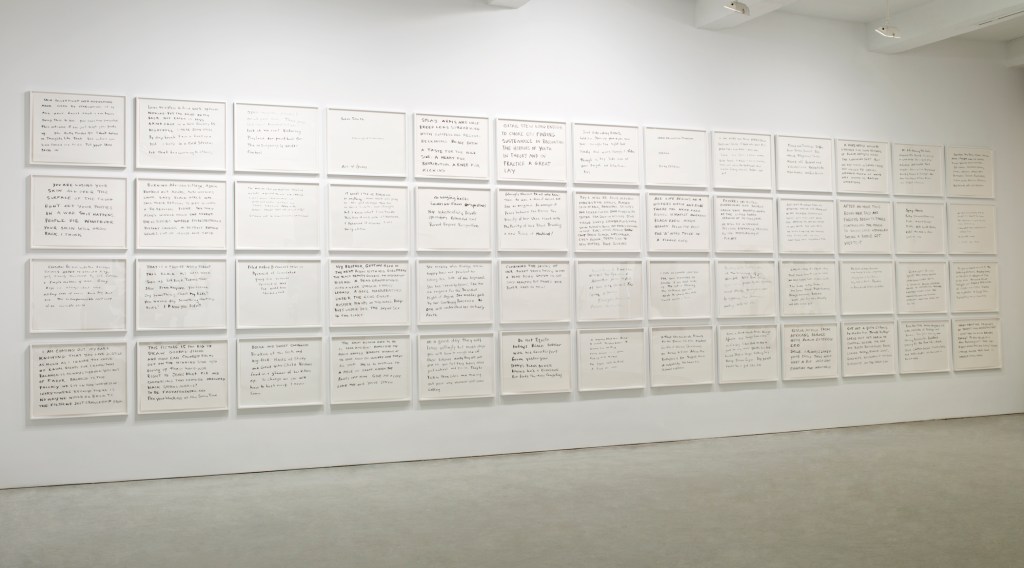
A gallery wall displaying multiple framed sheets of paper with handwritten text, featuring various thoughts and reflections.

Installation view of the textual series: Search for ideas supporting the Black Man as a work of Modern Art / Contemporary Painting; a death without end, and an appreciation of the Creative Spirit of Lynch Mobs
New work, Kara Walker, Sikkema Jenkins & Co., New York, NY, 2007
Photo: Luciano Fileti, courtesy of Sikkema Malloy Jenkins.

The panel’s handwritten text delivers a rushing stream of consciousness, including misspellings, incomplete and ungrammatical sentences, half-scrawled letters and jumps in topic — much as occurs with the American Primitives text pieces in After the Deluge. As Merrily Kerr’s review puts it:

Search for ideas is a cacophonous brew of observations and perspectives. Here Walker explores the potential analogy between racist attitudes in America and those perpetuated by Americans overseas in texts that refer to Saddam Hussein as a “porch monkey” or Arabs as “sand niggers.” Under the rubric of aggressor and complicit victim, the text details rapes and torture, proffers that black soldiers are willing Klansmen, and asks, in the face of global jihad, “how can colored folks get on the winning side w/o giving up their hard-won right to jeans that fit …” Because the fifty-four [sic] parts are hung cheek by jowl and there is no obvious sequencing, it is unclear whether one is supposed to read them left to right, or top to bottom.

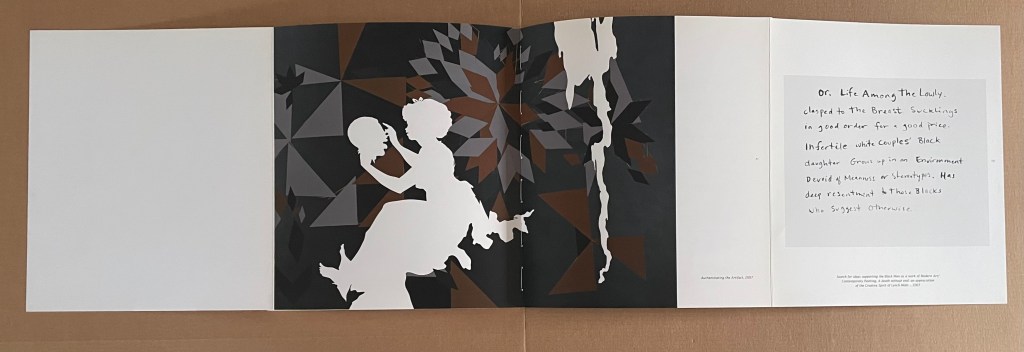
Where the exhibition separated the figurative from the textual, the book weaves them together. Three double foldouts are the closest the book comes to exploiting the codex form. The first presents two Search for ideas panels folded inwards and, when unfolded, a quadriptych of text panels. The second likewise consists of two text panels folded inwards, but when unfolded, they reveal a double-page image of the exhibition’s figurative 5-foot by 7-foot Authenticating the Artifact (2007) alongside one of the Search panels. Like the first, the third double foldout unfolds to present a quadriptych of text panels.

A page featuring handwritten text addressing themes of identity, race, and social commentary, with phrases discussing global issues and cultural perceptions.

First double foldout still folded.

A printed pamphlet with handwritten text on multiple pages discussing themes of justice, identity, and history, featuring phrases about race and societal issues.

First double foldout unfolded.

An open book featuring a stylized silhouette of a woman holding a ball, surrounded by geometric patterns in dark tones. The opposite page contains handwritten text discussing themes of motherhood and identity.

Second double foldout unfolded.

The Search panels horrify with their words while the Bureau images horrify with their figures. Not all of the figurative works focus on America’s Reconstruction past. Some arise in the post-9/11 world and, like the Search series, find their horrors in the Sudan, the Congo, and Iraq. Woven together in the book, the two series underscore Walker’s perception of, in her words,

the continuity of conflict, the creation of racist narratives, or nationalist narratives, or whatever narratives people use to construct a group identity and to keep themselves whole–such activity has a darker side to it, since it allows people to lash out at whoever’s not in the group.

When viewing Kara Walker’s art, I am reminded of the refrain from one of Carly Simon’s songs: “You’re so vain, you probably think this song is about you, don’t you?”. It’s a double-edged irony. The addressee is damned if he doesn’t think it’s about him and damned if he does.

Walker’s is a multi-edged irony that cuts in many directions. Walker inhabits or projects a persona who is masochist and sadist, subject and object, self-centered and self-loathing, other-obsessed and other-fearing, Slave and Mistress. As a white viewer, collector, and writer about these works of book art, am I not entangled and complicit, too, however I respond to it? Caught out in shame and privilege, am I so vain that I think this art is about me? Damned if I don’t, damned if I do. Walker’s is the art of portraying a social madness. All parties — artist and viewer — are stuck in the muck of After the Deluge (2007), the muck of racist pathology. The terrible power of Walker’s art keeps our eyes fixed on it. Where either party can find solace is uncertain.

Further Reading

Tia Blassingame“. 17 August 2020. Books On Books Collection.

Emory Douglas“. 9 January 2026. Books On Books Collection.

Sarah Matthews“. 15 February 2025.Books On Books Collection.

Arial Robinson“. 15 May 2023. Books On Books Collection.

Ruth E. Rogers“. 17 November 2025.Books On Books Collection.

Clarissa Sligh“. 2 September 2020. Books On Books Collection.

Carrie Mae Weems“. 14 February 2025. Books On Books Collection.

Evenhaugen, Anne. 3 September 2012. “Artists’ Books at AA/PG: Kara Walker’s Pop-up“. Unbound. Washington, D.C.: Smithsonian Library.

Gabor, Nora. 18 February 2021. “Black History and Experiences through Book Arts“. The Full Text: News about library resources and services. Chicago, IL: DePaul University. Accessed 22 January 2024.

Gleek, Charlie. “Centuries of Black Artists’ Books“, presented at “Black Bibliographia: Print/Culture/Art” conference at the Center for Material Culture Studies, University of Delaware, 27 April 2019, pp. 7-8. Accessed 20 July 2020.

Kerr, Merrily. Jan/Feb 2008. “Kara Walker at Sikkema Jenkins & Co., New York“. Art on Paper. 12:3, 85-86.

Walker, Kara Elizabeth et al. 2003. Kara Walker : Narratives of a Negress. Edited by Ian Berry, Darby English, Vivian Patterson and Mark Rienhardt. Cambridge, MA: MIT Press. This exhibition-based volume is closest to the Bureau of Refugees‘ near-artist’s-book status. Walker’s writings on 3×5 index cards play the same role that the 54 panels of Search for ideas play in Bureau of Refugees. The landscape book’s monumentality evokes the scale of installations such as Virginia’s Lynch Mob (1998) and For the Benefit of All the Races of Mankind (Mos’ Specially the Master One, Boss. An Exhibition of Artifacts, Remnants, and Effluvia EXCAVATED from the Black Heart of a Negress VIII (2002) that appeared in the exhibitions organized by The Frances Young Tang Teaching Museum and Art Gallery at Skidmore College and the Williams College Museum of Art in 2003.

Walker, Kara Elizabeth et al. 2007. Kara Walker : My Complement, My Enemy, My Oppressor, My Love. Minneapolis: Walker Art Center.

Walker, Kara. 2010.”Riots and Outrages“. The Georgia Review. 64:1, 59-68.

Walker, Kara Elizabeth et al. 2016. The Ecstasy of St. Kara. Cleveland, OH: The Cleveland Museum of Art.

Walker, Kara Elizabeth et al. 2019. Kara Walker : Fons Americanus. Ed. by Clara Kim. London: Tate.

Books On Books Collection – Ryuta Iida

Silent Book, vol. 11

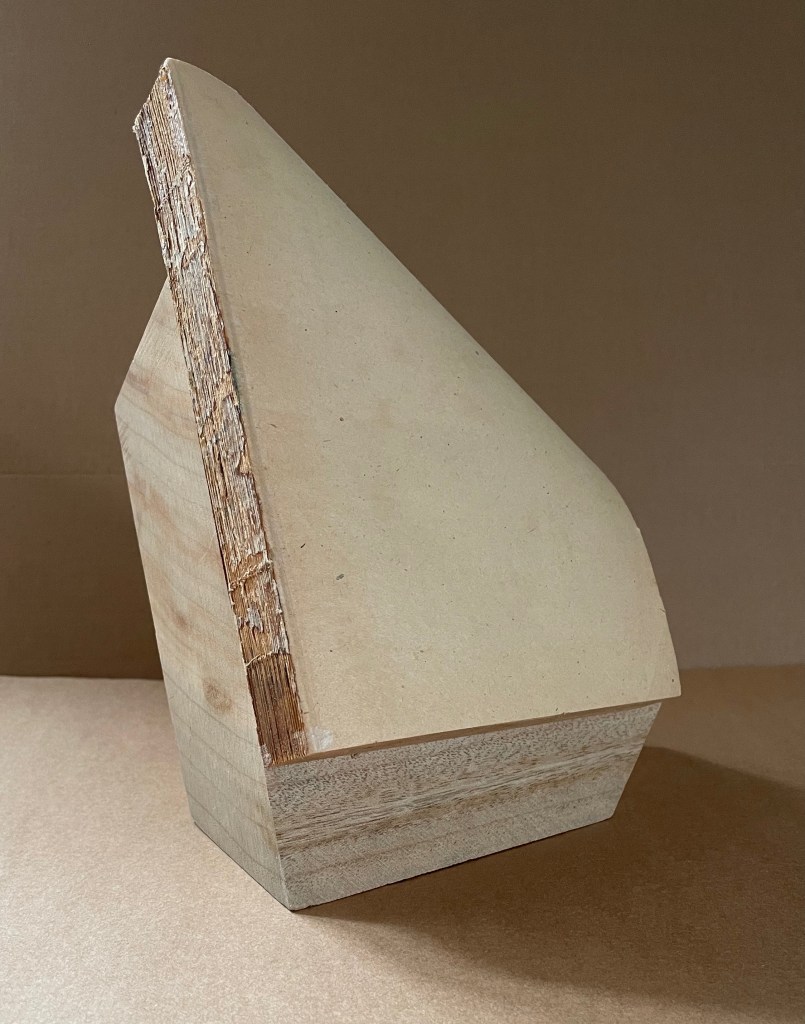
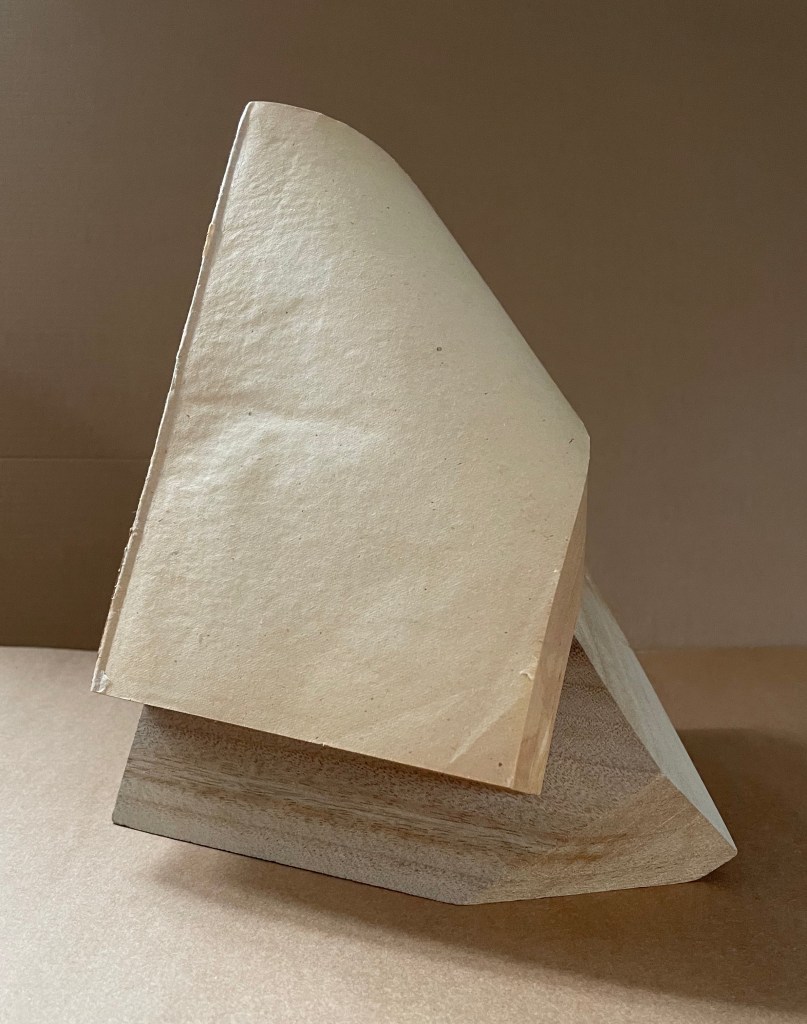
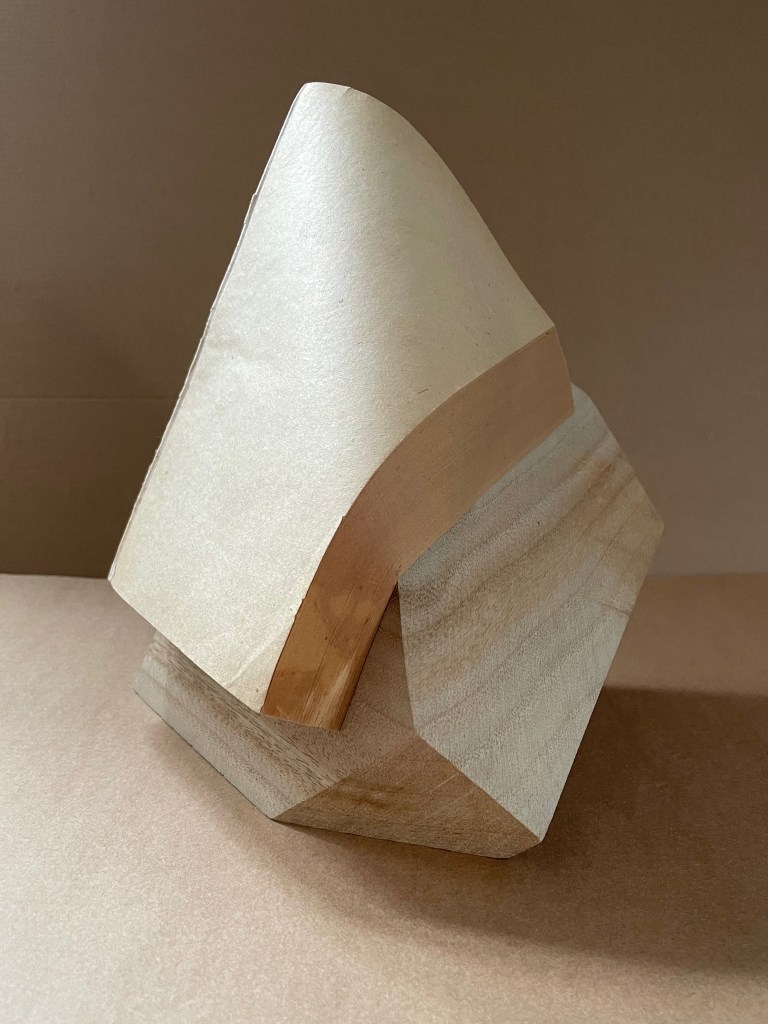
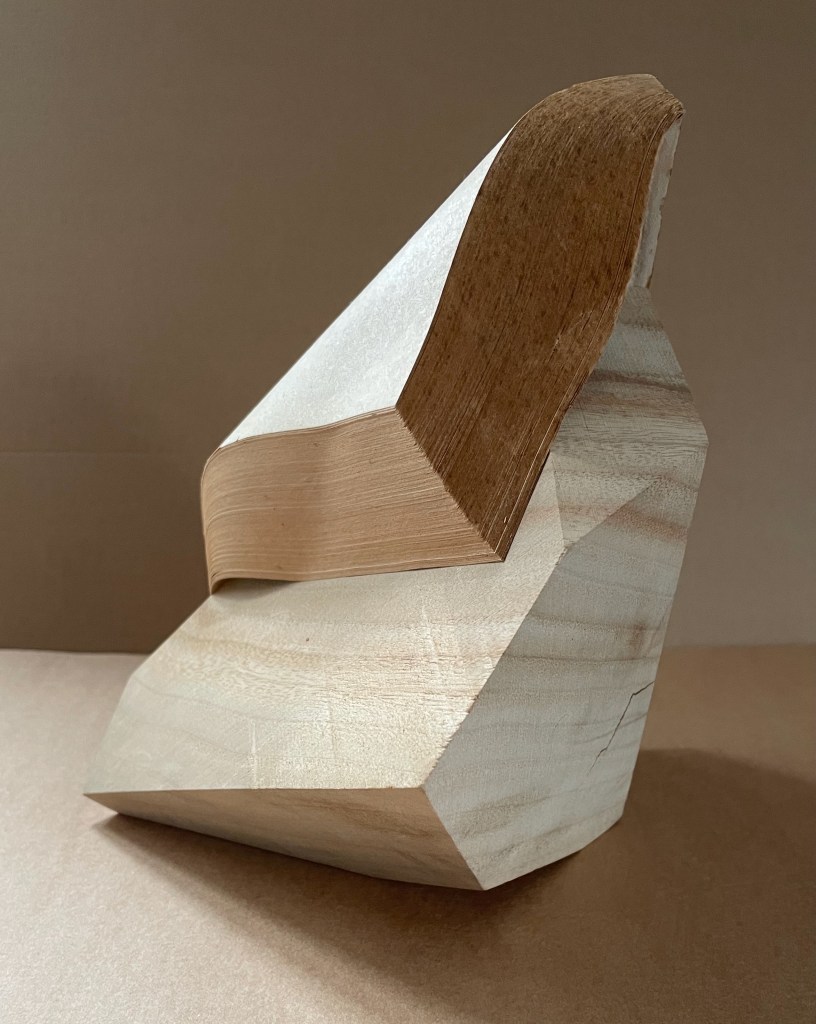
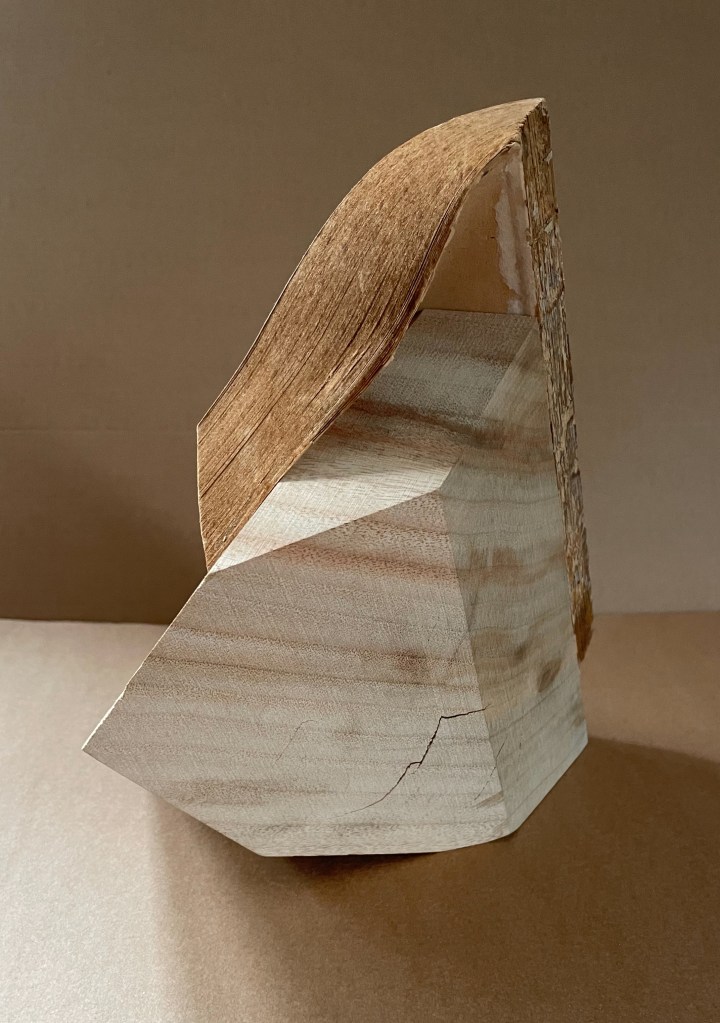
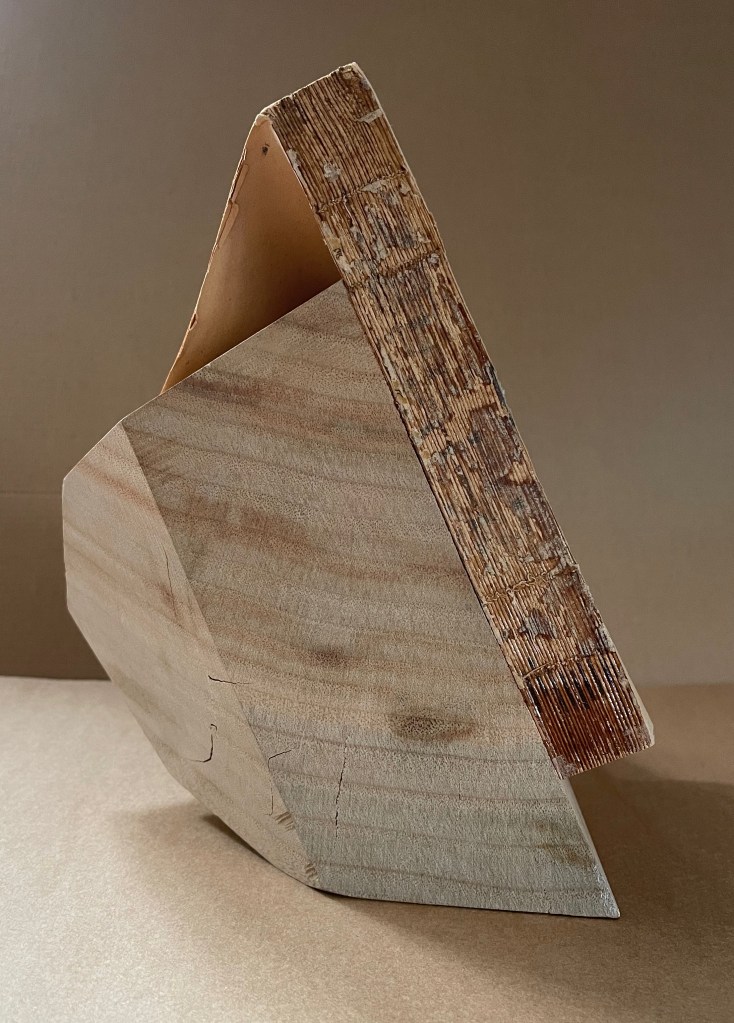
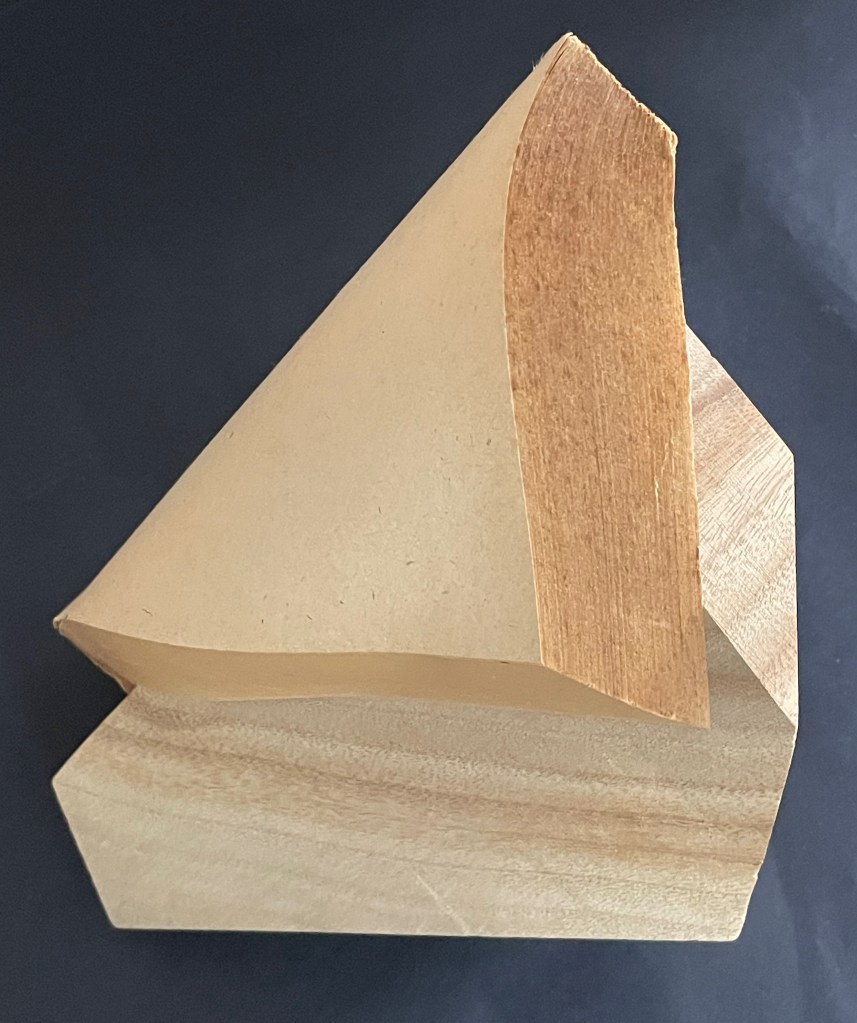
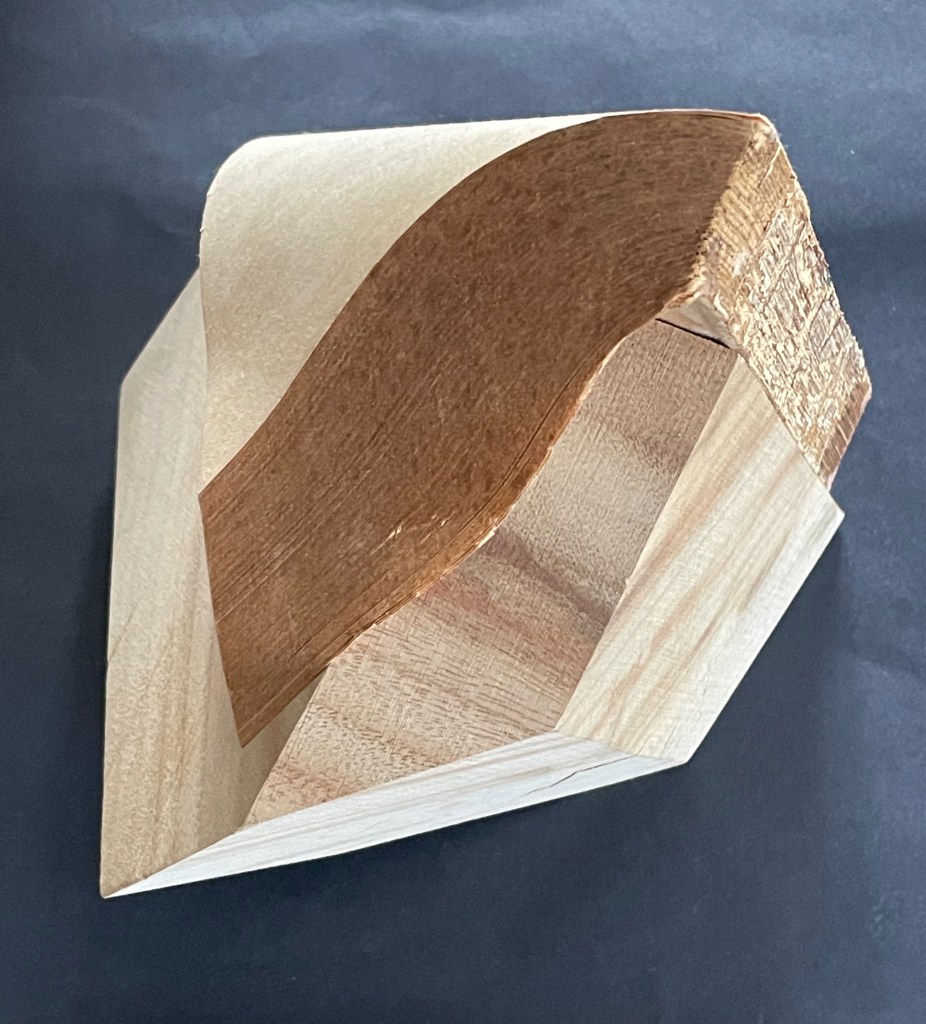
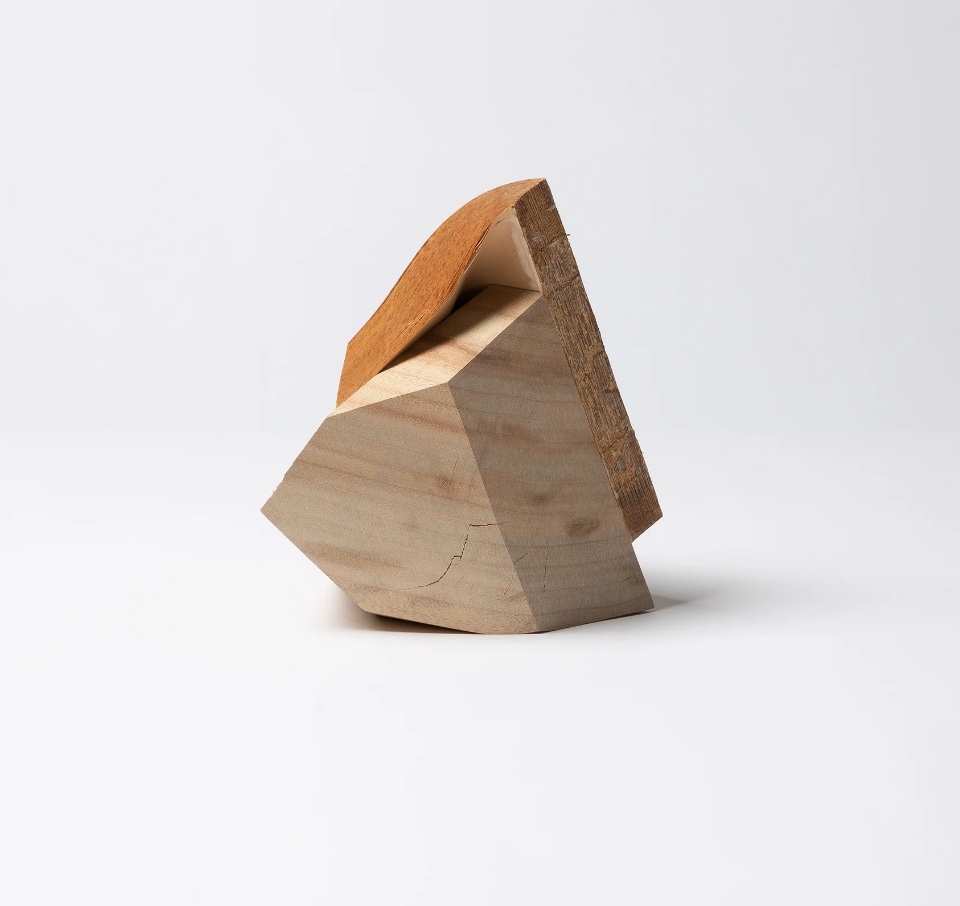
Artistic wooden sculpture resembling a geometrically abstract book, featuring angular planes and a smooth finish.

Silent Book, vol. 11 (2023)
Ryuta Iida
Altered book, camphor tree stump, and glue. H210 × W170 × D190 mm. Unique. Acquired from Fragile Books (Tokyo), 20 August 2024.
Photos: Above, courtesy of Fragile Books; below, Books On Books Collection.

The cover, door, table of contents, numbering, text, and endnotes are all filled with a series of information. I thought to stop and crystallize all the functions of the “book,” … I decided to crystallize it. It took the time to go through the hands of people, the old book that finally reached me, sealed on a pedestal, it is now ripe for its next role. (Artist’s statement)

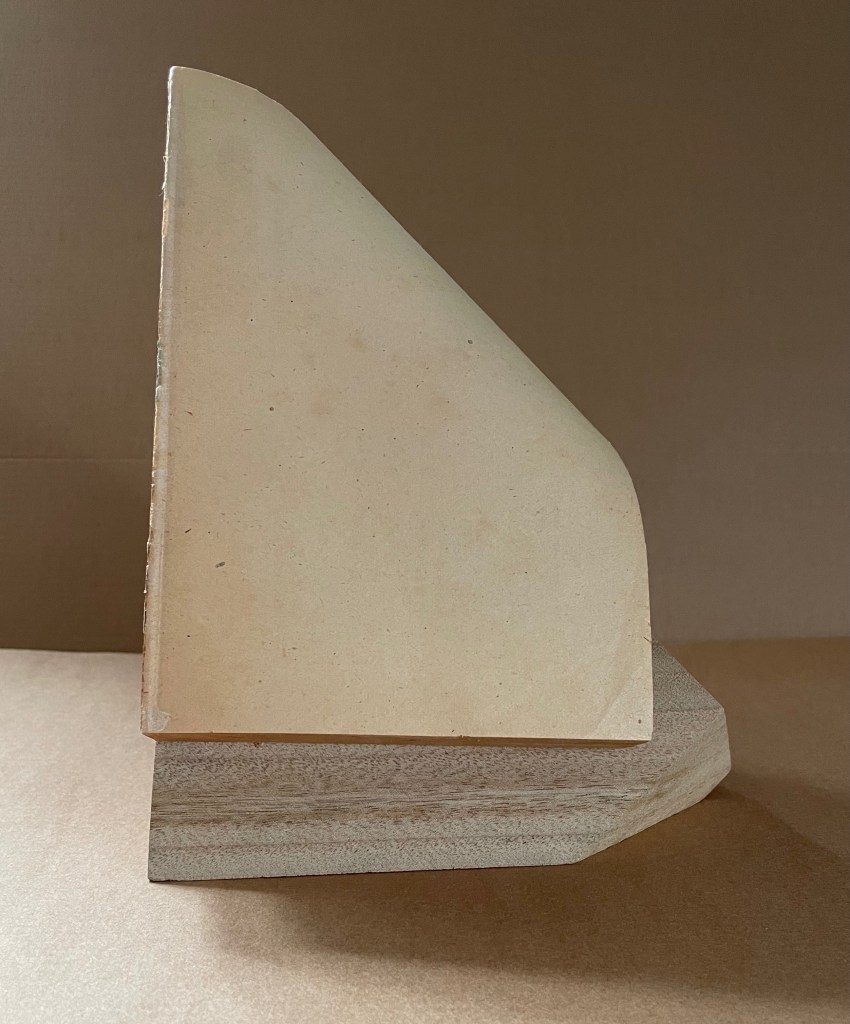
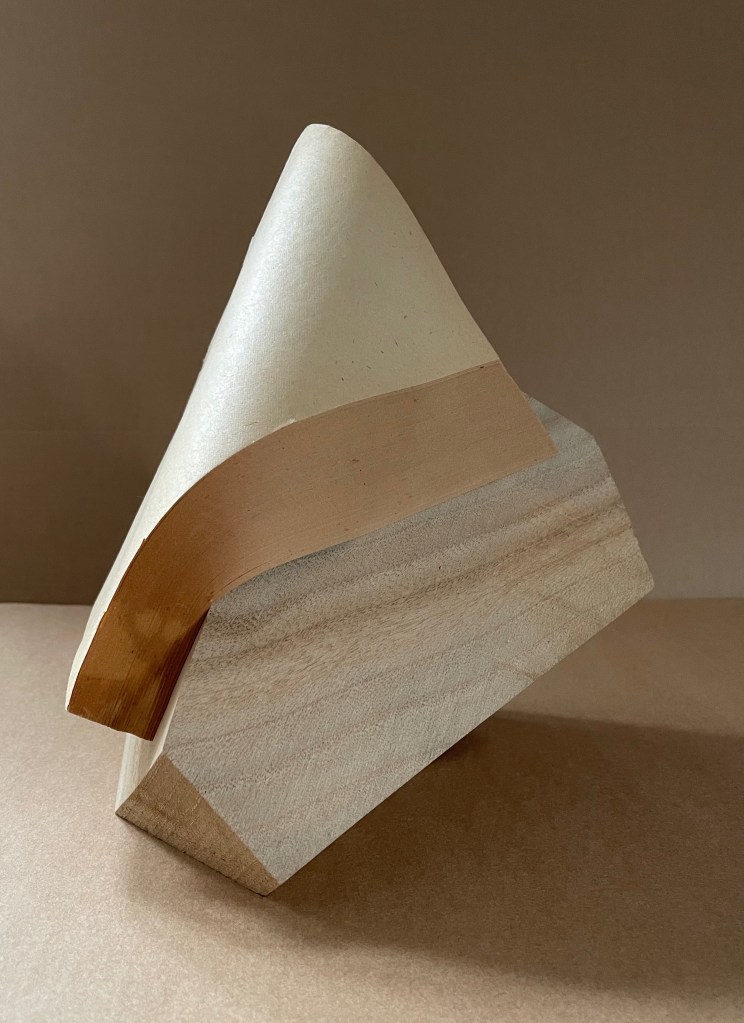
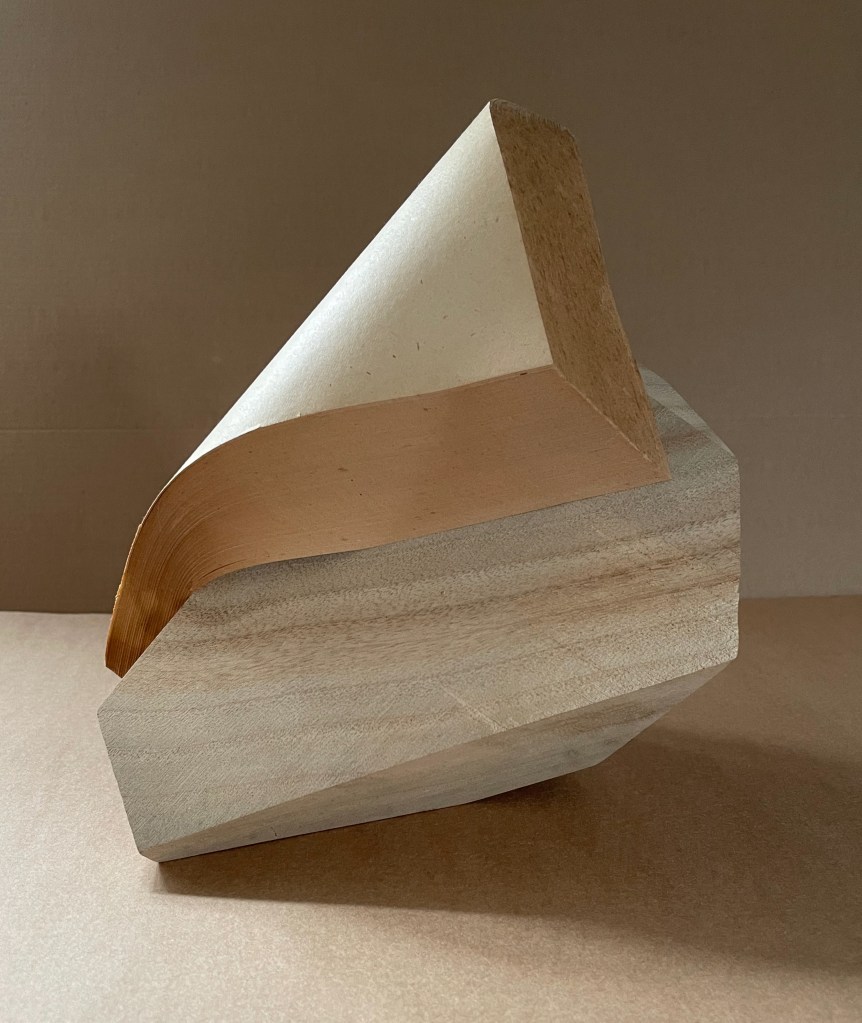
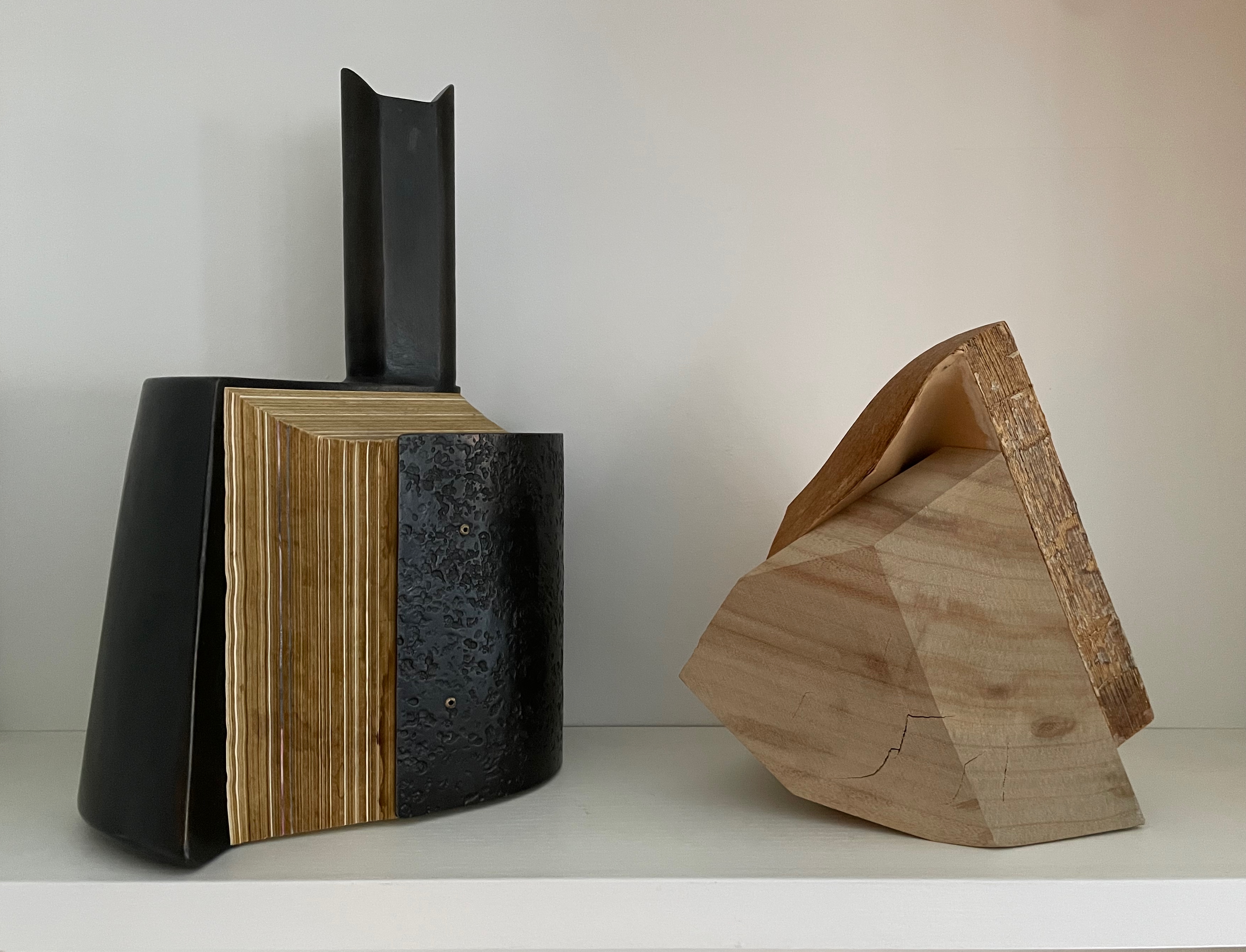
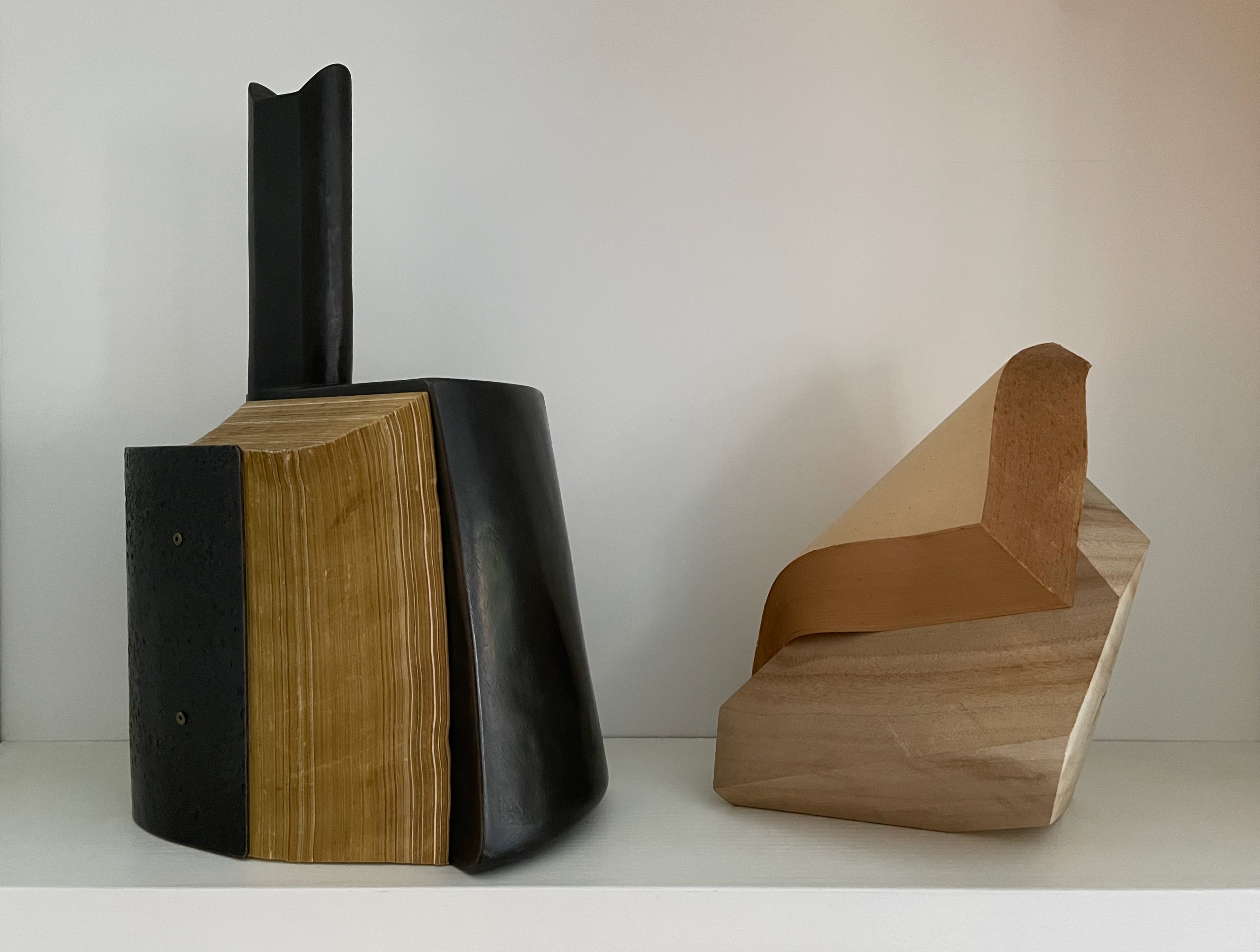
“Crystallized” is not the first word that comes to mind when viewing and handling this eleventh in Ryuta Iida’s series Silent Book. Perhaps it does for the angled planes of the cut block of camphor wood, but for the coverless codex, folded, draped, moulded, carved, and sculpted come closer. Two names that might not spring to mind (but should) are Giambologna (Jean Boulogne) and Gian Lorenzo Bernini. Like them, Iida offers us more than a single or primary vantage point from which to appreciate his work. Like Giambologna’s Abduction of a Sabine Woman (Loggia dei Lanzi, Florence) or Bernini’s Apollo and Daphne (Galleria Borghese, Rome) Silent Book must be circled and viewed in the round. The nine images below show the work turned right to left in stages.

Far as Silent Book is from the figurative, violent, and ornate features of the 16th and 17th century masterpieces, it still harbors its own complexities of line, shadow, texture, and form. There is a volume of dynamics between and among them that belies the work’s title. Note how the layers of pages echo the wood’s grain, and how the color and texture of the page surface contrasts with those of the book’s top edge, and how that contrast reverberates with the shifting colors of the wood. Iida has moulded and sealed the book block so that the top edge curves to a point in a duet with the cut angles of the wood block.

Silent Book has many kin in the world of book art, works that make the content of a ready-made volume inaccessible and make something anew from the material object. Too often this sub-genre has been dismissed as a fetishization of the book. This overlooks how Silent Book and its kin make us think about the book as a material for making art and as a source of metaphors, and we overlook what the individual artworks are. By sealing away the content of a book, giving the book block a sinuous shape, and fusing it with a carved block of wood, Iida invites us to look afresh.

In the Books On Books Collection, several other works share this play of inaccessibility with tangibility: Barton Lidice Beneš’s Untitled (1973), Andrew Hayes’ Offset (2013), Jacqueline Rush Lee’s The First Cut and Silenda (both 2015), Doug Beube’s Red Infinity #4 (2017), Lorenzo Perrone’s Kintsugi (2018), and Chris Perry’s 217 Ripples: Sediment (2020). Of these, Offset seems closest to Silent Book. Comparison can increase appreciation of each and their sub-genre.

Both Hayes and Iida have managed to elicit a sense of action and motion from their materials. From one view of Offset, metal embraces the body of the book; from another, the book pushes the metal apart. From one side of Silent Book, the upward-angled block of wood supports the coverless codex folding over and slipping down its pedestal; from another, the book drapes a protective arm over the sideways-angled block.

Views of Offset (2013) by Andrew Hayes and Silent Book (2023)

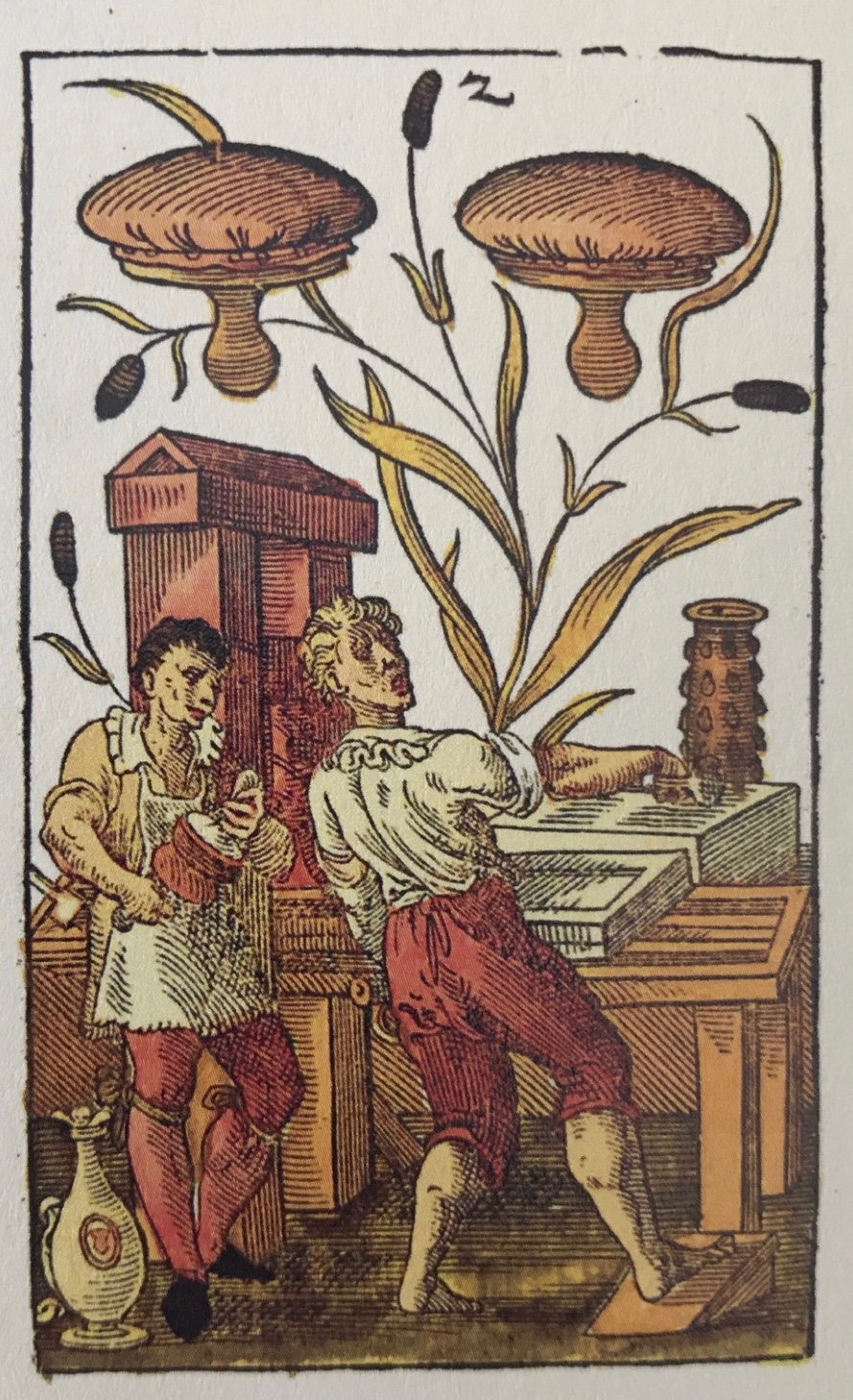
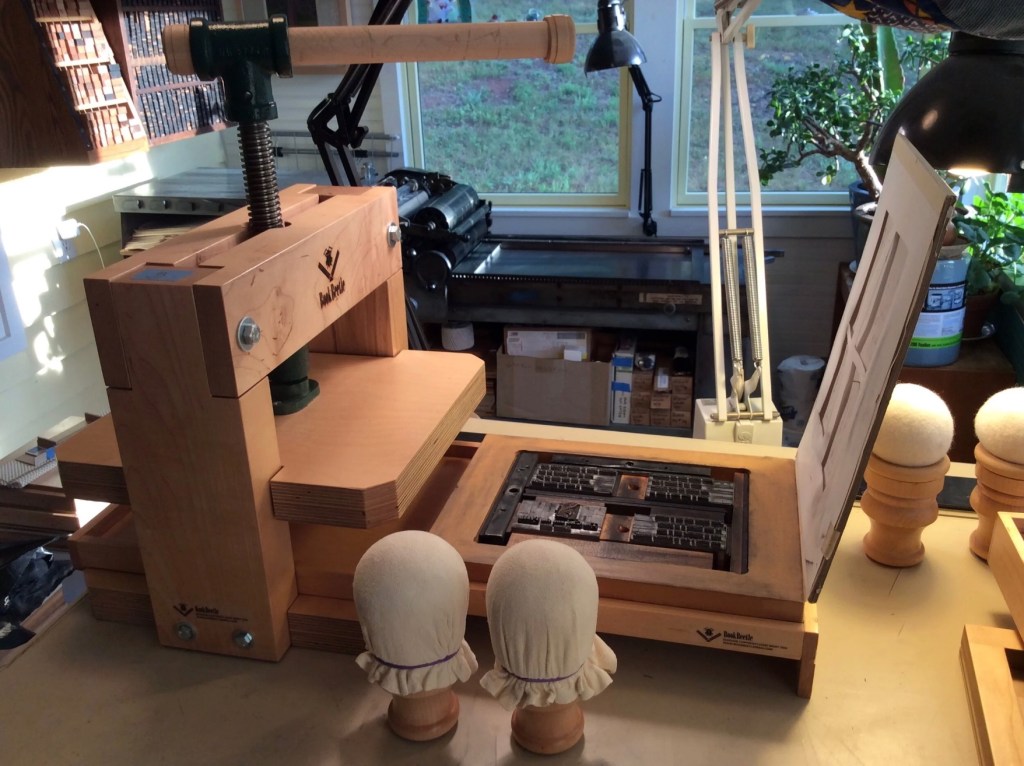
The titling of the two works raises appreciable similarities and differences. Offset suggests the printing method of the same name, which does involve metal plates. The overall shape, however, suggests some strange assemblage of early letterpress components: the bulbous ink balls (or dabbers) with their handles, the torque bar, and the metal furniture locks. The offset position of the piece’s “handle” also reflects the title. What can’t be appreciated from the images is that Offset wobbles if touched in the slightest.

A vintage illustrated print showing two men engaged in a printing process, featuring a press and decorative plants above them.

“The two of printer’s dabbers” from Jost Amman’s 1588 deck of cards.

A wooden book press positioned on a workspace, featuring a large handle, a platform for printing materials, and two covered objects resembling human figures, with natural light illuminating the scene.

The BookBeetle Press, a portable screw press designed and built by Josef Beery. Reproduced with permission of Beery.

The title of Silent Book refers, of course, to the book block’s being sealed, an obvious visual/verbal pun. None of its information passes the lips of its pages. Like Offset, however, the title is also oblique. Although the derivation of the word book from the Old German Buche (meaning “beech”) is a debatable assumption, it’s widely accepted enough to allow that the block of wood is also a silent book.

Now imagine the substitution of a large block of pink bubble gum for the book material in Offset and Silent Book. Not a block of gum in the shape of a book, but an oversized, unchewed block of gum. Something very different to chew on now, isn’t it? The ways in which book artists manipulate the material and metaphor of the book vary every bit as much as the ways in which painters, sculptors, and other artists vary their techniques, materials, and subjects. Even within the slice of book art that focuses on physical inaccessibility, such as Marcel Broodthaers’ Pense-Bête (1964), Wolf Vostell’s Betonbuch (1971), Irwin Susskind’s Book Faced Down – Embedded in Plaster (1999), Jonathan Callan’s Rational Snow (2002), Anselm Kiefer’s Untitled (Constellation Book) (2004), Hanne Stochholm Exe’s Remake (2015), and Neil Nenner and Avihai Mizrahi’s Cover Story (2017), the variety abounds. Ryuta Iida’s series Silent Book is a resounding reminder.

Further Reading

Barton Lidice Beneš“. 21 December 2025. Books On Books Collection.

Doug Beube“. 21 April 2020. Books On Books Collection.

Hanne Stochholm Exe“. 29 September 2018. Bookmarking Book Art.

Ximena Pérez Grobet“. 7 July 2021. Books On Books Collection.

Andrew Hayes“. 4 September 2019. Books On Books Collection.

Ivon Illmer“. 22 December 2025. Books On Books Collection.

Guy Laramée“. 18 September 2019. Books On Books Collection.

Lucia Mindlin Loeb“. 28 November 2022. Books On Books Collection.

Jacqueline Rush Lee“. 8 October 2019. Books On Books Collection.

Neil Nenner and Avihai Mizrahi, see “Hanne Stochholm Exe“.

Lorenzo Perrone“. 8 September 2019. Books On Books Collection.

Chris Perry“. In process. Books On Books Collection.

Beery, Josef. 15 September 2021. “Inking Without A Roller…“. BookBeetle Press.

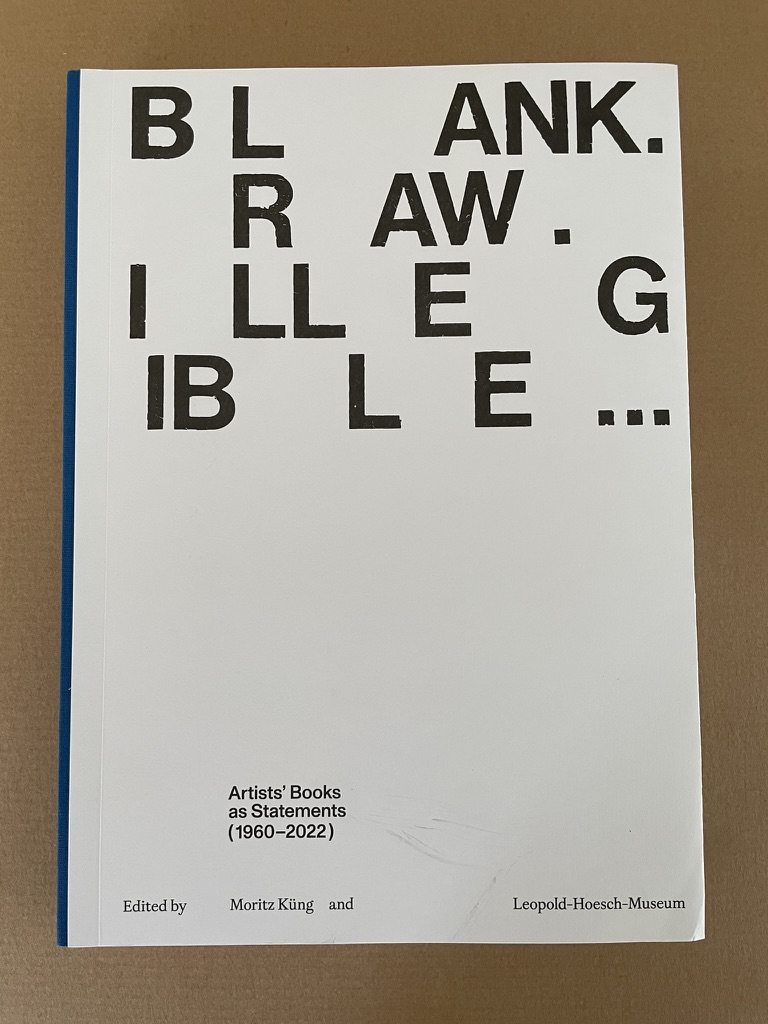
Küng, Moritz (ed.). 2023. Blank. Raw. Illegible … : Artists’ Books as Statements (1960-2022). Köln: Verlag der Buchhandlung Walther und Franz König.

Peachey, Jeff. 14 July 2020. “Printer’s Ink Balls: Before the Roller or Brayer“. Peachey Conservation.

Books On Books Collection – Sunkyung Cho

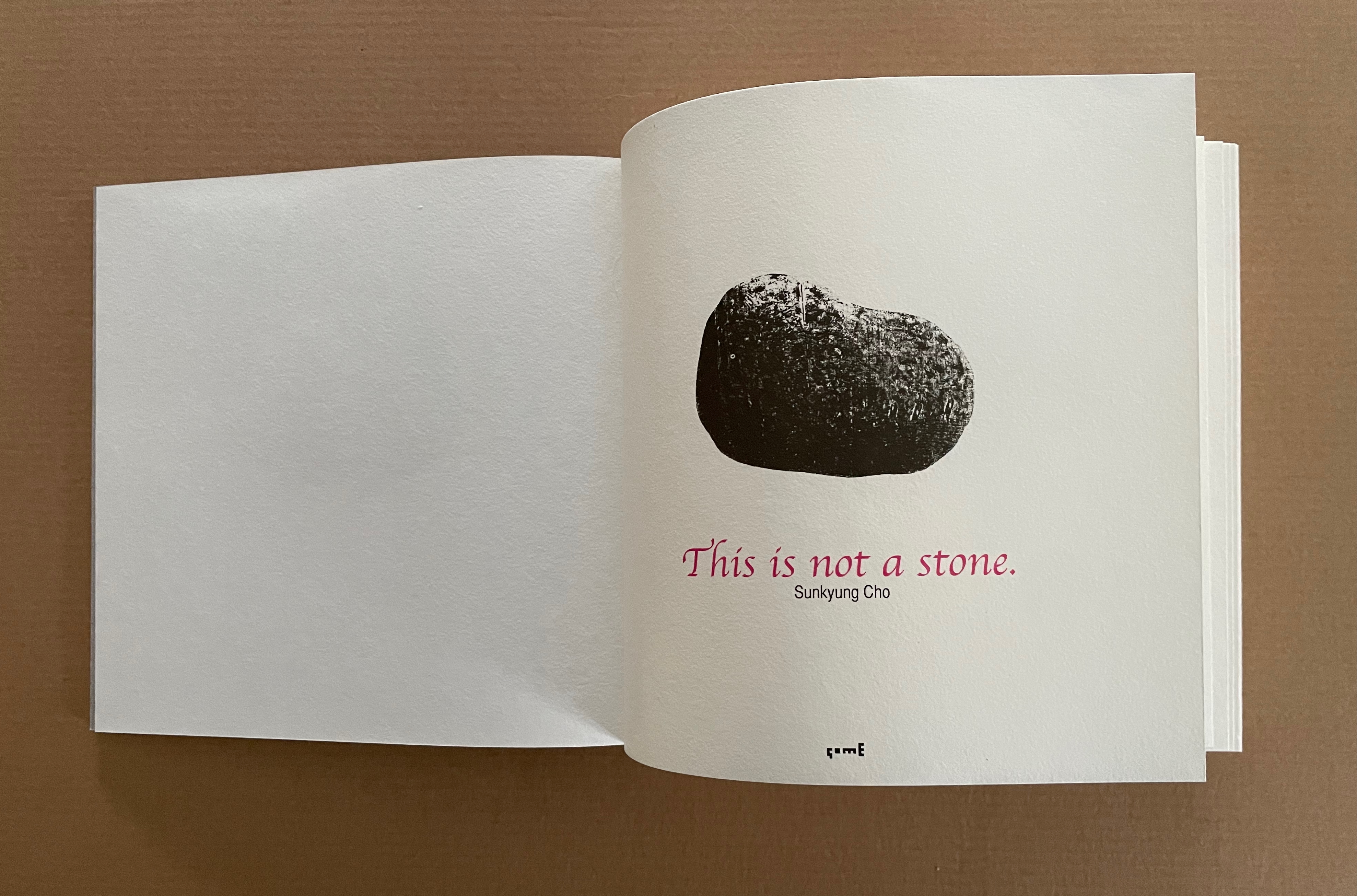
This is not a stone (2017)

This is not a stone (2017)
Sunkyung Cho
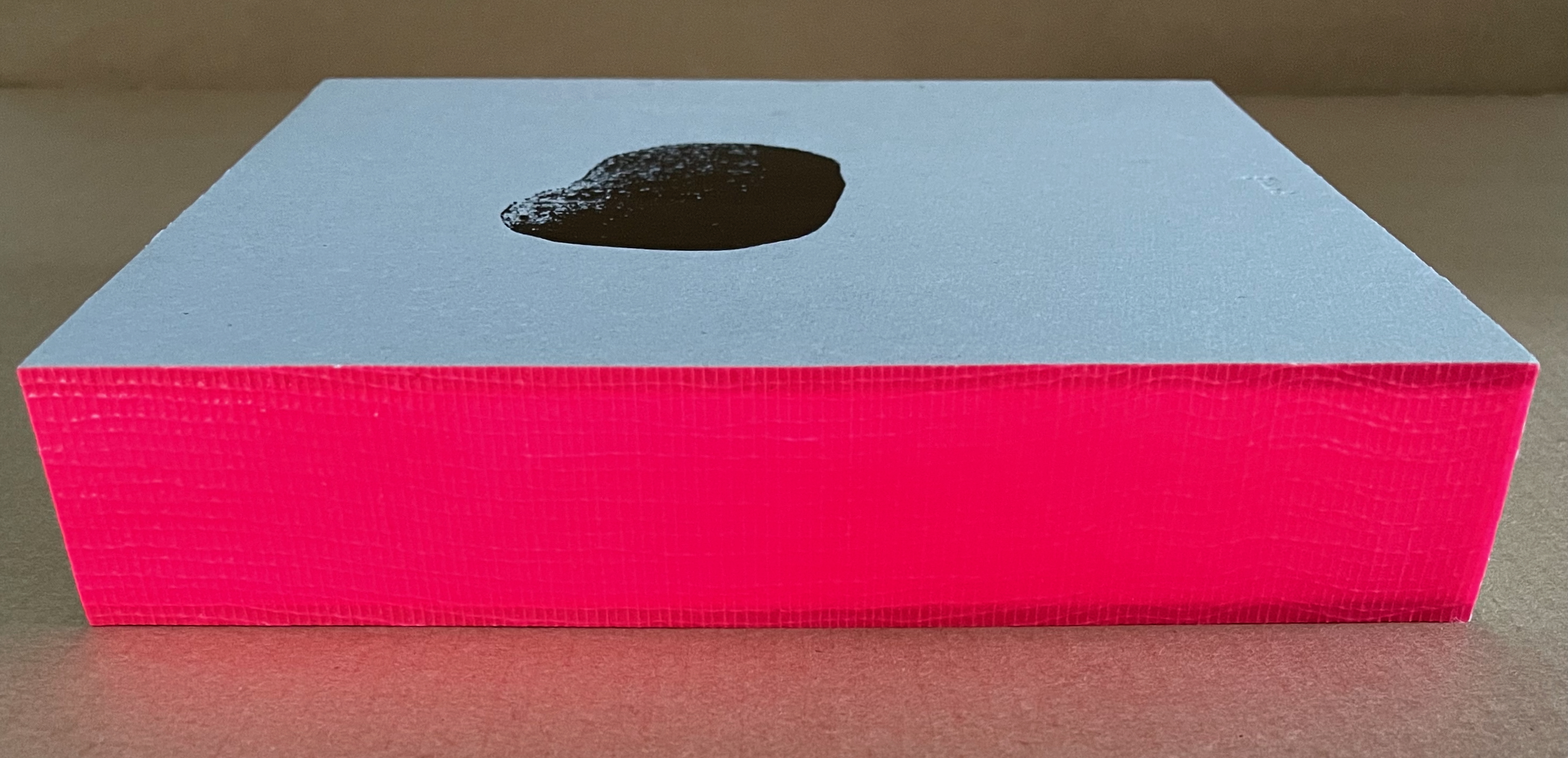
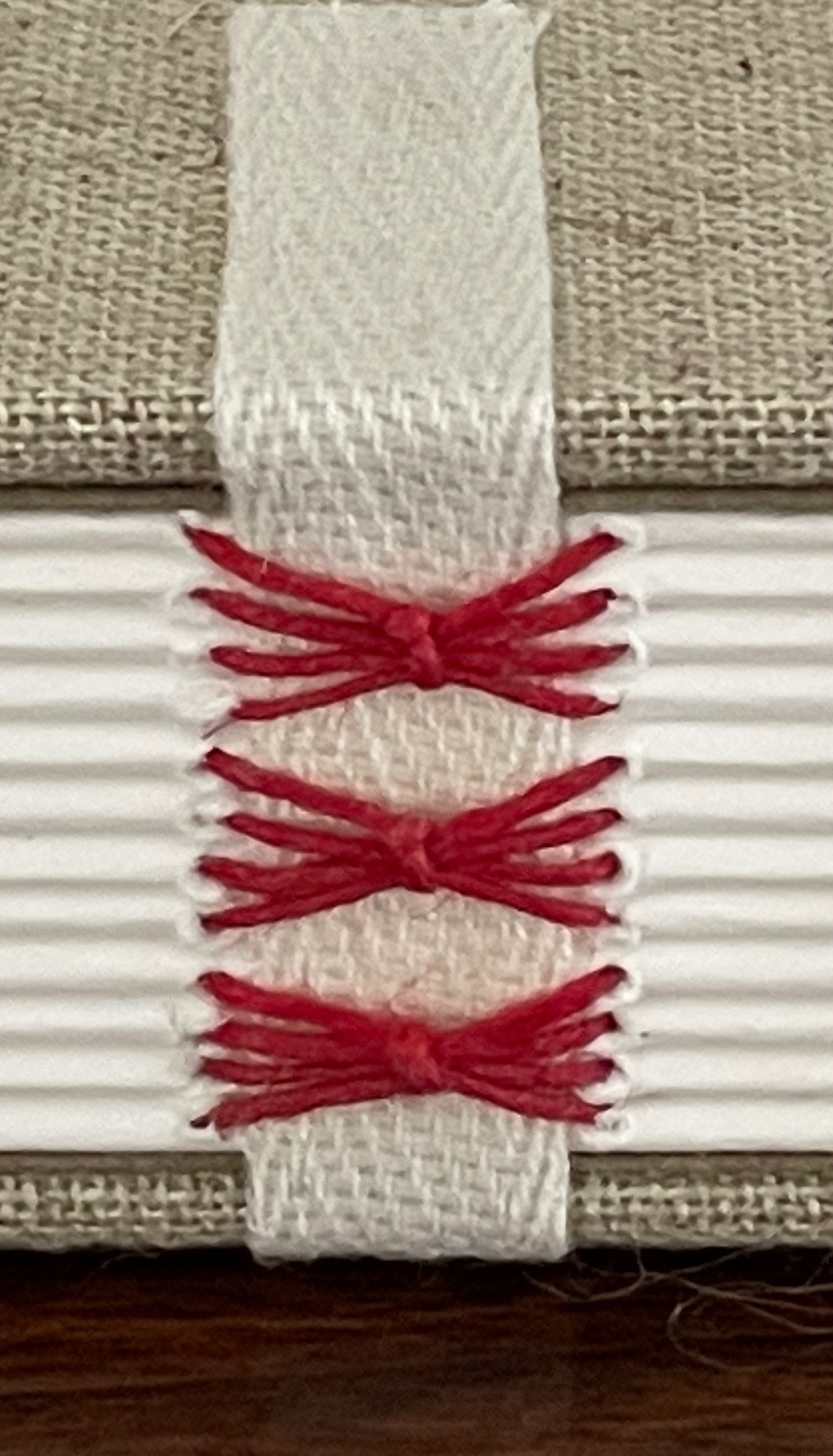
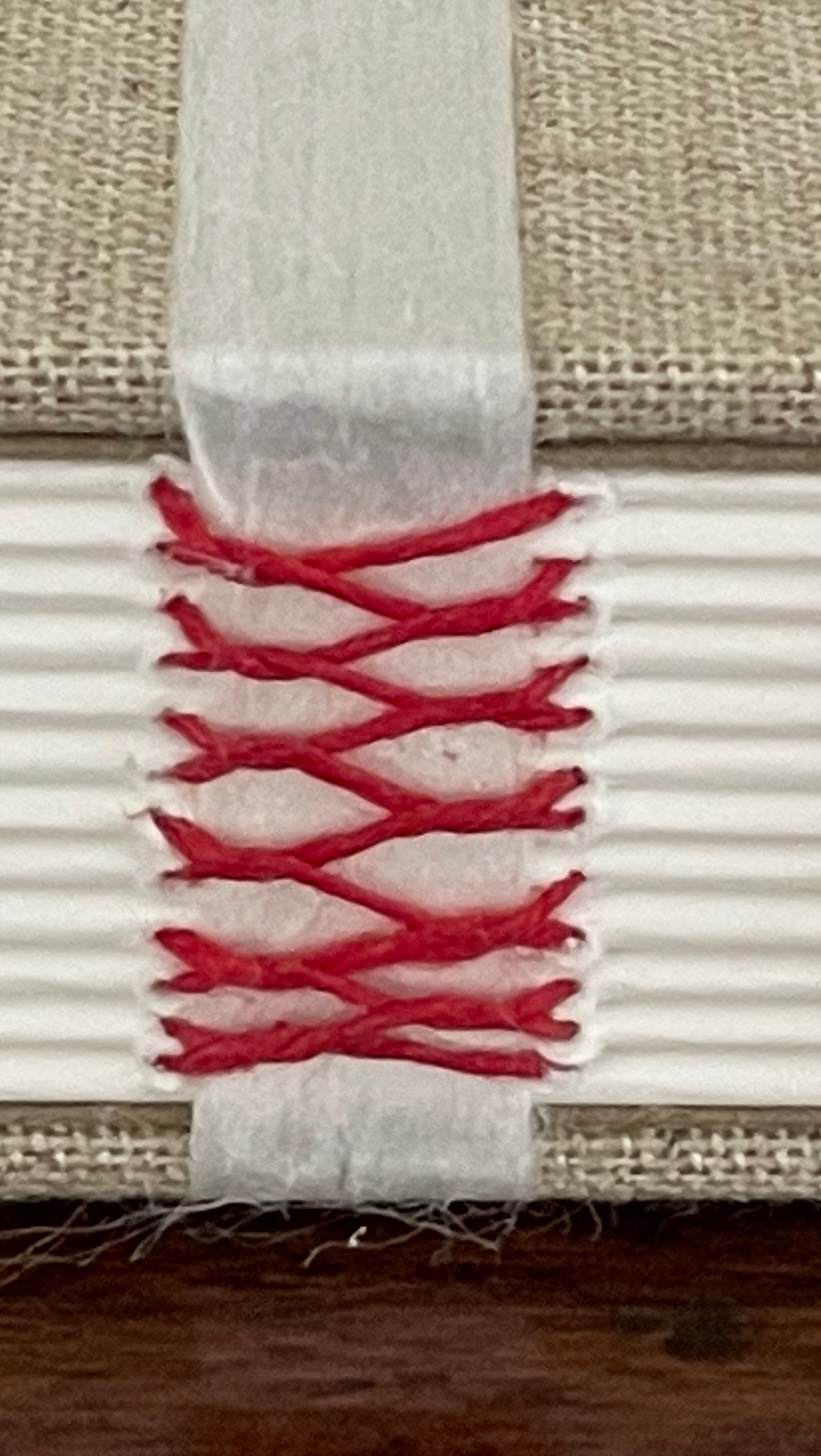
Exposed spine binding with cross weave filament tape, board-covered. 170 x 170 mm. Acquired from SpazioB**K, 6 April 2025.
Photos: Books On Books Collection.

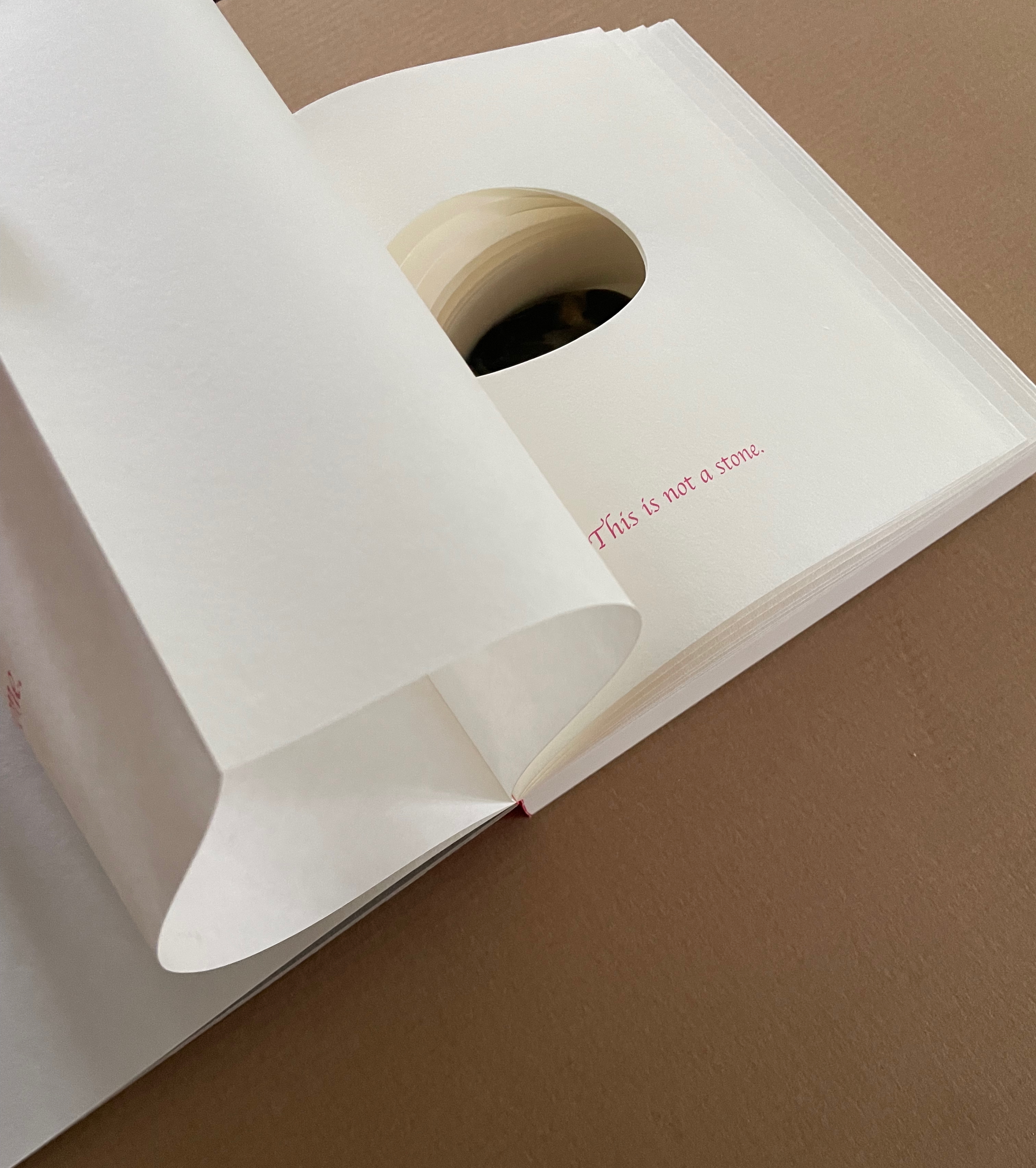
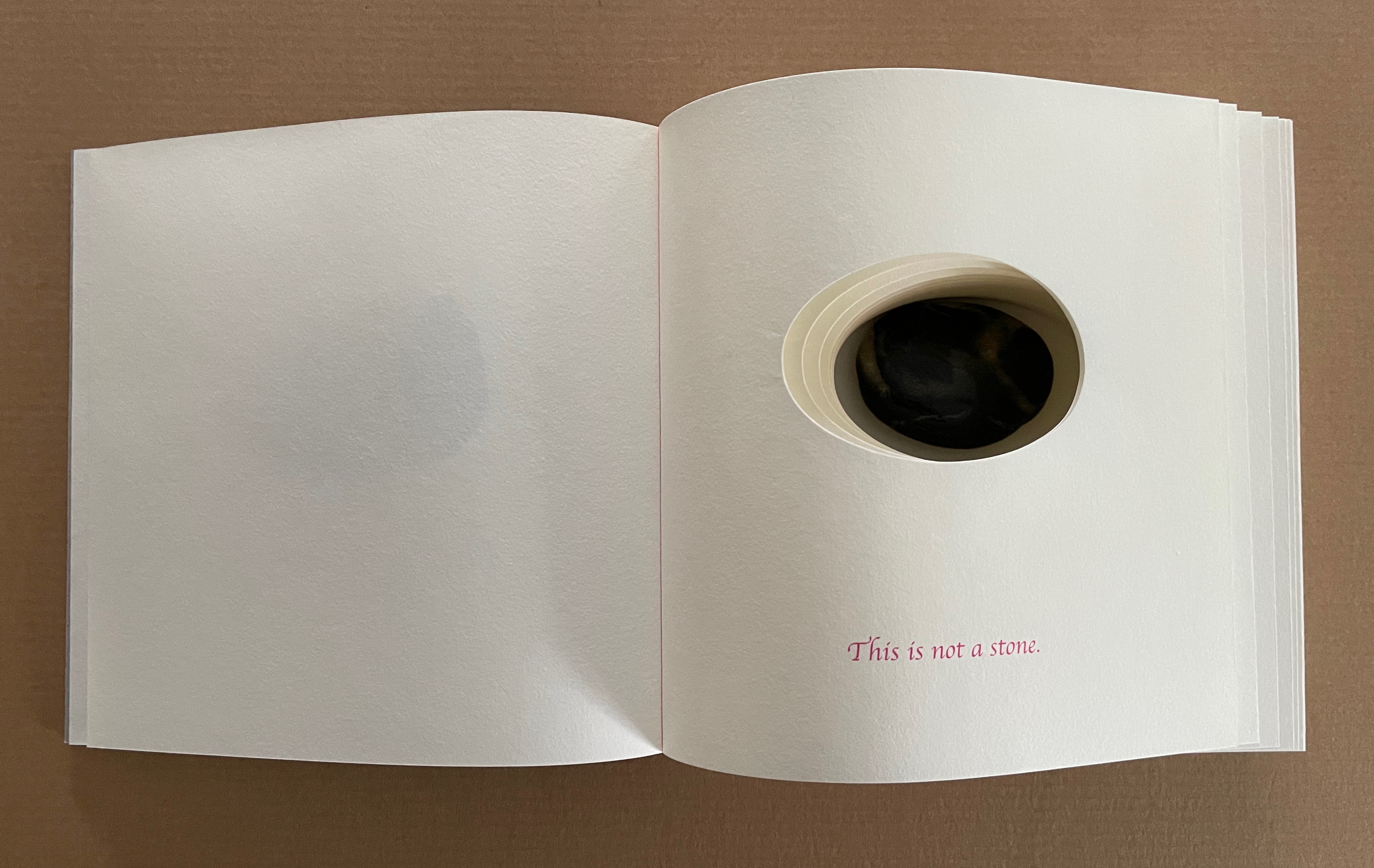
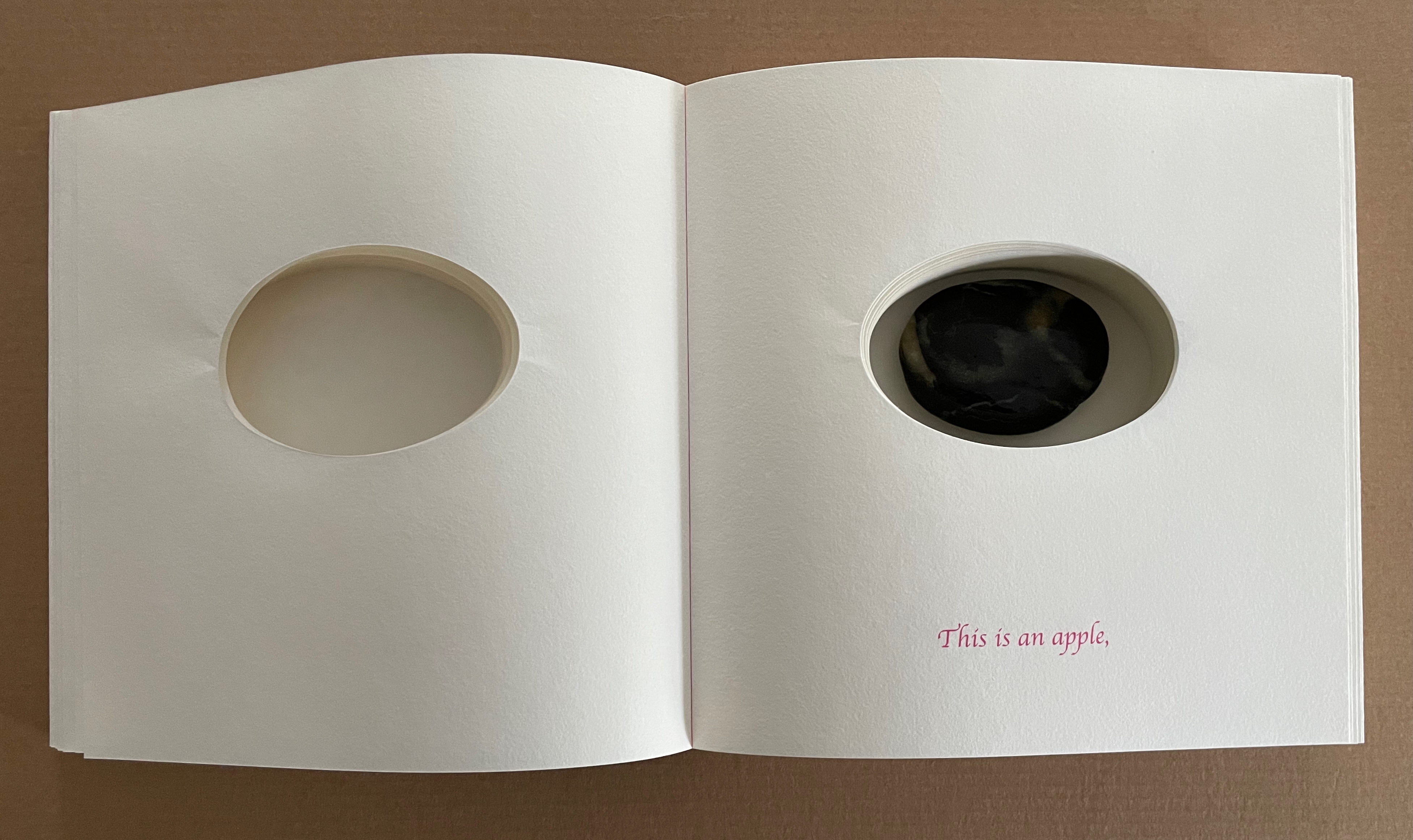
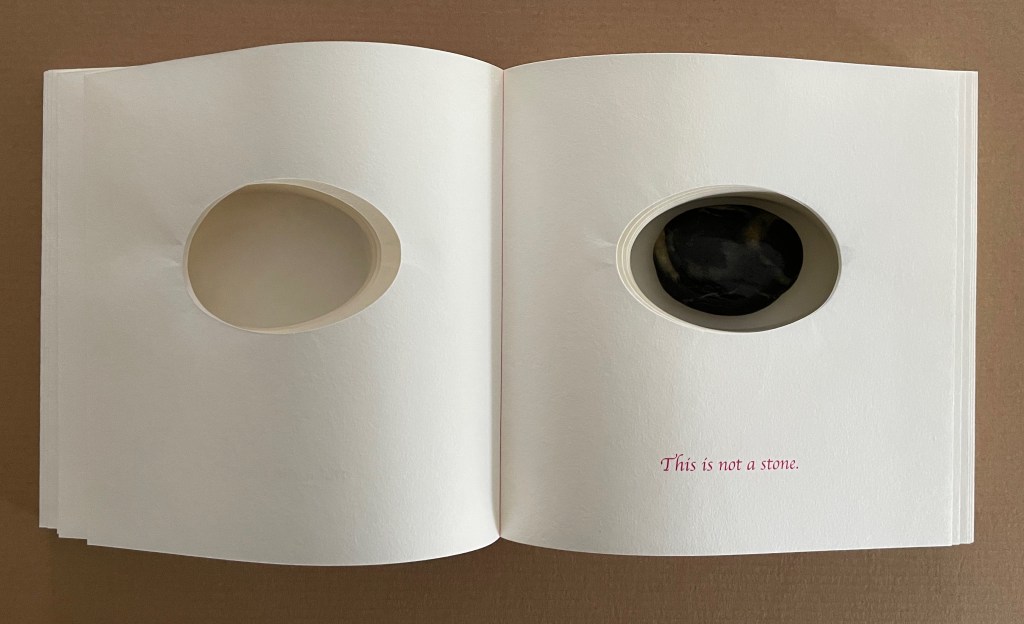
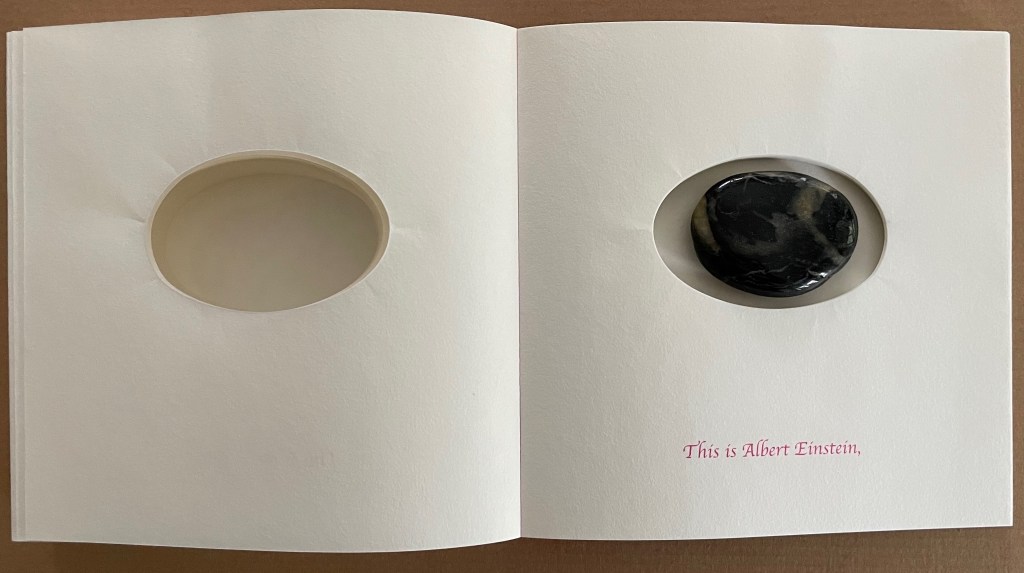
Just as you think this will be another two-dimensional riff on René Magritte’s The Treachery of Images (aka Ceci n’est pas une pipe), the Chinese fold title page turns to reveal a cutout well with a stone at the bottom.

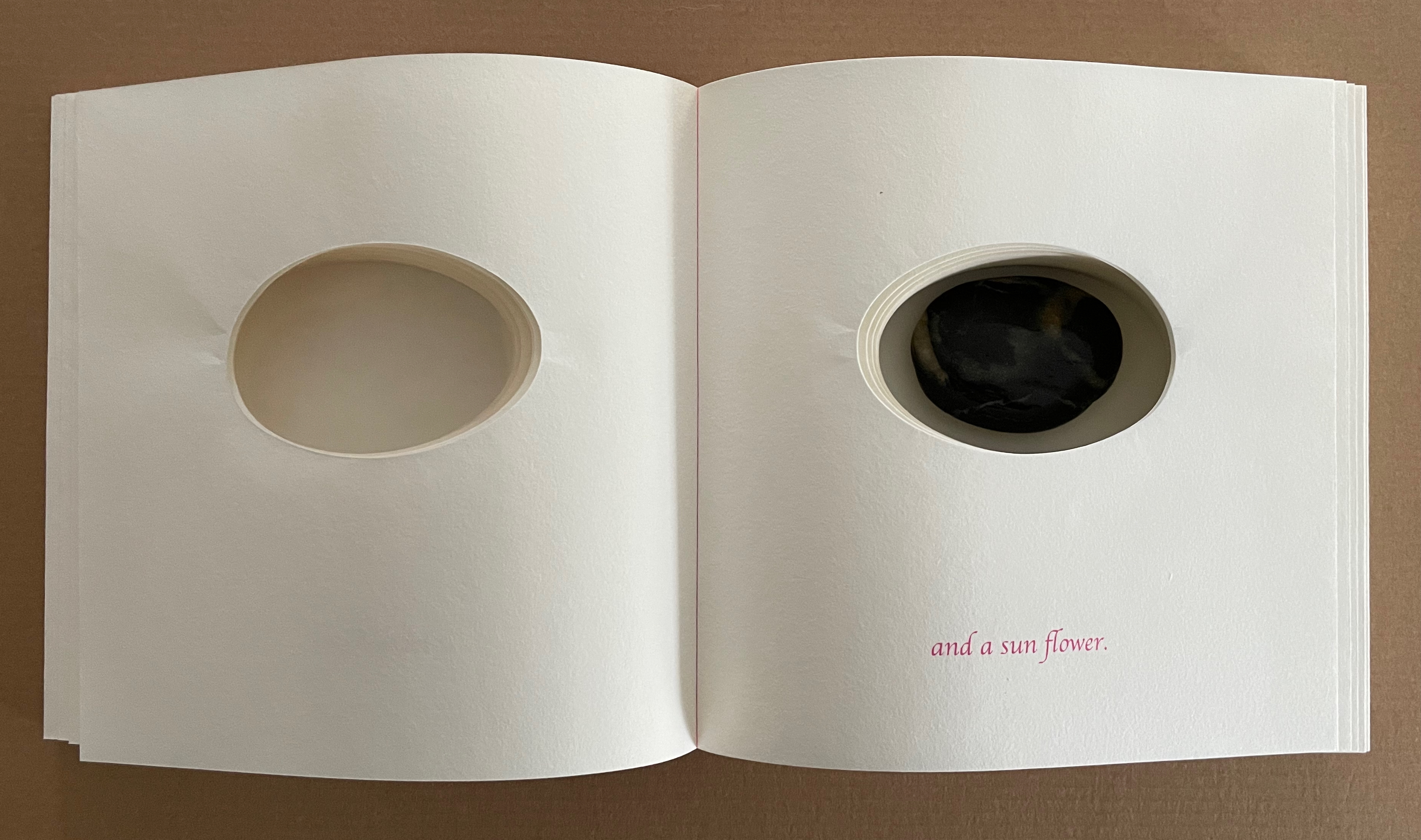
With the turn of the next two pages, it appears we are in for a series of metaphors and riddles, and something more than a three-dimensional riff on the anti-metaphor and the gap between words (symbols) and objects. First, this not-a-stone is “an apple,” but then turn the next page, and the not-a-stone is also “a sun flower”. Is there some law of commutation that applies: If not-a-stone = apple, and not-a-stone = sun flower, therefore, apple = sun flower? Because it is round, because it is vegetal?

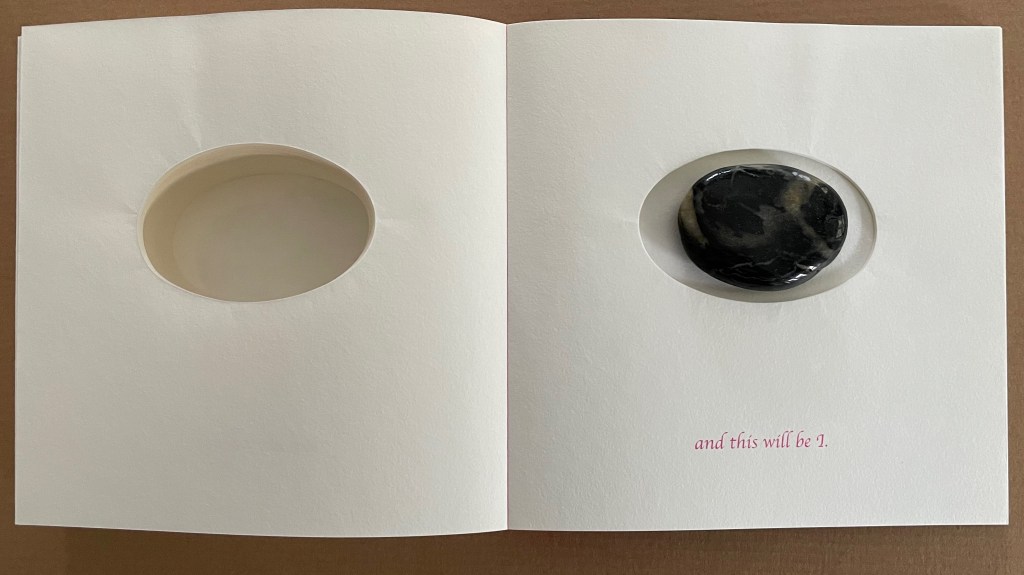
Over the next turns, we have “the Sun” and “the earth”, then “a crystal” and “a flake of snow in the Himalyas”, then “a beetle” and “a scorpion”, and on the pairs go, each separated with the spread “This is not a stone”. All along, while being urged to deny the evidence of reality, we are asked to accept the evidence of metaphor and imagination. Naturally our inbred pattern-seeking and ludic behaviors kick in, as if this were a game of “Twenty Questions”. But the pairs run the gamut of Animal, Vegetable, Mineral and beyond.

By the last page, it is as if we are playing “Twenty Questions” with the stone itself. That is, if the “I” is the stone saying, “and this will be I”. Is the stone uttering a deliberate a-grammatical union of subject (I) and object (me)? Is it a verbal visual pun (I-eye) evoking Emersonian Transcendentalism? Perhaps this stone that says “This is not a stone” is a Cretan philosopher’s stone, and round and round we will go.

On the artist’s website (www.somebooks.kr), the product page displays this Korean expression and its translation: 하나의 돌은 돌이자 다른 모든 것이다 [“One stone is a stone and everything else”]. It does not appear anywhere in the book, so perhaps it is unfair to invoke it as confirmation of any reading of This is not a stone. On the other hand, if you are going to play “Twenty Questions” with a Cretan philosopher’s stone, cheating may be your best option.

The other works by Sunkyung Cho in the collection are wordless, except for their titles, and lean more toward children’s books than This is not a stone. Like so many artists’ books, they occupy that crossover zone discussed by Sandra Beckett, Johanna Drucker, and Carol Scott (see Further Reading).

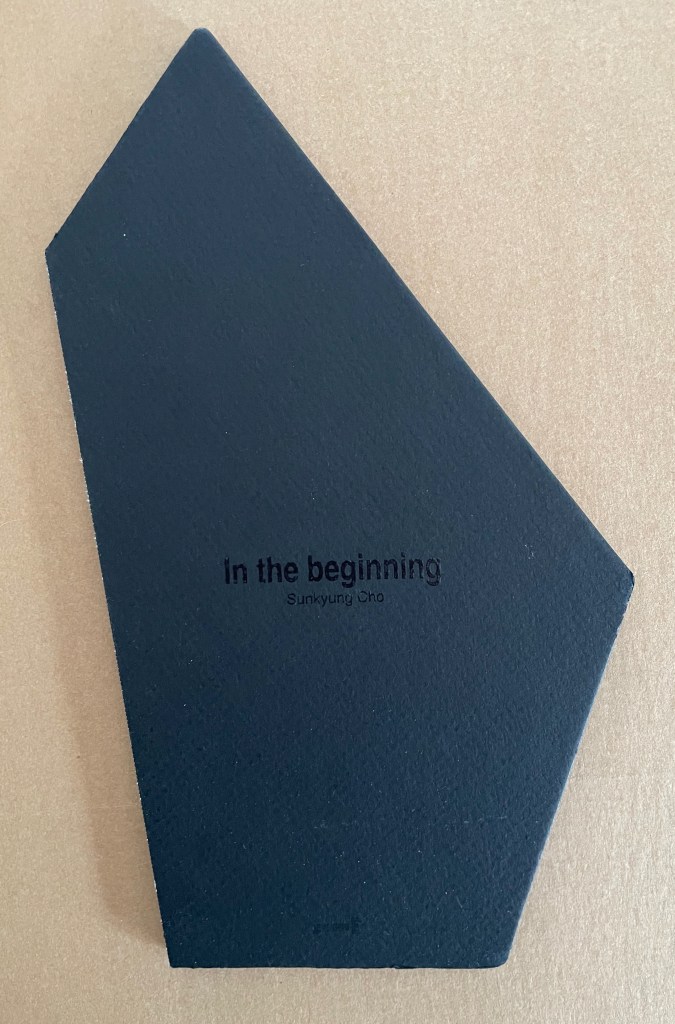
In the beginning (2012)

In the beginning (2012)
Sunkyung Cho
Softcover, sewn, exposed spine binding with cross weave filament tape. H260 x W150 mm. [36] pages. Unknown edition, of which this is #146. Acquired from SpazioB**K, 6 April 2025. Photos: Books On Books Collection.

From the artist’s website: 빛 이전의 태초, 사회화되기 이전의 인간에 대해 생각하는 책. [“In the beginning before light, a book that thinks about people before they became socialistic.”]

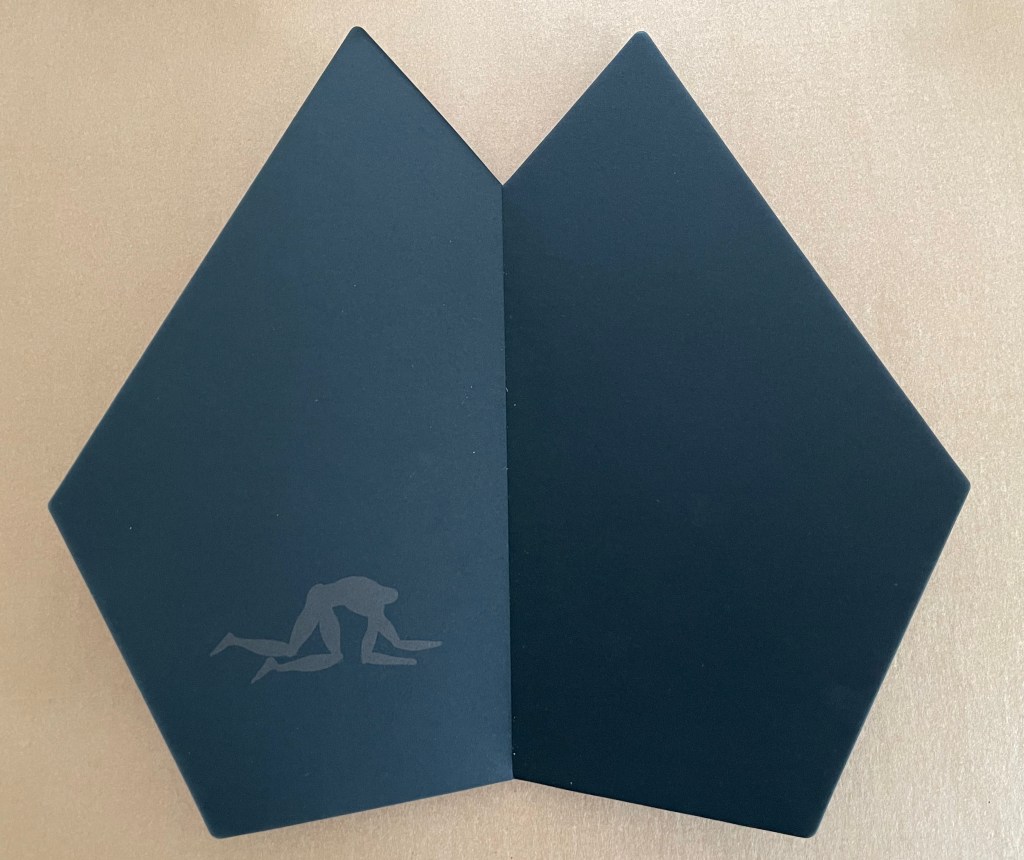
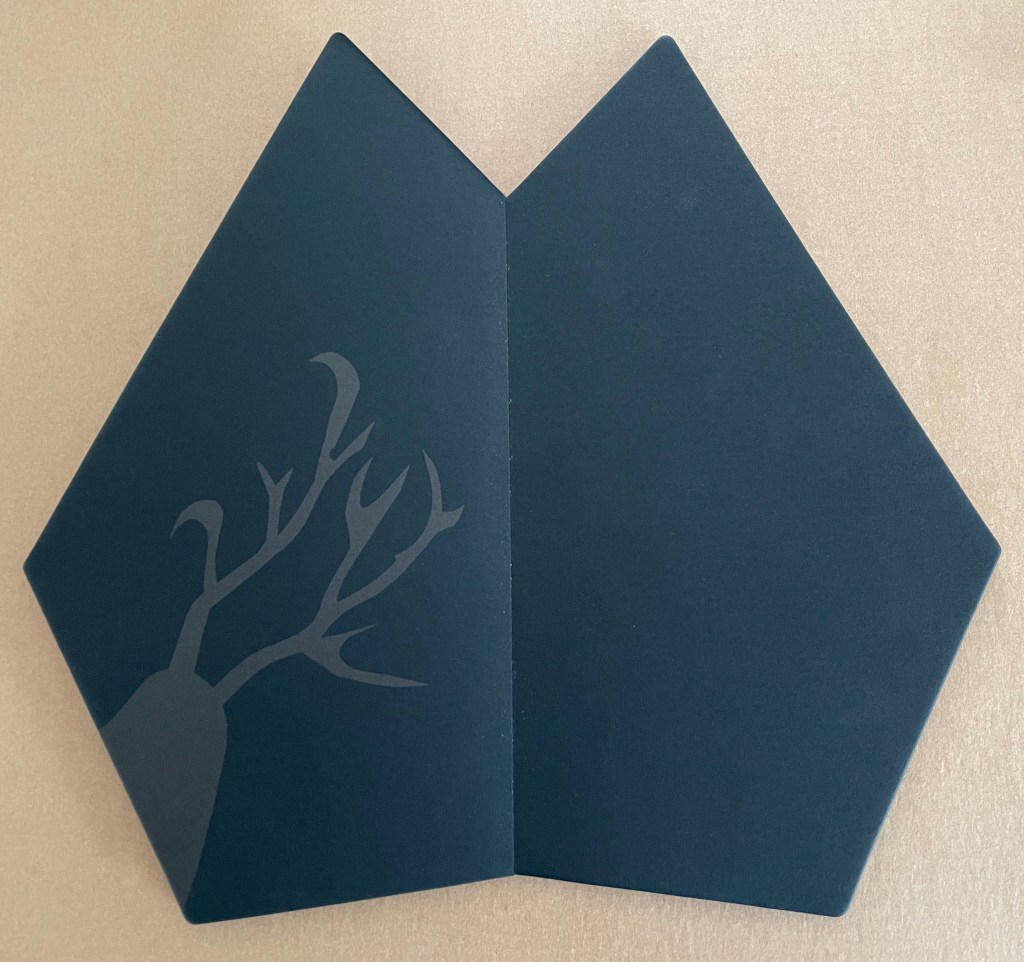
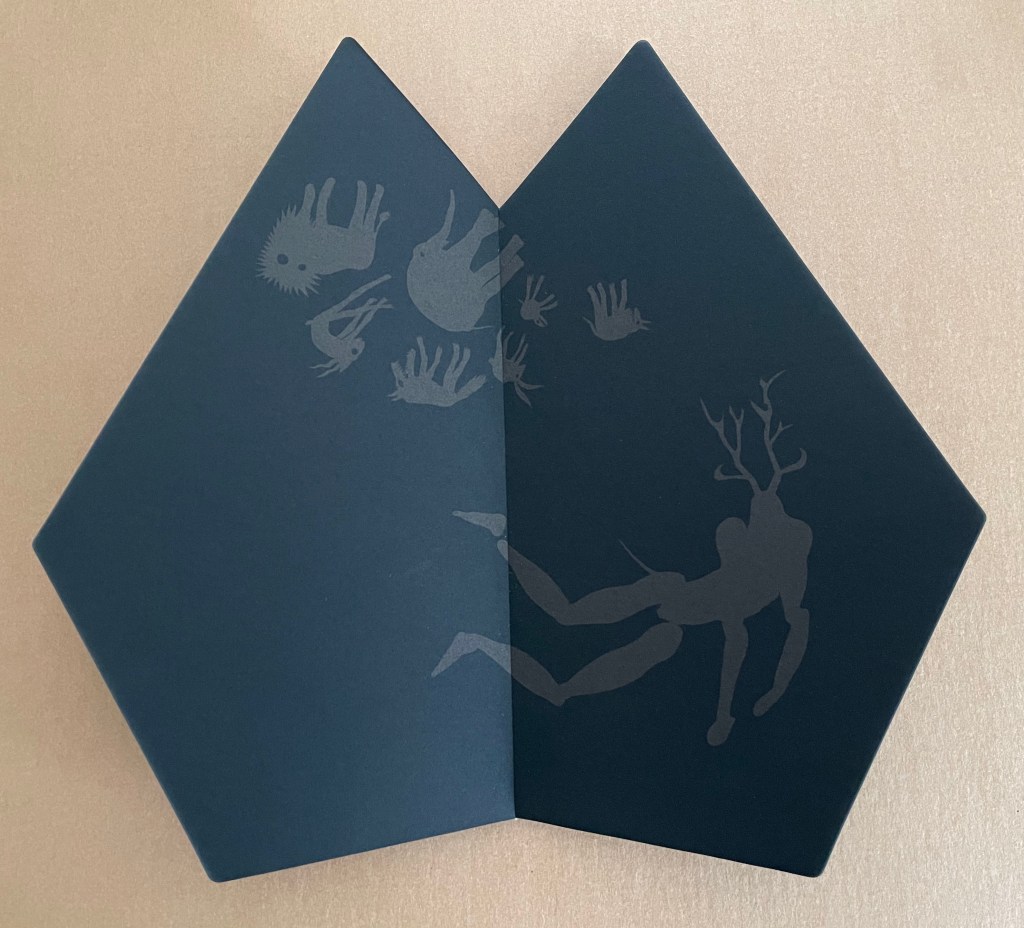
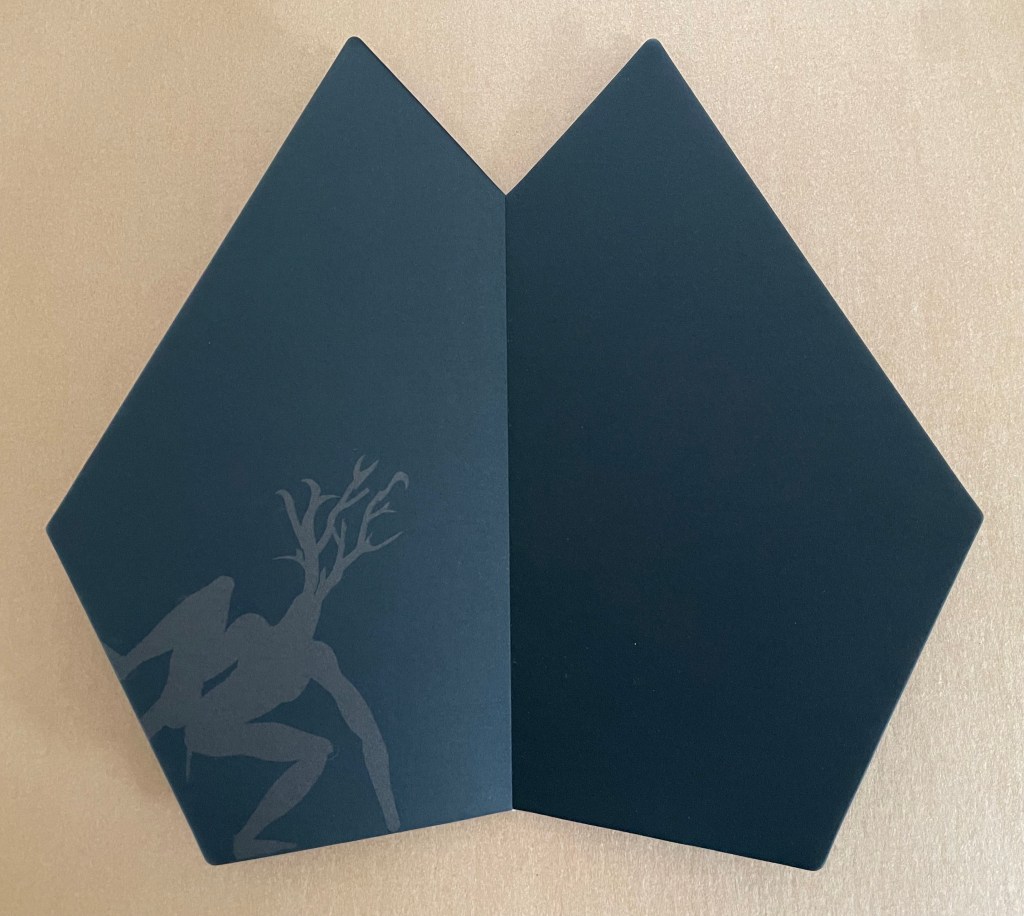
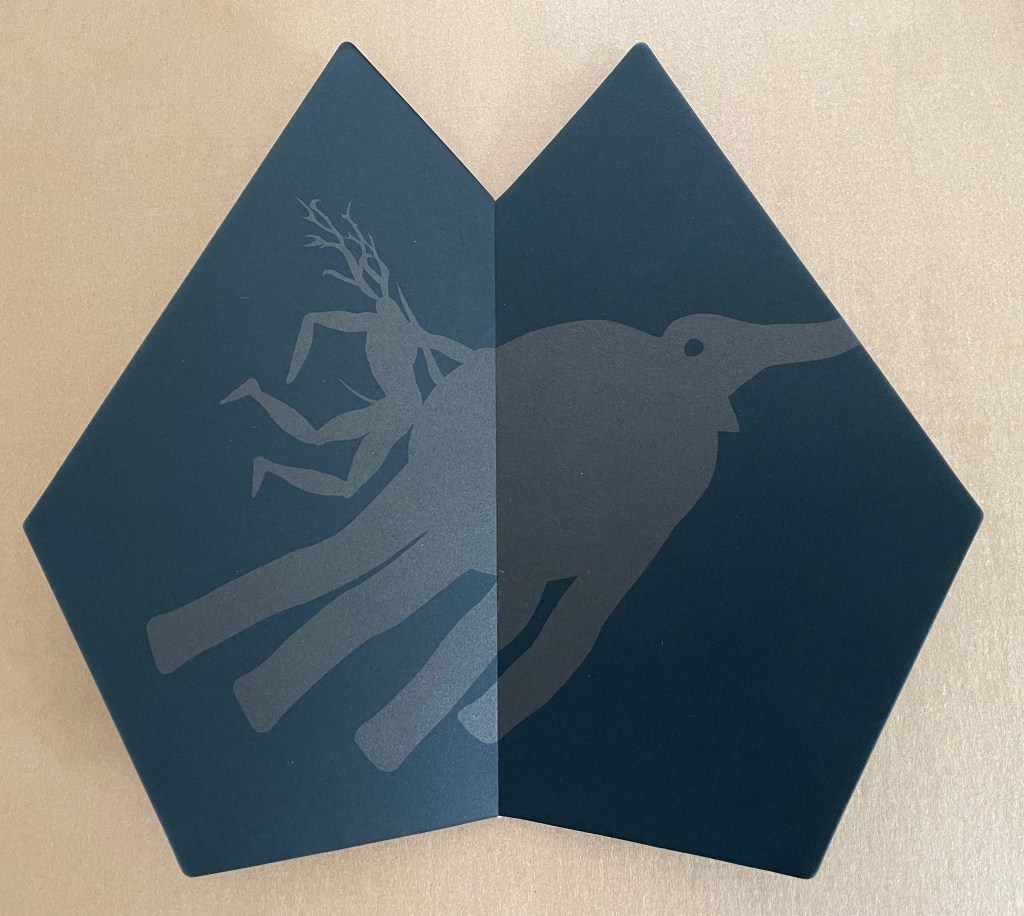
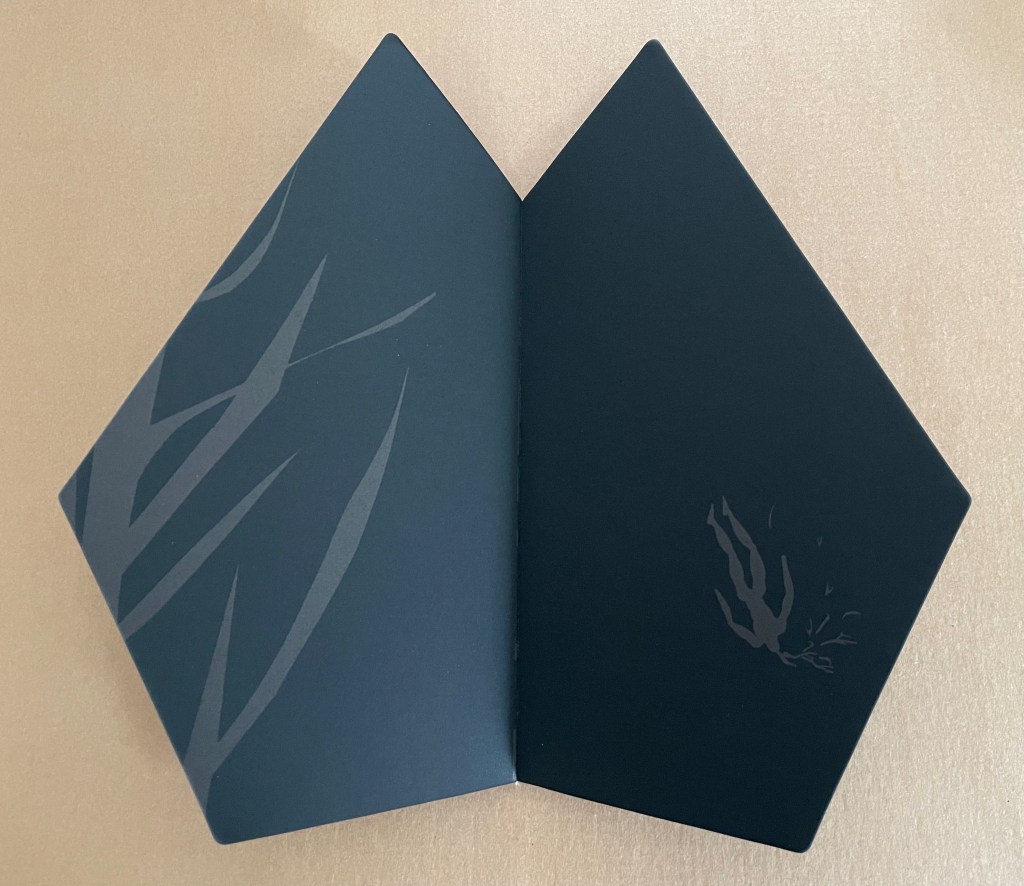
A translation that resonates more with the paper, structure, and images might be “A book contemplating the primordial state of the human before light and socialization.” Such a book would, of course, not have the normalized appearance we enlightened and socialized humans expect. Hence the black oddly shaped covers and leaves across which the gray, almost headless creature crawls on all fours and begins to sprout antlers or branches.

When other creatures enter the primordial state, they are oriented to it differently, which our branch-headed forebearer notices and tries to assume but fails.

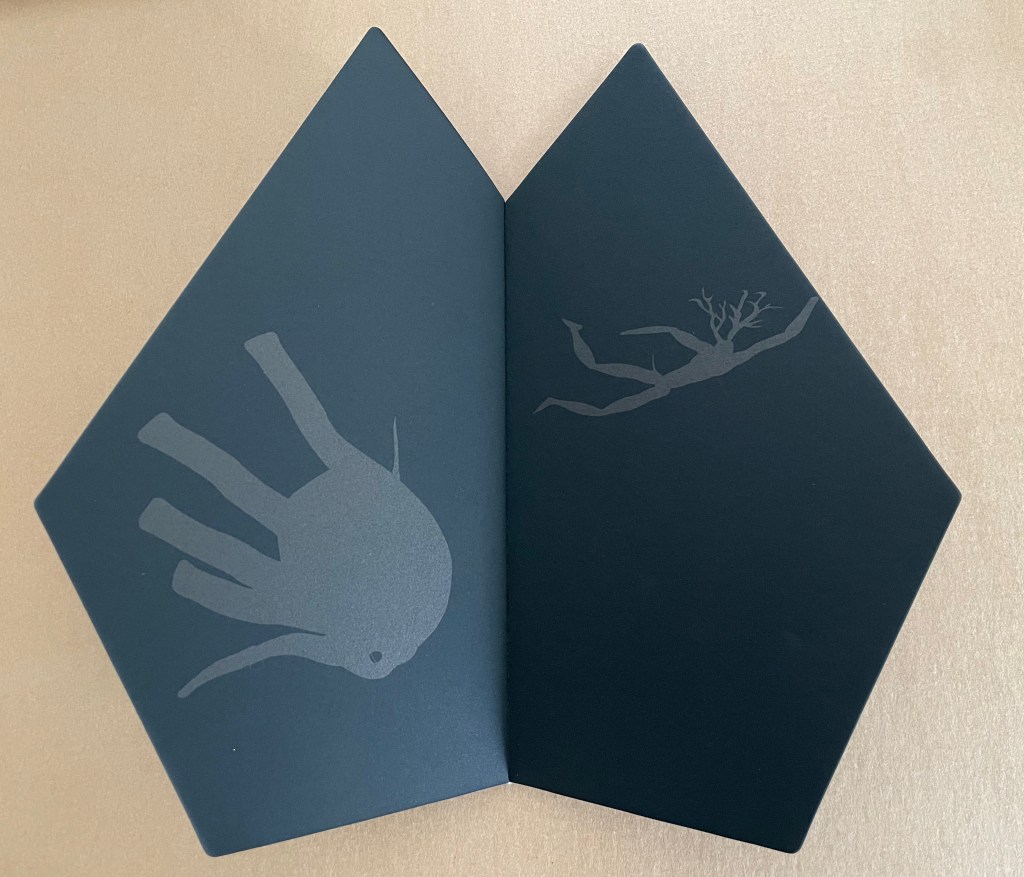
Having failed, our precursor tries to merge with one of the other creatures, but this elephant-like being will have none of him and flings the proto-human off.

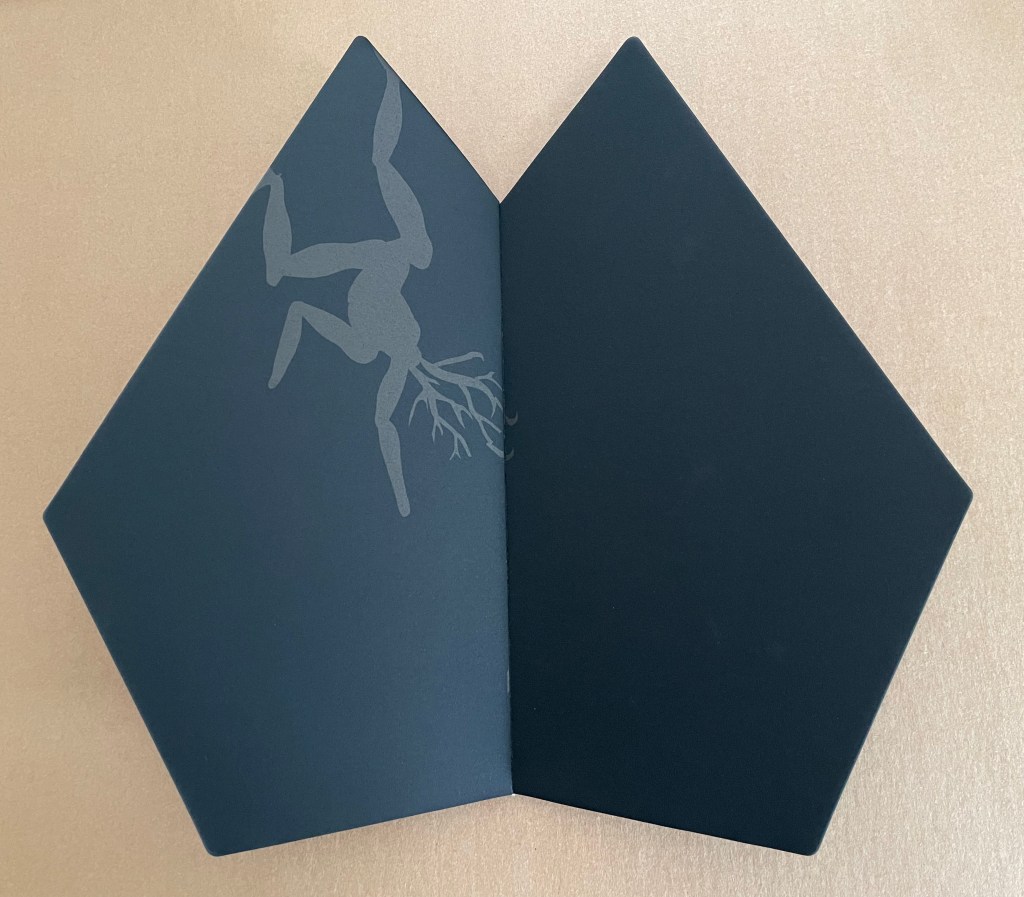
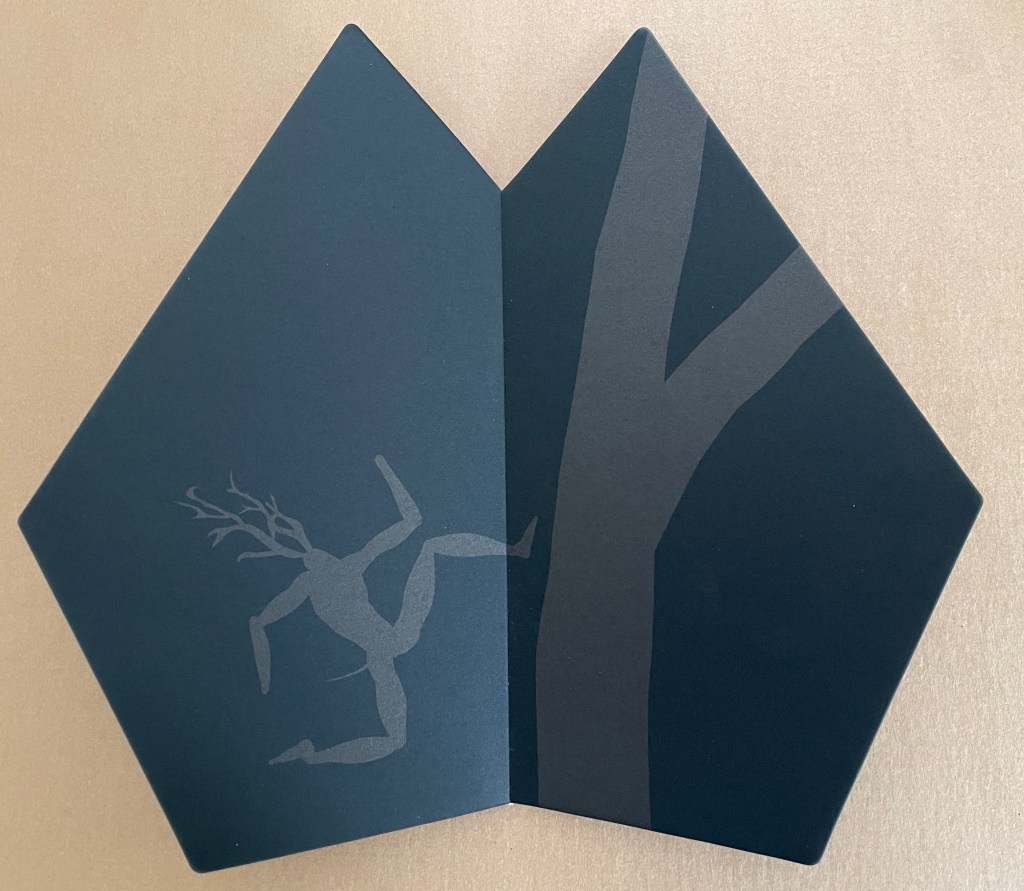
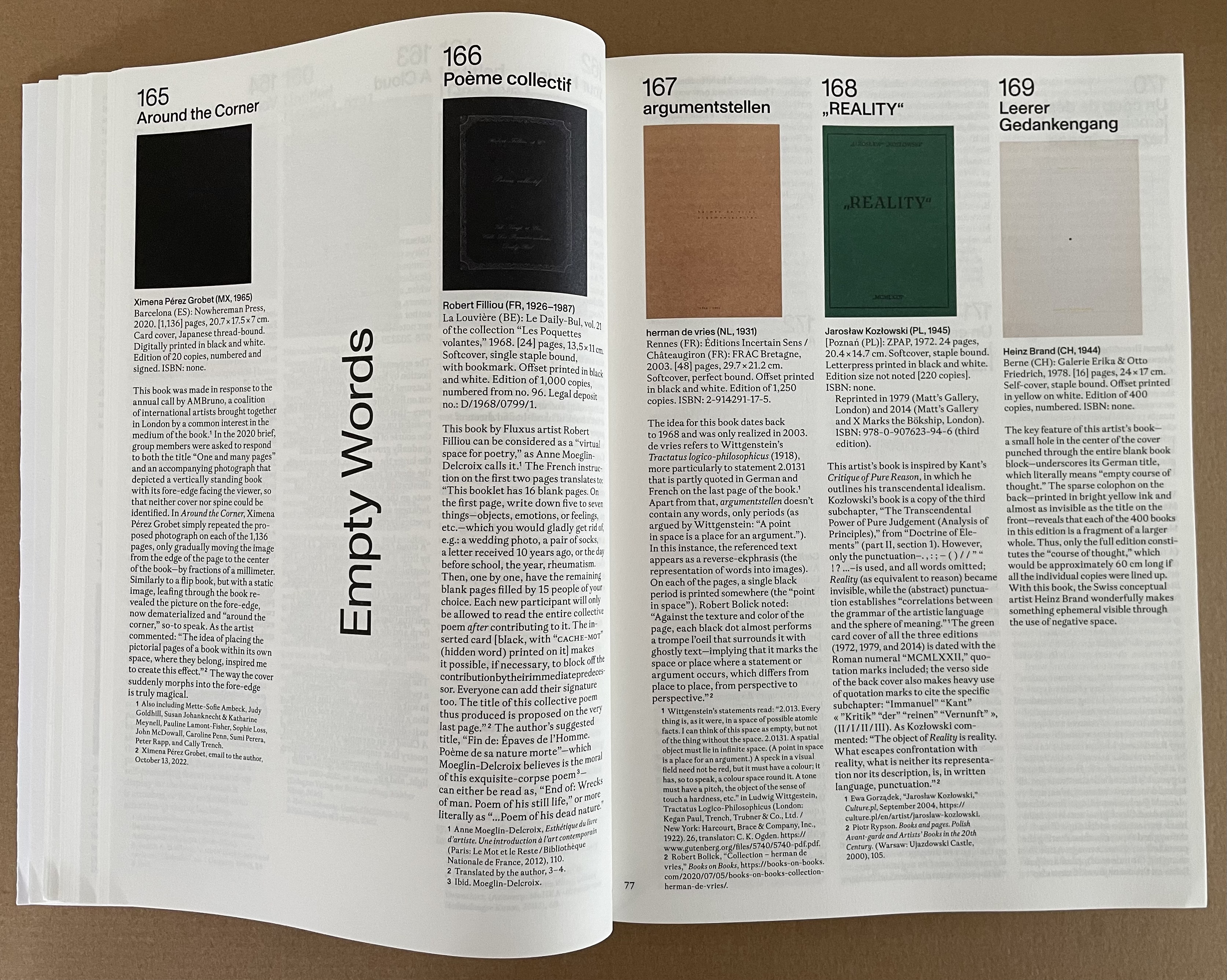
Whereupon, branch-head seeks affiliation with the vegetable kingdom and climbs toward the top.

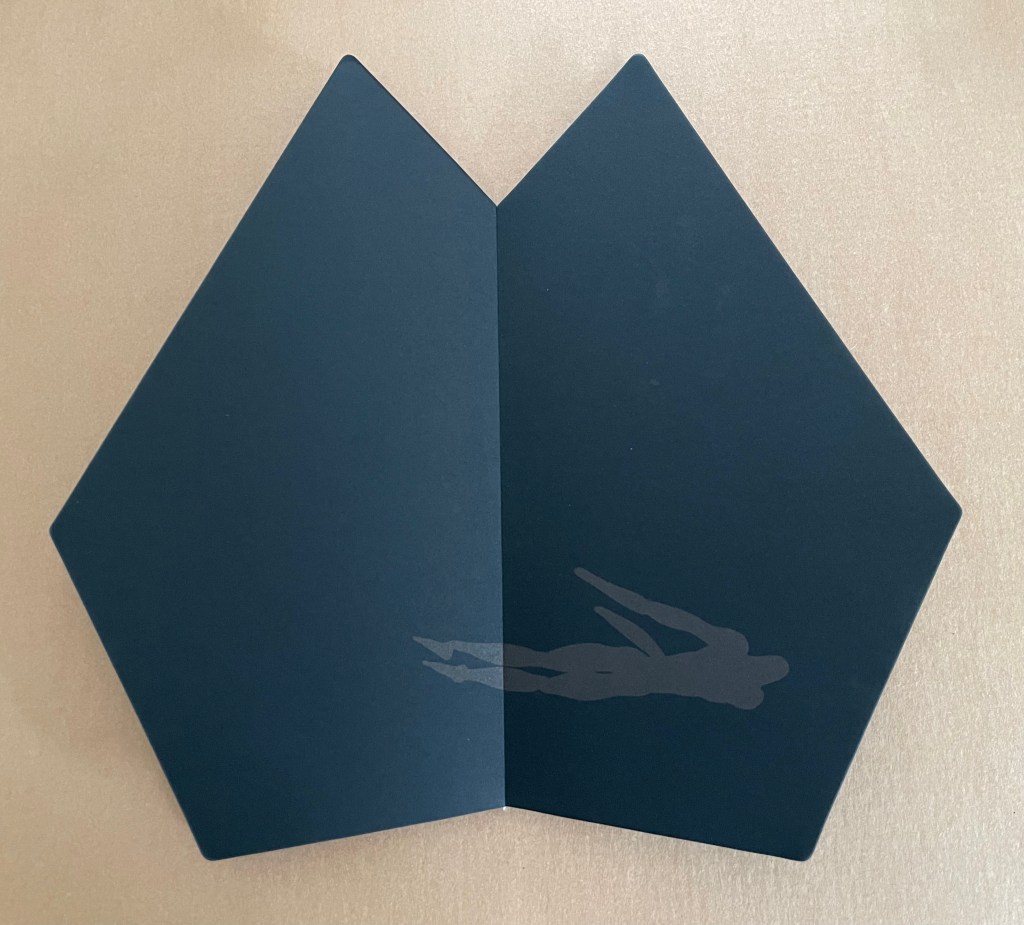
Having reached the top, our forebearer confronts and succumbs to the source of light and, having fallen and lost the semblance of antlers or branches (or both), yearns with arms outstretched for what once was.

The book’s unusual shape recalls Helmut Löhr’s Visual Poetry (1987), Kevin Osborn’s Tropos (1988), and Philip Zimmermann’s High Tension (1993), where likewise the shape contributes to meaning.

The Blue Bird (2011)

The Blue Bird (2011)
Sunkyung Cho
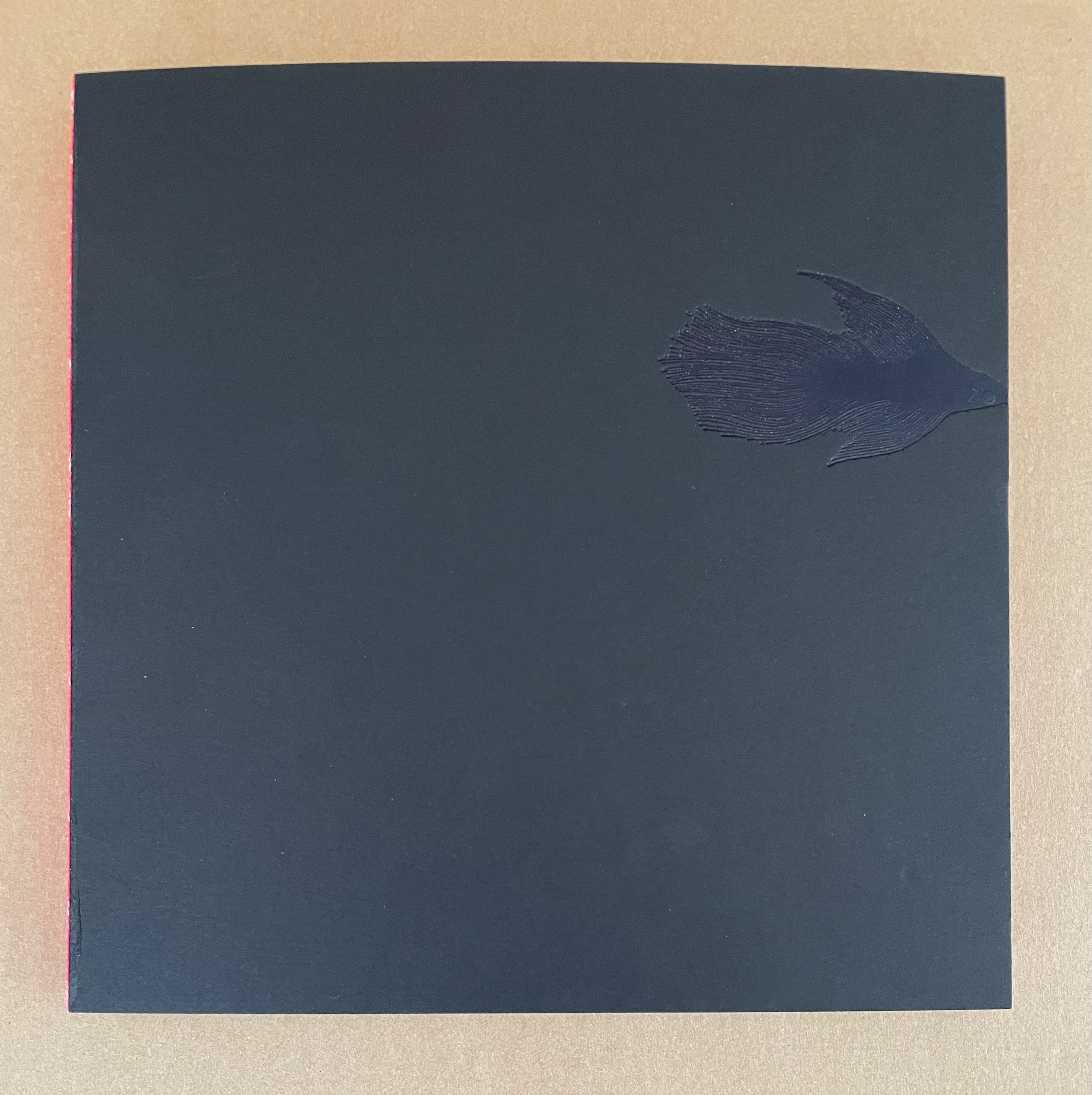
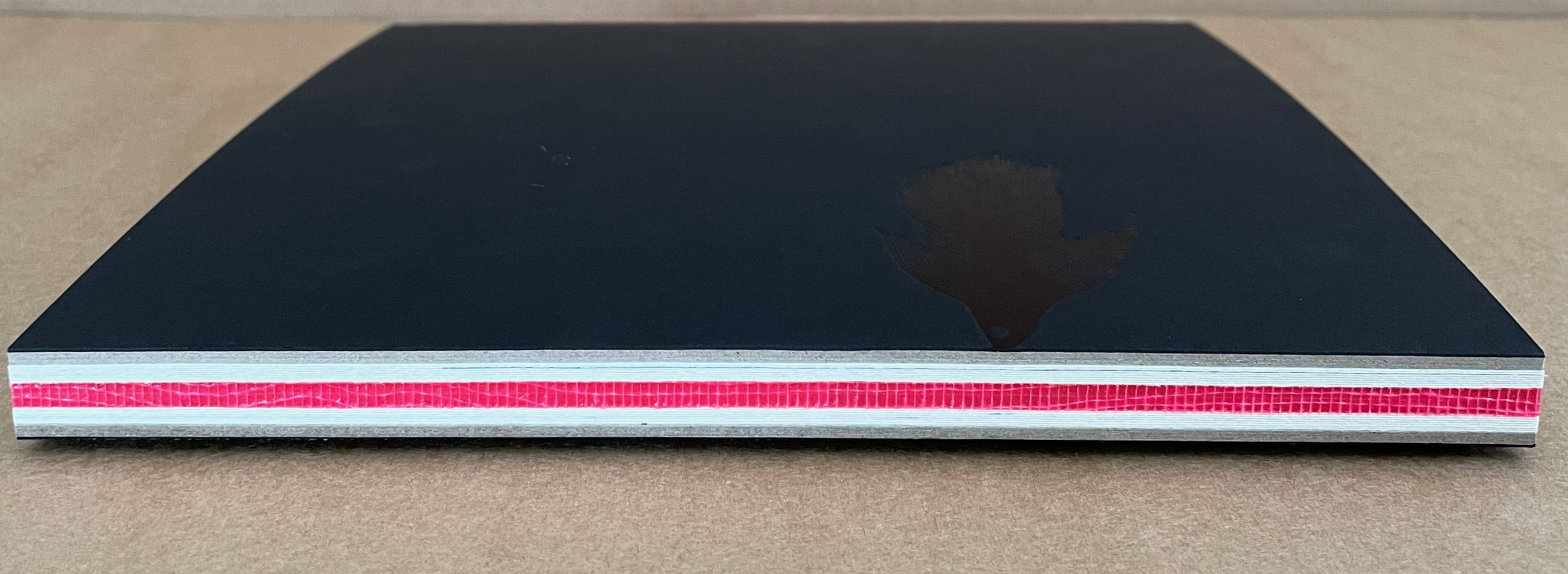
Exposed spine binding with cross weave filament tape, board-covered. 200 x 200 mm. [40] not including 2 illustrated fly leaves. Acquired from SpazioB**K, 6 April 2025.
Photos: Books On Books Collection.

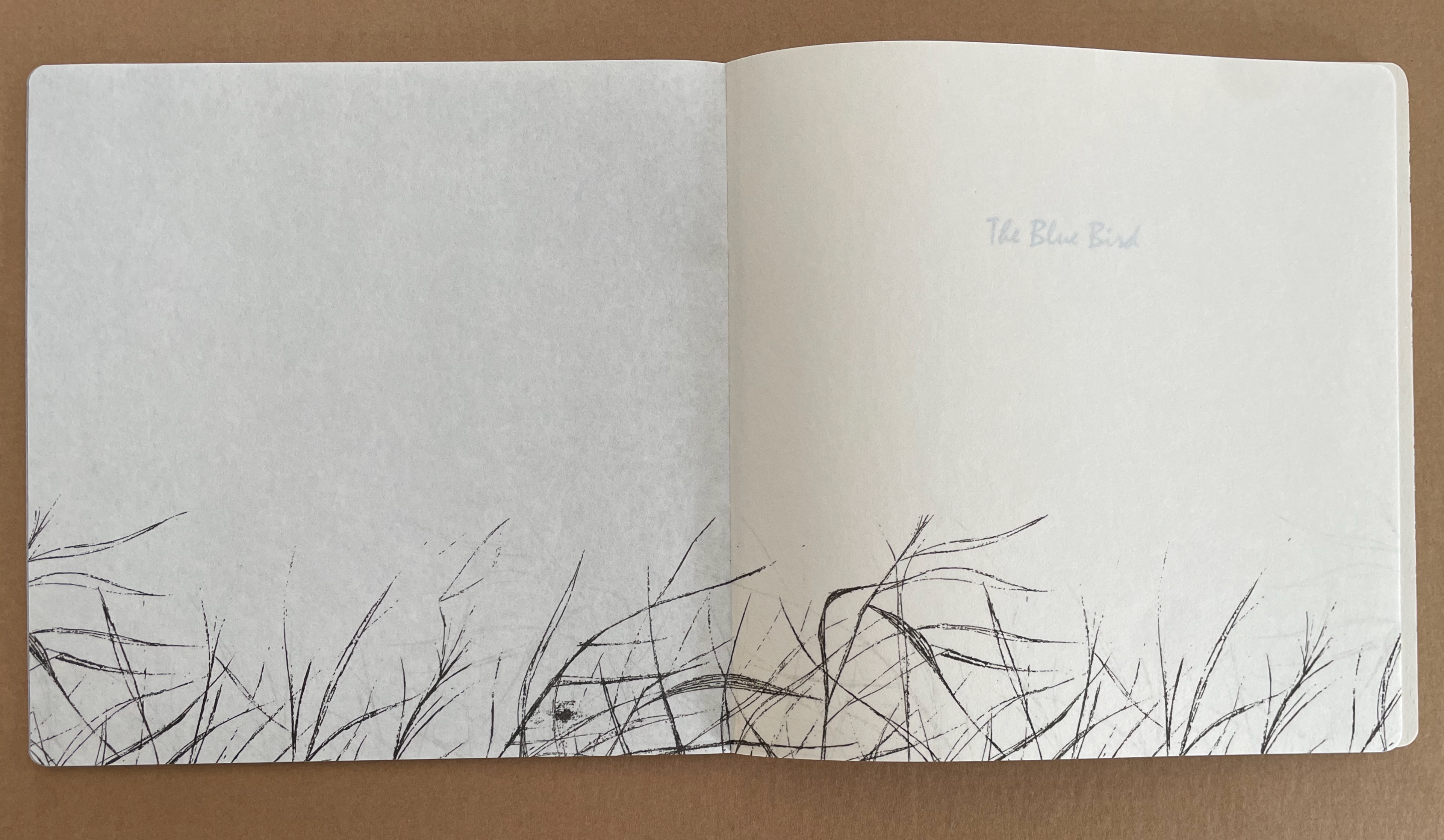
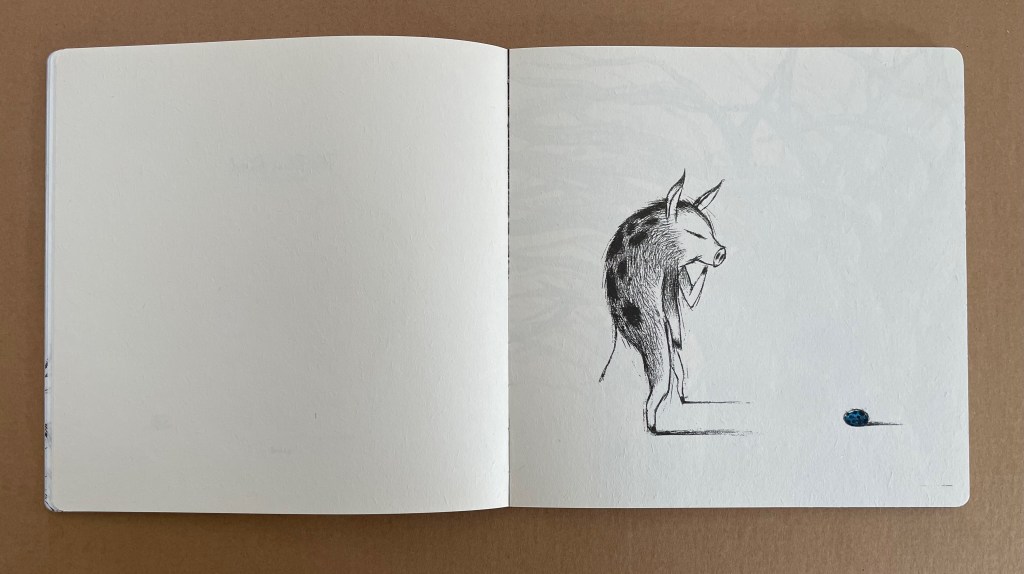
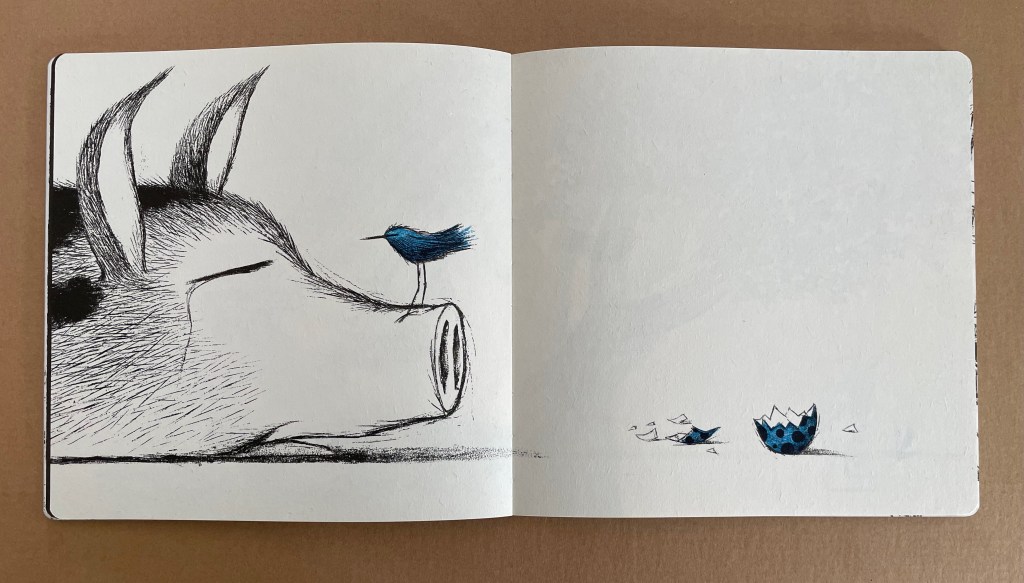
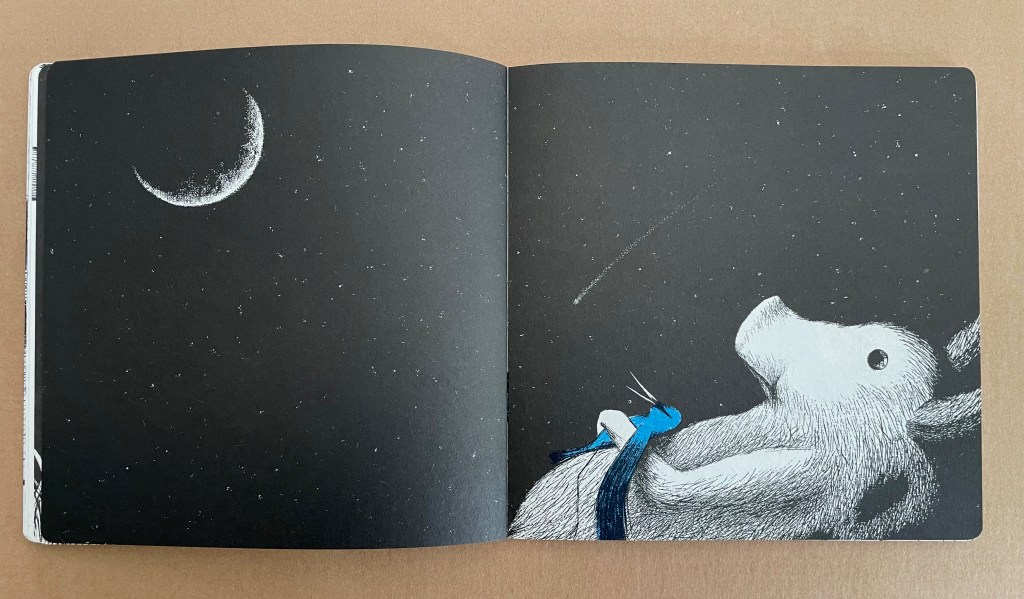
The Blue Bird leans much more toward the children’s book end of the crossover spectrum than in the beginning. The website’s description of it — “Blue Bird and Boar’s story of how to be a child and parent” — underscores all of the physical evidence except for the delicate nature of the paper. It is hard to imagine a copy surviving childhood use. But that might well be in keeping with the tender mix of joy and sadness in the tale.

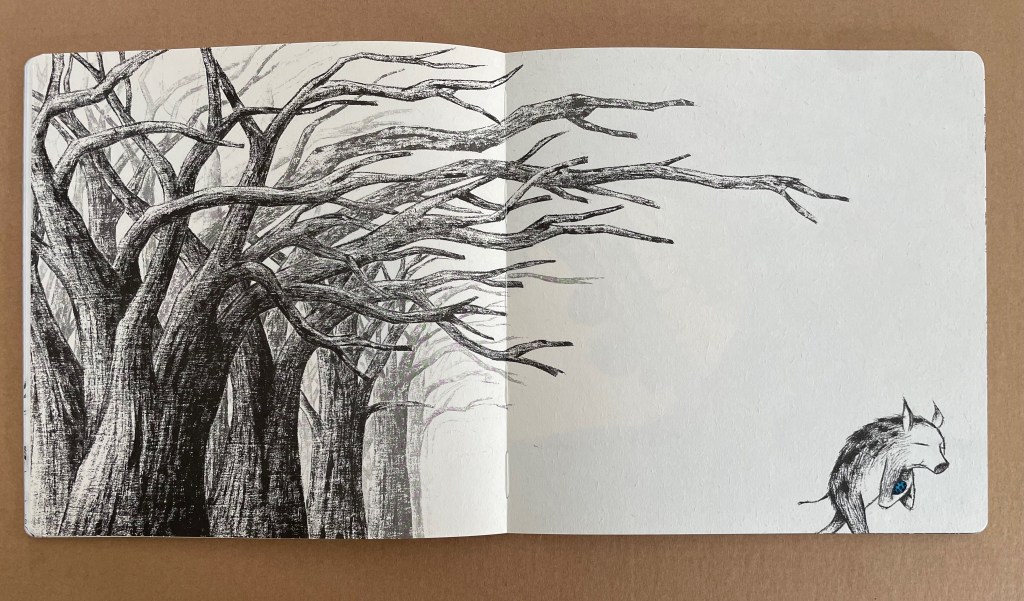
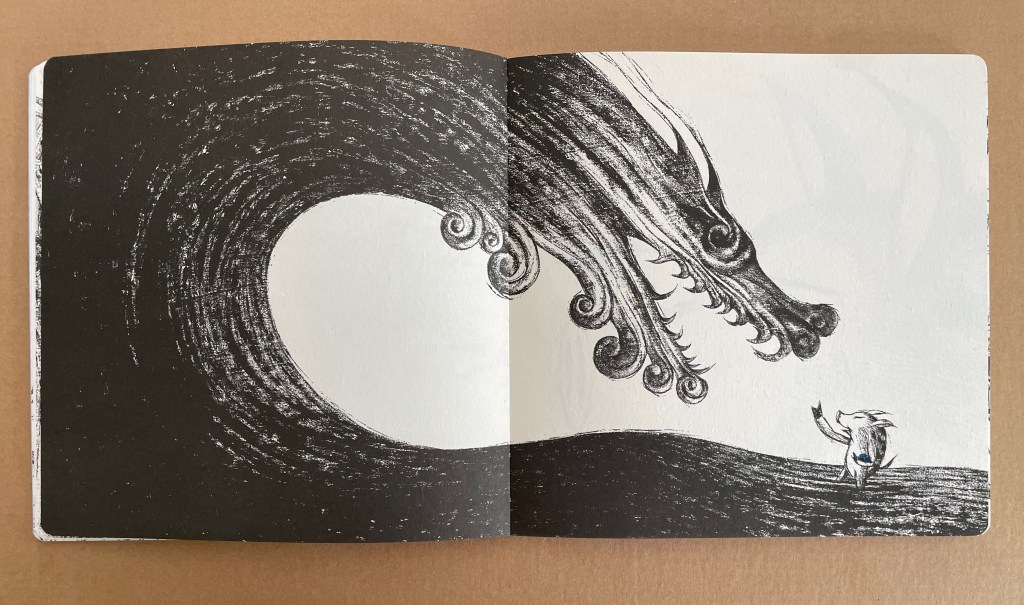
The simplicity and evocative sophistication of composition and line eliminate the need for any words to carry the narrative. In the sequence below, Boar’s protective parental handling of the egg against wind and wave ends in predictable exhaustion and birth.

The remainder of the book in which Boar introduces Blue Bird to the world of foraging, running, jumping, sky- and star-gazing is landbound. Boar climbs trees to let Blue Bird sleep there, but when returns to the ground to sleep, Blue Bird follows, preferring to nestle against Boar under the stars.

Boar’s continued efforts to teach Blue Bird about flight lead to a separation that some parents may not be ready to explain to a child.

Kiss (2015)

Kiss (2015)
Sunkyung Cho
Board-covered books, bound face-to-face, exposed spine binding with cross weave filament tape. H200 x W400 mm (open); W800 (open). [16] Chinese fold folios. Acquired from Somebooks, 6 April 2025.
Photos: Books On Books Collection.

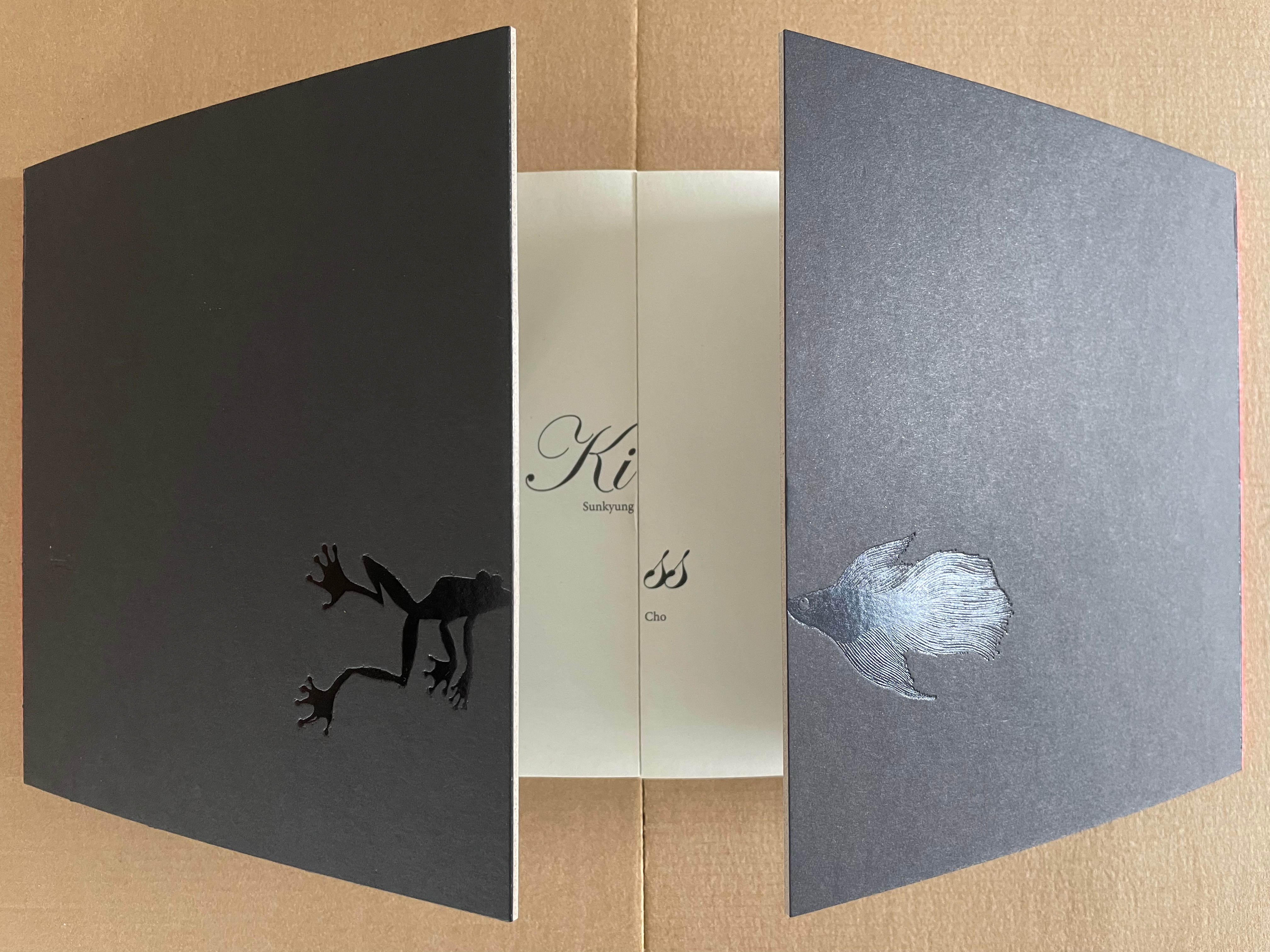
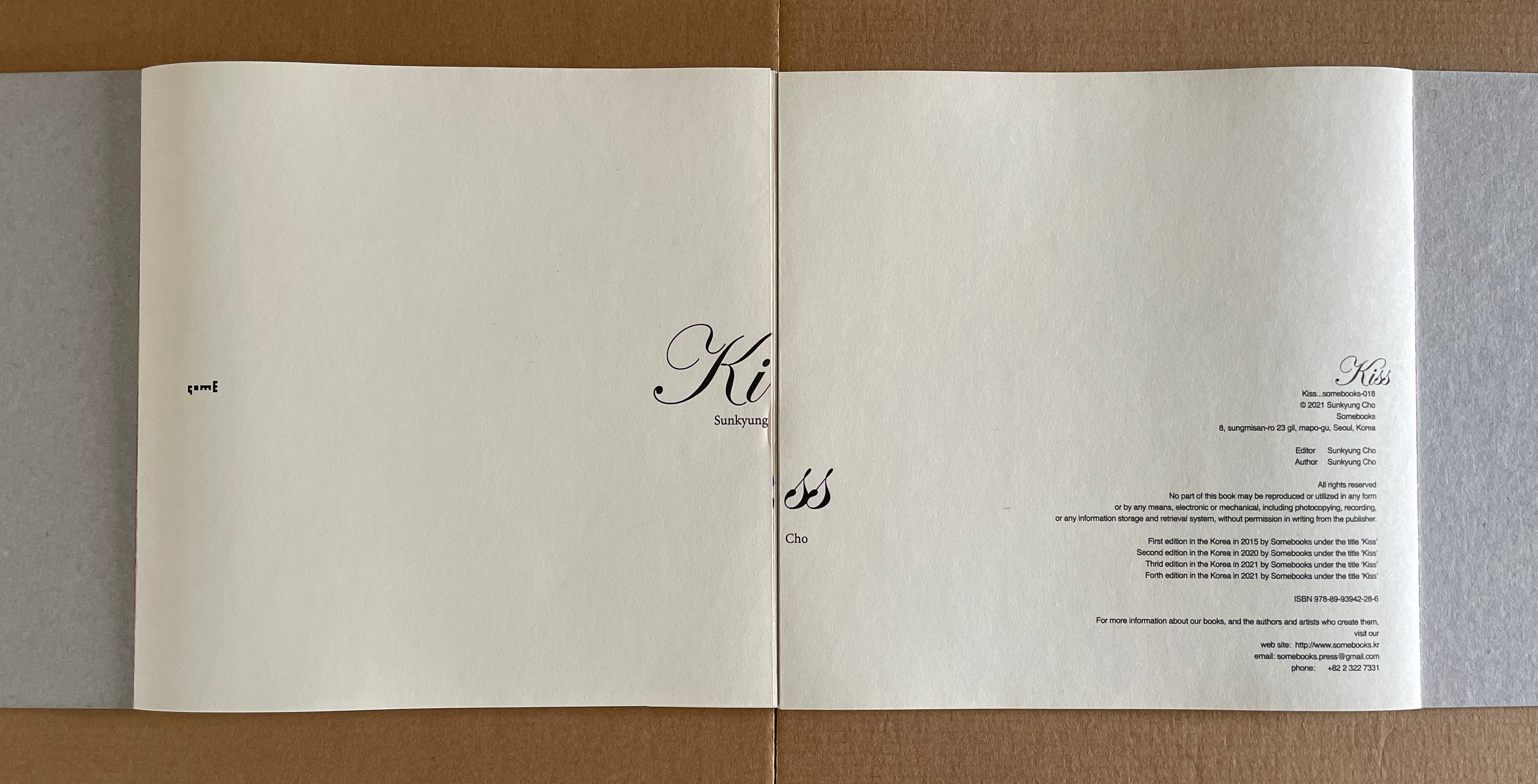
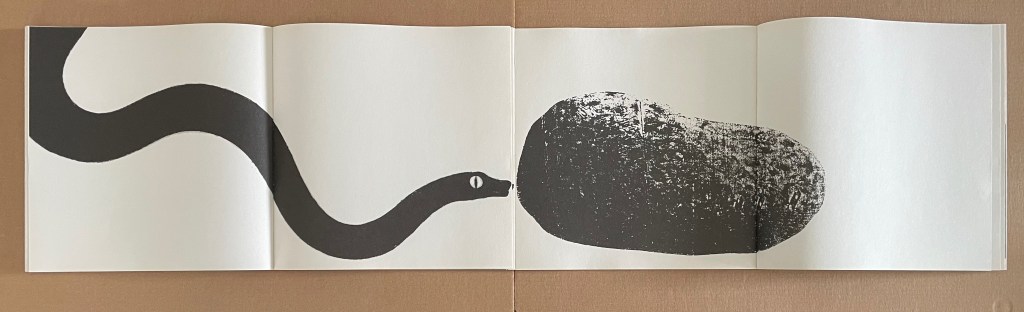
Kiss is far more whimsical. It works somewhat like a harlequinade, allowing multiple juxtapositions of images. The structure by which it does this is complex enough and the juxtapositions, subtle enough, that adult assistance is likely required. The book is actually two books joined at edges of their back covers, one opening to the left and the other, to the right.

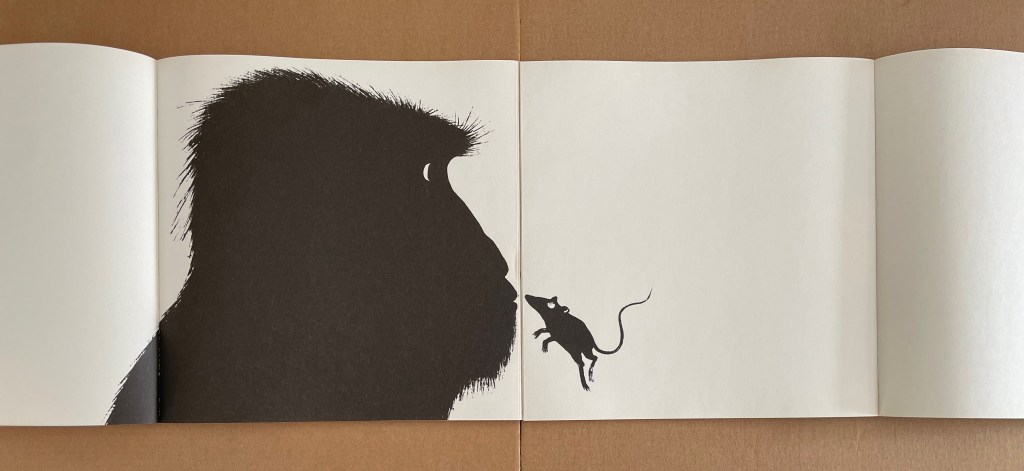
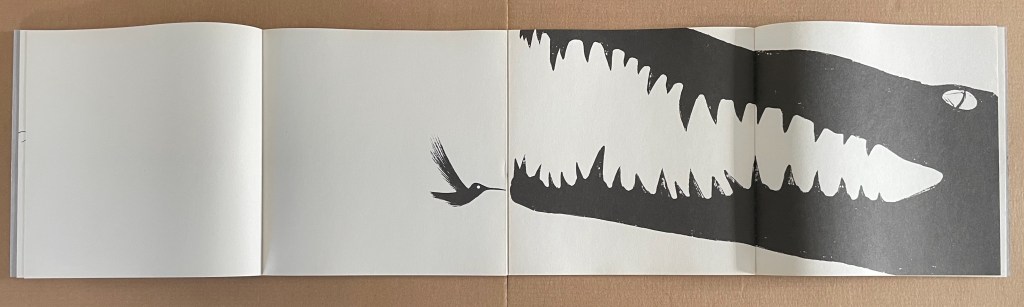
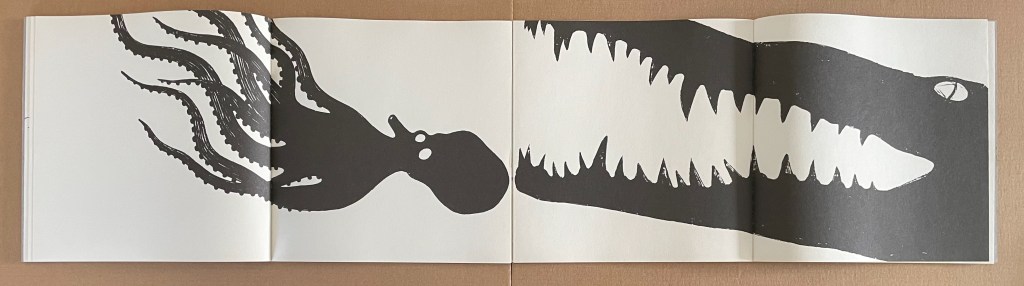
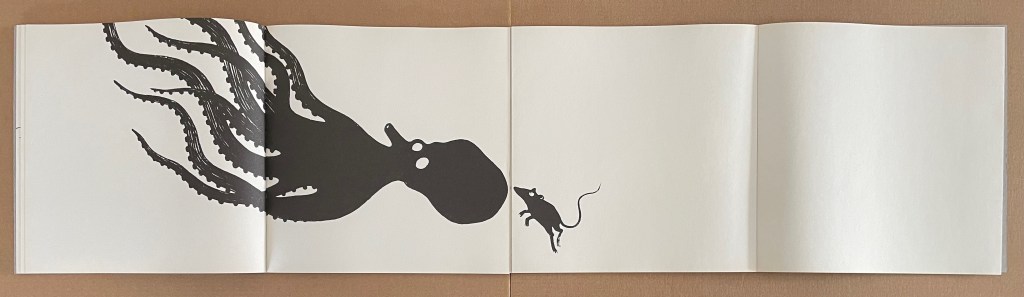
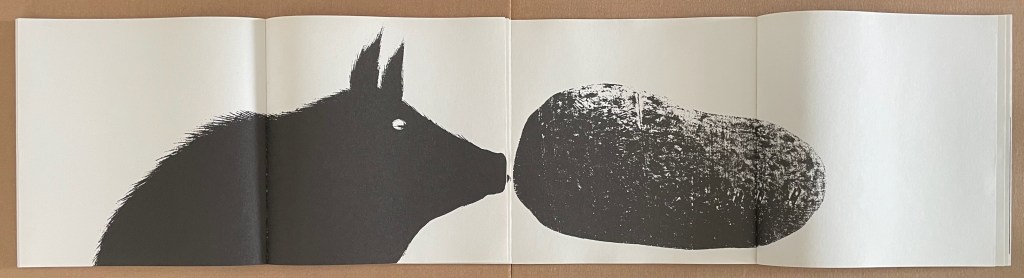
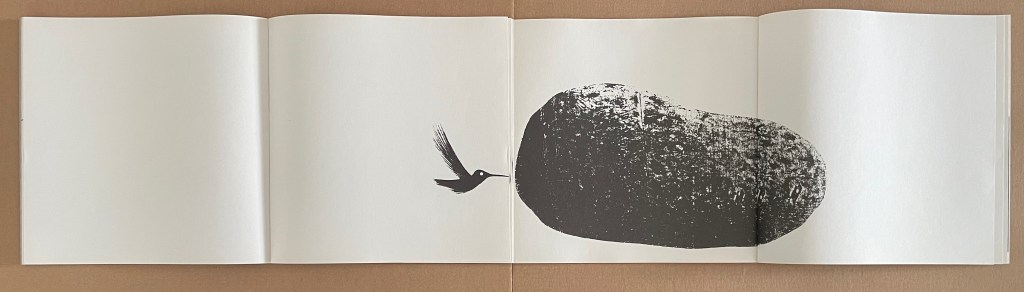
The precision of the registration between the facing books will generate delight as a gorilla kisses a mouse. The mouse kisses a bird. The bird, a crocodile. The crocodile, a gorilla or octopus. The octopus, a mouse or frog. And so on with sharks, snakes, and others.

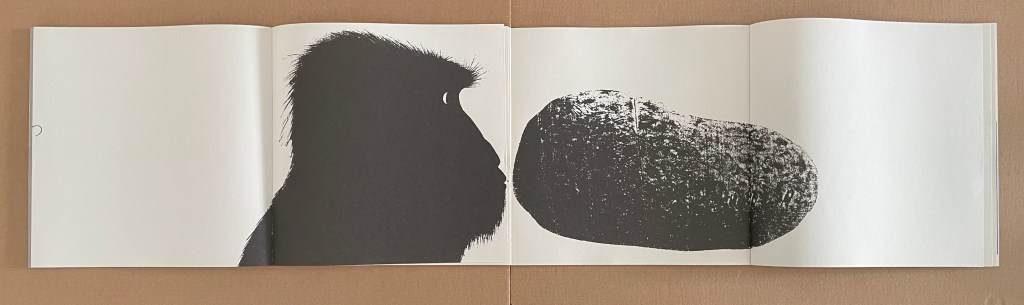
Among the effective subtleties that more experienced observers will note are Cho’s handling of bleeds and the facing sets of double-page spreads. The large expanses of white behind each of any two smaller figures facing each other from single pages contribute to a non-threatening delicate kiss. The larger, more threatening creatures extend across their double-page spreads and even bleed off their pages. When they meet, or when one of them meets a smaller figure, there is an edge. It may be an edge of curiosity on one side or the other or both, but it is likely also one of threat and unease.

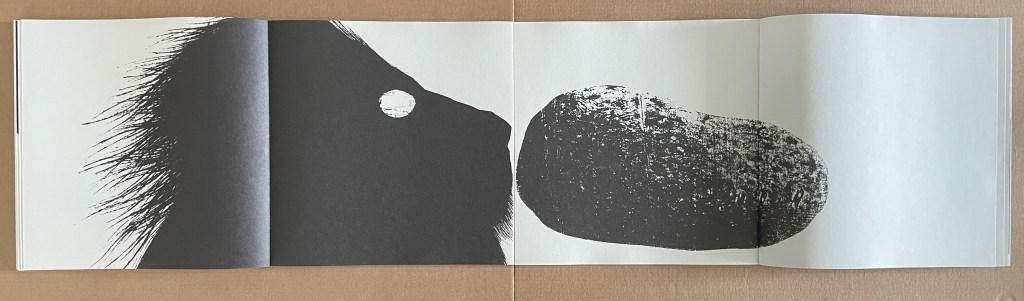
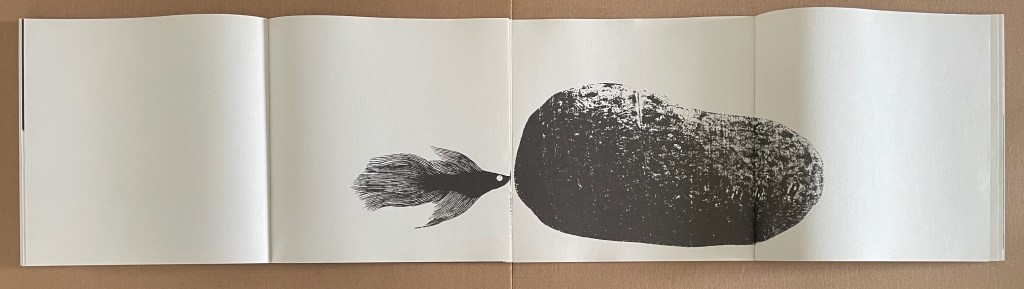
Another subtlety is the handling of the human figure. It occurs in the recto book. Like the smaller figures, it occupies a single page with a page of white behind it. It is expressionless, regardless of what it faces whether fish or lion. Oddly, the fish seems to be curious, and the lion, reserved.

Here is another subtlety that Cho raises. The last figure in the recto book is a stone, large enough to extend over its double-page spread. No doubt it is an anthropomorphizing tendency to read something (puzzlement, curiosity, annoyance, etc.) into the silhouette of each creature confronting the stone. But it is only the stone and human that exude indifference.

For an interesting structural, line and color comparison with another osculatory work, see Antonio Ferrara’s Ventiquattromila baci (Twenty four thousand kisses) (2021).

Further Reading

Philip Zimmermann“. Books On Books Collection.

Beckett Sandra L. 2013. Crossover Picturebooks : A Genre for All Ages. London: Routledge.

Golden Pinwheel. 23 July 2020. “Cho Sunkyunk, the many faces of illustration“. Golden Pinwheel.

Haughton, Chris. 13 September 2011. “5 1/2 months on Sunkyung’s sofa“. chrishaughton.com.

Mutty. 12 May 2020. “Sunkyung Cho – Living Objects“. Art Tribune.

Nikolajeva, Maria, and Carole Scott. 2007. How picturebooks work. New York: Routledge Taylor & Francis Group.

Outlaw, Christopher. 17 April 2017. “FILBo 2017“. The Bogotá Post. Accessed 30 October 2011.

Perkins, Stephen. 7 March 2023. “Antonio Ferrara, Ventiquattromila baci (Twenty four thousand kisses), Settenove edizioni, Cagli, Italy, 2021.” Accordion Publications.

Scott, Carole. 2014. “Artists’ books, Altered books, and Picturebooks”. In: B. Kümmerling‐Meibauer, ed., Picturebooks: Representation and Narration. London, New York: Routledge.

Books On Books Collection – Anne Covell

Anne Covell bridges the domains of book art and the book arts. The Record offers a skillfully constructed artist’s book that documents one of the first Trump Regime’s acts of depredation against history and truth. Historical Binding embodies her respect for the history of one of the book arts’ loveliest of crafts: stitching.

The Record (2017)

The Record (2017)
Anne Covell
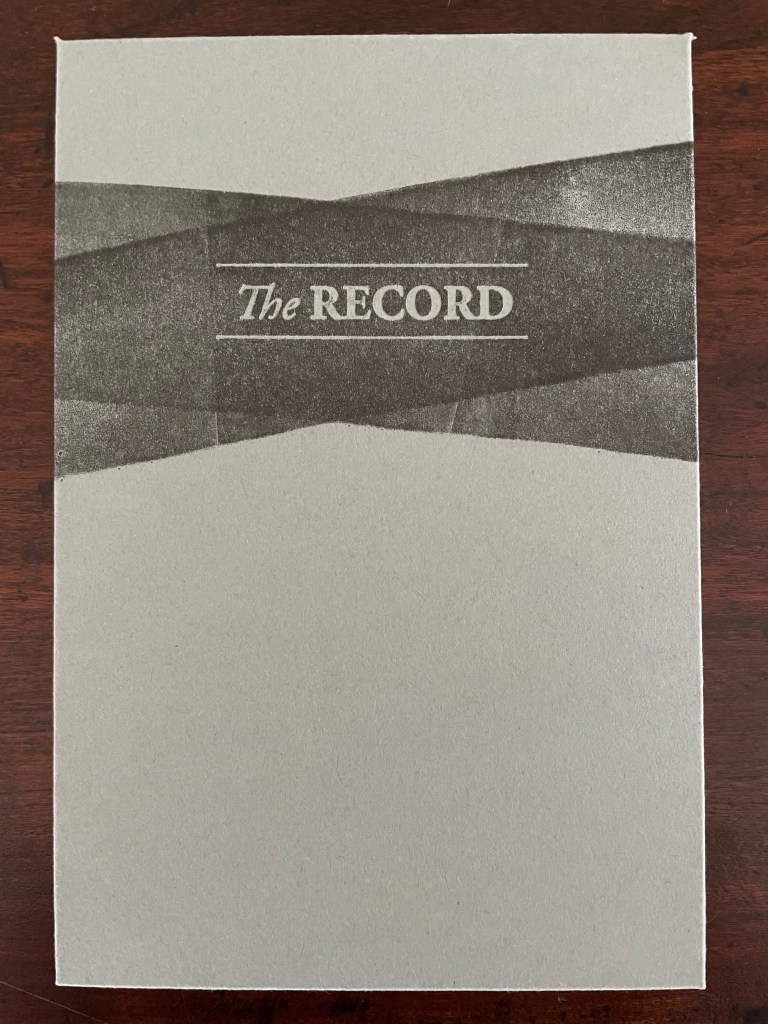
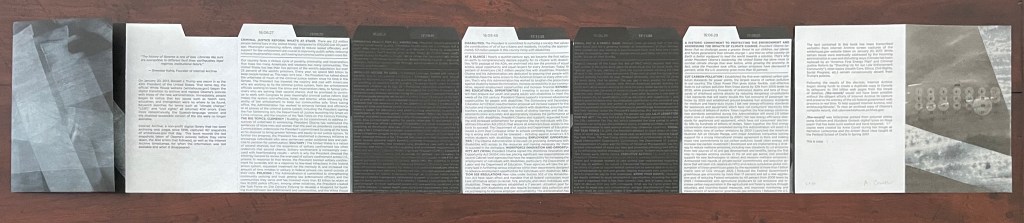
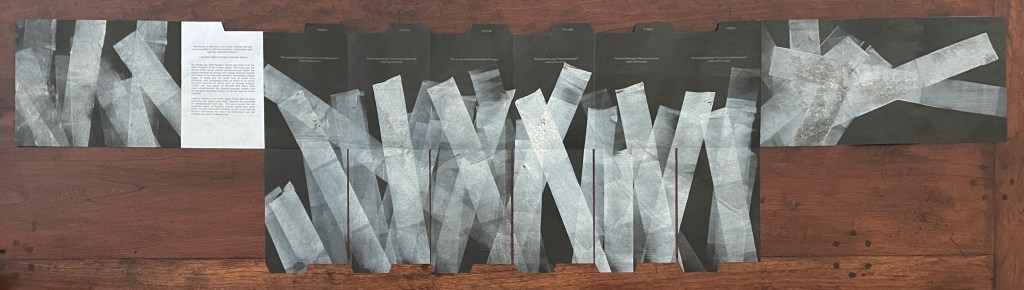
Letterpress printed accordion on Masa paper with sumi wash and hand brayering. Housed in a 4-flap French paper enclosure with button and string ties. Enclosure: H165 x W110 x D6 mm. Book: H164 x W108 x D3 mm (closed); H327 x W1080 mm (open). 6.5 x 4.25 x .25 inches (closed), 13 x 42.5 x .25 inches (open) [36] panels. Edition of 60, of which this is #1. Acquired from the artist, 10 September 2025.
Photos: Books On Books Collection.

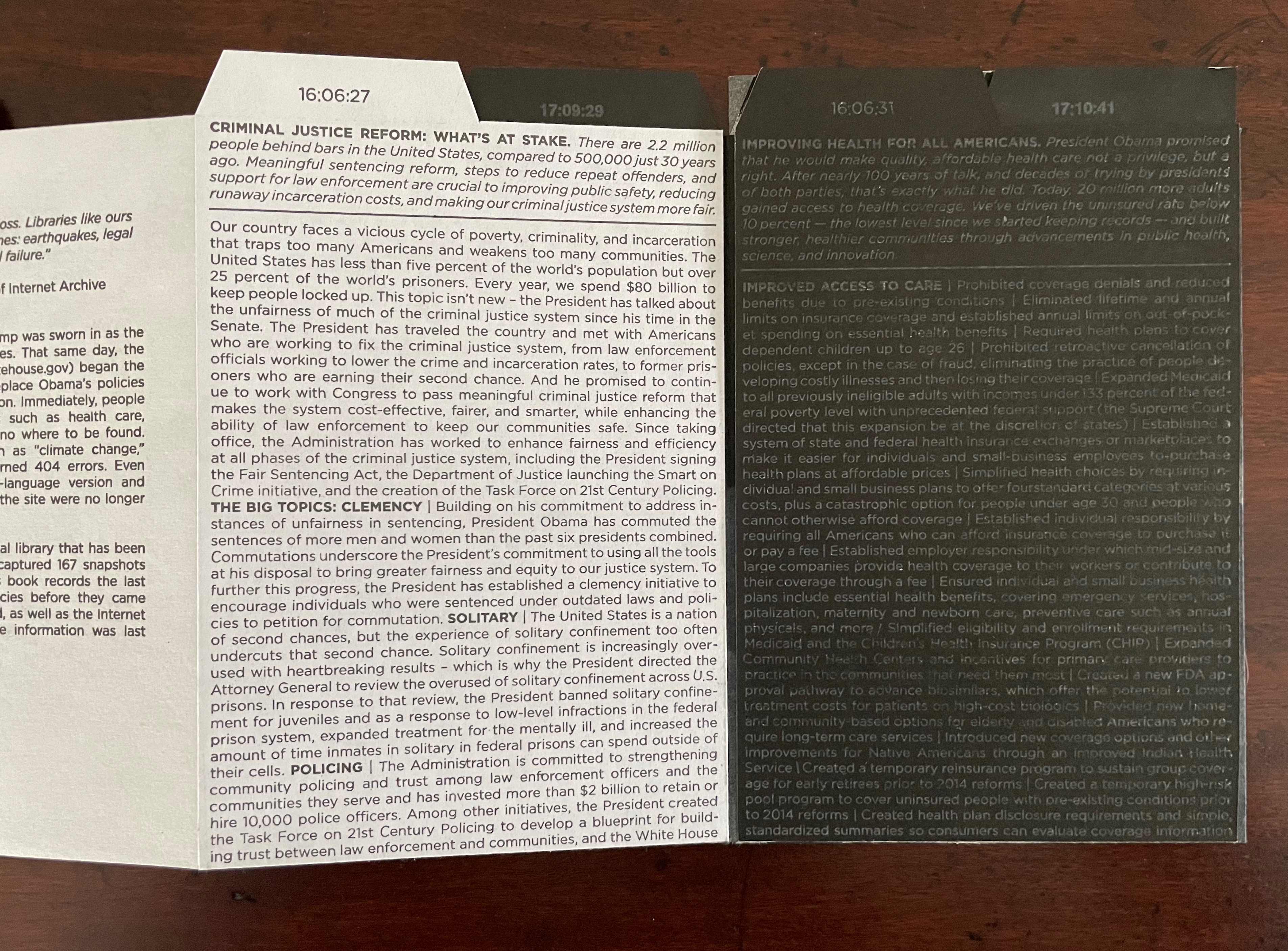
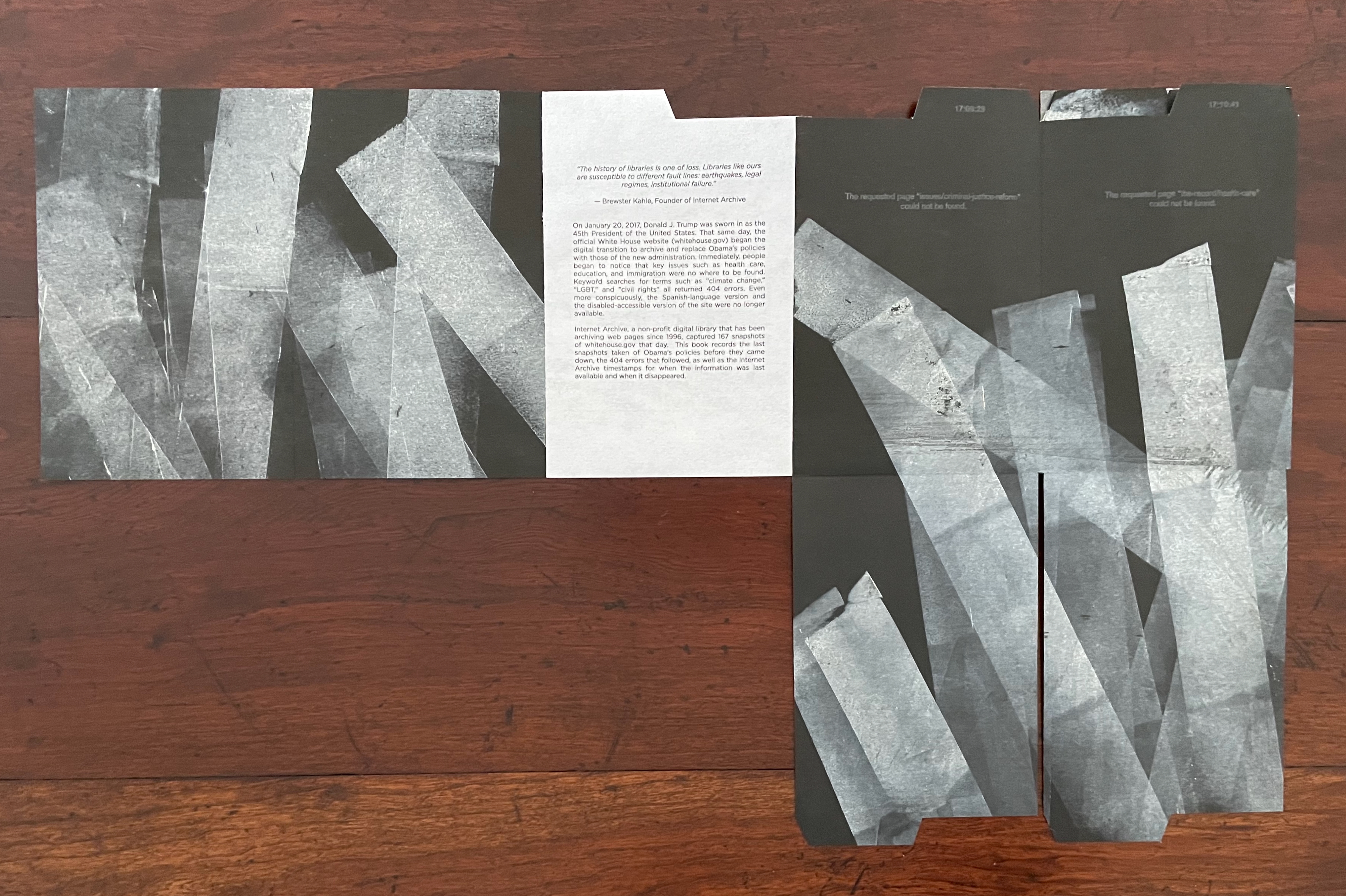
On January 20th, 2017, Donald J. Trump was sworn in as the 45th president of the United States. That same day, the official White House website (whitehouse.gov) began the digital transition to archive and replace Obama’s policies with those of the new administration. Immediately, people began to notice that key issues such as health care, education, and immigration were nowhere to be found. Keyword searches for terms such as “climate change,” “LGBT,” and “civil rights” all returned 404 errors. Even more conspicuously, the Spanish-language version and the disabled-accessible version of the site were no longer available. Internet Archive, a non-profit digital library that has been archiving webpages since 1996, captured 167 snapshots of whitehouse.gov that day. This book records the last snapshots taken of Obama’s policies before they came down, the 404 errors that followed, as well as the Internet Archive timestamps for when the information was last available and when it disappeared. (Anne Covell).

The fold-downs enact the digital shredding of the previous administration’s policies referencing existing laws that the Trump Regime opposed.

In response to the 6 January 2021 insurrection, Russell Maret and Sarah Moody published Three Constitutions, whose redactions and translations offer a view of the interim state of affairs reflecting “the cynical, ineffectual state of political discourse in the United States”. On the eve of the 25oth anniversary of the founding of the USA, will there be another work such as Covell’s or Maret and Moody’s to represent the second Trump Regime’s violation and shredding of law, judicial orders, and constitutional rights?

Historical Binding: Sewing Sampler (2025)

Historical Binding: Sewing Sampler (2025)
Anne Covell
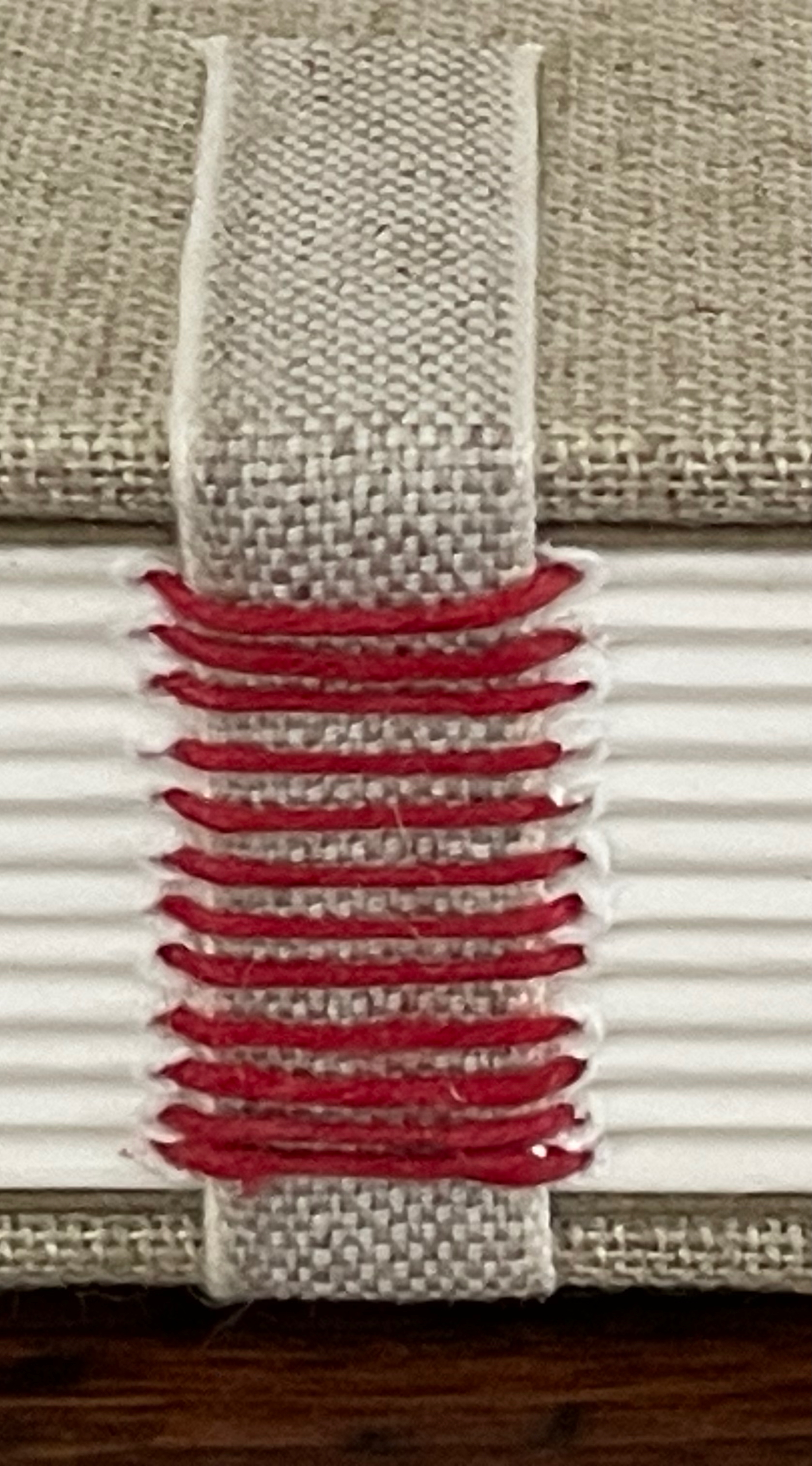
Clamshell box. Open-spine binding with cloth-covered boards and plain doublures. Box: H330 x W120 x D45 mm. Book: H305 x W100 x D25 mm. [288] pages. Made to order. Acquired from the artist 10 September 2025.
Photos: Books On Books Collection.

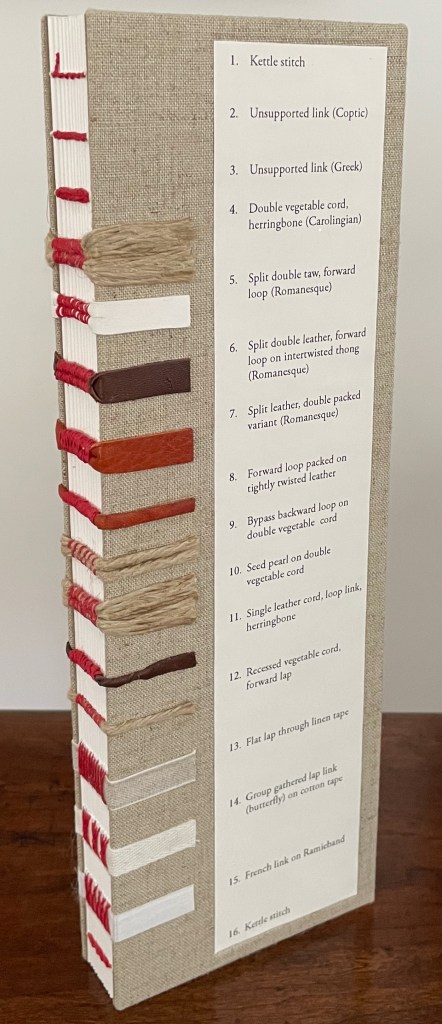
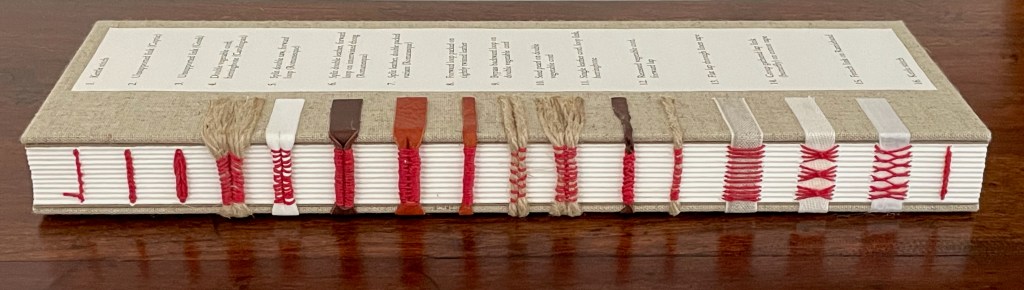
Spine sewing is one of the hidden book arts as it is most often covered by a case binding of paper, cloth, or leather (real or faux). Covell’s Historical Binding: Sewing Sampler:

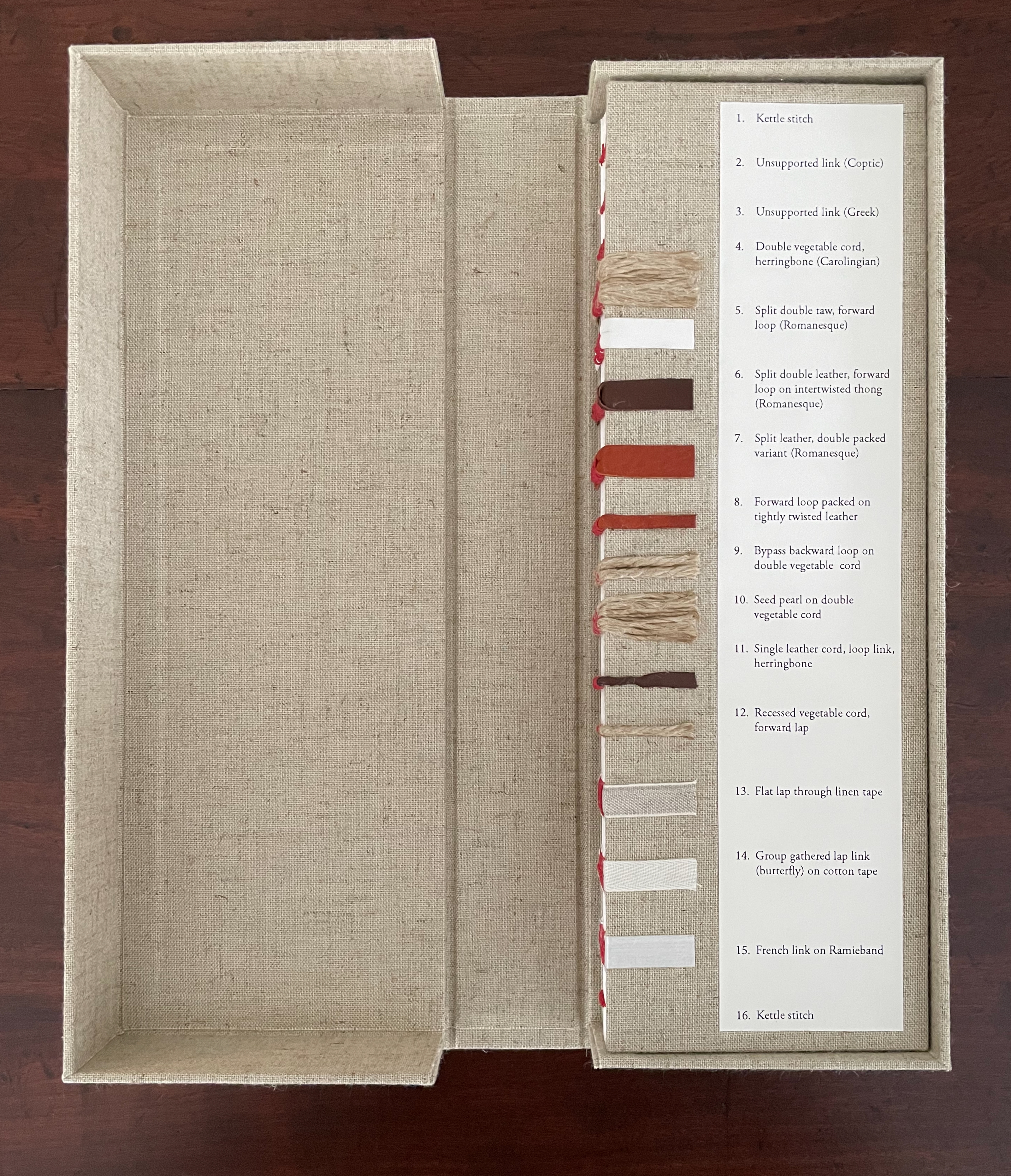
is designed for bookbinders and book enthusiasts as a personal reference and/or for teachers/historians with a focus in book history and book conservation. This is a large folio size blank book featuring varied sewing techniques that can also be used as a ledger or unique journal or sketchbook. It includes one hardcover sampler book with the option to be housed in a custom clamshell box covered in natural linen bookcloth. The sampler includes 16 different sewing methods both sewn on supports (hemp cord, leather and taw, linen and cotton tapes, and Ramieband) and sewn without supports. The sampler highlights the historical sewing styles inherent to their structure and includes title descriptions that correspond to each sewing station. The styles progress chronologically across the spine from the earliest forms of multi-section sewing to more modern adaptations and sewing variants. (Anne Covell)

Alongside Strange Papers: A Collection of the World’s Rarest Handmade Papers (1987) by Fred Siegenthaler, Woven and Interlocking Book Structures (2002) by Claire Van Vliet and Elizabeth Steiner, and The Art of the Fold: How to Make Innovative Books and Paper Structures (2018) by Hedi Kyle and Ulla Warchol, Covell’s volume expands a sweet suite of reminders of the book arts underpinning book art.

Further Reading

Commodore, Debbi. 2018-19. Revealing Invisible Patterns : A Binding Sampler. Tacoma, Wash.: [Debbi Commodore?].

Lavadour, Roberta. 2019. Binding Sampler. [Pendelton, Oregon]: [Mission Creek Press].

Maret, Russell, and Sarah Moody. 2021. Three Constitutions. New York: Russell Maret.

Smith, Keith A. 2002. Non-Adhesive Binding. 3d edition. Rochester, N.Y.: Keith A. Smith Books.

VanderSchans, Arielle. 20 October 2019. “Models of Bookbinding Techniques: Sewing Structures“. Arielle’s Bindery.

Books On Books Collection – Ivon Illmer

Untitled (2015)
Ivon Illmer
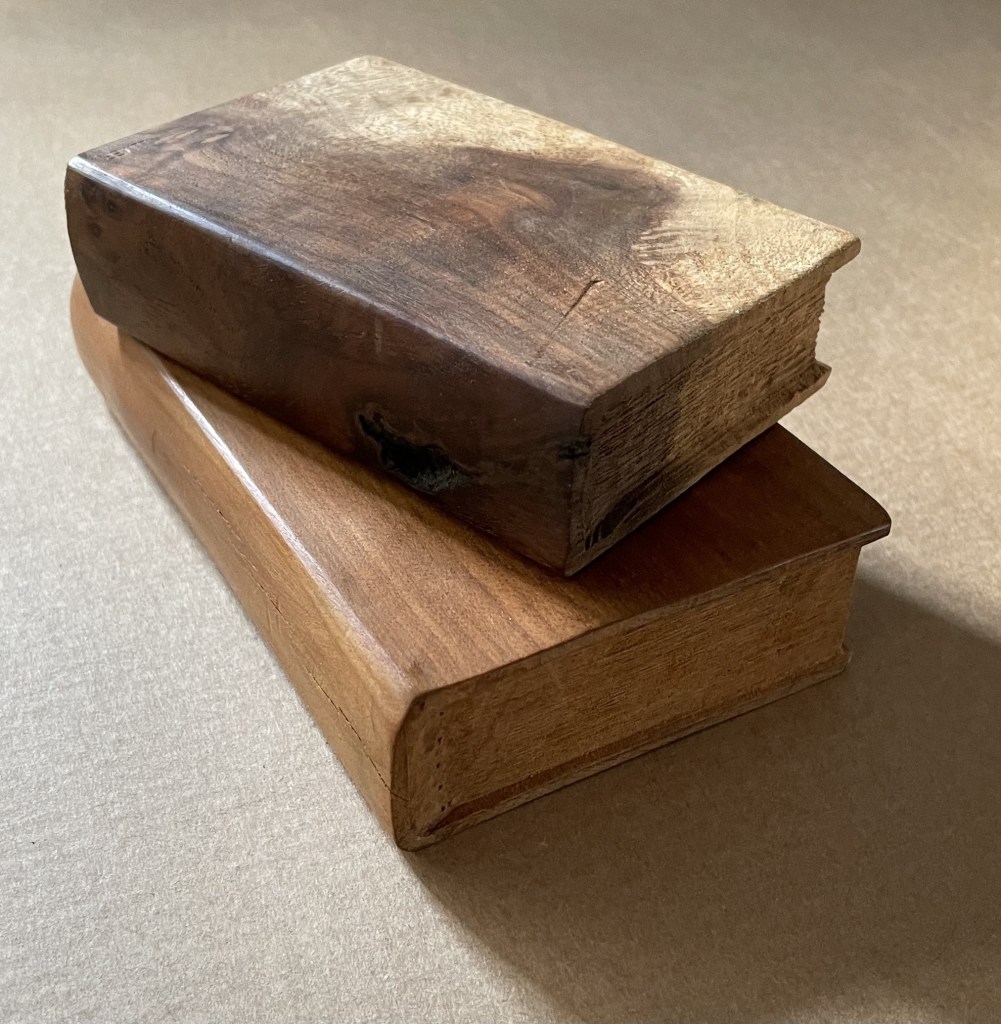
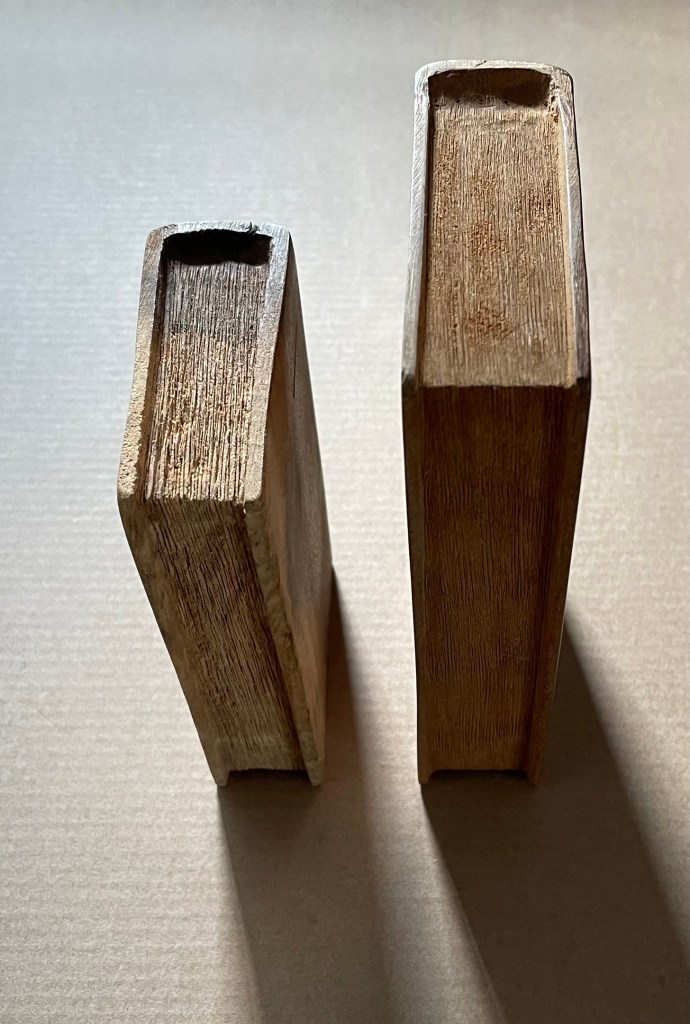
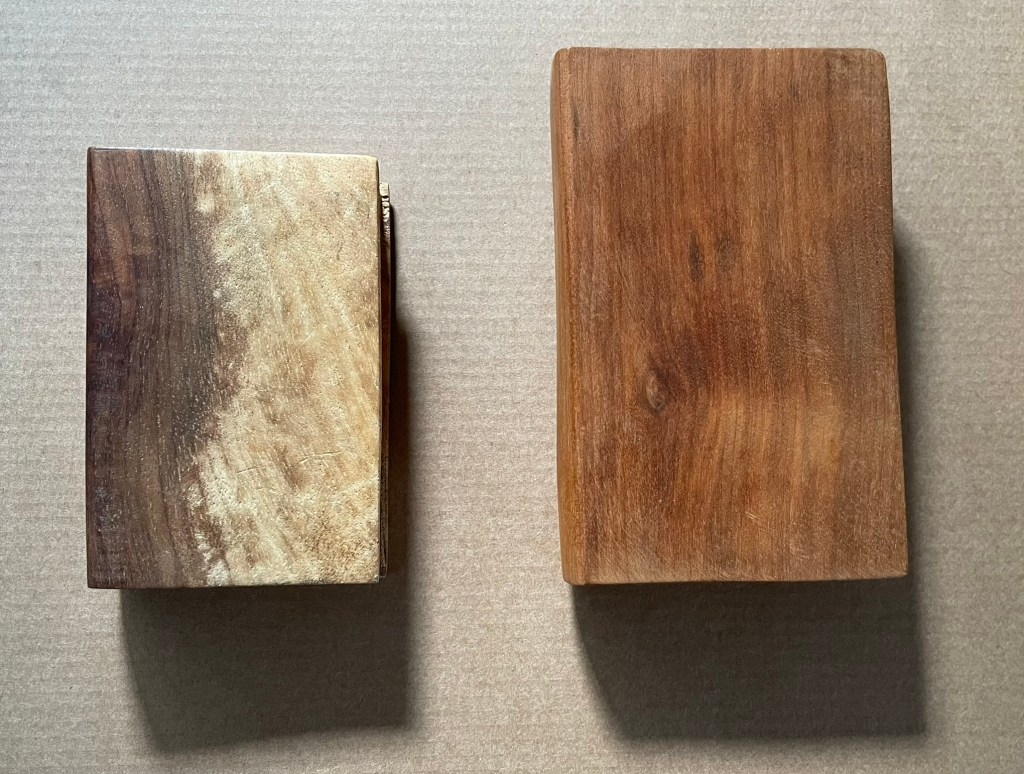
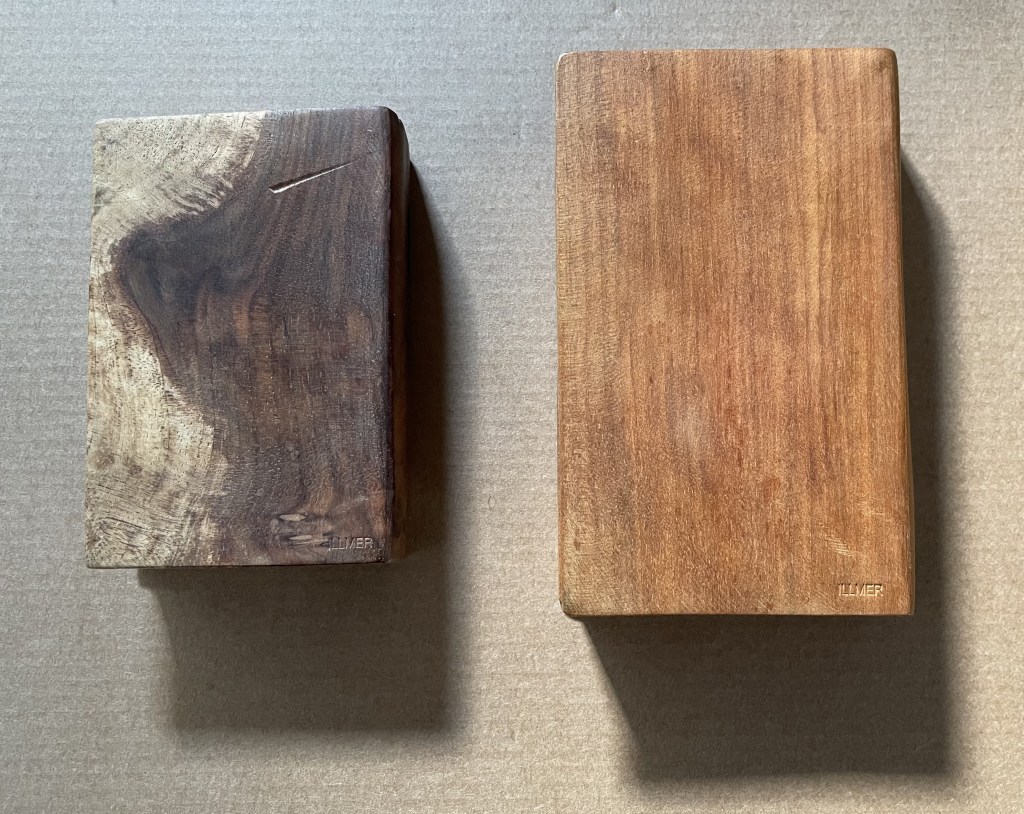
Book-shaped wood sculpture. Top: Almond wood, H100 x W65 x D27 mm.Bottom: Poplar wood, H123 x W78 x D27 mm. Unique. Acquired from the artist, 10 October 2014.
Photos: Books On Books.

From Ivon Illmer’s website: Books preserve history and stories. Each book has its own individual story. This ranges from loving treatment to neglect to ostracism and even burning. The arc almost inevitably stretches from the fate of the book to the fate of man. Everyone should let their imagination run wild when touching the book sculptures and invent their own story for each book. Touching is important, the haptic experience flatters the sense of touch. You “grasp” the beauty of the wood. Imagining the book sculptures in the raw piece of wood is the art. Each piece is unique in shape, structure and grain. Accessed 14 October 2024.

Illmer categorizes his work as “book sculpture / book art”. The carvings from various woods primarily celebrate the shape and tactility of the closed codex. The similitude of the exterior, right down to the fore, top and bottom edges, belies the inaccessibility of the interior.

Untitled

If simply entitled Unreadable Book or A Closed Book, these works would lead us down a narrow path of interpretation. Another easy path of interpretation could be etymological. The derivation of the word book from the Old German Buche (meaning “beech”) is a debatable assumption. Still, it’s widely accepted enough to start us down the path that, since the paper of traditional books is made from wood, so, Illmer’s carved codices just represent another way of using wood to make a book. He could have entitled them Buchmaterial, which in English also captures the same pun between the book’s content and its material. In his self-published catalogue, however, Illmer is explicit that his use of “untitled” is totemic:

… each of my books represents every book published so far. That’s why none of them has a title, and that’s why none of them is based on a real book.

Illmer leaves it to the imagination of the viewer to determine whether and how his works “interrogate” the nature of the book.

Presenting physically inaccessible books is fairly common among wood carvers, sculptors, and painters. A closed or open book appears in the hands of countless saints and Madonnas and carries with it various iconological interpretations, depending on the bearer. From the St. Servatius Cathedral Treasury in Maastricht, here’s a library of letters, scrolls and books in the hands of the Holy Kinship.

Heilige Maagschap (c.1470 )
Westphalian School

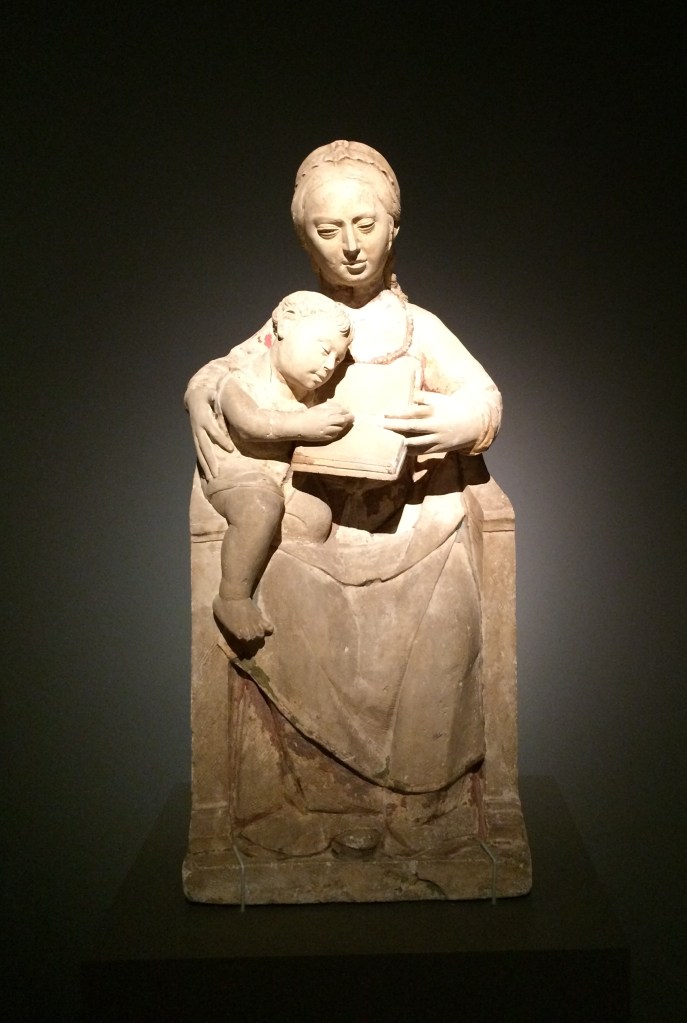
And from Lisbon’s National Museum of Antique Art, here’s a Madonna and Child with book, which seems to underscore the interpretation in Christian art that an open book in connection with Mary indicates the fulfillment of the promise.

Madonna and Child (c. 1540-1550), Unknown sculptor, Museu Nacional de Arte Antiga, Lisbonne, Inv 1182 Esc. Photos: Books On Books Collection, 2015, at “Pliure. Prologue (la part du feu)”, Fondation Calouste-Gulbenkian, Paris.

The fifteenth-century Van Lymborch, or Limbourg, brothers of Les Très Riches Heures du Duc de Berry fame, however, may be the first to have created an inaccessible book for the sheer pleasure of trompe-l’oeil and trompe-le-main. They made it from a block of wood, decorated its exterior to look like a sumptuous illuminated manuscript, and gave it to their patron as a New Year’s day joke. Another two centuries later in Venice, Francesco Pianta the Younger carved shelves of inaccessible wooden books for the Chapter Room in the Scuola Grande di San Rocco (1657-75). Arranged as if recently consulted and replaced on their shelves, the books provide the studious background for inconographic and allegorical sculptural figures of “Curiosity”, “Wrath”, “Melancholy”, and others. The influence of this particular fantasy has persisted in Venice and found an enthusiastic expansionist in Livio de Marchi, whose project entitled House of Books, begun in 1990, boasted three residential-sized installations by 2025. From the spine- and cover-clad exterior walls, to the carved splayed book for a roof, to the furnishings — everything is made from wood and has a bookish allusion in its shape or function, including the pen-shaped chimney and a pencil-picket fence. The more prolific joker, however, may be Alain Stanké, whose wood sculptures suggest there is no bookish pun he would not carve.

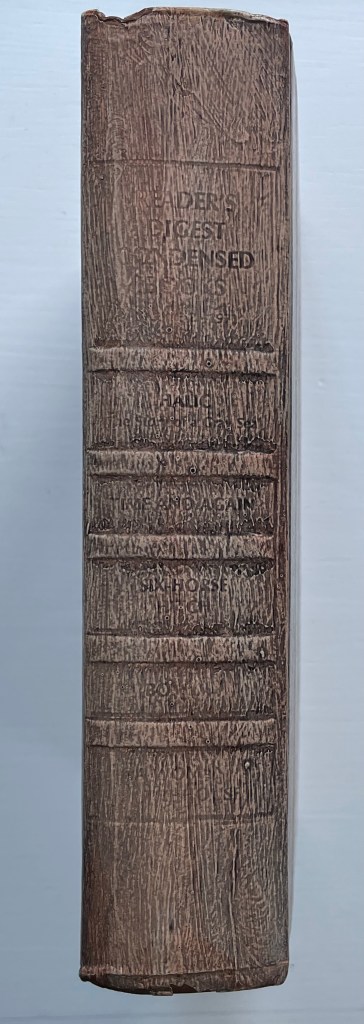
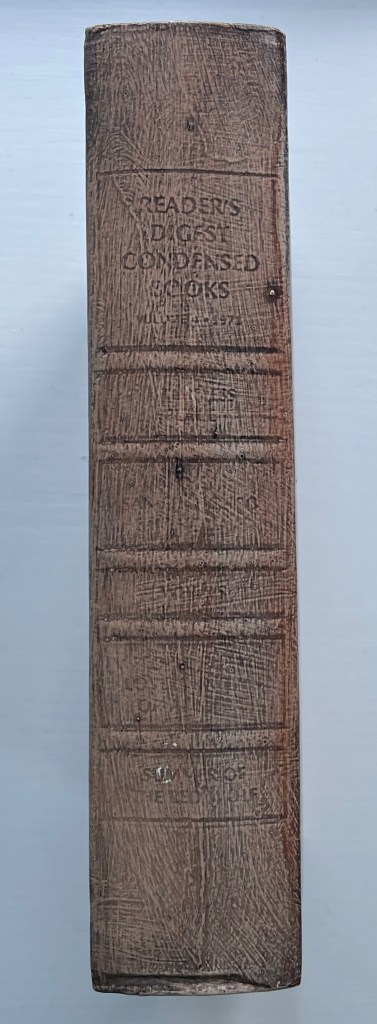
While facetiousness and jokery also characterize the path taken by conceptual book artists by making an inaccessible book the material of the artwork, there is now an edge. Marcel Broodthaers encased his previously published books of poetry in plaster to create Pense-Bête (1964), an elaborate farewell to literary aims. Following Broodthaers, Wolf Vostell purportedly encased his paper-based booklet Betonierungen (“Concretifications”) in a 40 x 28 x 6cm slab of concrete shaped like a book (Frengel et al.), not a farewell but rather an embodied manifesto. Vostell’s Betonbuch (1971) allows for both the interpretive paths of inaccessibility and punning on the book’s material. (Further trickery may be involved; radiographic examinations are inconclusive on whether there really is a booklet embedded in there; see White, below.) Despite, or because of, its title, Barton Lidice Beneš’ inaccessible Untitled (1973) plays differently with titular punning: Beneš has almost obliterated the titles of the condensed books from the spines of his sealed Reader’s Digest Condensed Books series. Jacqueline Rush Lee’s The First Cut (2015) soaks, rolls, and dries the three volumes of the Loeb translation of Ovid’s Metamorphoses into a single firewood-like chunk; its inaccessibility and title join in a punning allusion to the transformation of Daphne and others into trees or plants to escape the grasp of the gods. Lorenzo Perrone’s inaccessible Kintsugi (2018) casts yet a different titular pun by applying “repair” lines of gold glue to a presumably unbreakable and pristinely white plastered book.

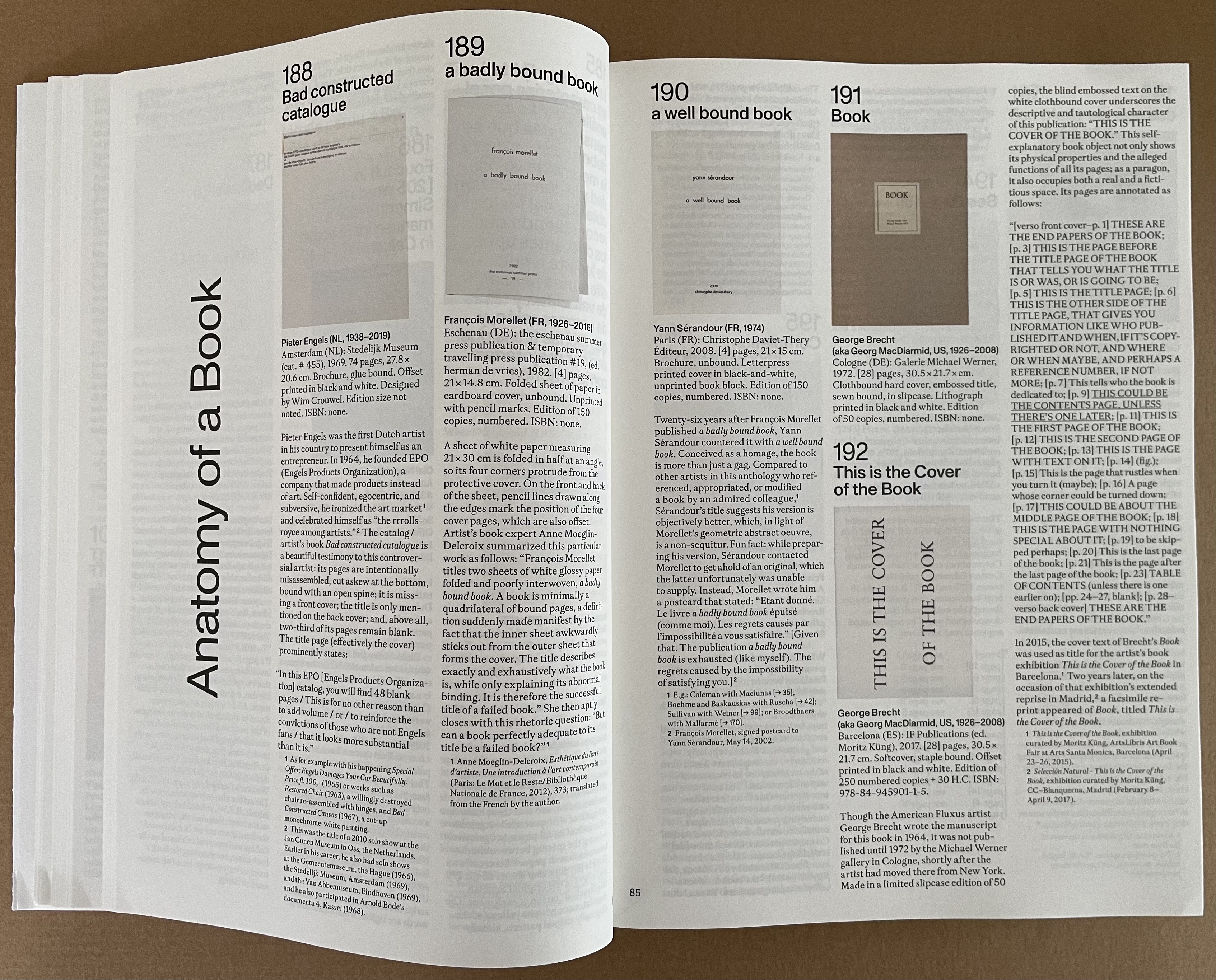
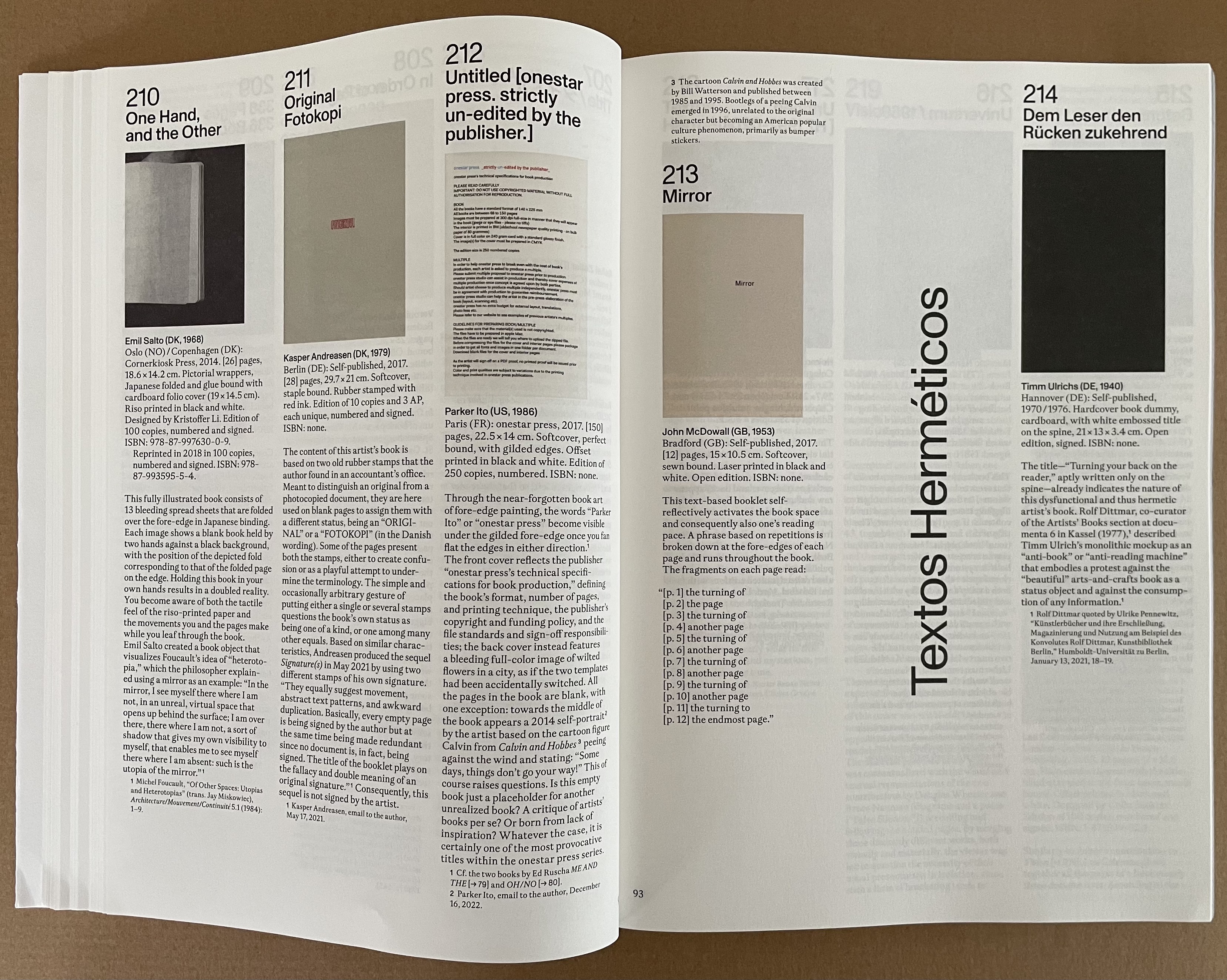
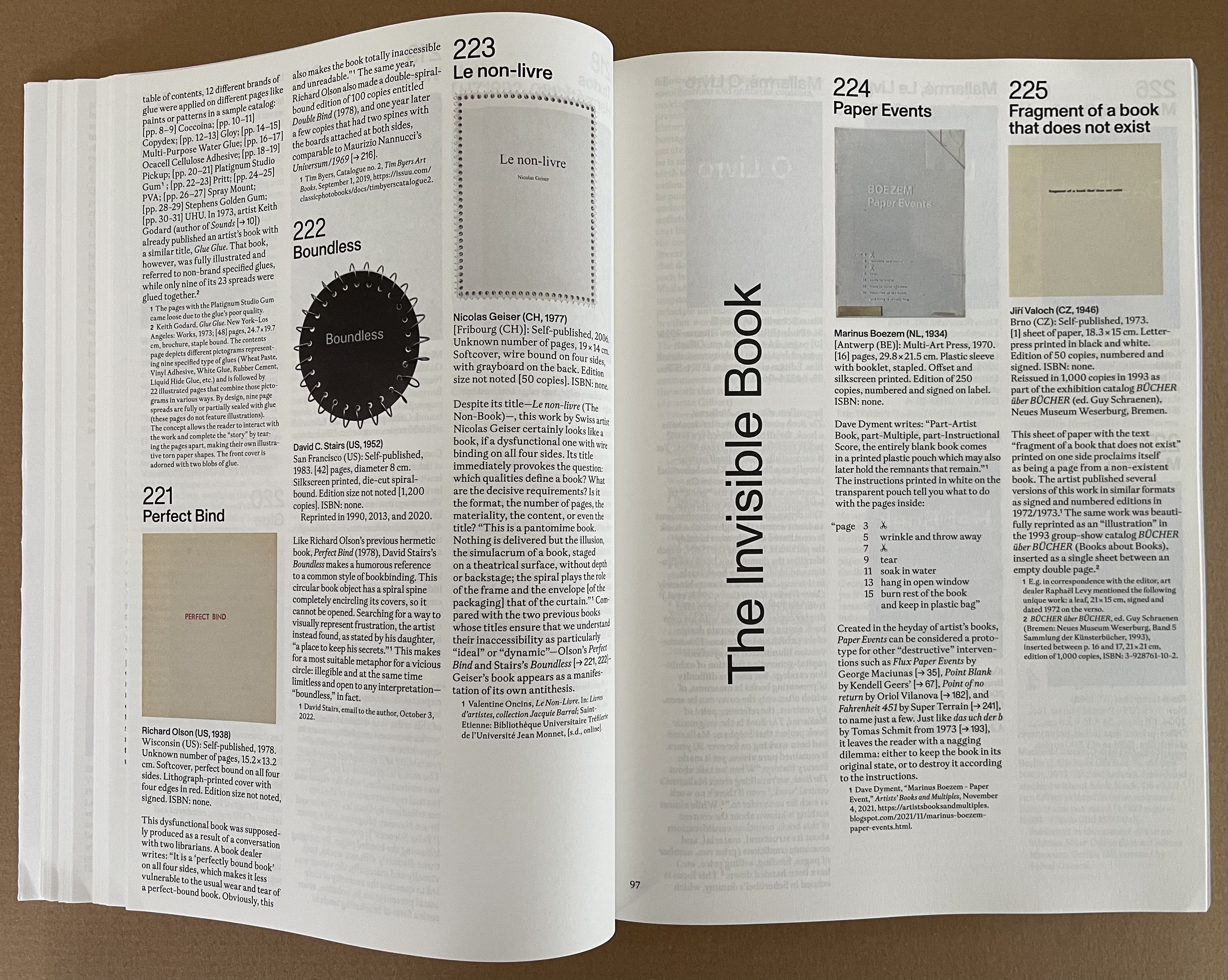
Moritz Küng’s exhibition catalogue Blank. Raw. Illegible … : Artists’ Books as Statements (1960-2022) devotes one of its fifteen thematic sections to inaccessible books, including Vostell’s Betonbuch. Among the ten works included, five of them introduce puns unlike those mentioned so far. They pun on a structural or material feature of “the book”. Timm Ulrich’s Dem Leser den Rücken zukehrend (1970/76) is an hermetically sealed book dummy, whose only text is the title (“Turning your back on the reader”) appearing on the spine of the book. Richard Olson’s Perfect Bind (1978), David C. Stairs’ Boundless (1983), and Nicolas Geiser’s Le non-livre (2006) are each bound on all four sides. Les Coleman’s Glue (2002) qualifies as a fifth inaccessible book with a book-material-referring title, although it does have an accessible table of contents to let you know the different types of glue used to make the different sections of the book inaccessible.

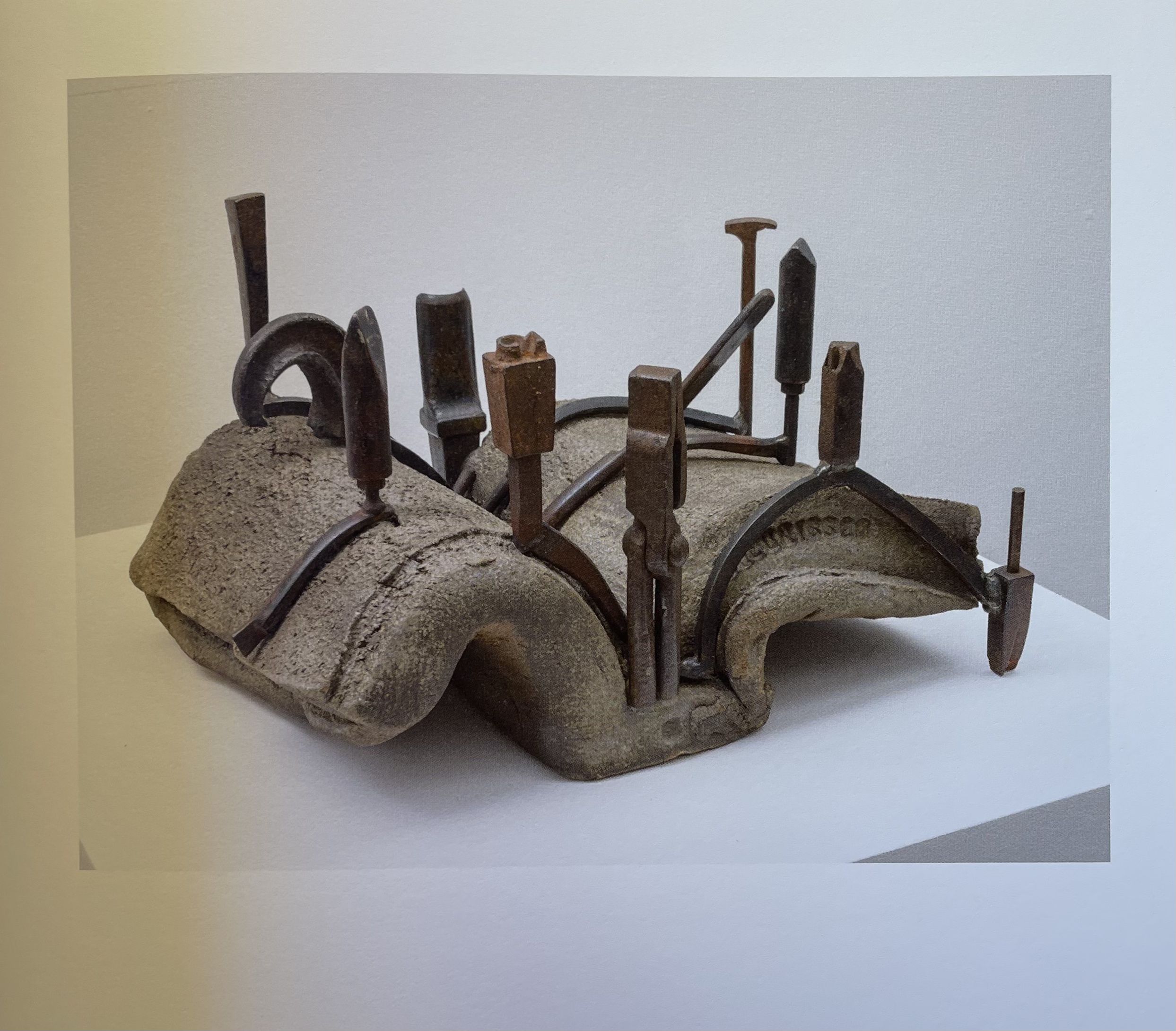
Like art and its history in general, book art is not linear. The point of Anthony Caro’s sculptures that include inaccessible books is not “the book” as it is with the conceptualists. His works carry more directive titles and nudge the viewer’s interpretation away from the inaccessibility and toward the subject the books illustrate or support. His minimalist Book of Eden (1999) is a pulp paper sculpture and lithograph. Its title clarifies, or is clarified by, the two outline images evoking the Adam and Eve myth: an apple and buttocks. Another example is Stave (2013), entitled after his death. The title comes from the source of the work’s inspiration: “a reproduction of an illustrated musical score that Caro had chanced upon inside a catalogue for an Italian exhibition about Duccio” (Sooke). Given Caro’s aims at associating his sculptures with music (see, for example, his Concerto series), Stave is probably not far from the mark and provides a very different example of the title’s directing the viewer’s interpretation. The sculpture may present an inaccessible book, but the suggestions of stave lines and musical notations rise in metal above the open pages. Likewise, Book of Eden‘s lithograph is the minimalist distillation from the blank white paper-pulp book under it.

Stave (2013) stoneware and steel, 46 × 28 × 50 cm.
From Anthony Caro : Bronze and Book Sculptures : 5 April – 24 June 2016. London: Annely Juda Fine Art, 2016.

Anselm Kiefer’s book art is a whirlwind of the above uses of inaccessible books, allusive titles, and the untitled. The several works of his like Das Buch (1979-85) that have an inaccessible lead book hanging against an acrylic-on-canvas background make for interesting pairings with Caro’s Book of Eden. Where Caro backgrounds his blank inaccessible Bible beneath his minimalist lithograph and allusive title, Kiefer foregrounds his books. As he writes in L’Alchimie du Livre (2015):

In the beginning was the word. But in my work, first there were the books made of lead. And those books are interesting in that they are impossible to read, they are too heavy, the lead lets nothing get through, it’s a complete concealment… Lead books are perfect paradoxes then. You can neither thumb through them nor read them, and you will never know what’s inside. (Minssieux-Chamonard, 237).

Kiefer’s Mesopotamia – The High Priestess (1985-89) with its 196 lead volumes ranged across two open book cases contrasts with Francesco Pianta’s loosely shelved, allusive but decorative wooden books in Venice. The work is not background to adjacent artwork or surroundings. Neither is Kiefer’s title an indirect pun allusively signaling after something more like those of other book artists. It is indeed allusive but to something that stands apart from the form and material of the artwork. The distance makes the viewer work backwards from the inaccessibility, the volume, and distressed appearance to connect with the title. When Kiefer uses “untitled” as a title, he often adds explanatory words in brackets after it, as in Untitled (Constellation Book) (2004). Although made of lead, this work, however, is not inaccessible. Its nearly 5.5-foot pages stand open to be read “in the round”.

Johanna Drucker is one of the few writers about artists’ books who has commented at any length on Kiefer’s artist’s books:

Anselm Kiefer’s large-scale books made of heavy dull grey lead, laid open on stands designed to hold their outsized form and ponderous weight absorb the viewer into their profound depths, rather than offering themselves for communication. Such works become affective pieces rather than textual vehicles or message bearing forms, their physical, tactile presence takes the iconic and cultural resonance of book forms and plays it out through an extenuated spectrum of propositions — “what if” this were a book and a book were this, what then? Books of bread, marble, granite, soap and dried leaves pressed with flowers delicate and impossible to manipulate without destroying them. Books of lost objects, found texts, destroyed titles, remade photographs — all gaining some value by using the book form, insisting on its familiar structure as a frame to the otherwise elusive meaning of these constructions. …. (Drucker, 114-15.)

Which brings us back to Illmer’s more totemic works. Each work celebrates the grain and flaws of its material by using the book form. It could do so with a different form (beads, animals, geometric shapes, etc.), but Illmer chose the book. Although an inaccessible book, the object gains s0me value by this choice. And with the totemic title of Untitled, each work demonstrates that title matters as much as material and shape. Untitled offers the viewer’s eyes and hands the challenge that all inert totems offer: to invest its shape, grain, colors, and markings with meaning. But where do such works sit in our appreciation of artists’ books and book art? What are the distinctions between them and those of Kiefer, Caro, Coleman, Geiser, Stairs, Olson, Ulrich, Perrone, Lee, Beneš, Vostell, and Broodthaers? Keep looking and, wherever possible, touching.

Further Reading

Drucker, Johanna. 2004. The Century of Artists’ Books [Second edition] ed. New York City: Granary Books. Others who have commented at some length on Kiefer’s books as artist’s books include Zdenek Felix, “The Readability of the World” (1991); Buzz Spector, “Anselm Kiefer’s Bookworks” in Art Forum in 1987 (reprinted in The Book Maker’s Desire); Elizabeth Long in The Journal of Artists’ Books 21 (2007), and Garrett Stewart in Critical Inquiry (spring 2010).

Dubansky, Mindell, and Miriam Schaer. 2016. Blooks : The Art of Books That Aren’t : Book Objects from the Collection of Mindell Dubansky. New York: Grolier Club.

Frengel, Elizabeth, Patti Gibbons, Maria Kokkori, and Ann Lindsey. 2022. “Wolf Vostell’s Betonbuch [Concrete Book]: Materials and Meanings“. Presentation at 2022 ARLIS/NA Conference. Chicago, IL.]

Illmer, Ivon.2013. Buch-Skulpturen. Osnabruck: Self-published.

Küng, Moritz (ed.). 2023. Blank. Raw. Illegible … : Artists’ Books as Statements (1960-2022). Köln: Verlag der Buchhandlung Walther und Franz König.

Minssieux-Chamonard, Marie (ed.). 2015. Anselm Kiefer : L’alchimie du Livre : [Exposition, Bibliothèque Nationale de France, Paris, 20 Octobre 2015-7 Février 2016]. Paris: Bibliothèque nationale de France : Éditions du Regard.

Salvadeo, Dario Michele. n.d. “Francesco Pianta at the Scuola Grande di San Rocco“. Giuseppe Biretti. Milan: Giuseppe Biretti. Accessed 13 December 2025.

Sooke, Alistair. 2016. Anthony Caro: Bronze and Book Sculptures. London: Annely Juda Fine Art.

White, April. 22 September 2022. “Can Science Solve the Mystery of the Concrete Book? When a sledgehammer isn’t really an option“. Atlas Obscura. Accessed 15 December 2025.

Books On Books Collection – Werner Pfeiffer

Drawn, Cut & Layered
Werner Pfeiffer
Plastic box containing illustrated pop-ups.Acquired from Toledo Museum of Art, 5 Jun 2017.
Photos: Books On Books Collection.

Werner Pfeiffer’s playfulness finds its way into viewers’ hands with this offering from his Toledo Museum of Art exhibition in 2015. His archives are housed at Vassar College.

With its structures and photographic representation of Pfeiffer’s other works of paper engineering, Drawn, Cut & Layered demonstrates his breadth in that sub-domain of book art. Not detectable in the box, though, are Pfeiffer’s white altered book objects, which formed the 2010 exhibition at Cornell University, entitled censor, villain, provocateur, experimenter, and demonstrates his scope in the sub-domain of altered books.

In kind, they were preceded by Barton Lidicé BenešThe Life of Gandhi and Beauty Book (both 1973), M.L. Van Nice‘s Swiss Army Book (1990) Irwin Susskind‘s Book Faced Down – Embedded in Plaster (1999). In kind and whiteness, they were followed by Jonathan Callan‘s Zurbarán’s Color Plates (2011), Michael Mandiberg‘s Print Wikipedia (2015), and Lorenzo Perrone‘s Kintsugi(2018).

Further Reading and Viewing

Hedi Kyle’s The Art of the Fold: How to Make Innovative Books and Paper Structures (2018)“. 24 September 2018. Bookmarking Book Art.

Movables Now and Then“. 31 August 2024. Bookmarking Book Art.

Lorenzo Perrone“. 8 September 2019. Books On Books Collection.

Werner Pfeiffer and Anselm Kiefer“. 17 January 2015. Bookmarking Book Art.

Kevin M. Steele“. 18 July 2023. Books On Books Collection.

A ‘white book report’ on ‘The White Heat’ at MARC STRAUS“. 5 June 2017. Bookmarking Book Art.

“drawn, cut & layered: The Art of Werner Pfeiffer”
6 February to 3 May 2015
Toledo Museum of Art

Books On Books Collection – Barton Lidice Beneš

Beauty Book; The Life of Gandhi; Untitled (1973)
Barton Lidice Beneš
Mixed media book constructions. Acquired from Rago Arts and Auction Center, 23 March 2021; Allan Stone Gallery, New York; artist.
Photos: Books On Books Collection.

Beauty Book (1973)
Barton Lidice Beneš
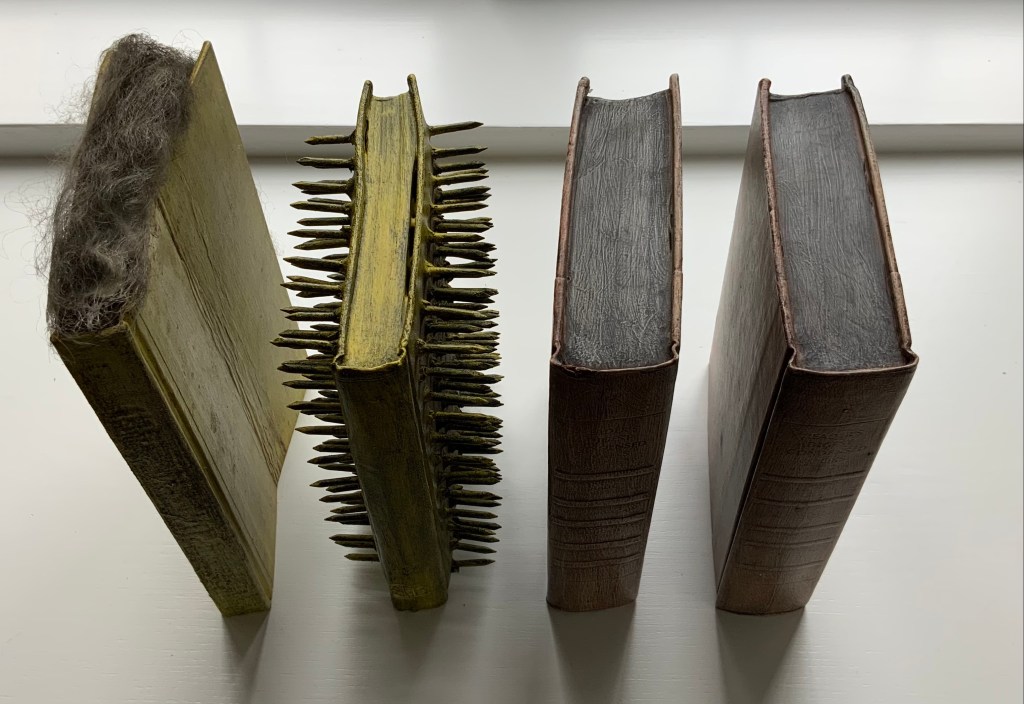
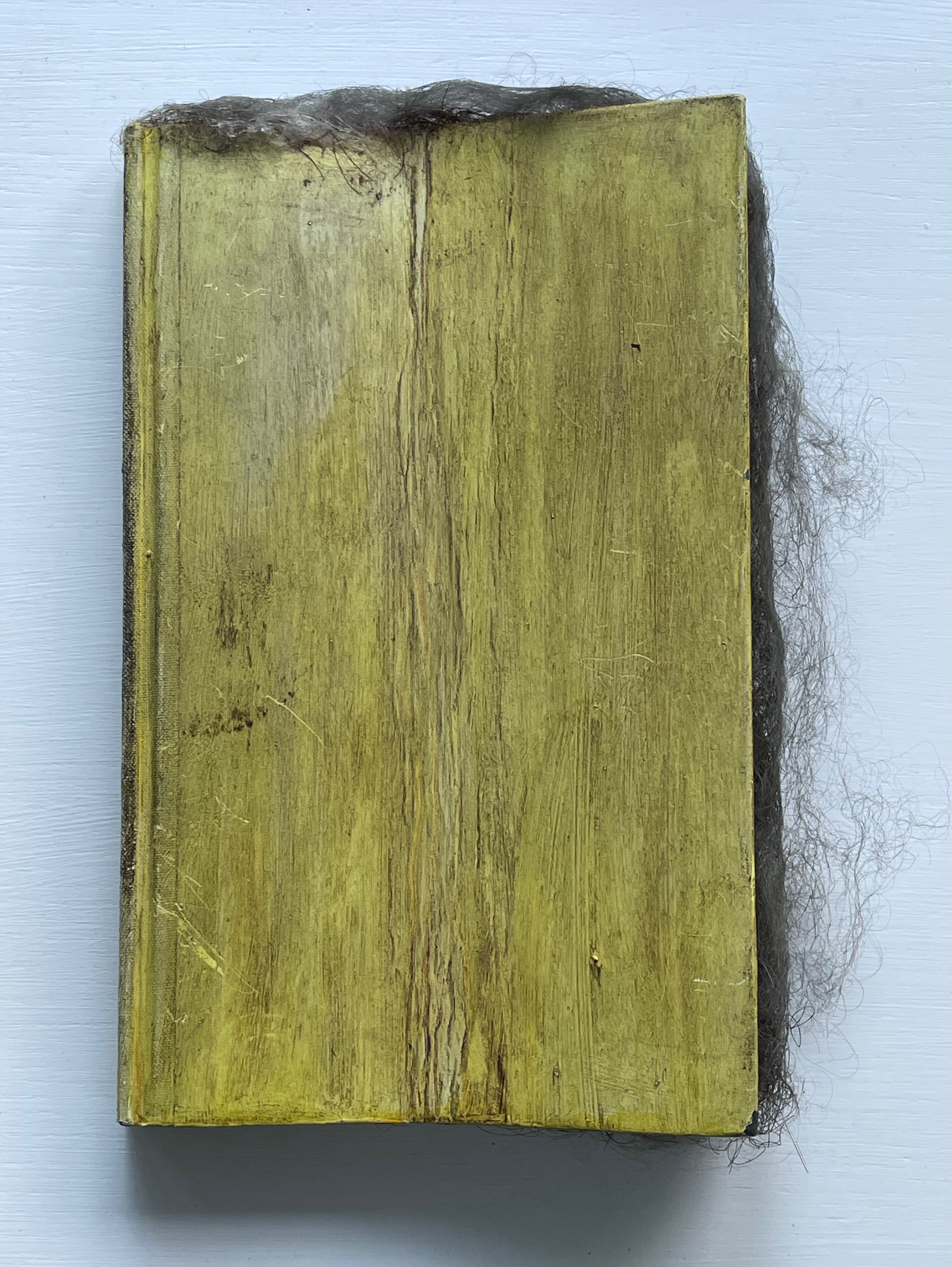
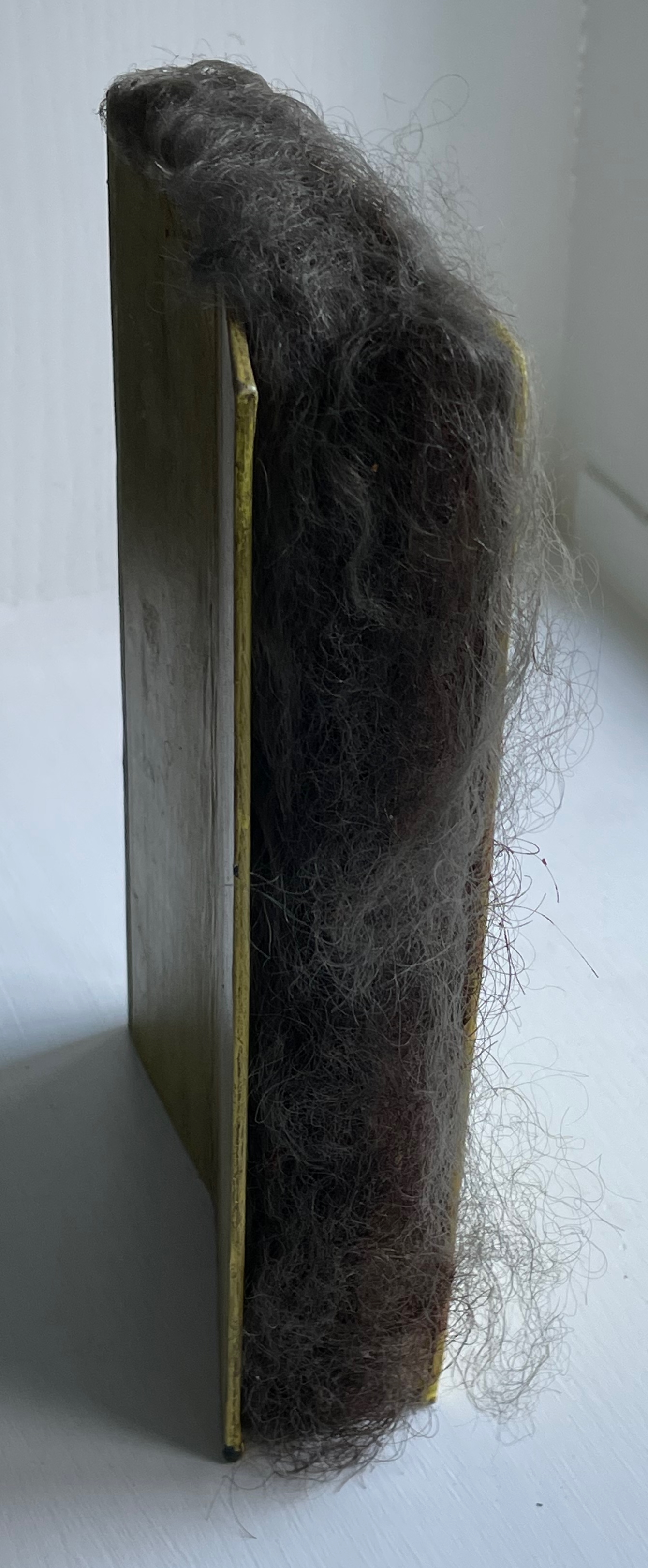
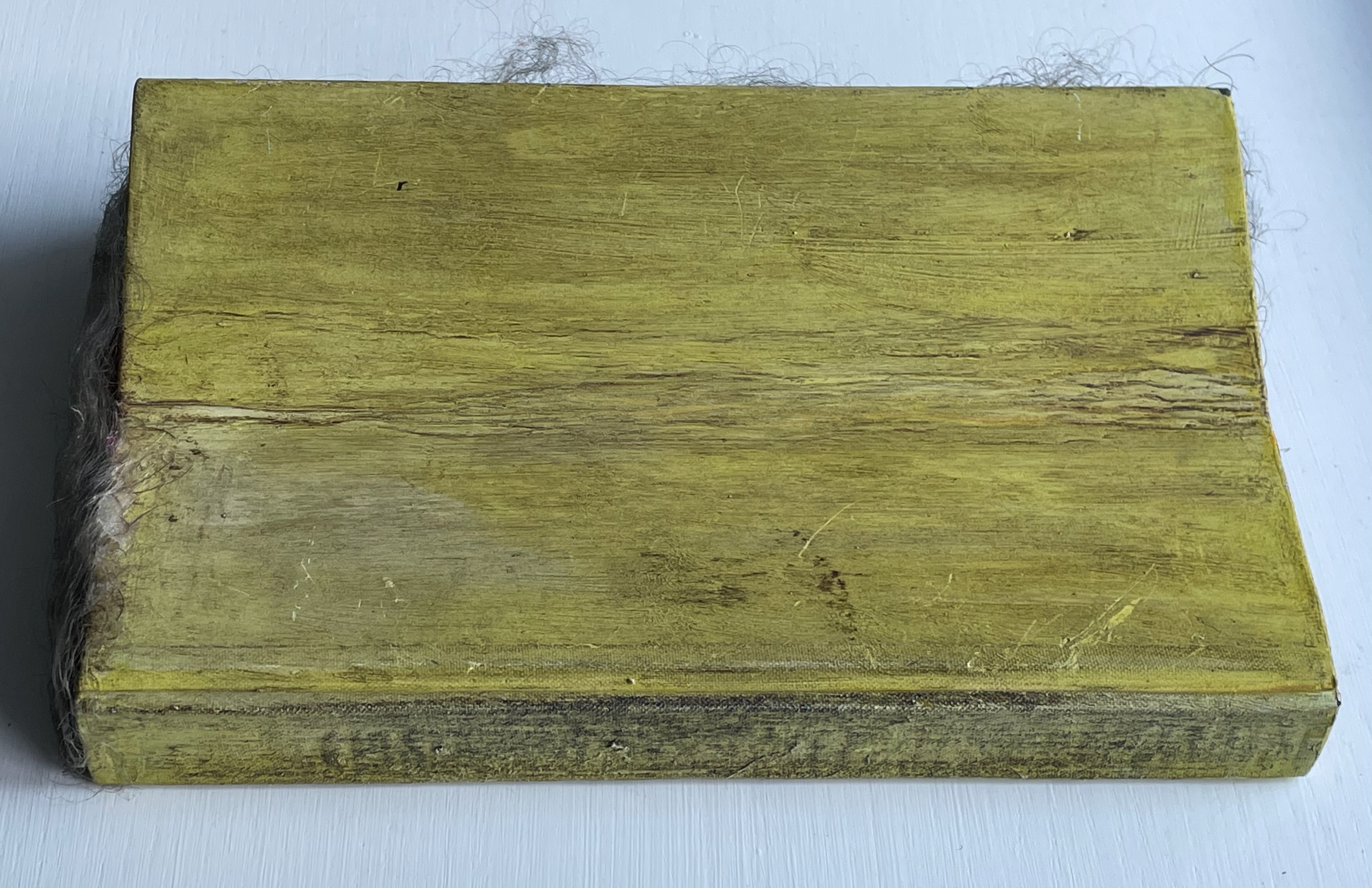
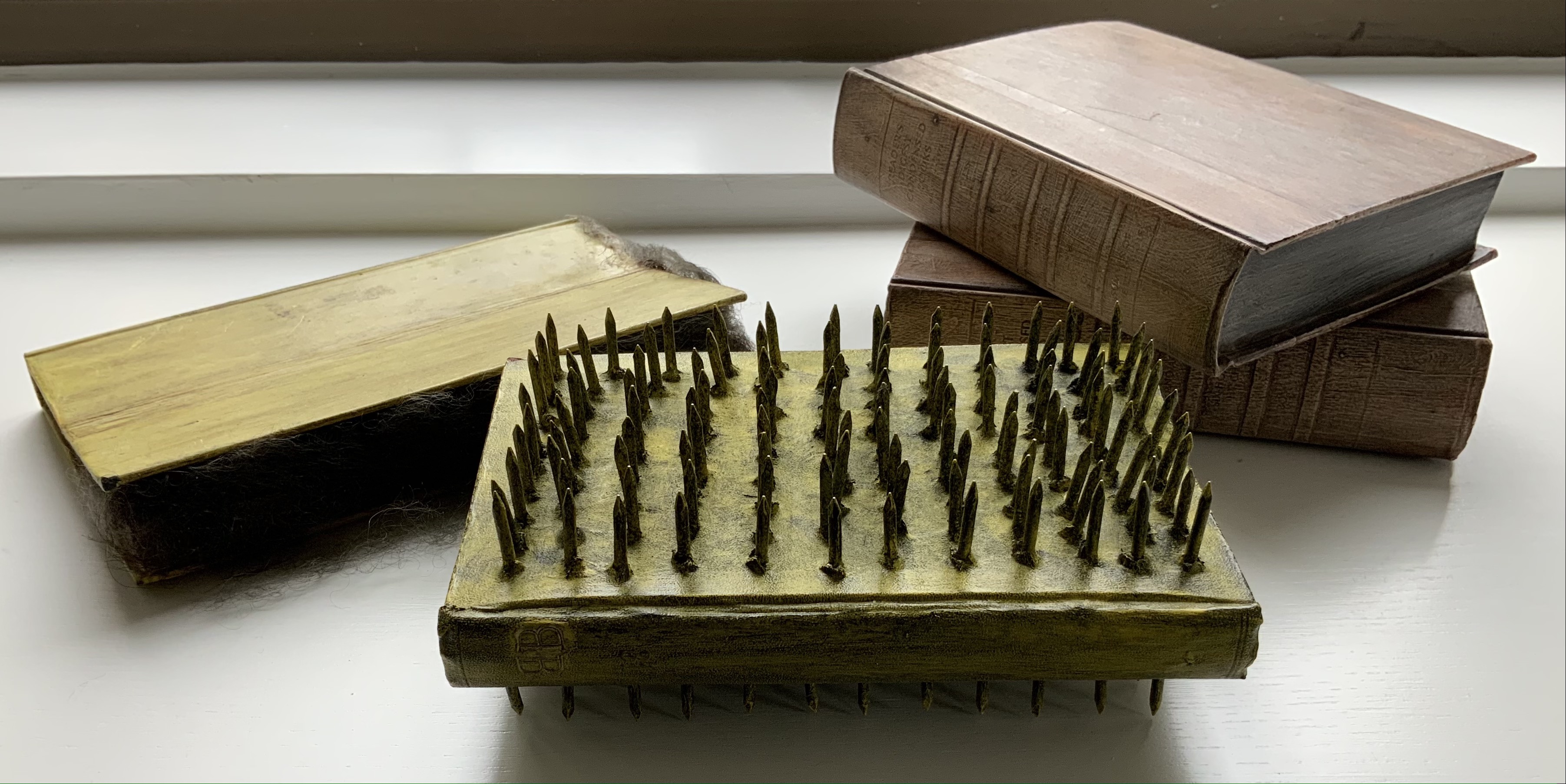
Altered book with human hair. H220 × W140 × D50 mm. Unique. Acquired from Rago Arts and Auction Center, 23 March 2021; Allan Stone Gallery, New York; artist.
Photos: Books On Books Collection.

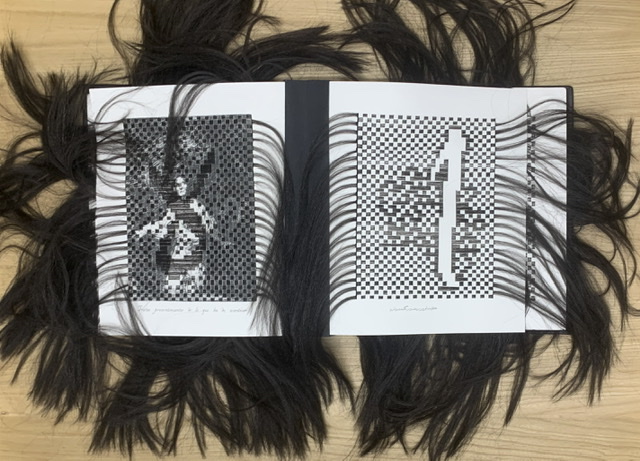
Beauty Book consists of human hair wedged between anonymized painted book covers. The use of human hair in artists’ books is unsurprisingly common since it has appeared widely in art in general. Akiko Sakaizumi’s Female Sampler (2001), Diane Jacob’s The Black Hole (2003), Jenine Shereos’ Archive series (2006) and Leaf series (2011-17), Lucy May Schofield’s All the News That’s Fit to Print (20212), Karen Hardy’s Vellicate (2015) and Pull (2018), Sun Young Kang’s Hair (2018), Kellee Morgado’s Don’t Cut Your Hair It’s Beautiful (2020), Alisa Banks’ Afrocentric (????) and History of a People (2023), and Masoumeh Mohtadi’s The Sleep of Reason (2023).

The Sleep of Reason (2023)
Masoumeh Mohtadi
Photo: Courtesy of the artist.

The Life of Gandhi
Barton Lidice Beneš
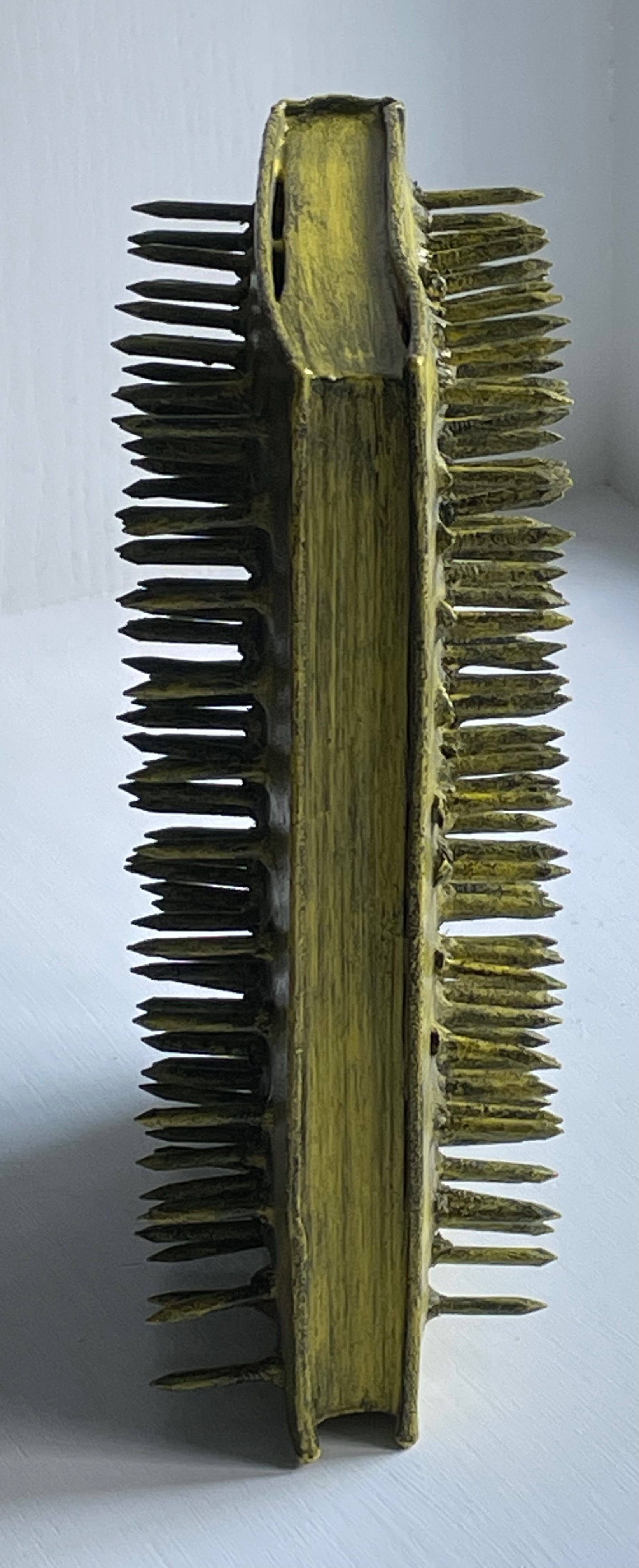
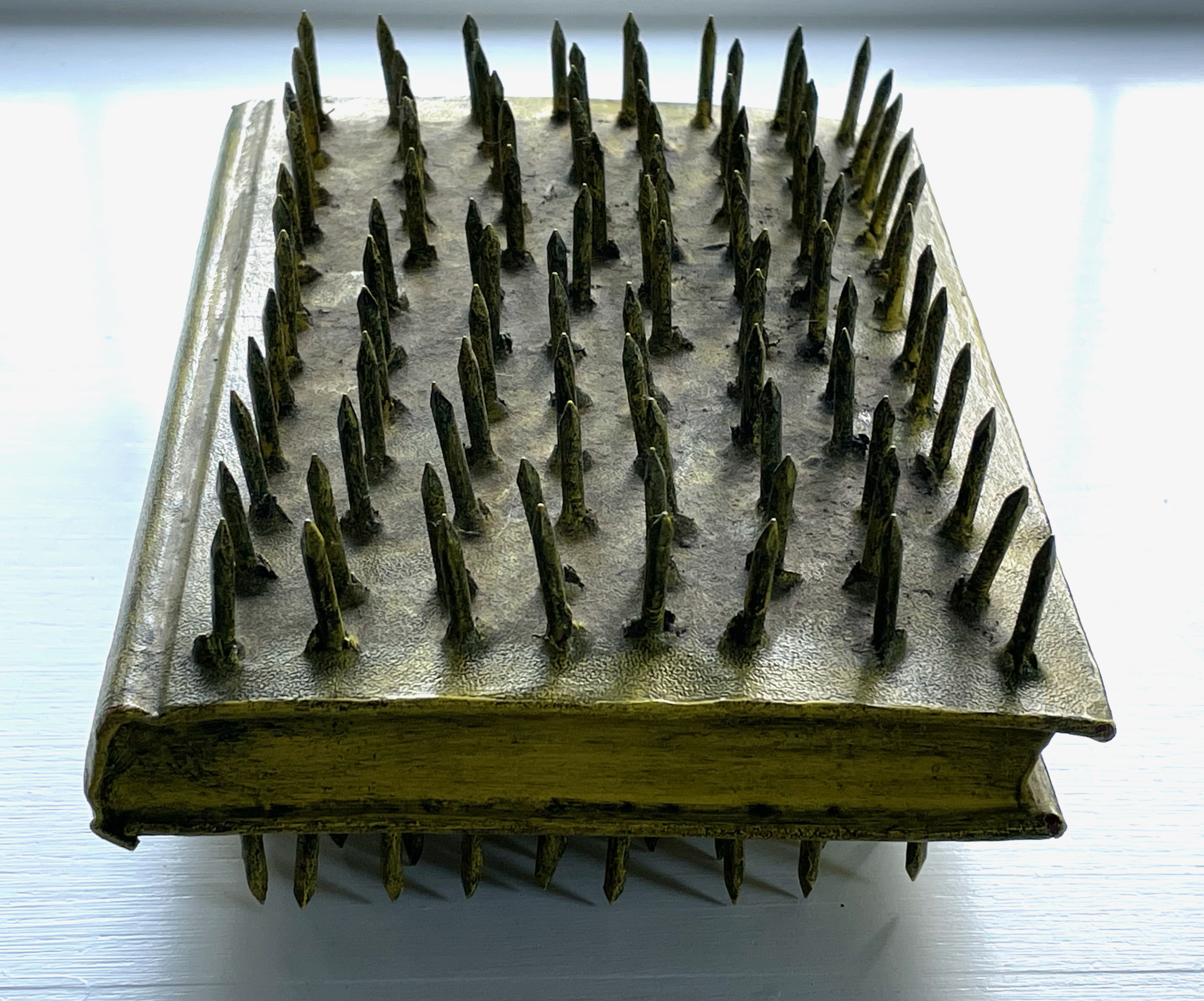
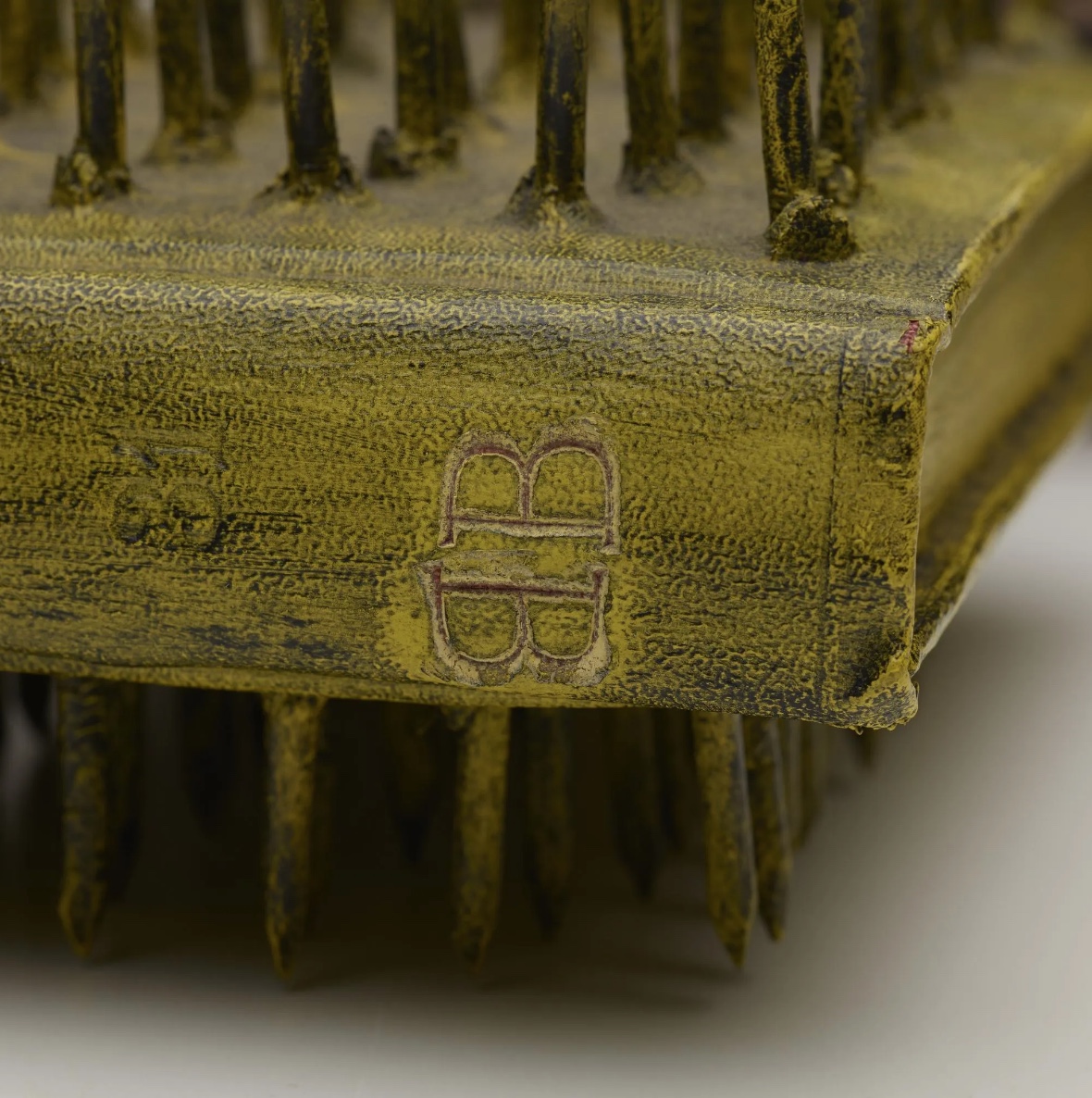
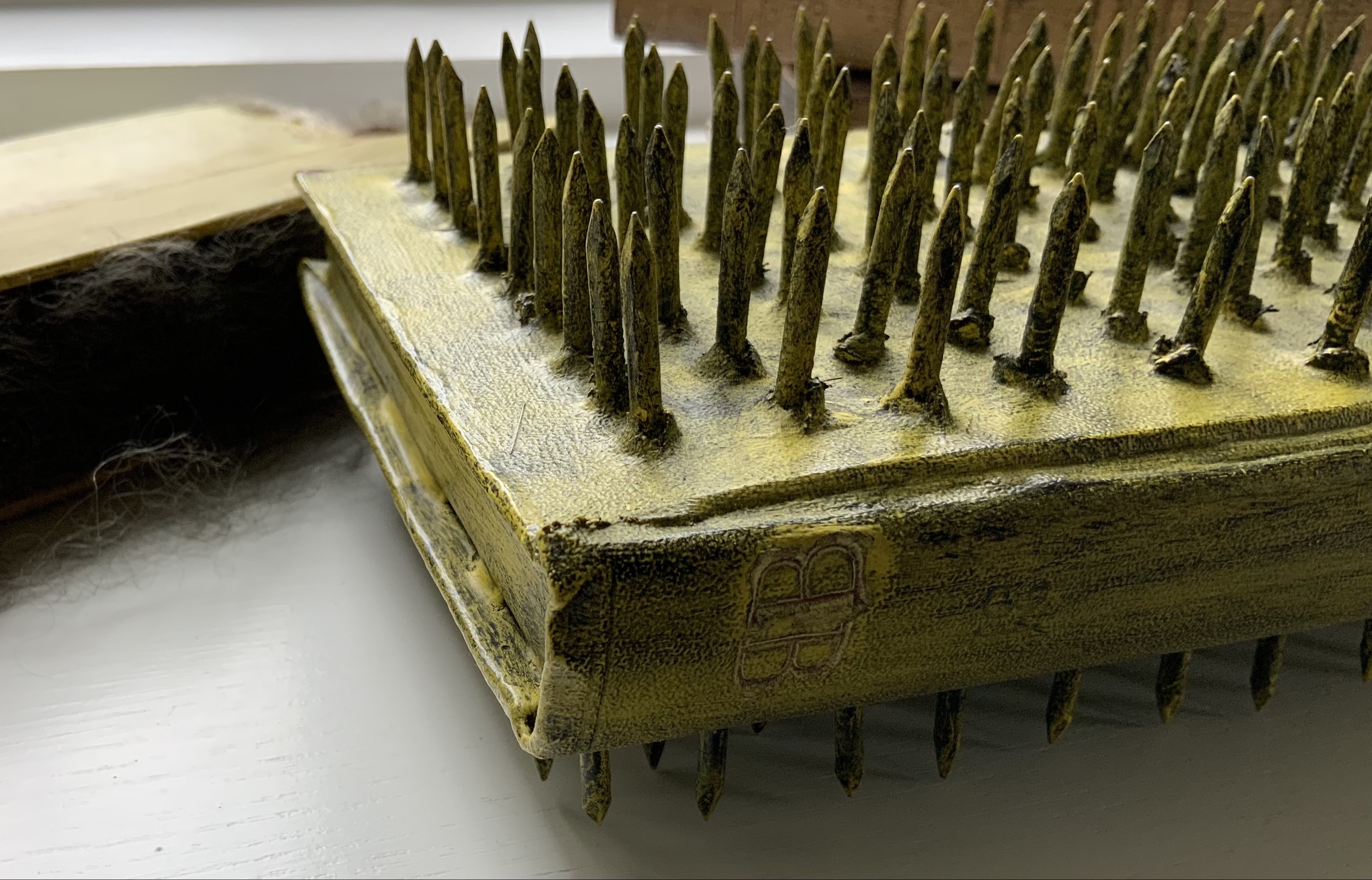
Altered book with embedded nails. H197 x W140 x D86 mm. Unique. Acquired from Rago Arts and Auction Center, 23 March 2021; Allan Stone Gallery, New York; artist.
Photos: Books On Books Collection.

Beneš’ disrespectfully and adolescently entitled The Life of Gandhi may be the first artist’s book embedded with nails, although Lucas Samaras’ prickly Book 4 (1962) in the Museum of Modern Art might have provided inspiration. Later examples are Floating Concrete Octopus’s* Book of Nails (1992), Daniel Essig’s Book of Nails II (2003), Anne Maree Hunter’s Nailed (2005?), Sasha Meret’s Aggressive Book (2009), Werner Pfeiffer’s Difficult to Fit, Censored Nailbook, and Nailed Shut (ca. 2010-12), and manuel arturo abreu’s Kanga Book (2021). The frequency is considerably less than say treatments 0f Saint Sebastian in painting and sculpture, but the latter had centuries as a subject whereas the book nailed shut has only had decades.

Untitled (1973)
Barton Lidice Beneš
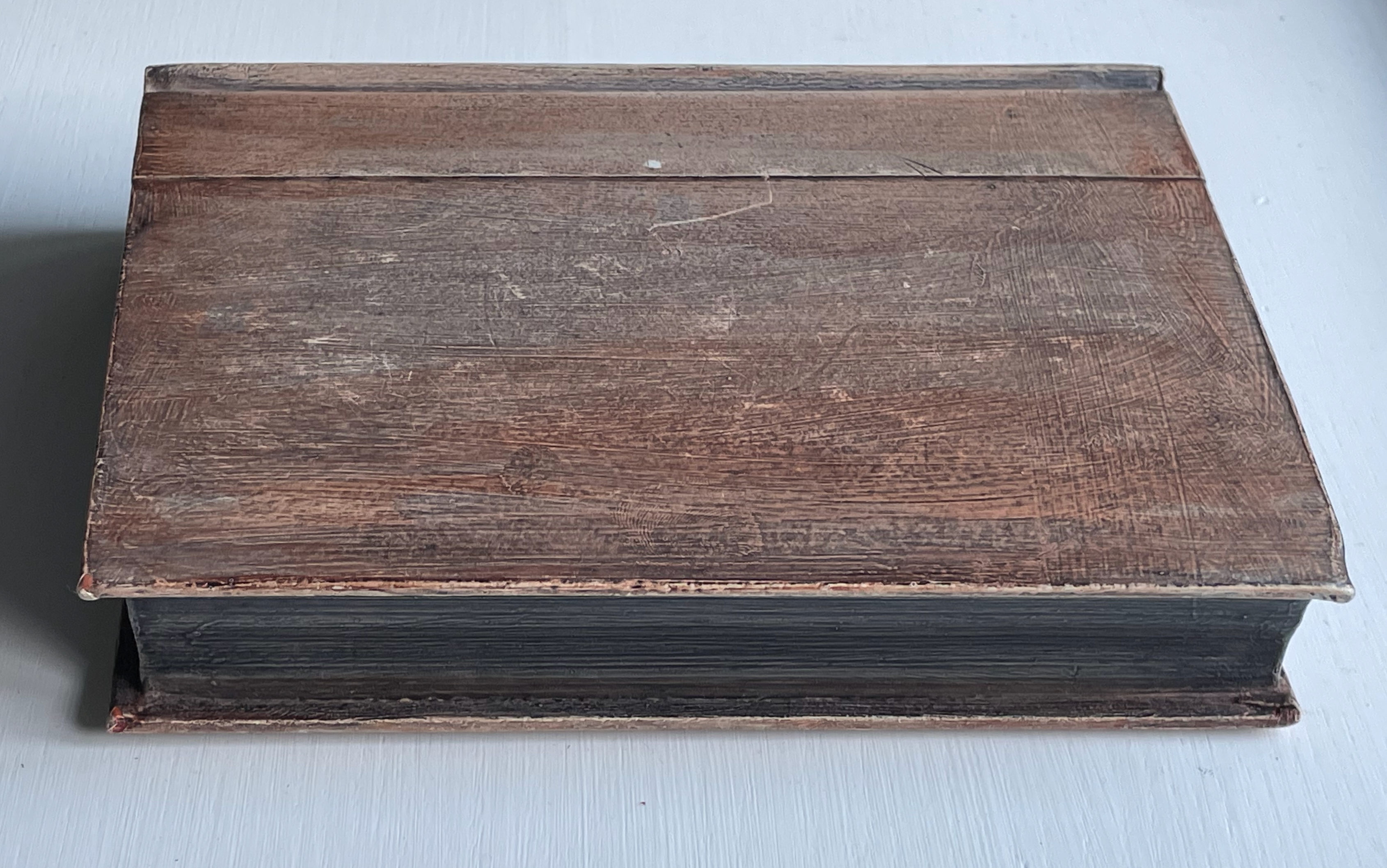
Altered volumes of Reader’s Digest, sanded and varnished. Each H197 x W140 x D85. Unique. Acquired from Rago Arts and Auction Center, 23 March 2021; Allan Stone Gallery, New York; artist.
Photos: Books On Books Collection.

With his two Untitled volumes, Beneš may again lay claim to another first-of-its-kind in this category among artists’ books. Two volumes from the Reader’s Digest Condensed Books series have had their component titles almost completely sanded off. They have been sealed and varnished to constitute a work more naturally called Untitled than any other work of art assigned that ubiquitous title.

These works of book art and his 1970s mail art interactions with Aart van Barneveld and Ulises Carrión secured Beneš’ position among the Fluxus and neo-Dadaist crowd. His later AIDS-related art such as the Lethal Weapon series (199o’s), made with his infected blood, may dominate his legacy, but these three works of book art sculpture place him alongside John Latham and Dieter Roth as an original and vanguard book artist.

Further Reading

Beneš, Barton Lidice. 2002. Curiosa : Celebrity Relics, Historical Fossils, & Other Metamorphic Rubbish. New York: Harry N. Abrams.

Kilgannon, Corey. 17 July 2012. “After an Artist’s Death, His Home Becomes a Work of Art“. New York Times. Accessed 7 December 2025.

*Floating Concrete Octopus: an intermedia/performance group which changes its name every year, its core members being Elizabeth Was & Miekal And.

Books On Books Collection – Erica Van Horn (III)

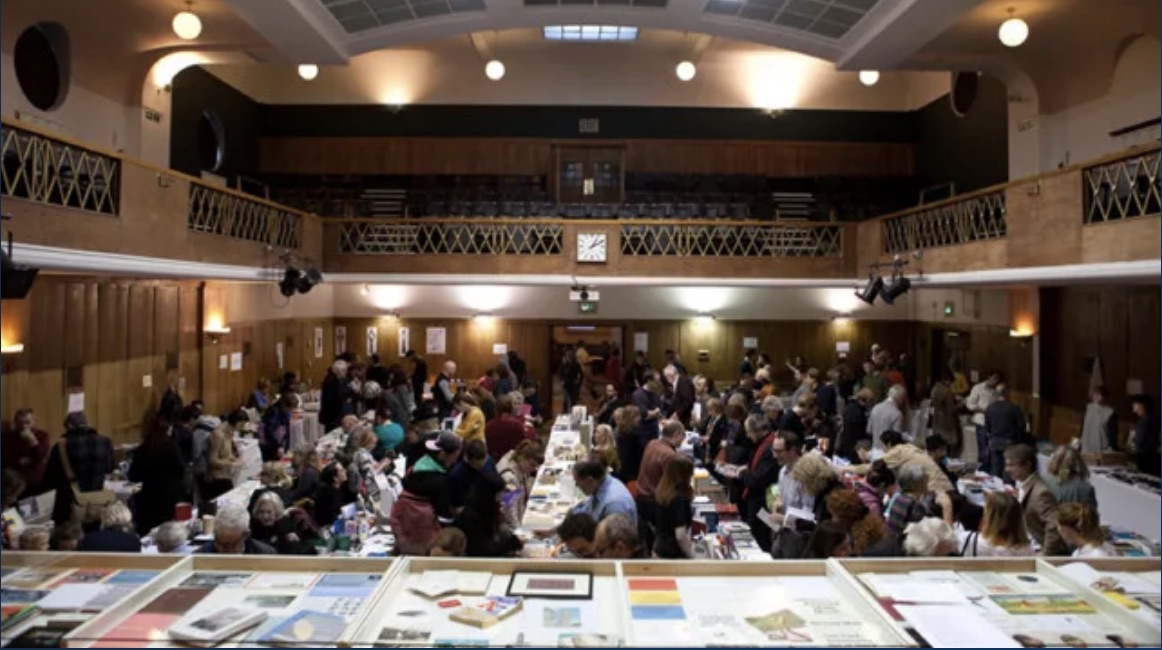
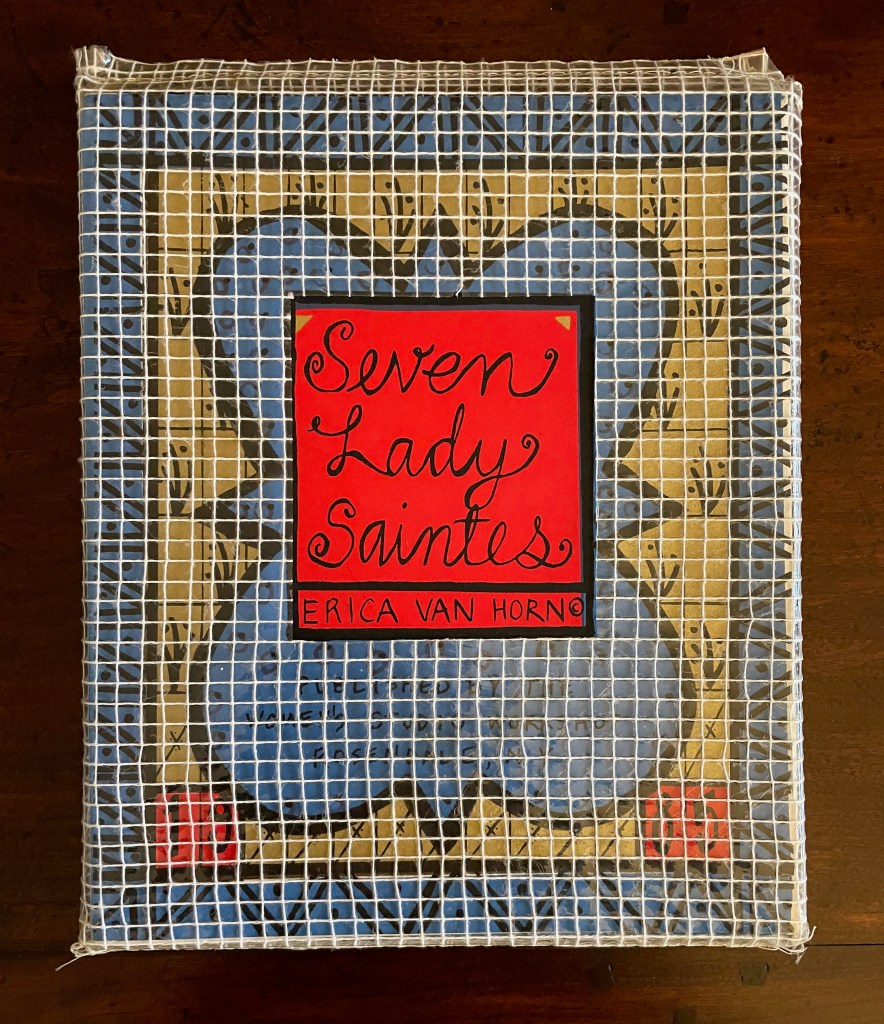
The hunt for Erica Van Horn’s Seven Lady Saintes has been long, but at last, in a glass case in Conway Hall at the Small Publishers Fair in London this year, there it was. Van Horn and Simon Cutts (co-founders of Coracle Press) have been a regular feature of the Small Publishers Fair since its first occurrence in 2002 at Royal Festival Hall.

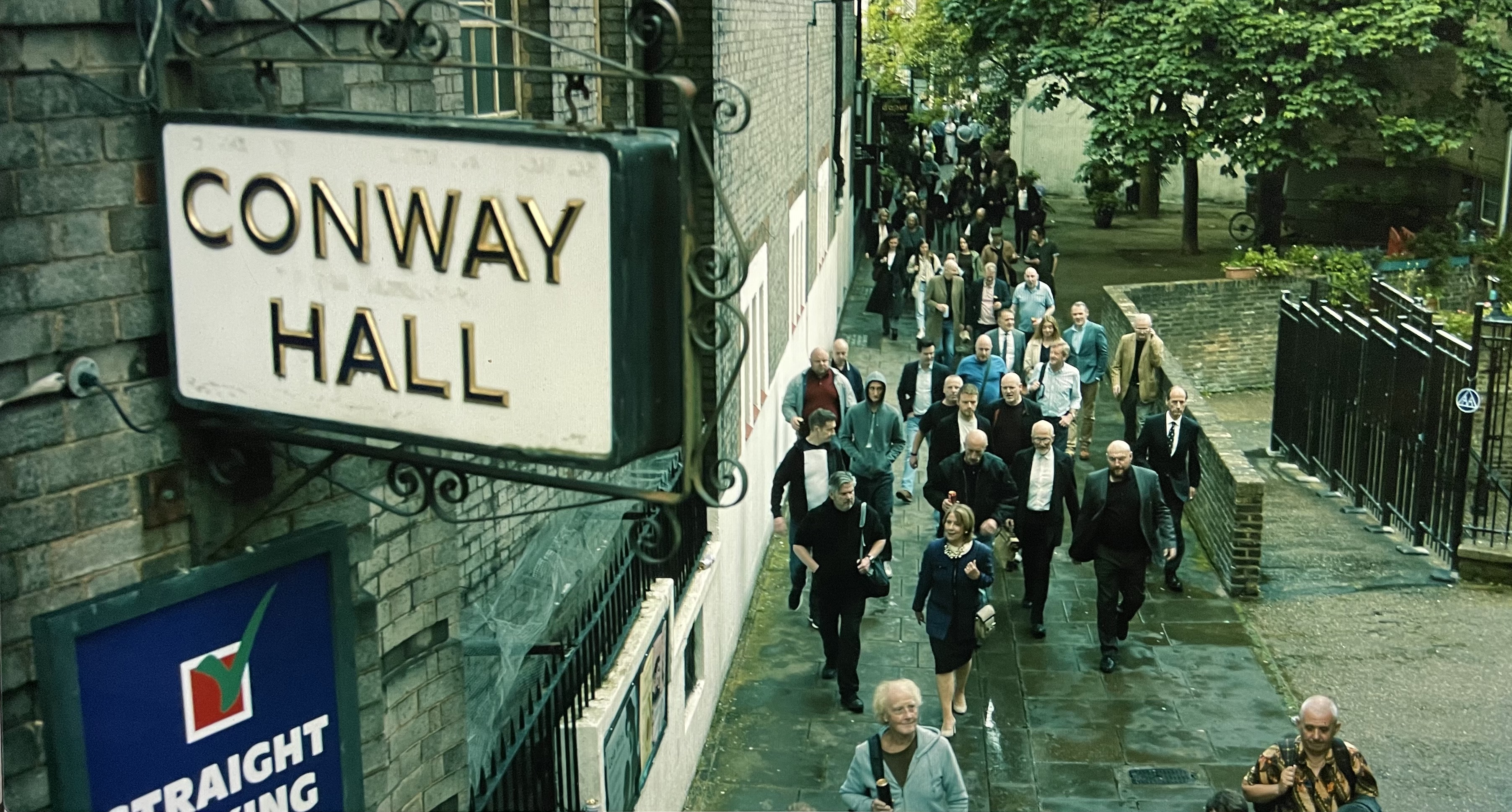
Conway Hall, owned by the charity Conway Hall Ethical Society, first opened in 1929 and is named after Moncure Daniel Conway (1832-1907), an anti-slavery advocate and biographer of Thomas Paine. It has hosted the Fair since its second outing in 2003. In 2025, it had a cameo appearance in the spy drama series Slow Horses as the unlikely host for an ultra-right mayoral candidate’s campaign event. The setting provided the kind of sardonic humorous dig that Van Horn would appreciate (if she were a regular television viewer).

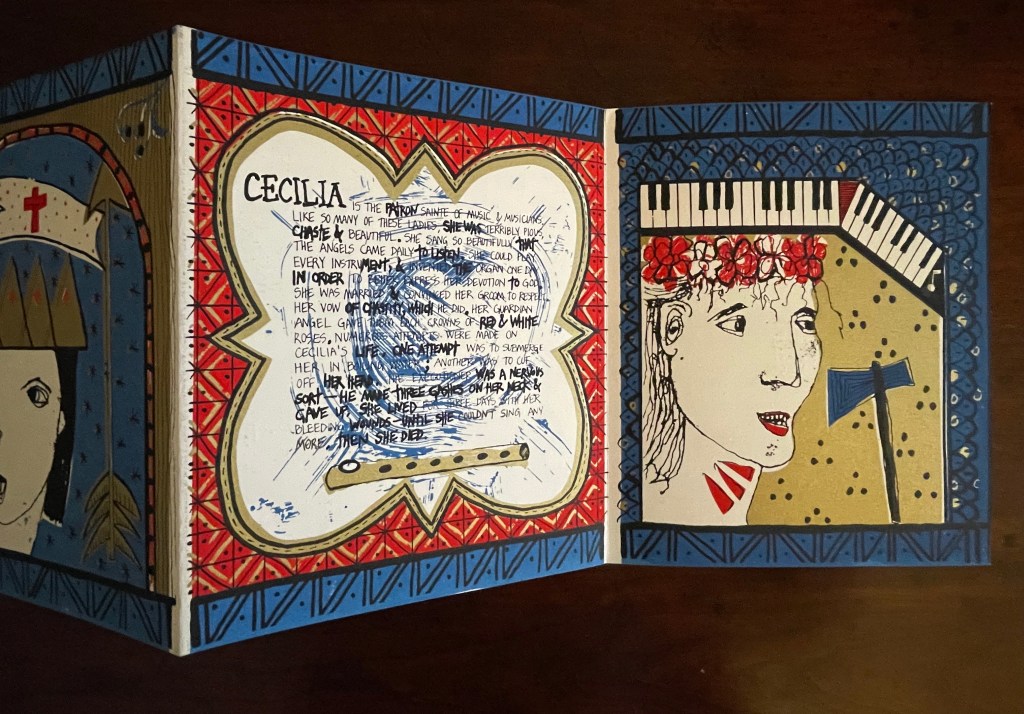
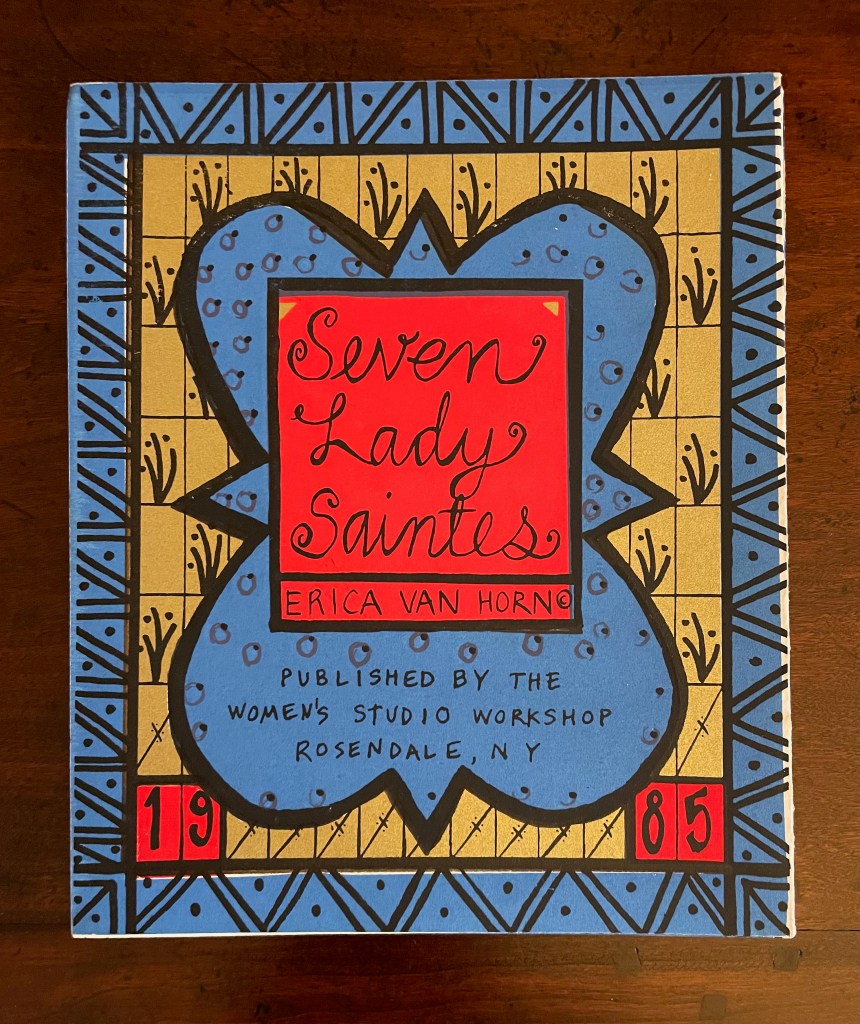
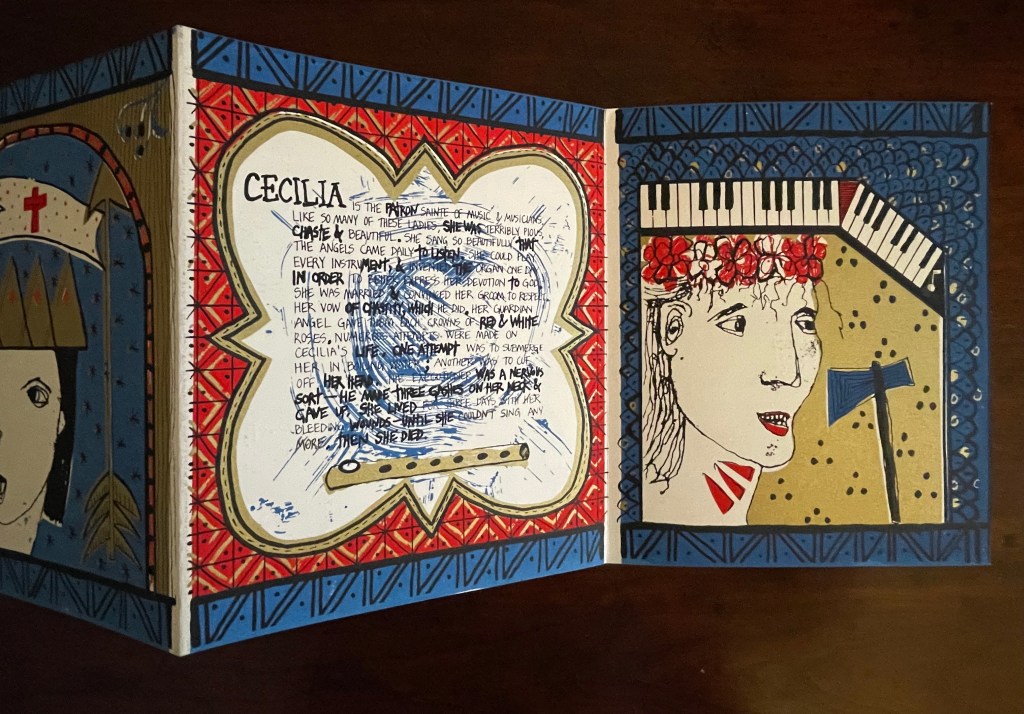
With stained-glass colors, Seven Lady Saintes splashes its own brand of sardonic humor across a stiff-card leporello produced in 1985 at the Women’s Studio Workshop Print Center in Rosendale, New York.

Seven Lady Saintes (1985)

Seven Lady Saintes (1985)
Erica Van Horn
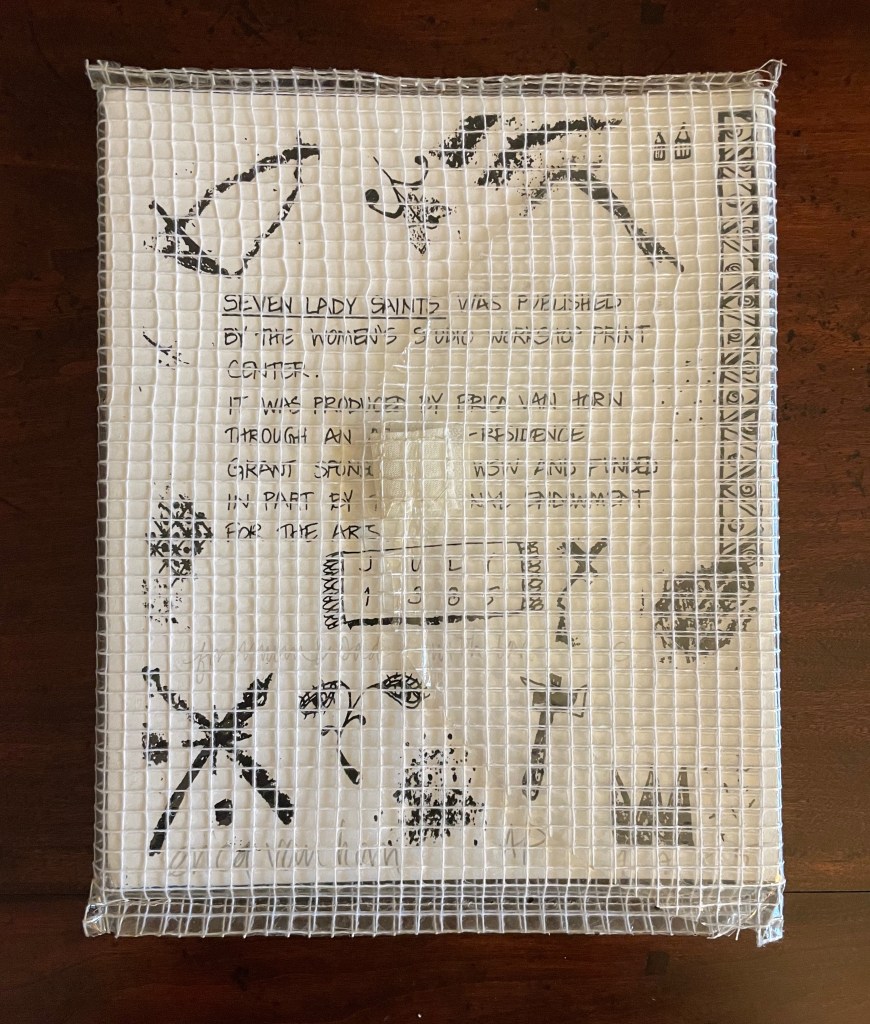
Clear plastic-coated white-thread envelope, self-covered leporello, watercolor paper. Envelope: H270 x W215 mm. Leporello: H250 x W205 mm (closed), W3040 mm (open). 16 panels, including covers. Edition of 90, artist’s proof. Acquired from the artist 1 November 2025.
Photos: Books On Books Collection.

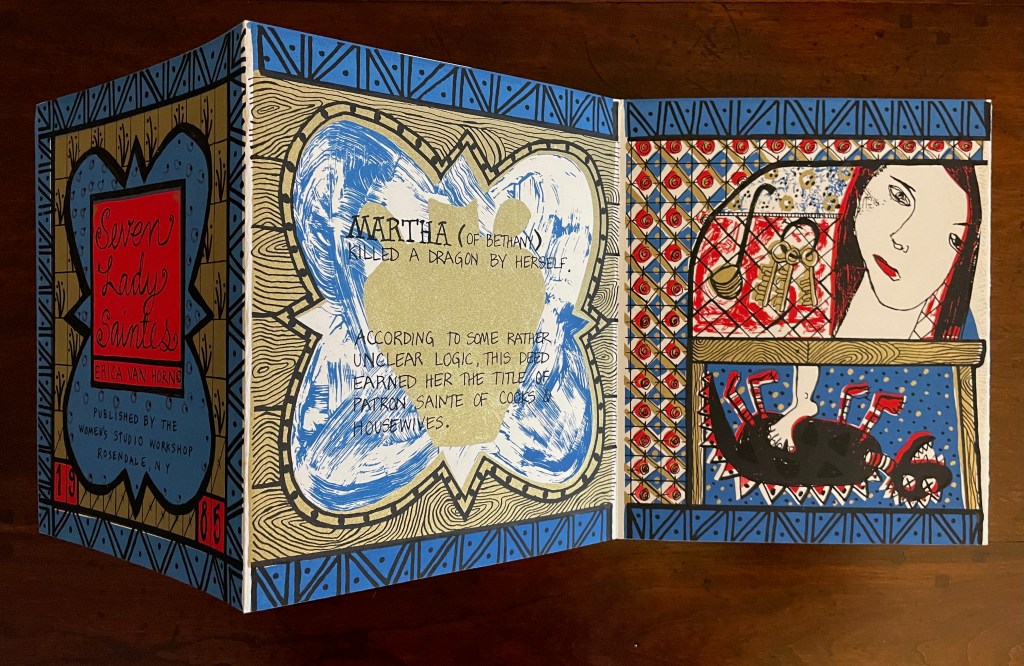
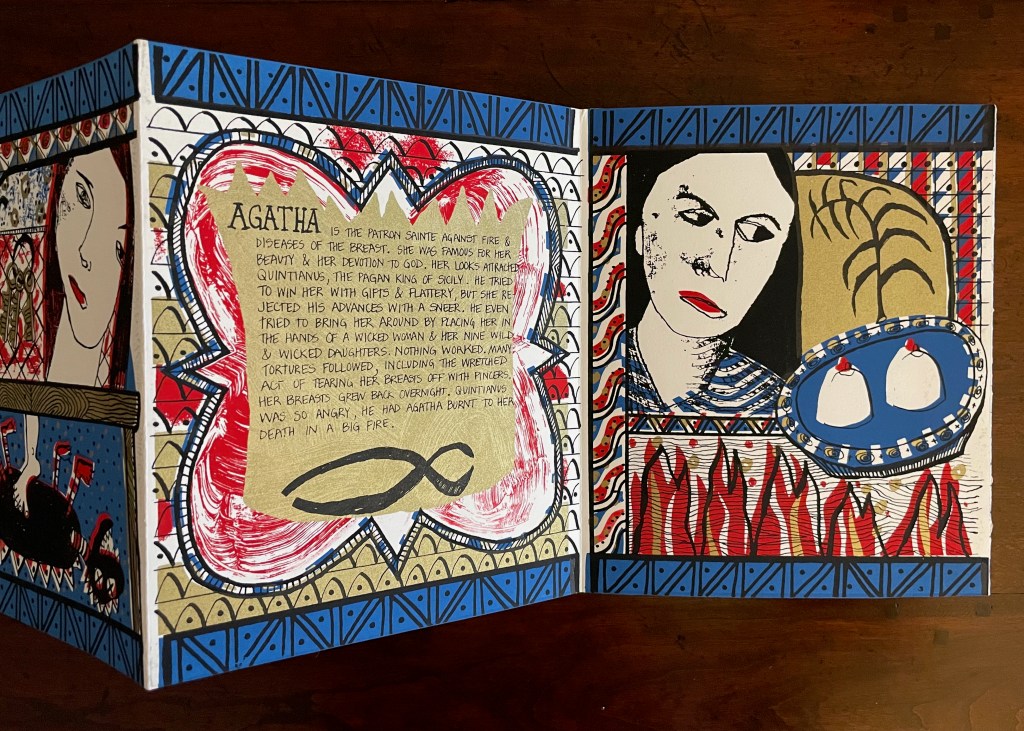
Van Horn uses a sophisticated child-like style of text and image to laugh slyly, wryly, and grimly at religion and patriarchy. Her summaries parody the descriptions in the handouts usually available in museums, convents, and churches or in the flood of hagiographies long on the market. The sophisticated-naivete of the drawing in Seven Lady Saintes appears in other works such as La ville aux dames (1983) and With or Without (2010). If the story of her plan for a series of four children’s books had turned out differently from the account in Scraps of an Aborted Collaboration (1994), we would have even more evidence of the influence of children’s books on many artists’ books that the Huberts propose in The Cutting Edge of Reading (1999).

Martha, patron sainte of cooks and housewives

Agatha, patron against fire and diseases of the breast

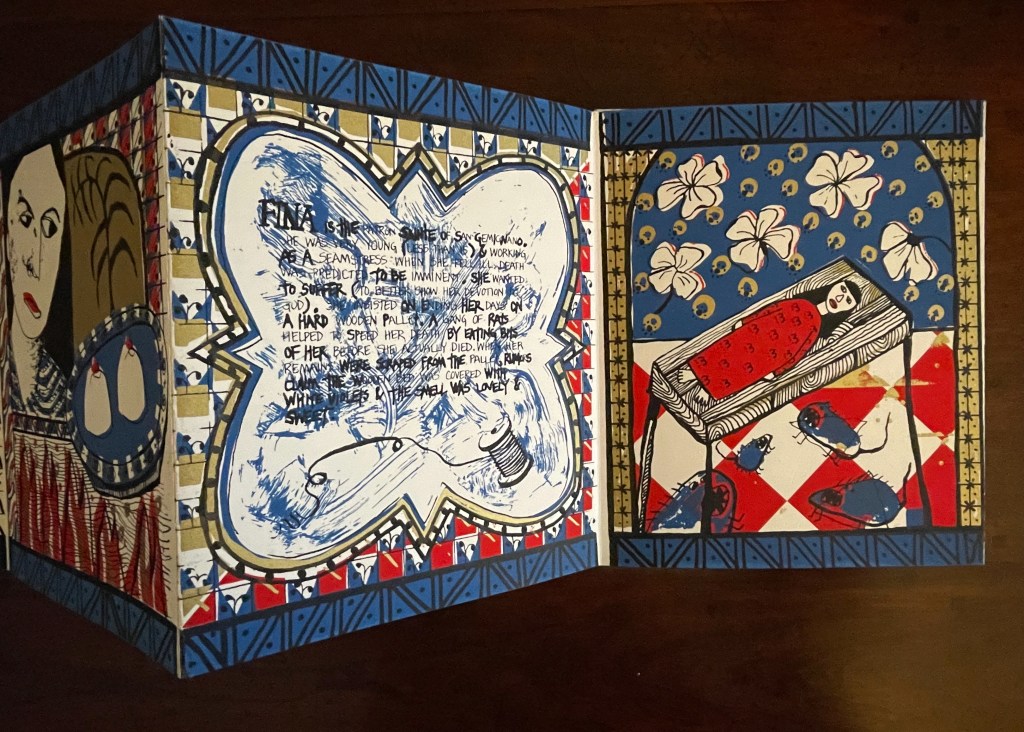
Fina, patron sainte of San Gemignano

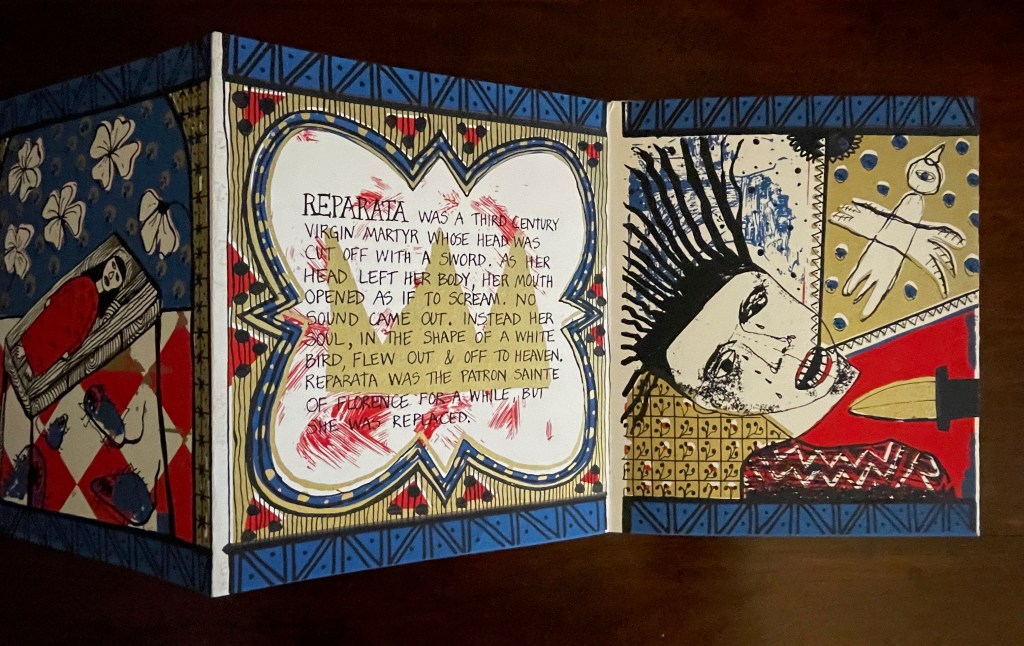
Reparata, formerly patron sainte of Florence

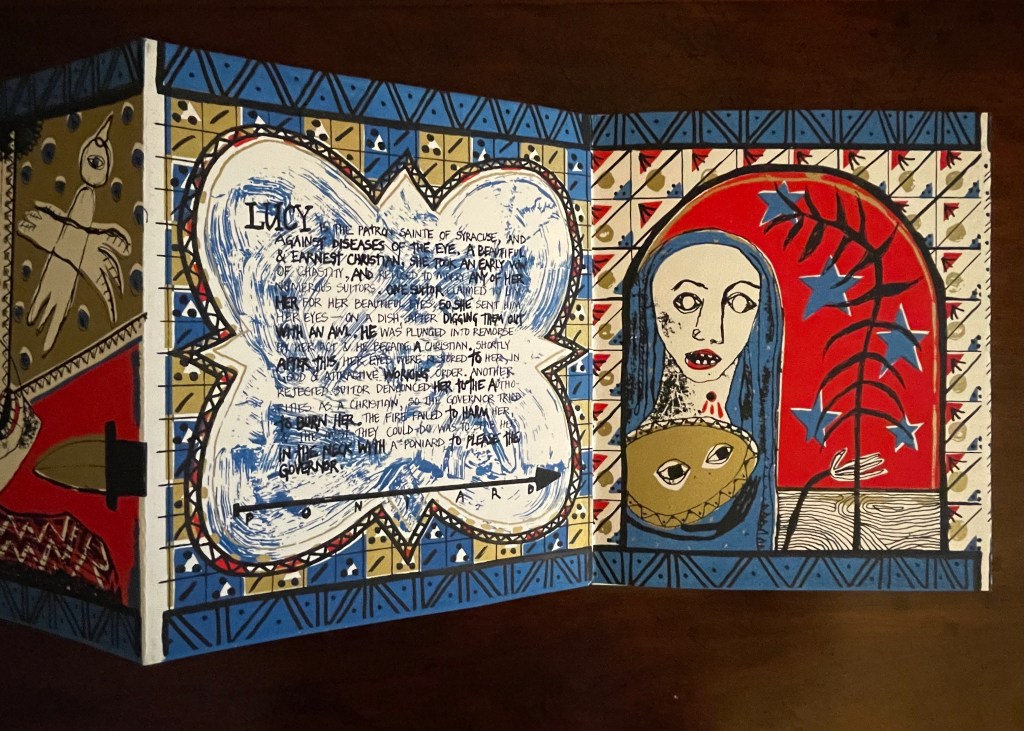
Lucy, patron sainte of Syracuse and diseases of the eye

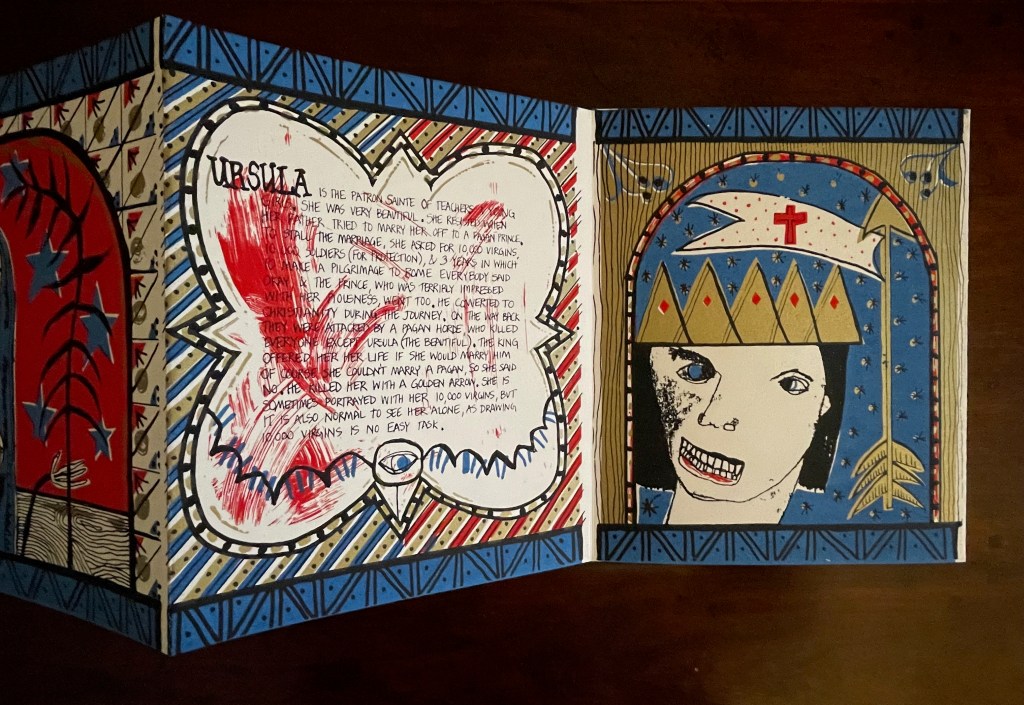
Ursula, patron sainte of teachers and young girls

Cecilia, patron sainte of music and musicians

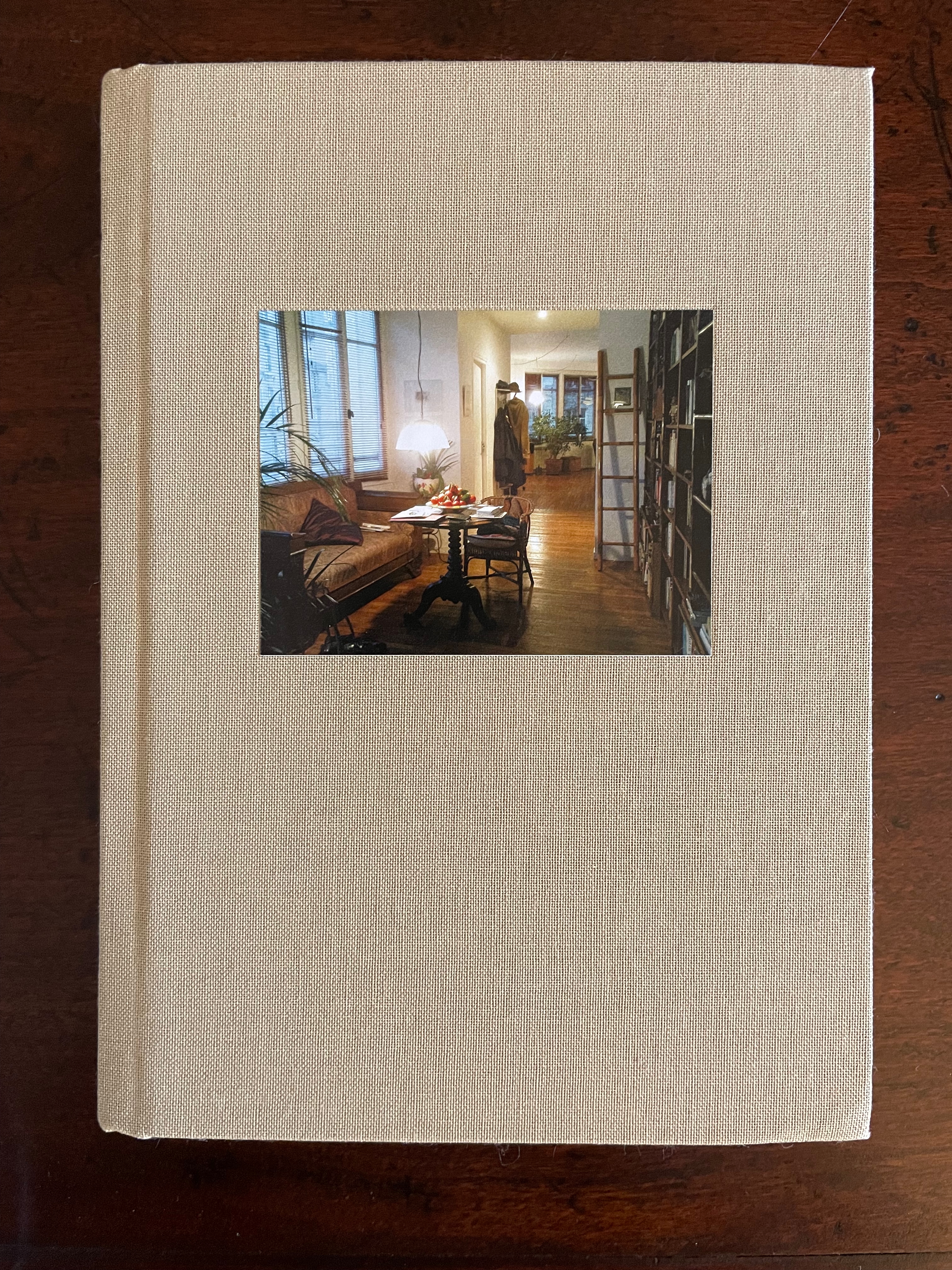
Walking the Portes (2025)

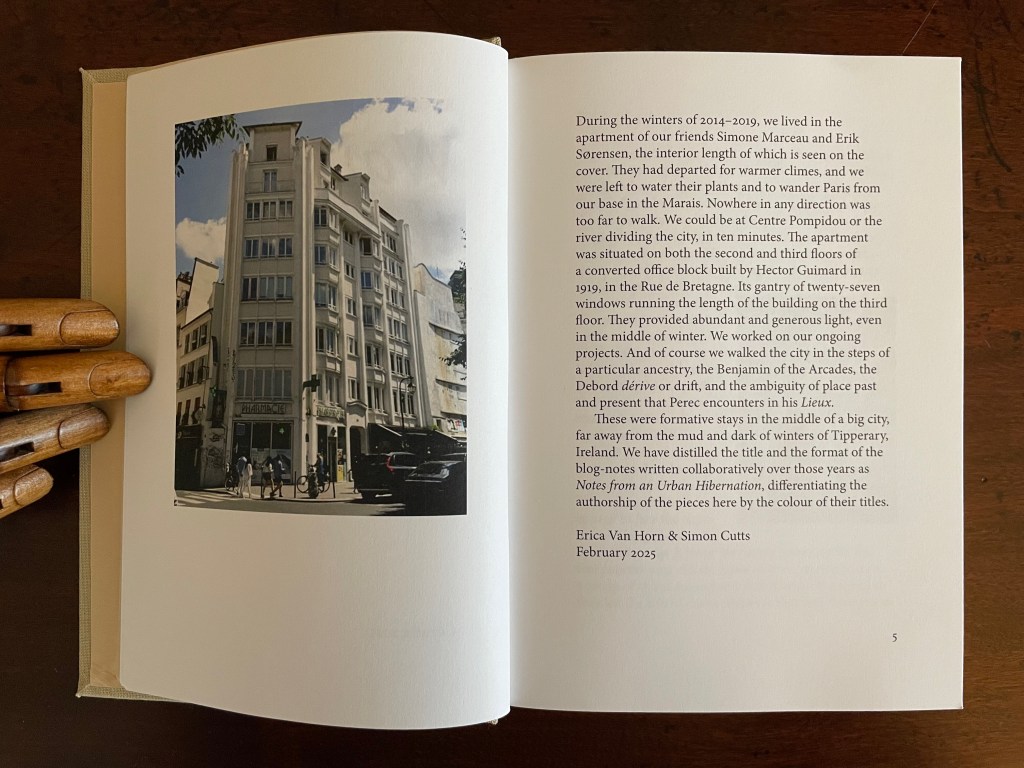
Walking the Portes: Winters in Paris 2014-2019 (2025)
Simon Cutts and Erica Van Horn
Casebound, book cloth over boards, blind stamped and inked spine, photo pastedown in recess on front cover, plain doublures. H182 x W132 mm. 216 pages. Edition of 300. Acquired from Books about Art, 15 September 2025.
Photos: Books On Books Collection.

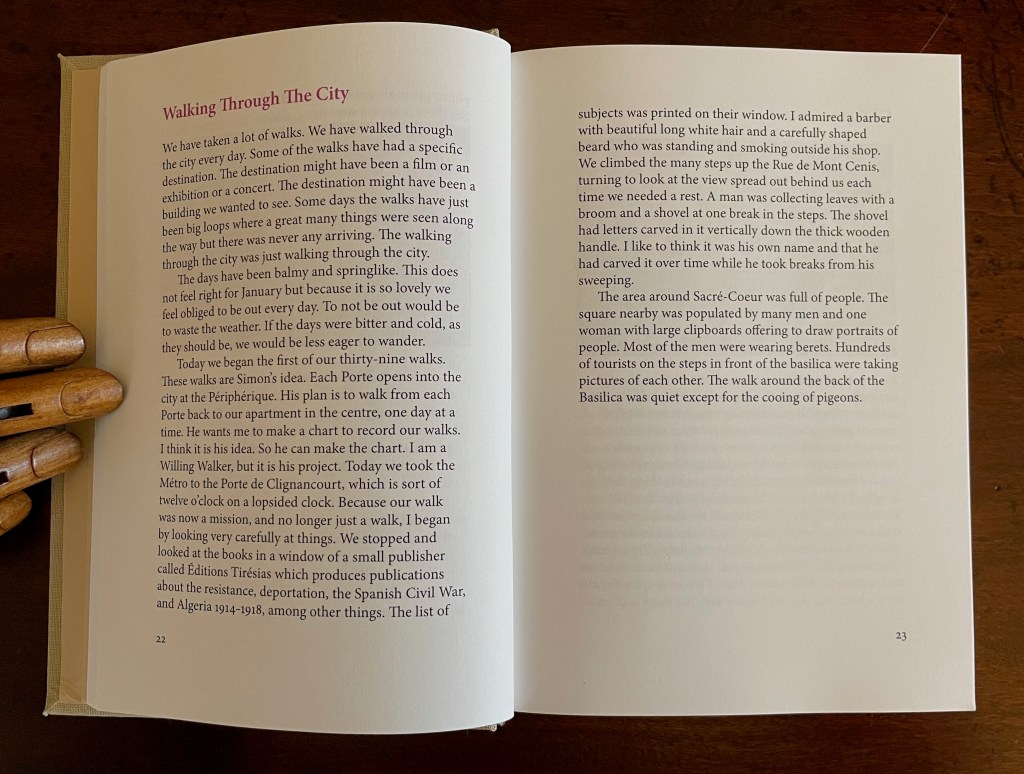
In the early 2000s, a series of hardbacks appeared called “Writer and the City”. John Banville covered Prague; Peter Carey, Sydney; Justin Cartwright, Oxford; Ruy Castro, Rio de Janeiro; David Leavitt, Florence; and Edmund White, Paris. White’s was the first, and it set the tone with its content and title: The Flâneur: A Stroll Through the Paradoxes of Paris. An enterprising paperback publisher might be enticed to reissue them and, allowing for a Parisian double-dip, to add Walking the Portes. Besides, I prefer Simon and Erica’s Paris to Edmund White’s, and Walking the Portes pairs better with Anne Moeglin-Delcroix’s Ambulo Ergo Sum (2015) anyway.

It is Simon’s plan to ride out to each of the entrances to Paris (the portes) and walk back to the apartment in the Marais. When it turns out that instead of twenty-one portes there are thirty-nine, Erica firmly responds accordingly:

In introducing Ambulo Ergo Sum, her extended essay on Hamish Fulton, Richard Long, and herman de vries, Moeglin-Delcroix writes:

The analysis of some artists’ books … should make it possible to show how the emphasis has been progressively placed no longer on landscape but on the search for the best means, differing according to the various artists, of rendering an experience in the strongest sense of the word: a lived experience of the world, a personal practice, that is to say, a deliberate way of being inthe world rather than before it. The walking body is the touchstone of this, because walking compels one to supersede the limits of a purely visual experience of nature to become the experience of the whole artist, with his body, in nature. (p. 6)

Whether Walking the Portes is an artists’ book or not, it does what Moeglin-Delcroix describes. It renders these artists’ lived experiences of Paris and their deliberate way of being in the world together.

Further Reading

Erica Van Horn (I)“. 29 December 2020. Books On Books Collection.

Erica Van Horn (II)“. 13 September 2025. Books On Books Collection.

Bates, Julie. 2023. “Erica Van Horn’s creative exercises“. Irish Studies Review31(1), 139–158. Interviewed Van Horn at the 2025 Small Publishers Fair, Conway Hall, London.

Bury, Stephen. 2015. Artists’ Books : The Book as a Work of Art 1963-2000. London: Bernard Quaritch Ltd. P. 111 shows a near life-size sleeved copy of Seven Lady Saintes, but mis-dates it as 1989.

Hubert, Renée Riese, and Judd David Hubert. 1999. The Cutting Edge of Reading : Artists’ Books. New York City: Granary Books. Pp. 207, 211-12.

Kuhl, Nancy. 2010. The Book Remembers Everything: The Work of Erica Van Horn. Clonmel: Coracle Press. Until the acquisition of Seven Lady Saintes, Nancy Kuhl’s The Book Remembers Everything (2010) was the only means in the Books On Books Collection by which to gain a sense of Van Horn’s more painterly bookworks such as La Ville aux dames (“second state”) (1983), a unique work that appeared in the 1986 Chicago exhibition “The Book Made Art“. Van Horn’s works are archived in the Beinecke Library at Yale University: Prints, Papers, Materials in the Digital Library, and the Simon Cutts Constructed Archive. Several, including Seven Lady Saintes, are viewable online at the Fleet Library Rhode Island School of Design. Accessed 27 November 2025.

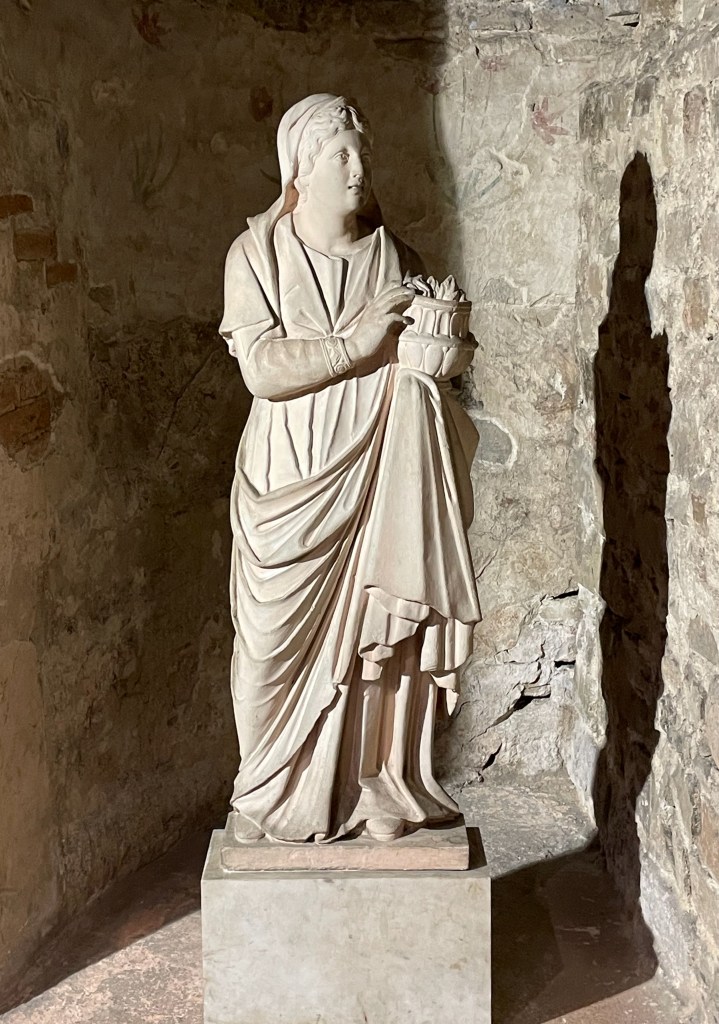
Statue of Santa Reparata in the crypt in the Romanesque foundations of Santa Maria Maggiore, Florence. Photo: Books On Books Collection.

Books On Books Collection – Chisato Tamabayashi (II)

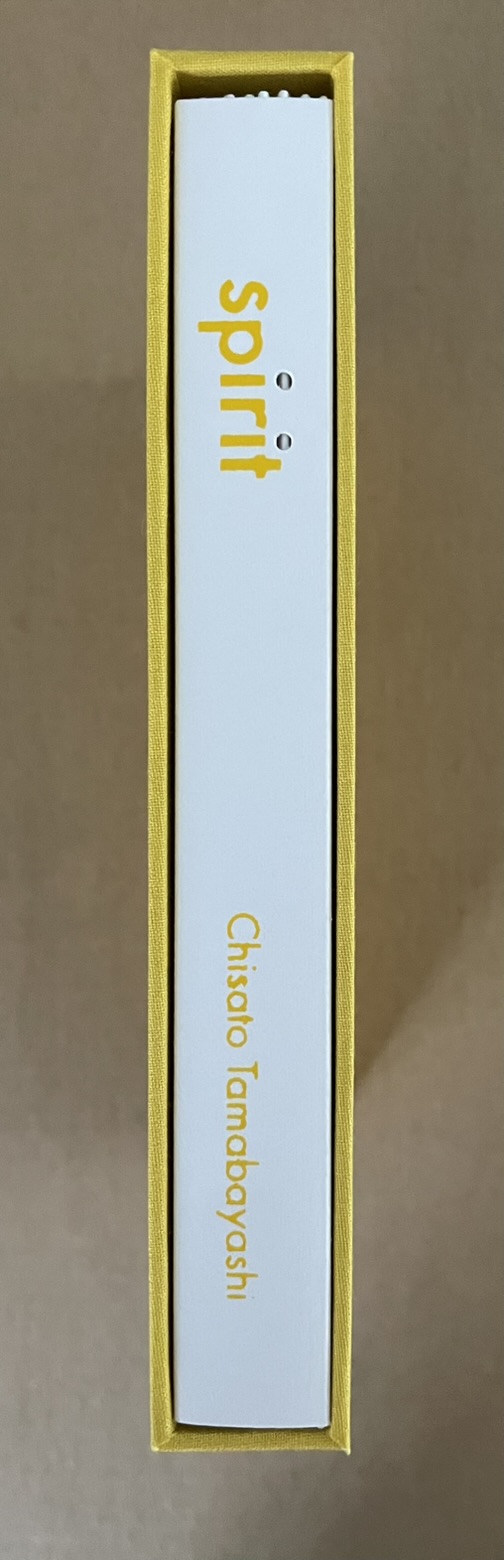
Spirit (2024)

Spirit (2024)
Chisato Tamabayashi
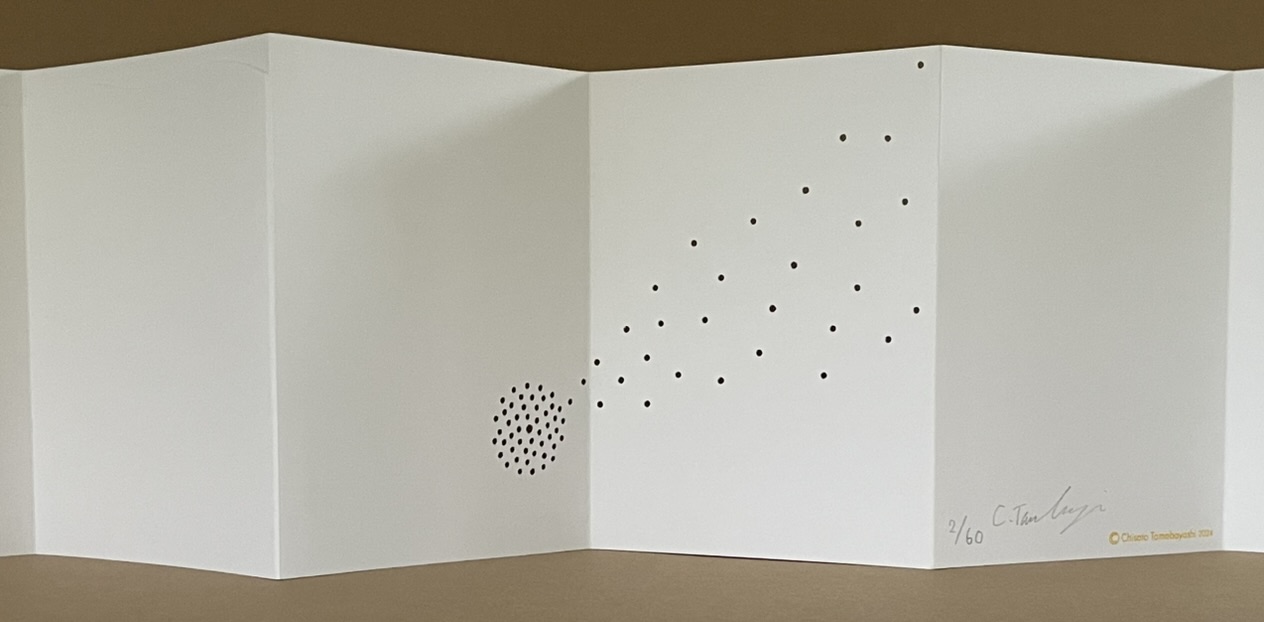
Yellow cloth-covered slipcase. Leporello of 8 panels and enclosing cover. Slipcase: H168 x W129 x D24 mm. Book: H160 x W120 mm (closed); W2100 mm. 16 panels (excluding enclosing cover). Edition of 60, of which this is #2. Acquired from Chisato Tamabayashi, 5 November 2024. Photos: Books On Books Collection.

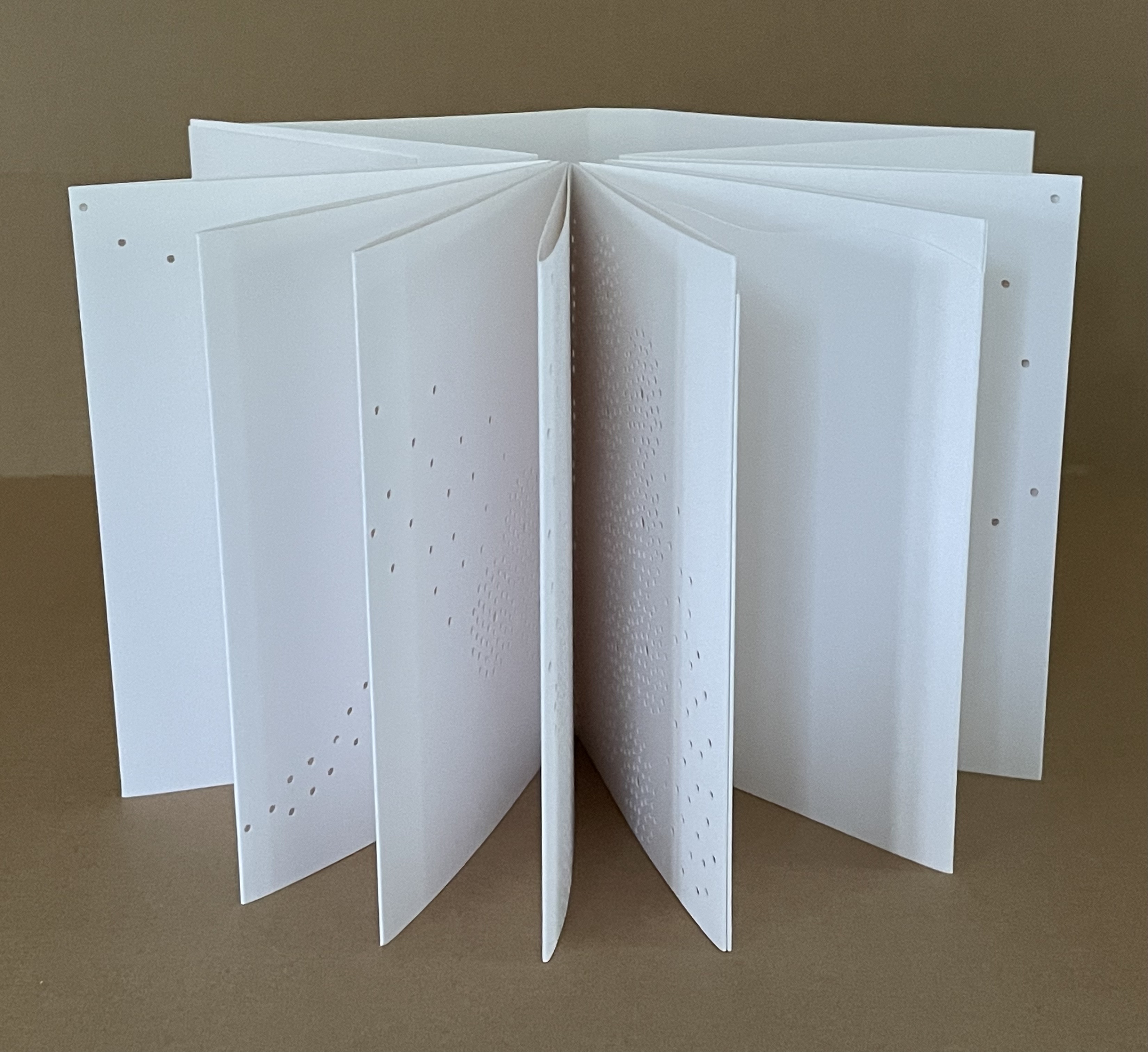
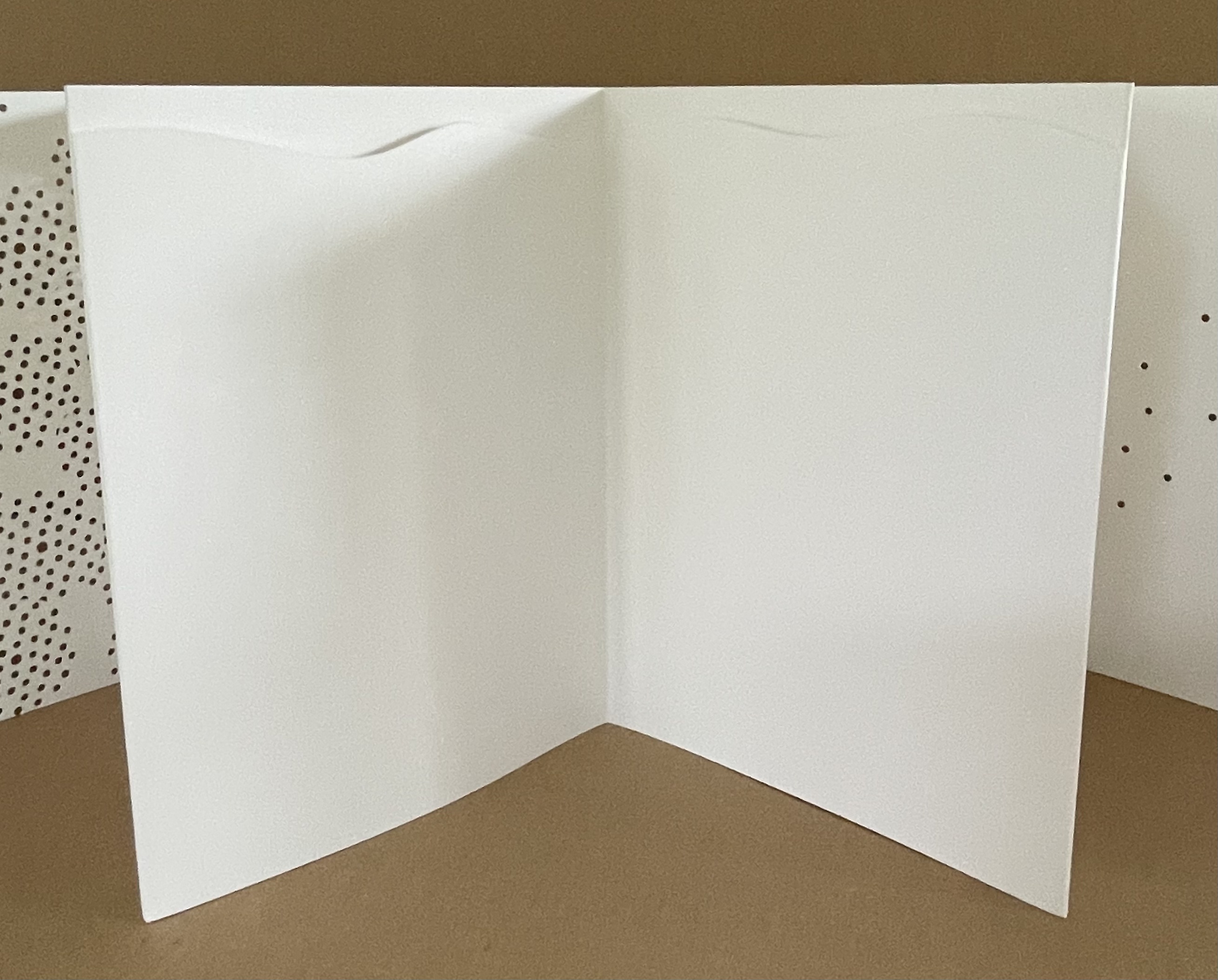
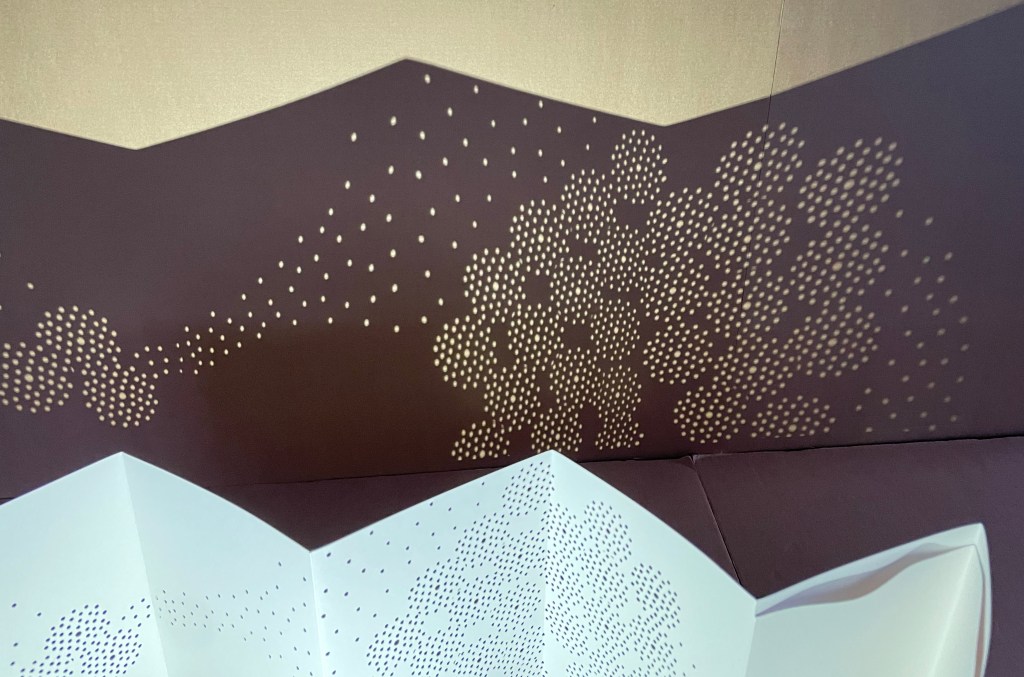
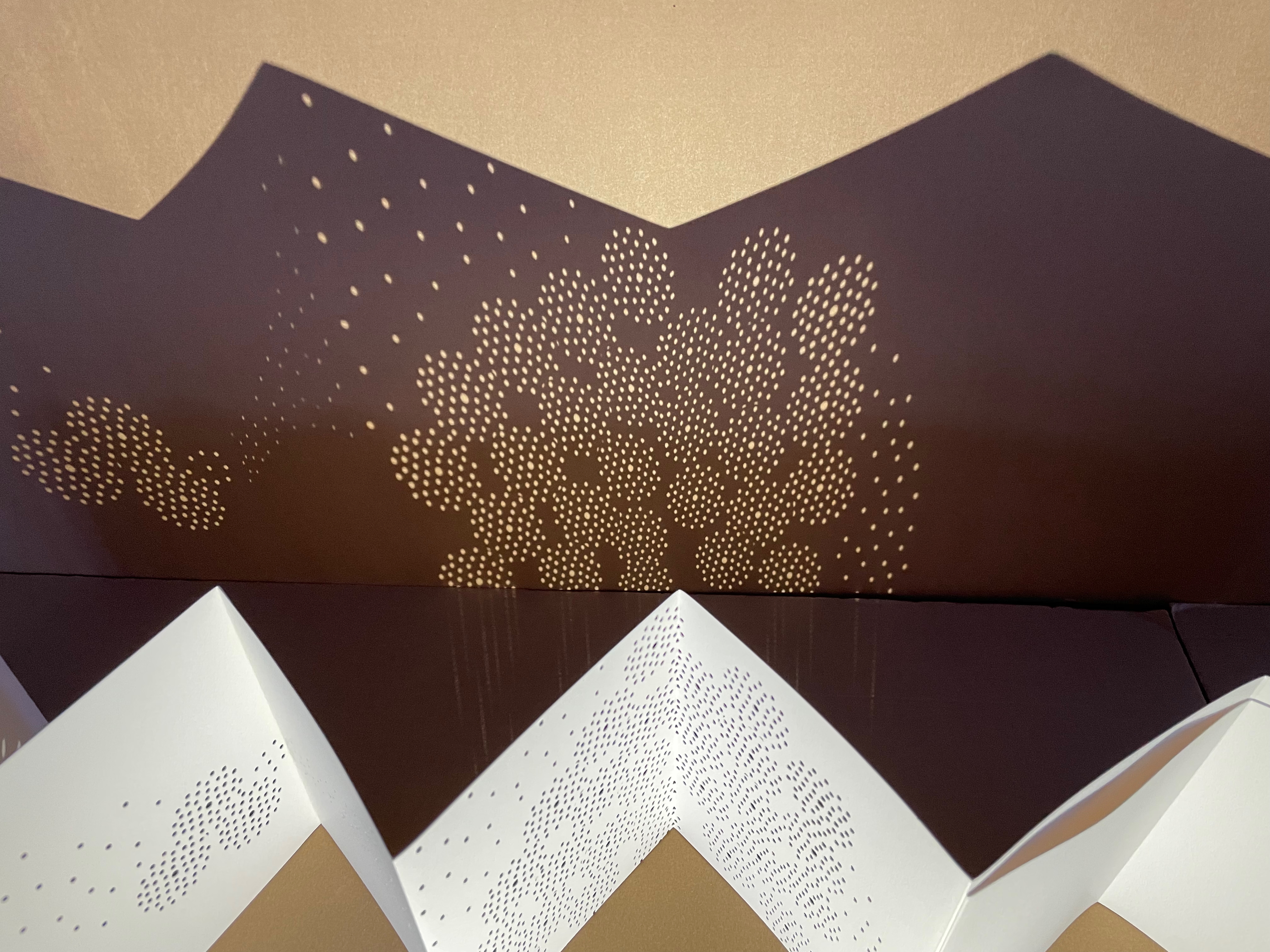
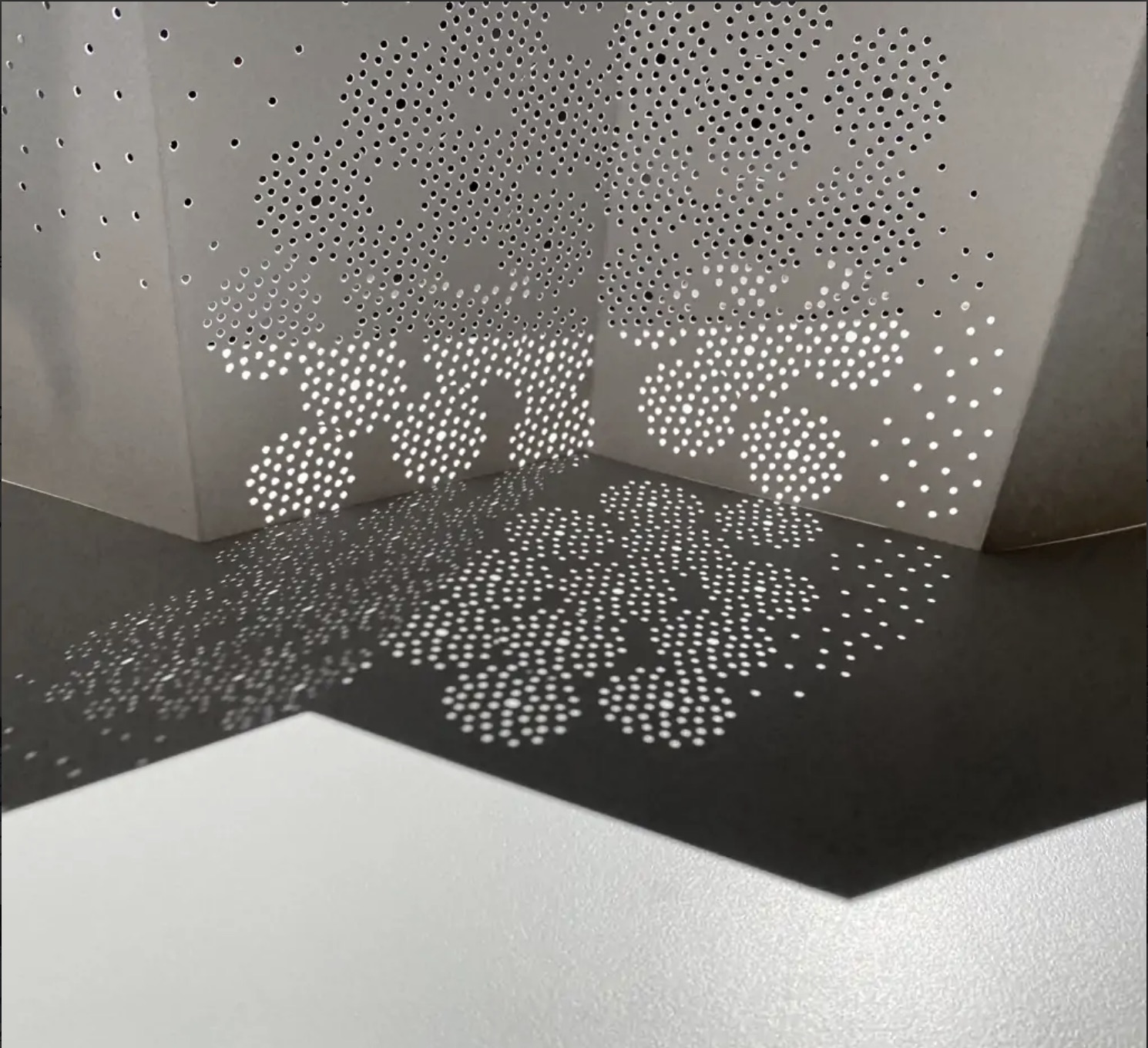
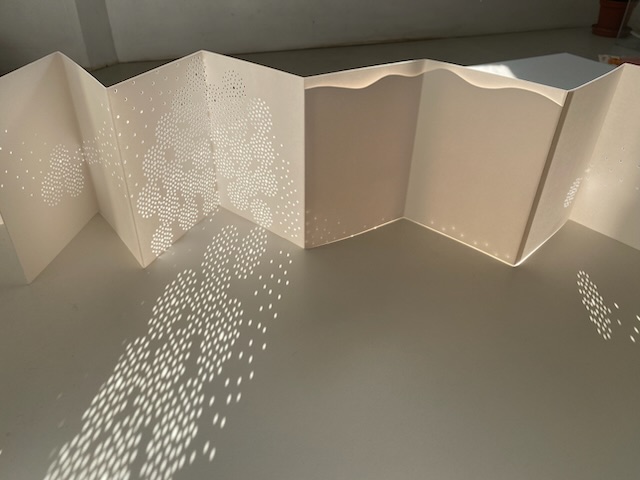
Chisato Tamabayashi’s leporello Spirit departs from her usual paper-engineering techniques. It relies on hole punching, paper sculpture, and display with light. Her crossover in techniques will remind close observers of Katsumi Komagata’s movement from Little Tree/Petit arbre (2008) to「Ichigu」(2015).

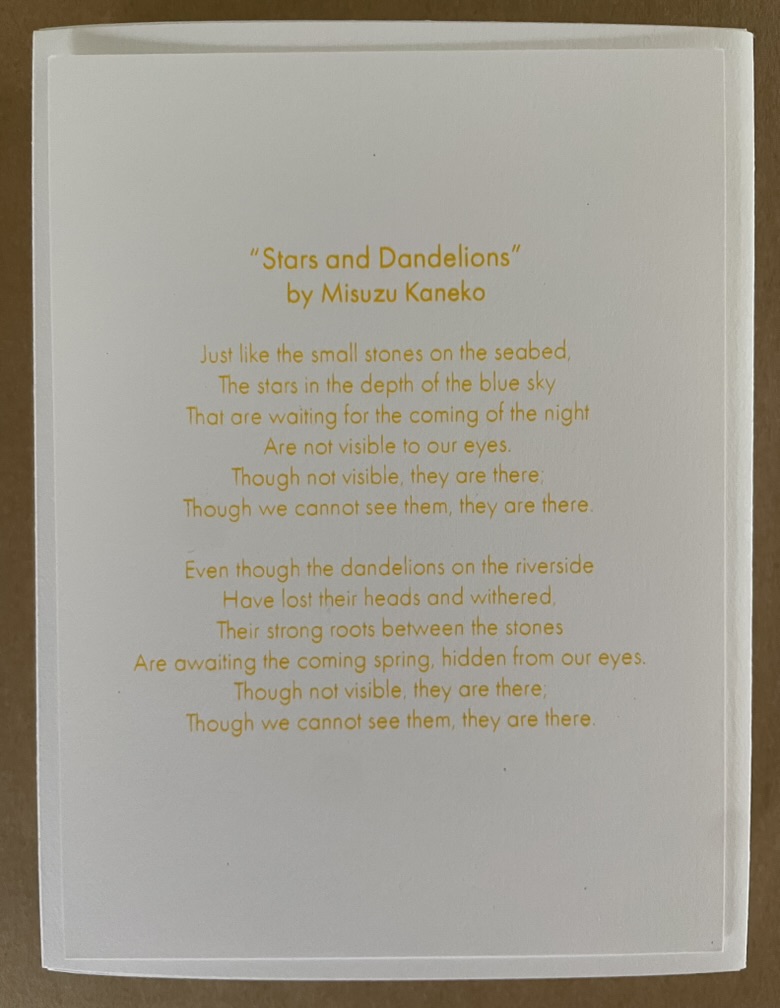
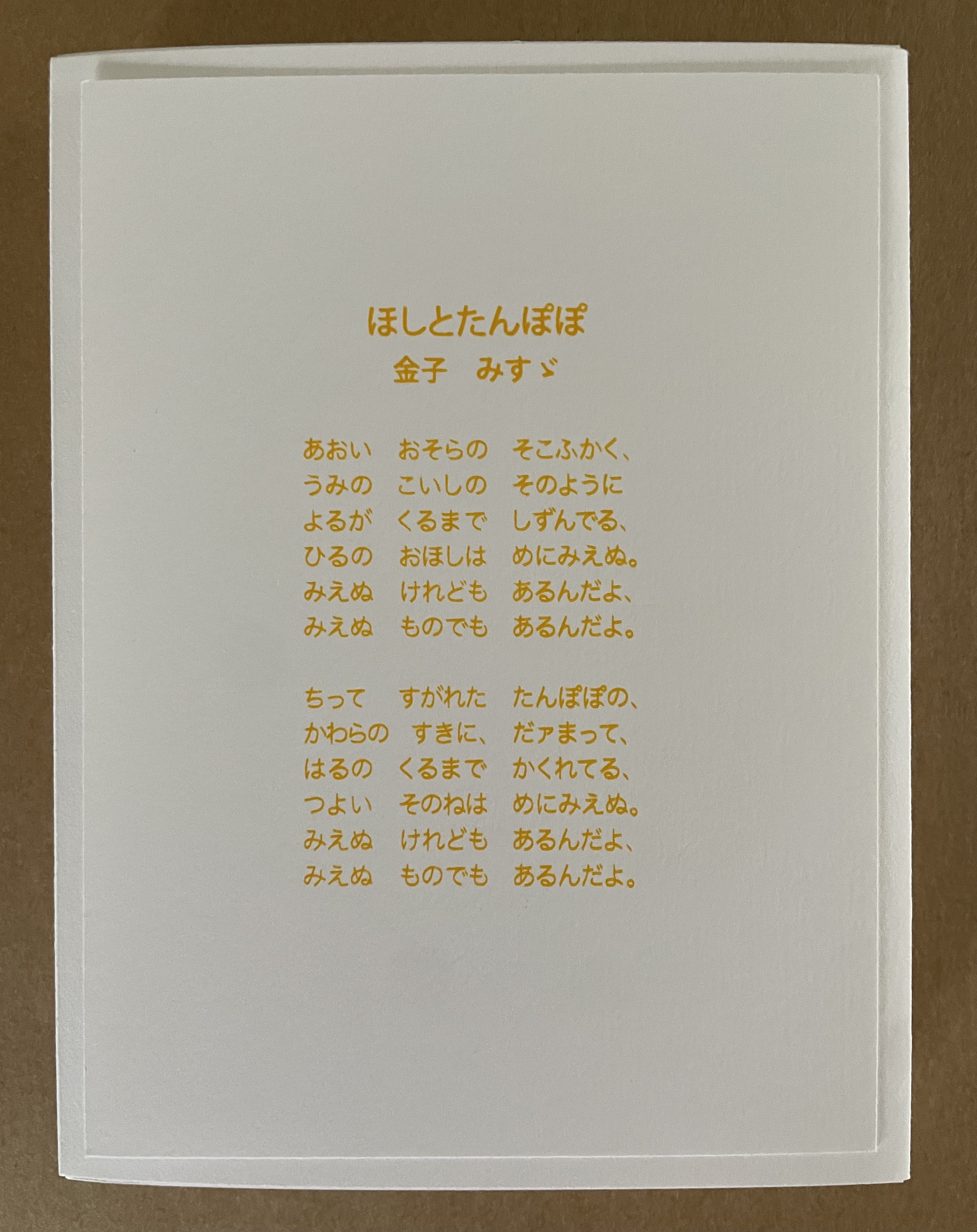
Spirit is accompanied by the 20th century poet Misuzu Kaneko‘s poem “Stars and Dandelions” (in English and Japanese) from which Tamabayashi has taken her inspiration.

Viewed standing or lying flat, the leporello’s arranged holes echo the seeds leaving the dandelion heads bare in the second stanza of the poem.

Just before the last spread of imagery, the upper edge takes on the shape of the ocean surface beneath which the stones mentioned in the first stanza lie.

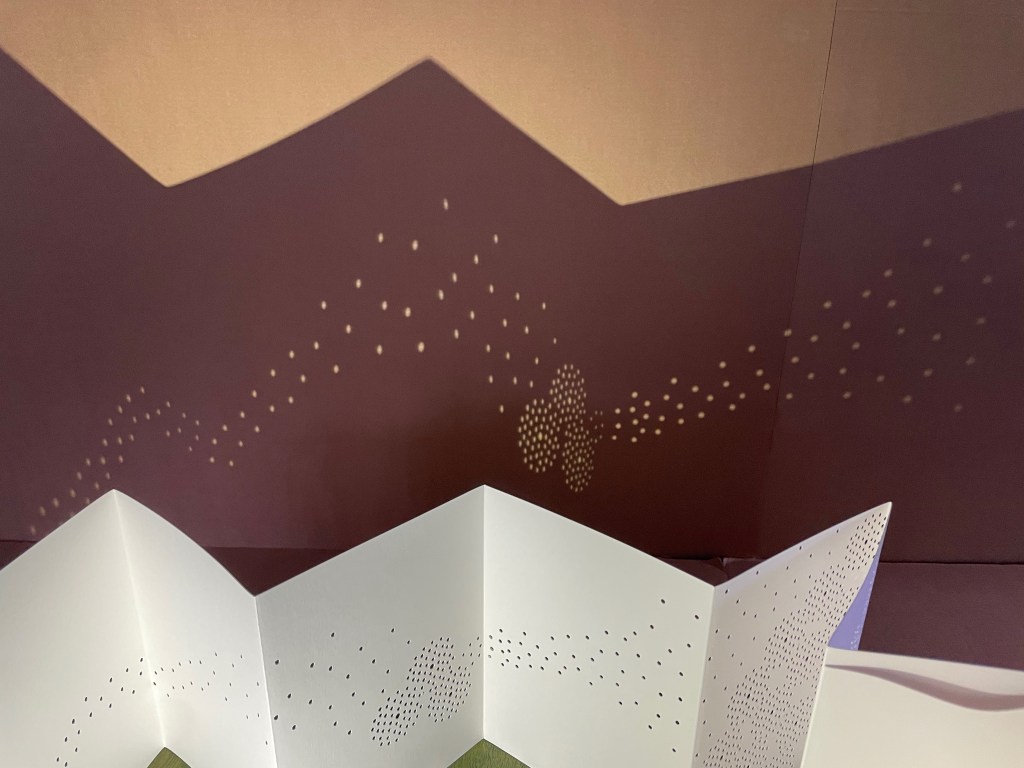
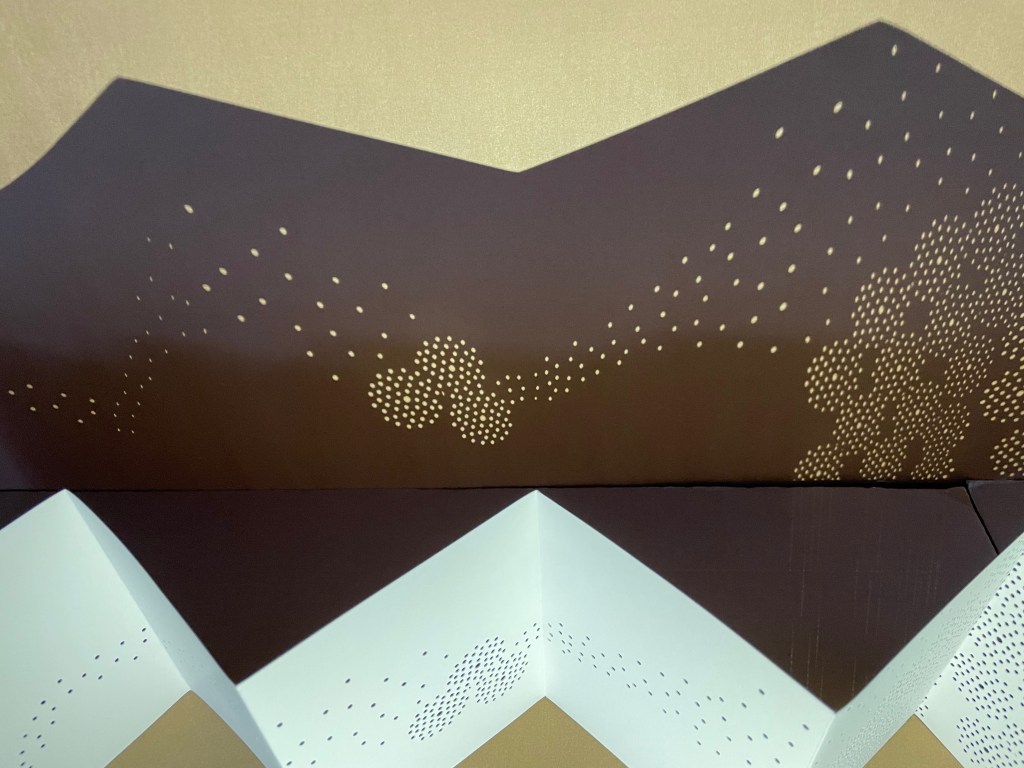
A projection to the background echoes the stars from the first stanza of the poem.

A projection to the foreground echoes the stones on the seabed from first stanza of the poem. Photos: Courtesy of the artist.

Like Misuzu Kaneko’s poetry, Chisato Tamabayashi’s artwork appeals to children and adults, underscoring the link between children’s books and artists’ books explored so well by the Huberts in The Cutting Edge of Reading, Johanna Drucker in “Artists’ Books and Picture Books”, and Sandra Beckett in Crossover Picturebooks.

Tamabayashi’s and Komagata’s handling of holes, paper engineering, and display with light should be considered alongside the efforts of the book and paper artists’ explored in the second issue of Inscription as well as those of Eleonora Cumer and Jenny Smith.

Further Reading

Inscription 2 on Holes“. 29 May 2022. Books On Books Collection.

Katsumi Komagata (I)“. 22 March 2020. Books On Books Collection.

Eleonora Cumer“. 6 September 2019. Books On Books Collection.

Jenny Smith“. 31 July 2017. Books On Books Collection.

Chisato Tamabayashi (I)“. 27 August 2024. Books On Books Collection.

Beckett, Sandra L. 2013. Crossover Picturebooks : A Genre for All Ages. London: Routledge.

Drucker, Johanna. 2017. “Artists’ Books and Picture Books: Generative Dialogues” in The Routledge Companion to Picturebooks, edited by Bettina Kümmerling-Meibauer. London: Taylor & Francis Group.

Hubert, Renée Riese and Judd D. Hubert. The Cutting Edge of Reading: Artists’ Books. New York: Granary Books, 1999.

Books On Books – Marlene MacCallum (III)

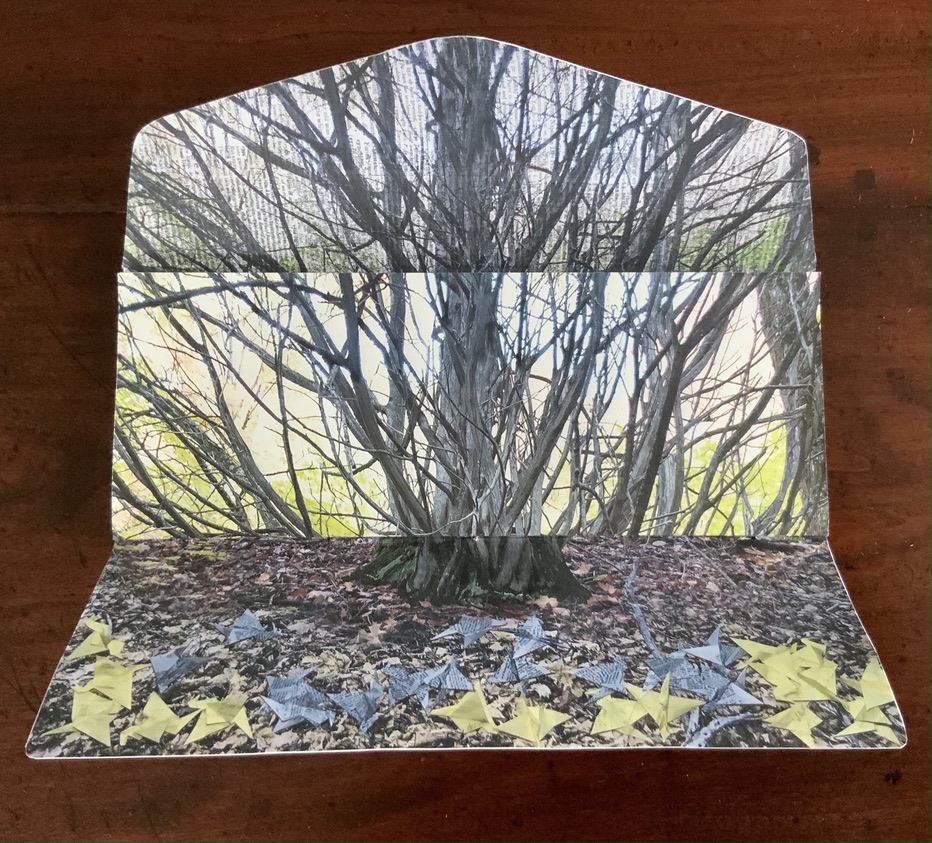
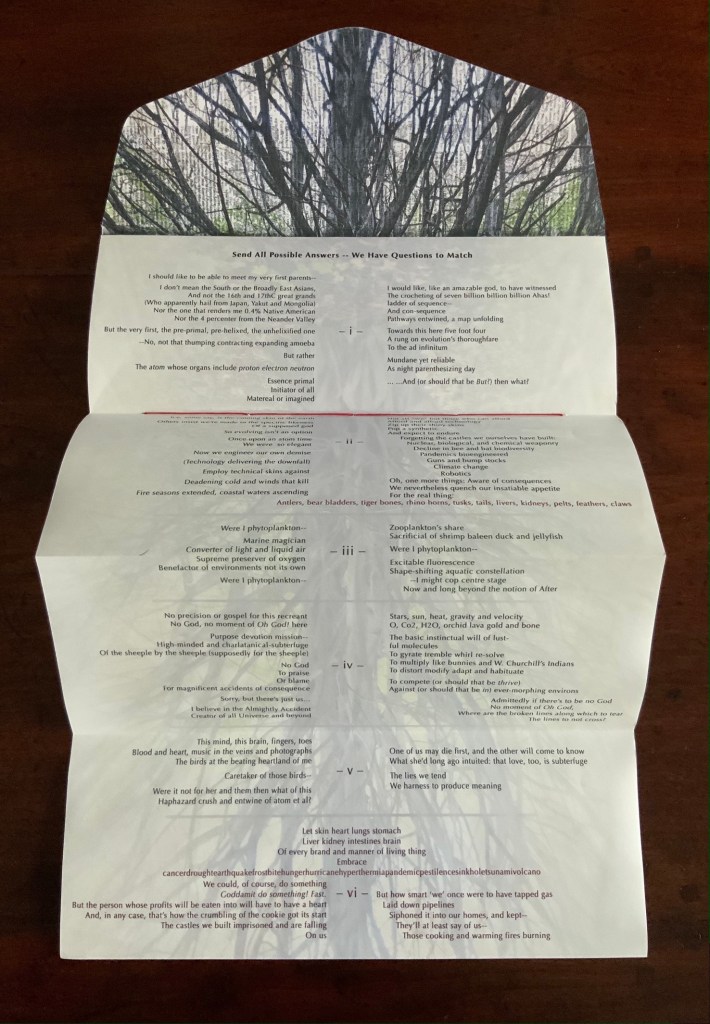
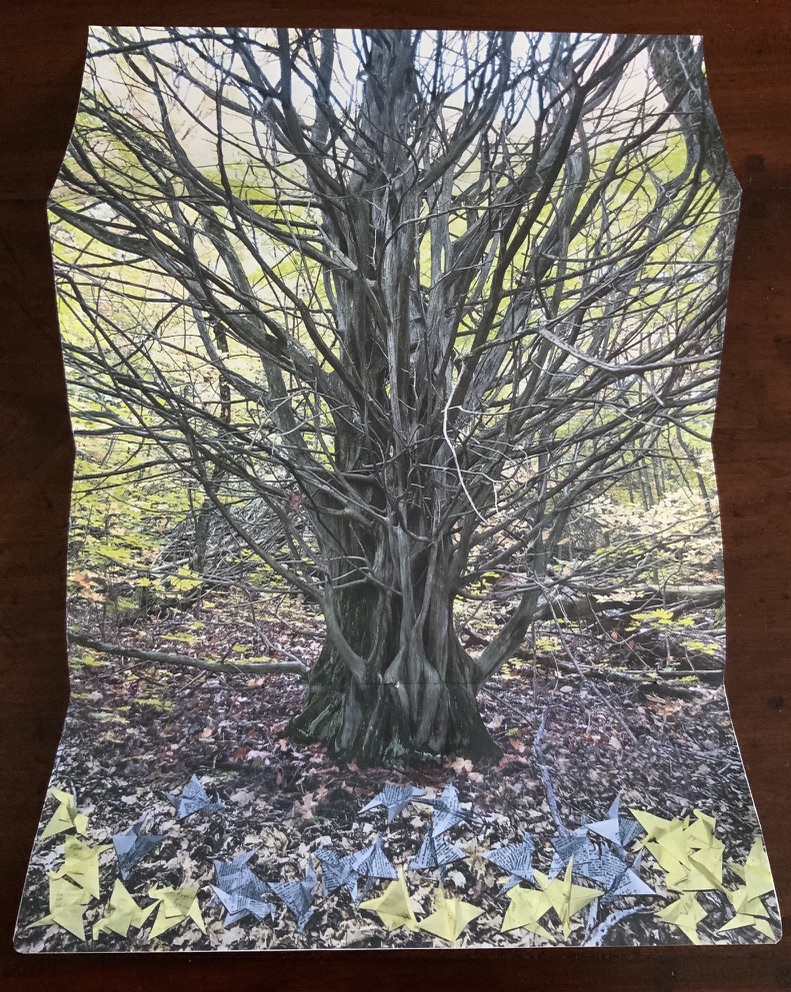
Marlene MacCallum often applies unusual folds in her works. They appear in sleep walk (2024) and The Shadow Quartet (2018-25). With the two works below, however, — as with Chicago Octet (2014) — the fold becomes central to the whole work. Any other structural presentation would not deliver the precise fusion of image, text, and material to deliver the metaphor embodied by the work.

Send (2020)

Send (2020)
Marlene MacCallum and Shani Mootoo
A double-sided archival digital pigment print on paper, folded and pamphlet bound in an envelope enclosure. Images, design, printing and binding by Marlene MacCallum, poem by Shani Mootoo. Dimension: 10 × 25.4 cm (closed) and 47.5 × 10 cm (expanded). #11. Acquired from Marlene MacCallum, 26 October 2022.
Photo of the work: Books On Books Collection.

Author’s statement: Send is a correspondence piece; a conversation between my images and structural concept and Shani Mootoo’s poem “Send All Possible Answers – We Have Questions To Match”. Shani Mootoo, writer and artist, gave me the gift of this poem to use in a piece as I saw fit, and together we send this letter to the world.

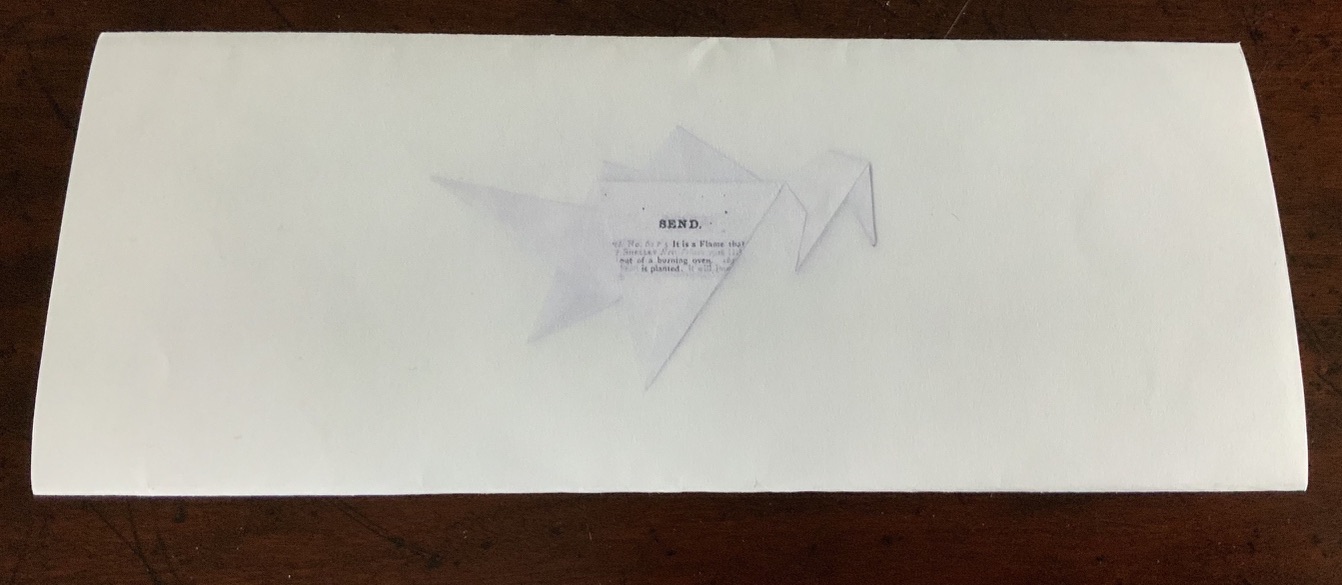
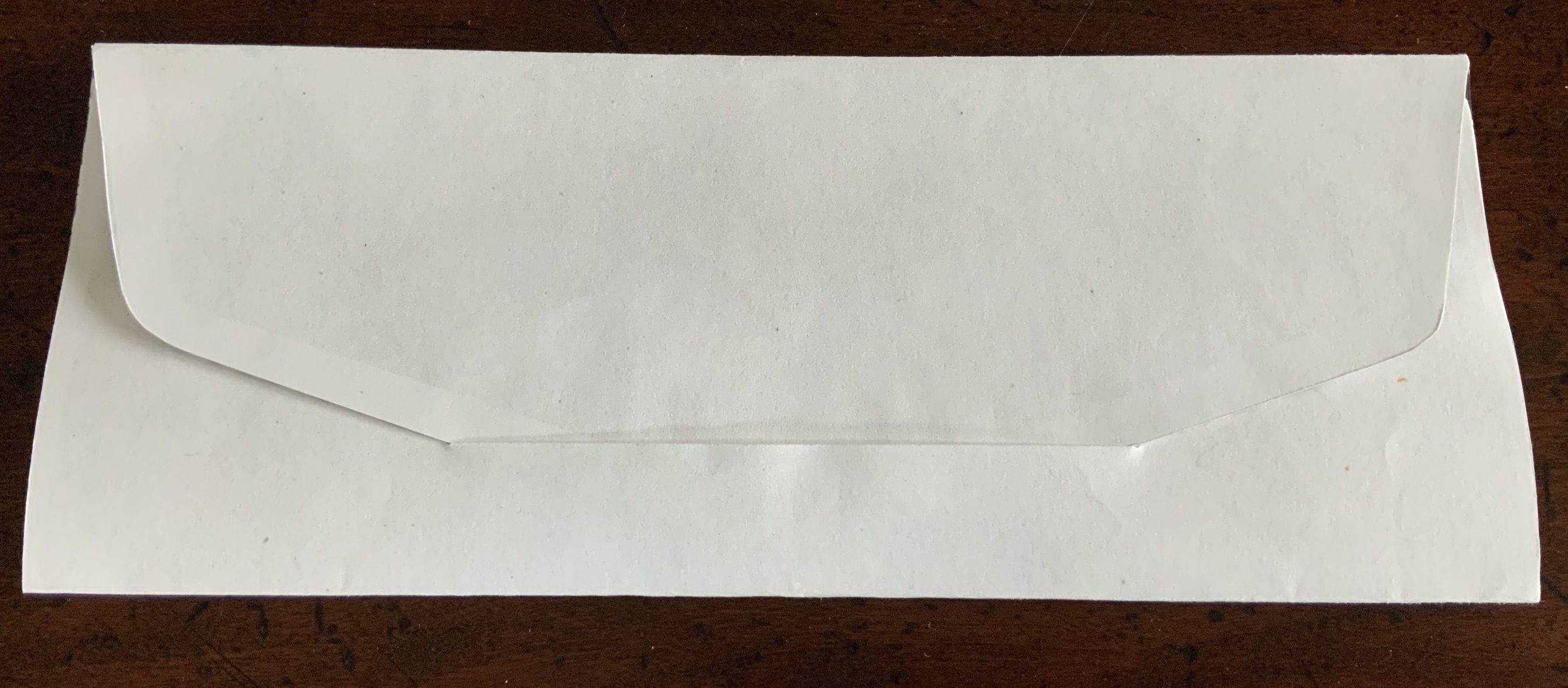
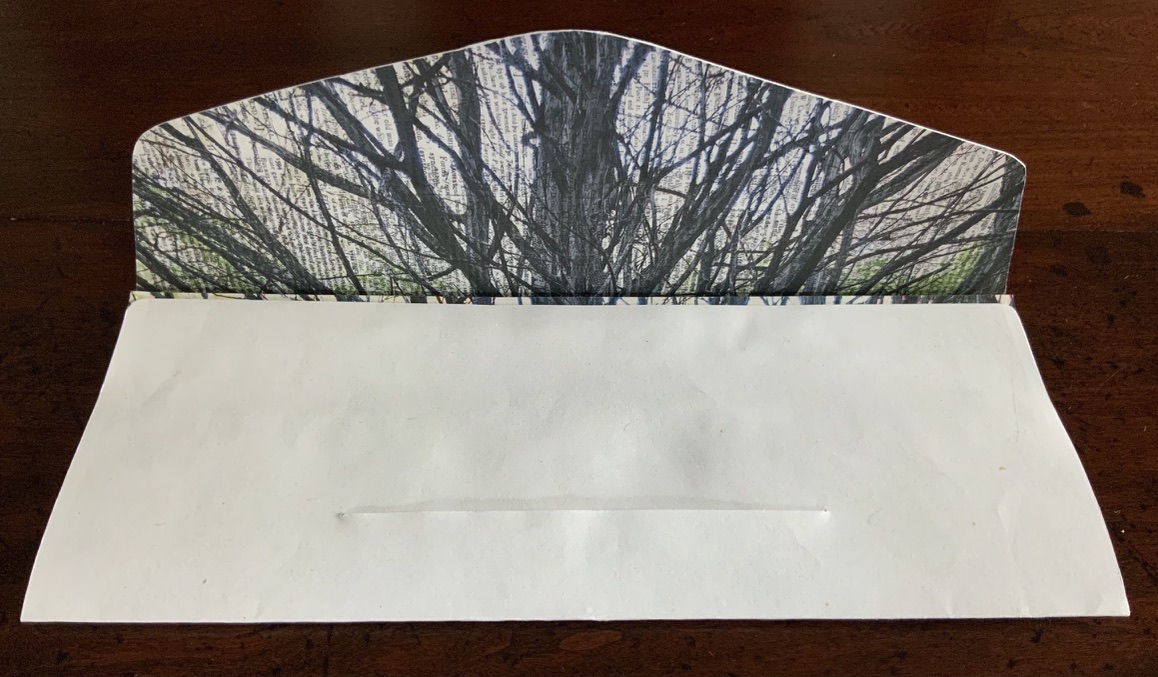
Opening envelope; inside of envelope.

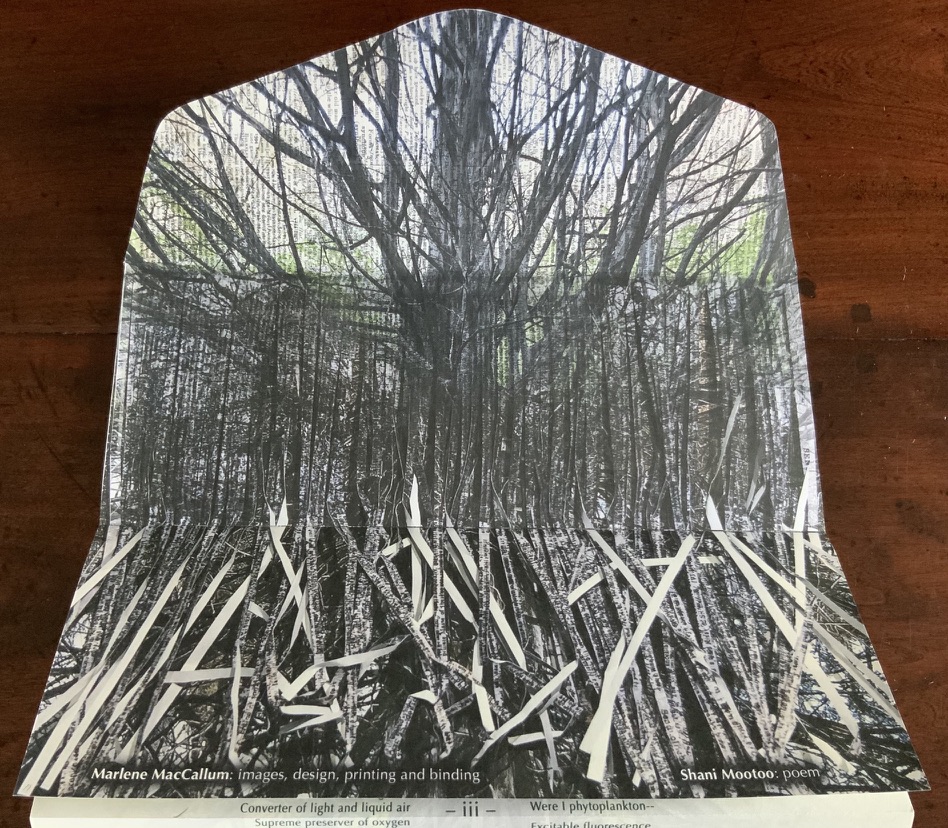
First opening and unfolding.

Fully open view of poem.

Fully open view of image.

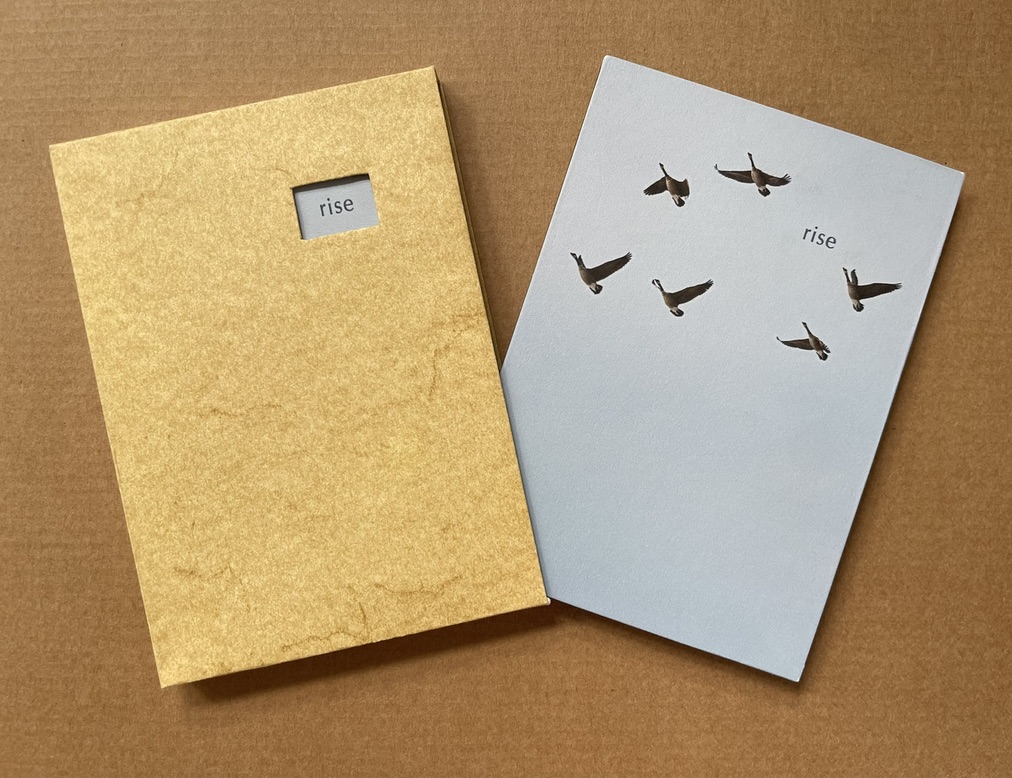
Rise (2020)

Rise (2020)
Marlene MacCallum and Deborah Root
Slipcase enclosure with passe-partout showing title. Double-sided folio in miura fold between two boards. Printed paper over boards. Slipcase H135 x W97 mm. Double-sided folio H133 x W93 mm (closed), W483 × H633 mm (open). Acquired from Marlene MacCallum, 26 October 2022.
Photos of the work: Books On Books Collection.

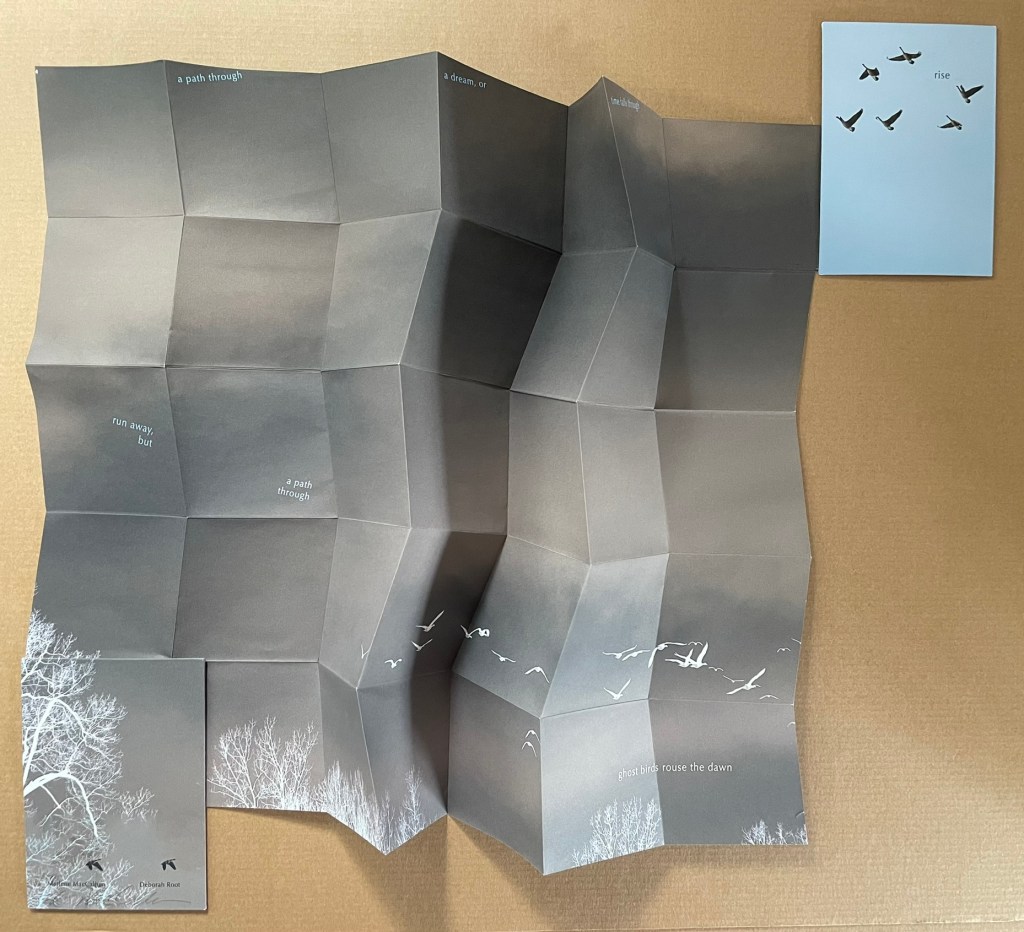
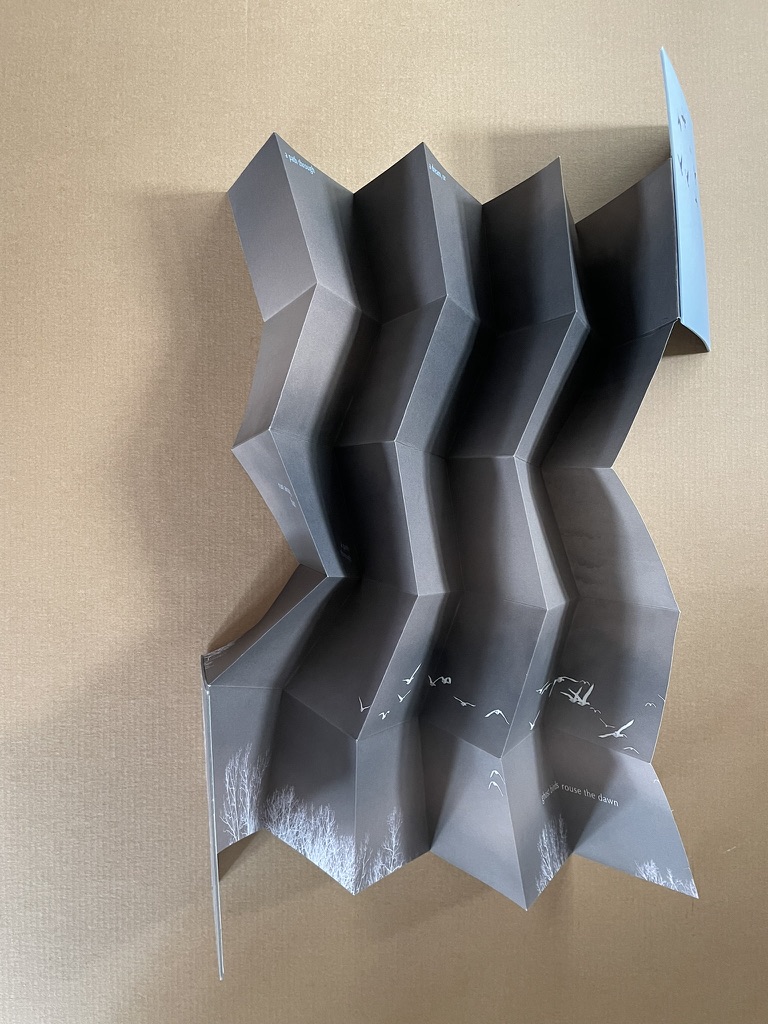
Artists’ statement: Rise is a collaborative artwork by Marlene MacCallum and Deborah Root. This piece grew out of discussions about our shared fascination with the implications and meanings of the fold. The images and poem evolved through a call and response process, sharing them back and forth. The miura fold structure was selected early on for its structural strength and the way it allowed us to take a seemingly small object that expanded quite surprisingly to reveal a large field of imagery and poetry.

The fold is named for its inventor, Japanese astrophysicist Kōryō Miura.

Further Reading

Marlene MacCallum (I)“. 2 September 2019. Books On Books Collection.

Marlene MacCallum (II)“. 19 September 2024. Books On Books Collection.

Marlene MacCallum and the ‘Shadow Cantos’“. 9 February 2021. Books On Books Collection.

Sun, Ke. 2025. “Photography Handmade Books: Redefining the Functions and Missions of Contemporary Photographic Art“. Critical Humanistic Social Theory, 2(3).

Bookmarking Book Art – A Tour of Tours

The Unshelved videos from the Bainbridge Island Museum of Art and the Friday Night Flicks of Byopia Press sent me on a hunt for introductions to collections of artists’ books. For those who like to binge, here are the discoveries so far:

Bainbridge Island Museum of Art

Banff Centre in the Paul D. Fleck Library

Joan Flasch Artists’ Book Collection, School of Art Institute of Chicago

Connecticut College’s Lear Center for Special Collections and Archives

University of Dundee

Jaffe Center for Book Arts, Florida Atlantic University

Jack Ginsberg Center for Book Arts at Wits Art Museum

Library of Congress, via the Bainbridge Island Museum of Art (Mark Dimunation’s lecture)

Rotch Library, Massachusetts Institute of Technology (MIT)

Otis College of Art and Design

National Galleries of Scotland

Smithsonian Libraries and Archives

Winchester School of Art, University of Southampton

Marriott Library’s Rare Books Collection at the University of Utah

State Library of Victoria

University of Western England, Bristol

Enjoy, Books On Books Collection.

Books On Books Collection – Ana Paula Cordeiro

Lightweight (2015)

Lightweight (2015)
Ana Paula Cordeiro
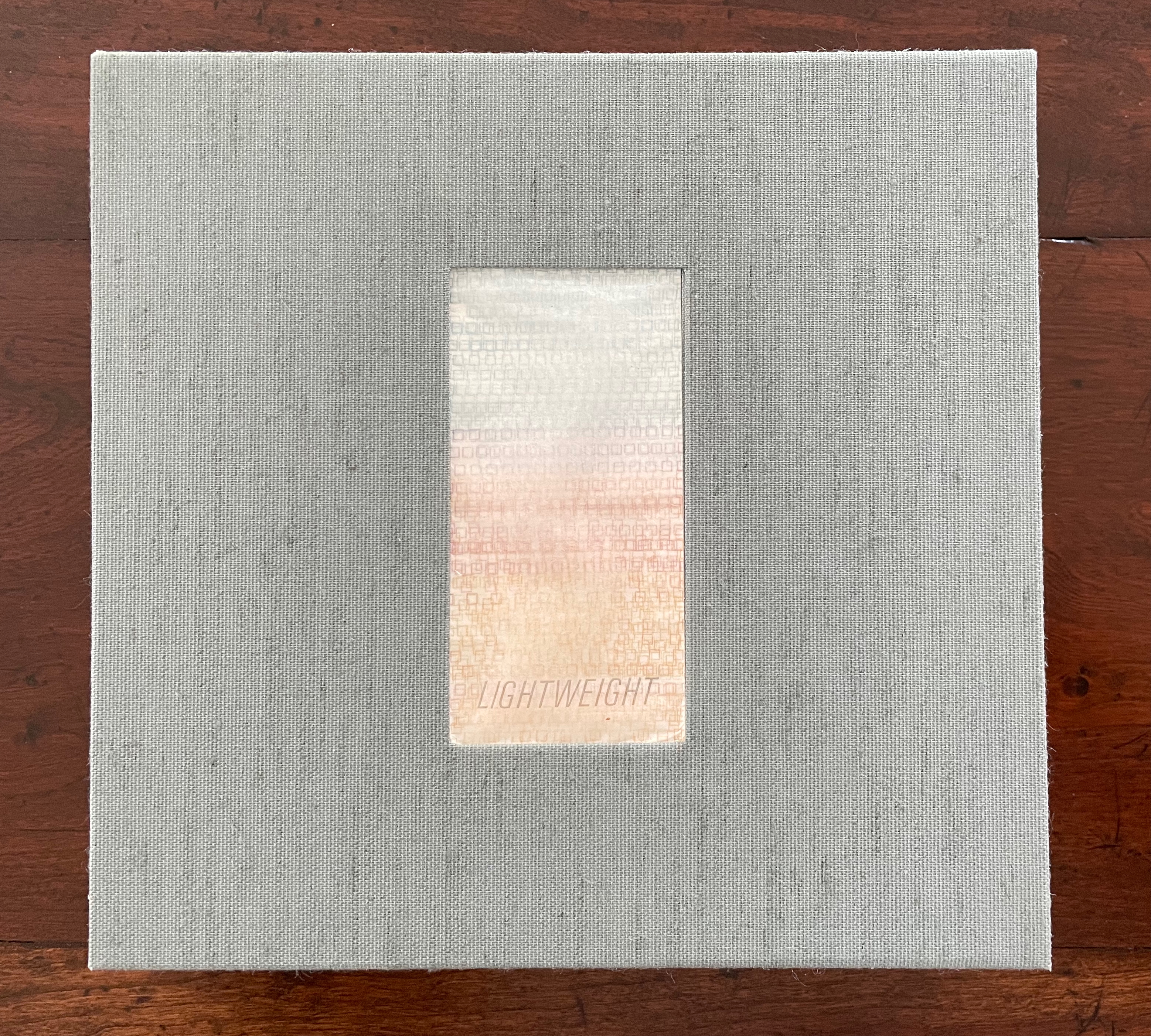
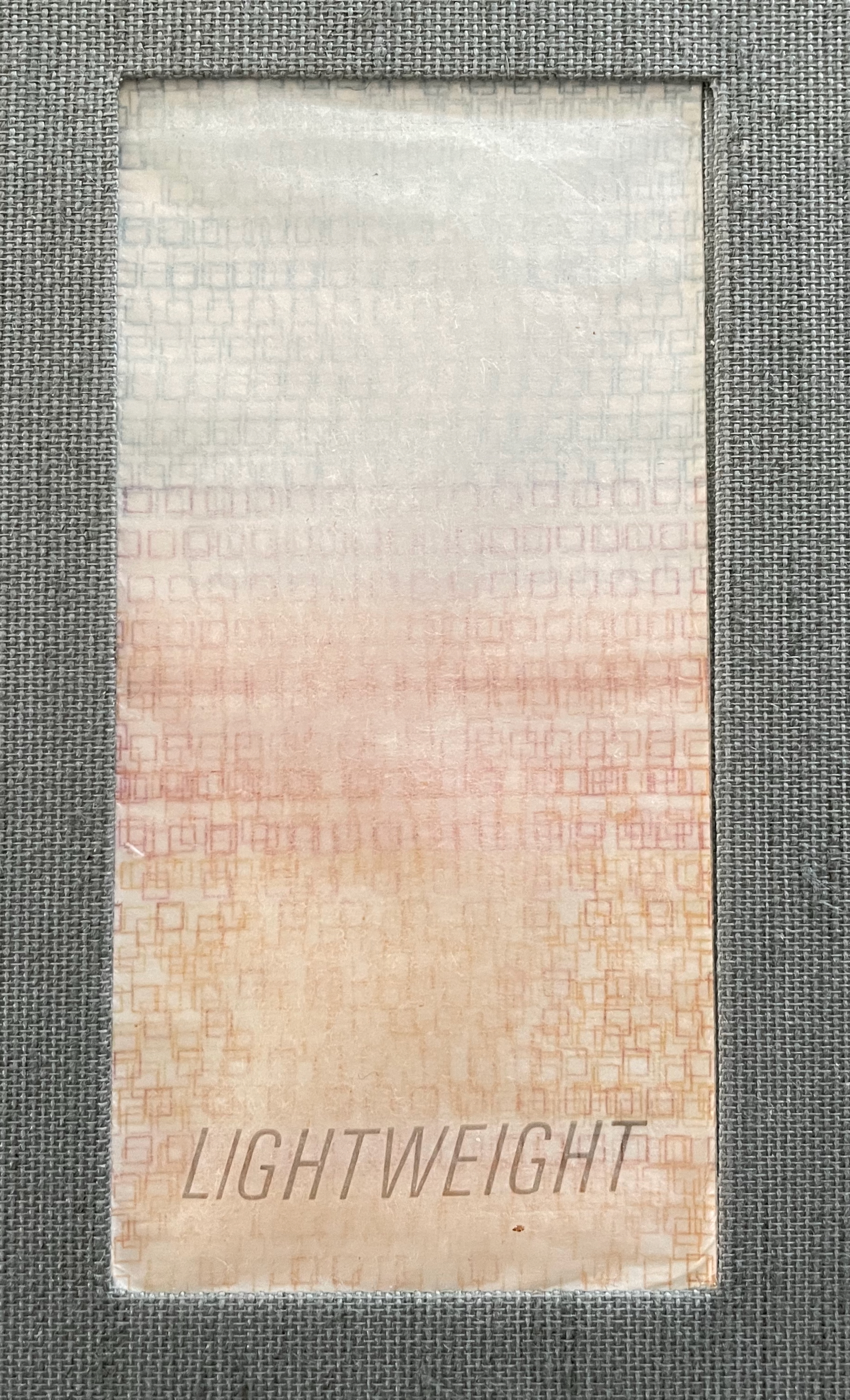
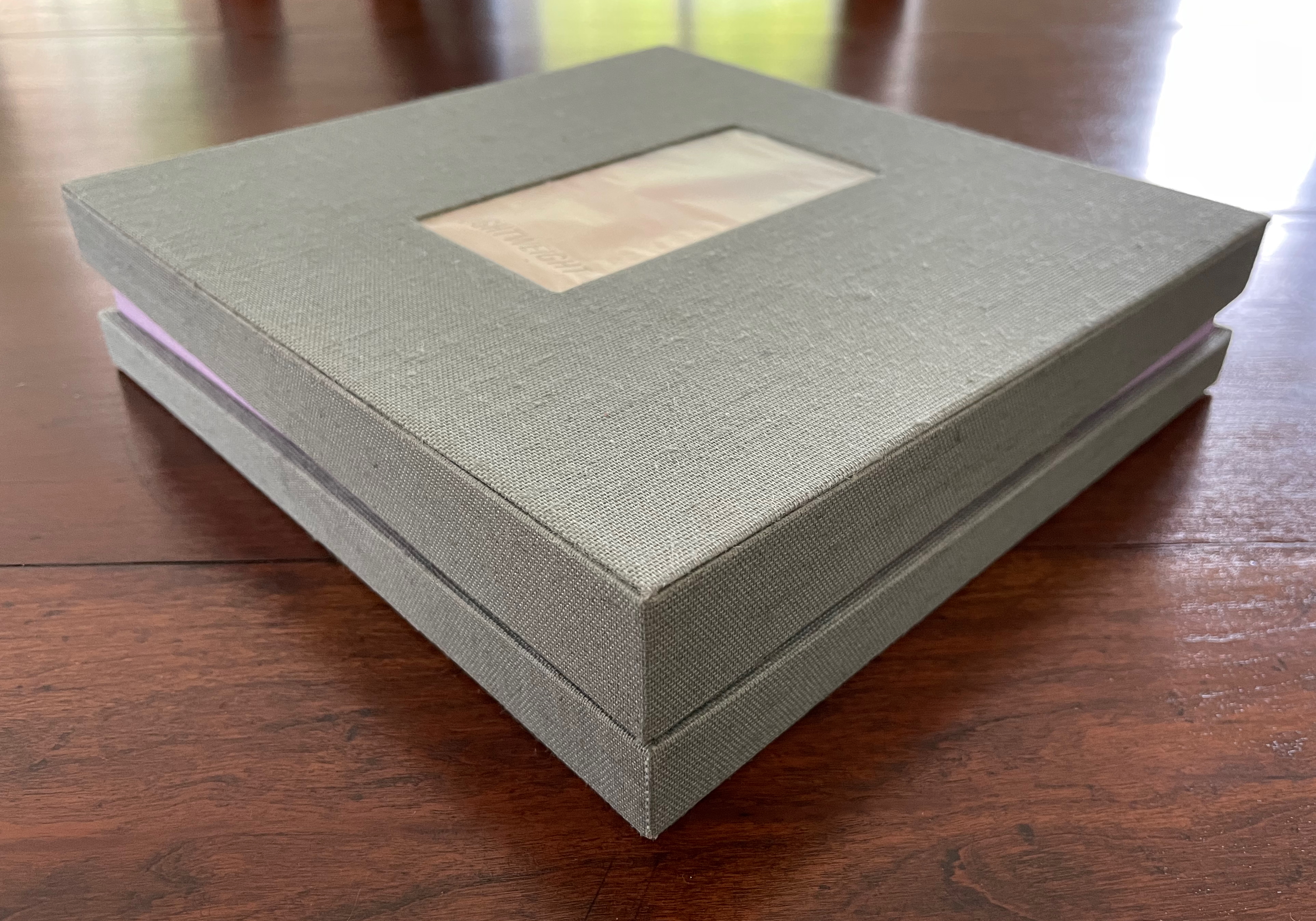
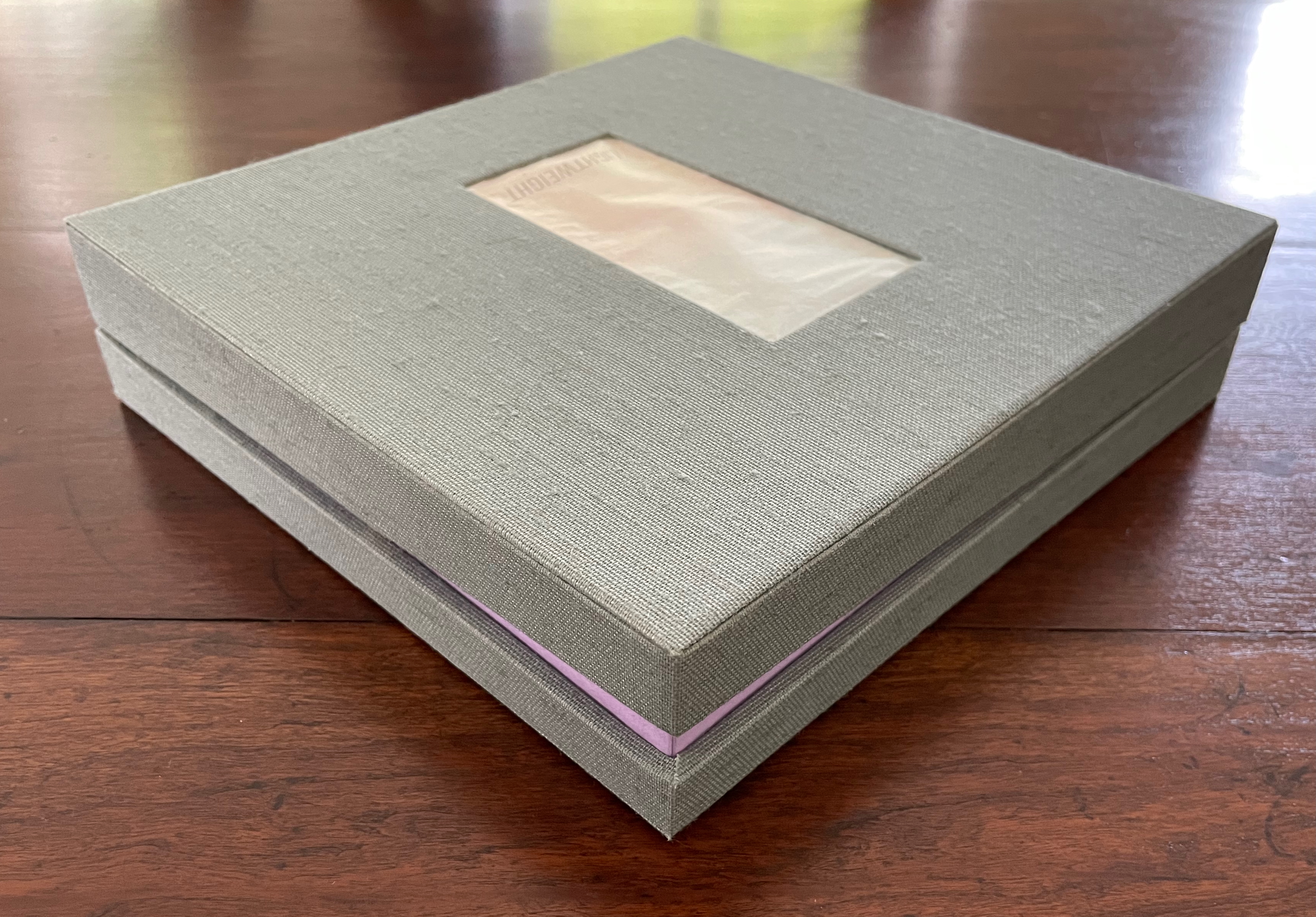
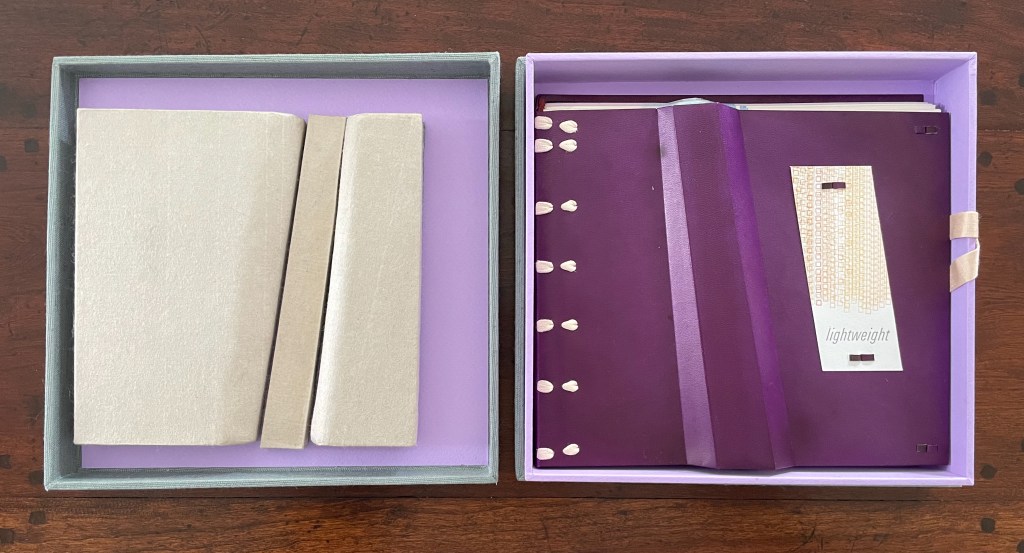
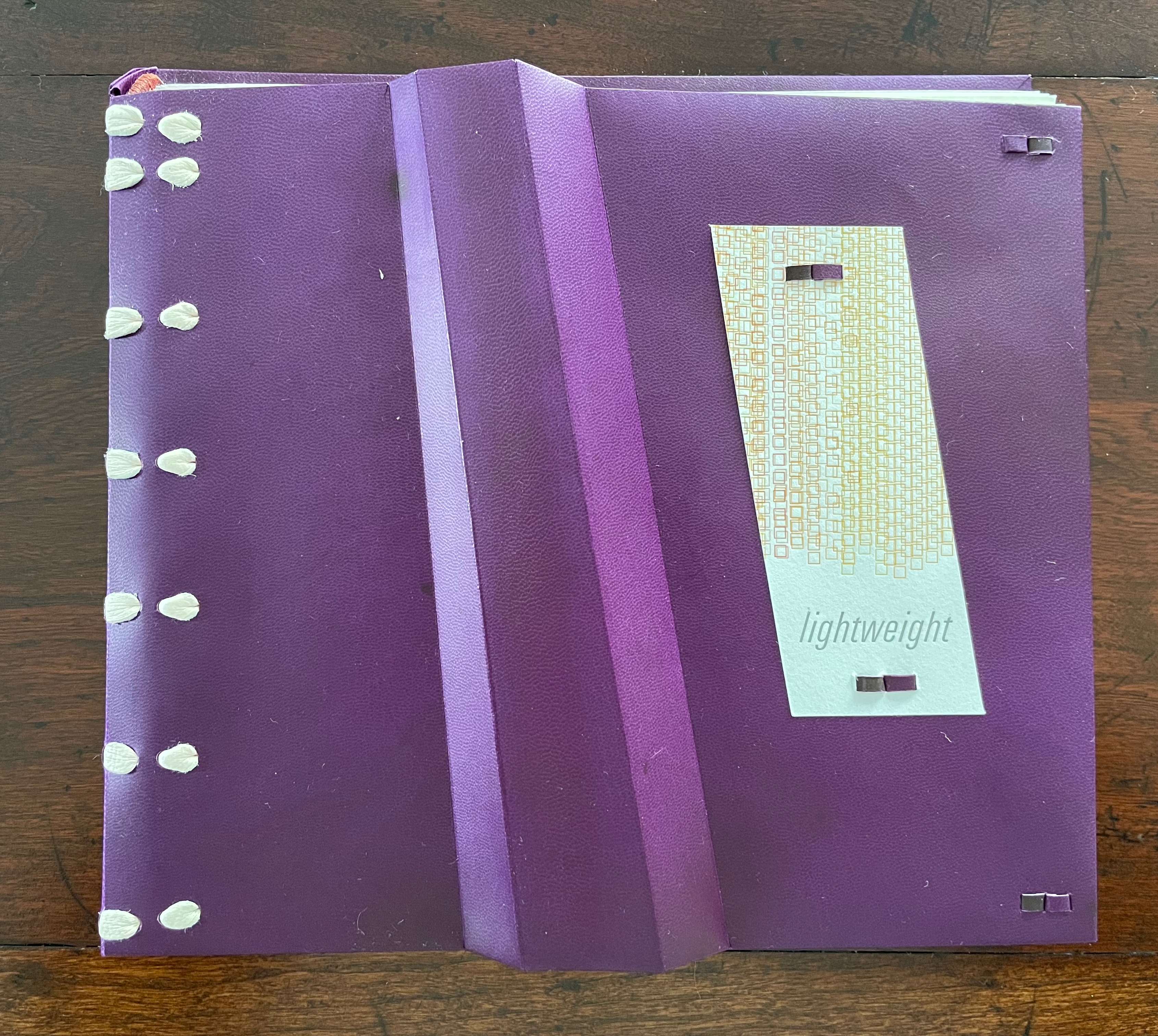
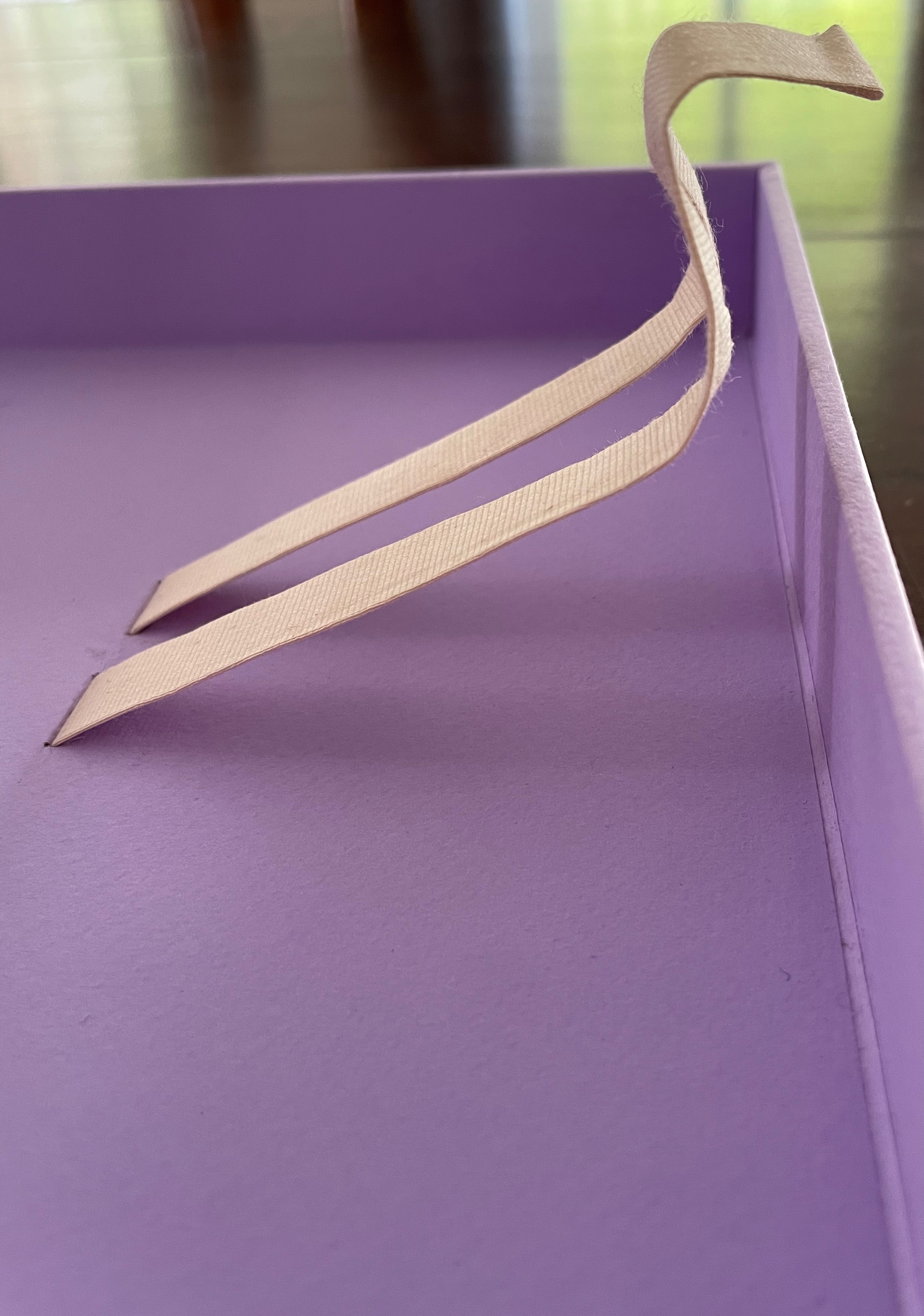
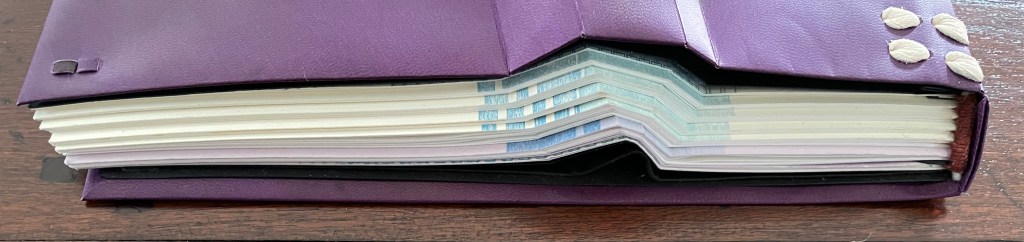
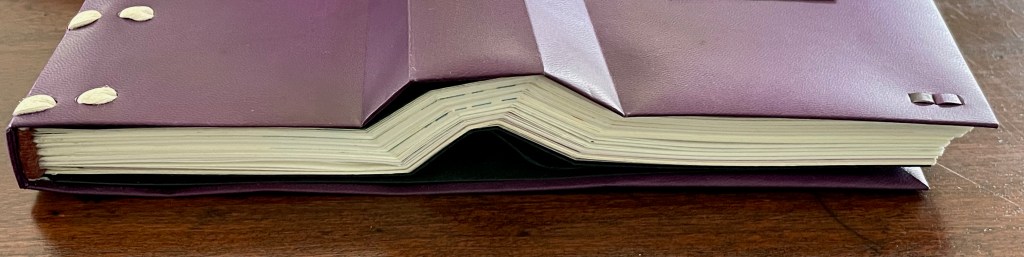
Custom storage box with passepartout on cover with title printed on translucent paper with colored diagram beneath and sculptural element inside top. Three-part construction Limp Vellum binding on dyed parchment. Box: H215 x W224 x D47v & D53r. Book: H190 x W215 x D18 mm [90] pages. 88 + 2 half pages for colophon. Edition of 21 sets, copy bound on request. Acquired from the artist, 27 August 2025.
Photos: Books On Books Collection.

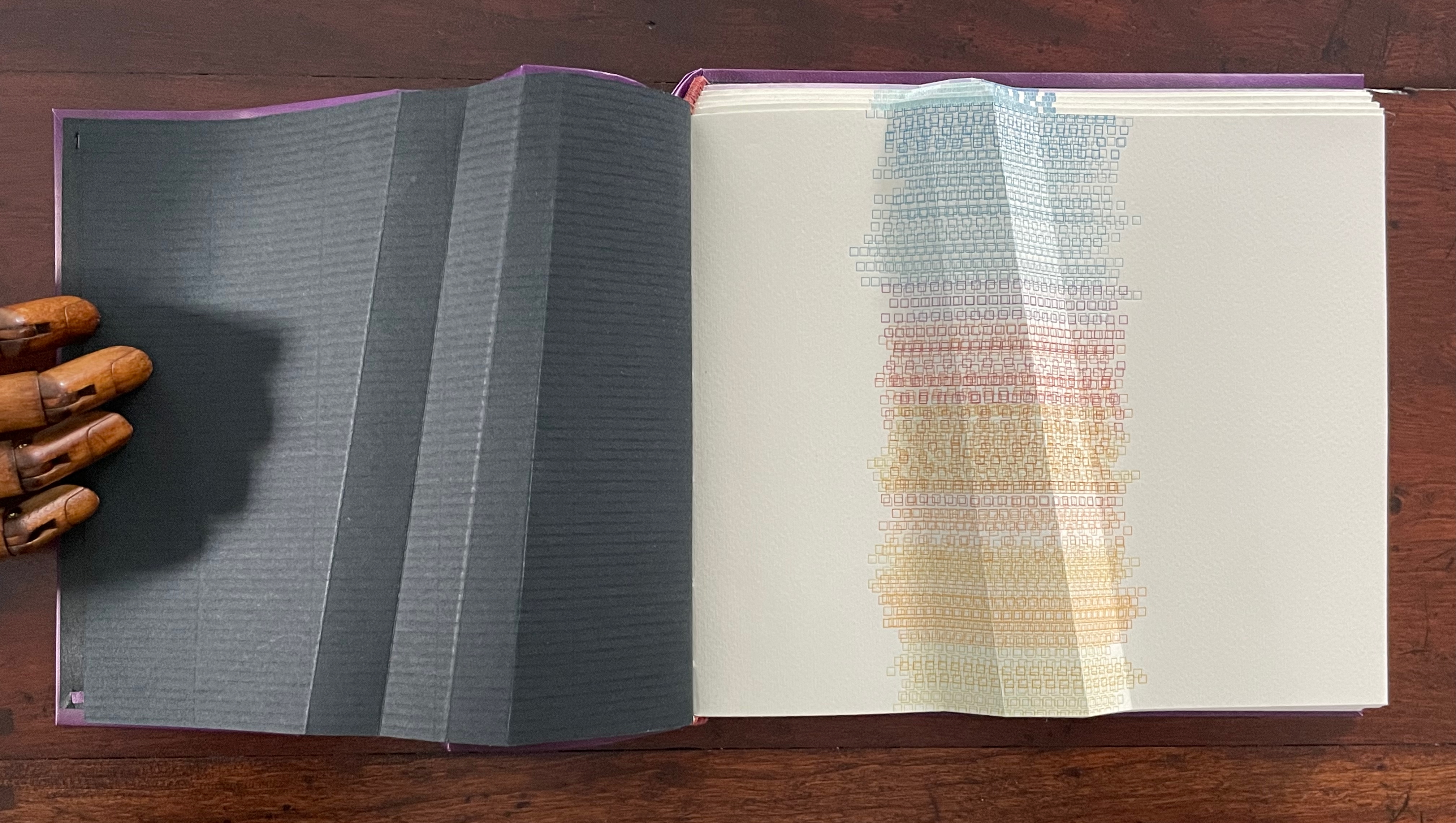
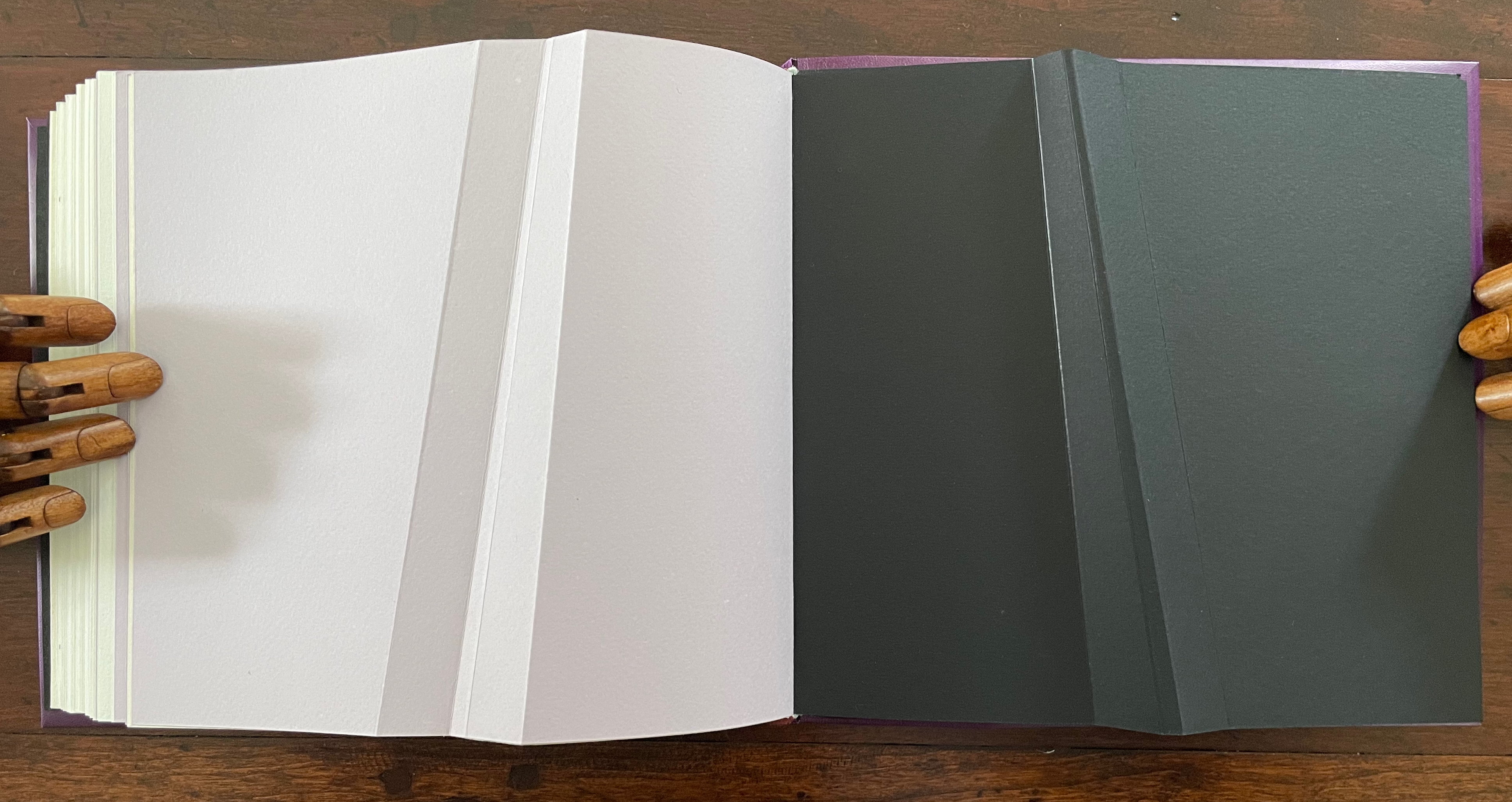
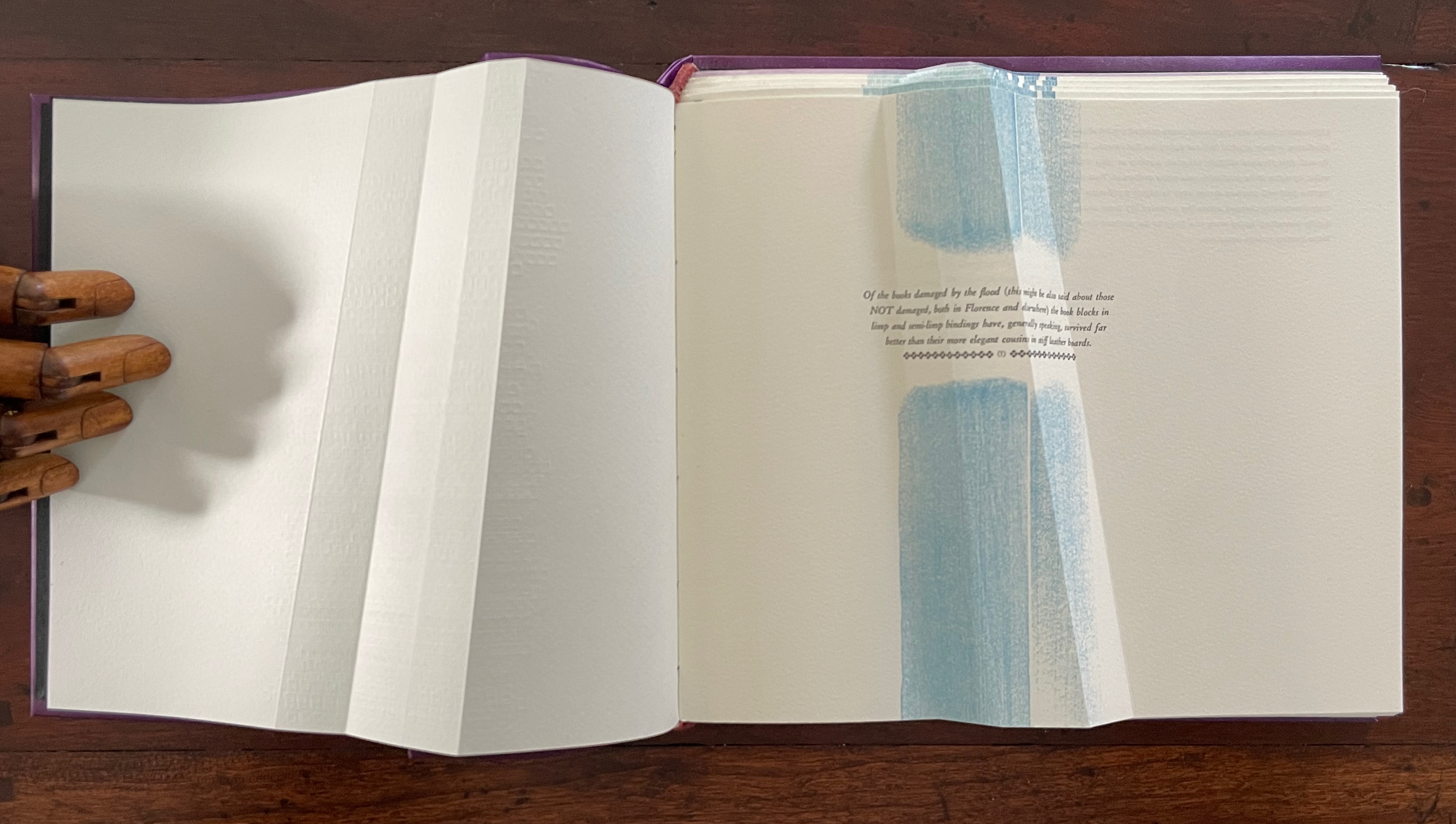
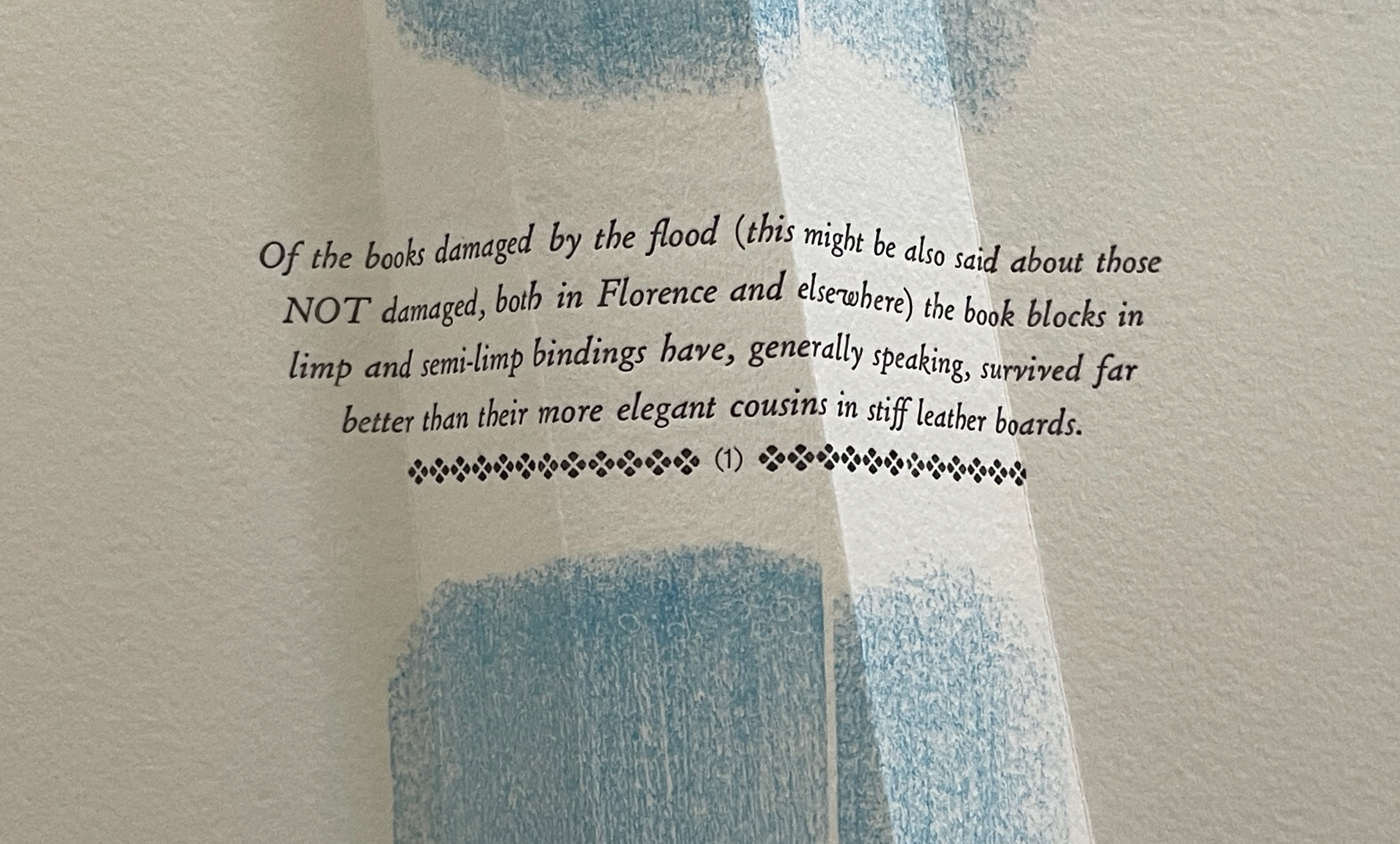
Dating back to the 13th century, the limp vellum binding for books involves a parchment or other flexible covering material that is the sole component of the cover. No stiff boards. It attaches to the textblock usually by sewing and without adhesive. According to the American Institute for Conservation, it was not merely a temporary solution until a more luxurious one with boards and ornamentation could be commissioned. Its presence in collections, its variety of formats, and its superior protection of works proven in the aftermath of the 1966 flooding of Florence, all suggest that, for a time, it was deliberately chosen for joining the artistic with the functional.

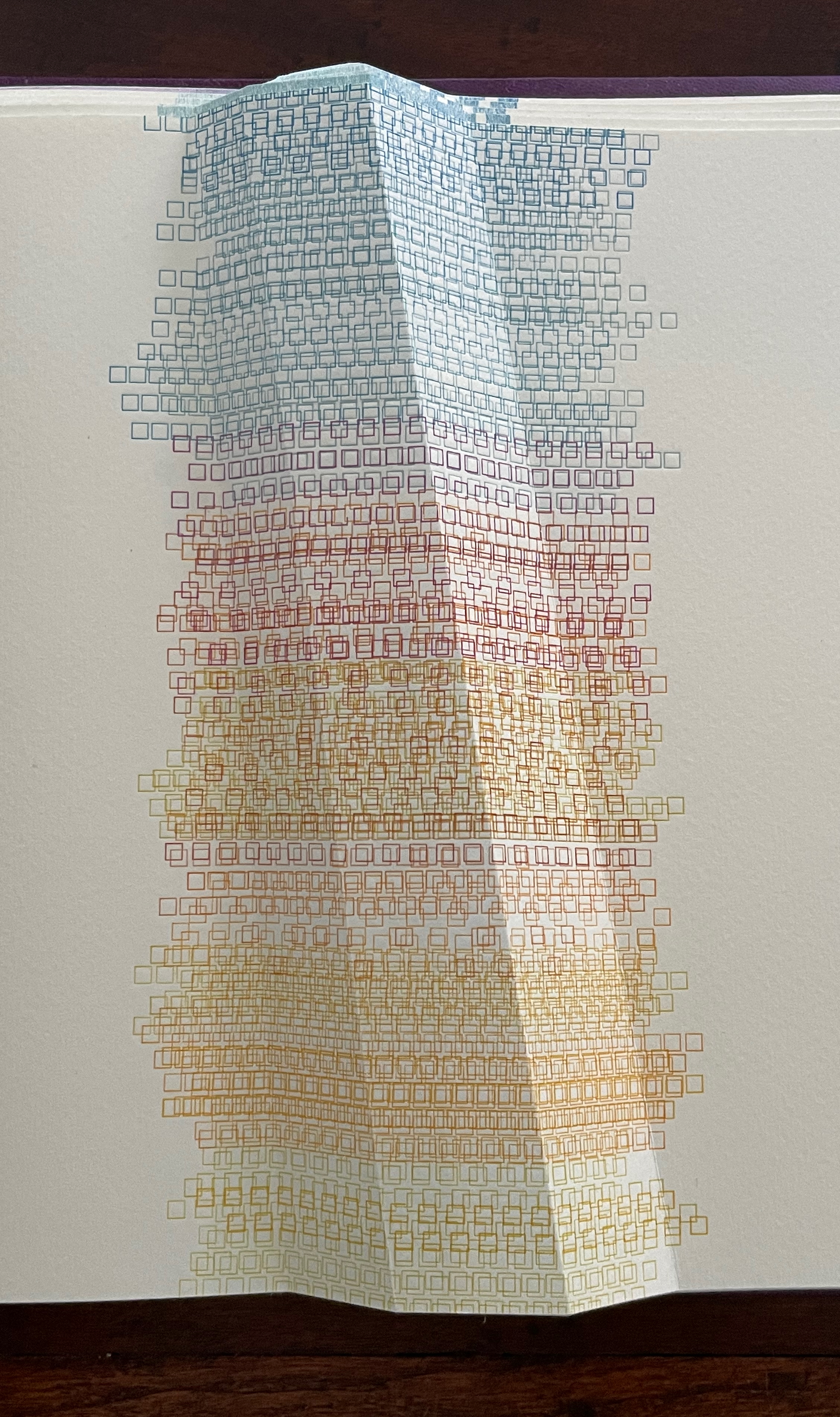
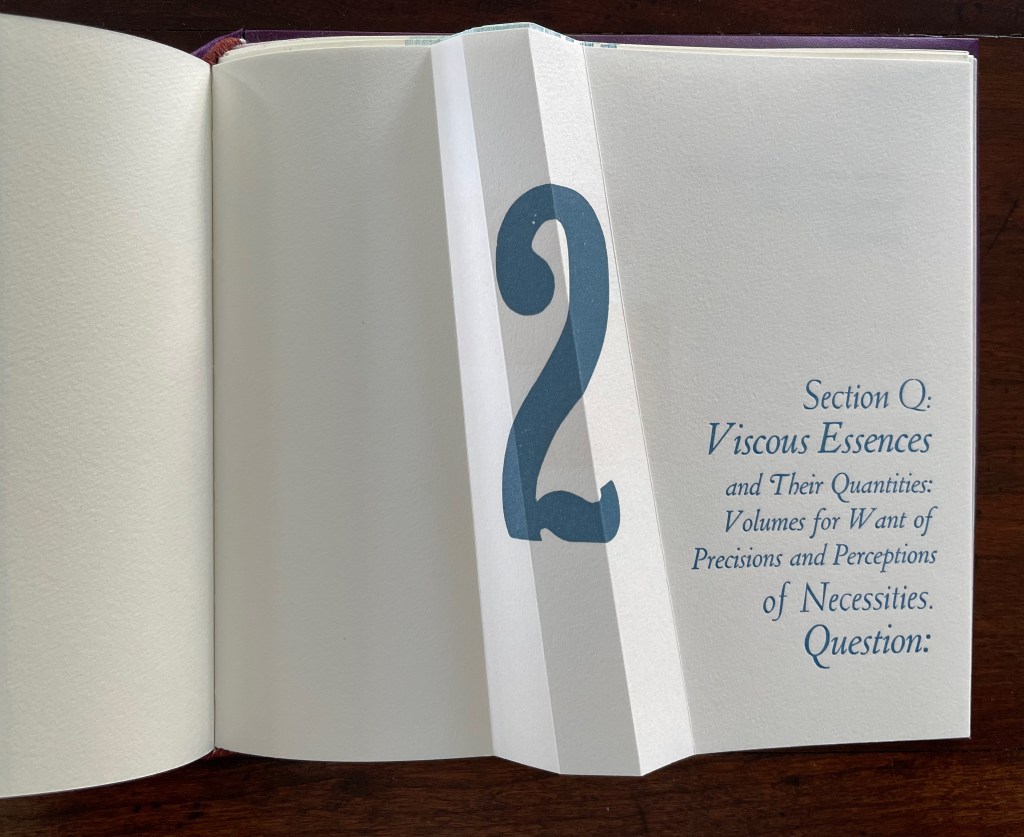
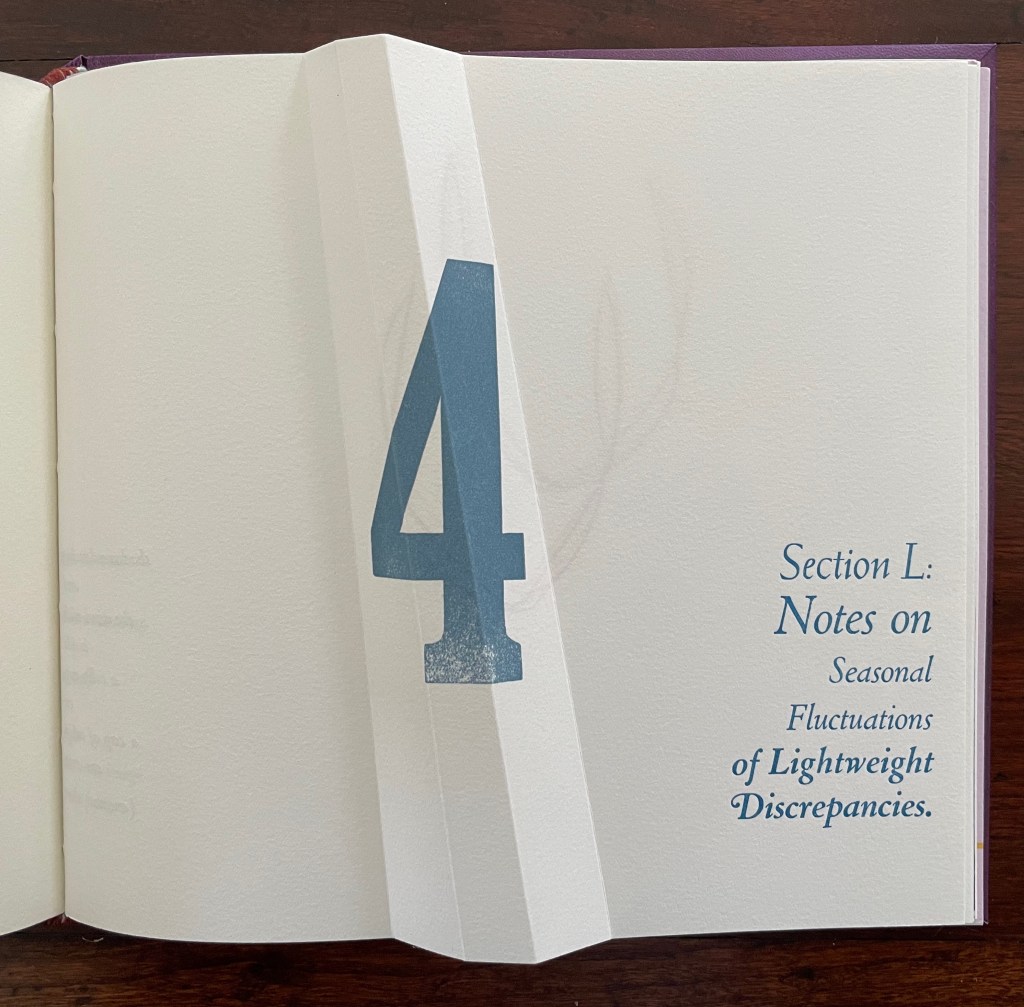
Ana Paula Cordeiro’s Lightweight is an artist’s book that pays elaborate homage to this distinctive form of binding. It weaves together metaphor, structure, material, and content in extraordinary ways.

Begin with the container, which offers a multitude of metaphors. On top of the cloth-covered box, a rectangular window has been cut. To look down through this window is to begin peering into the past. Beneath the translucent sheet bearing the title, a print motif appears whose mingling layers suggest the water, paper, ink, and silt that had to be sifted to save a Renaissance legacy of manuscripts, incunabula, and books from the Florence flood of 1966.

Left: passe-partout (window) on box top. Right: recurrent print motif appearing later in the book.

That strata of links running from blue to rust to gold becomes a recurrent print motif in the book, suggesting abstractly another metaphor: that of a continuum with endpoints playing off one another. As soon as you pick up the Canapetta cloth-covered box, the title itself — Lightweight — sets in motion a fresh instance of this continuum metaphor. Floating above the recurrent print motif, the title contrasts with the weight in your hands. As if to underscore this diametric contrast, the corners of the top and bottom of the box sit flush at the ends of one diagonal but gap at the other, easing the lifting of the weighted top from the box.

Inside, other decorative features offer further dual functionality. The sculptural element that provides the top’s weight also serves as a protective mould inside for the book and mirrors its dominant and recurrent physical feature: the creased shape slanting in parallel to the title slip tacked to the cover. Cordeiro refers to the creased shape as an “angled beam”.

For her, the angled beam distills the essence of the limp vellum structure and “supports” the variety of contemplation she pours into it. The angled beam puts forward the limp vellum structure as a historical link from binding’s past to its present. It stands for the binding structure’s durability, again linking past to present. Its linearity stands in for that continuum. It prompts thoughts of other continua along which one thing becomes another such as the line between night and day (twilight), between light and shadow, between one season and another. It evokes the continua between extremities, between the ordinary and the extraordinary, between mental acuity and dementia, and between life and death.

Following Emily Dickinson’s injunction — “Tell all the truth but tell it slant” — Cordeiro plants other angles in Lightweight. The ribbon tape that lies under the book is stiff, not soft and flexible, and it twists once and folds twice into an angular tool for lifting up the book. The trim of the book’s top and bottom edges slants. Creased into the covers, end sheets, and text block of this limp form, the angled beam is a physical constant echoing the metaphor of a continuum whose endpoints contrast and balance with one another.

Altogether there are seven gatherings in Lightweight. The “prelims” gathering provides the historical context underlying Cordeiro’s homage. Note the artist’s wish expressed in the envoi to this artist’s book in our hands: “May its message be its medium, may its artistry embrace eternity”. Here, Cordeiro introduces that self-reflexivity we expect in the best of artists’ books.

After the prelims gathering, the other six gatherings are labeled. In addition to bearing the creased angled beam, all six carry an “on-end outline” of it (see below). The five that are numbered, lettered, and labeled introduce themes reflecting different responses that relate to the continuum motif.

The Part 1, Section R gathering has announced cryptically that color will merge with form. How will this happen? As you turn the page, the opening text suggests how — along a continuum: “Continuum (measurement), anything that goes through a gradual transition from one condition, to a different condition, without any abrupt changes”.

The spread lays out this definition in a peculiar manner that seems to contradict the definition. On the verso page, the definition seems to run abruptly up against the seam, which bumps the words “abrupt changes” to the next line, while the recto page presents a truncation of those words: “rupt changes”. Hold that puzzle for a moment. So how can color and form be on a continuum? And will they merge gradually or abruptly? On the next spread, Cordeiro answers with the Sanskrit word rupa, which represents “color” and “form” and from which the section draws its label “R”.

un extremo se conoce bien por otro [one extreme knows well its other]

So, the merger is etymological. But at the same time, another spectrum comes into play: the color spectrum and the blue and red at its opposite ends. On the spectrum, of course, one gradually becomes the other, enacting the expression “un extremo se conoce bien por otro” [one extreme knows well its other]. If this seems a stretch, the next double-page spread reassures us that “continuum” has additional linguistic as well as mathematical roots.

Before the reassurance, however, we come back to the puzzle of “rupt changes”. Again, on the verso page above, the definition of “continuum” runs pell mell into the crease. To solve the puzzle, we have to look more closely at the structure of the Section R gathering. It consists of three oblong folios folded in half. On the reverse side of the center folio (what would be pages 5 and 8 of this gathering if the pages were numbered), the definition of “continuum” has been printed so that the fold splits the word “abrupt” between its syllables: “Continuum (measurement), anything that goes through a gradual transition from one condition, to a different condition, without any a | brupt changes.” In effect, the layout draws attention to our perception of breaks in continua.

View of “pages 5 and 8” separated by a detailed view of the break in the word “abrupt”.

If Section R has not prompted the reader to propose questions about the structure of the book or this book in particular, the Part 2, Section Q gathering provides a series of oblique questions very much focused on that but also on metaphorical matters. Again, what happens structurally in the gathering and on the surface of its pages presents puzzles and hints at solutions.

The geometrical images associated with the first question (“Do they hold surface tension like a soap bubble?”) seem to float or progress across the double-page spread, breaking up to punctuate the question. Reminding us of opposites and abrupt changes, the angular yellow overlapping squares and triangles puncture the text’s round verbal soap bubble. Before we can ask to what or whom does “they” refer, we are prompted by “Question:” to turn the page.

The next question (“Do they prowl like felines?”) prods at the unasked question: what or who are “they”? How is it that “they” are like prowling felines? Again, the images seem to progress across the spread, with the first image’s central diamond shape disappearing to leave the curvilinear second shape leaning over the printed question. Might these be diagrams of the limp vellum structure’s sewing holes and lacing? If so, has Cordeiro found another metaphor for limp vellum structures in the supple and sinuous strength of prowling felines? Do “they” refer to limp vellum structures?

The next question turns directly to a functional attribute of the book structure: turning pages. The yellow print gives an ambiguous view. The two-dimensional representation of the angled beam fluctuates between a mountain view and a valley view. Are we looking down on the splayed spine of a book or its gutter with pages splayed open? Either way, the print angles away from the physical angled beam, which sets up a metronomic pattern in the spread — the beam leaning to the right, then to the left, and again to the right — or a page turned to the right, then to the left, and back again to the right — or mountain fold, then valley fold, then mountain, then valley (the gutter), then mountain, then valley, then mountain until we come to the ambiguous two-dimensional print. Again, this is a continuum, and “they” seems to refer to limp vellum structures.

The next question enacts itself. To read the mirror-written script, we have to turn the page and look through its surface to the right-reading words: “Do they depend upon the turning of”. The question completes itself in a curious (again) metronomic motion. The syntax draws our eyes to “PAGES” on the right, while the oversized punctuation mark syntactically draws our eyes back to the left. The play between the reversed writing on a recto page, the right-reading script on the verso, the display type on the next recto, and oversized question mark on the adjacent verso provide self-reflexively an affirmative answer: Yes, limp vellum structures depend on the turning of pages.

Part 3 introduces rather more esoteric continua with which Cordeiro seeks to connect the genius of the limp vellum structure. The Section letters M, M and G are her reminders-to-self that this section excerpts passages from William James’ The Varieties of Religious Experience (1902): one on medical materialism (p.14) and another on genius (p.18).

Cordeiro brackets the excerpts with maze-like images constructed of mirrored forms across four different colors. So we have the continua of mind to matter and of genius to madness embedded in a continuum of color and form (color and form merging).

Note the 18o° turn of the beige image in the upper left to be mirrored by the magenta image in the lower right.

Part 4, labeled “Section L: Notes on Seasonal Fluctuations of Lightweight Discrepancies”, is the densest of the gatherings. Drawings, verse typeset in English and scribed in Portuguese, typographic arrangements, trimmed and segmented photographs, and linocut prints of a stone wall all find their way into Part 4.

Note how the colors of the tulip shapes echo the colors of the maze in Part 3.

The “Epilogue” tells us, “The handwritten text in Portuguese is a word play with the alliteration afforded by that language between the verb to see and the season summer, and translates roughly as: ‘summer shall see gone that which / by going is now new being. / seeing such an hour at birth is to / be seen alive.” Another continuum.

“a shadow aside / a step askew / escape afloat in shape of arrows”. The segmented photos of an Upper West Side building’s fire escape articulate with the angled beam shape to echo the text.

The text before the concluding “end-on” image in this gathering introduces another continuum: “(Life begins at the end of your comfort zone.)”

Part 5, Section Z is the wrap-up, conflating the end of the alphabet with the end of the day (twilight), but of course, twilight is also a point on the continuum of day into night.

Lusco-fusco = twilight.

At this point, the reader might register that a continuum whose extremities hang in the balance against one another and yet are still connected is also a description of metaphor itself. Two disparate terms are brought together to make a figure of speech. Cordeiro brings two disparate objects together — a softcover codex and the shape of an angled beam, a hard form of structural support — to shape her artist’s book. She materializes that metaphor, then uses it as a platform for textual, graphical, material, and structural metaphors that celebrate the limp vellum structure. It is a striking accomplishment that challenges readers to think with their hands as well as their minds.

Further Reading

Carol Barton“. 10 August 2024. Books On Books Collection.

Ana Paula Cordeiro“. 12 July 2021. Bookmarking Book Art.

Joyce Cutler-Shaw“. 5 September 2019. Books On Books Collection.

First Seven Books of the Paper Biennial”. 10 October 2019. Books On Books Collection.

Nicholas Rougeux“. 19 November 2022. Bookmarking Book Art.

Rutherford Witthus“. 29 October 2021. Books On Books Collection.

Clarkson, Christopher. 1975. “Limp Vellum Binding and Its Potential as a Conservation Type Structure for the Rebinding of Early Printed Books: A Break with 19th and 20th Century Rebinding Attitudes and Practices.” In Preprints of the ICOM Committee for Conservation 4th Triennial Meeting: Venice 13-16 October 1975: 75/15/3/1-15. [Reprinted 1982, Red Gull Press]. Cited by Cordeiro.

Drucker, Johanna. 2004. The Century of Artists’ Books [Second edition] ed. New York City: Granary Books. For investigation “of the book as a form through examination of its material, thematic, and formal properties “, see p. 93.

Giuffrida, Barbara. 1974-75, 1976. “Limp and Semi-limp Vellum Bindings.” Designer Bookbinders Review. 4,5, and 8. Cited by Cordeiro.

Hebert, Henry. 18 December 2011. “Limp Paper and Vellum“. Work of the Hand. Accessed 23 October 2025.

Magee, Cathie (compiler). 23 February 2024. “BPG Parchment Bookbinding“. AIC (American Institute for Conservation) Wiki. Accessed 22 October 2025. Citing Clarkson and Giuffrida.

Pickwoad, Nicholas. 2019. “Italian Laced-Case Paper Bindings“. Journal of Paper Conservation. 20 (1–4): 122–51.

Rice, Doug. 2008 Limp Vellum: An Exhibition. Accessed 23 October 2025.

Books On Books Collection – Moritz Küng (ed.)

Blank. Raw. Illegible… Artists’ Books as Statements, 1960-2022 (2023)

Blank. Raw. Illegible… Artists’ Books as Statements, 1960-2022 (2023)
Leopold-Hoesch-Museum and Moritz Küng (ed.)
Softcover with flaps, reversed “Fälzel” stitch bound. H280 x W200 mm. 272 pages. Edition of 1100. Acquired from Walther & Franz Verlag, 10 May 2023.
Photos: Books On Books Collection.

Published on the occasion of the exhibition by the same name at the Leopold-Hoesch-Museum in Düren, Germany, this tome is far more than an exhibition catalogue. With its thematic structure being a form of commentary on and insight into 259 individual works of 200 book artists, Blank. Raw. Illegible becomes one of the more important reference works on book art to have appeared in the last five years. And this is despite its singular focus on artists’ books blank (most of them), inacessible, or illegible.

The opening spreads for its fifteen thematic sections are shown below.

“wit weiss” takes its title from the third of six blank-page works by herman de vries. In addition to cataloging the other five, the section presents sixteen other variations on the theme, including Christiaan Wikkerink’s Conceptual Art for Dummies (1968, 1977, 2010).

“papierselbstdarstellung” presents us with thirty-three works of “paper self-portrait”. Blank or not, paper takes the conceptual and physical center stage in this section. It’s a pleasure to see the two rare works from the 1970s by J.H. Kocman introducing this group that includes another of herman de vries’ works, one of Bernard Villers’ Mallarméan pieces, some of the output of the prolific polymath Julien Nédélec, a unique piece from Paul Heimbach, Richard Long’s dipped River Avon Book, and more paper-allusive papierselbstdarstellungen.

“Book Articulations” takes its title from the work by Jeffrey Lew, which “articulates” the codex through various poses and color filters, but the fourteen other works included explore other forms of “articulation”. The Oxford English Dictionary gives nineteen definitions. Some of those are obsolete, but we can give Küng the benefit of the doubt that this section’s fifteen works exemplify the ones still active.

“Empty Days” takes its title from the last work in the section, a volume offered as an annual planner whose pages are blank, its months distinguished by different makes of paper, and its bookmarker printed on both sides with reminders of the names of the days and months. Leading with Bruce Harris’ gag book The Nothing Book, the section follows applications of the blank joke to newspapers, notebooks, exercise books, chronicles, and advice books.

The blank books of “life and work” demonstrate subtleties ranging from Paul Heimbach’s careful inclusion of 273 clear sheets to allude to the 273 seconds of John Cage’s 4’33” (1972) to Arnaud Desjardin’s Why I am no longer an artist.

Some of the blank works in “Hidden Meaning” play the joke of being the answer to the title, such as Reasons to Vote for Republicans (2017), a plagiaristic response to Michaels Knowles’ Reasons to Vote for Democrats (2017), published one month before. Other require the reader to uncover the hidden meaning (as in Christian Boltanski’s 2002 Scratch, which reveals images of atrocities when the surfaces of its silvered pages are scratched off) or to hide meaning (as in Russell Weeke’s 2016 blank postcard Hidden Meaning, which has only those words printed in the block where the stamp goes.

The thirty-one works in this section remind us that for book artists, black and white are also colors on the palette and tools in the book artist’s conceptual tool box. “Various colors in black and white” comes from the title of Pierre Bismuth’s 2005 book with onestar press. Onestar boasts that its artists’ books are “strictly unedited by the publisher”, but there is a cost-control constraint: no color inside the books. So Bismuth demanded a different color for each letter of his name and reproduced 139 monochromatic Pantone colors in black and white, representing a variety of hues in shades of gray.

raum means “space, room” in German and is the title of Heinz Gappmayr’s physically and metaphysically blank book. In this section, the other eight blank books take on a more sculptural aspect than others in the exhibition. There’s the massive Your House (2006) by Olafur Eliasson and the slim A Cloud (2007) by Katsumi Komagata, both examples of die cut leaves.

Ximena Pérez Grobet’s Around the Corner (2020) is an extraodinary example of flip-book and fore-edge printing combined. This spread represents the 312 pages of full-page samples of all 259 works in the exhibition.

Redaction, excision, erasure , and substitution are the only four “point blank” methods of making empty words in this section. The rest “verb” the word “empty” and go with pages emptied of words to meet the curator’s criterion for inclusion in “Empty Words”. Two exceptions: Roberto Equisoain’s gradual removal of word spaces and merging of the remaining letters into one in La lectura rápida … (2014) and Jürg Lehni and Alex Rich’s hole-punching of letters in their book naturally entitled Empty Words (2011).

“Anatomy of a Book”, whose title comes from the 2010 unique work by Fiona Banner (aka The Vanity Press), reminds us of how book artists can create works of art by focusing attention on individual parts of the book or simply naming its parts as George Brecht did with This is the Cover of the Book (1972).

The word hermetic means “sealed”. So naturally, “Textos Herméticos” presents ten examples of artists’ books that physically cannot be opened.

Elizabeth Tonnard’s entry The Invisible Book (2012) entitles this section of thirteen works. It was advertised on the artist’s website in an edition of 100, unnumbered and unsigned at the price of €0.00. After Joachim Schmid scarfed up all 100, Tonnard issued a second edition with a limit of one “copy” per customer. It, too, is now “out of print”. The catalogue’s full-page illustration for it is naturally blank, as is that for Enric Farrés Duran’s Para aprender a encontrar, primero hay que saber esconder (which was offered in a physical store for €20, resulting in only a receipt with the artist’s email address so that the buyer could arrange a face-to-face meeting to have the book explained verbally). Likewise Paul Elliman’s Ariel (the aptly named invisible and non-material typeface used, according to the inventor’s correspondence with Küng, to record extinct human and animal languages as well as sounds obsolete machines) is represented by a blank page.

The three invisible books “displayed”! Photo: Courtesy of Moritz Küng, photo by Peter Hinschläger.

There are seven works in this section “Fahrenheit 451”, although one of Dora Garcia’s is not numbered. None of them are blank, raw, or completely illegible. Nevertheless, their appropriateness for the exhibition is particularly underlined by the blackened pages of #241, which can be read if burned (see below).

“Utopia in Utopia” pays homage to Thomas More’s satire Utopia (1516) with sixteen works of varying illegibility, several engendered with invented fonts arising from More’s invention of an alphabet for the Utopians. No blank pages, unless you count Irma Blank’s entry (but we’ve had that pun in an earlier section).

The last section “Sounds of Silence” has only the one entry, and it is a vinyl LP album, not a book. To add to that quibble, there’s oddly no recording of John Cage’s 4″33″ among the tracks of this platter. But as the final entry in the exhibition, it extends the enterprise beyond blankness, rawness, and illegibility to inaudibility!

200 artists, 259 works.

Like Megan Liberty’s exhibition in the same year, Craft & Conceptual Art : Reshaping the Legacy of Artists’ Books, it also demonstrates that the factions of the dematerialized and conceptual works, the democratic multiples, the limited editions and the unique finely or rawly crafted works were not so walled off from one another as implied in polemics, manifestos and critical essays so concerned with defining the “artist’s book”, the existence or placement of its apostrophe and securing its role in the larger history of art. With its captions, numerous full-page images, and curation by Moritz Küng, Blank. Raw. Illegible. joins the list of significant exhibitions documenting the evolving history of the artist’s book that David Senior identified in his contribution to Liberty’s catalogue:

Others that could be added include

and Guy Schraenen’s boxed set of 25 catalogues of exhibitions organized by him and representing the archive donated to Neues Museum Weserburg in Bremen, Germany.

Above all, Blank. Raw. Illegible. … Artists’ Books as Statements (2023) demonstrates that the book constitutes a medium for, and genre of, Art. No library or collection that aims to represent book art or Art should be without it.

Further Reading

Bury, Stephen. 2015. Artists’ Books : The Book as a Work of Art 1963-2000. London: Bernard Quaritch Ltd.

Desjardins, Arnaud. 2013. The Book on Books on Artists’ Books. 2nd exp. ed. London: The Everyday Press.

Drucker, Johanna. 2007. The Century of Artists’ Books. New York City: Granary Books.

Hampton, Michael. 2015. Unshelfmarked : Reconceiving the Artists’ Book. Devon: Uniformbooks.

Jury, David, and Peter Rutledge Koch. 2008. Book Art Object. Berkeley, California: Codex Foundation.

Jury, David, and Peter Rutledge Koch. 2013. Book Art Object 2 : Second Catalogue of the Codex Foundation Biennial International Book Exhibition and Symposium, Berkeley, 2011. Berkeley, CA, Stanford: Codex Foundation ; Stanford University Libraries.

Klima, Stefan. 1998. Artists Books : A Critical Survey of the Literature. New York: Granary Books.

Liberty, Megan N., ed. 2023. Craft & Conceptual Art : Reshaping the Legacy of Artists’ Books. First edition. New York: Center for Book Arts.

Lyons, Joan, ed. 1985. Artists’ Books : A Critical Anthology and Sourcebook. Rochester, New York: Visual Studies Workshop Press.

Moeglin-Delcroix, Anne. 2012. Esthétique Du Livre d’Artiste, 1960-1980 Une Introduction À L’art Contemporain. Nouvelle édition revue et augmentée. [S.l.], [Paris]: Le Mot et le reste ; Bibliothèque nationale de France.

Moeglin-Delcroix, Anne. 2004. Guardare, Raccontare, Pensare, Conservare : Quattro Percorsi Del Libro d’Artista Dagli Anni ’60 Ad Oggi. [Mantova]: Casa del Mantegna : Corraini.

Roth, Andrew, Philip Aarons, and Claire Lehmann (eds.). 2017. Artists Who Make Books. London: Phaidon.

Salamony, Sandra, and Peter & Donna Thomas (Firm). 2012. 1000 Artists’ Books : Exploring the Book as Art. Beverly, MA: Quarry Books.

Schraenen, Guy, and Neues Museum Weserburg Bremen. 2011. Ein Museum in Einem Museum = A Museum within a Museum. Bremen: Neues Museum Weserburg Bremen.

Books On Books Collection – iOiO Studio

Pliplop (2020)

Pliplop (2020)
iOiO Studio
Trifold cover, side-by-side leoporellos. H120 x W105 (closed), W895 mm (open). 16 half-panels, 1 full center panel. Acquired from StudioiOiO, 6 November 2025.
Photos: Books On Books Collection.d from StudioiOiO, 6 November 2025. Photos: Books On Books Collection.

Based in Montélimar, France, and Seoul, South Korea, iOiO Studio produced this ingenious micro-edition leporello that invites its audience to behold and play. The folds and registration of images allow the viewer to find and create new shapes and color combinations. Its shapes and colors might remind viewers of Heinz Edelmann’s art for The Yellow Submarine. In its appeal to the child in the adult, it will remind book art enthusiasts of the works of Katsumi Komagata, Warja Lavater, Bruno Munari, and Peter and Donna Thomas. In its sophistication, it might remind them of the contributions to LL’Éditions leporello series. Many other connections can be found in Stephen Perkins site Accordion Publications, where Pliplop first came to my attention.

Two works that explore the curious but natural connection between children’s books and artists’ books are Johanna Drucker’s contribution to The Routledge Companion to Picturebooks and Sandra Beckett’s Crossover Picturebooks.

Further Reading

Katsumi Komagata (I)“. 22 March 2020. Books On Books Collection.

Warja Lavater“. 23 December 2022. Books On Books Collection.

LL’Éditions“. 7 November 2025. Books On Books Collection.

Bruno Munari“. 19 August 2021. Books On Books Collection.

Beckett, Sandra L. 2012. Crossover Picturebooks : A Genre for All Ages. London: Routledge.

Drucker, Johanna. 2017. “Artists’ Books and Picture Books: Generative Dialogues” in The Routledge Companion to Picturebooks, edited by Bettina Kümmerling-Meibauer, Taylor & Francis Group..

Perkins, Stephen. Accordion Publications. Accessed 24 November 2025.

Thomas, Peter and Donna. 1 June 2021. “The History of the Accordion Book: Part I“. College Book Art Association. Accessed 24 November 2025.

Thomas, Peter and Donna. 15 June 2021. “The History of the Accordion Book: Part II“. College Book Art Association. Accessed 24 November 2025.

Books On Books Collection – Ruth E. Edwards

Wisdom of the Ancestors (1999)

Wisdom of the Ancestors (1999)
Ruth E. Edwards
Cloth bag with painted stone amulet, hand-woven African mudcloth from Mali, containing metal ball bead chain through single-hole punched in cards, with gold talisman hanging. Bag: H145 x W135 mm. Cards: H130 x W76 mm. 30 cards. Eclectic Art and Collections 23 October 2025.
Photos: Books On Books Collection.

It appears the African ancestors had some inkling of and ancient words for the USA of 2016 and 2024.

Other expressions remind how best to learn. Others put growing anxieties about information overload in the shade of the ocean-wide context of knowledge.

The earth-tone cards “bound” with a metal ball bead chain and mudcloth bag imbue the thirty wise sayings with a further sense of the “make do” of craft and art, which carries its own wisdom

Further Reading

Tia Blassingame“. 17 August 2020. Books On Books Collection.

Sarah Matthews“. Books On Books Collection.

Arial Robinson“. 15 May 2023. Books On Books Collection.

Clarissa Sligh“. 2 September 2020. Books On Books Collection.

Center for Books Arts. 2024. “Ruth Edwina Edwards“. Accessed 17 November 2025.

Edwards, Ruth E. 1998. Book.Bronx, New York: Ruth E. Edwards.

Edwards, Ruth E. 1998. Read. Bronx, New York: Ruth E. Edwards.

Edwards, Ruth E. 2008. TITS : The Indignities Thrust upon Sisters. Bronx, New York: Ruthology.

Edwards, Ruth E. 2004. The First One Who …! : An Exhibit of Artists’ Books Paying Tribute to Individuals of African Ancestry Who Did It First! New York: Center for the Book Arts.

Edwards, Ruth E., and Tom Feelings. [2000?] With Care. Bronx, New York: Ruthology.

Litts, Doug. 14 September 2014. “A Visit from Co-op City and an Artists’ Book for the Collection“. Smithsonian Libraries and Archive.

Bookmarking Book Art – “Bookmorphs from Greece and the UK” at The Hellenic Centre

Bookmorph n. (bōk+μoρφ): a portmanteau word referring to casebound books which have been modified; an emergent branch of sculpture in which textual content is often downgraded; treatments include chewing, cutting, drilling, entombing, pulping, ripping, shooting (with a firearm), siliconising, etc; any codex fundamentally altered or warped by an artist; a site of entropic processes designed to return pages to cellulose fibre, and/or the creation of a fungal landscape; a bibliographic montrosity. Michael Hampton, arts writer, May 2025

The curators’ choice of title and epigram for this exhibition is somewhat daring. Although they have included plenty of bibliographical montrosities that fit Hampton’s definition, there are plenty of bibliographical beauties, too — even among the “monstrosities”. A strong attraction of this exhibition is that it presents so many recent works from Greek book artists. Even more attractive is its hands-on display of most of the works.

Anneta Spanoudaki’s Natura Morta (2025) is a striking case in point:

Natura Morta (2025) Anneta Spanoudaki
Paper cut on different types of paper and photography. 480 × 220 mm. Photos: Books On Books.

Another case in point is Dimitris Skourogiannis’ 100% An Artist’s Bible (2025). To be turned, its large “leaves” require metal rings on the fore-edge.

100% An Artist’s Bible (2025) Dimitris Skourogiannis
Japanese paper, cardboard, wood, fragments of porcelain objects, print, metal rings, acrylic pains, fabris, tulle, and metallic threads. 500 x 350 x 140 mm.
Photos: Books On Books.

Thick leaves seemed to be the order of the day. On heavy black card, Thodoros Brouskomatis’ 10 Artificial Prayers (2025) presents surreal collages challenging the theme of “Madonna and Child” and couplets from Pier Paolo Pasolini’s “supplica a mia madre”.

10 Artificial Prayers (2025) Thodoros Brouskomatis
Printed digital artworks on photographic paper, cardboard, and leather. 300 x 250 mm.
Photos: Books On Books.

On slightly thinner card, Aris Stoidis’ To the other side and back (2025) carries a sculptural image on every page. The work straddles the borders of sculpture, photobook, and artist’s book. Stoidis writes, “Ever since my first pieces, I have been “receiving” images that I’ve materialized without really comprehending them myself. They simply exerted an inexplicable power on me.” The book comes in a plexiglas box with a papercut sculpture (not pictured here).

To the other side and back (2025) Aris Stoidis
Photographic prints on card. 270 x 270 x 20 mm.
Photos: Books On Books.

On still thinner leaves, Ismini Bonatsou’s Little Red Riding Hood (2025) nevertheless projects striking depth with its montage of papercut pages, acrylics, and pencil. Just as striking is the contemporary reversioning of the fairy tale.

Little Red Riding Hood (2025) Ismini Bonatsou
Acrylics, pencil, and papercuts. 450 x 300 mm.
Photos: Books On Books.

Given that the portmanteau term “bookmorph” comes from Michael Hampton, it seems appropriate that he has two works on display. Although one of them is under glass, 12 Chairs (bookmorph) (2012), the other is not. RAGE PEN by Hampton and David Blackmore is the UK contingent’s only work produced in 2025. Others from the UK contingent include Sarah Bodman, BOOKEND, Jonathan Callan, Joe Devlin, Stephen Emmerson, SJ Fowler, Rowena Hughes, and the Inscription Journal editors (Gill Partington, Simon Morris, Adam Smyth). RAGE PEN is also particularly appropriate because it requires a ruler to separate its perforated fore-edges. The exhibition provides one along with multiple pairs of white gloves. Really hands-on.

The participating Greek artists also include Eleni Angelou, Nikos Arvanitis, Rania Bellou, Maria Bourbou, Natassa Chelioti-Naga, Ioanna Delfino, Anna Dimitriou, Antonia Iroidou, Eleni Kastrinogianni, Peggy Kliafa, Alexia Kokkinou, Georgia Kotretsos, Nikos Kryonidis, Vasiliki Lefkaditi, Eleni Maragaki, Kyriaki Mavrogeorgi, Despina Meimaroglou, Christina Mitrentse, Fiona Mouzakitis, Kiki Perivolari, Stamatis Schizakis, Ifigeneia Sdoukou, Christina Sgouromiti, Danai Simou, Nectarios Stamatopoulos, Despina Stavrou, Evangelos Tasios, Yannis Tzortzis, and Leonie Yagdjoglou.  

Congratulations and thanks to the curators — Christina Mitrentse, Fiona Mouzakitis, and Despina Stavrou — for bringing together this selection of outstanding works.

The Hellenic Centre opens at 11:00 and closes at 17:00, Tueday through Friday, so the chances to visit by the 28th of November are limited. The brief catalogue that documents the exhibition and these few photos cannot substitute for tactile engagement with the works on display. An hour and a half passed in a flicker.

Books On Books Collection – The Horn-book

This is a “back-dated update” of sorts to Alphabets Alive!, Ashley Rose Thayer, and Andrew White Tuer.

First, the back-dating. This comes from the delightfully annoying or annoyingly delightful belated discovery of Erik Kwakkel’s 2015 entry on the history of the horn-book “Book on a Stick” in Medievalbooks. Delightful and annoying to find the truly earliest appearance of a horn-book right under my nose in the Bodleian Libraries but too late to include it in the Alphabets Alive! exhibition at the Bodleian in 2023.

Oxford, Bodleian Library, Canon. Misc. 476 (14th century).

Vita gloriossime virginis Mariae atque venerabilis matris filii dei vivi veri et unici (unidentified work).Italian manuscript, Venice.
Oxford, Bodleian Library, Canon. Misc. 476 (14th century). Folio 047v.

Detail of Fig. 0.

Detail

Andrew White Tuer’s History of the Horn-Book (1897) came close with its dating of the horn-book’s first appearance as 1450, but as Kwakkel writes:

The image shows Christ being brought to school by his mother. He is bringing his “textbook” to class: a hornbook, which dangles from his wrist by a string, just like many of the later specimens did … Quite intriguingly, we are shown a real medieval snapshot of how children carried their hornbook to and at school. More importantly, it shows that the hornbook was indeed a medieval invention….While no actual hornbooks appear to survive from the medieval period, these visual representations show that educating young children was also the driving force behind the production of hornbooks in the age before print.

And for the updating, here is Ashley Thayer’s Mechanical Horn-book (2025) just arrived in the Books On Books Collection.

Mechanical Horn-book (2025)
Ashley Rose Thayer
Horn-book. On stand: H192 x W160 mm. Off stand: H192 x W115 mm. Unique. Acquired from the artist, 17 October 2025.
Photos: Courtesy of the artist. Books On Books Collection.

The paddle is made of pine wood, the gears of vellum-covered bookboard, the spinning “arm” of authentic cow horn, and the wrist loop of embroidery thread by a medieval finger loop braiding technique. On dark grey-blue Khadi paper, Thayer has painted a border of the moon, a berried floral garland, and a wyvern, the heraldic emblem associated with Wessex, the Anglo-Saxon kingdom from which Alfred the Great emerged in the 9th century. On the reverse, a cross of cut red leather with five inserts of calligraphed vellum alluding to Christ’s five wounds reflects the horn-book tradition of combining religion with learning the alphabet. It also makes this horn-book reflective of Alfred’s Anglo-Saxon and Christian background.

The pointer, called an aestel in Old English, is made from poplar wood, an antique button, and antique bone. Its inclusion isn’t simply functional. Appearing alongside the Wessex wyvern, it points to that famous aestel on display at the Ashmolean in Oxford: the Alfred Jewel.

The Alfred Jewel, Ashmolean Museum, Oxford.
Photo taken from the front by Geni CC BY-SA 4.0. Photo taken from the side by Richard M Buck CC BY SA 3.0.

If there’s ever an Alphabets Alive! redivivus, Erik Kwakkel and Ashley Thayer have provided the pointers to the other treasures in Oxford that should be included.

Further Reading

Alphabets Alive! – Criss-cross Row (Horn-books)“. 19 July 2023. Books On Books Collection.

Ashley Rose Thayer “. 9 July 2023. Books On Books Collection.

Movables Now and Then“. 31 August 2024. Bookmarking Book Art.

Kevin M. Steele“. 18 July 2023. Books On Books Collection.

Andrew White Tuer“. 26 December 2022. Books On Books Collection.

Kwakkel, Erik. 10 April 2015. “Book on a Stick“. Medievalbooks. Leiden. Accessed 10 November 2025.

Books On Books Collection – LL’Editions

Enthusiasts and collectors of artists’ books should congratulate LL’Editions (Göteborg, Sweden) on its leporello series not only for the artists enlisted so far but for the constraint to inspire them. Critics of book art have opined that book artists turned to the accordion structure in the 20th century for more freedom with visual images and another tool with which to question the notion of the book as book. LL’Editions has challenged its invited artists with a constraint: a fixed-format leporello of ten panels, nine folds and always H140 x W100 mm (closed). The works are printed on Mohawk Superfine Eggshell paper. Housed in a custom box with the title hot foiled both on its front and spine, each volume in the series is limited to 250 numbered copies.

The real pleasure in each work and across the series is how each artist handles the shape to make it dance to a personal style or stamp. With each new addition — brick by brick — LL’Editions is building a monument to book art’s most common structure.

Leporello #12 (2025)

Leporello #12 (2025)
Endre Tót
Box: 148×191×23 mm. Leporello: H142 x W99 mm (closed); W990 mm (open). 10 panels. Edition of 250, of which this #70. Acquired from LL’Editions, 28 August 2025.
Photos: Books On Books Collection. Displayed with permission of LL’Editions.

Bespoke Eska Board 1260 G/M2, Insert: F-Flute Black 500 G/M2, Hot-foiled title on front and spine. Mohawk Superfine Eggshell Ultrawhite 175 gsm.

Endre Tót has worked with a wide range of media: telegrams, postcards, posters, actions, and artist’s books. This one self-reflexively celebrates his signature gladness statements “We are glad if we are happy”, “I am glad that I have stood here”, “I’m glad that I can write one sentence after another”, “We are glad if we can demonstrate” and so on.

I am glad to have Endre Tót’s work in the Books On Books Collection.

Leporello #11 (2024)

Leporello #11 (2024)
Alejandro Cesarco
Box: H191 x W148 x D 23 mm. Leporello: H142 x W99 mm (closed). W990 mm (open). 10 panels. Edition of 250, of which this #229. Acquired from LL’Editions, 14 November 2024.
Photos: Books On Books Collection. Displayed with permission of LL’Editions.

These are the titles and durations of the songs making up The Cure’s 1989 album. With each song on its own panel, Cesarco (b. 1975) seems to have created a photo album to remind himself of his youth. Given his artworks referencing/co-opting/implicating/appropriating John Baldessari, Marcel Broodthaers, Félix Gonzáles-Torres, Allen Ruppersberg, Ed Ruscha, and other book artists, the less-than-fans of The Cure may wonder if Cesarco is deliberately wrong-footing their expectations for his tackling the book artist’s platform. If you are one of them, consider that your horizons have been widened and that The Ramones (An Autobiography) (2008) — his list in chronological order of every Ramones song that begins with the pronoun “I” — does not neatly divide by 10.

Leporello #10 (2024)

Leporello #10 (2024)
Kay Rosen
Box: H191 x W148 x D 23 mm. Leporello: H142 x W99 mm (closed). W990 mm (open). 10 panels. Edition of 250, of which this #116. Acquired from LL’Editions, 14 November 2024.
Photos: Books On Books Collection. Displayed with permission of LL’Editions.

There’s a lengthy and excellent essay entitle “The Gravity of Language” about Rosen’s work in Osmos Magazine (Winter 2019) by Stephanie Cristello. In it, she writes:

You will notice, by now, that the works discussed here are united by their allusions to the motions of up and down. Does this seem arbitrary to you? Or strike you as the imposi­tion of a rule-based physics upon an artistic practice whose oeuvre certainly contains vari­ances, divergences, and oddities–cut out for the purpose of being explored through a par­ticular force? Perhaps. (Cristello, 2019)

Somehow this more recent artist’s book seems to confirm and repudiate the critic’s approach. As if to say, “Yes, I’m stuck in the muck despite my variances, divergences and oddities”, or “No, ducky, there’s no gravitas or gravity here”. Or perhaps it’s Rosen’s visual way of using permutations on language (starting with a common expression) to poke fun at LL’Editions’ constraint: “So you want to confine me like a duck in the muck? Well, quack, the joke’s on you”.

Leporello #9 (2024)

Leporello #9 (2024)
Pieter Laurens Mol
Box: H191 x W148 x D 23 mm. Leporello: H142 x W99 mm (closed). W990 mm (open). 10 panels. Edition of 250, of which this #111. Acquired from LL’Editions, 14 November 2024. Photos: Books On Books Collection. Displayed with permission of LL’Editions.

How many artists before and after Marcel Duchamp’s Prière de Toucher (1947) have played this joke in an artist’s book? Where Duchamp’s displayed work played against the usual museum injunction, Pol’s embraces and wrong-foots it with blind embossing.

Leporello #8 (2022)

Leporello #8 (2022)
Jonathan Monk
Box: H191 x W148 x D 23 mm. Leporello: H142 x W99 mm (closed). W990 mm (open). 10 panels. Edition of 250, of which this #175. Acquired from LL’Editions, 14 November 2024.
Photos: Books On Books Collection. Displayed with permission of LL’Editions.

It helps to know or remember that in 2002, Jonathan Monk published None of the buildings on Sunset Strip with Revolver. Here, he has used his iPhone in panoramic mode to appropriate again Ed Ruscha’s Every Building on the Sunset Strip (1966). But when Monk’s leporello is turned over, notice that this side of the Strip has been truncated. Monk’s thoughts on appropriation and self-reflexivity can also be enjoyed in the three-handed interview Books on Books (2011) with Jérôme Saint-Loubert Bié and Yann Sérandour.

Leporello #7 (2022)

Leporello #7 (2022)
Karl Holmqvist
Box: H191 x W148 x D 23 mm. Leporello: H142 x W99 mm (closed). W990 mm (open). 10 panels. Edition of 250, of which this #110. Acquired from Unoriginal Sins, 14 November 2024.
Photos: Books On Books Collection. Displayed with permission of LL’Editions.

Here’s one to add to Bruno Munari‘s collection of squares, circles, and triangles. While the yoga may also remind you of Ric Haynes‘s Aquatic Yoga with Dangerous Foods (1984), this leporello is a welcome opportunity to experience this Swedish artist’s ability to weld language and shapes together in perceptive and humorous (and sometimes acerbic) ways. Galerie Neu in Berlin has been astute enough to hold three solo exhibitions for Holmqvist since 2013; their display of his works here provides views of his several sculptures that chime with Leporello #7.

Leporello #6 (2022)


Leporello #6 (2022)
Maurizio Nannucci
Box: H185 x W148 x D 23 mm. Leporello: H143 x W90 mm (closed). W900 mm (open). 10 panels. Edition of 250, of which this #106. Acquired from Unoriginal Sins, 14 November 2024.
Photos: Books On Books Collection. Displayed with permission of LL’Editions.

It’s hard to believe that Leporello #6 may be one of only three accordion books produced by this prolific and inventive artist associated with Fluxus. The other two are Sessanta Verdi Naturali (Sixty Natural Greens) (1977) and Up Above the Wor(l)d/A Guide for Aliens (1981). In Leporello #6, he has made the accordion structure, panel layout, and language reinforce one another simultaneously to create an ouroboros artwork.

Leporello #5 (2022)

Leporello #5 (2022)
Shannon Ebner
Box: H185 x W148 x D 23 mm. Leporello: H143 x W90 mm (closed). W900 mm (open). 10 panels. Edition of 250, of which this #132. Acquired from Unoriginal Sins, 14 November 2024.
Photos: Books On Books Collection. Displayed with permission of LL’Editions.

Since her participation in MoMA’s Ecstatic Alphabets/Heaps of Language in 2012, Shannon Ebner has been a book artist to watch for bringing the alphabet and the artist’s book together.

Her Strike (2014) concretely rewarded the alert. The textures of melting ice in Leporello #05 and concrete blocks in Strike seem to leap off the letters and paper. From the LL’Editions’ description of Leporello #05:

Ebner has selected specific materials based on their self-reflexive relationship to the subject of the writing itself. Each photographic typeface is in essence a material response to the various cultural conditions and societal pressures at hand. For Ebner’s leporello, the meteorological term RIME ICE is its single subject, though the phenomenon itself falls into two categories, soft or hard rime. In either case it is rime ice that forms when liquid droplets comprised of supercooled water freeze onto surfaces. RIME ICE is an outtake from Ebner’s recent exhibition FRET SCAPES (2022). FRET is acronym for the Forecast Reference Evapotranspiration Report, a report that is generated by climate scientists to measure the rate at which water that falls to the ground will evaporate to the sky.

Leporello #04 (2021)

Leporello #04 (2021)
Ryan Gander
Box: H191 × W148 x D23 mm. Leporello: H142 x W99 mm (closed), W990 mm (open). 10 panels. Edition of 250, of which this #32. Acquired from Unoriginal Sins, 14 November 2024.
Photos: Books On Books Collection. Displayed with permission of LL’Editions.

Ryan Gander has repurposed his installation Staccato Reflections (2017-20) to create Leporello #04. The tiny text originates from the artist’s notebook. In Staccato Reflections, it appears in a normal-sized font in business-directory format on a freestanding reflective screen. Gander describes the installation this way in an interview in Art in America:

Staccato Reflections is based on the idea of the self in culture, the obsession with the me and the selfie and the narcissist wand. The surface is mirrored, so as you read the words, you see yourself. The work has devices in it that are self-referential. It asks you to touch the screen, and then says “don’t touch the screen.” So it seems like it is responding to you, but it’s not.” (Fullerton, 107)

Staccato Reflections (2017)
Ryan Gander
A large free standing backlit mirrored business infototem, as one would expect to see in the lobby of a corporate building. The display presents a word composition / beat poetry written by the artist, on the themes of narcissism, self reflection and the presentation of the self in everyday life, leaving the viewer with an associative but ambiguous stream of consciousness. The digital lobby sign is surrounded by a collection of domestic looking Monstera deliciosa plants (Swiss Cheese Plants).
© Ryan Gander. Photos: Youngjun Choi.

With its miniscule print requiring the enclosed rectangular plastic magnifying glass, and with its overprint in glow-in-the-dark ink of a waxing full moon, Leporello #04 marks quite a departure from the installation.

Leporello #03 (2021)

Leporello #03 (2021)
Fiona Banner
Box housing leporello. Box: H185 xW140 xD25 mm. Leporello: H140 x W100 mm. 10 panels. Numbered edition of 250, of which this #42. Acquired from Unoriginal Sins, 14 November 2024.
Photos: Books On Books Collection. Displayed with permission of LL’Editions.

With Leporello #03, Fiona Banner repurposes the previously repurposed conceptual artwork Bad Review. It has appeared as a C-type print with the words overlaid on a rearview mirror and as a sculpture. To reproduce the two words, Banner uses found letters photographed held up by hand and badly positioned. Is it serendipity or cheeky genius that, like readymades, the nine letters and space of Banner’s conceptual artwork fit the ten panels imposed by LL’Editions to give us another re-view?

Leporello #02 (2021)

Leporello #02 (2021)
Micah Lexier
Box housing leporello. Box: H185 xW140 xD25 mm. Leporello: H140 x W100 mm. 10 panels. Edition of 250, of which this #171. Acquired from Unoriginal Sins, 14 November 2024.
Photos: Books On Books Collection. Displayed with permission of LL’Editions.

Publisher’s description: A number of years ago Micah Lexier purchased a small paperback publication about the game of dominoes. The very end of the book consisted of a series of pages that reproduced a complete set of twenty-eight domino tiles. The images were printed on right-hand pages, four to a page, while the left-hand pages were blank. The idea was that you were supposed to cut these images out of the book and glue them to empty matchboxes to create your own do-it-yourself set. That sequence of pages, combined with the quality of their reproductions, was the inspiration for Lexier’s leporello. To that, he added two favourite print techniques – perforations and die-cut holes – to create a set of ten domino tiles. Lexier chose the denomination of each tile and its order in the leporello so that none of the thirty-four die-cut holes line up with each other, allowing each hole to be misread as a printed white domino dot.

If you stand Leporello #02 on its edge on a table and then lean forward to view the panels at eye level, the domino images seem to have grown into oversized hangings on gallery walls. You can see some of the die-cut holes if you look closely at the lower right corner below.

It’s a peculiar sensation, but it echoes Lexier’s website, which highlights mostly installations and large-scale works. Even more so it echoes Robert Birch Gallery in Toronto, which emphasizes his large wall displays. On both sites, Lexier’s play with patterns, shapes, tiles, and contrasts of black and white stands out. Although it’s not clear from those current sites, he has many book-related works. In the ’90s, he produced book sculptures in which each spine in a stack of books would have part of a life-size photo of a human subject printed on it. Properly stacked, the books display the human figure.

Taller Child (Adolescent Male) (1993) and Father and Son (1993)
Photos: CCCA Canadian Art Database Project, Centre for Contemporary Canadian Art. © Micah Lexier.

As can be seen in Leporello #02 and other works on display in the CCCA Canadian Art Database Project, Lexier likes to work with found objects. As can be seen in the book sculptures above and in the Database Project, Lexier’s art also reflects on relationships and community. Leporello #02 neatly and abstractly brings these two themes together with the found dominoes game book and the game’s communal roots.

Leporello #01 (2021)

Leporello #01 (2021)
Heimo Zobernig
Box housing leporello. Box: H185 xW140 xD25 mm. Leporello: H140 x W100 mm. 10 panels. Edition of 250, unnumbered. Acquired from Unoriginal Sins, 14 November 2024.
Photos: Books On Books Collection. Displayed with permission of LL’Editions.

If you extend Leporello #01 fully, you are likely at first glance to project onto it the common expression “this and that”, but thwarted, you then start looking for another phrase comprised of “His”, “IS”, “And”, but you run into “Ew” or “nEw”, which throws you into renewed pattern-seeking behavior. Should you count the “this’s” and “and’s” in each row? Maybe there’s something in the pattern of lowercasing and uppercasing? Is there anything to the fact that the word “new” never begins with an uppercase N, or that it occurs only twice? Maybe you should read the rows aloud? With that, you may remember that, in earliest writings, words were not spaced and mixed majuscule and miniscule didn’t come along until later. Now you see how the folds are the primary means of separating the words in this book. This becomes clearer if you read the book panel by panel, or page by page codex-style. But now there are other possible patterns: does the book begin with “thIs, This, thIS” and proceed to “tHis, nEw, thIS”, and so on?

Somehow the acronym “WYSIWYG” — what you see is what you get — pops to mind, but Leporello #01 seems also a case of “WYGIWYS” — what you get is what you see. Fully extended or panel by panel, Leporello #01 offers more to see than a glance will get you.

Leporello #01 continues Zobernig’s love affair with Helvetica, which is also on display in Farben Alphabet (2018) and CMYK (2013), also in the Books On Books Collection.

Further Reading

Books on Books edited by Jérôme Saint-Loubert Bié“. Books On Books Collection.

Heimo Zobernig“. 30 December 2022. Books On Books Collection.

Cristello, Stephanie. Winter 2019. “The Gravity of Language“. Osmos Magazine. No. 17.

Ebner, Shannon. 2014. Shannon Ebner : Strike. Milan: Mousse Publishing.

Fullerton, Elizabeth. 28 April 2017. “In the Studio: Ryan Gander“. Art in America. Accessed 7 November 2025.

Hubert, Renée Riese, and Judd David Hubert. 1999. The Cutting Edge of Reading : Artists’ Books. New York City: Granary Books. See chapter 6, “Variations on the Accordion”, pp. 97-122.

Lewis, Jim. 18 December 2023. “Ed Ruscha’s ‘Every Building on the Sunset Strip’: Why the artists’ book is a reminder of freedom“. The Yale Review.

Lexier, Micah, Nancy Tousley, and Marnie Fleming. 1993. Micah Lexier : Book Sculptures. Oakville, Ont.: Oakville Galleries.

Munari, Bruno. 1960/2015. The Square: Discovery of the Square. Milan: Corraini Editions.

____________. 1964/2015. The Circle: Discovery of the Circle. Milan: Corraini Editions.

____________. 1976/2015. The Triangle: Discovery of the Triangle. Milan: Corraini Editions.

Perkins, Stephen. 5 April 2023. LL’Editions: The Leporello Series. Accordionbooks.com.

Salamony, Sandra, and Peter and Donna Thomas. 2012. 1,000 Artists’ Books : Exploring the Book as Art. Minneapolis: Quarto Publishing Group USA. See items 0355-0637, pp. 108-87.