On 25 June 2020, Chris Ruston read Hart Crane’s “At Melville’s Tomb” (1926). As the Covid pandemic swept over the UK and the world, Crane’s poem paced with her along the Thames Estuary at Southend-on-Sea, and the result was the four works below, now in the Books On Books Collection. The artist’s comments on the materials and techniques involved can be found here along with additional images of the works.
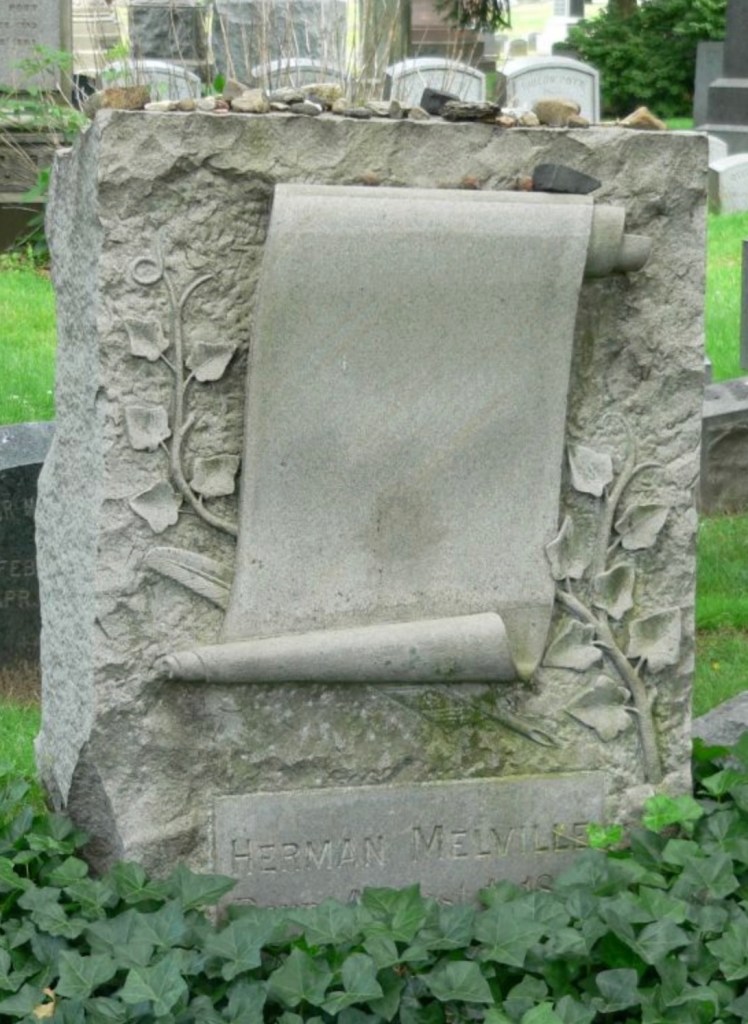
Often beneath the wave, wide from this ledge
The dice of drowned men’s bones he saw bequeath
An embassy. Their numbers as he watched,
Beat on the dusty shore and were obscured.
And wrecks passed without sound of bells,
The calyx of death’s bounty giving back
A scattered chapter, livid hieroglyph,
The portent wound in corridors of shells.
Then in the circuit calm of one vast coil,
Its lashings charmed and malice reconciled,
Frosted eyes there were that lifted altars;
And silent answers crept across the stars.
Compass, quadrant and sextant contrive
No farther tides … High in the azure steeps
Monody shall not wake the mariner.
This fabulous shadow only the sea keeps.
Hart Crane
Photo: © 2015 Janez Stare & Jure Pesko | All rights reserved
“Beneath the wave” (2020)
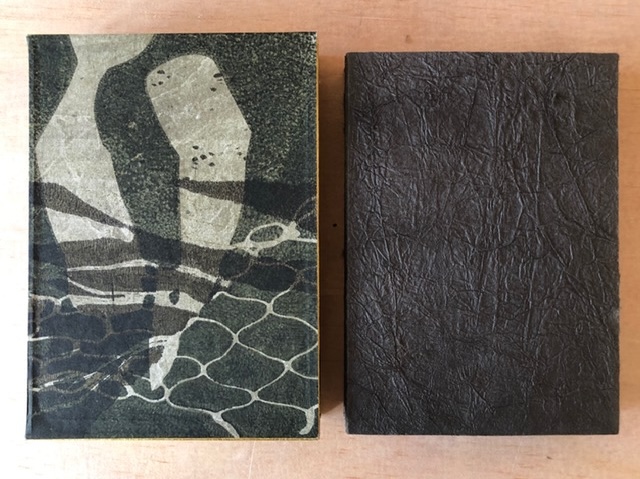
“Beneath the wave “: A response to “At Melville’s Tomb'” (Hart Crane) I (2020)
Chris Ruston
Accordion book with slipcase. Monoprint using found material. Acrylic paint, Sumi Ink, Fabriano Artistico paper, Metal Unryu Gold Paper, Tyvek, Greyboard. Slipcase: H155 x W112 x D30 mm. Accordion book: H149 x W105 x D25 mm (closed), W2515 mm (open). 24 panels. Unique. Acquired from the artist, 20 July 2022.
Photos: Books On Books Collection and courtesy of artist.
From a gold-edged slipcase displaying sperm whales beneath the surface of the waters, an accordion book emerges with a surface as rough and textured as barnacled whale skin.
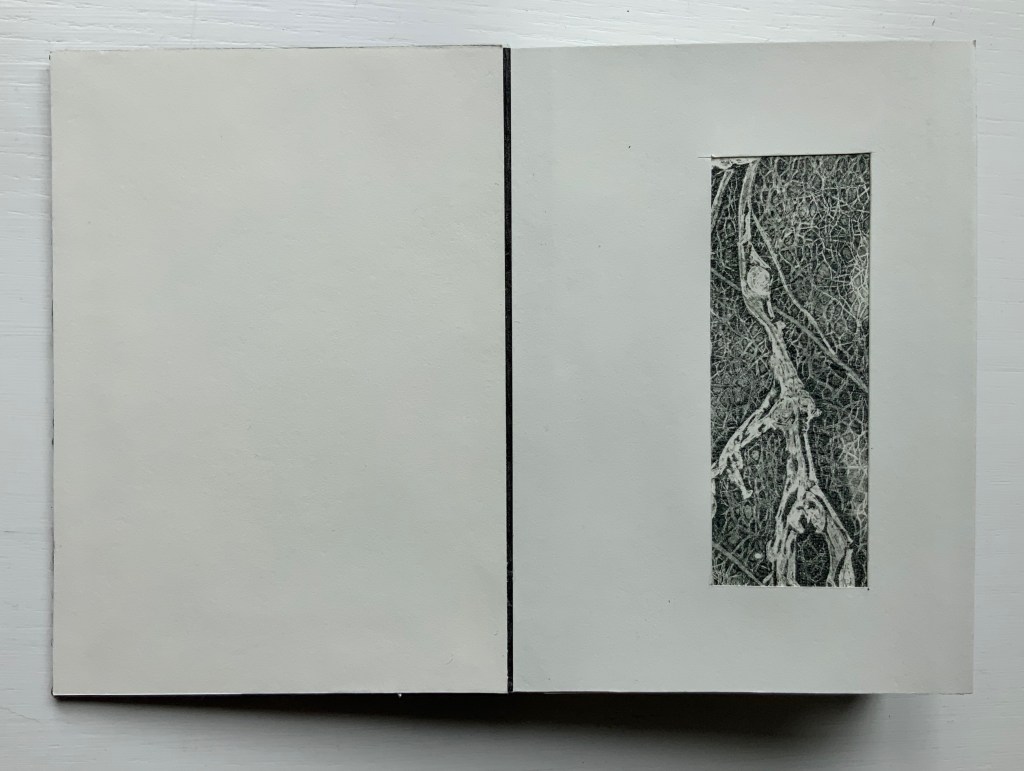
The concertina has twenty-f0ur panels, twenty-one of which bear images. Fully extended, it comes to 2515 mm, or 81/4 feet.

Monoprints made with objects collected from the shoreline.
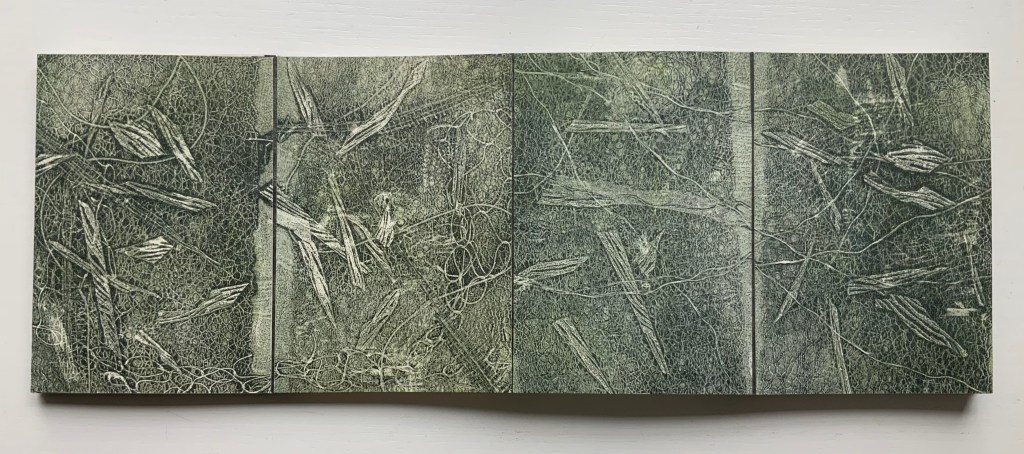
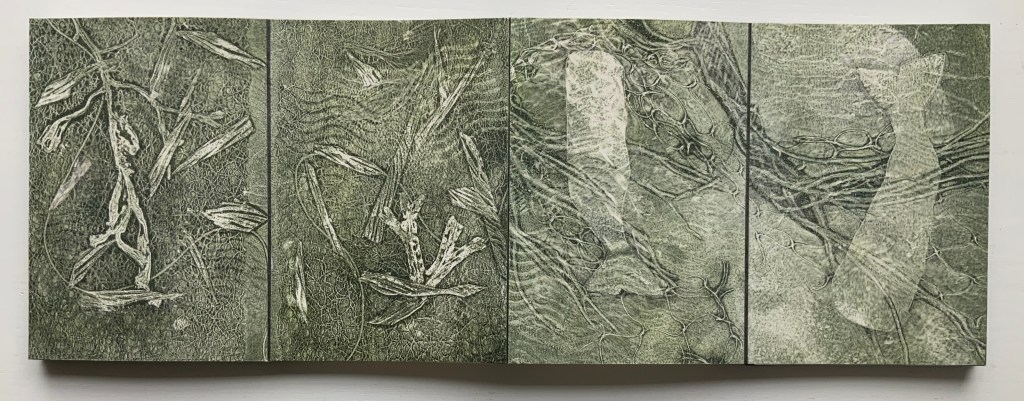
Half way through the book, templates of whale shapes beneath the strands of weeds come into play, which gives an impression of harpoon lines entangling the mammals’ images. Another interpretation of “lashings”.


“A Scattered Chapter” (2022)
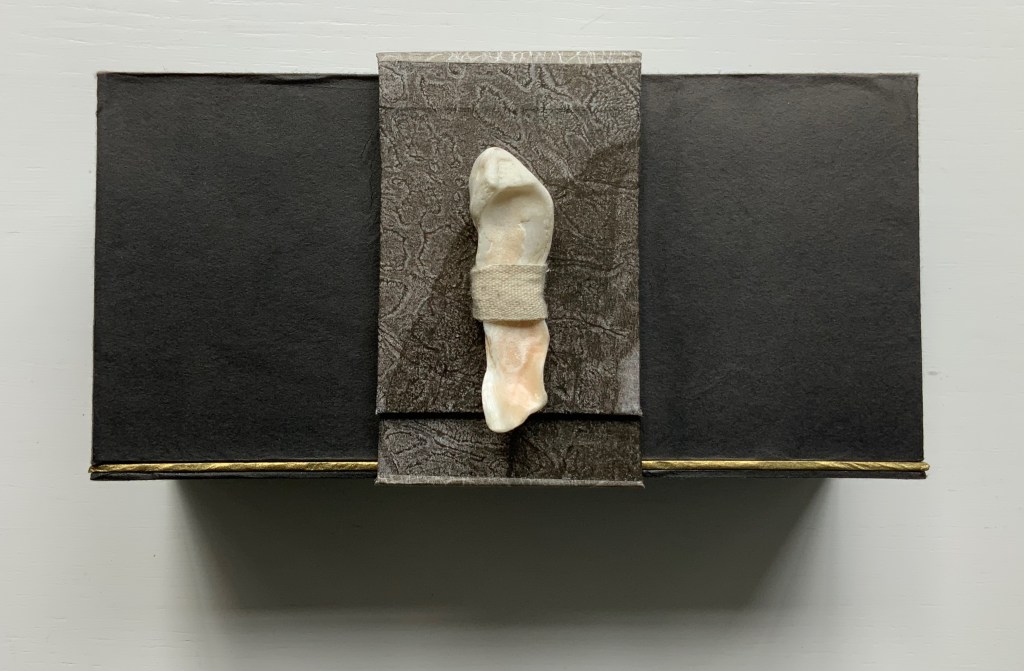
“A scattered chapter”: A response to “At Melville’s Tomb” (Hart Crane) II (2022)
Chris Ruston
Loose shards held within a box. Greyboard, Gesso, Acrylic, Tyvek, Washi Paper,Sumi ink, Metal Unryu Gold Paper, Binding Tape, Found Object. Unique Acquired from the artist, 20 July 2022.
Photos: Books On Books Collection and courtesy of artist.
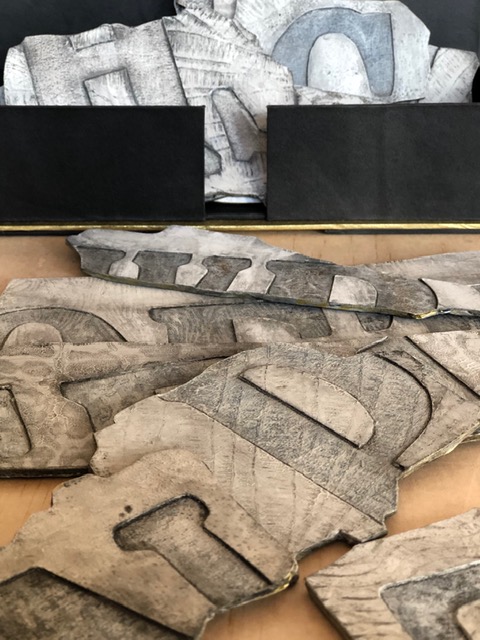
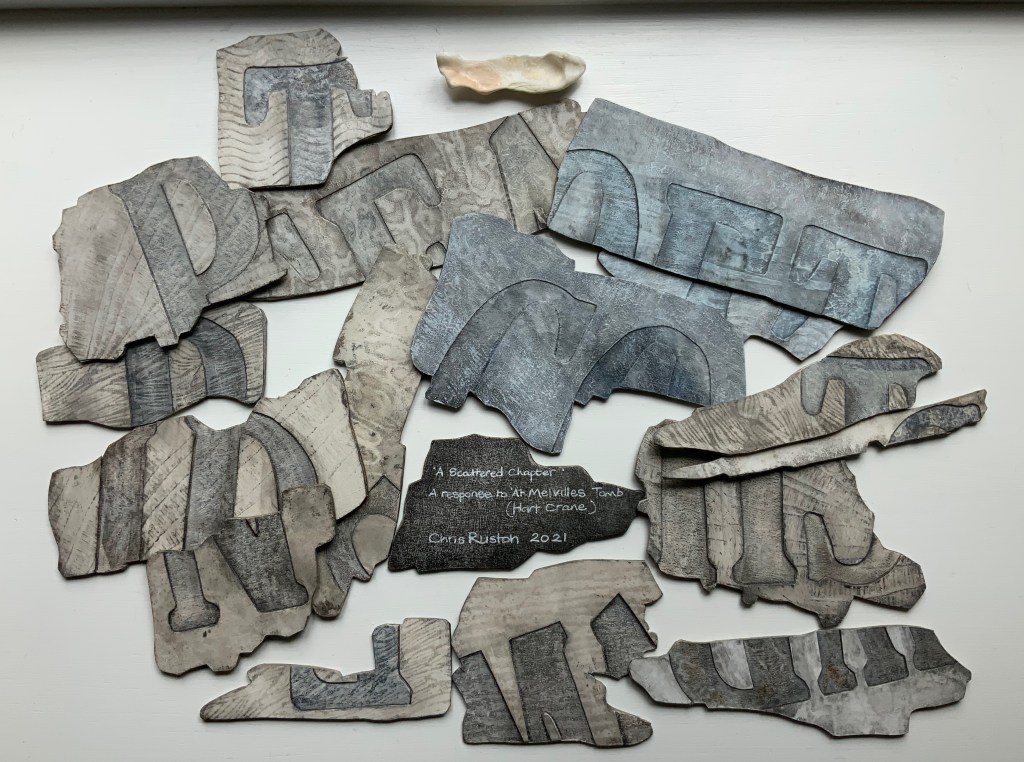
The artist has placed sixteen loose shards inside this box reminiscent of a container for an urn of ashes, secured with a belly band locked with a worn shell. On the shards, a letter or partial word from each the poem’s lines has been cut into them and overprinted with mono prints of various textures.
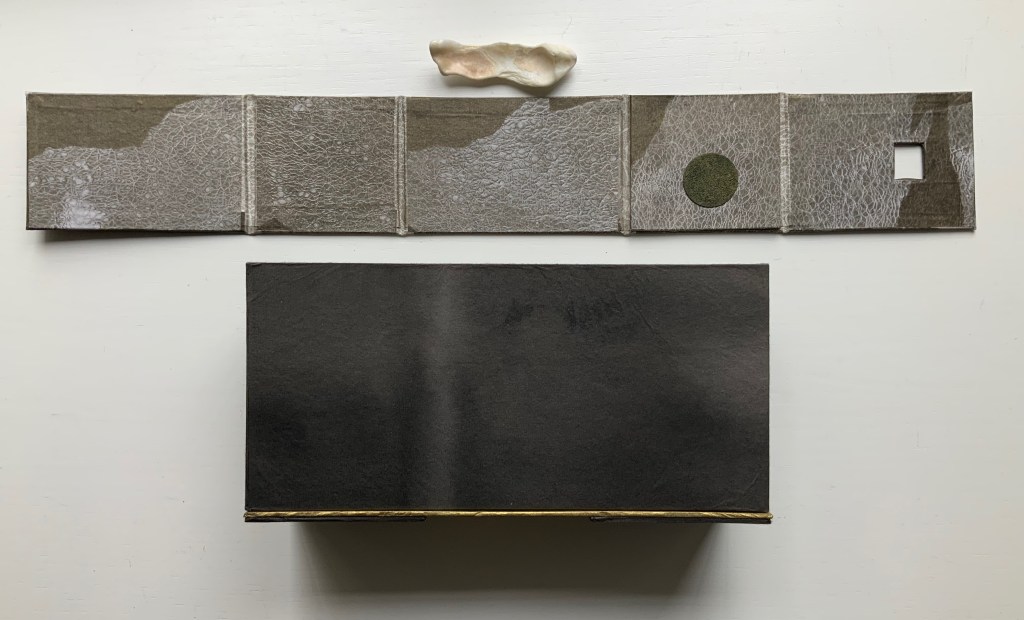
“Livid Hieroglyph” (2021)
“Livid hieroglyph”: A response to “At Melville’s Tomb” (Hart Crane) III (2021)
Chris Ruston
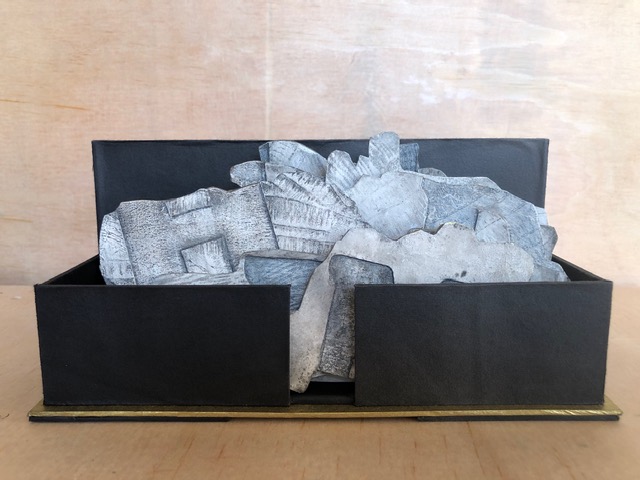
Loose pages wrapped in twine and canvas within box. Monoprint, Acrylic Paint, Fabriano Cartridge Paper, Sumi Ink, Greyboard, Watermark Kingin White Tissue paper, Washi paper, Canvas, Twine, Found rusted nails.Unique Acquired from the artist, 20 July 2022.
Photos: Books On Books Collection and courtesy of artist.
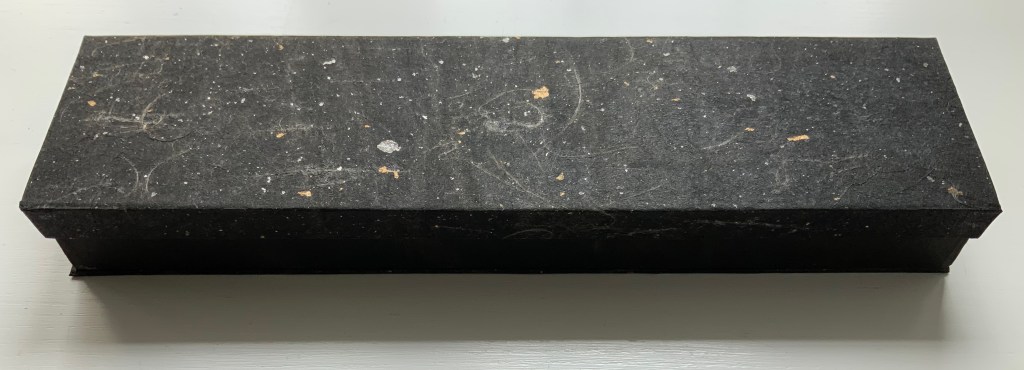
This narrow gold-flecked black box (coffin-like?) contains a stained canvas cloth shrouding an entwined bundle of shards. The rusted nails at either end of the twine recall Ahab’s fixing a gold doubloon to the mast in chapter 36 of Moby-Dick, which is more than conjured by the white image of a whale shadowed on the cloth. It is in chapter 36 that the whale’s name is first uttered by Ahab.
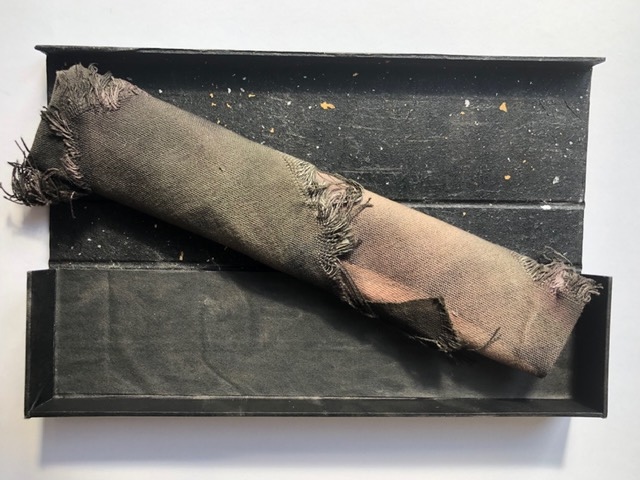
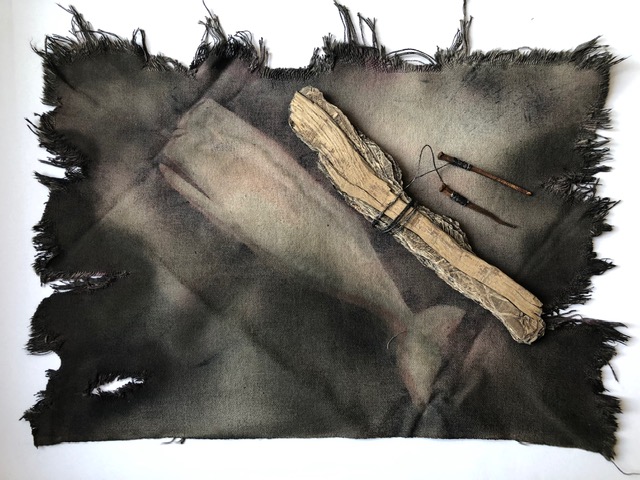
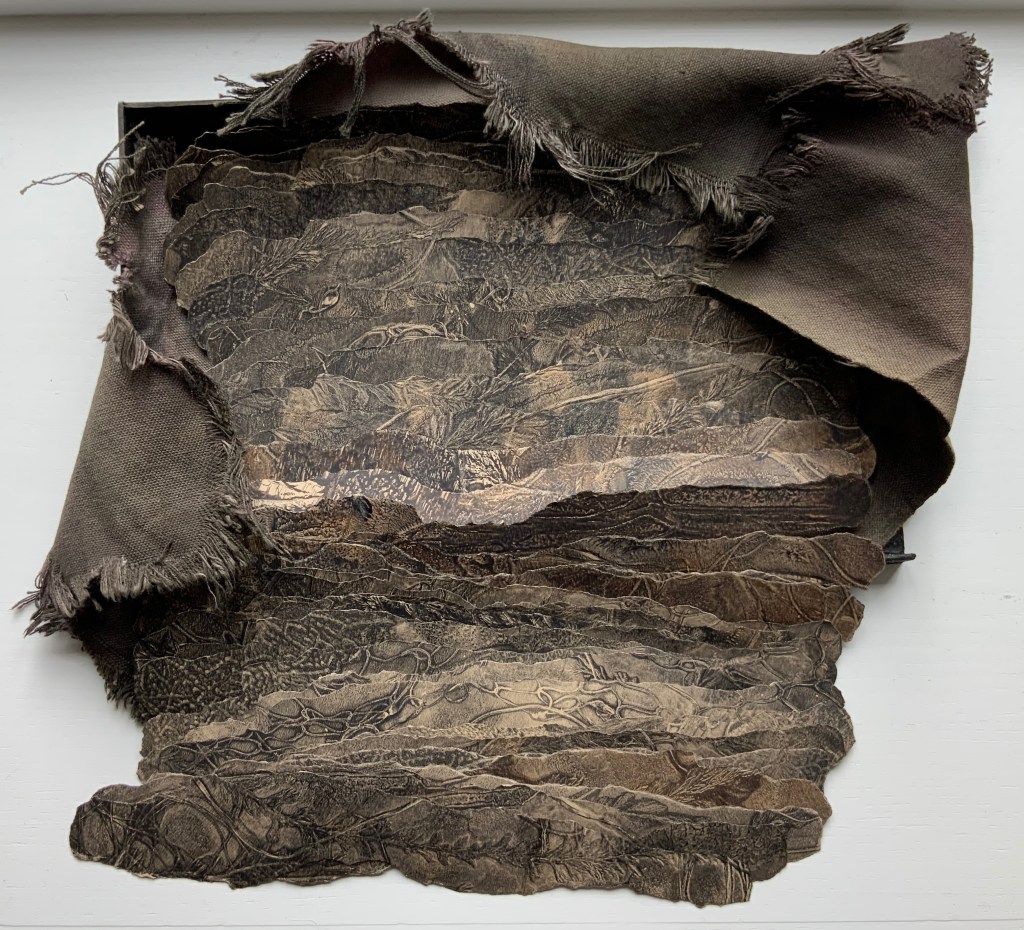
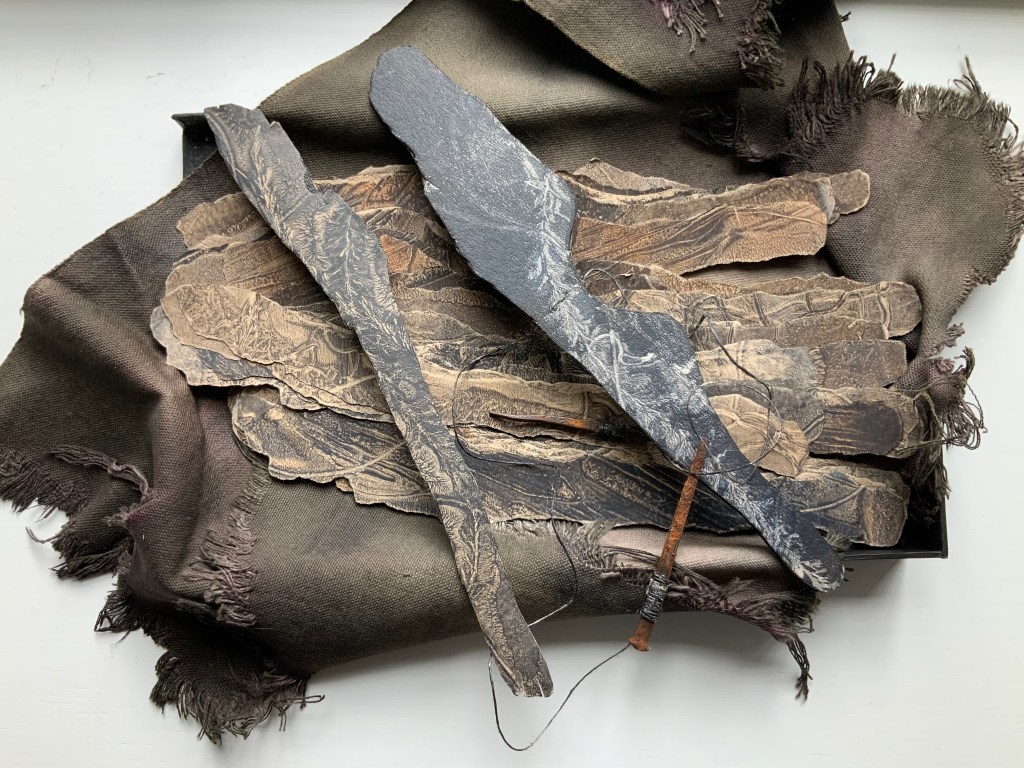
The monoprints on the shards follows the method used in the works above, and like the bellyband in “A Scattered Chapter”, they are printed on both sides. It is clearer with the shards though that one side is brown and black, and the other, a gray and black.
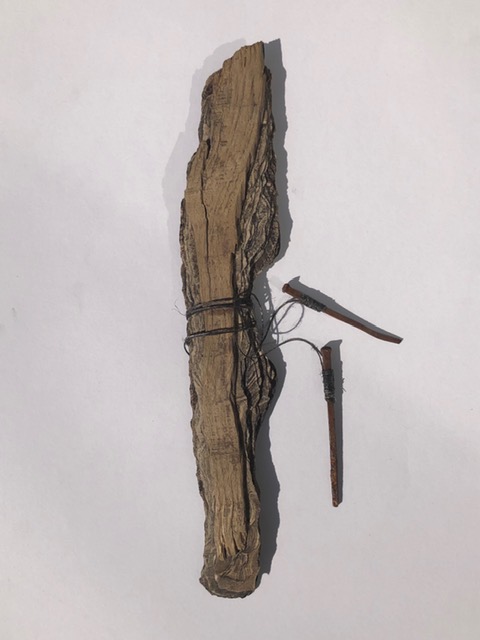
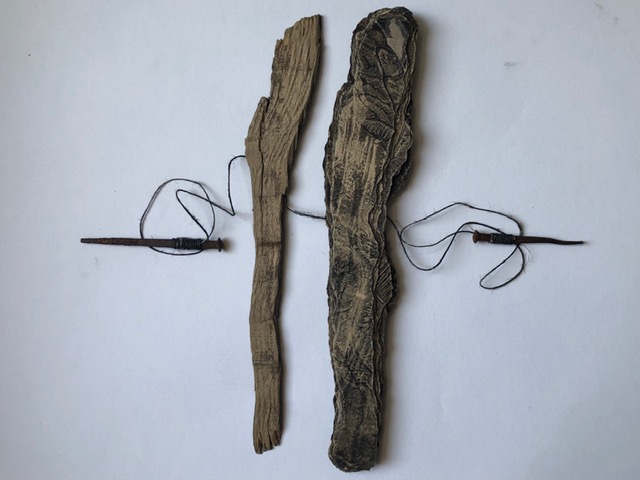
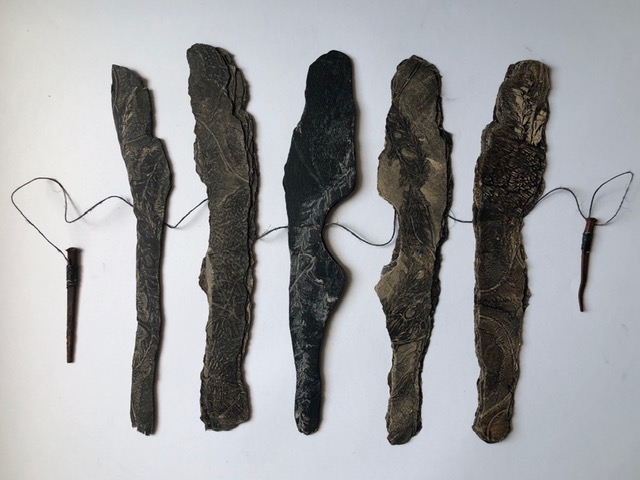
Laid out as they are in the artists’ photos, the shards have a whale-like shape and even suggest a pod of whales sleeping vertically. Equally, the collection of shards evoke the remains of Ahab’s ship, the shattered Pequod.
“This Fabulous Shadow” (2022)
“This fabulous shadow”: A response to “At Melville’s Tomb” (Hart Crane) IV (2022)
Chris Ruston
Three-fold closing slipcase containing paper-covered double gate fold bound book, sewn with linen thread. Sumi ink and watercolour on Arches Velin Paper. Acquired from the artist, 20 July 2022.
Photos: Books On Books Collection and courtesy of artist.
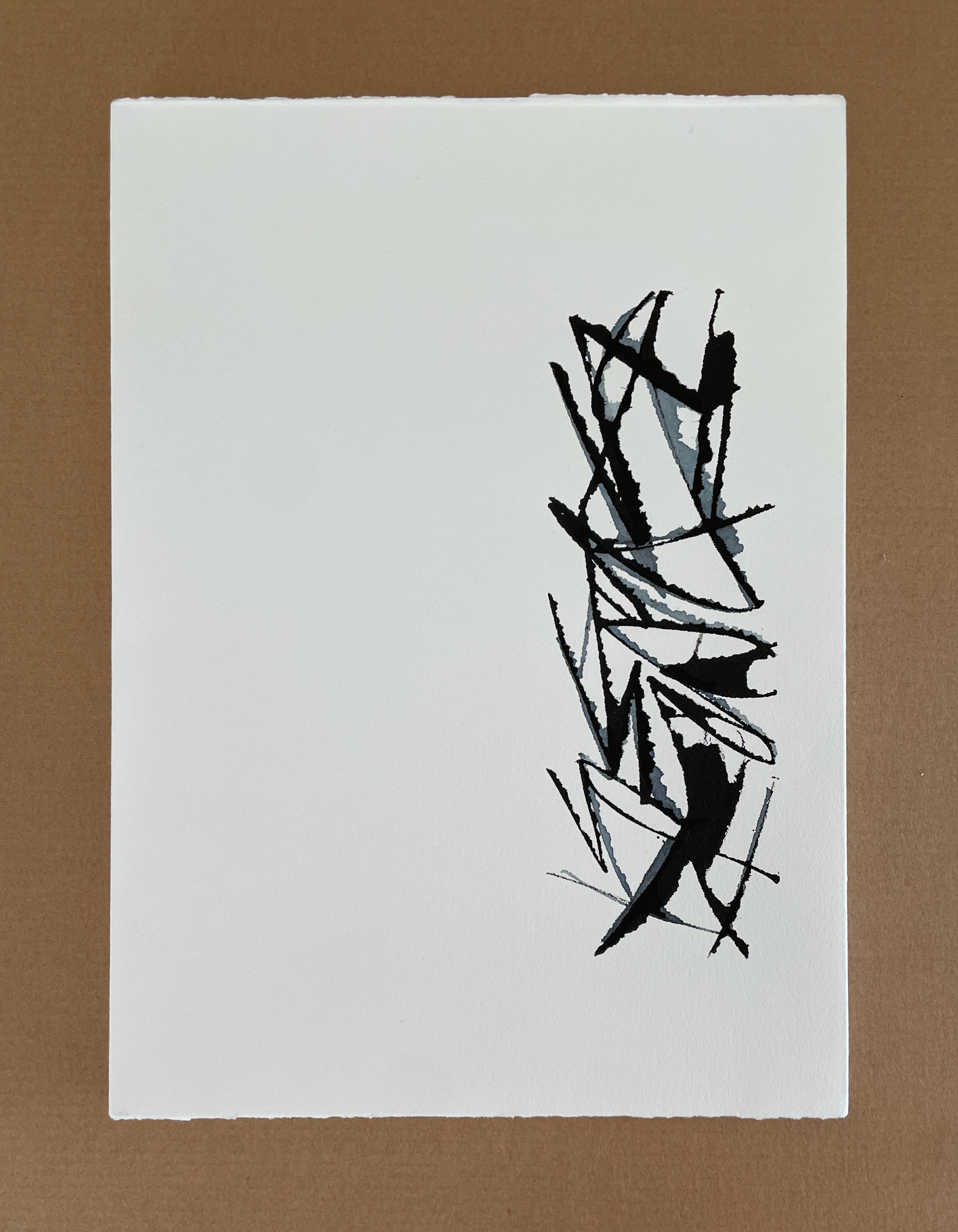
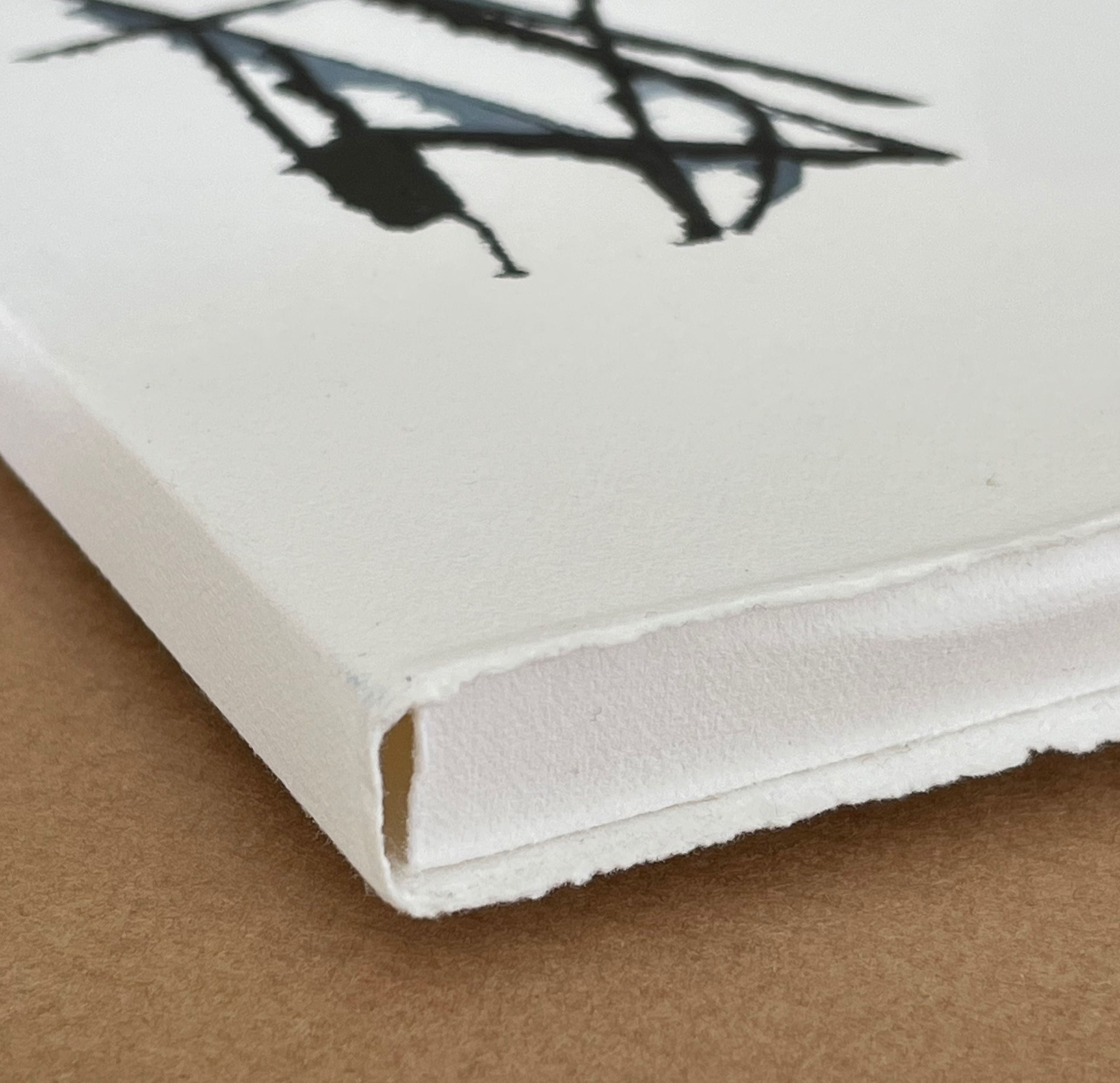
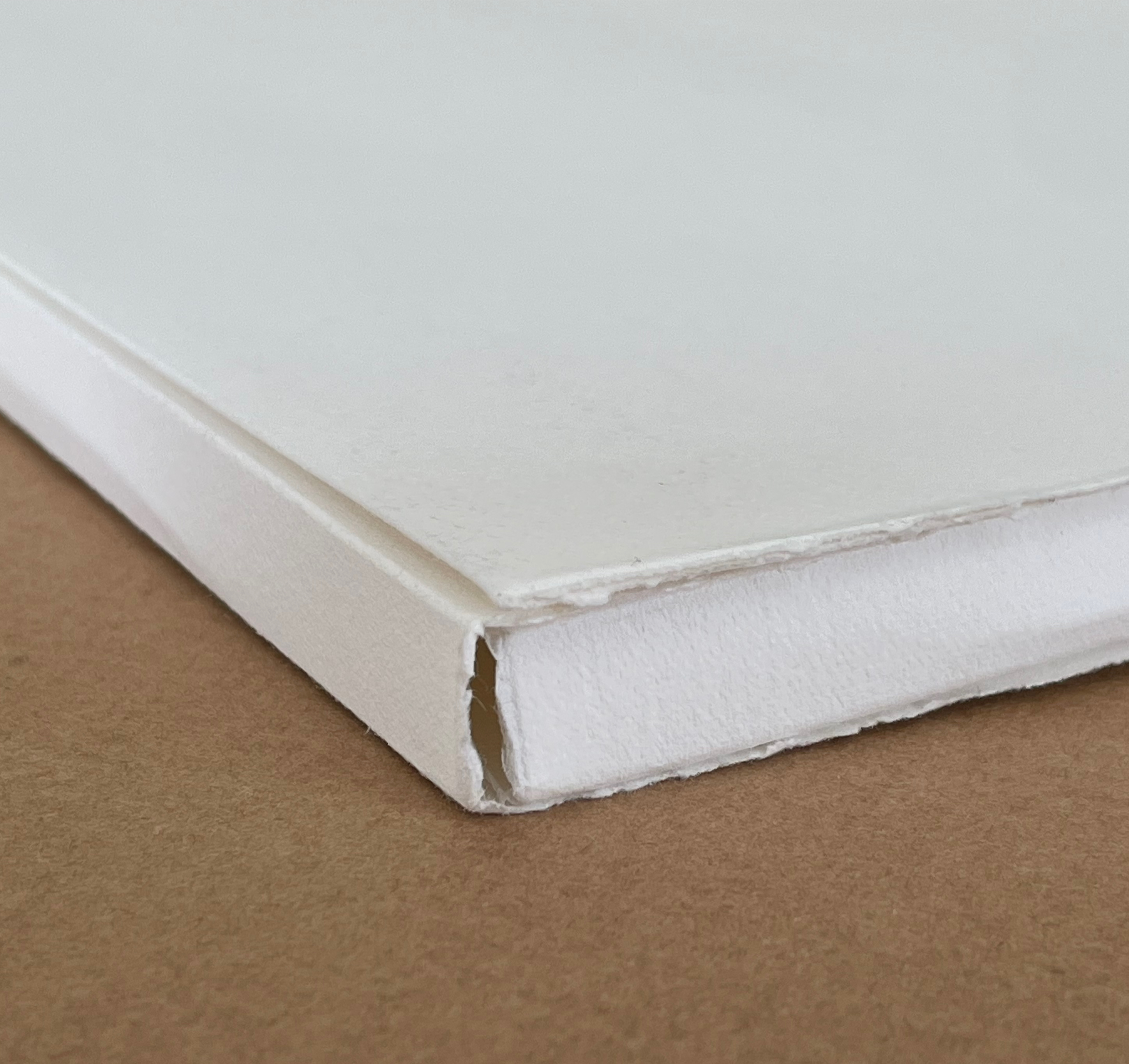
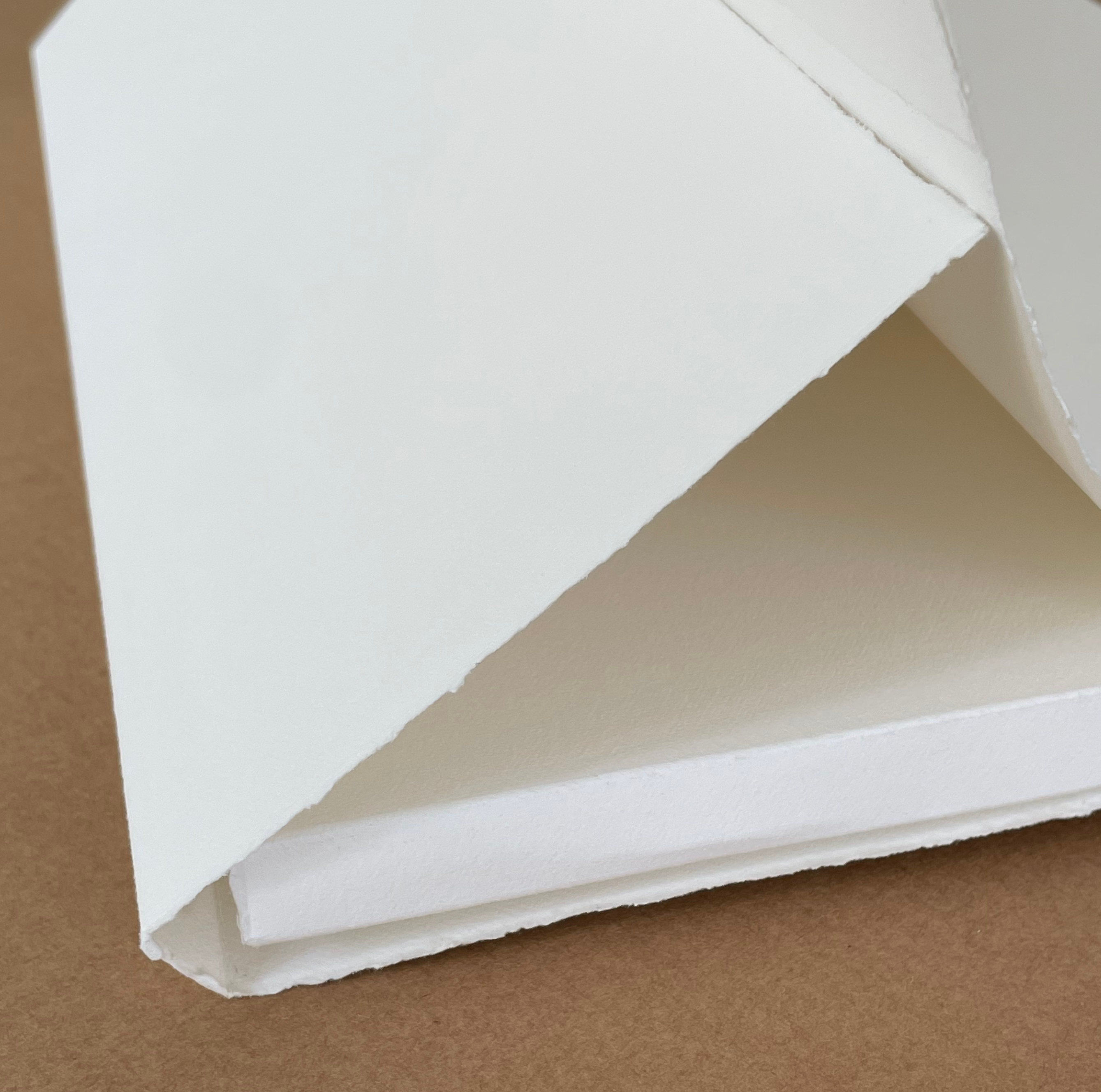
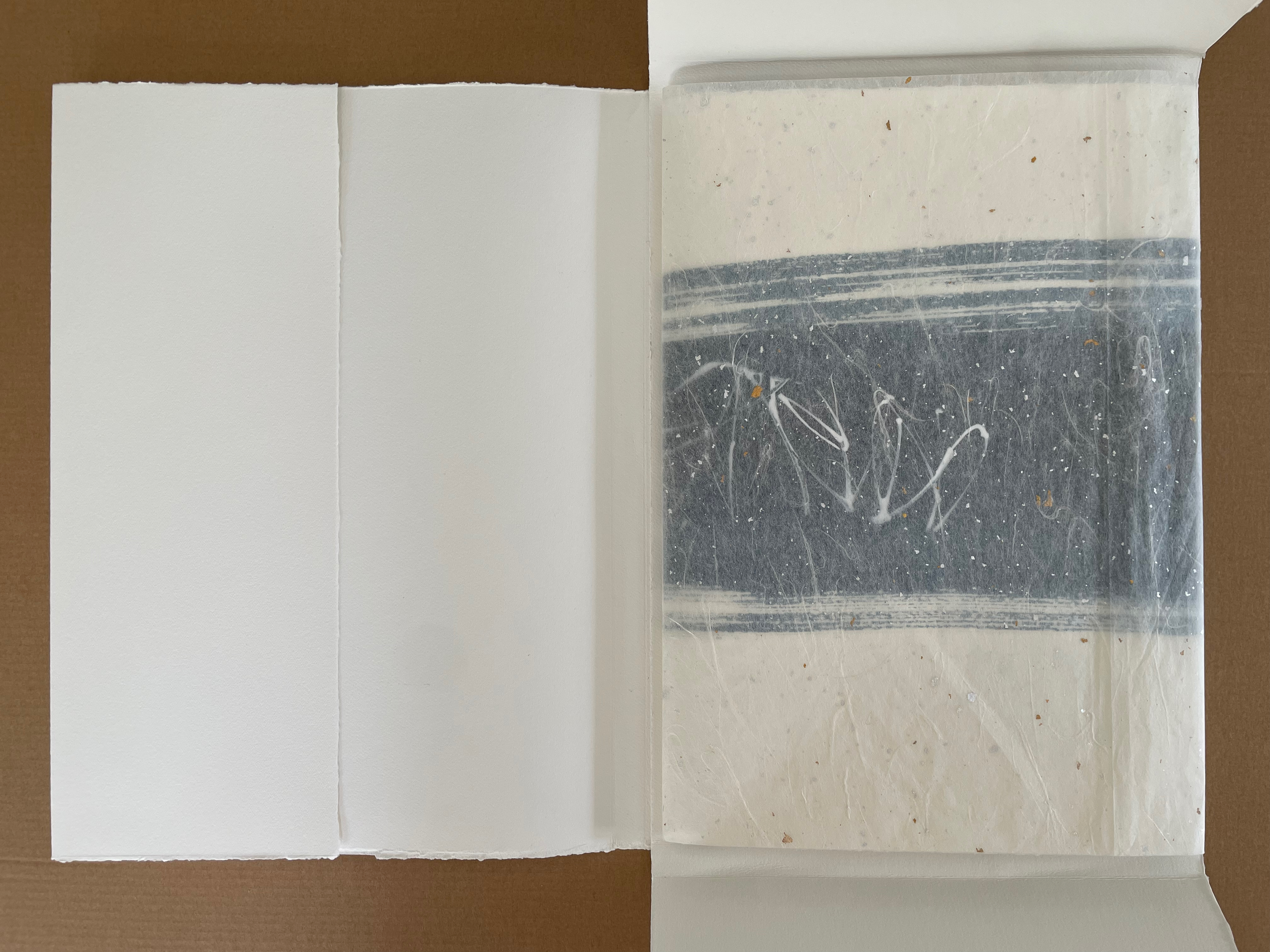
It is fitting that the fourth and last chapter of Ruston’s response — “This fabulous shadow” — consists of images and a structure as manifold and layered as the workings of Crane’s four-stanza poem. Even before getting to the book, we have the slipcase (shown above) bearing the title of Crane’s poem recast as an illegible column written out or rather drawn in black ink and light blue (or gray) watercolor and layering the letters over one another until an abstract image emerges as totem-like as any element from the other three stanzas above. Closed with a deep flap insert at the back, the slipcase unfolds elaborately to reveal the book wrapped in a gauzy gold-leaf flecked sheet of Japanese paper.
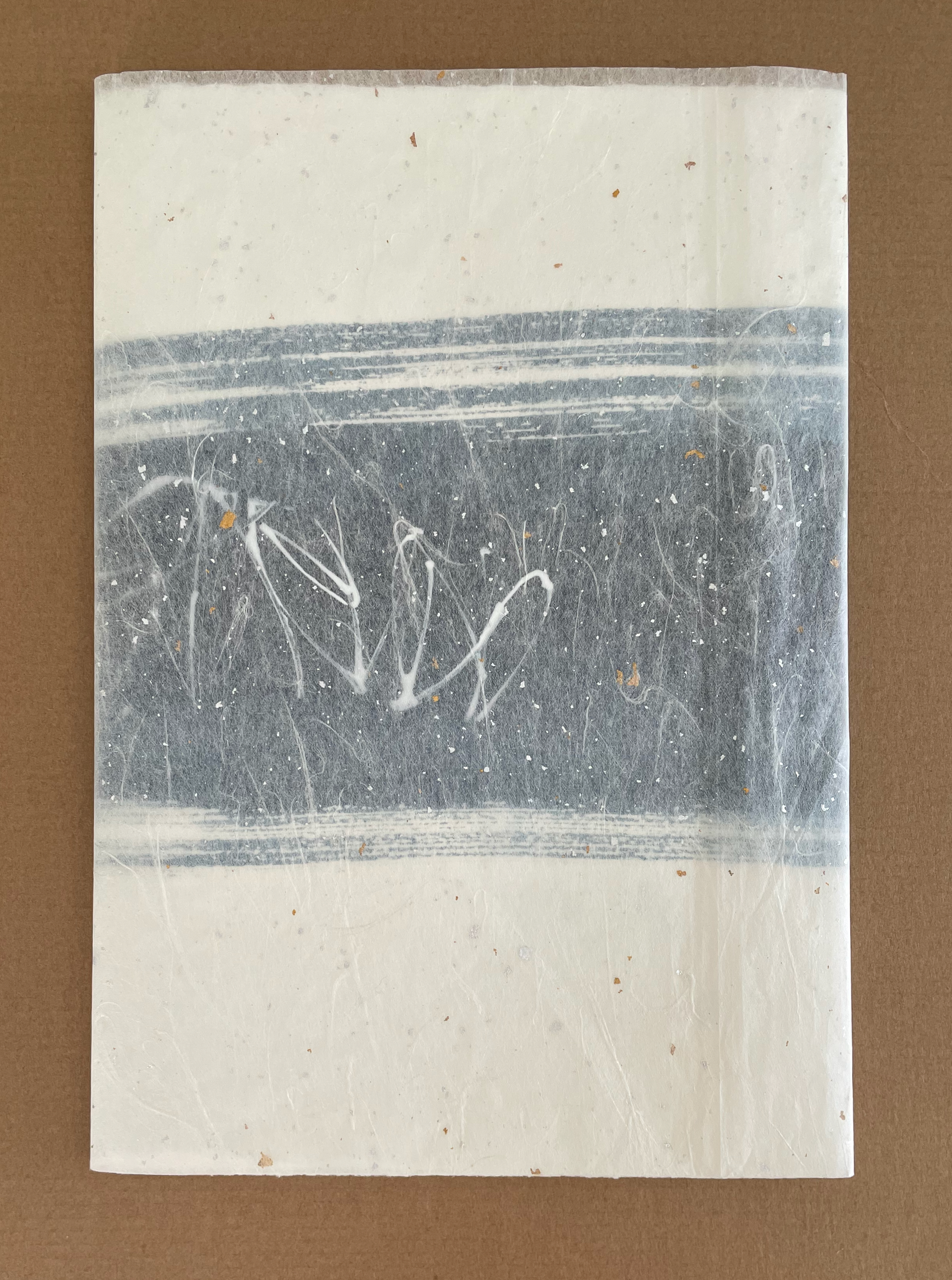
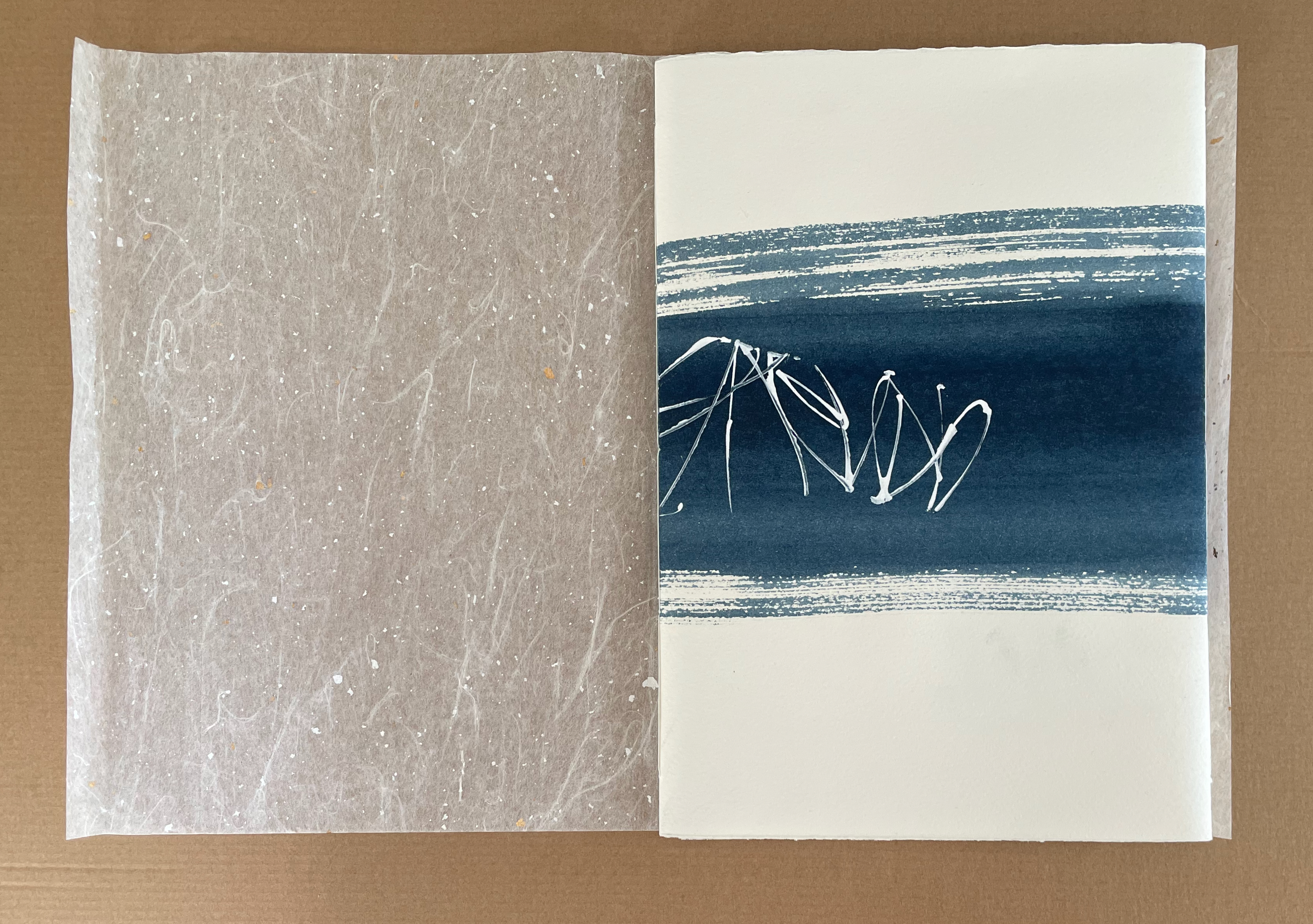
Book wrapped in gold-leaf flecked sheet of Japanese paper; front cover of the book revealed.
Within a double gate fold structure, there are three signatures — two outer signatures and one inner signature. Like its title, each of the poem’s lines has been transformed into a vertical totem-like images, so there are sixteen images distributed across the signatures. The left hand signature contains four images. The right hand has five. The inner signature has seven. Because of the book’s structure, the lines or totems can be read in almost any order. Below, the photos track the simple order of opening the two outer signatures, then opening the inner signature.
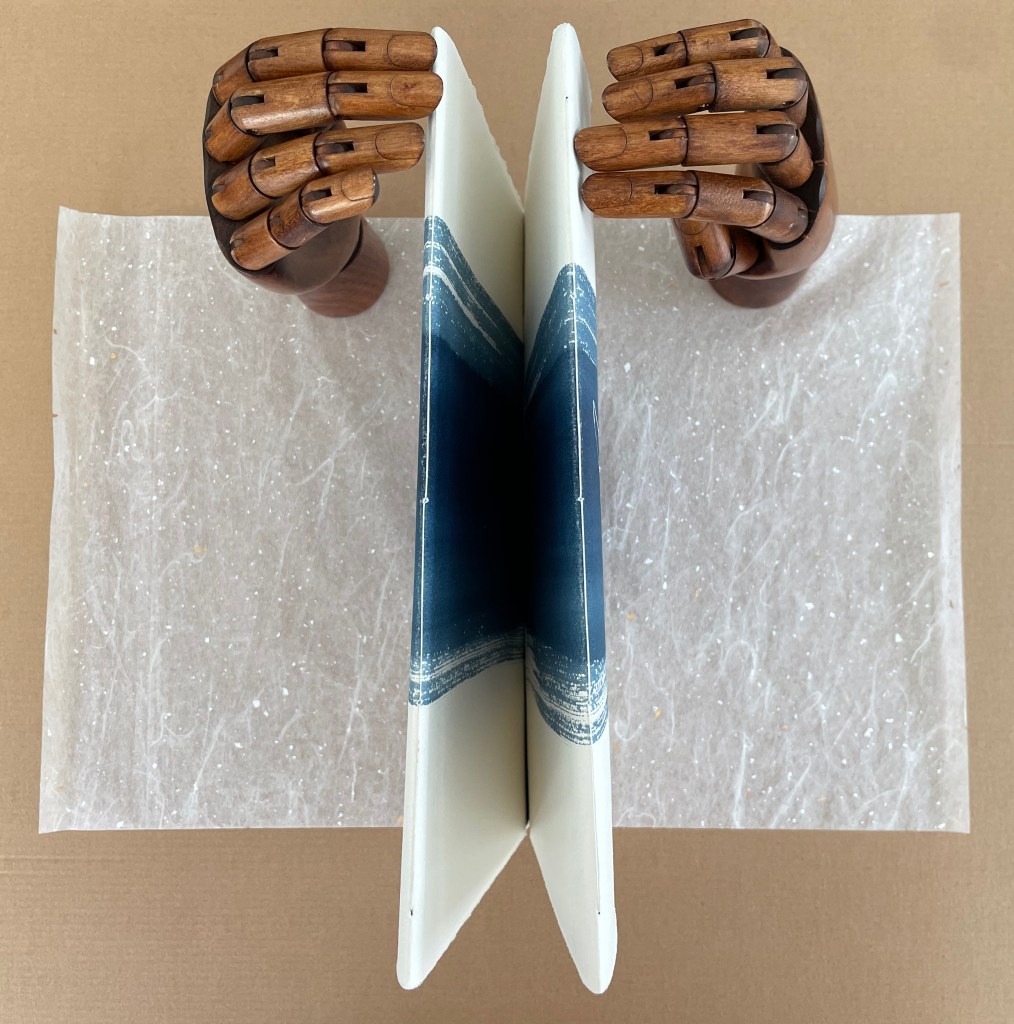
Fore-edge, displaying the sewn spines of the two outer signatures.
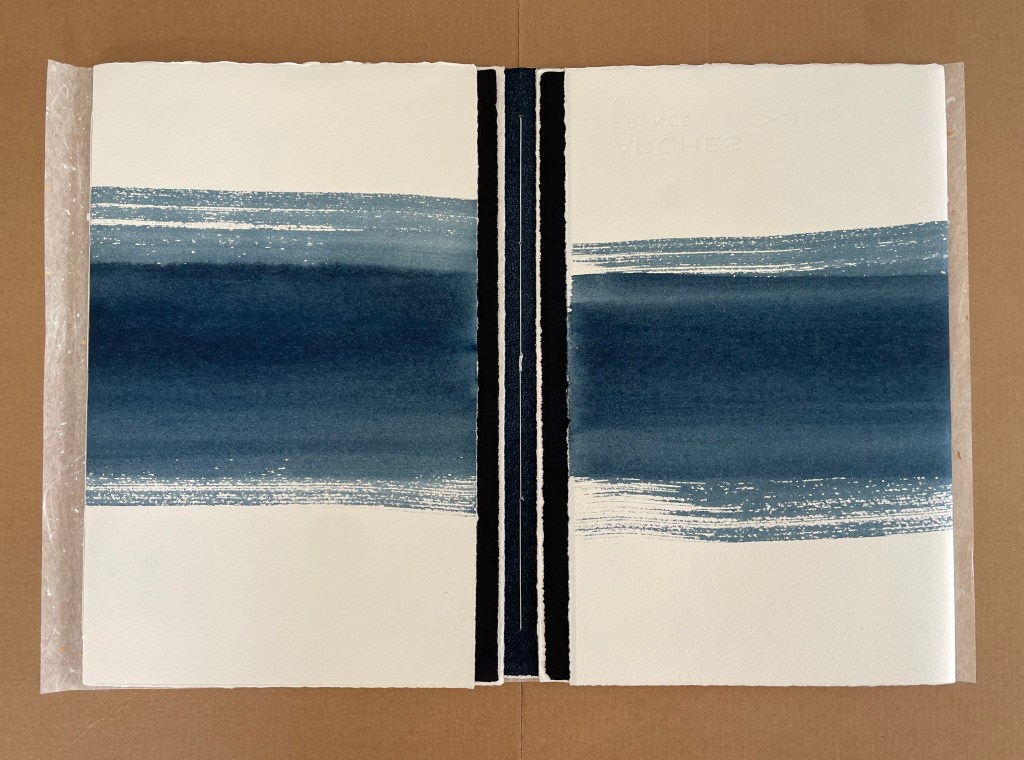
Covers of the two outer signatures; the inner and third signature’s sewn spine appears between them.
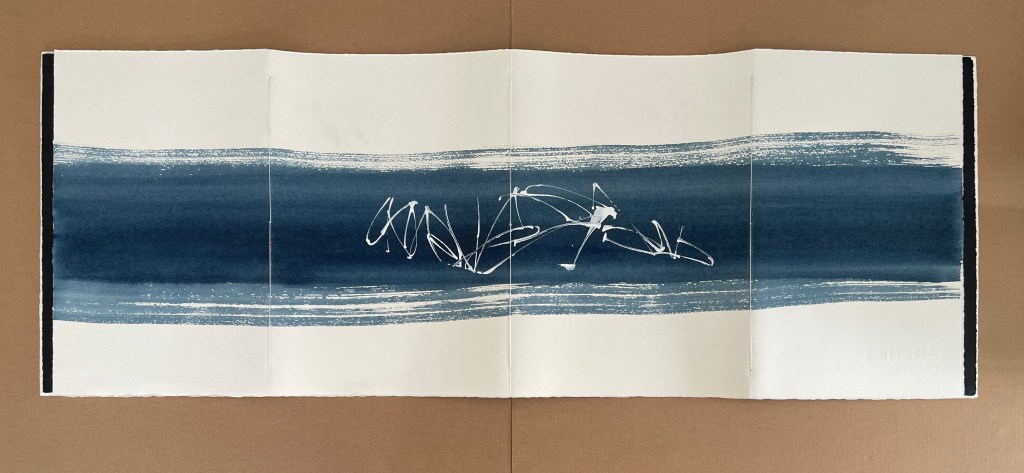
With the book face down, an extension of the outer signatures’ covers shows their artwork across the single sheet of Arches Velin paper from which they are folded.
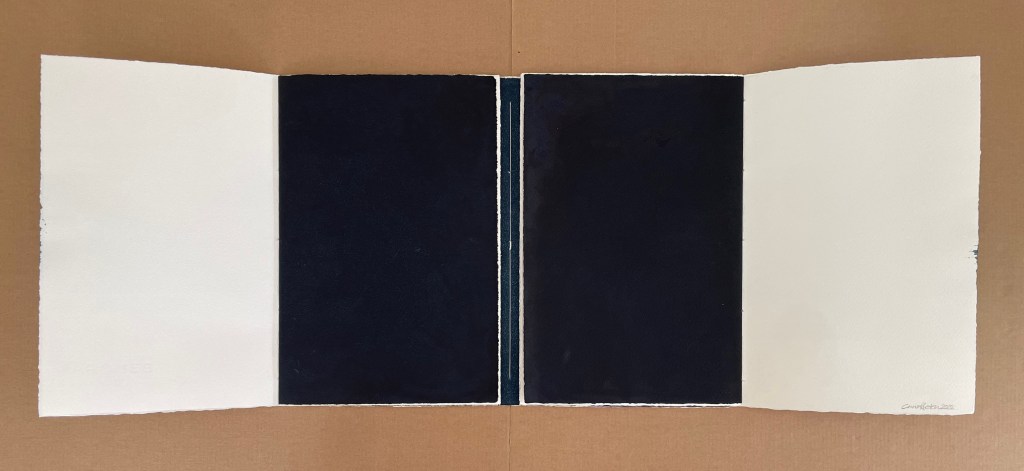
The covers of the outer signatures open to reveal deep black and stiff folios that encase the outer signatures’contents.
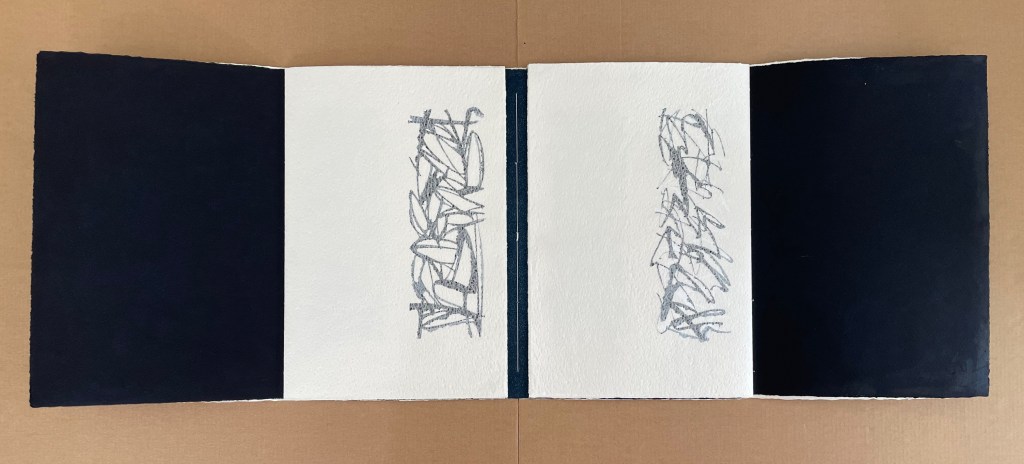
When the black pages turn, the images revealed look hazy or frosted because of a loosely woven cover sheet (see close-ups of the cover sheet below).
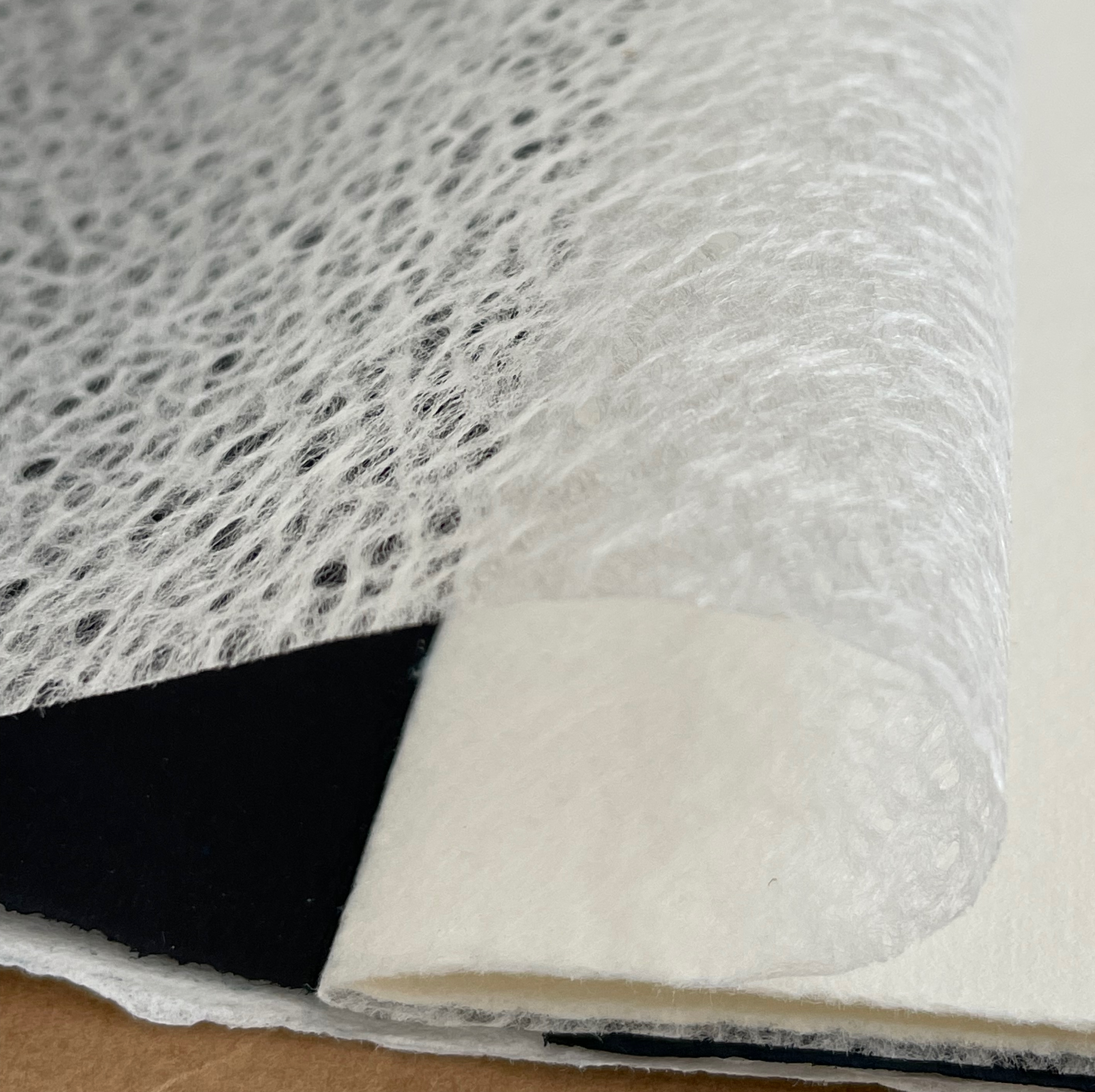
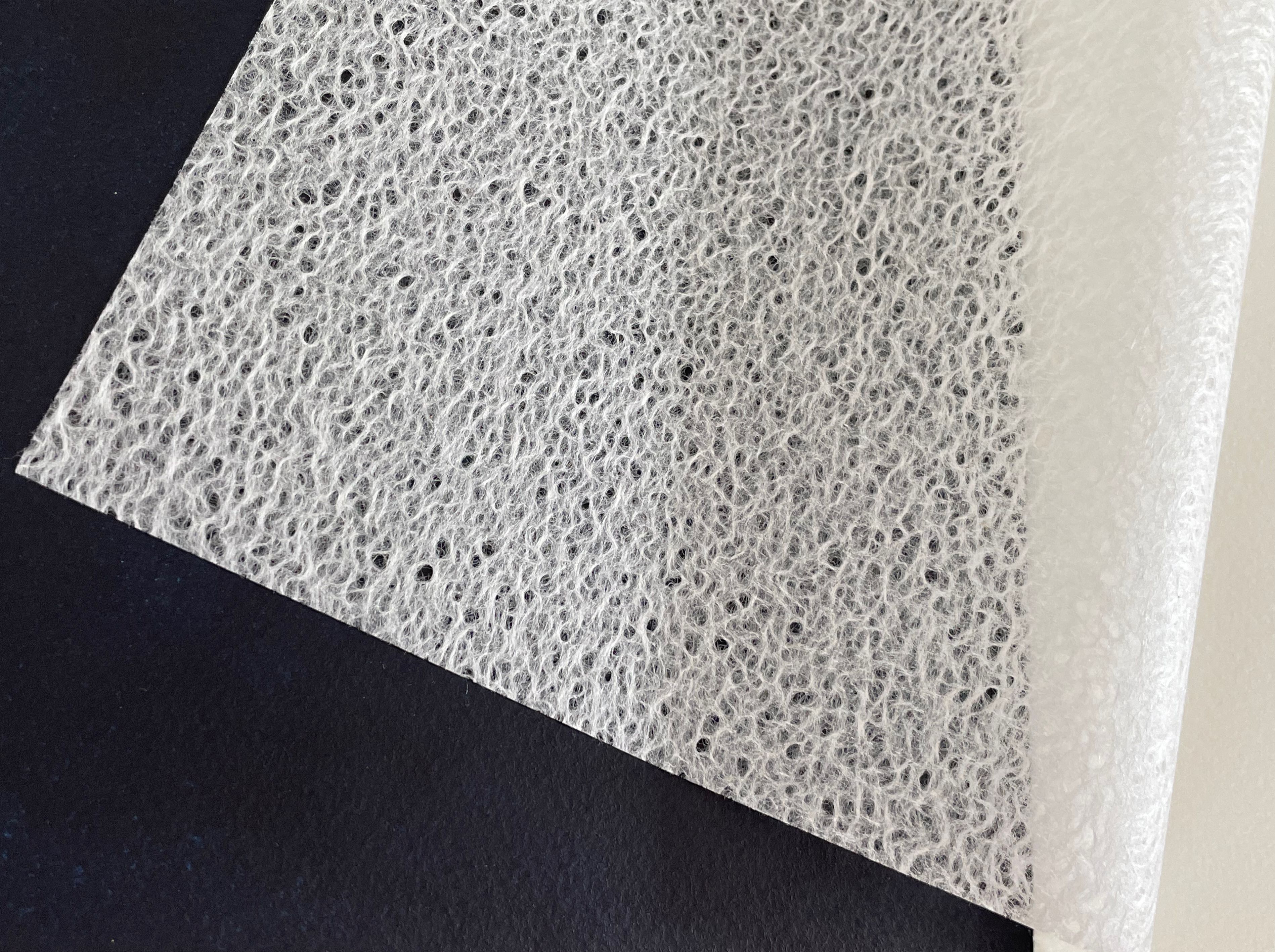
Close up: Loose weave cover sheet.

The images uncovered.
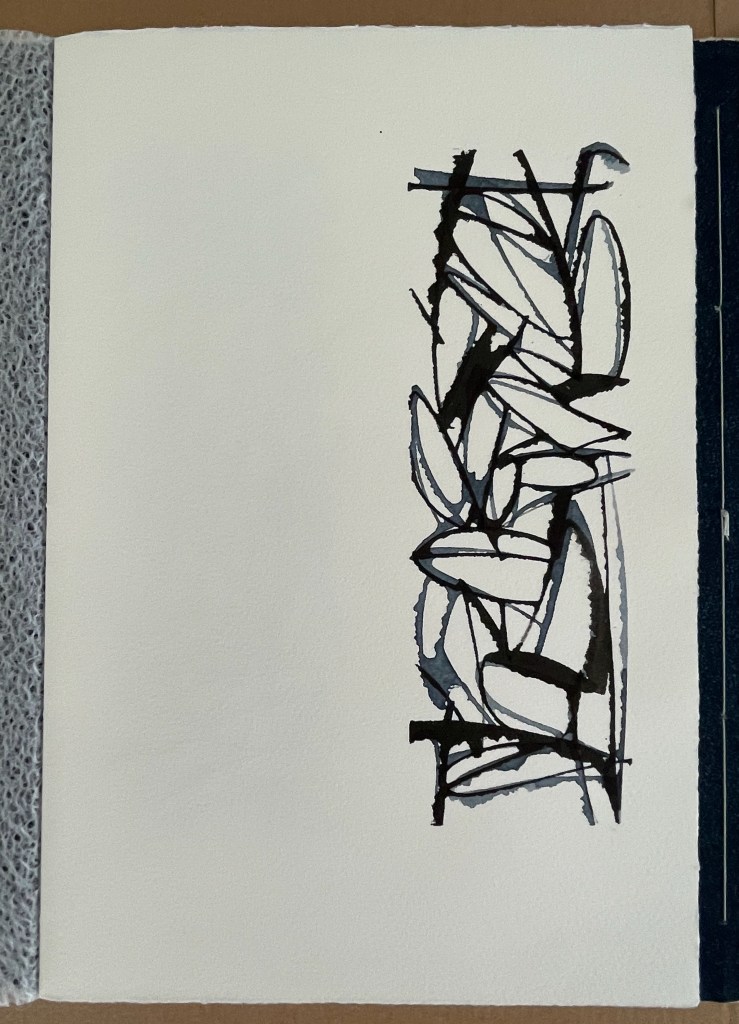
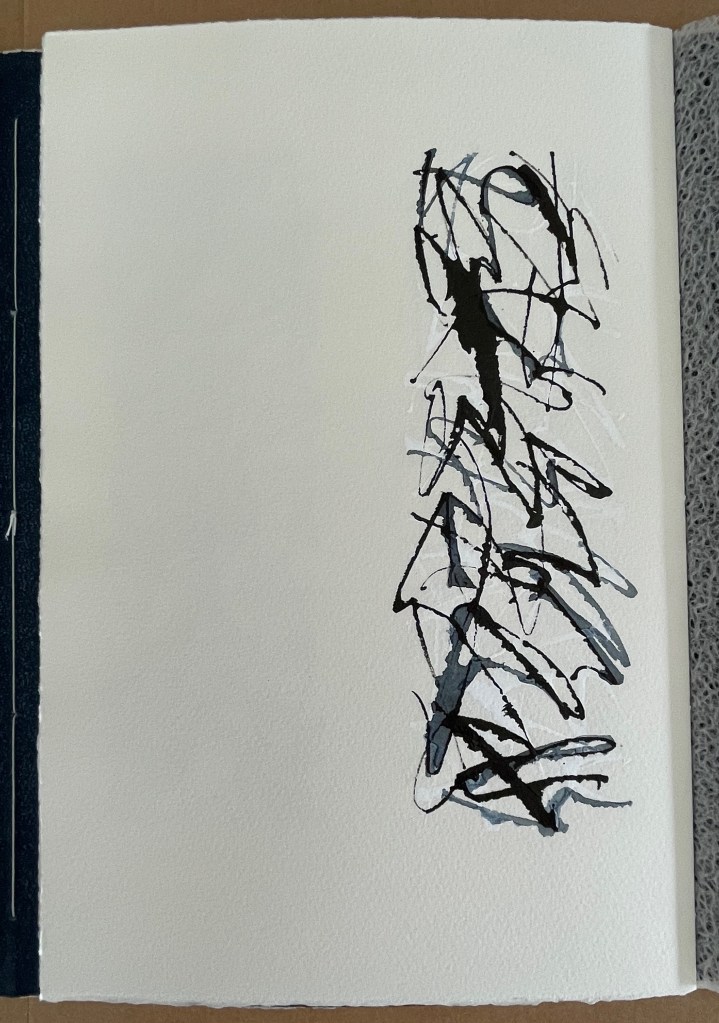
Close up: The images uncovered.

The next five images/lines from the poem.

Close up: Left hand signature.

Close up: Right hand signature.
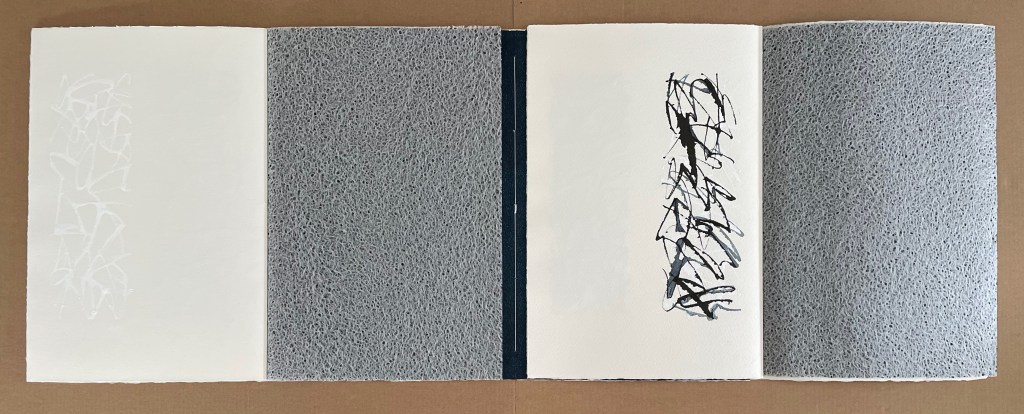
The eighth and ninth images/lines (the last) in the two outer signatures.
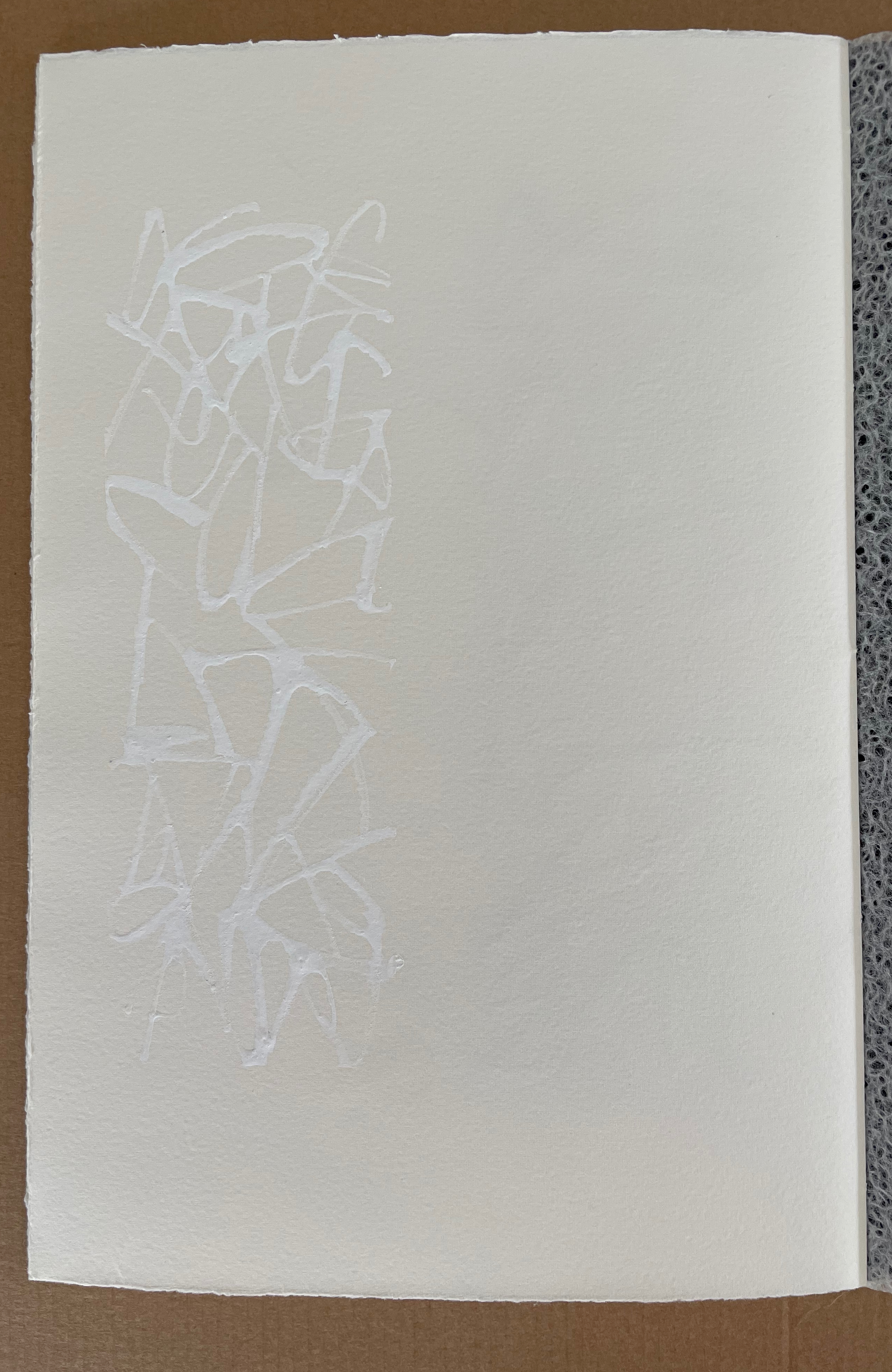
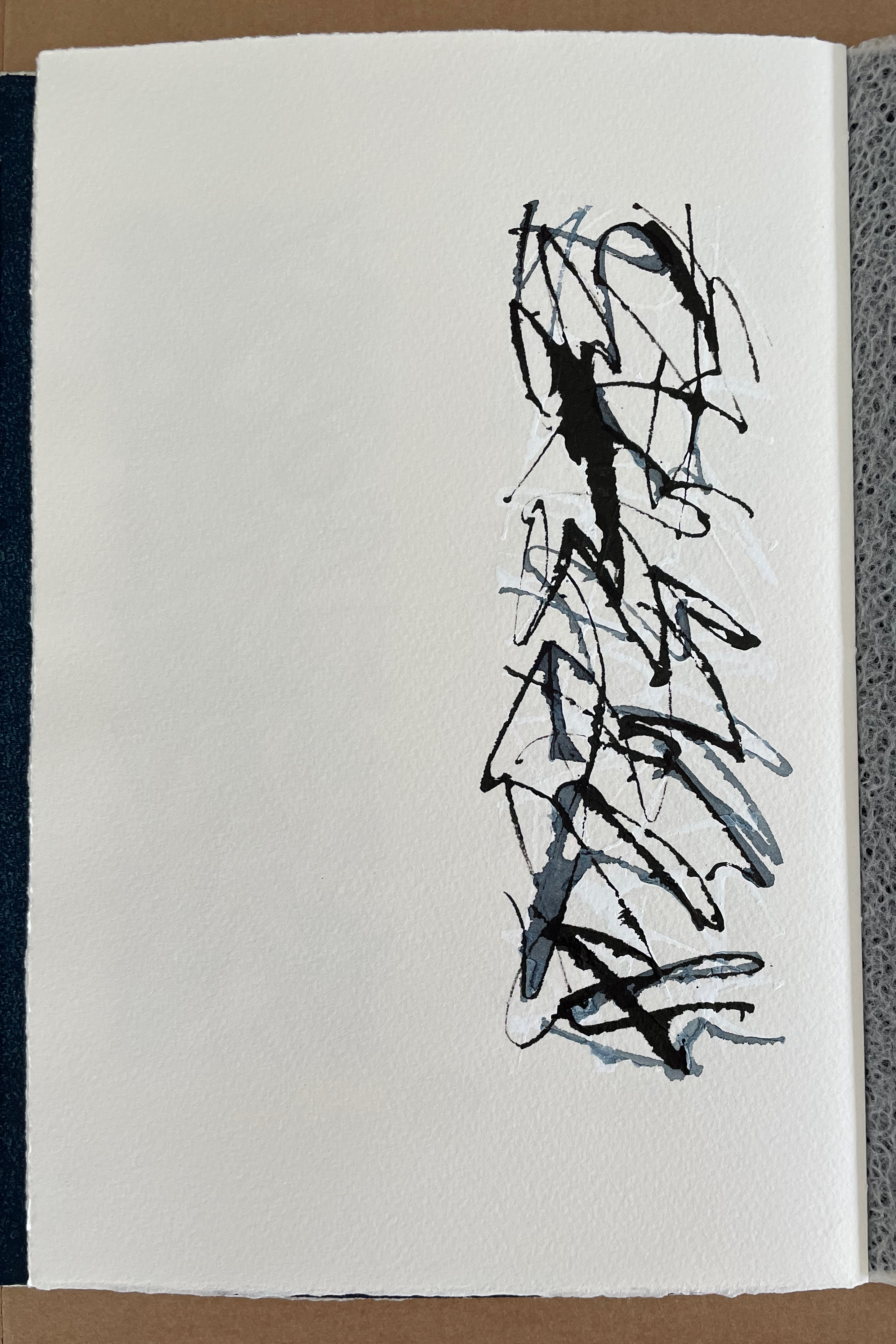
Close up: Note the thick white of the last image in the left hand signature. This is the first instance of white on white in the book, which will remind readers of the chapter “The Whiteness of the Whale” in Moby-Dick.

The loose weave folio turned to cover the last images of the outer signatures.
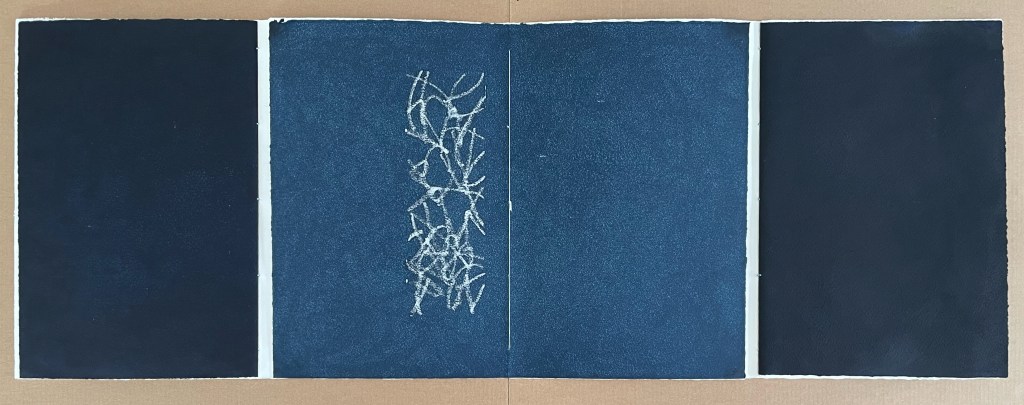
The two outer signatures are now closed, their fore-edges face outwards, and their spines face the inner and third signature, which lies open at its center.
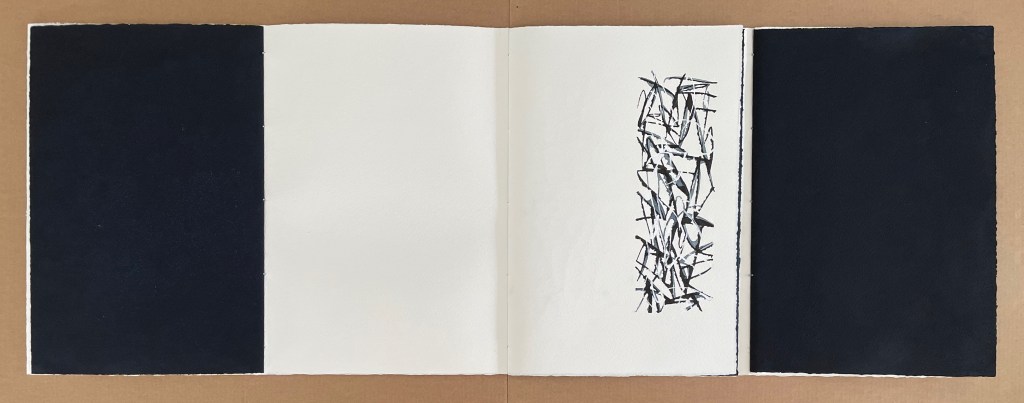
Here the third signature is now closed to be read from its cover (or first page), which displays one of the poem’s seven totemic images/lines that the center signature contains.
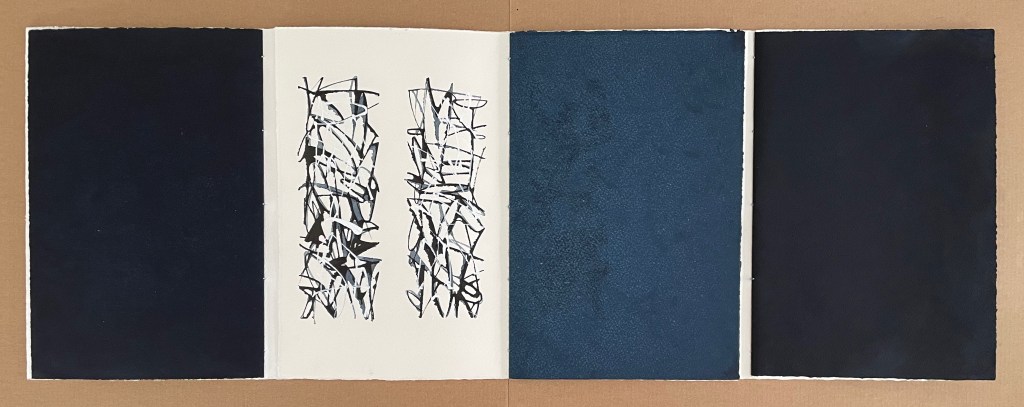
The center signature’s second and third images/lines.
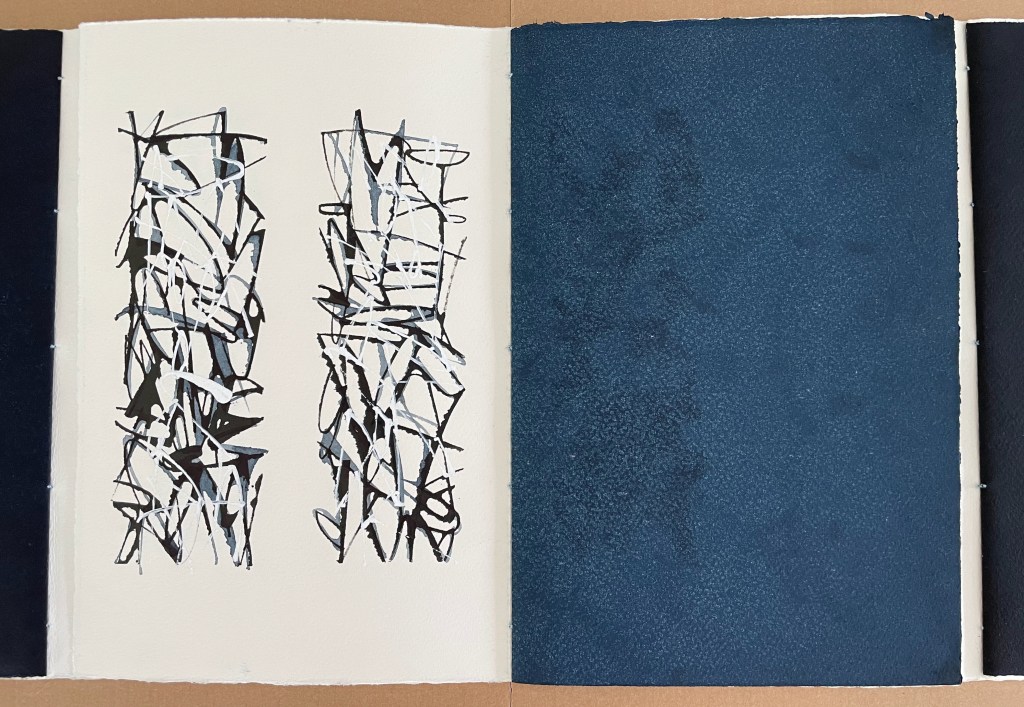
Close up: Note the inner image/line’s faint transfer onto the deep blue of the facing page. Another instance of the artist’s capture of “this fabulous shadow”.
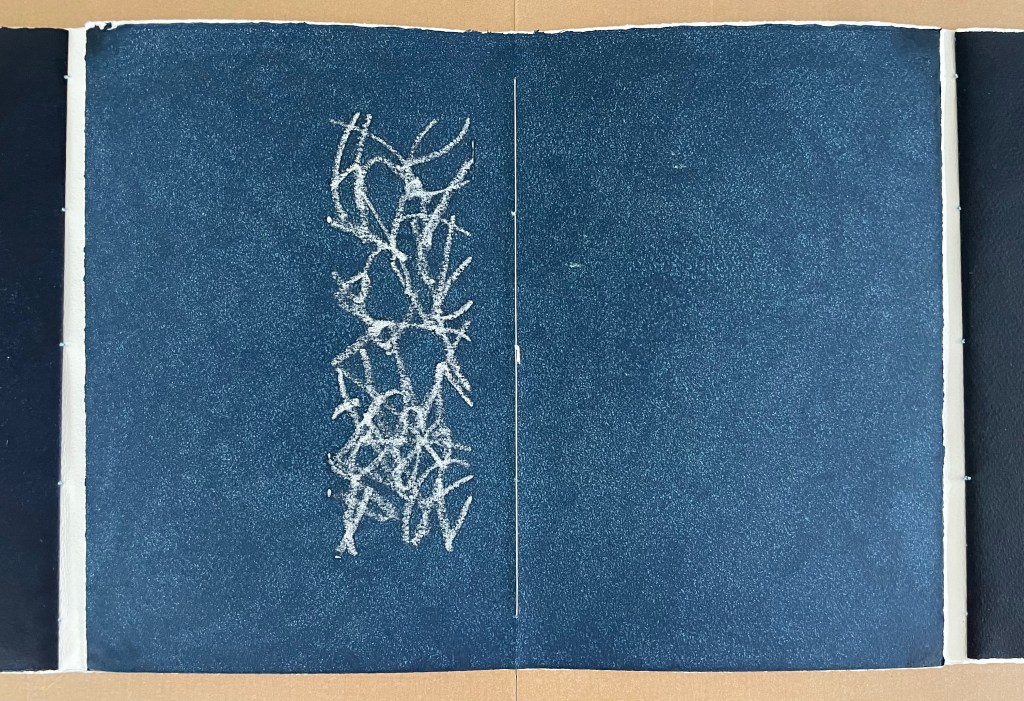
Close up: Back to the inner signature’s centerfold and its fourth image/line.

The fifth and sixth images/lines in the center signature.
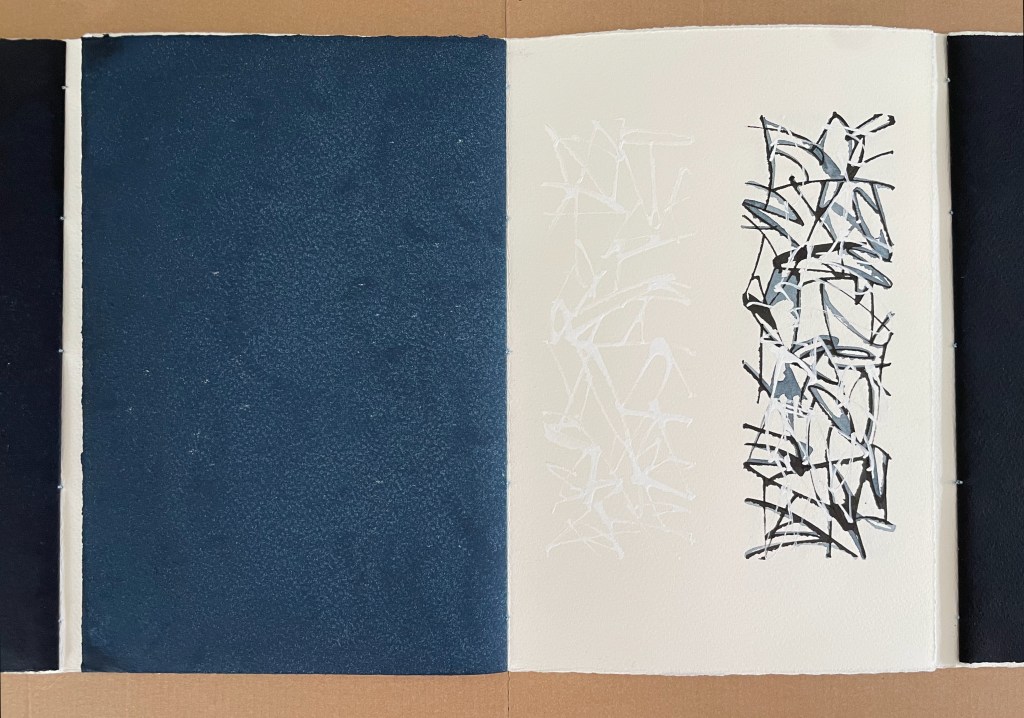
Close up: Note the second instance of white on white.

The seventh and last image/line in the inner signature.
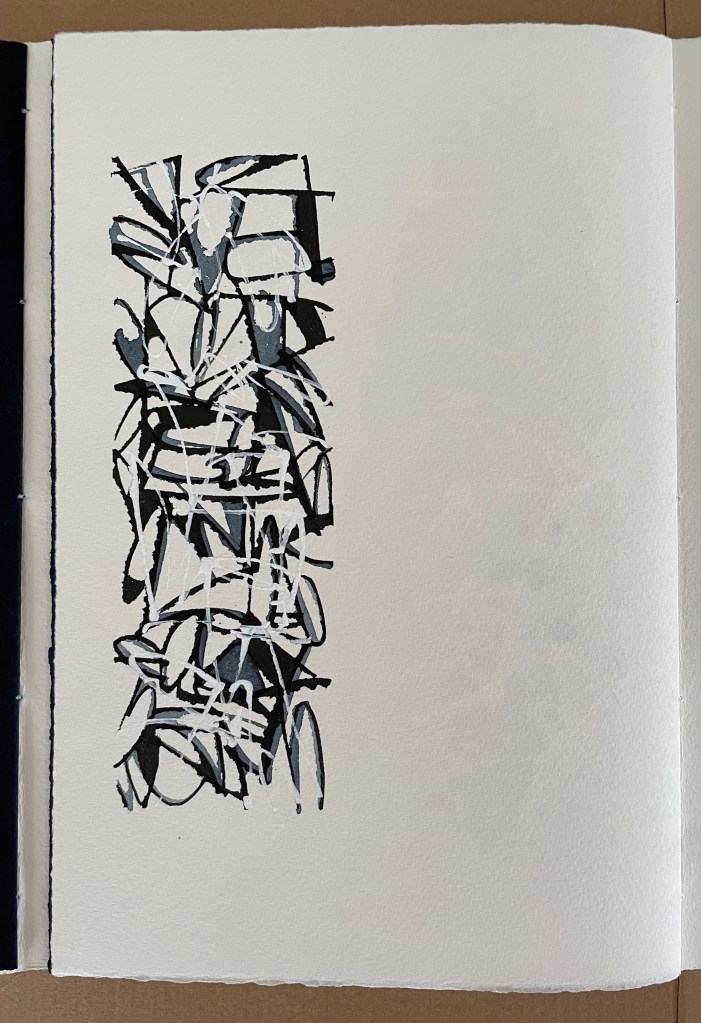
Close up: Last image of the inner signature.
The artist’s decision to turn the poem’s horizontal lines into vertical images could be attributed to an oriental influence from the calligraphic technique employed or the Japanese paper used. It could be attributed to the whale’s habit of sleeping vertically (see photo below). It just as likely demonstrates a genius in art. In the 1970s, a young academic named Gregory Zeck wrote an essay assessing Crane’s own paraphrase written for Harriet Monroe, who published the poem in Poetry in 1926. Consider the verticality in the poem observed by Zeck in his critical interpretation of Crane’s paraphrase:
The metaphoric levels, not merely single or double, turn about on themselves in intricate convolutions. Crane’s “calyx of death’s bounty,” … as he says, does not merely describe “the vortex made by a sinking vessel” but also – in its “double ironic sense” – suggests a cornucopia (Poems, pp. 238-39). This phrase begins the poem’s skein of oxymora; it relates the protection death … provides for the floral beauty and fragility of life, as the calyx of a flower shields and holds the reproductive parts. … Death gives of itself liberally, taking (in) human life but spilling out life’s fruits unstintingly – men and signs of the possibly superhuman – so that the cyclicality of the vortex partakes of the vertical dimension of life and death, knowledge and ignorance, sea, land, and air that marks the poem. Recurrence and transcendence are imaged as concomitant possibilities in visionary chronology; while the whirlpool goes round, the wreckage goes down and up. (Zeck, 677, underline added)
Academics respond to poetry with words. Book artists respond differently. Drawing on her variety of mastered techniques of printing and book art, Chris Ruston has interpreted and transformed “At Melville’s Tomb” as much as if the poem itself were found material from a seaside walk. She has responded to poetry with art.
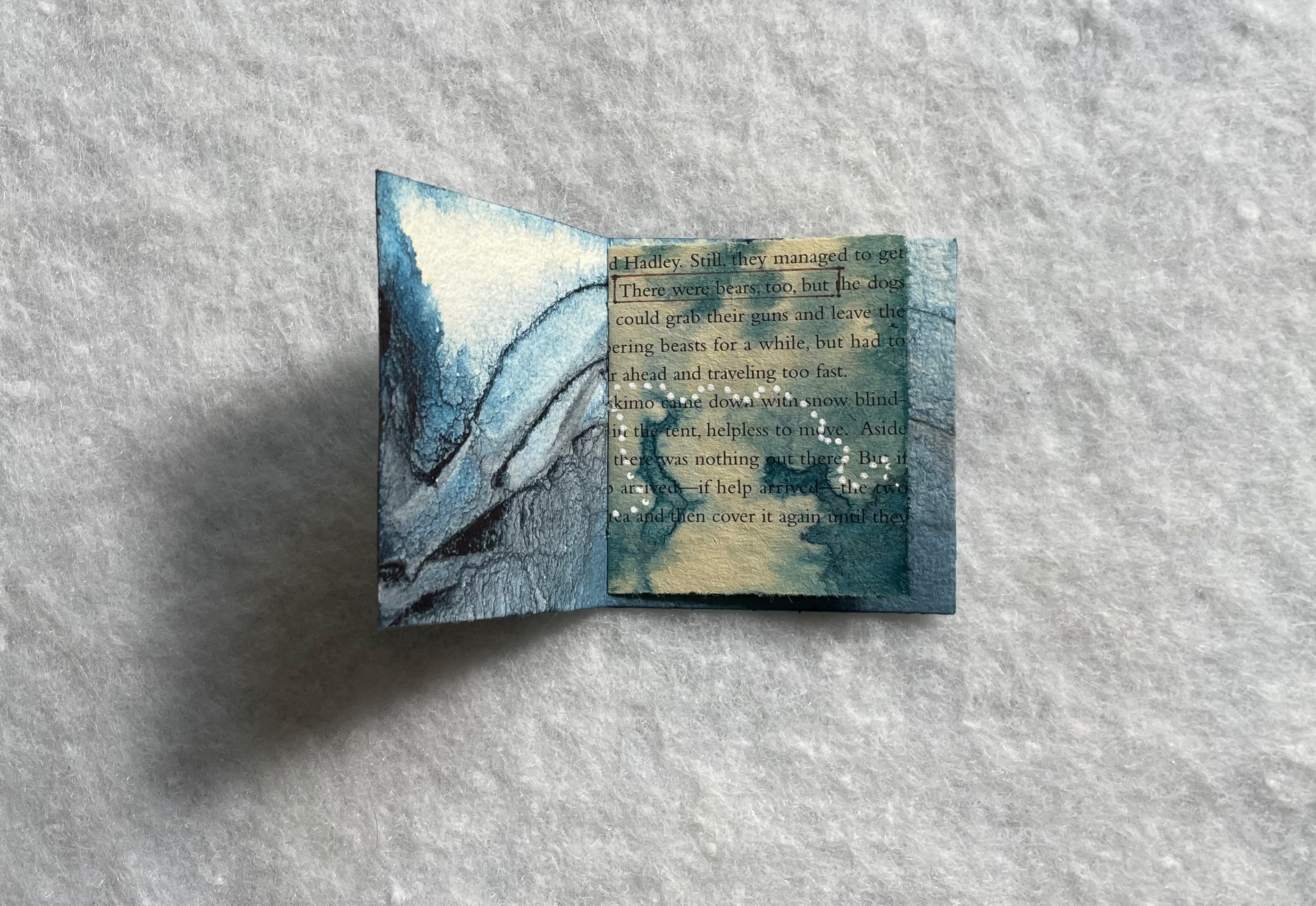
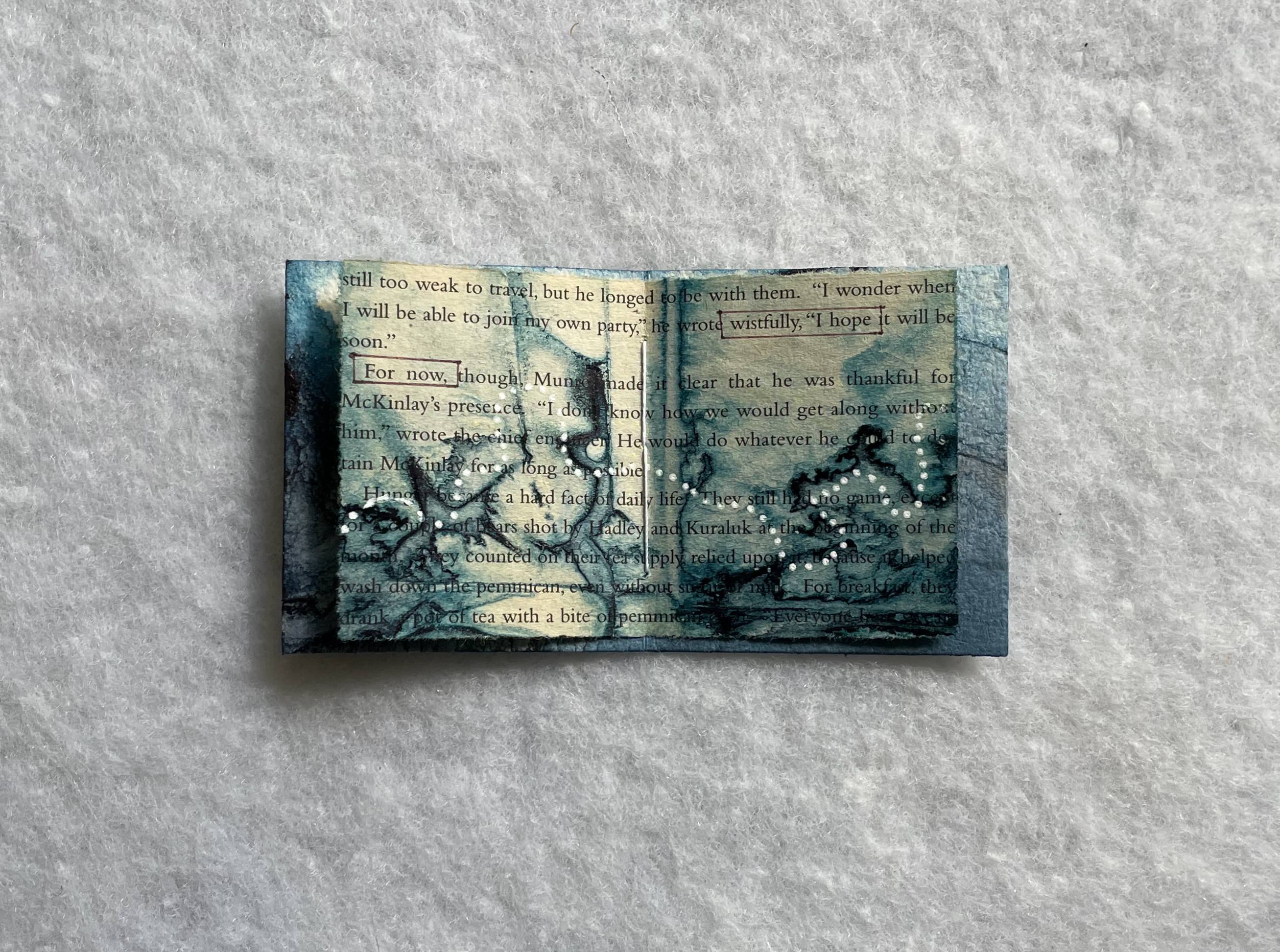
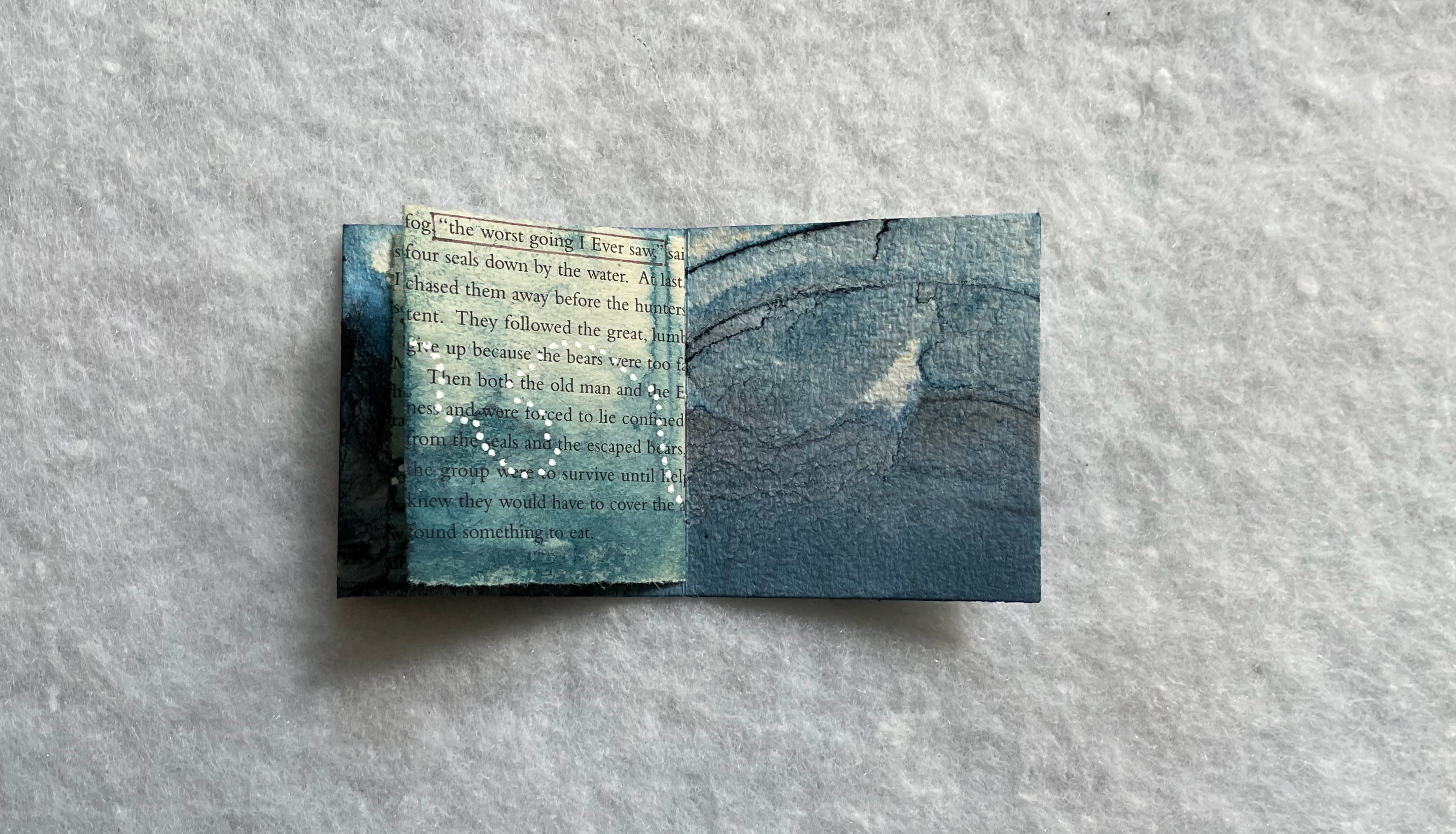
In Memoriam (2021)
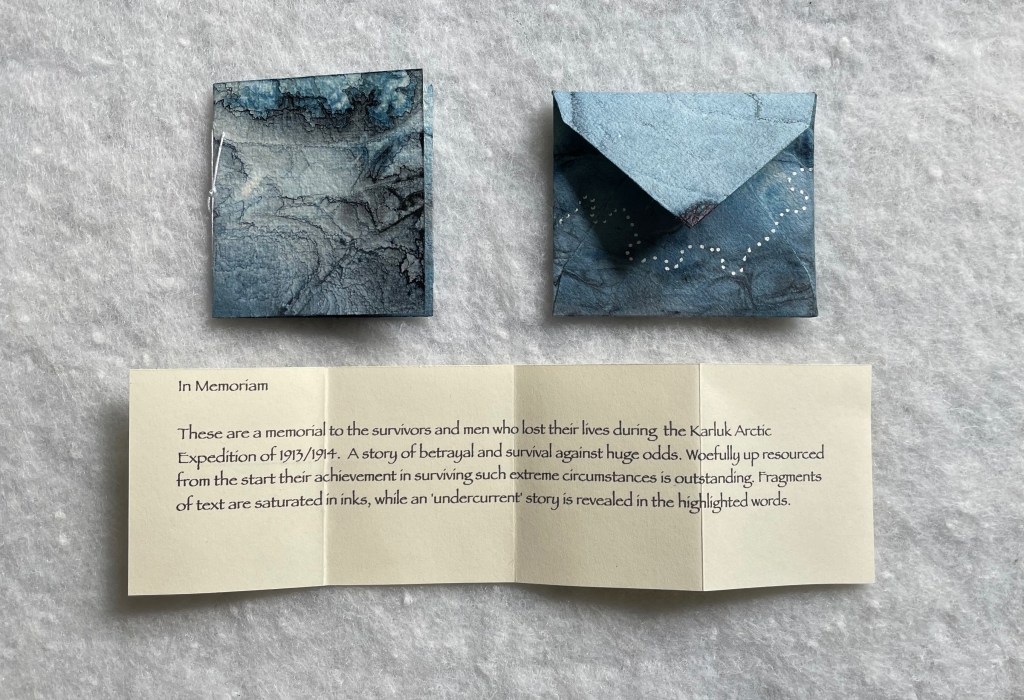
In Memoriam (2021)
Chris Ruston
Handmade, dyed envelope. Miniature booklet. Loose insert with description Envelope: H60 x W70 mm. Booklet: H62 xW56 mm. [4] pages. Edition of 10, of which this is #4. Acquired from the artist, 20 July 2022.
Photos: Books On Books Collection.
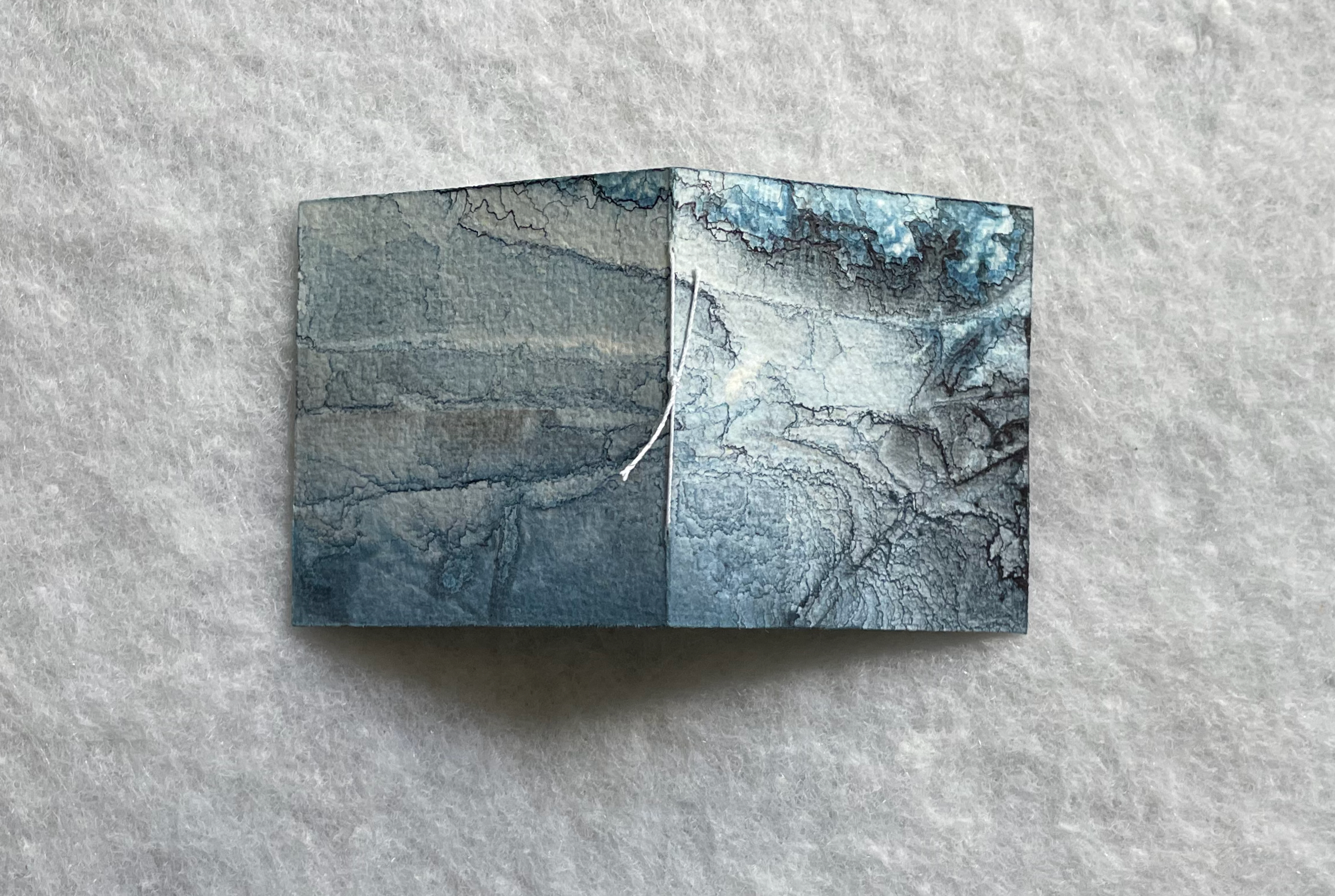
This miniature booklet, its matching envelope and whale-shaped bookmark recalls the memorial functions of Ruston’s Lost Voices Artist’s Books suite.

Further Reading
“Chris Ruston (I)“. 22 January 2022. Books On Books Collection.
“Jane Paterson“. 1 December 2020. Books On Books Collection.
“’Very Like a Whale’, the Bodleian Bibliographical Press’s Exhibition“. 24 November 2019. Bookmarking Book Art.
Crane, Hart. October 1926. “At Melville’s Tomb”. Poetry 29:1: 25.
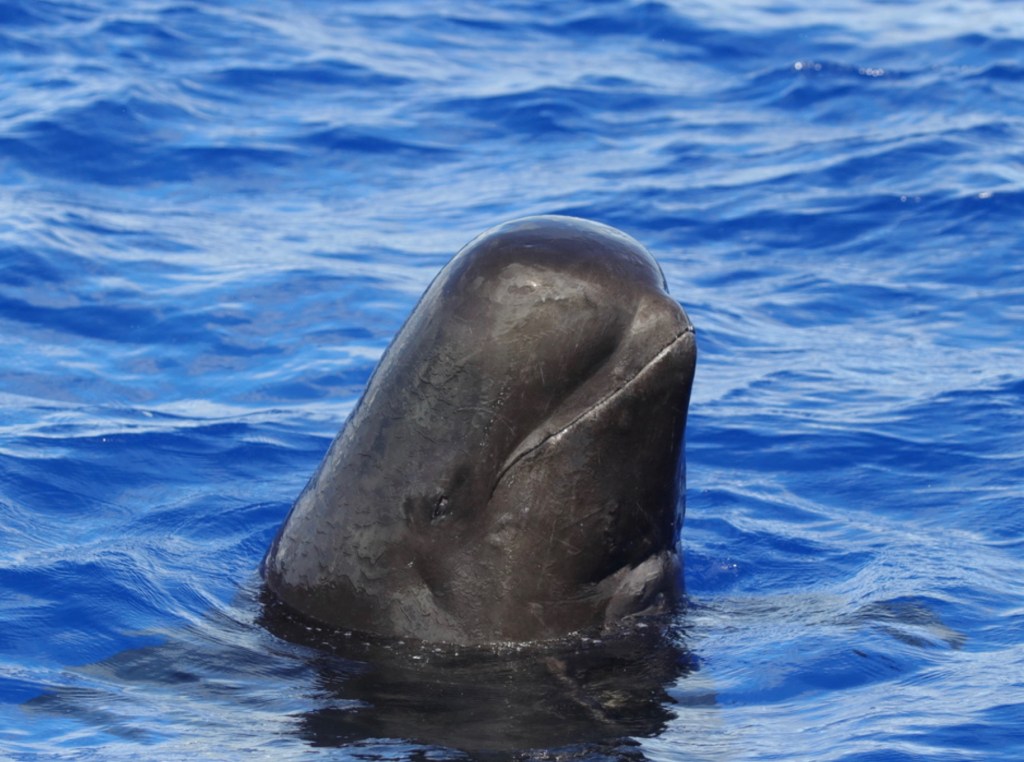
Hill, Marie. 27 September 2018. “Old Friends in New Places: Cetacean Research in the Western Pacific“. Science Blog. National Oceanic and Atmospheric Administration, US Department of Commerce.
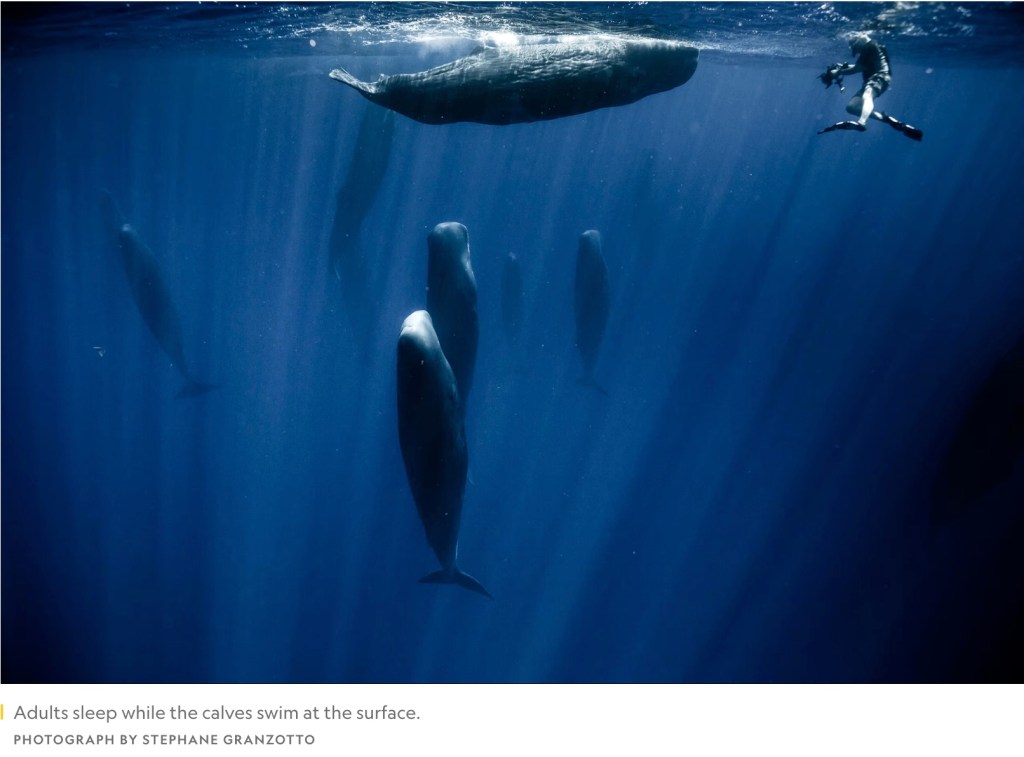
Gibbens, Sarah. 5 August 2017. “Why These Whales Are ‘Standing’ In the Ocean“. National Geographic.
Zeck, Gregory R. 1975. “The Logic of Metaphor: ‘At Melville’s Tomb’”. Texas Studies in Literature and Language, 17:3: 673–86.
 Books On Books
Love this collection.
LikeLike