Ammonite (2015)
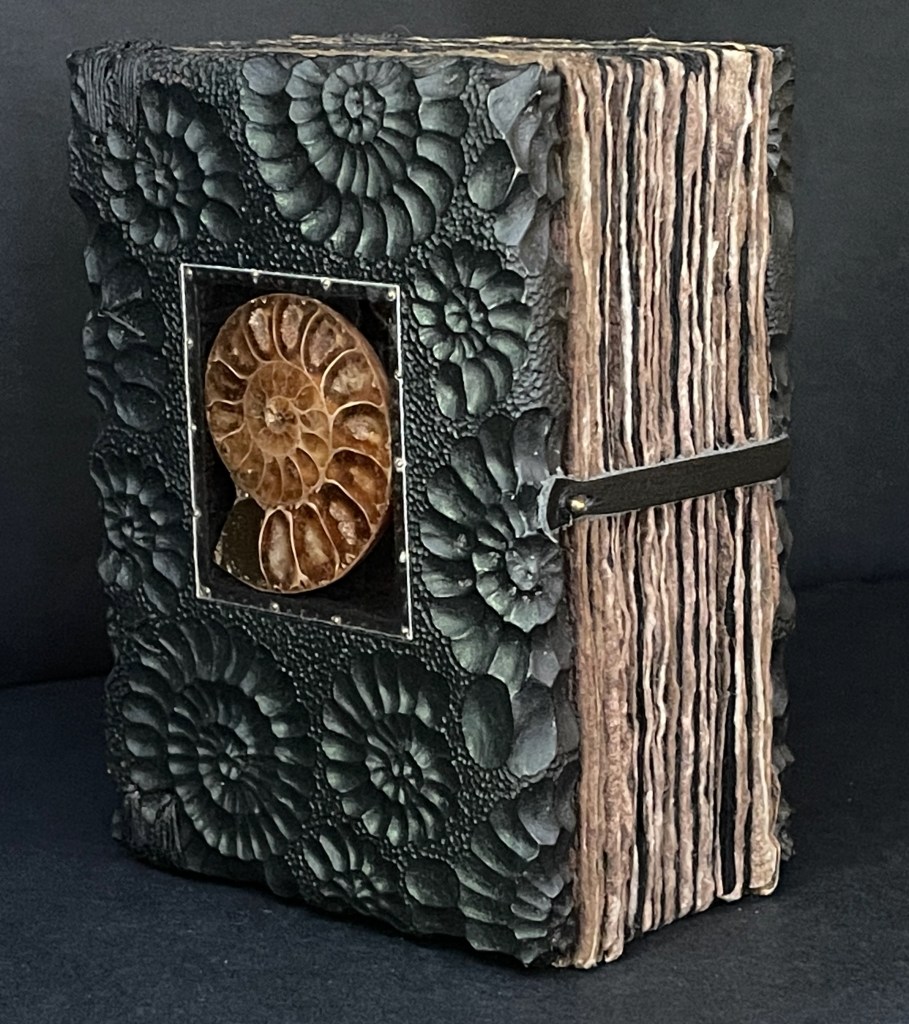
Ammonite (2015)
Daniel Essig, Graeme Priddle, and Melissa Engler
Ethiopian and Coptic bound book, sewn with waxed black linen thread, walnut-dyed handmade flax and Ingres Antique black papers, with carved front and back covers of maple, each with a bisected ammonite fossil embedded beneath a mica sheet, fixed with 1/8 brass brads. H127 x W90 x D63 mm. [384] pages. Unique. Acquired from the artists, 30 May 2025.
Photos: Books On Books Collection.
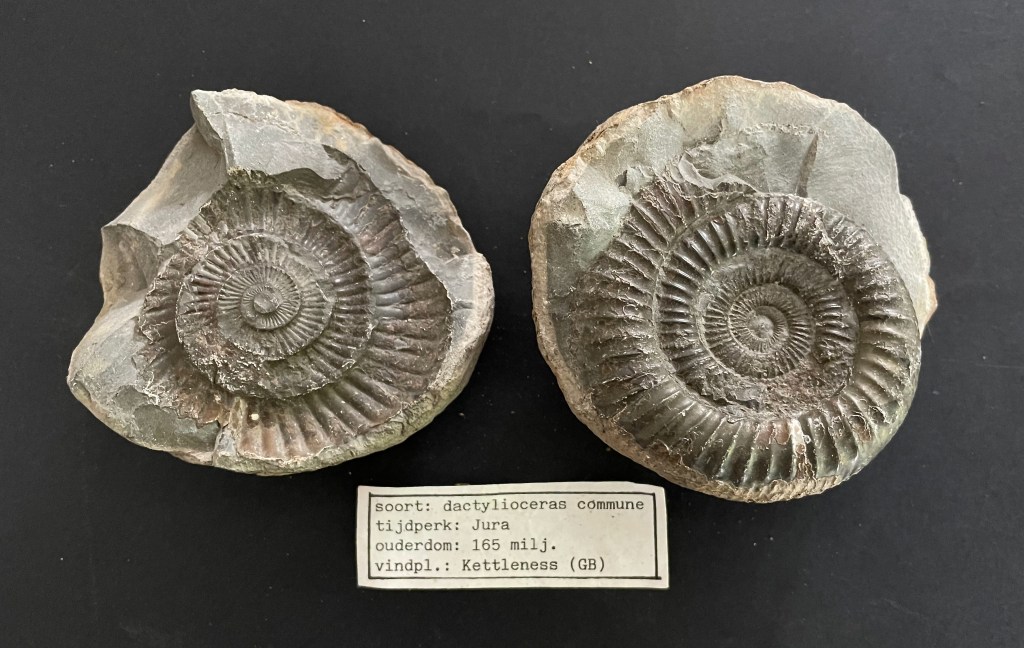
Even a cursory glance through the Books On Books Collection confirms the variety of choices book artists face when creating an artist’s book. In Ammonite (2015), the book block and its binding are the site and material of Daniel Essig, Graeme Priddle, and Melissa Engler’s sculptural art. In their collaboration, Essig drilled and prepped the wooden covers, Priddle carved the ammonite surface, Engler painted the covers, and then Essig added the mica window with ammonite fossil, prepped the book block, and bound the book.
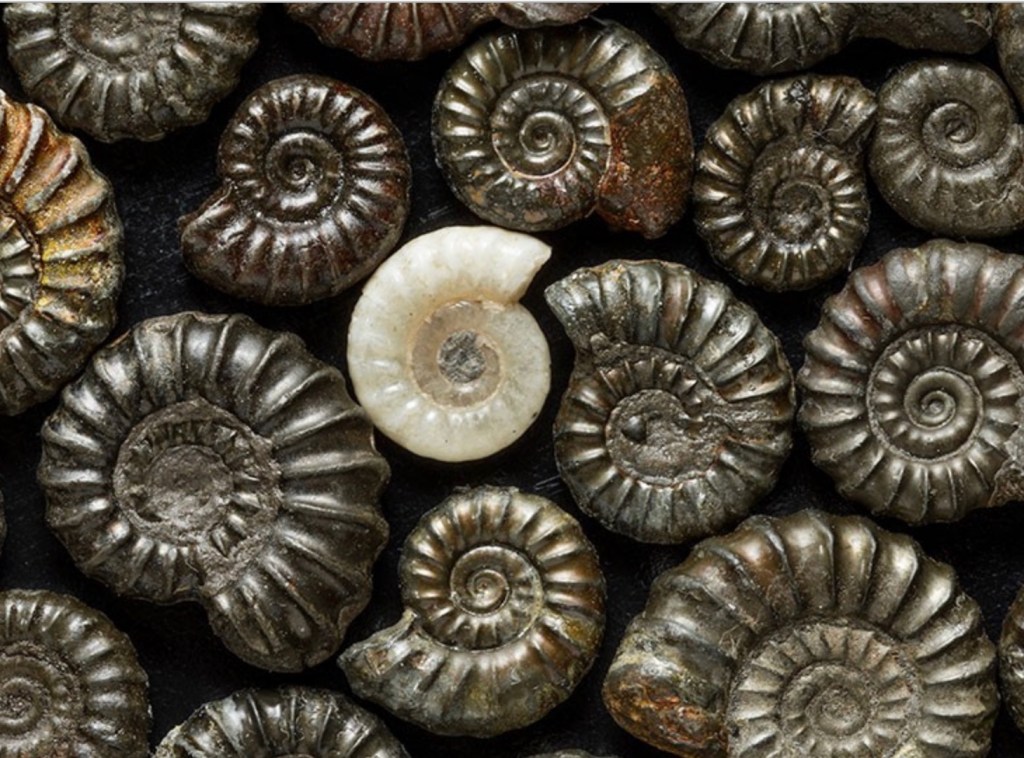
Contemporary book artists frequently use Ethiopian and Coptic bindings, and in Ammonite, the material, its treatment, and binding and unite ingeniously with the subject. Coptic binding dates back to the 2nd century CE, casting the imagination toward ancient history if not prehistory. The exposed spine, also characteristic of the later Ethiopian binding method, which Essig has followed in Ammonite‘s main sewing and board attachments, resonates physically with the ribbed appearance of ammonite fossils. The end bands are more characteristic of Coptic binding. Along the exposed spine, the waxed thread interlacing the signatures suggests the patterns to be found on the shell of the Tiger Nautilus, the closest living relative of the extinct ammonite.
The handling of the book block echoes Ammonite‘s subject in other ways. There are fifteen signatures of well-chosen papers. The first two and the last signatures are 8-leaf signatures of the handmade papers; the remaining twelve signatures each consist of a handmade paper folio wrapping around a 12-leaf signature of Ingres Antique black. On the fore edge, the layering of the lighter and darker hand-dying of the flax paper (handmade at Cave Papers by Bridget O’Malley) with the Ingres Antique black paper suggest the sedimentation that takes us back in time to the fossil carvings on the burnt and burnished maple covers and their embedded mica-covered miniature natural history display cases.
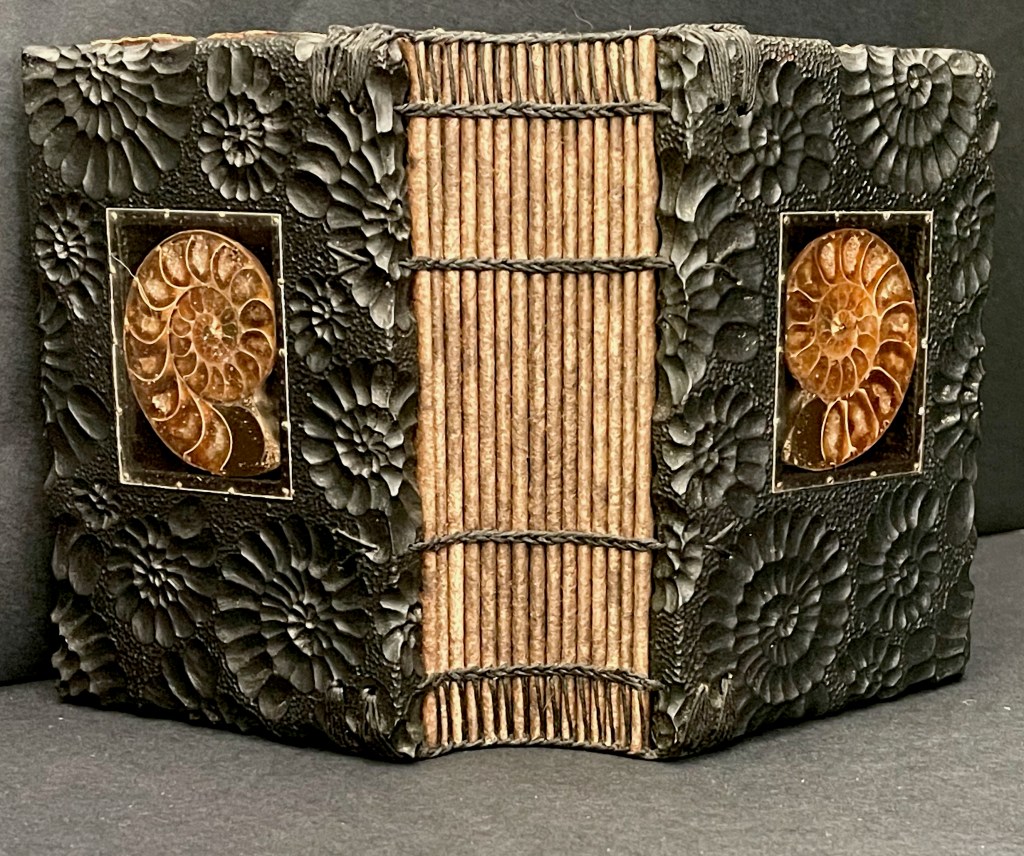
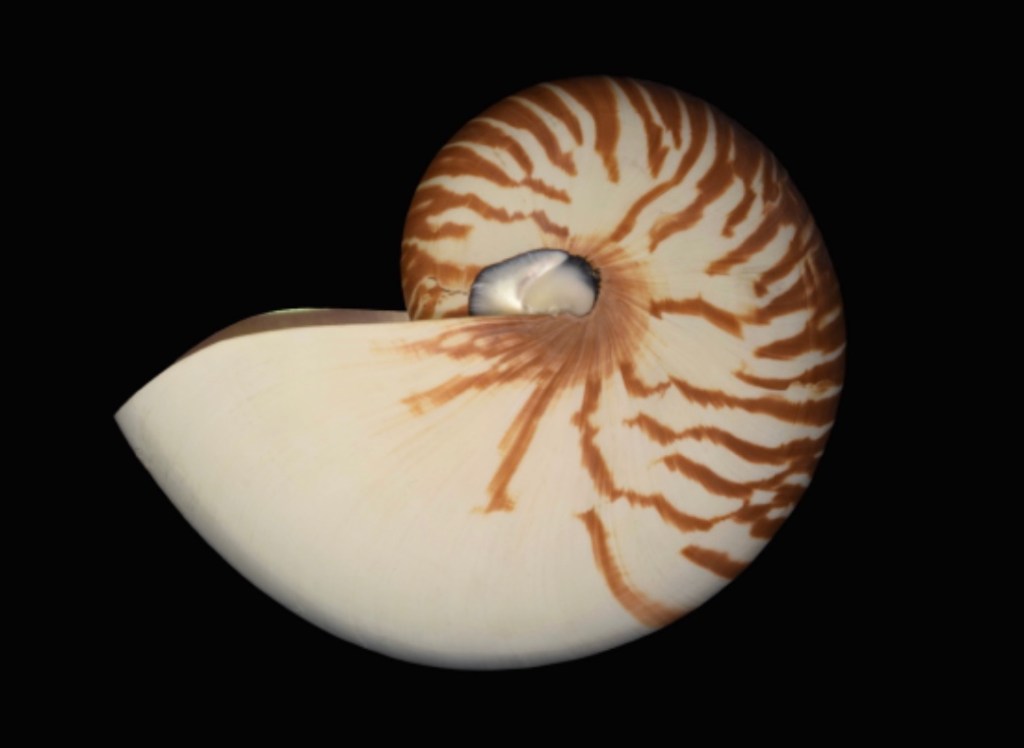
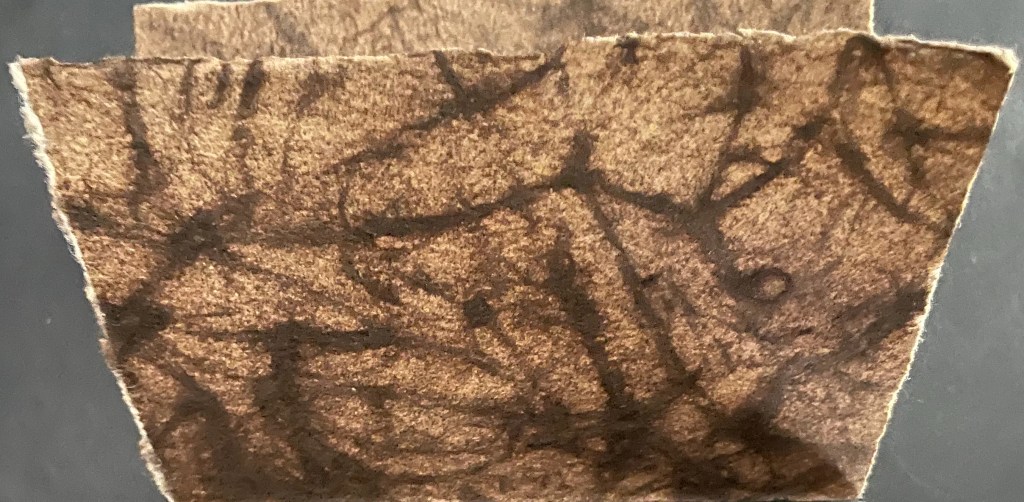
Left: Ammonite covers and spine. Center: From “Year of the Tiger“. 2022.Natural History Museum Los Angeles County. Right: Ammonite walnut-dyed flax paper.
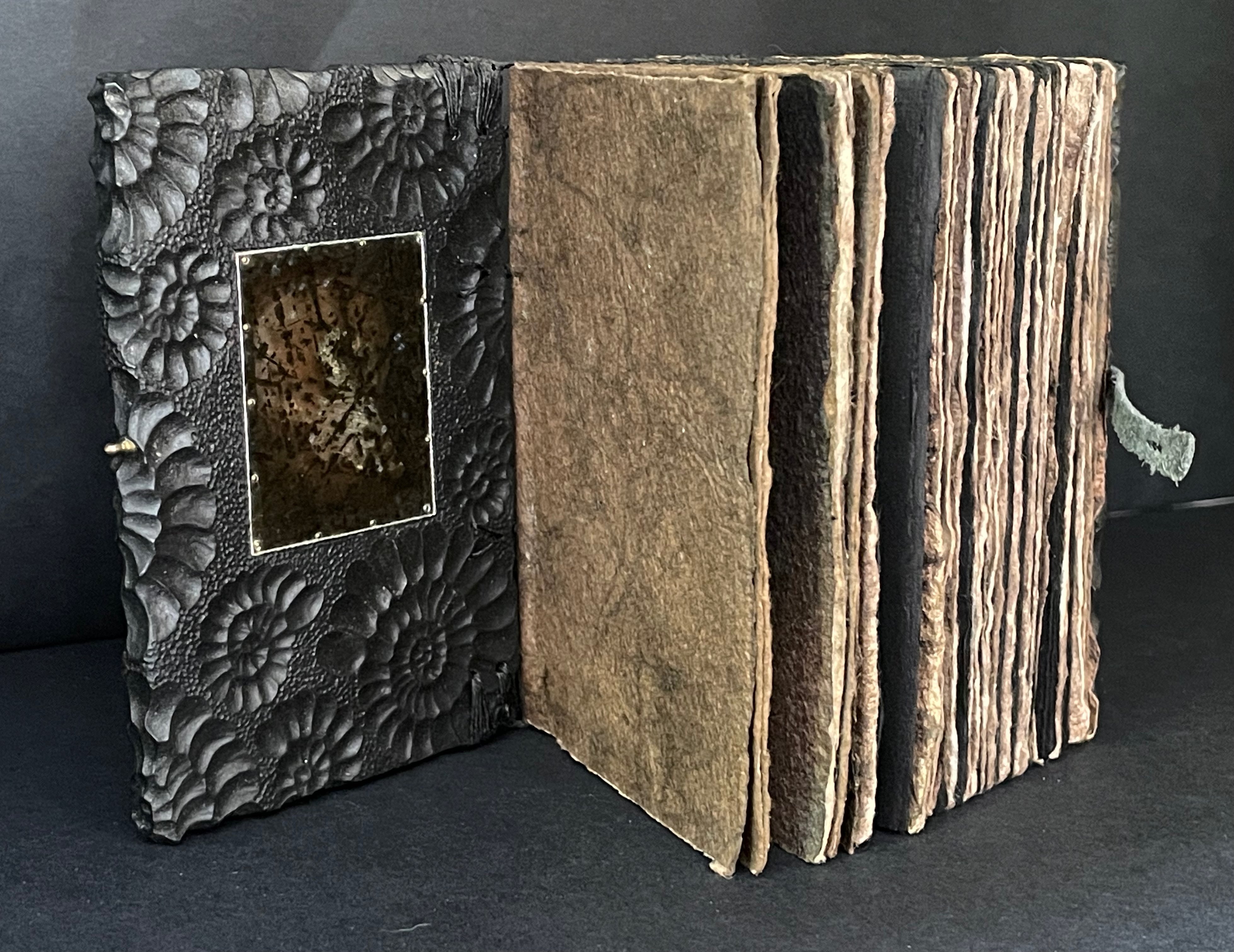
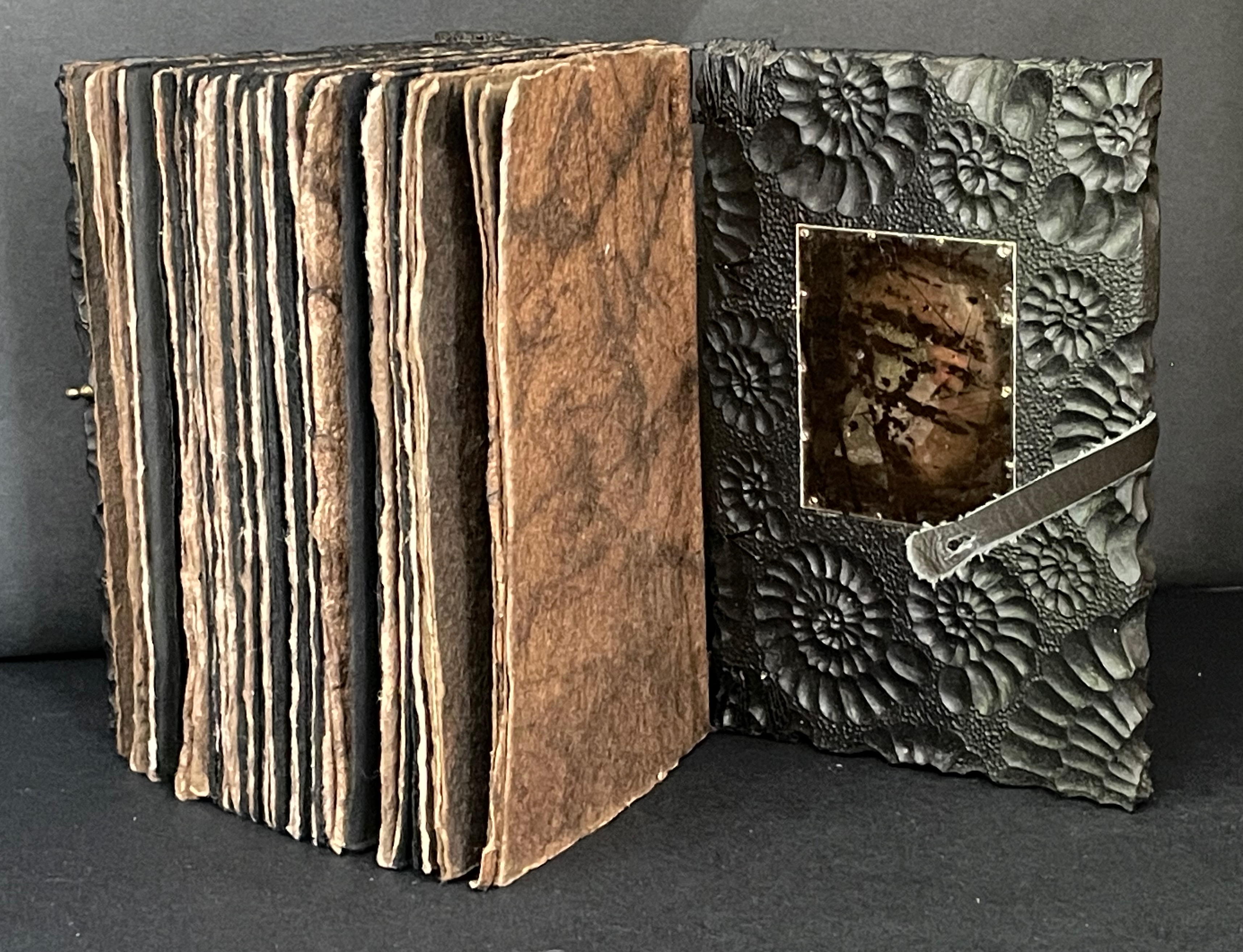
Inside front cover, inside back cover.
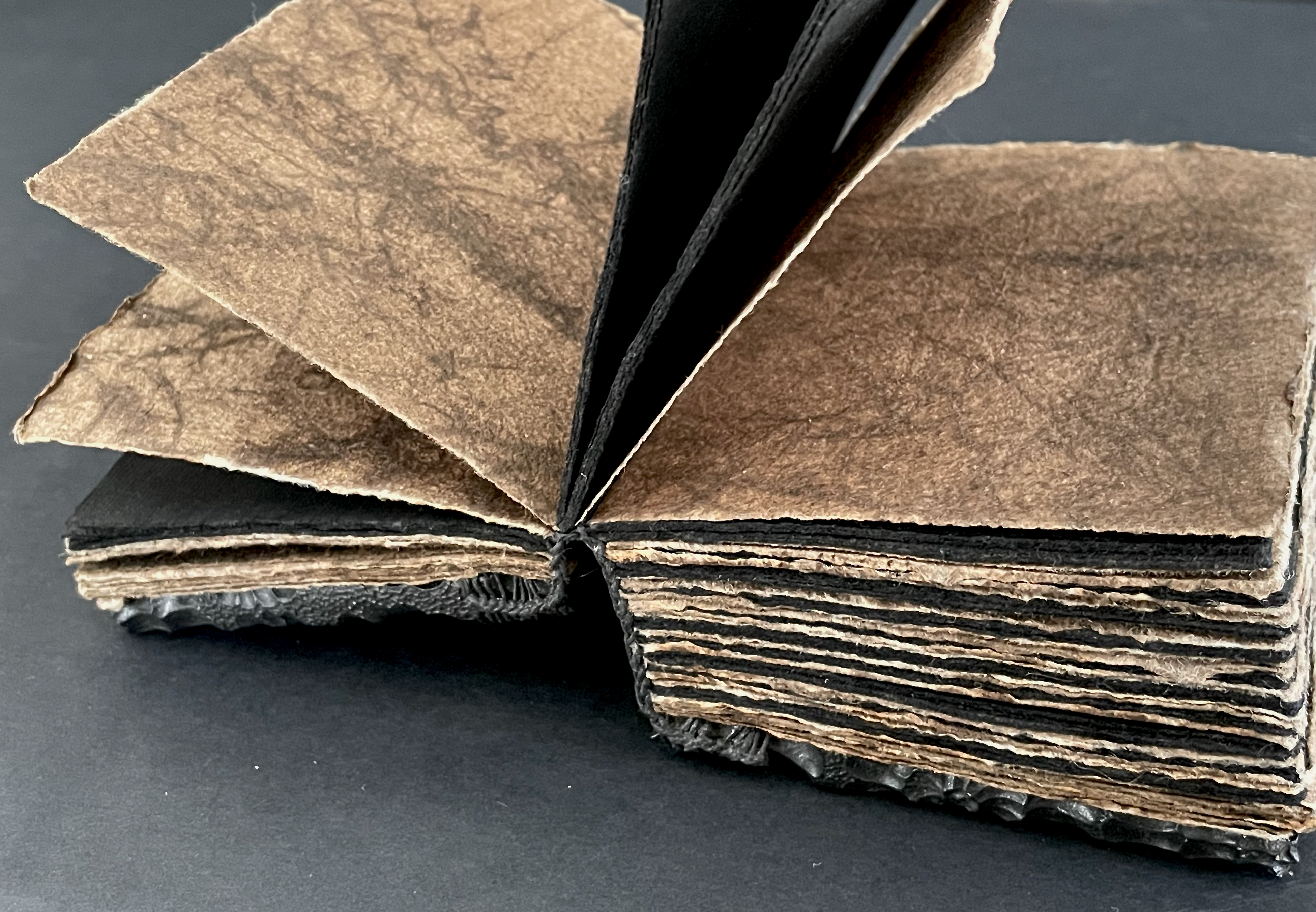
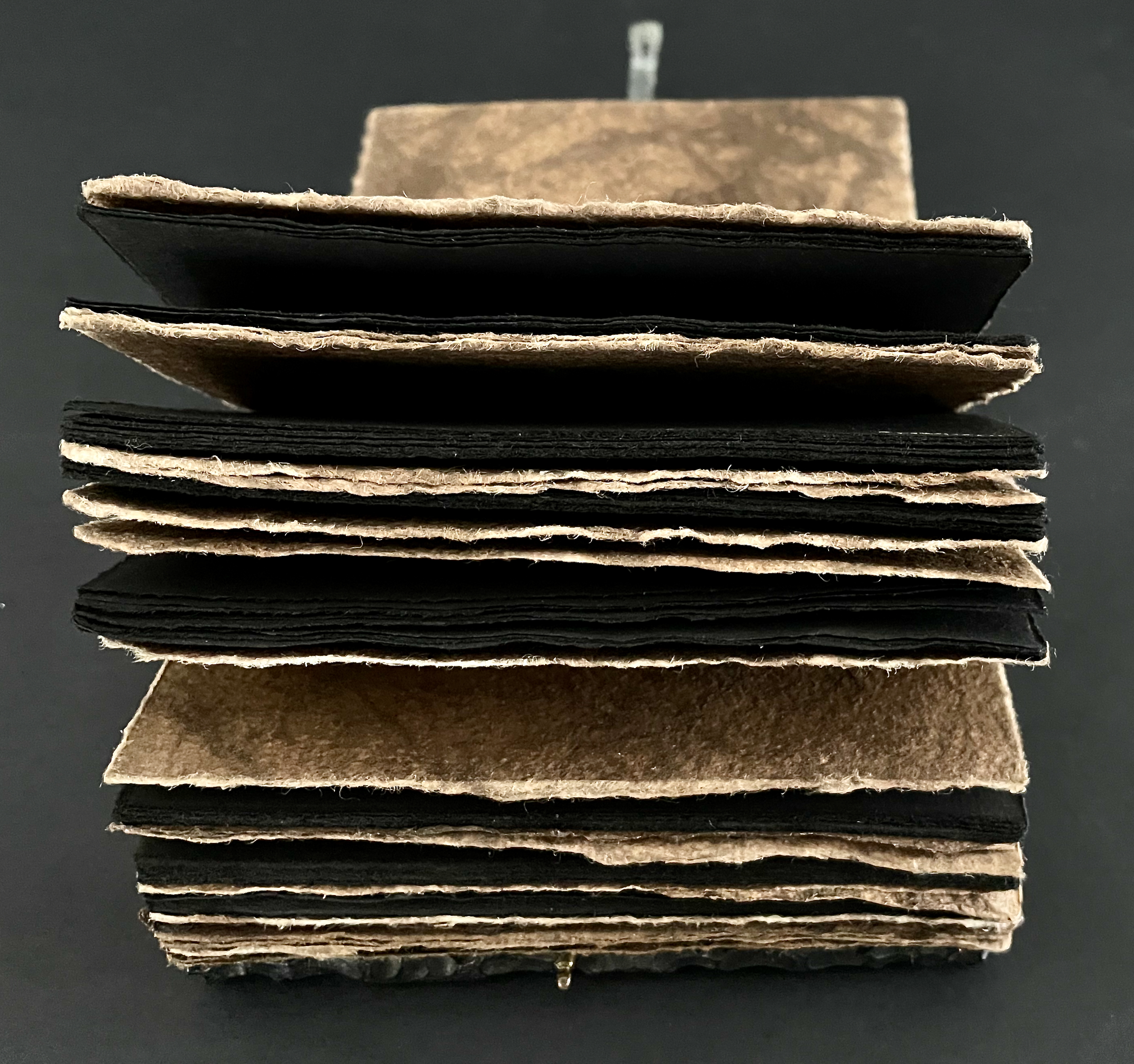
The sedimentary layering of flax paper and Ingres Antique black.
And finally, the heft of Ammonite, arising from its boards, choice of papers, and the binding, speaks to its subject. If you have ever handled an ammonite fossil, you will recall its weight and the alternation of smoothness and roughness from those of the covers and papers of Ammonite.
Books On Books Collection
Natural History Museum, London.
Further Reading
Osterloff, Emily.N.D. “What is an ammonite?” London: Natural History Museum. Accessed 9 June 2025.
Chen, Julie. 2013. 500 Handmade Books. Volume 2. New York: Lark. P. 19 (Latent).
Miller, Steve. 2008. 500 Handmade Books : Inspiring Interpretations of a Timeless Form. Edited by Suzanne J. E. Tourtillott. New York: Lark Crafts. P. 14 (Book in a Book).
Salamony, Sandra, and Peter and Donna Thomas. 2012. 1,000 Artists’ Books : Exploring the Book as Art. Minneapolis: Quarto Publishing Group USA. Pp. 10 (Chained Album), 11 (Altered), 220 (Crested), 298 (Collection).
 Books On Books
Thank you Robert, wonderfully researched and described. We hope you enjoy our book as much as we enjoyed making it:)
Kindest regards
Graeme Priddle
LikeLike