Richard J. Hoffman (1912-1989) was a fine press printer and taught print and design at California State University, Los Angeles. His interests in typography, miniature books and the alphabet are represented by two works in the Books On Books Collection: “Don’t Nobody Care about Zeds” (1987) and Otto Ege’s The Story of the Alphabet (1988).
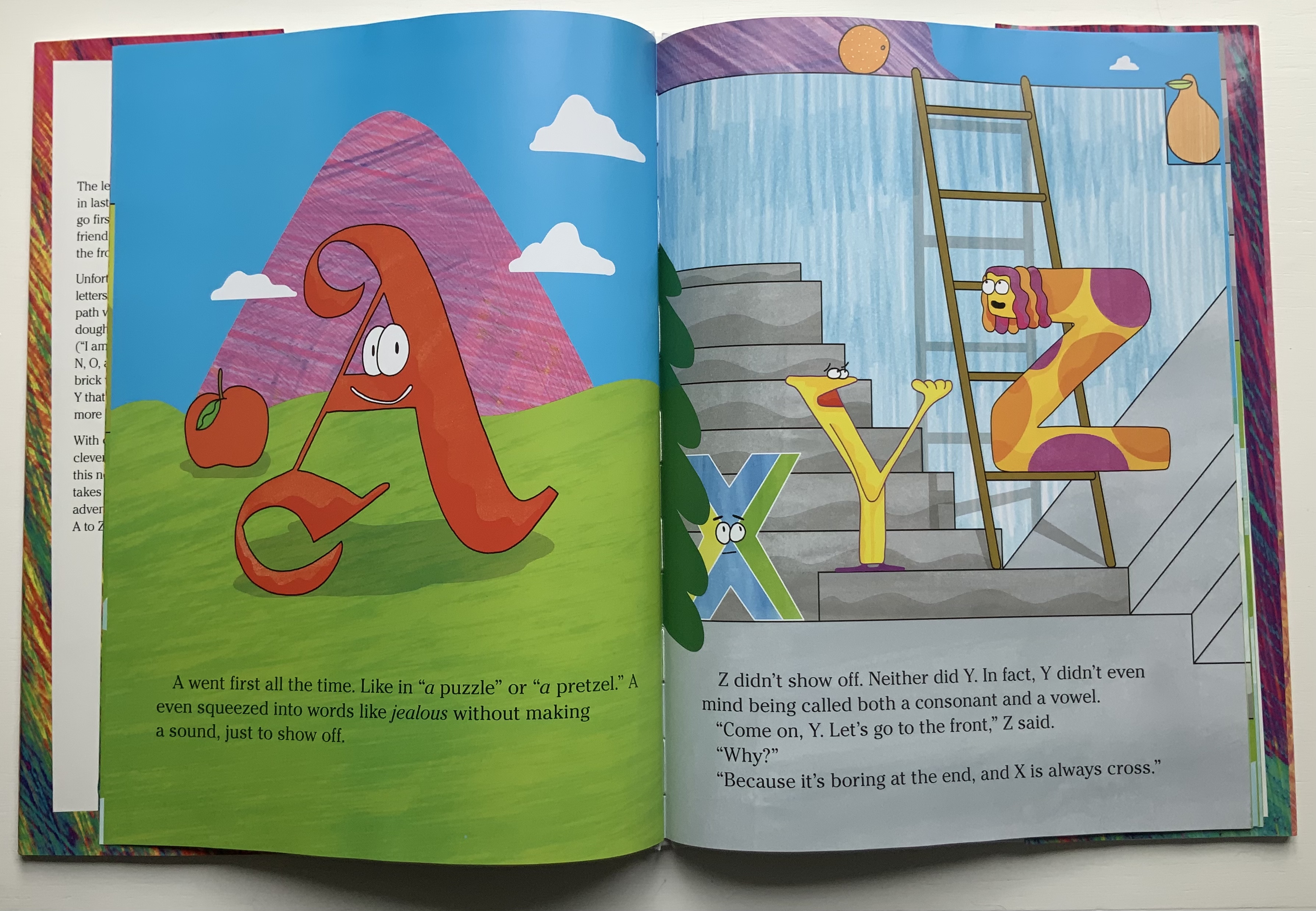
Both books scratch the collection’s “alphabet itch”. The first provides the added satisfaction of complementing the children’s books that champion the alphabet’s last letter: Jon Agee’s Z Goes Home (2006), Alethea Kontis & Bob Kolar’s AlphaOops: The Day Z Went First (2012), Sean Lamb & Mike Perry’s Z Goes First (2018) and Lou Kuenzler & Julia Woolf’s Not Yet Zebra! . The second adds an alphabet history to the miniature abecedaries as well as a more than usually intricate design.
Why does the alphabet begin with the letter A? The long-held speculation that its origin from a sign designating “ox” made it the first in line because of the ox’s meeting the first of our survival needs — food — seems a stretch. Beyond B for beth meaning “house” (shelter) and C for gimel meaning “hunting stick” (in case we run out of oxen), what needs do the other twenty-three letters represent? Especially the letter Z.
Z began its life in seventh place with the Phoenician and Greek alphabets. With Abraham Maslow’s “hierarchy of needs” extending only to five levels in the twentieth century, Z has had no identified need to represent — even after the fact. In Phoenician and Hebrew, the letter’s name is zayin, in Greek, zeta, and both mean “seven”. Now there is a credible rationale for a letter’s position in the alphabetical order. But then came Spurius Carvilius Ruga, a Roman headmaster who came up with the letter G, displacing Z, and then Appius Claudius Caecus, the developer of the Appian Way and “censor” with the influence in 312 BC to decide that Latin had no need of Z and its sound anyway and so banished it. After the Romans conquered Greece and began importing Greek words like zephyros, the letter Z returned and settled meaninglessly into last place.
Until the twenty-first century.
Z Goes Home (2006)
Z Goes Home (2006) Jon Agee Casebound, paper pasted on boards, sewn. H320 x W223 mm, 30 Pages. Acquired from Amazon, 1 July 2021. Photos of the work: Books On Books Collection.
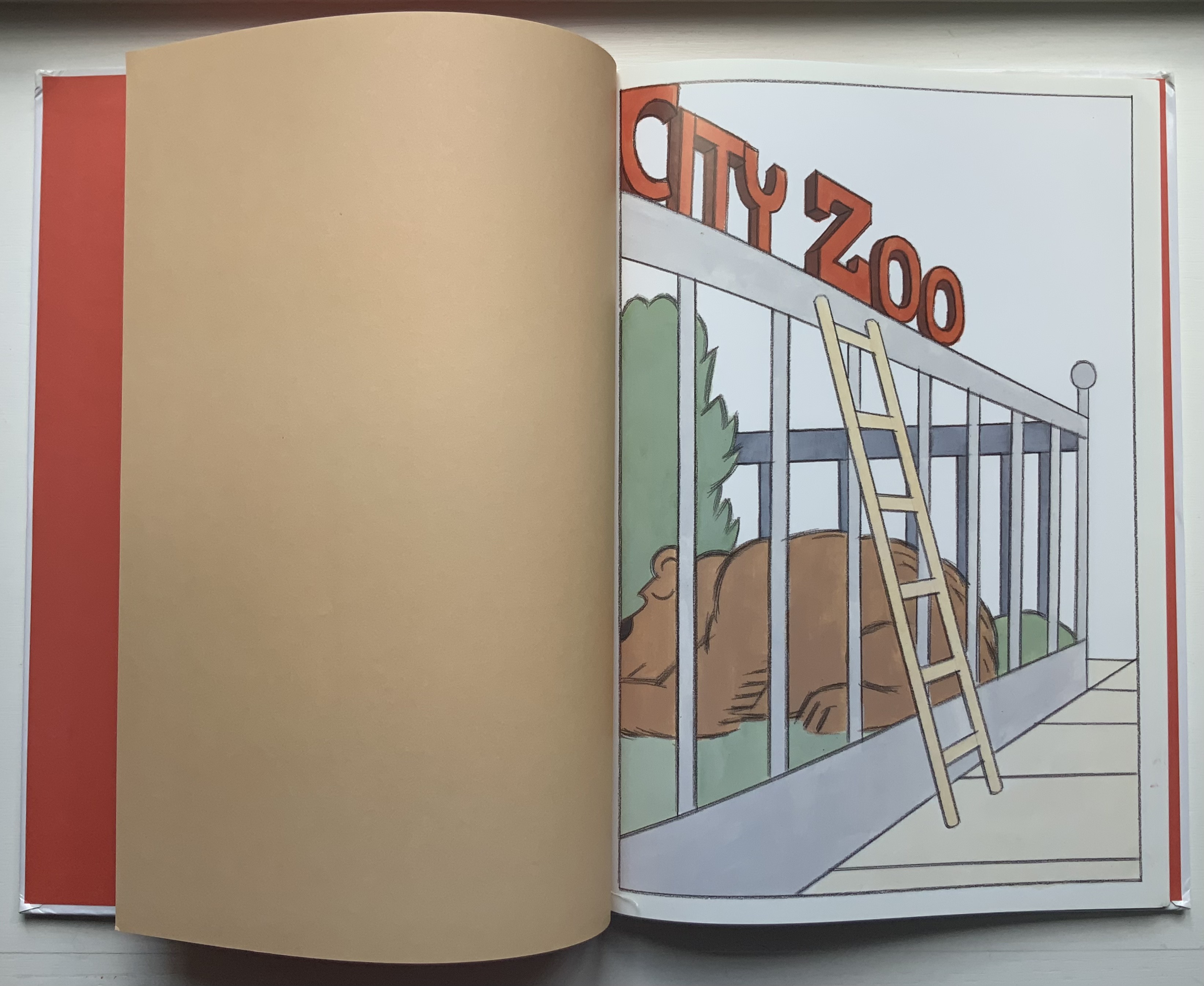
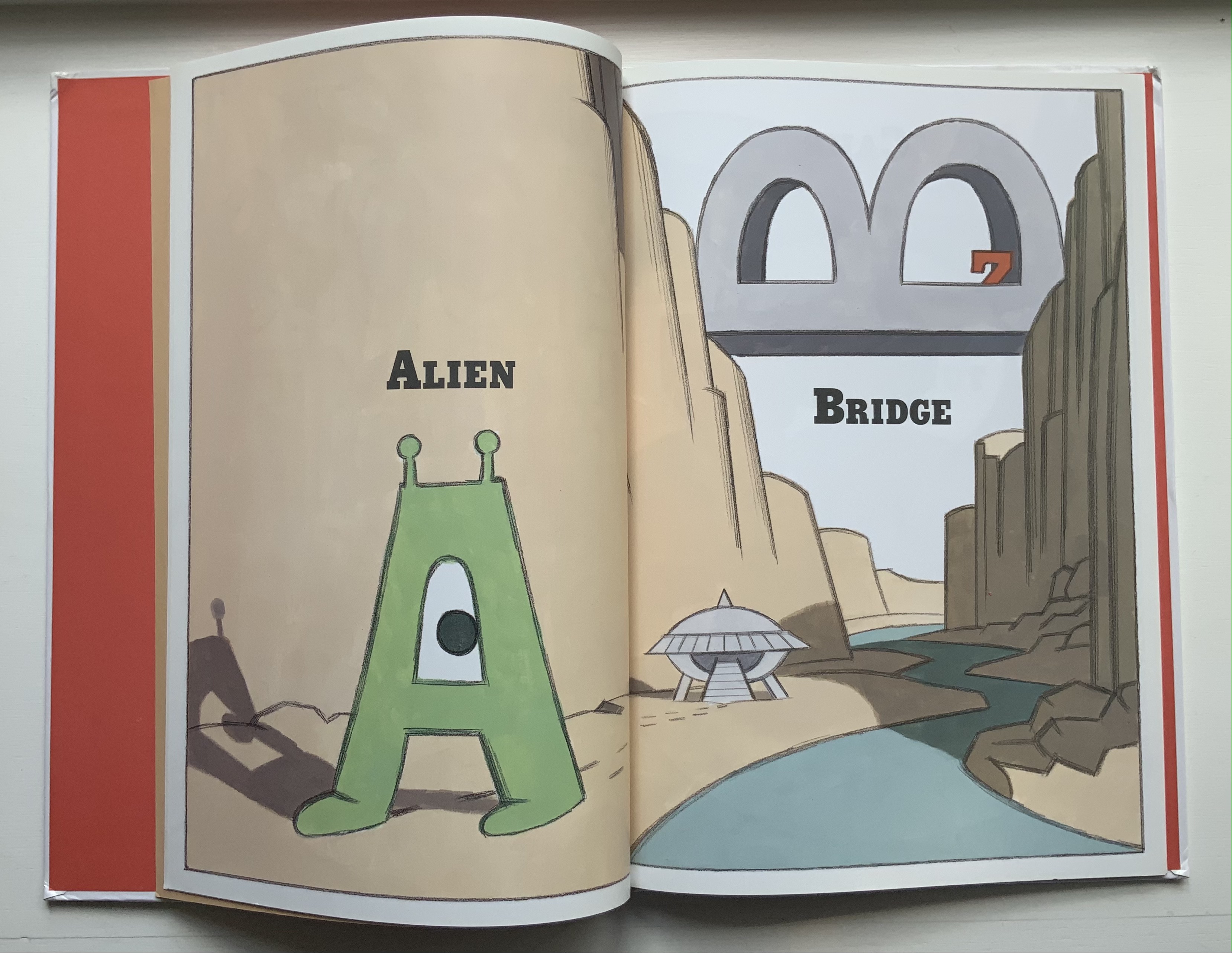
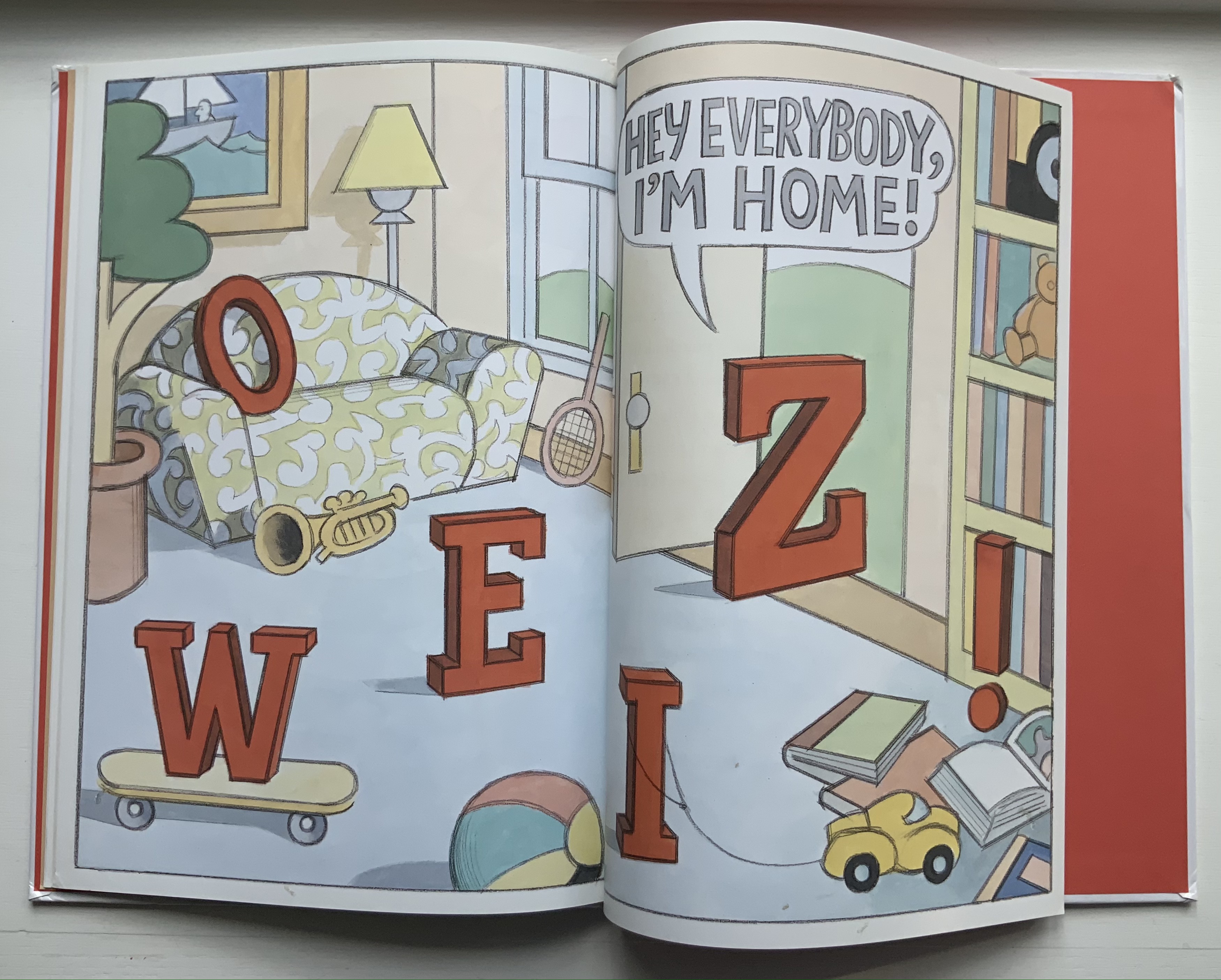
In this first of four imaginative books bringing Z to life, the letter begins to take on real character, quietly descending a ladder from its day job at the city zoo, making its way home across a Bridge, stopping for a Cake and Doughnut snack, admiring itself in a Mirror, and so on until reaching its home at the end.
AlphaOops: The Day Z Went First (2012)
AlphaOops: The Day Z Went First (2012) Alethea Kontis & Bob Kolar Paperback, sewn. H270 x W245 mm, 48 pages. Acquired from Altair Books, 1 July 2021. Photos of the work: Books On Books Collection. Displayed with permission of the author and artist.
Kontis and Kolar give the letter a zestier, feistier temperament in AlphaOops. Z and Zebra start off well enough, followed by Y and X, but then P and the Penguins show up out of order and Z finds that keeping everyone in reverse alphabetical order is harder than it looks.
Z Goes First (2018)
Z Goes First (2018) Sean Lamb & Mike Perry H286 x W205 mm, 26 pages. Acquired from Amazon, 1 July 2021. Photos of the work: Books On Books Collection. Photos of the work: Books On Books Collection. Displayed with permission of the author and artist.
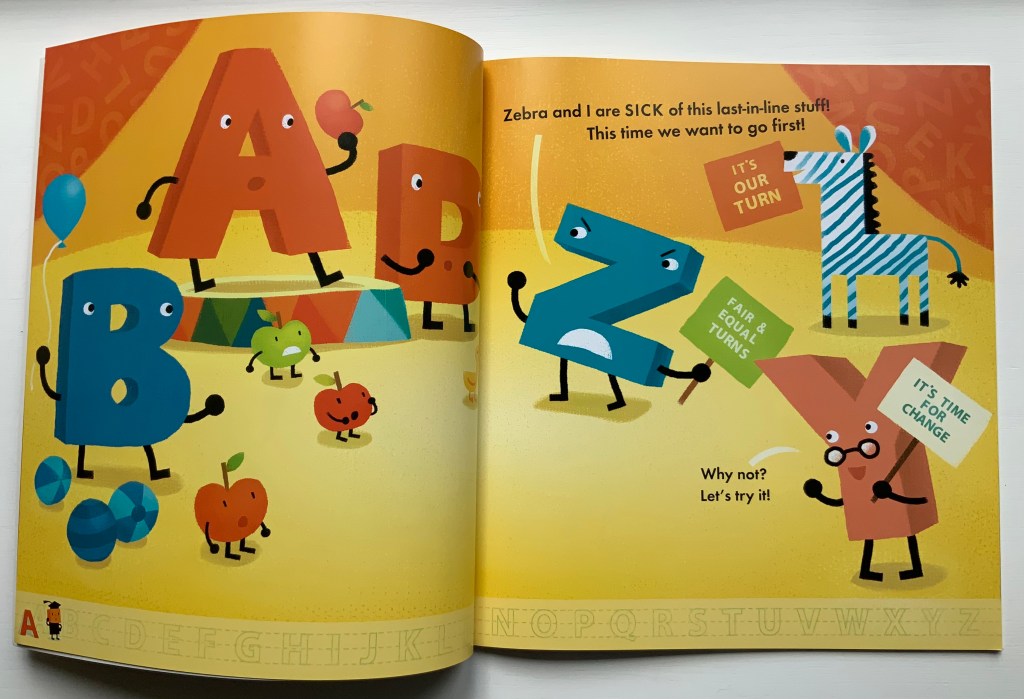
Lamb and Perry introduce a generally milder Z, accompanied by a helpful Y always ready to ask why and why not when the other letters are less than cooperative with Z’s going first.
Not Yet Zebra! (2018)
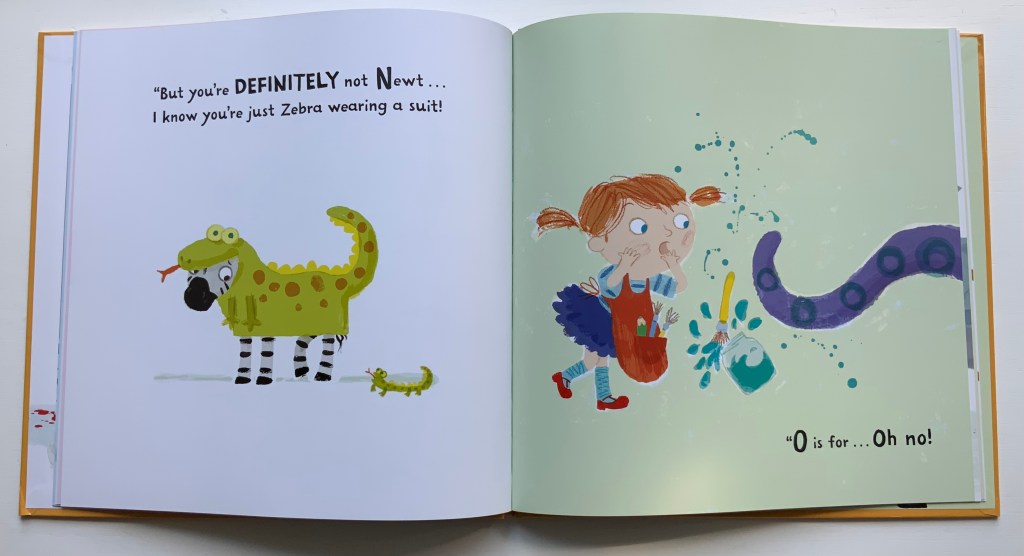
Not Yet Zebra!(2018) Lou Kuenzler & Julia Woolf Hardback, paper pasted on board. H256 x W256 mm, 28 pages. Acquired from The Saint Bookstore, 1 August 2021. Photos of the work: Books On Books Collection. Displayed with permission of the author and artist.
Kuenzler and Woolf let Z’s inner Zebra loose on poor Annie who just wants to paint her alphabet in the right order.
What has taken Z so long to find its raizon d’être?









 Books On Books