


Restless (2020)
Jacobus Oudyn
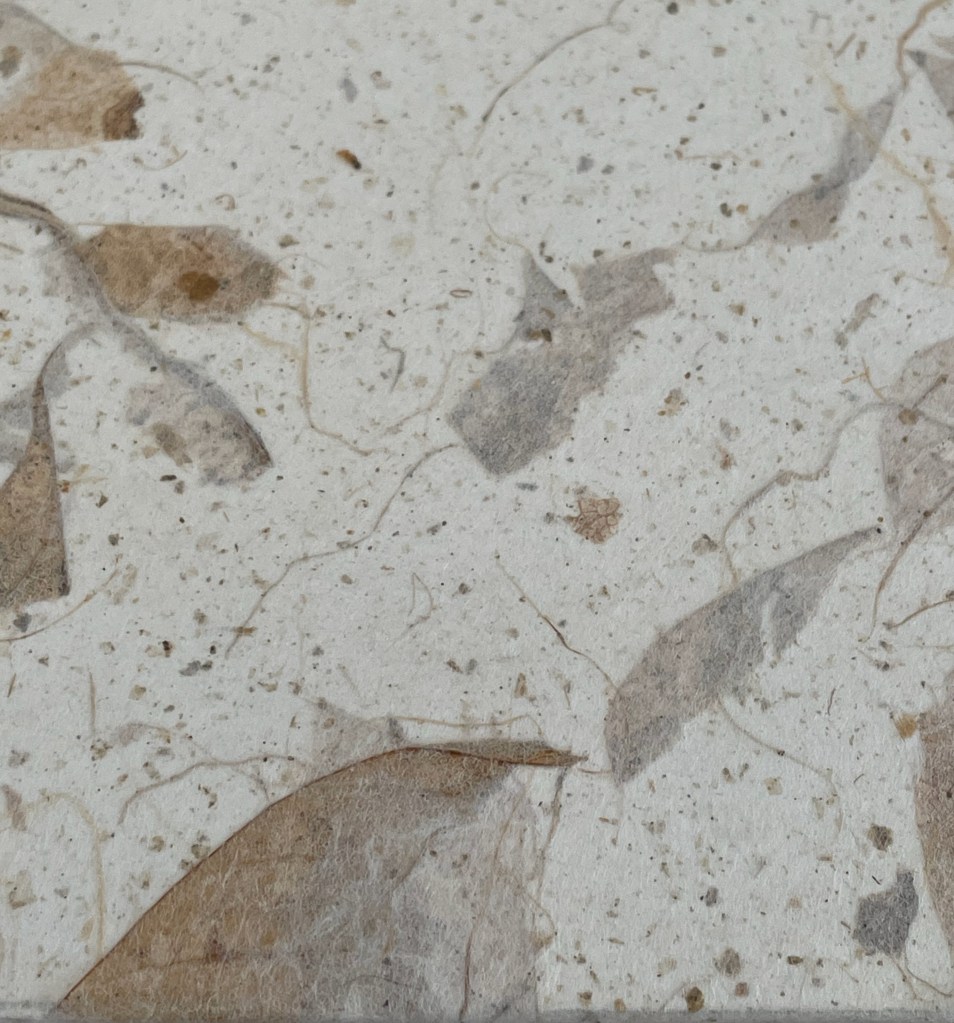
Loose sheets from plastic comb bound notebook in a clamshell box covered in Japanese paper. Box: H240 x W170 x D40 mm. 60 pages. Unique. Acquired from the artist, 2 January 2024.
Photos: Books On Books Collection. Displayed with permission of Jacobus Oudyn.
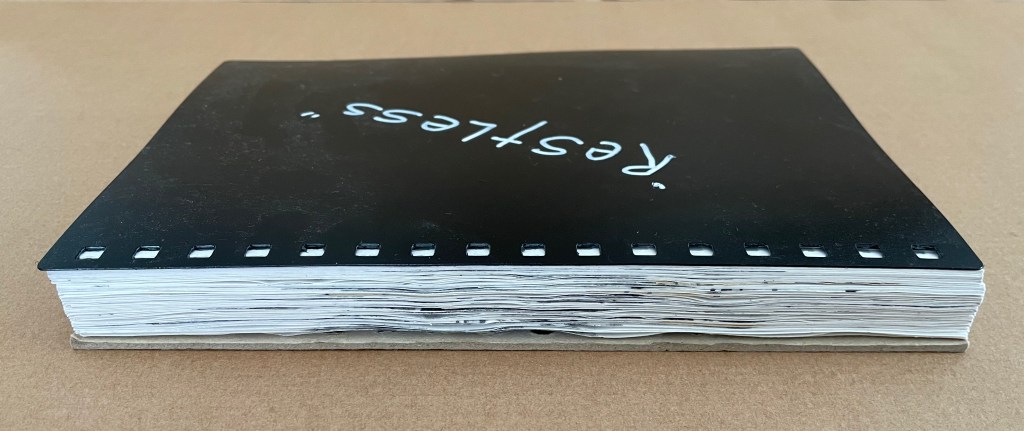
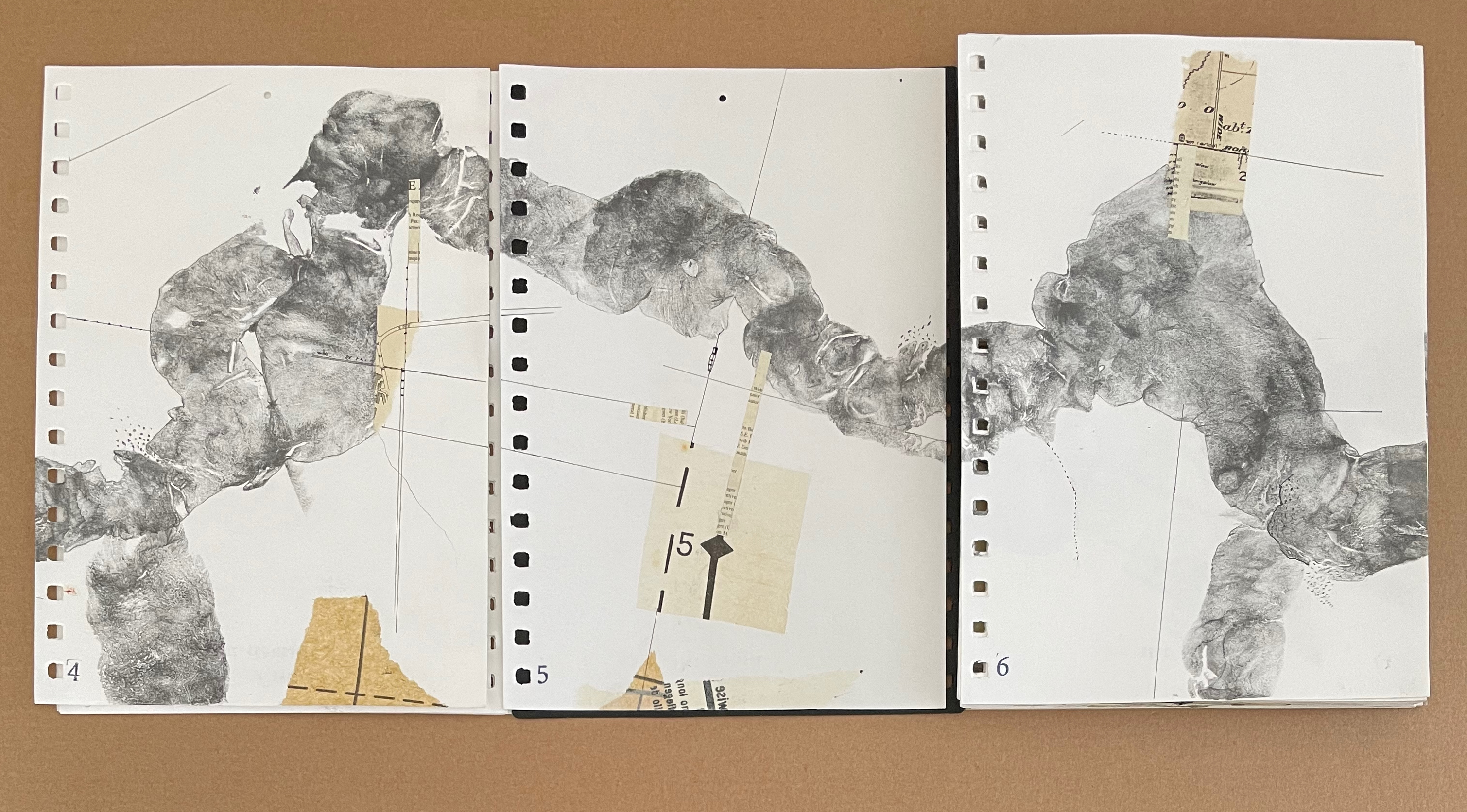
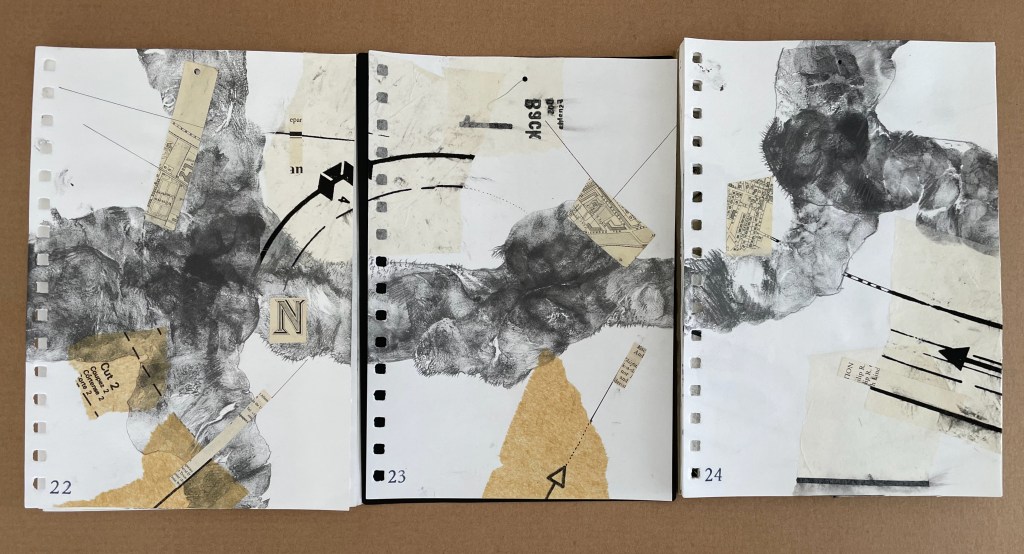
Restless consists of a continuous drawing with graphite and collage across sixty loose sheets of 120gsm cartridge paper removed from a plastic comb bound notebook. Like Oudyn’s earlier work Out of Breath (2019), meant to represent the medical conditions of mesothelioma and black lung, Restless aims to evoke chronic restless leg syndrome.
Unlike the earlier empathetic work though, Restless draws on the artist’s personal experience of the condition. The artist writes:
Most of the drawings were done as respite from the affliction during the late hours of the night and early morning when sleep was impossible. They were done over a period of more than a year. The graphite and collage drawings grouped together give a sense of agitation, restlessness and disorientation. They also refer to strange dreams and hallucinations caused as a side effect from the medications taken to reduce the symptoms. (Artist’s statement)
Restless leg syndrome can be a biomarker for the onset of Parkinson’s Disease, which lends additional edginess to the images below.


The images’ registration across the pages is evident in the two-dimensional display below. Each sheet, however, also has a hole punched in the center of its upper edge. Displayed in three dimensions, Restless would be strung on a suspended line so that the individual sheets twitch when touched by the slightest movement of air. If the images alone do not evoke a night disrupted by restless legs syndrome, the three-dimensional display’s break-up of the images’ continuity from page to page and their convulsive movement surely will.


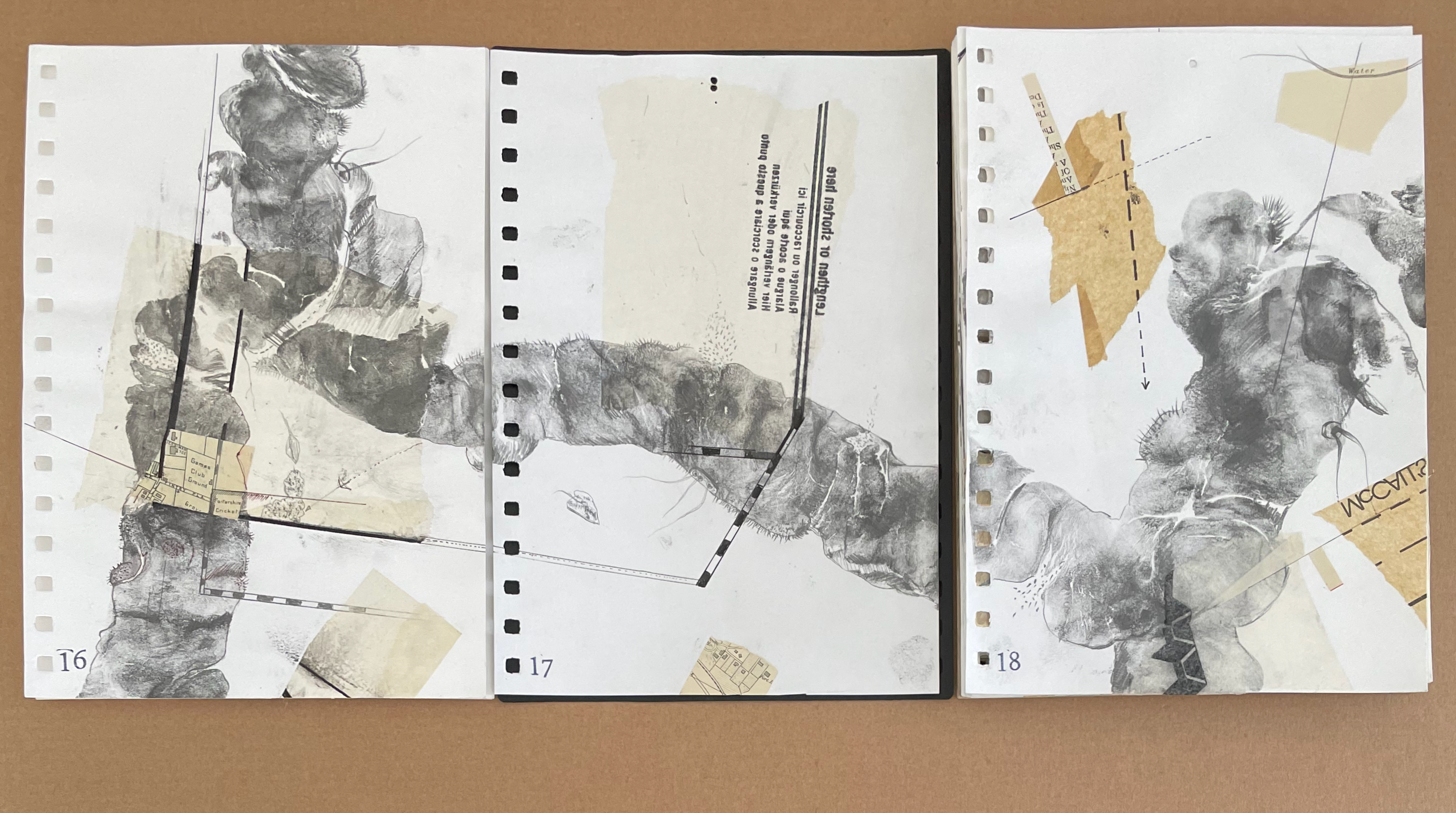

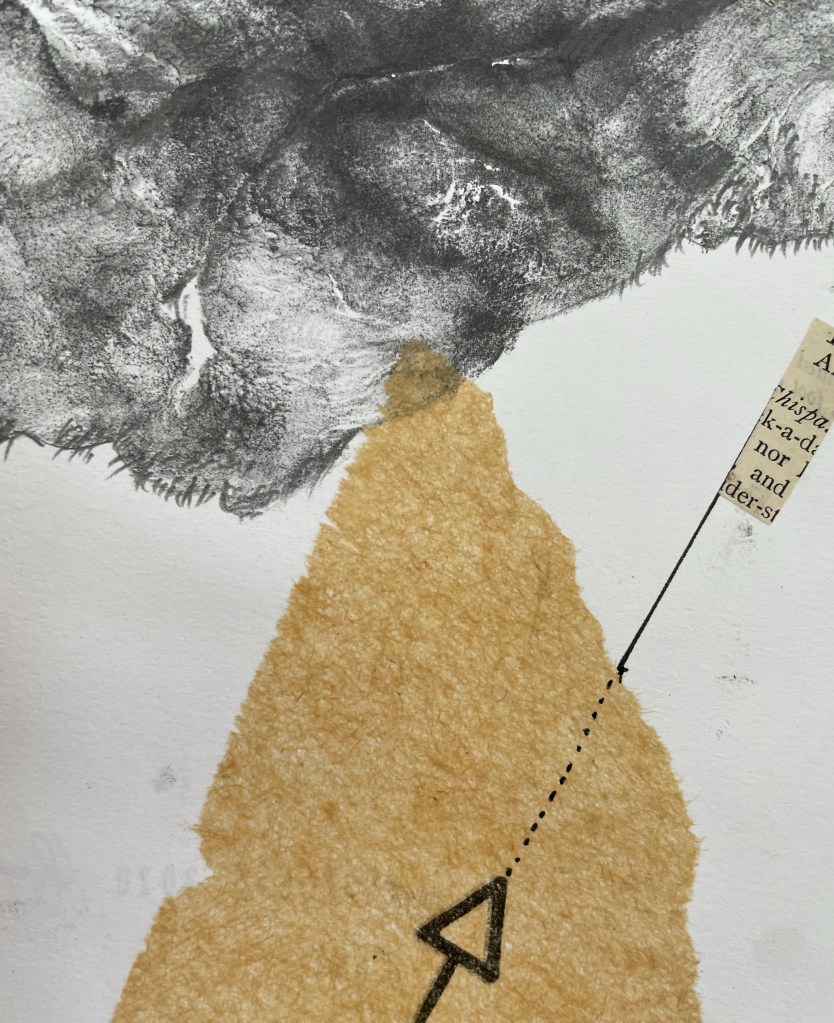
Detail from page 23.

Other works of continuous and aligned drawing across multiple pages in the collection include Ellen Lanyon’s Transformations I: 1973-74 (1977), Jan Voss’ Detour (1989), Alessandro Baldanzi’s Chimere (2020). Oudyn could have followed the accordion structure of Lanyon and Baldzanzi or the bound book structure of Voss. The meaningful choice of loose sheets from an unbound plastic comb bound notebook to dangle from a line stretched between supports speaks to Oudyn’s material imagination and talent for drawing on just the right elements of book art.
Further Reading
“Jacobus Oudyn (I)“. 17 January 2021. Books On Books Collection.
“Jacobus Oudyn (II)“. 3 November 2023. Books On Books Collection.
 Books On Books