Here/Gone (2008)
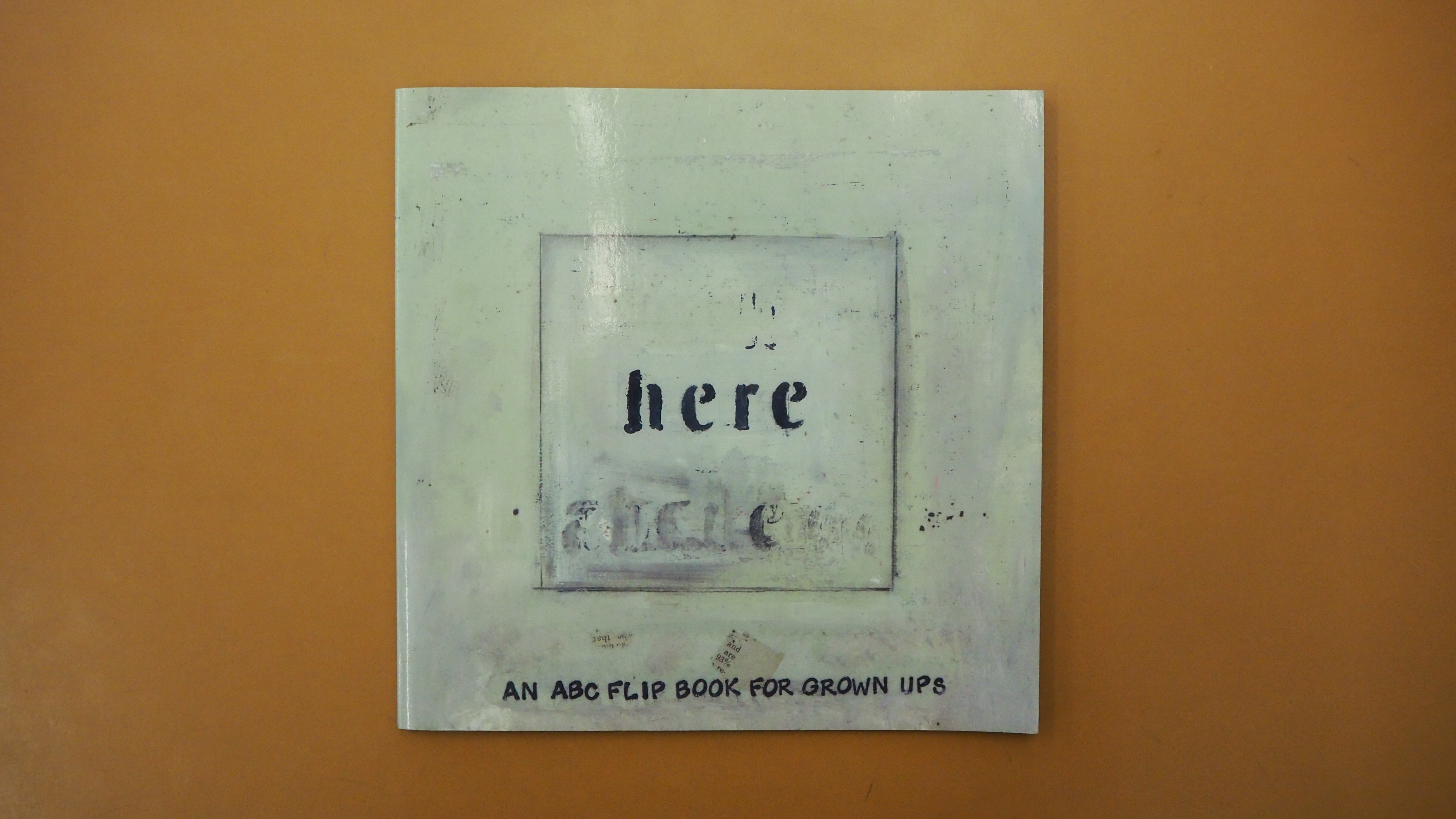
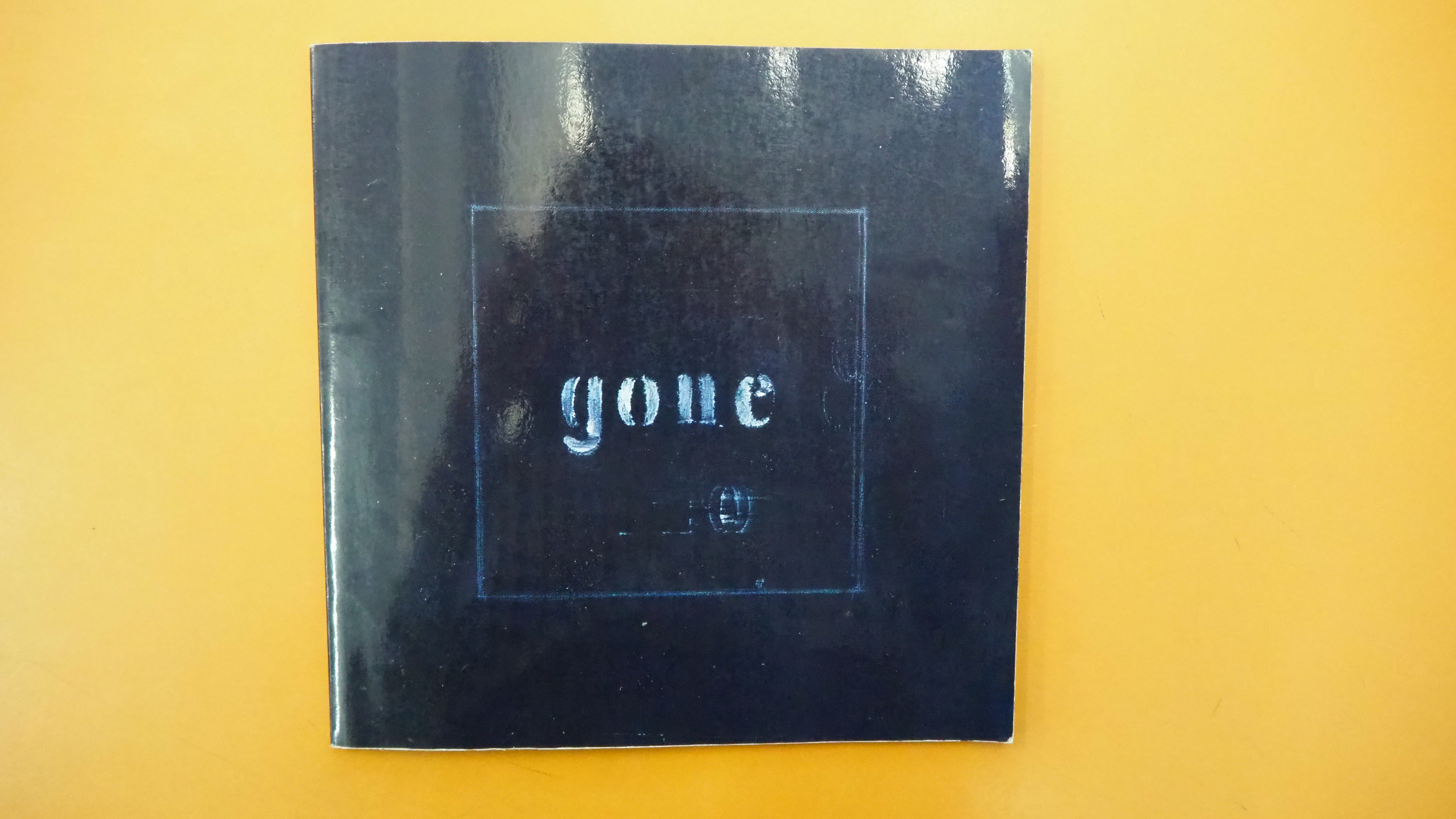
Here/Gone: An ABC Flip Book for Grown Ups (2008)
Karen Green
Perfect bound, invertible flipbook. 215 x 215 mm. [56] pages. Acquired from AbeBooks, 14 March 2019.
Photos: Emilia Osztafi*. Displayed with the author/artist’s permission.
here/gone is a story of two parts, the arrival of love and its departure. “Zipping and unzipping the alphabet in a narrative of love and unlove” as the Spineless Books website describes it, here/gone tells its story with mixed media paintings and minimal text across the right hand pages of its invertible flip book structure, each page’s text beginning with a letter of the alphabet. The flipping pages of here enact love’s zipping together two characters, the flipping pages of gone enact “unlove’s” unzipping them apart.
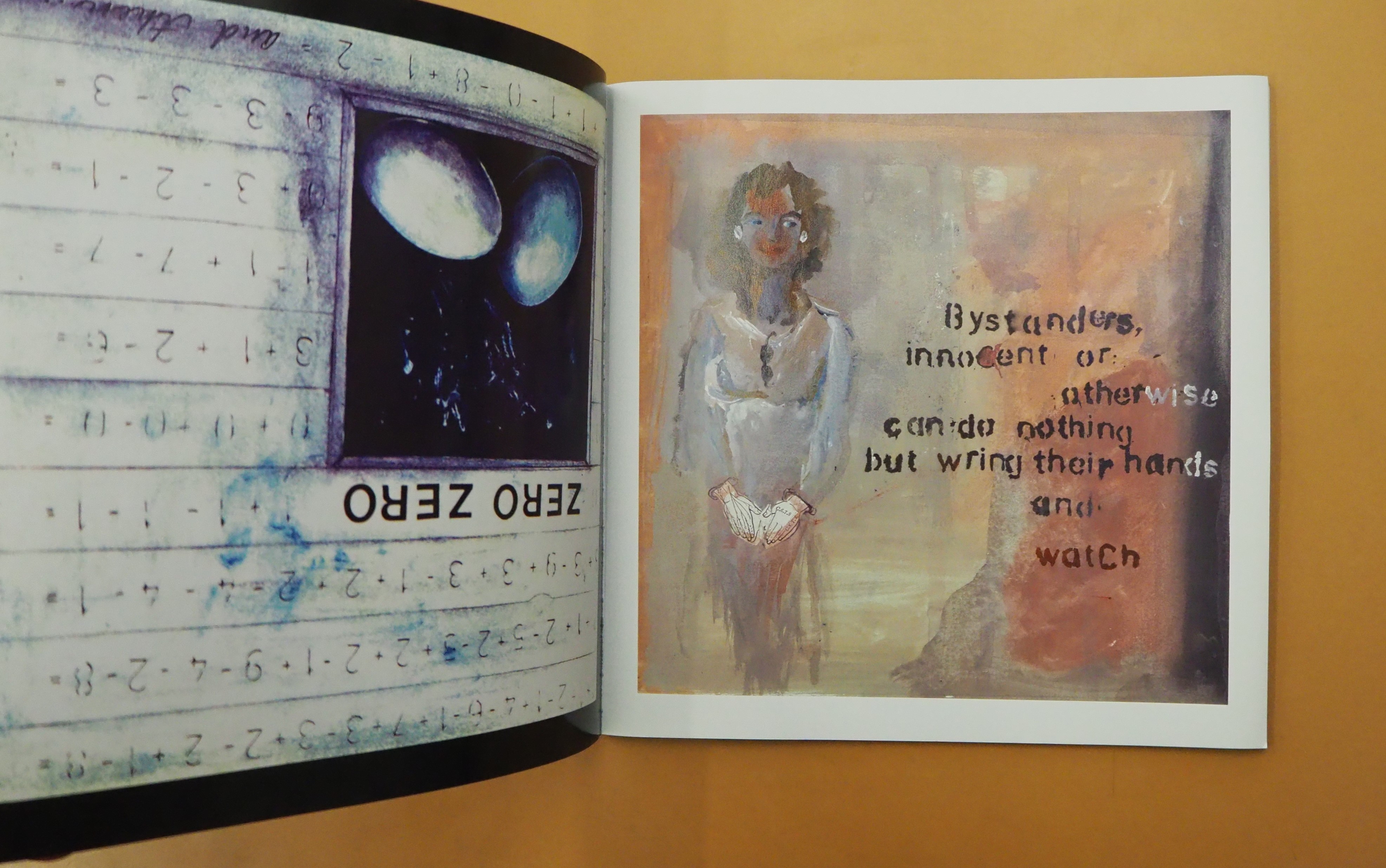
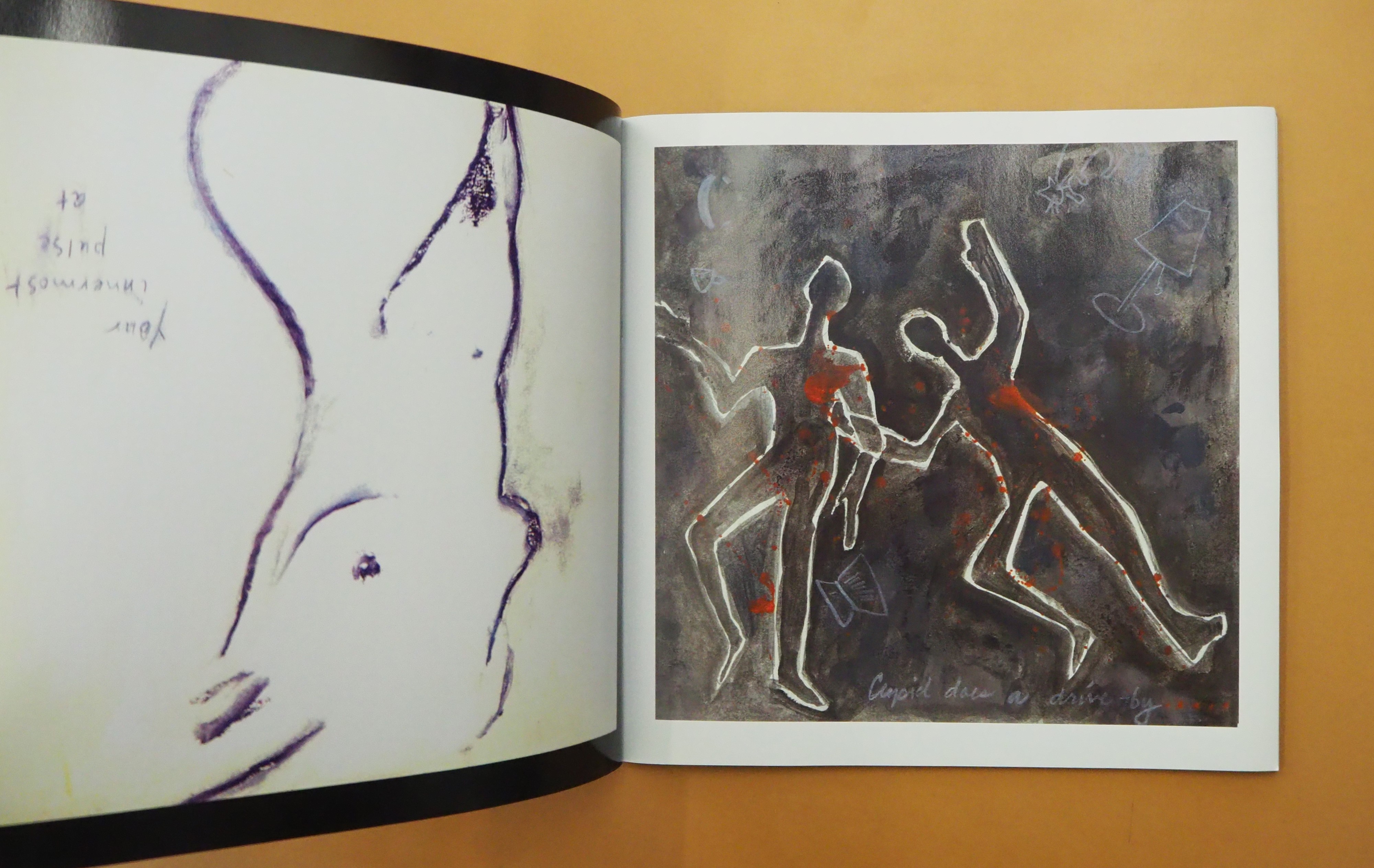
From “An angel arrives uninvited”, love starts messily as “Bystanders … watch” while “Cupid does a drive-by”, then progresses through various relationship stages from D to W.

By the time we reach “X-rated … acrobatics!”, love peaks, and here reaches a double turning point that plays out across the letters Y and Z in an incomplete sentence — “Yet somehow/ Zealotry gives way to …” — prompting the reader to turn the book over, invert it and continue with the gone part of the story to find out that zealotry gives way to “Apathy”,

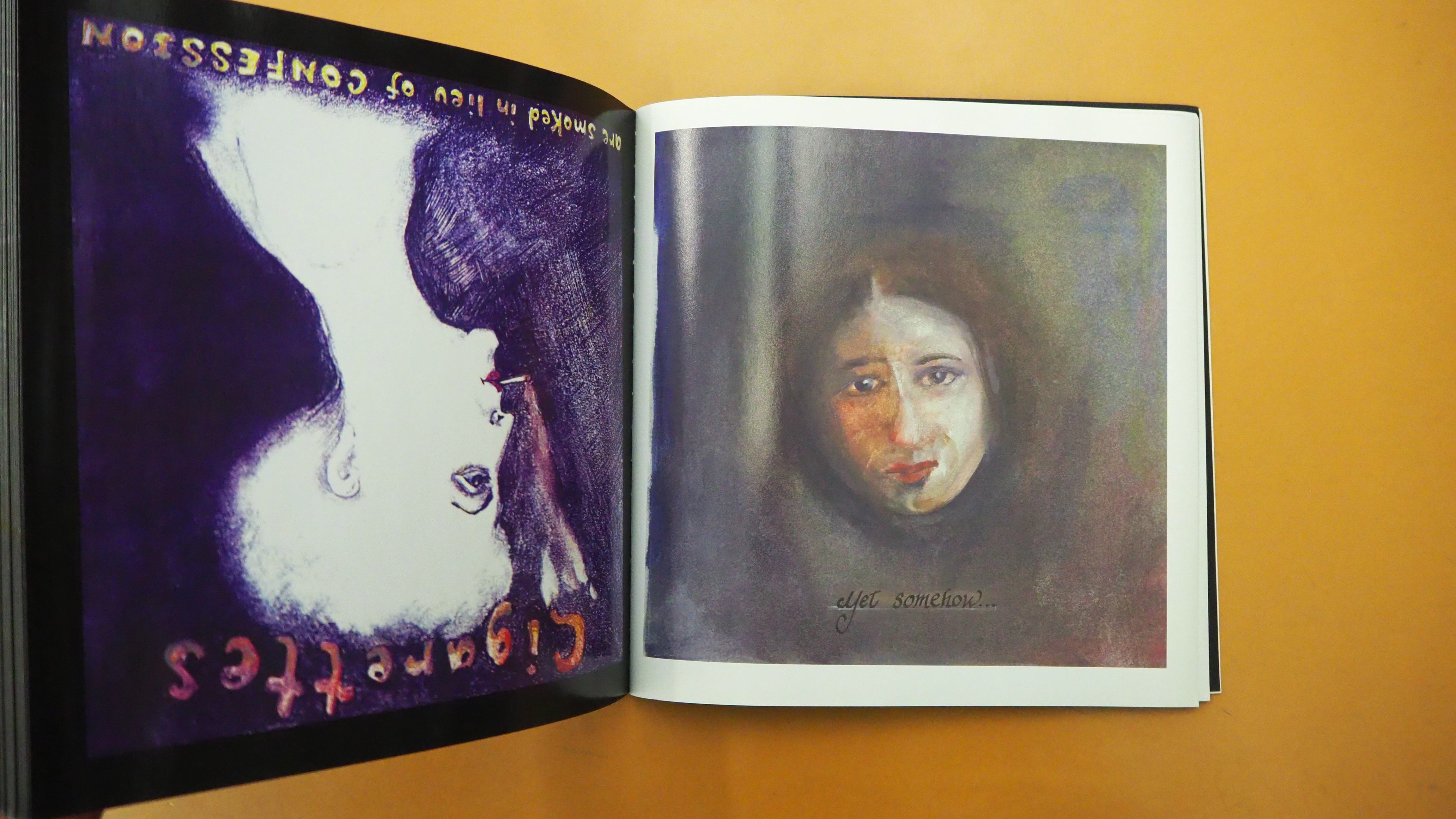


At the end of the gone side, “X-rays show/ Your innermost pulse at/ Zero zero”. With the absence of a pulse and in the absence of prompting text to turn the book over and begin here again, the flip book’s narrative has brought us to this final breaking point. Perhaps angels do arrive uninvited from “zero” to restart the cycle again, but the real reason to flip this flip book over and start again is here/gone’s brilliance as an artist’s book.
Artists’ books are almost always physically self-referential — drawing attention to what their spines, pages, printing technique, or materials are doing. Often the physical self-referentiality is meant to slow readers down and entice them into thinking about the nature of the reading or the book as book. It’s when the physical self-referentiality meshes with content that an artist’s book stands out. Karen Green makes this happen in numerous ways.
There are many aspects like that “double” turning point at the end of here that slow the reader to a slower pace than a “flip book” would imply. The structure of here/gone merges the form of the flip book with a variant form of the dos-à-dos structure that binds two books back to back. Rather than binding here‘s 26 pages to the back of gone‘s 26 pages, Green interleaves them by inverting them across double-page spreads. The here side’s “bystander” faces the gone side’s upside down “zero zero” and so on. This is one of the keys to here/gone‘s achievement as an artist’s book.
Good stories have a momentum, pace and tension. Flipping pages in a flip book delivers a forward-driving, fast and brief cinematic effect. Turning pages delivers something different. Green’s chosen blend of structures requires both, which creates a tension that echoes the tensions within and across the two halves of the story. Although a flip book structure directs readers’ attention to the right hand pages, the inverted mixed media paintings — as well as the upside down text — on the left hand pages are impossible to ignore. In fact, the left hand pages often seem to comment on, reinforce or subvert the right hand pages. In whichever direction we read the flip book, the upside-down text and image of the other, “wrong” side encroach on our vision, as though past and future memories can’t be kept out of the present moment. The upside-down matter of the “wrong” side lingers, a ghostly echo of what is, for this moment, “right”.
In one inspired instance, the N’s for here and gone appear on the same double-page spread. By adding or shifting pages, Green could have chosen a different letter to share the spread, but “Night” and “New Bedfellows” strike perfectly that underlying note of tension and ambiguity between here and gone to give the reader pause.


Although not on facing pages like N, the texts for P and Q are so parallel and proximate — as the inverted alphabets pass like ships in the night — that the slowed reader will pick them up — or at least recollect them — as subversive commentary: “Poems are written / Quietly / Read and reread” in here, and then as we move through gone, “Poems are reworked / Quietly / Rerouted”. Minding these Ps and Qs, the slowed reader will also catch the parallel references to poems as a point of self-reflection for the book’s structure. Like these poems written, read, reworked, and rerouted, the text we are reading is a sort of poem, where page flips become line breaks, and what follows adds layers of double meaning.
The paintings and collage work contribute layers of double meaning in their own way, too. Sometimes it occurs within the image itself. Sometimes it occurs on point with the text, sometimes in counterpoint. Sometimes it occurs between the images on a double-page spread. And in another inspired instance of self-reflexivity, the book physically frames these paintings. In here, the recto pages frame them with a positive white border, whereas in gone, they are framed in negative black.
Green and her publisher have also exploited the editioning of artists’ books to reach another level of self-reflectivity. The work is published in a perfect bound edition and a limited casebound edition of 26 copies, lettered A-Z and each signed by the author. So, each of these limited copies is itself enacting one letter of the alphabet, a small piece of a broken-up whole. To hold and read any one of the special copies is to hold a zipping and unzipping self-contained fragment of the alphabet and life of the relationship.
In a 2021 interview with Pat Zumhagen, the artist says, ‘‘’looking and making have always been inseparable from my daily life, whether I thought of it as art or not”. here/gone certainly backs up that statement. Each page varies substantially in the design, colours, and media of the artwork, the text takes different forms within them, and the book’s mix of structures draws the reader into that inseparability of looking and making. A true artist’s book.
*Entry jointly written with Emilia Osztafi.
Further Reading
“Abecedaries I (in progress)“. Books On Books Collection.
Green, Karen L. 2013. Bough Down. Los Angeles: Siglio.
Green, Karen L. 2018. Frail Sister. New York: Siglio Press.
Zumhagen, Pat. 11 December 2021. “The Editor Interviews Artist, Karen Green“. KGB Bar Lit.
 Books On Books
One thought on “Books On Books Collection – Karen Green”