Herball , The Dialogues of Creatures Moralised (1979)
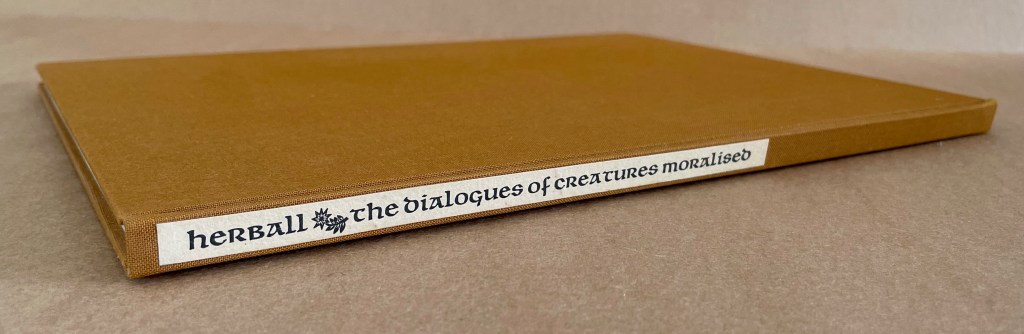
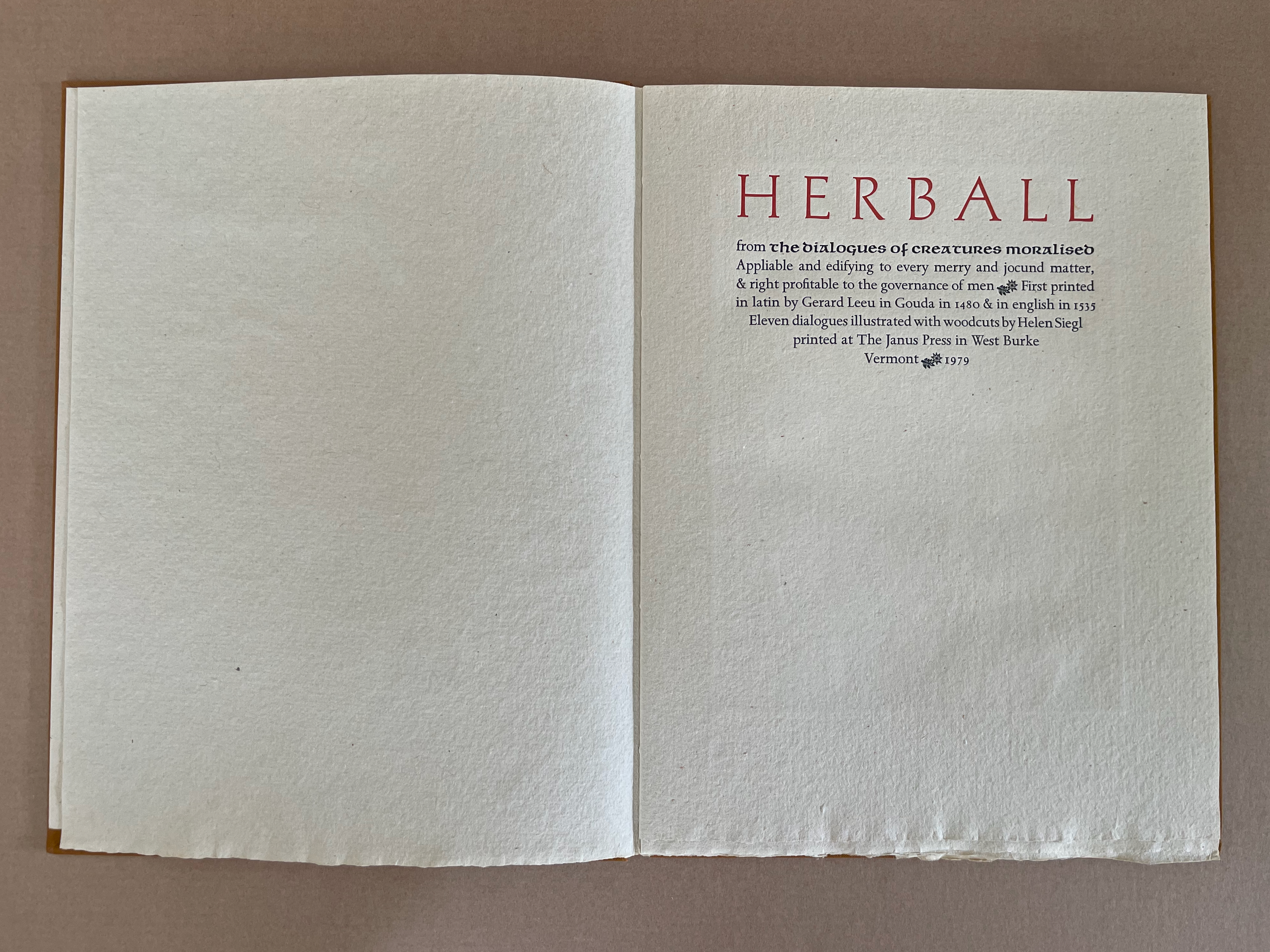
Herball from The Dialogues of Creatures Moralised Applicable and edifying to every merry and jocund matter, and right profitable to the governance of men. [Ascribed to Nicolaus Pergamenus and Mayno de’ Mayneri. First printed in Latin by Gerard Leeu in Gouda in 1480 & in English in 1535.] (1979)
Helen Siegl
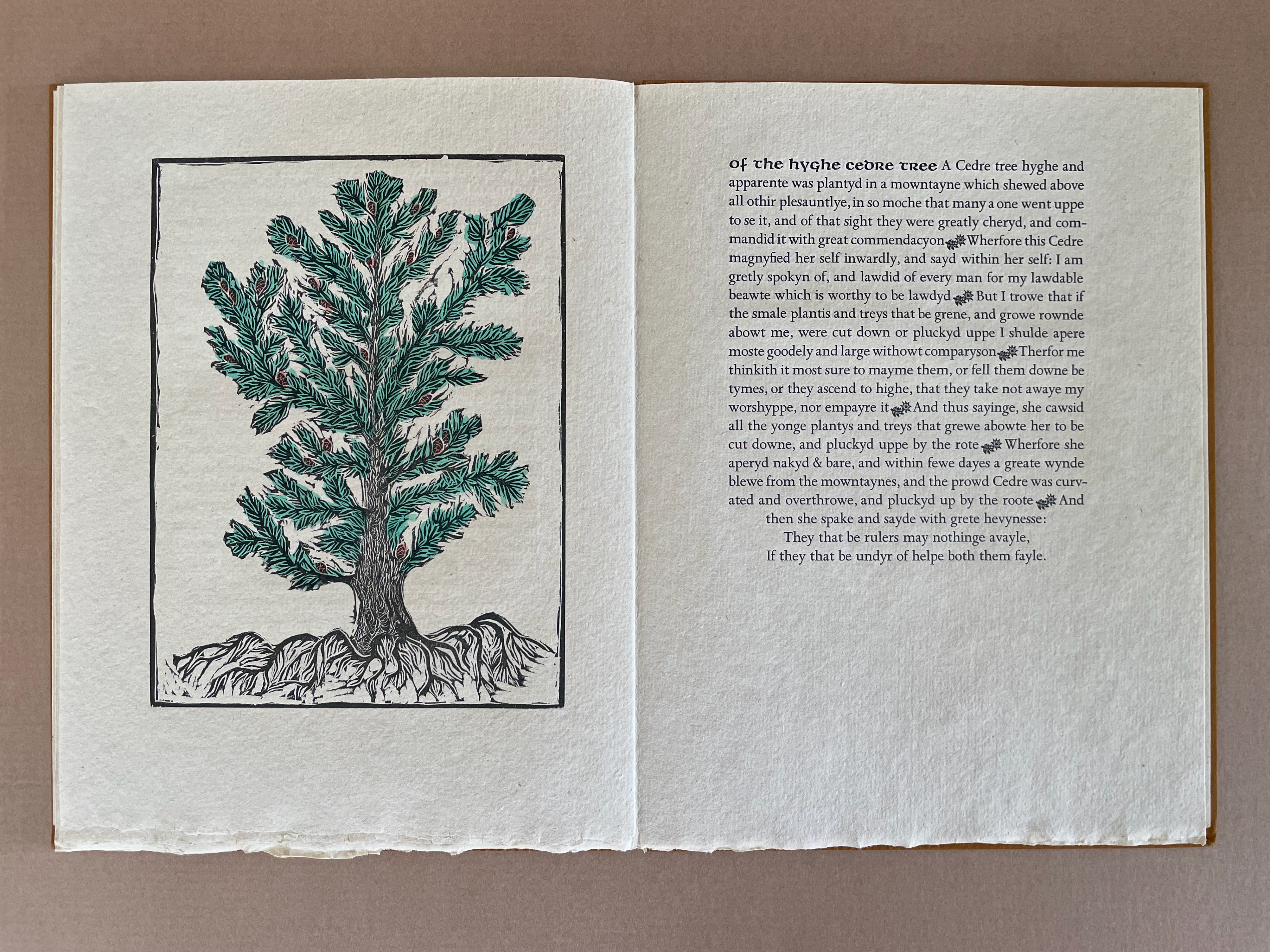
Hardcover in mustard colored cloth with a paper label to the spine; with 11 woodcut illustrations hand-colored by Helen Siegl. HxW mm. [24] pages. Edition of 150, of which this is #56. Acquired from Black Swan Books, 20 July 2024.
Photos: Books On Books Collection.
From the late 14th to the early 16th centuries, The Dialogues of Creatures Moralised contended unsuccessfully for popularity with Aesop’s Fables. Of course, the Greek stories had a millennium-long headstart even in Latin (1st century BCE). Only in 1368 The Dialogues, which even cribbed from Aesop, appears in manuscript form with uncertain authorship. In 1480, Gerard Leeu printed The Dialogues in Latin and Dutch in Gouda. But around the same time William Caxton was translating and publishing Aesop in Middle English. By 1530-35, when Martin de Keyser first published The Dialogues in Middle English, Caxton’s The book of the subtyl historyes and fables of Esope whiche were translated out of Frensshe (1484) had long pipped it to the post.
Still The Dialogues has managed to pique antiquarian revivalist interests a few times over the centuries. Perhaps because of the wood engravings Leeu included. In 1816, Joseph Haslewood, a member of the bibliophile Roxburghe Club, reprinted the Middle English version of The Dialogues and resurrected the engravings from the Leeu edition. In 1967, Allen Press, using the Huntington Library’s editions, also reproduced the 1480 engravings in a version with lightly edited Middle English. Some time before his death in 1979, the collector Lessing J. Rosenwald brought The Dialogues to the attention of Claire Van Vliet of Janus Press. She had hoped to publish a few themed selections from it (landscapes with illustrations of her own and minerals with images from Edna Andrade). Helen Siegl’s Herball with its eleven selected images, however, is the only one to appear. Although the text of Herball is not rubricated, as occurred in several of the 15th and 16th century editions of The Dialogues, the handcolored engravings echo the tradition, and their fresh interpretation of the drawings adds to the handful of variations in illustration since 1480.
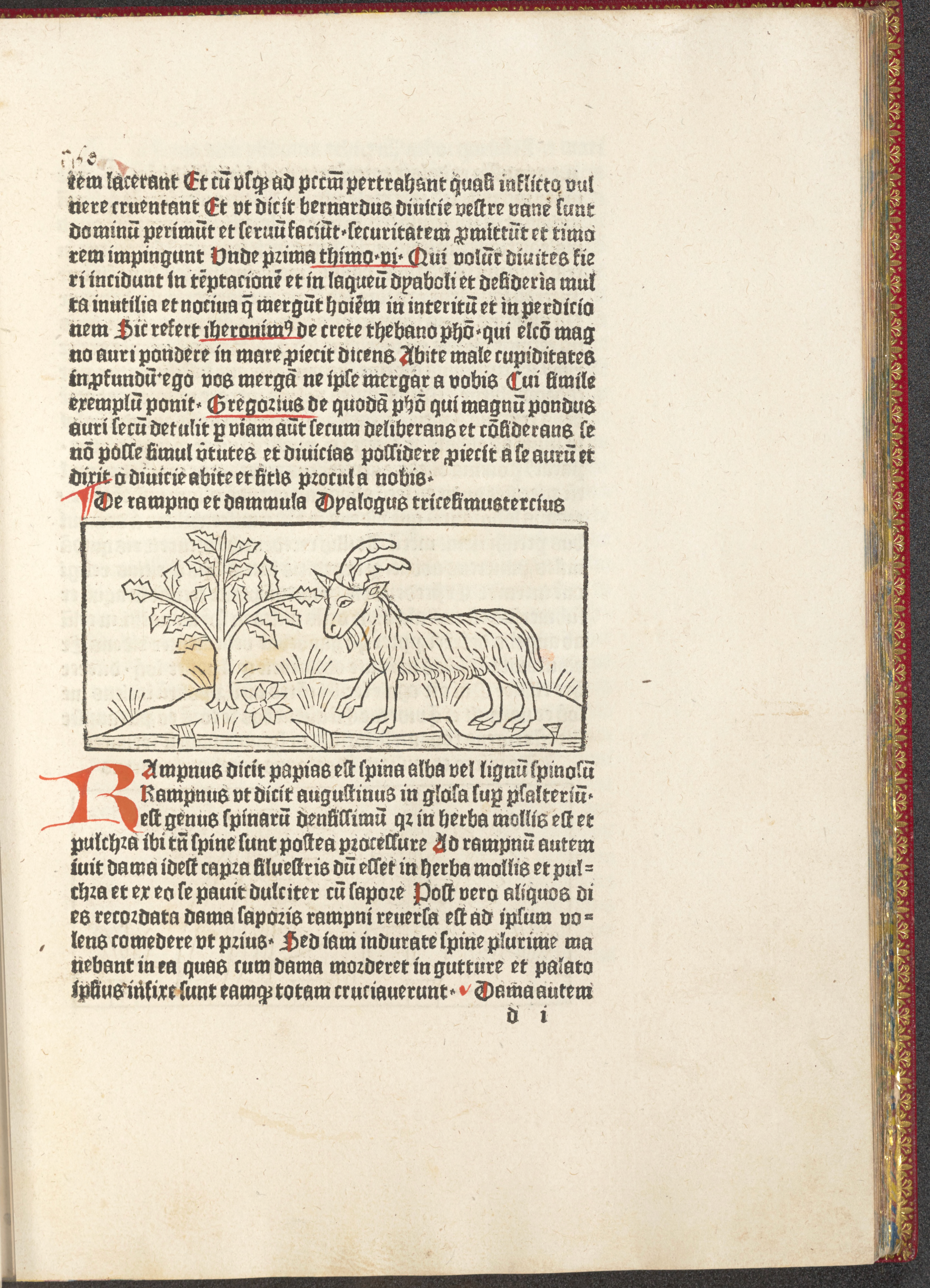

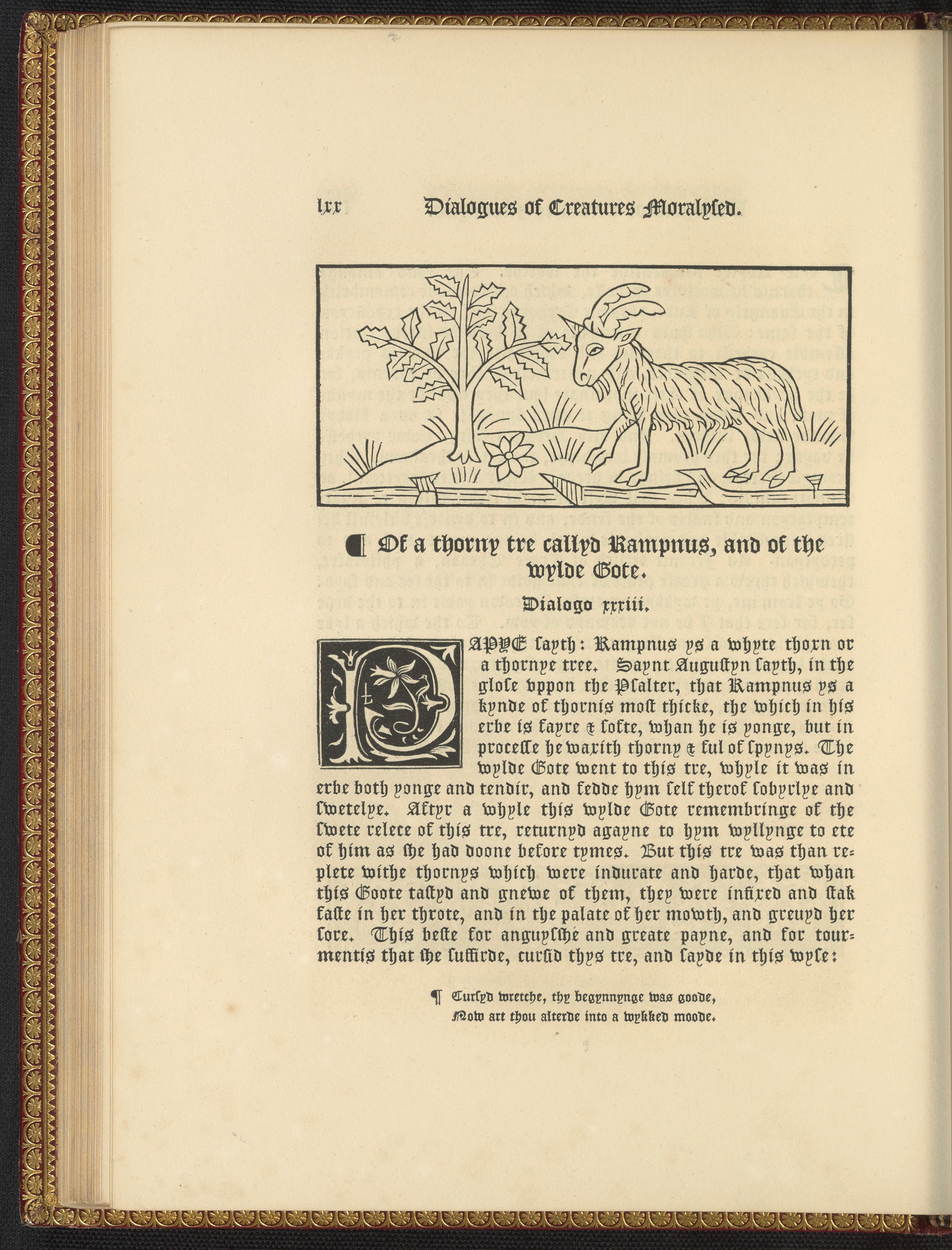
“Of a thorny tree called Rampnus, and of the wild goat”.(1482, 1535 and 1816). Library of Congress, Lessing J. Rosenwald Collection.

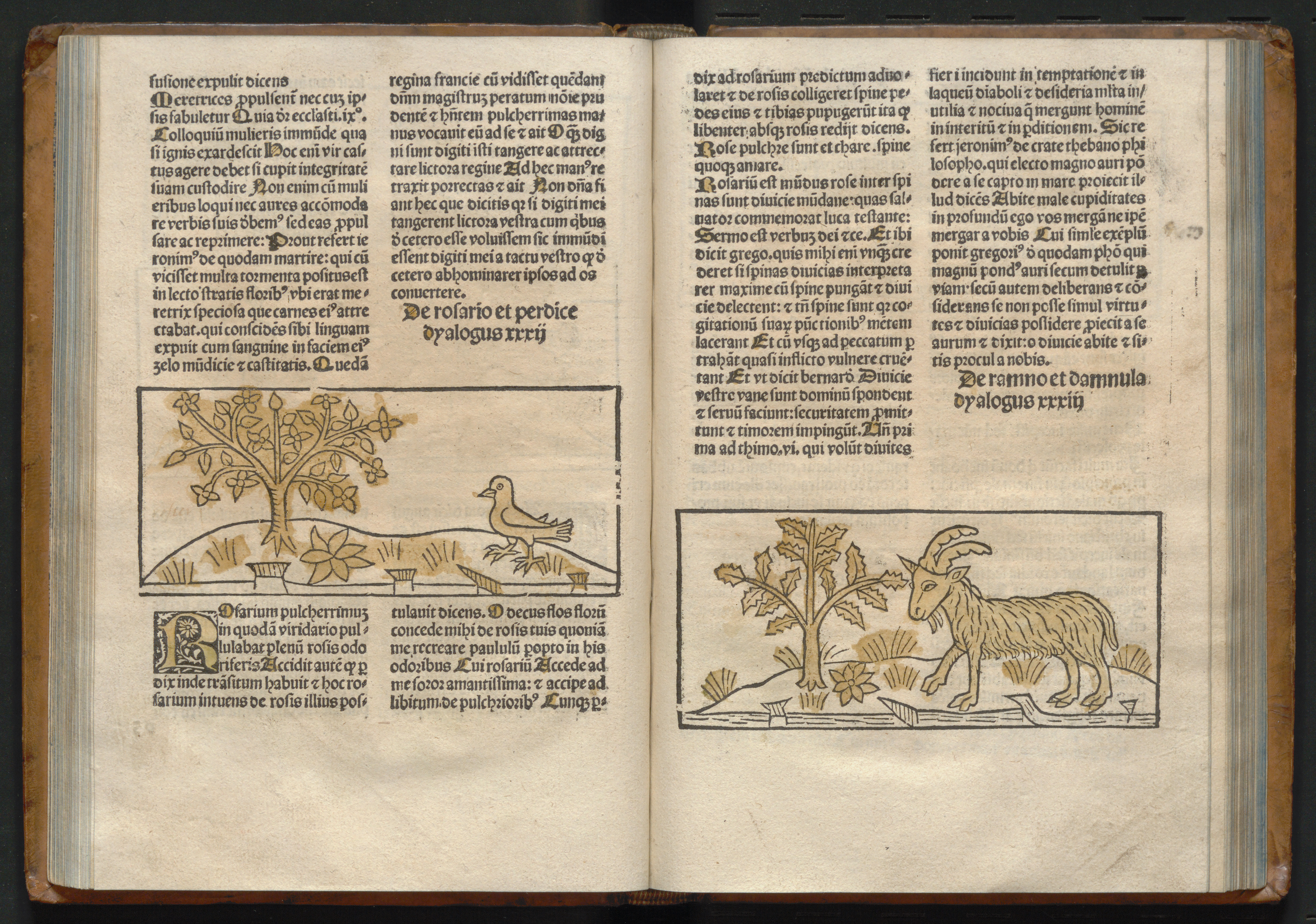
From Leeu edition (Gouda, 1481), Bibliothèque national de France; and Leeu edition (Antwerp, 1491), Ghent University Library.
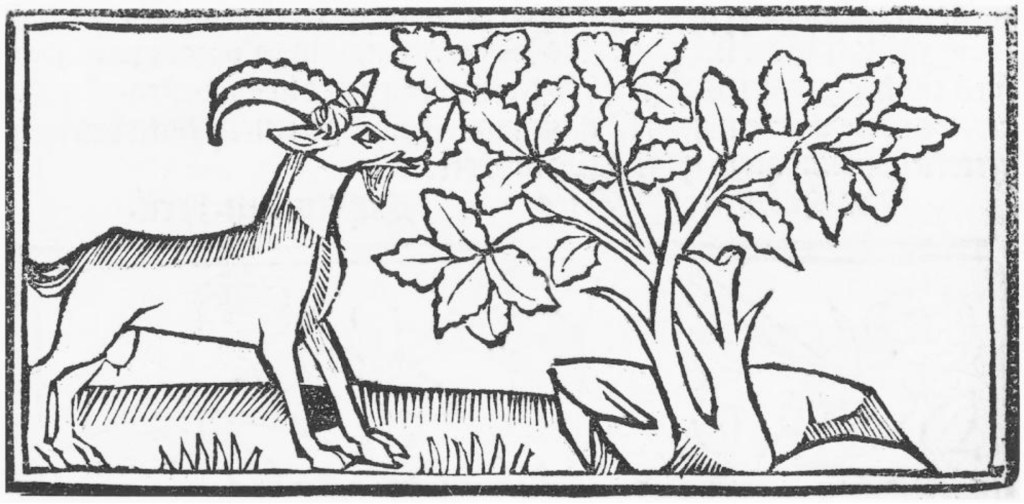
[Dialogus creaturarum moralisatus]. Destructorium vitiorum ex similitudinum creaturarum exemplorum appropriatione per modum dyalogi (1500). Museum of Fine Arts, Boston. Author: Maynus de Mayneriis (Italian, died in 1368)
Illustrated by: Unidentified artist, Swiss, 16th century (Swiss, 16th century)
Printer: Jean Belot (active 1493–1512). Place of Publication: Geneva, Switzerland. Museum of Fine Arts, Boston.
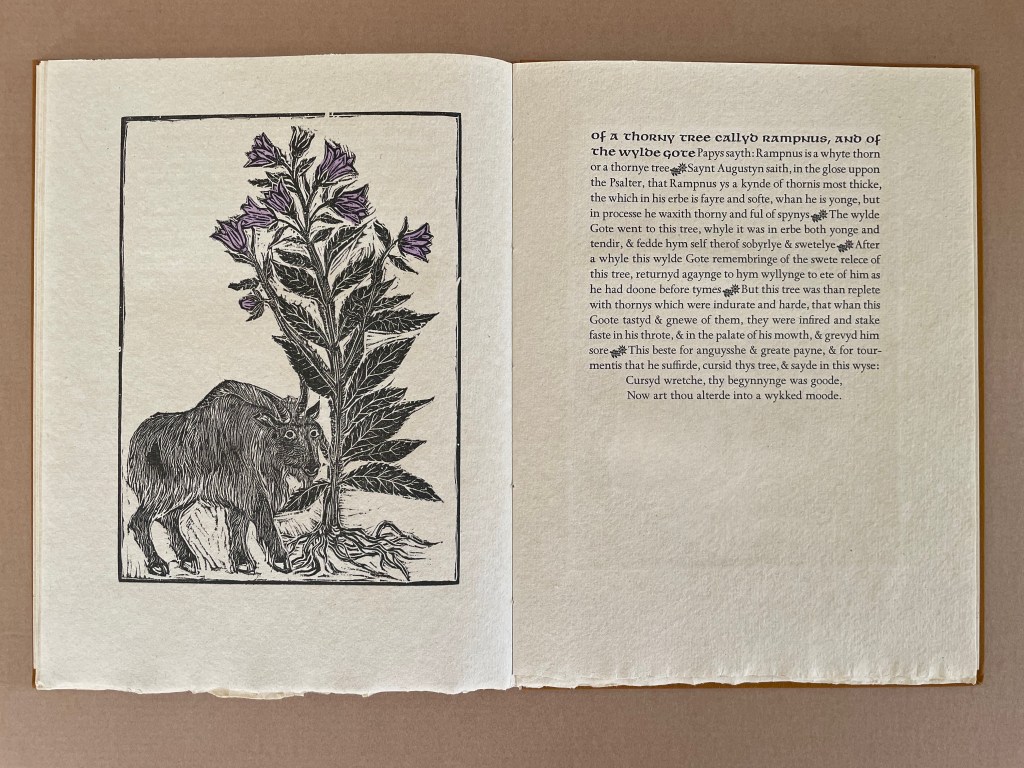
The Janus Press edition.
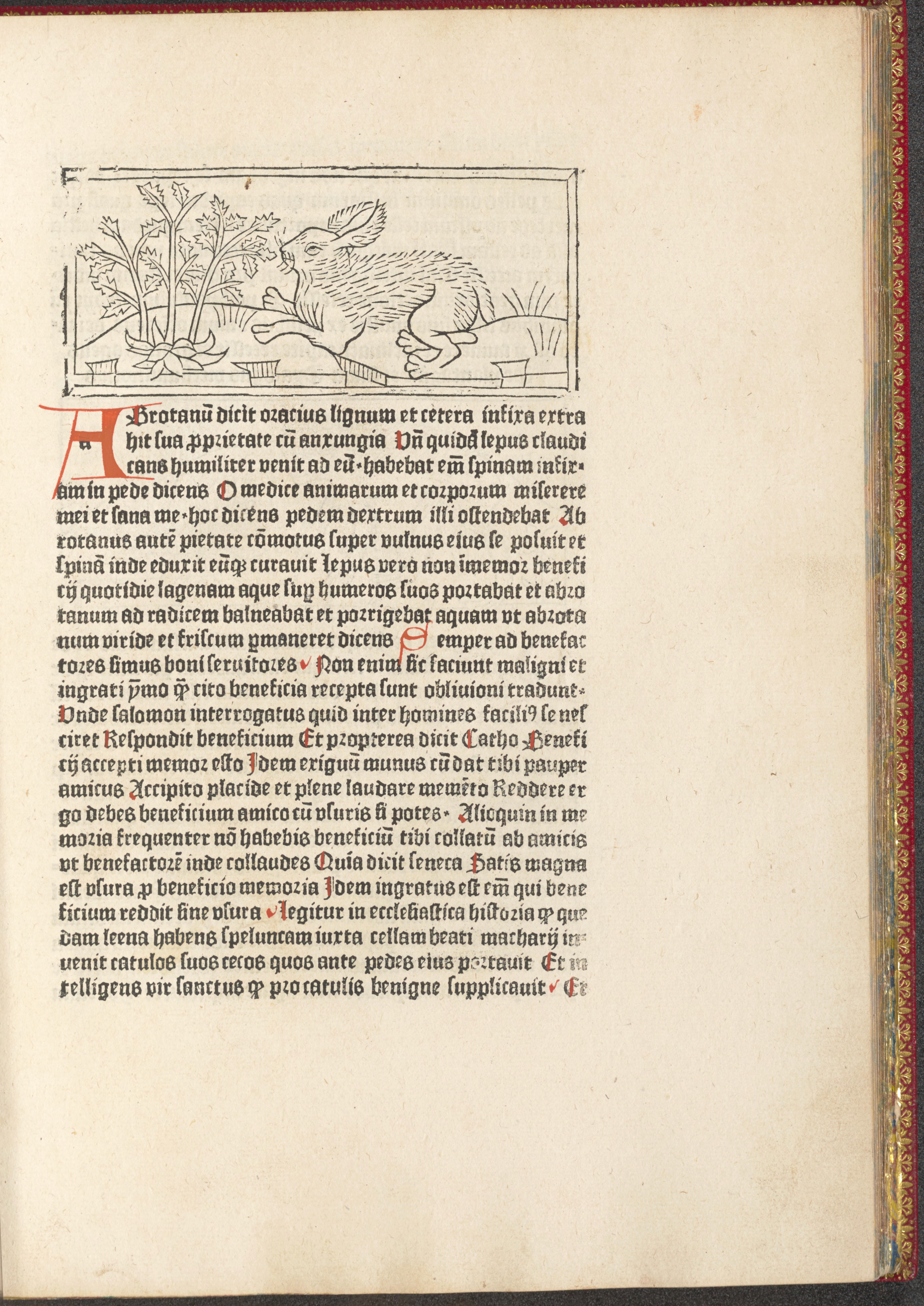
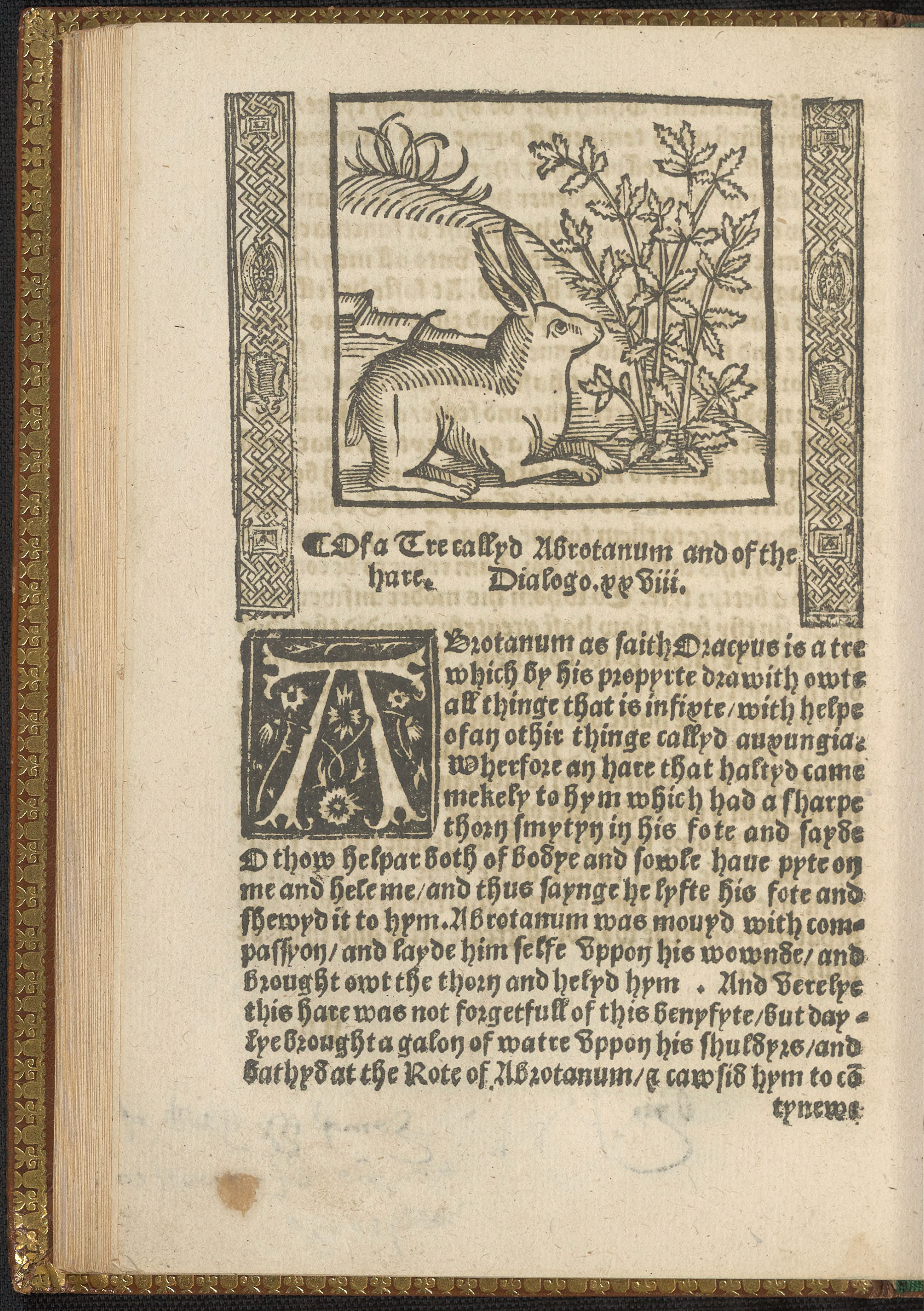
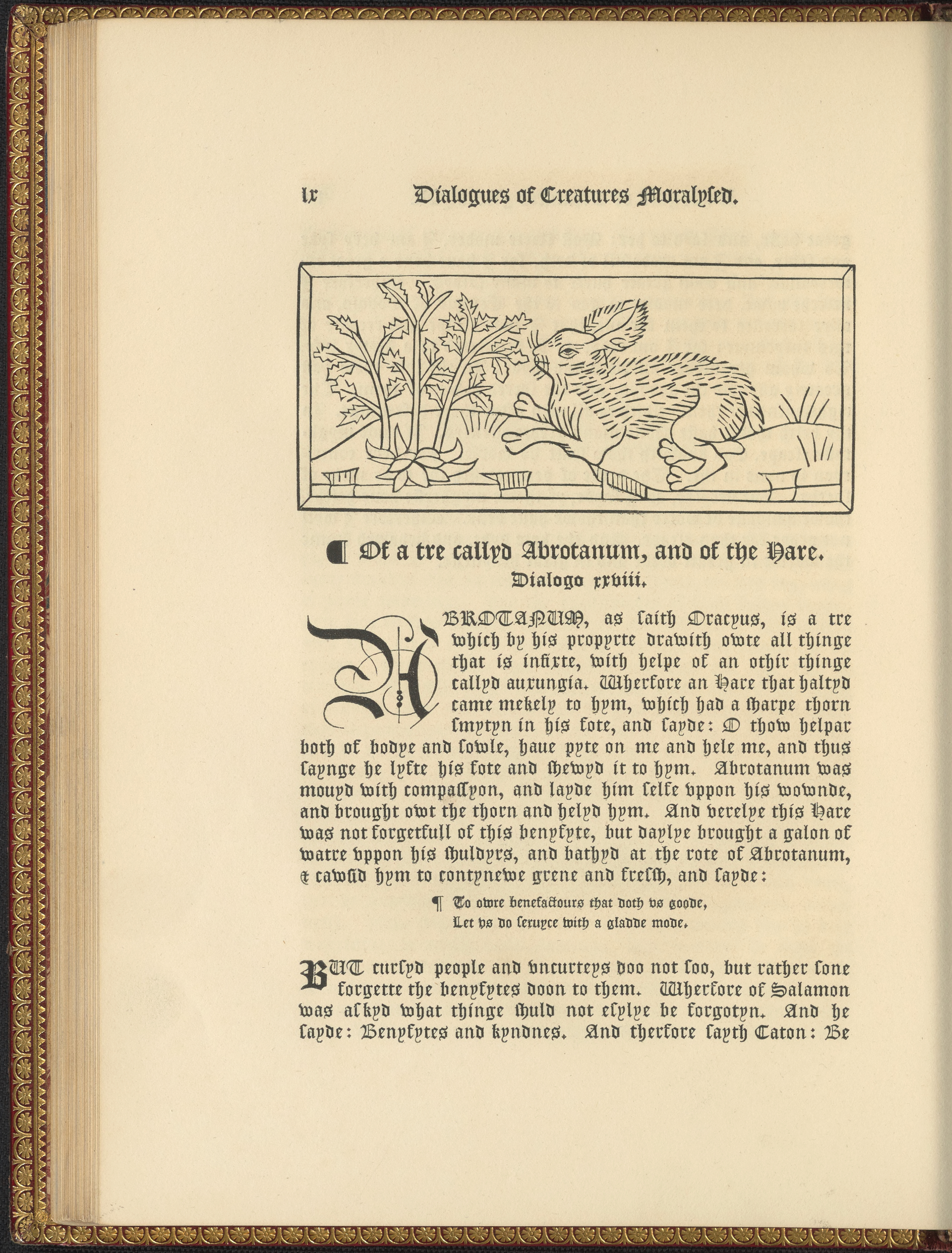
“Of the tree called Abrotanum and of the hare”. (1482, 1535 and 1816). Library of Congress, Lessing J. Rosenwald Collection.
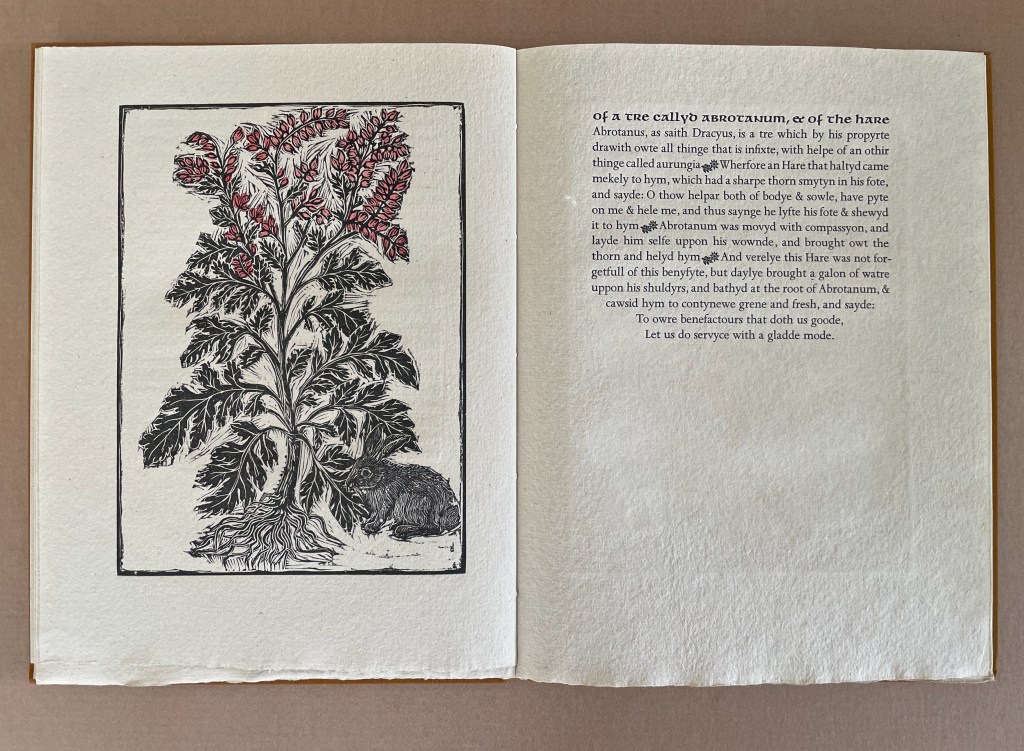
The Janus Press edition.
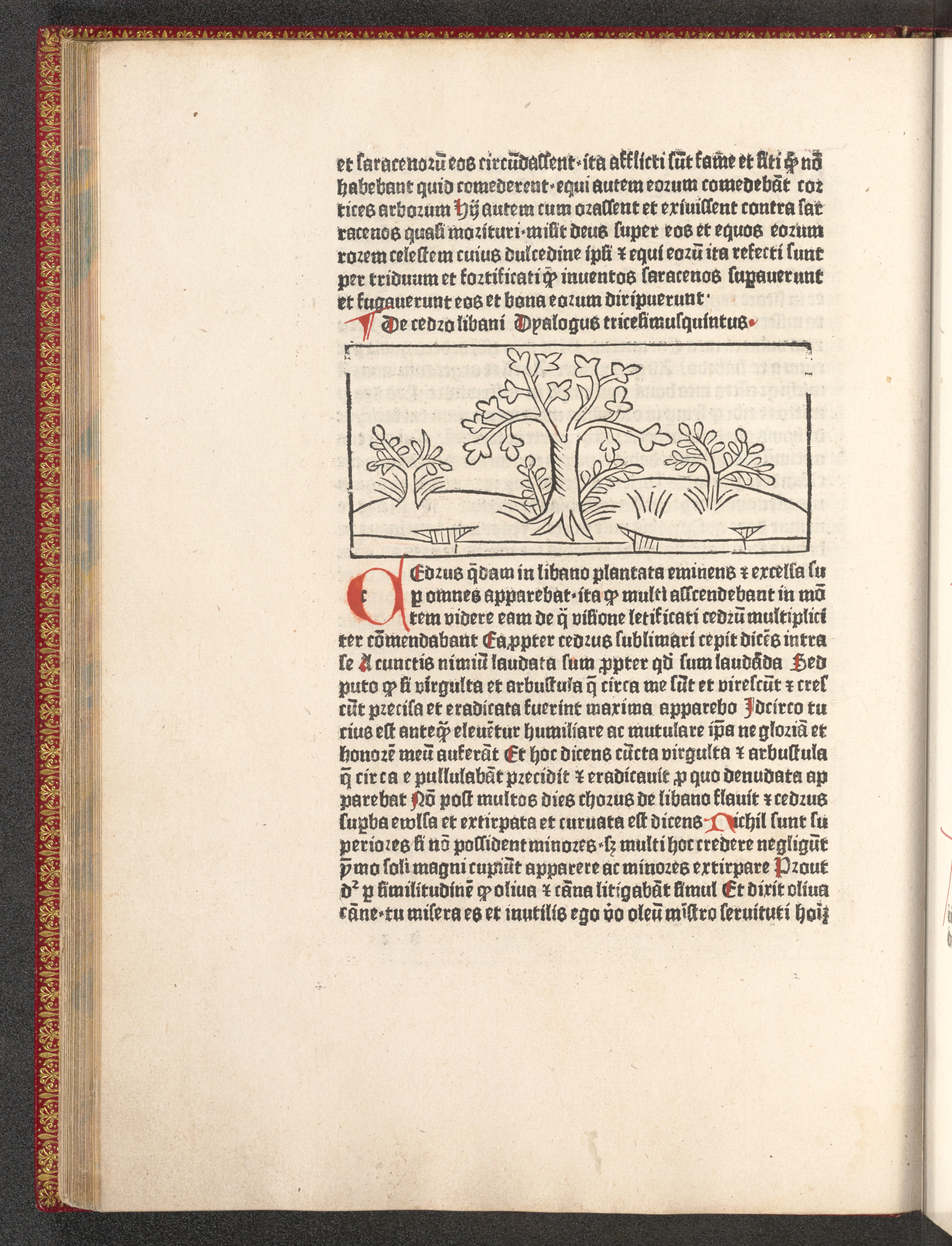
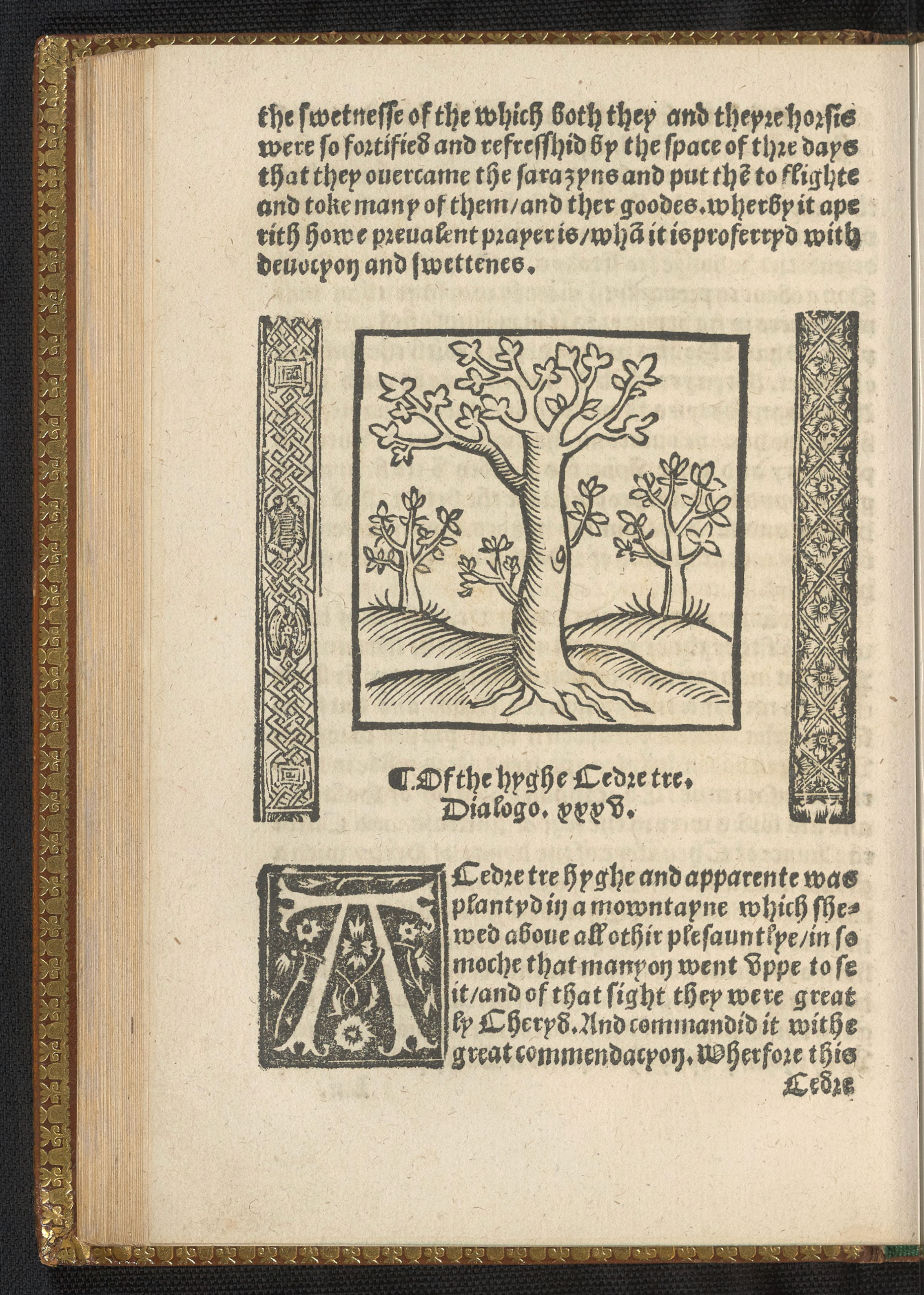
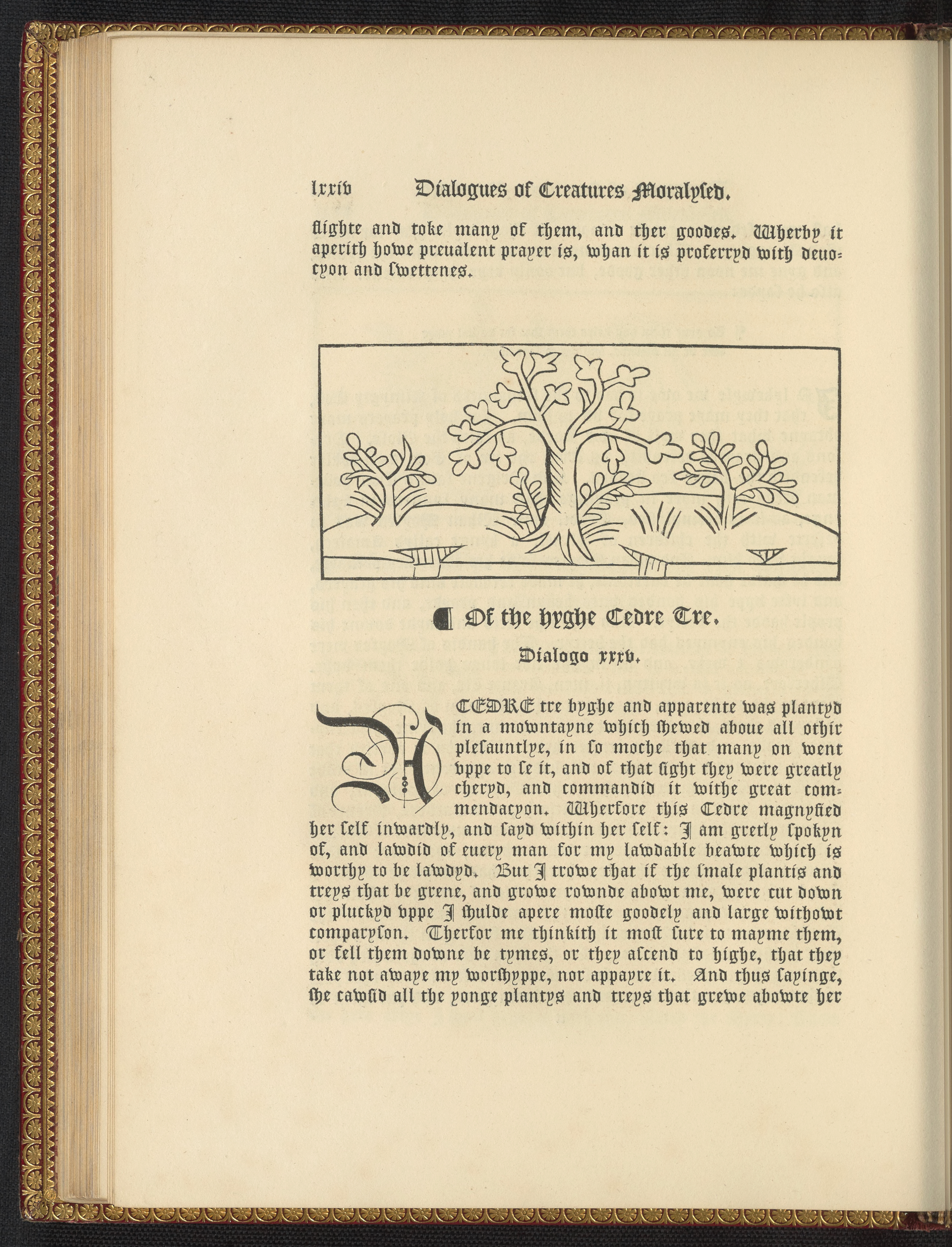
“Of the high cedar tree” (1482, 1535 and 1816). Library of Congress, Lessing J. Rosenwald Collection.
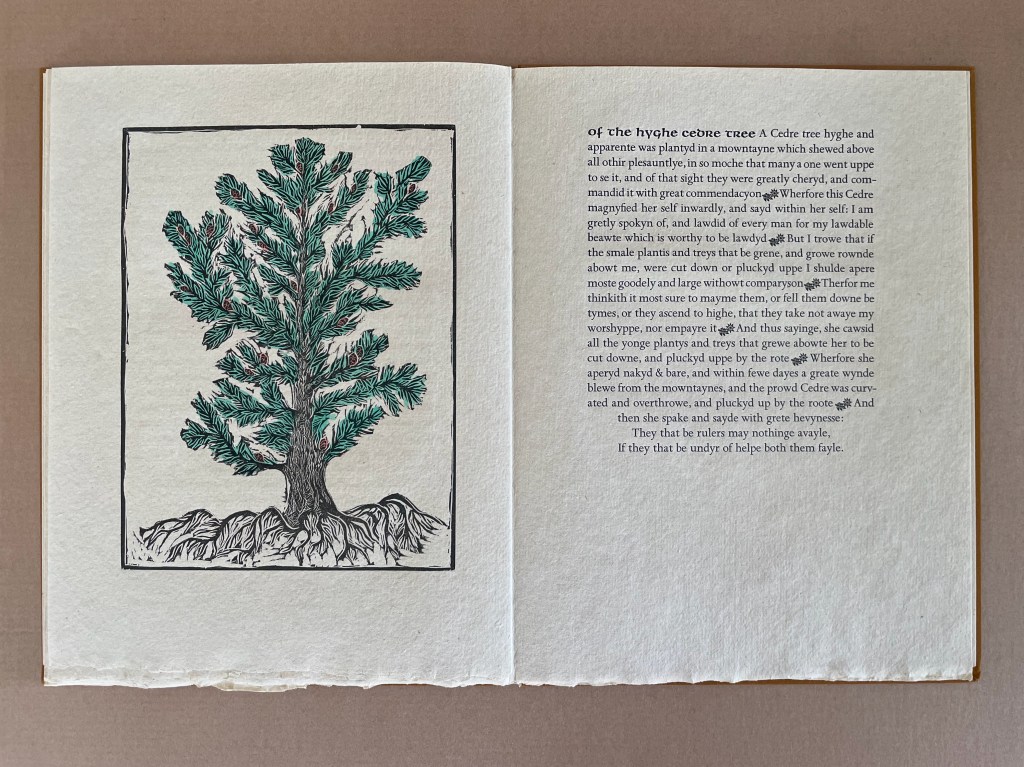
The Janus Press edition.
The Barcham Green de Wint paper used in the Janus Press edition has the texture and stiffness of the 15th, 16th and 19th century copies, but Siegl’s style and the technological improvements in type and letterpress printing place Herball firmly in the 20th century. Siegl’s engravings echo the liveliness of those below in the Bodleian’s 1530 edition in Middle English, but somehow also evoke the simplicity of those in the Leeu above.

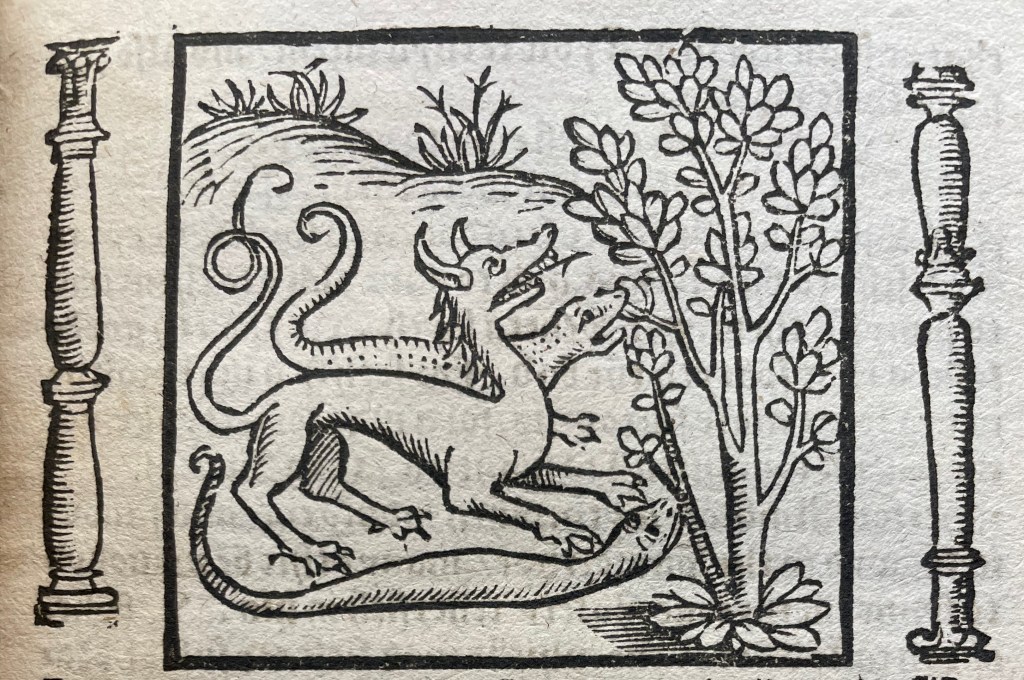
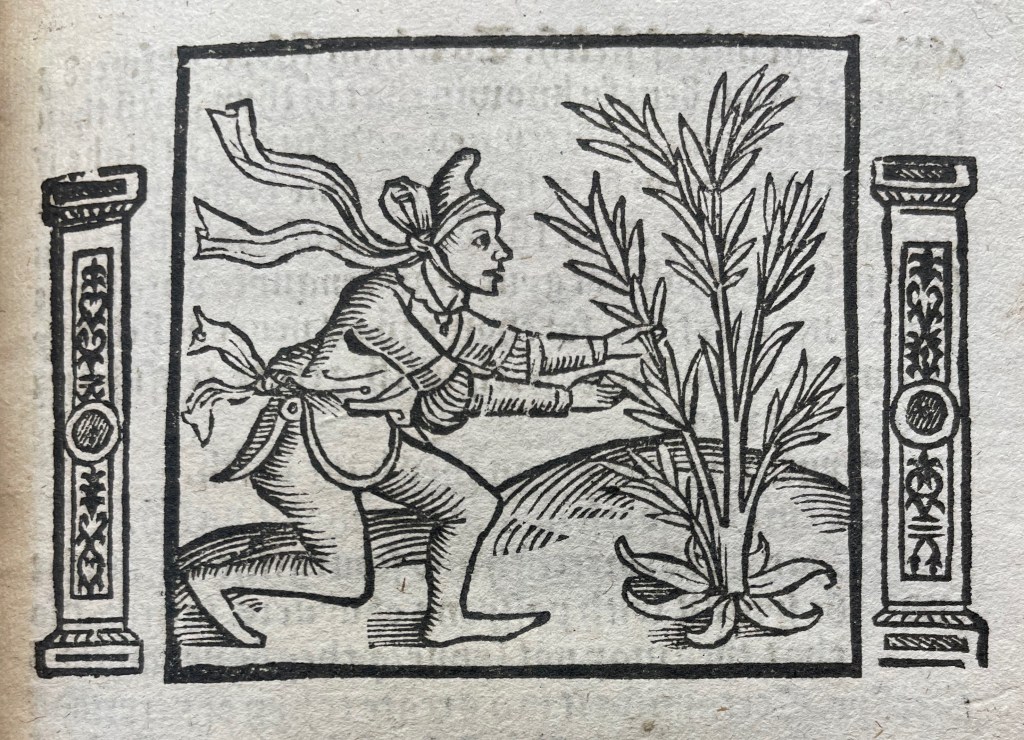


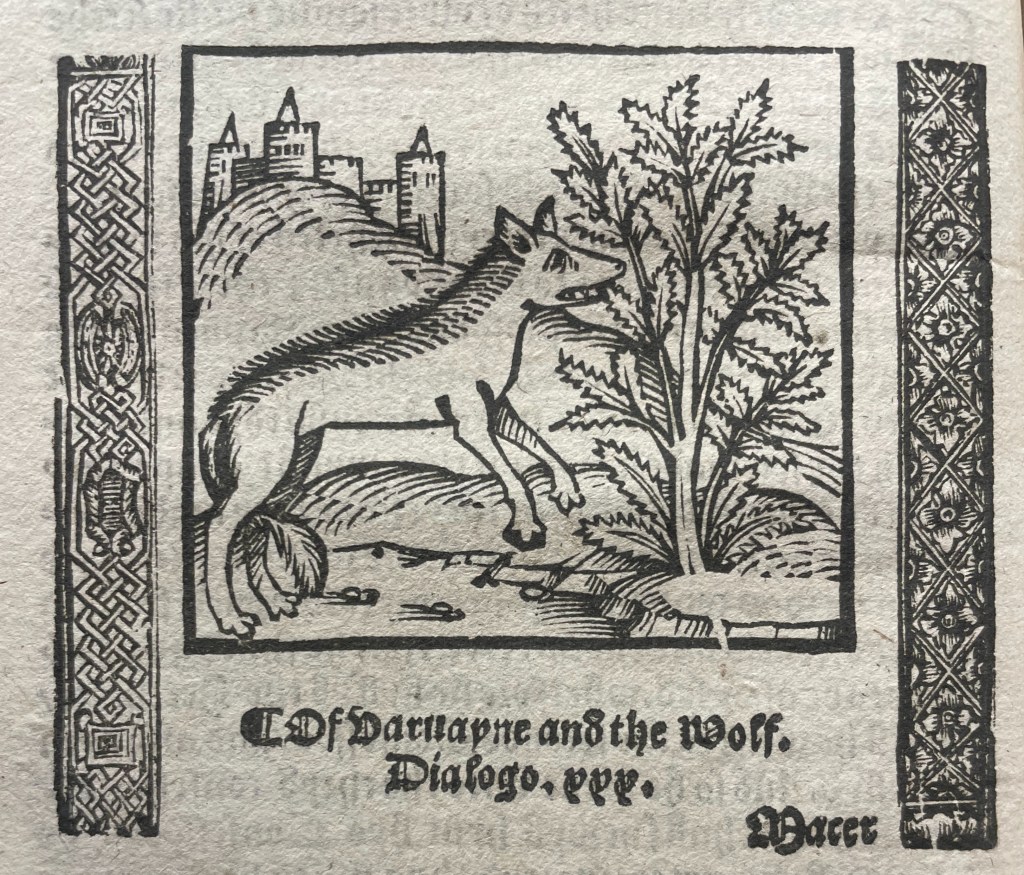
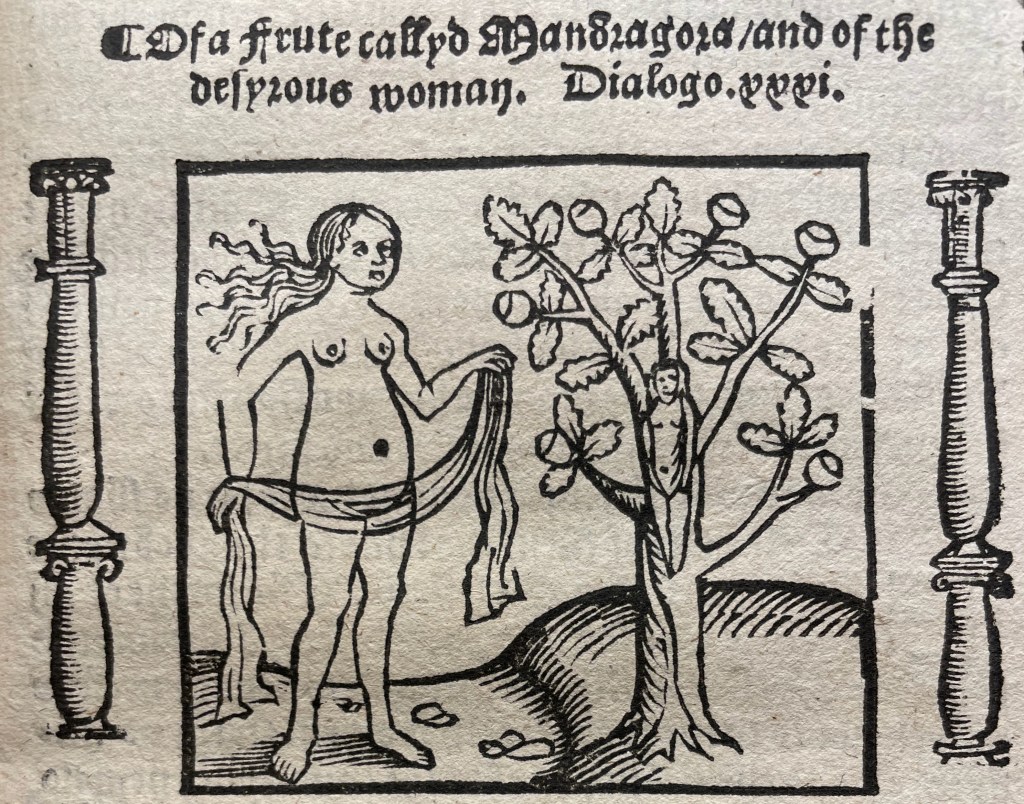

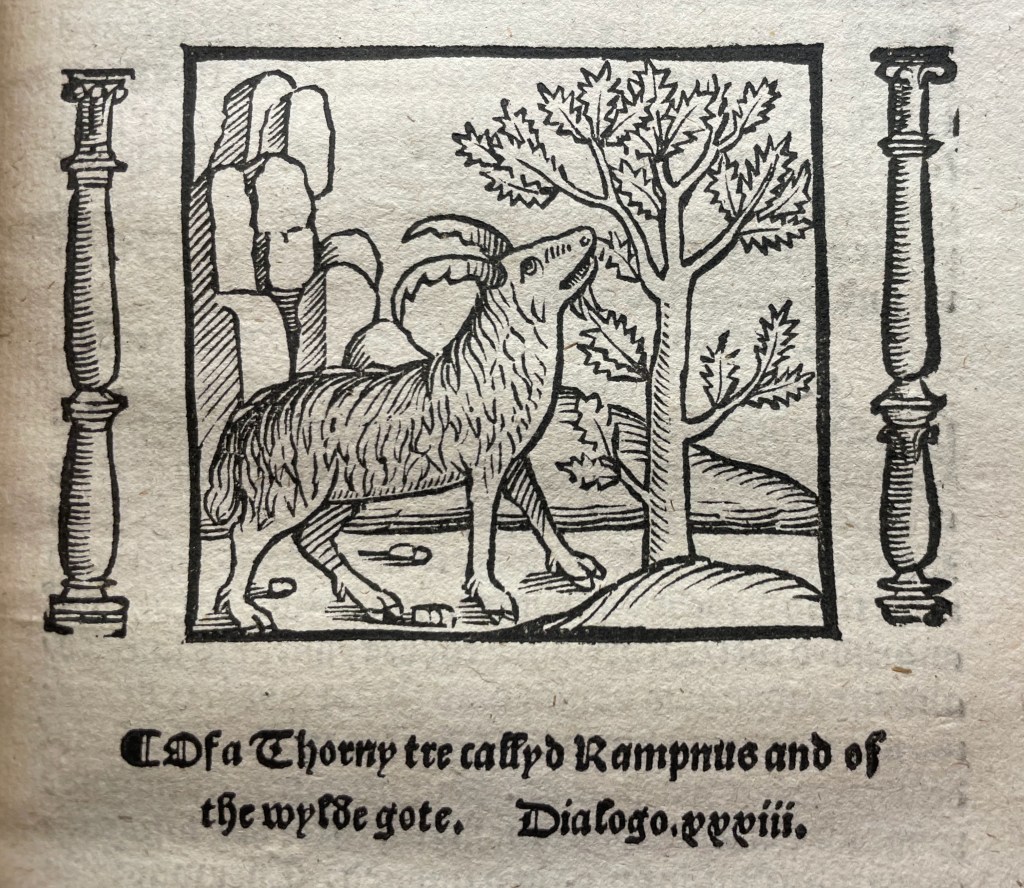


From The Dialoges of Creatures Moralysed. Trāsl. Antwerp,1530. Bodleian, Tanner 289.
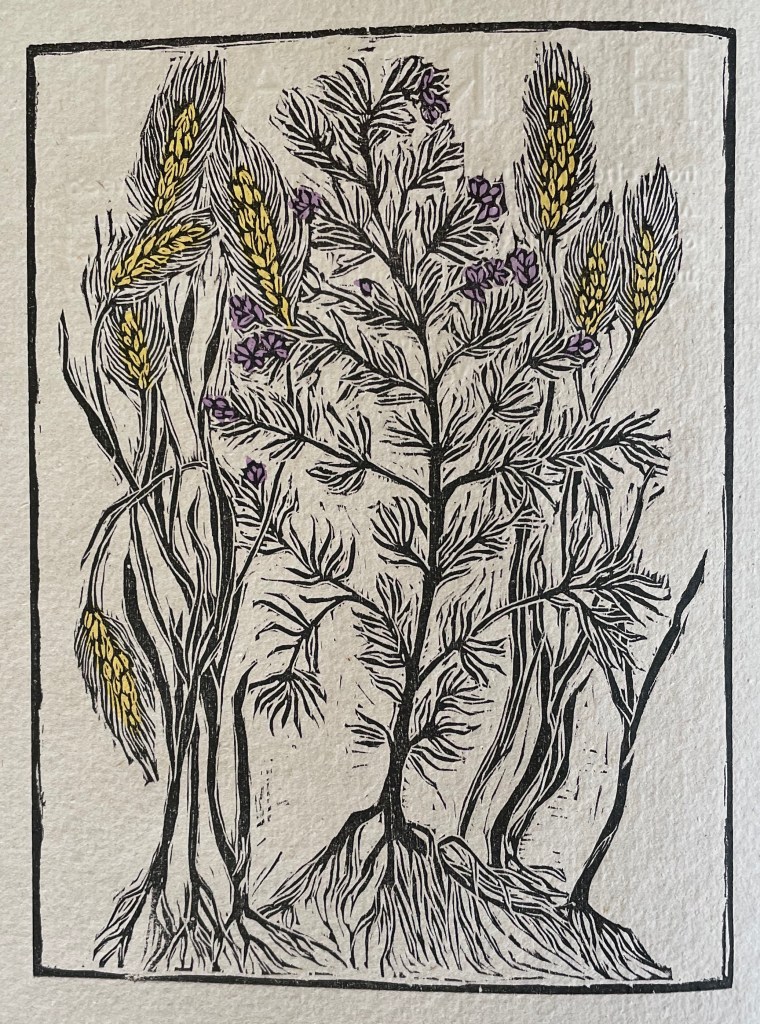
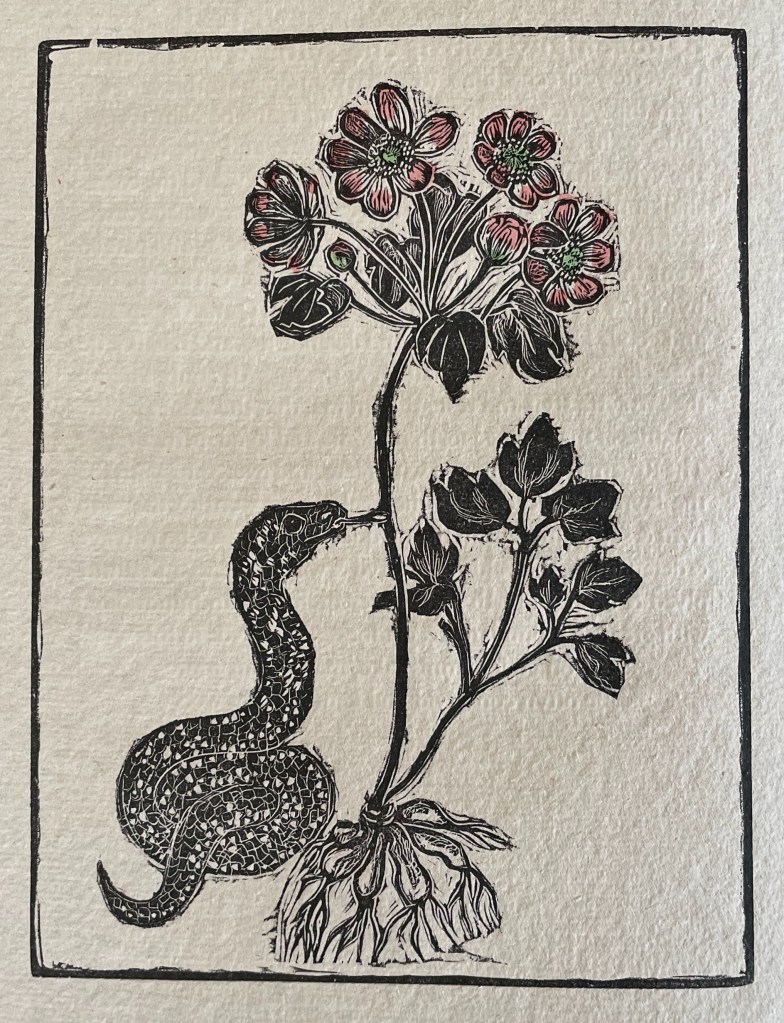


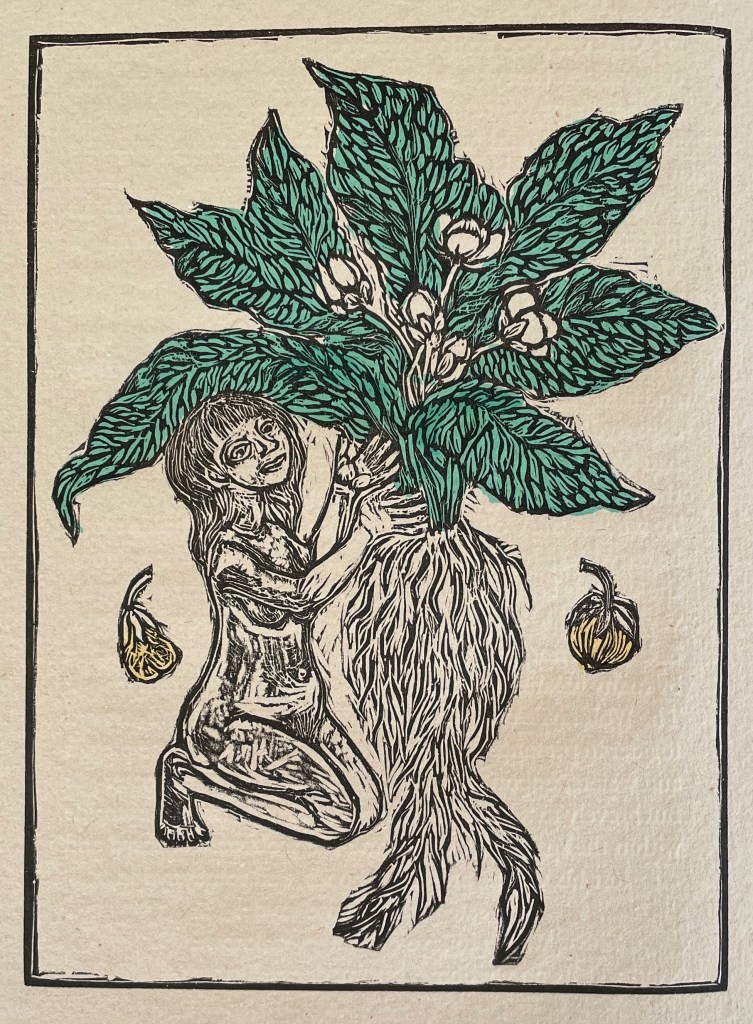
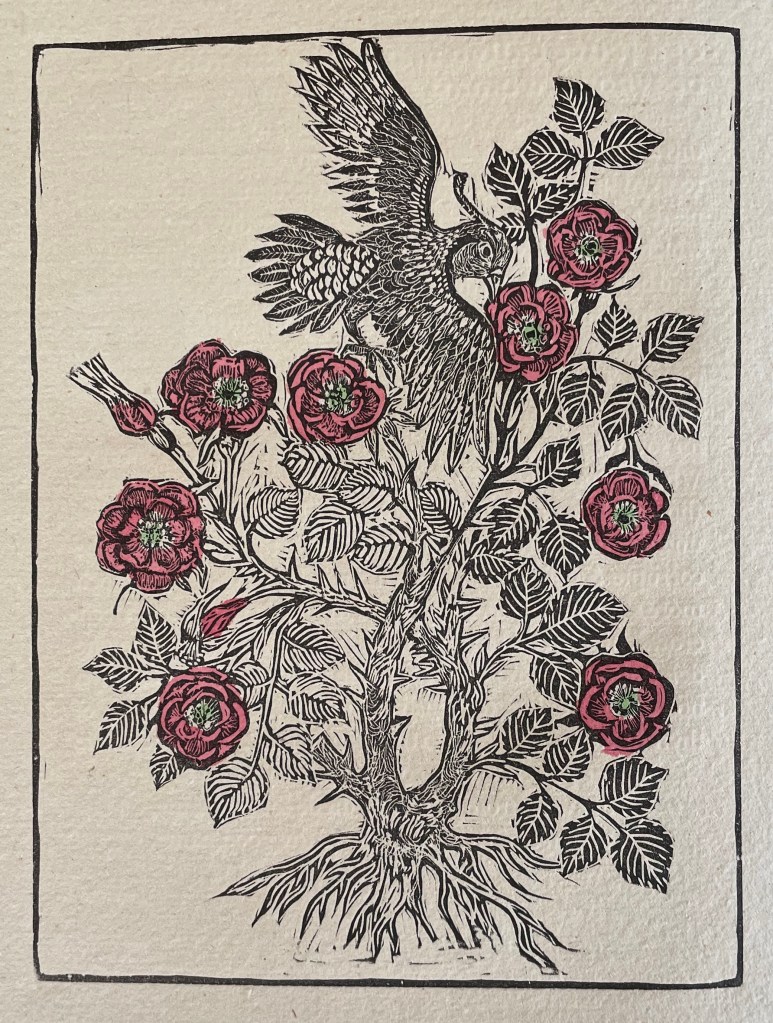
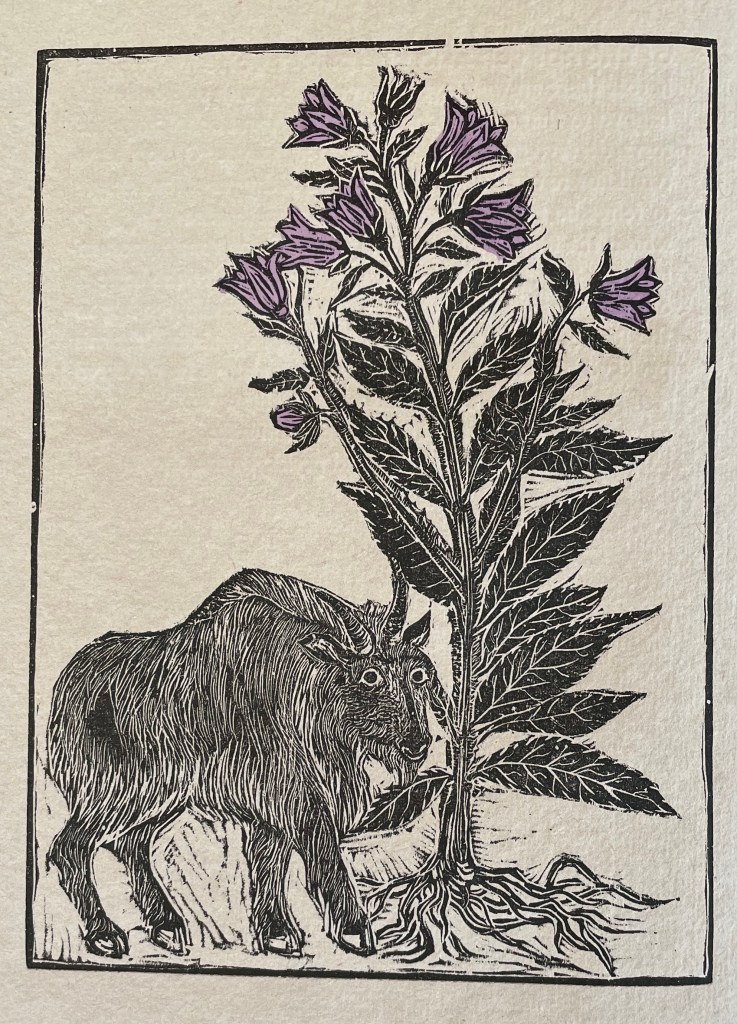
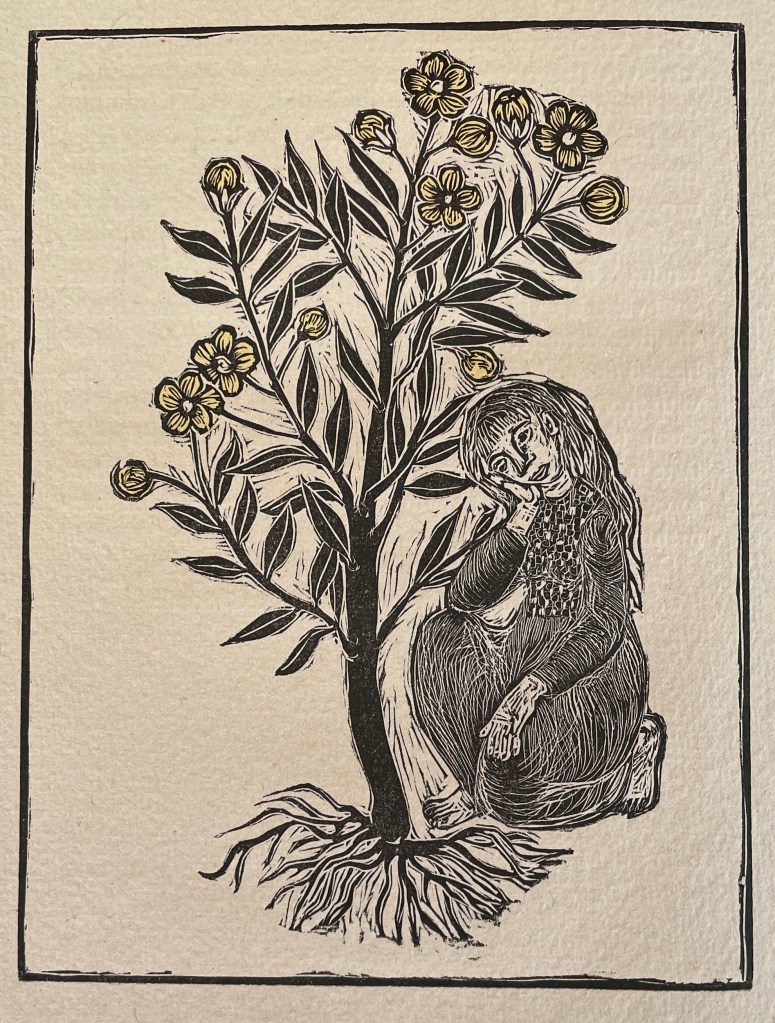

Helen Siegl engraving, Kaja McGown handcoloring.

Further Reading
“Claire Van Vliet“. 3 July 2022. Books On Books Collection.
Buchtel, John (ed.). 2024. The Art of Paper : Claire van Vliet and the Janus Press : Papermaking Collaborations. Boston, MA: Boston Athenaeum.
Caxton, William. 1484 … The book of the subtyl historyes and fables of Esope whiche were translated out of Frensshe … London: William Caxton.
Haslewood, Joseph, ed. 1816. The Dialogues of Creatures Moralised. Appliable and Edifying to Every Merry and Jocund Matter, and Right Profitable to the Governance of Man. London: Printed by Bensley and Son, for R. Triphook.
Pergaminus, Nicolaus, and Mayno de’ Mayneri. 1480. Dyalogus Creaturaru[m] Optime Moralizatus. Omni Materie Morali Io=Cu[n]do Mo[do] Applicabil[is]: Ad Laude[m] Dei & Edificatione[m] Ho[m]i[nu]m Incipit Feliciter. Gouda: Gerard Leeu.
Pergaminus, Nicolaus, and Mayno de’ Mayneri. 1535. The dialoges of creatures moralysed. Applyably and edificatyfly, to euery mery and iocounde mater, of late tra[n]lated out of latyn into our Englysshe tonge. Antwerp: Martin de Keyser.
Pergaminus, Nicolaus, Mayno de’ Mayneri, Joseph Haslewood, and Cott Hobart (ed). 1967. Dialogues of Creatures Moralised Being Ancient Fables, Curious to the Philologer, Interesting to the Lover of Natural History, and Helpful to the Moralist. Kentfield, Calif.: Allen Press.
 Books On Books