Gespräch mit einem Esel [“Conversation with a Donkey”] (2019)
‘The most beautiful things about him were his eyes and the fact that he could speak.”
‘This is how Ernst Strouhal’s new book begins. It recounts a conversation the author had by the stone wall of a Greek olive grove with a donkey—as clever as it is argumentative. They discuss literature, philosophy, pleasure and cruelty, and the relationship between humans and animals. The donkey proves to be an attentive and critical observer of human civilization. You’ve probably never seen a book as lovingly and elaborately designed as this one. ‘Conversation with a Donkey’ revives the ancient tradition of the magical transformation book …” — Publisher’s description.
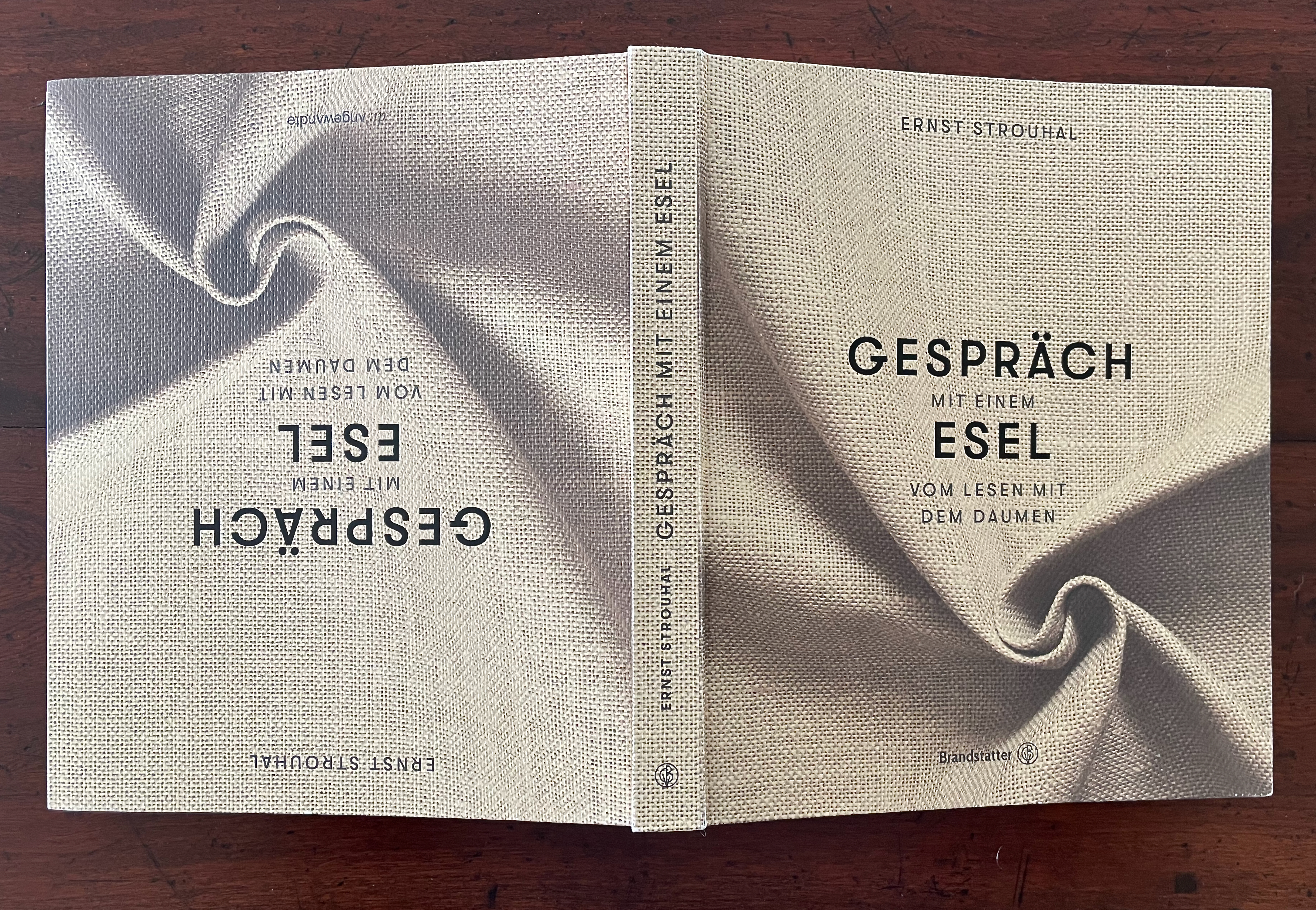
Gespräch mit einem Esel: vom Lesen mit dem Daumen [“Conversation with a Donkey: Reading with the Thumb”] (2019)
Ernst Strouhal
Casebound hardcover “blow book”. H260 x W217 mm. [148] + 60 pages. Published by Brandstätter Verlag. Acquired from Momox, 6 September 2026.
Photos: Books On Books Collection.
Given the contents of Conversation with a Donkey, this entry for the Books On Books Collection is provided by Donkey Bentley, a resident of nearby Island Farm Donkey Sanctuary. Like Professor Strouhal’s Greek friend, Bentley is multilingual and well educated. In fact, he has a Reader’s Card for the Bodleian Libraries in Oxford. (I think he may have overemphasized the donnish and posh nature of his name and character, respectively, to get it.) At any rate, for our mutual convenience, we agreed he could examine the book at the Weston Library in Oxford.
The Bodleian Libraries are not that far from the Sanctuary, or as we prefer to put it, the Sanctuary is not that far from the Bodleian Libraries. The seats could be more accommodating, but the tables and lighting are excellent for nosing into books like Professor Strouhal’s and its ancestors. Hooves can make for awkward reading when it comes to such trickily made books, so it’s good that the staff are helpful. In a pinch, some of the dons and, with a nip, even the students can lend a thumb.
By “trickily made”, I mean it is a “flip book” and a “flick book” or “blow book”. With a flip book, if you let the the pages slip rapidly under thumb or hoof, their images move as in a film. With a flick book, because chunks of the book have imperceptibly different page widths, you can show the images of one chunk by flicking through the book, then change position of thumb or hoof along the edge to another chunk, blow magically on the book (hence the name “blow book”), and as you flick through the book again, the audience will think that you have transformed one set of images into another. These are old tricks, which the Professor explains in his preface. In fact, the explanation comes from my cousin whom the Professor met on the Greek island of Kea. My cousin and I haven’t seen each other in donkey’s years (yes, we have that expression, too), so this book is a delightful surprise in many ways.
I would begin at the beginning, but flick books have two beginnings and two ends. They are a kind of back-to-back (or dos-à-dos) book, which is why the front and back covers are the same but upside down to one another. By sleight of hand, the conjuror turns the book end over end, and the audience thinks the magician has blown in and out even more sets of images with a magic breath .
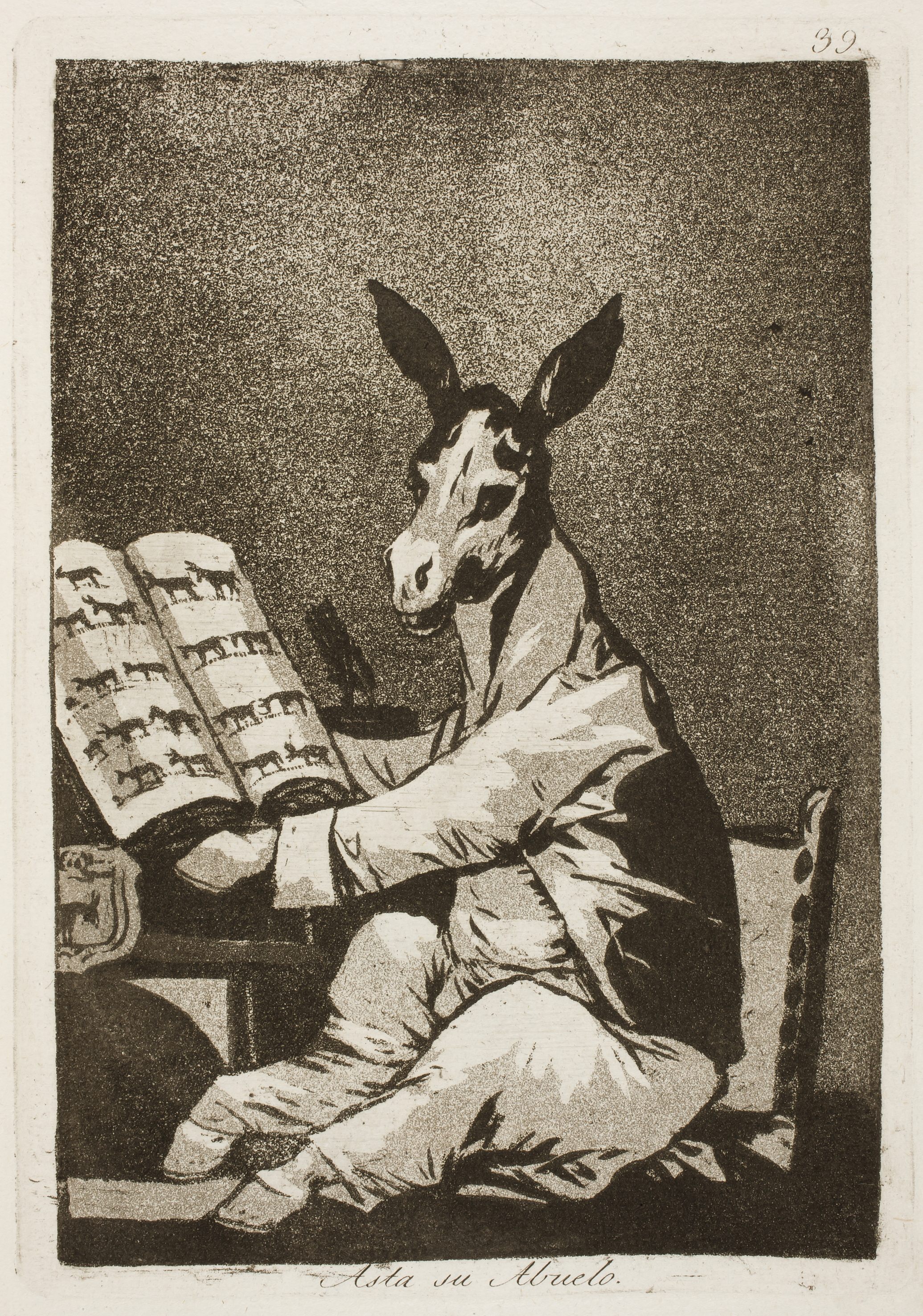
So to begin at the beginning, it depends on where you start — as with all beginnings, I suppose. In this book’s case (and it is casebound), what takes place in the conversation on one side of the book explains the portraits on the other side when it is turned over. But I am always content to put the cart before me (some mule or horse might then have to pull it), and besides, here on the portrait side of the book we are rightly stabled and magically identified with the greatest donkey painter of all time: Francisco José de Goya y Lucientes. The Professor doesn’t admit it, but it is certainly no accident that Goya’s self portrait appears in one chunk of the flick book and disappears to be replaced by his aquatint of my Spanish cousin from Los Caprichos (1799). In fact, it is my Greek cousin who tells the Professor in the conversation side of the book that Goya was the greatest donkey painter. (A good thing he didn’t pull the Viennese don’s hind leg and tell him William Steig or Tom Hester instead.*)
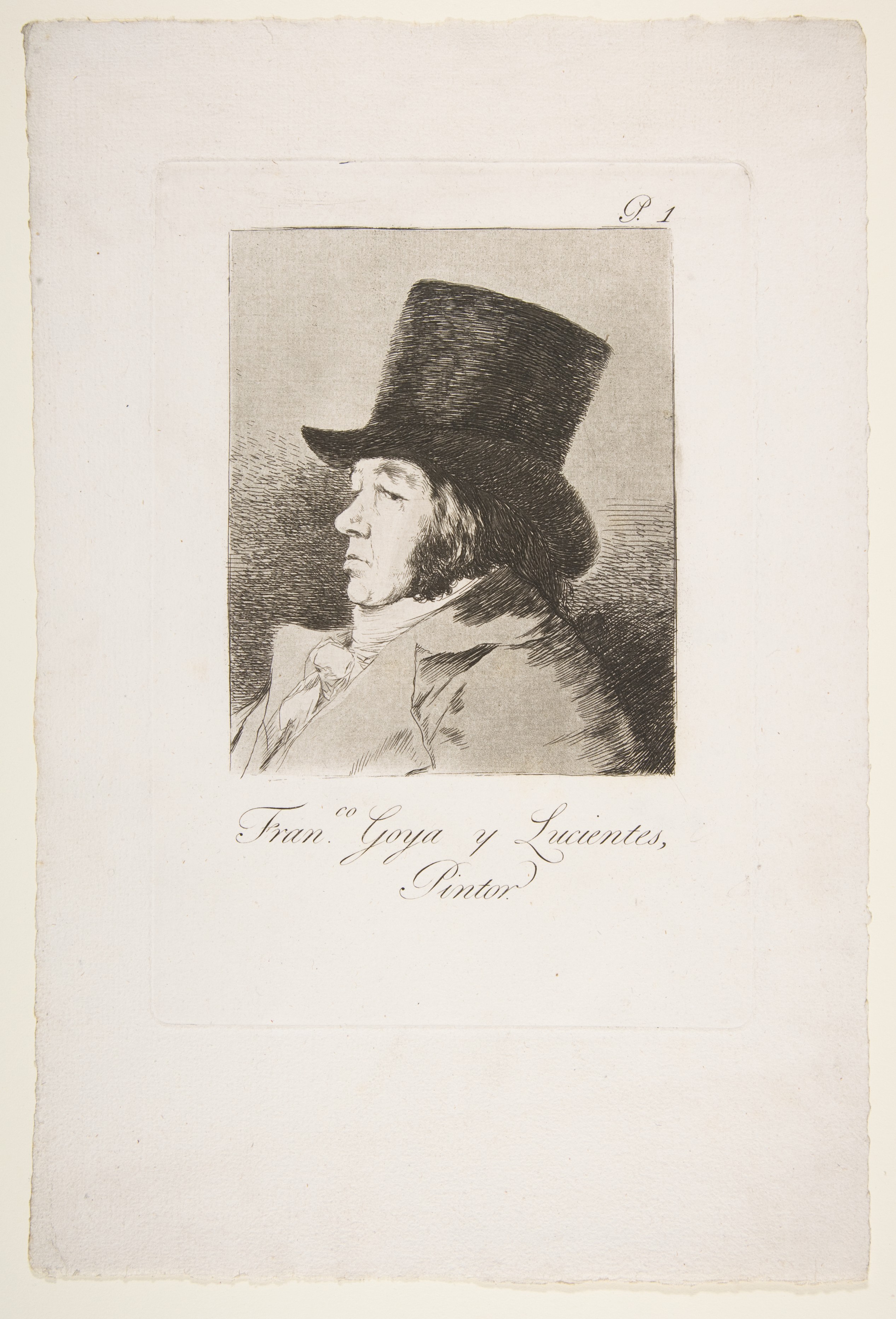
I have to say the flip book presentation of Goya’s self portrait as if it is emerging from a burning page makes me heehaw. Having solemnly sworn, as a condition for receiving my Reader’s Card, to light no flame in the Bodleian Libraries, here I sit watching these flames reveal the artist’s sidelong glance under his top hat.
This side of the book shows that the Professor is clearly one of the more intelligent humans on our planet. After learning from my cousin about flip books and flick books, he has persuaded his publisher to combine the two. In one chunk of the flick book, we have the movie of a page burning away to reveal the self portrait. When we slide a hoof or thumb down to the other chunk and flick through the book again, hey presto! we have Goya’s portrait of my handsome Spanish cousin. If it weren’t for the glares from the other readers, I’d heehaw again.
The Professor impressively adds the flip book effect to the chunk of pages showing my Spanish cousin’s portrait. The flip book effect makes it appear that the image-bearing page is turning on the page as we flick through the pages of the book. I don’t think I can describe this well enough in words — even in German, Greek, or Spanish. Better just to show you.
Having dealt with the portraits side of the cart, let me go around to the conversation side. Here is where we find their exchange about Goya, and there are many other wonderful passages on this side of the book. Some, however, make me edgy — for instance, when my Greek cousin educates the Professor about the Lesesel or “reading donkey”, that “narrow, upholstered frame on which one sits astride to write or read at a desk”. As I mentioned, the seats here could be more accommodating, so you can imagine why I look over my shoulder from time to time. You can never tell when a human will do something as humanine as to climb up on your shoulders to read a book.
That reminds me. So taken with the idea of preparing this entry about the Professor’s book, I requested other examples of blow books in the Bodleian as well as the original of Los Caprichos (1799). Let me trot over to the collection desk. Now let’s see. Yes, here it is. No. 42 in Los Caprichos. HEE -HAW. (Sshhhhhh!) Um, sorry.
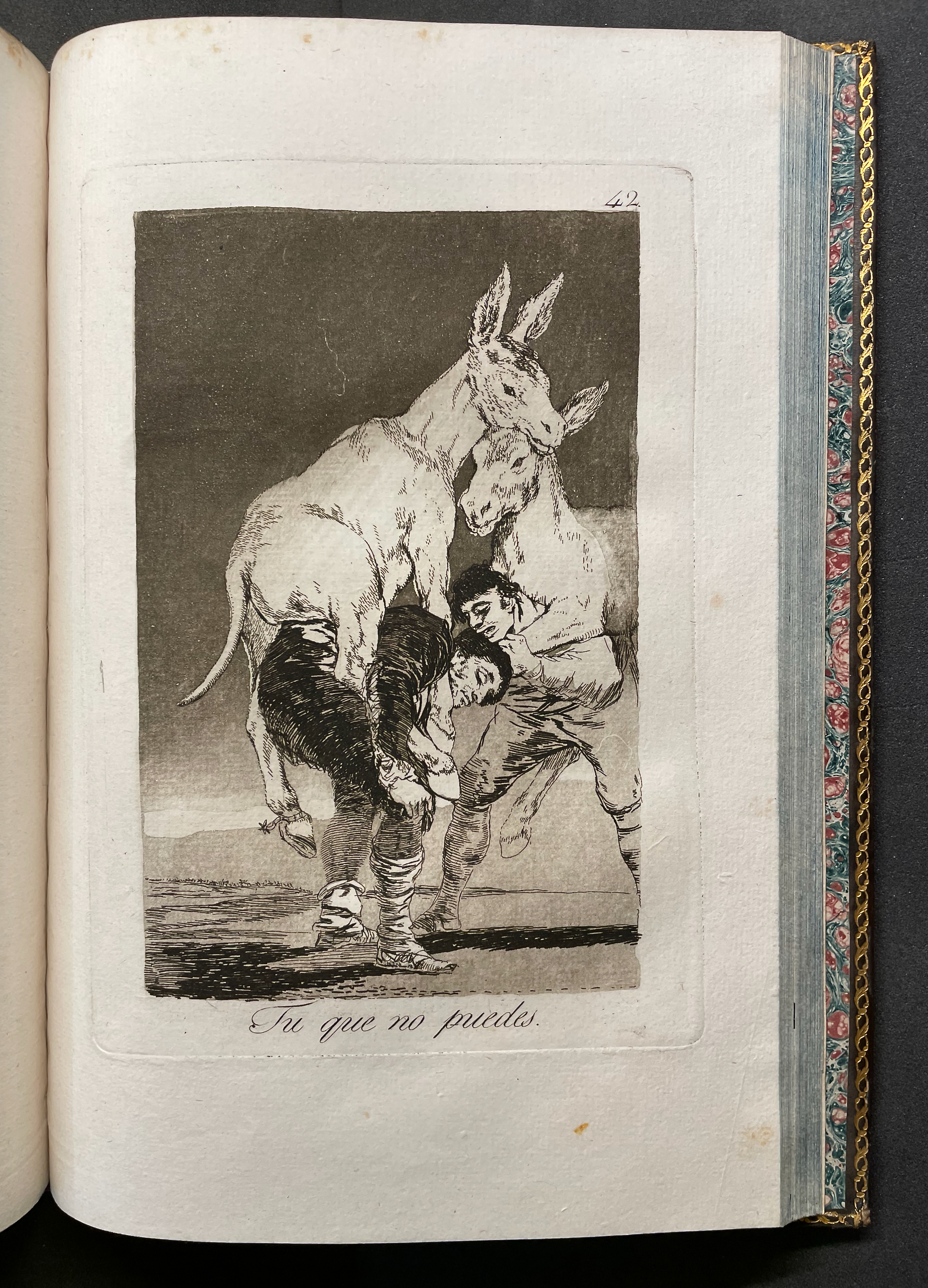
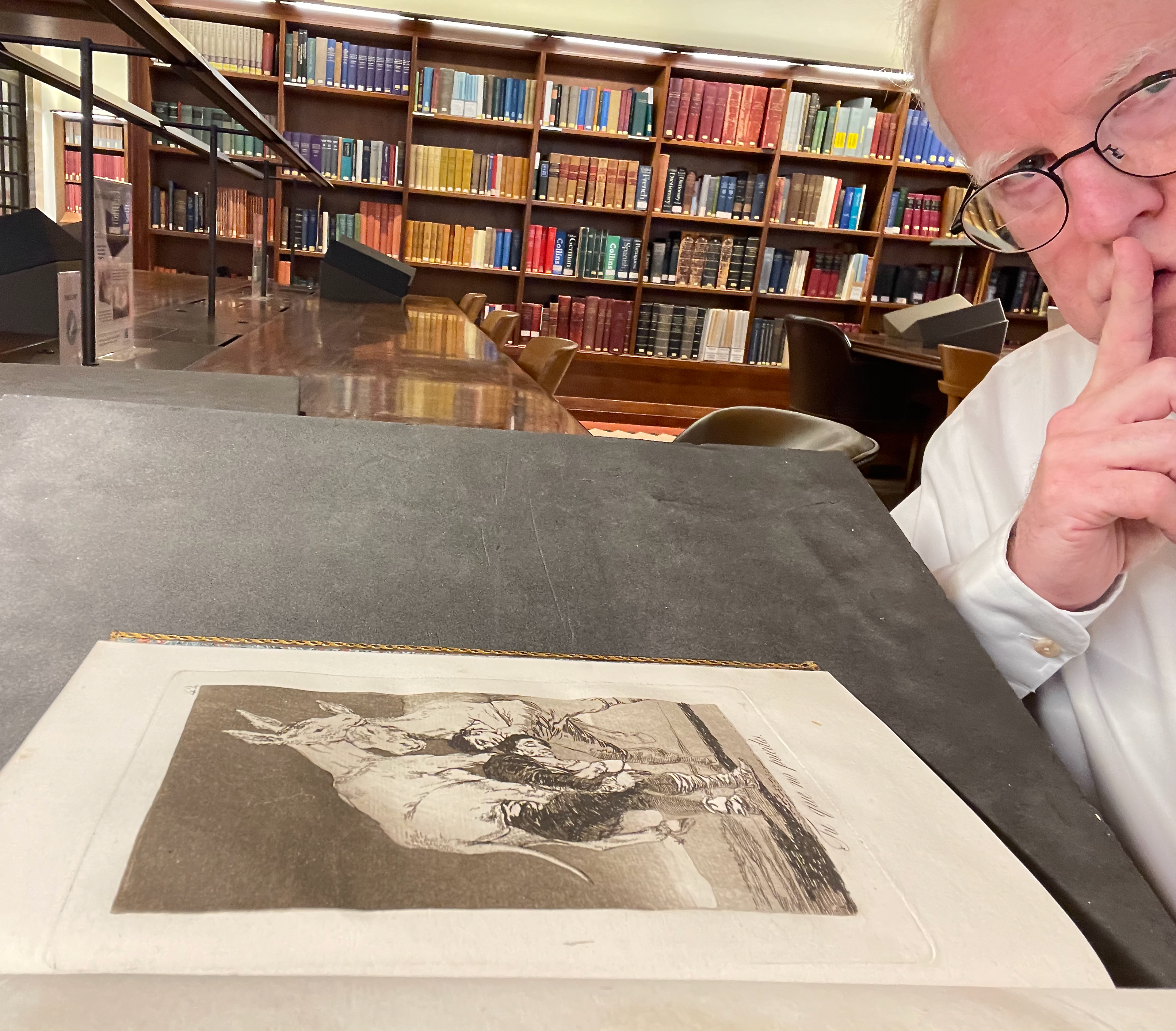
Spanish proverb: “Tu que no puedes, llévame a sobre los tiempos” (You, who cannot, carry me on your back).
I wish the Professor and his publishing team could have included that image. I would also have enjoyed some images of the aniseed-flavored rusks the Professor mentions just before my cousin brings him up short with that learned definition of the Lesesel piece of furniture. For human readers, a pictured rusk would probably help those unfamiliar with that tasty item variously known as Zwieback, teething biscuits, biscotti, or rusks. Then again, it might have over-egged this madeleine of a book.
I should explain that remark.
There are only two chunks of differently trimmed pages on each side of this flick book. On the portraits side, one chunk for Goya and one chunk for my Spanish cousin. On the conversation side, there is one chunk for odd-numbered pages and one for even-numbered pages. Just as my cousin can tell from the recipe that Proust did not accurately describe the taste of a madeleine, I can tell that granting my wish for a chunk of rusks would have required another chunk on the portraits side of the book and spoiled the effect of exchanging the portraits. Besides, I’d have faced the temptation of sniffing the rusk pages, cupping them with my upper lip, and, like Sir Francis Bacon, scooping them into my mouth with my lower lip.**
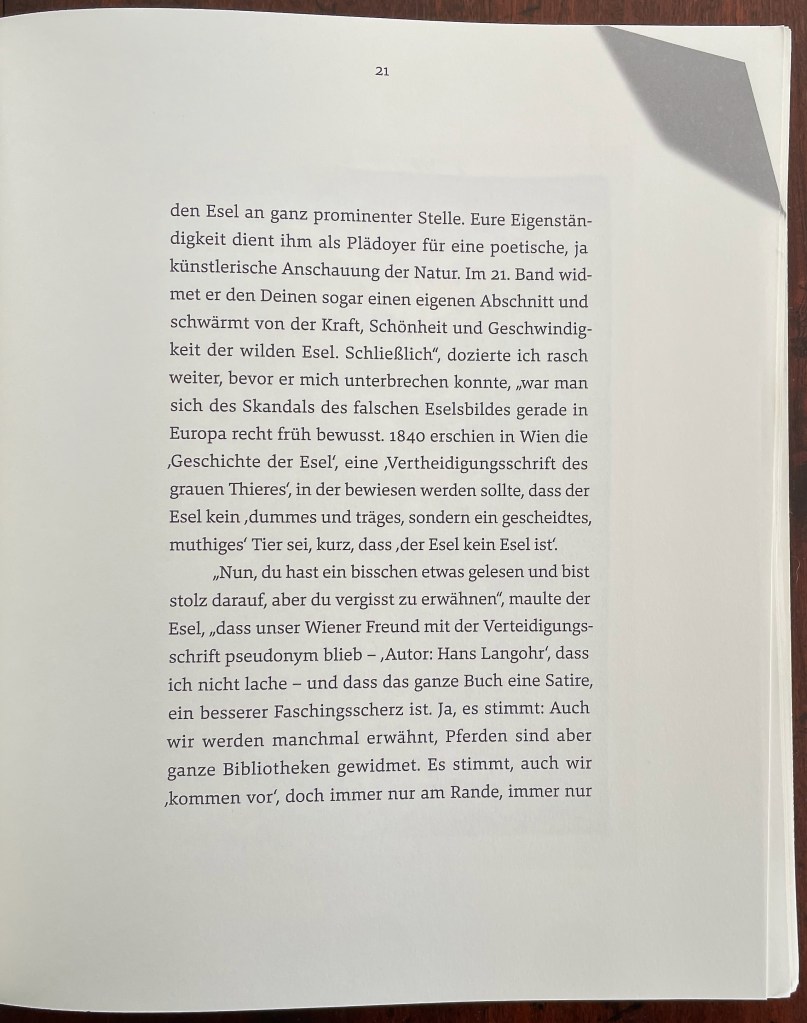
I can tell too that the Professor and his publishing team have also combined the flip book and flick book effects on the conversation side just as they did on the portraits side. In the even-numbered-pages chunk, my Greek cousin’s ears and forehead rise as the pages slip under a thumb or hoof at one corner. In the chunk of odd-numbered-pages, they have added images of dog ears in the upper right corner. With a thumb or hoof at the other corner, the dog ears appear to fold and unfold as the pages slip by. It is not only a fine allusion to the conversationalists’ auricular discussion, but it has that self-referral that artists’ books always seem to have to themselves. There’s also self-referencing to the subtitle — Reading with the Thumbs — which, if you think about, refers back to title. After all, the thumbs make the even pages talk with the odd pages (sotto heehaw)! It’s the same self-referencing as in the page-turning impression on the portraits side of the book.
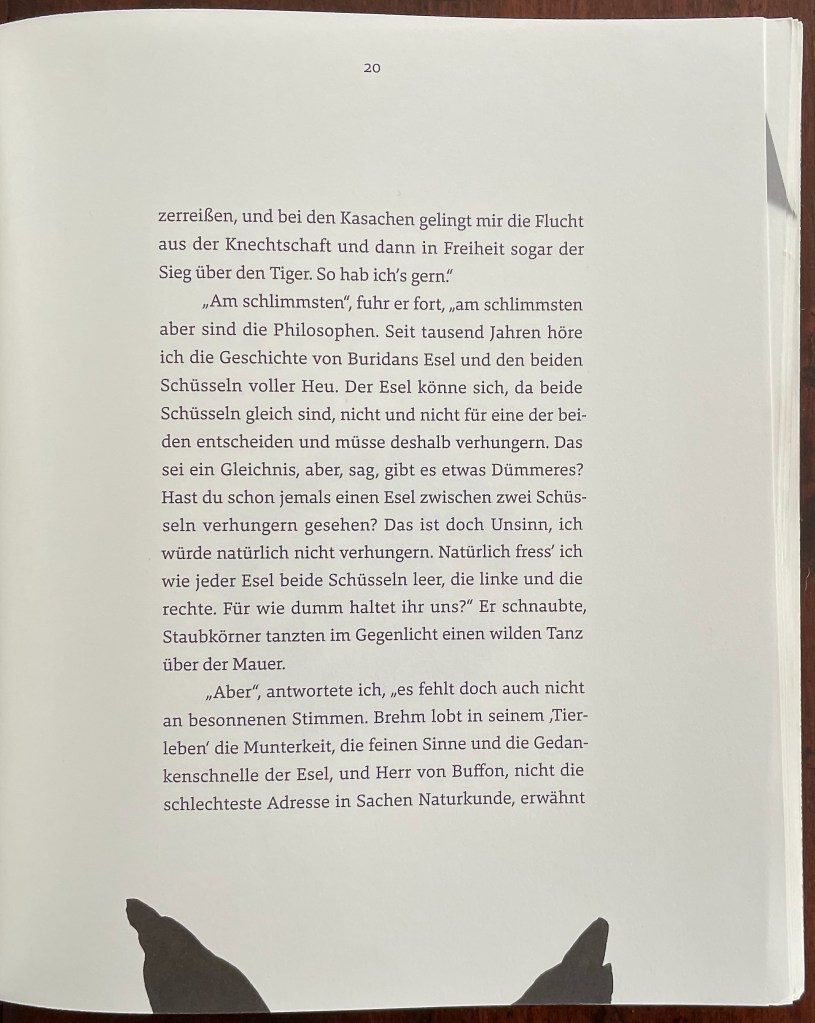
Page 20 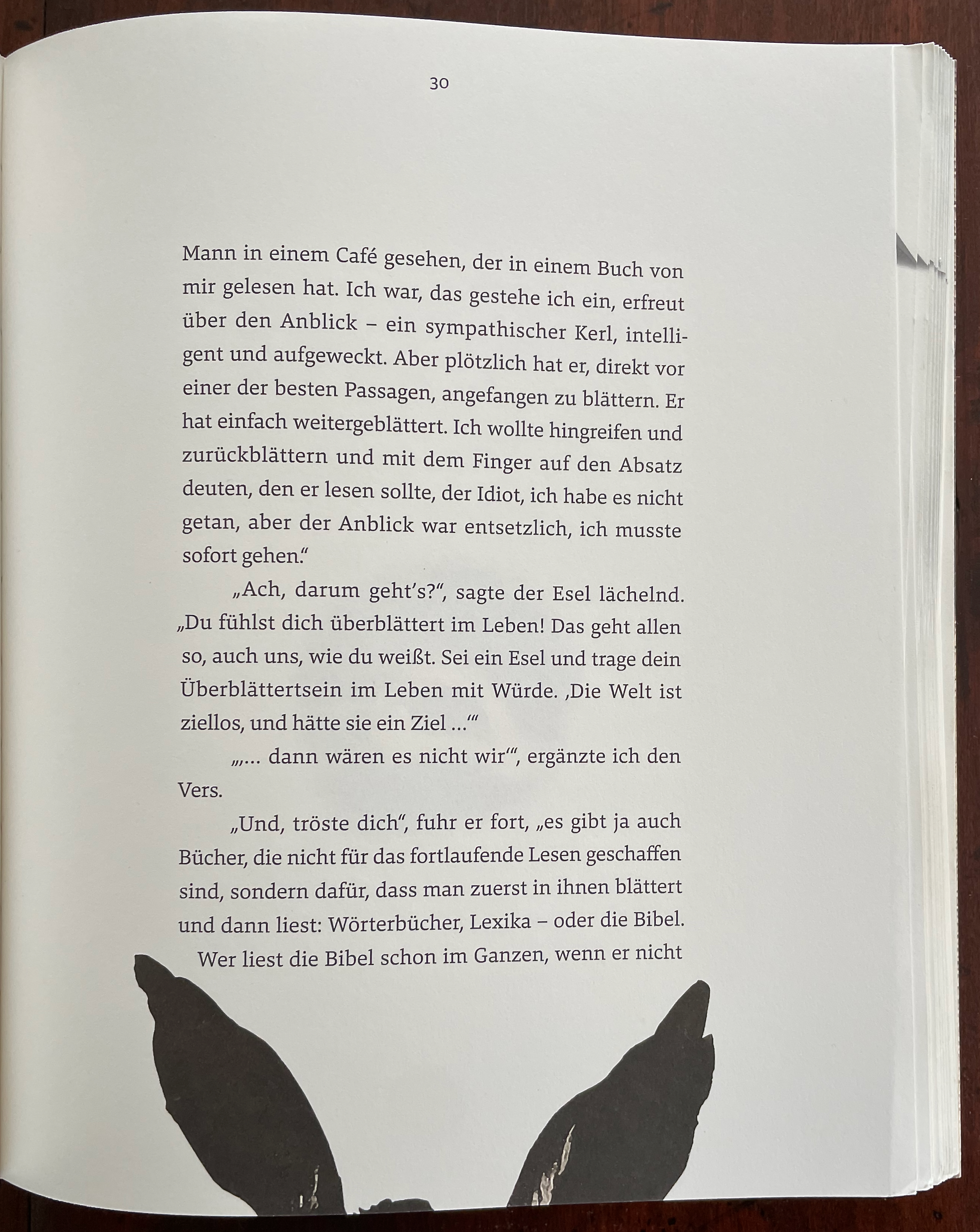
Page 30 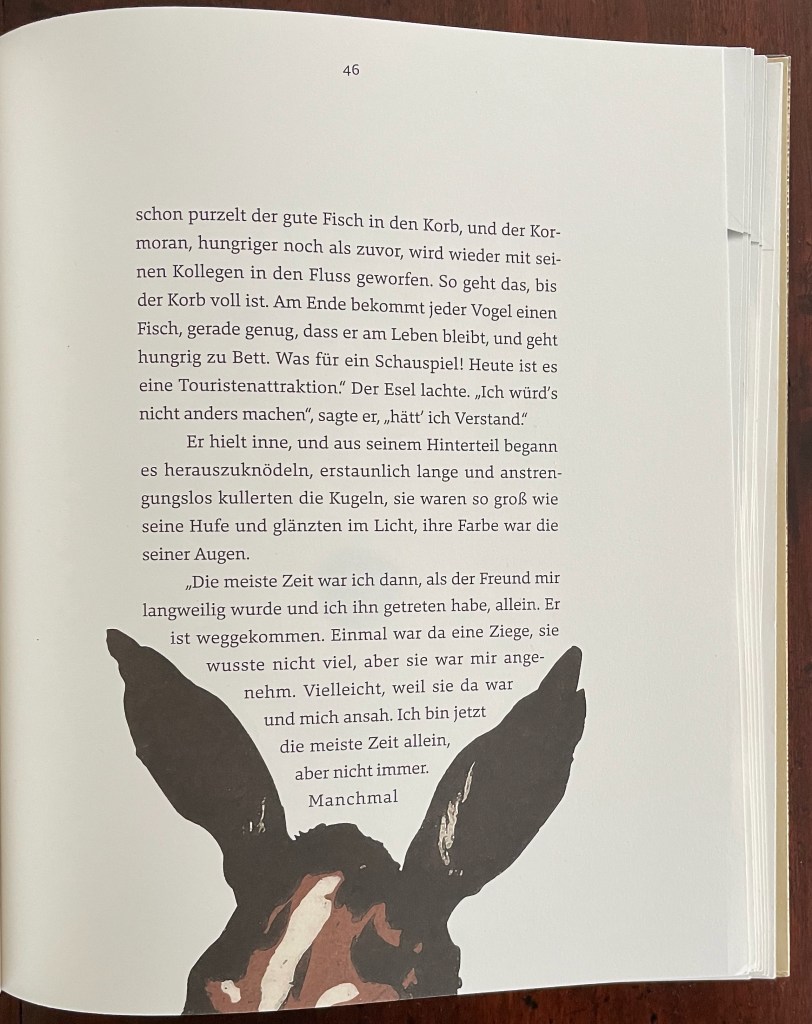
Page 46 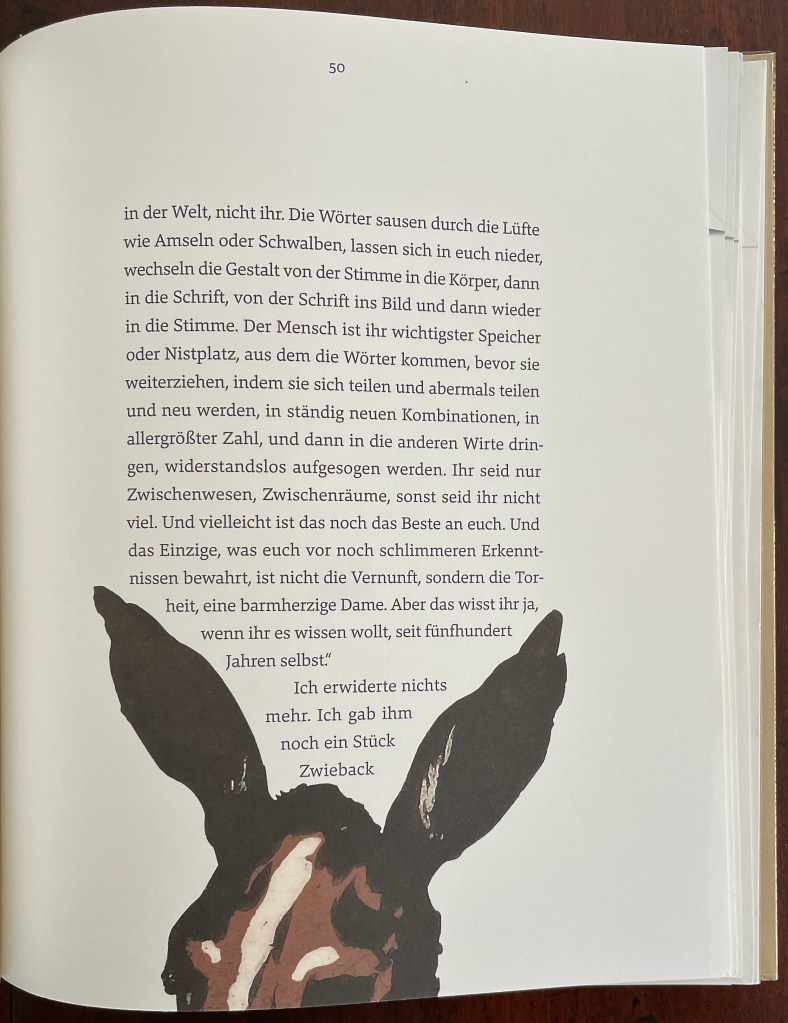
Page 50
Page 21 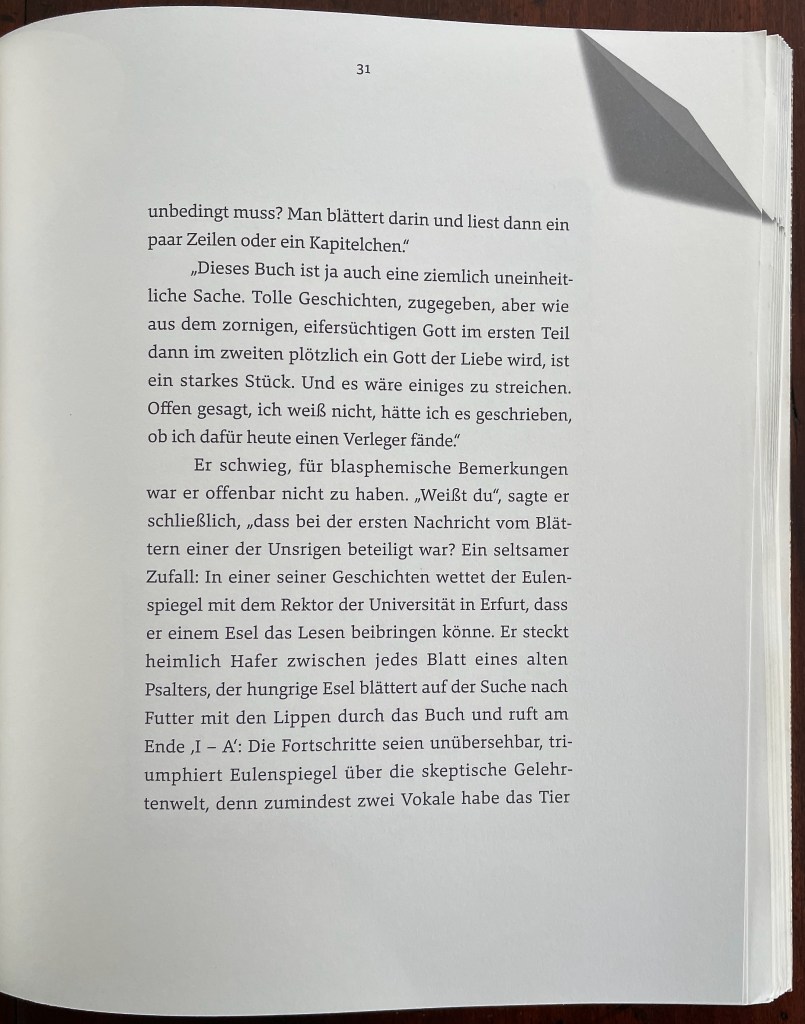
Page 31 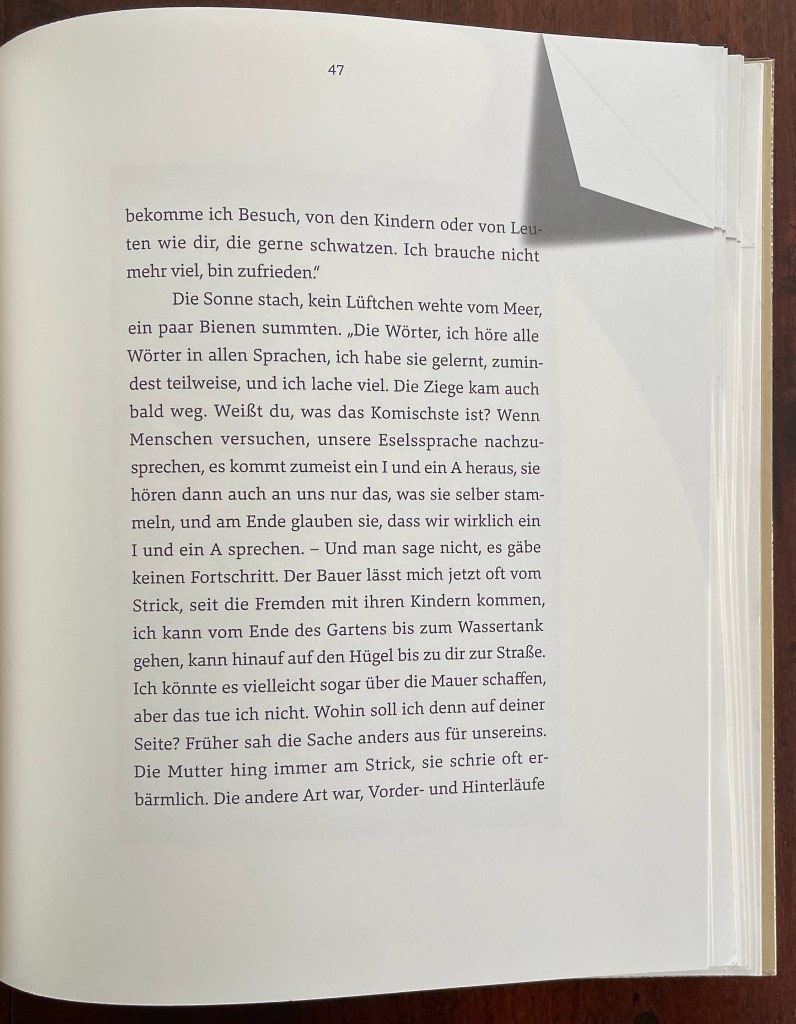
Page 47 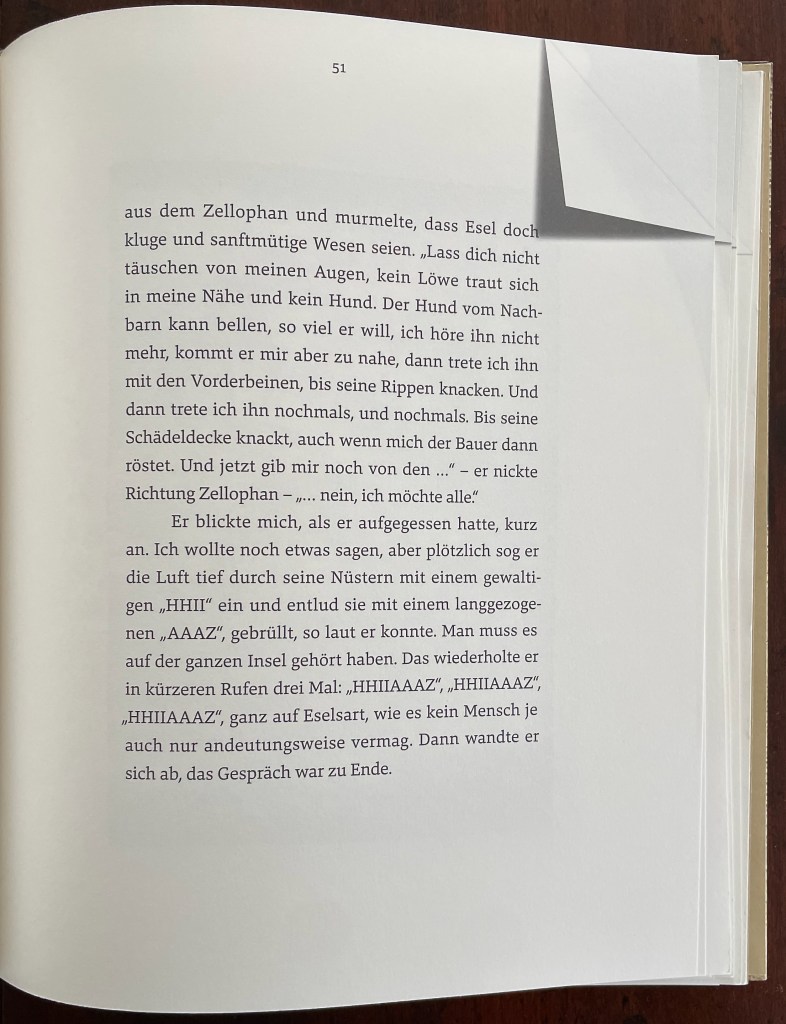
Page 51
Nosing around the Bodleian’s blow books, I am all the more impressed with the portraits side of Professor Strouhal’s book. Some of these blow books go back to the 18th and 19th centuries. Each is a version of the conjuror’s trick book that the Professor describes in his preface, and some have as many as ten sets of images.
Ambigu magique (1770) is their oldest one and has eight motifs: blank page, harlequin, le pere, l’abbé, soldiers, flowers, la mere, and playing cards.
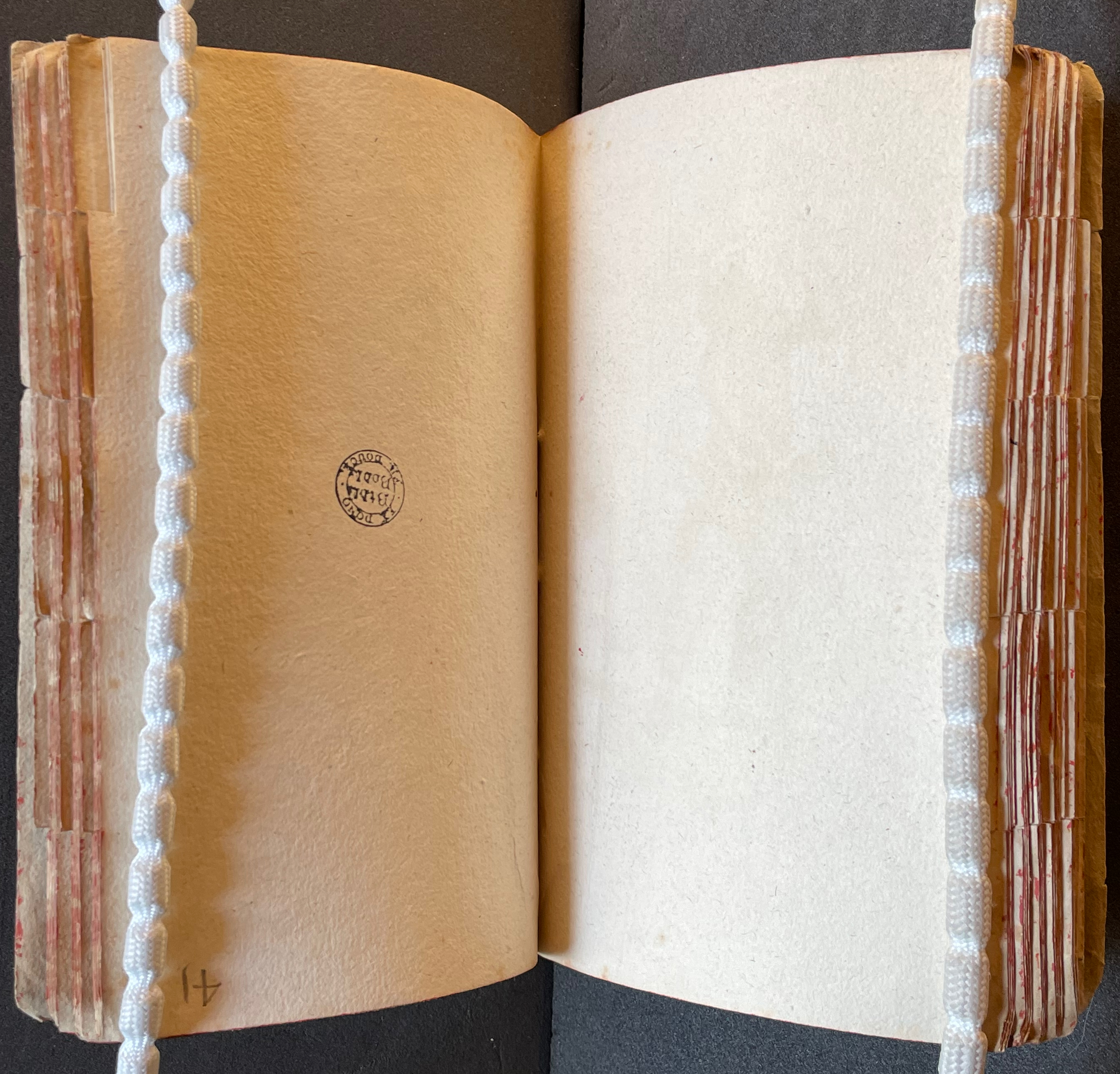
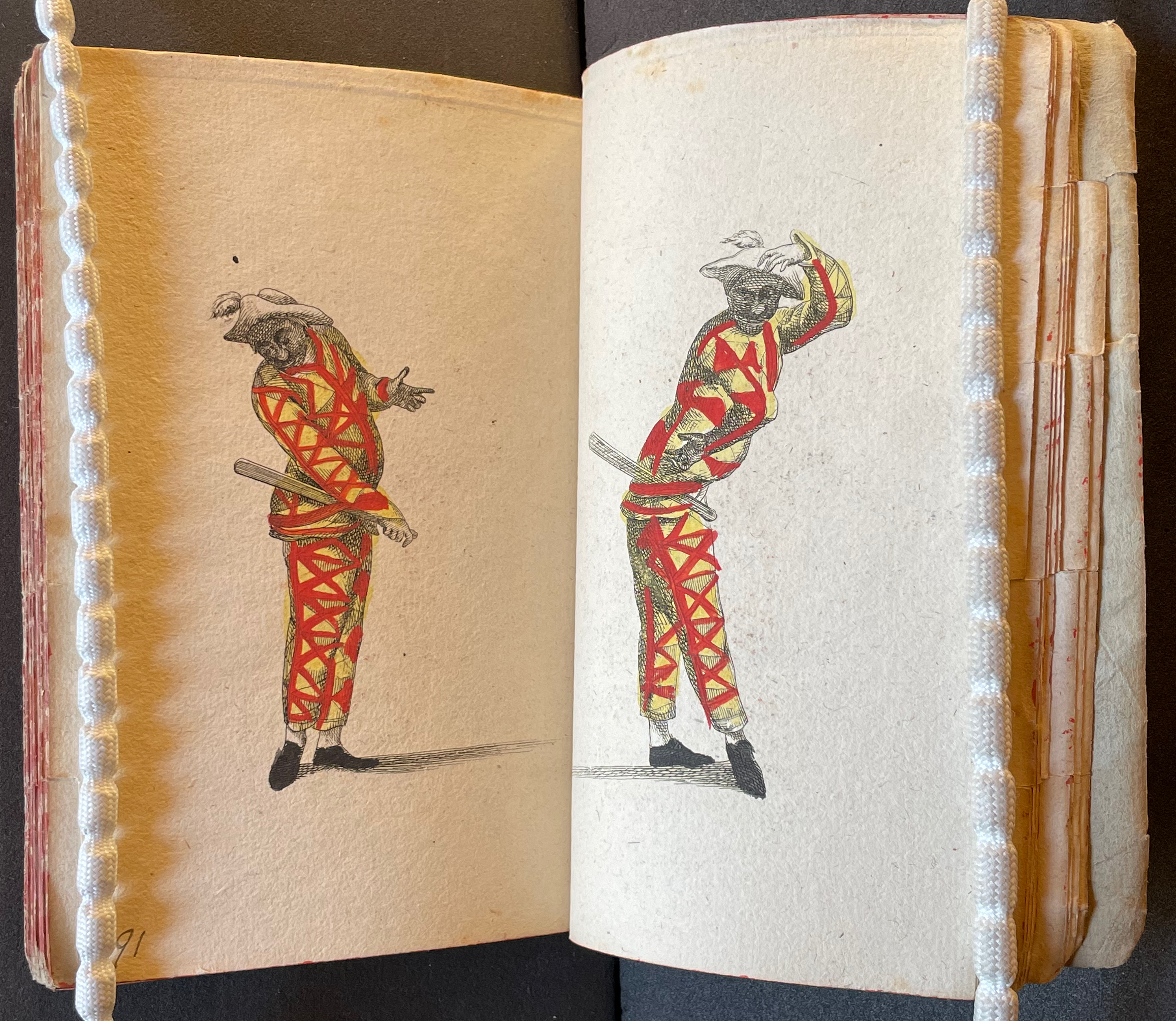
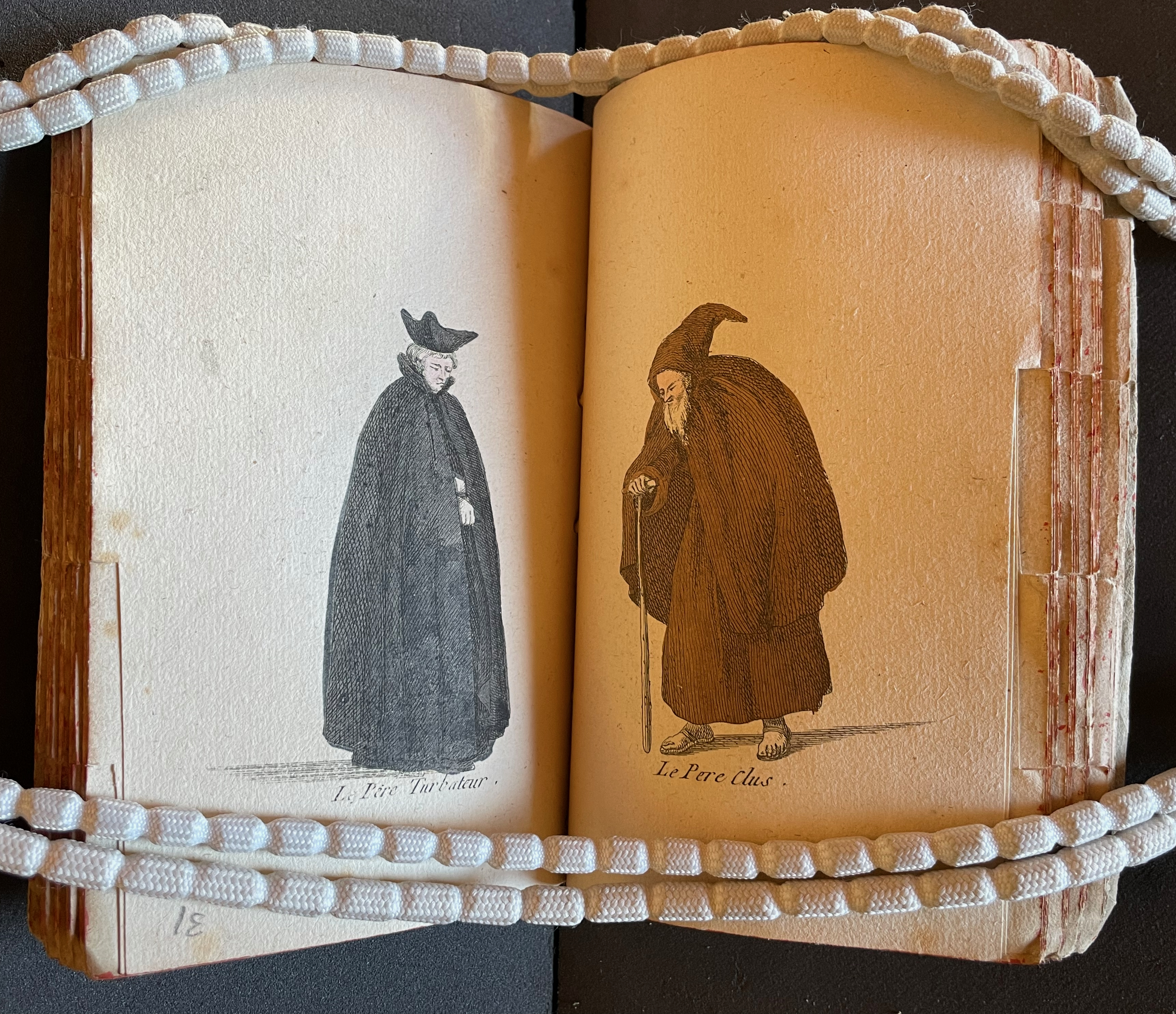
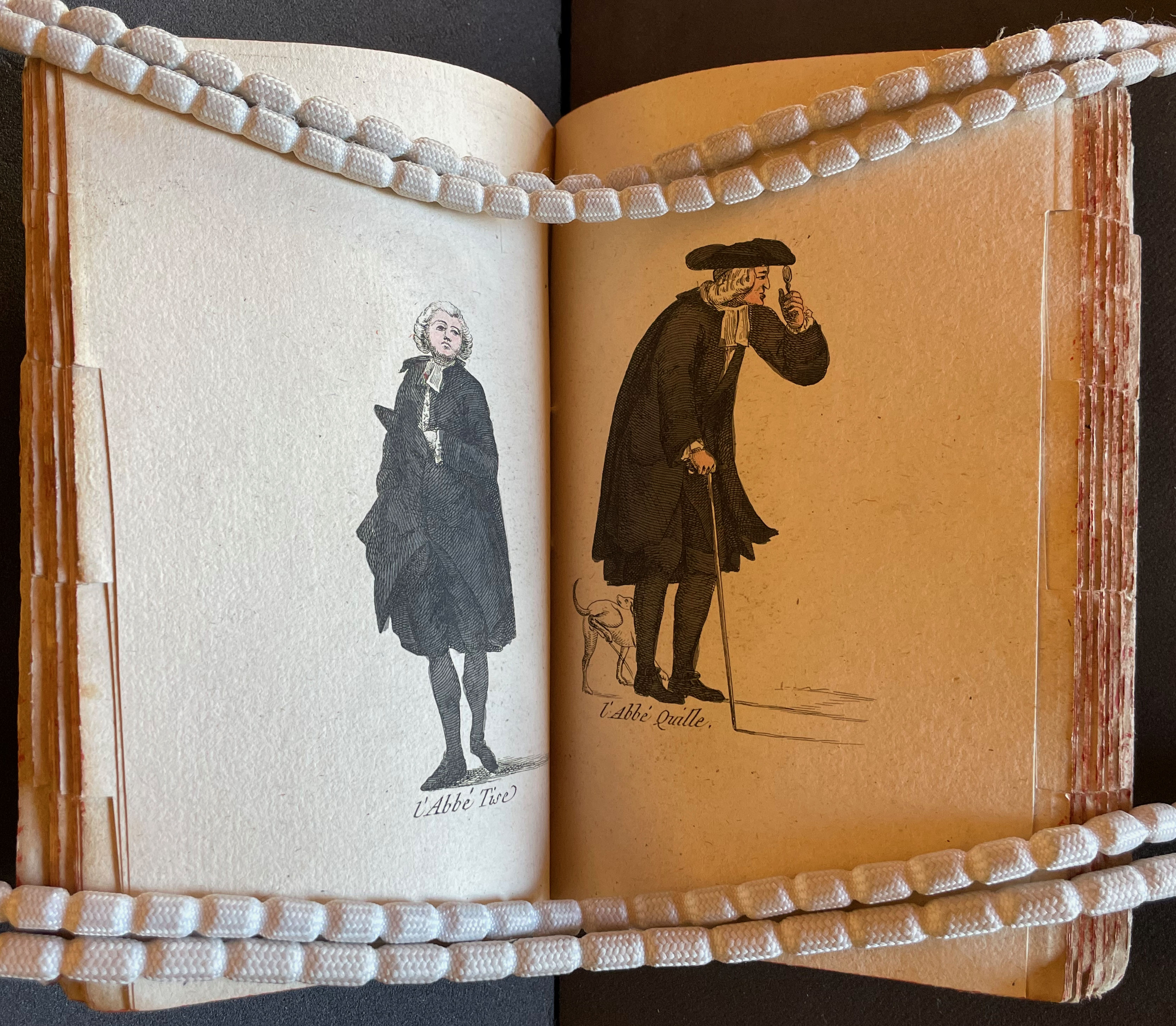
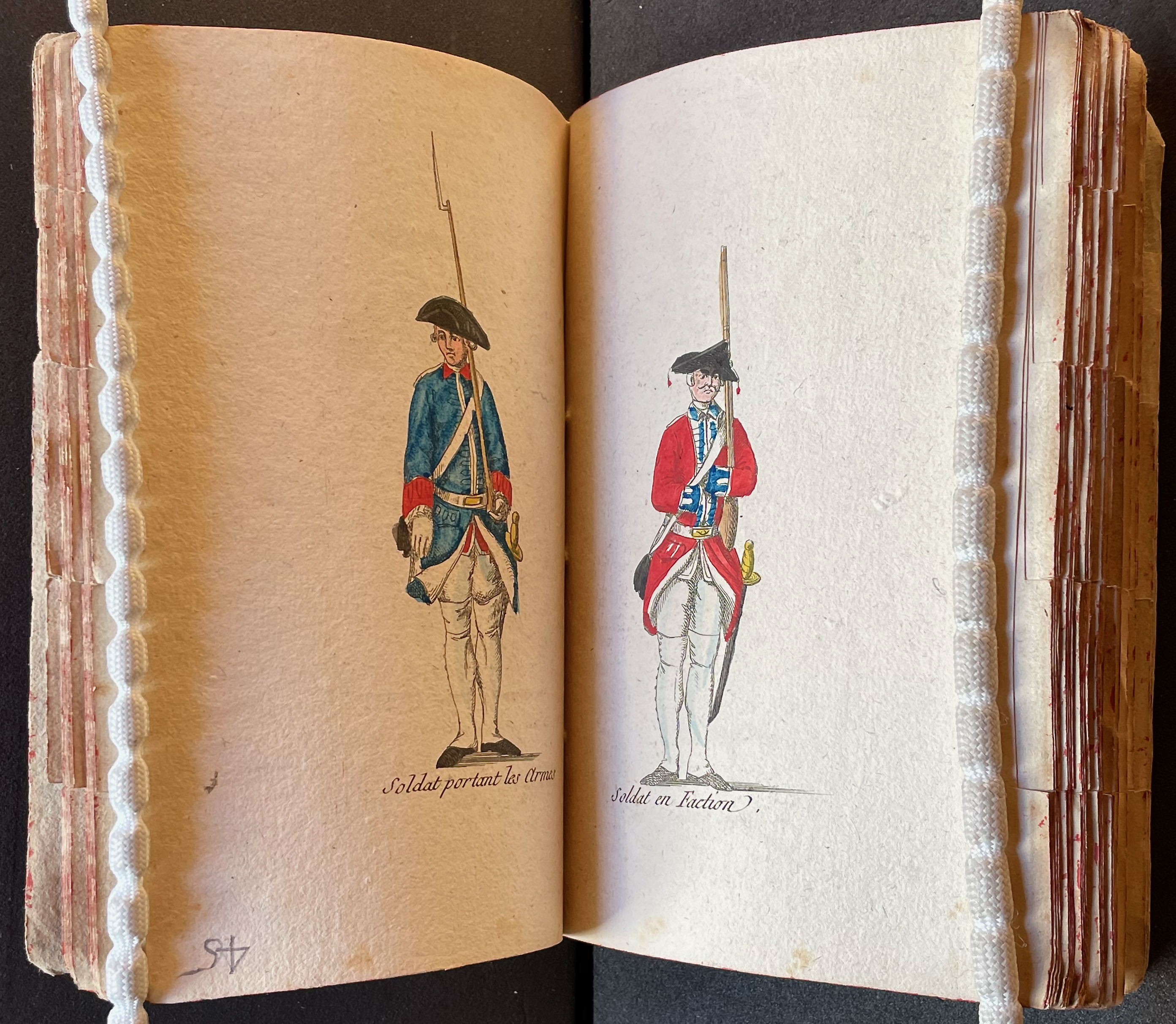
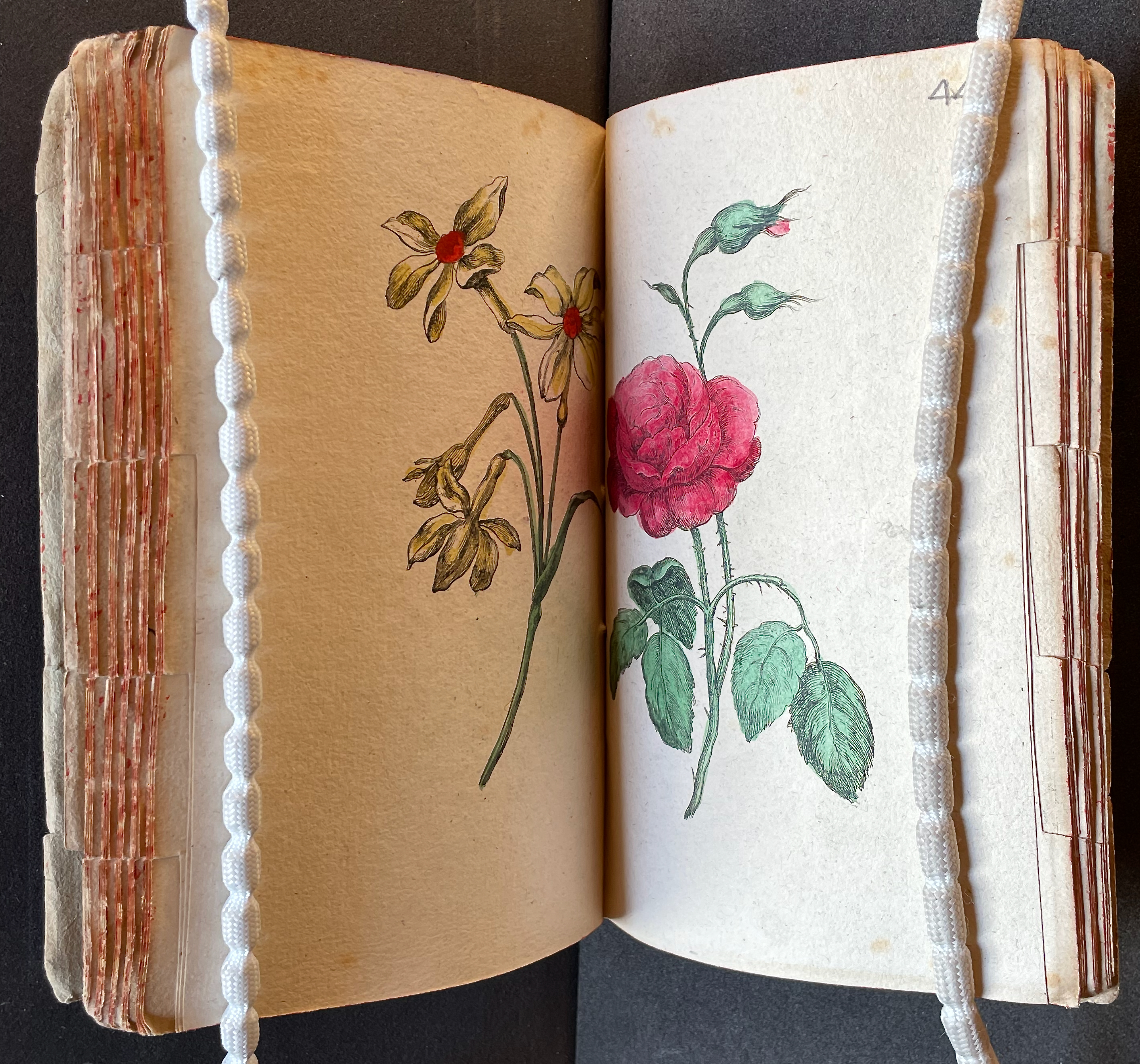
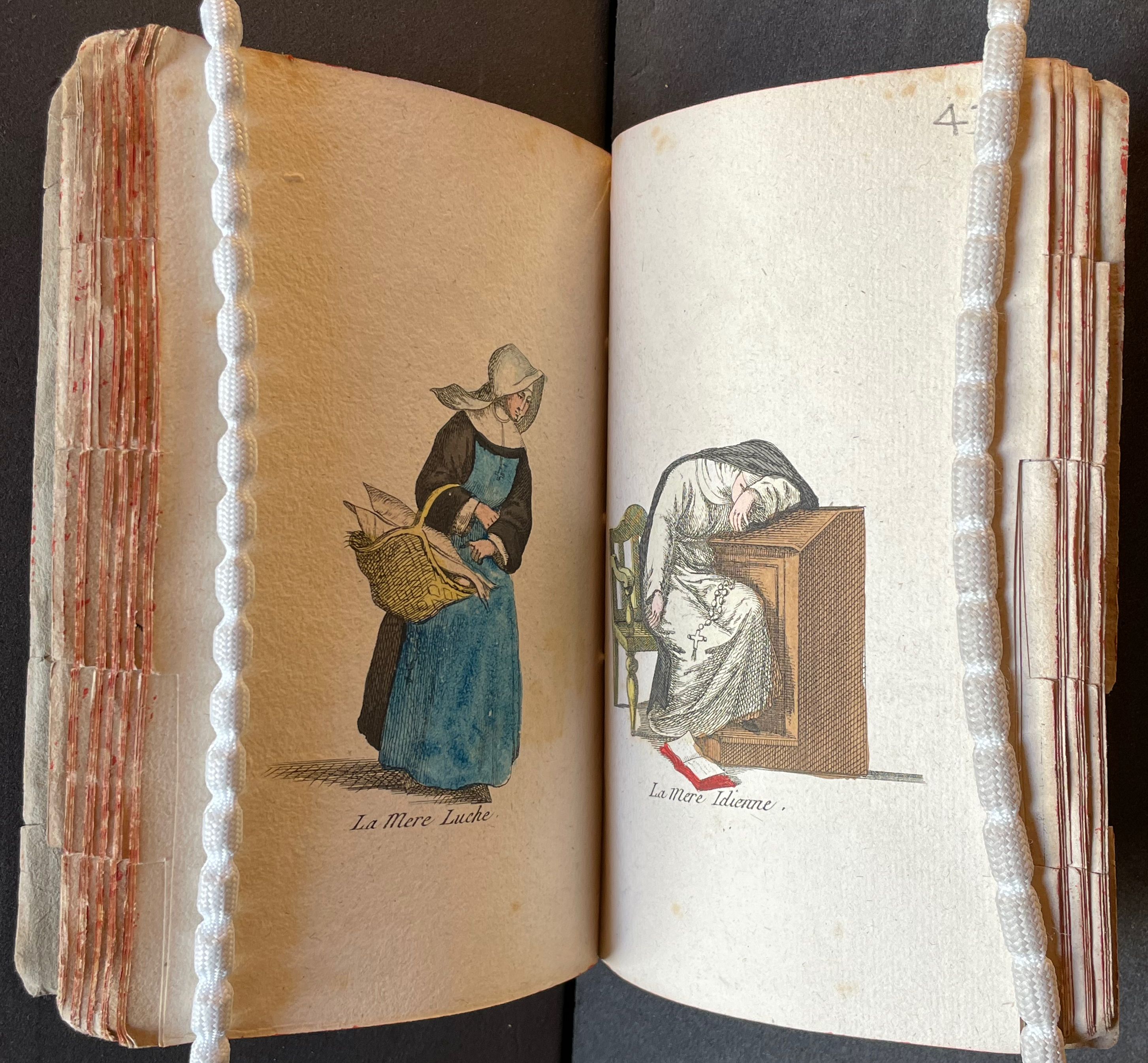
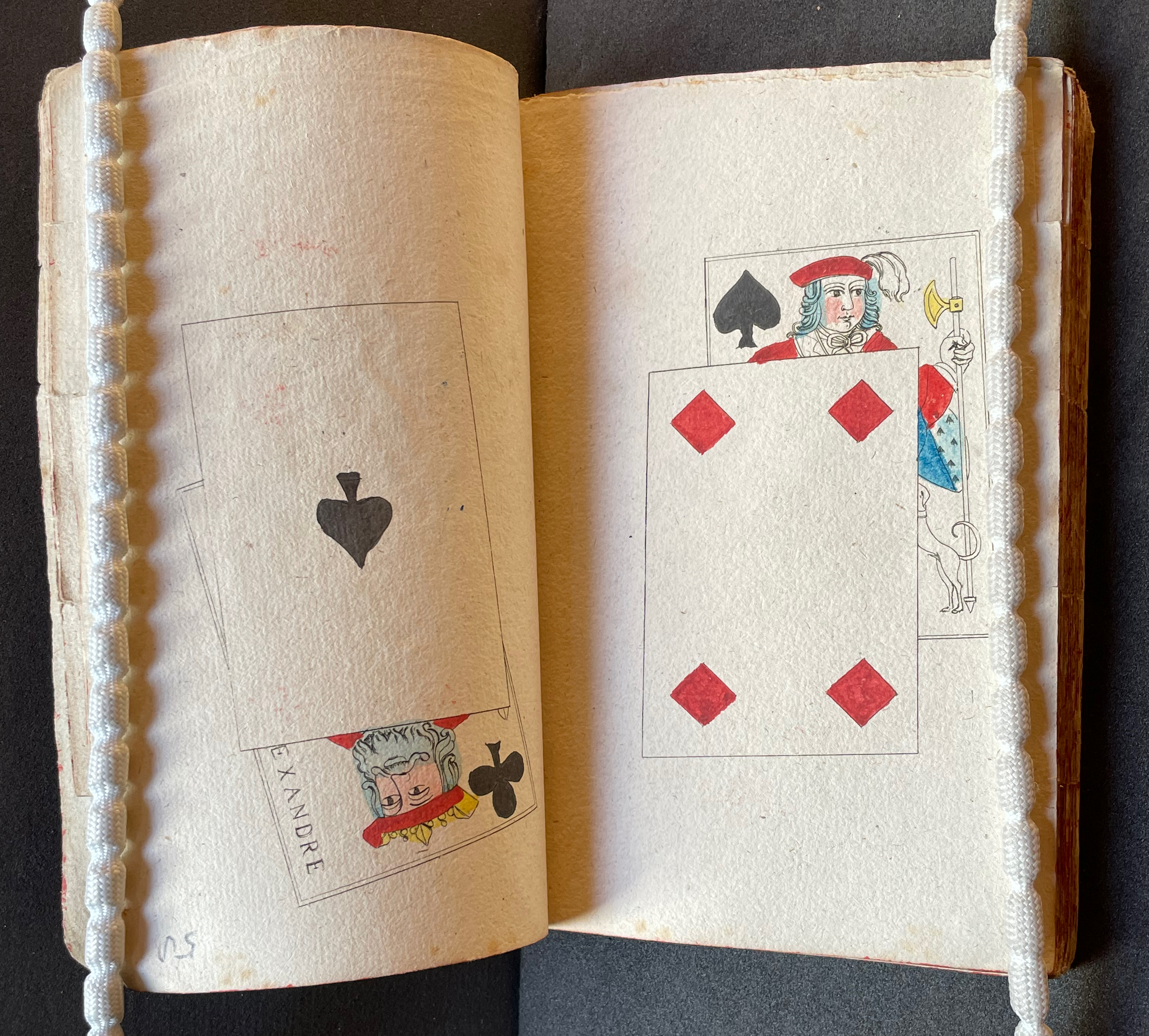
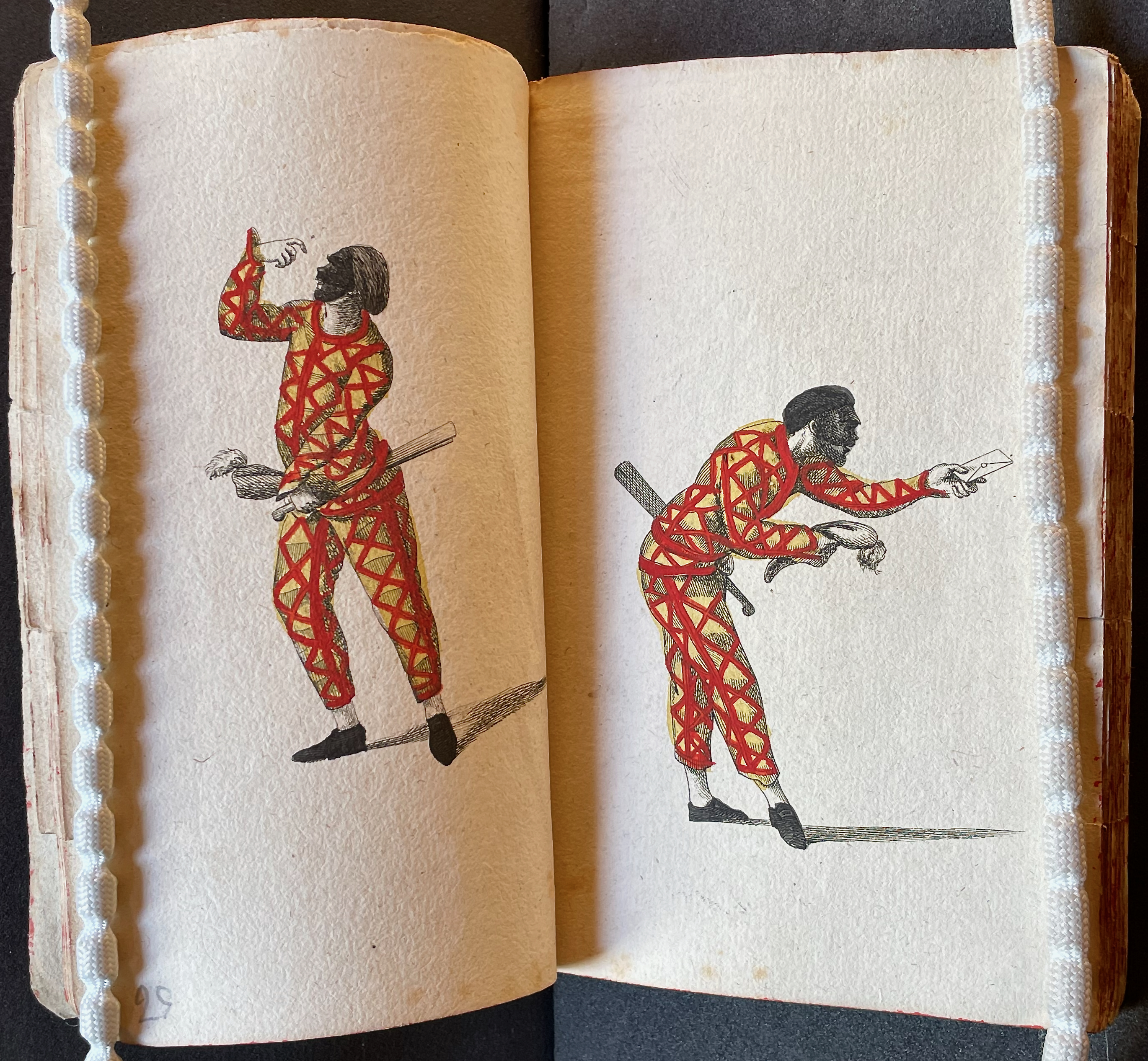
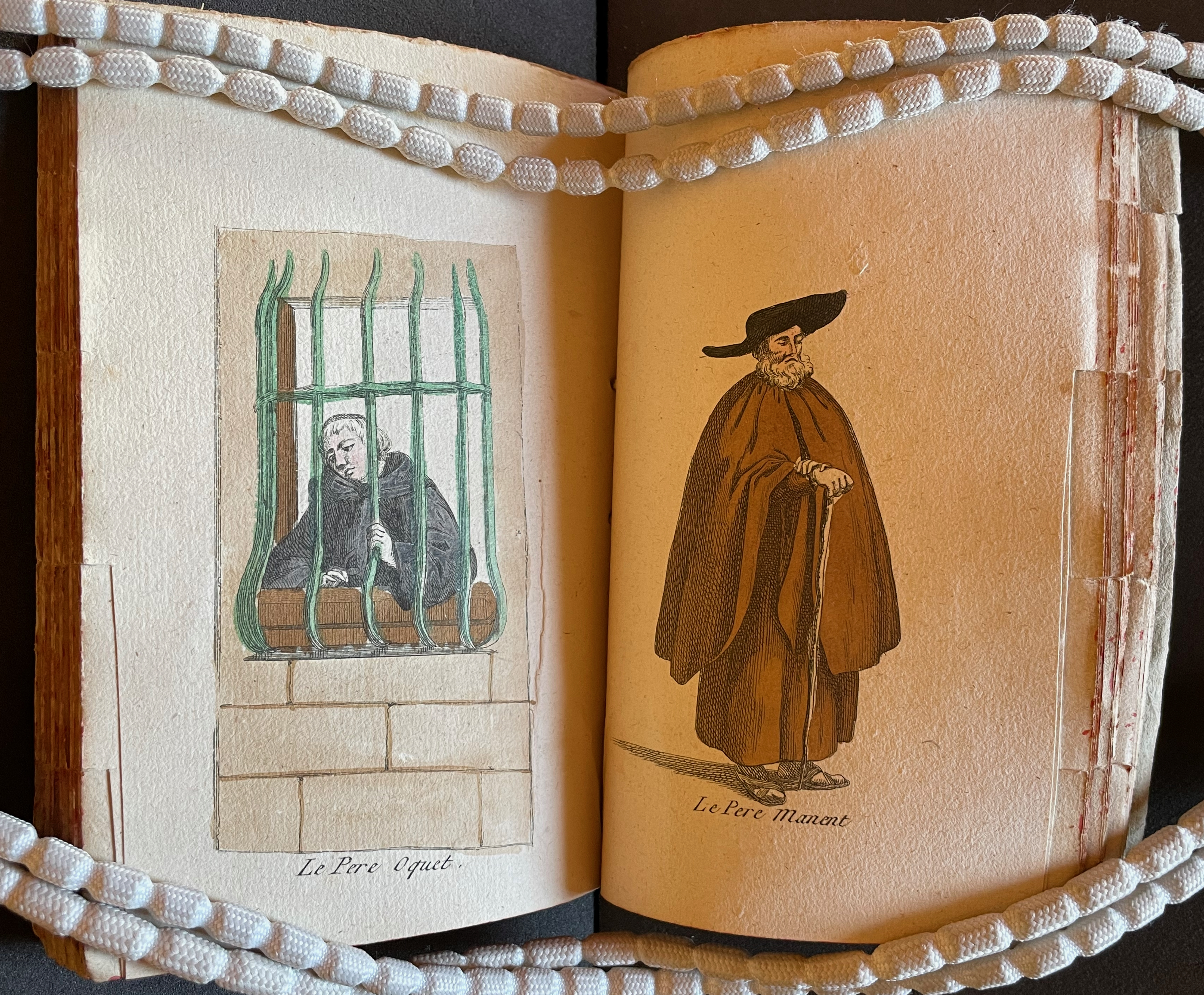
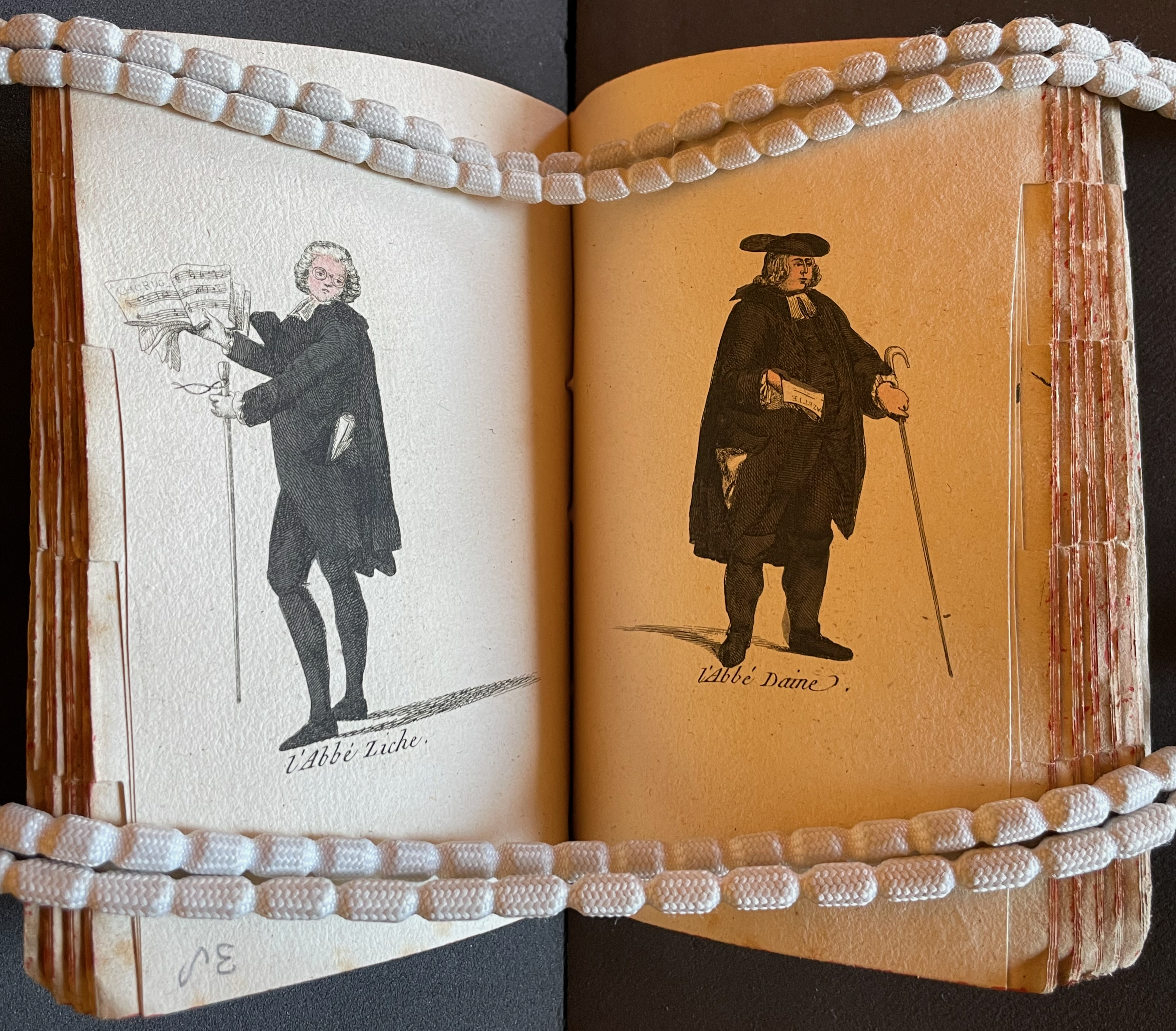
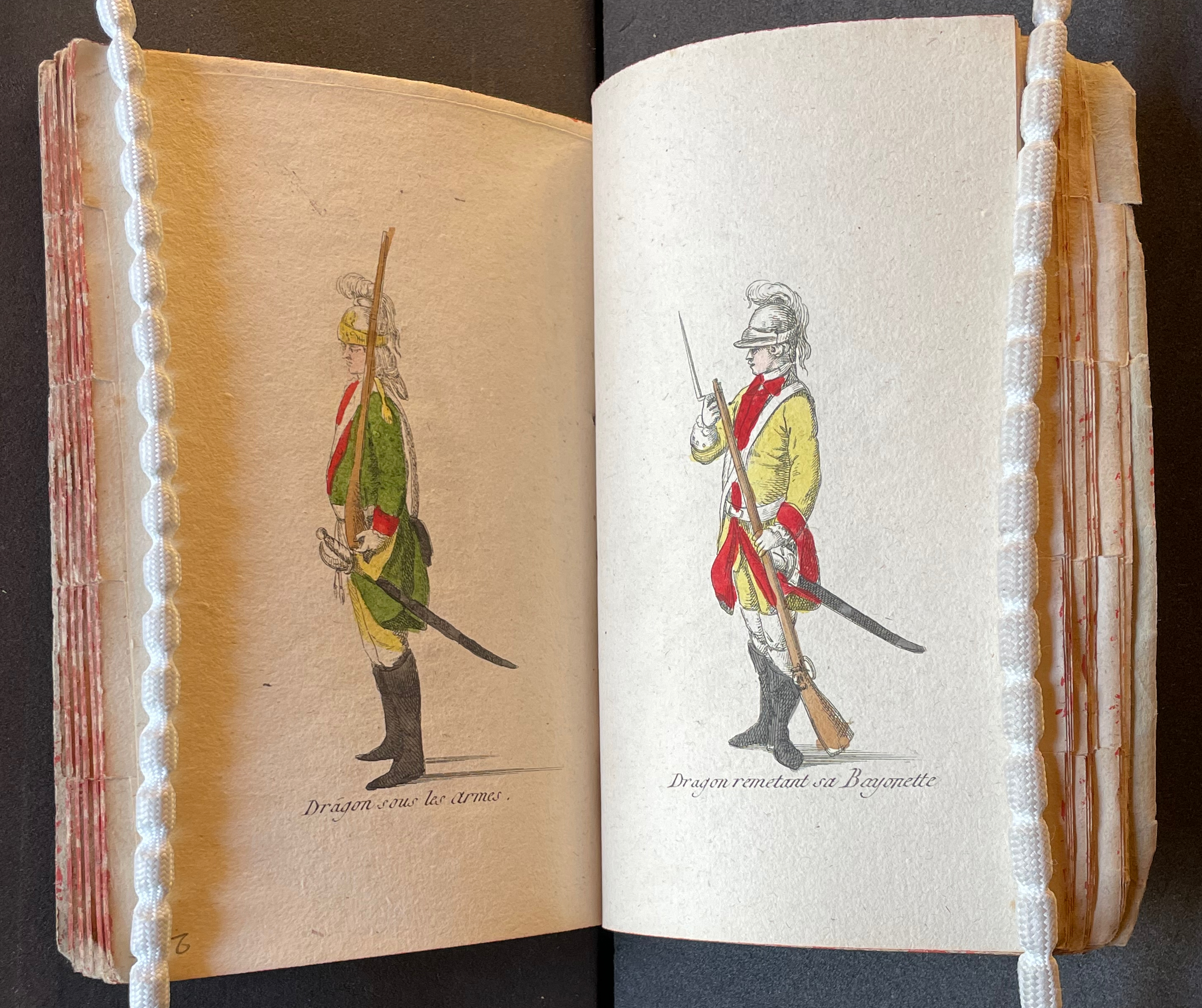
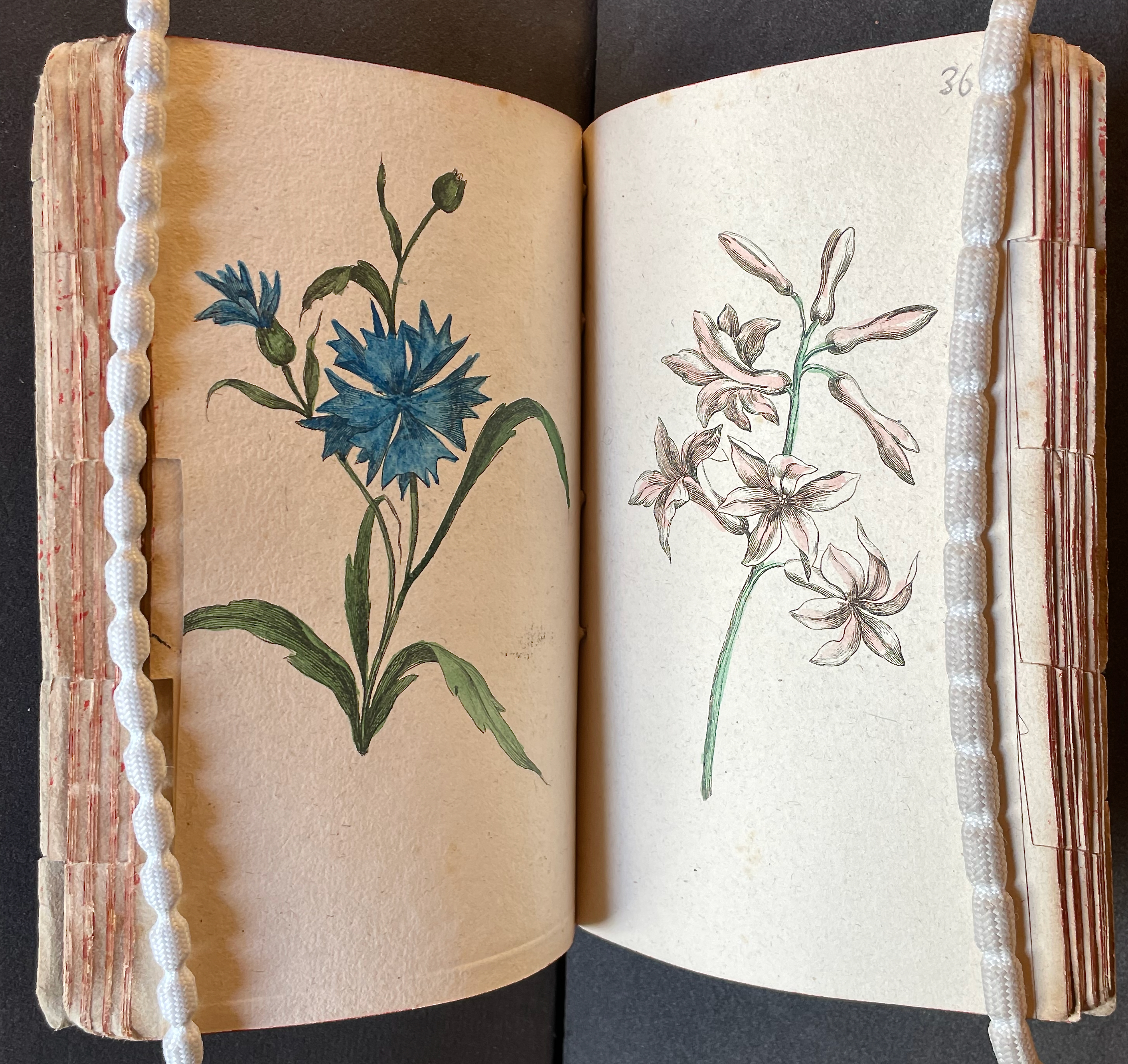
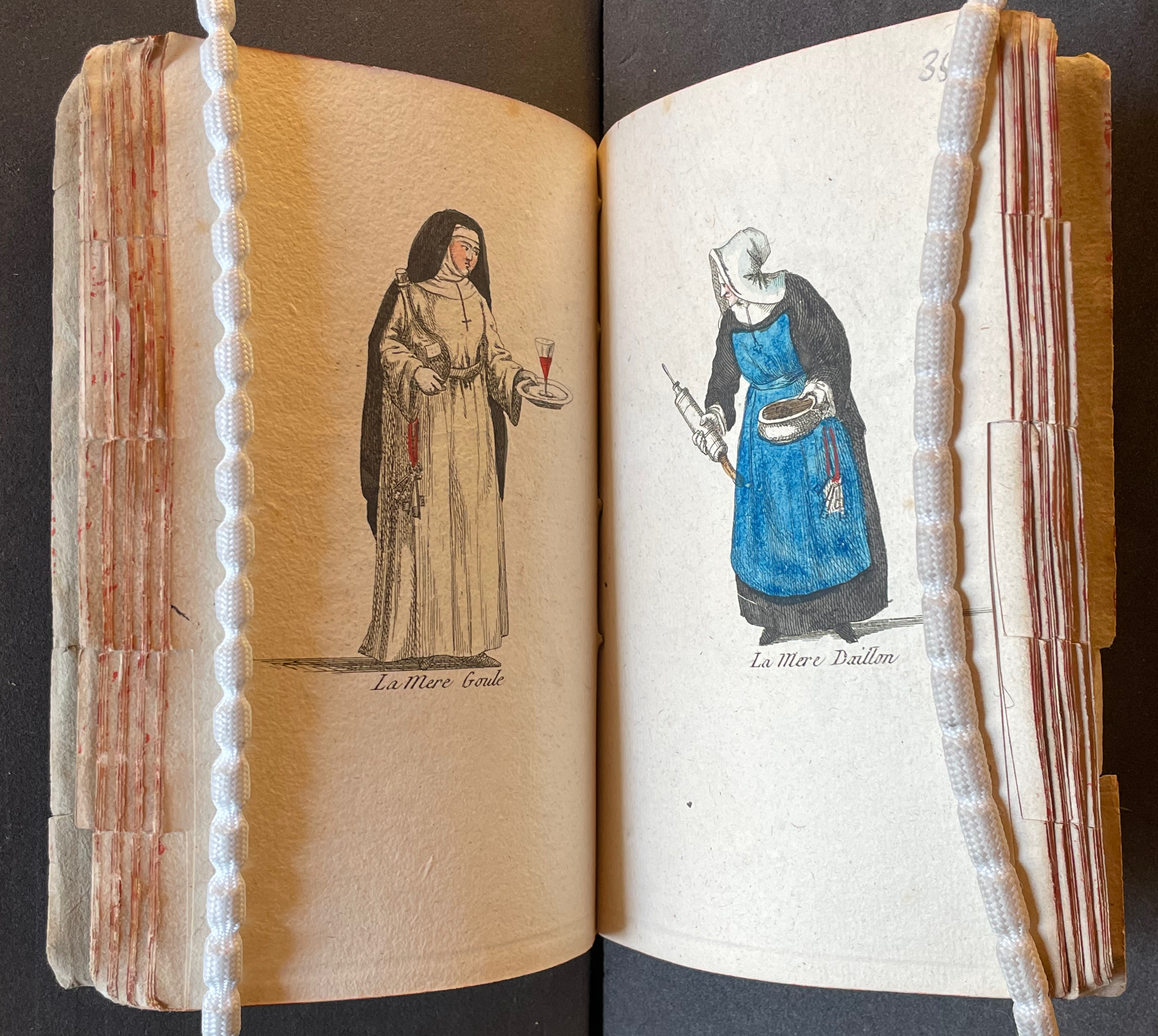
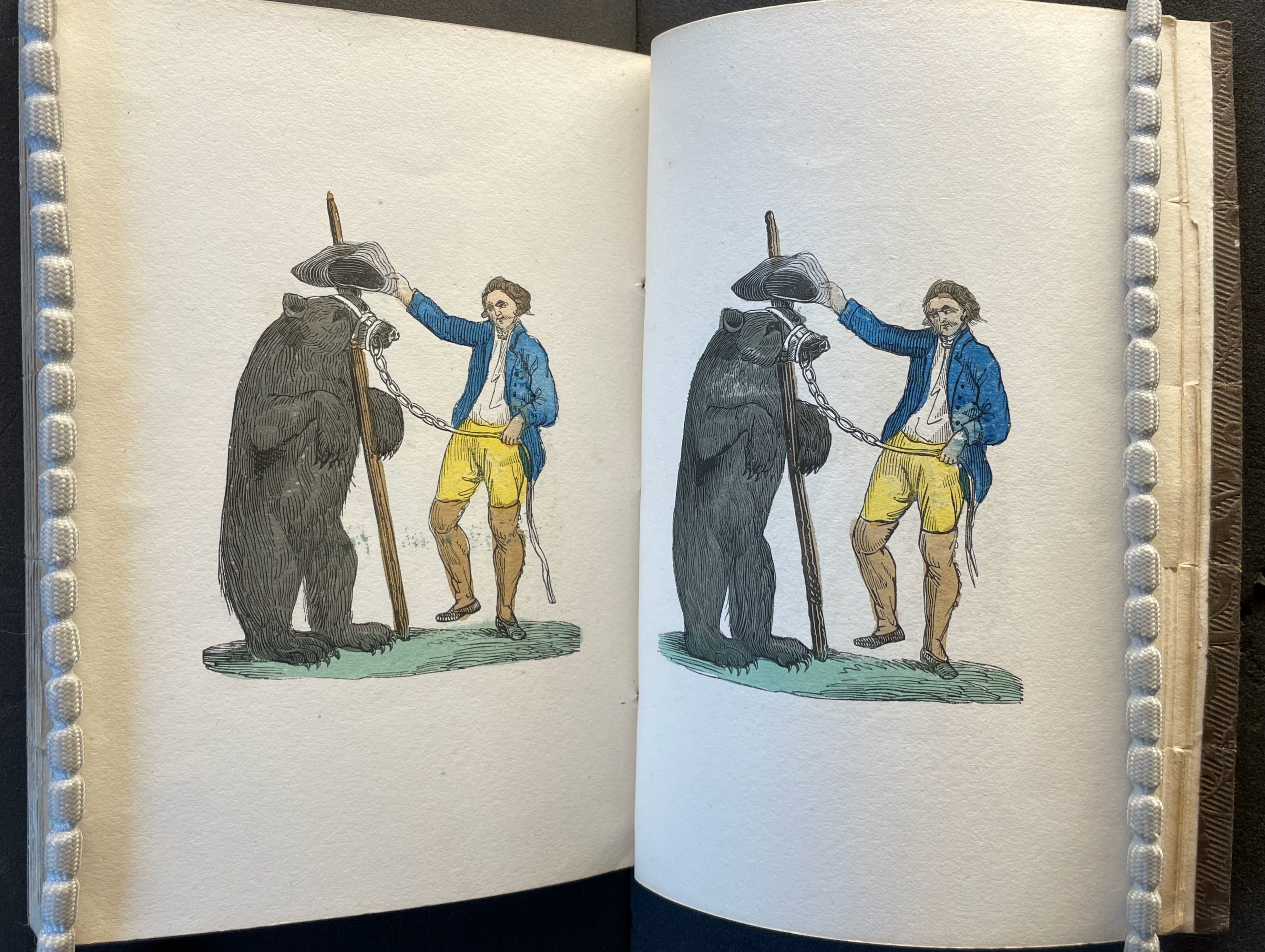
The Enchanted Scrap Book (1830) is next oldest, also with eight motifs: blank page, dancing bear, dancing girl, steamboat, mother and children, parrot, Highlander, and dragoon.
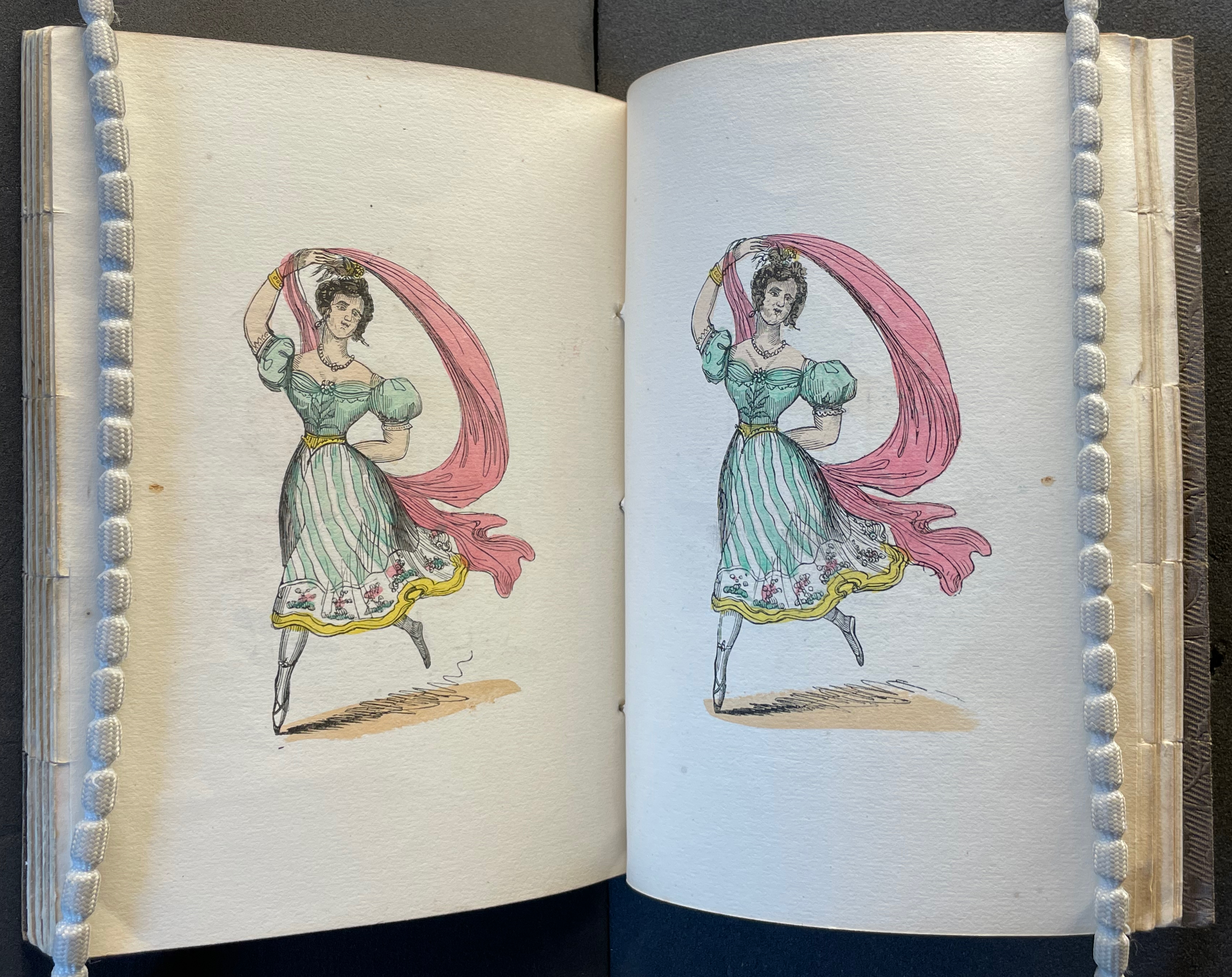
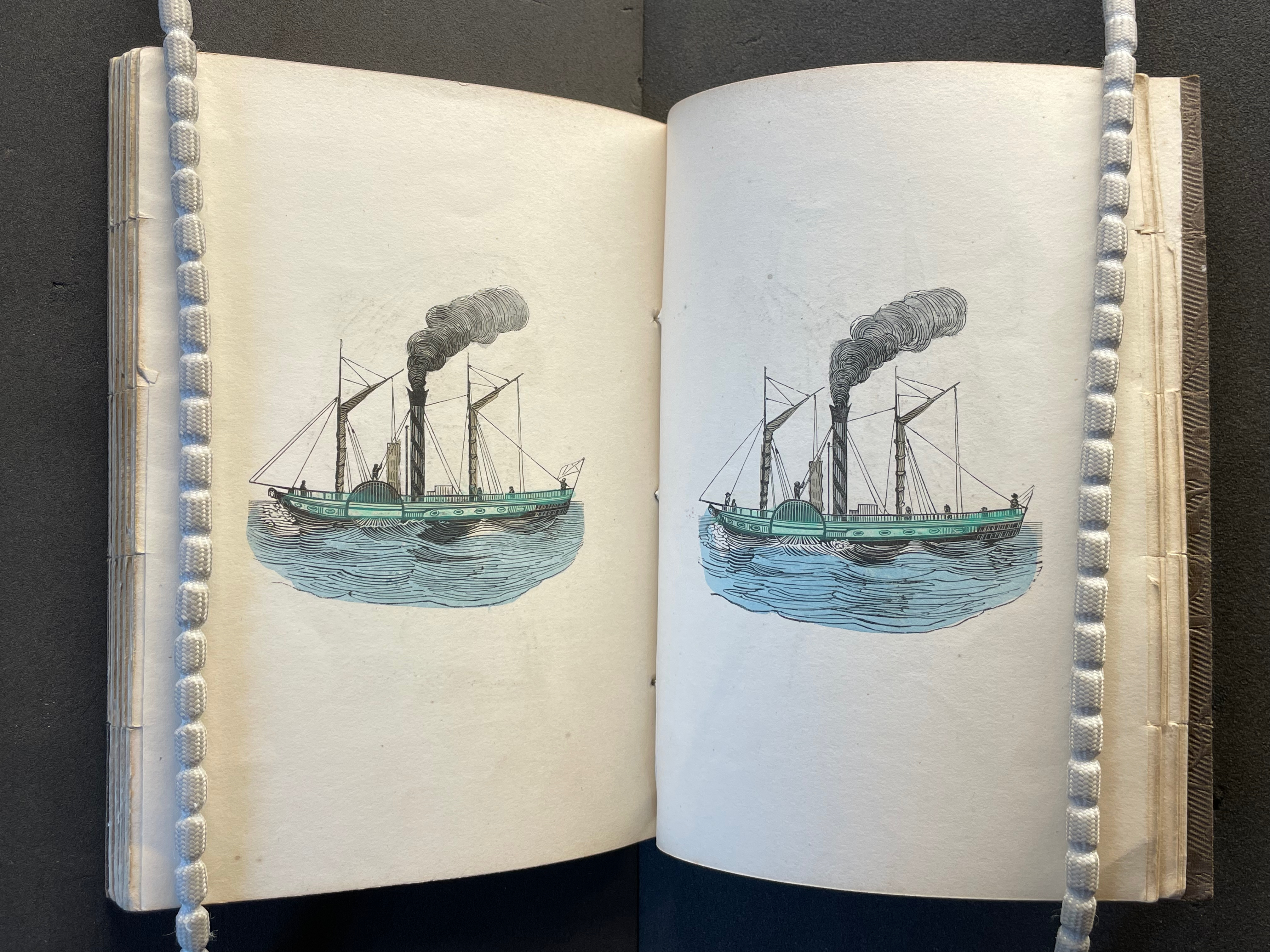
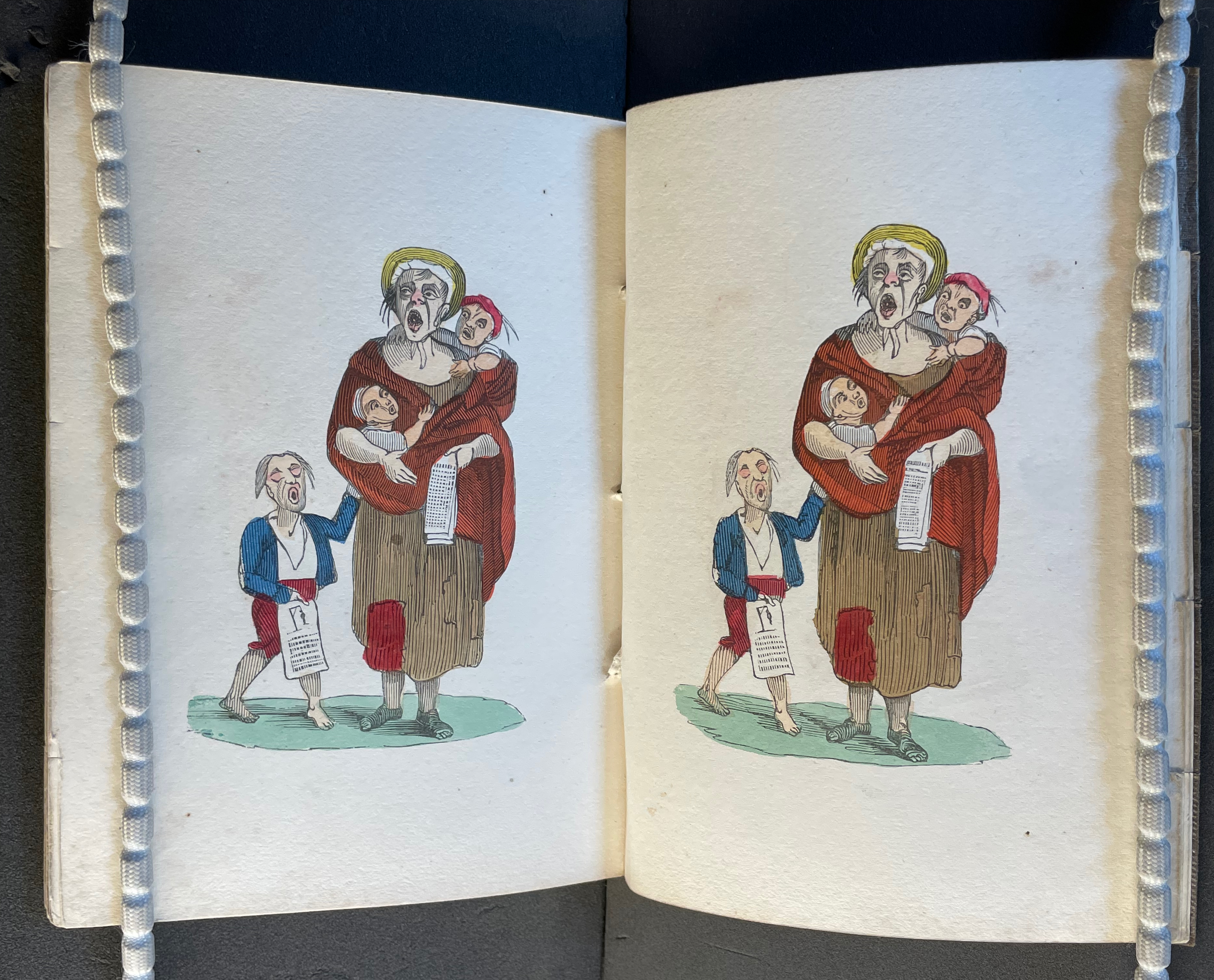
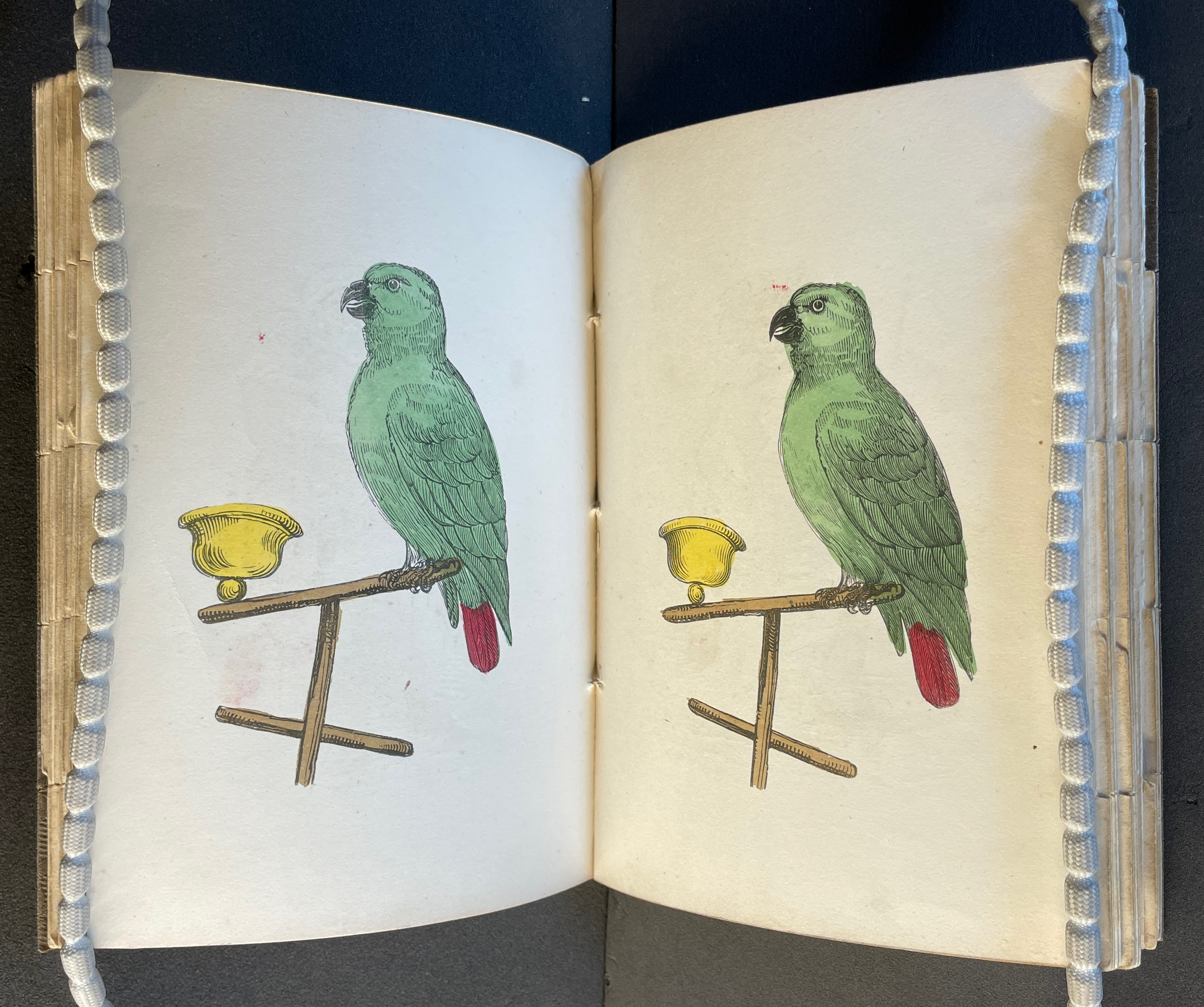
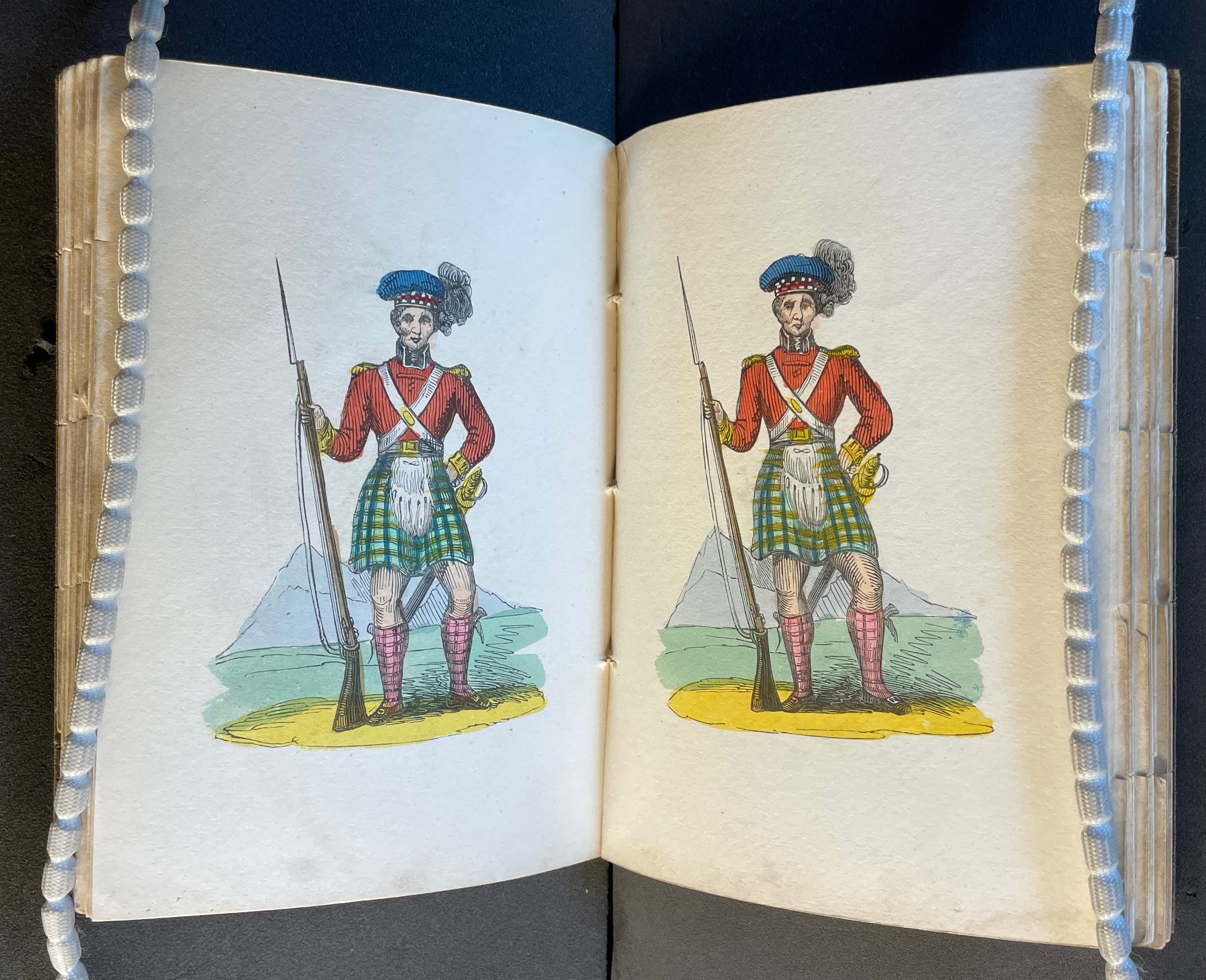
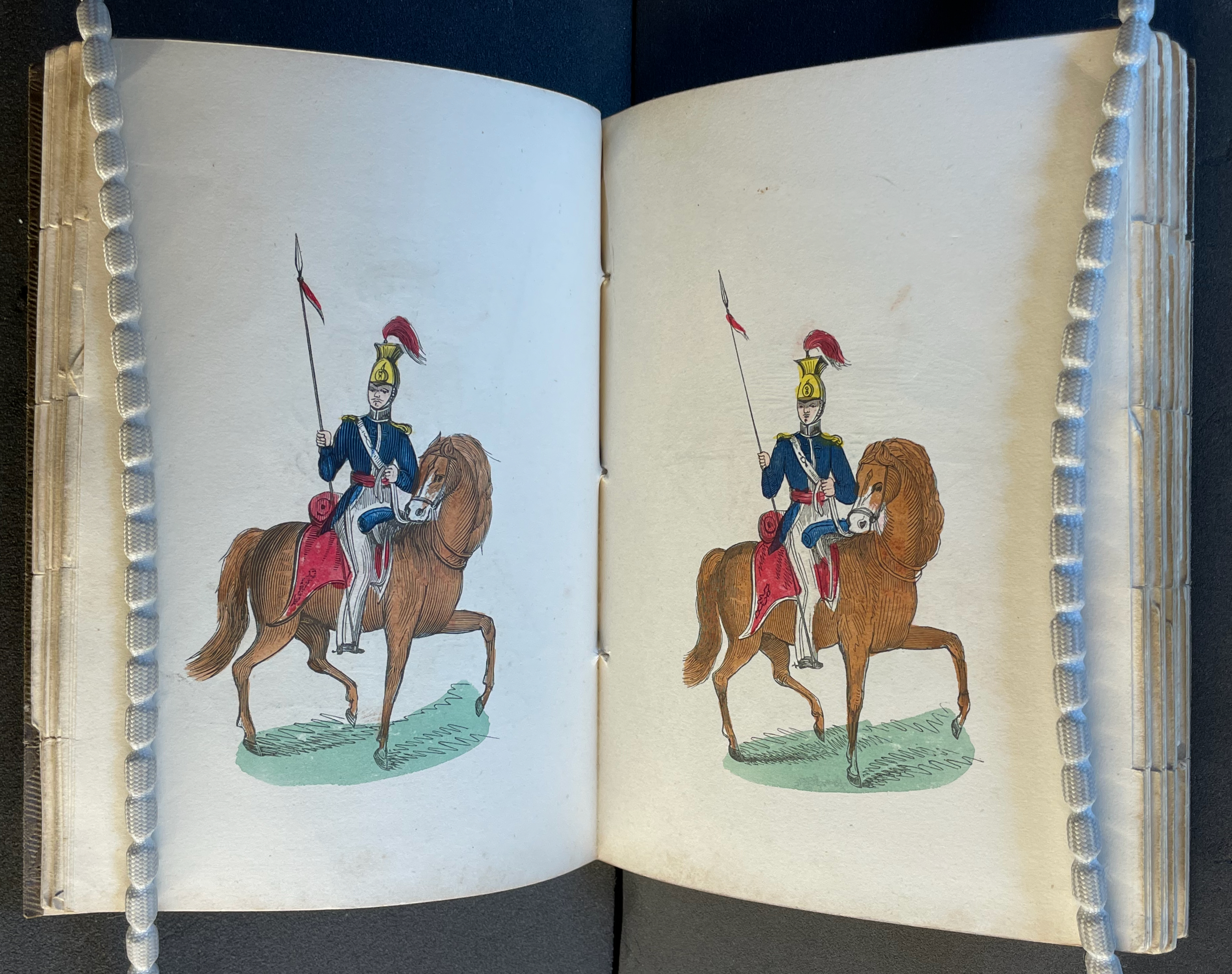
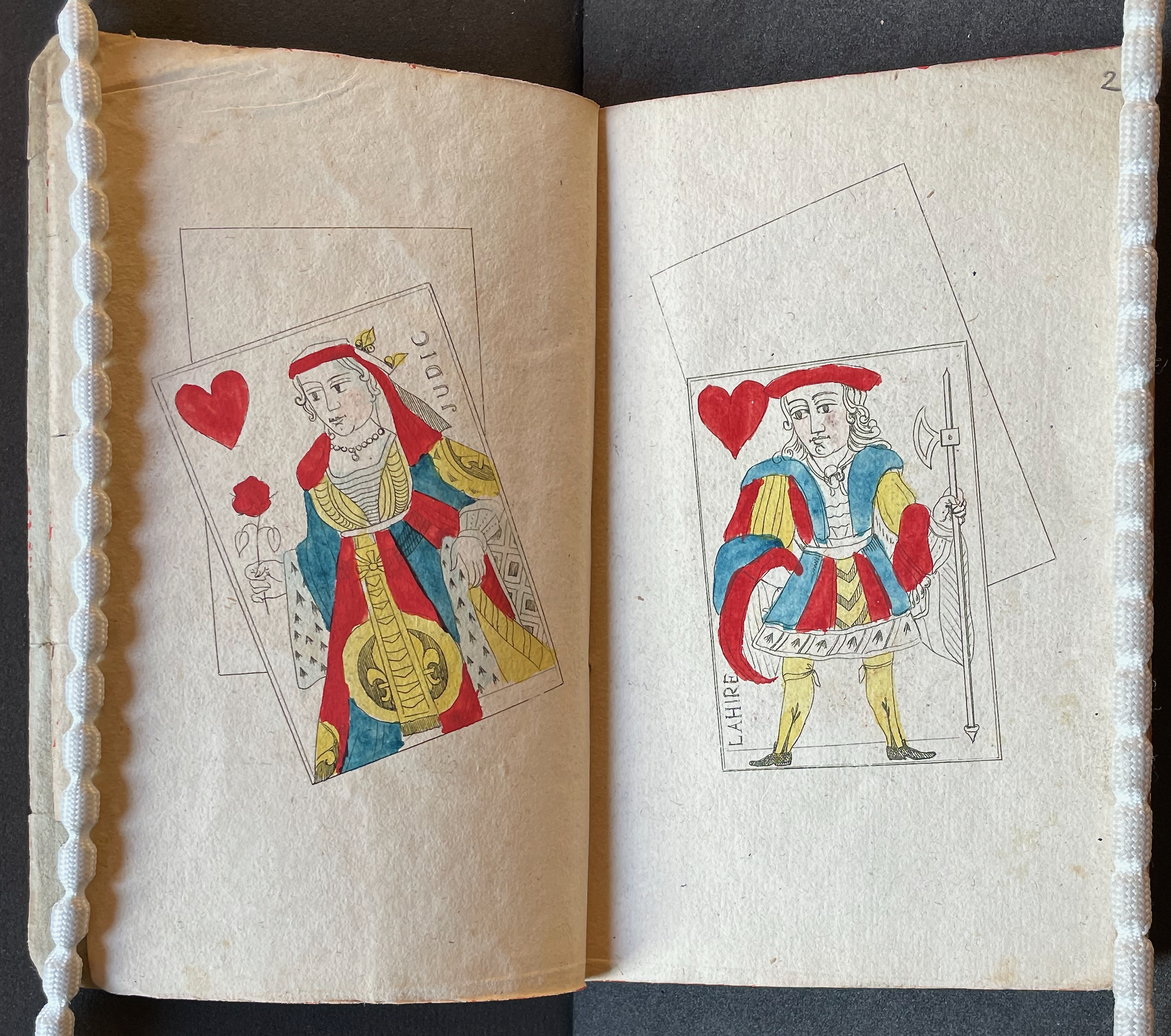
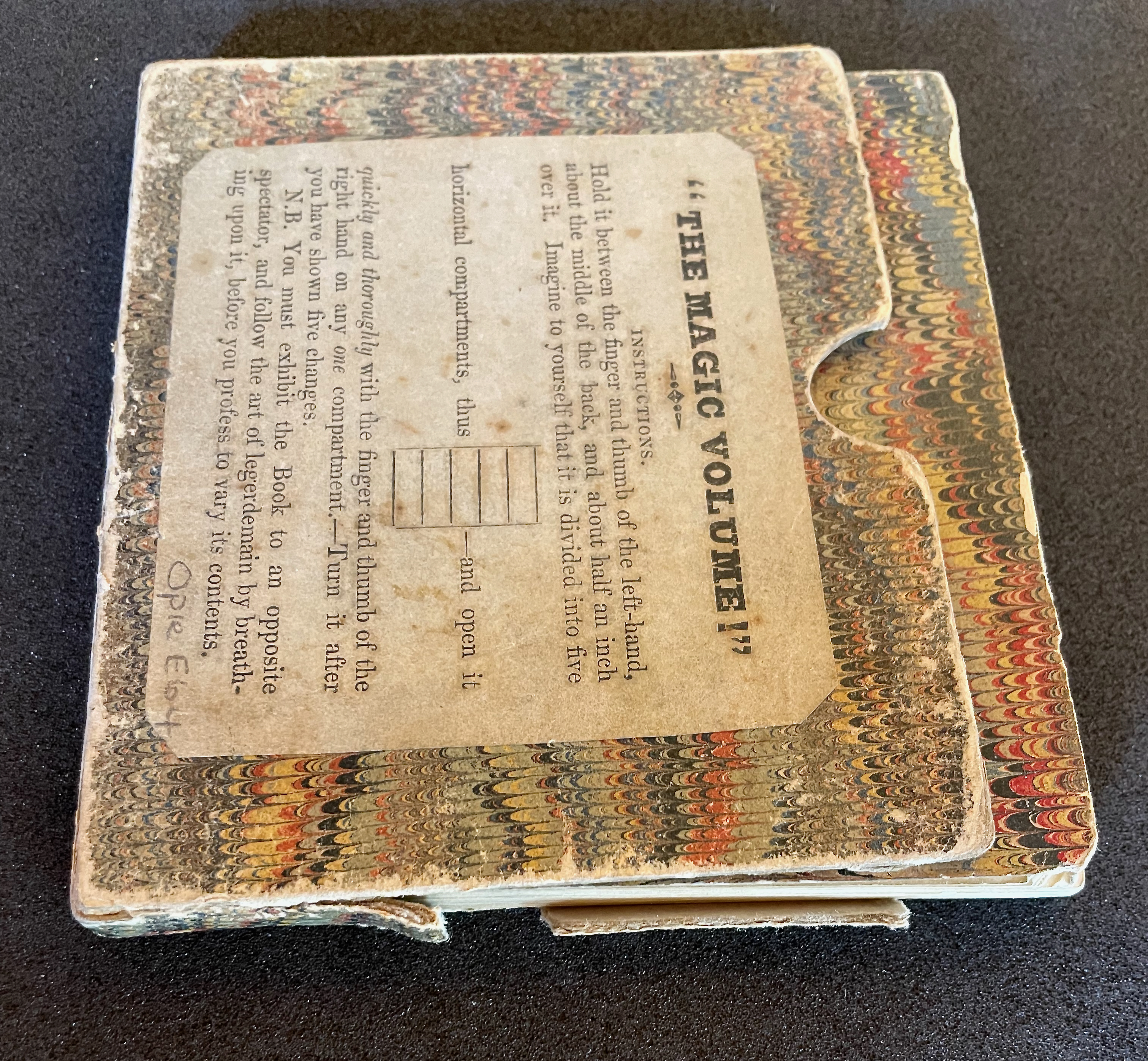
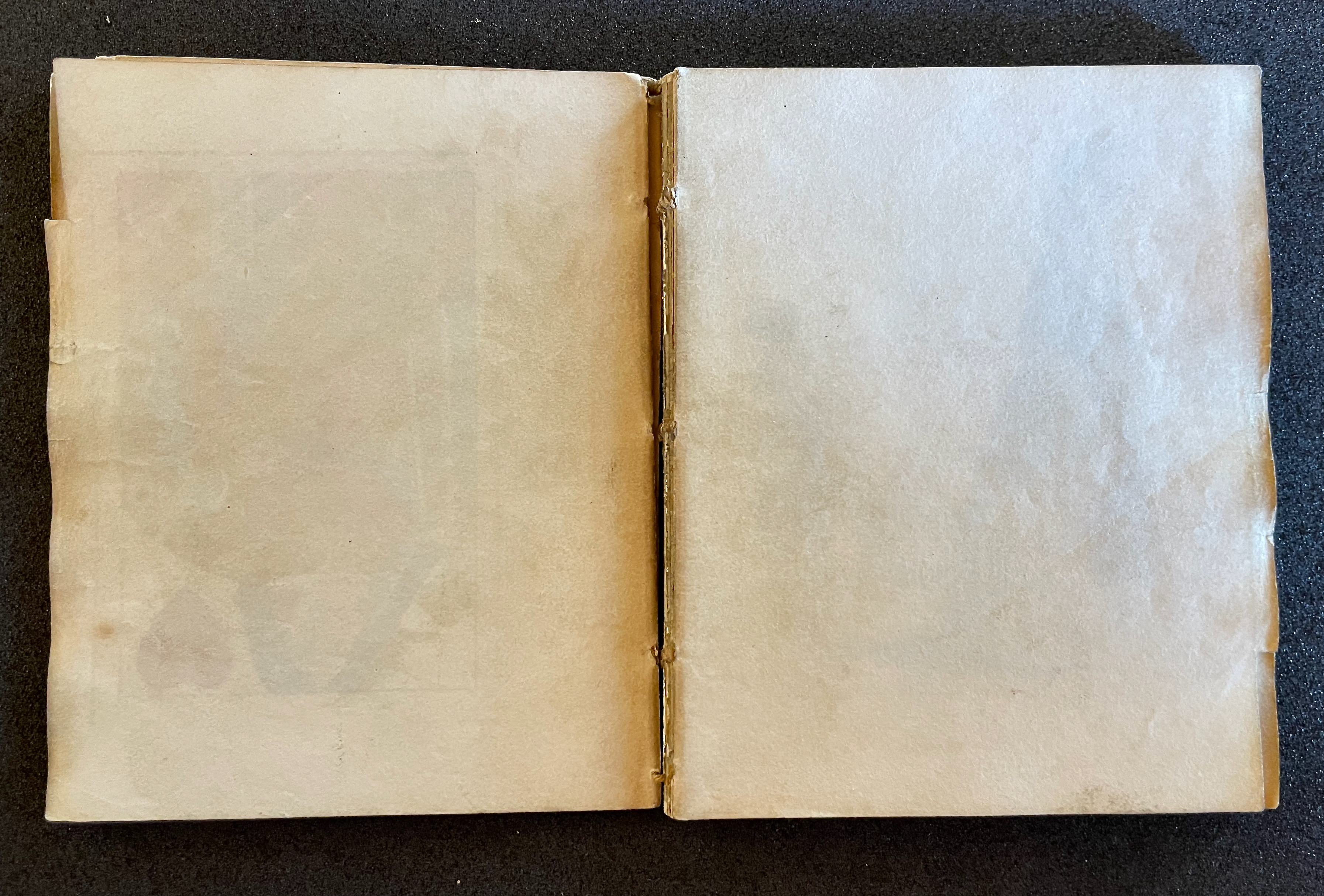
The Magic Volume! (1840) follows, also with eight motifs: blank page, face card, armored dog and cat, caricatured couple, number card, lady, flowers, and caricatured man riding a boar.
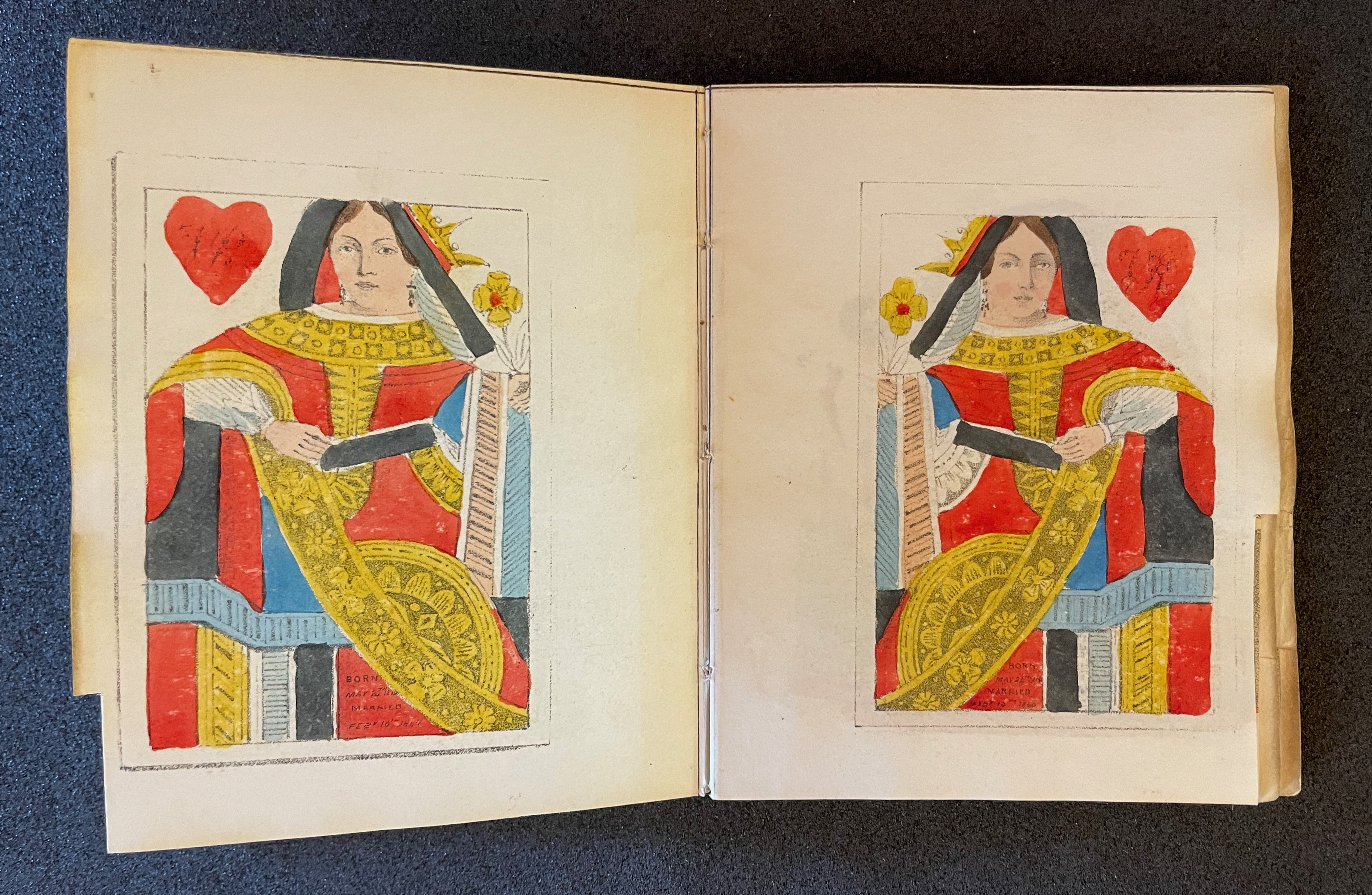
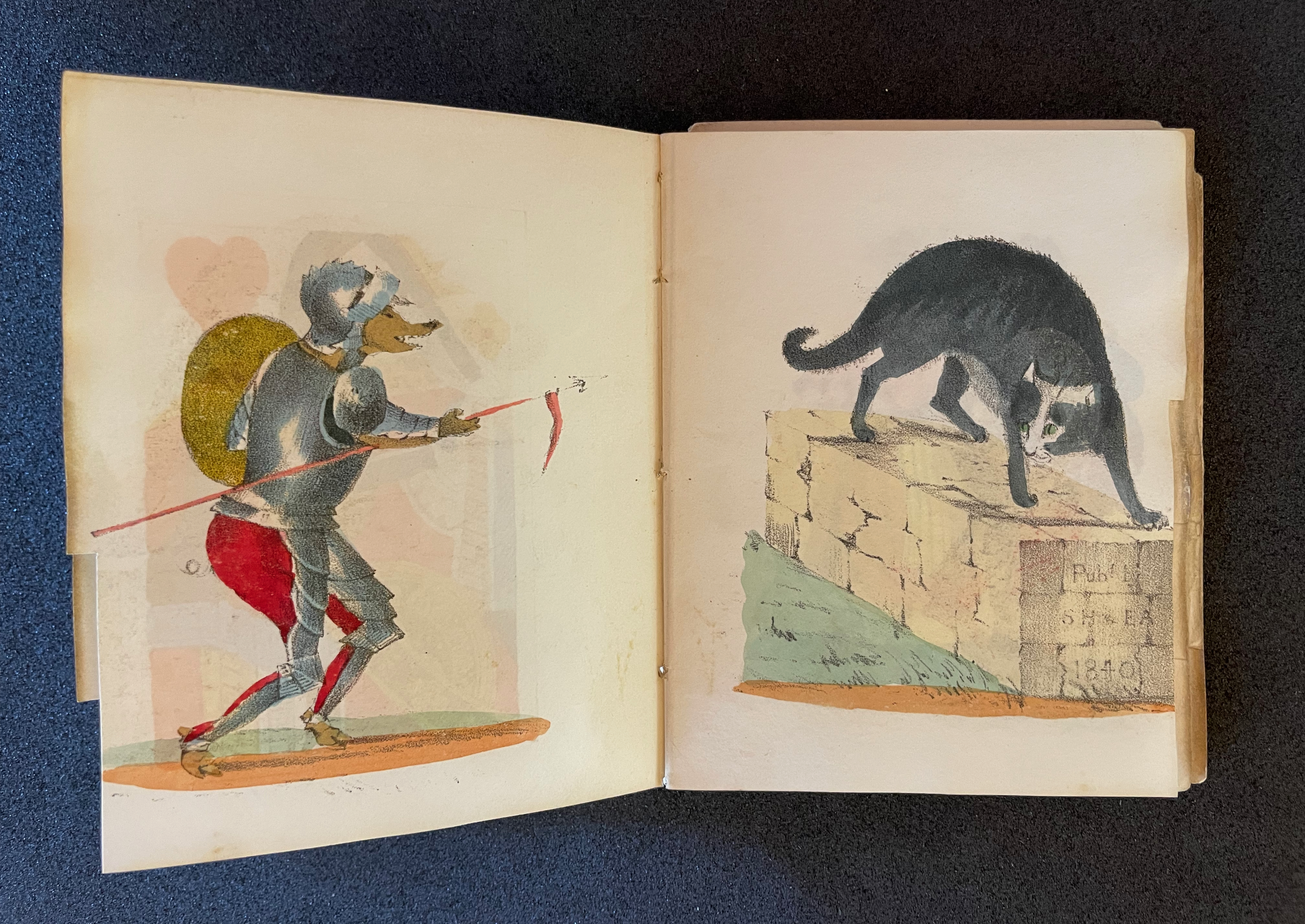
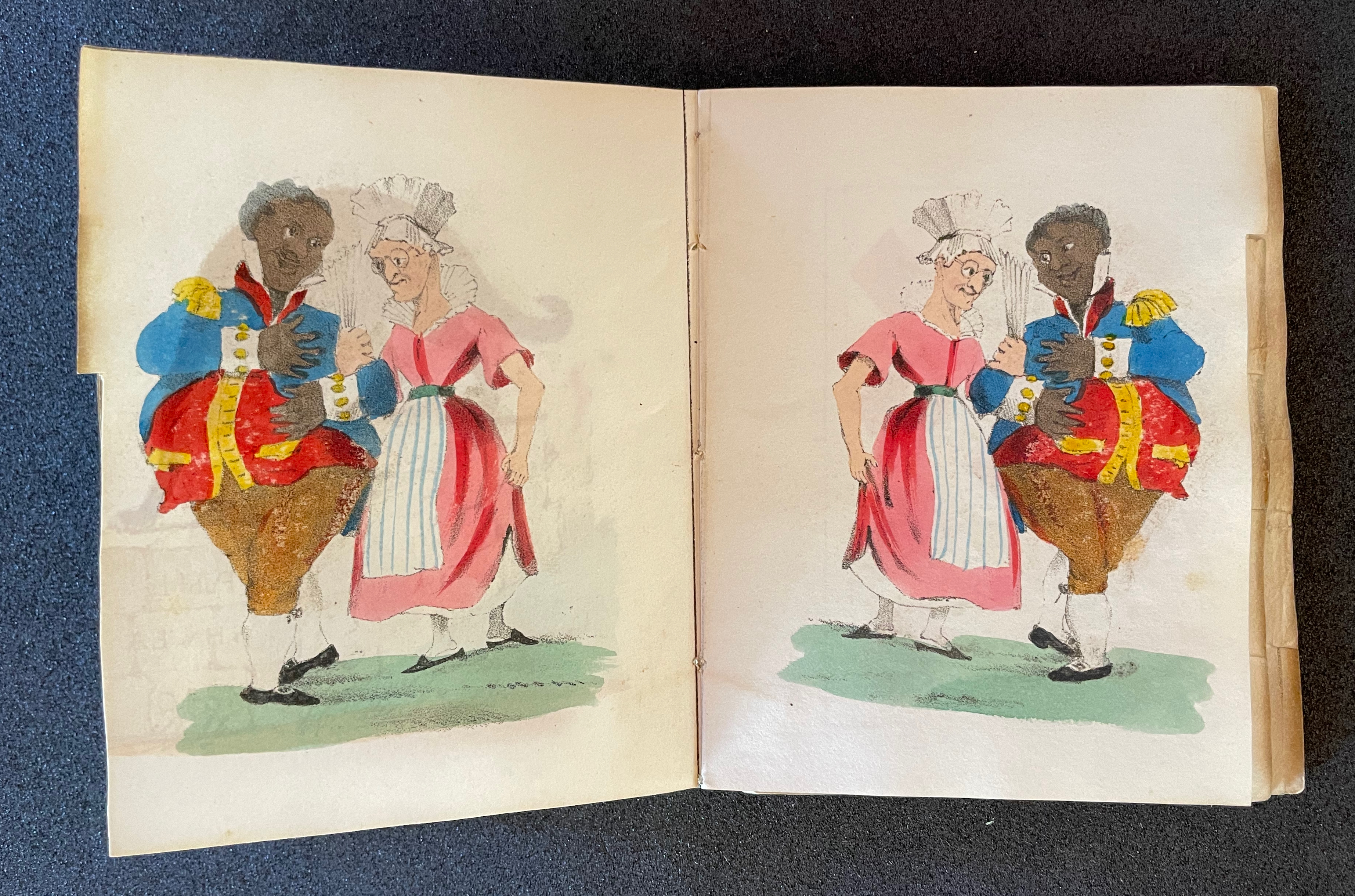
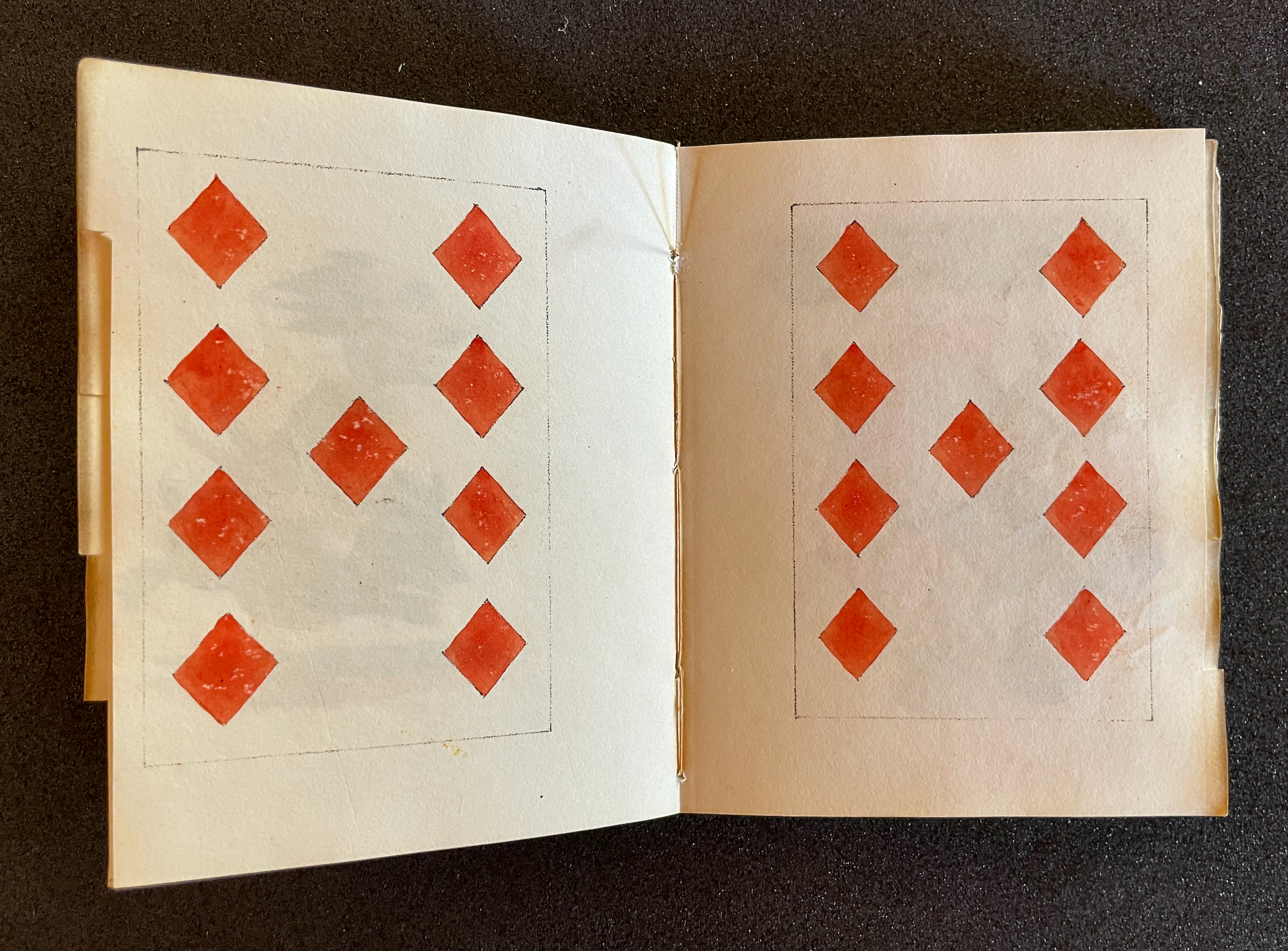
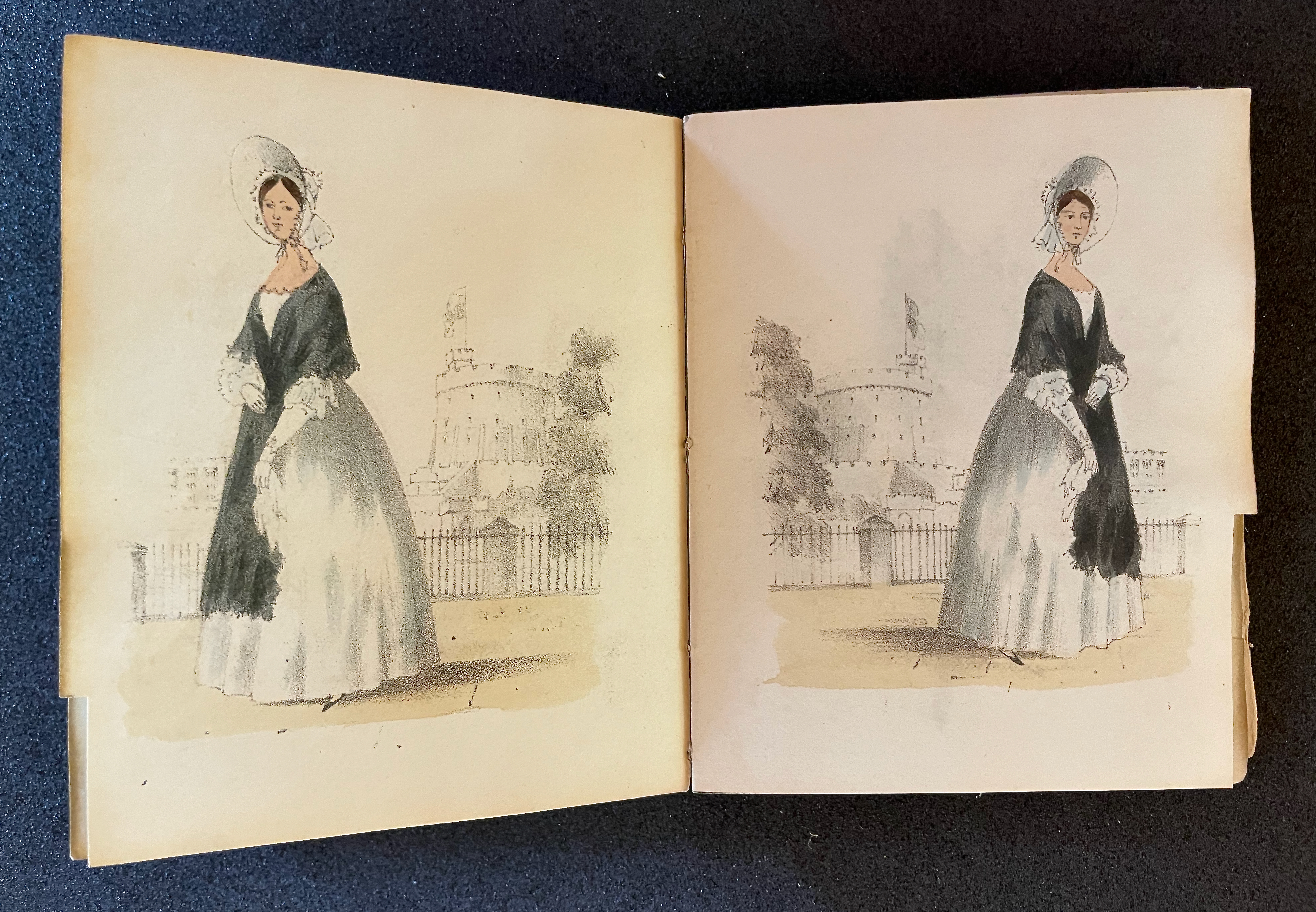
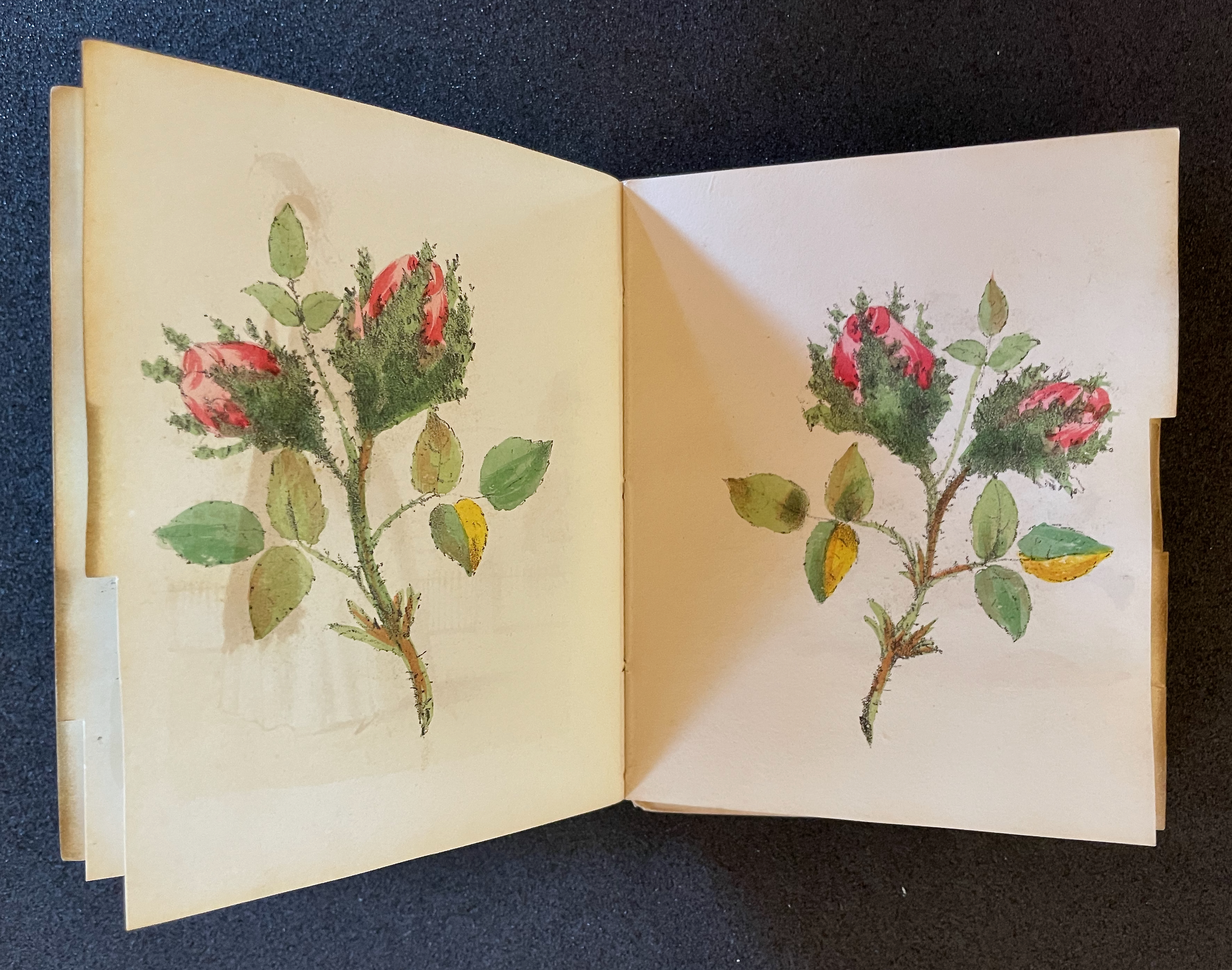
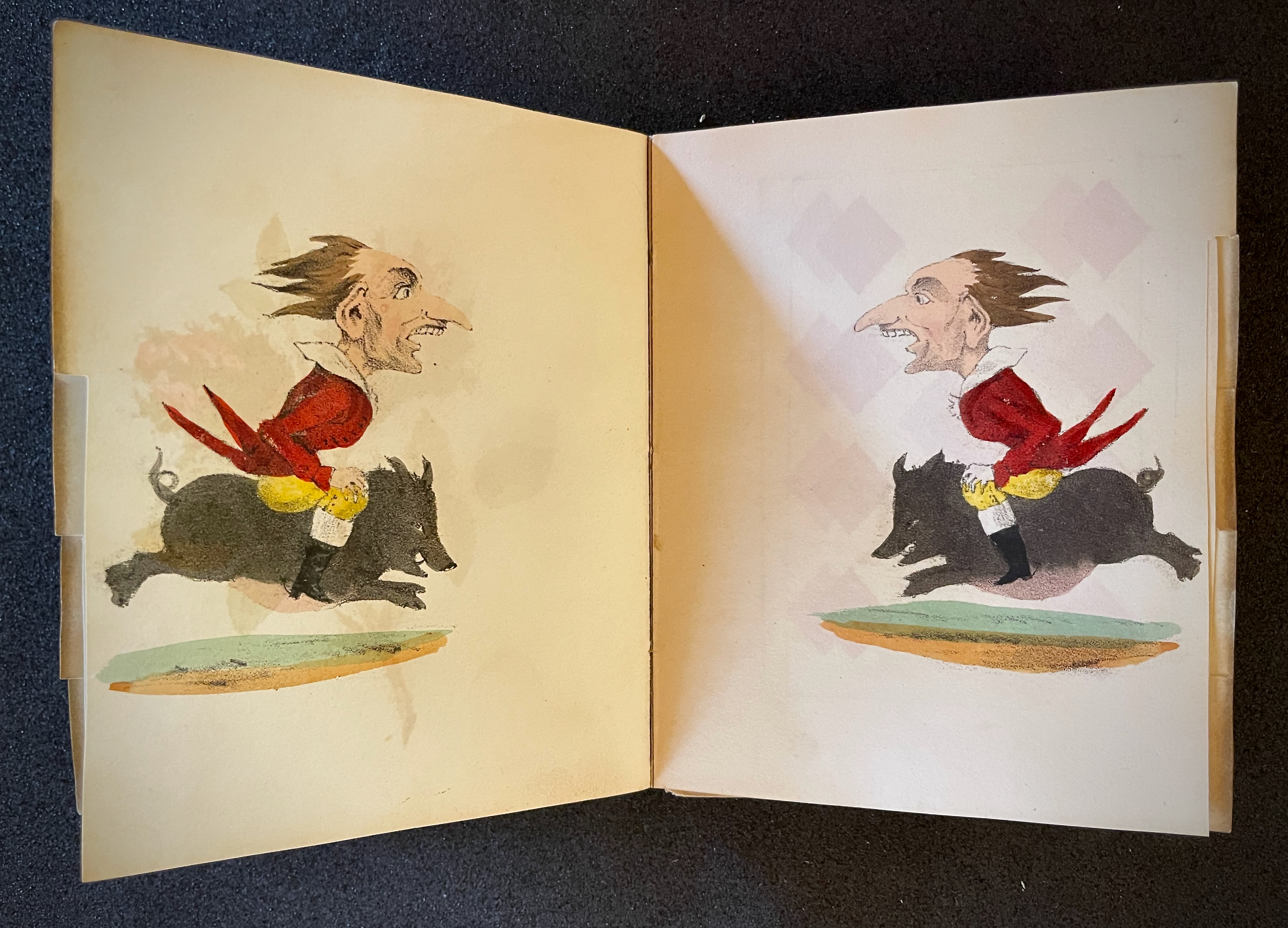
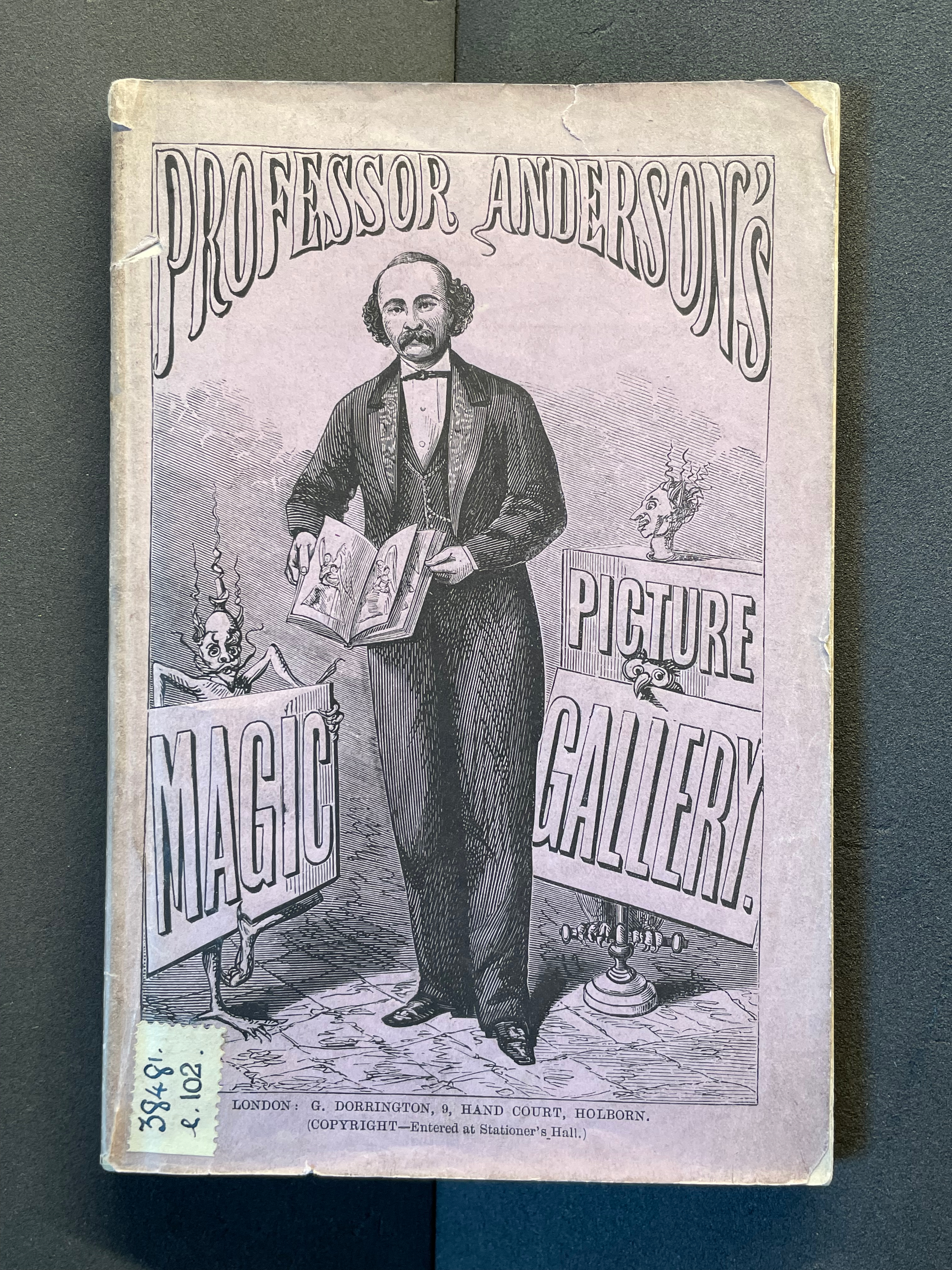
Next come Professor Anderson’s Magic Picture Gallery (c. 1860) and Le livre magique : tombé de la lune 1500 ans avant la création du monde, et retrouvé en 1860 [“The magic book fallen from the moon 1500 years before the world’s creation and recovered in 1860”] (not before 1860). Apparently Professor Anderson was as much a professional magician as Houdini was later on in that century. The images show a shared interest in séances and escapology. Professor Anderson performed for Victoria and Albert, hence the images of them. Although Houdini’s act reached London in 1900, he missed his chance to perform for the Queen, who died in 1901.
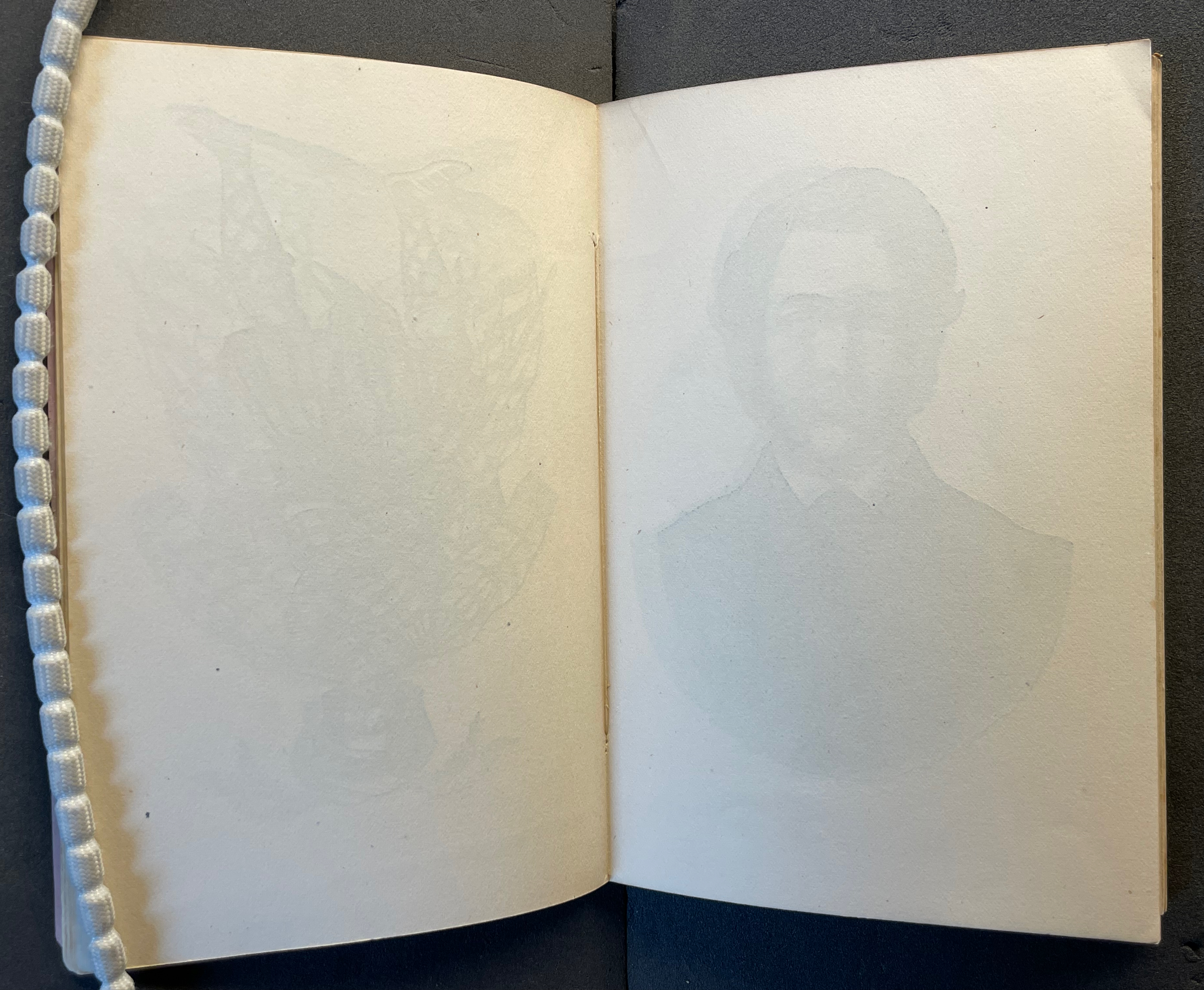
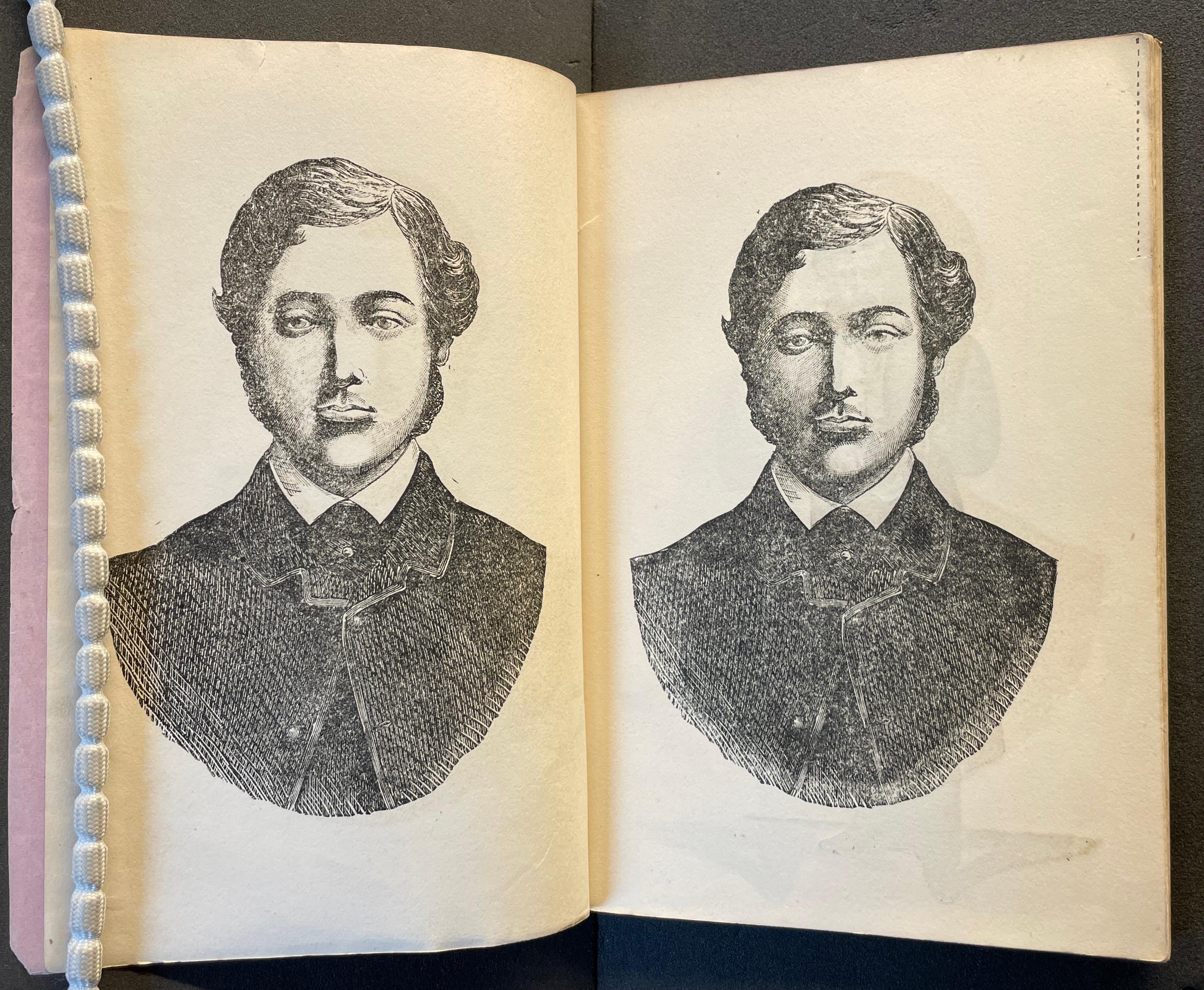
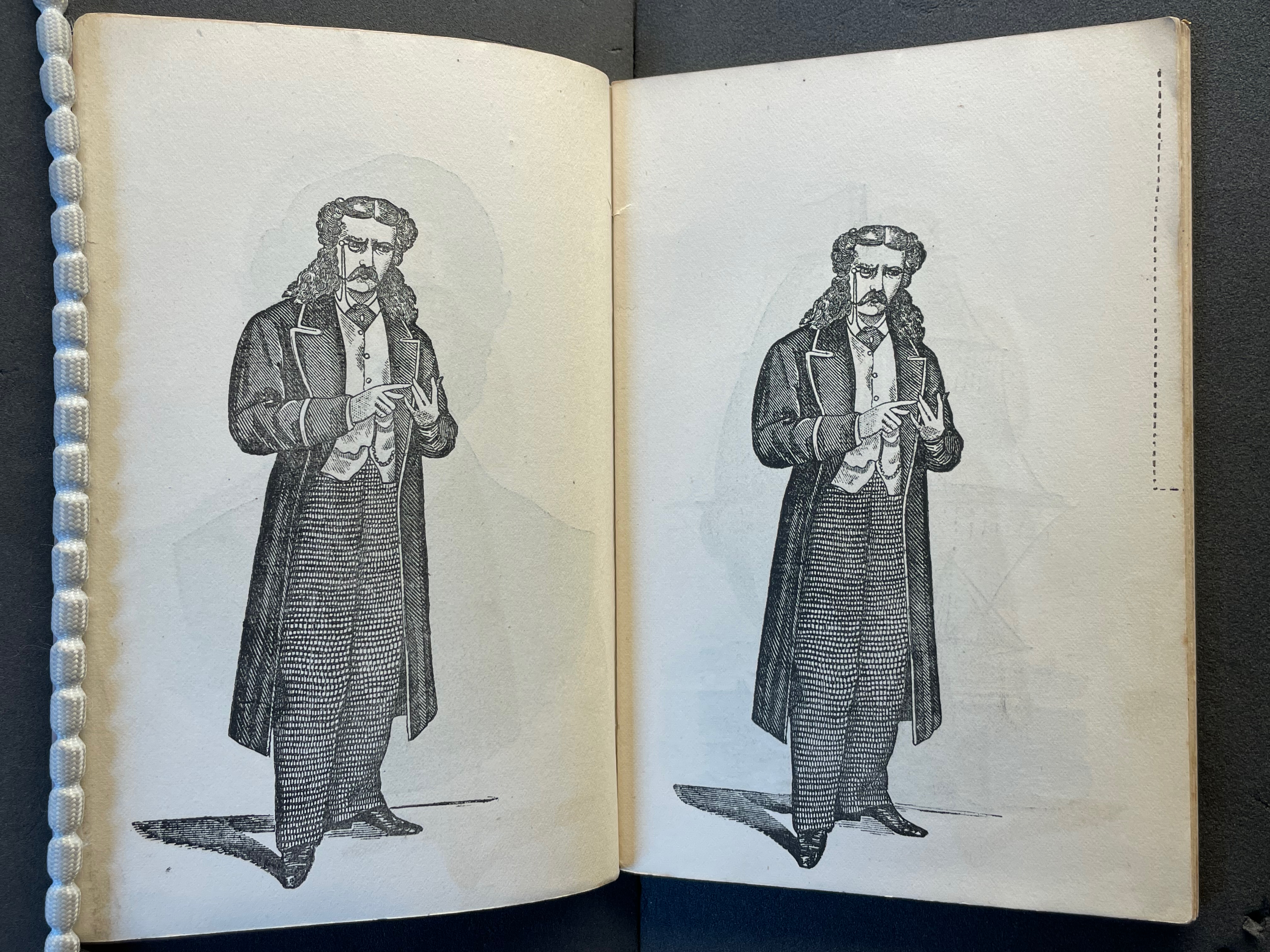
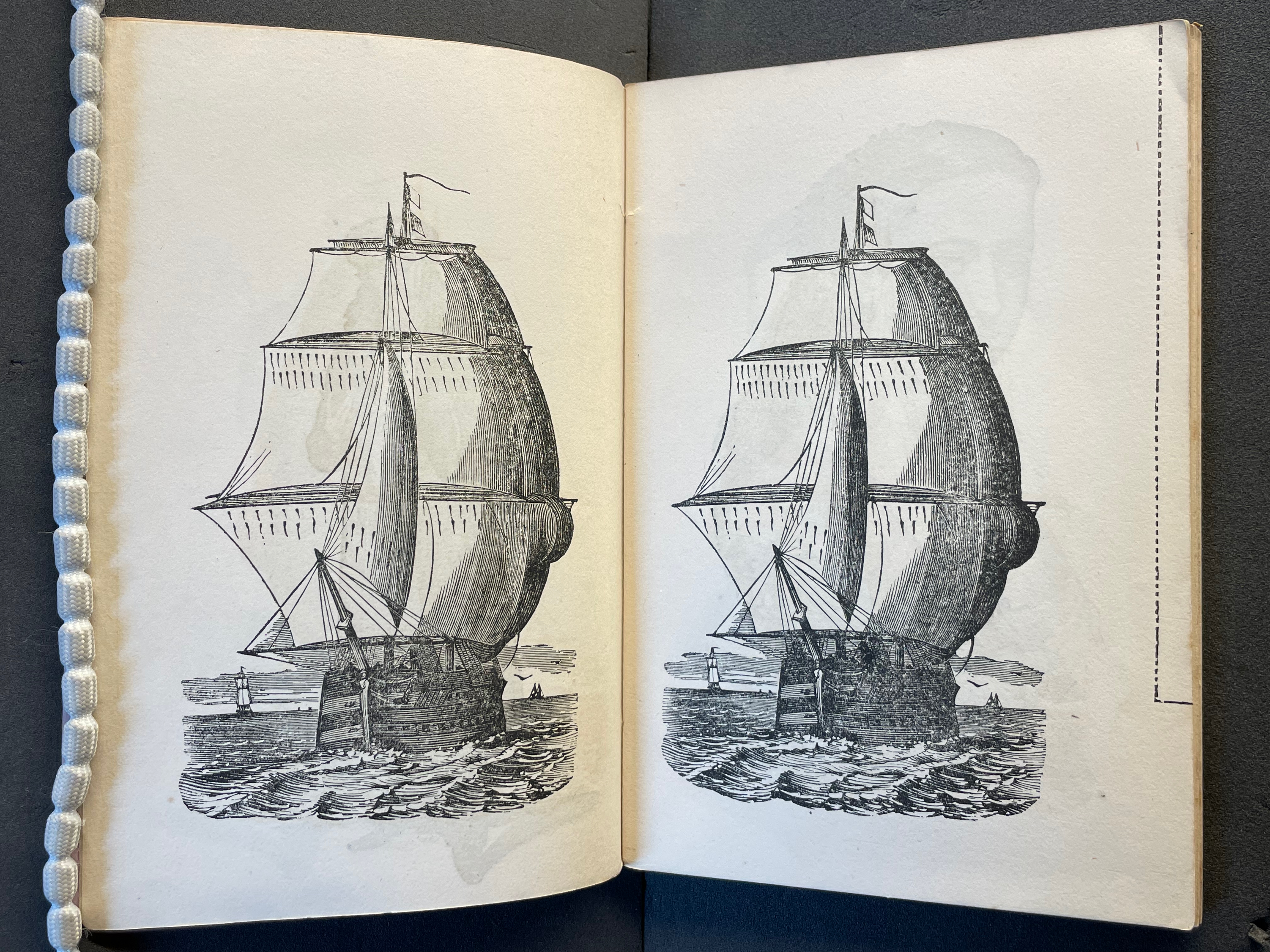
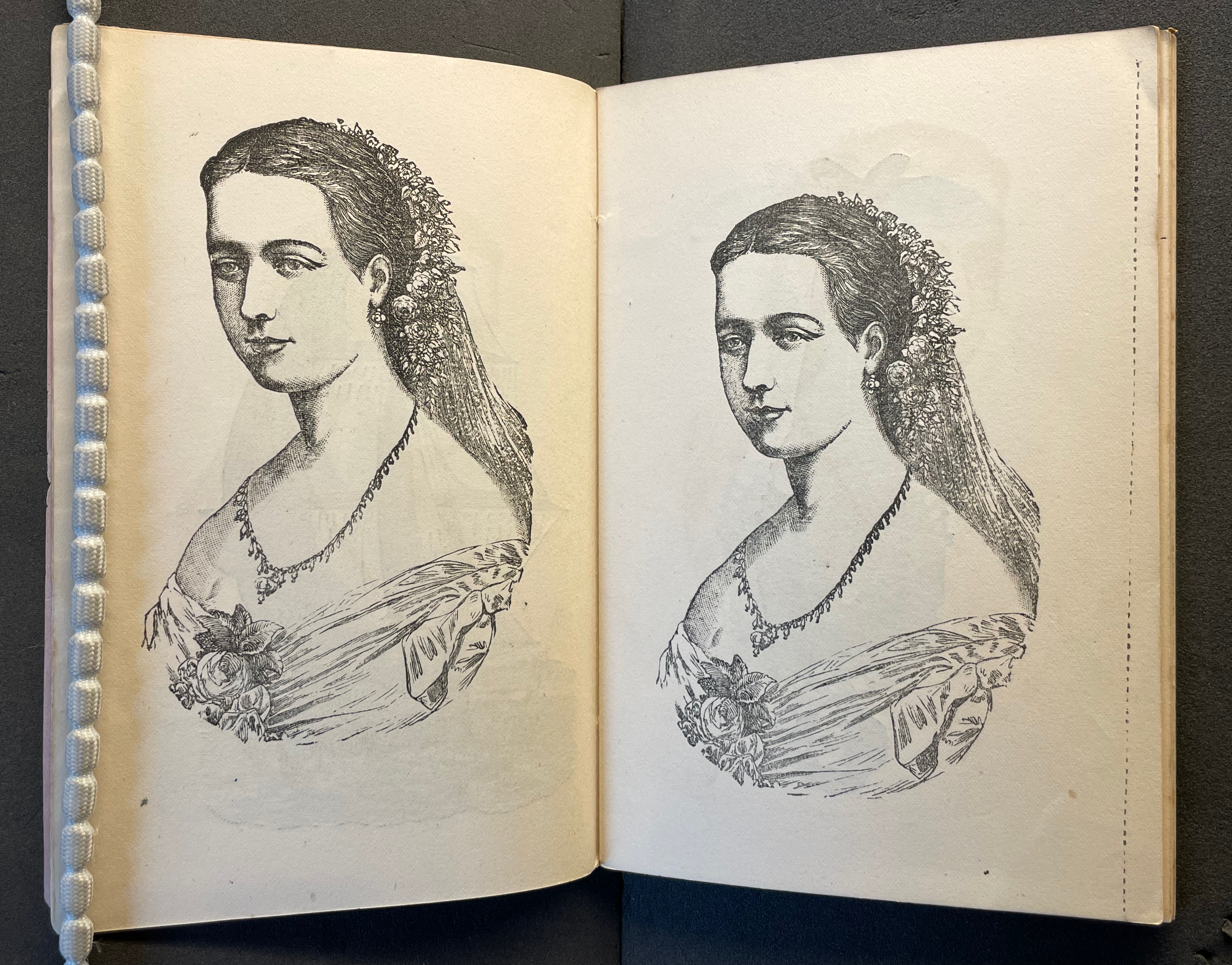
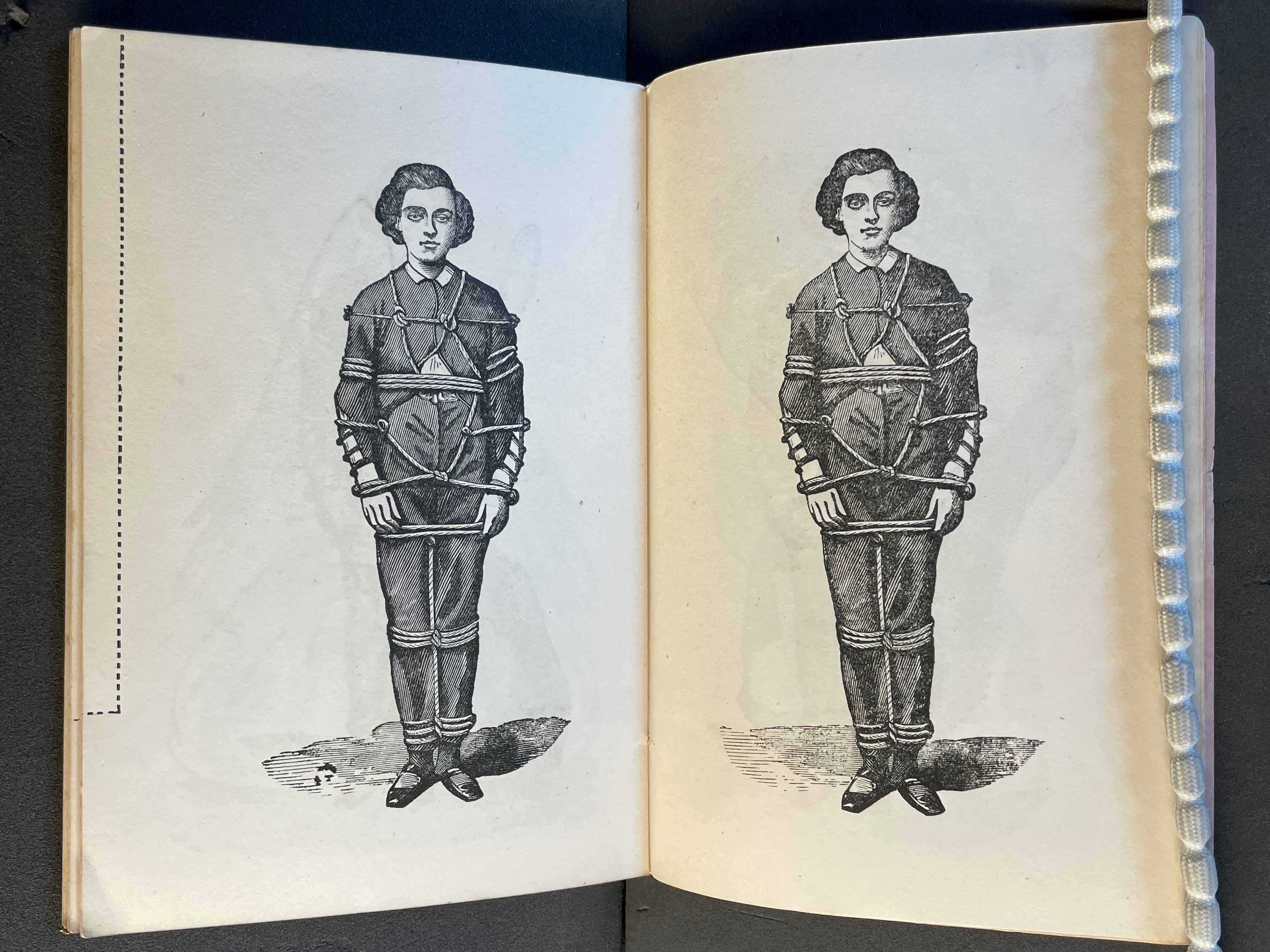
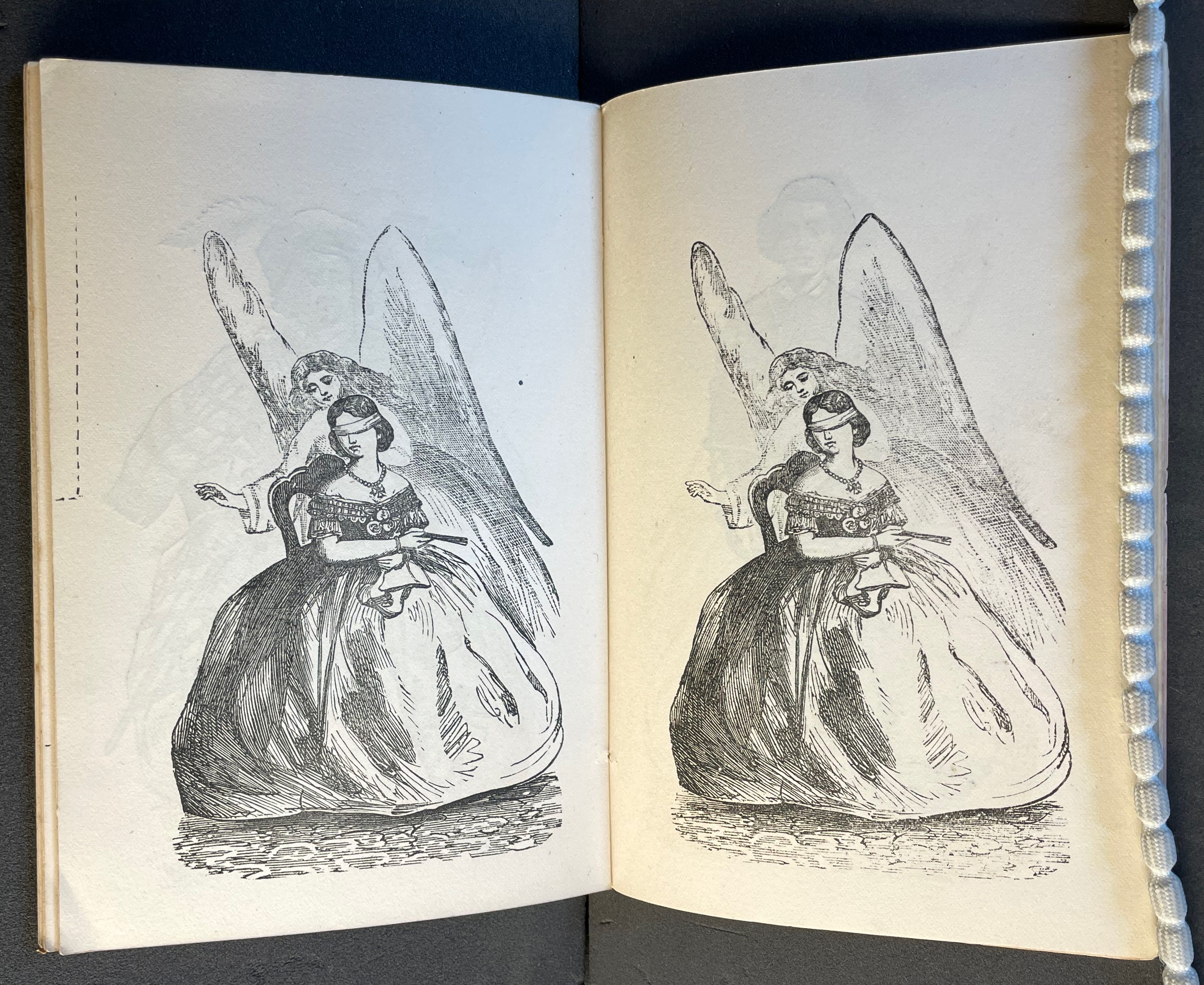
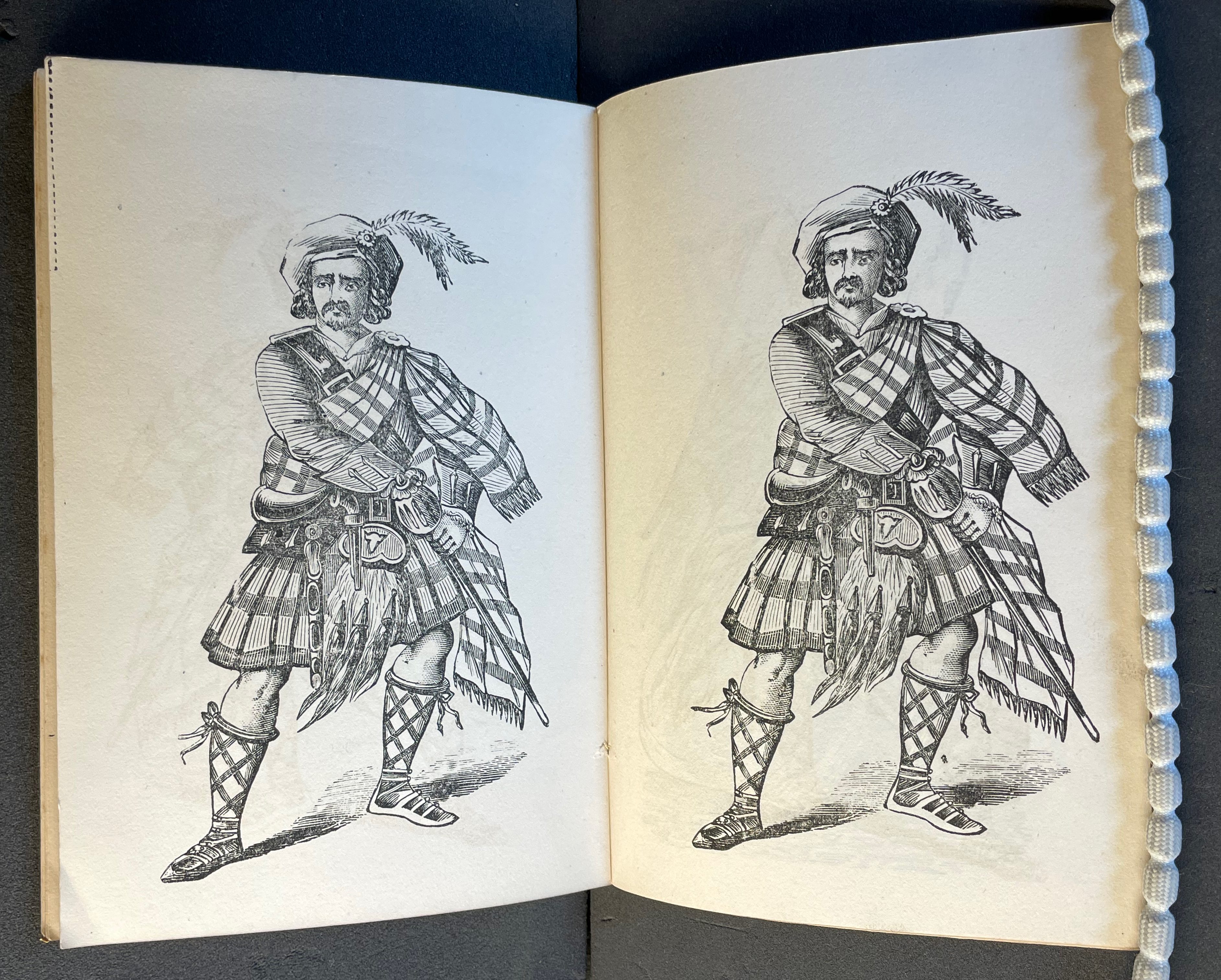
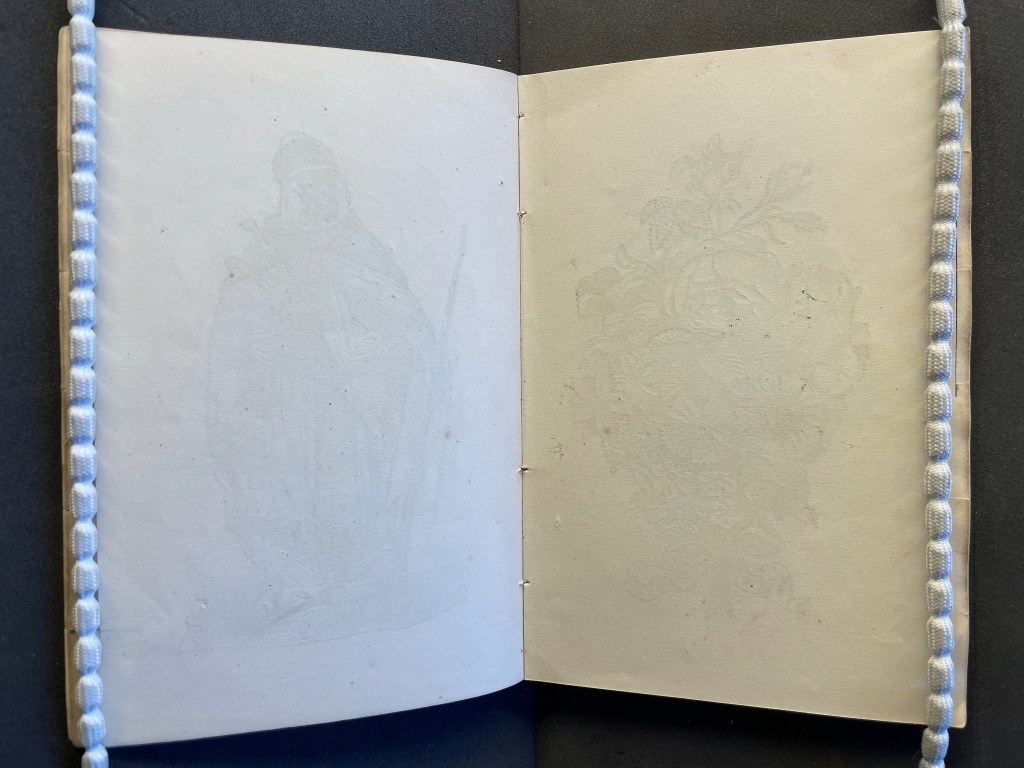
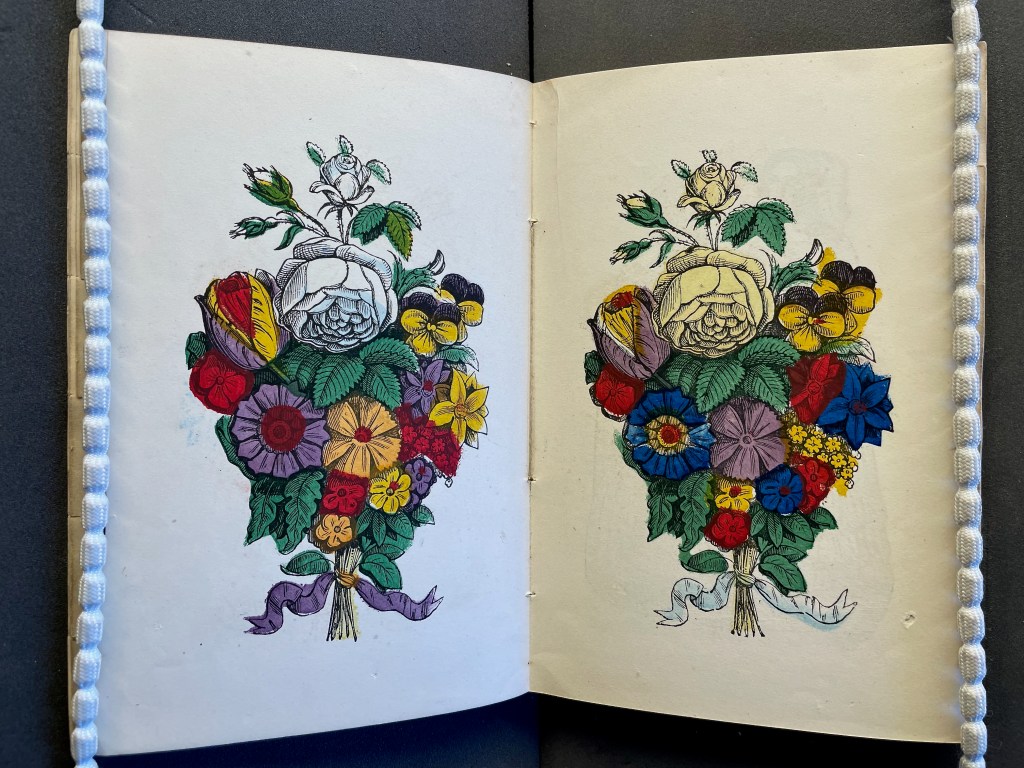
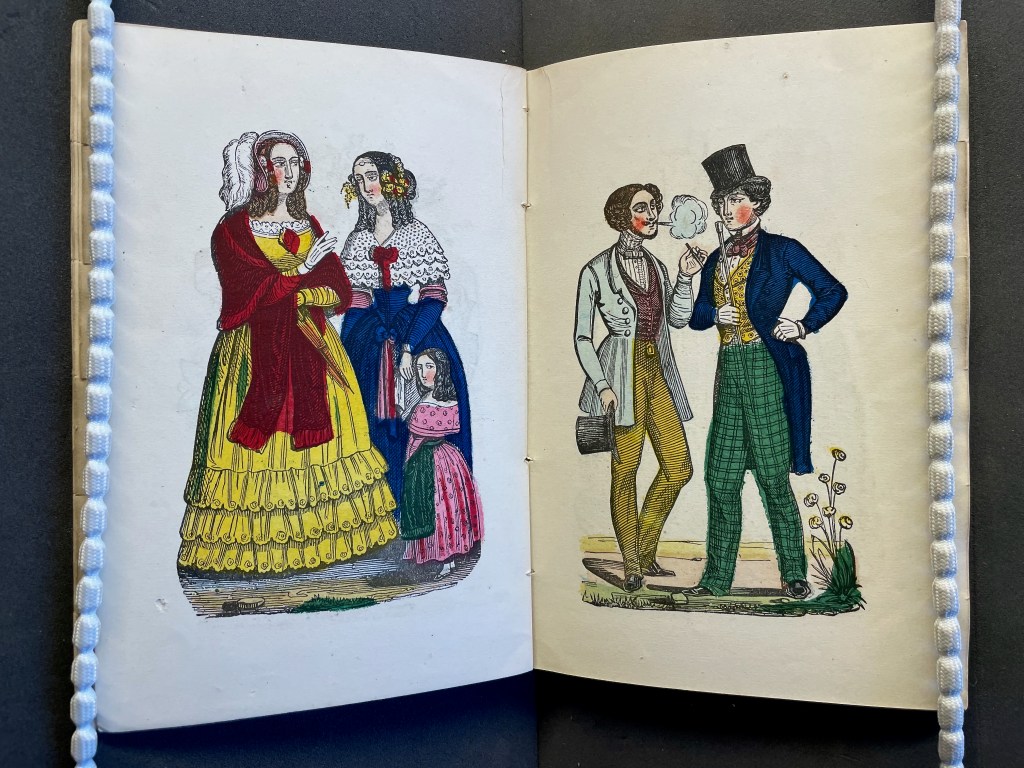
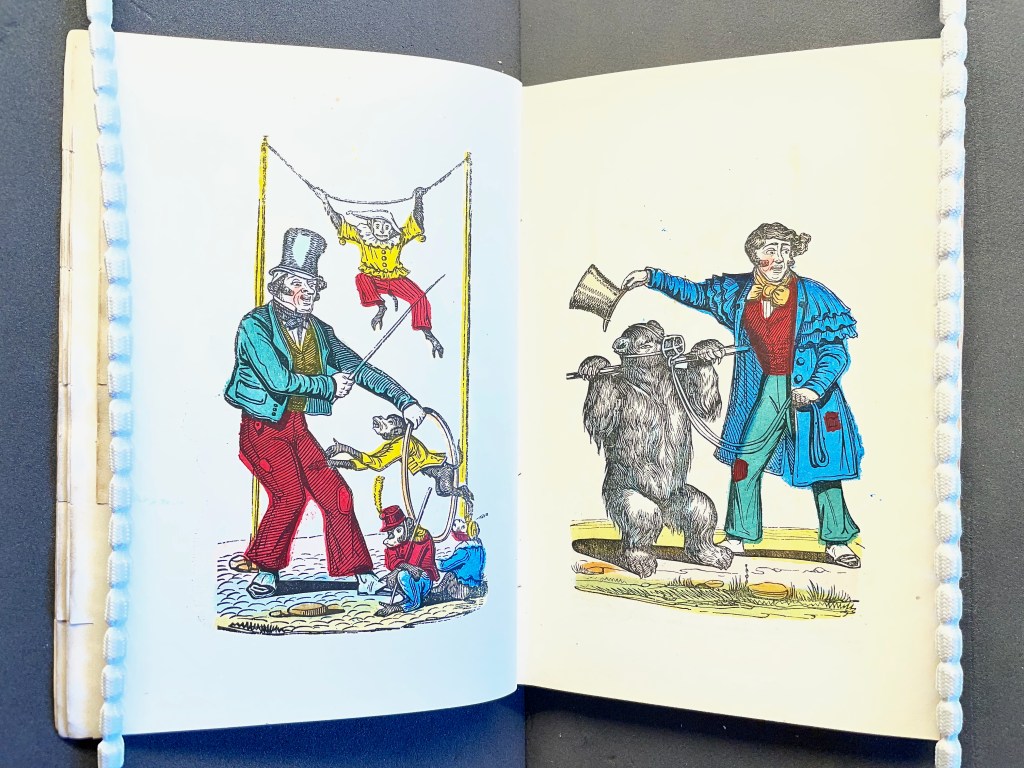
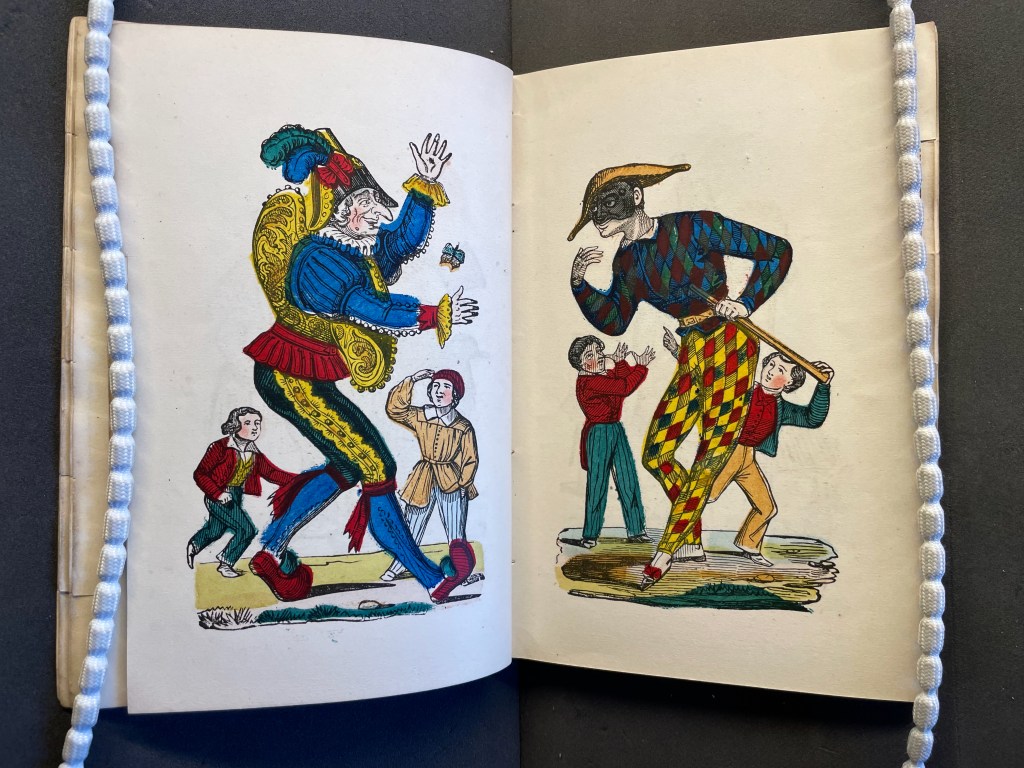
Le Livre Magique caught my eye for its being the first in the collection with ten sets of images (including the blank pages) and for being handcolored. The color change across the same image almost creates a flip book effect but not quite. The clown-dressed monkeys and dancing bear in Le Livre Magique, though, bother me so much that it’s hard to appreciate the color. The same goes for The Enchanted Scrapbook thirty years before. Humans, ah well.
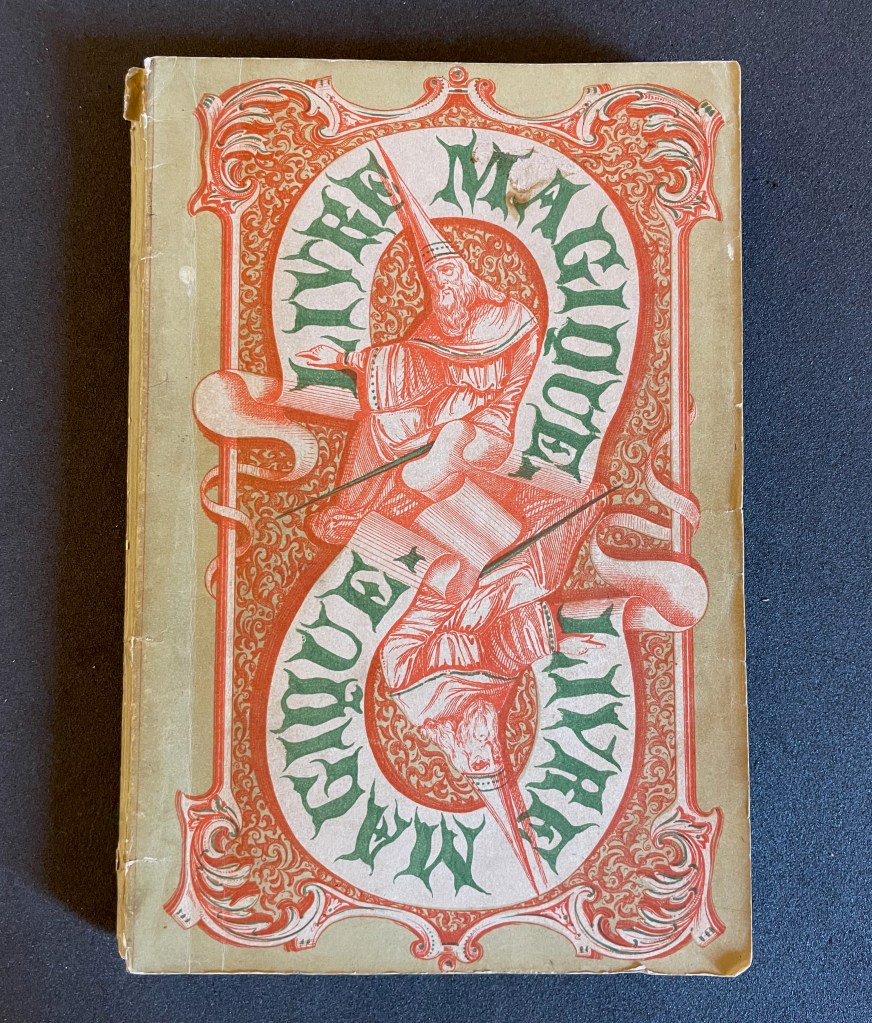
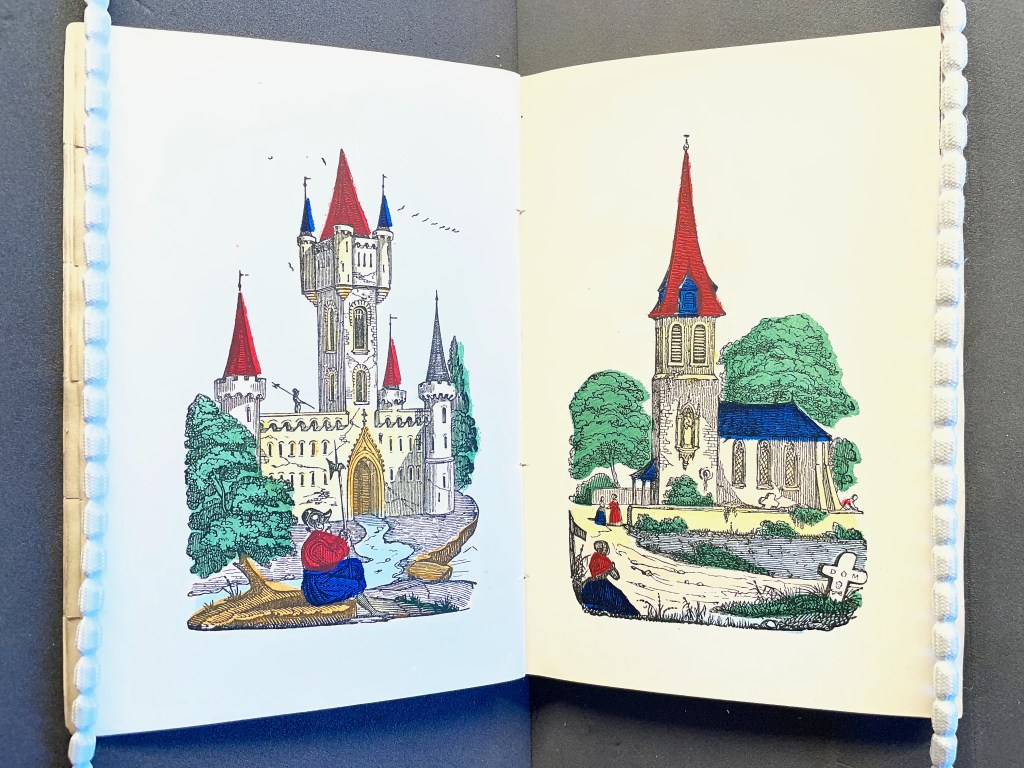
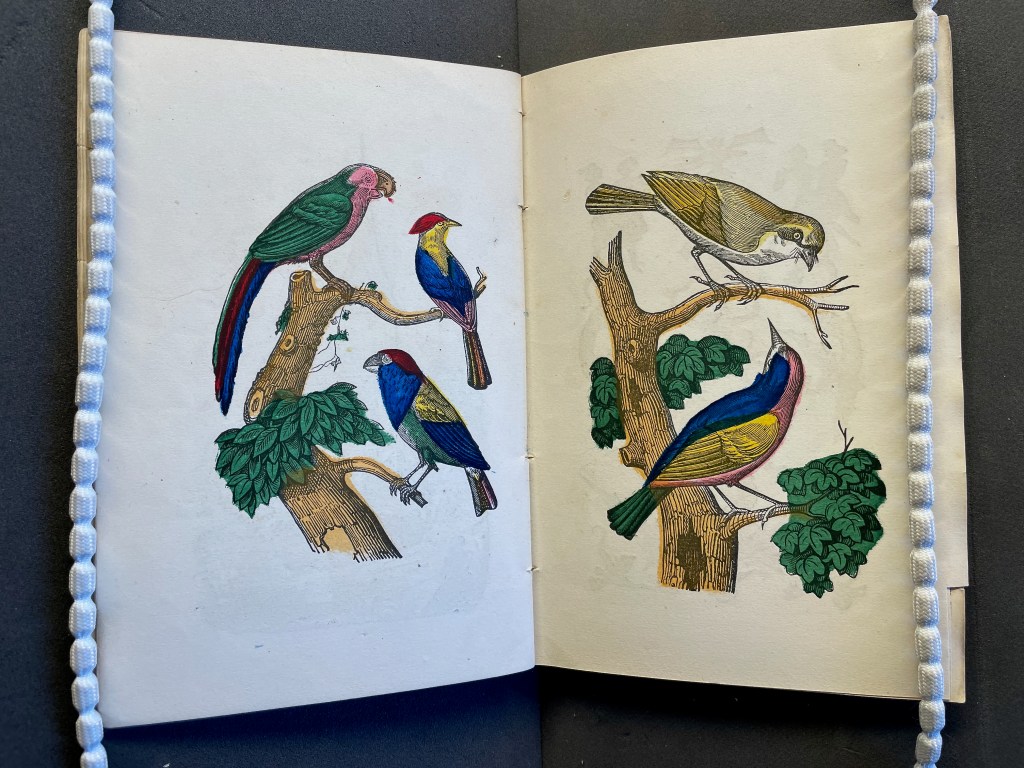
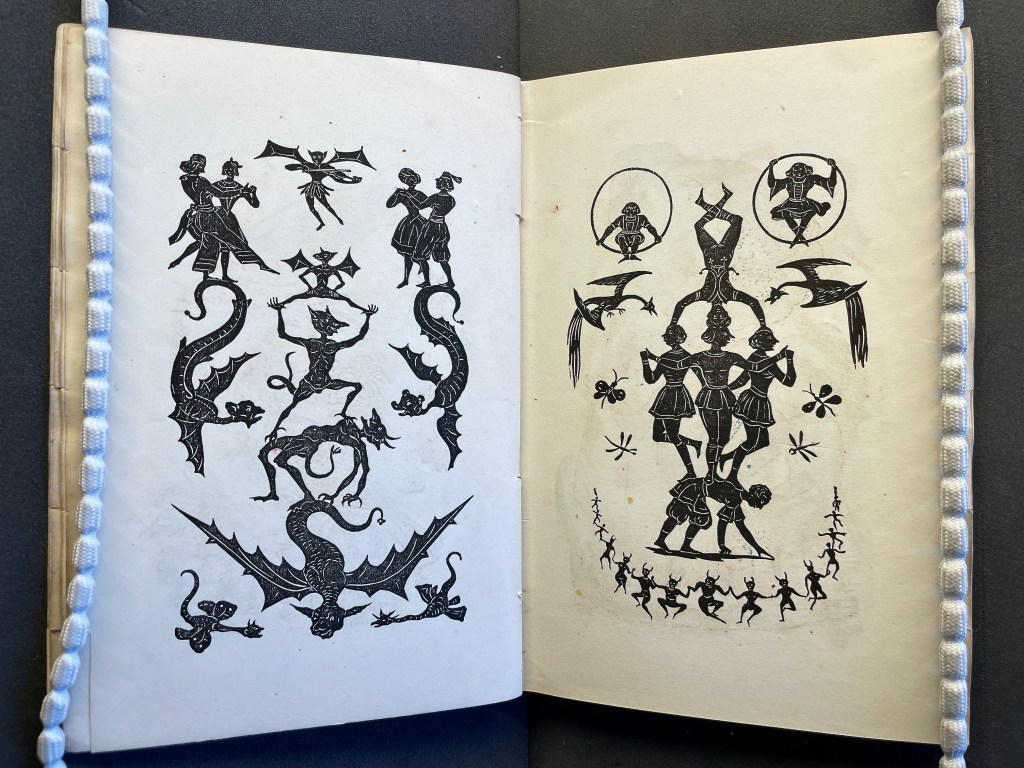
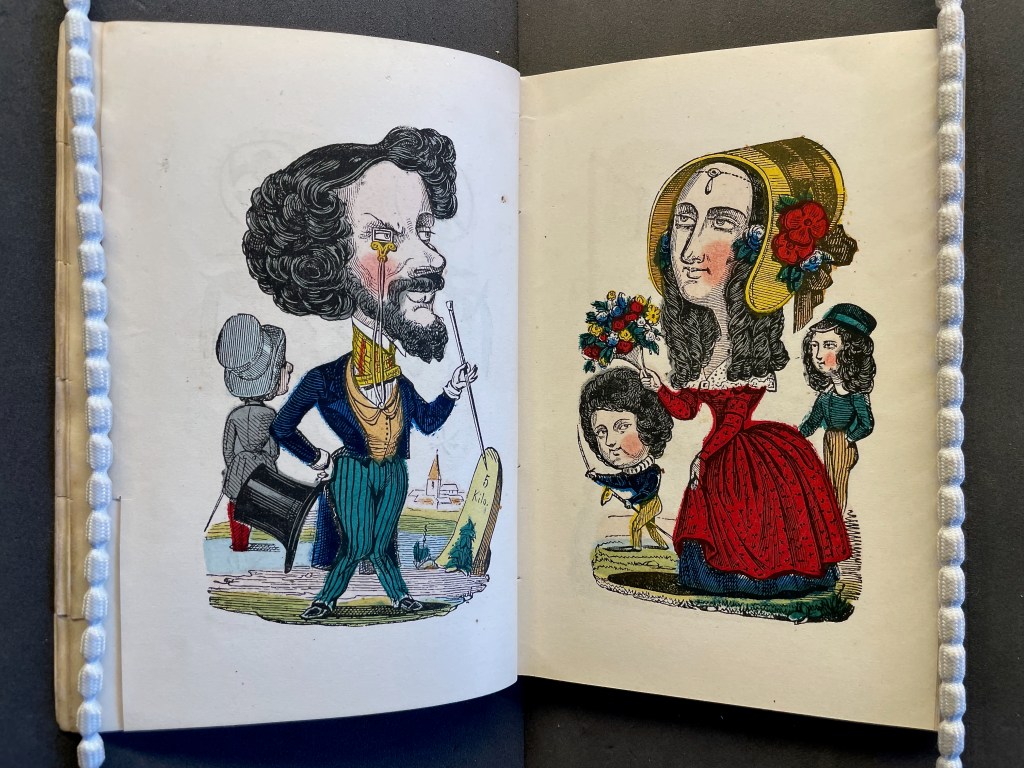
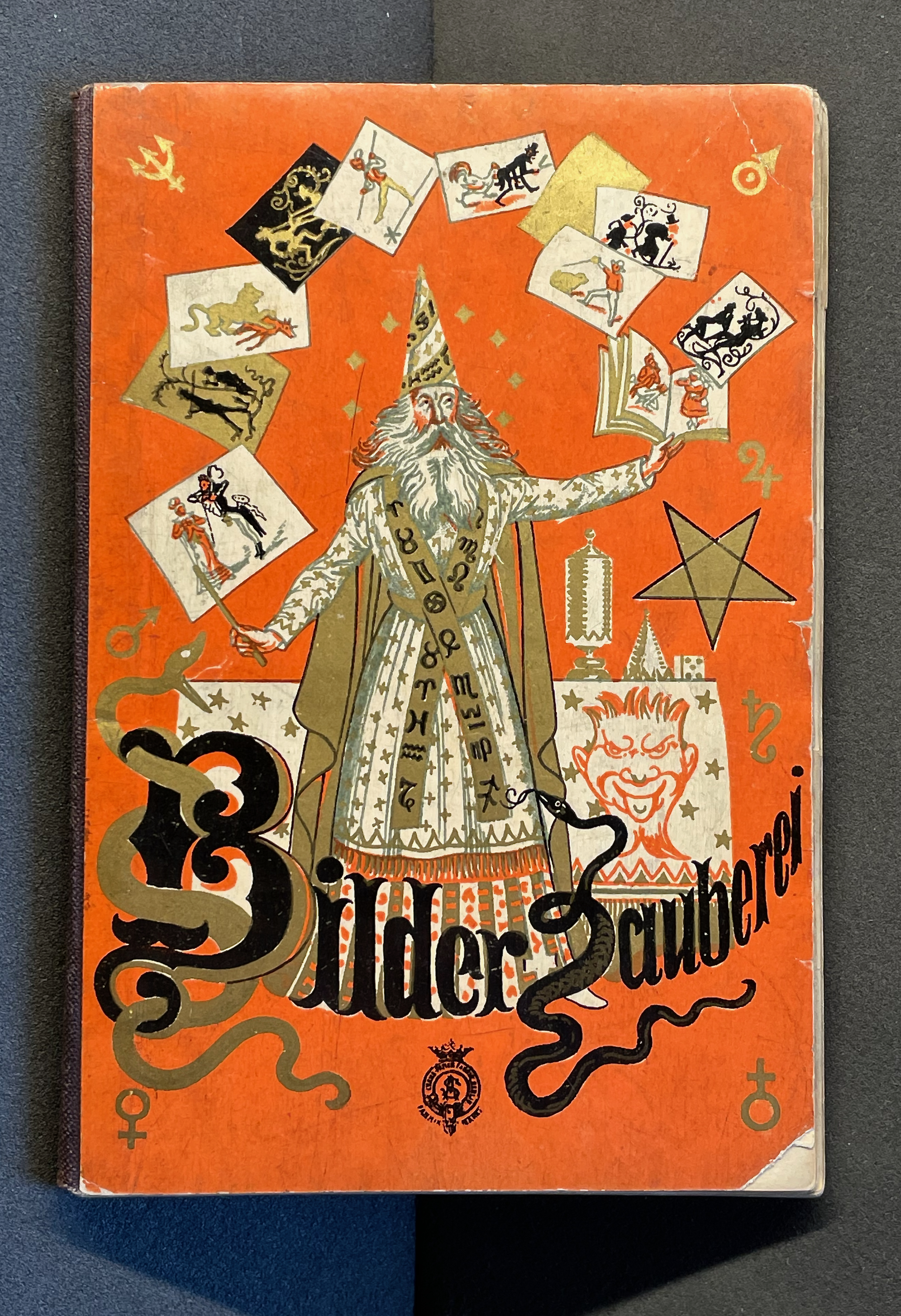
Then comes BilderZauberei (1890). It has eight sets of images (again, including the blanks): a miscellany, silhouettes, caricature of man and woman, alphabet, animals, postage stamps, and mischievous children at play. Harking back to Ambigu Magique, which has some change of images within a chunk, BilderZauberei offers a variation on the motif in every page of each chunk. Why this matters, I don’t know. Unlike several of the other blow books, this one has no tempting edibles like flowers, which is of greater matter to me.
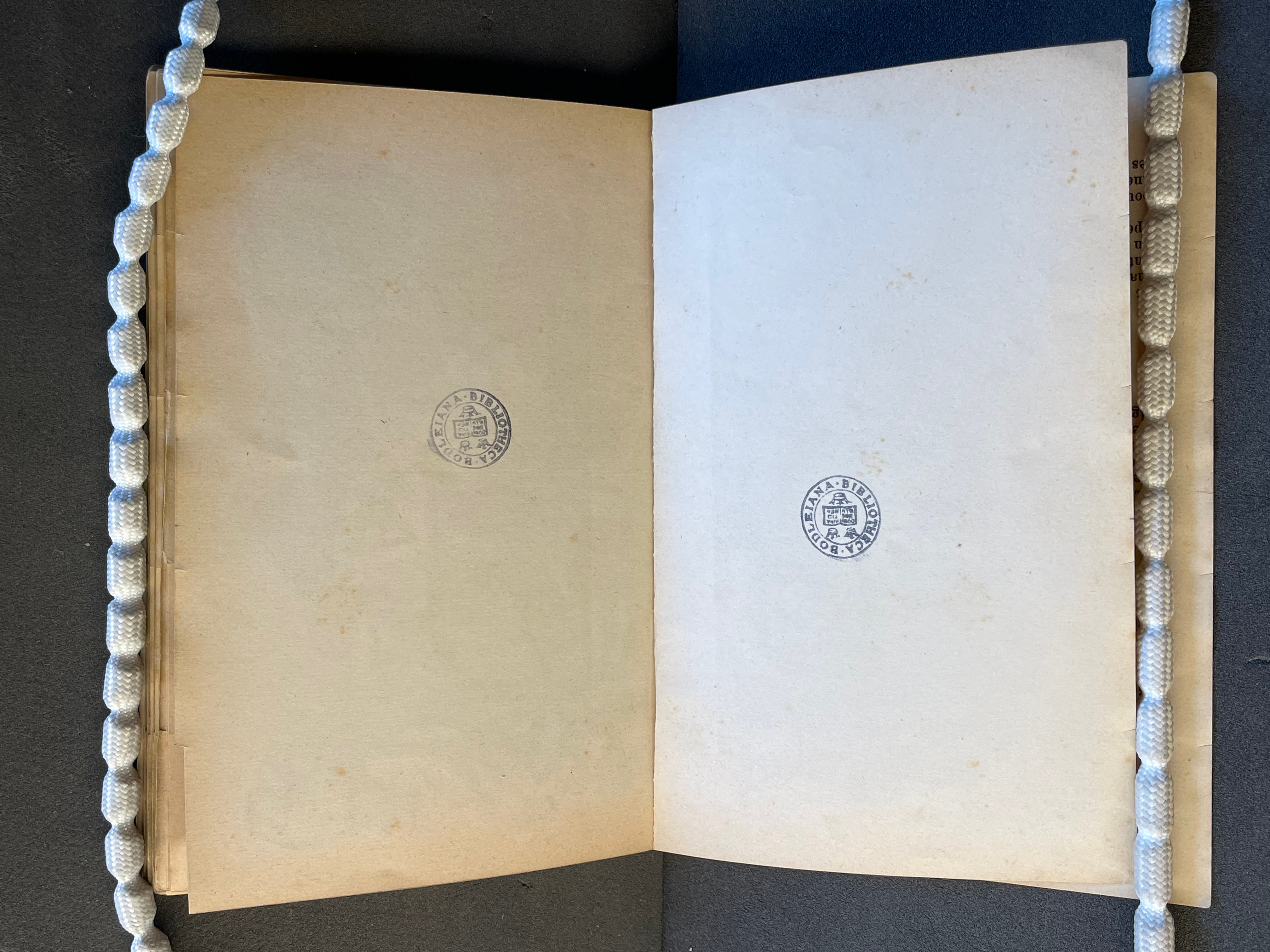
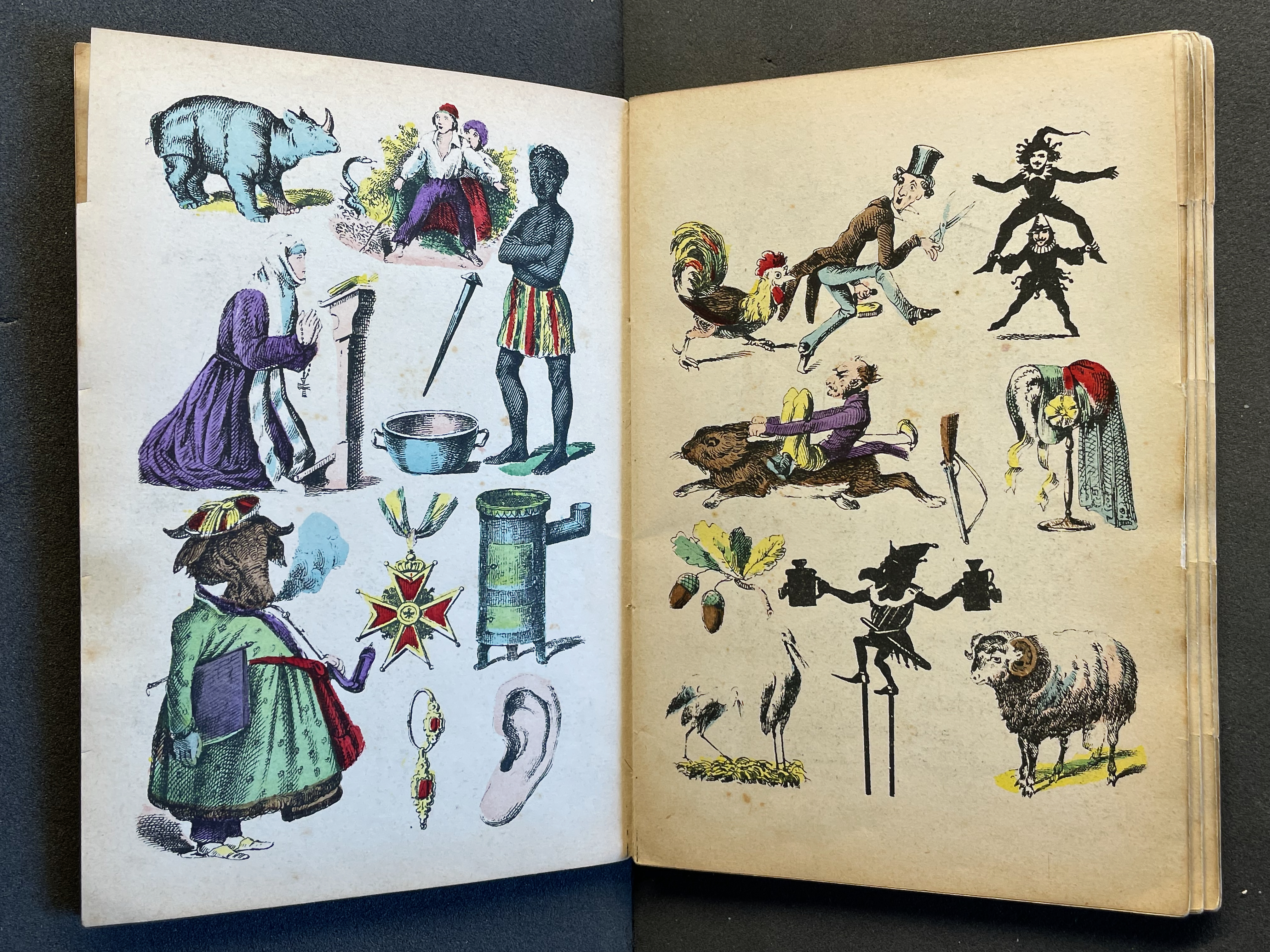
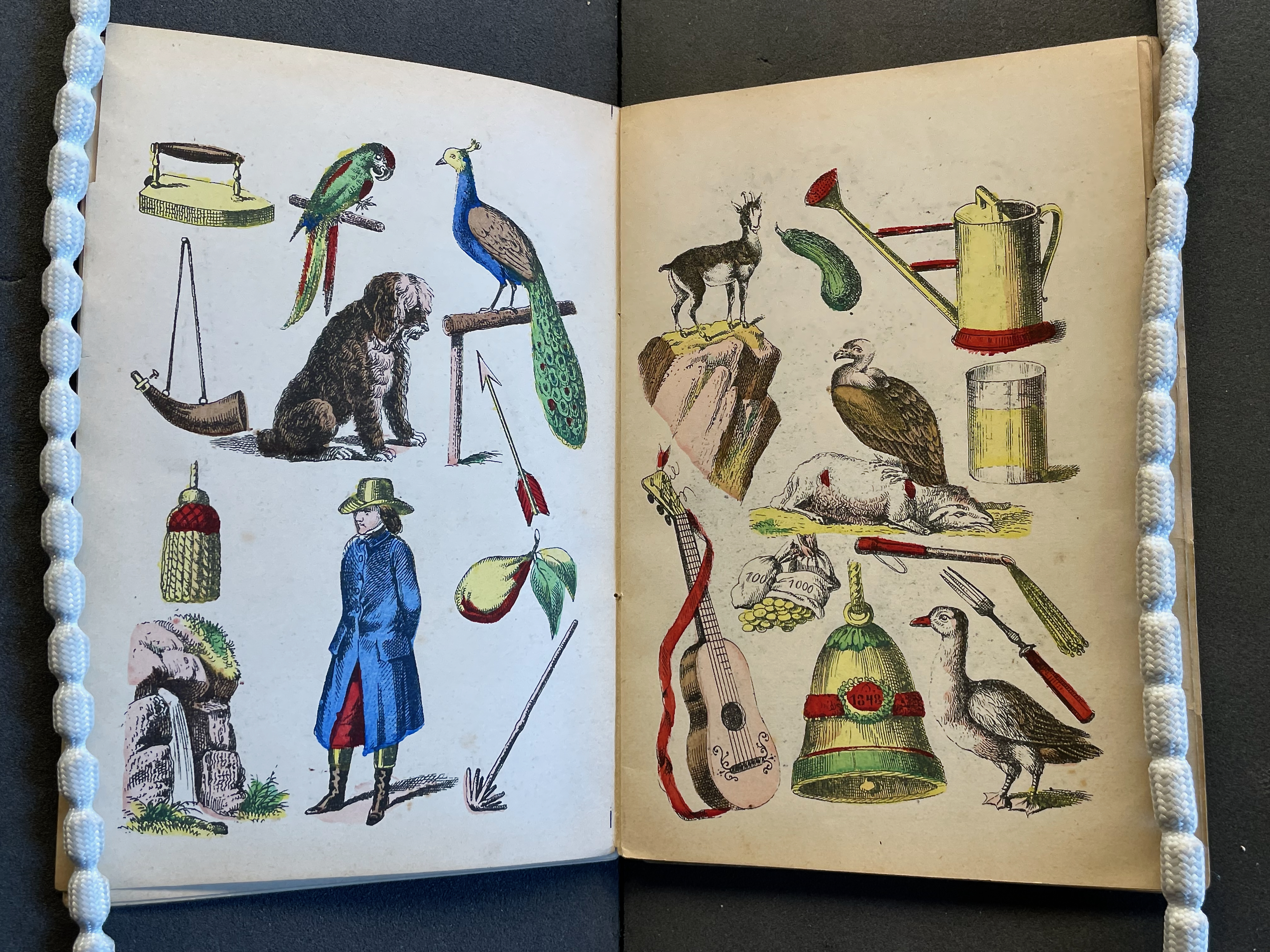
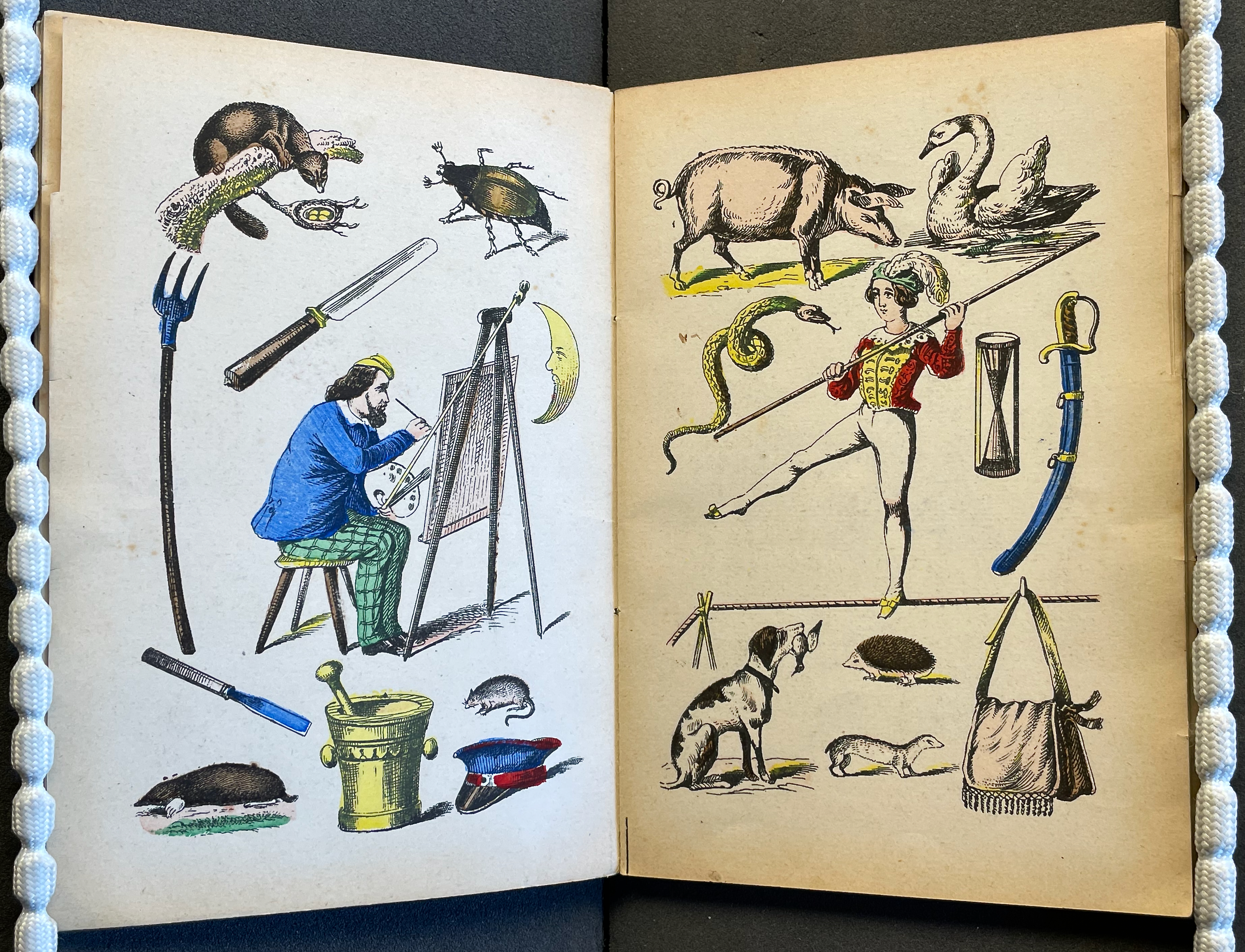
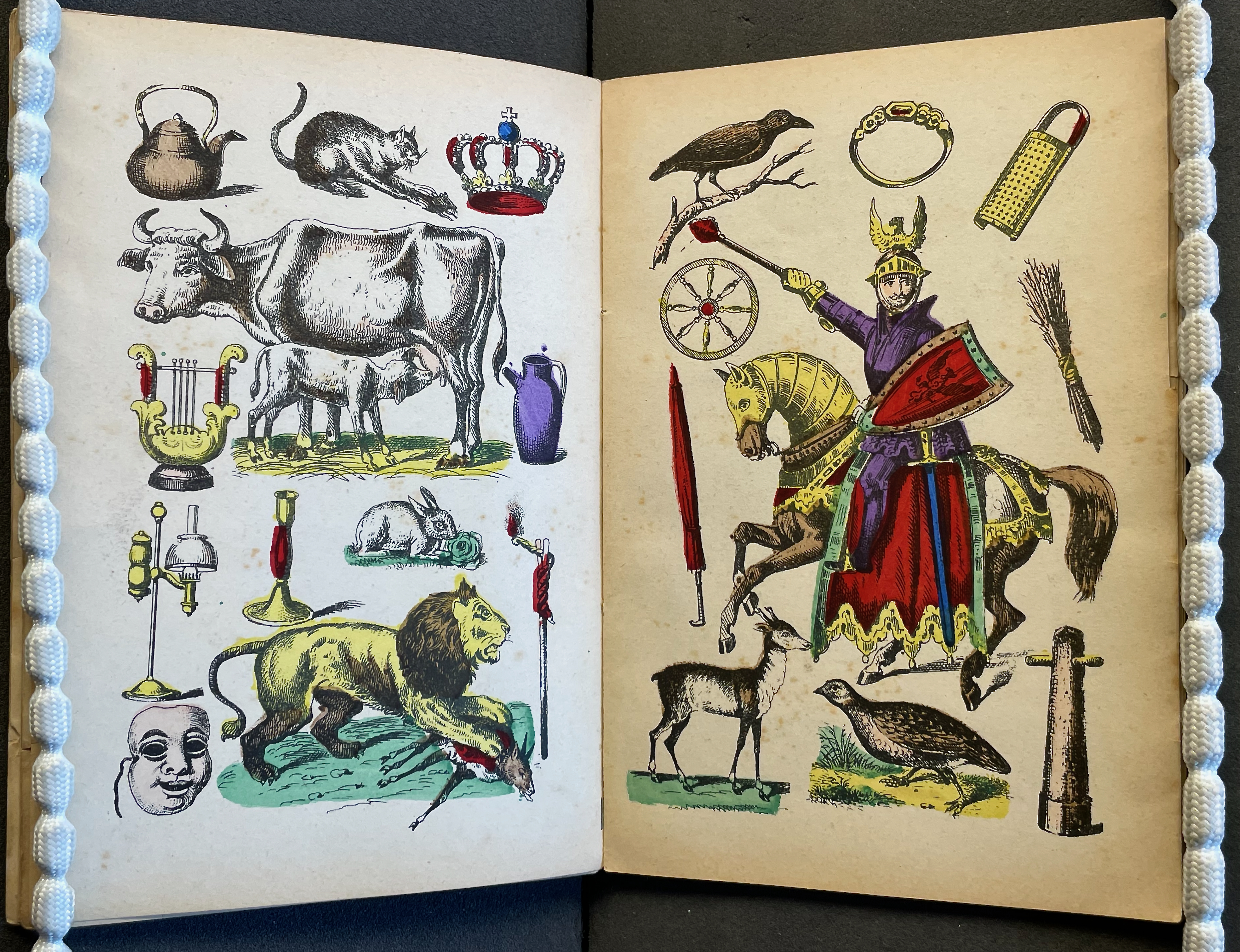
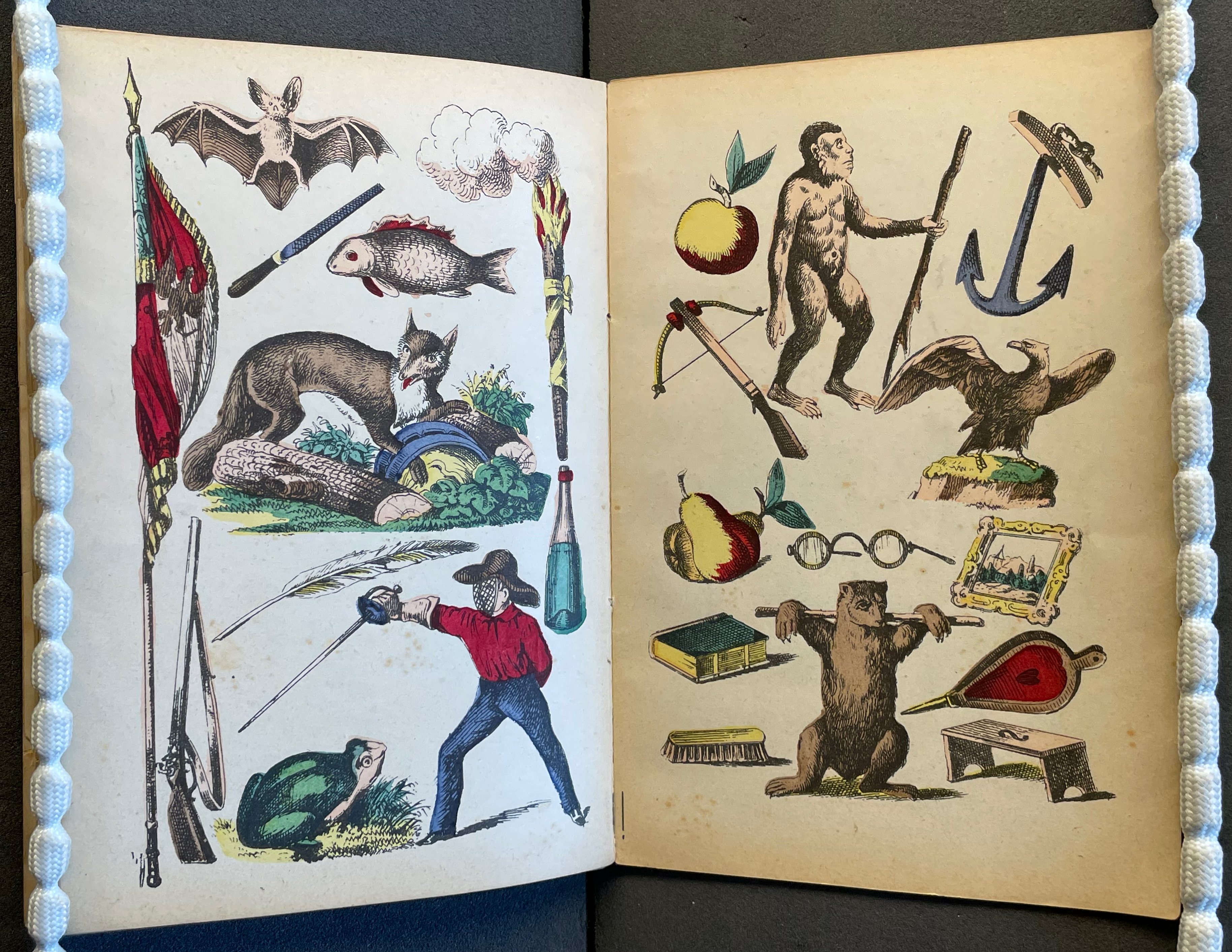
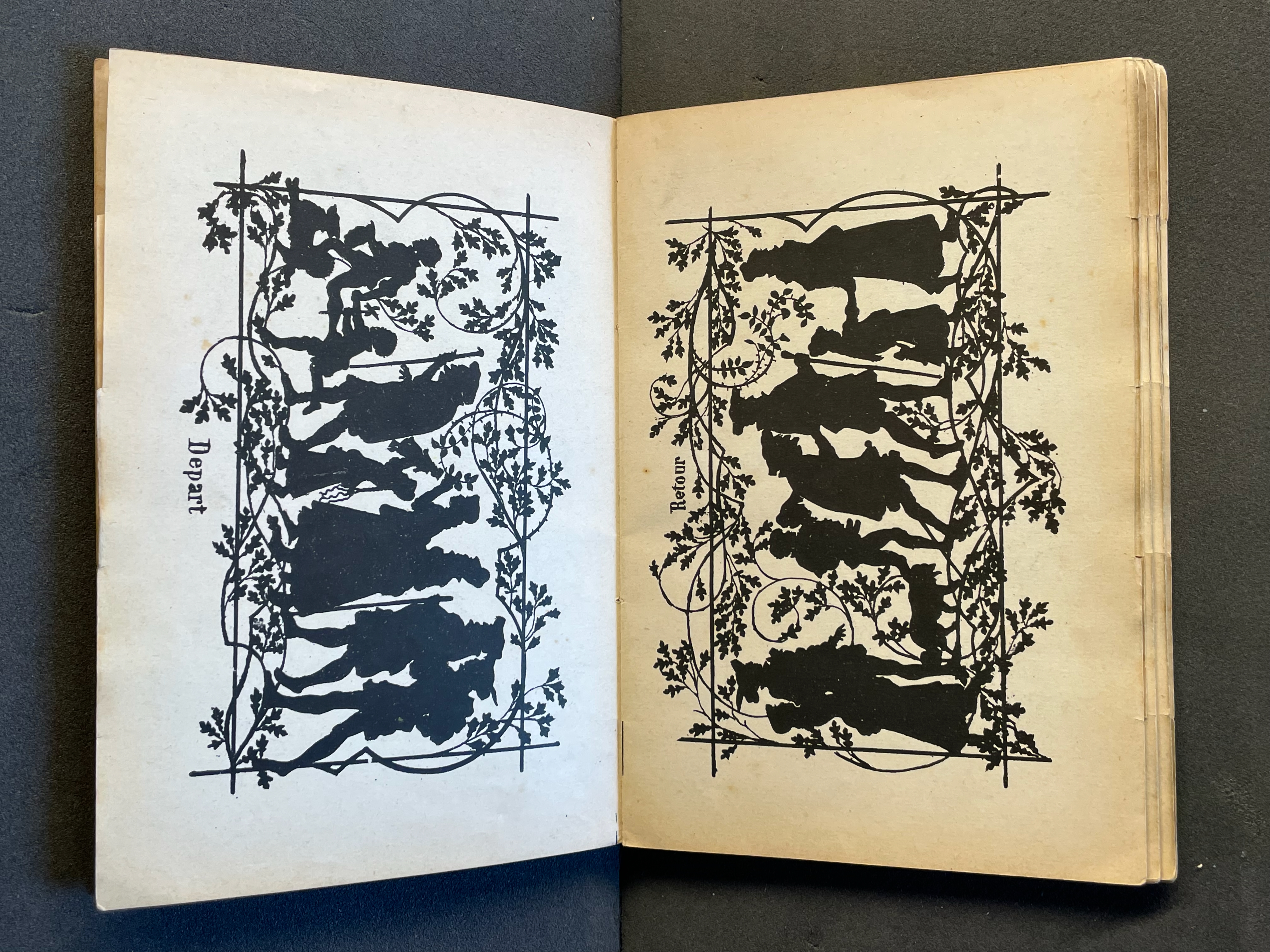
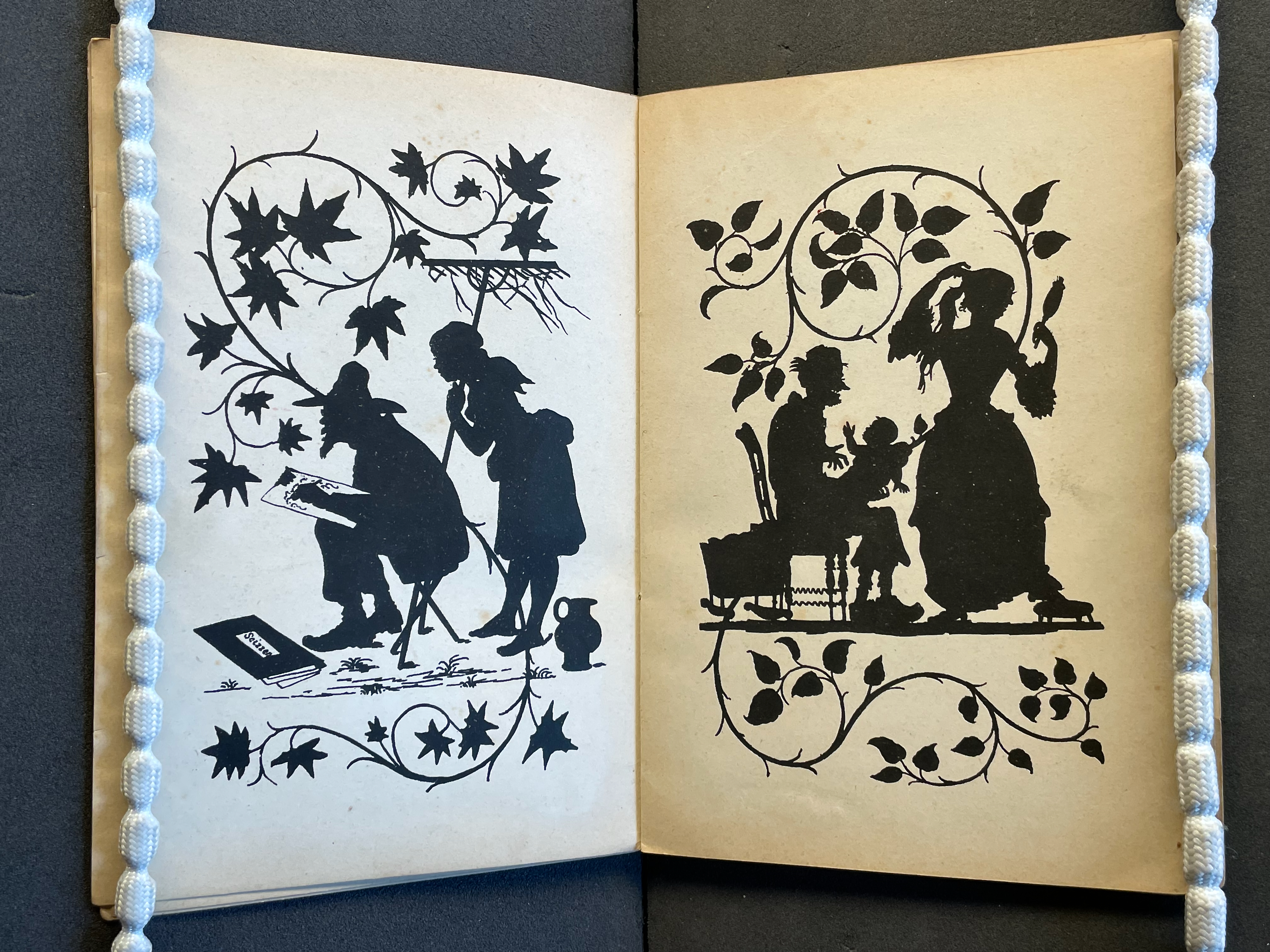
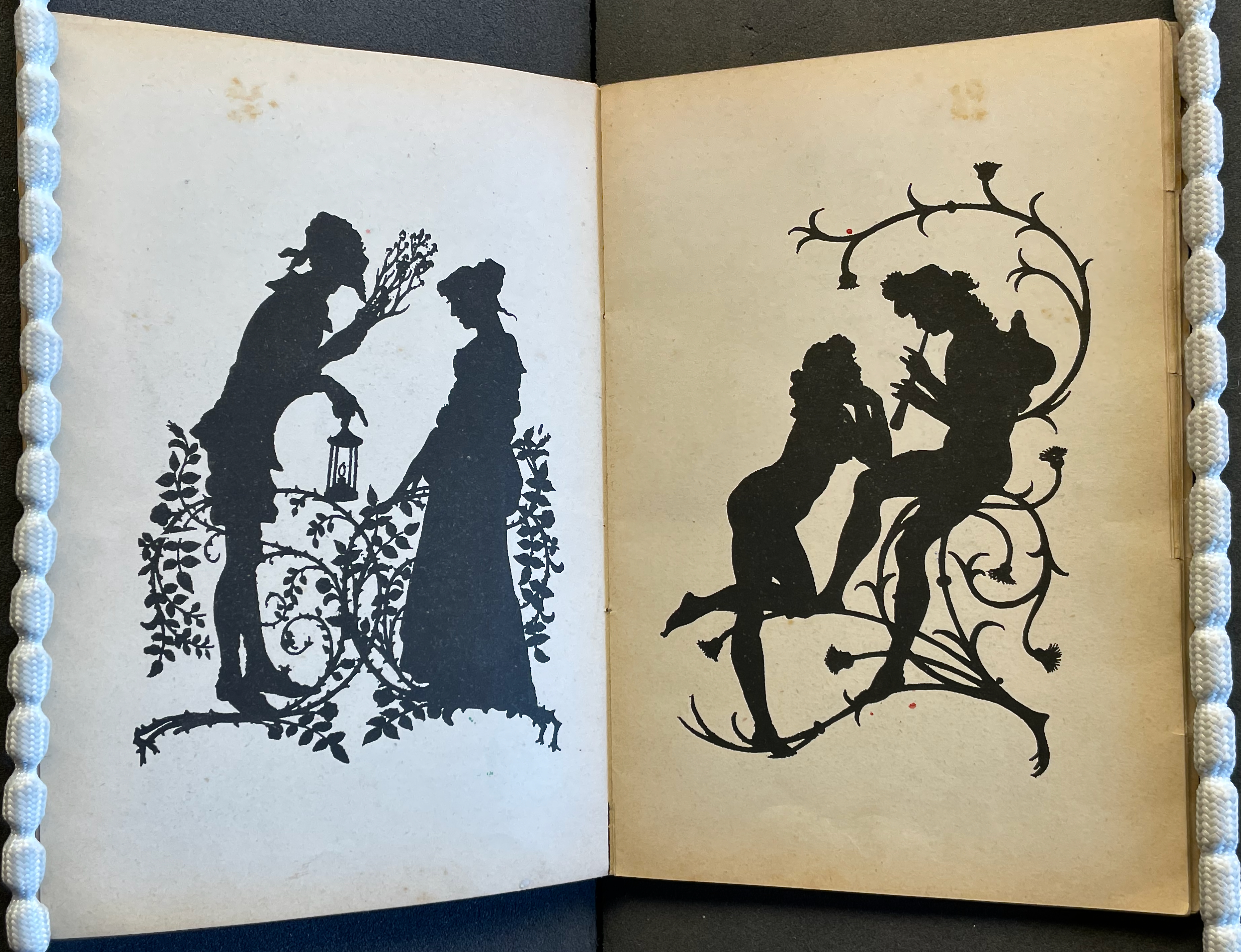
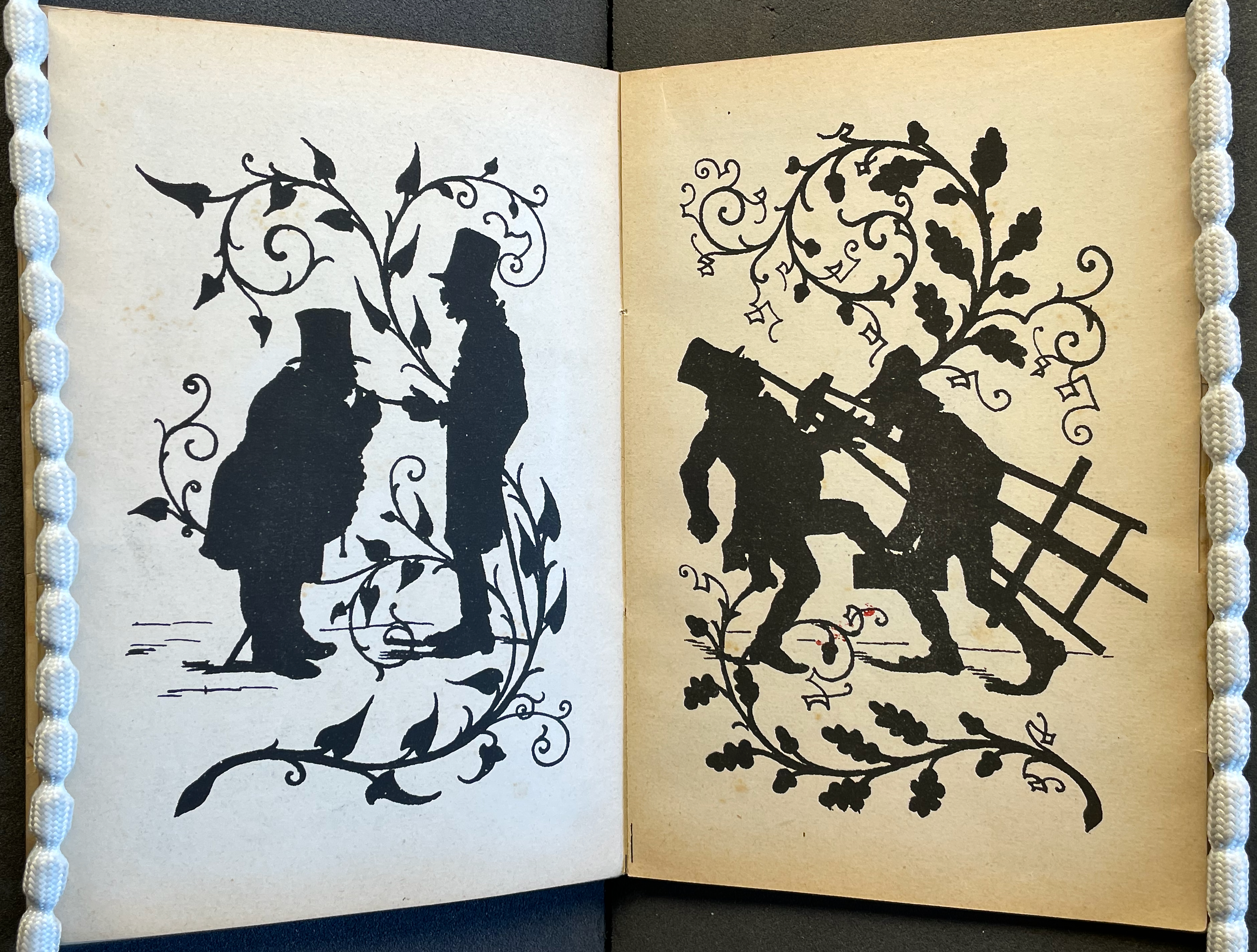
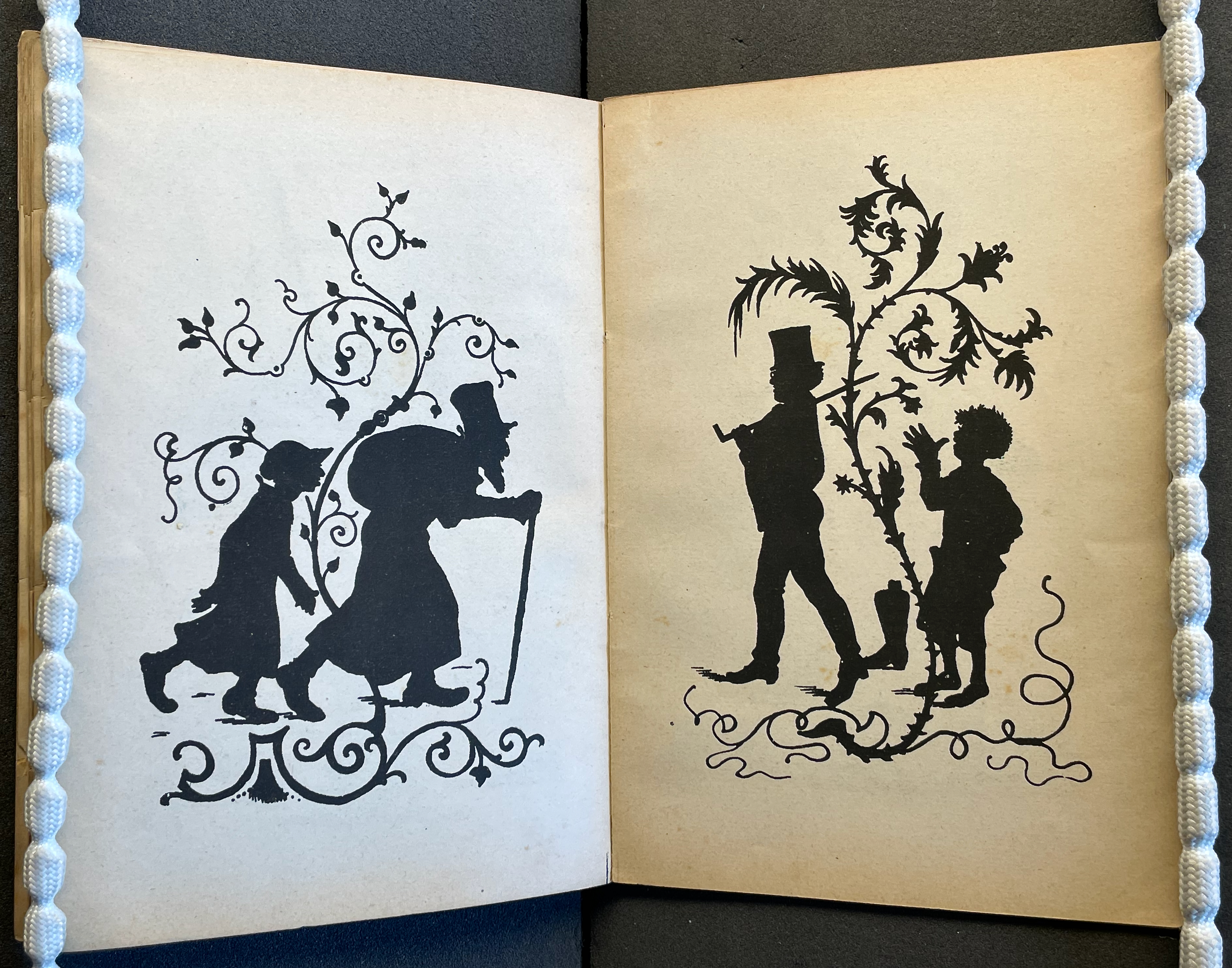
Of course, these rare books are worn, and their production values show their purpose as conjuring devices for amateur magicians. The more tabs and changes of image, the more amazing to the audience, I suppose. But I see now what a clever donkey the Professor was by keeping the “flickering” to just four chunks, two to each side. Not only does it make the book easier to manipulate, it’s what transforms and equates the artist’s self portrait with my cousin’s portrait when the magic flick occurs! Add in my cousin’s sage observations, his lovely ears, the care in design and production that the Professor and the publishing team have taken, and it cannot be clearer that Conversation with a Donkey is no mere magician’s prop. The ways that the structures and techniques of the flip and flicker books comment on the features of the “book as book” and on the text as well make it more than an illustrated book. It comes quite close to being an artist’s book.
I feel that I have not given full marks to the conversation.
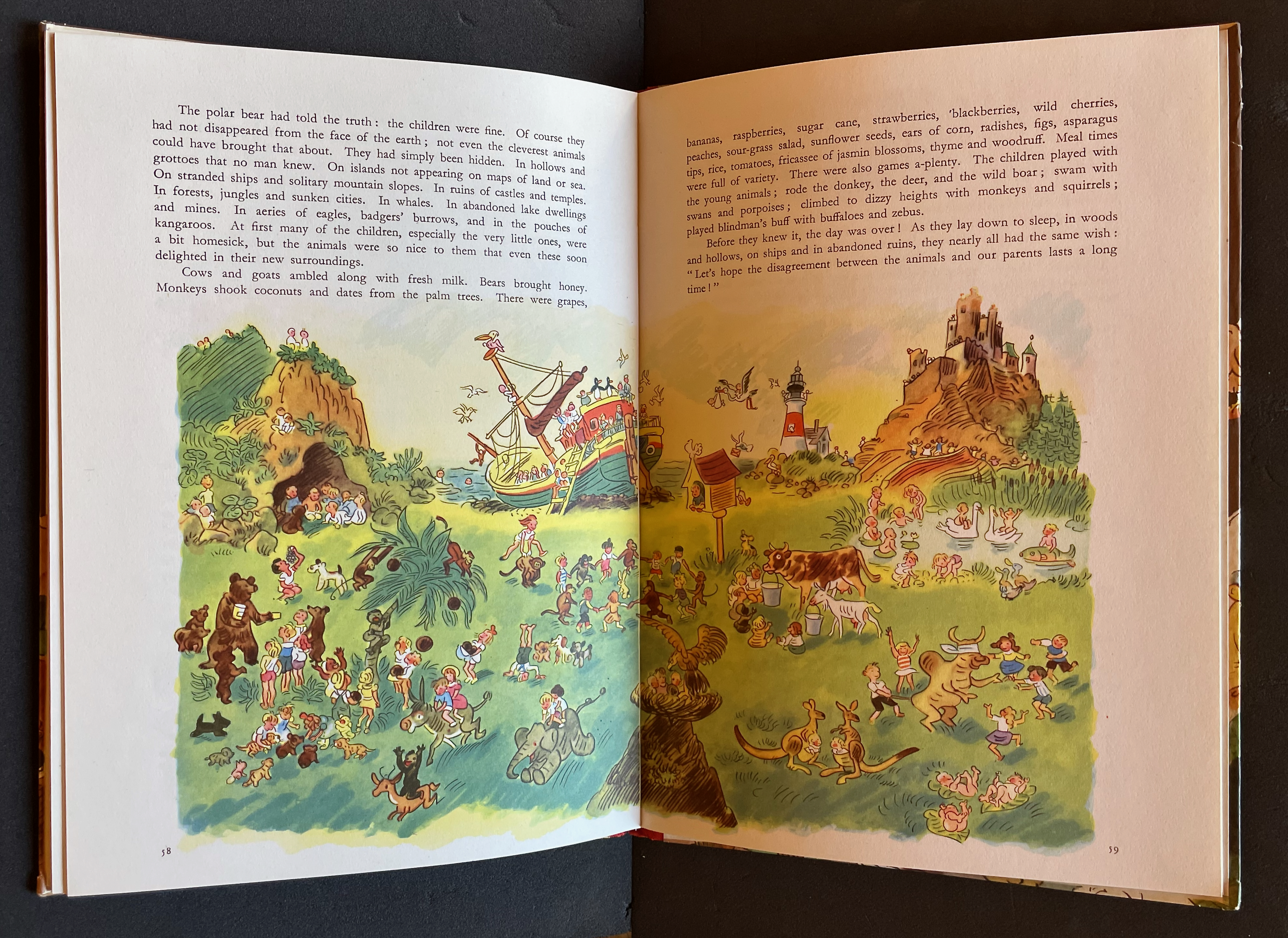
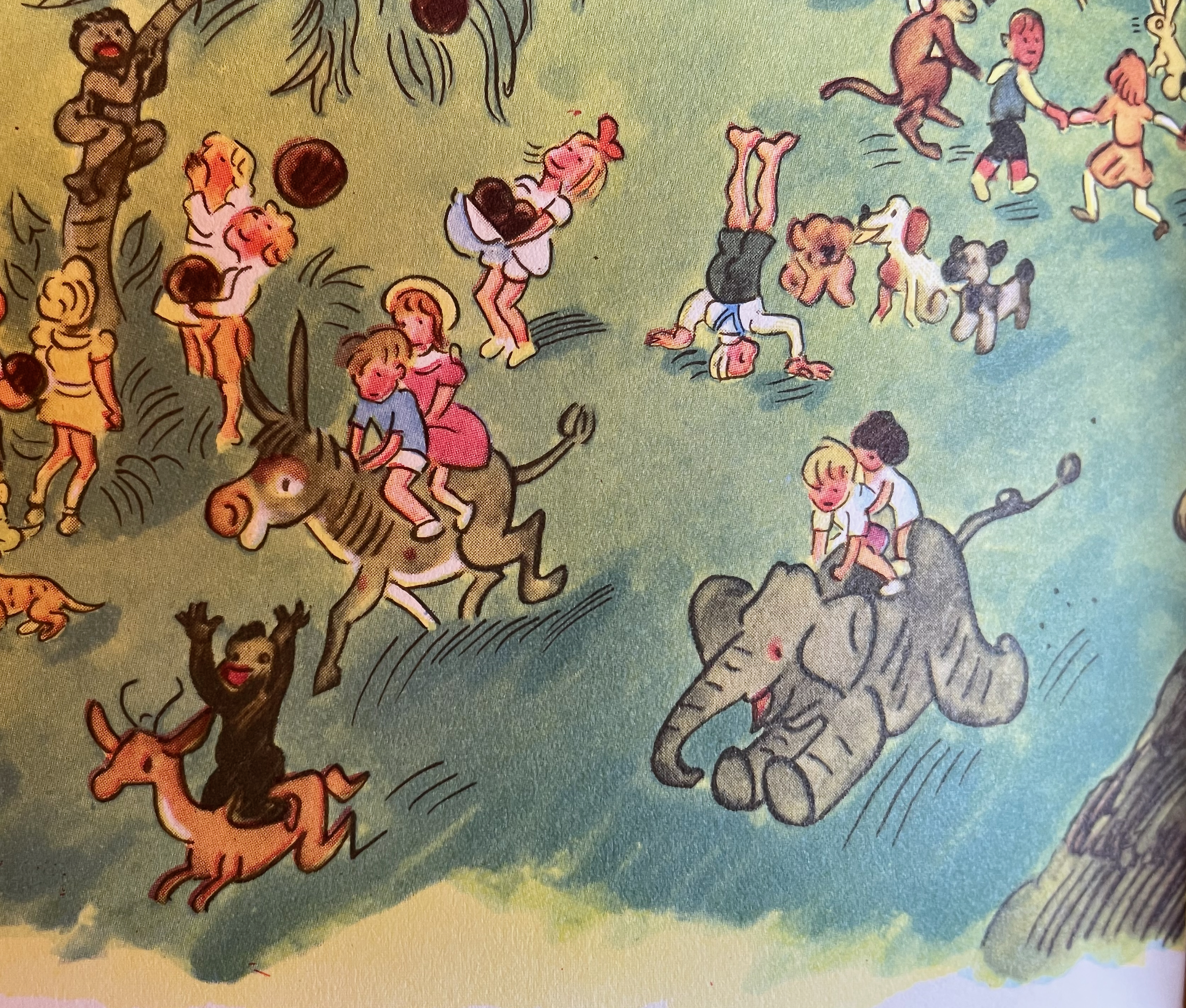
Most human readers will be surprised at my cousin’s erudition. He is mistaken in his facts in only a few and the most trivial of instances. He quite rightly rails against Erich Kästner’s denying us a speaking role in The Animals’ Conference, but he will have to admit that Kästner’s illustrator Walter Trier did make the tiniest of efforts to rectify the omission. No doubt the admission would come with a snort and some aspersions about Kästner’s male chauvinism and Trier’s casual racism, but there is a donkey there, and what else can we expect from humans.
As I brayed, there are many wonderful passages on the conversation side of the book. The Professor’s descriptions of the Greek sunlight and air punctuate the exchange at just the right moments and make me envy my cousin’s surroundings. It is rare that we donkeys find humans like the Professor with whom we can be so unguarded. Once he gets over my cousin’s putting him in his intellectual place, I found the Professor refreshingly willing to listen and surprisingly open, for a human.
Some passages are, however, also dark for both humans and donkeys. For us, the fate of my Greek cousin’s rambunctious friend is hard to read. For you humans, I suppose the degree of darkness depends on your sensibilities. Even the Professor betrays your lack when he passes off chemical castration as humane. What a foolish word that is. At least the Professor admits a discomfort after his remark. In the end, my cousin is right to leave the Professor with two last comments: the one reminding him of Erasmus’s In Praise of Folly, and the other expressing our universal view on the matter — “HHIIAAAZ,” “HHIIAAAZ,” “HHIIAAAZ”.
*William Steig invented the character “Donkey” for his book Shrek! , and Tom Hester illustrated him for the movie.
**Sir Francis Bacon: “Some books are to be tasted, others to be swallowed, and some few to be chewed and digested …” from “Of Studies” in The Essays (1625). Bentley’s description of how he would eat a page with a rusk image on it follows precisely Professor Strouhal’s description how his Greek companion consumes the rusks offered to him.
Further Reading
Works in Books On Books Collection:
“Horst Antes“. 2 September 2026. Books On Books Collection.
“Julie Chen & Keri Miki-Lani Schroeder“. 27 May 2025. Books On Books Collection.
“Ricky Jay“. 2 September 2026. Books On Books Collection.
“Nicholas Phillips“. 11 August 2020. Books On Books Collection. Phillips’ Egyptian Cards demonstrate a multiple image changes in a deck of cards.
“Thomas Stauss“. 28 September 2026. Books On Books Collection.
Works in the Bodleian Libraries:
Anderson, John Henry. 1860. Professor Anderson’s Magic Picture Gallery. London. Uncut version w/ Queen Victoria.
Unknown. [Ambigu magique]. [Jacques Chareau], 1770. Douce Prints f.10.
Unknown. The Enchanted Scrap Book : Exhibiting Pictures, Which Appear and Vanish at the Word of Command. E. Wallis, 1830. Opie EE 73.
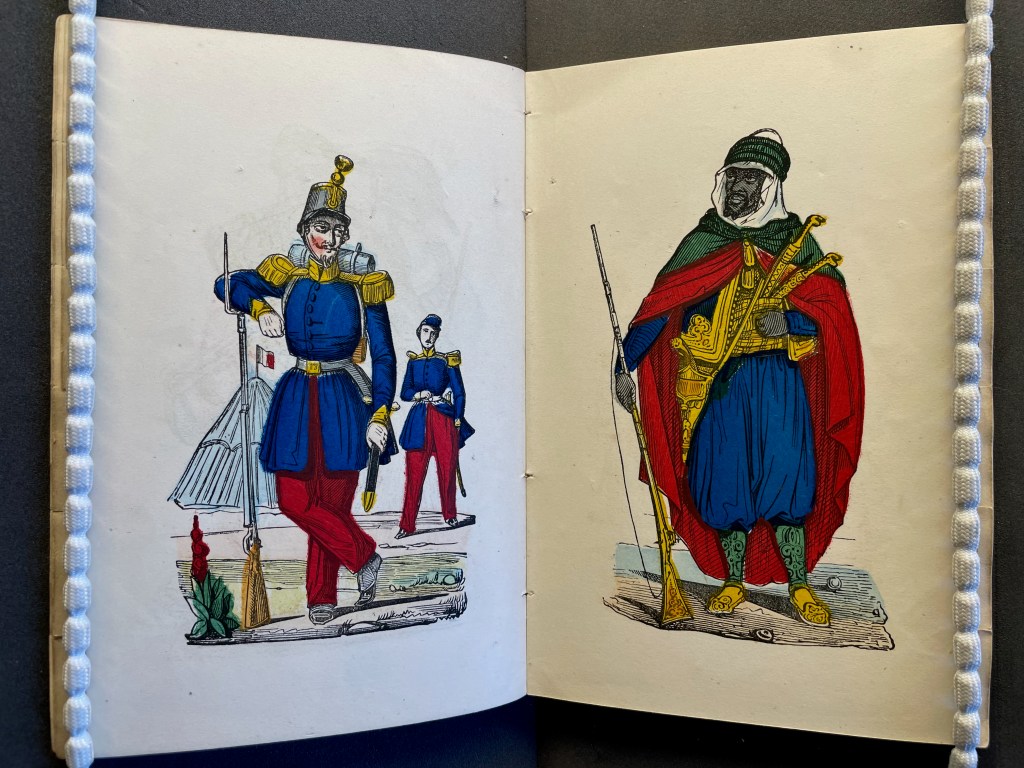
Unknown. Le livre magique : tombé de la lune 1500 ans avant la création du monde, et retrouvé en 1860. Chez MM. Gangel et P. Didion, fabricants d’images et d’estampes à Metz, 1860. Opie T 577. Blank, bouquets, two ladies and child facing two gentlemen smoking, castle facing church, birds; European soldier facing Moorish soldier, Punch facing harlequin, monkeys facing dancing bear, caricature of man facing caricature of woman with two children, black & white jugglers facing black & white demons, birds.
Unknown. [Flicker book with pictures of postage stamps, crossword puzzles, cheques, postal orders, music and alphabets] 1959 Opie EE 365 , 366 & 367. Blank, postage stamps, crossword puzzle, alphabet; blank, sheet music, receipts, alphabet. All three are inconsistently imposed. Opie EE367’s blanks give away the game by showing the Stationer’s mark at the foot of the recto page when facing the audience opposite and the same mark upside down on the facing verso page. If heads on postage stamps are right way up for the facing audience, the alphabet is upside down.
Unknown. The Magic Volume!. 1840. S.H. & E.A. Opie E 65 & 64. Blank, gowned lady, flowers, comical man riding a boar, nine of diamonds; blank, Queen of Hearts, dog in armor & cat, old lady & black man in fancy dress, nine of diamonds. Opie E64’s slipcase is torn, book no longer fits, book covers detached. Opie E65’s box is torn, book fits the box because of trimming and spine rebound with cloth tape.
Unknown. BilderZauberei [Zauber-Bilderbuch : eine interessante Unterhaltung für Jedermann = Trylle-Billedbog : en interessant Underholdning for Enver = Livre de la magie graphique : passe-temps et amusement pour chaque age]. s.n., 1890. Opie T 881 and Opie EE 473. Also Opie T 882, 1910.
Related works:
Bacon, Francis. The Essays. Edited by John Pitcher, Penguin, 1985.
Grimmelshausen, Hans Jakob Christoph von. 1981. The Singular Life Story of Heedless Hopalong. Translation by Robert Ludwig Hiller and John C. Osborne. Detroit: Wayne State University Press.
Grimmelshausen, Hans Jakob Christoffel von. 1683. Der seltzame Springinsfeld.
Kästner, Erich, et al. The Animals’ Conference : Based on an Idea by Jella Lepman. Collins, 1955.
Meijer, Eva. 2019. Animal Languages. Translated by Laura Watkinson. Cambridge, Massachusetts: The MIT Press.
Steig, William. 1990. Shrek! New York: Farrar, Straus, Giroux.

