11 Stations (2025)
11 Stations (2025)
Diego Brambilla
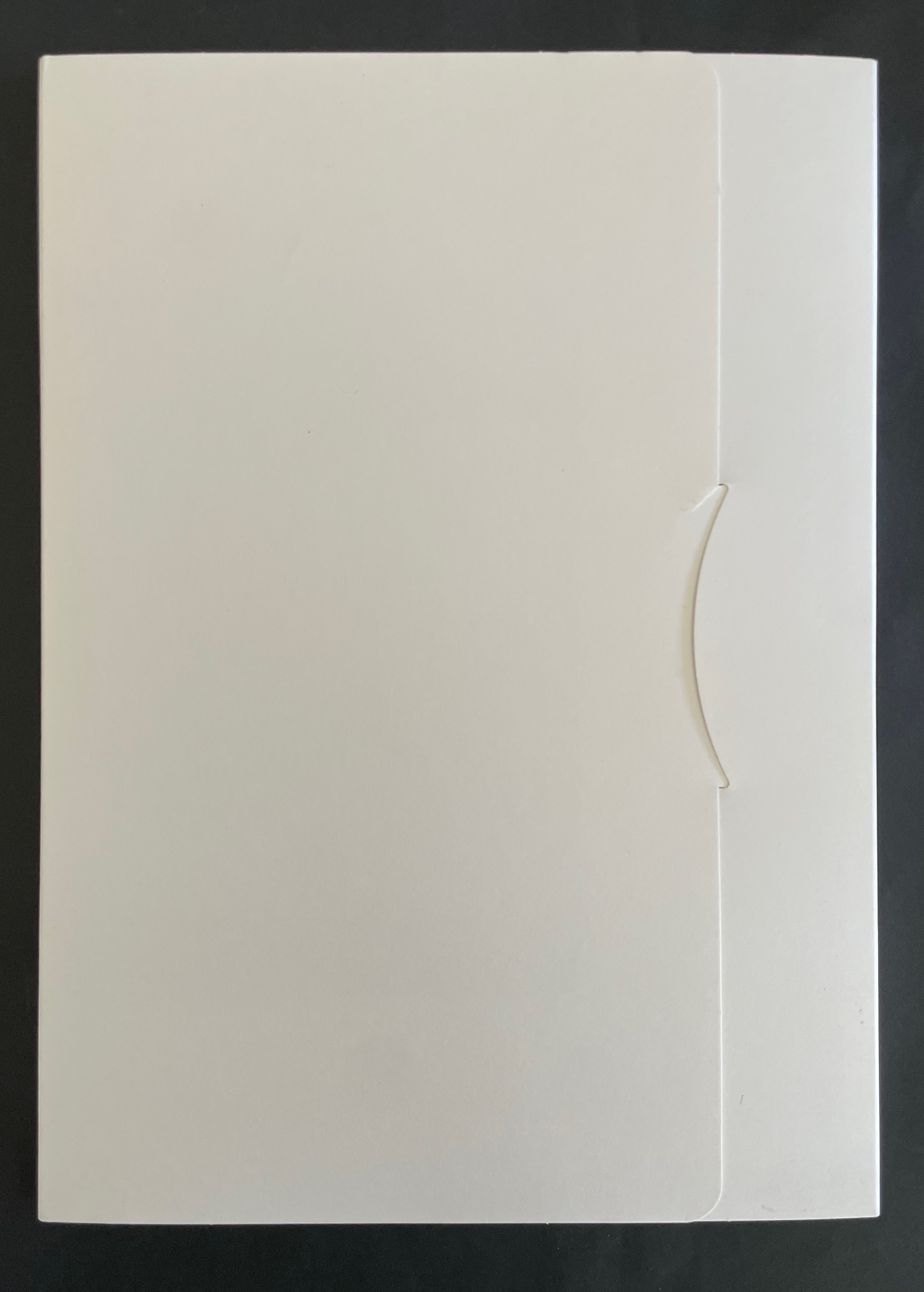
Portfolio wrapper enclosing a paper-covered book, pamphlet-stitched with black thread. Portfolio: H308 x W225 mm.Book: H238 x W197 mm. 55 pages. Edition of 55, of which this is #53. Acquired from the artist, 16 June 2026.
Photos: Books On Books Collection.
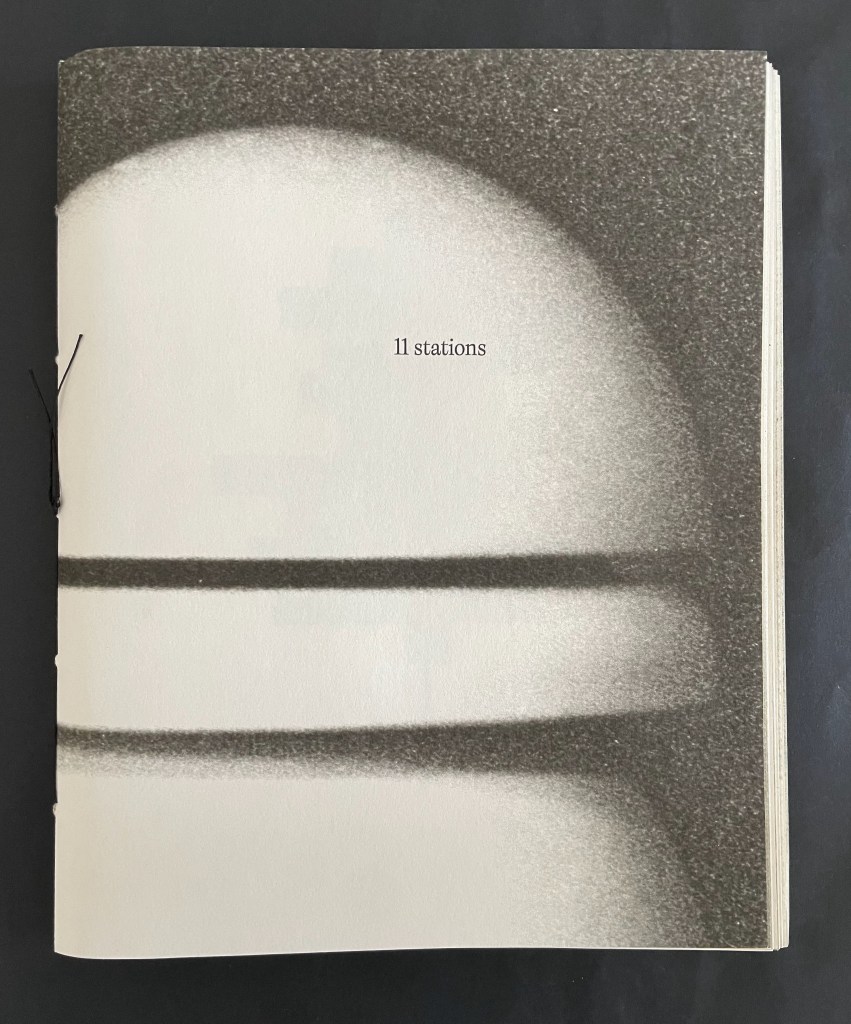
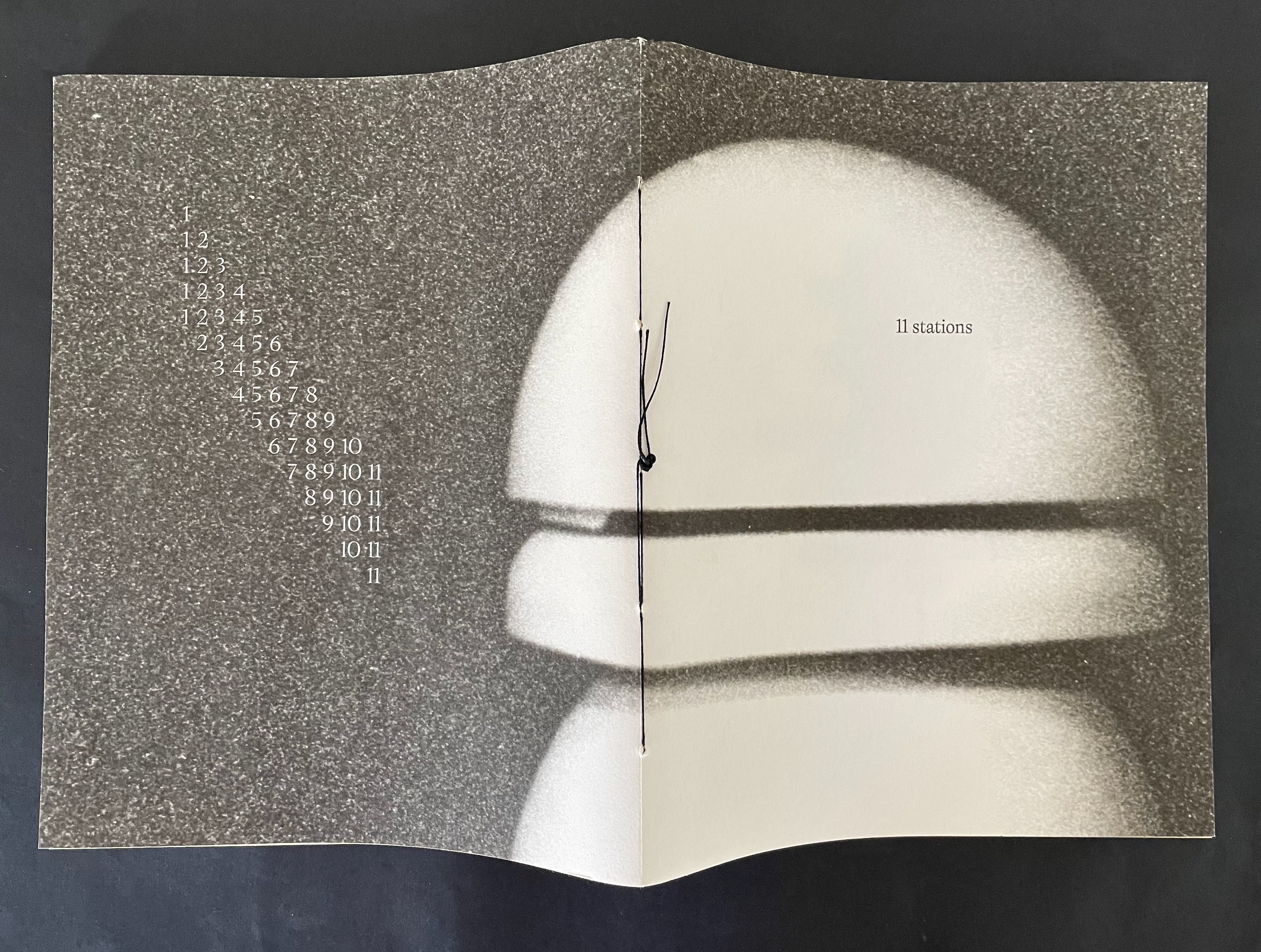
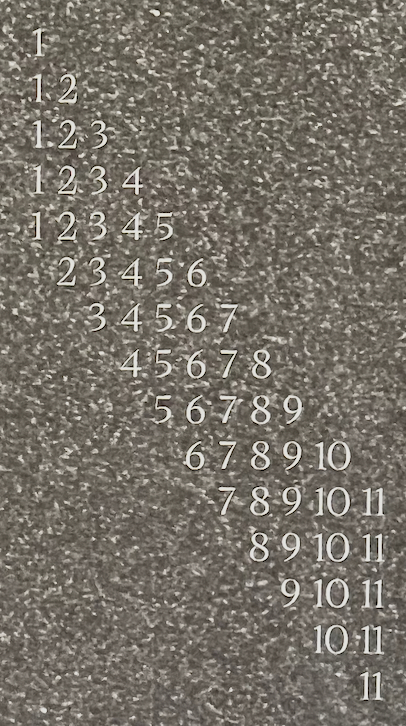
Diego Brambilla‘s 11 Stations pays homage to Italo Calvino’s Invisible Cities with a beautiful construction that visually and materially reflects the novel’s intricate structure. Where Calvino has Marco Polo describe 55 cities to Kublai Khan across a complex cascading cycle of 11 themes, Brambilla’s artist’s book has 55 pages and 11 images from handmade gelatin-silver prints each recurring 5 times. The descending staircase pattern of numbers starting from 1 and ending at 11 on the back cover shows Brambilla’s cascading cycle of images. It is in fact a structural Table of Contents for 11 Stations.
Brambilla’s 11 images are of abstract, enigmatic forms that blur the line between photography and sculpture. He has constructed the objects to be photographed, then rendered as silver-gelatin prints, and reproduced for this book.
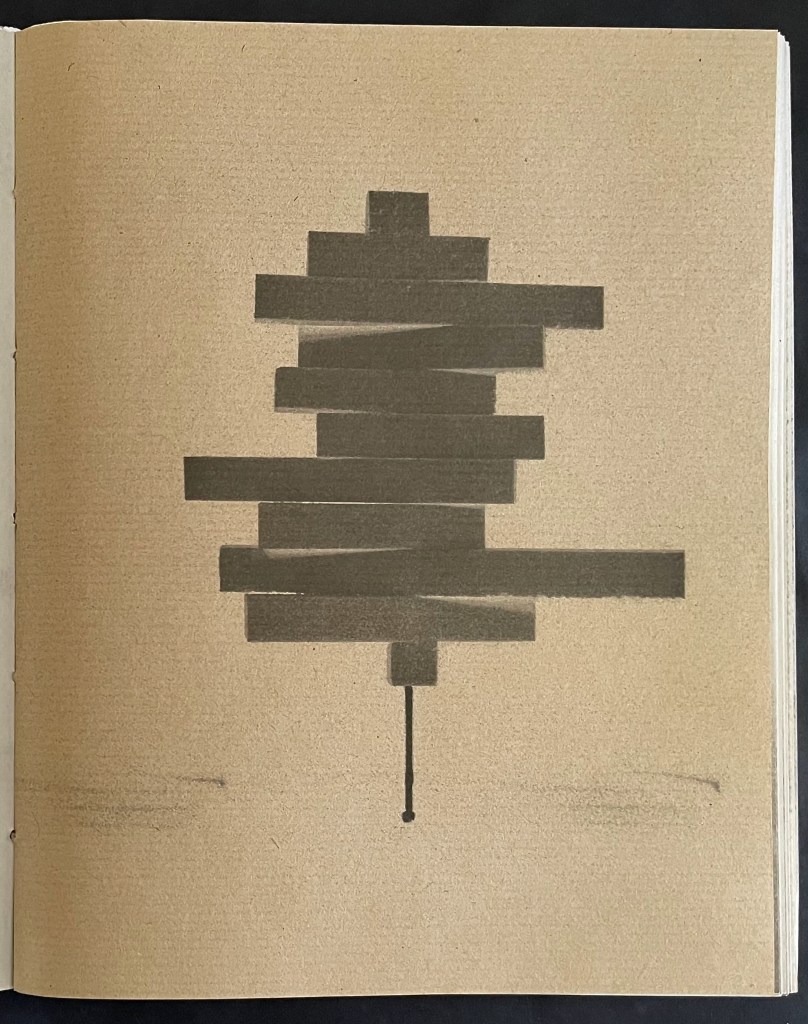
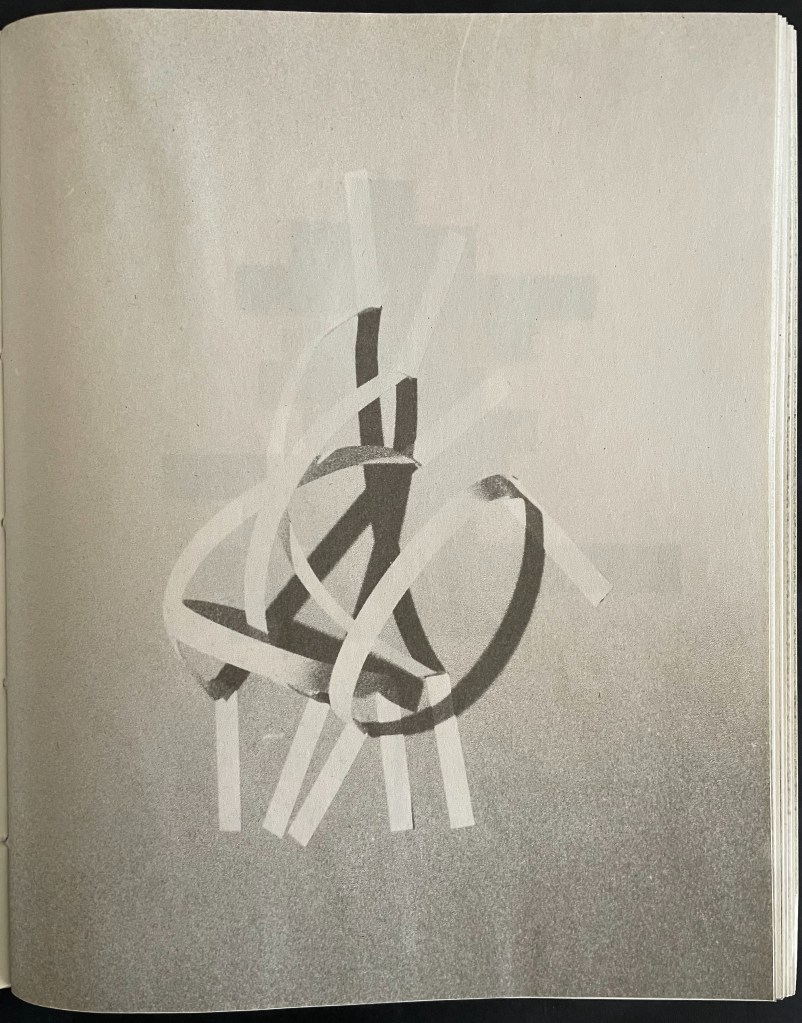
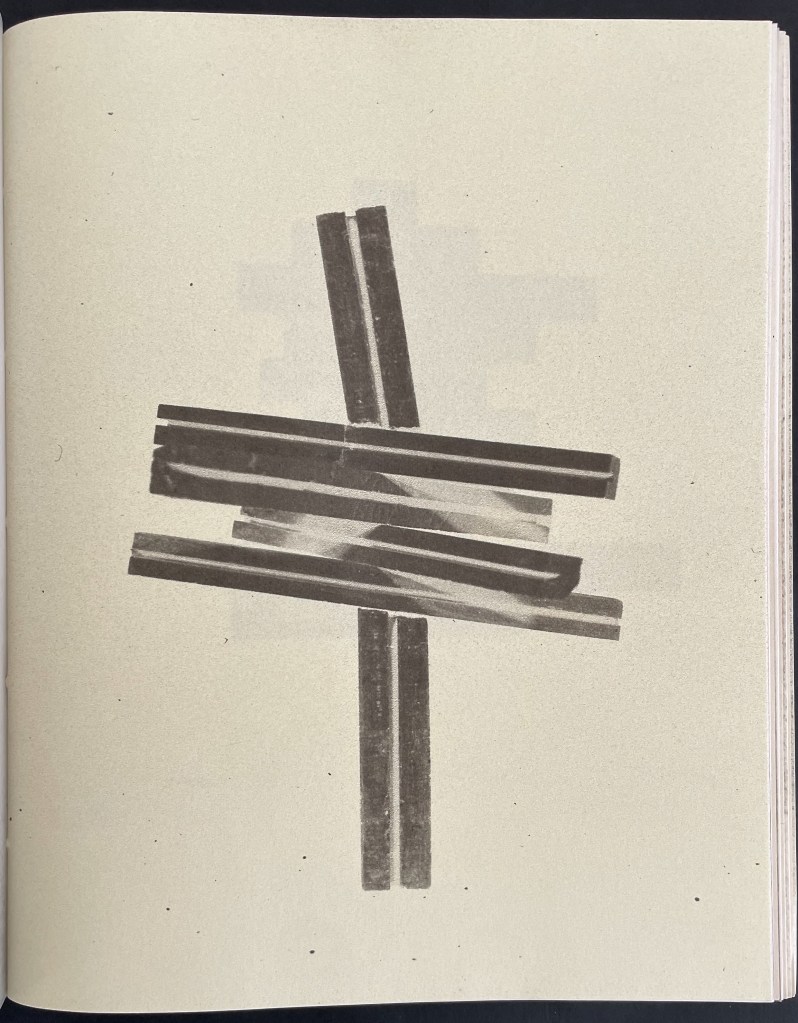
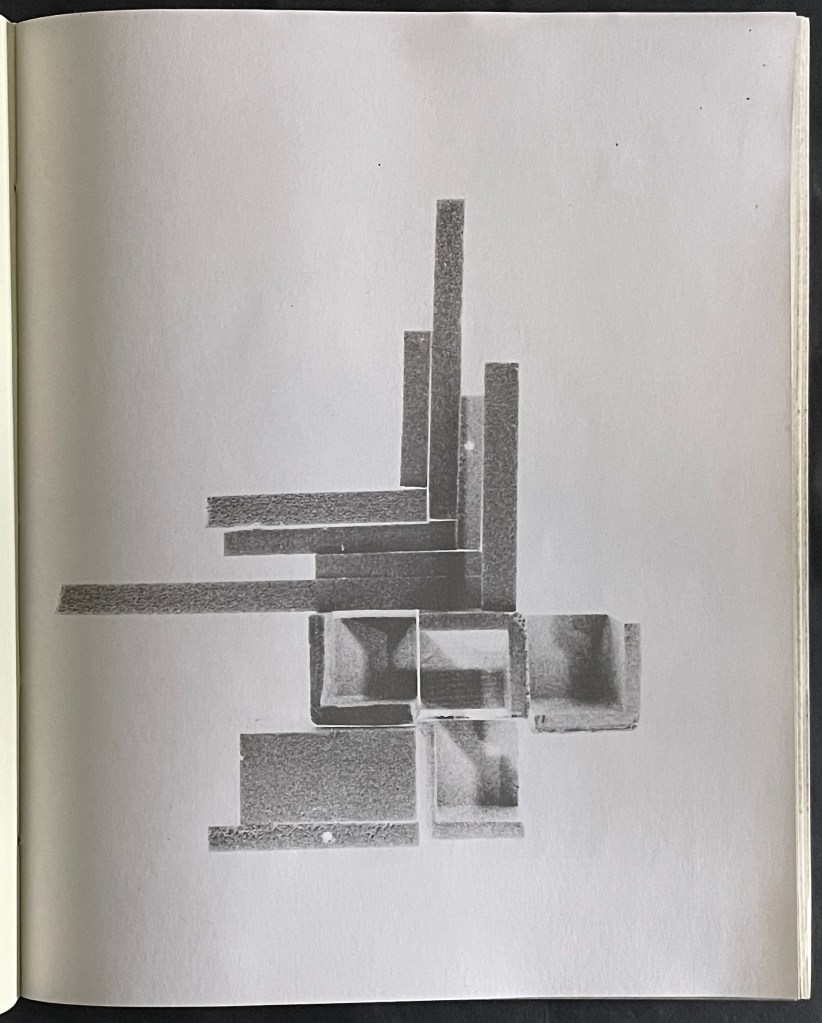
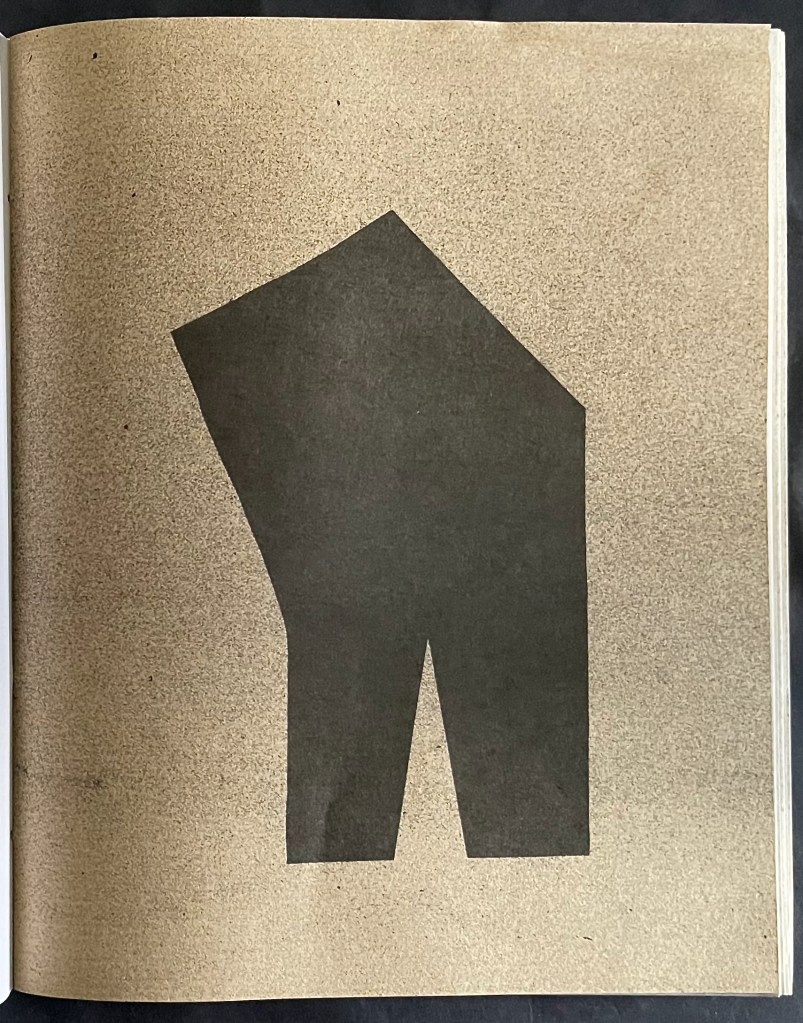
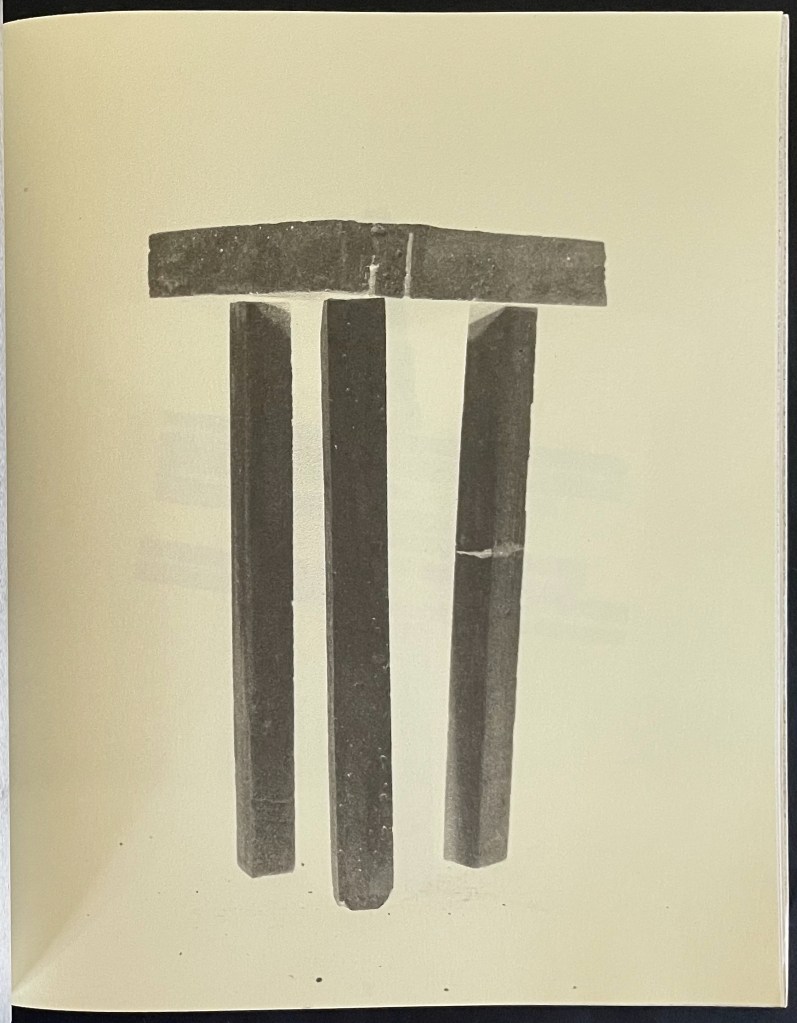
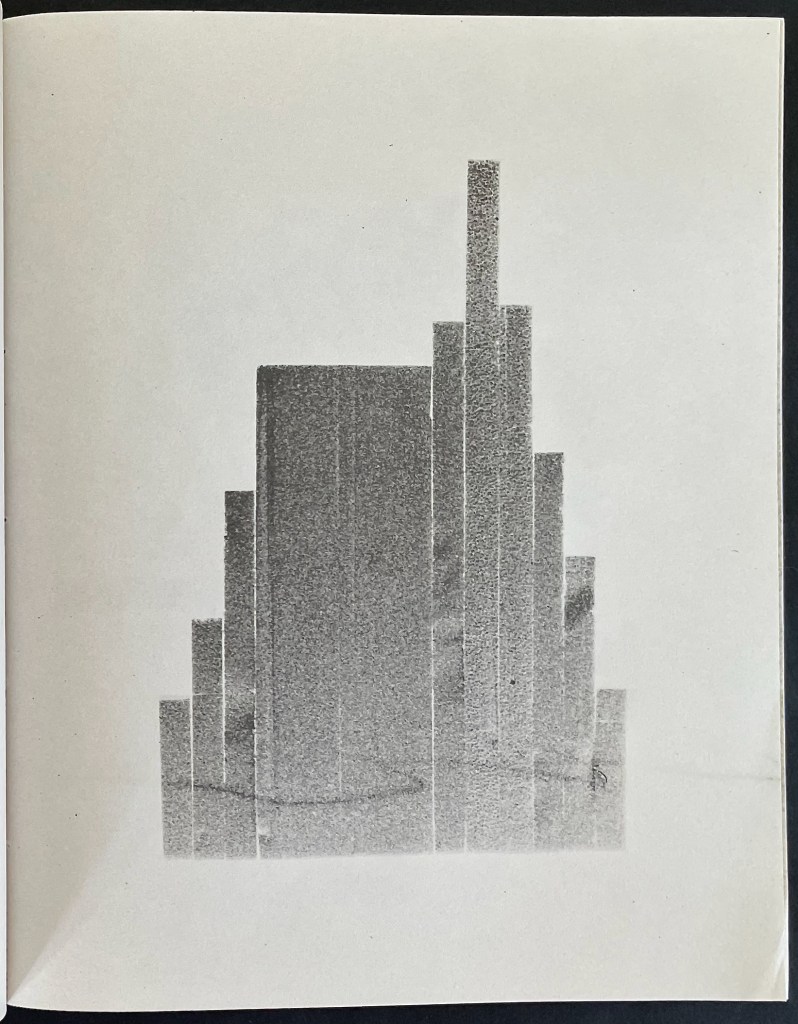
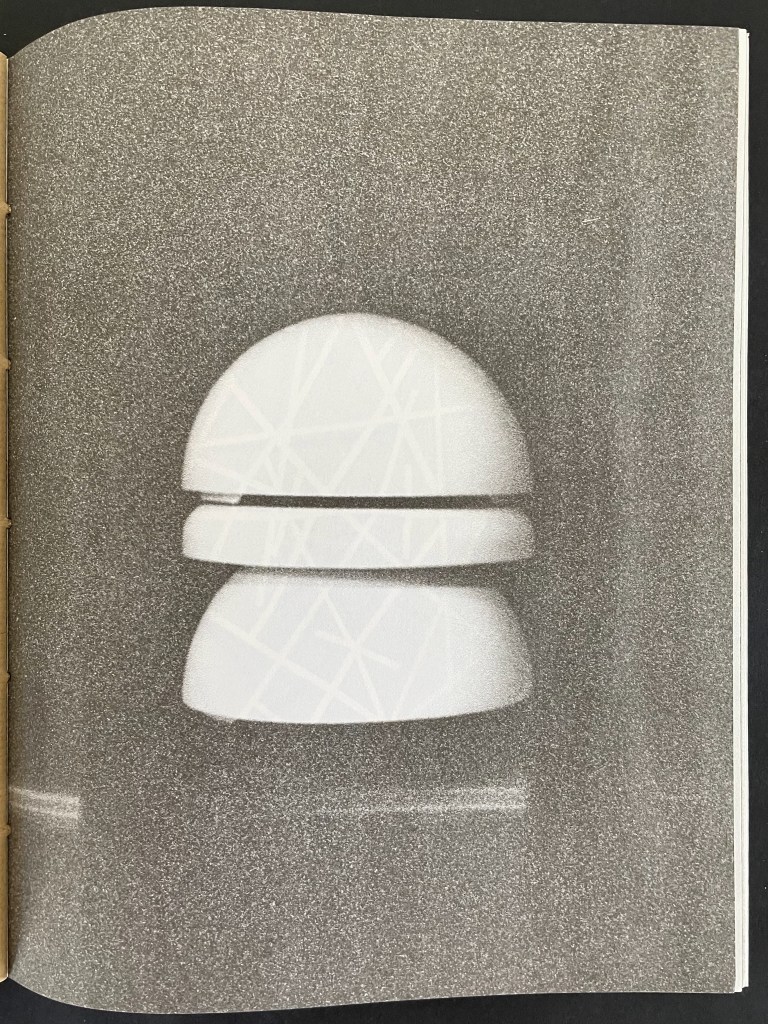
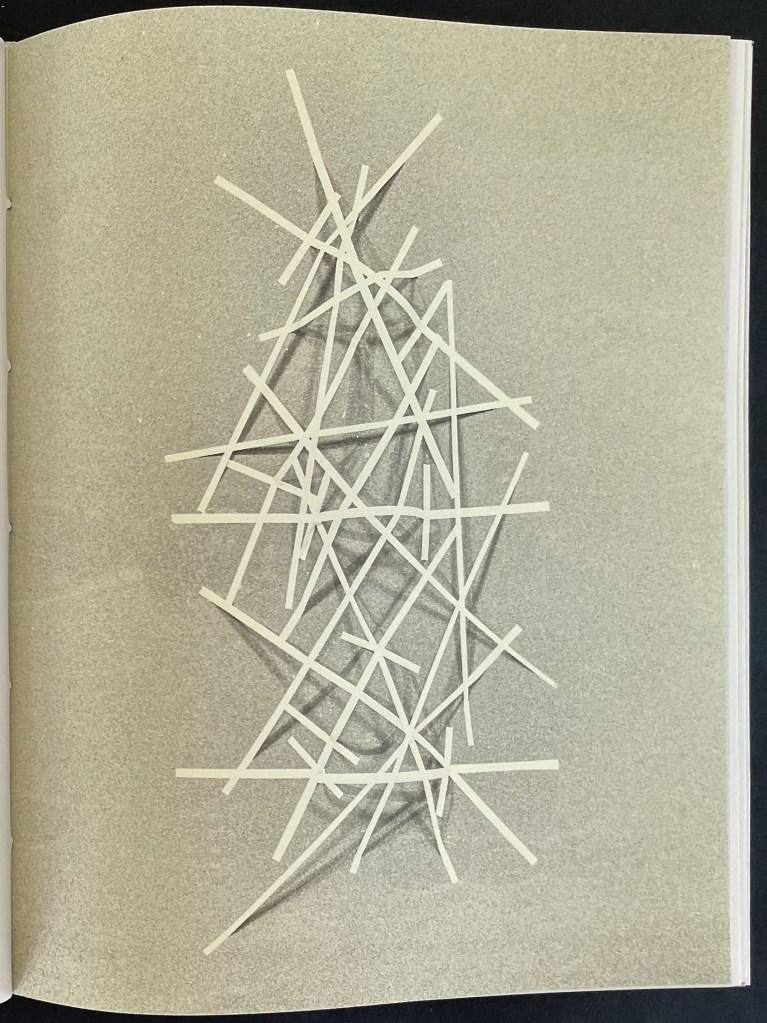
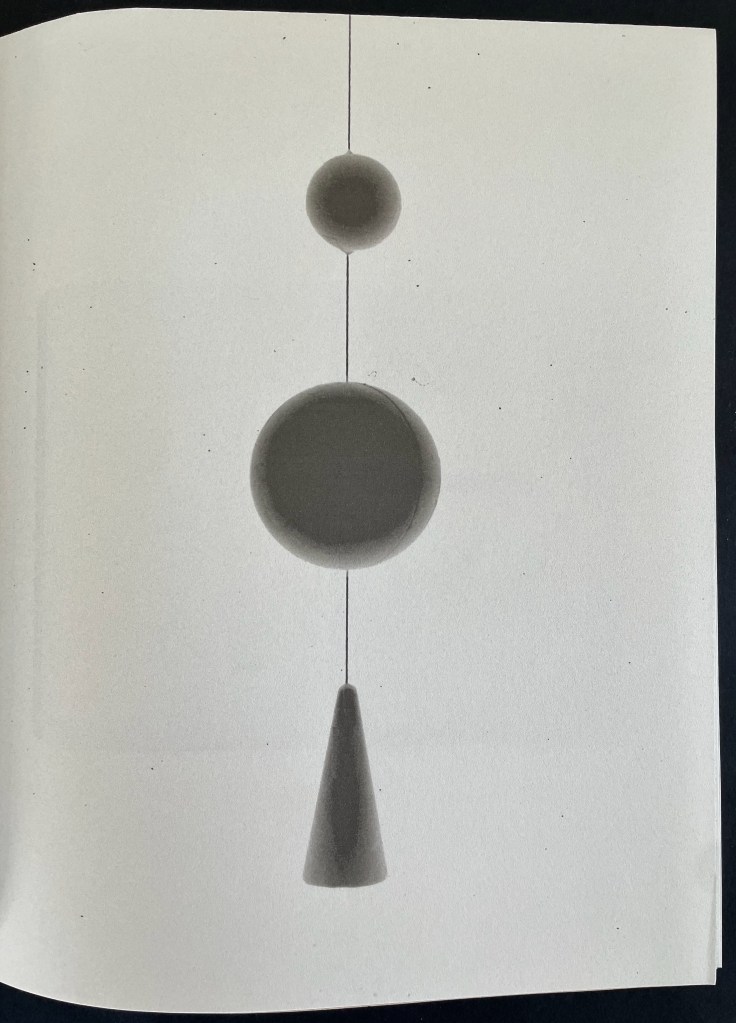
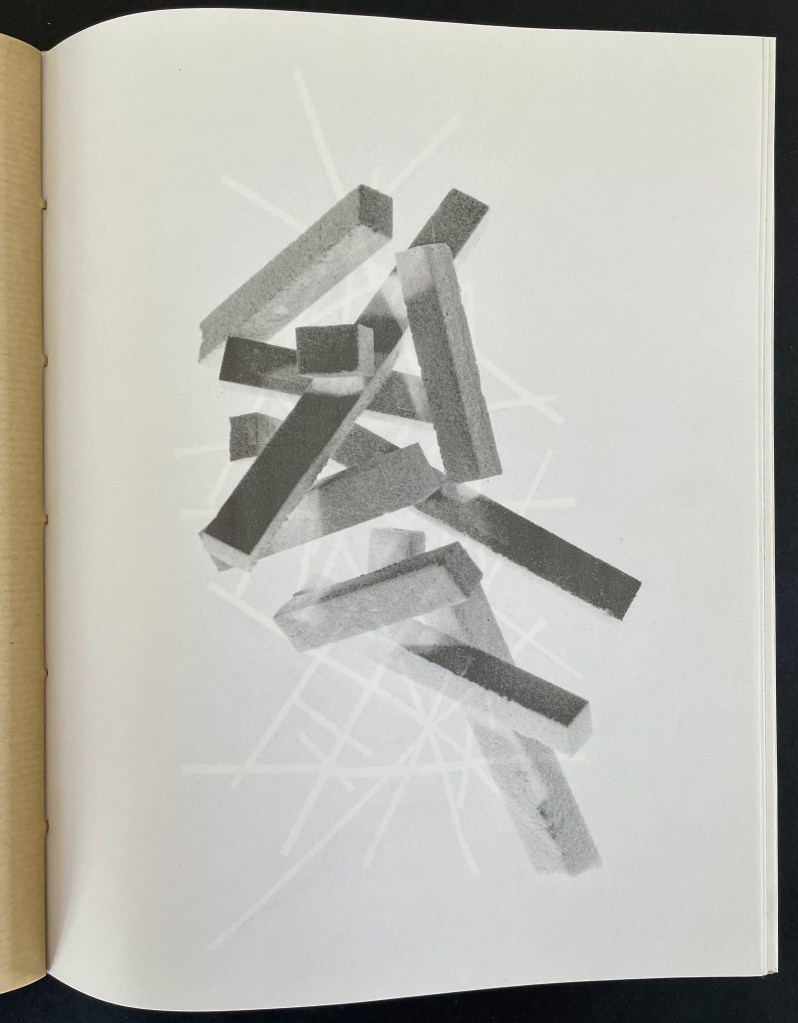
Brambilla’s eleven images, which align with Calvino’s eleven themes.
Excluding its paper cover, the book would need 110 pages to accommodate its 55 images and 55 blanks. In fact, with 2 pages of text at the center of the book, it needs 112 pages, or 28 folios (sheets) folded in half and pamphlet stitched.
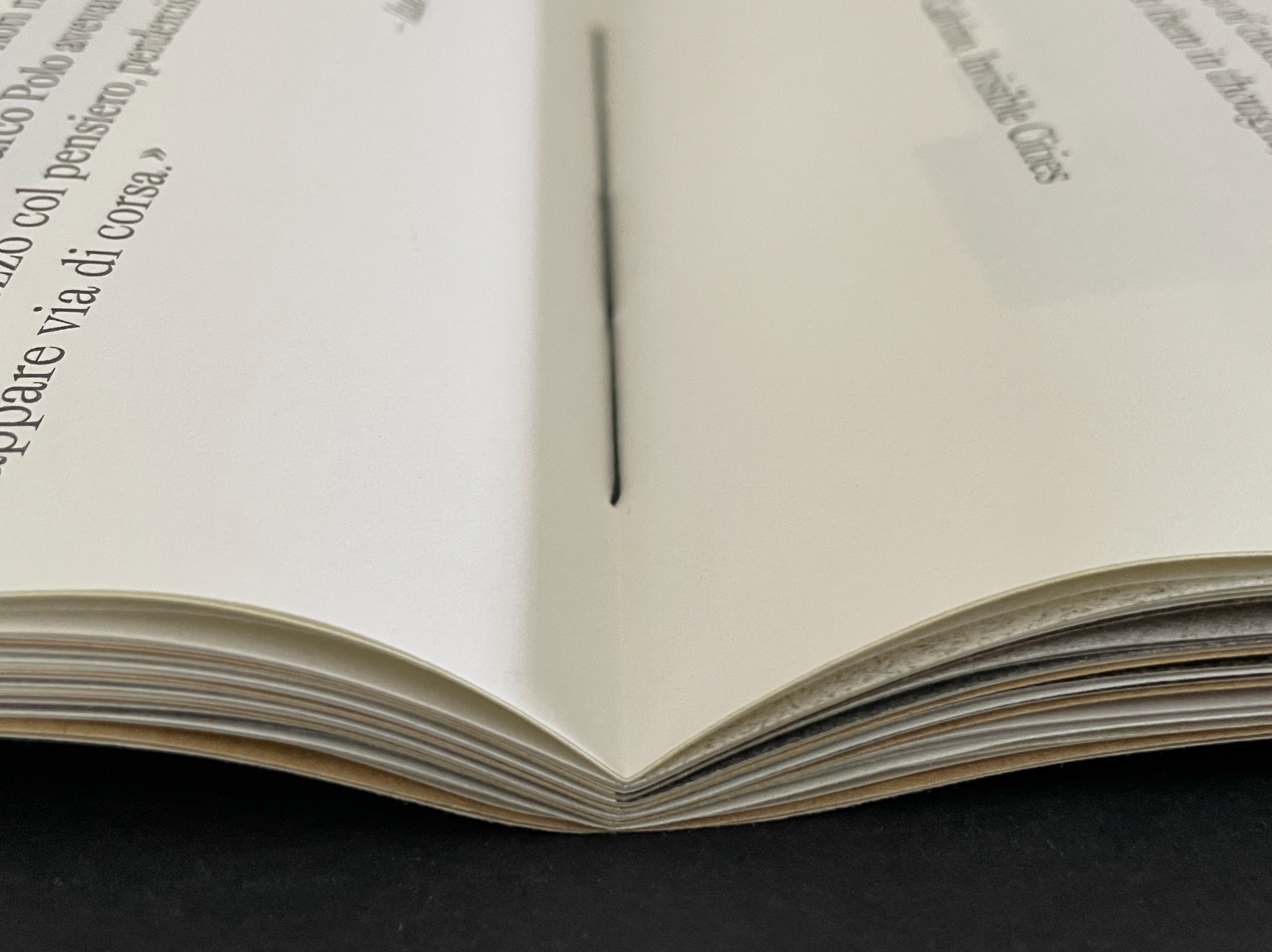
Brambilla neatly takes advantage of the arithmetic here to introduce 7 variations of paper, each used 4 times corresponding to the required 28 folios. The 7 different papers are
Boesner Kraftpapier 90 gsm
Boesner Zeichenpapier 70 gsm
Seawhite of Brighton 70 gsm
Hahnemühle Hemp Sketch 80 gsm
Reflex glama basic Microdraft 80 gsm
Antalis Image Coloraction 80 gsm
Reflex Layout 75 gsm
Below is the 6th image across its 5 iterations. Because the 6th falls midway among the 11 images, its position in the cascade puts its third iteration at the center folio in the book. The centered pages of text can be seen bleeding through that third iteration below. The 6th image’s position in the pamphlet stitched structure also causes its 1st and 5th iterations to share the same sheet of paper; likewise, the 2nd and 4th iterations share a folio. At first, this seems the only point on which Brambilla’s structure does not have a precise correspondent in Calvino’s structure.
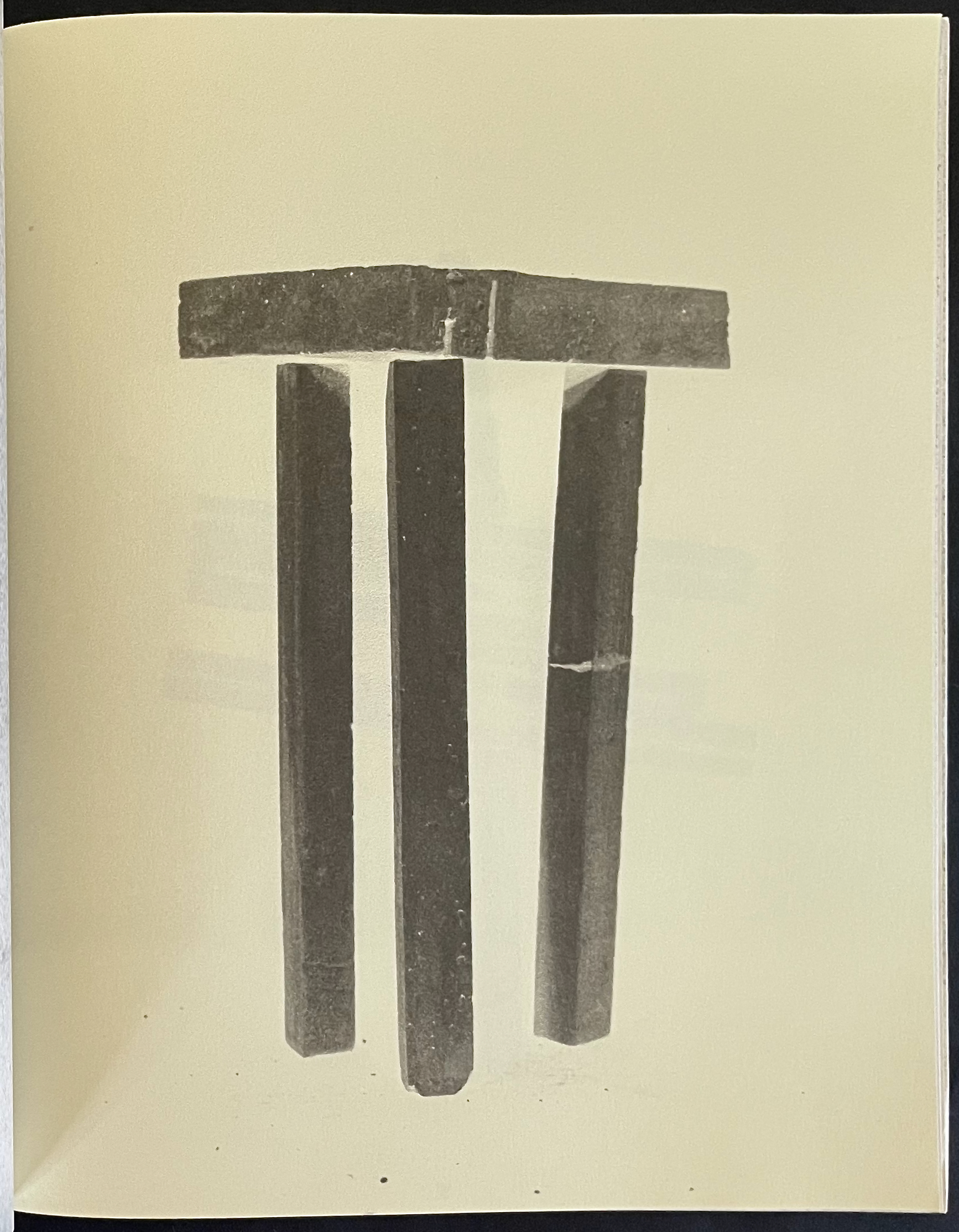
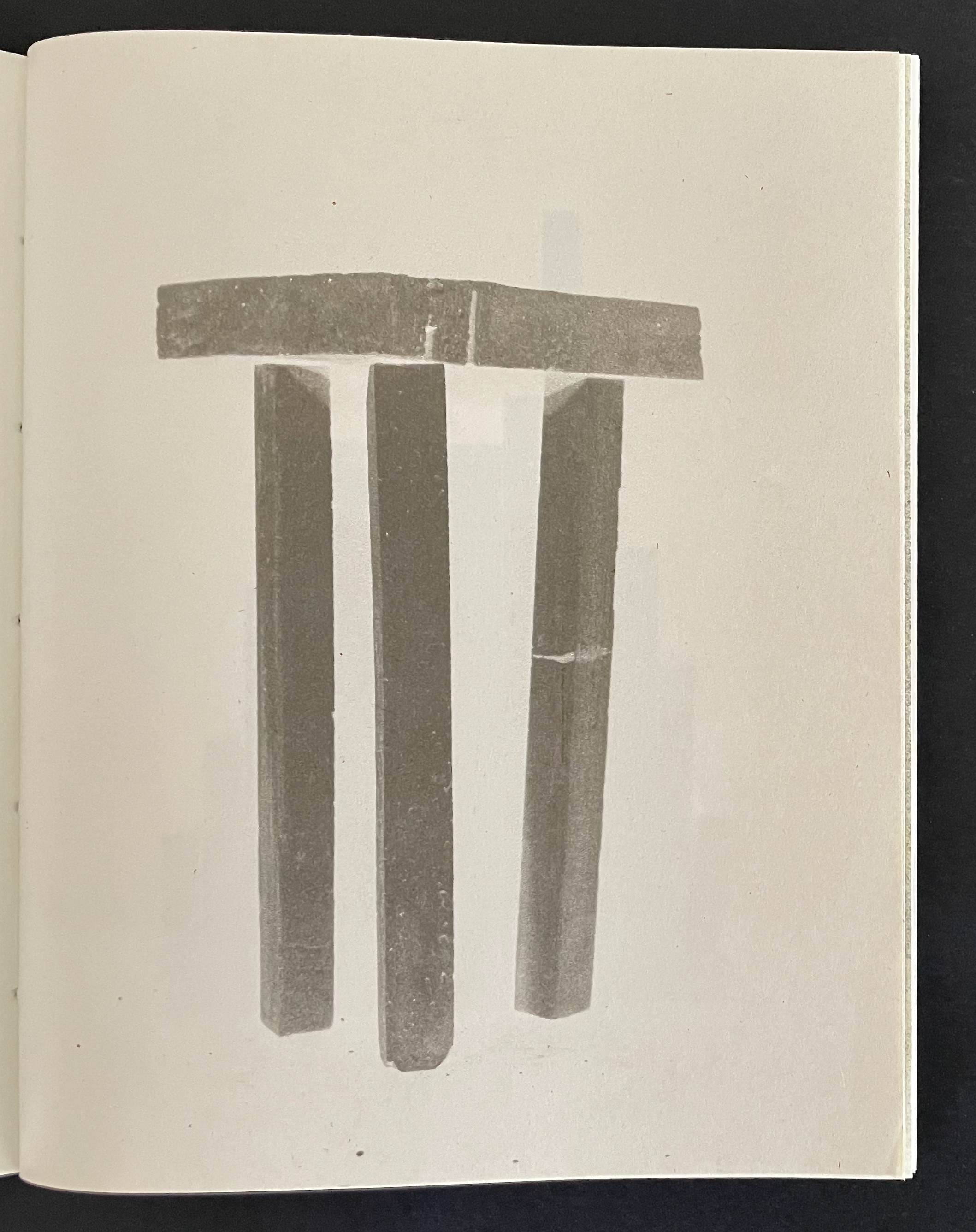
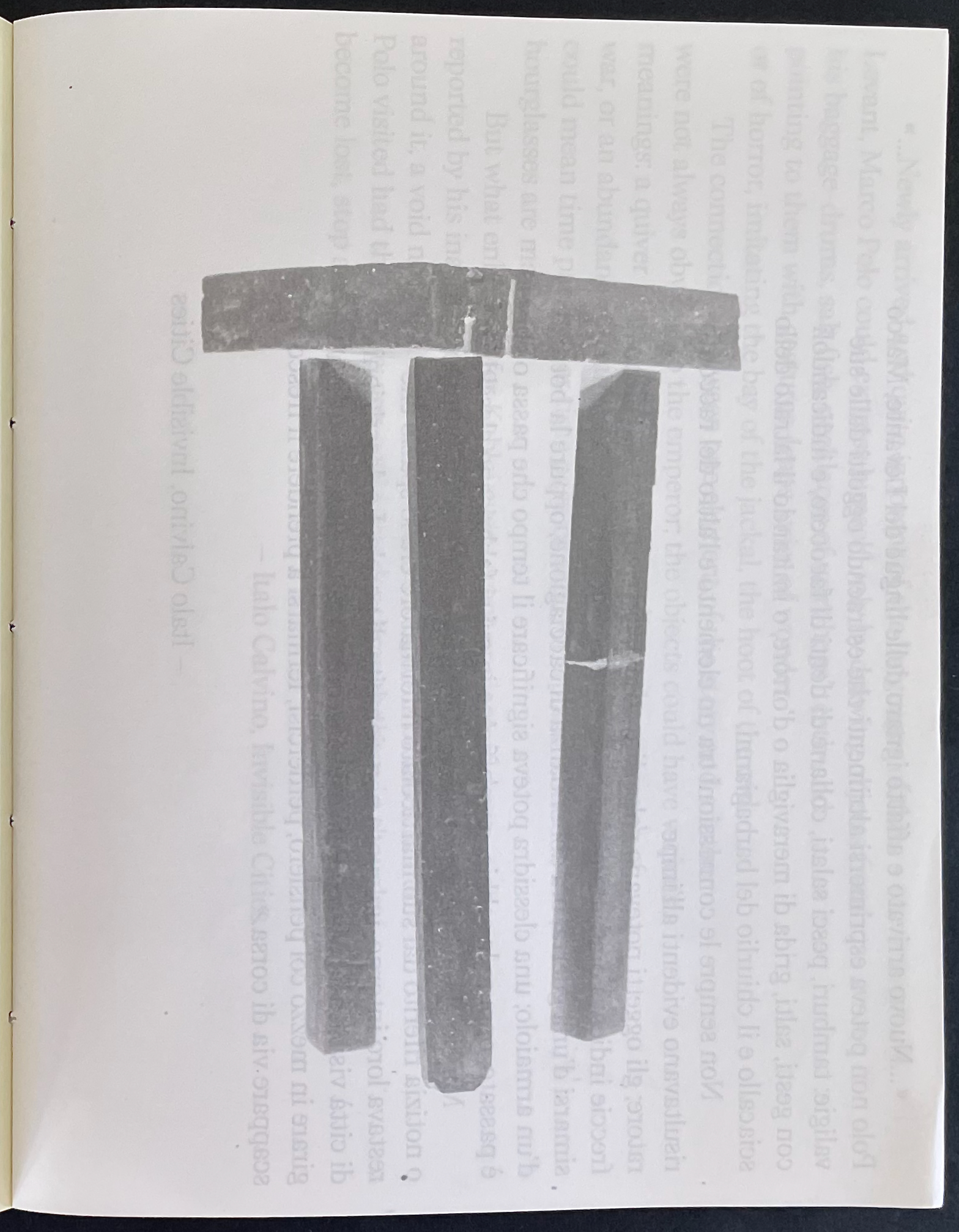
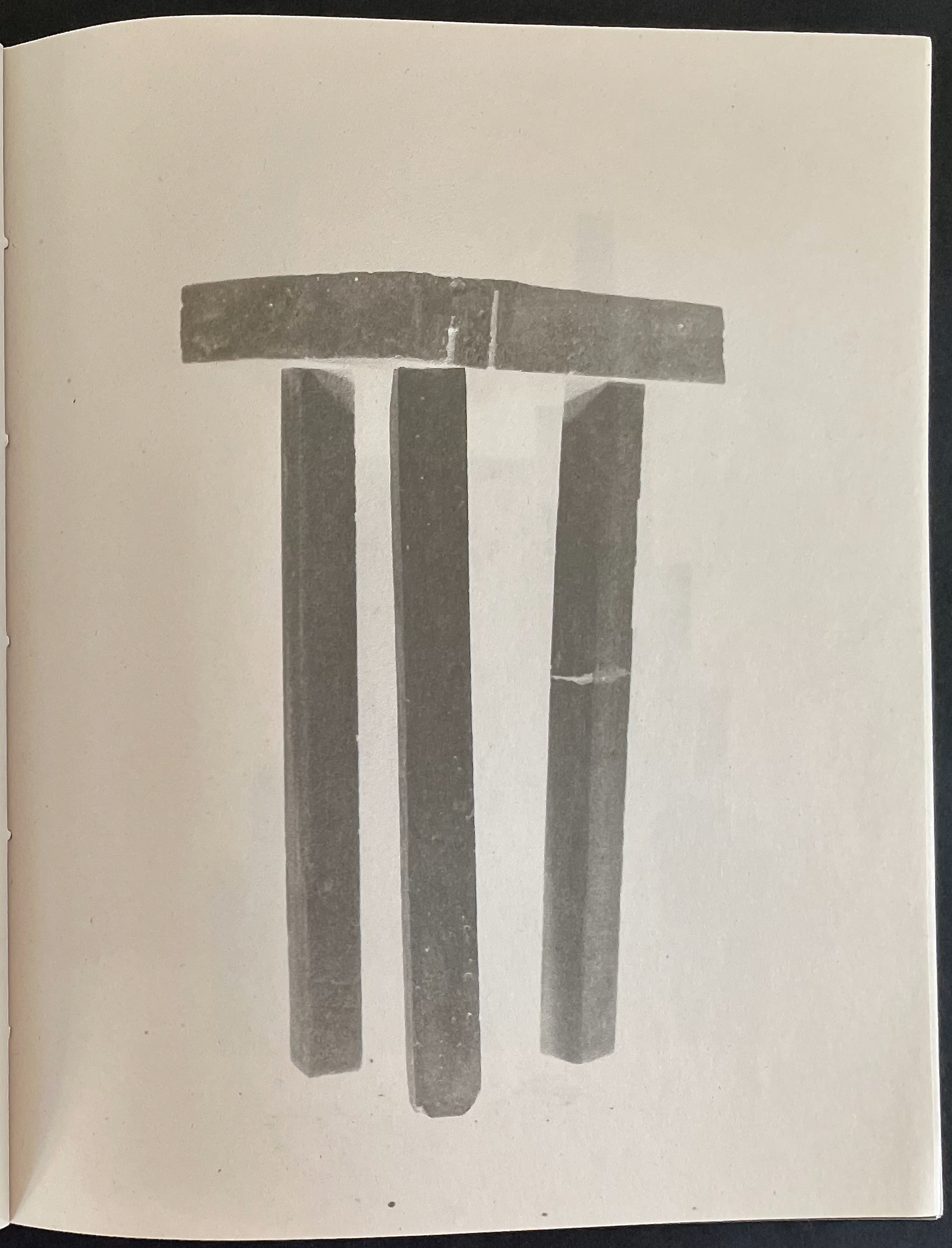
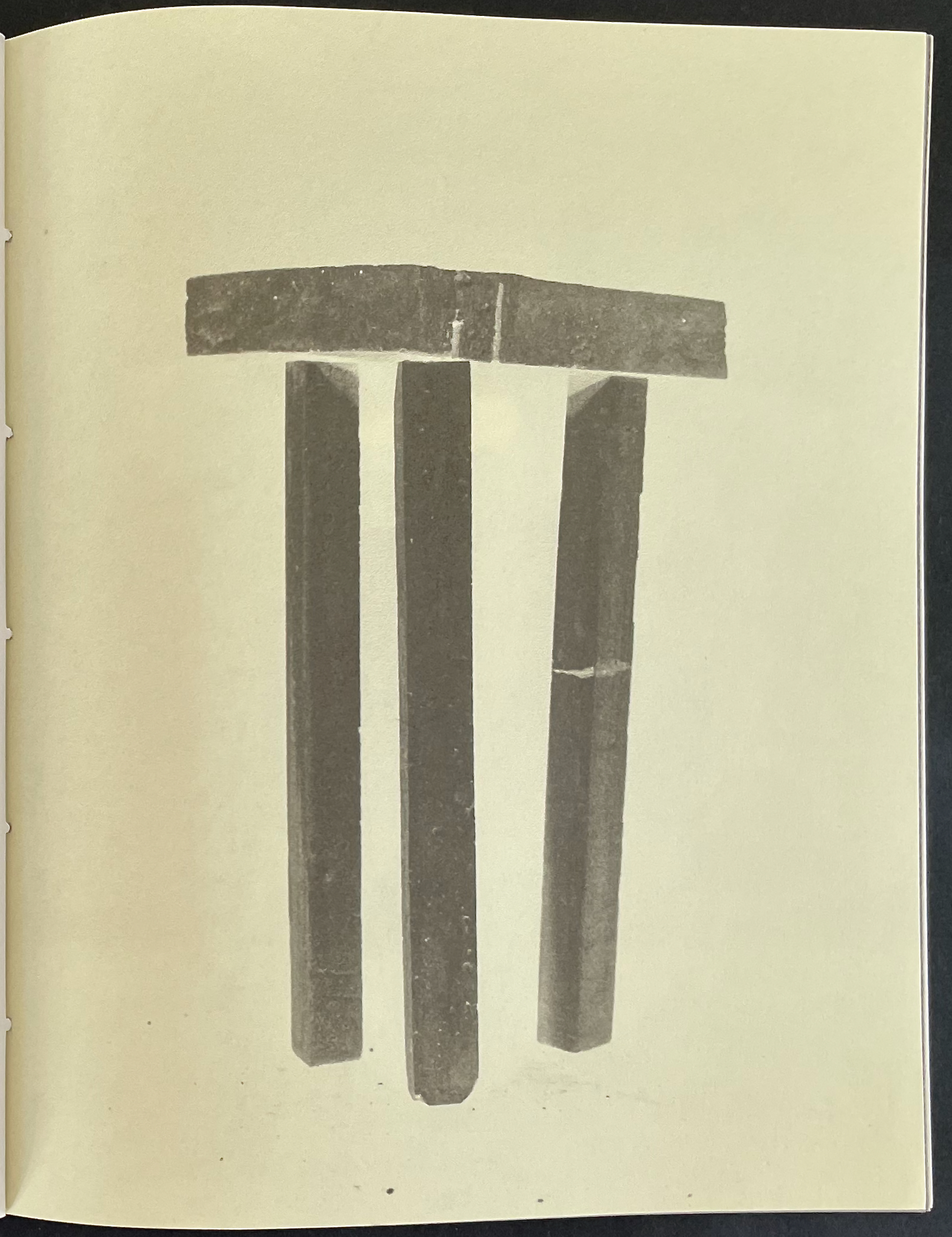
But consider this: The city of Baucis is the 28th city/chapter, the midpoint, among Calvino’s 55 cities. It is the midpoint among the 5 cities in Calvino’s 6th theme: “Cities & Eyes”. As Marco Polo describes it,
After a seven days’ march through woodland, the traveler directed toward Baucis cannot see the city and yet he has arrived. The slender stilts that rise from the ground at a great distance from one another and are lost above the clouds support the city….There are three hypotheses about the inhabitants of Baucis: that they hate the earth; that they respect it so much they avoid all contact; that they love it as it was before they existed ….
If Brambilla’s choice to place this image of a three-legged stool at the center of his 11 images was coincidental, chance is a genius — with which Calvino would have likely agreed.
Reading 11 Stations exercises the visual and haptic mind. The use of translucent pages is a frequent technique to have the reader/viewer see more than the image that lies on the surface or behind the image.
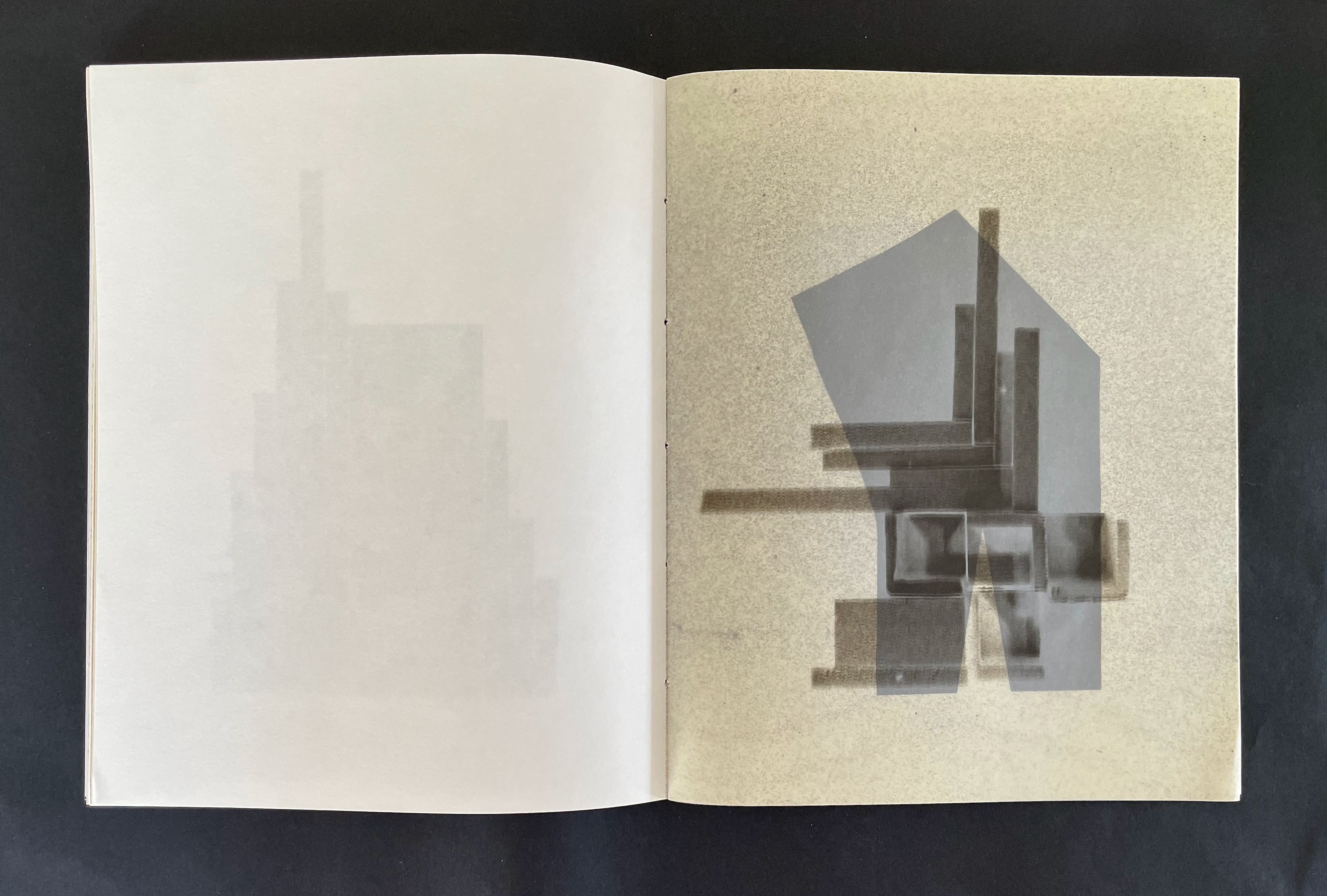
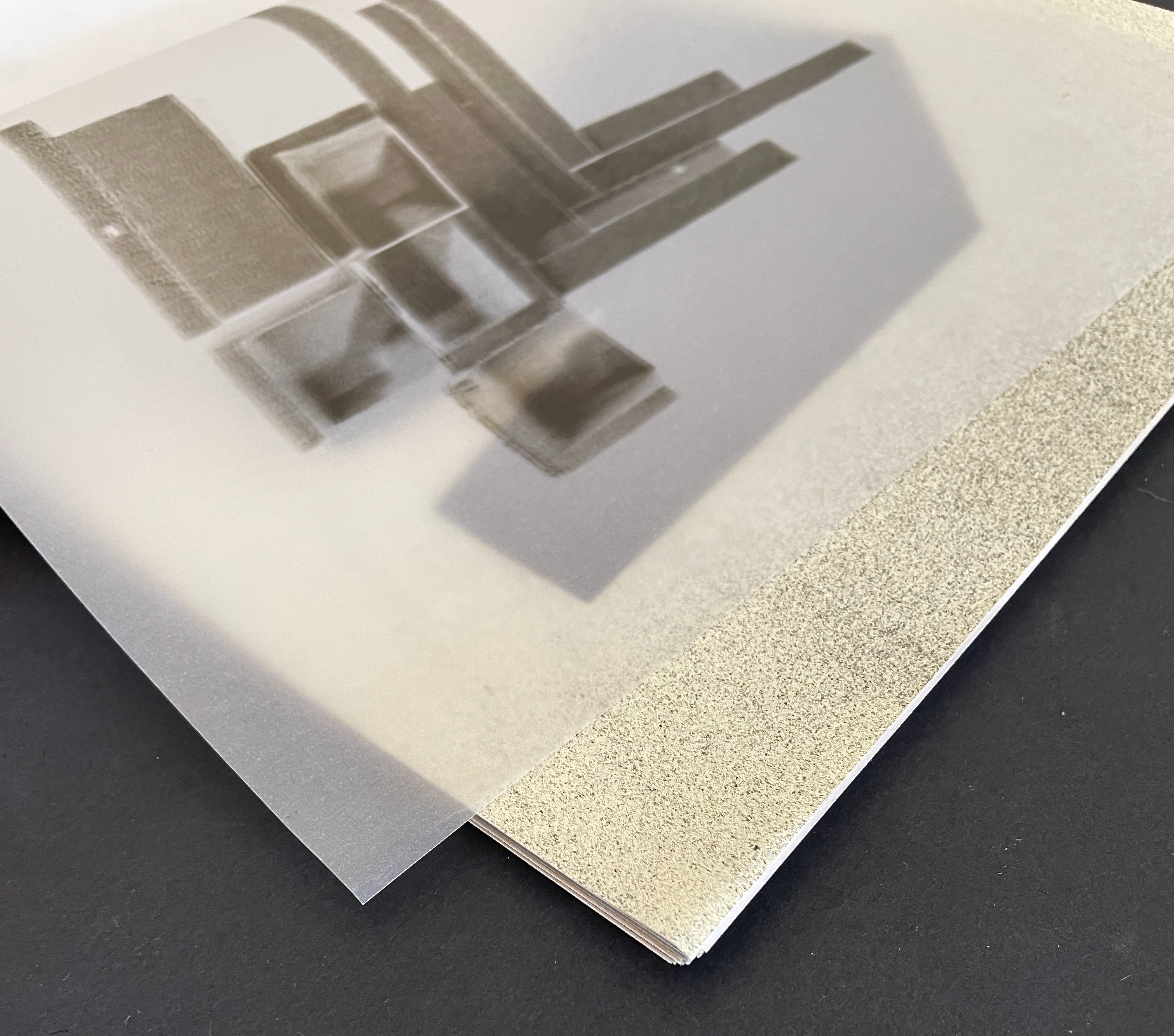
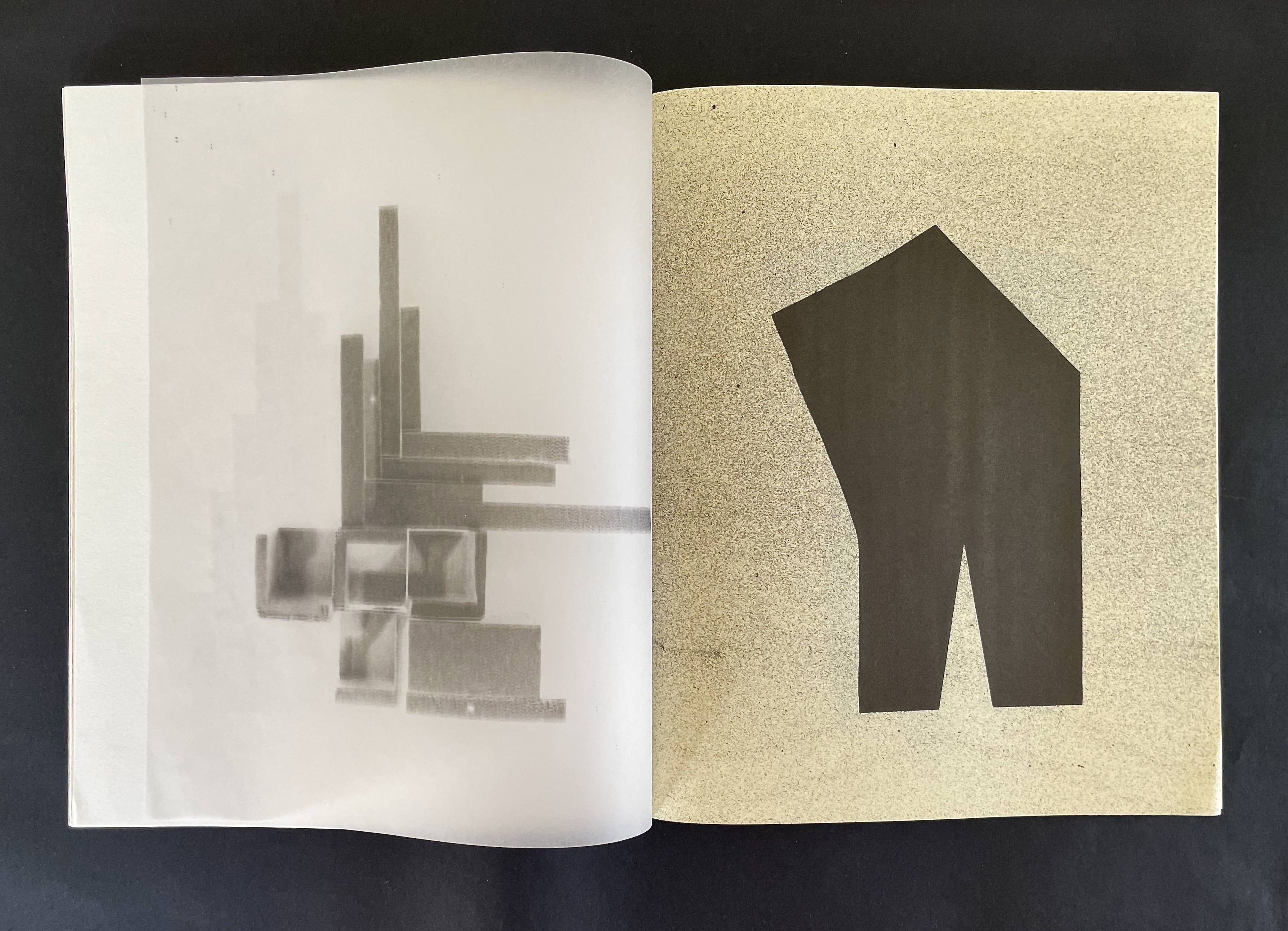
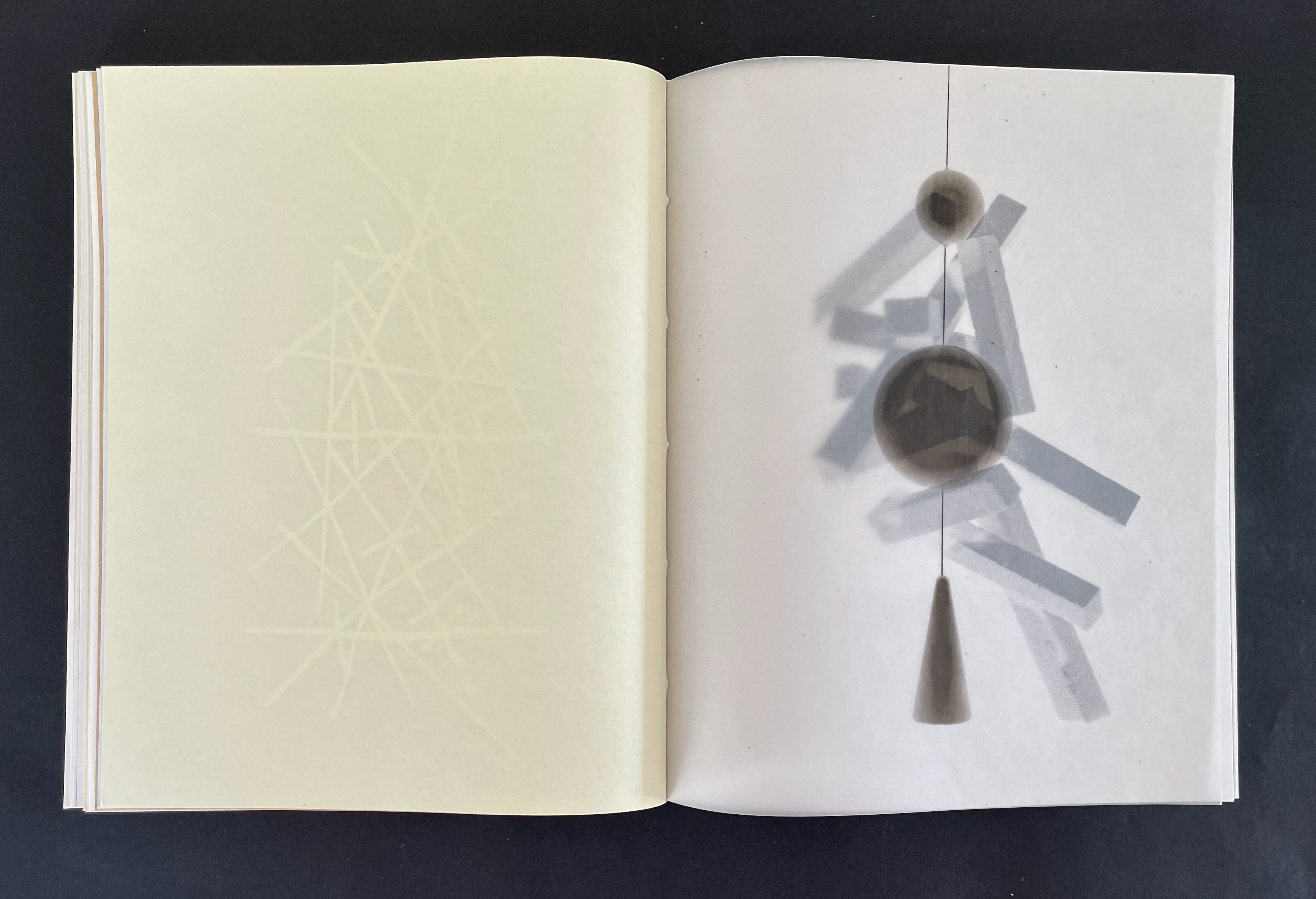
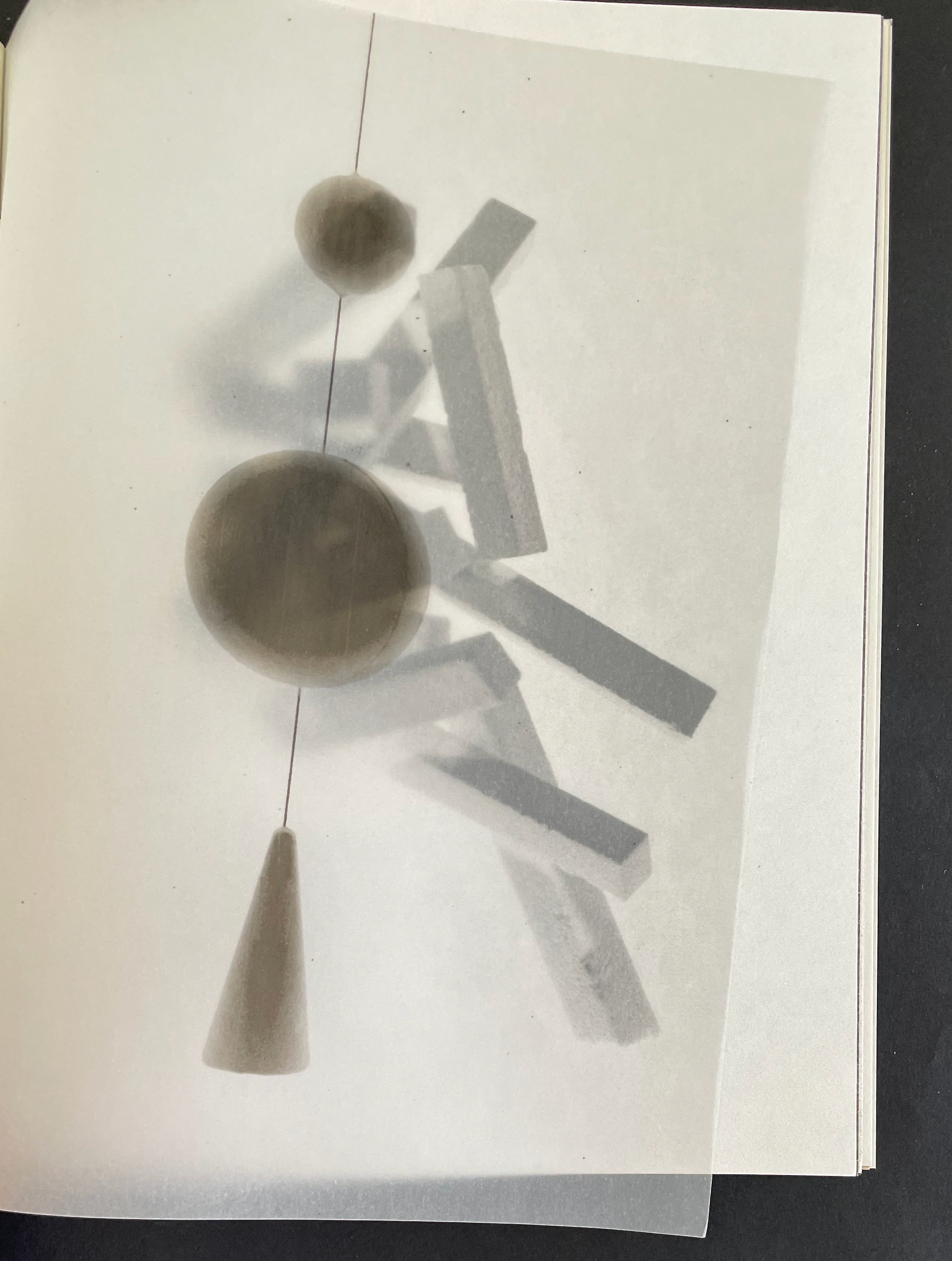
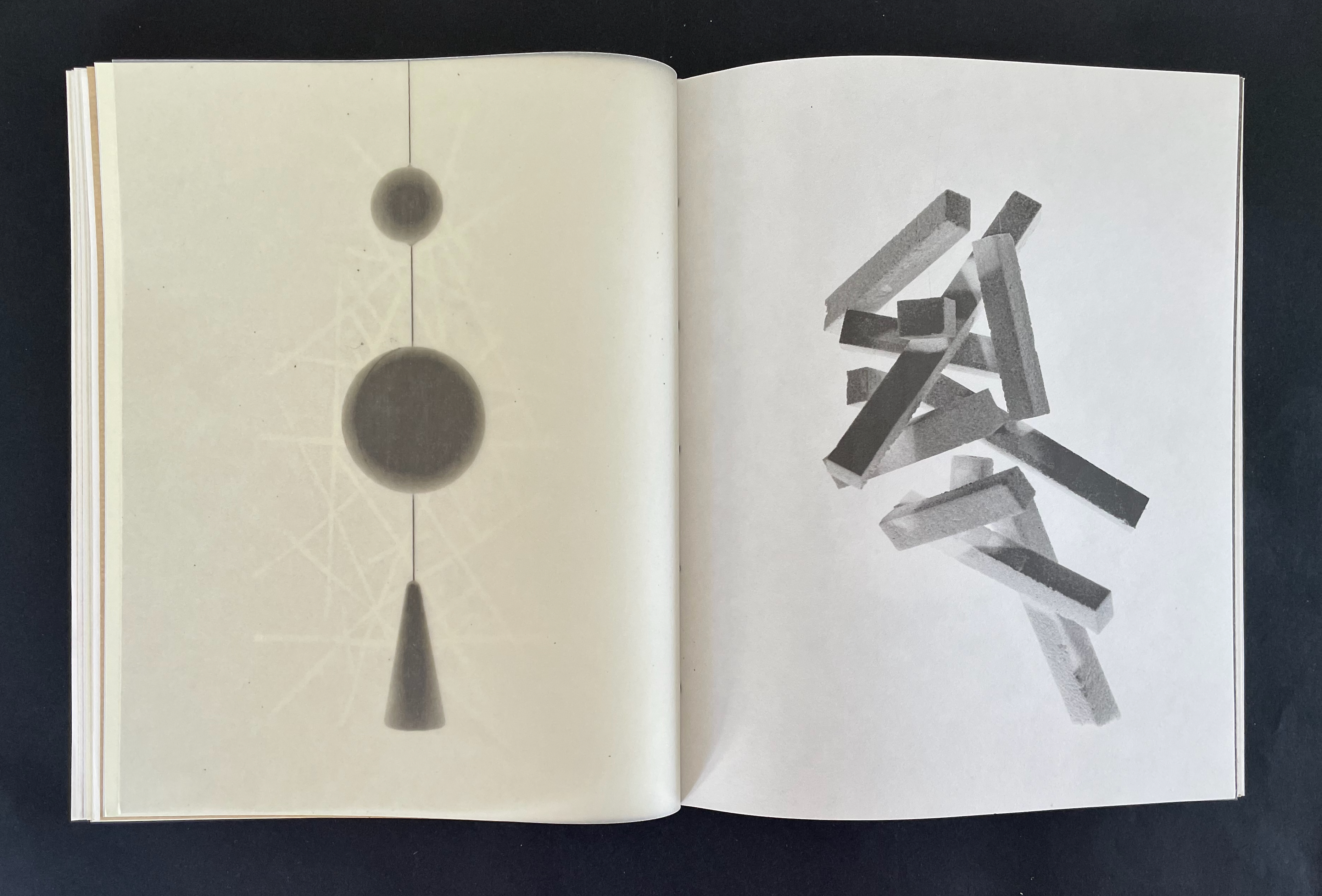
But what to make of the 4 instances in which the folio is not trimmed at the top edge? And what to make of the sketches printed inside the folded sheet? Here is another technique that makes the reader go beneath the physical surface. Is the book artist using features of bookmaking to prod the reader/viewer to think then of what lies beneath the creative surface?
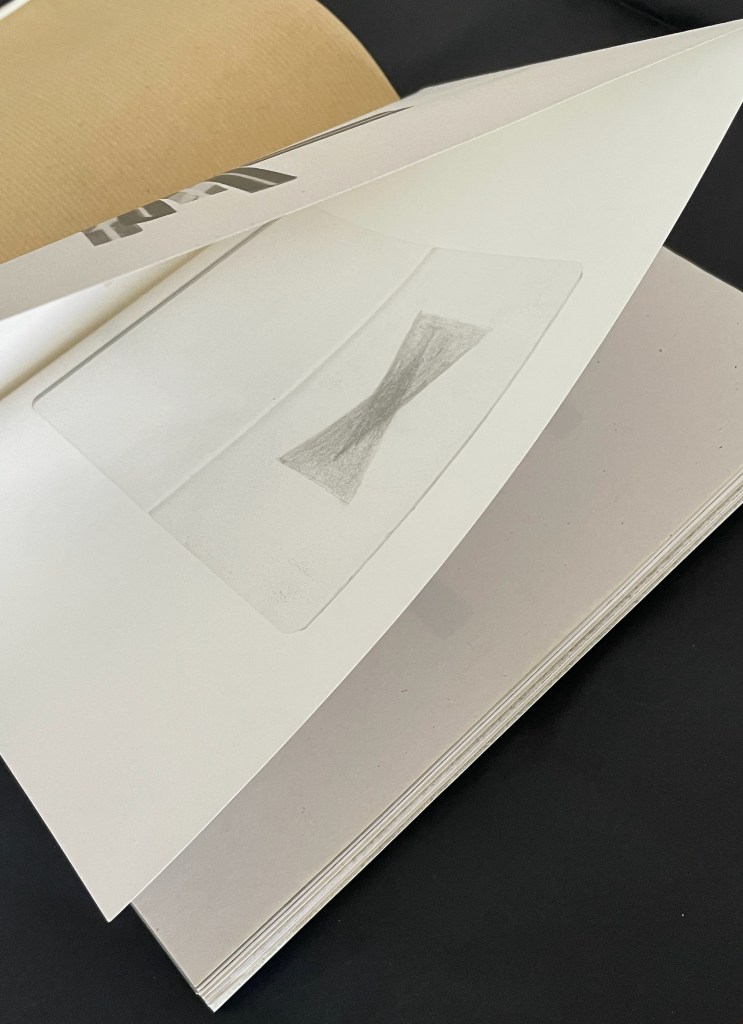
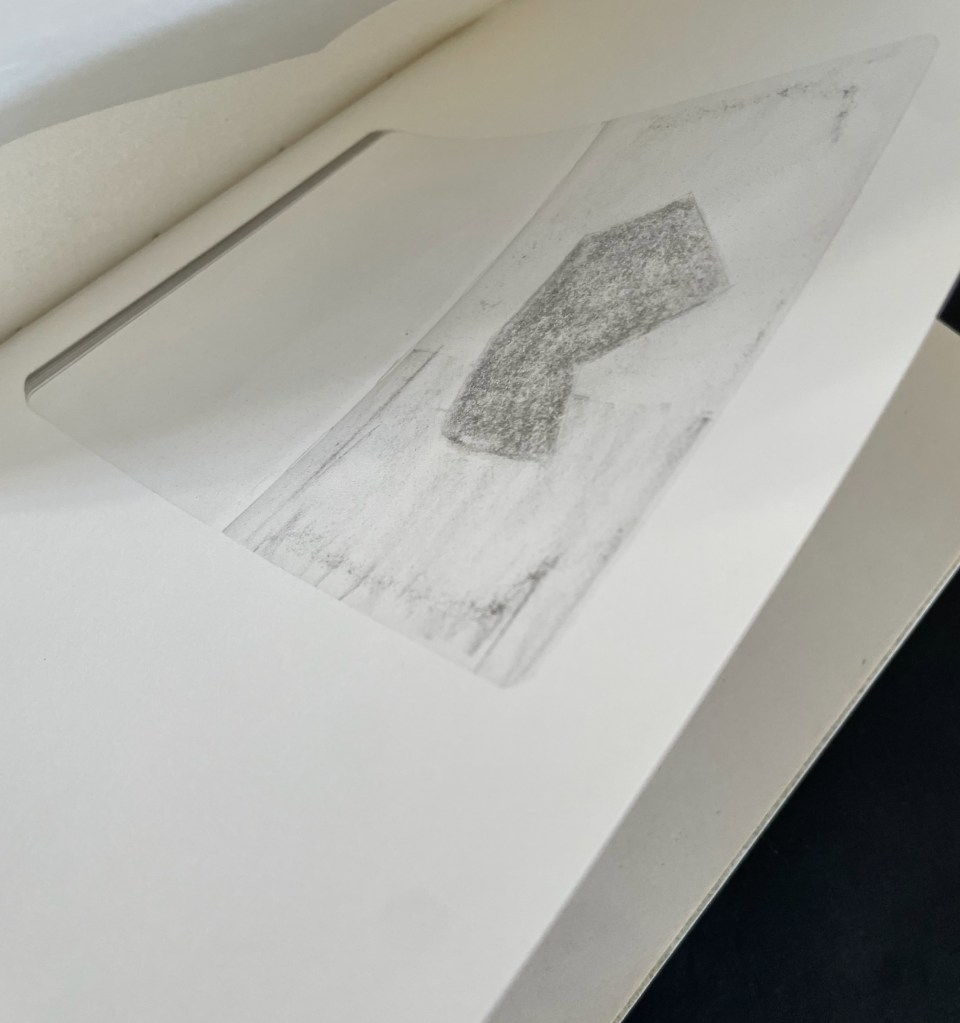
Brambilla’s attention to detail is meticulous — even in the selection of Calvino Grande by Zetafont for the title and text pages — and that is what serves him so well in paying homage to Invisible Cities. Like Calvino’s book, 11 Stations is one to read and re-read.
Further Reading & Viewing
“Ken Botnick (II). 17 September 2026. Books On Books Collection.
“Jean-Pierre Hébert, Harry and Sandra Liddell Reese“. 24 April 2026. Books On Books Collection.
“Karen Kunc“. 11 June 2026. Books On Books Collection.
“Caroline Penn“. 11 June 2020. Books On Books Collection.
“Shirley Sharoff (2)“. 1 August 2020. Books On Books Collection.
Bigongiari, Claudia. 9 June 2025. “The hand-made visions of Diego Brambilla on the edge of reality “. Pellicola.
Calvino, Italo. 1997. Invisible Cities. Translated by William Weaver. London: Vintage. Invisible Cities‘ 11 themes or categories are
- Cities & Memory
- Cities & Desire
- Cities & Signs
- Thin Cities
- Trading Cities
- Cities & Eyes
- Cities & Names
- Cities & the Dead
- Cities & the Sky
- Continuous Cities
- Hidden Cities.
Hamilton, Ian. 26 September 1985. “Calvino Bookmark Interview“. BBC. Set to start at 19’29”.


Great book, beautiful concept and design. Those photos are a perfect embodiment of the text. Thanks for posting this, I had never heard of Brambilla before.
Ken
>
LikeLike