Quant au Livre (2011)
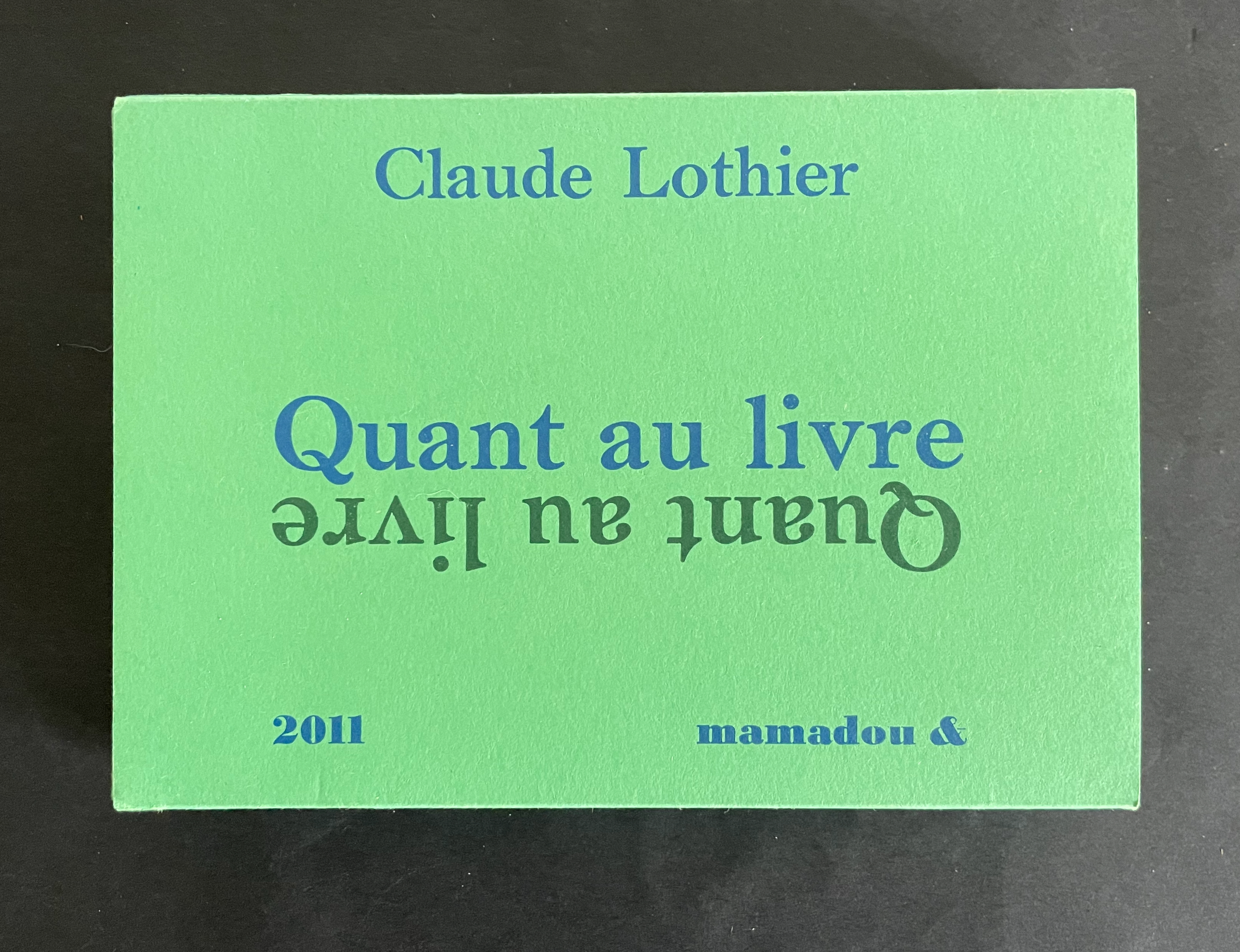
Quant au Livre (2011)
Claude Lothier
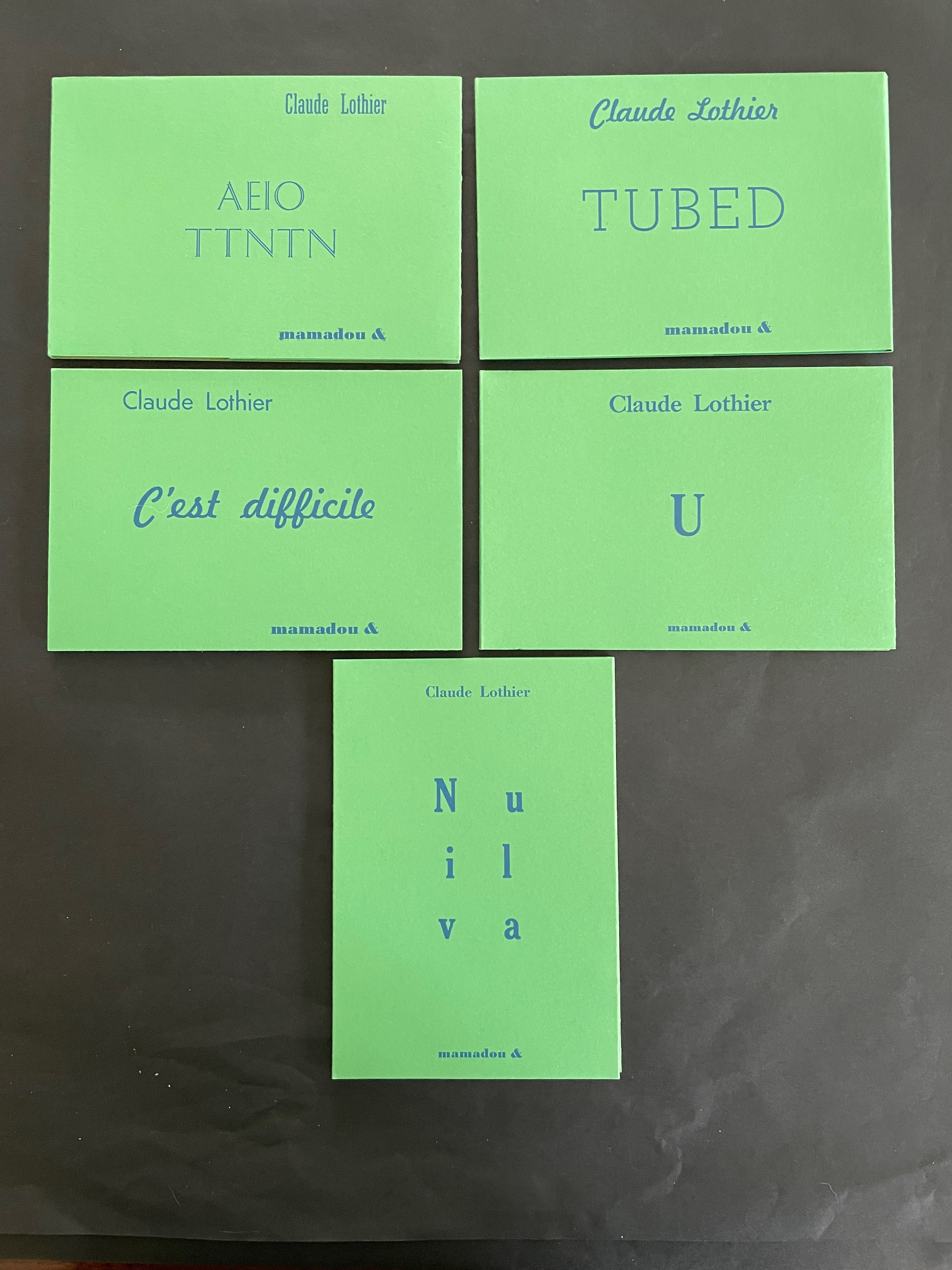
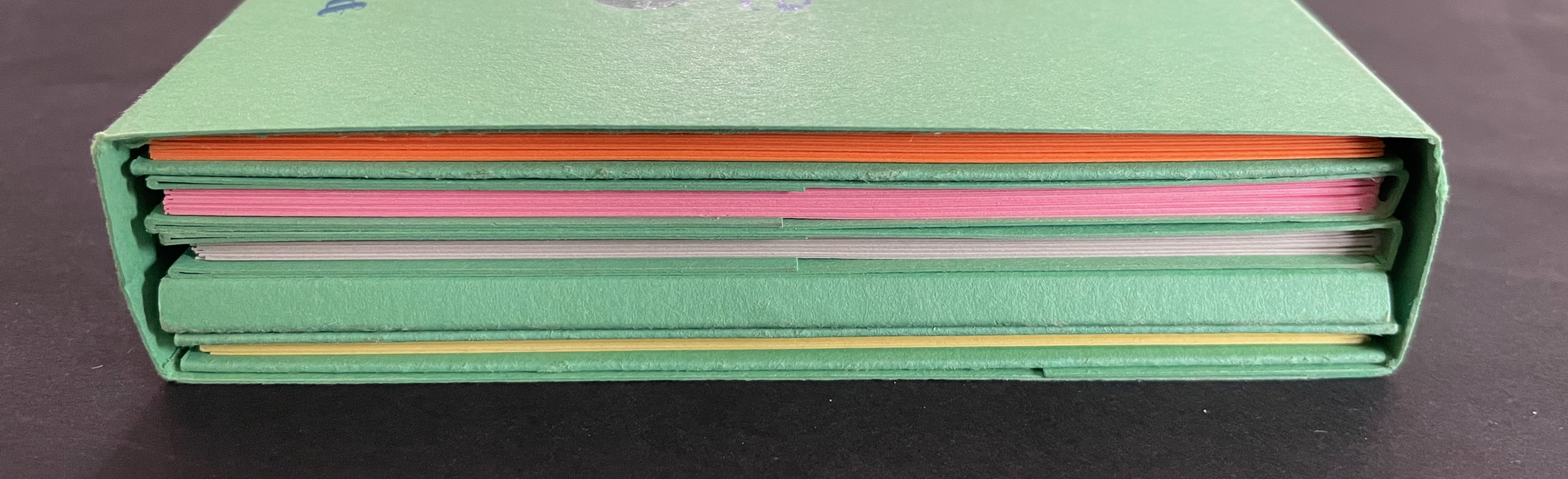
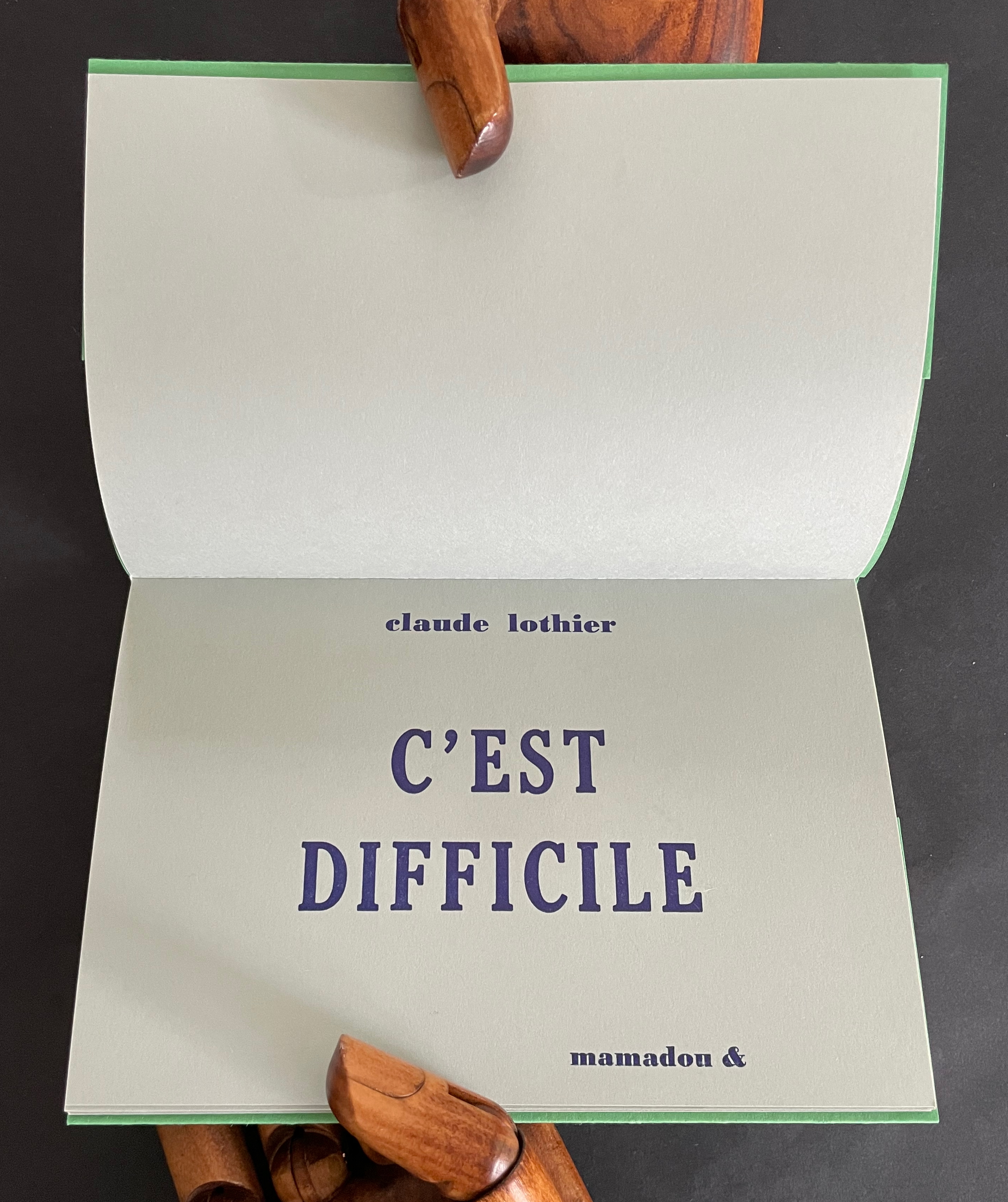
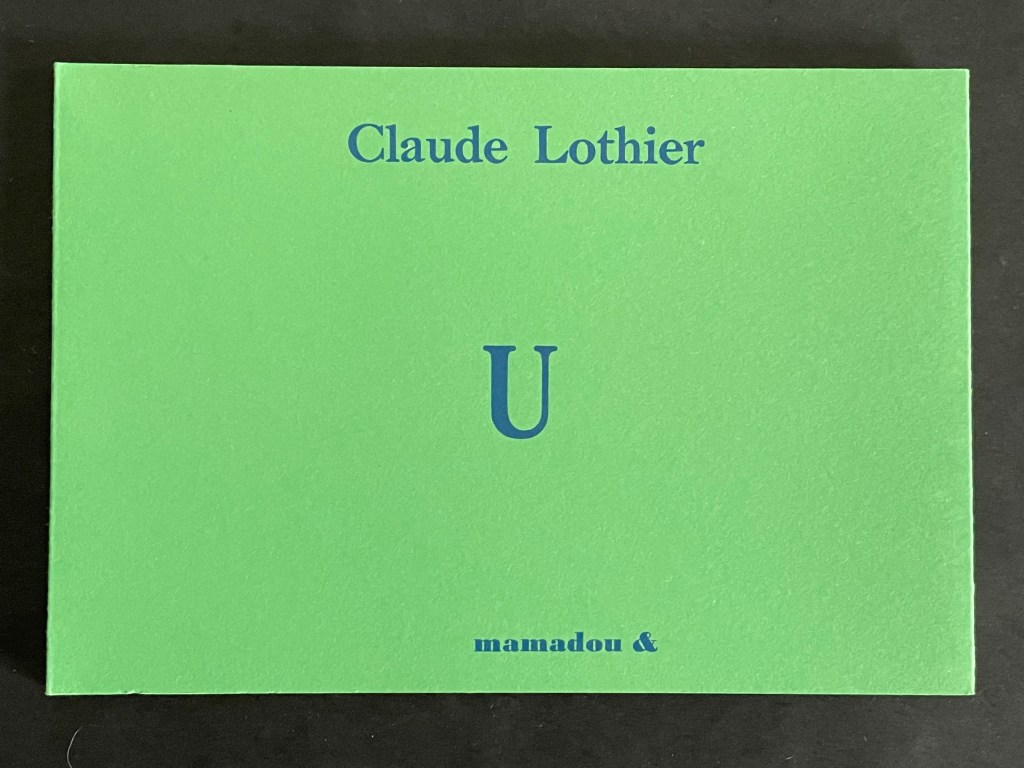
Slipcase around five cased and glued softcover booklets. Slipcase: H110 x W158 x D25 mm. AEIO TTNTN: H108 x W157 mm. Niv ula: H157 x W108 mm. C’est difficile: H108 x W157 mm. TUBED/NIF: H108 x W157 mm. U: H108 x W157 mm. [28] pages each except for TUBED/NIF, which has [20], and U, which has [24]. Edition of 200. Acquired from Biblio-Net, 16 October 2025.
Photos: Books On Books Collection
In English, the phrase quant au livre would be “as for the book” or “concerning the book”. What is lost in translation is the phrase’s association with Stéphane Mallarmé’s volume of essays Divagations (1897) in which one section was entitled Quant au Livre. It included the essay “Le Livre, Instrument Spirituel”, which delivered the proclamation “tout, au monde, existe pour aboutir à un livre” (“everything in the world exists to end up in a book”). It was the proclamation scholars seized on to give artists’ books their metaphysical underpinning. If it swallows up everything in the world, What is a book? Many book artists have simply bypassed the discussion and jumped in with works of art that challenge how we read, how we make sense of a book, how we make sense of what a book is. Claude Lothier is one of those book artists.
In AEIO/TTNTN, Lothier challenges us to construct this one paragraph as we turn the booklet’s pages:
Attention, cher lecteur, vous déchirez l’histoire en ouvrant le livre. Tachez au moins de reconstituer mentalement l’intégrité de tous les mots puis refermez le pourqu’il se reforme en dormant. [Attention, dear reader, you tear the story apart when you open the book. At least try to mentally piece together all the words, then close it so that it can reform while sleeping.]
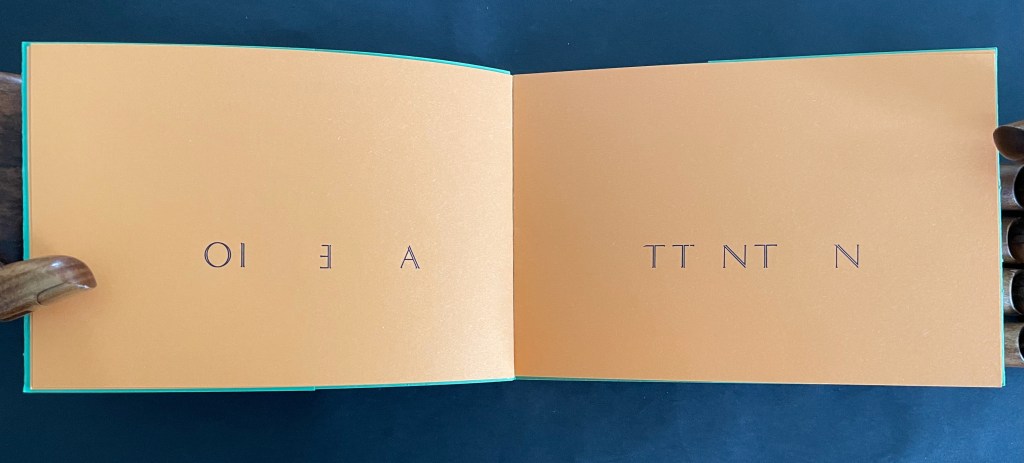
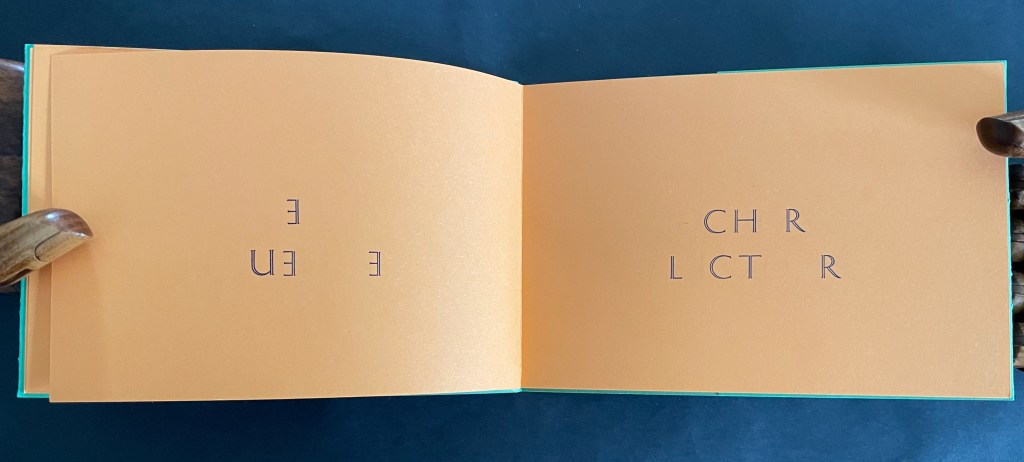
ATTENTION / CHER LECTEUR
(Attention / dear reader)
As if to prove the author’s accusation that we tear apart stories when we open a book, the verso page has “peeled away” the vowels from the word on the recto page, where only the consonants remain. The verso page naturally displays the vowels in reverse order and printed backwards. The author cheekily scolds us to try at least to reconstruct the torn-apart words (which we have to have done to receive the scolding) and then close the book so that the story can reassemble itself while the book sleeps (which paradoxically is the imagined story of what will happen before the next reader opens the book, figures out the message, and closes the book). The book that contains everything in the world that exists to end up in the book is, of course, a never-ending book, of which this is just one example.
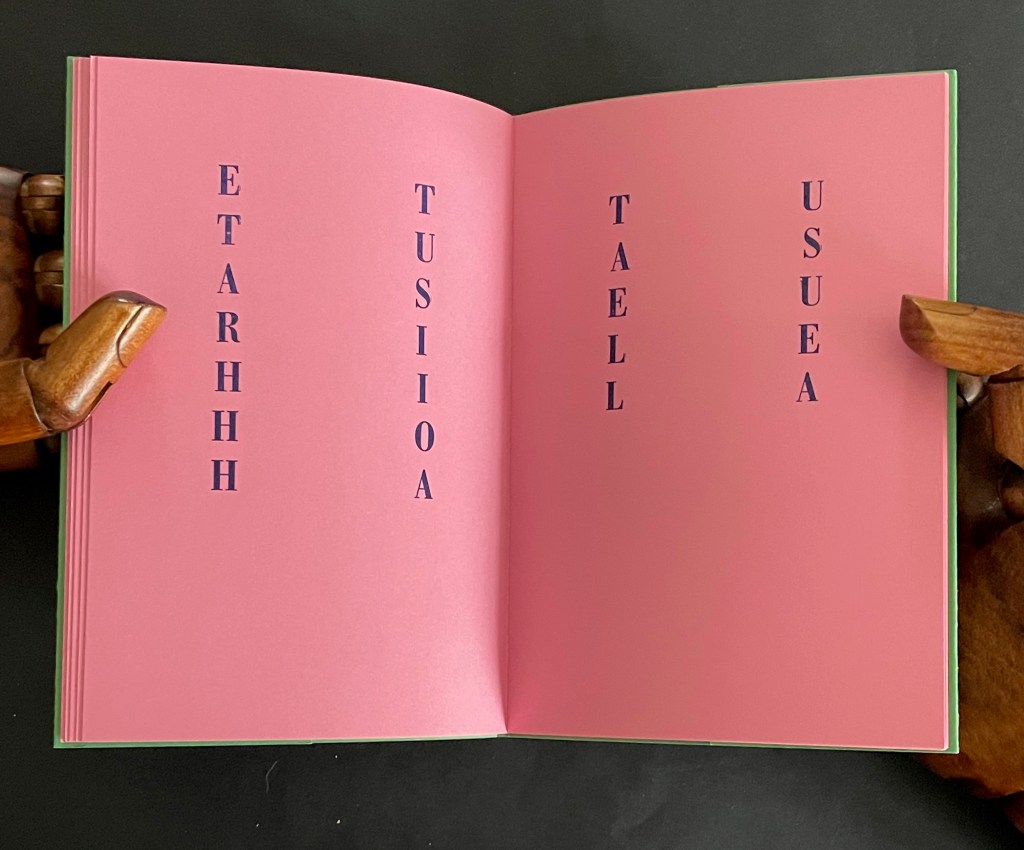
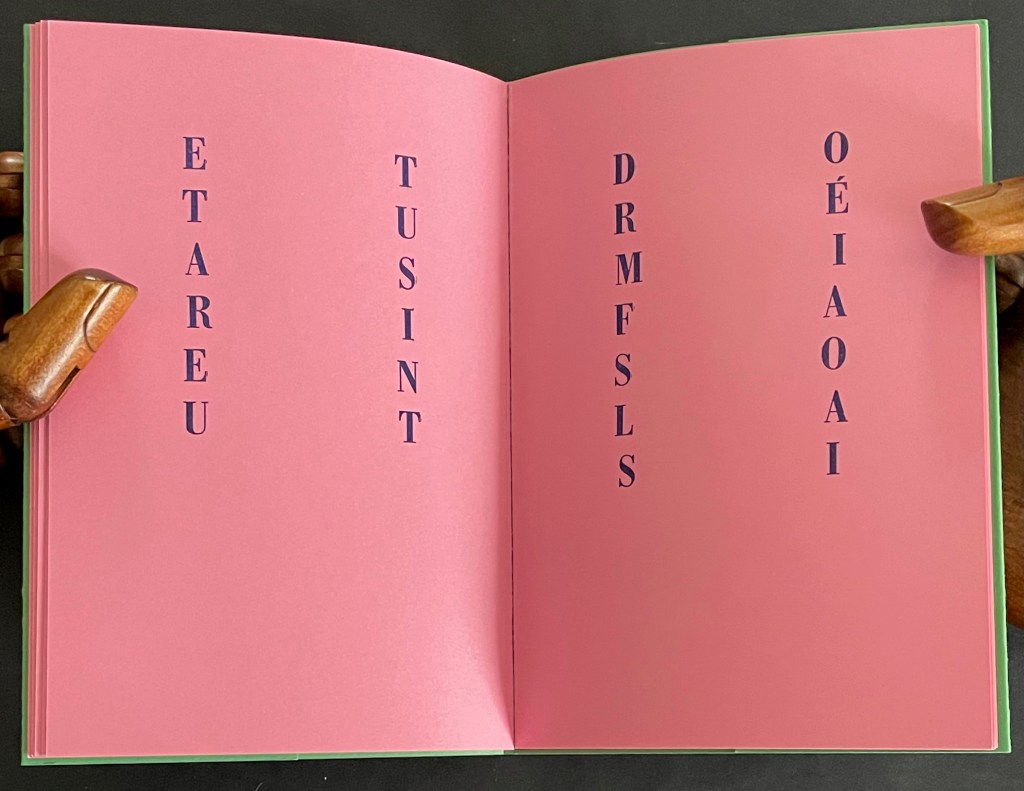
In C’est difficile, Lothier presents the booklet in landscape format and marches us through our recto/verso paces to construct the story’s message: La réalité m’échappe, voir n’est jamais suffisant. Elle est toujours au-delà, derrière l’image. [Reality escapes me, seeing is never enough. It is always beyond, behind the image.]
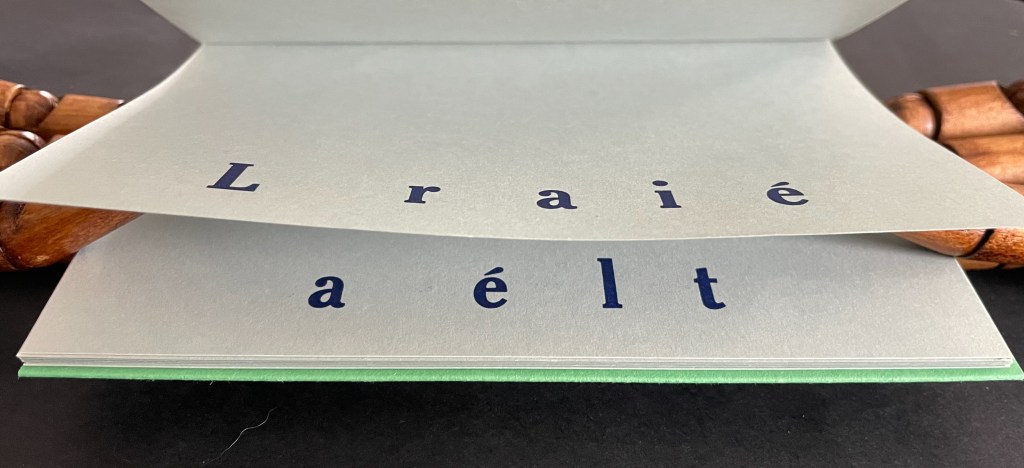
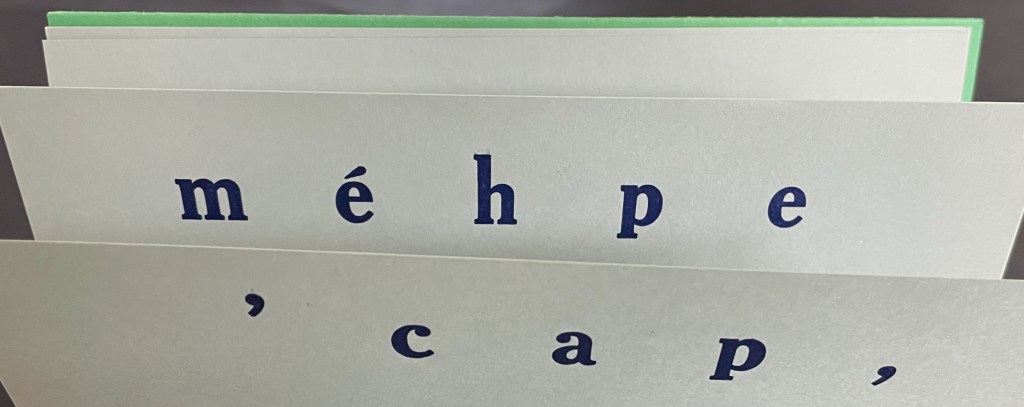
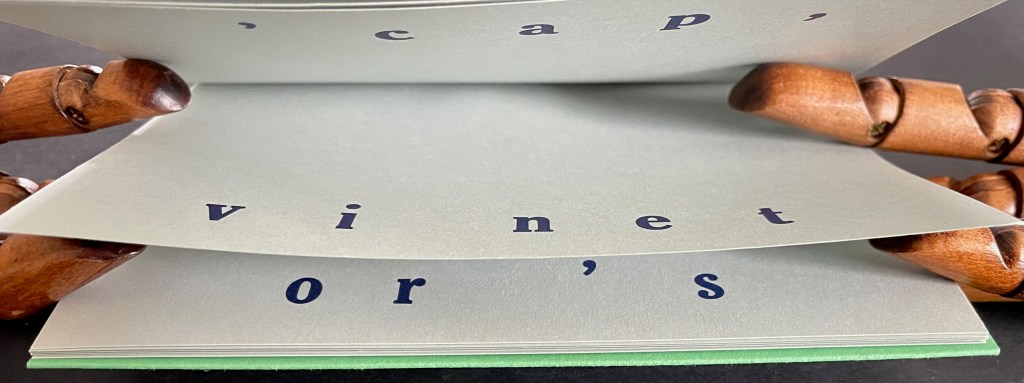
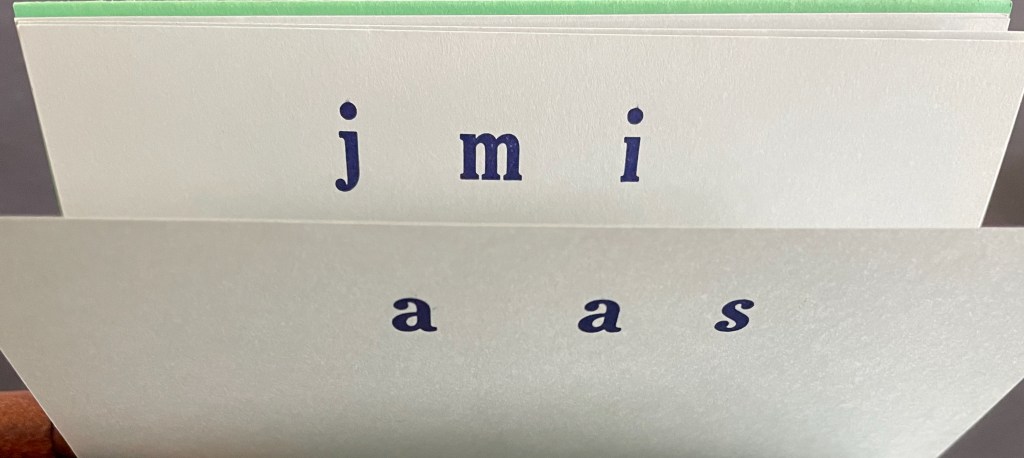
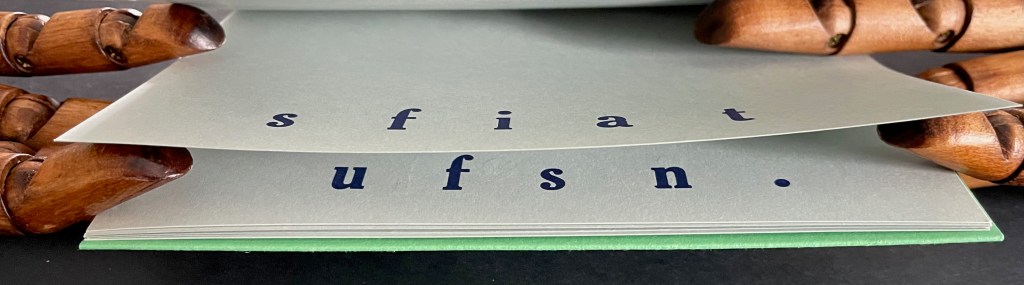
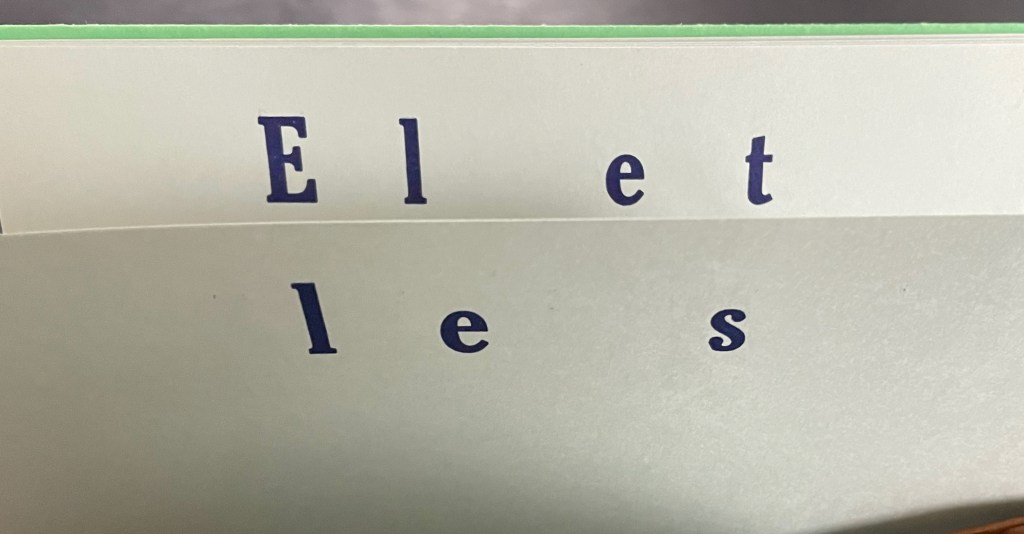
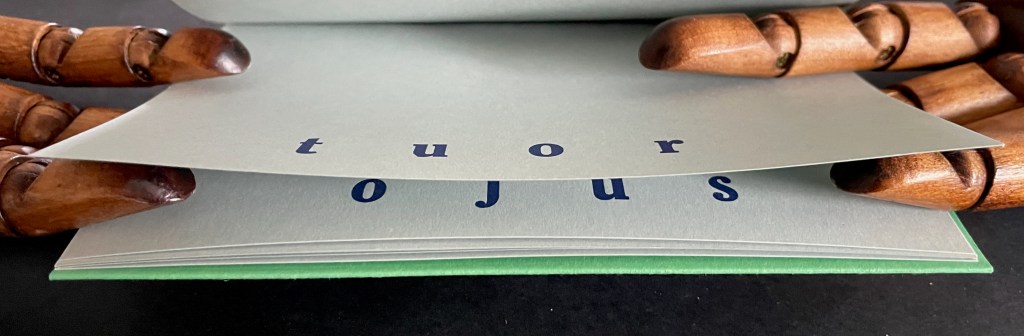
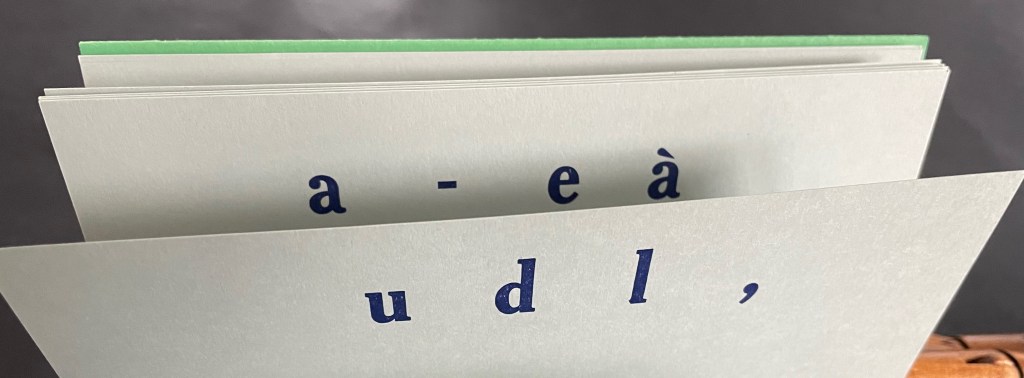
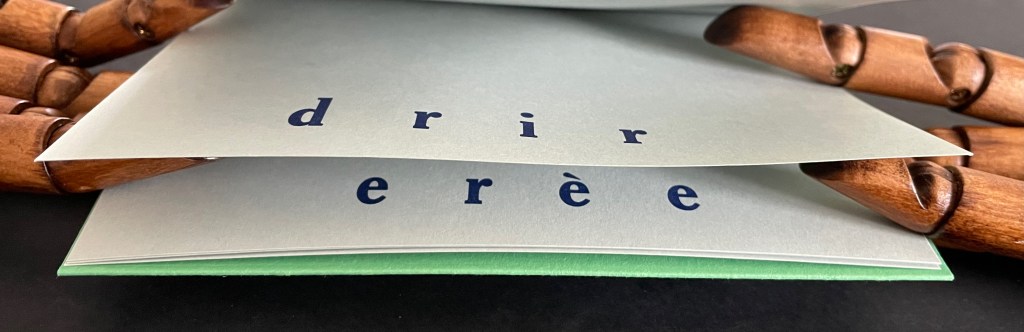
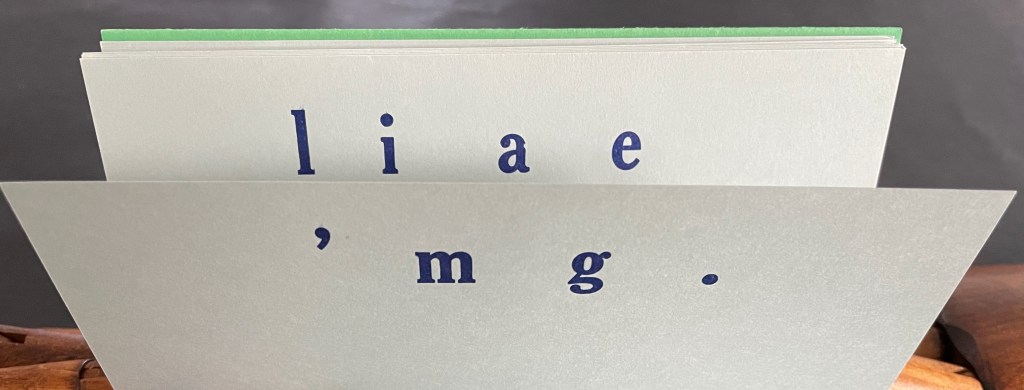
Reading C’est difficile is indeed difficult. Only gradually do we realize that the letters needed to complete the word on the first recto page lie ahead on the second recto page, and that the word on the first verso page is completed with the letters on the second verso page. Piecing together the words requires a moving beyond, then moving back, then moving beyond, and so on until the last pair of verso pages yields the word “l’image”. Again, our actions with the book’s structure enact the book’s message.
Given the typographical play in the first two booklets, it is hardly surprising that, at first in Nu il va, the reader’s eye might jump here and there trying to find words in each column until it makes the jump across the gap between the columns and finds a series of two-letter words. There are twenty pages of them, and they seem to make up a Dada-esque interlude of riddling dialogue.
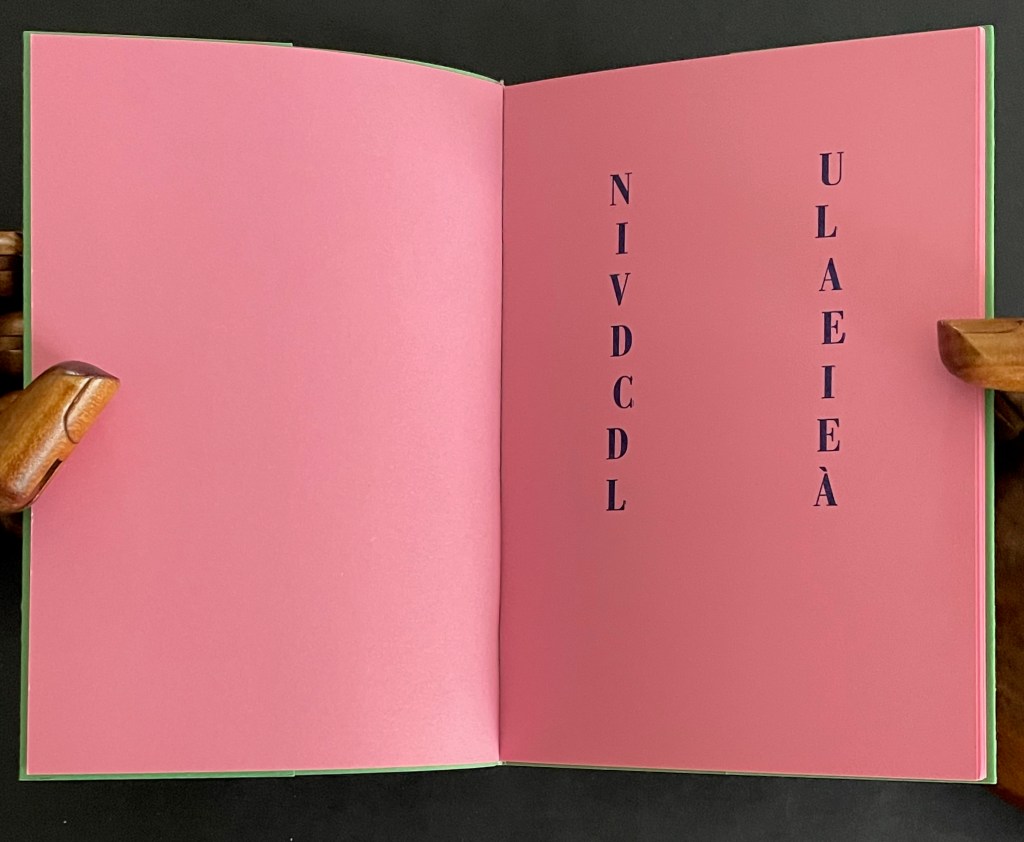
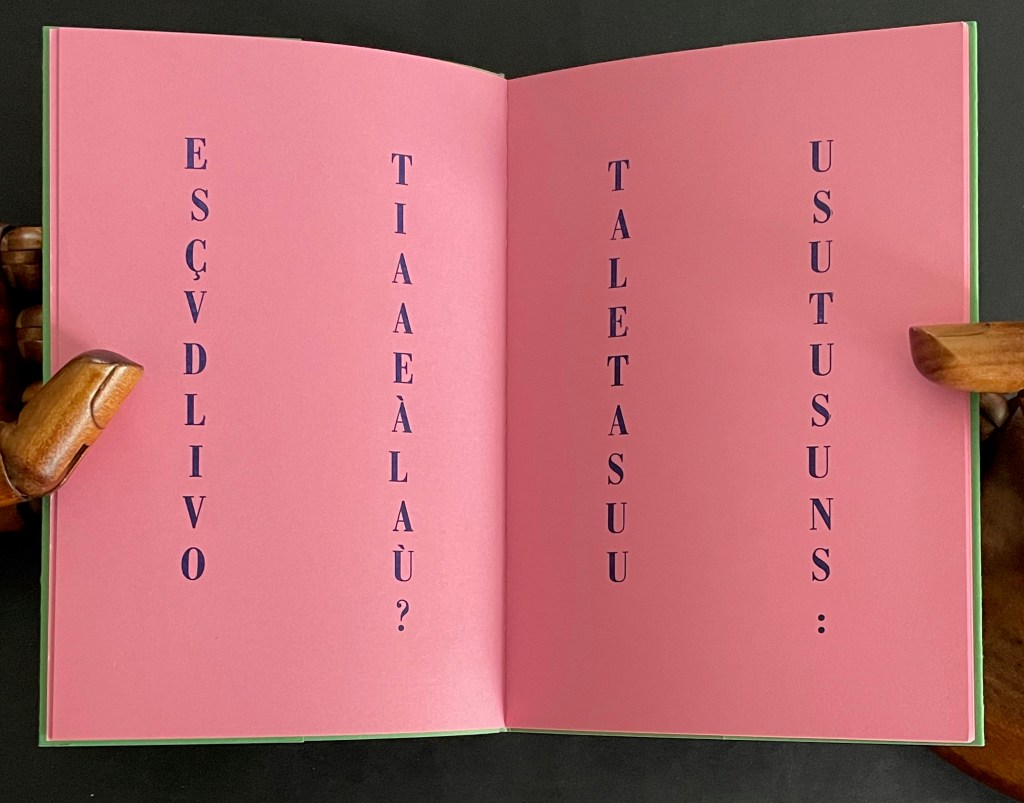
NU IL VA DE CI DE LÀ [Naked it goes here and there]
ET SI ÇA VA DE LÀ IL VA OÙ? [and if that goes there, where does it go?]
TU AS LU ET TU AS SU UN US [you read and you learned a rule]
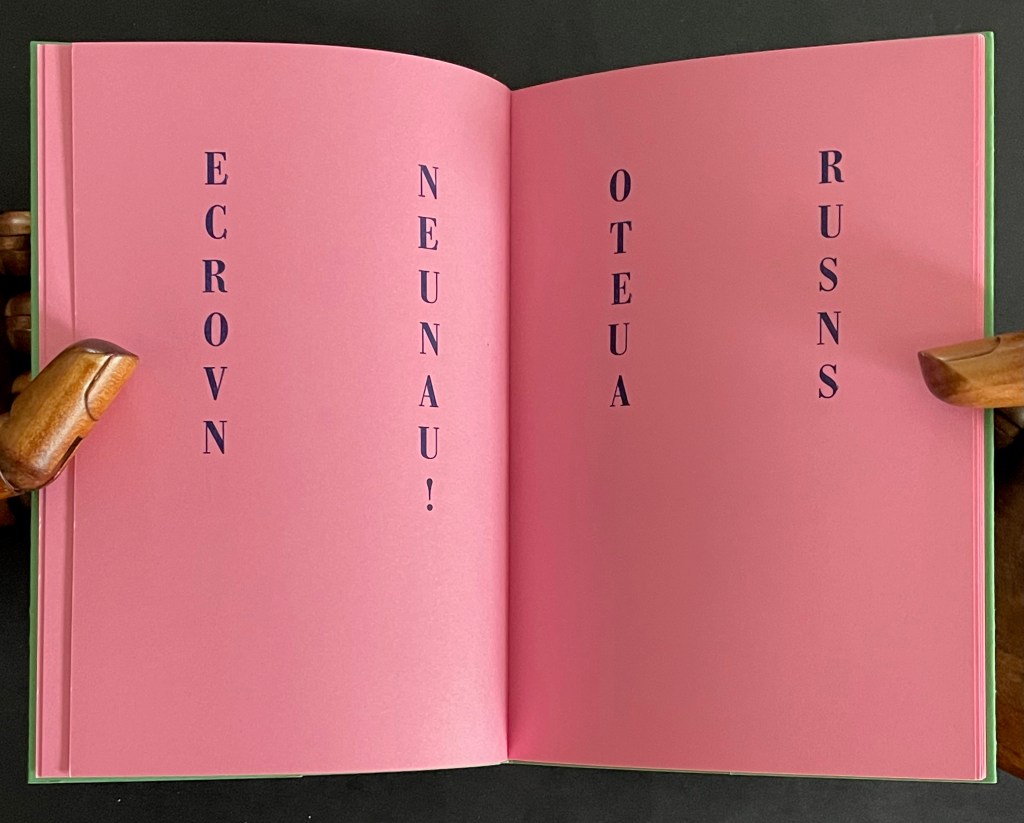
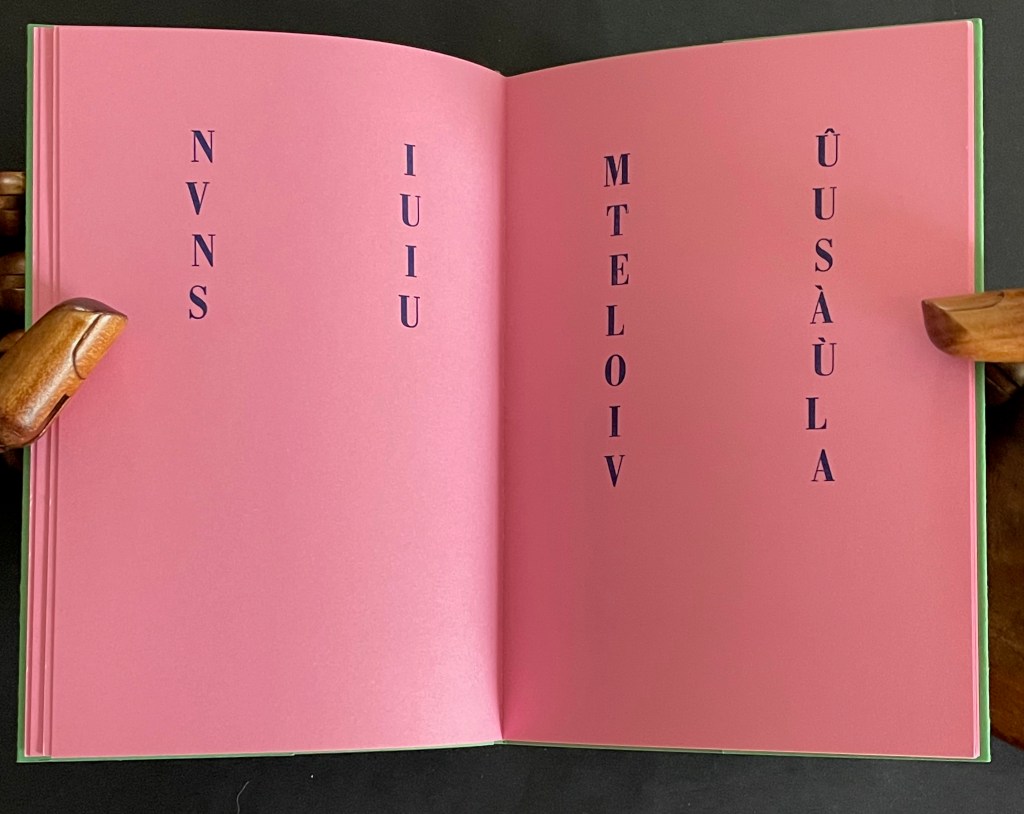
EN CE RU ON VA NU! [in this brook, we go naked]
OR TU ES UN AS [now you are an expert]
NI VU NI SU [neither seen nor known]
MÛ TU ES LÀ OÙ IL VA [driven you are there where it goes]
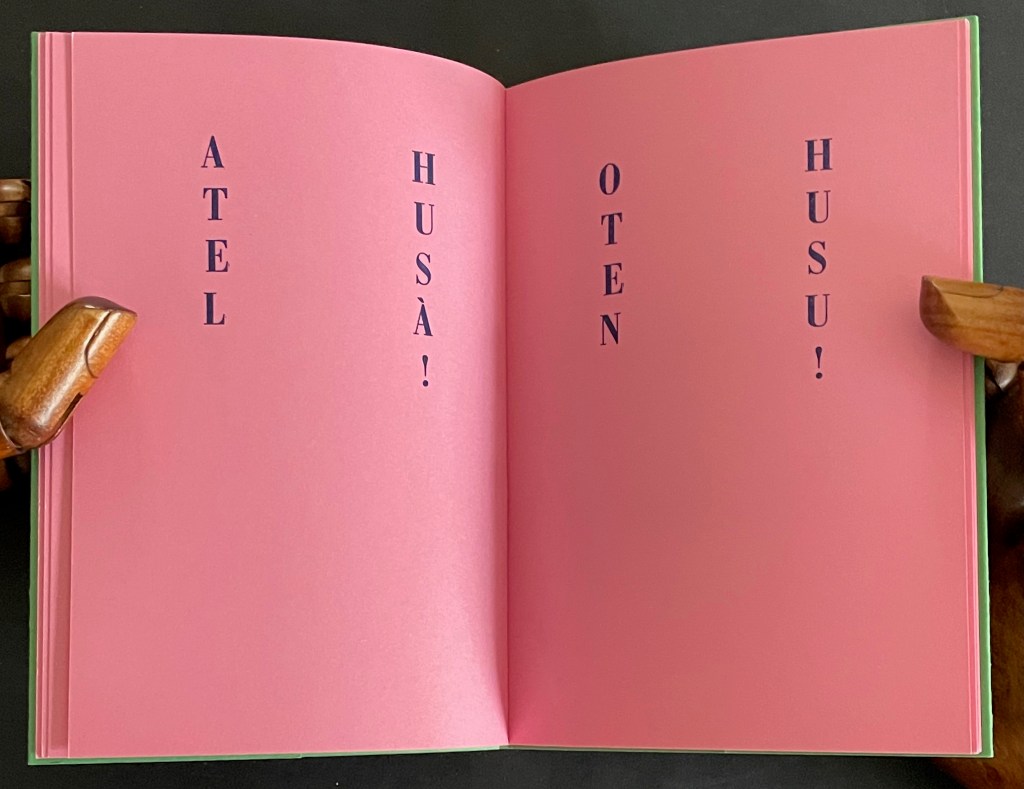
AH TU ES LÀ! [ah, you are there!]
OH TU ES NU! [oh, you’re naked!]
ET TU AS RI HI HO HA [and you laughed hi ho ha]
TU AS EU LE LA [you got the “la”]
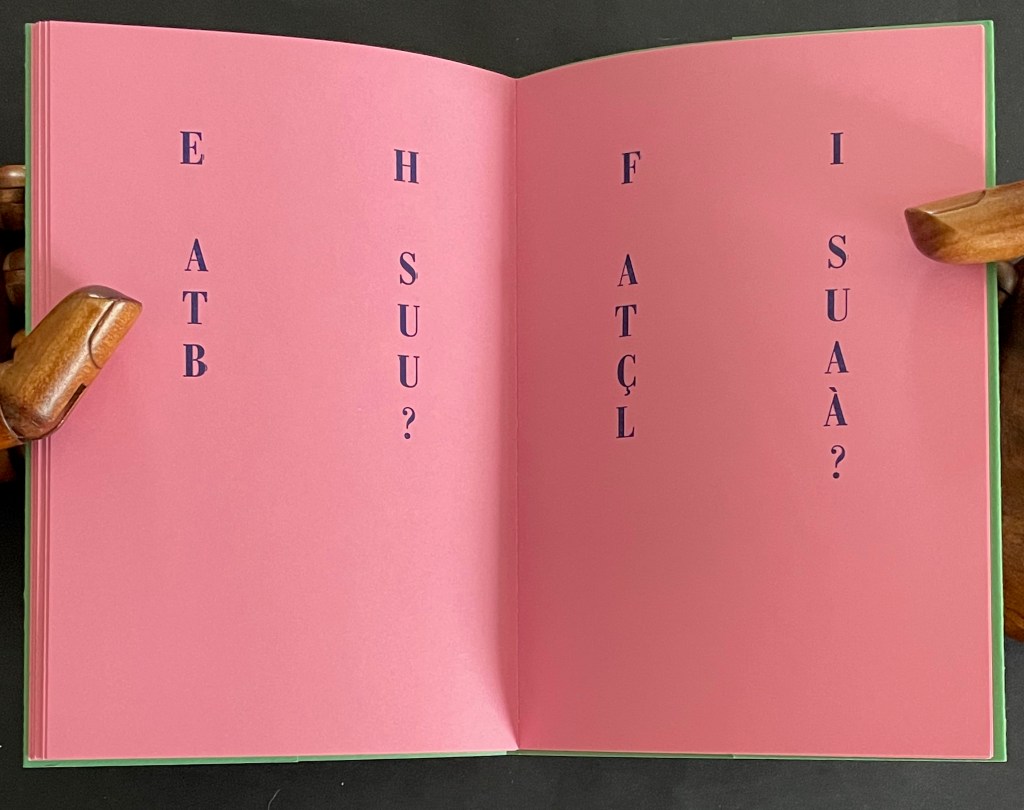
ET TU AS RI EN UT [and you laughed in C]
DO RE MI FA SO LA SI [do re mi fa so la si]
EH AS TU BU? [eh, have you been drinking?]
FI AS TU ÇA LÀ? [fi, have you got that, there?]
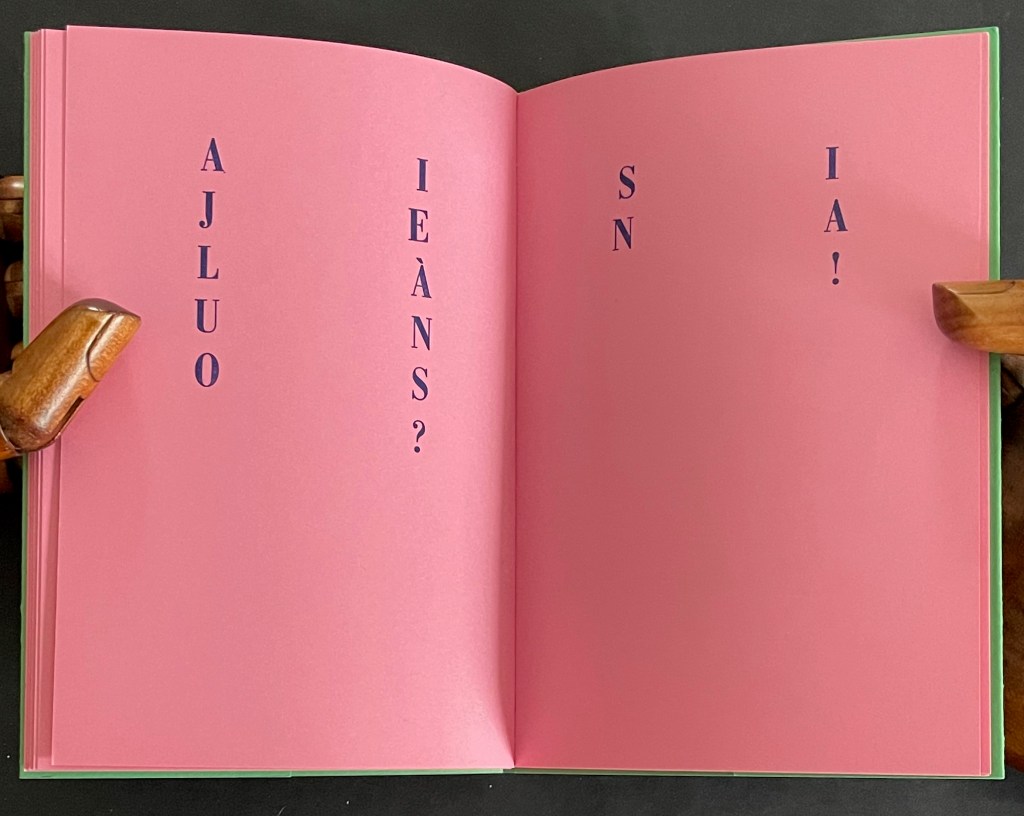
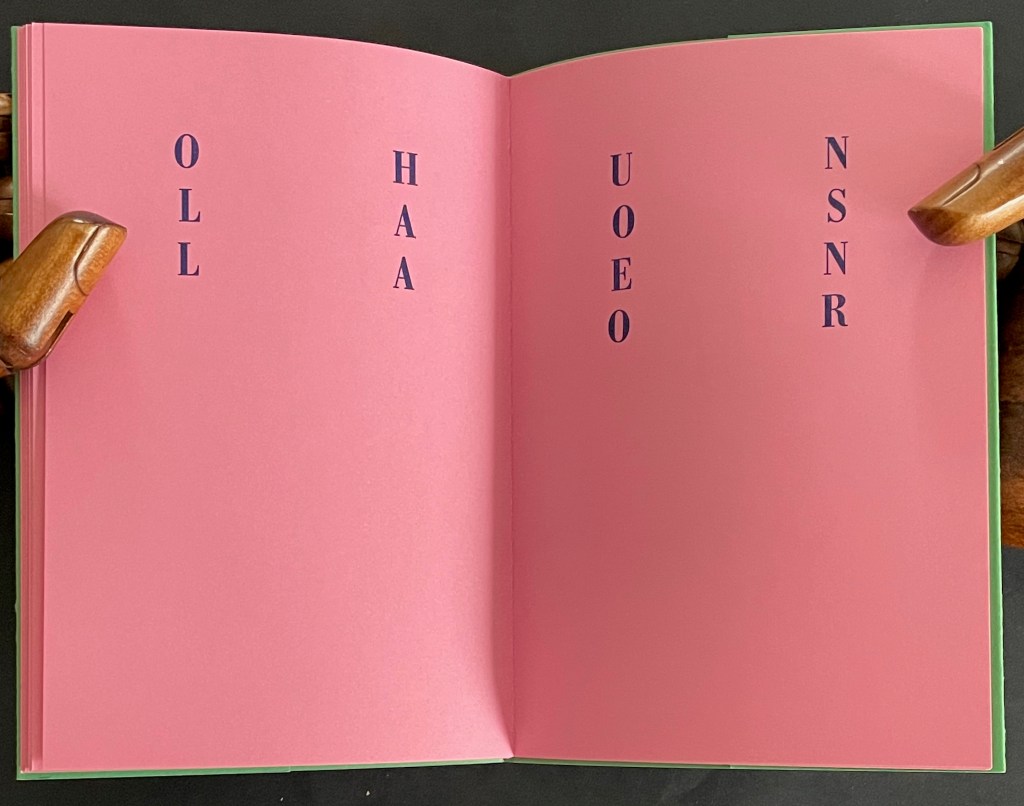
AI JE LÀ UN OS? [do I have a bone there?]
SI NA! [yes, so there!]
OH LA LA [oh la la]
UN OS EN OR [a bone of gold]
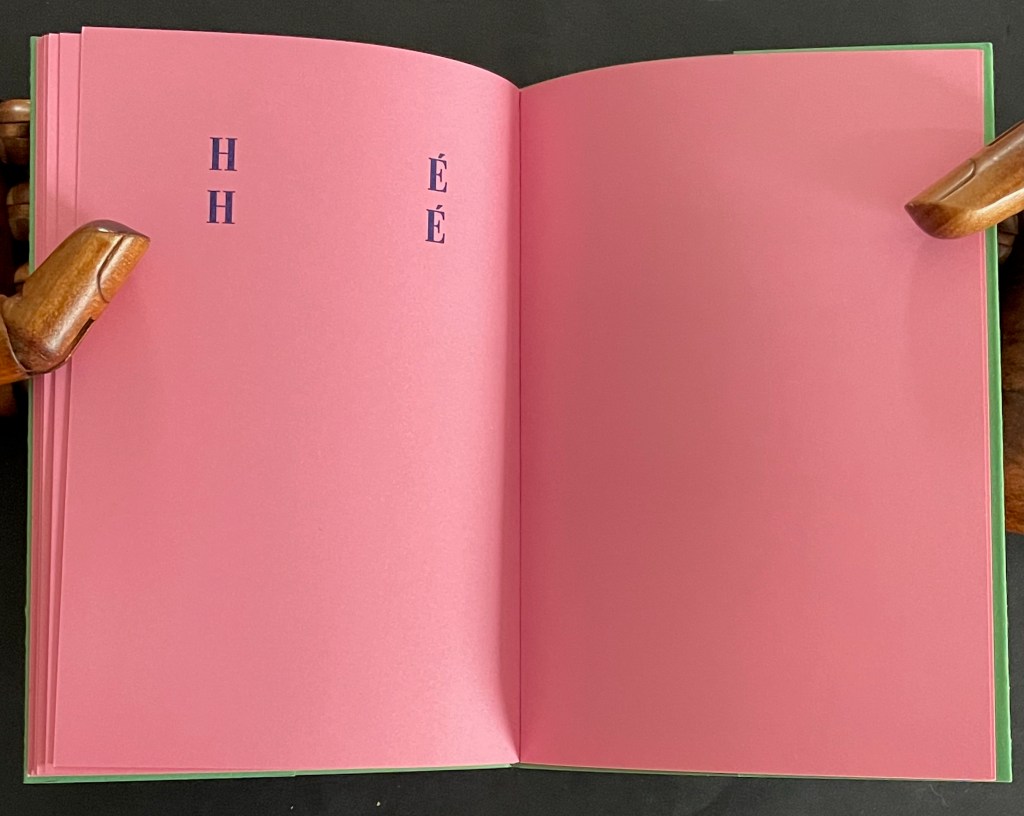
HÉ HÉ [he he]
As with any Dada-esque poem, who knows what it means, but its structure moves the reader’s naked eye here then there and back as its riddling words turn to mock the reader’s sing-song drunken rocking. There’s also a bit of sexual innuendo throughout. It comes closer to the surface in the penultimate verse, underlined by the snicker of the last.
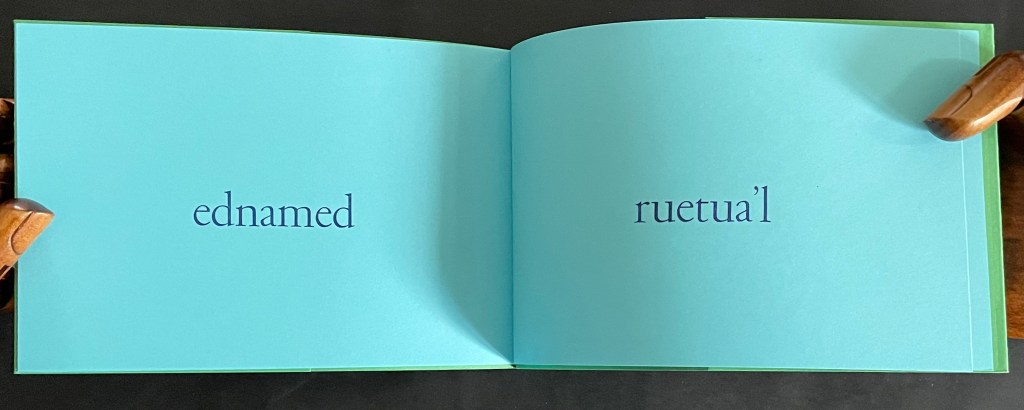
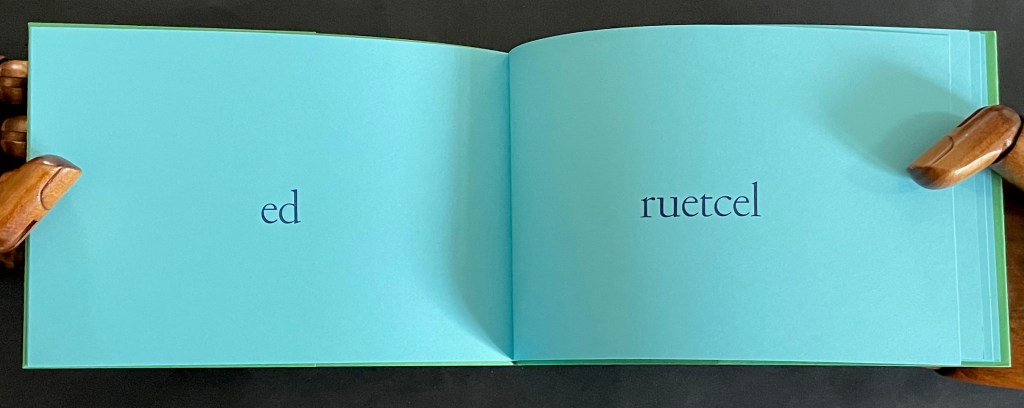
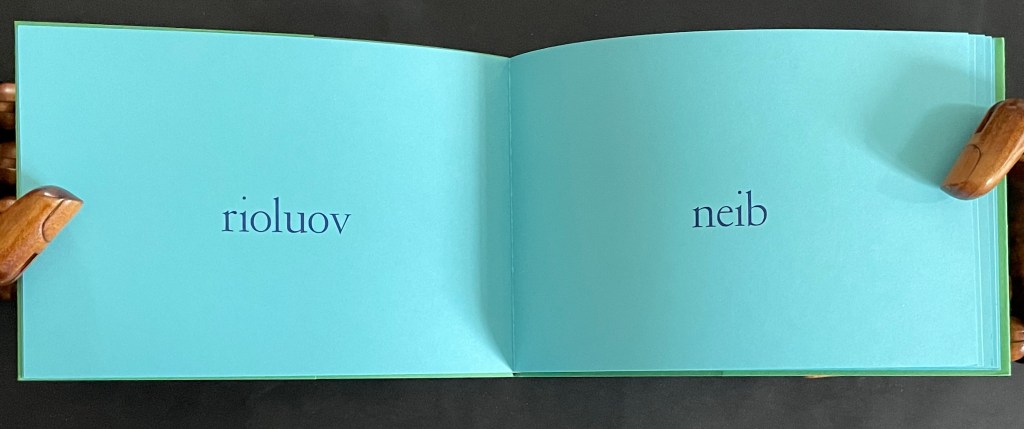
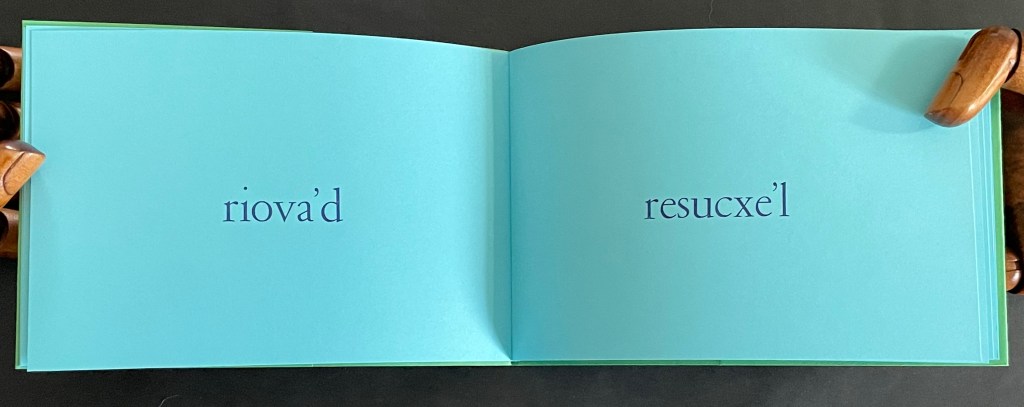
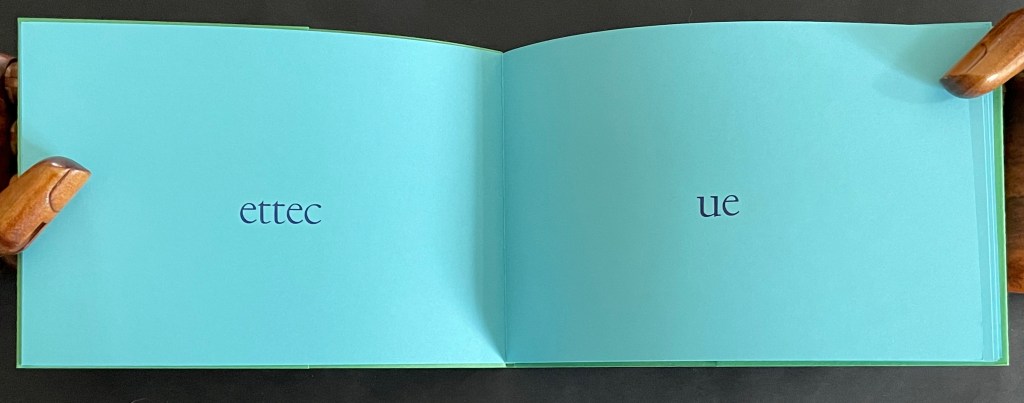
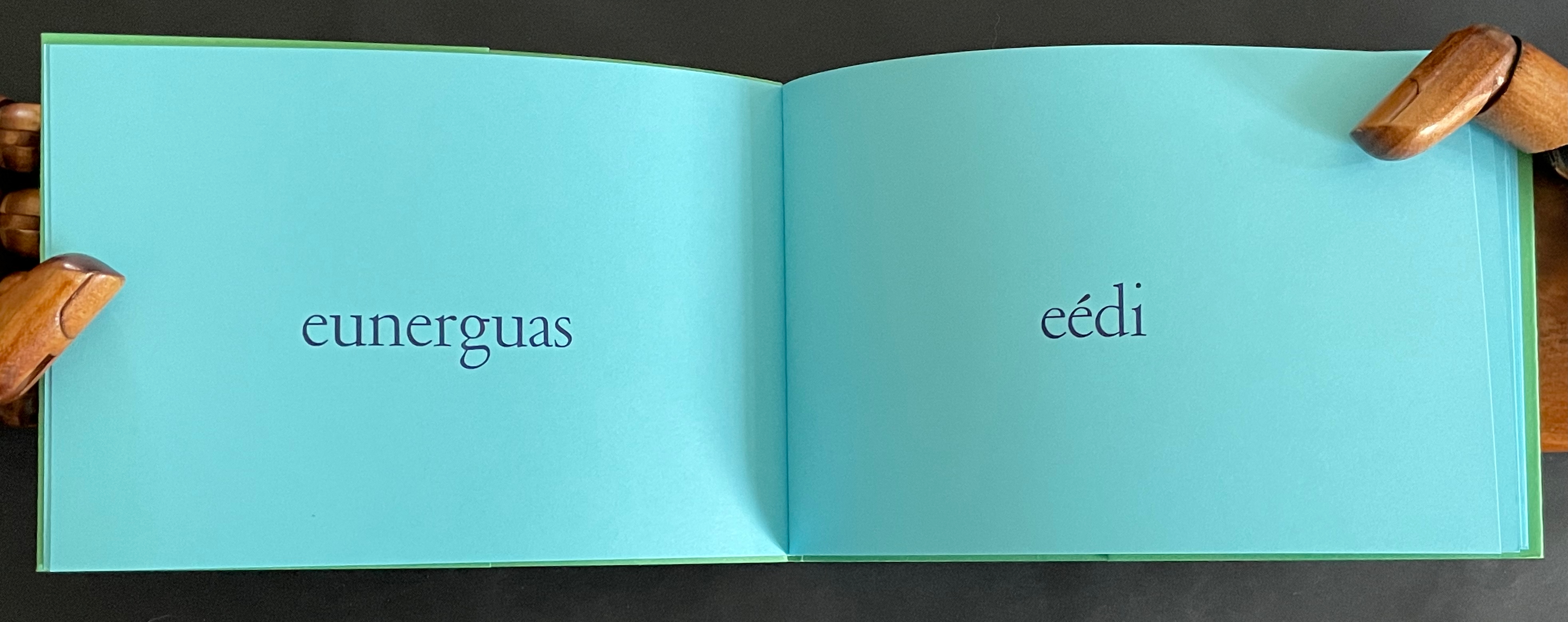
As its front and back covers hint, TUBED/NIF invites a back-to-front deciphering of words. TUBED is debut backwards — the “beginning” as we would expect on the front cover — and NIF is fin backwards — the “end” naturally on the back cover.
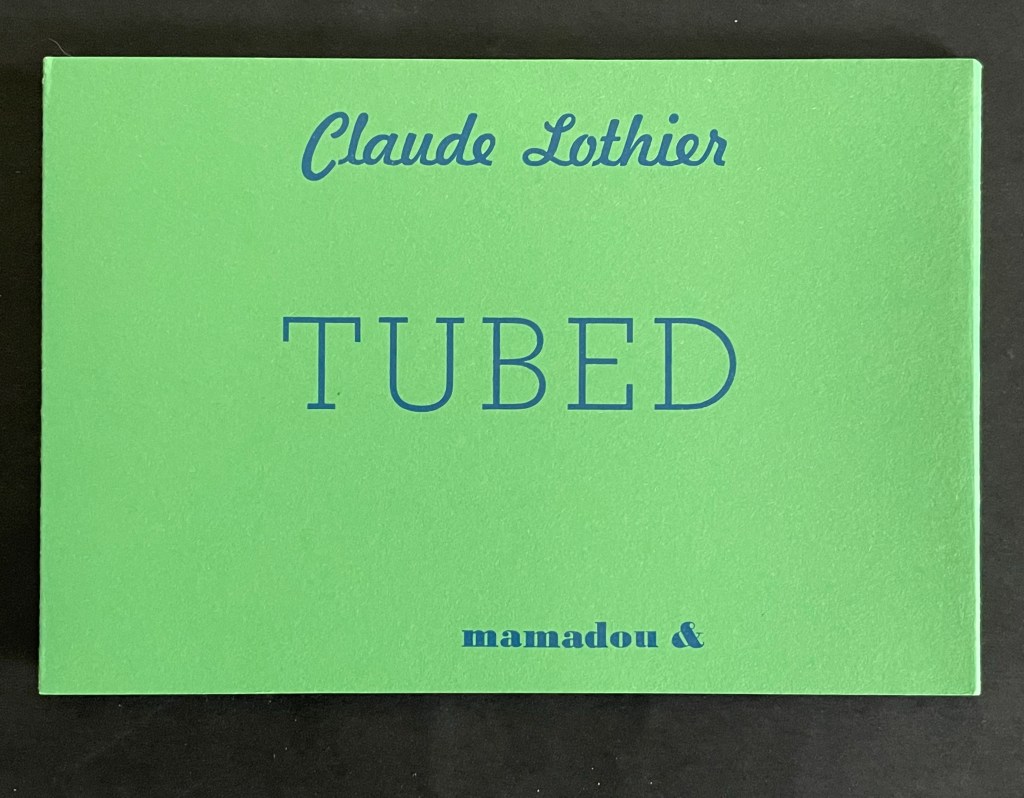
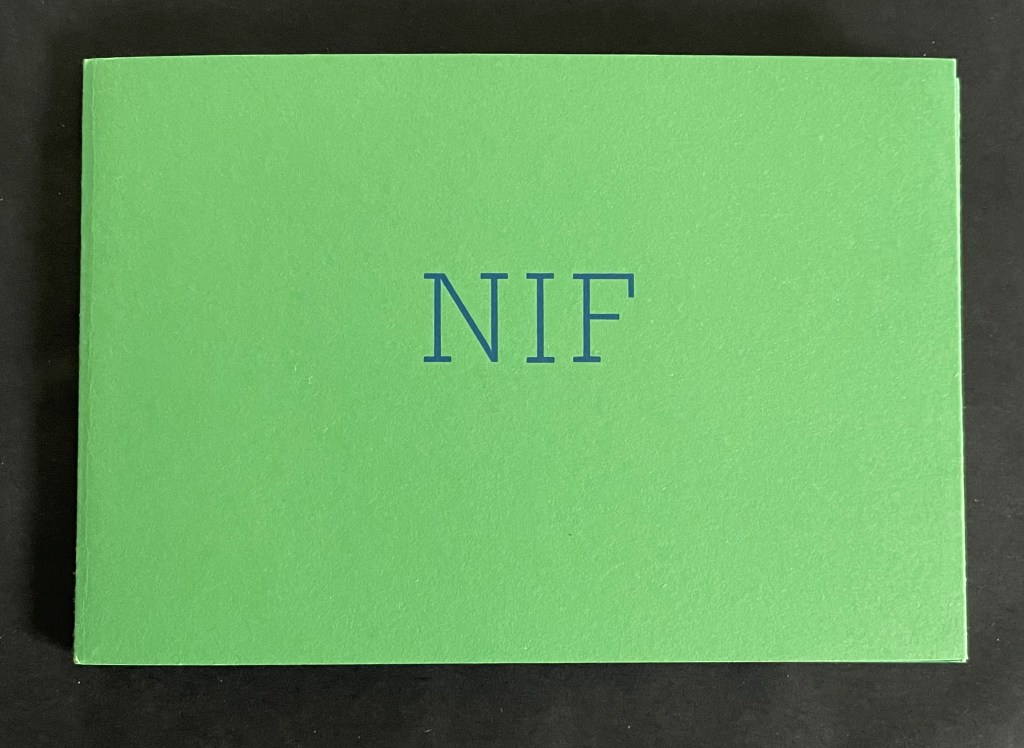
In the booklet, we not only have to decipher the backwards words, we also have to construct the text by reading the recto page first and then its facing verso page. At least the author apologizes rather than mocks this time:
l’auteur demande à son lecteur de bien vouloir l’excuser d’avoir eu cette idée saugrenue [the author asks of his reader to kindly excuse him for having had this absurd idea]
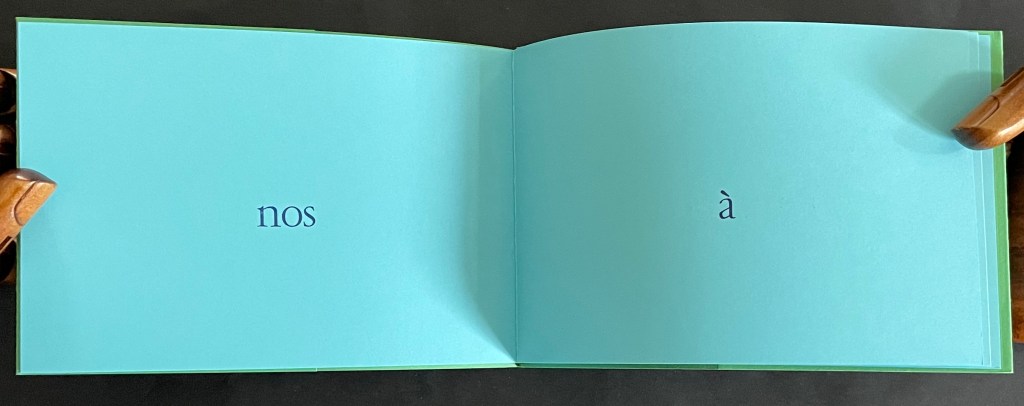
As for U, the last volume, we seem to overhear the author muttering as he shrugs his shoulders:
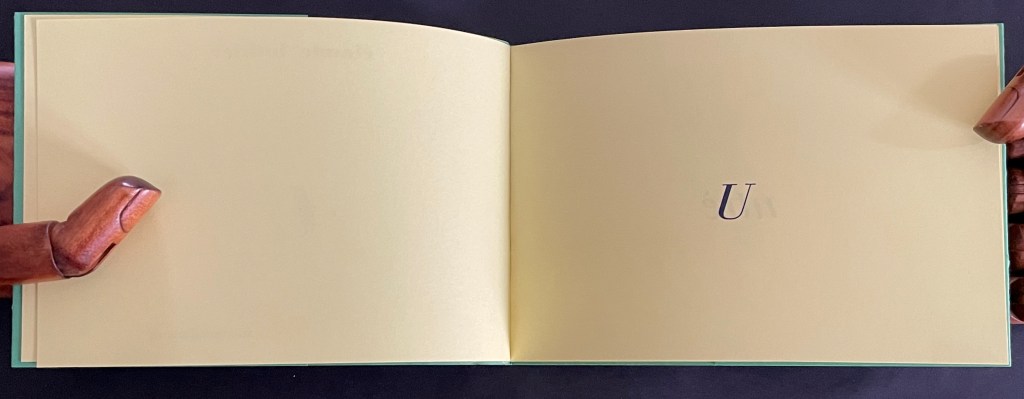
un très léger trouble de l’écrit ne saurait empêcher quiconque de lire quand même [a very slight disorder in the text will not prevent anyone from reading it anyway] The words un très léger trouble de l’écrit doubly imply an alteration or change or disordering in the text as well as an impairment or trouble in writing/reading.
In correspondence, Lothier confirms the supposition of the shrug when he confides that the idea for this booklet has its roots in his frequent errors in spacing while typing — which he says still occur.
Of course, we haven’t overheard the artist until we have figured out that the last letter of each word has been lopped off and moved to the following page and jammed up against the following word, whose last letter in turn has been lopped off and moved to the next page, and so on. And of course, if we have deciphered this, we have proved the truth of the book.
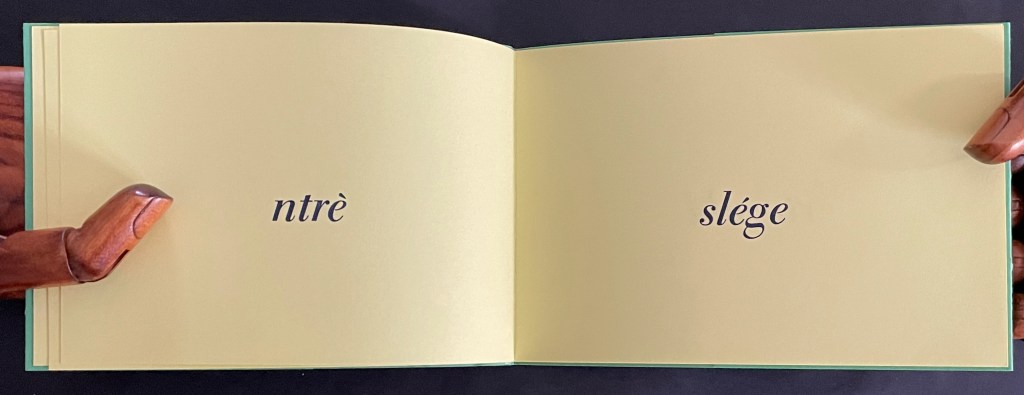
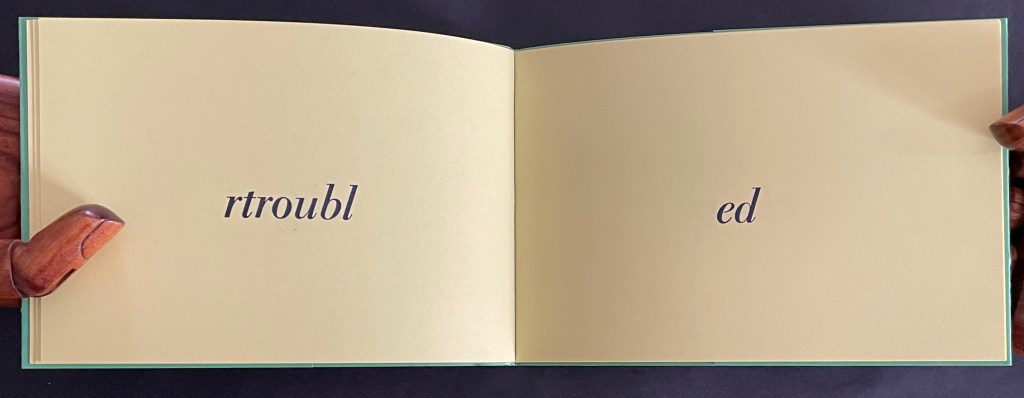
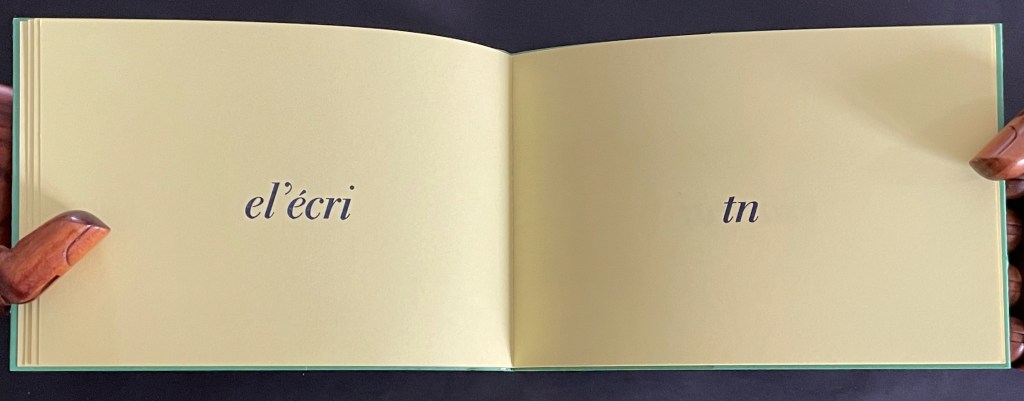
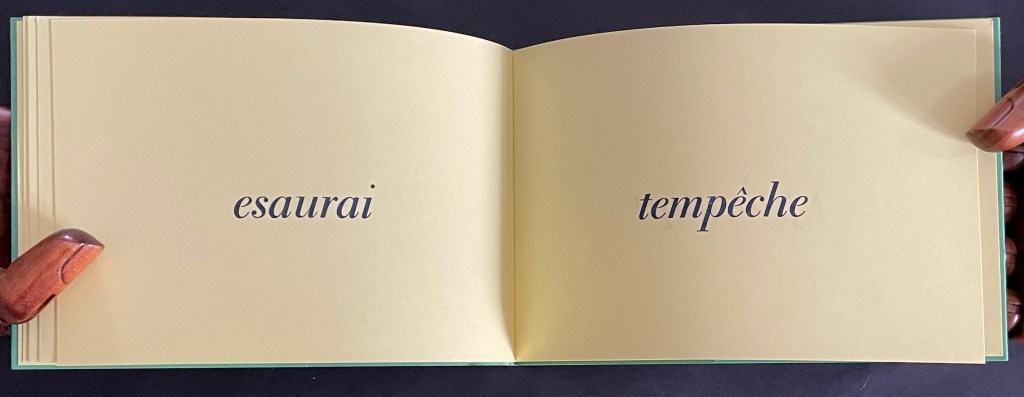
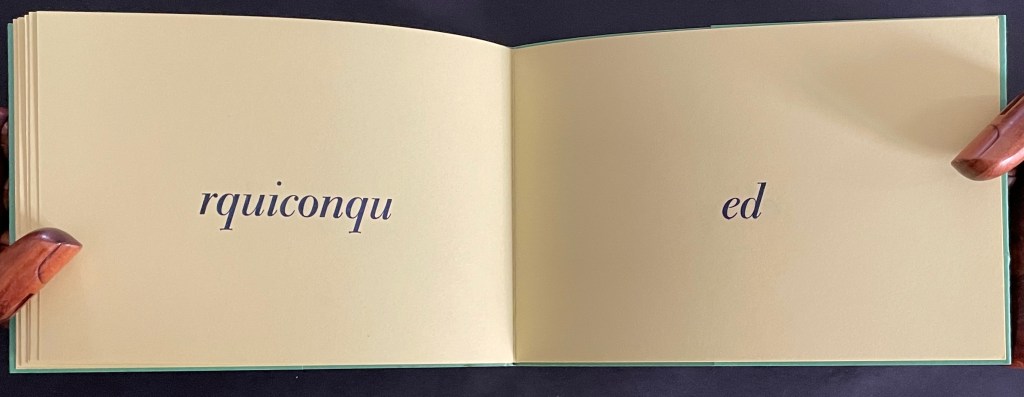
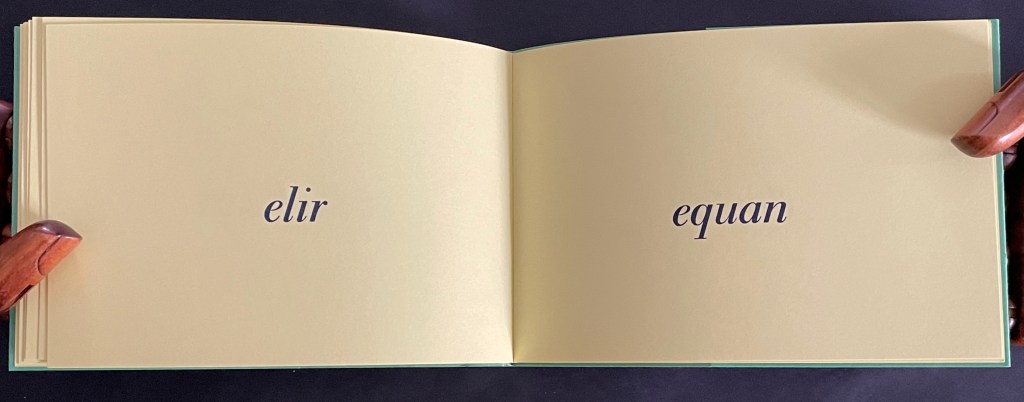
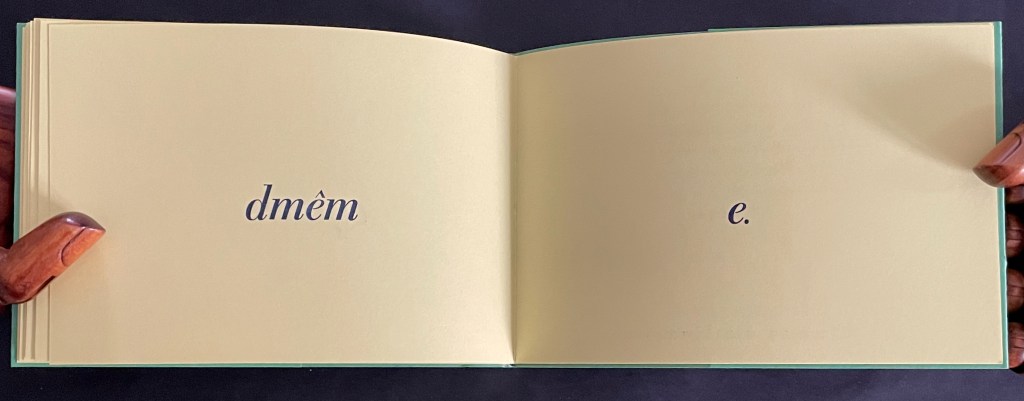
The French expression quand même has several meanings and uses: “even so”, “still”, “all the same”, “anyway”, “nevertheless”, “right?” , and more. Here, as the last phrase of the five booklets, it has the added fillip of echoing the polyvalent expression quant au in their collective title and so reminding us that, as with any book, the turn of the page is that slight trouble in the text we tolerate as we still continue reading — quand même, nevertheless, anyway, even so, etc.
*Many thanks to the artist for his patience with my rough translations and for sharing some of the background to Quant au livre.
Further Reading and Viewing
As well as an artist and book artist, Claude Lothier is what he calls an “unremitting perspectivist”, which has led to paper construction of mazzocchio hats, deltoidal icositetrahedra, and other fantastic geometrical objects. Currently he teaches perspective from time to time in Guangzhou, an experience reflected in his Instagram account.
For other artistico-philosophical inquiries of the book, see
Amaranth Borsuk’s The Book: 101 Definitions (2021)
George Brecht’s Book (1972)
Arnaud Desjardin’s The Book on Books on Artists Books
Sveinn Fannar Jóhannsson’s Behind the Glass: Quotes about Books from Books about Books (2020)
Stéphane Mallarmé’s “Le Livre, Instrument Spirituel” in Divagations (1897)
Francisca Prieto’s The Antibook (2002)
Jerome Rothenberg’s The Book, Spiritual Instrument (1996)
 Books On Books