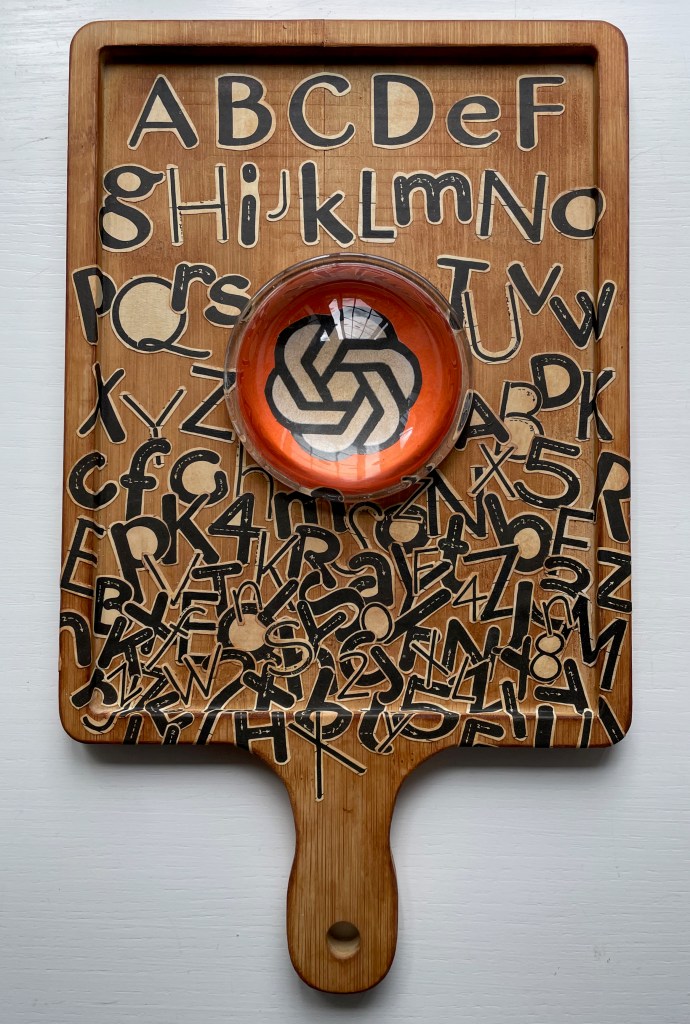
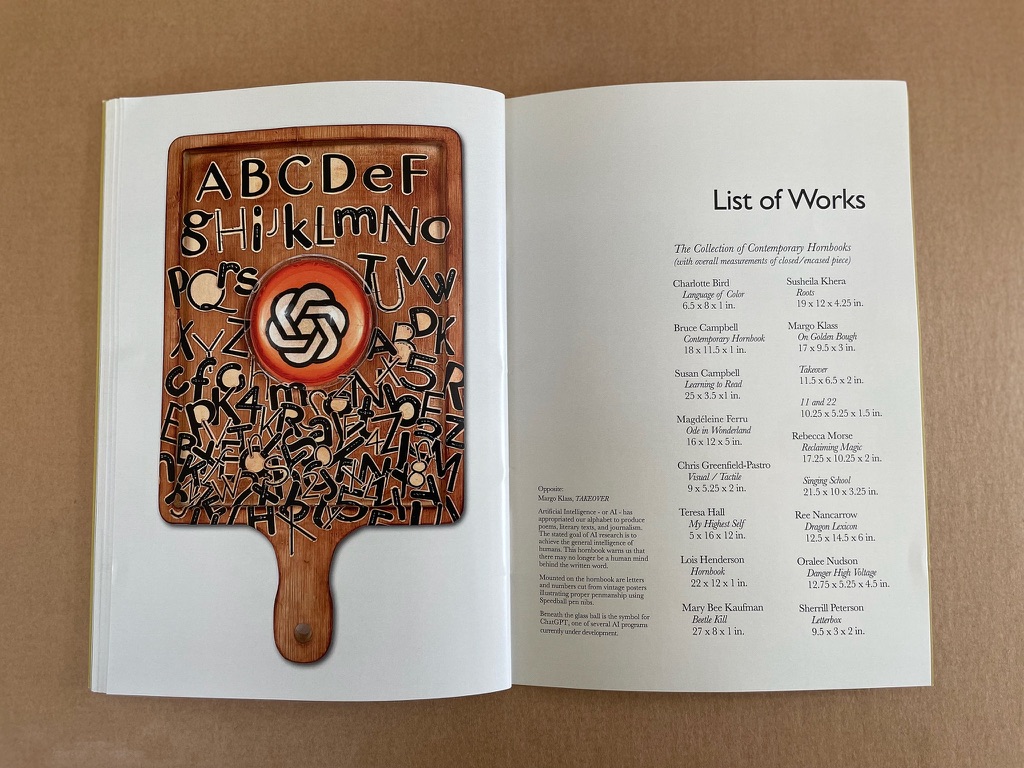
Takeover (2023) Margo Klass Cut-out vintage poster letters and numbers mounted on horn-book shaped tray. ChatGPT symbol covered by glass magnifying dome. H290 x W170 x D35 mm. Unique edition. Acquired from the artist, 26 June 2023. Photos: Books On Books Collection. Displayed with permission of the artist.
In her response to the Northwoods Books Arts Guild challenge organized by Ashley Thayer, Margo Klass created this horn-book shaped tray on which cutout vintage letters and numbers are breaking out of order, spilling over the sides of the tray, sliding around the glass dome magnifying ChaptGPT, and settling in a heap at the handle-end of the horn-book. Klass has resurrected this centuries-old tool of learning to register a warning:
“Artificial intelligence – or AI – has appropriated our alphabet to artificially produce poems, literary texts, and journalism. Already exhibiting a high level of test-taking ability, the stated goal of AI research is to achieve the general intelligence of humans. This contemporary hornbook structure warns us that behind the written word may no longer be a human mind. Mounted on the hornbook are letters and numbers cut from vintage posters illustrating proper penmanship using Speedball pen nibs. These illustrations, familiar to me from an early interest in calligraphy, came to me from Sue McHenry by way of Ron Inouye. Beneath the glass gazing ball is the symbol of ChatGPT, one of several AI programs currently under development.” — From the colophon on the reverse of horn-book.
OpenAI‘s ChatGPT (Chat Generative Pre-Trained Transformer) uses natural language processing to generate conversational dialogue and other forms of written content. Its roots go back as far as Friar Bacon’s 13th-century brazen head and more recently to Joseph Weizenbaum’s ELIZA, the 1960s AI psychotherapist at MIT that attempted to pass the Turing test (Alan Turing’s “imitation game” for testing a machine’s ability to show human-like behavior). Other works of book art that spell out cautions concerning AI include Karen Roehr’s Horn Book for Contemporary Times (2012) and Connie Stricks’ A Cuneiform Hornbook (2023).
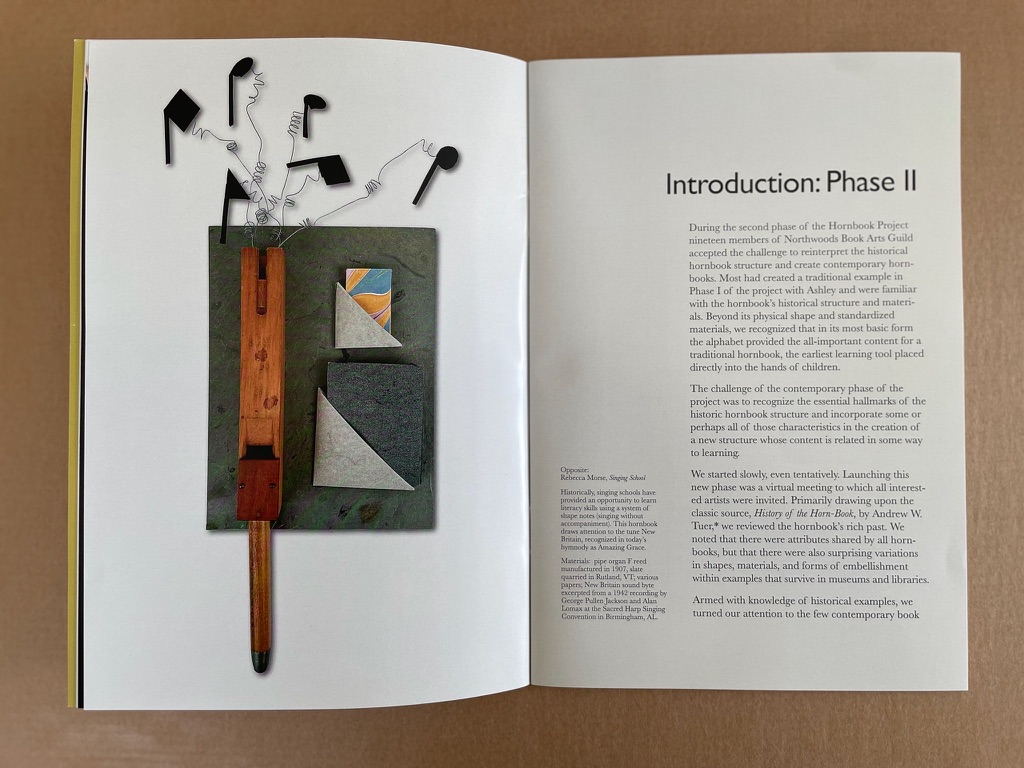
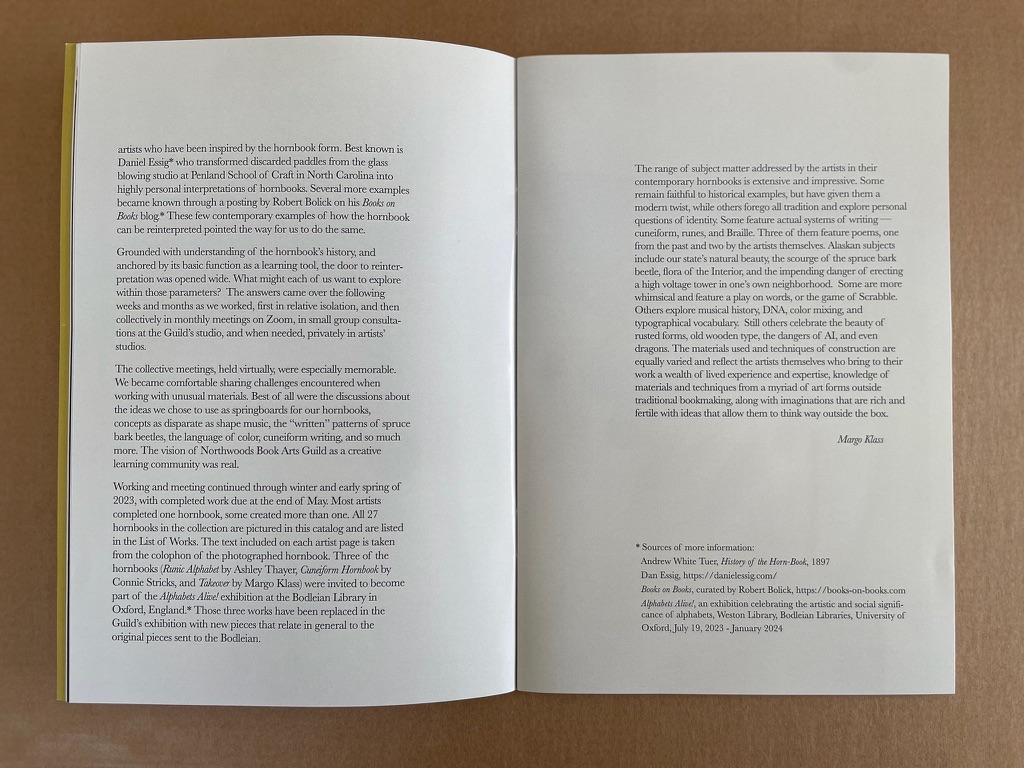
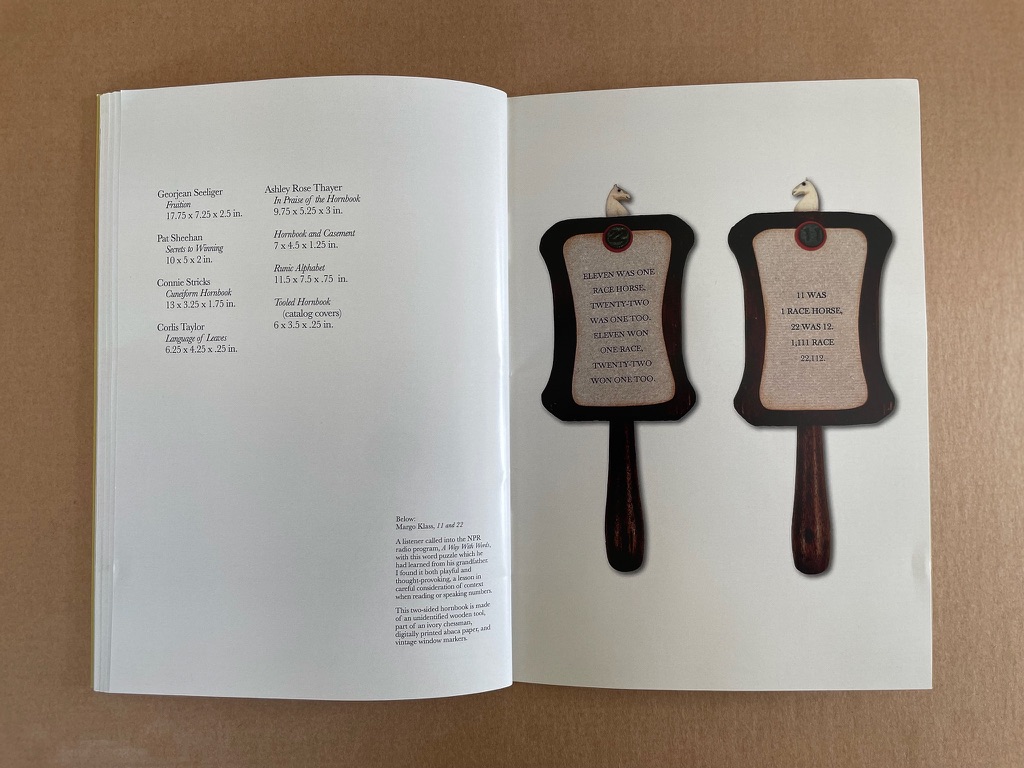
The Hornbook Project (2021)
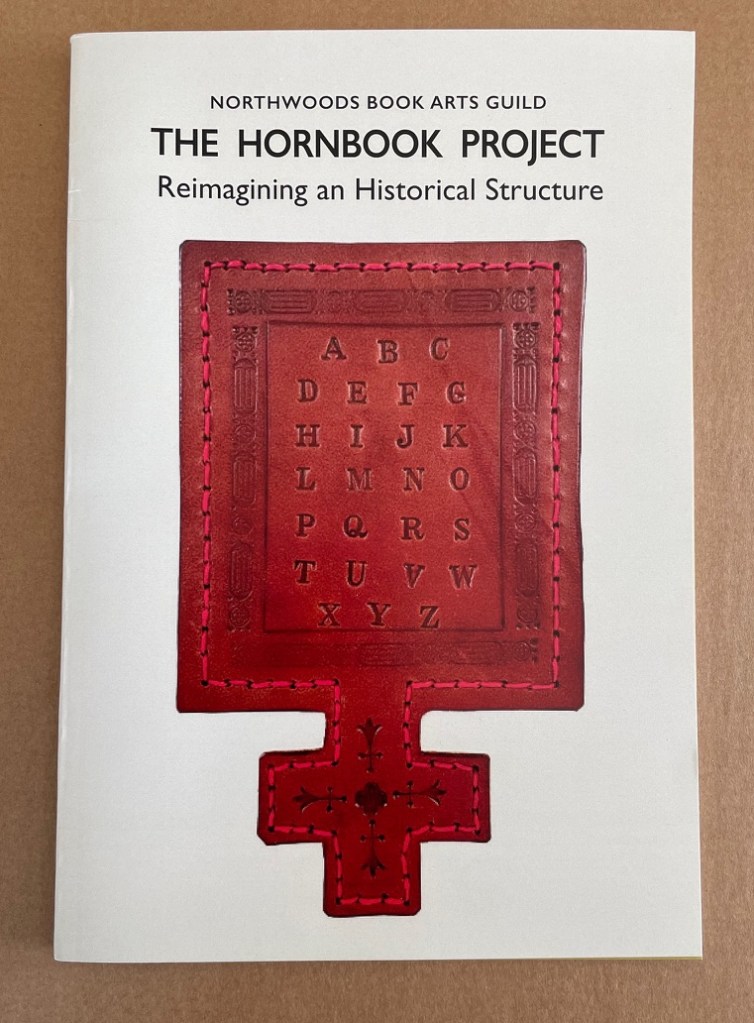
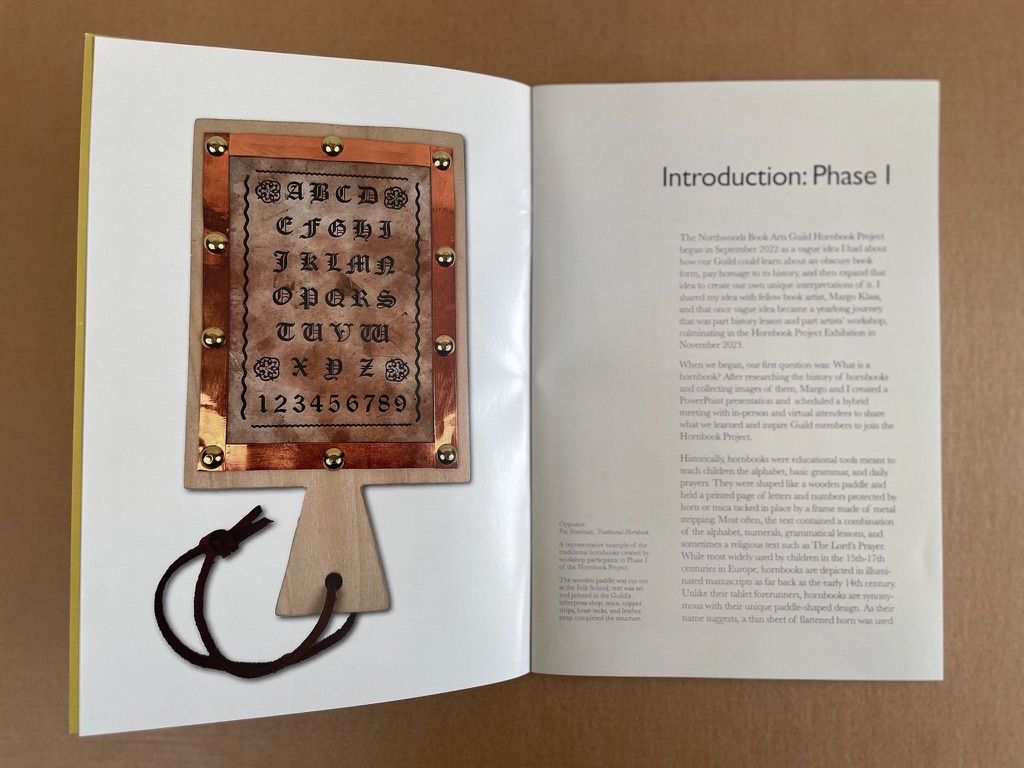
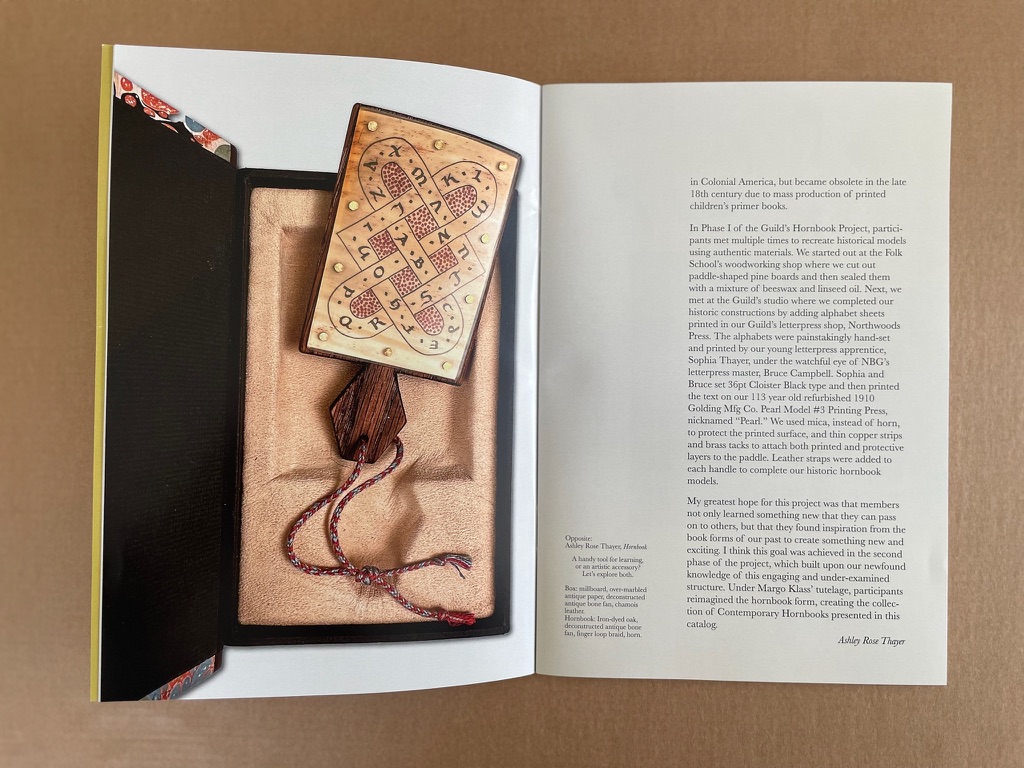
The Hornbook Project (2021) Northwoods Book Arts Guild Booklet saddle stitched with staples. 153 x 153 mm. 30 pages (including inside covers). Acquired from Margo Klass, 2023. Photos: Books On Books Collection.
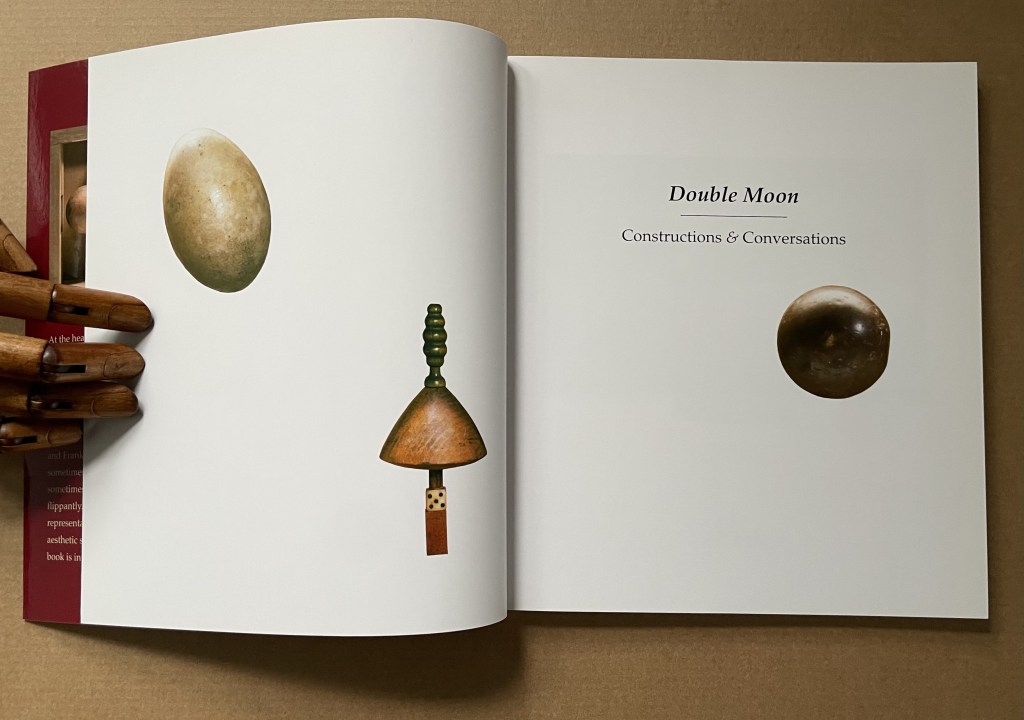
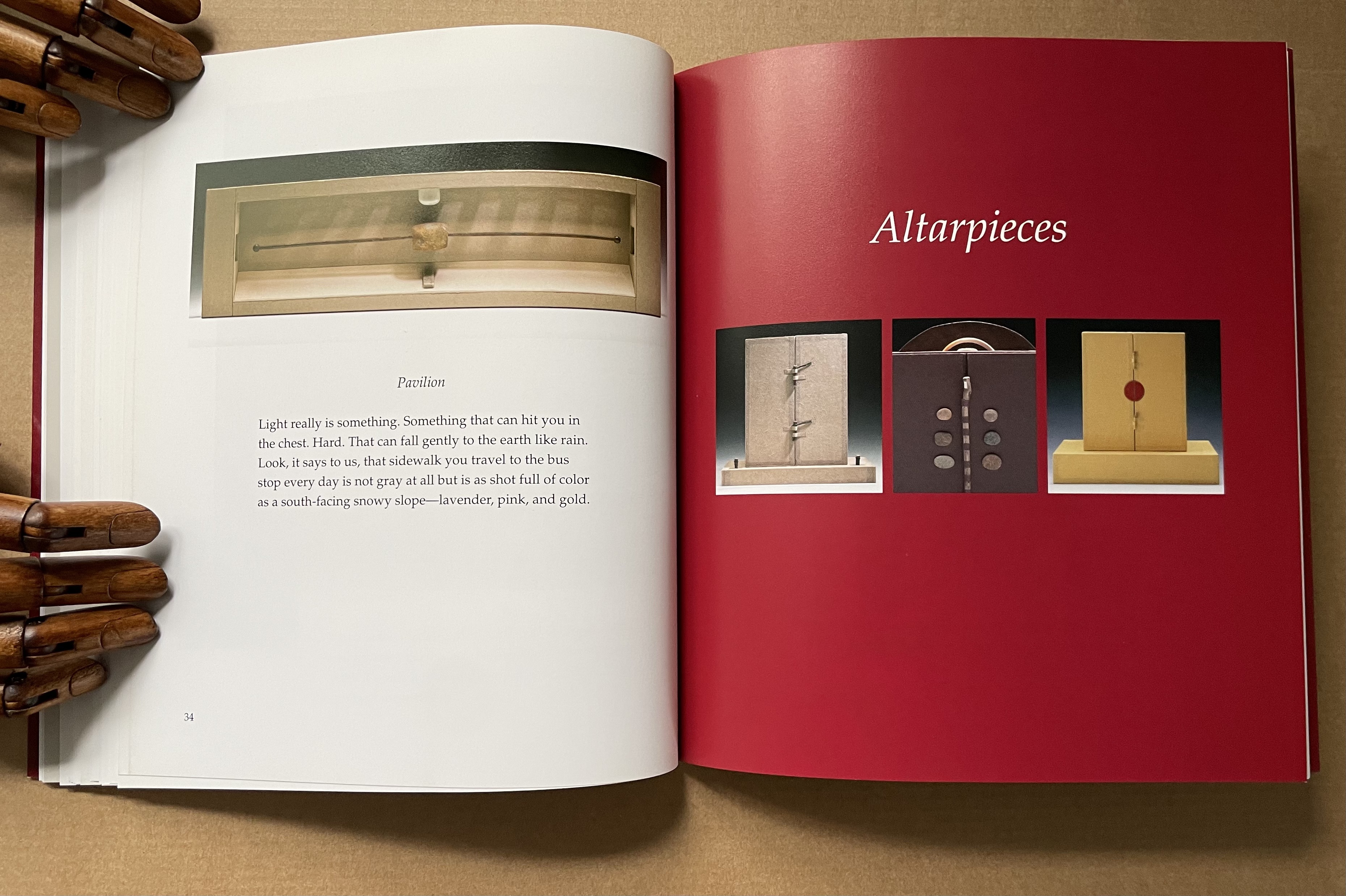
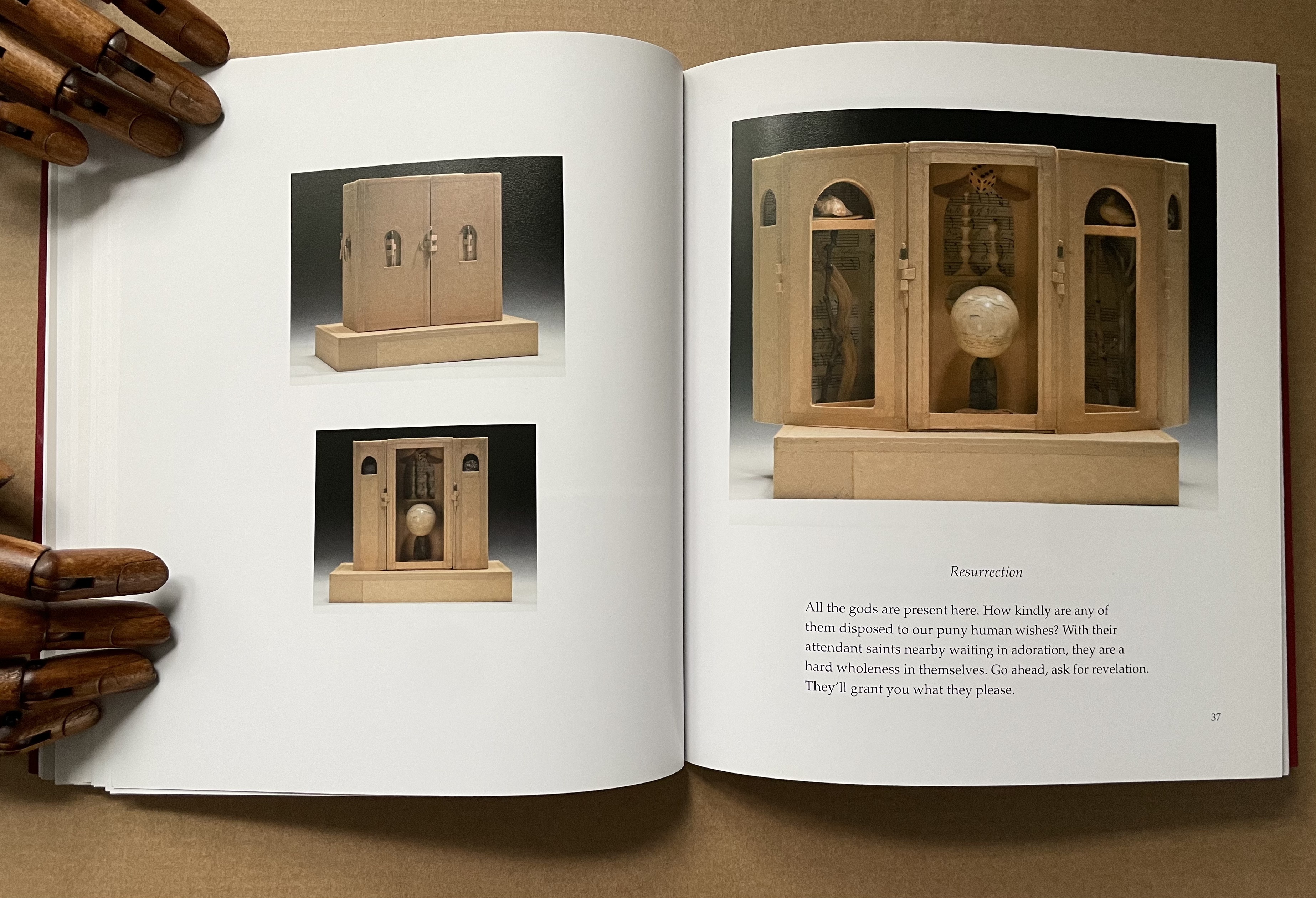
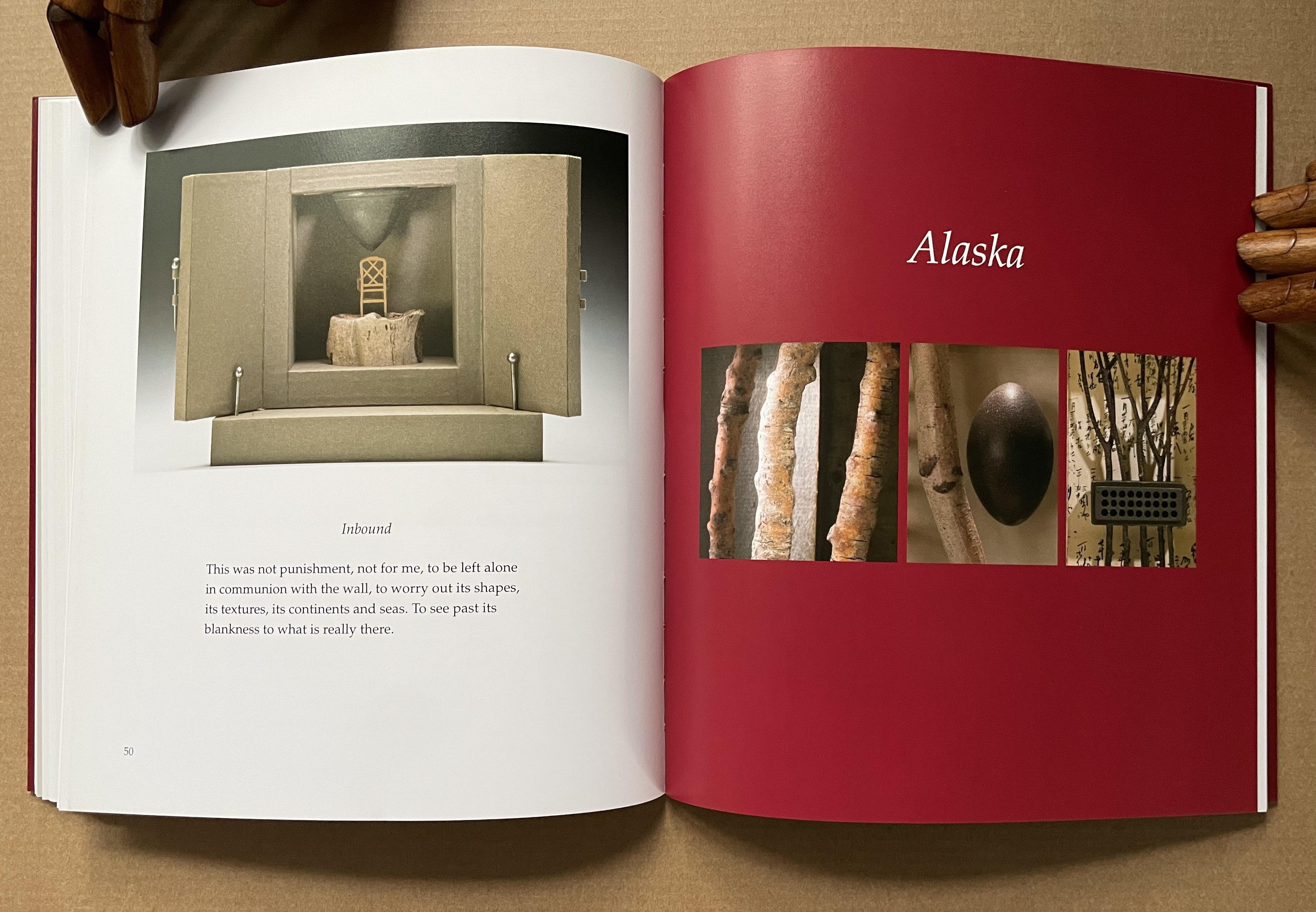
Double Moon (2009)
Double Moon (2009) Margo Klass Perfect bound cased in full-color cover with deep flaps, doublures. H215 x W197 mm. 84 pages. Acquired from Margo Klass, 7 November 2022. Photos: Books On Books Collection.
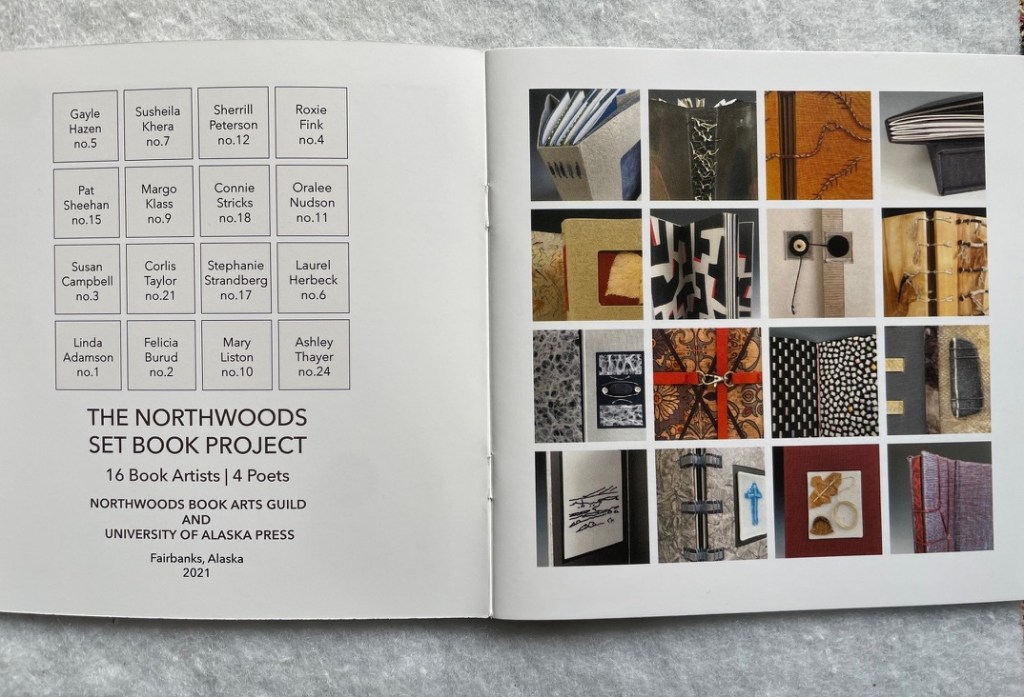
Northwoods Set Book Project (2021)
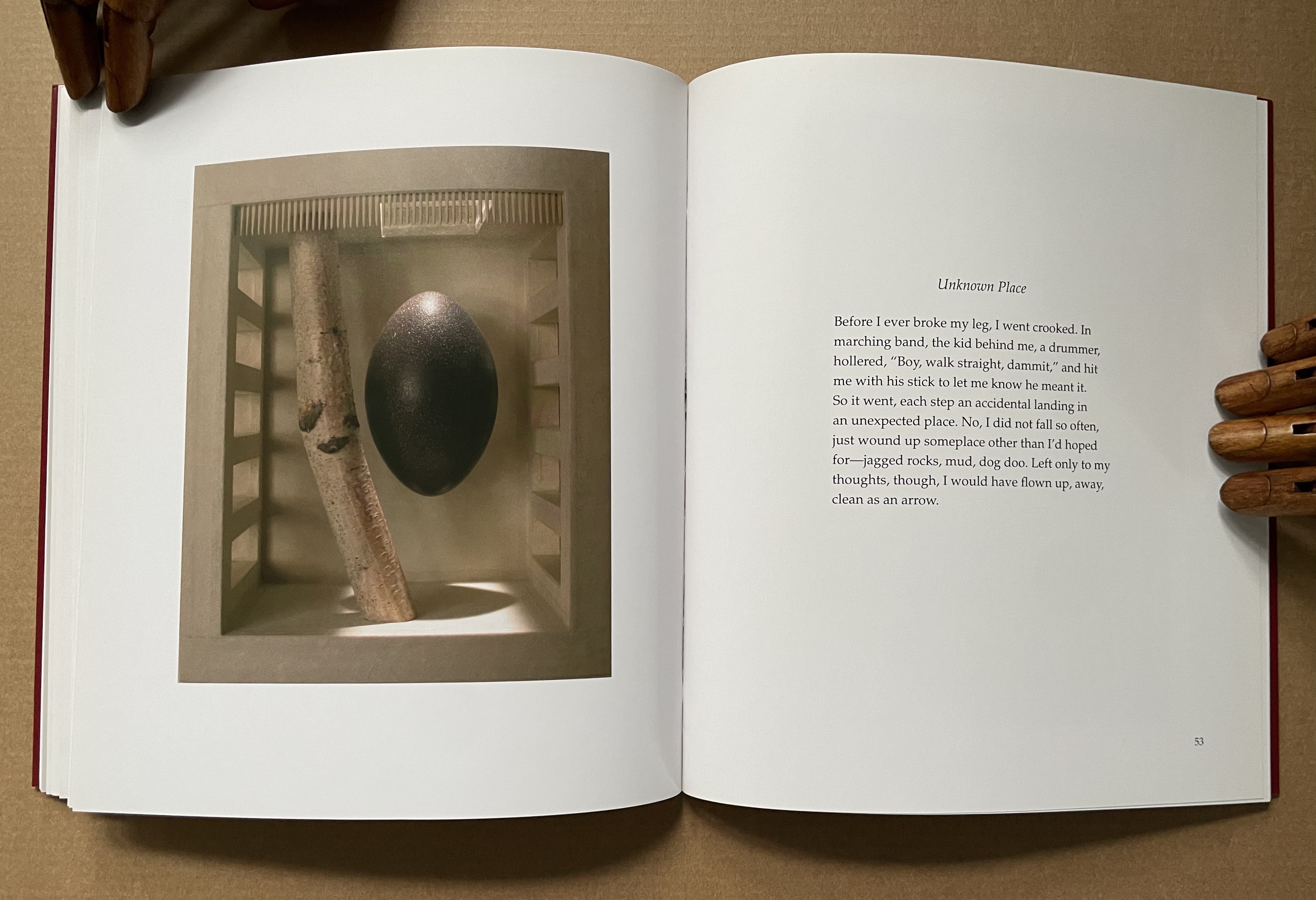
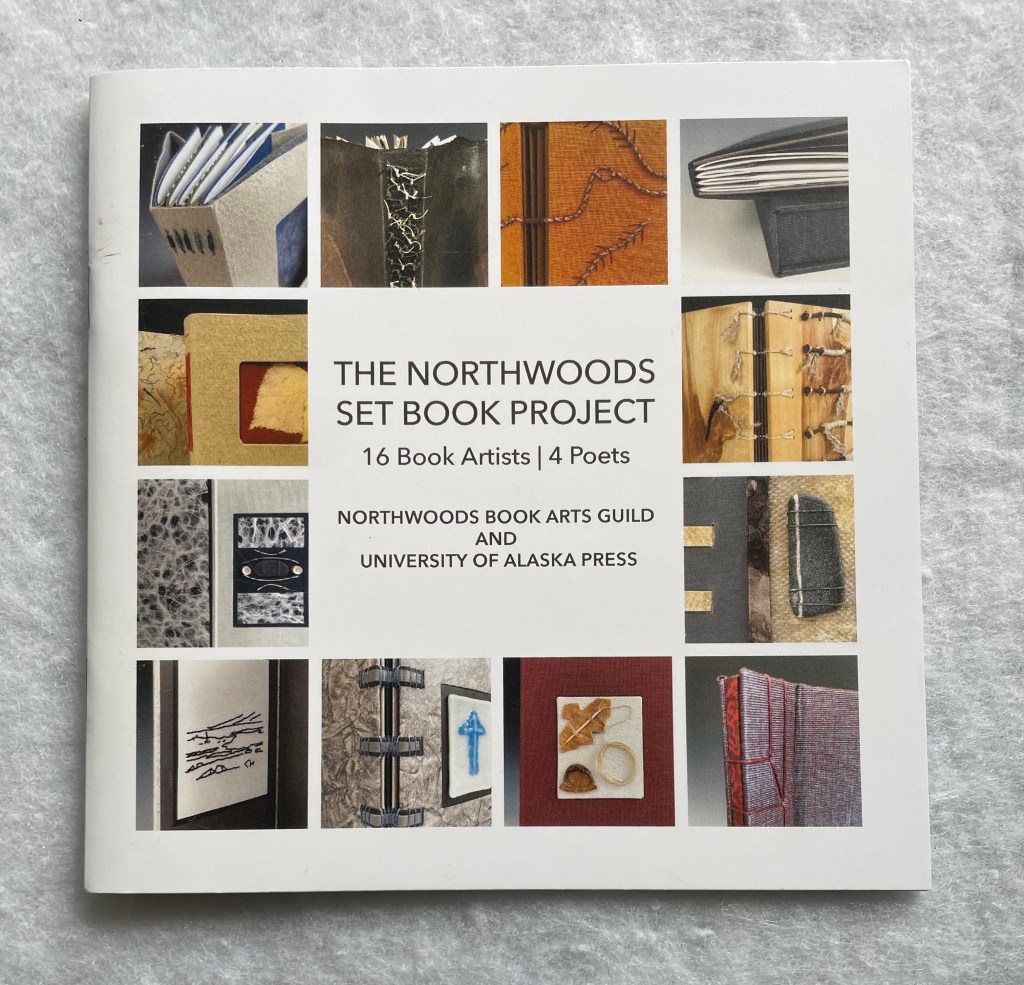
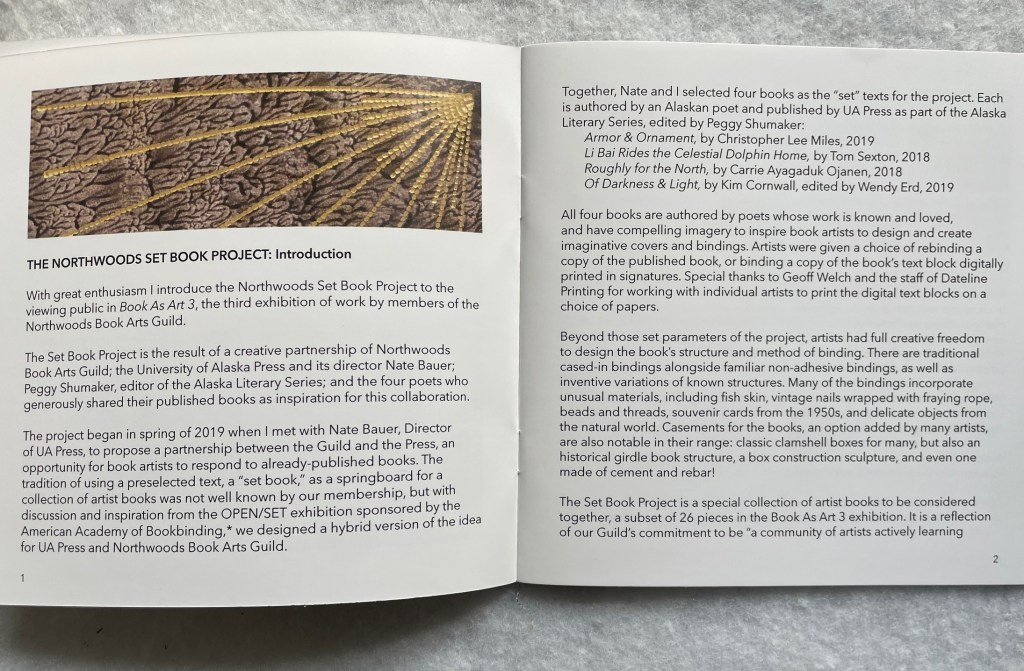
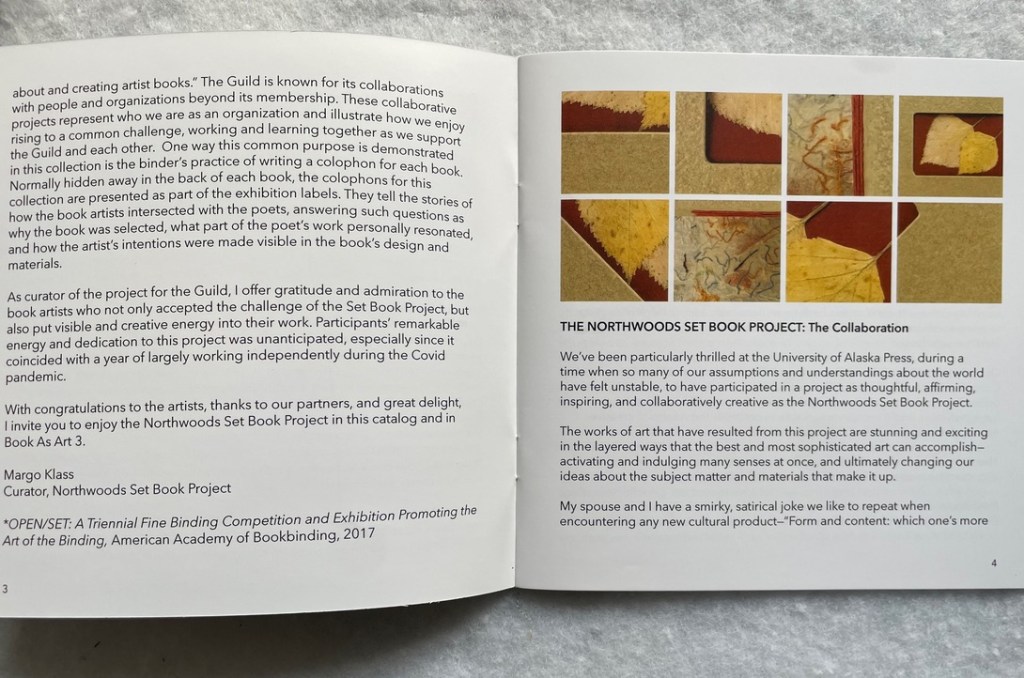
Northwoods Set Book Project (2021) Northwoods Book Arts Guild and Margo Klass Booklet saddle stitched with staples. 153 x 153 mm. 30 pages including inside covers. Acquired from Margo Klass, 2023. Photos: Books On Books Collection.
For a decade, Alicia Bailey has played the role of Ceres to book artists and collectors, bringing them the Artists’ Book Cornucopia. And this has been in addition to creating her own bookworks, organizing other exhibitions and running Abecedarian Gallery and Raven Press. Artists’ Book Cornucopia X marks the tenth and last cornucopia but not the end of their impact.
Cornucopia implies abundance and variety, and Alicia Bailey has delivered both. A glance at the ten catalogues finds a consistently high level of participation — always at least thirty artists — and every catalogue has shown a “variety of varieties”. Consider these varieties:
Variety of structures: accordions, boxes, flag books, girdle books, pop-ups, miniatures, portfolios, scrolls, sculpted shapes, wallets, etc. The variations within each type would require a hunt through The Art of the Fold (Kyle and Warchol), Structure of the Visual Book (Smith) and Book Dynamics! (Hutchins) to identify them properly. In ABC X, all of the structures mentioned above are represented. Over the decade, the Artists’ Book Cornucopia have spilled out structural innovations such as Merike van Zanten’s A Soldier of the Second World War (ABC I), Pamela Paulsrud’s Touchstones (ABC II), Cathryn Miller’s Universe: Foundation Trilogy (ABC III), Louisa Boyd’s miniature Stardust (ABC IV), Susan Kapuscinski Gaylord’s Spirit Book #67 (ABC V), Candace Hicks’s Trees of a Feather (ABC VI), Karen Hardy’s Vellicate (ABC VII), Bryan Kring’s Shared Illusion (ABC VIII) and Josh Hockensmith’s After (ABC IX). The abundance of innovations makes a visit to the Abecedarian Gallery site for numerous second-guessings worthwhile.
The variety of material used by the artists overwhelms: beads and buttons (Ednie), cactus needles and jute (Reka), cement and glass (Bryant), ceramic and cardstock (Wolken), copper and redwood (Anstruther/Grasso), fishing line and wire (Johnston), fish-skin and mull (Klass), leather and “metal findings” (Melis), magnet and museum board (Burton), palladium and aluminum leaf (Bailey), ribbon and slide viewers (Grimm), silk and sinew (Alpers), thread and tyvek (Asato), window screen and wood (Fleming), zippers and fabric (Melhorn-Boe) and, of course, upcycled books (Anastasiou). Any appreciation of the ingenuity of materials selection and manipulation across the Artists’ Book Cornucopia requires a rewarding read of the descriptions provided in each of the catalogues.
Then there is the variety of techniques: blind deboss (Lawrence), calligraphy (Towers), chromogenic prints (Grimm), collograph (Dokudowicz), cyanotype (Biza), gelatine monoprinting (Powers-Torrey), intaglio (Larson), letterpress (Nakata), linocut (Knudson), photopolymer (Larson), risography (Powers-Torrey), silkscreen (Anastasiou) and woodcut (Lucas). Like the materials used, the techniques employed are almost too many to name, and of course, those named are used by more than the one artist mentioned.
And, of course, a riot of papers: abaca (Welch), Alabama kozo (Sico), Awagami Shin Inbe (Gorham), cotton-abaca (Lucas), Domestic Etch/Lana Laid/Masa/Niddegen (Powers-Torrey), Hahnemühle Ingres mouldmade pastel paper (Ednie), indigo flax (Johnston), Somerset (Moyer) and Thai Momi marbled paper (Towers), which of the varieties used are far too few to mention.
Likewise, the variety of shapes and direction is kaleidoscopic: zigzag, circular, globular, vertical, horizontal, square, cuboid and boustrophedon (left to right to left to right, etc.). And that is before any listing of the Platonic shapes in Sarah Bryant’s The Radiant Republic.
The wide variety of themes in ABC X echoes the same breadth across the previous nine catalogues. Here we have architecture (Bryant), botany and discovery (Gower), chronic illness (Wolken), the city (Dokudowicz), environment (Lowdermilk), industrial landscape (Burton), the literary (Bailey), pain (Reka), sexuality (Grimm), travel (Melis), wildlife (Thrams) and #MeToo (Ellis). The named representative artist is just a starting point for each theme, and the themes mentioned are only alphabetical, not exhaustive.
Perhaps the one varietal shortcoming of ABC I-X is that most of the artists participating hail from the US. When another nationality appears in one of the catalogues, it surprises. Over time, “vintners“ from the following countries have shown up: Argentina, Australia, Austria, Brazil, Canada, China, Egypt, France, Greece, Korea, Netherlands, Poland, UK and Venezuela.
The abundance and variety of Alicia Bailey’s Artists’ Book Cornucopia prove one premise and question another from Johanna Drucker’s The Century of Artists’ Books:
If all the elements or activities which contribute to artists’ books as a field are described what emerges is a space made by their intersection, one which is a zone of activity … There are many of these activities: fine printing, independent publishing, the craft tradition of book arts, conceptual art, painting and other traditional arts, politically motivated art activity and activist production, performance of both traditional and experimental varieties, concrete poetry, experimental music, computer and electronic arts, and last but not least, the tradition of the illustrated book, the livre d’artiste. The Century of the Artists’ Books (New York: Granary Books, 2004, new edition), p. 2.
ABC X and its nine sisters shout a resounding “Amen”, but the rich quality and originality of the works displayed whisper “‘the’ century?” At the close of the 21st century’s second decade, Ceres is smiling.


 Books On Books