Dreamings (2023)
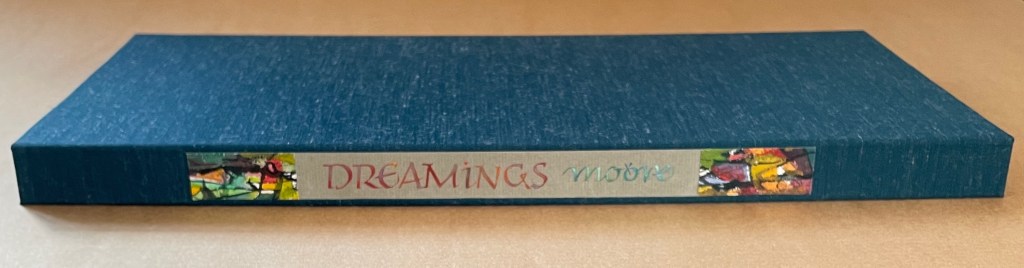
Dreamings (2023)
Suzanne Moore
Artist’s manuscript. Softcover, handsewn. Cloth-covered box with handwritten and painted title pastedown on the spine. H368 x W178 mm. 17 pages. A unique edition. Acquired from the artist, 15 April 2024.
Photos: Books On Books Collection and artist.
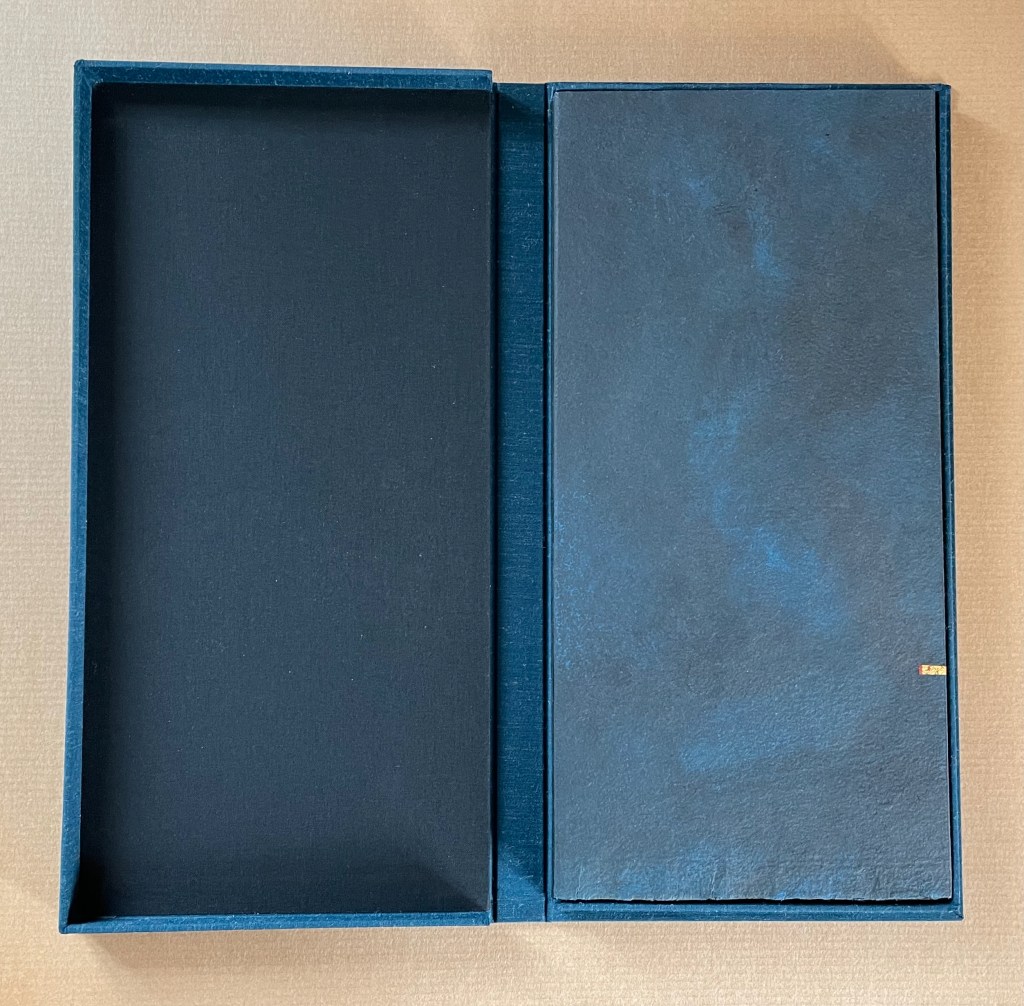
Dreamings (2023) follows the artist’s Question Series, begun in 2008 considering questions of life and art while exploring the letter Q – “that quirky letter of distinct design” as Moore calls it. Other works in the series include:
Thirteen Questions (2008), drawn from Pablo Neruda’s The Book of Questions (1991) [Libro de las preguntas (1974)], unknown location.*
Studies in Love the Question (2016), now at the Letterform Archive.
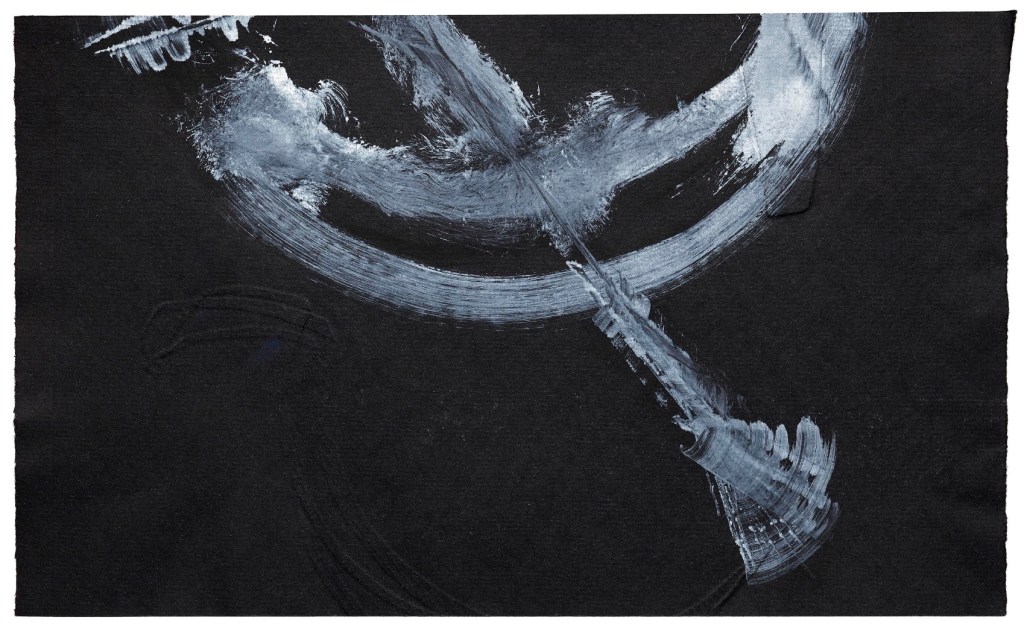
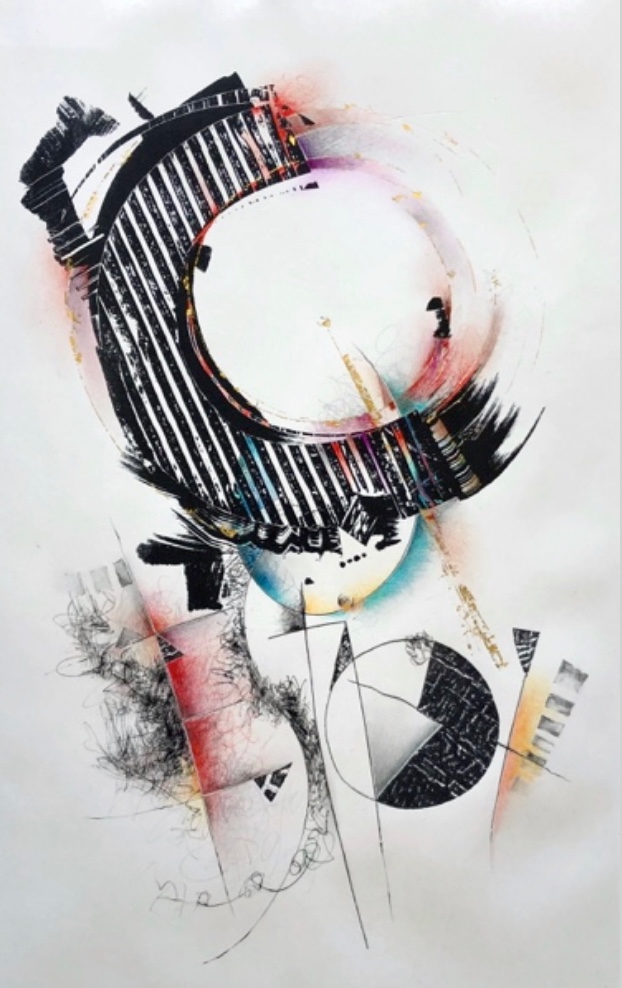
Inquiry (2019), unknown location.*
Seeing Red: Seven Questions (2019), unknown location.*
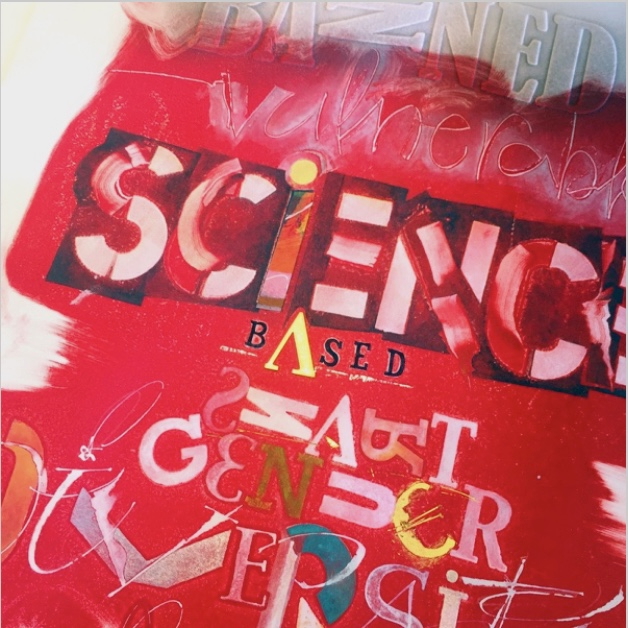
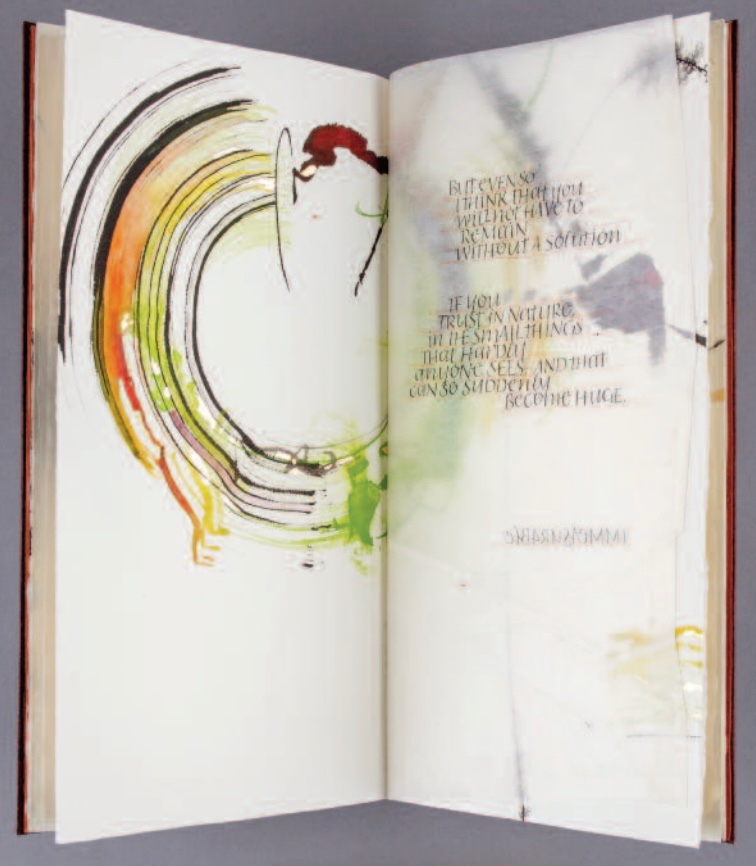
Trust (2019), now at the Boston Athenaeum.
The Question (2021), drawn from Rainer Maria Rilke’s Letters to a Young Poet. Now at Baylor University.
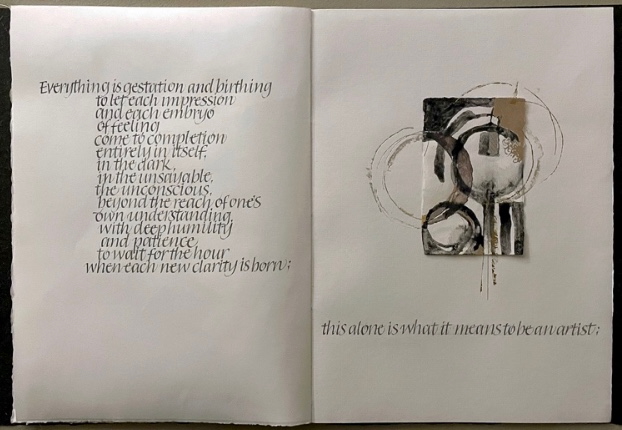
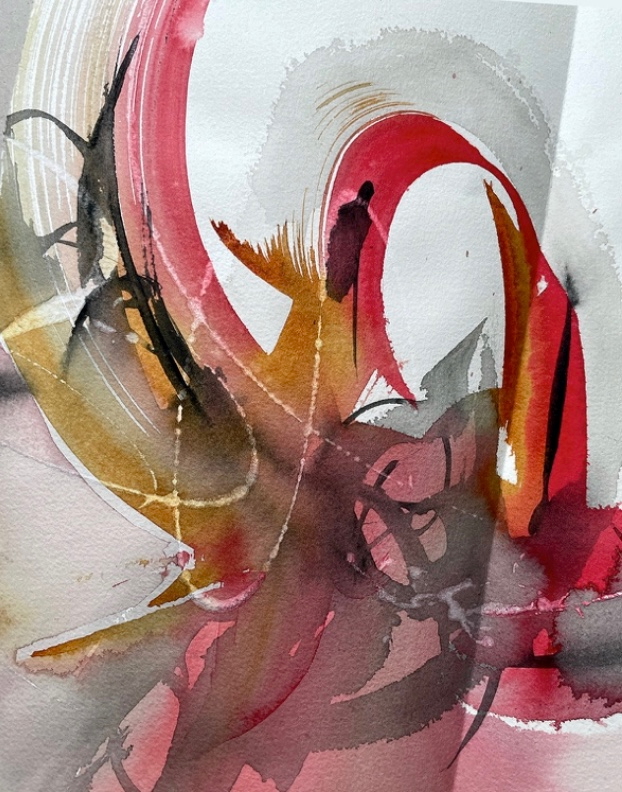
Your Question, Please (2022), unknown location.*
Rescuing Q (2023), now at the Bodleian Libraries.
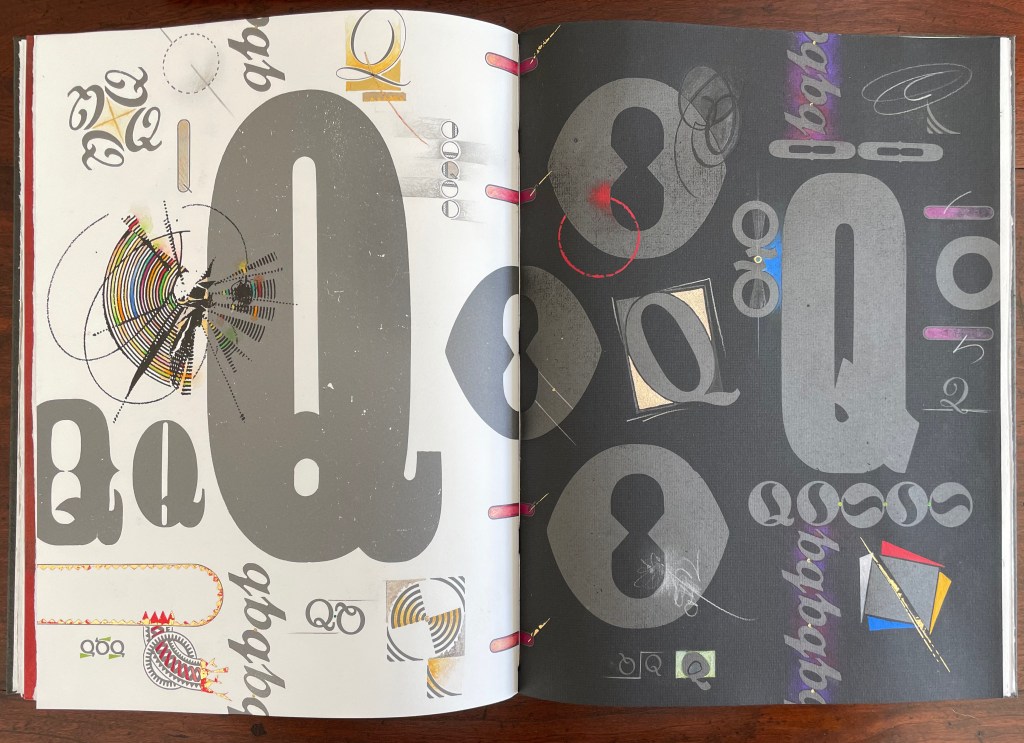
Like the other works in its “queue”, Dreamings casts a quirky net with more threads in common besides the letter Q. Childlike questions about hummingbirds, animal dreams, rainbows, landscapes mapped from above by the earthbound, sentient colors and other surrealities, and the artistry of Mark Rothko and Wassily Kandinsky mix with sheets of translucent paper, bifold folios of Arches Text Wove, and layerings of gold leaf, sumi, acrylics (gesso, heavy, and fluid), and gouache — and, of course, calligraphy.
The color and feel of dreams and curiosity demand no less.
Her talk to the Puget Sound Book Artists in 2025 sheds light on some of the techniques by which she achieves a kinetic depth of color that video and photographs can only hint at. The next three images suggest how brushstrokes and the weave of the paper contribute to the visual depth.
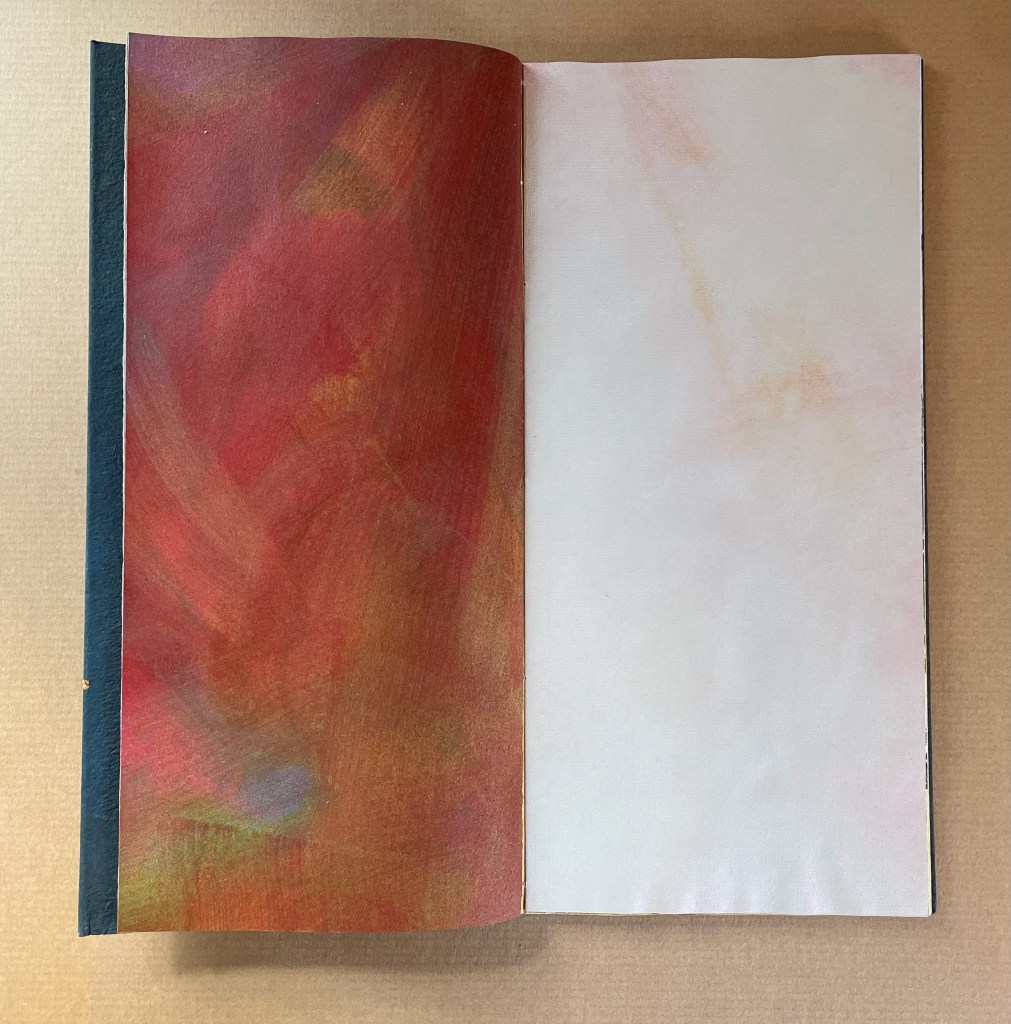

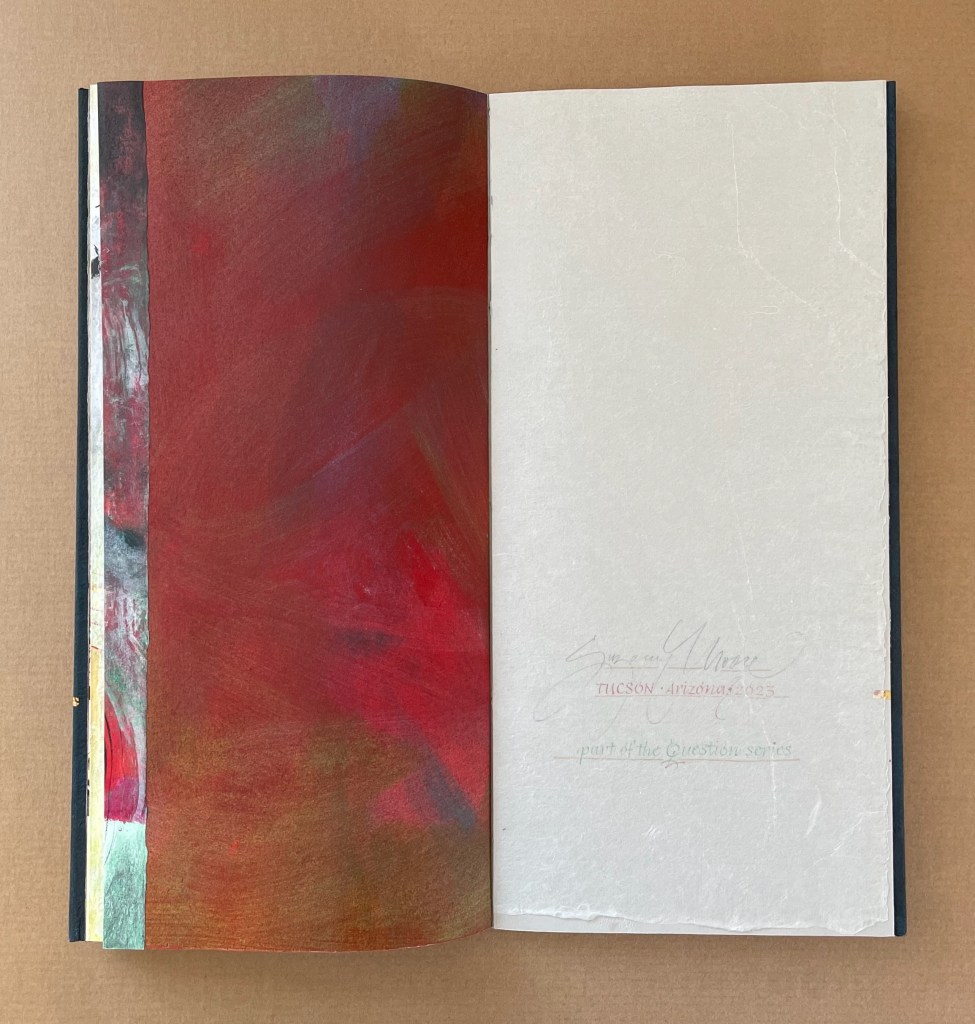
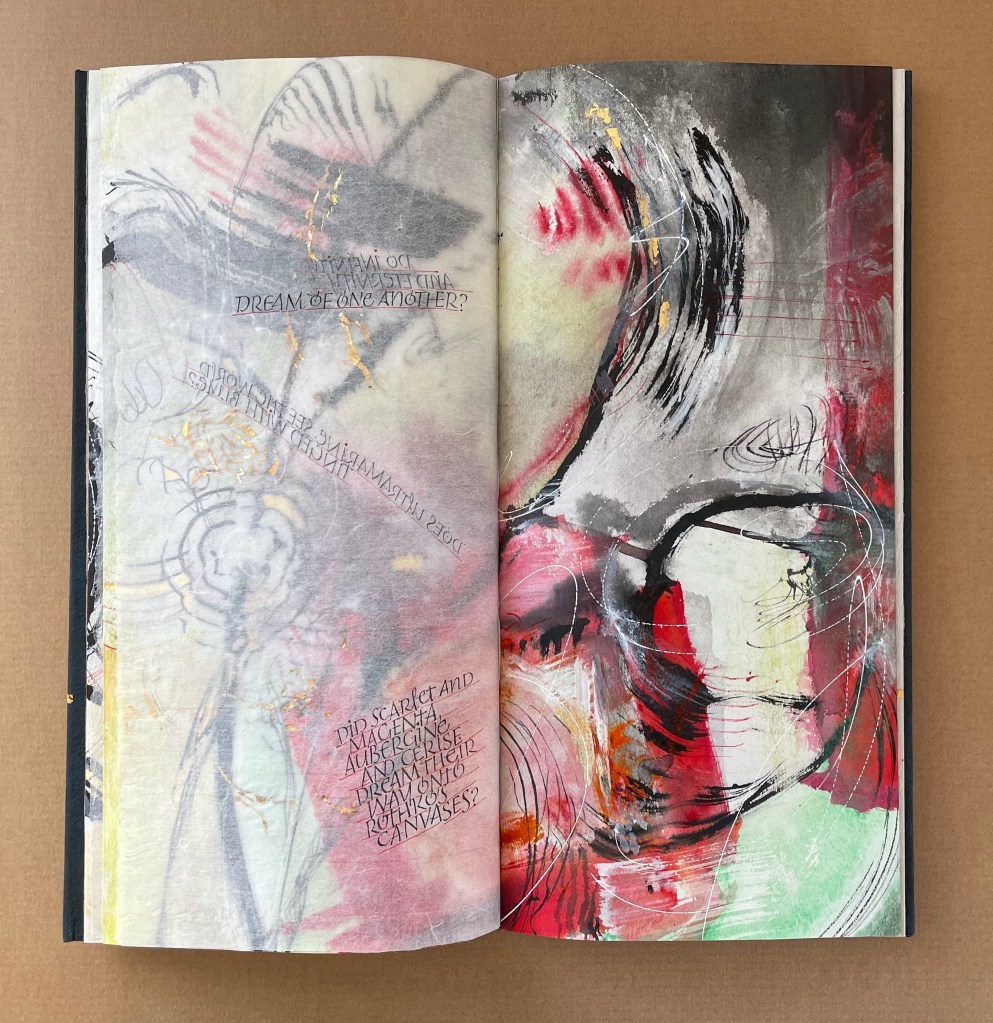
The interplay of translucent and opaque papers enhances the saturation of colors as does the dual uses to which gold leaf is put. Single sheets of deckle-edged translucent paper interleave the opaque folios. The layer of translucent paper plays a complex liminal role. It has its own depth. Even in its lightness, it has a different tactility, a fibrous roughness complemented by the deckle edge. When it lies to the right, it hazes over the colors and shapes in the underlying opaque recto page. When turned to the left, it does the same to the underlying opaque verso page. It bears all of the questioning text and does so on both sides. Following and crossing the lines and shapes on the underlying opaque pages, the text in calligraphy dances across — and through — the pages.
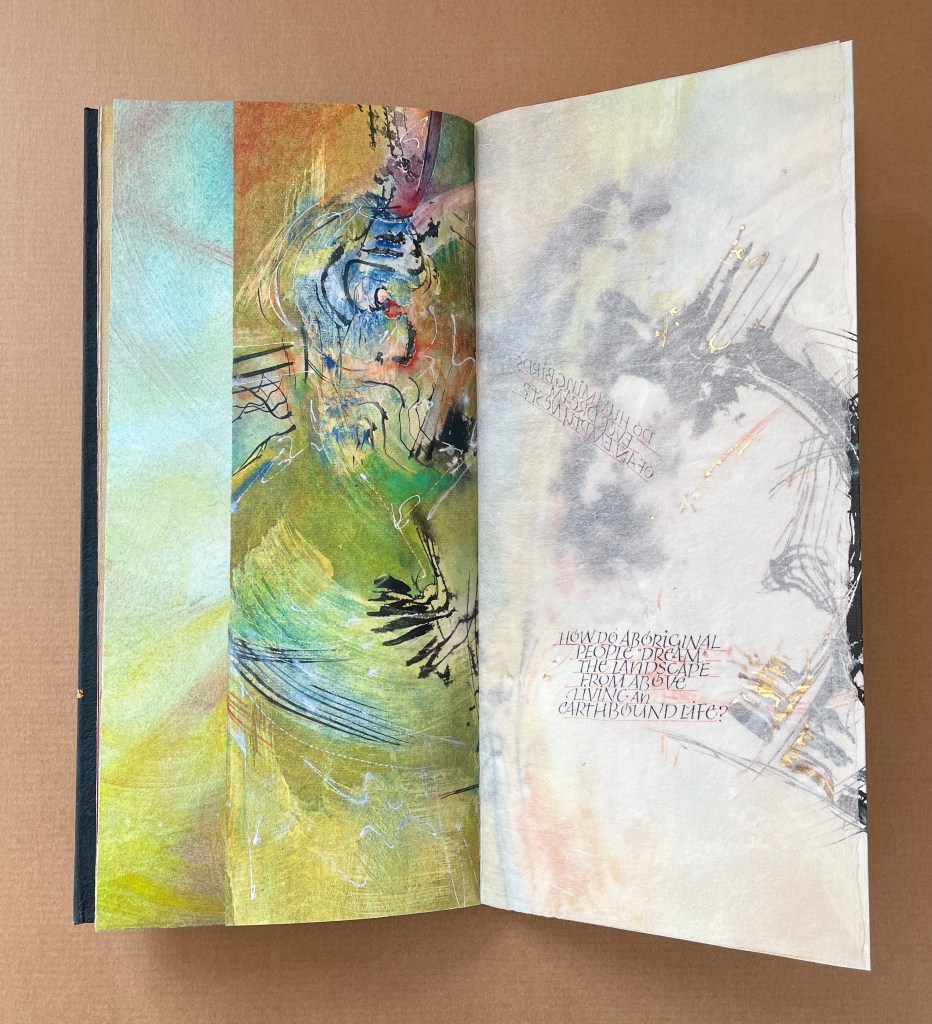


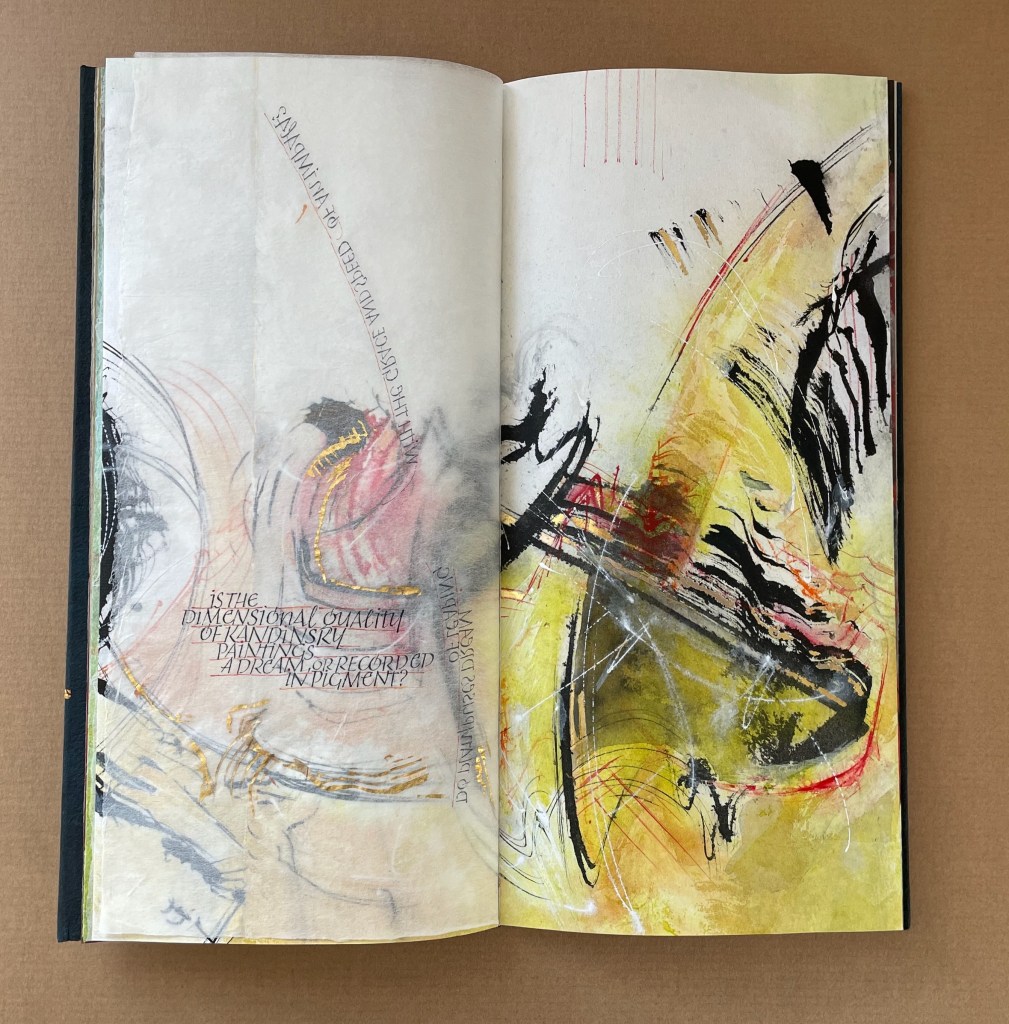
On the last translucent page with text, one sentence is split between the recto and verso sides, adding yet more depth.

The opaque paper appears in Chinese folds. The painting and drawing on an opaque folio occupy all of one side of the sheet. The sheet is folded with the blank side inwards and the painted side outwards. The loose ends are secured in the spine.
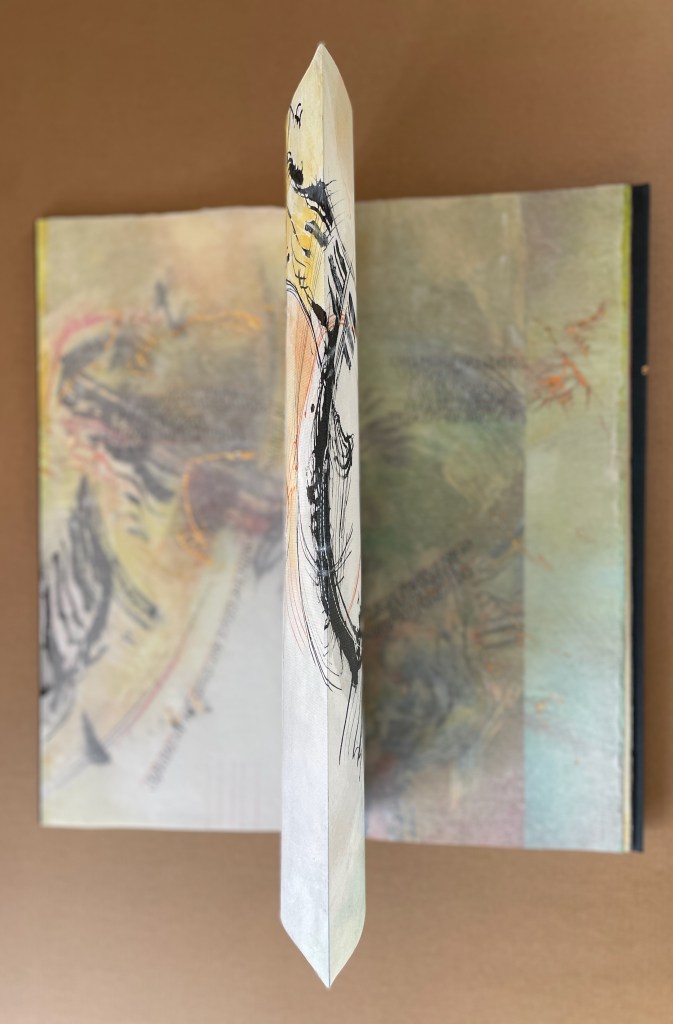

As the manuscript is not stab bound but rather cased and sewn, this is a variant of wrapped-back binding, and the opaque folios’ folded edges become part of the fore edge.

Case binding
Like the calligraphic text, the gold leaf dances, but across both surfaces. On the translucent, it accentuates the fibers as well as the “abstract Q” strokes of color on the underlying opaque surface. On the opaque, the gold leaf also accentuates by underscoring and filling the lines, strokes, and swashes drawn from the letter Q. It also plays a sort of tab role.
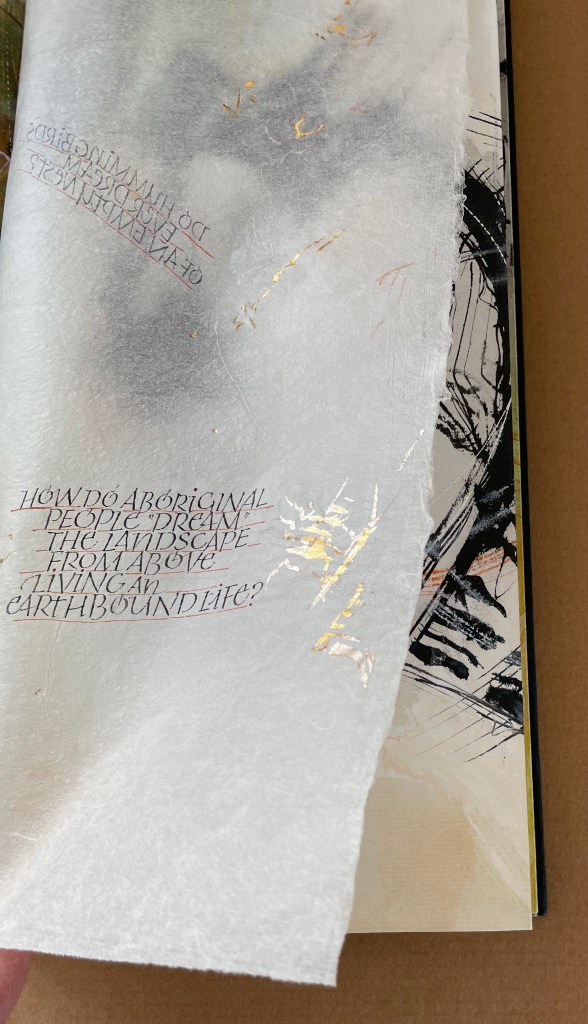


Three photos showing gold leaf tracery across translucent folios.

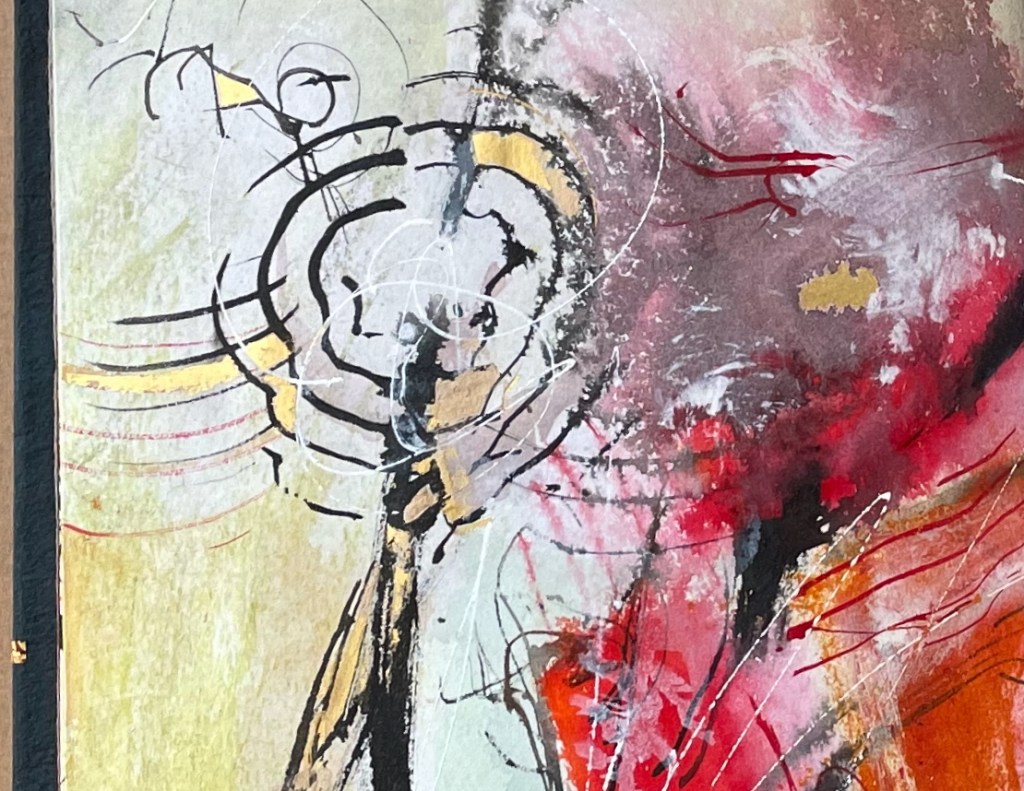

Three photos showing gold leaf tracery across opaque folios.


Three photos showing gold leaf tabs on opaque surfaces.
The questions asked in the translucent pages echo the effects of what is going on materially in Dreamings. The question “How do aboriginal people dream the landscape from above living an earthbound life?” shares the perplexity of divided perspective created by the folds down the middle of the opaque folios’ single images. How can the whole image be perceived? And is looking through the gold-leafed translucent sheets similar to Australia’s indigenous peoples’ dreaming through sun-streaked clouds to devise their maps of the land?
The question “Do hummingbirds dream of an empty nest?” shares an image with the letter strokes and fragments of Q’s counter. The calligraphy of the question “Do platypuses dream of leaping with the grace and speed of an impala?” curves up and rightwards from the bottom of its page and continues almost straight upwards after the gap between “leaping” and “with”. When Moore asks “Is the dimensional quality of Kandinsky paintings a dream, or recorded in pigment?”, and “Does ultramarine see the world tinged with blue?”, and “Did scarlet and magenta, aubergine and cerise dream their way onto Rothko’s canvases?, she speaks directly to the dimensionality and depth her colors achieve. Of course, the recurrent verb “dream” and the nature of the questions themselves evoke the often surreal, silly and illogical qualities of dreams where time (eternity) and space (infinity) have new rules.
*Note to readers: If you can share information on the location of the other works in the Question Series, please leave a note in the Comments section.
Further Reading and Viewing
“Abecedaries I (in progress)“. Books On Books Collection.
“Suzanne Moore (I)“. 6 June 2023. Books On Books Collection.
“Suzanne Moore (II)“. 16 May 2025. Books On Books Collection.
Moore, Suzanne. 2022. “Beyond Pigment and Paste: Creating New Dimensions on Paper“. Book Paper Thread. Video.
Neruda, Pablo. 2022. Book of Questions : Selections. Illustrated by Paloma Valdivia and translated by Sara Lissa Paulson. New York: Enchanted Lion Books. Valdivia’s selection and rearrangement of Neruda’s questions takes the form of a children’s book with numerous foldouts. Valdivia’s Spanish edition first appeared in 1974 with her graphite, pen and ink, and watercolor illustrations.
 Books On Books