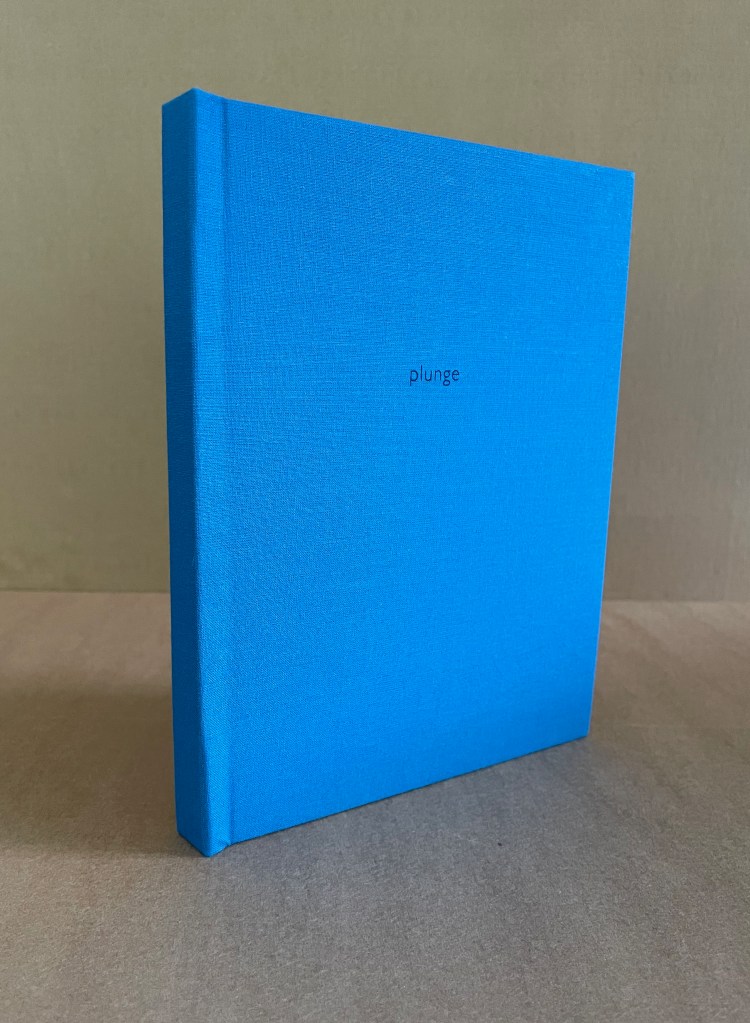
Plunge (2010) Chisato Tamabayashi Casebound, cloth over boards. Pop-up book. H193 x W152 mm. [12] pages. Collinge & Clark, 6 August 2024. Photos: Books On Books Collection. Displayed with permission from Chisato Tamabayashi.
“This book begins with a dive into the sea, down into the deep and back again, encountering various creatures on the way. The pages are designed to be held and angled in different ways so that the reader can explore the depths and the two sides of the sea’s surface.”–Artist’s statement
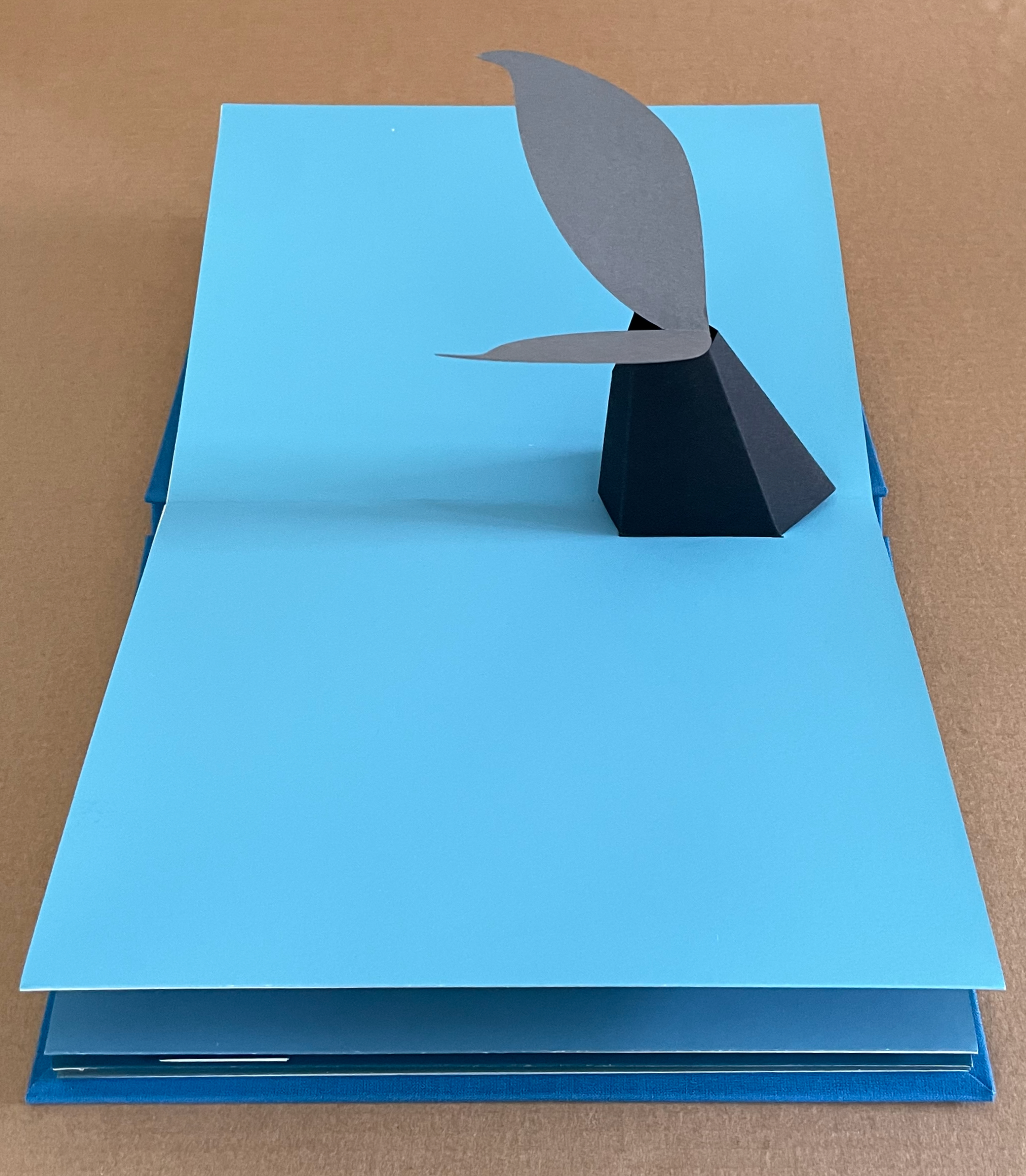
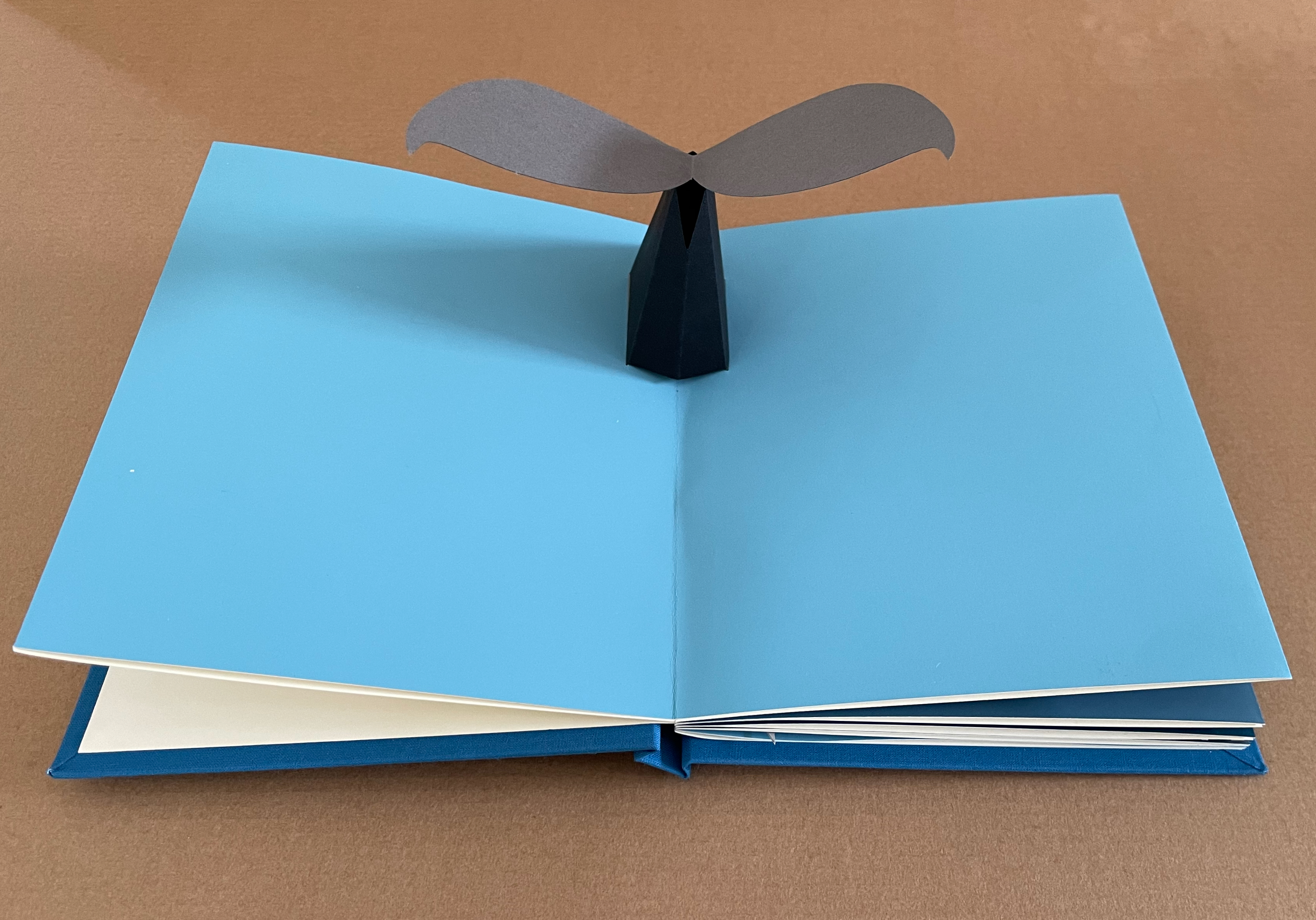
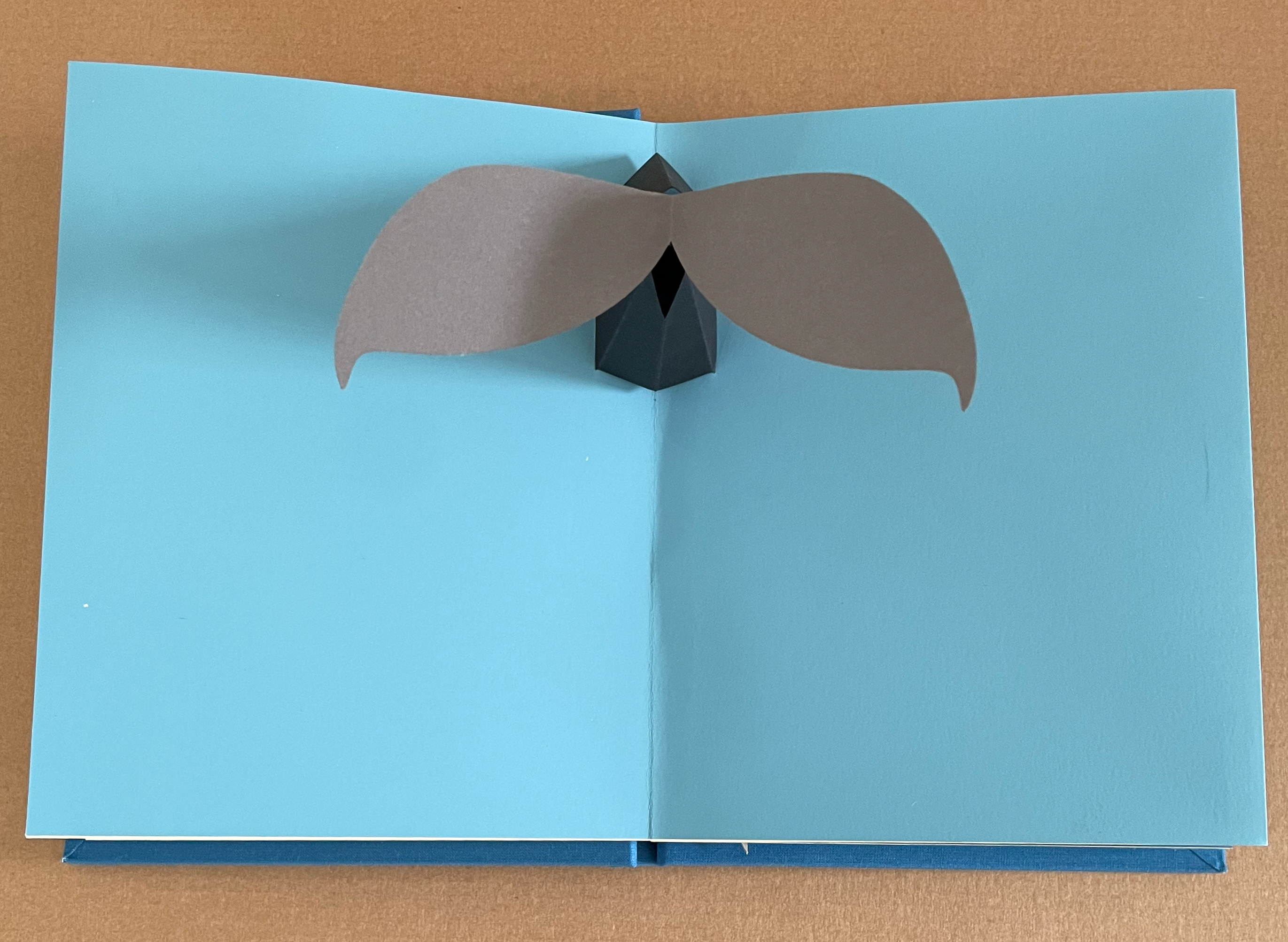
It is a pleasure to touch and turn the pages forming the surface and bed of the sea on which the pop-ups and movable elements rise, fall and move. The screen printing with TW graphics ink (pigment ink) enrich the book’s freshness and vibrancy. These photos and very brief video further below do little justice to Plunge and only hint at the sheer fun of manipulating it.
Pages: Simili Japon paper 225gsm. Pop-ups, hand cut by scalpel from Murano pastel paper 160gsm and Colorplan paper 175gsm.
As the double-page spread below shows, Tamabayashi thinks and crafts “in the round” to position his paper sculpture to suggest a sea turtle’s motion through the water.
anamorphosis, n. — Oxford English Dictionary (1884-2011)
Etymology: < Greek ἀναμόρϕωσις transformation, n. of action < ἀναμορϕοῦν to transform, < ἀνά back, again + μορϕοῦν to form, < μορϕή form. Still by some pronounced anamorphōsis, after the Greek ω.
A distorted projection or drawing of anything, so made that when viewed from a particular point, or by reflection from a suitable mirror, it appears regular and properly proportioned; a deformation. 1728 E. Chambers Cycl. (at cited word), To draw the Anamorphosis, or Deformation of an Image upon the convex Surface of a Cone. 1816 T. Jefferson Writings (1830) IV. 273 It was to correct their anamorphosis of the Deity, that Jesus preached. 1846 J. Joyce Sci. Dialogues xiv. 306 These images are called anamorphoses. 1873 Athenæum 25 Jan. This bewildering object is undoubtedly an anamorphosis of a human skull.
Anno’s Magical Alphabet (1981)
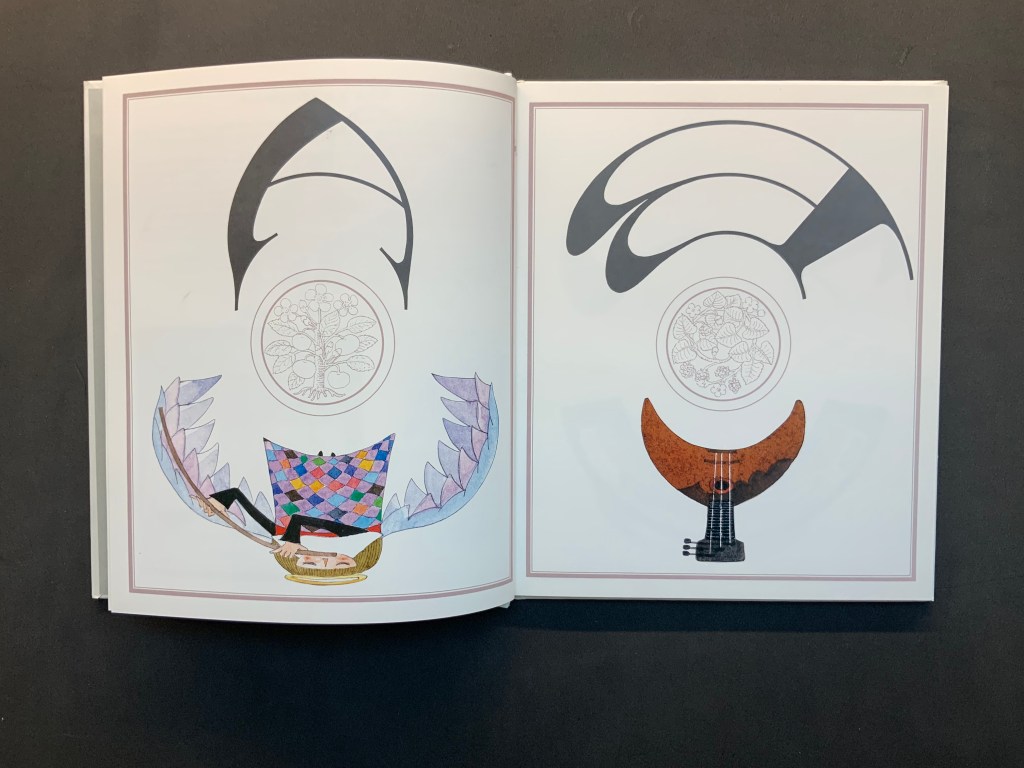
Anno’s Magical Alphabet(1981) Mitsumasa Anno and Masaichirō Anno Hardcover, illustrated paper over boards. Mirror paper in a pocket inside back cover. H260 x W215 mm 64 pages. Acquired from Stella & Rose, 26 July 2022. Photos: Books On Books Collection.
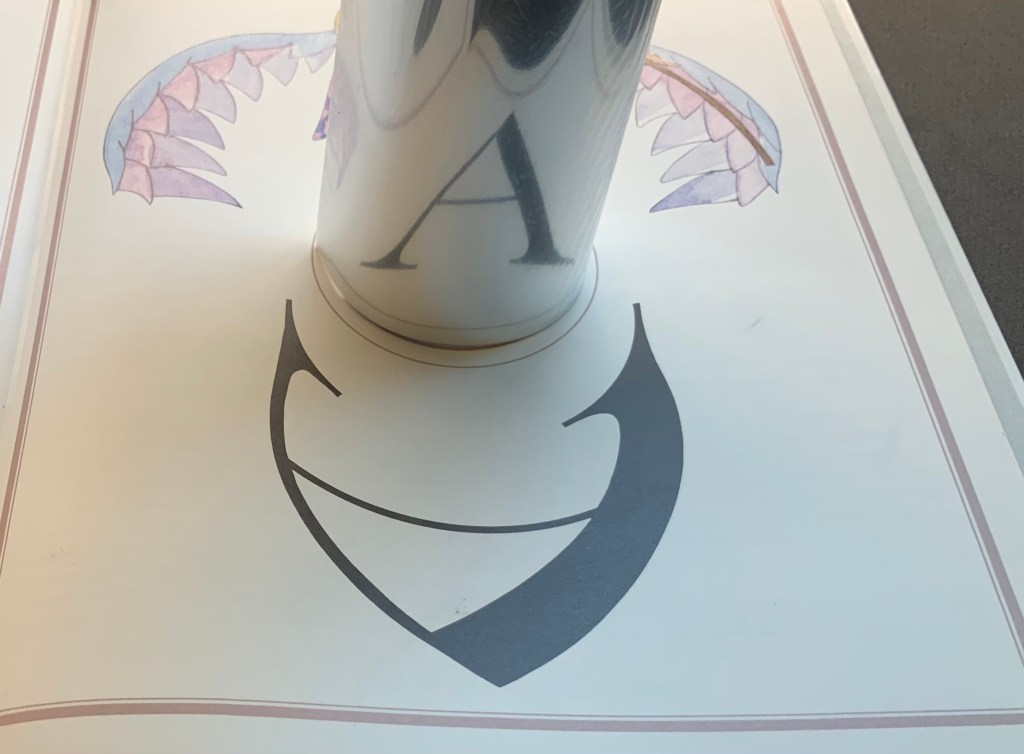
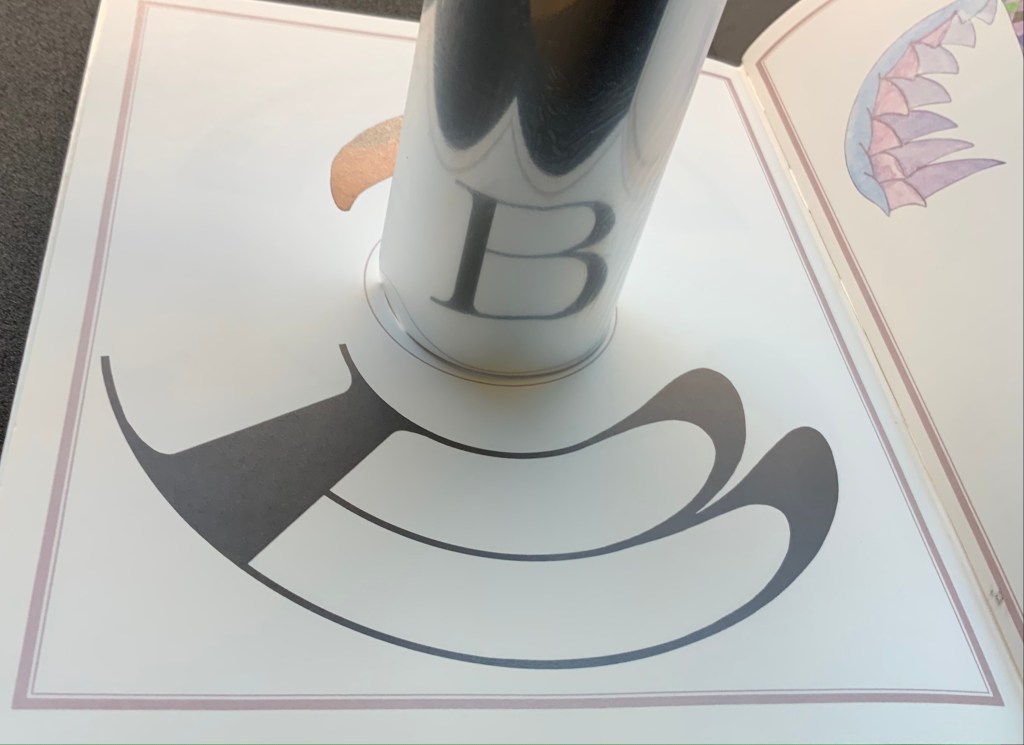
Like Tatyana Mavrina’s A Fairy Tale Alphabet (1969), this alphabet book is probably best enjoyed by child and adult together — at least if it is planned to be enjoyed more than once. The mirror paper that forms the tube to be placed on the center circle is delicate and requires a deft touch. Old heavy hands may require the assistance of younger, more nimble ones. Impatient young hands may require that of older, more deliberate ones.
A former mathematics teacher, Mitsumasa Anno conceived several children’s books that brought his delight in puzzles and complexity to life. In 1984, he received the Hans Christian Andersen Medal in 1984 for his “lasting contribution to children’s literature.” This one was chosen for the Books On Books Collection not only for its contribution to the theme of alphabet-related works but also for its design, color, execution and science.
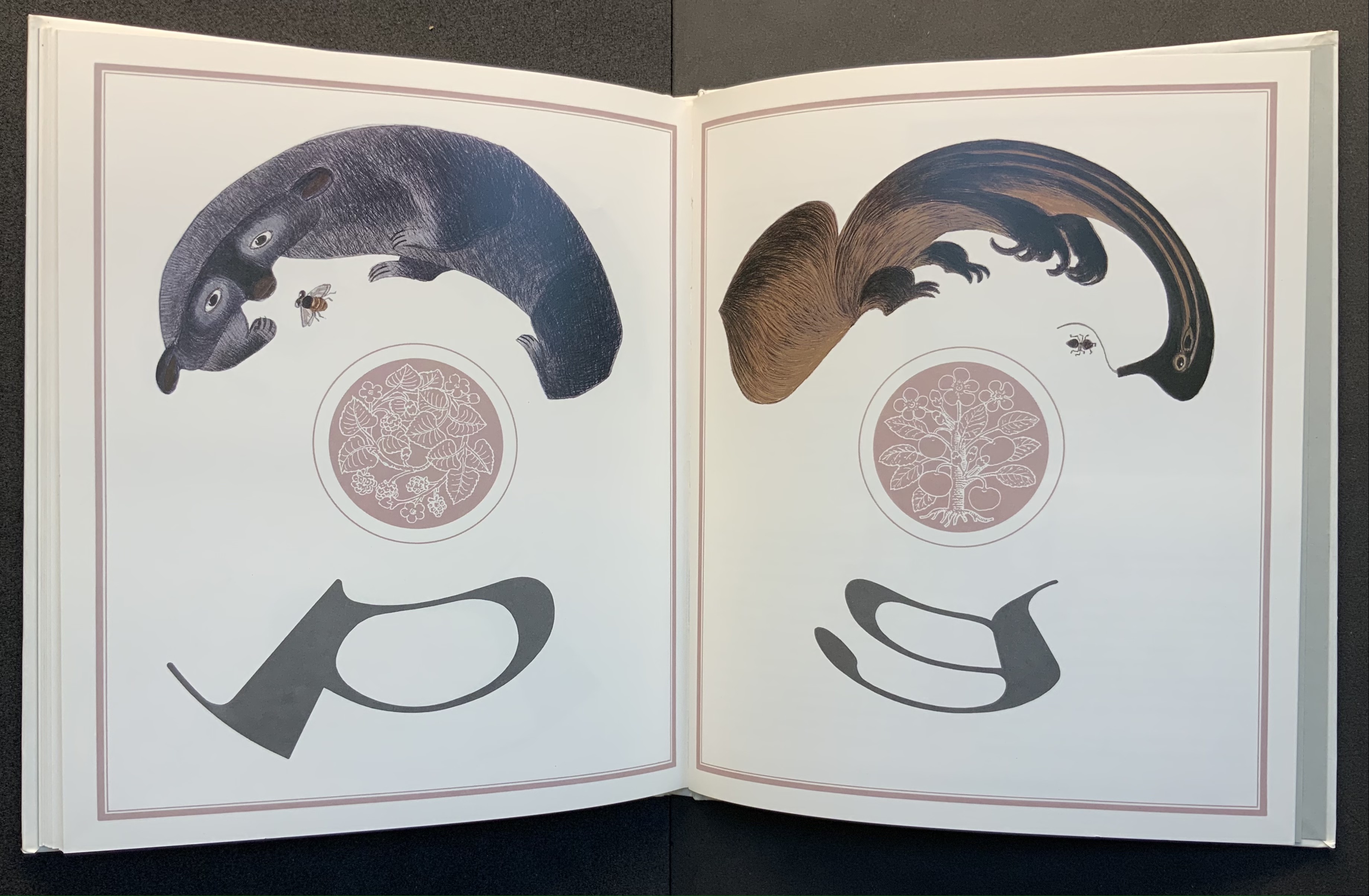
The usual presentation of letter and animal image undergoes a transformation that requires the reader/viewer to move around the book (or turn the book, best aided with a Lazy Susan) to see the anamorphic letter and animal transform into their more easily recognizable shapes.
Anno and his son have taken the alphabet-teaching task of their book seriously and, in the second half of the book, present the lowercase letters along with a new set of distorted animals. For the more unusual items (like the Russian balalaika above), there is a helpful set of clues in the book’s backmatter.
The more precocious younger reader/viewer (and even a precocious elder one) may want to look at Parmigianino’s Self-Portrait (1524) or Hans Holbein the Younger’s The Ambassadors (1533) for earlier explorations of anamorphism.
Miller, Jonathan, and Valerie D. Mendes. 1998. On Reflection. London/ New Haven, CT: National Gallery Publications/ Distributed by Yale University Press.




 Books On Books