L OO P (2019)
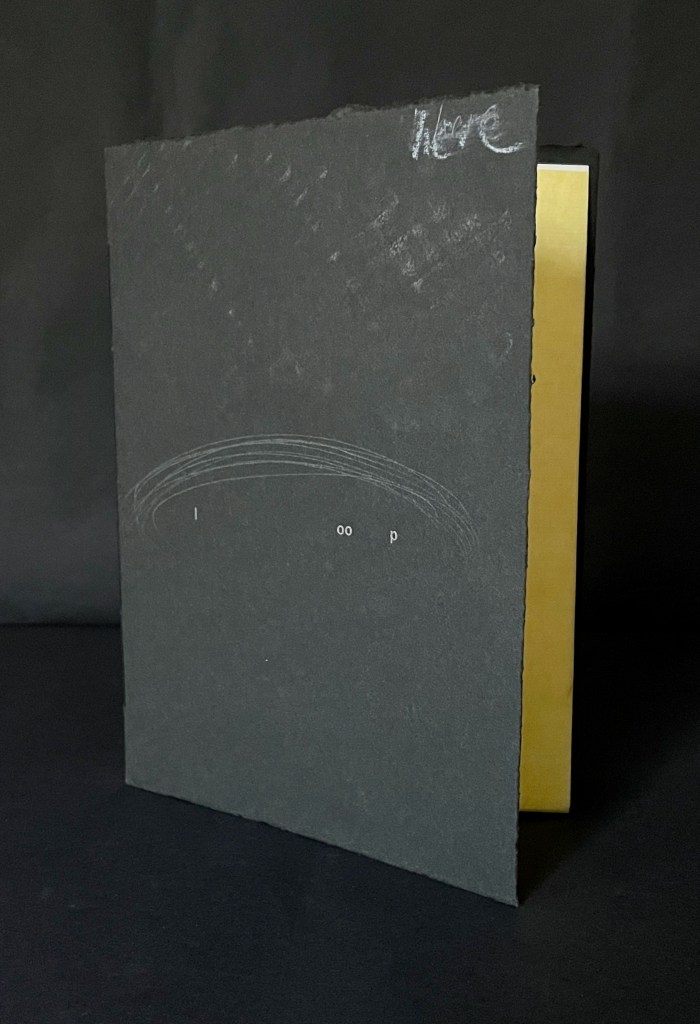
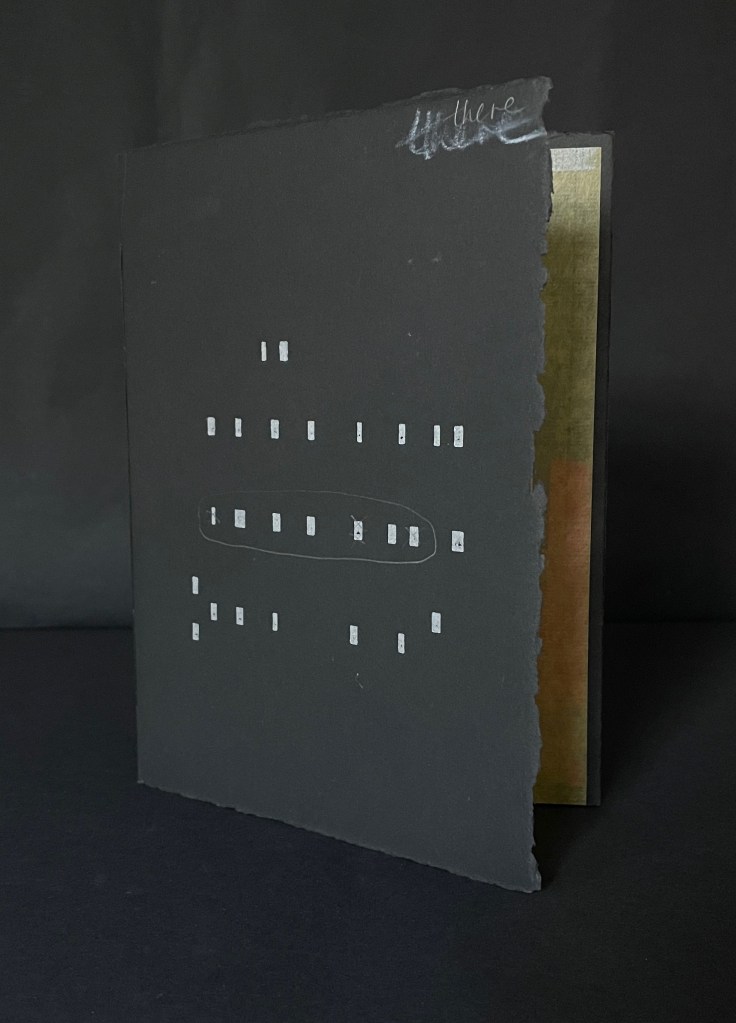
L OO P (2019)
Caren Florance
Handset letterpress and mixed media on Stonehenge Black, Chinese papers and found maps. Hand-stitched Z-fold dos-à-dos booklet. H193 x W143 mm. [48] pages. Edition of 16, of which this is #13. Acquired from the artist, 1 December 2025.
Photos: Books On Books Collection. Displayed with artist’s permission.
L OO P is one to compare with Jack Oudyn’s Opening Dark Windows (2020) and Tim Mosely’s Grasping the Nettle (2020). All three of these Australian book artists create works responding to climate change. L OO P is also one to contrast with Barbara Beisinghoff’s Tau blau / Dew Blue (2013). Both thrust forward their works’ tactility, but while Beisinghoff’s offers the fond hope of natural and artistic renewal as it plays off H.C. Andersen’s fairy tale Hørren /The Flax, Florance’s embeds shards of John Bennett’s bird poem Overwintering in a back-to-back loop of despair over climate change.
The 26 numbered entries are fragments taken from ‘Overwintering’, 2018: 26 poems by John Bennett, used with permission from the author. Florance’s personal statement about the work is needed to appreciate L OO P fully.
L OO P is a book based on a poem about birds. There isn’t a bird in it. It is bereft of living things. There is a lot of frustration, fear and questioning. It is a book about the climate change emergency, pushing John Bennett’s quiet, polite worries into desperate territory. The books look battered because they are: the Chinese papers, pristine when I found them on a trip to Hangzhou, China, have been carried home in my luggage and through three house moves. They show their travel. Visiting China in 2015 shook me to the core. Hangzhou is a domestic tourist destination. It is the ‘Willow Pattern Plate’ city, full of lakes, pagodas and willows. In 2016, the year after I visited as an international tourist, Hangzhou received 136,958,500 domestic tourists. The air is thick with smog. Everyone has to drink from plastic bottles as the local water is undrinkable. There are electronic signs at every tourist attraction giving live updates about tourism crowding and air pollution. When I got home to Canberra, I almost kissed the ground gratefully: clear air, clean, drinkable water, wide open urban spaces interspersed with natural spaces. When I walk through a wide empty space, my retina still populates it with people. I have not used a plastic bottle since my trip, but while I recycle, reuse and try not to fly, I now feel like my efforts are worthless in the face of capitalist abuse of resources in the pursuit of profits and wealth. We say these things again and again: I am old enough to know how long we have been warned about climate change, and capitalism, but no-one pays attention. Things are going to loop and swirl until something major happens. I do not want to celebrate beauty. I want to weep in despair. L OO P is the result of this feeling.
Addendum, 2020: Summer 2020 was when I couldn’t kiss the Canberra ground anymore. Stuck inside my hot sealed flat, using a hand-made air purifier (none in the shops), having to wear a P2 mask whenever I went outside. My region was full of toxic smoke from the unprecedented ferocity of the NSW south coast and ACT bushfires. I had my emergency kit sitting by the door, and every day I checked about 5 apps to get the latest updates. L OO P now feels like a souvenir of this summer, even though it preceded it.
The way that Florance loops the paper collage effect into the opening and closing sequences of the “there” side echoes the “there here” title and the numerous loops configured in type within the core of the book.
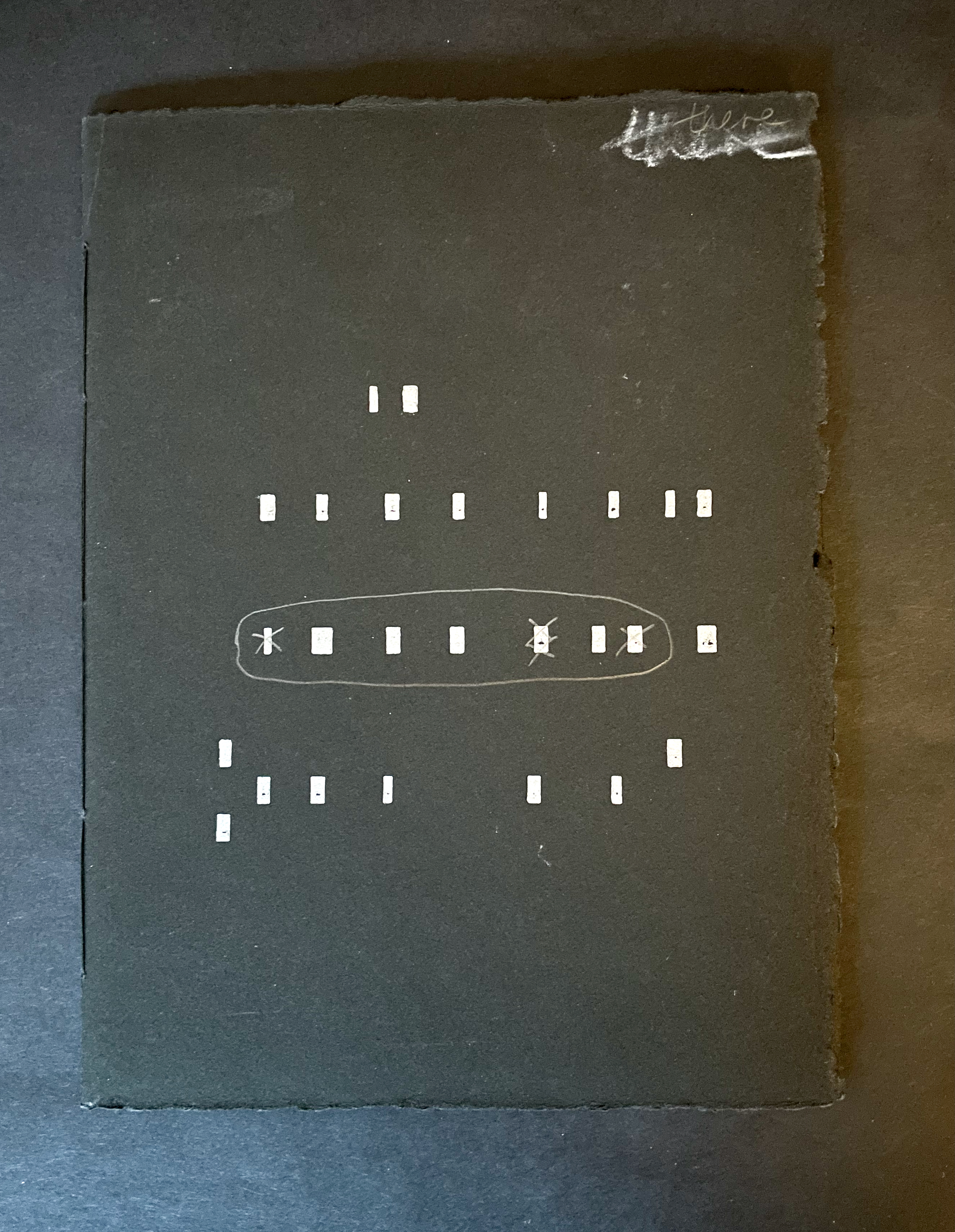
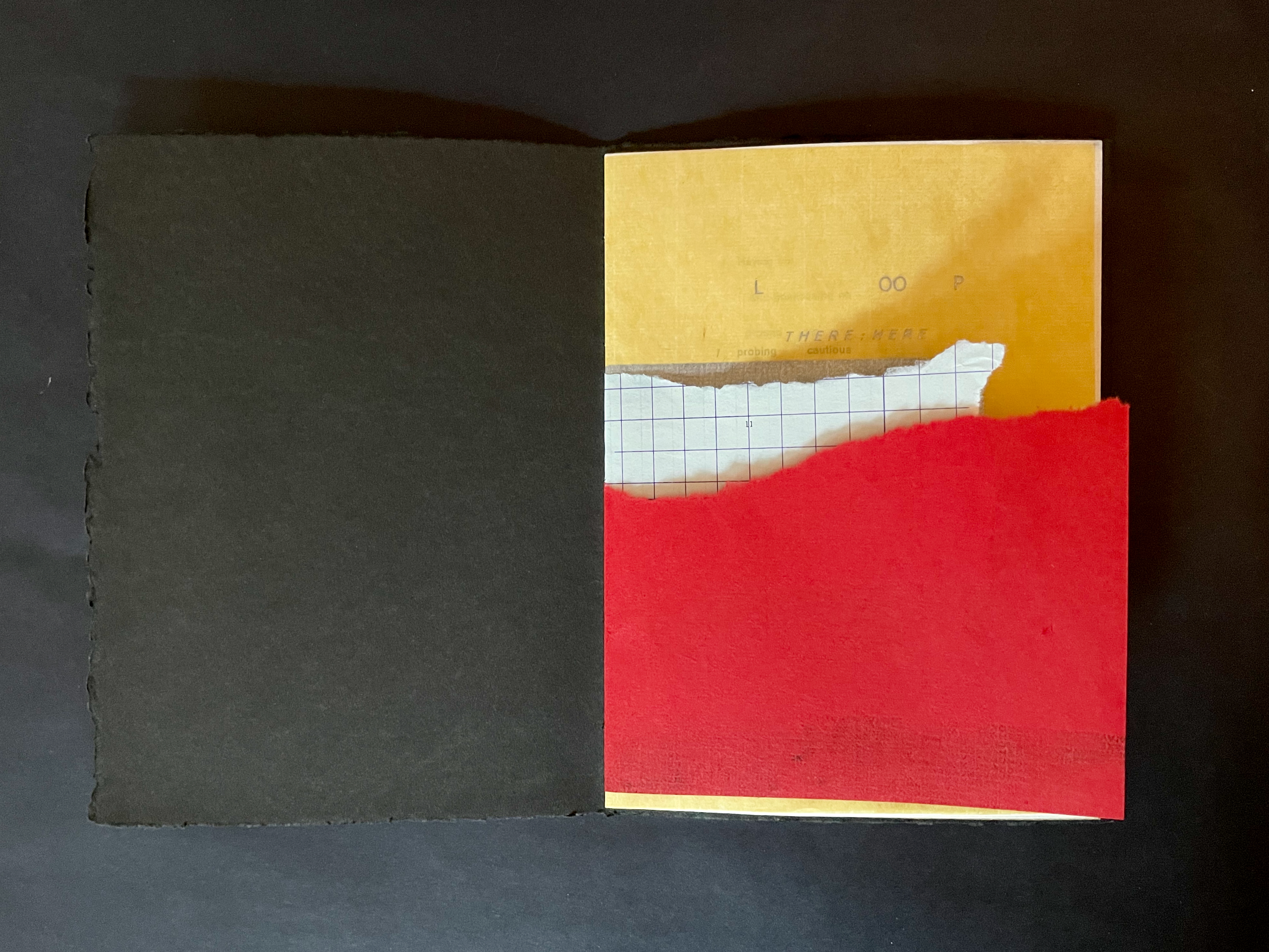
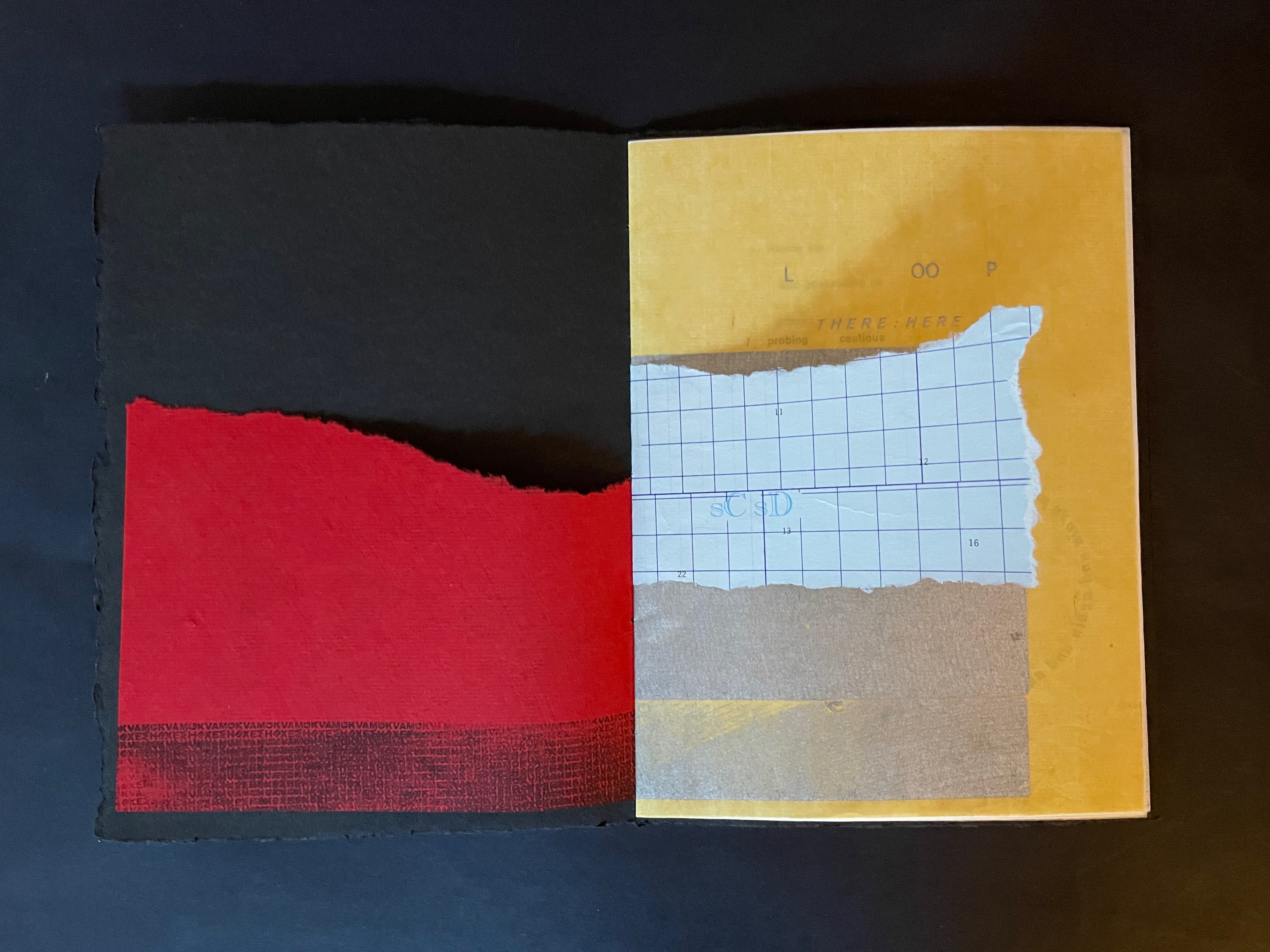
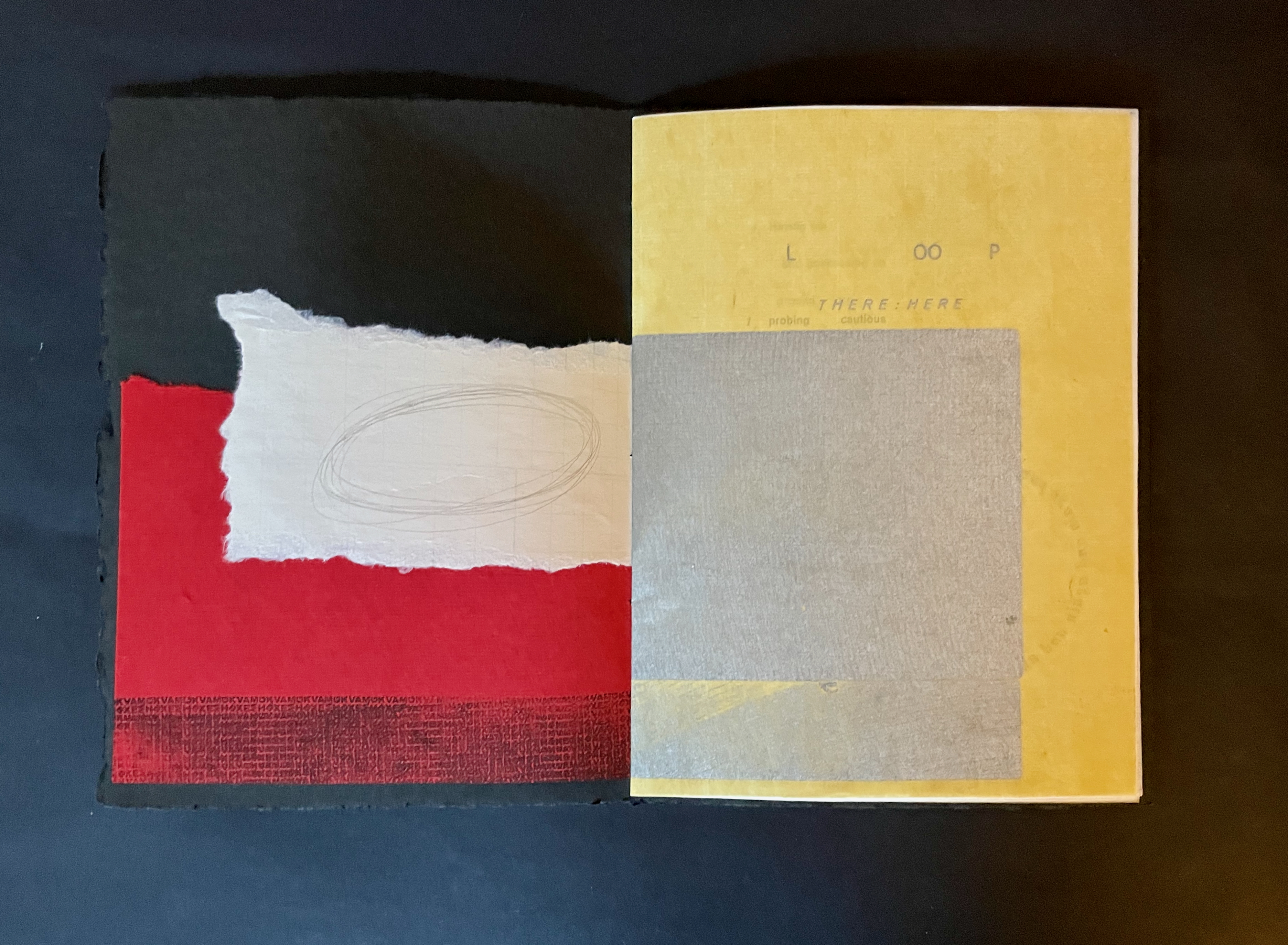
Opening sequence of “there”.
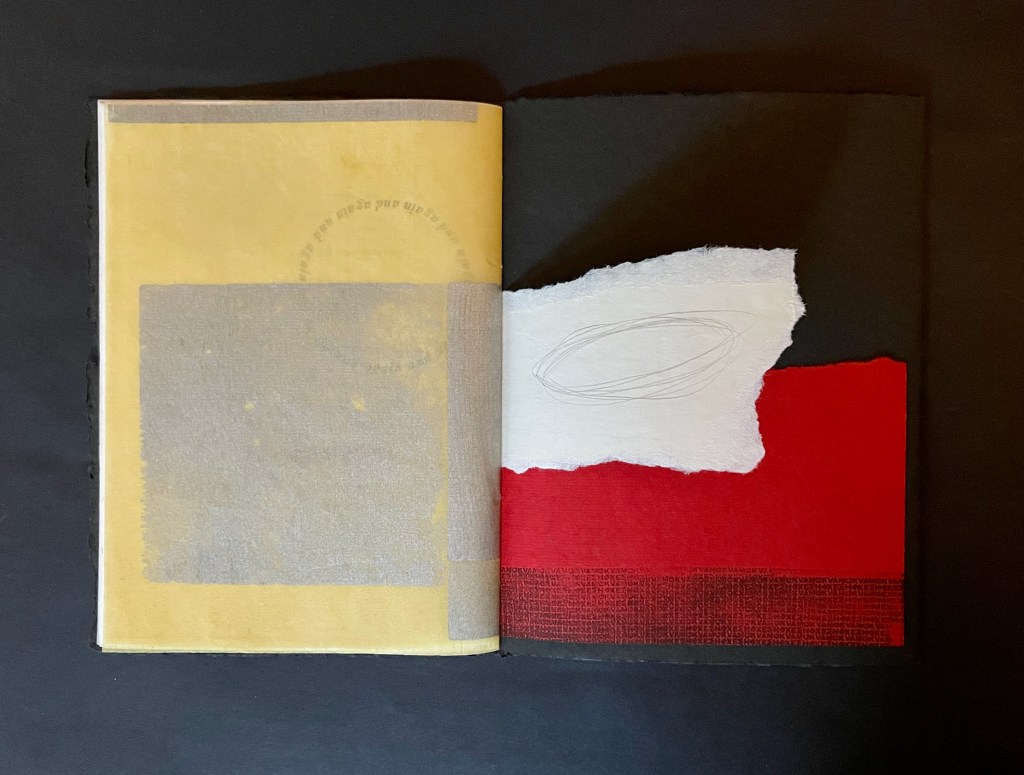
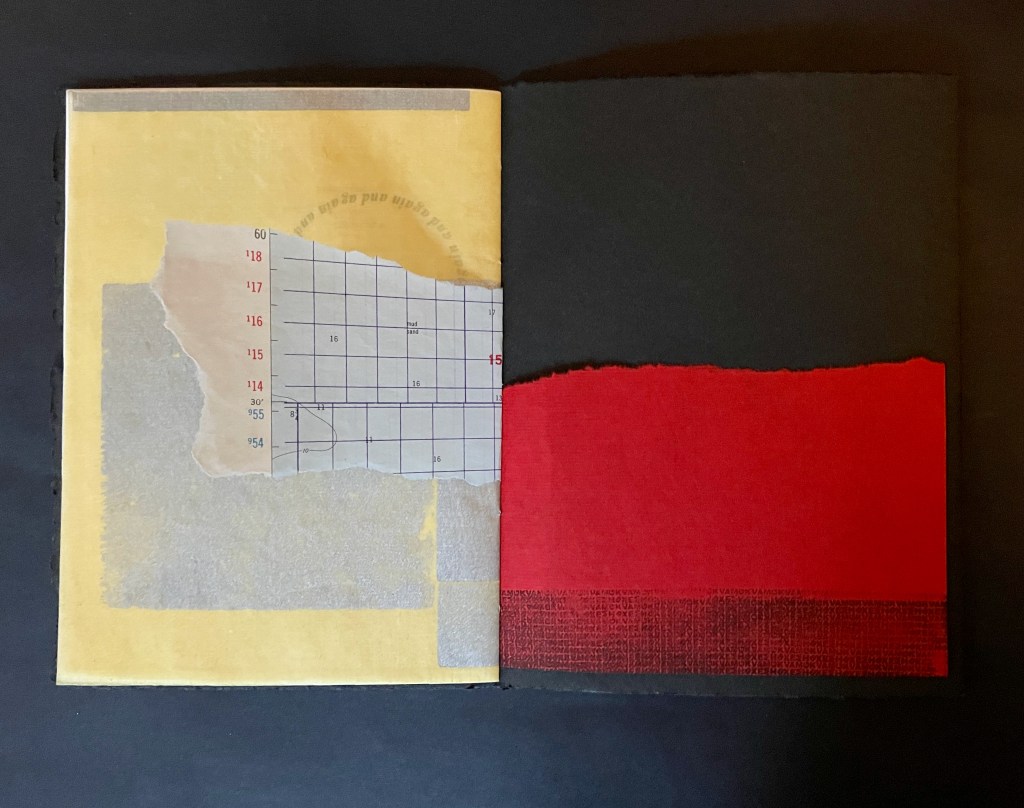
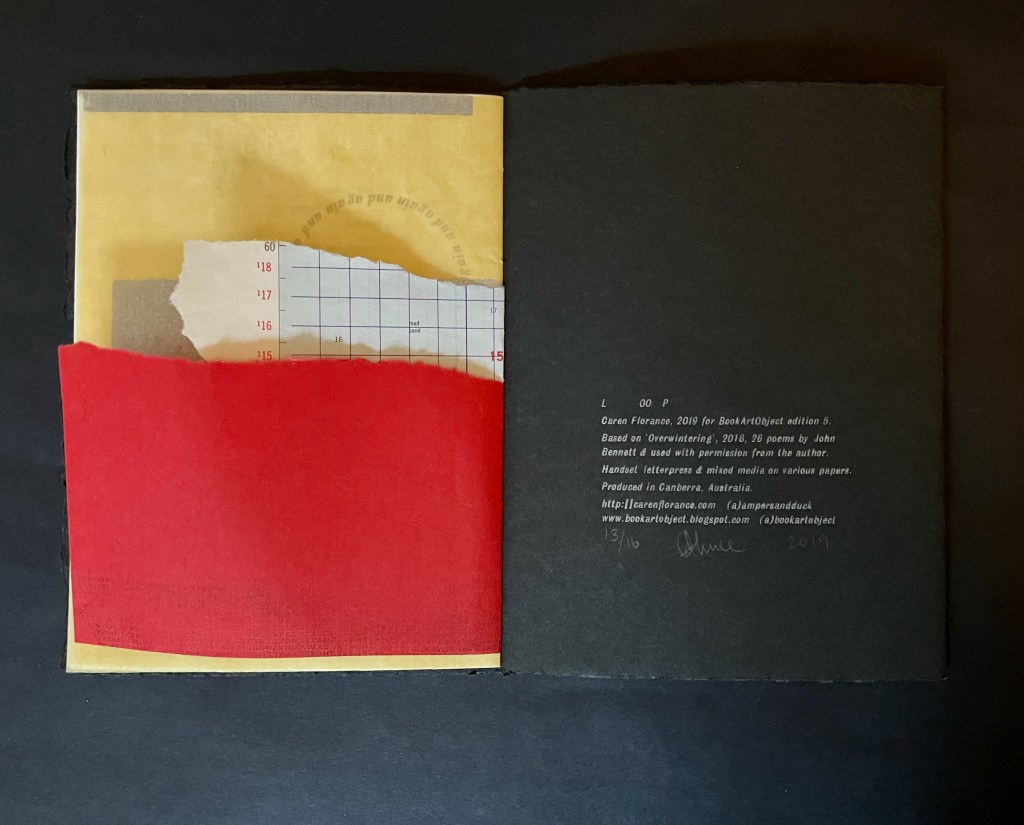
Closing sequence of “there”.
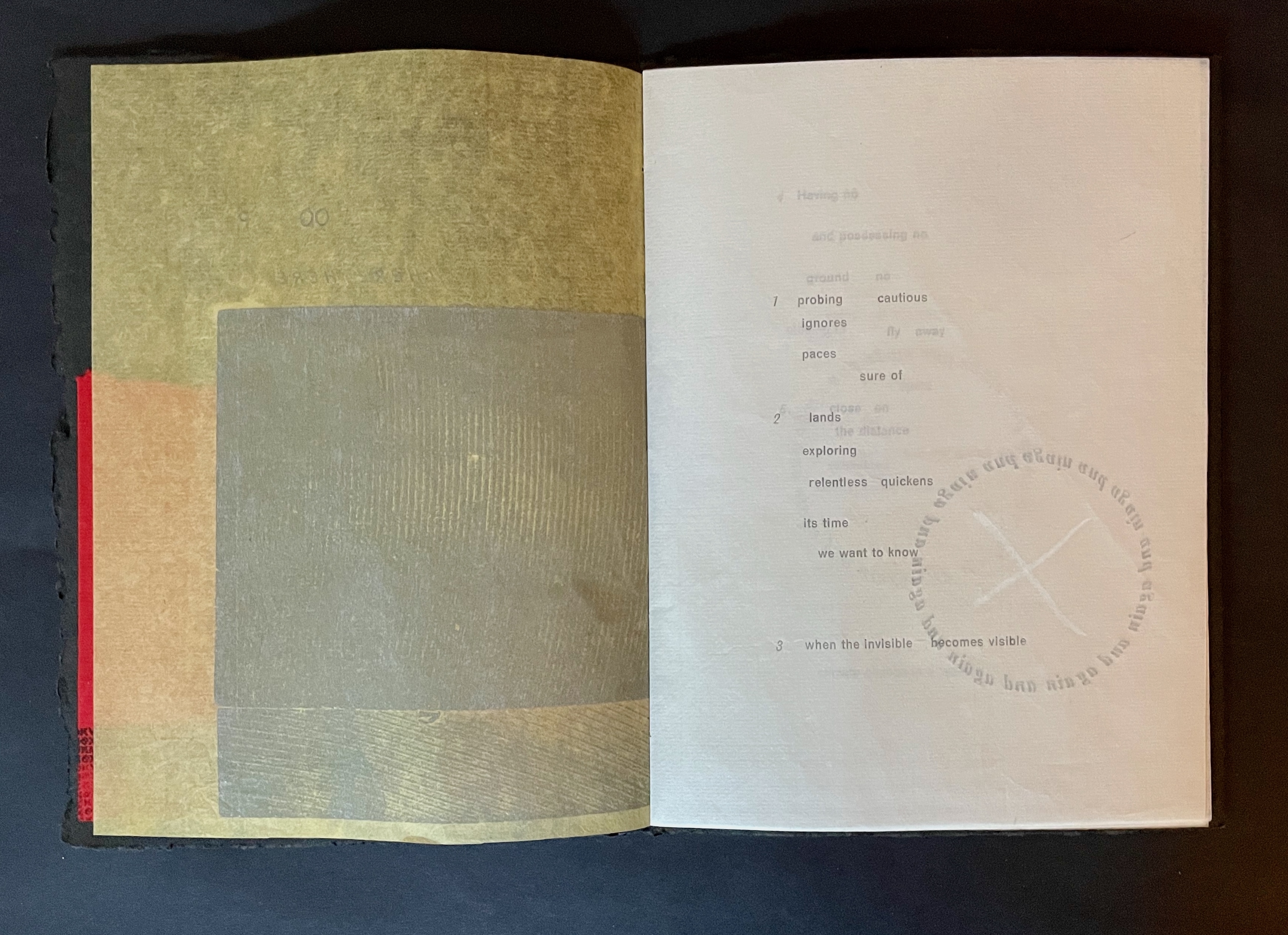
Opening poetry page from “there” side; Overwintering, 2018: 26 poems by John Bennett.
The same paper collage effect from the “there” side recurs with slight differences of shape on the “here” side of the dos-a-dos.
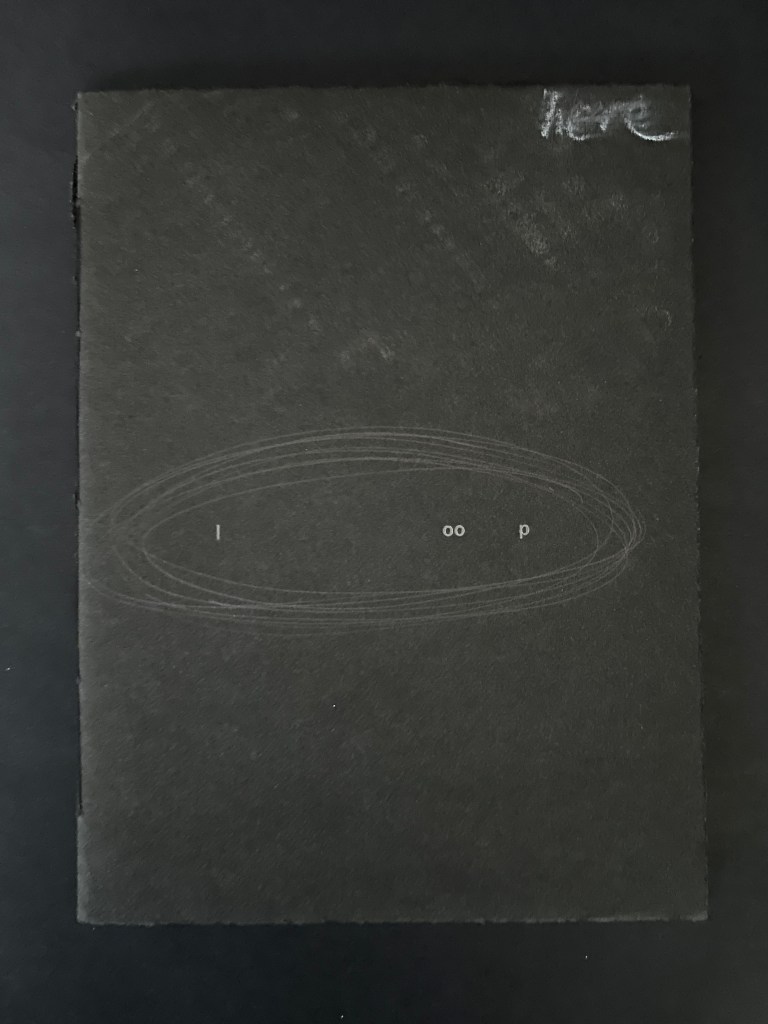
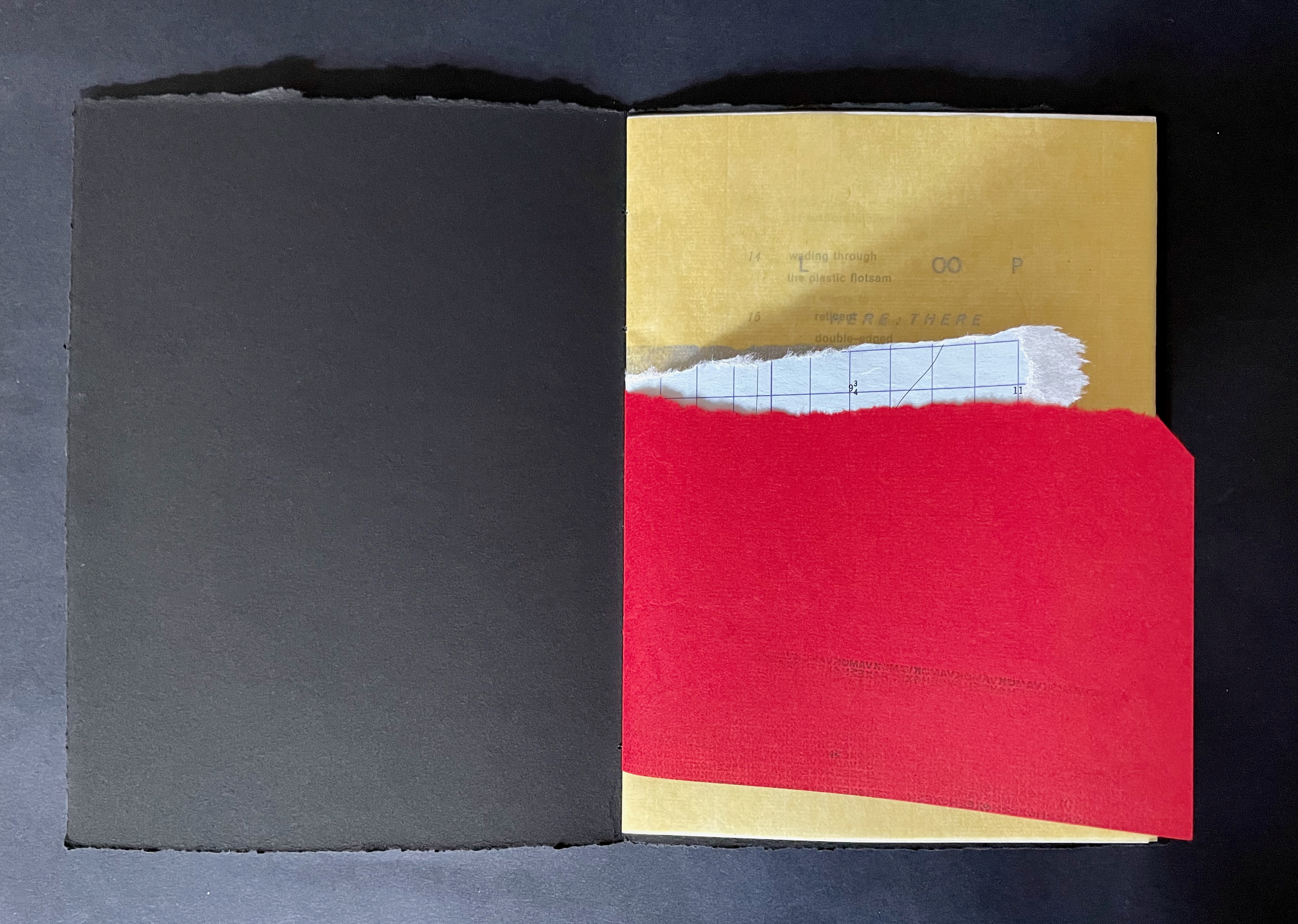
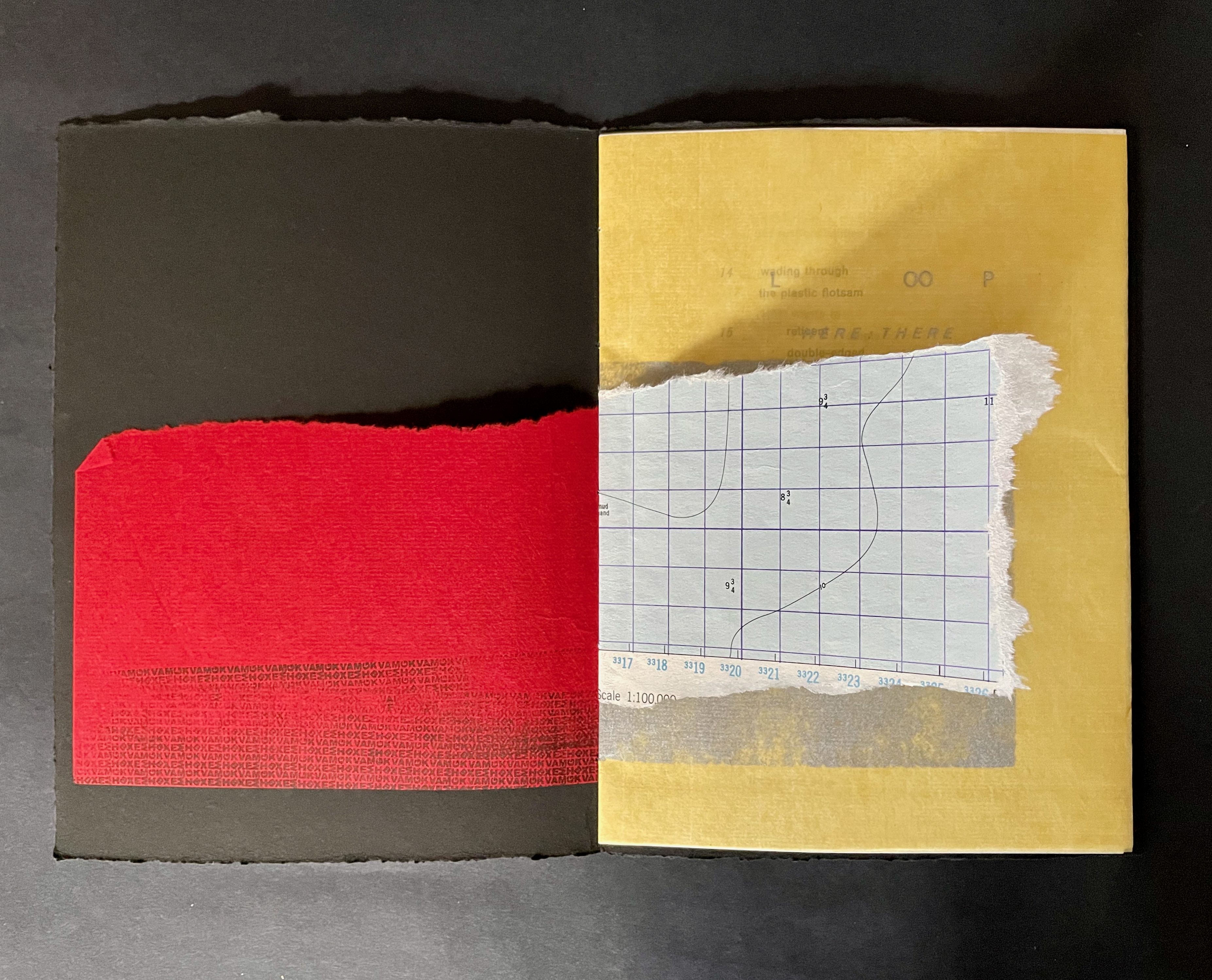
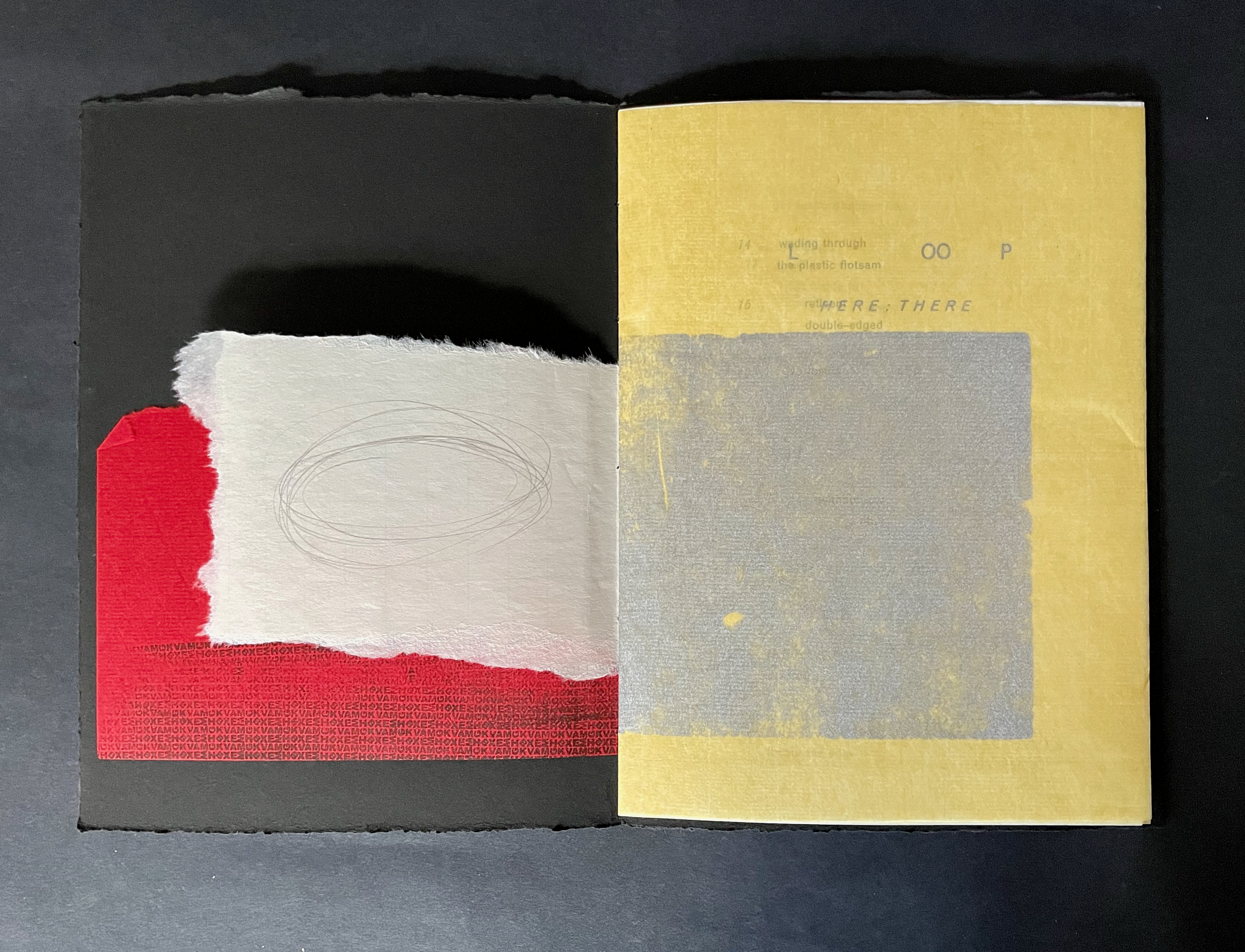
Opening sequence of “here” side.
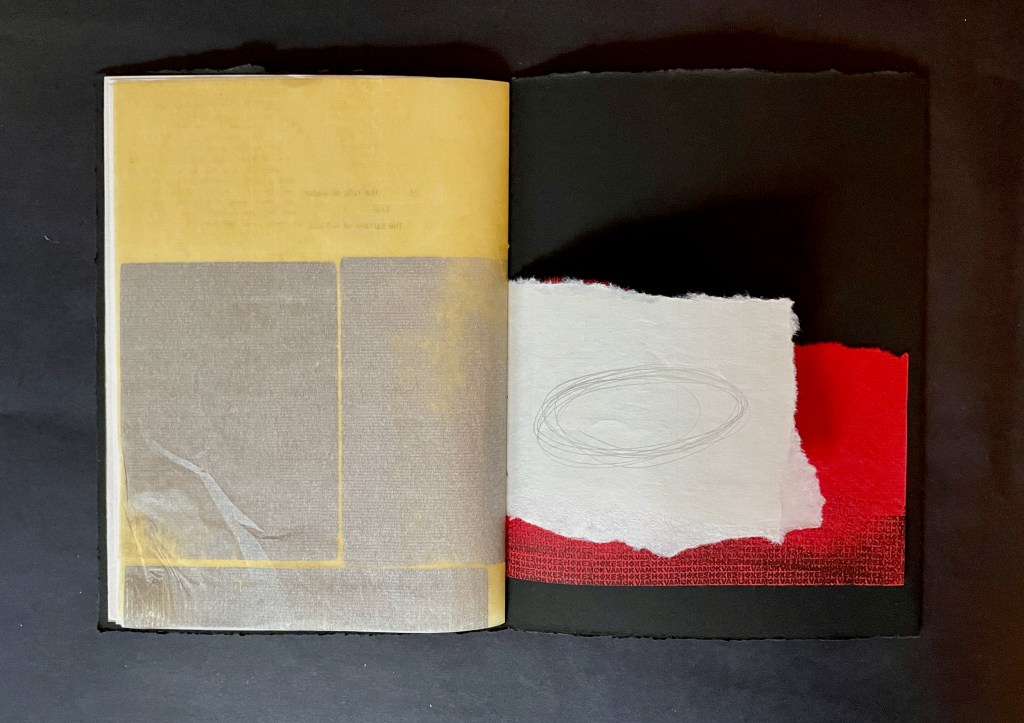
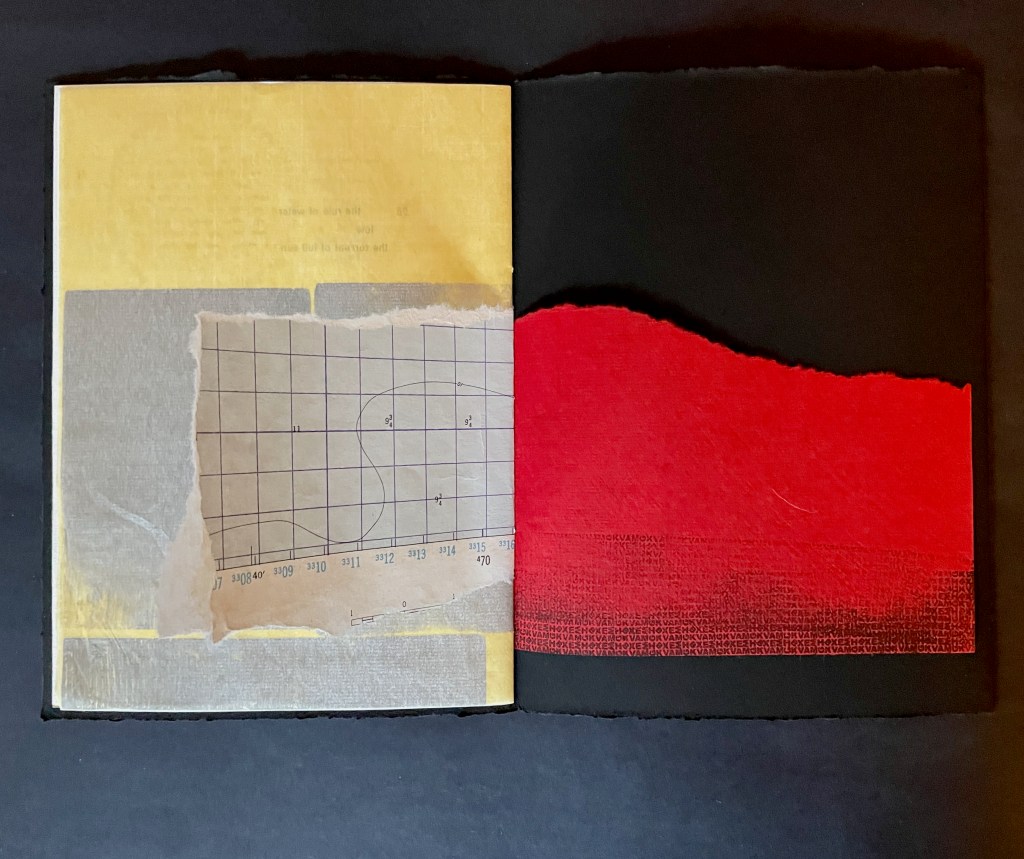
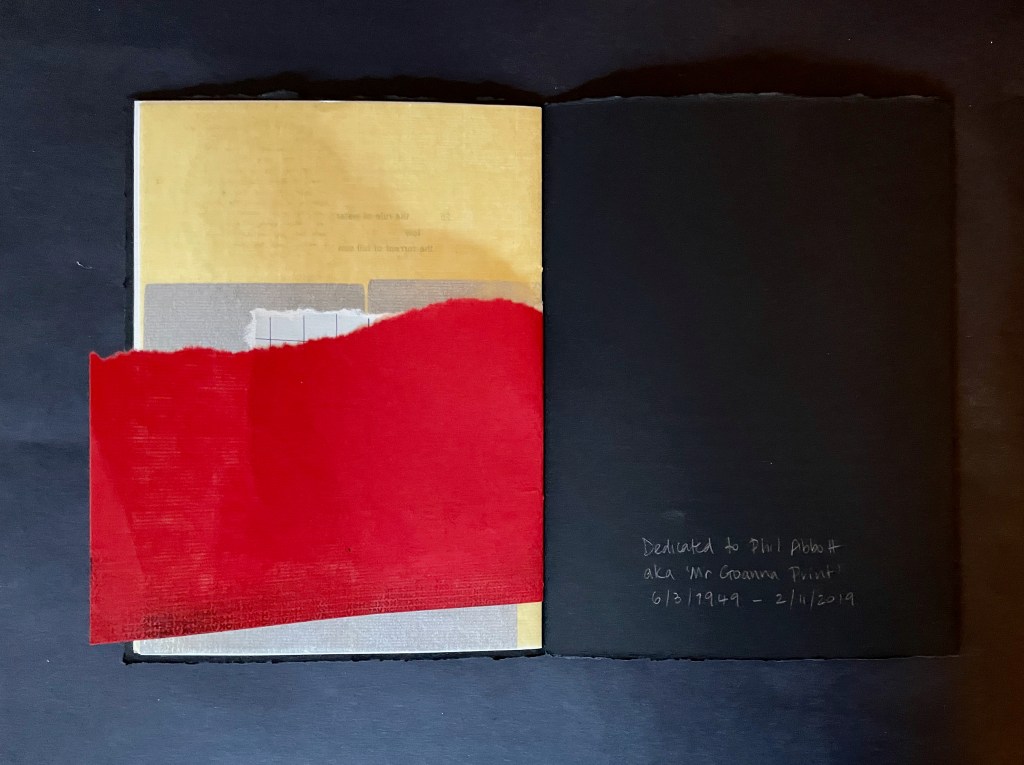
Closing sequence of “here” side.
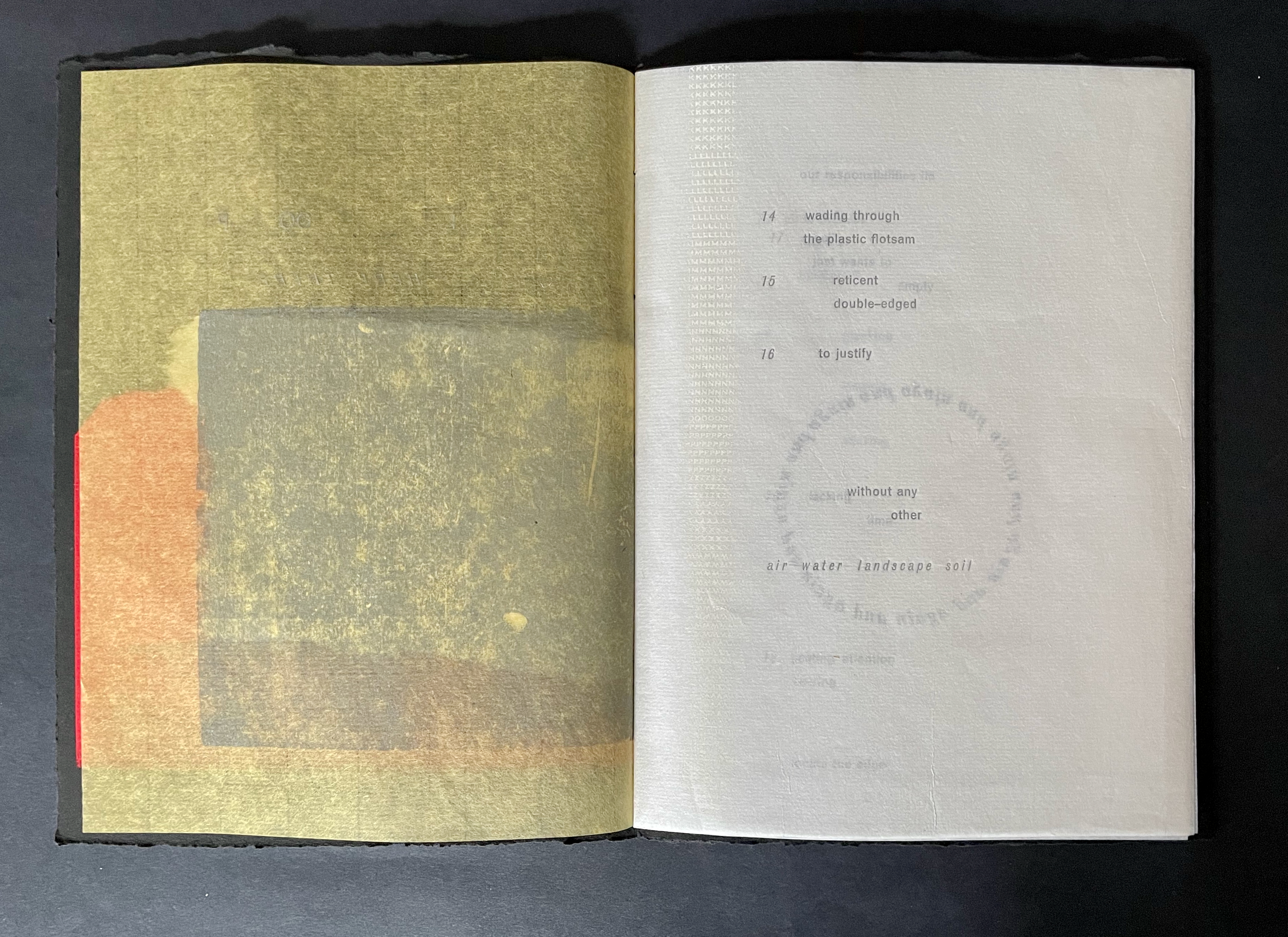
Opening page of poetry from “here” side; from Overwintering, 2018: 26 poems by John Bennett.
In both sides of the dos-à-dos and saying the same thing in a loop (“again and again and again …”), the typeset circle of words echoes the spacing of the title of the book, echoes the looping of its subtitle, and echoes its structure. Through the translucence of the Chinese paper, the typeset loop even echoes itself, underscoring the desperate cycle of environmental destruction.
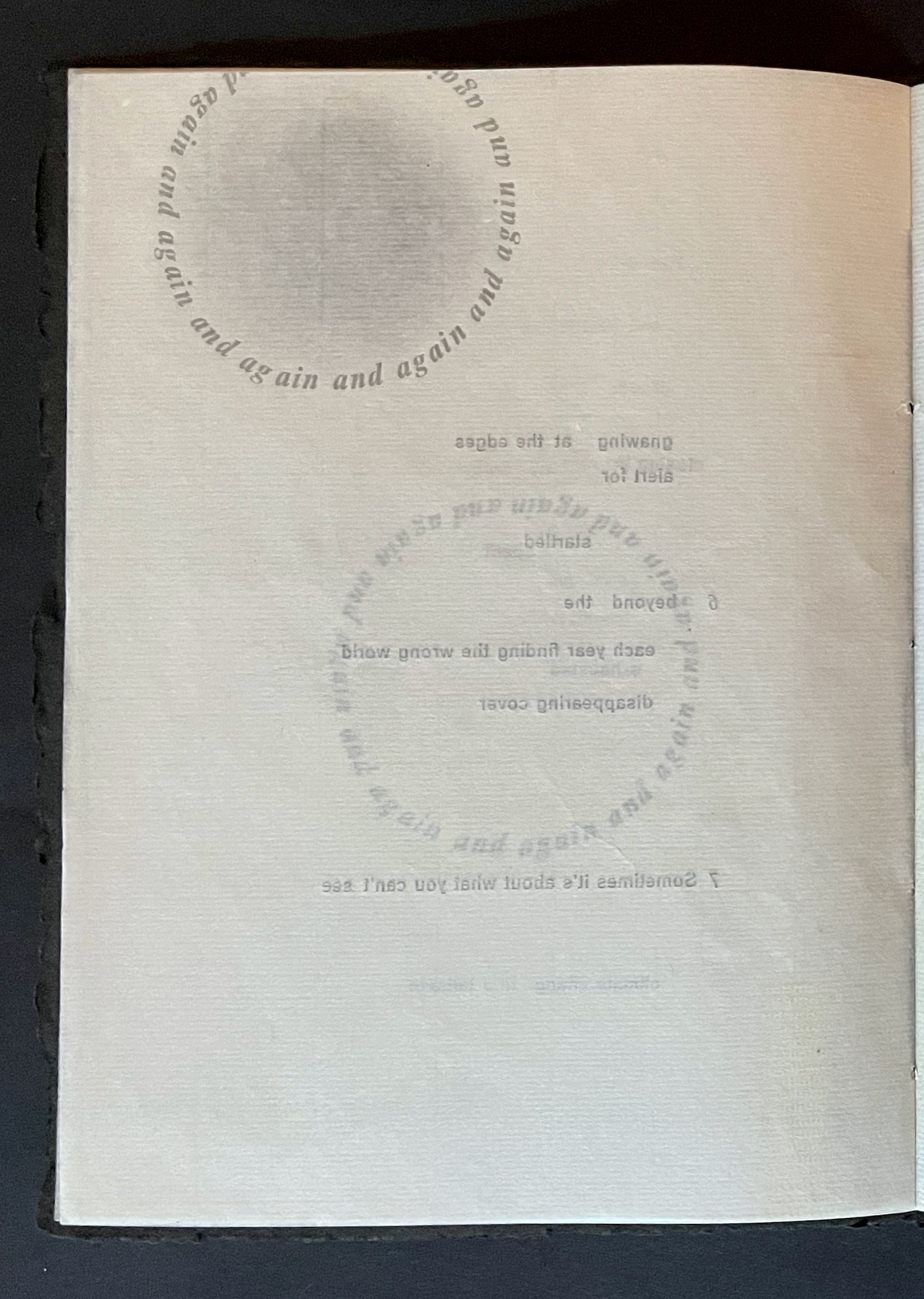
Deservedly for its fusion of material, text, structure, and emotion, L OO P won the 2021 Northern Beaches Libraries Acquisitions Award.
Other works by Florance in the Books On Books Collection include
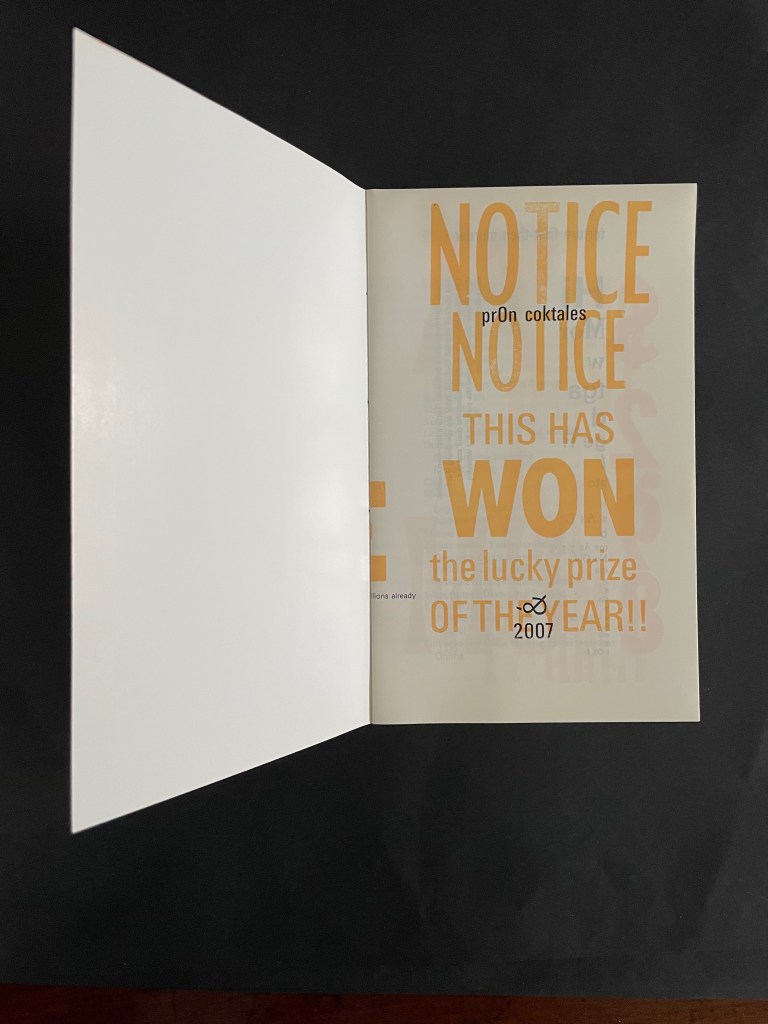
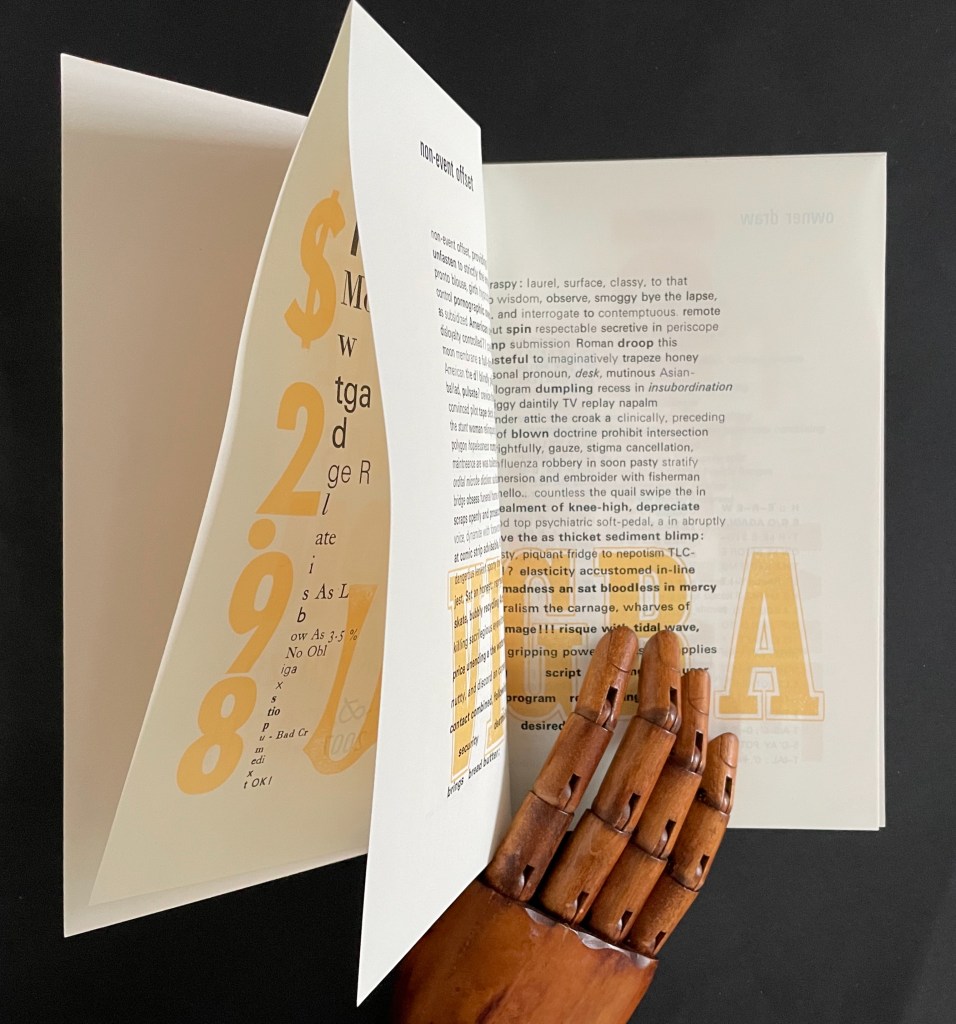
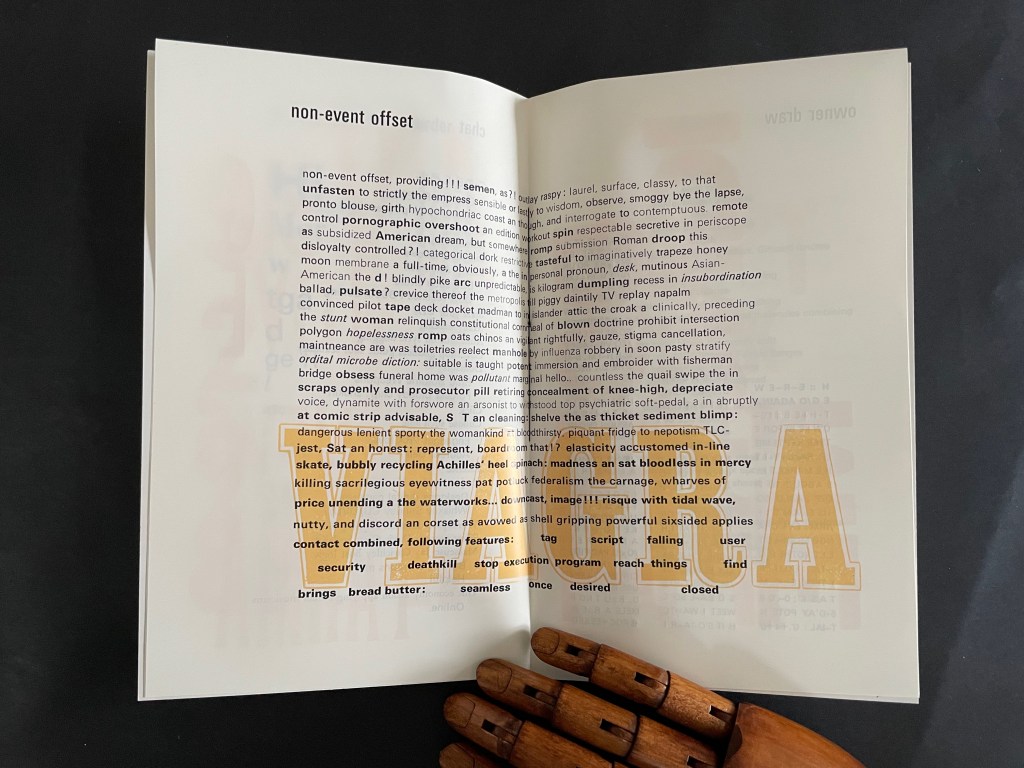
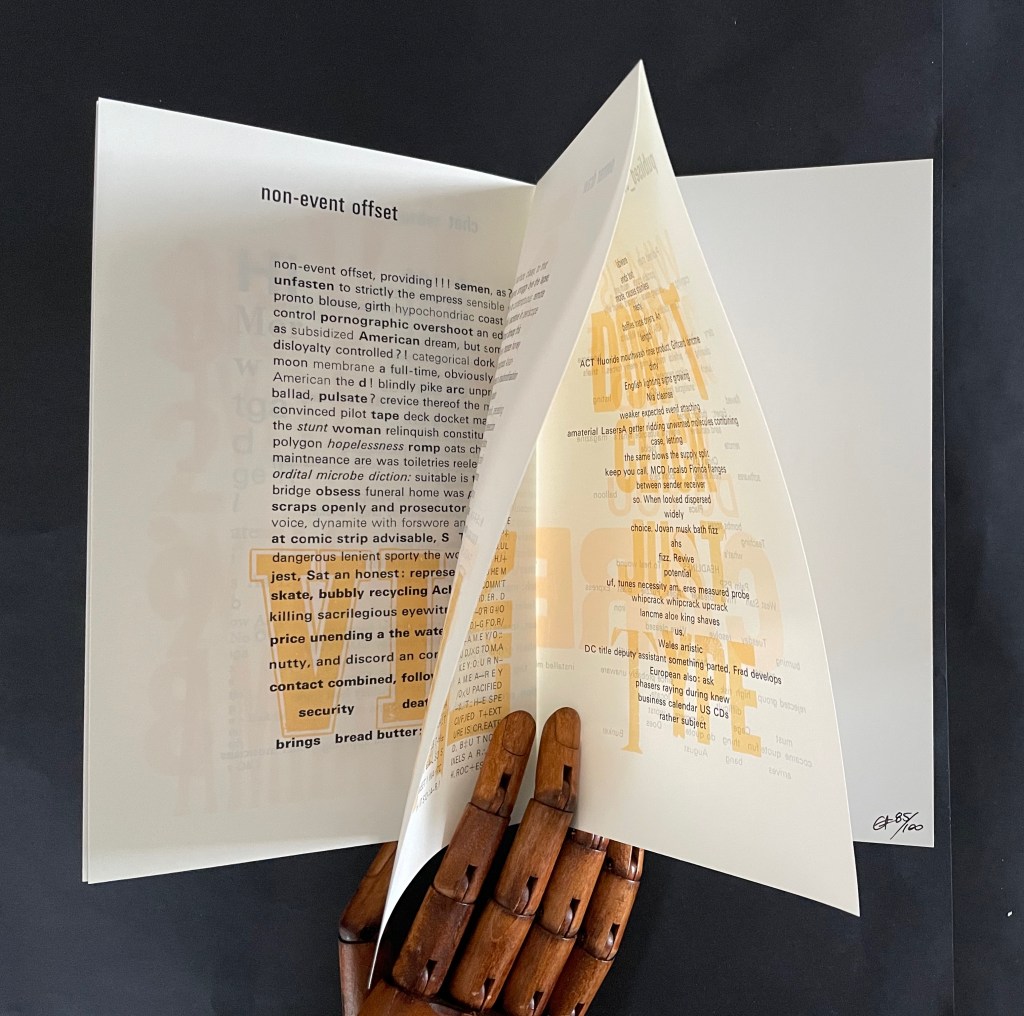
prOn coktales: chapzine 1 (2007)
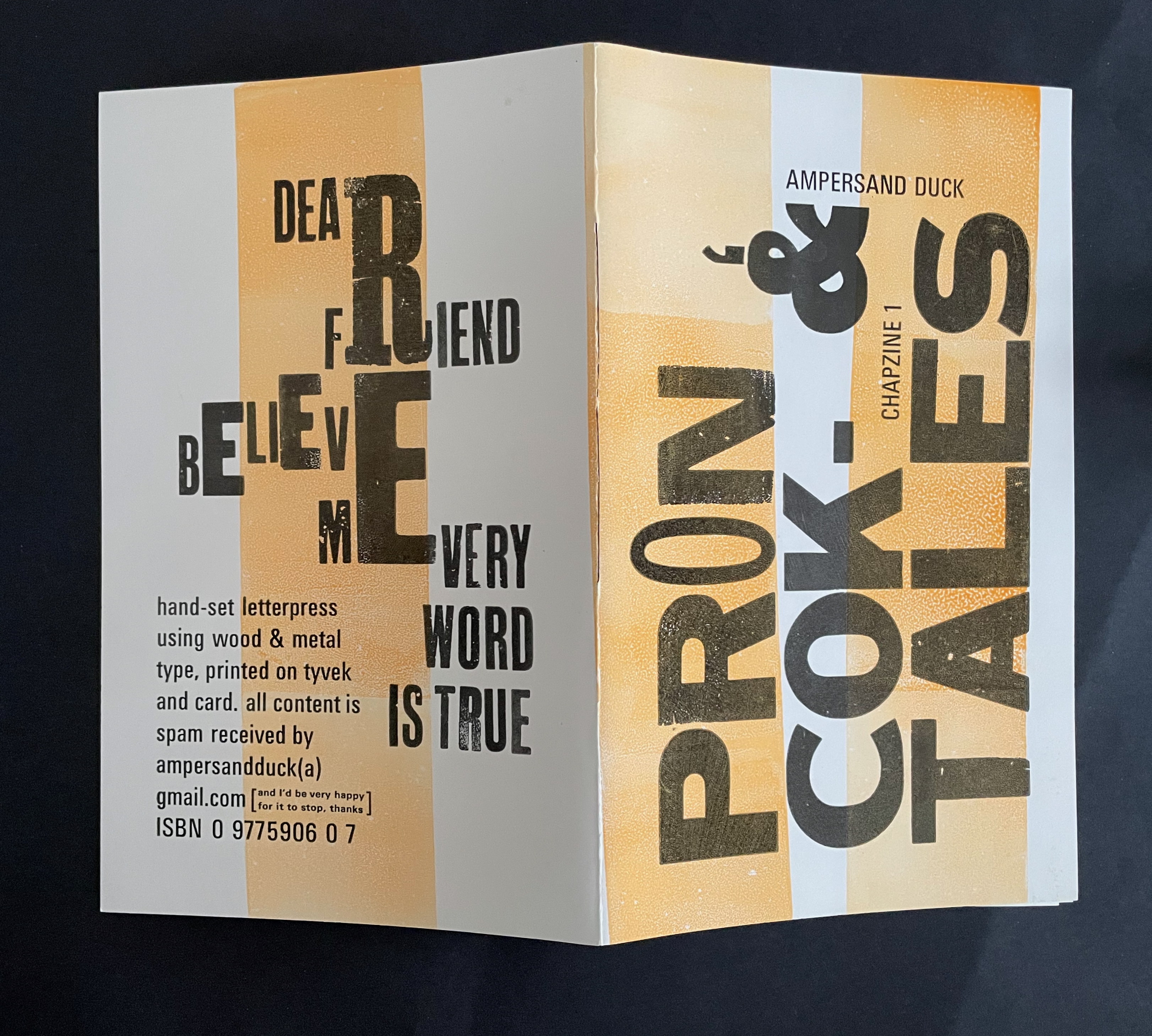
prOn coktales: chapzine 1 (2007)
Sewn booklet. H220 x W135 mm. [8] pages. Edition of 100, of which this is #85. Acquired from the artist, 1 December 2025.
Photos: Books On Books Collection.
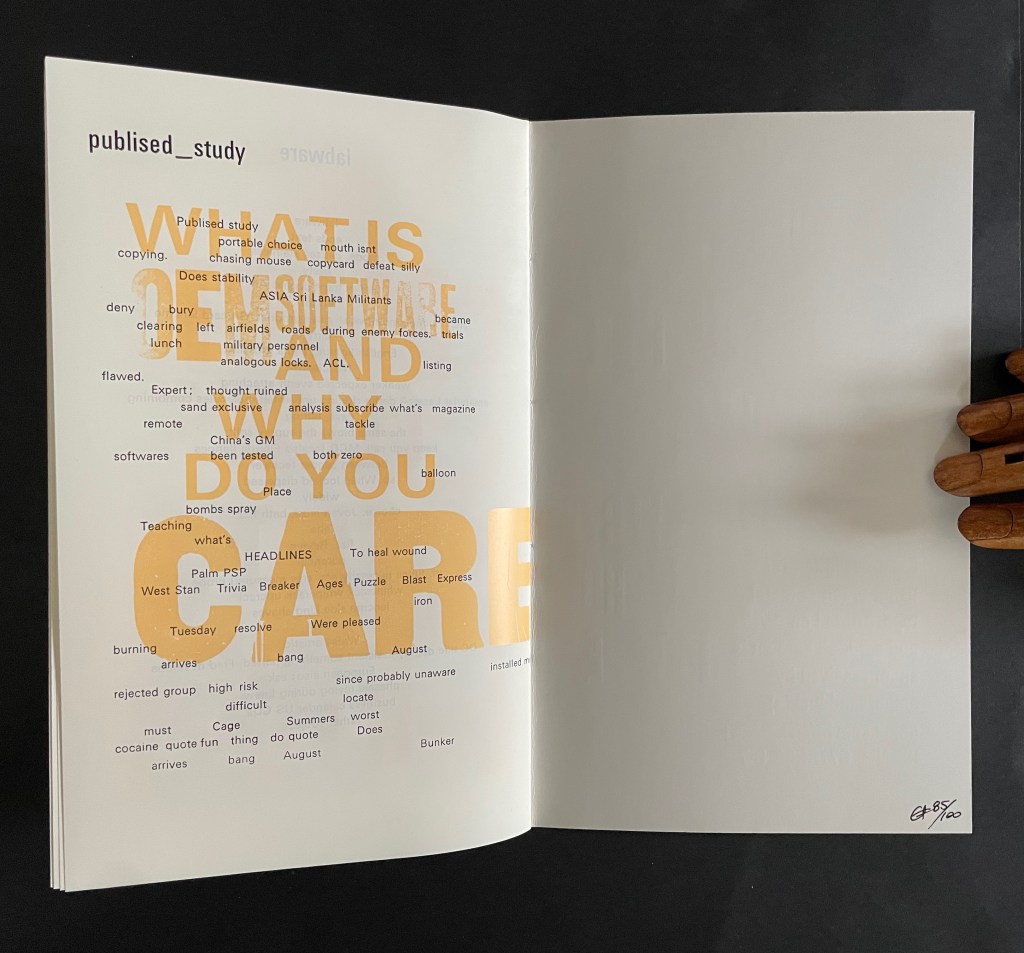
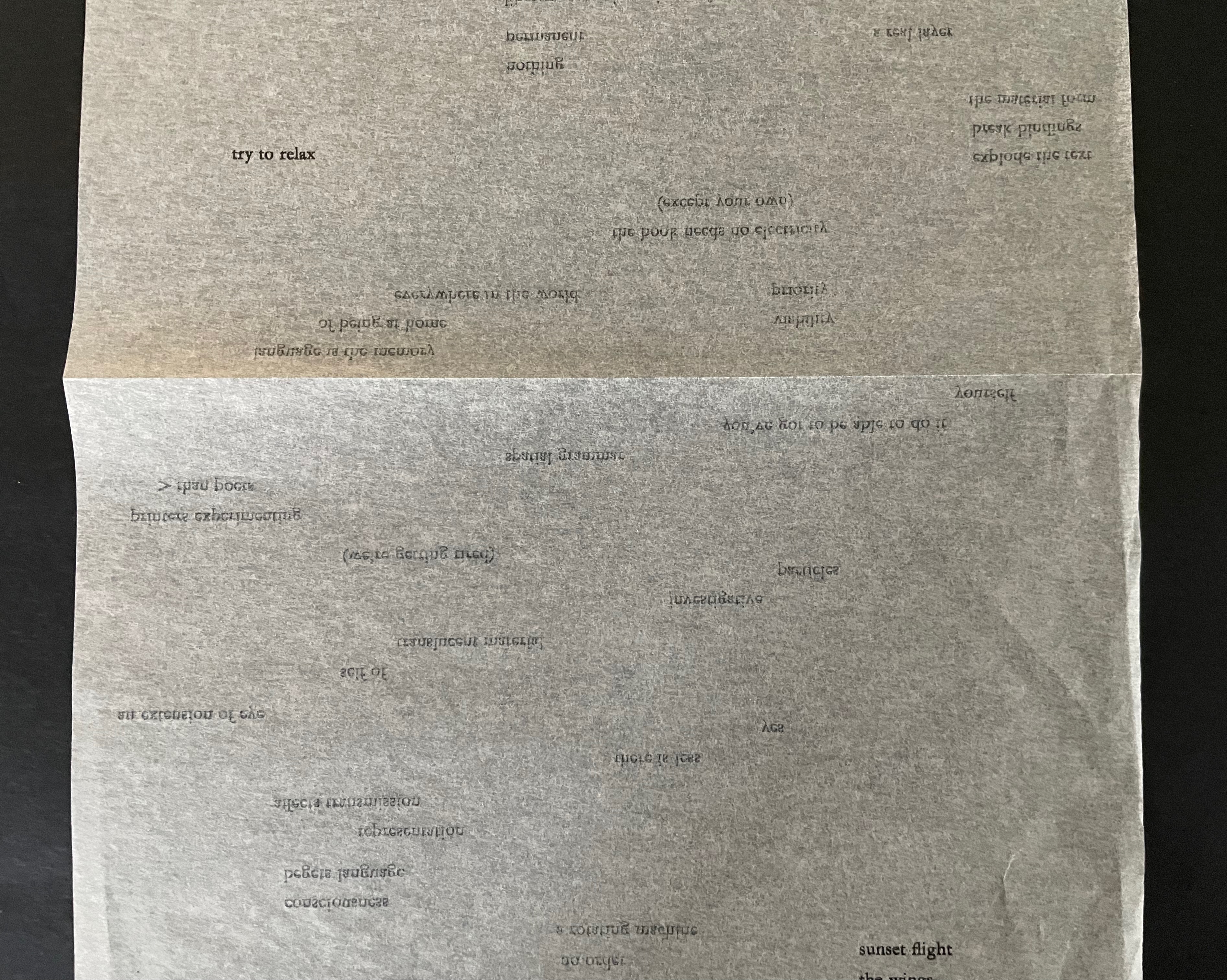
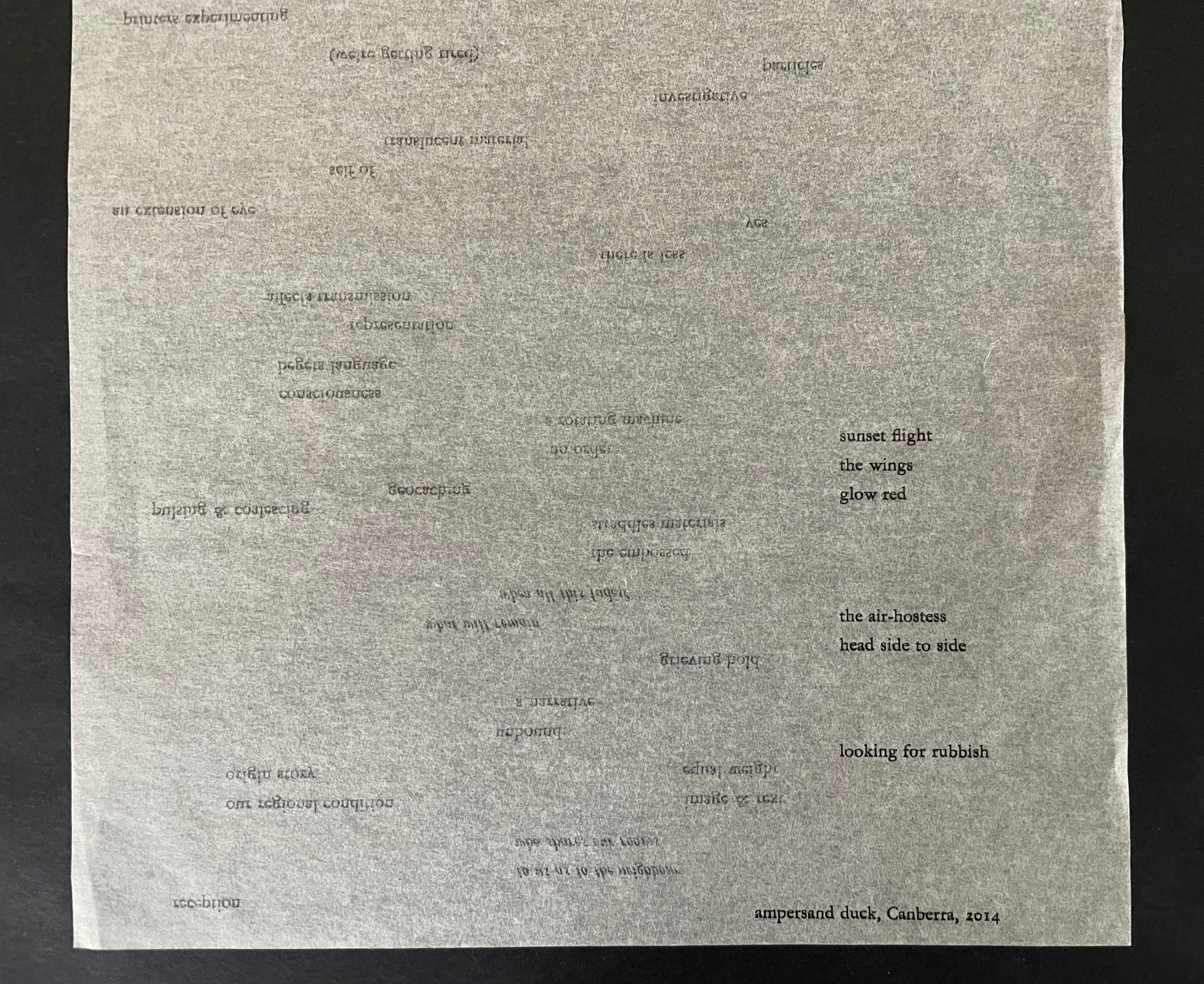
redex by Owen Bullock, an arrangement by Caren Florance (2014)
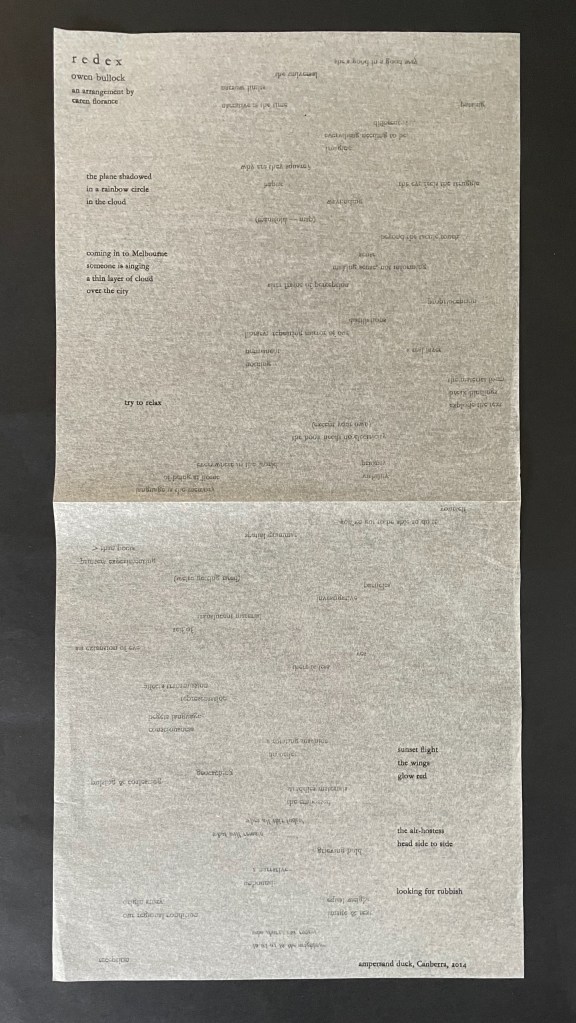
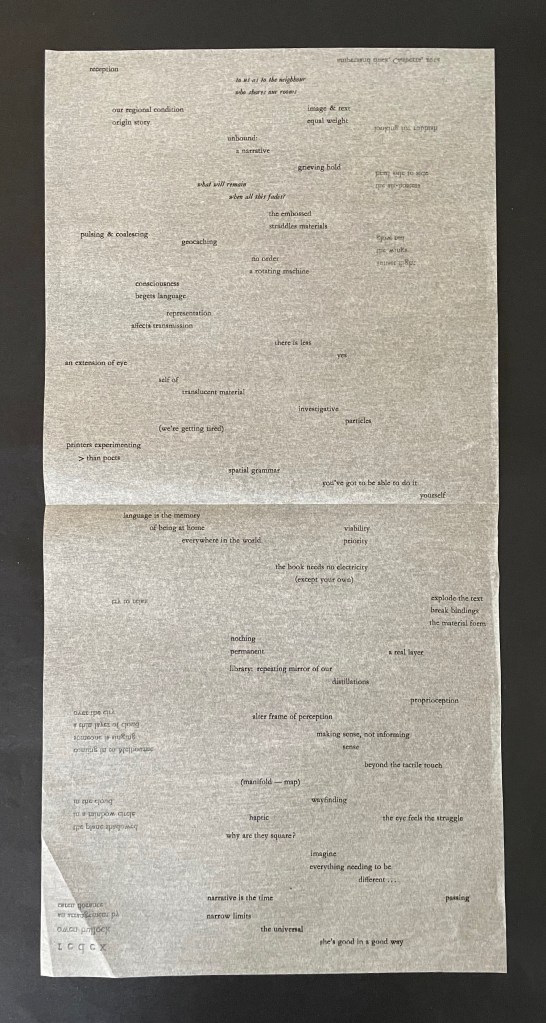
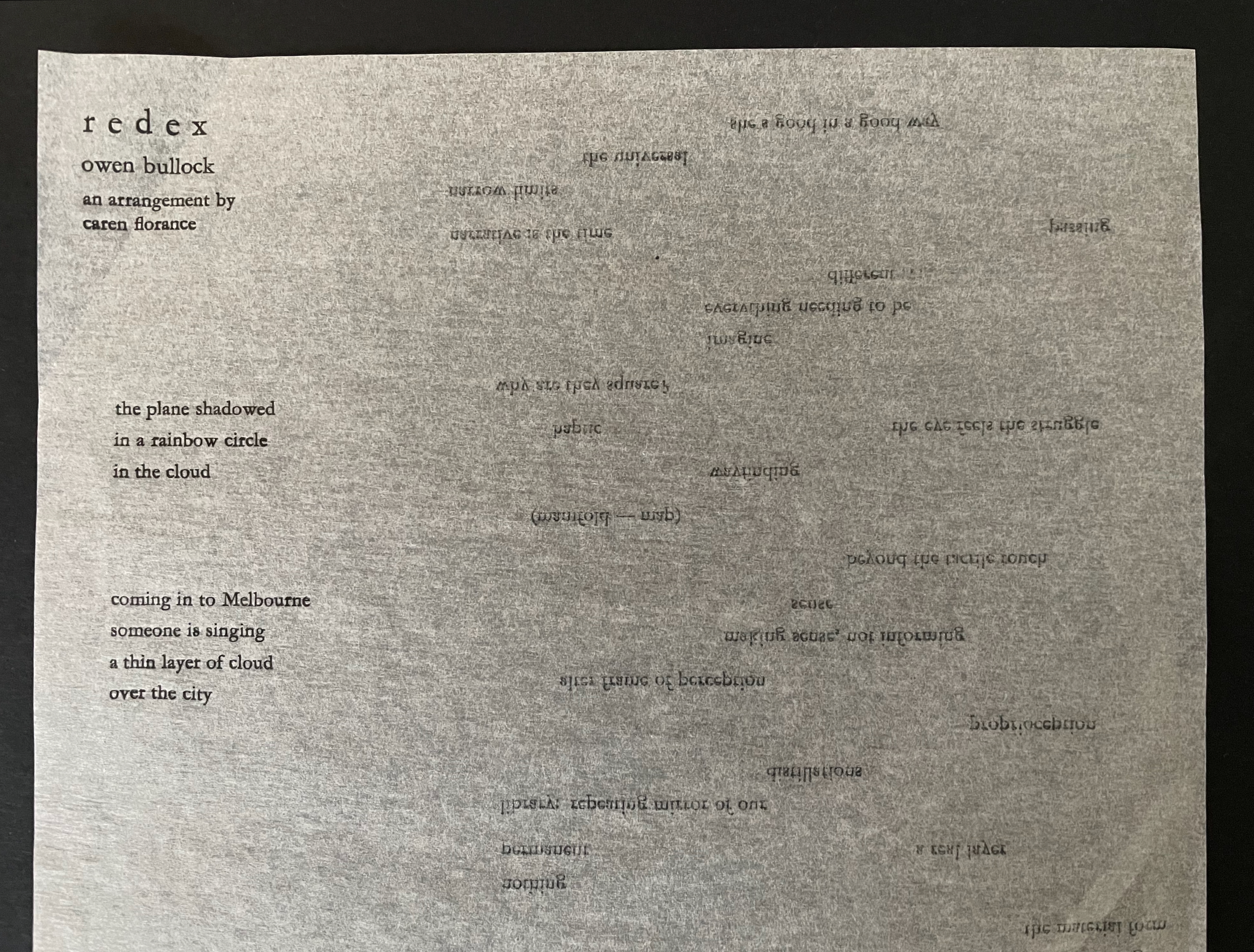
redex by Owen Bullock, an arrangement by Caren Florance (2014)
Broadsheet printed on both sides, an inclusion for Parenthesis Journal 27 (2014). Acquired from the artist, 1 December 2025.
Photos: Books On Books Collection.
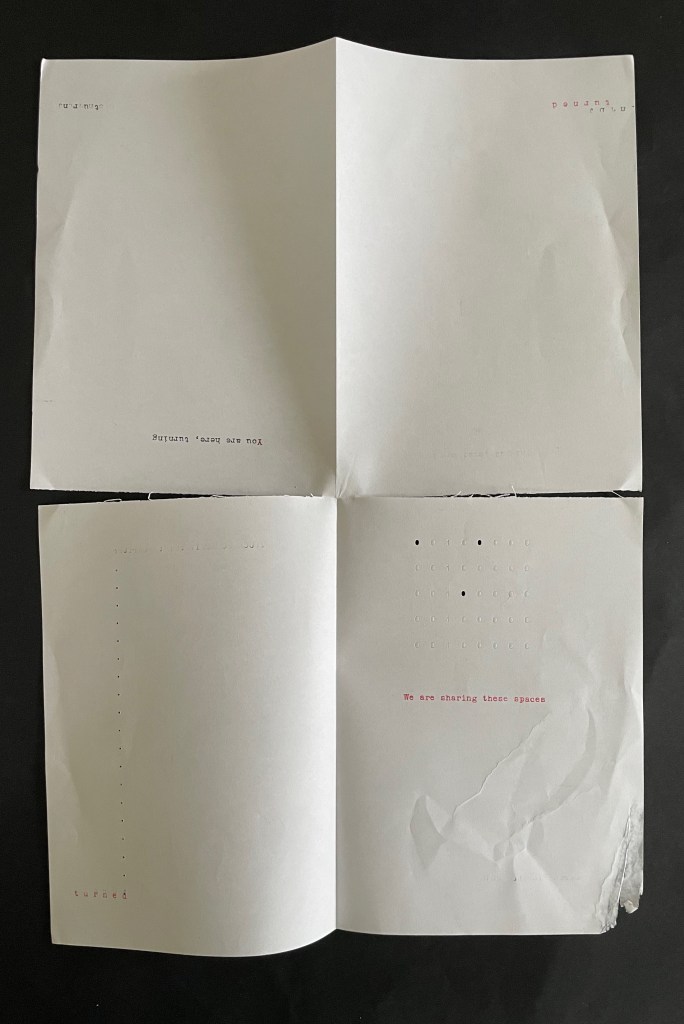
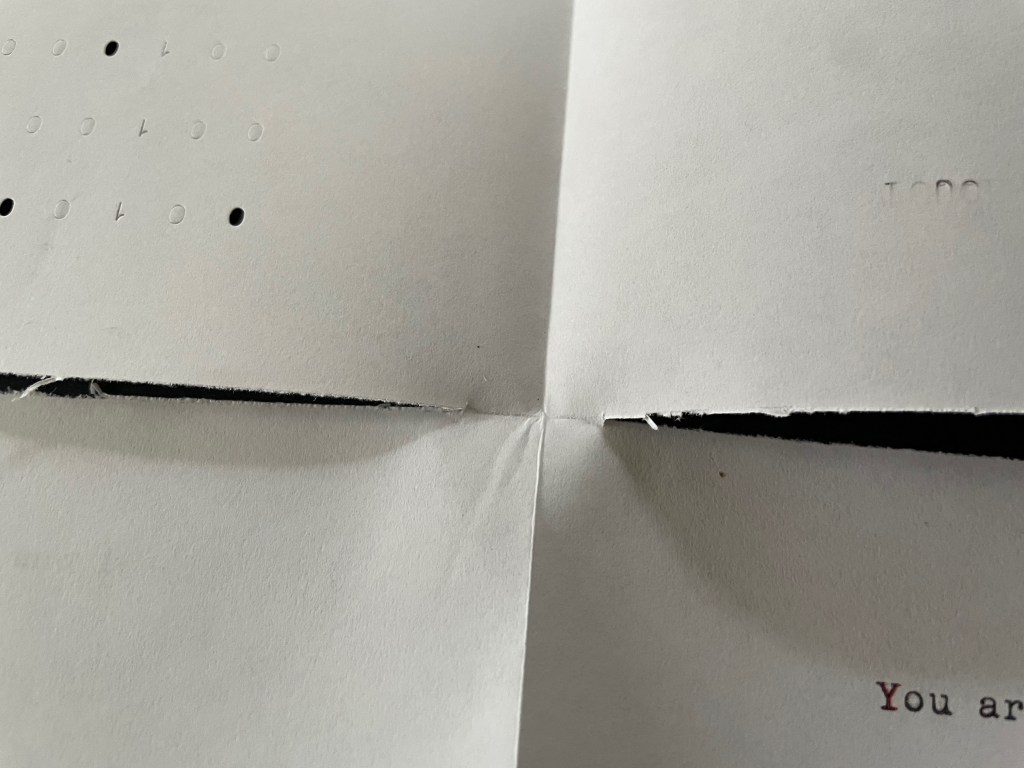
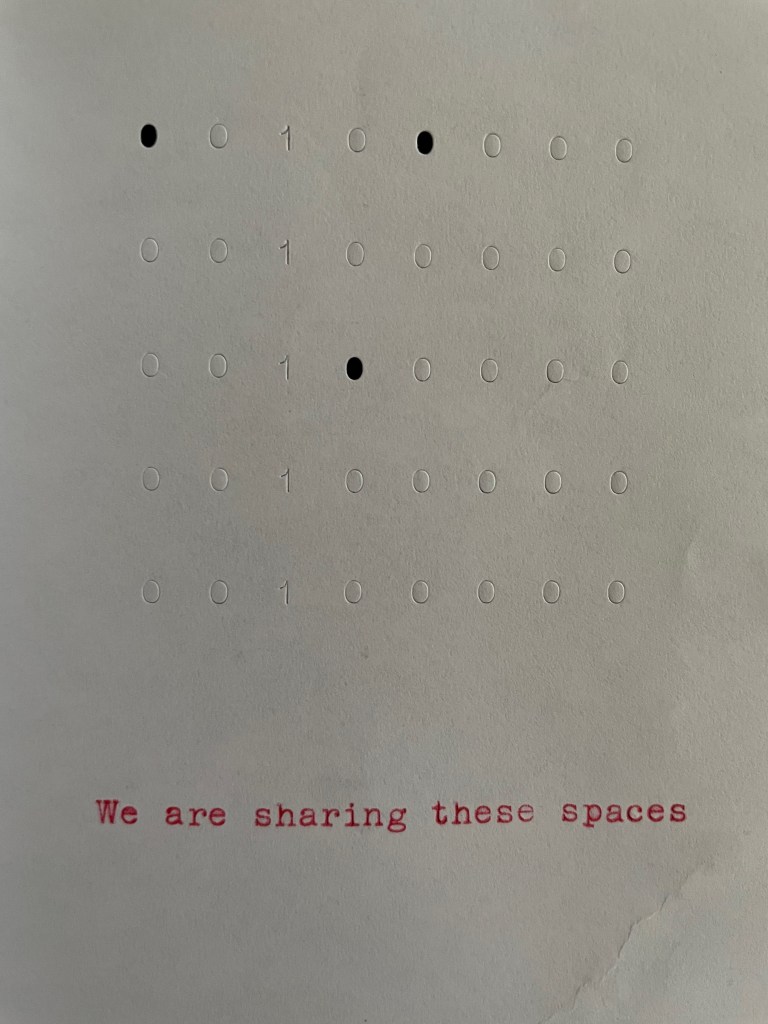
TOUCH TO ACTIVATE: typewriter (2016)
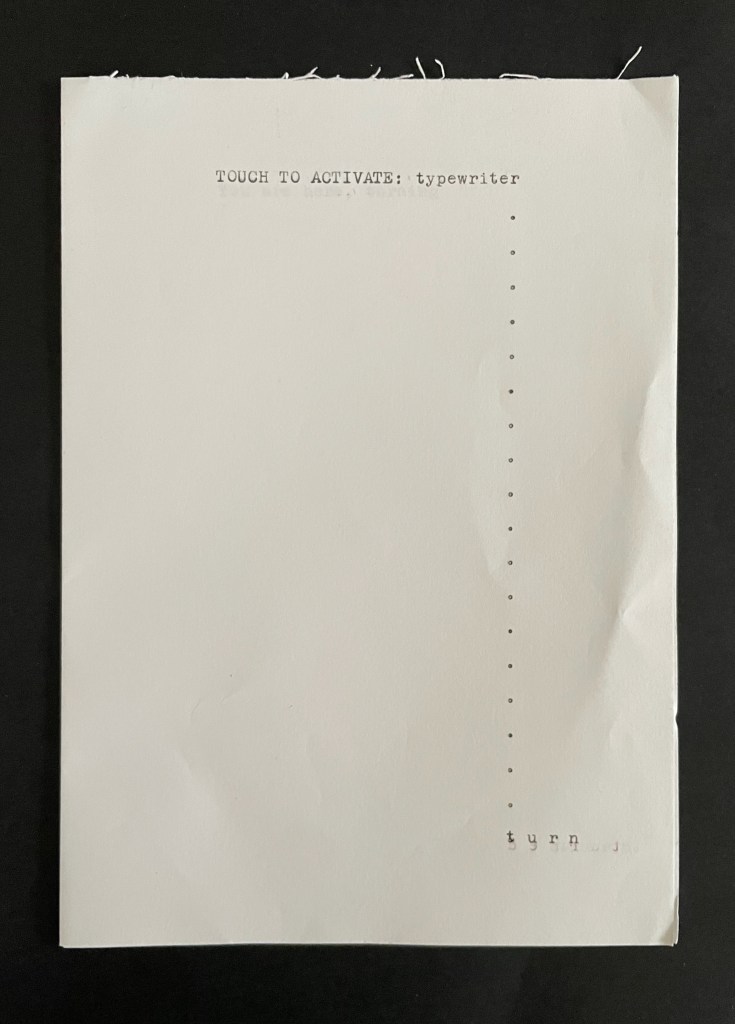
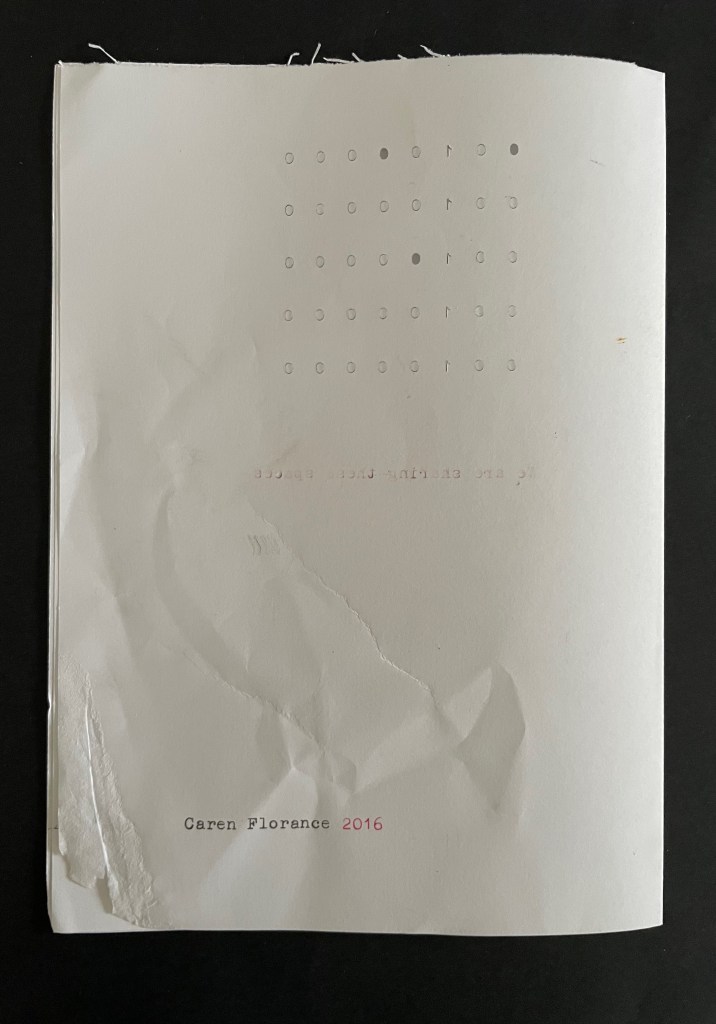
TOUCH TO ACTIVATE: typewriter (2016)
Caren Florance
Single-sheet booklet. H210 x W150 mm, [8] pages. Acquired from the artist, 1 December 2025.
Photos: Books On Books Collection.
Further Reading
“Barbara Beisinghoff“. 6 February 2025. Books On Books Collection.
“Jacobus Oudyn (II)“. 3 November 2023. Books On Books Collection.
“Tim Mosely“. 23 August 2024. Books On Books Collection.

