Opera dei Pupi (2024)
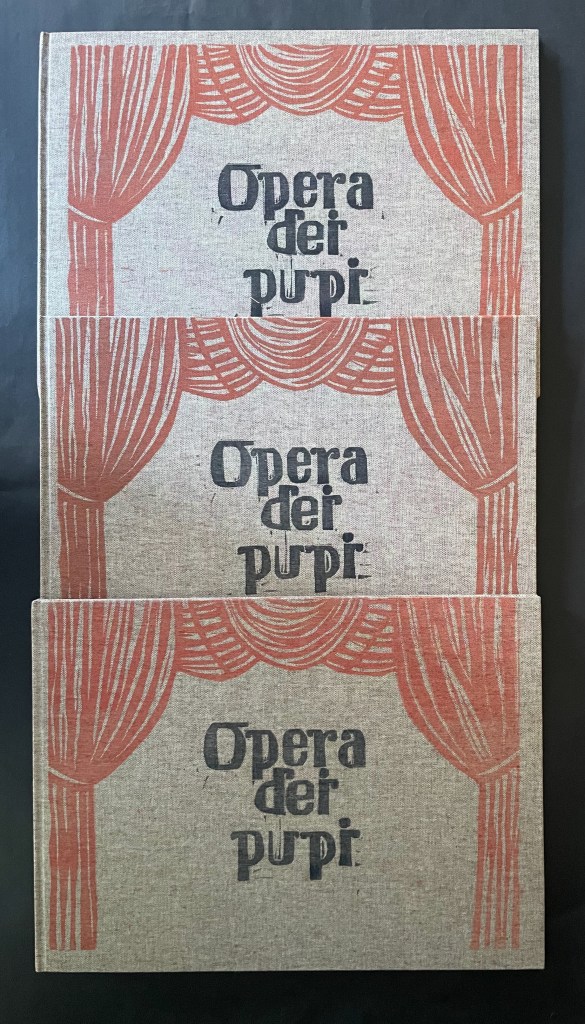
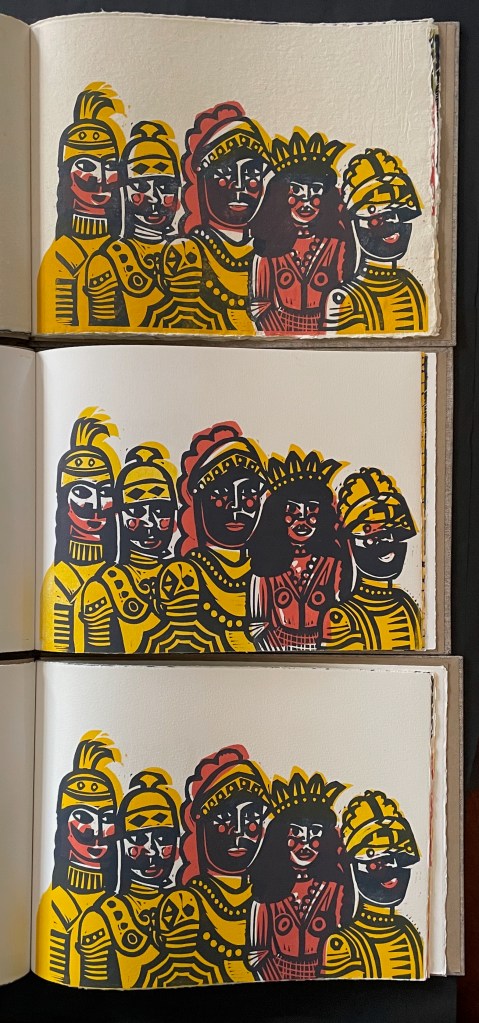
Opera dei Pupi (2024)
Valeria Brancaforte
Casebound hardback, cloth over boards, print on front cover. Plain brown doublures. Three variants based on trim and paper.
A: H272 x W368 mm; Drap, Catalan hand-made paper.
B: H261 x W360 mm; Italian Magnani Incisione.
C: H265 x W362 mm; Somerset Velvet White 250gsm.
[20] pages with 14 prints. Each in an edition of 12, of which A is #11, B is #5, and C is #1. Acquired from the artist, 14 November 2025 and 7 February 2026.
Photos: Books On Books Collection. Displayed with permission of the artist.
Puppets and marionettes have figured in more than a few artists’ books. Ron King and Roy Fisher’s The Left-handed Punch (1986) and Anansi Company (1992) are perhaps the best known. Others include Ann Kresge’s Shadow Play (1998), Antonio Nocera’s La Valigia di Pinocchio (2015), Emily Martin’s Funny Peculiar Funny Ha Ha (2017), Hormazd Narielwalla’s Paper Dolls (2018) Erminia De Luca’s Now it’s up to you (2023), and Rachel Simmons’ Dream of the Golden Empress (2023). Valeria Brancaforte’s recent addition to the cavalcade brings to it a new cultural tradition and a welcome chance to compare how variation in paper can play into appreciation of an artist’s book.
Emerging in the early 19th century, the wood and iron marionettes of the Sicilian Opera dei Pupi formally gained a place on UNESCO’s Representative List of the Intangible Cultural Heritage of Humanity in 2008. Its unique flavor comes from the combination of its craft, performance, and narrative core in the Carolingian cycle, those romantic medieval tales of Charlemagne, Roland, and the Saracens.
Paying tribute to her Sicilian heritage, Brancaforte enlists eight of the several standard characters from the cycle: Angelica, Orlando, Rinaldo, Uzeta, Arcibaldo, Ruggiero, Cladinoro, and Marfisa.
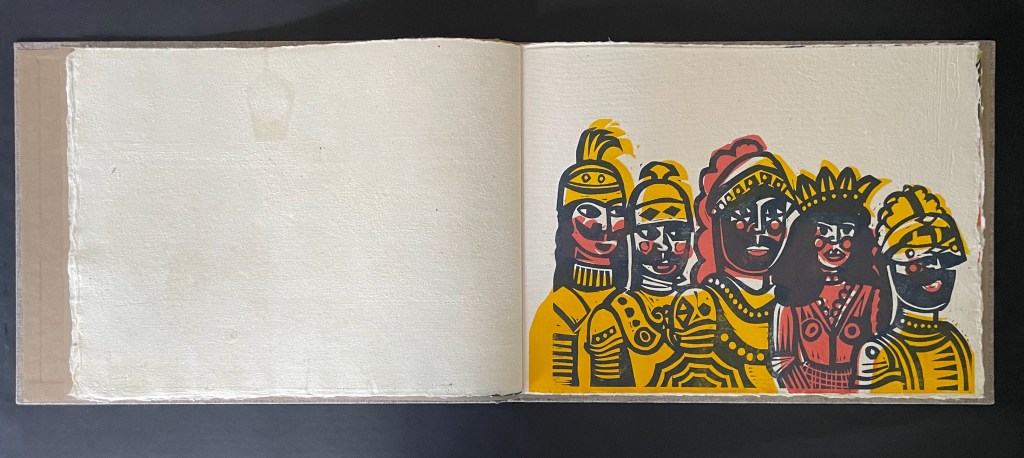
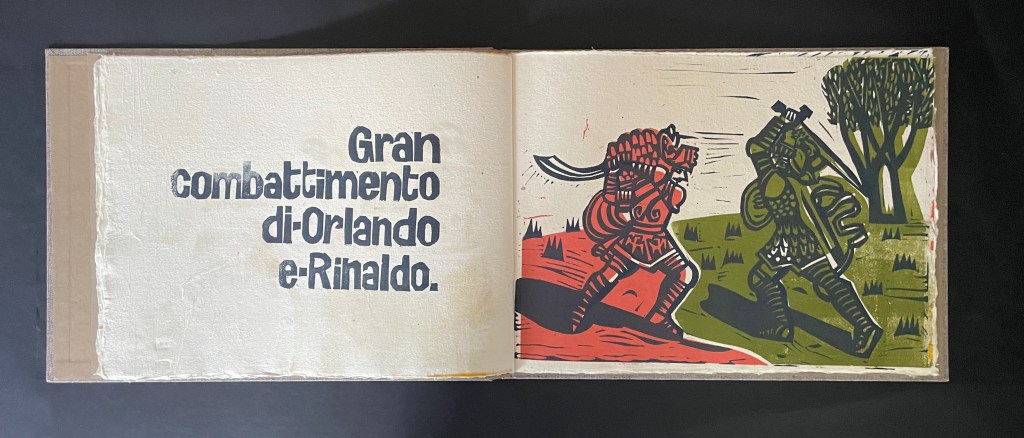
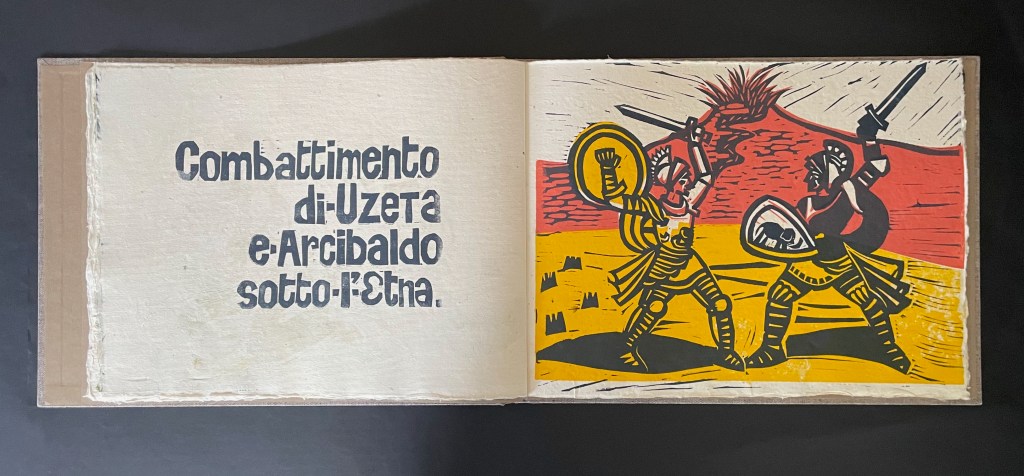
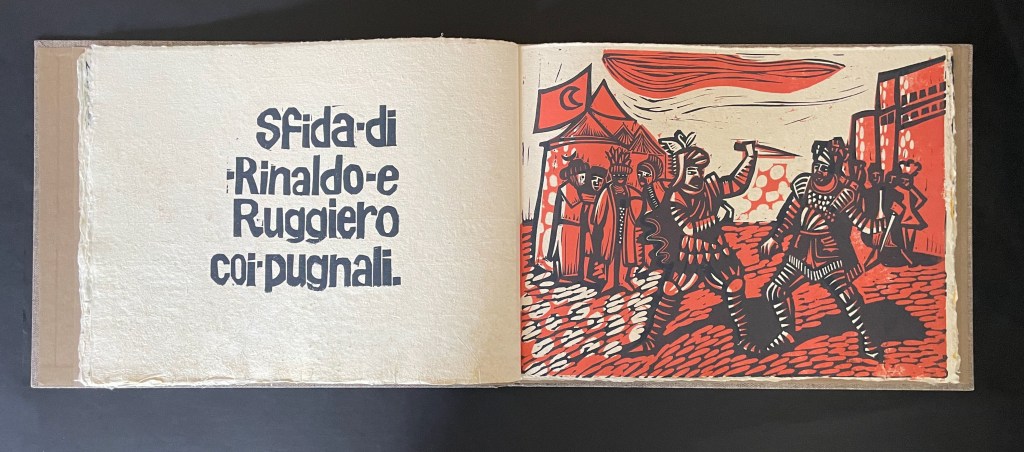
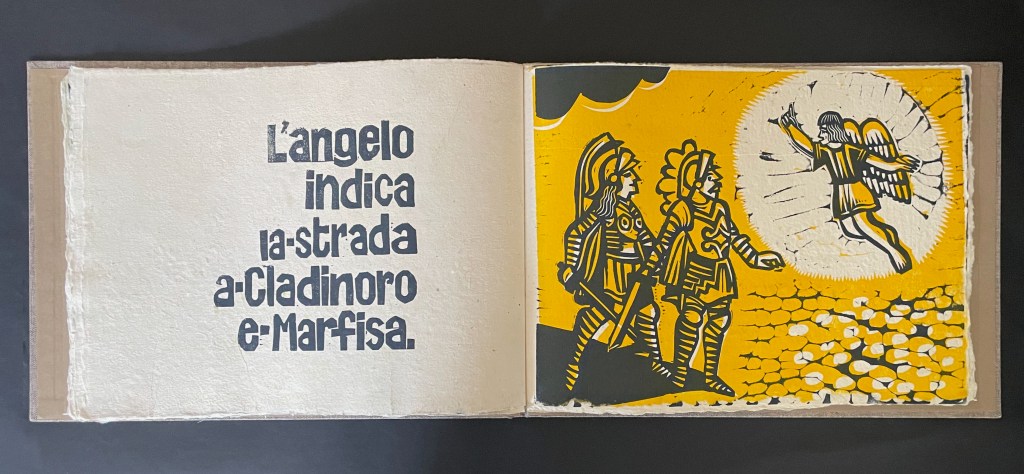
Her linocuts capture not only key scenes from their dramas but also the atmosphere of tradition, music, and wall decorations of theaters still in operation. Although Brancaforte comes from the Catania region of Sicily, she has a warm spot for the distinctive interpretation in Palermo, which accounts for the depiction below of the piano a cilindro, typically from the Palermo area. Brancaforte writes:
… their musical repertoire included songs and dances – typically The Battle, the March, the Gallop and the Lament (the first three played during duels and military actions, while the lament accompanied particularly serious or tragic moments in the story, such as the death of a protagonist). The piano a cilindro was never used in theatres in Catania and eastern Sicily, where the stage music for the Opera dei Pupi continued to be performed live by small orchestras until the second half of the 20th century. The companies in western Sicily had a more entrepreneurial mind and more “settled” nature (the theatres themselves were larger, with more robust stages to accommodate its much taller and bigger and heavier pupi….). — Brancaforte, correspondence.
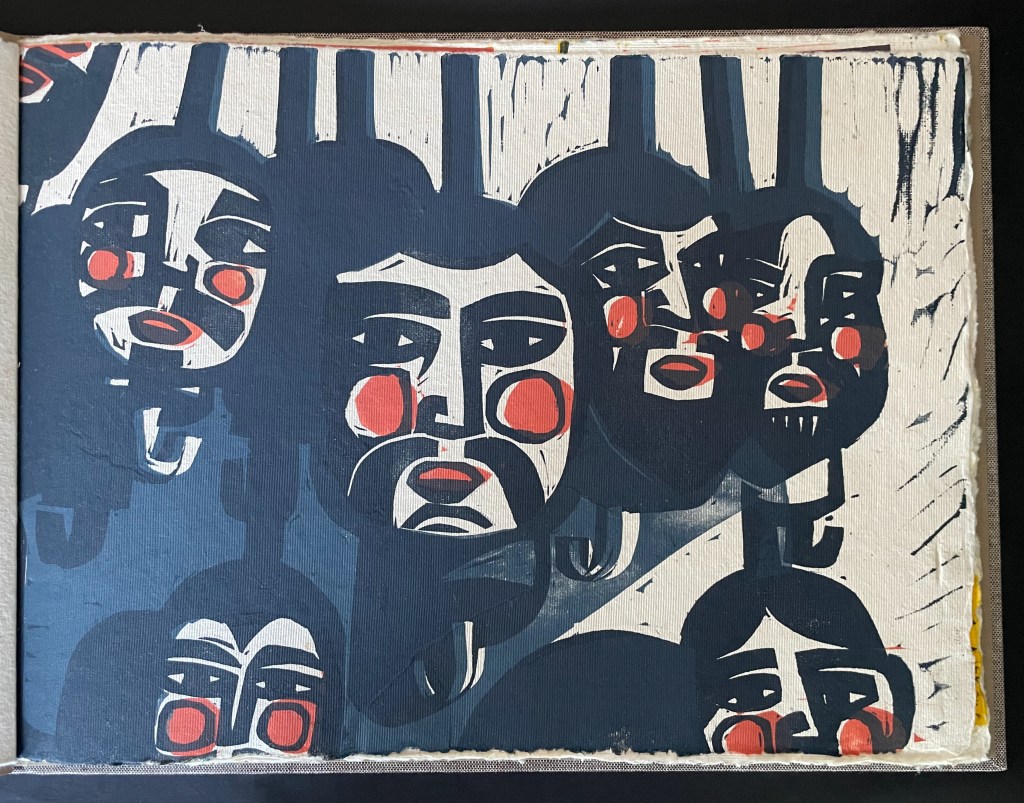
The puppet heads awaiting assembly.
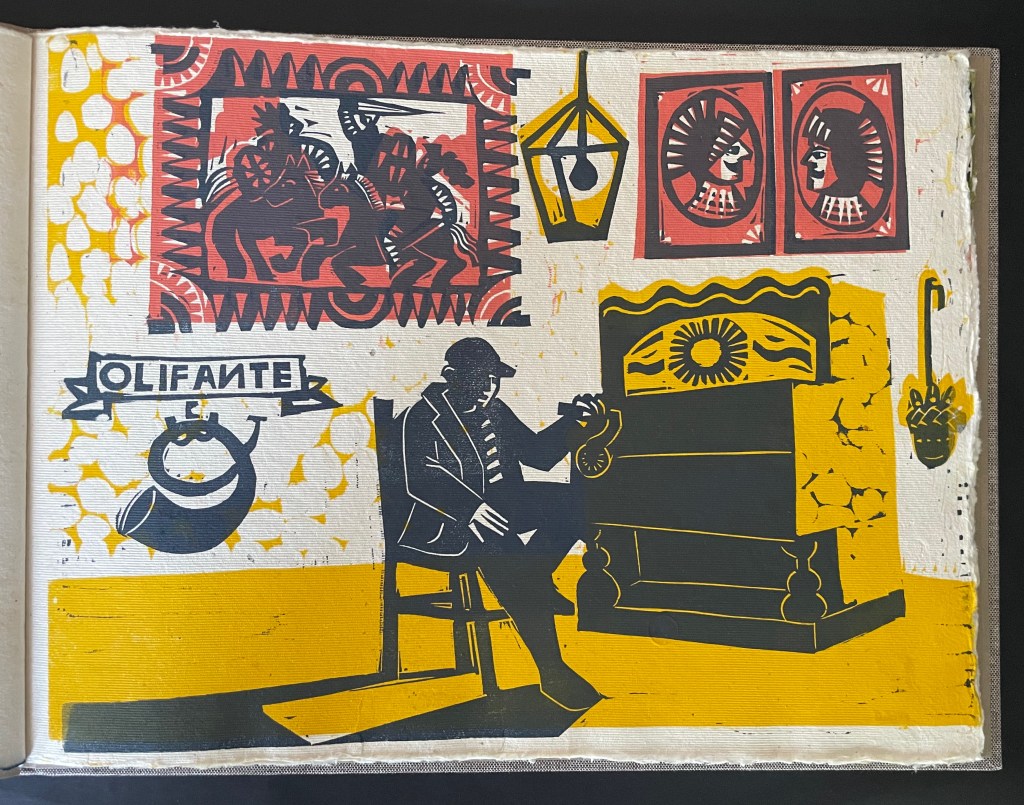
Go to 2″04″ in this entry’s opening video to see the “hurdy gurdy” or barrel organ in operation.
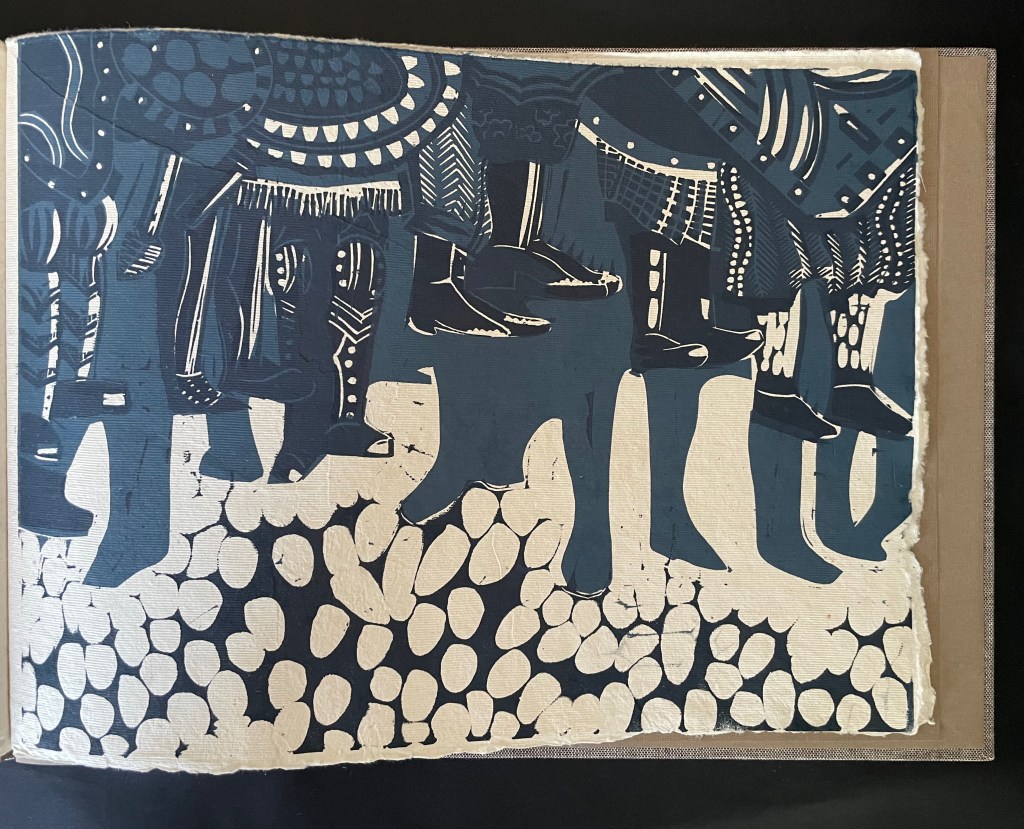
Final image: casting their shadows, the puppets’ legs and feet hang down from where the puppeteers store them until the next show.
All of the eight spreads above come from the variant edition produced on drap paper, a tribute that Brancaforte pays to her adopted region of residence — Catalunya, where she sources the paper directly. The Catalan word drap translates as a rag or tatter or shred of cloth.
Drap – Pieces of discarded clothing or unused trimmings from new cloth recycled and prepared as a high quality fiber source for making paper in the antique mills. Drap would be purchased from the citizens of local communities and delivered by the cart load to the papermills. It was primarily the work of women to then receive the drap, remove the buttons and hems, and cut the cloth down into small squares to prepare it for beating. They say that at some papermill sites, one can begin digging on the grounds and unearth heaps of buttons. — Casey, 2012.
While participating in the BuchDruckKunst book fair, Brancaforte shared a sheet of drap with John Gerard and Johannes Follmer. Gerard “confirmed that it is a sturdy cotton paper that will stand the test of time, also supporting Johannes’s suggestion that it might contain a small percentage of esparto grass, typically used in Spain for basketry” (Brancaforte, correspondence, April).
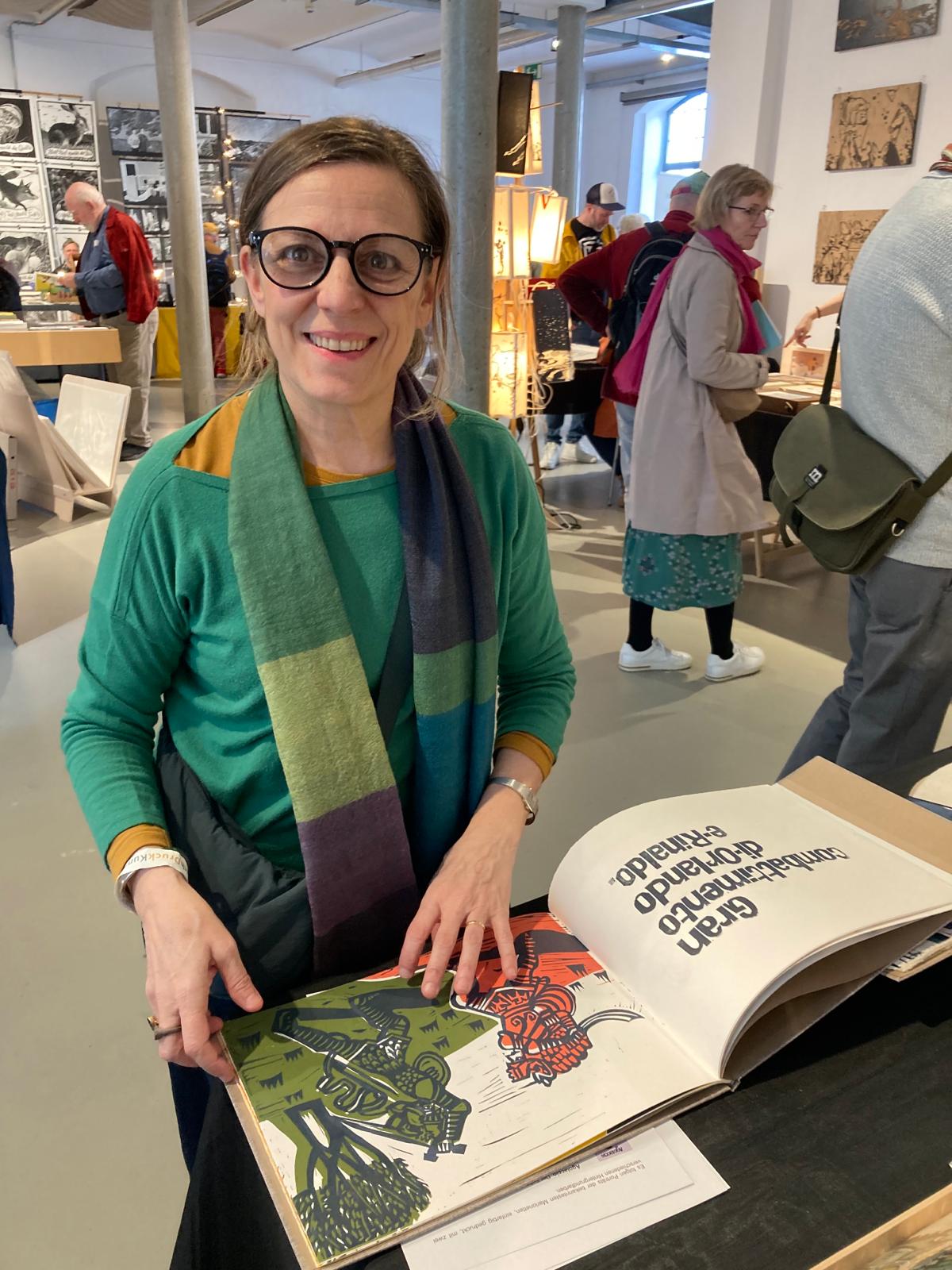
Brancaforte presenting Opera dei Pupi at the BuchDruckKunst book fair, Hamburg. Image courtesy of the artist.
Whatever the elements of chance leading to an artist’s choice of materials, the decision to produce the final variants is deliberate. The opportunity to acquire paper variants of an artist’s book offers the rare chance at direct comparison of the effects of the different substrates. It’s not just the subtle color differences in the linocuts that are worth enjoying but also those in the texture and appearance of the papers.
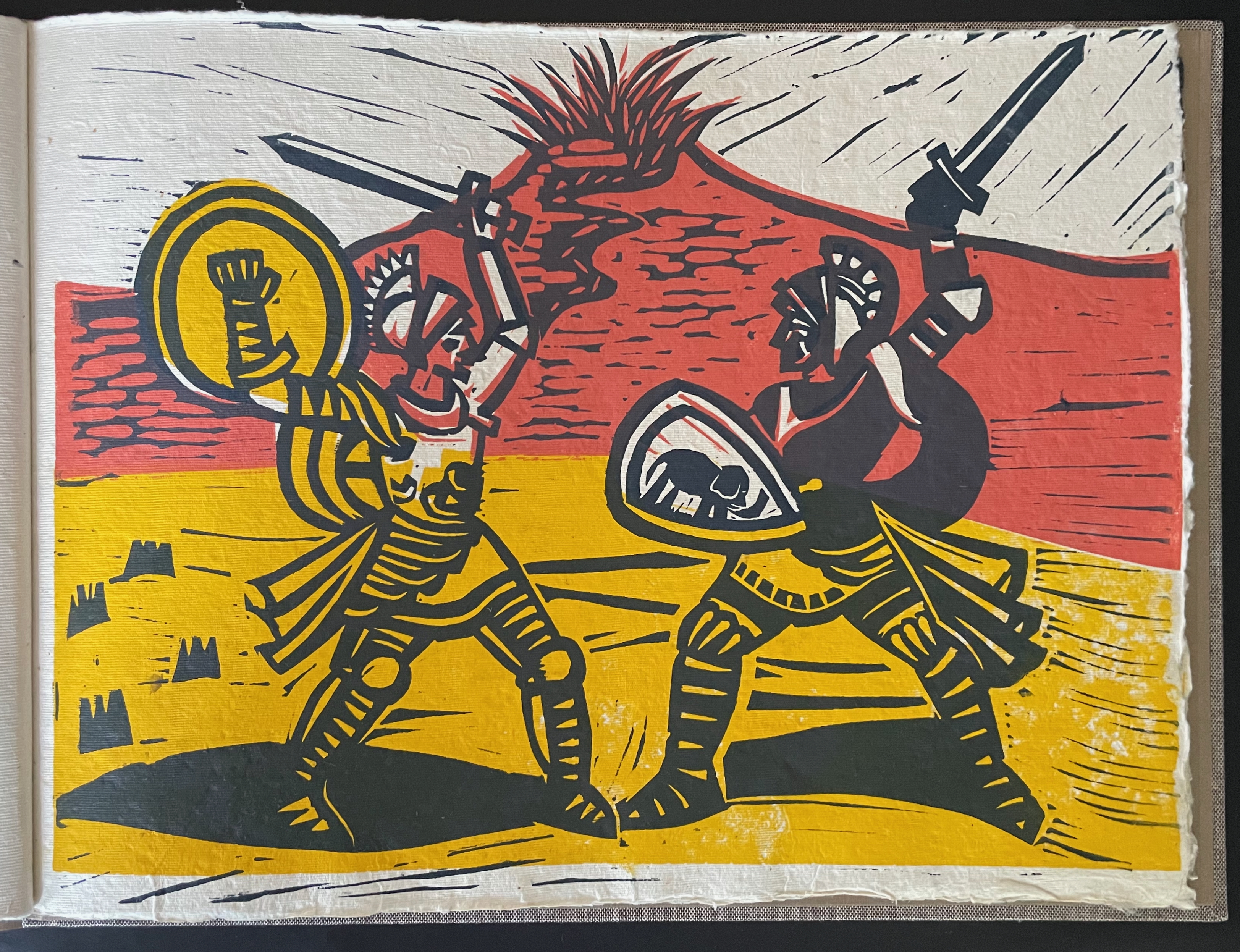
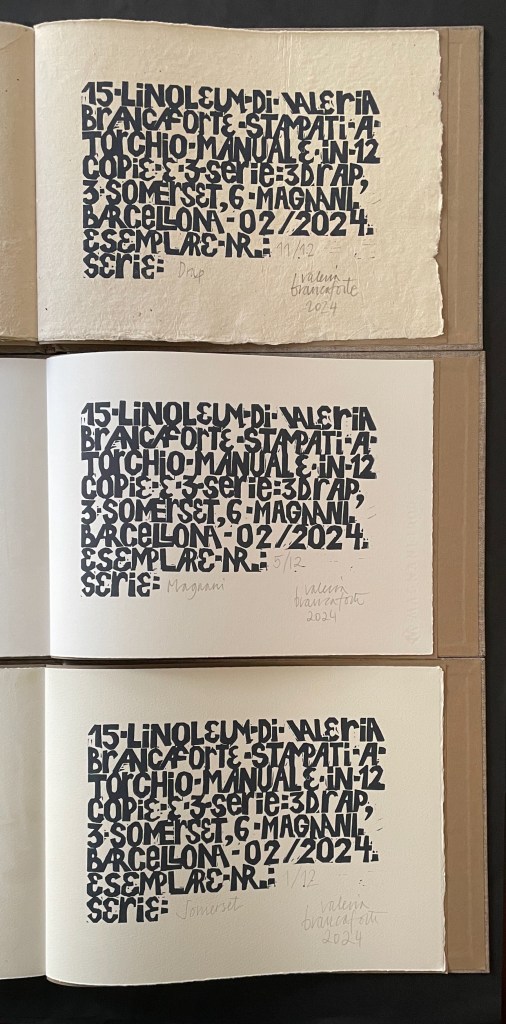
Drap
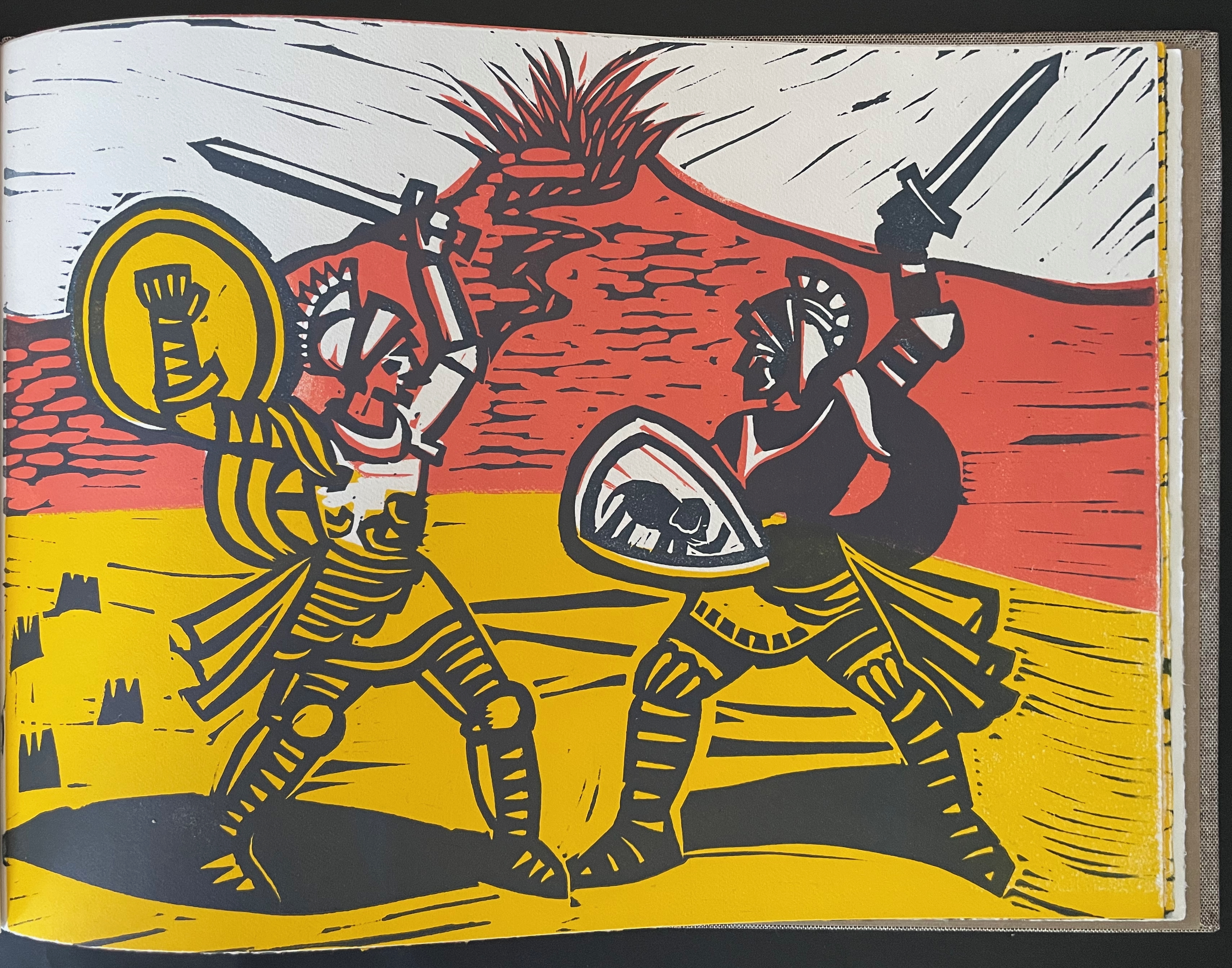
Magnani
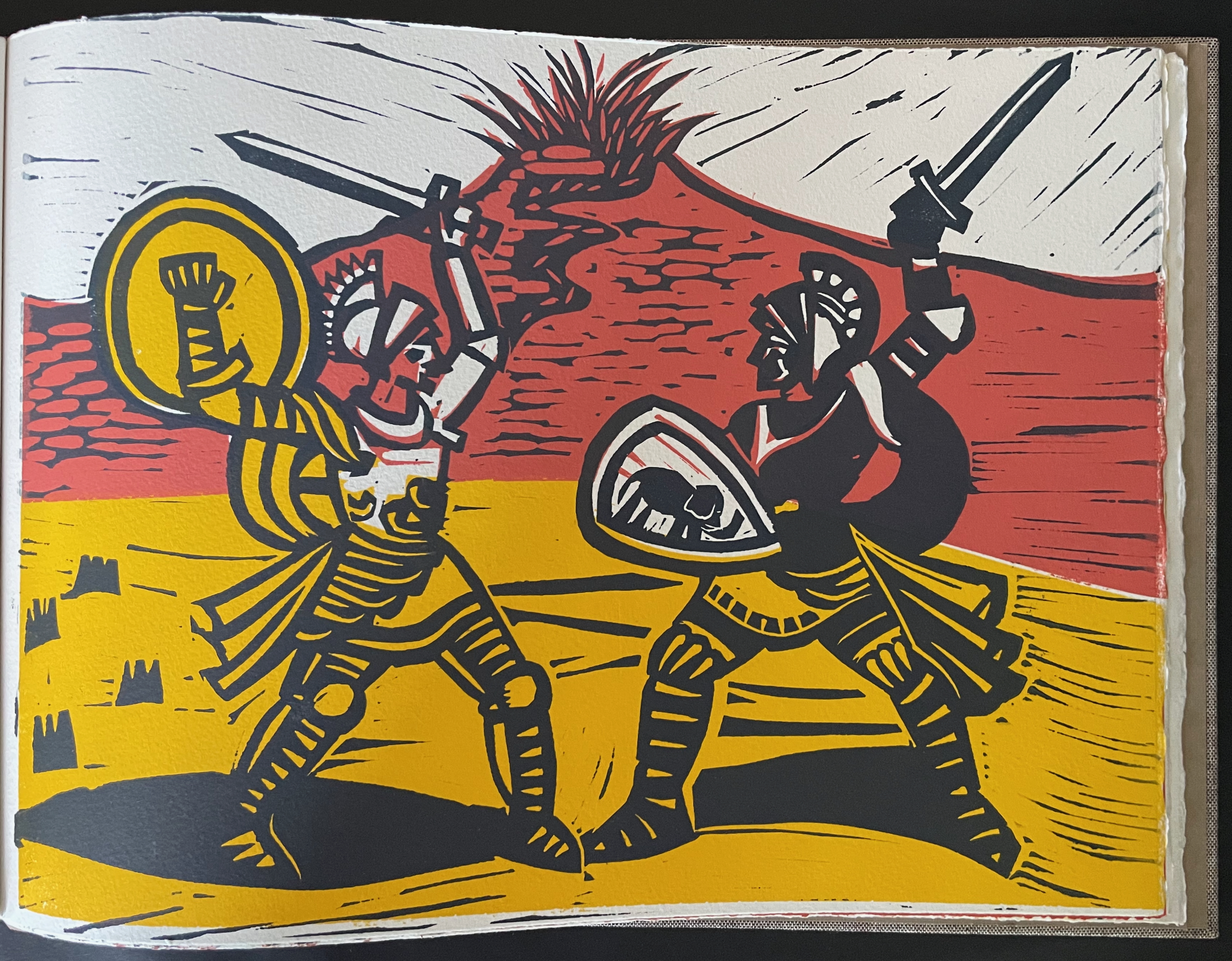
Somerset
With just the one color on the epigram page, the differences in the papers’ textures and colors stand out.
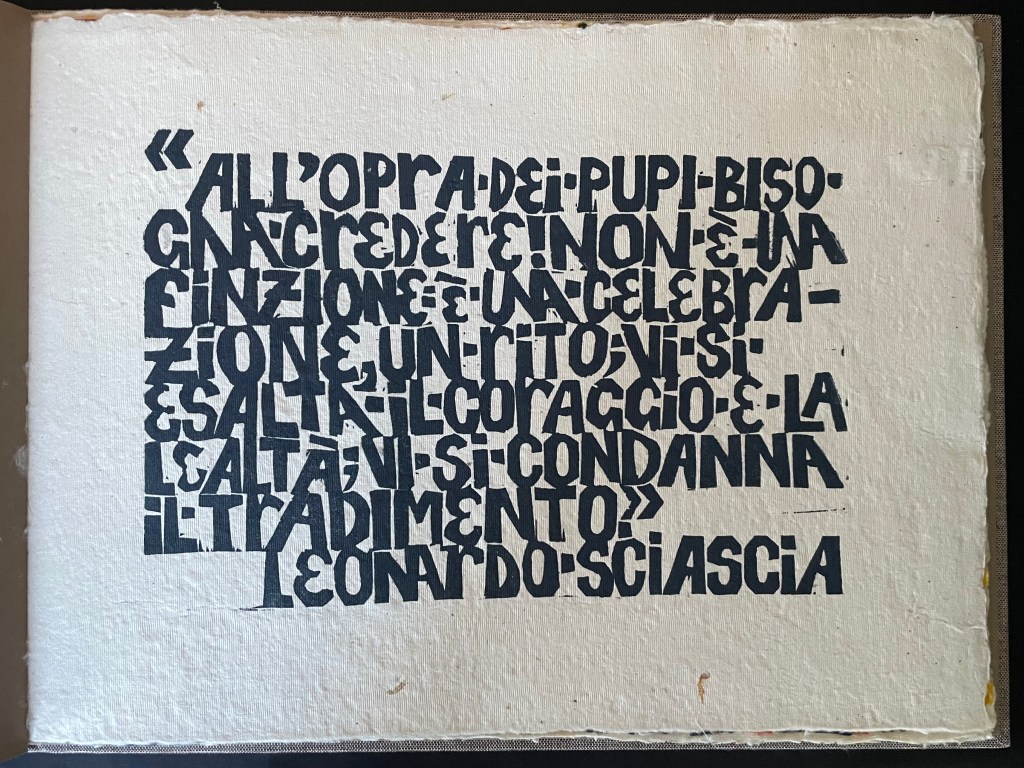
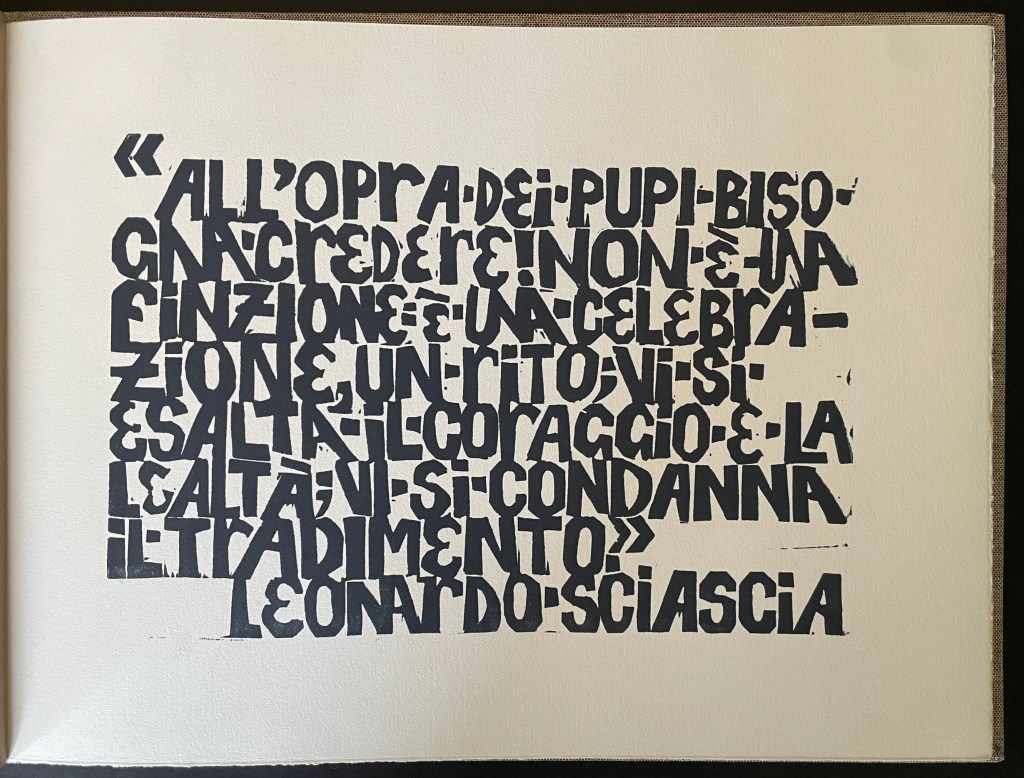
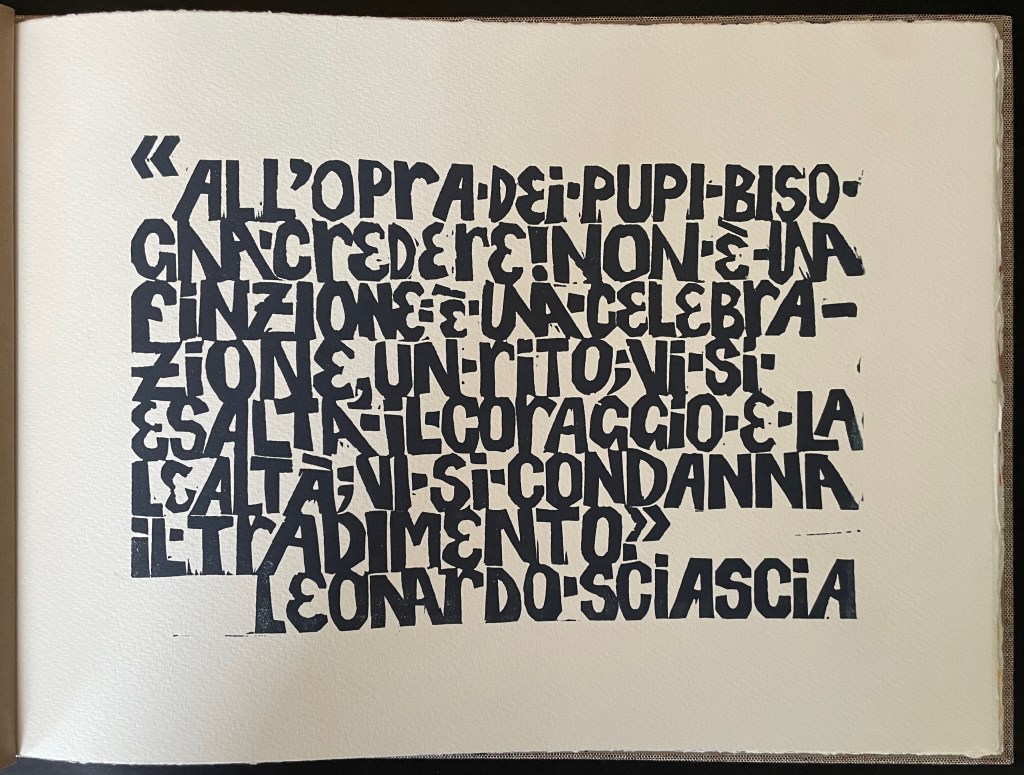
“You have to believe in the opera dei pupi! It is not fiction, it is a celebration, a ritual; it exalts courage and loyalty; it condemns betrayal.” — Leonardo Sciascia
A: Drap. B: Magnani. C: Somerset.
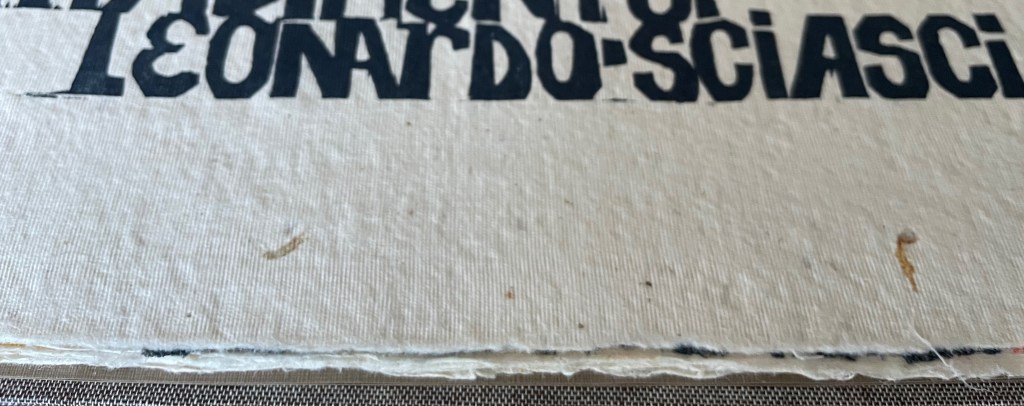
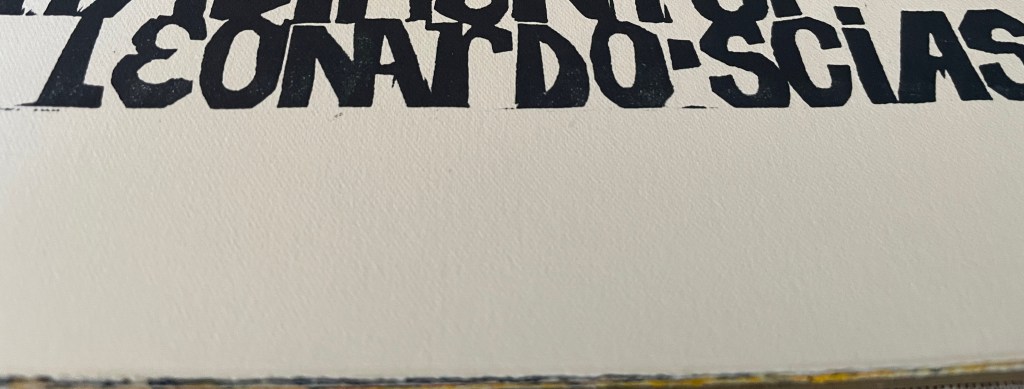
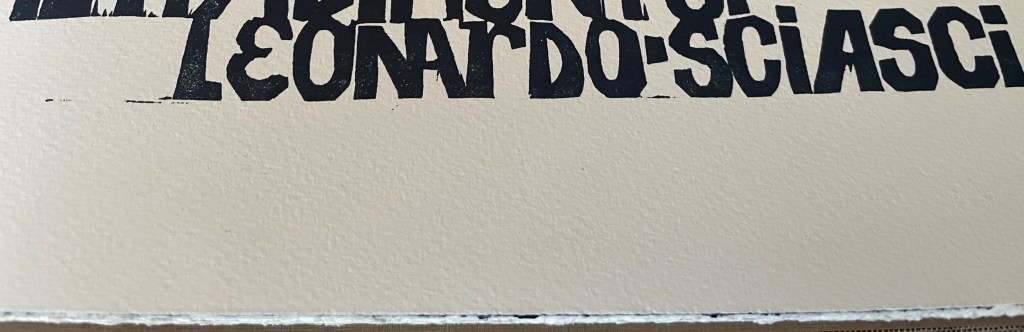
Close-up. A: Drap. B: Magnani. C: Somerset.
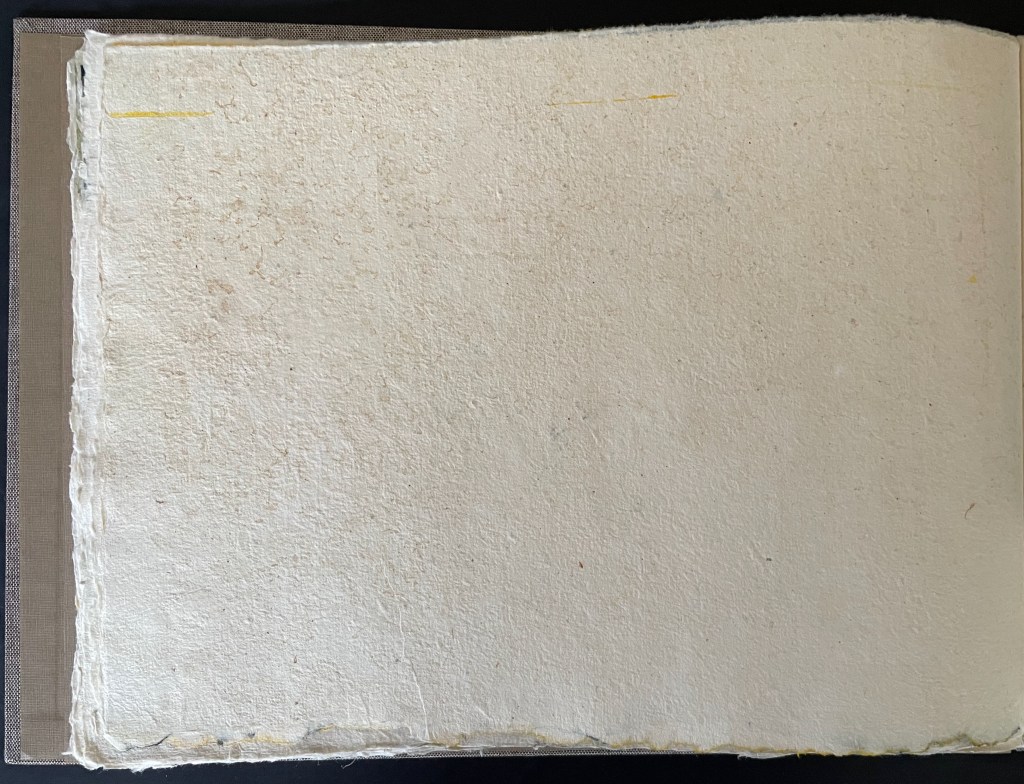
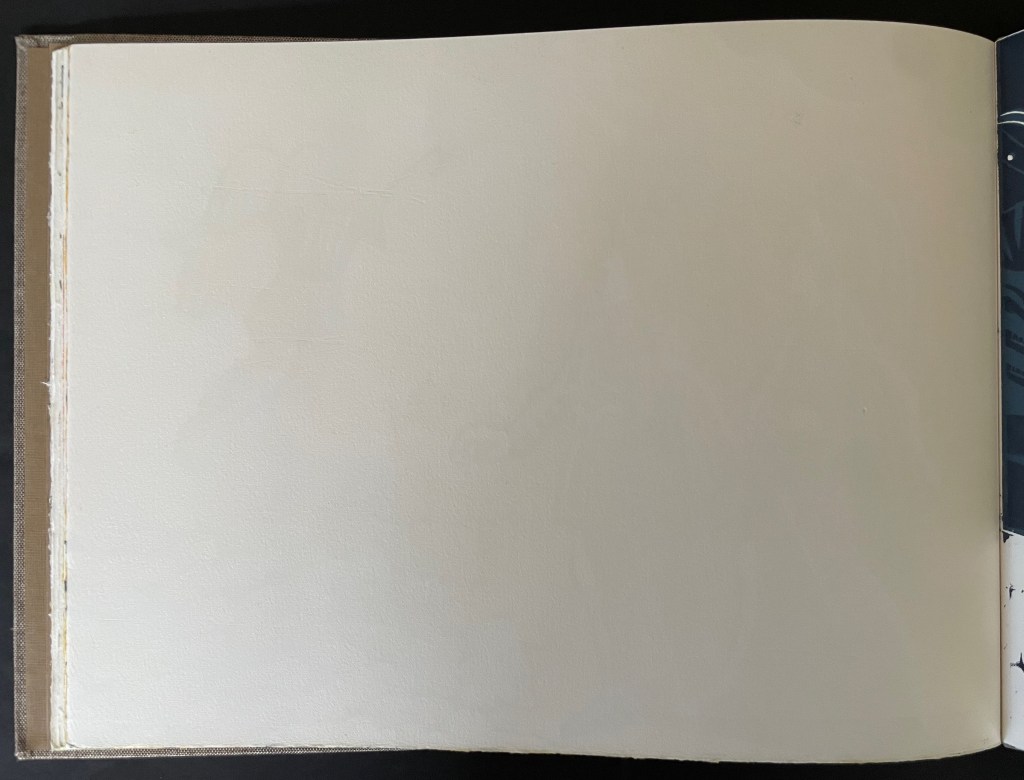
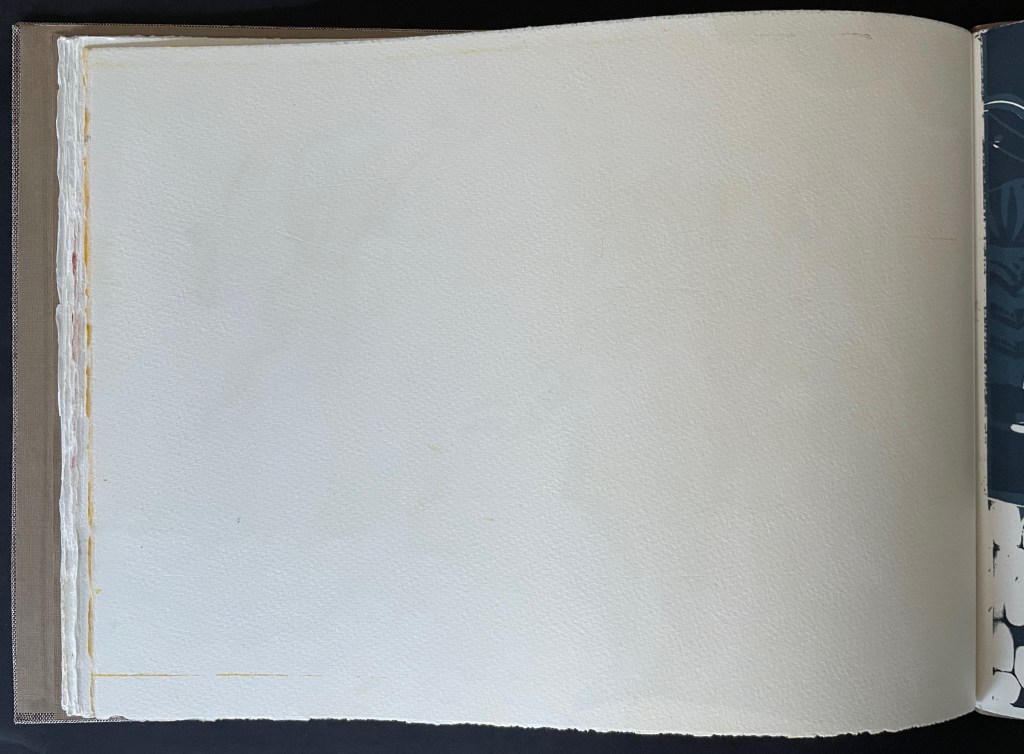
Verso of the final image folio. A: Drap. B: Magnani. C: Somerset.
Of course, no amount of viewing photographic images can substitute for touching the three different surfaces. As the fingers pass from the roughness of the drap to the fine grain of the Magnani then to the velvet grain of the Somerset, appreciation sets in that the artist has chosen these Catalonian, Italian, and English papers with care. Her choices resonate with this description of her visit to the Antonio Pasqualino Museo internazionale delle marionette and Mimmo Cuticchio’s Teatro dei Pupi in Palermo, as well as the much smaller and lesser known Opera dei pupi (a hidden gem that houses the entire collection from Ignazio Puglisi from Catania) in Sortino, province of Siracusa:
Each of these museums had a great collection of pupi of all traditions and genre, so, regardless of their origin or construction, what struck me most during this kind of pilgrimage into my past was the multitude of incredibly and crudely carved puppet heads, their worn appearance, the gleam of their swords and armor and crowns, the richness—but never luxurious—of the simple costumes…. The sight of an entire wall covered in wooden faces, staring back with intense gazes and extremely red mouths, was deeply moving and must have awakened childhood and family memories… — Brancaforte, correspondence.
Further Reading & Viewing
“John Gerard“. 13 August 2020. Books On Books Collection.
“Ron King“. 1 March 2021. Books On Books Collection.
Brancaforte, Valeria. 5 February 2026. Correspondence with Books On Books.
Brancaforte, Valeria. 15 April. Correspondence with Books On Books.
Casey, Alyssa. 5 May 2012. “Passagesinpapermaking“. Tumblr. Accessed 4 February 2026.
Cavallo, Jo Ann. 2025. The Sicilian Puppet Theater of Agrippino Manteo (1884 -1947) : The Paladins of France in America. London: Anthem Press.
Di Perna, Giulia. n.d. “Un Accordo di Sentimenti a Distanza di Tempo“. Amici de Leonardo Sciascia.
Pasqualino, Antonio. 1978. L’opera Dei Pupi. Palermo: Sellerio.
Pitrè, Giuseppe. 1889. Usi E Costumi, Credenze E Pregiudizi Del Popolo Siciliano Raccolti E Descritti Da Giuseppe Pitrè. Palermo: L.P. Lauriel di C. Clausen.
Rigoli, Aurelio. 1983. Eroi Di Sicilia ; Figurazioni Del Teatro Popolare Raccolte Da Vincenzo Abbate E Melo Minnella. Palermo: Gidue.
Mario Soldati (Italian writer, journalist and film director) interviewing the puparo Giuseppe Argento.

