The Paper Snake (1964/2014)
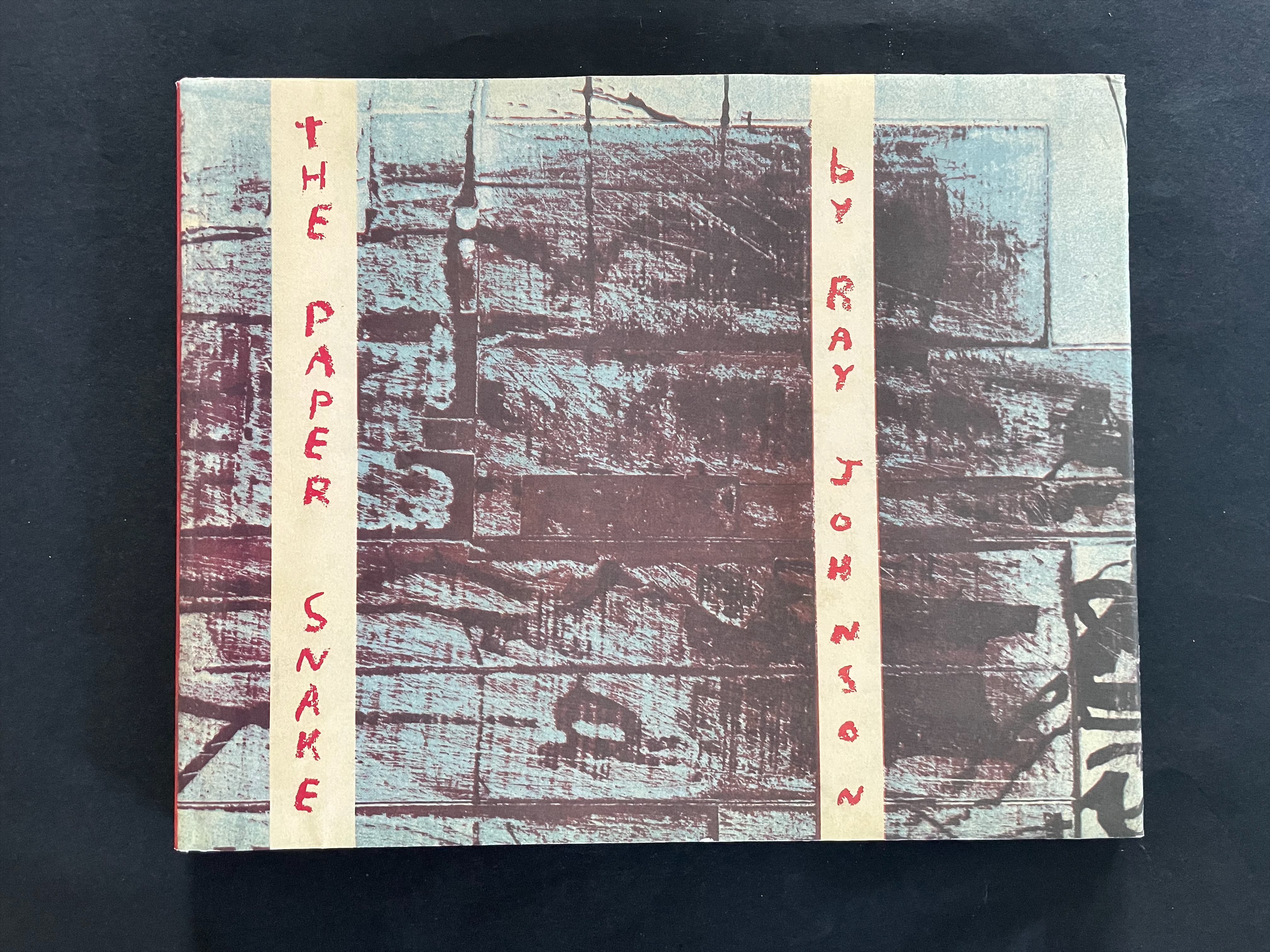
The Paper Snake (1965/2014)
Ray Johnson
Casebound hardcover, black pastedown at front, printed blue pastedown at back. Original dustjacket. H222 x W275 mm. [50] pages. One of 1840 copies. This copy includes an introductory essay as a separate insert by Frances F. L. Beatty, director of the Ray Johnson estate. Acquired from lobstabooks, 28 November 2025.
Photos: Books On Books Collection.
Although MoMA’s The Surrealist Book (2026) recognizes Ray Johnson as an important figure in the continuation of Surrealism, it does not mention The Paper Snake (1965). The Paper Snake is one of the four artist’s books displayed on the Ray Johnson Estate website. Published or rather co-created with Dick Higgins and his Something Else Press, it richly reflects the collaborative spirit and collage technique that were characteristic of Surrealism from its beginnings.
With the exquisite corpse game, André Breton and his fellow artists planted a seed from which “correspondence art” (or “mail art”) grew, watered by the diaspora of artists from Europe before, during, and after WWII, and developed by conceptualists and Pop artists such as George Brecht, Robert Filliou, Dieter Roth, and Andy Warhol. Ray Johnson though is considered the father of mail art, which pushed collaboration well beyond the effort of the earlier Surrealists.
The Paper Snake “as book” is Dick Higgins’ response to pieces of correspondence and ephemera that Johnson sent to him:
Something Else Press published a book in 1965 called The Paper Snake…. [Dick Higgins had] saved all these things and designed and published a book, and I simply as an artist did what I did without classification. So when the book appeared, the book stated, ‘Ray Johnson is a poet,’ but I never said, ‘this is a poem,’ I simply wrote what I wrote and it later became classified.” — Ray Johnson
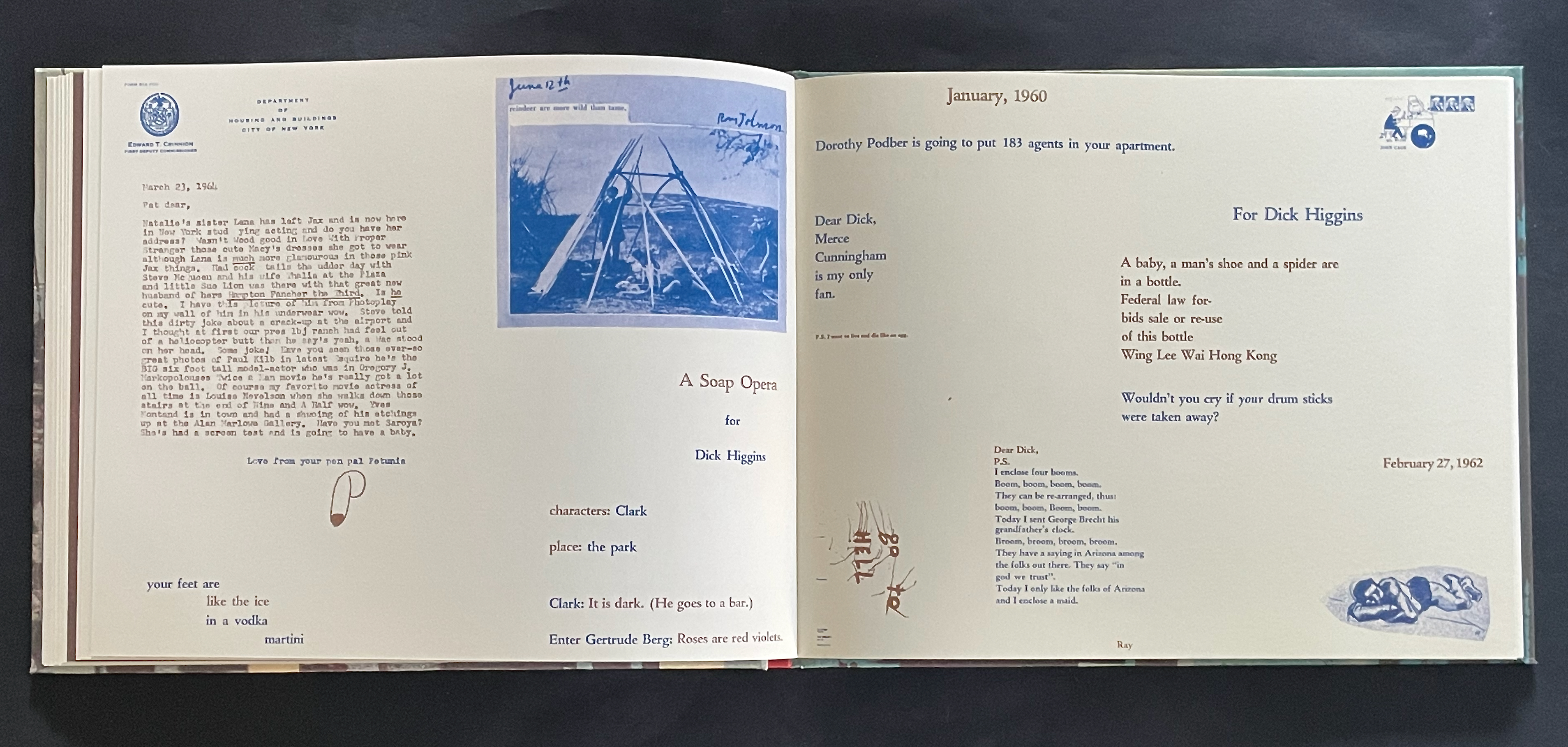
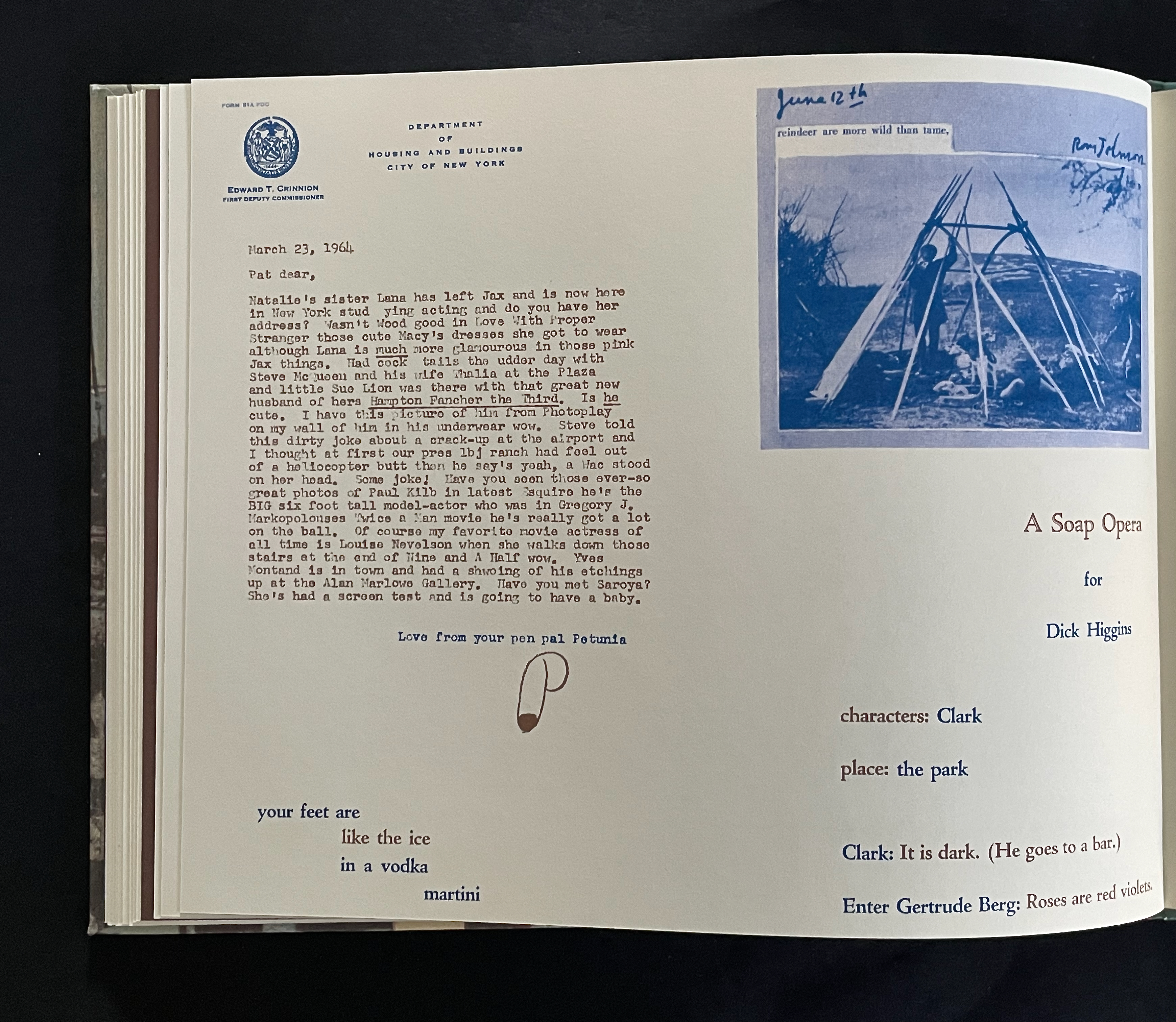
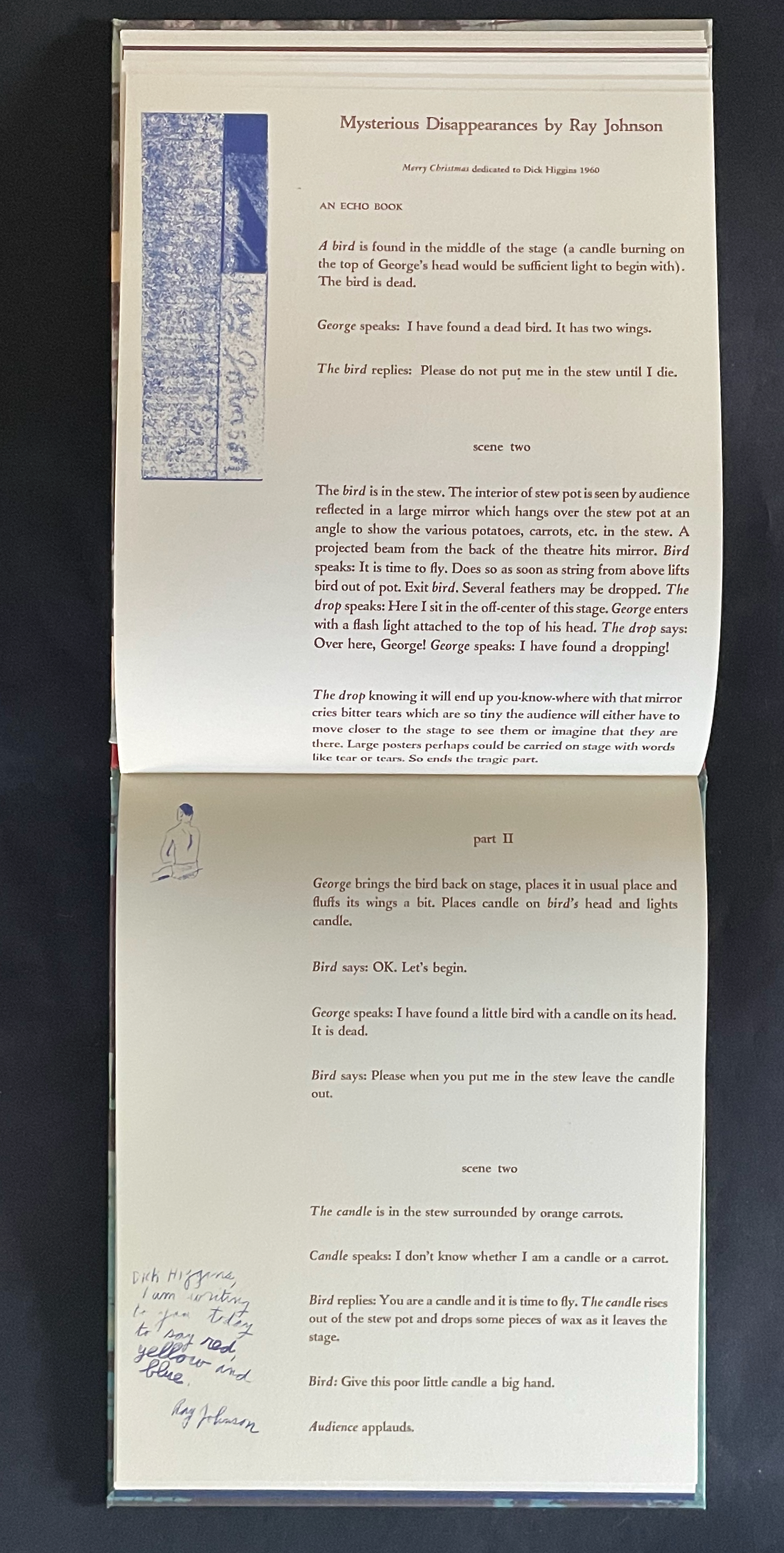
The inclusion of “A Soap Opera for Dick Higgins” recalls that Johnson was also an instigator of performance art and “happenings”, which the following run of pages turned 90º to the left highlights.
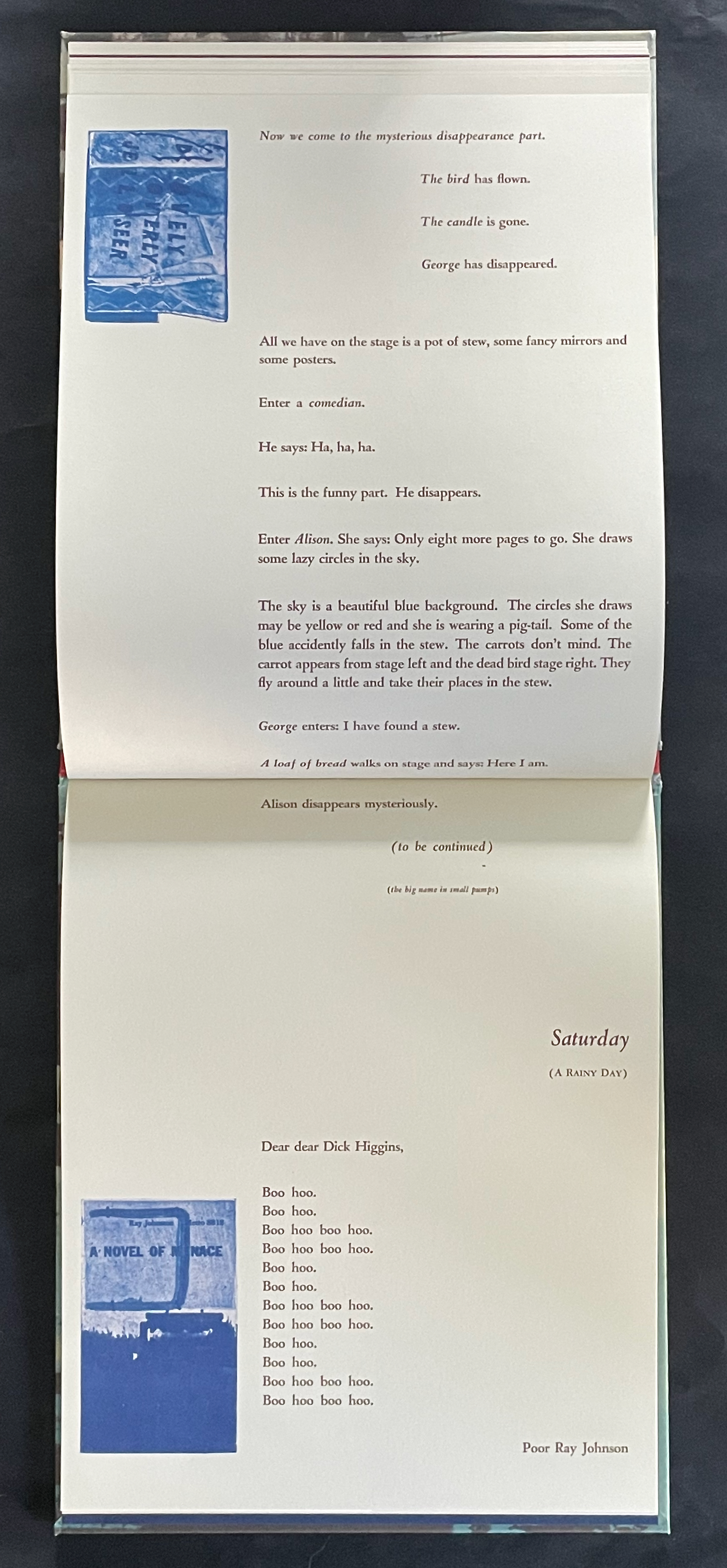
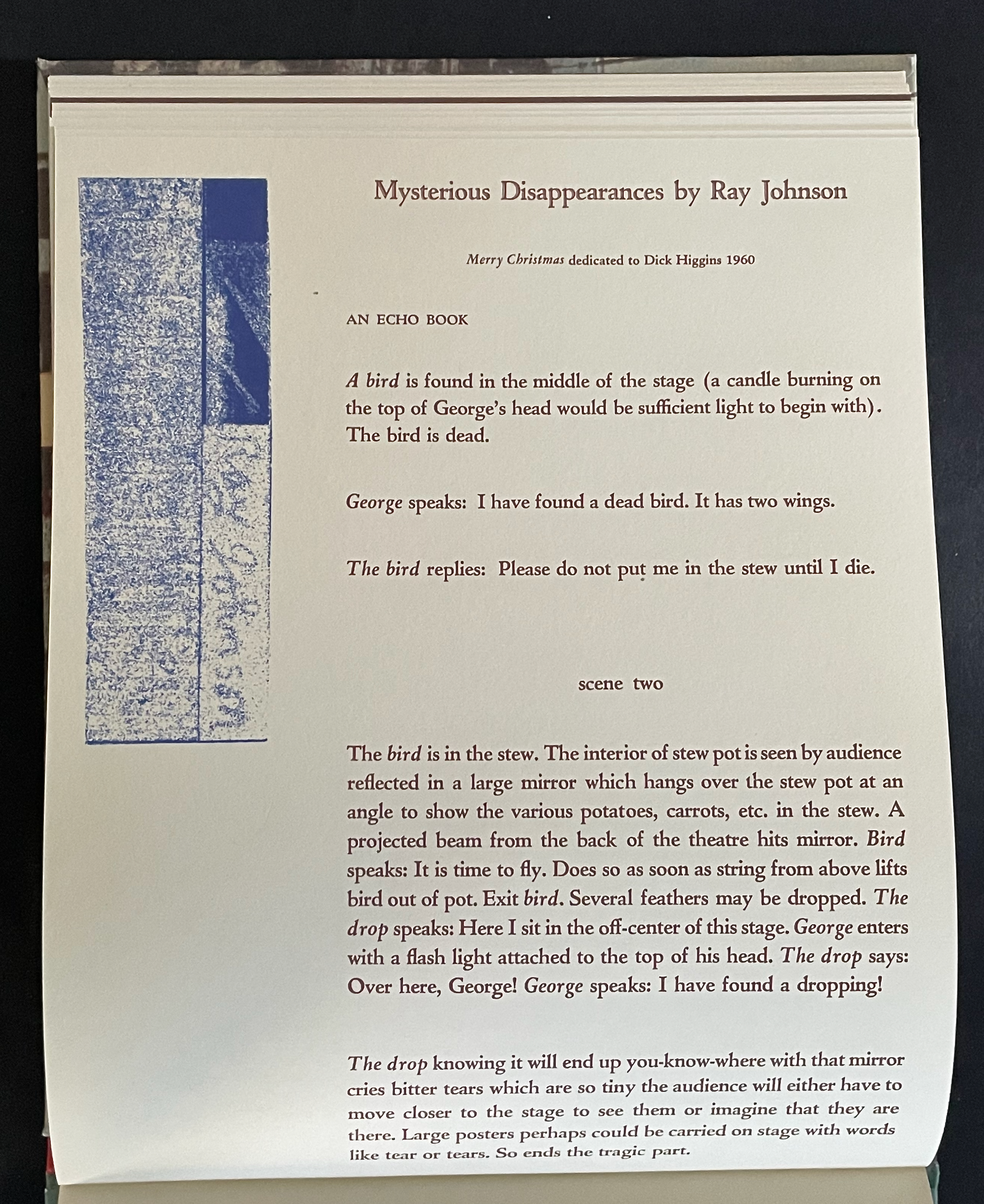
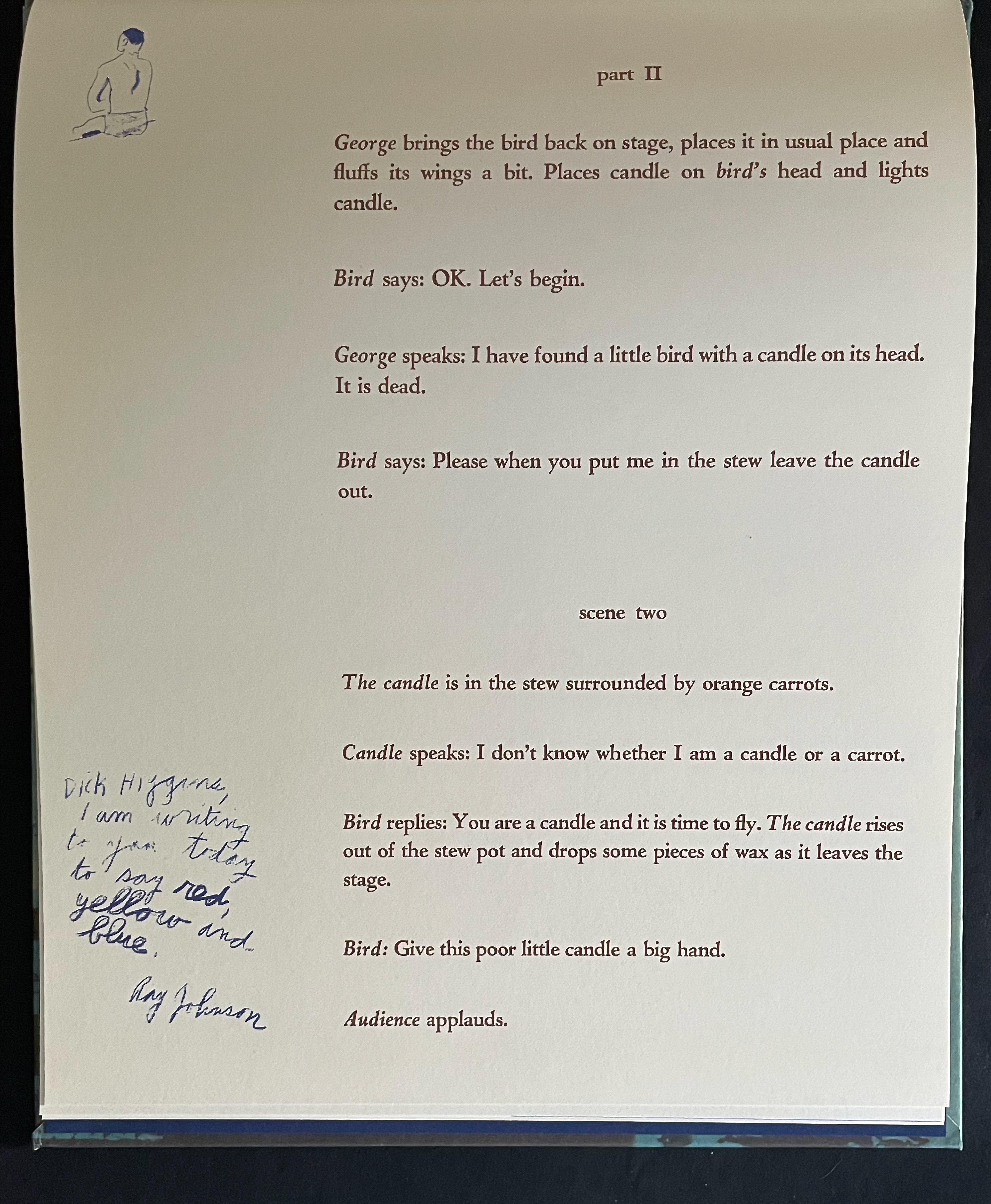
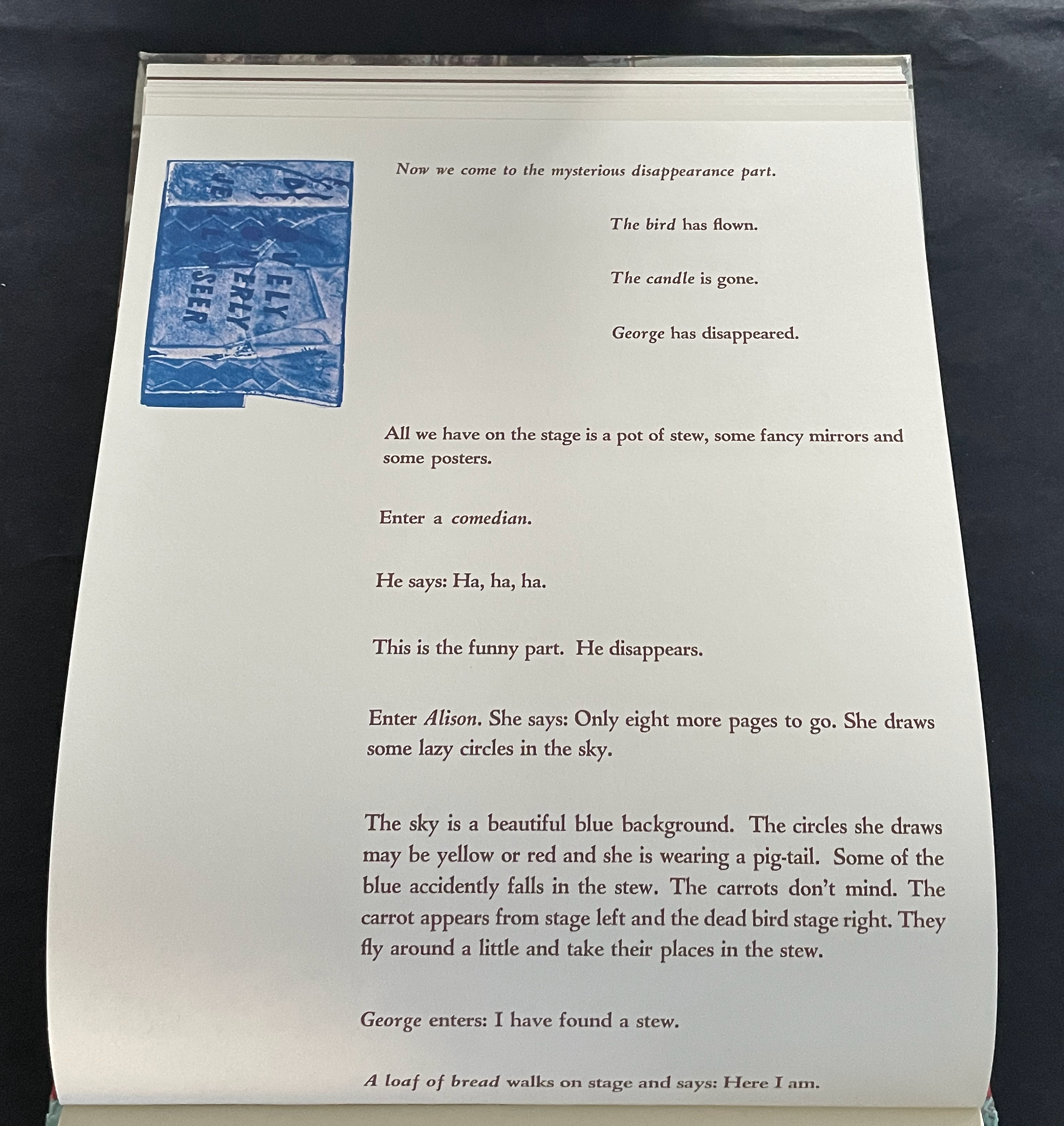
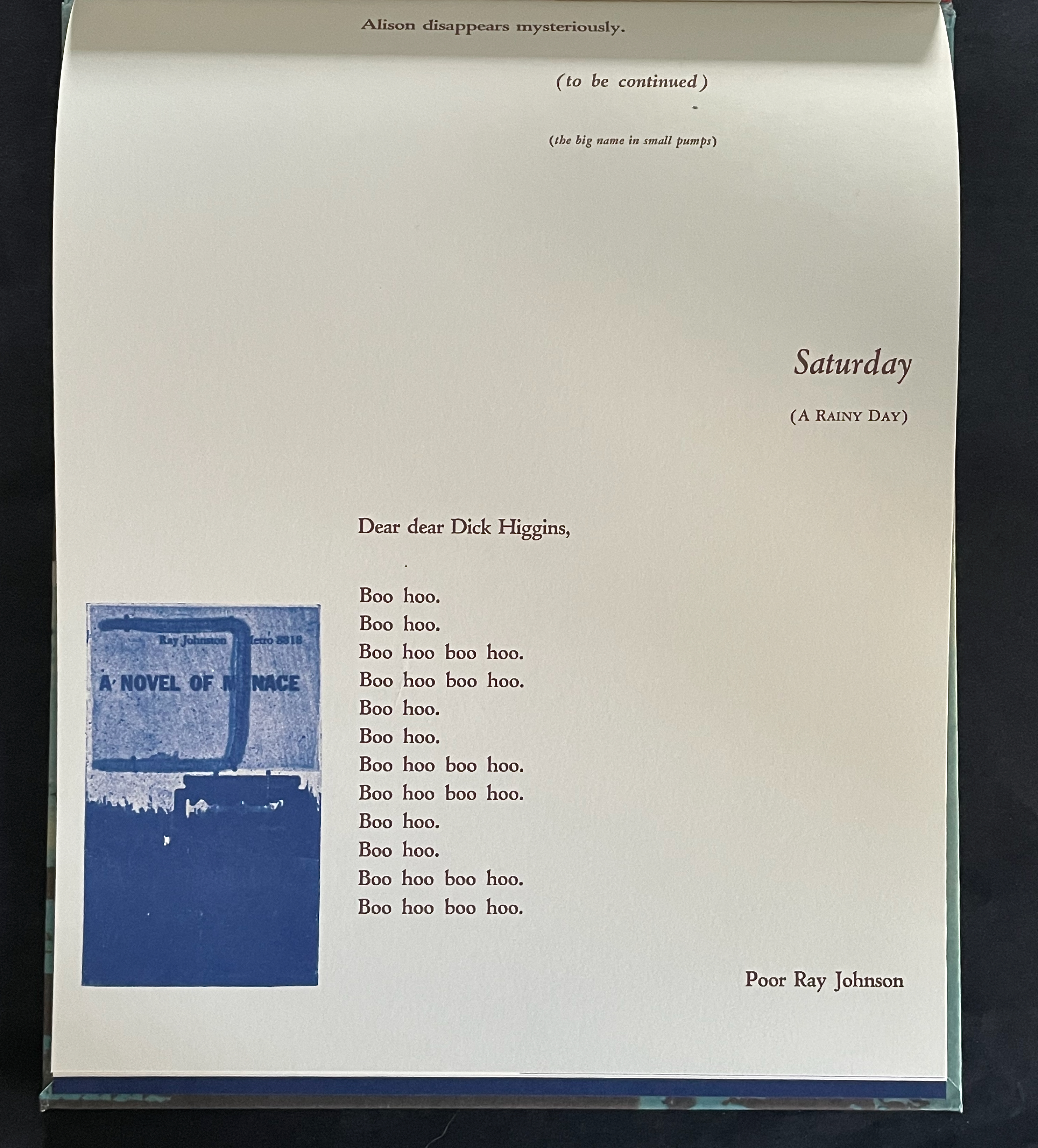
The copy of The Paper Snake in this collection comes from the Siglio Press 2014 reprint, printed in an edition of 1,840 copies (the same as the original run). That peculiar quantity reflects Johnson’s fascination with the number 13 (1+8+4+0 = 13) on which friends and followers seized to explain his mysterious death as a final performance. One of those friends was the writer William Wilson, the author of the dustjacket copy and the essay “Ray Johnson and the Number 13” (see below).
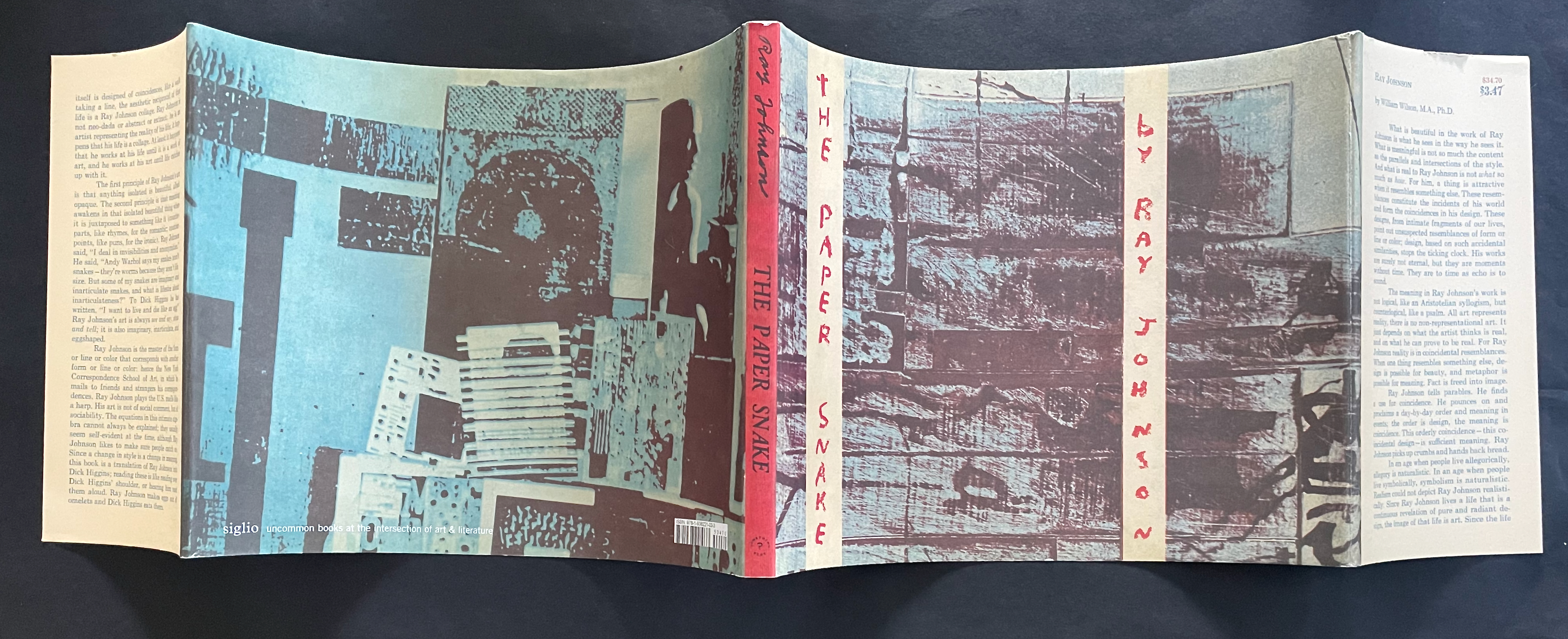
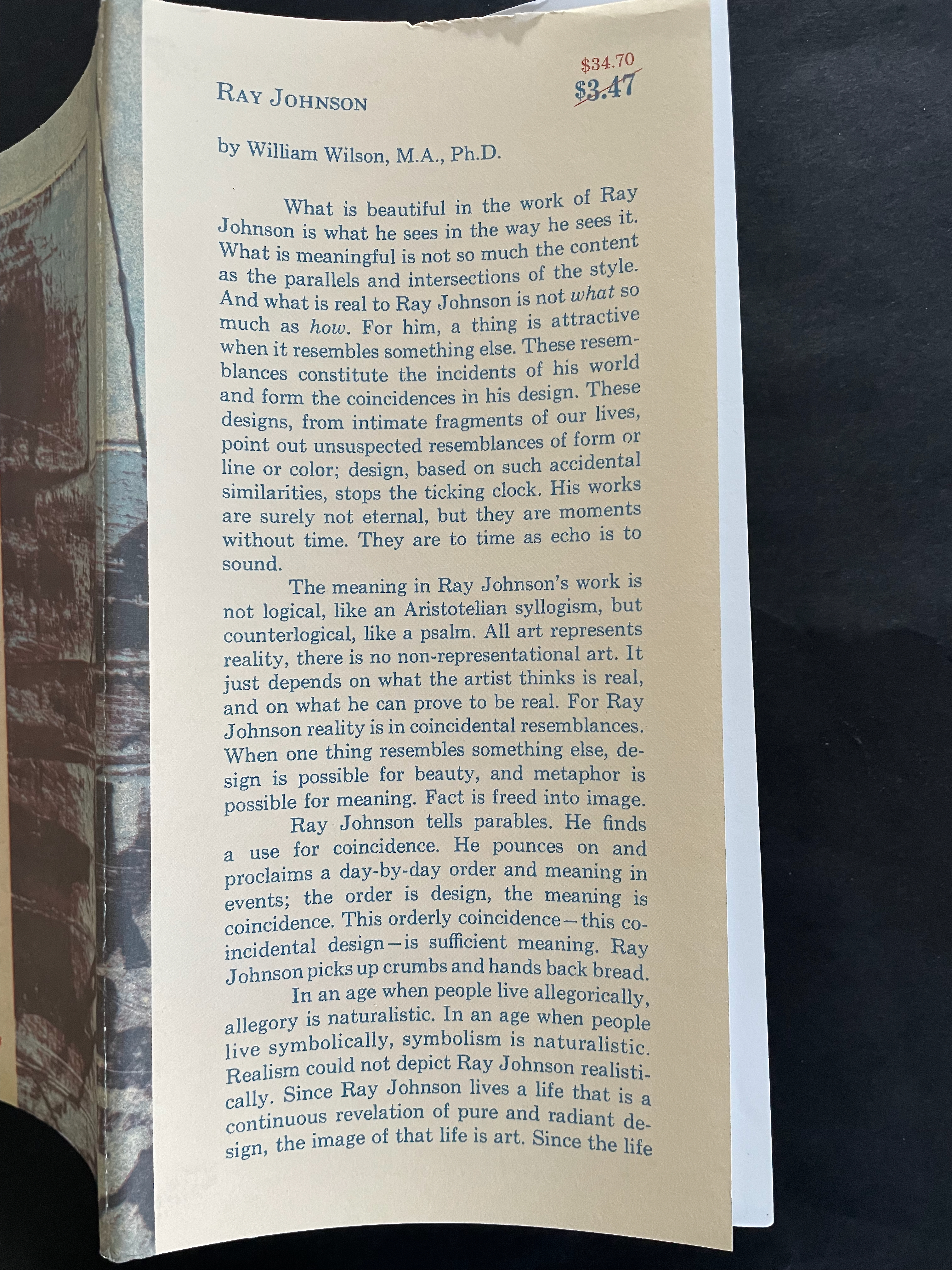
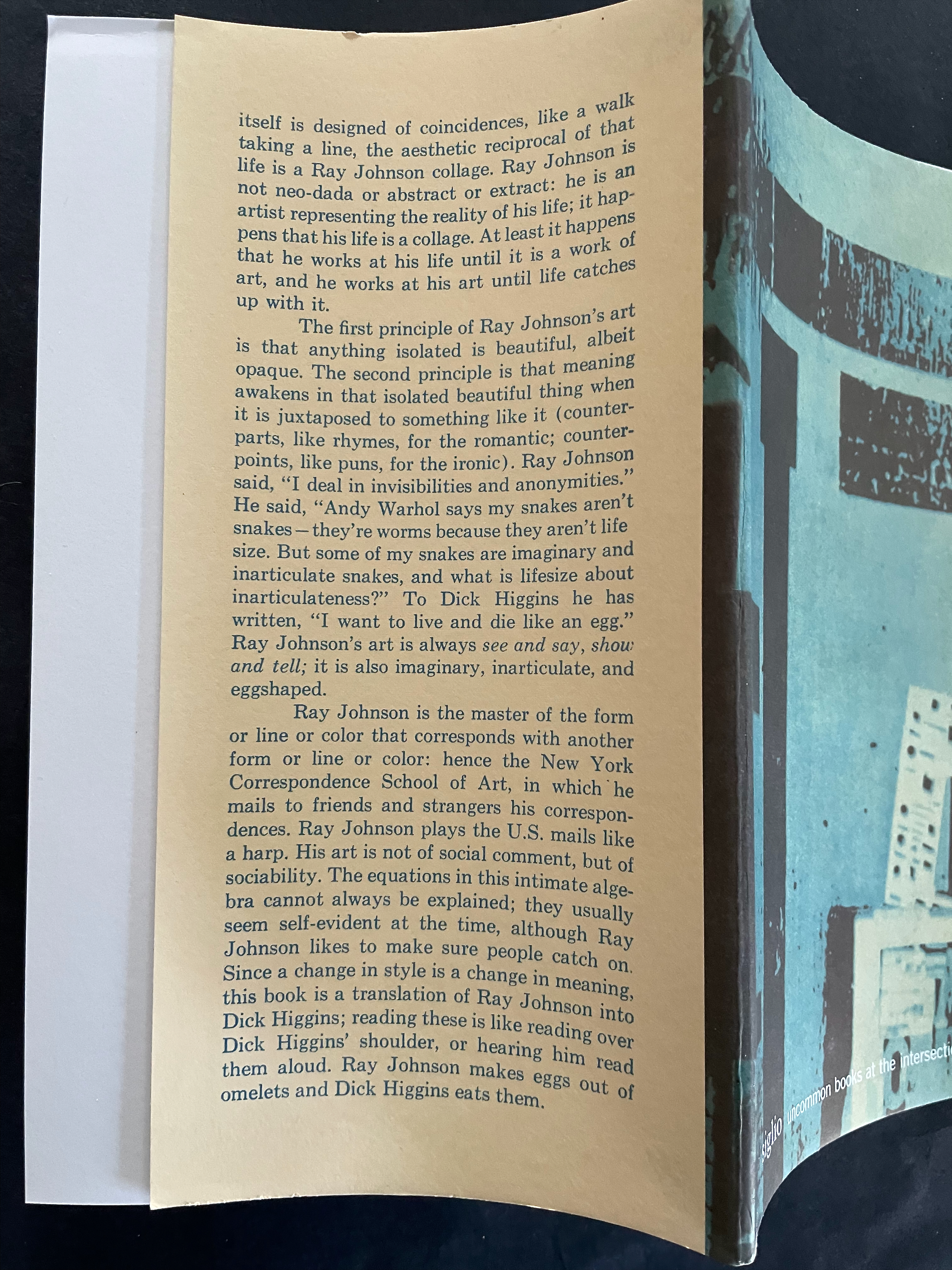
Wilson seems to have been particularly attuned to Johnson’s play with letters and the number 13. Johnson had after all pushed the numeral 1 up against the numeral 3 to form a B, which naturally associated itself with his friend’s nickname “Bill”. It was also associated with Johnson’s recurring “bunny head” image/signature (see item 35 in the 2022 Morgan Library exhibition Please Send to Real Life: Ray Johnson Photographs). According to the Estate site, the bunny head first appeared next to Johnson’s signature in a letter to Wilson. Like the bunny head, the snake appears frequently in Johnson’s art.
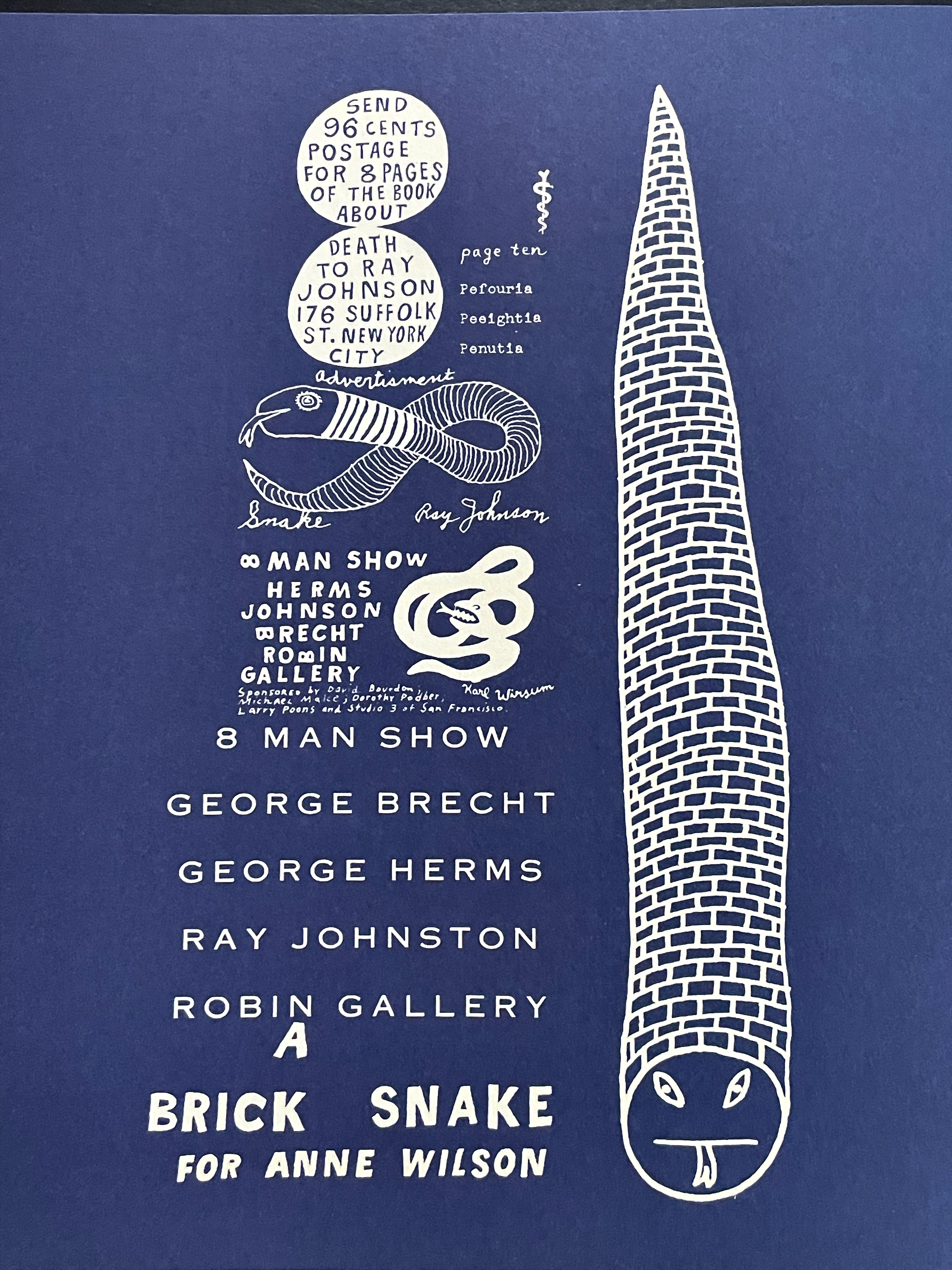
In retrospect, the conjunction of the end flyleaf with the title of the mini-drama “Mysterious Disappearances” must have seemed to Wilson an eerie harbinger of Johnson’s own disappearance in 1995.
Further Reading
Wilson, William S. 13 August 2002. “Ray Johnson and the Number 13“. Blastitude: #13 August 2002 Eternity Blast Special edited by Cary Loren Page 13 of 13.

