Serpents (2025)
Serpents (2025)
Phil Zimmermann
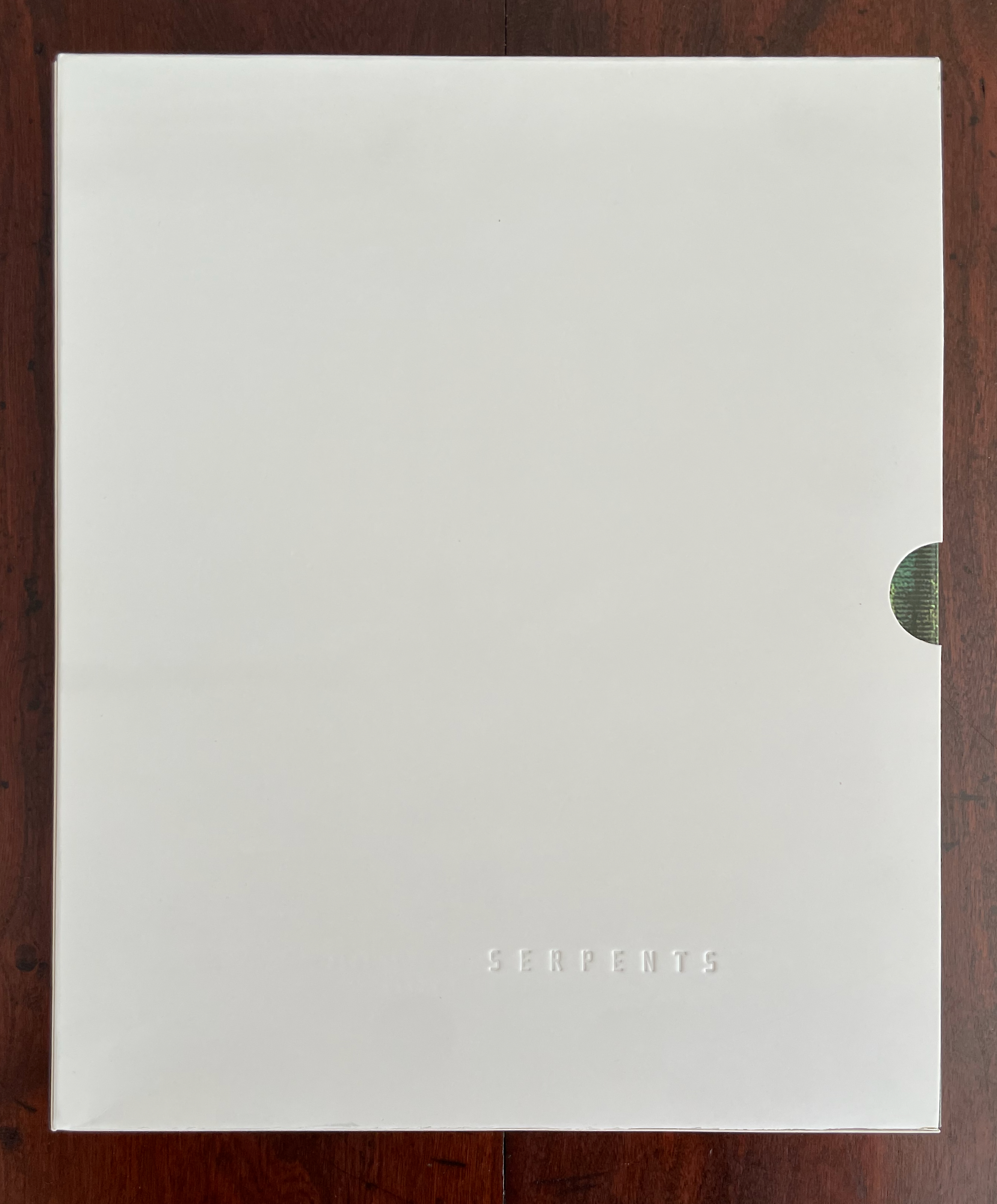
Blind embossed white slipcase holding two volumes. Slipcase: H265 x W217 X D17 mm. Deep-flap cover: H263 x W216 mm. Vol. I: H262 x W210 mm. Vol. II: H262 x W215 mm. Vol. I: [40] pages. Vol. II: [60] pages. Edition of 65, of which this is #22. Acquired from the artist, 9 February 2026.
Photos: Books On Books Collection.
Serpents is a welcome chance to add an alphabetical offering by Philip Zimmermann to his works already in the collection. Two volumes, one of which is an addendum, make up Serpents.
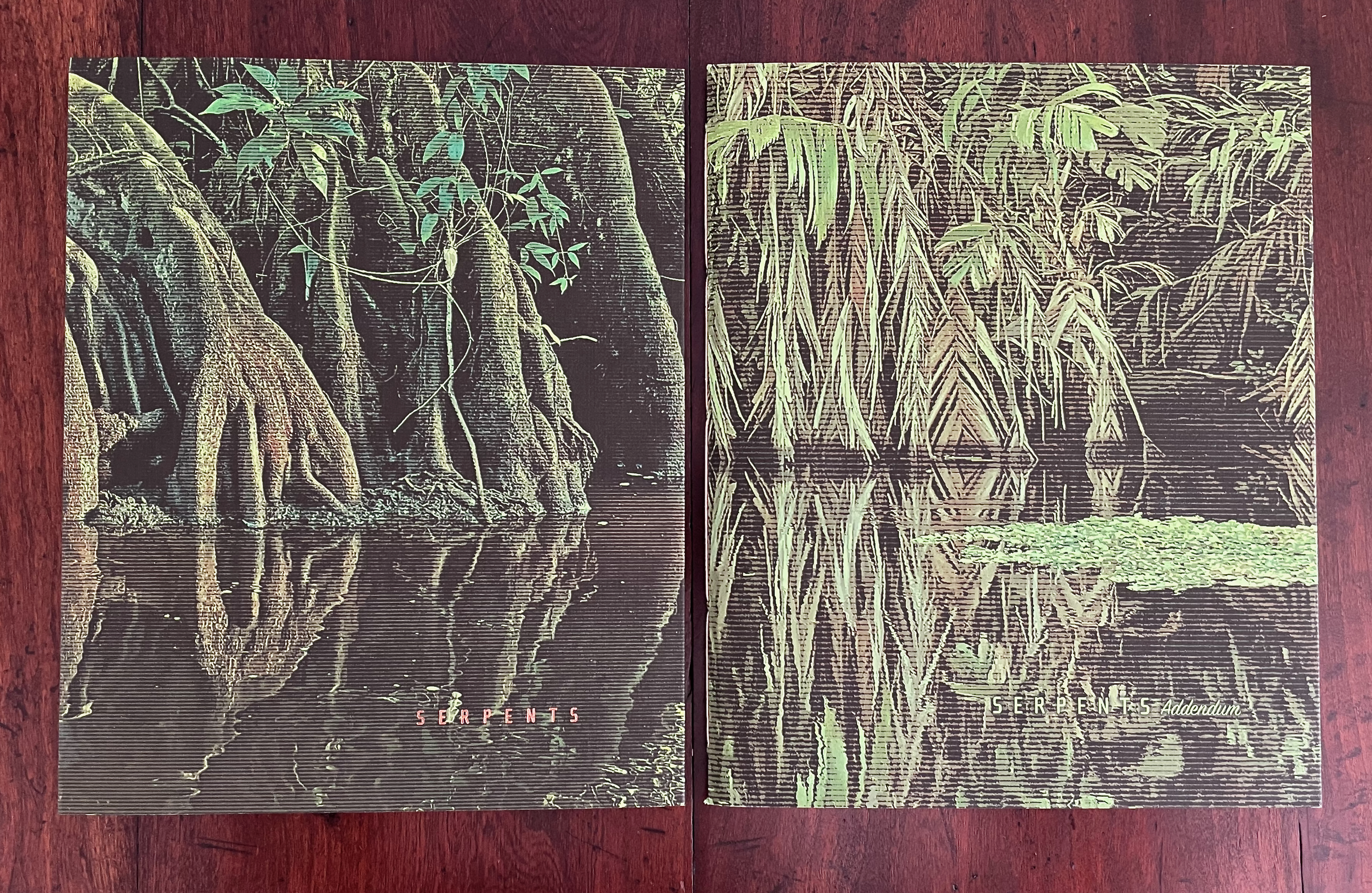
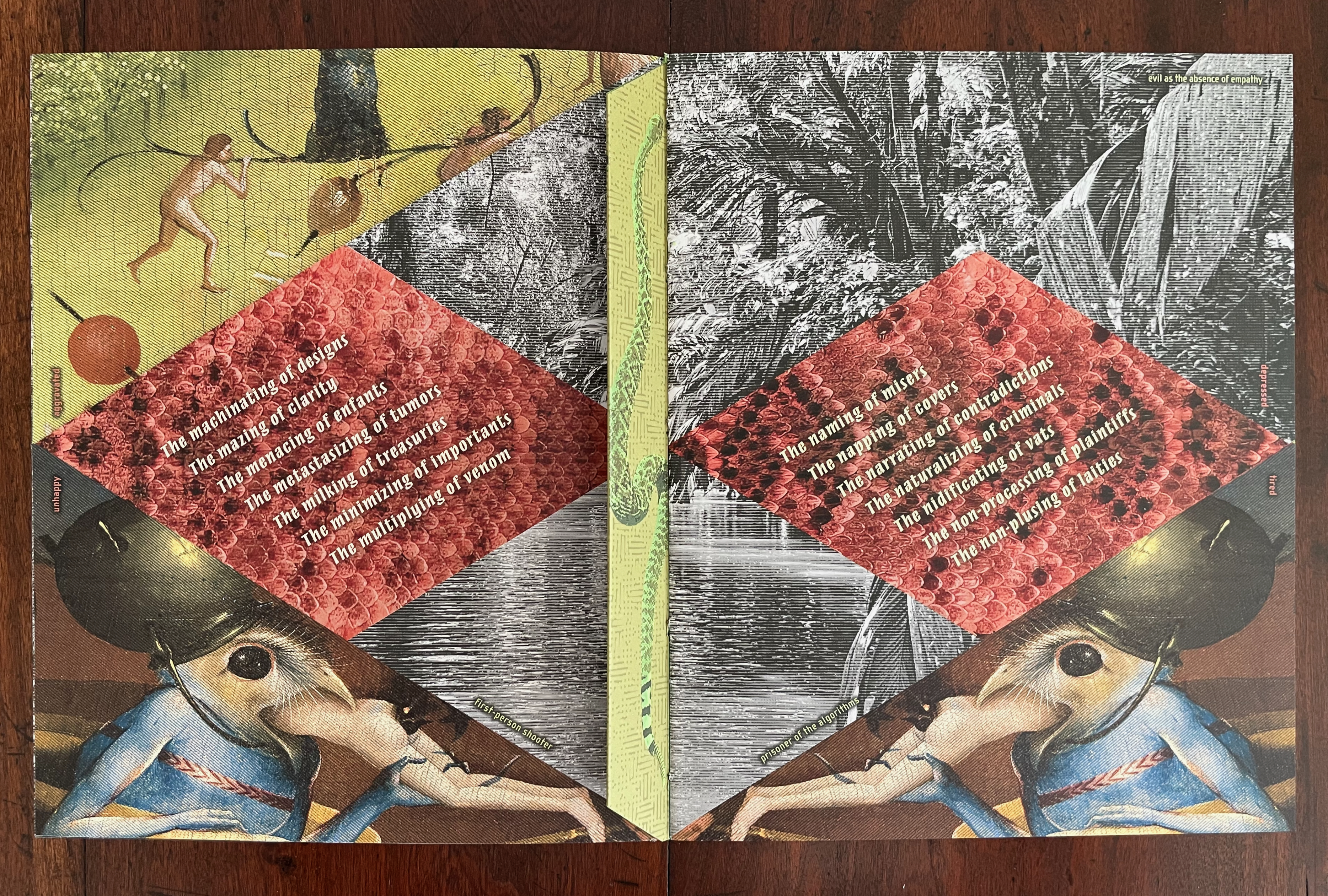
The main volume combines Zimmermann’s own photographs of swampland in Costa Rica and Louisiana with details from The Garden of Earthly Delights (1490-1510) by Hieronymus Bosch and embedded an alphabetical poem The Last Acts of Saint Fuck You (1975) by Bern Porter against a background of rattlesnake skin. Its politically conscious content echoes Sanctus Sonorensis (2009), but with sharper vi(per)tuperation against what the artist describes as “the increasingly corrupt and fascistic direction of our national and global civilizations”.
Zimmermann wields the book as a catalytic medium in just the right way to bring theme and technique together in striking and satisfying artworks. Two points of comparison with his earlier work High Tension illustrate this. Serpent‘s diagonally cut pages recall those of High Tension (1993), but notice how the diagonality works differently to suit each book’s typography and theme. Like its theme of personal anxiety, High Tension’s diagonality is spiky. Like its theme of reptilian tyrants, Serpents‘ diagonality emphasizes the diamond-back rattlesnake pattern that runs through the collage, and in turn, the diagonally set text emphasizes the rattlesnake pattern.
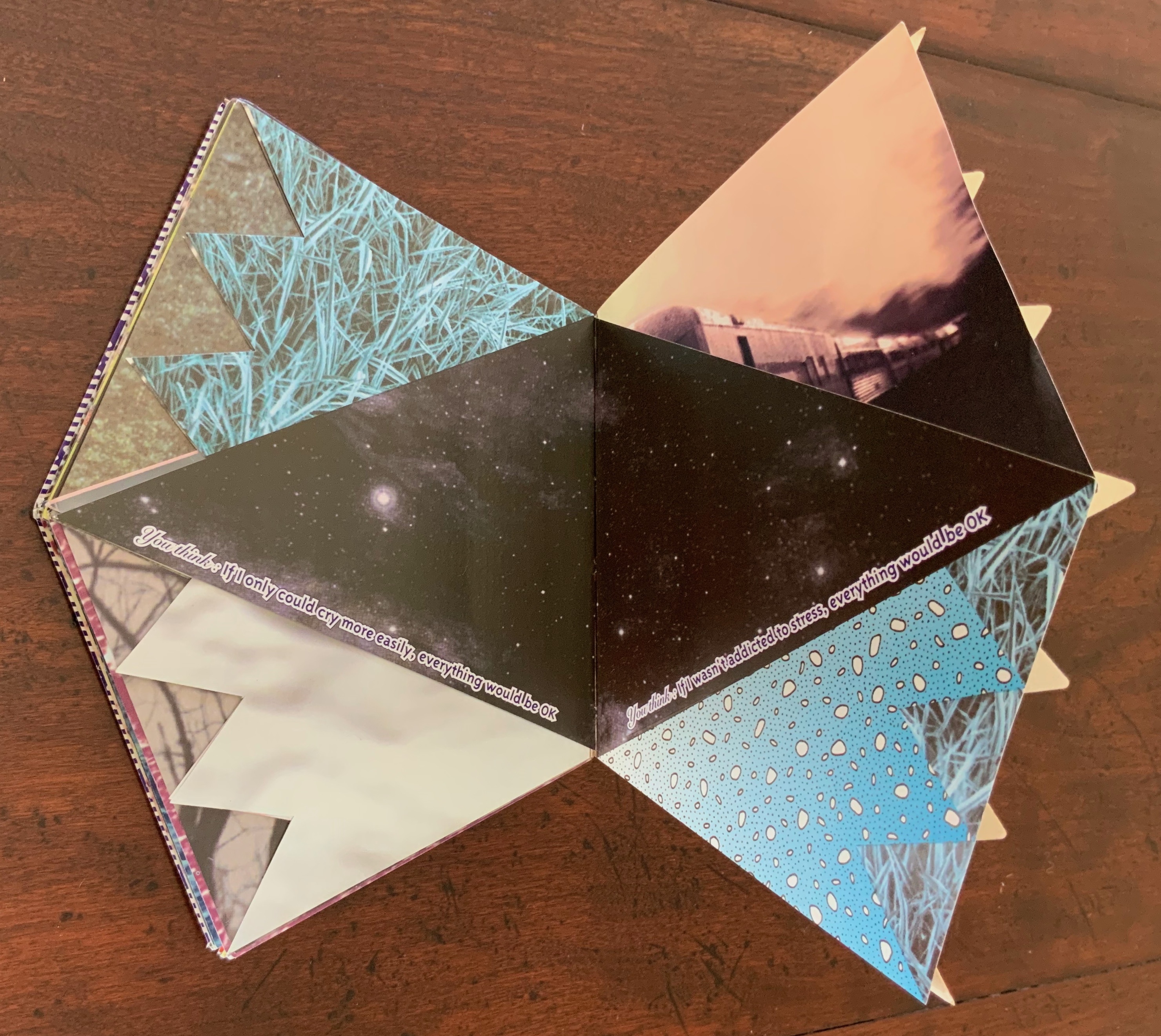
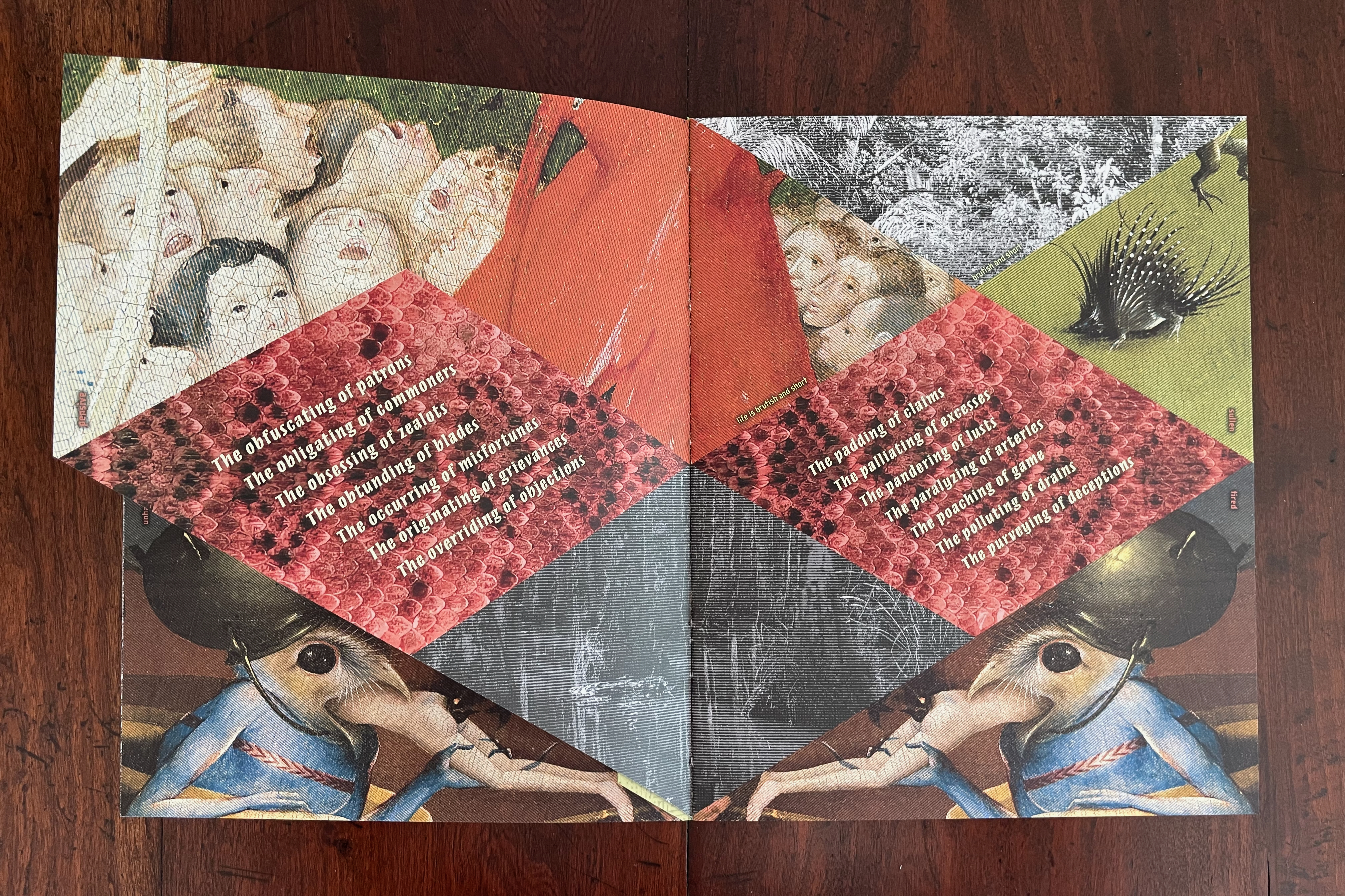
While High Tension includes Masaccio’s 1425 fresco depicting the expulsion from the Garden of Eden and Serpents includes Bosch, Adam and Eve’s grief and shame play their brief role among multiple personal anxieties, whereas Bosch’s creatures continuously slip and slide into the swamp and rattlesnake background of the world state.
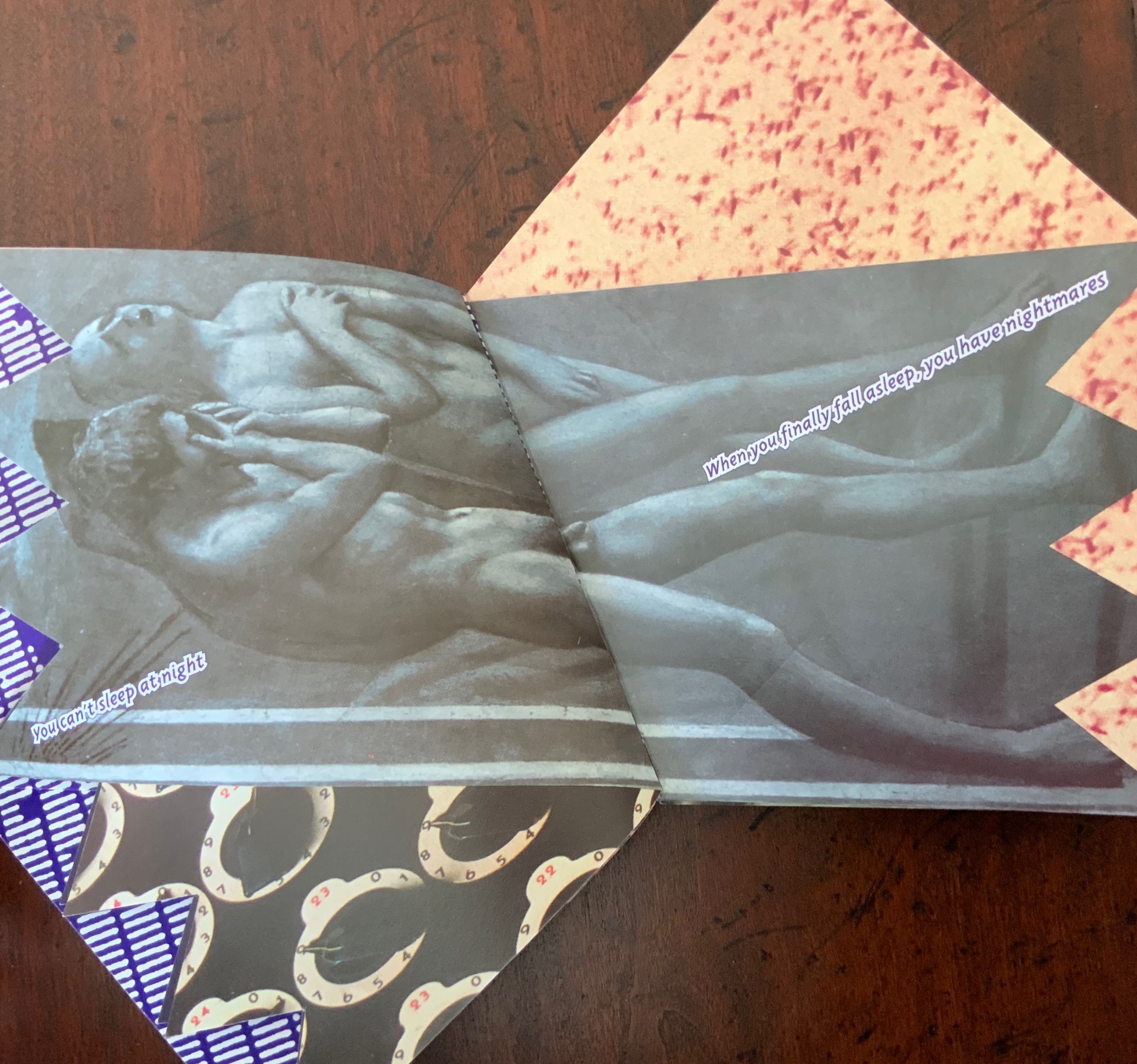
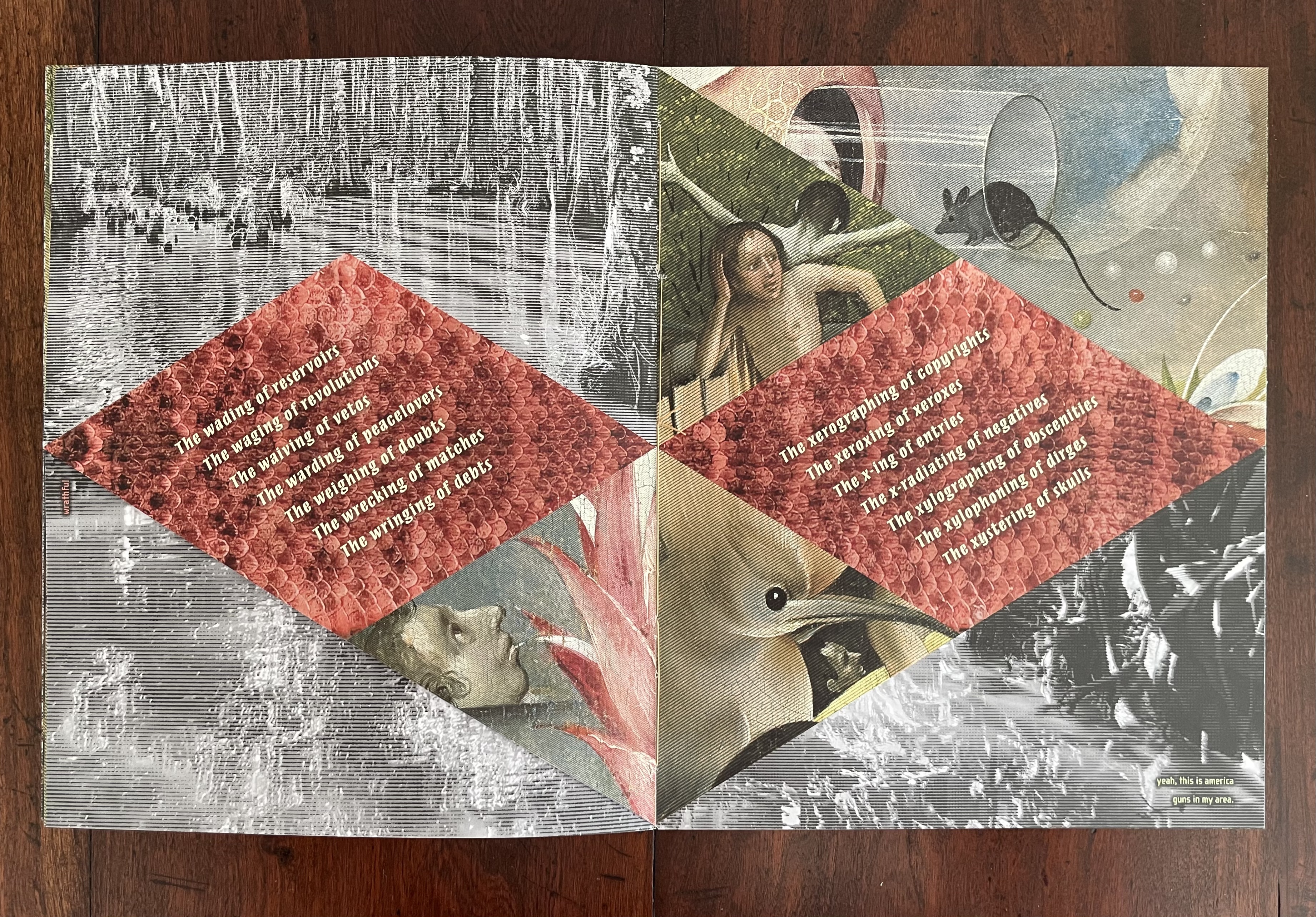
In Serpents, snippets of text from other sources (1984 by George Orwell, “Sympathy for the Devil” by the Rolling Stones/Mick Jagger, “This is America” by Childish Gambino/Donald Glover, “The Star-Spangled Banner” by Francis Scott Key, Hannah Arendt, John McCain, Thomas Hobbes, Marcus Junius Brutus, and Elisabeth Kübler-Ross) appear in small fonts in the corners, diagonally, and at the fore edges (Kübler-Ross). Their size and positioning require close attention and draw the eye into the details of the imagery.
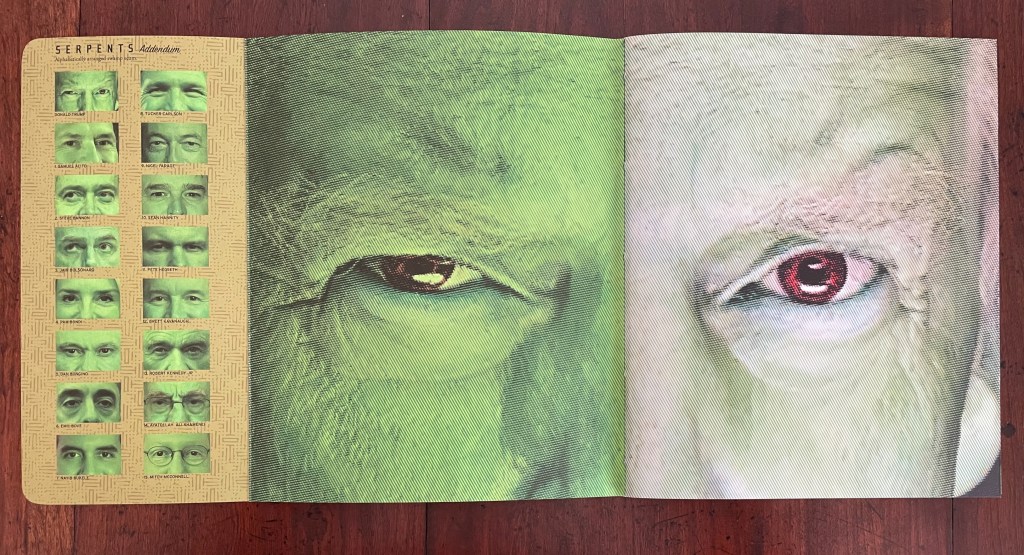
In parallel with the poem’s alphabetical arrangement, the addendum presents cropped individual portraits of Donald Trump, his enablers, and fellow tyrants from around the world in alphabetical order with amber-tinted irises and green-hued faces. It implicitly flips the script on Donald Trump’s use of Oscar Brown’s song “The Snake” (1963) to justify his concentration camps targeting the immigrant population (“You knew damn well I was a snake before you brought me in”).
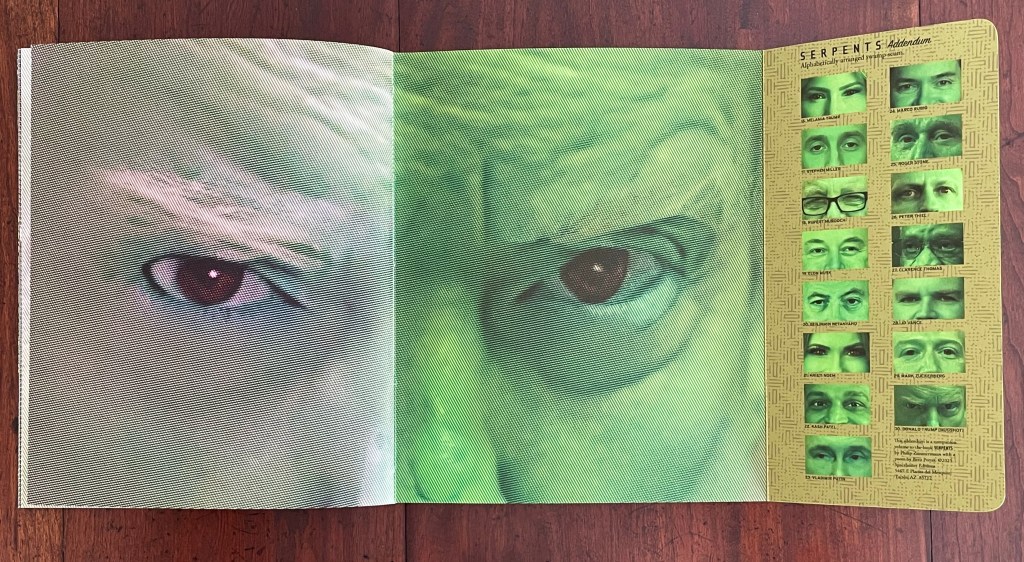
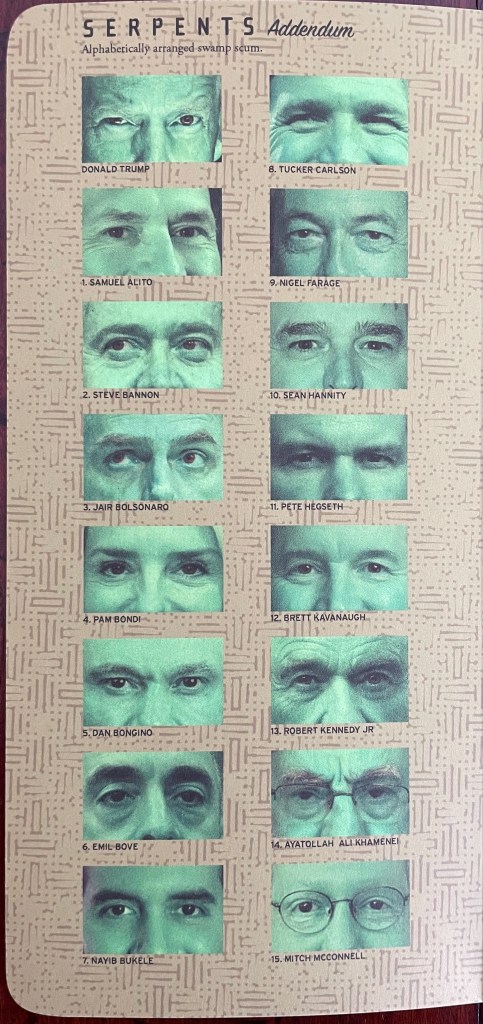
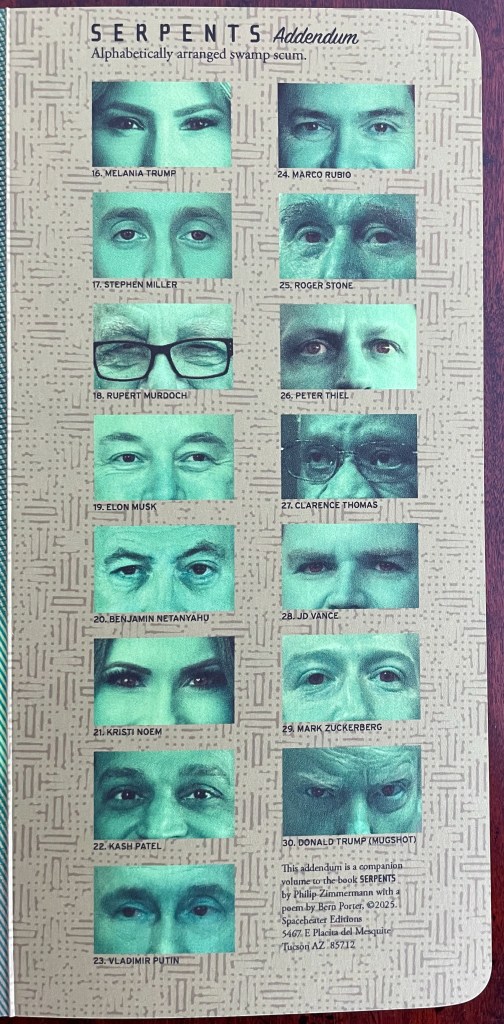
The next two volumes carry forward a series of works with a different socially conscious burden — the anthropo(bs)cene period of terrestrial evolution. They began with Landscapes of the Late Anthropocene (2017) and Melt (2023) but also echo images in the earlier works Sanctus Sonorensis (2009) and Incident in Deseret (2014).
Accelerated Entropy (2024)
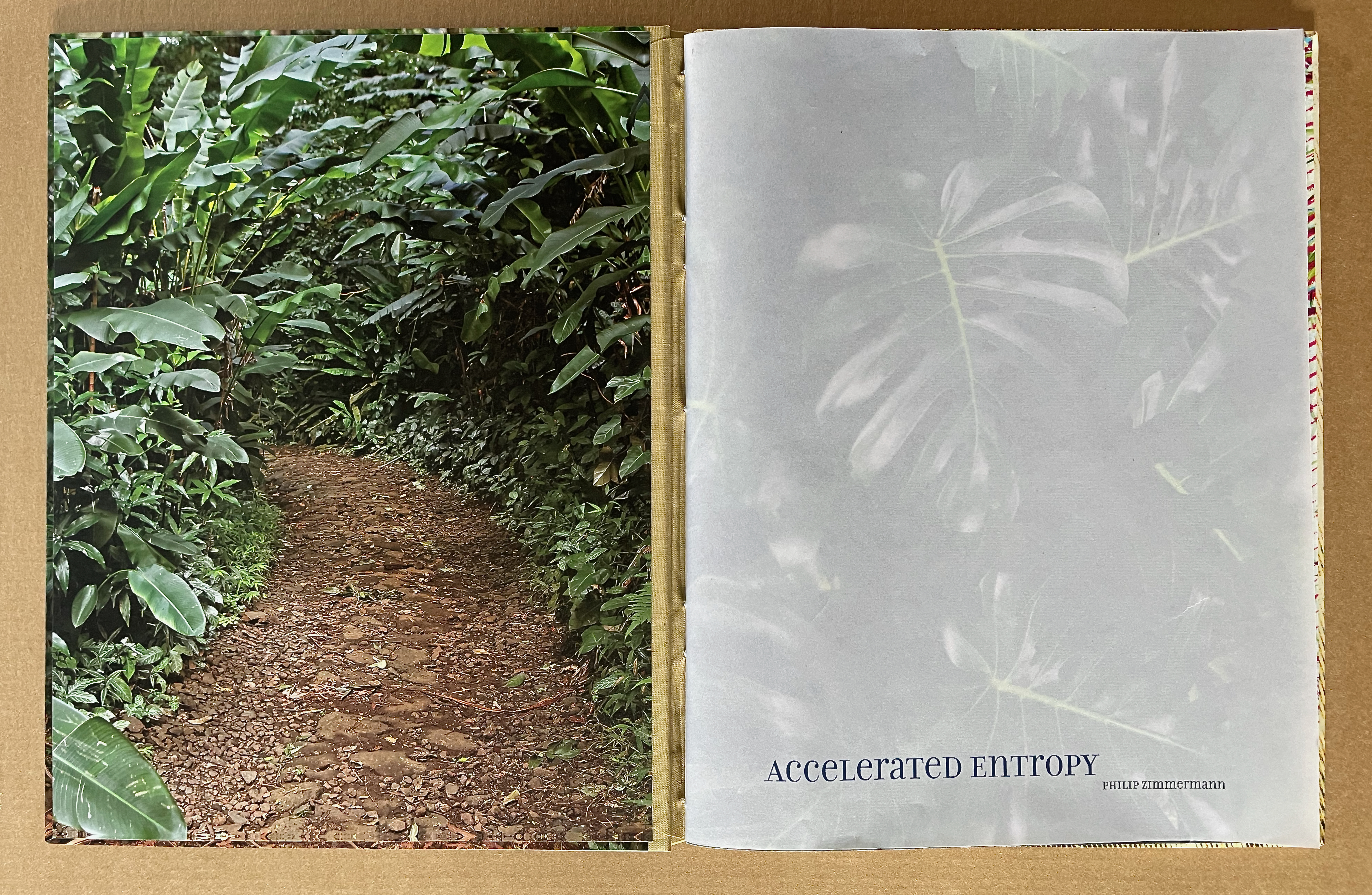
Accelerated Entropy (2024)
Phil Zimmermann
Casebound, cloth spine, photoprinted paper over boards and paste-down end sheets, pamphlet stitch book with translucent paper cover. H285 x W225 mm. [40] pages. Edition of 50, of which this is #4. Acquired from the artist, 31 August 2024.
Photos: Books On Books Collection.
As Marlene MacCallum (2024) points out, “Phil Zimmerman has consistently woven imagery and text in response to issues related to perilous conditions of our world and social structures.” What is particularly interesting in Serpents, Accelerated Entropy, and In the Desert is how that weaving differs effectively from book to book. In Serpents, the Porter text and rattlesnake skin are tightly woven together, acting as the main tapestry weave while the snippets of text and the images of the swamp and Bosch’s Garden of Earthly Delights act as a discontinuous weft creating a changing collage around the main weave.
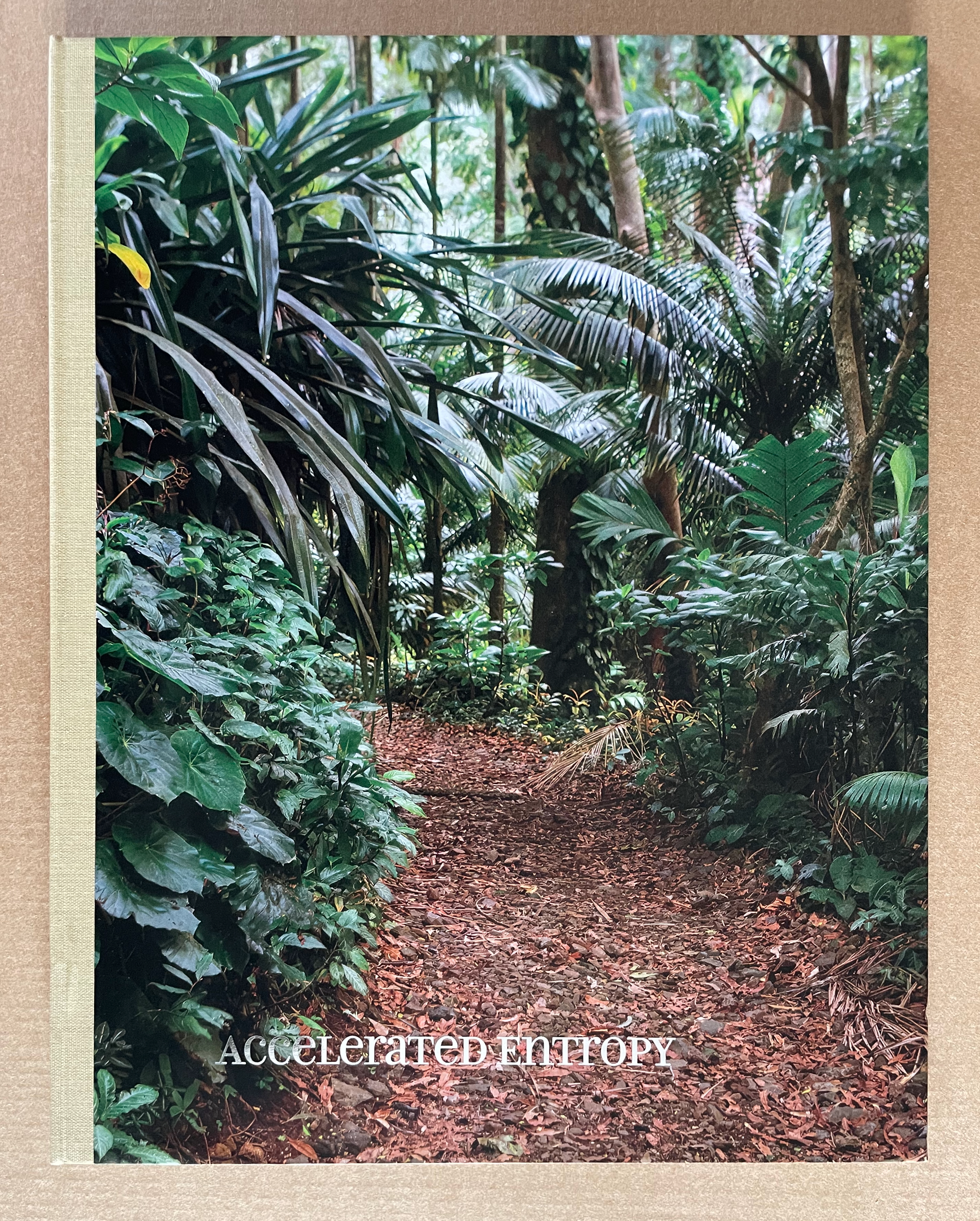
In Accelerated Entropy, the text (a poem by Zimmermann) is held to the very end. In fact, it appears on the translucent pamphlet-stitched back cover inside the casing. So how does the poem weave with the imagery? The images are not without narrative. Progressive computer-derived halftone patterns and various types of rasters of photographs of lush vegetation constitute the visual tool with which the artist writes that narrative. Like Melt and Landscapes of the Late Anthropocene, the narrative concerns climate change. The final image has reduced the foliage to abstract tracery over a whitened background, which is repeated in end pastedown. By placing the text on the verso side of the translucent paper at the end of the book, the artist makes the poem hover over and between the final image.
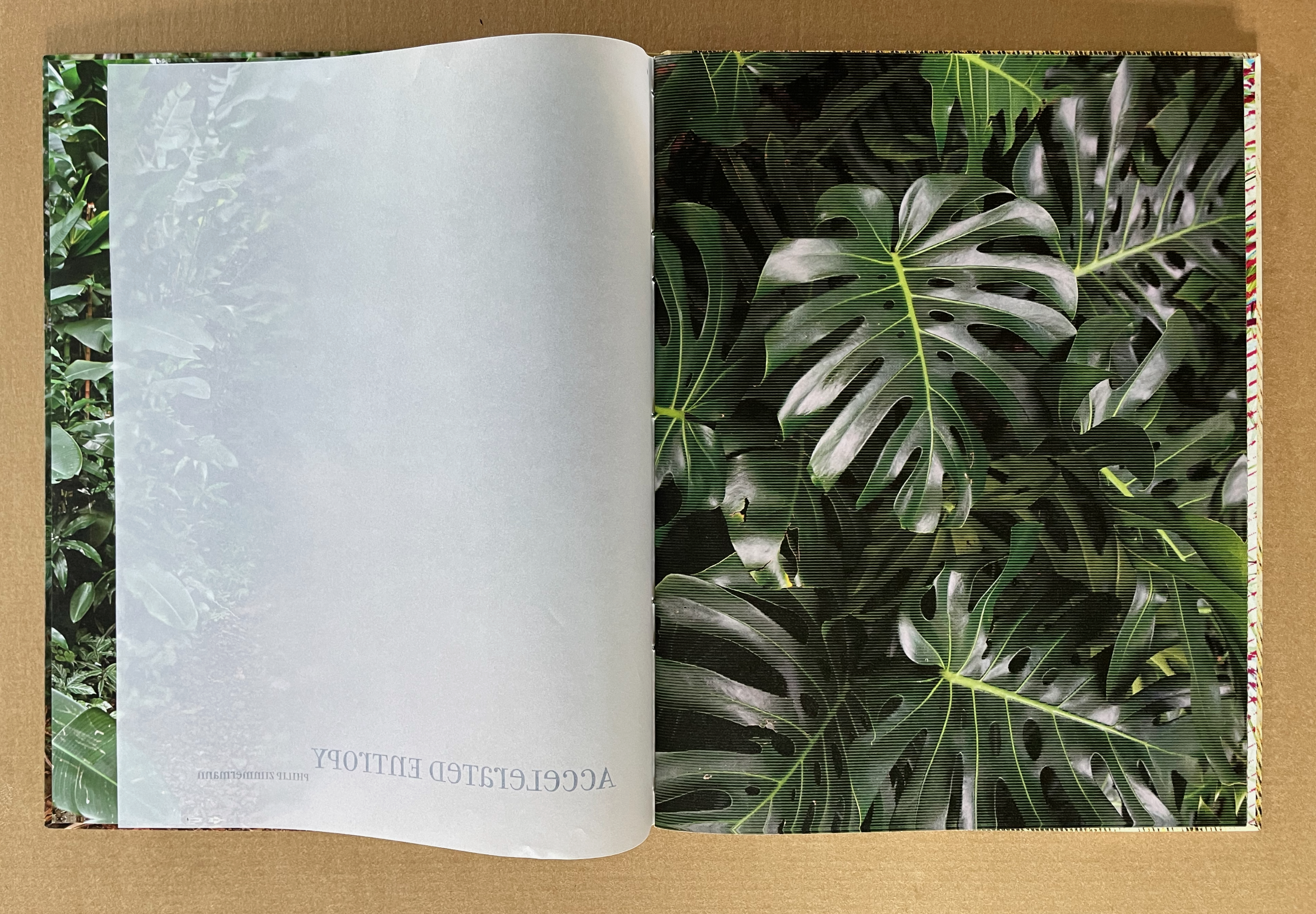
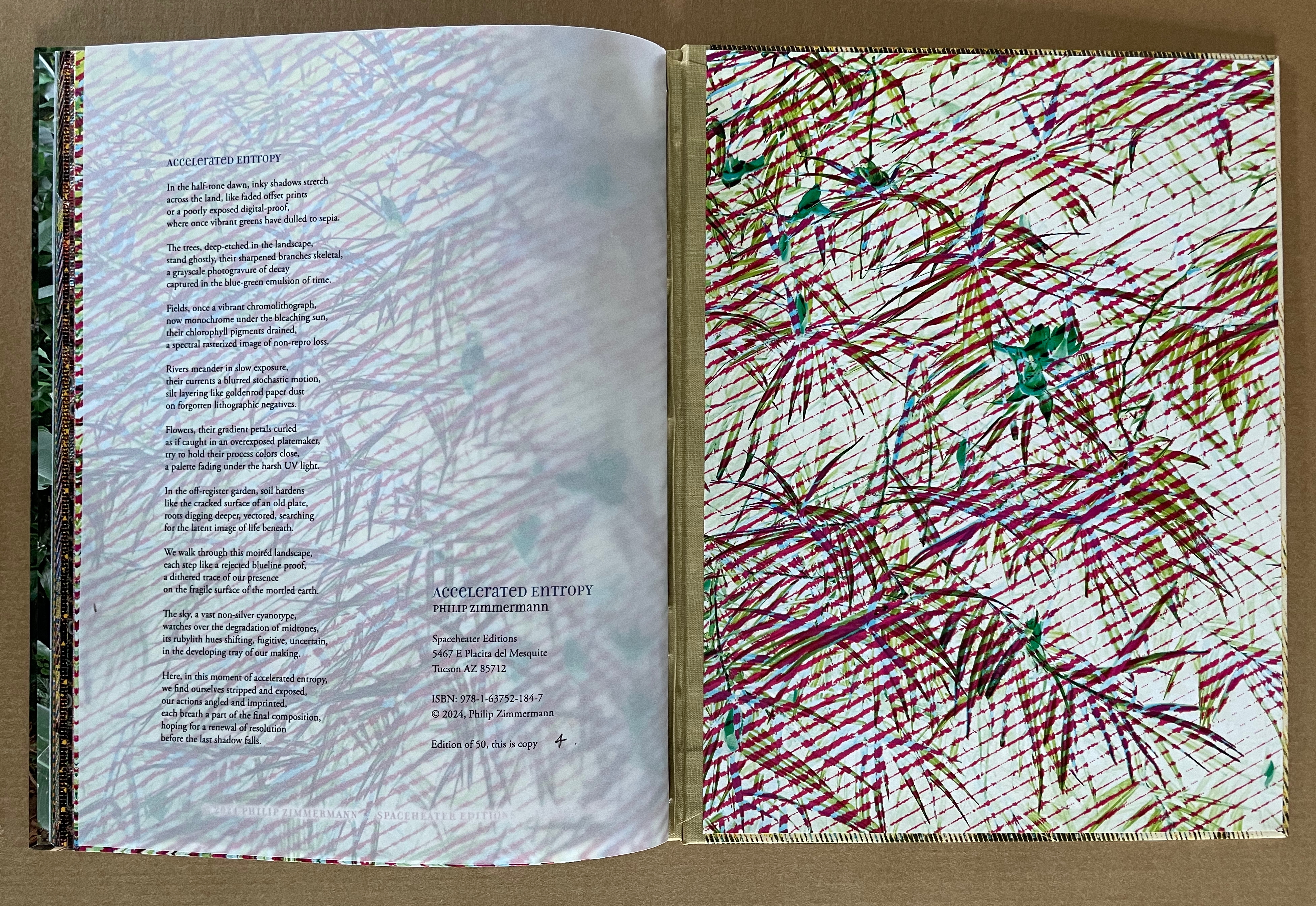
Zimmermann’s poem uses prepress process and photomechanical terms to create an extended metaphor for describing the decay of climate change. The terms relate not only to the visual tools used to effect the book’s images of decay but also to the disappearing tools and techniques of printing technology. Perhaps we will recognize our effect on the world around us when it is expressed in printing metaphors, and perhaps we will recognize the world’s accelerating entropy in the pace of our own disappearing technology.
Accelerated Entropy (2024)

In the half-tone dawn, inky shadows stretch
across the land, like faded offset prints
or a poorly exposed digital-proof,
where once vibrant greens have dulled to sepia.

The trees, deep-etched in the landscape,
stand ghostly, their sharpened branches skeletal,
a grayscale photogravure of decay
captured in the blue-green emulsion of time.

Fields, once a vibrant chromolithograph,
now monochrome under the bleaching sun,
their chlorophyll pigments drained,
a spectral rasterized image of non-repro loss.

Rivers meander in slow exposure,
their currents a blurred stochastic motion,
silt layering like goldenrod paper dust
on forgotten lithographic negatives.

Flowers, their gradient petals curled
as if caught in an overexposed platemaker,
try to hold their process colors close,
a palette fading under the harsh UV light.

In the off-register garden, soil hardens
like the cracked surface of an old plate,
roots digging deeper, vectored, searching
for the latent image of life beneath.

We walk through this moiréd landscape,
each step like a rejected blueline proof,
a dithered trace of our presence
on the fragile surface of the mottled earth.

The sky, a vast non-silver cyanotype,
watches over the degradation of midtones,
its rubylith hues shifting, fugitive, uncertain,
in the developing tray of our making.

Here, in this moment of accelerated entropy,
we find ourselves stripped and exposed,
our actions angled and imprinted,
each breath a part of the final composition,
hoping for a renewal of resolution
before the last shadow falls.
Clifton Meador’s observation in correspondence with Zimmermann nails how this text is woven into the images:
“The poem at the end of Accelerated Entropy is a great addition to the piece, and how could I not love an extended metaphor about climate change that uses print technology as the vehicle? It significantly changes the reading of the piece after the first encounter—I had to go back through the book again, with a vastly changed framework for reading. In the place of a reading of visual richness and formal invention, I looked for evidence of a history of print production. That’s a pretty cool trick—a textual moment that causes me to re-read with an entirely different framework in mind.” — Meador to Zimmermann, 31 August 2024.
In the Desert (2024)
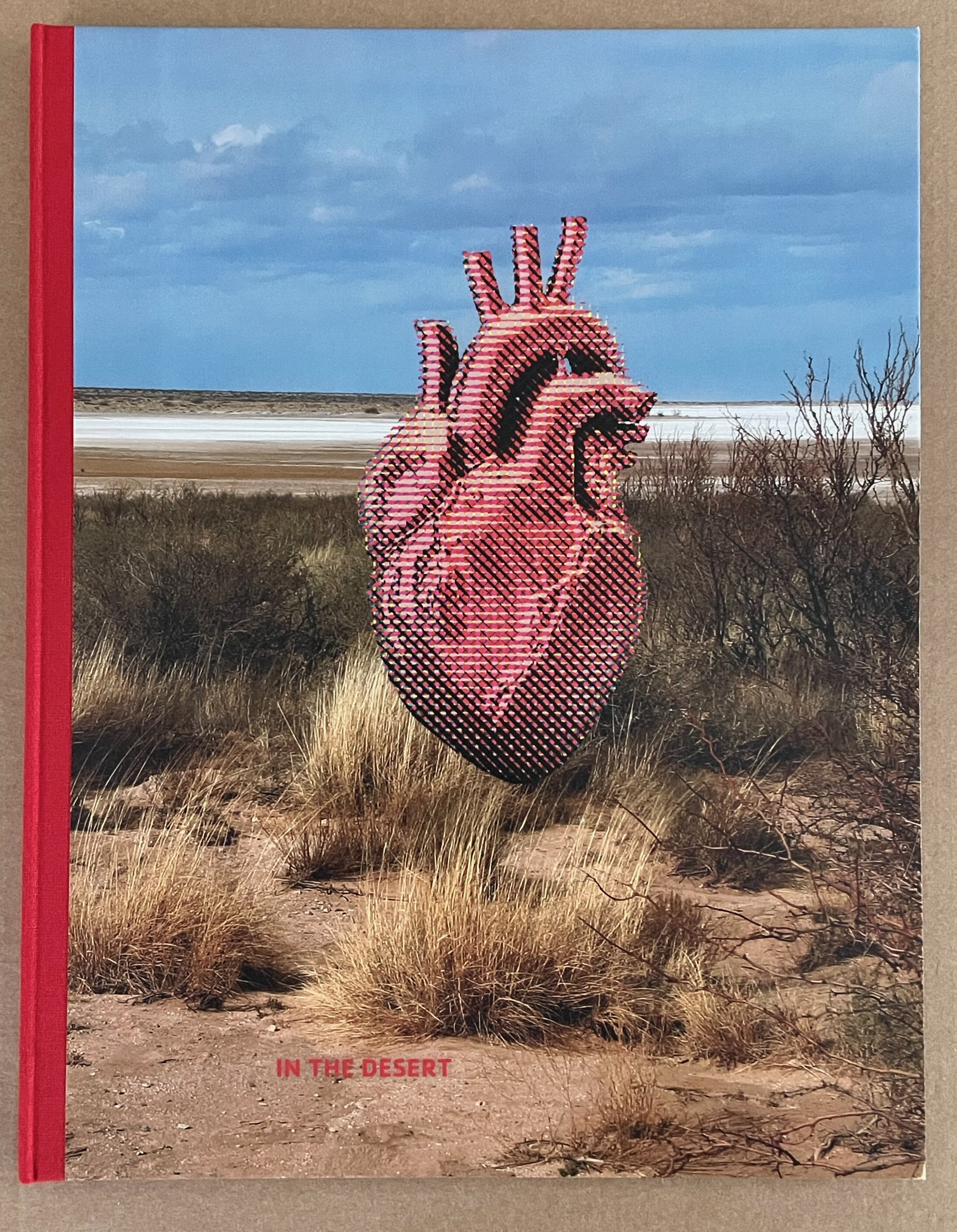
In the Desert (2024)
Phil Zimmermann
Casebound, cloth spine, photoprinted paper over boards and paste-down end sheets, pamphlet stitch book. H285 x W225 mm. [40] pages. Edition of 50, of which this is #4. Acquired from the artist, 31 August 2024.
Photos: Books On Books Collection.
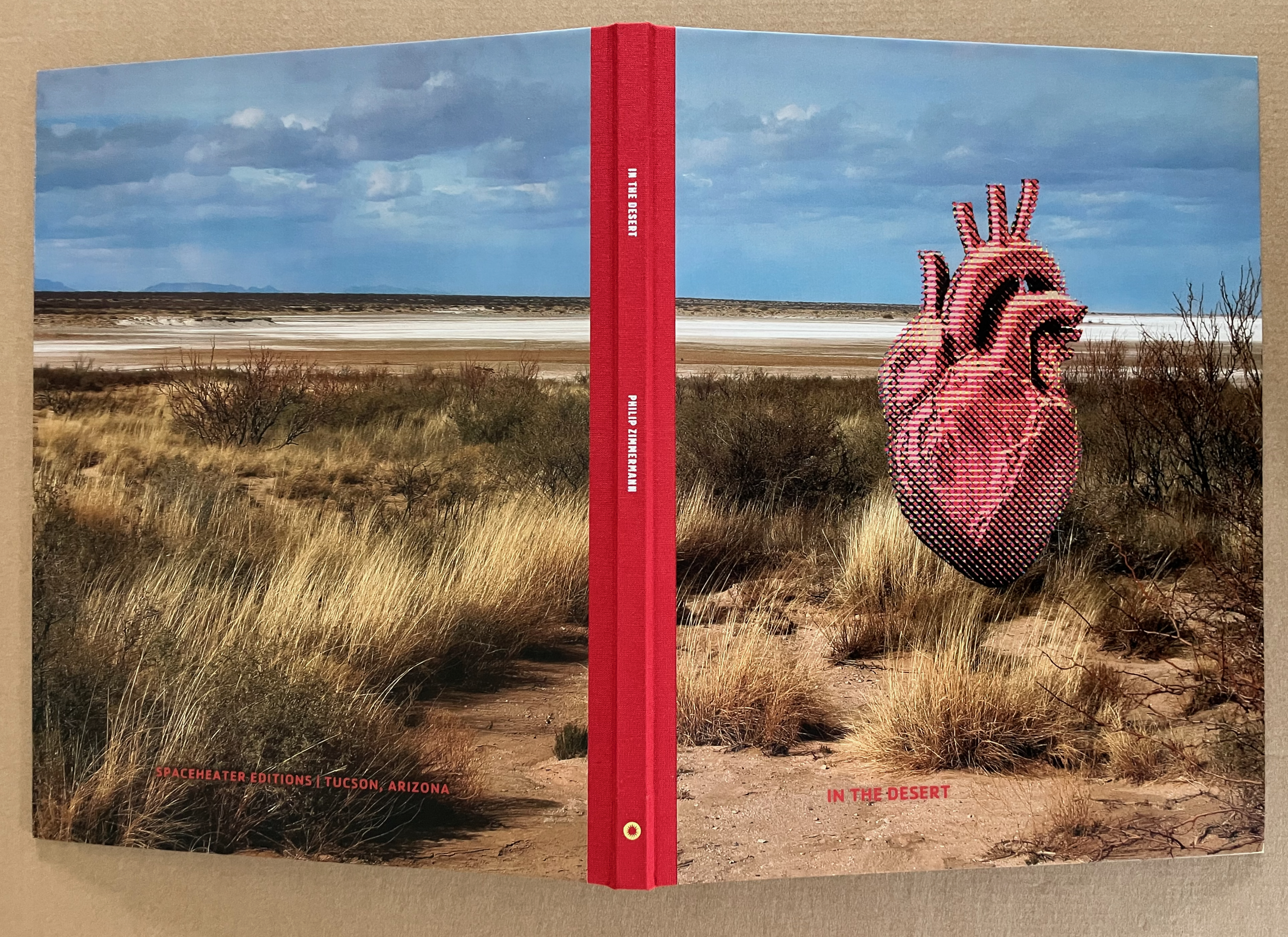
Stephen Crane’s poem In the Desert sits at the heart of Zimmermann’s artist’s book by the same name. In red ink, it sits there like the creature in Crane’s otherwise featureless poem.
In the Desert (1895)

In the desert
I saw a creature, naked, bestial,
Who, squatting upon the ground,
Held his heart in his hands,
And ate of it.
I said, “Is it good, friend?”
“It is bitter—bitter,” he answered;

“But I like it
“Because it is bitter,
“And because it is my heart.”
The artist’s book is far from featureless. The images in the book come from Zimmermann’s photographs taken at Lake Lucero, a dry gypsum lake located in the White Sands Missile Range near Las Cruces, New Mexico. His artist’s statement describes it as
… a restricted part of the missile range and open to the public only a few times a year when National Park Service rangers take visitors holding US Passports on closed busses in to visit the dry lake. The dry gypsum crystals from the lake blow to the northeast and are the source of the famous white dunes in White Sands National Park. The park is located, as is the entire Missile Range, in the great Tularosa Basin.
Seven double-page spreads of barren desert scenery lead up to the poem’s first line, which squats in red in the dark foreground of a recto page. In the far foreground, a blurry human figure appears.
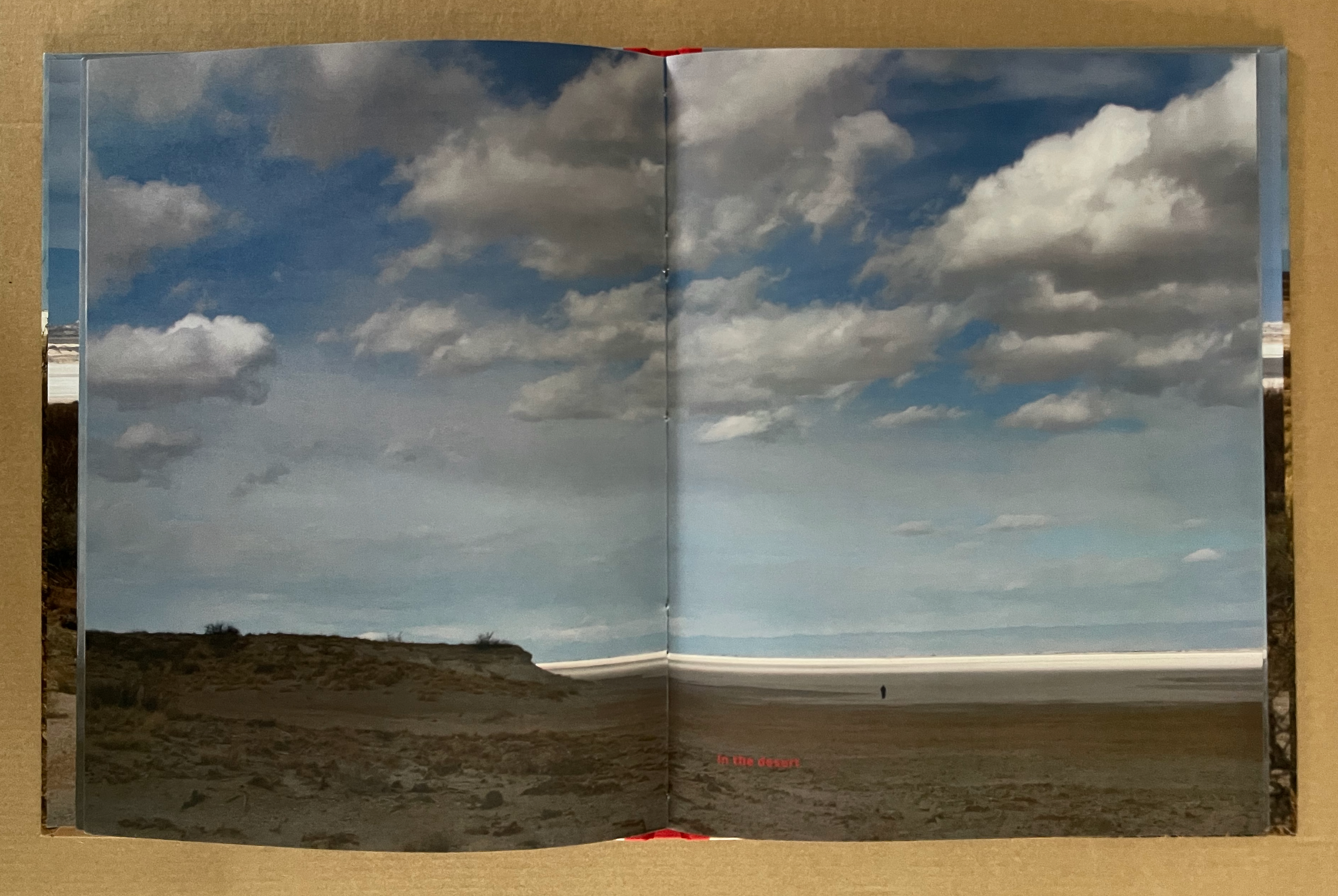
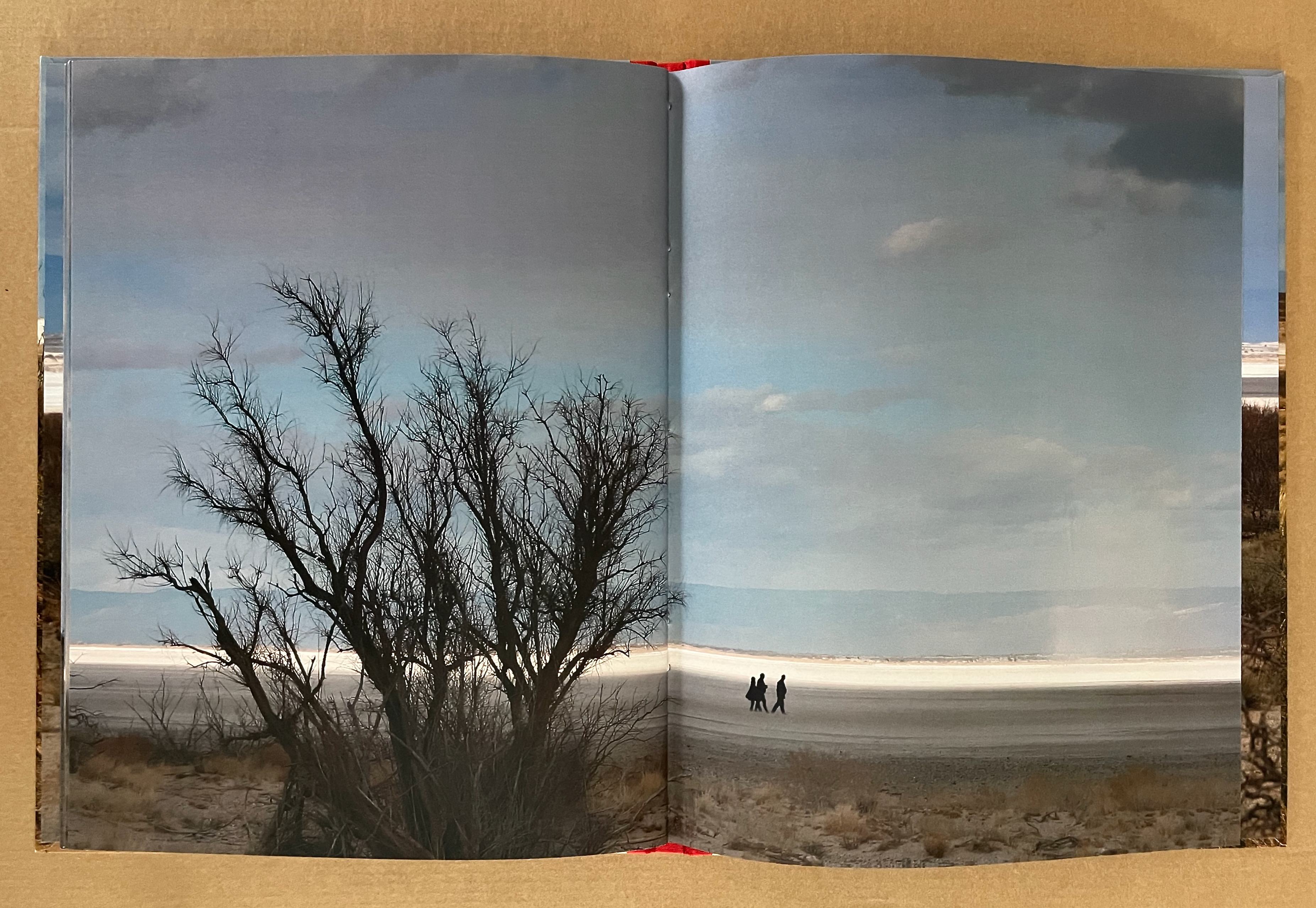
Over the next ten spreads, the poem’s two human figures (narrator and creature) gradually inhabit the pages alongside that solitary human figure, who is joined by an increasing then dwindling number of other silhouetted human figures in the far foreground. The last double-page spread is textless. A foregrounded leafless bush looms on the verso page standing in contrast to three human figures walking away in the far foreground on the recto page.
From spread to spread prior to the poem, the only action was the movement of dust from the salt flats in the air. With the poem’s appearance, we have two other sets of action. Like small signposts, the individual lines from Crane’s poem drive the reader’s page-turning as do the gathering and dispersing human figures.
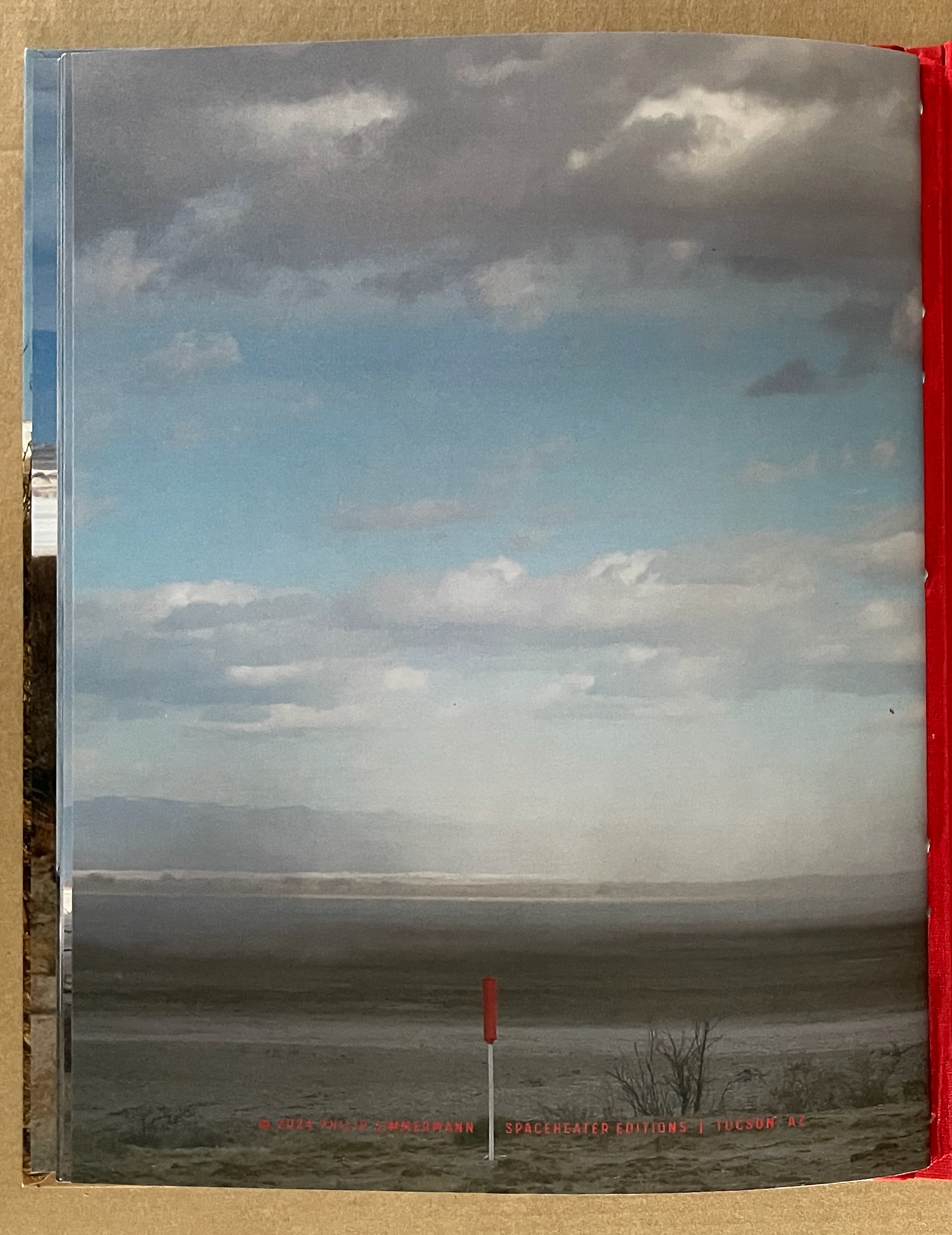
On the book’s last page, the only text is the copyright line. There is no other text. There are no human figures. The foreground is punctuated by a red boundary marker. In the middle ground, dust from the salt flats hovers against the low hills and cloud. Sky and cloud occupy the upper reaches of the background. In its size, that red boundary marker is shriveled in comparison with the heart on the front cover.
“But I like it
“Because it is bitter,
“And because it is my heart.”
Further Reading and Viewing
“Philip Zimmermann“. 14 January 2020. Books On Books Collection.
MacCallum, Marlene. 18 January 2024. “The Photomechanical Process as a Poetic Craft“. Video.

