Primer: Ritual Elements (Book One) (1982)
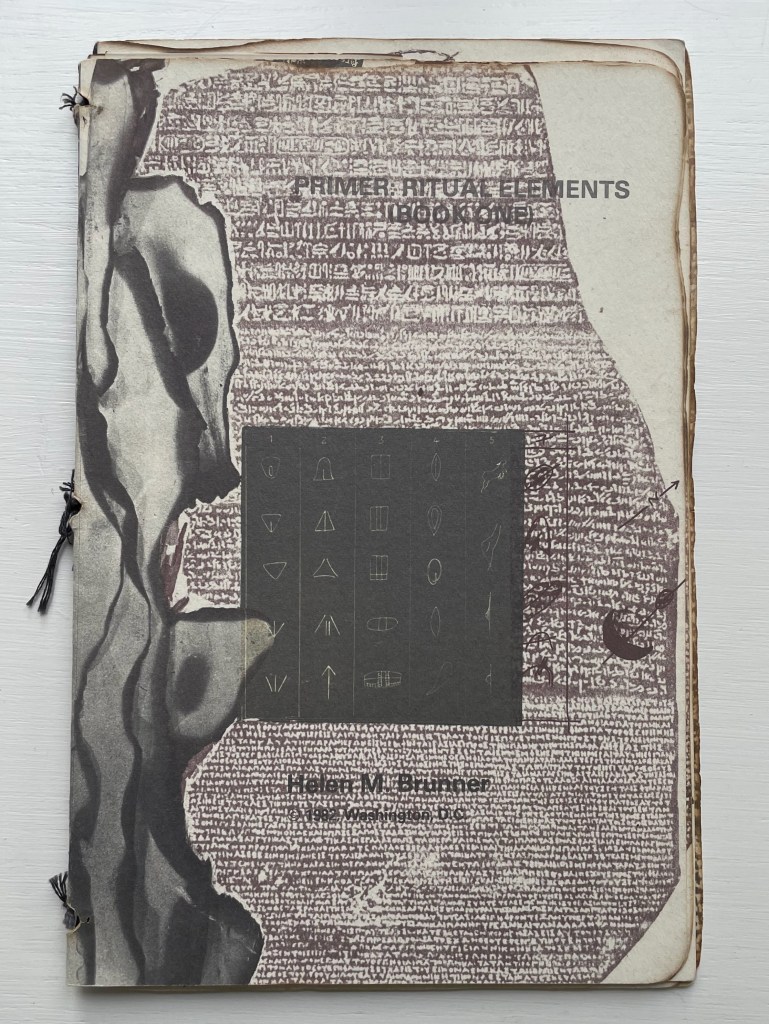
Primer: Ritual Elements (Book One) (1982)
Helen M. Brunner
Softcover, pamphlet-stitched. H239 x W155 mm. 22 pages. Binding adapted from a design by Barbara Press, developed under the instruction of Hedi Kyle. Edition of 300. Acquired from JP Antiquarian Books, 14 February 2024.
Photos: Books On Books Collection.
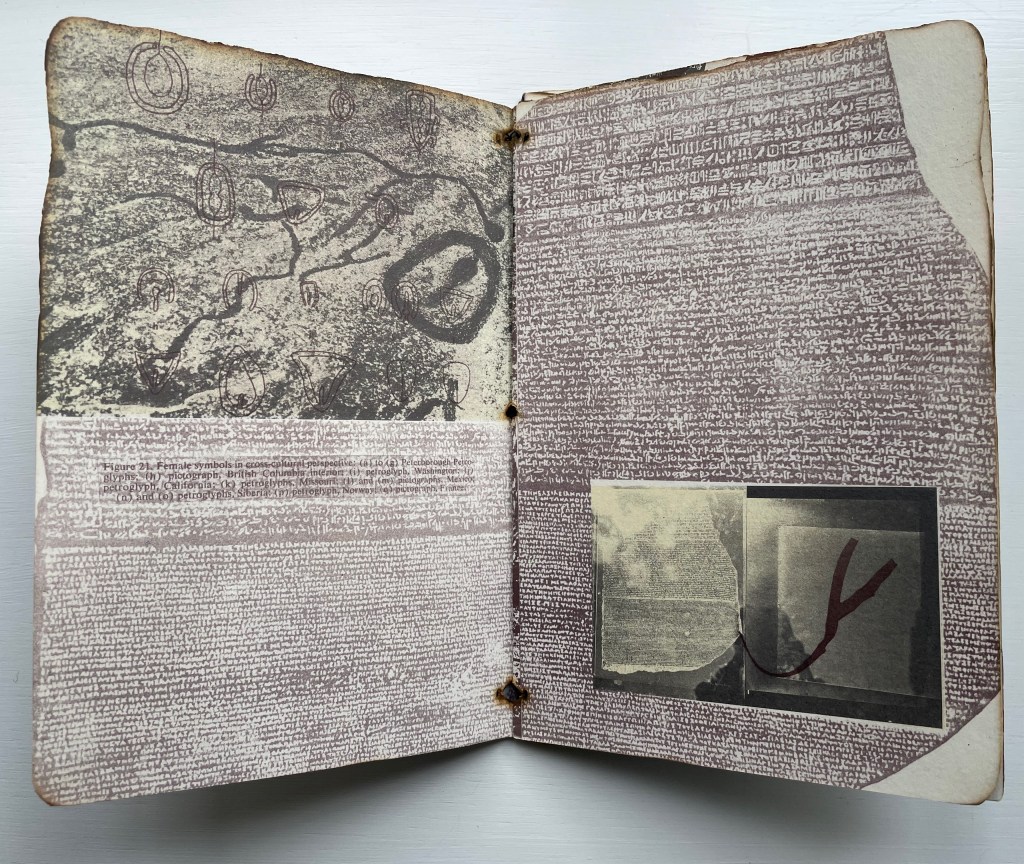
Primer is an unusually made booklet. Stitched with black cotton thread over three signatures, its two outer signatures are of white wove Curtis rag paper, the inner signature is of parchment or a translucent paper, and four 5-panel thumbnail accordions in translucent paper are glued to the beginning of the last outer signature. More unusual is that the booklet’s edges appear burnt into unevenness, yet there is no odor of ash. The edges of the sewing holes also appear burnt, one page has a scorch mark in its center, and even the edges of the collaged items appear to have been burnt before being photographed. The breadth of collaged items — from cave markings to cuneiform to Rosetta Stone to film strips or slides — is not unusual given the title; you would expect a primer on ritual elements to address a prehistoric to historic range of petroglyphs, pictographs, symbols, letters, photographs, etc. But most unusual — and perhaps the point of the work — is that the legible text undermines the aim suggested by the title. The script on the back cover makes the subversion plainest.
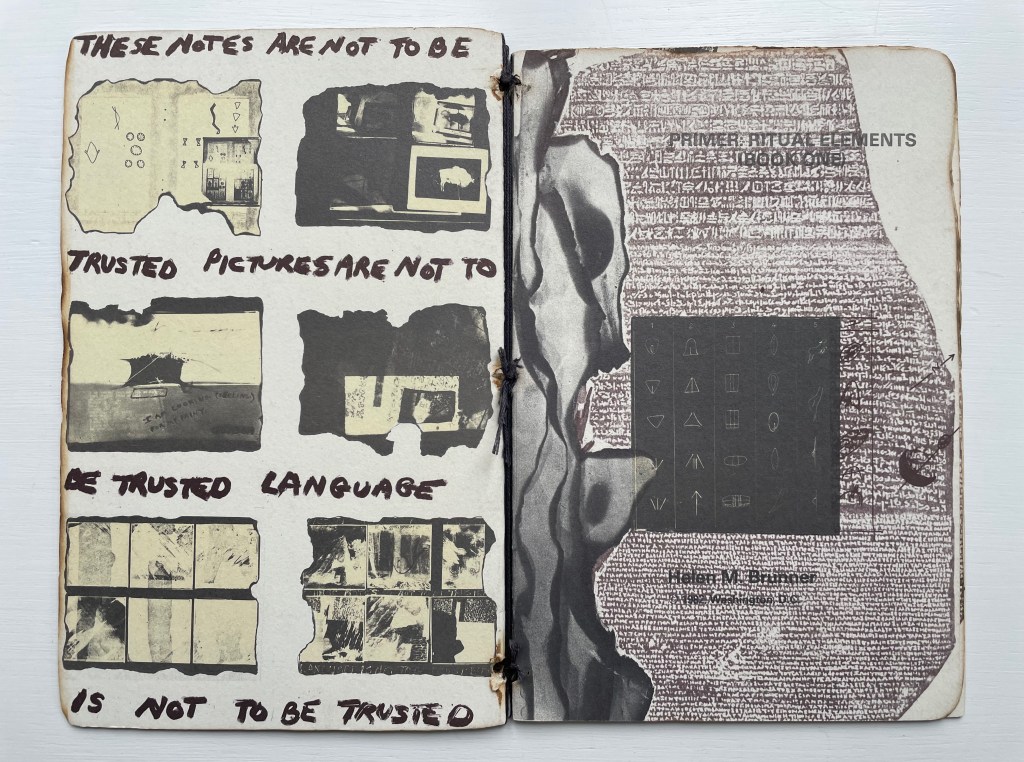
Back cover, front cover.
Reinforcing that message across the millennia, the central narrow parchment signature juxtaposes a set of cave markings with a handwritten foldout litany of subversion:
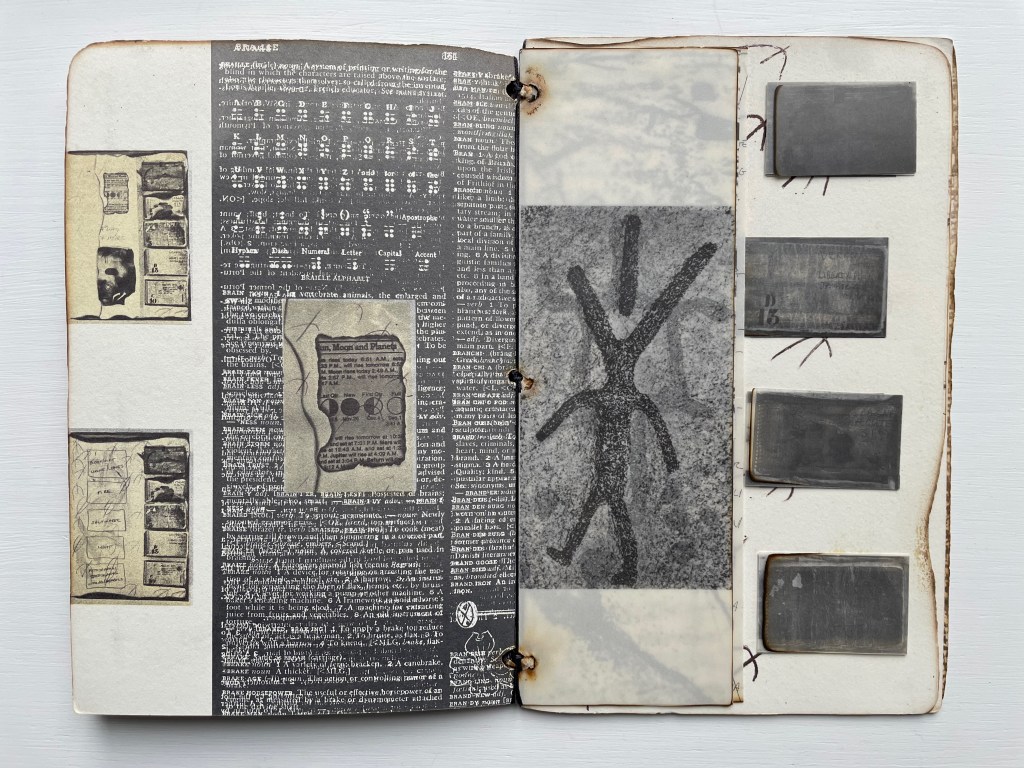
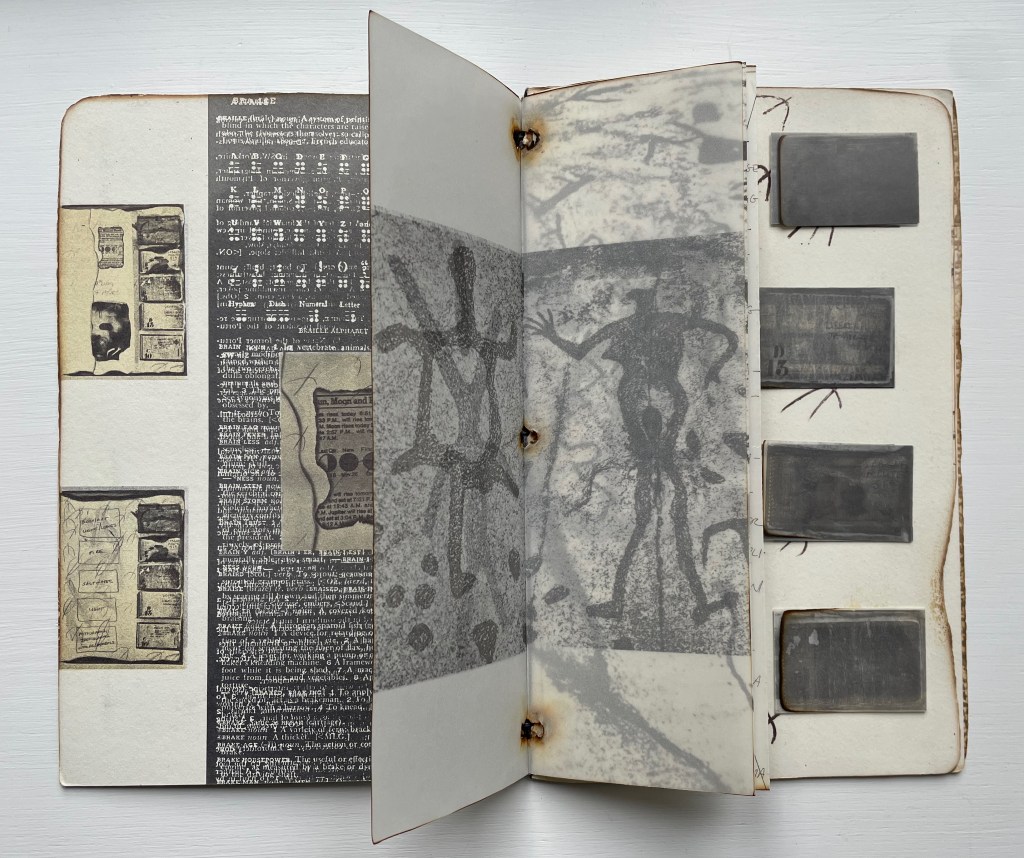
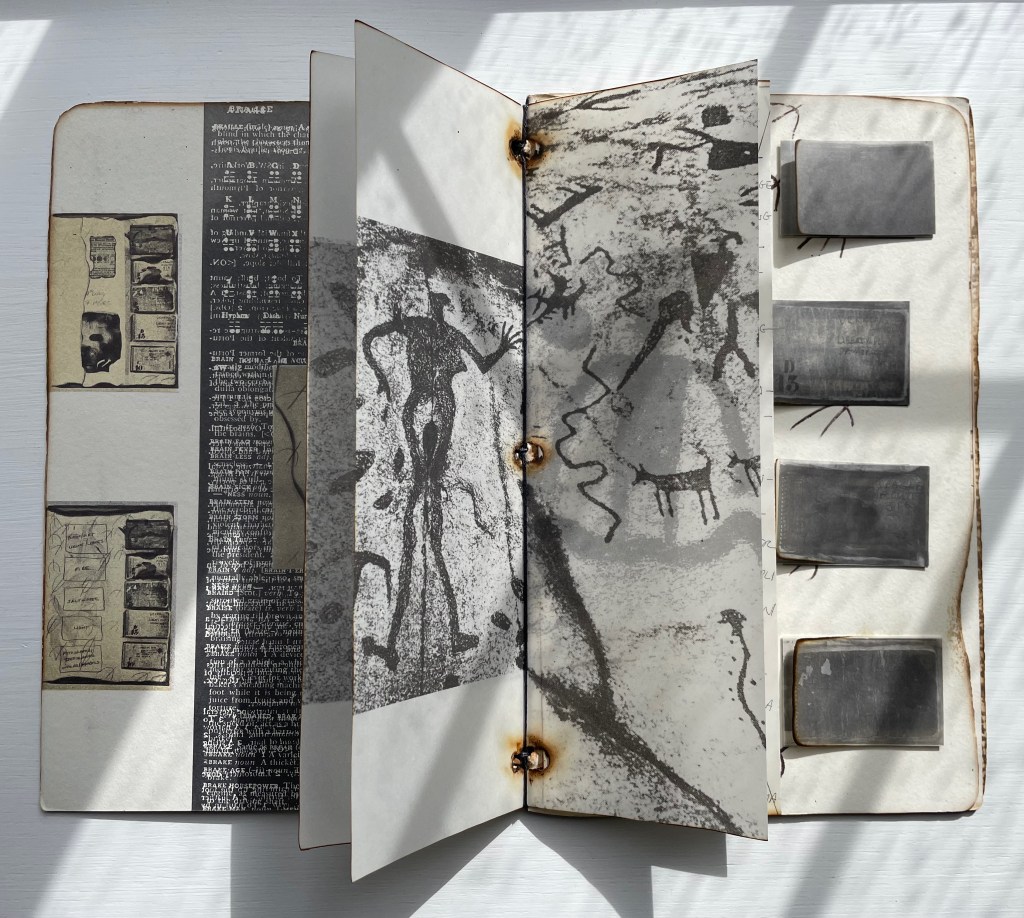
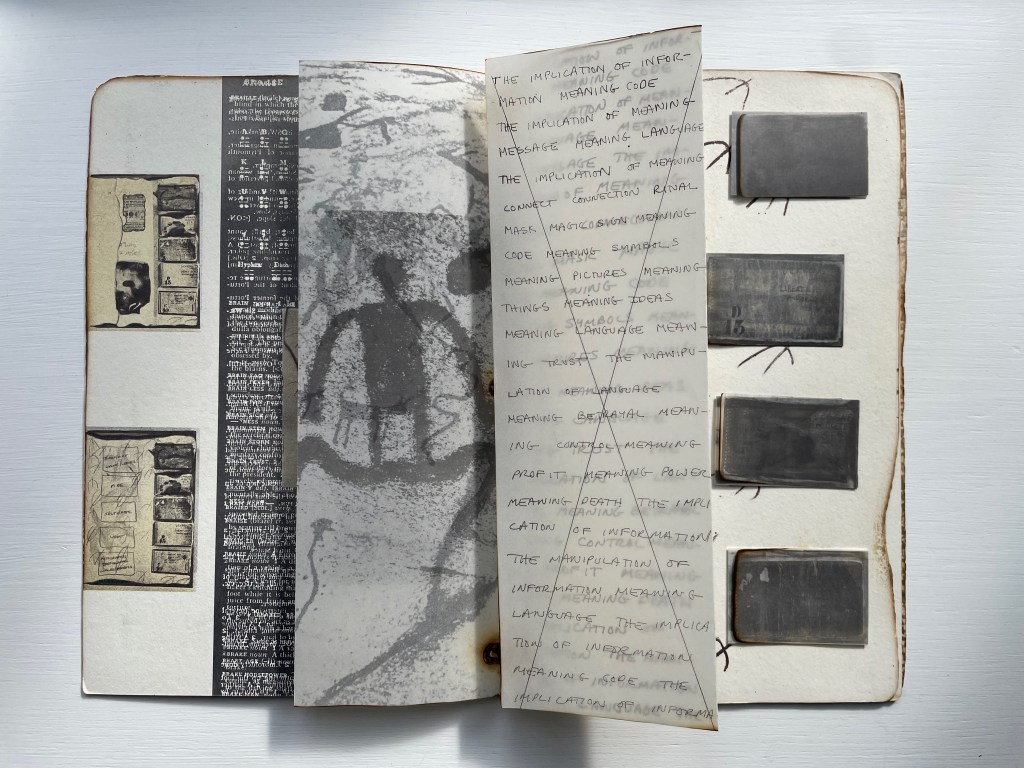
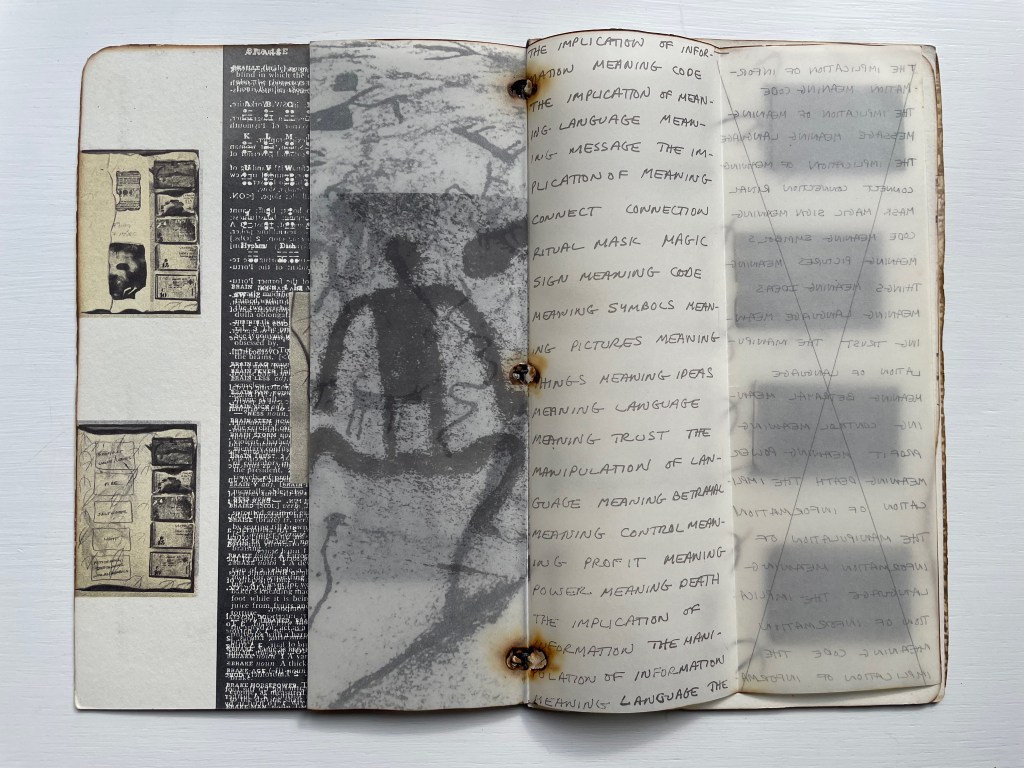
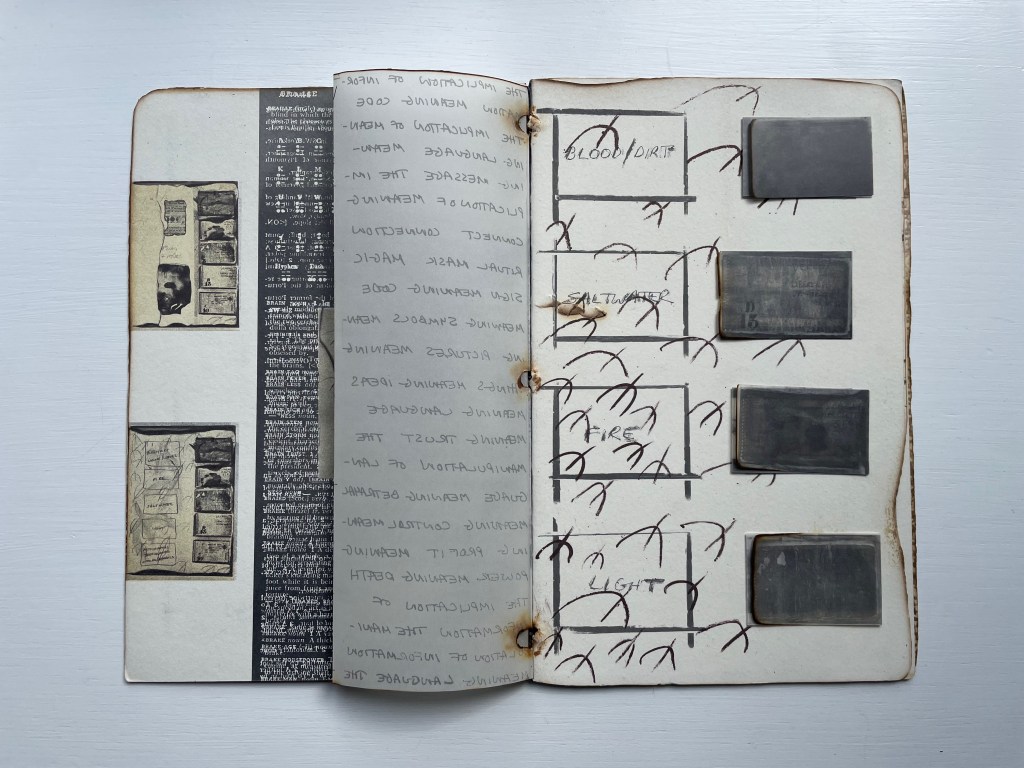
Six views of the narrow central parchment signature, note the foldout of its last page.
The crossed-out page of the litany reads:
THE IMPLICATION OF INFOR-
MATION MEANING CODE                                                                                                                                                                          THE IMPLICATION OF MEANING                                                                                                                                                 MESSAGE MEANING LANGUAGE
THE IMPLICATION OF MEANING
CONNECT CONNECTION RITUAL
MASK MAGIC SIGN MEANING
CODE MEANING SYMBOLS
MEANING PICTURES MEANING                                                                                                                                                       THINGS MEANING IDEAS
MEANING LANGUAGE MEAN-
ING TRUST THE MANIPU-
LATION OF LANGUAGE
MEANING BETRAYAL MEAN-
ING CONTROL MEANING
PROFIT MEANING POWER
MEANING DEATH THE IMPLI
CATION OF INFORMATION
THE MANIPULATION OF
INFORMATION MEANING
LANGUAGE THE IMPLICA
TION OF INFORMATION
MEANING CODE THE
IMPLICATION OF INFORMA
and its second foldout page (not crossed out) continues in the same vein. From information, code, and language by which ritual, mask, magic, sign, symbol, and picture connect us to meaning, things, ideas, and trust, we move to manipulation, betrayal, profit, control, and death. Hence the warning on the back cover of this artist’s book as artifact:
THESE NOTES ARE NOT TO BE TRUSTED PICTURES ARE NOT TO BE TRUSTED LANGUAGE IS NOT TO BE TRUSTED
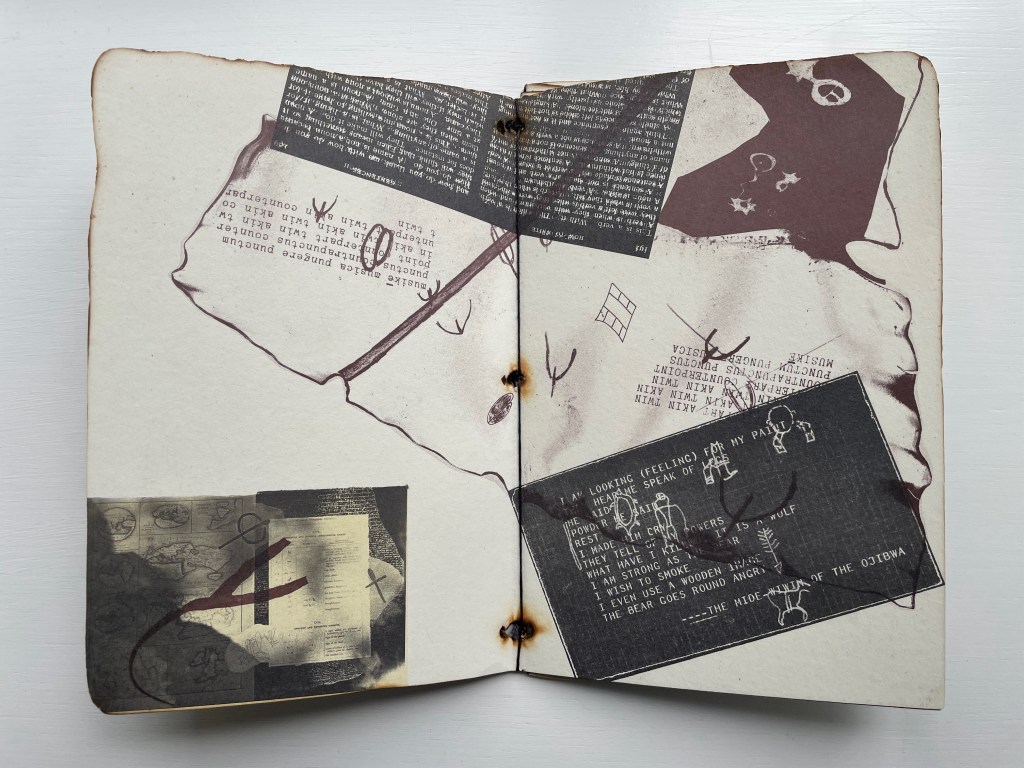
On either side of this narrow parchment signature, the collaged elements fall on the pages like pieces in a scrapbook, some pasted down, some loose and floating, and some loose and superimposed on others. But even this scrapbook impression is subverted by the fact that the collaged elements are photographs printed on the seemingly burnt pages of the artifact. We can tell they are trompe-l’oeil presentations. One element — a reduced double-page spread from a handbook entitled How to Write — is printed upside down, white on black, and bleeds off the top edge of Primer. Other non-scrapbook elements are the four tiny pop-up accordions printed to look like strips of thumbnail photo proofs or slides for a projector.
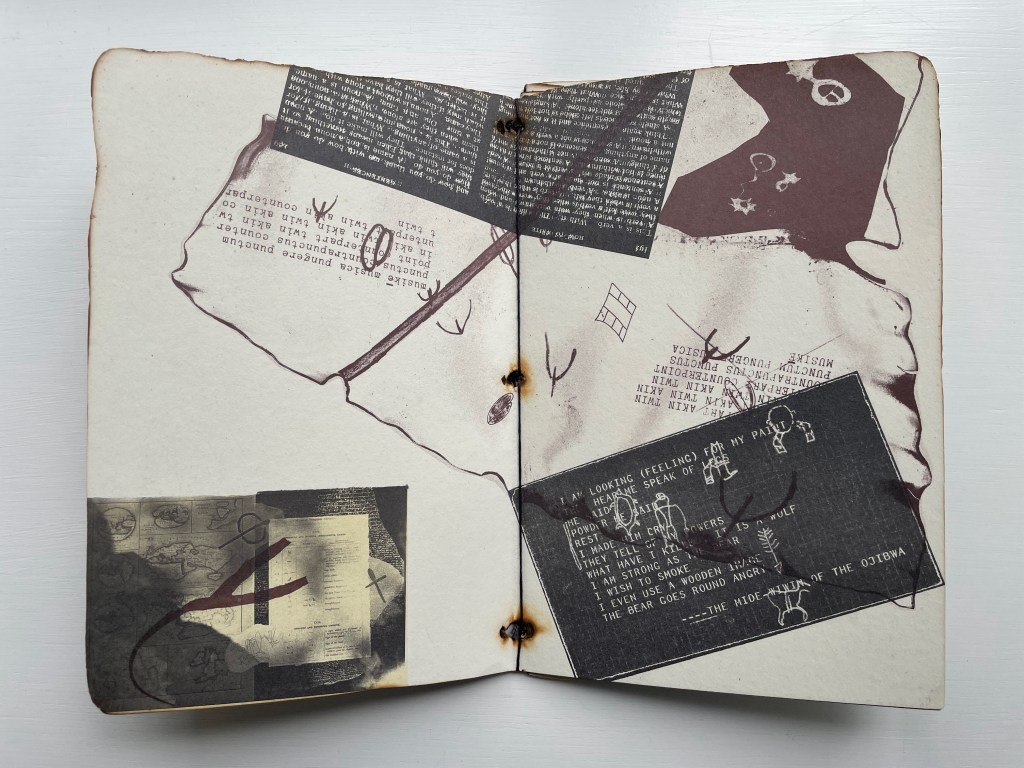
Note the white-on-black double-page spread of How to Write that bleeds off the top edge.
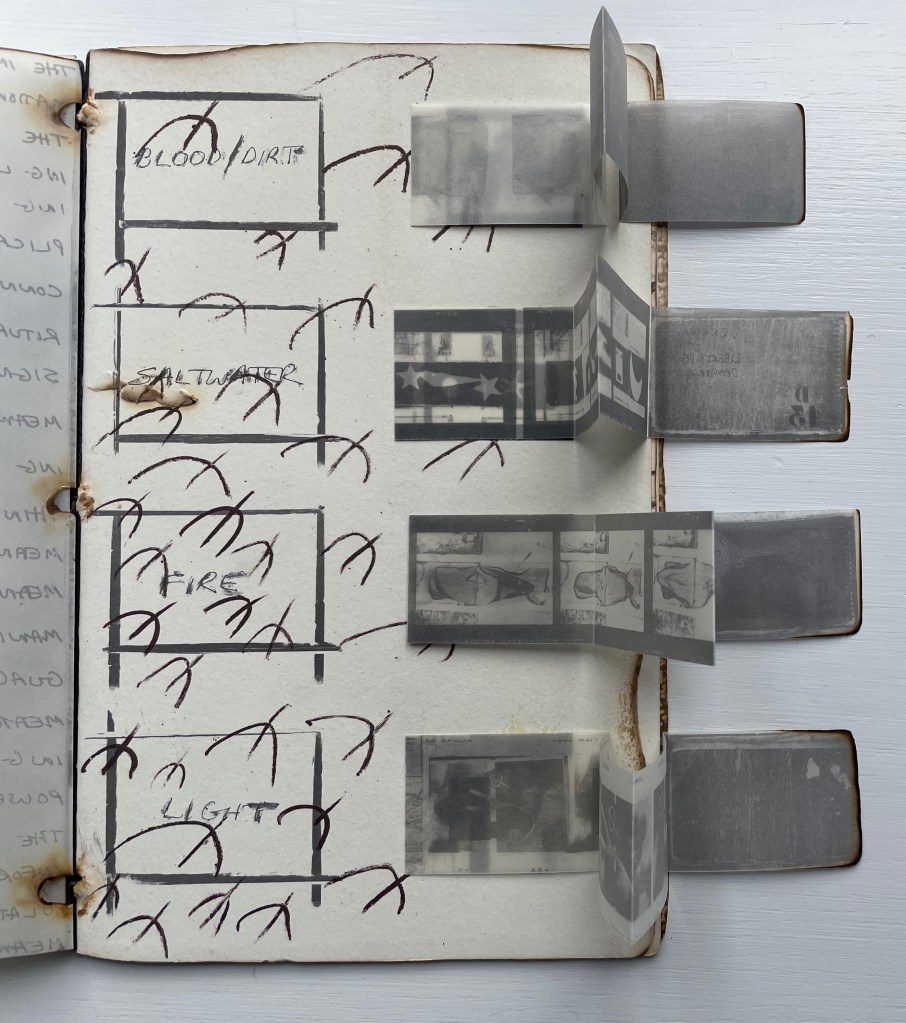
The four miniature pop-up accordions partially extended.
Not only are we to be lulled by the trompe-l’oeil before our eyes, the colophon teases us with information about the underlying printing technique. Rather than place a half-tone screen and its dots between us and the continuous tone of the photographed objects, Brunner has printed her artifact’s pictures with positive non-glare glass plates to capture those tones. Yet meaning and reality are still at levels of remove from us: pictures are not to be trusted.
Primer is a guide to our rituals for making sense of the world, but it warns us of layers of betrayal. One layer is that of appearance vs reality. We may try to explain the world by any number of markings and maps or by any number of elements — BLOOD/DIRT (earth), SALTWATER, FIRE, and LIGHT (air) — but that is not reality. We may try to capture the world photographically in print; photography too, however, is just another interpretive technique, and printing yet another interpretive layer. Whether the medium is the message or vice versa, Primer‘s message is that all of these ritual elements are subject to manipulation, which leads to control, power, profit, and betrayal. Grimmest of all, though, is the implication presented by this burnt Primer of burnt ritual elements: death.
Inside front cover, beginning of first signature.
First double-page spread of first signature.
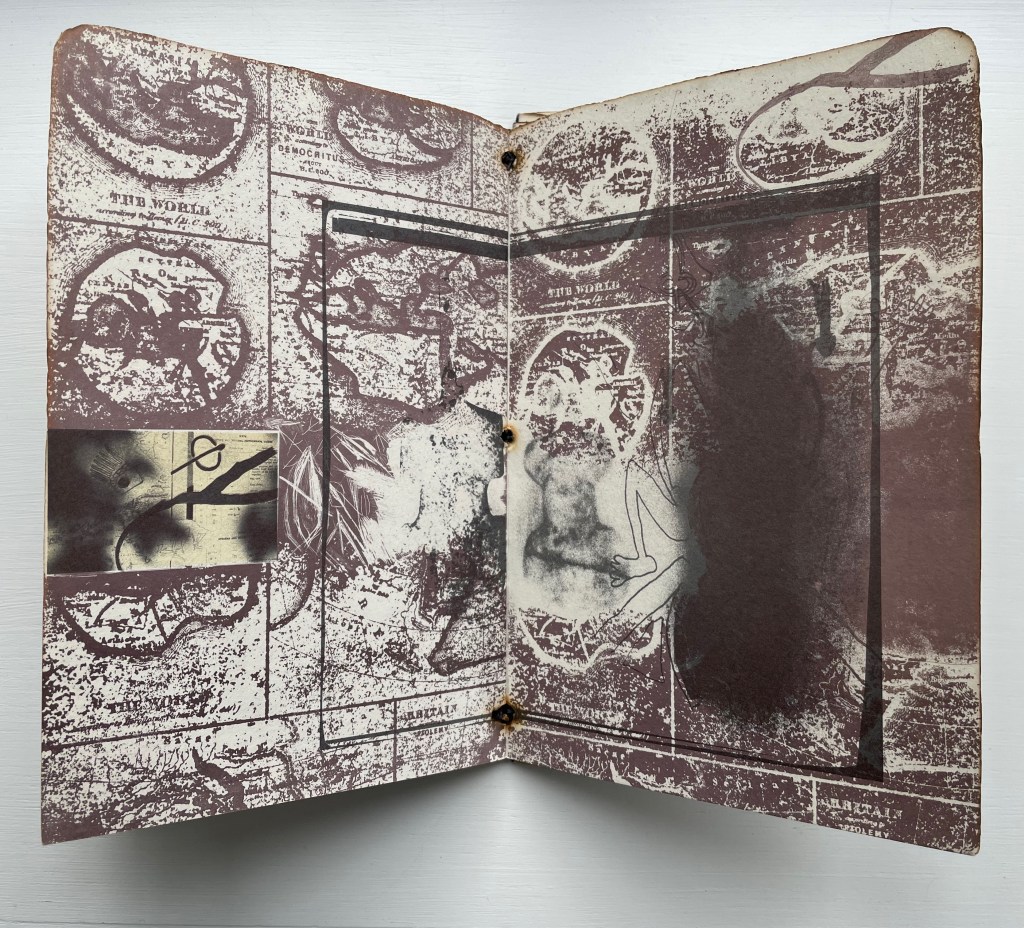
Second double-page spread of first signature.
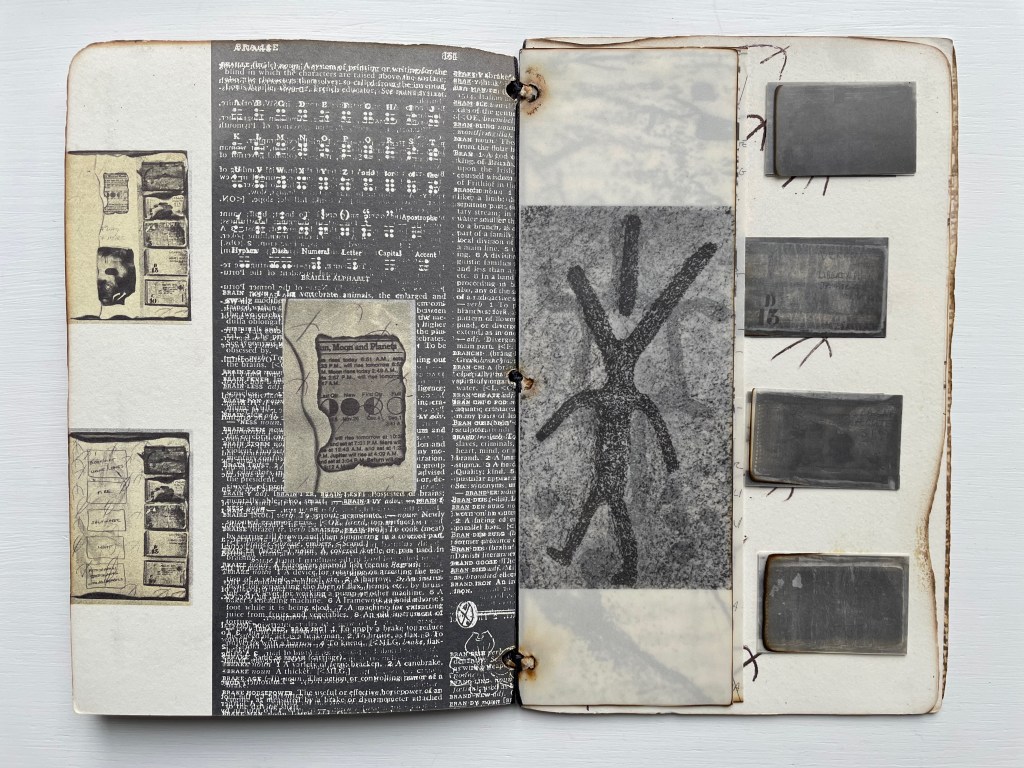
End of first signature, start of the narrow parchment signature.
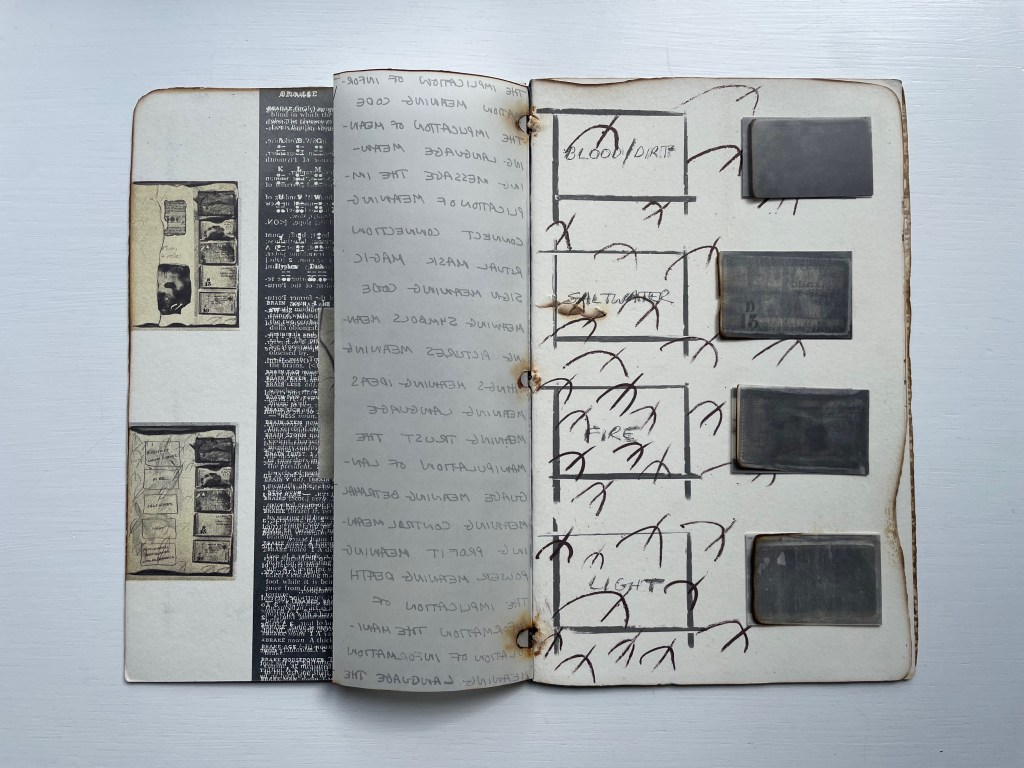
End of the narrow parchment signature, start of the final signature to which miniature pop-up accordions are attached.
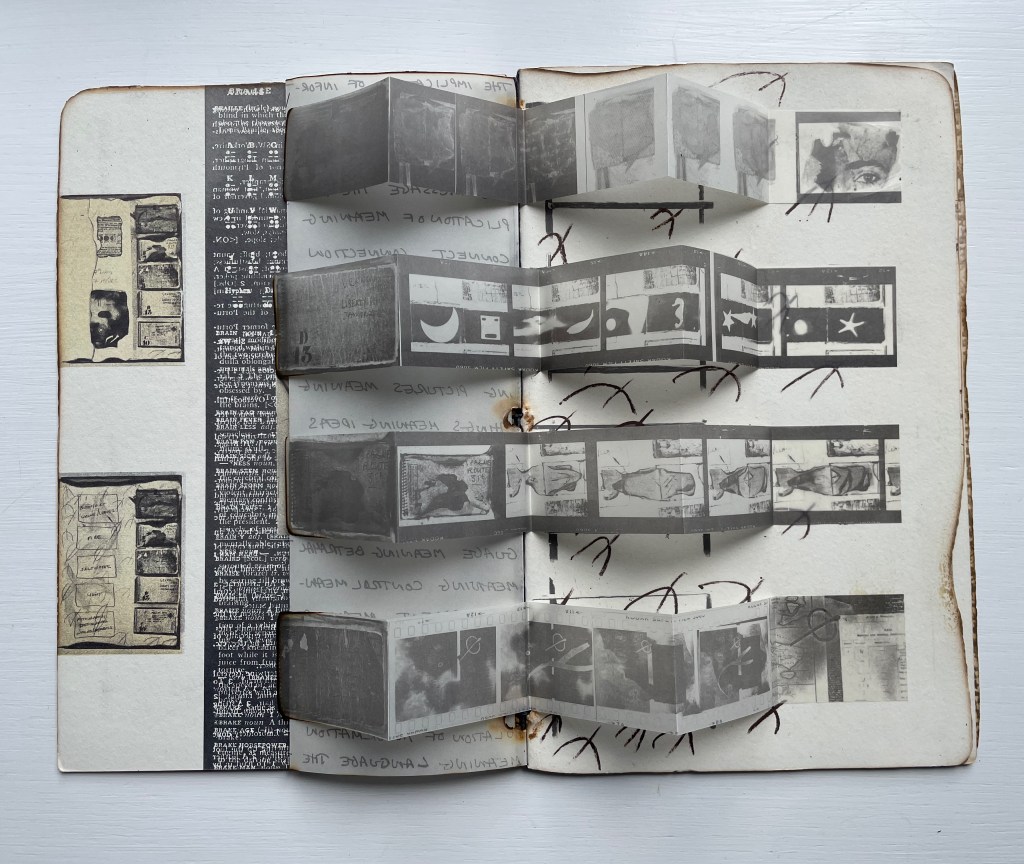
Accordions fully extended.
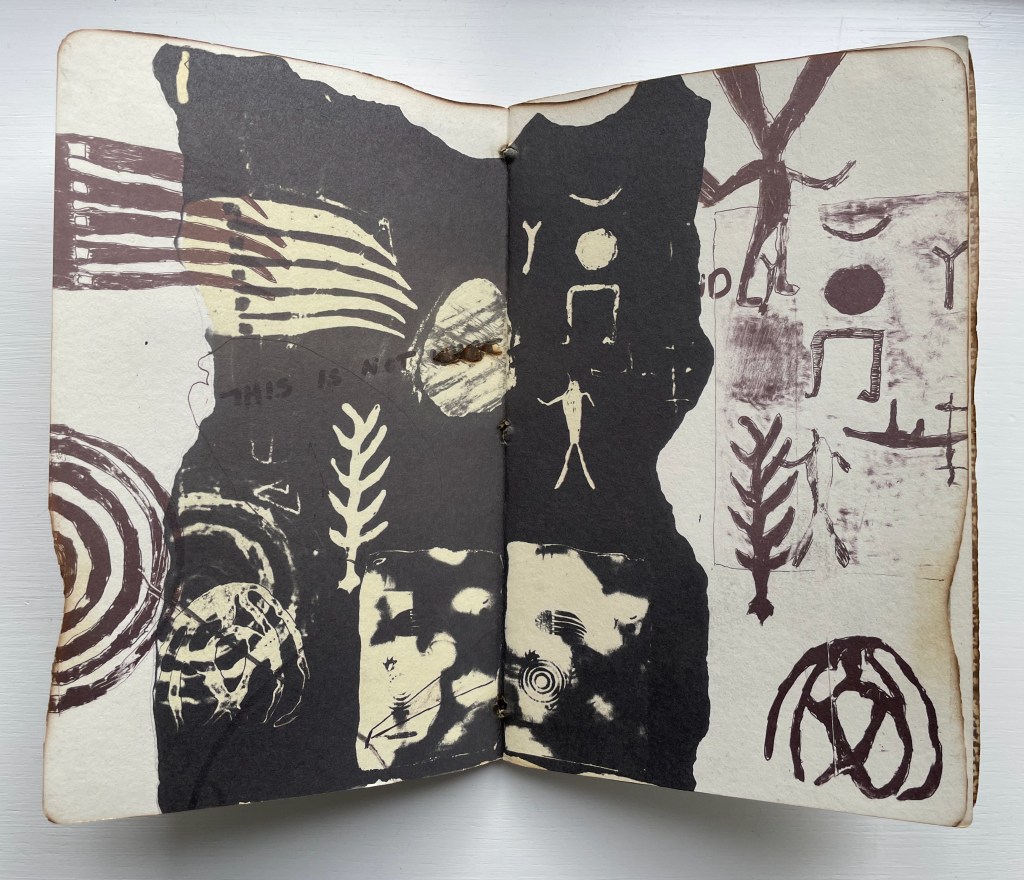
First double-page spread of final signature.
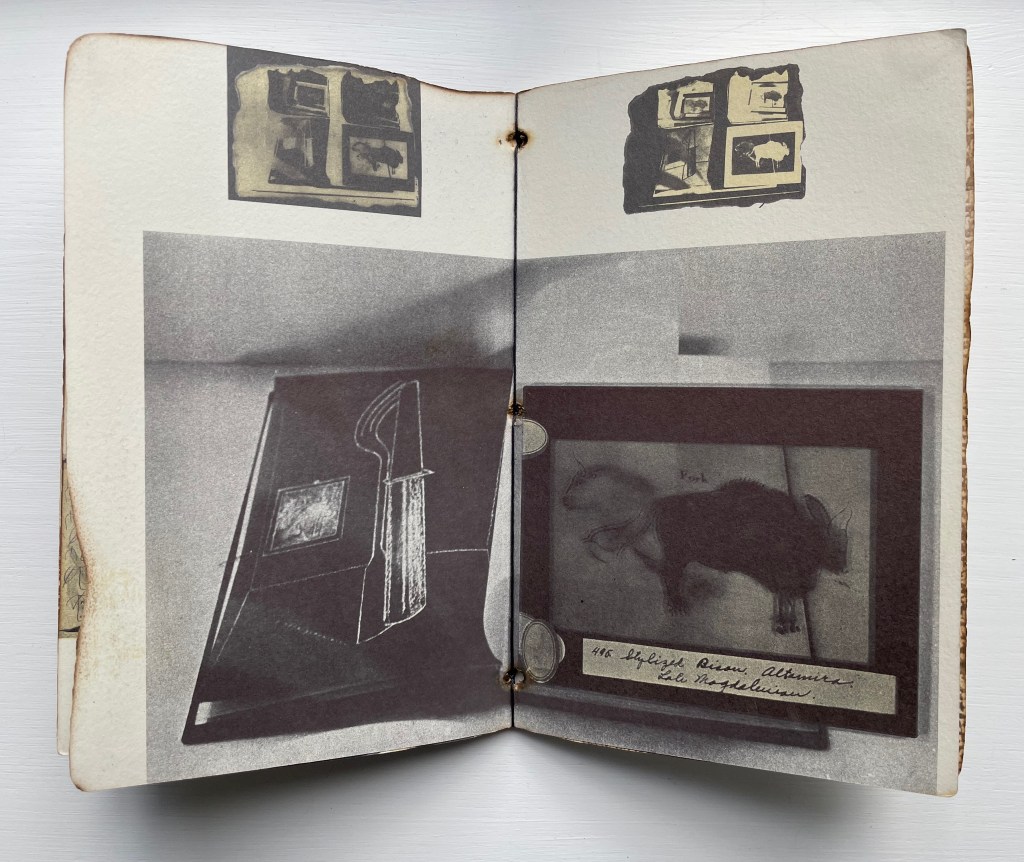
Second double-page spread of final signature.
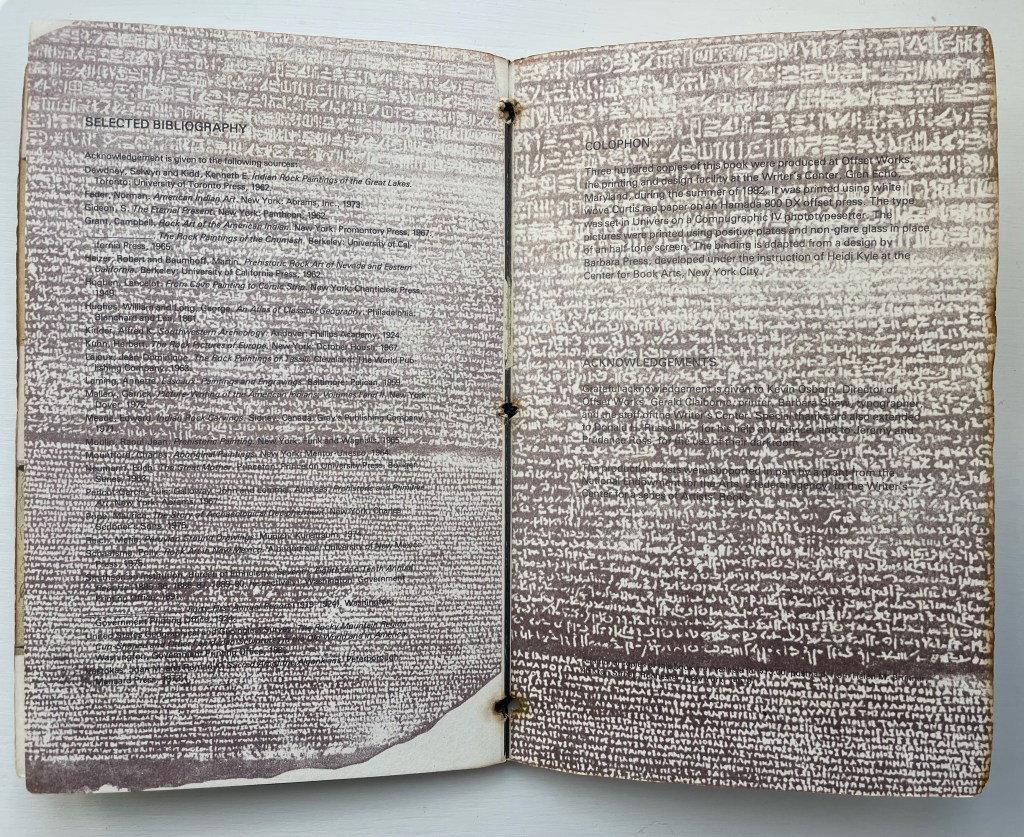
End of final signature, inside back cover.
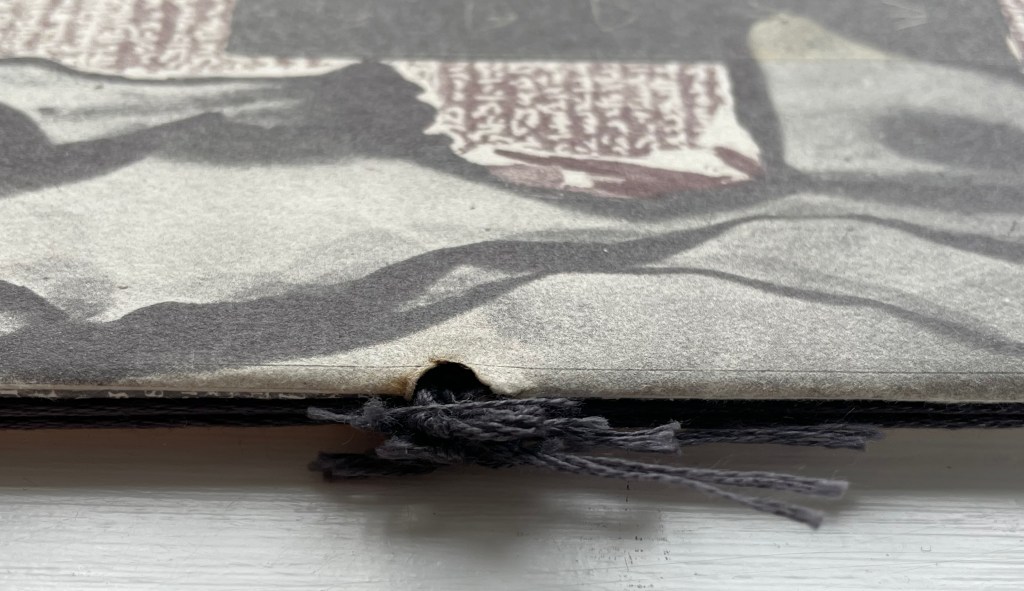
Sewing hole and thread.
Renée Riese Hubert and Judd David Hubert devoted several insightful pages to Brunner’s Primer in The Cutting Edge of Reading (1999). They placed it within the chapter on altered books and concluded
Primer qualifies as an altered book since it overtly recycles texts and images borrowed from other books. The occulted presence of technological inventiveness merely spells out the impossibility of imposing new codes by resurrecting old ones, inveterately distanced from the viewer. … The manipulations practiced in this book subvert and even reverse ordinary editorial goals.
Whereas a specialized editor would use all relevant technological resources to bring into full legible view the erased texts in a palimpsest, Brunner has recourse to technology in order to produce a make-believe palimpsest for the sake of reducing readability. The “battered book” functions as the self-designating end product rather than the container of a text in need of salvation or rescue.
The Huberts are right that Brunner’s Primer (1982) presents as a “battered book”, but it functions both as a “self-designating end product” and a “container” of ritual elements equally battered. Recently, Brian Davis, a scholar from the University of Maryland, came up with the idea of “archival poetics” and offered up Mark Z. Danielewski’s House of Leaves (2000) and Anne Carson’s Nox (2010) among several other “book-archives” as examples of the form. They “not only exploit the material and expressive possibilities of the book as object, they function as physical sites for compiling and organizing heterogeneous collections of textual artifacts for narrative and other expressive purposes”. Davis expands the heterogeneity to include “reproduced photographs, paintings, drawings, handwriting, newspaper clippings, x-rays, maps, diagrams, charts, and other kinds of … ephemera”. Certainly in its appearance, scope of content, material, technique, and structure — Primer fits this bill of particulars. Even more so, it feels like an archival artifact rescued from an archive. As such, it may be the proto-book-archive, albeit one with a black expressive purpose.
Further Reading
“An Online Annotation of The Cutting Edge of Reading: Artists’ Books“. 7 September 2017. Bookmarking Book Art.
Davis, Brian. 2024. “Part One: The Rise of Multimodal Book-Archives“. College Book Art Association. Accessed 24 November 2025.
Hubert, Renée Riese, and Judd David Hubert. 1999. The Cutting Edge of Reading : Artists’ Books. New York City: Granary Books. Pp. 81-83.
Liberty, Megan N. 2023. Craft & Conceptual Art : Reshaping the Legacy of Artists’ Books.

