Nagori (2023)
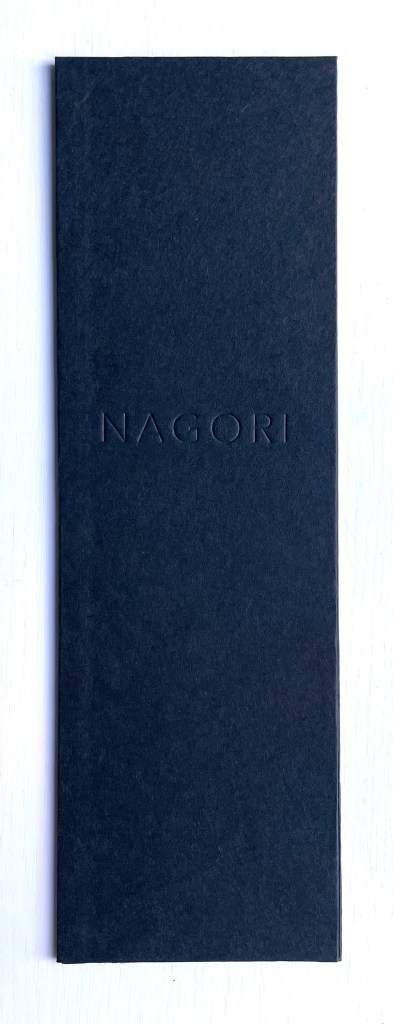
Nagori (2023)
Ximena Pérez Grobet and Kati Riquelme
Clothbound hardcover. H153 x W47 mm. Edition of 33, of which this is #14. Acquired from Ximena Pérez Grobet, 5 February 2024.
Photos: Books On Books Collection. Permission to display from Ximena Pérez Grobet.
The Japanese word nagori has several meanings. Beware translation applications, but embrace the online discoveries that lead to Ryōko Sekiguchi, the Japanese expatriate writer, and Victor Burgin, the British conceptual artist and writer, who cites her. With Sekiguchi, you will find that it means “nostalgia for the season leaving us”, the longing for the taste of an early season fruit evoked by its late season taste, or a room’s sense of waiting for the return of someone who has just left. With Burgin, before he cites Sekiguchi, you will first find nagori‘s etymology — nami-nokori, referring to the remnant, remains or traces of receding waves. Burgin’s etymological explanation is obviously the most applicable to this collaborative artists’ book, but after you have put the book aside, you may feel a lingering nostalgia for the experience of it akin to the sensuousness Sekiguchi evokes.
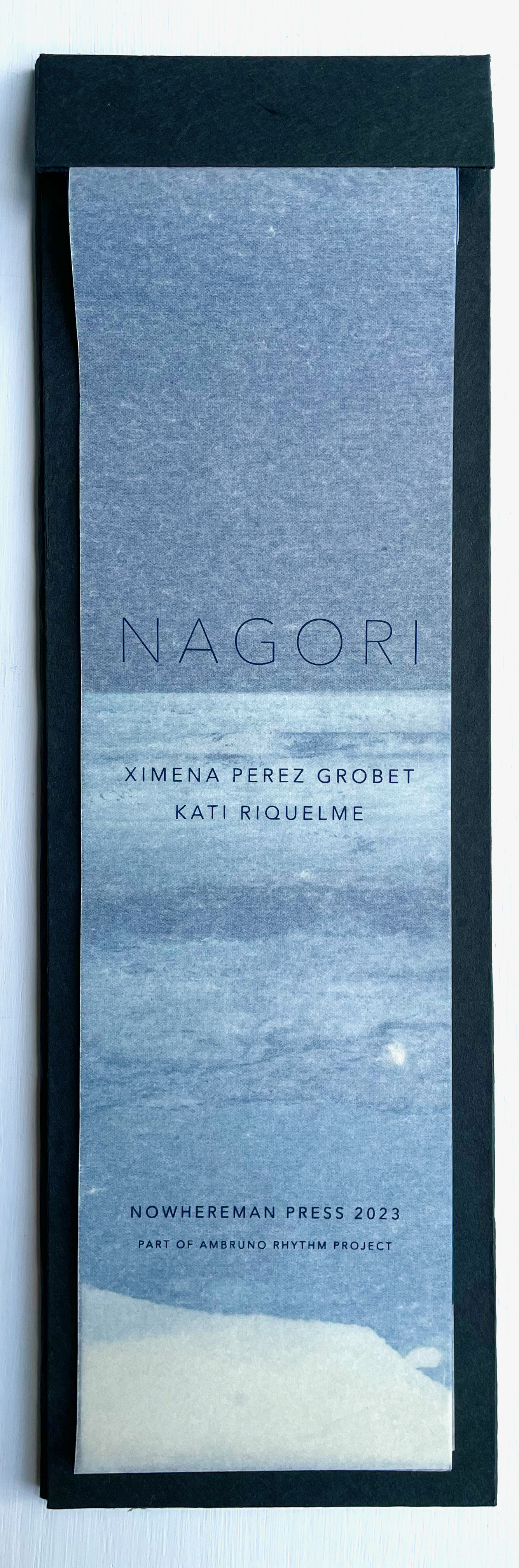
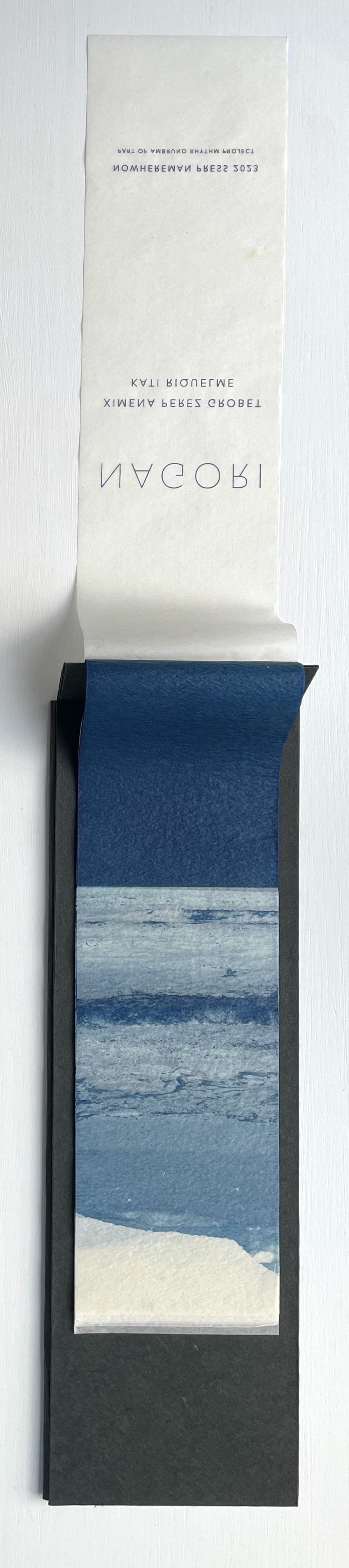
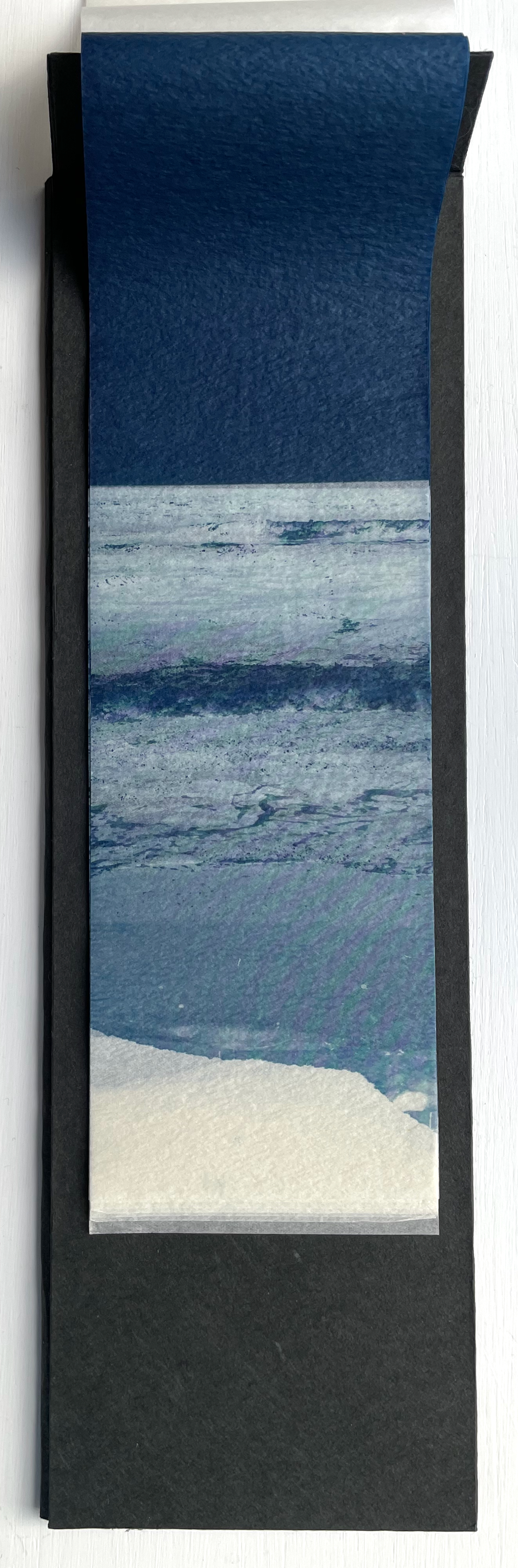
As with all of Pérez Grobet’s works, Nagori makes its meaning with an innovative application of binding and materials. As the vertical front cover folds over and behind the back cover, a tab pops up that shapes the bound edges of the pages into waves.
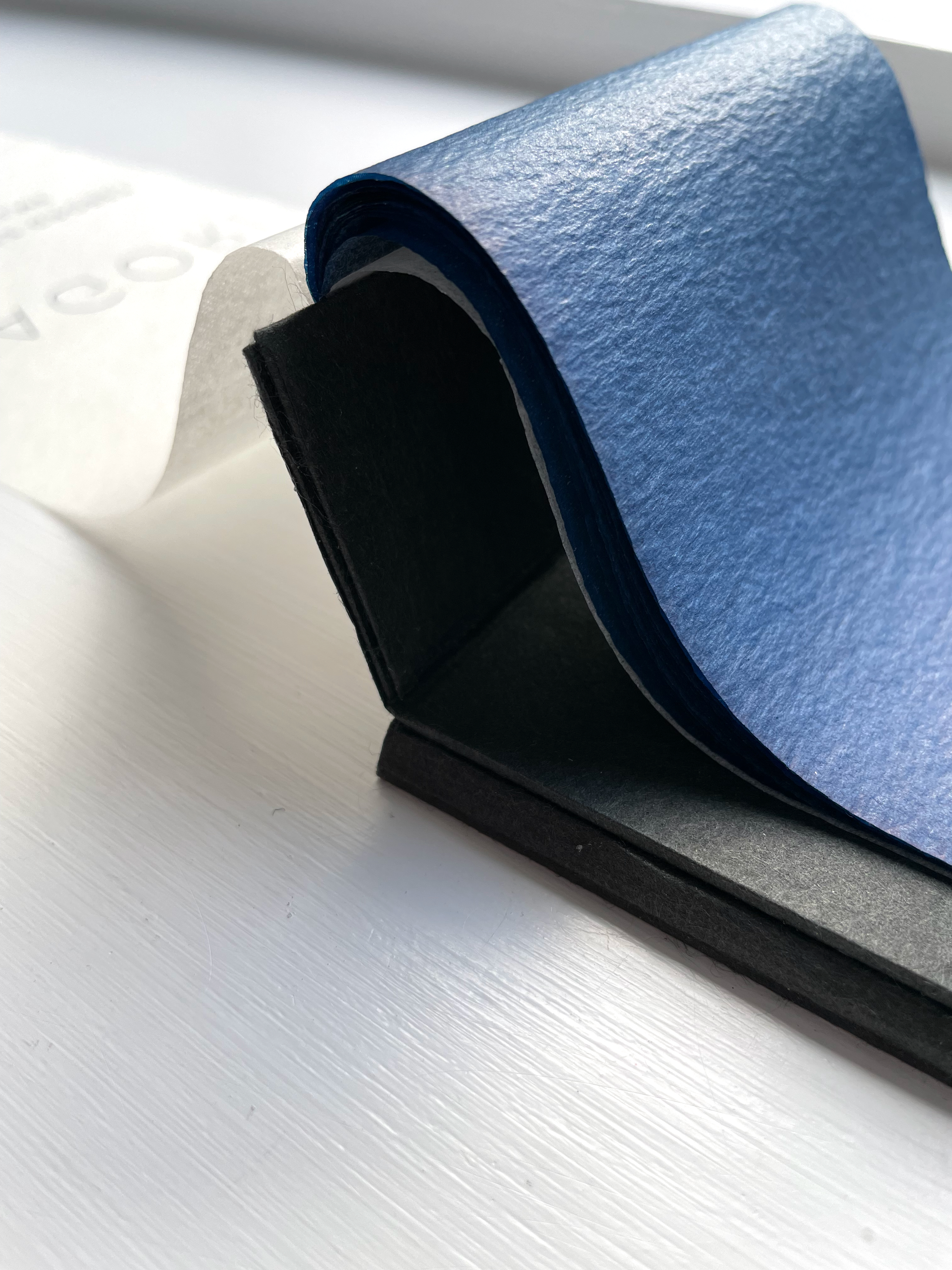
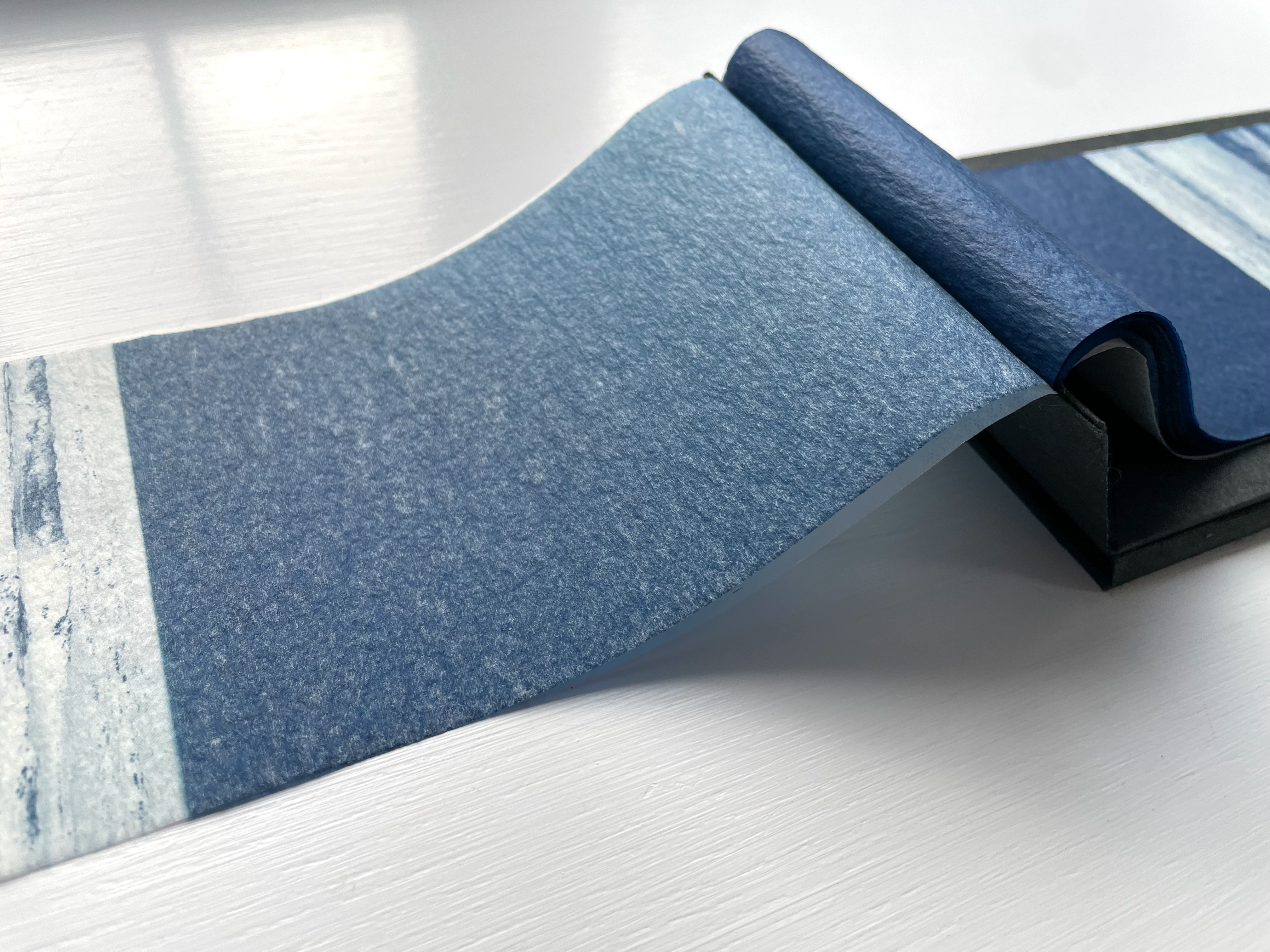
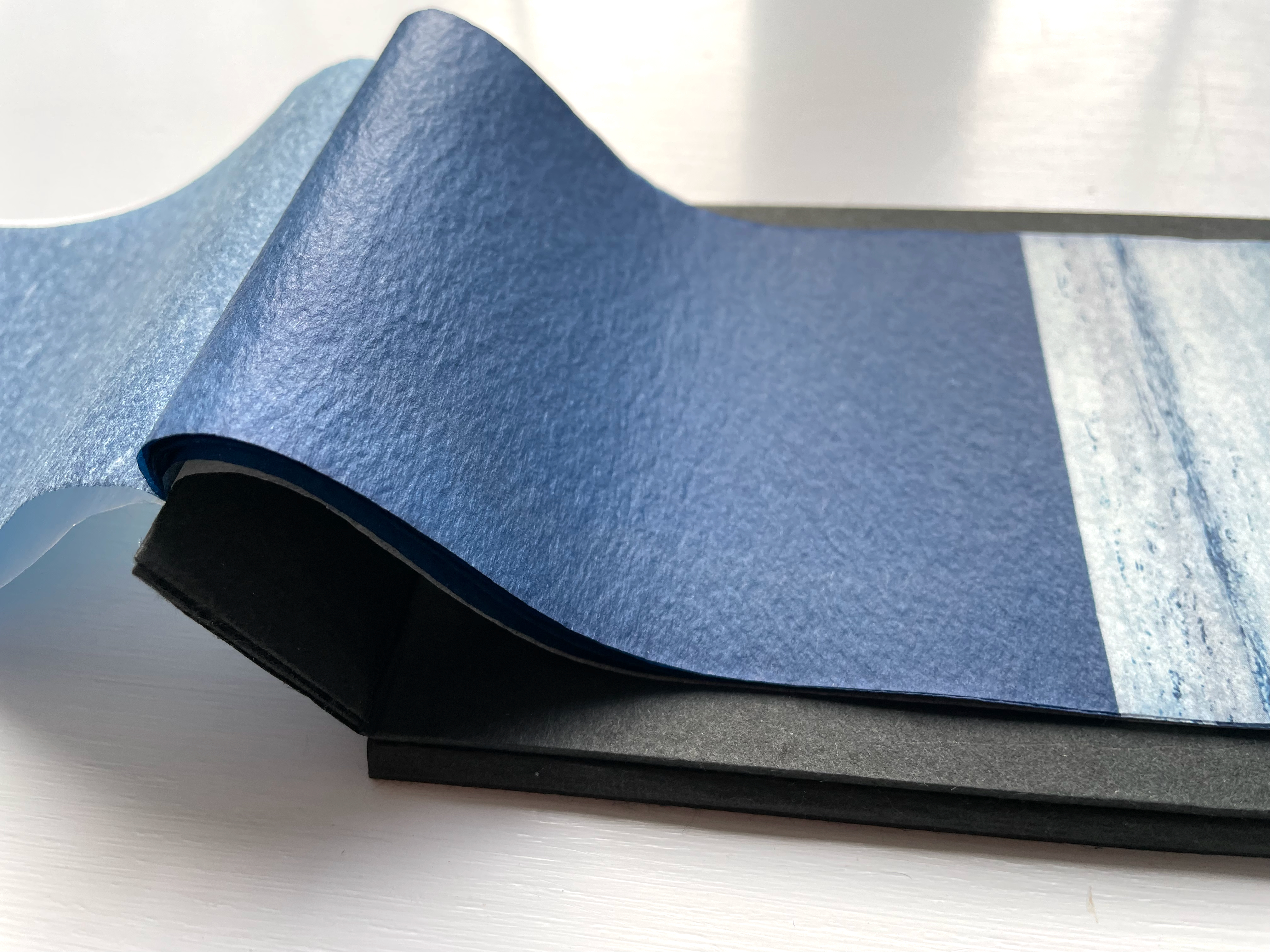
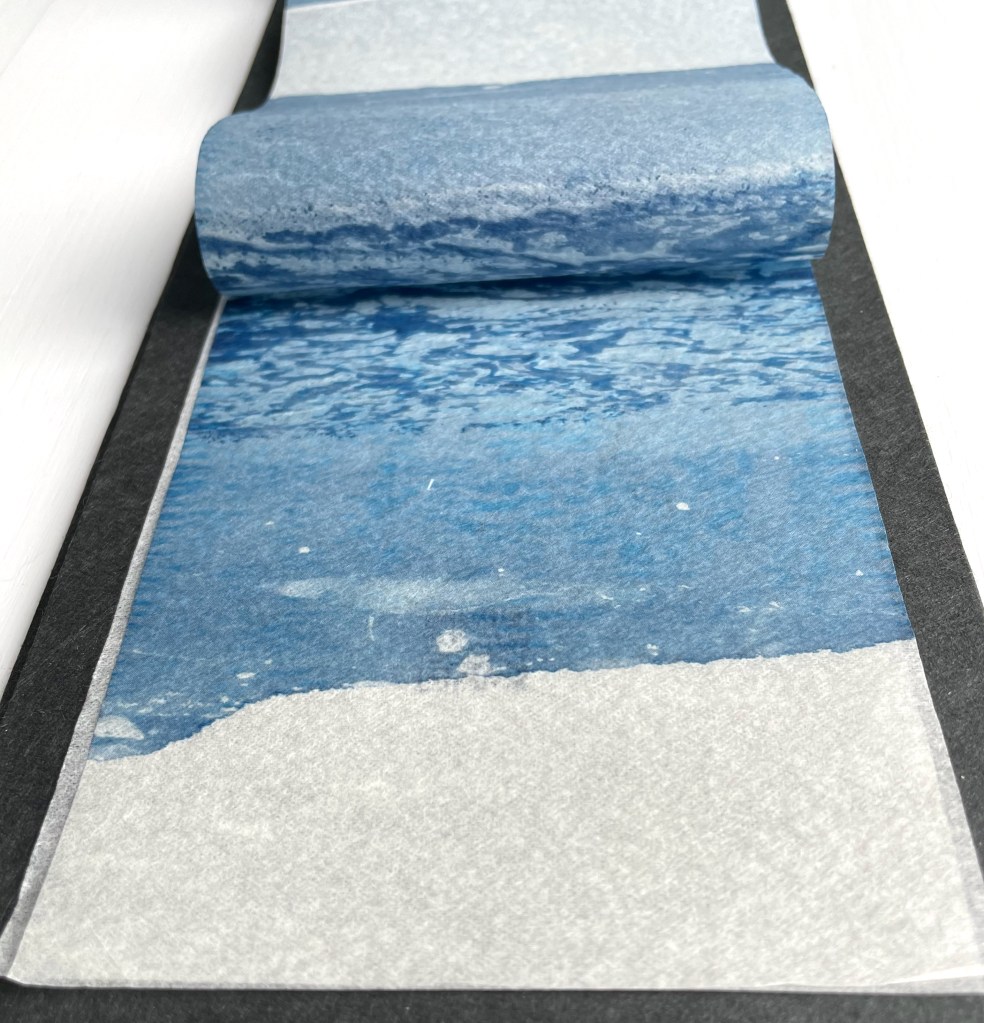
As the pages turn, the 10 gms kochi paper falls like water, and the waves in their narrow cyanotype-printed view roll in and recede.
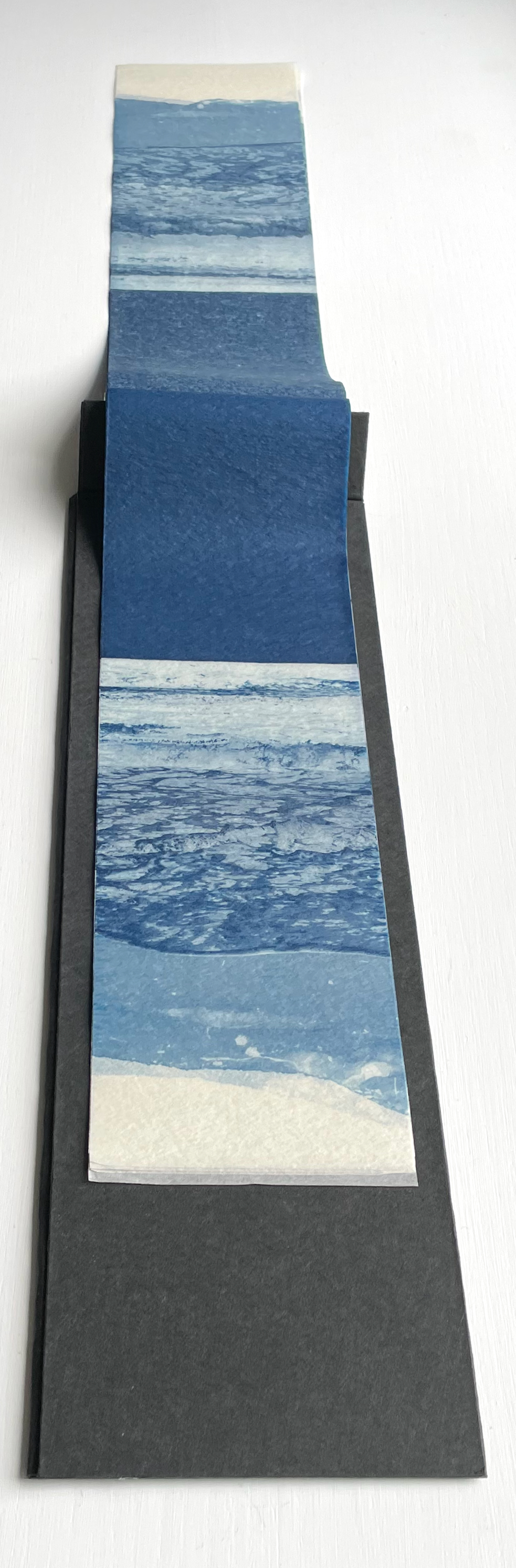
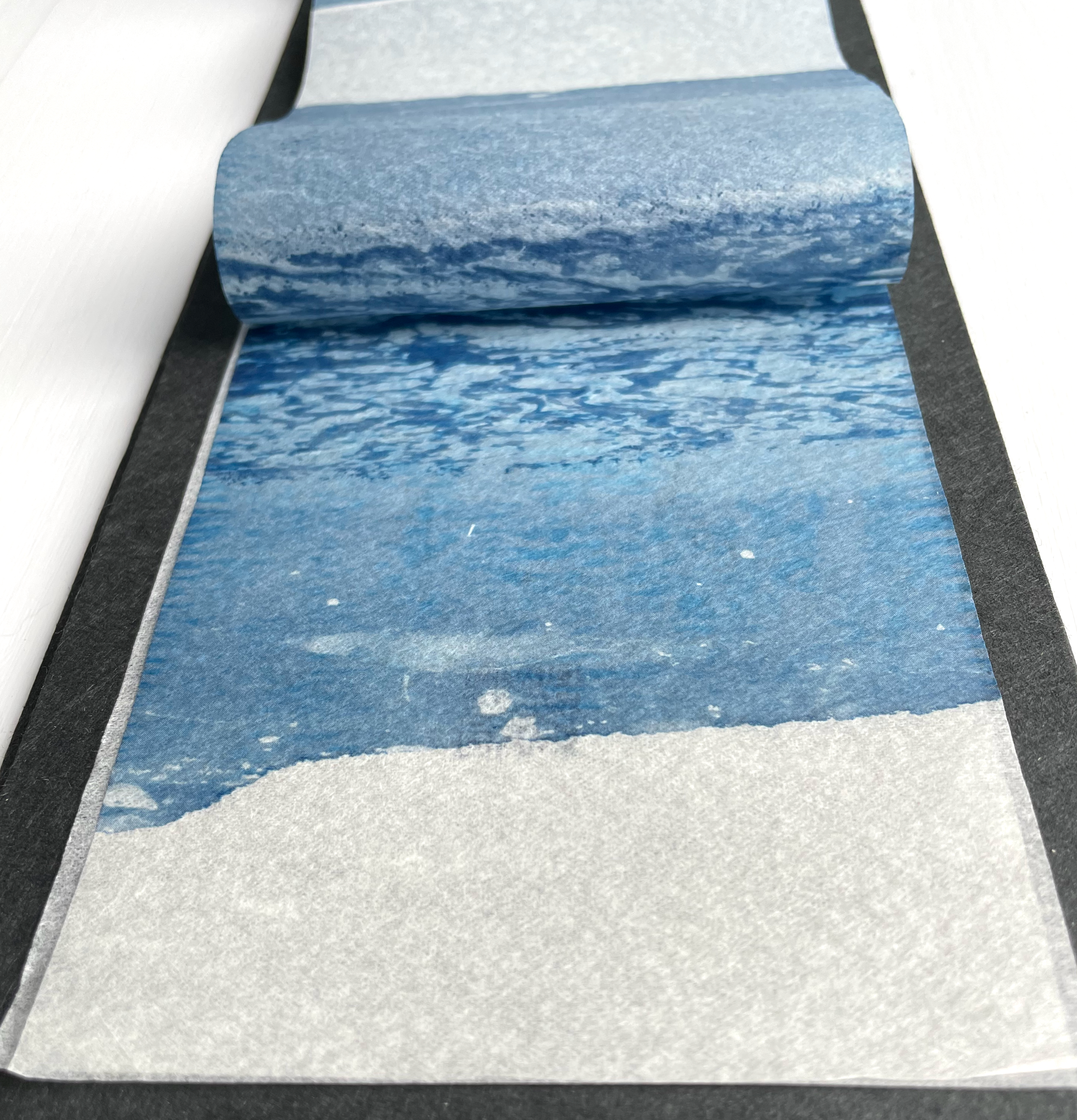
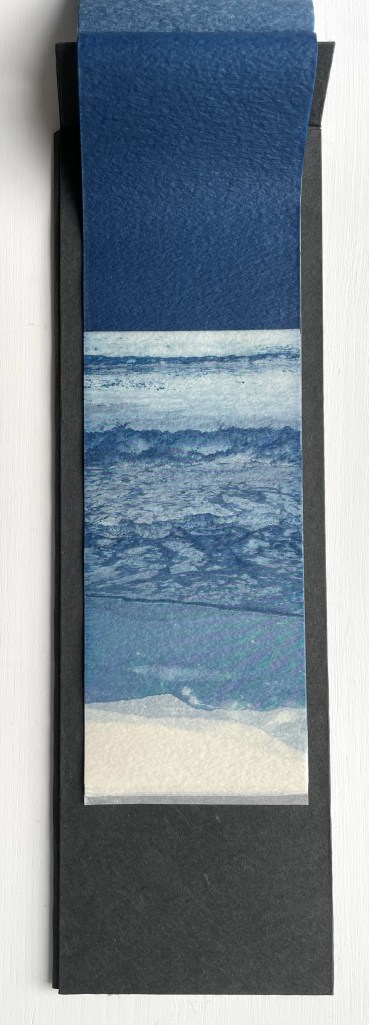
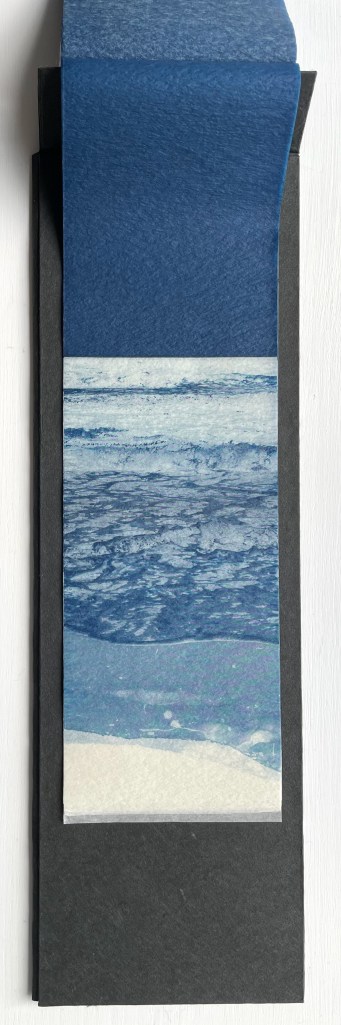
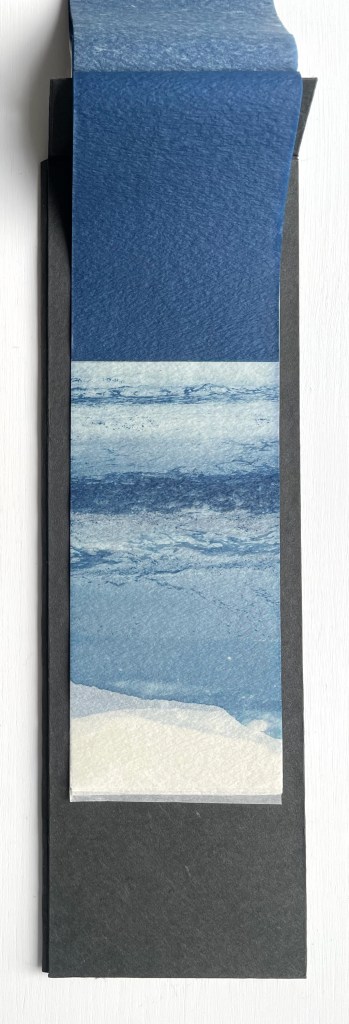
The image on each turned page shows through the translucent kochi paper, and the extended pages create a strange sense of movement in their inversion. The sound, texture, colors, and shape of the paper assert the sense of the movement and rhythm in the liminal spaces between sky, ocean, and strand and lull us into accepting the disorientation in the liminal space of the inversion.
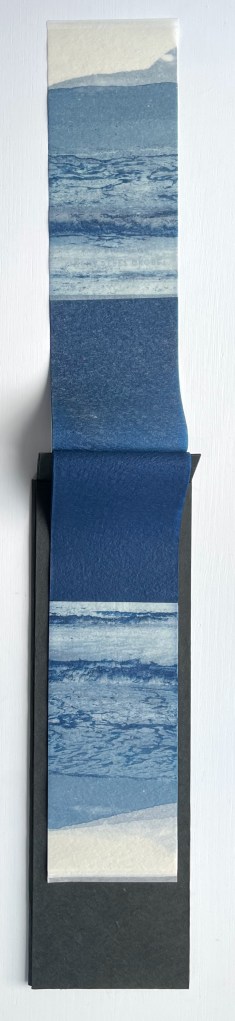
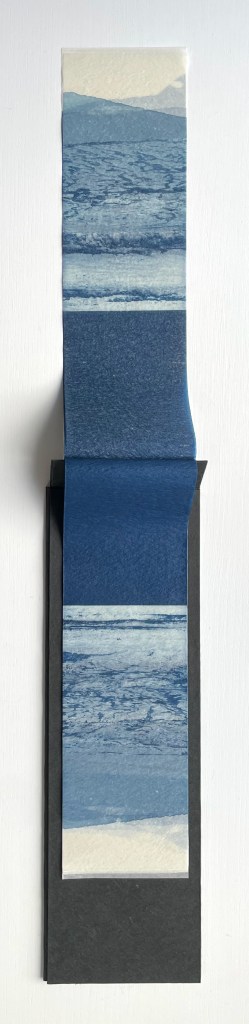
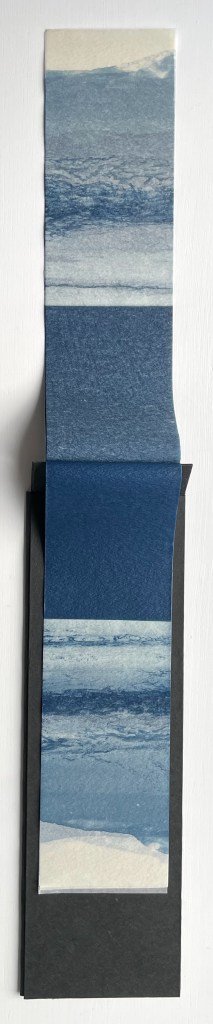
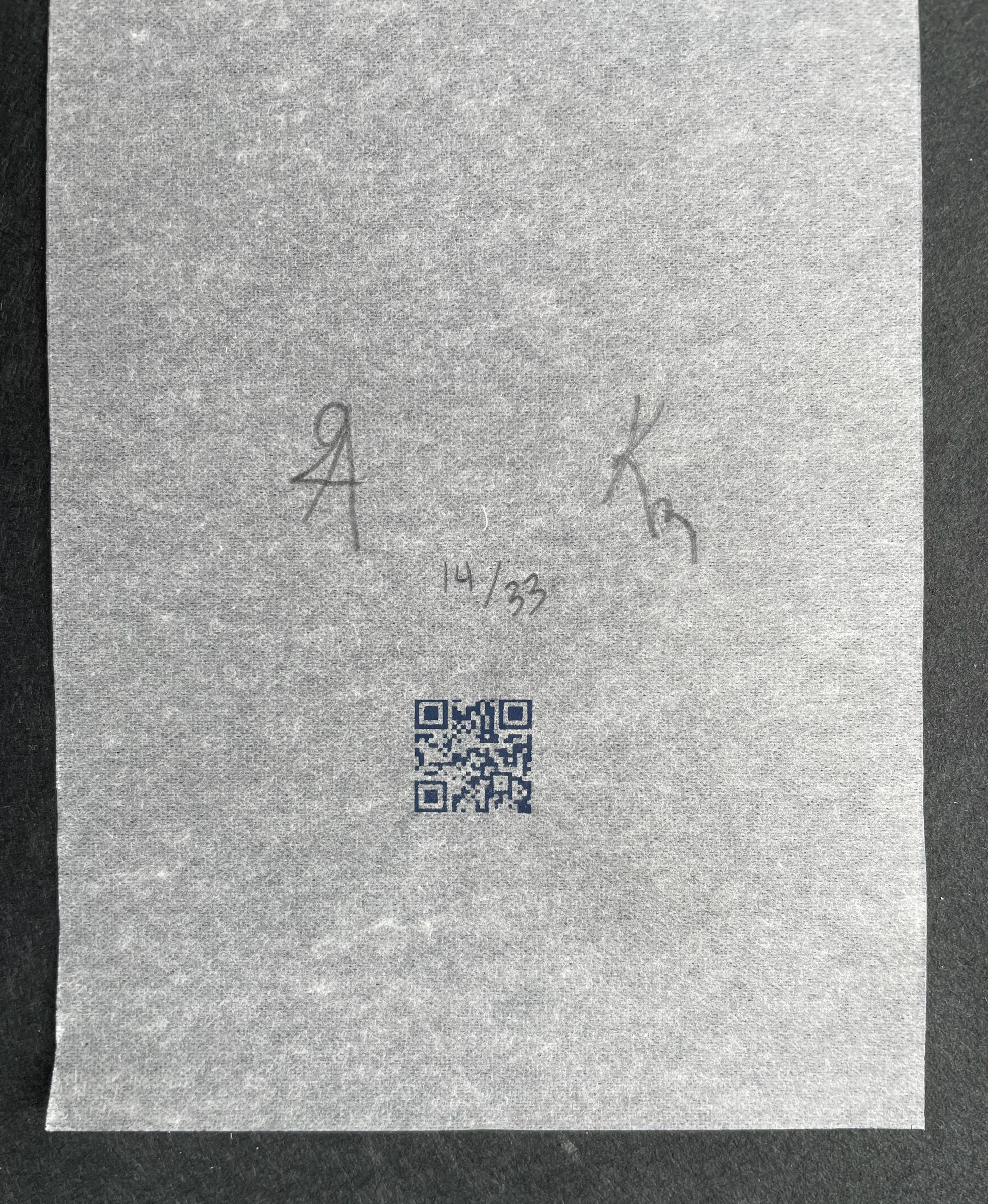
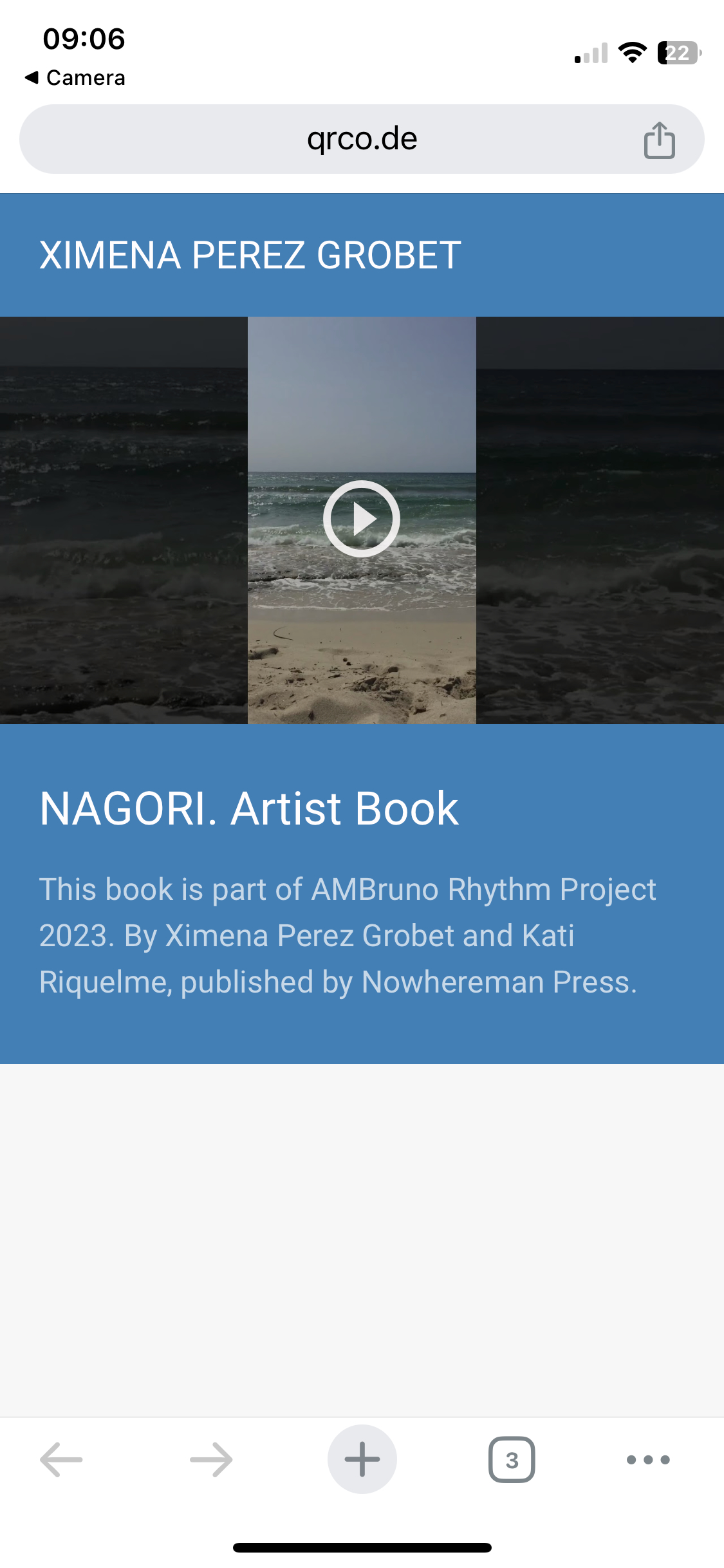
For such a tactile work, it is a surprising treat that it also embraces the digital and concludes with a QR code allowing the viewer to view and hear a looping clip of the incoming and receding waves. Still, it is the book that evokes nagori.
Vai Vén de papel (2015)
Vai Vén de papel: Correspondencia artistica, Barcelona – México, México – Barcelona (2015)
Ximena Pérez Grobet and Jorge Yázpik
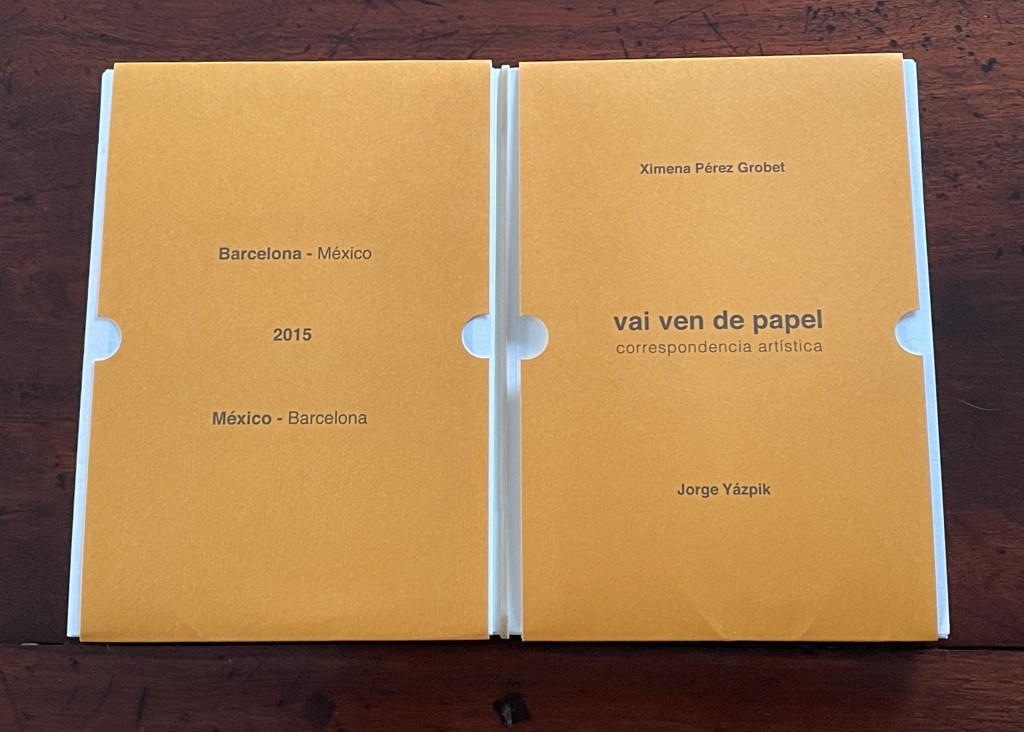
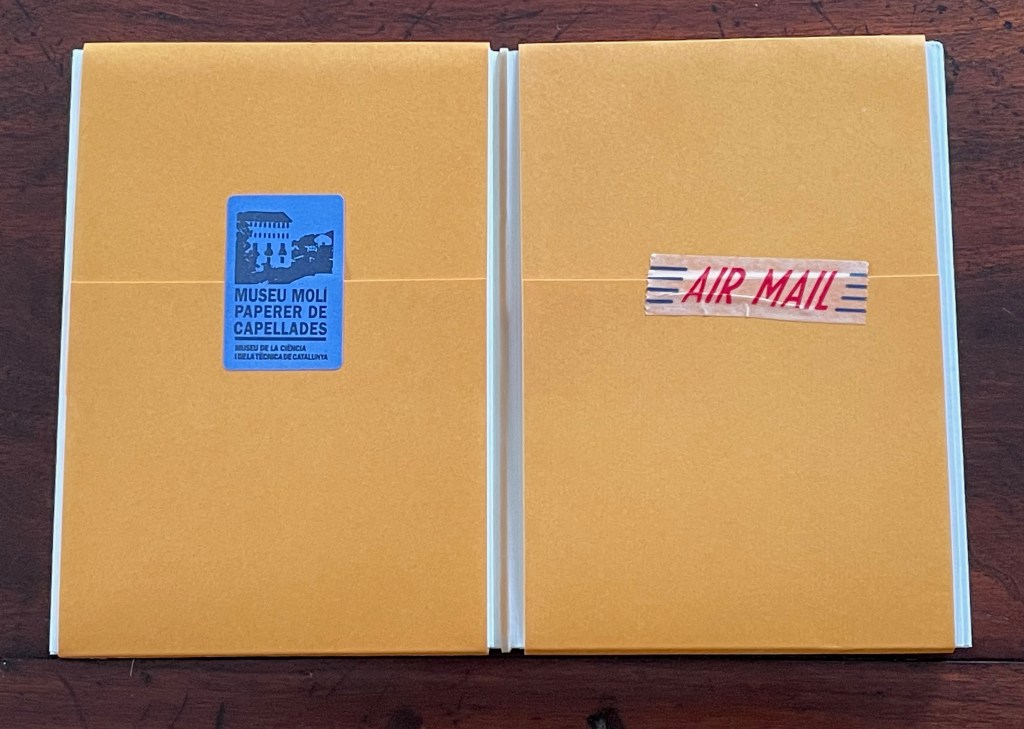
Catalogue in modified star book format, rubber-band bound. H140 x W205 mm. 62 panels. Edition of 250. Acquired from Ximena Pérez Grobet, 5 February 2024.
Photos: Books On Books Collection. Permission to display from Ximena Pérez Grobet.
You would think this catalogue of works arose from an exhibition, but it is the exhibition that arose from the catalogue. Over a period of two years, the artists Ximena Pérez Grobet (based in Barcelona) and Jorge Yázpik (based in Mexico City) sent each other sets of paper sheets from which they eventually created forty-five works via correspondence. Pérez Grobet designed the unusually structured catalogue with its modified star book format bound with a single rubber band. It cannot be perused in codex fashion. It demands to be spread out on a table and viewed at eye level from which each piece appears to be hanging on a gallery wall.
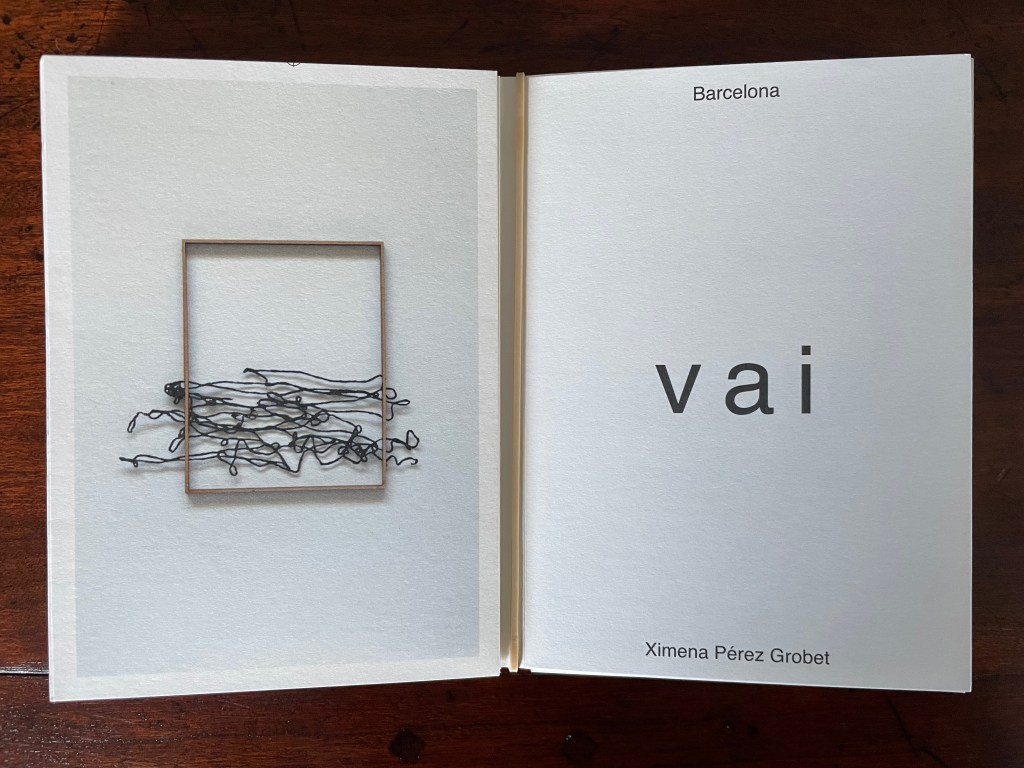
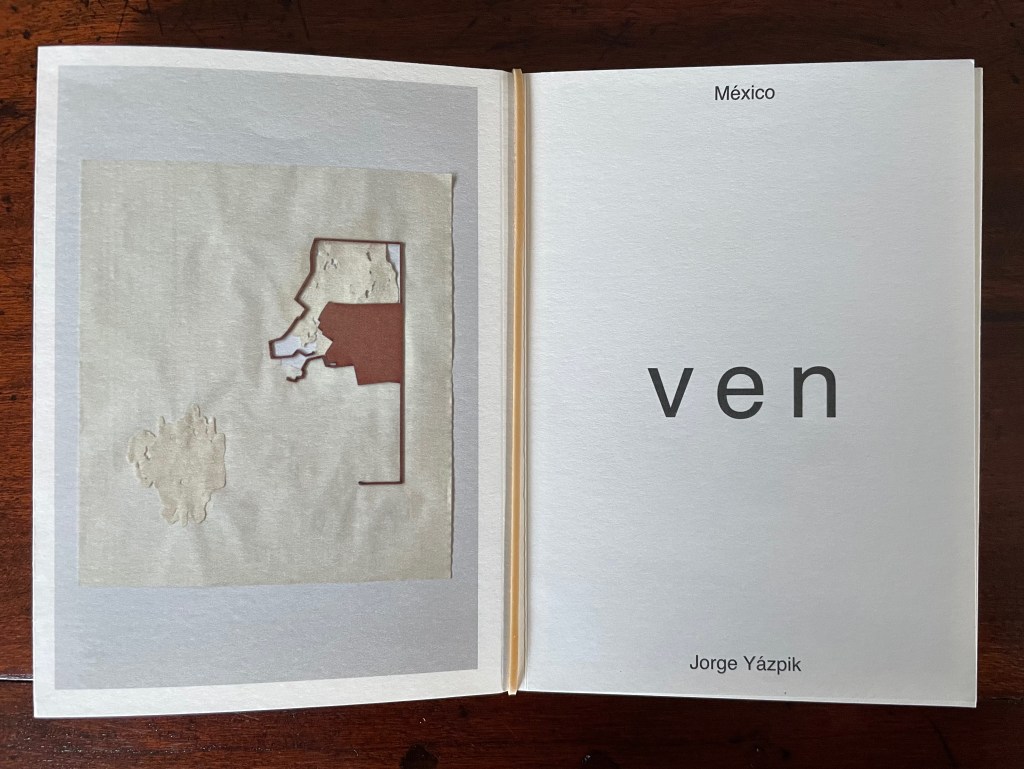
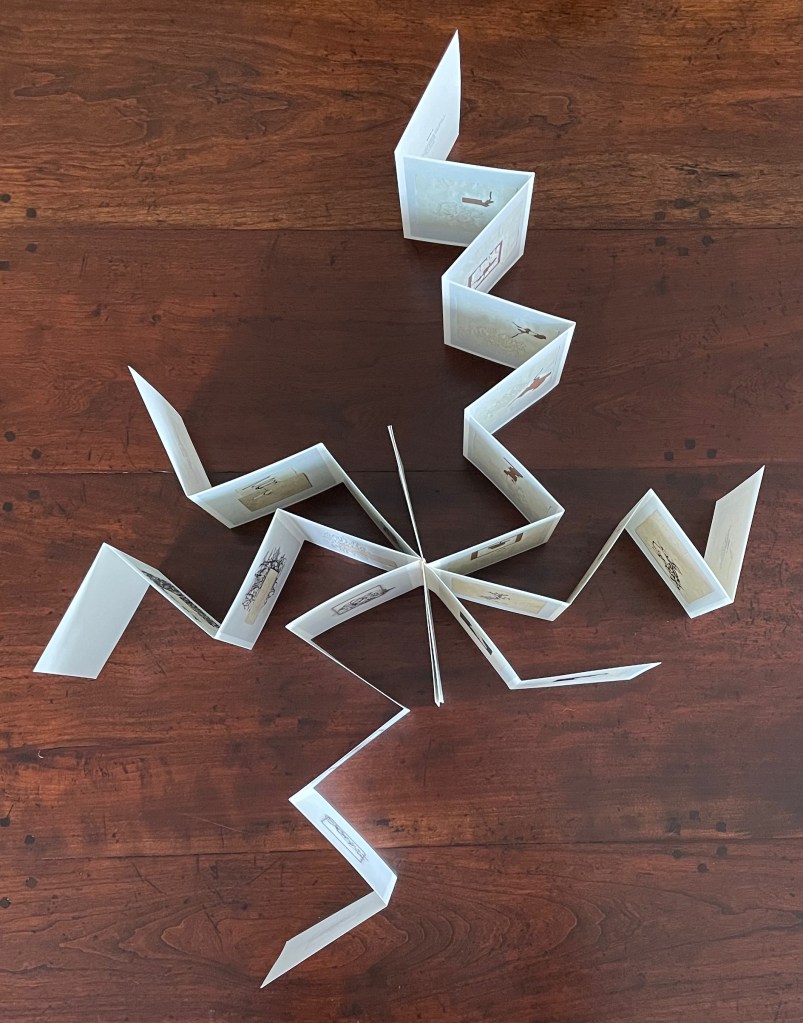
Viewing the extended arms of the catalogue feels like wandering through a museum’s themed and differently sized rooms and halls.
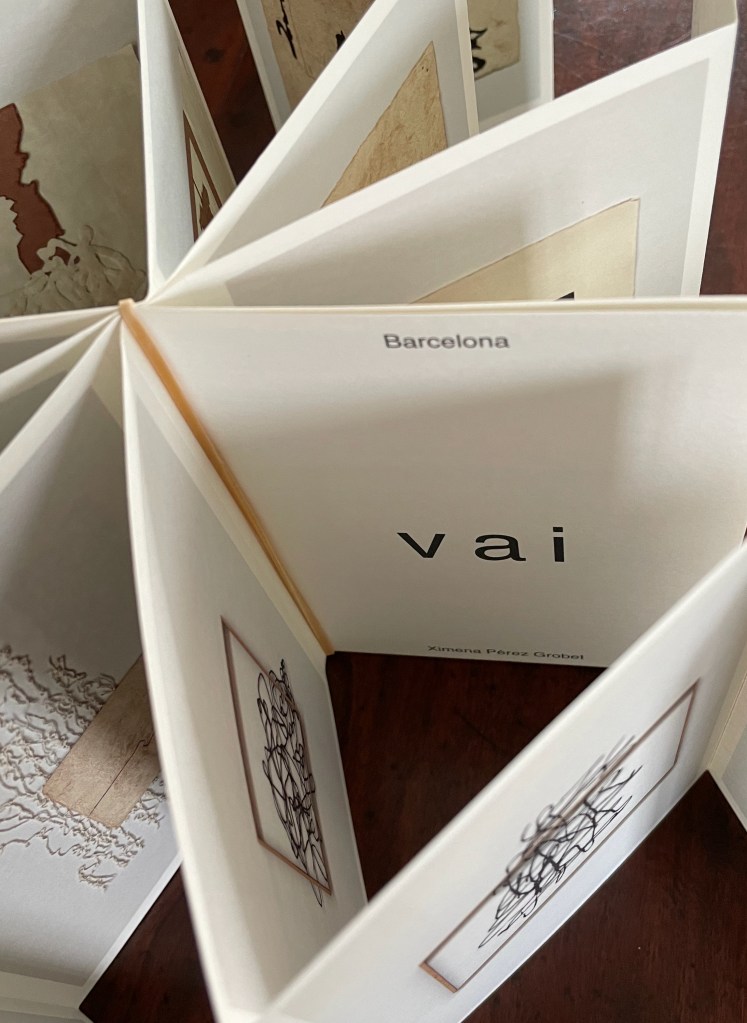
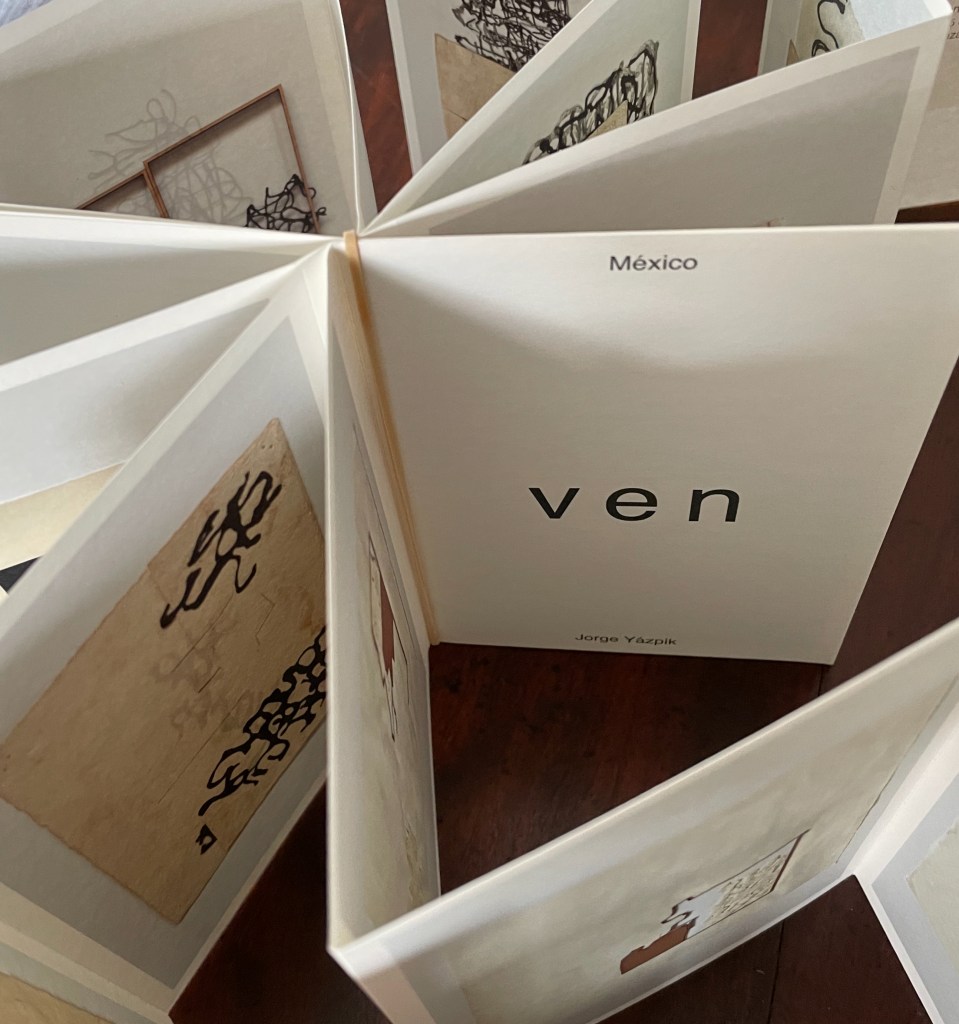
The works fall into six series distinguished by material and technique. Each poses a different spatial relationship between the materials, which often draws comparison and contrast to the production processes involved with the materials. Almost always it draws attention to the New World vs Old World sources of the materials. Abstract shapes open each work to the viewers’ interpretations of the metaphors that lie within.
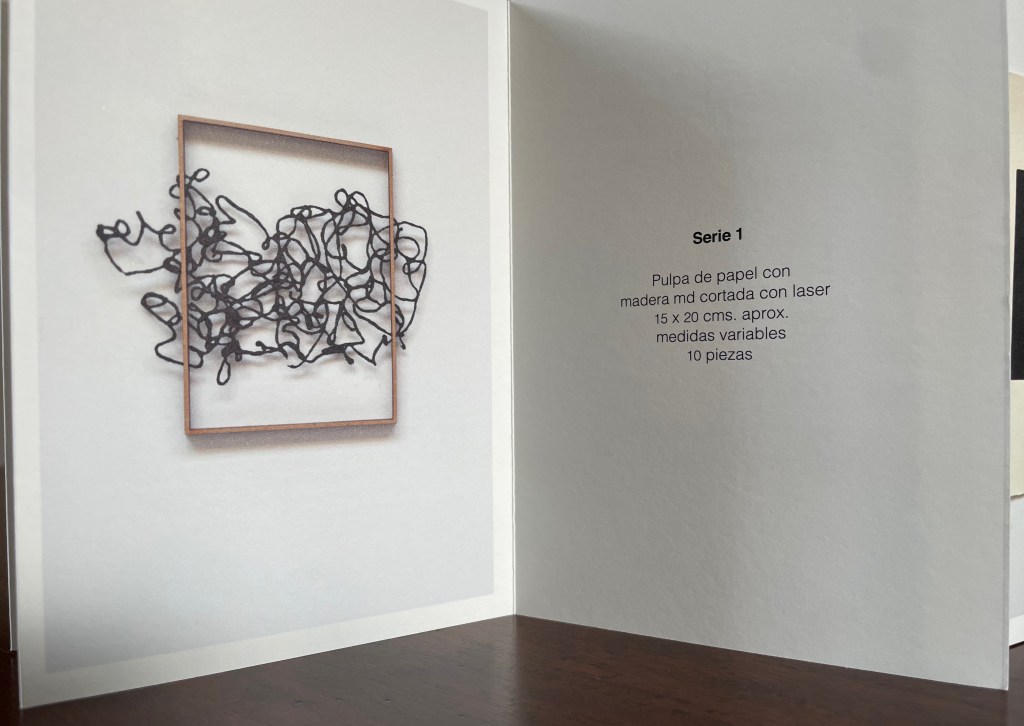
Series 1: Paper pulp with laser-cut MDF, Approx. 15 x 20 cm (variable), 10 pieces
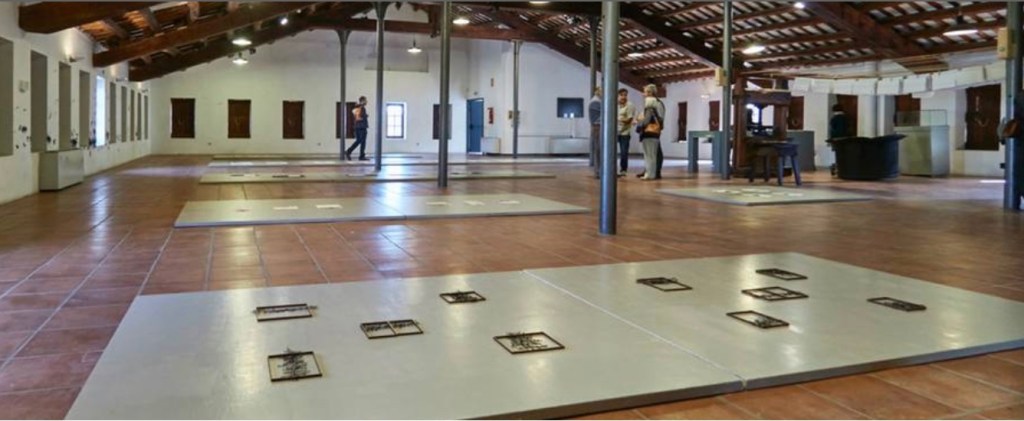
The Series 1 corridor or room features 10 works with dried paper pulp in abstract coils spilling out from behind frames made of laser-cut medium density fibreboard (MDF). The contrast of the rectangular frame with the scrawling rope of pulp belies the underlying commonality of their material; both are formed of fibers.
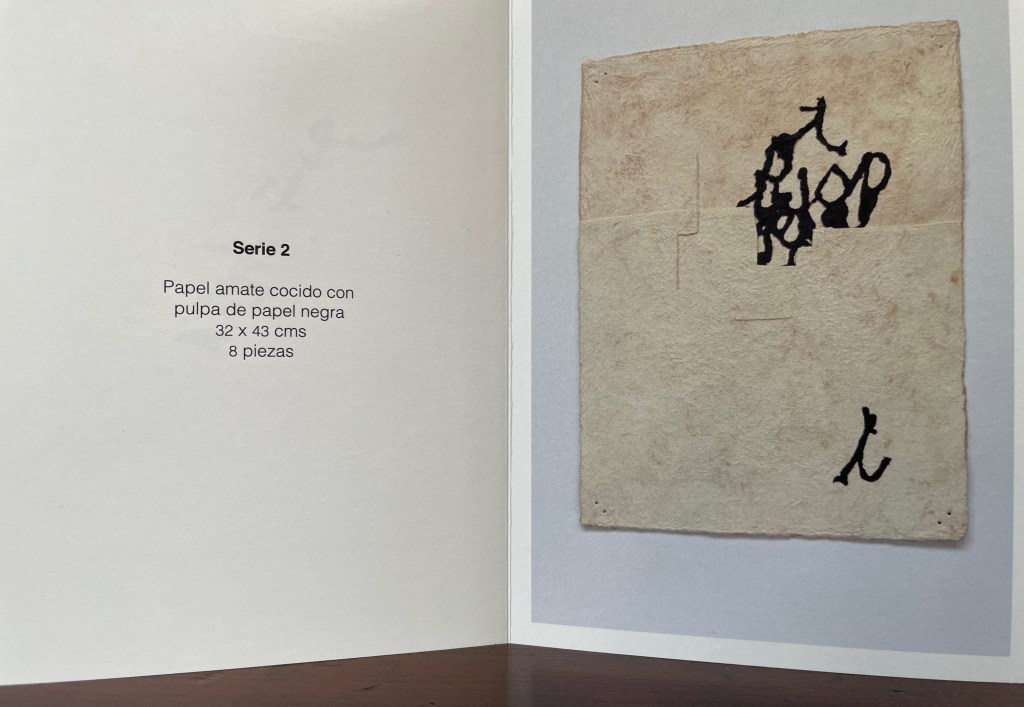
Series 2: Processed amate paper with black paper pulp, 32 x 43 cm, 8 pieces
On the “walls” of the Series 2 “room”, collages of processed amate sheets and black paper pulp hang, looking like ancient envelopes with calligraphic marks in a forgotten writing system. The amate envelope’s layering and cut marks echo its amate’s production. In a process similar to the way papyrus was made, amate is formed by boiling, rinsing, and beating cut strips of ficus or mulberry bark layered in a grid. The envelope with its black pulp paper markings on the outside highlights the back-and-forth mail art process that drove the project.
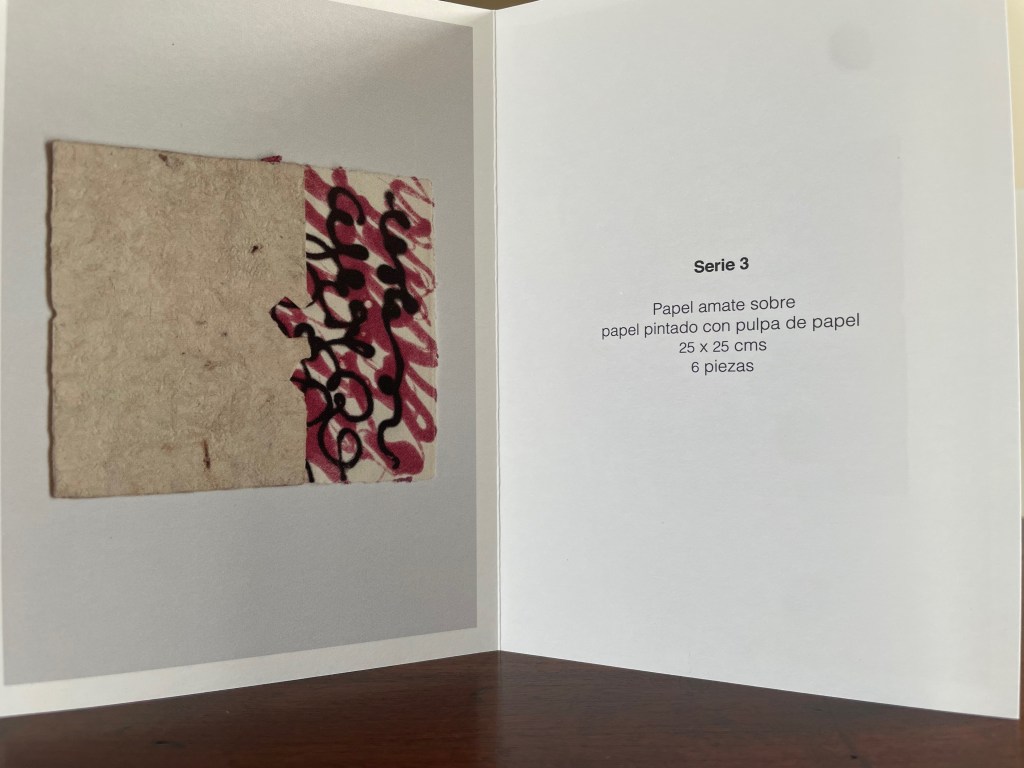
Series 3: Amate paper on pulp-painted paper, 25 x 25 cm, 6 pieces
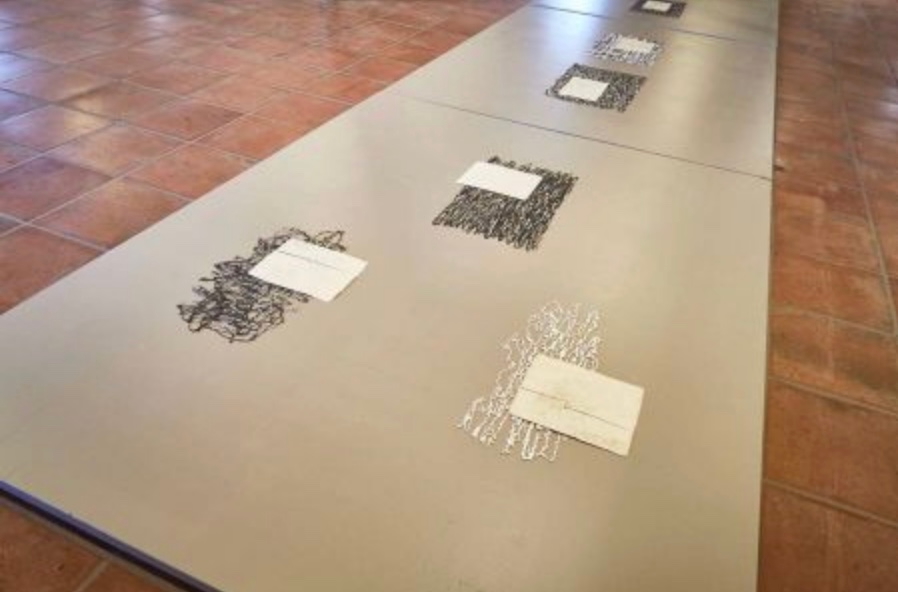
Series 3 adds a new technique to the mix: pulp painting. With the pulp-painted paper emerging from envelope-like sheets of amate, these pieces clearly allude to the mail art process and highlight the dialogue between New World amate and Old World paper. The process of pulp painting embeds rather than inscribes the asemic black and red writing in the paper substrate. Does the fused Old World writing and material “treat” the blank New World material as a mere carrier?
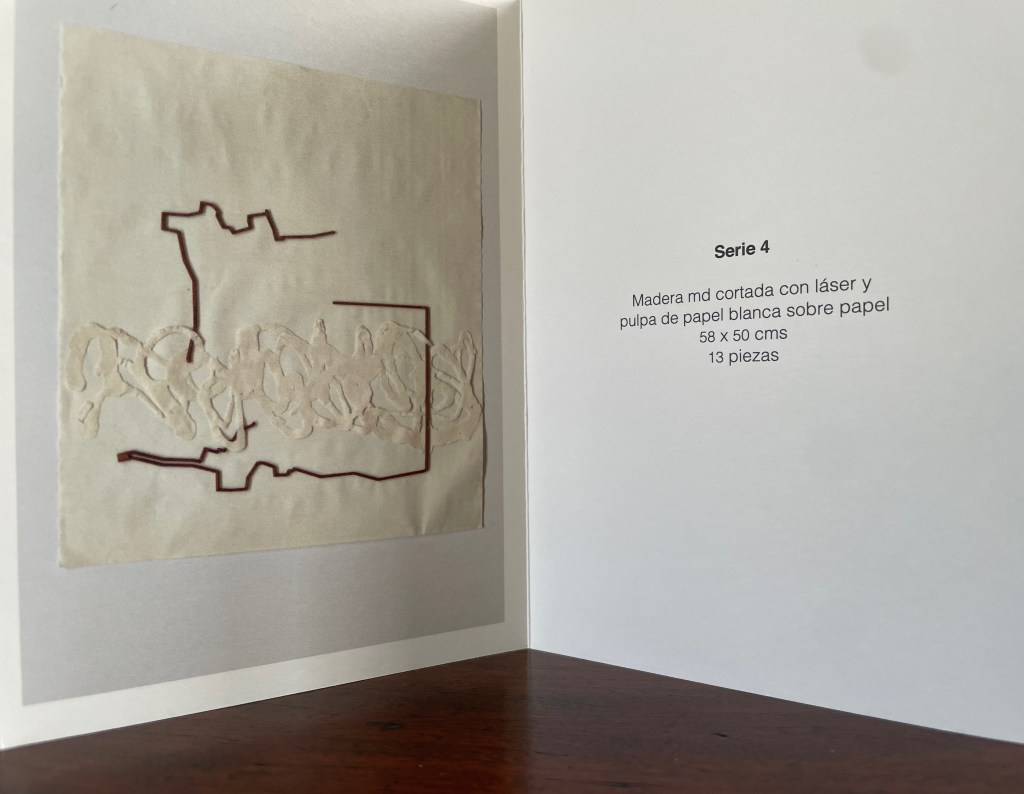
Series 4: Laser-cut MDF and white paper pulp on paper, 58 x 50 cm, 13 pieces
In Series 4, there is no amate, but the MDF presents fragments of what look like borders from a map of Mexico. This time, unlike Series 1, the pulp paper is white rather than black and writes over rather than under the MDF. An overlying comment on colonialism? As the writing is asemic here and everywhere else in this artists’ book exhibition, the viewer is left to find his or her own associations in the abstract figures.
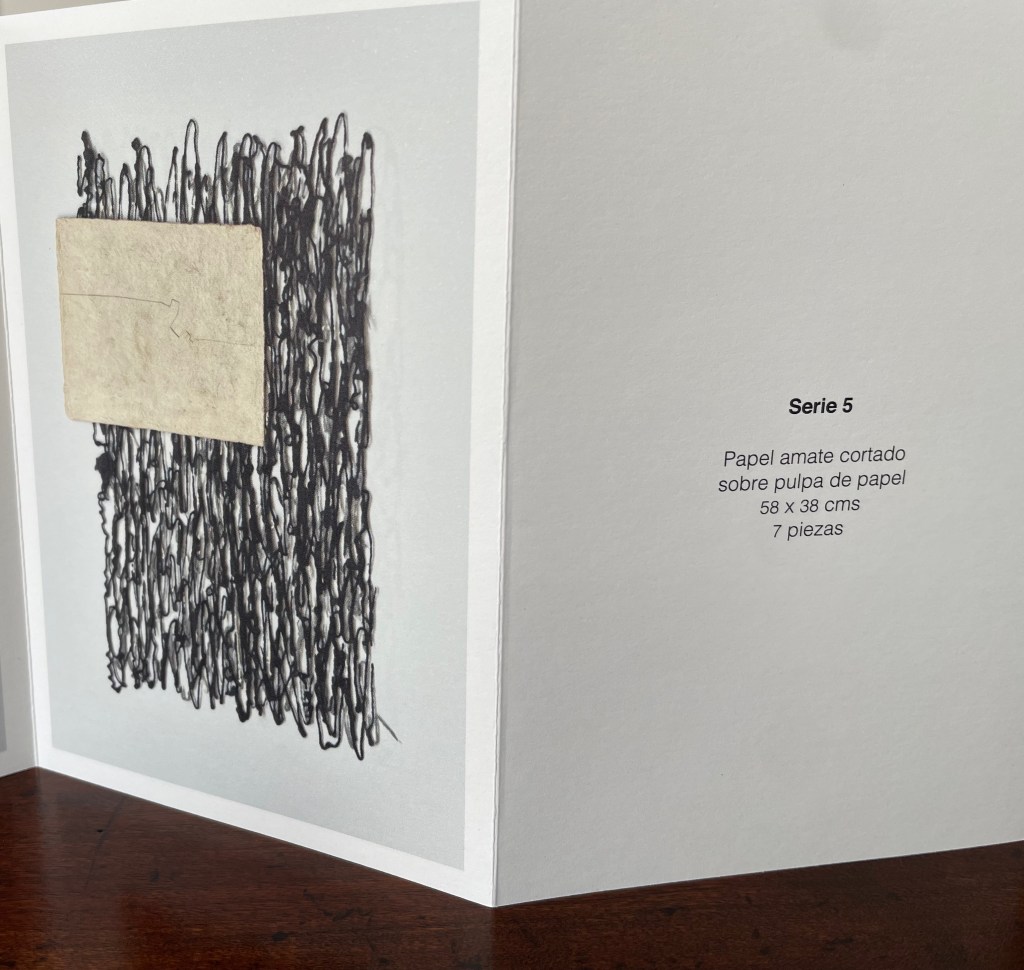
Series 5: Cut amate paper cut on paper pulp, 58 x 38 cm, 7 pieces
Amate returns in Series 5. The envelopes overlay — sometimes horizontally, sometimes vertically — larger amorphous shapes made with “scrawls” of pulp paper — sometimes black, sometimes black and gray sometimes black and white, sometimes white. It is as if the writing (the pulp paper) is escaping the amate envelope or as if the New World material asserts a grounded geometry against the sprawling Old World material.
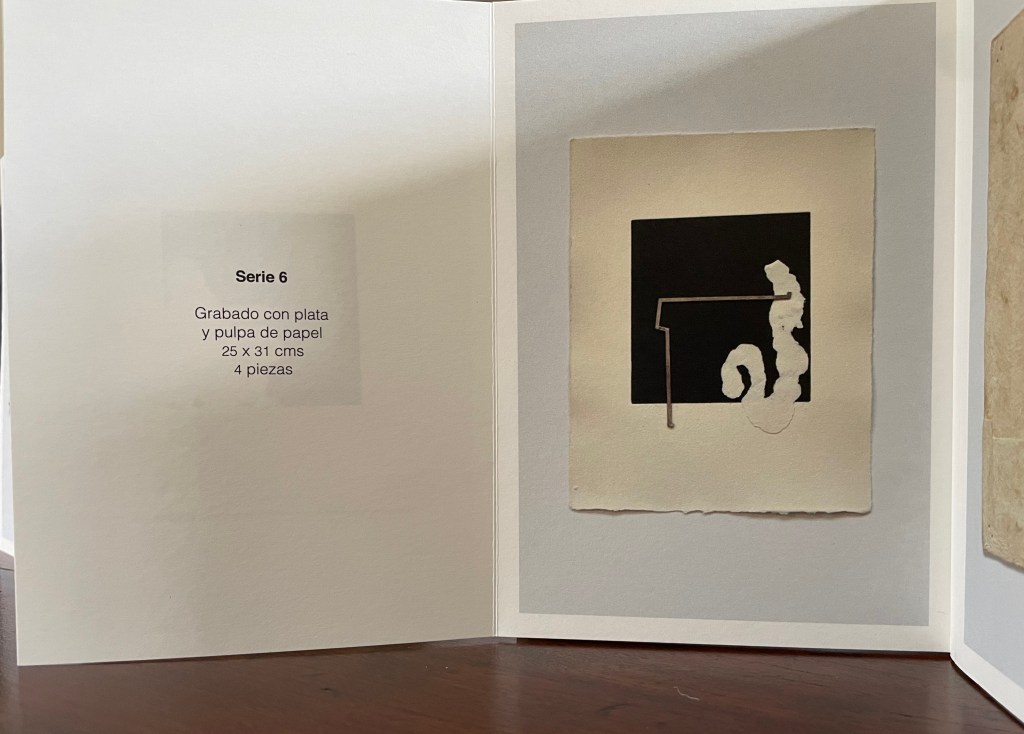
Series 6: Engraving with silver and paper pulp, 25 x 31 cm, 4 pieces
Series 6 introduces another technique and material: engraving and silver. Associated with the core Mexican resource valued by Spain in its colonial period, silver seems a thematic substitute for amate in this series. In two works in this series, both the New World silver and Old World pulp paper run outside the square black background; in two others, only the Old World pulp paper falls outside. Sometimes the white pulp paper has the appearance of intestines, sometime of clouds, sometimes a river flowing away from the silver, sometimes a seated figure. In all cases, the angular silver seems to stab the white pulp paper or strike into it like lightning or emerge from it.
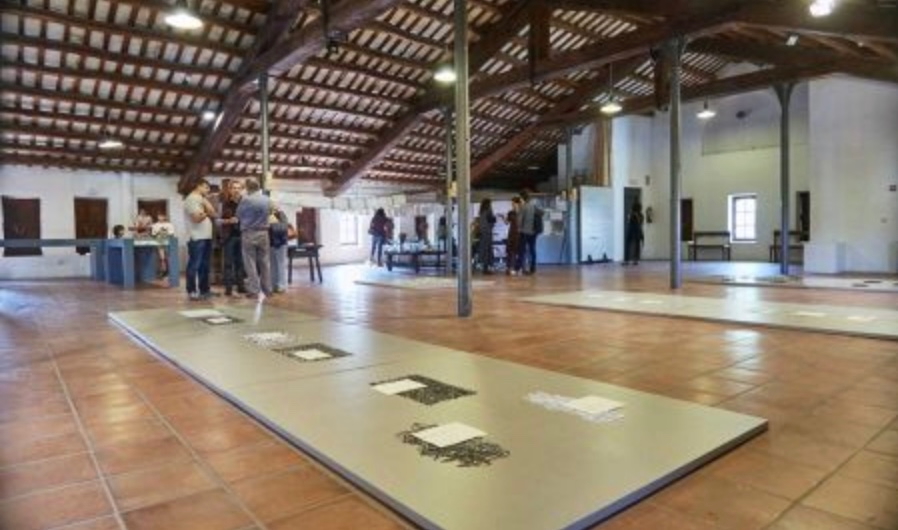
Molí Paperer de Capellades is both a working paper mill and a museum. It also holds art exhibitions. What better venue for Vai Vén de papel than the paper drying loft of the mill. The layout in the exhibition, however, turns our catalogue-based perception of the works on its head. Assembled on the floor, the artworks show themselves as sculptures. In the video below, we can see the woven lace-like coils of the pulp paper. They are not fixed at every point of touch with their background, and when a breeze blows through the drying loft, the pulp paper lace flutters with it.
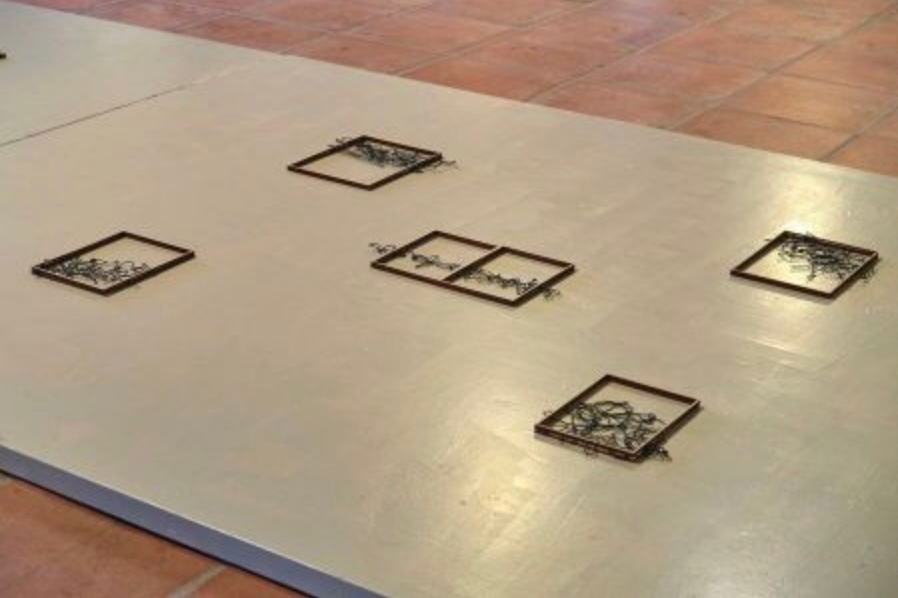
Video credit: Producciones Mínimas Productions. Permission to display from Ximena Pérez Grobet.
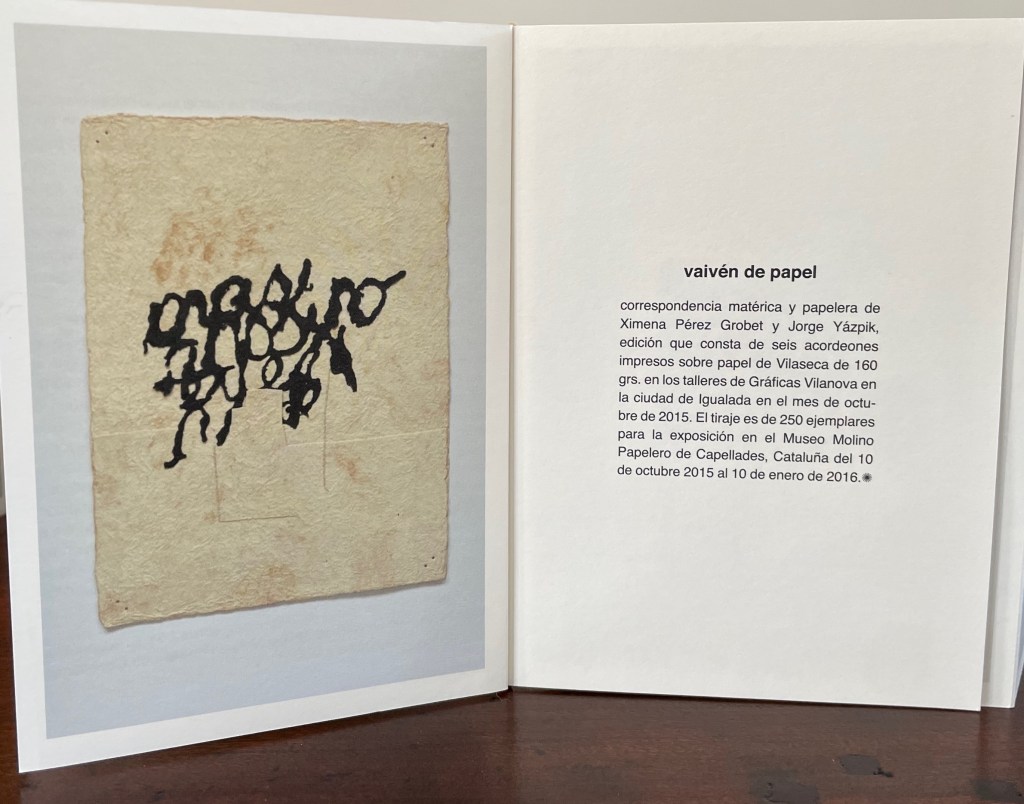
the back and forth of paper
a correspondence of paper and art by
Ximena Pérez Grobet and Jorge Yázpik,
comprising six accordion-folded pieces printed on 160-gram Vilaseca paper
at the Gráficas Vilanova print shop in the city of Igualada in October 2015.
The print run consists of 250 copies for the exhibition at the Paper Mill Museum
in Capellades, Catalonia, from October 10, 2015, to January 10, 2016.
The experience of an exhibition usually precedes the experience of the exhibition catalogue. The experiences differ greatly. The exhibition is an ephemeral occurrence. We look to the catalogue to capture some of that ephemerality and act as a souvenir. An exhibition catalogue as artist’s or artists’ book offers even more. It offers its own artistic experience as it takes advantage of the material and structural characteristics of the book, so much so that it has become a distinct sub-genre within book art.
But with Vai Vén de papel, the exhibition followed the catalogue. The catalogue structure offers its structural innovation in a way that integrates with the themes of the epistolary nature of the project as well as the back-and-forth relationship of the artworks’ material and technical processes. The museum exhibition’s unusual layout and apropos venue, however, not only offered that integration but also provided a more intense experience of the artworks’ physicality and visual tactility. Fortunately, we have the video glimpse of the exhibition to hint at that.
Where the Nagori video pales in comparison with the artists’ book, the Vai Vén de papel video invigorates its predecessor. Had the sequence been reversed, might Pérez Grobet have come up with a different experience for the exhibition catalogue-as-artists’ book? It may not be an entirely idle speculation. A more recent work from Pérez Grobet engages again with Jorge Yázpik’s work. In Anahuacalli (2025), she has conceived an extraordinary structure that captures the exhibition of Yázpik’s abstract sculptures in the Diego Rivera Anahuacalli Museum in Mexico City in 2016. The museum display was organized by the sculptures’ material such as jade, gold, silver, wood, and obsidian. Pérez Grobet’s artist’s book response to this contains five books that interlock and unfold to reflect not only the division of the works but their abstraction.
Further Reading
“Ximena Pérez Grobet (I)“. 7 July 2021. Books On Books Collection.
Burgin, Victor. 2020. “Nagori: Writing with Barthes“. Theory, Culture & Society, 37(4), 167-183.
Sekiguchi, Ryōko. Nagori : La nostalgie de la saison qui vient de nous quitter. 2020. Paris: Gallimard. Reviewed in PEN by Clémence Leleu: “Nagori literally means ‘remains of the waves’ in Japanese, that is the mark they leave once they have retreated. The sand has moved, pebbles have appeared, and some algae may have washed up on the shore, wrapped in a frothy foam. … Another way of understanding is by considering that the Japanese character used to write nagori is the one that means ‘the name that remains’. Nagori is therefore a matter of sensation: the nostalgia for something that we reluctantly let go, an ambivalent sensation that encompasses the joy of experiencing a given moment, while being fully aware that it marks the end of something, either for good or until the next time.”


Nagori is such a stunning book, thank you for sharing
Kind regards,
maro
http://www.ateliervandorou.com
+1.415.684.3930
LikeLike