Curious Imaginings (2023)
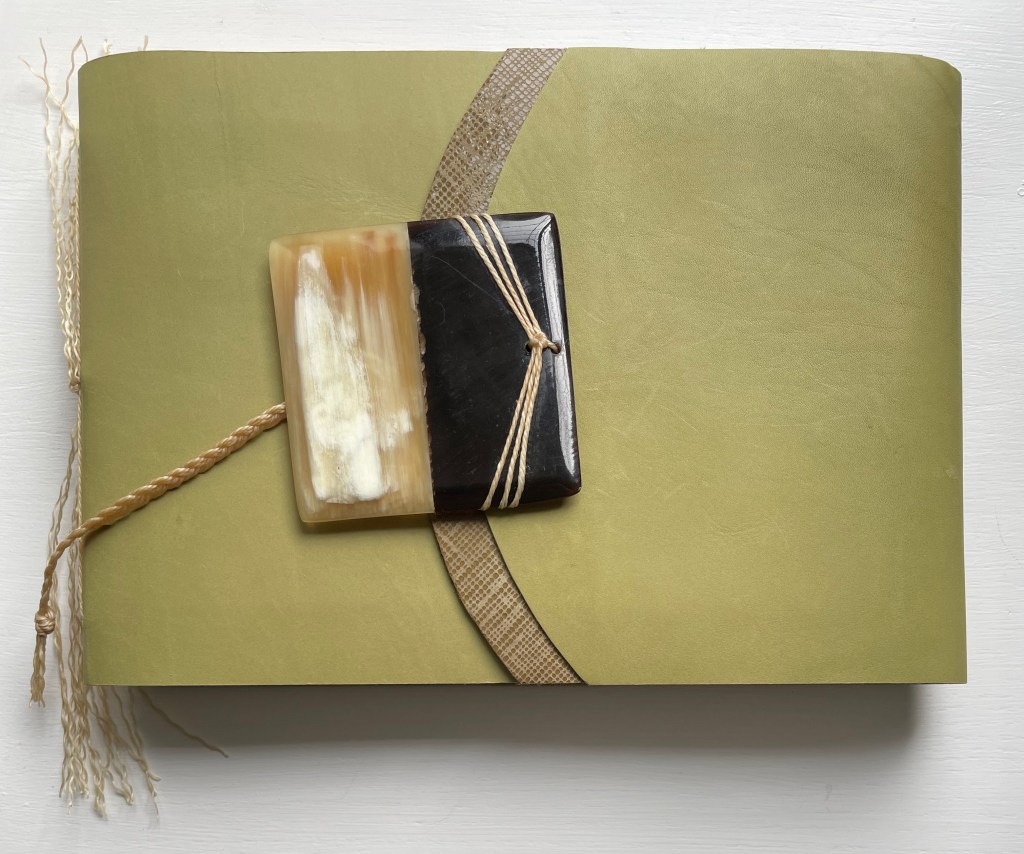
Curious Imaginings (2023)
Mary Kritz
Handsewn book with goat’s leather cover. H130 x W184 x D28 mm. [20] postcard pages. Unique work. Acquired from the artist, 11 January 2024.
Photos: Books On Books Collection.
In its materials, mix of drawing techniques, metallic and fluorescent colors, and collage, Curious Imaginings unites craft with Surrealism, especially with echoes from its later movements and artists — like Pop and Andy Warhol, YBA and Damien Hirst. The process revealed in the artist’s statement also recalls the automatic writing and drawing championed by André Breton and the early Surrealists — except here the automatism applies at the level of bookmaking:
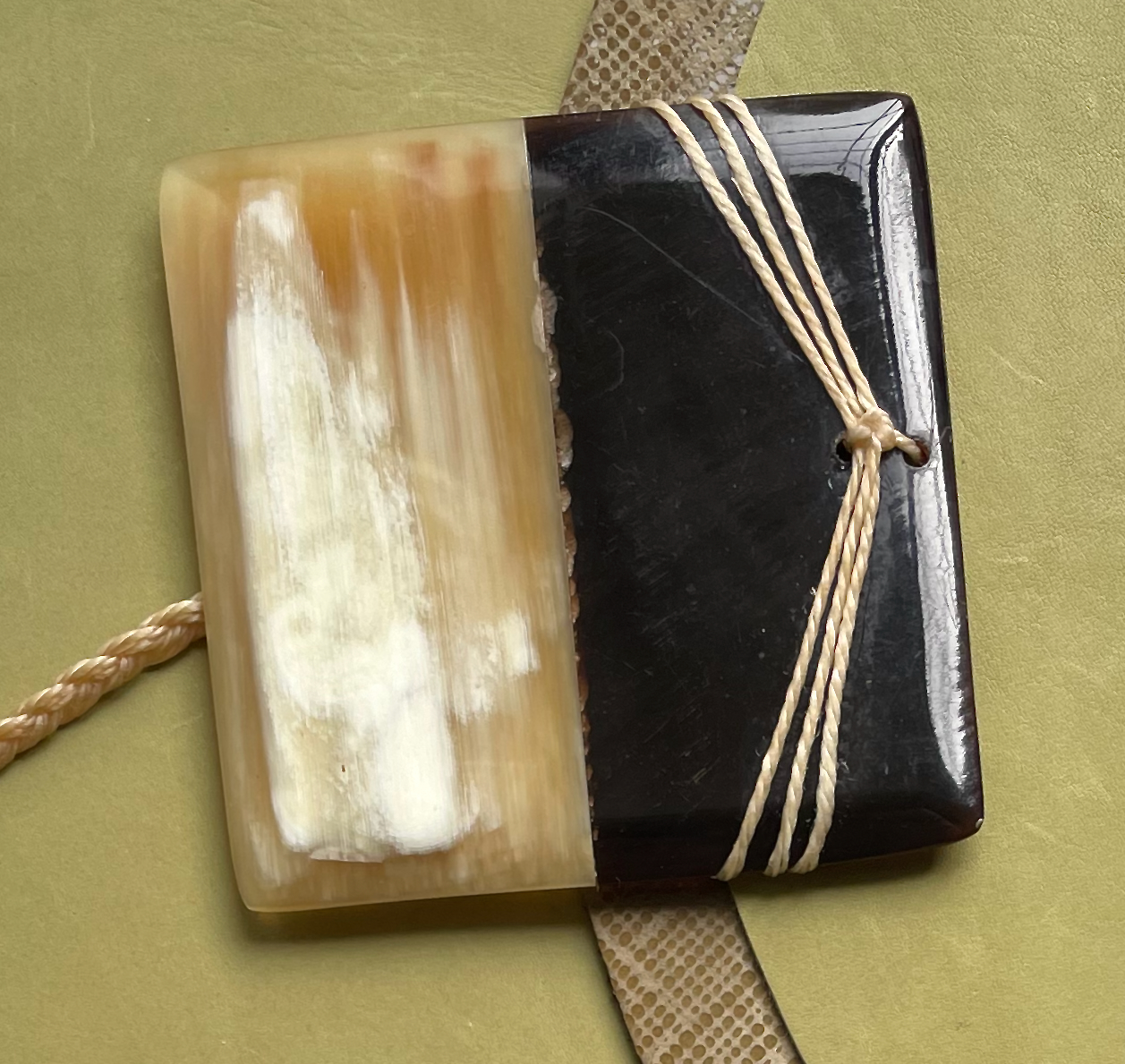
Each piece is unique and was not initially intended to be a book. As I worked on the cards, over a period of a week, the idea of an artist book took hold. I glued the completed cards to a larger folio of water colour paper and stitched the individual folios onto a leather cover (vegetable tanned goat skin). A horn ornament was added for the closure. The book title came upon completion of the book. I created this book from a place of pure creativity and play, which is reflected in the title. — Mary Kritz
Craft also contributes an element of Surrealist chance to the work. The first and last panels’ blind transfer on the inside of the goat’s leather cover echoes the process involved in the cards’ creation.
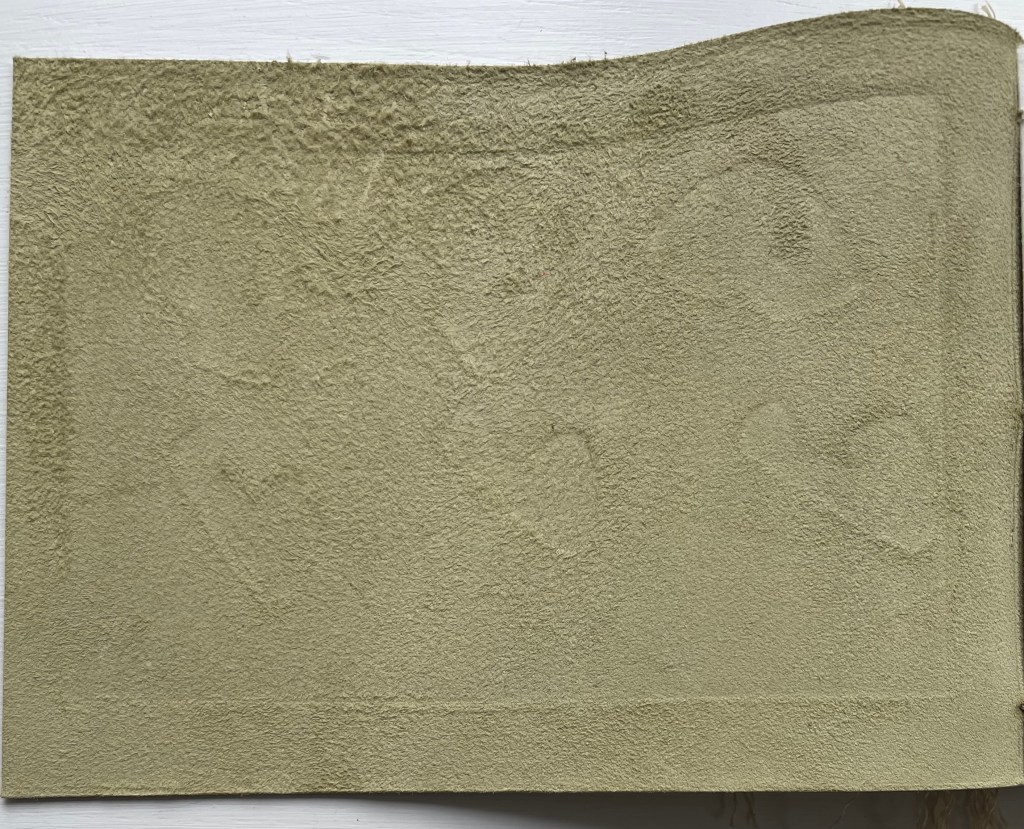
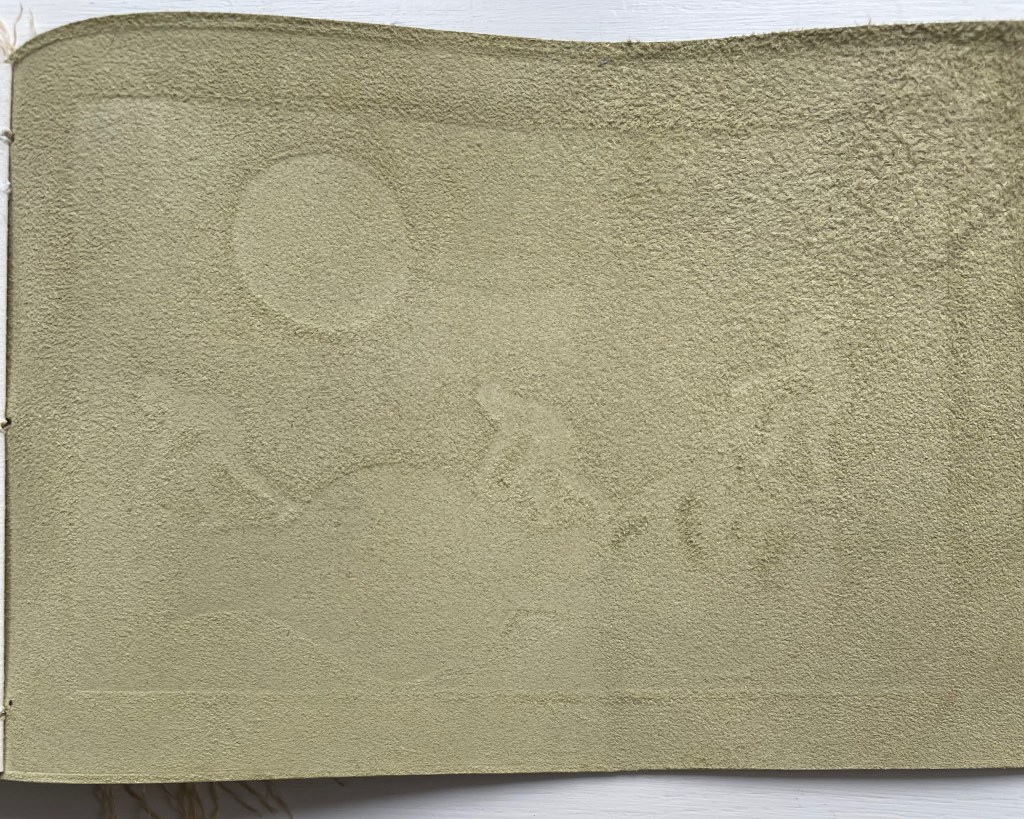
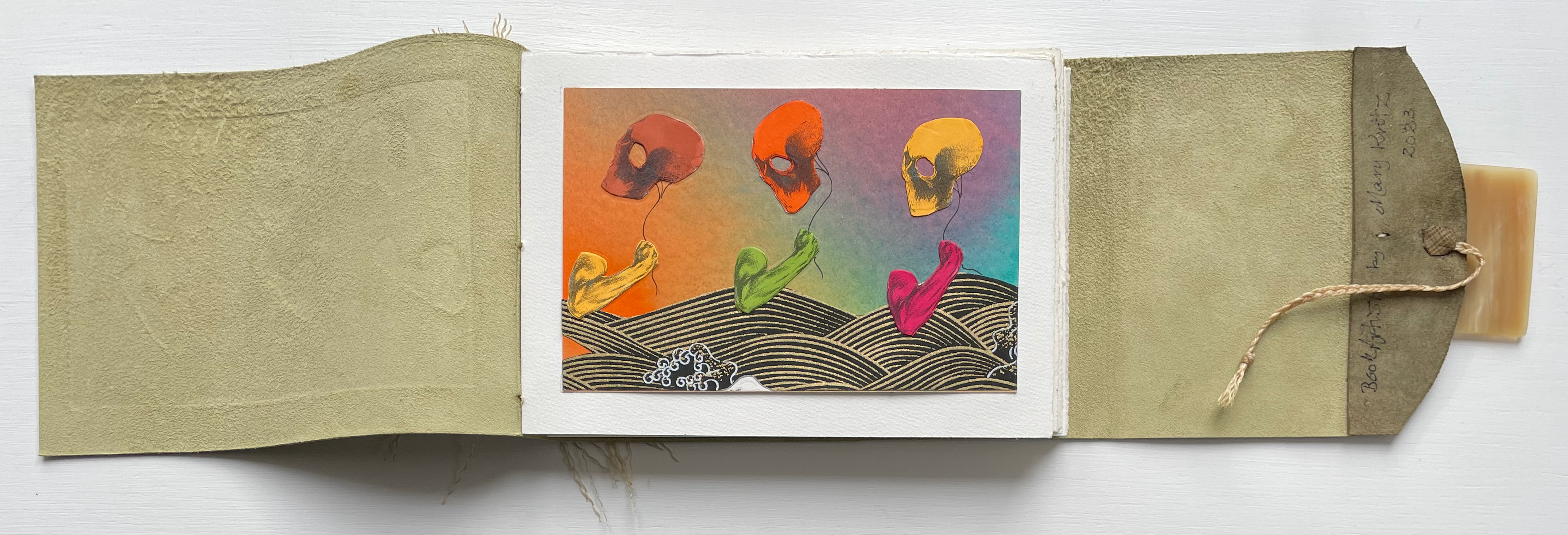
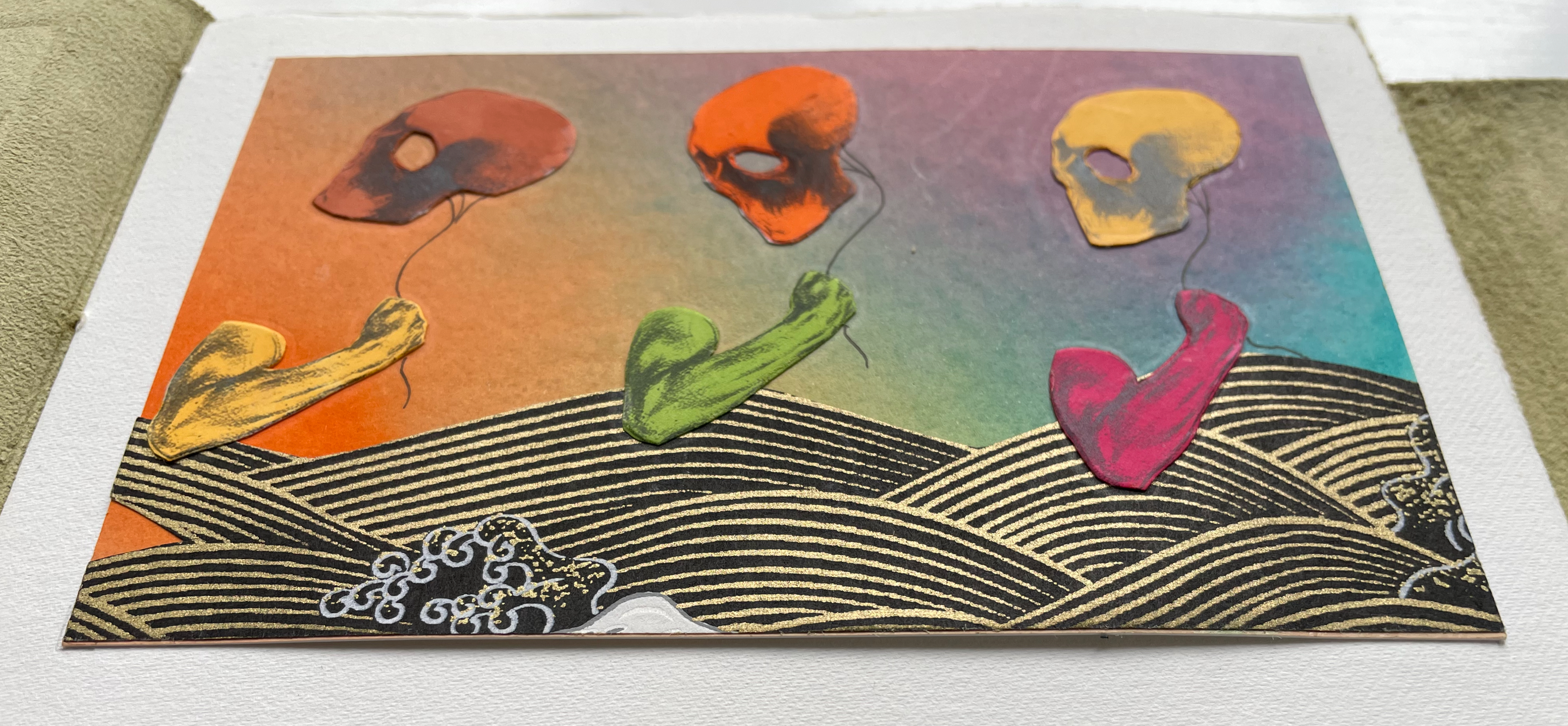
The coloration of the horn clasp and its allusion to the colors of the waves inside give another example of blending craft and Surrealism. Although not an example of mail art, which was prompted by the Surrealist movement, the 10 x 15 cm postcard panels are another craft-driven choice that alludes to the tradition.

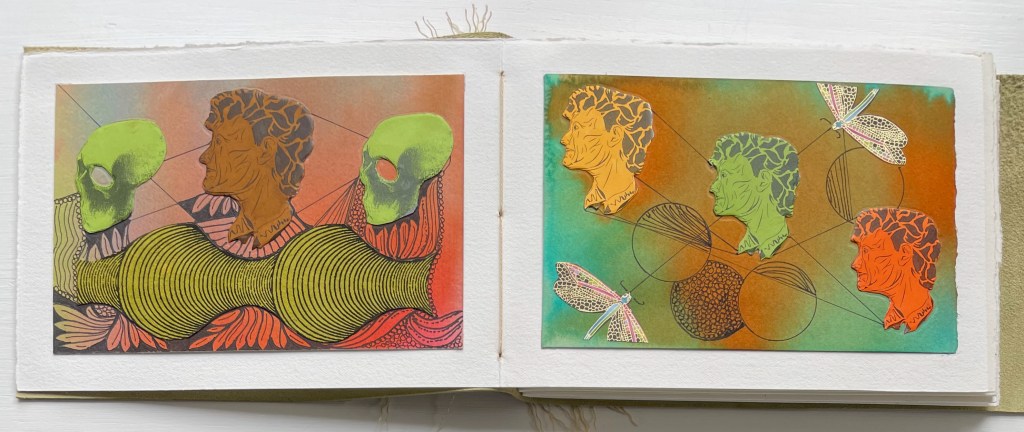
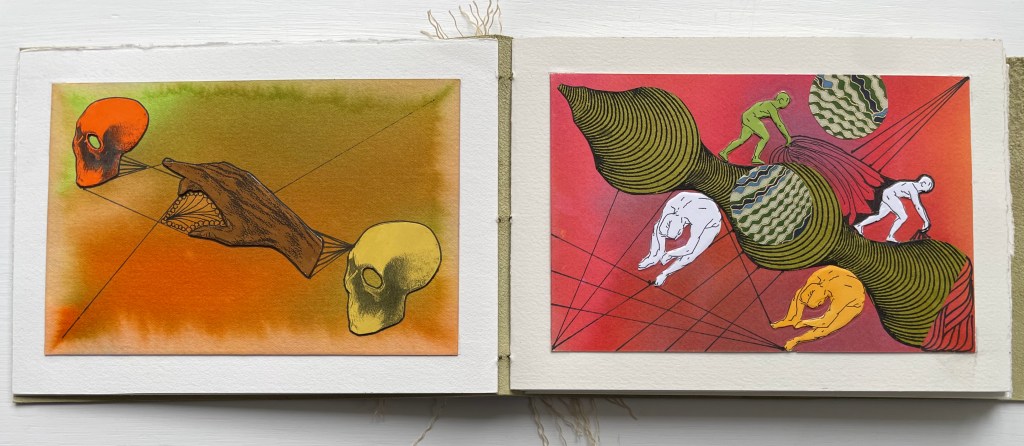
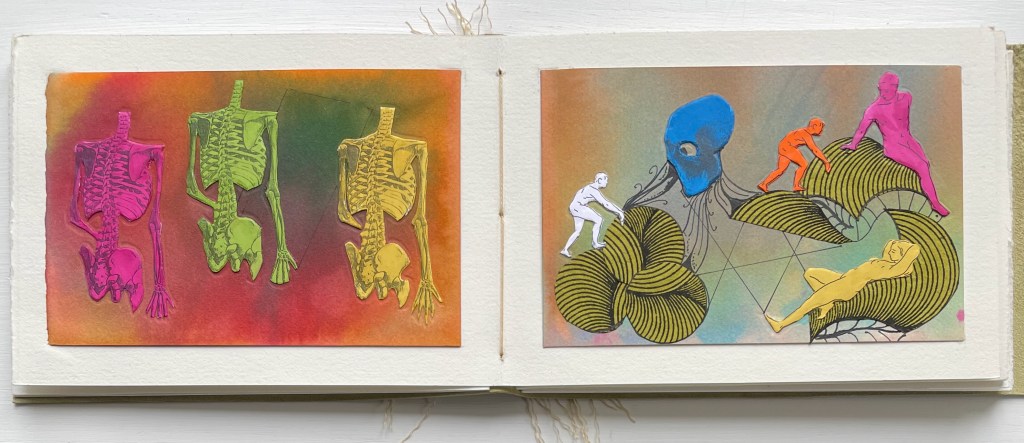
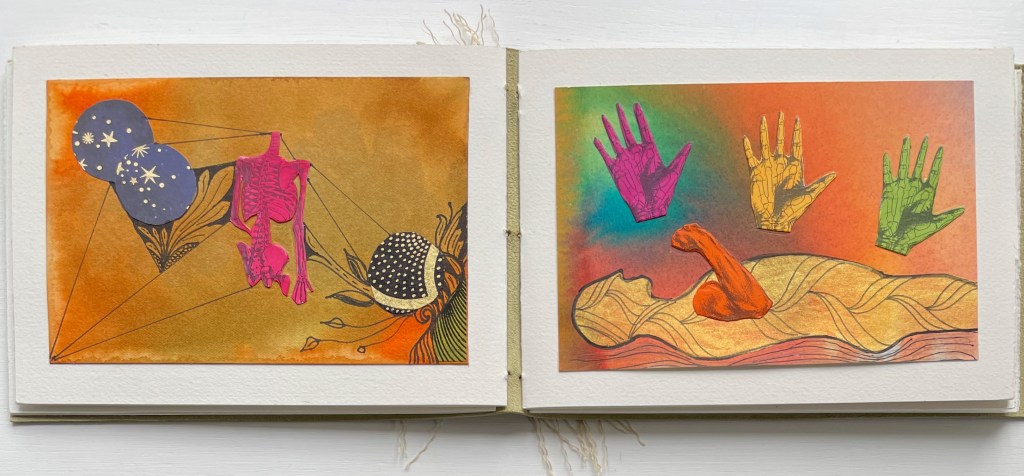
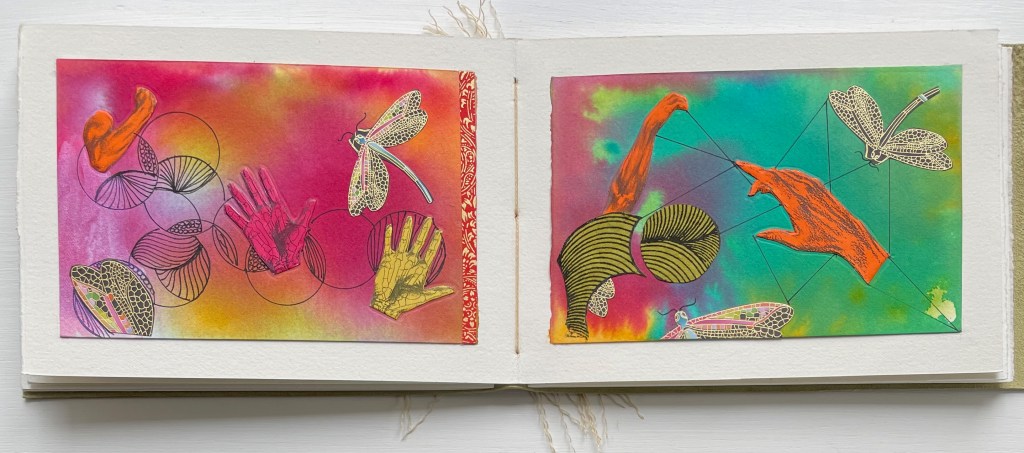
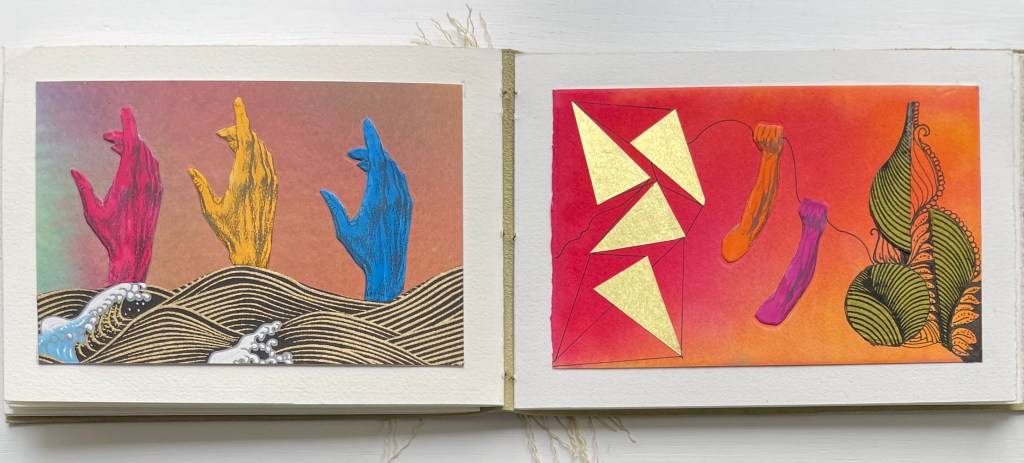
Kritz’s blend of craft and Surrealism is a contemporary continuation of Megan Liberty’s historical argument that “craft and conceptual art mutually informed the evolution of artists’ books during the 1970s and 1980s”, which presents a more fluid view of the world of book art than is usually presented. The factions of the dematerialized and conceptual works, the democratic multiples, the limited editions and the unique finely or rawly crafted works were not so walled off from one another as implied in polemics, manifestos, and critical essays so concerned with defining the “artist’s book”, the existence or placement of its apostrophe, and securing its role in the larger history of art. But those lines of thinking are not as interesting as the thin black lines linking the raised elements (skulls, skeletons, hands, arms, and seated or climbing or reclining human figures).
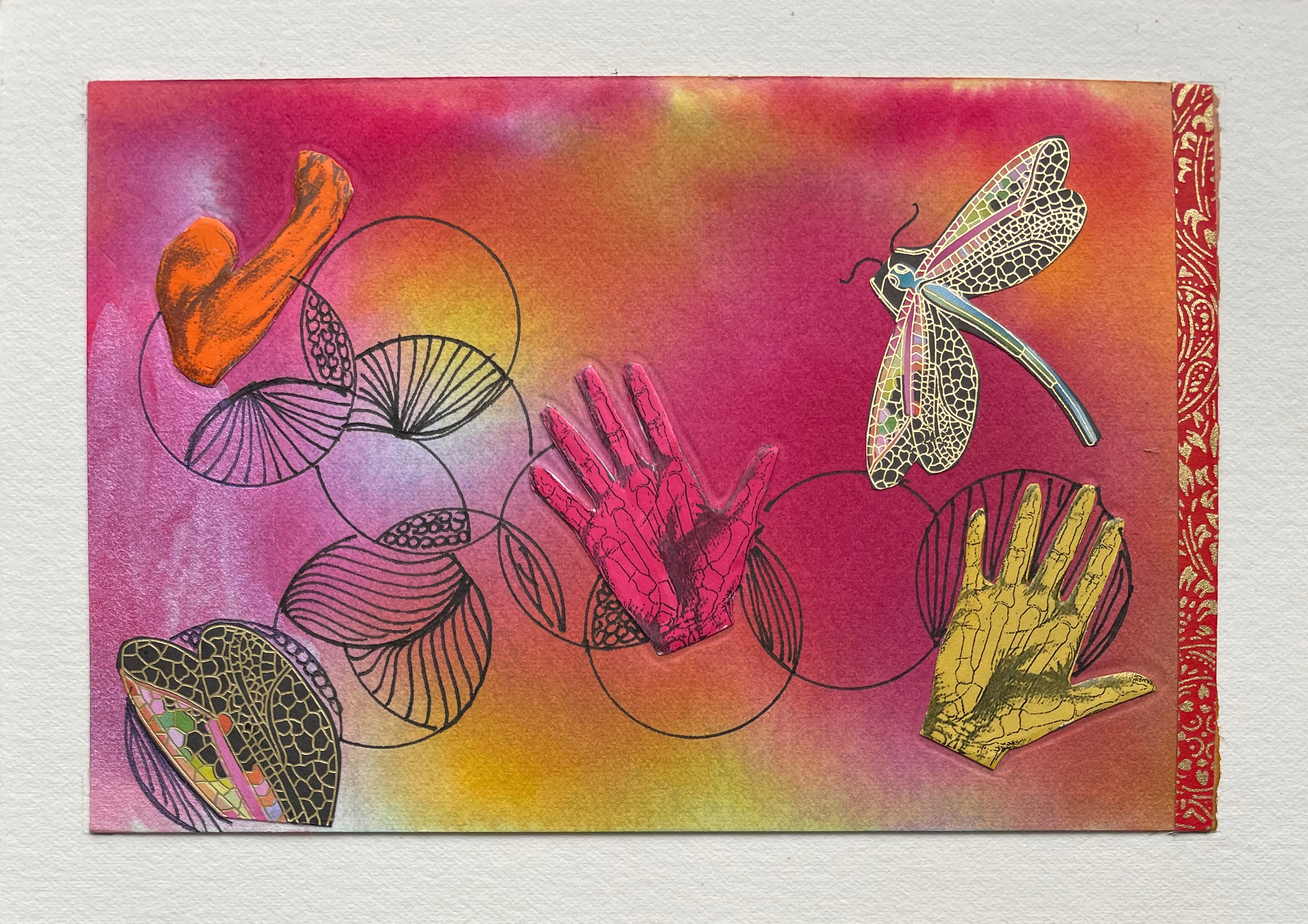
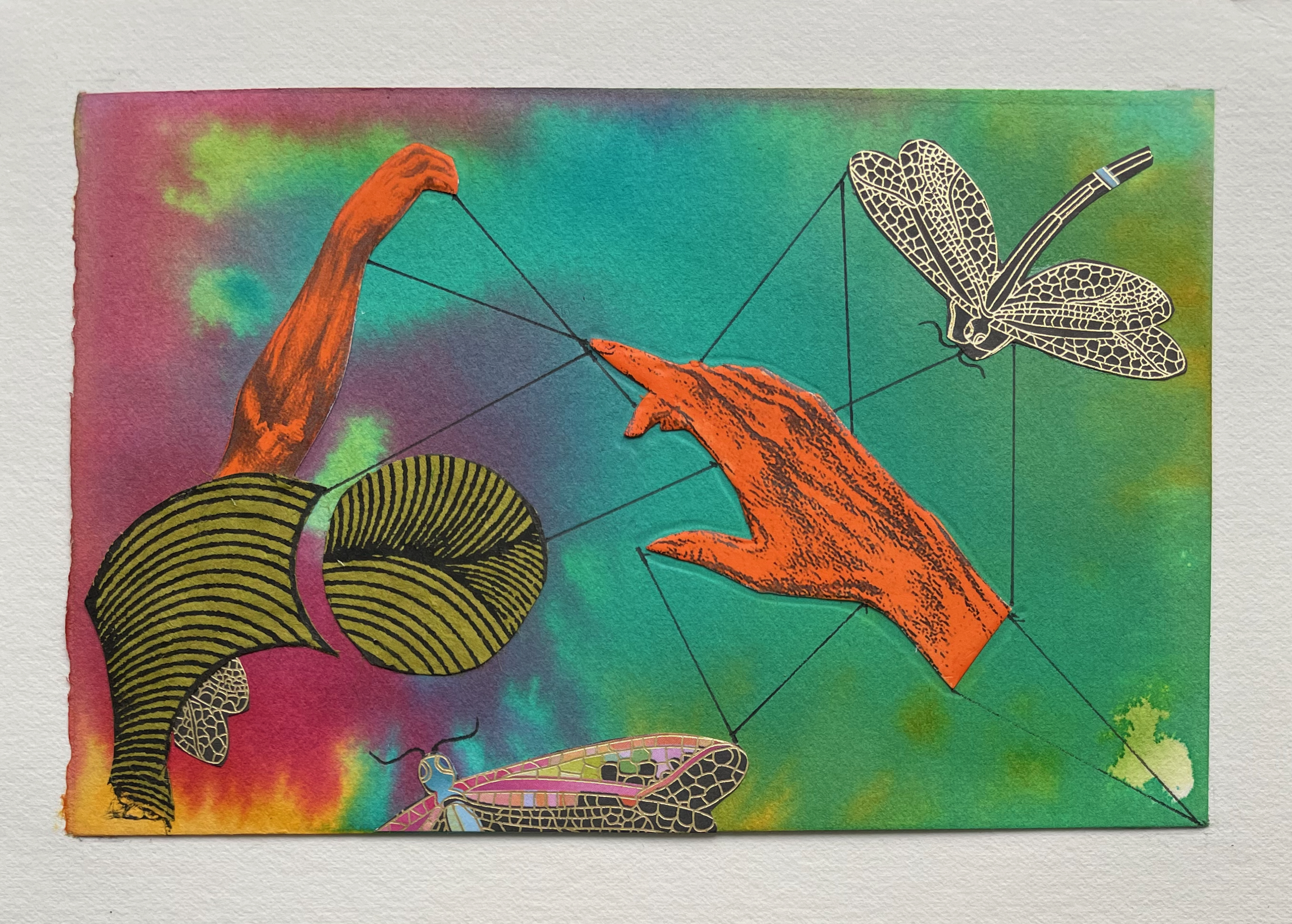
Some resemble lines of perspective; others, puppet or kite strings. Some lines describe geometrical shapes (circles and triangles); others outline organic and semi-organic shapes. The lines connecting the human figures with everything else create mysterious atmospheres, as mysterious as the semi-organic shapes, the body parts, and washes of background watercolors.
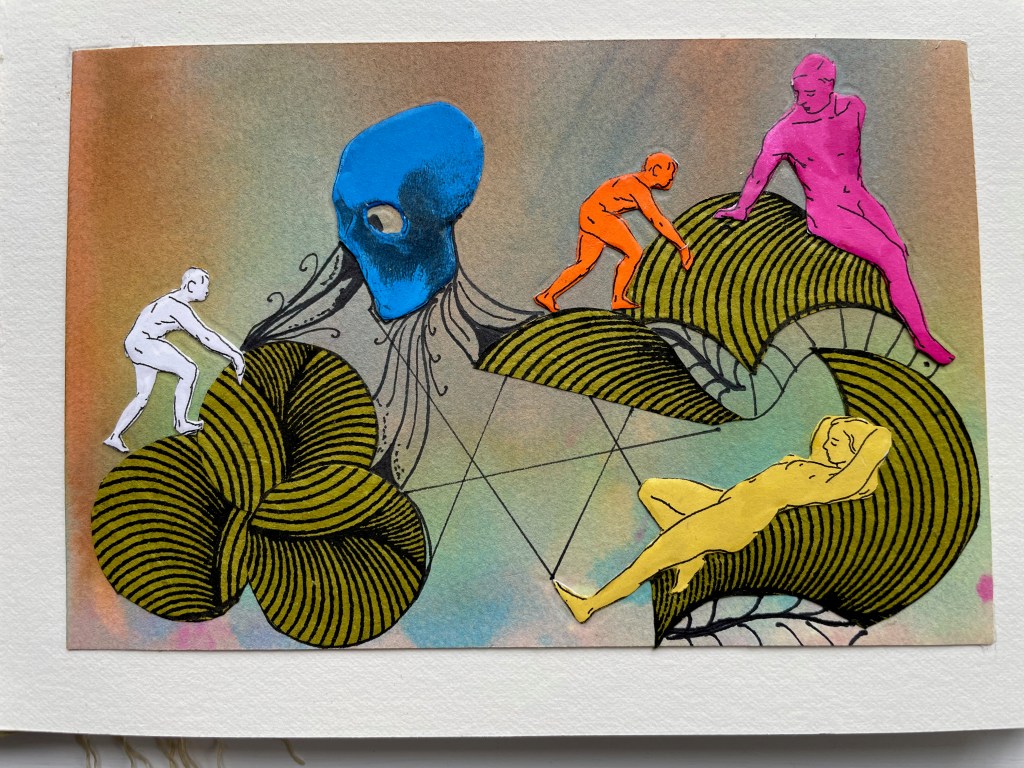
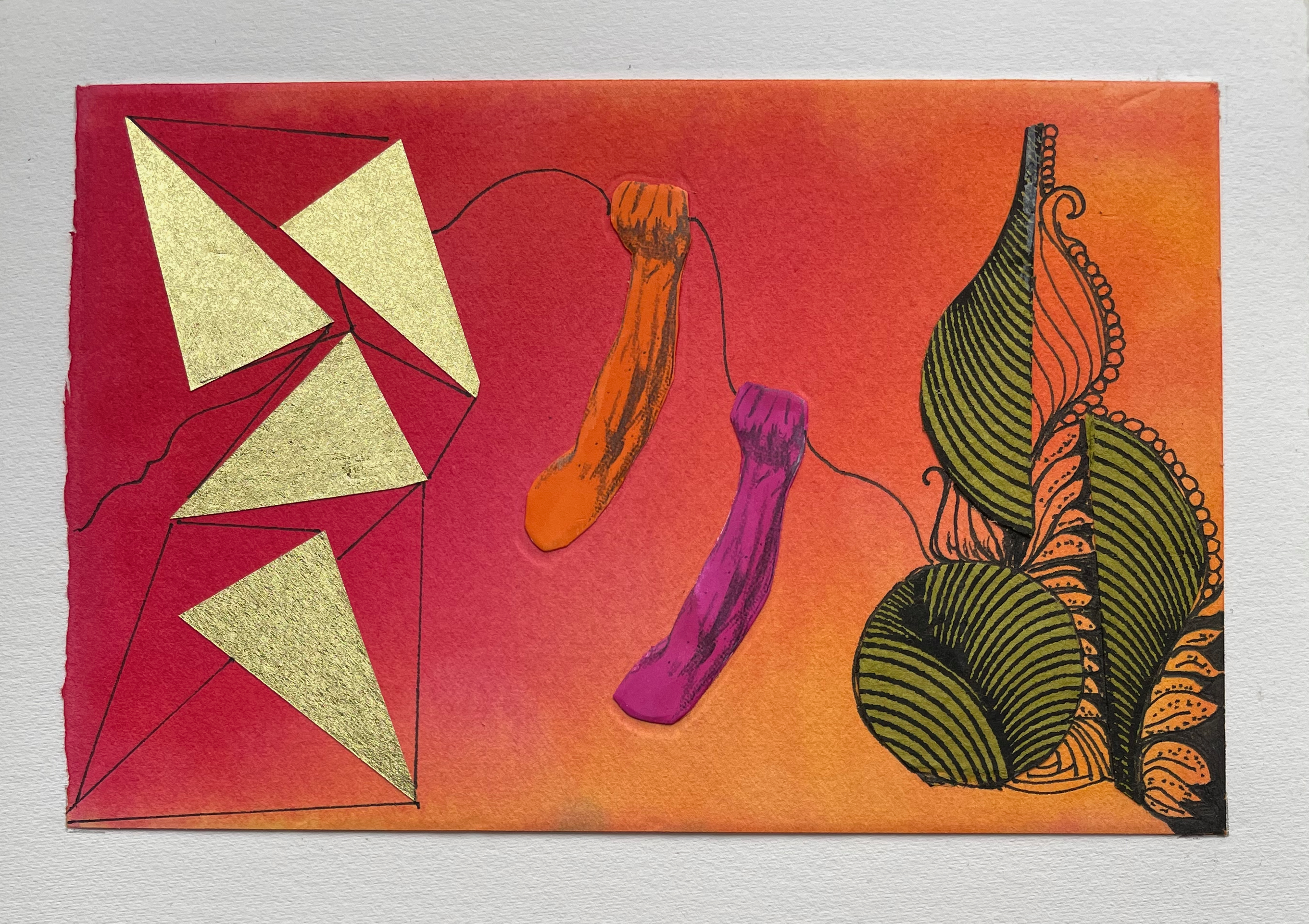
Along with the tension of strange juxtapositions and colors, there is a tension between active and passive human figures. Even with the disconnected body parts, some seem to hang or be fixed by their surroundings or objects to which they are connected, and others seem to act on them — unravelling lines like yarn from one of the semi-organic shapes or pulling a round golden seed across a panel.
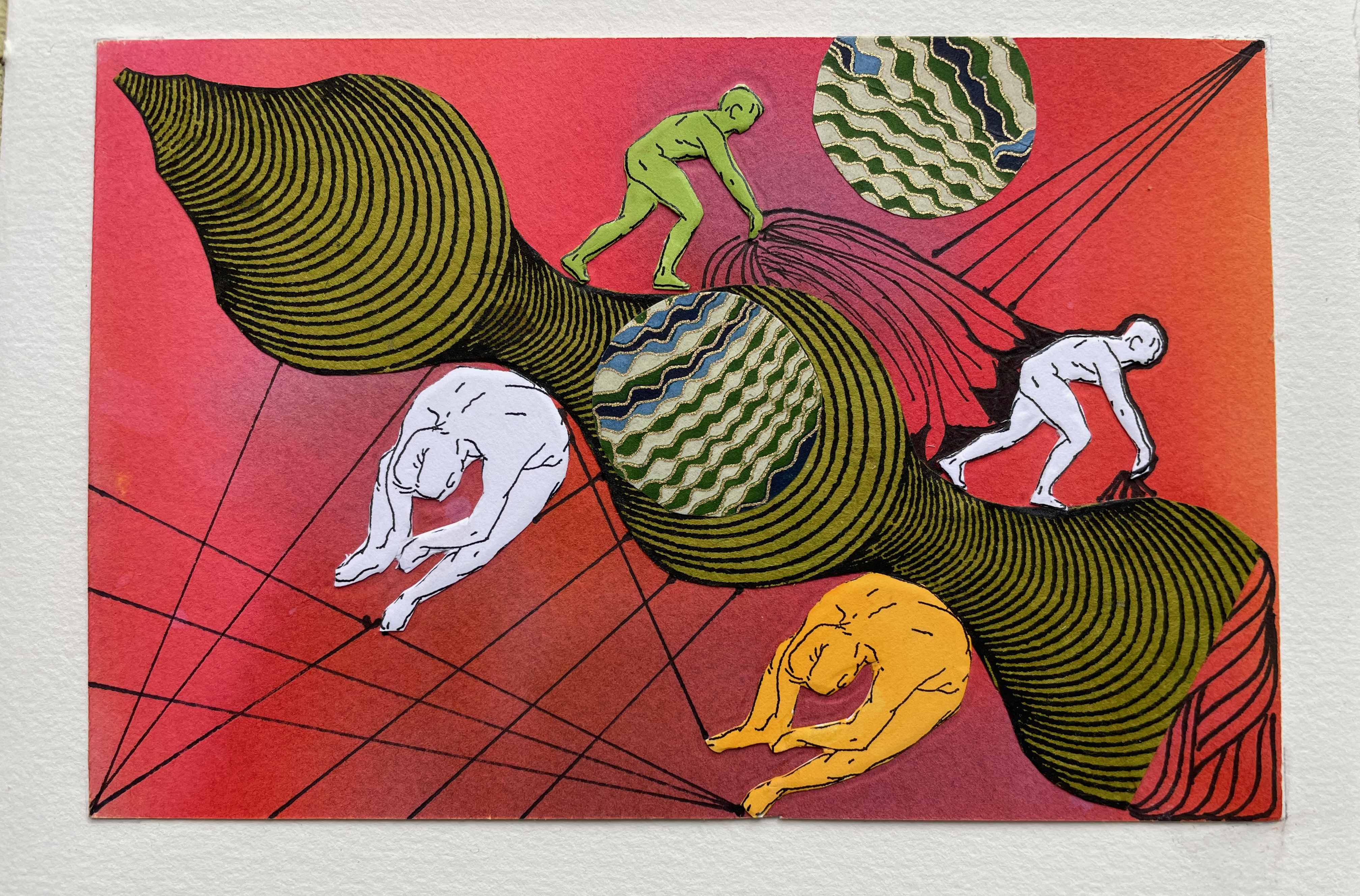
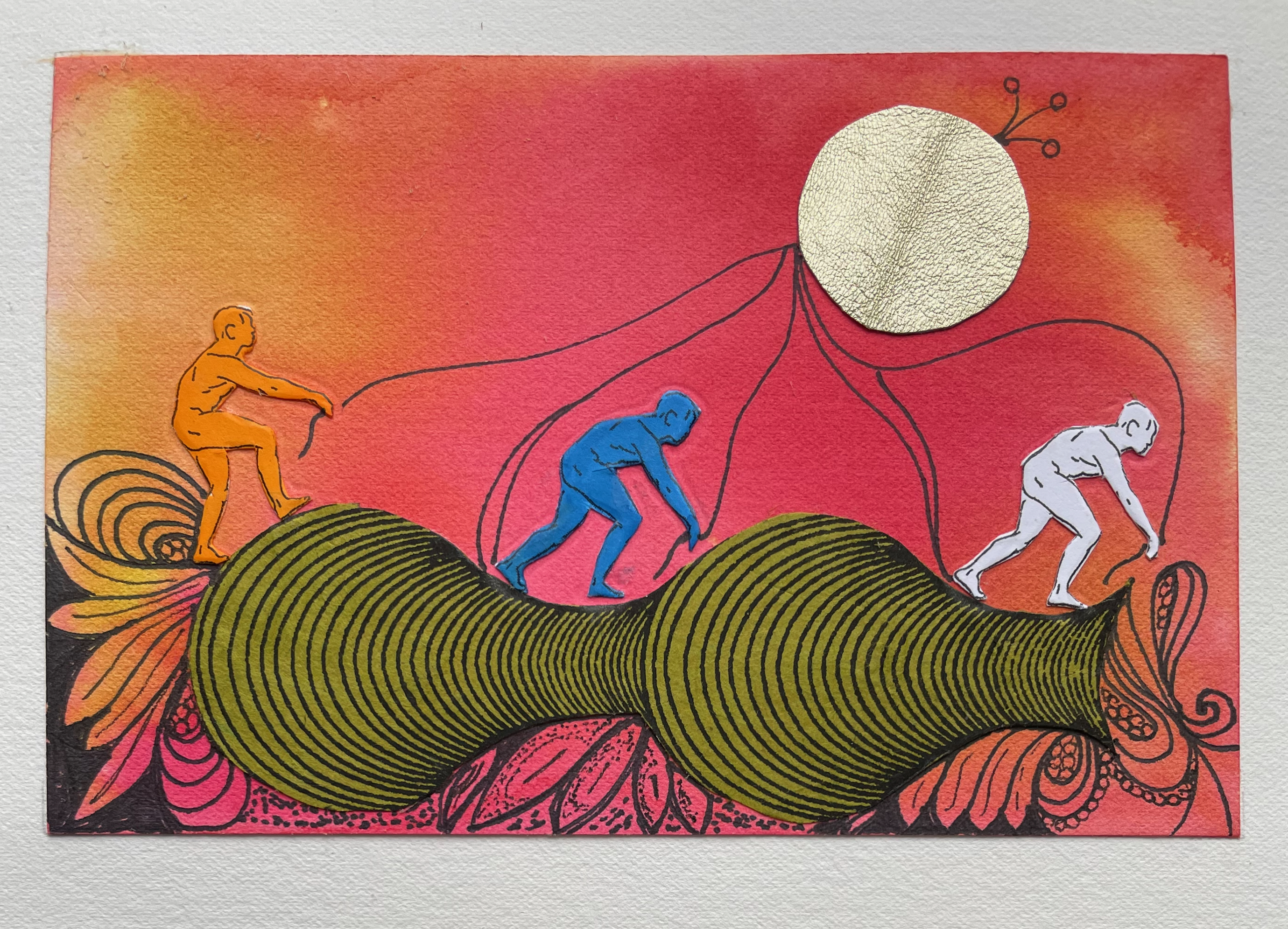
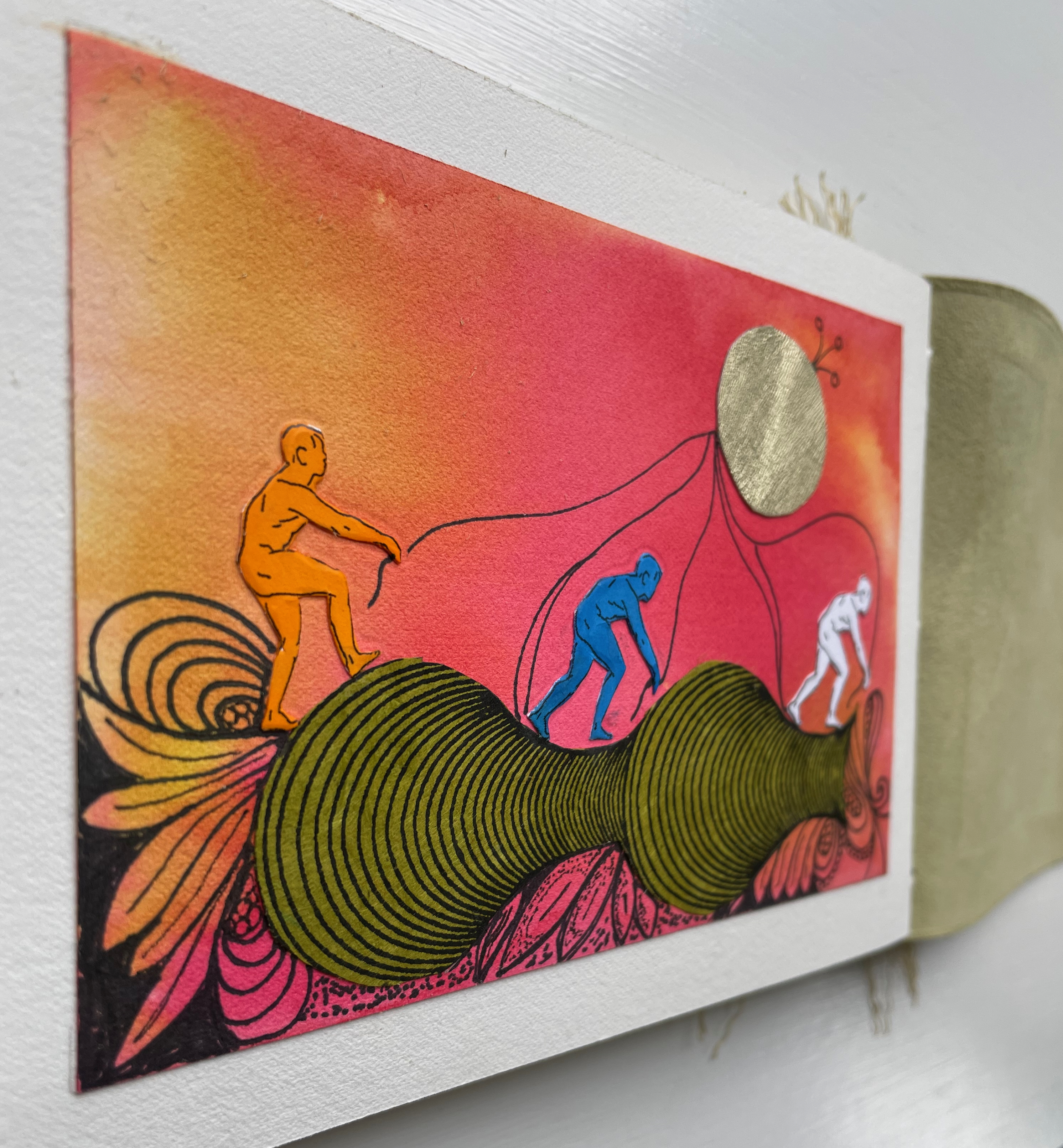
All of the panels of inaction and action tease the reader/viewer toward interpreting the work with partial narratives. The dragon fly passage likewise tempts us toward finding a riddle at play. The three dragon flies show different stages of coloration — not a natural phenomenon to be sure. One is tangential to the panel’s anatomical, geometric, and semi-organic shapes. Two are tied in by the thin black connective lines. All float over iridescent backgrounds that rival the colors of any natural dragon fly.
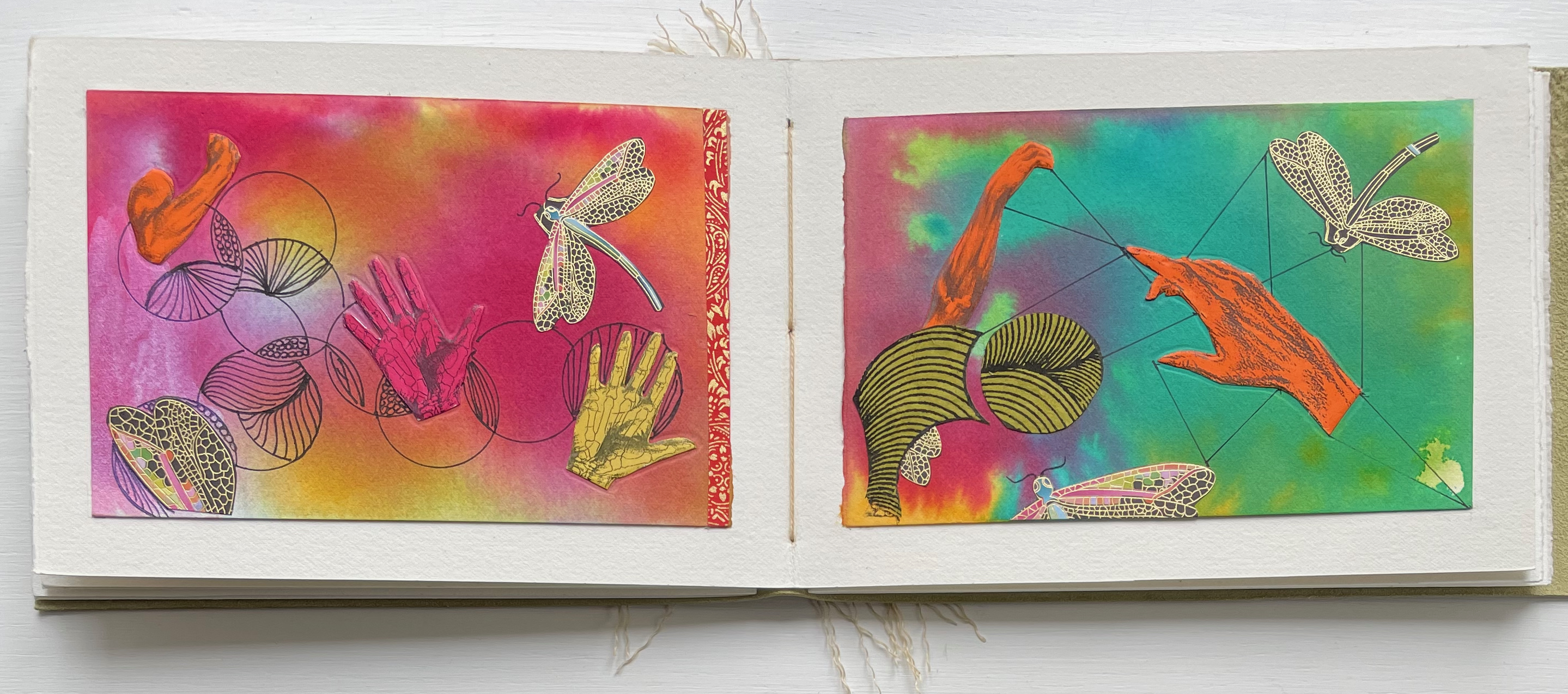
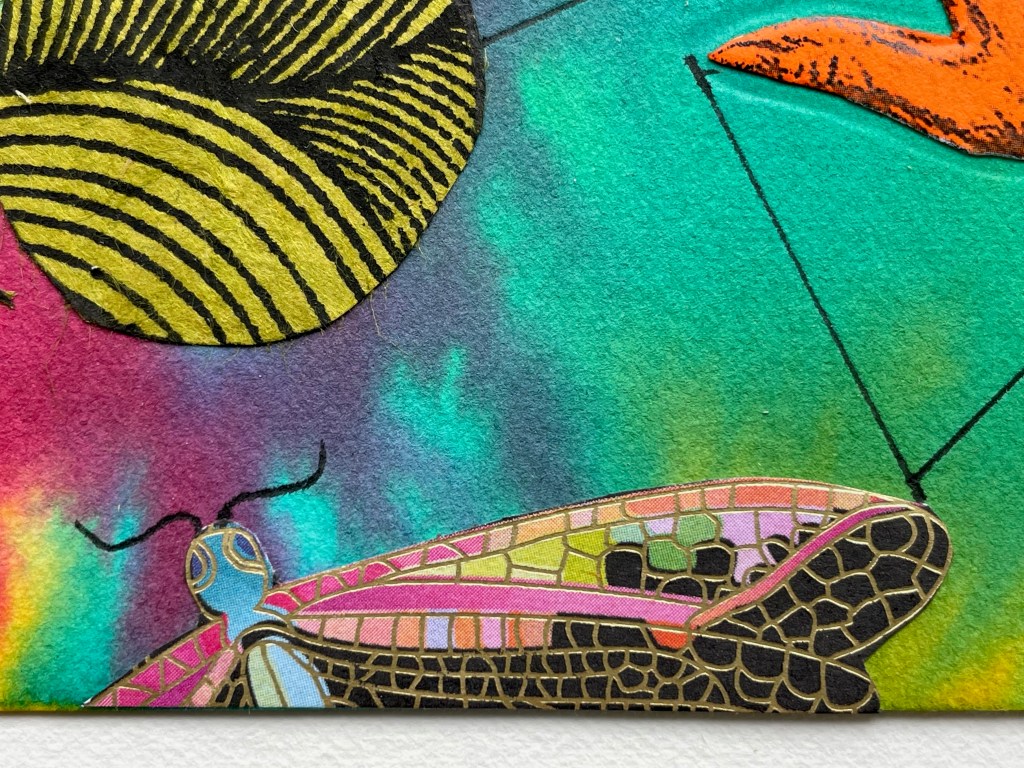
Any viewing or “reading” of Curious Imaginings returns us to where it emerged for Kritz — from a surreal place of “pure creativity and play”.
Mary’s Bestiary Book (2020)
Mary’s Bestiary Book (2020)
Mary Kritz
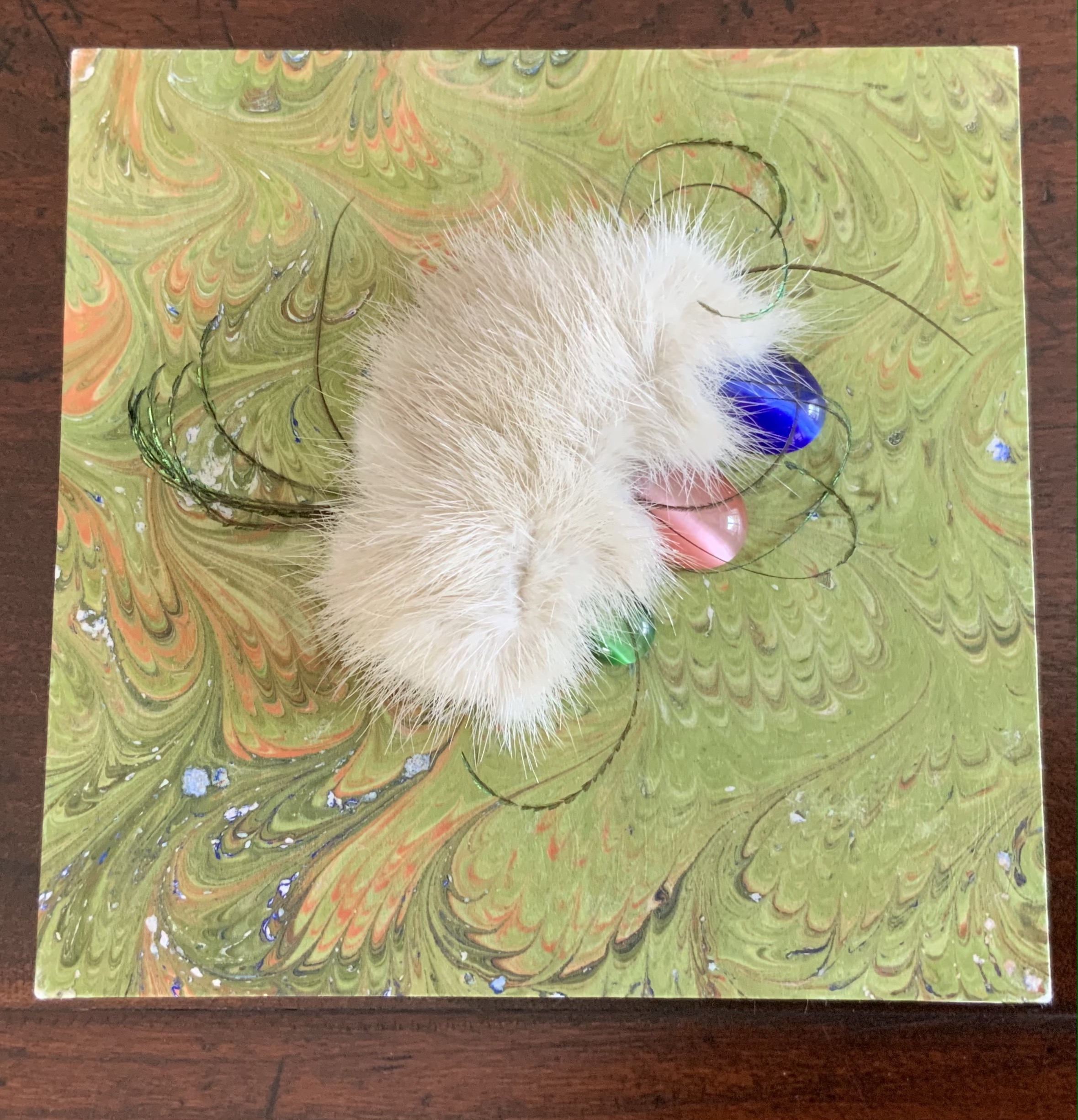
Leporello stub binding. H156 x W159 x D65 mm (closed); W61 mm (open). [14] panels. Unique work. Acquired from the artist, 4 August 2021.
Photos: Books On Books Collection.
The usually anecdotal text of bestiaries associates the depicted creature — even the imaginary or fantastic ones — with some moral or fable like that of the self-immolating Phoenix that rises from its ashes in MS. Bodl. 764. The words color the beast.
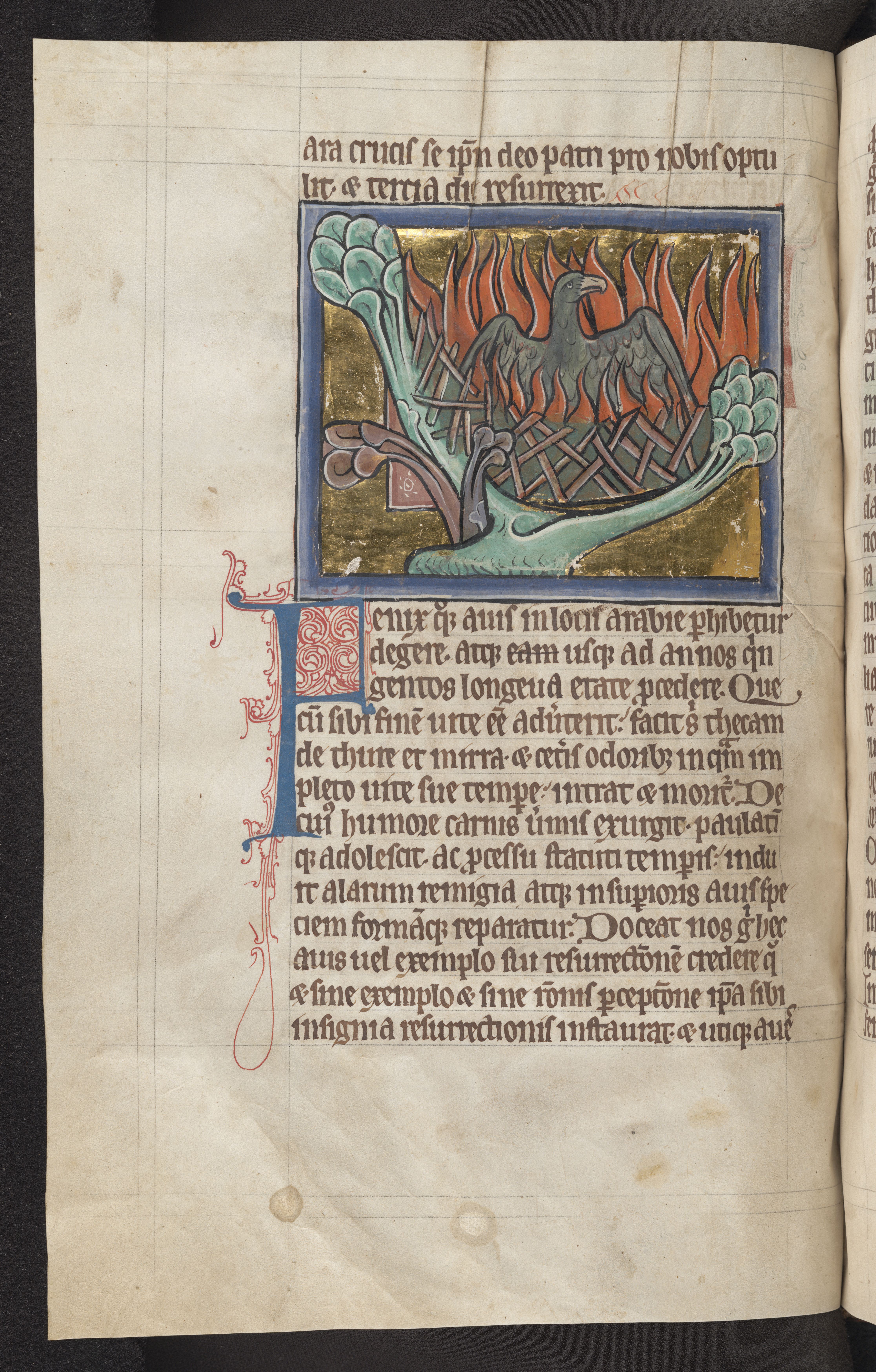
Oxford, Bodleian Library MS. Bodl. 764, folio 70v.
In Mary’s Bestiary Book (2020), however, the beasts color the words. They have a family resemblance to the inhabitants of Bosch’s Garden of Earthly Delights or those in Norman Messenger’s The Land of Neverbelieve (2012). The more vibrant ones could have borrowed their colors from illuminated medieval bestiaries or Andy Warhol’s Children’s Book (1983). Juxtaposed with quotations from Michel de Montaigne’s Essais (1580), they accentuate his humorous, acerbic, or philosophical observations.
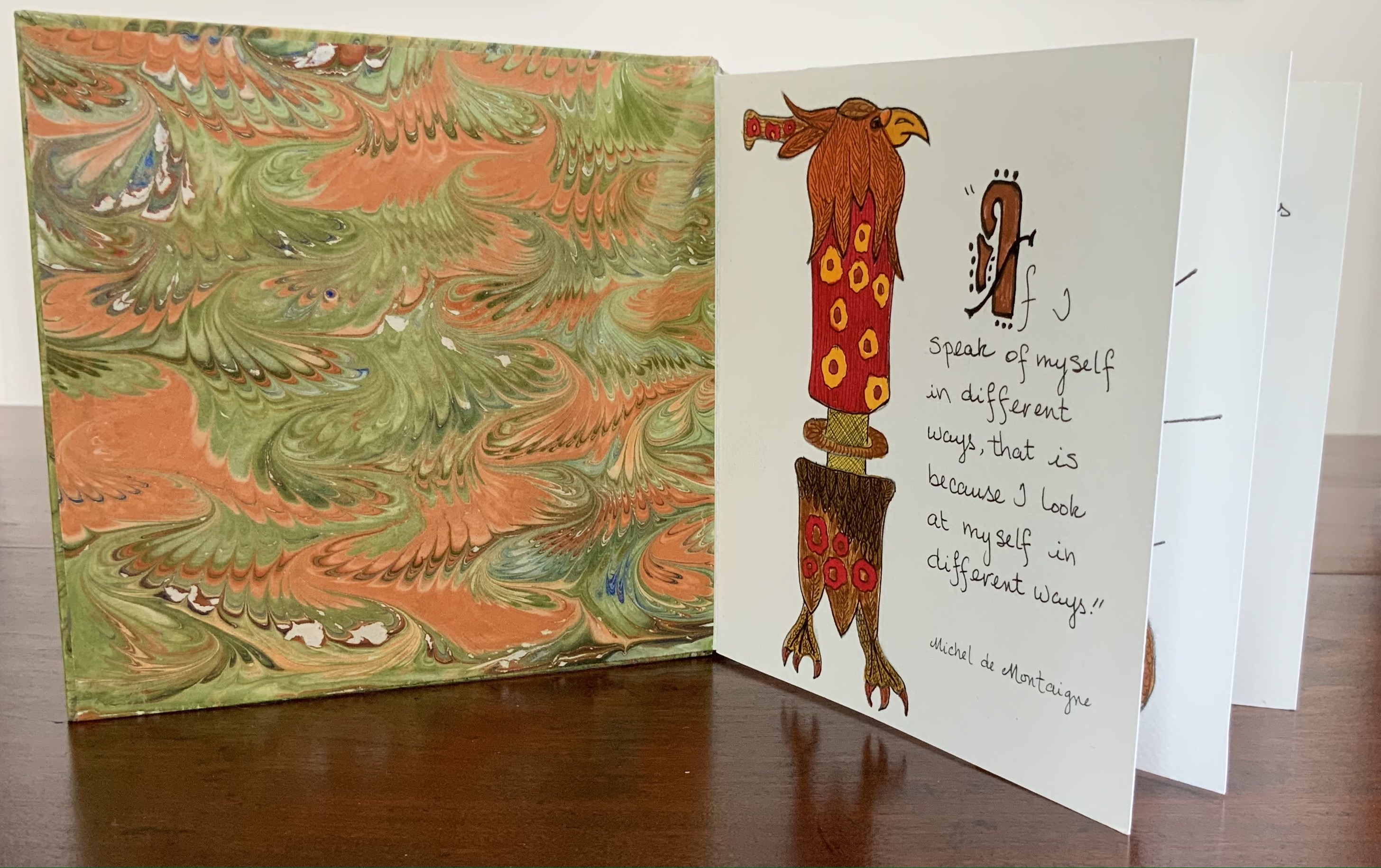
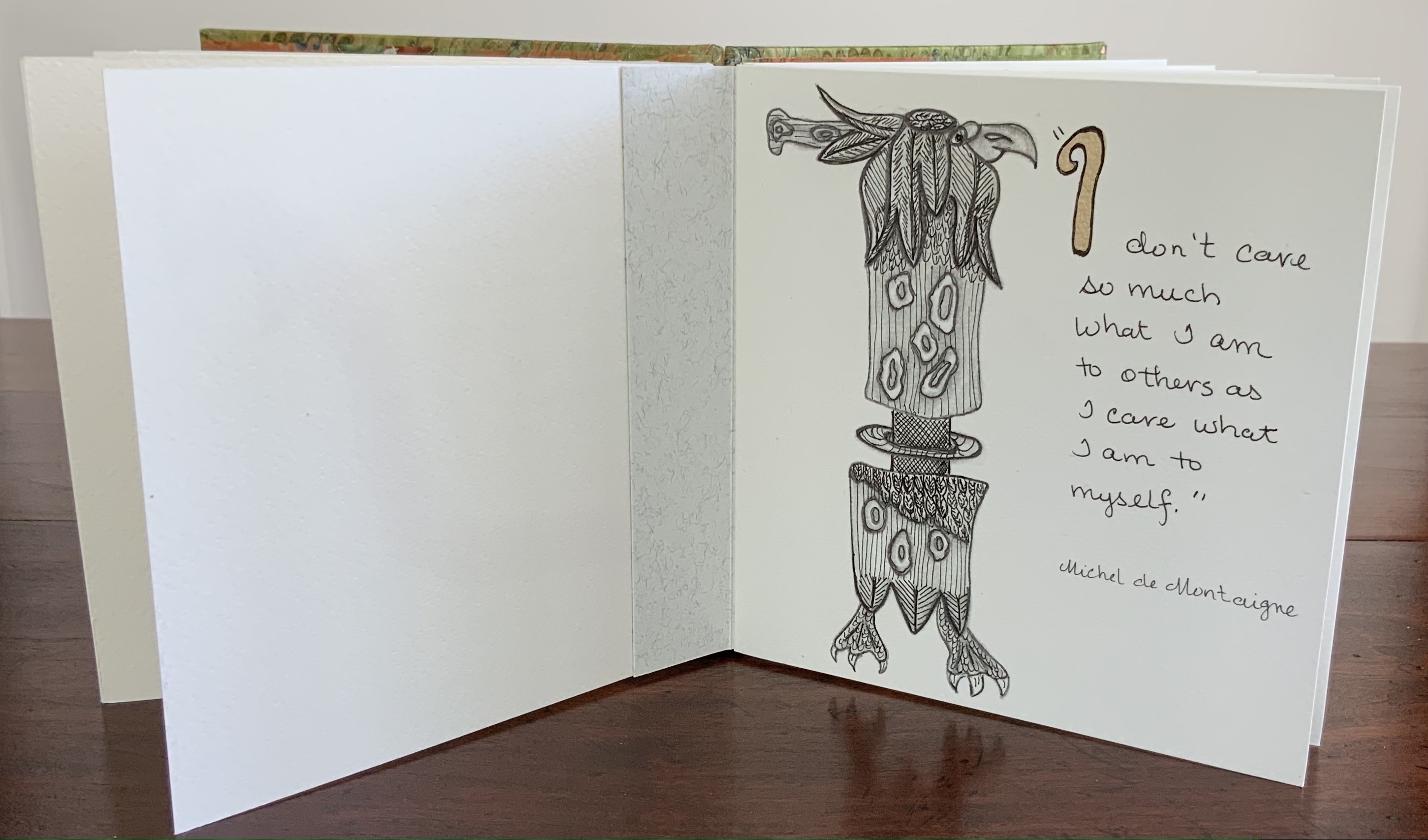
Sometimes they undercut the observation — but again with humorous effect.
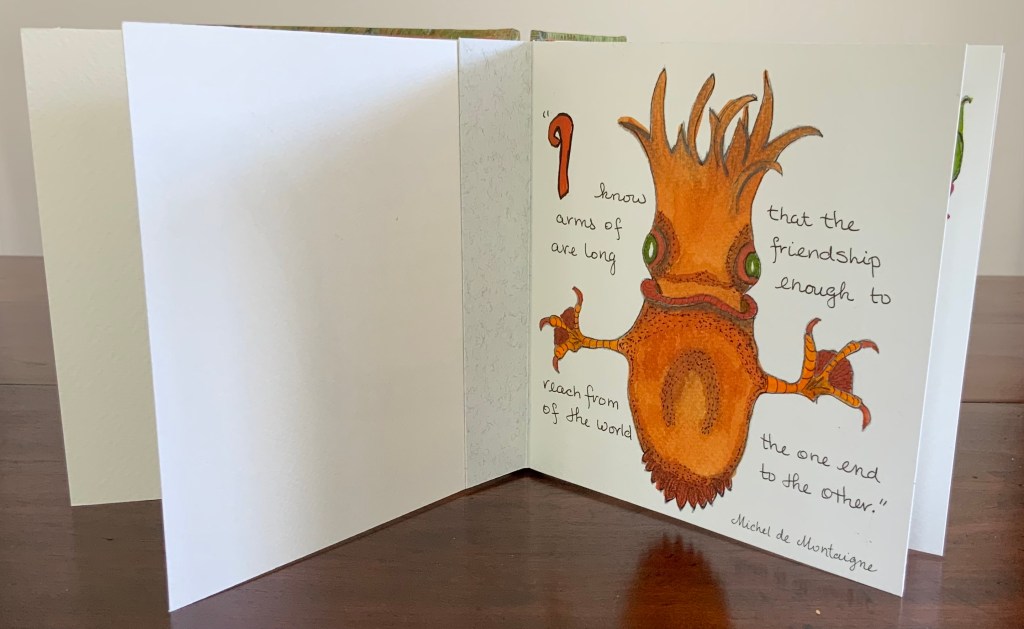
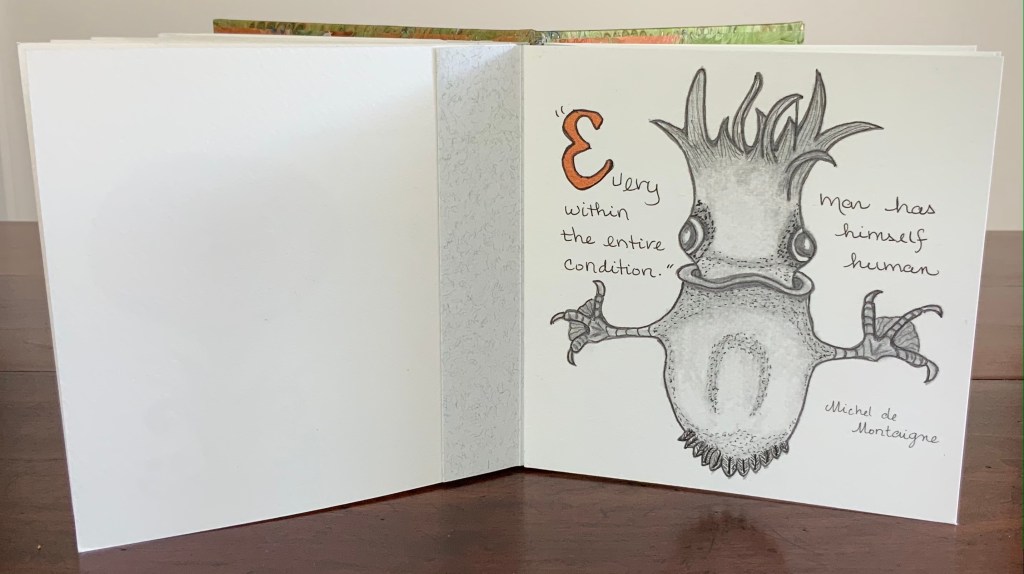
Sometimes the juxtaposition has a rather deadpan anthropomorphic humor.
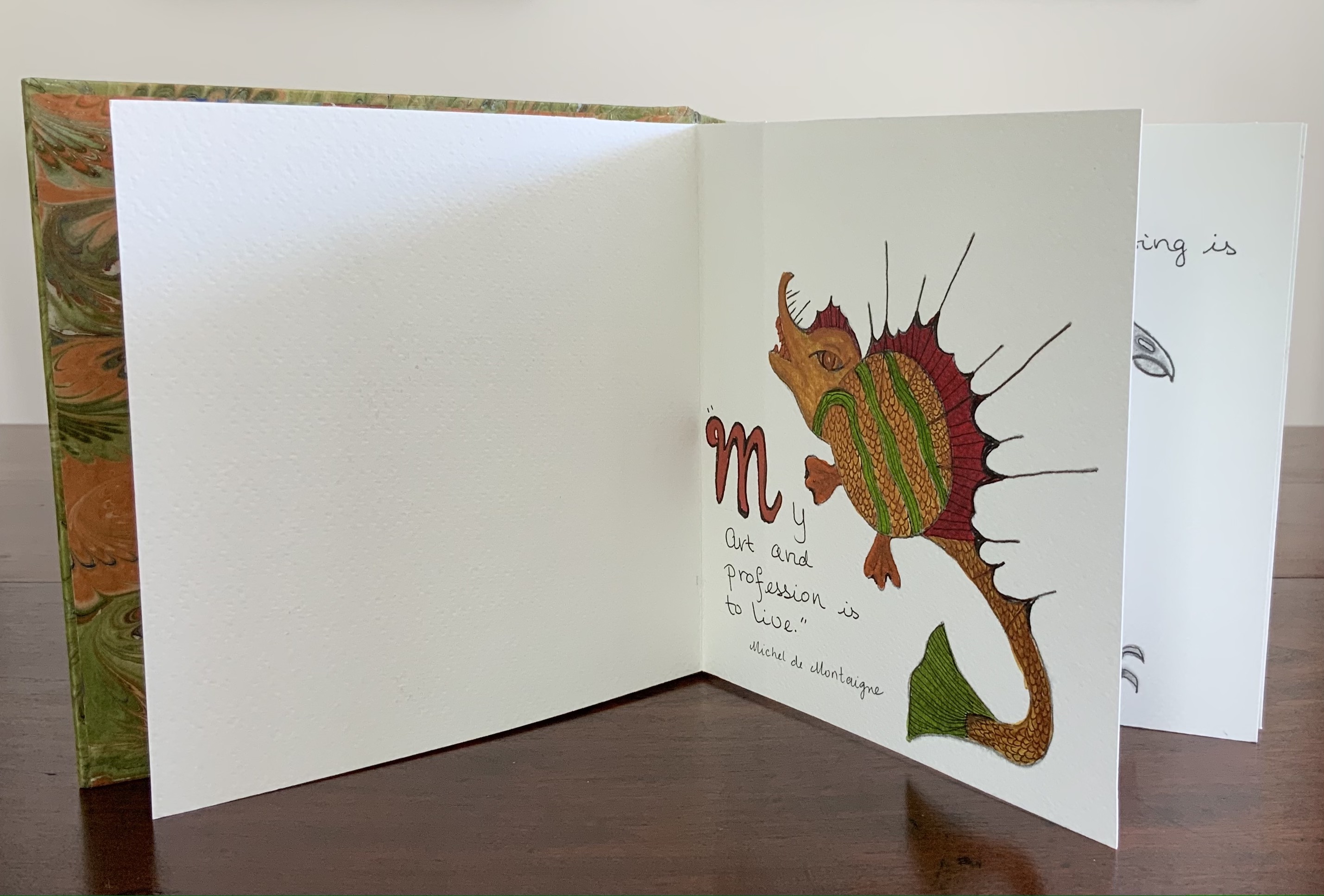
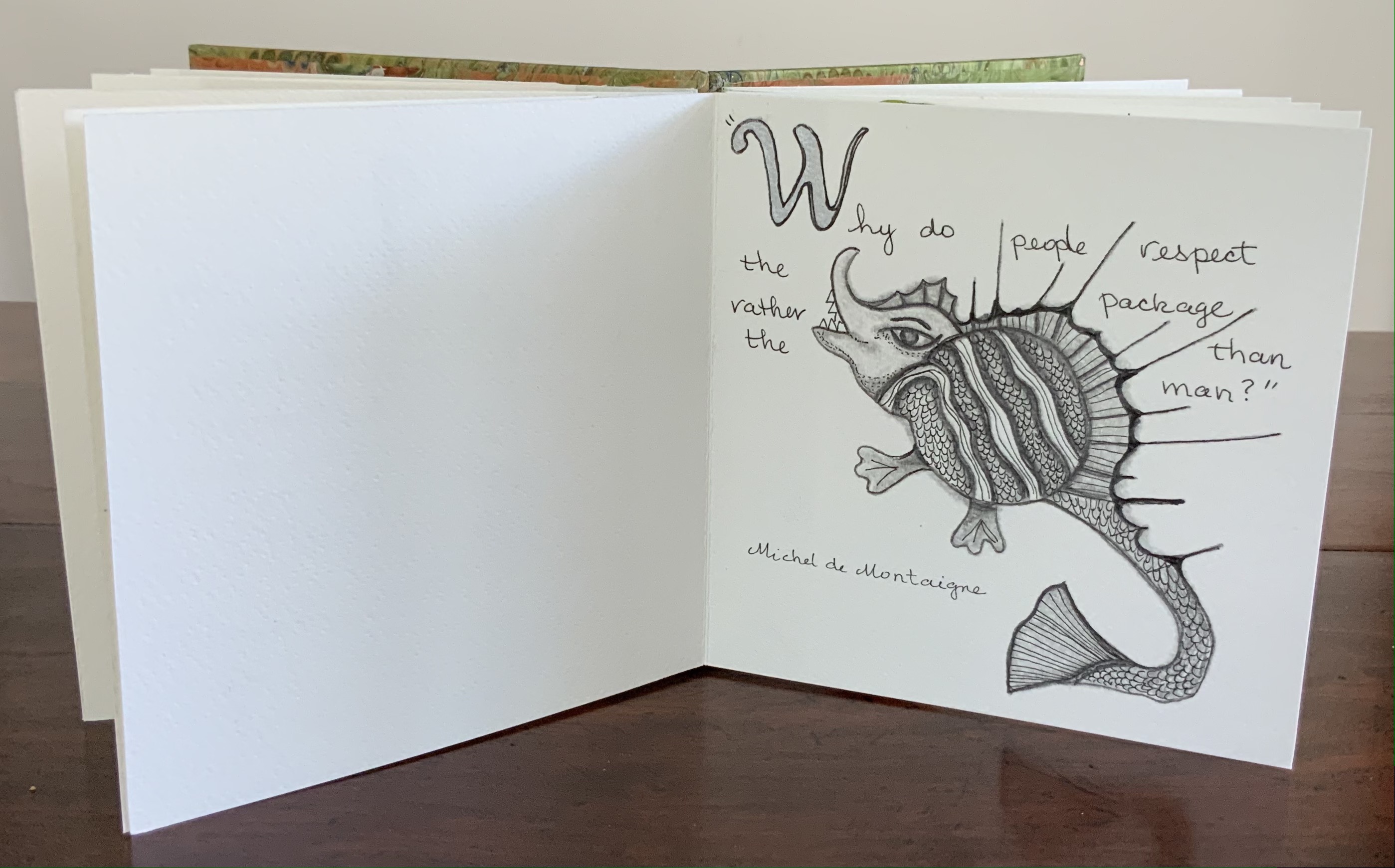
Other times, the juxtaposition is paradoxical.
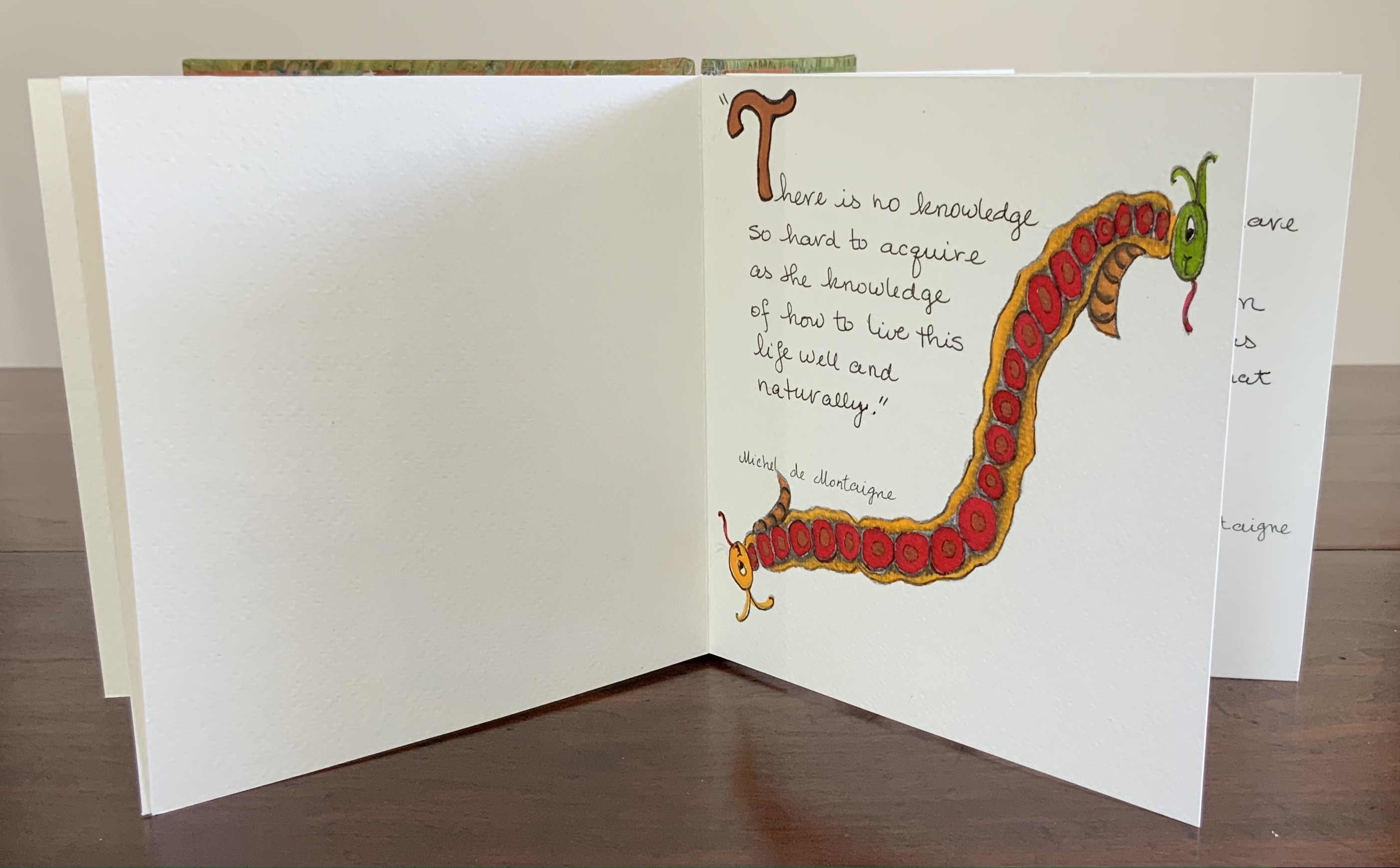
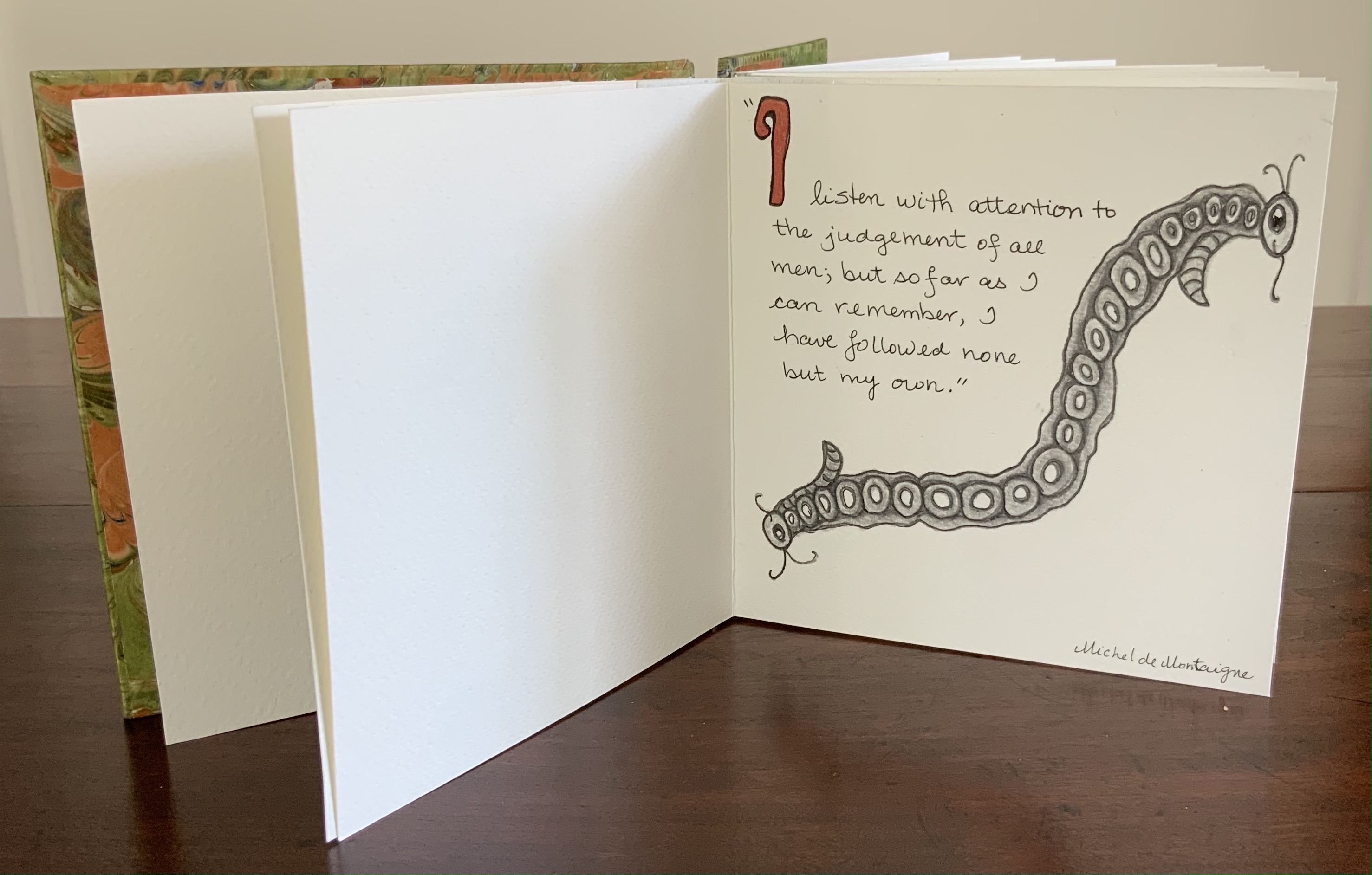
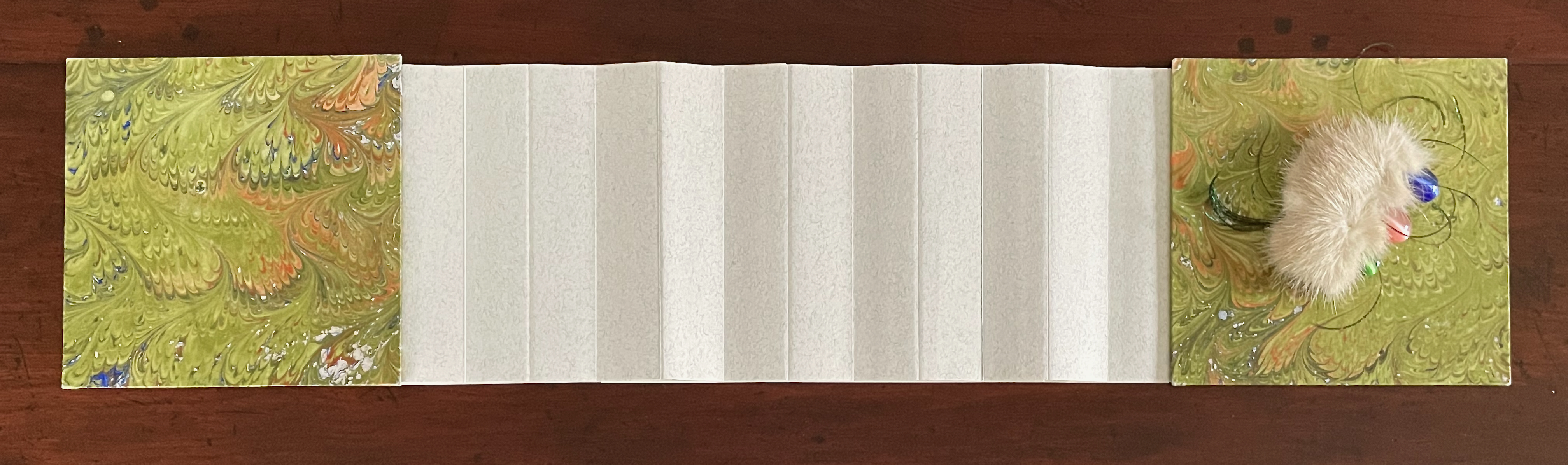
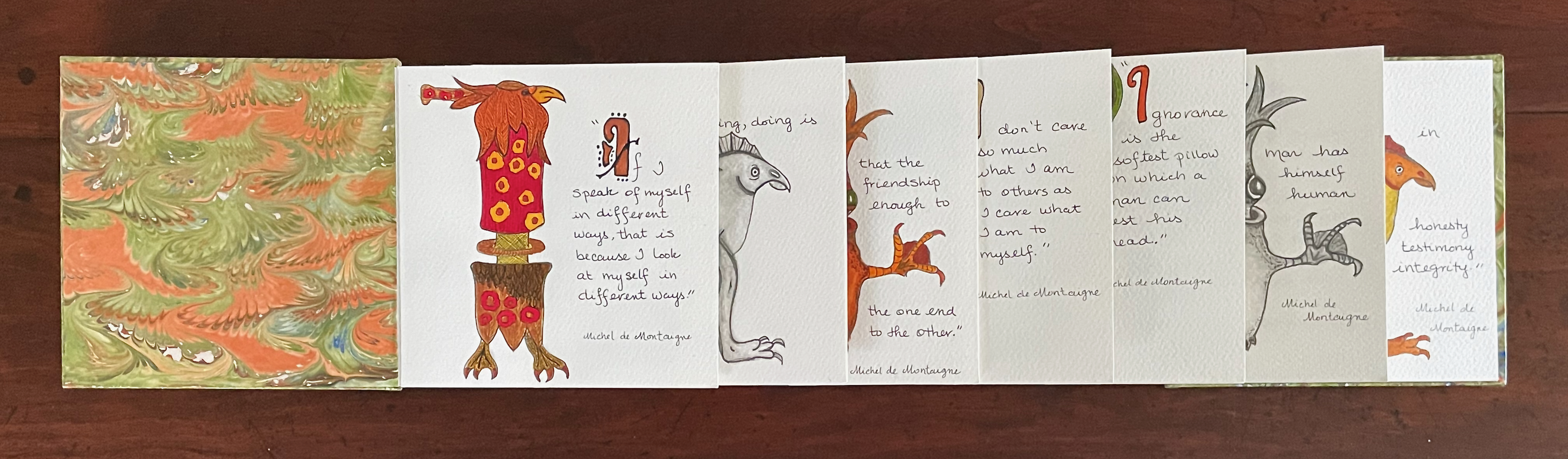
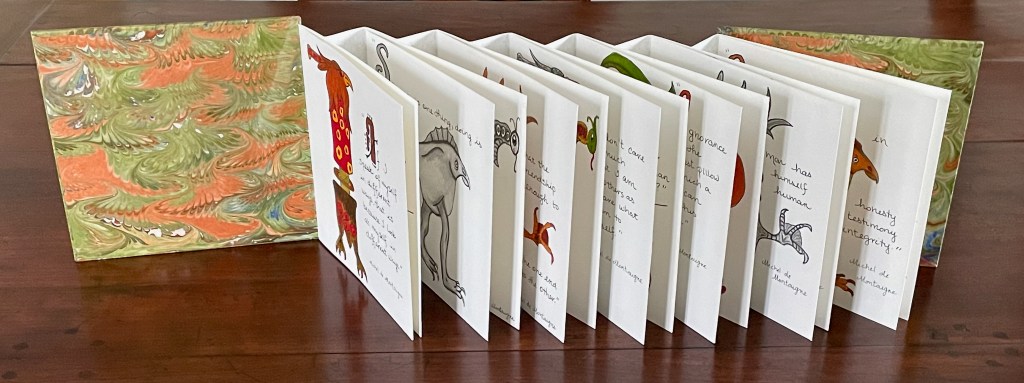
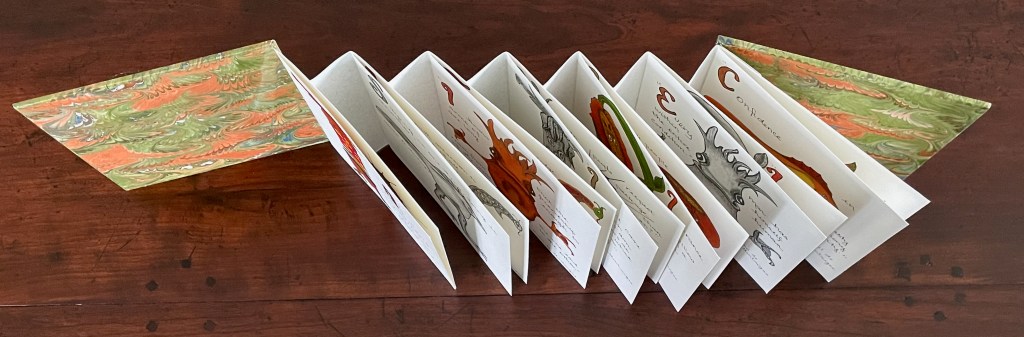
Accordion or leporello stub binding, with folios attached in the valley folds.
Anniversary 2 (2021)
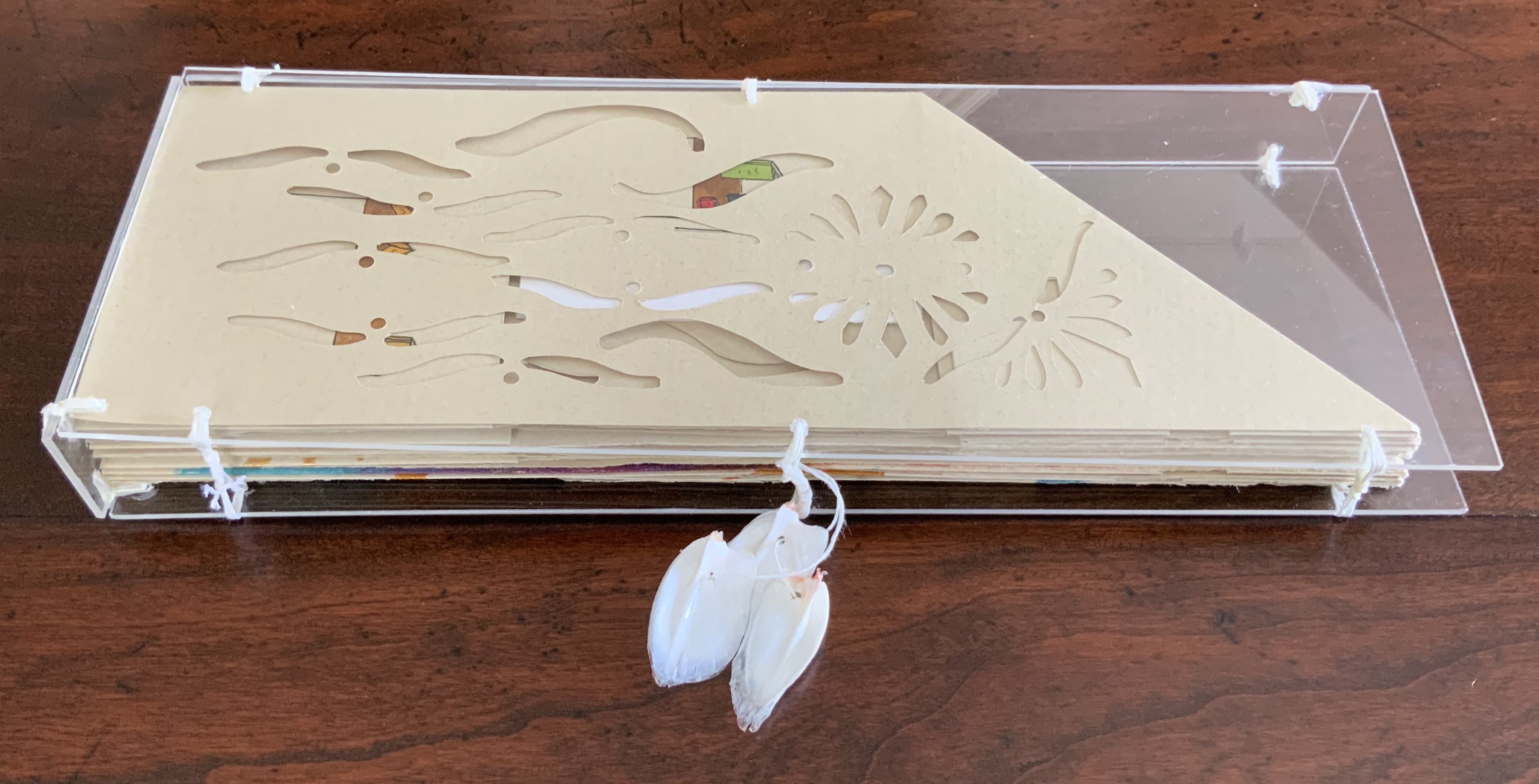
Anniversary 2 (2021)
Mary Kritz
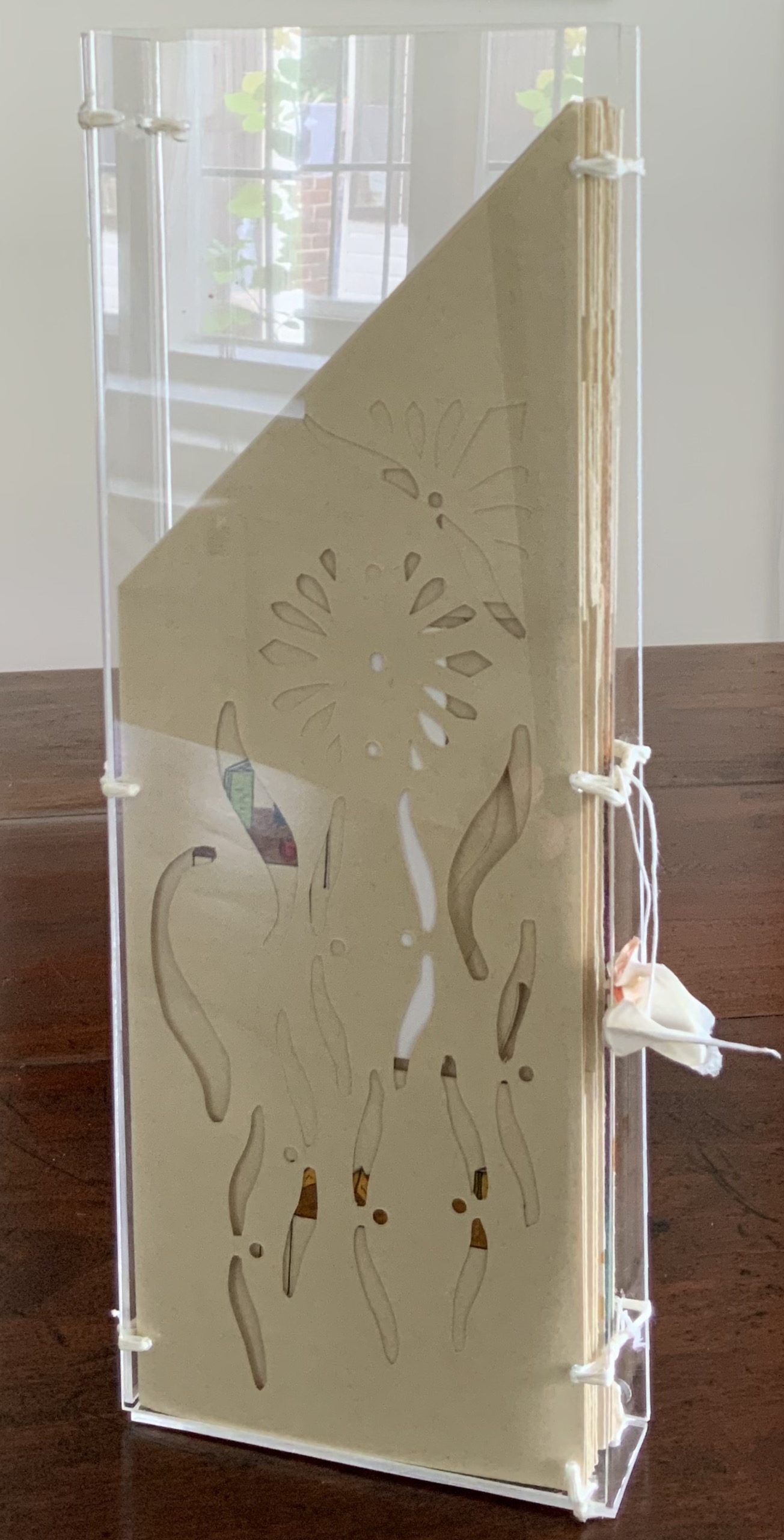
Acrylic case enclosing 8 accordion fold panels with a simple pop-up section in 4 of them. Acrylic case: H282 x W105 x D30 mm. [8] panels, each: H263 x W94 mm (closed); H26.3 x 234 mm (open). Unique work. Acquired from the artist, 4 August 2021.
Photos: Books On Books Collection.
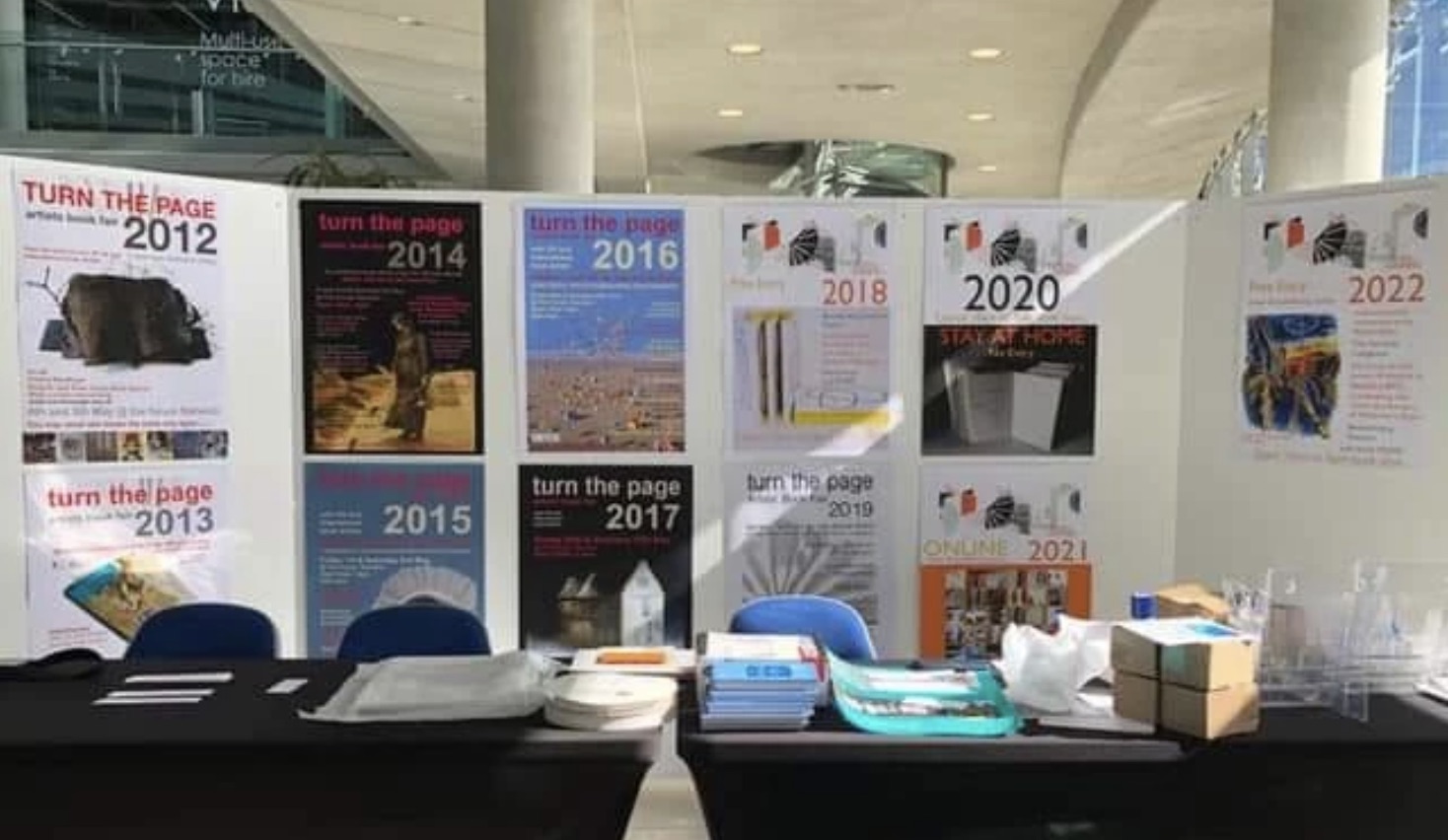
Anniversary 2 was created in response to a call from “Turn the Page Book Arts Fair” to celebrate their tenth live show in The Forum, Norwich, UK.
Eight accordion panels are decorated with paper cutting. Four include human images, created with the pochoir technique, and four include pop-up panels. On one panel, the names of representative types of paper appear alongside miniature paper sample banners; on another, the number ten is repeated in numeric and alphabetic form in a variety of languages; on another, multiple languages are used for the terms “book art” and “artist’s book”.
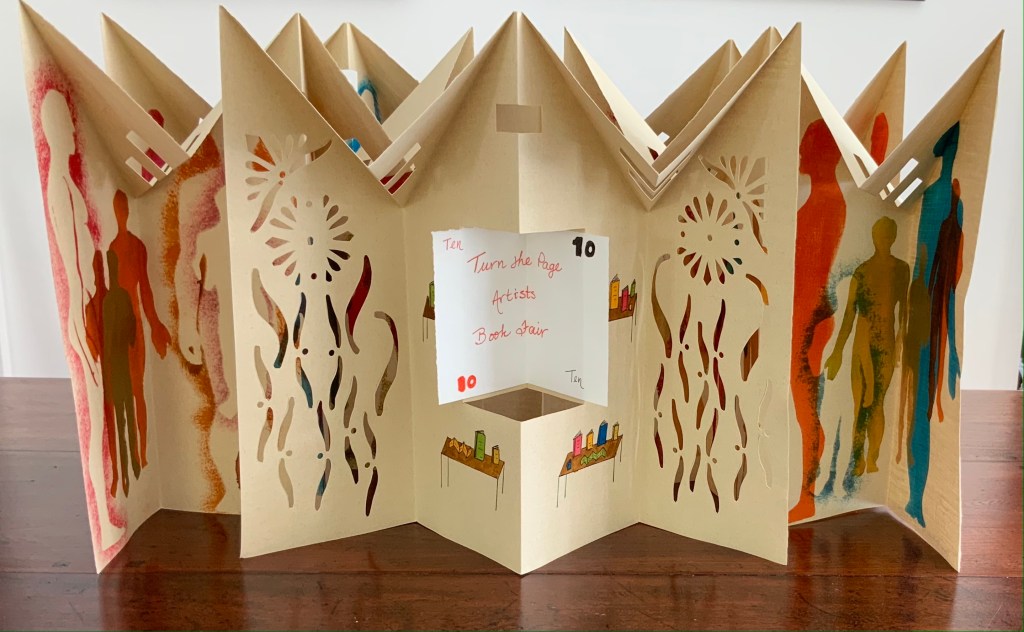
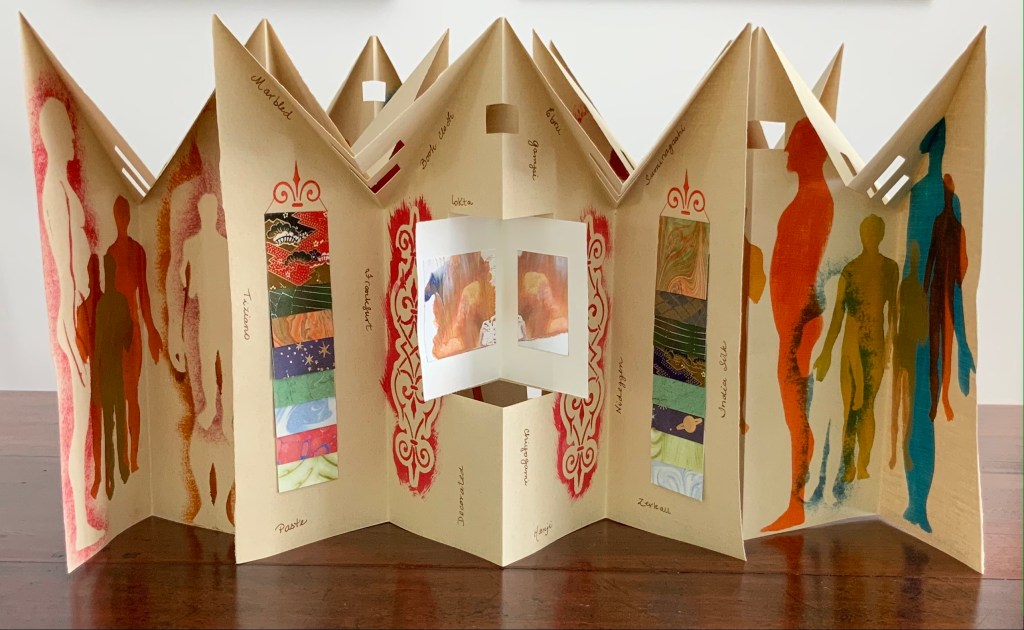
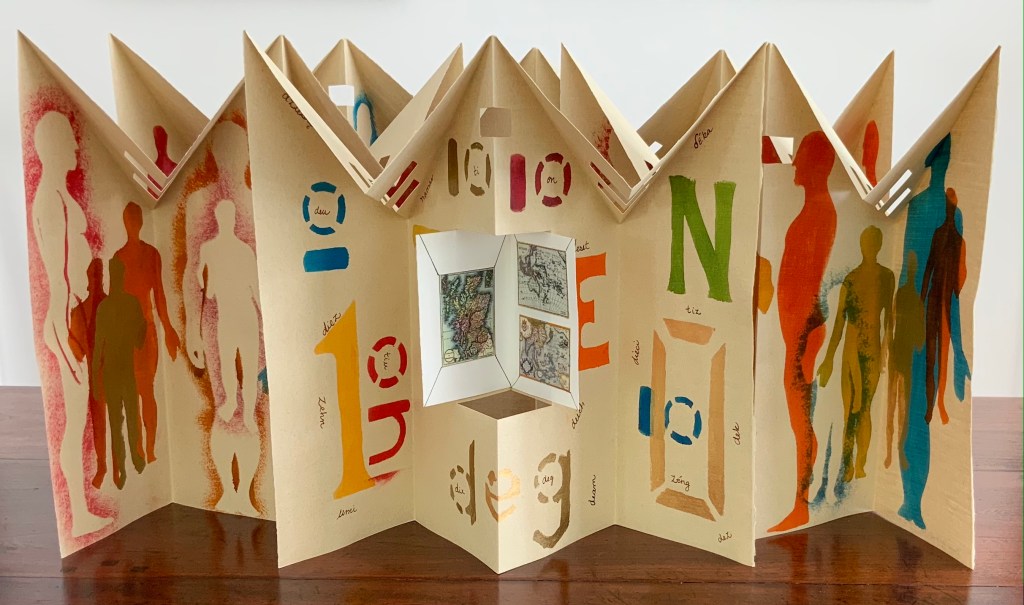
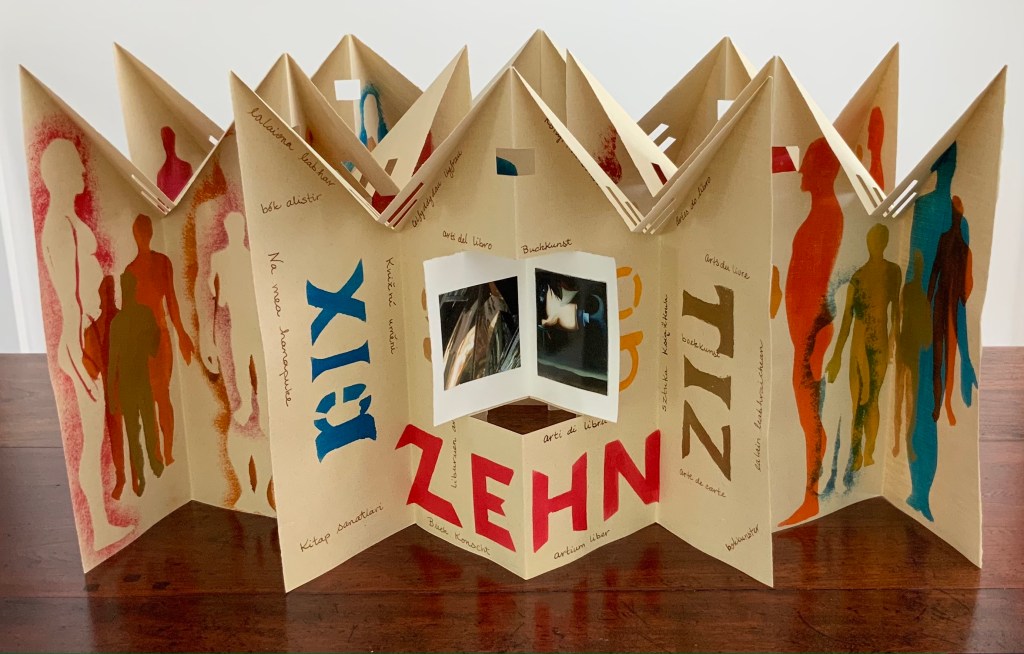
The cuts in the mountain and valley folds recall the glass ceiling of Norwich’s “The Forum”, the book fair’s home.
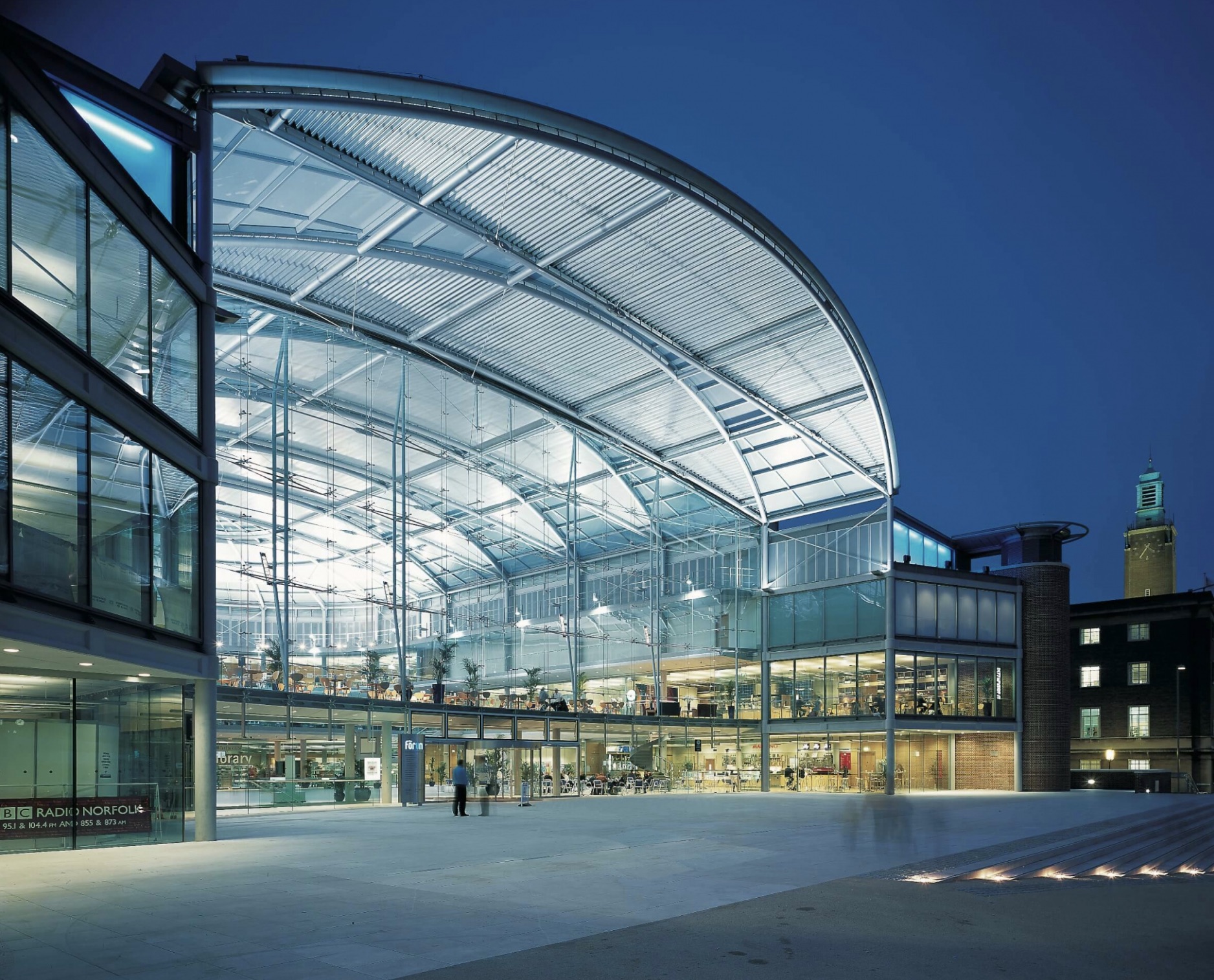
The Norwich Forum, Hopkins Architects
Further Reading
“The Surrealist Book“. 22 November 2026. Books On Books Collection.
Alessandro Baldanzi“. 24 June 2020. Books On Books Collection.
“Gracia Haby & Louise Jennison“. 28 May 2026. Books On Books Collection.
“Leslie Haines. 4 November 2022. Books On Books Collection.
“Ellen Lanyon“. 25 June 2024. Books On Books Collection.
“Clément Mériguet“. 13 November 2021. Books On Books Collection.
“Zazie Sazonoff“. 4 November 2022. Books On Books Collection.
“Ludwig Zeller“. 24 March 2020. Books On Books Collection.
Liberty, Megan. 2023. Craft & Conceptual Art : Reshaping the Legacy of Artists’ Books. New York: Center for Book Arts.

