Codex Aeroscriptus Ehrenbergensis (1990)
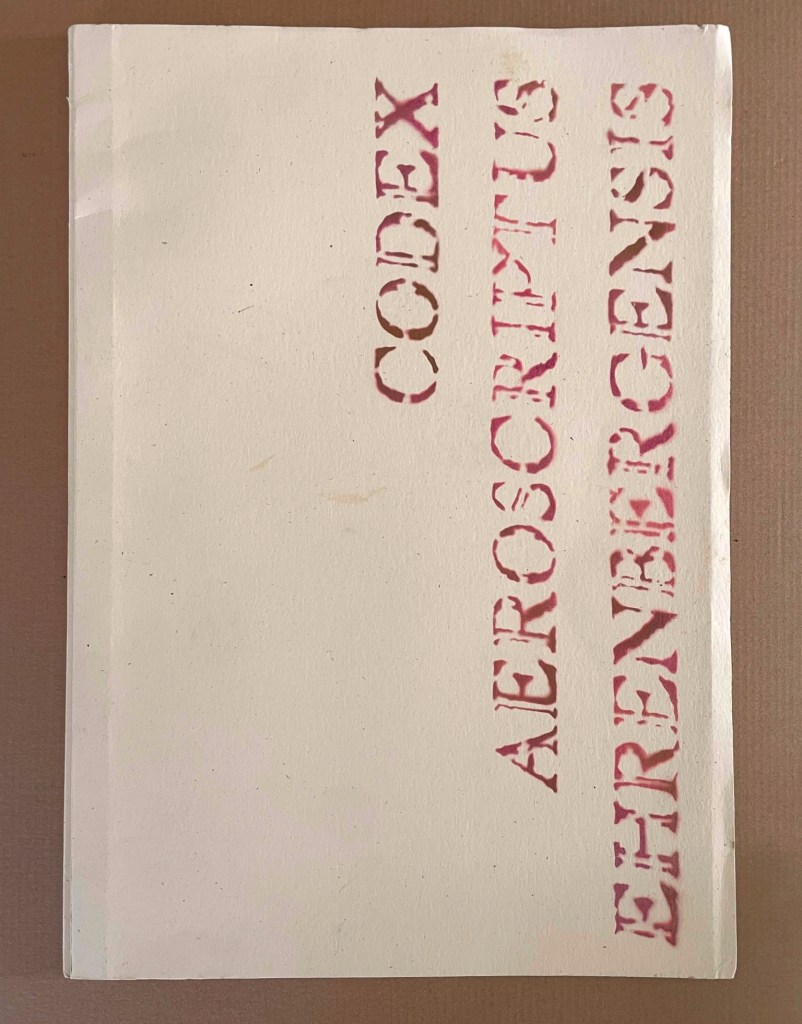
Codex Aeroscriptus Ehrenbergensis: A Visual Score of Iconotropisms (1990)
Felipe Ehrenberg
Casebound stiff cover, fly leaves around bifolios (fore-edge folded folios). H420 x W295 mm. 20 pages (10 bifolios, 9 with prints, 1 for title page and copyright page).Edition of 500. Acquired from Monograph Werks, 17 January 2024.
Photos: Books On Books Collection.
In his introduction, Felipe Ehrenberg variously recommends that we read Codex Aeroscriptus Ehrenbergensis “like a detective novel” for its “various clues that you may unravel the wondrous and dramatic events surrounding the life of this artist, another witness to the end of a century” or “as a musical score, perhaps to be composed by someone wishing to recreate the background music of our daily histories” or a “formulation of hieroglyphs”. The book’s subtitle succinctly rolls up these metaphors: “a visual score of iconotropisms”.
Stephen Perkins calls it “a mini-retrospective of his explorations in this medium” — stencils.
This work came out of a residency Ehrenberg completed at Atlanta’s Nexus Press. The images for the works came from what he called his Visual Information Bank which was a box with all sorts of ephemera that he would dip into for images for his stencils. In contrast to the frenetic energy of the stencils, the inside of the publication has a bucolic and calm feeling that is mirrored in the original stencil work Ehrenberg created across the front pages of each book. (Perkins, 2024)
The accordion, concertina, or leporello structure adopted by so many 20th and 21st century book artists has its Aztec analogue called a screenfold format. Ellen Baird and Cristián Roa-de-la-Carrera included Codex Aeroscriptus Ehrenbergensis in the Newberry Library’s 2006-07 exhibition “The Aztecs and the Making of Colonial Mexico”.
… Aztec heritage has become a vital component of Mexican and Mexican-American identity, influencing the work of many contemporary writers, artists, and scholars. The inherent flexibility of traditional indigenous creativity facilitates combination with contemporary artistic practices. Traditional screenfold books are layered with contemporary collage and print techniques, and indigenous images are juxtaposed with colonial scenes and pop icons. Contemporary Mexican and Mexican-American artists use traditional Aztec images and techniques to explore both contemporary life and Mexican cultural heritage. The screenfold format is an emblem of ancient Mesoamerican culture, and has become charged with historical and political meaning. Contemporary artists combine this format with humorous and provocative imagery to explore the cultural and political dynamics of preconquest identity, the colonization of Mexico and current relations between Mexico, Europe, and the United States. (Baird and Roa-de-la-Carrera, 2006)
Ehrenberg’s title is dipped in sarcasm. Most of the barely surviving screenfold Mesoamerican works reside in Anglo-European institutions under names like Codex Borbonicus at the Bibliothèque de l’Assemblée Nationale in Paris, Codex Borgianus at the Vatican, and Codex Mictlan at the Bodleian Libraries in Oxford. Ehrenberg’s modern version reflects their pictorial style and even the layout of their repetitive serialized images. But in doing so, his images speak to the continuing impact of colonialism.
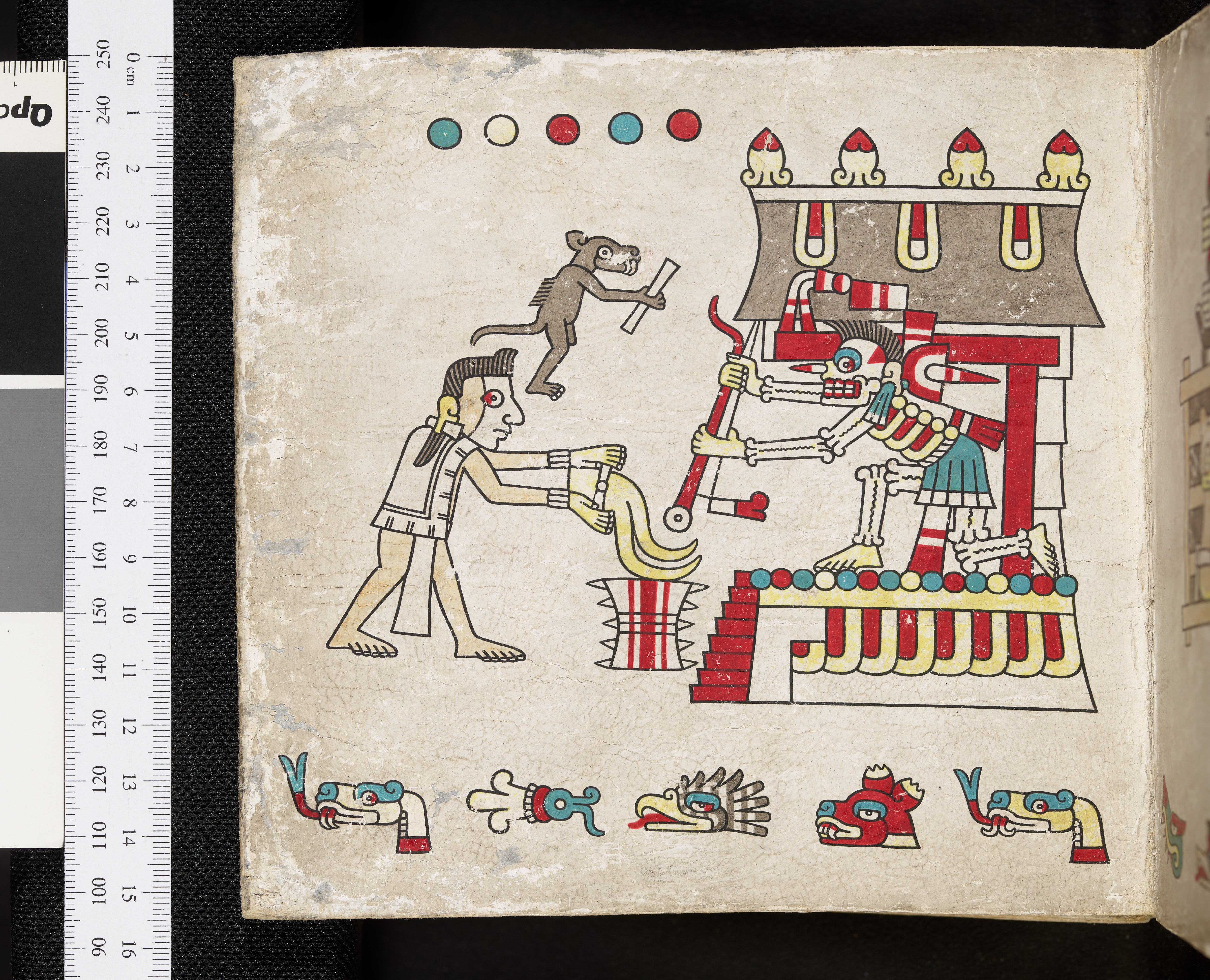
Codex Mictlan, Oxford, Bodleian Library MS. Laud Misc. 678.
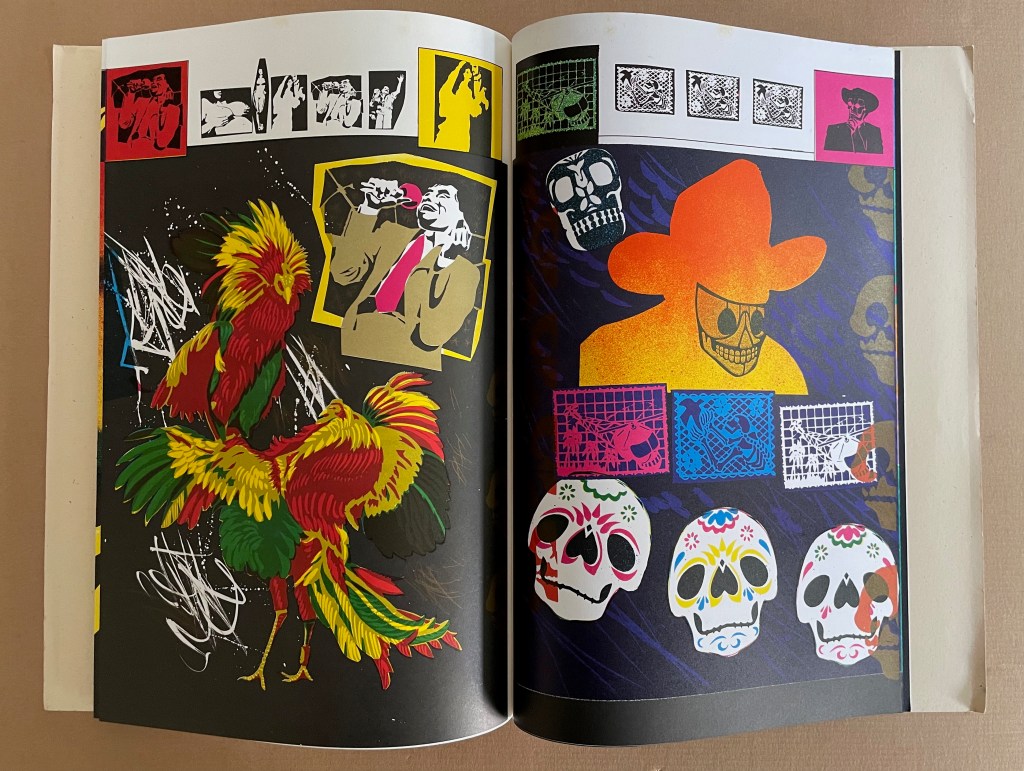
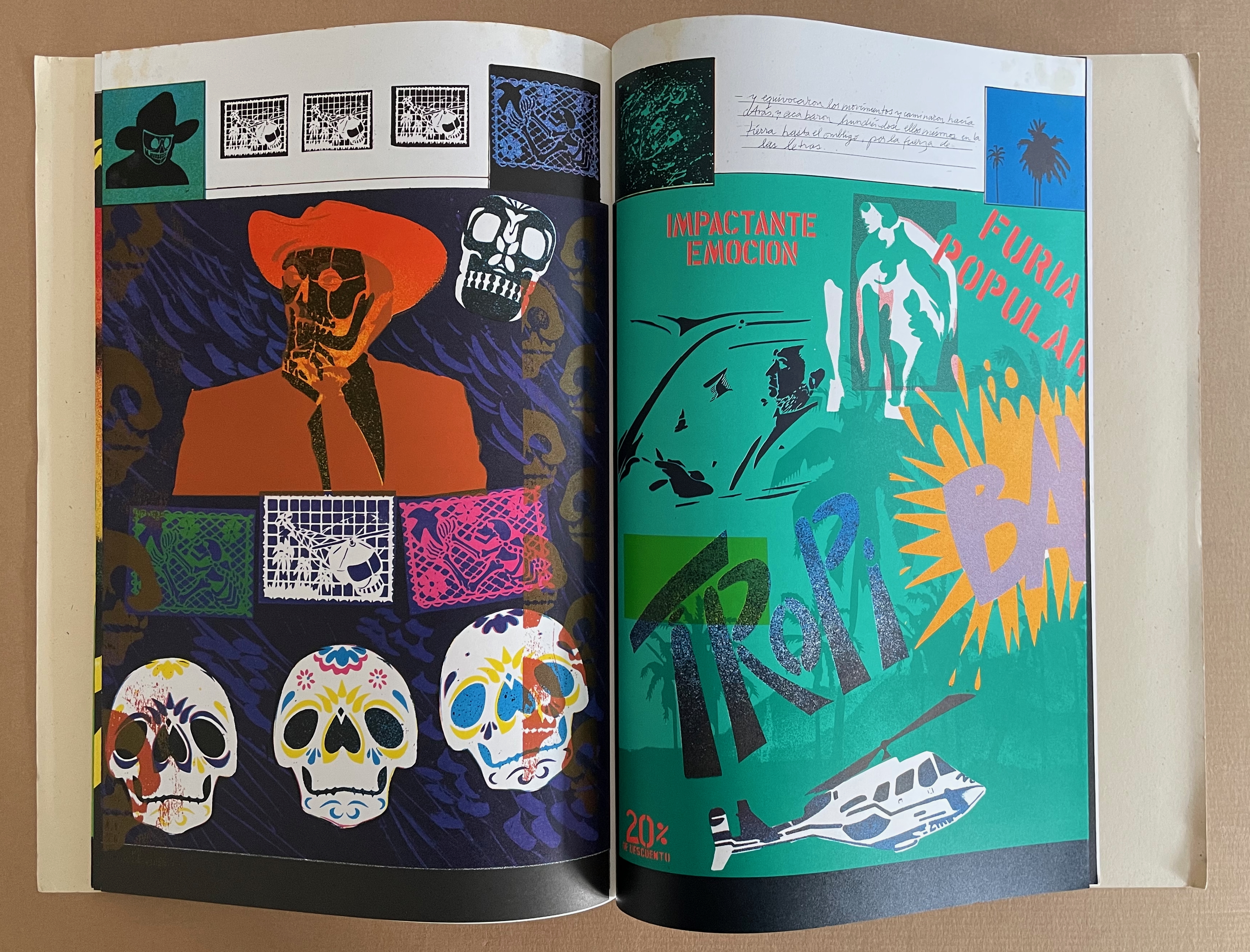
Still, Ehrenberg’s book art went beyond any reductive anti-colonial message. His “Visual Information Bank”, as he called it, held a wealth of contemporary cultural iconography. Its main sections included:
The Crashed Car Department
Sports’ Frozen Moments Department
Men in Suits & Ties Department
Police File Photo Department
Jet Set Department
Women: Dream & Desire Department
Masked Wrestlers Department
Motel Room Drawings Department
The Rubber Stamp Division
And he drew on this — especially from the televisual world — to create his glyphic stencils and rubber stamps.
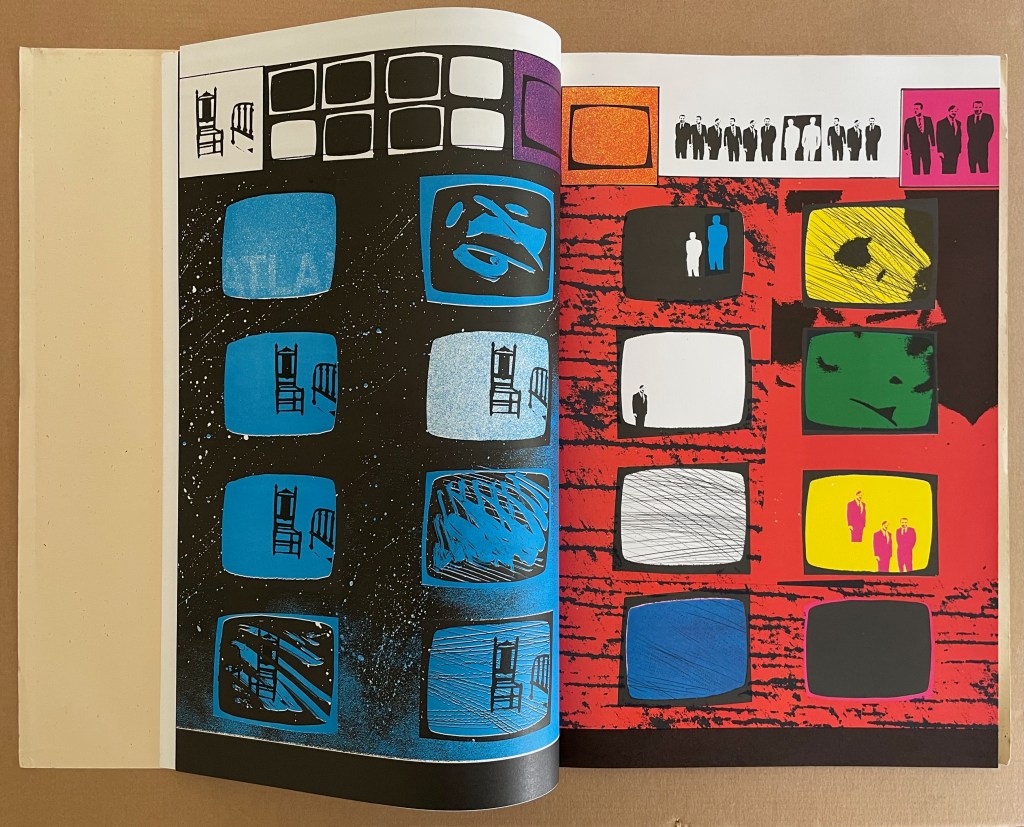
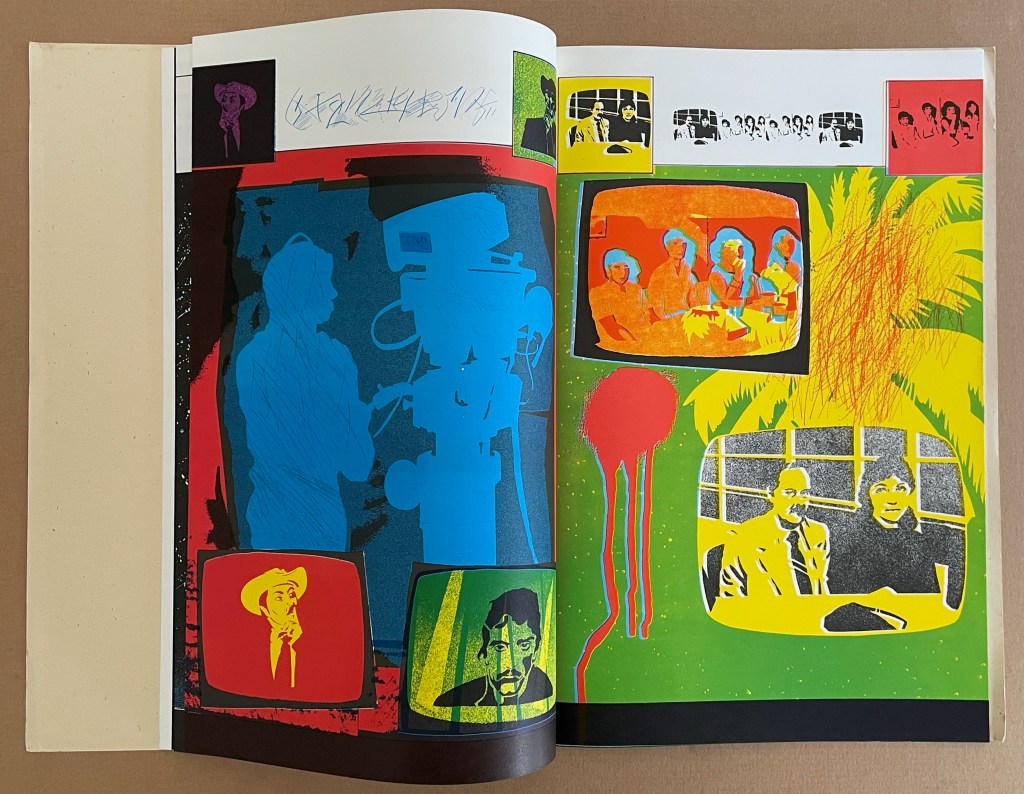
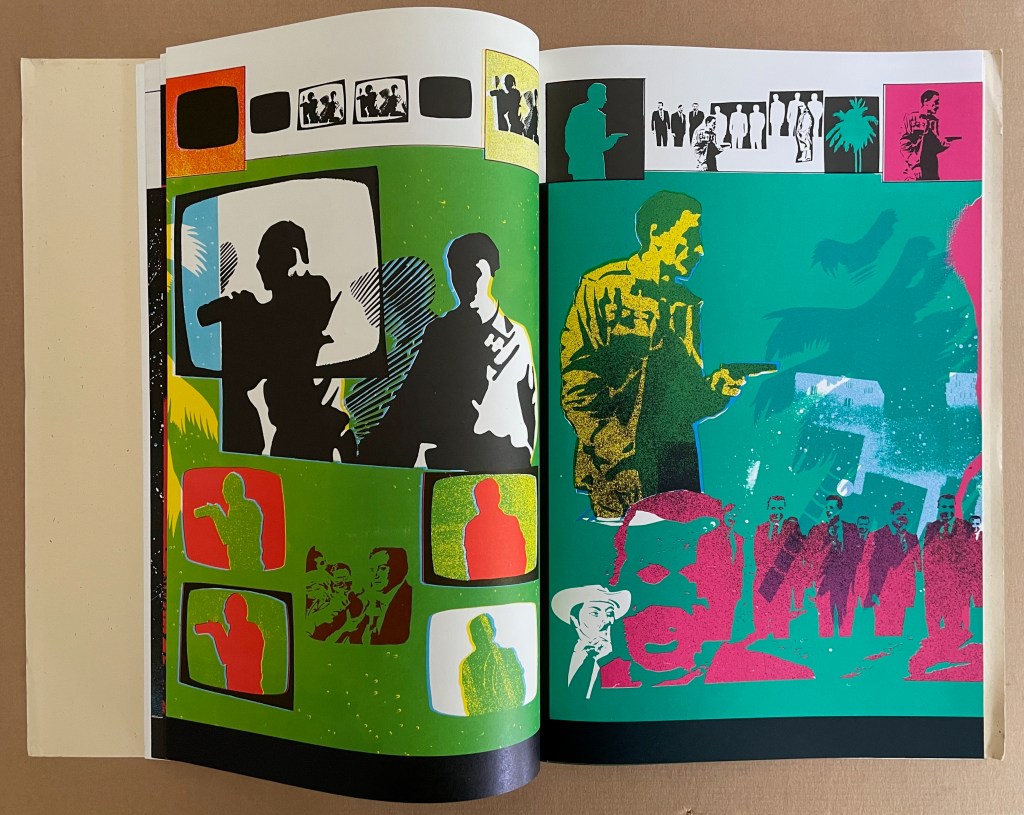
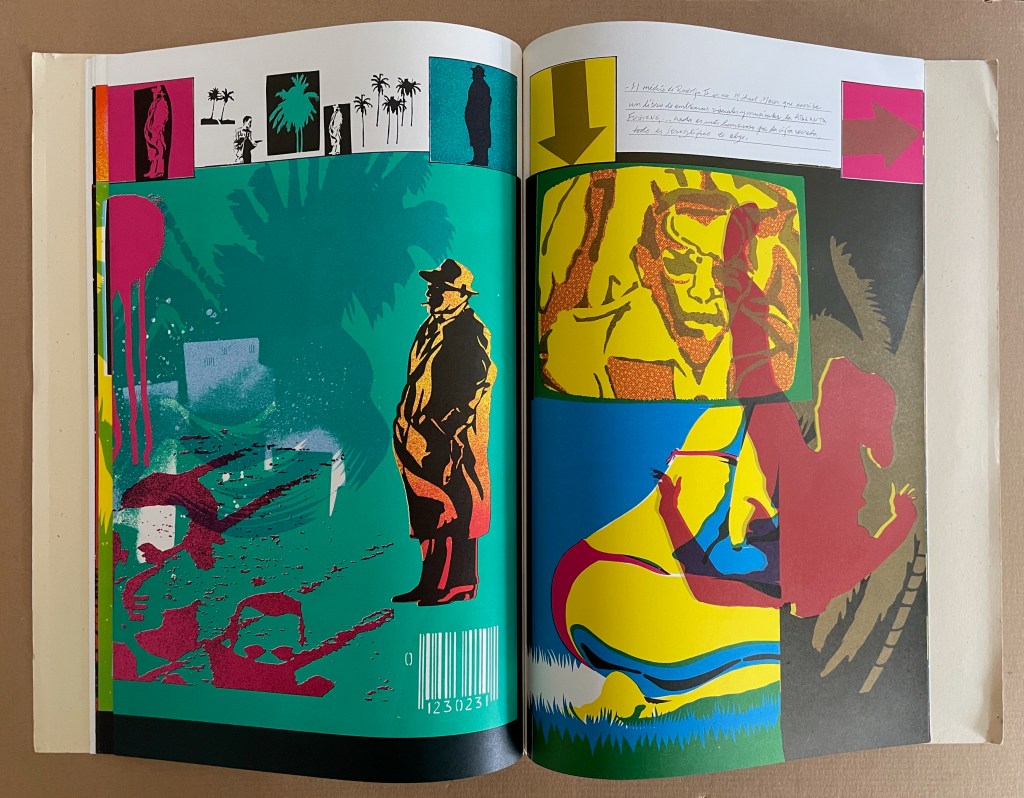
The leporello edition of Codex Aeroscriptus Ehrenbergensis is rare, but fortunately the wrap-back bound edition shown in this entry is a little less so. The wrap-back format is a traditional Chinese/Japanese book format. Takako Saito, who joined Ehrenberg at Beau Geste Press in 1973, may have been an influence in this regard, but as she left in 1975, an influence from others at Nexus in Atlanta, GA, where Ehrenberg completed this work, seems more likely.
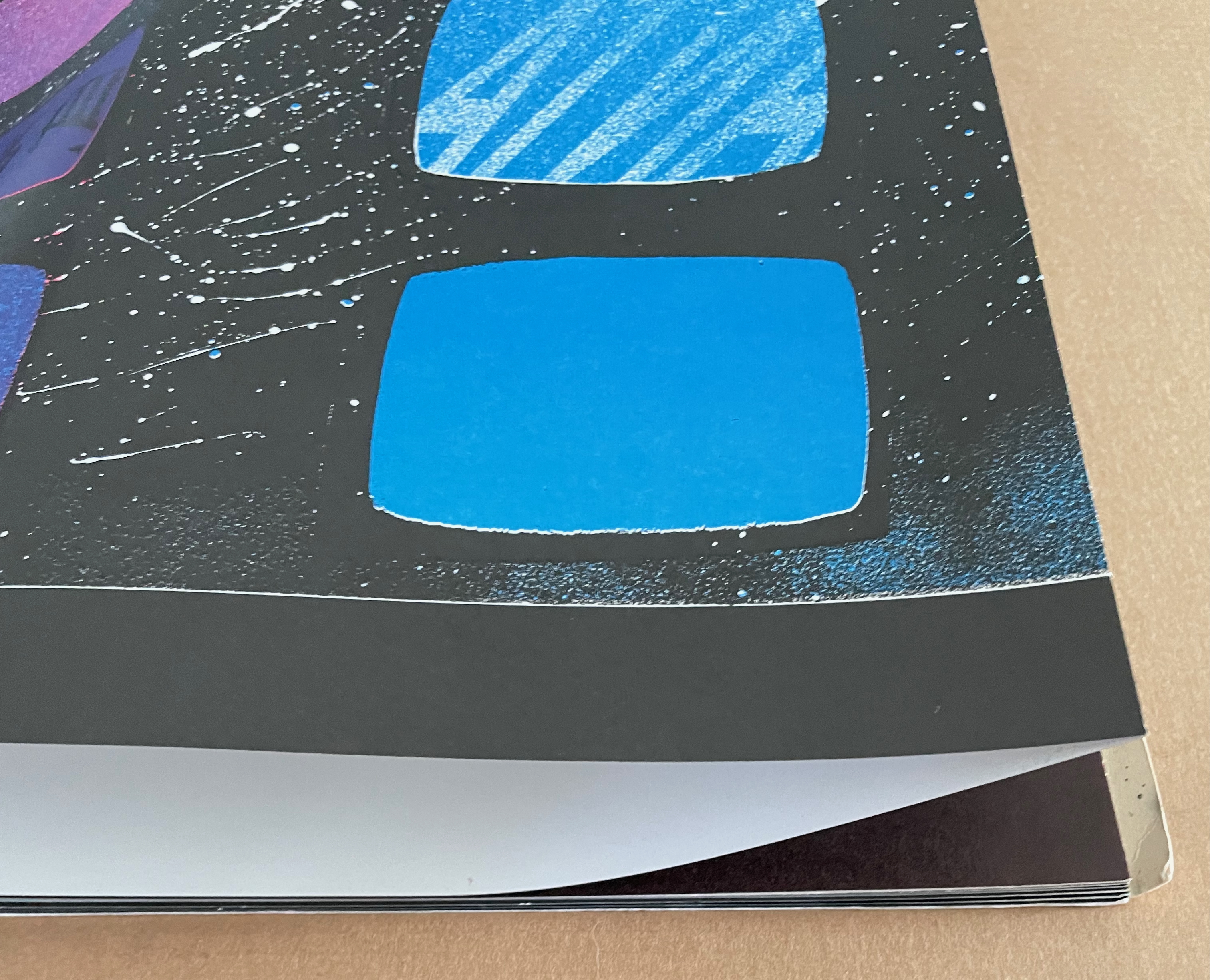
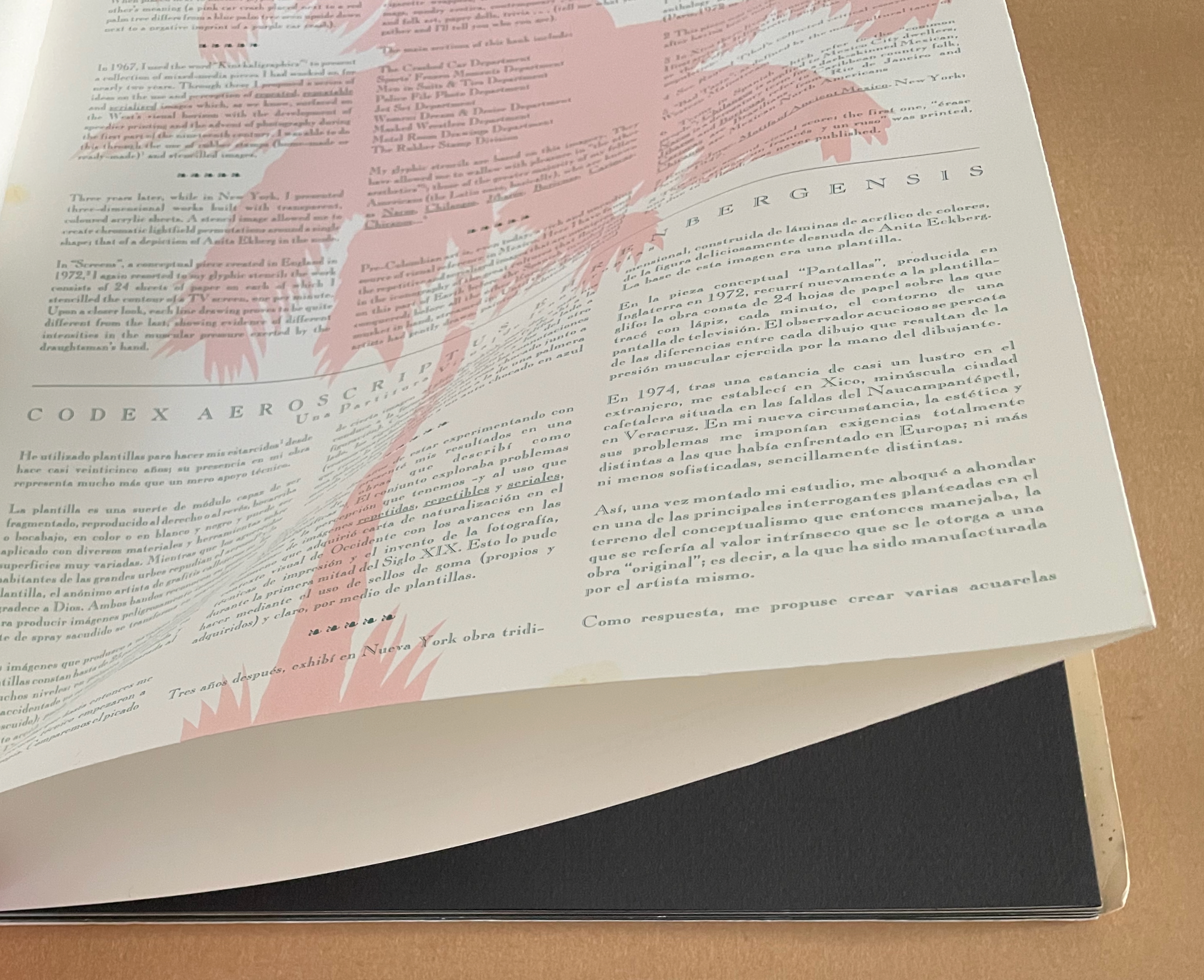
The double-sided leporello edition of Codex Aeroscriptus Ehrenbergensis is not a folded continuous sheet. Viewable on Stephen Perkins’ site, it appears to have been formed from the codex edition’s double-page spreads glued together at the fore edge. Ehrenberg’s residency at Atlanta’s Nexus Press would have overlapped with Clifton Meador’s presence, and Meador’s works frequently use the wrap-back format.
Further Reading
Baird, Ellen T., and Cristián Roa-de-la-Carrera. 28 September 2006 – 13 January 2007. “The Aztecs and the Making of Colonial Mexico“. Chicago, IL: The Newberry Library. See, in particular, “Contemporary Expressions of Nahua Culture“.
Borowitz, Maggie. 1 October 2023. “‘To Make Books is to Multiply’: Artists’ Books and Feminist Expression in Mexico“. ARTMargins 12 (3): 7–29.
Conwell, Donna. 2010. “Beau Geste Press“. Getty Research Journal 2: 183-92.
Fox, Catherine. 15 June 2015. “Artist’s books in ‘Endless Road: A Look at Nexus Press’ a trip down memory lane, at ACAC“. ARTS ATL.
Kam, D. Vanessa. 2003. Felipe Ehrenberg : A Neologist’s Art & Archive. [Palo Alto, Calif.]: Dept. of Special Collections, Stanford University Libraries.
Perkins, Stephen. 1 February 2024. Felipe Ehrenberg, Codex Aeroscriptus Eherenbergensis, [2 versions] Nexus Press, Atlanta, 1990, ed. 40 & 500. Accordionbooks.com.
Pujol Duran, Jèssica. December 2018. “Beau geste press: a liminal communitas across the new avant-gardes“. Kamchatka. Revista de análisis cultural 12: 291-312.
Reed, Marcia. 2022. “Codex Espangliensis: From Columbus to the Border Patrol“, in Materialia Lumina : Contemporary Artists’ Books from the CODEX International Book Fair. Edited by Elizabeth Fischbach and Nann Parrett. Berkeley, California: The Codex Foundation.
Snijders, Ludo. The Mesoamerican Codex Re-Entangled : Production, Use, and Re-Use of Precolonial Documents. Leiden University Press, 2016.

