The Magic Magic Book (1994)
The Magic Magic Book : An Inquiry into the Venerable History & Operation of the Oldest Trick Conjuring Volumes, Designated ‘Blow Books’ … (1994)
Ricky Jay et al.
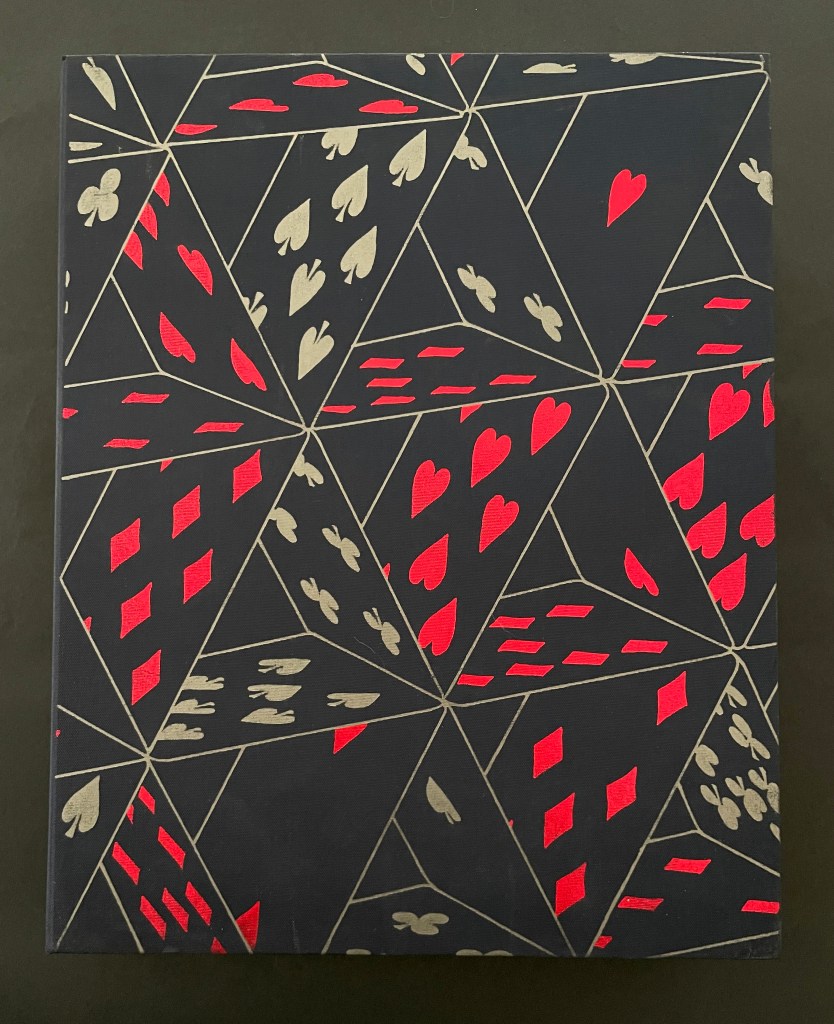
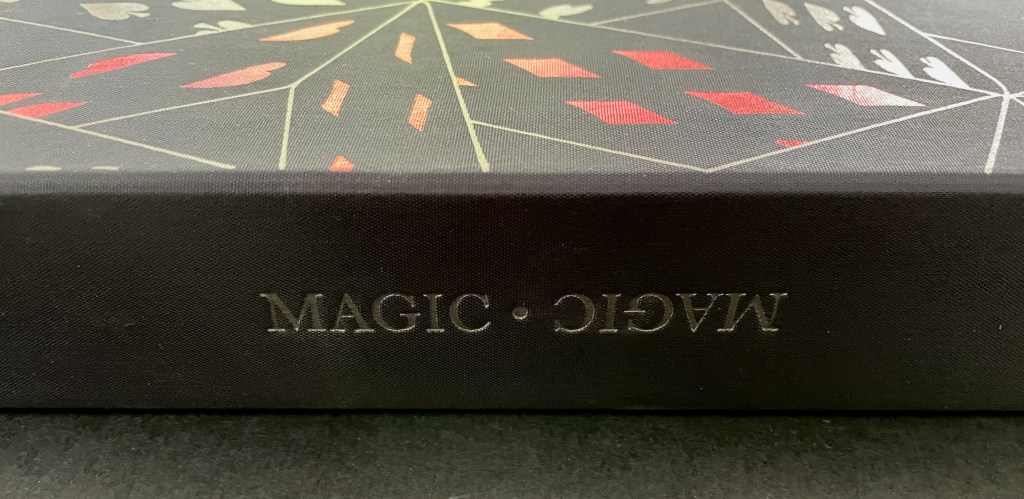
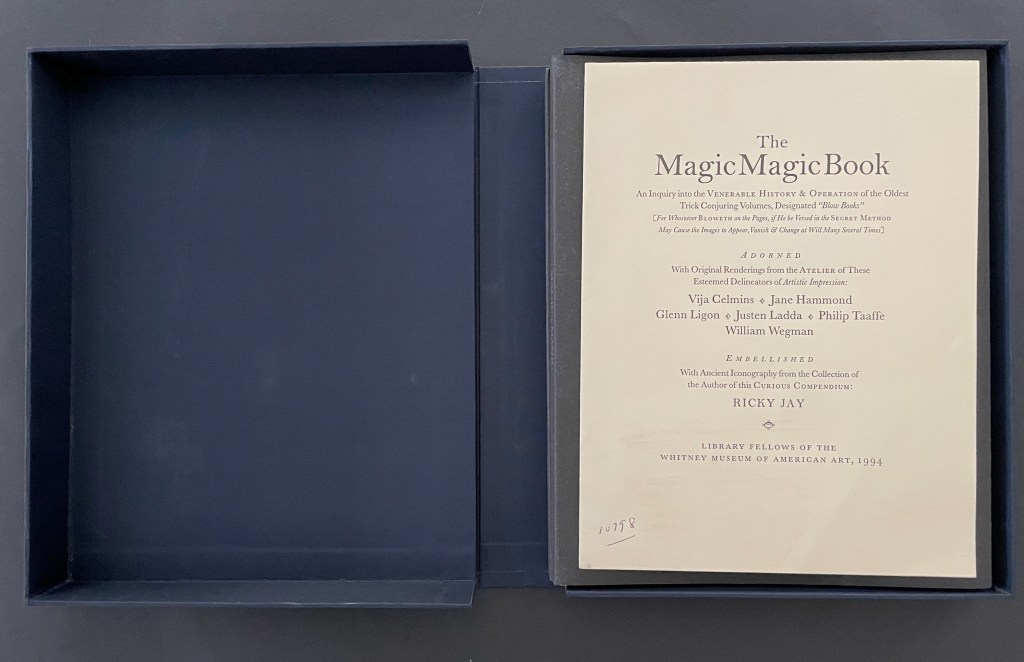
Blue silk clamshell box decorated with red and silver metallic playing card motif, housing two softcover casebound and sewn volumes. Box: H270 x W217 x D43 mm. Books: H254 x W206 mm. 106 and 80 pages, respectively. Edition of 300 copies, of which this is #208. Acquired at Swann Auctions, 22 April 2025.
Photos: Books On Books Collection.
Ricky Jay’s The Magic Magic Book explains and presents a structure well suited to the artist’s book but one rarely used. The structure is called the “blow book”. Most of us know the apparatus from childhood birthday parties as the “magic coloring book” in which the clown or magician flips through a book of blank figures to be colored, calls on the birthday boy or girl to blow on the closed book, and then reopens it to show all of the pictures colored in. Hard-to-see tabs or alternating page widths enable the performer to produce the effect. Until Jay’s production with the Whitney Museum Library, there had never been an extended serious study of the blow book by scholars of magic, iconography, children’s literature, or the history of the book.
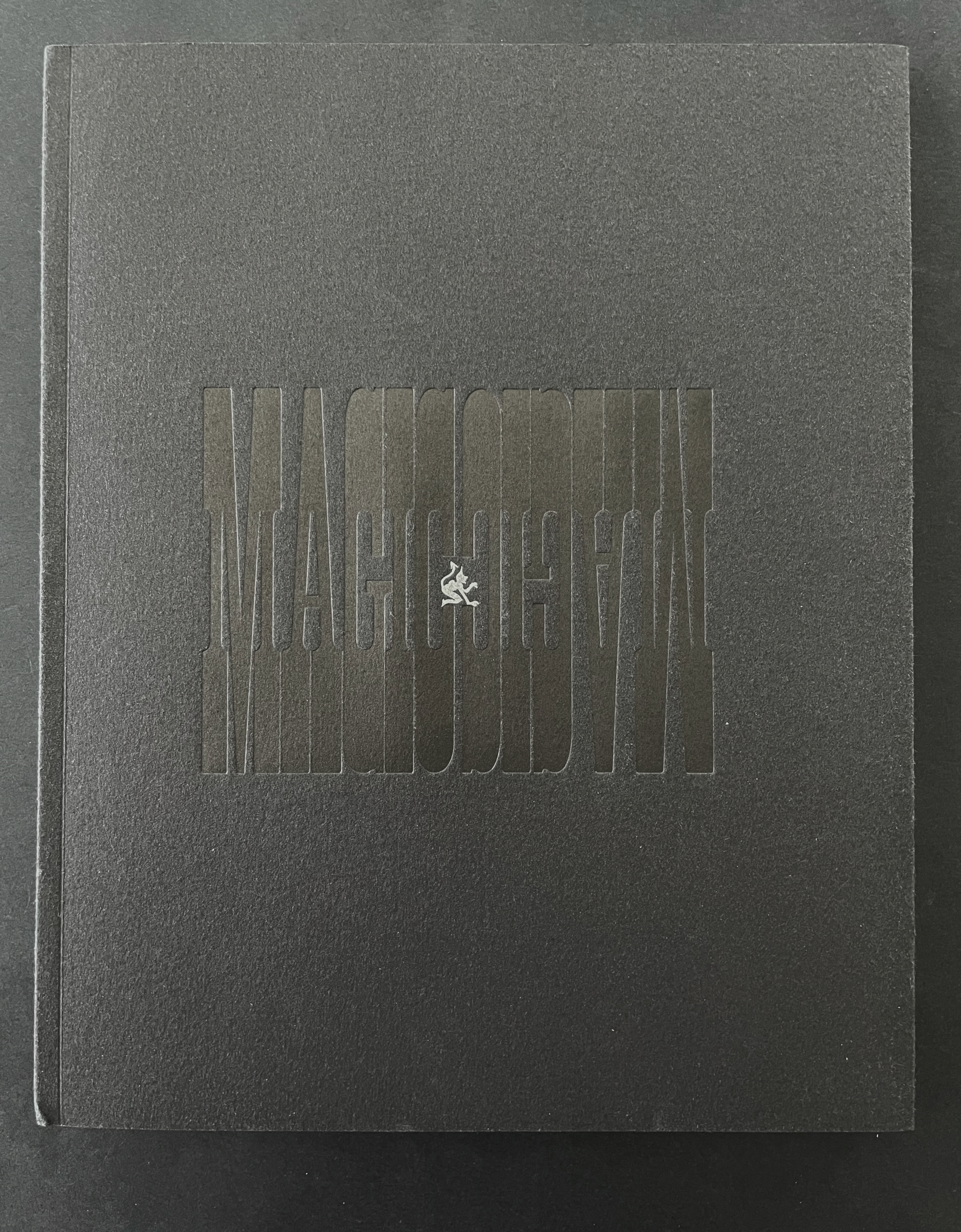
The Magic Magic Book ‘s two softcover volumes are housed in a blue silk clamshell box whose front cover displays the optical illusion of a house of cards. The card motif reflects both the blow book structure’s use in trick decks of cards and Jay’s reputation in the 90s as “perhaps the most gifted sleight of hand artist alive” (Singer, 1993). The first volume gives an illustrated essay on the history of the blow book. The second volume (a blow book itself and in a dos-à-dos structure) features illustrations by contemporary American artists Vija Celmins, Jane Hammond, Glenn Ligon, Philip Taaffe, and William Wegman as well as painted devils and harlequins, letterpress alphabets, figures in silhouette, and instructions (in four languages) for operating the blow book. After one flick through the book showing blank spreads, the next flick yields a dance of eight harlequins.
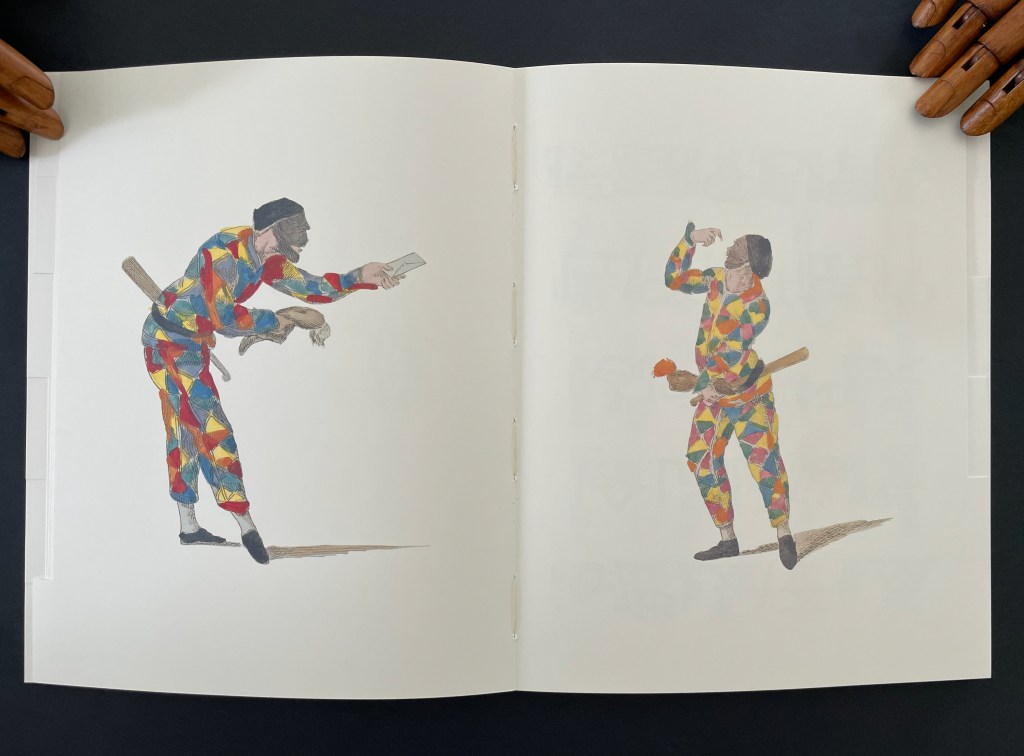
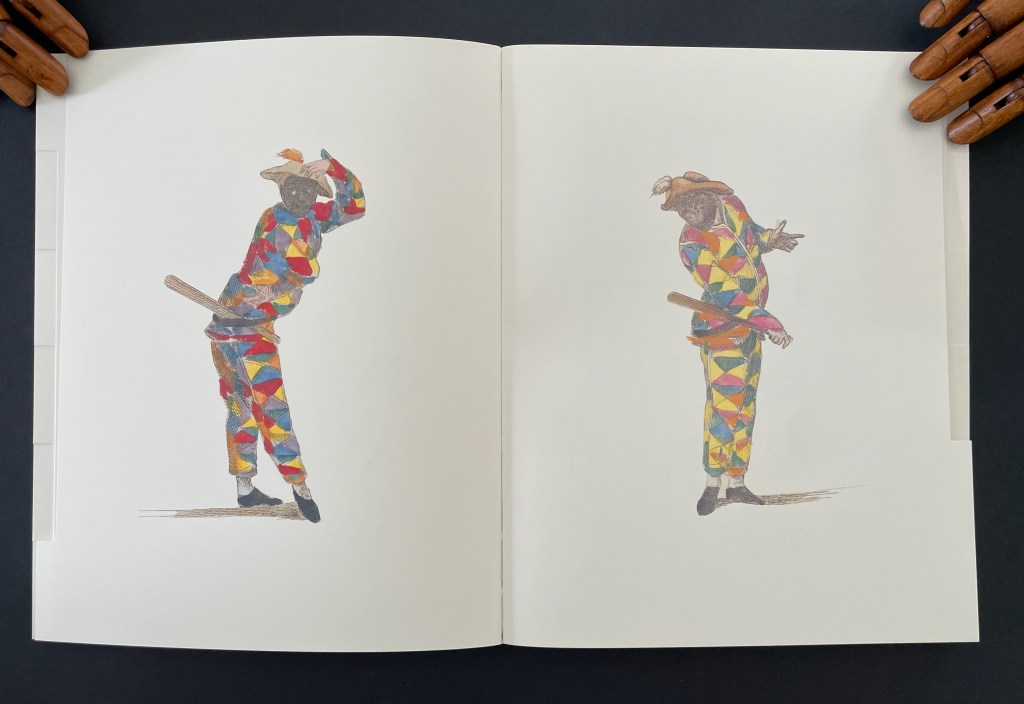
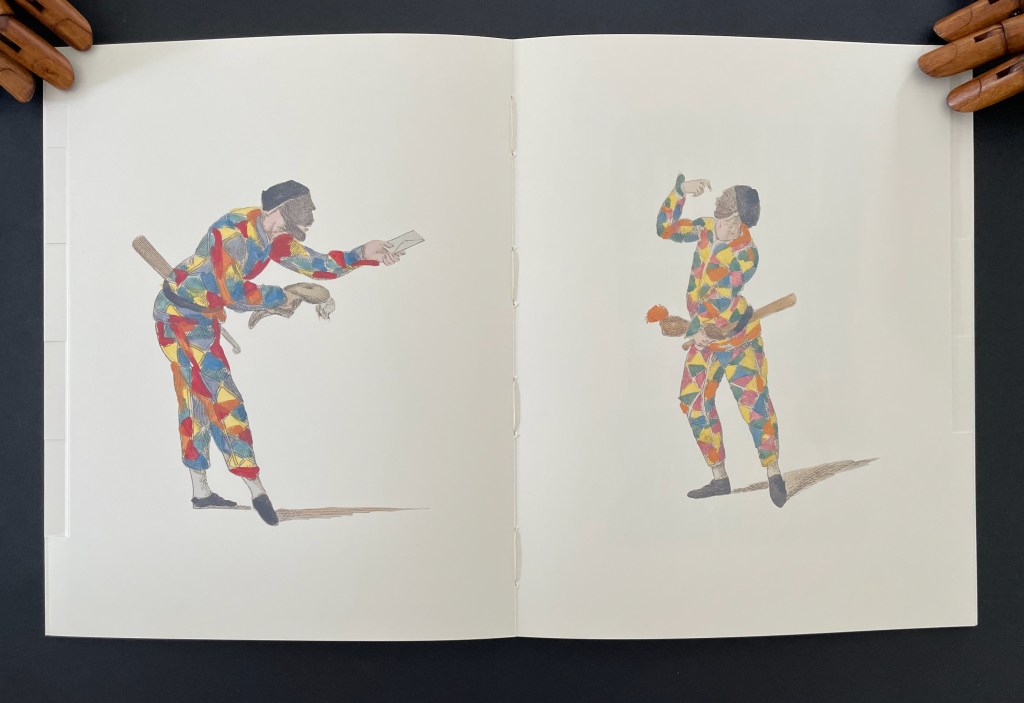
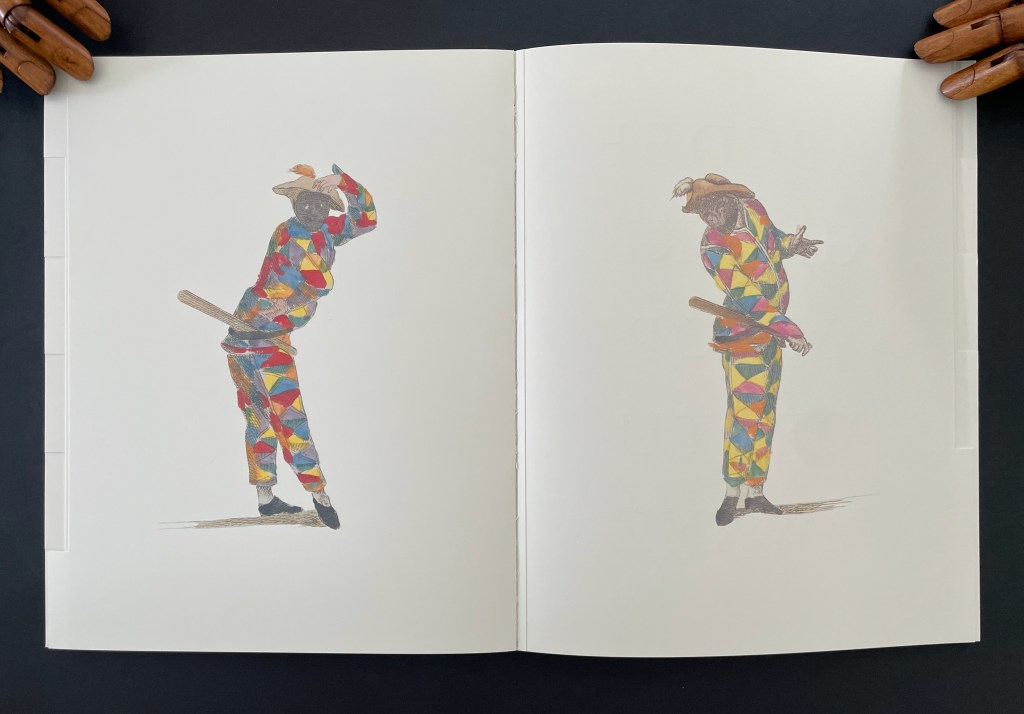
The next flick turns the harlequins into alphabets.
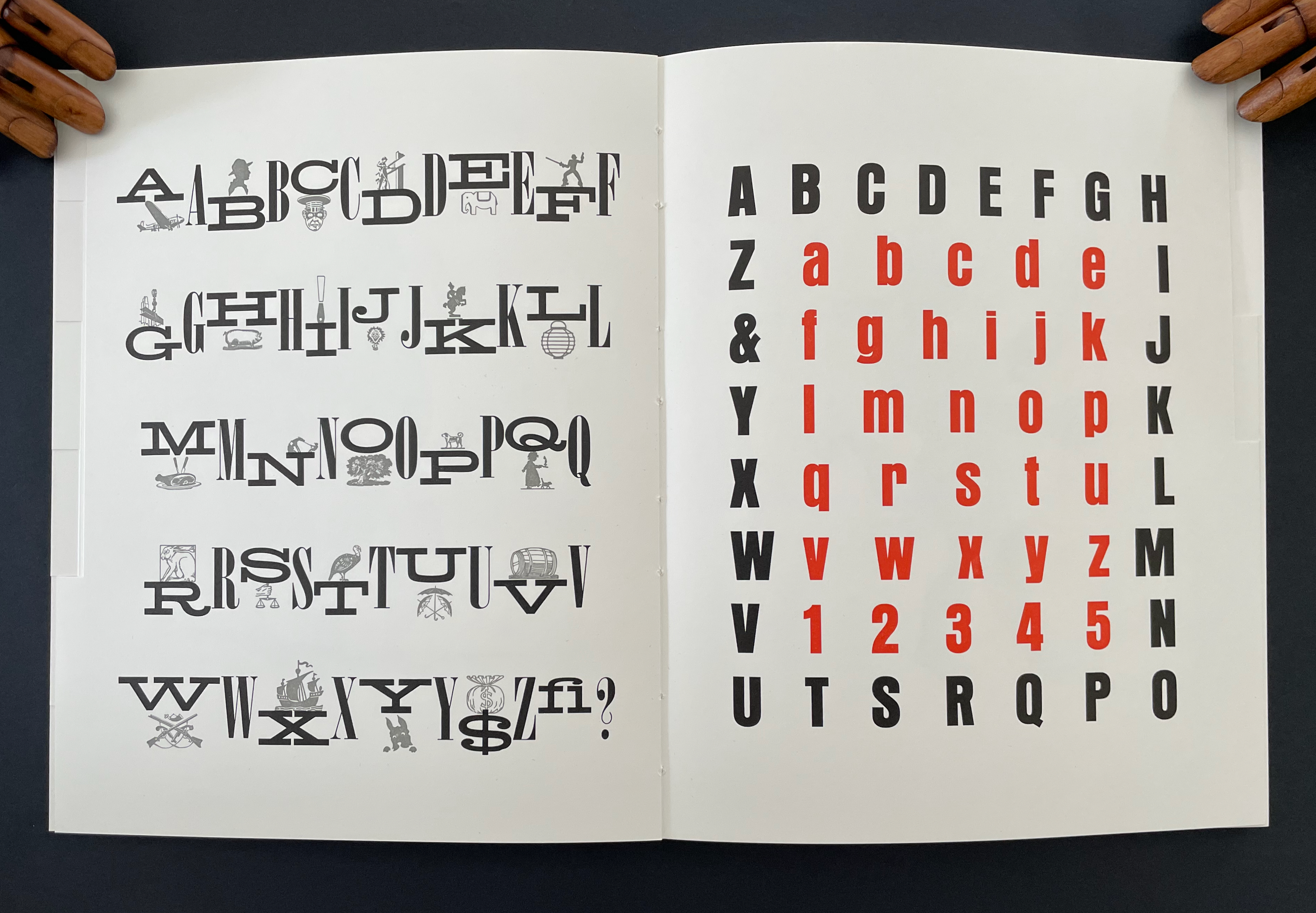
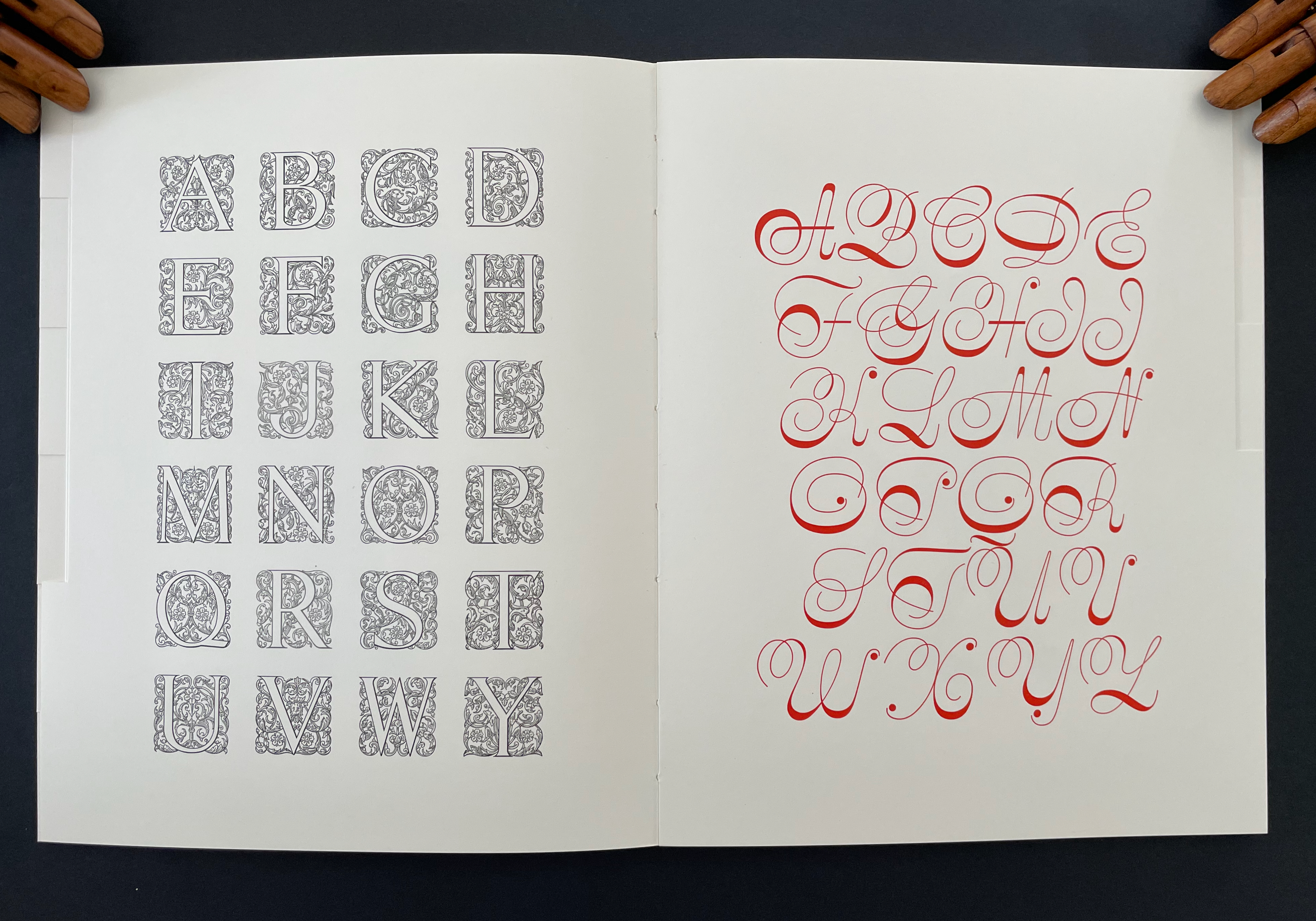
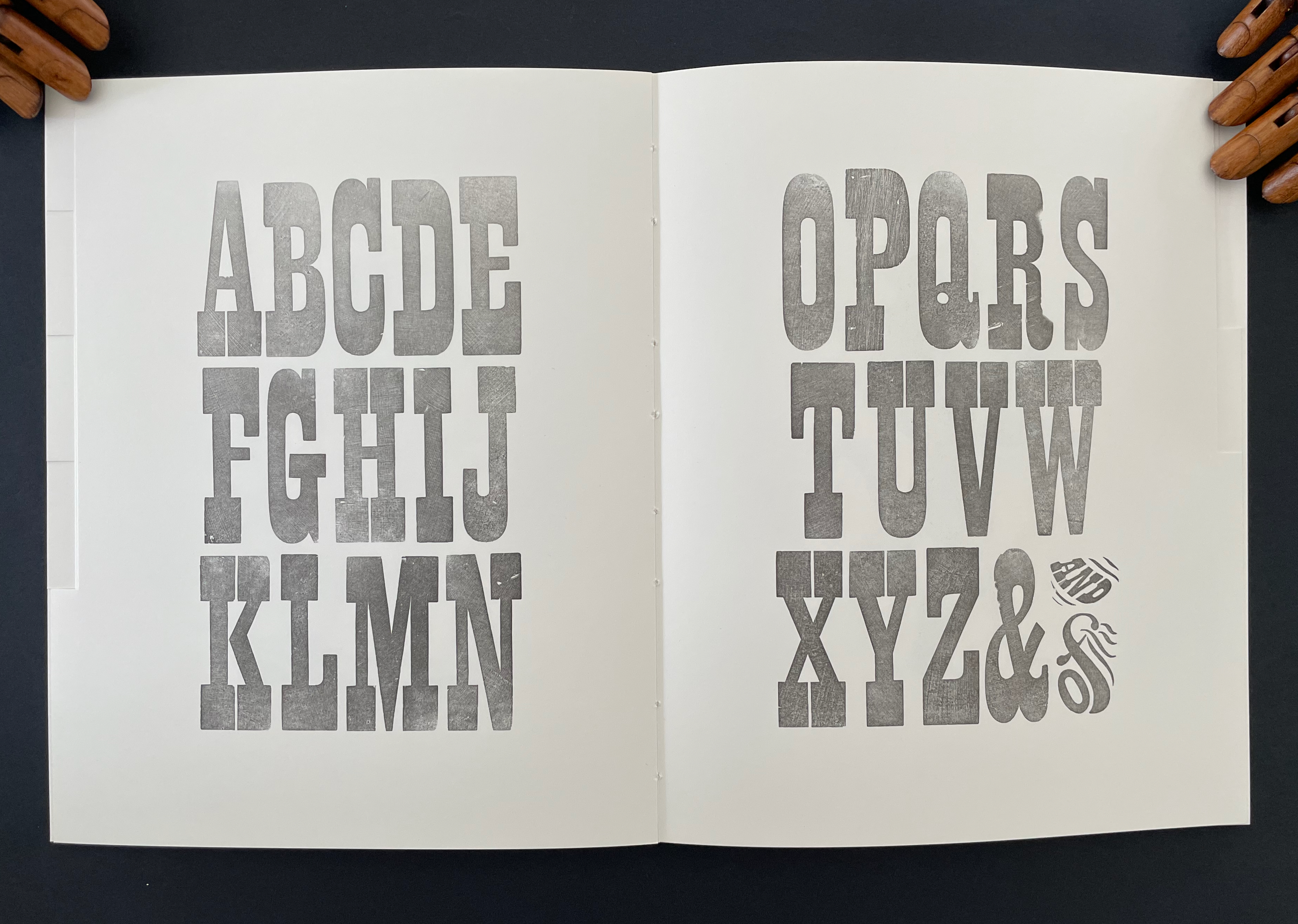
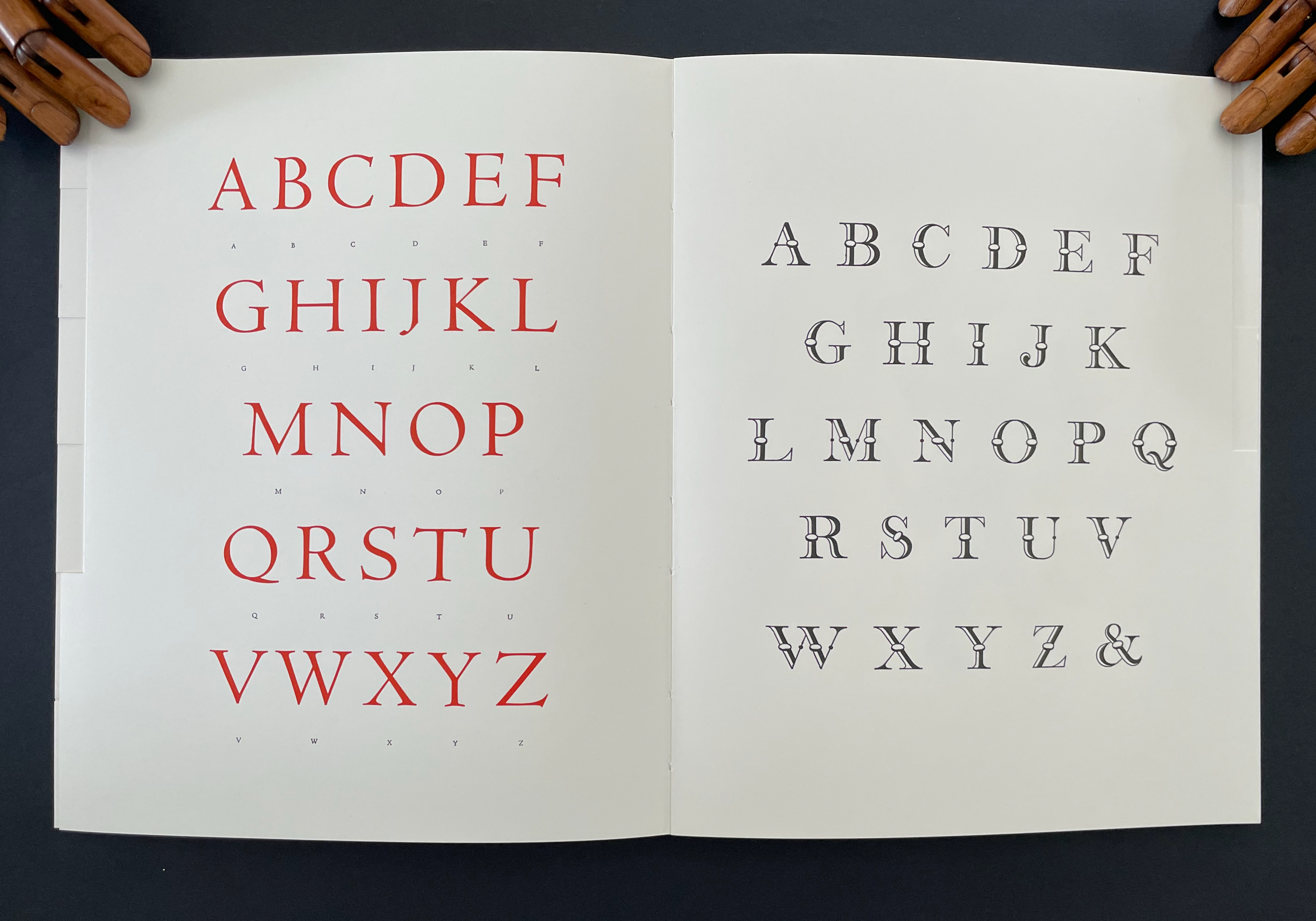
The next flick transforms the alphabets into fire-breathing, fire-farting devils (the images courtesy of Thomas Stauss to Jay).
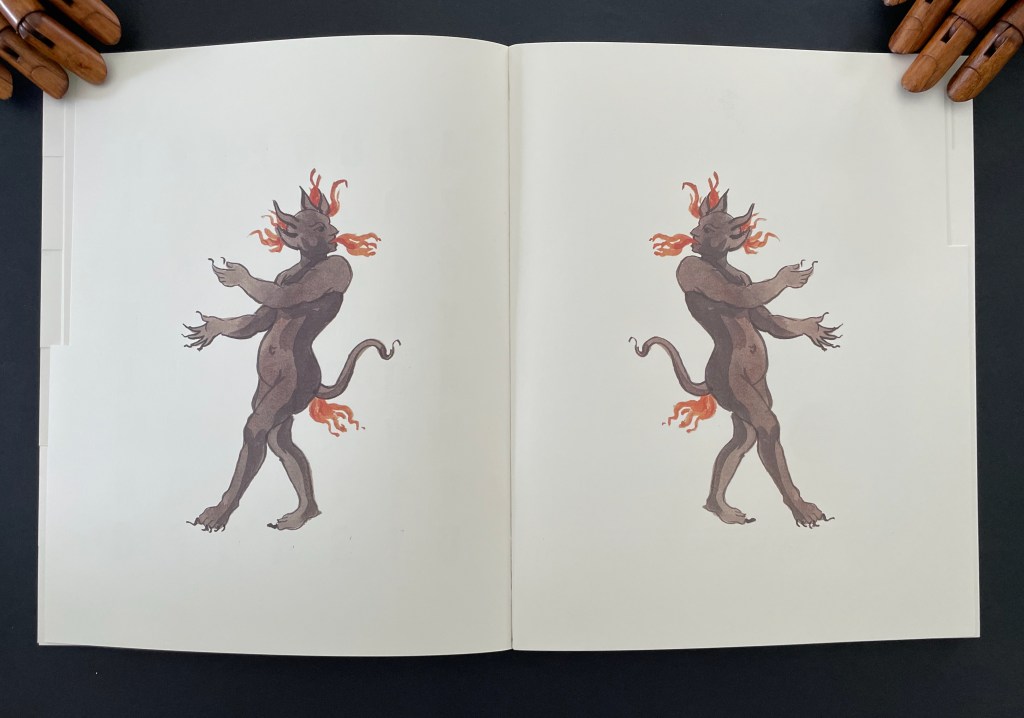
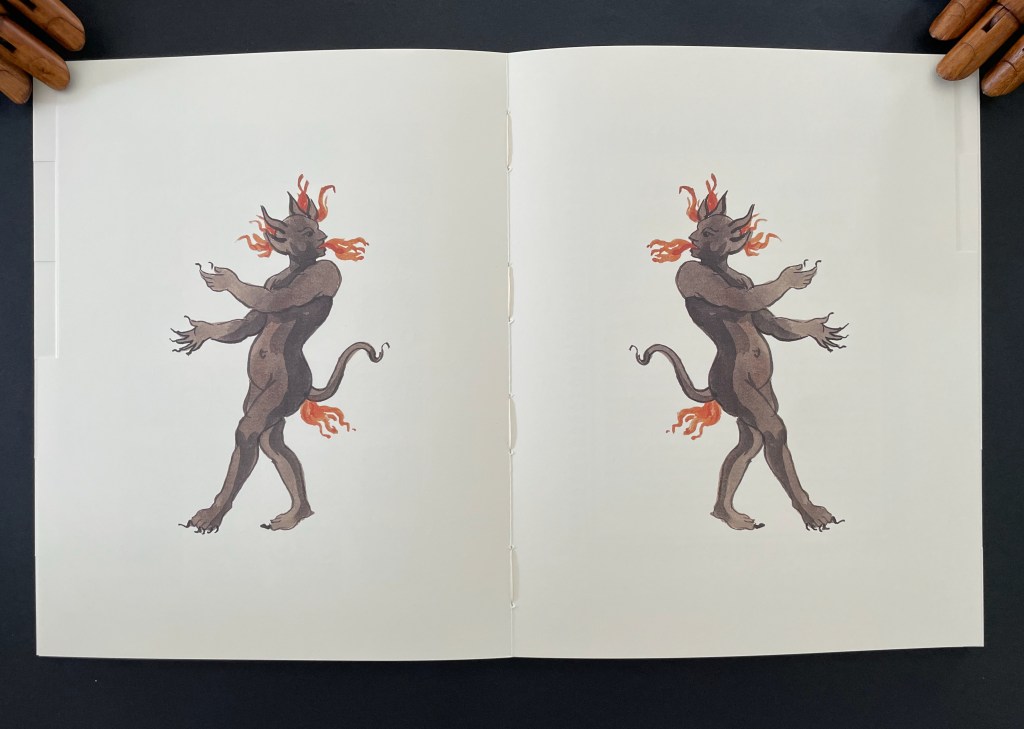
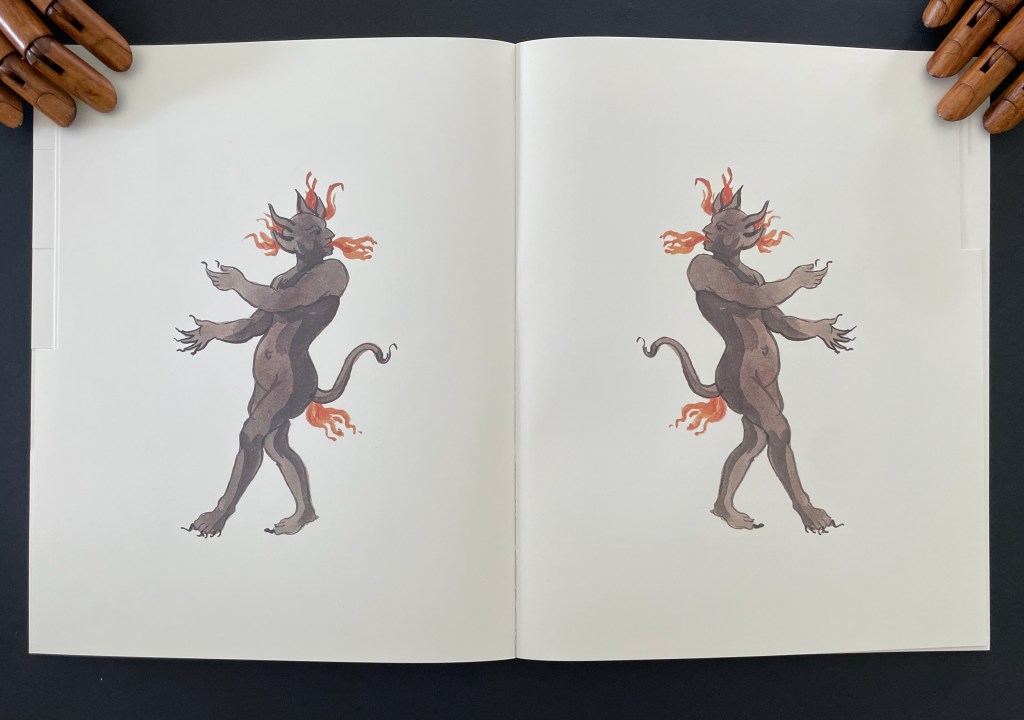
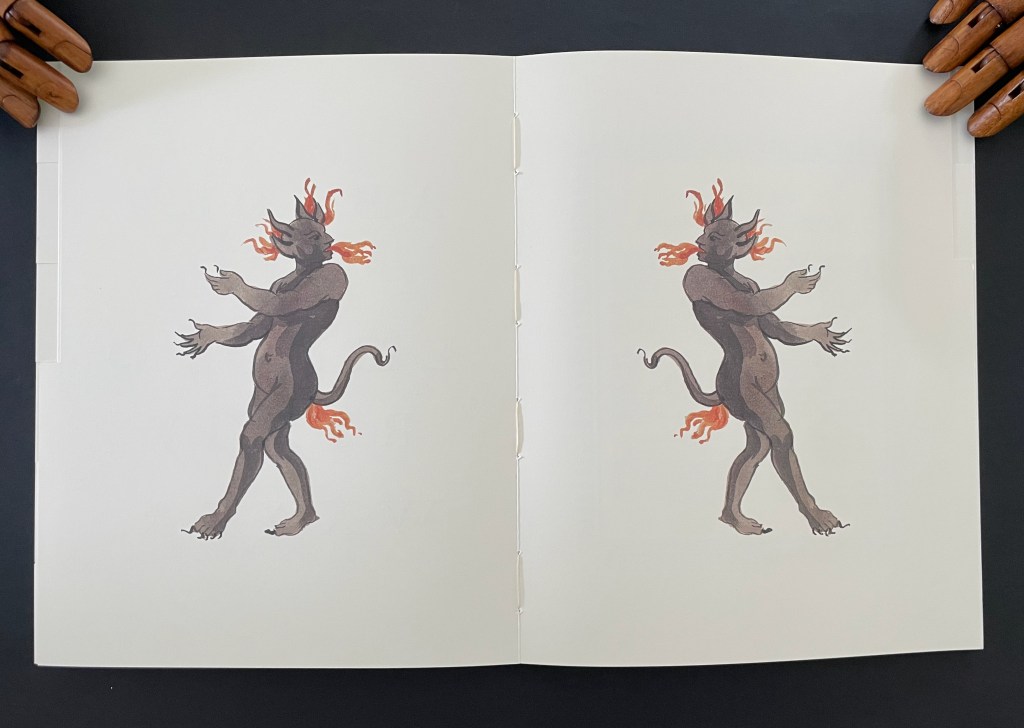
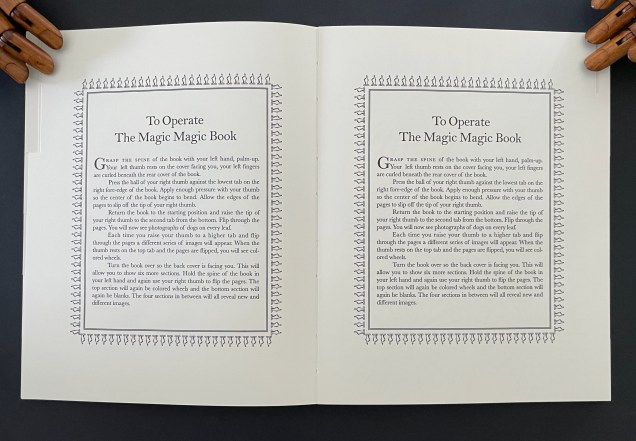
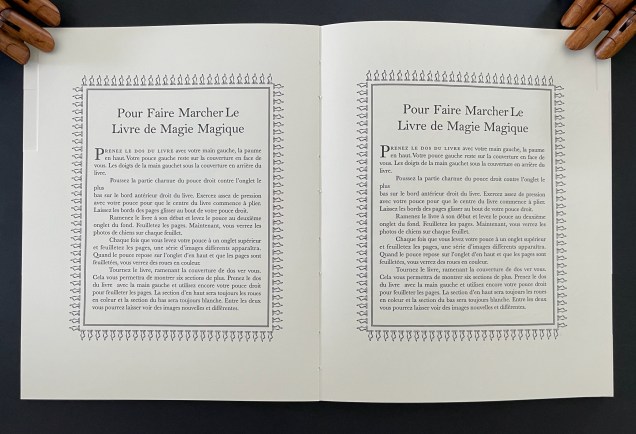
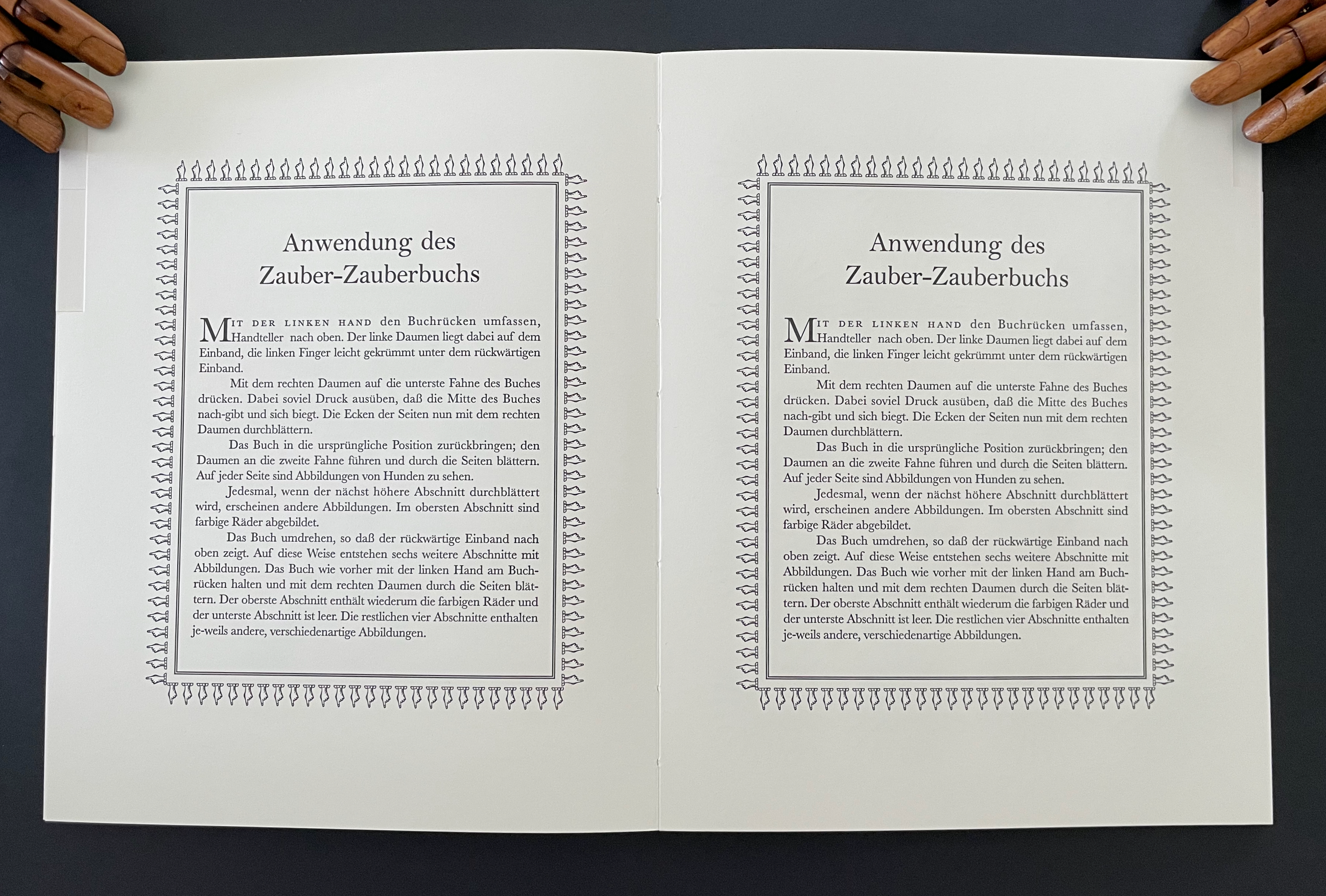
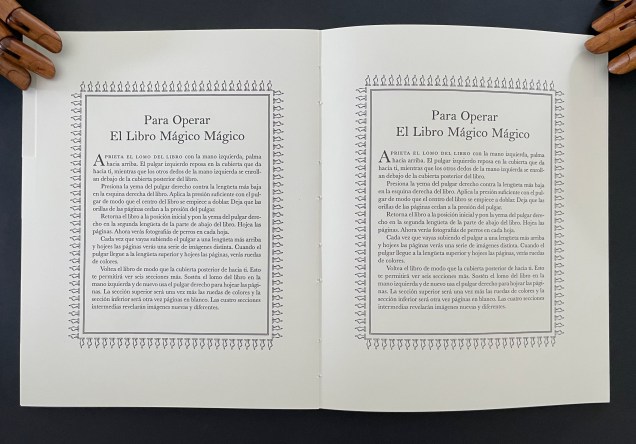
With the next flick, we get the English, then French, then German, and finally Spanish instructions for operating the book.
And with the last flick, Philip Taaffe’s fern-like, starburst abstractions appear, gradually shrinking and ordering themselves into columns of four and rows of five. When the dos-à-dos is turned, Taaffe’s series returns (again last in the sequence of flicks) but in reversed order, the columns and rows dispersing into other patterns and increasing in size.
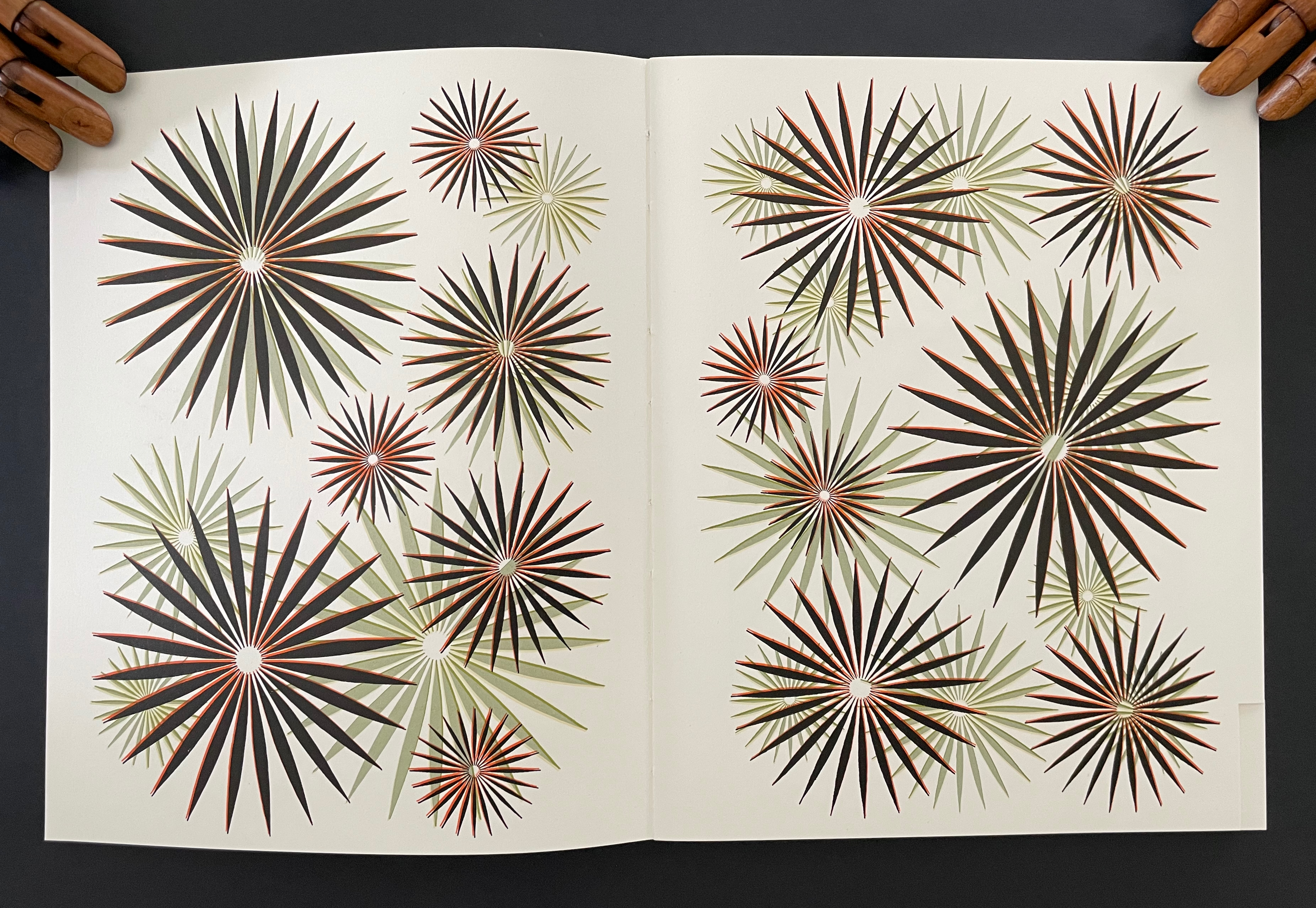
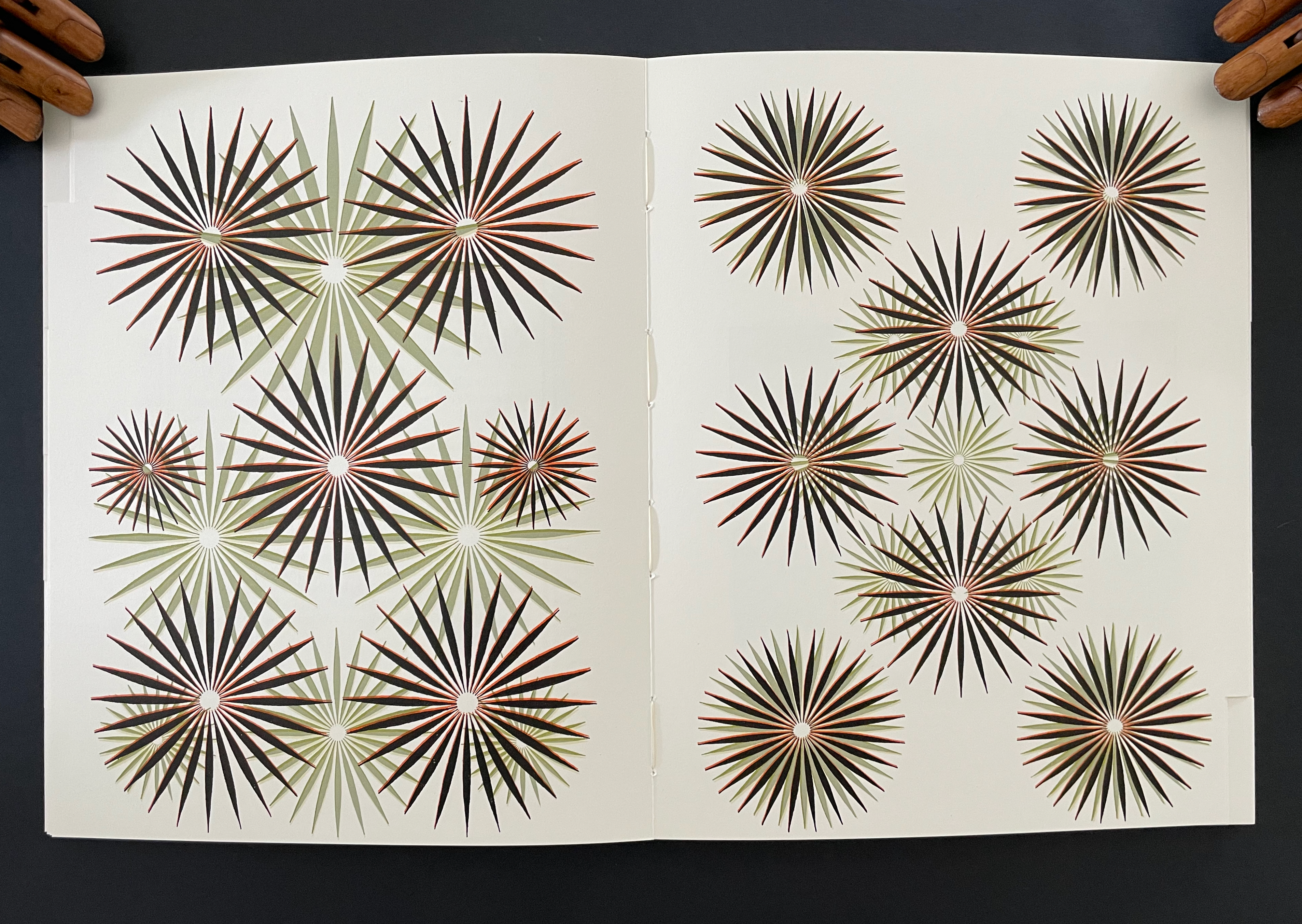
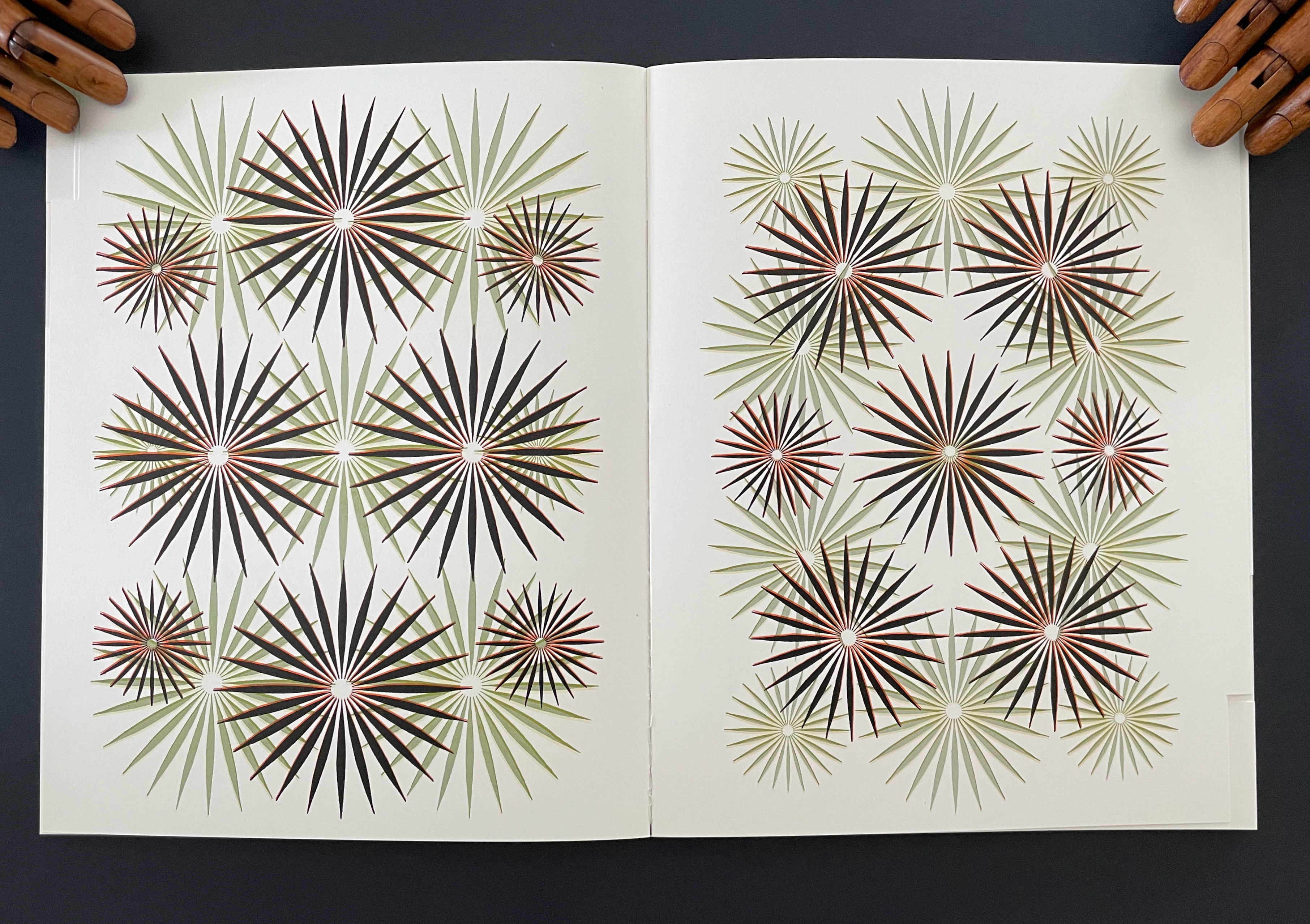
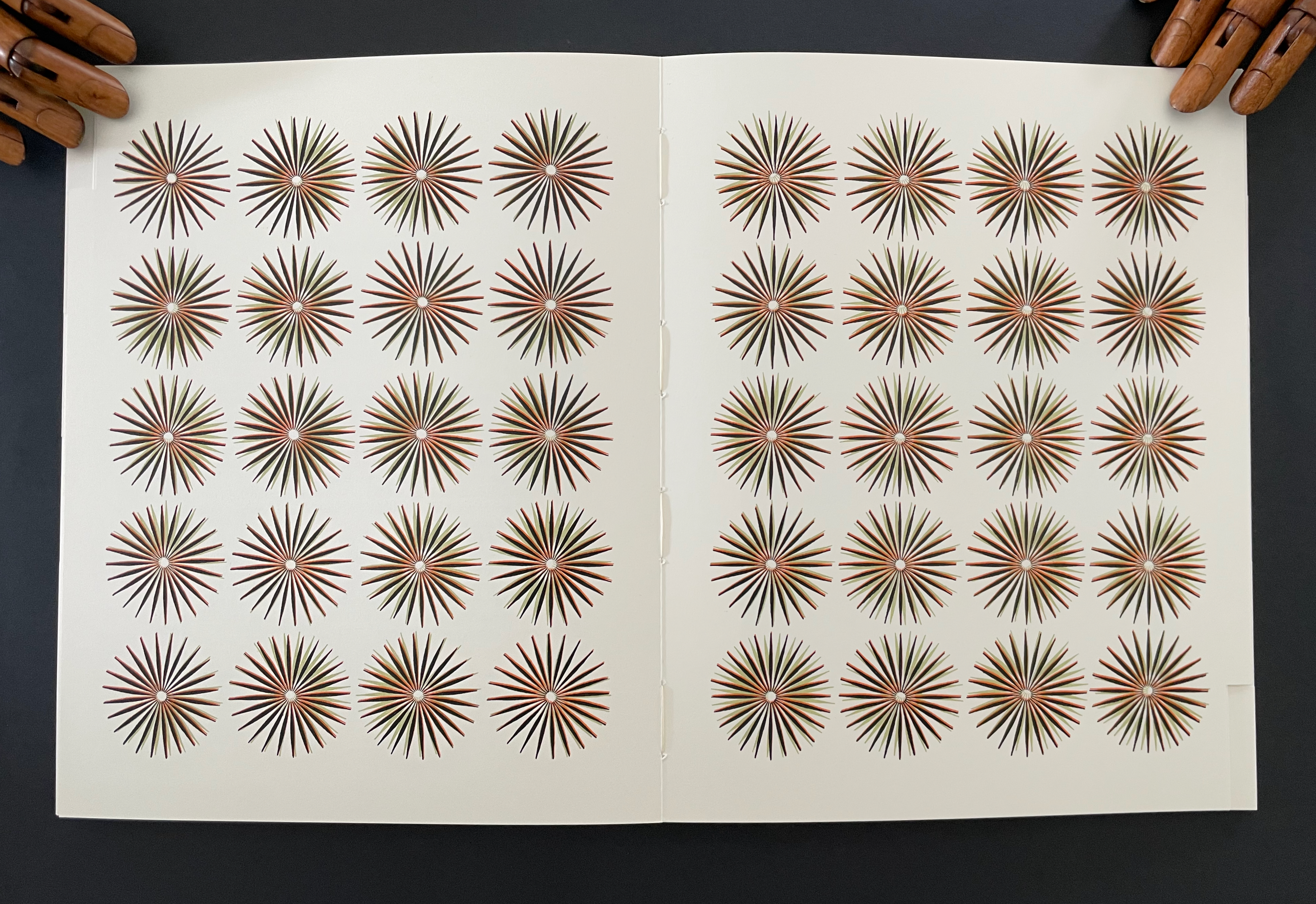
The blow book offers artists a tool that can shape meaning, metaphor, and perspective. It can elicit performance by the reader to enact ideas, narrative, and structural effects. Its close association with the rise of the printing press, affordable paper, and binding capabilities recommend the blow book to book artists intent on demonstrably tying their works to the history of the book. The hard-to-see tabs or alternating page widths that enable the performer to produce the blow book’s effects offer a means of enhancing the materiality of the artist’s book. Its mechanics offer the chance to use flip (or flick) book’s animating effects, which have appealed to numerous book artists. Its twist on those effects lends it to juggling the layout of text and image in a non-traditional manner. Its mechanics can also enhance binding structures like the dos-à-dos, a structure also borrowed for magic tricks. Its reliance on manipulating a book’s fore edge offers the chance to emphasize both form and tactility, a characteristic theme of artists’ books. The two volumes of The Magic Magic Book itself incorporate “watercolors, woodcuts, etchings, hand-colored engravings, lithography (black-and-white and colored), mimeograph, drawings, decals, stencils, photo-offset — even leaves from other books” (“Prologue”, p.2) — surely another enticement to book artists to explore the form.
In the Books On Books Collection, Julie Chen and Keri Miki-Lani Schroeder’s Book of Hours (2021) and Horst Antes’ Flickbuch (2000) are the only two artists’ books that exploit the blow book structure. As examples, they show the form’s scope for artists to work their individual magic and demonstrate the blow book’s magical transformations that make us query the nature of “the book”.
Further Reading
“Horst Antes“. 2 September 2026. Books On Books Collection.
“Julie Chen & Keri Miki-Lani Schroeder“. 27 May 2025. Books On Books Collection.
“Nicholas Phillips“. 11 August 2020. Books On Books Collection. Phillips’ Egyptian Cards demonstrate multiple image changes in a deck of cards.
“Stauss, Thomas“. 28 September 2026. Books On Books Collection.
Aling, Michael. n.d. “Publishing as Architectural Practice“. University of Greenwich. Architectural book designer Michael Aling put the “blow book” principle to work in Negative Equity: House Projects by Neil Spiller & Nic Clear. By adjusting the trim, Aling makes the book display only spreads with Spiller’s work if the codex is flicked through with the right thumb and only Clear’s spreads if flicked through with the left thumb. P. 6, Fig. 2.
Dunstan, Dominique. 10 October 2021. “Treasures of the Library: the magic of blow books“. State Library Victoria. Video.
Princenthal, Nancy. 1996. “Now you see it, now you don’t : the magic, magic book“. Parkett. 47: 184-91.
Singer, Mark. 29 March 1993. “Secrets of the Magus“. New Yorker. “I’m really intrigued with the concept of the book as both a subject and an object of mystery,” says Jay towards the end of the article.
Stauss, Thomas. 2025. Magic Metamorphosis : The Secrets of a Rare Italian Picture Album Revealed. Basel: Librum Publishers and Editors LLC.


Wow, that’s about all I can say. I never imagined that as a structural approach to a book . Thanks for letting your readers know about it. I will get one from my local magic shop to study the construction. Yours,
Peter Thomas
>
LikeLiked by 2 people
Ricky Jay’s The Magic Magic Book (1994) is a fascinating artist’s book built around the historic “blow book” structure. Its pages magically transform from harlequins to alphabets, devils, multilingual instructions, and finally Philip Taaffe’s abstract patterns. What makes it special is how it turns the physical act of handling a book into a performance, challenging our ideas about what a book can be.
LikeLiked by 3 people
We love this structural approach to writing and letters.
Thanks for sharing
The Fab Four of Cley
🙂 🙂 🙂 🙂
LikeLiked by 2 people