Bookmark — “How Old is Innovation before it’s New?” David Worlock

Fachbuchhandlung
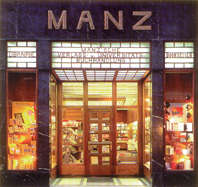
Vienna’s Manz Bookstore, facade by Adolf Loos

Two interesting words: “semantic” and “innovation.”  Find yourself a good cup of coffee, a slice of sachertorte, the aroma of cinnamon and take the time to read this article by David Worlock.

“Getting” the fundamentals of digital publishing means “getting” semantics: the semantic web, taxonomies, ontologies, tagging and all that.  David Worlock’s article is a good place to start to understand why.

Bookmark — The evolution of bookselling

overdrive-retail-ebook-kiosk--134x250
Nate Hofhelder, The Digital Reader

No good history of the book in the late 20th and early 21st century will overlook this part of the book’s value chain.  In covering the earlier eras, the outstanding historians — Chartier, Davenport, Eisenstein, Johns,  Lefèbvre and Martin,  McMurtrie,  Pettegree, Pollard, and Suarez — touch on distribution and retail to varying degrees.  When it comes to our era though, the effect on the book itself of the distribution/retail roles played by Barnes & Noble, Borders, Amazon, Apple, Google, OverDrive and a host of other smaller key players such as Project Gutenberg will loom larger.  (So will that of self-publishing if we consider BookStats‘ report that self-published ebooks represented 30% of ebook sales in 2012.  What the effect will be, though, is harder to say.)

Around since 1986, OverDrive has its roots in the production end of the industry, providing publishers with conversion and formatting services from diskettes to CDs to ebooks.  Its owner, Steve Potash, set the foundations of its contribution to distribution and retail in 1999-2000 with his participation in the Open eBook Forum, now the International Digital Publishing Forum, and his creation of Overdrive’s Content Reserve.   As of this writing, Content Reserve contains over a million ebooks; it is the “overdriver” behind the firm’s library distribution service and the OverDrive Retail Kiosk.

If the OverDrive Retail Kiosk becomes a key to unlocking the way back for book retail in the “real world,” it will by its own definition contribute to the evolution from the printed book to the ebook.   Anyplace — in the mall, the main street or high street, the coffee shop, canteen or library — can become an outlet for the purchase of ebooks, which will feed back into the supply and value chains.

No doubt, historians will note that OverDrive required no physical ereader of its own, no Kindle, no iPad, etc., to reach this point in the evolutionary path but rather, it was its dual focus on finding an effective way to rationalize the delivery of multiple formats while pursuing a standard (EPUB) and on meeting the distribution needs of libraries then retail that put OverDrive in its current position. That position is symbiotic with both “closed garden” ereaders and apps as well as books-in-browser solutions.

Just as the Gutenberg press would not have taken off without the regular supply of a more relatively standardized form of paper, the digital book has had to await — is still awaiting — a more standardized format and mechanism of delivery.  In reinventing themselves and these parts of the book industry’s DNA, OverDrive and others contribute to the evolution of the book.


Overdrive Digital Bookmobile
Overdrive Digital Bookmobile (Photo credit: Librarian In Black)


Bookmarking Book Art – Vita Wells, Updated 11 February 2014

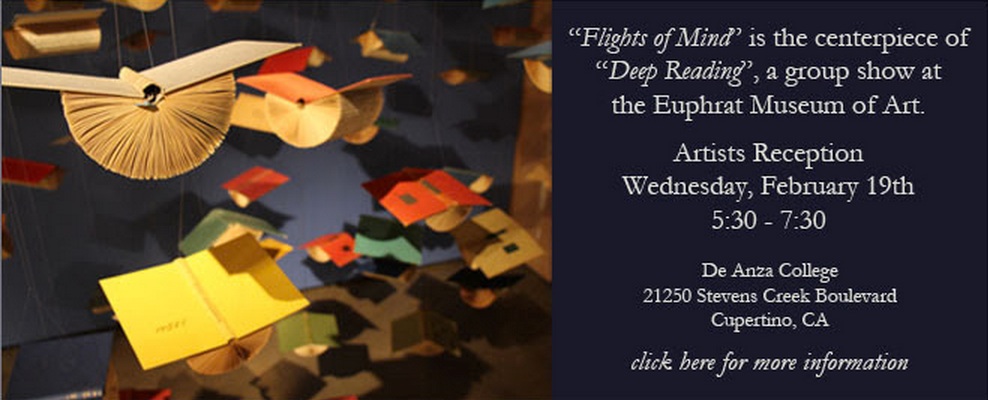
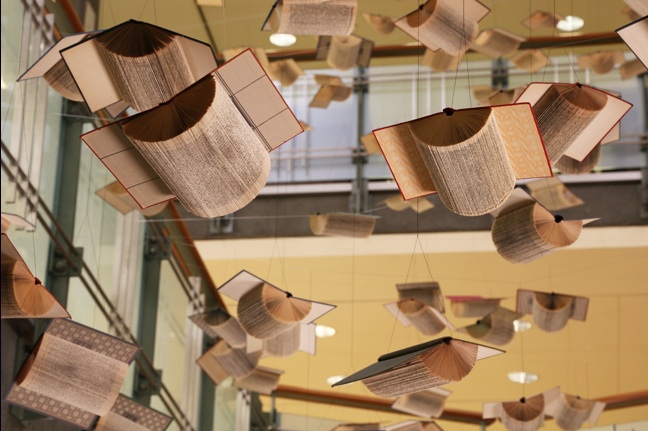
Wells %22Flights of Mind%22From 3 February to 20 March 2014, Vita Wells (born Béa Welsh Weicker) has a new “Flights of Mind” installation. A year ago, she had placed an installation of the “Flights of Mind” at the Berkeley Central Library, the first being in 2012 at the Oakopolis Gallery in Oakland, California.

Wells Flights of Mind BerkeleyFollowing the Berkeley installation, the following was posted on BooksOnBooks:

Appropriately, this latest installation was for the “11th Annual Authors Dinner,” sponsored by the Berkeley Public Library Foundation.  Soaring forty feet above the patrons’ heads were hundreds of altered discarded books, their covers spread into wingspans, their pages folded into rounded bird bellies and each book suspended on cables from the ceiling at varying pitches,  yaws and distances from one another.   They are no longer there, nor at the Oakopolis.  By the installation’s name, they should now exist only in the mind, but the artist provides an extensive online “installation” with numerous pictures and videos, an essay on her intent and a detailed description of the installation’s physical characteristics.

It is delightful to have access to the online version, and we may fool ourselves into thinking of it as virtual.  Even the digital is subject to forensics.  Still, although Wells may well take down the online installation, or its URL may be hijacked or fall into 404-dom, it is not temporary in the sense that its instances in Berkeley and Oakland were.  So does its presence challenge the integrity of those temporary installations?

Almost a century ago now, Yeats wrote of the swans’ “bell-beat” of wings overhead at Coole, and that poem entered the world of lasting works of art.  It has its many physical instantiations in books the world over.  It lives in recordings.  It lives on the Web.  It lives in countless minds ready to recite it.  Of course, the books will rot, the recordings and sites decay, the minds fall into silence.  Yet in the presence of thought become art, soaring overhead, we dare to dream of persistence even in the face of such imperfections as Wells’ “worn, frayed, … beat-up and patched” birdbooks or the challenge of the age of digital reproduction to the integrity of art.

… now they drift on the still water

Mysterious, beautiful;

Among what rushes will they build,

By what lake’s edge or pool

Delight men’s eyes, when I awake some day

To find they have flown away?

Vita Wells’ art feeds the dream.

Related publication

Tracey Taylor, “Berkeley artist Vita Wells makes books fly at main library”, Berkeleyside, 11 February 2013, accessed 11 February 2014: http://www.berkeleyside.com/2013/02/11/berkeley-artist-vita-wells-makes-books-fly-at-main-library/


Bookmark for Literacy — Tom Chatfield

Tom Chatfield’s short essay “I Type, Therefore I Am” celebrates the increasingly rapid rise of literacy.

At some point in the past two million years, give or take half a million, the genus of great apes that would become modern humans crossed a unique threshold. Across unknowable reaches of time, they developed a communication system able to describe not only the world, but the inner lives of its speakers. They ascended — or fell, depending on your preferred metaphor — into language.

The vast bulk of that story is silence. Indeed, darkness and silence are the defining norms of human history. The earliest known writing probably emerged in southern Mesopotamia around 5,000 years ago but, for most of recorded history, reading and writing remained among the most elite human activities: the province of monarchs, priests and nobles who reserved for themselves the privilege of lasting words. …

In the past few decades, more than six billion mobile phones and two billion internet-connected computers have come into the world. As a result of this, for the first time ever we live not only in an era of mass literacy, but also — thanks to the act of typing onto screens ­— in one of mass participation in written culture.

via Tom Chatfield – Language and digital identity.

This is territory bookmarked before in response to Ferris Jabr’s “The Reading Brain in the Digital Age” — Bookmarking a Bookburning II — but it occupies higher ground.

Bookmark — Anniversary of the Book’s Freedom from Taxation

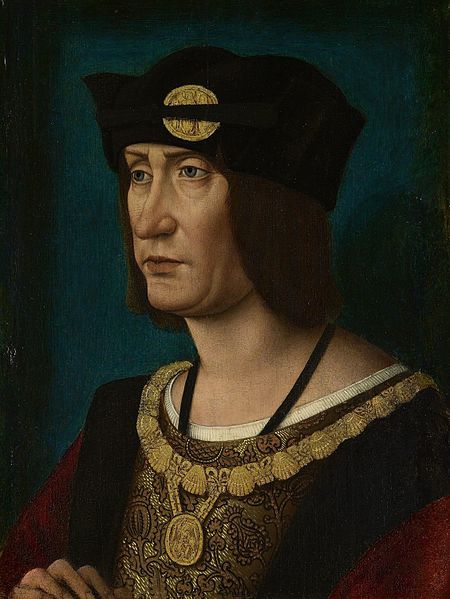
Louis-xii-roi-de-france
Louis XII, Roi de France, 1498-1515

In 1513, Louis XII of France issued an edict praising printing, exempting it from a large impost and removing a tax on books.  Louis declared that “the printer-booksellers … ought to be maintained in their privileges, liberties, franchises, exemptions, and immunities, in consideration of the great benefits which have been conferred upon our kingdom by means of the art and science of printing, the invention of which seems rather divine than human ….”  Two years later, Louis was dead, and the lot of books and printer-booksellers fell under the shadow of France’s so-called Father of Letters, François I, who issued an edict in 1535


Francis1-1
François I, Roi de France, 1515-1547  


banning the use of the printing press and permitted books and printers to be consigned to the flames for blasphemy.   (Richard Christie, Etienne Dolet: The Martyr of the Renaissance, 1508-1546, 1899. Pp. 330-31).    Which might be said to challenge the certainty of taxes while confirming that of death.


Bookmark — Anniversary of The Imprint and Its Font

Gerard Meynell's The Imprint
Gerard Meynell’s The Imprint

The Imprint

This year is the centenary of Gerard Meynell’s trade periodical The Imprint, which was the scene of Stanley Morison’s first appearance in print. How appropriate then that Morison’s book A Tally of Types tells the story of the journal’s founding and, equally important, how the historic font called Imprint Old Face came into being. The font’s importance is that “the design had been originated for mechanical composition. … the first design, not copied or stolen from the typefounders, to establish itself as a standard book-face.”(p.21) Ironically, Meynell and his colleagues intended for the font to be freely available to the trade, but eventually it came into the ownership of Monotype Imaging, where it can be obtained today under the OpenType family.

As the world of print morphs into its digital incarnation, we see the same impetus behind the new generation of typographers, the ones born digital, but we see varying degrees of adherence to the “type wants to be free” movement.

Bookmarking Book Art — Fore-edge Printing and Painting: Book Art and the Book Arts Revealed

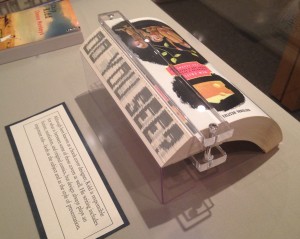
Chip Kidd’s novel The Cheese Monkeys, designed as well by him, sports a printed fore-edge. When the book is closed, the fore-edge is blank.  Fanned in one direction, it shows the sentence as seen in the photo below.

Chip Kidd, The Cheese Monkeys: A Novel in Two Semesters, 2008

Chip Kidd, The Cheese Monkeys: A Novel in Two Semesters, 2008, from the Chip Kidd Archives, on display Jan. 12 through April 24, 2015, in The Eberly Family Special Collections Library, Penn State University. Reproduced with permission of the Library

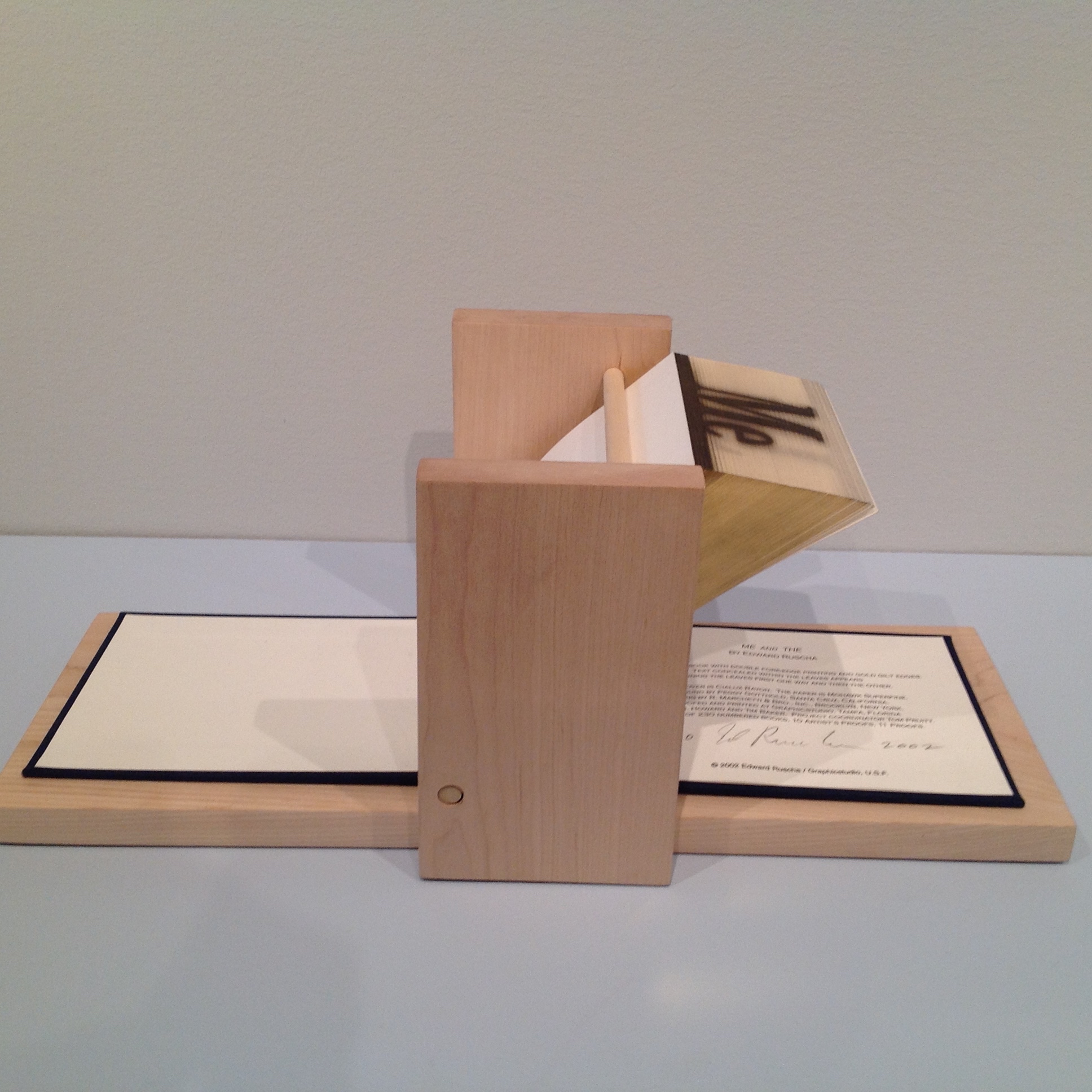
Fanned in the opposite direction, the fore-edge displays another phrase: “Good Is Dead”. The printing process is well described in a 2004 video by Graphics Studio|Institute for Research in Art, prepared about the making of Ed Ruscha’s fore-edge book Me and The.

Ed Ruscha, Me and The, 2002 Allan Chasanoff Collection, Yale University Art Gallery

Ed Ruscha, Me and The, 2002
Allan Chasanoff Collection, Yale University Art Gallery

This is similar to traditional fore-edge painting.  Much of what is worth knowing about fore-edge painting can be learned from Martin Frost’s QuickTime Movie-rich website, but if you are a fan of the Folger Shakespeare Library, its holdings yield some outstanding examples under the hand of Erin Blake.   

Double-fore-edge-painting-showing-half-of-each-painting

Jeff Weber’s book Annotated Dictionary of Fore-edge Painting Artists & Binders is probably the lengthiest treatment available on the subject. Hear him discuss his work here.  Weber, who commissioned artwork from Frost, Margaret Allport (Costa) and Clare Brooksbank, has a particularly well-written article at the International League of Antiquarian Booksellers’ site.     

Phillip J. Pirages, an antiquarian bookseller, provides an enlightening and entertaining talk on fore-edge painting of the 18th century and shows a superb example of the London binders Taylor & Hessey’s work — a two-volume set of the works of Alexander Pope, bound in red morocco leather and decorated on the fore-edges with scenes of Twickenham and Windsor.   

The point of this bookmark is not merely to share a curiosity but to use that narrow, hidden curiosity as an illustration of the boundaries of book art and the book arts.        

Updates

Thanks to Ann Kronenberg for this link to a 1940s film on the topic.

Thanks to Merike van Zanten of DoubleDutch-Design.com for this link from 4GIFS.com showing what appear to be biblical scenes painted on the fore-edge of a book.

Thanks to Peter Verheyen for this link to a history of decorating book edges with examples from the Maurits Sabbe Library and other Leuven and Belgian collections.

Weber, Carl. Fore-edge painting : a historical survey of a curious art in book decoration (Irvington-on-Hudson, New York: Harvey House, 1976.).

See also 21 July 2018 article on Martin Frost in The Times.
Bookmarking Book Art – Franziska, a typeface

The Fine Press Book Association’s inaugural Student Type Design Competition sprang from the hope that by building bridges between printers and young type designers we might end up creating new material resources for the fine press community.

A PDF document called the Making of Franziska – a hybrid text-face between slab and serif is available for downloading.  This document is quite well put together and provides a kind of tutorial on type design.

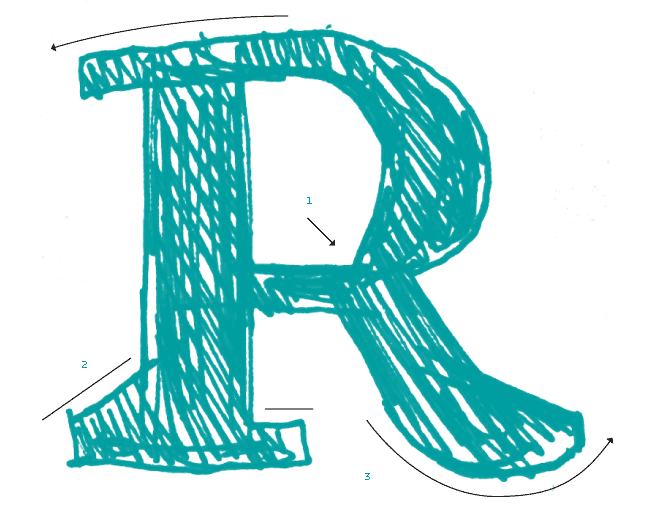
franziska-font_runge_03_text_04_freundliche-versalien

Bookmarking the Objectification of the Book

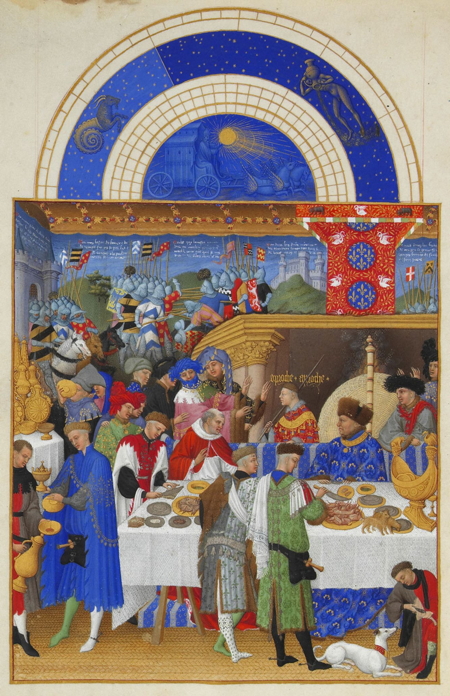
The book as object is not new.  Think of Les Très Riches Heures du Duc de Berry.

©Photo. R.M.N. / R.-G. Ojéda
January

What might be remarkable — or book-markable — is whether the surge in objectifying the book through sumptuous illumination, miniaturization or the creation of book art occurs at definitive moments of shifting media.  One-off illuminated manuscripts preceded the invention of moveable type, but was there a definable surge of them in the decades either side of 1450?

aud0017
img198

The Audubon double elephant folio books appeared in 1820 about the time of Frederick Koenig‘s invention of the steam-driven letterpress.

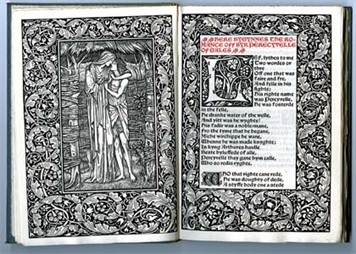
Are William Morris’s fine editions from Kelmscott Press in 1890 a datum in a surge of book objectification either side of Mergenthaler‘s invention of linotype in 1884?

1991_1016_996_V56_002.jpg_thumb
mergenthaler_linotype
images
fedex

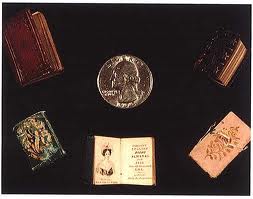
Either side of September 1999 (the release of the Open eBook Publication Structure 1.0), we have the Miniature Book Society, founded in 1983 and, in 2003,  Michael Hawley’s Bhutan:

A Visual Odyssey across the Last Himalayan Kingdomthe world’s largest book according to Guinness.

Last week, the New York Times ran an article about Neale Albert‘s collection of miniature books.  Is this popular interest in unreadable books and the surge in altered and sculpted books an anxious reflection of another shift in media?

Related articles

Bookmark – The Implacability of Books

8048332174_e6067521c8_o
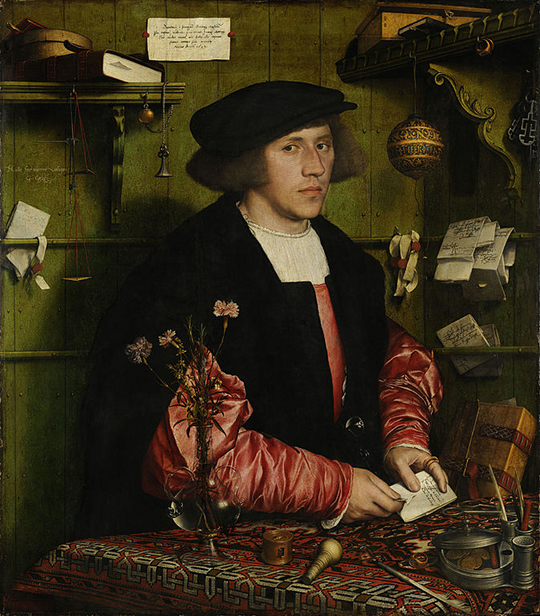
The Merchant Georg Gisze (1532) by Hans Holbein the Younger.

Author of The Things Things Say, Jonathan Lamb has trawled the Internet Archive to link us to 18th and early 19th century examples of the “it-narrative,” stories told from the perspective of a thing such as a watch, a coin or a mouse and generally comic and all-too human in the telling.  And yet, Lamb observes,

…  for a number of reasons this is seldom how [the it-narrative] deserves to be read. Whether it is owing to its origin and terminus in the narratives of slaves, or to its coincidence with the financial revolution and the growing unaccountability of mass human behaviour, or to the growing appetite for print ephemera, or to the end of feudal tenures and the resulting anomalies of personal portable property, or to the irreversible metamorphoses precipitated by the holocaust, ordinary things situated in banal circumstances develop a salience that has nothing to do with symbolism or hidden meaning. They are just there, eying their human adversaries, implacable and meditating affronts.

Lamb might have added another reason: the growth of the Internet, book art or bookwork and prediction of the printed book’s demise.  Until that demise, will our books, just there on their shelves above the lampshade late at night, sit “implacable and meditating affronts”?

Jonathan Lamb, The Implacability of Things at The Public Domain Review | Material World on 9th November 2012 at 11:01 am.