Bookmark – Education for the Future of Publishing

The Elements, Theodore Gray

When it comes to acquiring skills and professional training in book publishing, from the early days of the printing press onwards, learning by doing has been book publishing’s order of the day.  Consider the following interview exchange between Mac Slocum (Tools of Change) and Theodore Gray (The Elements):

.

MS: What skills — or people with those skills — must be incorporated into the editorial process to produce something like the iPad/iPhone editions?

TG: Specifically in the case of “The Elements,” the skills required were writing, commercial-style stills photography, Objective-C programming, and a whole, whole lot of Mathematica programming to create the design and layout tool and image processing software we used to create all the media assets that went into the ebook.

Other ebooks might well require different skills. My next one, for example, is going to include a lot more video, so we’re gearing up to produce high-grade stereo 3D video. That’s one of the challenges in producing interesting ebooks: You need a wider range of skills than to produce a conventional print book.

Starting out in book publishing late in the last century, a novice would have consulted Marshall Lee’s Bookmaking and the Chicago Manual of Style to learn the basics of design, editorial and production.  If it were Trade publishing that beckoned, a familiarity with A. Scott Berg’s biography of Maxwell Perkins (“Editor of Genius”) would have been likely.

Maxwell Perkins, half-length portrait, seated ...
Maxwell Perkins, half-length portrait, seated at desk, facing slightly right / World Telegram & Sun photo by Al Ravenna. (Photo credit: Wikipedia)

If scholarly book publishing, then Harman’s The Thesis and the Book, Turabian’s A Manual for Writers and maybe Bailey’s The Art & Science of Book Publishing.

But as with the acquisition of print publishing skills through learning by commissioning, designing, editing, printing, marketing and selling, the acquisition of the skills required for ebook publishing could use a hand up from appropriate resources.   People like Joshua Tallent, Joel Friedlander, Liz Castro, Craig Mod, Matthew Diener are those resources — either by example or authoring — and novices today would do well to start bookmarking their output.

For notes on the availability of formal training and career conditions in publishing, see Thad McIlroy’s The Future of Publishing.

Related sources:

“Joshua Tallent of Ebook Architects on the State of Digital Publishing,” Bill Crawford, Publishing Perspectives

“Understanding Fonts & Typography,” Joel Friedlander, The Book Designer

html, xhtml, and css: 6th edition, Elizabeth Castro

“Our Future Book,” Craig Mod

“Resources,” Matthew Diener, David Blatner and Anne-Marie Concepcion, ePUBSecrets

The Chicago Manual of Style Online

English: Image of the cover of the 1906, 1st E...
English: Image of the cover of the 1906, 1st Edition of the Chicago Manual of Style (Photo credit: Wikipedia)

Bookmarking Book Art — Sam Winston

"Darwin" by Sam Winston
“Darwin” by Sam Winston

Presented here is an ongoing exploration of Charles Darwin’s ‘On the Origin of Species’ and Ruth Padel’s ‘Darwin, A Life In Poems’.

I initially separated the text of these two books into nouns verbs, adjectives & other. I wanted to present a visual map of how a scientist and a poet use language – a look at how much each author used real world names (Nouns) and more abstract terminology (Verb, Adjective and Other) in their writings.

via Sam Winston : Darwin.

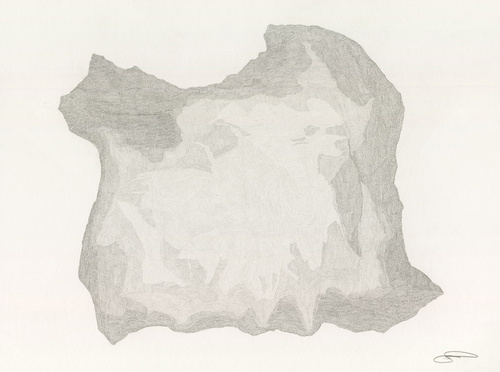
By determining the frequency of each part of speech and generating pointillist-like dots with different pencil lead weights assigned to each part of speech,  Winston also creates what he calls “Frequency Poems.”

"Origin Drawing" by Sam Winston
“Origin Drawing” by Sam Winston

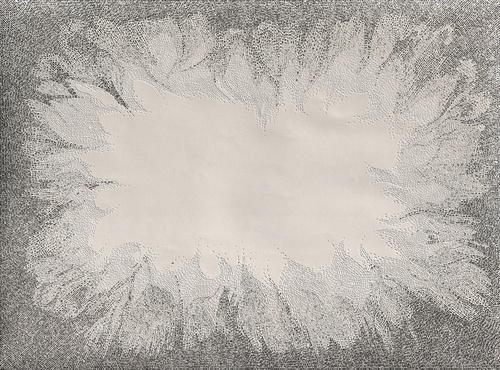
A similar result is achieved by categorizing all the words from “Romeo & Juliet” under the headings solace, passion and rage and then creating a collage for each heading with the actual words.  Here from the artist’s site is the collage “Solace”:

"Solace" by Sam Winston
“Solace” by Sam Winston

Winston’s work wrestles with paradoxical “divides” and “unions” — the divide and union of science and poetry, those of categories and the whole, those of non-linear (patterned) and linear (narrative) meaning, that of the word as perceived object and semantic signal.

In technique and process, Winston’s work also implies a divide and union of the print and digital. It is no surprise then that Victoria Bean and Chris McCabe included Winston in The New Concrete: Visual Poetry in the 21st Century, an illustrated overview of artists and poets working at the intersection of visual art and literature.  As if to underline Bean’s and McCabe’s wisdom, Winston and Oliver Jeffers published the charming and innovative A Child of Books shortly afterwards. Winston’s creativity is equally at home with the trade book, installations of book art and finely crafted unique works.

Further reading on Sam Winston and his art:

 An exploration of semantics or an effective re-structuring of what typography and words REALLY are, whatever the case, Sam Winston’s work is breathtaking. A visual explorer of language, the London-based artist and educator has spent his working life examining the way we approach all manner of literary artifacts. Always engaging his audience with words in a visually stunning manner, Winston started writing stories and selling artist books through London’s Institute of Contemporary Arts and …

Winston’s experiments came from looking at the structures of different types of literature: from storybooks to bus timetables: “The way you navigate a timetable is very different to the way you read a short story” he comments. “I wanted to take these different types of visual navigation and introduce them to each other: a timetable re-ordering all the words from beauty and the beast, or a newspaper report on Snow White.” By imposing the visual rules of one style of writing to a different system of organizing language, Winston has created a visually arresting and verbally intriguing piece.” Paula Carson, Graphic Poetry. June 2005

Bookmarking Book Art — Justin James Reed

2013 by Justin James Reed Publication Date: 2012 Artwork type: Editioned book Medium: inkjet Dimensions: 9.5 in W x 13.0 in H Binding Type: pamphlet Publisher: Horses Think Press
2013 by Justin James Reed
Publication Date: 2012
Artwork type: Editioned book
Medium: Inkjet, UV Firefly Ink
Dimensions: 9.5 in W x 13.0 in H
Binding Type: pamphlet
Publisher: Horses Think Press


2013 is apparently a booklet of blank pages, until the lights go out and the reader begins to search the pages with the ultraviolet flashlight that accompanies the book in its archival box. Is this reading with one’s whole body? The tactile nature of a book takes on more than three-dimensionality through the pages’ reaction to the reader’s gestures.  The time it takes to “read” the book is the time it takes to perceive its ghostly images.  Reading the book becomes experiencing the book.

I enjoy the idea that when a viewer first encounters the book it appears to be blank. Indeed, this notion of the “invisible book,” was an important starting point for the work.  And in this, ingrained in the book itself, are two very concrete ways to experience the book: as a set of blank pages and then, with the help of an ultraviolet light source, a completely radical way of looking at pictures. My intention is to have this process lead a viewer to perceive the imagery less representationally and more sculpturally….


For me, this book is broadly about the future and the end or rebirth of time. The title, “2013,” came about because of the rapid pace of technology and culture. No longer do we have to look far into the future to perceive change, we witness it daily, to such an extent that even the idea of the year 2013 seems far away and distant. Beyond this though is also the concept that time is a construct. Again, this ties into perception, that in addition to the viewing experience, I want to reinforce the notion that time itself is just a way of perceiving reality. The iconography in the book: sculpture, form, nature, digital information, etc., is all mixed together so that a viewer encounters each on the same plane, and by the end of the book the number 2013 takes on the same qualities as one of the landscapes, the number has meaning.


One of my main goals with this book was also to facilitate a group experience. In my mind most books are made to be enjoyed by oneself. However, with this book, it is my intention to make something that encourages people to share in the viewing experience…. I am fascinated by the idea that an object, a book, can be a reason for people to come together and share in something. In some ways this is one of the most important components of the book.


Related articles:


Bookmarking Book Art — Paul Forte

Transformed Volumes | Exhibition of Artist’s Bookworks | Numéro Cinq.

Paul Forte has assembled a display of his own bookworks and those of Doug Beube, Claire Dannenbaum, Donna Ruff, Jacqueline Rush Lee and Irwin Susskind for the Hera Gallery, Wakefield, RI, June 15 to July 13.

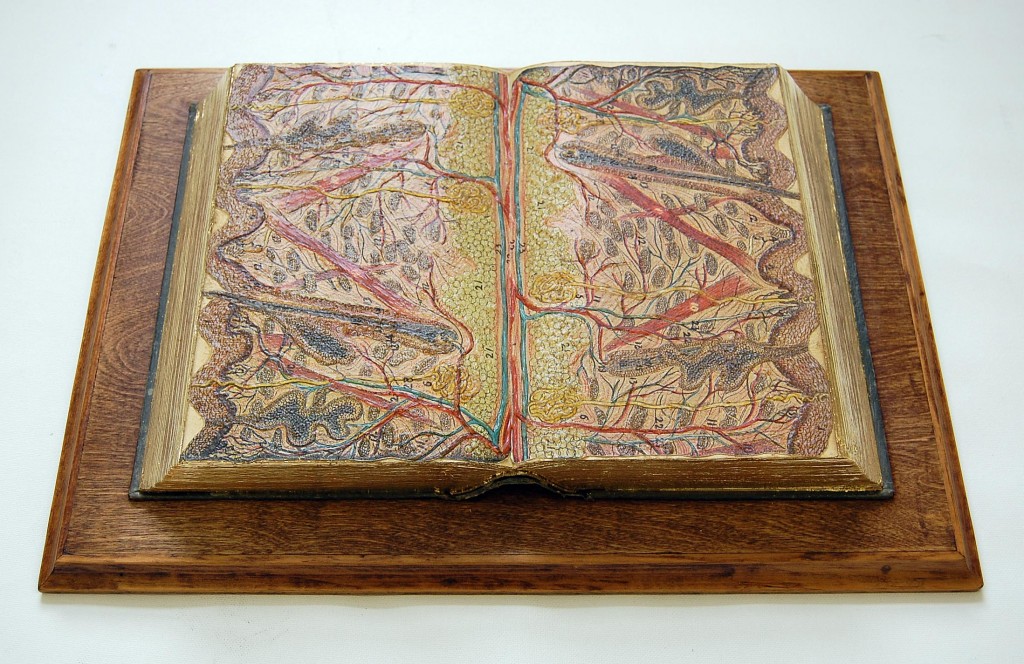
3.-Paul-Forte-1024x664
“Liber Dermis (Skin Book),” Paul Forte, 2008
Medical illustrations (human skin cross section) on sealed medical book, mounted on wood, 17 1/2 x 12 1/2 x 3/4 inches

Douglas Glover’s Numéro Cinq provides an excellent venue for Forte’s introduction to this exhibition and additional photographs of items with artists’ statements.  If you cannot go to Rhode Island, visit Numéro Cinq.

Photograph of Hera Gallery's exterior
Photograph of Hera Gallery’s exterior (Photo credit: Wikipedia)

Bookmarking Book Art — Jacqueline Rush Lee

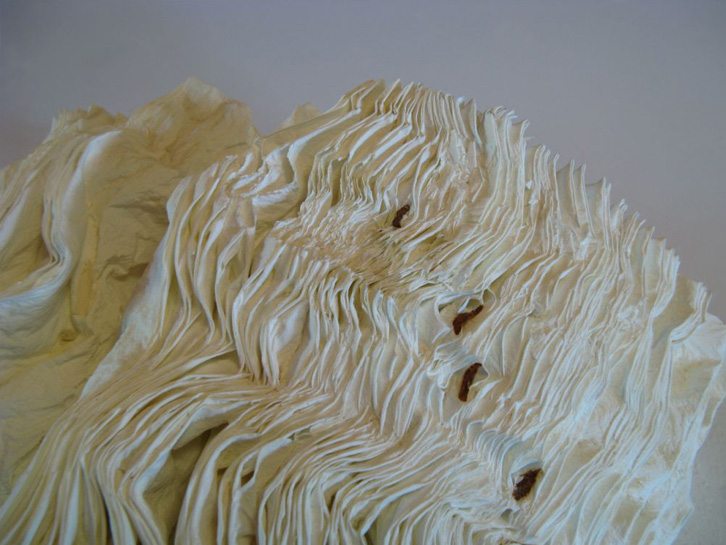
Dictionary Detail (From the Series Ex Libris), 2000Petrified Book (High-fired Book in Kiln)H 7” x W 15” x D7”H18 x W38 x D18cm
Dictionary Detail (From the Series Ex Libris), 2000
Petrified Book (High-fired Book in Kiln)
H 7” x W 15” x D7”
H18 x W38 x D18cm

From the artist’s website:

Jacqueline has been working with books for fifteen years and is recognized for working with the book form. Her artworks are featured in blogs, magazines, books and international press. Selected bibliography include: BOOK ART: Iconic Sculptures and Installations Made from Books; PAPERCRAFT: Design and Art with Paper and PLAYING WITH BOOKS: The Art of Up cycling, Deconstructing, and Reimagining the Book. Jacqueline’s work will also be featured in Art Made from Books, Chronicle Press, 2013 by Laura Heyenga. …  She exhibits her artwork nationally and internationally and her work is in private and public collections, including the Allan Chasanoff Book Under Pressure Collection, NY.

The Chasanoff collection connects Lee with Doug Beube, whose work has been noted here. Beube was the curator of the Chasanoff Collection from 1993 to 2011.   In his interview with Judith Hoffberg in UmbrellaVol 25, No 3-4 (2002), he comments on the purposes of Allan Chasanoff, a book artist in his own right, in putting together the collection “The Book Under Pressure”:

There are a number of ideas that meets Allan’s criteria in acquiring work, of which I’ll try to convey a couple. The first is; the problem of the book to perpetuate information is inefficient, it’s an obsolete technology due to the advent of the computer.  Another premise is; at the latter part of the 20th century the book is being used for purposes other than its utilitarian design. Allan has been working extensively with computers and digital imaging since 1985 and understands that the book is as “an outdated modality”, he’s fond of saying. He’s not interested in the book decaying or in its destruction, nor is he referring to the content of books, artist’s books, production costs, mass appeal or where they get exhibited. His interest is in the book as an antiquated technology.

Lee’s process of kiln firing to transform individual books, as with the dictionary above, strikes a harmonious chord. The kiln does not reduce the book to ash but rather petrifies it.  Another way of exploring “the book under pressure.”   Lee’s and Beube’s work are brought together again by Paul Forte  at the Hera Gallery for an exhibition entitled Transformed Volumes.

Bookmarking Book Art — Carl Pappenheim

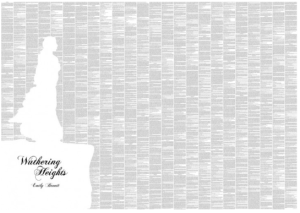
Well-reviewed (see below), Spineless Classics — Carl Pappenheim’s prints that use all the words of a book to outline an emblematic image of the work — raise questions unasked by the interviewers:  If we stand before a Spineless Classic and read it, does the experience of reading the book change?  How?  What is the difference between art and decor?  Between art and craft?  Between artwork and mechanical reproduction?  

screen-shot-2012-01-12-at-00-40-07

Spineless Classics Turns Whole Books Into Graphic Art 2011

Spineless Classics 2011

Interview With Carl Pappenheim, Bringing Novels To Your Walls At Spineless Classics 2011

How to get your favourite book on your wall; 5 questions for Carl Pappenheim of Spineless Classics 2012

A Book on One Page … 2012

Carl Pappenheim: The Artist Using The Whole Texts Of Novels To Create Beautiful Silhouettes  2013

The Art of Writing; or Writing as Art 2013

Bookmark — “How Old is Innovation before it’s New?” David Worlock

Fachbuchhandlung
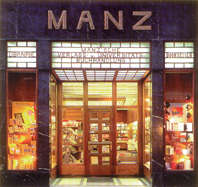
Vienna’s Manz Bookstore, facade by Adolf Loos

Two interesting words: “semantic” and “innovation.”  Find yourself a good cup of coffee, a slice of sachertorte, the aroma of cinnamon and take the time to read this article by David Worlock.

“Getting” the fundamentals of digital publishing means “getting” semantics: the semantic web, taxonomies, ontologies, tagging and all that.  David Worlock’s article is a good place to start to understand why.

Bookmark — The evolution of bookselling

overdrive-retail-ebook-kiosk--134x250
Nate Hofhelder, The Digital Reader

No good history of the book in the late 20th and early 21st century will overlook this part of the book’s value chain.  In covering the earlier eras, the outstanding historians — Chartier, Davenport, Eisenstein, Johns,  Lefèbvre and Martin,  McMurtrie,  Pettegree, Pollard, and Suarez — touch on distribution and retail to varying degrees.  When it comes to our era though, the effect on the book itself of the distribution/retail roles played by Barnes & Noble, Borders, Amazon, Apple, Google, OverDrive and a host of other smaller key players such as Project Gutenberg will loom larger.  (So will that of self-publishing if we consider BookStats‘ report that self-published ebooks represented 30% of ebook sales in 2012.  What the effect will be, though, is harder to say.)

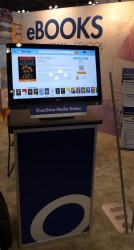
Around since 1986, OverDrive has its roots in the production end of the industry, providing publishers with conversion and formatting services from diskettes to CDs to ebooks.  Its owner, Steve Potash, set the foundations of its contribution to distribution and retail in 1999-2000 with his participation in the Open eBook Forum, now the International Digital Publishing Forum, and his creation of Overdrive’s Content Reserve.   As of this writing, Content Reserve contains over a million ebooks; it is the “overdriver” behind the firm’s library distribution service and the OverDrive Retail Kiosk.

If the OverDrive Retail Kiosk becomes a key to unlocking the way back for book retail in the “real world,” it will by its own definition contribute to the evolution from the printed book to the ebook.   Anyplace — in the mall, the main street or high street, the coffee shop, canteen or library — can become an outlet for the purchase of ebooks, which will feed back into the supply and value chains.

No doubt, historians will note that OverDrive required no physical ereader of its own, no Kindle, no iPad, etc., to reach this point in the evolutionary path but rather, it was its dual focus on finding an effective way to rationalize the delivery of multiple formats while pursuing a standard (EPUB) and on meeting the distribution needs of libraries then retail that put OverDrive in its current position. That position is symbiotic with both “closed garden” ereaders and apps as well as books-in-browser solutions.

Just as the Gutenberg press would not have taken off without the regular supply of a more relatively standardized form of paper, the digital book has had to await — is still awaiting — a more standardized format and mechanism of delivery.  In reinventing themselves and these parts of the book industry’s DNA, OverDrive and others contribute to the evolution of the book.


Overdrive Digital Bookmobile
Overdrive Digital Bookmobile (Photo credit: Librarian In Black)


Bookmarking Book Art – Vita Wells, Updated 11 February 2014

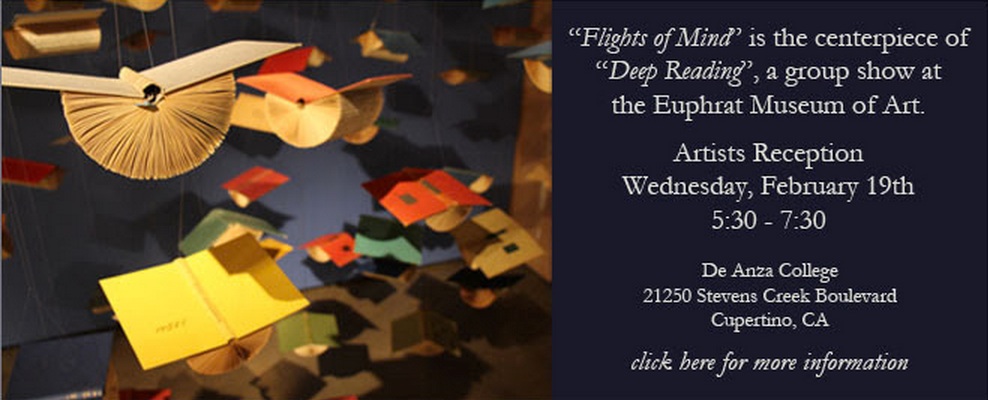
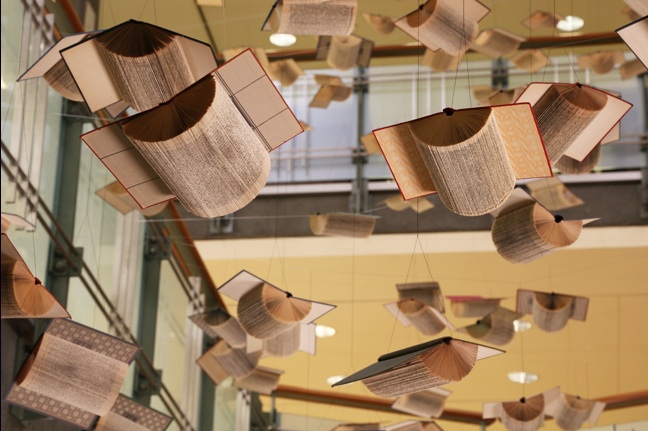
Wells %22Flights of Mind%22From 3 February to 20 March 2014, Vita Wells (born Béa Welsh Weicker) has a new “Flights of Mind” installation. A year ago, she had placed an installation of the “Flights of Mind” at the Berkeley Central Library, the first being in 2012 at the Oakopolis Gallery in Oakland, California.

Wells Flights of Mind BerkeleyFollowing the Berkeley installation, the following was posted on BooksOnBooks:

Appropriately, this latest installation was for the “11th Annual Authors Dinner,” sponsored by the Berkeley Public Library Foundation.  Soaring forty feet above the patrons’ heads were hundreds of altered discarded books, their covers spread into wingspans, their pages folded into rounded bird bellies and each book suspended on cables from the ceiling at varying pitches,  yaws and distances from one another.   They are no longer there, nor at the Oakopolis.  By the installation’s name, they should now exist only in the mind, but the artist provides an extensive online “installation” with numerous pictures and videos, an essay on her intent and a detailed description of the installation’s physical characteristics.

It is delightful to have access to the online version, and we may fool ourselves into thinking of it as virtual.  Even the digital is subject to forensics.  Still, although Wells may well take down the online installation, or its URL may be hijacked or fall into 404-dom, it is not temporary in the sense that its instances in Berkeley and Oakland were.  So does its presence challenge the integrity of those temporary installations?

Almost a century ago now, Yeats wrote of the swans’ “bell-beat” of wings overhead at Coole, and that poem entered the world of lasting works of art.  It has its many physical instantiations in books the world over.  It lives in recordings.  It lives on the Web.  It lives in countless minds ready to recite it.  Of course, the books will rot, the recordings and sites decay, the minds fall into silence.  Yet in the presence of thought become art, soaring overhead, we dare to dream of persistence even in the face of such imperfections as Wells’ “worn, frayed, … beat-up and patched” birdbooks or the challenge of the age of digital reproduction to the integrity of art.

… now they drift on the still water

Mysterious, beautiful;

Among what rushes will they build,

By what lake’s edge or pool

Delight men’s eyes, when I awake some day

To find they have flown away?

Vita Wells’ art feeds the dream.

Related publication

Tracey Taylor, “Berkeley artist Vita Wells makes books fly at main library”, Berkeleyside, 11 February 2013, accessed 11 February 2014: http://www.berkeleyside.com/2013/02/11/berkeley-artist-vita-wells-makes-books-fly-at-main-library/


Bookmark for Literacy — Tom Chatfield

Tom Chatfield’s short essay “I Type, Therefore I Am” celebrates the increasingly rapid rise of literacy.

At some point in the past two million years, give or take half a million, the genus of great apes that would become modern humans crossed a unique threshold. Across unknowable reaches of time, they developed a communication system able to describe not only the world, but the inner lives of its speakers. They ascended — or fell, depending on your preferred metaphor — into language.

The vast bulk of that story is silence. Indeed, darkness and silence are the defining norms of human history. The earliest known writing probably emerged in southern Mesopotamia around 5,000 years ago but, for most of recorded history, reading and writing remained among the most elite human activities: the province of monarchs, priests and nobles who reserved for themselves the privilege of lasting words. …

In the past few decades, more than six billion mobile phones and two billion internet-connected computers have come into the world. As a result of this, for the first time ever we live not only in an era of mass literacy, but also — thanks to the act of typing onto screens ­— in one of mass participation in written culture.

via Tom Chatfield – Language and digital identity.

This is territory bookmarked before in response to Ferris Jabr’s “The Reading Brain in the Digital Age” — Bookmarking a Bookburning II — but it occupies higher ground.