Books On Books Collection – Ryuta Iida

Silent Book, vol. 11
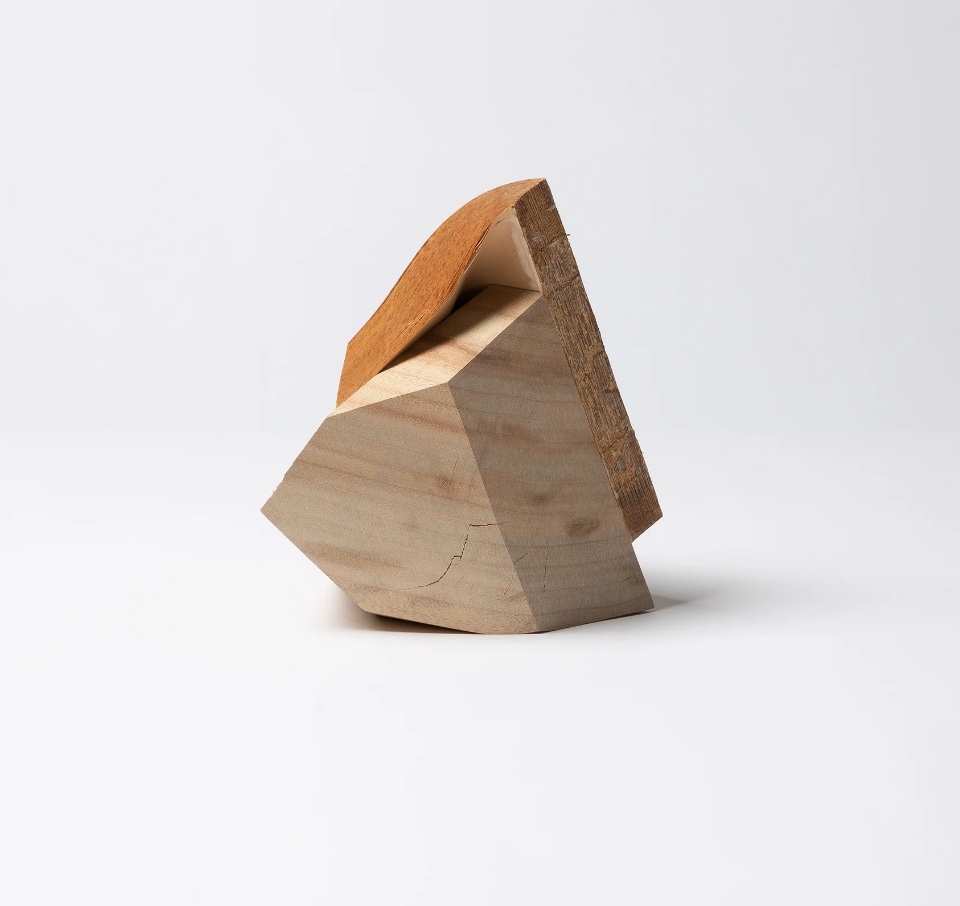
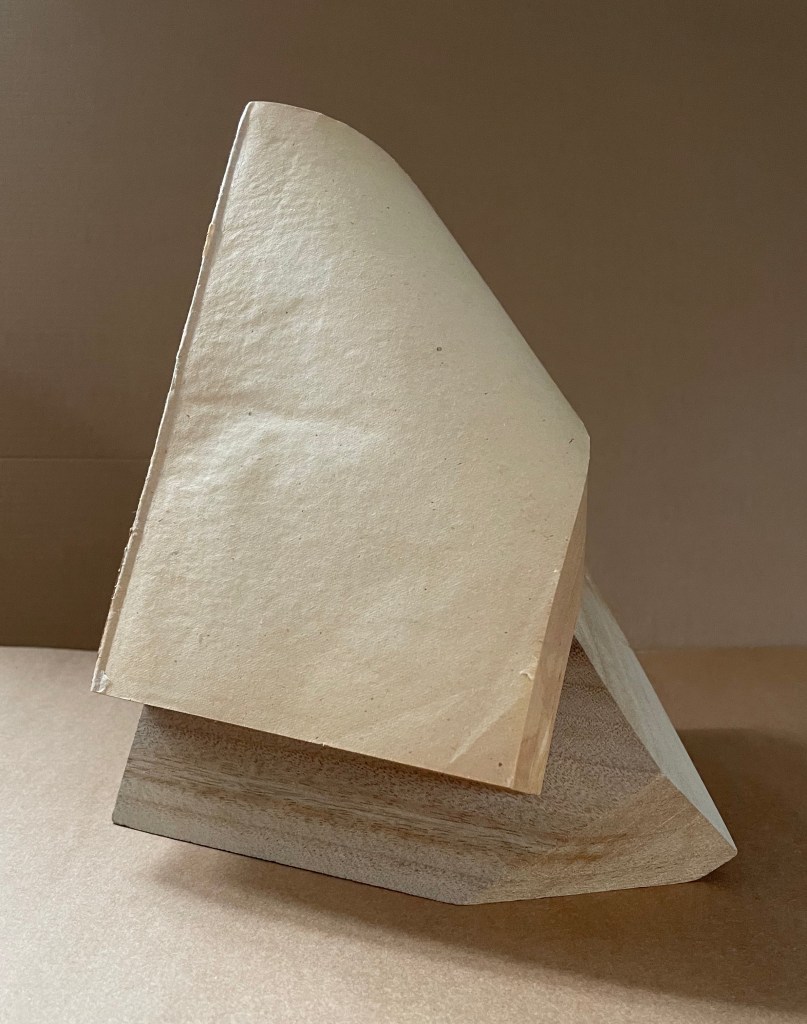
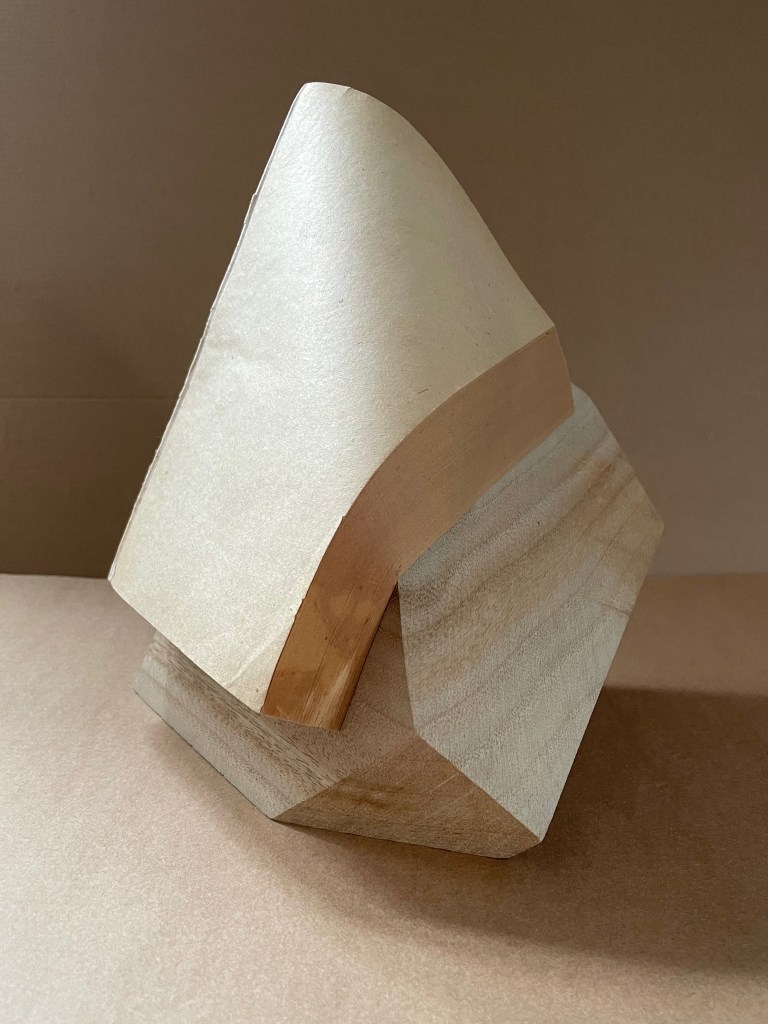
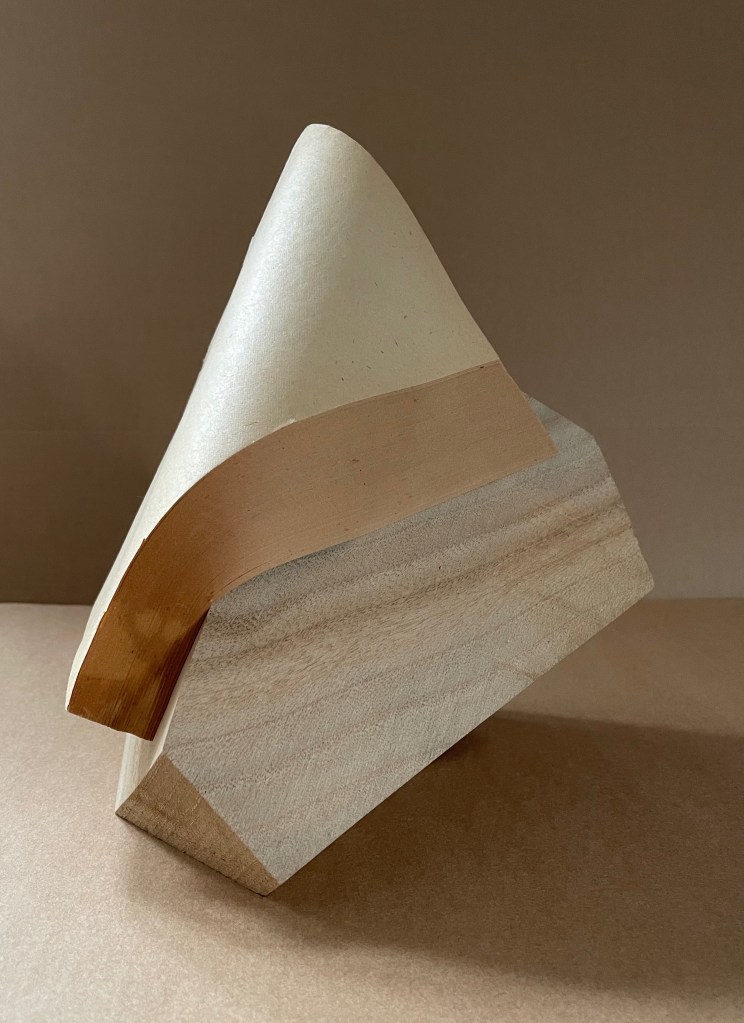
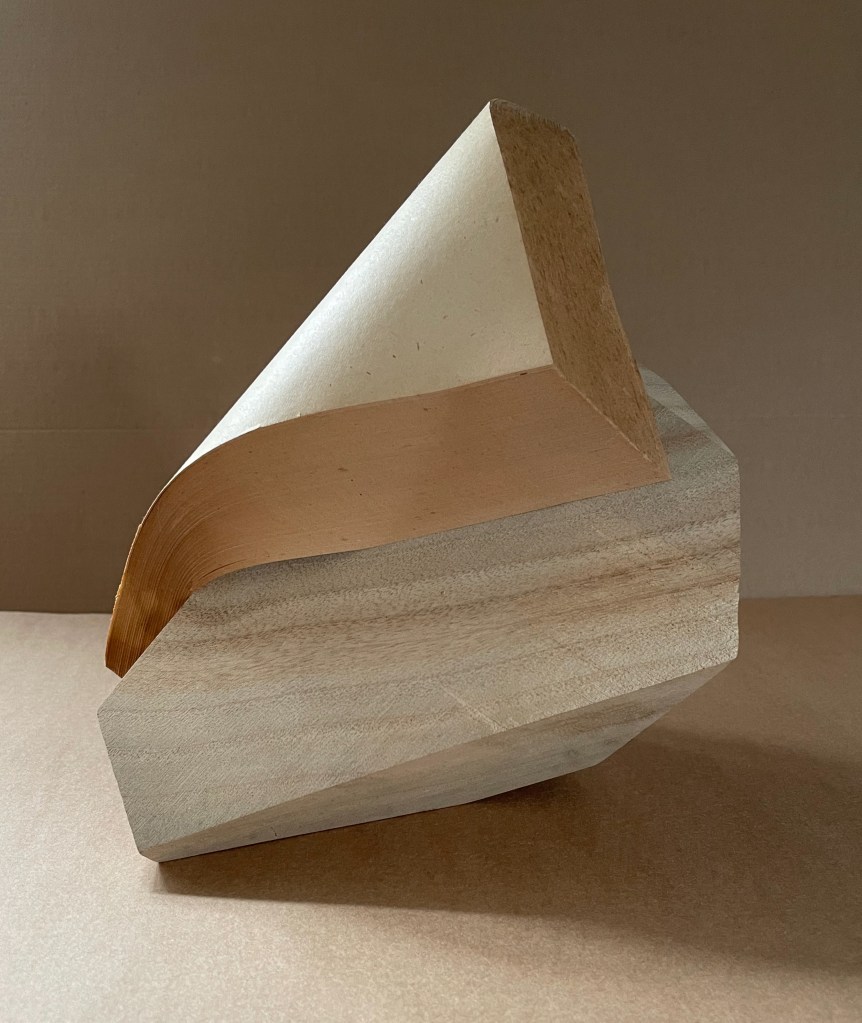
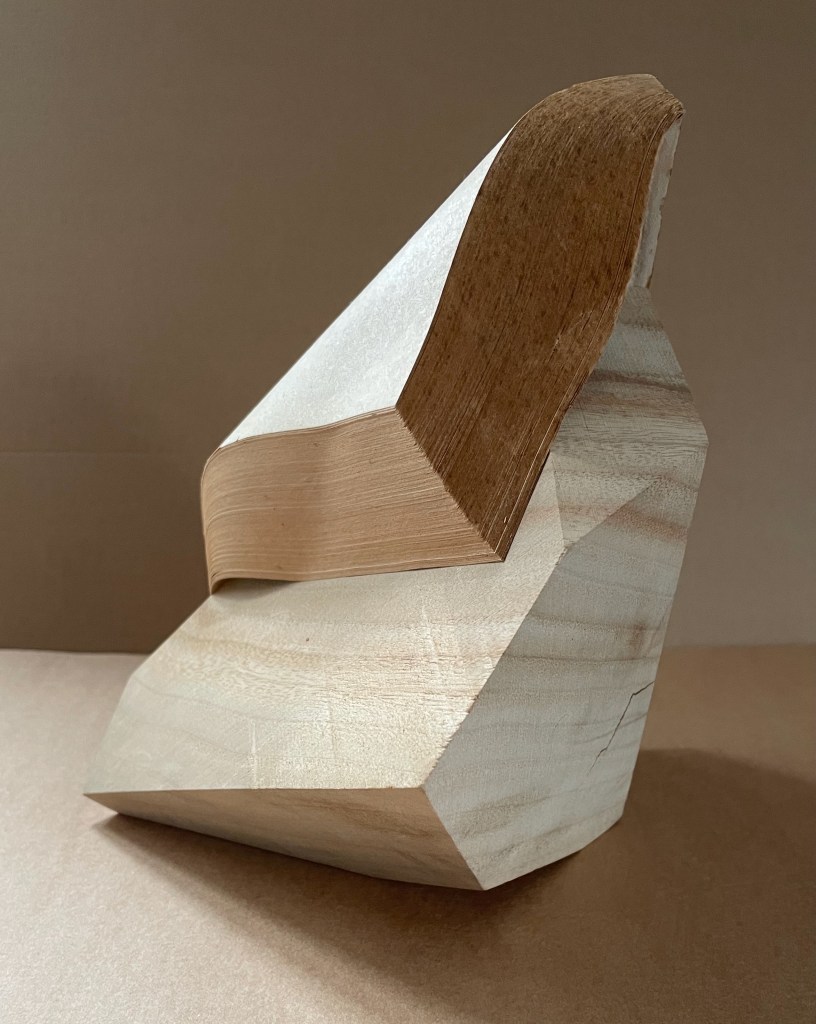
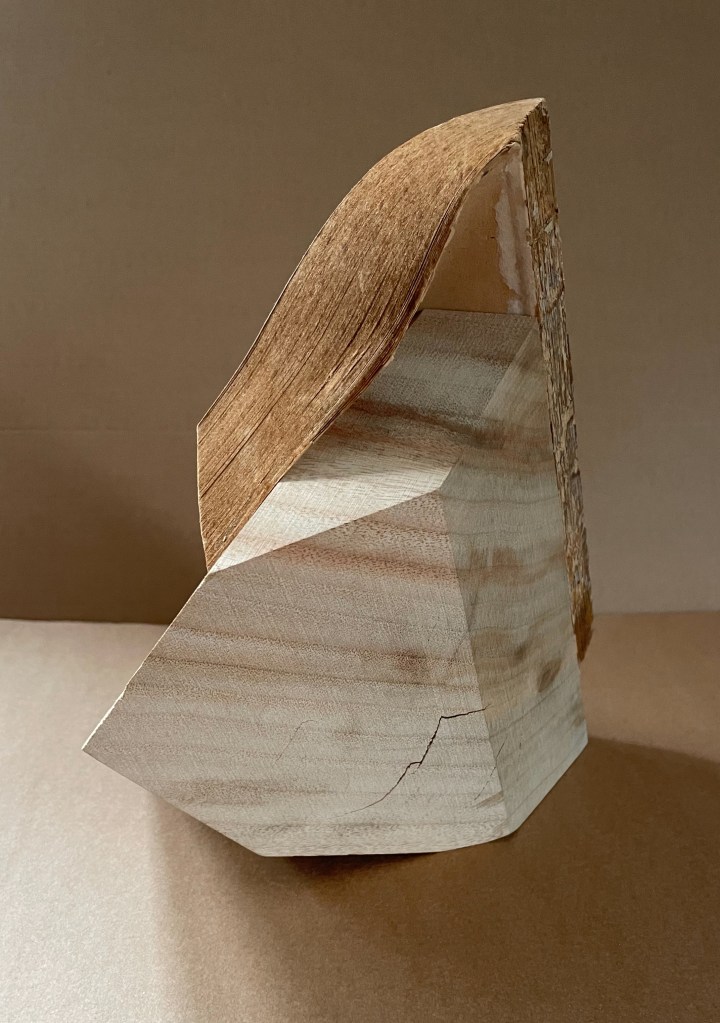
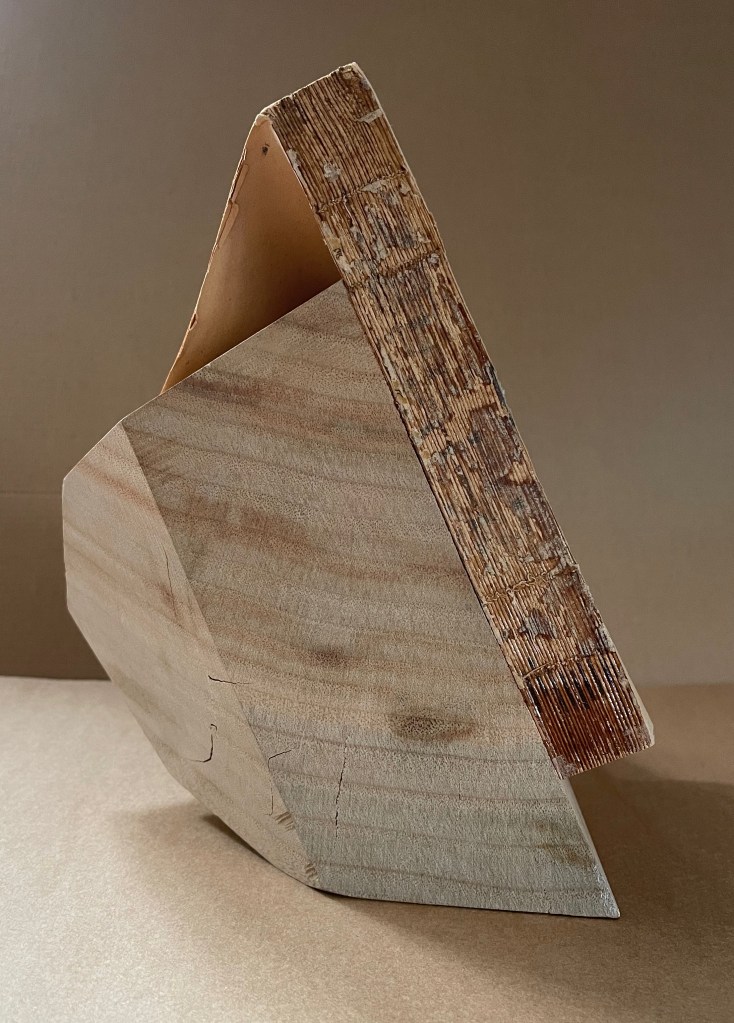
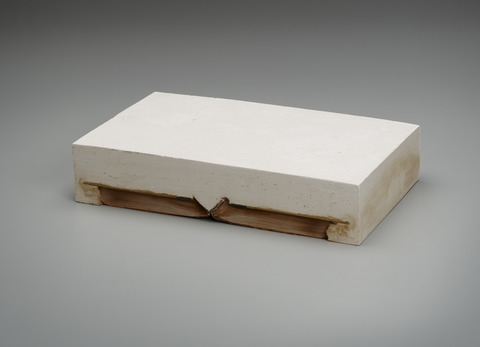
Artistic wooden sculpture resembling a geometrically abstract book, featuring angular planes and a smooth finish.

Silent Book, vol. 11 (2023)
Ryuta Iida
Altered book, camphor tree stump, and glue. H210 × W170 × D190 mm. Unique. Acquired from Fragile Books (Tokyo), 20 August 2024.
Photos: Above, courtesy of Fragile Books; below, Books On Books Collection.

The cover, door, table of contents, numbering, text, and endnotes are all filled with a series of information. I thought to stop and crystallize all the functions of the “book,” … I decided to crystallize it. It took the time to go through the hands of people, the old book that finally reached me, sealed on a pedestal, it is now ripe for its next role. (Artist’s statement)

“Crystallized” is not the first word that comes to mind when viewing and handling this eleventh in Ryuta Iida’s series Silent Book. Perhaps it does for the angled planes of the cut block of camphor wood, but for the coverless codex, folded, draped, moulded, carved, and sculpted come closer. Two names that might not spring to mind (but should) are Giambologna (Jean Boulogne) and Gian Lorenzo Bernini. Like them, Iida offers us more than a single or primary vantage point from which to appreciate his work. Like Giambologna’s Abduction of a Sabine Woman (Loggia dei Lanzi, Florence) or Bernini’s Apollo and Daphne (Galleria Borghese, Rome) Silent Book must be circled and viewed in the round. The nine images below show the work turned right to left in stages.
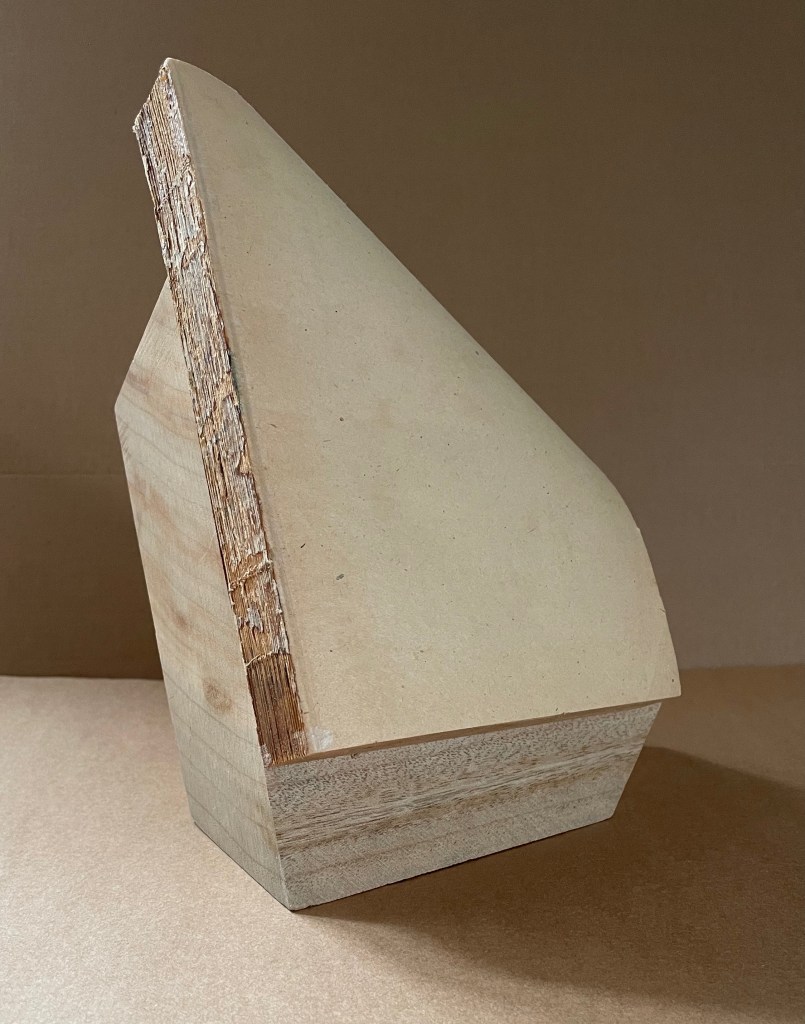
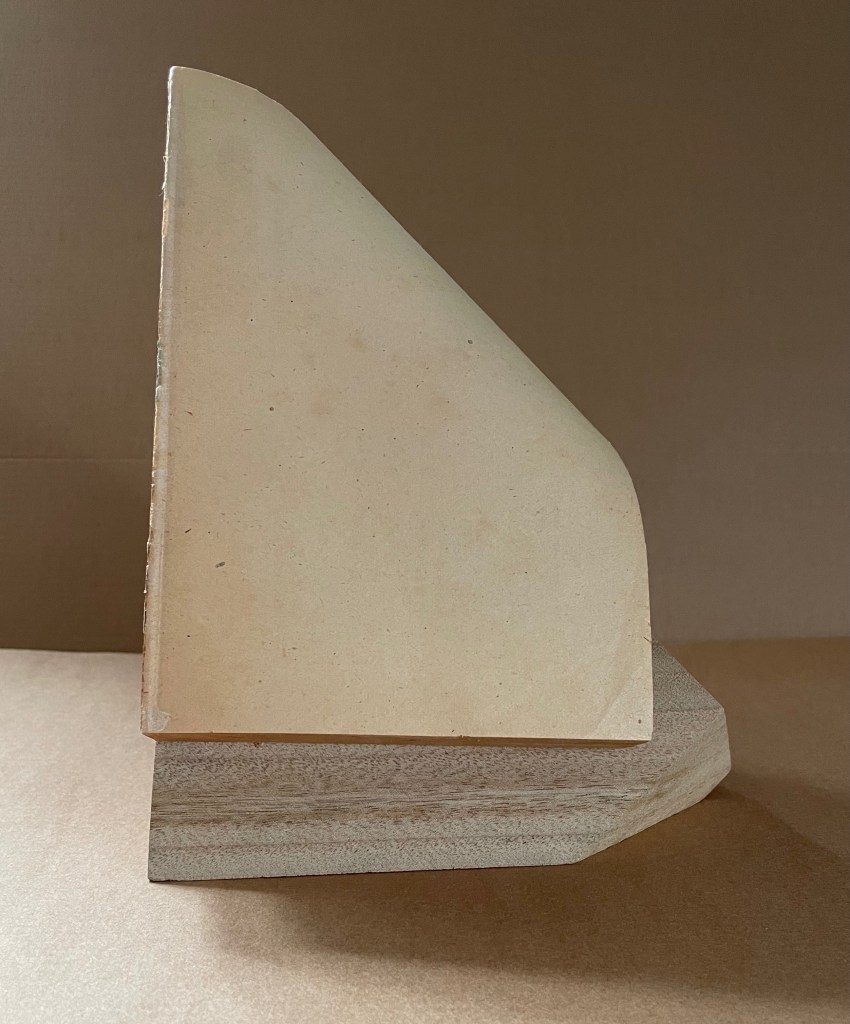
Far as Silent Book is from the figurative, violent, and ornate features of the 16th and 17th century masterpieces, it still harbors its own complexities of line, shadow, texture, and form. There is a volume of dynamics between and among them that belies the work’s title. Note how the layers of pages echo the wood’s grain, and how the color and texture of the page surface contrasts with those of the book’s top edge, and how that contrast reverberates with the shifting colors of the wood. Iida has moulded and sealed the book block so that the top edge curves to a point in a duet with the cut angles of the wood block.
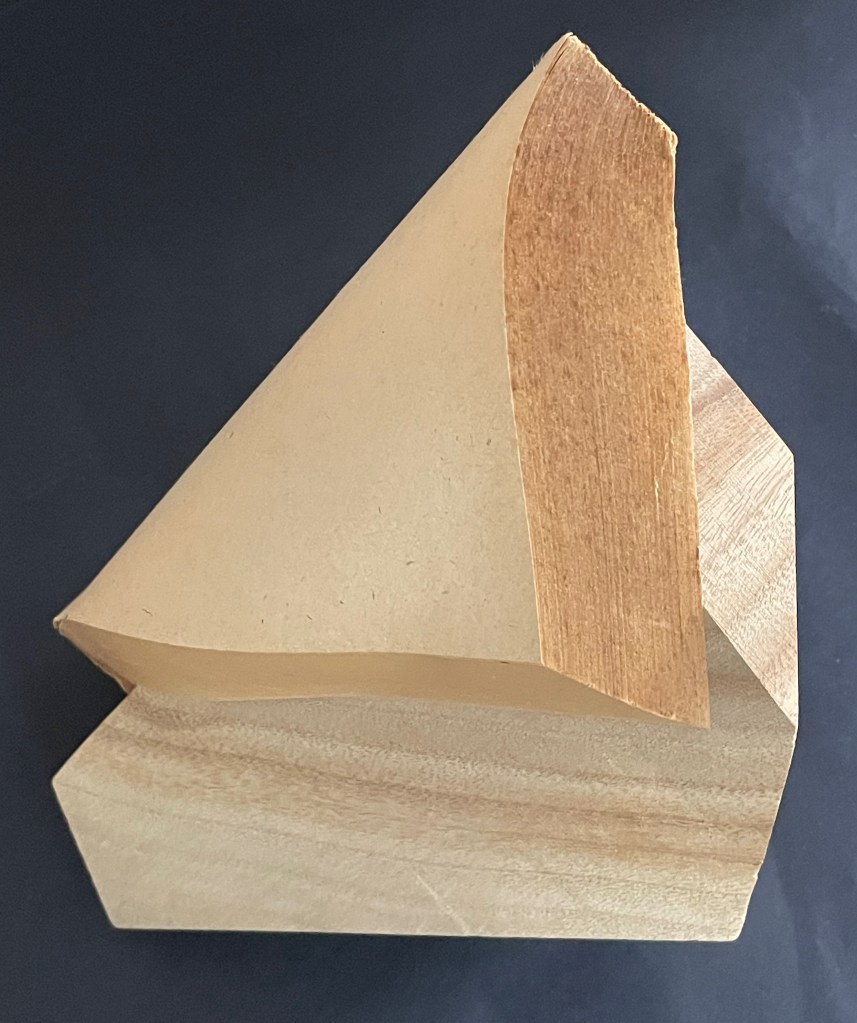
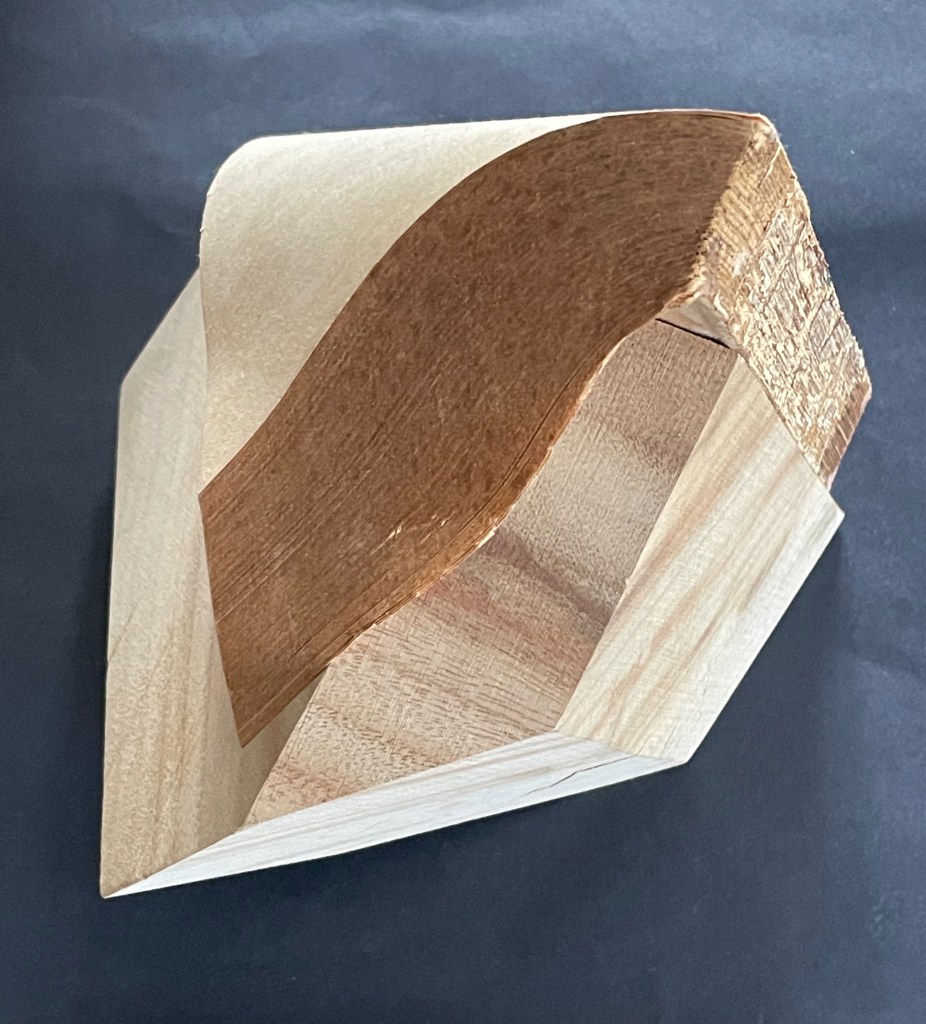
Silent Book has many kin in the world of book art, works that make the content of a ready-made volume inaccessible and make something anew from the material object. Too often this sub-genre has been dismissed as a fetishization of the book. This overlooks how Silent Book and its kin make us think about the book as a material for making art and as a source of metaphors, and we overlook what the individual artworks are. By sealing away the content of a book, giving the book block a sinuous shape, and fusing it with a carved block of wood, Iida invites us to look afresh.

In the Books On Books Collection, several other works share this play of inaccessibility with tangibility: Barton Lidice Beneš’s Untitled (1973), Andrew Hayes’ Offset (2013), Jacqueline Rush Lee’s The First Cut and Silenda (both 2015), Doug Beube’s Red Infinity #4 (2017), Lorenzo Perrone’s Kintsugi (2018), and Chris Perry’s 217 Ripples: Sediment (2020). Of these, Offset seems closest to Silent Book. Comparison can increase appreciation of each and their sub-genre.

Both Hayes and Iida have managed to elicit a sense of action and motion from their materials. From one view of Offset, metal embraces the body of the book; from another, the book pushes the metal apart. From one side of Silent Book, the upward-angled block of wood supports the coverless codex folding over and slipping down its pedestal; from another, the book drapes a protective arm over the sideways-angled block.
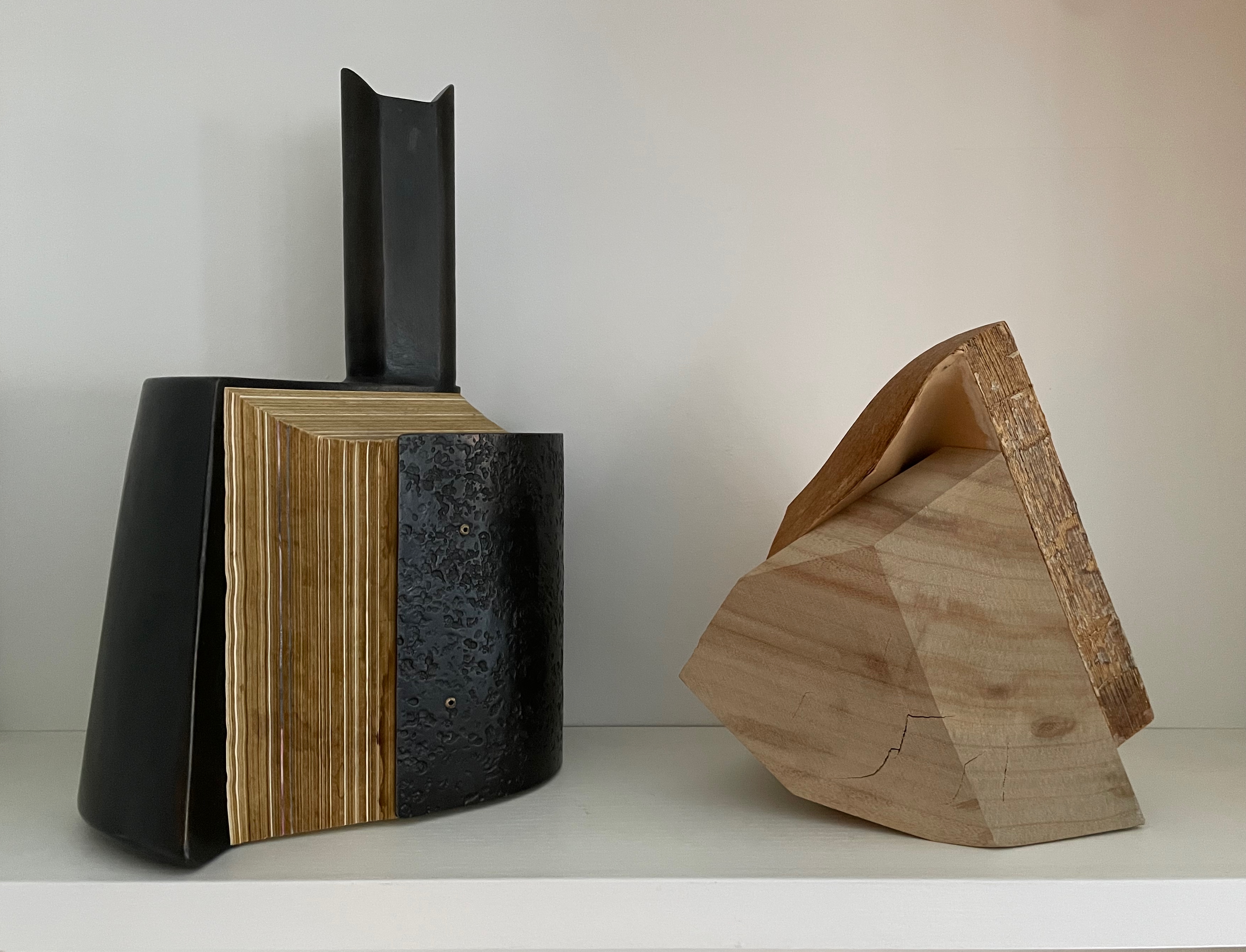
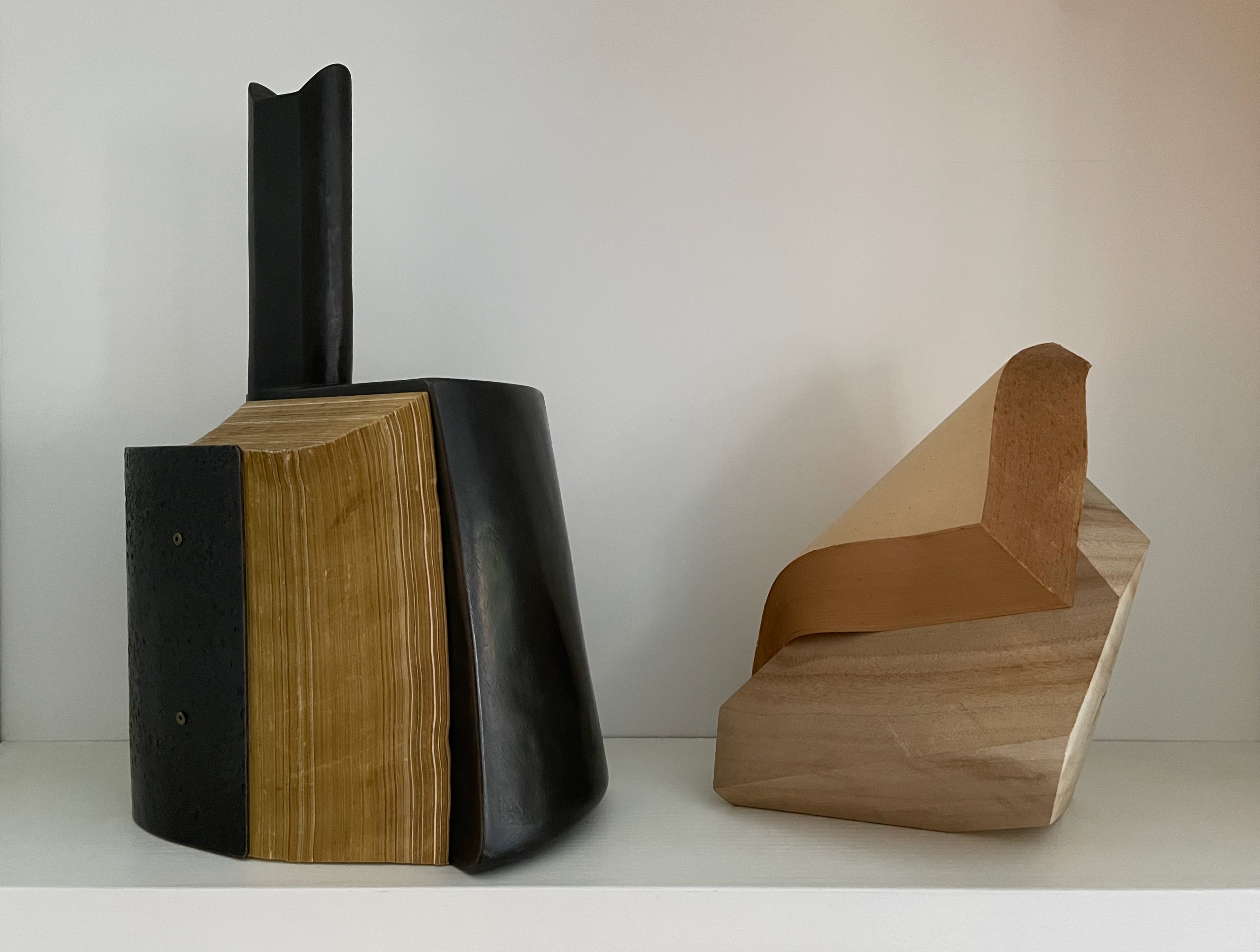
Views of Offset (2013) by Andrew Hayes and Silent Book (2023)

The titling of the two works raises appreciable similarities and differences. Offset suggests the printing method of the same name, which does involve metal plates. The overall shape, however, suggests some strange assemblage of early letterpress components: the bulbous ink balls (or dabbers) with their handles, the torque bar, and the metal furniture locks. The offset position of the piece’s “handle” also reflects the title. What can’t be appreciated from the images is that Offset wobbles if touched in the slightest.
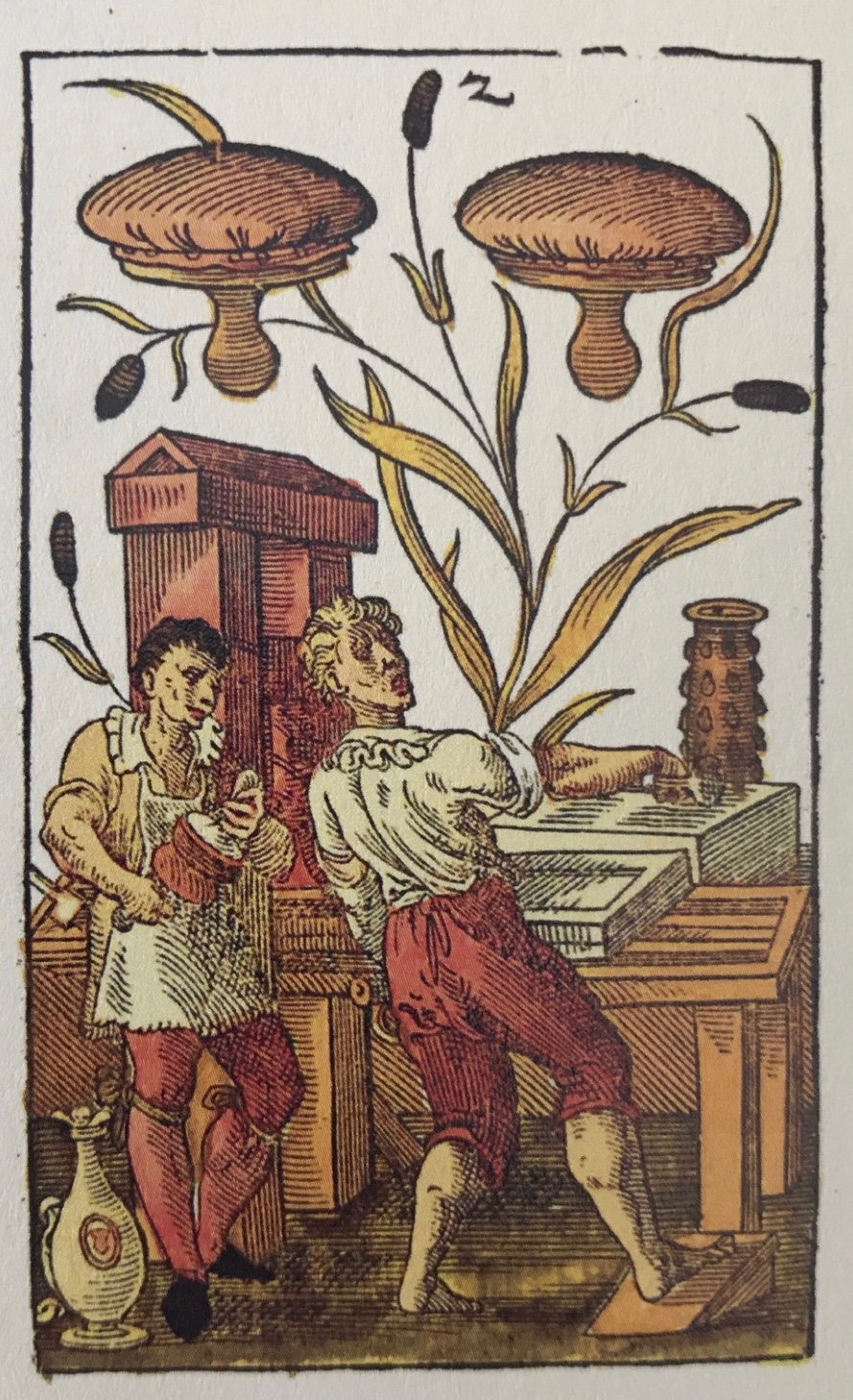
A vintage illustrated print showing two men engaged in a printing process, featuring a press and decorative plants above them.

“The two of printer’s dabbers” from Jost Amman’s 1588 deck of cards.
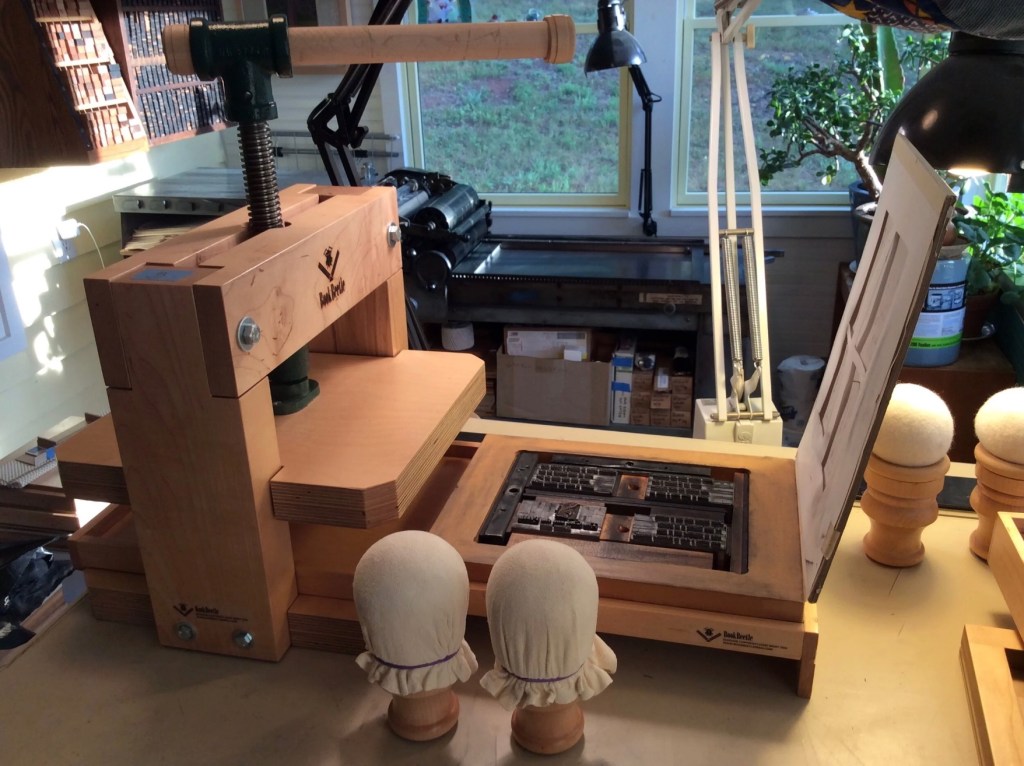
A wooden book press positioned on a workspace, featuring a large handle, a platform for printing materials, and two covered objects resembling human figures, with natural light illuminating the scene.

The BookBeetle Press, a portable screw press designed and built by Josef Beery. Reproduced with permission of Beery.

The title of Silent Book refers, of course, to the book block’s being sealed, an obvious visual/verbal pun. None of its information passes the lips of its pages. Like Offset, however, the title is also oblique. Although the derivation of the word book from the Old German Buche (meaning “beech”) is a debatable assumption, it’s widely accepted enough to allow that the block of wood is also a silent book.

Now imagine the substitution of a large block of pink bubble gum for the book material in Offset and Silent Book. Not a block of gum in the shape of a book, but an oversized, unchewed block of gum. Something very different to chew on now, isn’t it? The ways in which book artists manipulate the material and metaphor of the book vary every bit as much as the ways in which painters, sculptors, and other artists vary their techniques, materials, and subjects. Even within the slice of book art that focuses on physical inaccessibility, such as Marcel Broodthaers’ Pense-Bête (1964), Wolf Vostell’s Betonbuch (1971), Jonathan Callan’s Rational Snow (2002), Anselm Kiefer’s Untitled (Constellation Book) (2004), Hanne Stochholm Exe’s Remake (2015), and Neil Nenner and Avihai Mizrahi’s Cover Story (2017), the variety abounds. Ryuta Iida’s series Silent Book is a resounding reminder.

Further Reading

Barton Lidice Beneš“. 21 December 2025. Books On Books Collection.

Doug Beube“. 21 April 2020. Books On Books Collection.

Hanne Stochholm Exe“. 29 September 2018. Bookmarking Book Art.

Ximena Pérez Grobet“. 7 July 2021. Books On Books Collection.

Andrew Hayes“. 4 September 2019. Books On Books Collection.

Ivon Illmer“. 22 December 2025. Books On Books Collection.

Guy Laramée“. 18 September 2019. Books On Books Collection.

Lucia Mindlin Loeb“. 28 November 2022. Books On Books Collection.

Jacqueline Rush Lee“. 8 October 2019. Books On Books Collection.

Neil Nenner and Avihai Mizrahi, see “Hanne Stochholm Exe“.

Lorenzo Perrone“. 8 September 2019. Books On Books Collection.

Chris Perry“. In process. Books On Books Collection.

Beery, Josef. 15 September 2021. “Inking Without A Roller…“. BookBeetle Press.

Küng, Moritz (ed.). 2023. Blank. Raw. Illegible … : Artists’ Books as Statements (1960-2022). Köln: Verlag der Buchhandlung Walther und Franz König.

Peachey, Jeff. 14 July 2020. “Printer’s Ink Balls: Before the Roller or Brayer“. Peachey Conservation.

Books On Books Collection – Werner Pfeiffer

Drawn, Cut & Layered
Werner Pfeiffer
Plastic box containing illustrated pop-ups.Acquired from Toledo Museum of Art, 5 Jun 2017.
Photos: Books On Books Collection.

Werner Pfeiffer’s playfulness finds its way into viewers’ hands with this offering from his Toledo Museum of Art exhibition in 2015. His archives are housed at Vassar College.

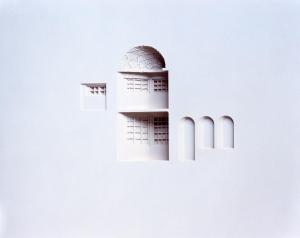
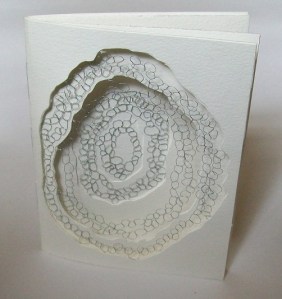
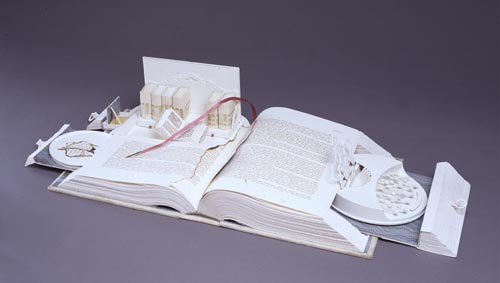
With its structures and photographic representation of Pfeiffer’s other works of paper engineering, Drawn, Cut & Layered demonstrates his breadth in that sub-domain of book art. Not detectable in the box, though, are Pfeiffer’s white altered book objects, which formed the 2010 exhibition at Cornell University, entitled censor, villain, provocateur, experimenter, and demonstrates his scope in the sub-domain of altered books.

In kind, they were preceded by Barton Lidicé BenešThe Life of Gandhi and Beauty Book (both 1973), M.L. Van Nice‘s Swiss Army Book (1990) Irwin Susskind‘s Book Faced Down – Embedded in Plaster (1999). In kind and whiteness, they were followed by Jonathan Callan‘s Zurbarán’s Color Plates (2011), Michael Mandiberg‘s Print Wikipedia (2015), and Lorenzo Perrone‘s Kintsugi(2018).

Further Reading and Viewing

Hedi Kyle’s The Art of the Fold: How to Make Innovative Books and Paper Structures (2018)“. 24 September 2018. Bookmarking Book Art.

Movables Now and Then“. 31 August 2024. Bookmarking Book Art.

Lorenzo Perrone“. 8 September 2019. Books On Books Collection.

Werner Pfeiffer and Anselm Kiefer“. 17 January 2015. Bookmarking Book Art.

Kevin M. Steele“. 18 July 2023. Books On Books Collection.

A ‘white book report’ on ‘The White Heat’ at MARC STRAUS“. 5 June 2017. Bookmarking Book Art.

“drawn, cut & layered: The Art of Werner Pfeiffer”
6 February to 3 May 2015
Toledo Museum of Art

Bookmarking Book Art – A “white book report” on “The White Heat” at MARC STRAUS

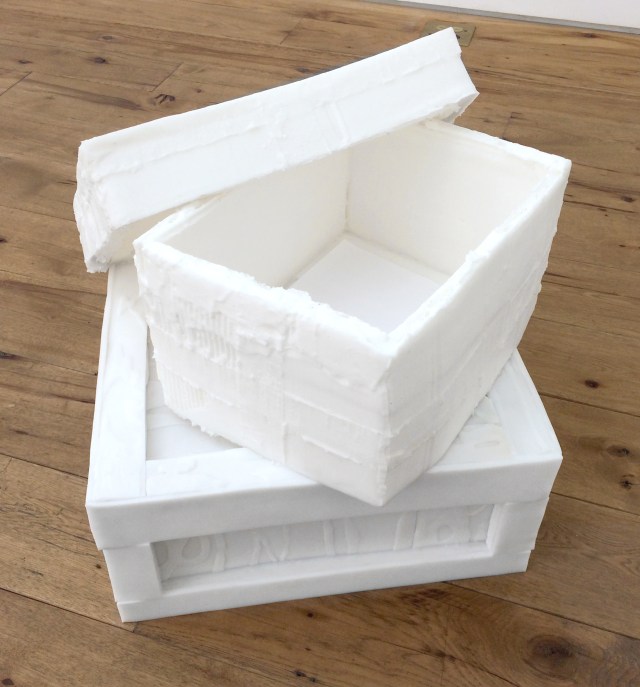
Cardboard Box (White) for Invisible Text, “Called Back,” Epitaph for Emily Dickinson
Jeanne Silverthorne, 2017
Platinum silicone rubber, acid free paper, archival invisible ink
9 x 17 x 13 inches / 23 x 43 x 33 cm
Edition 1/3 with 1 A.P

Dare you see a soul at the white heat?
Then crouch within the door.
Red is the fire’s common tint;
But when the vivid ore
Has sated flame’s conditions,
Its quivering substance plays
Without a color but the light
Of unanointed blaze.
Least village boasts its blacksmith,
Whose anvil’s even din
Stands symbol for the finer forge
That soundless tugs within,
Refining these impatient ores
With hammer and with blaze,
Until the designated light
Repudiate the forge.    –  Emily Dickinson, Part One, Life, XXXIII

MARC STRAUS, the contemporary art gallery in the Lower East Side of New York, opened “an exhibition of white paintings and sculptures by an international selection of artists” on 3 June 2017. It runs through 3 July, and its title The White Heat comes from the first line of Dickinson’s poem above.

Books on Books offers this “white book report” on book art not included to put attendees in the mood for their experience of the works in white by artists such as

  • Damien Hirst
  • Nicole Eisenman
  • Enrico Castellani
  • Robert Barry
  • Fernanda Gomes
  • Antonio Santin
  • Jeanne Silverthorne
  • Joan Levison and others.

Book Faced Down – Embedded in Plaster, 1999
Found cook book and plaster block
Irwin Susskind, born 1935
34.6 x 20.9 x 6.5 cm (13 5/8 x 8 1/4 x 2 9/16 in.)
The Allan Chasanoff, B.A. 1961, Book Art Collection, curated with Doug Beube

Irwin Susskind‘s “Book Faced Down” is an example of the technique of mixed media – a stark white plaster block facing down the objectified cookbook –  to create book art. A piece of sheet cake, a cutting board?

Zurbarán’s Color Plates, 2011
Jonathan Callan
Chiseled book in perspex
46.4 × 71.1 × 5.7 cm

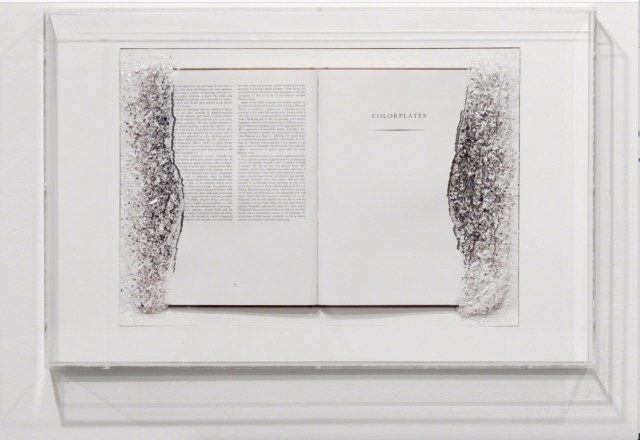
Jonathan Callan‘s piece denies viewers the colorful still lifes of Francisco de  Zurbarán and leaves them with this drained-of-color, chiselled double-page spread of a book on the artist.

Work of Linear – Actions, 2000
Noriko Ambe

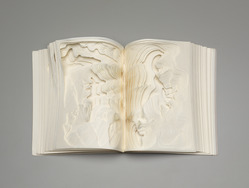
Where Callan chisels away from the edges inward, Noriko Ambe carves from the inside almost to the edges in her work above.

Absence, 2004
J. Meejin Yoon

As the Straus exhibition notes, “In Chinese cultures, White is associated with Death.” In J. Meejin Yoon’s book Absence, the absence of color in a solid white block of thick stock cardboard pages and the “text” of one pinhole and two identical squares die-cut into each of its 120 pages – one for each story of New York’s Twin Towers including the antenna mast – lead the reader down through the missing buildings to the final page where the footprint of the absent structures ends in a die cut of the entire site of the World Trade Center.

Your House, 2006
Olafur Eliasson
Teixeira de Freitas, Lisboa, Portugal

Your House, 2006
Olafur Eliasson

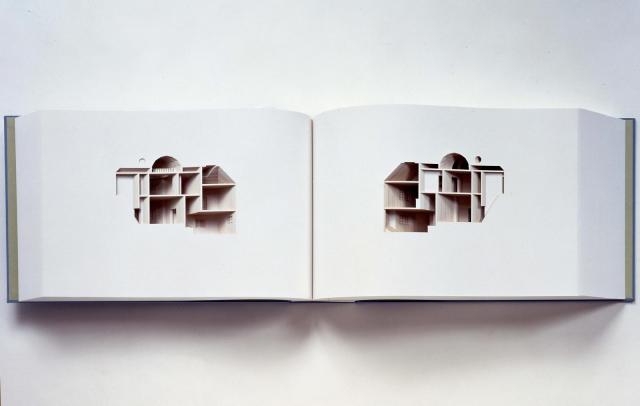
Olafur Eliasson seems to have followed Yoon’s technical approach in Your House, 2006, although the effects are far more intricate.

Coral Colony, 2017 in progress
Julie K. Dodd

Untitled
Julie K. Dodd

Echoing Yoon’s somber note, Julie K. Dodd‘s paper and book art often dwell on environmental issues, such as the death of a coral colony above and the contours of the natural landscape versus manmade as shown in Untitled.

The Great Gathering,  VII The Time is Now, 2016
Chris Ruston
Photo credit: Chris Matthews

A more hopeful note is struck in the whiteness of Chris Ruston’s final “ammonite” book in the series The Great Gathering, inspired by Darwin’s On the Origin of Species. The mirror under the maker’s tools and the made thing implicate the viewer here and now in an optimistic ongoing evolutionary process of making and remaking.

Michael Mandiberg, Print Wikipedia, 2015
Exhibition “From Aaaaa! to ZZZap!” by the Denny Gallery, 261 Broome Street in New York City, 18 June through 11 July, 2015.

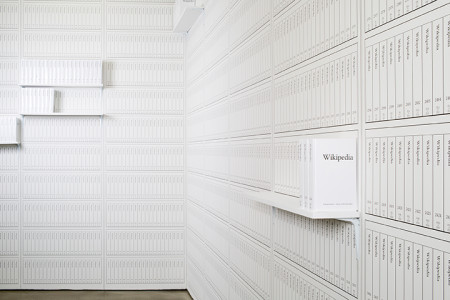
Where the white of Yoon’s and Dodd’s works evokes absence and the white of Ruston’s work evokes the blank invitation to singular creativity, Michael Mandiberg‘s installation of multiples, Print Wikipedia, evokes the plenitude of white noise that is our online lives.

Swiss Army Book
Swiss Army Book, 1990
M. L. Van Nice
Gift of Lois Pollard Price
National Museum of Women in the Arts

And just as technologically allusive, M.L. Van Nice‘s Swiss Army Book poses (tongue in cheek?) the single volume as somehow able to capture, store and transmit knowledge in ways it need not, albeit the meaning of the whiteness here is a bit elusive.

Legal Process Narrative, 1996
Werner Pfeiffer
Law Library, University of Connecticut at Storrs

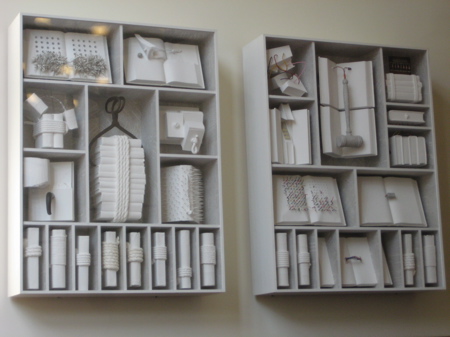
Werner Pfeiffer’s works constitute an extensive treatment in white. The installation at UConn Storrs represents a small proportion of the works shown in retrospectives in the last ten years at Bucknell, Cornell and the Toledo (Ohio) Museum of Art. Pfeiffer’s works touch on censorship, and from his Cornell exhibition, he explains:

The objects I create are made with real books. They are not casts, nor are they sculpted imitations. At its core each piece has bound, printed pages. Glued together and painstakingly covered with gesso, they are silenced and sealed for good. I practice this destruction, this obvious censorship, simply as metaphor. It is to visualize, to demonstrate, to provoke. For these acts of violence are not about the damage done to stacks of paper, to books. The objects are about the harm inflicted on the human spirit. The ropes, the nails, the clamps, the hooks and knifes are real as well. They are symbols of pain, of torture, of suppression which are inevitably brought on by the censor’s act.

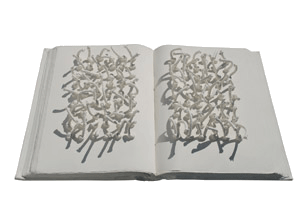
Knotty Story
Werner Pfeiffer

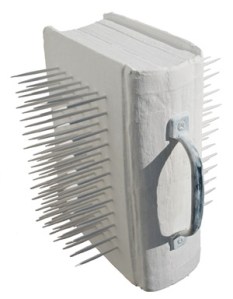
Difficult to Fit
Werner Pfeiffer

With the advent of ebooks, Pfeiffer celebrates the tangibility of the book with his white gessoed book objects and their punning titles as well as origami-like works such as Zig-Zag.

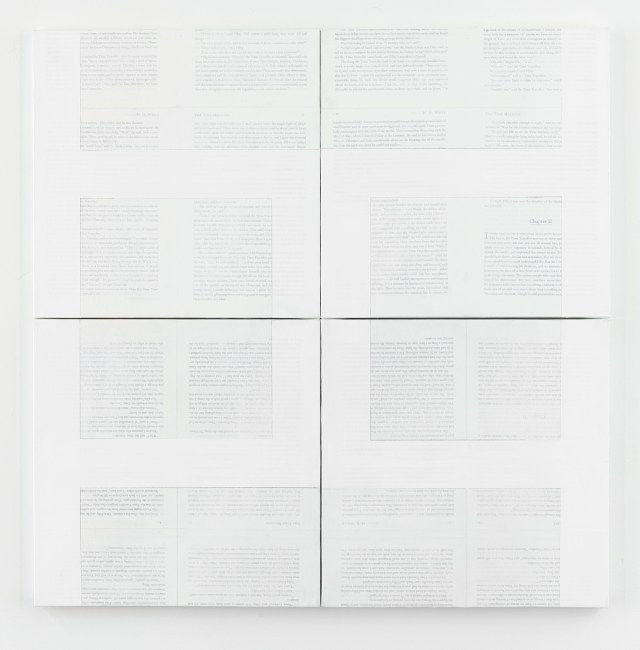
But back to the white works of art at the MARC STRAUSS gallery.  Book art is not entirely neglected. Following in their tradition since 1984, Tim Rollins and K.O.S. (“Kids of Survival”) pondered, discussed and “jammed” on 1895 novella by H.G. Wells to produce THE TIME MACHINE (after H.G.Wells), which is included in the exhibition.

THE TIME MACHINE (after H.G. Wells)
Tim Rollins and K.O.S., 2013
Matte acrylic, pencil, book pages on canvas
4 parts, each: 12 x 12 inches / 30.5 x 30.5 cm
Overall: 24 x 24 inches / 61 x 61 cm
Courtesy Studio K.O.S. and Lehmann Maupin, New York and Hong Kong.

According to the artists, “We believe that every total work of art is a time machine – a synthesis of a living past and present located in an object that can only be completed by the social experience of a viewer in the future. The total work of art exists in the invisible fourth dimension of space/time and it is this notion that unites the works in the exhibition. We paint on historic texts in the present so that they can haunt our futures.”

Suitably prepared? Jump in your time machine and head over to 299 Grand Street, on the Lower East Side in New York, and immerse yourself in “The White Heat“.