Books On Books Collection – Ornan Rotem

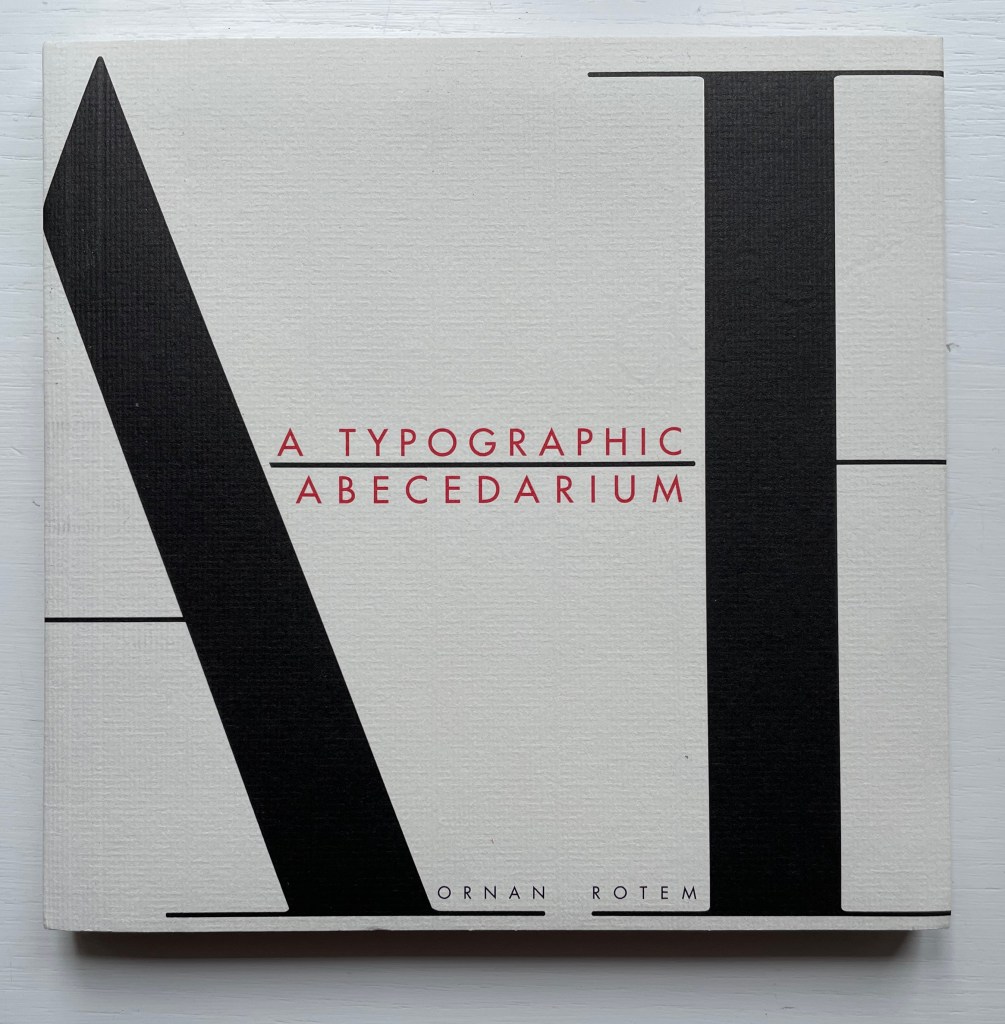
A Typographic Abecedarium (2015)
A Typographic Abecedarium (2015)
Ornan Rotem
Perfect bound in a softcover case. H174 x W176 mm. 136 pages 1 poster (64 x 48 cm, folded to 16 x 16 cm). Acquired from Devils in the Detail Ltd, 14 March 2023.
Photos of the book: Books On Books Collection. Displayed with permission of the artist.
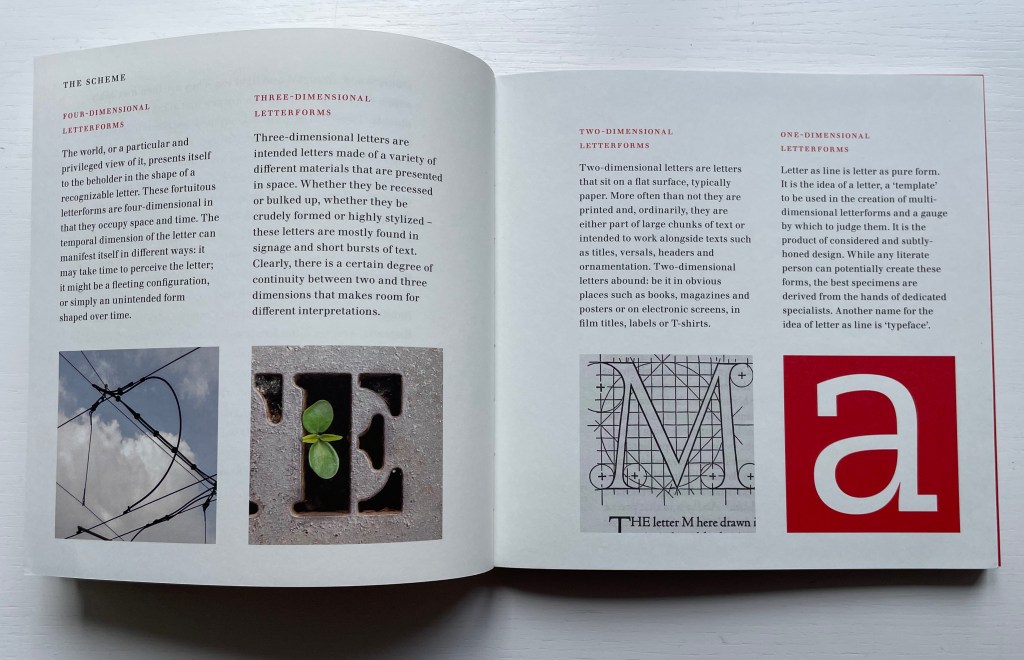
Ornan Rotem calls his book a “photo-typographic essay … a meditation … [e]xploring the relationship between typography and the visual world around us ….” As shown in the double-page spread below, his meditation is shaped across a four dimensional views of the letterform: the four-dimensional, three-dimensional, two-dimensional and the one-dimensional. At the end of the essay, there are 26 miniature essays that will send the reader back to enjoy each letter’s four dimensional entries again.
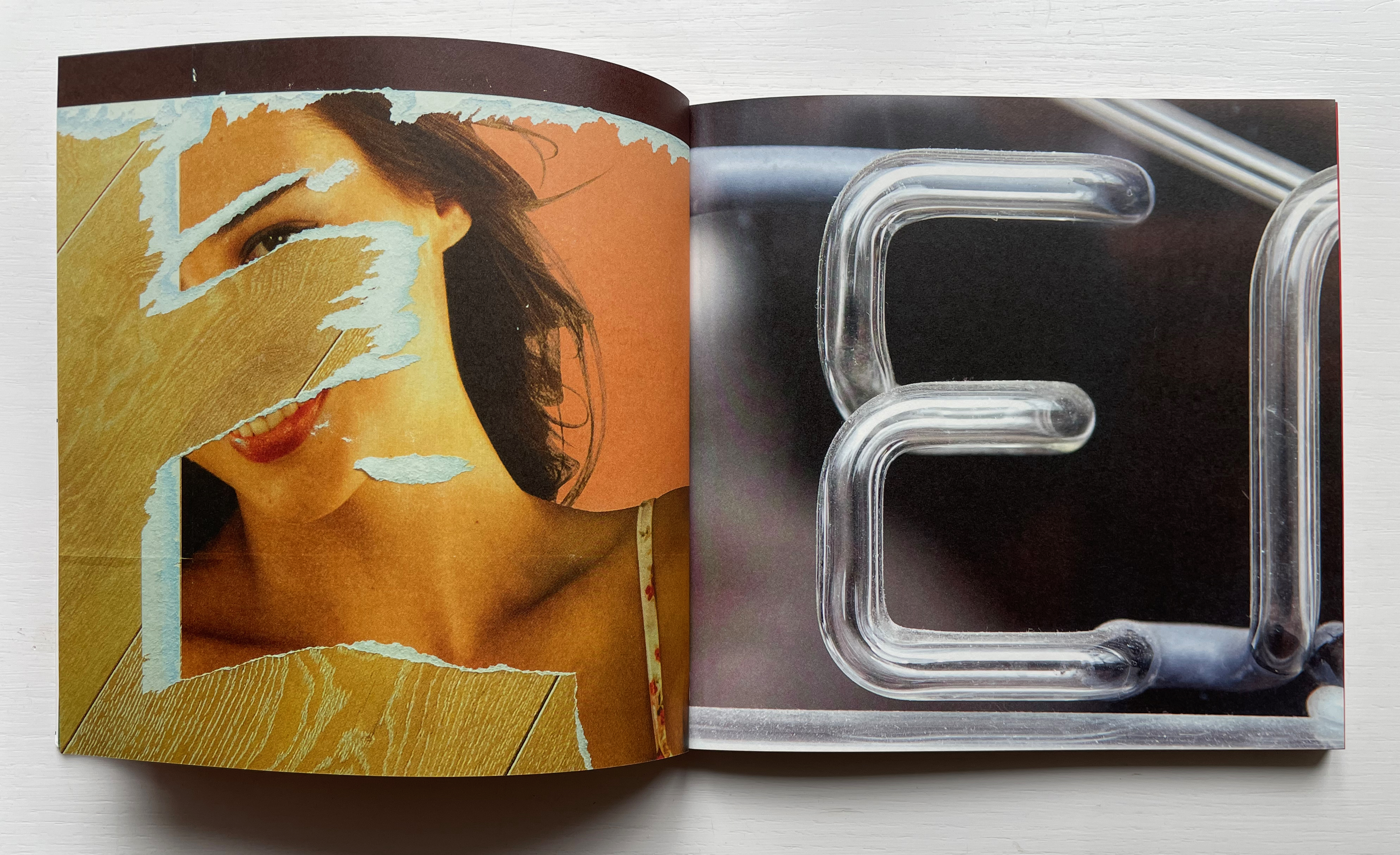
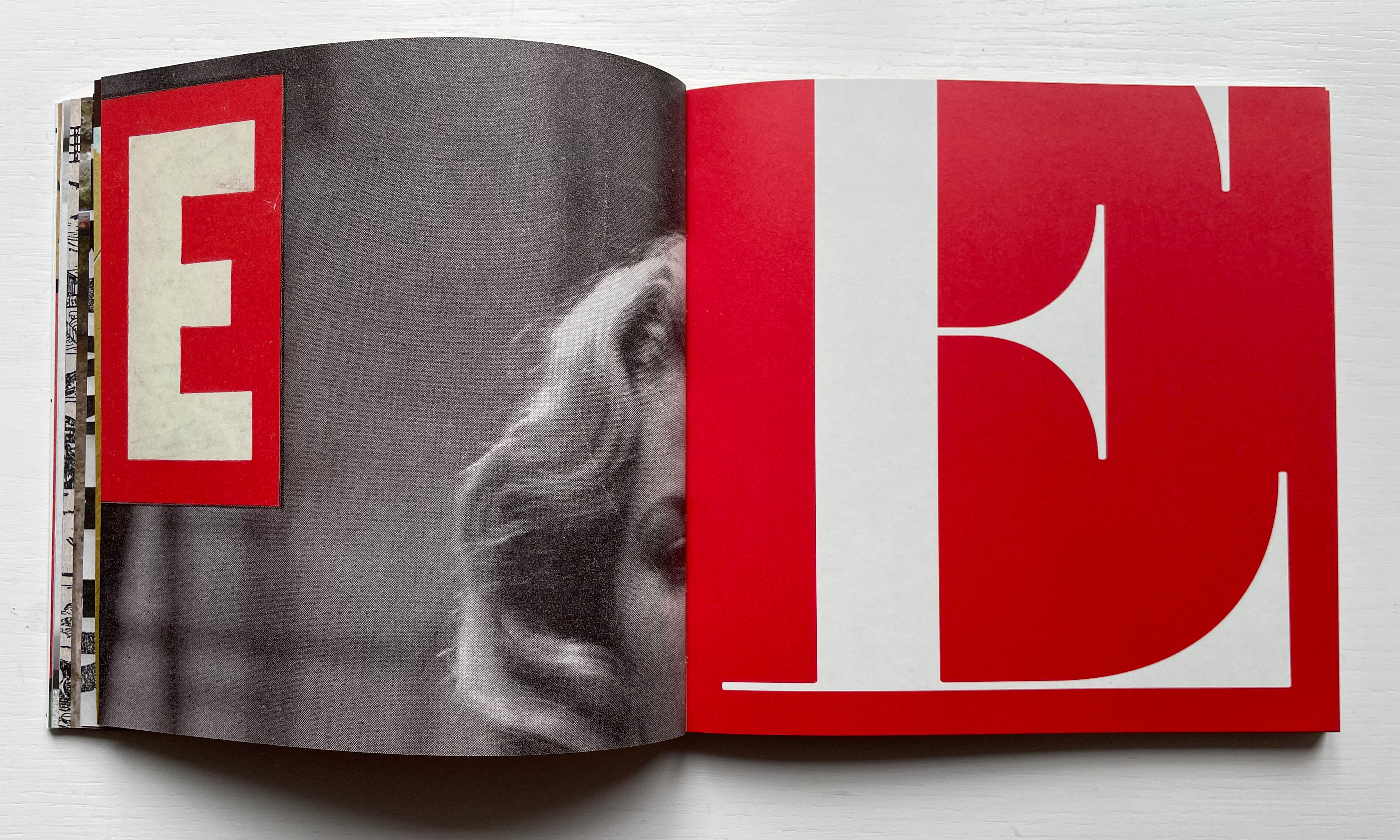
Everywhere you look you can see an E smiling at you (just saying it induces a smile). In 1969, Georges Perec, whose own name has four Es, tried exorcising the E by writing an esoteric 300-page novel, La disparition, without ever using one. I wonder how he would have felt had he come across this E — which was shot in Paris — when he was writing the novel. ¶ If you want to endow letters with character, then I suppose E would be the lively sort, hence the printed form comes from a 1948 cover of LIFE magazine.

Much is packed into these miniature essays. Naturally for an artist’s book celebrating type, there are the necessary self-referential typographic puns in the one above: character and sort. In all, there is the evidence of the long, multi-place, multi-source contemplative gestation of the work. In the example above, the allusion to Perec’s novel leads to the 1969 photo in Paris (or was it vice versa?). The typographic puns lead to a search for an E from a LIFE cover (again, or was it vice versa?). This circular connectedness over time, text and image highlights the self-referentiality of the genre of the artist’s book.

While the dense allusiveness might suggest that this is a work limited to an adult audience, A Typographic Abecedarium does find favor with a younger audience — no doubt because it speaks to the phenomenon of seeing letters everywhere and in multiple dimensions.

Physical Poetry Alphabet (2018)
Physical Poetry Alphabet (2018)
Douglas & Françoise Kirkland and designed by Ornan Rotem
Casebound, illustrated paper over boards. Acquired from Sylph Editions, 18 March 2023. Photos: Screenshots displayed with permission of the publisher.

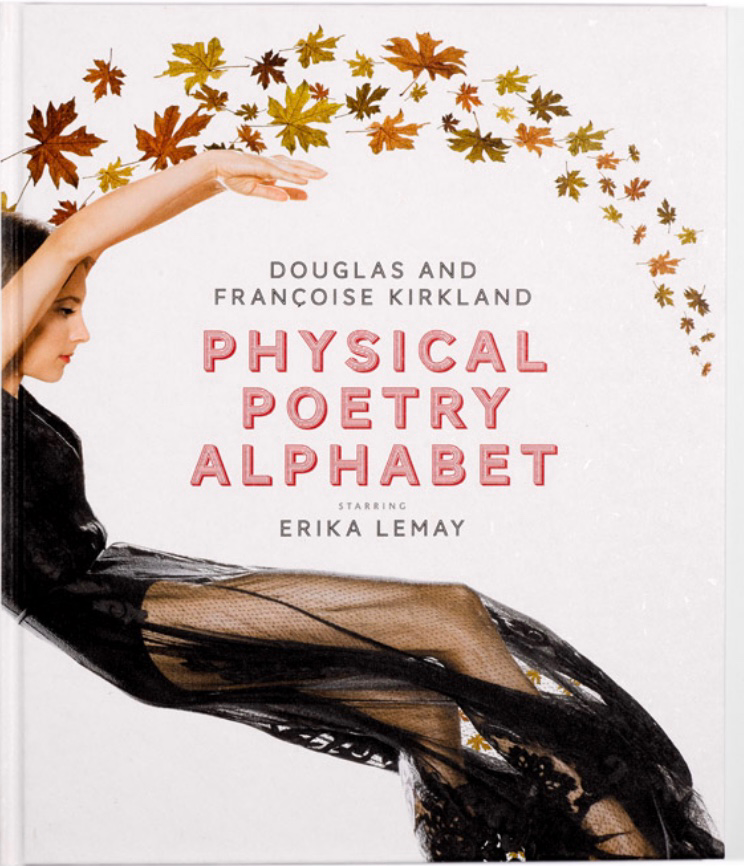
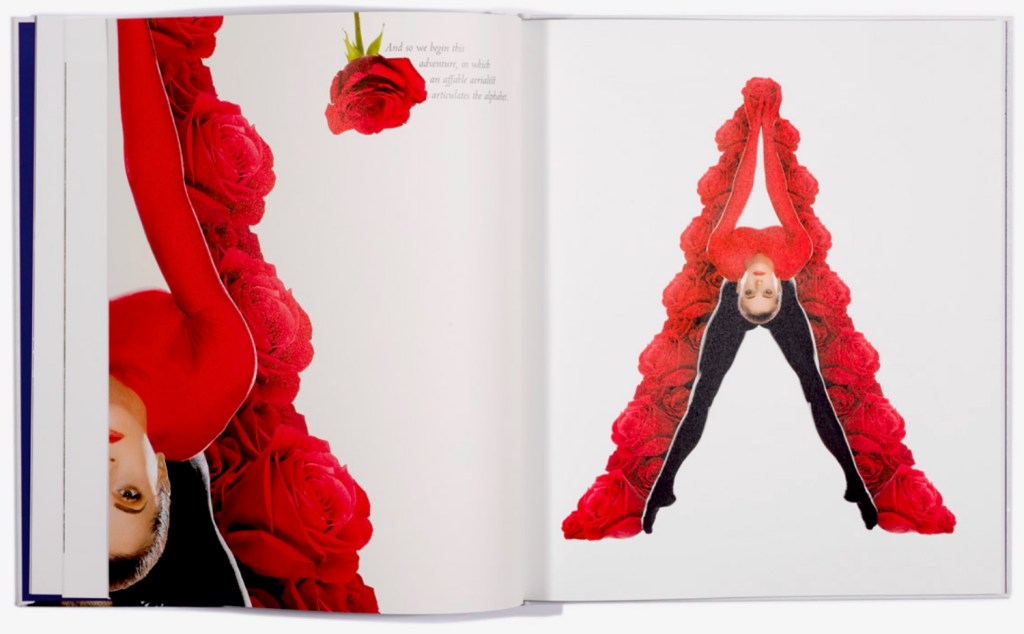
Physical Poetry Alphabet (2018) is a curious work. The Thames & Hudson-style production values combined with the knowledgeable essay in it by Ornan Rotem makes one think of Andrew Robinson’s  The Story of Writing, an actual Thames & Hudson book. While the acrobatics of Erika Lemay echo the longstanding tradition of modeling the letters with the human body, followed by Erté, Vítězslav Nezval, Anthon Beeke and Rowland Scherman and so ingeniously summarized by Lisa Merkin, Lemay’s elaborate costumes and the scene design echo the traditions of Hollywood, Las Vegas and the fashion industry, which is not surprising given the involvement of Douglas Kirkland, portrait photographer to the stars. A Typographic Abecedarium strikes its singular target of “photo-typographic essay”. Having too many targets, Physical Poetry Alphabet perhaps misses its several bull’s eyes, but to follow along with its mixed metaphors, it undeniably delivers a shop full of eye candy.
Further Reading

Abecedaries I (in progress)“. Books On Books Collection.

Alphabets Alive! – Body“. 19 July 2023. Books On Books Collection.

Meier, Allison. 14 January 2016. “A Visual Essays Recalls the Alphabet’s Pictorial Past“. Hyperallergic. Accessed 18 March 2023.
Books On Books Collection – Marie Lancelin

Gestes Alphabétiques (2014)

Gestes Alphabétiques (2014)
Marie Lancelin
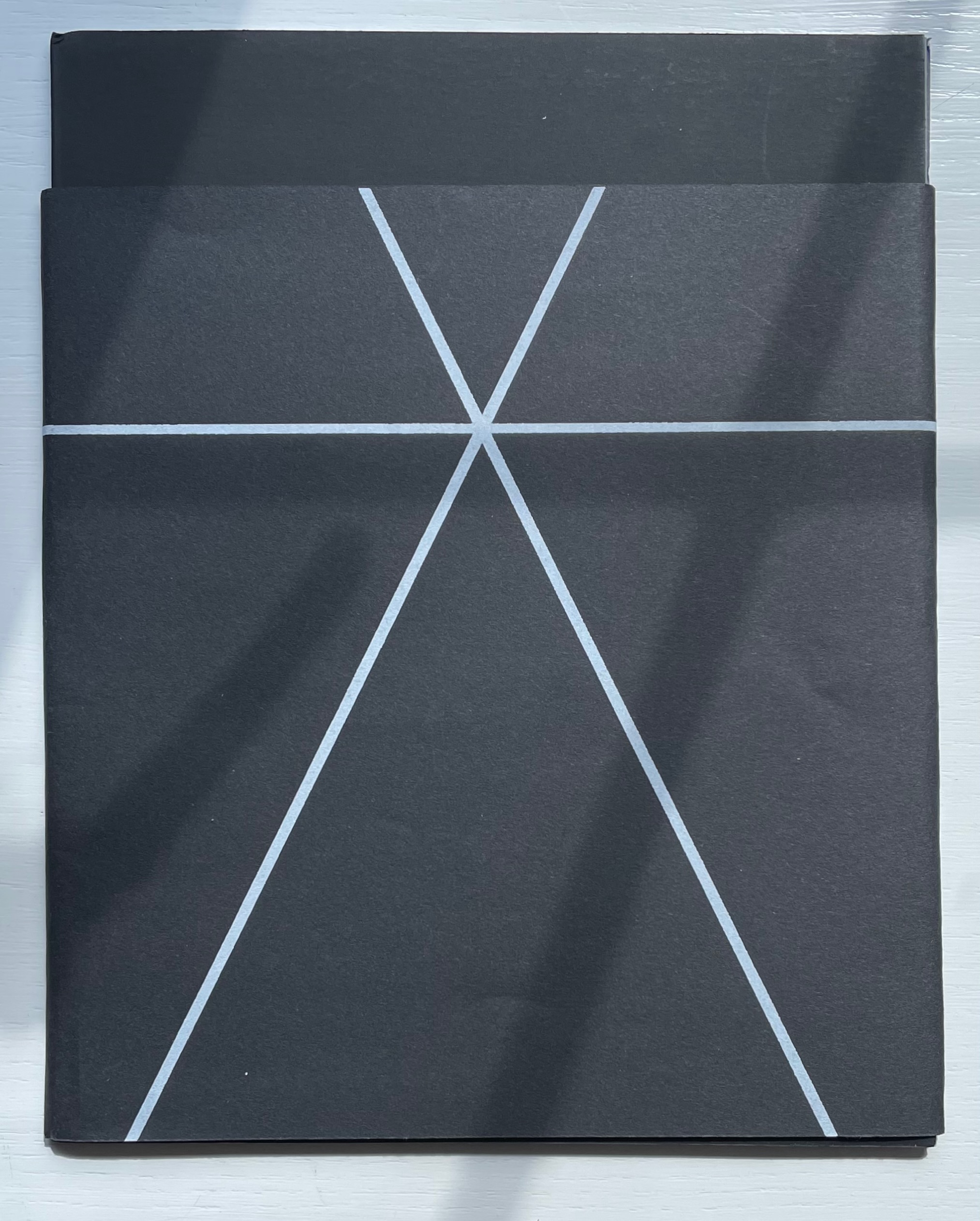
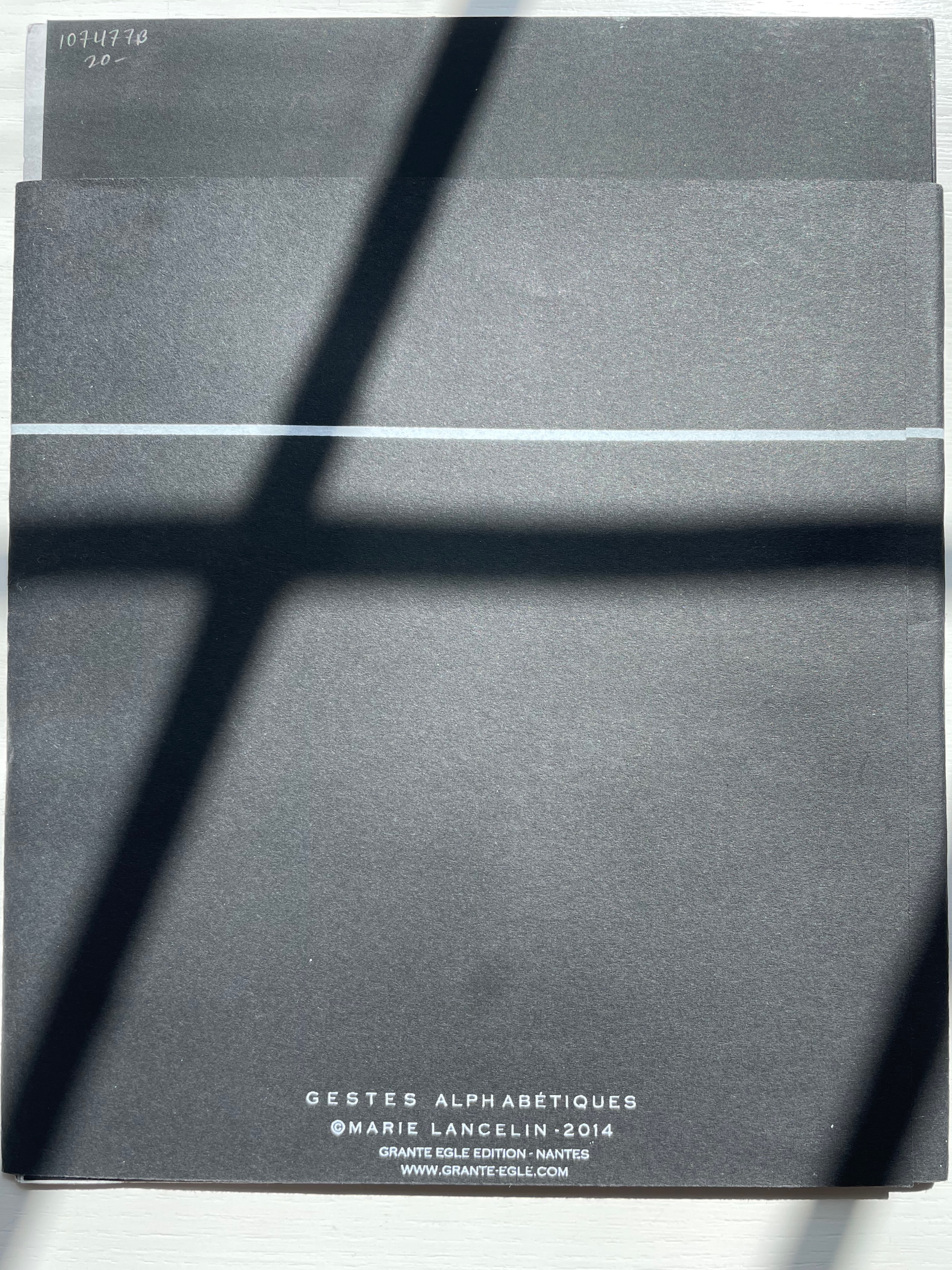
Double-sided leporello with sleeve. H200 x W170 mm (closed). 14 panels. Laser-printed, screen print. Interior: offset on Arcoset Extra White 170 gsm. Cover and band: serigraphy on Curious Skin 270 gsm. Edition of 100. Acquired from Printed Matter, Inc., 31 July 2022.
Photos: Books On Books Collection. Displayed with permission of the publisher, Grante Ègle (Nantes, France).

There is a long-standing tradition of “dancing the alphabet”. In his satyr play Amphiaraus, Sophocles brings in an actor dancing the letters. A more extended instance comes from 5th century Greek dramatist Kallias; his entire play Grammatike Theoria (“ABC Show” or “The ABC Tragedy“) presents the alphabet and pronunciation exercises. Apparently in acting out the letters psi and omega, the chorus member’s performance tended to the erotic, a phenomenon still to be found in Erté’s alphabet suite (1927/1978) and Anthon Beeke’s Alphabet (1970). Less suggestive are Vítězslav Nezval’s Abeceda (1926), Toshifumi Kawahara’s Dancing Alphabets (1991) and, most recently, Marie Lancelin’s Gestes Alphabétiques (its publisher issued two editions of 100 copies each in 2008 and 2014).

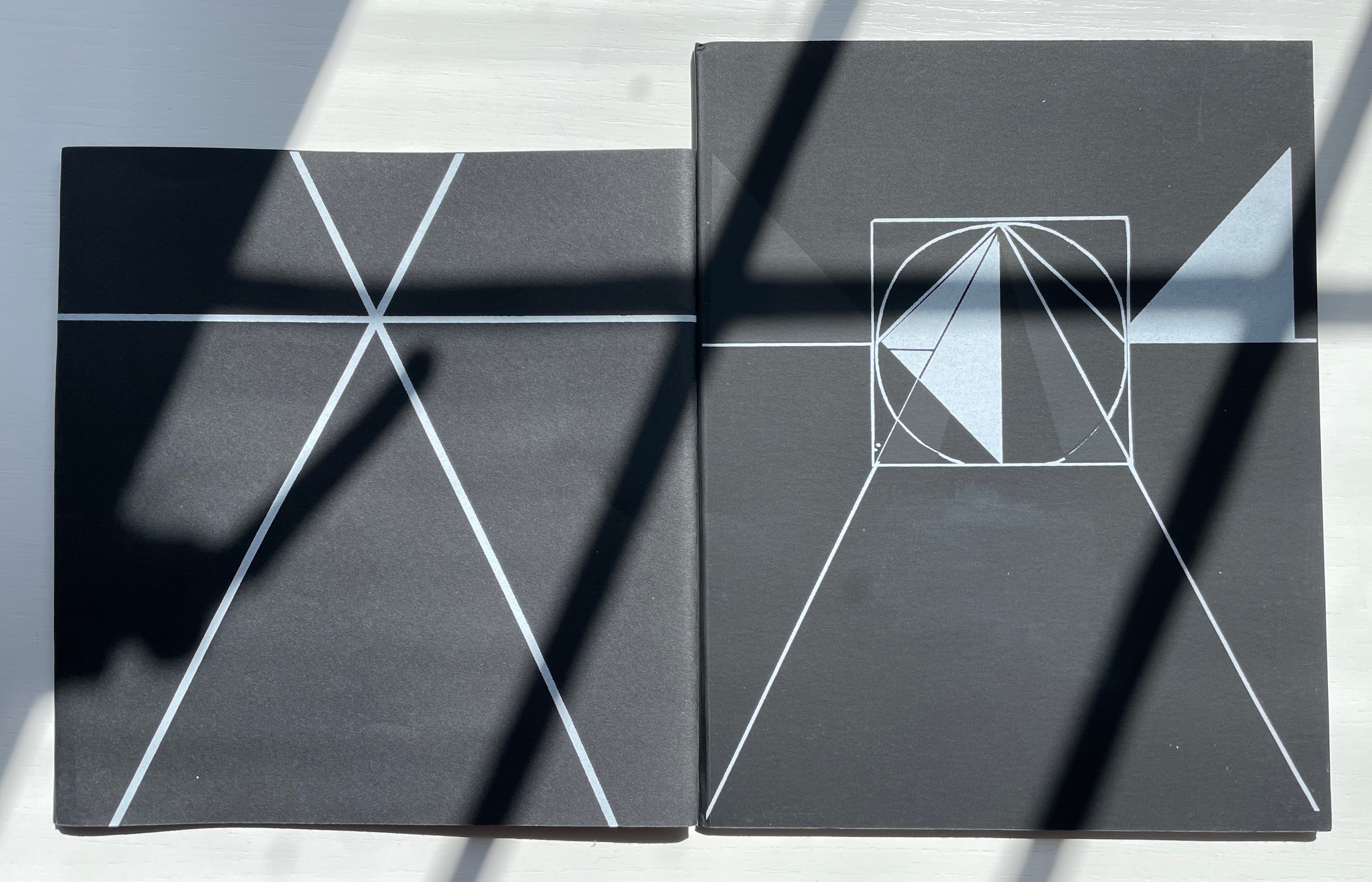
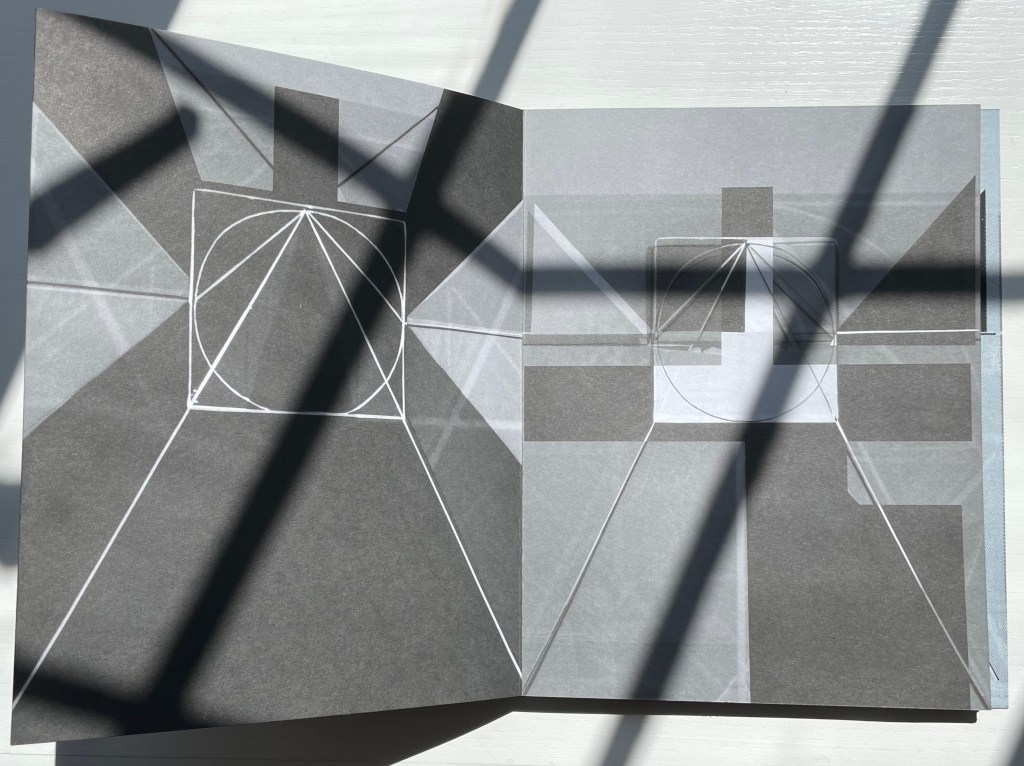
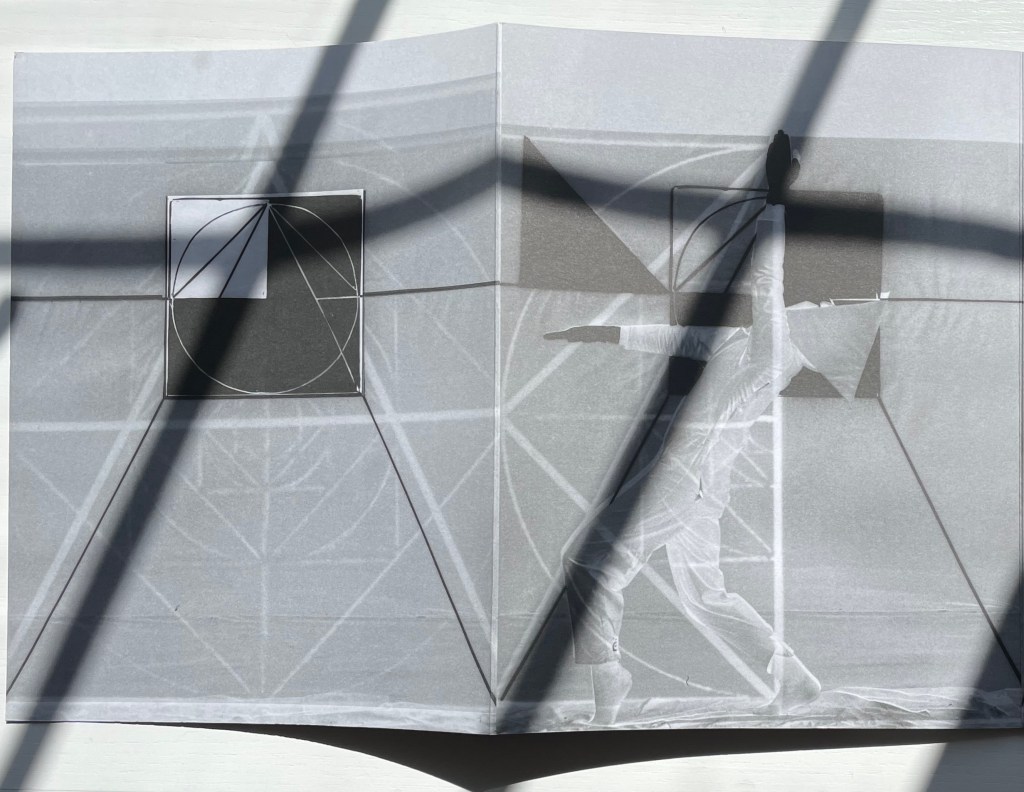
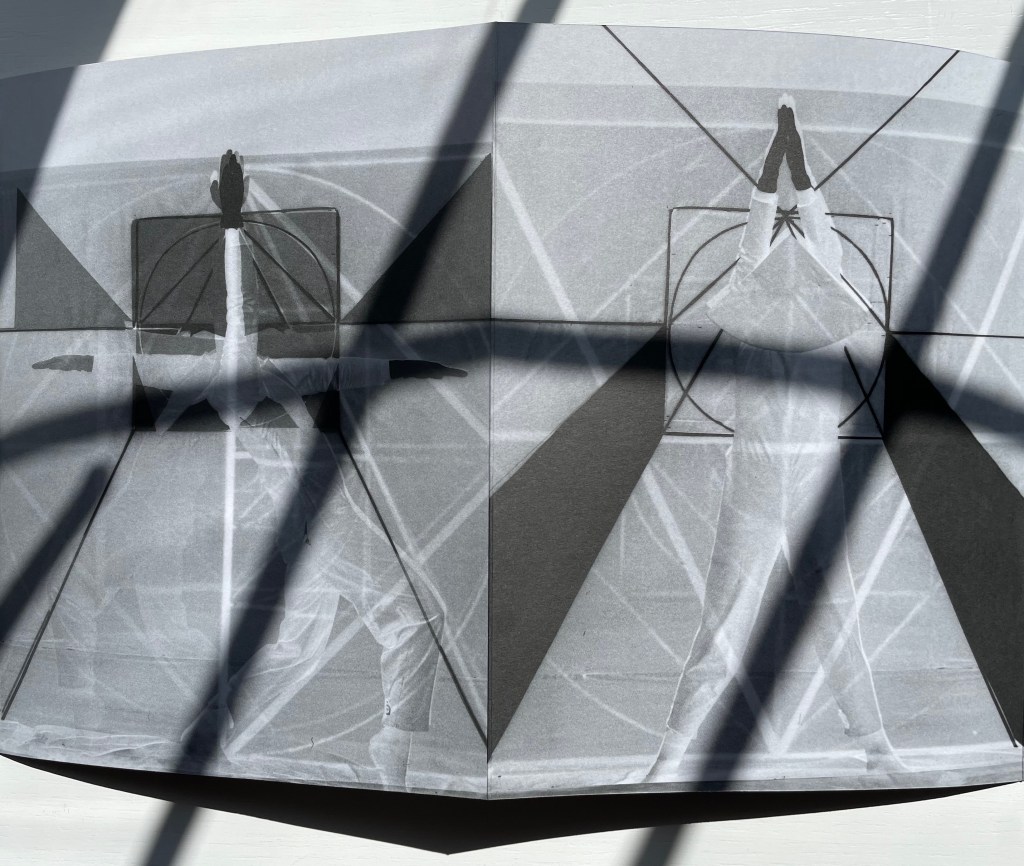
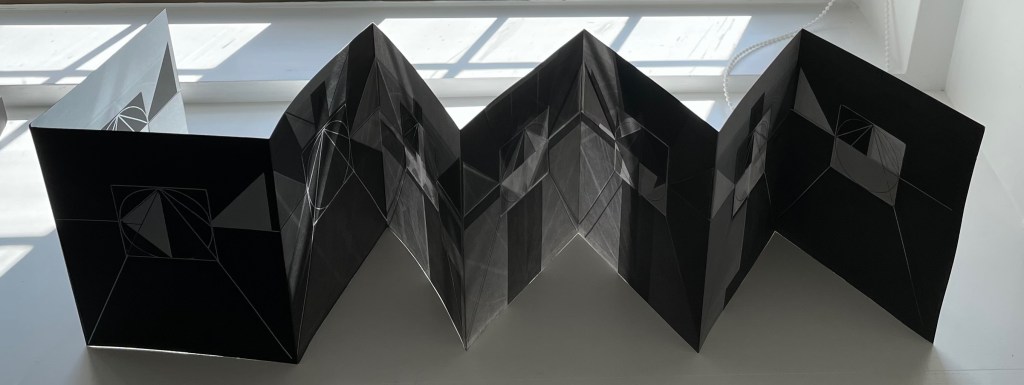
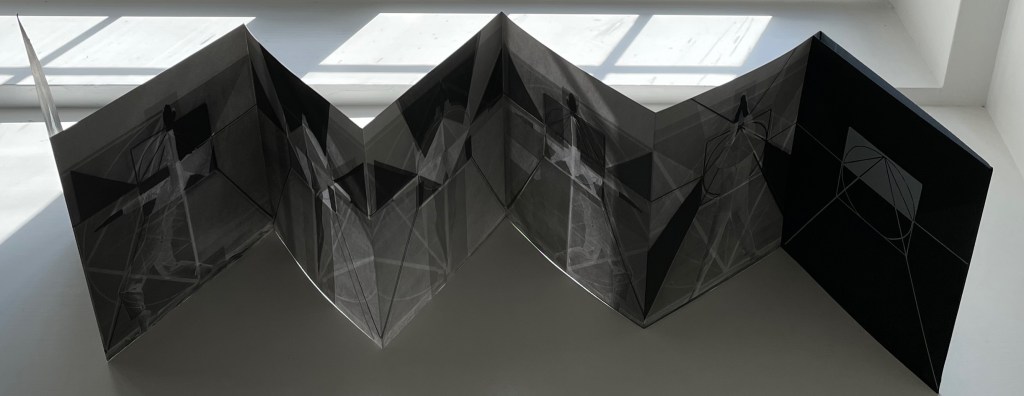
All the media and techniques that Lancelin engaged to make Gestes Alphabétiques — photograms, photomontage, laser printing, serigraphy, staging, lighting, drawing, printing — take her gestures beyond the alphabet and geometric abstractions we can easily see. Also apparent is her grounding in filming; the overlaying of the model’s poses transform that side of the leporello into a dance sequence. With the combined techniques, the ink and paper create the effect of displaying the dance through transparencies or glass or within some black and white computer graphic setting.

Fundamentally, through these media, techniques and the double-sided leporello form, Lancelin translates gesture, symbol, shape and light into one another and back again, offering the viewer the opportunity to see the artist explore the making of meaning.

Further Reading

Abecedaries I (in progress)“. 31 March 2020. Books On Books Collection.

Anthon Beeke“. 21 June 2021. Books On Books Collection.

Toshifumi Kawahara“. 29 December 2022. Books On Books Collection.

Vítězslav Nezval“. 16 July 2021. Books On Books Collection.

Brooke, Olivia, and Julian Deghy. N.d. Naked Alphabet. Website. Accessed 7 June 2021.

Erté. 1978. Erté graphics: five complete suites reproduced in full color – the seasons, the alphabet, the numerals, the aces, the precious stones. New York: Dover.

Gagné, Renaud. 2013. “Dancing Letters: The Alphabetic Tragedy of Kallias”. In Choral Mediations in Greek Tragedy, ed. R. Gagné and M. Hopman, Cambridge University Press 282-307.

Goetz, Sair. “Letterforms / Humanforms“. 11 June 2020. Letterform Archive. Accessed 7 June 2021.

Lancelin, Marie. 29 October – 19 December 2015. “My Models“. Exhibition. In Extenso. Accessed 1 January 2023.

Lawler, Lillian. April 1941. “The Dance of the Alphabet”. The Classical Outlook, 18: 7, pp. 69-71.

Wise, Jennifer. 1998. Dionysus Writes : The Invention of Theatre in Ancient Greece. Ithaca ; London: Cornell UP.

Books On Books Collection – Toshifumi Kawahara

Dancing Alphabet (1991)

Dancing Alphabet (1991)
Toshifumi Kawahara
Hardback, casebound sewn. H307 x W236 mm, 96 pages. Acquired from Paper Cavalier, 27 July 2021.
Photos: Books On Books Collection.

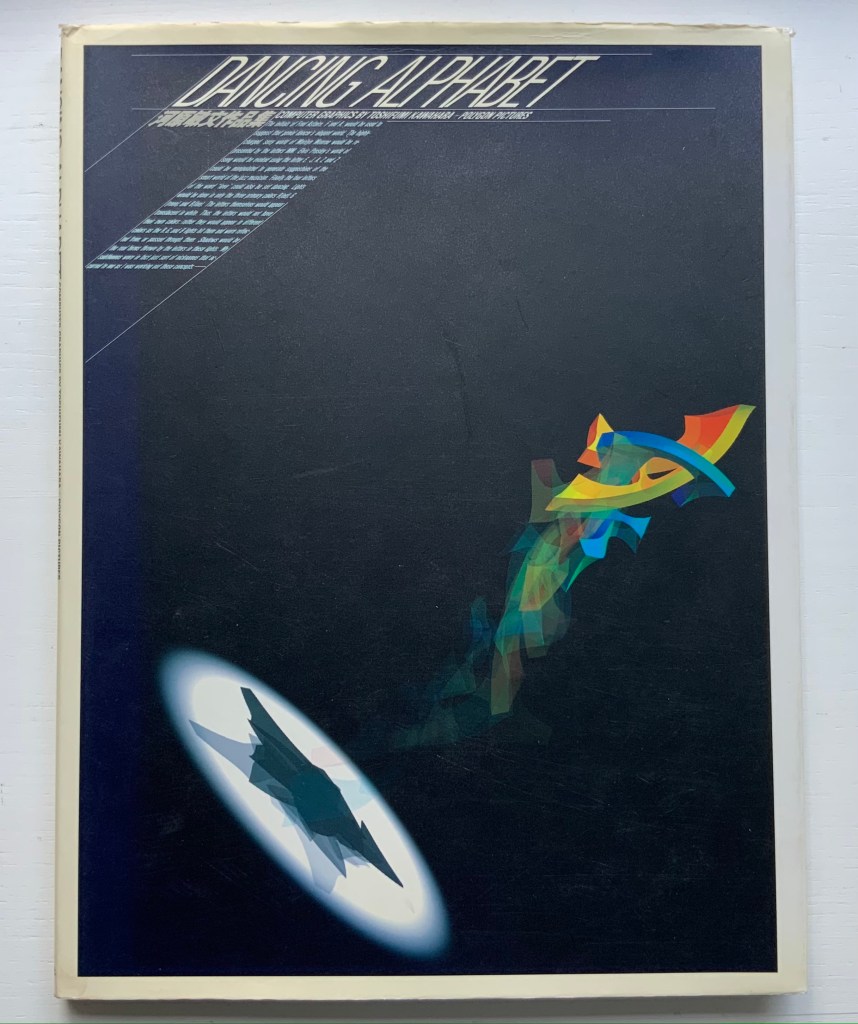
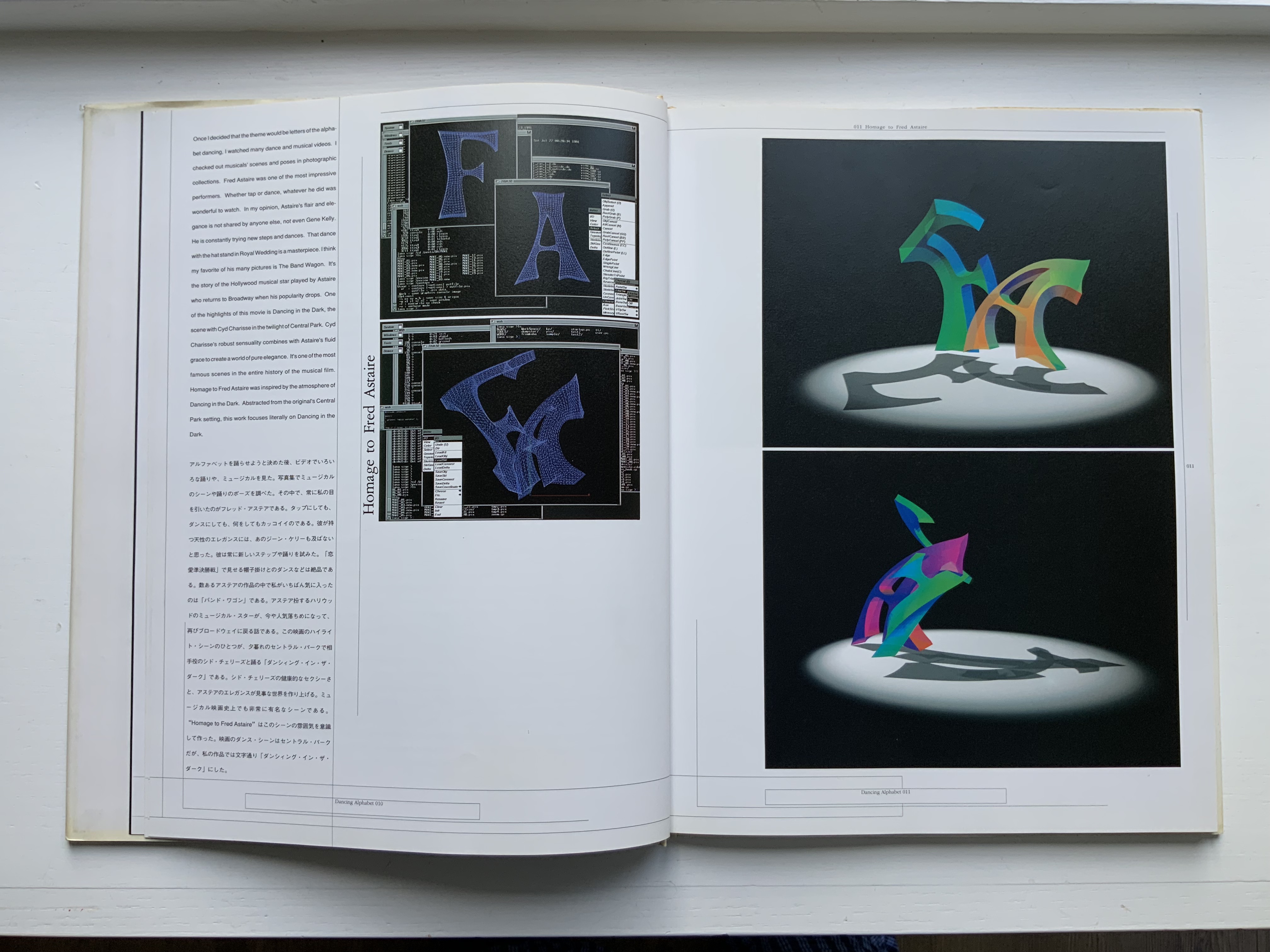
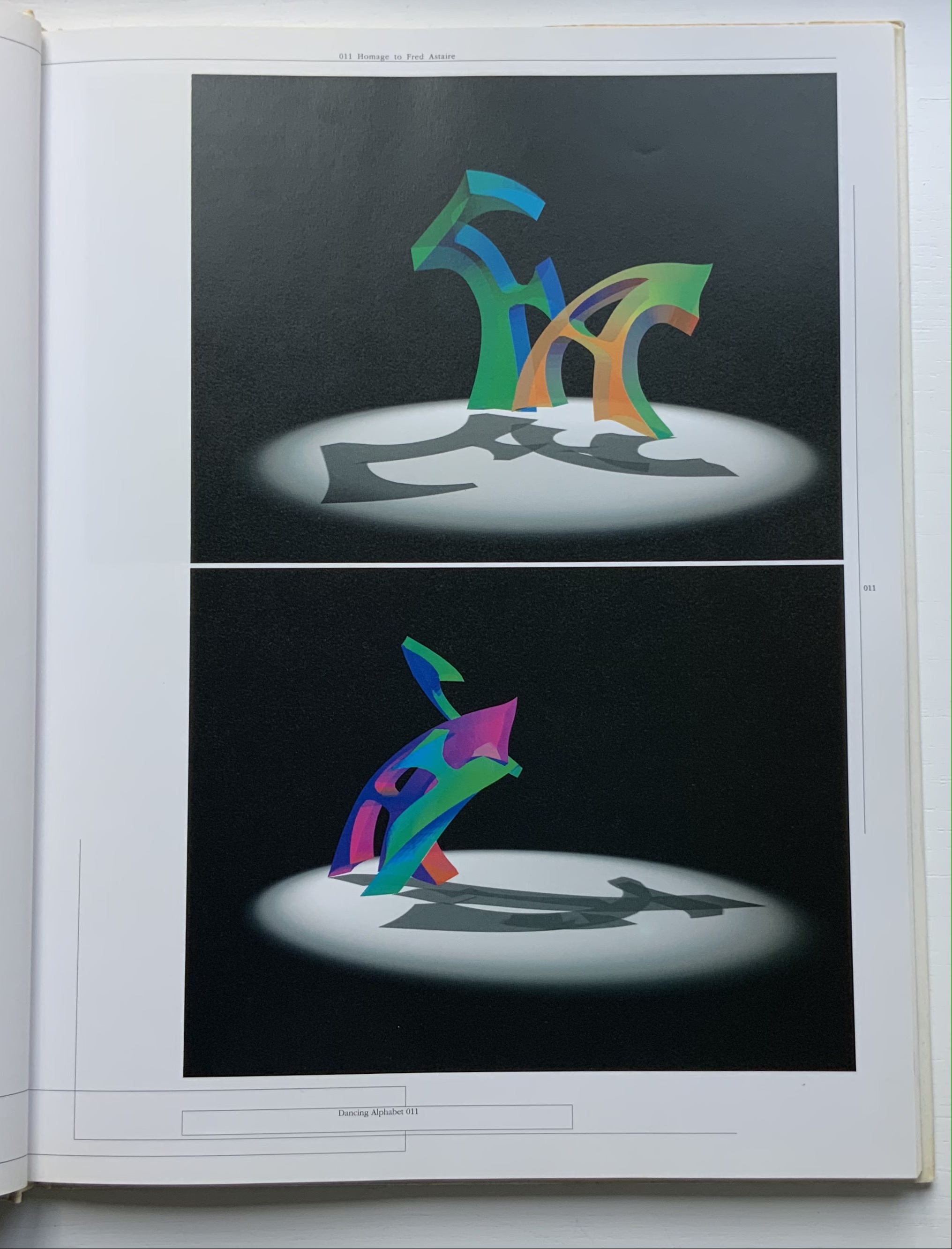
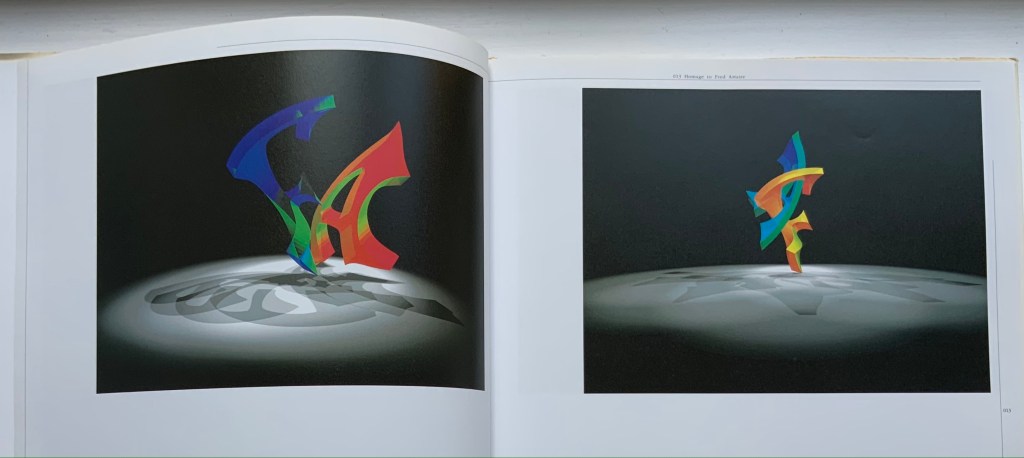
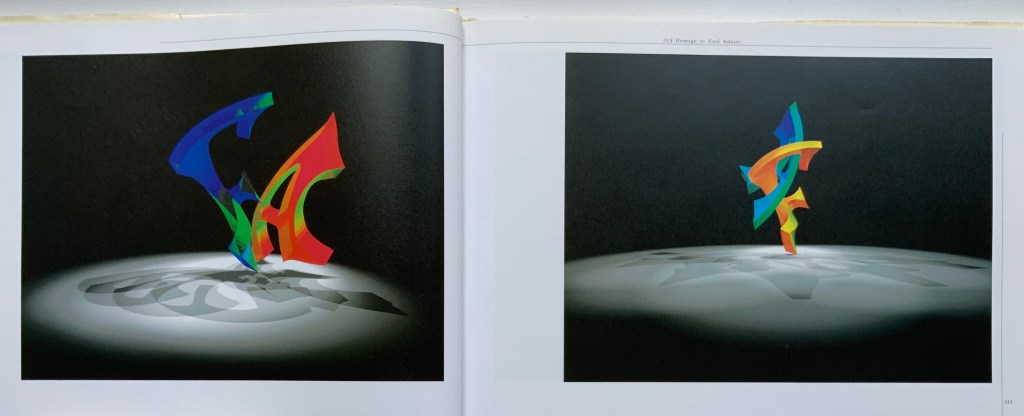
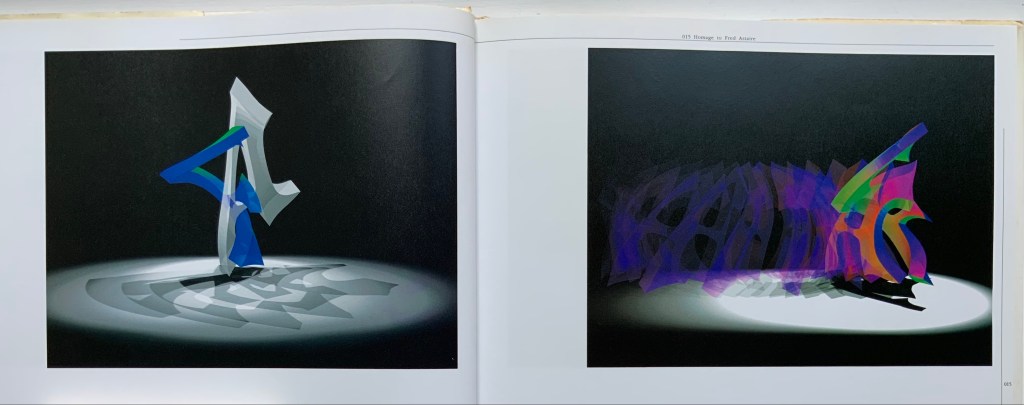
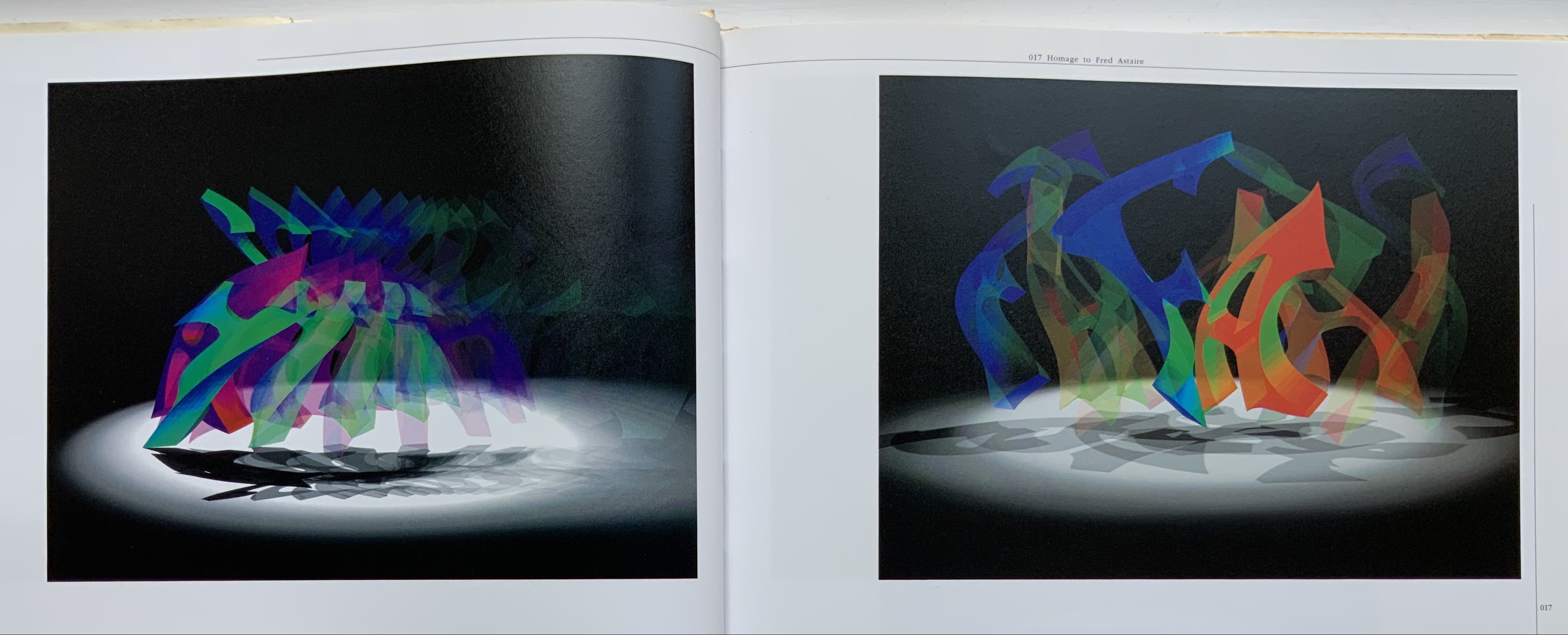
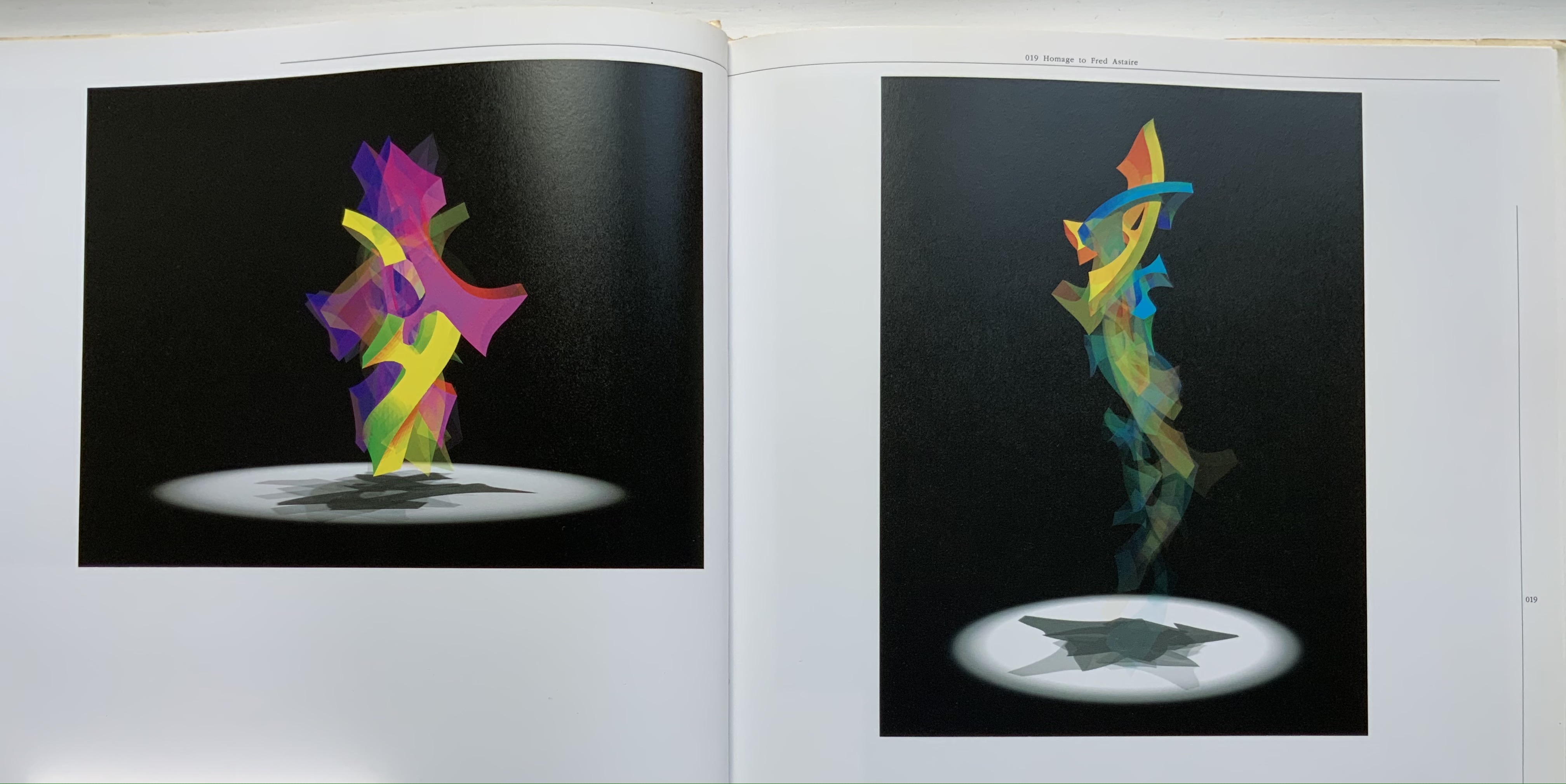
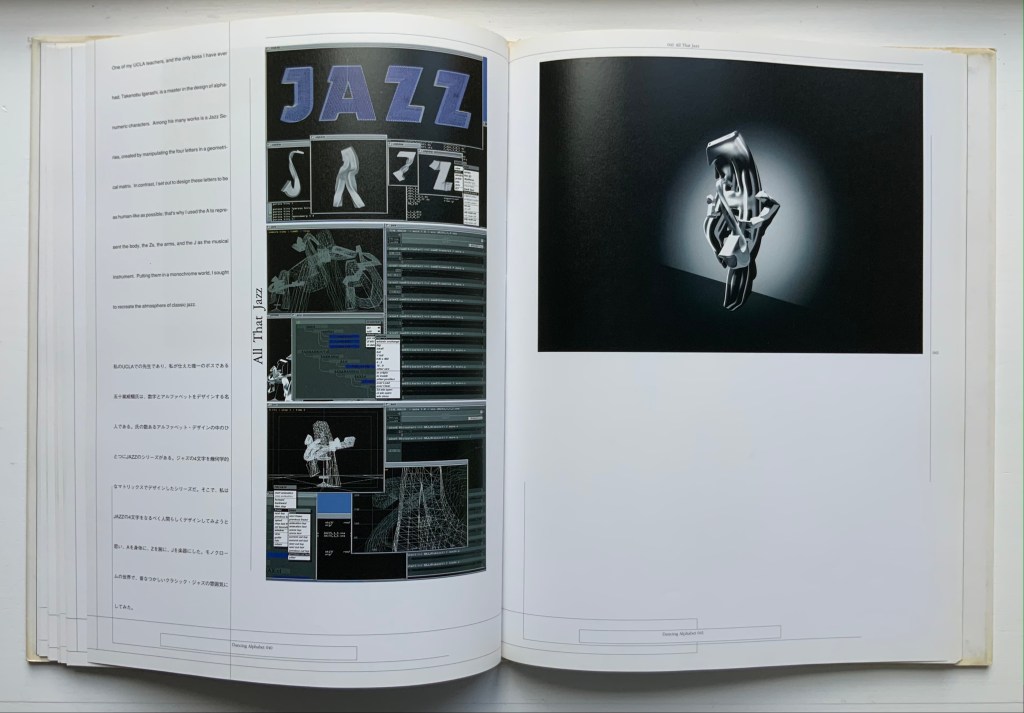
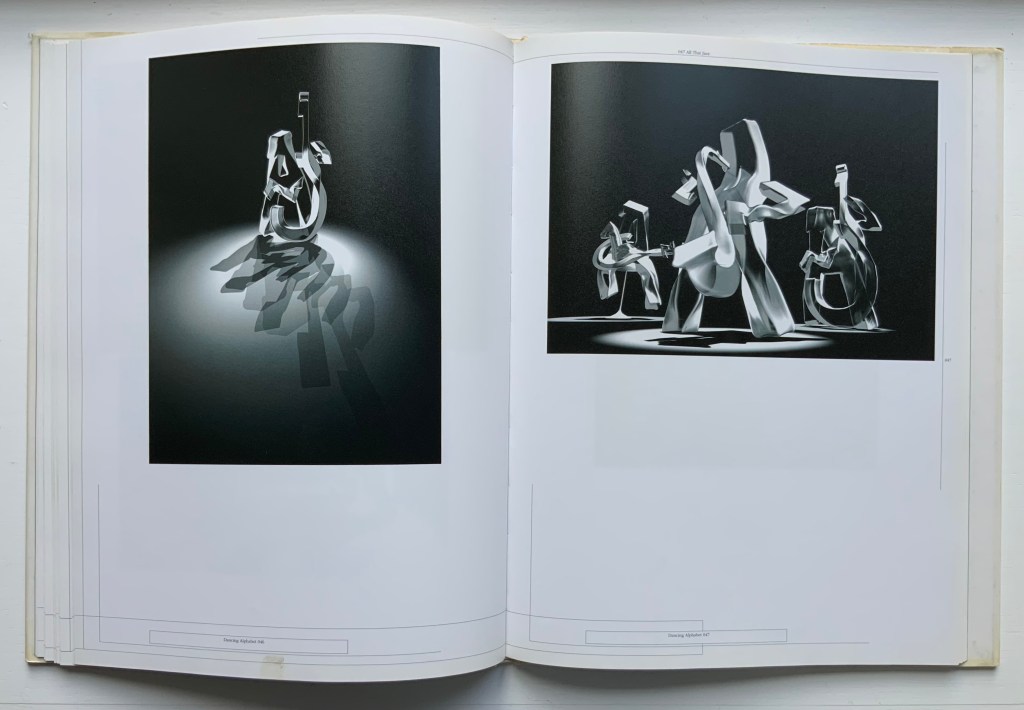
The tradition of the dancing alphabet goes back to the Greeks. In one of his plays, Kallias the 5th century Greek playwright had his characters each dance a letter of the Ionian alphabet. This may also be an early instance of product placement. At the time, there were a variety of Greek alphabets, and it was the Ionian that won out. The tradition (without the product placement) continued and, in this collection, is represented by Vítězslav Nezval’s Abeceda (1926), Marie Lancelin’s Gestes Alphabétiques (2014) as well as Toshifumi Kawahara’s Dancing Alphabet. Kawahara’s CG animation work contributed significantly to Polygon Pictures, which created the Emmy Award-winning animated series Transformers Prime and Star Wars: The Clone Wars. But this book’s presentation of Kawahara and team’s work on the “In Search of New Axis” series adds a colorful flavor to the dancing alphabet tradition.

The book’s section “Jazz” adds bright notes to the works of five artists in the collection who bring the alphabet, musical notation and artists’ books together: Jeremy Adler, Jim Avignon & Anja Lutz, Bernard Heidsieck and Karl Kempton.

Dancing Alphabet is not an artist’s book, but the notes and moves it adds to the collection may serve as a spark to the next artist looking to the alphabet and book art for inspiration — or the next scholar intrigued by the connections between the alphabet, music and dance.

Further Reading

Abecedaries I (in progress)“. Books On Books Collection.

Jeremy Adler“. 29 October 2022. Books On Books Collection.

Jim Avignon & Anja Lutz“. 29 October 2022. Books On Books Collection.

Bernard Heidsieck“. 29 October 2022. Books On Books Collection.

Karl Kempton“. 29 October 2022. Books On Books Collection.

Firmage, Richard A. 2001. The alphabet. London: Bloomsbury.

Gagné, Renaud. 2013. “Dancing Letters: The Alphabetic Tragedy of Kallias”. In Choral Mediations in Greek Tragedy, ed. R. Gagné and M. Hopman, Cambridge University Press 282-307.

Lawler, Lillian. April 1941. “The Dance of the Alphabet”. The Classical Outlook, 18: 7, pp. 69-71.

Wise, Jennifer. 1998. Dionysus Writes : The Invention of Theatre in Ancient Greece. Ithaca ; London: Cornell UP.

Books On Books Collection – Karel Teige & Vítězslav Nezval

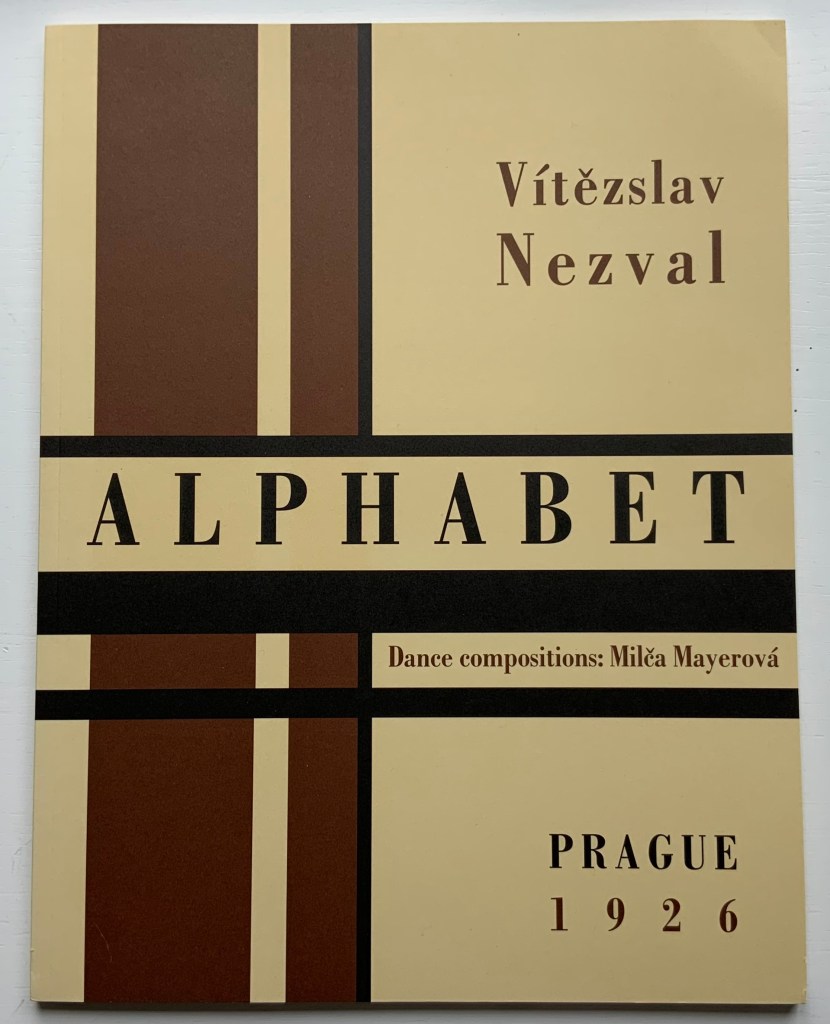
Abeceda/Alphabet (1926/2001)

Alphabet (1926/2001)
Karel Teige & Vítězslav Nezval / translated by Jindřich Toman and Matthew S. Witkovsky
Facsimile and translation of Abeceda. Perfect bound paperback, H305 xW235 mm, 72 pages. Acquired from Ergode Books, 1 July 2021. Photos: Books On Books Collection.

From the Afterword:

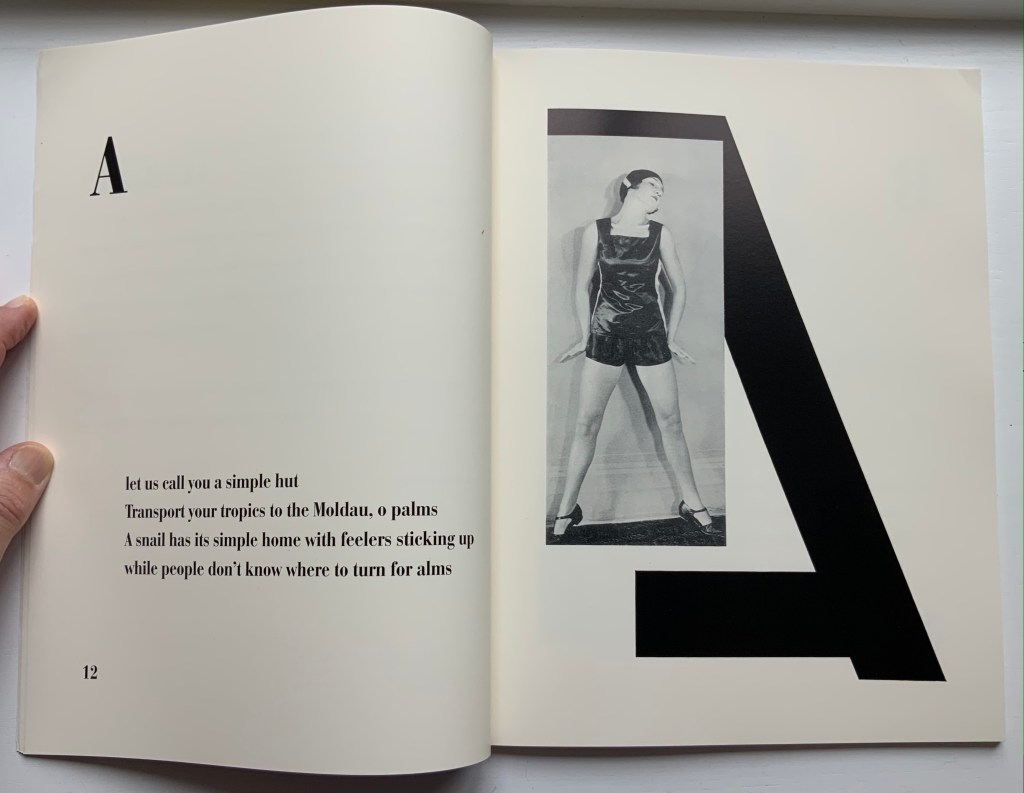
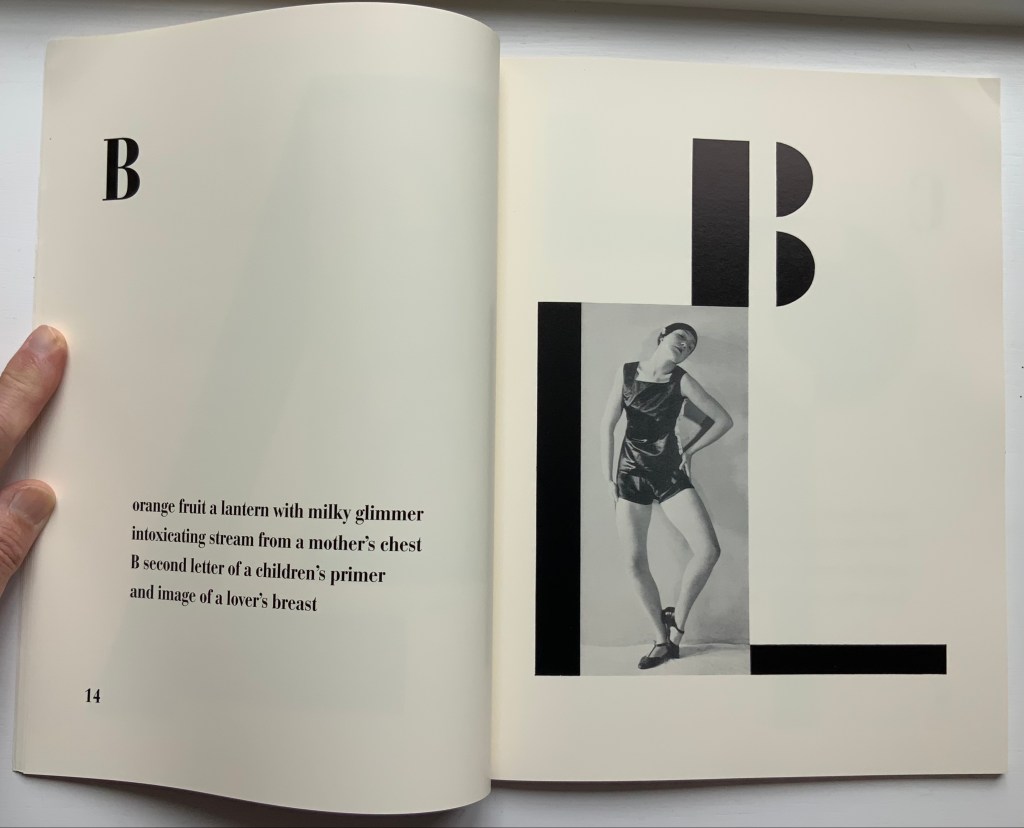
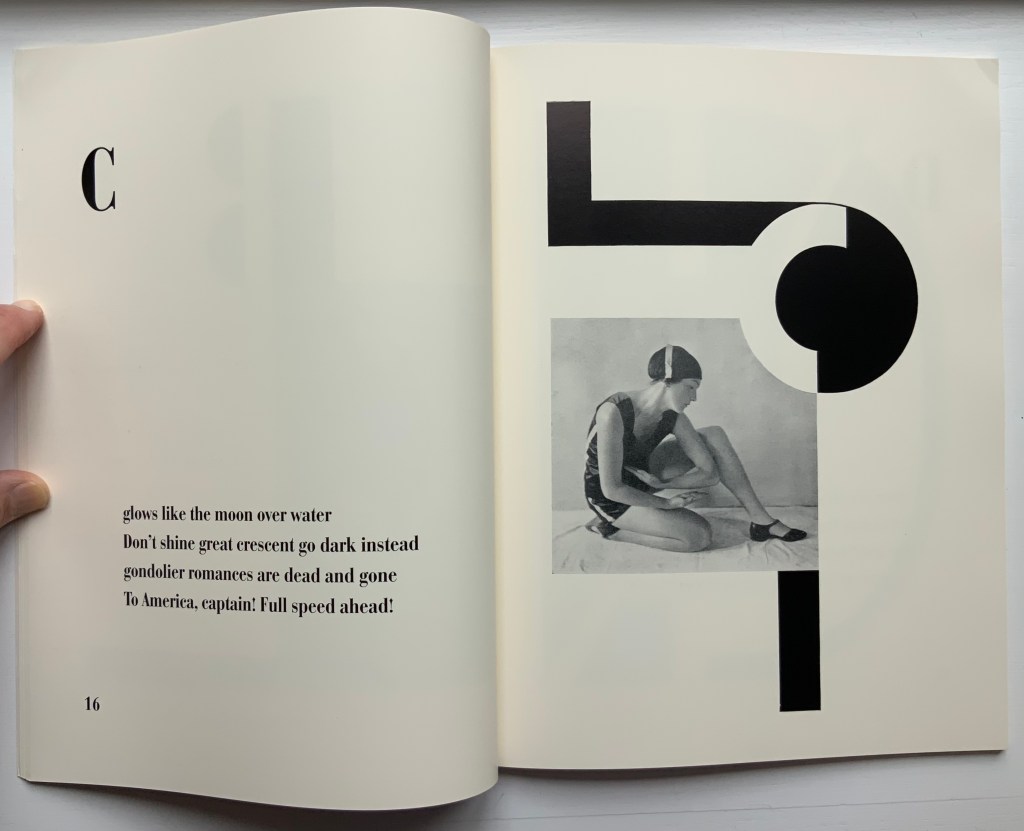
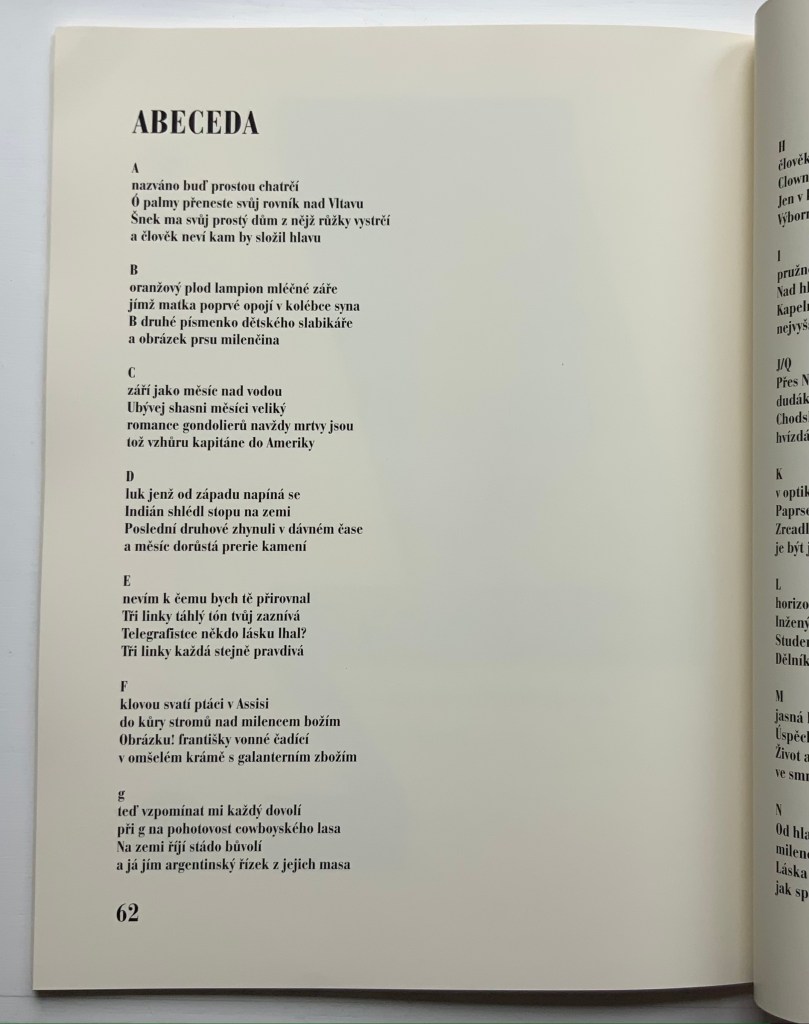
The 1926 book Alphabet (Abeceda) is a landmark achievement in European modernism. Its frequent reproduction in exhibition catalogues and scholarly articles has made it a key symbol of Devětsil (1920-ca. 1931), the Czech artists’ collective within whose ranks the book was conceived, and its importance is increasingly measured in international terms as well. The book consists of a series of rhymed quatrains by Devětsil poet Vítězslav Nezval, titled and ordered according to the letters of the Latin alphabet. Facing each set of verses is a Constructivist photomontage layout by Karel Teige, a painter turned typographer who was also Devětsil’s spokesperson and leading theorist. Teige developed his graphic design around photographs of dancer and choreographer Milada (Milča) Mayerová, a recent affiliate of the group, who had performed a stage version of “Alphabet” to accompany a recitation of the poem at a theatrical evening in Nezval’s honor in April 1926… The project to create a new alphabet epitomizes the proselytizing attitude of avant-gardists in various fields in the years after World War I. From Dada poetry to Constructivist architecture and design, from calls to overhaul theater to revolutions in literary theory, a panoply of experiments took the alphabet as their model or target and disclosed the potency of this elementary linguistic structure as a trope for creative renewal and social revolution.

Full scan of original Czech edition here.

The Afterword mistakenly asserts that there was no precedent for Mayerová’s choreography and performance of the alphabet. In fact, the Athenian dramatist Kallias (late 5th century BCE?) wrote Grammatike Theoria, sometimes called “a spectacle of letters”, the ABC Show or ABC Tragedy, in which actors and a chorus sang and danced the twenty-four characters of the new-fangled Ionian alphabet. What does seem to be without precedent is the collaboration across poetry, dance, typography, photography and bookmaking.

Carrying on the collaborative tradition and more emphatically challenging gender stereotyping, here is Paulina Olowska dancing Abeceda at the Simon Lee Gallery’s 2019 exhibition of Tomaso Binga/Bianca Menna‘s works, which included Alfabetière Pop (1976), his/her nude alphabet portfolio. If only Tomaso/Bianca or Paulina would find a book artist to reprise the codex part of the collaborative tradition.

Further Reading

Anthon Beeke“. 21 June 2021. Books On Books Collection.

Culture.pl. n.d. “Paulina Ołowska“. Accessed for update, 31 January 2023.

Gagné, Renaud. 2013. “Dancing Letters: The Alphabetic Tragedy of Kallias”. In Choral Mediations in Greek Tragedy, ed. R. Gagné and M. Hopman, Cambridge University Press 282-307.

Lawler, Lillian. April, 1941. “The Dance of the Alphabet”. The Classical Outlook, 18: 7, pp. 69-71.

Wikipedia. 1 July 2021. “Paulina Olowska“. Accessed 8 July 2021.

Another key performance in Paulina Olowska oeuvre was the Alphabet, which was inspired by the book ABECEDA by Karel Teige, a key figure in the Czech avant-garde who in 1926, in collaboration with Milca Mayerova, created an experimental “mobile alphabet”. Referring to Teige’s project, Olowska combines rhythmicity with a constructivist fascination with typography and points to the rhetorical function of dance: three performers arrange their bodies into 26 letters, from A to Z, confronting the alphabet of written language with the “alphabet” of gestures and movements, creating a new system for expressing meaning. Alphabet was first shown in Berlin in 2005 (Galerie Meerrettich). In 2012 it was exhibited at the Museum of Modern Art in New York, and in early 2014 it was presented at the Museum of Modern Art in Warsaw.” Wikipedia.

Wise, Jennifer. 1998. Dionysus Writes : The Invention of Theatre in Ancient Greece. Ithaca ; London: Cornell UP.