Books On Books Collection – Robert Cottingham

A-Z: Robert Cottingham: An American Alphabet (1997-2012)

A-Z: Robert Cottingham: An American Alphabet (1997-2012)
Robert Cottingham
Hardcover. H x W mm, pages. Edition of 100. Acquired from Tandem Press, 10 September 2021.
Photos of the book: Books On Books Collection. Displayed with permission of the artist and Tandem Press.

I had completed a number of canvases for AN AMERICAN ALPHABET and began to experience storage problems. The paintings were leaning against all available walls and were in danger of being damaged. For protection, I hung them as a group on one wall, stacking them four high by four across, … sixteen canvases that reached to the ceiling and formed a monumental mosaic of letterforms. This arrangement of tightly packed images created an energy I hadn’t anticipated. As I looked up at it for the first time from my studio floor, I was immediately transported back to those moments when my father and I ascended from the 42nd Street subway station. The sight lines in my studio matched the ones I’d experienced as a child looking up at the signs and lights of Times Square. (Cottingham, A-Z)

Cottingham’s time travel creates a longing in the viewer for travel in time and space. What that wall must have looked like. Those who might have enjoyed the 1996 show at the Forum Gallery in New York or the installation at the New York Print Fair in November 2011 or the Tandem Press exhibition at Madison, WI, in 2018 would have a limited idea (the images were not stacked four high). A-Z: An American Alphabet is as close as the rest of us will come to visualizing it. The artist book does have the advantage of letter by letter commentary from Cottingham.

Another plus in the book is Cottingham’s exploration of his process, tools and material:

The photograph is the starting point. Once I’ve chosen a specific image, I’ll do at least one preliminary sketch in black and white. This drawing familiarizes me with the image and allows me to make the first formal adjustments. The drawing acts as a value study — a sketch that helps determine the tonal range of the image, how dark or light the various elements should be. …/ Next comes the preliminary color study. This may be a watercolor or a gouache, sometimes handled loosely, sometimes treated as a more finished work. …/ I can now move on to the canvas. My preferred medium is oil. … The painting quickly takes on a life of its own, demanding further adjustments to color, tonal value, and form. But the preliminary work, like a map, guides me towards the new and always unexpected version of my original concept./ … / I consider printmaking an important adjunct to my painting. Many times, when I’ve completed a painting, I feel the need to do more work with the image — to dig deeper, exploring other aspects of its structure. Printmaking offers this opportunity. … / … An old world sensibility and craftsmanship is brought to the selection of paper (often hand-made), the mixing of inks, the preparation of plates or lithographic stones, and other steps in the process.

Cottingham also draws out the collaborative nature of printmaking, which in this case involved four Master Printers (Andy Rubin, Bruce Crownover, Joe Freye and, for the digital, Jason Ruhl) and, for the book design and layout, Linda Endlich. Another form of collaboration is influence, and Cottingham is generously open about his debts: Charles Demuth, Edward Hopper, René Magritte, Piet Mondrian and, of course, the design of the signs from which the letters come. Along with his contemporaries such as Chuck Close, Don Eddy, Richard Estes, Audrey Flack and John Salt, Cottingham represents the movement of Photo-Realism.

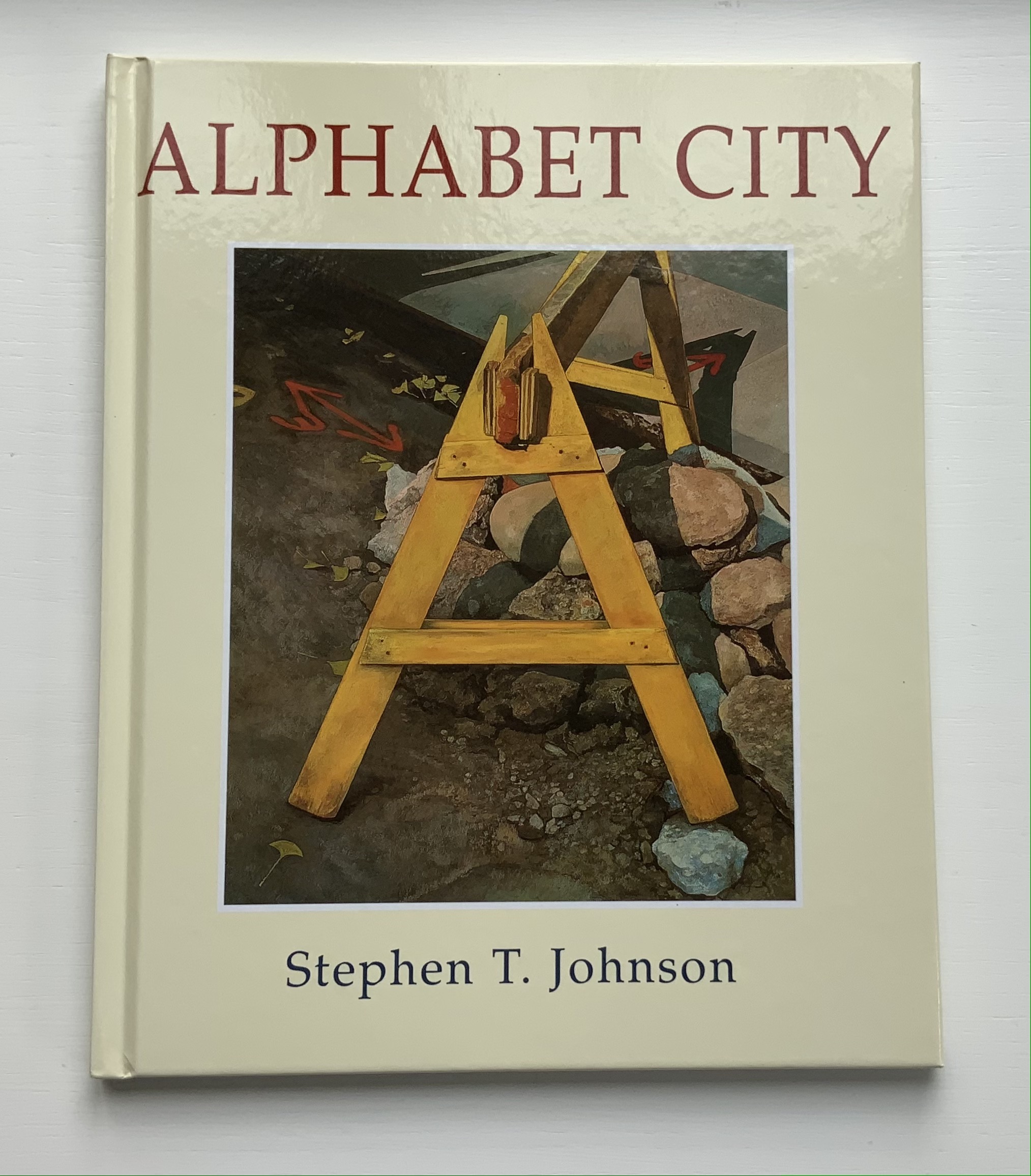
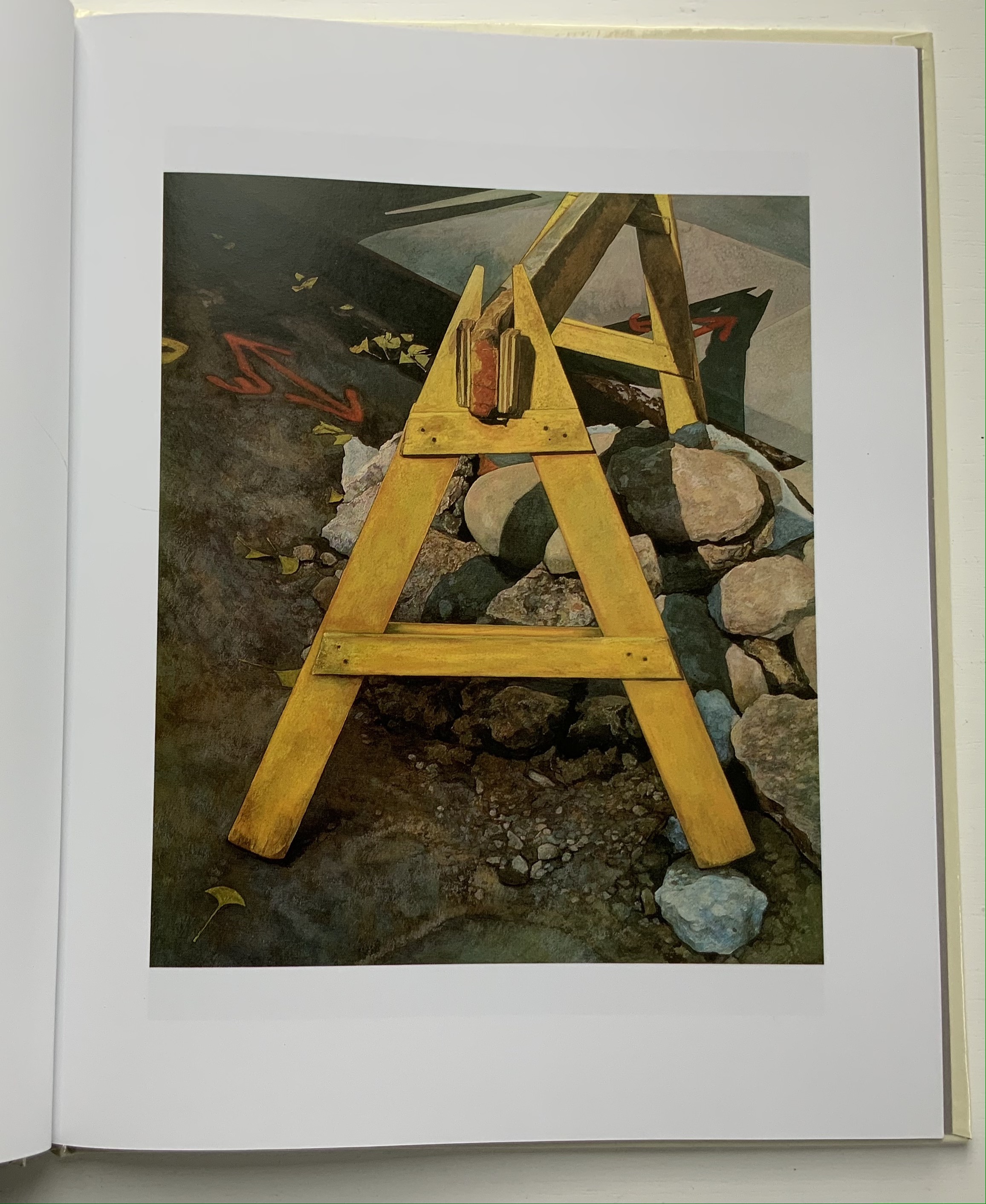
An American Alphabet also finds cousins in the Books On Books Collection. For found letters as objects, there is The Typographic Universe (2014), compiled by Steven Heller and Gail Anderson. For found letters recreated with pastels and watercolor, there is Stephen T. Johnson’s Alphabet City (1995). For color and form (albeit in totally different media), there are Karen Hanmer’s The Spectrum A-Z (2003) and Tara McLeod’s ABC (2015).
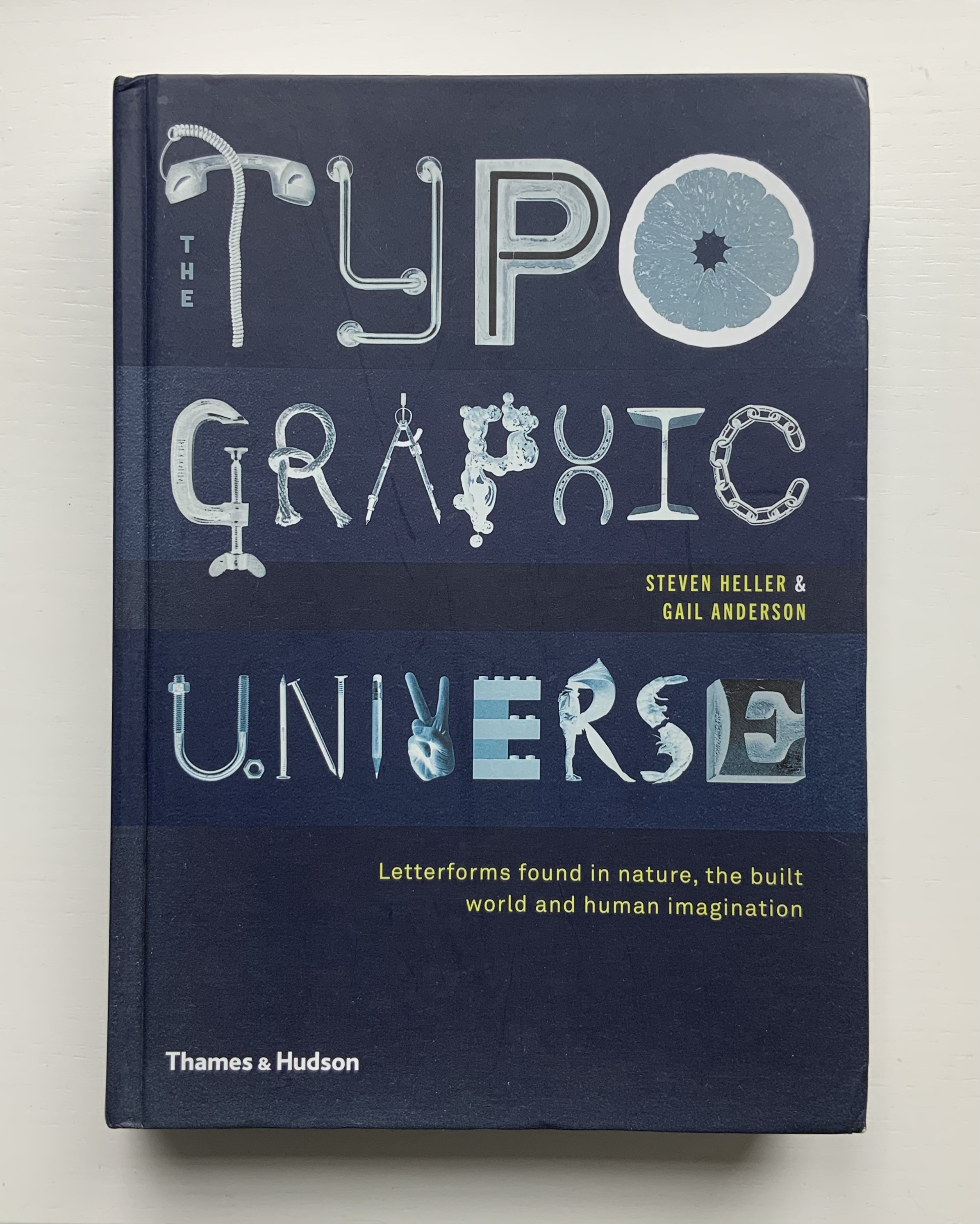
Left: The Typographic Universe (2014) by Steven Heller and Gail Anderson. Right: Alphabet City (1995) by Stephen T. Johnson.
Photos of the works: Books On Books Collection.

Left: The Spectrum A-Z (2003) by Karen Hanmer. Right: ABC (2015) by Tara McLeod.
Photos of the works: Books On Books Collection.

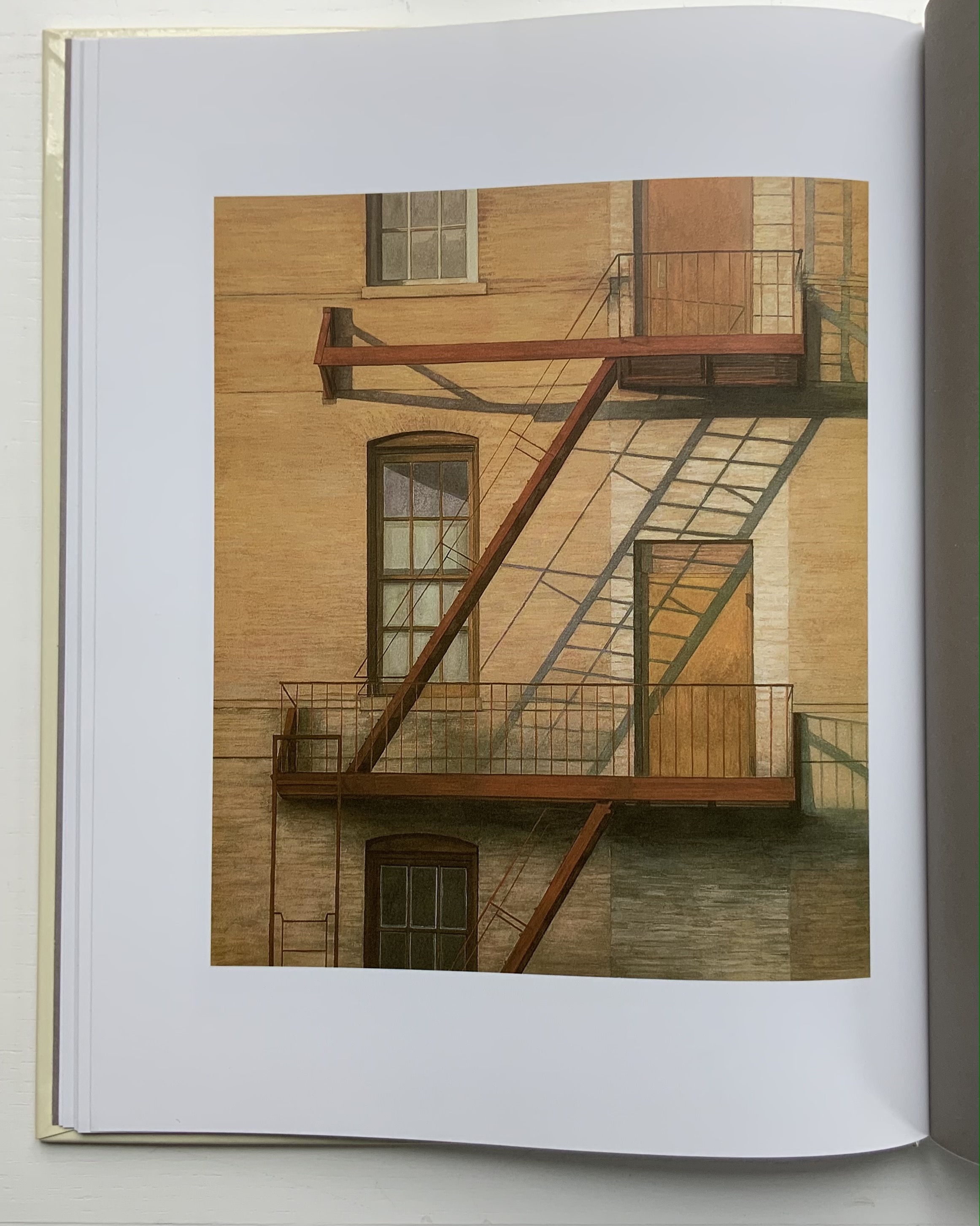
The artist and Tandem Press have been kind enough to provide images of the letters A and Z to compare with those in the book, a comparison that underscores the quality of the book and Cottingham’s art.

An American Alphabet: A (2001)
Robert Cottingham
Lithography, Edition of 40, 32 x 23 inches
Image courtesy of Robert Cottingham and Tandem Press
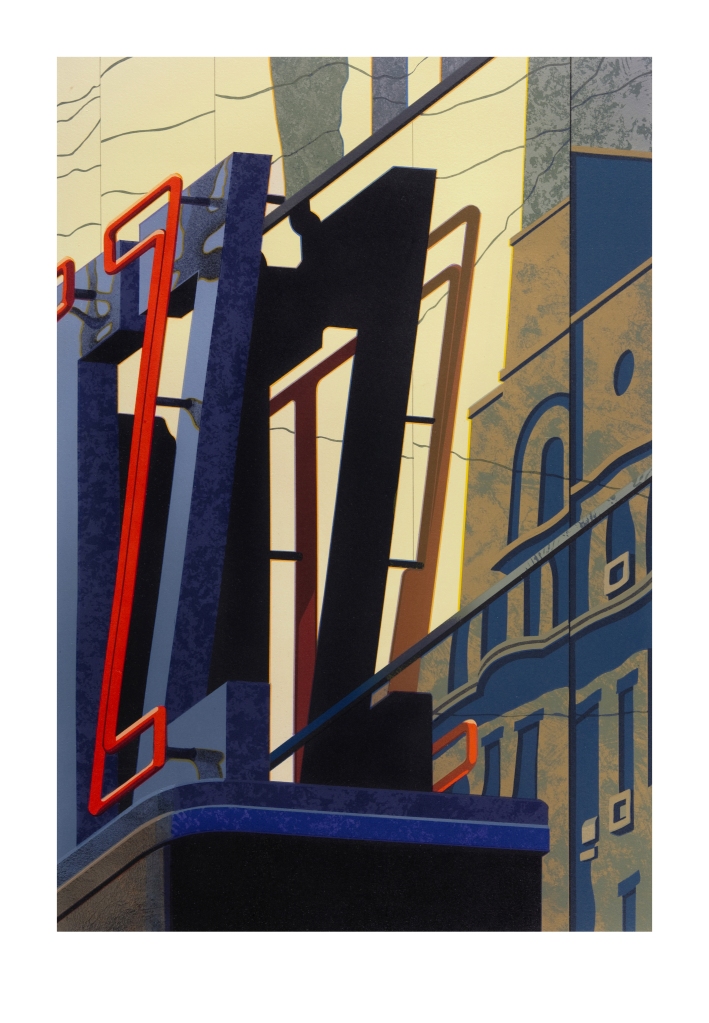
An American Alphabet: Z (2008)
Robert Cottingham
Lithography, Edition of 40, 30 1/2 x 23 inches
Image courtesy of Robert Cottingham and Tandem Press

Further Reading

Abecedaries I (in progress)“. Books On Books Collection. 31 March 2020.

Stephen T. Johnson“. Books On Books Collection. 30 November 2021.

Meisel, Louis K. 1993. Photorealism since 1980. New York: H.N. Abrams.

Meisel, Louis K., and Helene Zucker Seeman. 1989. Photo-Realism. New York: Abradale Press.

Books On Books Collection – Stephen T. Johnson

Alphabet City (1995)

Alphabet City (1995)
Stephen T. Johnson
Casebound, sewn and glued. H276 x W226 mm, 32 pages. Acquired from Blackwell’s, 17 August 2021.
Photos of the book: Books On Books Collection.

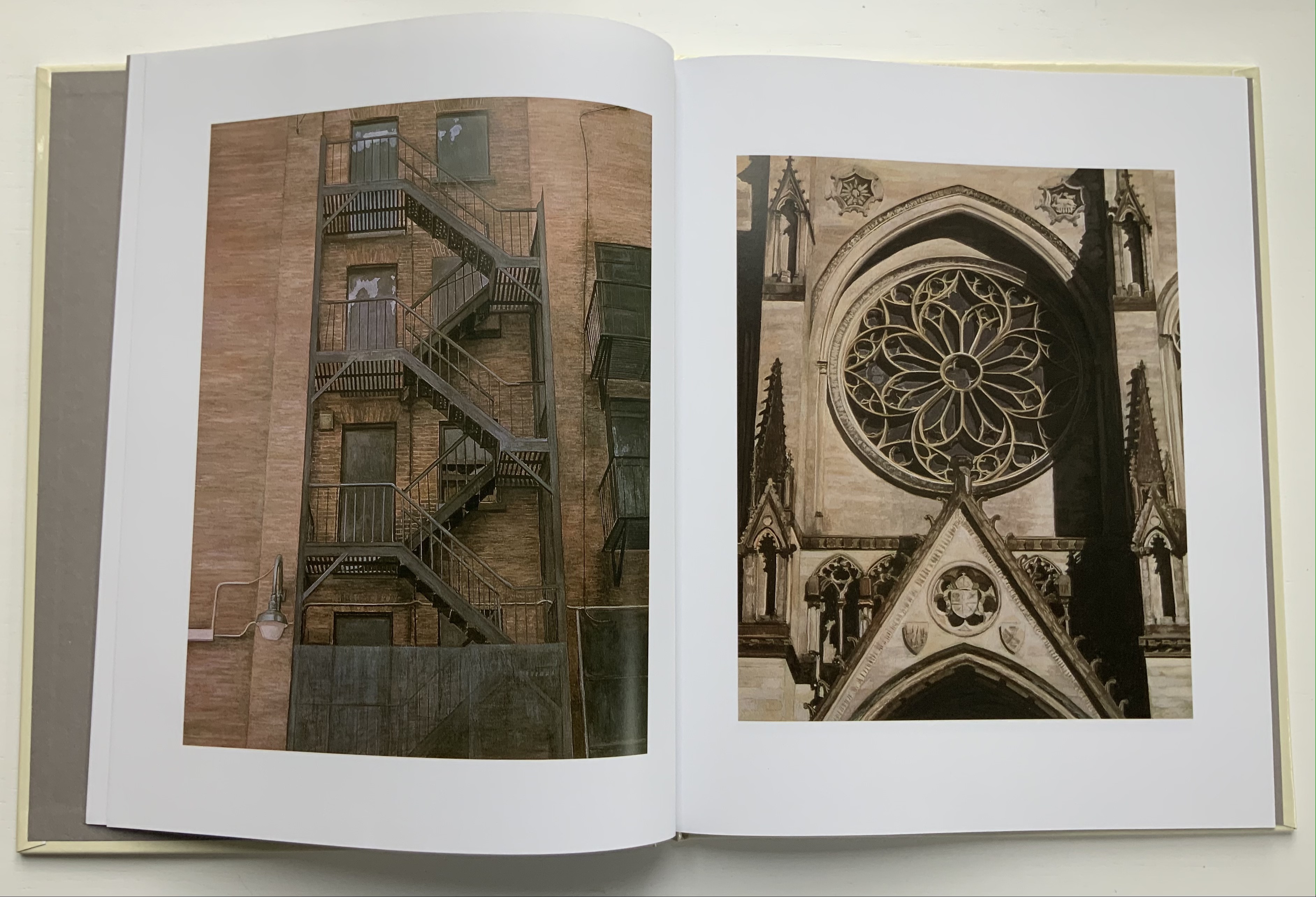
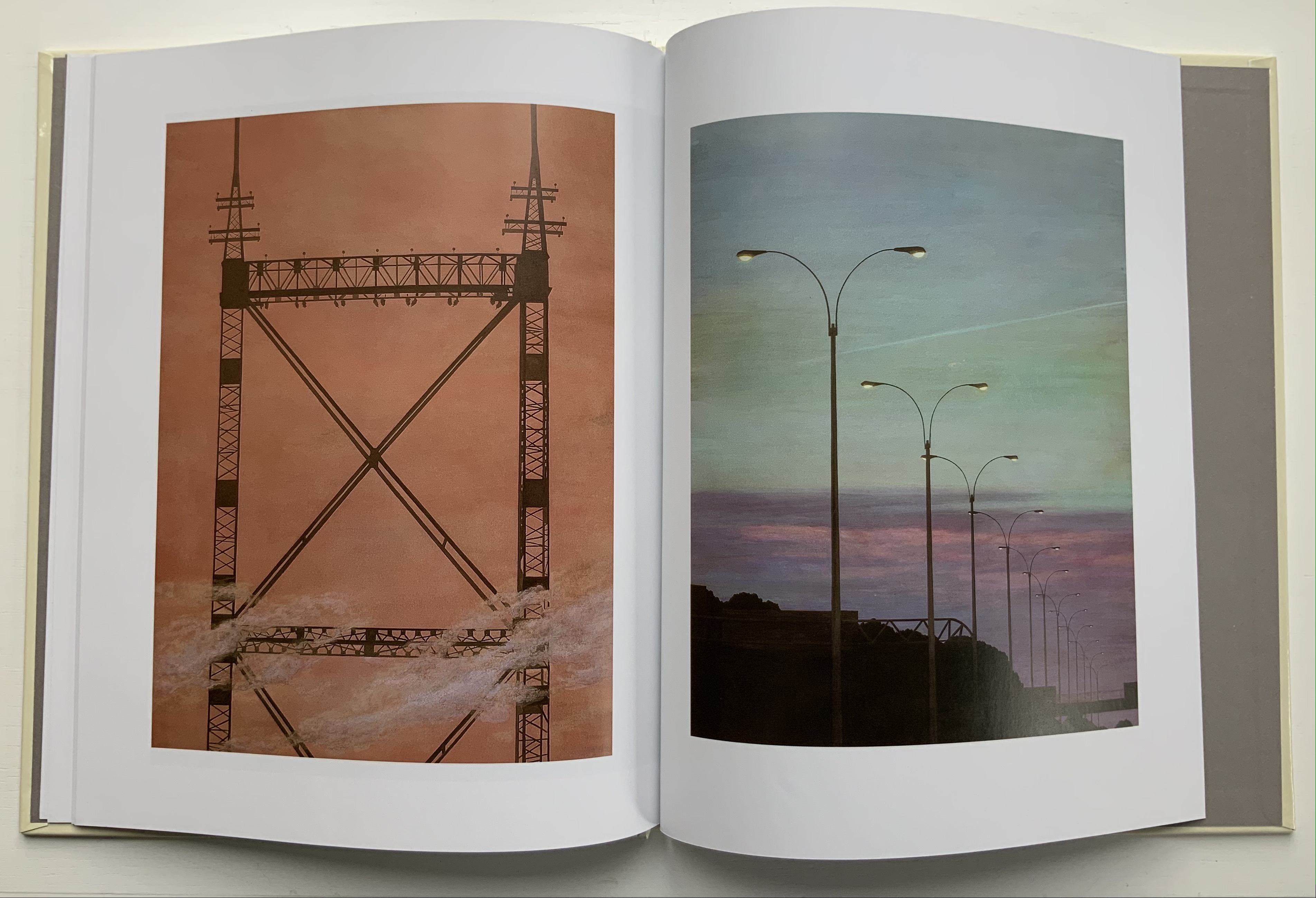
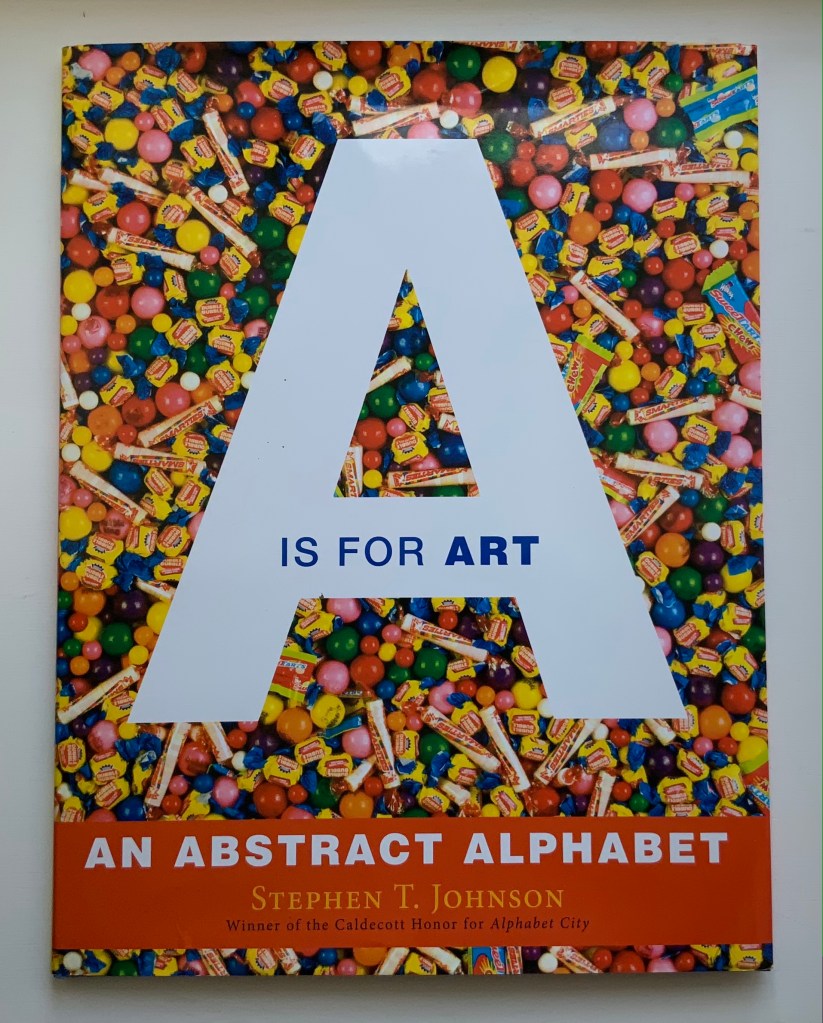
A Caldecott Honor Book and New York Times Best Illustrated Book in 1995, Alphabet City goes beyond the alphabet letters as found objects, a sub-genre documented by Steven Heller and Gail Anderson in The Typographic Universe (2014). Johnson transforms his found capital letters with pastels, watercolor, gouache and charcoal into photo-realistic pictures in varying but similar sizes; for example, 26.5 x 22.5 inches for the A and 25.25 x 21.5 inches for the Z. These appeared in an inaugural exhibition in 1997 at the Katonah Museum of Art in New York. Johnson’s works are held in numerous permanent collections (mostly in the US) and private ones (mainly US-based but increasingly Europe as well), but they are closely tied to his children’s books: Alphabet School (2015) and A is for Art (see below). Most impressive is how he lifts the alphabet book from ordinary trade status to artist book.

Along with Robert Cottingham, Johnson established the photo-realistic alphabet as its own sub-genre, which has been explored by other artists such as Stephen Magsig in The Urban Alphabet: Paintings from Postcards from Detroit and Simon Jennings in Outdoor Types: An Urban Alphabet (2010)

A is for Art (2008)

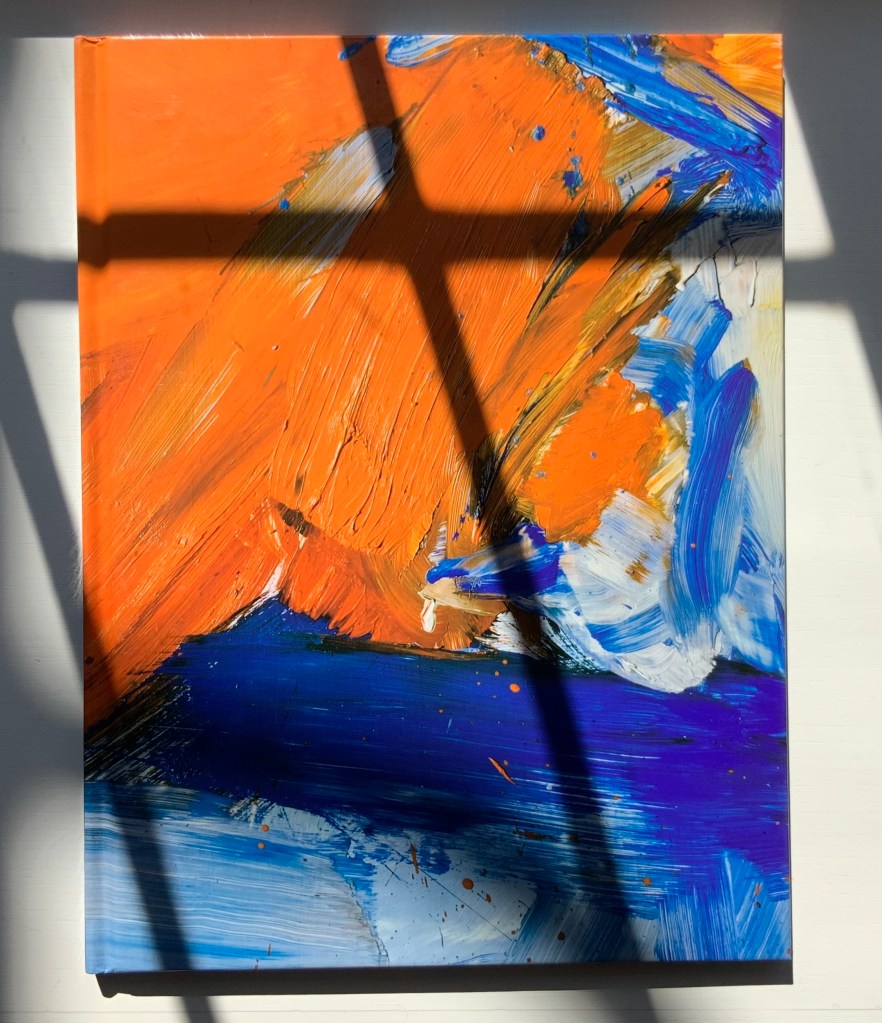
A is for Art: An Abstract Alphabet (2008)
Stephen T. Johnson
Perfect bound in case with doublures. H310 x 235 mm, 40 pages. Acquired from Amazon E.U., 4 September 2021.
Photos of the book: Books On Books Collection.

In his review in American Art, Philip Nel coins an apt name for Johnson’s art — “alphabet expressionism” — which, on closer examination of texture and technique, applies also to Alphabet City. Go back and look at the foreground of the letter A in Alphabet City.

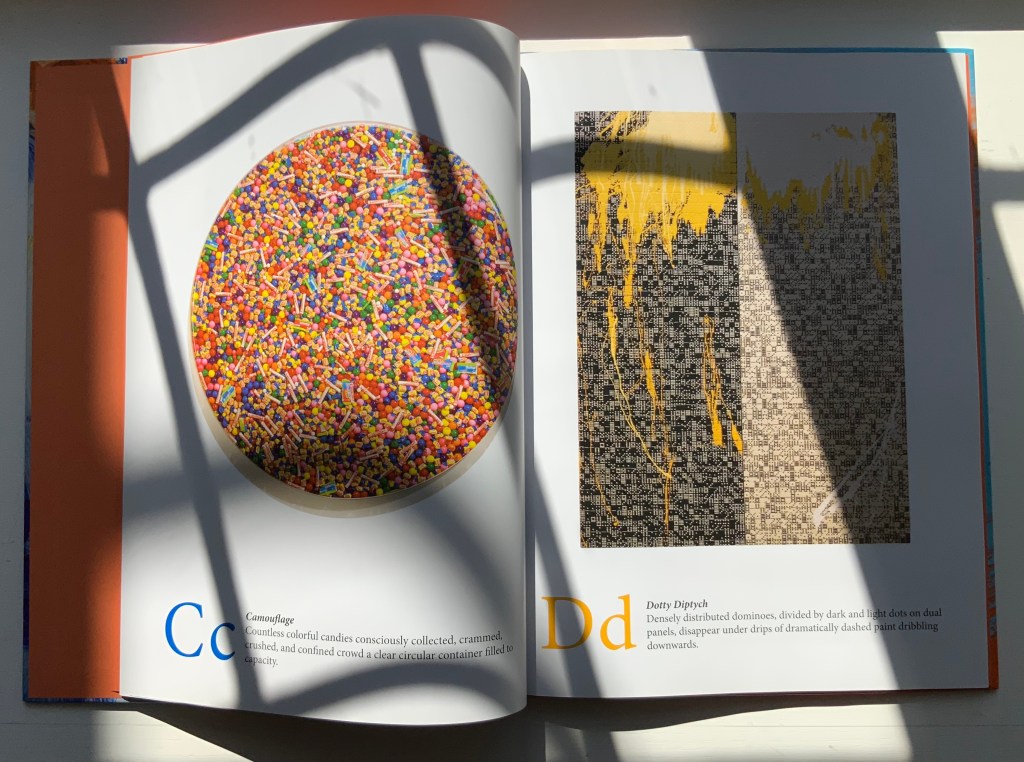
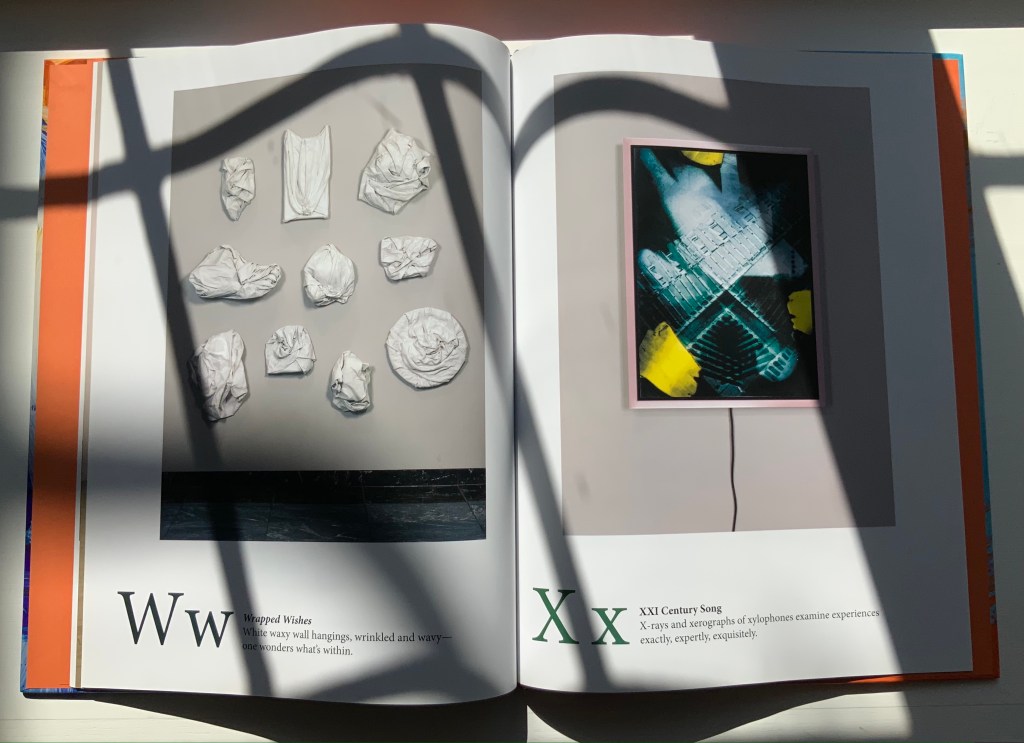
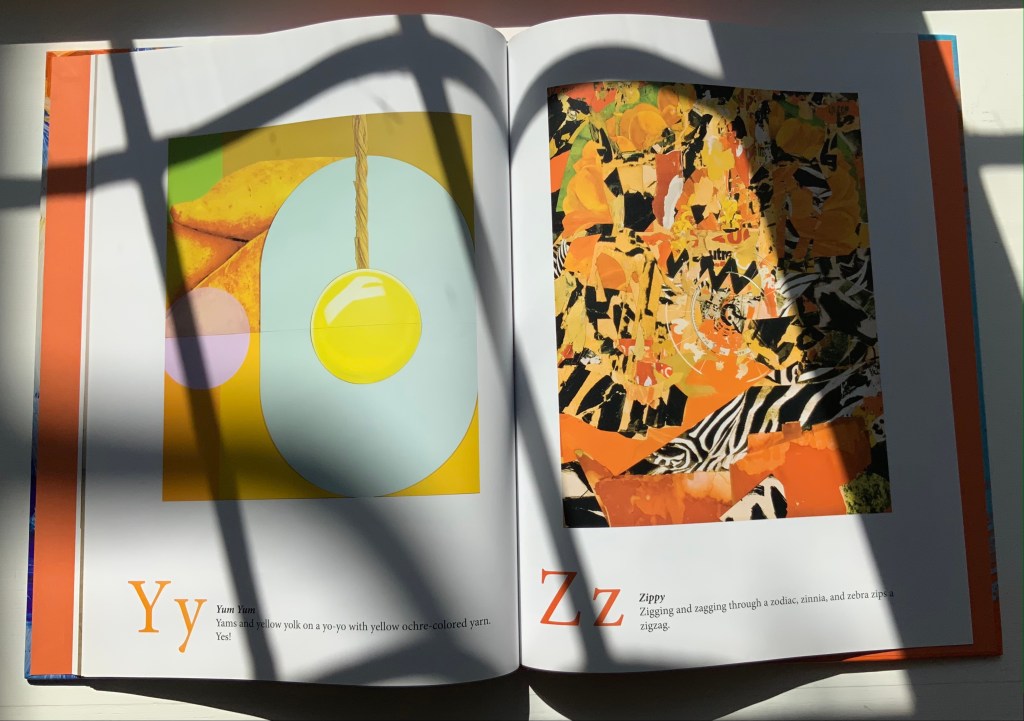
A is for Art: An Abstract Alphabet has the feel of Moussorgski’s Pictures at an Exhibition. Although each movement “depicts” a different painting, the composer’s style comes through; although each letter alludes to different artists (for example, but not complete for each letter: A – François Dufrêne, Kurt Schwitters; B- Jim Dine, Willem de Kooning , C- Arman, Félix Gonzáles-Torres; D- Udomsak Krisanamis; W- Man Ray; X- Robert Rauschenberg; Y- Tom Wesselman, Robert Indiana; Z- Beatrice Mandelman, Mimmo Rotella), the artist’s vision comes through. To pull that off requires considerable versatility. Several of the images in A is for Art derive from sculptures and large-scale installations. Take a look, too, at his triptych of mosaics in the City Center Public Library of Lenexa, Kansas.

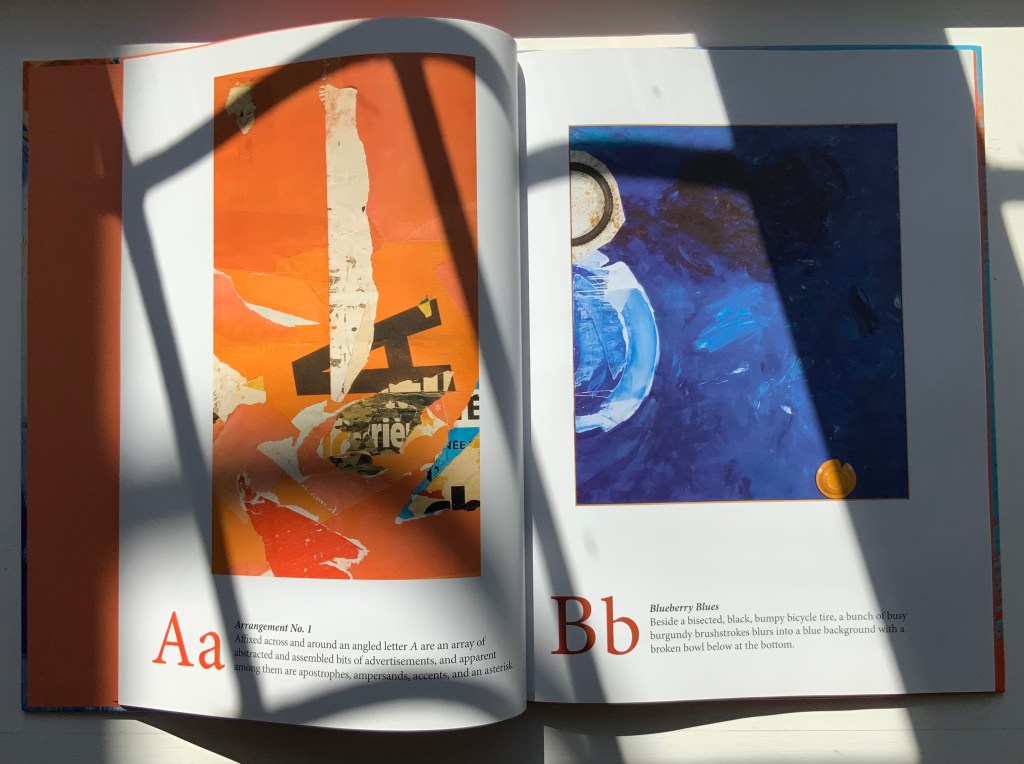
Also a New York Times Best Illustrated Book of the Year, A is for Art demonstrates two subgenres of alphabet books: the hidden and alliterative alphabet. An interesting, perhaps intentional, effect — even more so when the letters are difficult to find — is to make the viewer linger over the image longer than the museum goer’s average of less than 30 seconds per object. The ingenuity of Johnson’s alliterative sentences is almost as engaging as the images; even so, its main effect directs the eye back to the images. Here is the text for the letter A:

A a
Arrangement No. 1
Affixed across and around an angled letter A are an array of abstracted and assembled bits of advertisements, and apparent among them are apostrophes, ampersands, accents, and an asterisk.

If you spend only 13 minutes in this book (30 seconds per letter), you are missing out.

Music and numbers have also piqued Johnson’s creative curiosity, but another of his series works leads in a more intriguing, roundabout way back to A is for Art: the Kana Card series. On a trip through Japan, the artist acquired a set of Japanese flashcards for learning Katagana and Hiragana. Each 2 x 3 inch card becomes a canvas for paint and collage.

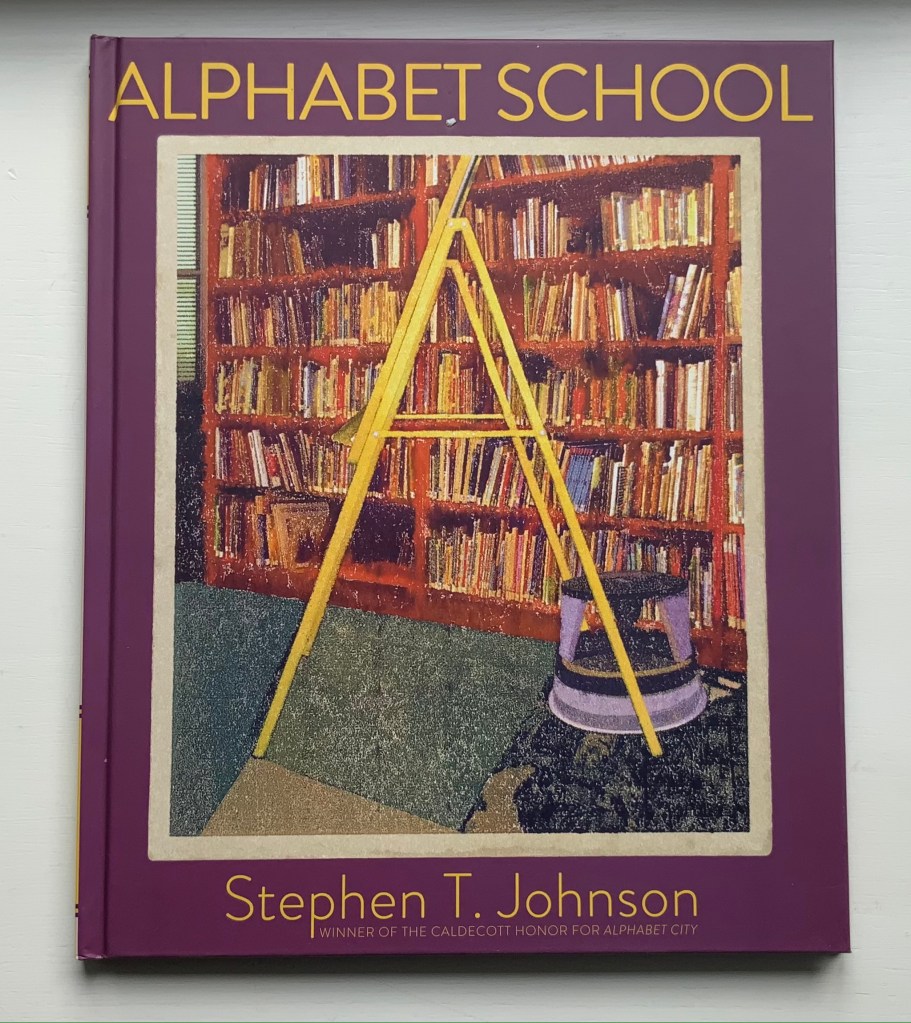
Alphabet School (2015)

Alphabet School (2015)
Stephen T. Johnson
Hardback. H286 x W236 mm, 32 pages. Acquired from Book Depository, 5 November 2021.
Photos of the book: Books On Books Collection.

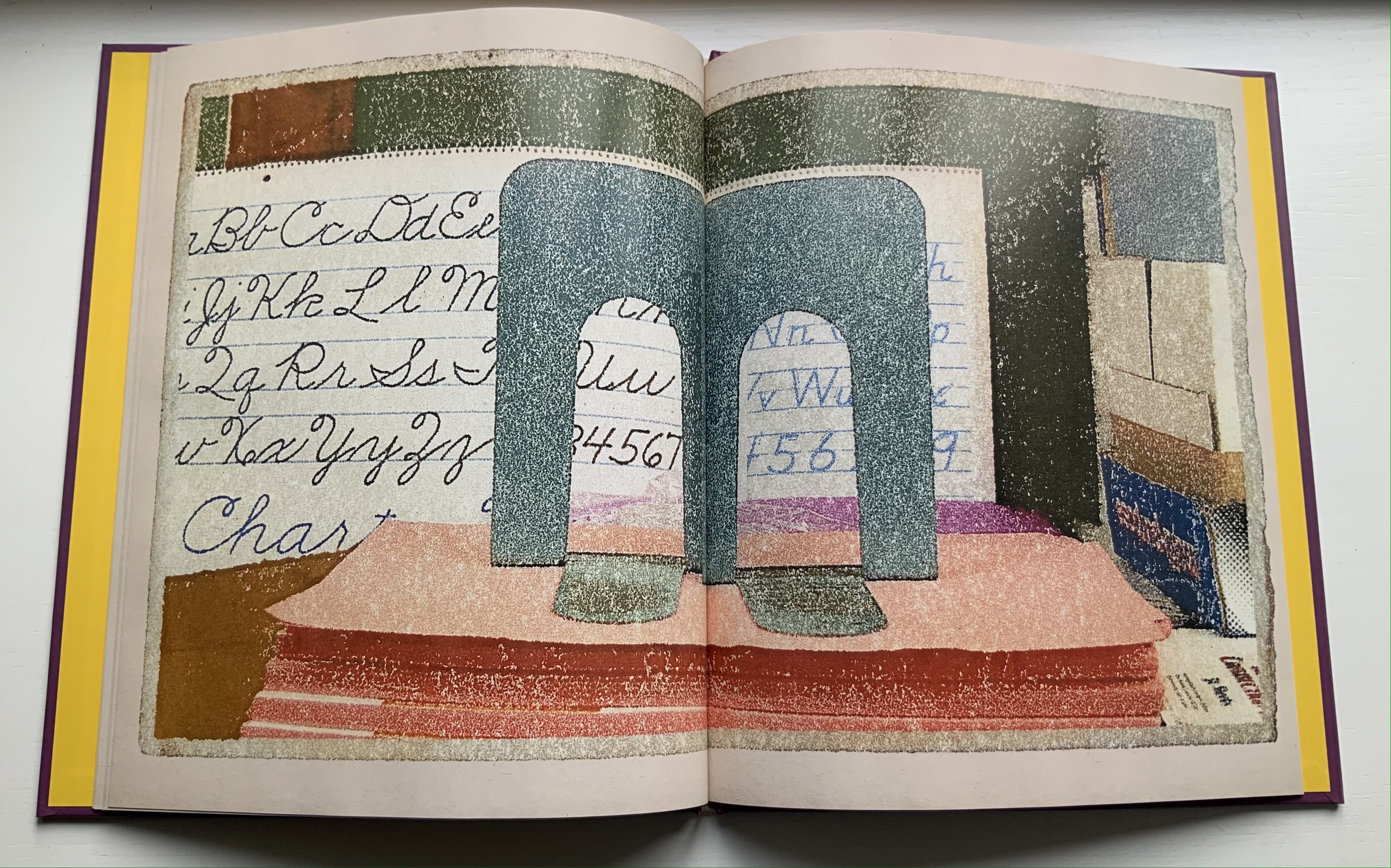
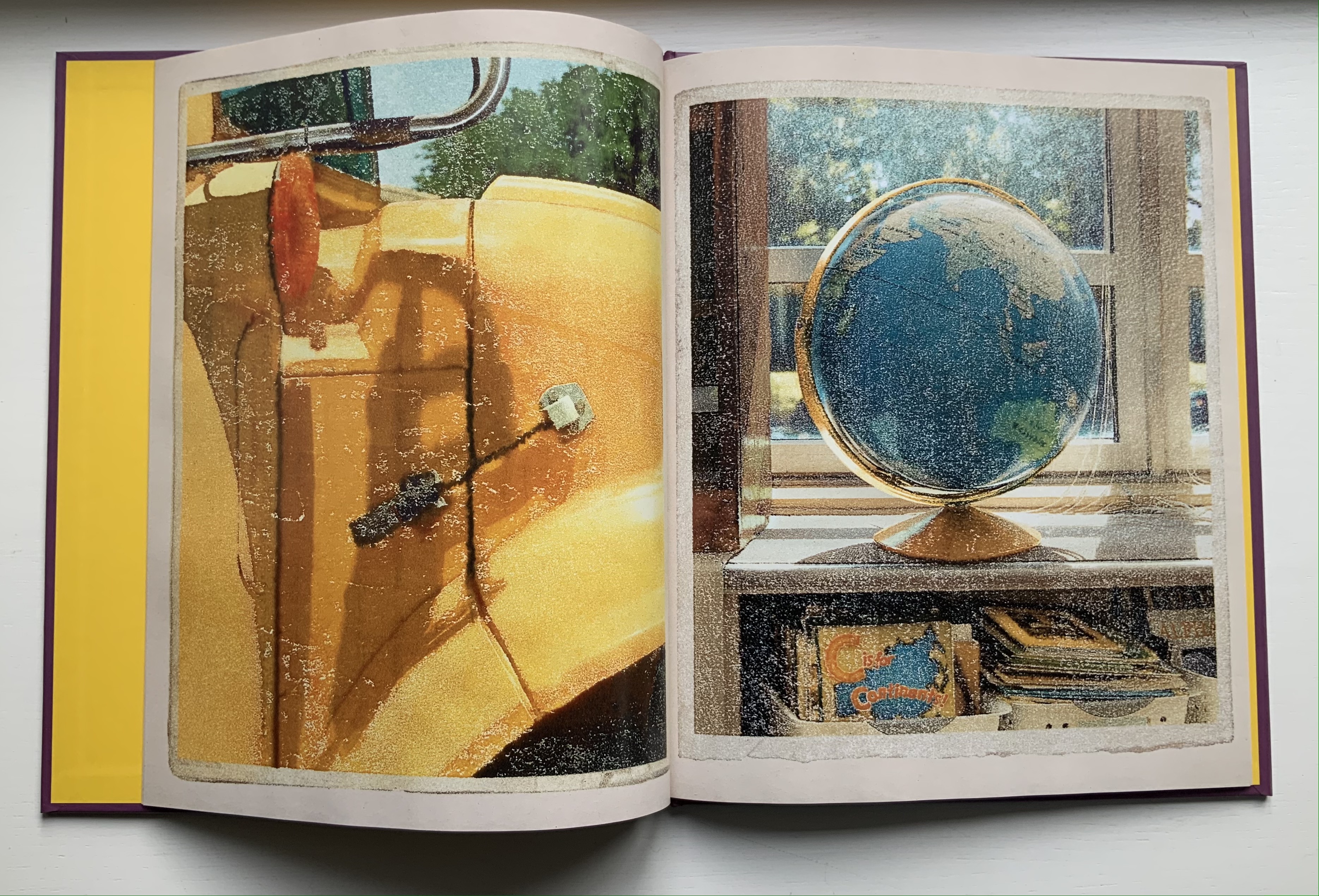
Using monoprints on paper with digital enhancements, Johnson shifts technique yet again here. The photorealism yields to a graininess, but as with Alphabet City, the effect of making the reader look not just at the images but also at his or her environment remains.

Some letters are contrived (two bookends posed for the letter M). Most of the scenes, however, deliver an authentic sense of found letters (the C in the support of the globe atlas). Johnson has raised the bar on the hidden-letter theme, common in the genre of alphabet books, by several notches.

Further Reading

Abecedaries I (in progress)“. 31 March 2020. Books On Books Collection.

Robert Cottingham“. Books On Books Collection.

Paul Cox“. Books On Books Collection.

Steven Heller and Gail Anderson“. 8 May 2021. Books On Books Collection.

Mackey, Bonnie, and Hedy Schiller Watson. 2017. Alphabet books: the K-12 educators’ power tool. Santa Barbara, CA: Libraries Unlimited.

Nel, Philip. 2008. “The Fall and Rise of Children’s Literature.” American Art 22, no. 1: 23–27.

A Is for Art: Stephen T. Johnson’s Abstract Alphabet“. 31 August 2010. Nine Kinds of Pie.

Zerkin, Becca. 9 November 2008. “Alphabet City.” The New York Times Book Review. The review actually covers A is for Art.

Books On Books Collection – Clément Mériguet

ABCDead (2010)

ABCDead (2010)
Clément Mériguet
H170 x W140 mm, 56 unnumbered pages. Acquired from Chapitre Libraire, 10 September 2021.
Photos of the work: Books On Books Collection.

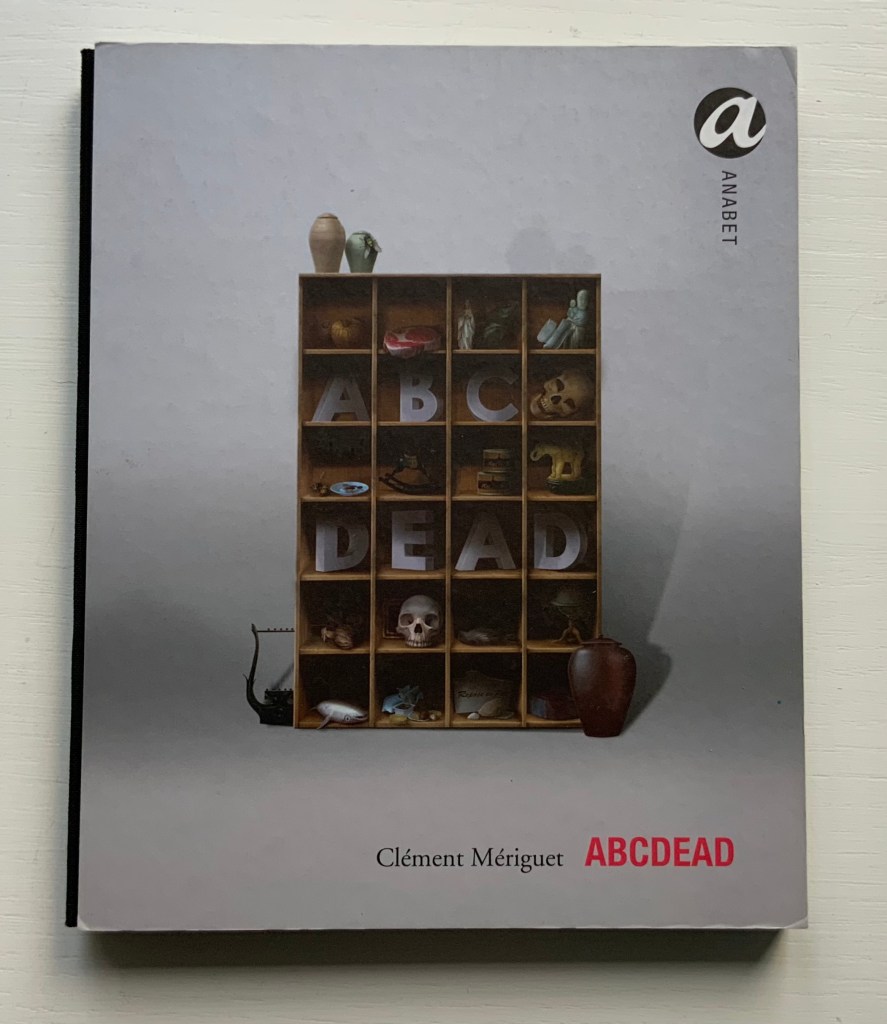
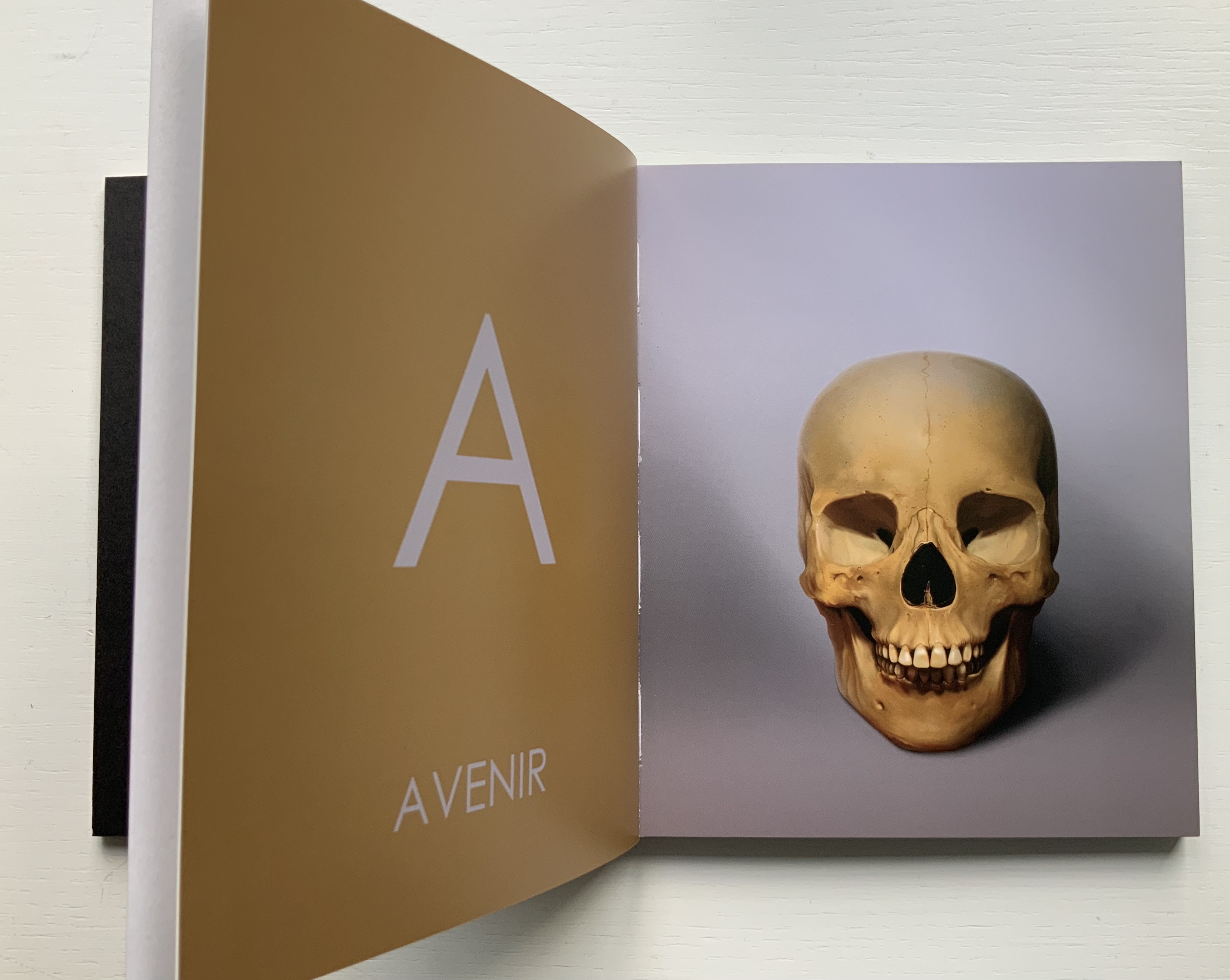
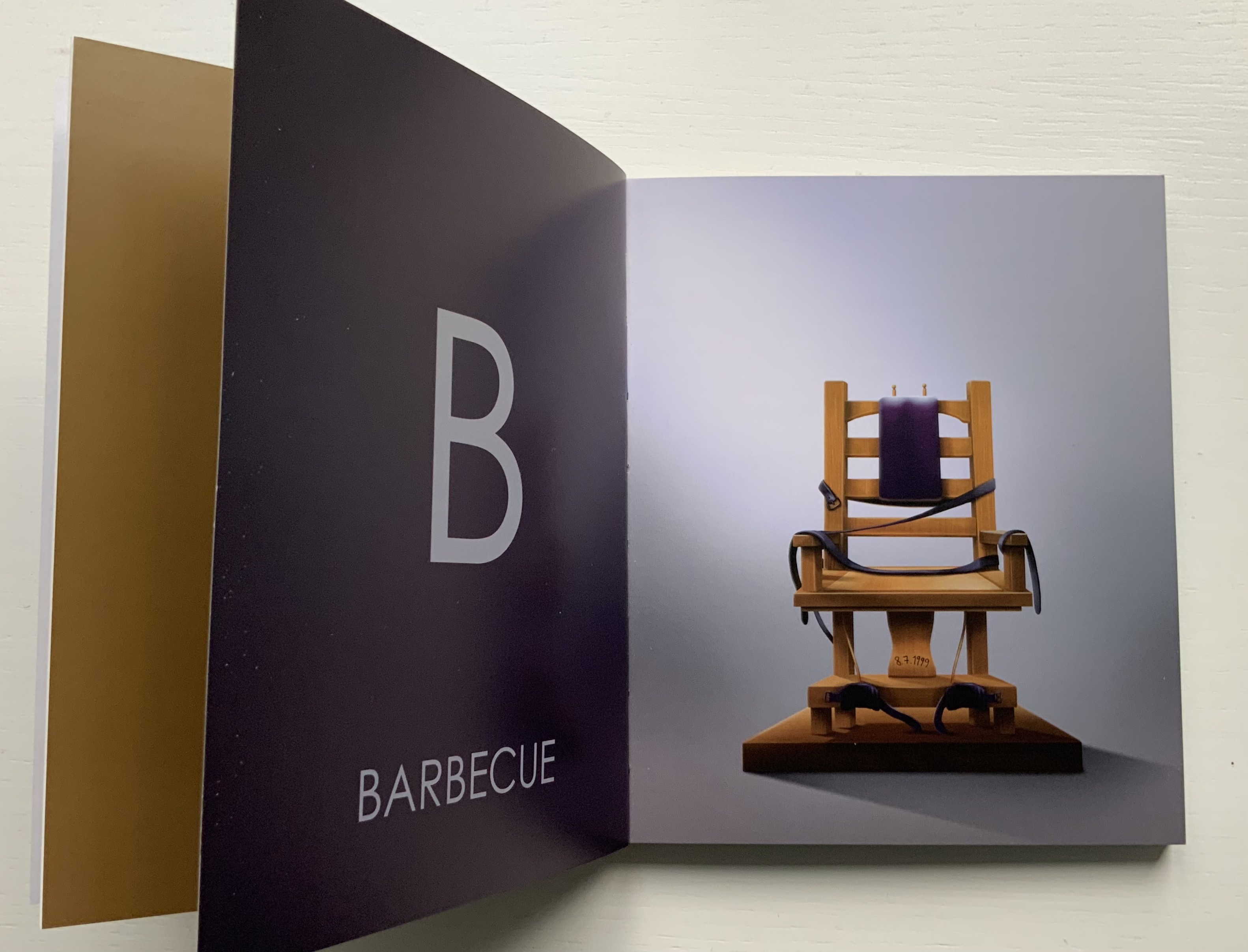
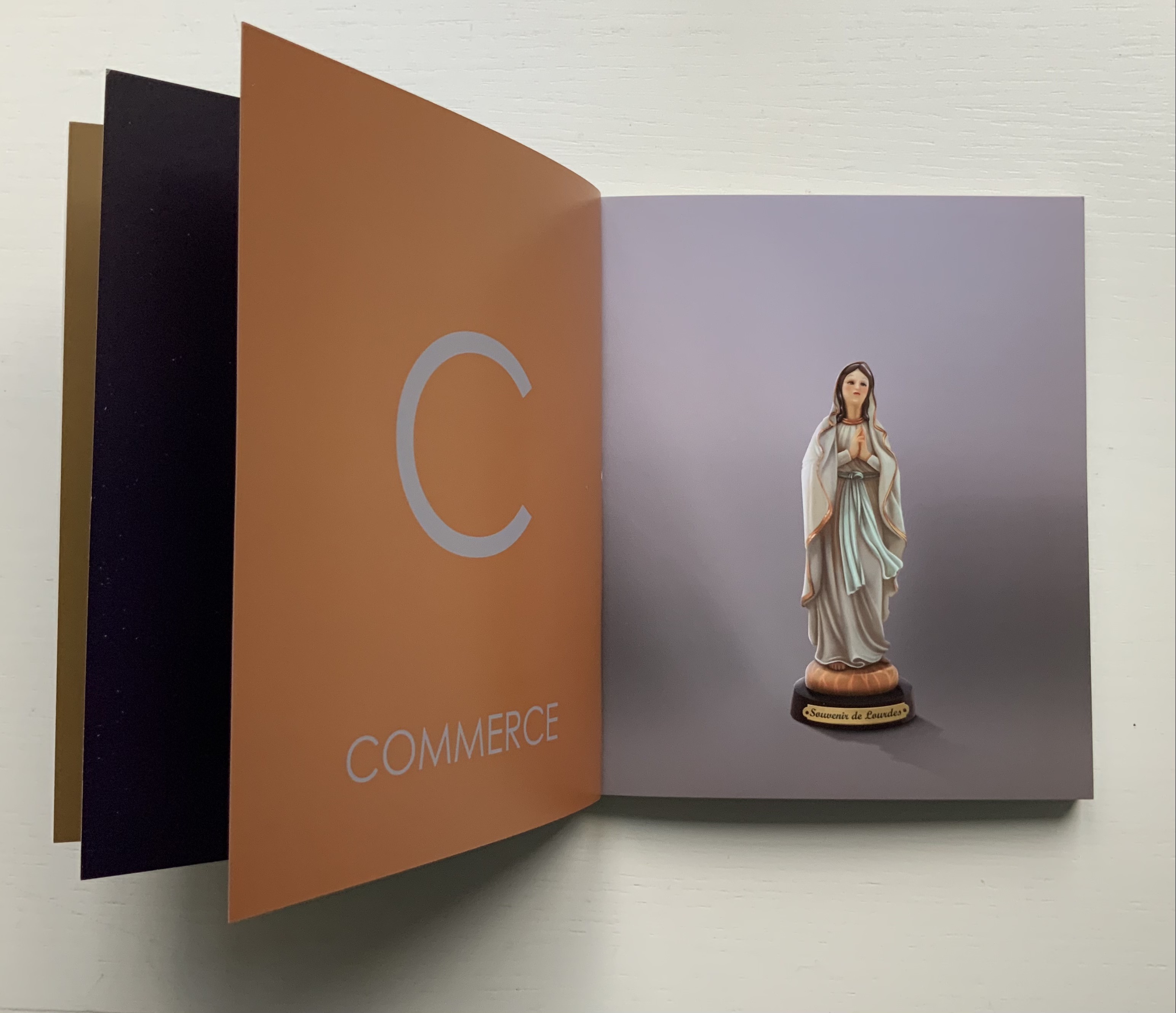
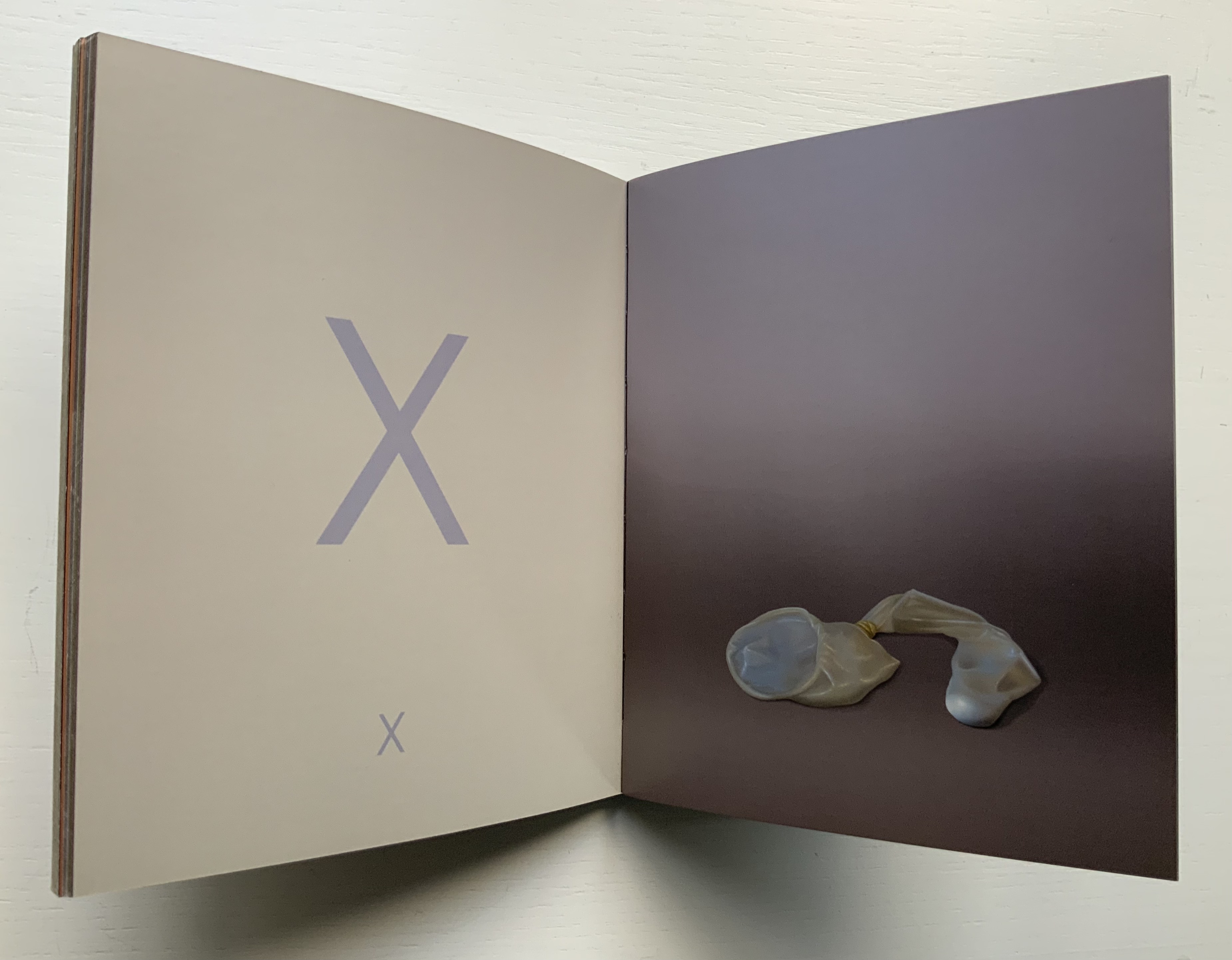
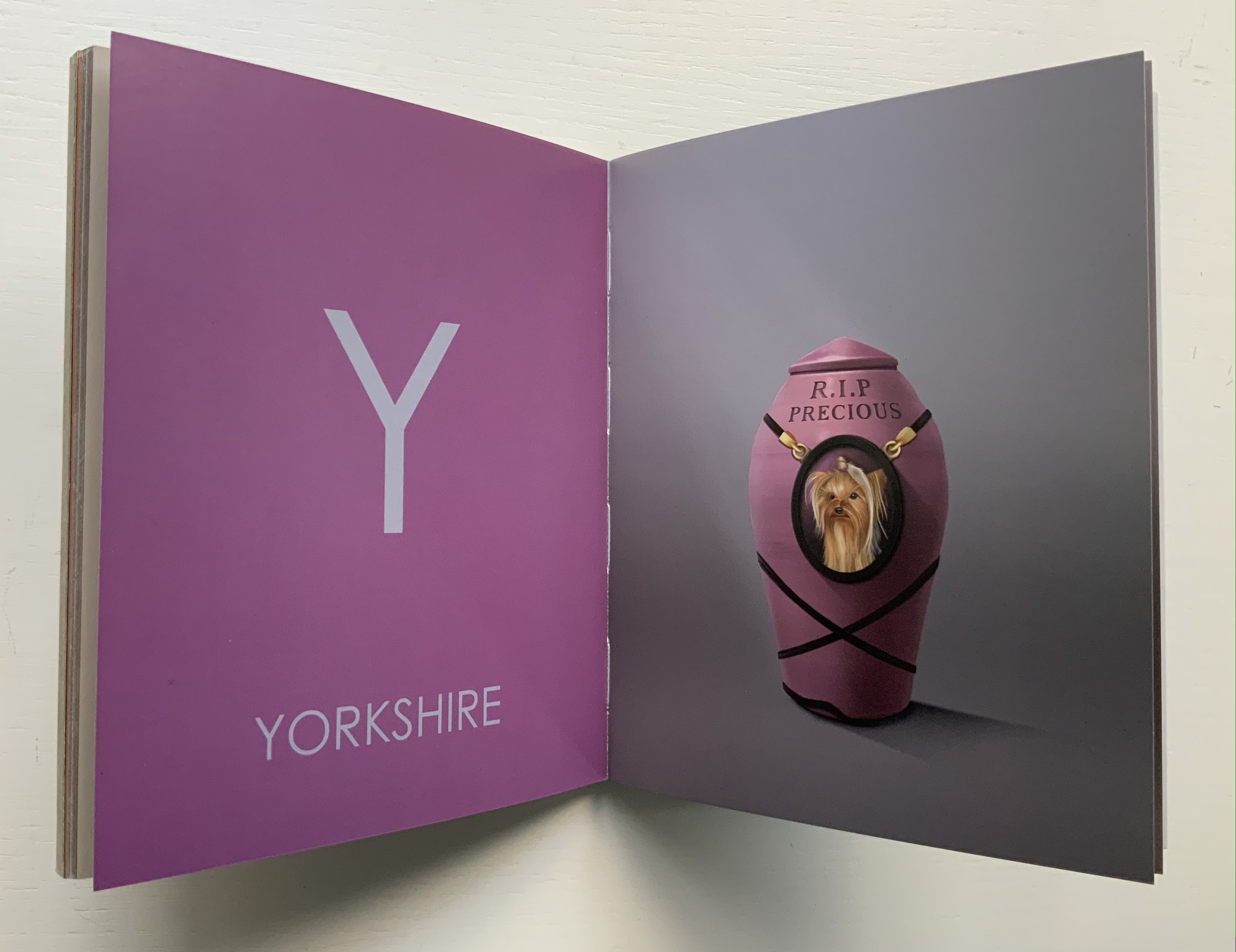
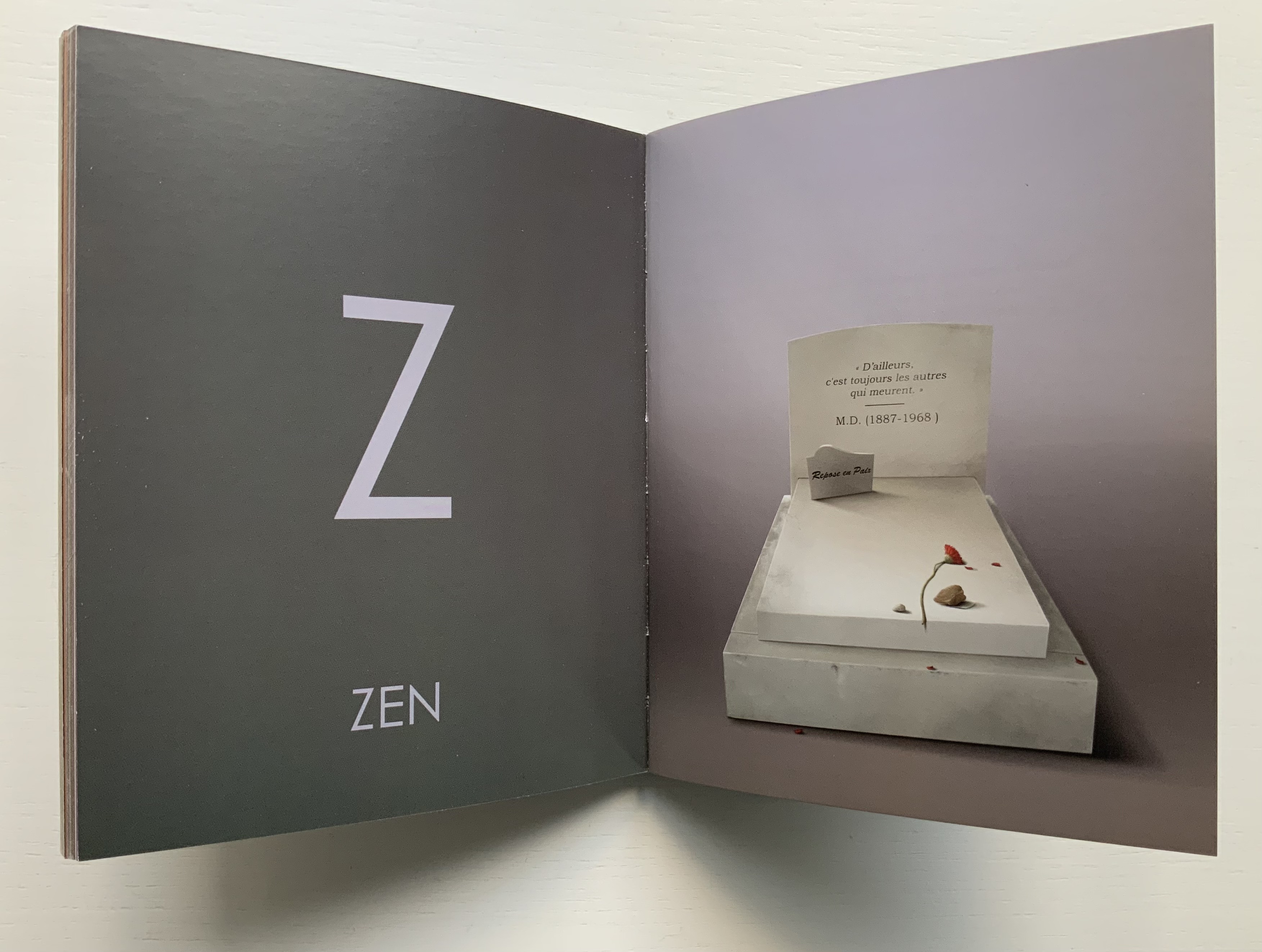
An alphabet of sardonic commentary in words and images on death, human behavior, stupidity and fetishism. Starting with the skull for Avenir (“future”), Mériguet places his alphabet artist book squarely within the genres of the vanitas and still life. which in French is — appropriately — nature morte (“nature dead”). (In addition to the images below, the artist offers the images of an ivory carving to illustrate Éléphant, a tree stump for Oxygène and a dead bee for Pollen. With his medium being the computer, he clearly cannot resist compounding the punnery by describing his images as nature morte virtuelle.

Further Reading

Abecedaries I (in progress)“. Books On Books Collection. 31 March 2020.

Books On Books Collection – Julien Gineste

Alphabet (2016)

Alphabet (2016)
Julien Gineste
Staple-bound pamphlet. H180 x W130 mm, 32 pages. Edition of 100. Acquired from ~zeug, 25 March 2020. Photos: Courtesy of the publisher, ~zeug.

These single-color risograph-printed photos of celebrities and literary figures are without labels. The reader’s ability to identify them depends on general, historical, literary and popular knowledge and some awareness of how the French pronounce the letters of the alphabet.

A clever piece to make us think about the relationship of text to image. If you can recognize the tennis legend Arthur Ashe, you have to know that the letter H is pronounced “aash” to make sense of his position in the booklet. No need to know there is no difference in saying “O”; you only need to know the face of Jackie O. Several of the personalities go by an initial that corresponds to their alphabetic position: Jay Z and Mister T, but did the French really call “Dubya”, the 43rd president of the US, “doobla-vay”?

Further Reading

Abecedaries I (in progress)“. Books On Books Collection. 31 March 2020.

Sciullo, Pierre di. L’Après-midi d’un phonème — The Afternoon of a Phoneme (Paris, FR: ~zeug, 2019). Another exercise in French/English punning — if only in the title’s play on Mallarmé’s poem and Débussy’s musical homage L’Après-midi d’un Faune. The book is a more complex affair, being both an accomplished artist book and interview by Sandra Chamaret and Julien Gieneste of di Sciullo.

Books On Books Collection – Claude Sarasas

The ABC’s of Origami (1964)

The ABC’s of Origami (1964)
Claude Sarasas
Paper on board, casebound with illustrated endpapers. H264 x W188 mm, 56 pages. Acquired from Thrift Books, 7 September 2021.
Photos: Books On Books Collection.

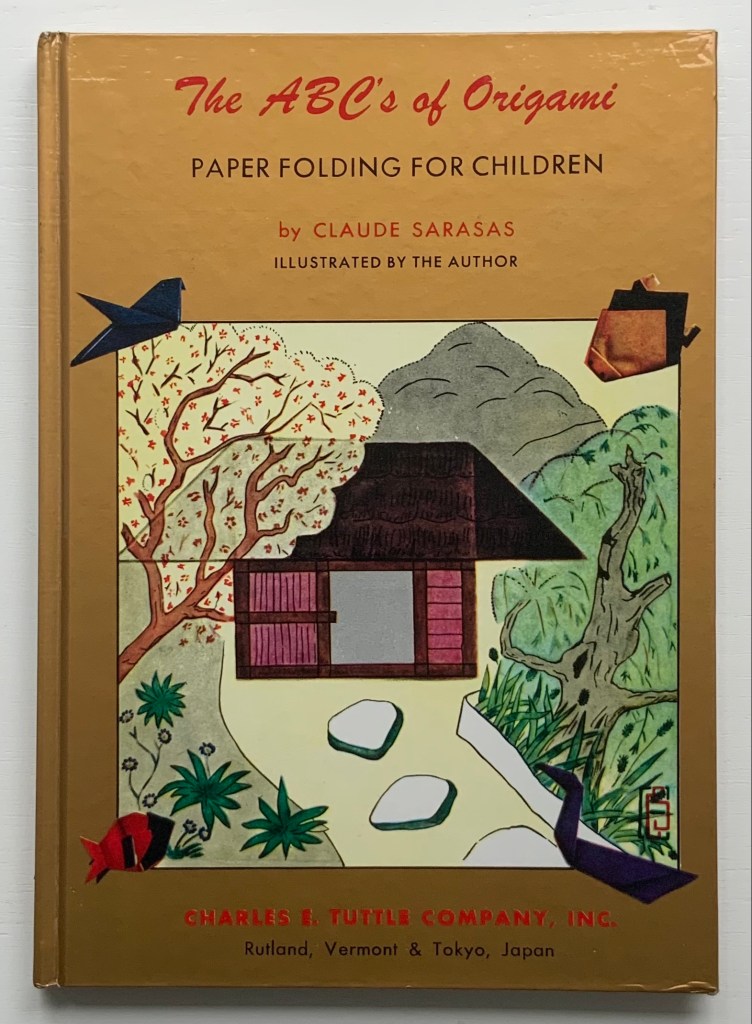
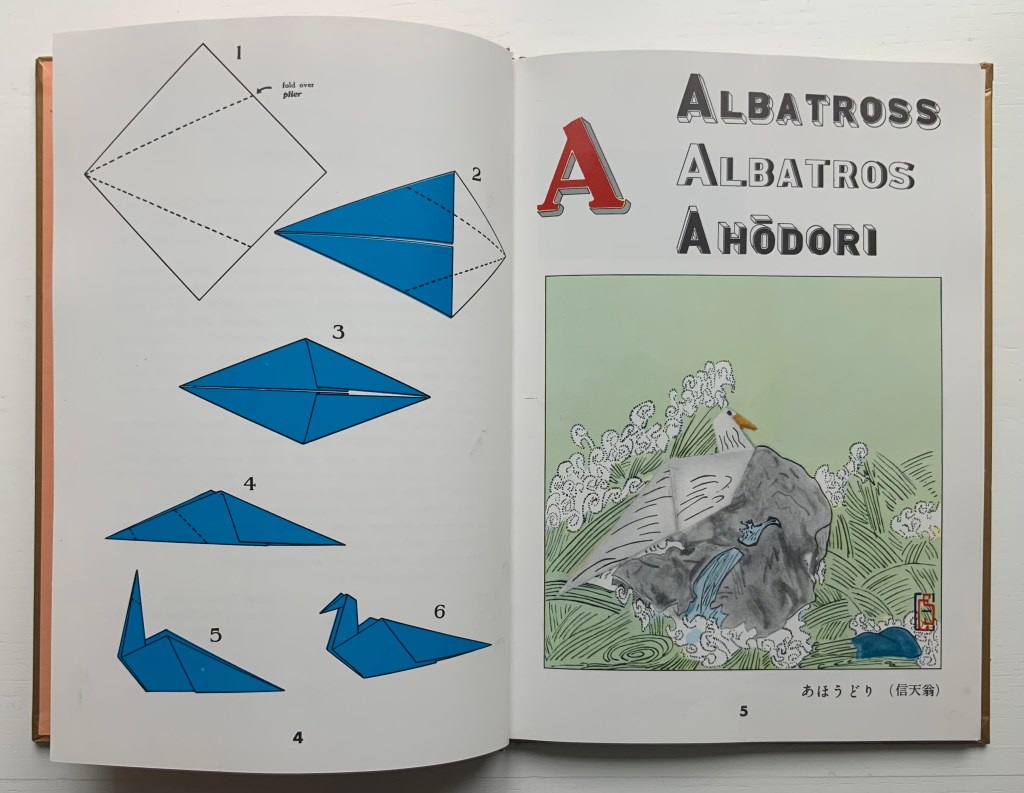
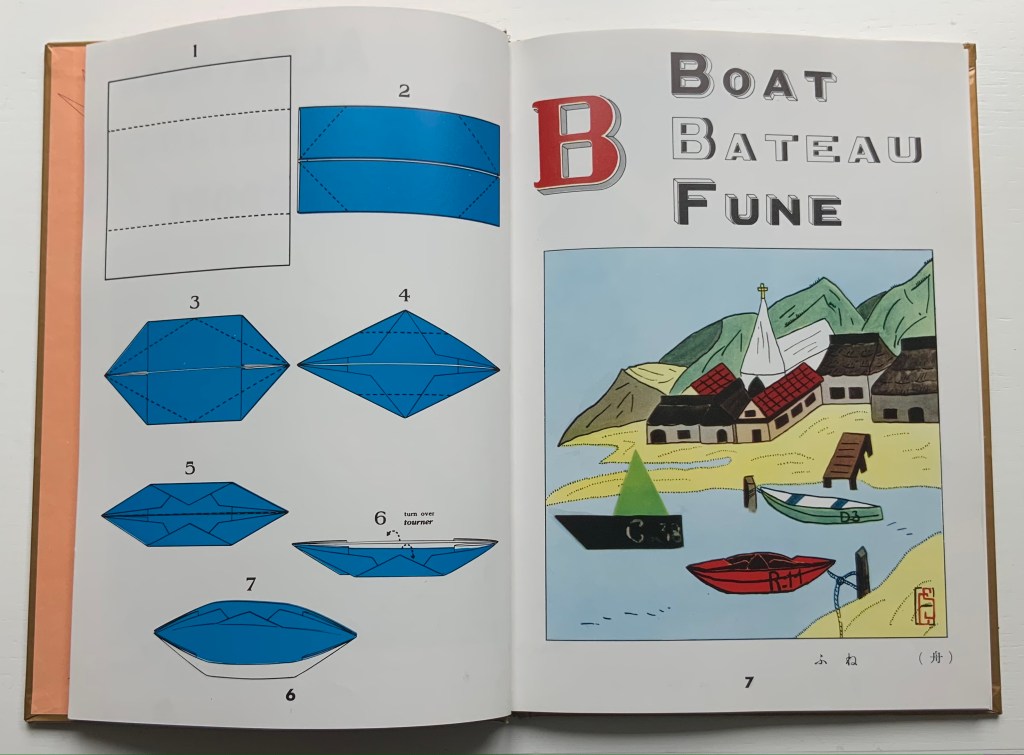
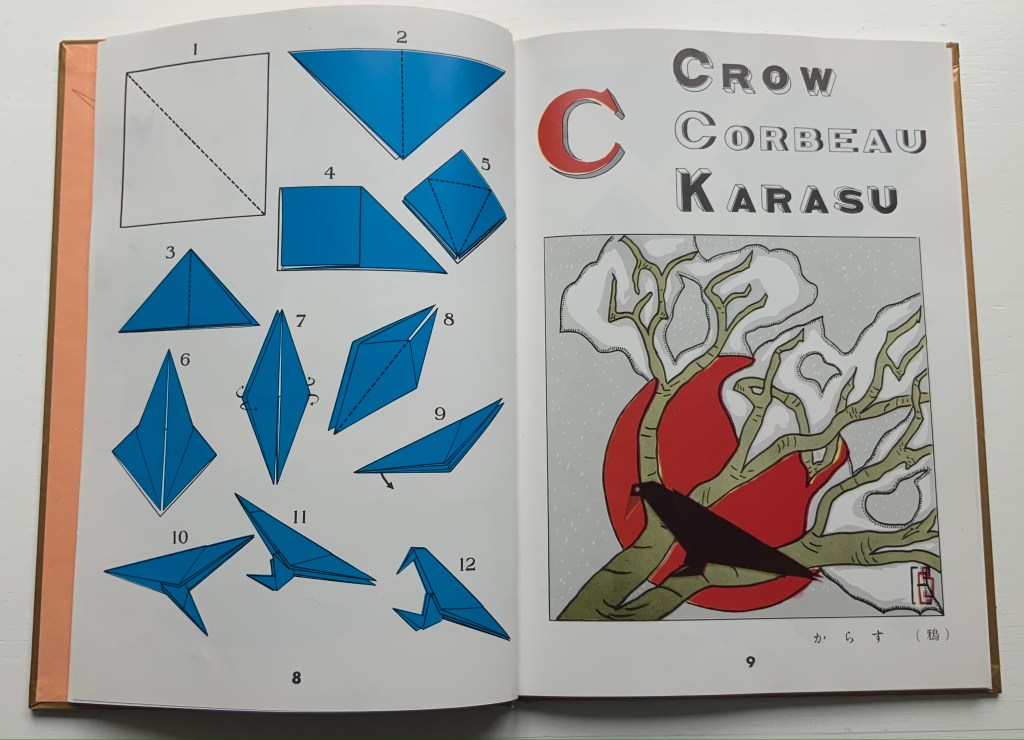
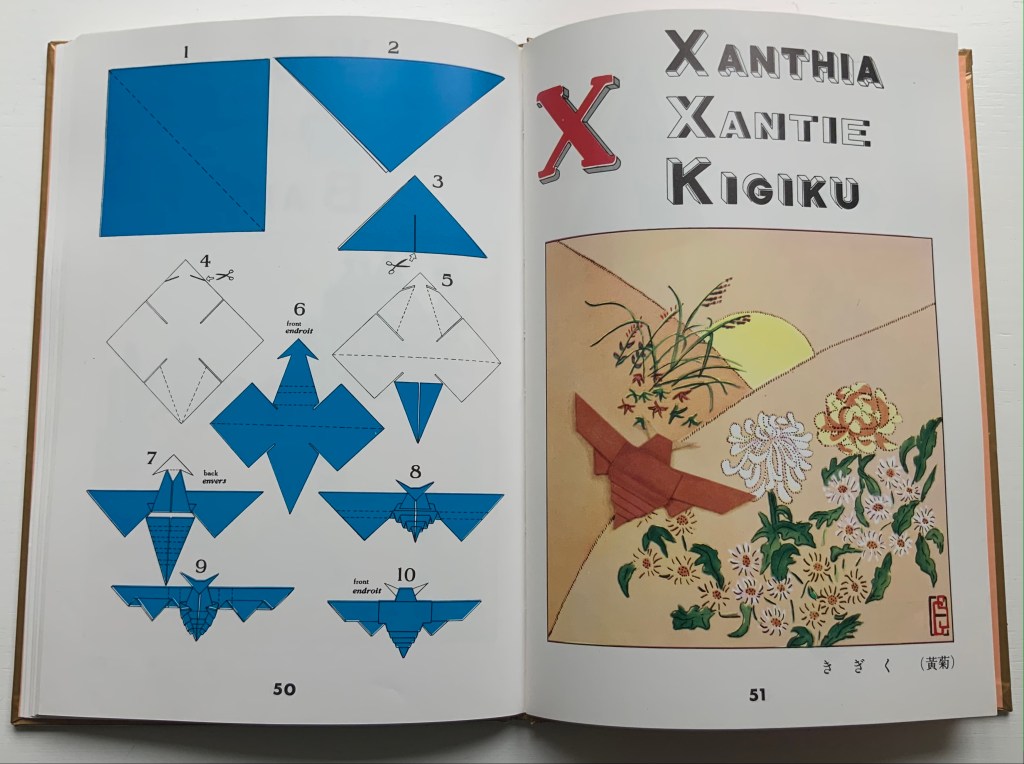
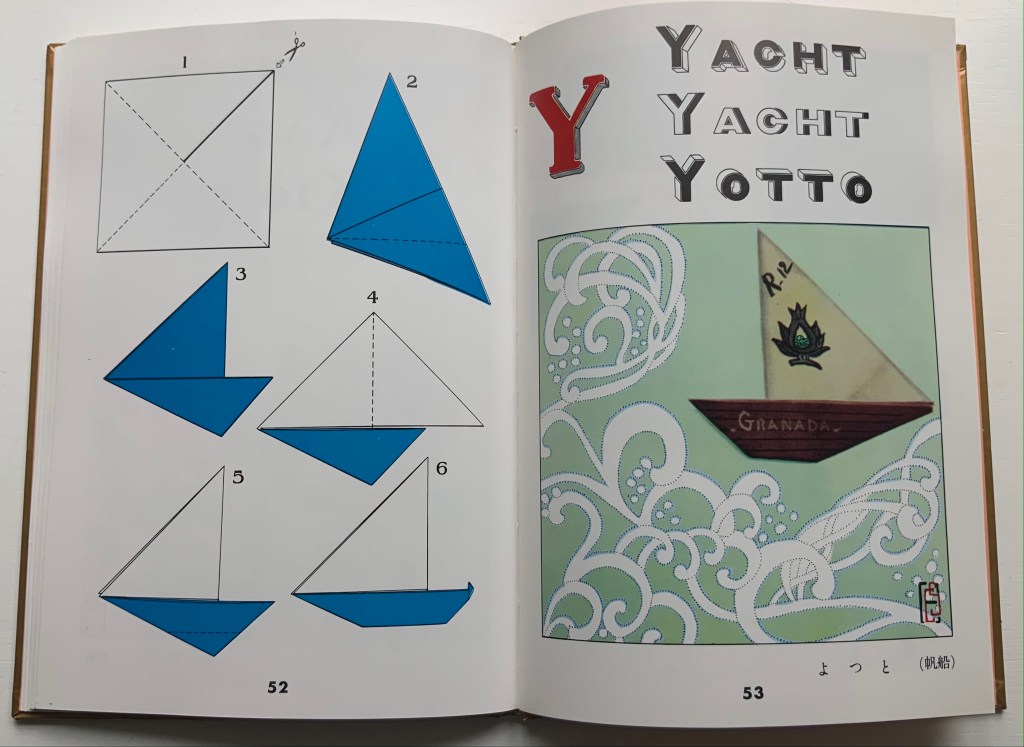
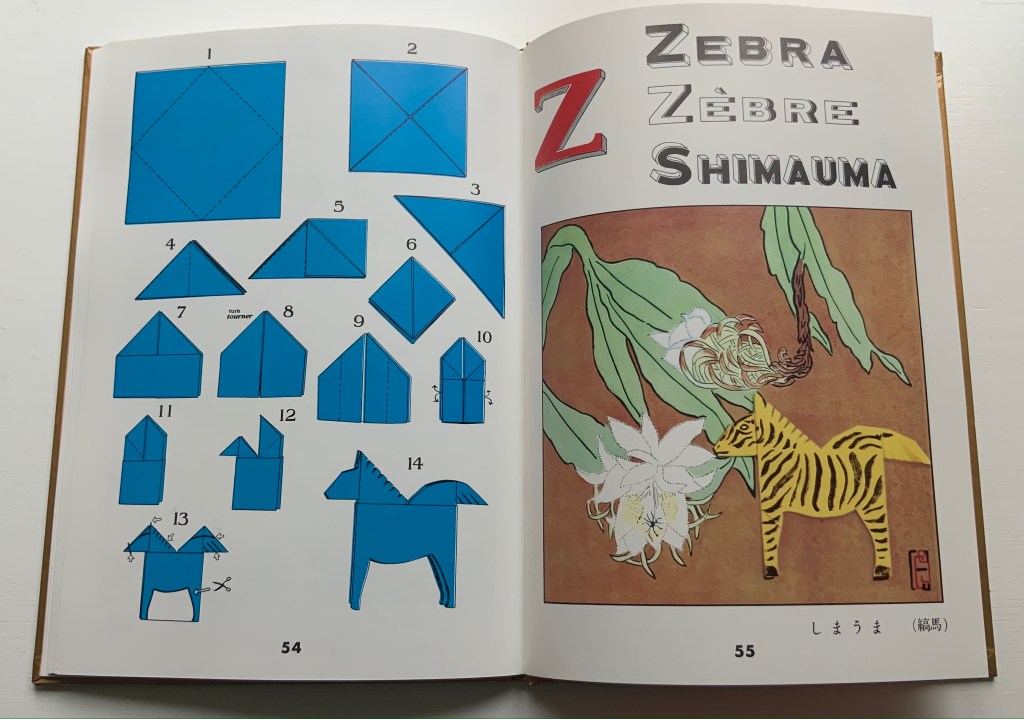
Its blend of multilingual treatment, paper craft applied to the alphabet and collage of origami figures against scenes of Japanese landscapes recommended this book to the Books On Books Collection as a curiosity. The less-than-always-clear origami directions and the words’ lettering, however, altering between black and white and shadowed to tilt in different directions to distinguish the English, French and Japanese, dull the curiosity.

The ABC’s of Origami is now in its second edition (2012). Without question, Ms Sarasas has pointed the way for combining abecedaries with origami objects.

Further Reading

Abecedaries I (in progress)“. Books On Books Collection. 31 March 2020.

Hasegawa, Taichiro. Magical origami alphabets and numerals (Japan: [publisher not identified], 1996).

Hwang, Joyce. Kirigami alphabet design 7: fun with paper folding and cutting (Union City, CA: Heian International, 1994).

Klein, Louis. Animals to fold: an illustrated cutout alphabet book on origami (London: B.T. Batsford, 1962).

Bookmarking Book Art – Diane Harries

Legacy (2018)

Legacy (2018)
Diane Harries
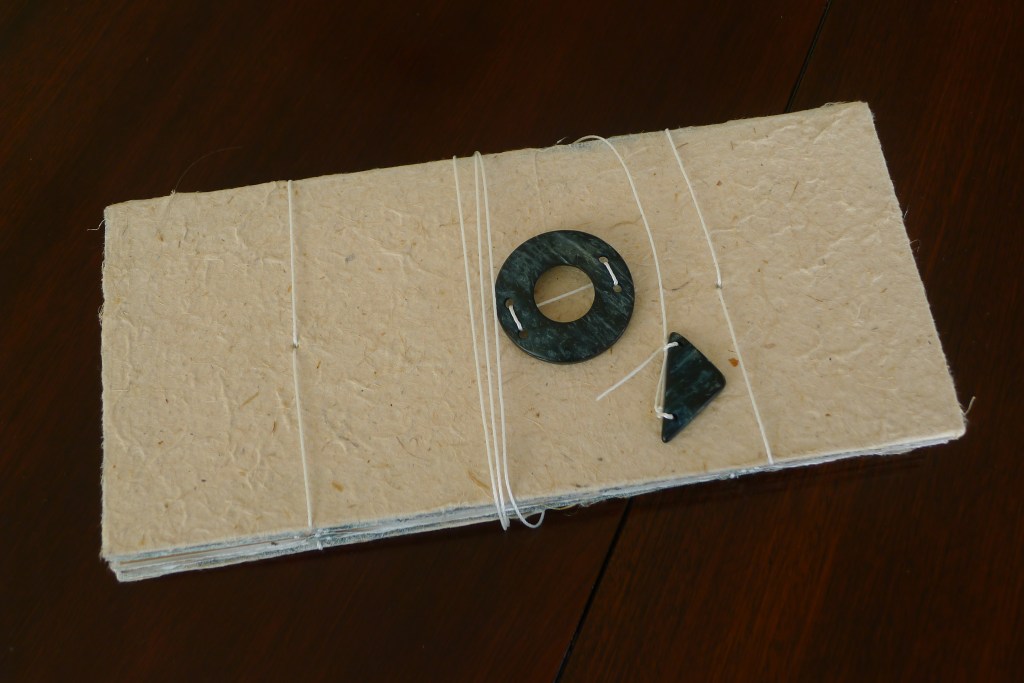
Venetian blind book. Monoprint, screenprint and collage. Closed: H107 x W233 x D25 mm; Open: H1000 mm. Unique.
Photos: Courtesy of the artist.

Look at the circular and triangular pieces making up the clasp for this work Legacy (2018) by Diane Harries. Don’t they appear to be made of marble or some other polished stone? They actually come from coconut husk, shaped, polished and dyed. The only indigenous plant from the palm family in New Zealand is the nīkau, and the coconut trees present on one of its islands were likely planted. “Some say that when Māori came to New Zealand, they looked in vain for a familiar tree and seeing the nīkau, compared it to the coconut tree of their Pacific homeland. One translation of ‘nīkau’ is ‘without nuts’, in remembrance of the coconut.”

The choice of material — this crafted seed — strikes a subtle note in a work inspired by Harries’ experience with the Gordon Park Scenic Reserve, a protected lowland forest once common to the Manawatu/Whanganui region of New Zealand. An expanse of land preserved by what threatened it in the first place.

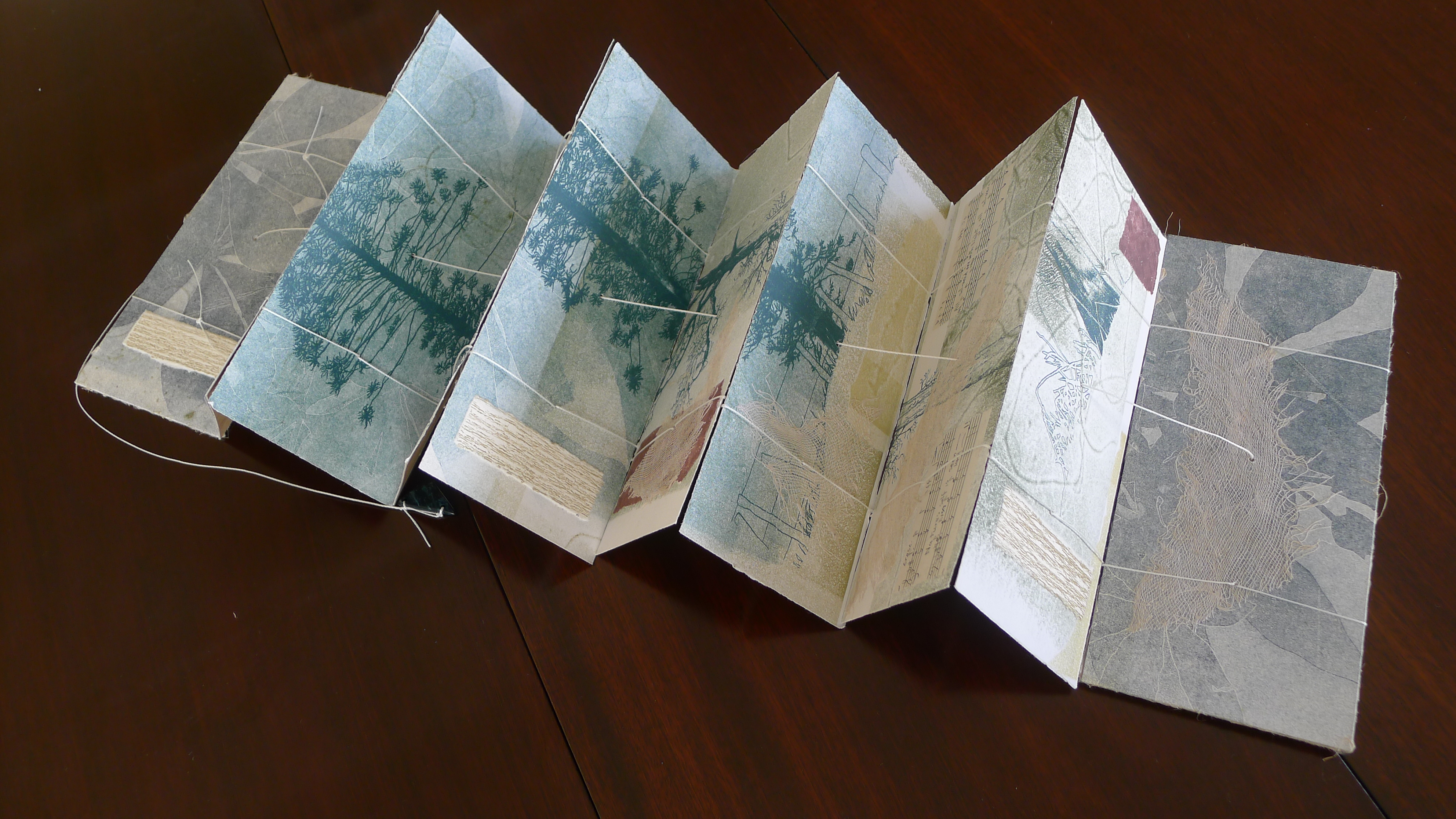
As the thread unwinds from around the circular piece of seed pod and the triangular piece is laid aside, the subtle notes grow. The fashioned clasp is the same sort used to hold up or let fall a venetian blind. But here the clasp works in reverse from that for a venetian blind: the winding holds the book closed, the unwinding opens it. The thread winds around and through what appears at first to be an accordion book, but with the first turned page or panel, it is clear that this is venetian blind structure. A structure that modulates the movement of light and air. Our artifice can be deployed “to open or close” nature.

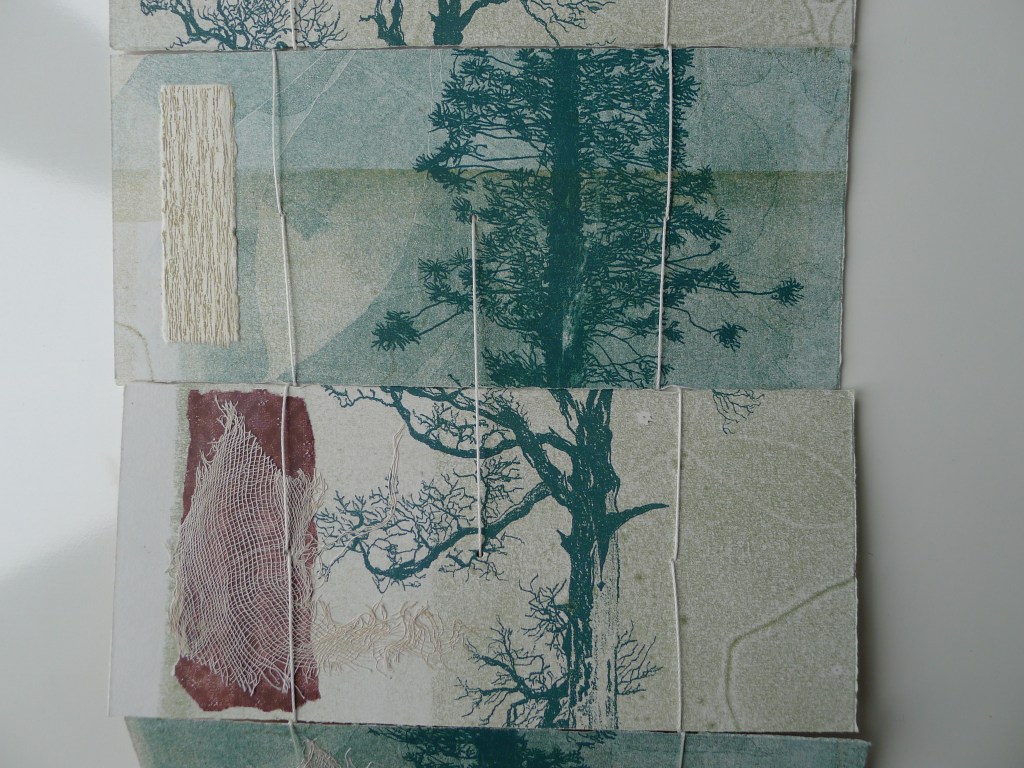
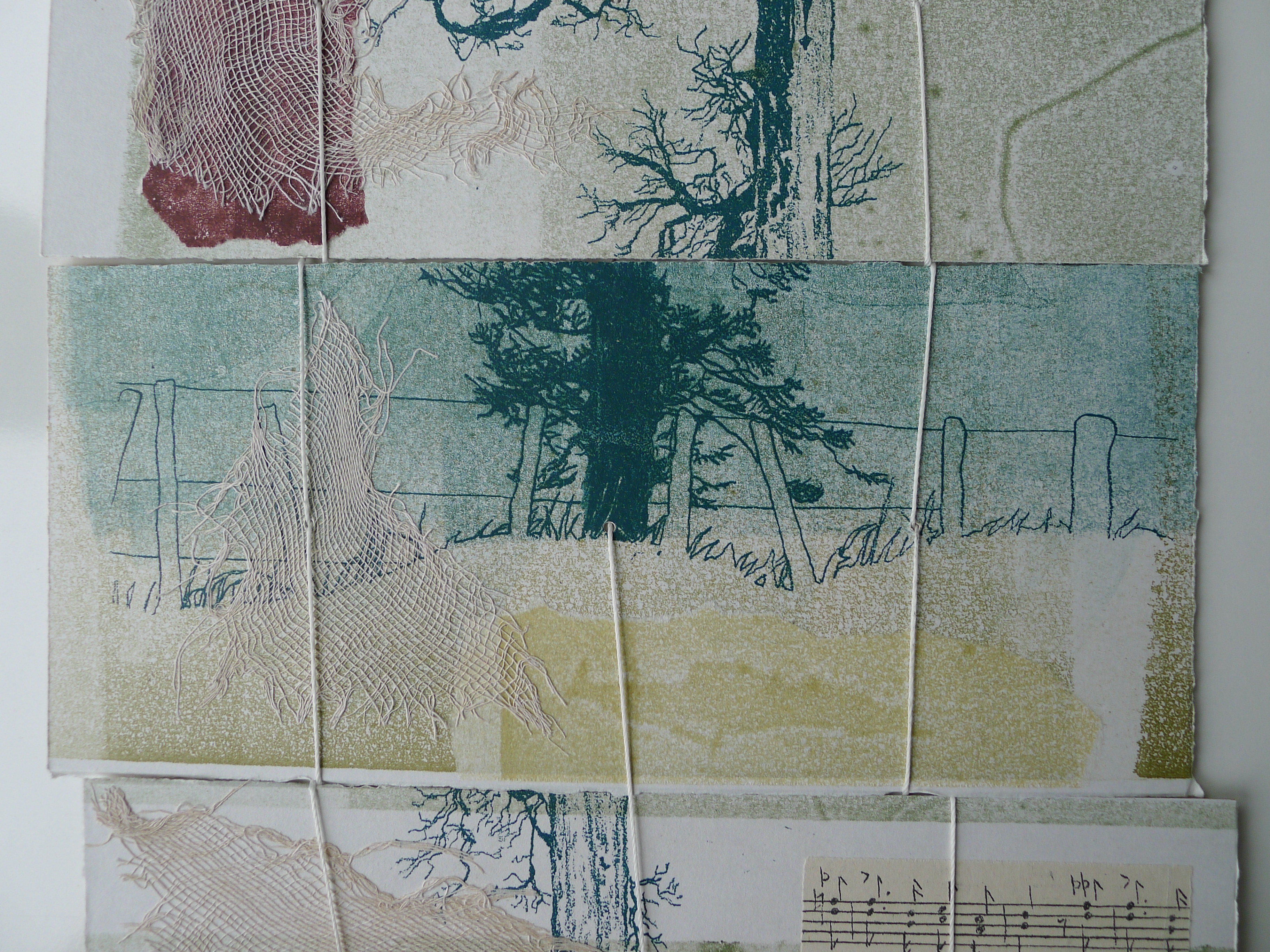
A collage of hand-printed images (monoprint and screenprint) sound the more obvious note that this work addresses our impact on nature. Images of leaves and a wire fence strung along posts. Alternating panels of living and dead trees — a healthy and exotic bunya pine and the native, dead kahikatea (white pine).

As the panels extend fully, other material and images come into play. Staves of musical notation appear — here on a panel with the living, there on a panel with the dead. Just as fickle as a pretty human artifact that in one context winds to close and in another winds to open.

Images of wandering thread contrast with the straight lines of real thread connecting the panels. Scraps of tarlatan with its loose weave constrast with densely woven rectangles of thread.

Did the venetian blind structure and seed-based material choose the images, or did the images choose the structure and material?The choice of material and structure can play an obvious or subtle role — or both, or none at all — in a work. When material, form, technique and metaphor play together like this, the work becomes art.

Artist’s Statement

The botanical history of Gordon Park Scenic Reserve provides a window on the social changes that have marked the region. European settlers cleared most of the native bush for farmland, but this tiny patch of swamp forest three kilometres east of Whanganui was saved by an enlightened landowner. Today as conservationists, we mourn the loss of native species everywhere.

The plants there today tell these stories of loss and invasion. Drainage of the area for pastureland has put native kahikatea (white pine) trees at risk during drought and some have died. Their bleached skeletons stand sentinel to this historically neglected status. Paradoxically, the exotic bunya pine (Australian native) nearby, is valued as a marker of the original homestead (now removed), and is officially recorded as Protected Tree #96. The stories are enmeshed in our history and changing values, indicated by the woven fabric in the book.

However, regardless of their social meaning, there is splendour in both of these trees, and the music is a whimsical appreciation of beauty in the face of mankind’s fickle imprints upon the earth.

Further Reading

Chinnery, Colin. “The Chinese pothi (fanjia zhuang)“. The International Dunhuang Project. Site last revised: September 2016. Accessed 30 October 2021. The venetian blind book structure derives from one of the earliest known methods of binding: the Indo-Chinese pothi or palm-leaf sutra.

Department of Conservation, New Zealand Government. Manawatu/Whanganui. Site last revised: N.D. Accessed 30 October 2021