recomp (2013-23)
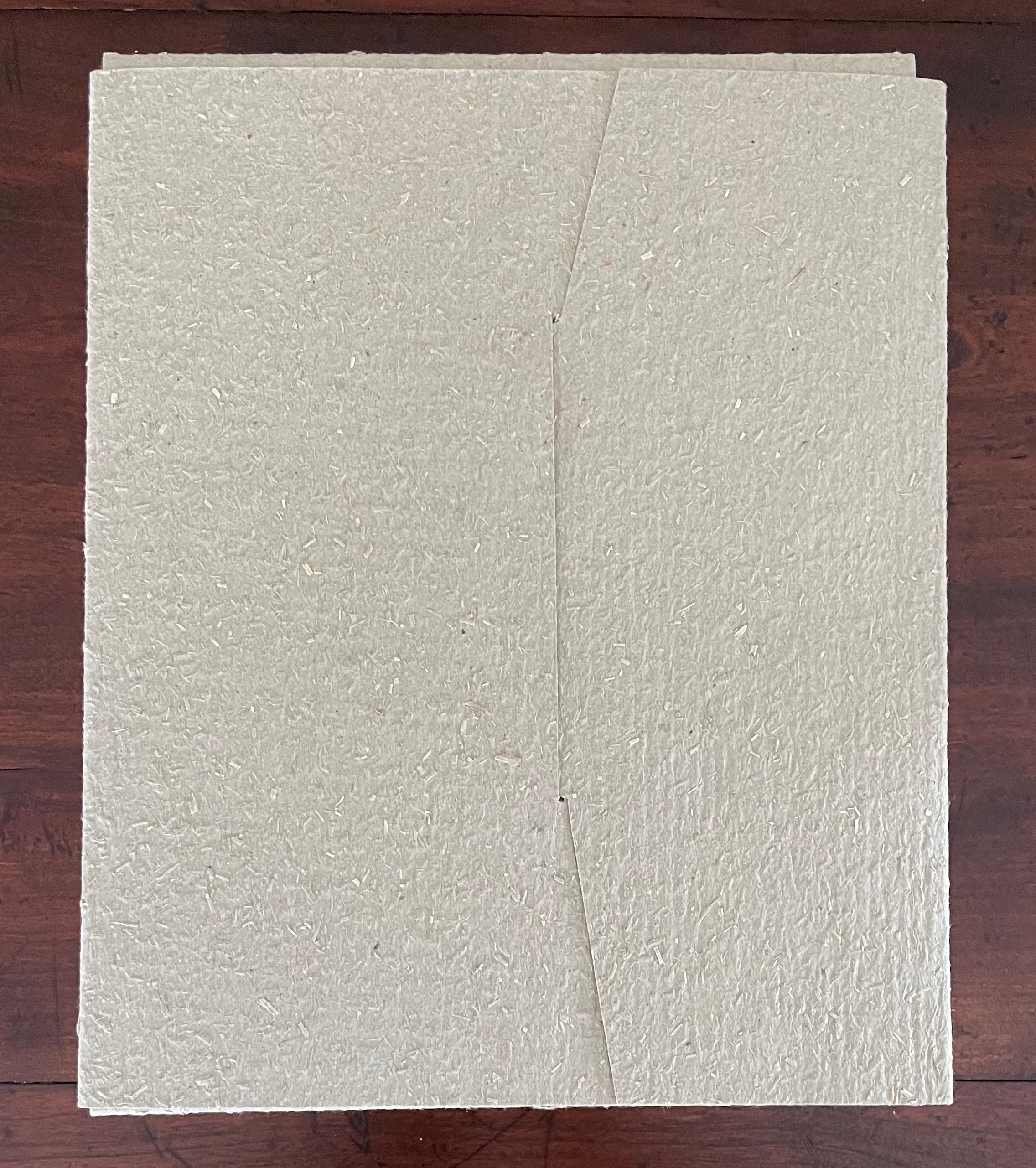
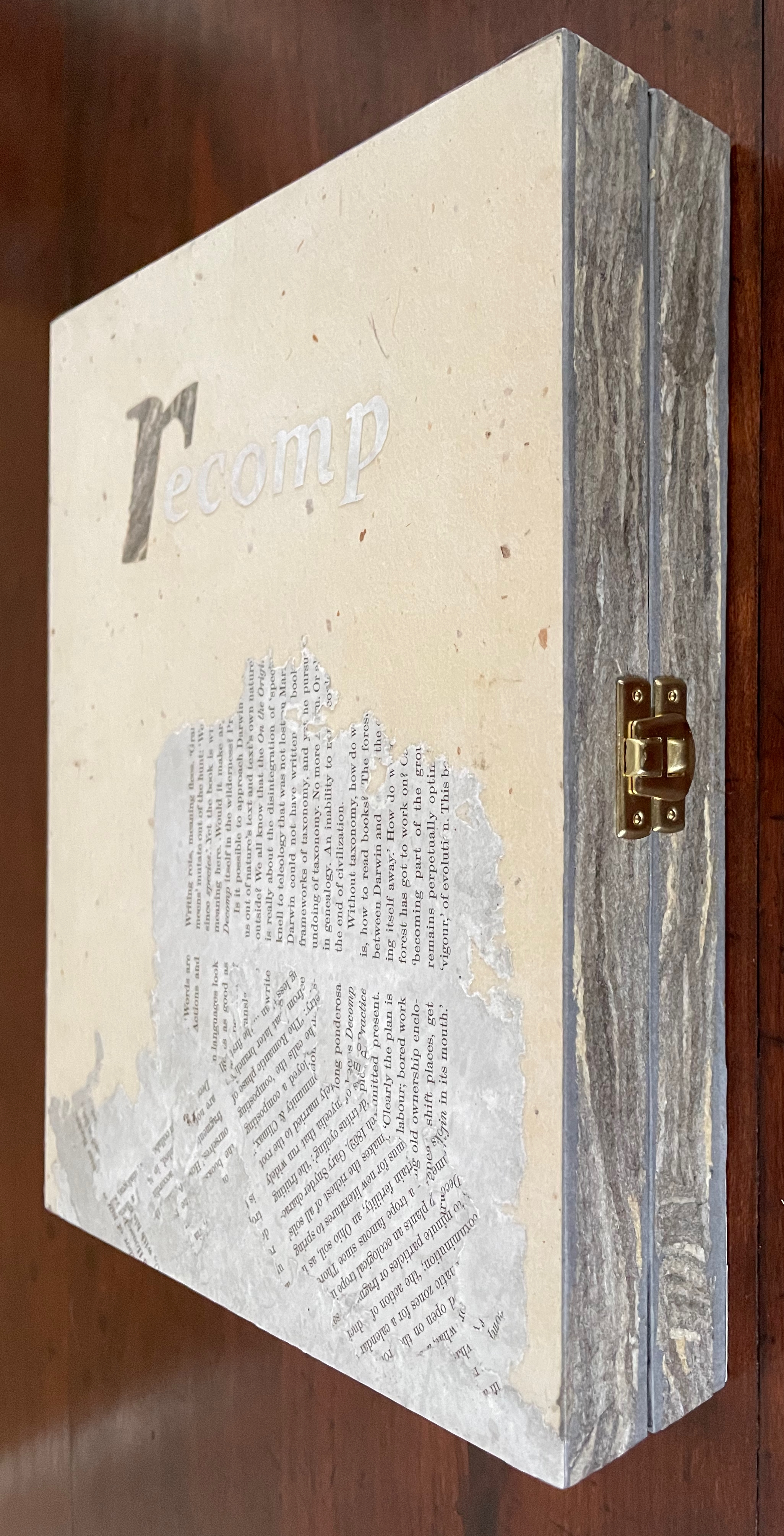
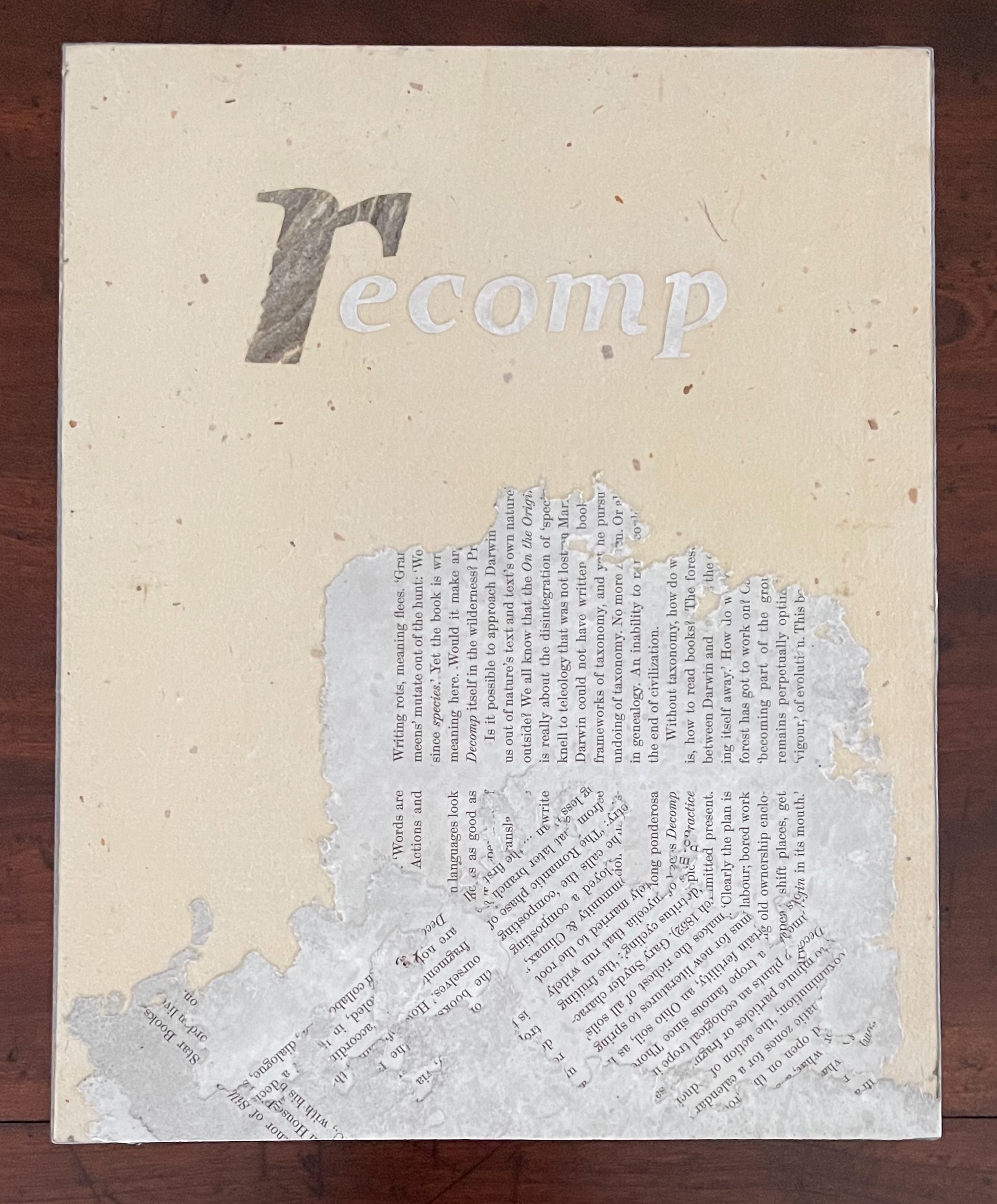
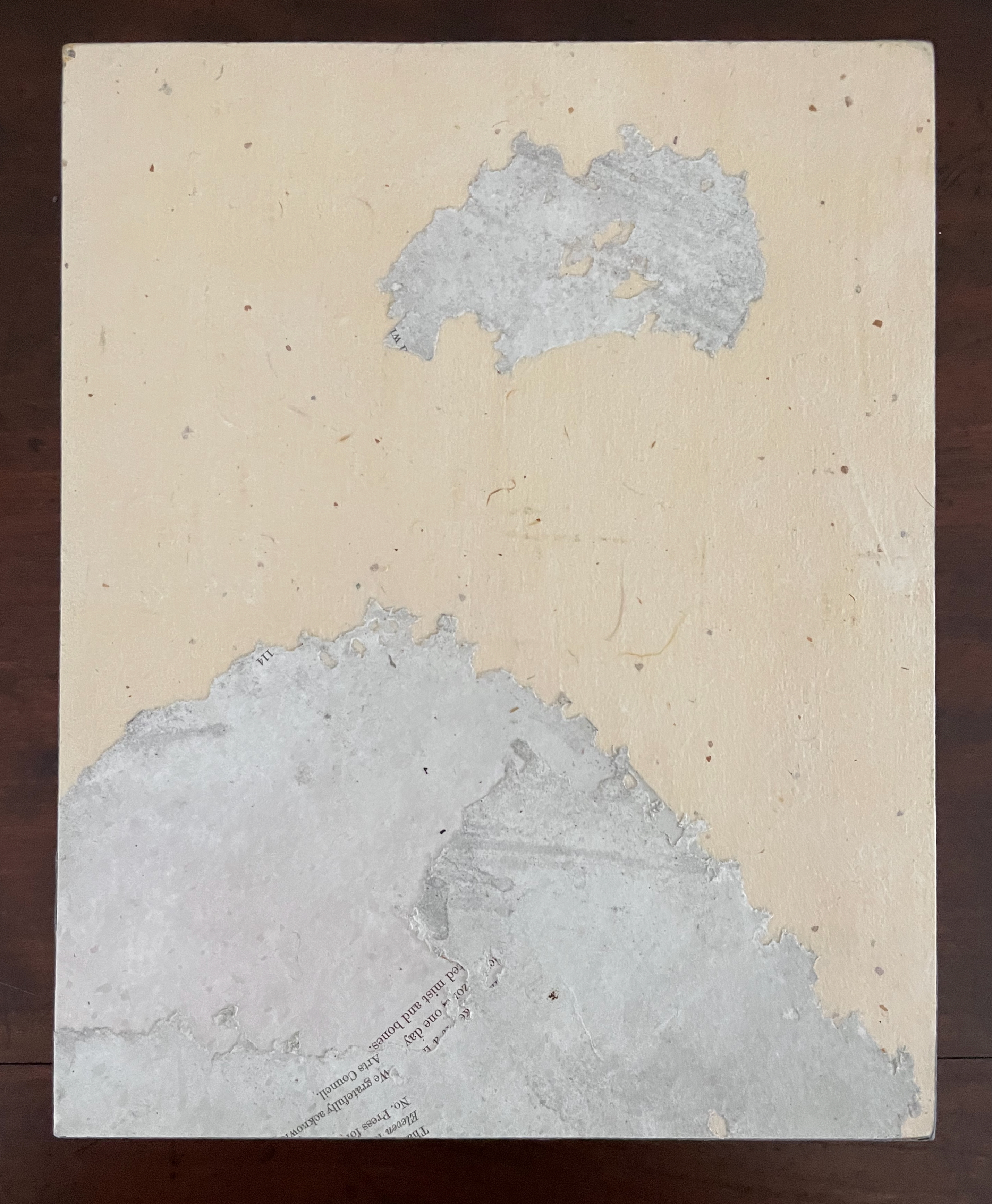
recomp (2013-23)
Cathryn Miller
Hinged and clasped diptych, housing an altered book, explanatory booklet, and loose colophon. Unique. Acquired from Vamp & Tramp Booksellers, 2025.
Photos: Books On Books Collection.
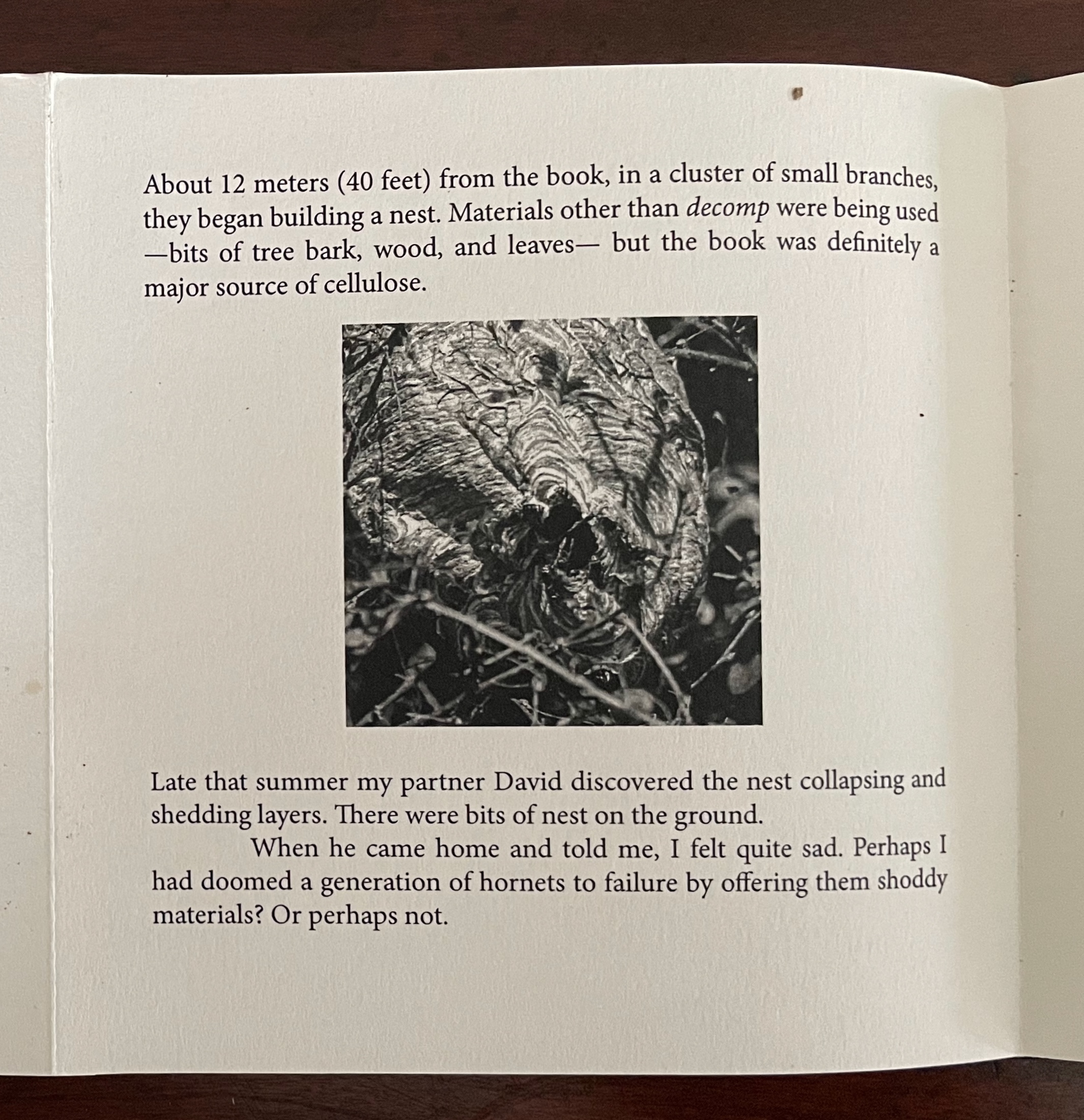
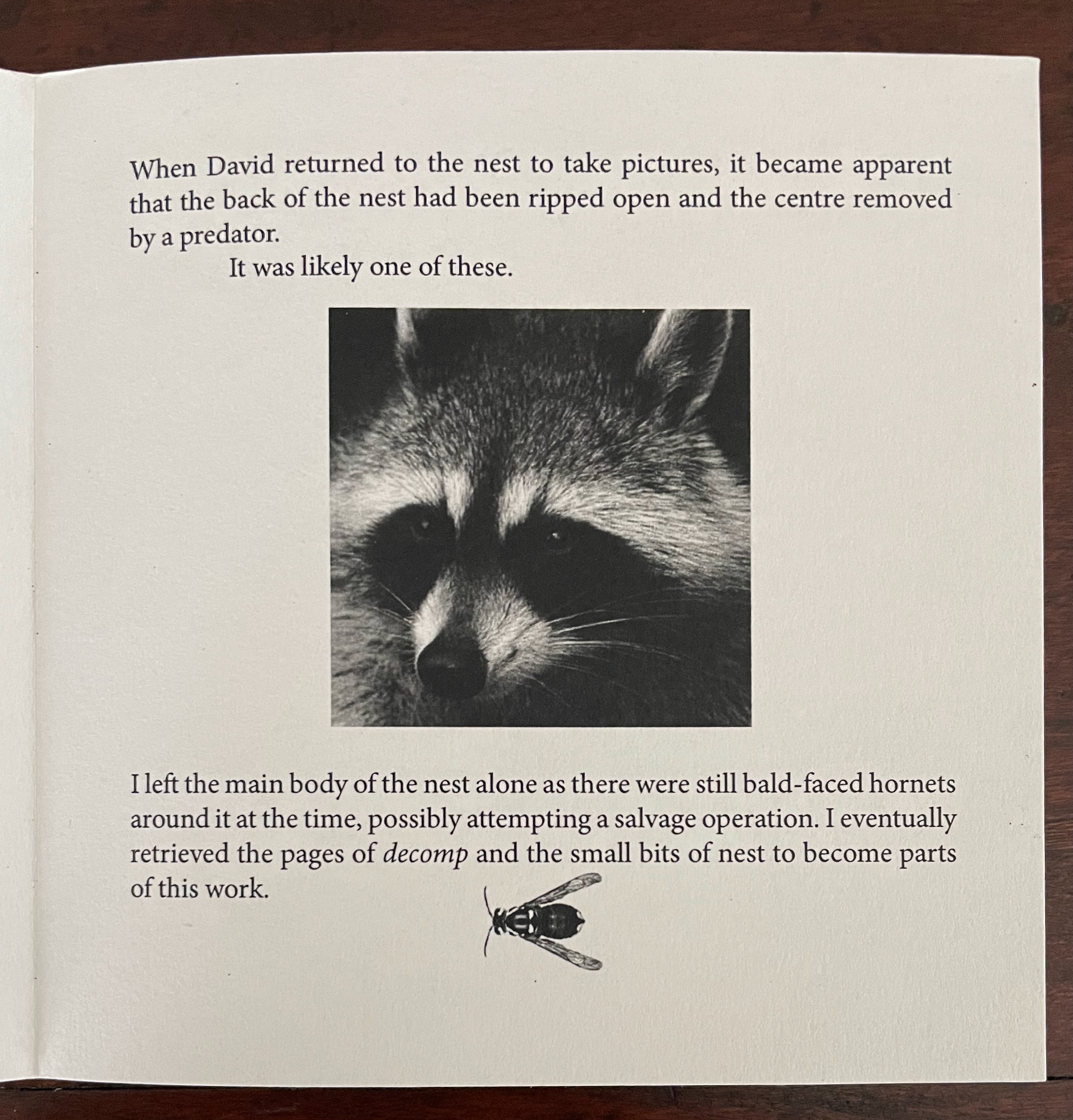
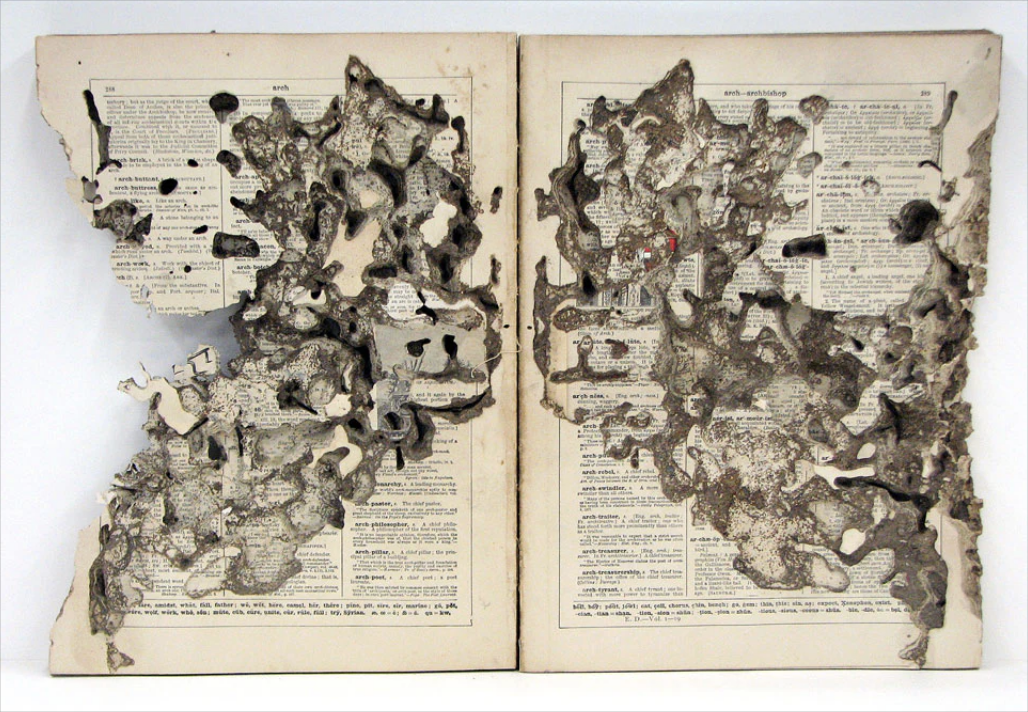
Recomp (2013-2023) is a collaboration with a colony of bald-faced hornets. Having reviewed Stephen Collis and Jordan Scott’s decomp (2013), their artists’ book devised by exposing several copies of Darwin’s On the Origin of Species to the elements, Cathryn Miller followed suit and hung her reviewer’s copy of decomp in a tree. Over time, the wind, rain, and snow sent the book to the forest floor where it fell apart. Hornets had done their part in its decomposition, nibbling away at its edges and weakening the structure. Their conversion of the book into cellulose for their nest was also the start of their artistic partnership with Miller. Eventually the nest, too, became prey to the elements or marauders and fell and broke apart on the ground. Miller and photographer husband David recorded all this and gathered up the book fragments and broken nest.
Miller has combined bands of paper from the hornet’s nest with a grey Japanese paper —the back of a patterned paper— to cover the exterior edges of the wooden diptych box. Thai mulberry paper covers the rest of the box’s panels. On the front and back covers, nibbled and torn scraps of decomp form a collage, and bits of hornets’ nest paper and pages from decomp have been cut into letters to spell out the new work’s title.
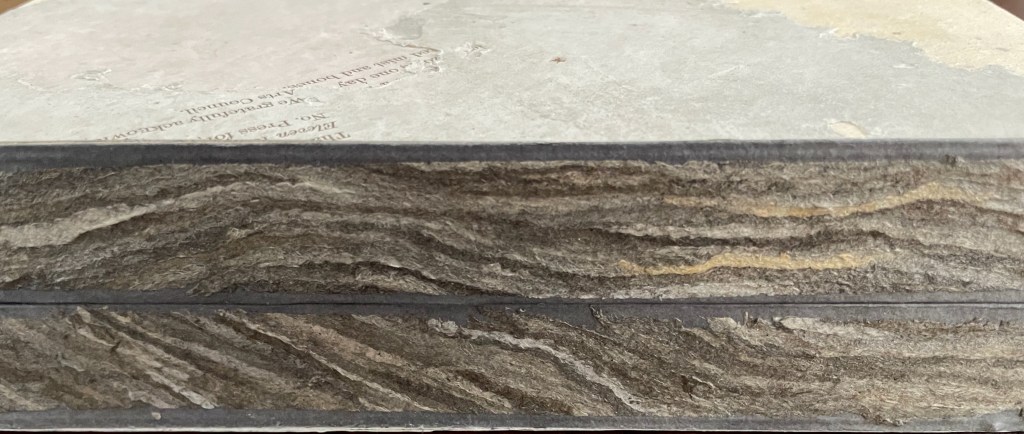
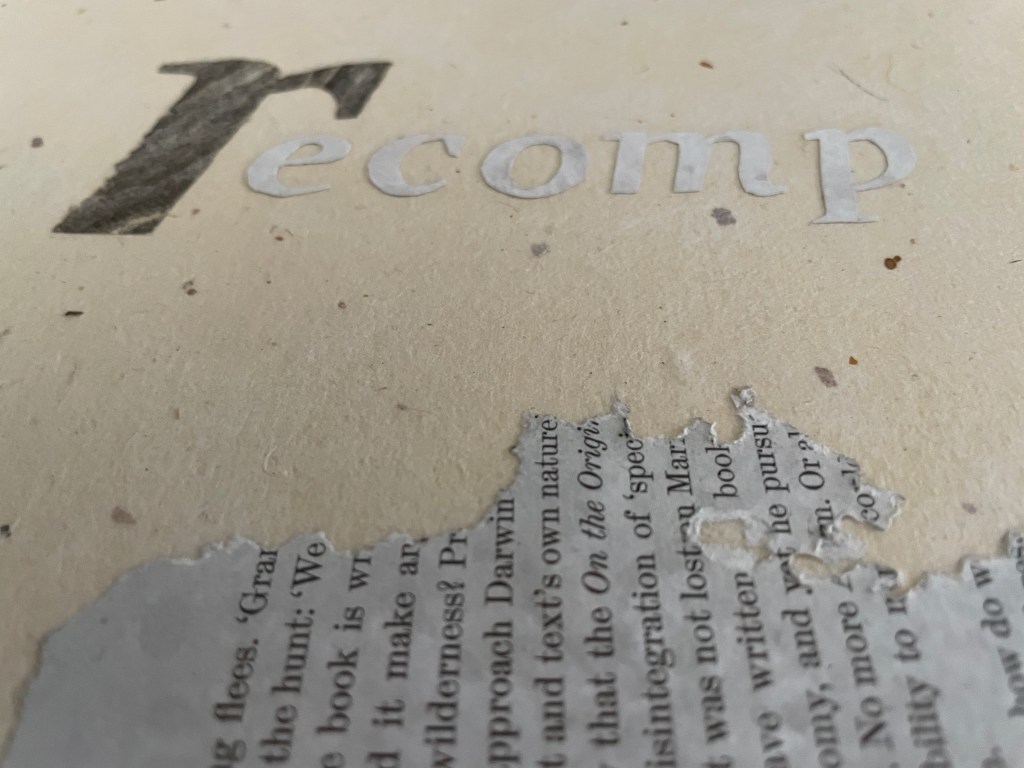
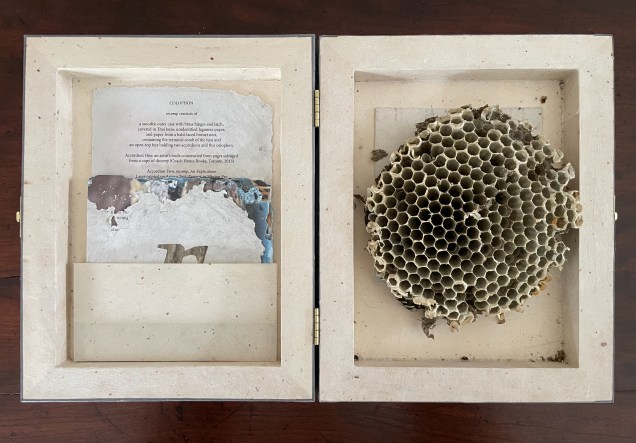
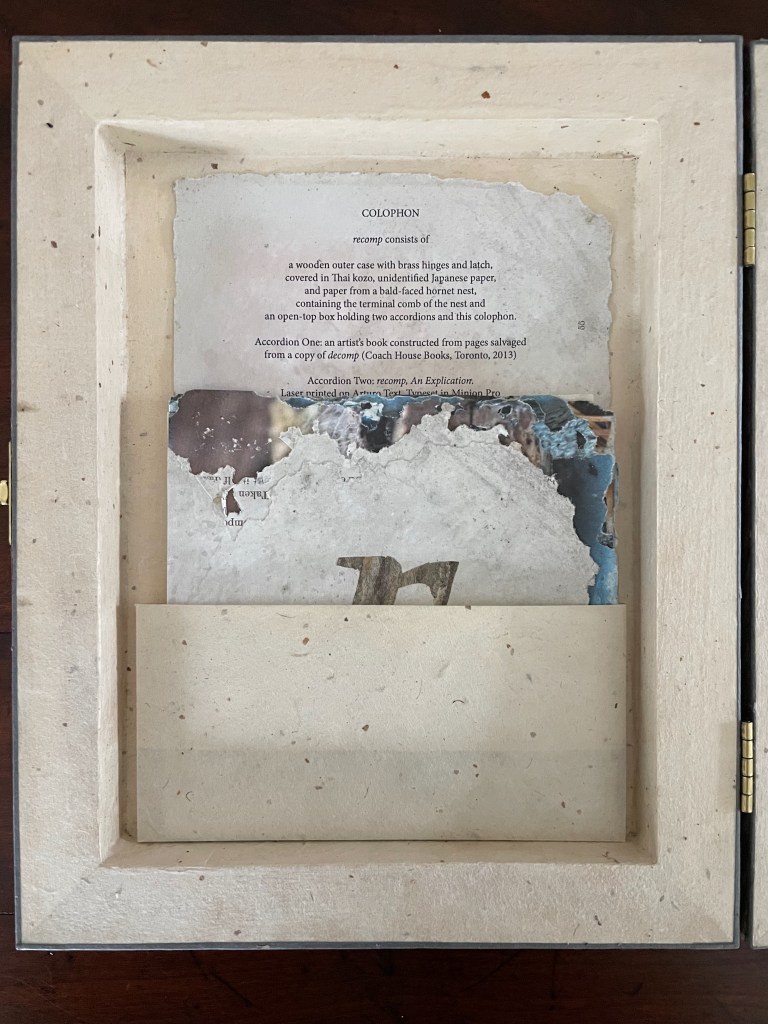
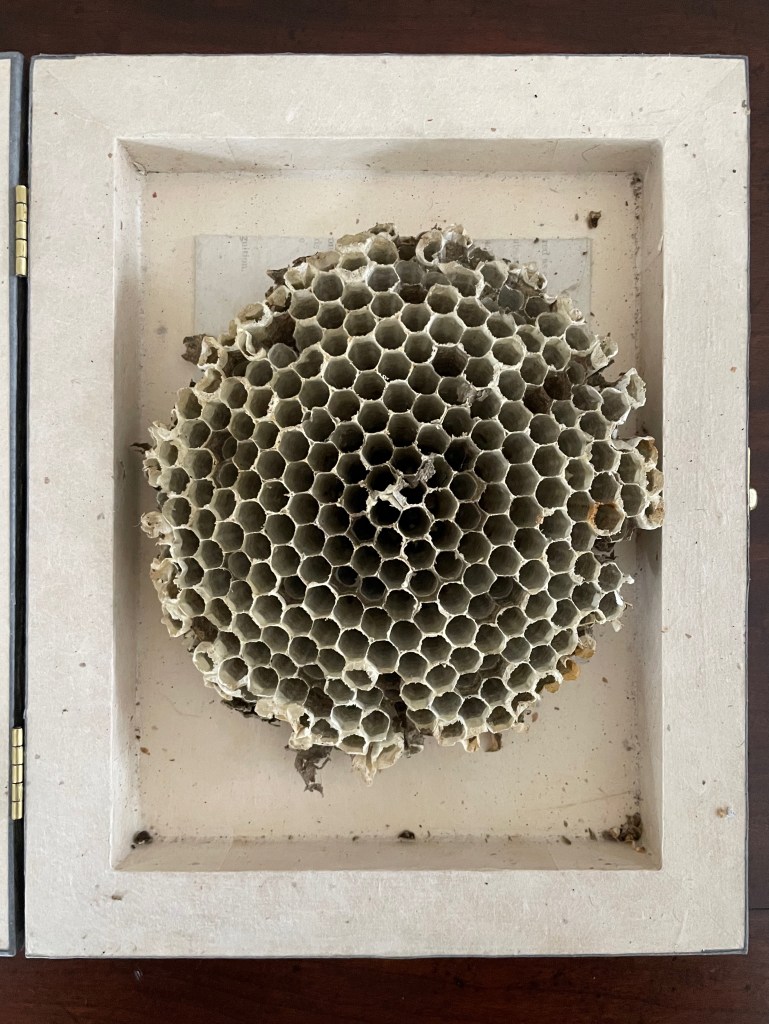
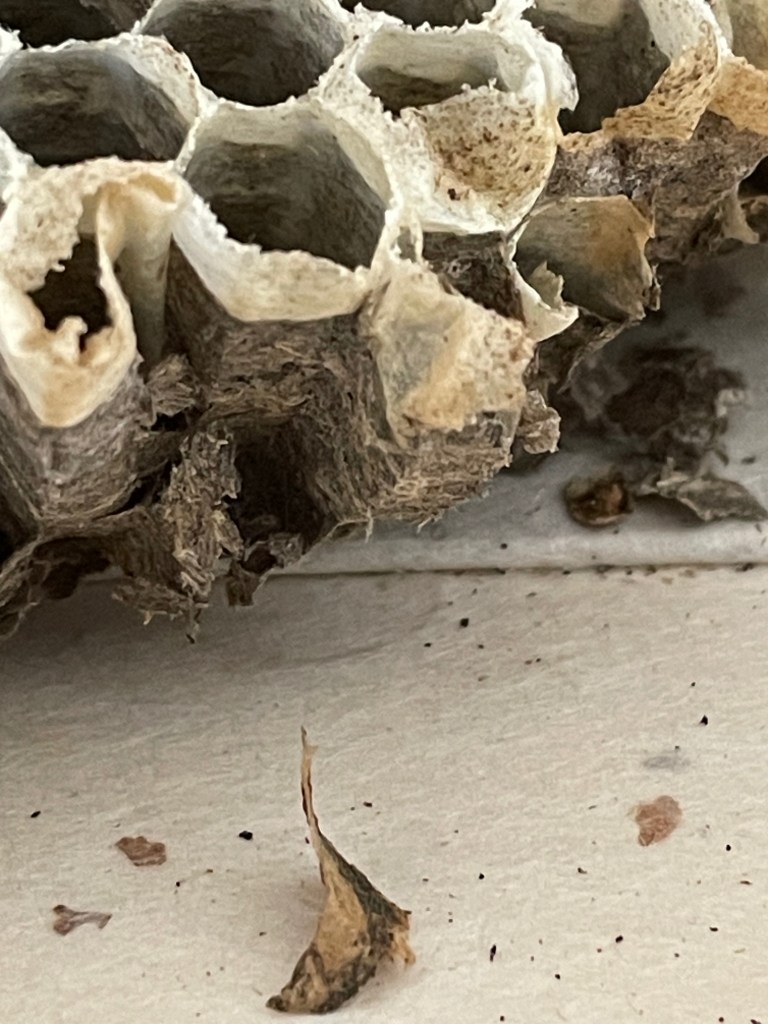
On one side of the diptych, an interior pocket holds two accordion booklets and a loose colophon. On the other, a large section of comb from the hornets’ nest is fixed to a covered piece of book board attached to the box’s back panel.
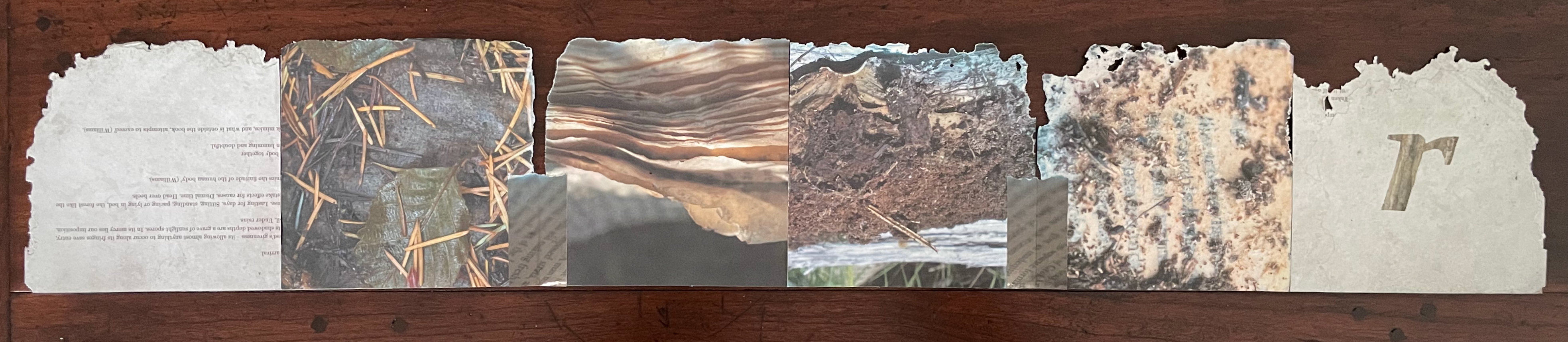
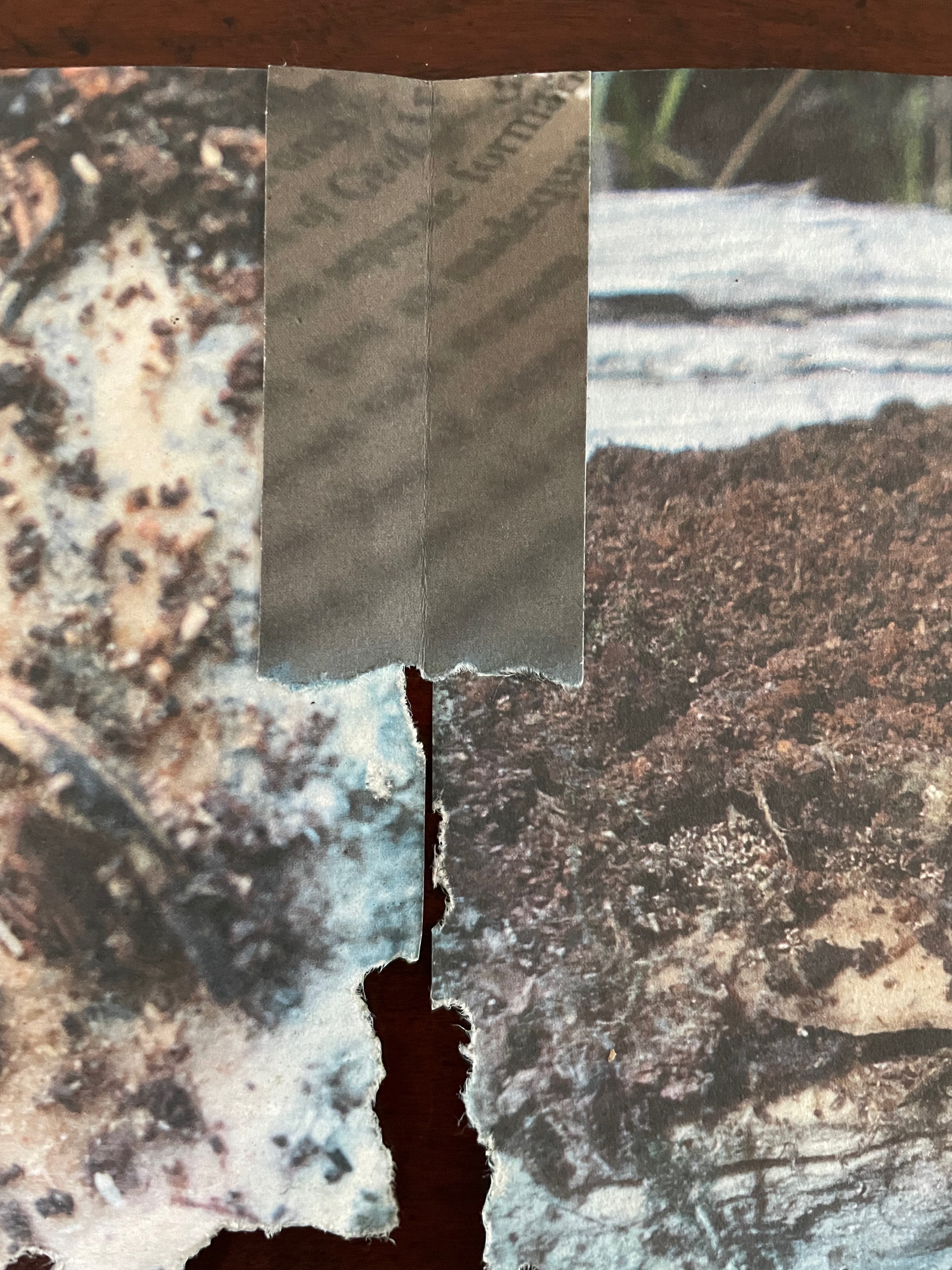
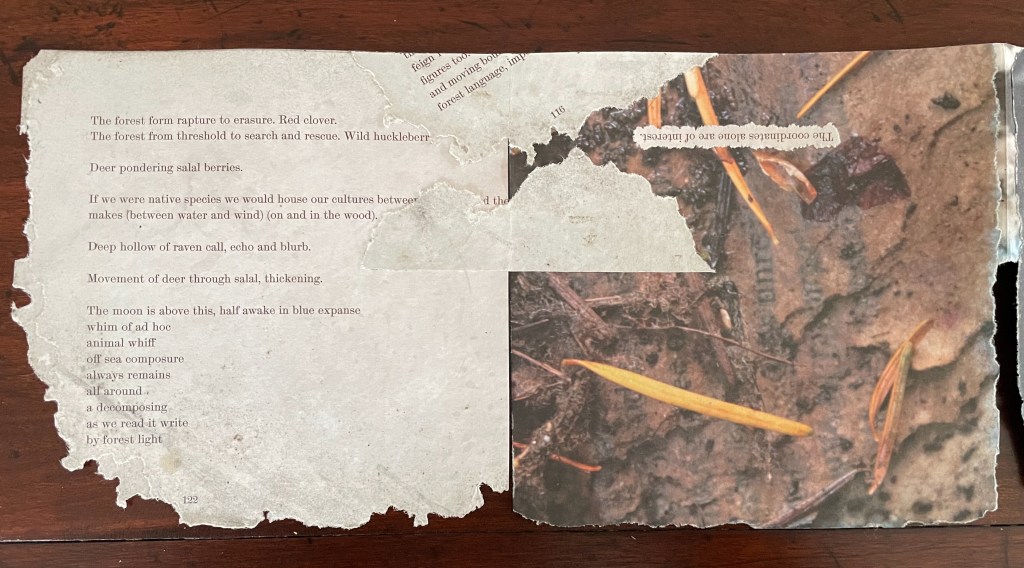
With its front cover displaying only the letter “r”, made from hornets’ nest paper, and with its body composed of pages left after decomp‘s decomposition, Miller appropriately calls this first accordion booklet an “abstract”. Not only is it an abstract of the nest, the new work’s title, and decomp, it is also an abstract of the collaborative process of recomp. Miller has oriented the page fragments to follow the hornets’ nibbling away from every direction. Like the hornets’ gluing their nest together with digested paper, Miller glues together the accordion with hinges “digested” from the pages of decomp.


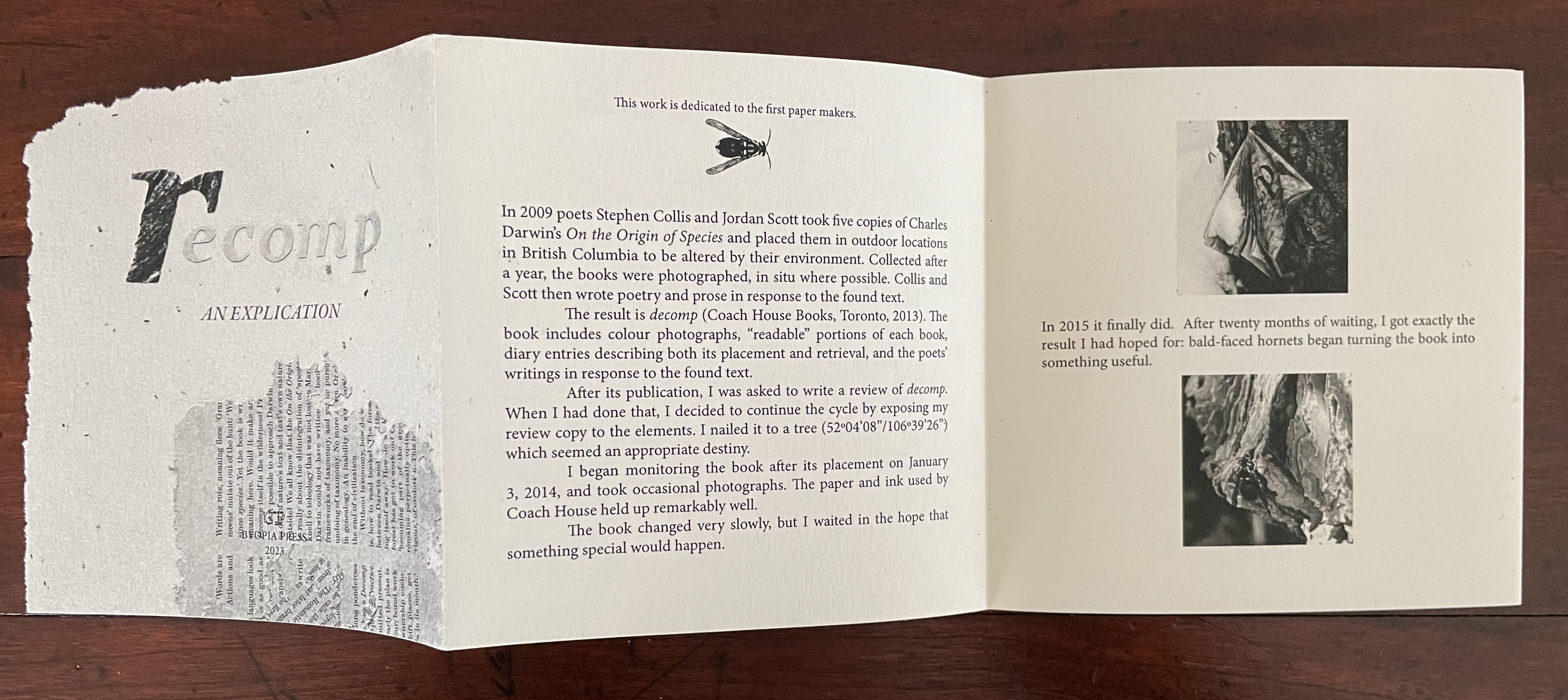
Dedicated to her collaborators as “the first paper makers”, Miller’s second booklet in the pocket gives a short history of the project in text and photographs.
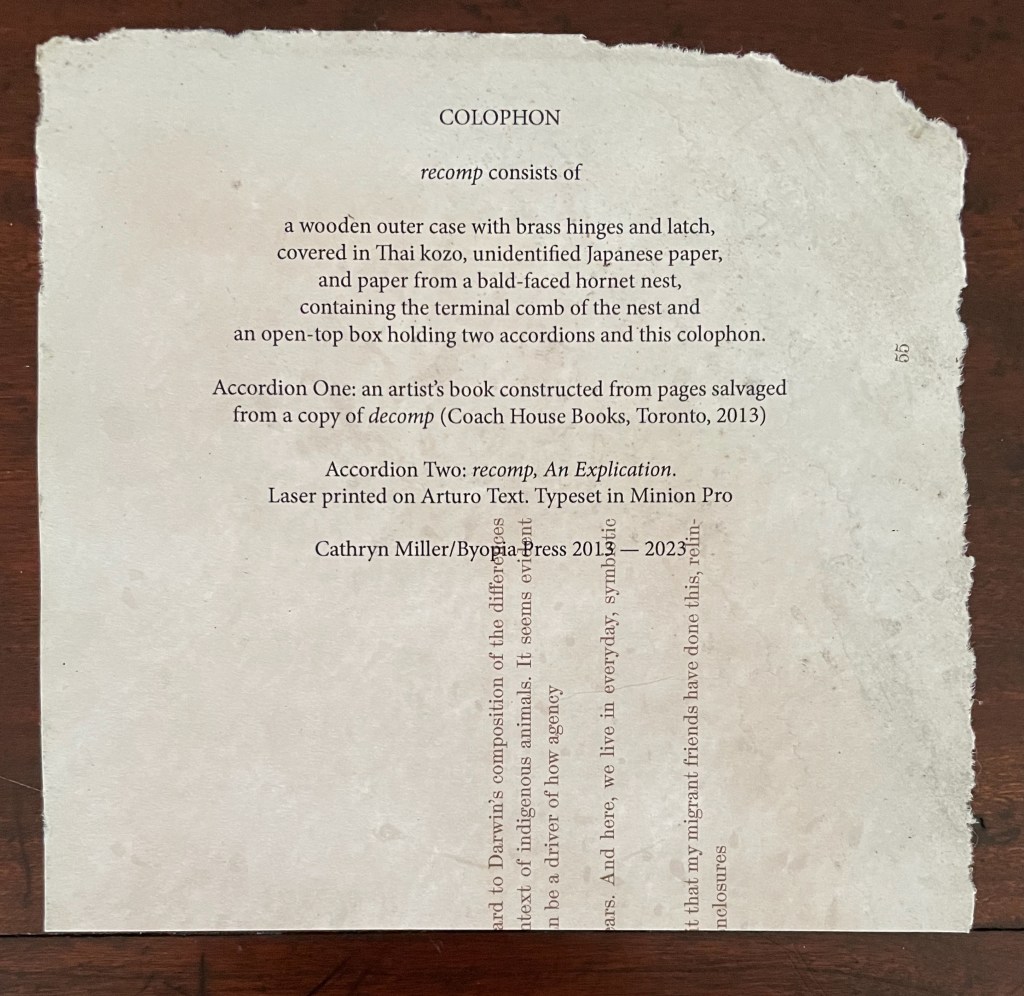
Another partial page from decomp serves for recomp‘s colophon.
From Dieter Roth’s Literaturwurst (1961-74) to Tom Phillips’ A Humument (1970-2016), altering books has provided book artists a rich medium and tradition of creative destruction. Within the tradition, exposing the source book to the elements goes back at least to Marcel Duchamp’s Ready-made malheureux (1919), which came about from his instructions to his sister Suzanne to hang his wedding present to her (a geometry book) outside her apartment.
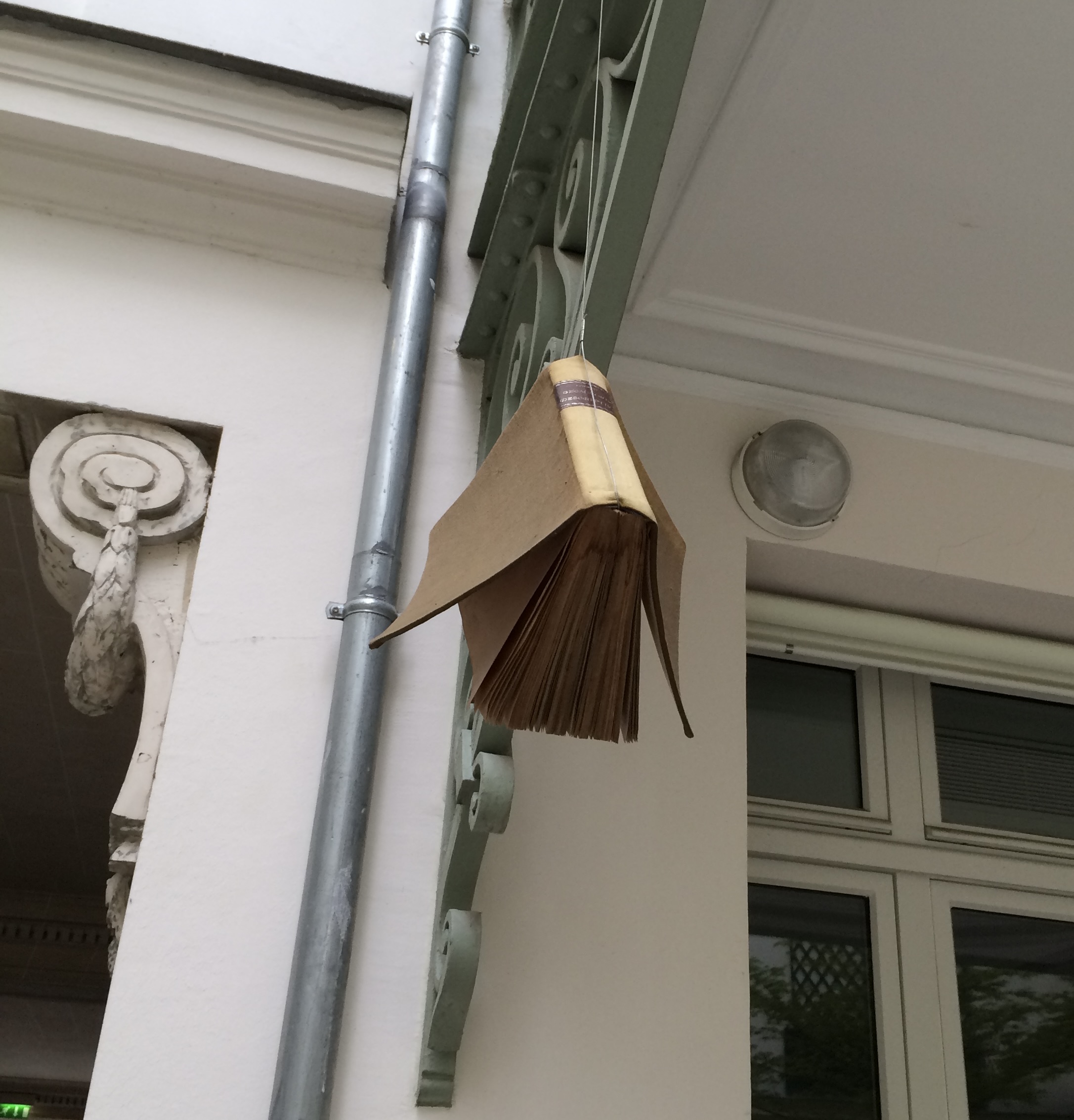
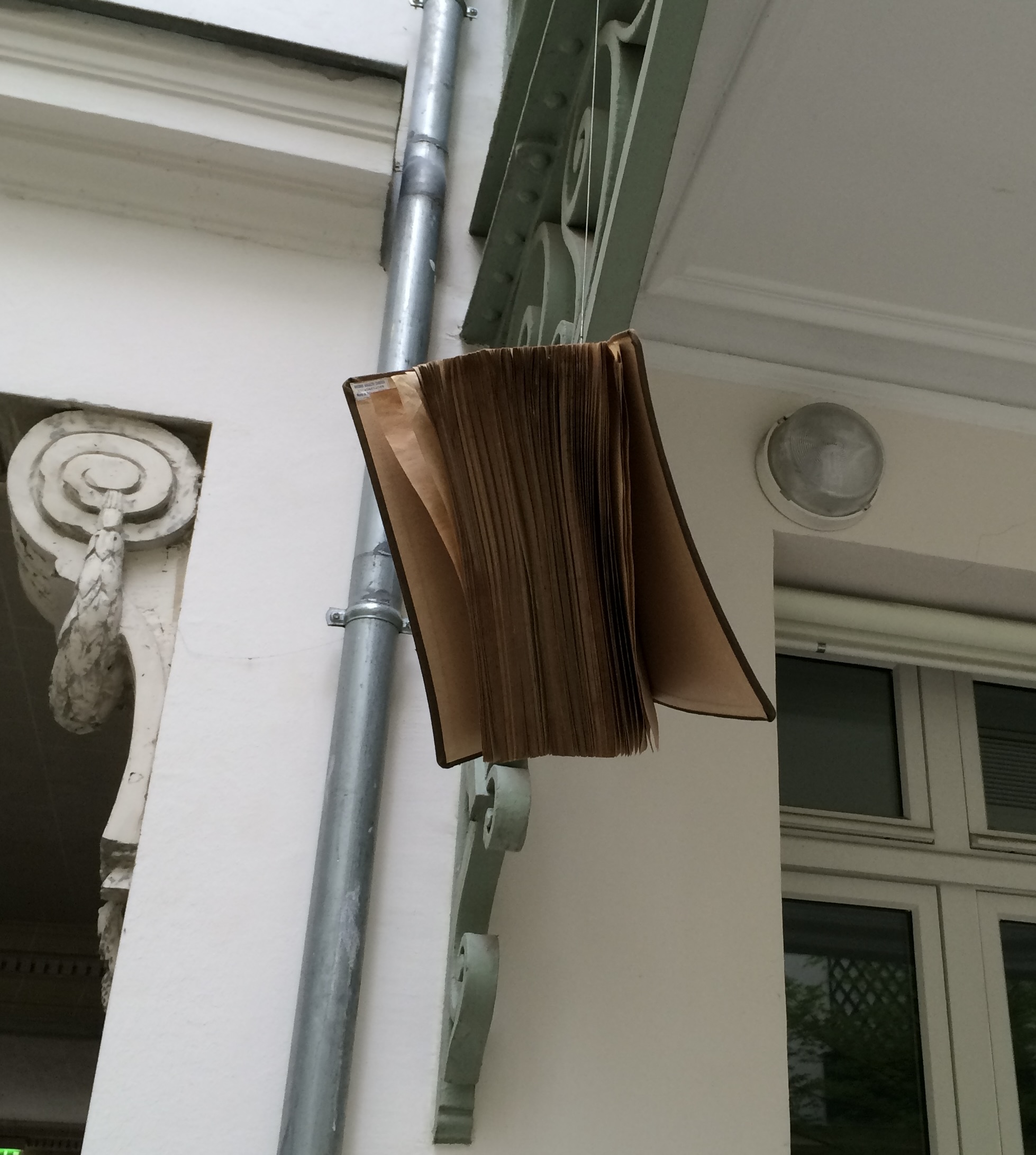
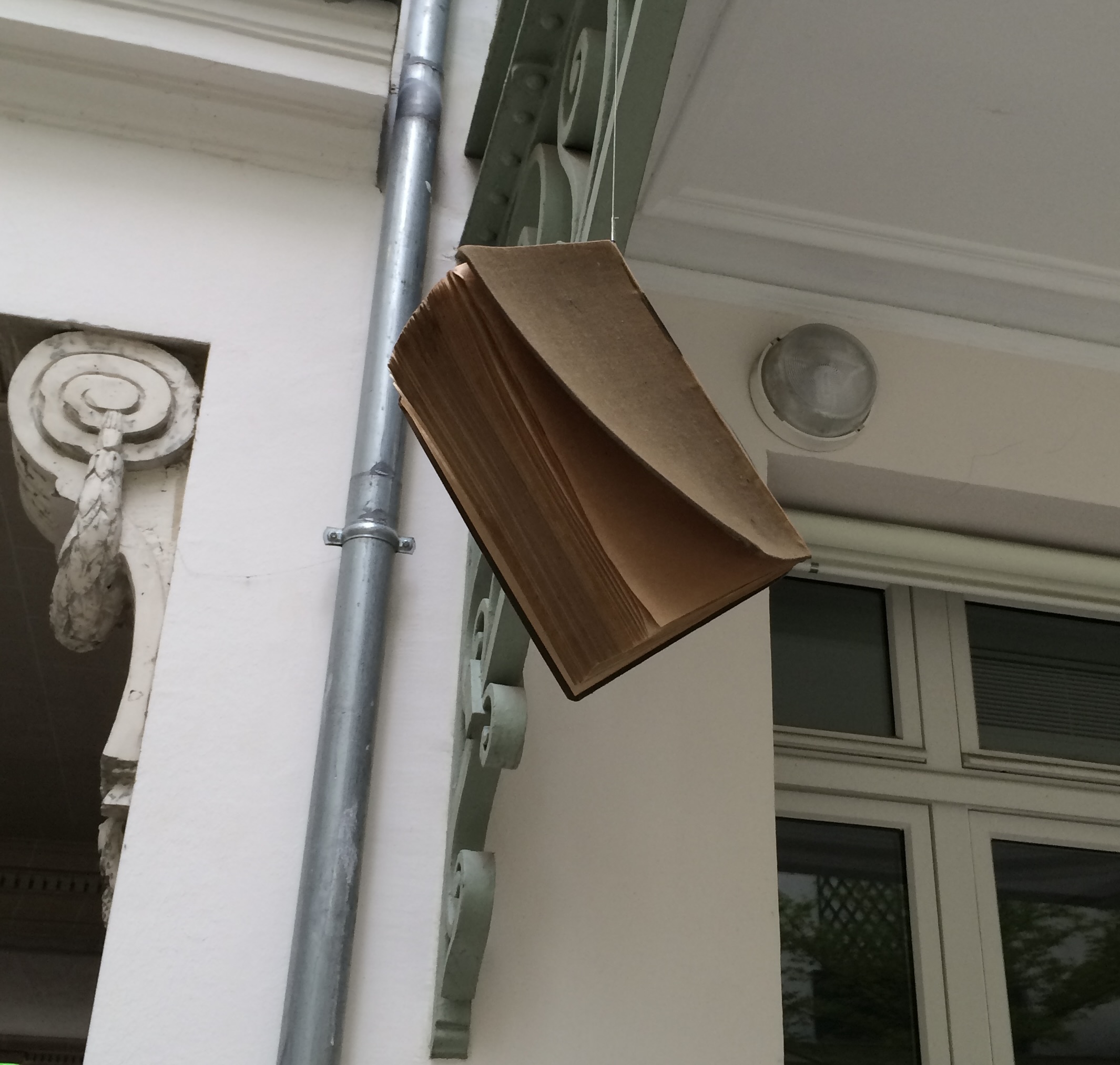
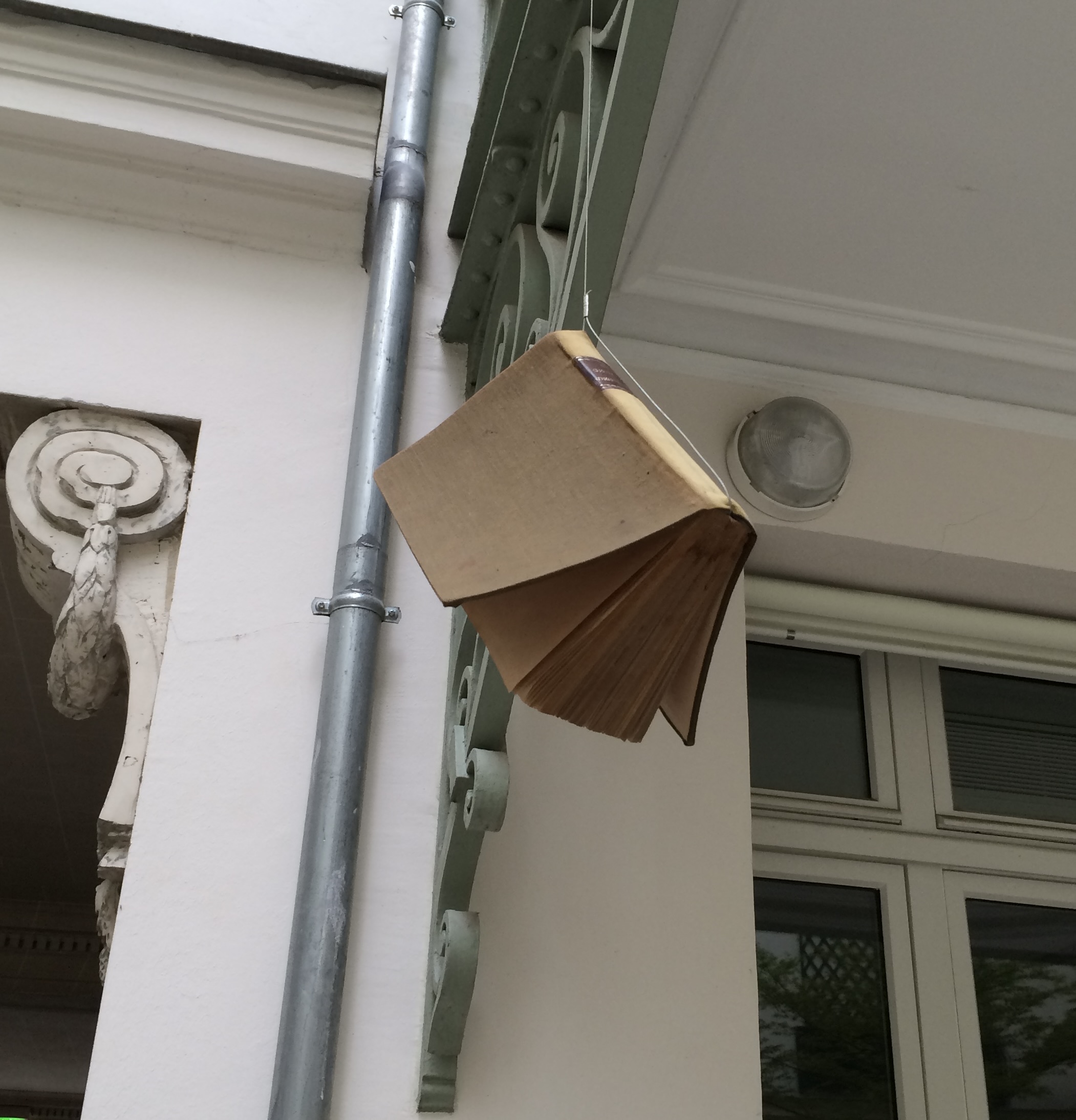
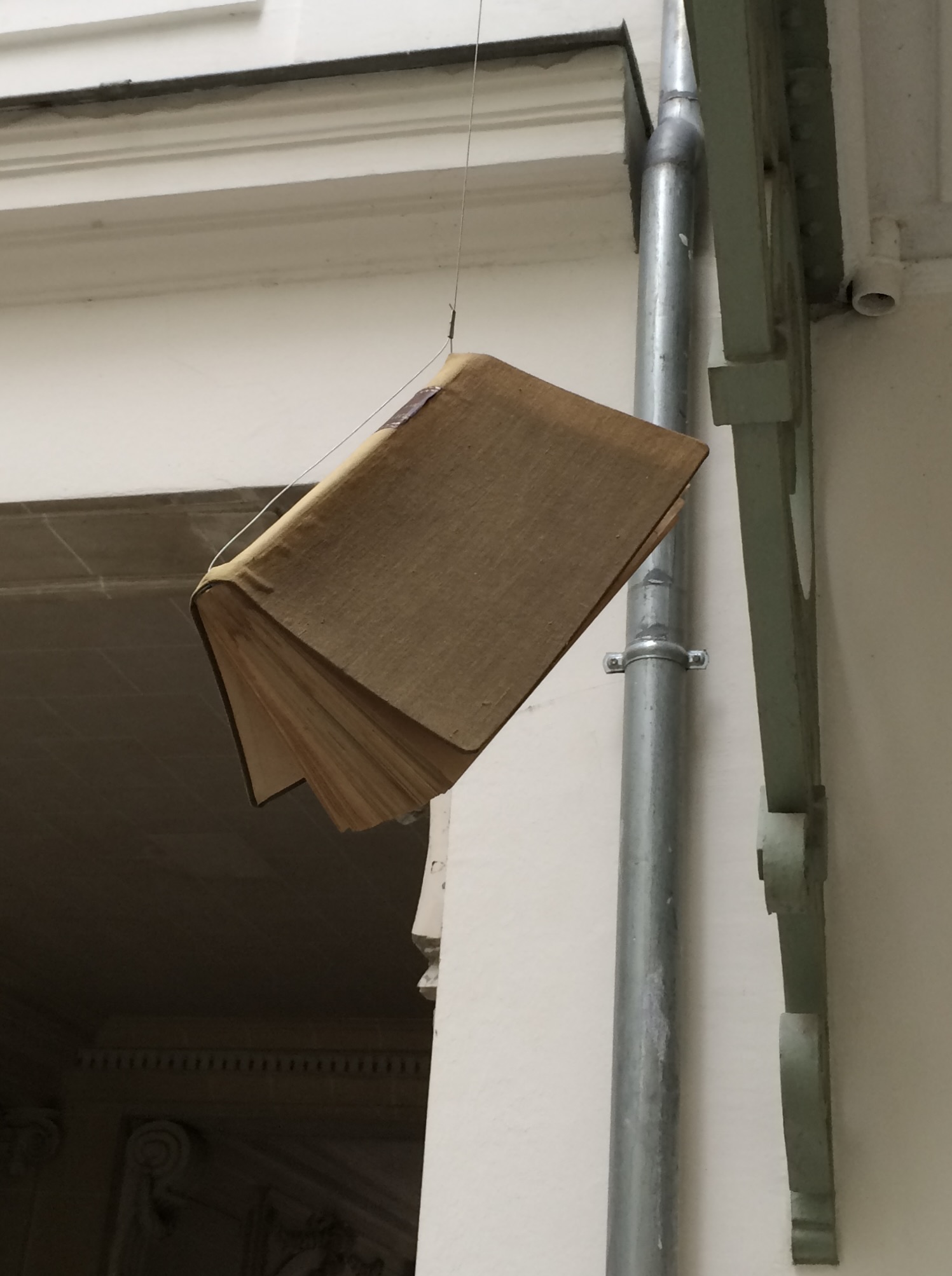
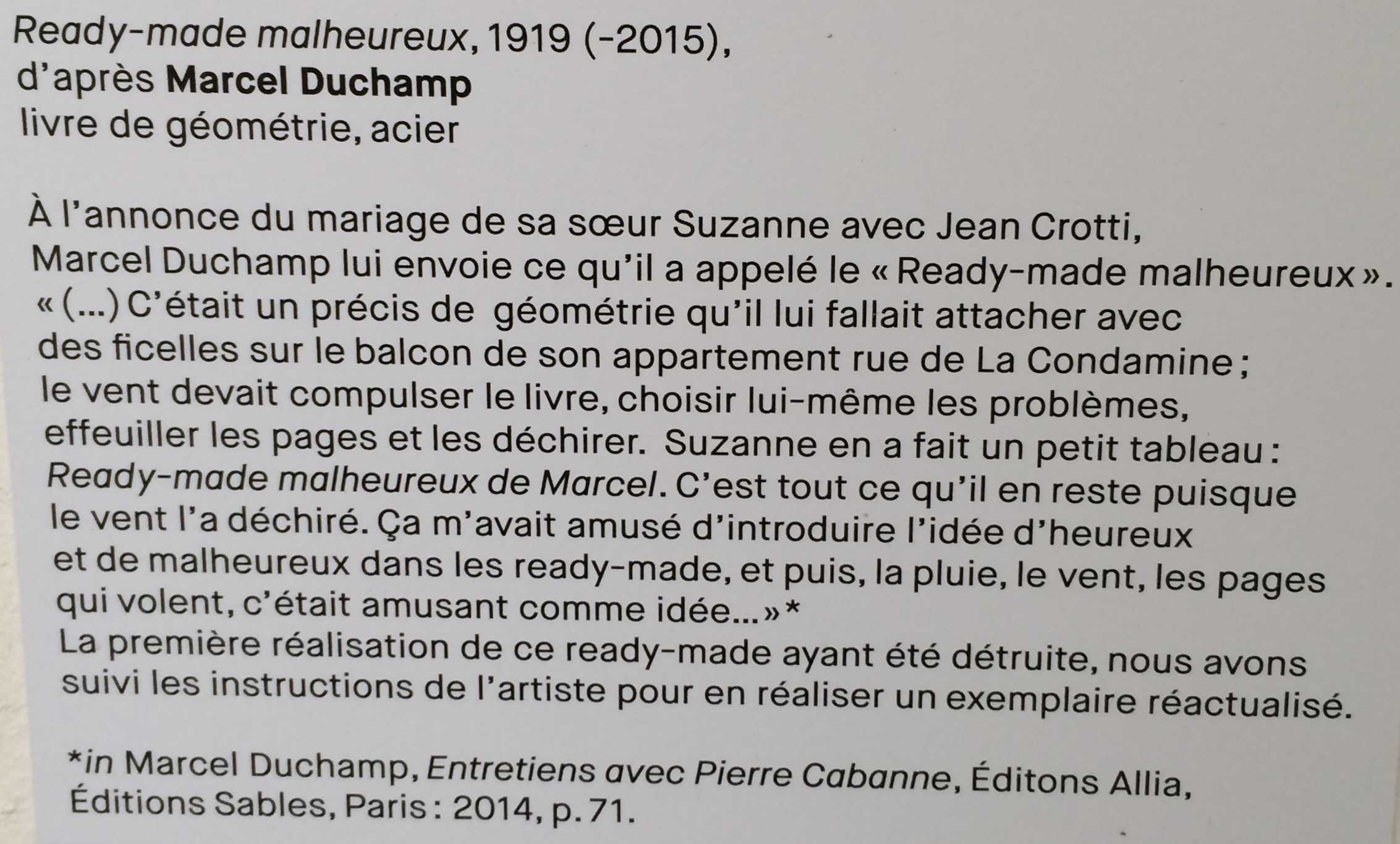
From the exhibition Pliure. Prologue (La part du feu), 30 January – April 2015, Fondation Calouste Gulbenkian, Paris. Photos: Books On Books Collection,
Duchamp’s practice of found art or readymades also looks forward to Miller’s incorporation of the hornet’s nest as a collaborative “found object” in recomp. But as its title signals, recomp involves more than a whole found work of book art made by insect intervention such as those discovered by Agnieska Czeblakow or M.L. Van Nice (below).
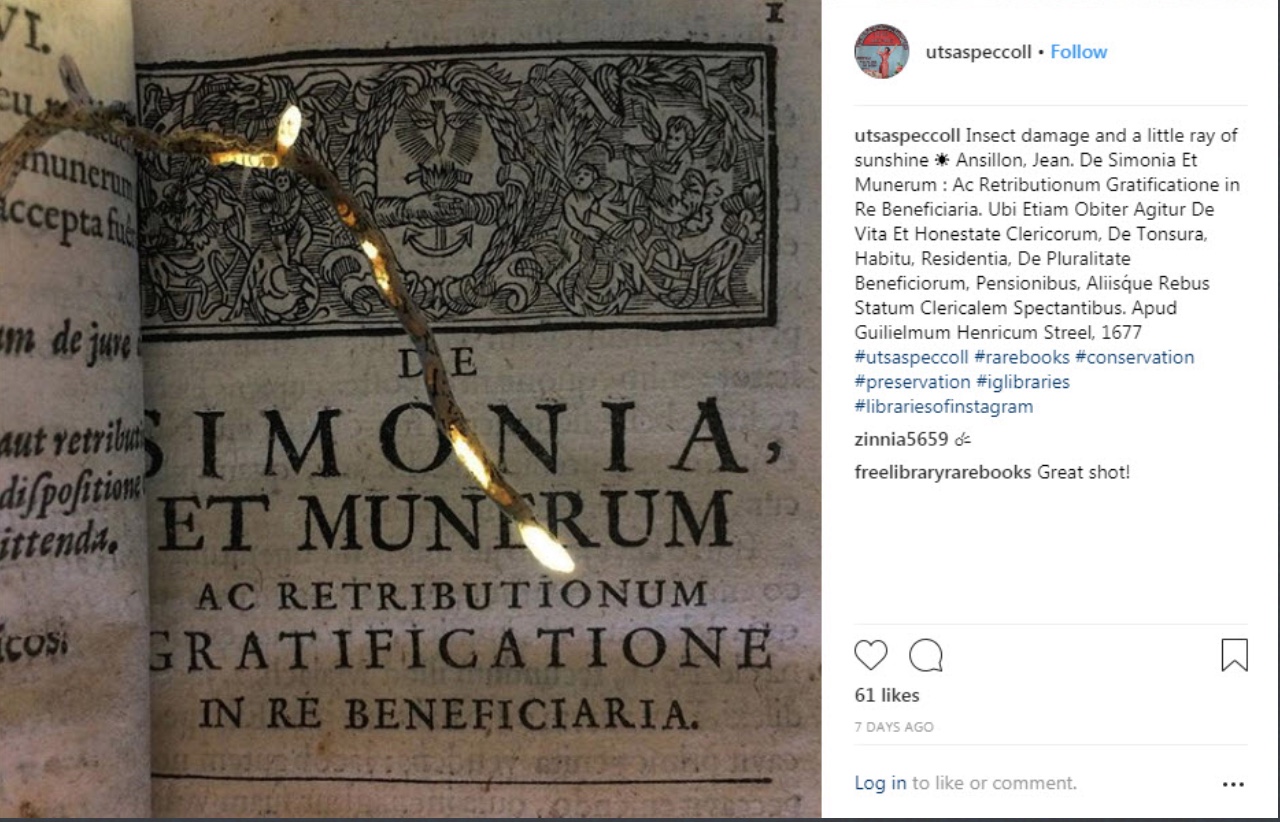
Left: Photo: Agnieszka Czeblakow, University of Texas at San Antonio Special Collections. Right: M. L. Van Nice, Feast is in the Belly of the Beholder (2010).
The carefully finished box and assembled parts of recomp may echo for some the finish of Joseph Cornell’s boxes and the assemblage in Duchamp’s La Boîte-en-valise, but as with Roth and Phillips, it is more an echo of technique than surrealism. Miller’s recomp is a multi-threaded conversation. One conversation is with Collis and Scott and their creation of decomp, perhaps as a waspish review of their book. Recomp‘s other conversation with the hornets, nature and art is far more to the point of this work of book art. In the next work, Miller turns her conversation with nature to The Elements and displays a technique for which she has been rightly celebrated.
The Elements (2020)
The Elements (2020)
Cathryn Miller
Four double-sided, interlocking-accordion books. Each 155 x 155 x 25 mm closed; 625 mm extended. Unique. Acquired from the artist, 26 April 2021.
Photos: Books On Books collection and courtesy of the artist.
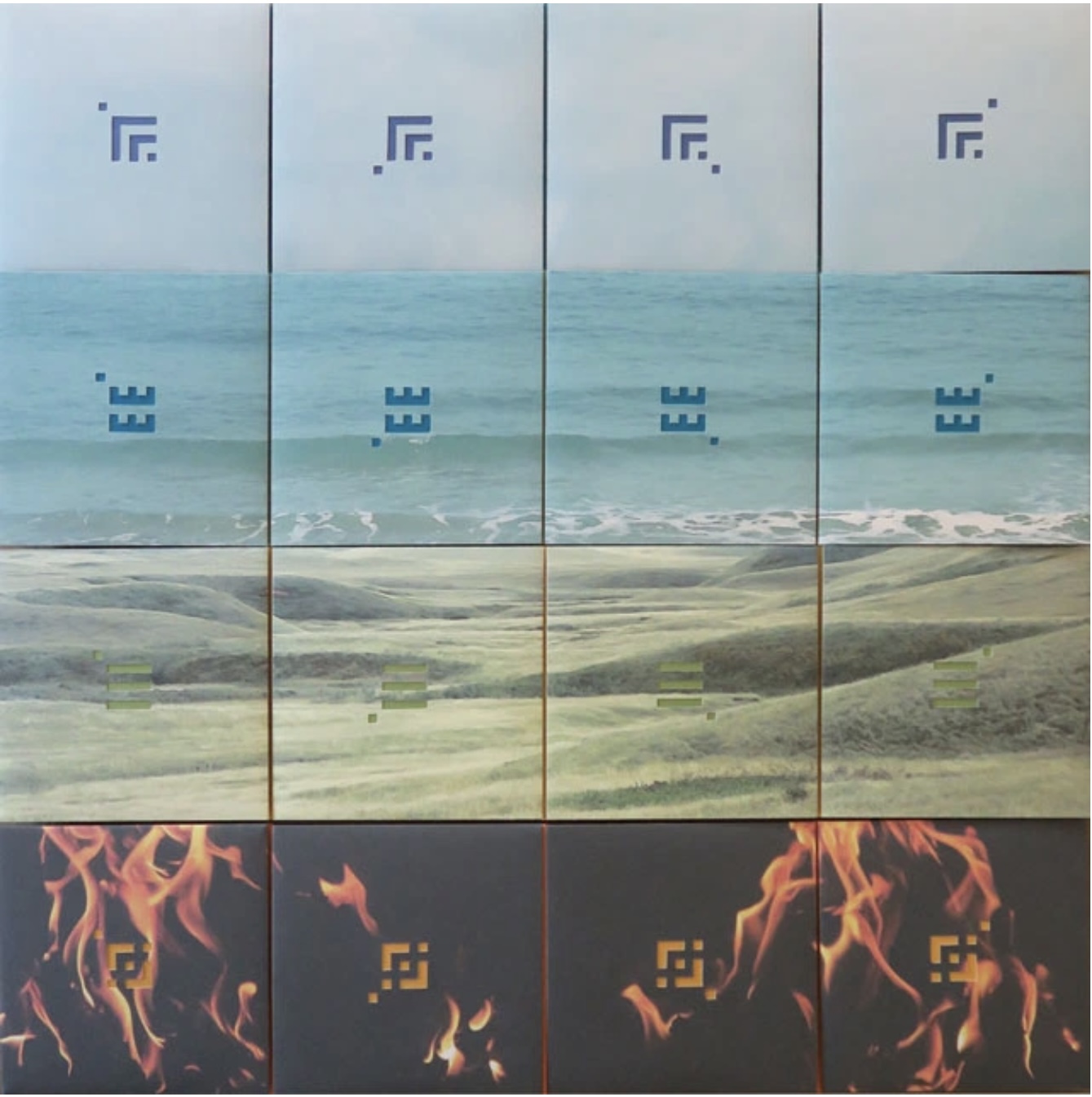
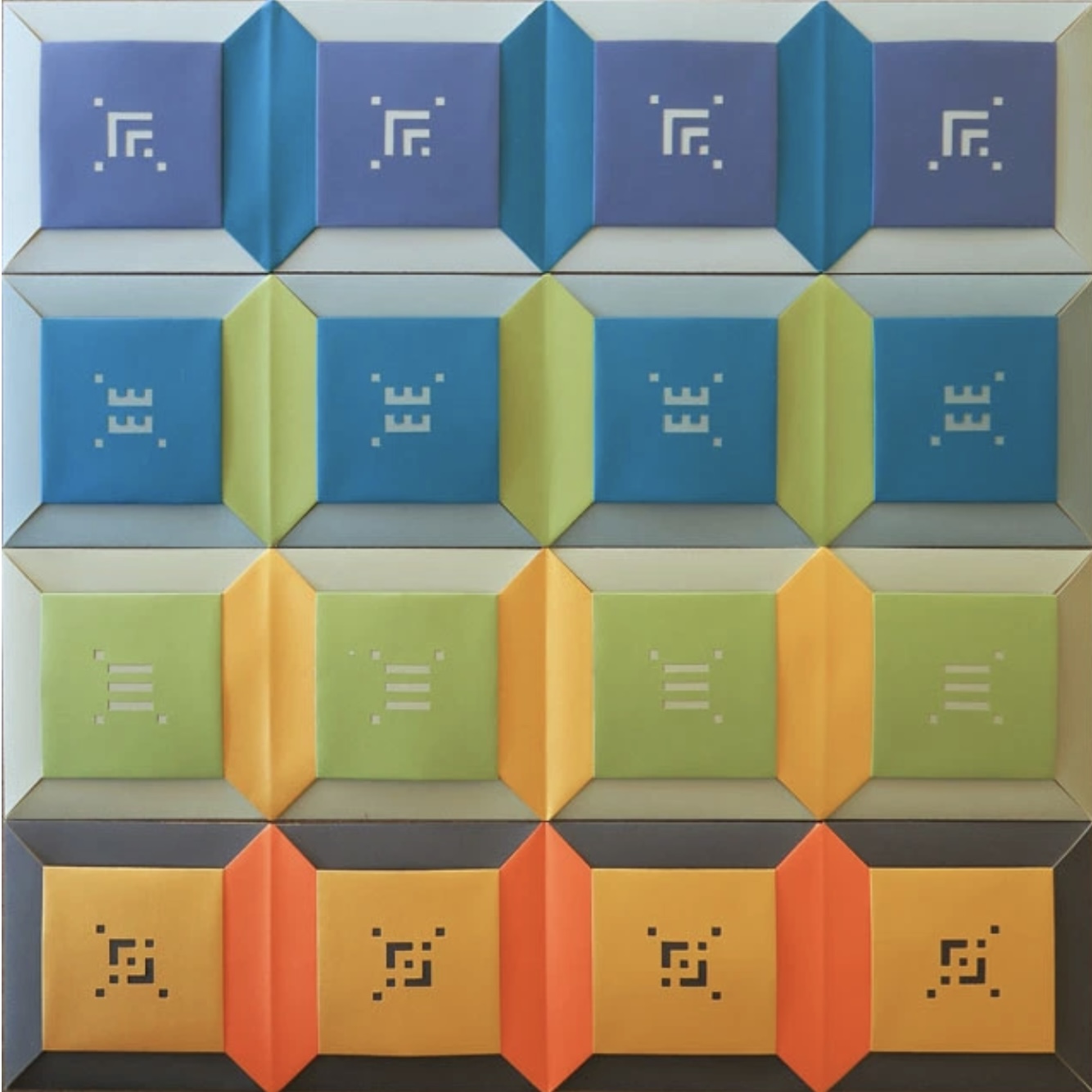
Four elements, four sets of images, four color palettes, four symbol patterns, and four accordion books constructed with a variation on Tomoko Fuse’s quilt fold, The Elements (2020) is book art raised to the fifth power. Before the artwork made its way across the continent and the Atlantic to Oxfordshire, it appeared in “Square Dance”, a solo exhibition at the Saskatchewan Craft Council Gallery, 16 January – 6 March 2021. On the occasion of the display, Cathryn Miller gave a talk in Saskatoon that traces the show’s unifying themes of the square; codes, encryption, and language; and textiles. In just about every respect, The Elements captures all of these themes.
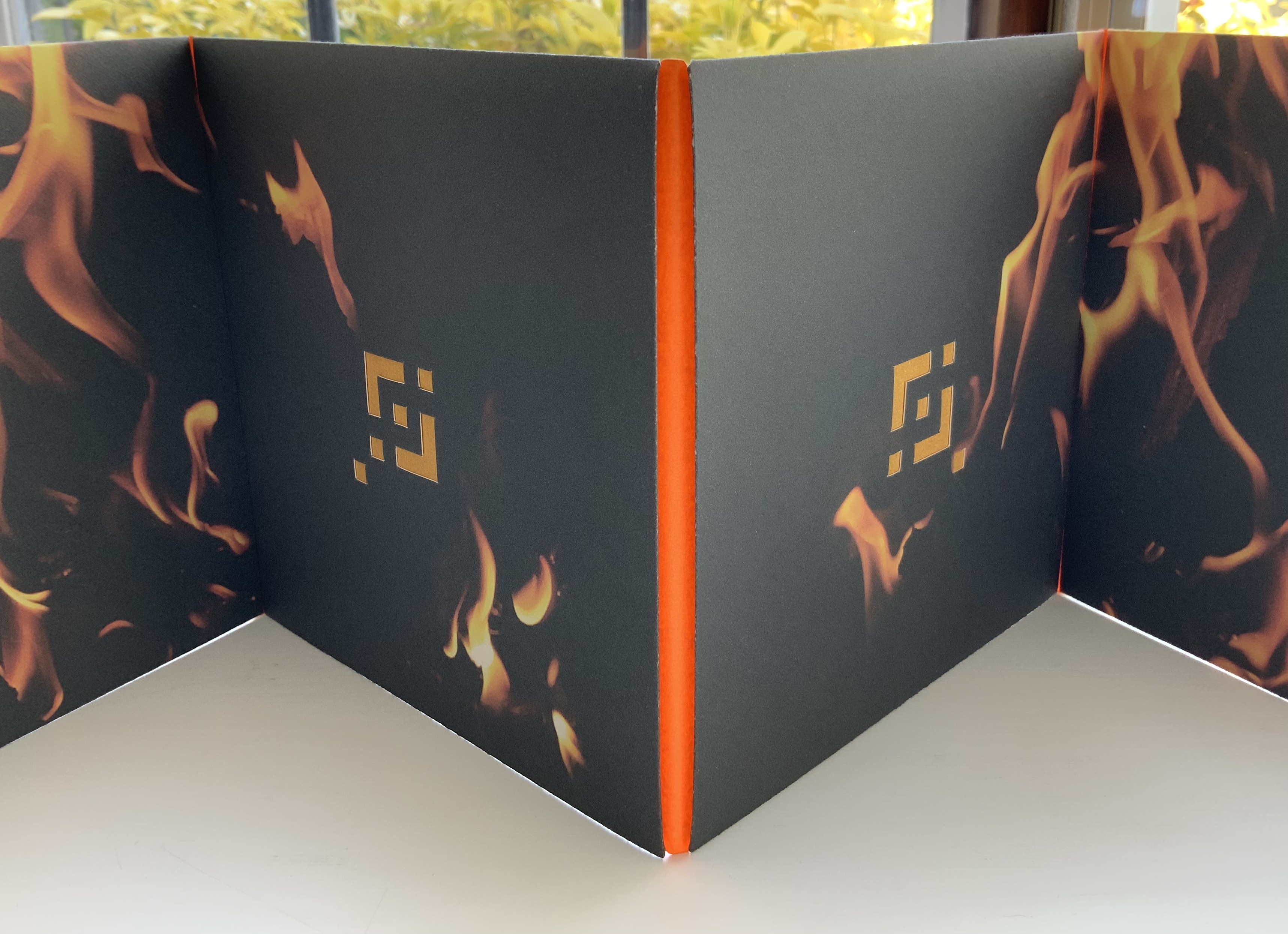
The square plays both exogenous and endogenous roles in The Elements. It points externally to the four elements. It frames the exterior’s symbols; it frames the interior’s images. Internally, squares of paper are folded to make up the accordion structures. Squares make up the symbols in the center of the panels.
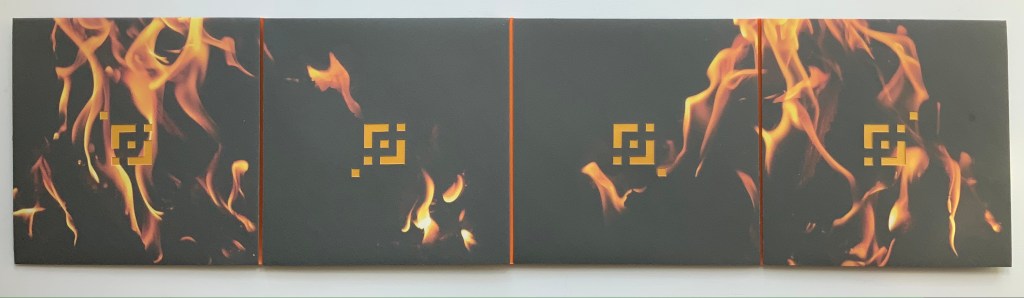
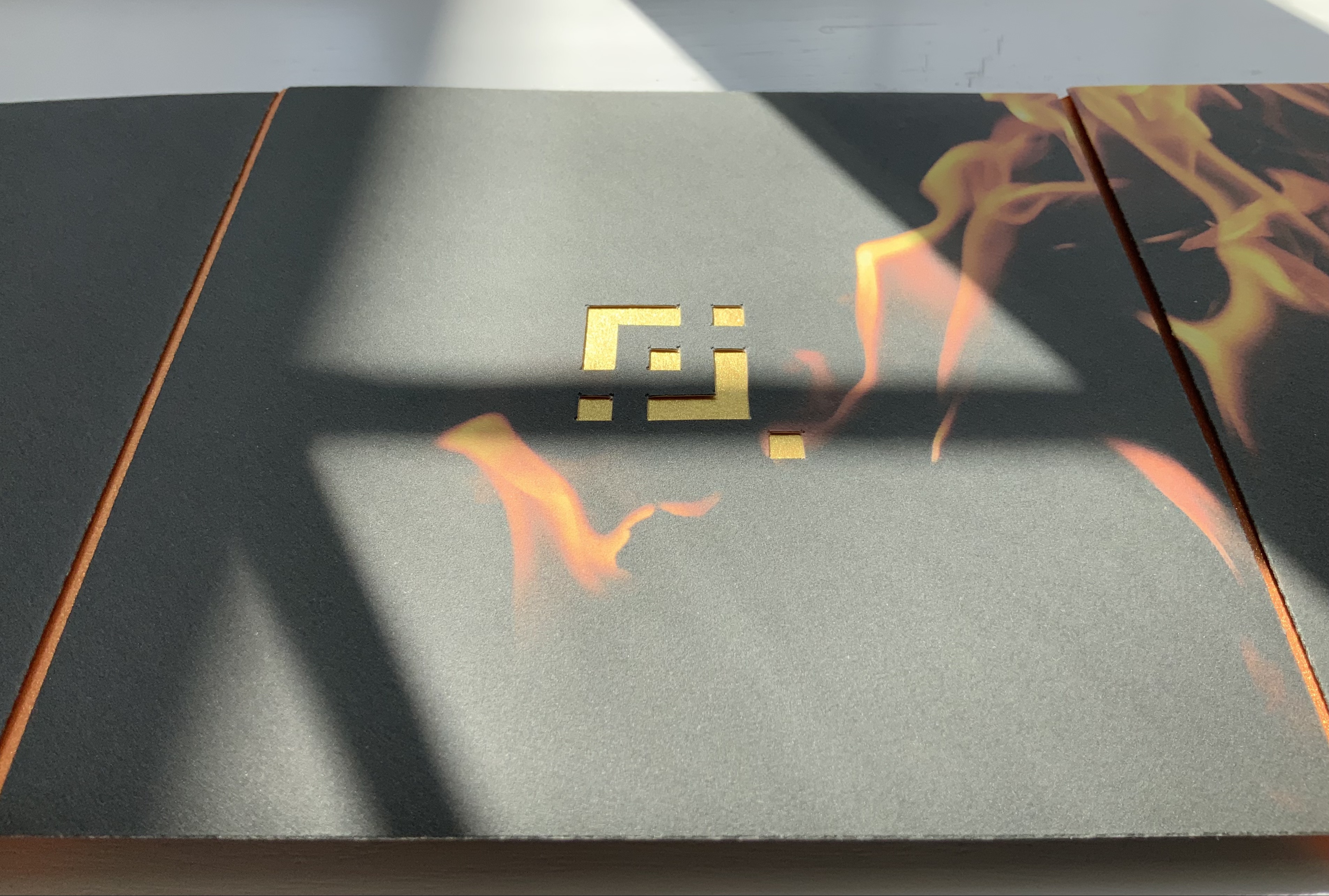
Interior of the fire book.
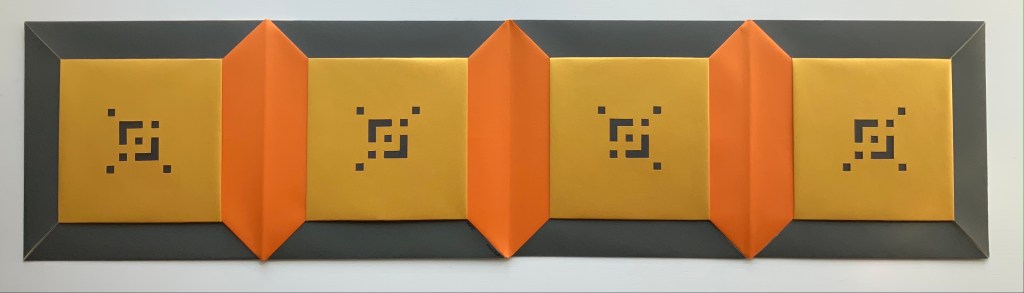
Exterior of the fire book.
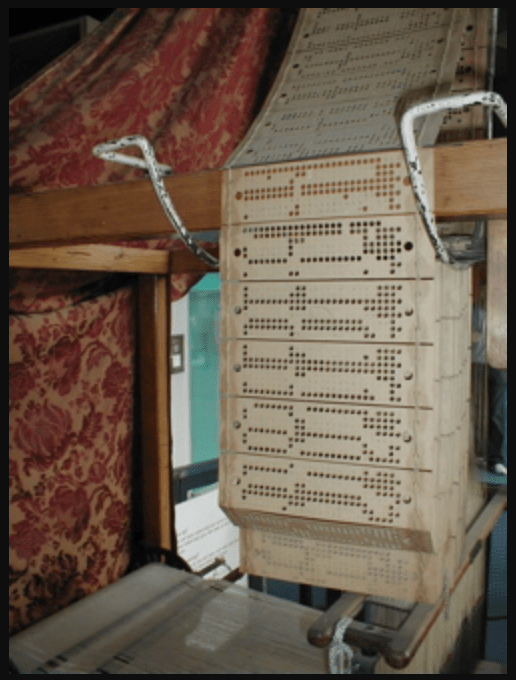
Miller worked with grid sheets to compose the symbols at the center of the panels. Around the core symbol of two right angles and three small squares in the fire book, another set of three small squares dances. Resembling QR codes, the square holes in punch cards, cuneiform marks on clay, they and the other three sets of symbols constitute Miller’s code and language for naming the elements.
In her search for the right “words” or symbols for each element, Miller is rhyming with the ancient Greeks. Plato, who may have come up with the term stoicheîon “element” for the four constituents of matter, drew on a word originally used to describe the letters of the alphabet. In another historic chime, Miller’s term “square dance” echoes Kallias the Greek playwright who had his characters mime and dance the letters of the alphabet on stage.
Textiles play a similarly multifacted role in The Elements. First is the relation of textiles to codes and the resemblance in Miller’s symbols to textile patterns. Consider the punch cards used by the Jacquard loom or the filet crochet grid.
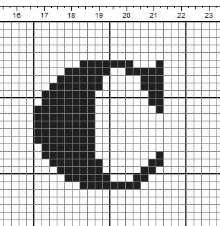
Second, and related to the first, is the etymological and metaphorical relation of the word “textiles” to the word “text”. The Latin verb texere (“to weave”) lies at the root of both words. Miller’s symbols are her text, and she “wove” each of them on a grid similar to the crochet grid above (see Miller, 12 July 2020).
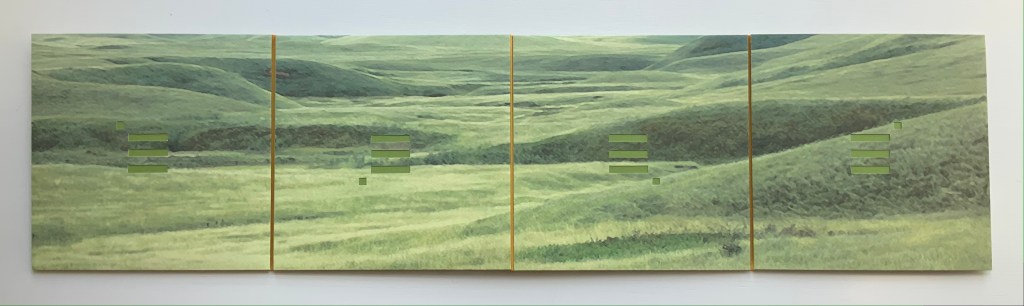
Interior of earth book.
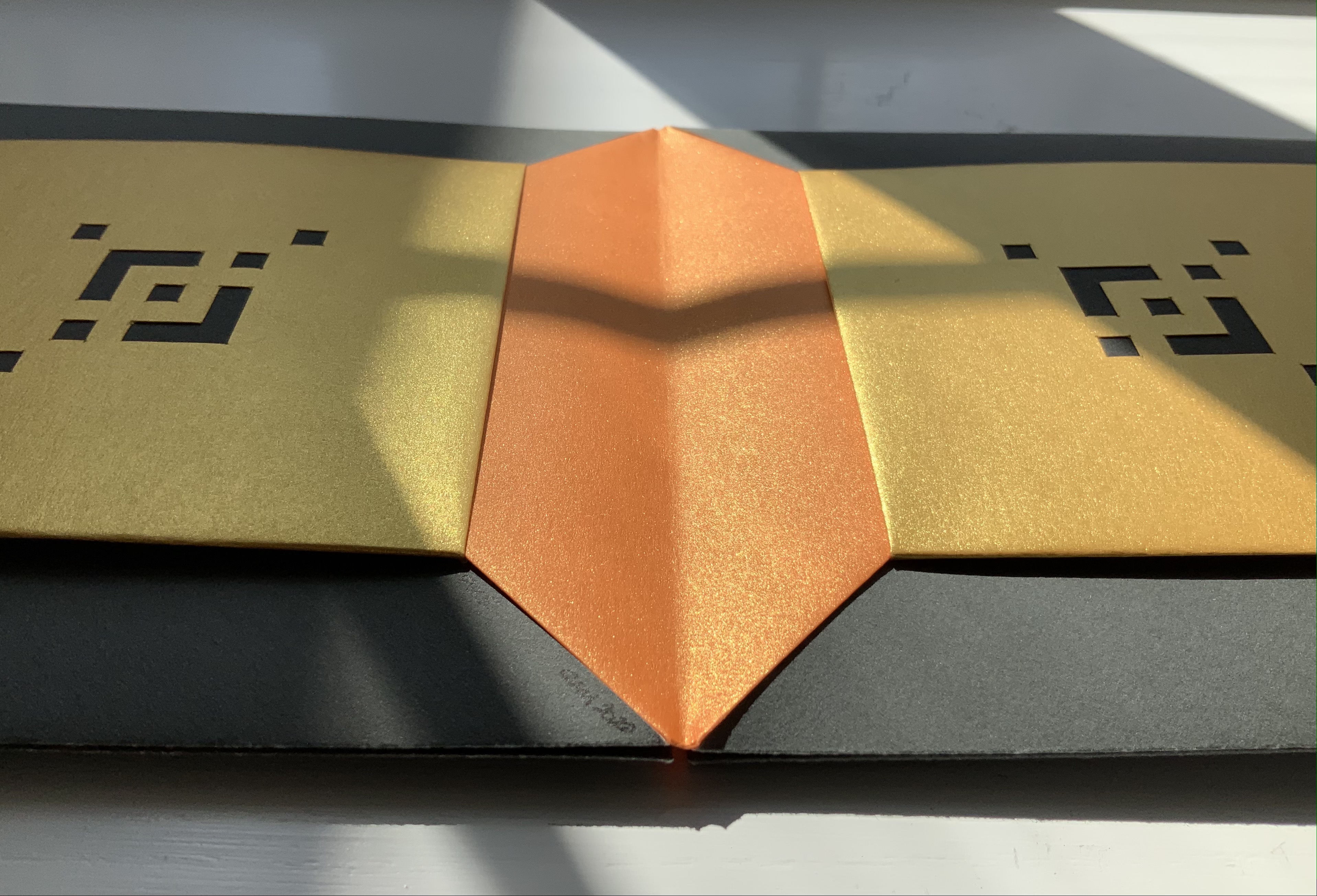
Third, and related to the second, is the haptic sense arising from the etymology of “textiles” that leads to “texture” and the tactility of The Elements. Look closely at the sheen of the hexagonal shapes between the panels, and the satin feel of the paper used will be easy to imagine.
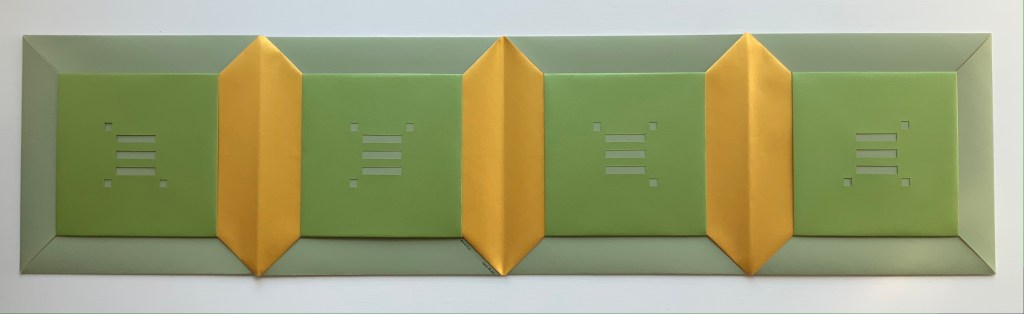
Exterior of earth book.
Fourth, and related to all of the above, is Miller’s variation on Tomoko Fuse’s origami quilt fold with which each panel of the accordion structure is made.
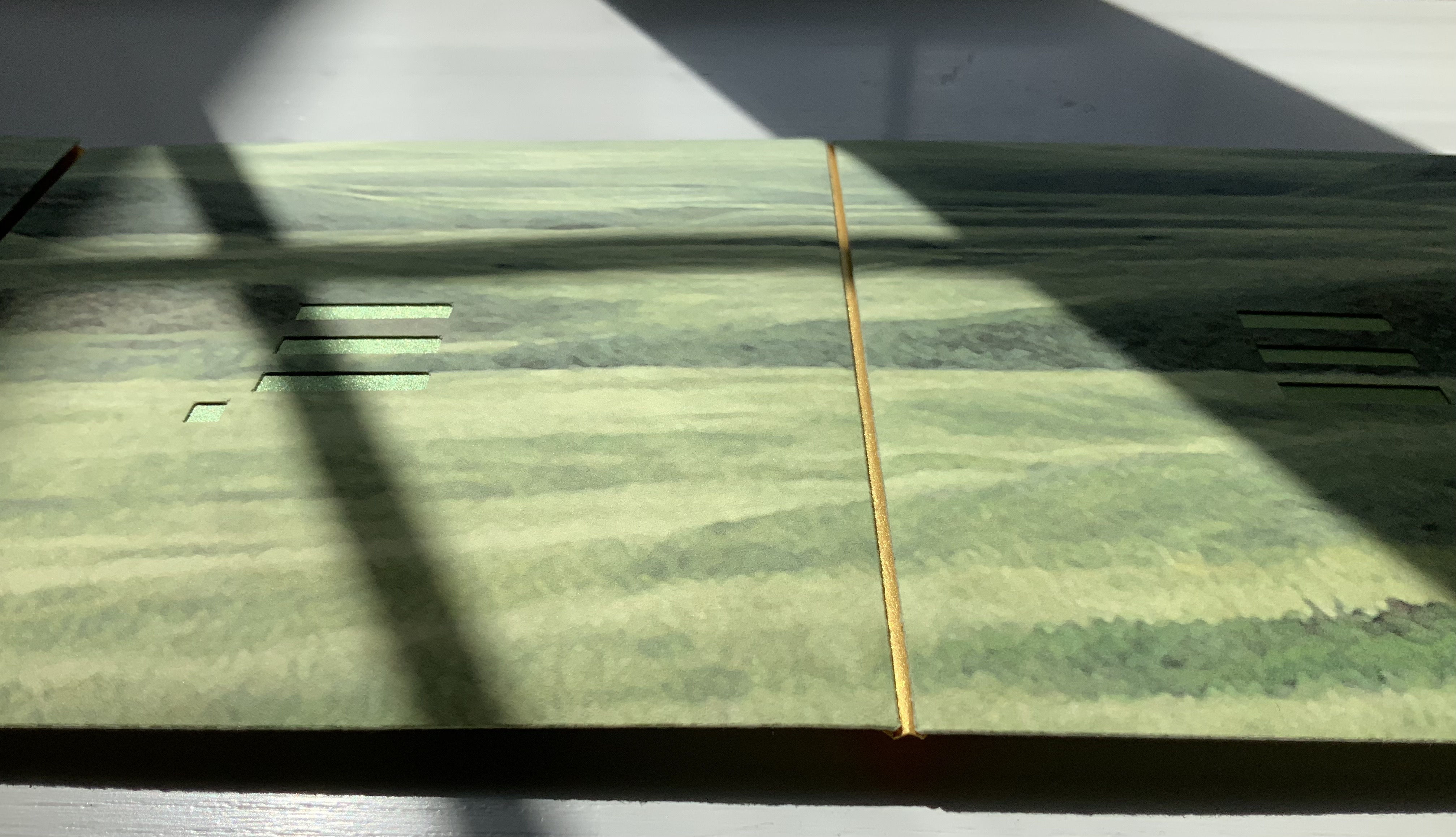
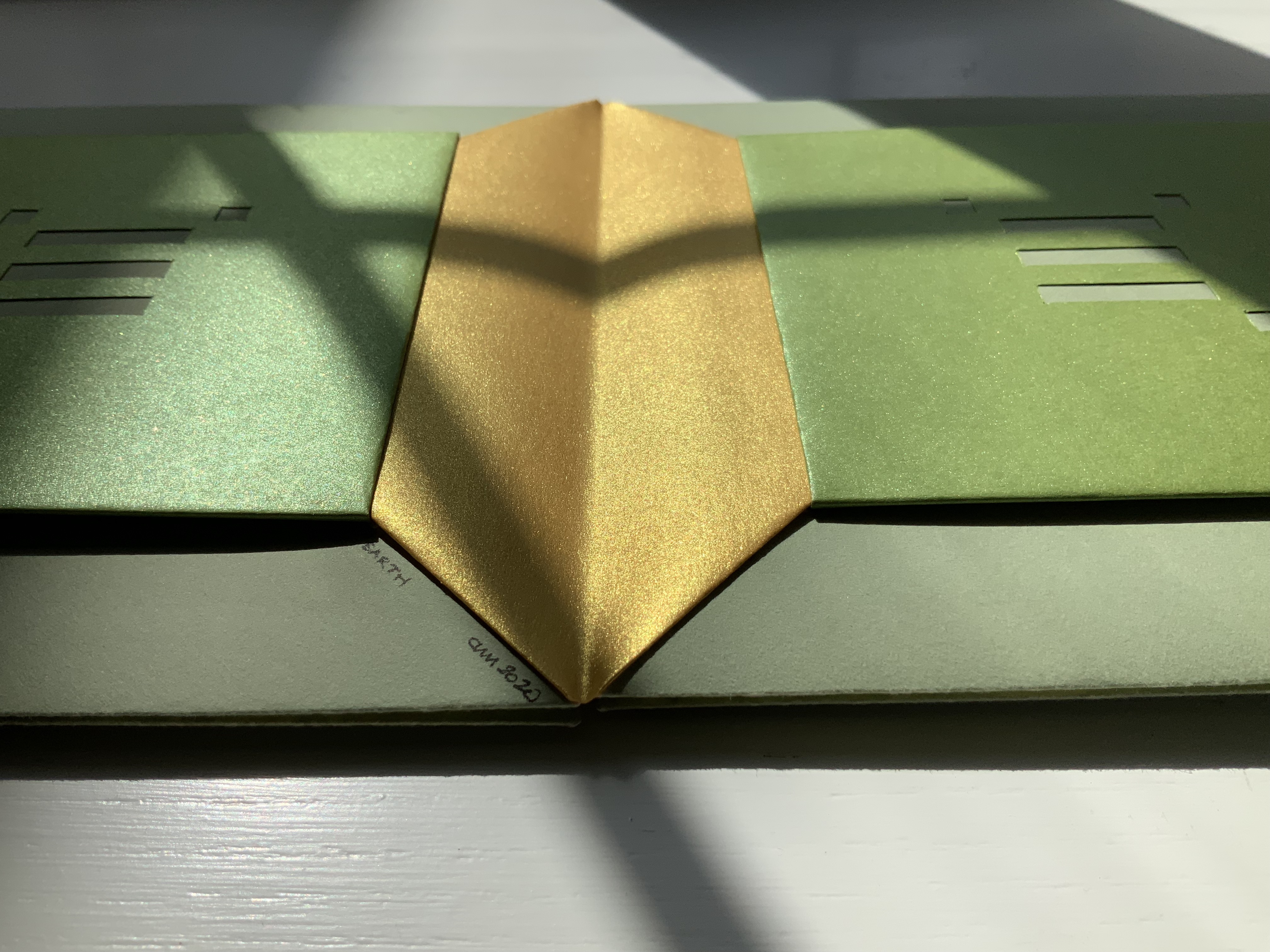
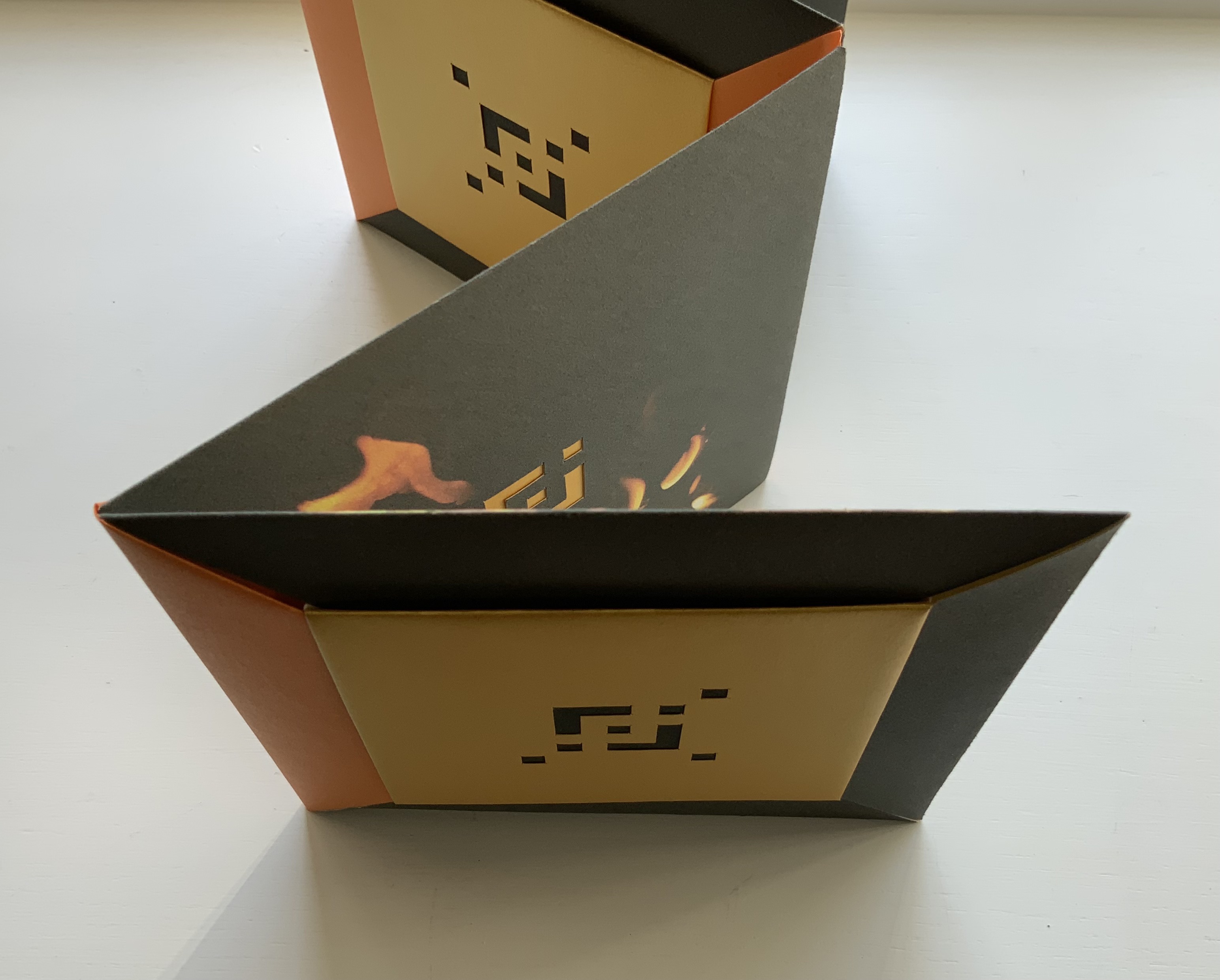
Each large panel consists of a single square sheet with its part of the interior image printed diamond fashion on one side with the background color around it. When the corners are folded to the center of the other side of the sheet, this leaves the image — of fire, earth, water, or air — on its own to form the interior panel.
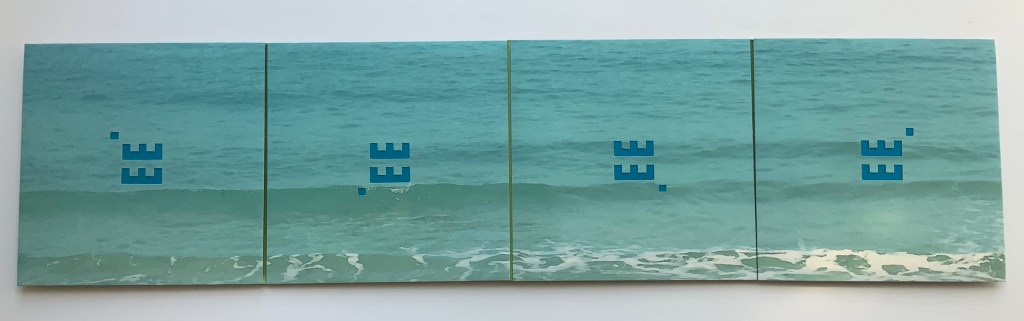
Interior of water book.
On the other side of this panel, the corners that were folded to the center form the large square of background color seen on the exterior of the accordion. Separately constructed, the smaller square in the center has been folded to lock down the larger square’s folded corners. Also separately constructed, three hexagonal hinges on the exterior side connect the four large panels to create the element’s accordion book and deftly disguise all of the folds’ seams except those at either end of the book.
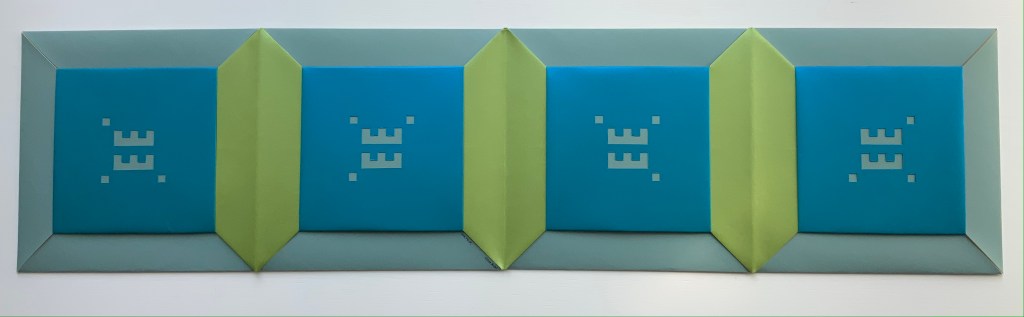
Exterior of water book.
While the hinges unite the exterior side, precise registration unites the image in the interior.
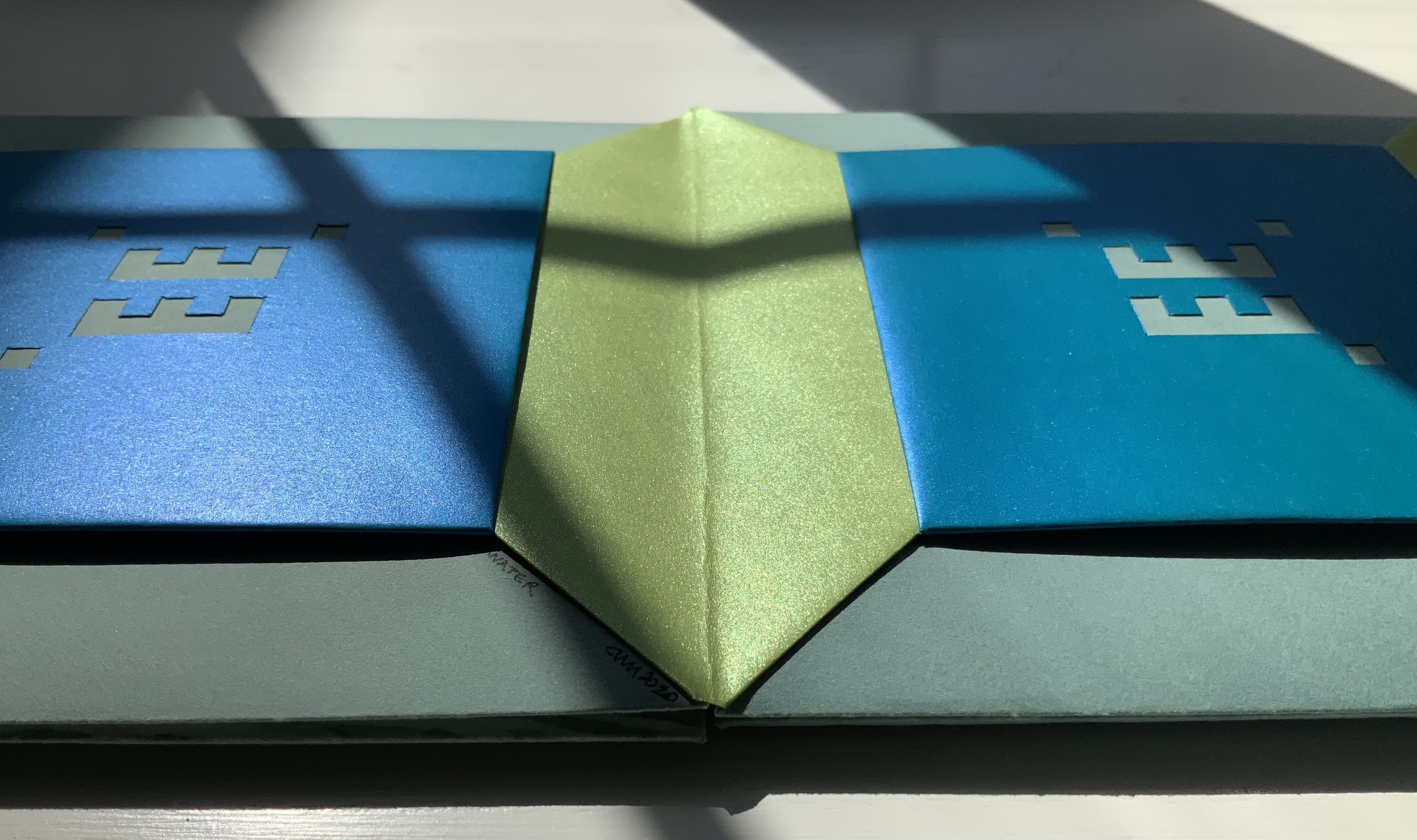
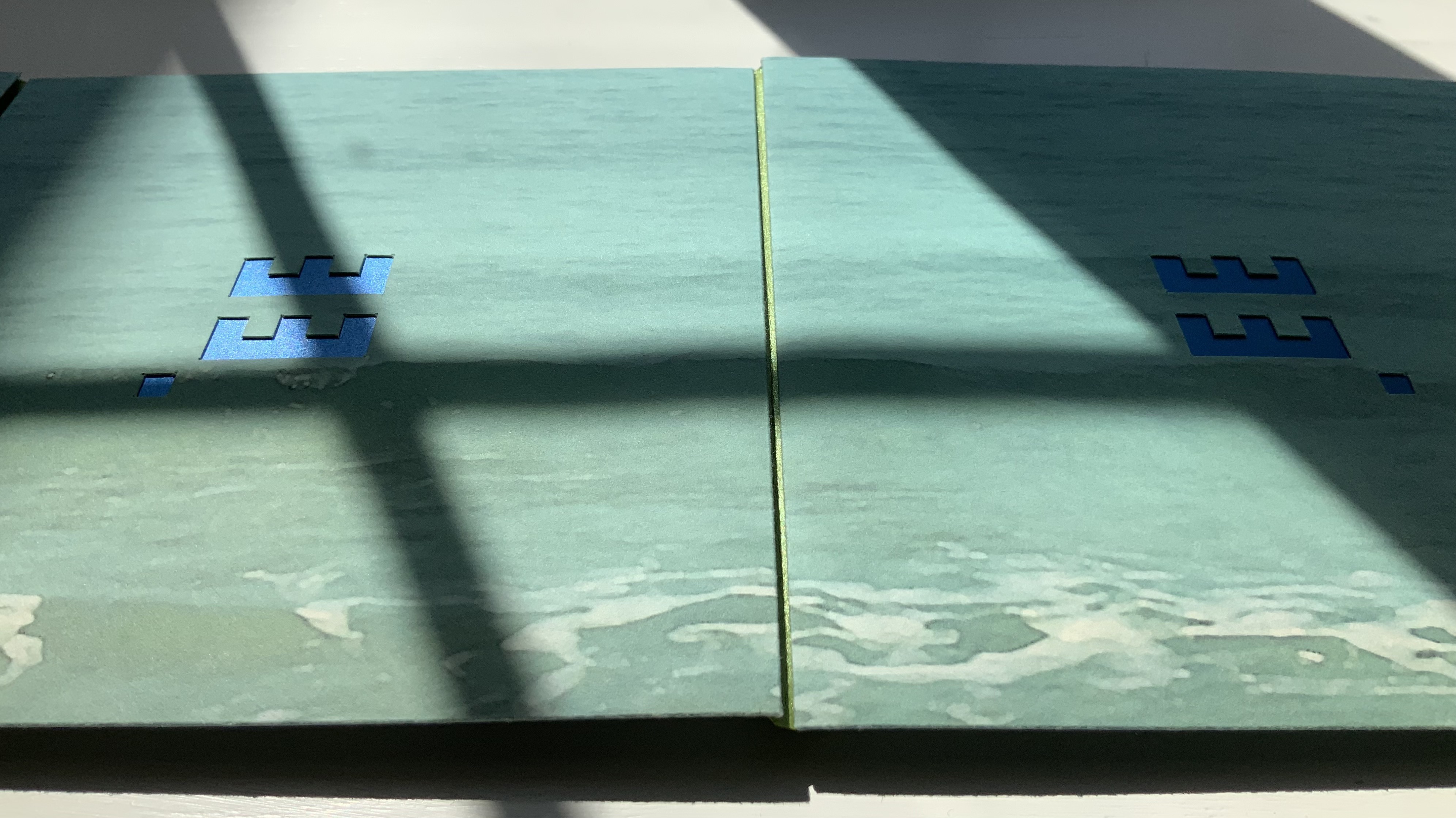
By the time the eyes rise to the element of air, they feel what the hands have felt as the folded, layered and air-cushioned panels of each accordion book have been turned.
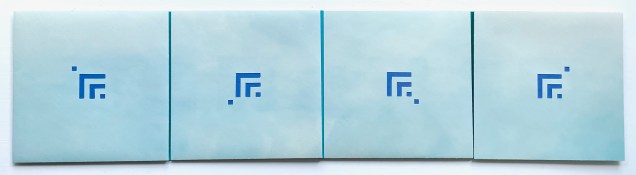
Interior of air book.

Exterior of air book.
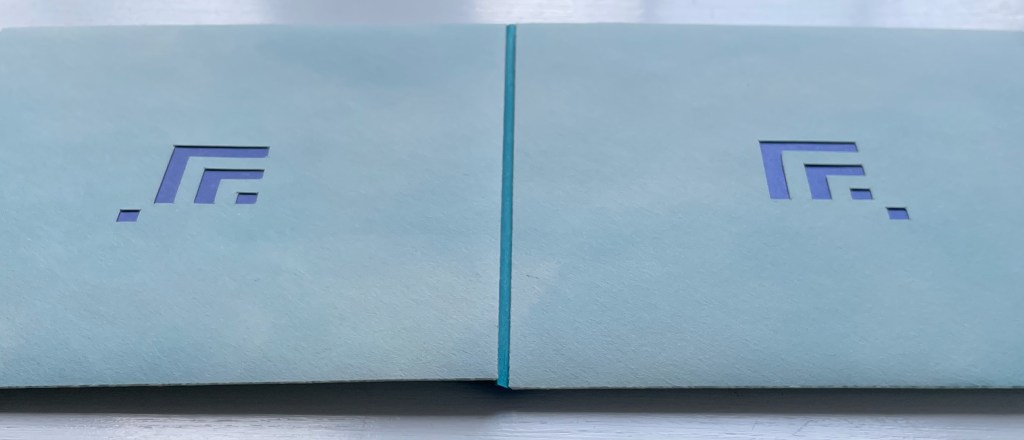

Tomoko Fuse’s Unit Origami explains the principles underlying her quilt fold. For book art, Miller’s variation on it warrants the name “elemental origami fold”. In the entries on her Byopia Press website (see Further Reading below), it is fully explained.
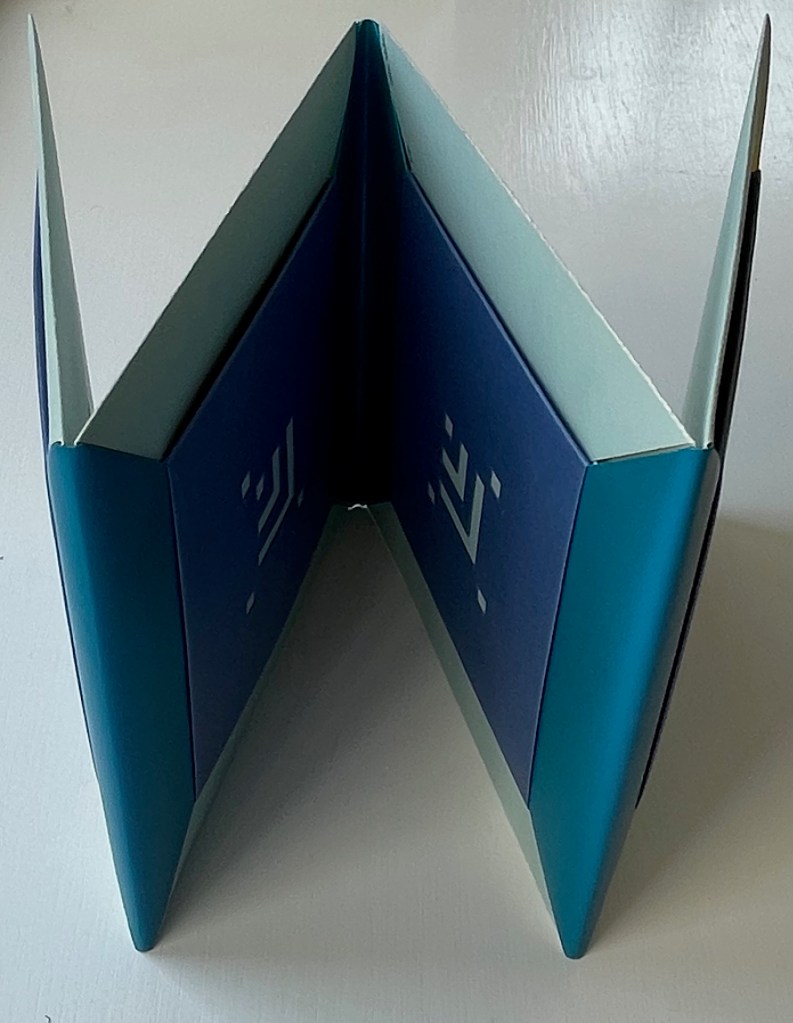
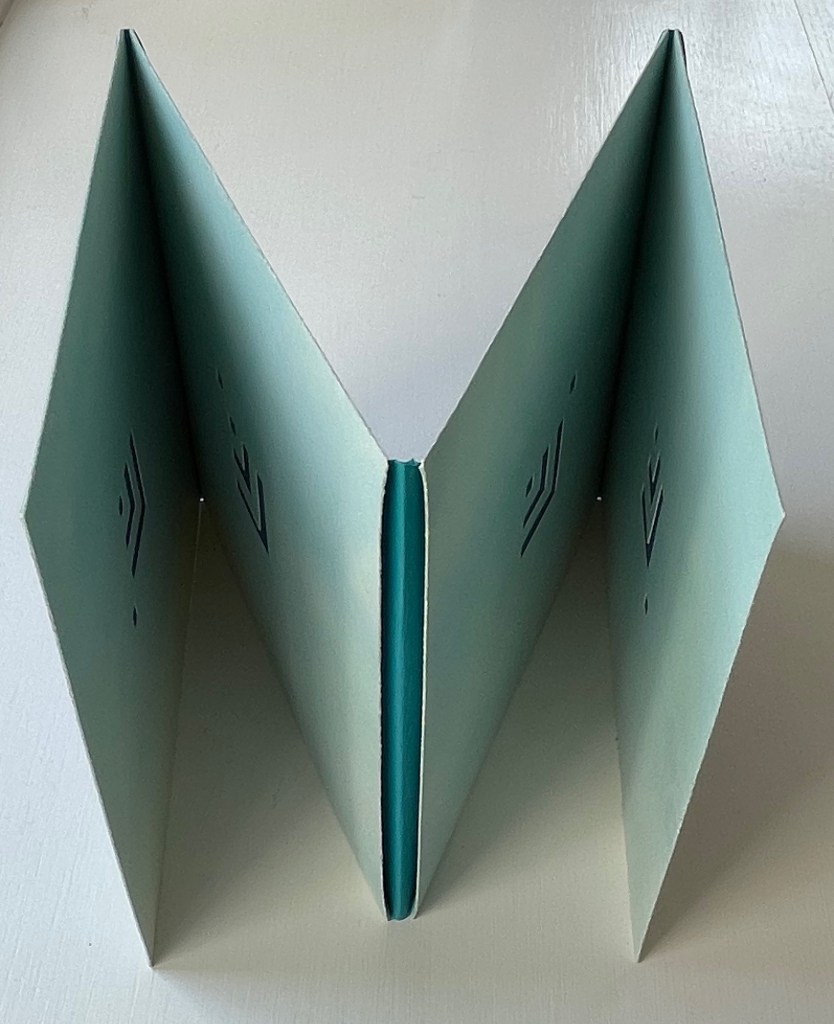
Interior and exterior views of the hinge mechanism.
The Elements has set a high bar. Miller’s elemental origami fold can also yield a codex book. It only awaits the genius to bring the right metaphor to bear and fuse it with the right material to create the next artist’s book that raises book art to yet another power.
Further Reading
“Cathryn Miller (I)”. 1 September 2019. Books On Books Collection.
“Kintsugi“. 20 February 2019. Bookmarking Book Art.
“On the Origin of Species. 12 February 2017. Bookmarking Book Art.
Cruickshank-Hagenbuckle, Geoffrey. February 2010. “Borderline Bad“. The Brooklyn Rail. On Duchamp’s Readymade Malheureux.
Ferchault de Réaumur, René Antoine.”Histoire des guêpes”, Mémoire de l’Académie royale des sciences avec 7 planches (252) – En 1719, imprimé en 1721. Accessed 12 September 2016. First description of wasps as papermakers.
Fuse, Tomoko. 1990. Unit Origami : Multidimensional Transformations. First ed. Tokyo: Japan Publications.
Gagné, Renaud. 2013. “Dancing Letters: The Alphabetic Tragedy of Kallias”. In Choral Mediations in Greek Tragedy, ed. R. Gagné and M. Hopman, Cambridge University Press 282-307.
Lawler, Lillian. April 1941. “The Dance of the Alphabet”. The Classical Outlook, 18: 7, pp. 69-71.
Miller, Cathryn. 26 July 2020. “The Elements Complete“. Byopia Press.
_______________. 19 July 2020. “The Elements: Air“. Byopia Press.
_______________. 12 July 2020.”The Elements“. Byopia Press.
_______________. 23 December 2018. “Byopia Press 2018 Advent Calendar: Day Twenty-three and A Multi-piece Book Cover“. Byopia Press.
Saskatchewan Craft Council. 22 February 2021. “Talking Craft with Cathryn Miller“. Accessed 28 March 2021.
 Books On Books
🙏
LikeLike
The following may interest you.
https://nmwa.org/blog/nmwa-exhibitions/now-open-a-radical-alteration/
LikeLike