Six Memos Project (2020)
I see that one way or another I keep circling around the idea of an interdependence between the unwritten world and the book I should write. This is why writing presents itself to me as an operation of such weight that I remain crushed by it. I put my eye to the spyglass and train it on the reader. Between her eyes and the page a white butterfly flutters. Whatever she may have been reading, now it is certainly the butterfly that has captured her attention. The unwritten world has its climax in that butterfly. The result at which I must aim is something specific, intimate, light. — Italo Calvino. If on a Winter’s Night a Traveller (Vintage Classics) (p. 172).
As homage and work of art, Ken Botnick’s Six Memos Project is that “something specific, intimate, light” to which Calvino’s narrator refers. It hovers between us and Calvino’s Six Memos for the Next Millennium (1985), his Charles Eliot Norton Lectures prepared for Harvard. All but the sixth lecture was written when Calvino died in the fall of 1985.
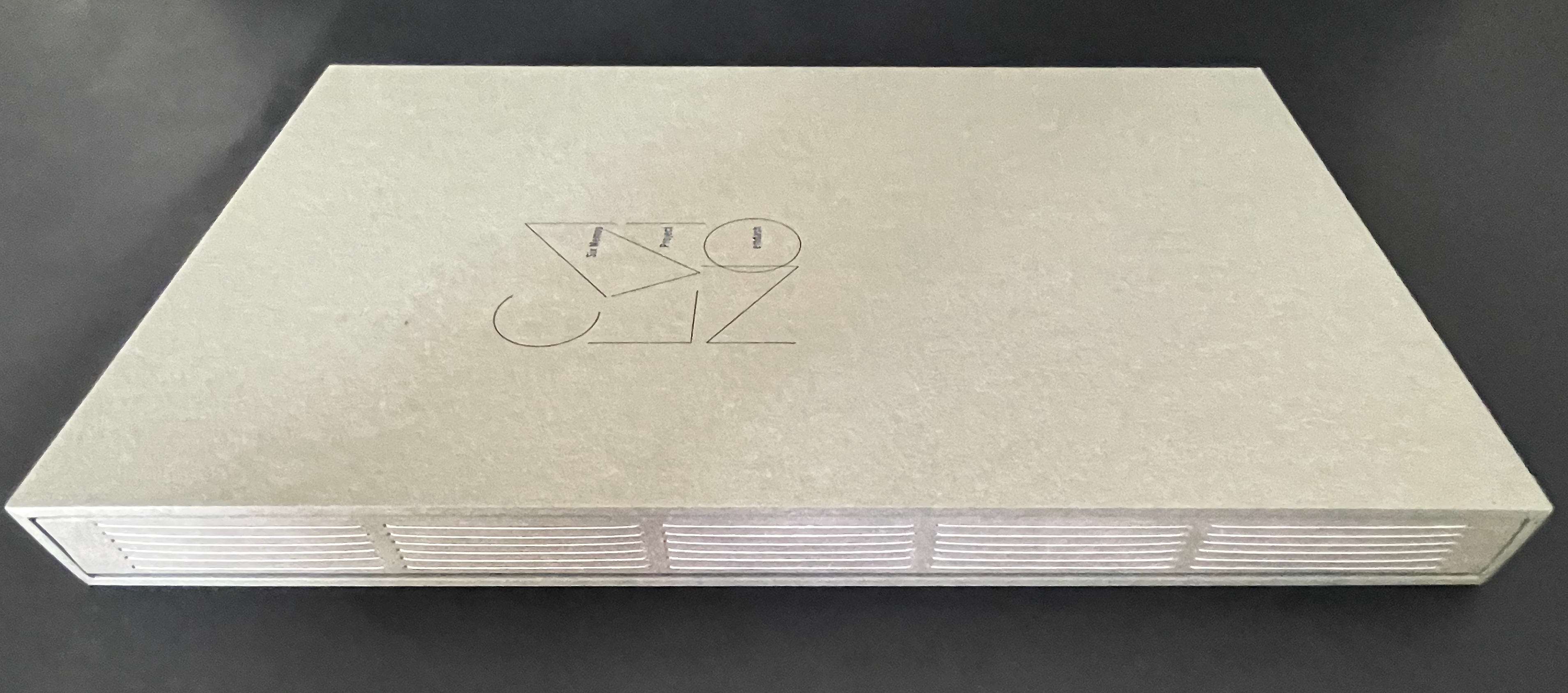
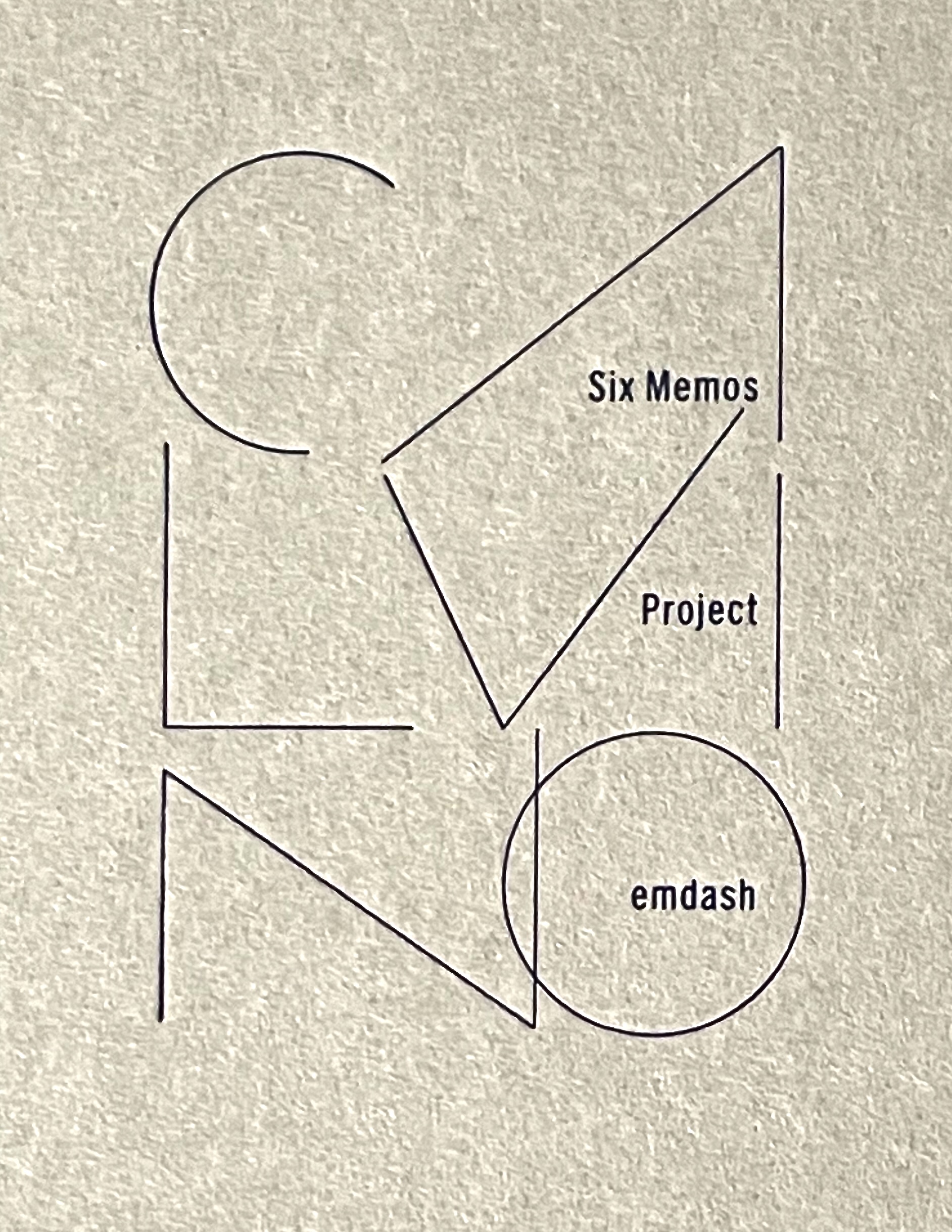
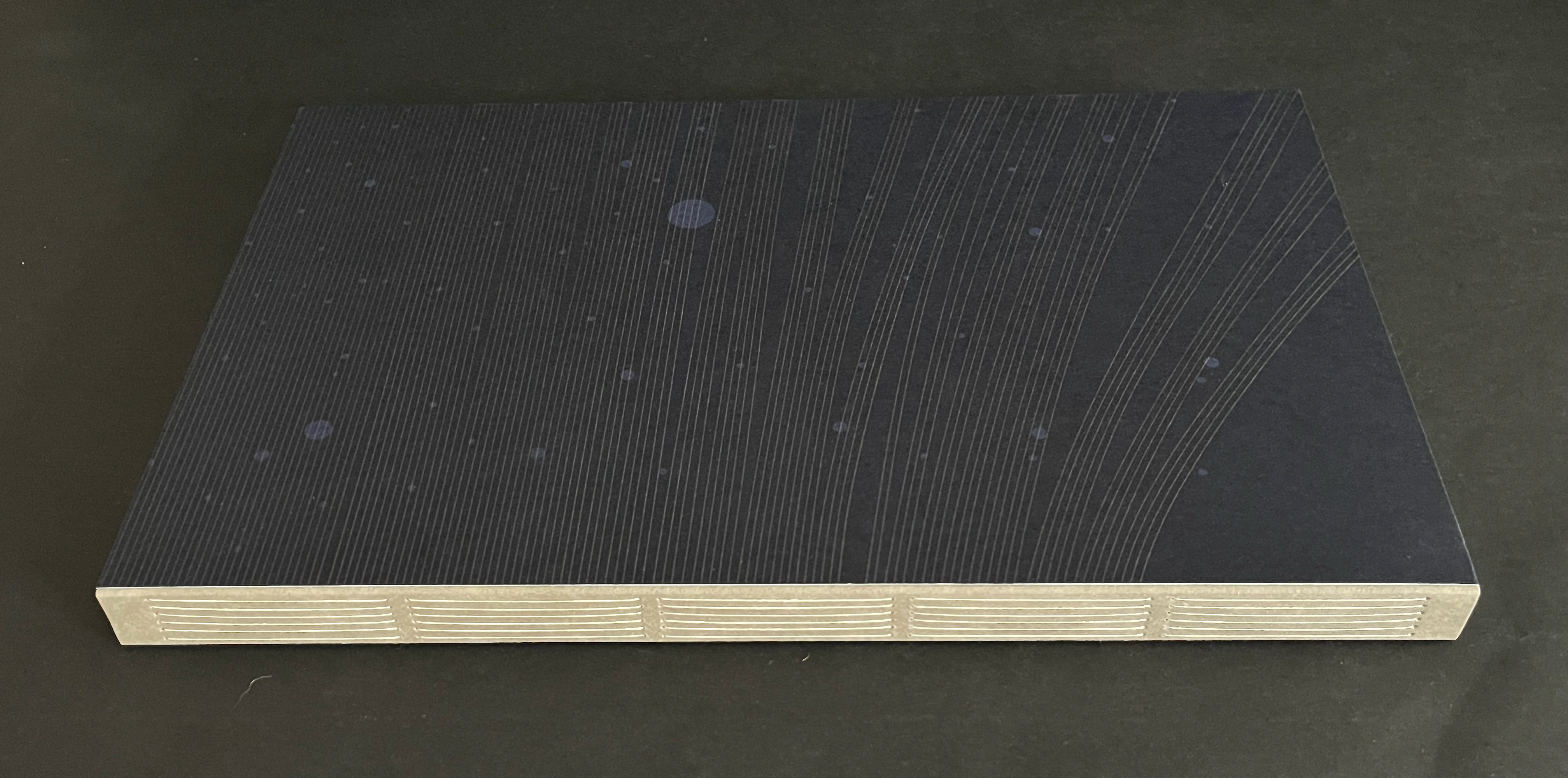
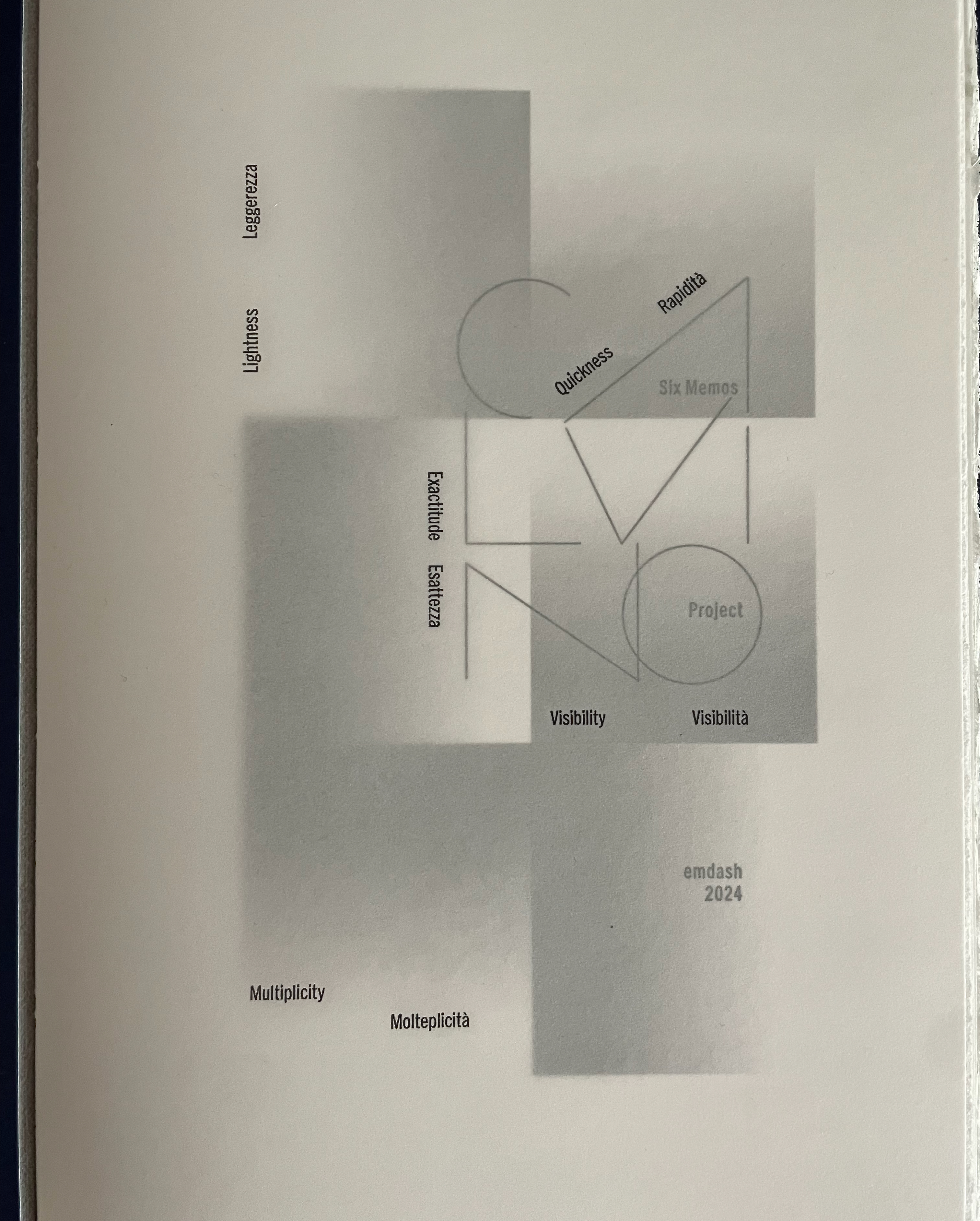
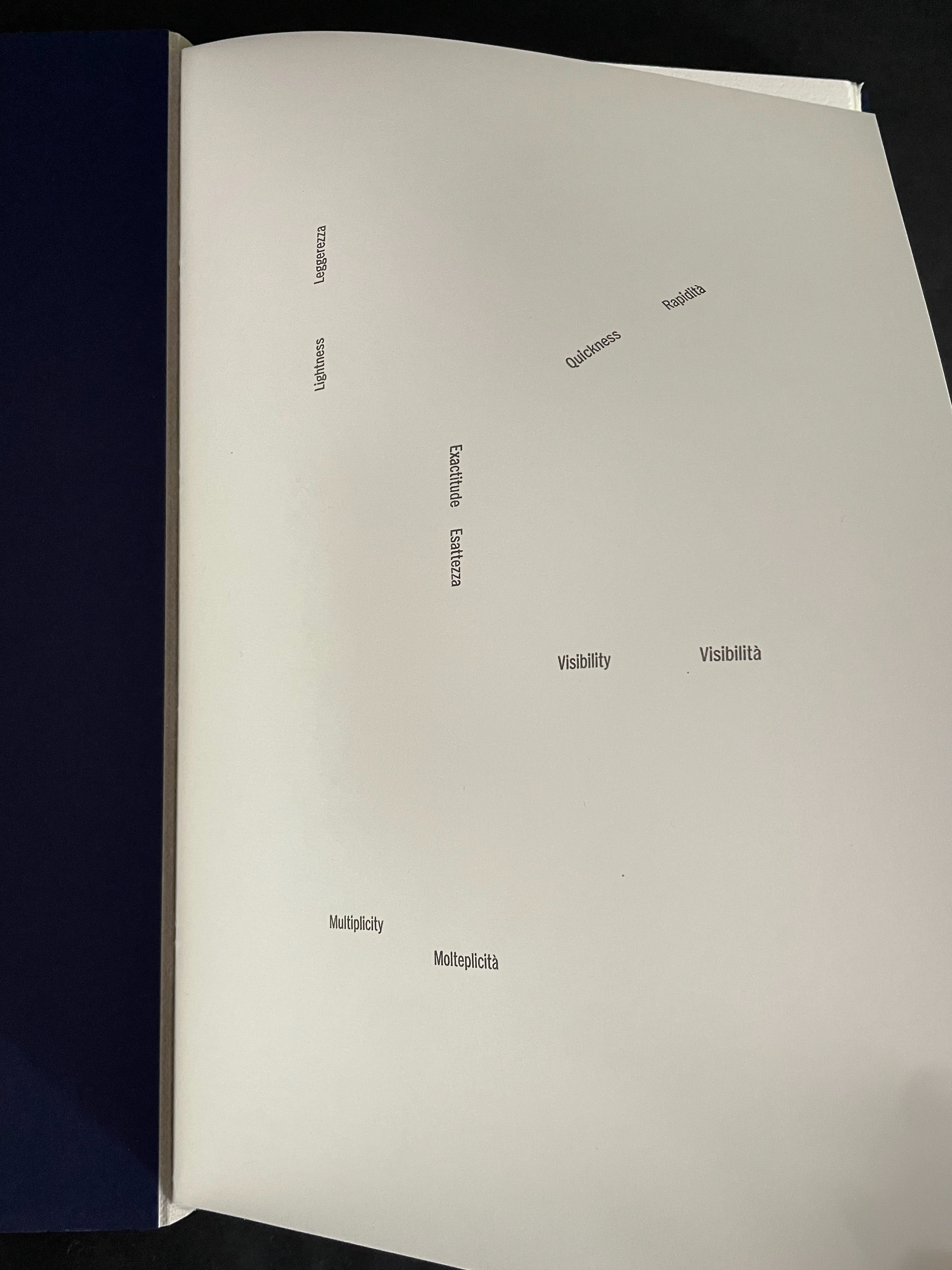
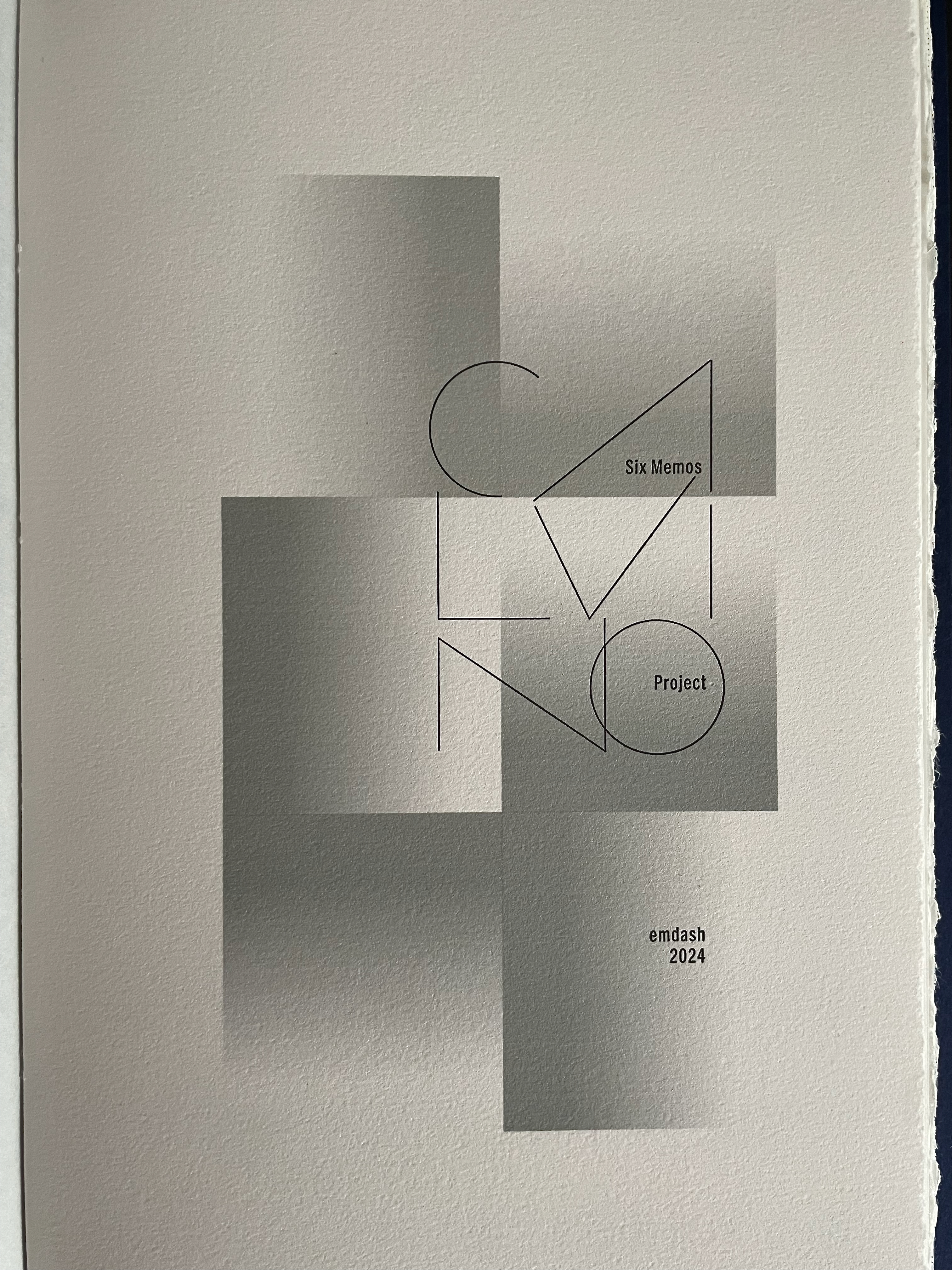
Six Memos Project (2020)
Ken Botnick
Board slipcase with inked embossed title. Open spine hardcover. H290 x W188 mm. [116] pages. Edition of 20, of which this is #12. Acquired from the artist, 14 July 2026.
Photos: Books On Books Collection.
The Six Memos Project makes us want to read or re-read those lectures and make us long for that missing sixth. With its papers, ink, incisions, typographic layout, page structure, binding, and textures, this artist’s book captures our attention and wonder long enough to realize that it is acting as a lens on the lectures and, paradoxically, on itself and the act of reading. This self-reflexive artist’s book is the ideal medium for paying homage to Calvino’s writing about his writing.
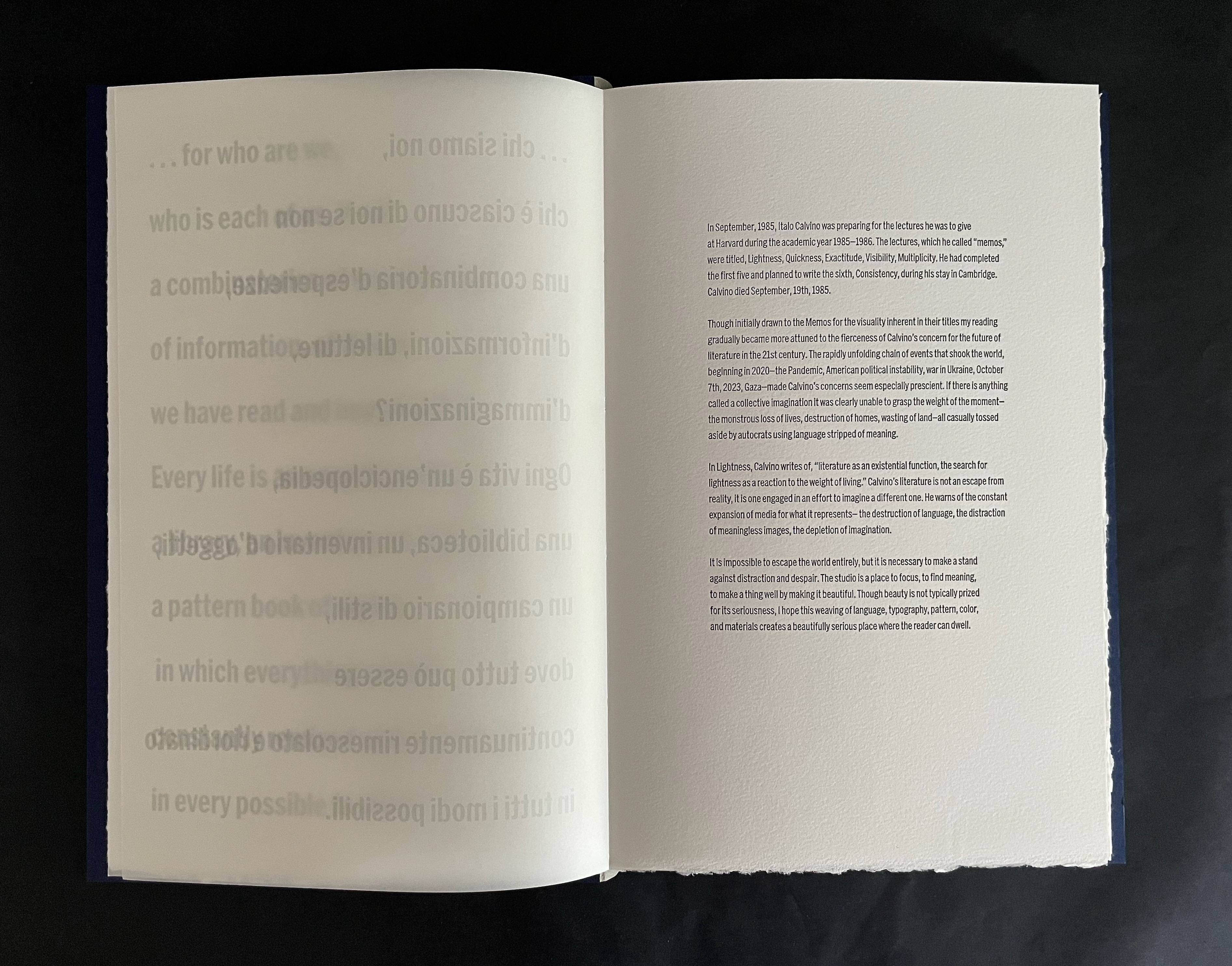
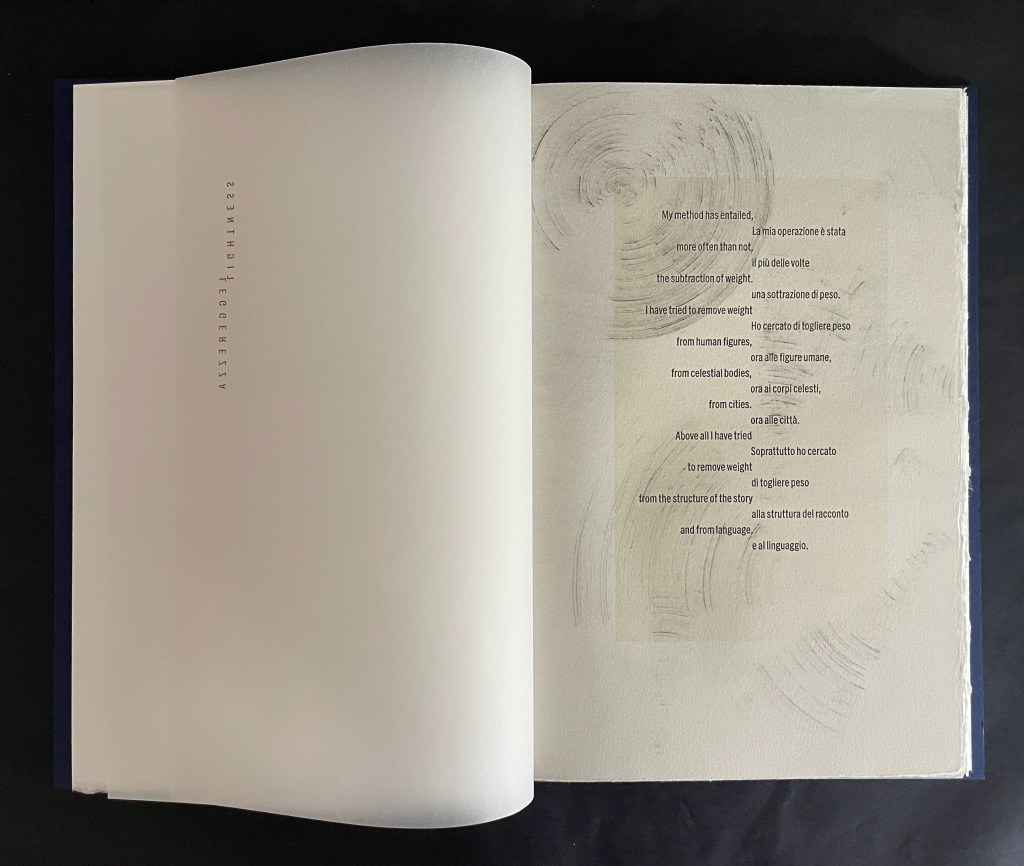
Lightness was the first of the six literary themes that Calvino commended to the next millennium. Botnick arranges its title in Italian and English on translucent paper so that it pivots on its initial letter, ascending and descending the margin. As the page turns to the left, the opening statement that Botnick has selected from the lecture emerges crisply in English on the left and Italian on the right, alternating like wings down the center of the page.
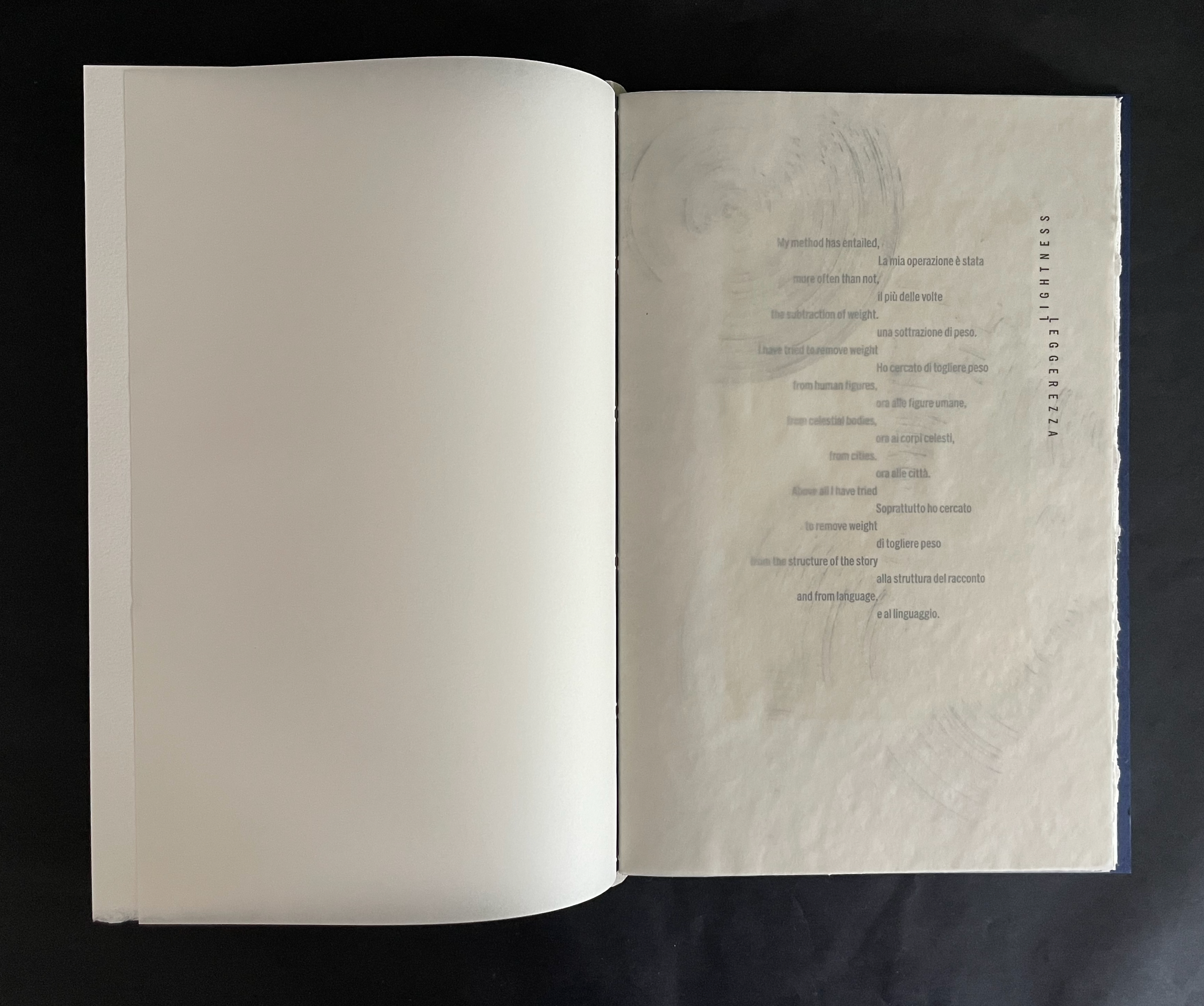
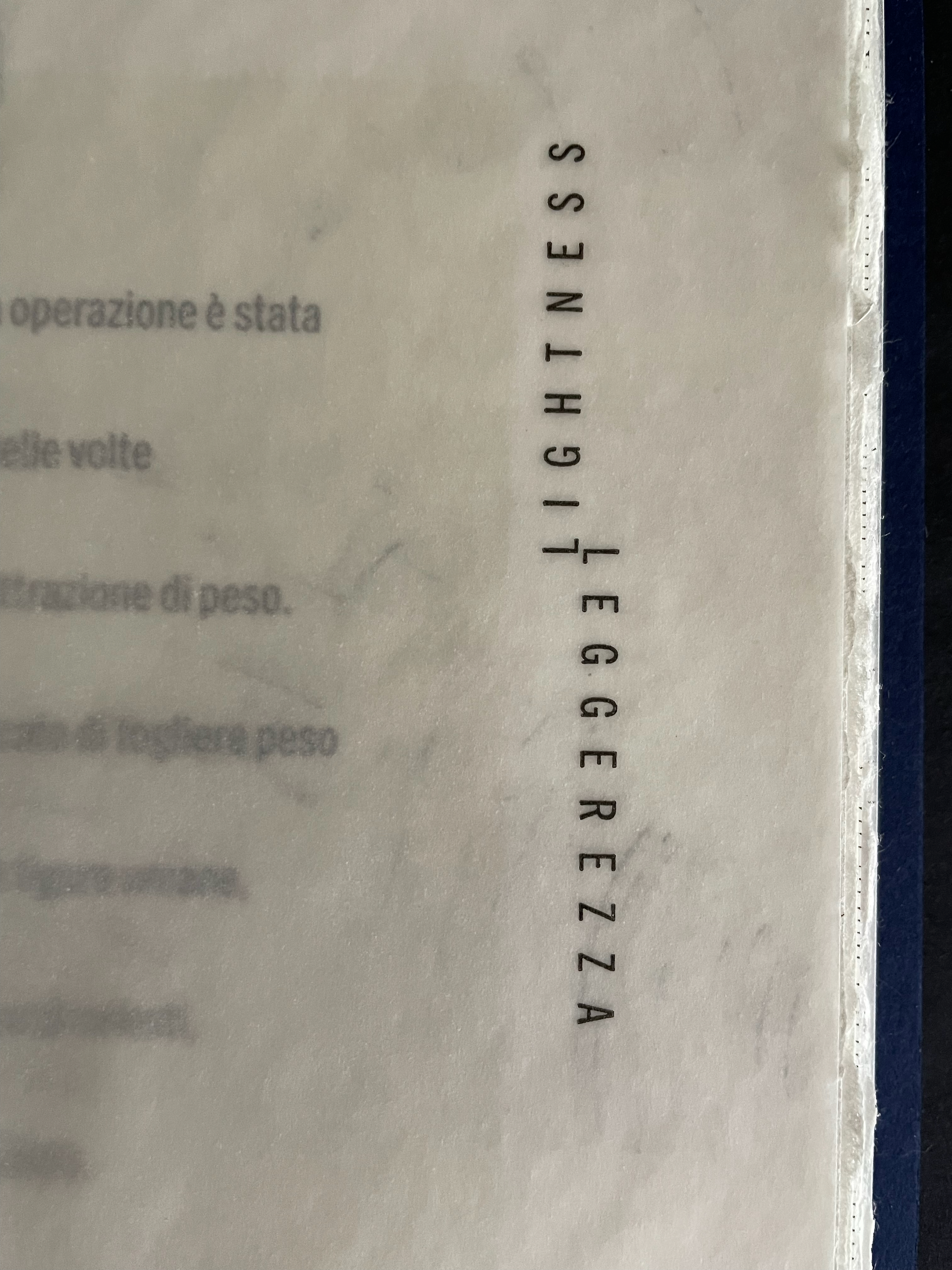
Matching Calvino’s description of his writing method, Botnick centrifugally subtracts segments from the image in the upper left corner of the same page. The expressive abstract image seems to float behind the statement’s tinted panel, and the enlarging subtracted segments surface through and over the panel as they move downwards from left to right.
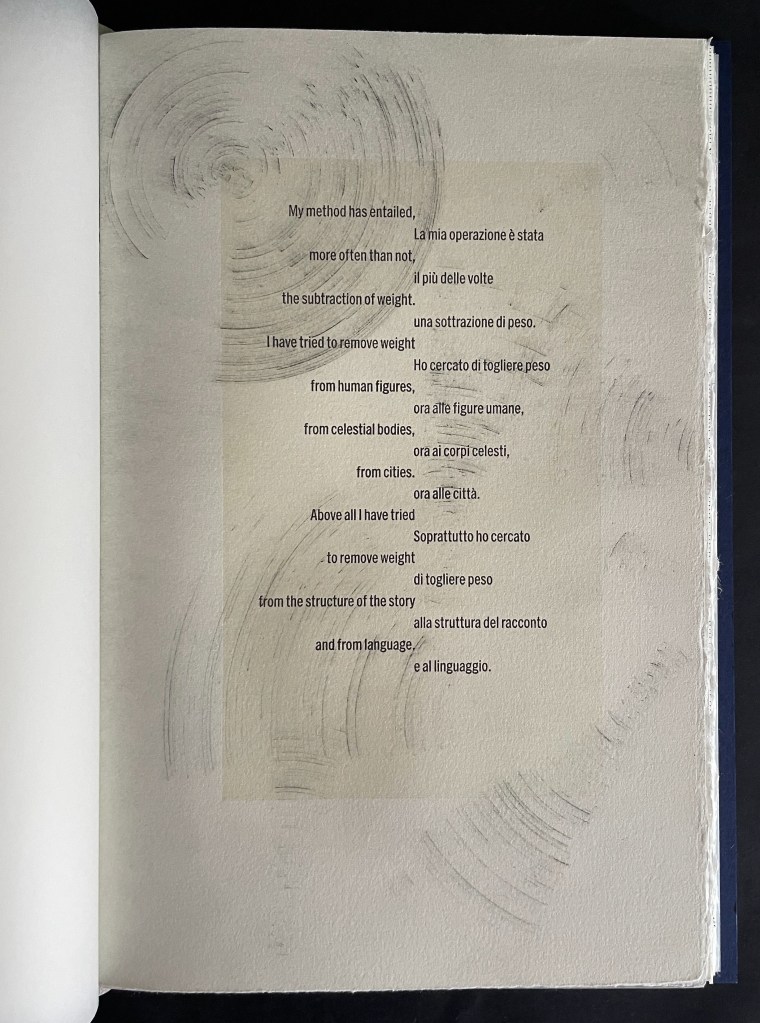
In the next spread, the enlarging segments continue to follow the gist of Calvino’s theme until they seem to float off the page.
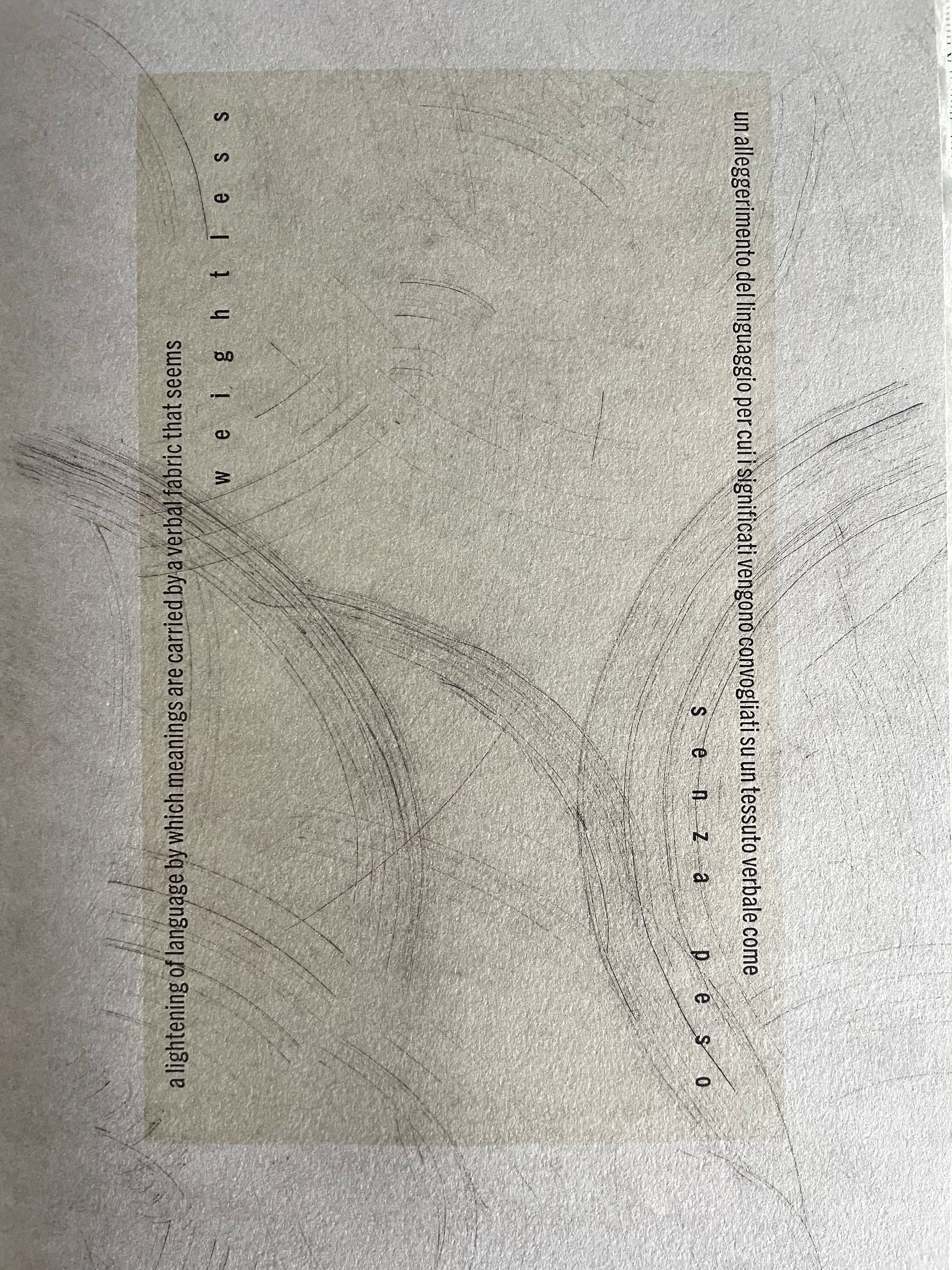
The following sequence switches techniques from inking to stenciling for the response to Calvino’s method and theme of lightness. Leaf by leaf it metaphorically enacts the removal of weight from the incised letters of the word “lightness”.
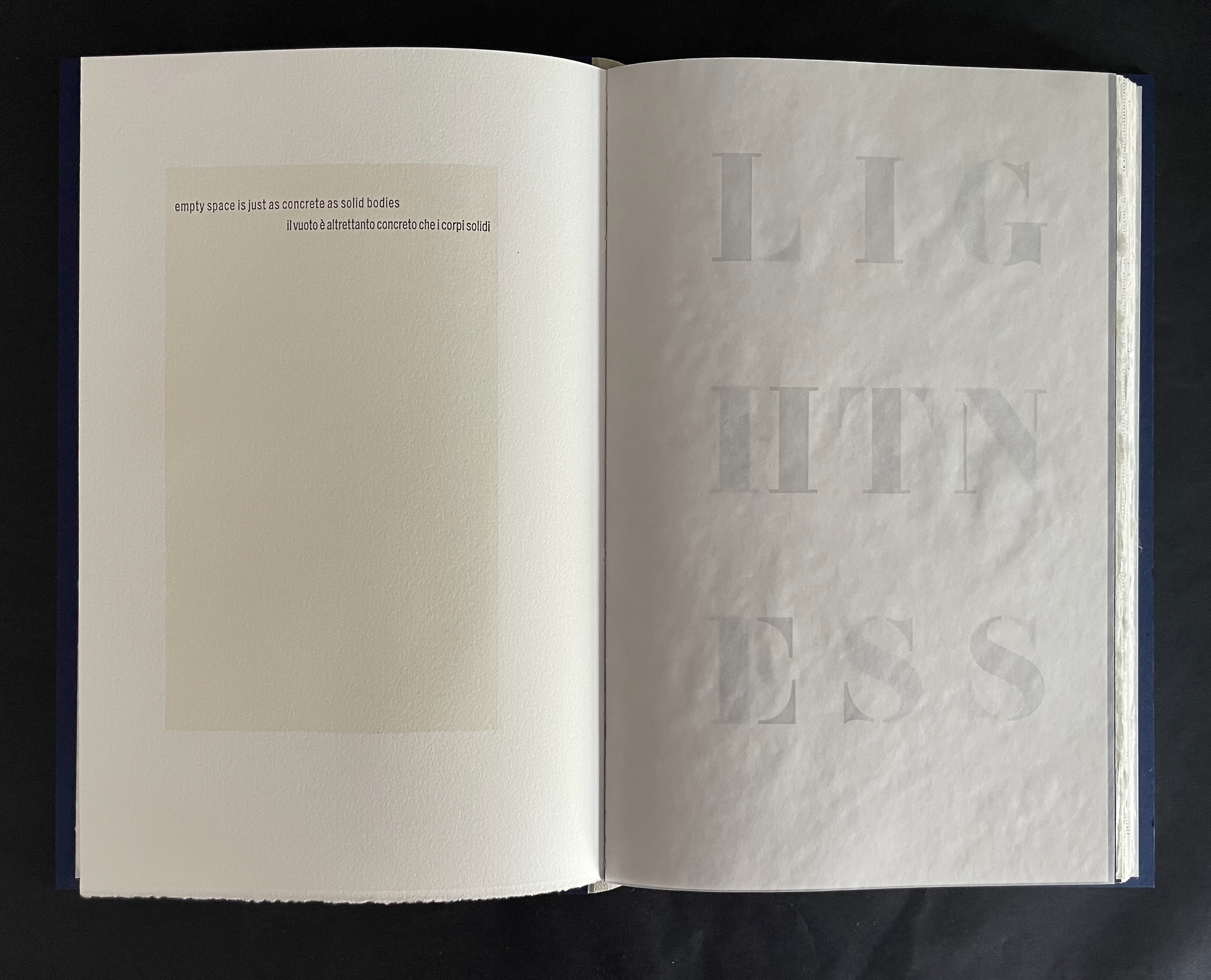
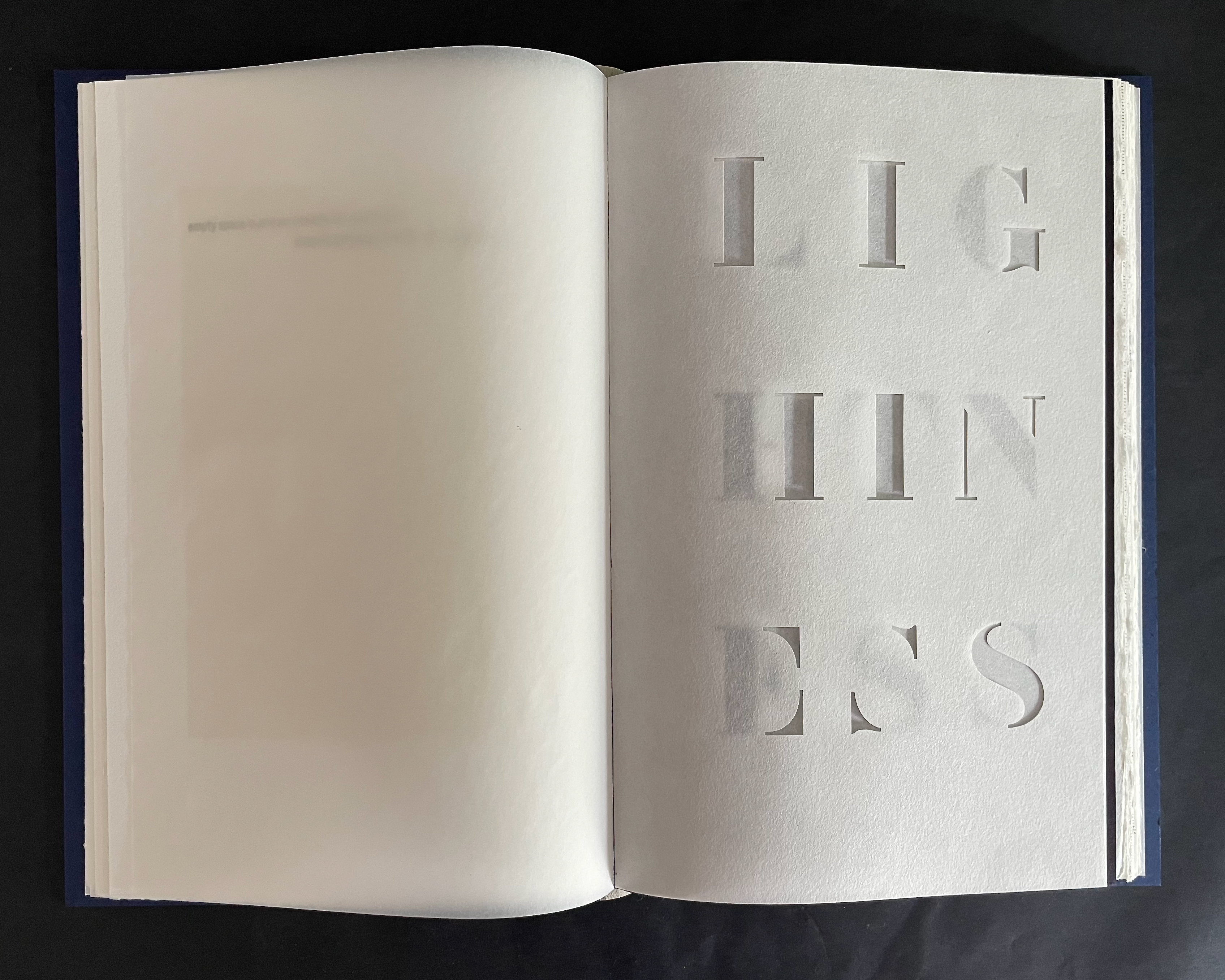
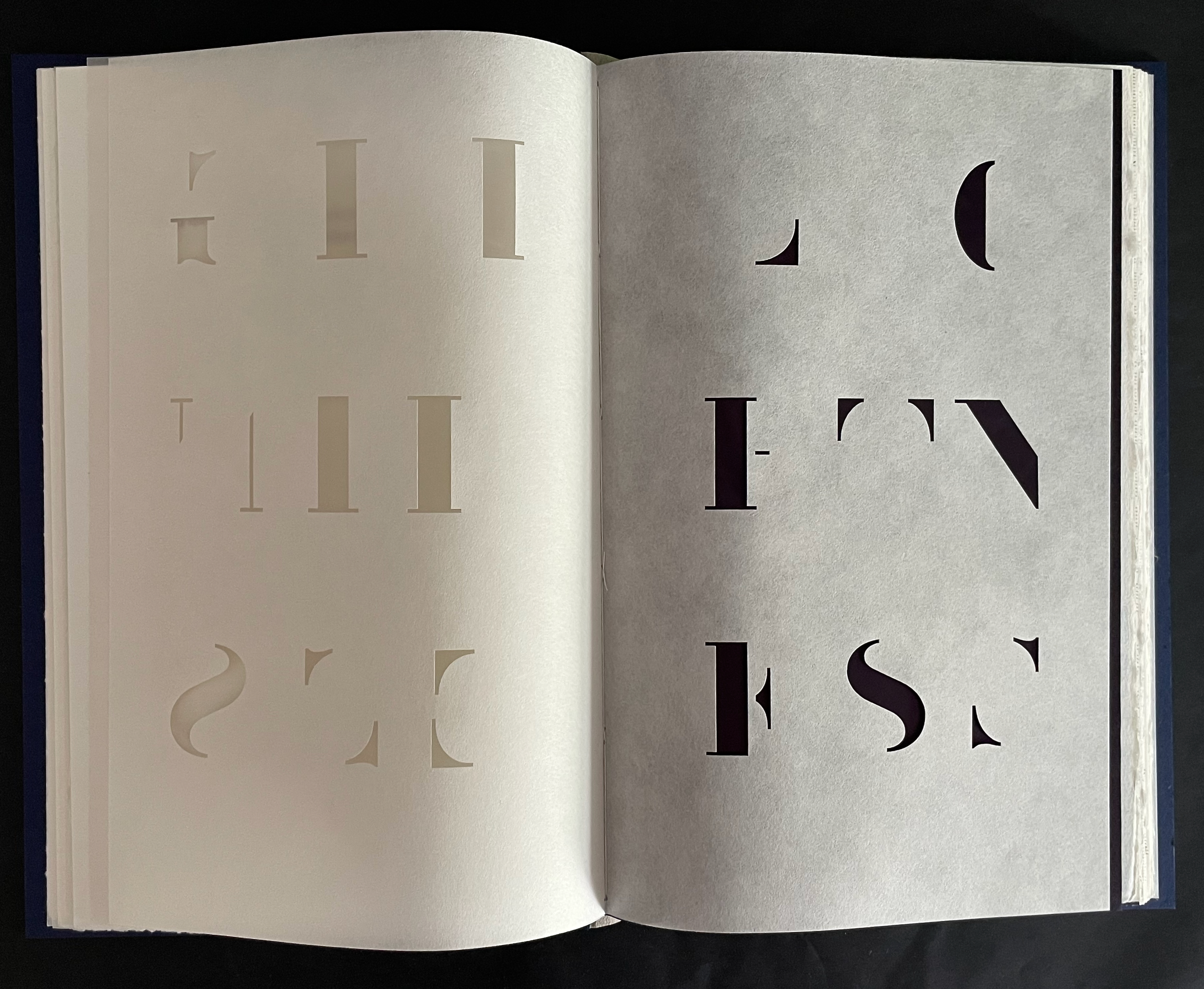
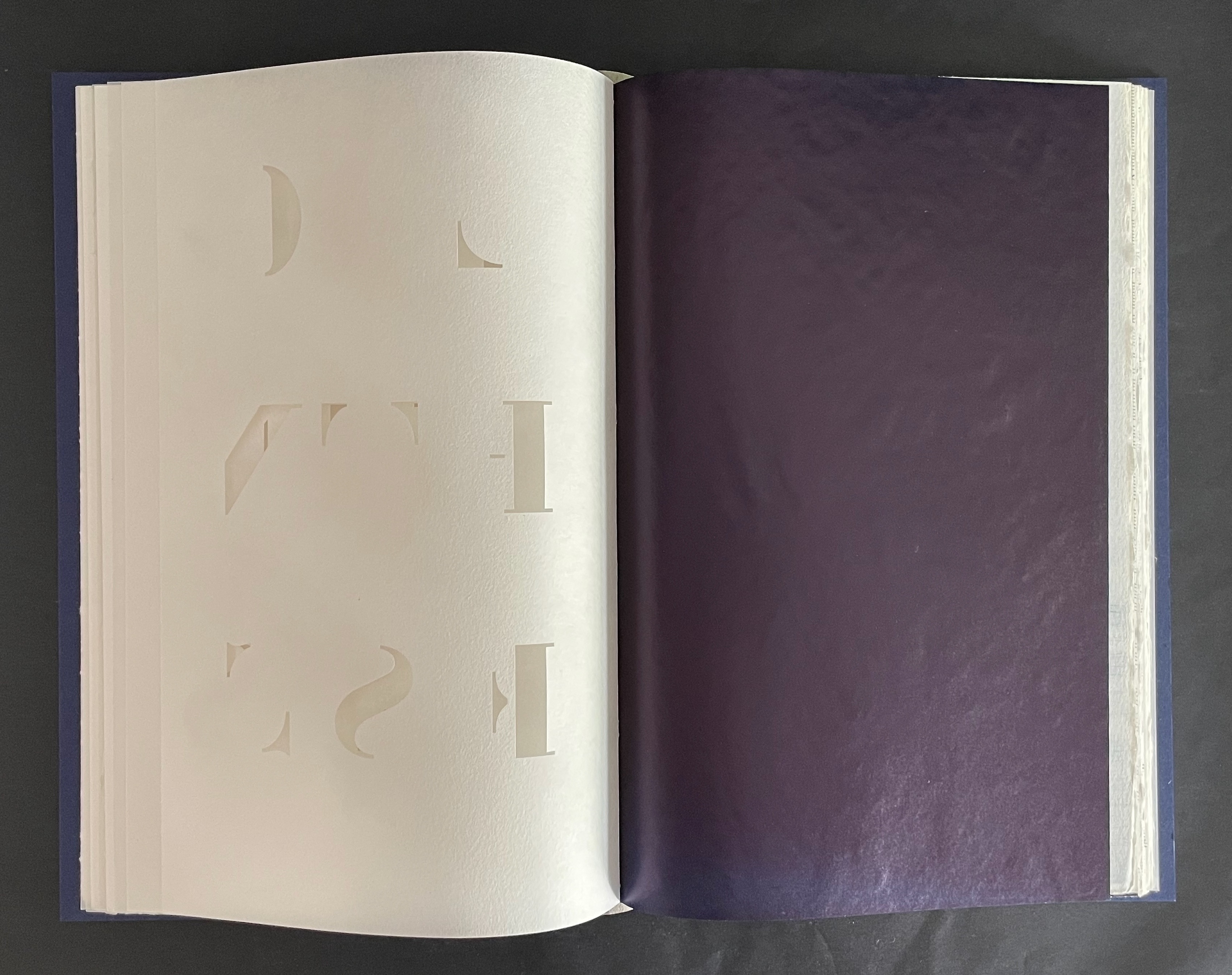
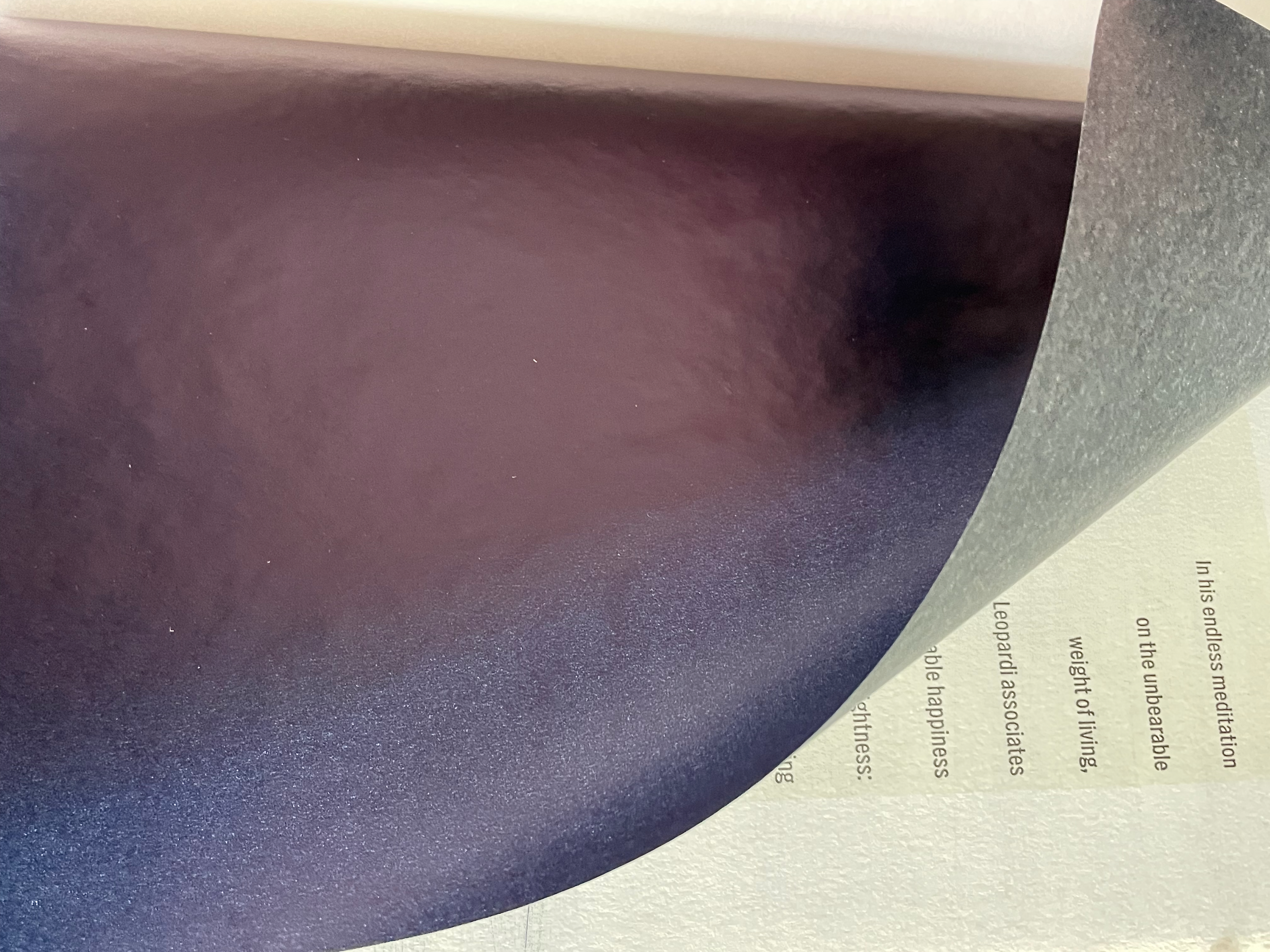
It is telling that the heavily ink-saturated opaque paper that gives the final absences their weight is used only in this section of the book. Its second and last use in the section is just as metaphorical and functional as its first. In response to the excerpt “the search for lightness as reaction to the weight of living”, it contrasts with bare remnants of the subtracted segments on the left and punctuates with its weight the end of “Lightness”.
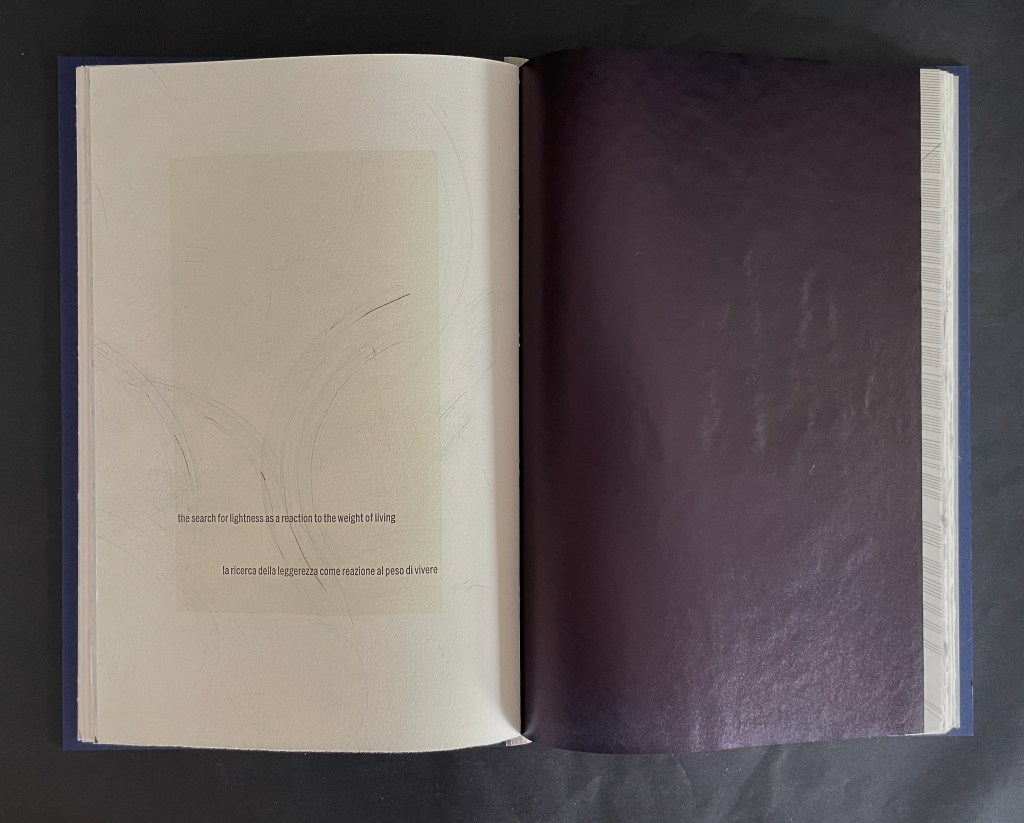
In each of the next four sections, the artist exercises different functional metaphors corresponding to the themes and excerpts of the lectures that Calvino completed: Quickness, Exactitude, Visibility, and Multiplicity. As with the symbiosis of lightness and weight, Calvino proceeds by contrasts: quickness vs delay, exactitude vs insubstantiality, visibility of the imagination through words vs their failure under the weight of the “image civilization”, and multiplicity of language, viewpoints, and things vs a single language, an insular perspective, and a null undifferentiated whole.
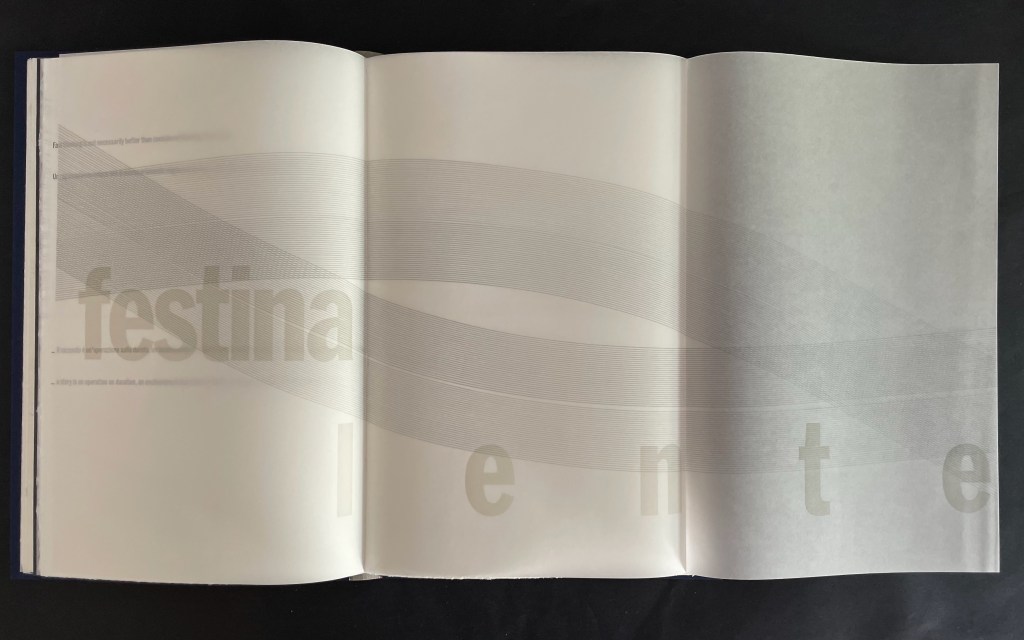
Where Calvino adopts Manutius’ motto festina lente [“make haste slowly”], Botnick gives us
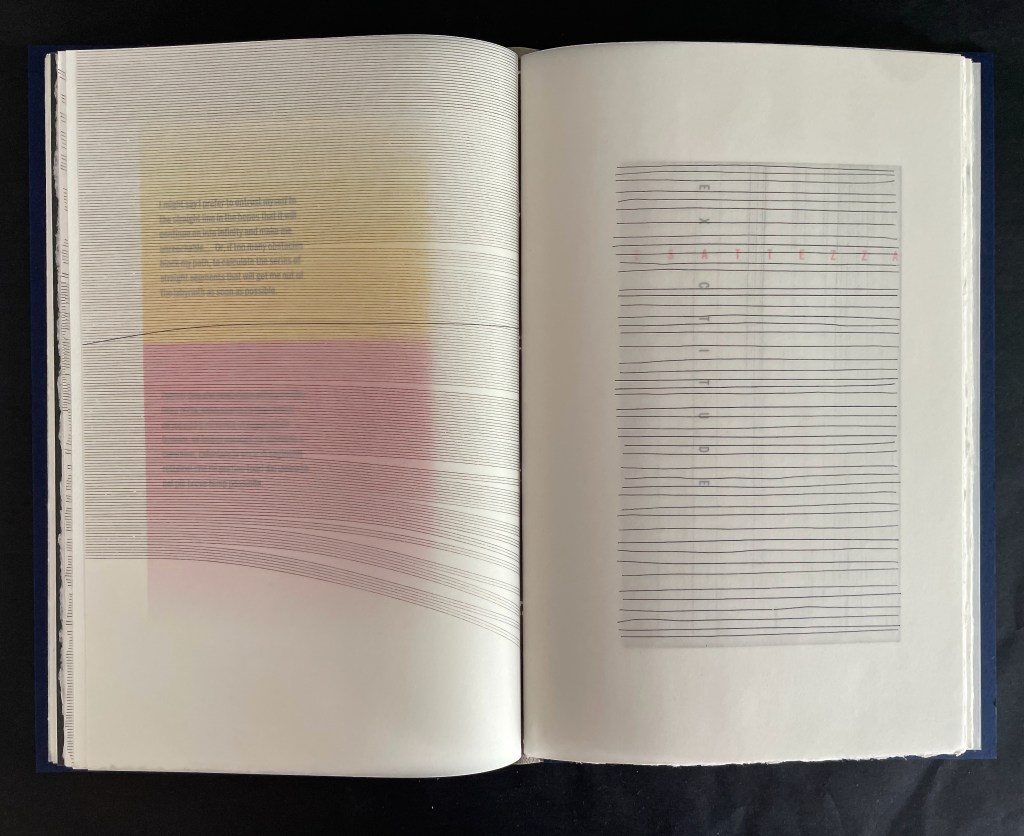
Where Calvino worries about straight lines of exactitude vs oblique curves by which to approach the unsayable, Botnick gives us
Where, in contemplating visibility, Calvino posits “the imagination is a place where it rains”, Botnick give us an image printed on a sheet held within the fold of another sheet on which Calvino’s text appears in blocks that seem to float on the watery image underneath.
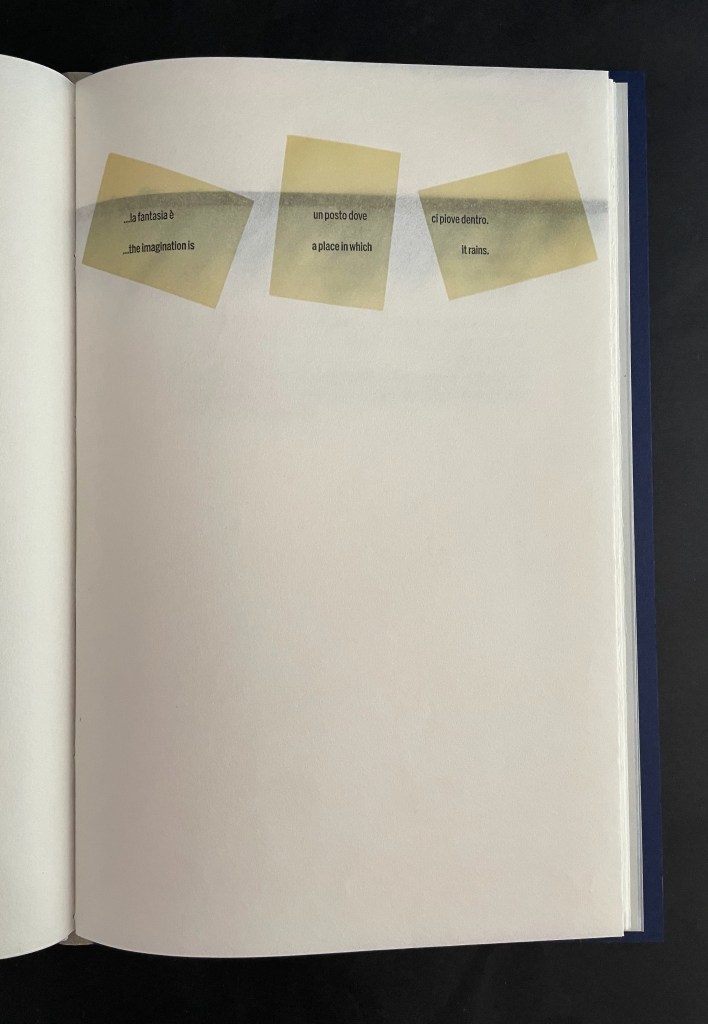
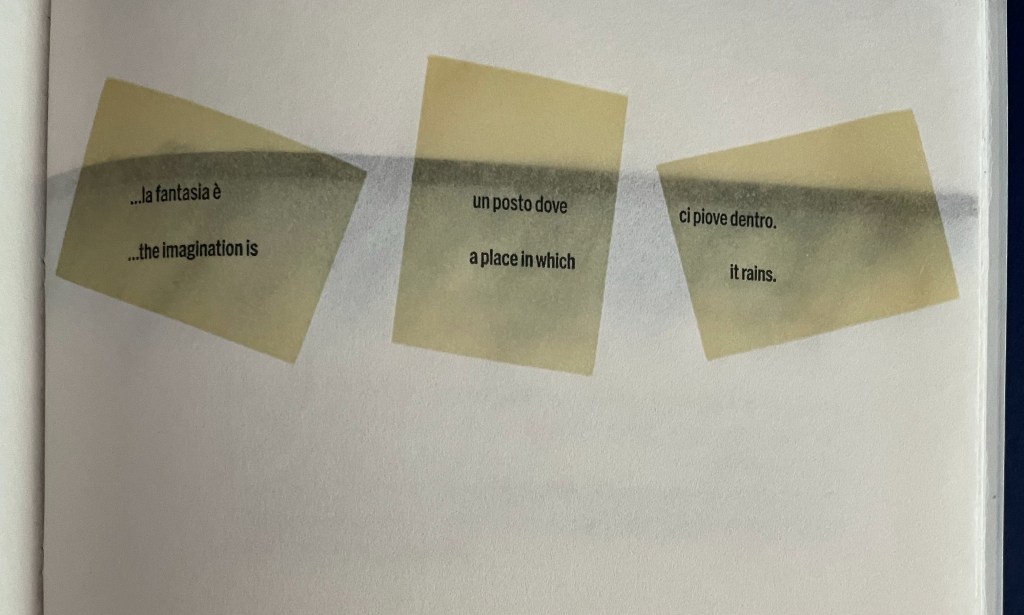

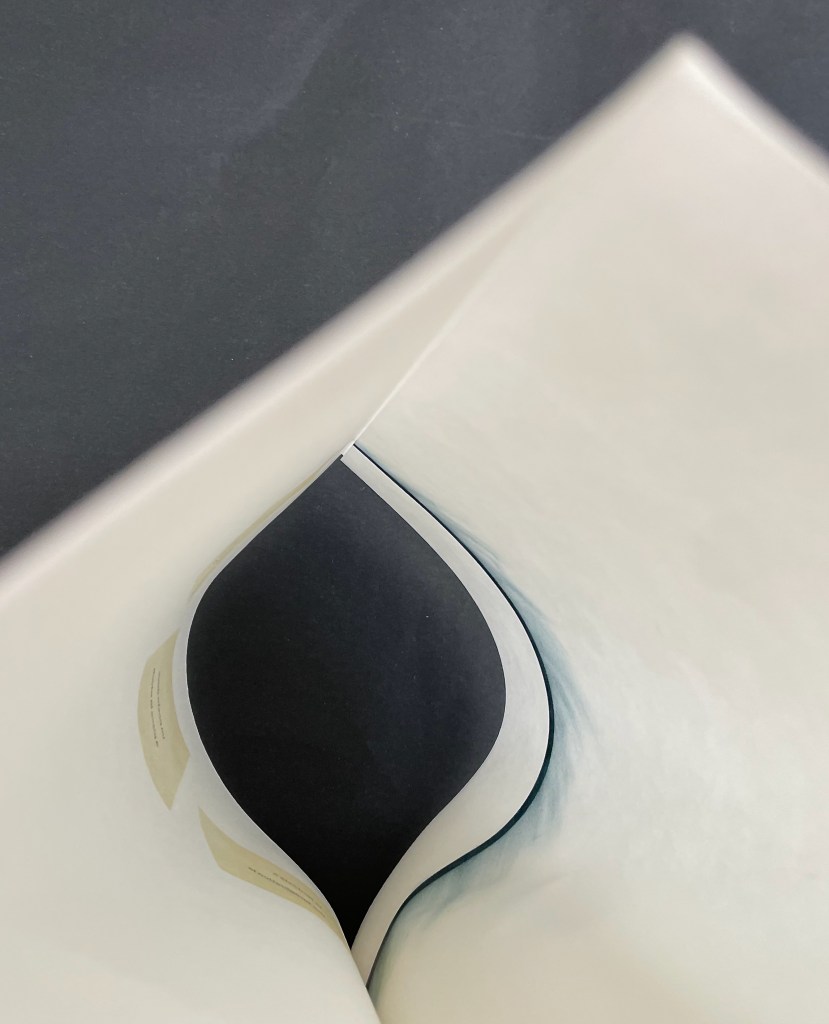
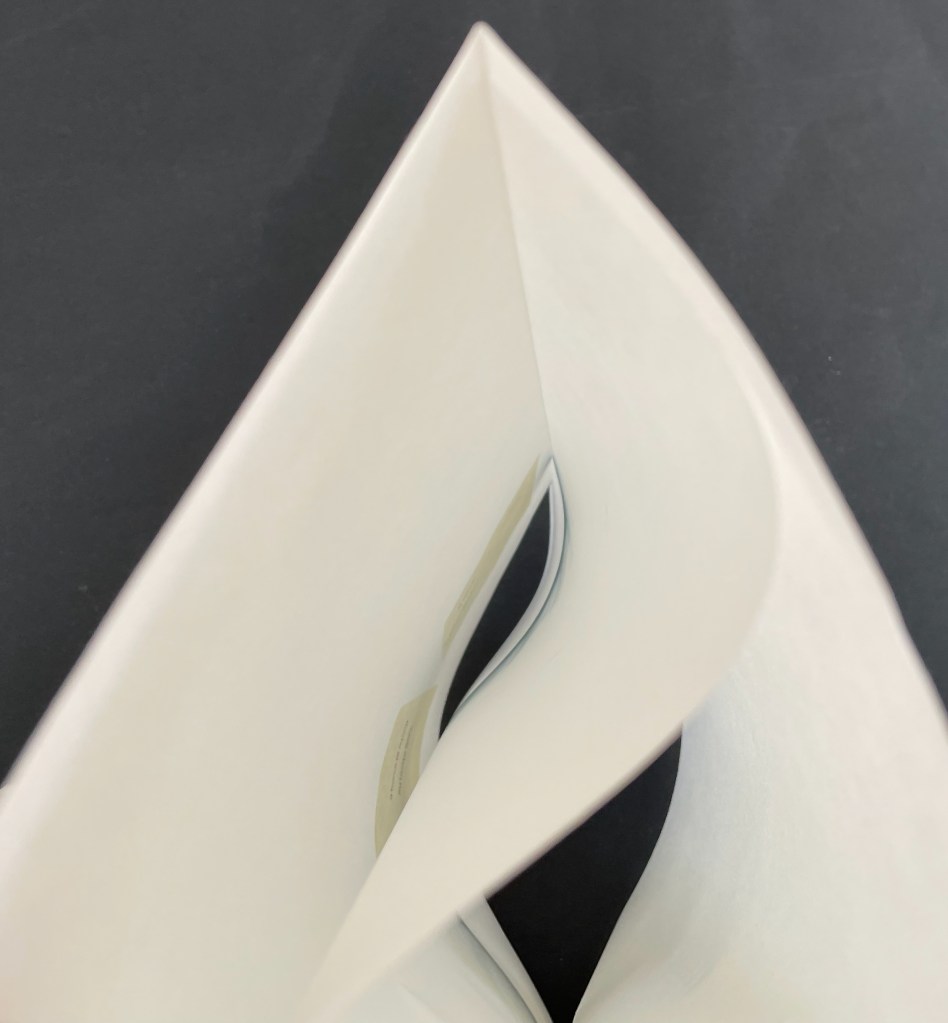
Below are internal shots of the French fold sheet that envelopes the single sheet bearing the watery image that appears through the sides of the French fold. The angle is from the spread bottom edge of the French fold with the first shot showing single sheet image bowed to the right, the second showing the single sheet curving between the sides of the French fold, and the third showing the single sheet image bowed to the left.
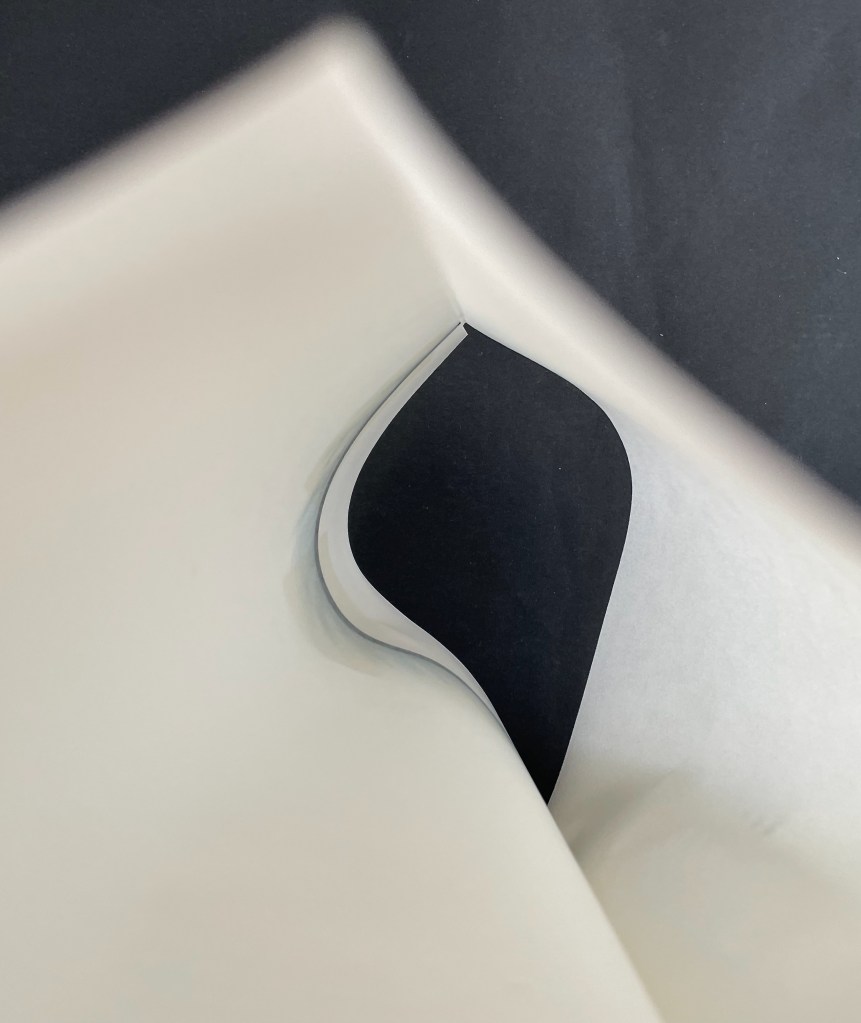
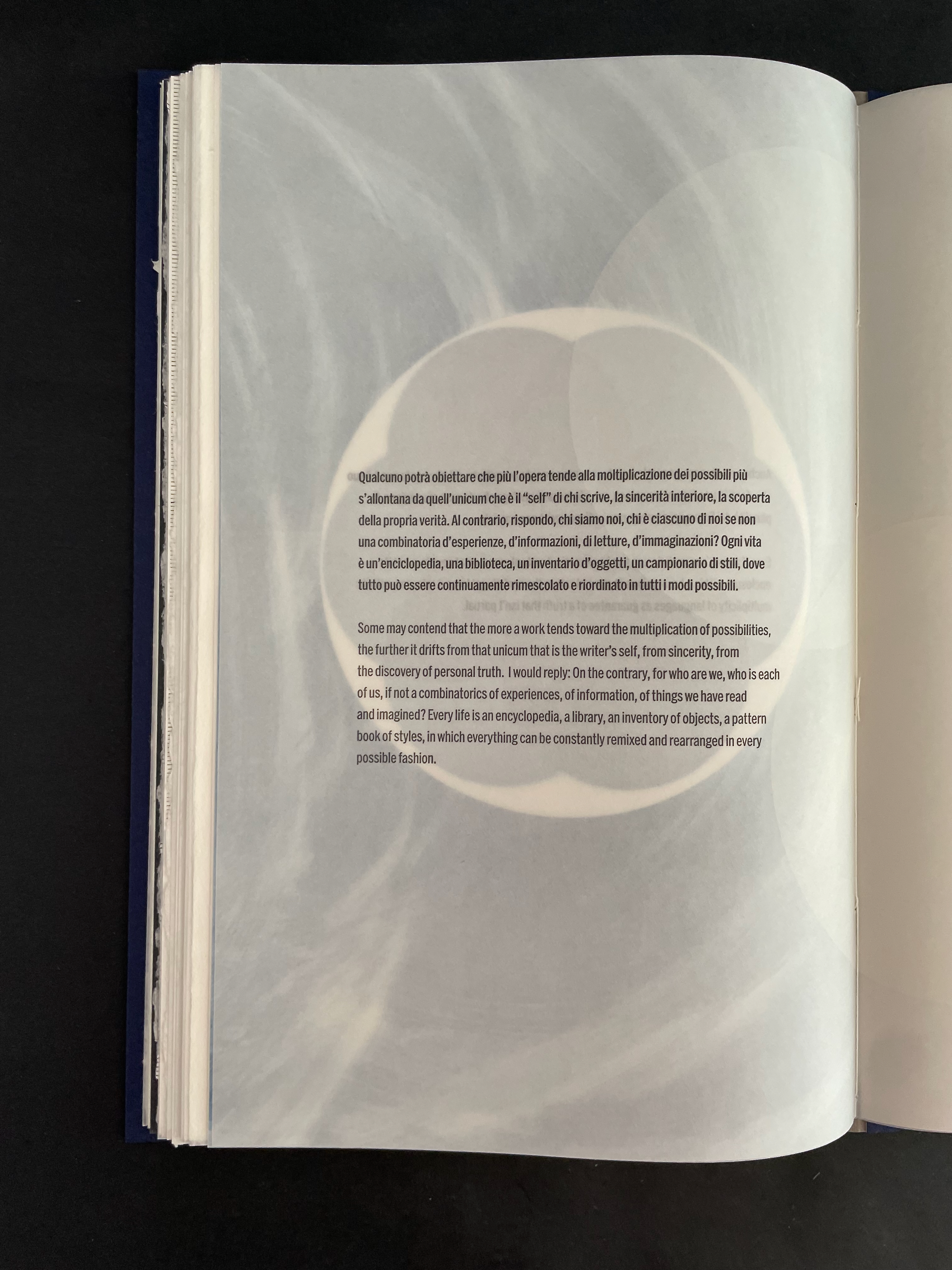
Where Calvino notes the argument of some “that the more a work tends toward the multiplication of possibilities, the further it drifts from the unicum that is the writer’s self, from sincerity, from the discovery of personal truth”, Botnick gives us the text of Calvino’s contrary reply below on the left, but note that it is the same text with which Botnick prefaced his artist’s book on the right:
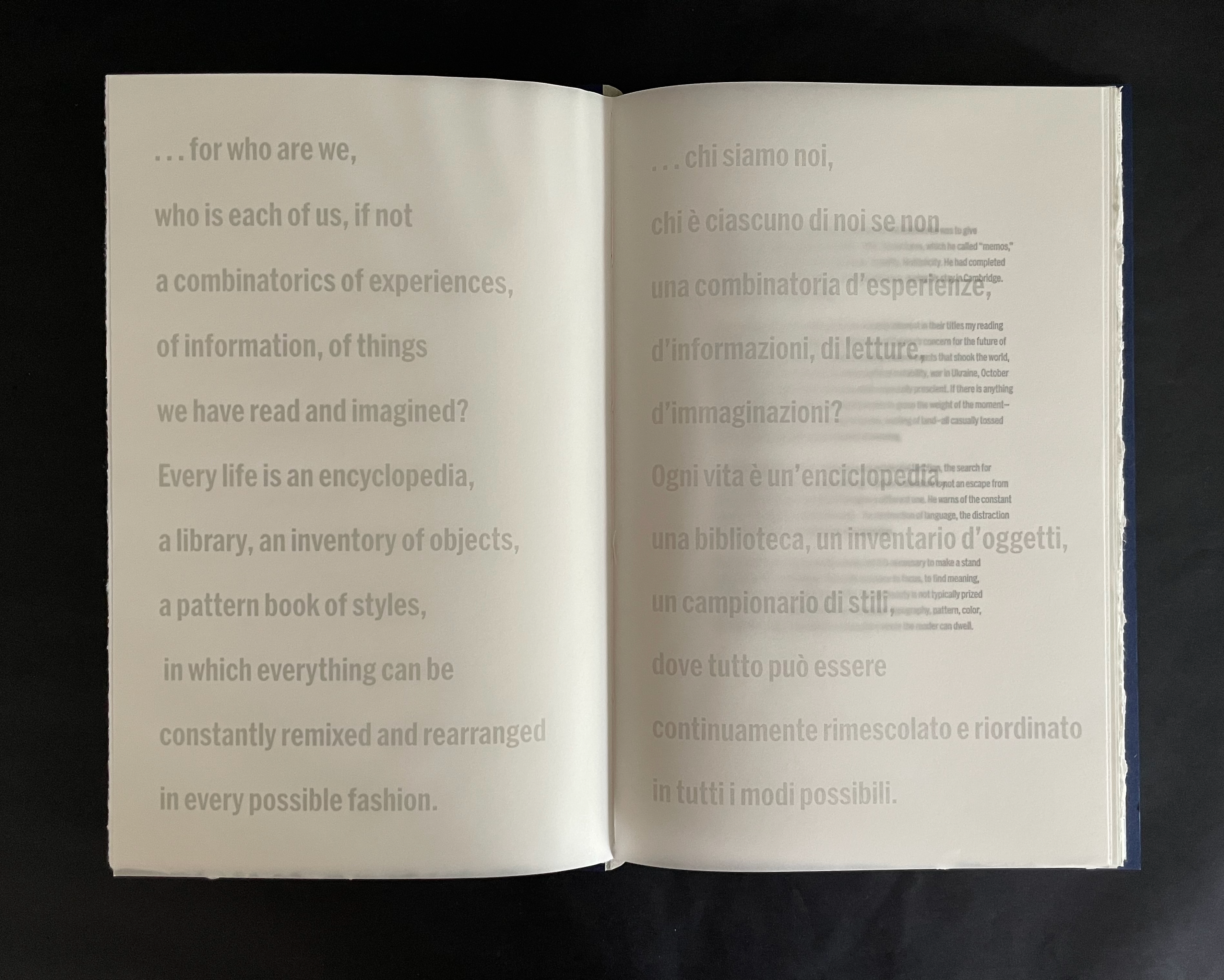
That preface is the first of an enveloping move that Botnick completes at the end of Multiplicity and the end of the artist’s book. Calvino has the last word of the section in text that hovers over a large solid spot-varnished half circle. When this sheet and the next two are turned, …
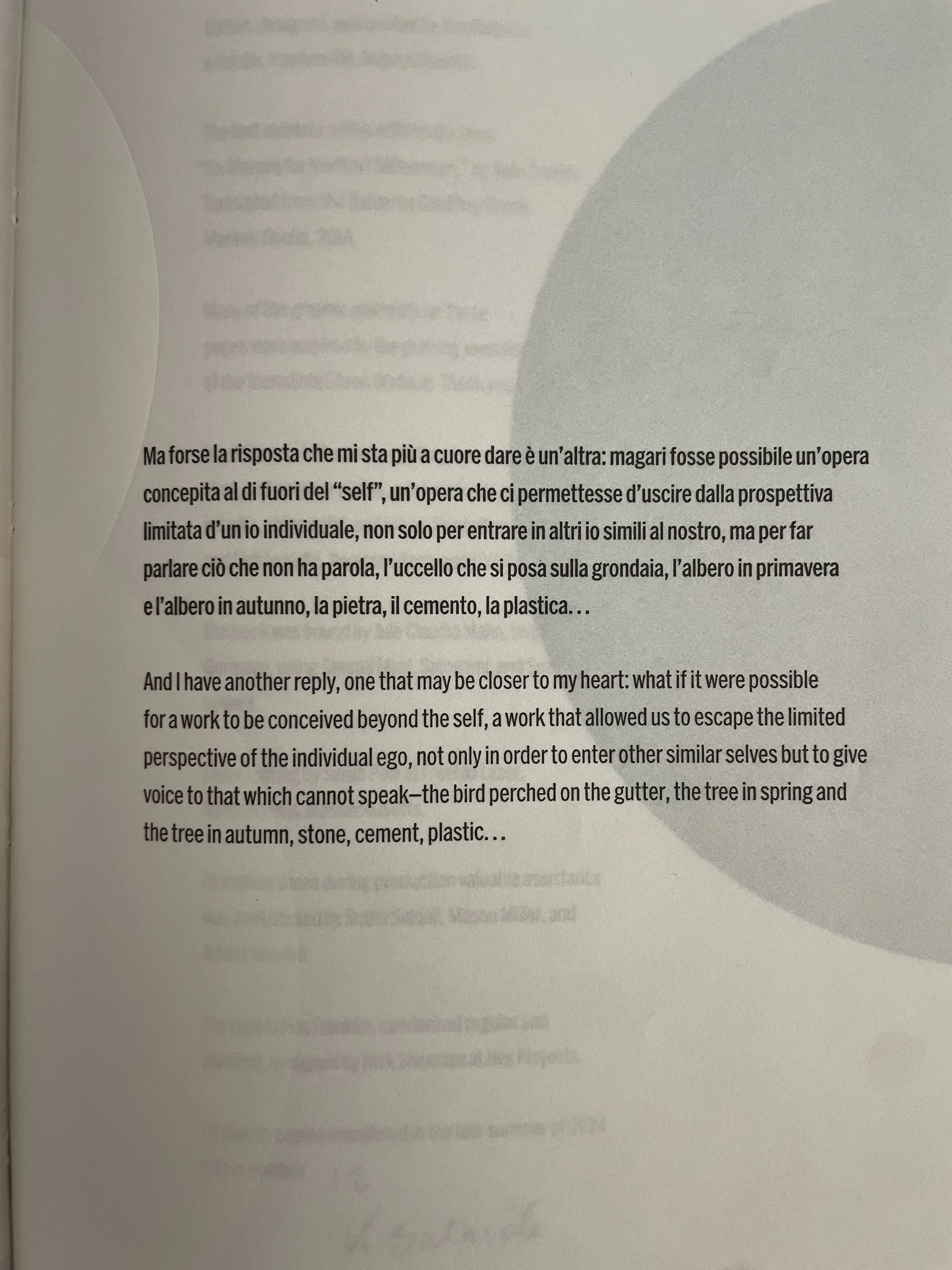
we are left with this last abstract image capturing the combinatorics of our experiences, the rain descending in the imagination, and the multitude of the voices of things that cannot speak … including this object the book.
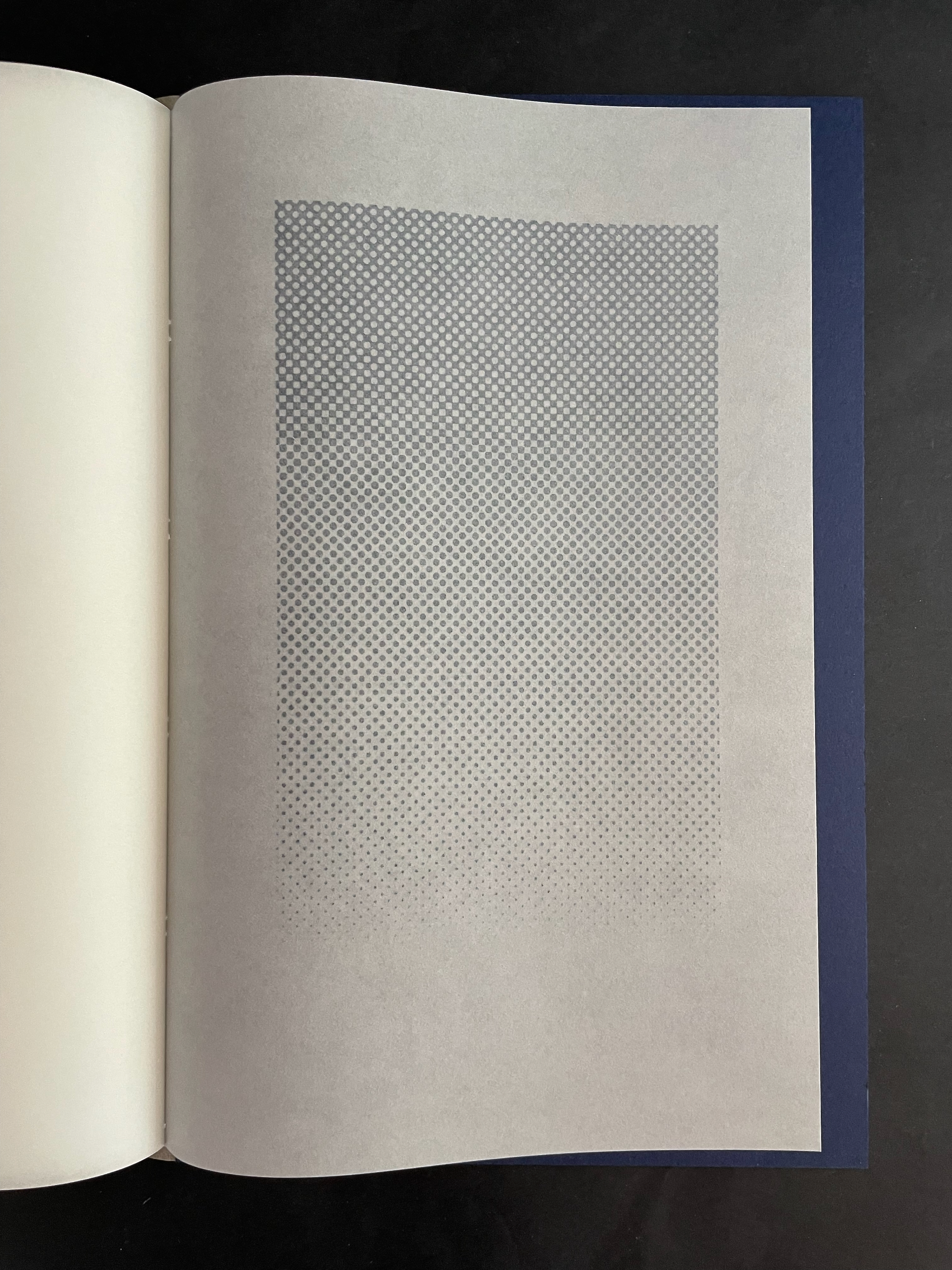
The unwritten sixth memo would have addressed the theme of Consistency. What did Calvino mean by that word? Would he have spoken of the regularity of results such as the consistent taste of the morning espresso at his local bistro? Or the mechanical consistency that worried Walter Benjamin in The Work of Art in the Age of Mechanical Reproduction (1935)? (Calvino might have had a conflict of interest given the lucrative reproduction of his fiction.) Or did he mean the essence of which a person, place, or thing consists? In Invisible Cities, the word refers to the celestial and infernal characters of the two versions of the city Beersheba, the one in the sky and the one on earth. Barring a manuscript find yet to be made, we won’t know. In the meantime, Botnick’s affinity with Calvino welcomes the speculation that his artist’s books offer the kind of consistency Calvino would have appreciated.
Further Reading
“Ken Botnick (I)“. 16 June 2022. Books On Books Collection. See for the Diderot Project (2015) and Table of Contents (2020).
“Angela Cavalieri”. In progress. Books On Books Collection.
“Karen Kunc“. 11 June 2026. Books On Books Collection.
“Pauline Lamont-Fisher“. In progress. Books On Books Collection.
“Caroline Penn“. Books On Books Collection.
“Shirley Sharoff (1)“. Books On Books Collection.
“Shirley Sharoff (2)“. Books On Books Collection.
Benjamin, Walter. 1968. Illuminations. Edited by Hannah Arendt. Translated by Harry Zorn. London: The Bodley Head Ltd.
Calvino, Italo. 2016. Six Memos for the Next Millennium. Translated by Geoffrey Brock. First Mariner books edition. Boston: Mariner Books/Houghton Mifflin Harcourt.
Calvino, Italo. 1998. If on a Winter’s Night a Traveller. Translated by William Weaver. London: Vintage.
Calvino, Italo. 1997. Invisible Cities. Translated by William Weaver. London: Vintage.
 Books On Books