Knot theory seems to be having a moment this year. In February 2025, there was the First International On-line Knot Theory Congress. Not to forget the regularly recurring Swiss Knots Conference (held in Geneva in June) and the 11th Sino-Russian Conference on Knot Theory (held in Suzhou, China in June-July). Or the “Danceability of Twisted Virtual Knots” produced by Nancy Scherich and danced by Sol Addison and Lila Snodgrass at the Math-Arts Conference in Eindhoven in July. And then in September the Scientific American and online media picked up two discoveries in knot theory — one by Mark Brittenham and Susan Hermiller and another by Dror Bar-Natan and Roland van der Veen.
Susan Happersett
Books On Books Collection – Carol Barton
Land Forms and Air Currents (2014)
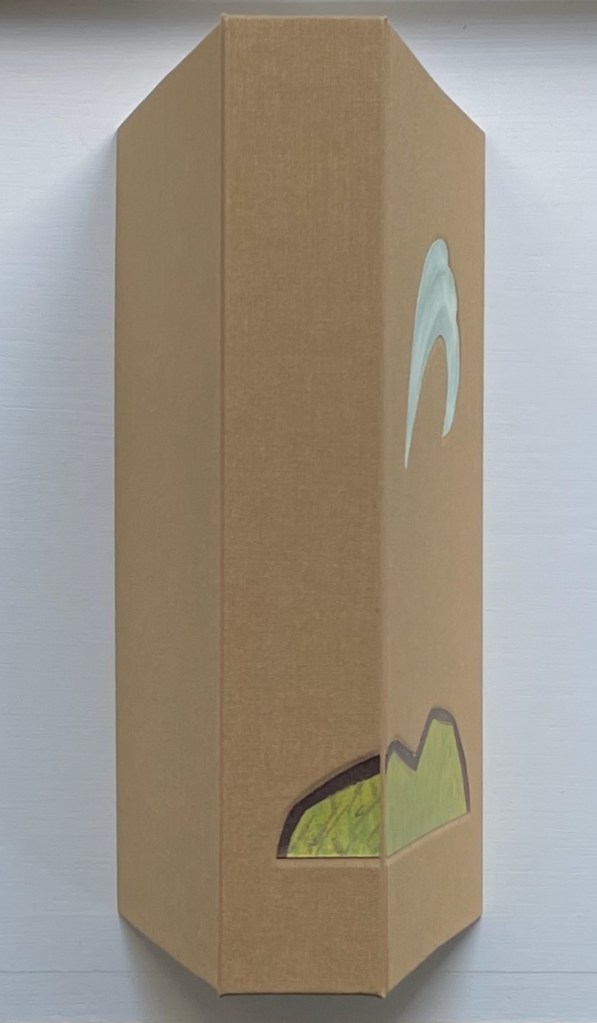
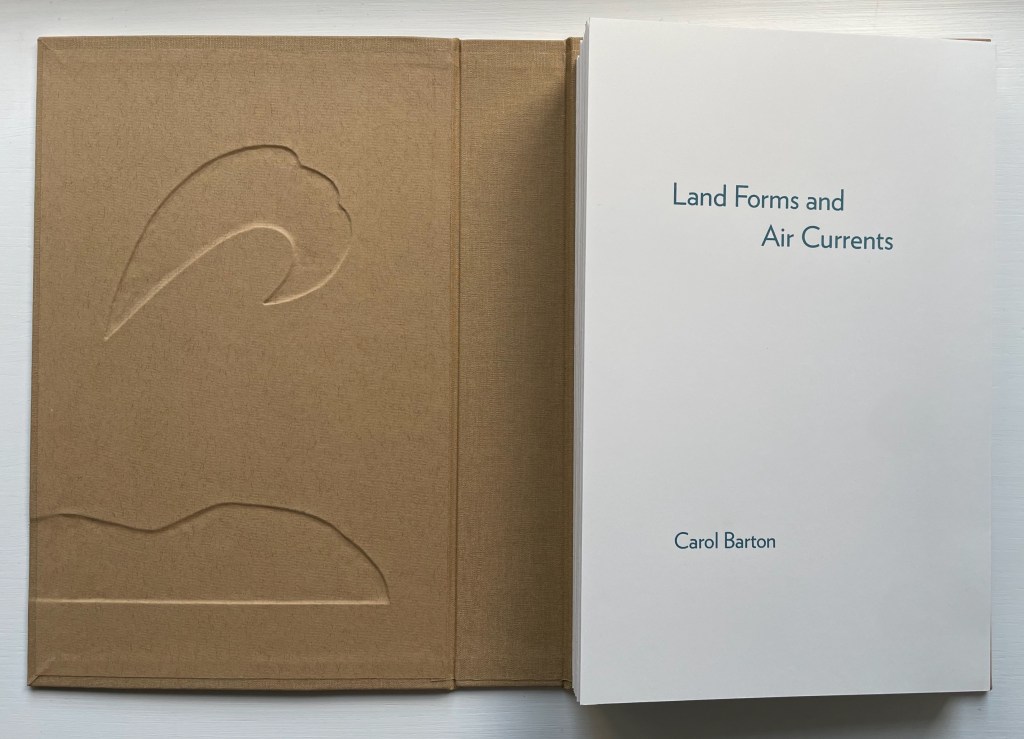

Land Forms and Air Currents (2014)
Carol Barton
Leporello (with 11 pop-ups) fixed to inside cover of case, cloth over board, debossed with fitted, pastedown artwork on front cover and spine. Cover: H292 x W192 x D50 mm. Leporello: H275 x W175 mm. 37 panels. Edition of 25, of which this is #21. Acquired from the artist, 27 October 2023.
Photos: Books On Books Collection. Displayed with artist’s permission.
Carol Barton’s reputation for paper-engineering, supported by her well-received multi-volume The Pocket Paper Engineer, should not overshadow appreciation of her talents with watercolor and words. With its poems of free verse, scanned watercolors and pop-up structures all by the same author/artist, Land Forms and Air Currents (2014) qualifies as a champion of the Blakean tradition in artists’ books.
Continue readingBooks On Books Collection – Paolo Carraro
The Magic Square (1995)
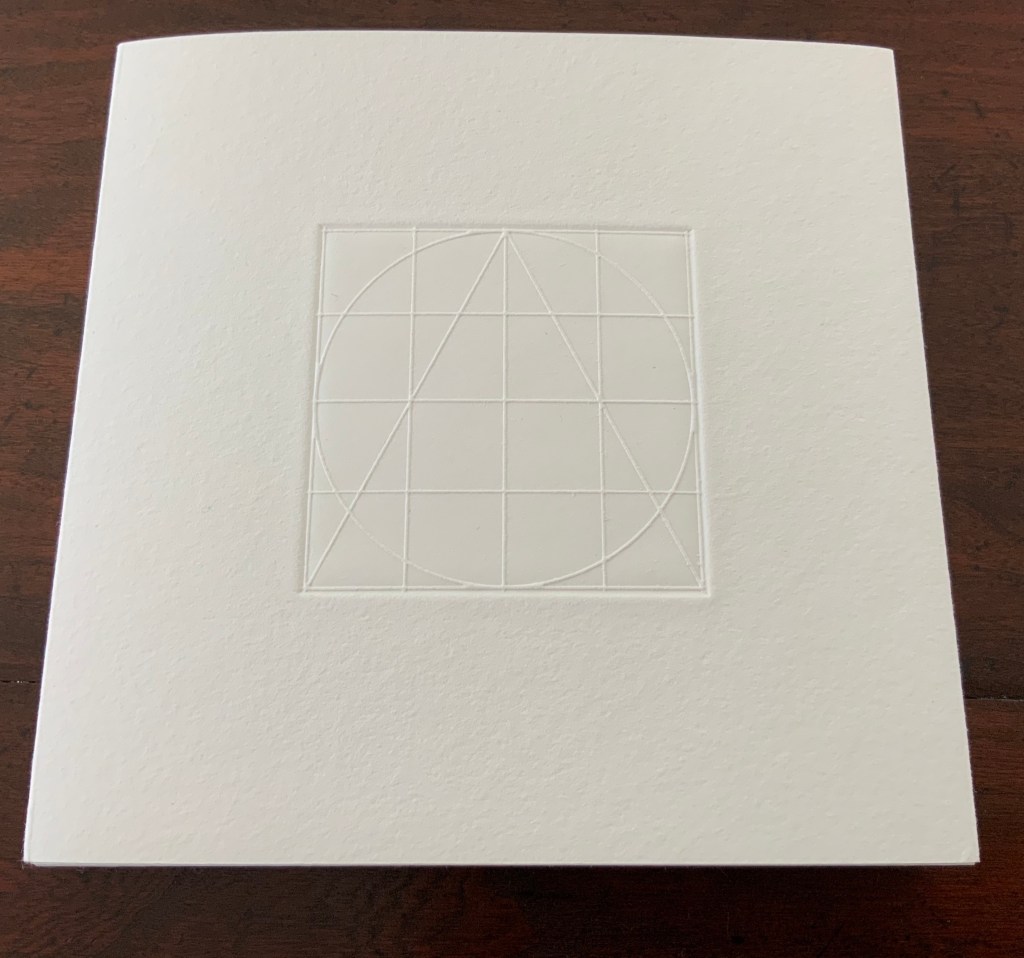
The Magic Square (1995)
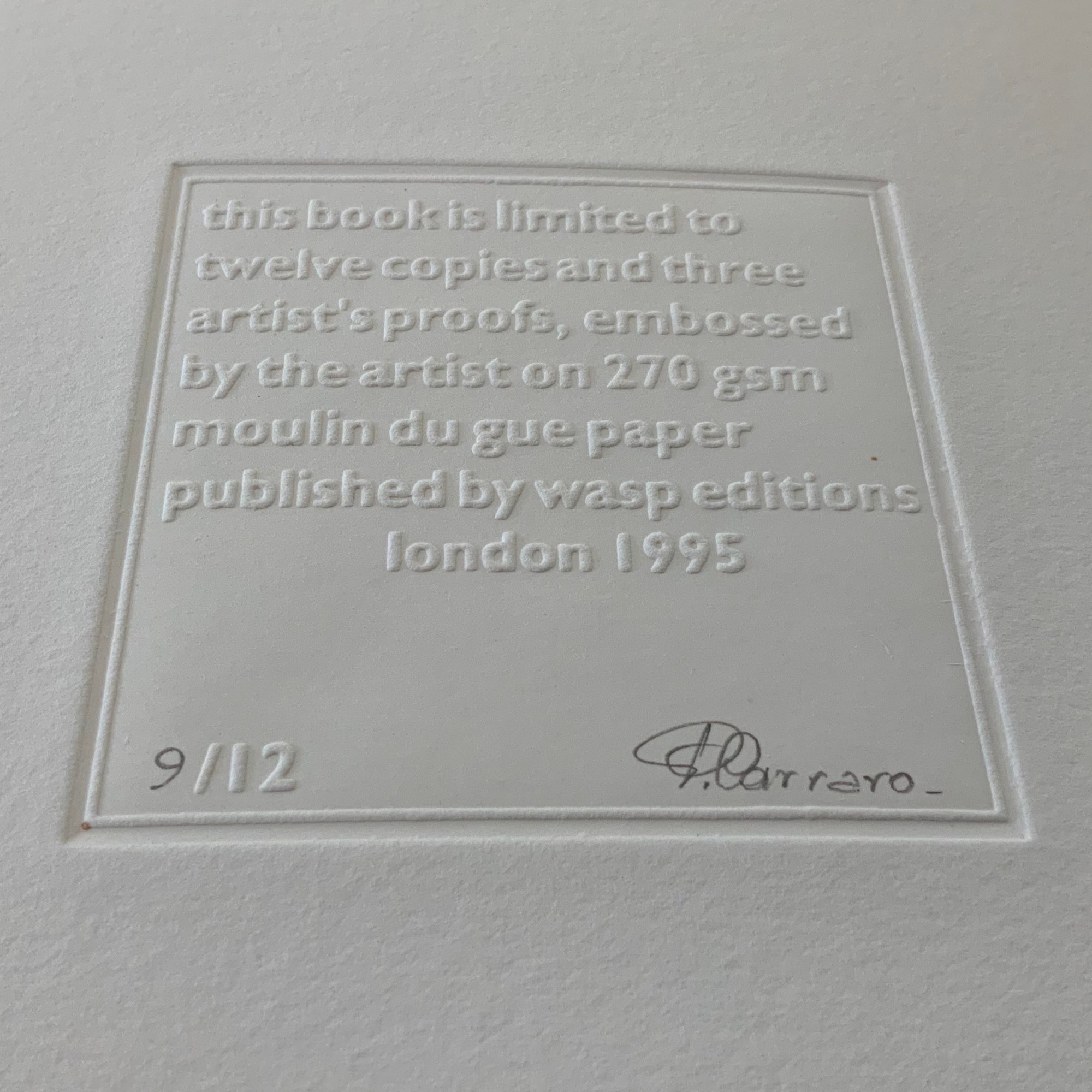
Paolo Carraro
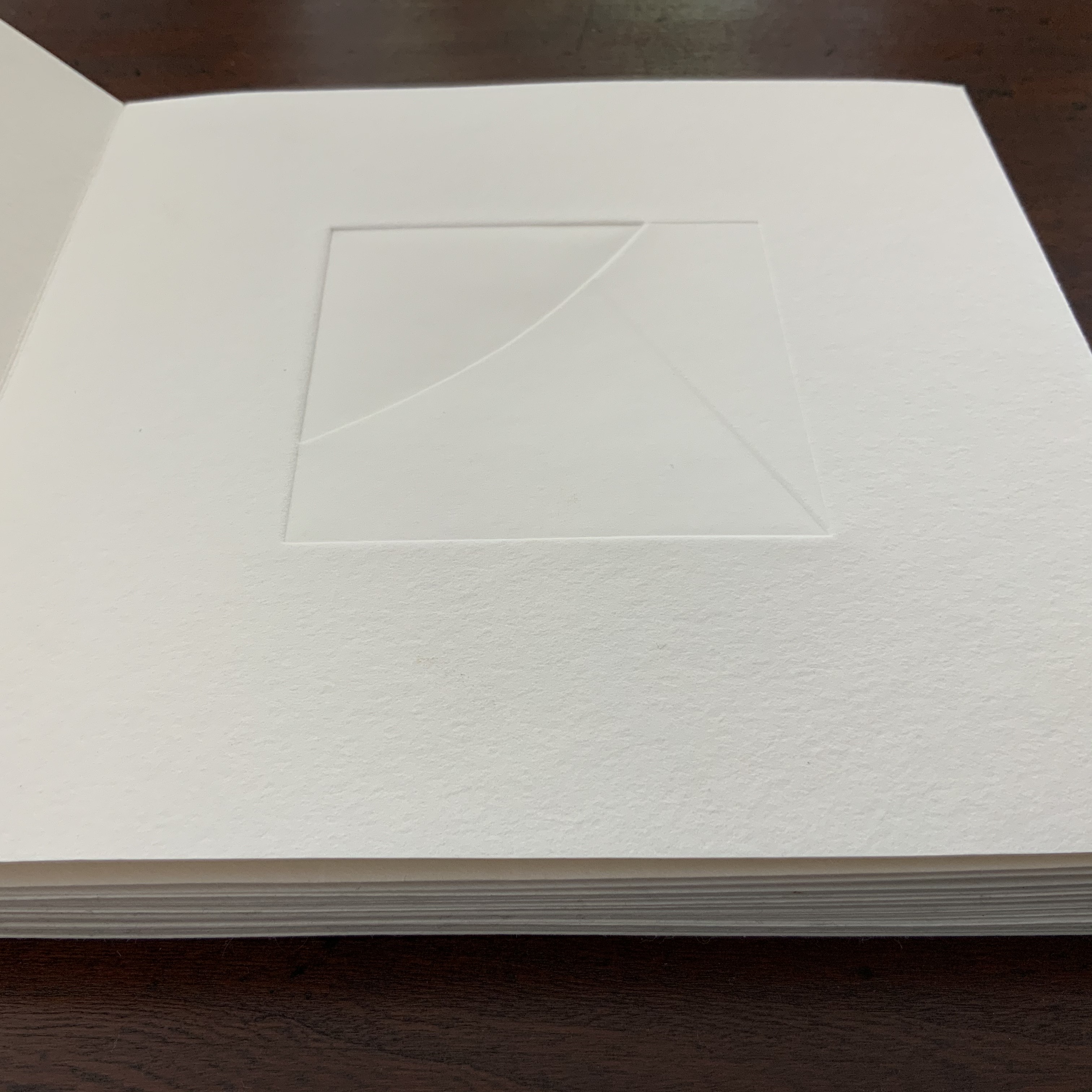
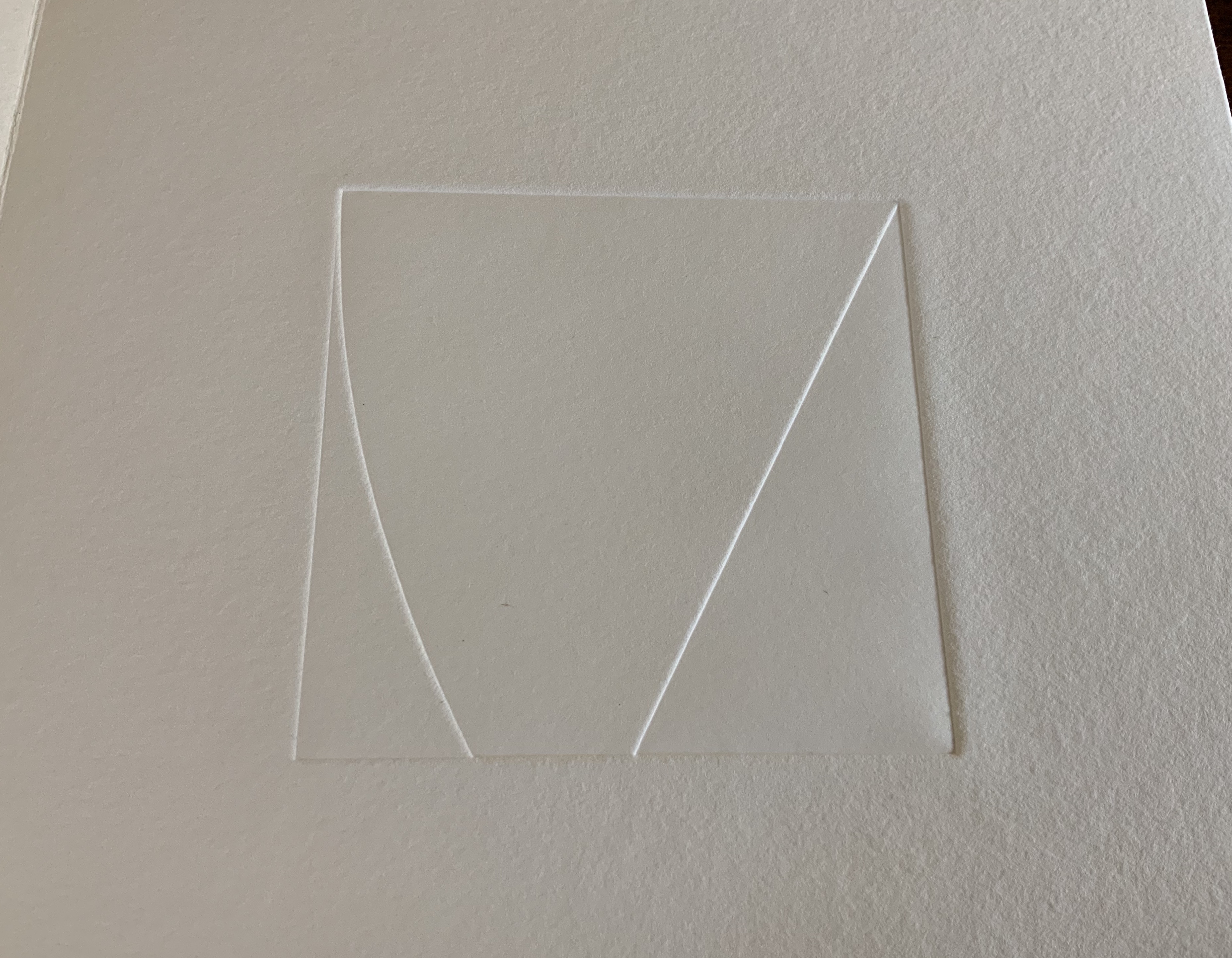
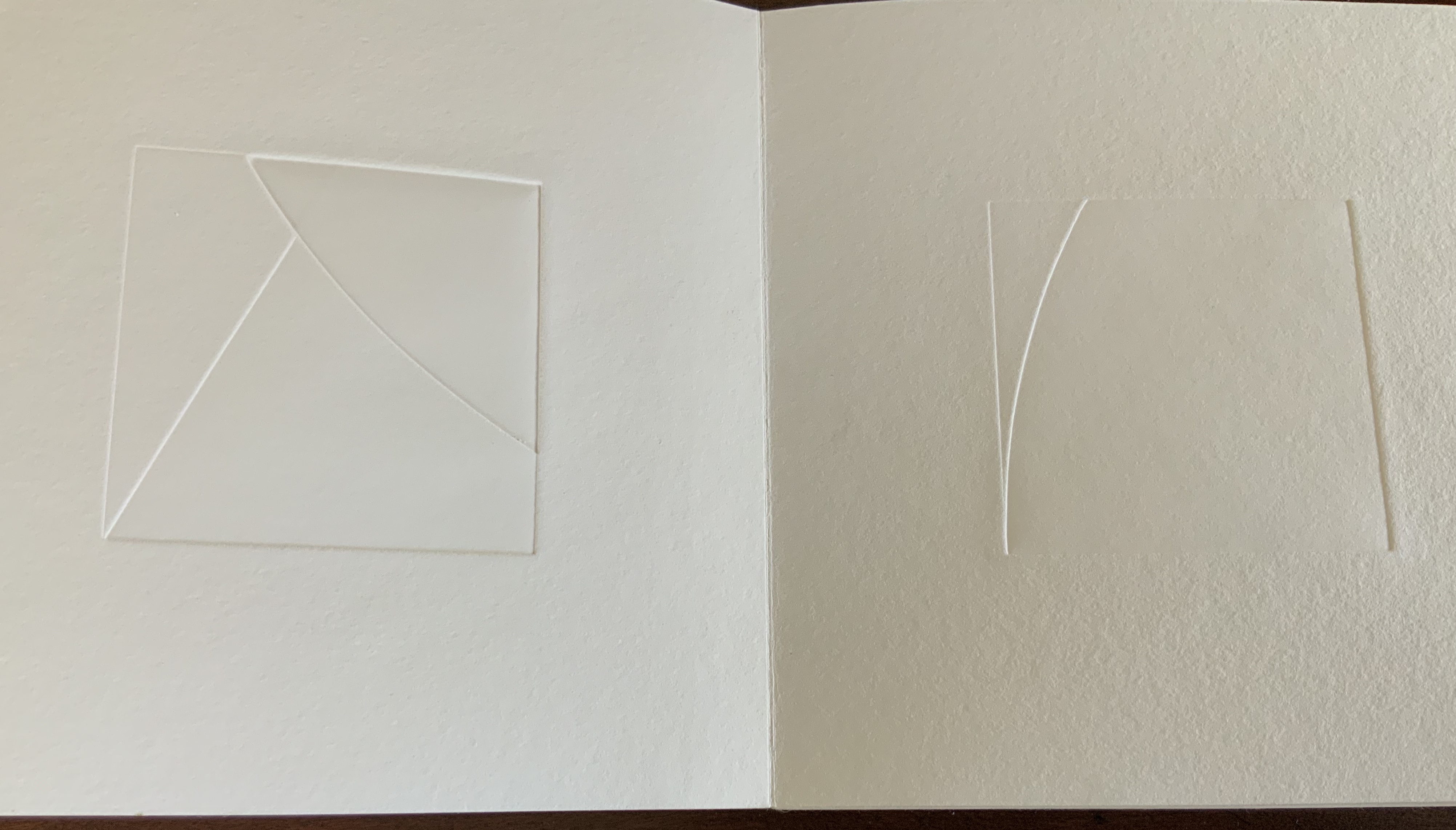
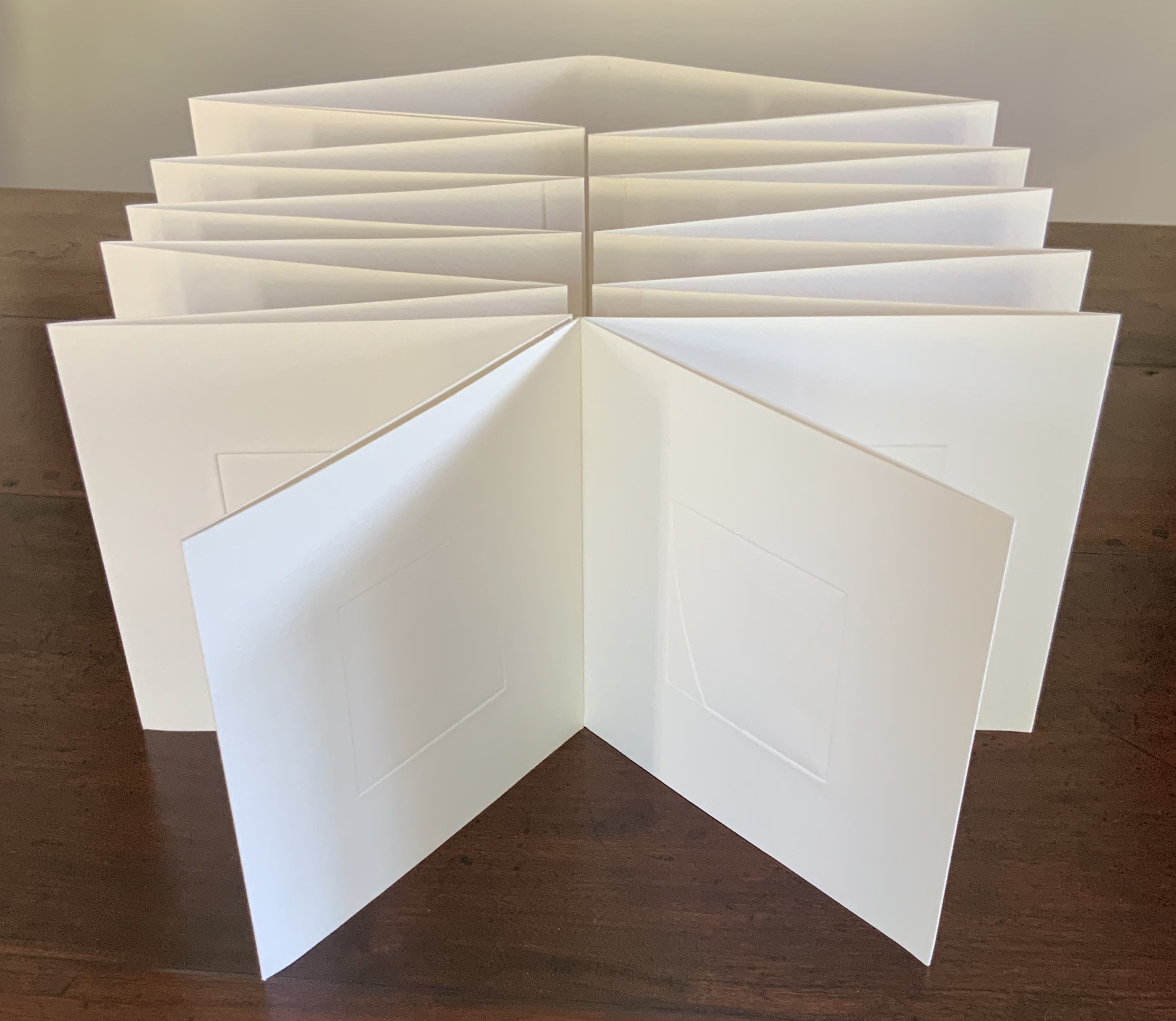
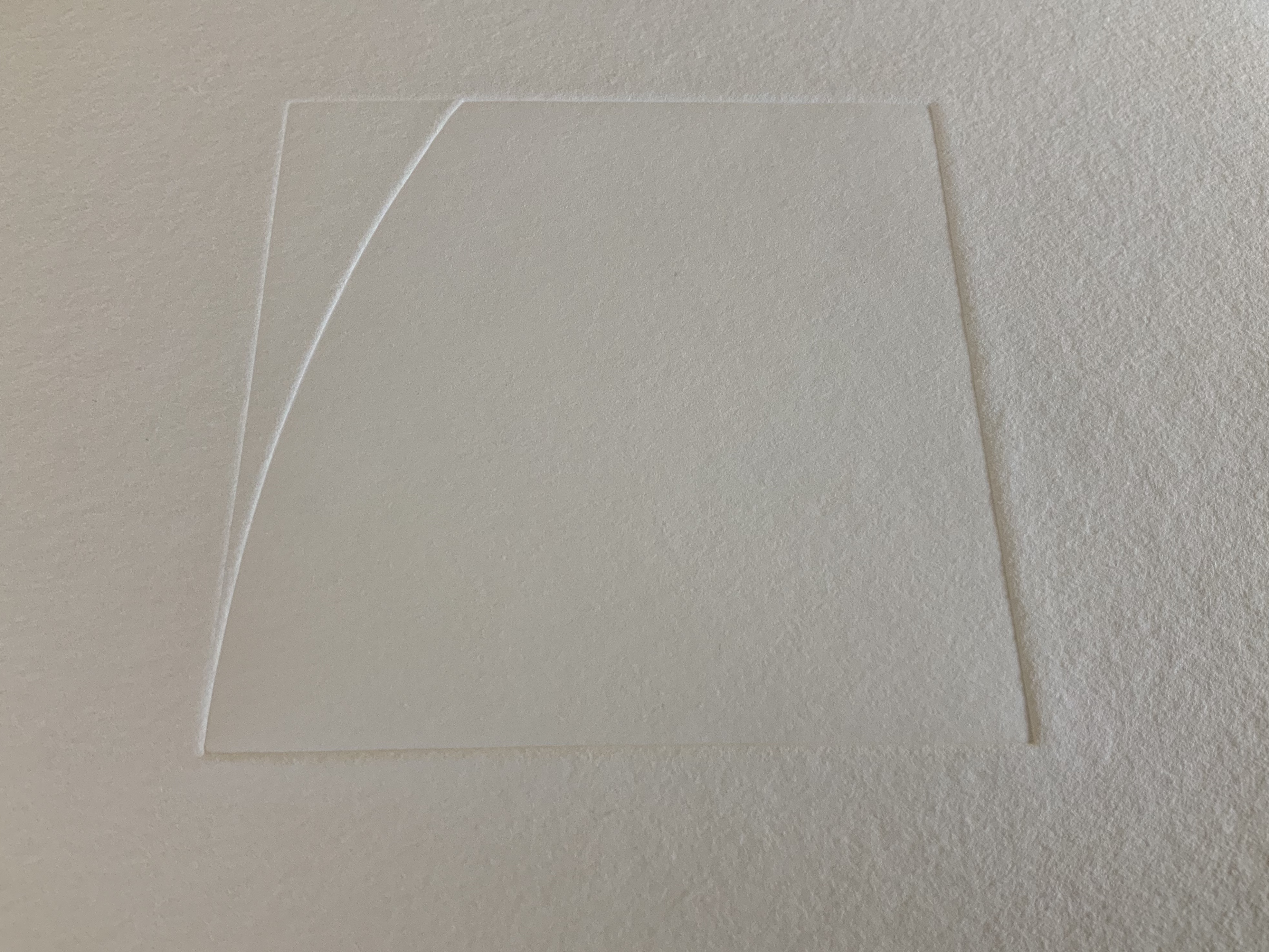
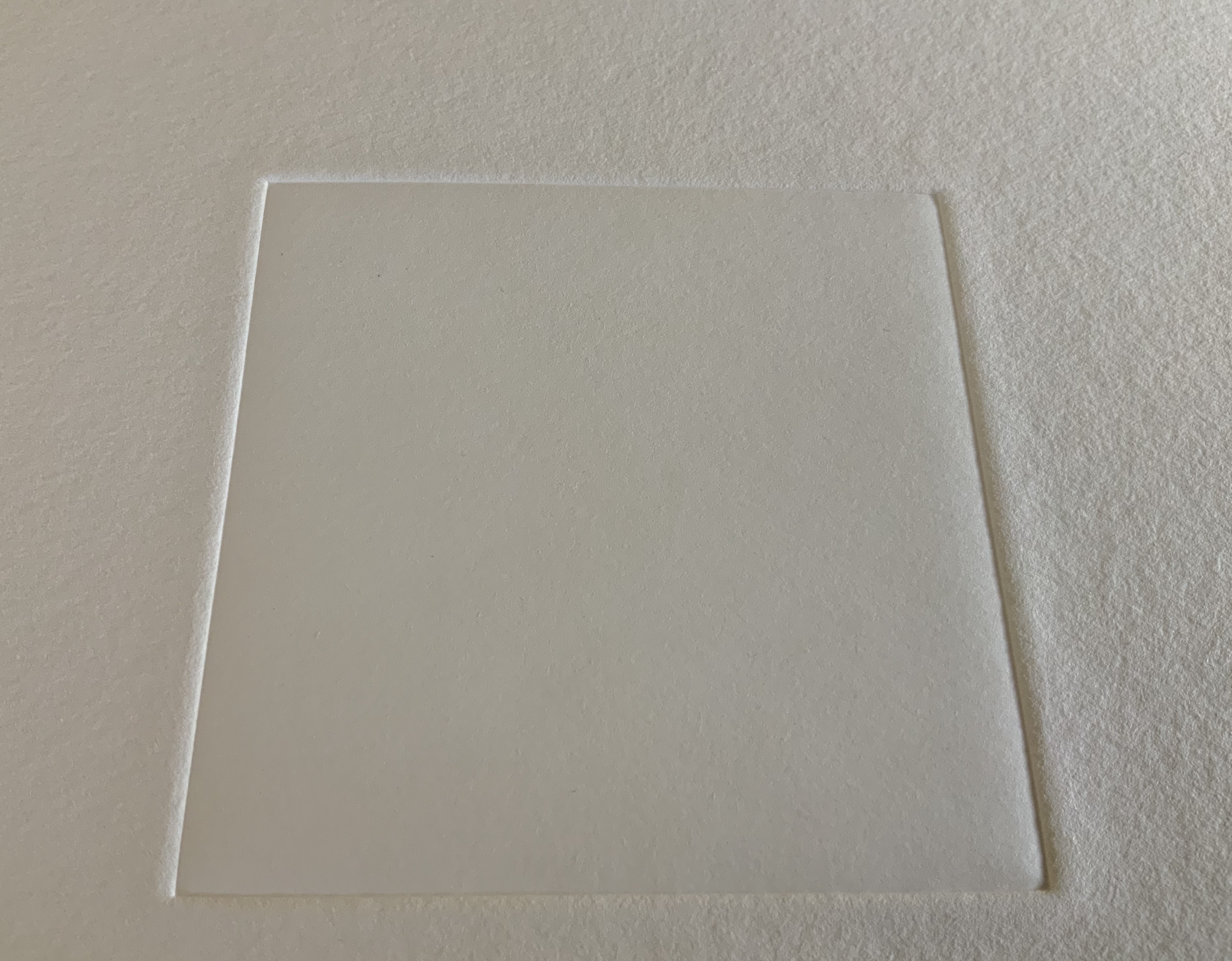
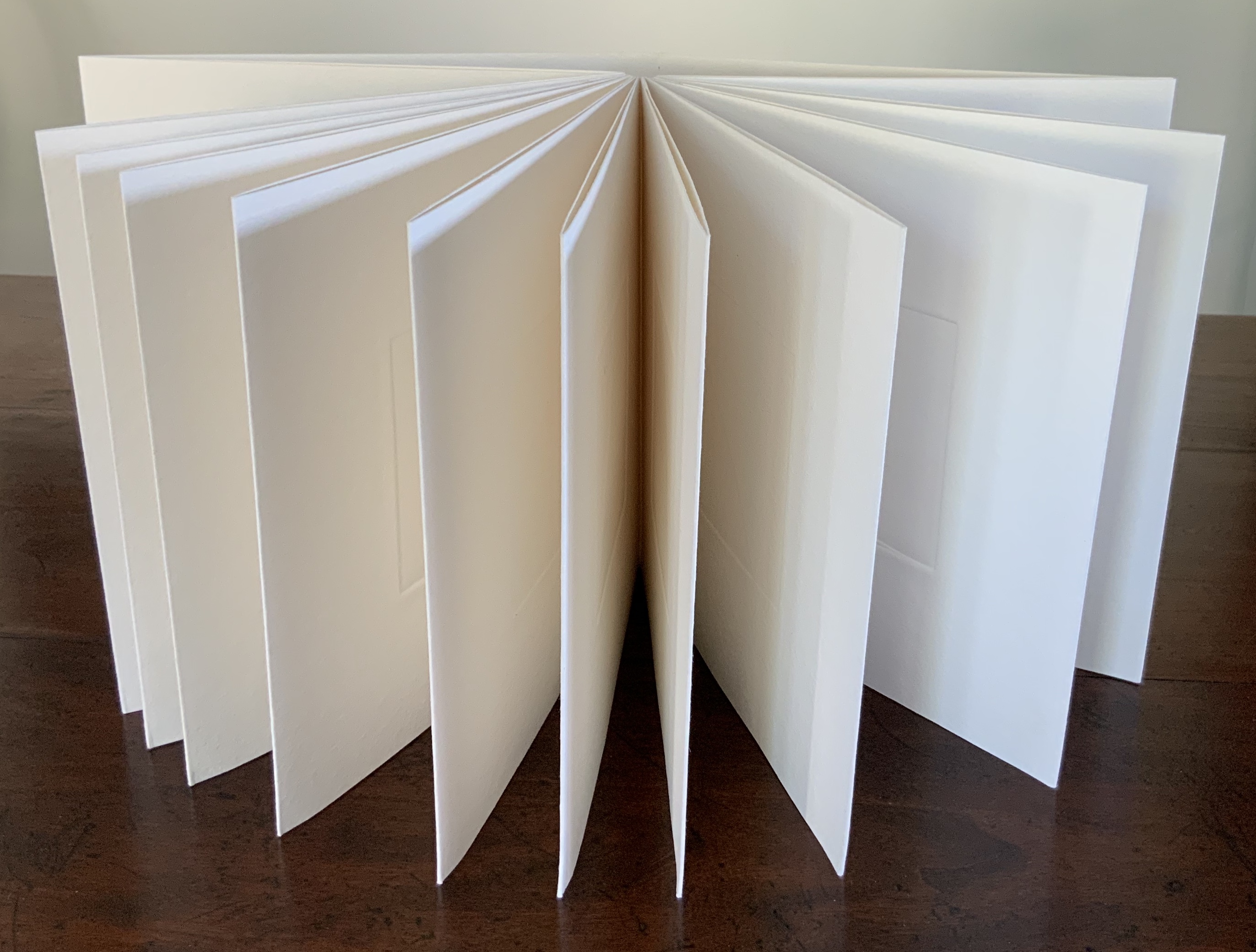
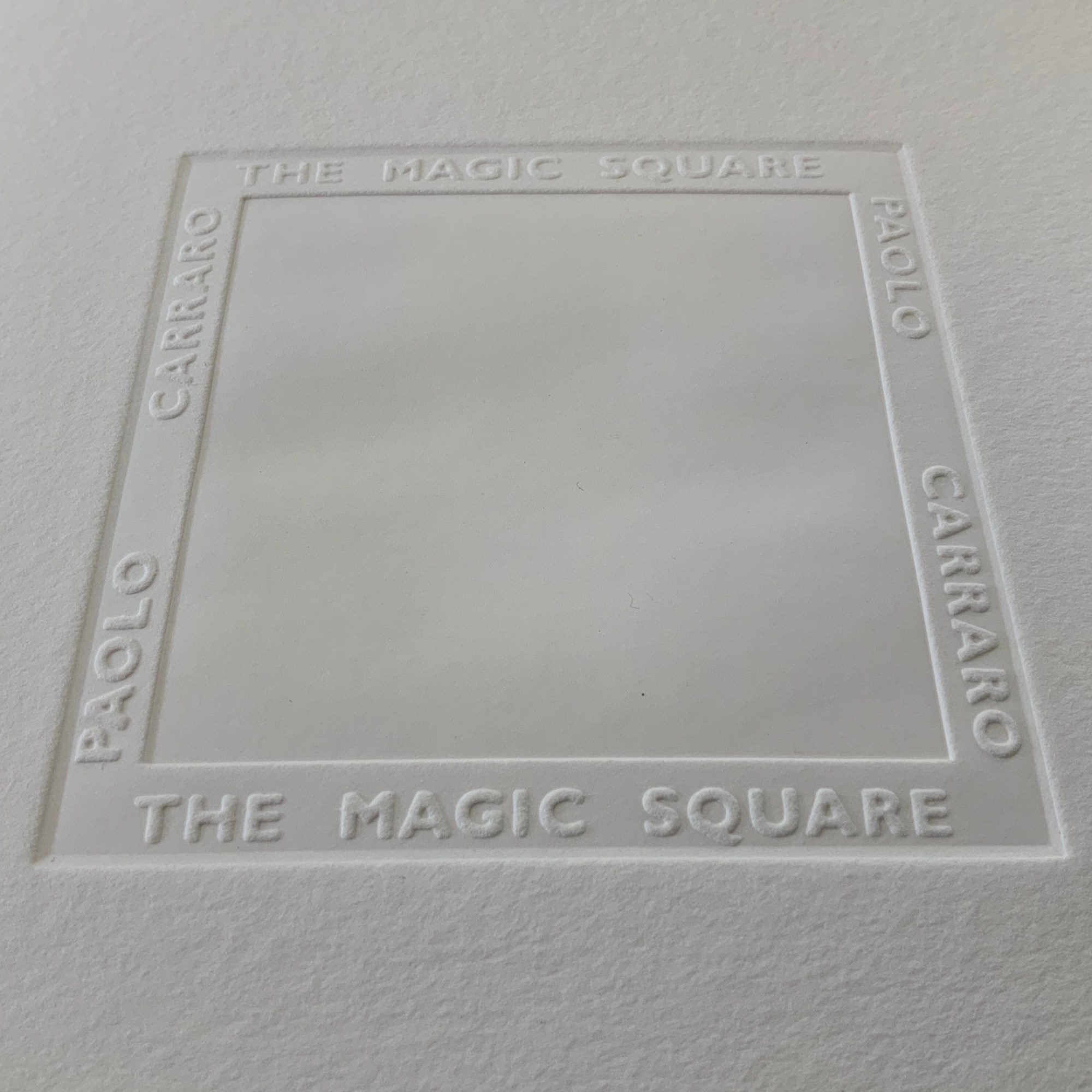
Leporello of 22 panels with embossed single-sheet cover, 16 embossed images on Moulin du Gue 270 gsm. 180 x 180 mm. Edition of 12, of which this is #9 and signed. Acquired from the artist, 17 June 2020.
Photos: Books On Books Collection.
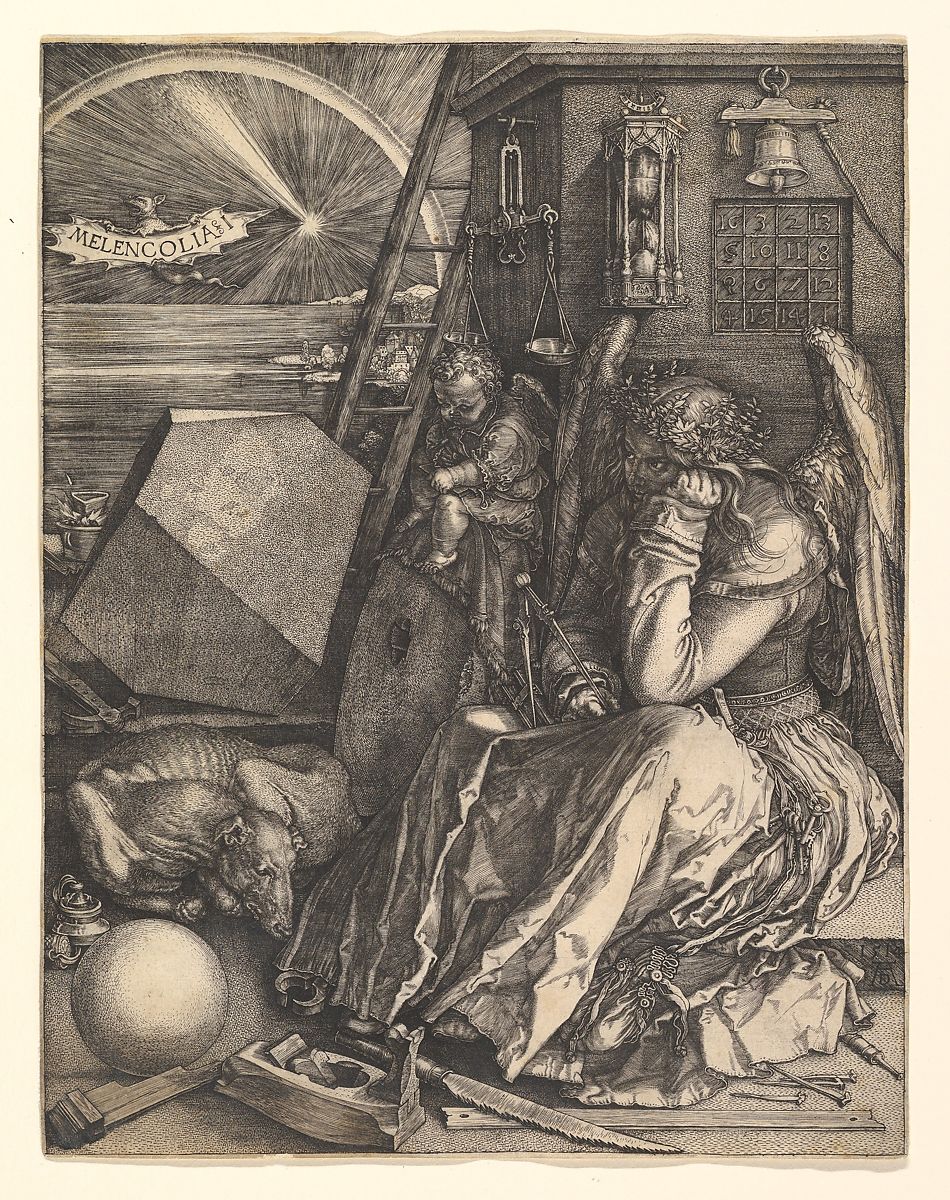
With The Magic Square, Carraro pays homage to Durer’s Melencolia I and its magic square embedded in the wall in the etching’s upper right corner. The magic square is one in which the value across any set of vertical, horizontal or diagonal cells is always the same. From the cover’s embossed magic square, Carraro has taken each of the 16 subdivisions and given it its own panel in the completely white leporello.
The Impermanent in the Permanent (1996)
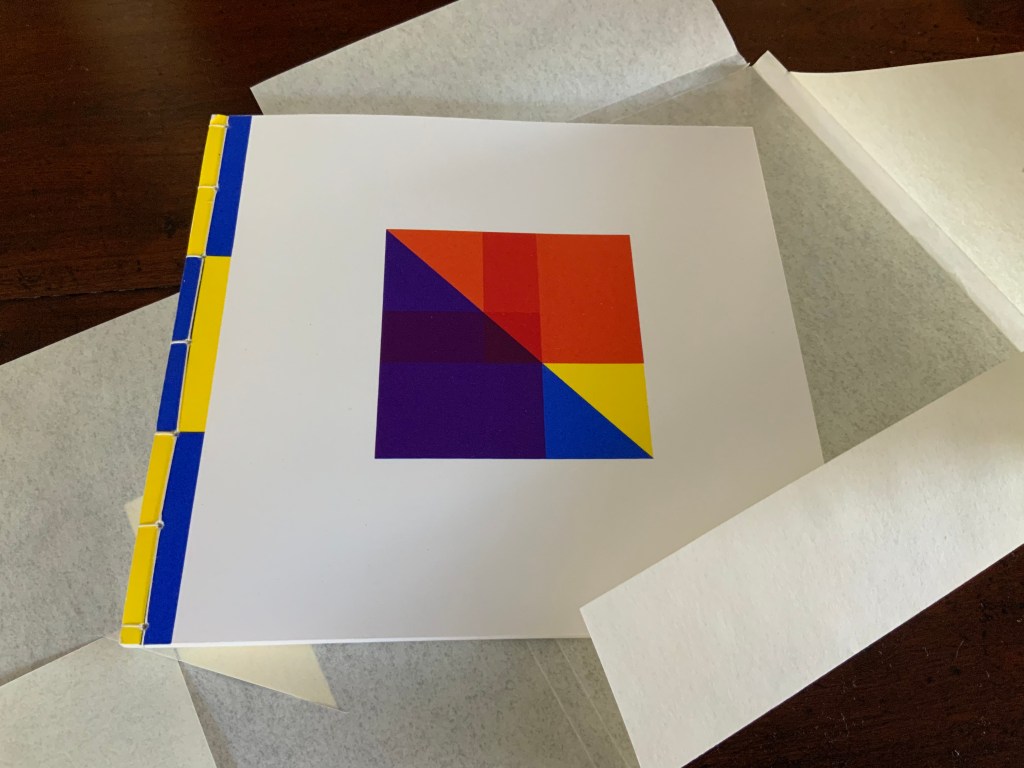
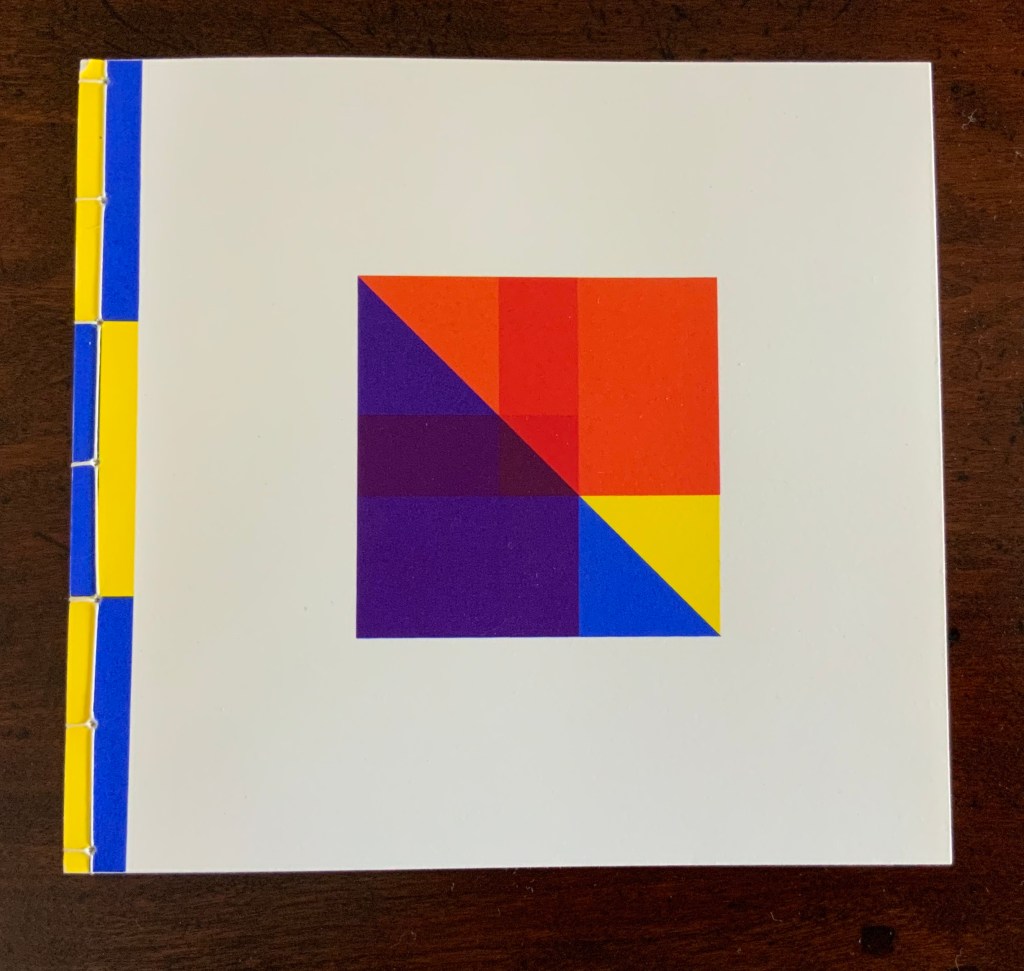
The Impermanent in the Permanent (1996)
Paolo Carraro
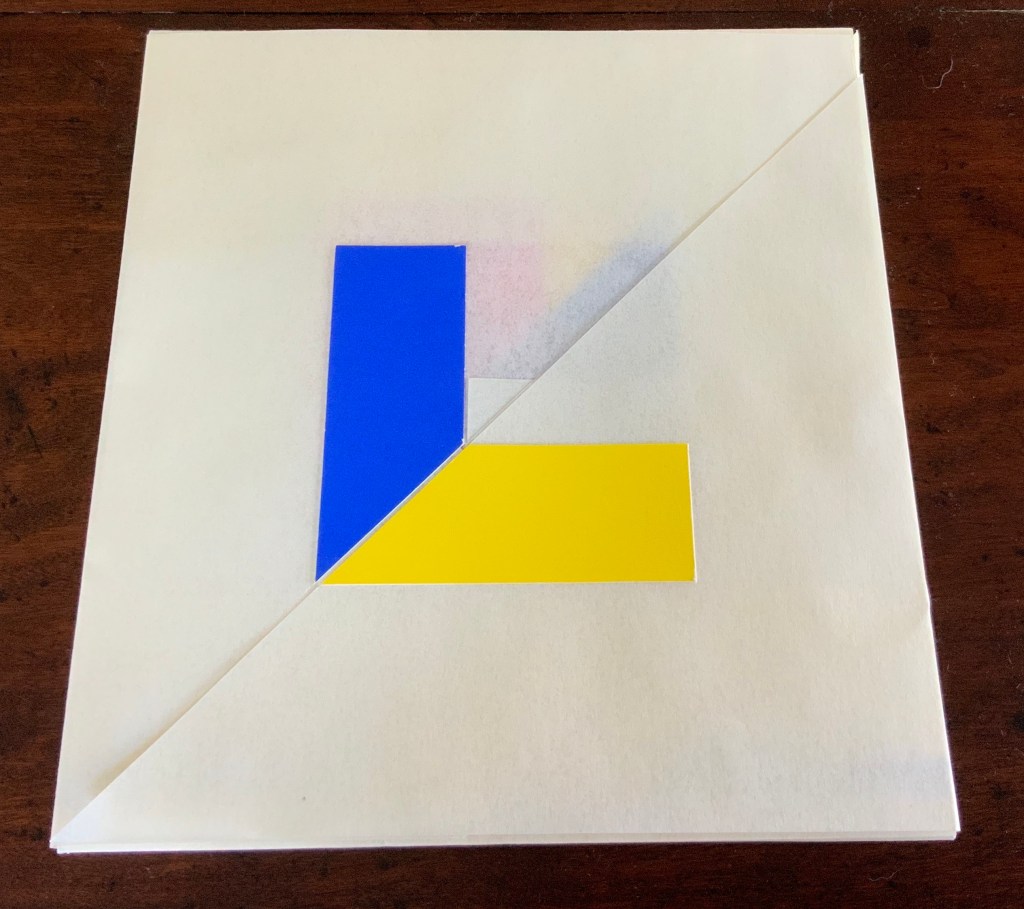
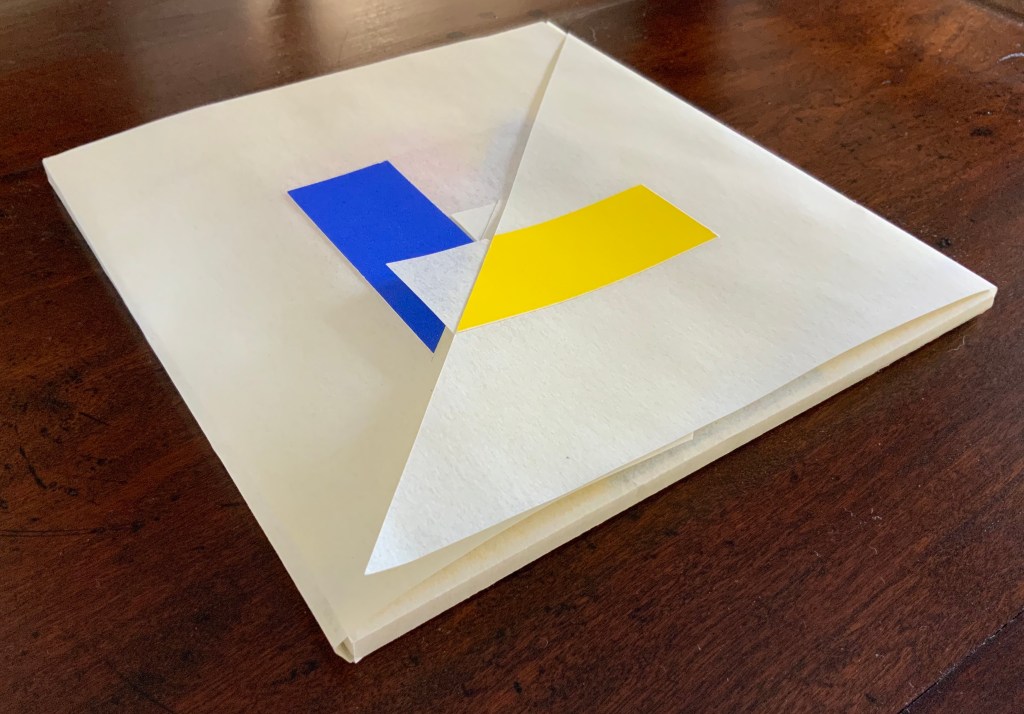
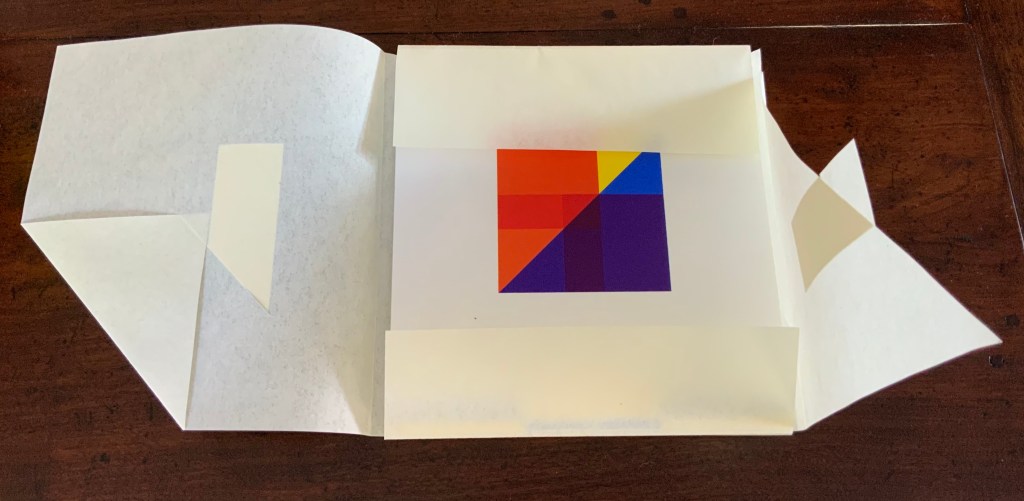
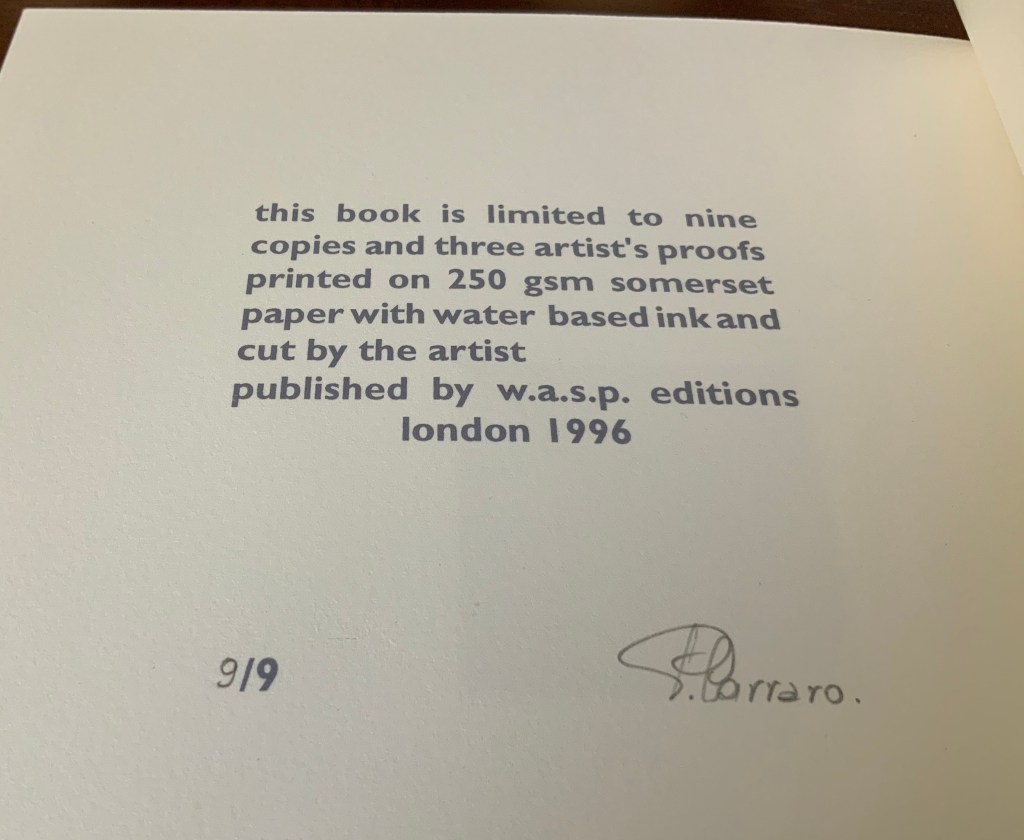
Slotted box envelope: Pergamenata 230 gsm. H205 x W215 mm. Book: Seven-hole Japanese stab binding with cotton thread; 36 pages; 16 images silk-screen printed with water based inks (cyan, yellow and magenta only) on 250 gsm Somerset paper, cut and folded, following the Fibonacci sequence or Golden Mean (1.618 ratio). H200 x W215 mm. Edition of 9, of which this is #9 and signed. Acquired from the artist, 17 June 2020.
Photos: Books On Books Collection.
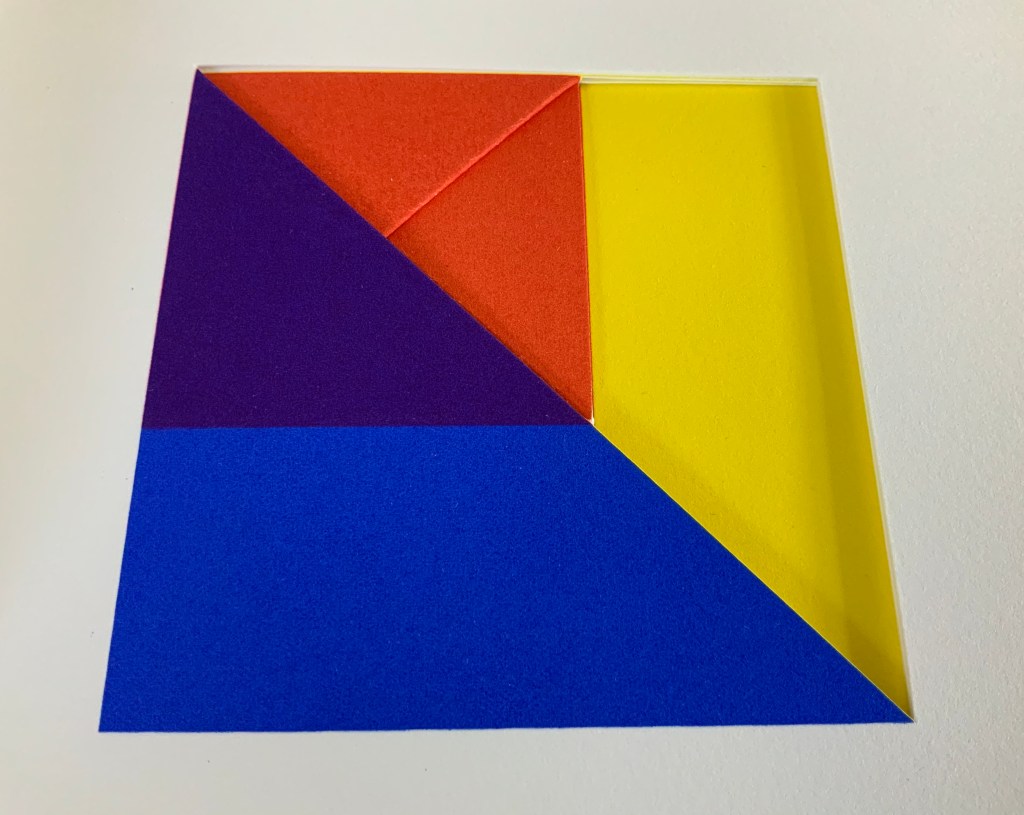
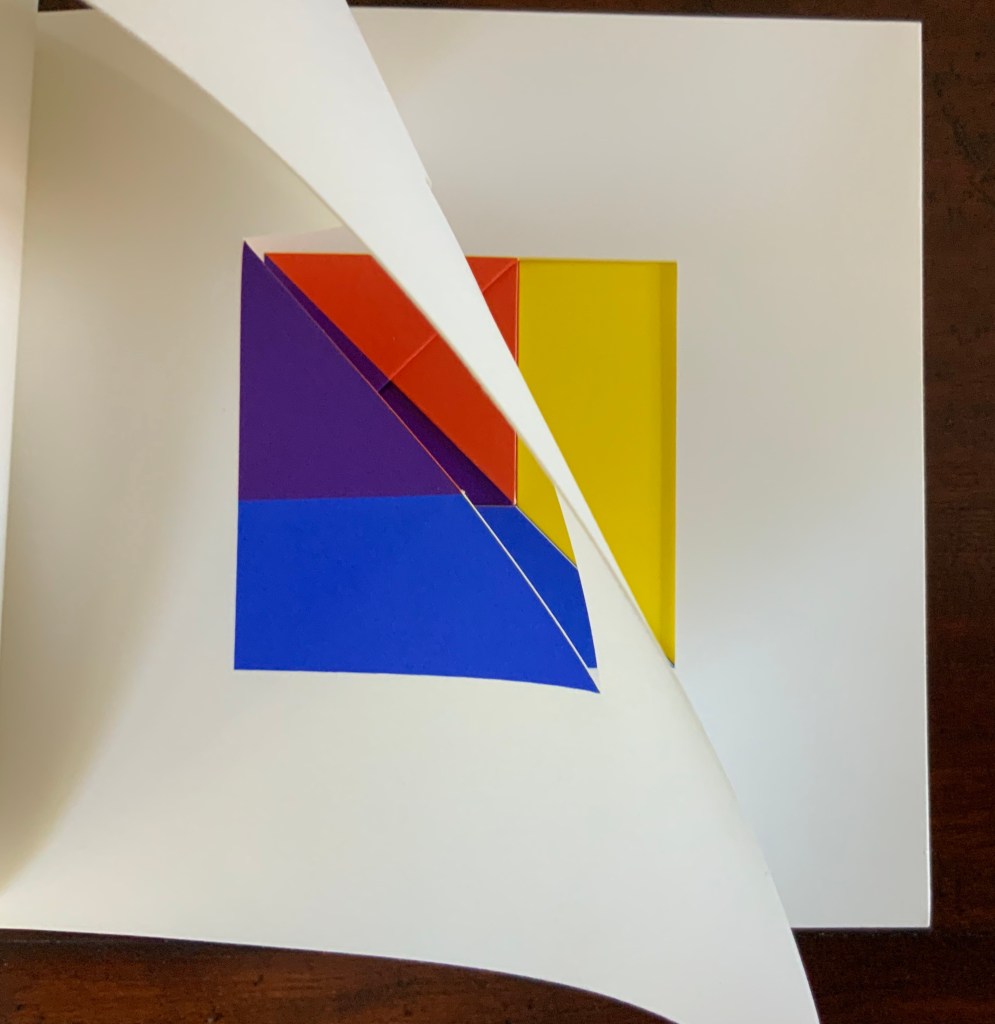
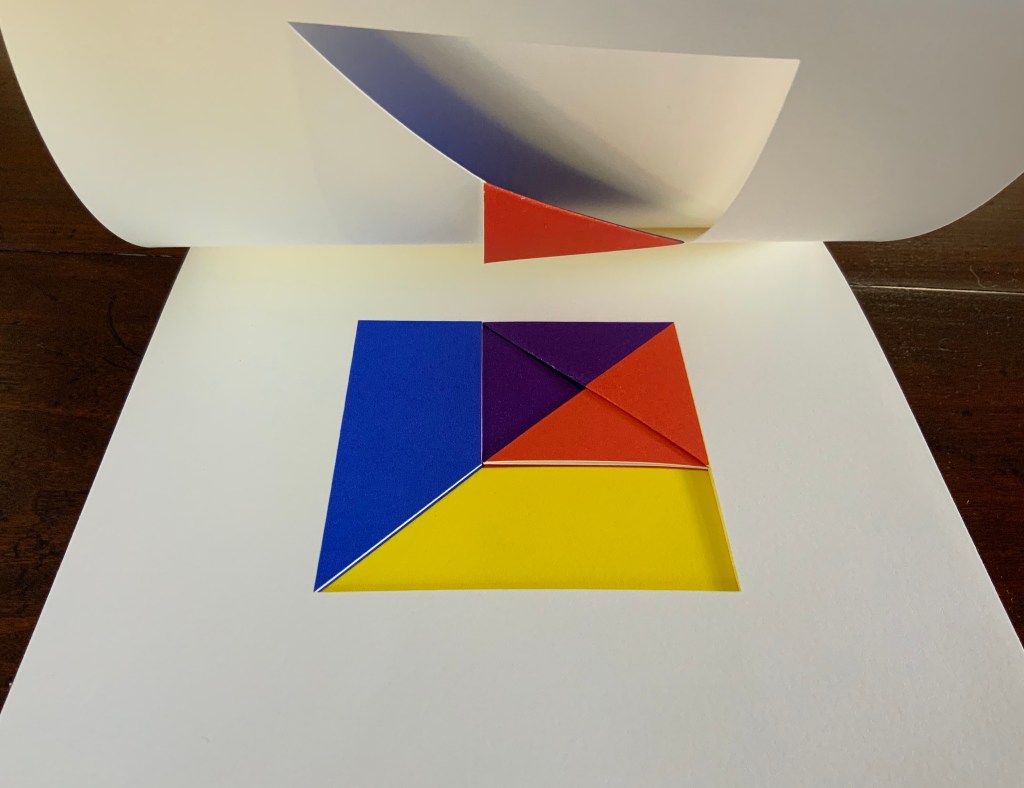
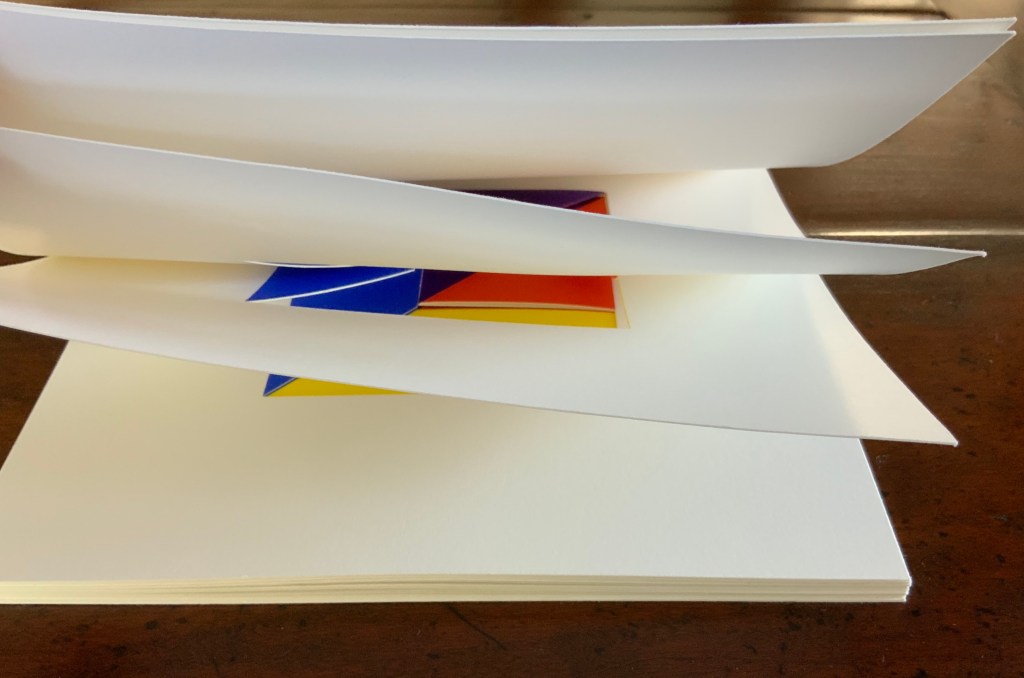
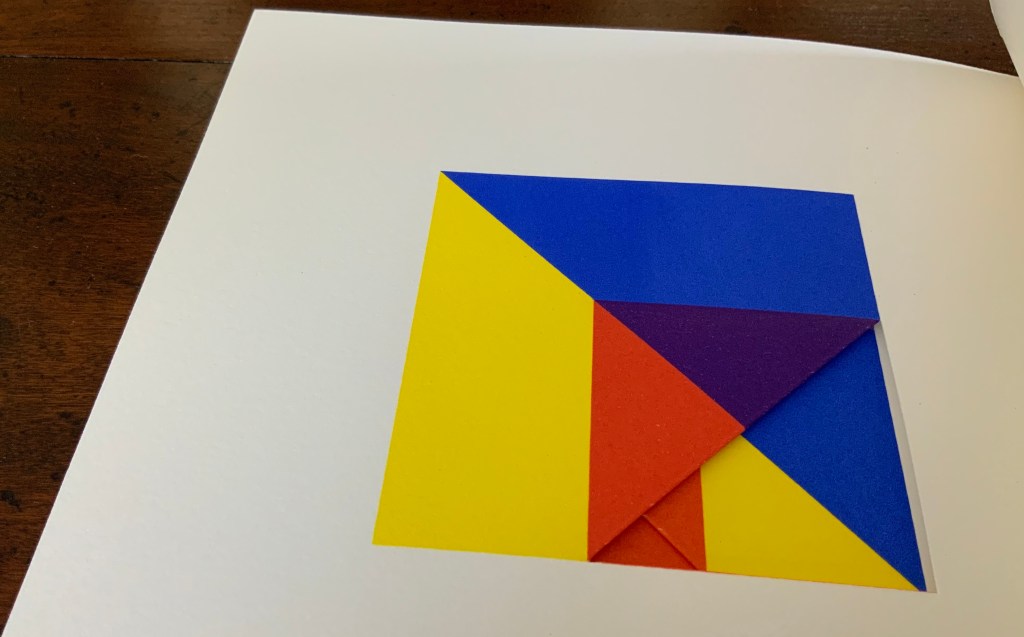
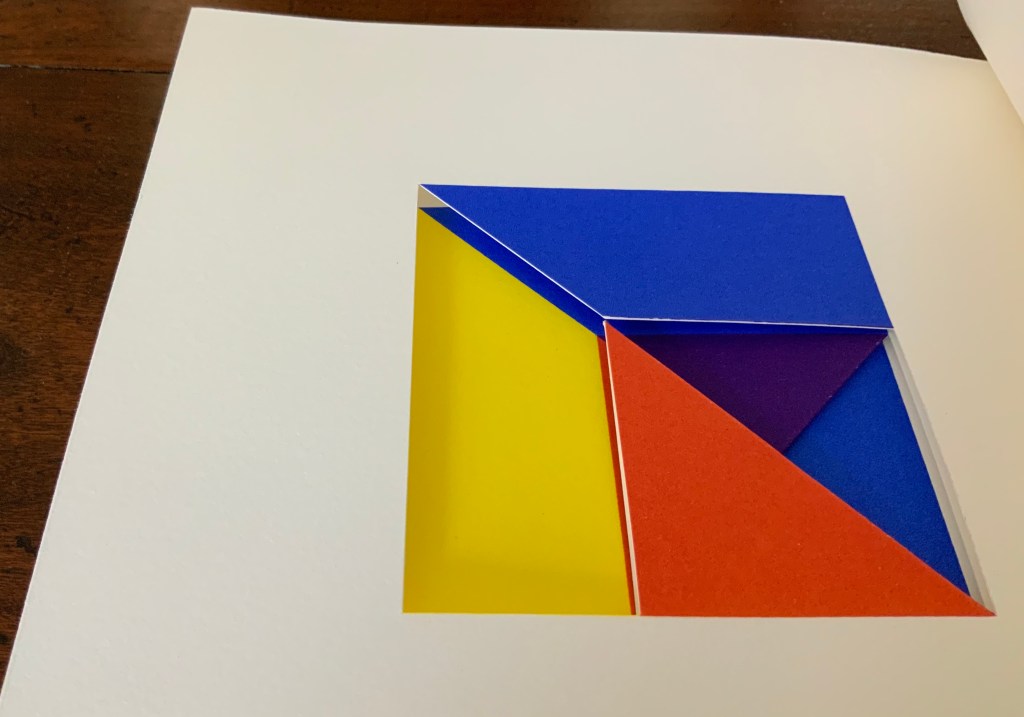
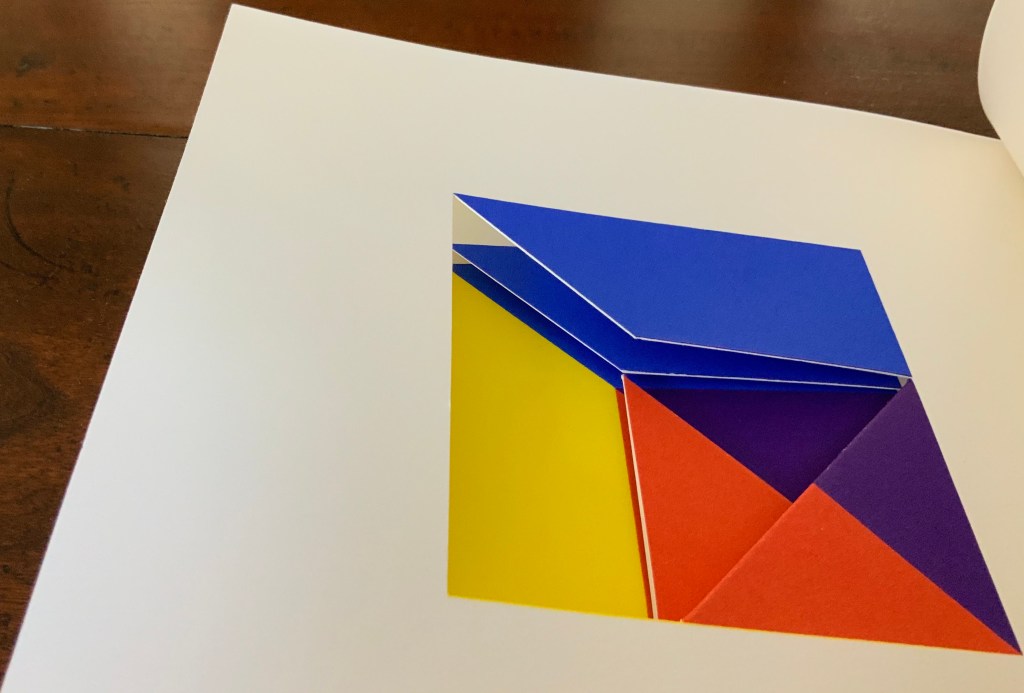
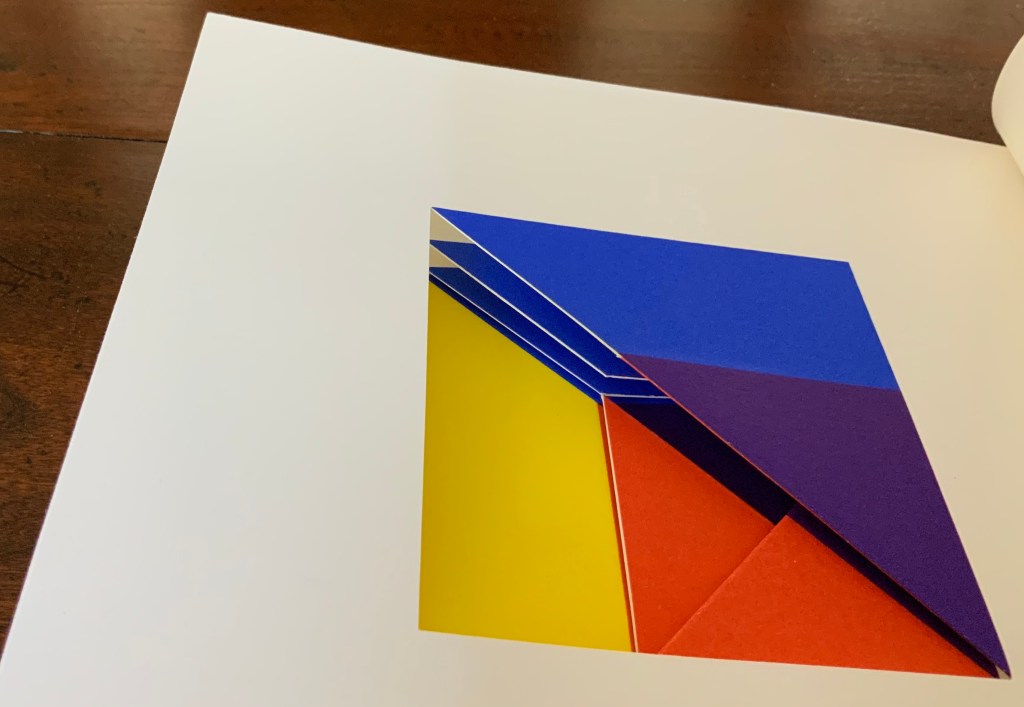
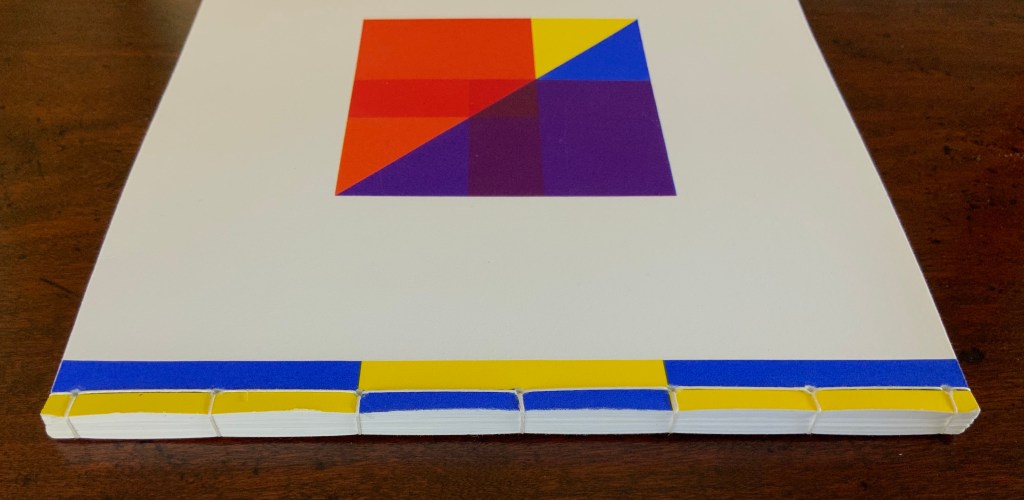
While there are many instances of discovering the Fibonacci sequence in nature and works of art (see below), here is an instance of generating art deliberately with the Fibonacci sequence. Using the primary colors, cut-outs, folds and rotation, Carraro creates The Impermanent in the Permanent. Peering through the cut-outs and down into the pages and slowly rotating the book, the reader/viewer can experience the Fibonacci Spiral.
Carraro’s two works in this collection echo others such as Susan Happersett’s Conch, Helen Malone’s Ten Books of Architecture and Ioana Stoian’s Nous Sommes.
Further Reading
Allen, Shelley. “Fibonacci in Art and Architecture”, Fibonacci.com. Accessed 23 June 2020.
Meisner, Gary B. “Design/Art”, Phi: The Golden Number. Accessed 23 June 2020.
Reich, Dan. “The Fibonacci Sequence, Spirals and the Golden Mean”, Dan Reich’s Home Page, Temple University. Accessed 23 June 2020.
Books On Books Collection – Susan Happersett
Conch (1999)

Conch (1999)
Sixfold accordion consisting of 9 image panels and 3 text panels (including cover panel) on Mohawk Superfine. Closed: H157 x W76 mm; Open: H157 x W900 mm. Edition of 55. Acquired from Boekie Woekie, 29 October 2019.
From the colophon: “This series of mathematical drawings is based on the growth patterns of conch shells and the Fibonacci sequence.”

First panel
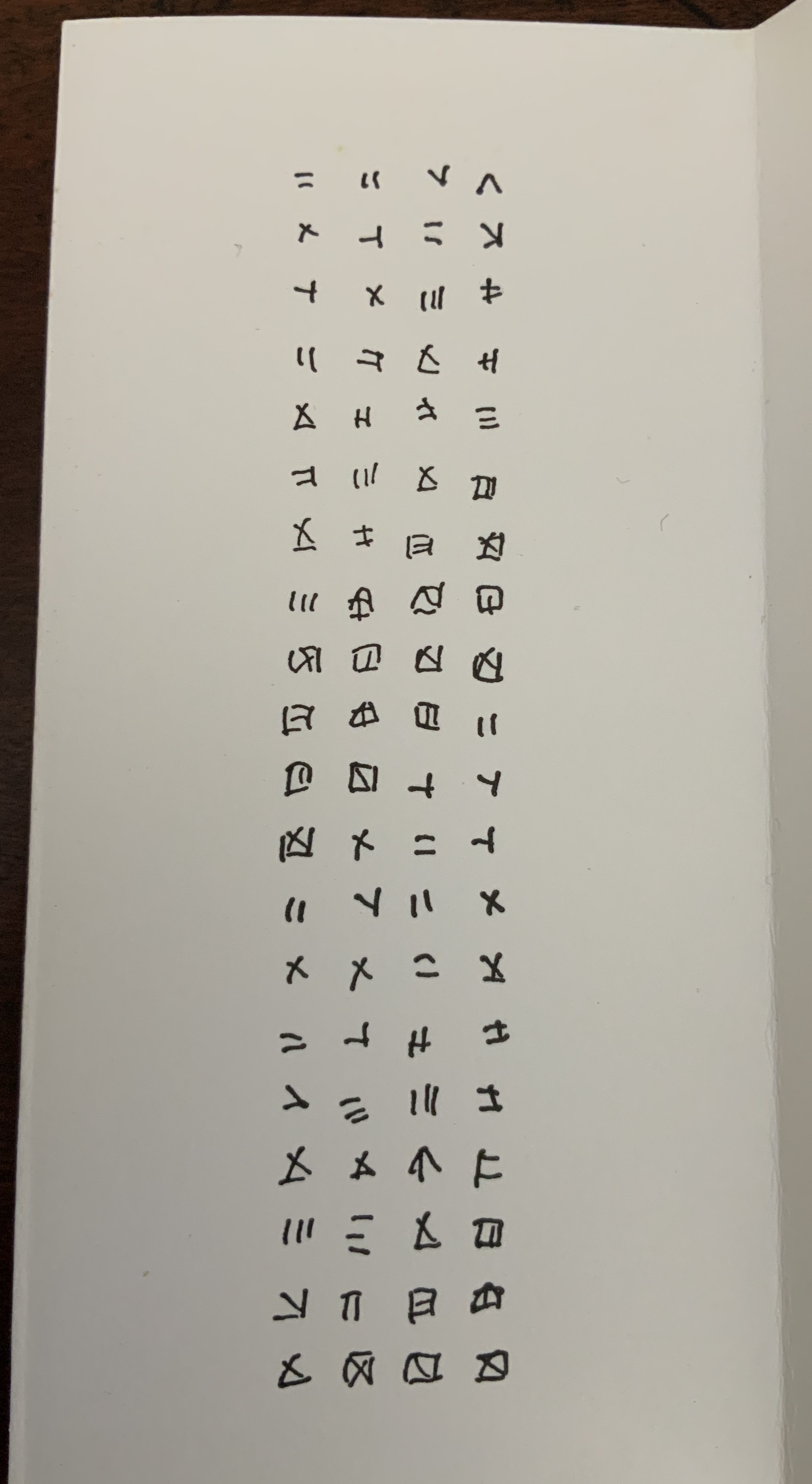

Fourth and eighth panels

Panels 4-9 and colophon panels
The Happersett Accordion (2001)
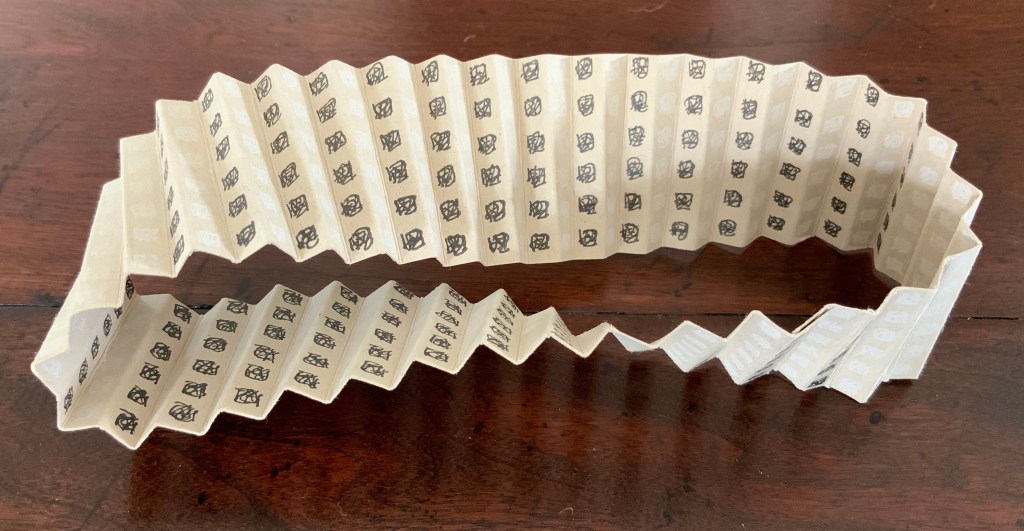
The Happersett Accordion (2001)
Susan Happersett & Purgatory Pie Press
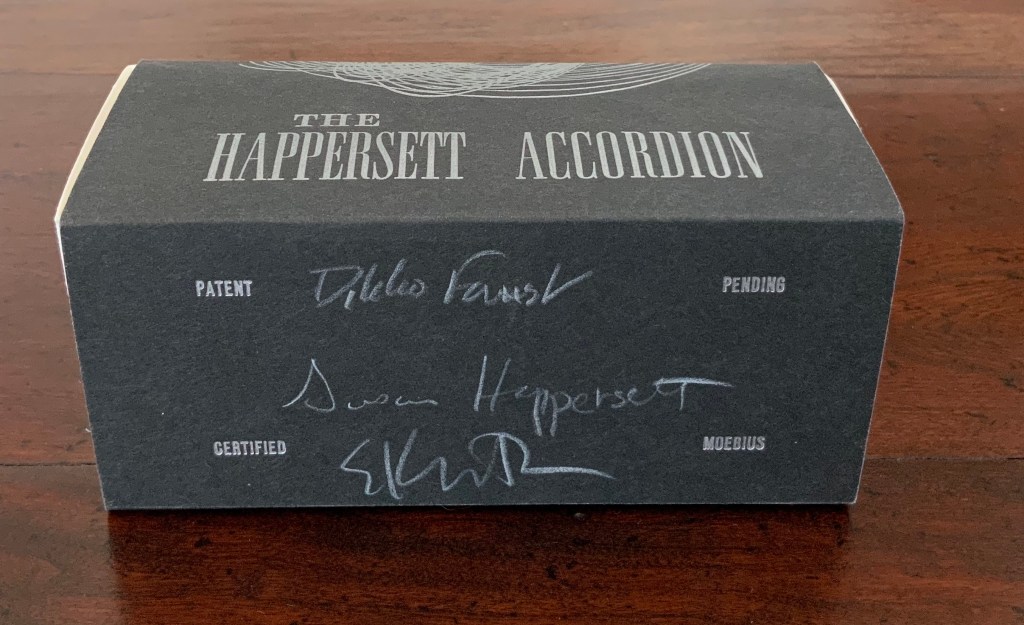
Folded white card box, letterpress in black ink, with black card sleeve, letterpress in silver-colored ink, H65 x W152 mm, enclosing an accordion-fold Möbius strip, with black- & white-ink images, each composed of 13 marks based on the “Fibonacci growth number 13”. H39 x W144 mm. Edition of 100, of which this is #41 and signed. Acquired from Kelmscott Book Shop, 2 July 2020.
The images on the Möbius strip look like Chinese language characters. According to the joke-filled certificate of authority (see below), they are composed of 13 mystical marks, based on the “Fibonacci growth number 13”. That the 13th number in the Fibonacci sequence, the number which is the sum of the 11th (55) and twelfth (89) numbers in the sequence: 144. It is also the first number in the sequence that is the square of a whole number (12), which metaphorically “squares” with the squarish images. Sans magnifying glass — even with a magnifying glass — it is hard to discern the “13 mystical marks”, much less the order and position in which they progress from image to image. No matter, it is the “idea of it” that counts, as in so many conceptual works of art.


From a book art perspective, what works so well here is the juncture of the Fibonacci sequence with the tangible mystery of the Möbius strip made by hand, printed by hand, typeset by hand and presented in a handmade box. As with Conch, this work is a collaboration with Esther K. Smith and Dikko Faust, but more so than Conch, The Happersett Accordion displays the whimsical humor as well as inventiveness so much on display in book art — in particular at Purgatory Pie Press.
Further Reading
“Animals : Humans : {Creative Manifestations}”, Department of Mathematics, Brown University. Accessed 23 June 2020.
Happersett, Susan. Fibonaccisusan.com. Accessed 23 June 2020.
Happersett, Susan. Mathematical Meditations. Accessed 23 June 2020.
 Books On Books