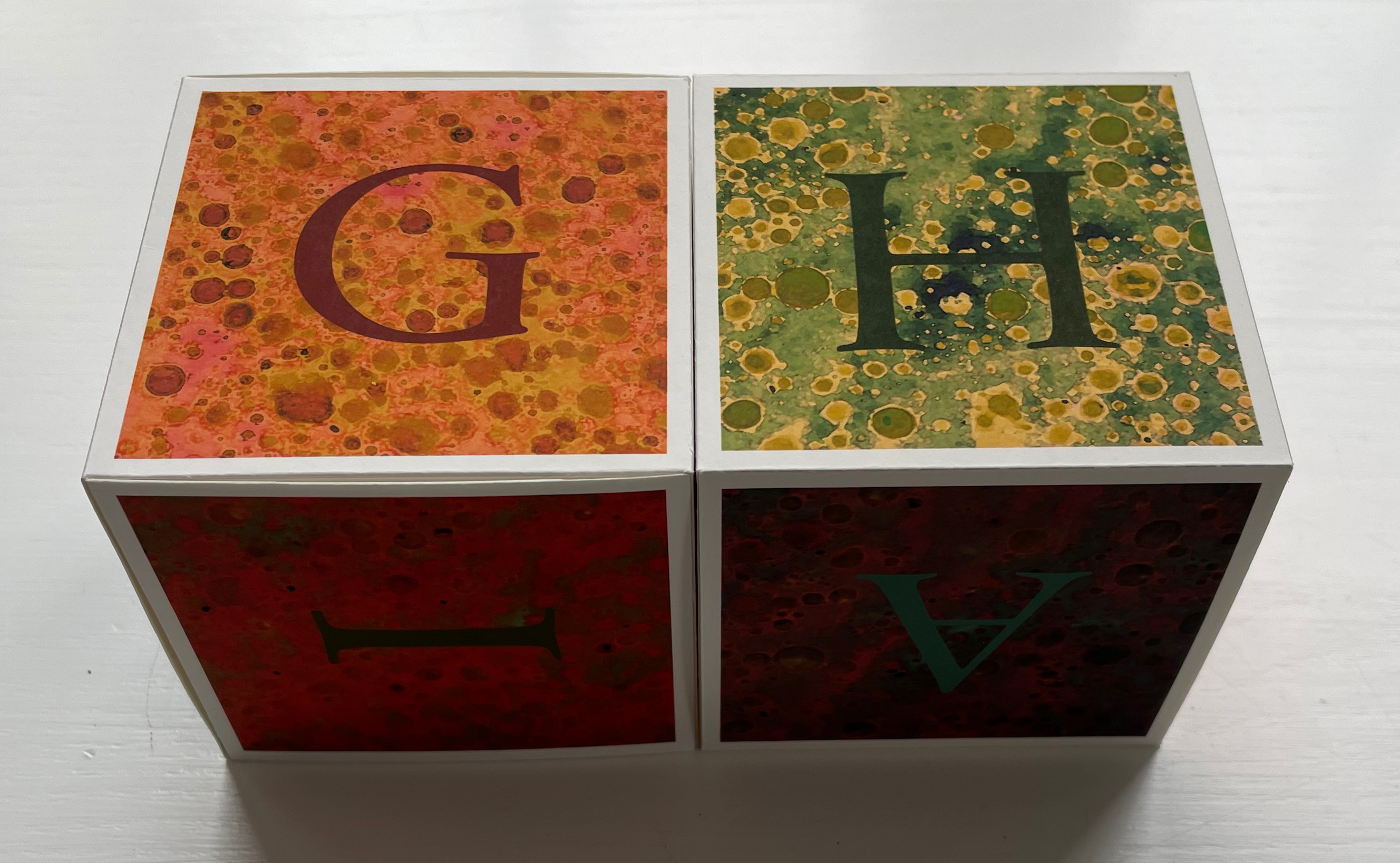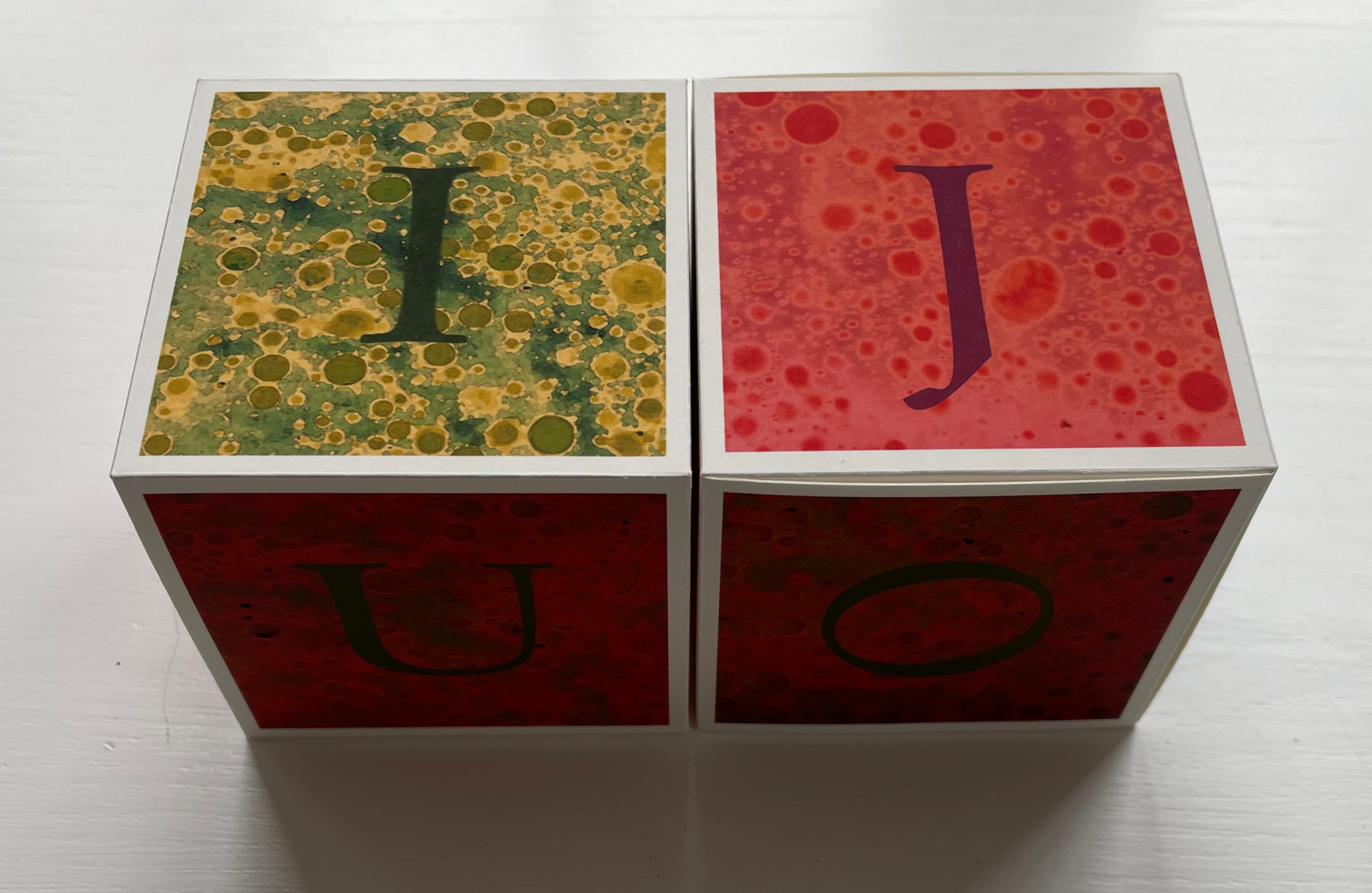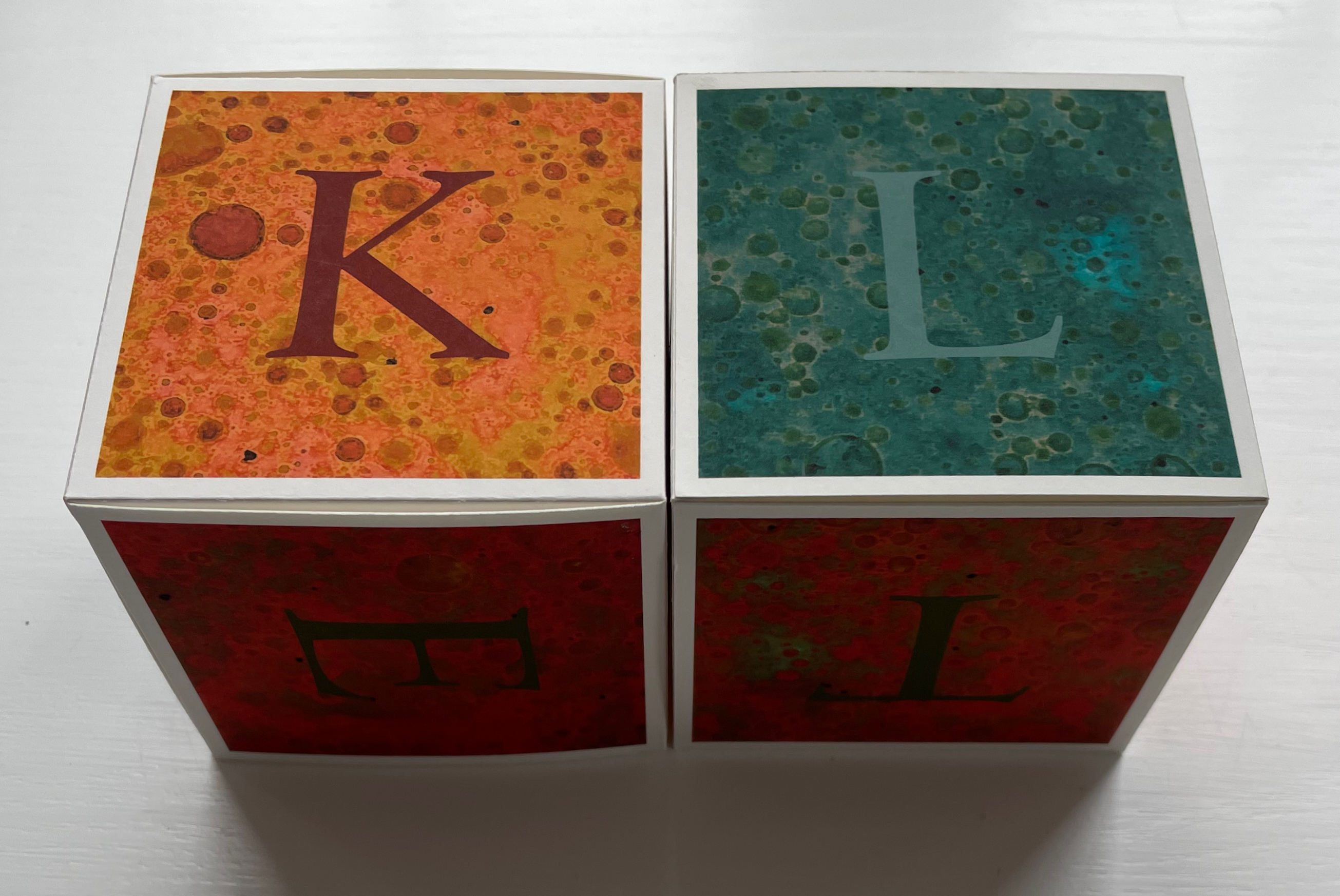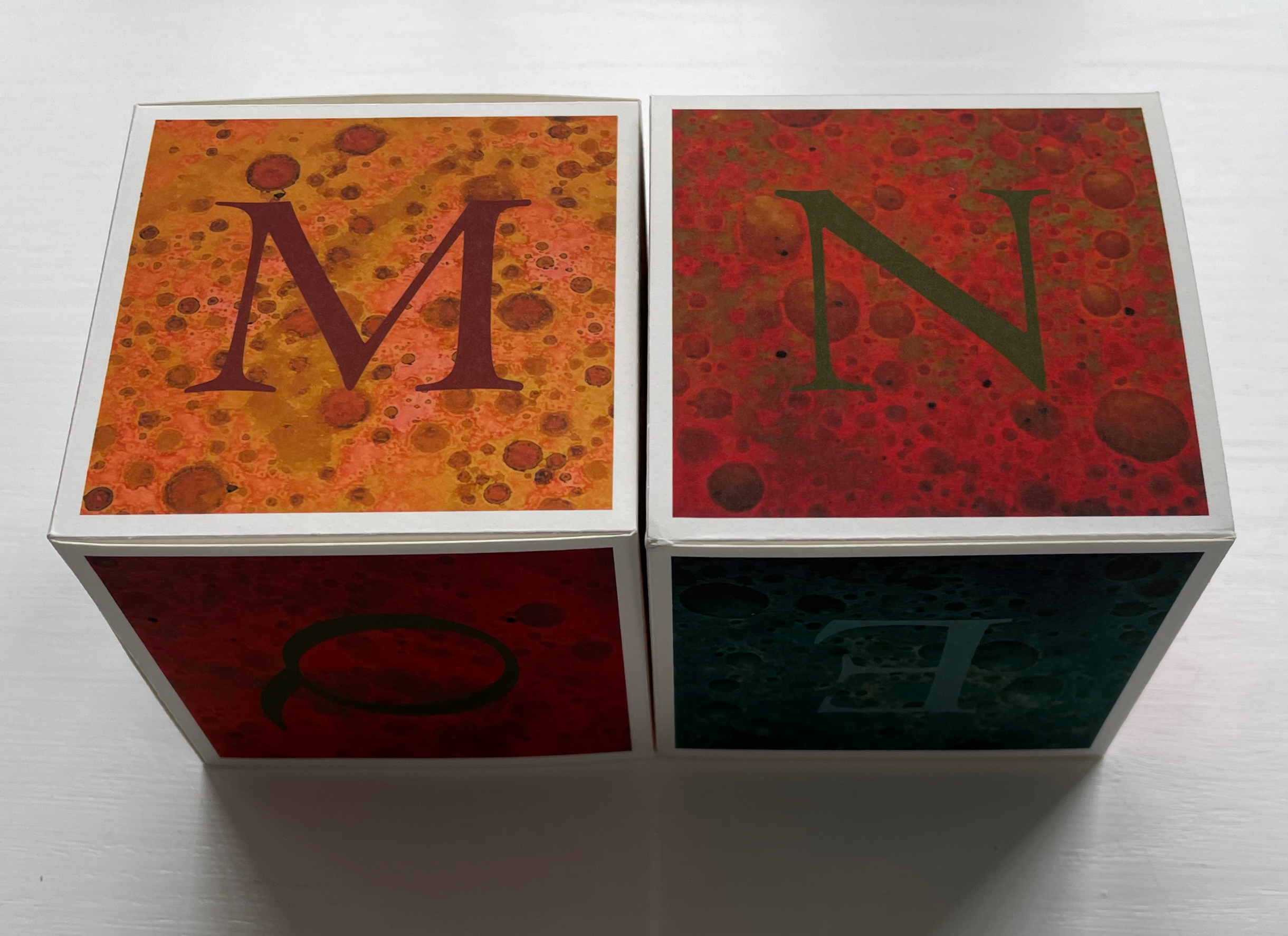
Books On Books Collection – Shelli Ogilvy

Alphabet Bird Collection (2009)

Alphabet Bird Collection (2009)
Shelli Ogilvy
Dustjacket, casebound paper over board, sewn, single-color doublures. H215 x W215 mm. 56 unnumbered pages. Acquired from Hay-on-Wye Booksellers, 16 December 2022.
Photos: Books on Books Collection. Displayed with permission of the artist.

In Alphabet Bird Collection, each double-page spread features the letter of the alphabet, a bird representing it, a couplet followed by prose to describe the bird’s distinctive behavior and habitat, and, beneath, a musical staff with an attempt to represent a sample of each bird’s song or call. Unifying each double-page spread is its own full-bleed background color. The primary distinguishing feature of this abecedary, however, is Shelli Ogilvy’s artwork — original paintings of each bird. Ogilvy works primarily with acrylic on canvas or paper, sometimes combining mediums of chalk, ink, and spray paint into her work.

Instead of concluding with XYZ as with other abecedaries, this entry concludes with a favorite bird.

For another instance of magpie obsession, see Nick Wonham’s The Charm of Magpies (2018).

Further Reading

Abecedaries I (in progress)“. Books On Books Collection.

Brian D. Cohen“. 28 December 2022. Books On Books Collection.

Carol Schwartzott“. 28 December 2022. Books On Books Collection.

Books On Books Collection – Carol Schwartzott

ABC of Birds (2020)

ABC of Birds (2020)
Carol Schwartzott
Cabinet of curiosity housing a miniature book in paste paper slipcase; double-sided leporello of transparent vellum pockets holding collaged cards. Book measures 2 x 3 x 1.5 inches. 28 pocket pages (collages, title page and colophon). Book in edition of 25, of which this is #13. “Cabinet of Curiosity” is one of five. Acquired from Vamp & Tramp, 4 January 2022.
Photos: Books On Books Collection. Displayed with artist’s permission.

The cabinet of curosity recalls Joseph Cornell’s box constructions, and while the cards’ collages may extend that influence, they differ from it sufficiently in intensity of color (having been scanned for printing and “touched up” with pencils or over colored), incorporation of an abecedary and use of an unusual variant on the leporello to distinguish the work as Schwartzott’s. She writes:

The collages themselves were done as original art, each 4 x 6″ centered on a larger sheet of Rives BFK. There are 26 of these. All are reduced to miniature format, and a graphic letter in an interesting font completes the image. Each of these little cards can be removed from the book.

The trimmed edges of the cards give them the appearance of oversized postage stamps, appropriate for the album-style binding and their removability for philatelic-like examination.

Further Reading

Abecedaries I (in progress)“. Books On Books Collection.

Brian D. Cohen“. 28 December 2022. Books On Books Collection.

Shelli Ogilvy“. 28 December 2022. Books On Books Collection.

Kyle, Hedi, and Ulla Warchol. 2018. The Art of the Fold How to Make Innovative Books and Paper Structures. London: Laurence King Publishing. To explore the pocket variant on the leporello. See review here.

Books On Books Collection – Brian D. Cohen

The Bird Book (2013)

The Bird Book (2013)
Brian D. Cohen & Holiday Eames
Case bound hardback, paper over boards with doublures. H260 x W210 mm. 56 unnumbered pages. Acquired from The Saint Bookstore, 17 September 2022.
Photos: Books On Books Collection. Displayed with the artist’s permission.

Brian Cohen’s inclusion of the following statement makes examining The Bird Book again and again a rewarding effort:

The printmaking technique … used for this book was originally developed by William Blake in 1788. The printing plates for the book were created with acids and engraving on metal (zinc) plates as in traditional etching techniques. The plates were then printed by carefully rolling a thin layer of ink over the surface of the plate, exactly the way a woodblock (relief print) is made. Because the technique combines both etching to create the plates and relief printing, it is termed relief etching. After printing, each individual sheet was hand-colored by brush with watercolor by the artist.

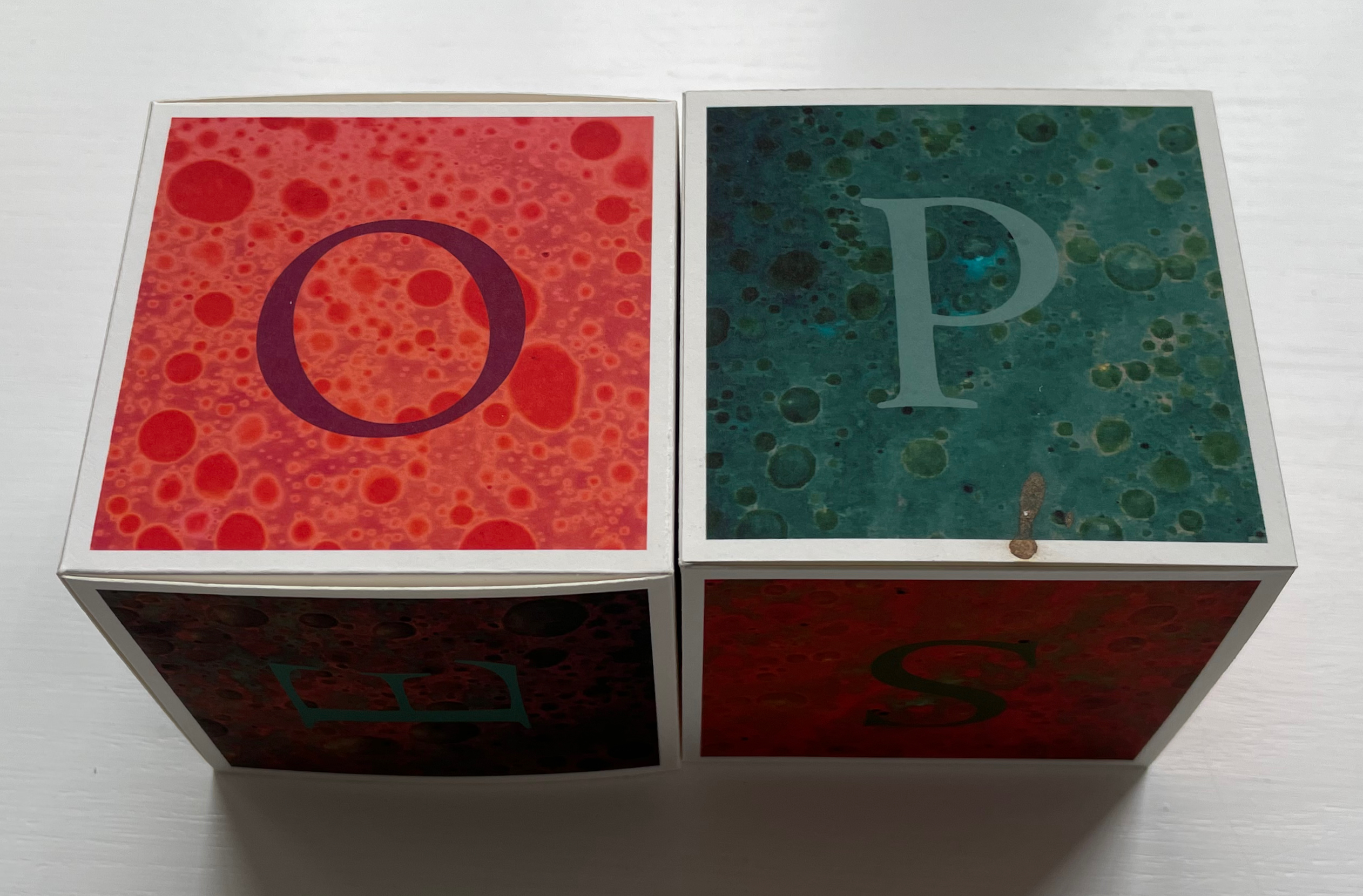
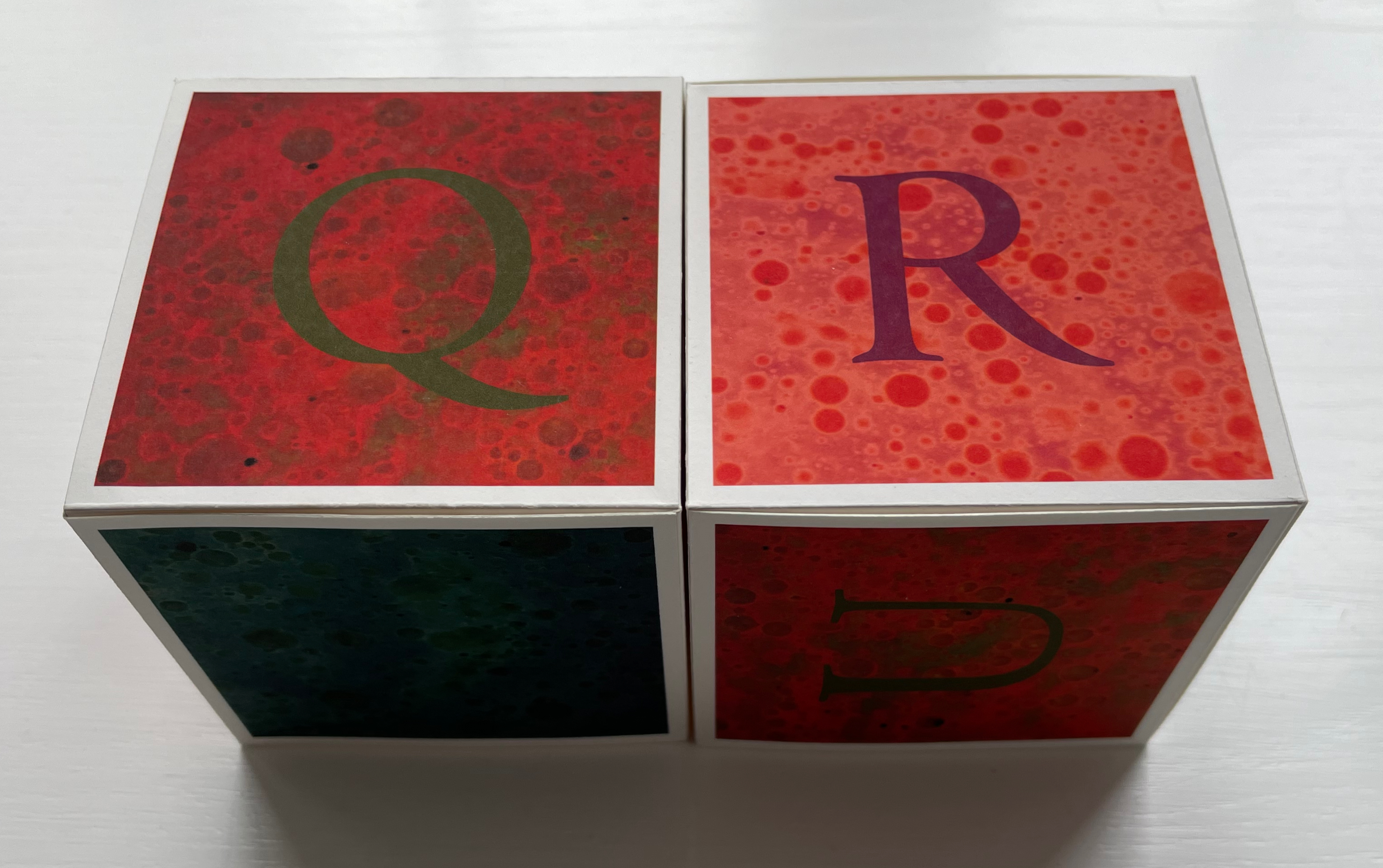
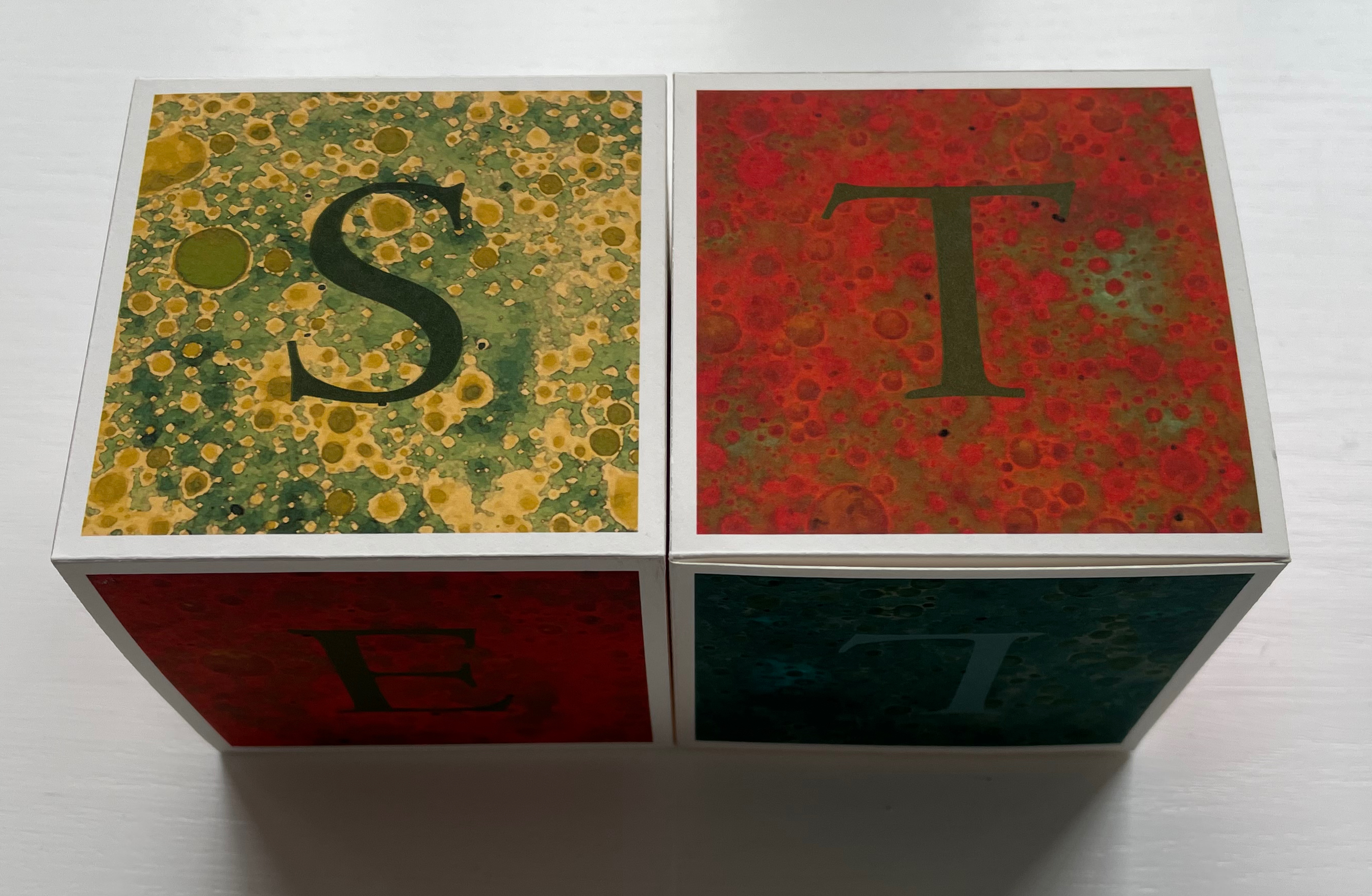
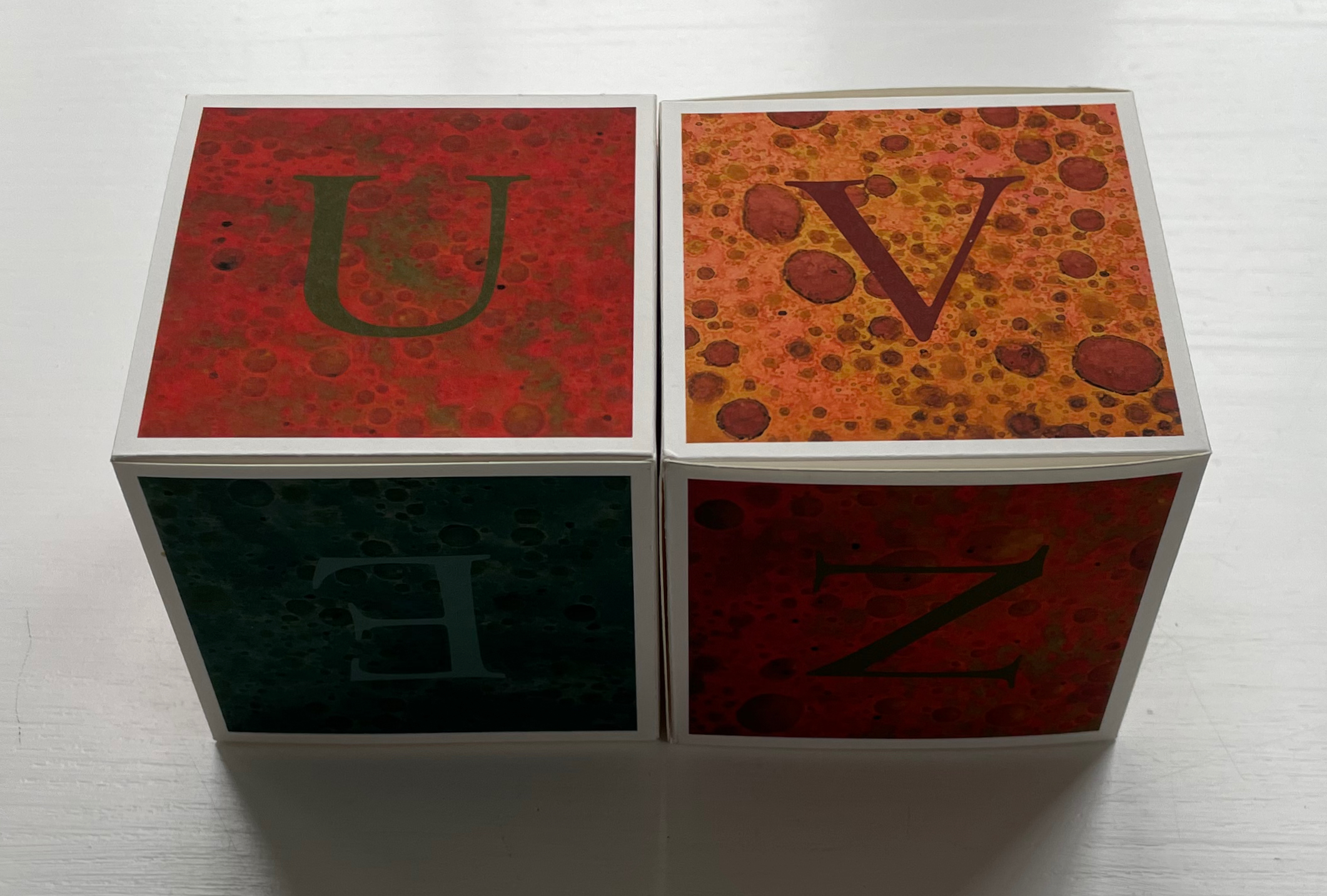
The artist has also encouraged close viewing of each relief etching by hiding its letter in the background, middle ground or foreground — or even the body of the bird.

Further Reading

Abecedaries I (in progress)“. Books On Books Collection.

Shelli Ogilvy“. 28 December 2022. Books On Books Collection.

Carol Schwartzott“. 28 December 2022. Books On Books Collection.

Gascoigne Bamber. 2017. How to Identify Prints : A Complete Guide to Manual and Mechanical Processes from Woodcut to Inkjet. 2nd ed. London: Thames & Hudson. pp. 7-8.

Books On Books Collection – Andrew White Tuer

History of the Horn-Book (1897)

History of the Horn-Book (1897)
Andrew White Tuer
Casebound, sewn. H260 x W210 x D50 mm. 510 pages: 18 preliminary, 4 unnumbered leaves of plates (1 double, 2 foldout) and 300 illustrations. Acquired from Patrick Pollak, Antiquarian & Rare Books, 15 October 2021.
Photos: Books On Books Collection.

Andrew White Tuer is the Herman Melville of the horn-book. Like Melville, Tuer had many interests. Just as the sea proved an abiding theme for Melville that drew all his interests together into Moby-Dick, so proved publishing and printing for Tuer. Within his abiding theme, Tuer’s white whale was the horn-book, and his pursuit yielded the History of the Horn-Book. Although Moby-Dick first appeared in three volumes and History of the Horn-Book appeared in two, Tuer out-Melvilles Melville in other ways. His monument outweighs Melville’s by 79 pages. Where Melville takes 14 pages to lay out “Etymologies & Extracts” on the whale, Tuer requires 20 pages of anecdotal citations to document the “Christ-cross-row” as the original name of the horn-book. Admittedly Melville traces his subject back to Genesis, albeit with some stretching, but Tuer traces the earliest record “of a real horn-book with horn and not a mere alphabetical table” back to an equally important date in the history of printing and publishing: 1450.

For 125 years, Tuer’s History of the Horn-Book has remained the standard work on this artifact for teaching children the alphabet.

This single volume is the first trade edition of History of the Horn-Book, following a special edition in 1896 of two volumes containing seven reproductions of horn-books and battledores distributed across two compartments or pockets placed at the front of the volumes. In the single-volume edition, the compartment moved to the back, and the number of facsimile horn-books fell to three: one of oak, one of card and one of horn. Like the two-volume edition, the single volume has gilt on its top edge; the fore-edge is deckled.

After the special edition, Tuer added a section to this trade edition to announce further discoveries, including the ivory horn-book. Tuer must have been fond of this compartment feature; it shows up again in his compendium of humorous anecdotes taken from his trade journal (the Paper & Printing Trades Journal) and entitled Quads for Authors Editors & Devils (1884). The rear compartment of Quads contains a miniature version of the book.

Trade edition compartment closed

Fold out with the three facsimile horn-books from the compartment

Tuer’s detail of research and analytical keenness go far to explain why History of the Horn-Book remains the standard work. If a trove of horn-books were to be discovered tomorrow, there would need to be extraordinary novelties in their composition, mechanics or material to warrant any attempt to displace this authority. Anyone making the attempt would require a foundation in printing history and practice that is hard to come by since the digital revolution. Consider Tuer’s knowledgeable comments on a silver horn-book alleged to have belonged to Queen Elizabeth I:

The history of horn-book is well in hand. As an educational device, it has been superseded by the battledore, building blocks, ABC books, television (Sesame Street), needlepoint samplers, wall hangings and rugs, toys and more toys and, of course, apps. But as an inspiration to book artists it still holds on. Among the book artists who have turned their hands, eyes and minds to the form are Helmut Andreas Paul (HAP) Grieshaber, Jan Paris, Daniel Essig, Kees Baart and his partners at Corps 8, and Karen Roehr.

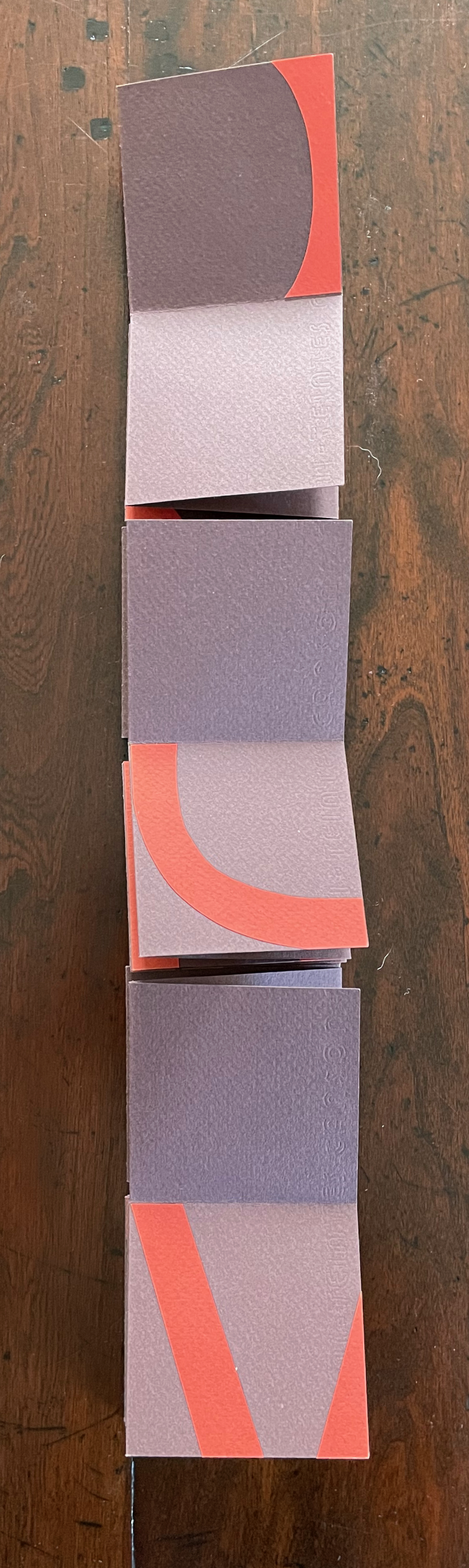
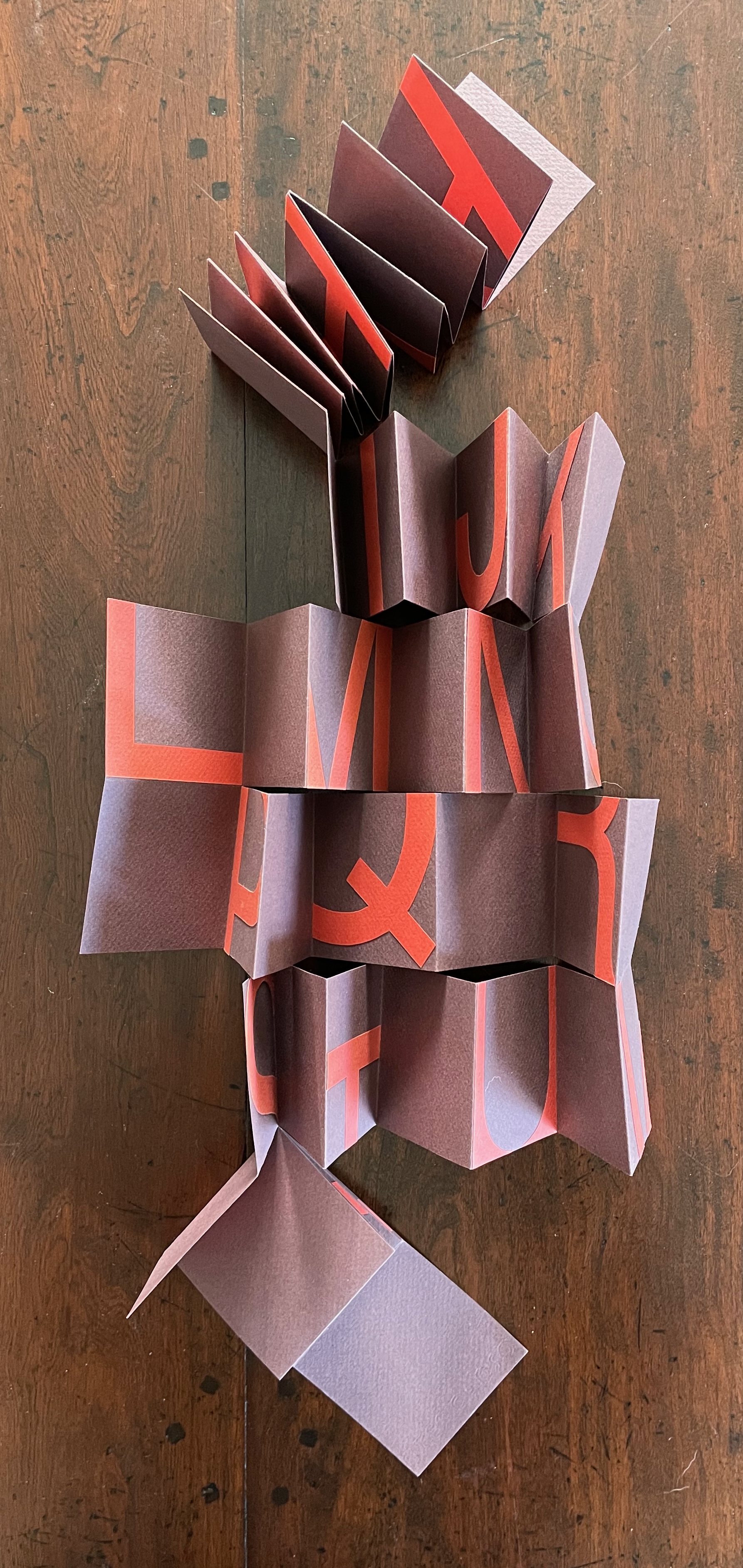
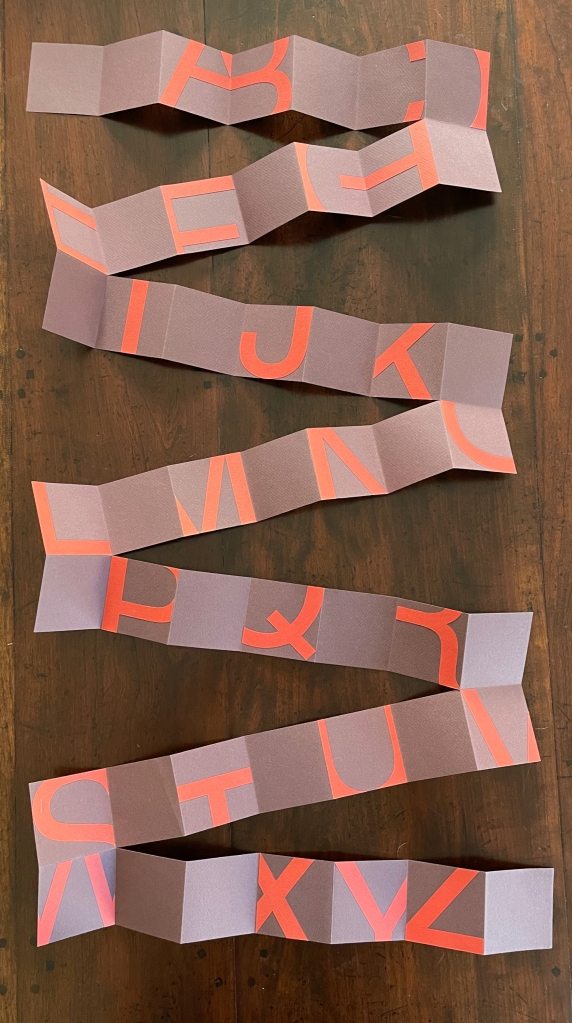
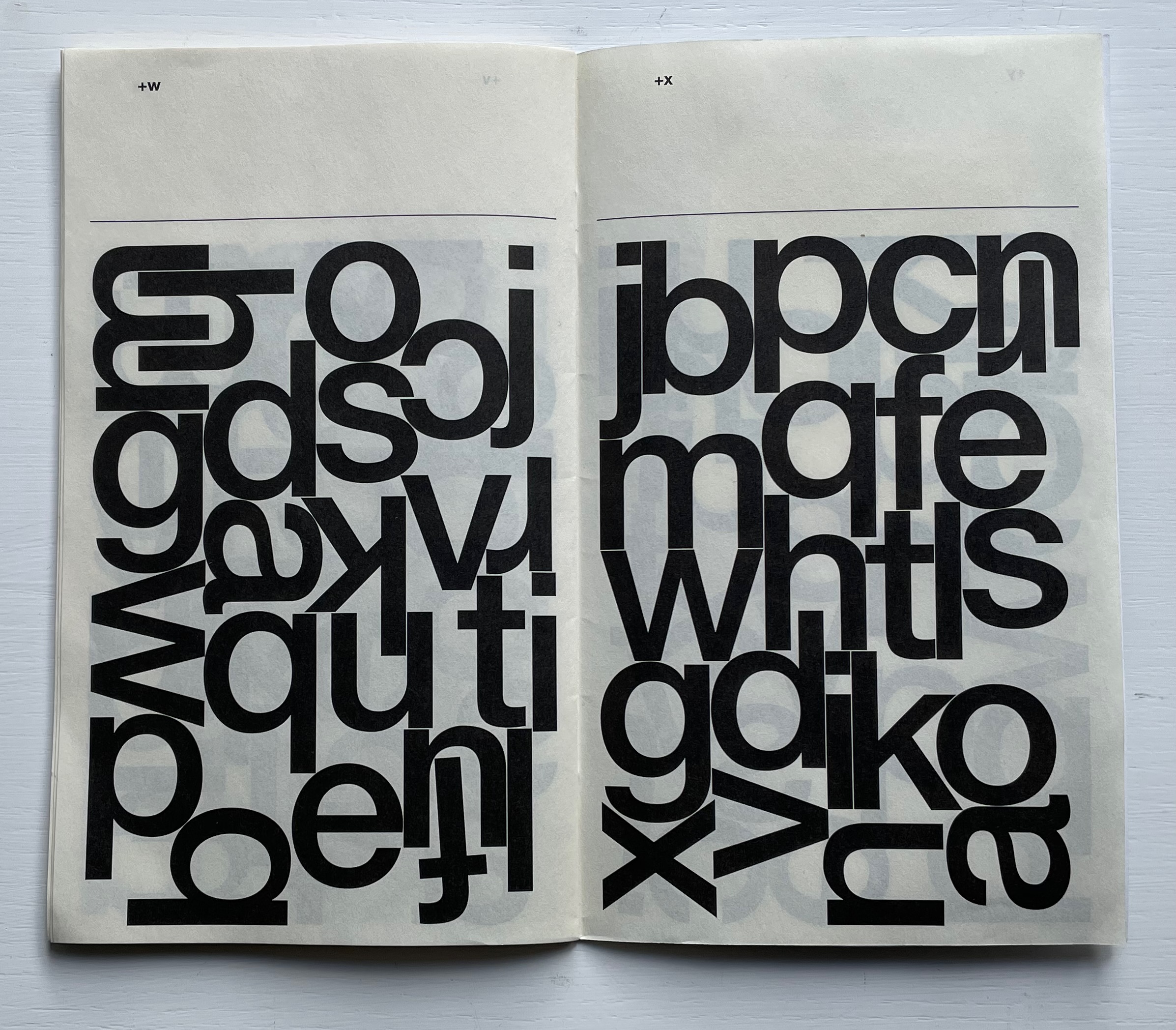
With its horn-book images on the front and back covers and a five-page piece entitled analphabeten-bibel (“the illiterates’ bible”), HAP Grieshaber’s small work of concrete poetry underlines the draw of the alphabet for book artists.

Poesia Typographica (1962)
Helmut Andreas Paul (HAP) Grieshaber
Paperback, perfect bound Chinese-fold folios, black endpapers. HxW. Edition of 1000. Acquired from Print Arkive, 22 October 2022.
Photos: Books On Books Collection.

The white text on the clear acetate translates roughly as follows:

created around the turn of the century by a missionary named baedecker. thousands and thousands of these booklets were distributed among the illiterate peasantry of Russia. missionary baedecker put his 105 mm high and 75 mm wide booklet into old and young hands and said:

“this booklet contains the whole bible, the pure teaching of our jesus christ.”

the peasants saw in the black of the first page the darkness of their sinful hearts, their great guilt.

in the red of the next page, they united with the divine blood of christ. they followed the suffering steps of our lord. washed clean in the blood of his love, they won innocence:

the linen pasture of the third page, that is the purity that must be in the heart.

ready to enter into the mystery, to look into the sunshine of God’s face. to fall down in prayer, hearing the sound of the golden trumpets of heavenly bliss.

As the acetate page turns, the analphabetic Bible is revealed.

Although the horn-book by Jan Paris presents the usual uppercase and lowercase alphabets, the vowels and numbers as horn-books and battledores later came to do, it omits the Lord’s prayer, which these reading tools — early and late — preserved. In its place is a marbled green diamond shape hovering over a bird’s wing against a diffusely clouded background. Still though they may be, there is a tension between the abstract and natural things, contrarily positioned. The heavy abstraction floats or is falling. The thing that should be rising lies beneath, still and equally — although morbidly — detached. Letters, vowels and numbers, too, are certainly abstract. Until formed into words and concepts breathed into the air, they, too, lie still and detached on the horn-book’s surface.

Horn Book #2 (1983)
Jan Paris
Mixed media
Photo: Courtesy of the artist.

The horn-book form has become part of North Carolina artist Daniel Essig’s personal iconography. On his website, four variations can be found. The unique work below resides in Vanderbilt University’s Heard Library Special Collection. The range of materials and processes in Essig’s horn-book reflects the range of traditions, cultures and mythologies making up his eclectic iconography: miniature books, African bookbinding (contrasting with the horn-book), n’kisi nkondi (a Central African nail fetish), French literature (the unidentified collaged text), bird symbology, assemblage, carving, burning and painting. As totemic icon, Horn Book Fisher pushes the horn-book far beyond its primer function.

Horn Book Fisher (2008)
Daniel Essig
Carved and painted mahogany, burned cherry, mica, nails, handmade paper, found natural objects, 1800’s text papers, Ethiopian and Coptic bindings.
61 x 15 x 9 cm.
Photo: Courtesy of the artist.

Corps 8 was a Dutch collective of private presses formed by Dick Berendes (Typografiek), Kees Baart (‘t Schuurtje, now deceased), Gerard Post van der Molen (De Ammoniet), Sjaklien Euwals (De Overkant), Dirk Engelen (Clio Pers), Thijs Weststrate (Without Roof), Silvia Zwaaneveldt (De Baaierd) and Henk Francino (De Pers Achter de Muren). Under the auspices of a larger collective Drukwerk in de Marge, founded in 1975, they created Van Hornbook tot ABC-Prentenboek (“From Hornbook to ABC Picture Book”). It is an exquisitely produced, informative and witty collaboration. More about it can be found here.

Van Hornbook tot ABC-Prentenboek (2003)
Kees Baart, Dick Berendes, Henk Francino and Gerard Post van der Molen
Double-sided leporello between two pamphlet-sewn booklets and bound between two oversized wooden hornbooks, held in an open cardboard box. H295 x W150 x D 30 mm. First booklet, 18 unnumbered pages; second booklet 8 pages; 52 panels. Edition of 135. Acquired from Fokas Holthuis, 13 September 2022.
Photos: Books On Books Collection. Displayed with permission of the artists.

Karen Roehr’s Horn book for contemporary times is a miniature roughly the size of a small smartphone. Surely a Gen Z version with emoticons is not far behind on someone’s creative agenda.

Horn Book For Contemporary Times (2012)
K.E. Roehr
Laser-cut wood. H2 x W1.75 inches. Edition of 3. © K.E. Roehr.

Further Reading

Abecedaries I (in progress)“. Books On Books Collection.

Avery, Gillian. “The Beginnings of Children’s Reading” in Hunt, Peter, and Dennis Butts. 1995. Children’s Literature : An Illustrated History. Oxford: Oxford University Press.
Folmsbee Beulah. 1972. A Little History of the Horn-Book [Fourth print.] ed. Boston: Horn Book.

Plimpton, George A. 1916. The hornbook and its use in America. American Antiquarian Society.

Roehr, Karen E. (2012). Horn book for contemporary times. Accessed 23 October 2022.

Shepard Leslie. 1977. The History of the Horn Book : A Bibliographical Essay. London: Printed by the Rampant Lions Press for the Broadsheet King.

Tuer Andrew White. 1884. Quads for Authors Editors & Devils. London: Field and Tuer Simpkin Hamilton.

Wiles H. V. 2010. The Horn-Book : The First Rung on the Ladder of Literacy. Whale-back Press.
Books On Books Collection – Peter Blake

Peter Blake: Alphabets (2010)

Peter Blake: Alphabets (2010)
Peter Blake, Text by Mel Gooding
Slipcased, cloth and casebound hardback with endbands matching red cloth and yellow doublures. H310 x W255 mm. 224 pages. Edition of 600, of which this is #471. Acquired from The Plantagenet King, 3 November 2022.
Photos: Books on Books Collection. Displayed with permission of the artist.

Peter Blake has made the alphabet itself a subject of so many of his print series and exhibitions that Peter Blake: Alphabets and the exhibition associated with it stand as a retrospective. Naturally it showcases his style and signature techniques. It also showcases an outward and inward appraising wit that leads to humorous juxtapositions like the poster of “T for The Beatles” with the collage of “U for Unusual People”. But most of all it proves the variety and unity that a creativity-stimulating constraint like the alphabet can yield. With Blake’s wide-ranging uses of the alphabet, Mel Gooding’s commentary and the volume’s elegant design and production, Peter Blake: Alphabets serves as both example and reference for alphabet-related artists’ books.

Found objects and collages have long made natural allies. Peter Blake: Alphabets demonstrates that finding objects can also lead to a passion for collecting, and in Blake’s hands, a collector’s passion becomes not only the subject of art but part of the artistic process, a tool and a technique. The book even has a section entitled “Found Alphabets” that showcases his collection of widely varied alphabet posters and unifies them with unified scale.

It is Mel Gooding who points out this unified scale in his introduction to the section. As co-author with Julian Rothenstein of Alphabets Et Other Signs (1993), ABZ (2003) and A2z : Alphabet & Signs (2018), Gooding could not have been better suited for introducing this volume and for interviewing Blake for the earlier An Alphabet (2007), which Gooding references. After his introduction on the alphabet in general and Blake’s alphabets, the volume divides into two parts: “The Alphabets” and “Collections”. In the first part, there are seven sections; in the second, six. For each section, Gooding provides introductory comments.

Gooding’s critical insights often go beyond Blake’s art as in the section entitled “Horizontal Alphabets” when he reminds us to be aware of the possible implications of the artist’s horizontal all-at-once display of the alphabet. This section also provides the opportunity for the artist, editor and book designer to collaborate and shine. As the foldout below allows, Blake’s alphabetic arrangement of objects can be seen all at once, but as Gooding points out, the horizontal presentation becomes a discursive terrain, a carnival, a procession of sculpted objects with individual shape, color and style. The viewer can find real or imagined relationships between and among them, perhaps more easily than if they were presented in a page-turning codex format. But the contrast to which Gooding draws attention is with the vertical presentation of individual letters, as in Alphabet No. 10, where attention is drawn more to the categorizing and ordering nature of the alphabet.

Although the work above is a limited edition, Peter Blake’s ABC (2009) is widely available commercially, and Peter Blake: About Collage (2000) is well-represented in libraries. The latter has the advantage of exploring Blake’s collecting and its relation to the technique of collage in a context that includes Joseph Cornell and Tracy Emin.

Further Reading

Abecedaries I (in progress)“. Books On Books Collection.

Bearn, Charlotte. 5 February 2013. “Peter Blake: Man of Letters and Alphabet Art“. Art Republic. Accessed 6 July 2023.

Blake, Peter, and Mel Gooding. 2007. An Alphabet. London: Paul Stolper and Coriander Studio.

Blake, Peter, Dawn Ades and Natalie Rudd. 2000. Peter Blake : About Collage. London: Tate Gallery Pub.

Blake Peter. 2009. Peter Blake’s ABC. London New York: Tate Pub.; Distributed in the United States by Harry N. Abrams.

Gooding, Mel, and Julian Rothenstein. 1993. Alphabets Et Other Signs. London: Thames and Hudson.

Gooding, Mel, and Julian Rothenstein. 2018. A2z : Alphabet & Signs. London: Laurence King Publishing.

Rothenstein, Julian, and Mel Gooding. 2003. ABZ. San Francisco, CA: Chronicle Books.

Books On Books Collection – Warja Lavater

Warja Lavater’s work first came to this collection’s attention through Jeffrey Abt and Buzz Spector. Entitled Jeu: livre en “papier modulé” (1980), the work had been included in an exhibition organized by Abt and, for which, Spector designed the catalogue: The Book Made Art: A Selection of Contemporary Artists’ Books, exhibited in the Joseph Regenstein Library, The University of Chicago, February through April 1986. No image of Lavater’s entry appeared in the catalogue, nor was an online image ever located. The description suggested that it was not a leporello, so later it came as a surprise that this was the form for which she was best known. Still, a vote of thanks to The Book Made Art for planting the artist’s name for future reference.

Seven works in the Books On Books Collection represent Warja Lavater’s art: Le Petit Chaperon Rouge (1965), a later tactile version of the same work (2008), Sketchbook: Le Non-obéissant (1968), Spectacle (1990), Ourasima (1991), Tanabata (1994), and Kaguyahime (1998). The French publisher Adrien Maeght was Lavater’s most consistent champion, publishing several of her leporello works, including a now rare boxed set.

Le Petit Chaperon Rouge (1965)

Le Petit Chaperon Rouge (1965)
Warja Lavater
Accordion book in perspex slipcase.
Slipcase: H167 x W117 x D26 mm; Book: H160 x W113 x D20 mm, closed; W4.5 m, open. 40 panels.
Acquired from Patrick Wainwright Rare Books, 22 June 2022.
Photos: Books On Books Collection.

Abstract shapes stand in for the characters and settings in this retelling of Little Red Riding Hood’s journey through the forest to visit her grandmother. With the only text being that matching symbols to the cast of characters and settings, the tale is told wordlessly.

Knowing the story and having the cast to hand, the reader/viewer easily follows the shapes and colors into a new and artful experience of the folktale. But what if the shapes and colors cannot be seen?

Le Petit Chaperon Rouge (2008)

Le Petit Chaperon Rouge (2008)
Warja Lavater and Myriam Colin
Accordion book boxed in cloth-covered board box. Box: H190 x W130 x D75 mm; Book: H176 x W122 x D70 mm. closed;
W4.3 m, open. 40 panels. Acquired from Les Doigts Qui Rêvent, 30 October 2022.
Photos: Books On Books Collection. Displayed with permissions of Les Doigts Qui Rêvent.

Artist Myriam Colin and publisher Les Doigts Qui Rêvent (“Fingers that Dream”) addressed this question with print, Braille, cloths of different texture, leather, blind embossed shapes, plastic filaments and sewing.

Between the printed text and Braille-rendering for the cast of characters and settings, buttons of different cloths and different embossed shapes appear. In the opening scene, the red felt button for Little Red Riding Hood is of course smaller than the orange-brown broadcloth button for Mother, who stands before the raised rectangle for the house and looks over her daughter’s head at the forest of raised dots.

Later, the wolf’s belly becomes a large sewn pouch with the slit cut by the Hunter through which Grandma and Little Red Riding can be felt, ready to escape.

The brown leather button for the Hunter unites the felt Red Riding Hood, nubby-cloth Grandmother and broadcloth Mother in a clearing in the forest. A satisfactory conclusion for the sighted and visually impaired.

Update Lavater

Seven works in the Books On Books Collection represent Warja Lavater’s art: Le Petit Chaperon Rouge (1965), a later tactile version of the same work (2008), Sketchbook: Le Non-obéissant (1968), Spectacle (1990), Ourasima (1991), Tanabata (1994), and Kaguyahime (1998). The French publisher Adrien Maeght was Lavater’s most consistent champion, publishing several of her leporello works, including a now rare boxed set.

Sketchbook: Le Non-obéissant (1968)

Sketchbook: Le Non-obéissant; The Disobedient (1968)
Warja Lavater
Casebound, printed gloss paper over boards, plain endpapers and fly leaves. H210 x W235 mm. [45] Chinese fold folios.Acquired from Ken Sanders Rare Books, 18 July 2024.
Photos: Books On Books Collection.

Warja Lavater’s Sketchbook opens with a page of pencil scrawling that wraps from the first side of a Chinese-fold folio, over the fold, and onto the folio’s other side, where a 10,000+ year timeline of artists appears in cramped handprint. The scribbling continues onto the next folio, embroidering Oscar Wilde’s aphorism

Disobedience in the eyes of anyone who has read history is man’s original virtue. It is through disobedience that progress has been made.

The scrawling runs over the fold of the folio and across a double-page spread to become the multilingual title page. Or rather the “subtitle becomes title page”. Look again at the cover. Wasn’t the title Sketchbook? Now it is Le Non-obéissant | The Disobedient | Der Ungehorsam, and it has acquired a new subtitle, and a strange one at that: Une Imagerie Racontée et dessinée par … |An Imagery Told and Drawn by … | Eine Imagerie Erzählt und Gezeichnet von Warja Lavater.

“An imagery told and drawn” captures well Lavater’s technique of abstract pictorial retelling of familiar fairy tales such as Little Red Riding Hood and Cinderella. Now, in this sketchbook, she uses it to create her own fairy tale of art history. As we are about the learn, the doodle labelled le peintre | the painter | der Maler on the left hand page above is the main character named “the Disobedient”. Reminiscent of Mel Brooks and Carl Reiner’s sketch “The 2000 Year Old Man”, the Disobedient, who has been around for almost 12,000 years, has some humorous and cantankerous answers to the interviewer’s questions about her experiences from cave art to Pop art.

“You make a living from this international art market?”

“The international art market makes a living out of me.”

Unlike the Key pages in her fairy tales identifying the images and markings, The Disobedient’s Key page is delivered in her voice. She explains that the eye with white around its iris stands for her “exterior eye with which I look” and the eye with orange around its iris stands for her “interior eye with which I think”. Her techniques or “means of my performance” might be squiggles, geometric objects or figurative drawings. The clearly defined black dots represent her contemporaries. Orange markings represent her emotions, her ferveur and Gefuhl. All the bold numbers mark the “years more or less gone by”. But the story begins in earnest in the dark of four black folios and a fifth in which the artist appears for the first time in history followed by her first work, a drawing of a mammoth.

Spectacle (1990)

Spectacle: Pictoson Mural (1990)
Warja Lavater
H215 x W296 mm. 22 pages. Acquired from Antiquariat Übü, 3 August 2022.
Photos: Books On Books Collection. Displayed with permission of the publisher.

Spectacle is an origin story of shapes, signs, the sounds of language, their alphabetic representation and use to form words. It is similar to the tale in Il était une fois un alphabet (1951/2009) by Souza Desnoyer and Marcelle Marquet. In both, the separate worlds of vowels and consonants join to create the alphabet. In Il était une fois, the letters already exist, have anthropomorphic shapes and engage in familiar activities like voyages, feasts, dances and processions. The narrative has scenes and settings to carry it along. Spectacle‘s origin narrative, however, letters develop from a system of signs created/discovered by a wizard. An abstract shape himself, the wizard presides over the story’s unfolding across an abstract landscape. Even though Lavater maps a written version (in eight languages) of the tale to the panels, the pictorial narrative remains challenging.

Elliptical and shamanic, the written narrative itself is challenging. It may remind the reader of Italo Calvino’s Big Bang story “Sul far del giorno” (“At daybreak”) in his collection Le Cosmicomiche (1965) (“Cosmicomics“1968), to which Shirley Sharoff paid homage in OVI: objets volants identifiés dans le ciel d’Italo Calvino, a work contemporary with Lavater’s. The verticality of Lavater’s extraordinary leporello might also remind the viewer of Blaise Cendrars and Sonia Delaunay’s La Prose du Transsibérien et de la petite Jehanne de France (1913).

Somehow, though, despite its winged emblems of words, the eleventh panel with its regimented alphabet seems visually diminished, not quite the joyous spectacle promised by the text. For that, we would have to turn elsewhere in the collection: William Joyce’s origin story The Numberlys (2014).

The Numberlys (2014)
William Joyce and Christina Ellis
Hardback, paper on board. H220 x W300 mm, 52 pages. Acquired from London Bridge Books, 15 April 2021.
Photos of the book: Books On Books Collection.

Ourasima (1991)

Ourasima: Une imagerie en transparence d’après le conte japonais (1991)
Warja Lavater
Plexiglas slipcase enclosing a double-sided accordion book. Box: H178 x W118. Closed accordion: H160 x W112 mm. Open accordion: W4624 mm. [86] panels. Acquired from Versand-Antiquariat Rainer Richner, 24 August 2023.
Photos: Books On Books Collection.

Ourasima, also known as Urasima Taro, is a Japanese folktale that reaches back to the eighth century. Lavater’s version is a cross between the stories of the Golden Goose, Rip Van Winkle and Pandora’s Box. In keeping with her treatments of Western folk and fairy tales, Lavater brackets her wordless retelling with a cast of characters, objects and their corresponding emblems at the beginning and a brief summary of the story at the end — all annotated in French, German, and English, but this time in Kanji as well.

Lavater’s version departs significantly from the traditional versions as described by the Library of Congress:

There are variations to the story depending on the intended audience and the period, and it is still known by its Japanese title Urashima Taro. It tells of a young and kind fisherman named Urashima. One day he catches a large turtle while he is out fishing. Taking pity on the turtle, he releases it back into the sea, whereupon the beautiful daughter of the god of the sea appears and tells him that the turtle was actually the personification of her. To thank him for saving her, she invites Urashima to Ryugu-jo (the Palace of the Dragon God) at the bottom of the sea. He then marries her and lives happily at the palace. Three years later he asks for permission to return to his village for a short time, because he wants to see his family. His wife gives him a box and makes him promise not to open it, as he would never be able to come back if he did. When Urashima returns home, he finds that everything has changed during those three years and that his family and his village have disappeared. He had in fact left his village 400 years before, so his parents, siblings and friends were all dead. Not knowing how to get back to the Palace of the Dragon God, he breaks his promise and opens the box, hoping that its contents can help him. After he opens the box, white smoke appears and Urashima turns into a white-haired old man and dies.

Lavater’s emblematic retelling works well with the basics such as the family home with Ourasima between his mother and father, Ourasima with his boat and fishing net, the capture and release of the princess, the turtle’s arrival and transport of Ourasima to the princess, the marriage, Ourasima’s return on the back of the turtle, and the distribution of delicacies and gold. But the “emblemism” struggles to reflect the verbal instructions of the princess and the guards’ rationale for arresting Ourasima.

Ourasima at home between his mother on the left and father on the right.

With the box forced open, chaos ensues with a whirlwind of sand dispersing everything and freeing Ourasima.Nothing in Lavater’s summary indicates that Ourasima becomes an old man at this point, but his emblem’s shift from green to white in the next panels aligns with the traditional version.

The chaos of sand freeing Ourasima and his becoming an old man.

To find Ourasima floating “above all” as Lavater’s summary indicates, we have to turn to the other side of the leporello, but the “emblemism” is difficult to follow. Has the sand, covering all, yielded to the domain of the sea? Has the empty magic box risen from the depths to float along the waves? Does the King recapture it? Has the white diamond-shaped Ourasima been transformed into a round sea creature?

Of course, text and illustrations went side by side in all the much earlier versions with calligraphy, watercolors, woodblock prints and, in the later Meiji period, with type.

Urashima. Painted handscroll. Late 17th century. Bodleian Library. MS. Jap. c.4(R).

Ourasima returning home with the magic box at his back. Woodblock print by Tsukioka Yoshitoshi (1880s-90s). Art Institute of Chicago.

Ourasima riding from the undersea palace with the magic box under his arm. Woodblock print by Ogata Gekkō (1887). National Diet, Tokyo. Public Domain.

Ourasima riding home with magic box. Woodblock print by Matsuki Heikichi (1899). Kyōiku mukashibanashi Urashimatar. National Diet, Tokyo. Public Domain.

In the same period, the first translation into English appeared within a boxed set of Japanese fairy tales, printed on cloth folios and stab bound.

Japanese Fairy Tales Series. Bodleian Libraries. Schorr Collection f.22. The Fisher-boy Urashima, translated by Basil Hall Chamberlain, illustrated by Eitaku Kobayashi, and published by Hasegawa Takejiro (1886).

Ourasima and Otohime served in the palace by undersea servants.

In Lavater’s art, image and abstraction become the primary focus and vehicle for the narrative. As we shall see, this earliest of Lavater’s attempts with Japanese fairly tales is narratively the least straightforward, probably because of the deviations prompted by the inclusion of themes from the Golden Goose and Pandora’s Box.

Tanabata (1994)

Tanabata (1994)
Warja Lavater
Acrylic slipcase, double-sided leporello. Slipcase: H216 x W150 mm; Book: H216 x W145 mm. 18 panels, each side, one foldout with 2 panels. Acquired from Dilat, 14 January 2025.
Photos: Books On Books Collection.

Tanabata is Lavater’s version of a Sino-Japanese constellation myth about the stars Deneb, Vega, and Altair. The story is that the princess Orihime, associated with the star Vega, also known as the weaver star, falls in love with Hikoboshi, associated with the star Altair, also known as the cow-herder star. Her father, Deneb the Sky King, banishes her to one side of the Milky Way and Hikoboshi to the other side. Later he relents and allows them to meet only on the seventh day of the seventh month of the lunar calendar when a flock of magpies form a bridge for their reunion. This has become the date of the annual Star Festival in Japan.

As with Ourasima, Lavater modifies the tale. She has the King permit Orihime to bathe in the Milky Way where she first meets Hikoboshi. Additionally, the King has the magpies drag Orihime back to her weaving, but the birds persuade the King to permit the annual reunion at the Milky Way.

Reading from left to right. Altair (cowherd star) and Vega (weaver star) cross the Milky Way over the “magpie bridge” to unite during Tanabata, the annual Star Festival in Japan.

The reverse side of the leporello represents the two lovers as two solid white balls separated by the Milky Way represented as a solid white band, running right to left from the front cover. Over the course of the leporello, the lovers move to join one another on one side of the Milky Way then to separate according to their celestial fate.

Reading from the celestial map right to left: the white dots replicate the positions of Deneb and Vega above the Milky Way and Altair beneath it.

Despite the variations on the traditional tale, Tanabata is narratively more straightforward than Ourasima. With 10 emblems compared to Ourasima‘s 12, Tanabata ought to be visually more straightforward as well, but after the first two panels introducing Deneb, Vega, and Altair, every panel — except for the last two — seems just as busy as the most crowded in Ourasima. This, however, seems intentional. The last two panels stand out all the more in their simplicity mirroring the stars’ positions on the reverse side in the celestial map and the abstraction.

From 100 Aspects of the Moon, by Tsukioka Yoshitoshi. Late 1800’s. (Public Domain). Orihime and Hikoboshi during the night of Tanabata. Photo: Tomo Japan.

Kaguyahime (1998)

Kaguyahime (1998)
Warja Lavater
Acrylic slipcase, leporello. H160 x W11 mm. 44 panels. Acquired from Okmhistoire, 24 January 2025.
Photos: Books On Books Collection.

With 14 emblems and with three princes whose emblems are distinguished by subtle variations, Kaguyahime seems bound to be more visually challenging than Ourasima or Tanabata.

Kaguyahime in the bamboo forest. The poor farmer discovers her and takes her home, where already gold is beginning to fall.

Having failed in their quests, the three princes, watched by her guardians and the gathered population, crowd around her to offer jewels and gold instead. But Kaguyahime storms away, scattering the jewels and gold, the princes and their baskets, and her guardians and the population in her wake.

On the other side of the leporello, Kaguyahime, the moon princess, watched by the princes and her guardians, rises through the bamboo forest into night sky where she waxes and wanes ever after.

Like Snow White and Sleeping Beauty embedded for centuries in Western culture, the tale of the moon princesss exerts a similar pull on Japanese culture. The princess and her story have appeared in many media including manga and anime. In 2023, the choreographer Jo Kanamori and the Tokyo Ballet produced Kaguyahime set to the music of Claude Debussy. A hybrid plant (E.acuminatum x E.dolichostemon) has even been named after the tale.

Discovery of Kaguya-hime, late 17th century depiction by unknown illustrator; Princess Kaguya returns to the Moon, 1888 print by Yoshitoshi; Taketori no Okina takes Kaguya-hime to his home, painting c. 1650 by Tosa Hiromichi.

Lavater’s emblems in the Oriental tales do slightly differ from those in the Occidental tales, although the color palette does not vary. Her handling of Ourasima, Tanabata, and Kaguyahime does not seem as sure as that of Snow White and Sleeping Beauty nor of The Disobedient. Nevertheless, Lavater’s engagement across cultures speaks to one of the most recurrent influences on book artists: that of folk tales, fairy tales, and myths.

Further Reading

Beckett, Sandra L. « When Modern Little Red Riding Hoods Cross Borders… or Don’t…. » Meta, Vol. 48, No. 1-2, May 2003, 15–30.

Beckett Sandra L. 2013. Crossover Picturebooks : A Genre for All Ages. London: Routledge.

Gromer, Bernadette. Winter 1991. “Tête à tête: Entretien avec Warja Lavater“. La Révue des livres pour enfants. No. 137-138, 40-48.

Lavater, Warja. 1968. Der Ungehorsame Eine Imagerie, ErzäHlt U. Gezeichnet. [Sketchbook] = the Disobedient = Le Non-Obéissant. 2. Aufl. Gräfelfing vor München: Moos.

Meunier, Christophe. Posted 18 January 2013. “Les imageries de Warja Lavater : une mise en espace des contes…”. Les Territoires de l’Album: Espace et spatialités dans les albums pour enfants. Accessed 24 June 2022.

Perkins, Stephen. Posted 13 May 2022. “Warja Lavater, Little Red Riding Hood (1965/1971), Snow White (1974), and OURASIMA (1991)“. Accordion Publications. Accessed 23 June 2022.

Ribi, Carol Jana. 2019. “Warja Lavater’s folded stories. Work genesis and aesthetic impact” in Schulz Christoph Benjamin. 2019. Die Geschichte(n) Gefalteter Bücher : Leporellos Livres-Accordéon Und Folded Panoramas in Literatur Und Bildender Kunst. Hildesheim: Georg Olms Verlag.

Yang, Mia. 24 December 2024. “The Kaguya – hime Hypothesis“. XFic: The Journal of Experimental Non-fiction. University of Pennsylvania.

Books On Books Collection – Souza Desnoyer and Marcelle Marquet

Il était une fois un alphabet (1951/2009)

Il était une fois un alphabet (1951/2009)
Souza Desnoyer and Marcelle Marquet
Casebound, doublures, sewn block, clear plastic envelope glued to inside back cover holding game cards. H216 x W270 mm. 40 pages. Acquired from Structure Verses Agency Books, 22 January 2022.
Photos: Books On Books Collection. Displayed with permission of the publisher.

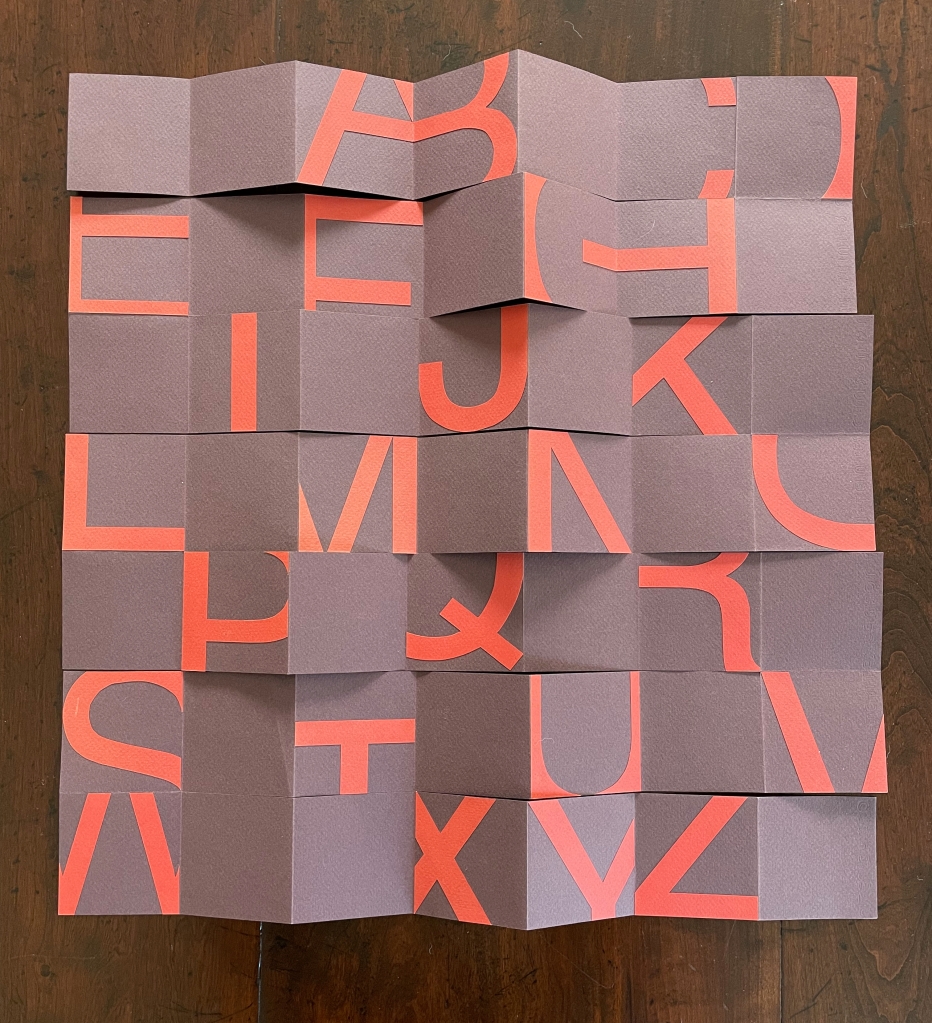
Il était une fois presents the mutual discovery of the medieval/Renaissance country of Vowels and the isle of Consonants and their union over a banquet, evening gala and ball to form the alphabet. According to the reissuing publisher Éditions Chandeigne, Souza Desnoyer and Marcelle Marquet conceived of “Once upon a time there was an alphabet” in 1939. Its first self-published appearance as a spiral bound book of lithographs was in 1951. Not satisfied with this artistic means of conveying the letters to their readers, Desnoyer and Marquet called on their First World War experience of creating and sending games to the troops and added a board game or rather games for young and old at the back of Il était une fois.

The 1951 edition.

The 2009 edition.

In its reissue of the work, Éditions Chandeigne provides this biographical information about Desnoyer and Marquet and the insightful comment from a friend of Desnoyer:

L’amitié et le monde de l’art unissaient Marcelle Marquet (Boufarik 1892 – Paris 1984), écrivain et conteuse hors pair, et Souza Desnoyer (Georgette Anne Hanouche, dite Souza, Kiev 1901 – Perpignan 1988), illustratrice et miniaturiste, épouses res­pectives des peintres Albert Marquet et François Desnoyer. Comme l’affirme son amie Rose Fortassier, Souza Desnoyer semble « avoir été en quelque sorte programmée pour illustrer un alphabet. Cela à cause de sa vie et des voyages qui la firent ­polyglotte. De famille maternelle française, mais née à Kiev, berceau de la Russie, elle apprit à lire et écrire en caractères cyrilliques. Transplantée à l’âge de six ans en Bohême, elle y découvrit l’alphabet occidental à l’école primaire. Mais il est probable qu’elle eut aussi l’occasion de jeter les yeux sur les caractères gothiques allemands puisque la Bohême était encore autrichienne. Plus tard, quand elle fut installée en France à la suite de son mariage avec le peintre François Desnoyer, elle retrouva ses chers alphabets au cours de ses fréquents voyages en Angleterre, pays dont on sait qu’il a beaucoup fait pour la littérature destinée aux enfants ».

Friendship and the world of art united Marcelle Marquet (Boufarik 1892 – Paris 1984), writer and storyteller, and Souza Desnoyer (Georgette Anne Hanouche, known as Souza, Kiev 1901 – Perpignan 1988), illustrator and miniaturist, wives of painters Albert Marquet and François Desnoyer respectively. As her friend Rose Fortassier says, Souza Desnoyer seems ‘to have been somehow programmed to illustrate an alphabet. This is because of her life and travels that make her polyglot. Of French mother tongue, but born in Kiev, the cradle of Russia, she learned to read and write in Cyrillic characters. At the age of six, she moved to Bohemia where she discovered the Western alphabet in elementary school. But it is likely that she also had the opportunity to see the German Gothic script since Bohemia was still Austrian. Later, when she was settled in France following her marriage to the painter François Desnoyer, she found her beloved alphabets during her frequent trips to England, a country that is known to have done much for children’s literature.‘” (Translation by DeepL).

Other adventures of letters “in character” can be found in Michael Chesworth’s Alphaboat (2006), Jon Agee’s Z Goes Home (2006), Althea Kontis & Bob Kolar’s AlphaOops: The Day Z Went First (2012) and Sean Lamb & Mike Perry’s Z Goes First (2018). The tradition of anthropomorphizing the letters of the alphabet goes back much further and across more than the French and English languages, but how fitting that Desnoyer’s illustrations came so close to the period of this example:


(Hebrew Bible with David Kimhi’s Sefer Mikhlol) MS. Kennicott 1 (1476). 447r. Oxford, Bodleian Library.
Photo: © Bodleian Libraries, University of Oxford.

Further Reading

Marcelle Marquet & Souza Desnoyer“. N.D. Librairie Portugaise & Brésilienne, 19/21 rue des Fossés Saint-Jacques 75005 Paris. Accessed 30 January 2022.

Desnoyer, Souza. 1977. Desnoyer : Sa Vie Son Oeuvre Ses Amis Ses Voyages Racontés Par Lui-Même Montfermeil: Ed. Recherche et Expression Jack Renaud.

Books On Books Collection – Michael Chesworth

Alphaboat (2002)

Alphaboat (2002)
Michael Chesworth
Casebound with jacket. H250 x W220 mm. 32 pages. Acquired 13 October 2021.
Photos: Books On Books Collection.

Alphabet stories with the letters themselves as characters date back at least to the books of the Hebrew Kabbalah. In the Books On Book Collection, Ben Shahn’s The Alphabet of Creation (1954) draws on that source to provide an example of an artist’s book for older children and adults. Three other works in the Collection that establish this “letters as characters” as a sort of genealogical narrative line linking artists’ books and children’s alphabet books together are Sonia Desnoyer & Marcelle Marquet’s Il était une fois un alphabet (1951/2009), Warja Lavater’s Spectacle (1990) and this one by Michael Chesworth.

Il était une fois un alphabet (“Once upon a time there was an alphabet“) presents the vowels’ voyage of discovery (and board game) to join the consonants to create the alphabet. Spectacle presents a complex abstract version of how vowels and consonants joined together to form the spectacle of the alphabet, words and writing. Chesworth enriches this genealogical line from Desnoyer and Shahn to Lavater with his own mastery of children’s book traditions. Among those traditions exemplified by Alphaboat are the rhyming narrative, wordplay with letter shapes and sounds as well as self-referential wordplay with genres and the material aspects of reading and writing.

One double-page spread nearly suffices to illustrate. After Alphaboat and its crew ride out a storm, we have a double-page spread of calm below. The uppercase officers, punningly named Admiral T and Captaincy, preside over the boat. The lowercase crew f and r admire the punctuation-shaped sunset. And the facing page zooms out with a map to illustrate the ship’s progress and play word games with the map genre (note the feature of “Tear Incognito”), writing implements (“Ball Point” and “Computer Keys”), real locations (“Pencilvania” and “Isle of Write”), typography (“Sands Serif” and “Pica Peak”) and other common geographical phrases (“Isthmus Beedaplace” and “Down Bydee Bay”).

One more double-page spread is needed to expand on the lowercase f’s comment “Dot’s beautiful”. Throughout the voyage, words and images combine with the crew’s expostulations to allude to grammar, punctuation, spelling, typography and alphabetical order. About the pages showing the crew’s arrival back home, any admirer of these traditions and puns would have to agree with f: “Dot’s beautiful”.

Further Reading

Abecedaries I (in progress)“. Books On Books Collection.

Jon Agee, Alethea Kontis & Bob Kolar, Sean Lamb & Mike Perry, Lou Kuenzler & Julia Woolf“. 16 October 2021. More letters in character in the children’s book tradition.

Souza Desnoyer and Marcelle Marquet“. 22 December 2022. Books On Books Collection.

Warja Lavater“. Books On Books Collection.

Ben Shahn“. 20 July 2022. Books On Books Collection.

Nikolajeva, Maria, and Carole Scott. 2007. How picturebooks work. New York: Routledge Taylor & Francis Group.

Scott, Carole. 2014. “Artists’ books, Altered books, and Picturebooks”. In: B. Kümmerling-Meibauer, ed., Picturebooks: Representation and Narration. London, New York: Routledge.

Fischer, Steven Roger. 2008. A history of writing. London: Reaktion Books.

Firmage, Richard A. 2001. The alphabet abecedarium: some notes on letters. London: Bloomsbury.

Flanders, Judith. 2020. A Place For Everything: the curious history of alphabetical order. New York: Basic Books.

Rosen, Michael. 2014. Alphabetical: how every letter tells a story. London: John Murray.

Webb, Poul. 2017-“Alphabet Books — Parts 1-8” on Art & Artists. Google has designated this site “A Blog of Note”, well deserved for its historical breadth in examples, clarity of images and insight.

Books On Books Collection – Farah K. Behbehani

The Conference of the Birds (2009)

The Conference of the Birds (2009)
Farah K. Behbehani and Farid ud-Din Attar.
Casebound cloth over boards, stamped in gold foil. H340. 166 pages (56 of them foldouts). Acquired from Saba Books, 5 June 2022.
Photos: Books On Books Collection. Displayed with permission of the artist.

The Conference of the Birds is a twelfth-century Sufi allegorical poem by Farid ud-Din Attar. A gathering of the world’s birds, each representing a different aspect of human nature, debate who should be king of all the birds. Led by the Hoopoe, they agree to seek the advice of the mythological being – the Simorgh. After an arduous and winnowing journey, thirty of them arrive at the home of the Simorgh to find a surprising answer.

Farah Behbehani has selected thirteen of Attar’s stories and interpreted them within a journey-like creation of her own in the calligraphic style called Jali Diwani. As with many enlightening journeys, the destination is the journey itself — learning to read Jali Diwani calligraphy and, thereby, celebrate the beauty of the tale and its telling.

A passage from the story starts each chapter, and an image of the bird whose story it is is rendered in Jali Diwali. A tasseled bookmark provides the key to following the stroke-by-stroke illustration of how to read a representative line from the Arabic version of the story (a literal English translation is provided).

This book’s features (56 foldouts, embossing, gold foil, die-cut pages and that unusual bookmark) place it outside the mainstream output of its traditional commercial publisher Thames & Hudson and is as close to being an artist’s book from such a source as could be imagined. It is certainly available only through rare book dealers and occasionally by auction.

Behbehani’s Conference of the Birds fits in the Books On Books Collection alongside Golnar Adili’s Baabaa Aab Daad (2020), Islam Aly’s 28 Letters (2013), Masoumeh Mohtadi’s Blindness (2020) and Rana Abou Rjeily’s Cultural Connectives. Disregard any implication that these works represent a single aesthetic. The artists hail from different countries and draw on different traditions. Yet each work reaches across the cultural divide between the Near East and the West. Reaching across does not mean eliminating the differences. Consider Behbehani’s work in relation to Brian Goggins ‘ Language of the Birds (2006-2008), a site-specific sculptural light installation for a public plaza in San Francisco; Anselm Kiefer’s Für Fulcanelli – die Sprache der Vögel (2013), a massive sculpture of leaden bird wings and books; and the delicate but weighty cages in Bird Language (2003) by Xu Bing.

If anything draws all of these works together, it is the chord that language and image strike across time and cultures.

Further Reading and Viewing

Golnar Adili“. 2022. Books On Books Collection.

Islam Aly“. 13 January 2020. Books On Books Collection.

Anselm Kiefer“. 16 January 2015. Books On Books Collection.

Masoumeh Mohtadi“. 5 February 2021. Books On Books Collection.

Rana Abou Rjeily“. 21 December 2022. Books On Books Collection.

Xu Bing“. 28 February 2016. Bookmarking Book Art.

Arts AlUla. November 2022. “Interview with Farah K. Behbehani | فنون العلا | سفر | لقاء مع فرح بهبهاني“. Accessed 23 November 2022.

Books On Books Collection – Rana Abou Rjeily

Cultural Connectives تواصل الثقافات  (2011)

Cultural Connectives = تواصل الثقافات / Cultural connectives = Tawaṣṣul al-thaqāfāt (2011)
Rana Abou Rjeily
Dustjacket/poster, casebound, decorative doublures, sewn, endbands. H235 x W195 mm. 112 pages. Acquired from Medimops, 23 November 2022.

Rana Abou Rjeily’s is not the only attempt to adapt Arabic to the printing press as Cecil Hourani and Mourad Boutros note in their preface, but their praise for the book is all the more notable for Boutros’ being the creator with Arlette Boutros of Basic Arabic, a widely accepted typeface alongside Nasri Khattar’s Unified Arabic. Still more notable, however, are the ways in which Rjeily’s design and writing weave together multiple aims. One aim, of course, is to introduce Mirsaal, the typeface designed by the author to adapt the calligraphic styles of the Arabic alphabet to the printing press and still be used for the Latin alphabet. Another is to teach the Arabic alphabet to non-native speakers. And still another is to bridge Arabic and Western cultures. The aims are interwoven not only because Rjeily uses the first as the means to the others but because she invests all three into the design of the book.

The dustjacket offers the most mechanical example of this investment. It unfolds into a poster display of the book’s epigraph from Gibran Khalil Gibran (set in Mirsaal, of course): “We shall never understand one another until we reduce the language to seven words”.

Mechanically more subtle than the dustjacket is Rjeily’s use of partial and full bleeds in the pages below — always in support of the meaning on the page. Using both vertical and horizontal bleeds, this double-page spread illustrates the Latin alphabet’s more vertical orientation compared to Arabic’s more horizontal orientation.

Rjeily keeps the material, haptic aspect of both Arabic and Latin close to hand with parallel pages like the following that highlight their alphabets’ differences but also assert the possibility of harmony through design. The same simple green and black color scheme, the same image of nib and mark, and the same angling of text on the page give a unified presentation of the difference in direction and angle of cuts for Arabic and Western nibs. Another physical aspect that Rjeily highlights is the ductus (the order and direction) of a pen strokes making up a letterform, which is arguably more important for Arabic because the flow of writing demands more pen movement.

Other bold, oversized spreads drive home some of the false cognate forms such as 0 and the number 5 written in Arabic-Indic numerals, or the letter V and the number 7 in Arabic-Indic numerals. Others, in an almost children’s book style, present the unique characteristic of an Arabic letterform’s changing shape depending on its initial, medial or final position in a word — or its appearance in isolation. While teaching these differences and features of Arabic is a fundamental aim, always the differences are laying the groundwork or demonstrating what Mirsaal must deal with to bridge a calligraphic system to a typographic system of writing.

The final section presents the Mirsaal typeface in its various fonts (sizes and weights) in the manner of a traditional type specimen, using the very appropriate words of John Henry Mason (1875-1951) in Arabic and English:

Type is like music in having its own beauty, and in being beautiful as an accompaniment and interpretation ; and typography can be used to express a state of the soul, like the other arts and crafts. But like them it is too often used mechanically, and so the full expressiveness of this medium is unrealized. If it is used according to a rule or recipe, it becomes dull and loses vividness. Type appears at first to be a rigid medium; but like other rigid media, it is plastic to the living spirit of a craftsman. — J.H. Mason

Cultural Connectives is the useful reference work Rjeily intends. In achieving its several aims, it also provides both an accomplished example of the book arts and a means of insight into other works in the Books On Books Collection, such as Golnar Adili’s Baabaa Aab Daad (2020), Islam Aly’s 28 Letters (2013), Farah K. Behbehani’s The Conference of the Birds (2009) and Masoumeh Mohtadi’s Blindness (2020).
Further Reading

Golnar Adili“. 24 November 2022. Books On Books Collection.

Islam Aly“. 13 January 2020. Books On Books Collection.

Farah K. Behbehani“. 10 December 2022. Books On Books Collection.

Masoumeh Mohtadi“. 5 February 2021. Books On Books Collection.

Boutros Mourad. 2017. Arabic for Designers : An Inspirational Guide to Arabic Culture and Creativity. London: Thames & Hudson.

Khoury Nammour, Yara 2014. خوري نمور يارا. . Nasri Khattar : A Modernist Typotect. Amsterdam: Khatt Books.