Books On Books Collection – Linda Toigo

Altered books as artists’ books present a seemingly endless variety.

Some may be the conversion of old books into just-legible new ones as in A Humument redacted with ink, paint, excision, and collage by Tom Phillips, Tree of Codes mechanically excised by Jonathan Safran Foer, or The Eaten Heart scalpeled into existence by Carolyn Thompson. They give us a new work to read page by page extracted page by page from the earlier work, which remains more or less (mainly less) present in our hands.

Others like Marcel Broodthaers’ page-by-page redactions of Mallarmé’s Un Coup de Dés by ink in one case and excision in another or Michalis Pichler’s similar reformatting and excision of the same poem in clear acrylic or Jérémie Bennequin’s page-by-page erasures of Proust’s Remembrance of Things Past give us artists’ books that make the altered books illegible but still accessible page by page.

Other altered books as artists’ books are mainly one-off spatial objects that can be taken in in one go — not necessarily in just a glance but in the look or gaze given to a sculpture or painting. The ground up and encased works in Literaturwurst by Dieter Roth. The sealed, painted, nailed, and “hairied” works of Barton Lidice Beneš. The torn works of Buzz Spector. The sandblasted works of Guy Laramée. The glued and carved works of Brian Dettmer. The bullet-hole-ridden Point Blank by Kendell Geers. The pun-packed moebius-sculpted Red Infinity #4 by Doug Beube. They give us artists’ books that make the altered books illegible and inaccessible as books.

With Medieval and Modern History (Suggestions for Further Study for Jack Hroswith) (2013), a schoolboy’s textbook burnt into near illegibility but still accessible page by page, Linda Toigo adds an artist’s book that distinctively broadens the variety of alterations and their outcomes.

Medieval and Modern History (Suggestions for Further Study for Jack Hroswith) (2013)
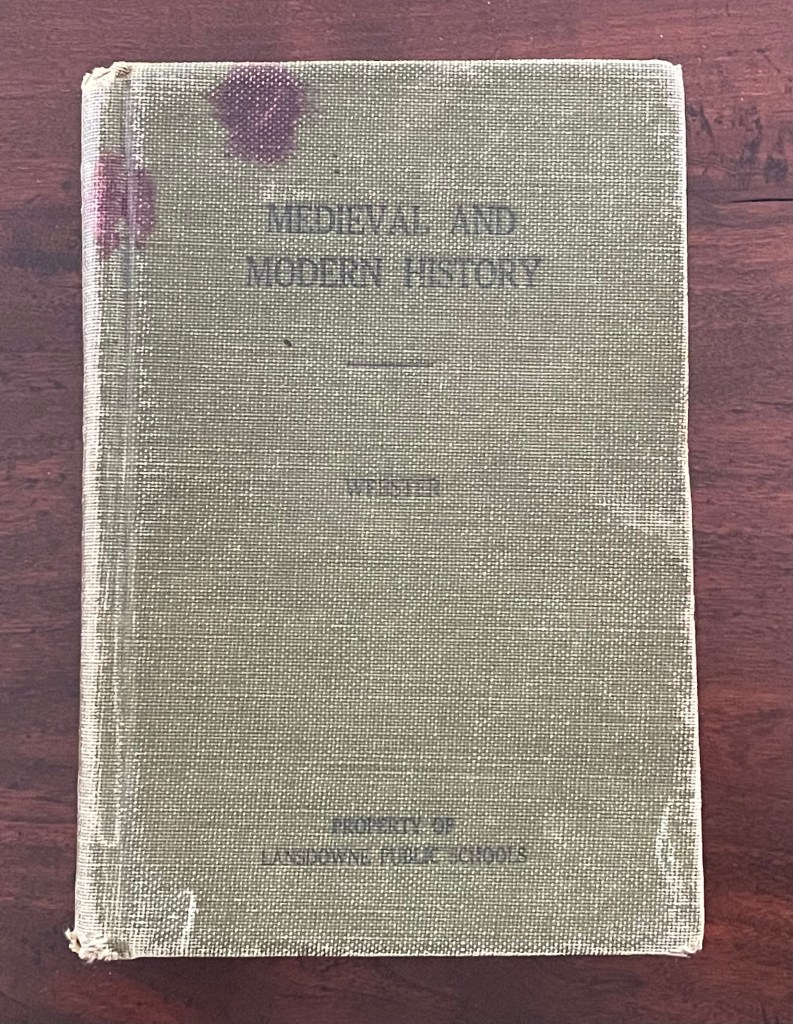
Medieval and Modern History (Suggestions for Further Study for Jack Hroswith) (2013)
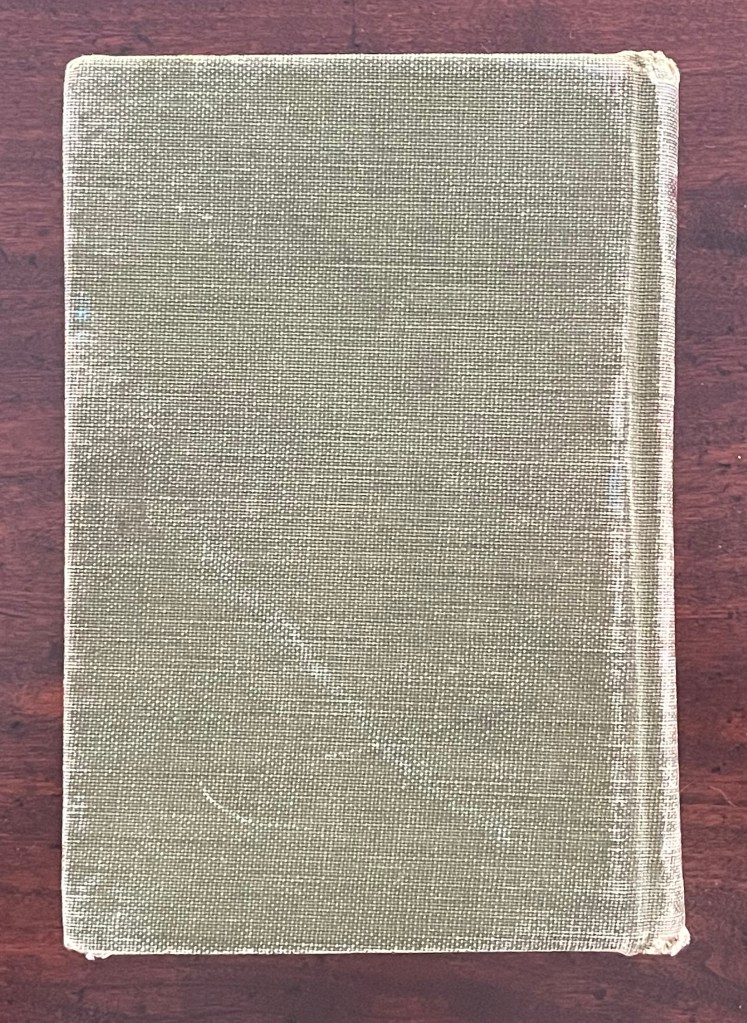
Linda Toigo
Altered casebound hardback. H195 x W135 x D40 mm. 832 pages. Unique. Acquired from the artist, 30 August 2025.
Photos: Books On Books Collection.
Continue reading

Books On Books Collection – Julien Nédélec

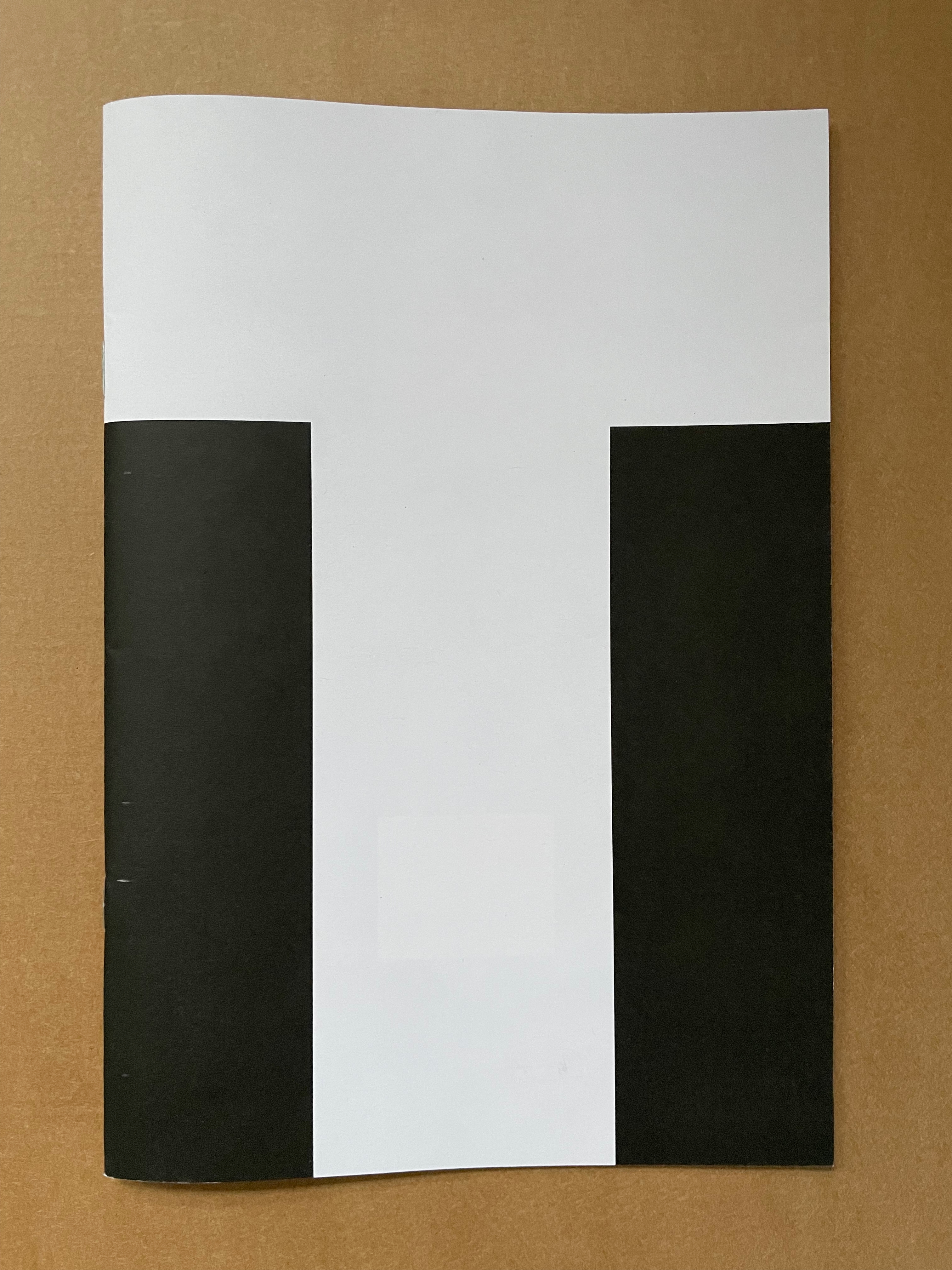
Because he works with so many different materials, it is hard to classify Julien Nédélec as an artist: A polyfabricant? With language play being a more or less constant theme: A polywright? His website labels him a plasticien, the perfect French word that captures more of the media in which he works than its usual translation “visual artist” does. In Zéro2, Antoine Marchand writes:

Everything, with him, is subject to manipulation, appropriation, and diversion, at times in the most trivial and basic way imaginable. His work is based on permanent mischief, a desire to destabilize the viewer, and be forever creating a slight discrepancy, which barely ruffles the reading of the work—well removed from the showiness of many present-day productions. He bypasses the daily round and takes us towards somewhere else that is not that far away, but all the more joyful. … What should incidentally be underscored in this young artist’s praxis is his ability to move from one medium to another, without the slightest bother or apprehension. It is impossible to pigeonhole Julien Nédélec’s praxis in any one particular medium.

Several of his works have been hosted on the Greek island of Anafi by the Association Phenomenon and the Collection Kerenidis Pepe, whose website also notes that his

practice can take many forms, from sculpture to drawing, through books and photography, with a predilection for the paper, that he uses not only as a support, but also as a material that he bends, cuts, colors, stacks or crumples. His works are the result of linguistic and formal games that reveal the artist’s fascination with the potentialities of language, with a malice that places him as an heir apparent of the Oulipo, while his taste for geometric and serial shapes brings him closer to the tradition of minimalism.

With paper as a favorite medium, there are a handful of artist’s book among the many other forms. Taken together, his artist’s books almost make up an anthology of homage to book artists from the 1960s to the present. He also belongs to the school of appropriators embracing forerunners like Bruce Nauman, Richard Prince, and Richard Pettibone and contemporaries like Michalis Pichler, Antoine Lefebvre, and Jérémie Bennequin, all of whom have embraced the self-reflexive artist’s book as an appropriate medium for appropriation. No wonder Galaad Prigent’s Zédélé Éditions, the French publisher that hosts Anne Moeglin-Delcroix and Clive Phillpot’s Reprint Series of artists’ books, is so fond of his bookworks.

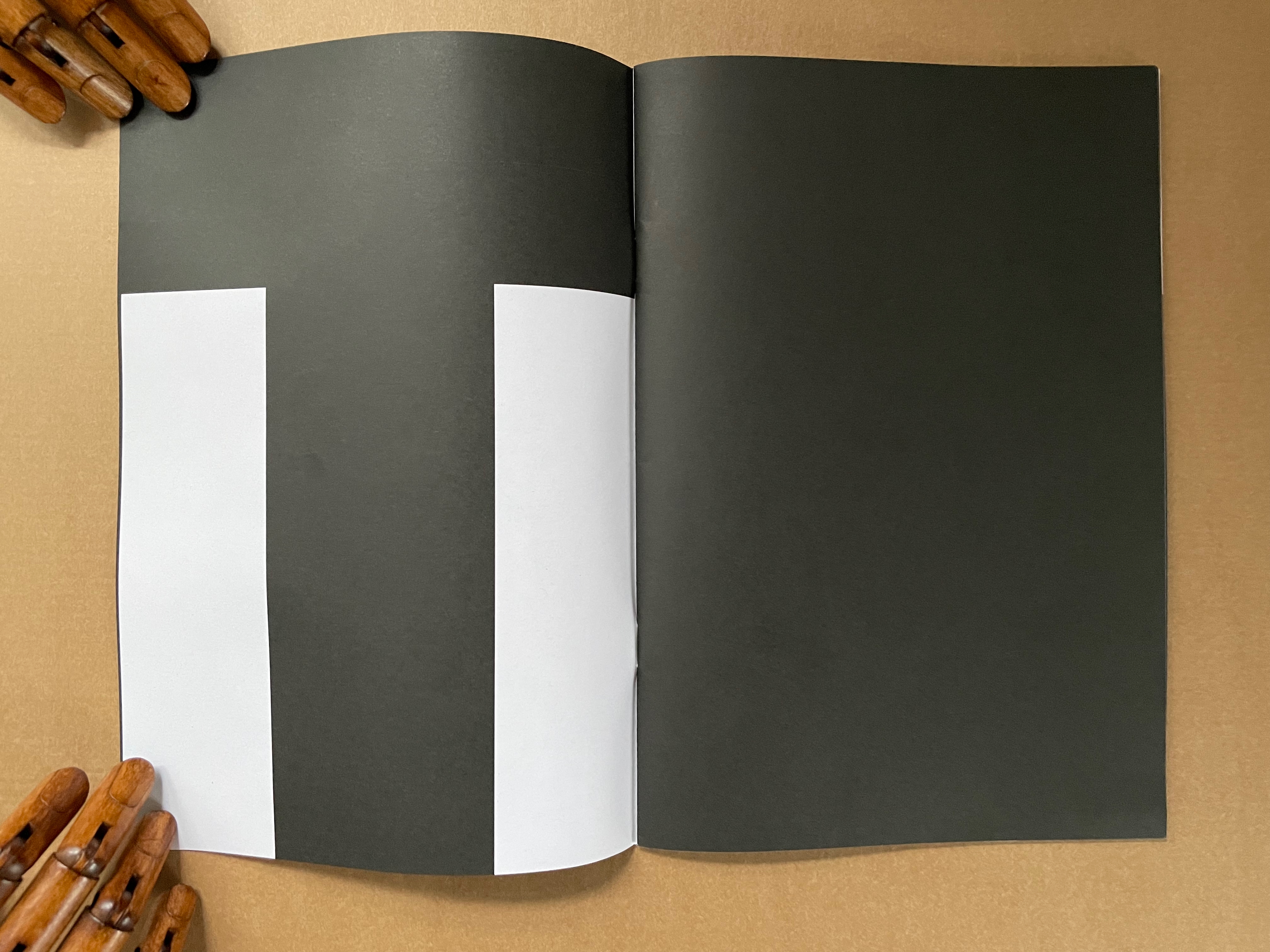
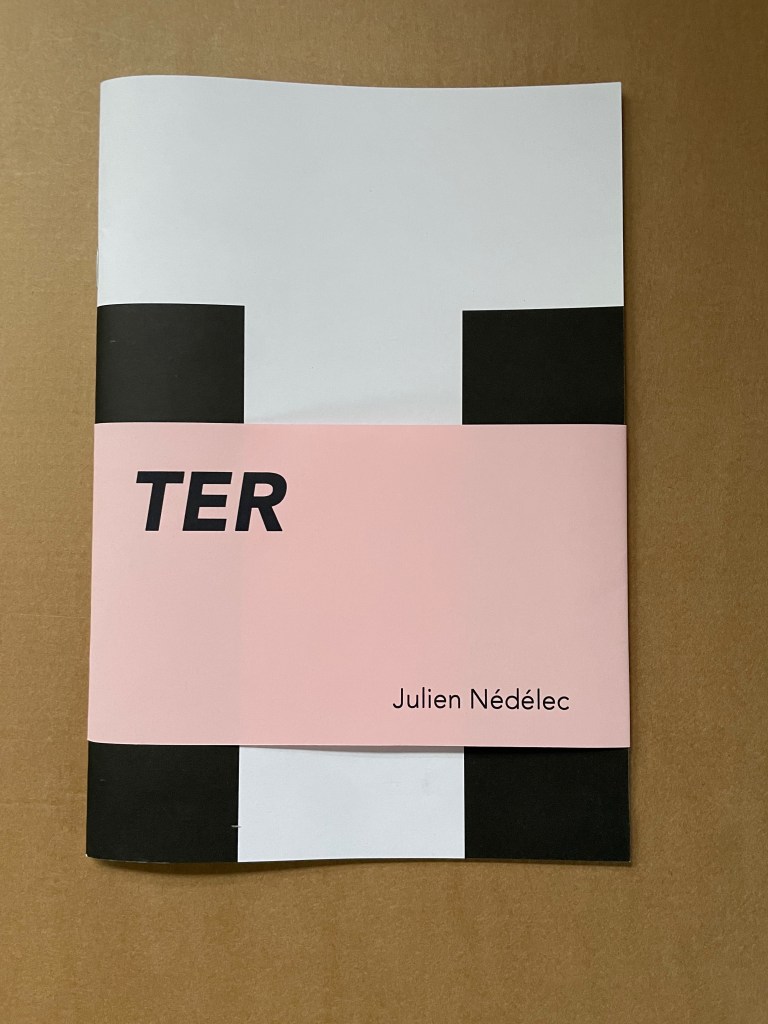
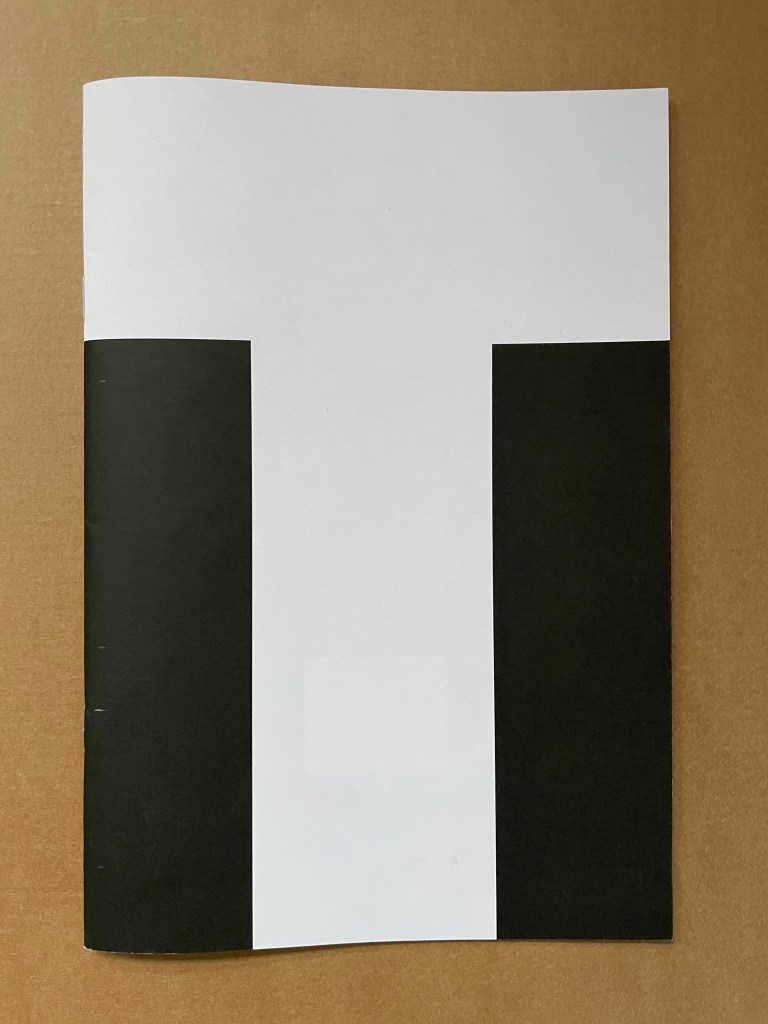
TER (2021)

TER (2021)
Julien Nédélec
Softcover, saddle stitch with staples. H240 W165 mm. [36] pages. Acquired from Zédélé Éditions, 21 September 2024.
Photos: Books On Books Collection. Displayed with the artist’s permission.
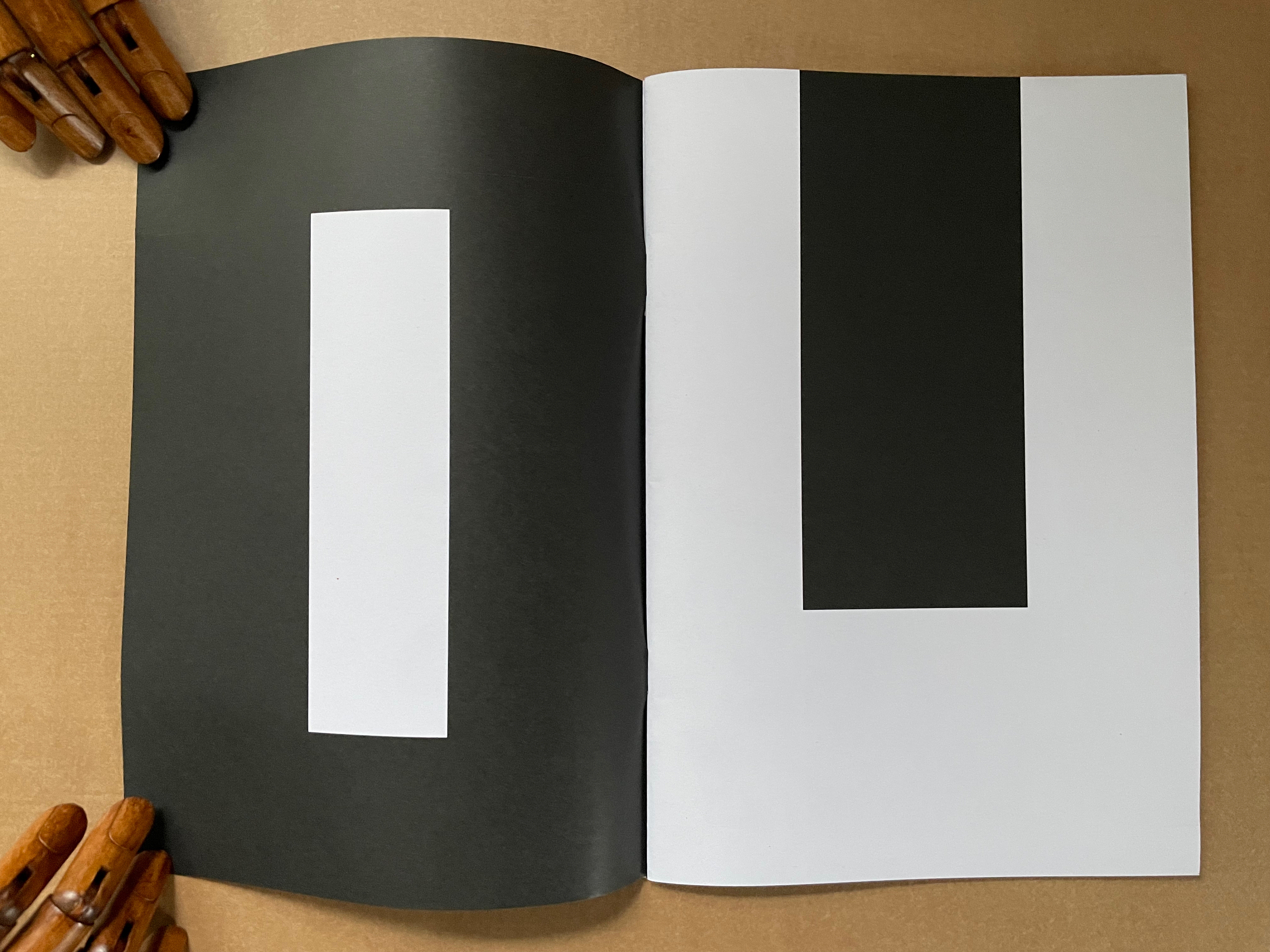
“Tout”

The sentences to be deciphered from these full-page-bleed letters are Tout a été redit. Tout a été refait, which, in English, would be “Everything has been said. Everything has been done.” But it also has the echoes of a French children’s song, “Tout ce que je fais“:

Continue reading

Bookmarking Book Art – Linda Toigo

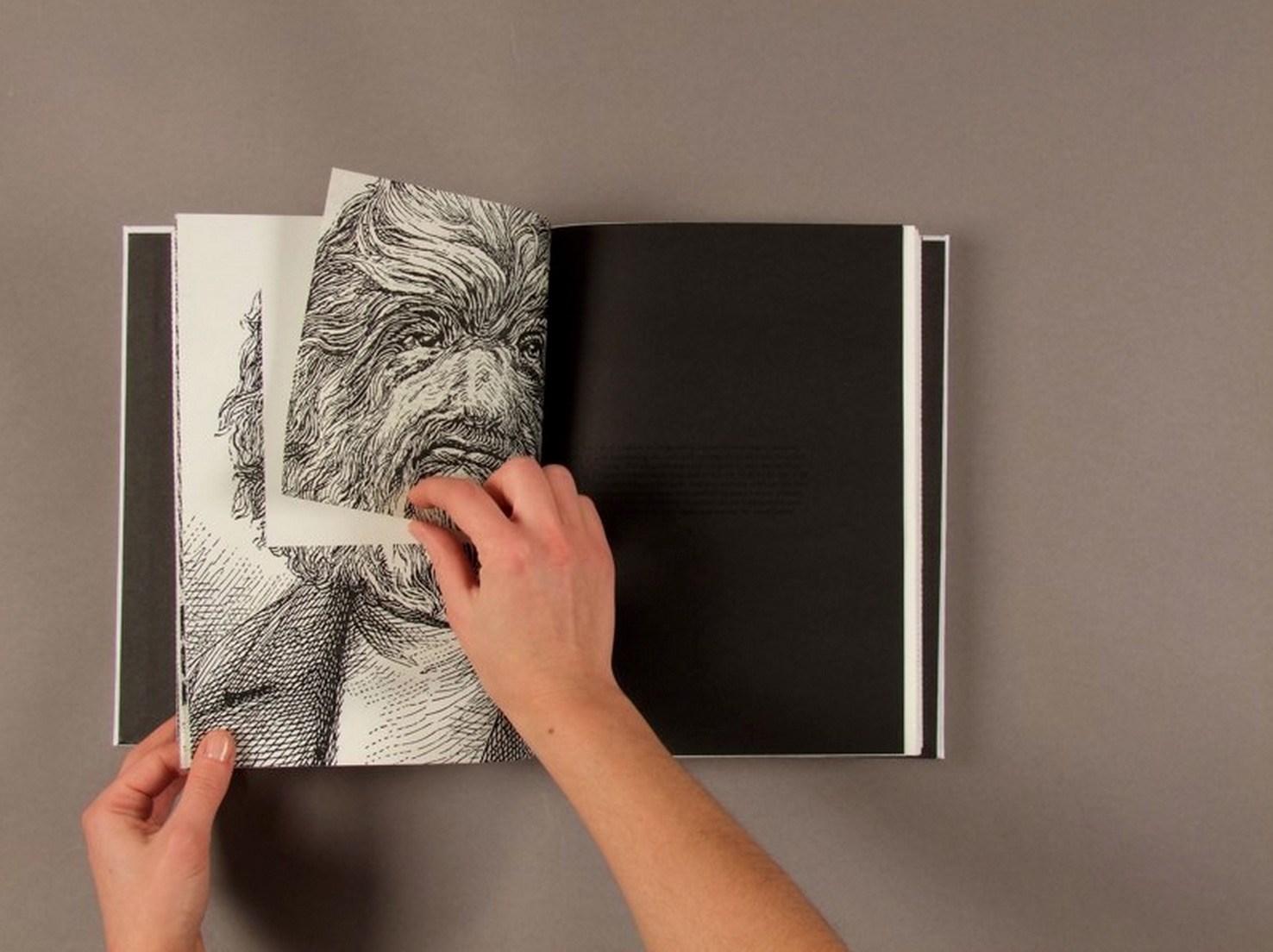
Linda Toigo, Strange Case of Dr. Jekyll and Mr. Hyde, 2009

The picture above comes from Linda Toigo‘s interactive edition of Robert Louis Stevenson’s The Strange Case of Dr. Jekyll and Mr. Hyde. The interactive elements consist of opening envelopes, ripping pages, constructing illustrations from jigsaw pieces, turning and returning pages facing reflective surfaces, but just as engaging — perhaps more so — is the unified way in which layout, texture, page size, illustration and half-tones achieve a gothic atmosphere. Experience it here online.

Going to and fro between her blog, website portfolio and Vimeo site is like viewing a solo exhibition in the artist’s company. When you have finished viewing this two-minute video, treat yourself to Toigo’s book art animation. I especially enjoyed the “hide and seek” effect of the three-level accordion and tunnel book work Annar and the Moose. But what is worth repeated viewing is Medieval and Modern History (Suggestions for Further Study for Jack Hroswith) (2013), in which the artist uses lit matches, a glass surface and her fingers to burn, excavate and sculpt the pages of a used history textbook. Jack Hroswith is the owner’s name inscribed on the opening endpaper, which is a haunting piece of random history reflected in the artist’s creative process:

… I gave chance a prominent role: with the same morbid fascination that inspired the fire officer in Fahrenheit 451, I let fire burn its way on the pages, and I observed the devastation of words, maps and illustrations. At the same time, however, I kept a certain level of control on the destructive process developing a quick reaction to avoid the complete dissolution of the book: for every page I waited for the fire to reach a chosen sentence or a specific image before pushing the paper down onto a glass surface with my fingertips.

In her blog, Toigo notes the influence of Gustav Metzger’s Autodestructive Art manifesto from the 60s, John Latham’s burning Skoob Tower and sequences from Truffaut’s Fahrenheit 451.  Toigo seems to have no “anxiety of influence”. While her works echo those of contemporaries and twentieth century book artists, they do so in her own voice.

Further Reading

Islam Aly“. 13 January 2020. Books On Books Collection.

Doug Beube“. 21 April 2020. Books On Books Collection.

Jessica Drenk“. 29 August 2024. Books On Books Collection.

Cerith Wyn Evans“. 16 April 2020. Books On Books Collection.

Lucia Mindlin Loeb“. 28 November 2022. Books On Books Collection.

Movables Now and Then“. 31 August 2024. Bookmarking Book Art.

Drucker, Johanna. 1994, 2004. The Century of Artists’ Books. New edition. New York: Granary Books. Re John Latham, see pp. 361-62.