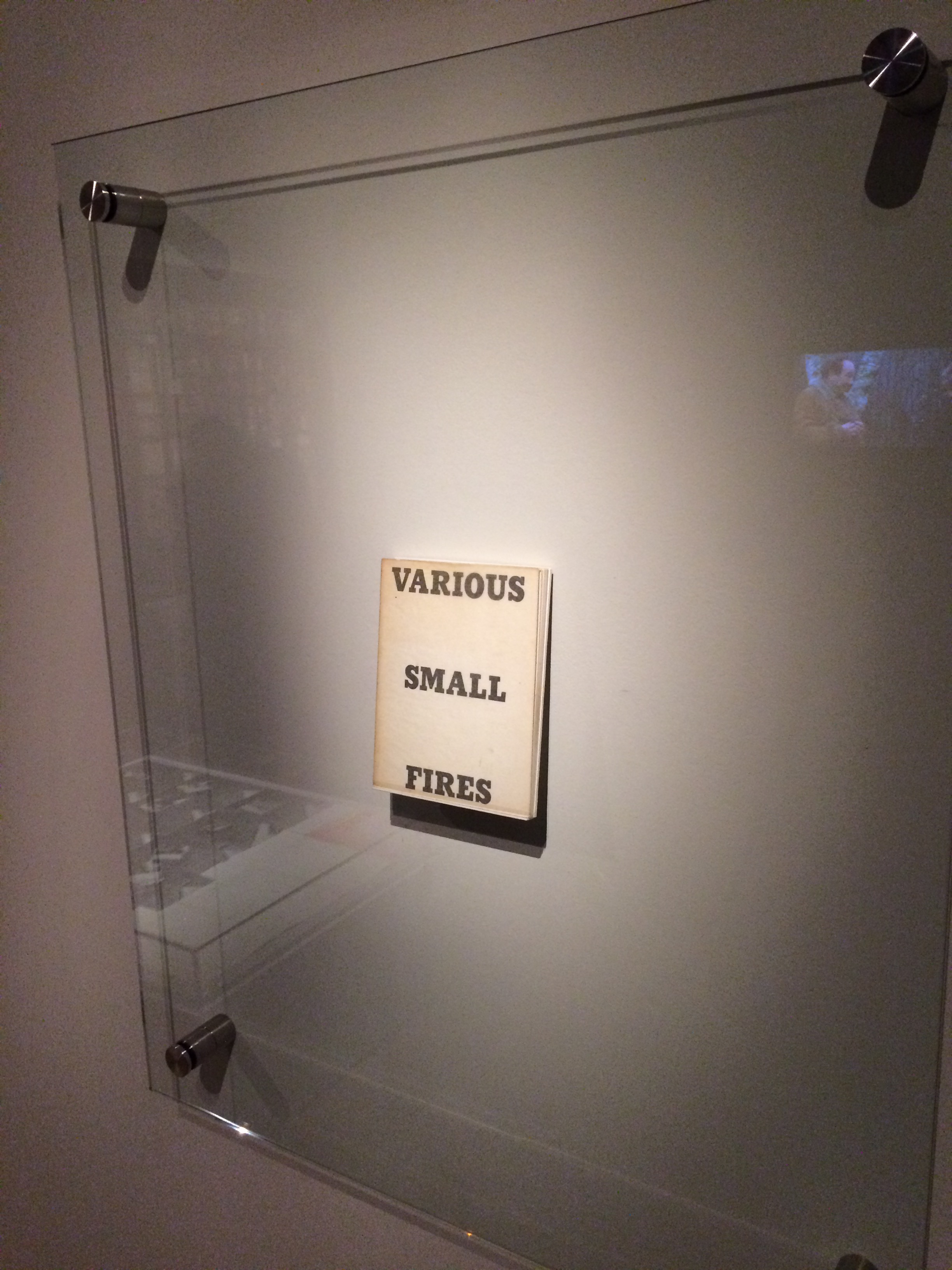
Display of Ed Ruscha’s Various Small Fires and Milk, 1964 Pliure: La Part du Feu, 2 February – 12 April 2015, Paris, Fondation Calouste-Gulbenkian. Photo by Robert Bolick, 11 April 2015. Reflected in the lower left hand corner is the display of Bruce Nauman’s Burning Small Fires, 1968; in the upper right corner, the film clip of Truffaut’s 1966 Fahrenheit 451; and in the upper left, Maria Helena Vieira da Silva’s La bibliotheque en feu, 1974.
The Studio Bibliografico Giorgio Maffei specializes in original texts and book art by twentieth century visual and literary avant-garde artists such Baldessari, Lewitt, Munari, Man Ray, Ruscha and Warhol among others. Recently the owner’s son – Giulio Maffei – “started making film as a side activity” and introduced a series of short animations “to put on the social networks and reach new potential customers”. An anonymous pair of hands displays a variety of the books and book art in stock.
But Giulio’s videos are not always the straightforward marketing effort intended. They provide an experience of book art or artists’ books that most of us will never hold or touch. And that may be Maffei’s point in his series “Le Vite dei Libri” (The Lives of Books) in which these usually glassed-off works are playfully handled, gently made fun of and still honored.
Some of the videos are derivative artworks in their own right in the same vein as Bruce Nauman’s Burning Small Fires, 1968. Nauman poked fun at Ed Ruscha’s Various Small Fires and Milk, 1964, by composing a book of photos recording the burning of a copy of Various Small Fires. Maffei’s Nauman-esque handling of Various Small Fires and Milk involves flash paper or its Photoshop equivalent. His celebration of Ruscha’s The Sunset Strip is still more endearing with its soundtrack and toy convertible. His cheeky animations of the pop-ups in Warhol’s Index (Book) and the ironically daring destruction of Papa Maffei’s copy of Some/Thing No.3 are even better. In the latter, the plastering of a Banksy-like mural with Warhol’s “Bomb Hanoi” stickers torn from the perforated cover is a sharp-edged example of the arch, reflective commentaries throughout Maffei’s videos.
Most of the films’ credits pay typographical homage to the work at hand, which is a nice self-deprecating and affectionate touch. At my last viewing, there were twenty-two works in the Lives series. They are listed below, but once you reach one on YouTube, the others follow. Giulio Maffei has also created a longer video catalogue for his father’s enterprise: Tra Libro e Oggetto (Between Book and Object). The Maffeis are a knowing team. The catalog title can be read as the beginning of a statement displayed on the cover.
BETWEEN BOOK AND OBJECT
The artists’ book, the multiple and the object
become an artwork
A statement that refers not only to the works in the catalog but to the video catalog itself and to the elder Maffei’s lifework of collecting, selling and writing about book art.
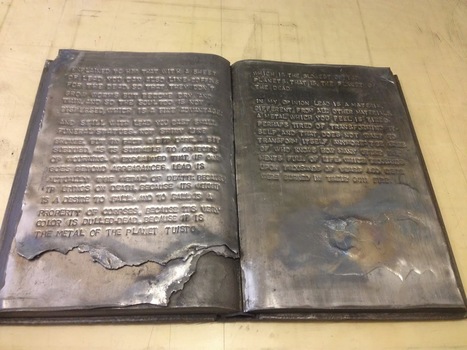
Lost Fight, 2014 Encyclopedia volume, lead, metal paint
The passage here, rendered by blind embossing on lead and metal paint, comes from Primo Levi’s essay on lead in his book The Periodic Table.
It reminds me of Anselm Kiefer’s lead books with wings (The Language of the Birds, 2013), which you can read about here: http://wp.me/p2AYQg-Lu. It’s a curious, leaden but uplifting, fitting but outrageous conjunction: Van Zanten’s personal grappling with depression, the concentration-camp survivor who ultimately succumbed to depression and suicide, and the Nazi-saluting artist who asserts that history is a weight that must be borne and embraced and lead is the only substance that is weighty, “alchemical” and mutable enough to bear it.
Van Zanten’s appropriation of Levi for her project “Depression” is somewhat less outré than Sylvia Plath’s appropriation of Jewishness in “Daddy”, which is barely less outré than Kiefer’s Nazi salutes. But all three are essential, outrageous and shocking appropriations, just as the appropriation of books as “just another material” with which to create art is essential, outrageous and shocking.
When Andrew Hayes told me it was e.e. cummings’ 100 poems he had found in the middle of the stacks of books awaiting a bookshelf he planned to build, I winced. Cummings has always been hard for me to figure. I was hoping for a more accessible book as a pretext to kick off our interview.
If you have not encountered one of these interviews on Books On Books, I should explain. The idea is that the book artist selects a book from the middle of the home or studio bookshelf, opens it to the middle, and tells me the author, title and page number. After tracking down the book, I send off some questions and so the interview begins.
It turned out that cummings was hard to access for Andrew as well. He wrote:
As I took the book from its place in the middle I had to take care, as you can see this is not the most efficient way to retrieve a book. I was able to carefully remove the book with out the top half toppling down, this time…
Just like extracting the meaning from the poem that just happened to be bookmarked in the middle of the cummings volume. The poem begins:
Just like extracting the meaning from the poem that just happened to be bookmarked in the middle of the cummings volume. The poem begins:
kind)
YM&WC

(of sort of)

A soursweet bedtime
and ends:
iSt

ep

into the not

merely immeasurable into
the mightily alive the
dear beautiful eternal night
Until Andrew carefully pulled out this volume bookmarked by his partner Kreh Mellick, he had not read it. “To be honest, I do not read as much as I would like, ….” Still, I wonder if, as his eyes moved through the broken-up layers of syntax and the juxtaposition of the “soursweet bedtime” story with “the mightily alive the/ dear beautiful eternal night”, he recognized something of his own?
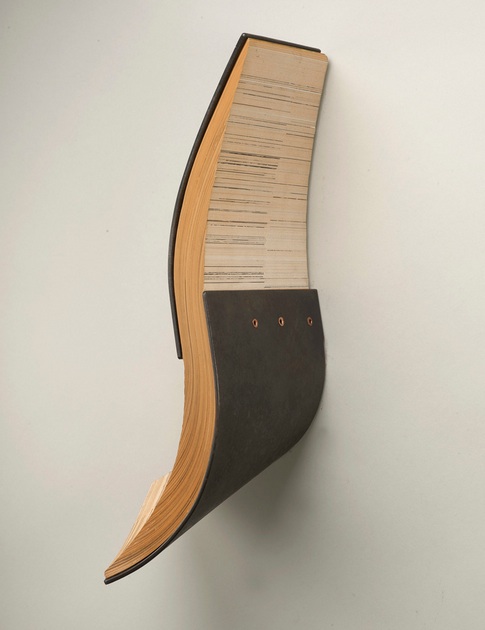
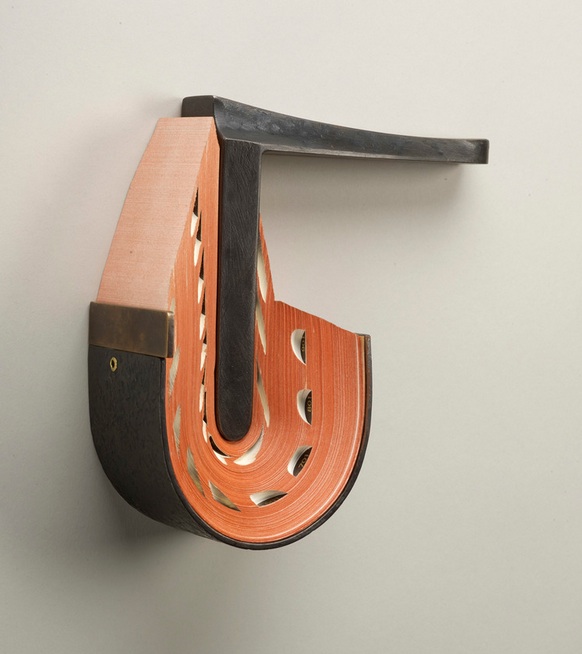
The title of this piece is Hade. “Hade” is a geological term, like Placer and Lode (titles of these other striking sculptures).
Hade, 2013 Steel, book pages, and copper 16” x 6” x 3” Reproduced with permission of the artist. Photo credit: Steve Mann, Black Box Photography
Placer, 2013 Steel, book pages, and brass 10” x 7” x 9” Reproduced with permission of the artist Photo credit: Steve Mann, Black Box Photography
Hade refers to “the angle of inclination from the vertical of a vein (geology), fault, or lode”. In Hade the yellowed pages slip between the parenthesis of steel plates like the sense lode through the fractured syntax of e.e. cummings’ poem. This is book art for the sensualist, much as most of cummings’ better poems are words for the sensualist. It exudes appreciation and care for the material of which it is made. That comes through clearly in Andrew’s response to my question “As an artist whose work has an intimate relationship to ‘the book’, could you describe the effect this has on you when you are reading books in general?”:
… as I read a book I love watching it wear and change as I pass through the pages. I’m sure this happens with everyone’s books, but I love this transformation. I find it happens best in shoes and books. I have a hard time keeping my hands clean so my books take a beating, I almost don’t need a book marker because I can just turn to the first clean page. It is funny I don’t like to dog ear pages I feel like that is almost disrespectful in a way, but I just like seeing what happens to the book as it serves its function. … for me finding a book that has been seasoned is like finding two stories. I like figuring out who read the book before and reading the notes and things I find in the books I end up using for sculpture.
An e.e. cummings poem can amuse like a Rube Goldberg or Heath Robinson contraption, but always with a sting at the end. Andrew clearly has a love of contraptions, words and paradox as well.
Lode, 2013 Steel and book pages 16” x 7” x 2.5” Reproduced with permission of the artist. Photo credit: Steve Mann, Black Box Photography
… as I read a book I love watching it wear and change as I pass through the pages. I’m sure this happens with everyone’s books, but I love this transformation. I find it happens best in shoes and books. I have a hard time keeping my hands clean so my books take a beating, I almost don’t need a book marker because I can just turn to the first clean page. It is funny I don’t like to dog ear pages I feel like that is almost disrespectful in a way, but I just like seeing what happens to the book as it serves its function. … for me finding a book that has been seasoned is like finding two stories. I like figuring out who read the book before and reading the notes and things I find in the books I end up using for sculpture.
An e.e. cummings poem can amuse like a Rube Goldberg or Heath Robinson contraption, but always with a sting at the end. Andrew clearly has a love of contraptions, words and paradox as well.
Balastae, 2013 Steel and book pages 16” x 8” x 3” Reproduced with permission of the artist Photo credit: Steve Mann, Black Box Photography
“Balastae” is an ancient variant on “ballistae”– the oversized Roman crossbow, comparable to a catapult or trebuchet. Its kinetic energy is captured here in the potential energy of the pages of words poised to fly over the steel. The contrast and tension between the kinetic and potential, between noun/verb and tool/rest, between paper and metal, characterize many of Andrew’s titles and works, for example, Kedge and Plow. My favorite works are Shift, Waver, Swarm and Kedge. The latter, in particular, captures the paradoxes in Andrew’s works; the word is noun and verb (transitive and intransitive) all in one: a nautical term for a light anchor, also the term for the act of warping a vessel and the term for moving a vessel by pulling on the anchor. Shift and Waver capture the kinetic energy of his works and beg to be circled and viewed from every angle like any of the dynamic figures of Giambologna.
Kedge, 2013 Steel, book pages, and brass 9.5” x 18” x 9” Reproduced with permission of the artist. Photo credit: Steve Mann, Black Box Photography
Shift, 2013 Steel, book pages, and brass 11” x 5” x 2” Reproduced with permission of the artist. Photo credit: Steve Mann, Black Box Photography
Waver, 2013 Steel, book pages, and brass, 16” x 9” x 9” Reproduced with permission of the artist. Photo credit: Steve Mann, Black Box Photography
And Swarm – ah, yes – like swarming bees, words have gathered across the splayed edges of the pages, whirling up framed by brass-riveted metal. Swarm is one of the biologically allusive pieces along with Divaricate, reflecting how Andrew’s imagination ranges over the words, objects and concepts in so many domains:
Swarm, 2013 Steel, book pages, and brass 13” x 14” x 3” Reproduced with permission of the artist. Photo credit: Steve Mann, Black Box Photography
the architectural (Prohedria, Mullion),nautical (Helm, Kedge), agricultural (Harrow, Plow) and military (Sentry, Citadel) as well as others ripe for verbal and visual puns. Witty as well as sensual, there is almost something of the Metaphysical poets about his work. One such work of metaphysical visual and verbal punning is Wry. Definitions of the word invariably include “twisted”, “distorted”, “lopsided” and apply it to facial features such as “a wry grin” or “wry mouth”. Now take a look at Wry:
Wry, 2013 Steel, book pages, and brass 7” x 8” x 3” Reproduced with permission of the artist. Photo credit: Steve Mann, Black Box Photography
Book art can easily fall off into mere craftwork. On the one hand, the book artist requires the freight that the book’s content and form carry, requires it somewhat analogously to the way Eric Gill required Hopton-Wood Stone for his sculpture. But the degree to which the freight weighs down the treatment, or the handling does not take the material beyond itself, that is the degree by which the work is closer to handicraft than to art. From the way that Andrew writes of his perspective on the freight that his found material carries with it, you can understand why each of his works — solid and dense as they are — translates the raw material beyond itself:
Book art can easily fall off into mere craftwork. On the one hand, the book artist requires the freight that the book’s content and form carry, requires it somewhat analogously to the way Eric Gill required Hopton-Wood Stone for his sculpture. But the degree to which the freight weighs down the treatment, or the handling does not take the material beyond itself, that is the degree by which the work is closer to handicraft than to art. From the way that Andrew writes of his perspective on the freight that his found material carries with it, you can understand why each of his works — solid and dense as they are — translates the raw material beyond itself:
When making work I take my love for the used book and search for pages that I can use in my sculpture. The book pages are a loaded found material. Other materials I use like steel that I find at the scrap yard come with built in history as well but it may not be as universal as the book pages. The books I am drawn to are usually worn or rich with color or deckled edges, but that is just the beginning. It is always a surprise when I cut the pages from their binding. This is when I try to find a way that I can compose the pages into a new shape in combination with steel.
To find a union of metal and the printed page as rich and tactile as that created by Andrew, we would have to hark back to the days of hot metal typesetting or farther still to the chained library. But, while the titles of Andrew’s works may evoke the historical or archaeological, the works themselves do not assume the printed book’s demise; they emphasize and celebrate the material of the book.
It is strange how these objects – books and scraps of metal that have their own individual logic and structural coherence, both material and semantic – become an object of art. In each – book or scrap steel – raw material has been amassed and wrought (words, paper, ink and cloth; or iron, carbon, manganese and nickel) to make a finished thing whose physicality inheres and obtrudes. The ways in which those raw materials are amassed and wrought into objects such as dictionaries or kitchen sinks create meaning and accumulate meanings by use and context. Then along comes Andrew Hayes. Drawing on his experience as a welder, his work as a student with fabricated steel and his time as a Fellow at the Penland School of Crafts in North Carolina, Andrew takes these found objects with their own logic and transforms them into this realm we call art.
Michael Yonan, “Toward a Fusion of Art History and Material Culture Studies”, West 86th: A Journal of Decorative Arts, Design History, and Material Culture, 20 September 2011, accessed 11 January 2014:http://www.west86th.bgc.bard.edu/articles/yonan.html#. Yonan notes the discomfort of art historians in addressing art as I have addressed Andrew Hayes’ work: ‘… fore- grounding the idea exalts art history into a philosophical endeavor, whereas emphasizing matter renders the discipline subject to what could be called “the fear of the tchotchke.” … the trinketization of art.’
For 2014-15, the New England Guild of Book Workers have organized a traveling exhibition: Geographies: New England Book Work, its itinerary covering each of the 6 New England states. Last year, the Rhode Island School of Design (RISD), the Wishcamper Center at the University of Southern Maine and the Bailey Howe Library at the University of Vermont hosted it. This year, the show has appeared at Williams College Library and is scheduled for Dartmouth College Library and the Creative Arts Workshop in New Haven, CT. Criss-crossing geographical boundaries as well as those of book art and the book arts, Geographies calls to mind the last line of Elizabeth Bishop’s “The Map“:
More delicate than the historians’ are the map-makers’ colors.
Or, in this case:
More delicate than the historians’ are the [book-artists’] colors.
Although born in Nova Scotia, Elizabeth Bishop grew up as a New Englander in Massachusetts with her paternal grandparents. As a far-traveller and visual artist as well as poet, she would have enjoyed this exhibition and found it fitting if it had included a broadside of “The Map”.
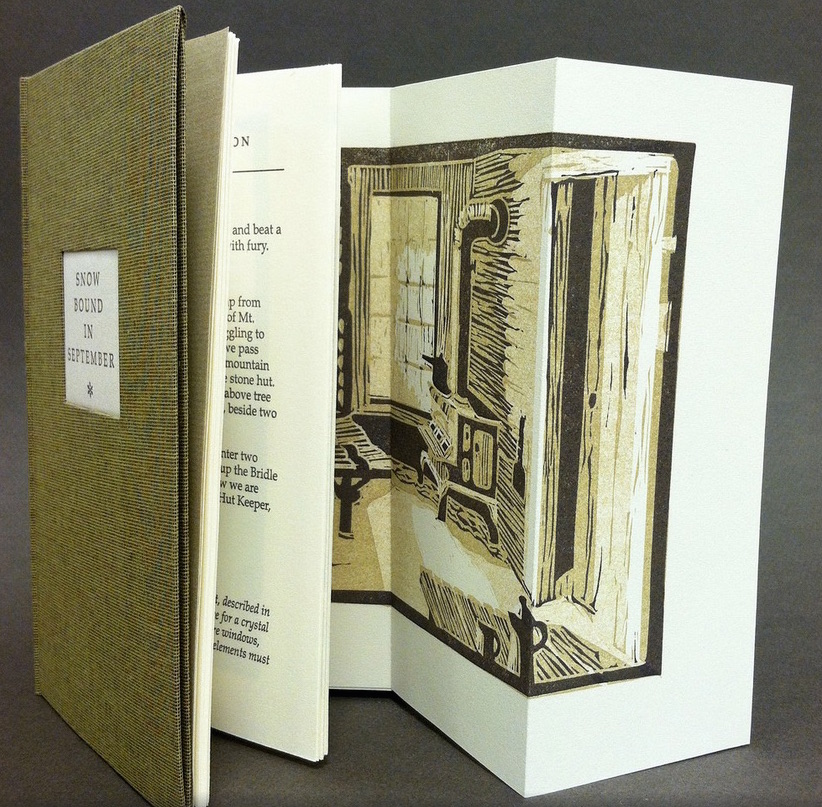
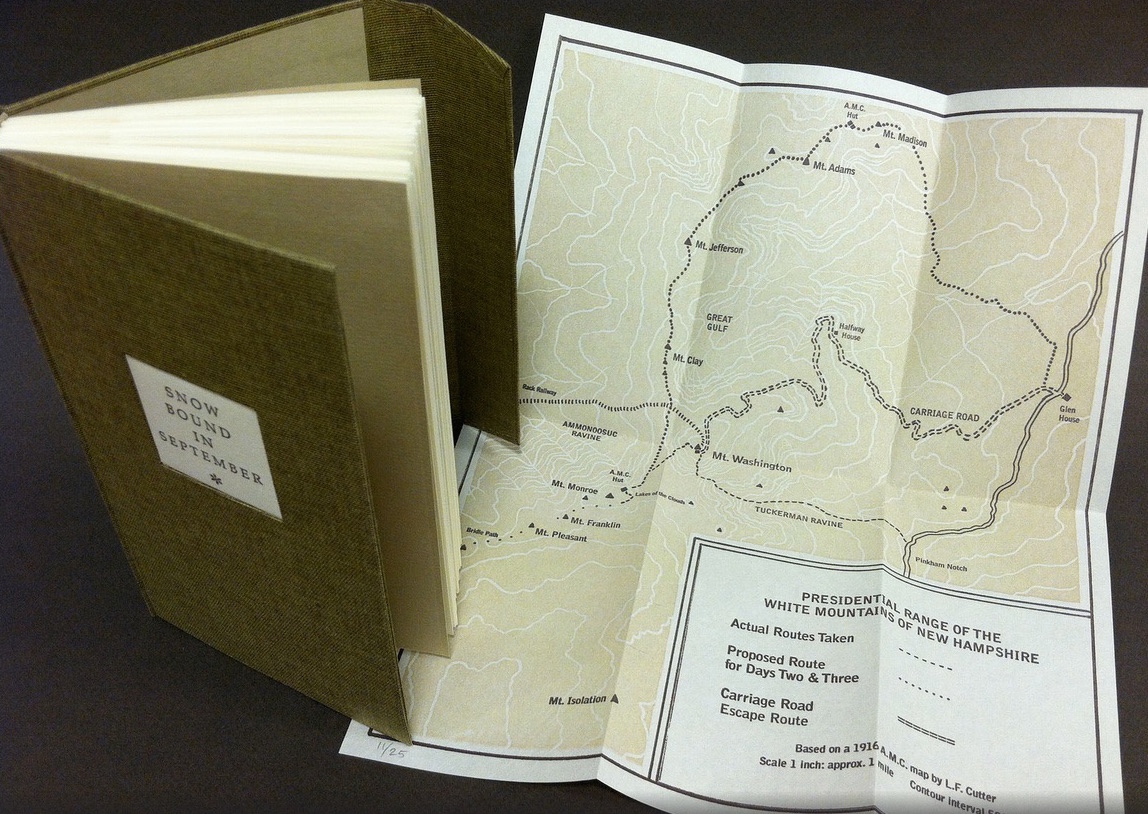
Nevertheless, what a range of “colors” from all the New England states and beyond – from historic to modern, from fine and design bindings to traditional and creative bookbinding, from artist books to calligraphic manuscripts, from masters to apprentices and from object to narrative. The latter finds a wintry exemplar in Snow Bound in September: A Re-Imagining by Laurie Whitehill Chong, retired Special Collections librarian and curator of Artists’ Books at RISD.
The artist made this book the same size as her grandfather’s Appalachian Mountain Club hiking guide. Snow Bound is an invented ancestral narrative, in which the artist uses a surviving photograph and her grandfather’s notes about being stranded with his wife for five days on Mount Washington by a hurricane-driven snowstorm in September 1915 to re-imagine the ordeal from her grandmother’s perspective. Note the slotted front cover into which the flap extending from the back cover fits to keep the book closed, snug against the elements.
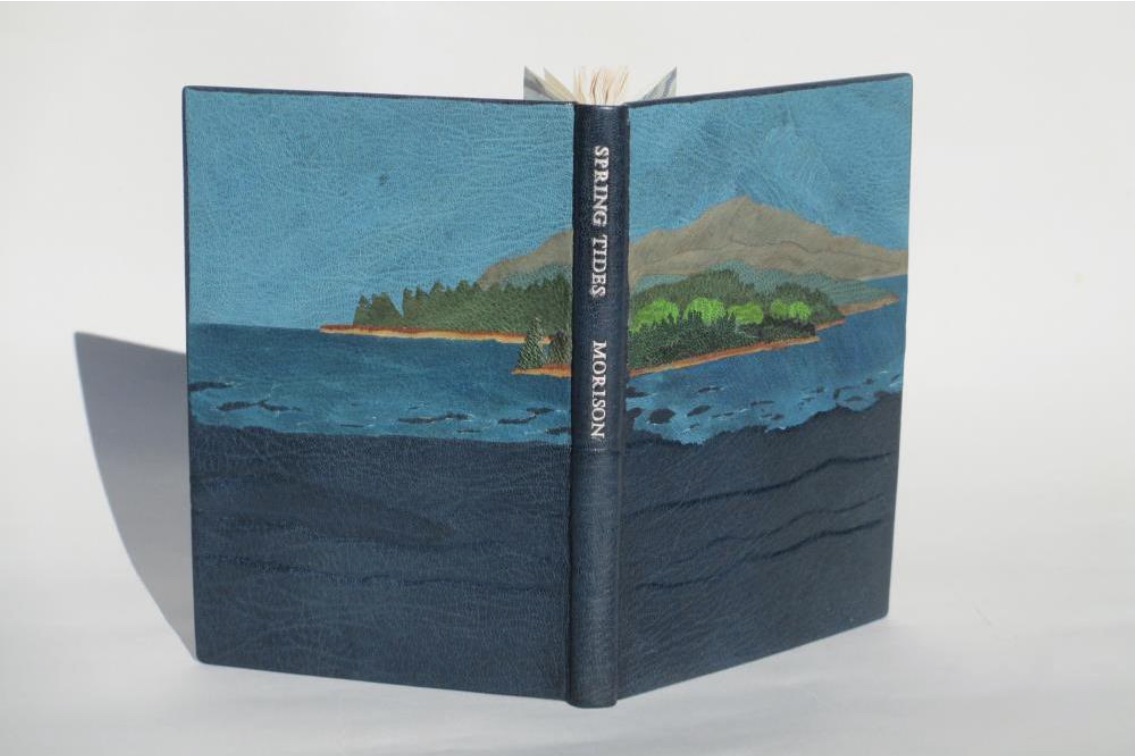
Julie B. Stackpole’s creative re-binding of Samuel Eliot Morison’s Spring Tides takes us from the New England mountains to the shore as can be seen from the layered binding.
Spring Tides by Samuel Eliot Morison Boston: Houghton-Mifflin Co., 1965. Julia B. Stackpole, Design binding 21.8 x1 5.0 x 1.6 cm January 2014
In Stackpole’s words:
The traditional tight-joint binding is covered in navy blue Niger goatskin with waves in the lower parts created by paring before covering. Cut-outs in the onlays of the lighter blue leather of the water help it transition from the dark of the navy to the sky’s azure. Onlays of other leathers create the forested landscape of the shoreline and hills. These blues were chosen because the only blue leather in a large enough piece to cover the whole binding was the dark navy, while I only had scraps of the water and sky’s blue. The endpapers are a Cockerell marbled paper over-painted with blue, with leather hinges.
Pictures of the works in the catalog (and others not) can also be found at the Williams College Flickr site (for now). I say “for now” because they will be pushed downstream inevitably in the way of today’s digital flow. They may even disappear; although as Matthew Kirschenbaum has explained in Mechanisms, something digitally forensic will remain. That boundary of the tangible and the digital, the haptic and the virtual, is only lightly but evocatively touched in this collection.
When Julia Stackpole writes in the online catalog about that Cockerell marbled paper that it “felt to me like the waves and the shoals and ledges of Maine waters”, you long to lay hands on the Spring Tide. Anne McClain’s Place includes photographs taken digitally of places on Maine’s midcoast that have been special to her her “entire life and will continue to be a constant as other things change and move on”. What is captured digitally is reproduced physically to fix those places that will “continue to be a constant”. But places do change.
Anne McClain, Place Drum Leaf Binding 19 x 15 x 1.8 cm February 2014
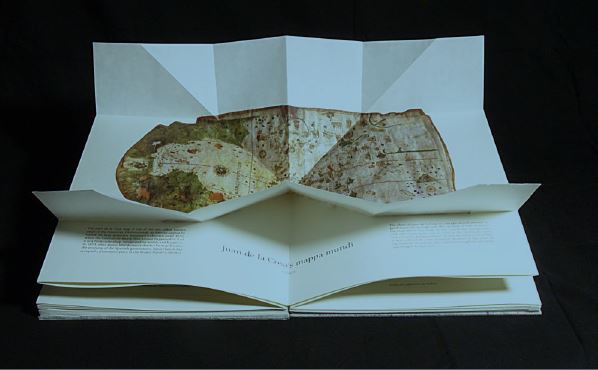
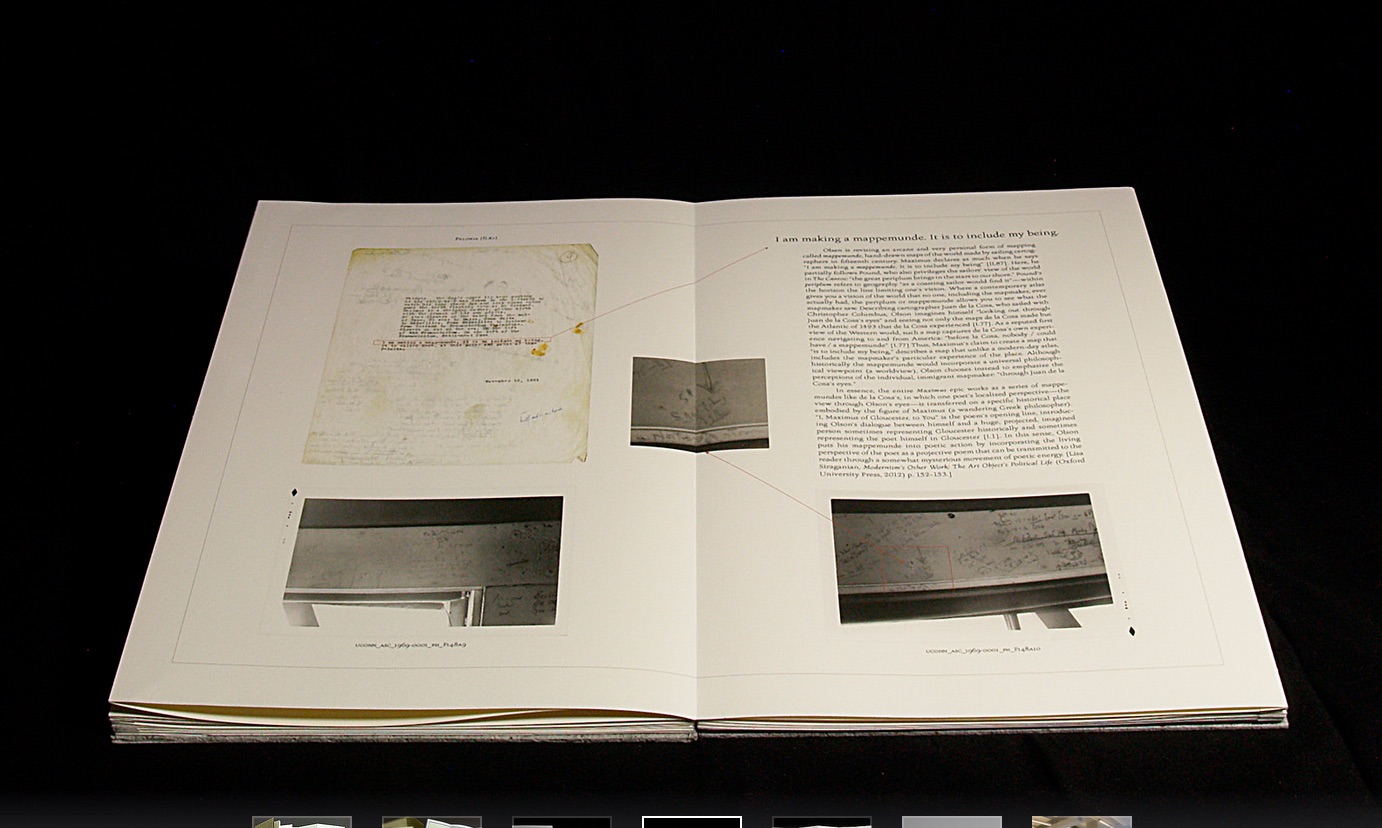
Rutherford Witthus’ contribution touches the boundary between the digital and physical most directly. His artist’s book is entitled 28 Fort Square: What Charles Olson wrote on the window casings of his apartment in Gloucester, Massachusetts, of which there are eleven copies.
Rutherford Witthus, 28 Fort Square: What Charles Olson wrote on the window casings of his apartment in Gloucester, Massachusetts, 2014
In these 11 copies, Witthus digitally reconstructs the windows of Charles Olson’s apartment at 28 Fort Square where he wrote his main work, The Maximus Poems, and covered the window casings with meteorological data. The artist book “presents for the first time all of the images of the window casings”.
Rutherford Witthus 28 Fort Square: What Charles Olson wrote on the window casings of his apartment in Gloucester, Massachusetts Artist book 42 x 28 x 2.5 cm 2014 Edition of 11
Athena Moore, chapter secretary of The New England Guild of Bookworkers, produced the catalog for this itinerant exhibition organized by Stephanie Wolff, Exhibitions Coordinator and Todd Pattison, Chapter Chair. If you have the chance to see the exhibition in its next venue, take it.
Just as Elizabeth Bishop questioned the depiction of the boundary between land and water on her map – “Shadows or are they shallows at its edges …”, you will find the juxtaposition of these works reminds you that the boundary between book art and the book arts can be shadowy or shallow indeed.
The Parthenon of Books, 1983/2017 Marta Minujín Kassel, Germany
In her note in BookRiot, Nikki Steele takes Brian Dettmer’s TED talk remark that books are created to relate to our human scale and builds on it elegantly, if all too briefly, by bringing together the installation works “Literature versus Traffic”, “Scanner”, “Book Cell”, “Singularity”, “Biographies” and “Contemporaries”. She’s not the first to provide a Pinterest– or Flickr-style burst of “ooh, look at this”, but unlike her predecessors, she makes the point worth pondering: this art that is not on a human scale evokes wonder and awe.
This challenges and expands on Dettmer’s point that people are disturbed by book art because we think of the book as a body, a living thing. As John Milton said, “As good almost kill a man as kill a good book: who kills a man kills a reasonable creature, God’s image; but he who destroys a good book kills reason itself”. That was in the context of book licensing laws that led to the confiscation and destruction of unlicensed books. Still, Milton would probably react as angrily to individual works of book art, and he might view the installations as if they were on the scale of the massacre of the Waldensians in the Piedmont.
Dettmer’s justification of book art that books “also have the potential to continue to grow and to continue to become new things”, that “books really are alive”, leaves us still squirming on the hook when Steele asks, “what happens when artists explode the scale and take books much, much larger?”. If you think cutting up or destroying a book is sacrilegious, what is your reaction to the 10,000 splayed in the streets of Melbourne by Luzinterruptus or the equal number cast by Alicia Martín into frozen defenestrations in Madrid and elsewhere in Spain or the even greater number in Marta Minujín’s The Parthenon of Books, installed for documenta in Kassel, Germany?
Miltonic eruption? Or Steele-ish delight, awe and love of the art?
Let’s raise the stakes and confusion. What if the books used in the single-volume work and installations were the Koran, the Bible or the Torah? Art and ethics are rarely happy bedfellows. Is there such a thing as “responsible art” that does not run afoul of the principle of the creative spirit or the integrity of art? Is art wholly without cultural, ethical or social contextual obligations?
This is why I like book art. It provokes just by coming into being. Its existence and appreciation are hard won.
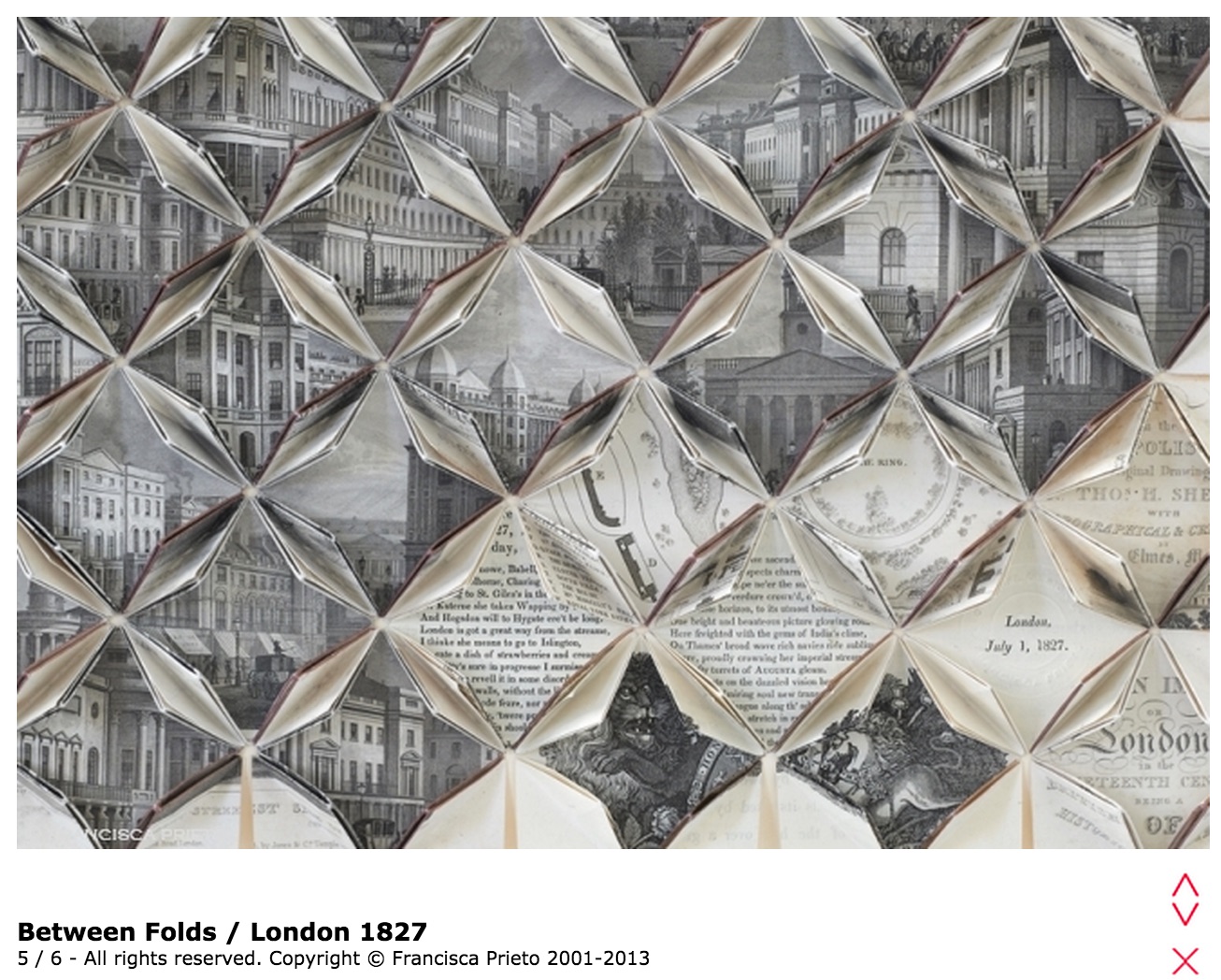
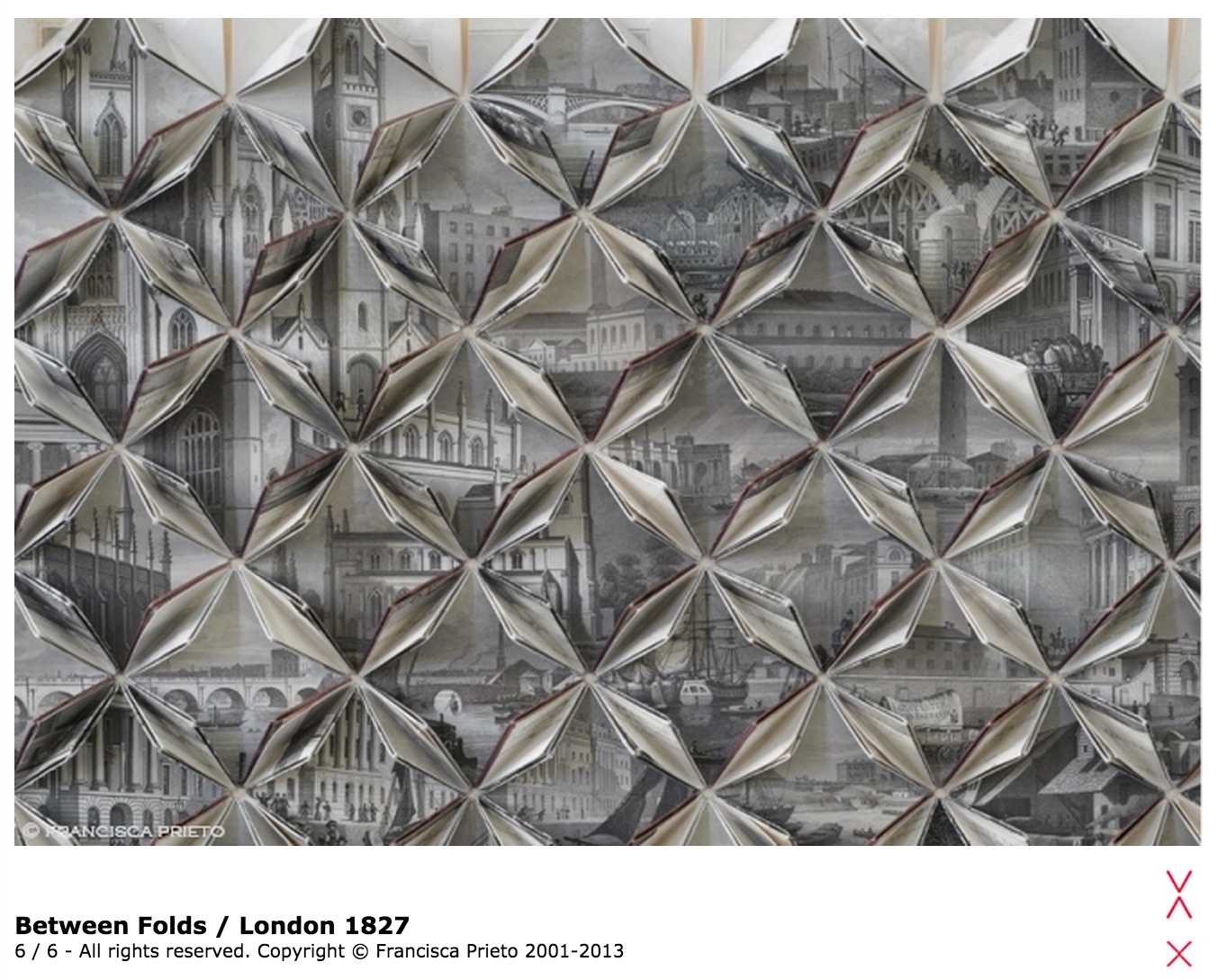
London 1827 takes us back in time, unfolding the nineteenth-century city before us. In a fluttering of pages we are cast among the grand stone of new buildings, under bridges, along the paths of Regents Park, up to a long-forgotten skyline – an elegant rising of church spires. — Francisca Prieto,Between Folds
In August 1827, William Blake’s family walked along these London streets in the cool of the buildings’ shadows to the site of an unmarked grave in Bunhill Fields in the Borough of Islington. If the mind’s eye lets the spectator step into those shadows, the metallic edging of the folds in this work recalls Blake’s invention of relief etching on copper plate to enable the “Illuminated Printing” of his “Illuminated Books”. Where the eye passes Lincoln’s Inn Fields, Blake’s apprenticeship springs to mind — for 50 guineas to an architectural prints engraver (James Basire, 1730–1802) for the tasks of polishing the plates, sharpening the gravers, preparing the surfaces for the acid, guiding the graver’s bite through the copper and, eventually, creating the sketches for the plates in Richard Gough’s Sepulchral Monuments in Great Britain.
Gradually becoming aware of Prieto’s painstaking mathematical precision and calculation to expose between the folds just the right text and illustrations from London and its Environs in the Nineteenth Century by Thomas H. Shepherd, published the month before Blake’s death, the flâneur of London 1827 might wonder whether Blake would have cast Prieto’s lot in with those of Newton, Locke and Bacon, his sterile scientific materialists. But no, Blake praised the unity of art and science:
“What is the Life of Man but Art & Science?” (Jerusalem, plate 77)
“Art & Science cannot exist but in minutely organized Particulars, and not in generalizing Demonstrations of the Rational Power.” (Jerusalem plate 55: line 62).
Prieto’s works consist of these “minutely organized Particulars” and, being so, they bring the viewer to “Life” and assert their place in the tradition of book art.
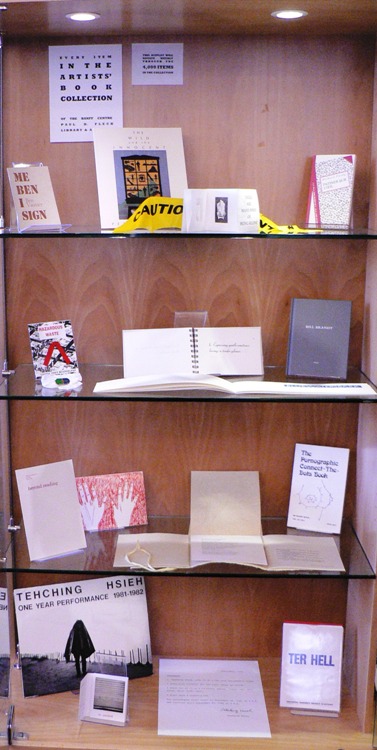
The Paul D. Fleck Library & Archives at The Banff Centre has over 4,000 artists’ books and multiples. Inspired by Ed Ruscha’s seminalbook “Every Building on the Sunset Strip”, we will display every item in the collection in a case in the library, rotating through 15 items weekly. Here you will find a photo log documenting the items, chosen randomly for display. Click through on any photo for title and creator caption.
For more information and full catalogue records for the items pictured, visit banffcentre.ca/library/.
Kudos to book artist Jaye Fishel for setting up Every Item in the Artists’ Books Collection and to Silvio Lorusso for the interview with Fishel.
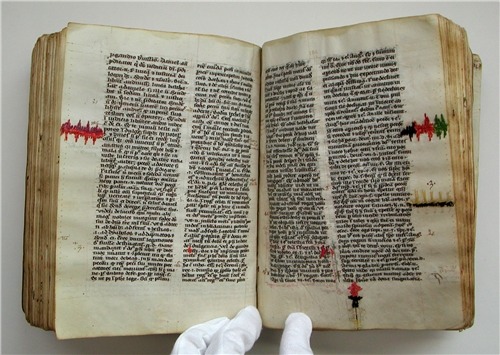
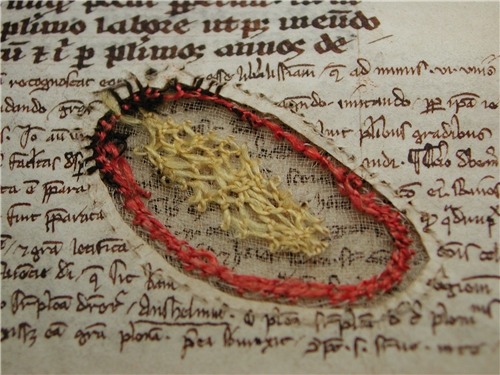
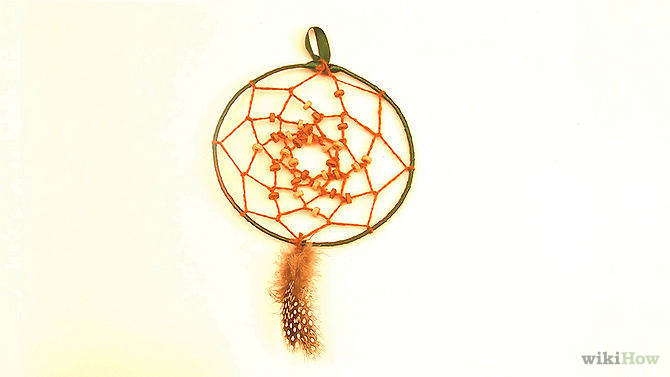
William Dean Minter, Senior Book Conservator in the Digitization and Preservation Department at Pennsylvania State University drew my attention to these images. At first, they reminded me of passages in Annie Tremmel Wilcox’s A Degree of Mastery, in which she describes mending rare books with kozo paper under the hawkeye of the late Bill Anthony. Then, dreamcatchers sprang to mind. What were the images, sounds and thoughts caught in words now missing on these pages, words slipped from the dreamcatching pages? But book artist Esther Kibby, who teaches photography, graphic design and web design at the Art Institute of Dallas in Texas, came up with the most telling association: kintsugi.
Kintsugi (or kintsukuroi) is a Japanese method for repairing broken ceramics with a special lacquer mixed with gold, silver, or platinum. The philosophy behind the technique is to recognize the history of the object and to visibly incorporate the repair into the new piece instead of disguising it. The mastery of the book restorer is to invisibly repair the book. Our “dreamcatcher” restorer seems to have in mind the kintsugi philosophy and lets the repair draw attention to itself and creates “a new piece”.
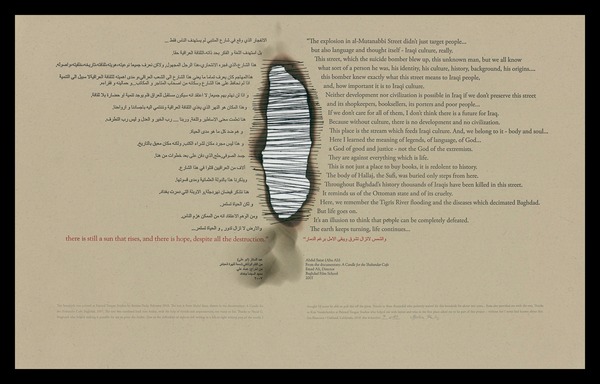
In the hands of a book artist, such a technique could generate ironic expressions of biblioclasm: the restored book that is no longer a book? Or echoes of Walter Benjamin’s presumption of and preoccupation with the modern world’s fragmentary nature? Or the pain and sorrow of Al-Mutanabbi Street?
Bettina Pauly, The Sun that Rises, 2013. Made for An Inventory of Al-Mutanabbi Street.
Or a tongue-in-cheek answer to those horrified by the destruction of “the book”?
When the Japanese mend broken objects, they aggrandize the damage by filling the cracks with gold. They believe that when something’s suffered damage and has a history it becomes more beautiful. —Barbara Bloom
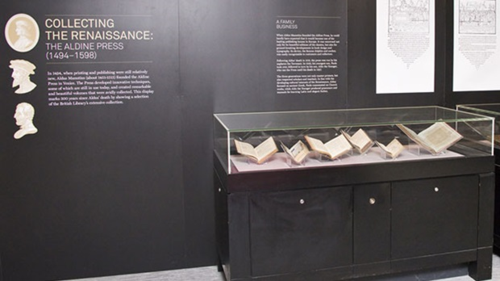
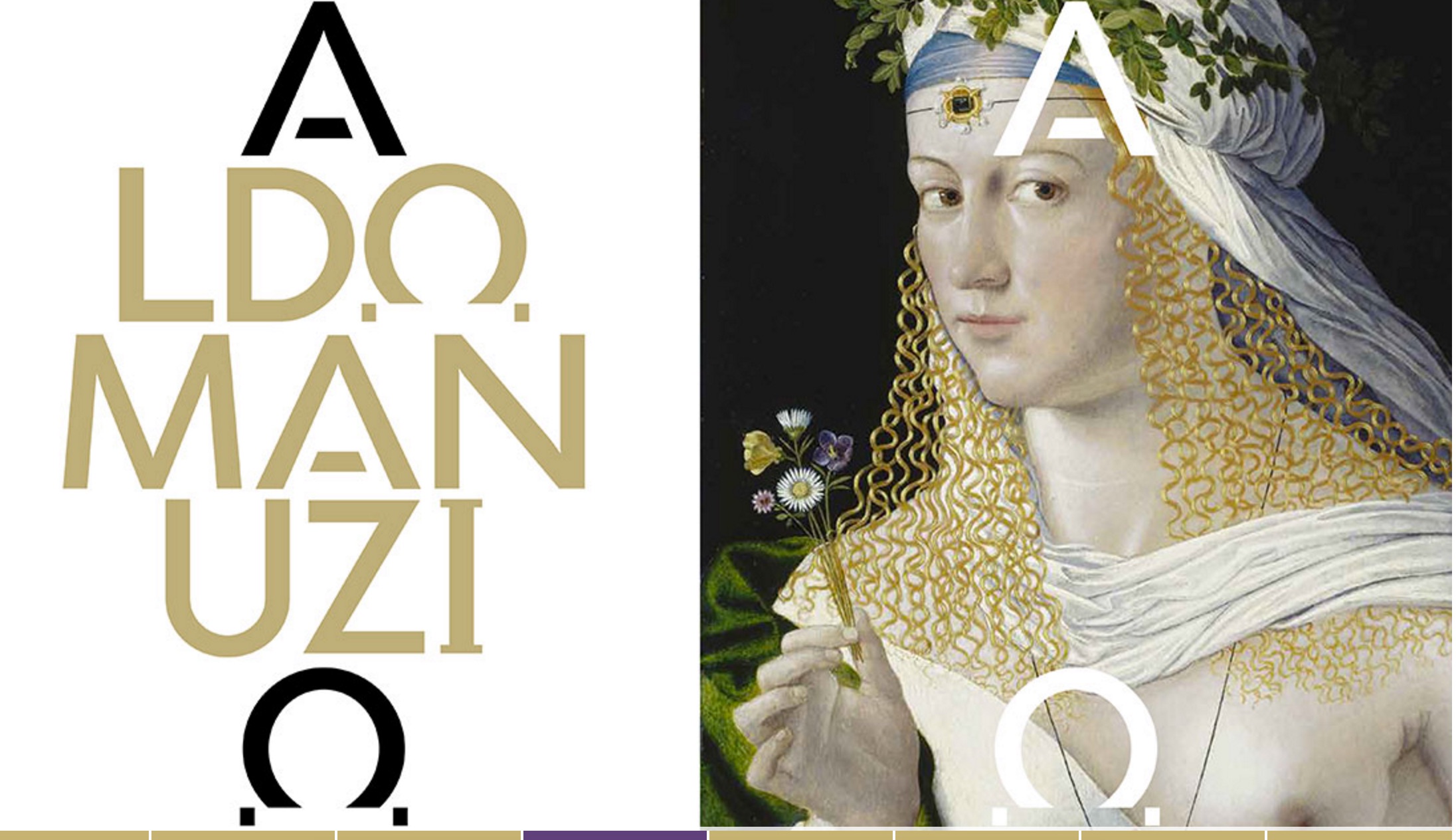
Late afternoon before the long worn wooden benches in the Bodleian’s Convocation Hall, 500 years after the death of Aldus Manutius, Oren Margolis served his audience well, providing them with a richer appreciation of the “finest printed book of the entire Renaissance”* – the Hypnerotomachia Poliphili – and of its publisher Aldus Manutius.
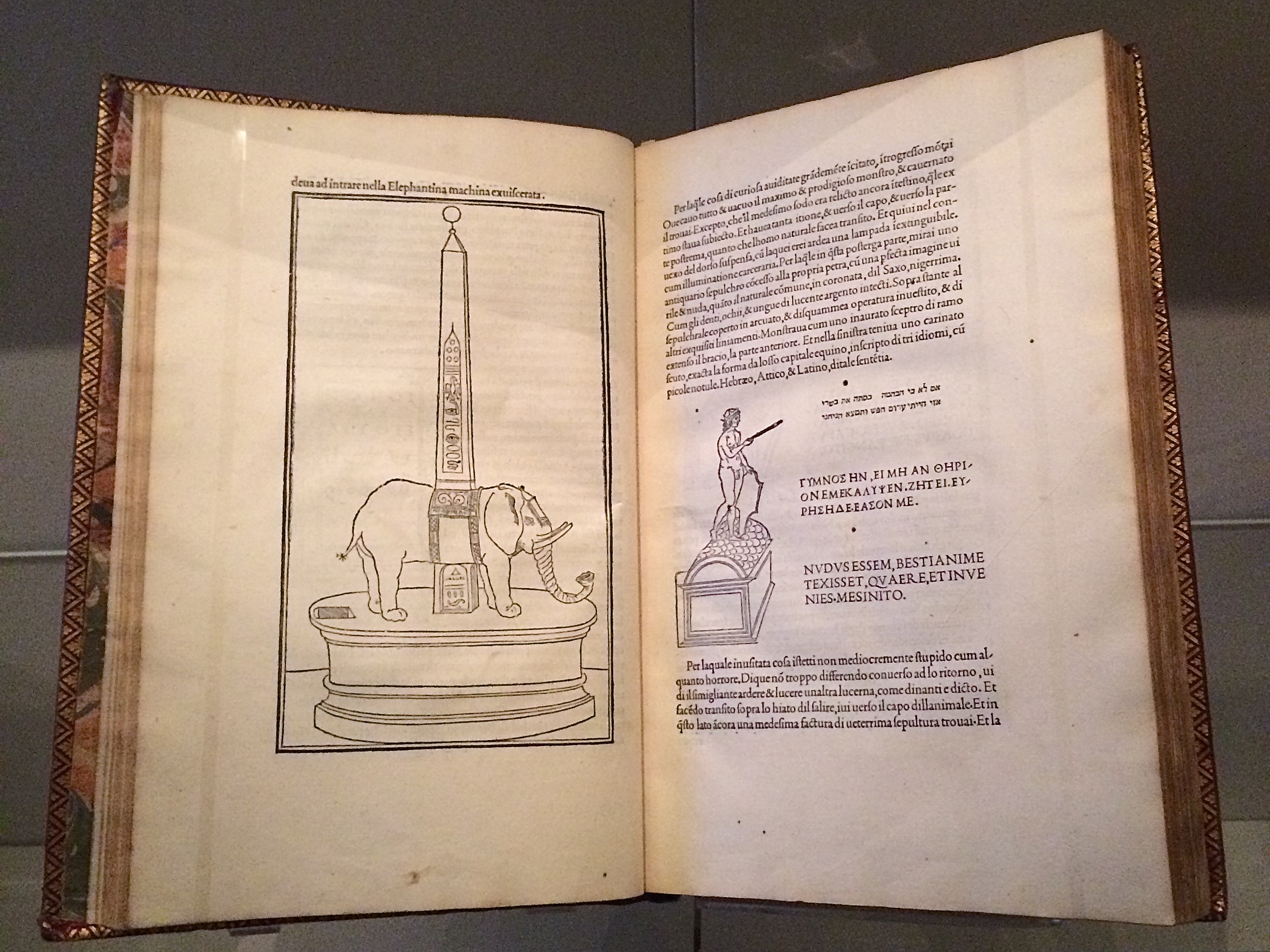
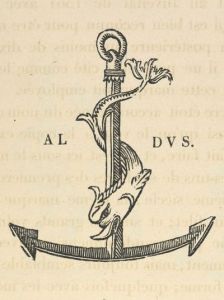
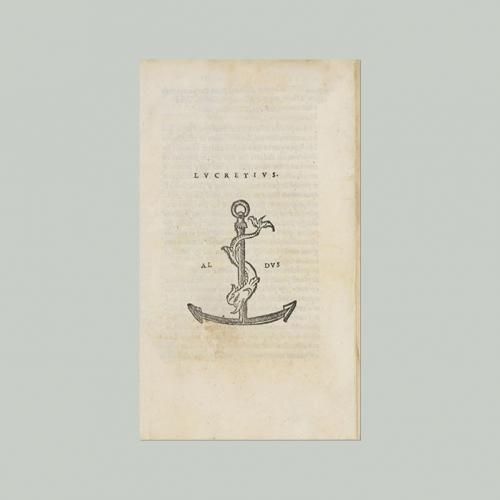
Drawing our attention to the more sculptural qualities of Venetian Renaissance printed books over the Florentine and to the evidence of the humanist agenda that drove Manutius, he led us to the page where Poliphilo (lover of all things, but in particular Polia, the ideal woman pursued to the end of the book) stands before a carving that foreshadows the Aldine Press device: a dolphin entwined around the shank of an anchor. The Aldine Press device was inspired by a similar image on an ancient Roman coin given by Pietro Bembo to Aldus, who wrongly associated it with Augustus and his proverb Festina lente (“Make haste slowly”) and adopted both for his printing and publishing business.
Erasmus praised Aldus, saying that he was “building a library which knows no walls save those of the world itself”.
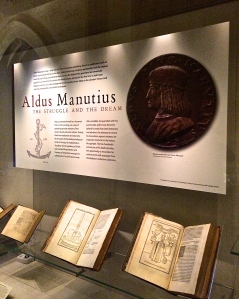
For all of 2015, the world enjoyed a multitude of celebrations of the contribution of Aldus Manutius to publishing, printing and the book. After Gutenberg, Fust and Schoeffer, Aldus Manutius was perhaps the most important printer of the Renaissance. His portable books are still here, although locked away or displayed under glass, no longer so portable. Until now.
The Manutius Network 2015 provides a running list, links for some of which are provided below, including the online exhibition associated with Margolis’s talk. See also below, added in May 2016, the belated exhibition “Aldo Manutius: The Renaissance in Venice” at the Gallerie dell’Accademia in Venice.
From Crispin Elsted’s review of the Thames & Hudson facsimile edition of the Hypnerotomachia Poliphili. Parenthesis, December 2000, No. 5:
I once spent three hours in a library with a copy of the Aldine edition of Hypnerotomachia Poliphili, and I have never known a book take my breath away so consistently. Every page is a masterpiece: the dance of text with the more than 170 woodcuts; the firm, male stature of the typeface; the crisp spring of the impression; the elegant proportion of the page — all combine to an end in which the craft of printing and design carry the text into an atmosphere not of its own making. This new edition has the appearance of a fine actor in a part lately played by a great one. Here are the signs of the grace that greatness lent the commonplace five centuries ago; and in these signs, the commonplace finds here another advocate for its small claims to our time.
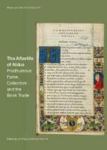
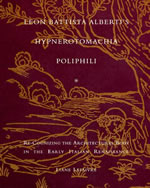
Timelines are, of course, for looking further back as well as forward. Earlier this year, April 2012 marked the fifteenth anniversary of the publication of Liane Lefaivre’sLeon Battista Alberti’sHypnerotomachia Poliphili: Re-Configuring the Architectural Body in the Early Italian Renaissance (Cambridge, MA: MIT Press, 1997) and the online publication of The Electronic Hypnerotomachia, which contains the facsimile text and illustrations. The online publication of extracts from Lefaivre’s book illustrates the linking prefigured by the “card stack” approach of HyperCard. What MIT Press and TU Delft, Lefaivre’s affiliation, host on their servers are not ebooks or even e-incunabula of the sort we experience today, but they are clearly forerunners to them.
In twenty-eight more months, December 2014, we will see the 515th anniversary of the original work’s publication by Aldine Press (Venice, December 1499). The founder Aldus Manutius did not normally publish heavily illustrated books. The Hypnerotomachia Poliphili was the exception and the only commissioned work that Manutius undertook. The exception reflects favorably on the overall success of his business and supports the view that Venice had become the capital of printing and publishing very shortly after the invention of printing by moveable type.
The book unveils an inscrutable, almost comic-book-illustrated story, glittering with made-up words in Greek, Latin, Hebrew and Arabic (including proto-Greek, -Hebrew and -Arabic fonts). In addition to the page displays sculpted into shapes such as goblets, this one volume displayed the technological mastery of and improvement on the new Roman (as opposed to the heavy Gothic) typeface Bembo. According to Norma Levarie in The Art & History of Books (New York, 1968), this singular volume revolutionized typography in France in less than twenty-five years.
Somewhat like software releases, though, the 1499 edition came with bugs. The colophon to the Hypnerotomachia Poliphili falls at the end of a full page of errata.
“Venice Month December. 1499. in the house of Aldus Manutius, most accurately done.”
Initiated in 2015 in celebration of the anniversary and acknowledgement of the more than 100 Aldine editions in the Wosk McDonald Collection, Simon Fraser University’s Aldus@SFU is the digitization of 21 Aldine volumes published between 15011 and 1515. The image above is the edition of Lucretius’ De rerum naturam, published just after Manutius’ death in 1515.
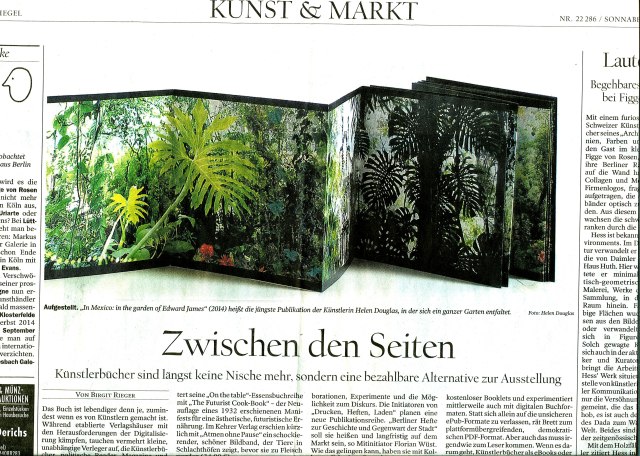
Helen Douglas, In Mexico: in the garden of Edward James (2014). Reviewed in Der Tagesspeigel
Helen Douglas has been kind enough to forward the notice above of her most recent work — In Mexico: in the garden of Edward James. Based on her invited residency in Mexico City, this concertina book takes the viewer through Edward James’ jungle garden Las Pozas, its buildings and staircases, James’s surreal imagination and, best of all, Douglas’s own imaginative experience of them. See the interview at BookArtBookBlogthat preceded the work’s unveiling at the London Art Book Fair at the Whitechapel Gallery and Berlin Art Book Fair.
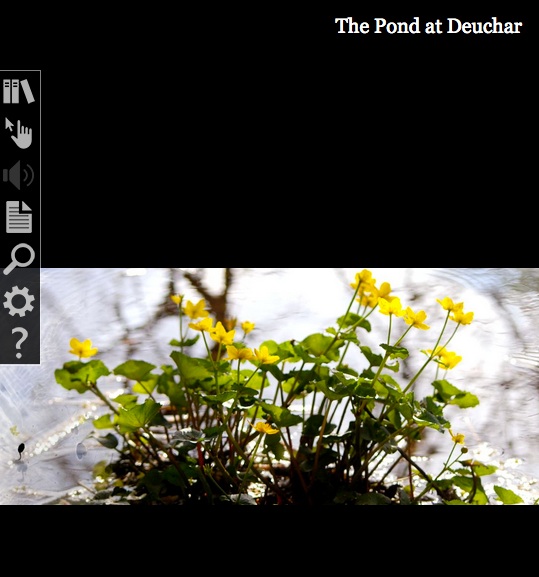
When I go to Weproductions, the website of founding partners, Telfer Stokes and Helen Douglas, it is like taking a walk in Yarrow, Scotland, or taking the measure of paper samples between forefinger and thumb, or browsing in a bookstore, or lingering in an art gallery. Two of Helen Douglas’s works in particular elicit this: The Pond at Deuchar(2013) and A Venetian Brocade(2010).
Was it London Book Fair where I first saw this bookwork, appwork, scrollwork … this work of art? What you see above leads you to the app. Clive Philpott’s postscript to this work, featured on Weproductions and published by the Tate, offers all the background and appreciation of the work you need to read. Read it, then go to The Pond at Deuchar*, lean forward and trail your fingers through its waters.
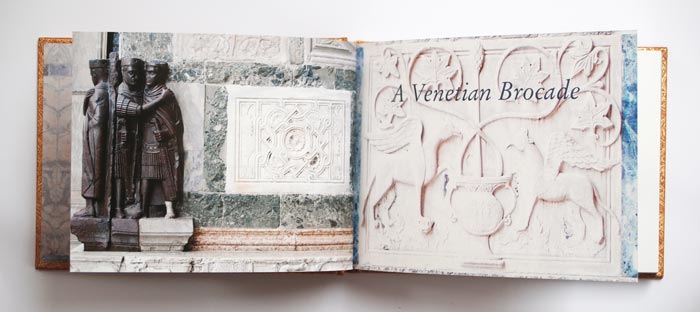
Helen Douglas and Marina Warner. A Venetian Brocade (Weproductions, 2010)
A Venetian Brocade equally makes the “act of looking” tactile and the “act of touching” insightful. The work reminds me of this passage from Joseph Brodsky’s Watermark (New York: Farrar Straus Giroux, 1992):
… bipeds go ape about shopping and dressing-up in Venice for reasons not exactly practical; they do so because the city, as it were, challenges them. We all harbor all sorts of misgivings about the flaws in our appearance, anatomy, about the imperfection of our very features. What one sees in this city at every steep, turn, perspective, and dead end worsens one’s complexes and insecurities. That’s why one—a woman especially, but a man also—hits the stores as soon as one arrives here, and with a vengeance. The surrounding beauty is such that one instantly conceives of an incoherent animal desire to match it, to be on par. This has nothing to do with vanity or with the natural surplus of mirrors here, the main one being the very water. It is simply that the city offers bipeds a notion of visual superiority absent in their natural lairs, in their habitual surroundings. That’s why furs fly here, as do suede, silk, linen, wool, and every other kind of fabric.
If you are lucky enough to buy one of the few remaining copies of A Venetian Brocade, you will see and feel how it leads to In Mexico: in the garden of Edward James. Appreciation of that double-sided leporello work’s extension of the Douglas’s concept of Visual Narrative and its kinship with James’s surrealism can only be enhanced by viewing The Secret Life of Edward James, George Melly’s documentary film from 1975.
But having indulged the surreal elements, think back to the pond at Deuchar, think back to the Tate’s association with Douglas’s work, then consider this work also held at the Tate:
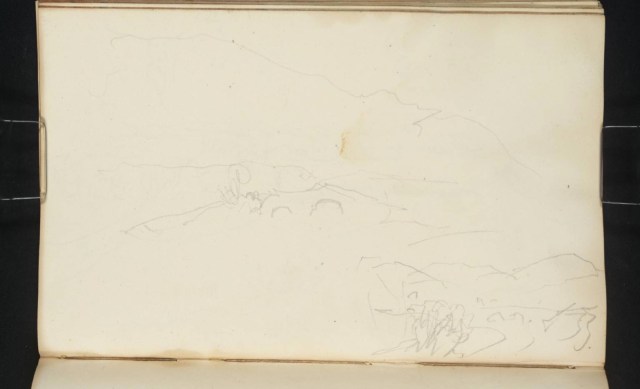
Joseph Mallard William Turner, “Deuchar Old Bridge, near Yarrow, Selkirkshire”, 1834, in The Edinburgh Sketchbook 1831-34, graphite on paper, 111×181 mm. Reference: D26161 Turner Bequest CCLXVIII 34 a
Here is a narrative of art across time and place to touch by looking and, by looking, to be touched by.
*Deuchar is pronounced “dew-ker”, the “k” as in “loch”.