Books On Books Collection – Sarah Maker

Within Every Room There is an Echo of the First (2018)
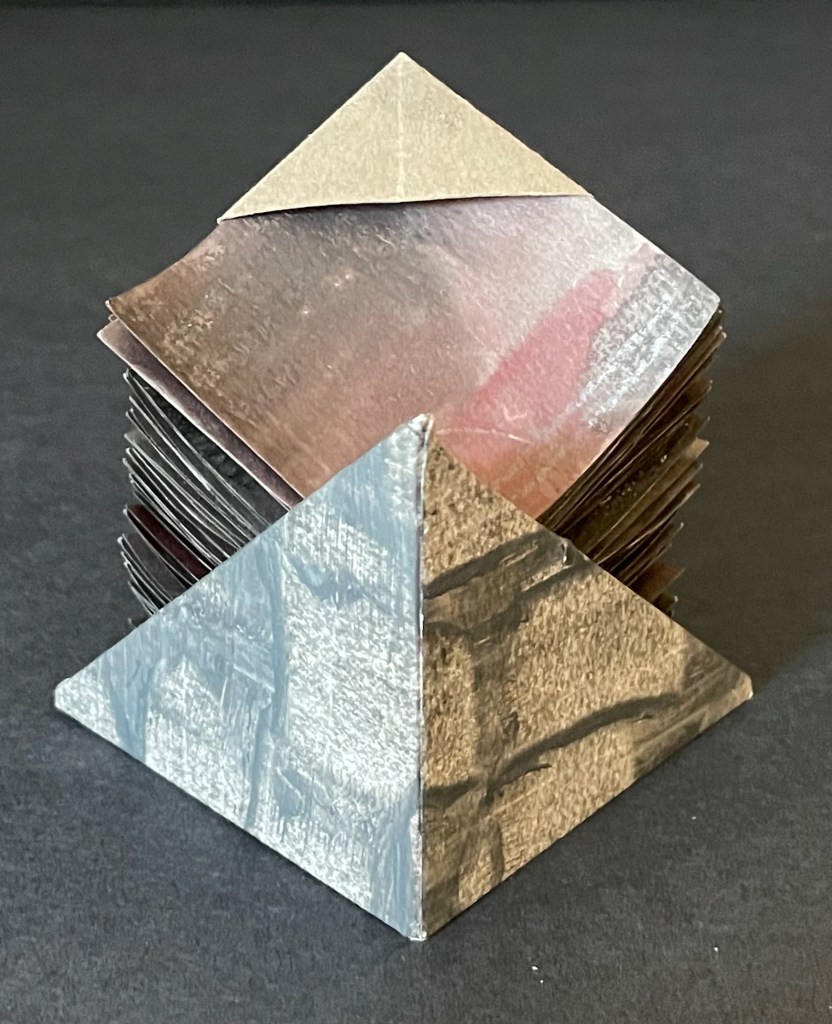
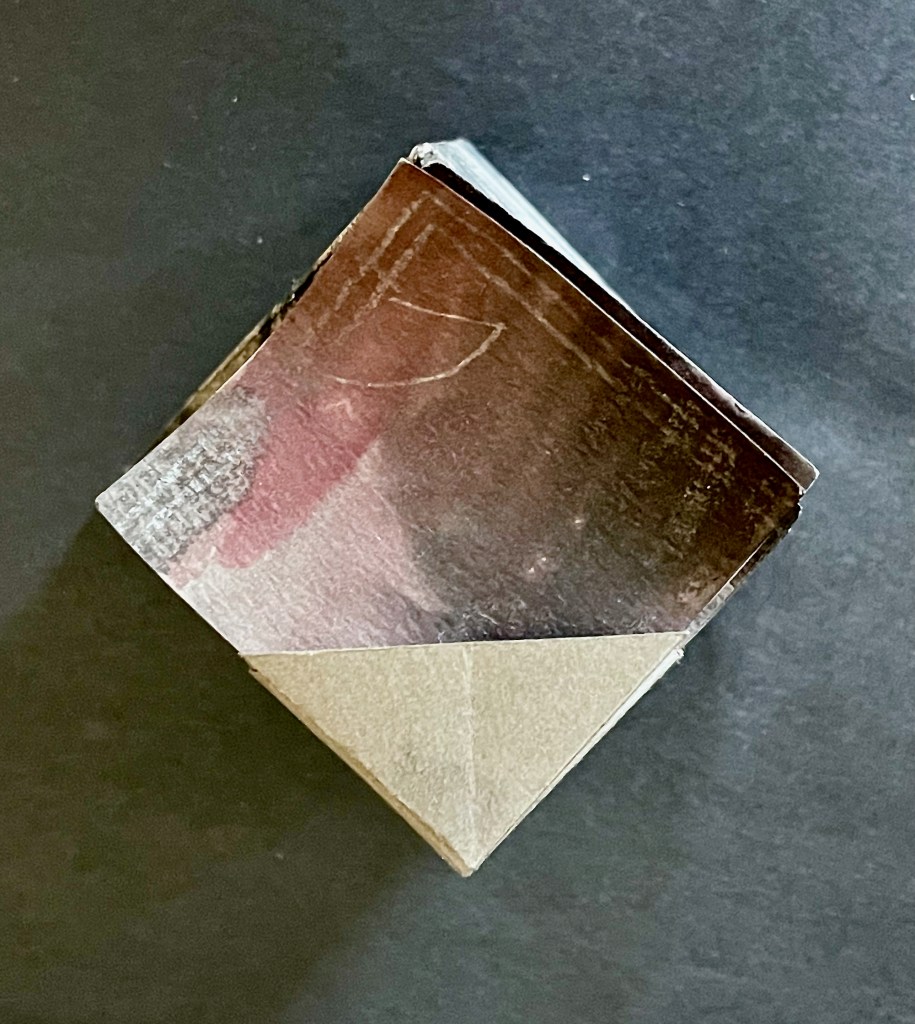
Within Every Room There is an Echo of the First (2018)
Sarah Maker
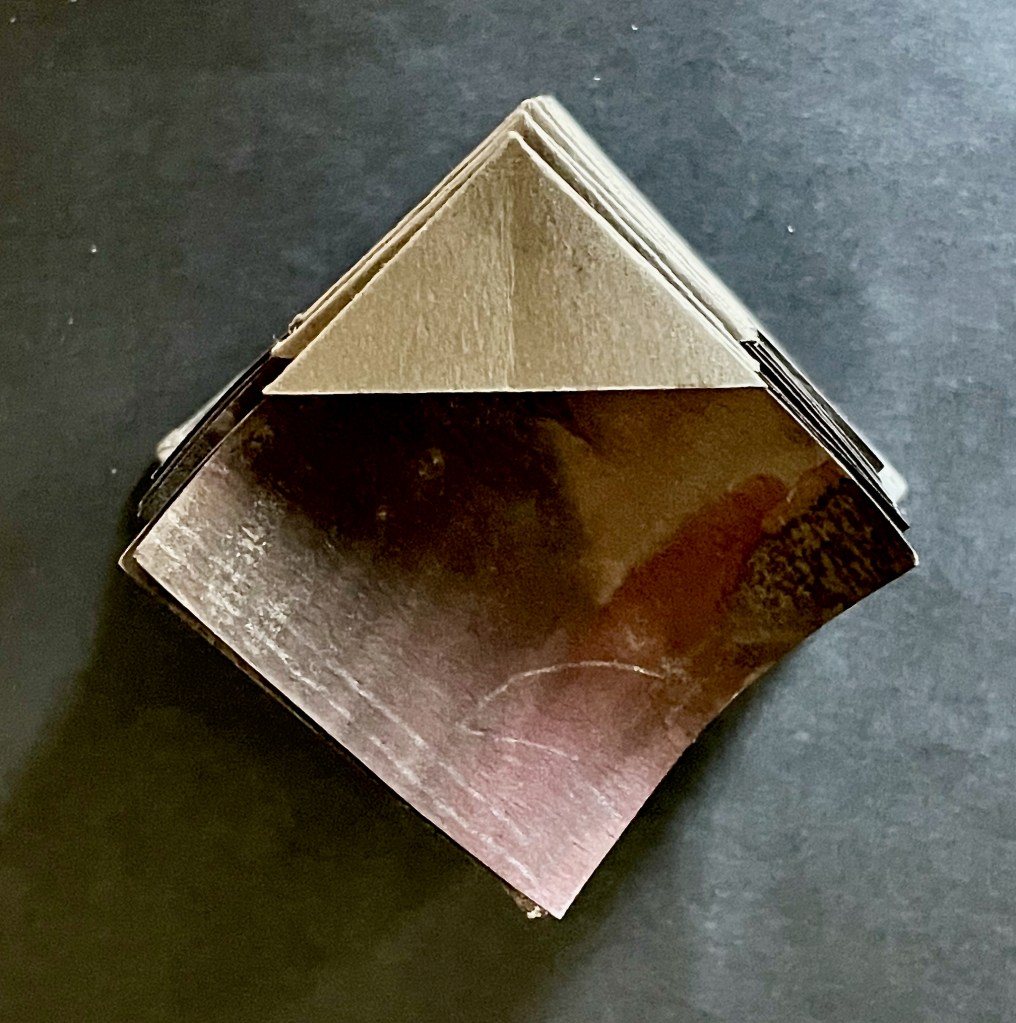
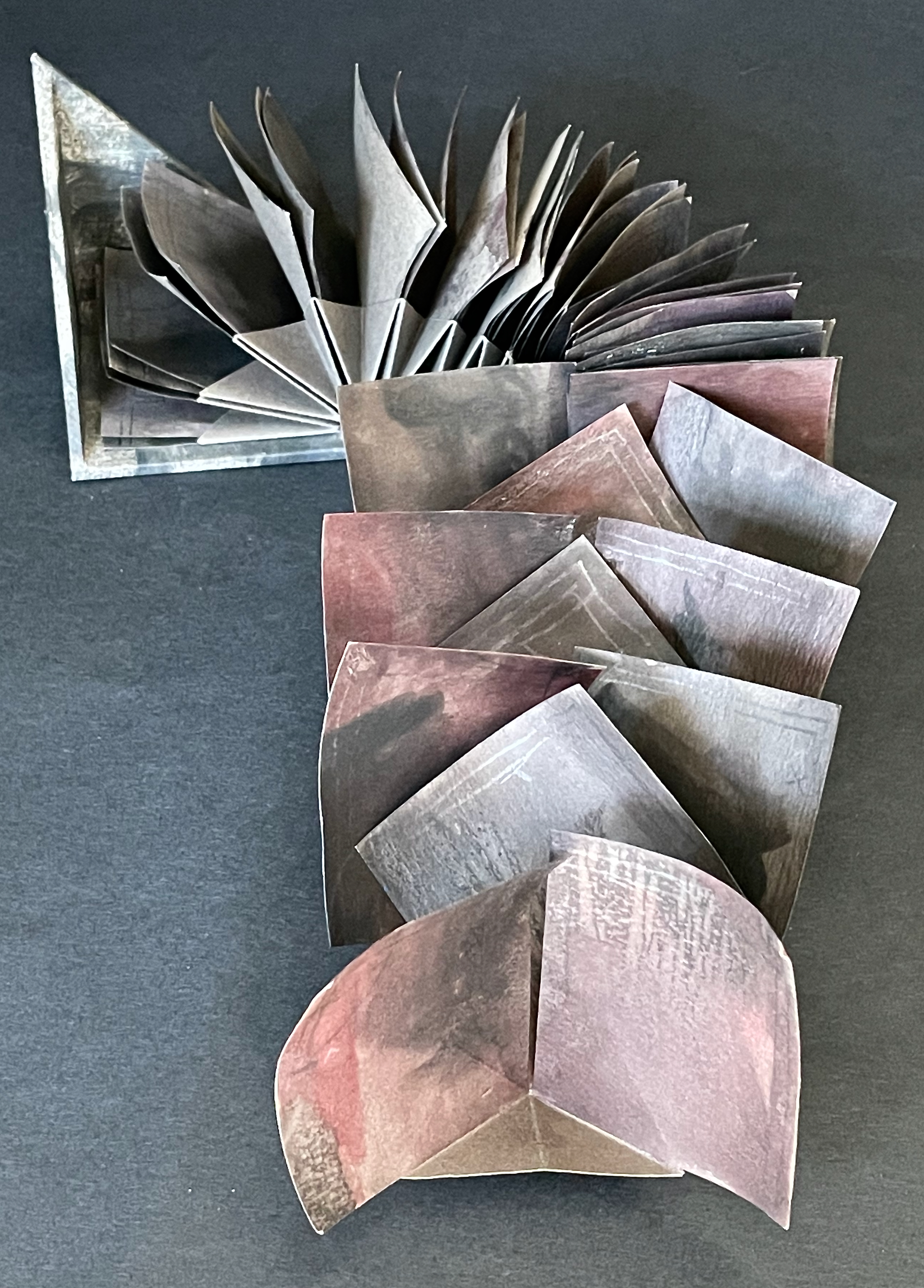
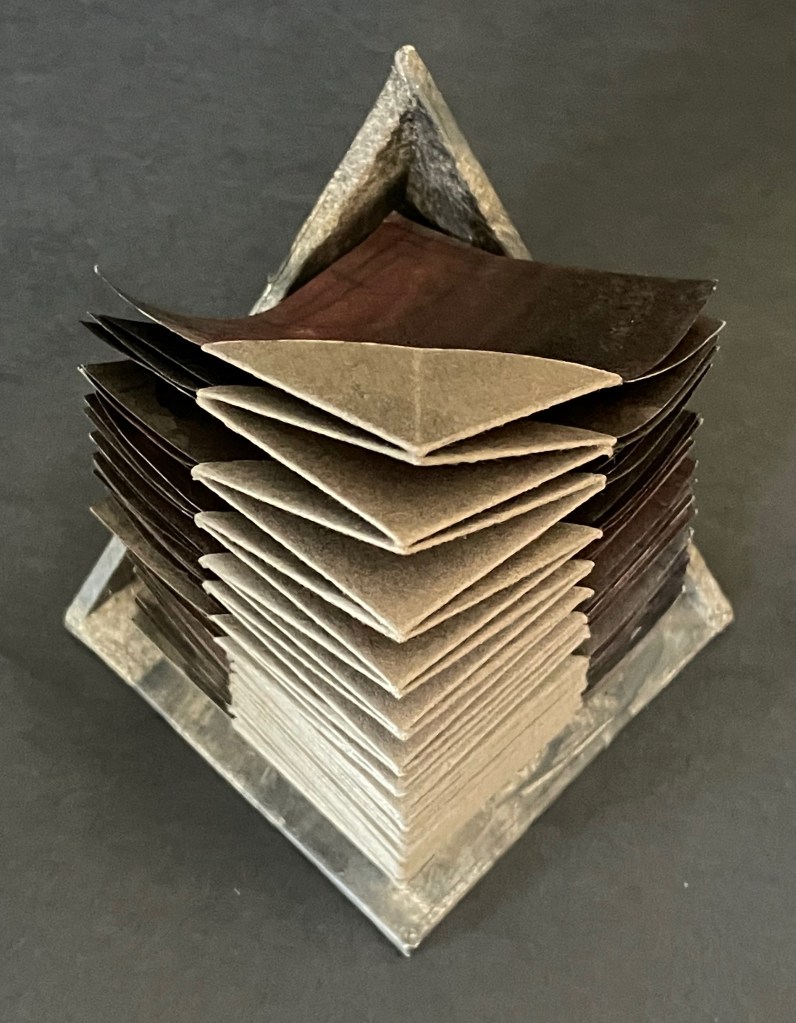
Diagonally halved box, painted-paper over millboard, paste paper. H65 x W65 x D65 (closed) mm, W730 (extended diagonally) mm. [45] panels Unique. Acquired from Ink and Awl, Seattle, US, 10 December 2025.
Photos: Books On Books Collection. Displayed with permission of the artist.

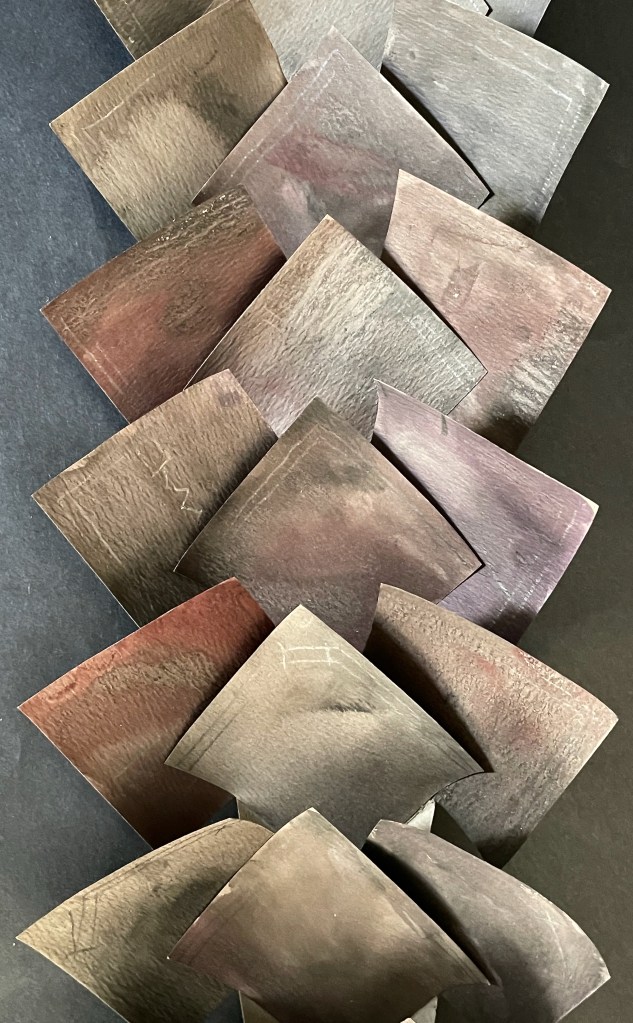
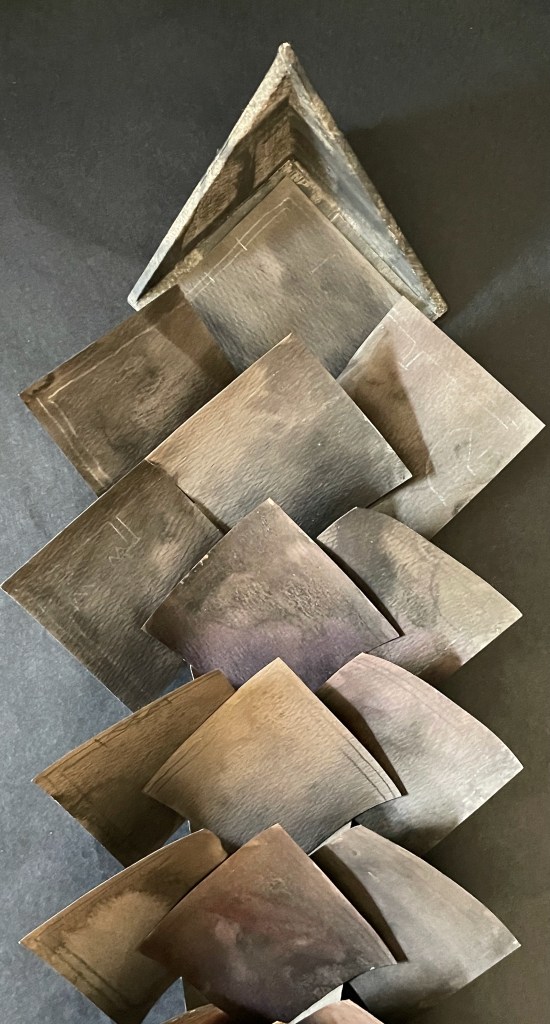
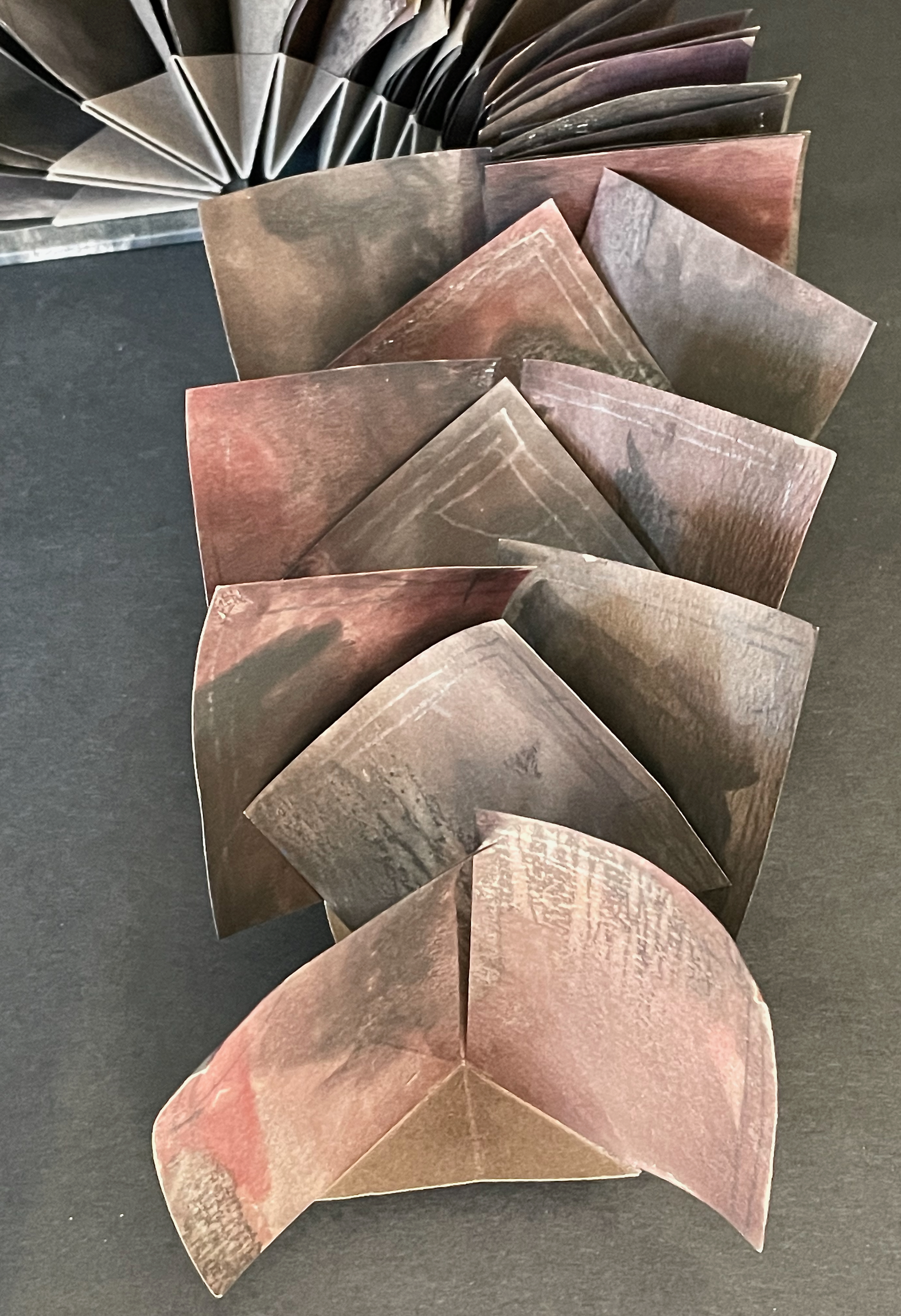
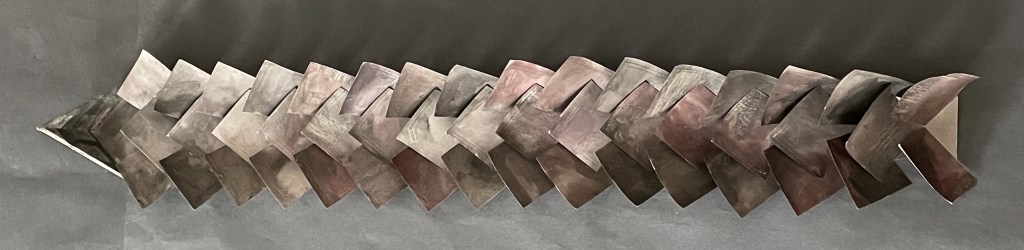
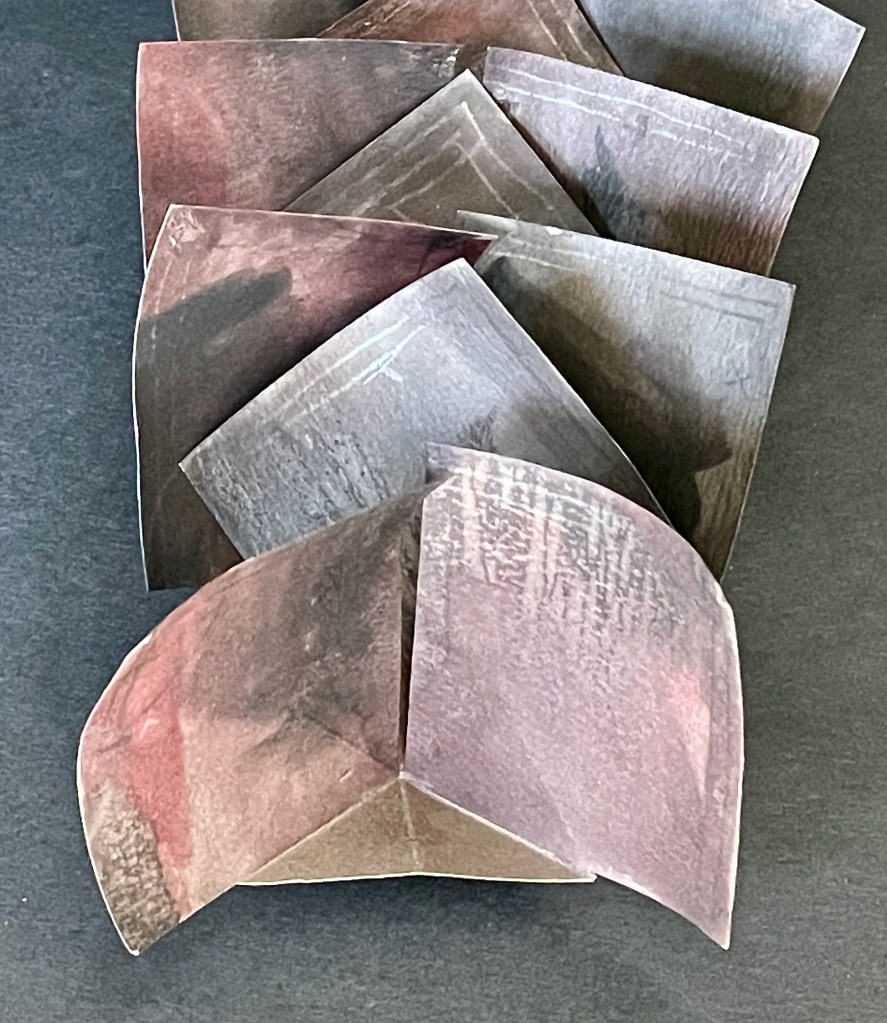
This small sculptural artist’s book that enacts its title is an engineered accordion with architectural pencil drawings on paste paper. Every aspect is remarkable. The millboard “cover” is a diagonally halved cube that forms the “corner” of the room from which its echoes will unfold. The accordion spine consists of folded tabs into which the pages are pasted. The pages have been shaped so that as the book is opened (the top page being pulled by its tab), they curve against each other like artichoke leaves and then spread as the angled spine pleats push them outwards.
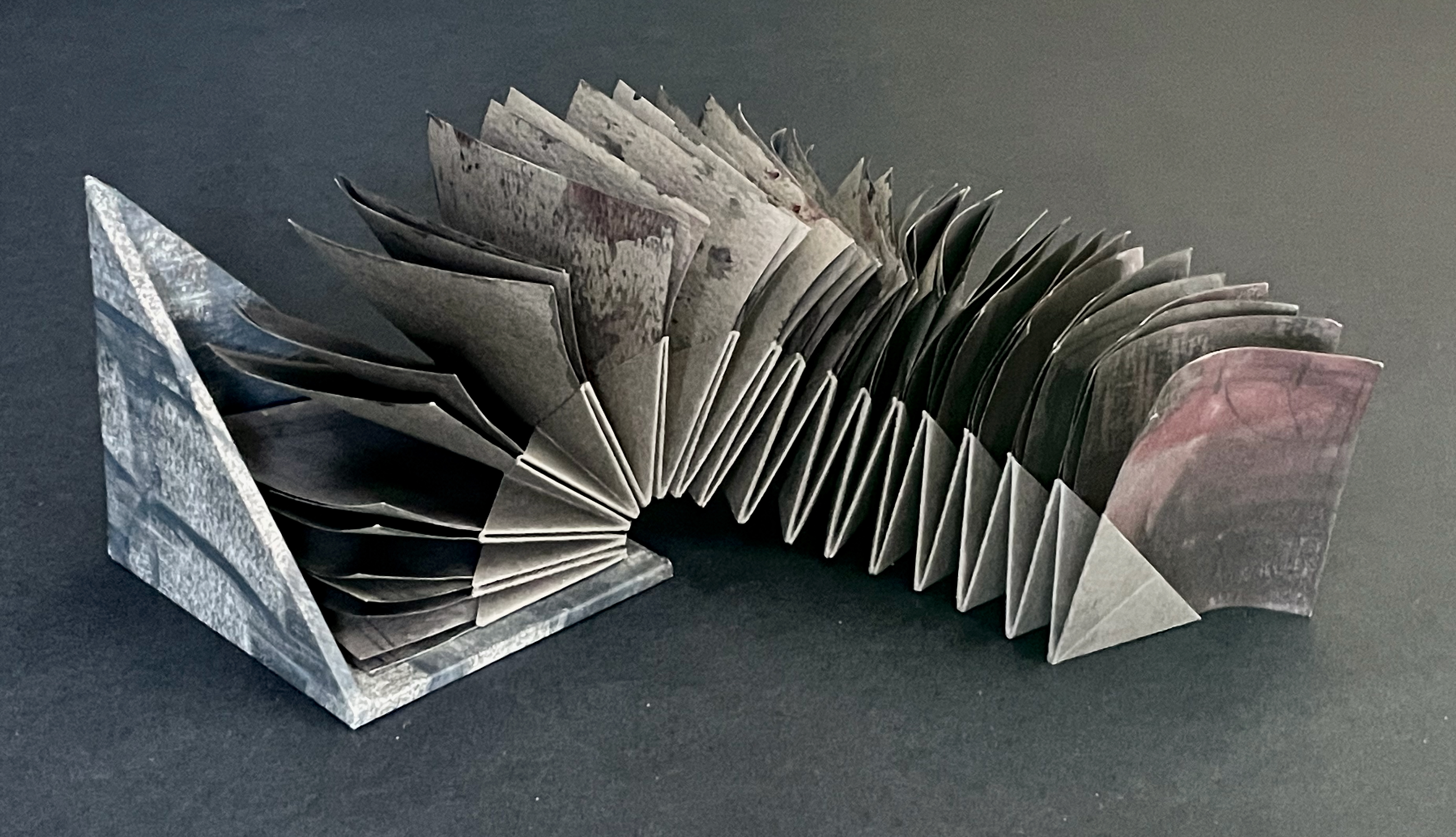
A sculptural book with a zigzag design, featuring textured pages in shades of gray and purple, resting on a dark surface.
A series of abstract, curved metal shapes arranged in a zigzag pattern, showcasing a gradient of muted colors from gray to bronze against a dark background.

The engineering recalls the ingenuity of Benjamin Elbel, Ed Hutchins, and Hedi Kyle, and Within Every Room exemplifies what happens when “material meets metaphor” in the hands and mind of an original book artist. The phrase comes from Richard Minsky, founder of the Center for Book Arts in New York, whose path Maker seems to be following and extending in Seattle, Washington. In 2017, she initiated (and still runs) the online program “areyoubookenough“, a bookbinding challenge to artists to create works within a month that respond to the month’s theme. In the same year, she founded Editions Studio, a community for book artists run by book artists. All that activity — along with Within Every Room and the next work — suggests that this artist is not only a maker but a builder.

The House that Book Built (2018)
Artistic representation of a book shaped like a house, showing the spine and opened pages.

The House that Book Built (2018)
Sarah Maker
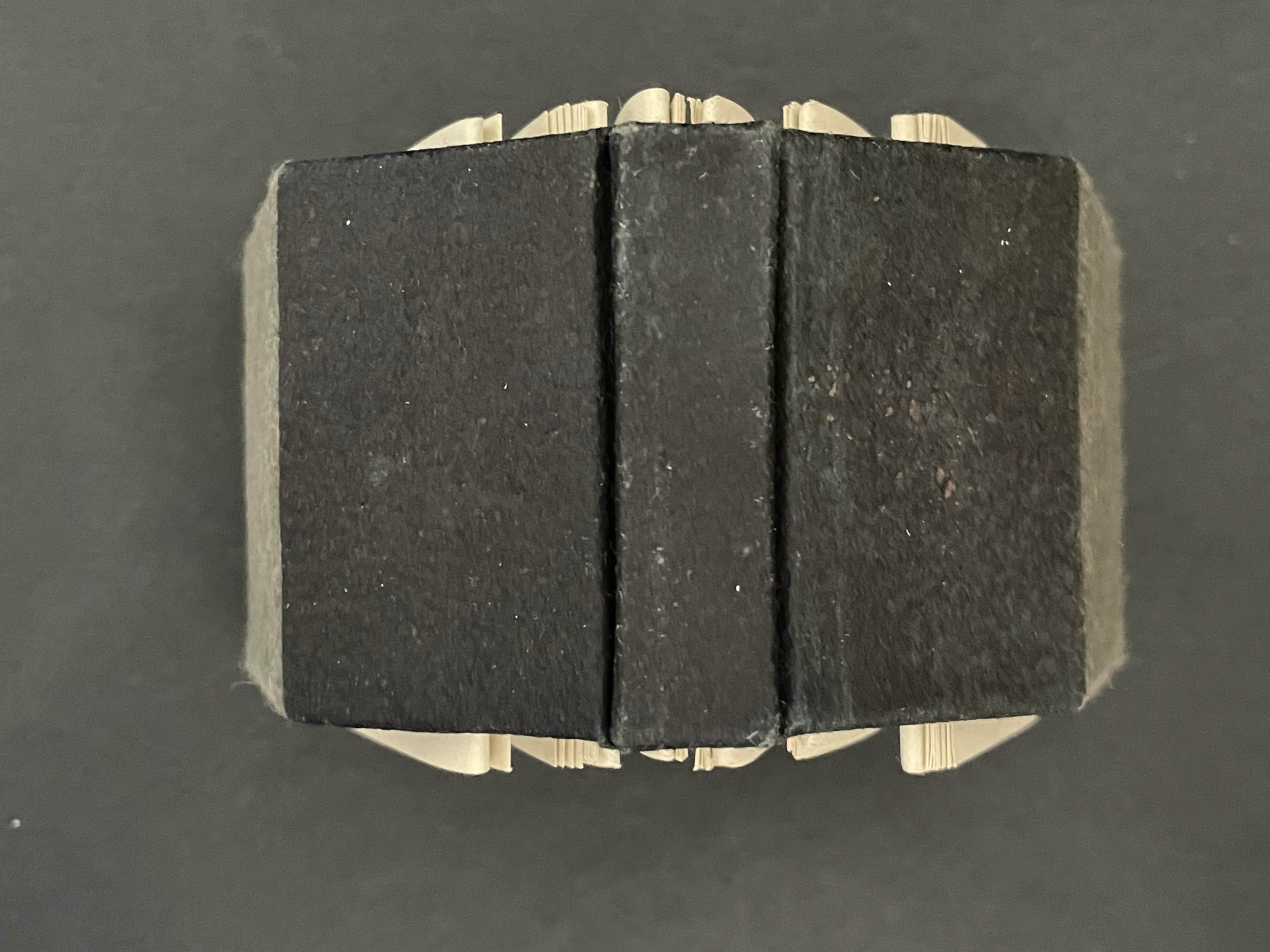
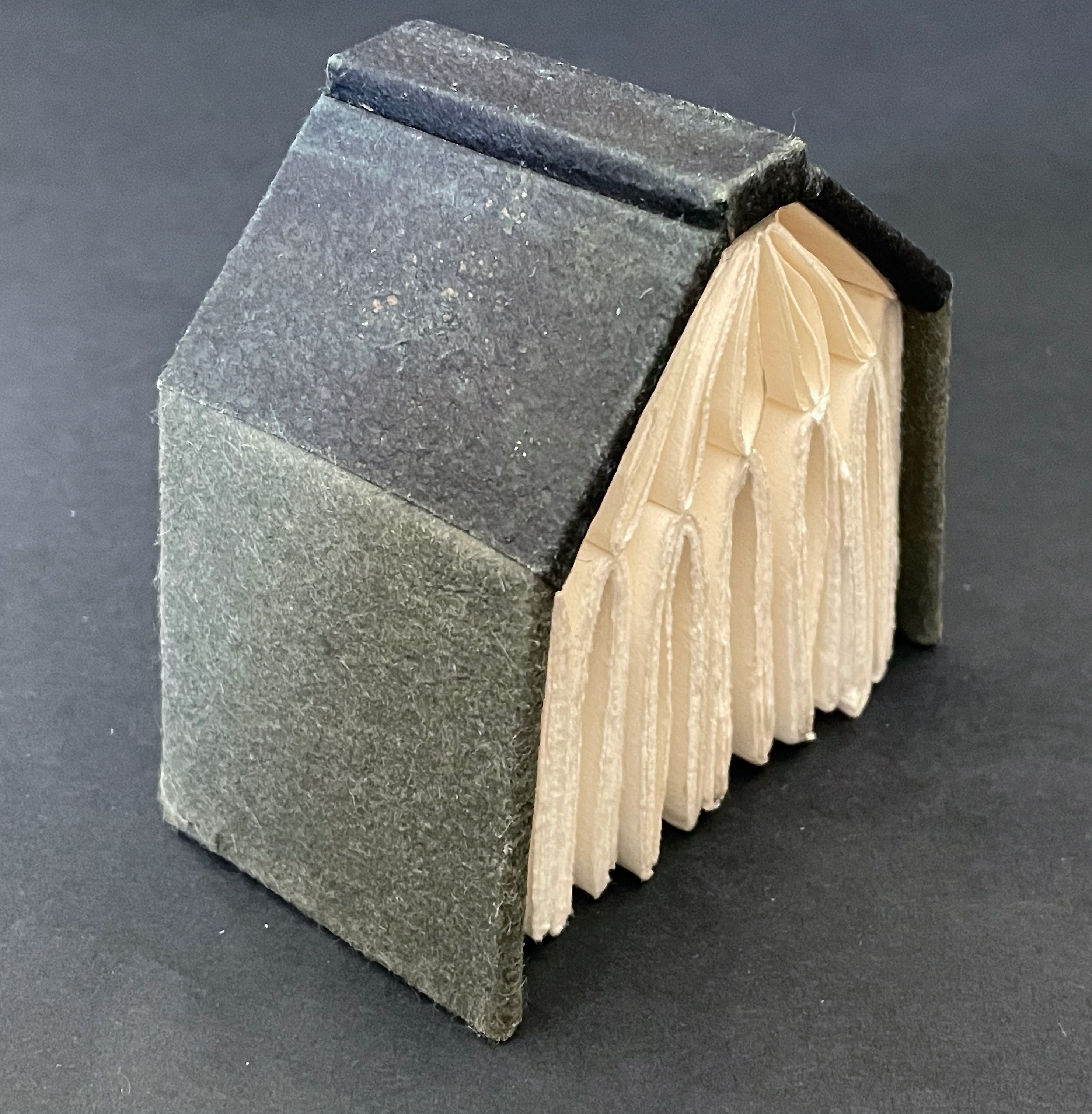
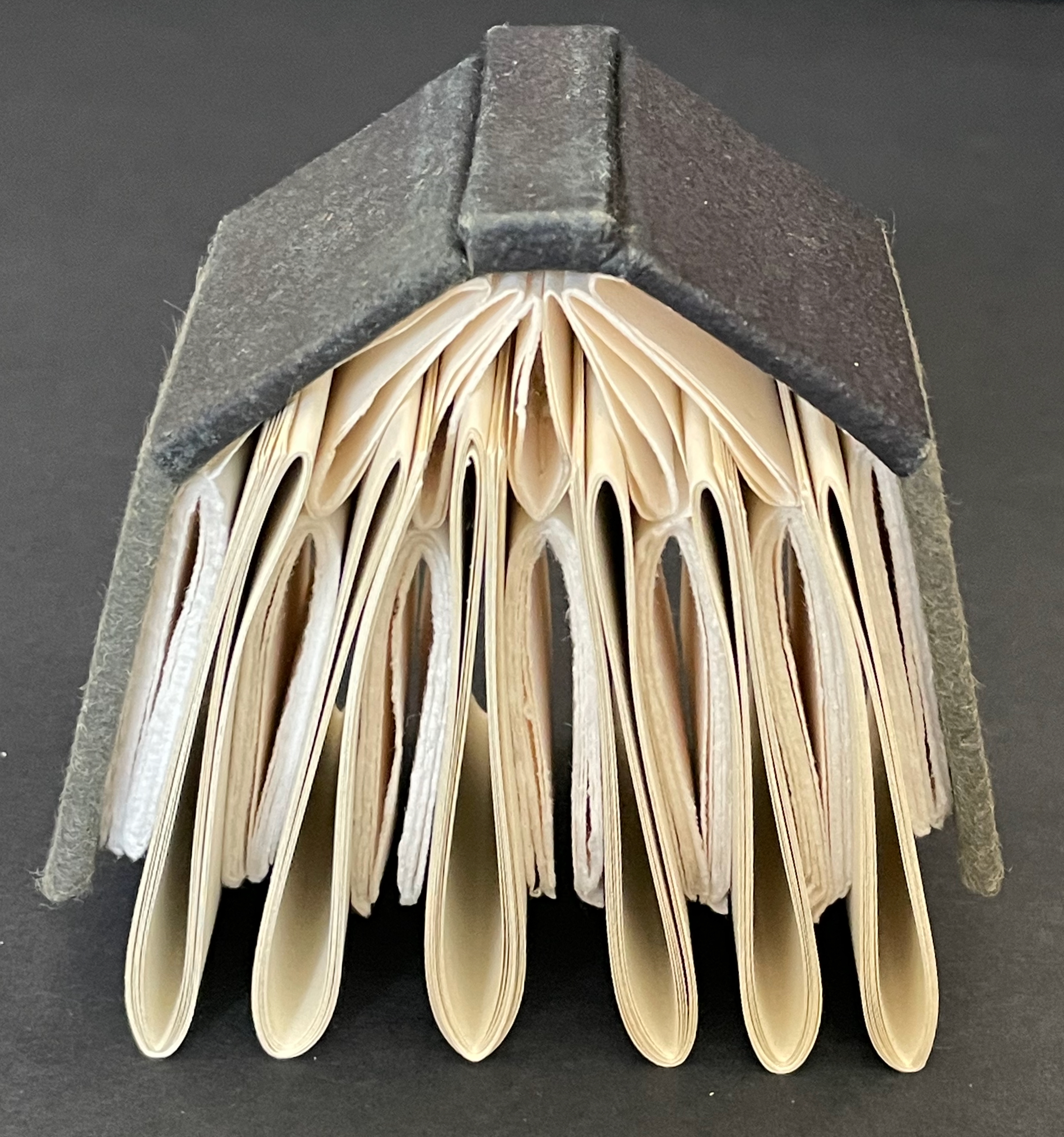
Case-bound hard cover, felt and paper over boards, seven stub-sewn gatherings of folios of cotton printmaking paper, six loose twice-folded gatherings of folios of Cave(?) paper inserted between the stub-sewn gatherings. H85 x W105 x D58 mm. [220] pages in stub-sewn gatherings; [96] pages in loose gatherings Unique. Acquired from Ink and Awl, Seattle, US, 10 December 2025.
Photos: Books On Books Collection. Displayed with permission of the artist.

In another connection to Richard Minsky, all of the paper and boards for The House that Book Built were salvaged from recycling at the Center for Book Arts in New York City. Like the book artists’ studios and homes I have seen, The House that Book Built is stuffed to the rafters with its core material. Of course, even the roof and exterior walls enter into the spirit. It would not be the same artwork with a flat roof of asphalt tiles and plexiglas siding.
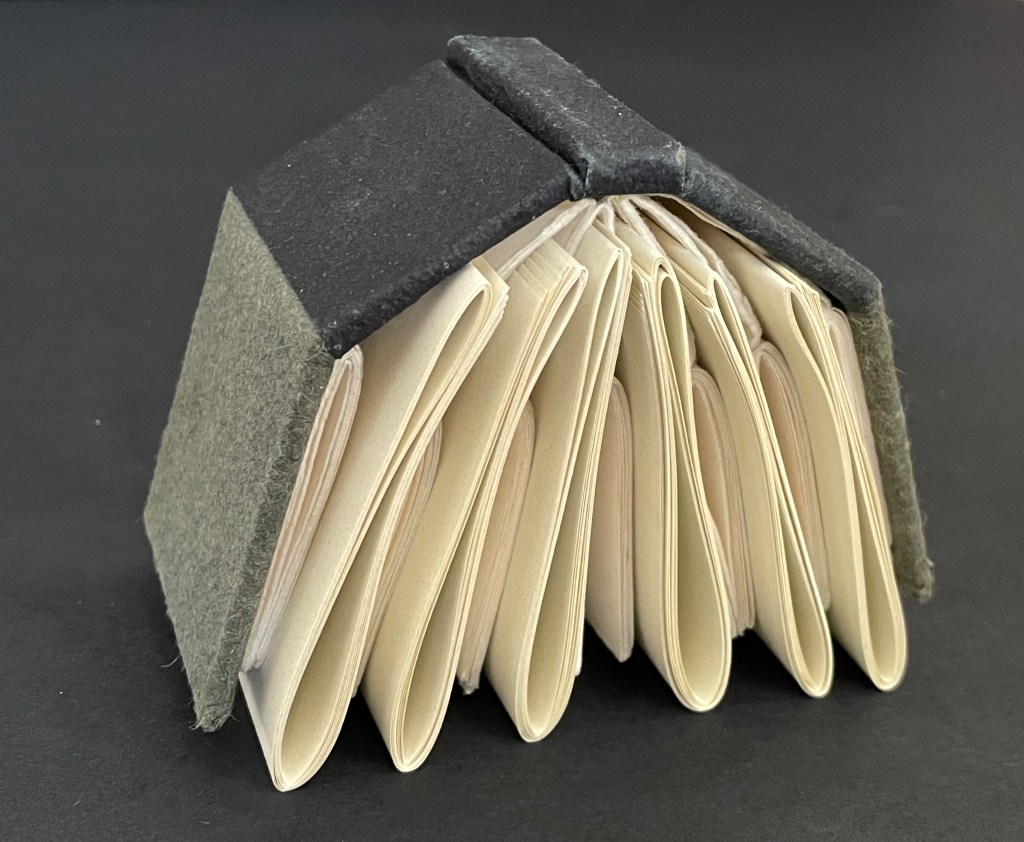
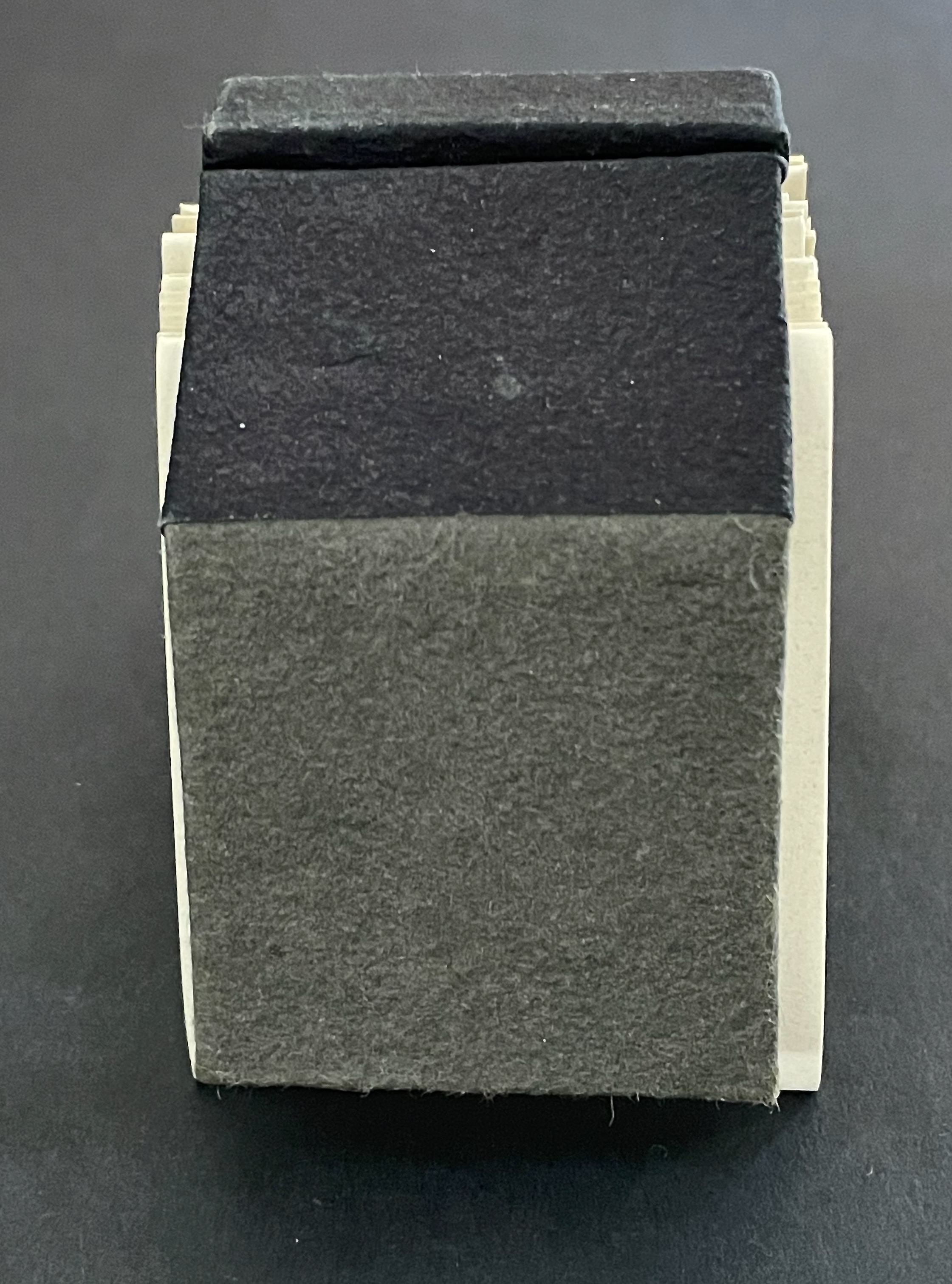
A small, creative book with a unique shape, featuring a black and gray cover and several blank pages, set against a dark background.

The color of the laid-in folios reminds me of Your House (2006) by Olafur Eliasson, which in turn reminds me how inadequate a simple side-by-side exhibition of the two works would be. Both demand the viewer’s touch.
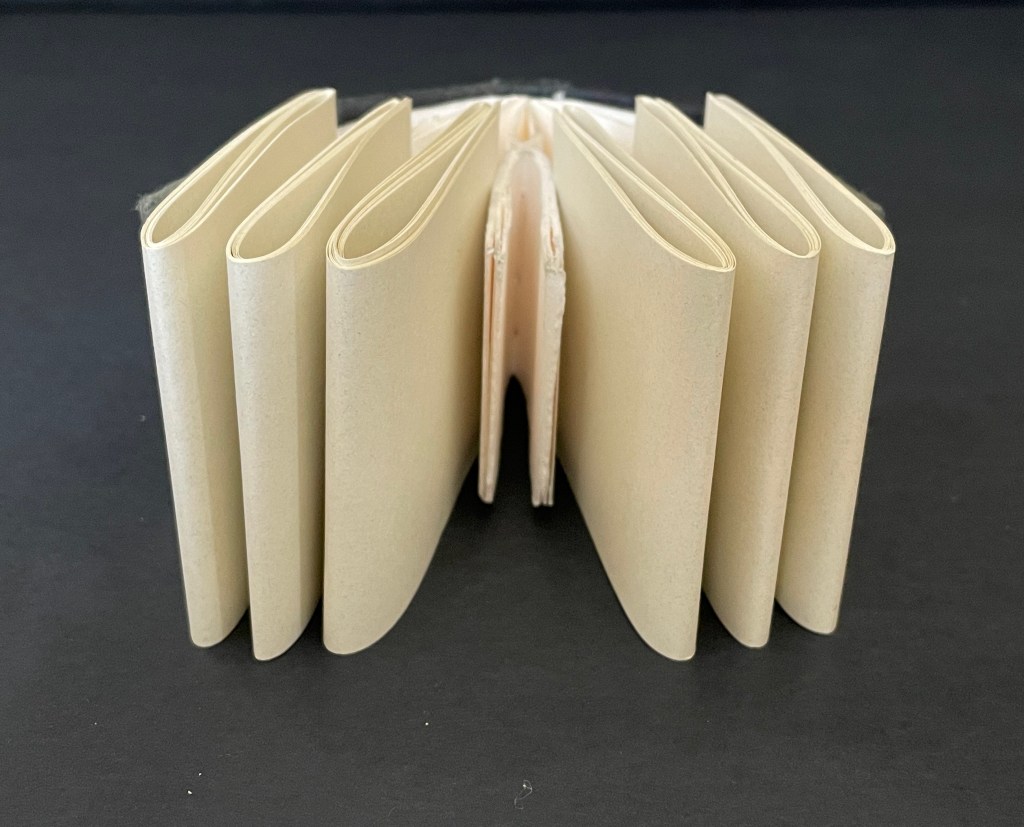
A closed, blank book with multiple pages, viewed from the side, resting on a dark background.

Below, the laid-in folios have been removed, letting the house exhale and give more visual room to the stud-sewn gatherings of cotton printmaking paper. If viewers were allowed do this in an exhibition, they would be appreciating the contrast between the rough cotton paper and the smoother book paper just removed as well as appreciating how the house front now takes on a semblance to a Gothic window without the stained glass.
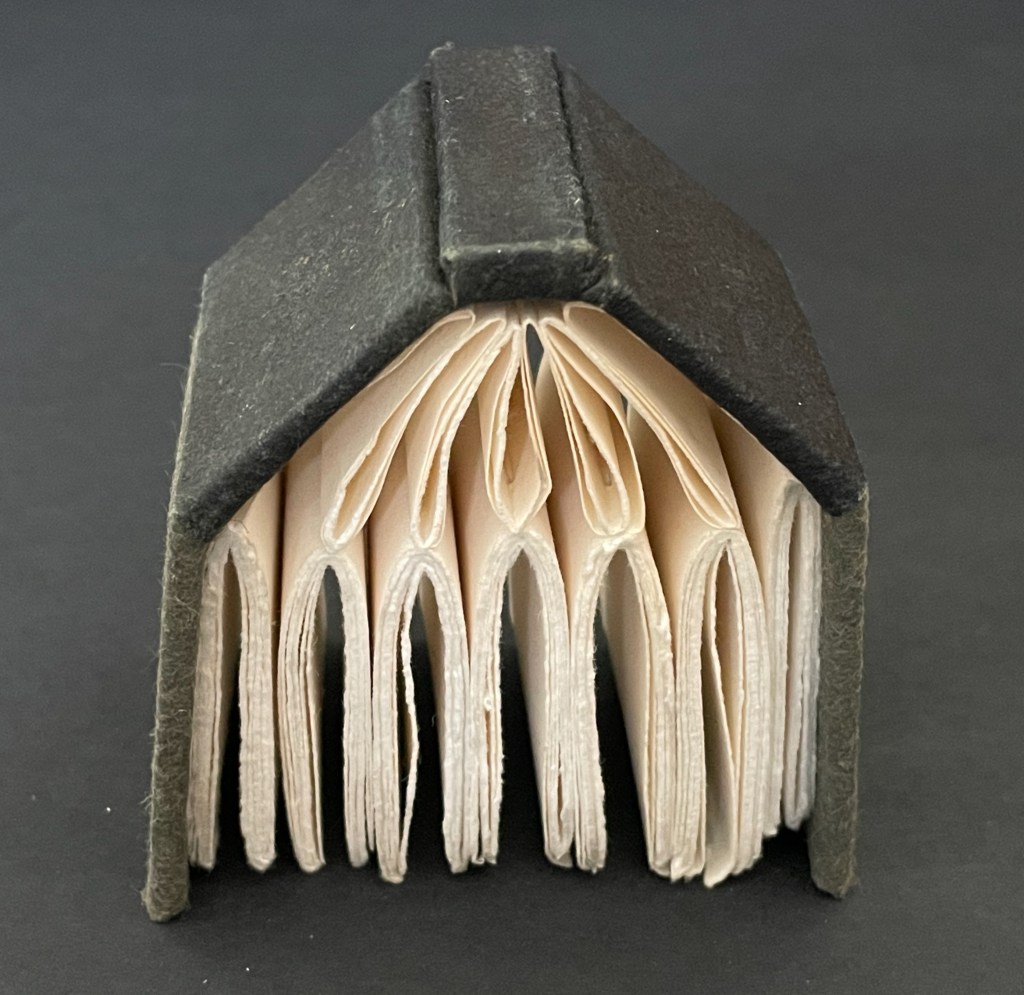
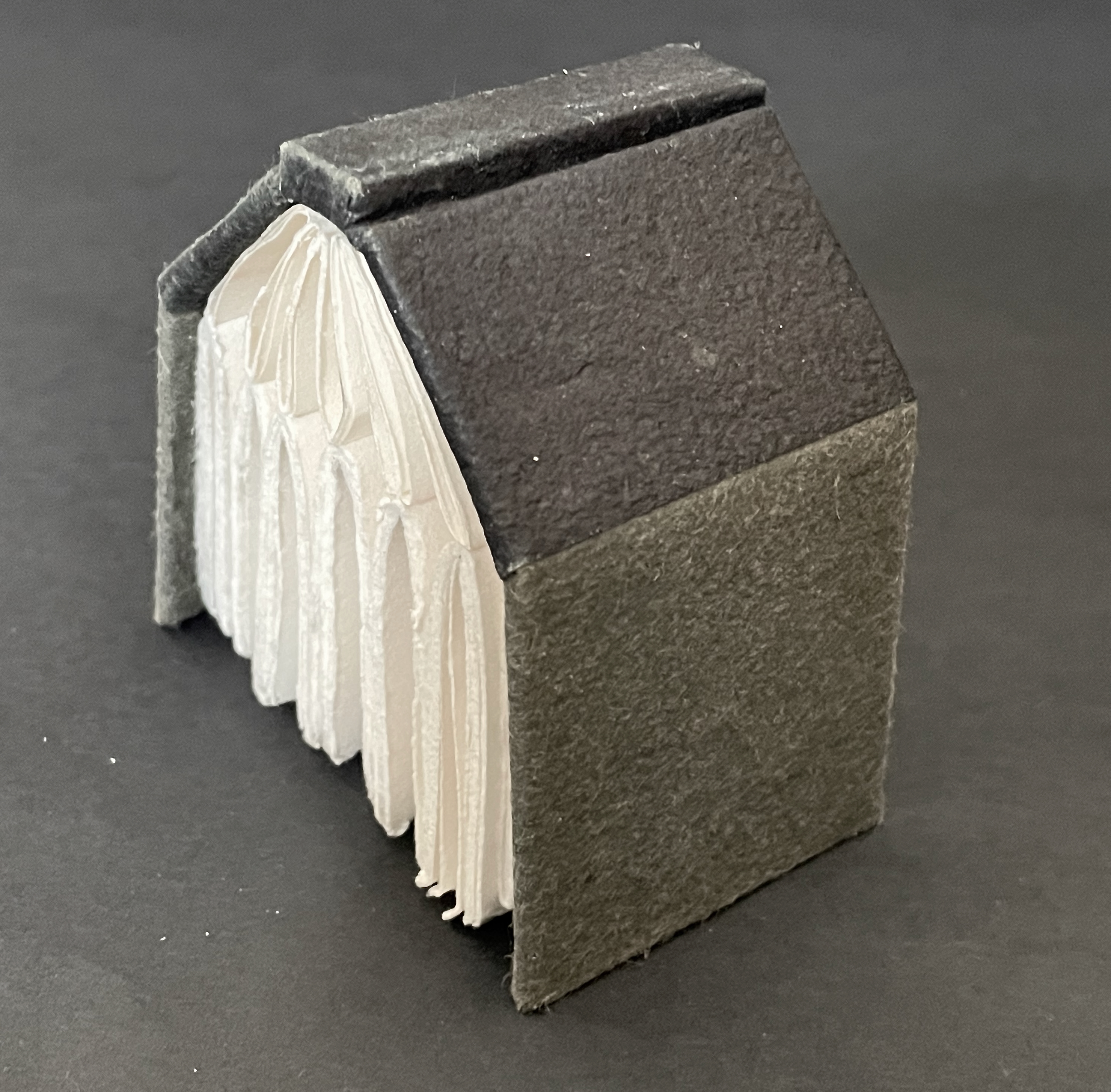
A small, book-like object with a dark cover resembling a house, featuring pages that are tightly stacked.

Your House and The House that Book Built both offer the pleasure of nosing through another’s house. Your House invites the viewer to a page-by-page meditation of laser-cut interior space while doing so. Maker’s snug abode offers the Quaker-like contemplation of the homespun that has been spun with tools made by the spinner.
A small, beige cardboard box with an angled interior, placed on a wooden surface next to several circular paper cutouts and a pointed crafting tool.

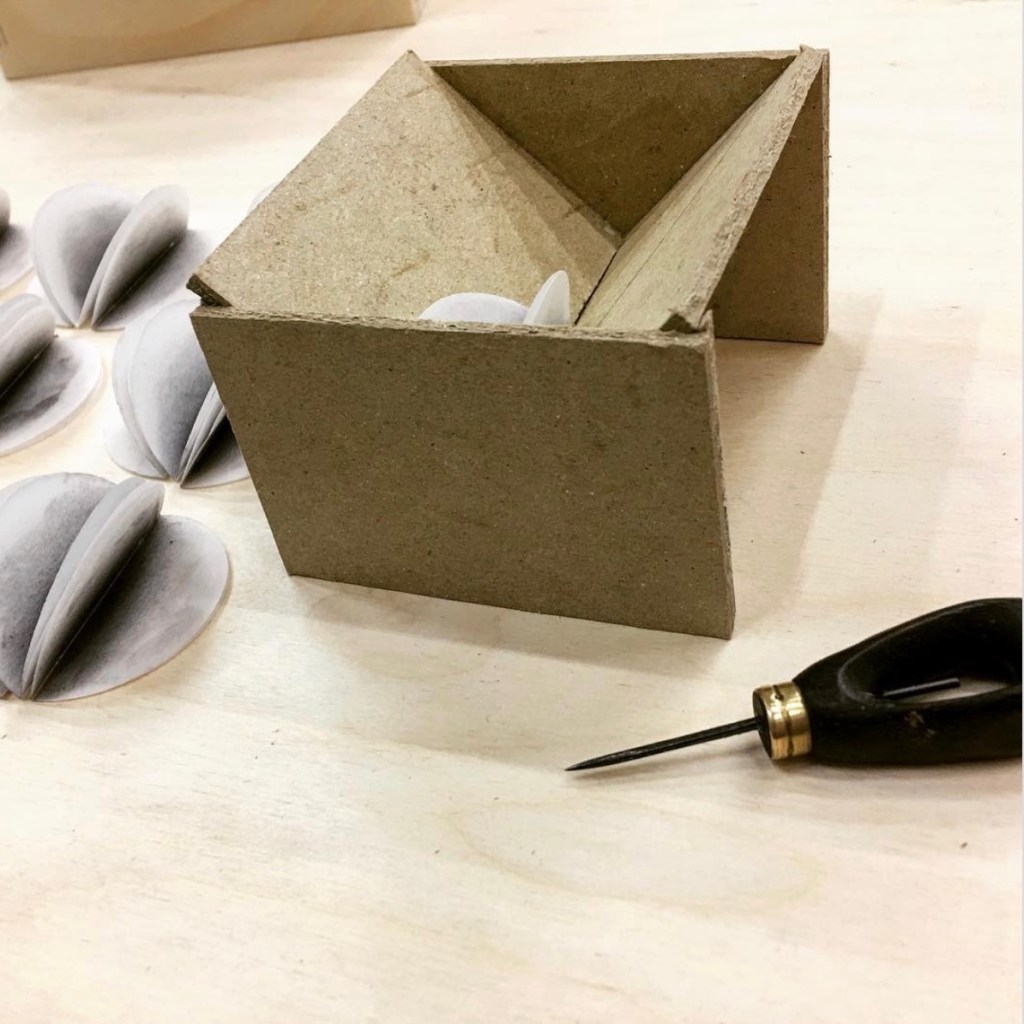
Punch cradle made specifically to punch the sewing stations for The House that Book Built.
Photo: Courtesy of the artist.

Further Reading

Architecture“. 12 November 2018. Books On Books Collection.

Celebrating the 250th Anniversary of Steingruber’s Architectural Alphabet“. 1 January 2023. Books On Books Collection.

Olafur Eliasson“. 17 May 2021. Books On Books Collection.
Books On Books Collection – Carol Barton

Land Forms and Air Currents (2014)

Land Forms and Air Currents (2014)
Carol Barton
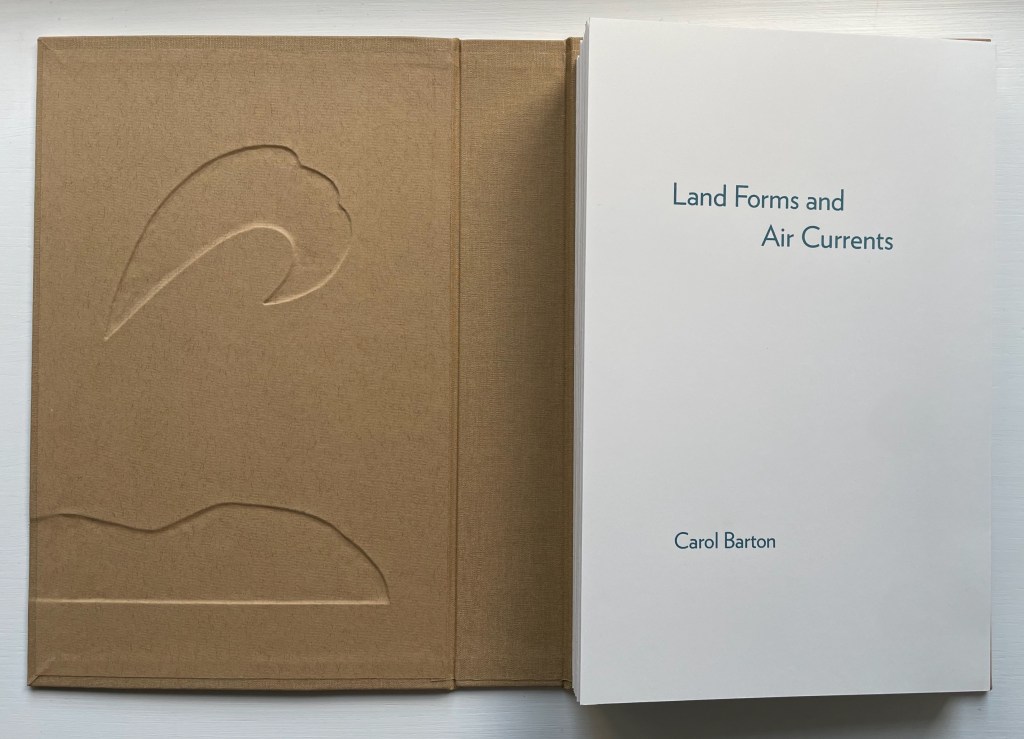
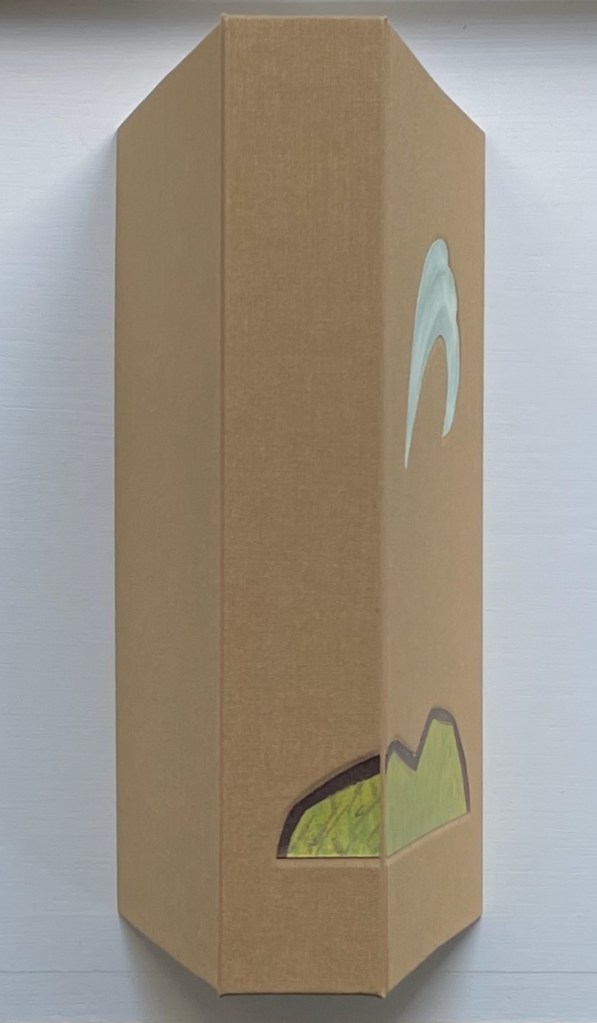
Leporello (with 11 pop-ups) fixed to inside cover of case, cloth over board, debossed with fitted, pastedown artwork on front cover and spine. Cover: H292 x W192 x D50 mm. Leporello: H275 x W175 mm. 37 panels. Edition of 25, of which this is #21. Acquired from the artist, 27 October 2023.
Photos: Books On Books Collection. Displayed with artist’s permission.
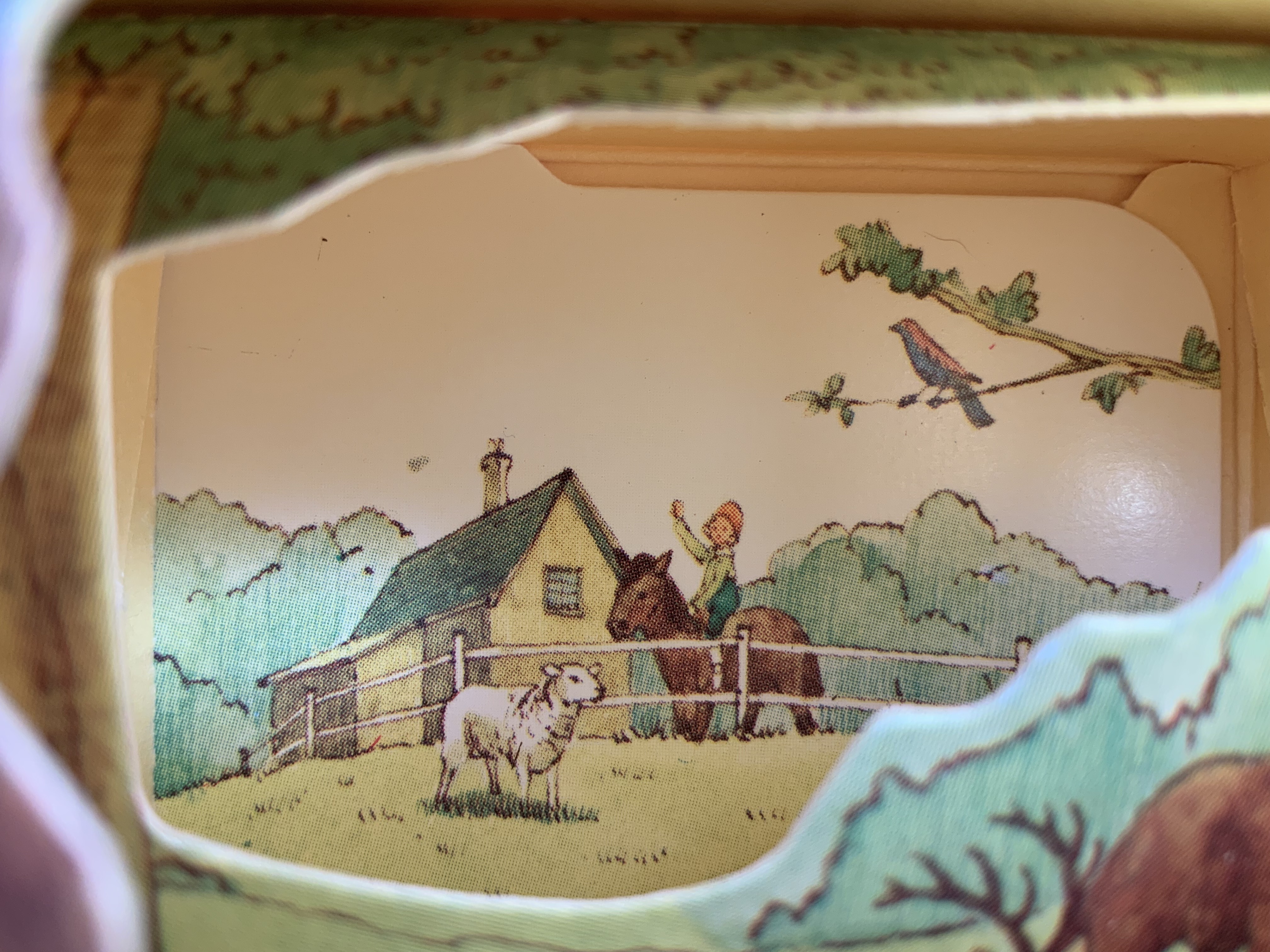
Carol Barton’s reputation for paper-engineering, supported by her well-received multi-volume The Pocket Paper Engineer, should not overshadow appreciation of her talents with watercolor and words. With its poems of free verse, scanned watercolors and pop-up structures all by the same author/artist, Land Forms and Air Currents (2014) qualifies as a champion of the Blakean tradition in artists’ books.

Continue reading

Books On Books Collection – Borje Svensson & James Diaz

Letters (1982)

Letters (1982)
Borje Svensson and James Diaz
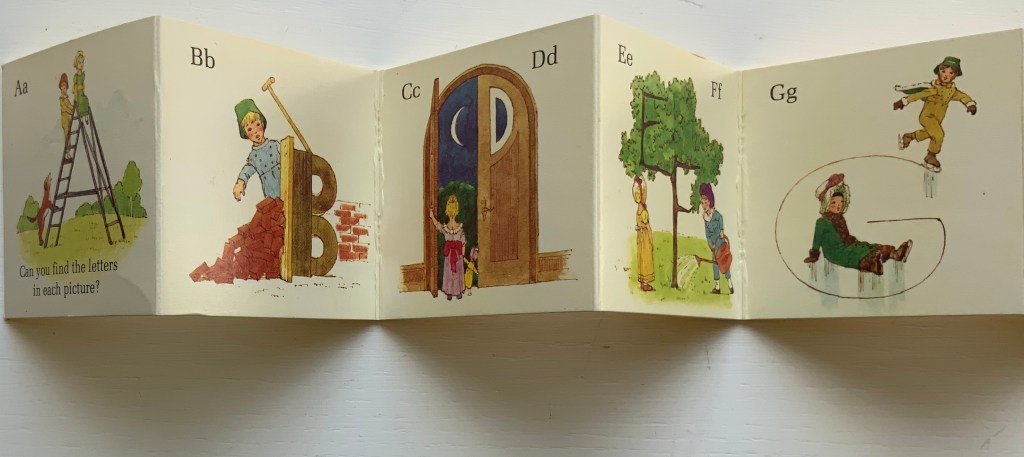
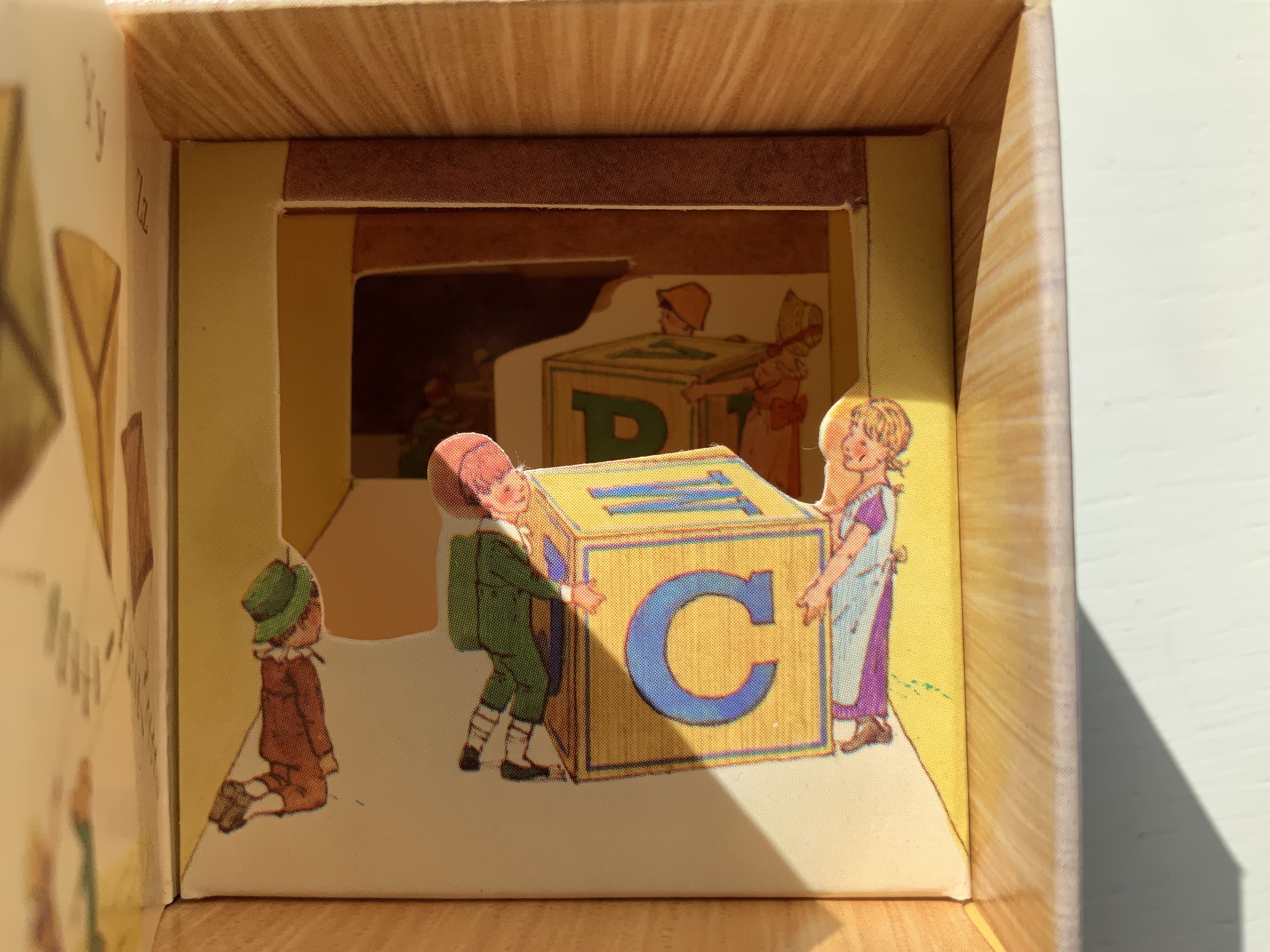
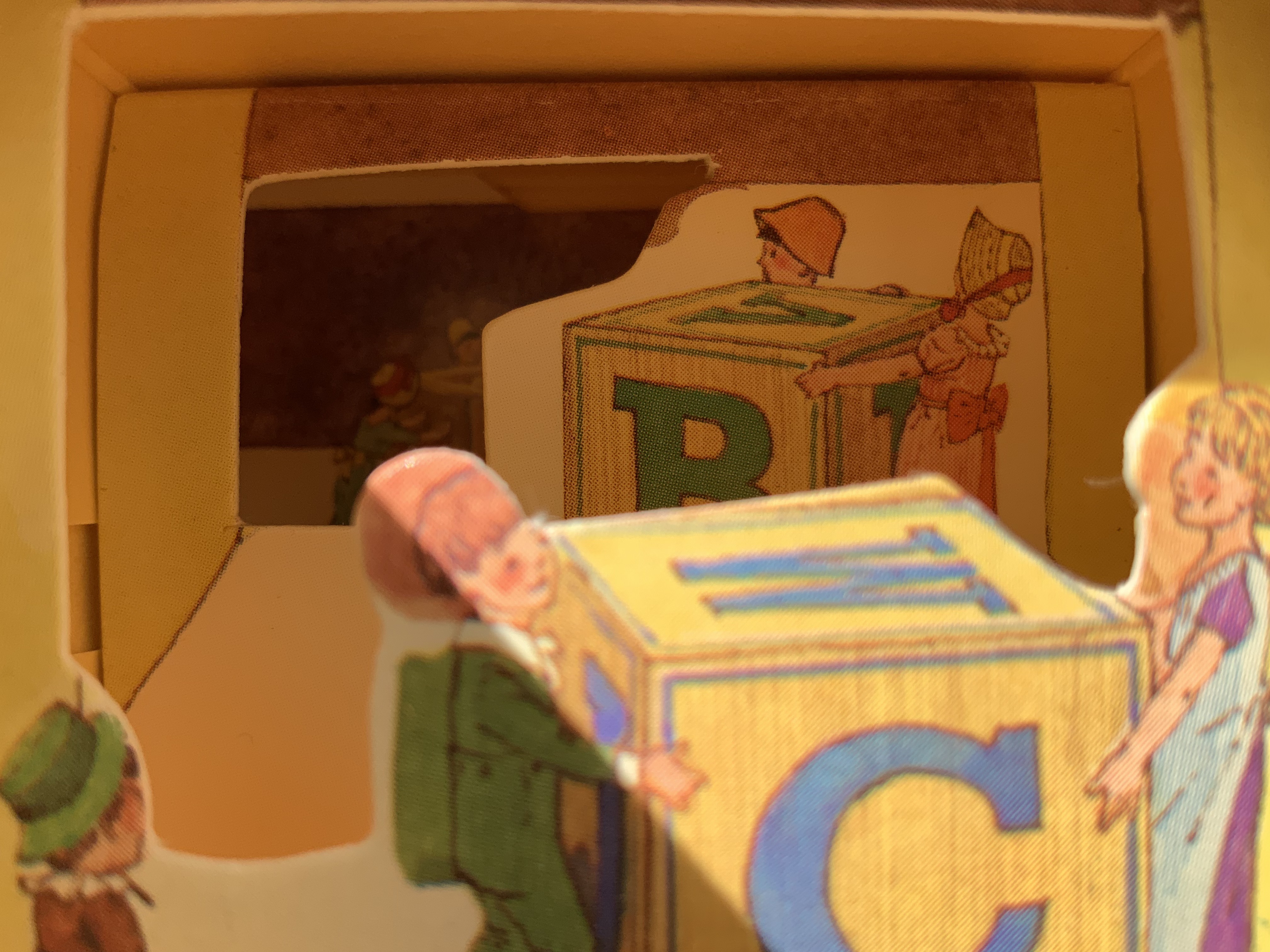
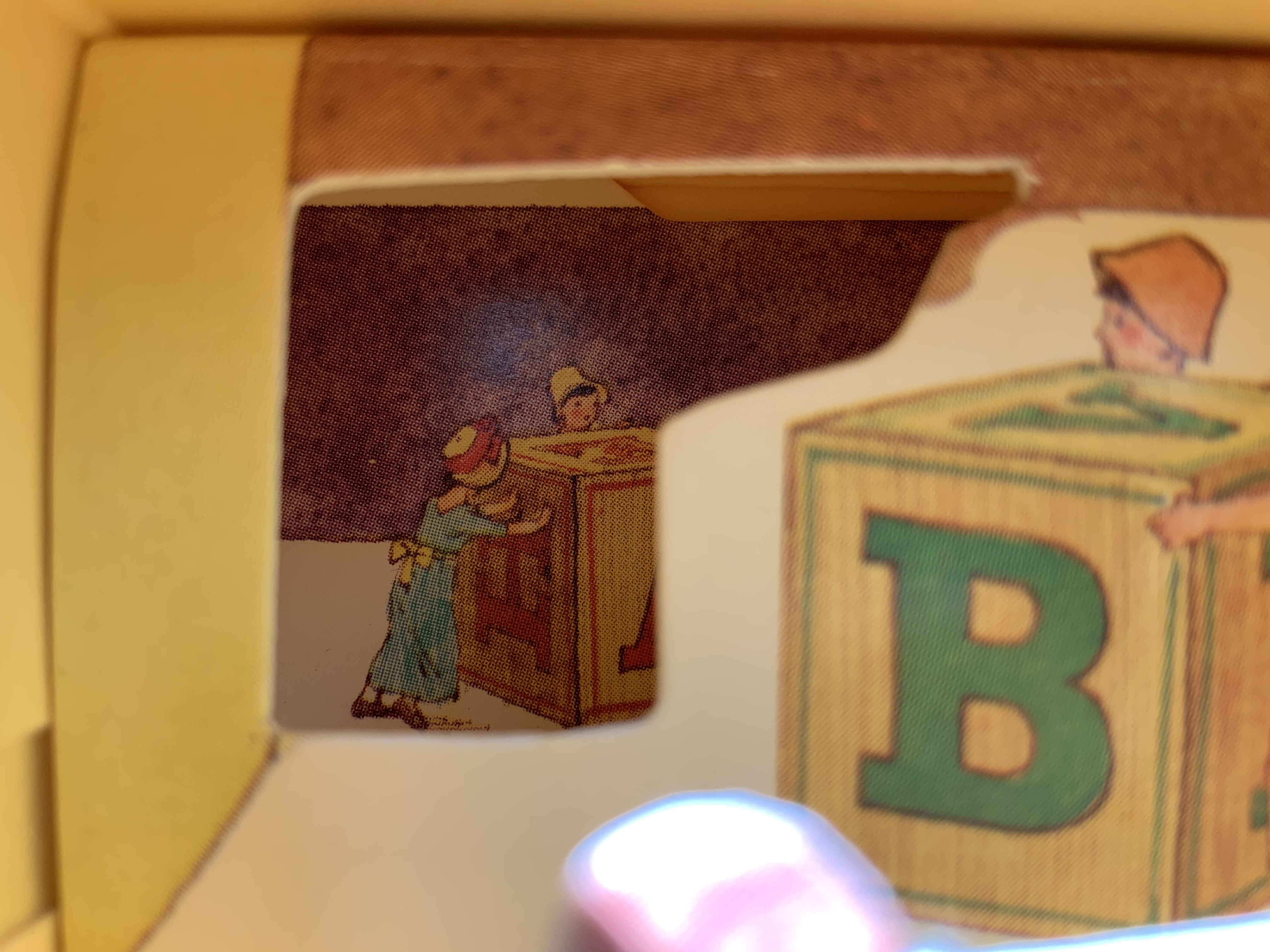
Book in a box. H61 x W61 X D61 cm, 18 accordion panels and diorama. Collins © 1982, Borje Svensson.
Photos of the work: Books On Books Collection.
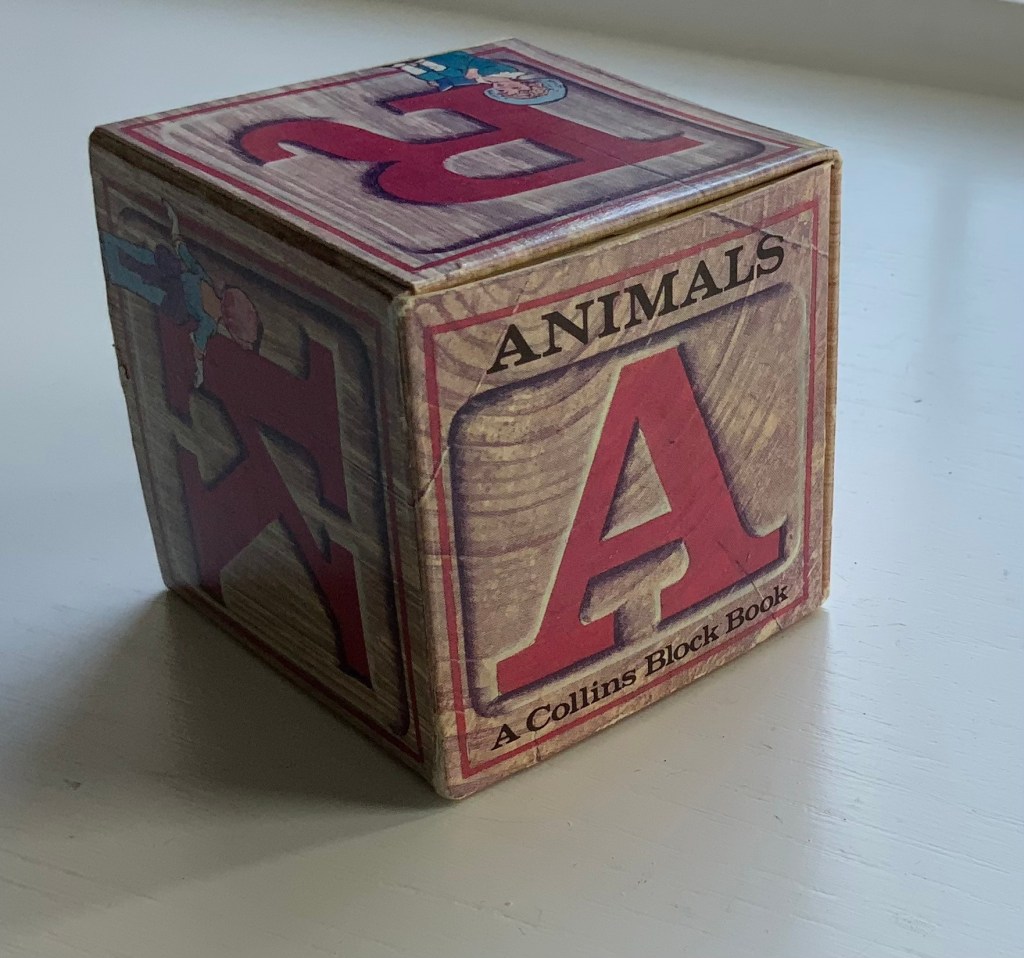
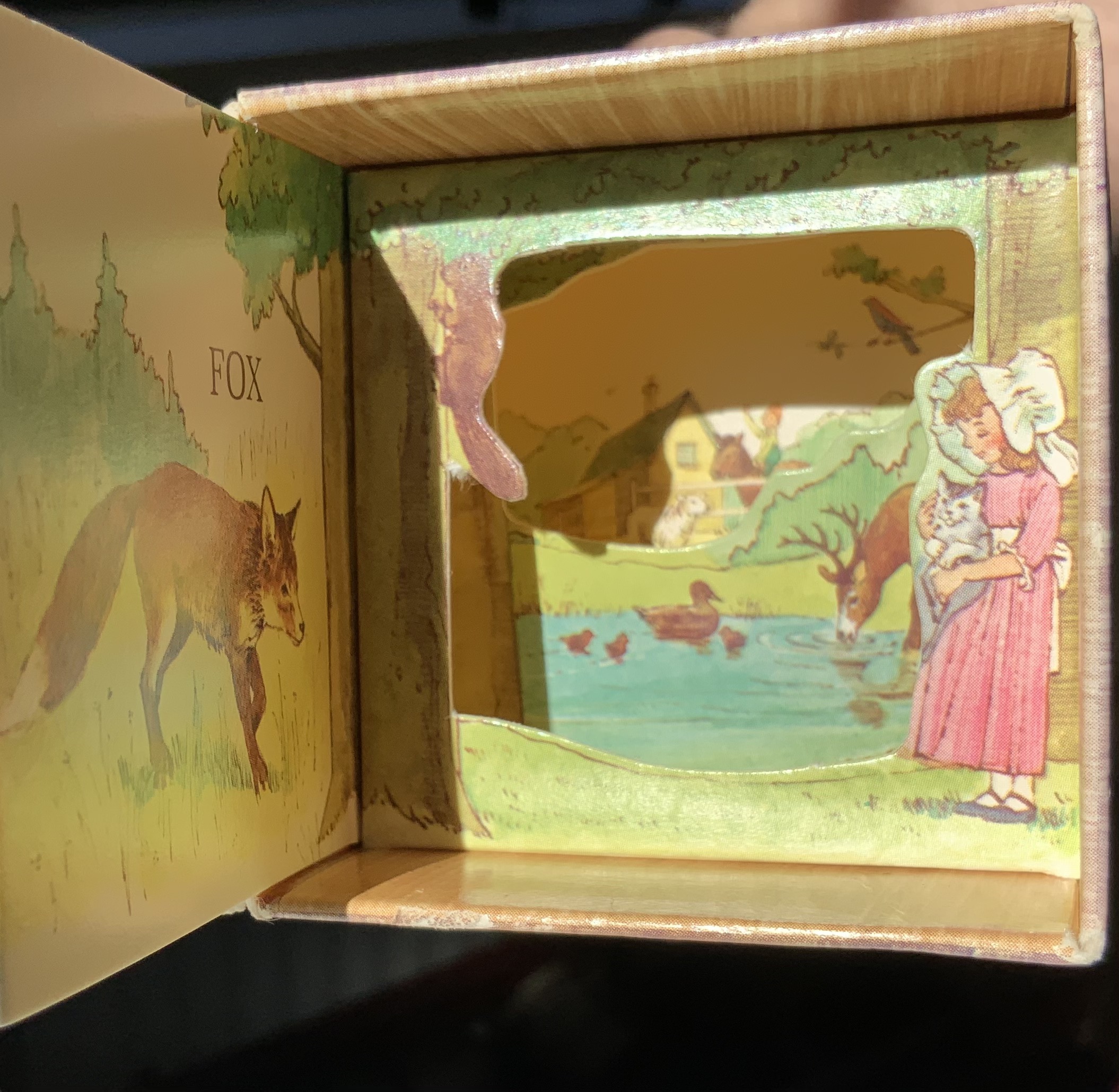
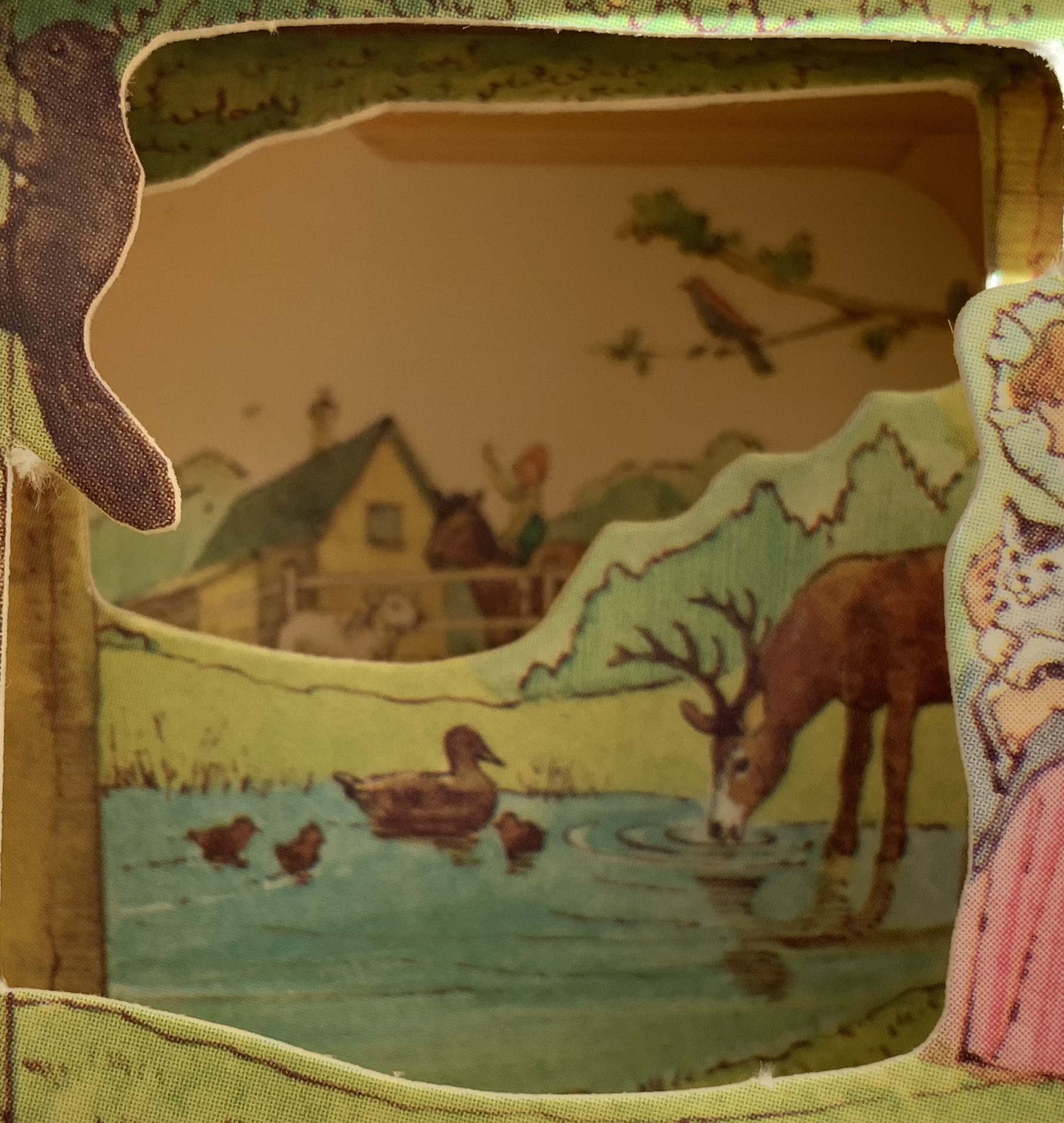
Animals (1982)

Animals (1982)
Borje Svensson and James Diaz Letters (1982)
Book in a box. H61 x W61 X D61, 18 accordion panels and diorama. Collins © 1982, Borje Svensson
Photos of the work: Books On Books Collection.
Given the effectiveness of Svensson and Diaz’s Letters alphabet book-in-a-box effort, it is surprising that they did not follow up the alphabetical theme from Animals, especially since animals have made up the most popular category of alphabet books for centuries. Another 24 or 25 books in boxes beckon. Alphabetical cubes of birds, cats, dogs and the zemmi! And what about the ampersand? And what different paper artistry might Diaz have performed if requested to fill out the series with further innovation? Consider Claire Van Vliet’s alphabetical Tumbling Blocks for Pris and Bruce (1996), Helen Hiebert’s Alpha Beta (2010) and Karen Hanmer’s The Spectrum A to Z.

Before its acquisition by Harpers in 1985, William Collins & Sons settled on the less risky venture of four books in boxes: Animals, Letters, Numbers and Colors. First with Elgin Davis Studios, James Diaz was the paper engineer behind all four and later joined David A. Carter (see his tribute to Bruno Munari here) to produce The Elements of Pop Up: A Pop Up Book for Aspiring Paper Engineers (1999), still used as a primary textbook.

Of course, B. S. Johnson and Marc Saporta pioneered boxes containing loose pages or leaves to be read in any order, but to find contemporary books in boxes where the box is not just a storage mechanism but functionally integrated, we have to look to Ed Hutchins, Sue Johnson and Hedi Kyle among others.

More celebrations of the alphabet and book as “total expansion of the letter” to come.

Bookmarking Book Art – Ed Hutchins

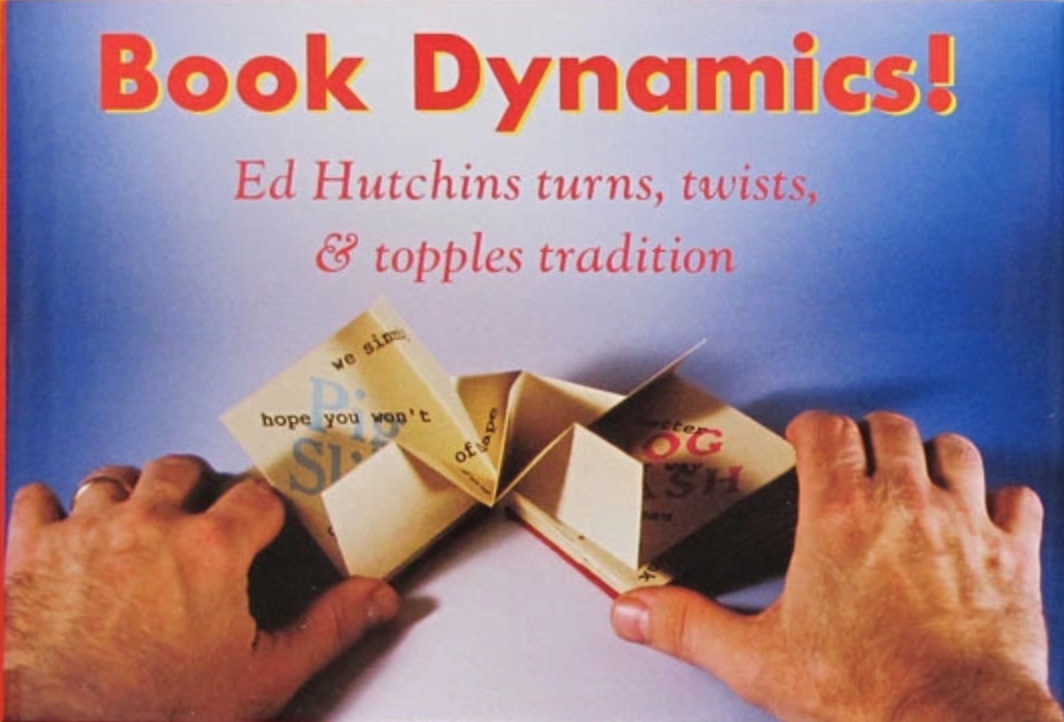
Book Dynamics! (2009)
Ed Hutchins

Ed’s books are a delight: witty and/or thoughtful ideas cleverly presented in unusual structures. Ed is a great believer in designing the form to suit the content, so no two books are alike. Some basic forms re-occur, but there are tweaks to the basic structures that individualize them for each version.

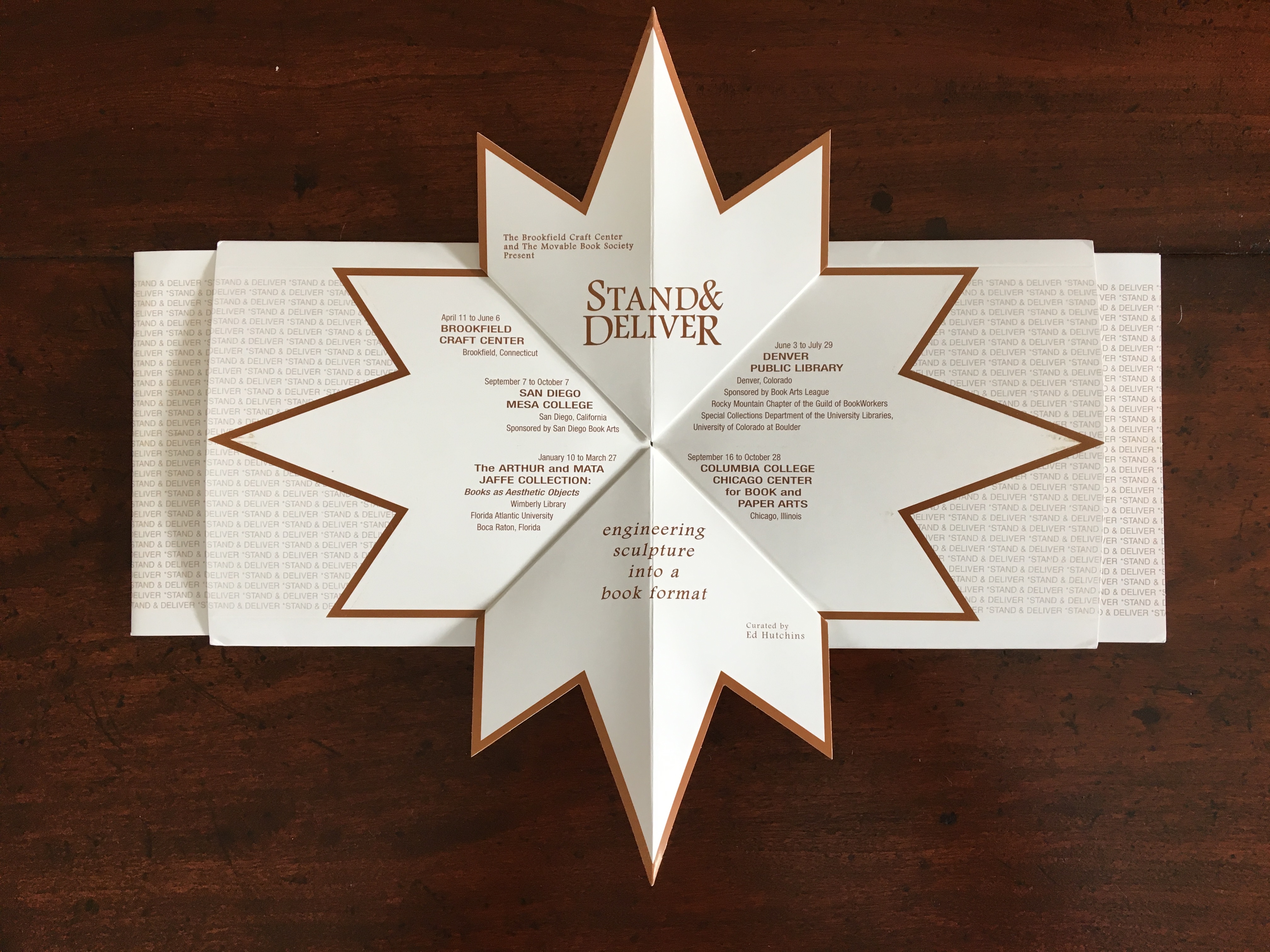
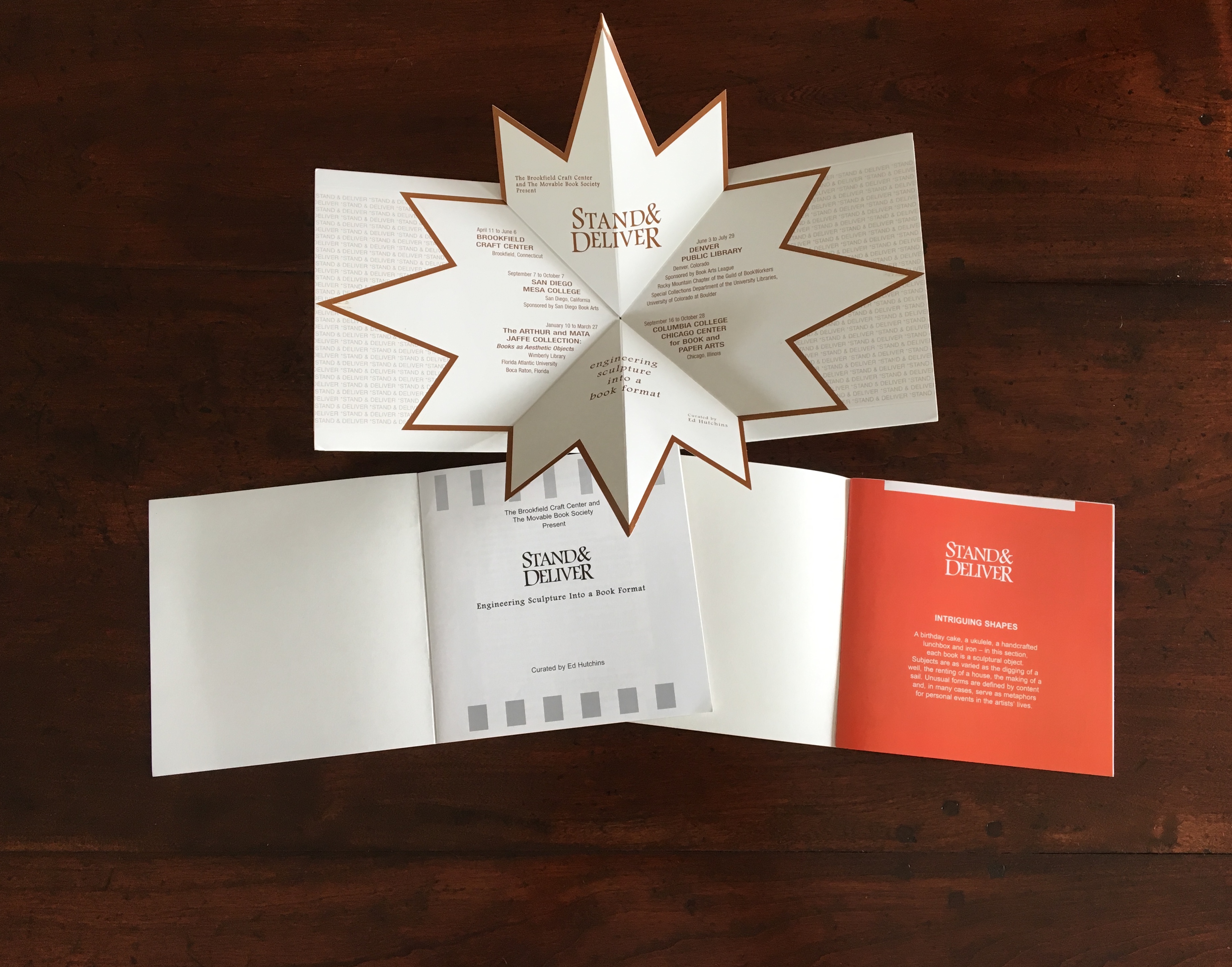
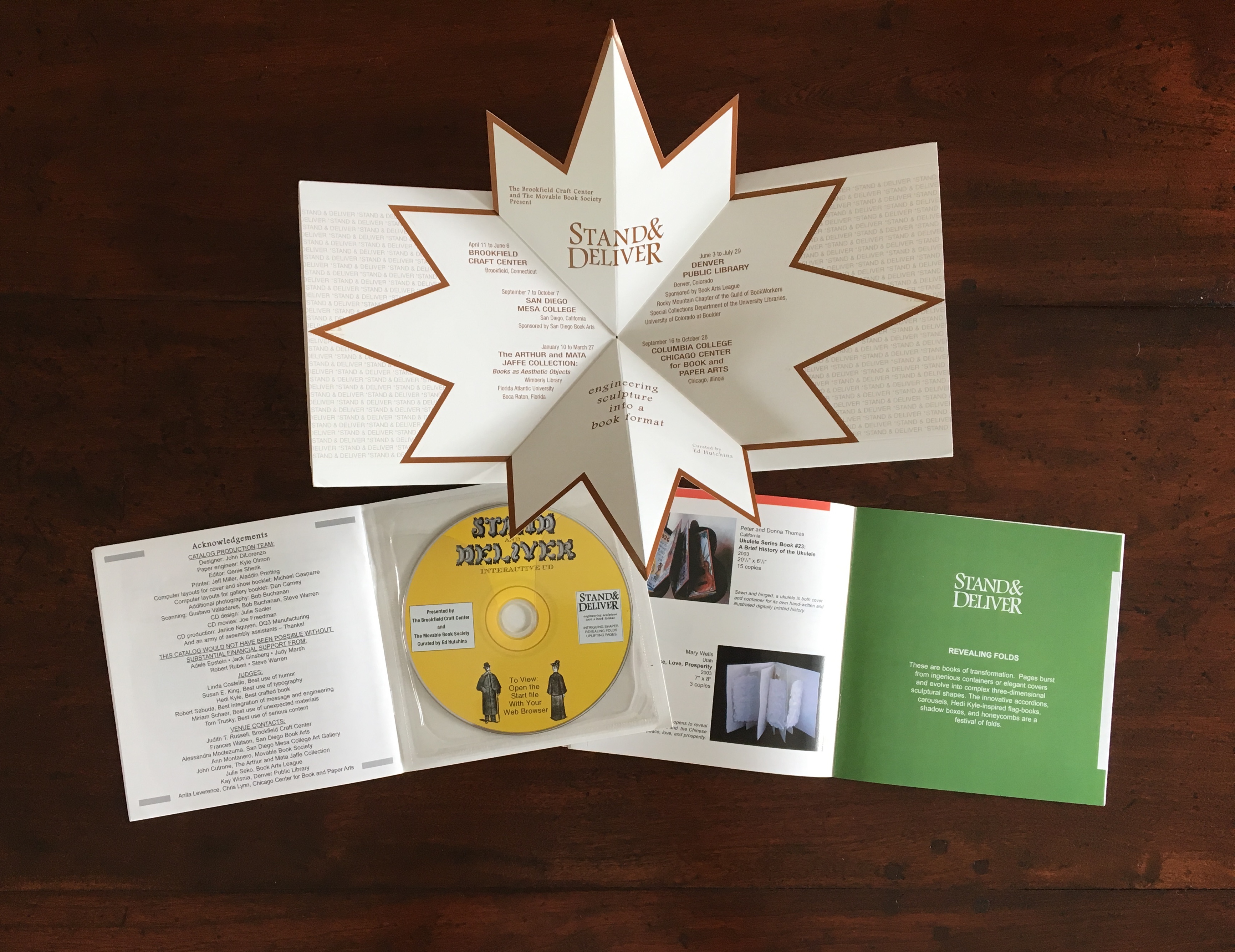
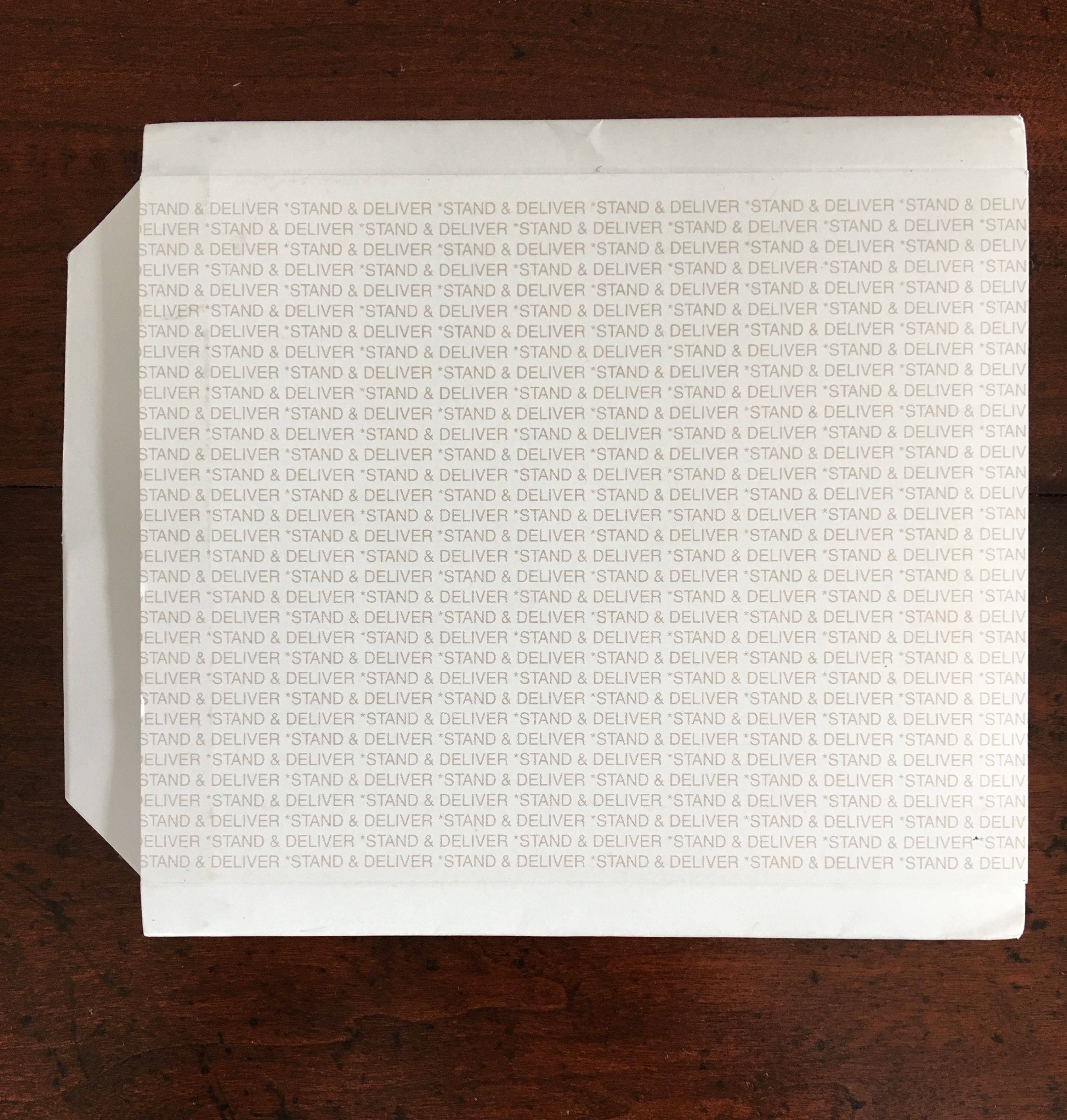
Miller’s review in Byopia Press is also a delight, providing multiple links and routes to information about Ed Hutchins as well as to other reviews of his work. Below are images of the catalog for Stand & Deliver, curated by Hutchins in 2003.

Engineered by Kyle Olmon and designed by John DiLorenzo, the catalog demonstrates great inventiveness in the pop-up structure and mechanism that nudges the two booklets from the left and right sleeves as the catalog is opened. Note also the use of colors to demarcate its sections that follow the themes Hutchins used to organize this exhibition: Intriguing Shapes, Revealing Folds, Uplifting Pages. And note the distinctive and subtle shifting placement of colors in the right-hand booklet: at the top on the orange page, a white bar that shifts to the right on the green page as an orange bar marks the end of the previous section on the facing verso page.  For an exhibition that traveled to five different locations, a more appropriately and intricately mobile catalog could hardly have been devised.

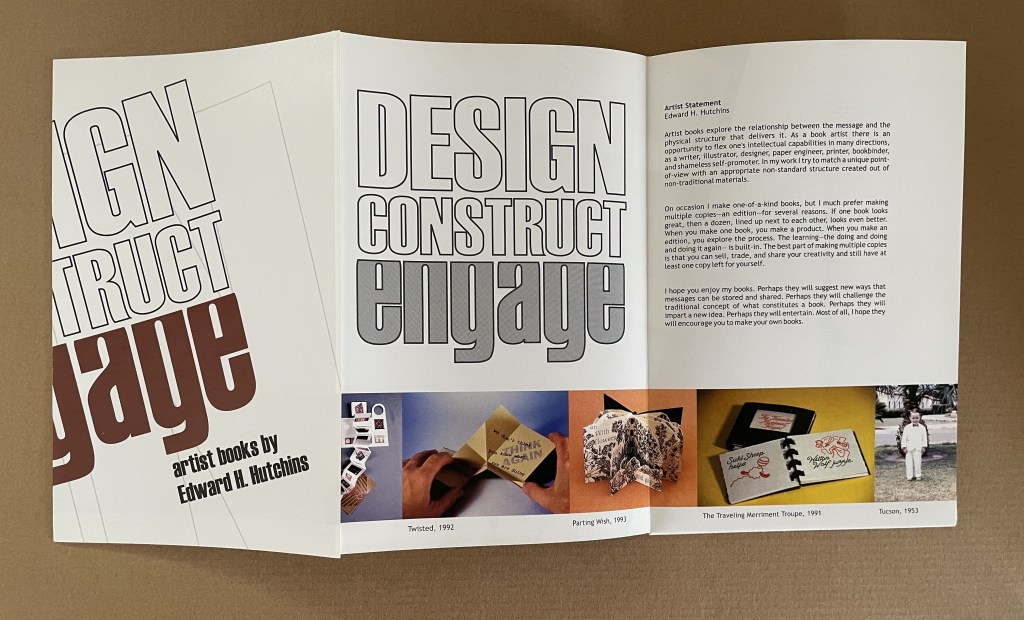
Design, Construct, Engage (2002)

Design, Construct, Engage (2002) Booklet-poster-catalogue in meander cut and fold. Closed: H220 x W140 mm. Acquired from Ed Hutchins, 26 January 2022.

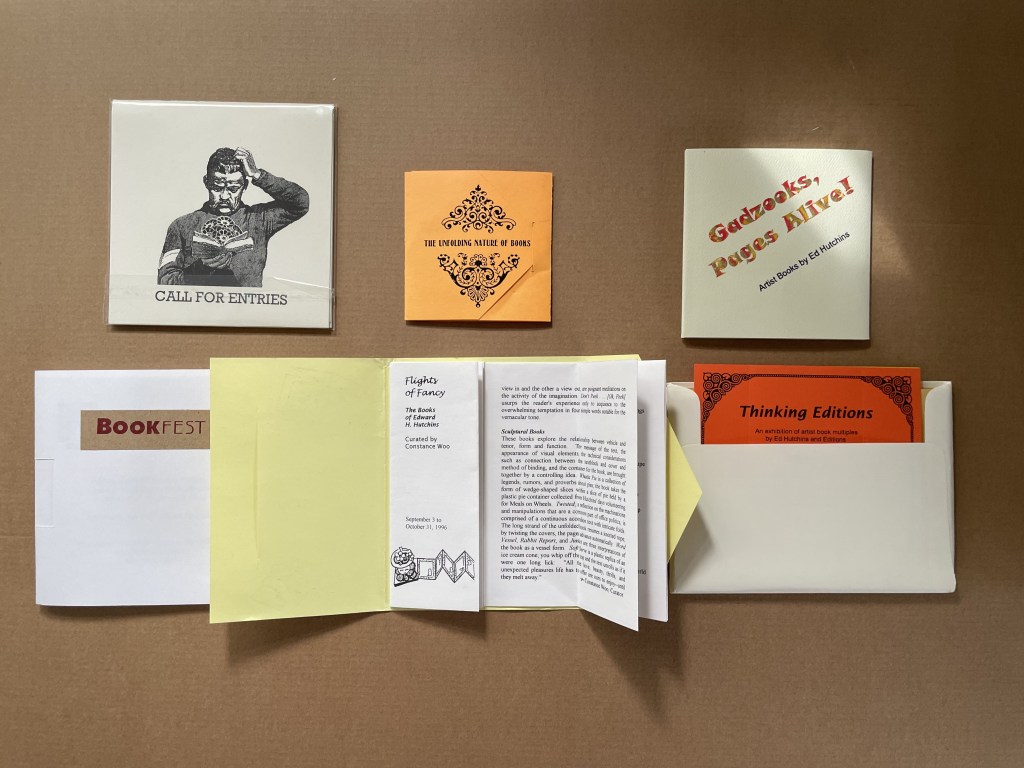
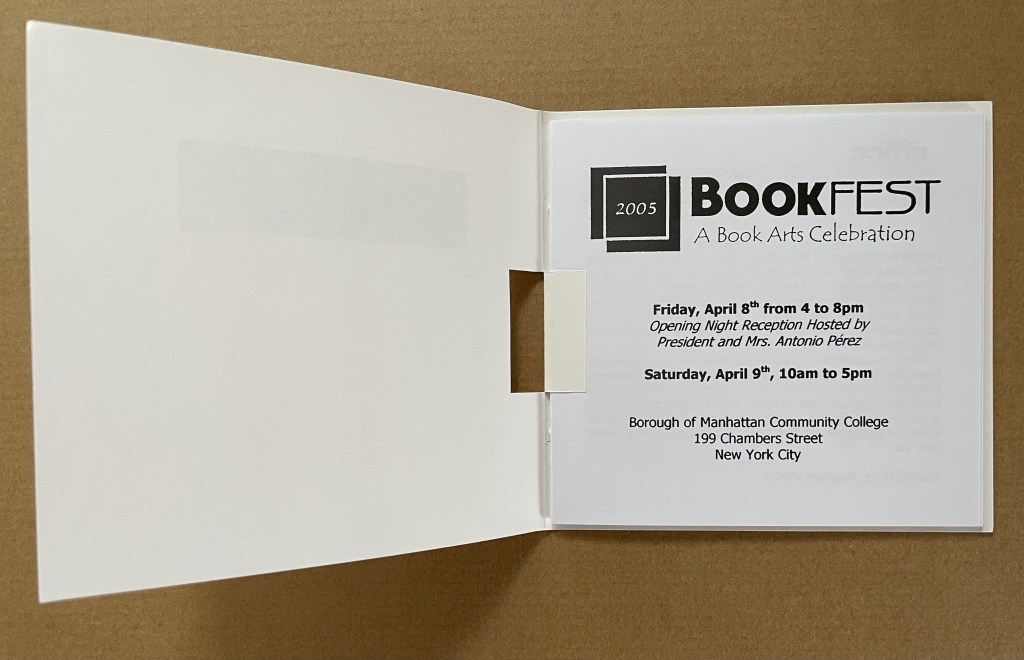
Ephemera (1996 – 2003)

Flights of Fancy (1996) Envelope with tab, trifold, center-cut single sheet forming booklet H145 x W116 mm. Acquired from Ed Hutchins, 20 May 2014.

Gadzooks, Pages Alive (2002) Velcro-fastened trifold cover glued to 18 pages, fixed spinner inside cover. 107 x107 mm. [18] pages. Acquired from Ed Hutchins, 20 May 2014.

The Unfolding Nature of Books (1993) Envelope with tab, trifold, with split Turkish map in center. Self-enclosing evelope with split Turkish map construction exhibition list in center Closed: 85 x 85 mm. Acquired from Ed Hutchins, 20 May 2014.

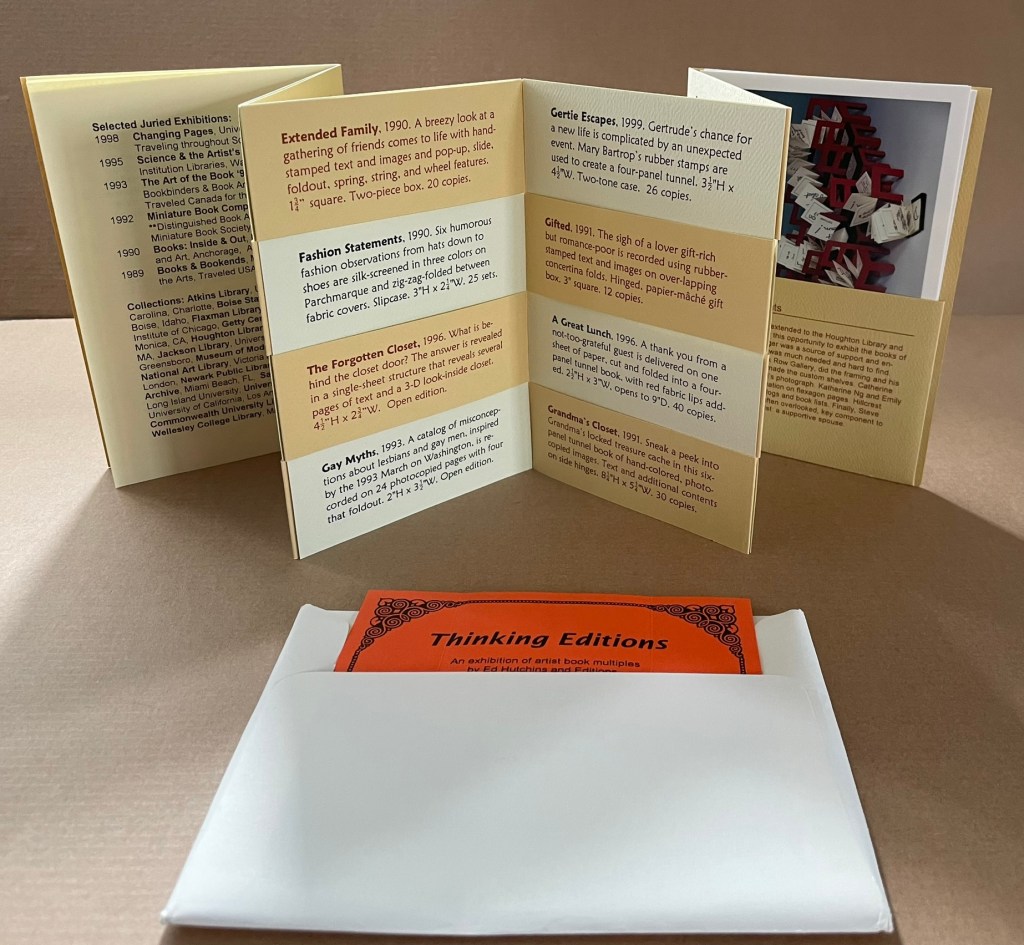
Thinking Editions (1999) Accordion fold booklet with 16-page gathering saddle-stitched with single staple to first fold, four panels of accordion slit to receive four cards to create 8 interleaved pages, final panel has pocket holding 3 color postcards. H155 x W110. 28 pages. Acquired from Ed Hutchins, 20 May 2014.

Thinking Editions card (1999) Four-card construction displaying 7 views. 126 x 126 mm. Acquired from Ed Hutchins, 20 May 2014.

Call for Entries, Stand & Deliver (2002/3) Pop-up invitation with entry cards. Acquired from Ed Hutchins, 20 May 2014.