Books On Books Collection – Caren Florance

L OO P (2019)

L OO P (2019)
Caren Florance
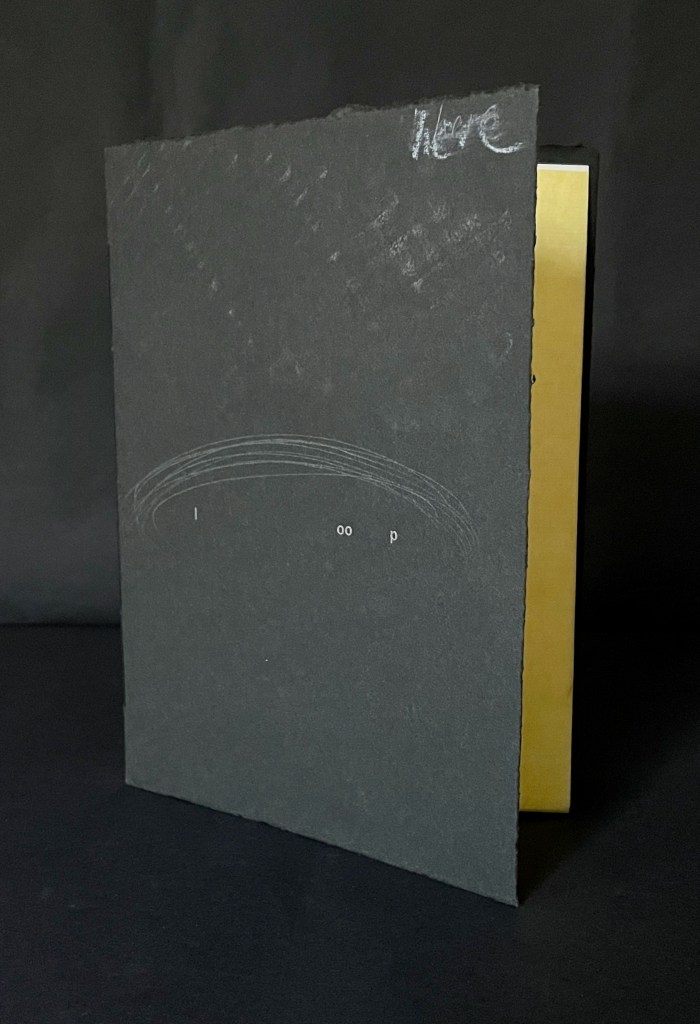
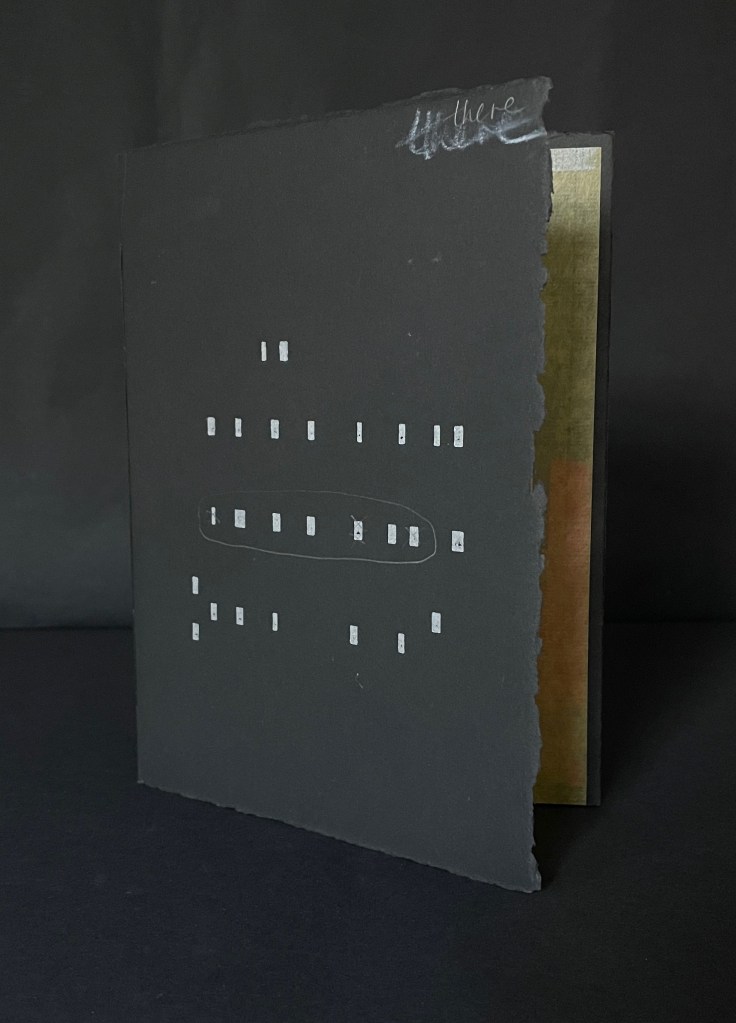
Handset letterpress and mixed media on Stonehenge Black, Chinese papers and found maps. Hand-stitched Z-fold dos-à-dos booklet. H193 x W143 mm. [48] pages. Edition of 16, of which this is #13. Acquired from the artist, 1 December 2025.
Photos: Books On Books Collection. Displayed with artist’s permission.

L OO P is one to compare with Jack Oudyn’s Opening Dark Windows (2020) and Tim Mosely’s Grasping the Nettle (2020). All three of these Australian book artists create works responding to climate change. L OO P is also one to contrast with Barbara Beisinghoff’s Tau blau / Dew Blue (2013). Both thrust forward their works’ tactility, but while Beisinghoff’s offers the fond hope of natural and artistic renewal as it plays off H.C. Andersen’s fairy tale Hørren /The Flax, Florance’s embeds shards of John Bennett’s bird poem Overwintering in a back-to-back loop of despair over climate change.

Continue reading
Books On Books Collection – Jean-Pierre Hébert, Harry and Sandra Liddell Reese

In Visible Cities (2012)

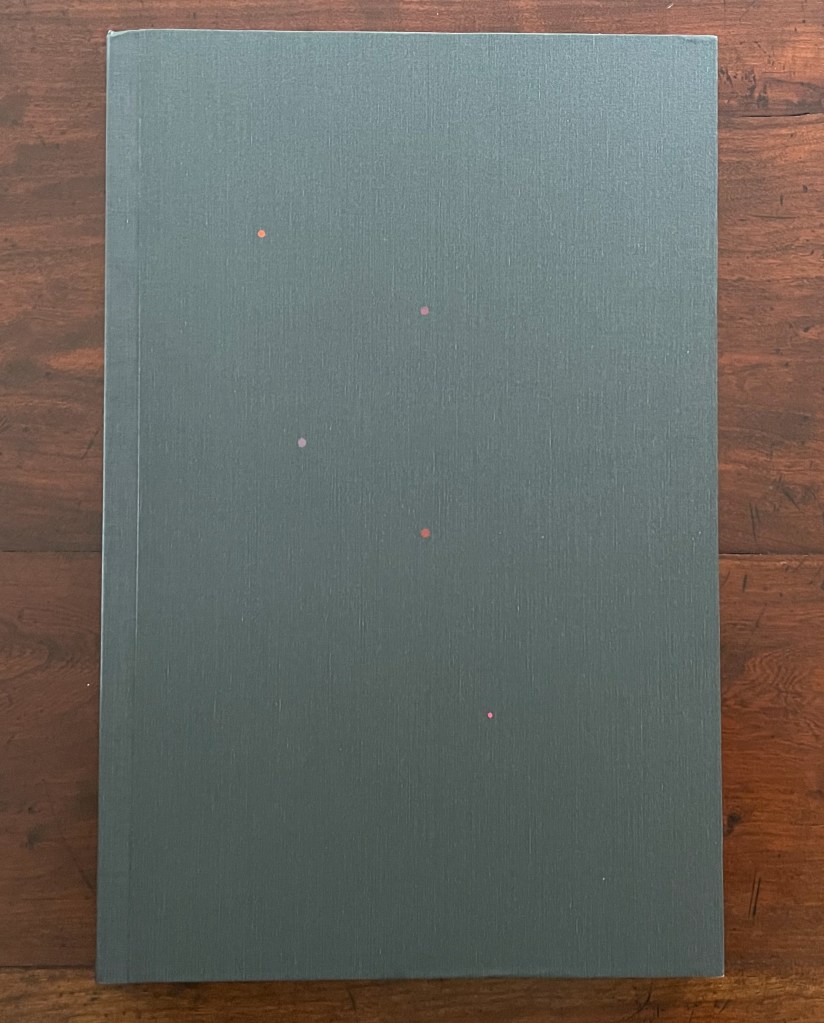
A closed book with a matte gray cover, featuring small colorful dots in red, pink, and orange scattered on the front.
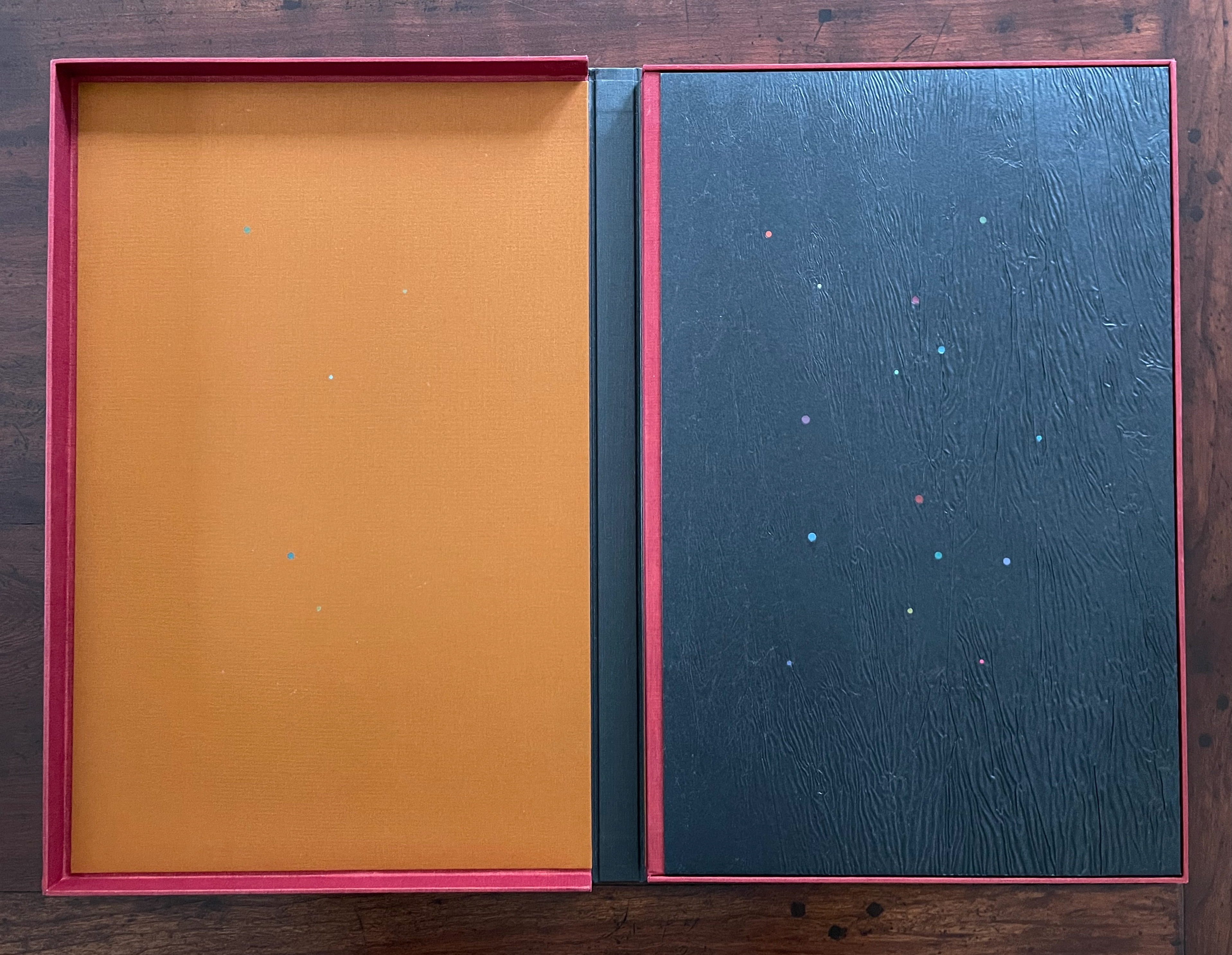
Opened box with an orange interior on the left and a textured black cover with colorful dots on the right.
An open book with a yellow-orange interior and a pink border, displaying small blue dots on the pages.

In Visible Cities (2012)
Jean-Pierre Hébert, Harry and Sandra Liddell Reese
Custom-made box enclosing sewn board binding with cloth spine, treated abaca/cotton paper with painted inlays, pastedowns with drawings, valley-fold folios of Niyodo Natural paper printed on Epson Stylus Pro 4800. Box: H442 x W290 mm. Book: H424 x W276 mm. [46] pages. Edition of 73, of which this is #48. Acquired from the Reeses, 9 February 2026.
Photos: Books On Books Collection. Displayed with permission of Claire Hébert and the Reeses.

More than a few artists have been drawn to Italo Calvino’s Invisible Cities (1972/74). Its attraction is not hard to understand. Calvino supposes a series of conversations between Marco Polo and Kublai Khan about cities across the Khan’s empire that he has not visited but Marco Polo has and which he describes for the Khan. The premise, however, is paradoxical: the fifty-five cities Marco Polo describes do not exist. Calvino’s sensuous and surrealistic prose and combinatorial arrangement of the conversations and descriptions create a book that is simultaneously inwardly and outwardly reflective. Simple but complex. Realistic but fantastical. Concrete but conceptual. A work ripe for homage and inspiration.

Continue reading

Books On Books Collection – Ximena Pérez Grobet (II)

Nagori (2023)

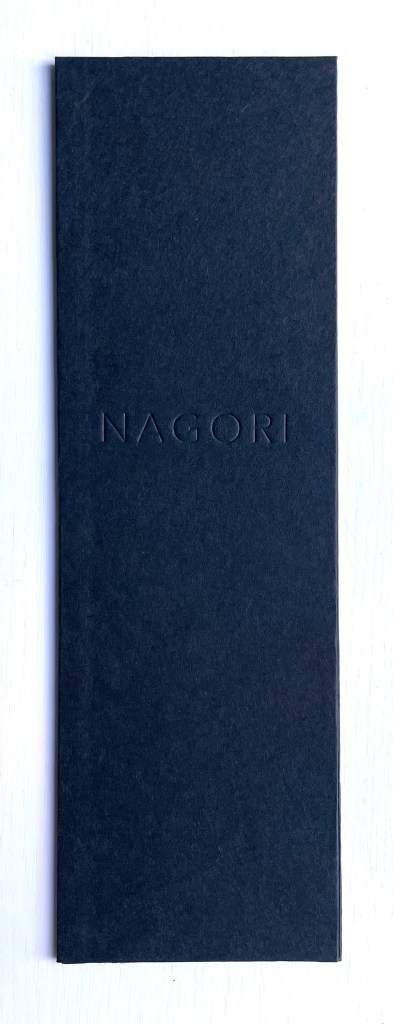
A sleek black folder with the embossed word 'NAGORI' on the front.

Nagori (2023)
Ximena Pérez Grobet and Kati Riquelme
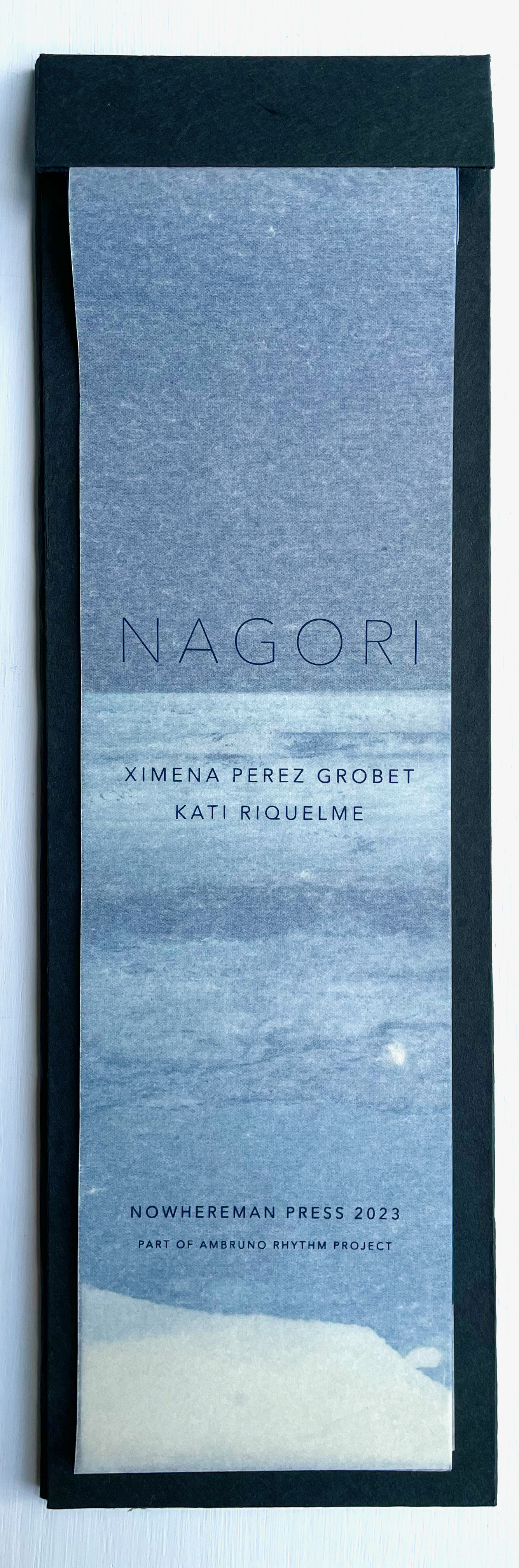
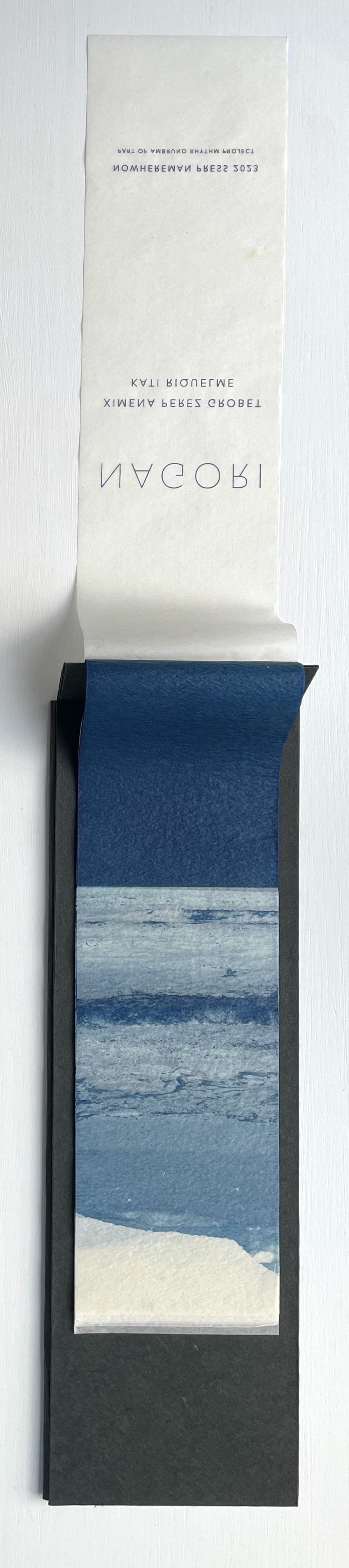
Clothbound hardcover. H153 x W47 mm. Edition of 33, of which this is #14. Acquired from Ximena Pérez Grobet, 5 February 2024.
Photos: Books On Books Collection. Permission to display from Ximena Pérez Grobet.

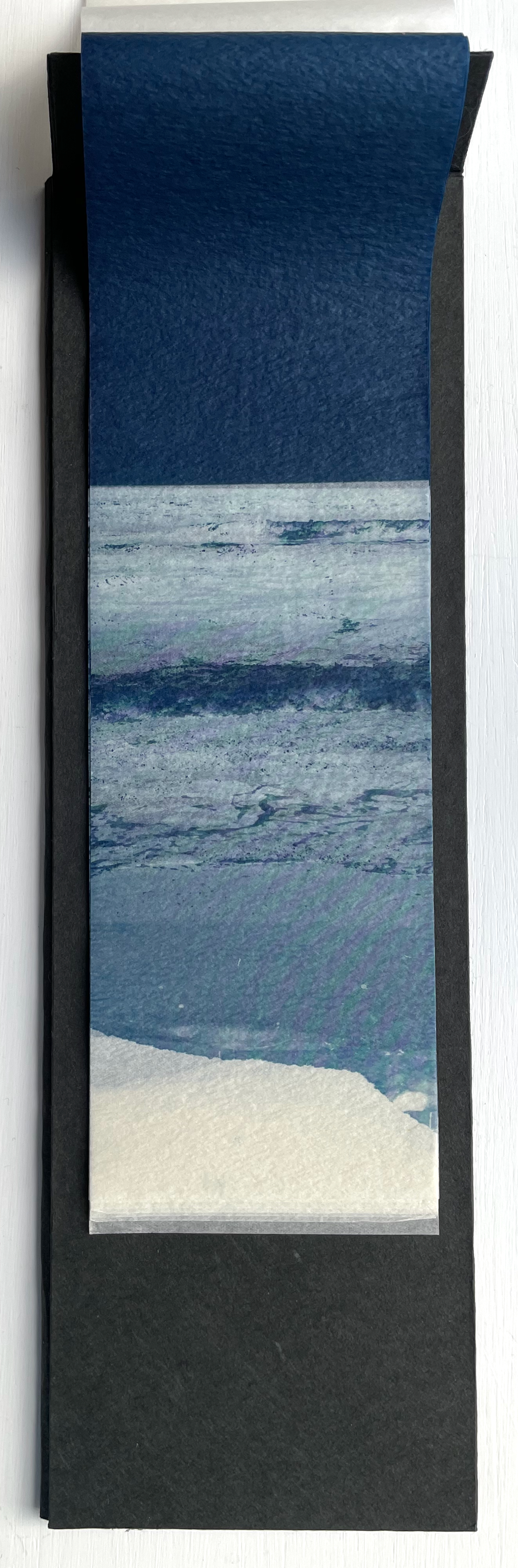
The Japanese word nagori has several meanings. Beware translation applications, but embrace the online discoveries that lead to Ryōko Sekiguchi, the Japanese expatriate writer, and Victor Burgin, the British conceptual artist and writer, who cites her. With Sekiguchi, you will find that it means “nostalgia for the season leaving us”, the longing for the taste of an early season fruit evoked by its late season taste, or a room’s sense of waiting for the return of someone who has just left. With Burgin, before he cites Sekiguchi, you will first find nagori‘s etymology — nami-nokori, referring to the remnant, remains or traces of receding waves. Burgin’s etymological explanation is obviously the most applicable to this collaborative artists’ book, but after you have put the book aside, you may feel a lingering nostalgia for the experience of it akin to the sensuousness Sekiguchi evokes.

Continue reading

Books On Books Collection – Helen M. Brunner

Primer: Ritual Elements (Book One) (1982)

An artistic cover of a book titled 'Primer: Ritual Elements' by Helen M. Barger, featuring ancient script designs and abstract shapes.

Primer: Ritual Elements (Book One) (1982)
Helen M. Brunner
Softcover, pamphlet-stitched. H239 x W155 mm. 22 pages. Binding adapted from a design by Barbara Press, developed under the instruction of Hedi Kyle. Edition of 300. Acquired from JP Antiquarian Books, 14 February 2024.
Photos: Books On Books Collection.

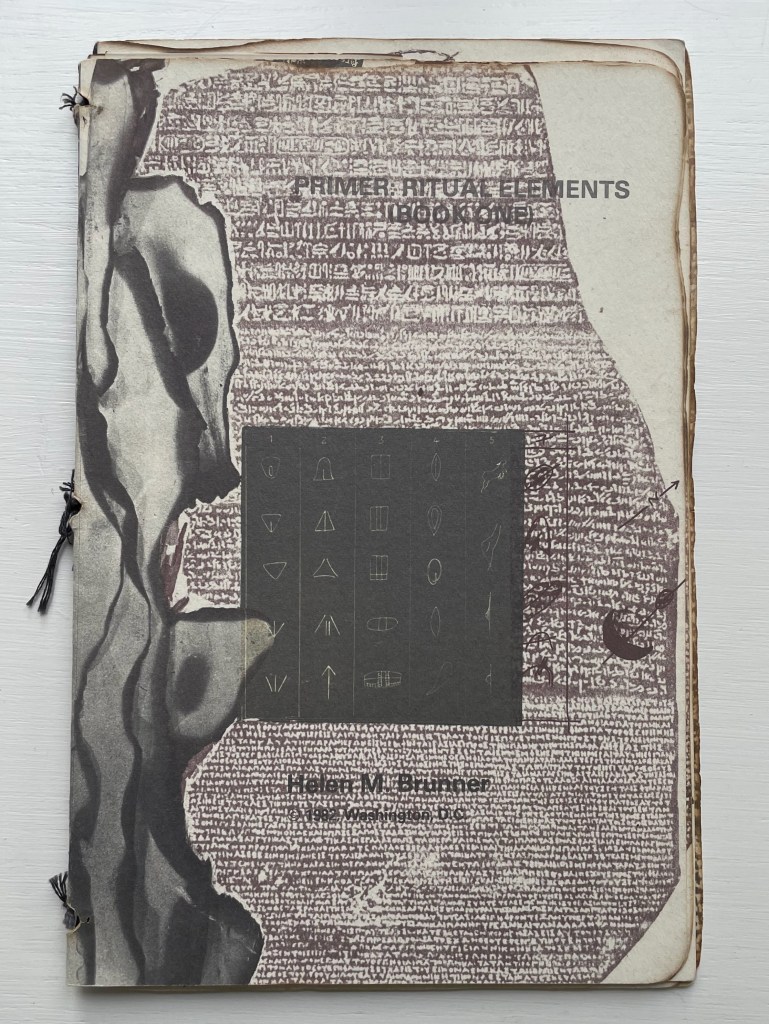
Primer is an unusually made booklet. Stitched with black cotton thread over three signatures, its two outer signatures are of white wove Curtis rag paper, the inner signature is of parchment or a translucent paper, and four 5-panel thumbnail accordions in translucent paper are glued to the beginning of the last outer signature. More unusual is that the booklet’s edges appear burnt into unevenness, yet there is no odor of ash. The edges of the sewing holes also appear burnt, one page has a scorch mark in its center, and even the edges of the collaged items appear to have been burnt before being photographed. The breadth of collaged items — from cave markings to cuneiform to Rosetta Stone to film strips or slides — is not unusual given the title; you would expect a primer on ritual elements to address a prehistoric to historic range of petroglyphs, pictographs, symbols, letters, photographs, etc. But most unusual — and perhaps the point of the work — is that the legible text undermines the aim suggested by the title. The script on the back cover makes the subversion plainest.

Continue reading