The most beautiful and perfect book in the world is a book with only blank pages, in the same way that the most complete language is that which lies beyond all that the words of a man can say. Every book of the new art is searching after that book of absolute whiteness, in the same way that every poem searches for silence. — Ulises Carrión: “The New Art of Making Books” Kontexts no. 6-7, 1975.
a minima
(20 March 2026 – 27 September 2026)
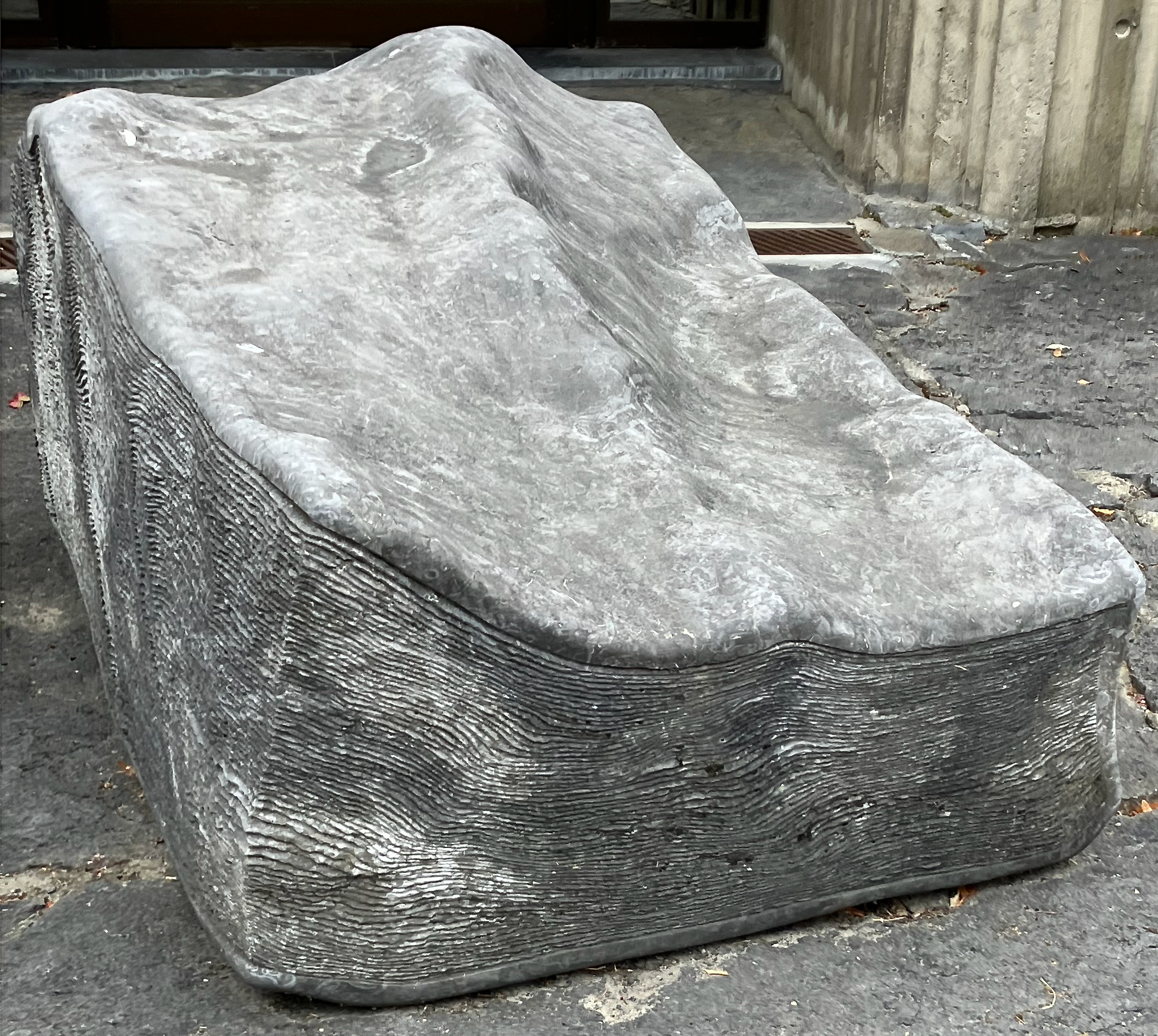
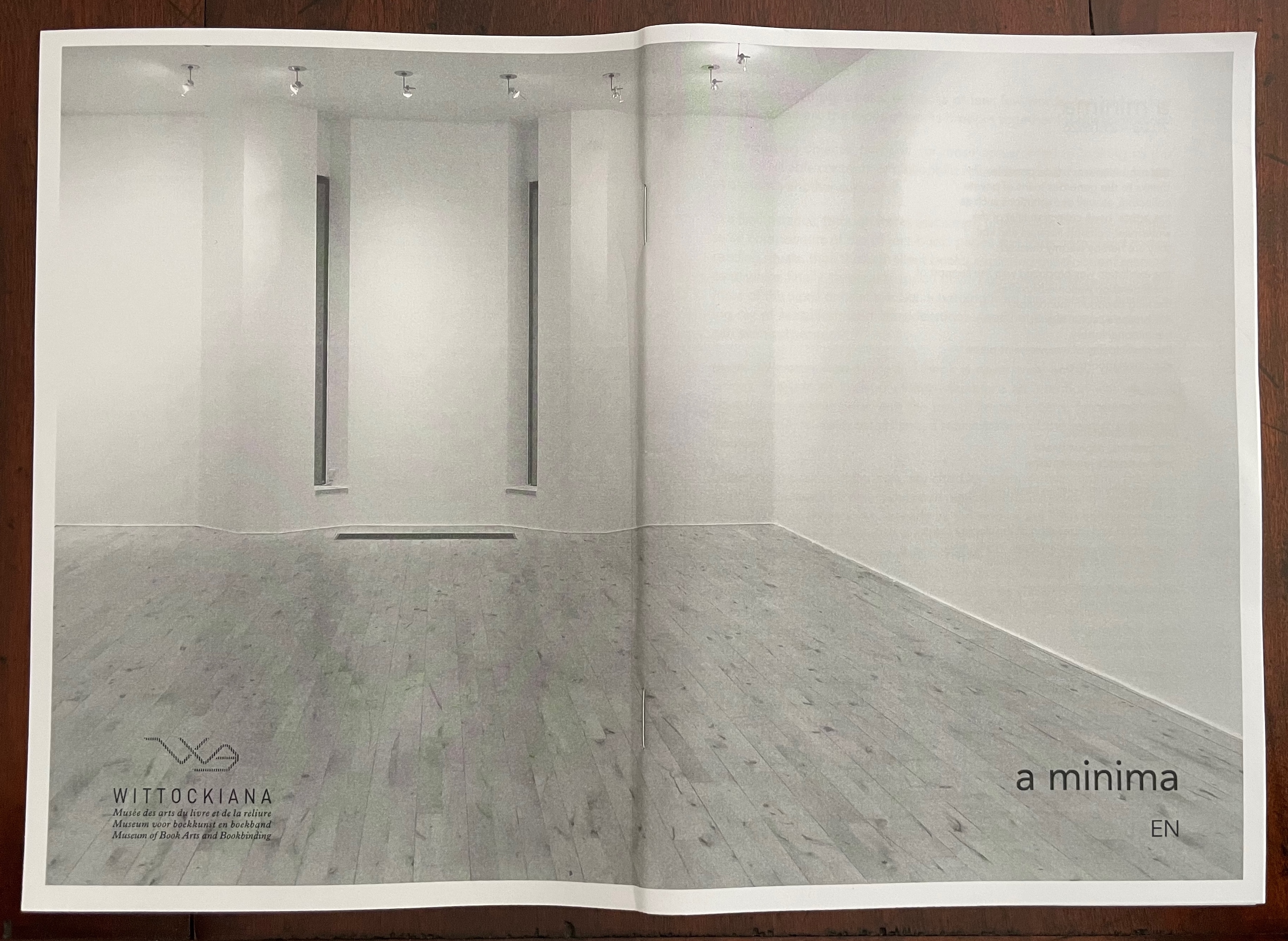
At the entrance to The Wittockiana. Back and front cover of the a minima catalogue.
If, as I did, you missed Moritz Küng‘s exhibition Blank. Raw. Illegible… Artists’ Books as Statements, 1960-2022 at the Leopold-Hoesch-Museum in Düren, Germany, in 2023, Didier Decoux‘s a minima presents an equally well-thought-out gathering of artists’ books that stretches out over 150 years (1876 – 2026). With 4 spacious rooms, 25 vitrines, 2 videos, and over 180 works, a minima requires several hours at a minimum to peruse and enjoy. Information on getting there is available here.
The comments and links below are in no way a substitute for visiting this exhibition, and keep in mind that Wittockiana also has permanent displays of presses, rare fonts, and books that should not be missed.
Decoux divides his presentation into 17 sub-themes. In the first room and vitrine, we have
1 cutting-edge precursors
This, of course, includes Stéphane Mallarmé‘s Un Coup de Dés Jamais N’Abolira le Hasard, the book whose fragments and blancs made us modern1, but mostly there are humorous and whimsical offerings like the page from the Hunting of the Snark with a blank map for finding it. Whimsical but thought-provoking (maps “are merely conventional signs!) is a recurrent theme throughout the exhibition.
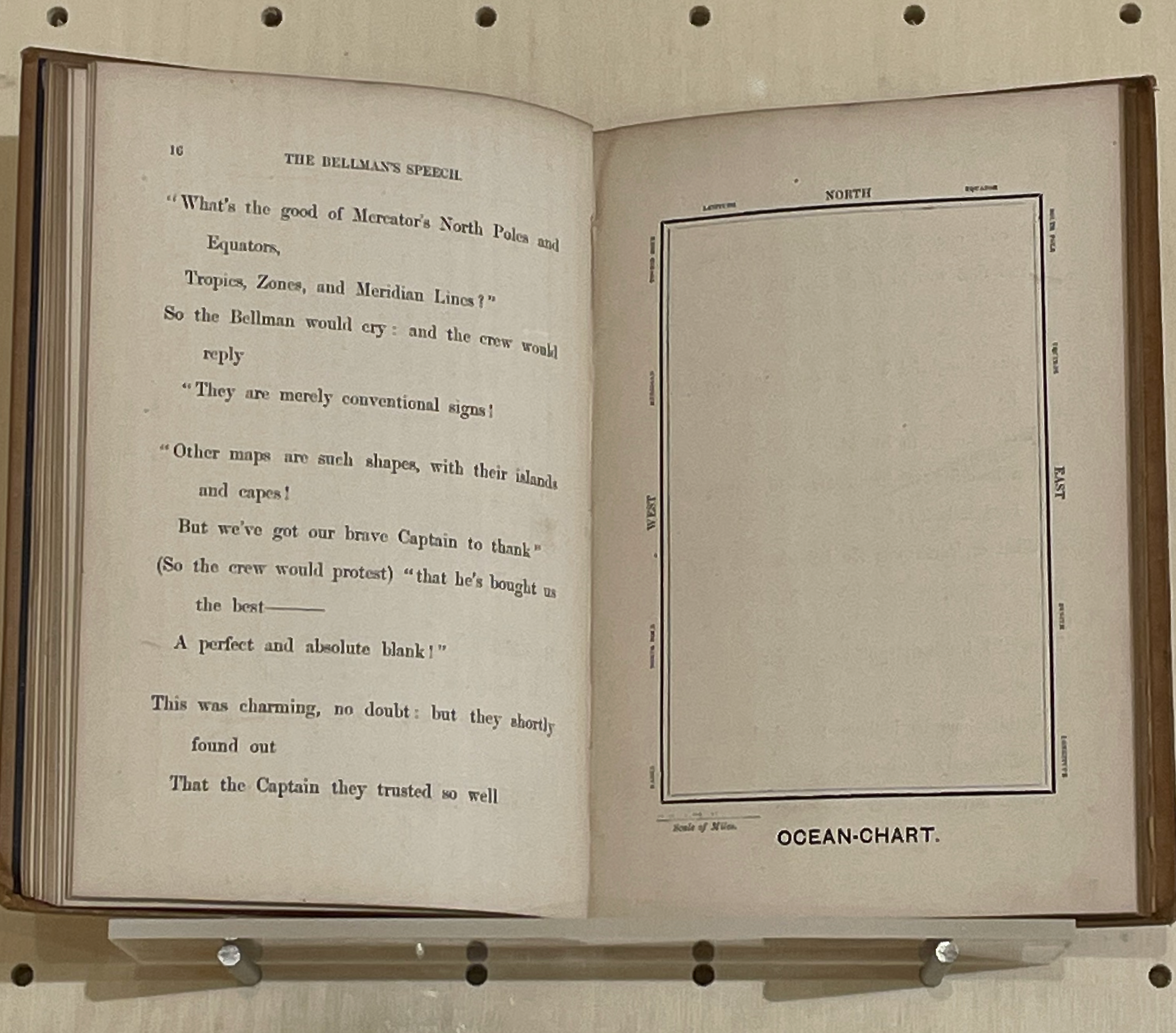
The Hunting of the Snark: An Agony in Eight Fits (1876). Lewis Carroll. London: Macmillan & Co.
Among the other precursors are
- Alphonse Allais‘ Album Primo-avrilesque (2nd ed. 1962/1st ed. 1897)
- [Anonymous] A Record of the Statesmanship and Political Achievements of General Winfield Scott Hancock, Regular Democratic Nominee for President of the United States (1880)
- [Anonymous] What I Know about the Knights of the Ku Klux Klan and the Invisible Empire (c. 1925)
- Baron Alphonse de Castagno‘s What I know about Women (c. 1920)
- Fra Elbertus (Elbert Hubbard] Essay on Silence (1905)
- Pierre de Massot‘s The Wonderful Book: Reflections on Rose Sélavy (2nd ed. 2000/1st ed. 1924)
- Charles Nodier‘s Moi-Même (1921, based on a manuscript from 1800).
Lest we think this will be a chronological trek, the next vitrine makes clear that Decoux has planned a thematic tour.
2 sheets and folds
Oftentimes, when whimsy is applied to a basic element or characteristic of the book — like the sheet of paper or the folds that create pages — it yields a one-trick pony. Some tricks, however, are more complicated than others.
In this second vitrine alongside
- António Aragão‘s Poema vermelho e branco [“Red and White Poem”] (1971)
- Terry Fugate-Wilcox‘s Slow Burn Paper 2 (1979)
- Wjm Kok‘s zijlijn [“sideline”] (2008)
- Tomas Schmit‘s das uch der b [“The ook of b”] (1973 2nd ed. / 1st ed. 1966)
- Paul van Dijk‘s een blad doorbladeren [“Leafing through a book” or magazine] (1979)
- Bernard Villers‘ Or – le pliage [“Or – Folding”] (2011), and
- Eric Watier‘s Un Livre [“A Book”] (2003),
Decoux lays out two copies of Michel François‘ PLIÉ [“Folded’] (2014). PLIÉ is engineered to play its trick on 100 collectors. Each collector receives a tightly sealed envelope with cardboard backing. Inside is an A1 sheet folded down to A4 size. The only text is
PLIÉ le 14/03/14
DÉPLIÉ le ../../..
to be completed by the collector upon opening and unfolding the work. One of the copies on display here was unfolded by its collector on 13 August 2021.


PLIÉ, (2014) Michel François. Brussels: Morepublishers. The date of unfolding has been filled in by the collector.
On completing the date of unfolding, does the collector become the artist’s collaborator or assistant? The vicarious reader/viewer might wonder: if the collector does not display PLIÉ permanently, what then when the work is refolded and stored? Should “REPLIÉ le ../../…. DÉPLIÉ ENCORE ../../….” be added underneath the first record? Unless the collector can persuade François to conduct the refolding himself, would REPLIÉ be misleading? Whimsy is contagious.
The exhibition holds several works that depend on direct participation by the collector. Be sure to look out for Micah Lexier‘s and Jean-Claude Moineau‘s items in vitrine 10. We readers/viewers can only be vicarious. Spotting these conversations among the vitrines, though, is one of the pleasures of the exhibition.
3 a book is a book
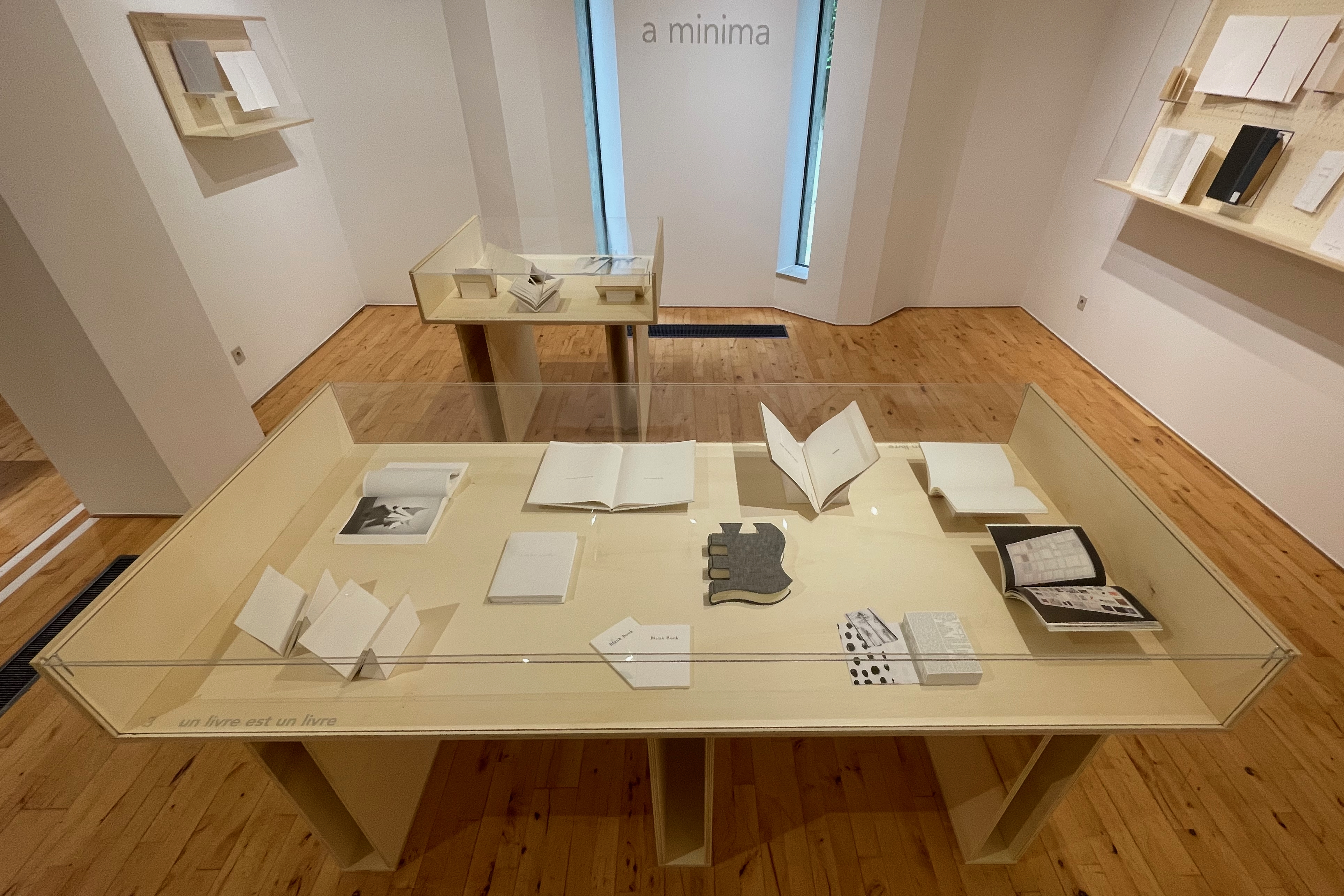
More often, though, each work in a vitrine is having a conversation with itself. In The Century of Artists’ Books, Johanna Drucker designated self-referentiality as a key characteristic of the genre. In this third vitrine, George Brecht‘s Book (1972) [also known as This is the cover of the book] is the classic example. It is so classic that Moritz Küng arranged a reprint in 2017.
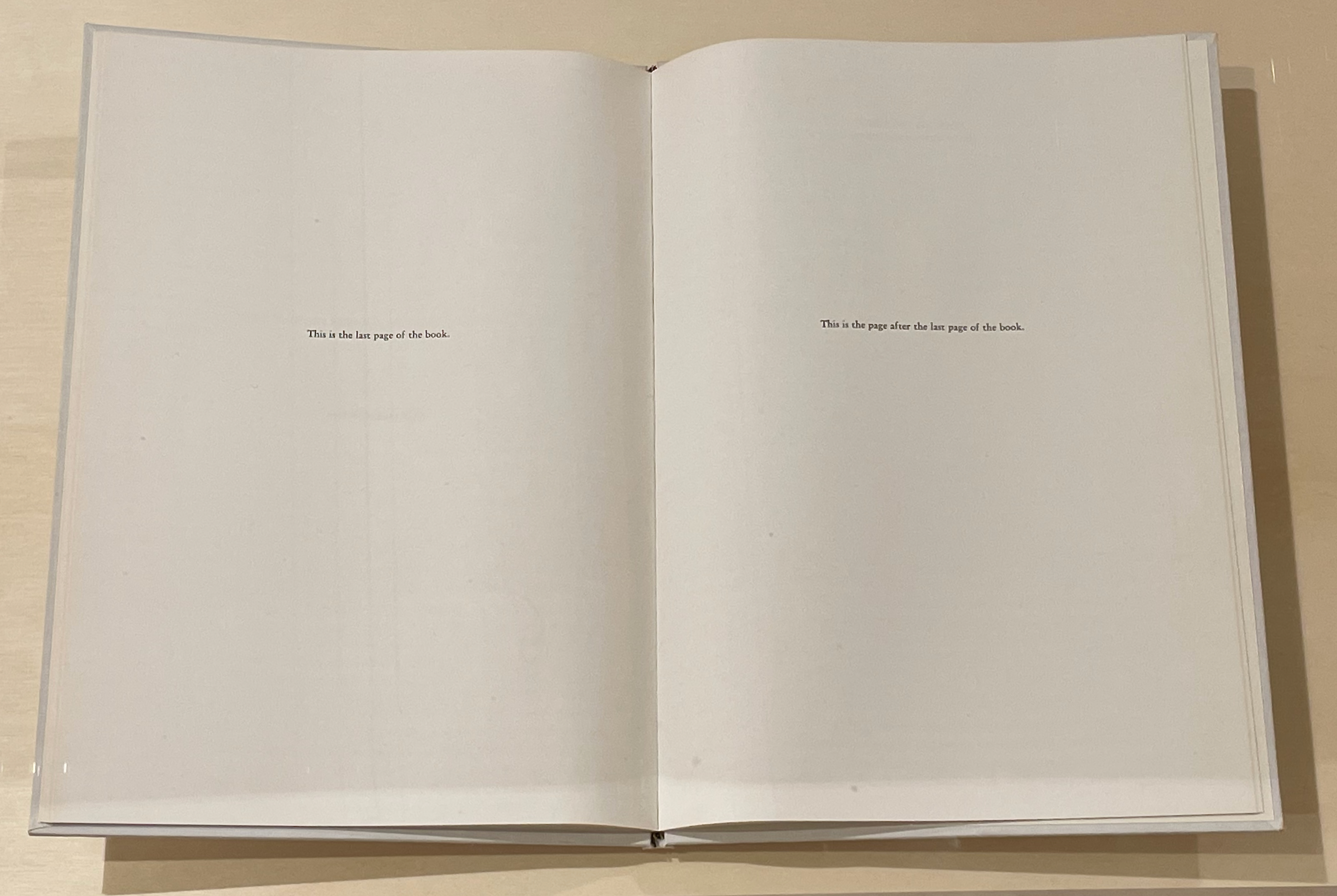
Book (1972). George Brecht. Köln: Michael Werner.
The other self-reflexive works in this theme include
- Fritz Balthaus‘ Nichtsagender title [“Meaningless title”] (1982)
- Robert Barry‘s Two Pieces (1971)
- Irma Blank‘s Blank Book (1995)
- Anne Lydiat‘s Lost for Words (1999)
- Monika Droste‘s & Guy Rombouts‘ Inventaire (1991),
- Iñaki Bonillas & Roger Willems‘ [White Book] (2002)
- Simon Starling Thereherethenthere (2010)
In general, the exhibition’s brochure elaborates on only one work per theme. In this case, it is Lalie Thébault Maviel‘s au commencement (2024), the book in the lower right hand corner of the vitrine above. Created with a printer’s end-of-stock paper, the book displays in minimalist fashion the single image of a tree among otherwise blank pages, and the cover’s text and image refer to the environmental consequences of a book’s existence. Never is a book just a book.
4 nothing but reading
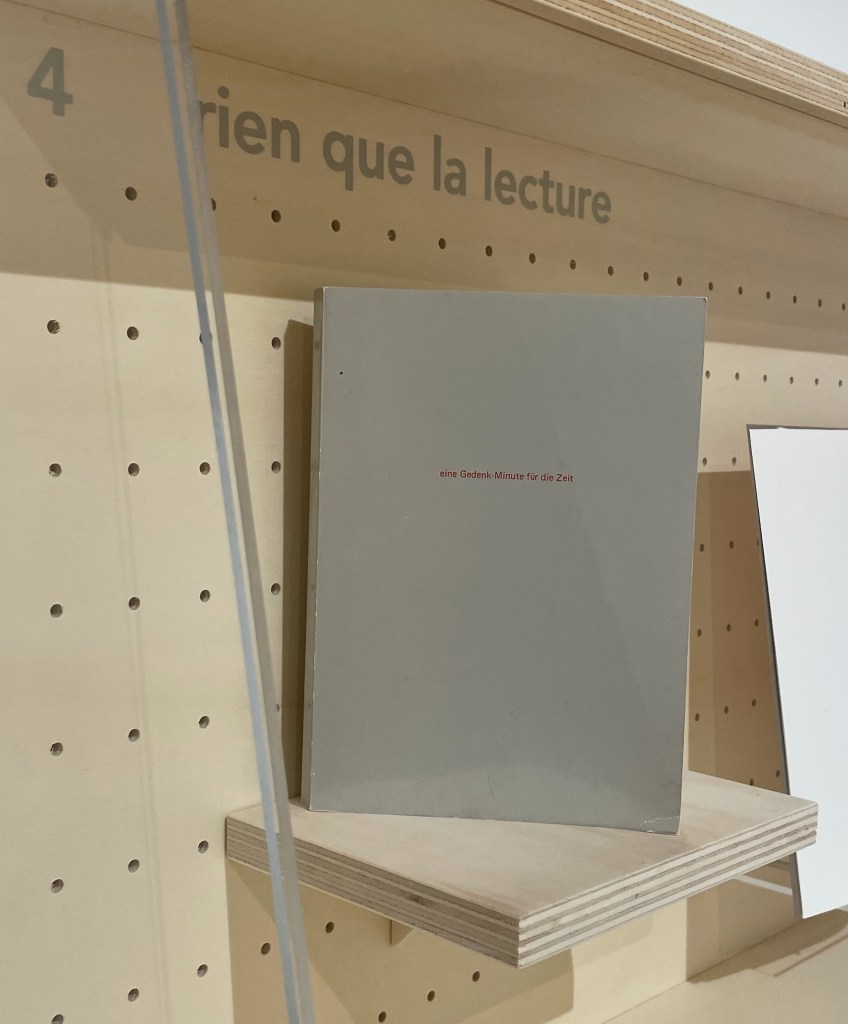
Although all signage is in French, there is an English brochure/guide. The translation for this vitrine is “nothing but reading”, but it could equally be “just reading”. The works displayed draw attention to the abstract act of reading — one way or another. The work to the left is Barbara Schmidt-Heins’ Eine Gedenk-Minute für Zeit [“A Minute of Remembrance for Time”] (1980). It’s open just enough to show the date “August 12, 1978” and time on a few recto pages between 17.26.00 and 17.27.00. With the seconds in red, it draws the reader’s attention to the second-long gesture of turning each of the 60 pages to read.
With its field of rows of illegible overtyping of the words “opening” and “closing”, Hansjörg Mayer‘s openinggnisolc no 8 (1966) might remind us of the boustrophedon [“as the ox plows”] arrangement of text in ancient manuscripts. Brilliantly, Decoux chooses to display the poster partially folded with just enough of the field showing along with the topsy-turvy labeling and the colophon. It draws attention to the gestural as well as visual act of reading. While there remains room to complain about not being able to touch artists’ books displayed under glass, visitors and other curators should pause to admire ingenious solutions like this.
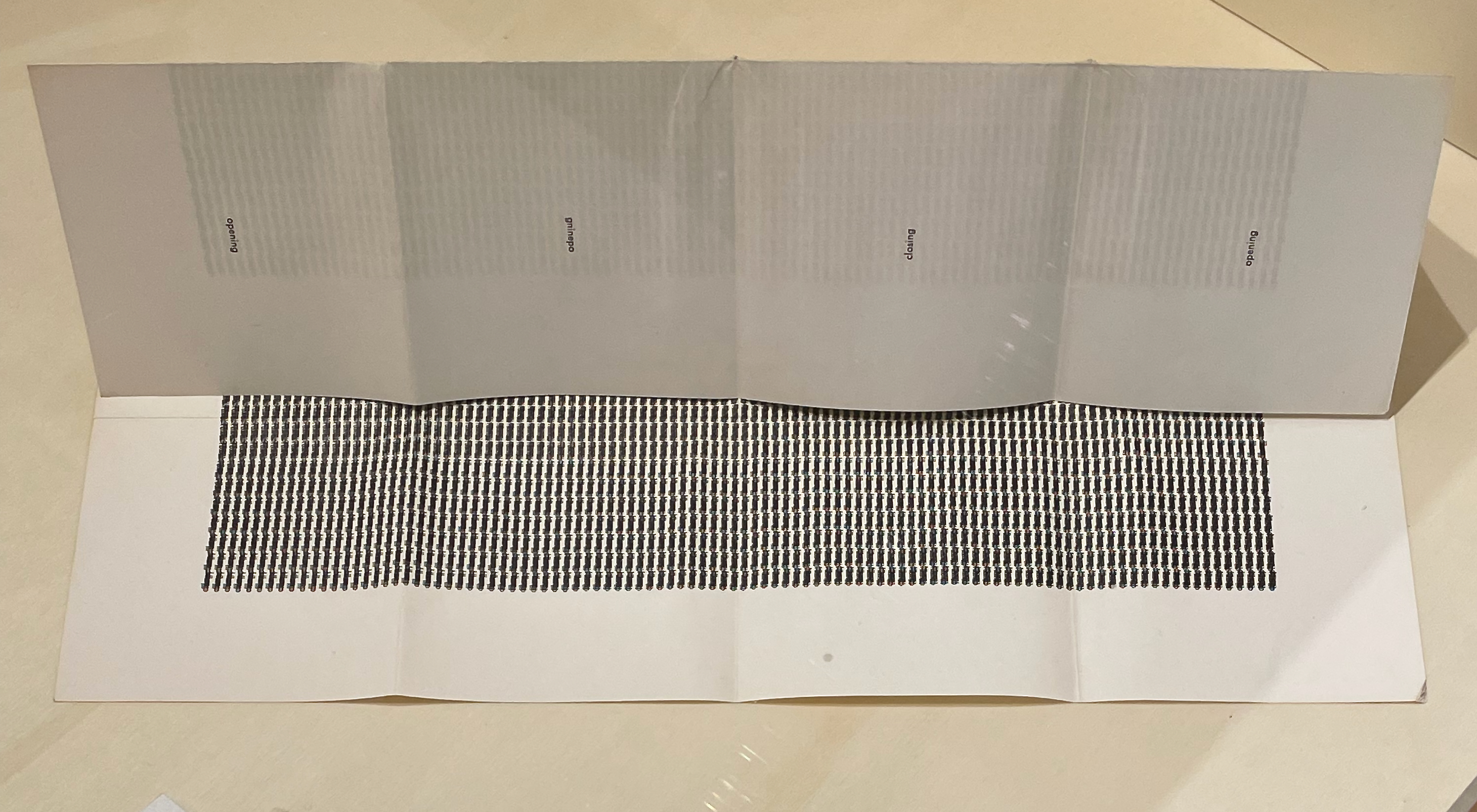
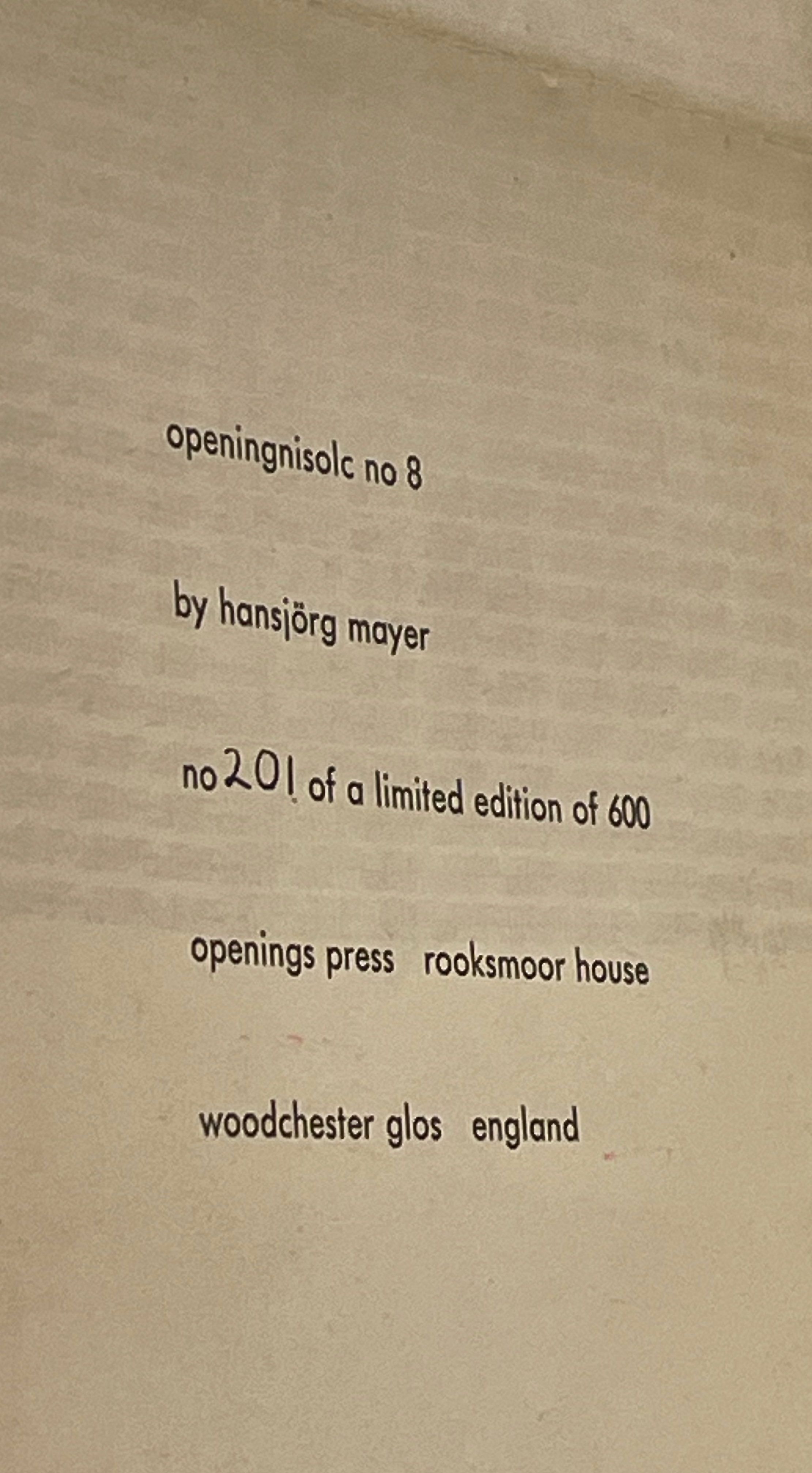
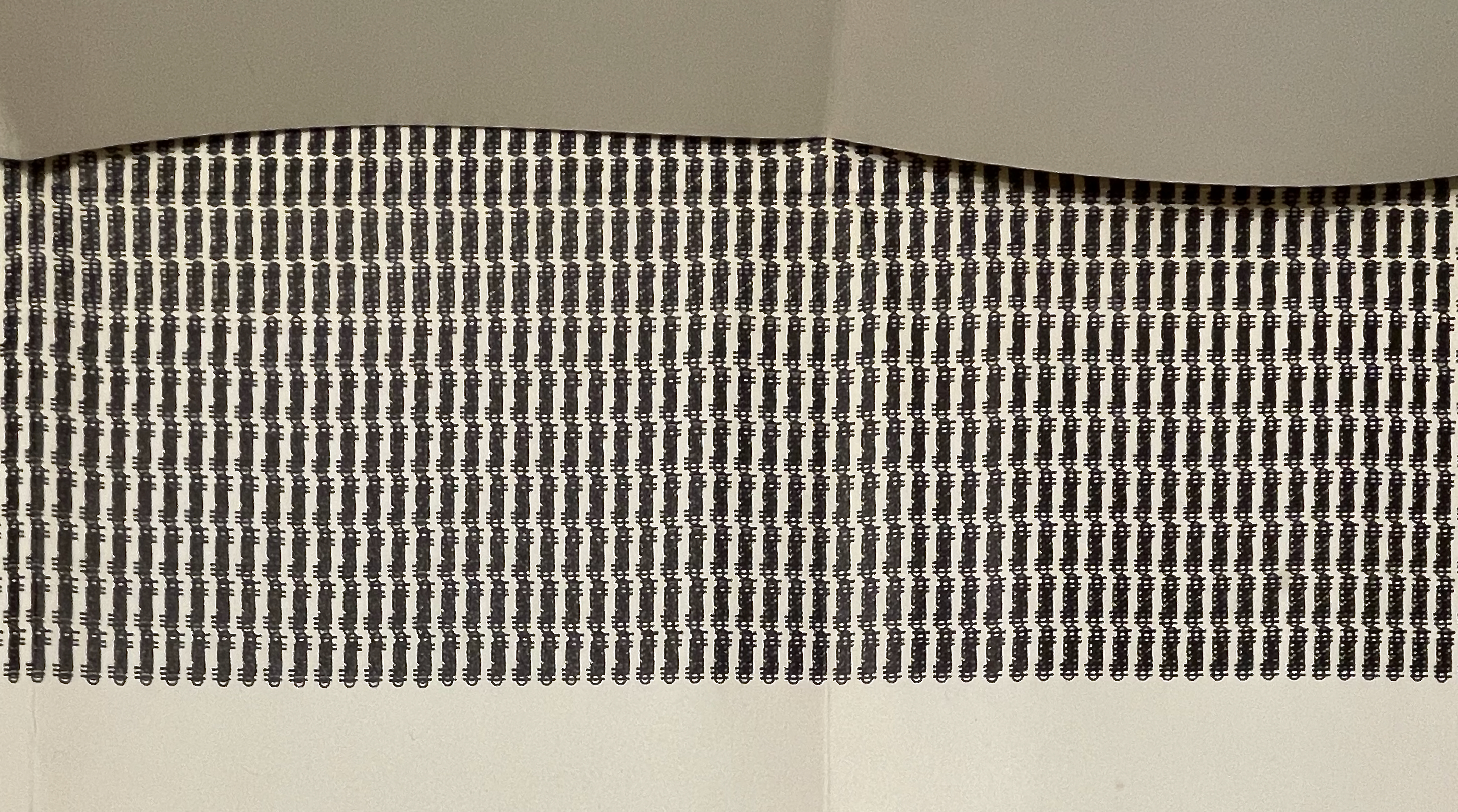
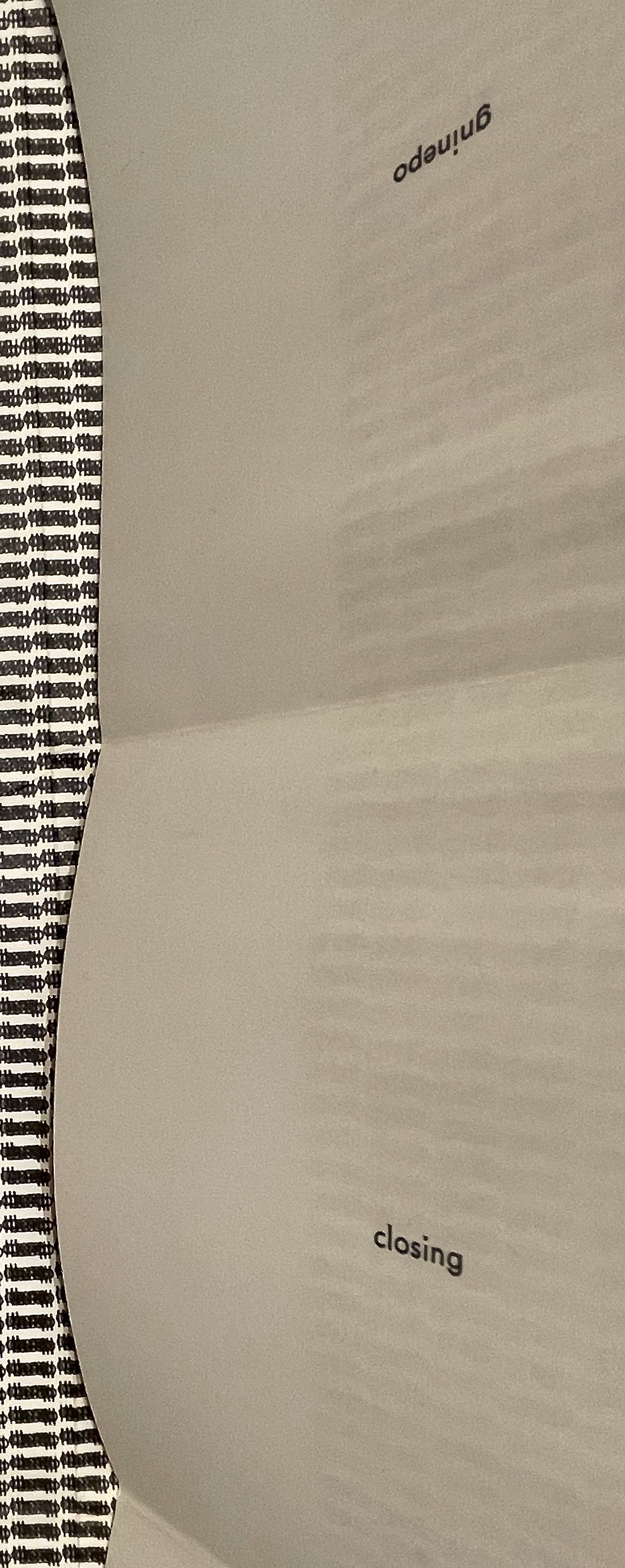
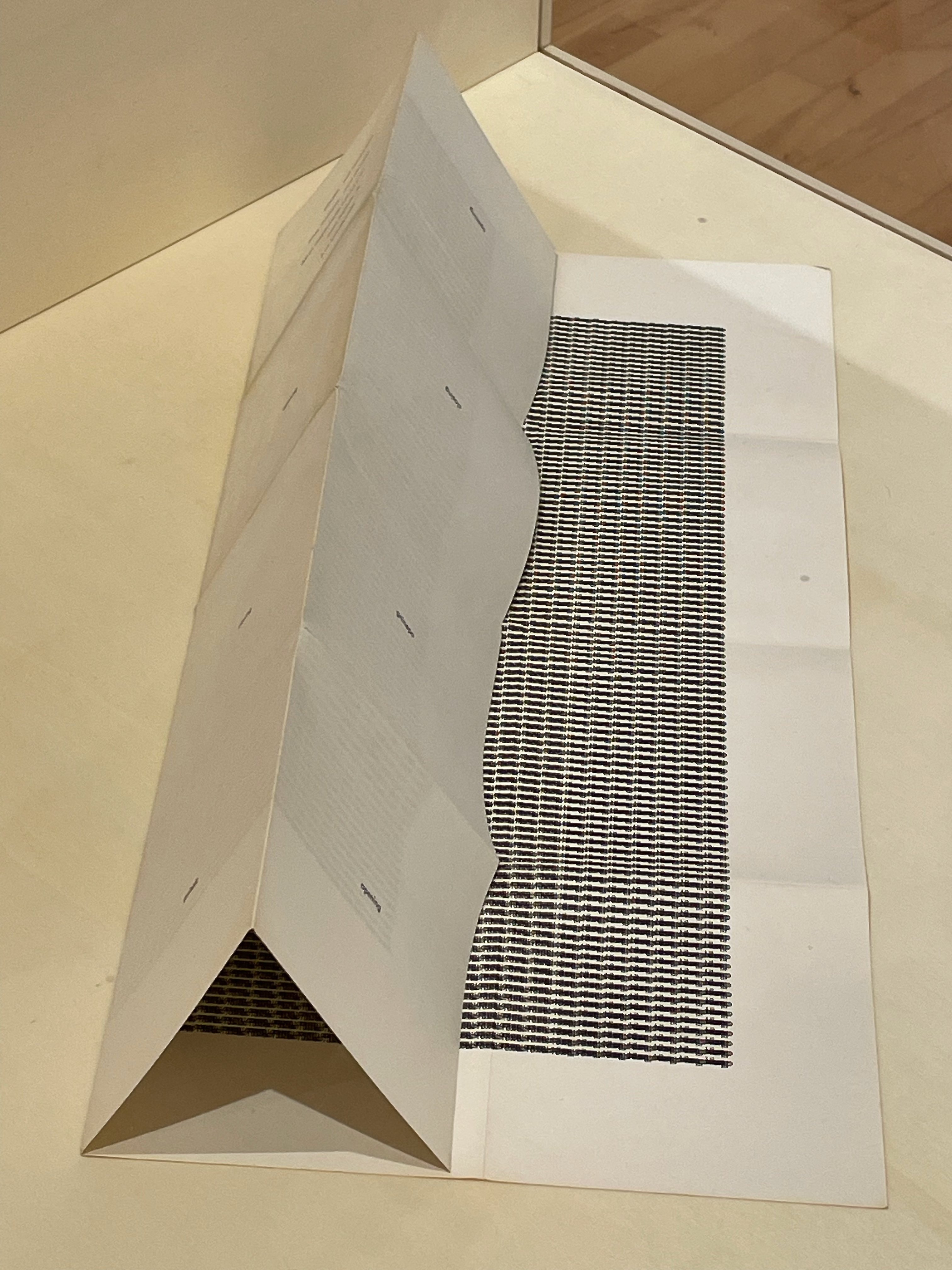
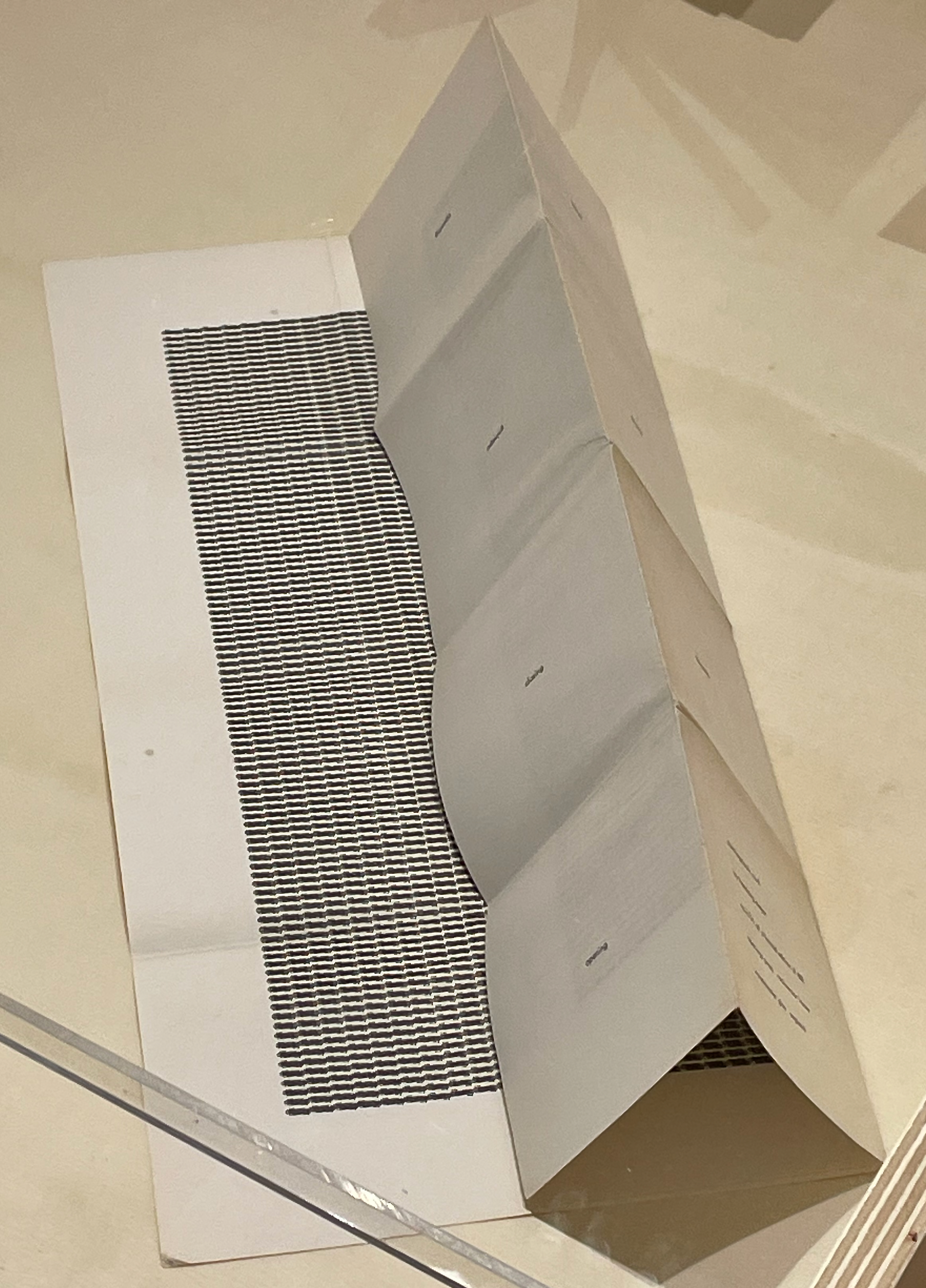
openinggnisolc no 8 (1966). Hansjörg Mayer. Woodchester: Openings Press.
Other works along this theme are
- Giovanni Anselmo‘s Leggere [“Reading” and “Weightless”] (1972). “Leggere“, the only word in the book, grows larger and larger.
- Kota Ezawa‘s A Book (1993). Nothing but rightward-pointing arrows on the page make eye and hand want to keep reading.
- Mogens Otto Nielsen Hvide Digte. White Poems (1999). A blank book with all of its pages cut into fluttering strips.
- Elisabeth Tonnard‘s The Book of the World (2008)
- An Ongena‘s & Jivan van der Ende‘s Werkboek [“Workbook”] (2nd ed. 2022 / 1st ed. 2021)
5 herman de vries: wit
The first room concludes with a well-chosen focus on herman de vries. The breadth of de vries’ work demonstrates that the factions of minimalism, constructivism, concrete poetry, dematerialized and conceptual works, democratic multiples and limited editions, and the unique finely or rawly crafted works are not so walled off from one another as some have argued in polemics, manifestos and critical essays so concerned with defining the “artist’s book” or those movements. The conversations overlap.
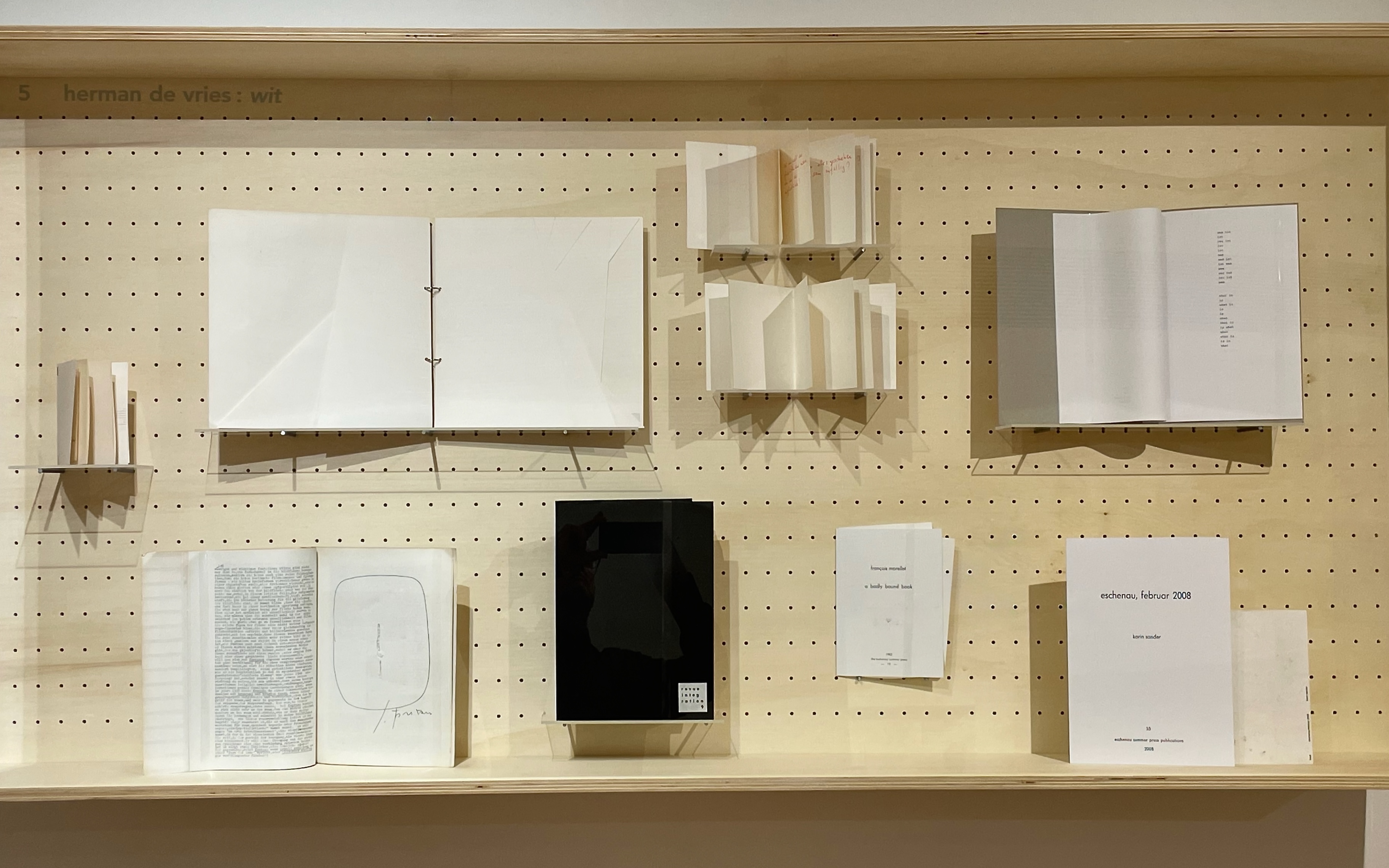
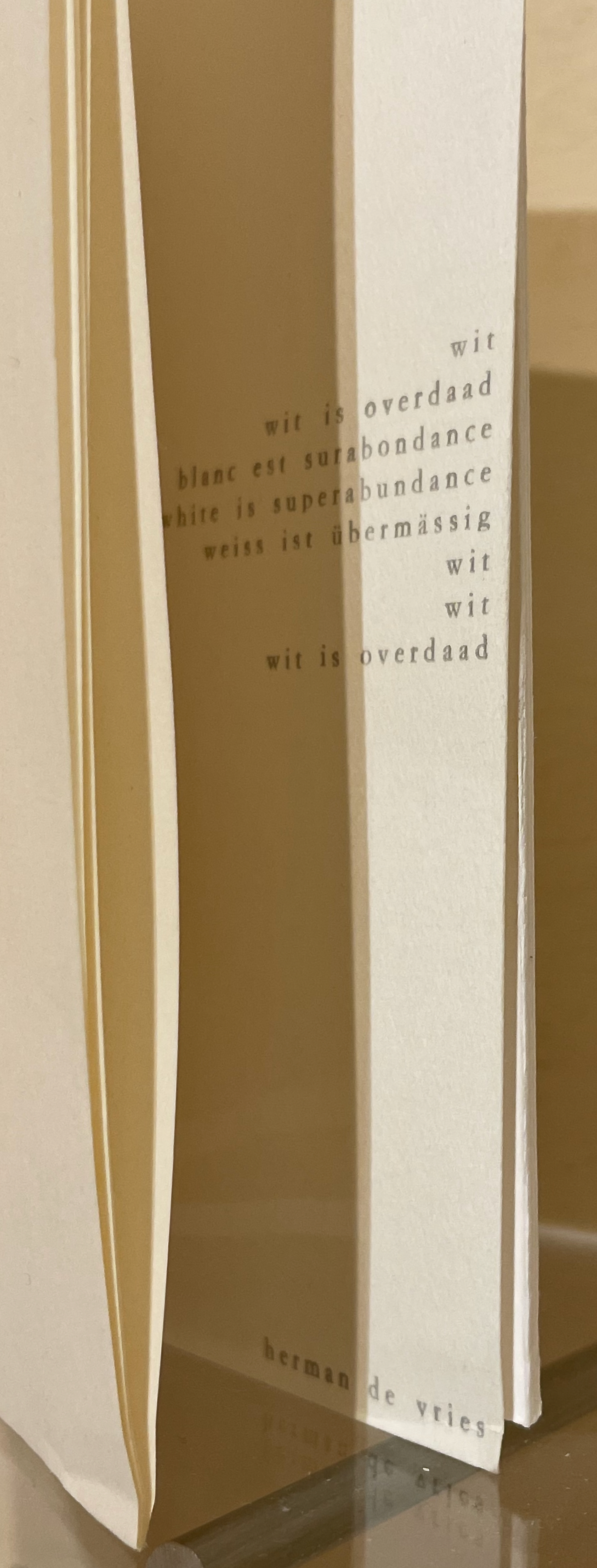
[wit is overdaad] (1960) herman de vries. Arnhem: Self-published.
Other than the poem page, all other pages in the book are blank. The 1960 copy on display is a rarety.
6 spaces, spacings
In the second room, there are 5 vitrines, and their conversations with the other vitrines begin to multiply rapidly. There is even a startling conversation between Franco Vaccari’s La Scultura buia [“The Dark Sculpture”] (1968) in the lower left hand corner of vitrine 6 and the permanent Kubach-Wilmsen sculpture on the wall behind as you.
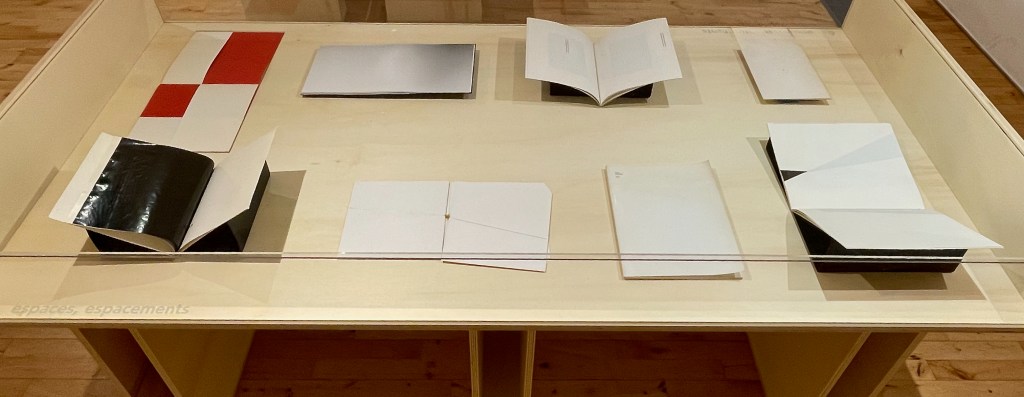

Untitled (n.d.) Wolfgang Kubach and Anna Maria Kubach-Wilmsen. Black marble from Mazy.
Both are greeting Philippe von Wolputte‘s Manhandle (2016) in vitrine 15, from which Nuno Ramos‘ Balada [“Bullet”] (1995) will also say hello to Kendell Geer‘s Point Blank (2004) in display 17, both of which in turn shout back to vitrine 6 and the hole running through Heinz Brand‘s Leerer Gedankengang [“Logical train of thought”] (1978).
Among the other conversationalists in this vitrine are
- Childe Roland [Peter Meilleur]’s Quenouille. Distaff. Cogail (1987)
- Peter Downsbrough‘s off/on. on/off (1977)
- Heinz Gappmayr‘s Raum (2nd ed. 1983 / 1st ed. 1977)
- Euan Williams‘ A Collection of Shadows in the Folds of Books Taken over the Course of a Year from around the World (2014), (1968)
- Philippe van Snick‘s Éclats 1979 (1984).
Bruno Munari is nicely represented in this vitrine by his Illegible White and Red Book (1953). Though it is obviously a bit of second guessing, a vitrine devoted to more of Munari’s work would have made for an interesting conversation with herman de vries in the first room.
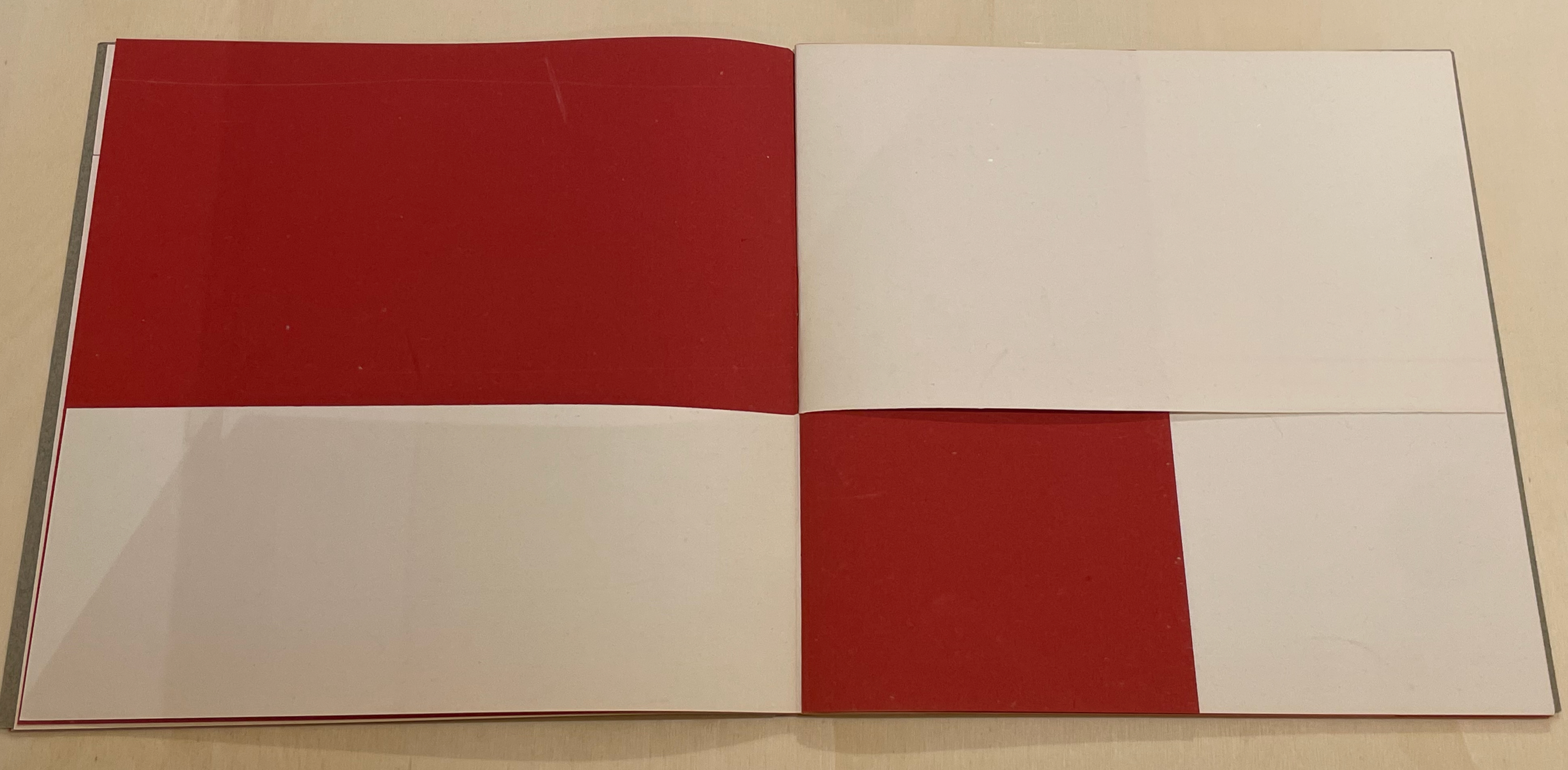
Libro illeggibile bianco e rosso/An unreadable Quadrat-Print/Een onleesbaar kwadraat blad/Ein unlesbares Quadrat-Blatt (1953). Bruno Munari. Hilversum: De Jong & Co.
7 absences, unseens
The ghosts in this vitrine chat quite happily among each other and the inhabitants of the other glass cases. Claude Cosky‘s postcards maintain the tone of whimsy.
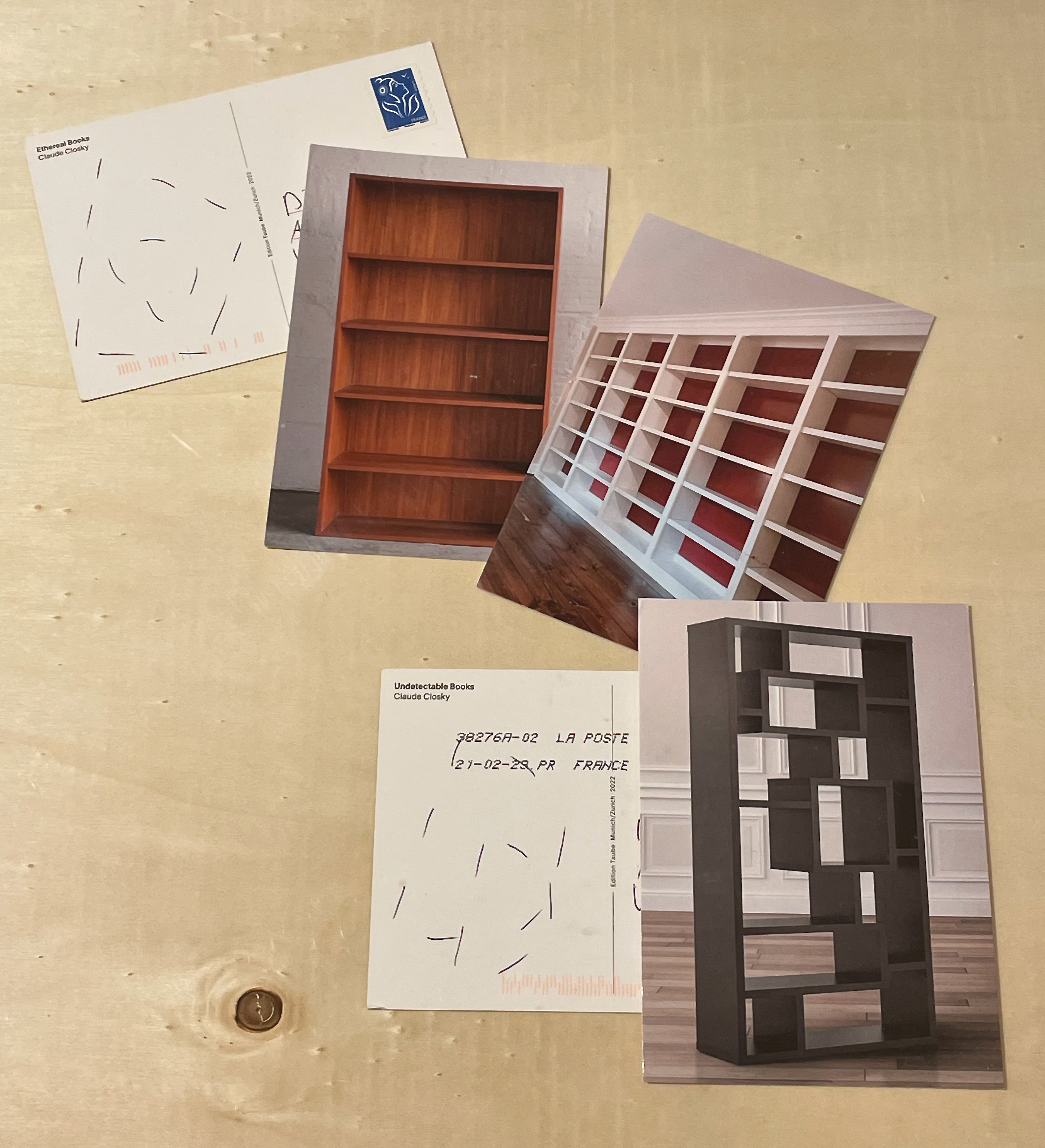
Invisible Books (2022). Claude Closky. [Munich & Zurich]: Taube.
The other ghosts include
- Walter Beckers‘ Het Boek dat Niet Bestaat [“The Book that does not Exist”] (1973)
- Maria Eichorn‘s [Publishing the fact that something will remain unpublished] (2006)
- Bruno Jakob‘s The smell, invisible paintings and drawings (1991)
- Florence Jung, Book (2015) An agreement between artist and collector not to document. Compare with François’ PLIÉ above.
- Rina Oh Helen Tracy Lowe-Porter. Sea Change (2025)
- Pedro Pietri‘s Invisible Poetry (1979)
- Klaus Scherübel‘s Mallarmé, Le Livre (2005) and Mallarmé, Het Boek (2009)
8 materialities
There’s no denying here that an exhibition under glass falls short. Visitors’ fingers will itch to trace the seams in Ximena Pérez Grobet‘s Crop, the rubber in Hella Berent”s gummibuch, the deterioration of pages in Amélie de Beauffort‘s Moleskine notebook, the waxy wrinkles in Nanni Cortassa‘s Kraft paper, the drape of Marie Van Roey‘s textile notebook, or the softness and grit of Susan Wick‘s Paper Towel Book.
- Hella Berent‘s Fortschritt Legende Aufruhr Duftpilz Schwarzenraben Raufbold Kellergeschoss Muskelfleisch Finsternis Dichtung Toast Abguss (1989)
- Luciano Bartolini‘s Traces (1976)
- Amélie de Beauffort‘s Variations météorologiques [“Meteorological variations”](2024)
- Breer et al.‘s Motion in Vision. Vision in Motion. (1959)
- Nanni Cortassa‘s Creasings (Notes about) (1975) shouting back to Michel François’ PLIÉ
- Linda & Wally Depew‘s PN2 experiment. Book 23, Book 24, Book 25, Book 26. The Five Cent Scarlet Ink Book 1, 2, 3, 4 (c. 1970)
- Christian Lebrat‘s “Énoncé 0902”. 9 pages recouvertes de peinture blanche, sauf les pages 1, 2, 4, 6, 7, 10, 13, 14, 18, 19 et 20, dans un livre blanc de 20 pages, y compris cette page de couverture [“Statement 0902.” 9 pages covered in white paint, except for pages 1, 2, 4, 6, 7, 10, 13, 14, 18, 19, and 20, in a 20-page white book, including this cover page”] (2009)
- George Maciunas‘ Flux Paper Events (1976)
- T. L. Kryss & rjs [Robert James Sigmundl‘s Dialoque in Pale Blue (1969)
- Marie Van Roey‘s Cahier d’École [“Notebook”](2025)
- Susan Wick‘s Paper Towel Book (1978)
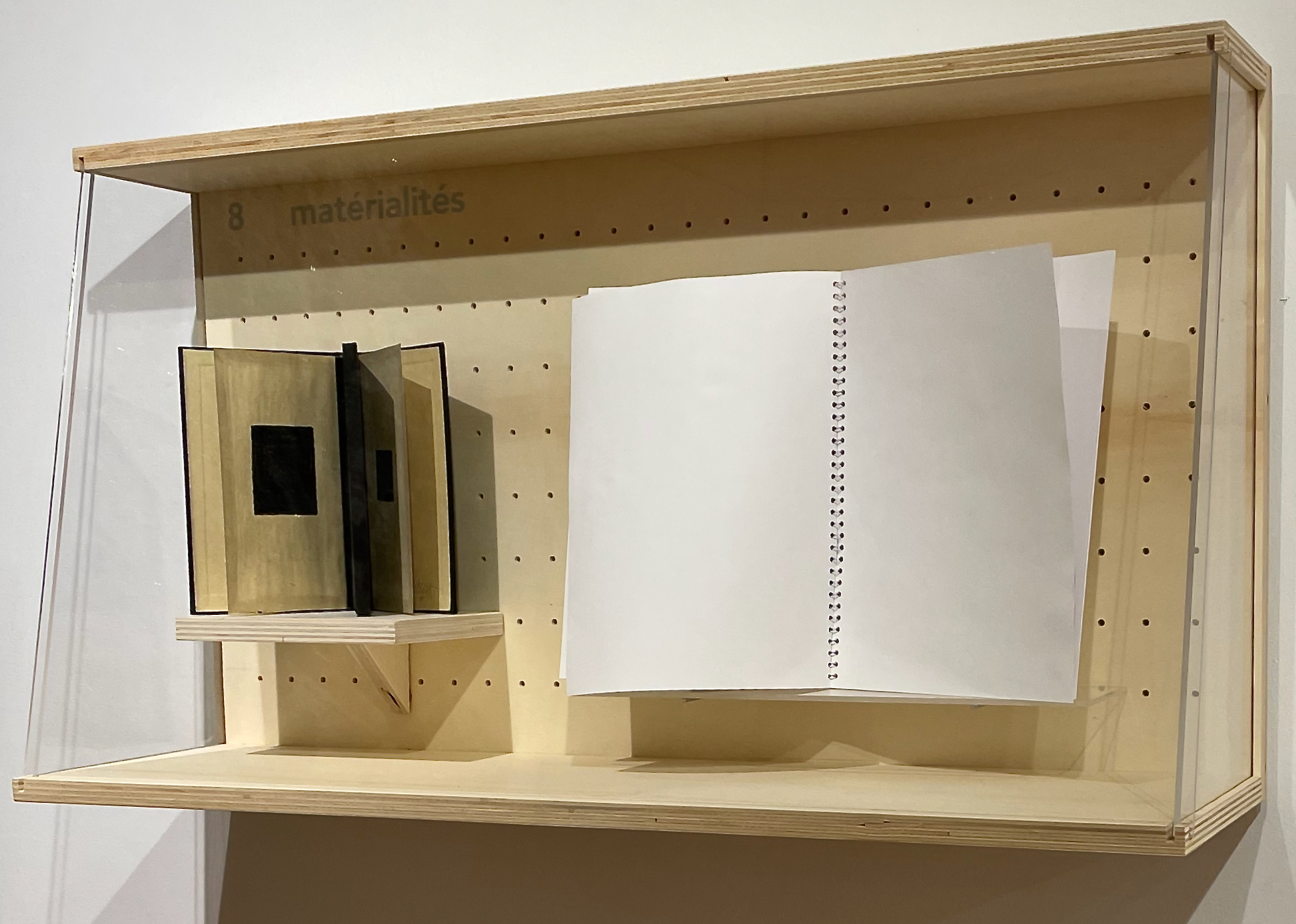
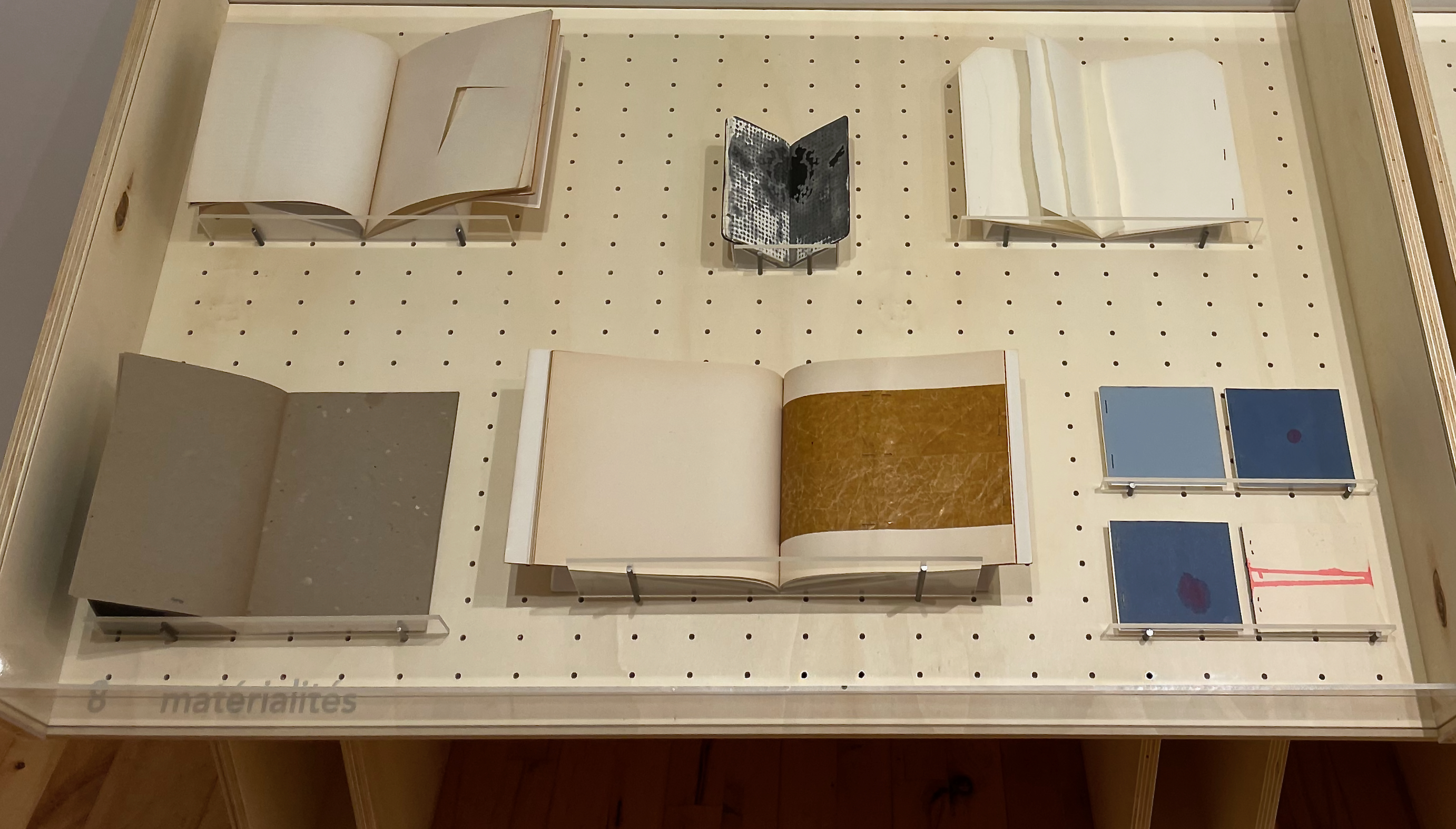
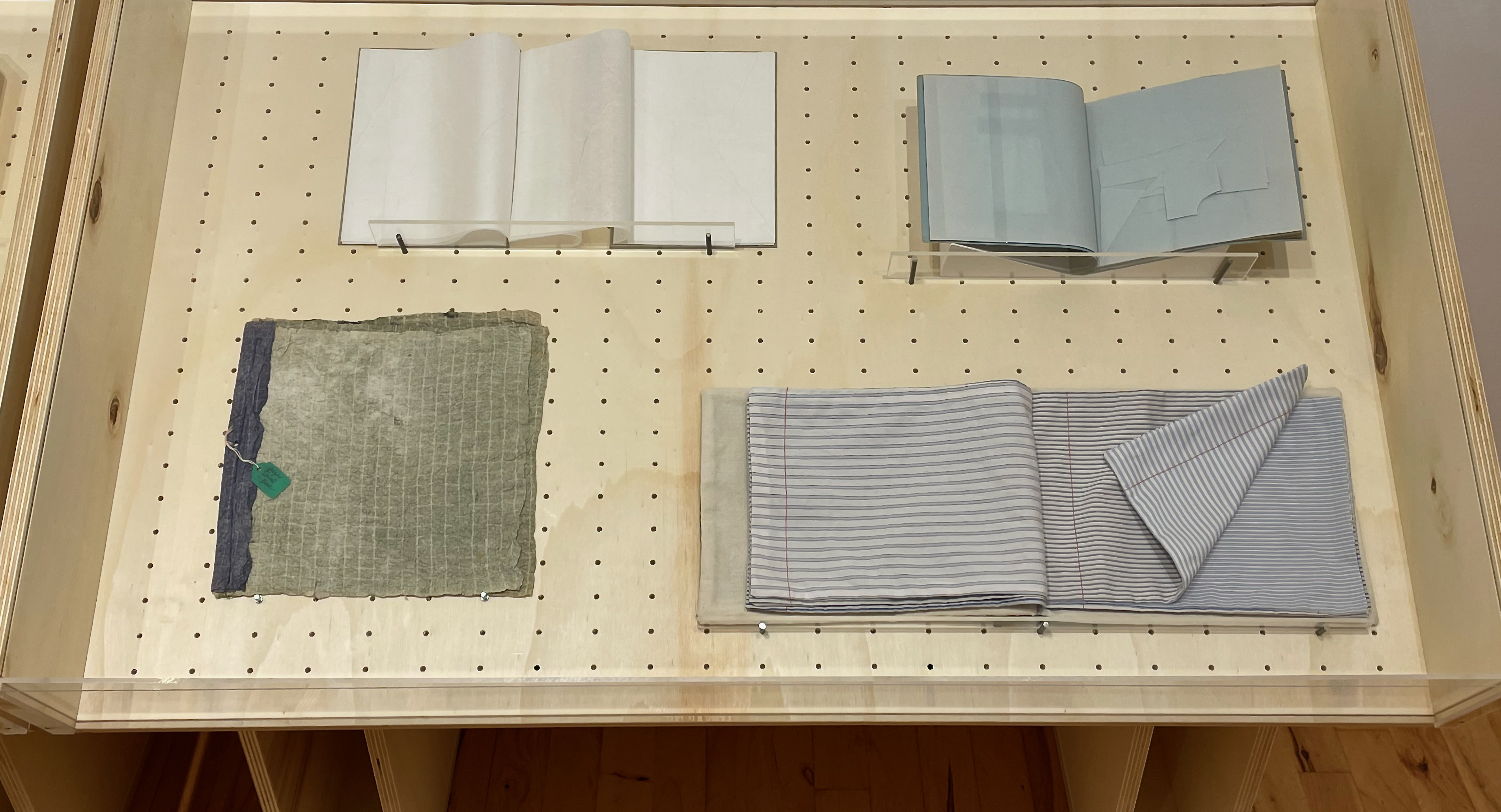
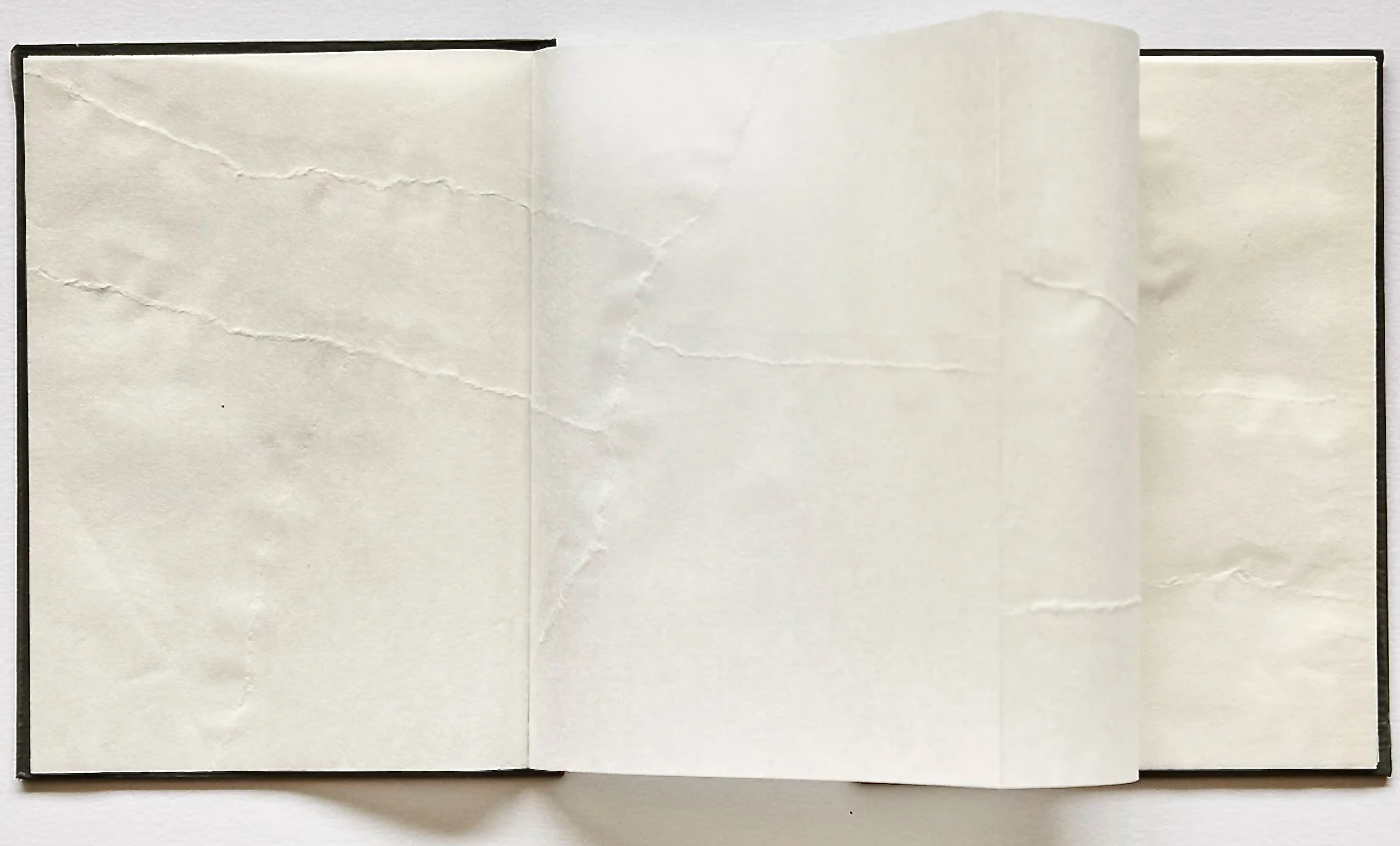
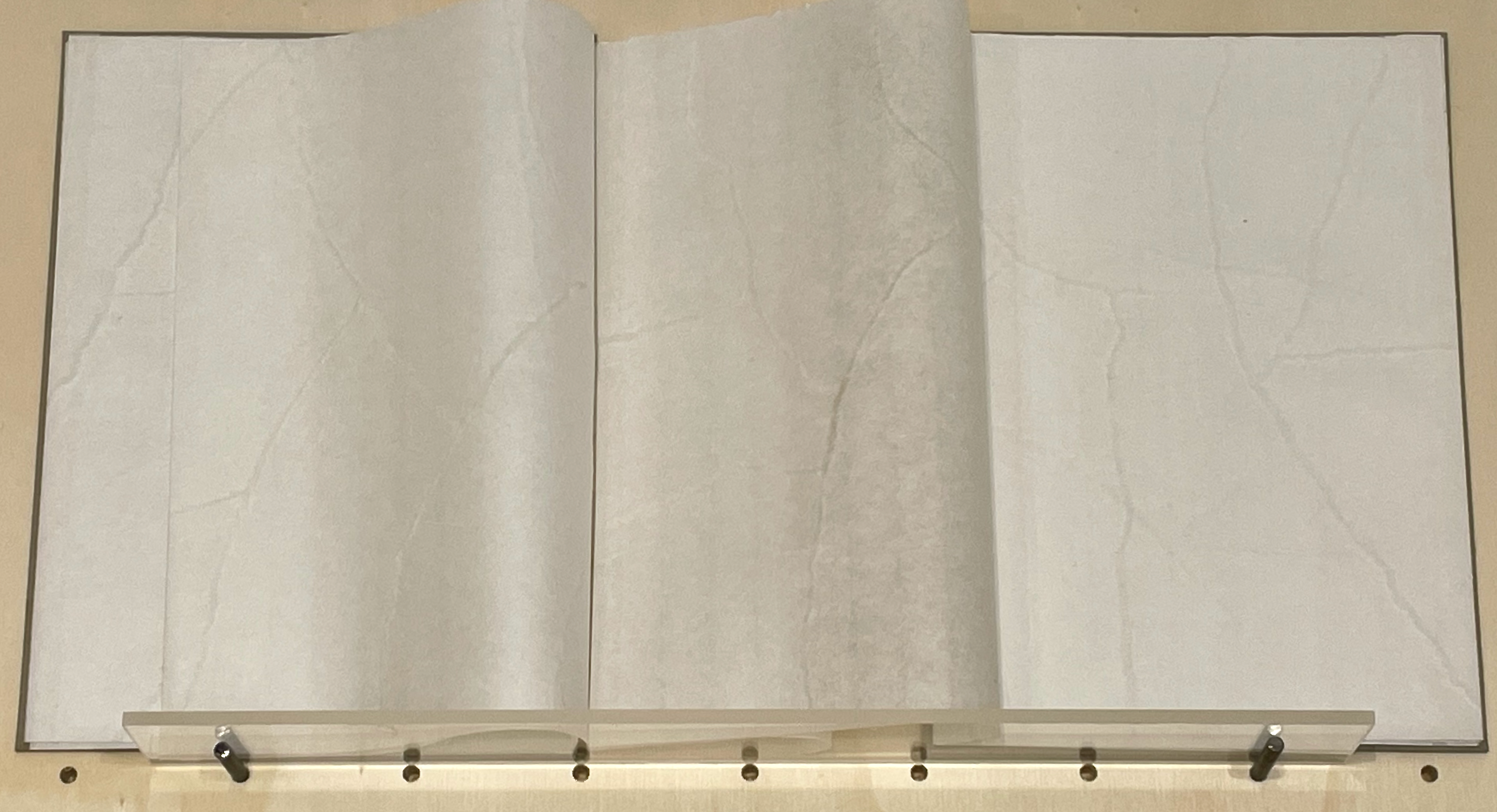

Crop (2011). Ximena Pérez Grobet. Barcelona: Nowhereman Press. Torn scraps of Wenshou attached to one another with adhesive tape show the physical composition of the page, where the main message and writing in this operation is tearing as a form of cutting.
9 blank announcements
Conversations between works of art are often announced by the word “after”. The painter who comes after Picasso draws some owls and slaps on the title “After Picasso’s Owls“. It may be a conversation abbreviated with a snort. Sometimes in book art, though, the reply is just as sharp as the original. For instance, Bruce Nauman‘s Burning Small Fires (1968) as a reply to Ed Ruscha‘s Various Small Fires and Milk (1964) is a good example. It is a tradition in poetry as well. Sir Walter Raleigh‘s nymph replies to Christopher Marlowe‘ shepherd, and Denise Levertov‘s O Taste and See (1964) replies to William Wordsworth’s sonnet The world is too much with us (1807). In this vitrine, Decoux and company present front and center a beautiful example of a work of book art replying to a poem.
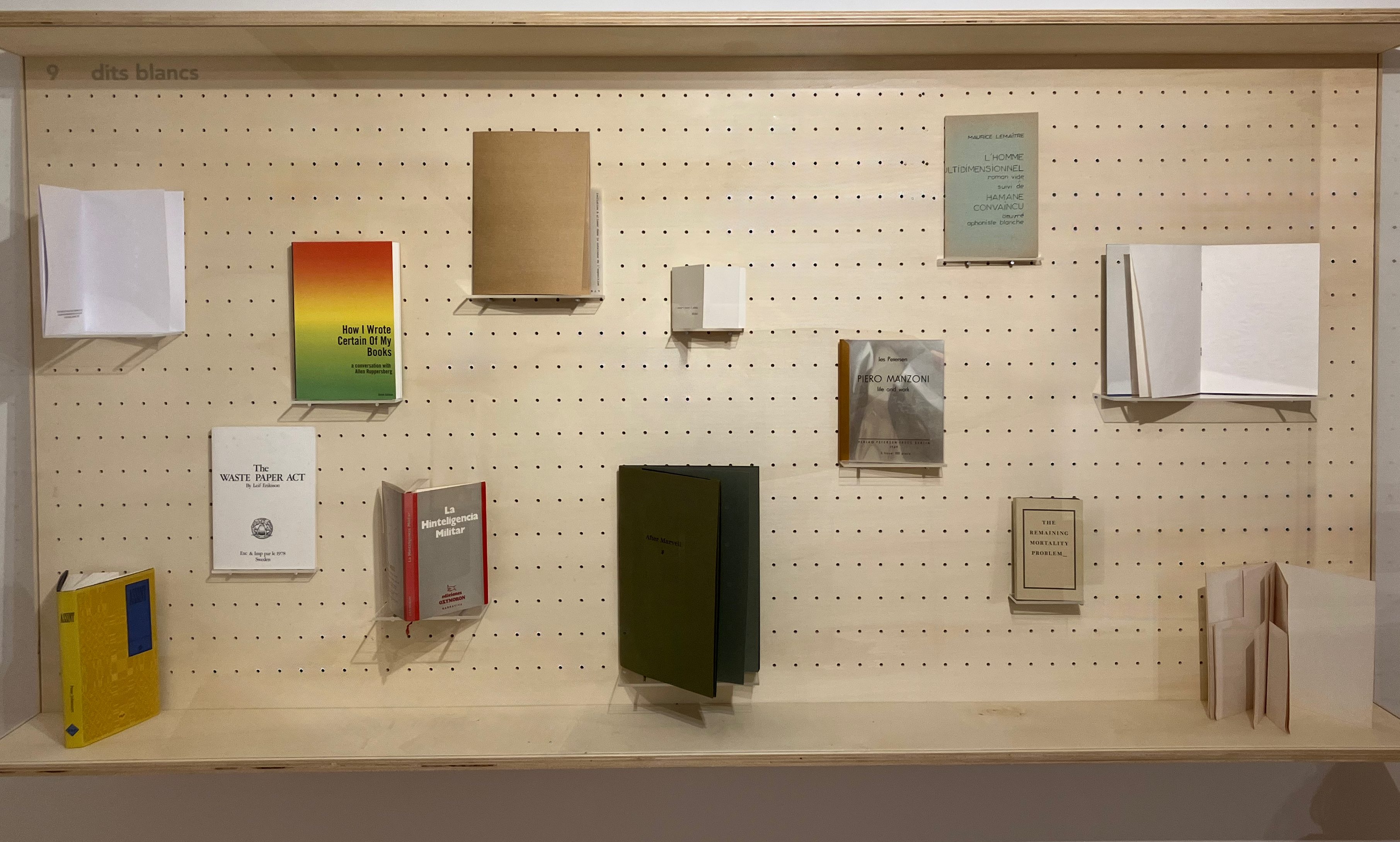
With just a few sheets with different shades of green folded and stitched to make pages, Thomas A. Clark’s After Marvell beautifully calls up (announces?) Andrew Marvell‘s famous line “To a green thought in a green shade” from his poem The Garden (1681).
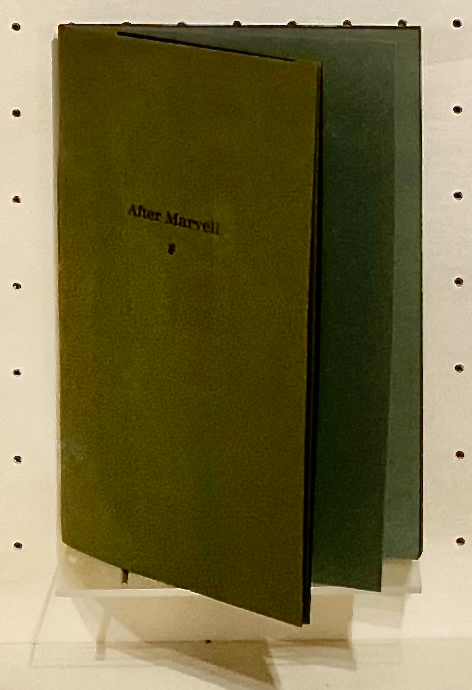
After Marvell (1980). Thomas A. Clark. Nailsworth: Moschatel Press.
- Joan Brossa‘s Pluja (1973)
- Antonio Dias‘ La Ilustración del Arte (1973)
- Leif Eriksson‘s The Waste Paper Act (1978)
- Peter Johansson‘s Assint (1992)
- Sarah Kürten‘s The Remaining Mortality Problem (2014)
- Maurice Lemaître‘s L’HOMME MULTIDIMENSIONNEL, roman vide suivi de HAMANE CONVAINCU, oeuvre aphoniste blanche (1970)
- Piero Manzoni & Jes Petersen Piero Manzoni: Life and Work (2nd ed. 1969/1st ed. 1963)
- Pierre Monjaret‘s & Jacques Rancière‘s Correspondance 1998-2003 (2005). First hint: As a form of art, Monjaret began opening windows while living on rue Alphonse Allais in Tarbes. Second hint: See the image from Allais’ work in vitrine 14. Third hint: There is no correspondence between Monjaret and Rancière.
- bpNichol‘s A Condensed History of Nothing (1970)
- Sergio Pesutic‘s La Hinteligencia militar [“Military hintelligence] (2nd ed. 1987/1st ed. 1986). In Spanish, the “h” is not pronounced, so to add it to inteligencia is superfluous. If that’s an insufficient hint, the publisher is Oxymoron Press.
- Claude Rutault‘s Autour du non-peint ou le soleil ne fait pas le beau temps mais il y contribue [“Concerning the not painted, the sun makes no difference, but it helps“] (1991)
- Derek Sullivan’s How I Wrote Certain of My Books: A Conversation with Allen Ruppersberg, (2008)
10 doing, instructions for use
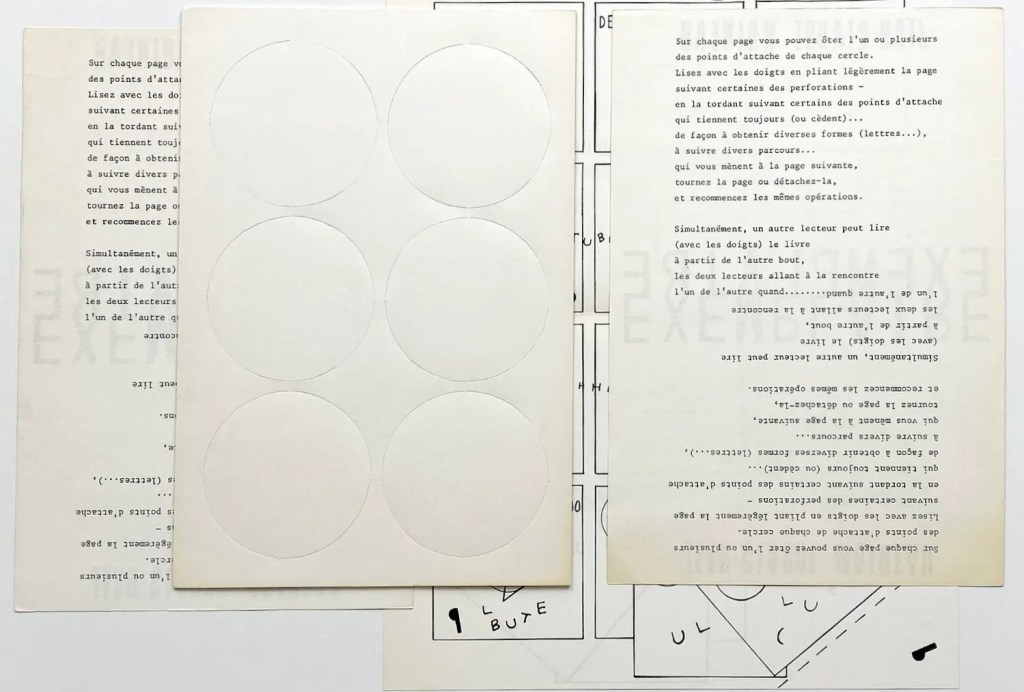
As mentioned earlier, readers/viewers can only participate vicariously with collectors of Micah Lexier‘s and Jean-Claude Moineau‘s works. In both cases, the experiences in question are particularly ludic, and both expand the conversations offered by the book art on display. With Lexier, the collector is invited to mark on the work’s detachable sheet where the artist should punch a hole, then send the sheet to the artist, who will make the hole and return it to the collector. A multiple thus becomes unique, and the reader/viewer’s interaction with the artist becomes just that bit closer. (We readers/viewers become an audience through the evidence of the performance.) With Moineau, we do not even have the evidence; we have to imagine the performance of the game between the collector and his or her chosen partner in the game or conversation that Exemplaire proposes they have with its detachable circles.
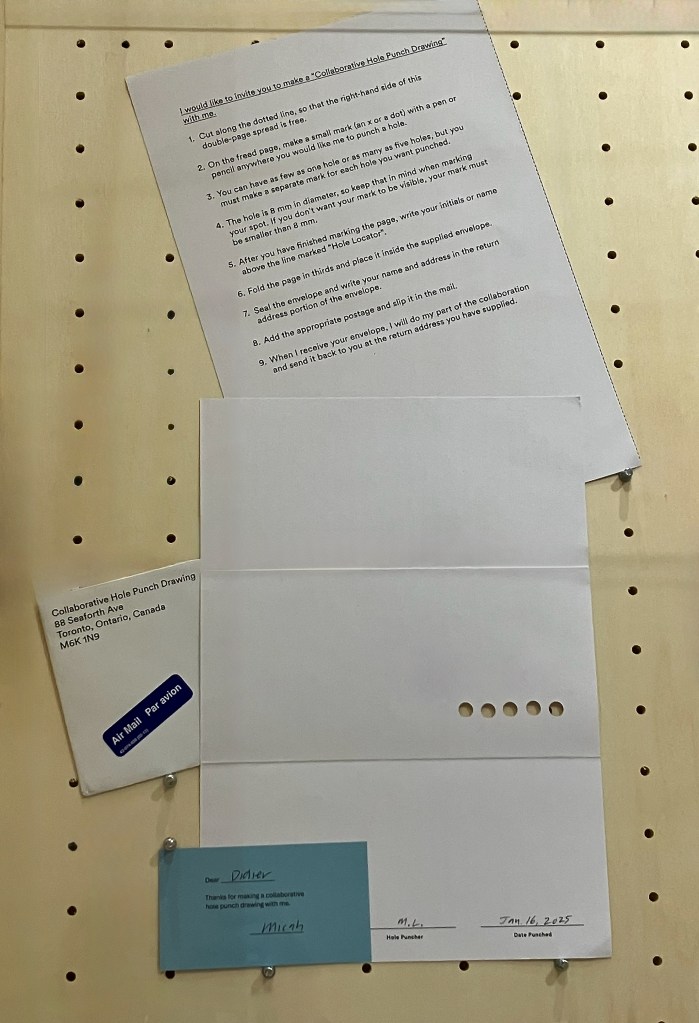
Top: [Collaborative Hole Punch Drawing] (2024). Micah Lexier. Hastings, UK: Fifthsyllable.
Bottom: Exemplaire (1968). Jean-Claude Moineau. Self-Published.
Other “protocol” works included in this vitrine are
- Annemarie Burckhardt‘s Katalog Documenta IX [“Documenta Catalogue IX”] (1990)
- Álvaro de sá & Wlademir Dias Pino‘s Solida, Poema Processo [“Solid, Poema/Processo”] (3rd version 1968 / original version 1956)
- Nadine Lère‘s Mizu Ni Nagasu: Laisser l’eau couler sous les ponts [“Mizu Ni Nagasu: Let the water flow under the bridge”] (1998)
- Simona Denicolai & Ivo Provoost‘s Morelight (2020)
- Robert Filliou‘s Poème collectif (1968)
- Jan Voss‘ The Bildding Nr 2.: Block Steinwickel Papier (1996). Features a writing pad “to be used for messages for those whose windows one wants to smash and as wrapping material for the stones one wants to use for this purpose”; Bildding Nr. 1 consisted of a brick.
11 silences
In room 3, vitrine 11, Sarah Colman‘s 4 p. and 33 mm (2013) converses silently and eloquently in paper with John Cage‘s 4’33” (1993). From its wall vitrine nearby, Cage’s score speaks back to Colman’s sculpture.
- R. Sebastian Schachinger‘s Tanz aus Butschum. Menuet BWV anh. 120 [“Dance from Butschum” (Béla Bartók). “Menuet” (J.S. Bach) (2026)
- Manu Blázquez‘s D759 in B Minor / Part II (2018)
- Paul Heimbach‘s 273 / Cellophane Book (1988)
- Michael Prado‘s Cuatro, Treinta y tres (2017)
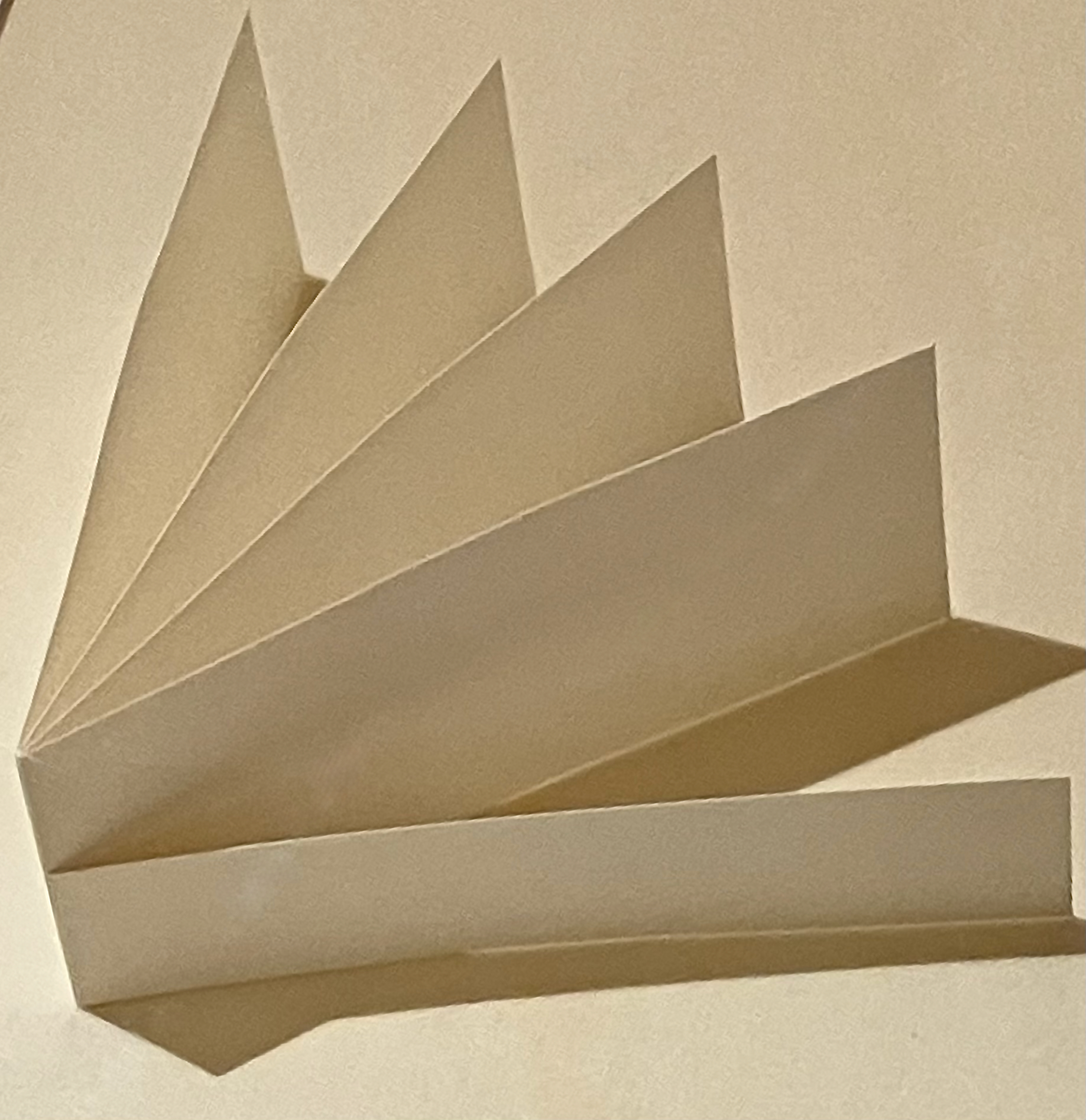
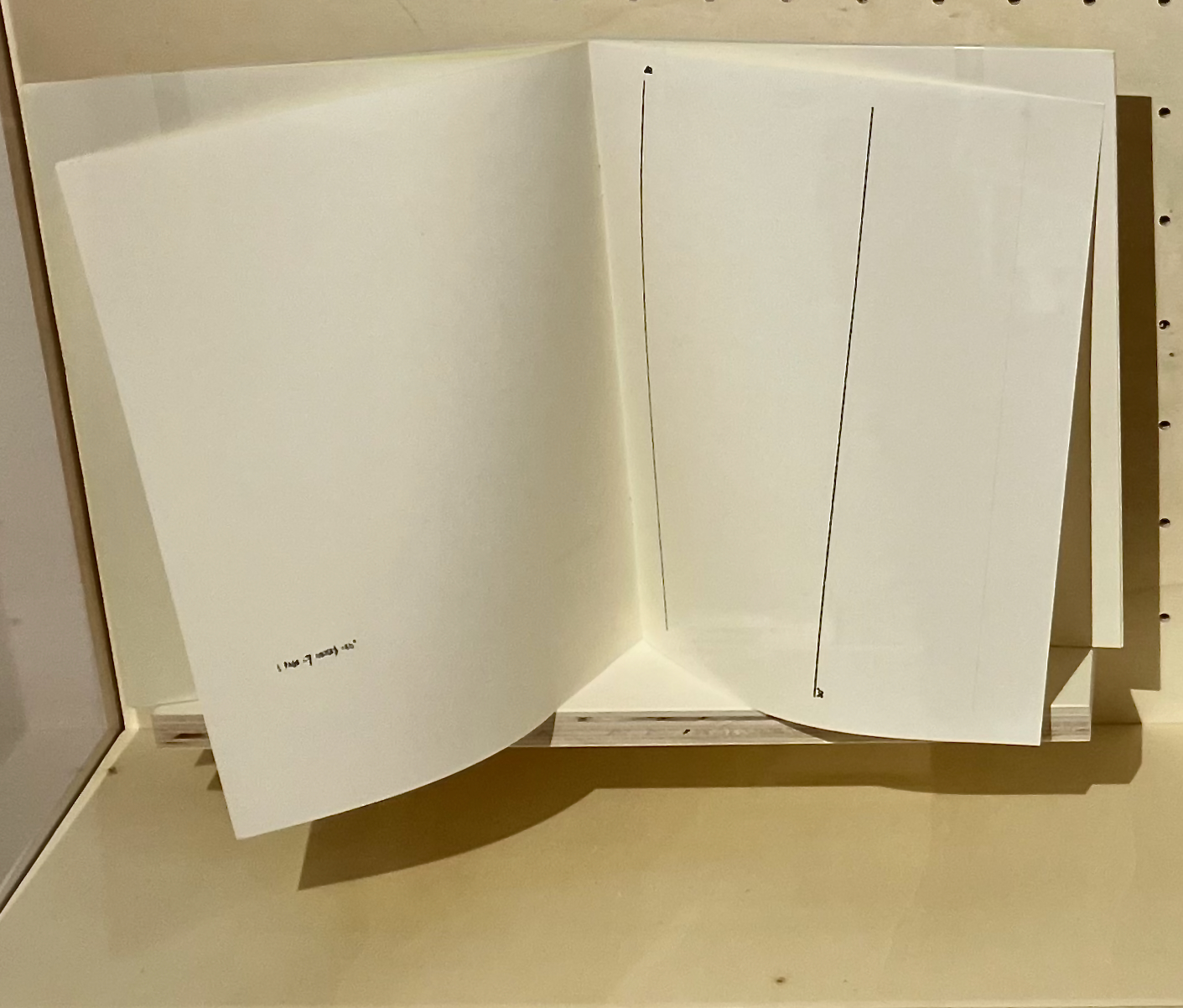
Left: 4 p. and 33 mm (2013). Sarah Colman. Laeneval: Boabooks. Right: 4’3″” (1993). John Cage. New York: Peters No. 6777a.
A little over halfway through the exhibition now, visitors may have noticed a few somber conversations offsetting the whimsy. Ian Hamilton Finlay‘s and Martyn Greenhalgh‘s Reed Pipe (1990) in the same vitrine with Colman’s work sends a silent shot to ricochet off Nuno Ramos‘ Balada [“Bullet”] (1995) in vitrine 15 and Kendell Geer‘s Point Blank (2004) in display 17.
12 just some signs
- Fernanda Aránguiz‘s Lo Real y lo Posible X (2019)
- José Luis Castillejo‘s The Book of i’s (1969)
- Daniel Gustav Cramer‘s Bird (2013)
- Michael Gibbs‘ Numerations (1978)
- Jarl Hammarberg-Åkesson‘s Poemoj sen Vortoj [“Poems without Words”] (1971)
- Kim Soo Ja‘s A Needle Woman (2000)
- Robert Lax‘s Mostly Blue (1971)
- Colin Sackett‘s Nancarrow (1998)
- Mladen Stilinović‘s Oduzimanje Nula [“Subtraction of Zero”] (2006)
- Josip Vaništa‘s Gorgona 1 (1961)
Throughout the exhibition, the fanned-open books appealed again and again. Being able to peek at and read herman de vries’ poem in vitrine 5 is close to handling the book. Michael Gibbs‘ Numerations (1978) is another case in point. There’s no need to handle it to see that its trick is the repetitive overprinting of the numerals acts out its title. In other cases like Colin Sackett‘s Nancarrow (1998) with its generic currency symbol (¤) cascading down the pages of its spiral-bound format, the appeal is superseded by puzzlement. Even if you could hold it, what is being conveyed? An extensive musical education (or dogged curiosity) will identify “Nancarrow” as the composer, but even more curiosity is needed to chase down that the book was “Made with respect and reference to the work and ideas of Conlon Nancarrow”. Perhaps this is Ed Ruscha territory, where we should say “Huh?” and simply lean back and enjoy “just another sign”.
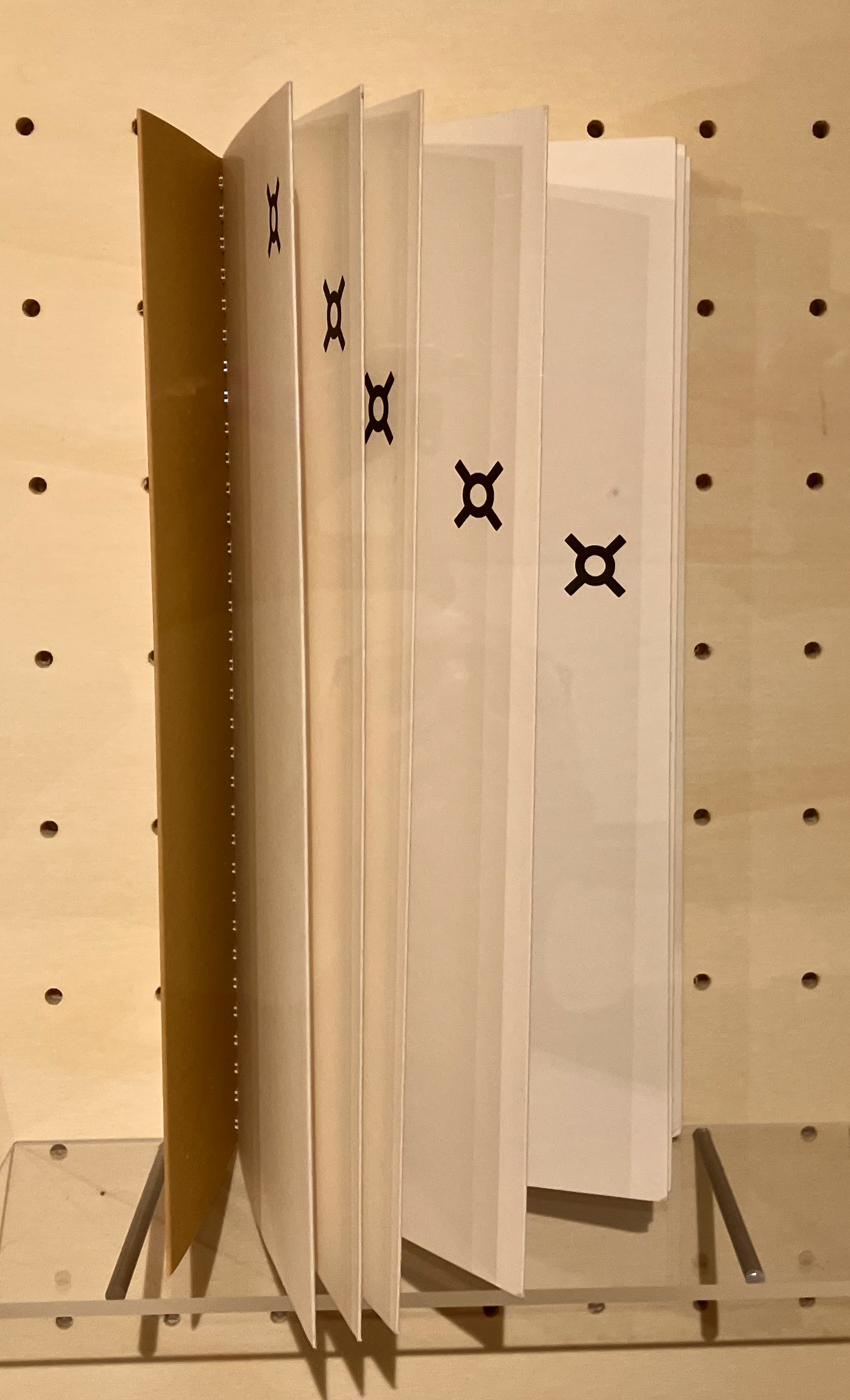
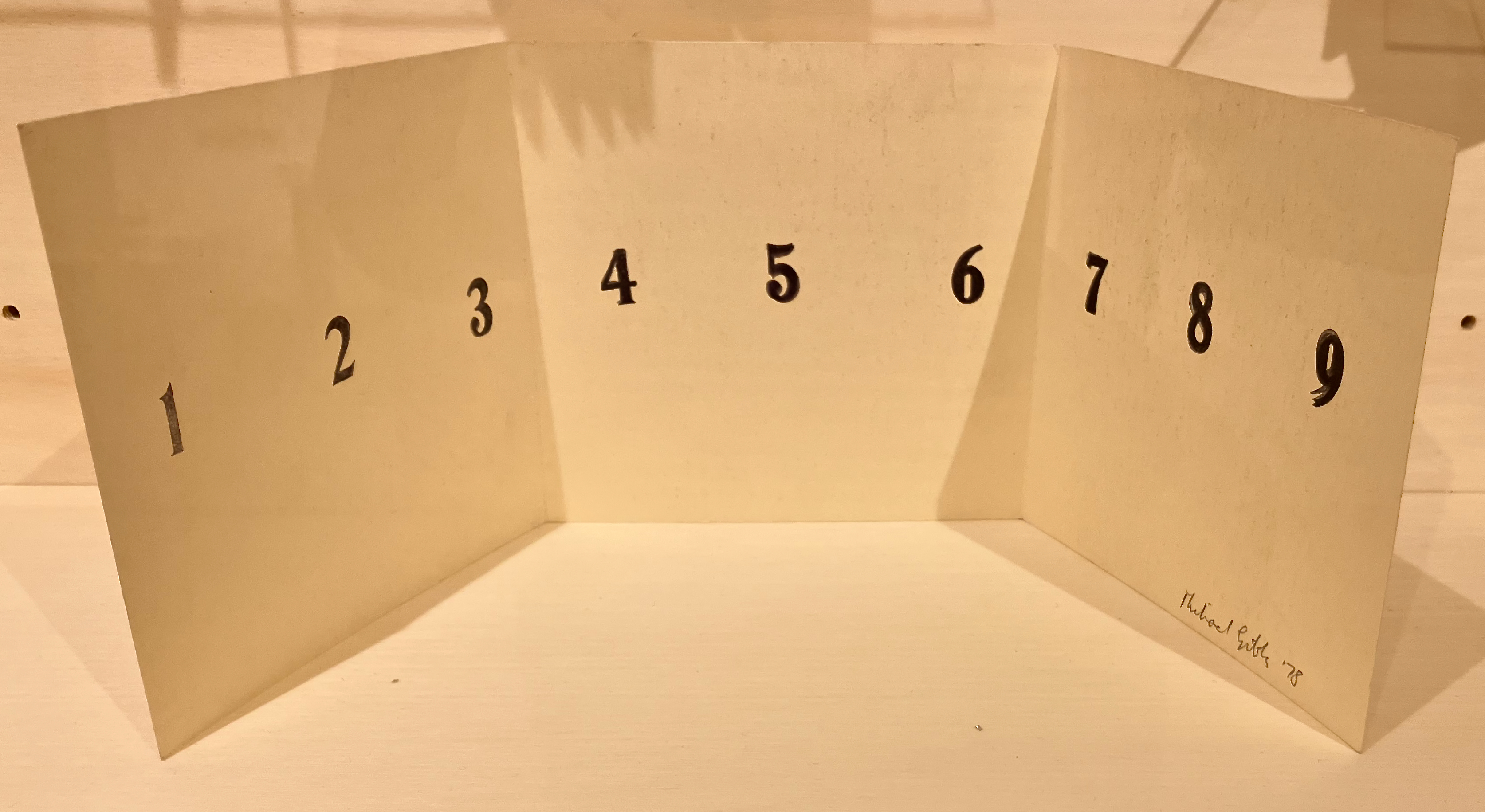
Left: Nancarrow (1998). Colin Sackett. Right: Numerations (1978). Michael Gibbs. Amsterdam: Self-published.
13 some just words
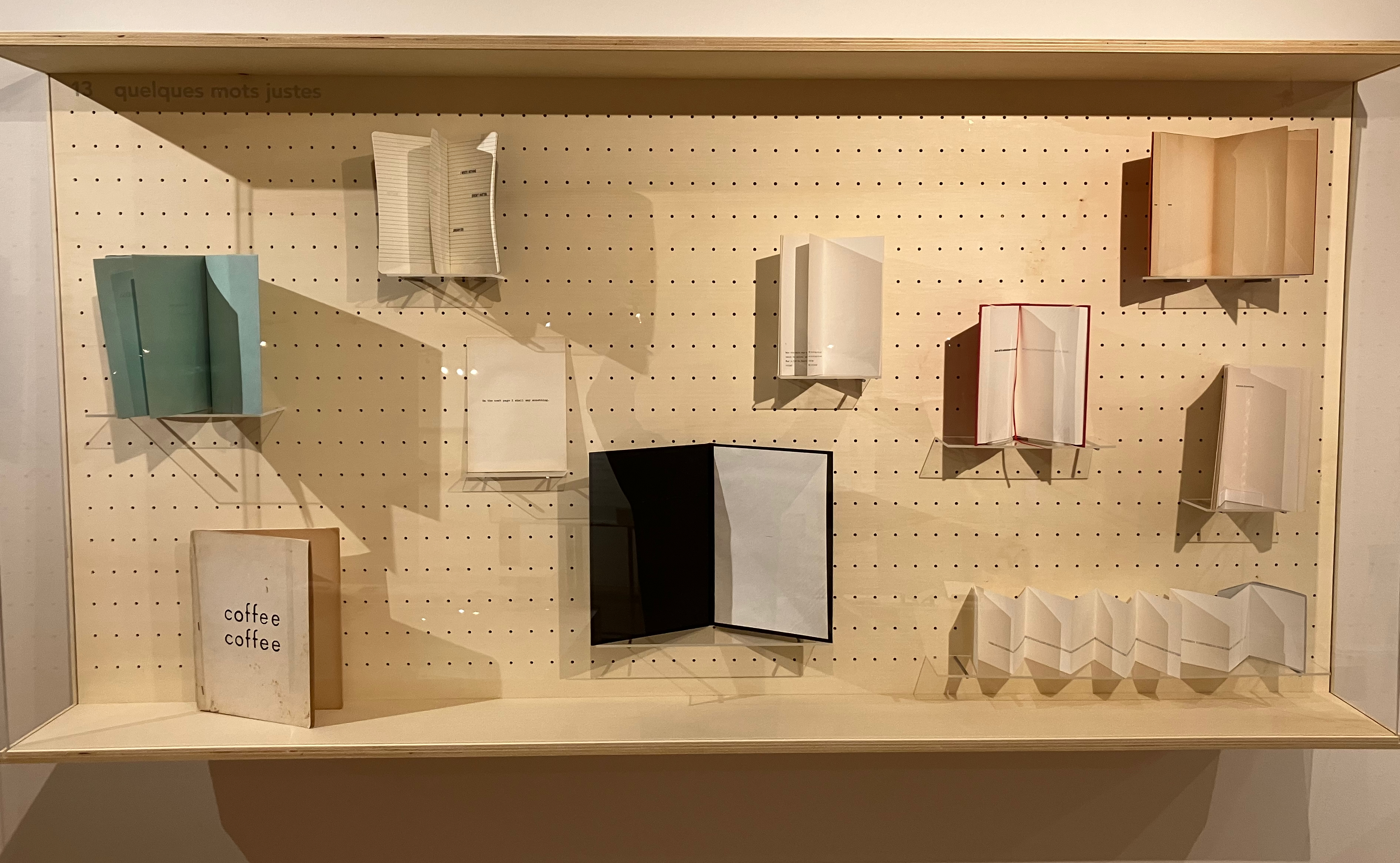
- James Lee Byars‘ The One Page Book (1972). Center.
- Simon Cutts‘ The Manifestation of the Poem (2011). Diagonally to the right of Byars’ book, this is one of the works that receives a write-up in the guide: “this thick volume is distributed symmetrically around a double-page spread. the first half repeatedly states that “the book is the manifestation of the poem.” printed upside down, the sentence can be read right side up on the back, through the thin paper. the second half unfolds an opposite and complementary litany: “the poem is the manifestation of the book.” with 100 copies of the book sold for 100 units, regardless of currency, is it an abuse of the mirror effects created by the artist to assert that the book-poem is no less a manifestation of economics, or vice versa?”
- Nathalie Czech‘sToday I Wrote Nothing (2010). Based on the diaries of Daniil Kharms, an imprisoned Russian avant-garde poet, it speaks to Endre Tót’s samizdat entry in this vitrine.
- Ferreira Gullar‘s Livro-Poema (1965).
- Yutaka Matsuzawa‘s Catechism Art (1973).
- Lina Nordenström‘s There is No Story (2015).
- Diter Rot‘s Wer ist der der nicht weiss wer Mozart war: Ein Essay (1971).
- Aram Saroyan‘s Coffee Coffee (1967).
- Endre Tót‘s On the Next Page I Shall Say Something (1973)
- Ian Wilson‘s Section 55 (1990)
One of the more somber of the conversations in the exhibition occurs between Nathalie Czech‘s Today I Wrote Nothing and Endre Tót‘s On the Next Page I Shall Say Something. Czech’s book began as a photographic exhibition in which she reproduced an entry from Kharms’ diary in a series of images with words and some letters removed:
Today I wrote nothing.
Doesn’t matter.
January 9th.
Endre Tót has lived to see the backside of two authoritarian regimes, so his other works like We are glad if we can demonstrate (2017) take on a somewhat offsetting joy.
14 erasures, concealments
Vitrine 14 strikes up a strong conversation with the exhibition’s very first vitrine, where Mallarmé’s Un Coup de Dés is shown. Decoux and team, however, make two refreshing choices that enhance the echo. Instead of displaying Marcel Broodthaers’ Un Coup de Dés Jamais N’Abolira le Hasard: Image (1969), they display Marcel Broodthaers‘ Charles Baudelaire (1974) on the left and Michel Lorand‘s Après un Coup de Dés (2015) on the right.
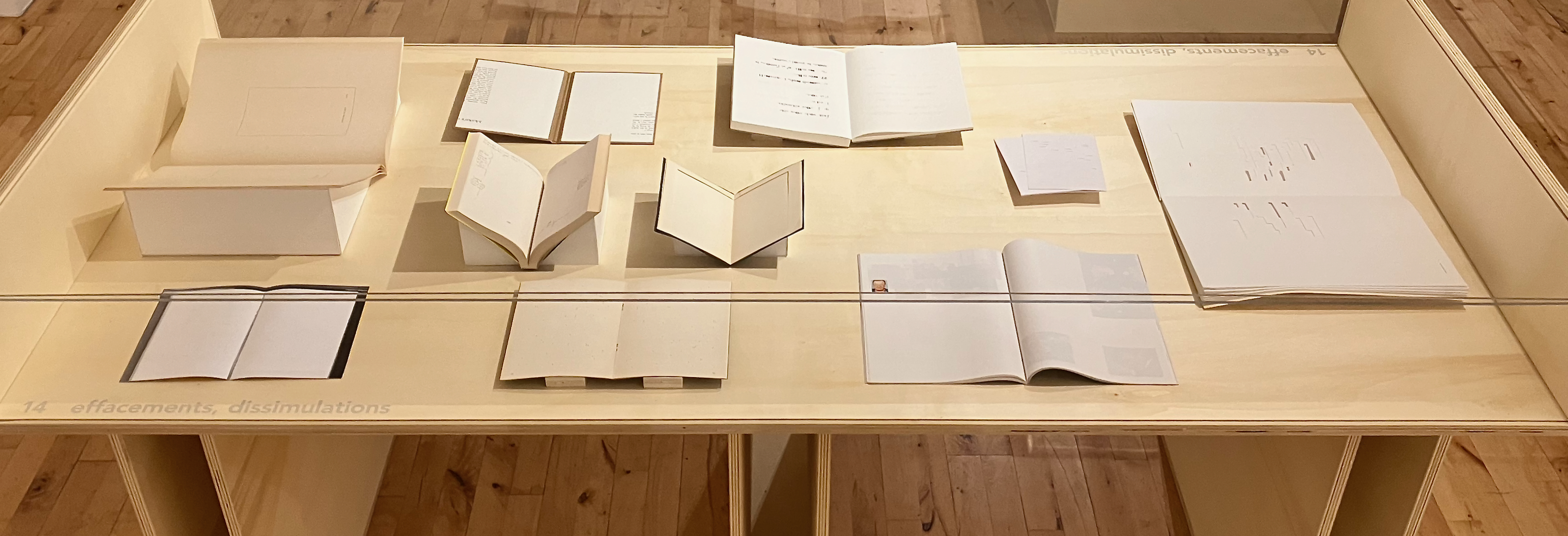
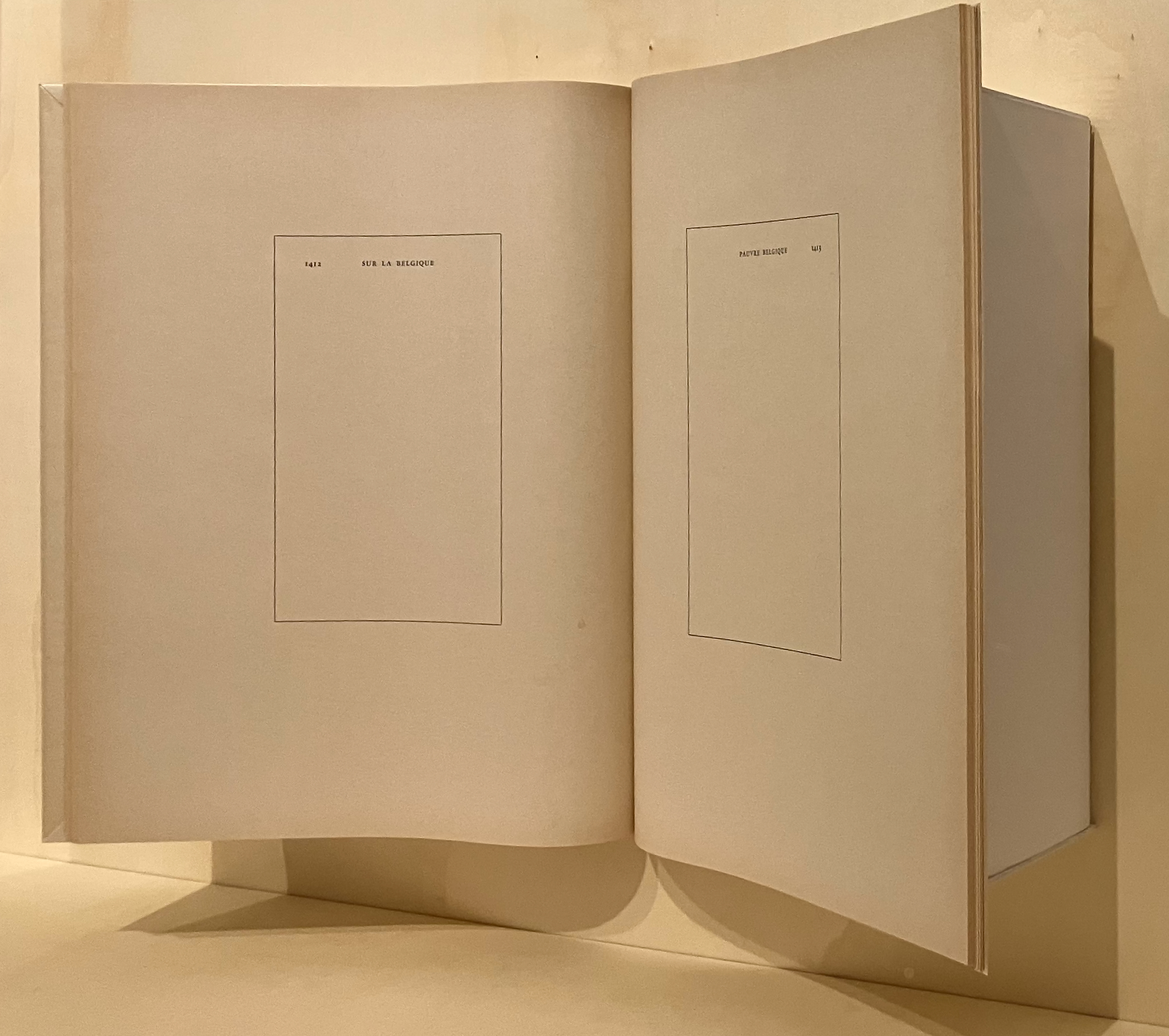

Left: Charles Baudelaire. Pauvre Belgique (1974). Marcel Broodthaers. Paris: Yves Gevaert & Paul Lebeer. Right: Après un Coup de Dés (2015). Michel Lorand. Brussels: self-published.
Another echo with the first vitrine can be found between Alphonse Allais‘ Album Primo-avrilesque (2nd ed. 1962/1st ed. 1897) there and Hans-Jørgen Nielsen‘s Vedr. Visse Foreteelser / en Hvidbog [“Concerning Certain Phenomena / A White Book”] (1967) here. What is the pathway from the whimsy of Première communion de jeunes filles chlorotiques par un temps de neige [“First communion of anaemic young girls in snowy weather”] in 1897 to Nielsen’s Zen-like text hidden beneath flaps on the blank pages: “white – the invisible presence of everything” and “white – the visible absence of everything”? Perhaps no path is needed. Both coexisted in 1897 when Mallarmé’s Un Coup de Dés appeared.
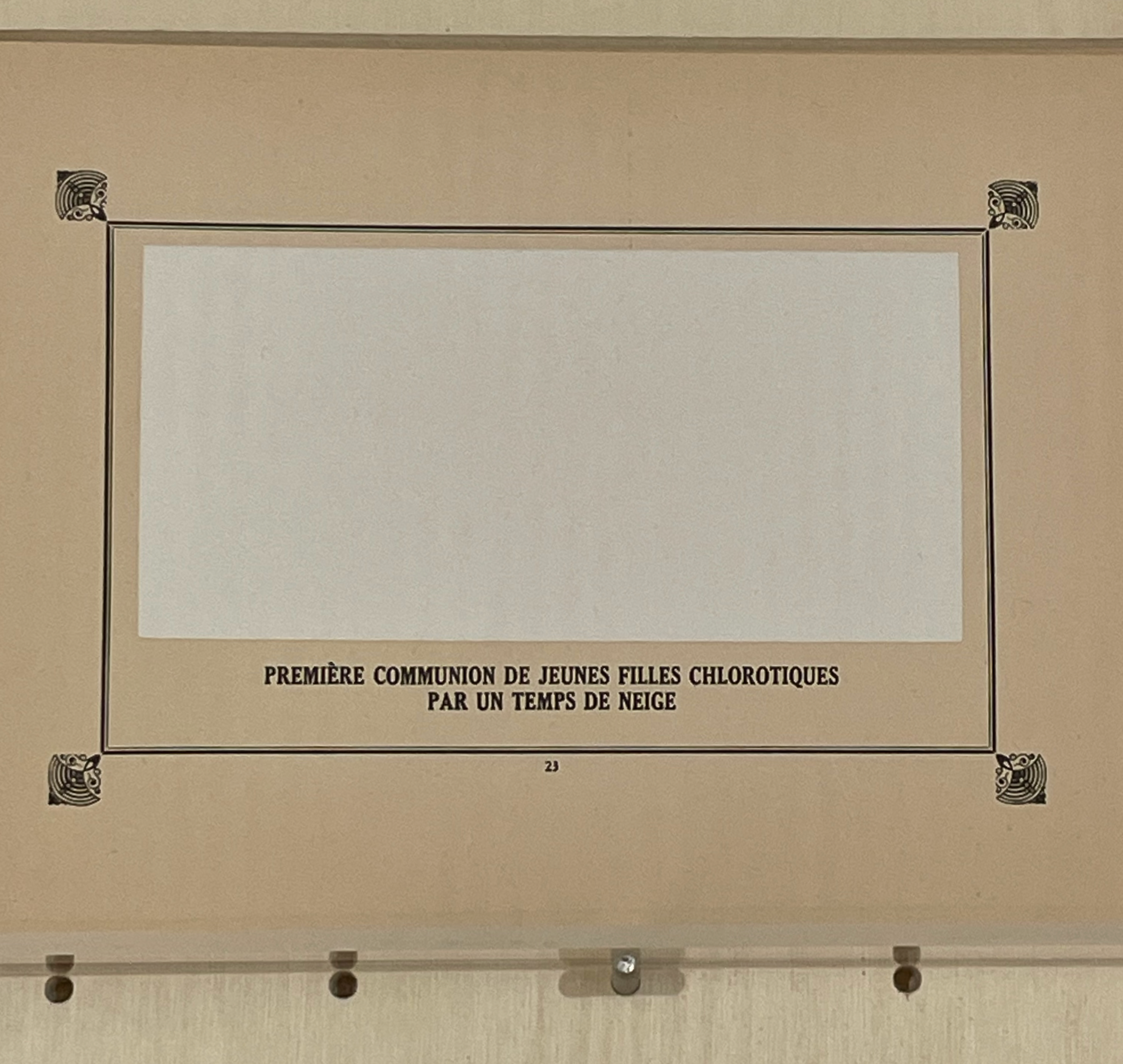
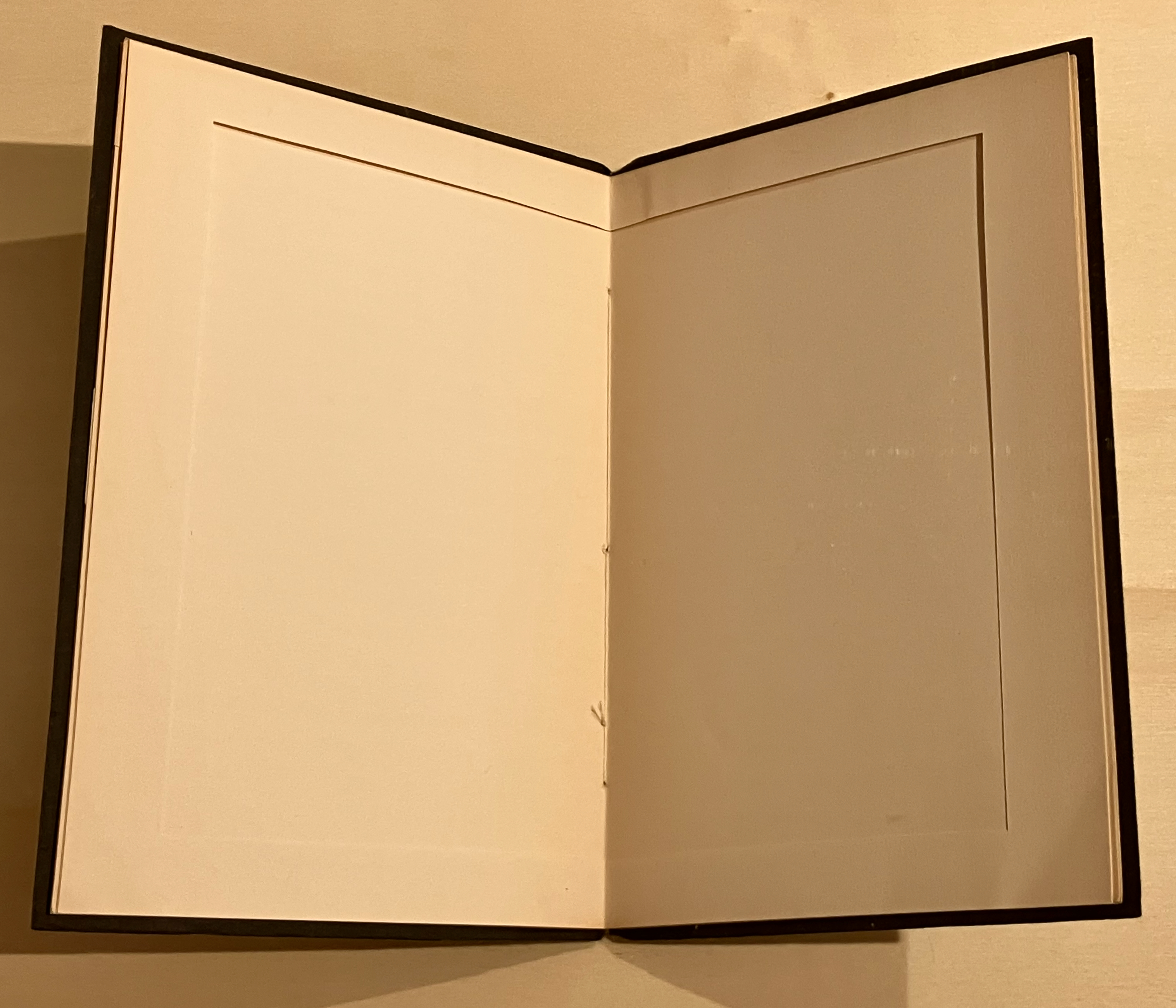
Left: Album Primo-avrilesque (2nd ed. 1962/1st ed. 1897). Alphonse Allais. Paris: Bellenand. Right: Vedr. Visse Foreteelser / en Hvidbog (1967). Hans-Jørgen Nielsen. Copenhagen: Borgen. See p. 79 in the link.
- Pavel Büchler‘s Nodds (2006). Buchler’s erasures from Samuel Beckett‘s Ends and Odds (1976) leaves only the stage directions like “Long pause” and like “Silence” and, of course, nods to Beckett in doing so.
- Noëlle Cuppens‘ C’est tout. The Last Pages (2015). Cuppens’ last pages of Letraset letters used to “rewrite” the last book of Marguerite Duras‘s C’est Tout [“No More”).
- Hans-Peter Feldmann‘s Profil Nr 6 vom 7 februar 2000, ohne Worte (2000). An interesting case of technology catching with a conceptualist’s earlier concept (blanking out all the text from the Austrian magazine Profil) and, given the political situation in Austria in 2000, another conversation with vitrine 13.
- Jaroslaw Kozłowski‘s Reality (1972). Only the punctuation is left in this copy of Kant’s Critique of Pure Reason; a conversation to come with herman de vries and Ludwig Wittgenstein in Argumentstellen in the last room of the exhibit.
- Sara Mackillop‘s 16 Photocopied Pages (2009)
- John McDowall‘s Ellipsis (2017). Another artist’s book’s conversation with literature; omits text from Heinrich Böll’s short story “Murke’s Collected Silences”.
- Hans-Jørgen Nielsen‘s Vedr. Visse Foreteelser: An Hvidbog [“Concerning certain phenomena / a white book”] (1967). See p. 79 in the link.
- Sylvia Waltering‘s Orlando (2nd ed.2015/1st ed. 2012). Eliminates all the text from Virginia Woolf ‘s novel by the same name, but leaves the previous owner’s marginalia intact.
15 closures, destructions
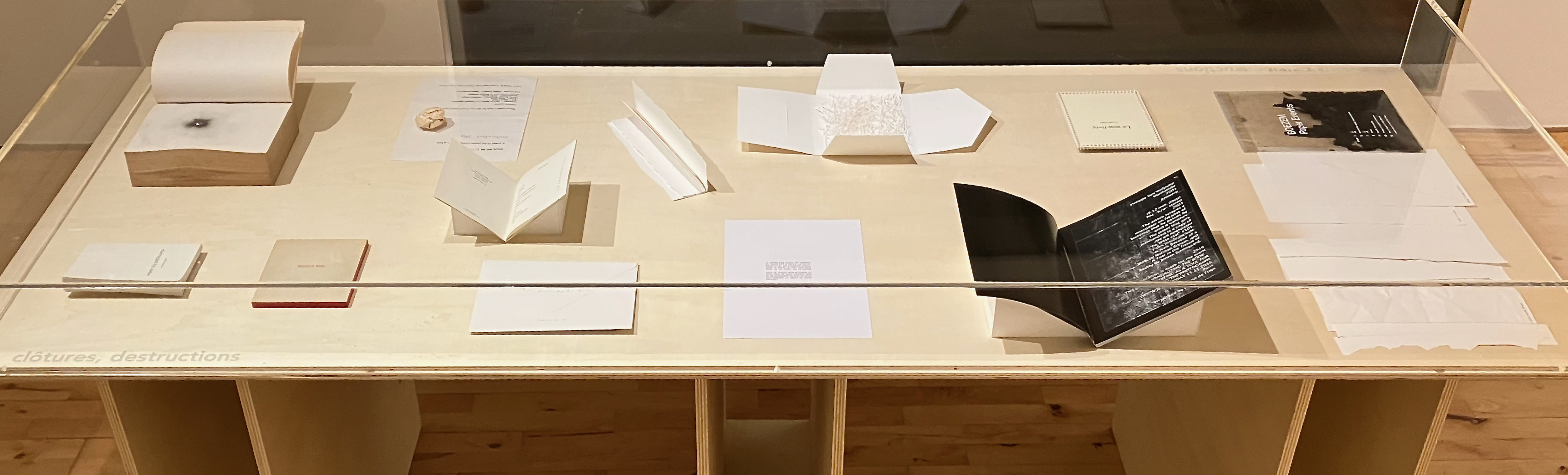
- Marinus Boezem‘s Paper Events (1970)
- Ed Brouwn‘s Damaged by Water (2024). This work may be better placed in vitrine 14 as “Ed Brouwn” is suspiciously difficult to track down and seems to have appropriated parts of Stanley Edmund Brouwn’s name!
- André Cadere‘s Le papier sur lequel est imprimé ce texte est à jeter [“The paper on which this text is printed is to be thrown away”] (reactivation 2013 / 1st activation 1974). We are also to forget the text, but then we have read it, and as for the paper, though we have seen it, it brings us nothing, and though it depends on us in no way, it marks the limit of our power. Now that’s a conversation stopper — or starter?
- Joaquim Chancho‘s Din A5 (2017)
- Les Coleman‘s Glue (2002). The pages have been glued together with different types of glue, listed in the table of contents. Has the closure and destruction occurred beforehand, or does the work initiate a conversation with the collector inclined to separate the pages by force?
- Martin Creed‘s Work 88. a sheet of a4 paper crumpled into a ball (1994). The initial destruction is obvious but spare a thought for its early recipients through the mail who are rumored to have mistaken it for a trash and discarded it.
- Nicolas Geiser‘s Le Non-livre (2006). It would be hard to spare a sympathetic thought for collectors who may have pulled at the pages of this book spiral bound on all four sides. In conversation with Richard Olson’s earlier work in this vitrine.
- Jonathan Monk‘s Sealed by Me (2007). That’s the text on the outside of the envelope. Is it whimsical or downright mean that inside there is a folded sheet describing the opening of the envelope?
- Richard Olson‘s Perfect Bind (1980). Using the “perfect binding” method, Olson has sealed this book on all four sides. Cf Geiser above.
- Nuno Ramos‘s Balada (1995). See the conversational reminder below.
- Philippe van Wolputte‘s Manhandle (2016). Since vitrine 6, Manhandle has been waiting to rub into the conversation.
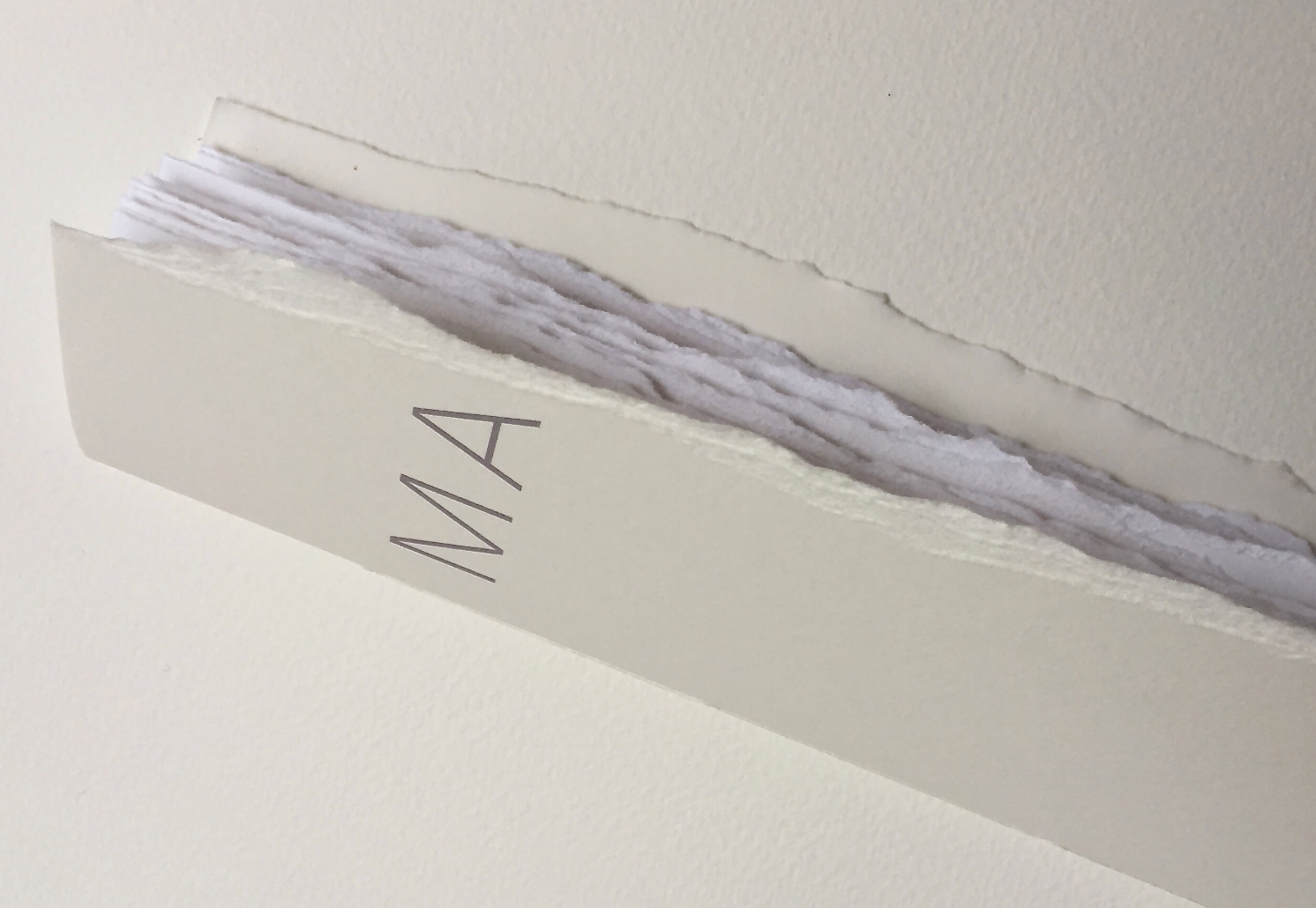
MA[RGINS] (2022). Julie Johnstone. Edinburgh: essence press.
Remember Ian Hamilton Findlay and Martyn Greenhalgh’s Reed Pipe in vitrine 11 on silences? Here it is for its conversation with Nuno Ramos’ Balada (1995) above in the upper left hand corner.
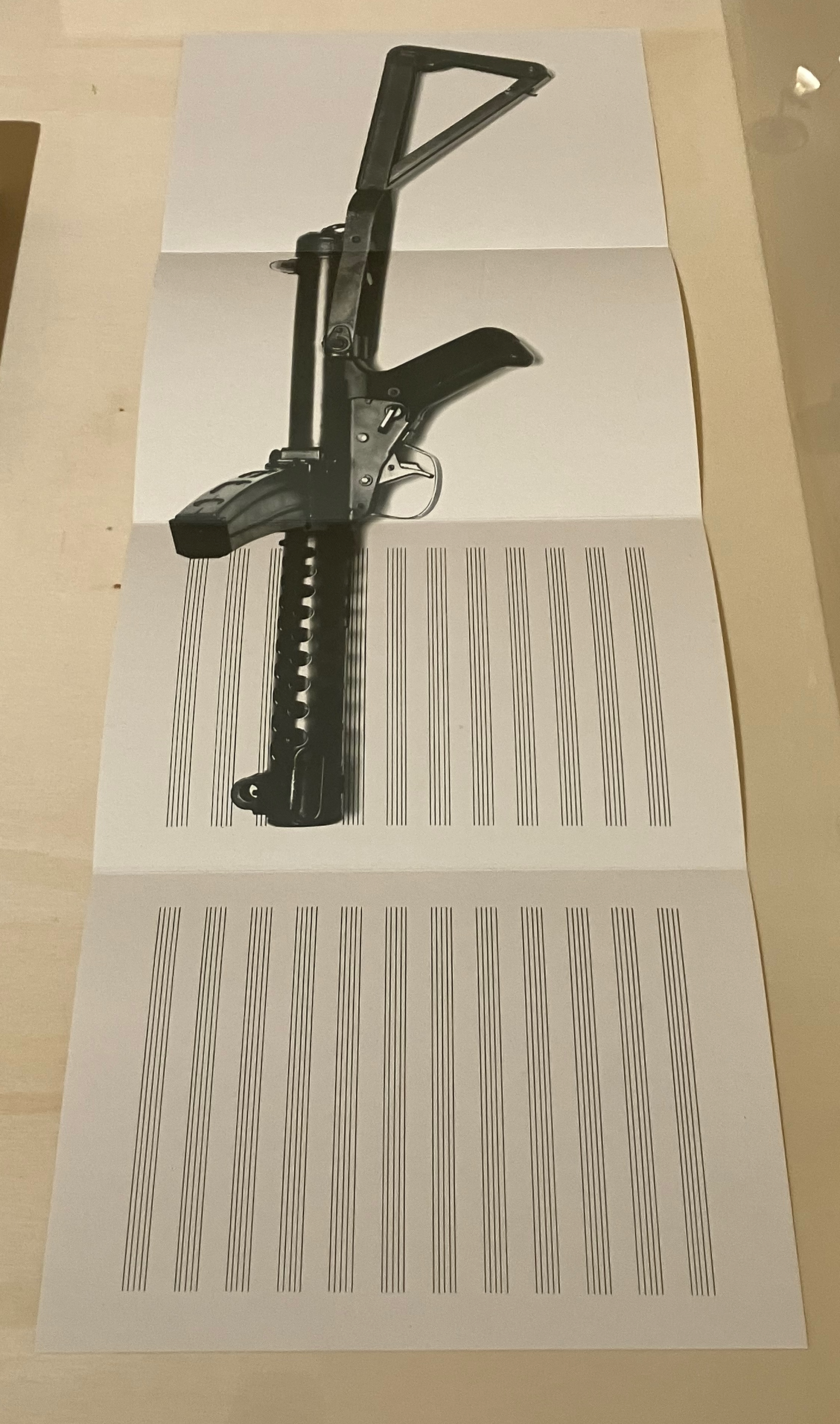
Reed Pipe (1990). Ian Hamilton Finlay and Martyn Greenhalgh. Florence, Lugo: Exempla, Exit.
16 jiři valoch: book about nothing
By focusing the next to last vitrine on Jiři Valoch‘s works, Decoux creates a dialogue between Valoch and herman de vries, who appeared in vitrine 5 and is about to do again in the next room.
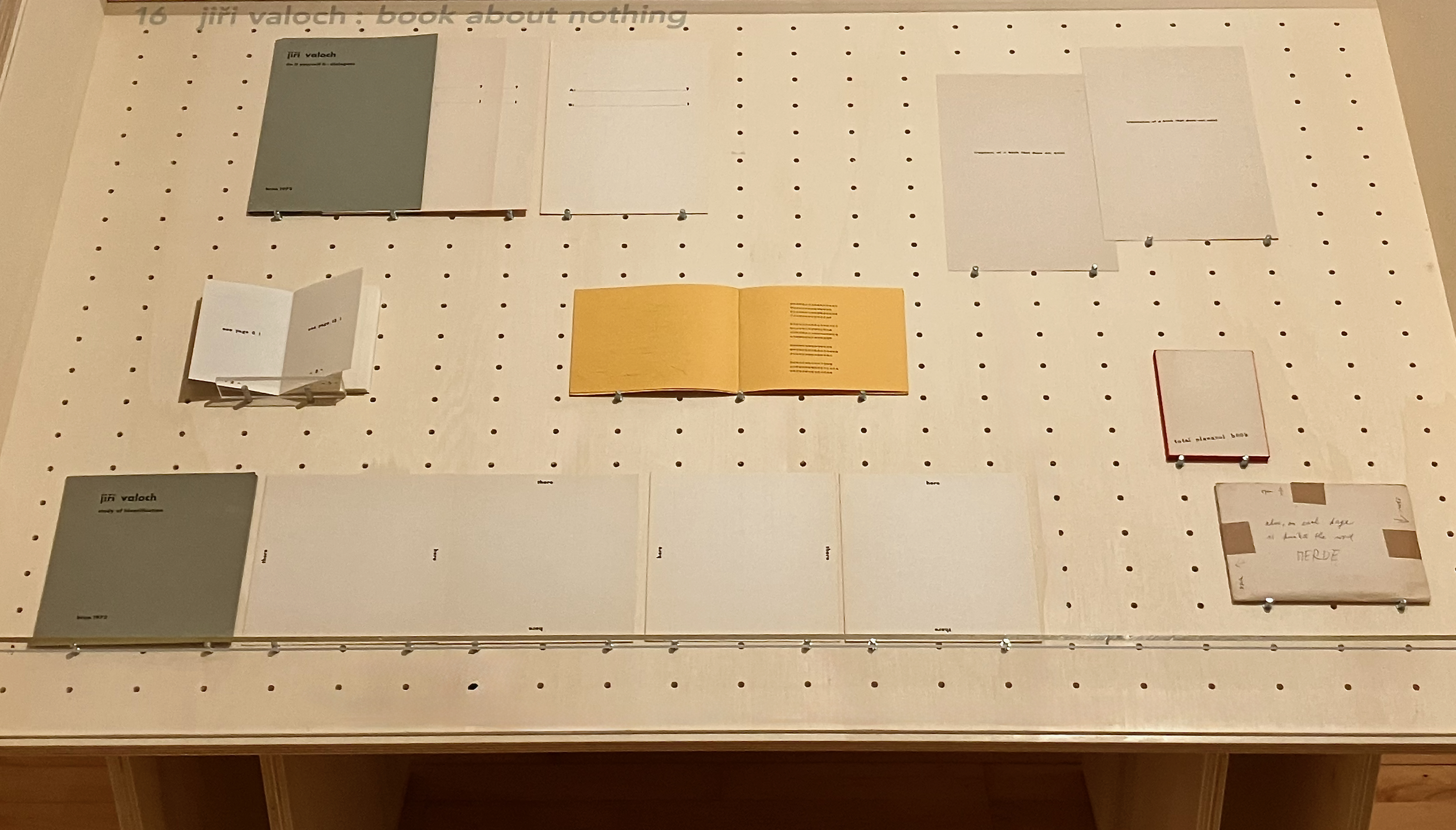
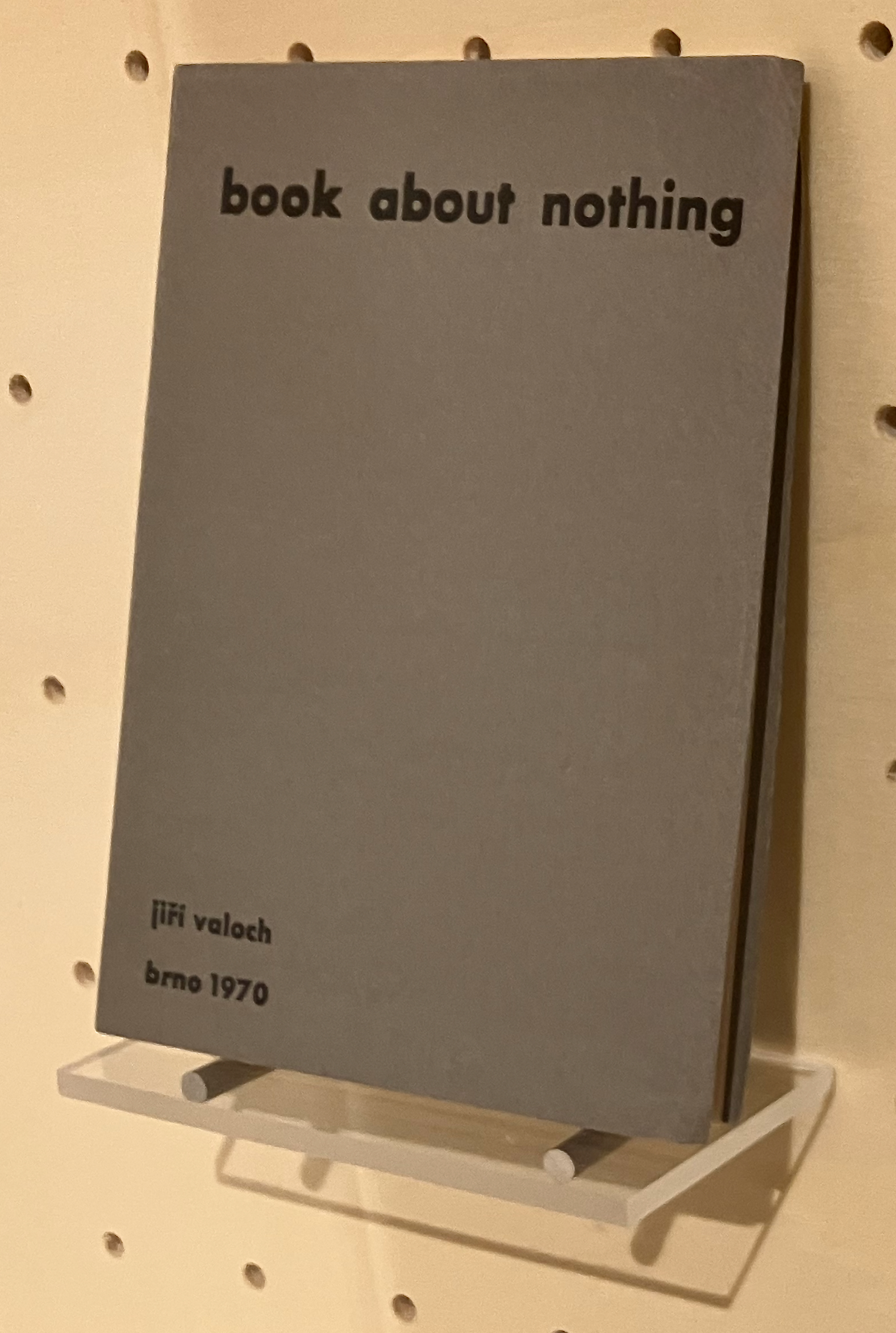
Book about Nothing (1970). Jiří Valoch. Brno: Self-published.
Artist Amir Cadôr has written separately on Valoch and herman de vries‘ Argumentstellen (2003), in which de vries altered an excerpt from Wittgenstein’s Tractatus logicus philosophicus by eliminating the text and leaving only the periods. Argumentstellen appears in the next room.
Here is Cadôr on Valoch:
Jirí Valoch, a Yugoslavian poet, published his “Book about nothing” in Brno in 1970, with 54 blank pages, except for the word “nothing” written on one of them. If the book had been entirely blank, it would be a presentation of nowhere, its substance made of the emptiness and the absence of things. But the word “nothing” is a representation of this same emptiness, introducing a paradox: it ceases to be a book that has nothing to become a tautology, a self-referential work whose theme is nothing, and one that uses a verbal description declaring a self-evident property of the work. A tautology is the conceptual equivalent of the monochrome, so the book becomes materially and conceptually empty. — Amir Cadôr, “Books about Nothing”.
And here he is on de vries:
É possível fazer um argumento visual? Um aforismo do “Tractatus logicus philosophicus“, de Ludwig Wittgenstein, foi o ponto de partida de um livro de herman de vries, argumentstellen (1968/2003). O livro, de grande formato, tem todas as páginas praticamente em branco, não fosse a discreta presença de um ponto tipográfico que muda de posição em cada página, criando relações espaciais que obedecem a uma lógica que pode ser deduzida pelo olhar. No final do livro, a frase do filósofo é apresentada em francês e em alemão, de modo que a última palavra no idioma de Wittgenstein fornece o título ao livro: “o objeto espacial deve se encontrar em um espaço infinito (o ponto espacial é um lugar para um argumento)”.
Is it possible to construct a visual argument? An aphorism from Ludwig Wittgenstein’s “Tractatus Logico-Philosophicus” served as the starting point for a book by herman de vries, “argumentstellen “(1968/2003). The large-format book has pages that are practically blank, were it not for the discreet presence of a typographic full stop that changes position on each page, creating spatial relationships that follow a logic that can be deduced by the eye. At the end of the book, the philosopher’s phrase is presented in French and German, such that the last word in Wittgenstein’s own language provides the book’s title: “The spatial object must be located in infinite space (the spatial point is a place for an argument).” — Amir Cadôr, O Livro.
Jaroslaw Kozłowski‘s Reality from vitrine 14 butts in here to remind us to go back for the conversation with Immanuel Kant.
17 quiet reading room
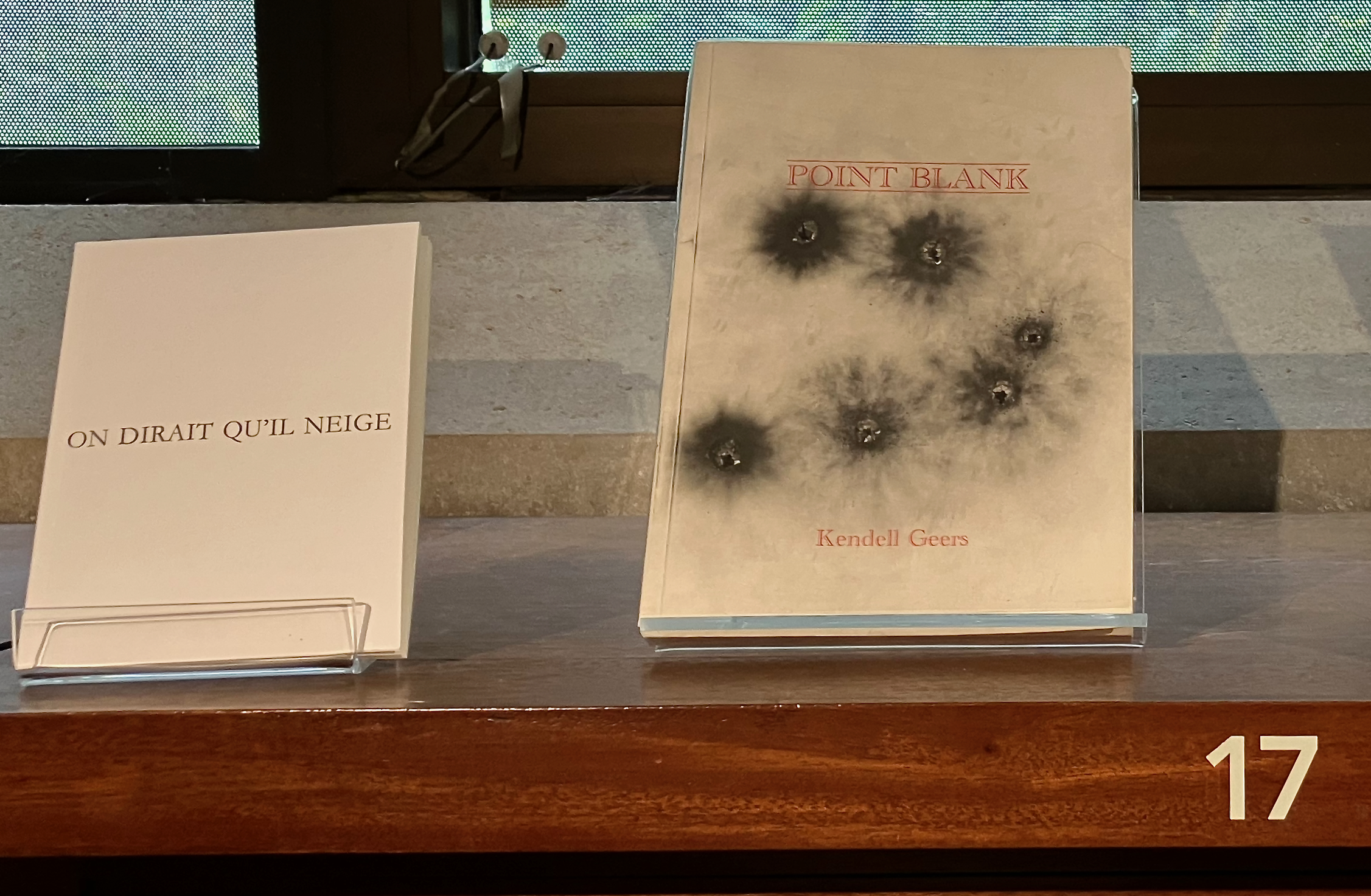
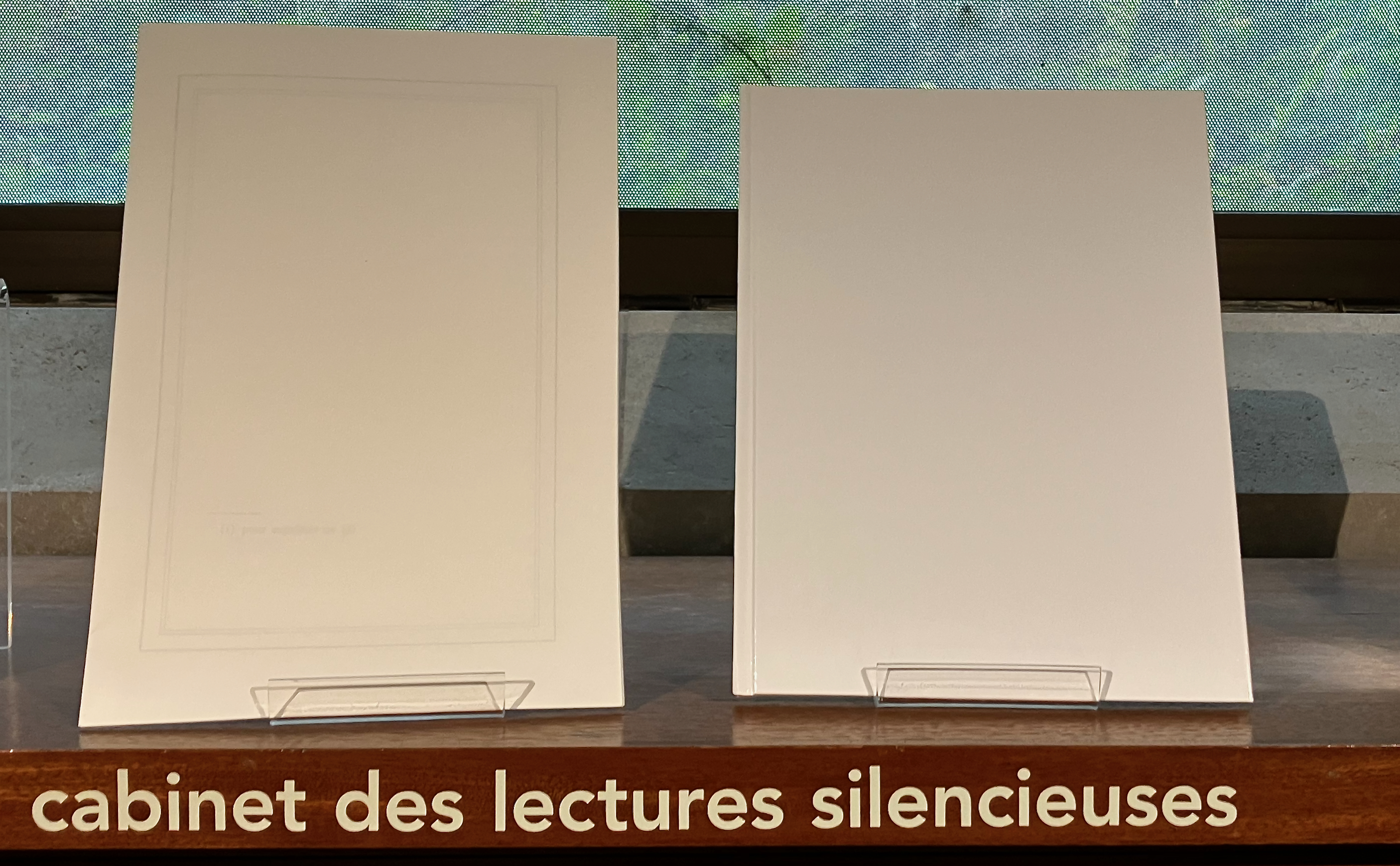
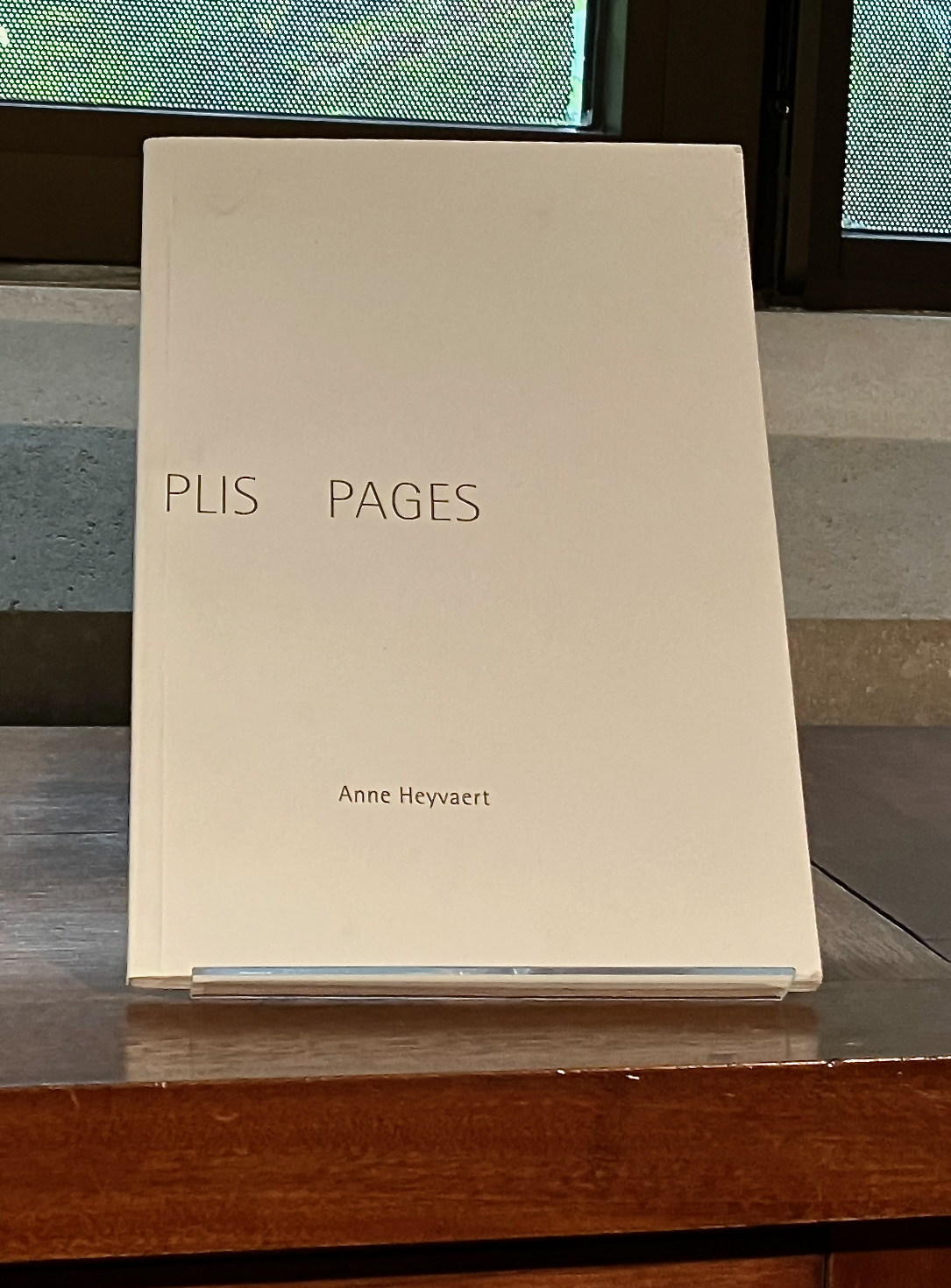
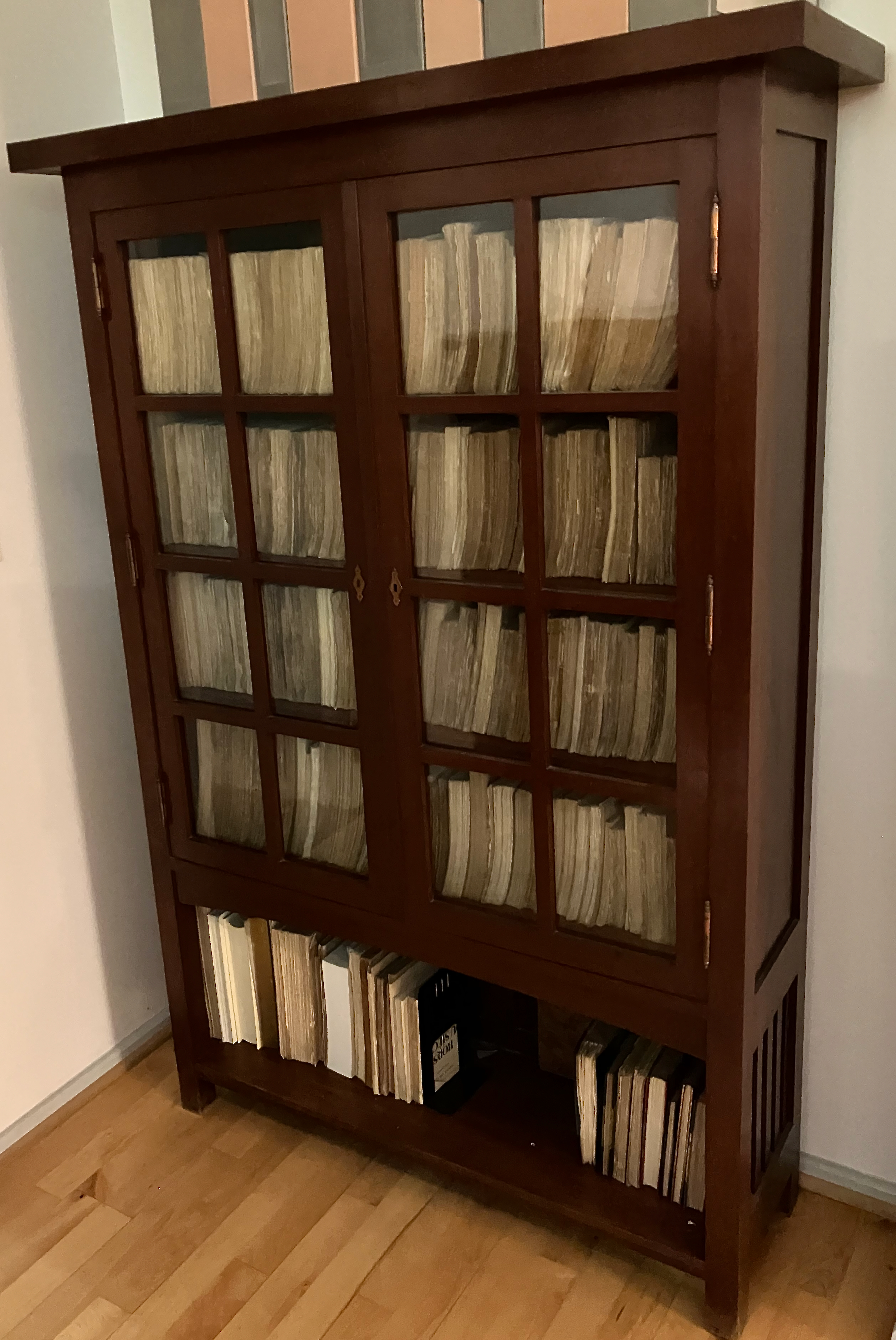
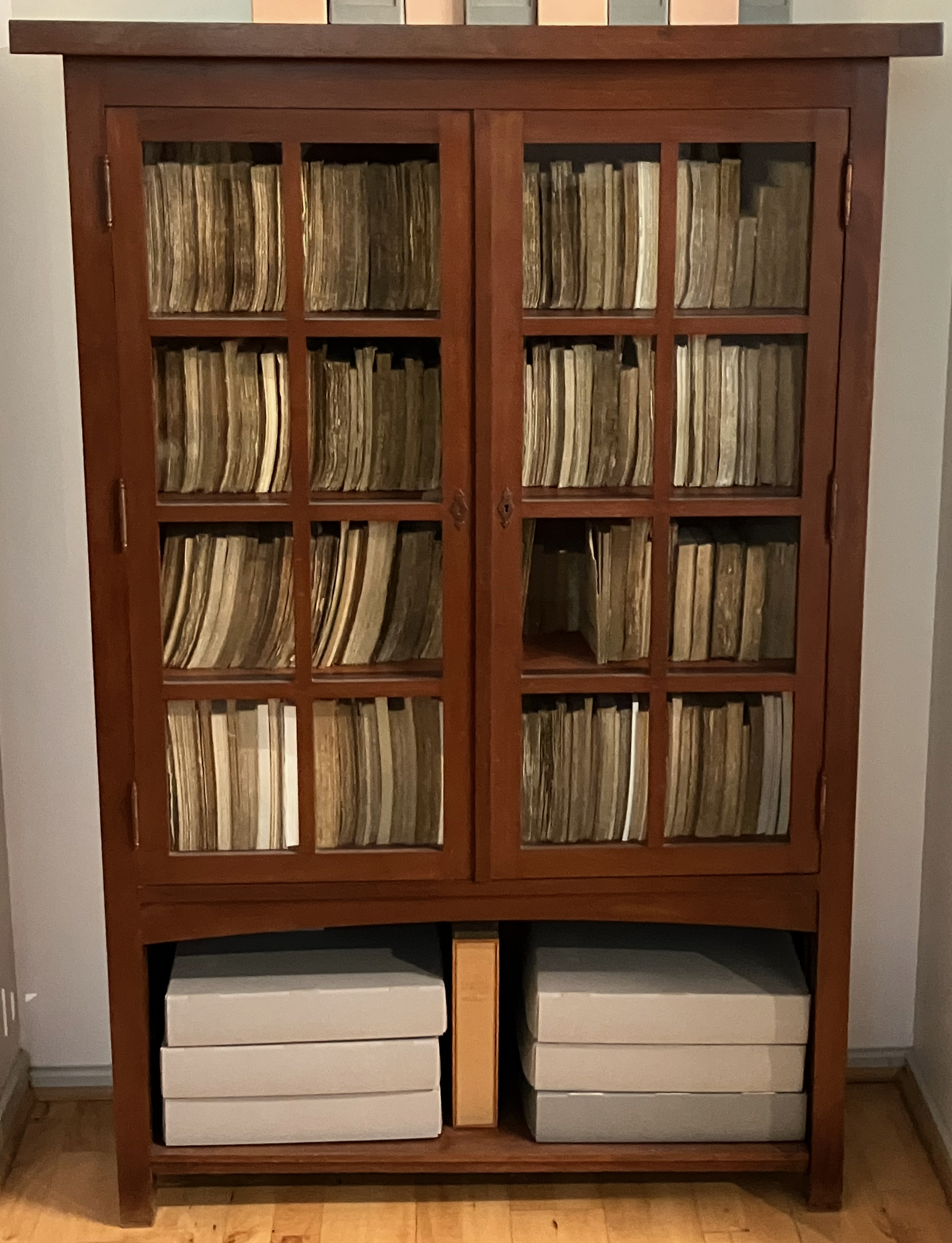
At first, visitors might think that the glass-fronted cabinets holding books with their spines facing inwards are part of the exhibition, but the display consists of 12 titles that normally rotate and are available for reading — mainly silently of course.
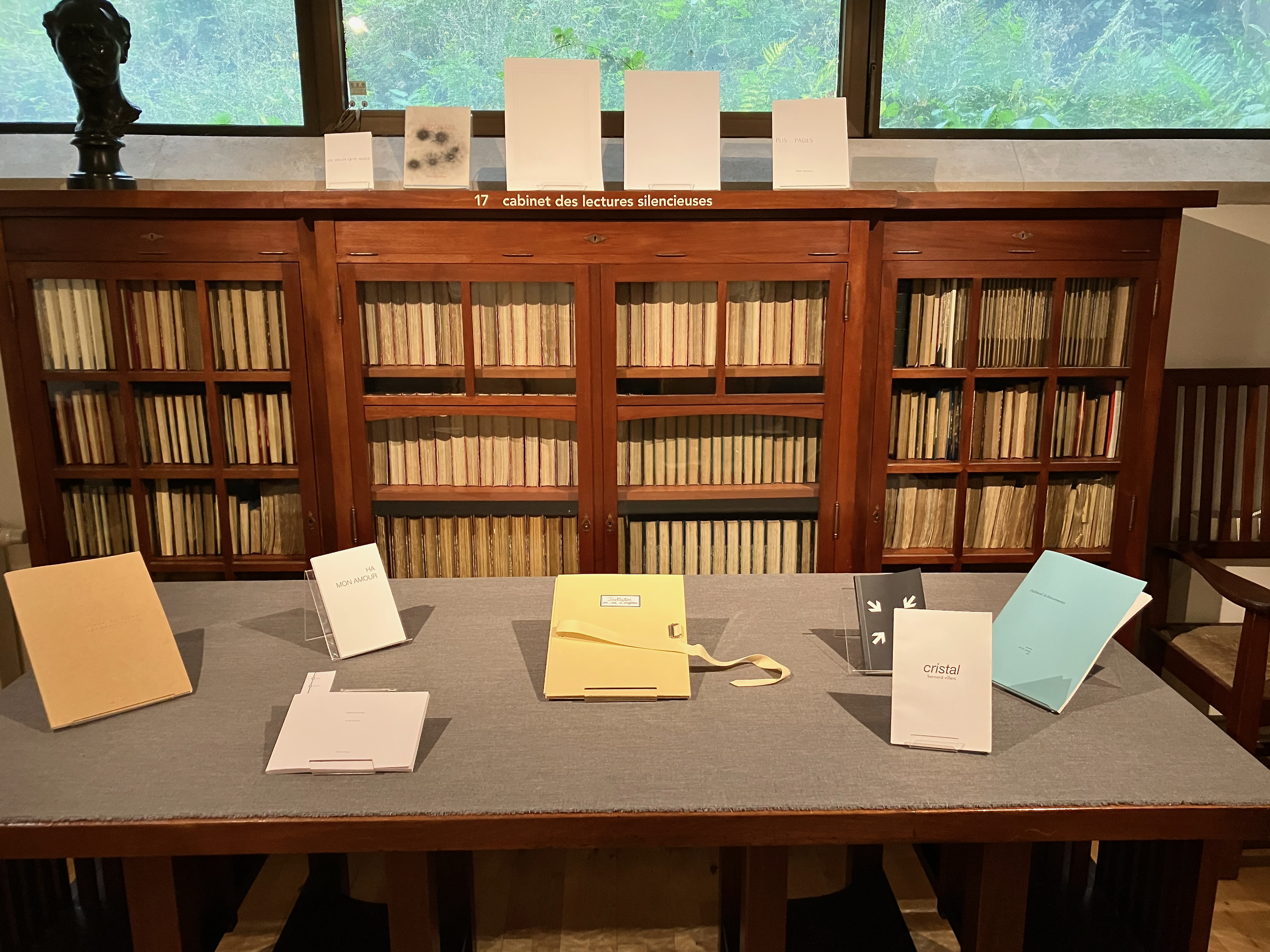
- Remy Charlip‘s On dirait qu’il neige [“It looks like snow”] (french ed. 2000/original english ed. 1957). See also vitrine 11.
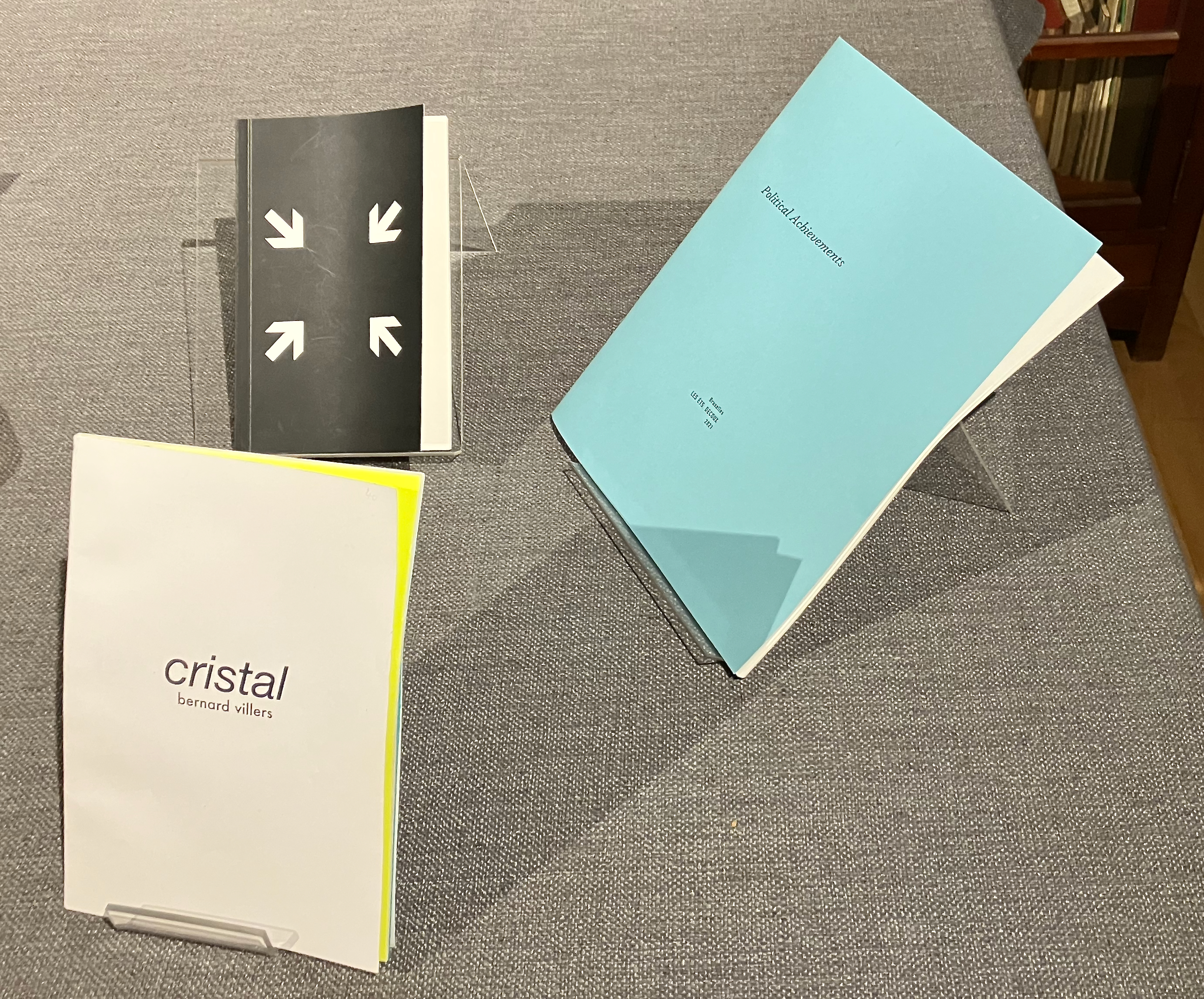
- Les Éts. Decoux‘s Political Achievements (2021) Reprint of The Political Achievements of Lord Dalkeith (1880). See also vitrine 1.
- Kendell Geer‘s Point Blank (2004). See also vitrine 6.
- Anne Heyvaert‘s Plis Page (2015).
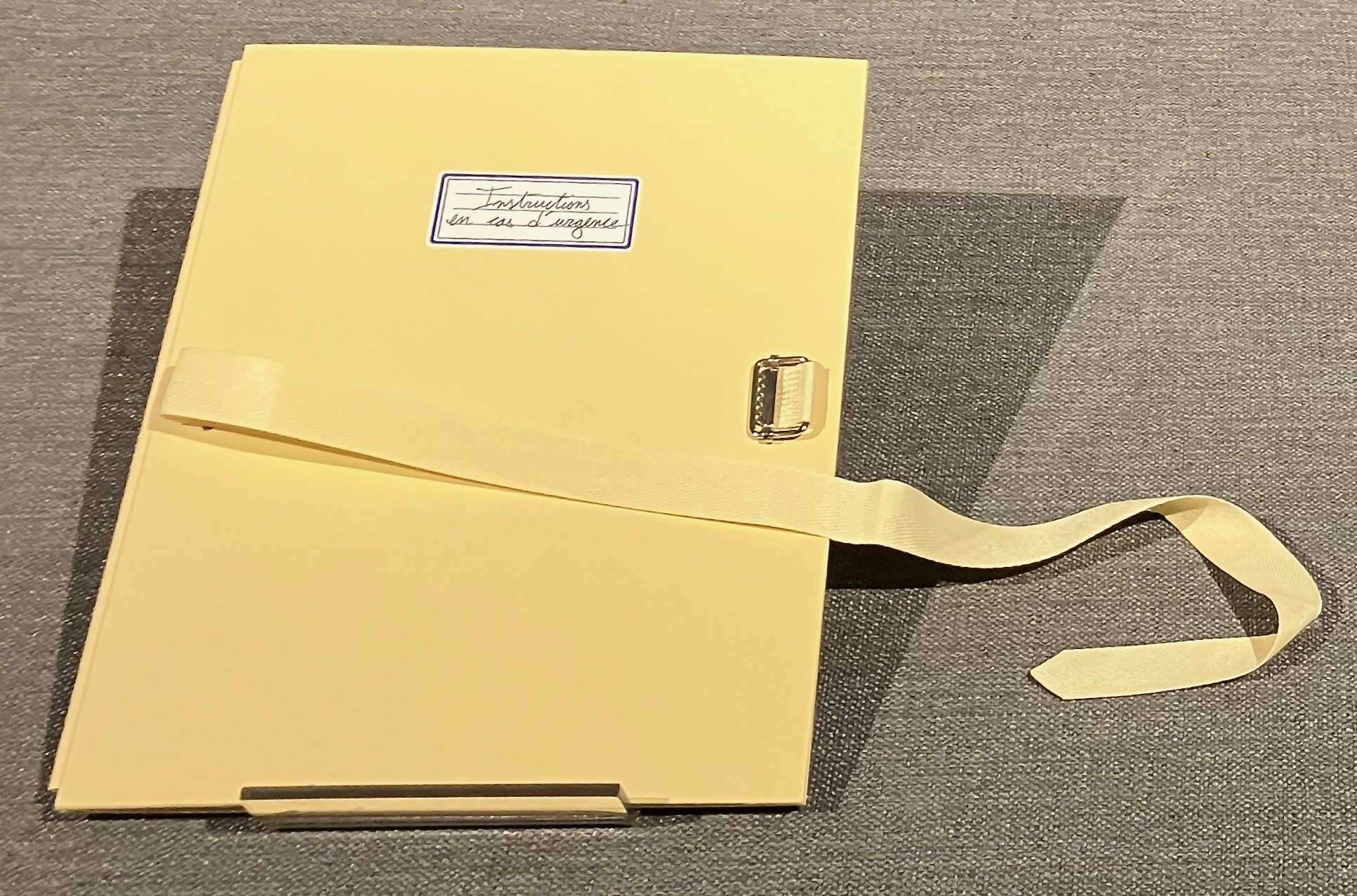
- Emmanuel & Jérôme Leglatin‘s Instructions en cas d’urgence (2021). See also vitrine 10.
- Ilan Manouach‘s Blanco (2019). See also vitrine 3.
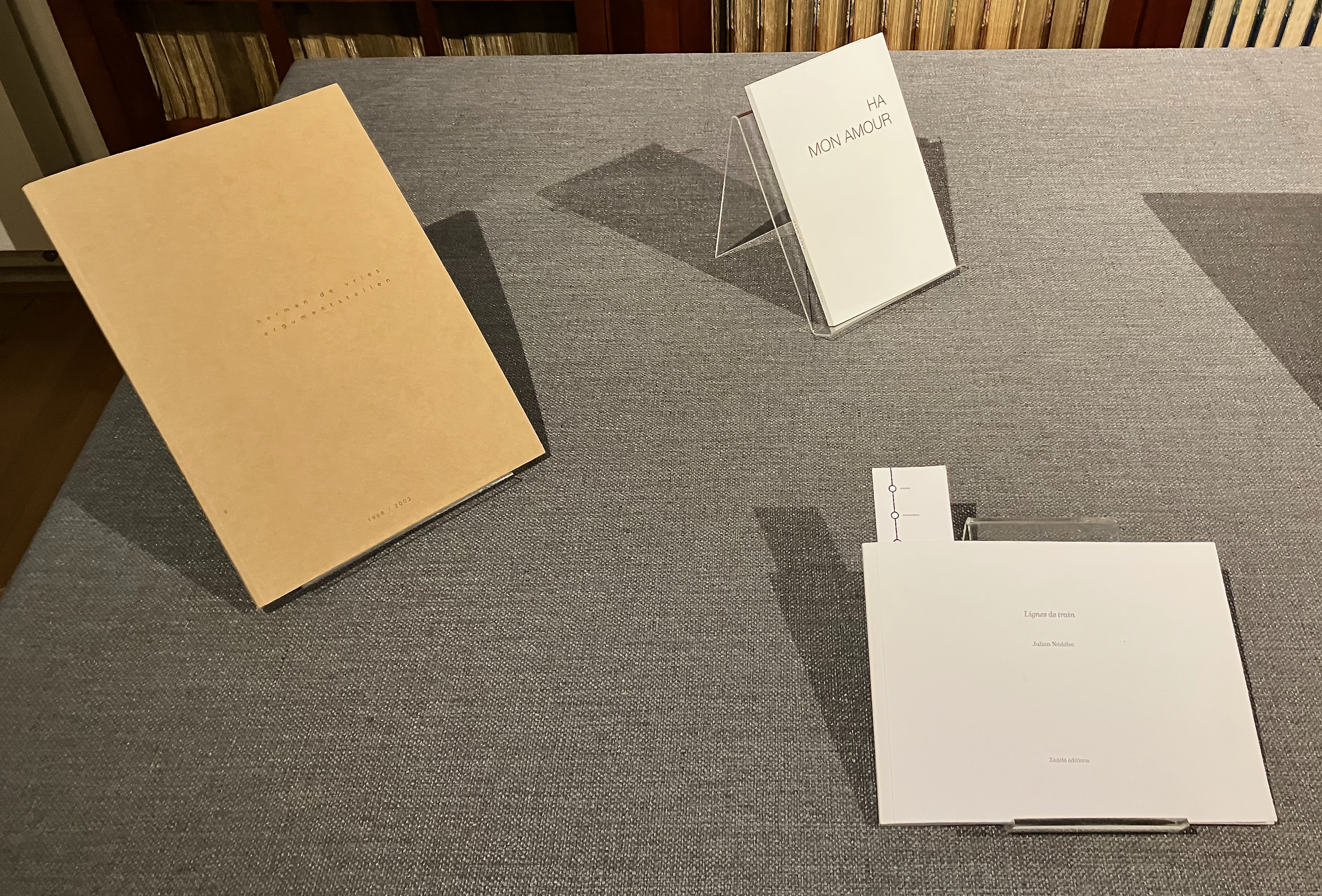
- Julien Nédélec‘s Lignes de Train (2011). See aslo vitrine 4.
- Raphaël Van Lerberghe‘s Ce Petit Livre, et (2022).
- Cécile Vandernoot‘s Ha Mon Amour (2009).
- Elsa Werth‘s Meeting Point (2022).
- Bernard Villers‘ Cristal (2012). The way the text, fluorescent paper, and white paper interact strikes up a conversation with Simon Cutts‘ The Manifestation of the Poem in vitrine 13.
- herman de vries‘ Argumentstellen (2003/project designed in 1968). See also vitrines 14 and 16.
Note:
- Bloch, R. Howard. 2017. One Toss of the Dice : The Incredible Story of How a Poem Made Us Modern. Translated by J. D. McClatchy. New York: Liveright Publishing Corporation. ↩︎
Further Reading
Cadôr, Amir. 2014. “Books about Nothing“. The Blue Notebook. 9: 15-17.
Cadôr, Amir Brito. 2016. O Livro de Artista E a Enciclopédia Visual. Belo Horizonte: Editora UFMG.
McGreal, John. 2016. It’s Nothing, Seriously. Kibworth Beauchamp: Matador.
McGreal, John. 2016. It’s Absence, Presently. Kibworth Beauchamp: Matador.
McGreal, John. 2016. It’s Silence, Soundly. Kibworth Beauchamp: Matador.
Partington, Gill. 15 September 2023. “How to read books without words”. Apollo Magazine.
Scha, Remko, Jos de Bruin and Jochem van der Spek. 2001-2005. “Nothing to read“. radical art: an analytical anthology of anti-art and meta-art. Amsterdam: Institute of Artificial Art Amsterdam. Accessed 29 July 2026.

