Alphabets Alive! – Animals

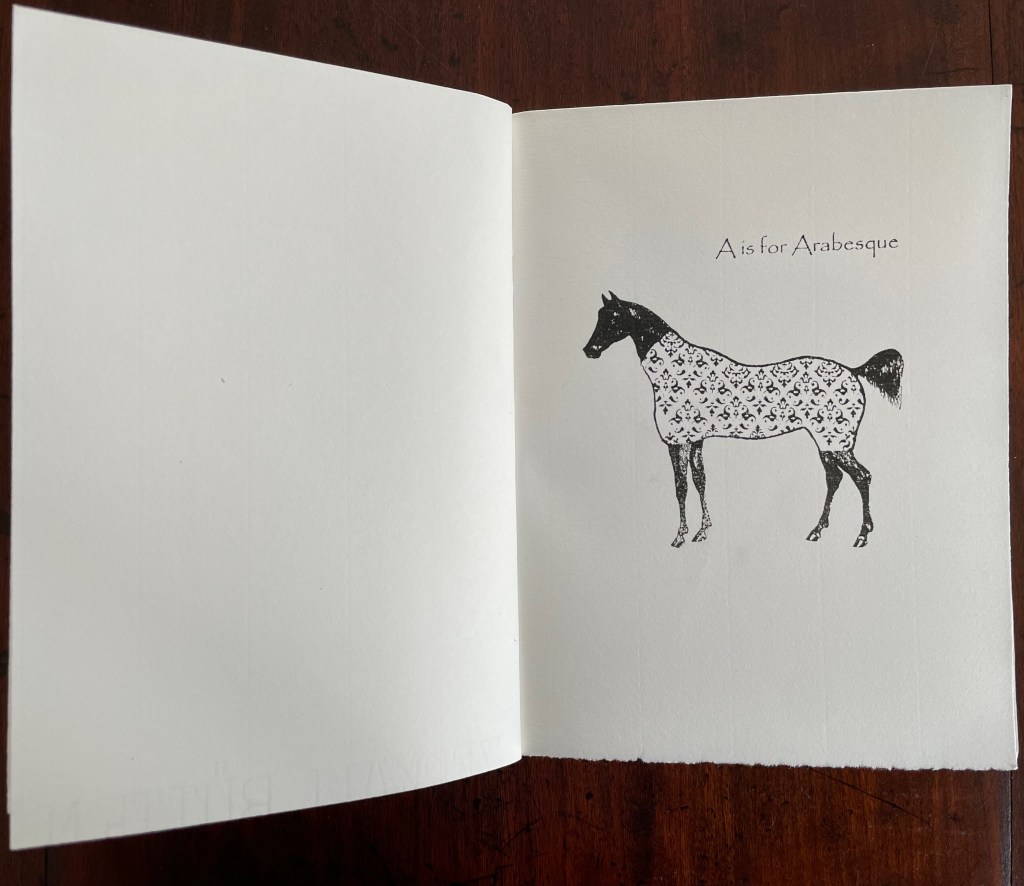
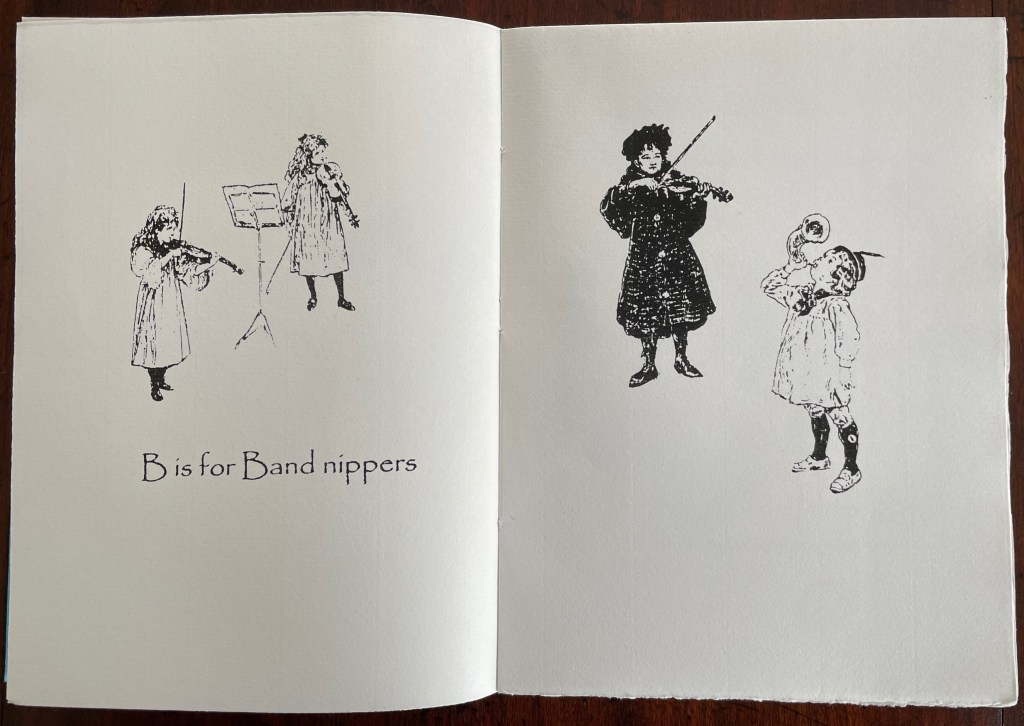
Animal alphabet books hum with imagination and wit. Animals, birds, fish, insects, even dinosaurs, decorate and transform letters, or might be created from the letters themselves. Sometimes, the animals come in disguise, or hide, only to pop out and surprise you. Perhaps the alphabet’s pictographic origin explains this animal obsession. The letter ‘A’ comes from the word ‘aleph’ meaning cow or ox, and its early letterform resembled an ox’s head and horns. [Links in the captions will take you to more images and details.]

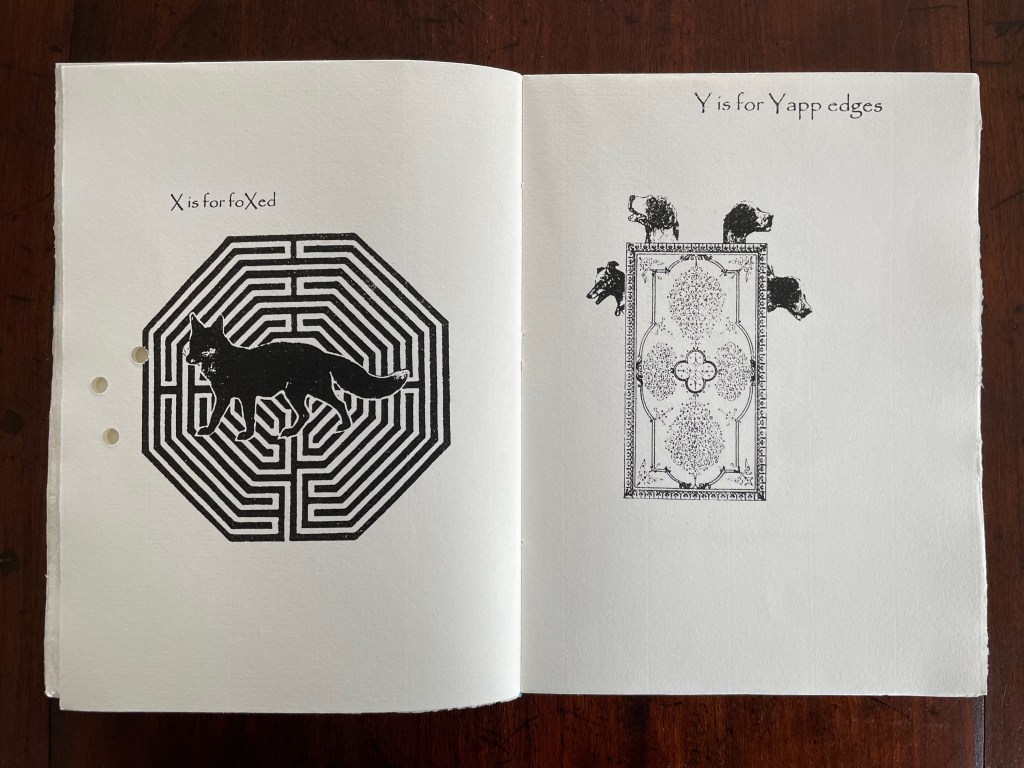
E.N. Ellis, An Alphabet (1985).* The letters Q and X always present challenges in finding suitably named animals. Ellis’s solution with X is as elegant as her engraving.

C.B. Falls, ABC Book (1923). Almost a quarter century after William Nicholson’s successful A Square Book of Animals, Falls applied his successful poster designing to this larger format.

Leslie Haines, Animal Abecedary: A One-of-a-Kind Alphabet Book (2018).* A strong revival of the surrealist collage.

Enid Marx, Marco’s Animal Alphabet (2000). Bringing together the talents of the engraver (Enid “Marco” Marx), “pochoir-ist” (Peter Allen) and letterpress printer (Graham Moss), this large-scale portfolio treads the boundary of fine press and artist’s book.

[Alphabet Leporello of dressed animals] (Paris, c. 1851) Opie T 407. The Books On Books Collection’s concentration on alphabet books falls primarily over the 20th and 21st centuries and extends the pre-1950s focus of the Opie Collection of children’s books. Together, the two collections offer a broad and deep source for exploring the links between artists’ books and children’s alphabet books as well as studying topics such as children’s literature and literacy.

Christiane Pieper & Anushka Ravishankar, Alphabets Are Amazing Animals (2003).* Alliteration is almost as frequent a feature of alphabet books as animal association.

Alan James Robinson and Suzanne Moore, A Fowl Alphabet (1986).* A superb collaboration between an engraver (Robinson) and calligrapher (Moore).

John Norris Wood, An Alphabet of Toads & Frogs (2002).* Sometimes past art abroad catches up with present American fauna of political celebrity.

Online Exhibition Bonus!

Marie Angel, An Animated Alphabet (1996); Angel’s Alphabet (1986) of exotic surprises in a more traditional alphabet book; and more surprises behind tabs in a leporello. Marie Angel’s Exotic Alphabet (1992).

Leonard Baskin, Hosie’s Alphabet (1972). Son Hosie and father Leonard unite their rites of passage: learning the alphabet and creating an artist’s alphabet book.

Michele Durkson Clise, Animal Alphabet: Folding Screen (1992) wrongfoots the reader with animal images that do not align with the expected alphabet letter or the letters of the first words in the leporello’s rhyming couplets. If the image does at least align with a word in the couplet (e.g., “whale”), that word’s first letter does not align with the alphabet letter expected for that panel.

Brian D. Cohen & Holiday Eames, The Bird Book (2013). Cohen’s engravings are finer in detail than most.

In Abstract Alphabet: A Book of Animals (2001), Paul Cox turns the alphabet on its evolutionary head. The letter A started out with the pictogram of an ox’s head and then developed into the abstract shape we associate with the sound /a/. Here, we have to work back from 26 different abstract shapes (each assigned to a letter on a fold-out flap) to figure out the name of the animal being spelled. The reversal conjures up the challenge that letters, objects and phonics present to children, and in their resemblance to a Hans Arp painting, the shapes challenge the reader to a renewed connection with art.

Roberto de Vicq de Cumptich, Bembo’s Zoo: An Animal ABC Book (2000). Where Sharon Forss and Sarah Werner use several type faces to shape their animals, De Vicq de Cumptich restricts his to Bembo.

David L. Kulhavy & Charles D. Jones, A Forest Insect Alphabet (2013). Extraordinary woodcuts by Jones, worth comparing with Cohen, Grieshaber, Marx and Robinson.

Metropolitan Museum of Art, Animalphabet (1996). Curators’ puns and wordplay with favorites from the Met.

William Nicholson, A Square Book of Animals (1900). Nicholson followed his successful An Alphabet with this book, but it was Scolar Press in 1979 that redesigned and re-originated it in this well-chosen leporello format.

Carton Moore Park, An Alphabet of Animals (1899). Unusual for its grisaille technique and restriction of color to the cloth cover.

Rose Sanderson, An Unusual Animal Alphabet (2021)

Carol Schwarztott, ABC of Birds (2020). A curious mix of traditions: Cornell box, stamp art, leporello, miniature and pocket pages.

Borje Svensson and James Diaz, Animals (1982). Alphabet block meets tunnel book.

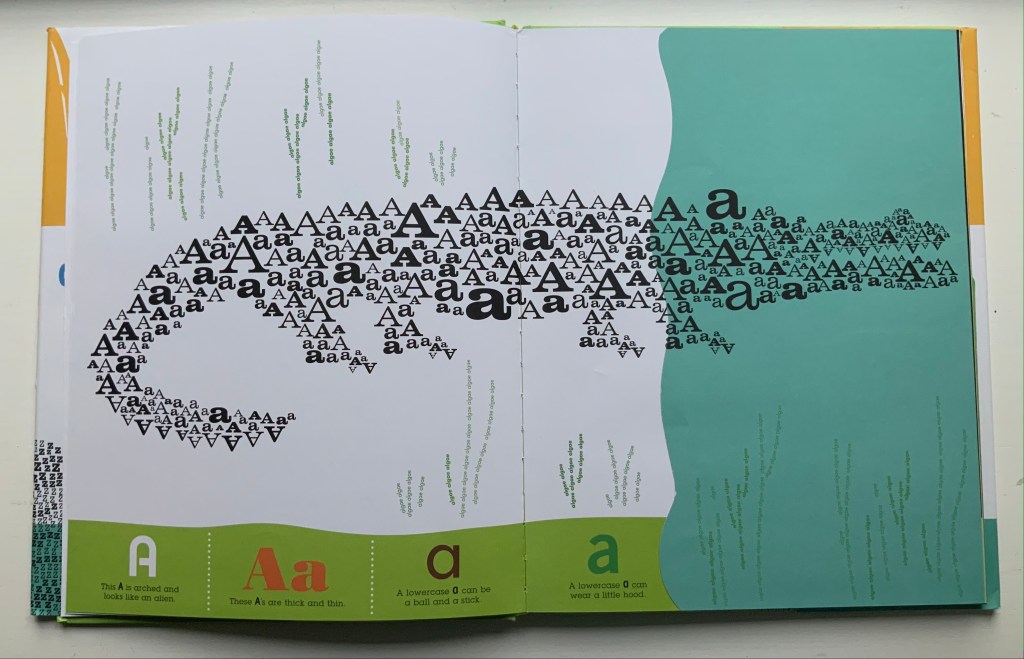
Sharon Werner & Sharon Forss, Alphabeasties (2009). Twenty-six lessons in typography and typographic artistry.

Christopher Wormell, An Alphabet of Animals (1990). A brilliant revival and extension of the lettering and pictorial style found in Fall and Nicholson.

Return to List of Displays in Alphabets Alive!

Alphabets Alive! – Color

Letters have particular sounds, so why not colors and tastes? Artists have delighted in the phenomenon called synesthesia where information seems to stimulate unrelated senses. Vladimir Nabokov experienced letters as colors, and Sonia Delaunay insists that we remember what C tastes like. The artists in medieval manuscripts painted elaborate letters to highlight important text, illuminating them with gold and color to make them ‘pop’. Květa Pacovská insists that her brightly colored letters don’t just pop, but pop up, and Lisa McGarry returns them to childhood’s alphabet blocks as a reminder: BE AMAZED.

Jean Holabird & Vladimir Nabokov, AlphaBet in Color (2005)

Sonia Delaunay, Alphabet (1972)

Květa Pacovská, A l’infini (2007)

Online Exhibition Bonus!

Return to List of Displays in Alphabets Alive!

Alphabets Alive! – & is for Ampersand

Sometimes called the 27th letter of the alphabet, the & – or the ampersand (meaning ‘and’ by itself) – has long provided artists, typographers and designers with the opportunity to flourish and strut their stuff. Such a curious sign also attracts a fair share of punnery and fun – from Bruce Rogers’ “Ampers&paper” to Jennifer Farrell’s The Well-Traveled Ampersand in which she shapes ampersands with dozens of typographic ornaments to create characters matching the styles of her favourite typographers and their cities.

Paul A. Bennett et al., Diggings from Many Ampersandhogs (1936). The Typophiles was a US-based society of bibliophiles, talented typographers and designers, and incorrigible punsters. The binding of so many varied types of paper (including sandpaper) in such a small volume is a feat in itself.

Peter Criddle, Commend Me to the Ampersand (2018)

In this print from Jennifer Farrell’s The Well-Traveled Ampersand (2015-17), she has used typographic fleurons, dashes, ornaments and and several small train carriages to capture Edward Johnston’s ampersand from the typeface designed for the London Underground.

Russell Maret, Hungry Dutch (2016-20). Subscription to the creation of the Hungry Dutch typeface earned its sponsors a matrix, sort and pattern on completion. For the Books On Books Collection, the ampersand was the obvious choice.

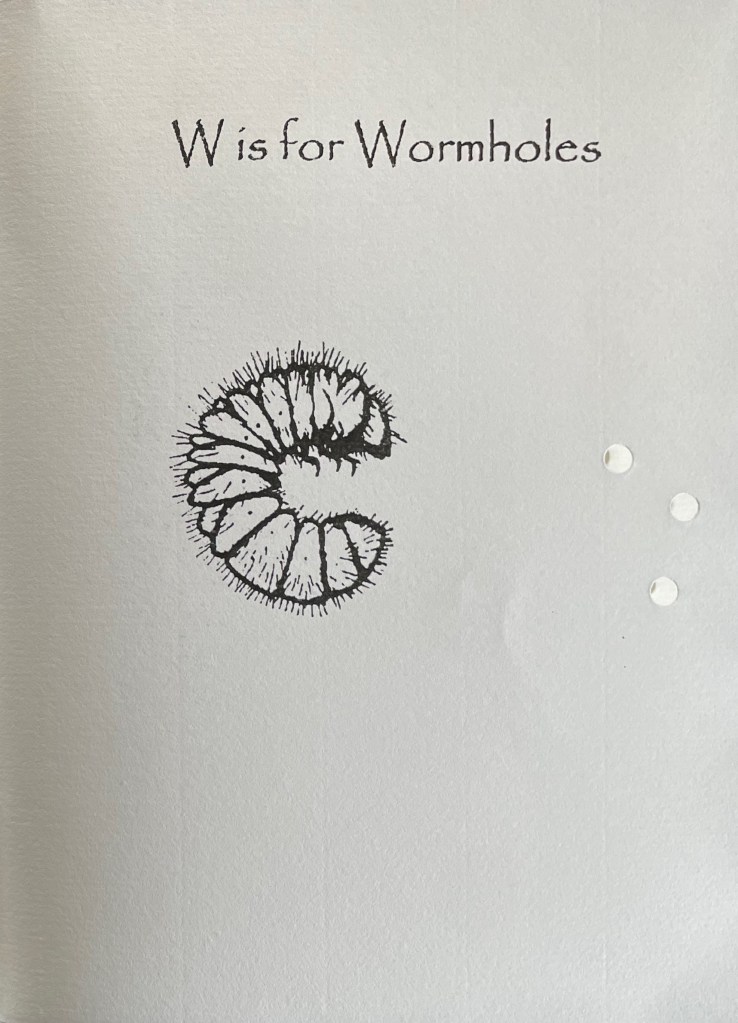
Andrew Morrison, Ampersand& (2007). A collector of sets of woodcut type and sorts, Morrison could not deny the ampersands (wormholes and all) their own type book.

Bruce Rogers, Peter Piper’s Practical Principles of Plain & Perfect Pronunciation (1936) Johnson e. 2961. For Diggings from Many Ampersandhogs (see above) ,Rogers created a reduced version of this set of pages. In both cases, he really did use sandpaper.

That Company Called If, Alphabooks – Ampersand – & (2015). Most altered books aim higher than the decorative, but no celebration of the ampersand in book art would be complete without this carving of a volume from the Readers’ Digest library.

Return to List of Displays in Alphabets Alive!

Alphabets Alive! – Body

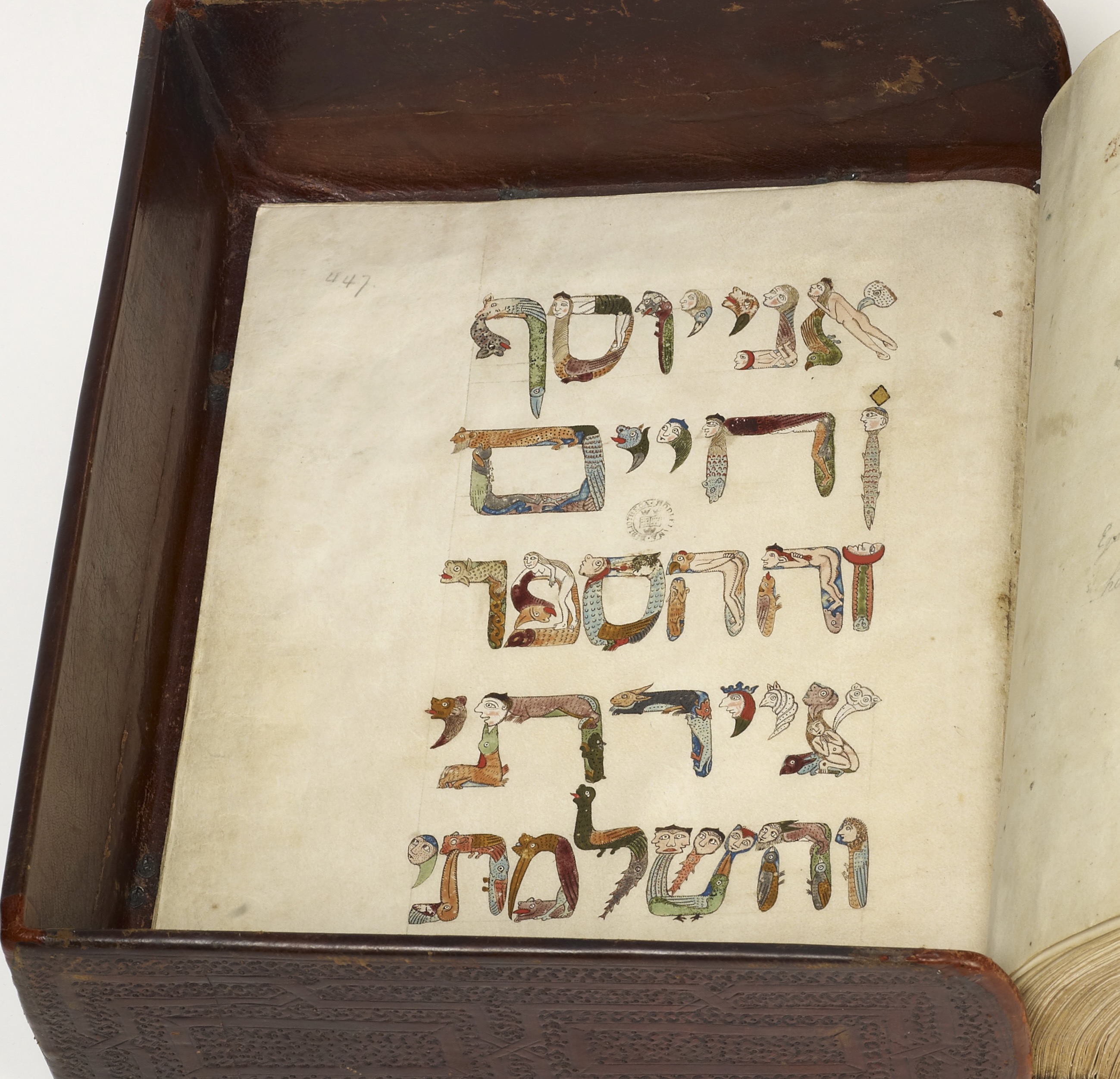
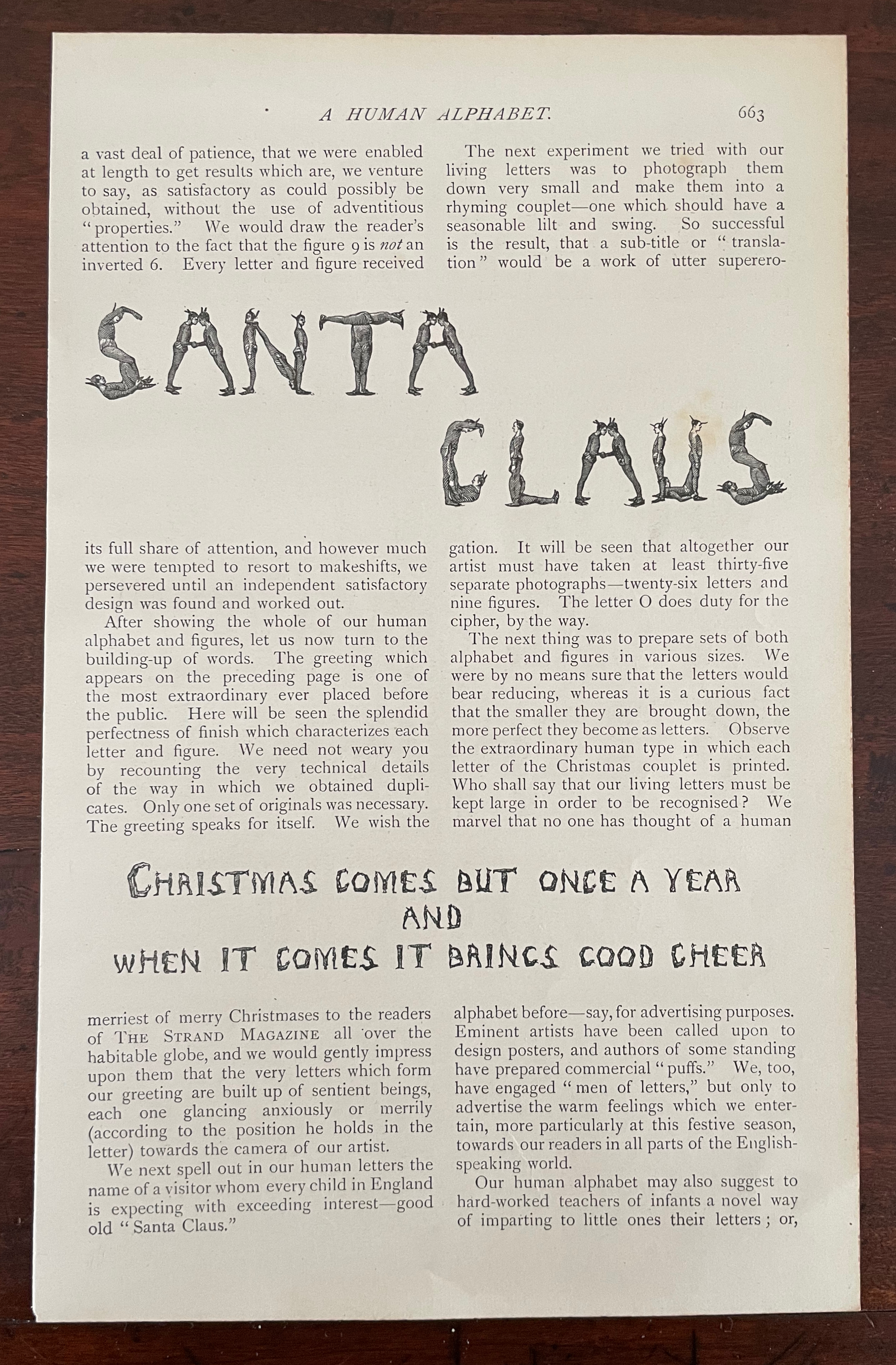
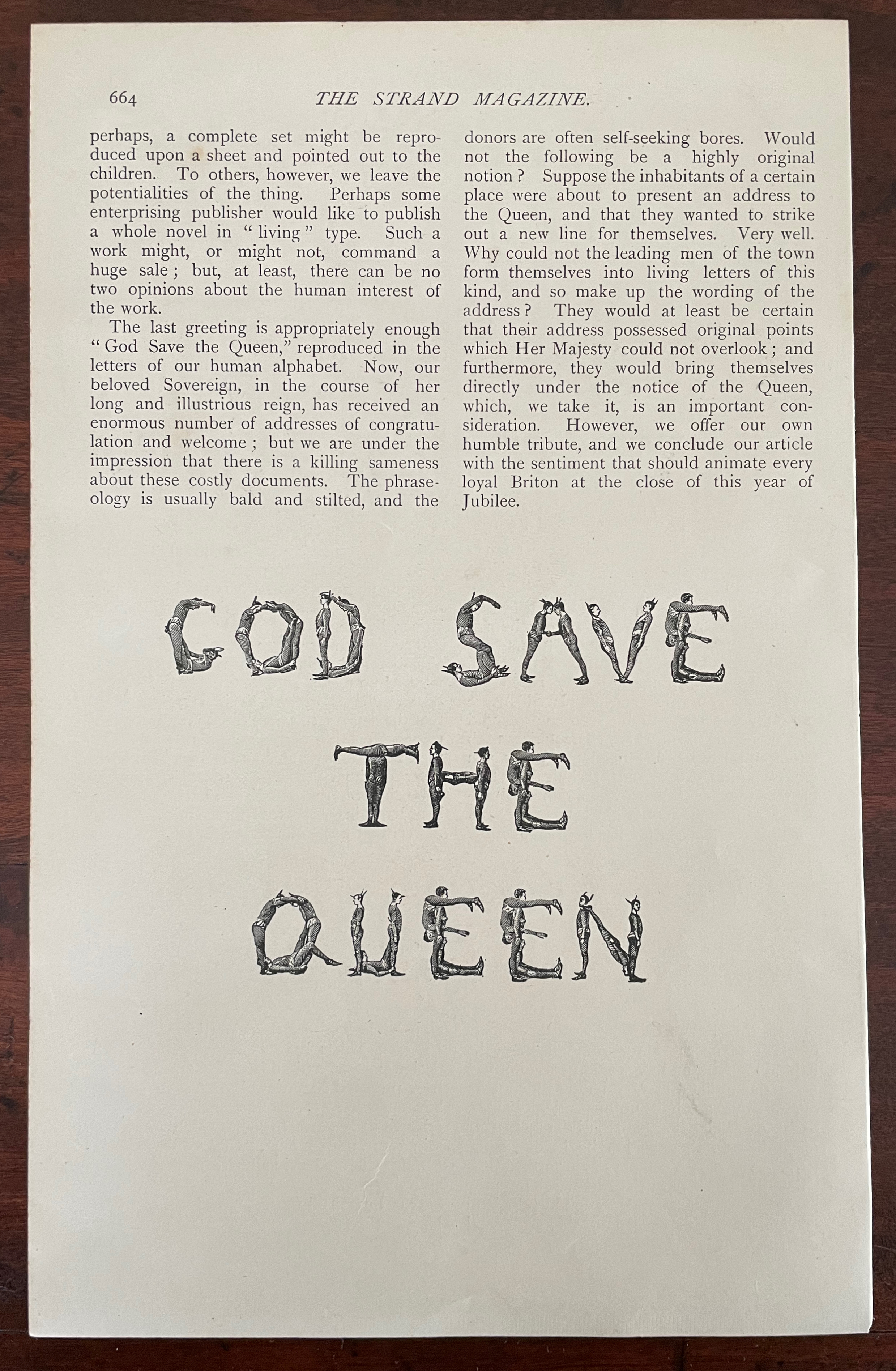
Can you bend your body into the letter B? Too easy? What about the letter M? Ancient Greek playwrights had their characters mime and dance the letters of the alphabet, and the Czech writer Vítězslav Nezval has carried on this tradition. Lisa Merkin’s alphabet blocks also follow the tradition of manipulating bodies to make letter shapes. Which alphabet is the most acrobatic? Take a look at the characters making up the Hebrew letters in the Kennicott Bible. What word would you spell out with your body?

Anthon Beeke, Body Type (2011)

Barbara Crow, An acrobatic alphabet (1986) 171 d.769

[Woodcut block] (England, 18th century) Douce woodblocks f.2. For more on these woodcut letters, see “‘I dare say will please you when you see them’ – more ‘new’ wood-blocks of an old grotesque alphabet.” 18 April 2024. Andrew Honey (Bodleian and English Faculty, Oxford).

Hebrew Bible, La Coruña (Spain, 1476) MS. Kennicott 1

Lisa Merkin, Bodies Making Language (2021)

Vítězslav Nezval, Alphabet (1926/2001)

Online Exhibition Bonus!

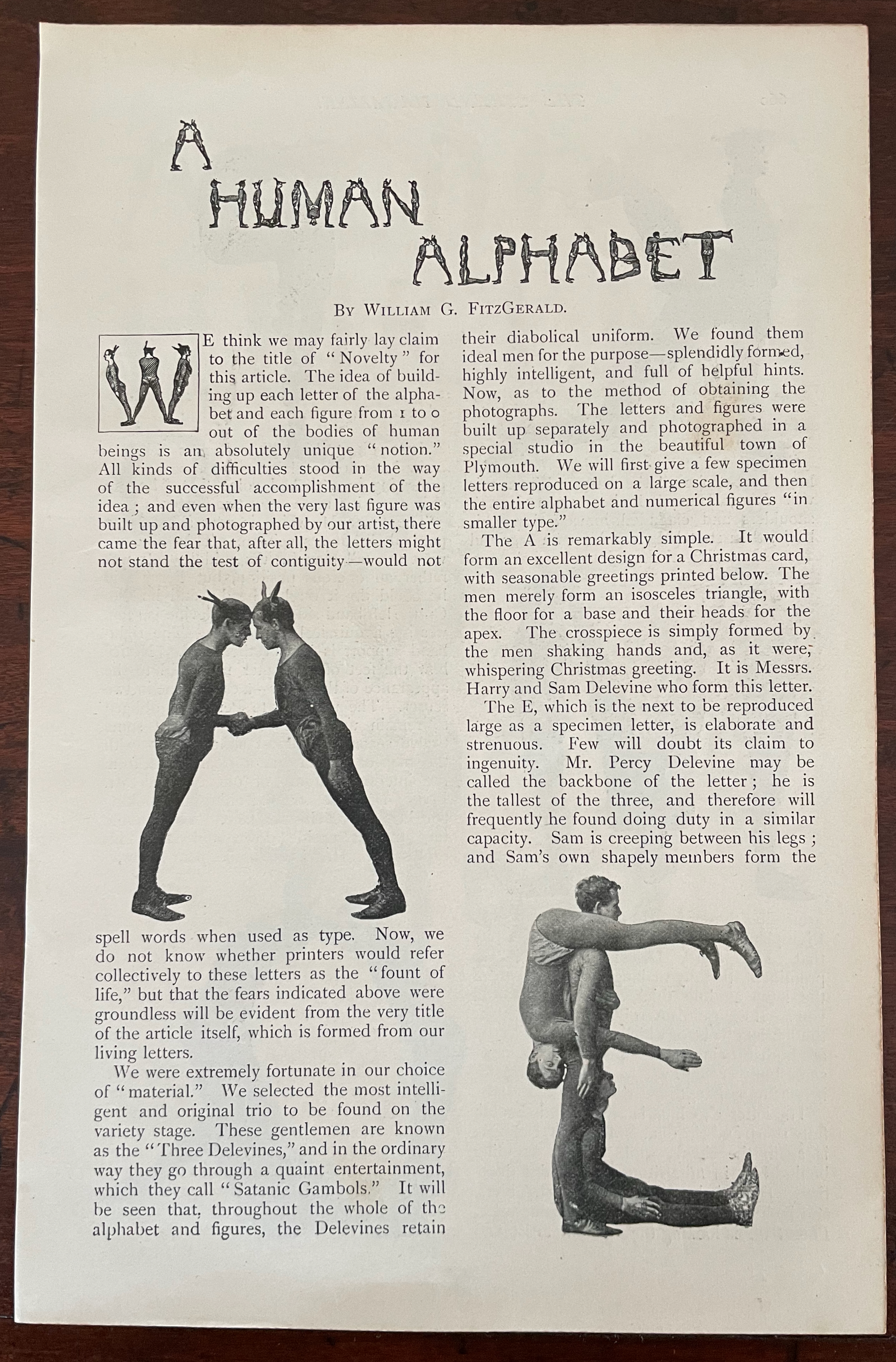
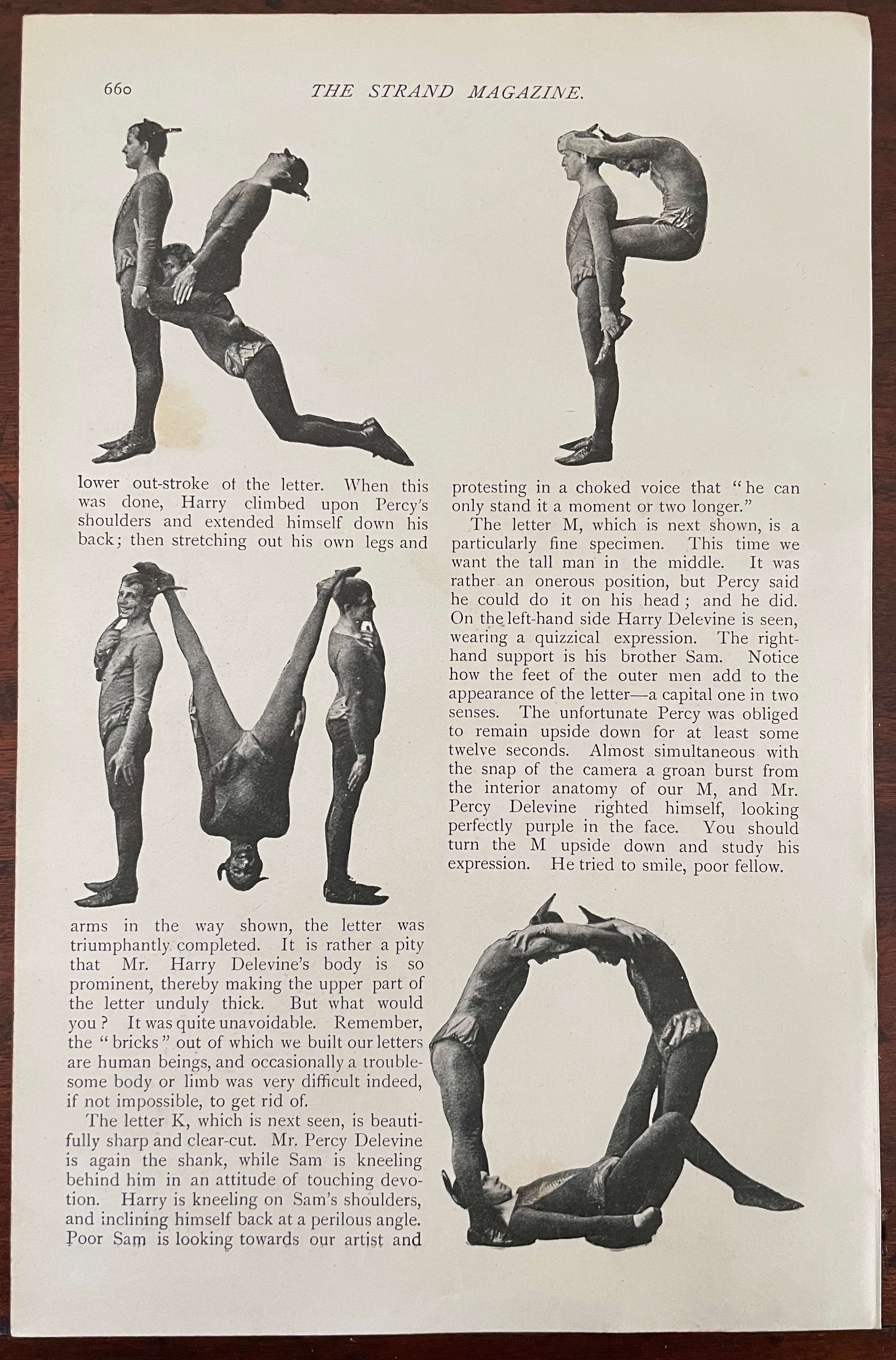
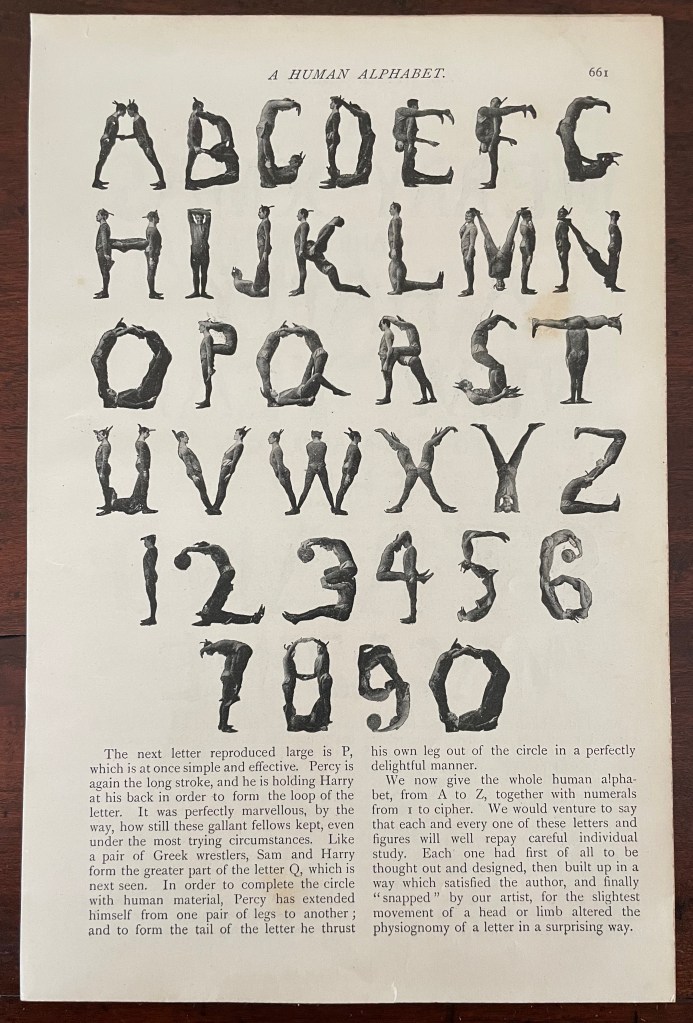
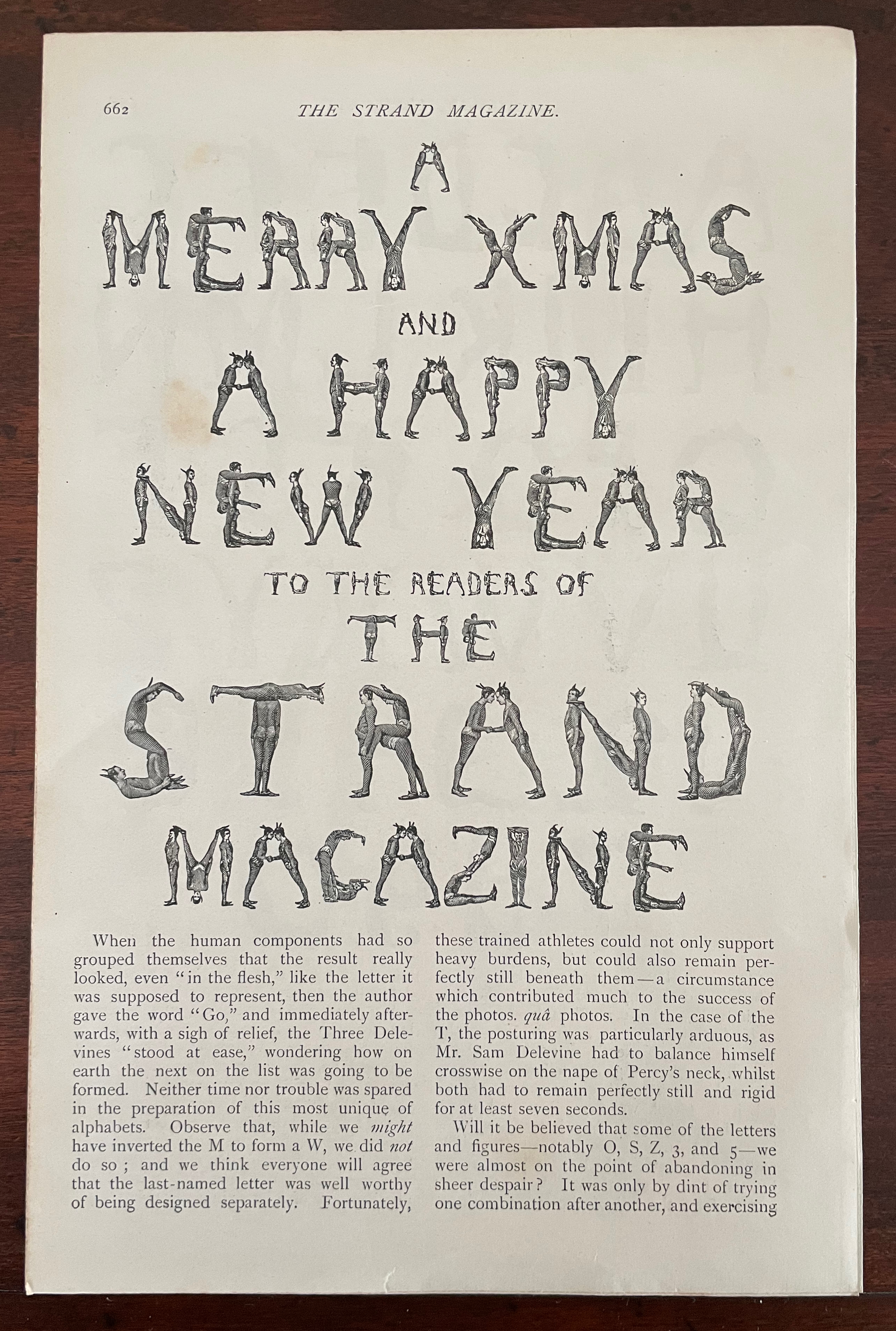
Only remembered after the Alphabets Alive! exhibition opened at the Bodleian in July 2023, The Three Delevines and W.G. Shepherd (their impresario on the occasion in 1897) have nevertheless demanded an appearance online among the other embodied alphabets (or lettered bodies) included in the “B for Bodies” display.

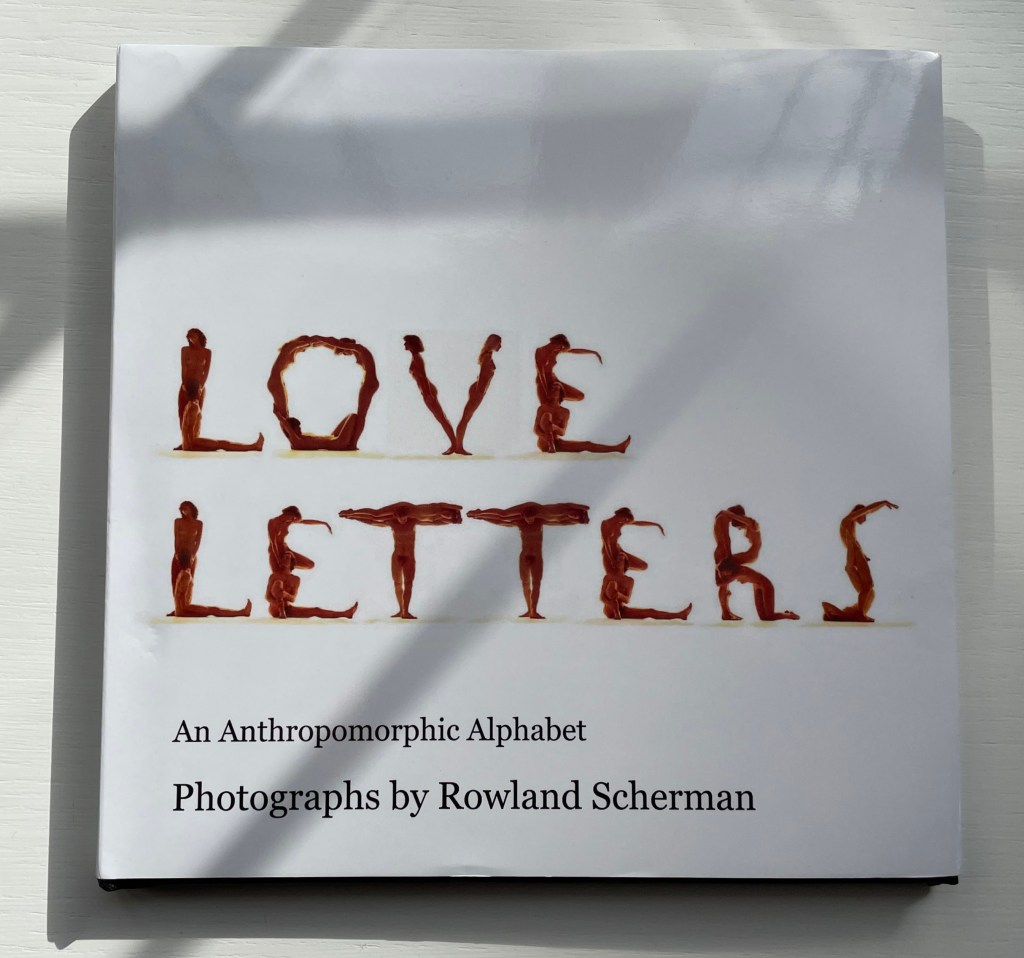
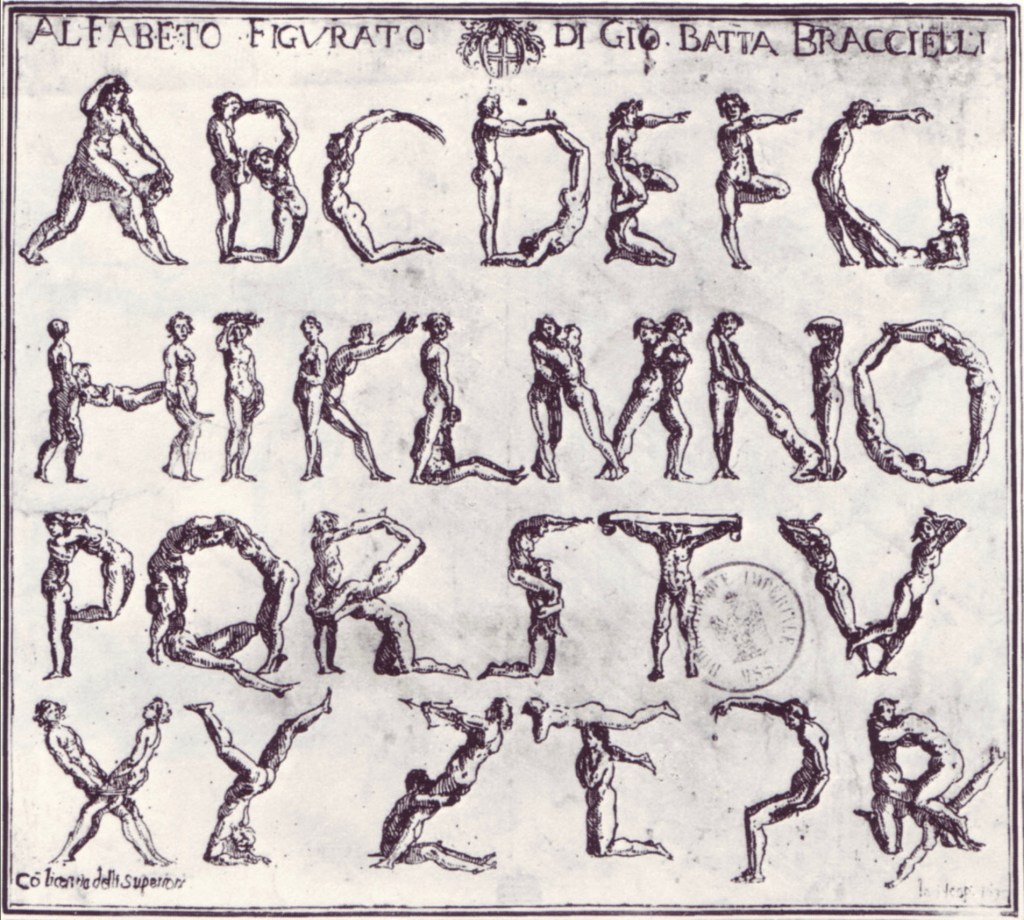
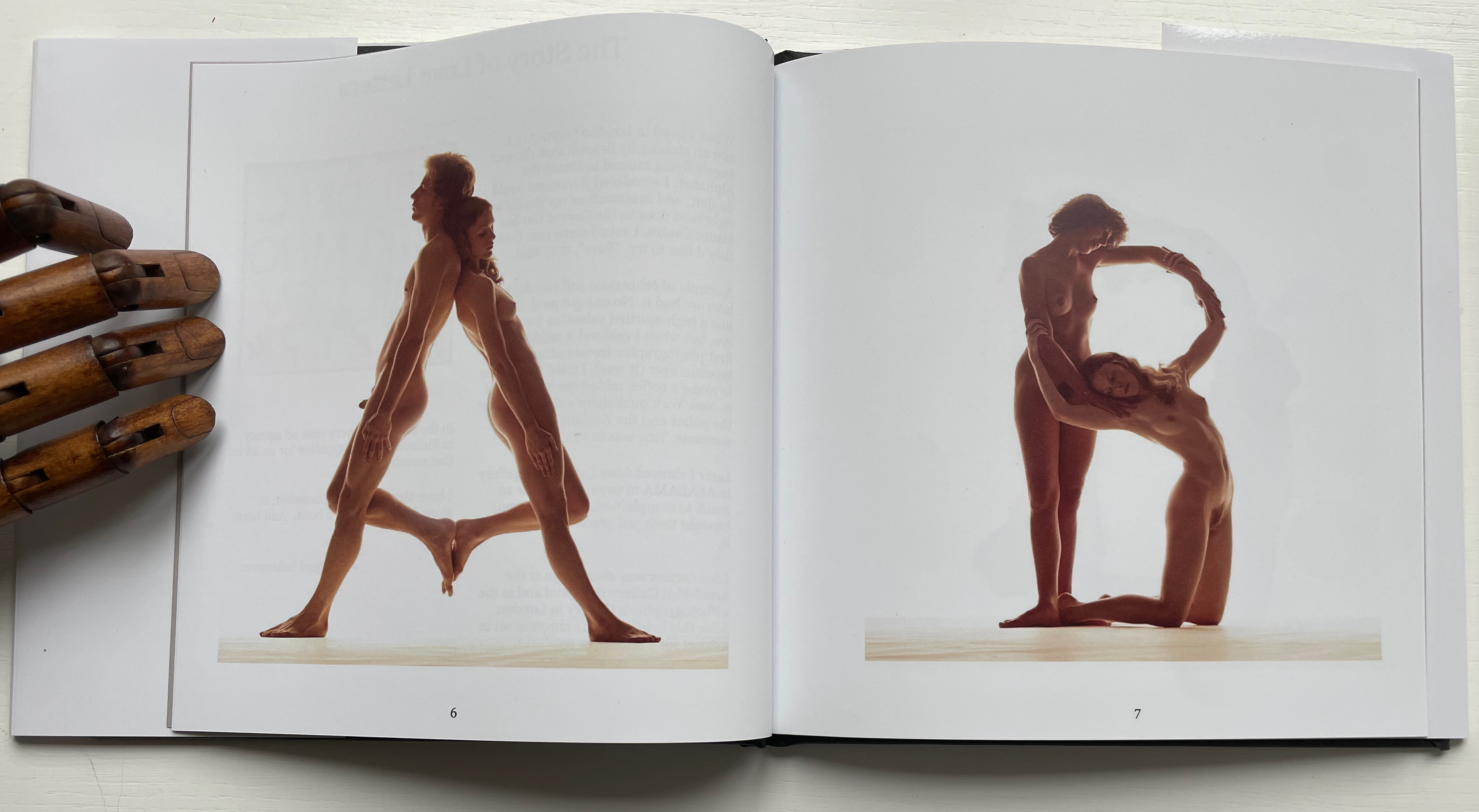
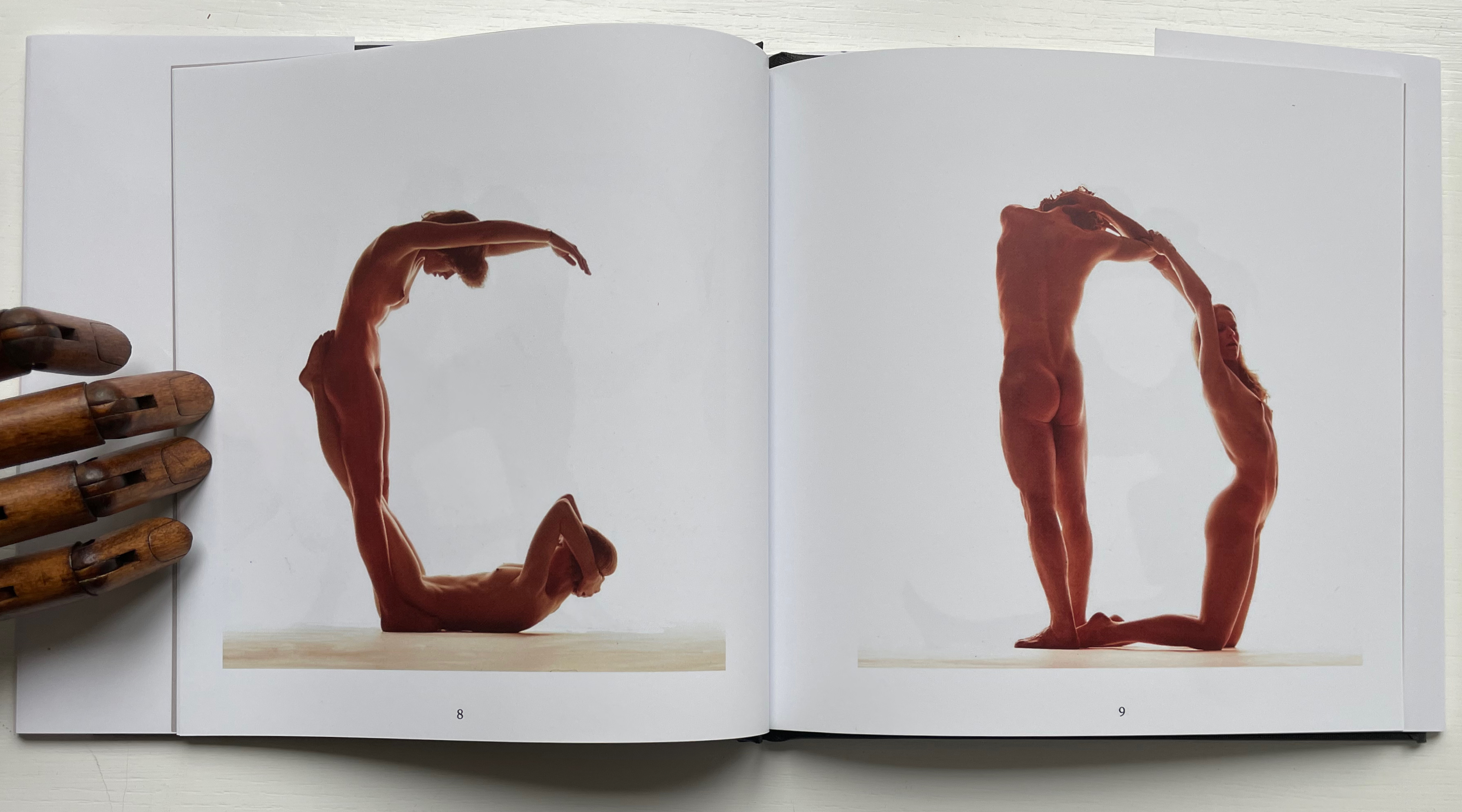
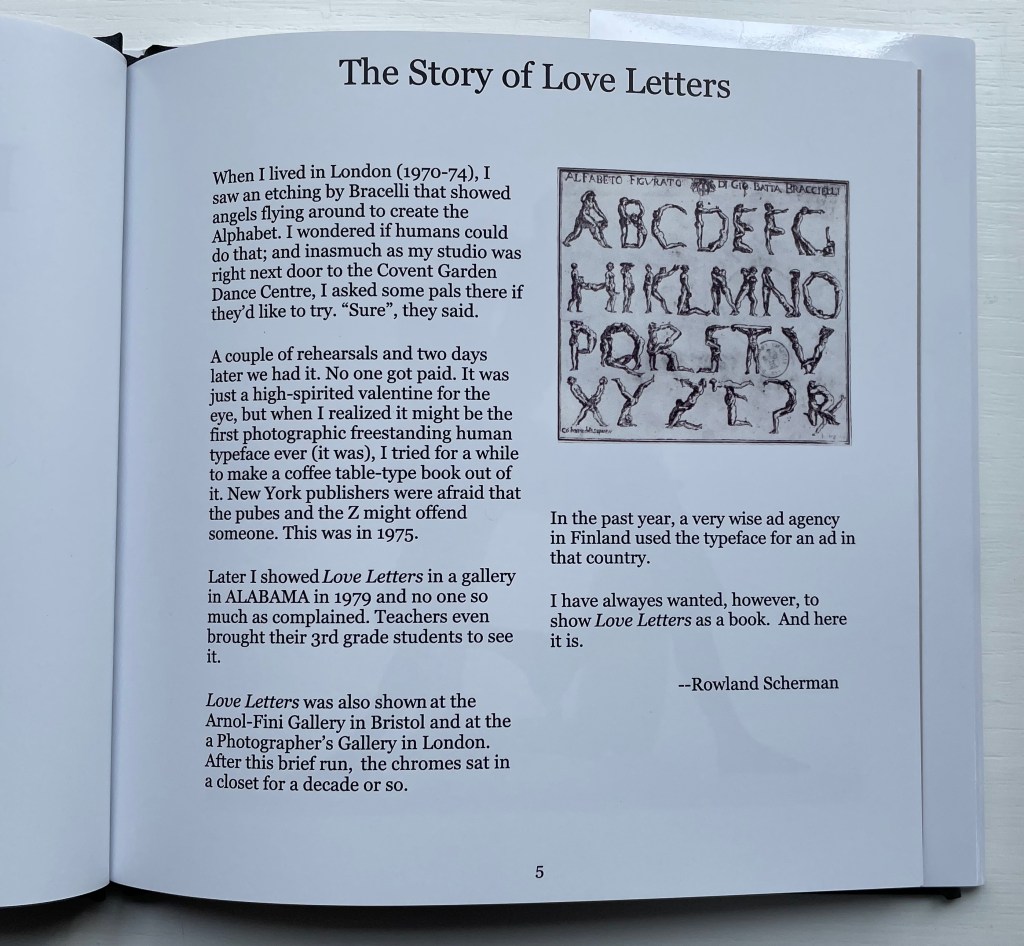
First photographer for the Peace Corps in 1961, Rowland Scherman has been camera in hand for the Beatles in ’64, Bob Dylan’s Greatest Hits album in ’68. and Crosby, Stills and Nash for their first recording in 1969. A bus ride in London in the 1970s revealed to him Giovanni Battista Bracelli’s “Alfabeto Figurato”, which led to another first: the first photo of a freestanding nude human alphabet: Love Letters (2008).

Return to List of Displays in Alphabets Alive!

Alphabets Alive! – Calligraphy and Design

Artists use knives, thread, wood, handmade paper, wire and other tools to execute their beautiful writing. Some create their designs with straight edge and compass – or with punch, matrix, mould and molten metal – or with the computer and even artificial intelligence.

Anne Bertier, Dessine-moi une lettre (2004)

Giovanni Francesco Cresci, Il perfetto scrittore (c. 1570) Johnson P 170

Bruce Rogers, Champ rosé (1933)

Steven Ferlauto and Jeffrey Morin, The Sacred Abecedarium (2000)

Francesca Lohmann, An Alphabetical Accumulation (2017)

Fra Luca Pacioli, De divina proportione (Venice, 1509) Arch. B d.24 (2)

Yevhen Berdnikov, Paper Cut Alphabet (2023)

Online Exhibition Bonus!

Cathryn Miller’s L is for Lettering (2011) is a brilliant example of the book artist’s rite of passage: make an alphabet book, but make it new.

Tauba Auerbach has made the alphabet her life’s work. How to Spell the Alphabet (2007) uses the title of one of her best-known works. A work of ink and pencil on paper (2005), it begins “EY BEE CEE DEE” and was featured in MoMA’s “Ecstatic Alphabet” exhibition (2012). Her artistic playfulness makes the letters of the alphabet self-referential and ecstatic (“to stand outside themselves”). Another route to this is what she calls “letter worship” as demonstrated in this homage to another artist of the letter: Paulus Franck.

Thanks to the editors Joseph Kiermeier-Debre and Fritz Franz Vogel, we have this facsimile edition of Paulus Franck’s  Schatzkammer, Allerhand Versalien Lateinisch vnnd Teutsch (1601/1995), a “treasury of all manner of German and Latin ornamental letters. The editors neatly use the margins of their book to add to the historical context. On the verso page, they have the geometrically controlled design of Albrecht Durer (1525), and on the recto, the exuberance of John Seddon (1695).

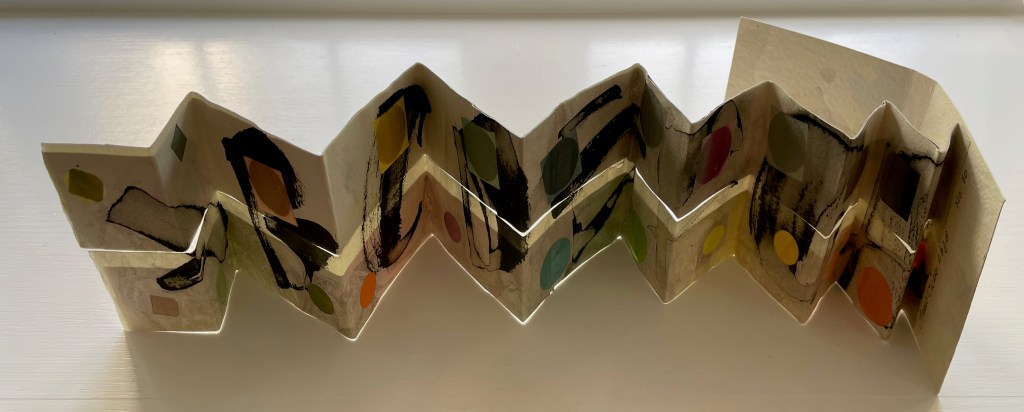
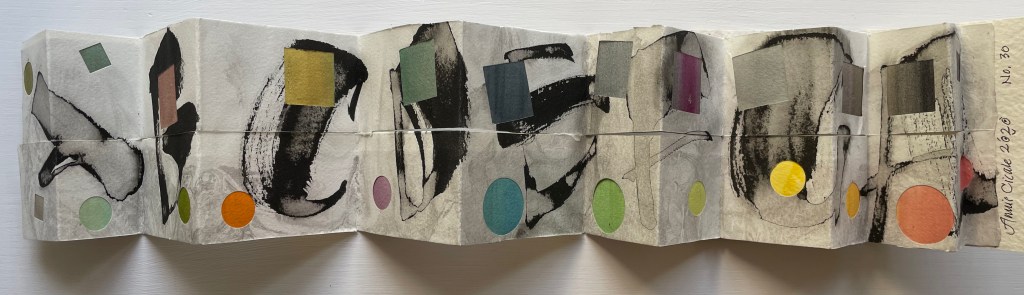
Another lifelong devotee of the alphabet is Annie Cicale. Her Patterned Alphabet (2013) is an extended dance of contrasts and complements with printing, paper and patterns.

Not quite an alphabet book but clearly a children’s book and artist’s book at play with the alphabet is Kurt Schwitters’ Die Scheuche (1925/1965), which might send you flying over to the display with Roberto de Vicq de Cumptich, Bembo’s Zoo: An Animal ABC Book under Alphabets Alive! — Animals.

Kurt Schwitters, Die Scheuche [The Scarecrow] (1925/1965)

Return to List of Displays in Alphabets Alive!

Alphabets Alive! – The ABCs of Form & Structure

“The shapes a bright container can contain!” (Theodore Roethke)

Artists’ books take on as many structural forms as artists can imagine. They may take them from the organizational structures of the traditional codex: page, columns, front and back matter, chapter, part, volume and binding. They may take them from ancient structures: the scroll, leaf books or the orihon (what the West calls the leporello, concertina or accordion structure). Or take the form of a simple wrapped or boxed portfolio. They may adopt more playful forms — flipbook, flagbook, tunnel book, volvelle and more — many of which have a long tradition in children’s books, especially the alphabet book.

When the letters of the alphabet are added to these structural sources of inspiration, a kaleidoscope of bright containers emerges, so let’s begin with Kathleen Amt’s Kaleidoscopic ABCs. [Links in the captions will take you to more images and details.]

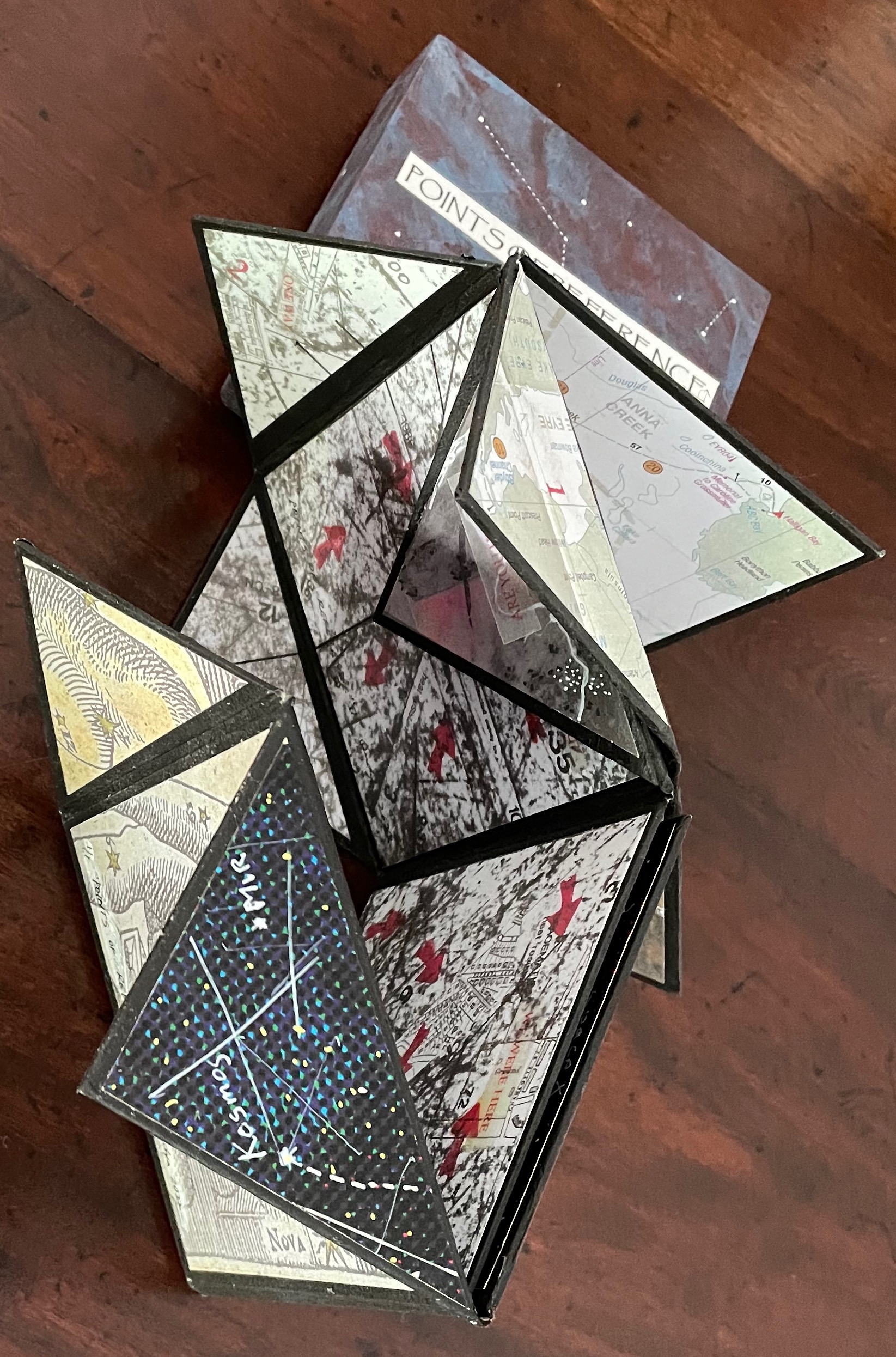
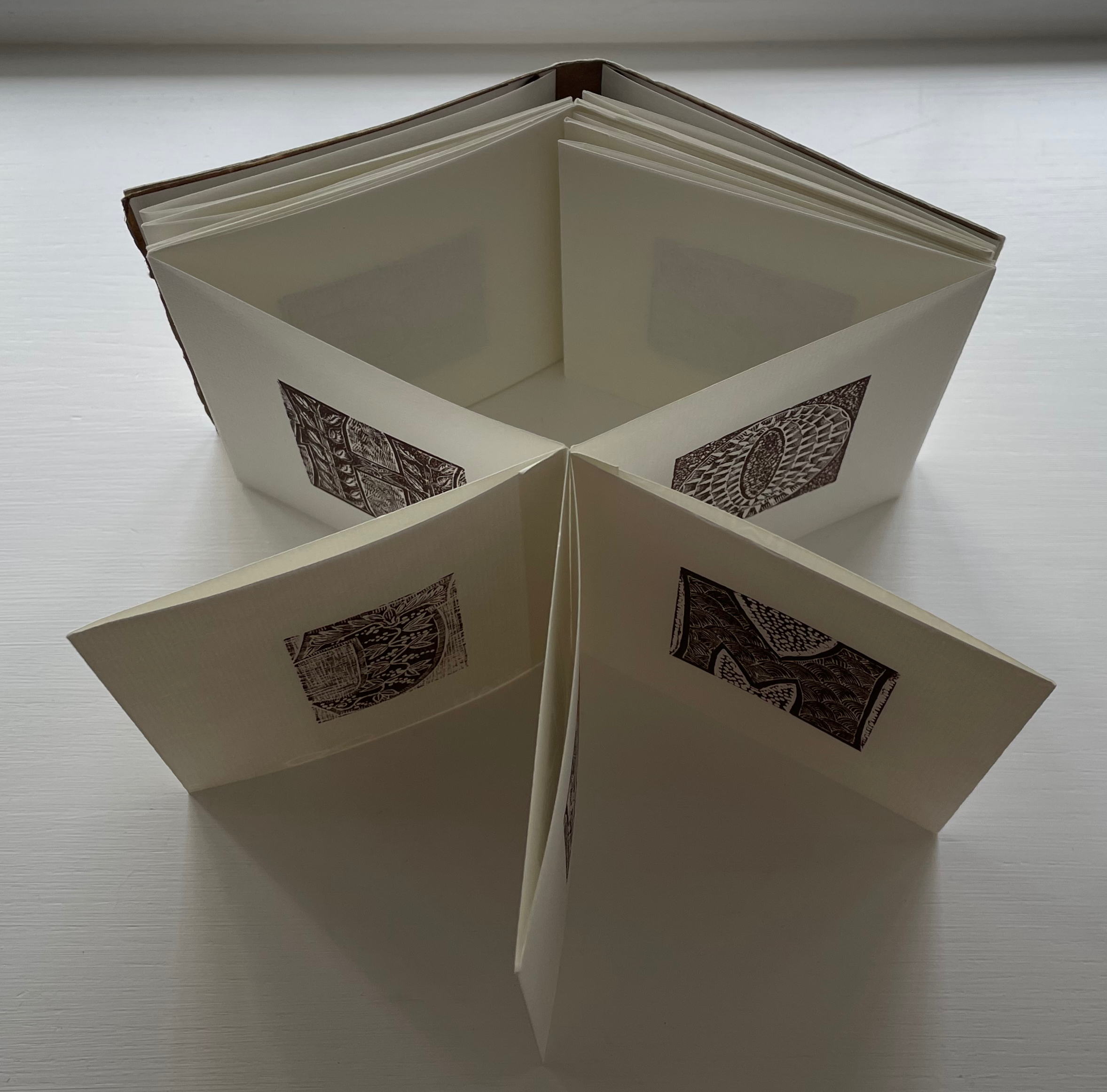
Kathleen Amt, Kaleidoscopic ABC’s (1991)*. What rests inside the paper box is a flexagon, six paper pyramids bound together to create a “fidget toy” alphabet book of 24 “pages” (4 panels x 6 pyramids) to be read by turning it inside out again and again. Look for the tricky panel page at the end.

Matsumasa Anno, Anno’s Magical Alphabet (1981)*. An anamorphic alphabet requires great skill from the illustrator and a bit of effort from the reader. To read the pages of this alphabet, the reader removes a piece of mirrored paper from the envelope at the back of the book, furls it into a column and places it in the center of each page. Then the image at the bottom and the letter at the top of the page take their proper shapes in the mirror. To see the letter, though, the reader must spin the page around or go to the other side of the table. The physics of vision meets the physics of reading.

Marion Bataille, ABC3D (2008).* More than an alphabet pop-up book, this is a book of shapes, moving parts, optical illusions and visual puns. It demonstrates Bataille’s preeminence as a paper engineer and book artist.

Carol DuBosch, Rainbow Alphabet Snowflake (2013).* Magnets hidden in the front and back covers hold this star book open in its standing sculptural form.

Karen Hanmer, The Spectrum A to Z (2003). Compare this tunnel book with Amy Lapidow’s below. Such similar concepts but distinctive interpretations.

Helen Hiebert, Alpha Beta (2010).* In this lantern-structure book, each panel displays an alphabet letter cutout casting a shadow against a second layer of handmade paper. 

Ron King, Alphabeta Concertina majuscule (2007) and alphabeta concertina miniscule (2007). On one side, the uppercase of A-M (or a-m), and on the other, that for N-Z (or n-z), these works combine pop-up structure with the double-sided concertina (or leporello). It’s surprising how little of each letter we need to recognize it whether it is lowercase or uppercase.

Ron King, ABC Paperweights .* Not really “bookish”, but they display in a pure sculptural form the artist’s eye for the minimal lines and spaces in the three basic geometric shapes — triangle, square and circle.

Amy Lapidow, Spiralbet (1998).* The spectrum of colors and the sequence of A to Z are so locked in a spiral that perhaps this tunnel book should be termed a “funnel book”.

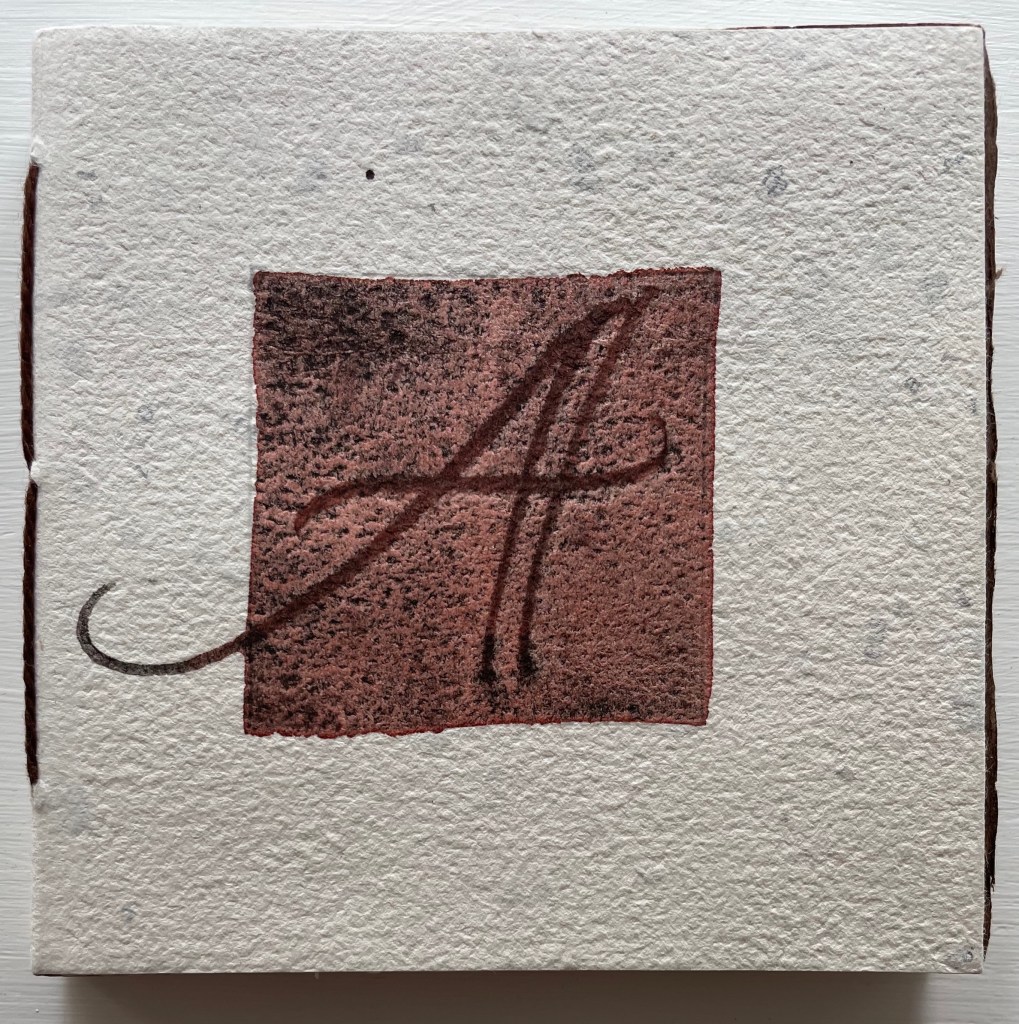
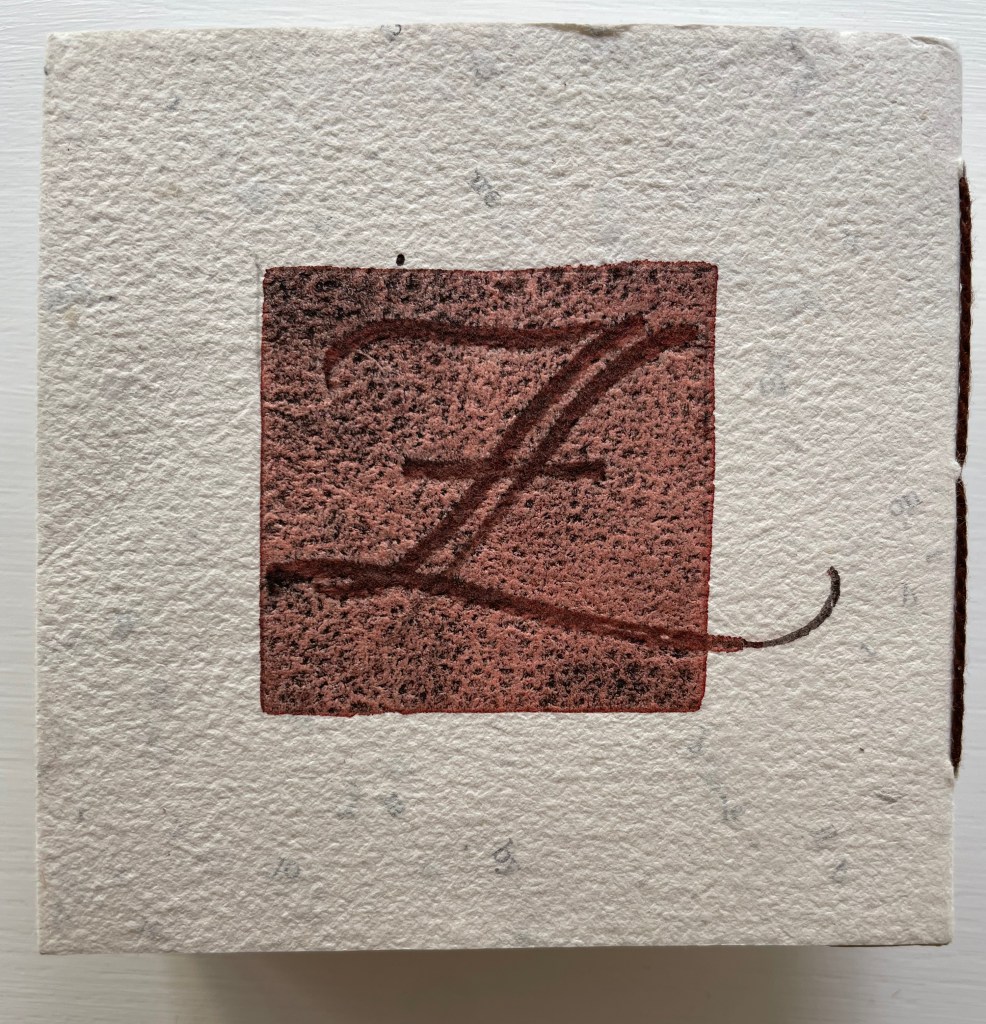
Scott McCarney, Alphabook 3 (1986).* In this two-volume leporello, the cover wrap for the first volume is cut, tabbed and slotted to suggest the letter A; that for the second, to suggest the letter Z. Like three-dimensional stencils, the letters show multiple ways in which the space inside a letter and outside that letter combine to define the letter.

Lisa McGarry, Twenty-six/Fragments (2012).* Although it folds down into a nearly miniature book, this meander fold book unfolds into a poster-sized single sheet that, like several works here, takes its artistic inspiration from how little it takes to be able to identify the letters.

Patrice Miller (Edward Gorey), The Eclectic Abecedarium (2022).* The flag-book structure, which has the reader twisting and peering from so many angles, provides an ideal form with which to celebrate Edward Gorey’s eclectic vignettes and mysterious rhyming couplets.

Jeff Morin and Steven Ferlauto, Sacred Space (2003).* This flat-pack kit of parts becomes a model of the collapsible and portable shed celebrated as the sacred space in the book that comes in the wooden box holding the flat-pack kit.

Published to commemorate the Movable Books Society’s 25th anniversary, A to Z Marvels in Paper Engineering (2018) is aptly subtitled. A video created by Christopher Helkey gives 26 brief cameos to the contributing artists in which they demonstrate those marvels.

An alphabet-related work that underscores Picasso’s calling Bruno Munari “our Leonardo” is ABC con fantasia (1973/2008). If we are to believe Fra Luca Pacioli, it was Leonardo da Vinci who inspired his “straight lines and curves” exposition for creating letters. Following in their footsteps, Munari provides the linear and curvilinear basics for the collector and offspring to join the game.

Bruno Riboulot, ABCD’Air (2005).* Codex of letters made from the “air” around and in them — formed by cut0uts, torn pages and “reveals” with different colored papers.

Merrill Shatzman, Calligrafitti #3 (2011).* While there are several leporellos on the exhibition, this one displays the letters of multiple alphabets in an intricate, handcut form.

Emmett Williams, abcdefghijklmnopqrstuvwxyz (1963).* In progress More than seven feet in length, this alphabet scroll was originally published around 1961 by Verlag Kalender, the same publisher that published the Kalender Rolle, whose form influenced this work. Intended for performance, the scroll is gradually unfurled and read aloud.

Online Exhibition Bonus!

Helen Hajnoczky, alpha seltzer (2023)*. Meant to hang from its beginning or ending loop and be read vertically to see the alpha seltzer tablets fizzing down or floating up, this double-sided structure is a blend of the double-sided leporello and palm leaf structure.

Karen Hanmer, A²Z (2013). In progress. As this flip-book shows, there is more than one way to get from A to Z. Scott McCarney’s Alphabook 13 (below) provides another.

Ron King, The White Alphabet (1984). This double-sided leporello’s larger scale offers another opportunity to explore how light, paper, folds and cuts interact to provide the simple clues we need to distinguish a letter — and, by comparing it with the smaller versions, the chance to see how King has changed those sculptures over the years.

Scott McCarney, Alphabook 13 (1991). Another flip-book (see Helen Hanmer’s above), but only the A and Z appear.

Scott McCarney, Alphabook 10 (2015) This book combines the alphabet sequence with the harlequinade (“flap-book”, “turn-up”, “metamorphosis” or “lift-the-flap”) structure invented in 17th century, in which the book’s narrative unfolds as each flap is lifted.

Patrice Miller (Edward Gorey), Figbash Acrobate (2023). In progress Likewise the tumbling Jacob’s ladder structure is perfect for reading the Figbash acrobats as they bend and twist into the shapes of the letters. See also “Alphabets Alive! B is for Bodies”.

Thomas Ockerse, The A-Z Book (1969/2014). In progress Ockerse’s spiral-bound harlequinade does not proceed from A to Z. Instead, a turn of the page demonstrates how an A can become a V, which then becomes an M, which then becomes an E. It has more in common with Munari’s ABC con fantasia than McCarney’s alphabetically sequenced Alphabook 10.

Maria Pisano, XYZ (2002). Two important features distinguishing this leporello from others are its miniature status and its being made with pulp paint.

Borje Svensson & James Diaz, Letters (1982). Tunnel block. This little diorama reveals itself inside a small cardboard box designed to look like an alphabet block. The author and illustrator teamed up to create another on the theme of A for animals.

Return to List of Displays in Alphabets Alive!

Alphabets Alive! – Criss-cross Row (Horn-books)

According to Peter Hunt, the first example of teaching the English alphabet with illustrations appears to be John Hart’s A Methode, or Comfortable Beginning for All Unlearned (1570); it is even the first instance of “A is for Apple”. John Amos Comenius’ Orbis Sensualium Pictus (1658), a later example of a pictorial Latin alphabet, was translated into English is 1659. But these are not the earliest alphabet tutorials. In History of the Horn-Book (1897), still the most authoritative book on the subject, Andrew White Tuer traces the earliest record “of a real horn-book with horn and not a mere alphabetical table” back to an equally important date in the history of printing and publishing: 1450. See the Online Exhibition Bonus below, however, for Erik Kwakkel’s challenge on this date.

The display case in Oxford for “Alphabets Alive!” included some of the Bodleian’s earliest examples of the horn-book. Here are some of the other works also shown there as well as some novelties and Tuer’s book. [Links in the captions will take you to more images and details.]

Van Hornbook tot ABC-Prentenboek (2003) Kees Baart, Dick Berendes, Henk Francino and Gerard Post van der Molen

Online Exhibition Bonus!

On his website Medievalbooks, Professor Erik Kwakkel has challenged Andrew White Tuer’s estimated date for the horn-book’s first appearance. Here is his discovery from the treasures in the Bodleian, right under the nose of the Alphabets Alive! exhibition:

Vita gloriossime virginis Mariae atque venerabilis matris filii dei vivi veri et unici (unidentified work).Italian manuscript, Venice. Oxford, Bodleian Library, Canon. Misc. 476 (14th century). Folio 047v.
Noted by Erik Kwakkel, “Book on a Stick“, Medievalbooks (Leiden), 10 April 2015 and accessed 10 November 2025.

As for the earliest ABC primer, Evelyn Shuckburgh proposed this mid-16th century candidate:

Evelyn S. Shuckburgh, ed. The ABC Both in Latyn & Englyshe (1889). A facsimile edition of a mid-16th century alphabet book and reader.

A horn-book beeswaxer, dusted with gold mica, 152 x 152 mm. The design comes from an antique Springerle cookie mould.

The Thread Gatherer

Although Tuer (below) devotes several pages to gingerbread horn-books made from cookie moulds, he does not mention any predecessors to this other home craft spin-off.

History of the Horn-Book (1897)
Andrew White Tuer

In the upper left corner of the image on the double-page spread can be seen the image of the cross from which the horn-book picked up its nickname “criss-cross row”. The three horn-books displayed atop the double-page spread were included in the limited edition of the book. The deluxe edition included five!

Facsimile horn-books. Real cow horn is used for the cover of the horn-book at the lower left.

Gene Wilson

With Mechanical Horn-book (2025), an homage to Anglo-Saxon times, Ashley Thayer has added an historical stepping stone from her Runic Alphabet above.

Return to List of Displays in Alphabets Alive!

Alphabets Alive! – “A is for Ox” (Origins)

Where did the alphabet come from? The ancient Egyptians claimed that Thoth brought writing to us; the Babylonians, Nebo; the Sumerians, Nabû; the Greeks, Hermes or Zeus; the Norse, Odin; the Hindus, Ganesh; the Mayans, Itzamna; in the Bible, God through Moses; and in the Qur’an, Allah. (Flanders in Bibliography)

For millennia, it was a mystery. Over the last three centuries, anthropologists, archaeologists, historians, linguists and paleographers have agreed general lines of explanation. One line starts from cuneiform (wedge-shaped marks on clay) used in the 4th millennium BCE in Sumer for accounting and administrative purposes. In the 3rd millennium BCE, some cuneiform glyphs came to represent Akkadian and Hittite language sounds. The other line starts from a Semitic consonantal script used in the 2nd millennium BCE in the Levant. In this pre-alphabet, shapes for sounds started more directly with the shapes of things, and over time, the shapes turned into symbols for the initial sounds of the thing depicted.

So, a stylized drawing of an ox’s head that was used for the word for ox turned into the Phoenician glyph 𐤀representing the initial sound of ‘aleph, the Phoenician word for ox. After the Phoenician alphabet reached Greece and beyond, the glyph tilted to become A, representing any instance of the sound /a/. The Greeks changed the glyph’s name from ‘aleph to alpha as well as the name of the glyph 𐤁 from bēt to beta, from which comes our word “alphabet”.

In the last decade, however, the earliest point of the alphabet’s symbol-making origin may have slipped back into mystery with the discovery of carvings in South African caves, possibly the work of Homo naledi, a much smaller-brained hominin species whose fossils have been dated to between 236,000 and 335,000 years ago. (Wong in Bibliography)

Left: Bolter, D.R. et al. 2020. “Immature remains and the first partial skeleton of a juvenile Homo naledi”. PLoS One 15 (4). CC BY-SA 4.0. Right: Berger, Lee R. et al. June 2023. “241,000 to 335,000 Years Old Rock Engravings Made by Homo naledi in the Rising Star Cave system, South Africa”. bioRxiv. CC BY-SA 4.0.

Such mysteries and explanations alike have been a source of inspiration for children’s books and artist’s books. [Links in the captions will take you to more images and details.]

Clockwise: Tommy Thompson’s The ABC of Our Alphabet (1952), William Dugan’s How Our Alphabet Grew (1972), Tiphaine Samoyault’s Alphabetical Order (1998)*, Don Robb and Ann Smith’s Ox, House, Stick (2007)* and Renzo Rossi’s The Revolution of the Alphabet (2009) show the staying power of illustrated reference books for older children as a vehicle for alphabet history.

Chloë Cheese, a talented artist and illustrator, further enlivens Rudyard Kipling’s tale “How the Alphabet was Made” (1983)* with a colorful interpretation of the black-and-white drawings that Kipling originally included in the manuscript for his daughter Josephine. Another version can be found below in the Online Exhibition Bonus!

Inside and out, Cari Ferraro’s The First Writing (2004)* echoes early cave paintings and challenges the administration theory of writing’s origins.


In the Bodleian exhibition but not shown here due to rights issues: Abe Kuipers’ Letters (1983).


Helen Malone’s Alphabetic Codes (2005)* consists of separate plexiglas accordion books that open into a sculptural view of the abstract markings that have emerged in the search for the alphabet’s origins.

James Rumford’s There’s a Monster in the Alphabet (2002)* retells Herodotus’ account of how the Phoenicians brought the alphabet to Greece. Rumford has also written and illustrated children’s books on the invention and process of papermaking, Gutenberg, Sequoyah (inventor of the Cherokee syllabary), Champollion (decipherer of the Rosetta Stone), Chadian arabic, Chinese explorers and much else to celebrate languages and cultures.

Letter by letter, Dave Wood’s Alphabetica (2002)* celebrates the alphabet with a multitude of calligraphic and letter-form styles. Wood integrates inscribed captions that show and comment on the development of each letter.

Online Exhibition Bonus!

The letter B derives from the Phoenician word bēt (meaning “house”). Lanore Cady’s Houses and Letters (1977) calligraphically displays every letter’s development. Inscribed verses aim to link the letters and houses depicted in Cady’s watercolors.

Slipcased, beautifully clothbound and well-designed, Lyn Davies’ A is for Ox (2006) belongs to the fine press tradition. Despite its brevity, A is for Ox conveys just as much as many lengthier books on the origins of the alphabet. See the Bibliography for additional reference works on the alphabet’s history.

William Joyce’s The Numberlys (2014) takes an inventive approach to the theory that numbers preceded letters and led to the alphabet’s invention. The five characters who are the story’s heroes (representing the five vowels?) first made their appearance online in an interactive app. Ironically, the app is no longer available. It is perilously stored on an early iPad in the Books On Books Collection and has been “backed up” by this print version.

Gerald Lange’s The Neolithic Adventures of Taffi-mai Metallu-mai (1997) reproduces Kipling’s own drawings for “How the Alphabet was Made” and includes “How the First Letter Was Written”. With the variety of Japanese papers, watercoloring of the text leaves, handsetting of type, letterpress printing and tortoise shell edge-sewn binding, this represents a special strain of artist’s book.

David Rault’s ABC of Typography (2019) traces 3,500 years of letters and type from pictographs and cuneiform through Roman lettering and Gutenberg to the Bauhaus and beyond. What distinguishes it from the works above and other illustrated reference works in the Books On Books Collection is its origin in the Franco-Belgian tradition of les bandes dessinées (BDs), which the French and Belgians call la Neuvième Art (“the Ninth Art”).

Painter Ben Shahn’s The Alphabet of Creation (1954) presents a Hebrew abecedary by recounting the story of how the twenty-two letters responded to God’s invitation to make their cases for being the first letter of the alphabet.

Renowned as an expert in Hebrew palaeography, Ada Yardeni was also known for her art, calligraphic hand and storytelling. Combining all these talents, A-dventure-Z’ (2003) crosses the boundaries of scholarly reference, children’s book and artist’s book.

Return to List of Displays in Alphabets Alive!

Alphabets Alive! – Bibliography

Bailey, Merridee L. 2013. “Hornbooks“. Journal of the History of Childhood and Youth. 6.1, pp. 3-14.

Beckett Sandra L. 2013. Crossover Picturebooks : A Genre for All Ages. London: Routledge.

Bernal, Martin. 1990. Cadmean Letters : The Transmission of the Alphabet to the Aegean and Further West Before 1400 B.C. Winona Lake IN: Eisenbrauns.

Blamires, David. 1990. Adults Alphabets : Examples of English Press Alphabet Books from the Last Hundred Years with an Alphabetical Description Copious Illustrations and a Checklist of Press Alphabet Books. Church Hanborough: Hanborough Parrot. Bodleian.

Blamires, David. 1987. Alphabet Books. Manchester: John Rylands University Library. Bodleian.

Blinder, C. (2023). “An unmade book: Walker Evans’s 1970s Polaroids of Letters”. In The photobook world. Manchester, England: Manchester University Press. Retrieved 7 June 2023. From the abstract: “When Walker Evans died in 1975 he had been in the process of completing a photo-book, a sort of literary typology based on a series of Polaroids taken by him of roadside signs, traffic markings, advertisements and other urban ephemera. The aim, according to Jeff L. Rosenheim, curator of the Evans Archives at The Met, was to create ‘an alphabet book based on individual letters’. … Evans’s Polaroids have since been published, the fragmented letters as well as portraits and landscapes in a collected format but it is worth reconsidering how his painstaking attention to the objects of everyday life might have brought together writing on the streets into a photobook of letters; a new visual language indicative of a new photographic one as well.”

Boeckeler, Erika Mary. 2017. Playful Letters : A Study in Early Modern Alphabetics. Iowa City: University of Iowa Press. Bodleian.

Bromer, Anne, and Julian I. Edison. Miniature Books : 4,000 Years of Tiny Treasures. New York: Abrams, 2007. Bodleian.

Chiera, Edward, and George G Cameron. 1938. They Wrote on Clay : The Babylonian Tablets Speak To-Day. Chicago Ill: University of Chicago Press. Bodleian.

Clodd, Edward. 1913. The Story of the Alphabet. London: Hodder and Stoughton. 1913. Bodleian. Superseded by several later works, but is freely available online with line illustrations and some black and white photos.

Cooper, Cathie Hilterbran. 1996. ABC Books and Activities : From Preschool to High School. Lanham, Md.: Scarecrow Press. Bodleian.

Cornell University. 2017. Wake the Form: Artists’ Books in Context. Website. See the sections “Abecedarium” and “Child’s Play”.

Crain, Patricia. 2002. The Story of A: The Alphabetization of America from the New England Primer to the Scarlet Letter. Stanford CA: Stanford University Press. Bodleian.

Davies, Lyn. 2006. A Is for Ox : A Short History of the Alphabet. London: Folio Society. Bodleian.

De Hamel, Christopher, and Lovett, Patricia. 2010. The Macclesfield Alphabet Book : Bl Additional Ms 88887 : A Facsimile. London: British Library. Bodleian.

De Looze, Laurence. 2016. The Letter and the Cosmos : How the Alphabet Has Shaped the Western View of the World. Toronto: University of Toronto Press. Bodleian.

Delamotte, F. 1862. The Book of Ornamental Alphabets Ancient and Medieval: From the Eighth Century with Numerals:…. Fourth ed. London: E. & F.N. Spon. Bodleian.

Diringer, David, and Regensburger, Reinhold. 1968. The alphabet: a key to the history of mankind. London: Hutchinson. Bodleian. A standard, beginning to be challenged by late 20th and early 21st century archaeological findings and palaeographical studies.

Diringer, David. 1953. Staples Alphabet Exhibition Sponsored and Arranged by Staples Press London 1953; the Alphabet Throughout the Ages and in All Lands. Staples Press: London. Bodleian.

Donaldson, Timothy J. 2008. Shapes for Sounds. 1st ed. New York City NY: Mark Batty. Bodleian.

Drucker, Johanna. 1999. The alphabetic labyrinth: the letters in history and imagination. New York, N.Y.: Thames and Hudson. Bodleian.

Drucker, Johanna. 2022. Inventing the Alphabet : The Origins of Letters from Antiquity to the Present. Chicago: University of Chicago Press. Bodleian.

Druker, Elina, and Kümmerling-Meibauer, Bettina. 2015. Children’s Literature and the Avant-Garde. Amsterdam: John Benjamins Publishing Company.

Dyer, M.A., and Hibben, Y., 2012. Developing a Book Art Genre Headings Index. Art Documentation: Bulletin of the Art Libraries Society of North America, 31(1), pp.57–66.

Ege, Otto. 1921/1998. The Story of the Alphabet, Its Evolution and Development… Embellished Typographically with Printer’s Flowers Arranged by Richard J. Hoffman. Van Nuys, CA: Richard J. Hoffman. A miniature. The type ornaments chosen by Hoffman are arranged chronologically by designer (Garamond, Granjon, Rogers) and printed in color.

Evetts, Leonard. 1979. Roman Lettering : A Study of the Letters of the Inscription at the Base of the Trajan Column with an Outline of the History of Lettering in Britain. New York: Taplinger. Bodleian.

Ferraro, Cari. 2010. “Sacred Script: Ancient Marks from Old Europe“. Cari Ferraro: Prose & Letters. Accessed 4 January 2022. Also published in Alphabet : the journal of the Friends of Calligraphy. Volume 35.3. San Francisco Friends of Calligraphy. Bodleian.

Findlay, James A. 2000. ABC Books and Related Materials: Selections from the Nyr Indictor Collection of the Alphabet. First ed. Ft. Lauderdale Fla: Bienes Center for the Literary Arts Broward County Library.

Firmage, Richard A. 2001. The Alphabet: The Story of One of Civilisation’s Greatest Inventions. London: Bloomsbury.Bodleian.

Fischer, Steven Roger. 2008. A history of writing. London: Reaktion Books. Bodleian.

Flanders, Judith. 2021. A Place for Everything : The Curious History of Alphabetical Order. London: Picador an imprint of Pan Macmillan. Bodleian.

Folmsbee, Beulah. 1965. A Little History of the Horn-Book. Third Printing with Illustrations and a Map. Boston: Horn Book. Bodleian.

Gagné, Renaud. 2013. “Dancing Letters: The Alphabetic Tragedy of Kallias”. In Choral Mediations in Greek Tragedy, ed. R. Gagné and M. Hopman, Cambridge University Press 282-307. Bodleian.

Gannon, Megan. 10 April 2019. “Cave Markings Tell of Cherokee Life in the Years Before Indian Removal“. Smithsonian Magazine. Accessed 14 July 2023.

Goetz, Sair. 11 June 2020. “Letterforms / Humanforms“. Letterform Archive News. Accessed 30 January 2022.

Goldman, David J. 1994. A is for ox: the story of the alphabet. New York: Silver Moon Press. Bodleian.

Haley, Allan. 1995. Alphabet : The History Evolution and Design of the Letters We Use Today. New York: Watson-Guptill Publications. Bodleian.

Heller, Steven, and Anderson, Gail. 2014. The Typographic Universe : Letterforms Found in Nature the Built World and Human Imagination. New York New York: Thames & Hudson. Bodleian.

Hoptman, Laura J. et al. 2012. Bulletins of the Serving Library #3: Ecstatic Alphabets / Heaps of Language. Berlin/New York: Sternberg Press/Dexter Sinister. Bodleian. Catalogue and essays tied to a group exhibition at The Museum of Modern Art, New York, from May 6 to August 27, 2012. “It brings together forty-four modern and contemporary artists and artists’ groups working in all mediums including painting, sculptutre, film , video, audio, spoken word, and design, all of whom concentrate on the material qualities of written and spoken language–visual, aural, and beyond.”(P. 181). See also Maia Conlon’s altered book version.

Hunt, Peter, and Butts, Dennis. 1995. Children’s Literature : An Illustrated History. Oxford: Oxford UP. Cites the first picture alphabet as John Hart’s 1570 A Methode or Comfortable Beginning for All Vnlearned Whereby They May Bee Taught to Read English in a Very Short Time with Pleasure: So Profitable As Straunge Put in Light by I(Ohn) H(Art). Chester Heralt. Henrie Denham: London.

Illich, Ivan, and Sanders, Barry. 1988. ABC: The Alphabetization of the Popular Mind. London: Boyars. Bodleian.

Jackson, Donald. 1997. The story of writing. Monmouth, England: Calligraphy Centre. Bodleian.

Jacquillat, Agathe, and Vollauschek, Tomi. 2011. The 3d Type Book. London: Laurence King. Bodleian. Reference.

Kottke, Jason. 2005-23. “kottke.org posts about alphabet“. Accessed 28 September 2023.

Lawson, Alexander S. 2010. Anatomy of a Typeface. 5th print ed. Boston: David R. Godine.

Little, Laura. 2015. “A Practice‐Based Exploration of the Relationship between Artists’ Books and Children’s Picturebooks“. Anglia Ruskin University. PhD thesis.

Mackey, Bonnie, and Watson, Hedy Schiller. 2017. Alphabet Books : The K-12 Educators’ Power Tool. Santa Barbara California: Libraries Unlimited. Bodleian.

Maffei, G., 2007. “Artists, books, children”. In: Dehò, Valerio. 2007. Children’s Corner : Libri D’artista Per Bambini = Artists’ Books for Children Exhibition. Merano Italy: Edizioni Corraini. pp.26–27.

McLean, Ruari. 1976. The Noah’s Ark A.b.c. and 8 Other Victorian Alphabet Books in Color. New York: Dover Publications. Bodleian.

Moziani, Eliyahu. 1984. Torah of the Alphabet or How the Art of Writing Was Taught Under the Judges of Israel (1441-1025) : -The Original Short Course in Alphabetic Writing Conceived by Israel in Sinai. Herborn: Baalschem.

Myers George. 1986. Alphabets Sublime : Contemporary Artists on Collage & Visual Literature. Washington D.C: Paycock Press. Bodleian. Includes essay by Ludwig Zeller.

Ory, Norma R. 1978. Art and the Alphabet : An Exhibition for Children May 26-September 3 1978 Masterson Junior Gallery the Museum of Fine Arts Houston. Houston, TX: Museum. Bodleian.

Ouaknin, Marc-Alain. 1996. Mysteries of the Alphabet: The Origins of Writing. New York: Abbeville Press. Bodleian. HxW mm. 384 pages. Part One provides a short history of writing and deal with the author’s view of the Latin alphabet’s origin in the proto-Sinaitic alphabet. Part Two proceeds letter by letter through the history of the alphabet’s development; each letter’s chapter concludes with a summary table: Name (in English and Hebrew); Classic Forms in Classical and Modern Hebrew; Original Meanings; Derivative Meanings; Acquired Meanings Perpetuated by the Hebrew Language; and Numeric Value. Part Three explains the author’s principle of archeography: “the analysis and interpretation of words based not only on their etymological roots but also on the original graphic form of the letters of the alphabet, as it was first encountered in proto-Sinaitic script, … and the origins and development of that first alphabet.” p. 352.

Nesticò, B. 2007. “Ó.P.L.A. The Home of Artists’ Books for Children”. In: Dehò, Valerio. 2007. Children’s Corner : Libri D’artista Per Bambini = Artists’ Books for Children Exhibition. Merano Italy: Edizioni Corraini. pp.17–19.

Nodelman, Perry. 2017. David A. Carter, Alexander Calder, and the Childlikeness of the Moveable Book: Children as “Children of All Ages”. The Free Library (June, 22). Accessed 17 September 17 2022.

Pflughaupt, Laurent. 2008. Letter by letter: an alphabetical miscellany. New York: Princeton Architectural Press. Bodleian.

Pollinger, Gina. Alphabet Gallery : An ABC of Contemporary Illustrators. London: Mammoth, 1999.

Public Domain Review. “The Human Alphabet“. 3 November 2016. The Public Domain Review. Accessed 10 February 2023.

Raptis, Sotirios. 18 February 2011. “Human Alphabets 1“. Slideshare.net. Accessed 10 February 2023.

Raptis, Sotirios. 18 February 2011. “Human Alphabets 2“. Slideshare.net. Accessed 10 February 2023.

Raptis, Sotirios. 13 August 2016. “Human Alphabets 3“. Slideshare.net. Accessed 10 February 2023.

Raptis, Sotirios. 13 August 2016. “Human Alphabets 4“. Slideshare.net. Accessed 10 February 2023.

Reinhard, S., 2010. “The Children’s Picture Book as Artist’s Book: Turning the American Children’s Picture Book Form ‘Topsy & Turvy.’International Journal of the Book, 7(4), pp. 99–126.

Robinson, Andrew. 1995. The story of writing. London: Thames and Hudson. Bodleian.

Rosen, Michael. 2013. Alphabetical: How Every Letter Tells a Story. London: John Murray. Bodleian.

Rostankowski, C. C. 1994. “A Is for Aesthetics: Alphabet Books and the Development of the Aesthetic in Children“. Journal of Aesthetic Education, 28(3), 117–127.

Rothenstein, Julian, and Gooding, Mel. 2018. A2Z: Alphabets & Signs. New York: Princeton Architectural Press. Bodleian.

Rothenstein, Julian, and Gooding, Mel. 1995. Alphabets & Other Signs Reprinted ed. London: Thames and Hudson. Bodleian.

Rothenstein, Julian, and Gooding, Mel. 2003. ABZ. San Francisco Calif: Chronicle Books. Bodleian.

Sacks, David. 2003. Language visible: unraveling the mystery of the alphabet from A to Z. New York: Broadway Books. Bodleian.

Samoyault, Tiphaine. 1996, 1998 trans. Alphabetical order: how the alphabet began. New York: Viking. Bodleian. Children’s book.

Scott, C. 2014. “Artists’ books, Altered books, and Picturebooks”. In: Kümmerling‐Meibauer, N., ed. Picturebooks: Representation and Narration. London, New York: Routledge. Scott points out the many design techniques that artists’ books and children’s alphabet books share : the arranging, folding and cutting of pages and the various ways of organizing them — “scrolls, sewn or pasted folios, accordion folds, or attached triangles or circles that open or unfold in various ways”; tunnel books, “fans, shadow boxes, windows, doors, and drawers … an assortment of Shepherd’s Purse and related folds, some of which may be drawn from the origami tradition, and which might be opened like a map, or form a pocket holding inserts. These methods of order provide a direction for the experience of the viewer/reader, a journey through the work of art that, like the picturebook, offers a form of linearity that combines graphic vision with a kind of narrative path from experience to experience. Notions of narrative perspective, the unfolding of a story and emotional involvement of the reader are as significant for artists books as they are in picturebooks. And the physical action of turning the page, so important to young children’s understanding of the way a book works, is replicated in artists’ books with their many different modes and sometimes complex methods of activation.” p.42

Shaw, Gary. 15 April 2021. “Ancient ABCs: The alphabet’s ‘missing link’ discovered in Israel“. The Art Newspaper.

Steiner Deborah. 2021. Choral Constructions in Greek Culture : The Idea of the Chorus in the Poetry Art and Social Practices of the Archaic and Early Classical Period. Cambridge: Cambridge University Press. See chapter 8 for the story on Kallias and dancing the alphabet.

Thompson, Tommy. 1952. The ABC of our alphabet. London: Studio Publications. Bodleian. Not a fine press publication, but its layout, illustrations and use of two colors bear comparison with the Davies book. It too is out of print and unfortunately more rare.

Tuer, Andrew W. 1897. History of the Horn-Book. London: Leadenhall Press. Bodleian.

Verheyen, Peter. 1998. “Definition of the Artist’s Book; What is a Book; BSO’s (Book Shaped Objects); Art vs. Craft“. The Book Arts Web. Online.

Warner, Arabella. 27 July 2023. “A is for Ox“. The Oxford Sausage. More than a review of Alphabets Alive!, this personal essay concludes with a superb online alphabet exhibition.

Webb, Poul. 2017-“Alphabet Books — Parts 1-8” on Art & Artists. Google has designated this site “A Blog of Note”, well deserved for its historical breadth in examples, clarity of images and insight.
Wise, Jennifer. 1998. Dionysus Writes : The Invention of Theatre in Ancient Greece. Ithaca,NY/London: Cornell UP. Bodleian.

Witkovski, Matthew S., and Mayerová, Milča. 2004. “Staging Language : Milča Mayerová and the Czech Book Alphabet.” The Art Bulletin Vol. 86 No. 1, March 2004:114-135. Bodleian.

Wong, Kate. 5 June 2023. “This Small-Brained Human Species May Have Buried Its Dead, Controlled Fire and Made Art”. Scientific American. Online. Accessed 5 June 2023.

Zink, Michel. 2004. Le Moyen Age à La Lettre: Un Abécédaire Médiéval. Paris: Tallandier. Bodleian.

Webliography of Abecedaria

The following links (archived in the Wayback Machine) lead to sites showing artists’ alphabet books held by the institution or an illustrated exhibition on the topic.

Abecedarium:NYC (associated with New York Public Library)

California College of the Arts

Cornell University

Guild of Book Workers, 1998-99 Exhibition

Harvard University

Louisiana State University

Museum of Modern Art, NY (Artists’ Alphabets and Ecstatic Alphabets/Heaps of Language)

Rhode Island School of Design, Fleet Library

Skidmore College (caveat: search result filtered by “artists’ books” and “alphabet books”)

Trinity College, Hartford, CT

University of Utah, J. Willard Marriott Library (“ABC: An Artists’ Book Abecedarium” – a brilliant predecessor to “Alphabets Alive!”)

Return to List of Displays in Alphabets Alive!

Books On Books Collection – Kevin M. Steele

The Movable Book of Letterforms (2009)

The Movable Book of Letterforms (2009)
Kevin M. Steele
Pop-up book. 210 x 210 mm. 22 pages. Edition of 3. Acquired from the artist, November 2022.
Photos: Books On Books Collection. Displayed with permission of the artist.


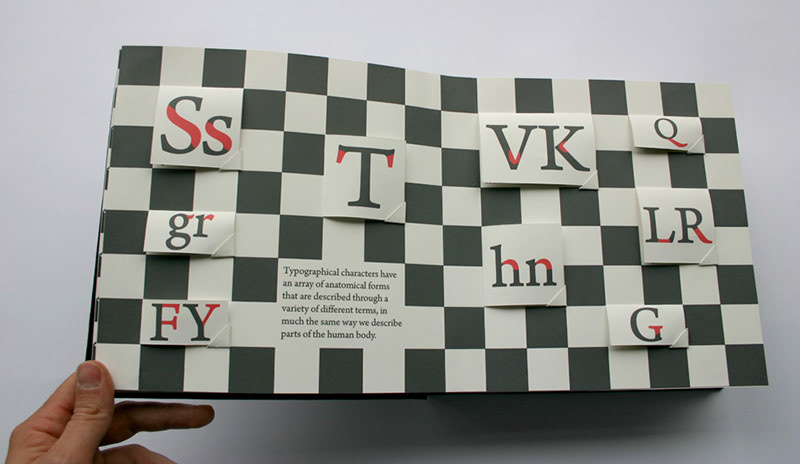
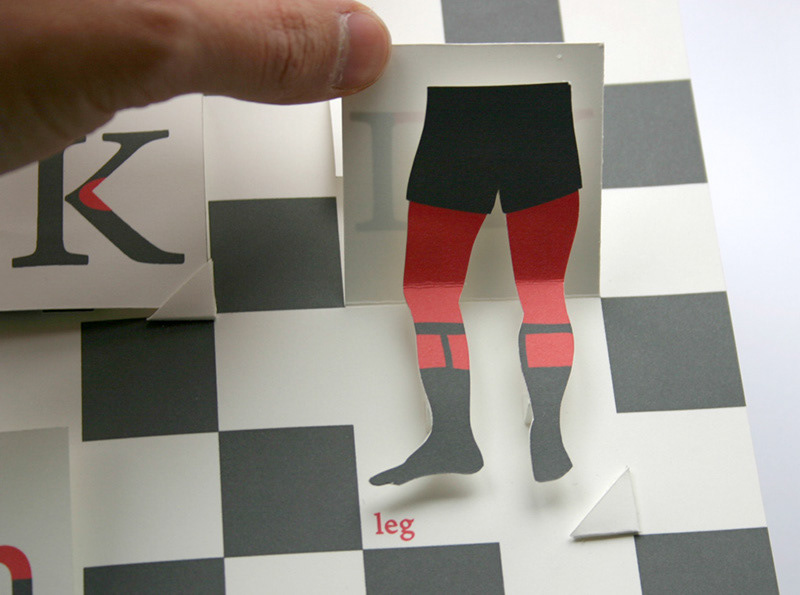
Letterforms have a tangibility that exceeds their two-dimensional representation on paper and even on screen. How better to educate the viewer to their tactility and three-dimensionality than with movable book techniques such as the volvelle, pop-ups, flaps and tab pulls?
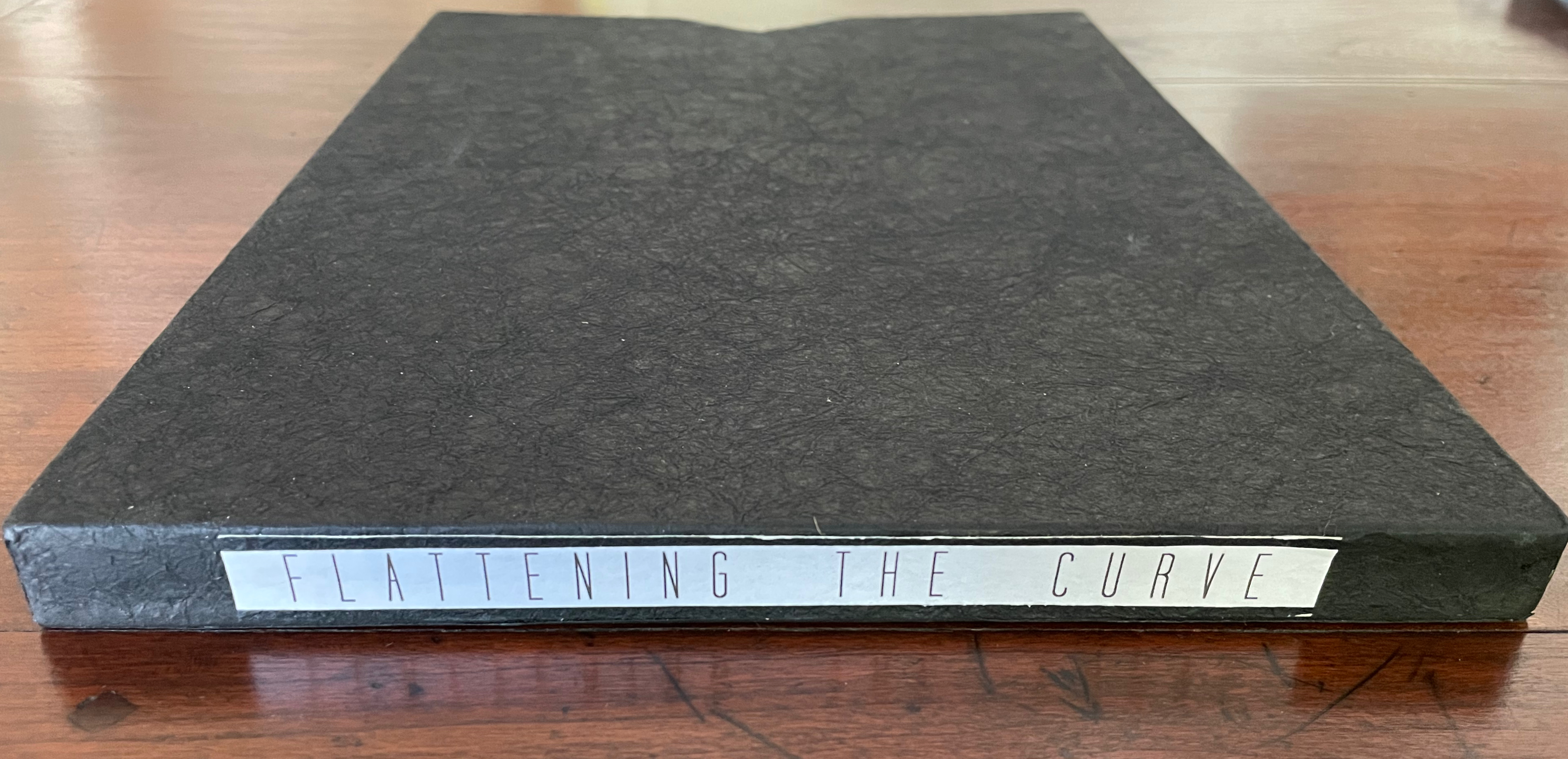
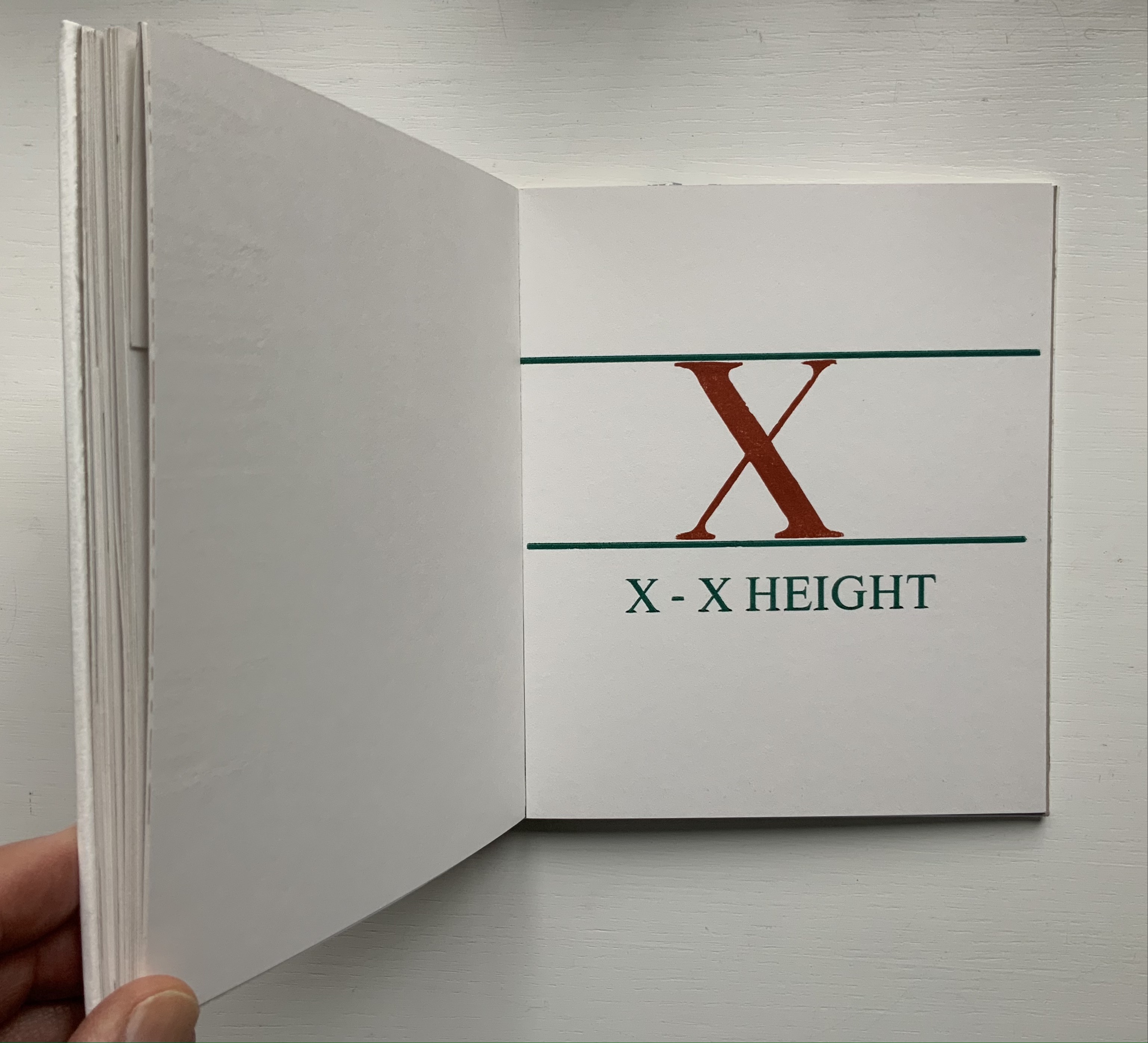
The Movable Book of Letterforms (2009) is a work of art that does just that: it enacts a basic introduction to the origins and unique characteristics of letterforms. A limited edition of three, all of its movable parts have been cut and assembled by hand. The printing is digital on Mohawk Superfine 80lb, and the box and book are covered in Laval velour bookcloth debossed with polymer plate. The only element the artifact is missing is metal.

For a monumental display of Steele’s book and paper engineering, a visit in the UK to the National Maritime Museum in Greenwich is urged. It can also be found in the following collections:

Metropolitan Museum of Art, New York
Wits Art Museum, Johannesburg
University of Iowa, Iowa City
Indiana University, Bloomington
Western Michigan University, Kalamazoo
Michigan State University, East Lansing

Further Reading

Abecedaries I (in progress)“. Books On Books Collection.

BOOKNESS speaks to Kevin Steele“. 18 December 2023. Oxford: Bodleian Libraries.

Chen, Julie. 2013. 500 Handmade Books. Volume 2. New York: Lark. P. 29 (The Deep).

Lawson, Alexander S. 2010. Anatomy of a Typeface. 5th print ed. Boston: David R. Godine.

McNeil, Paul. 2017. The Visual History of Type. London: Laurence King Publishing.

Salamony, Sandra, and Peter and Donna Thomas. 2012. 1,000 Artists’ Books : Exploring the Book as Art. Minneapolis: Quarto Publishing Group USA. P. 181 (Le Meschere della Commedia dell’Arte).