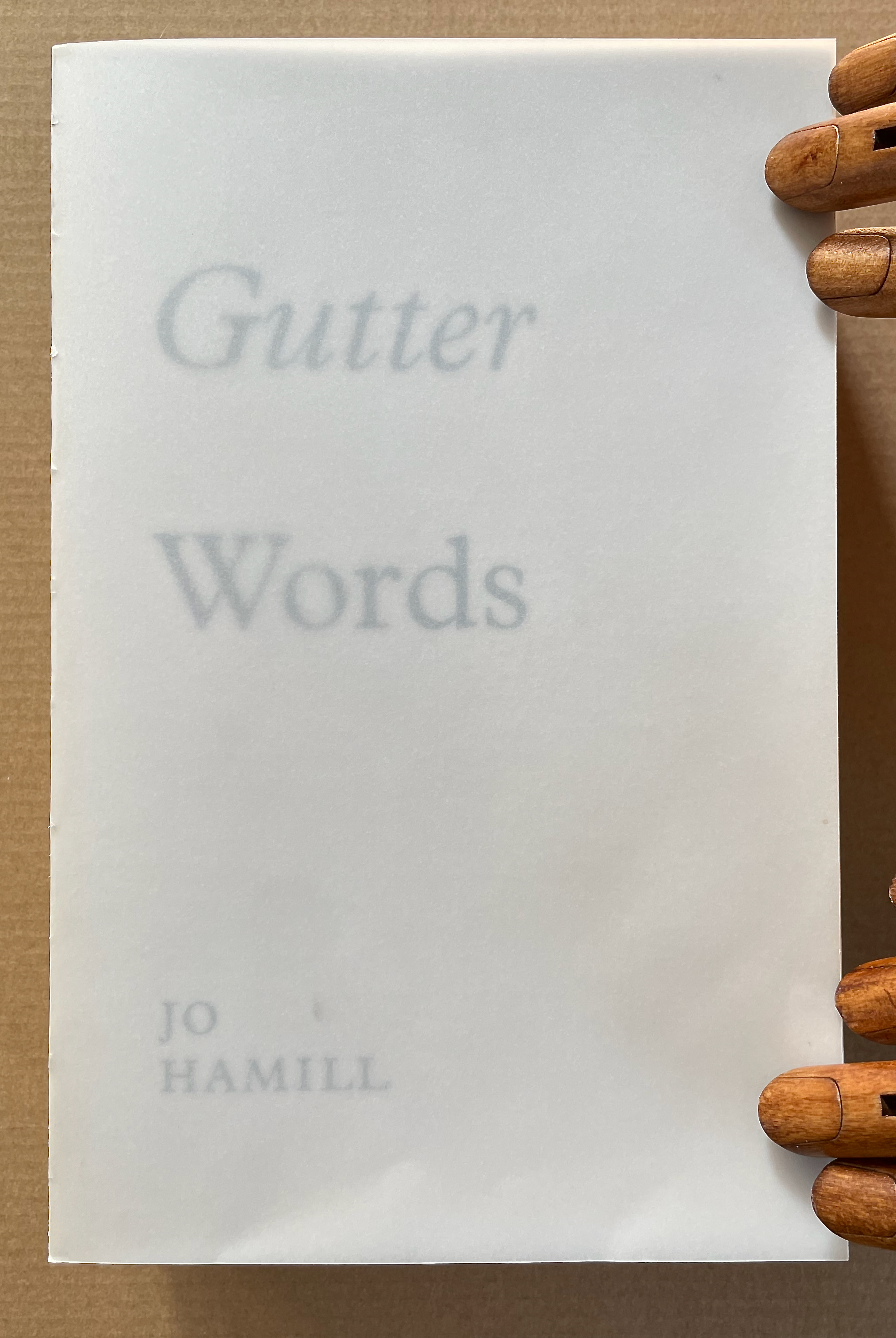
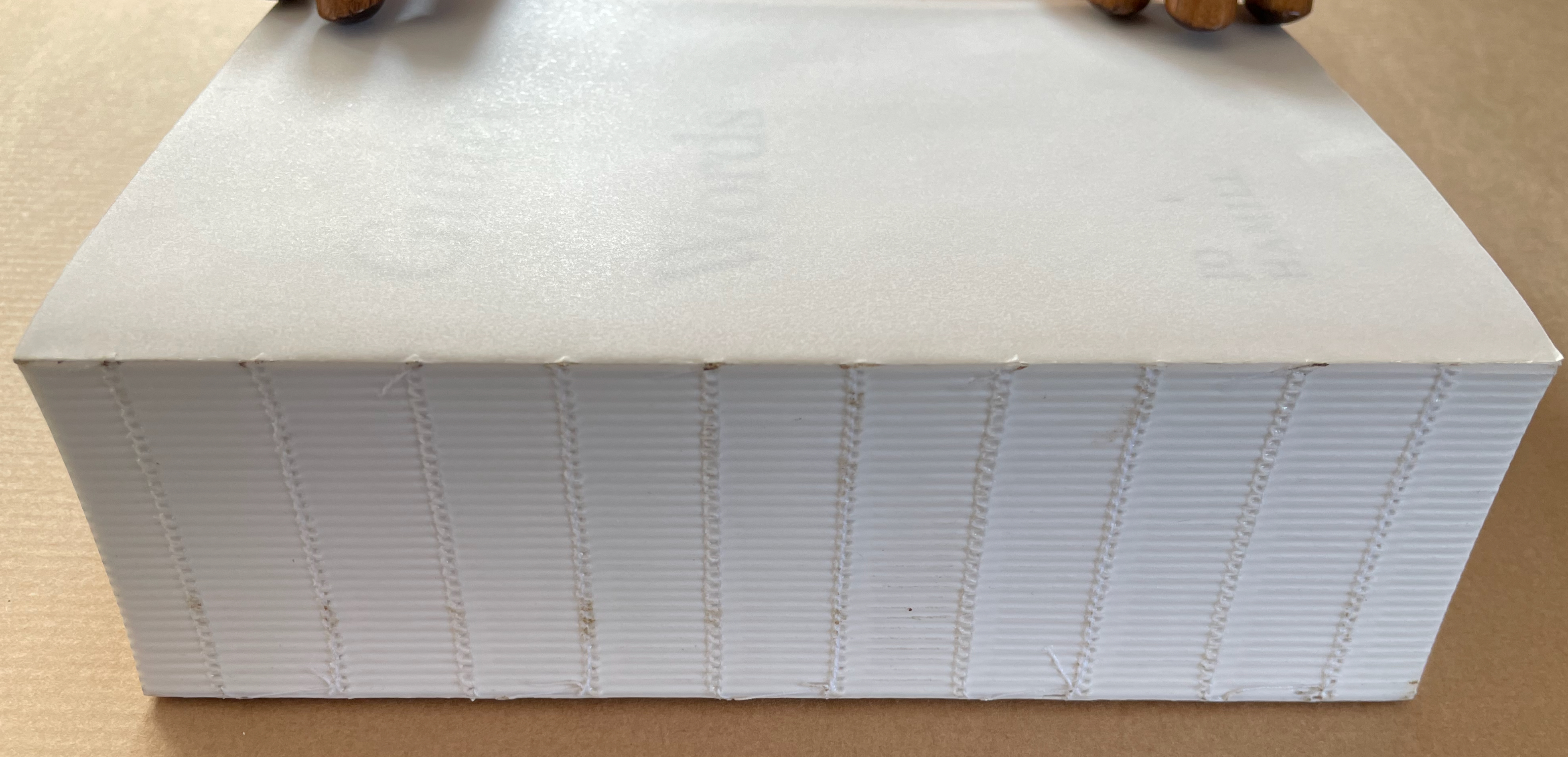
Working with an edition of James Joyce’s Ulysses, Hamill systematically obliterated the words of Joyce but carefully retained those words positioned closest to the gutter – the technical term used to describe the central margin of a bound page. The retained fragments form two extended columns that continue for 933 pages. Notable here is how design and typographic terminology is so entrenched in bodily references. Header, footer, body-copy, the arm of a “K”, the crotch of a “Y”, the foot of a “T”, the ear of a “G”, the shoulder of an “R” and so on. As is the architectural scaffolding of Joyce’s schema which underpins the structure of Ulysses, kidney, genitals, heart, lungs, oesophagus, Brain, Blood, Ear. etc. Lawrence Weiner refers to language as material for construction, the act of deletion in Gutter Words exposes the architectural scaffolding that holds words in place. Voids are physical spaces to be read and words become unanchored, set adrift in an uncertain space. The architectural qualities of this physical space will be exposed, Gutter Words will be devoid of the accoutrements associated with a “book” such as cover, boards, end papers, dust jacket and will retain only the innards, an unprotected text block.–Publisher’s website
Gutter Words (2019)
Gutter Words (2019) Jo Hamill Softcover, exposed spine. H197 x W128 x D60 mm. 956 pages. Acquired from Gill Partington, 20 June 2023. Photos: Books On Books Collection.
Artists’ books can run the risk of being a “one-trick pony” or a toddler’s newly learned knock-knock joke. Once seen, the trick succumbs rapidly to the law of diminishing returns. A dozen times heard, the joke verges on parental abuse. Conceptualist Simon Popper’s 2006 alphabetized version of James Joyce’s Ulysses(1922) falls into that camp, albeit a stunning one. There may be some ongoing amusement in perceiving the shift from letter to letter and the subsequent alteration of the visual pattern, or in spotting the singular invented words and considering the alphabetization as a comment on James Joyce’s play with language, or in contemplating it in comparison with similar efforts. Like Mikko Kuorinki’s 2012 alphabetized version of Foucault The Order of Things (1970) that cheekily challenges Michel Foucault’s theory of how we perceive social order. Or the alpha and omega of Tauba Auerbach’s BbeehHilloTy or the Alphabetized Bible (2006); well maybe not the alpha, since Silvio Lorusso and Rory Macbeth got there first with theirs in 1997, nor the omega, since Peter Harkins followed up with his 2013 Well-Sorted Version (WSV), algorithmically generated. Apparently, one-up-manship is inevitable. Even Gutter Words has its gatecrasher: John Morgan’s Usylessly (2021) with a pair of essays, not just one. But once the joke is “got”, how rewarding is it to return to it again and again. Is there more to it?
Last Sunday, 28 January 2018, this ambitious exhibition curated by Luca Lo Pinto closed.
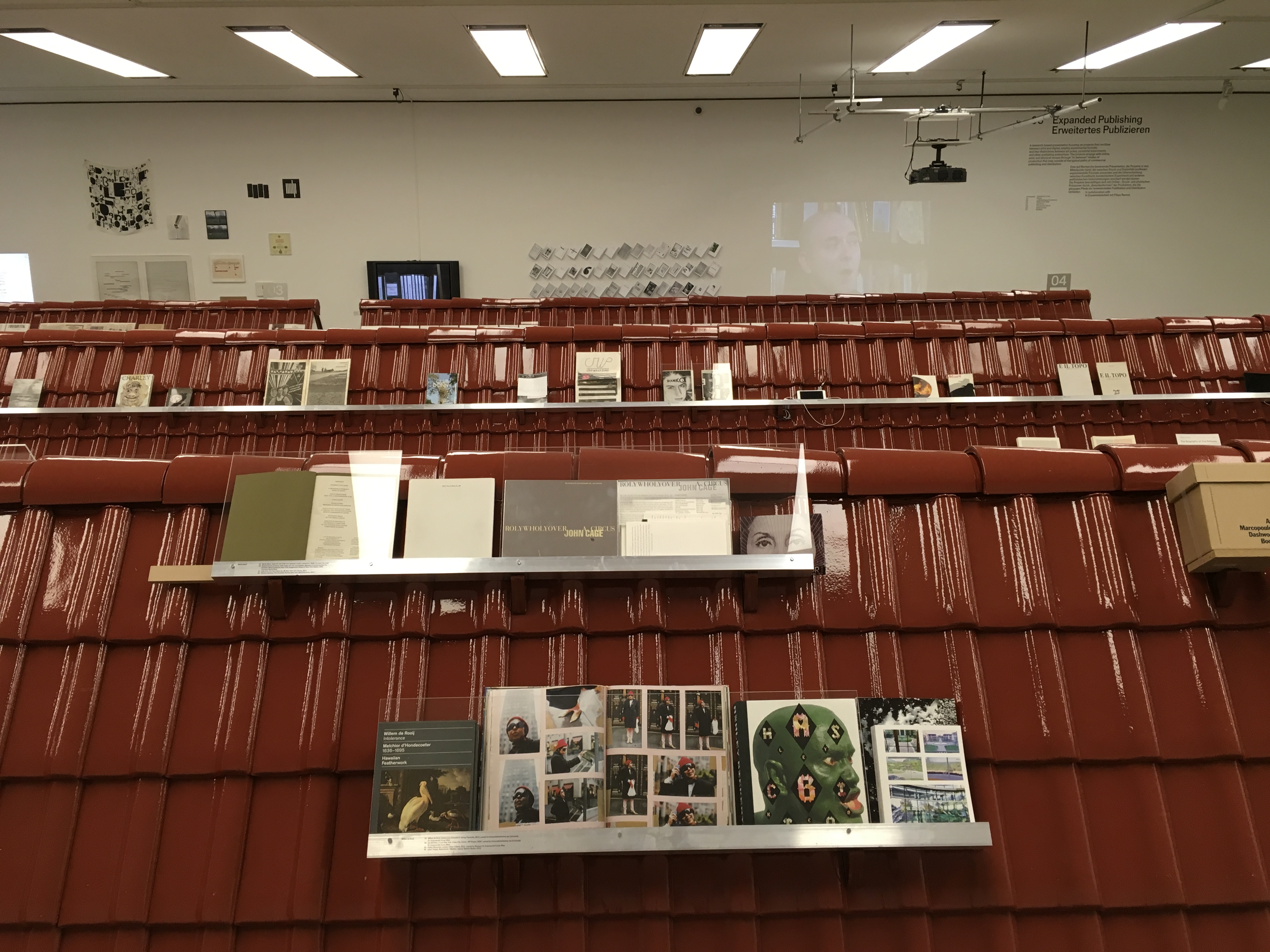
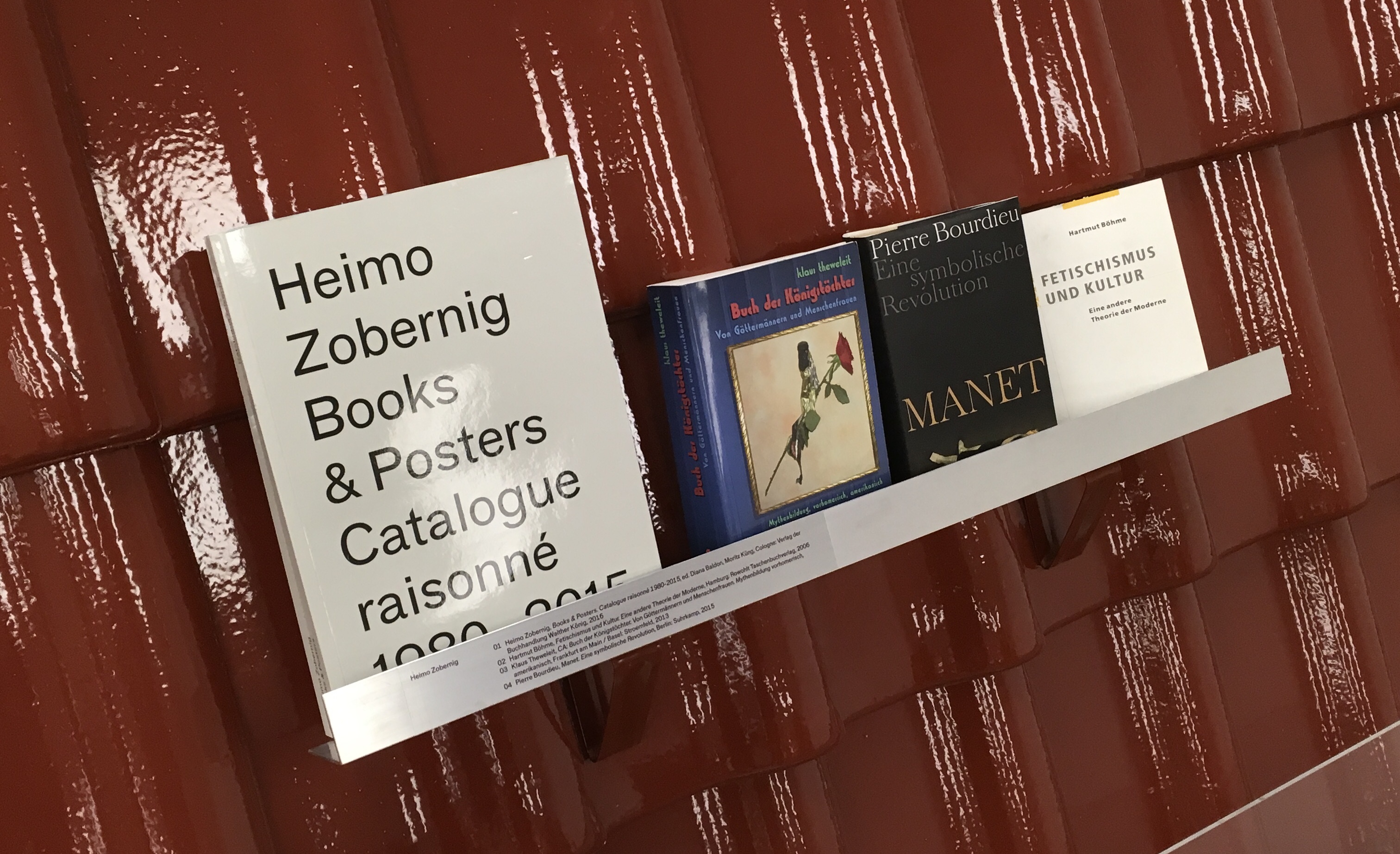
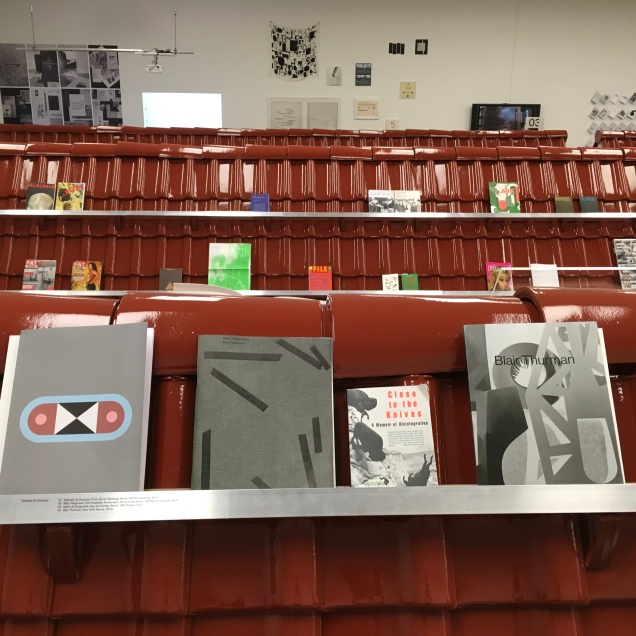
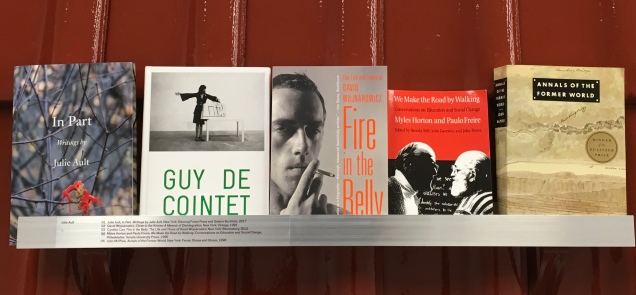
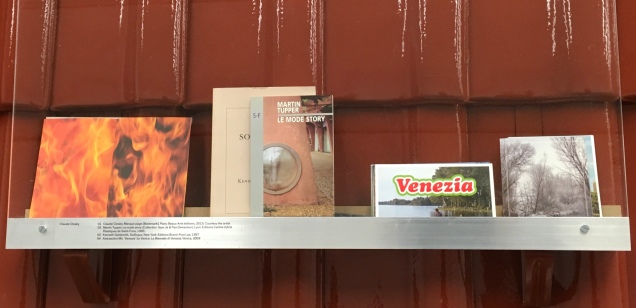
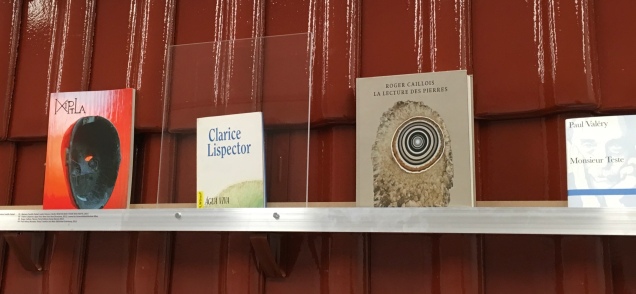
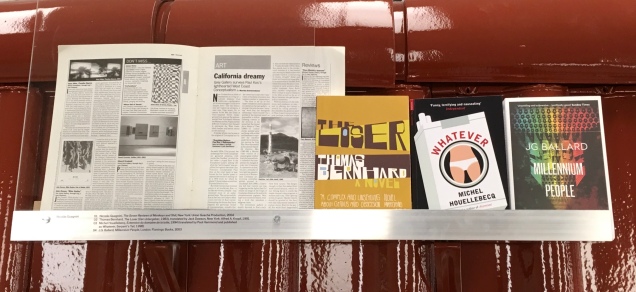
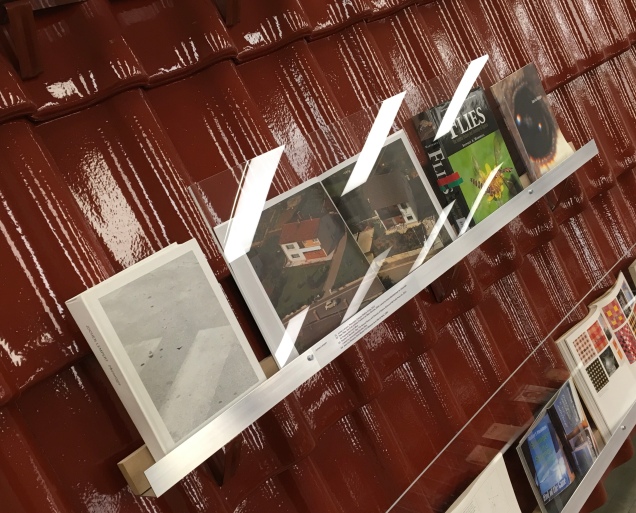
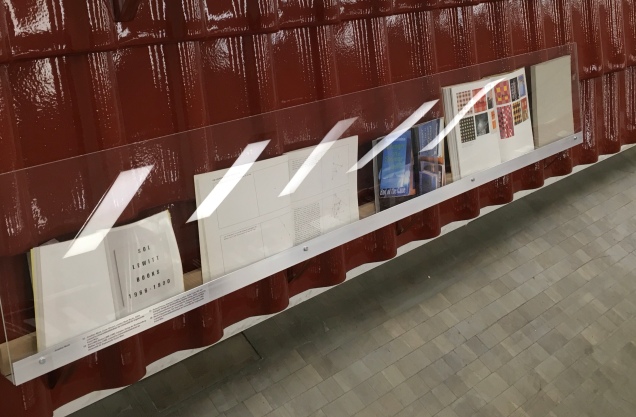
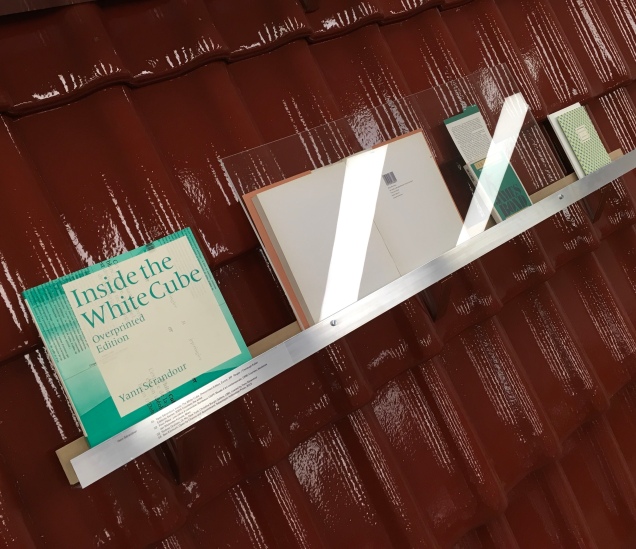
The metonymic metaphor of the glazed roof tiles’ evoking the concept of “home” in support of the individual and common ritual experience of reading as being translated into space is a bit topsy turvy if not strained. Overall, though, the effect was pleasing, playful and distinctively European (as was the selection of artists) in the cast concrete hall. The simultaneous warmth and cold of the color proved a pleasing contrast with the items displayed, although its glare and the occasional protective plexiglas made viewing and photographing a challenge.
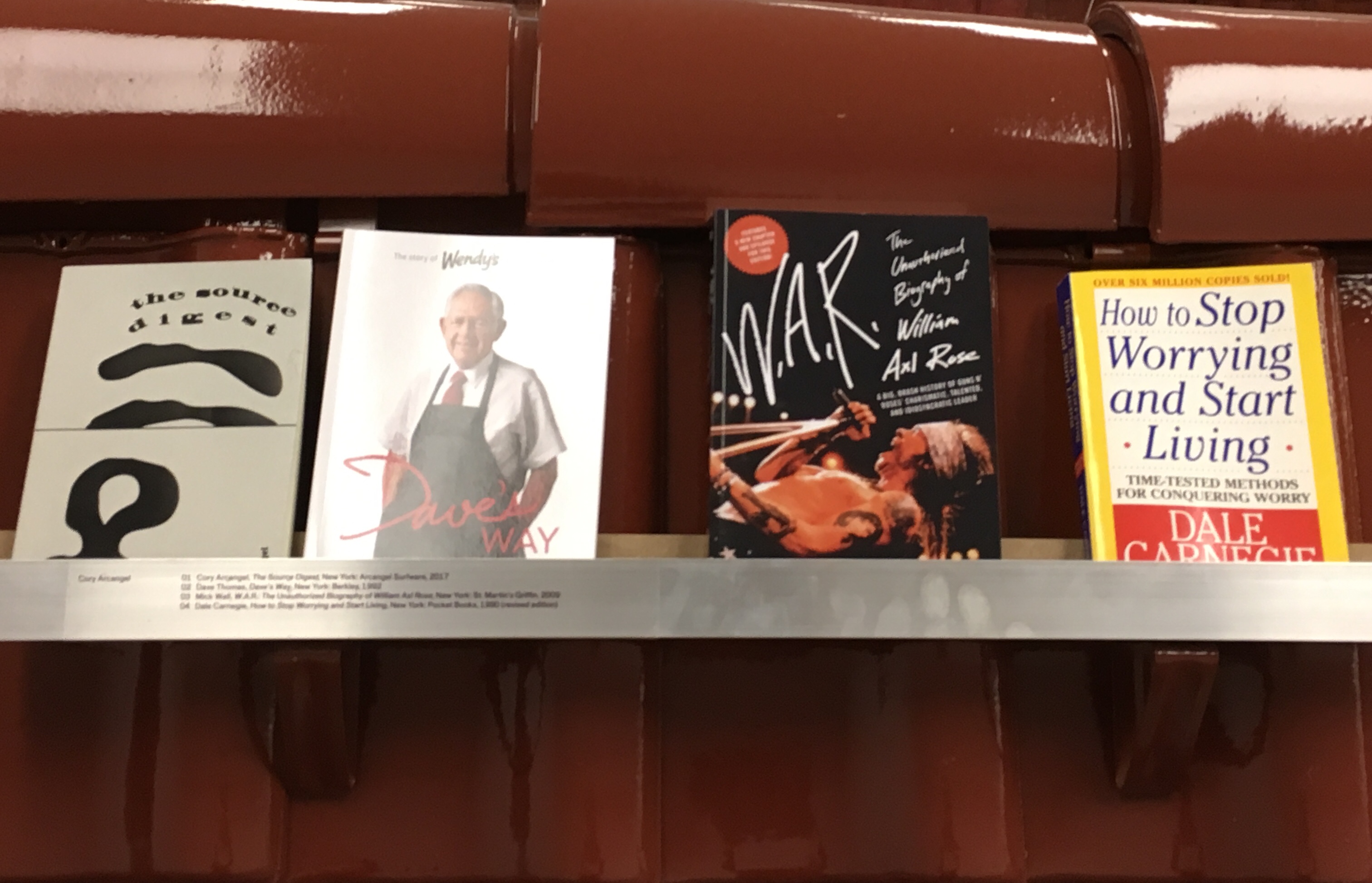
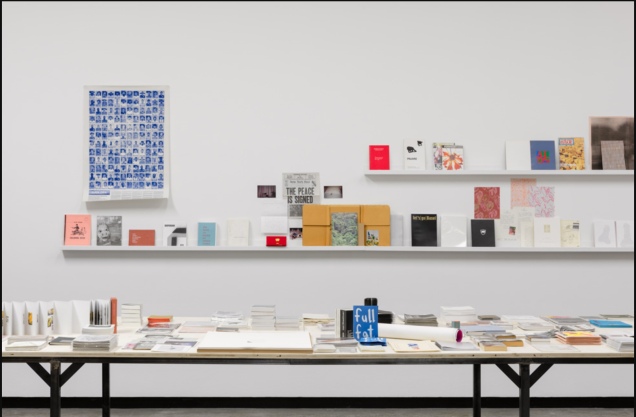
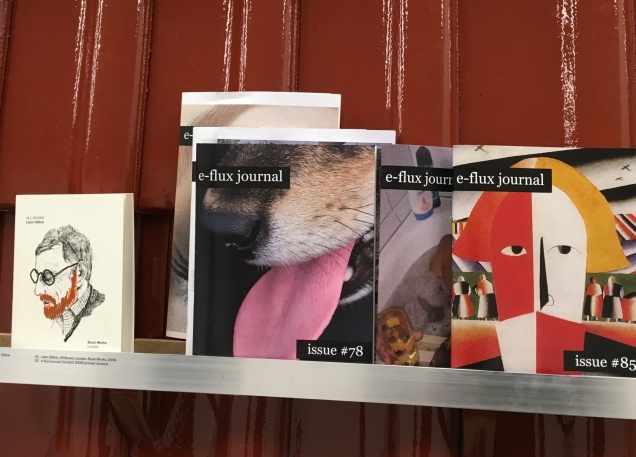
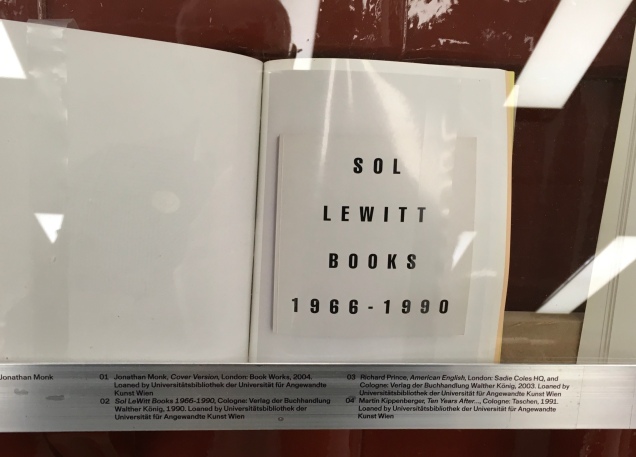
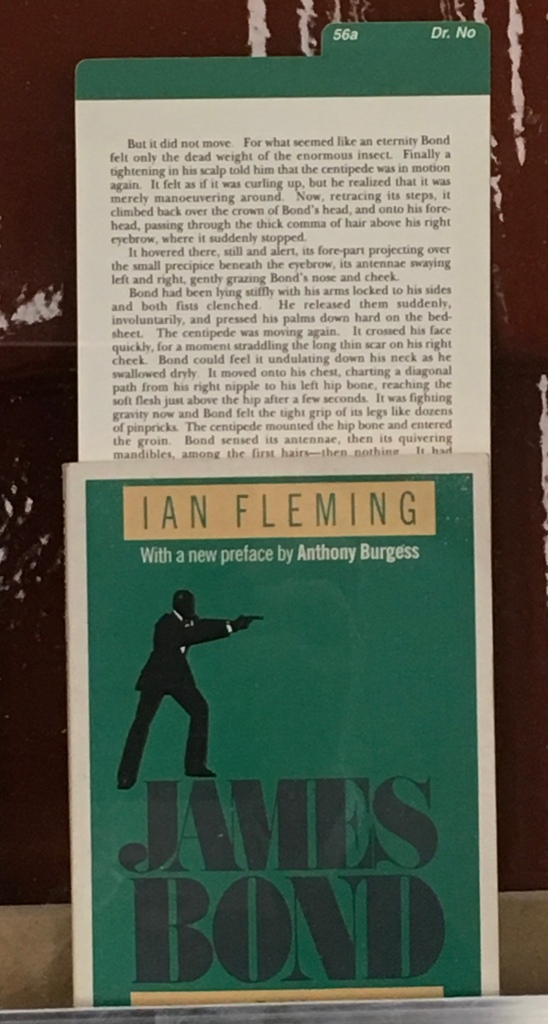
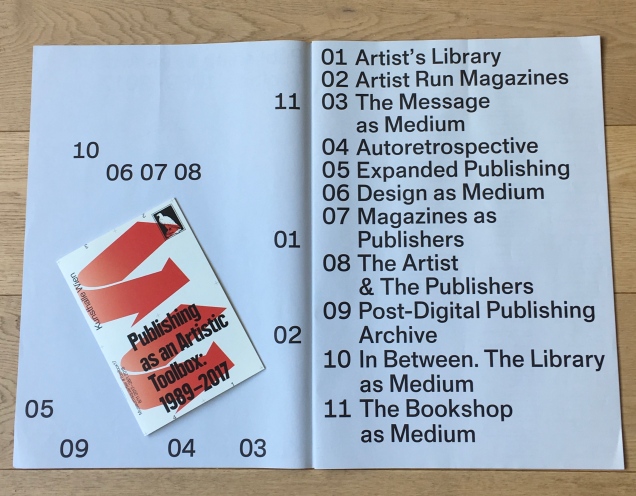
In Section 01 Artists’ Library and propped on stainless steel shelves were artists’ own publications and choices of books from 1989 to 2017 that have influenced their view of publishing. So then, with the usual sly humor of book art, we have “artists’ books” and artists’ “books” — from Cory Arcangel to Heimo Zobernig.
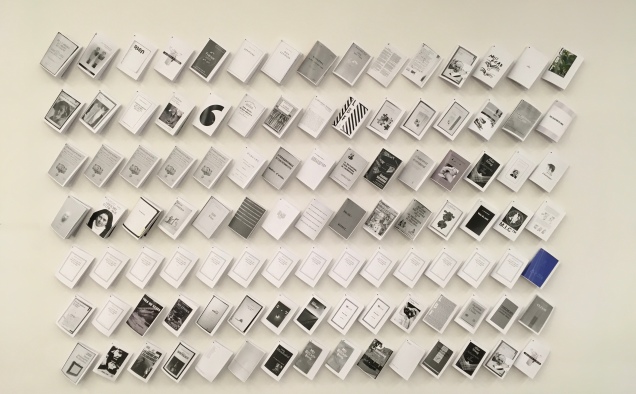
Arcangel’s The Source Digest (from his series in which he rings the changes on selling us annotated source code in varying metaphorically driven and recursive manifestations) struck the first of several common notes in the exhibition: the digitally driven artist’s book. At the far end of the hall, in Section 05 Expanded Publishing, Antoine Lefebvre‘s La Bibliotheque Fantastique (an online library of free artists’ books) echoed that note and added one of its own: book art’s genre-reflexive, form-reflexive and self-reflexive tradition.
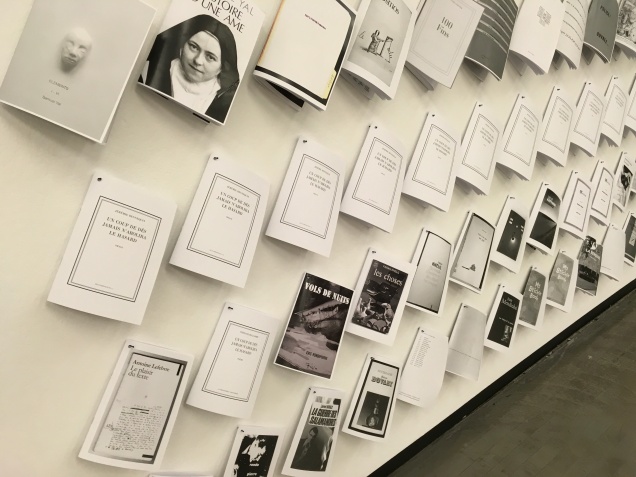
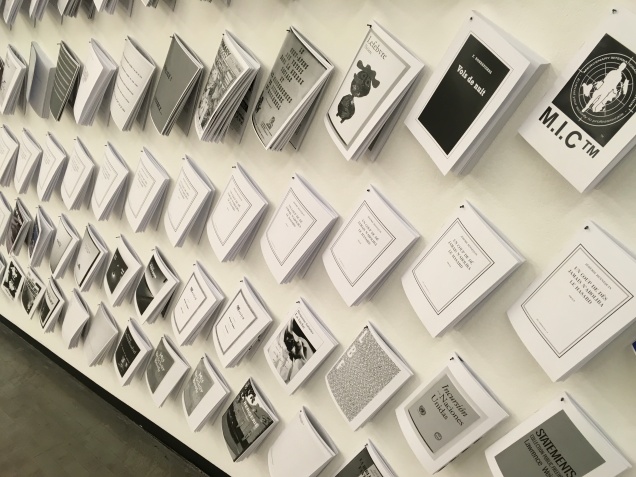
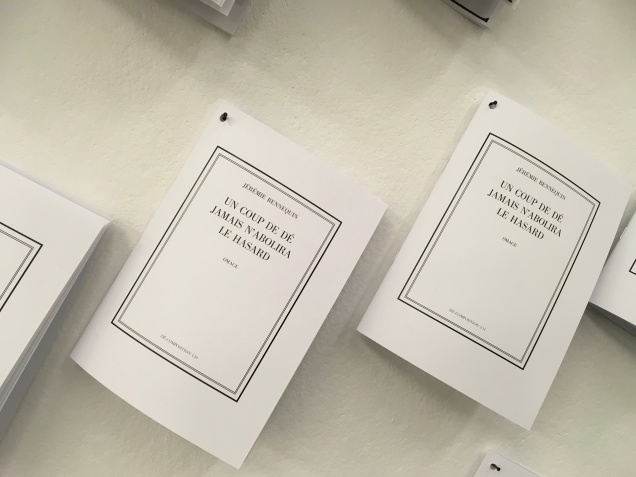
The ninety-item display is a genre-reflexive nod to series such as Dick Higgins’ Great Bear Pamphlet series. One row here on its own embodies multiple forms of reflexivity: Jérémie Bennequin‘s homage to Marcel Broodthaers’ homage to Stéphane Mallarmé’s Un Coup de Dés Jamais N’Abolira Le Hasard.
Bennequin’s homage is the result of a decomposition performance in which he and Lefebvre — sometimes each in two different cities — decompose Mallarmé’s poem by rolling a die then locating and erasing the syllable corresponding to the number rolled.
The title’s missing “s” from “Dés”, the subtitle’s missing “h” from “homage” and its isolation of “dé” in the hyphenation of “decomposition” pun self-reflexively — as book art so often does — underscoring here the paradoxical technique of creation/de-creation.
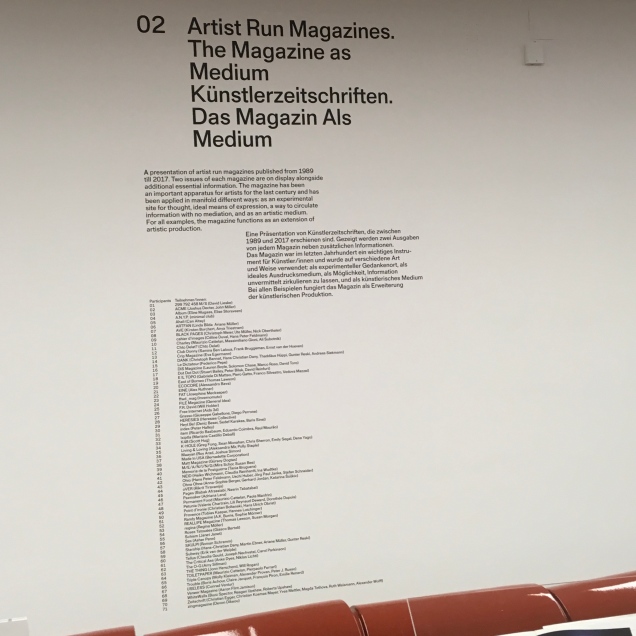
Section 02, devoted to periodicals and zines, occupied the most space in the hall. Although the coverage was wide, it seemed odd not to find Brad Freeman’s Journal of Artists’ Books or Sarah Bodman’s Bookarts Newsletter or The Blue Notebook. But Lo Pinto did not set out to present the encyclopedia of everything within each compartment of the toolbox. The unexpected — like Lefebvre’s display — and the provocative depth of resonance within Section 01 and across sections more than made up for omissions of the expected.
Among the “interventions” in Section 03 The Medium as Message was Michael Riedel‘s Frieze CMYK (2007), now, like so many other items in the exhibition, out of print — a reality-imposed dollop of self-reflexive irony given Riedel’s paradoxical view that an exhibition must generate ephemera to live on.
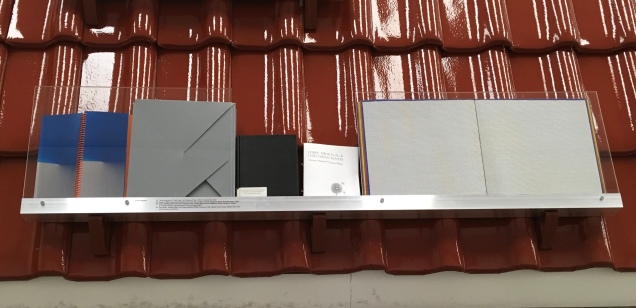
As with the echoing Section 05 that sent me back to look at Arcangel’s contribution in Section 01, the color play of Riedel’s Frieze CMYK returned me to Tauba Auerbach’s entry in Section 01. But I was misremembering and thinking of her work titled 2,3, (2011), RGB Color Atlas (2011) and their color play. On display here was her Z Helix(2014) behind plexiglas. Only the interlocking blue and red spiral bindings hinted at the color inside.
Strolling back to Section 05 and thinking of the physicality as well as color of Auerbach’s works, I stopped at Section 04 Autoretrospective, which focused on Philippe Thomas’ fictitious ad agency readymades belong to everyone® that he “installed” in the Cable Gallery in New York in 1987. The section’s title seems ironically unfair to Thomas’ self-effacing, deconstructivist intent. Given what was on display in Vienna, it was inescapably — like the mythological World Turtles — Thomas “all the way down”. Perhaps there is something to the row-upon-row of roof tiles metaphor after all.
The remaining sections — one being a space for performances and readings, another a screen showing the home page of Silvio Lorusso’s Post-Digital Publishing Archive and another entirely elsewhere in the city — began to push the limits of the senses and imagination to make up for that lack of three-dimensionality that limited the impact of Auerbach’s and others’ shelves. (It was commendable, however, that visitors were allowed to touch the works not behind plexiglas.)
Being familiar with Lorusso’s site, I looked back over the roof top shelves and wall projections and momentarily found myself slipping into that “consensual hallucination experienced daily by billions … in every nation, … A graphical representation of data abstracted from the banks of every computer in the human system. Unthinkable complexity. Lines of light ranged in the non-space of the mind, clusters and constellations of data” (William Gibson’s definition of “cyberspace” from Neuromancer, New York: Berkley Publishing Group, 1989, p. 128). As with all white cube spaces, though, the physical arrangement did not fail to reassert itself and draw me out of the exhibition through Section 11 The Bookshop as Medium, which much like Sections 01 through 05 offered unexpected tangible and intangible compensations.
Section 11 The Bookshop as Medium Austellungsansicht: Publishing as an Artistic Toolbox: 1989–2017, Kunsthalle, Wien Photo by Stephen Wyckoff
As noted at the beginning, an ambitious exhibition: one also reminiscent of Germano Celant’s effort in 1973 Book as Artwork 1960/1972. With the hope for more to come from this talented curator and the artists and publishers gathered, here are some favorites on the way out … best enjoyed with the downloaded or printed catalog close to hand (links after the favorites).
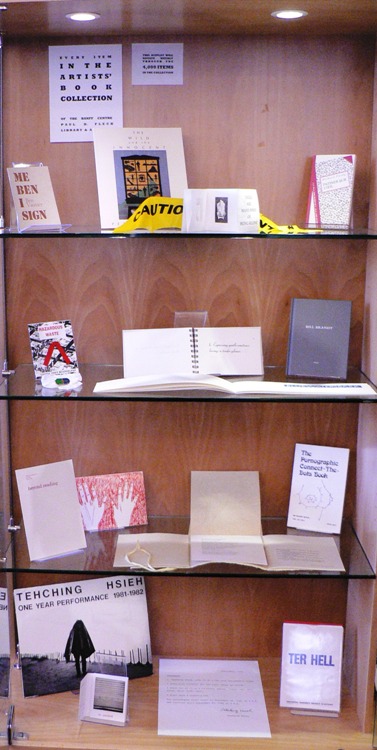
The Paul D. Fleck Library & Archives at The Banff Centre has over 4,000 artists’ books and multiples. Inspired by Ed Ruscha’s seminalbook “Every Building on the Sunset Strip”, we will display every item in the collection in a case in the library, rotating through 15 items weekly. Here you will find a photo log documenting the items, chosen randomly for display. Click through on any photo for title and creator caption.
For more information and full catalogue records for the items pictured, visit banffcentre.ca/library/.
Kudos to book artist Jaye Fishel for setting up Every Item in the Artists’ Books Collection and to Silvio Lorusso for the interview with Fishel.