Books On Books Collection – Sam Winston

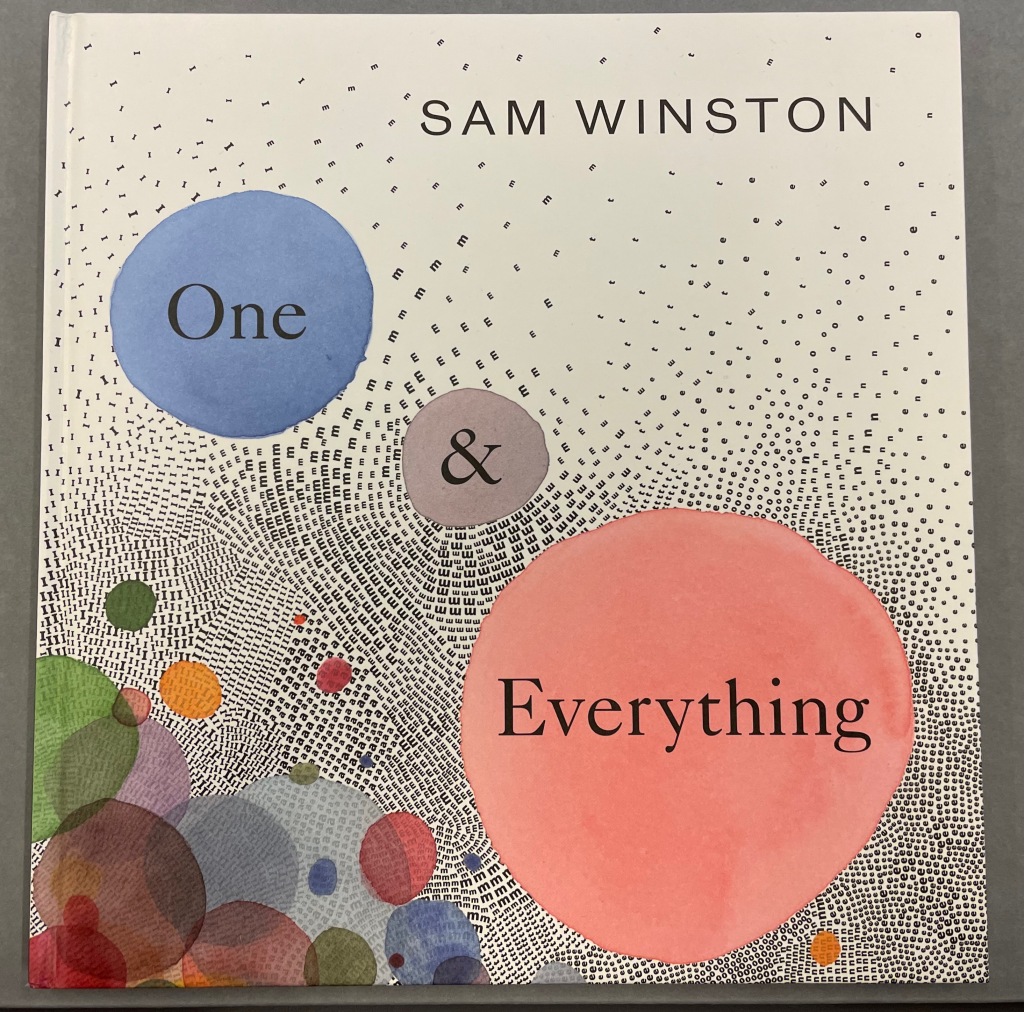
One & Everything (2022)
One & Everything (2022)
Sam Winston
Casebound with illustrated paper over boards. H265 x W255 mm. 48 unnumbered pages. Acquired 23 November 2022.
Photos: Books On Books Collection. Displayed with artist’s permission.

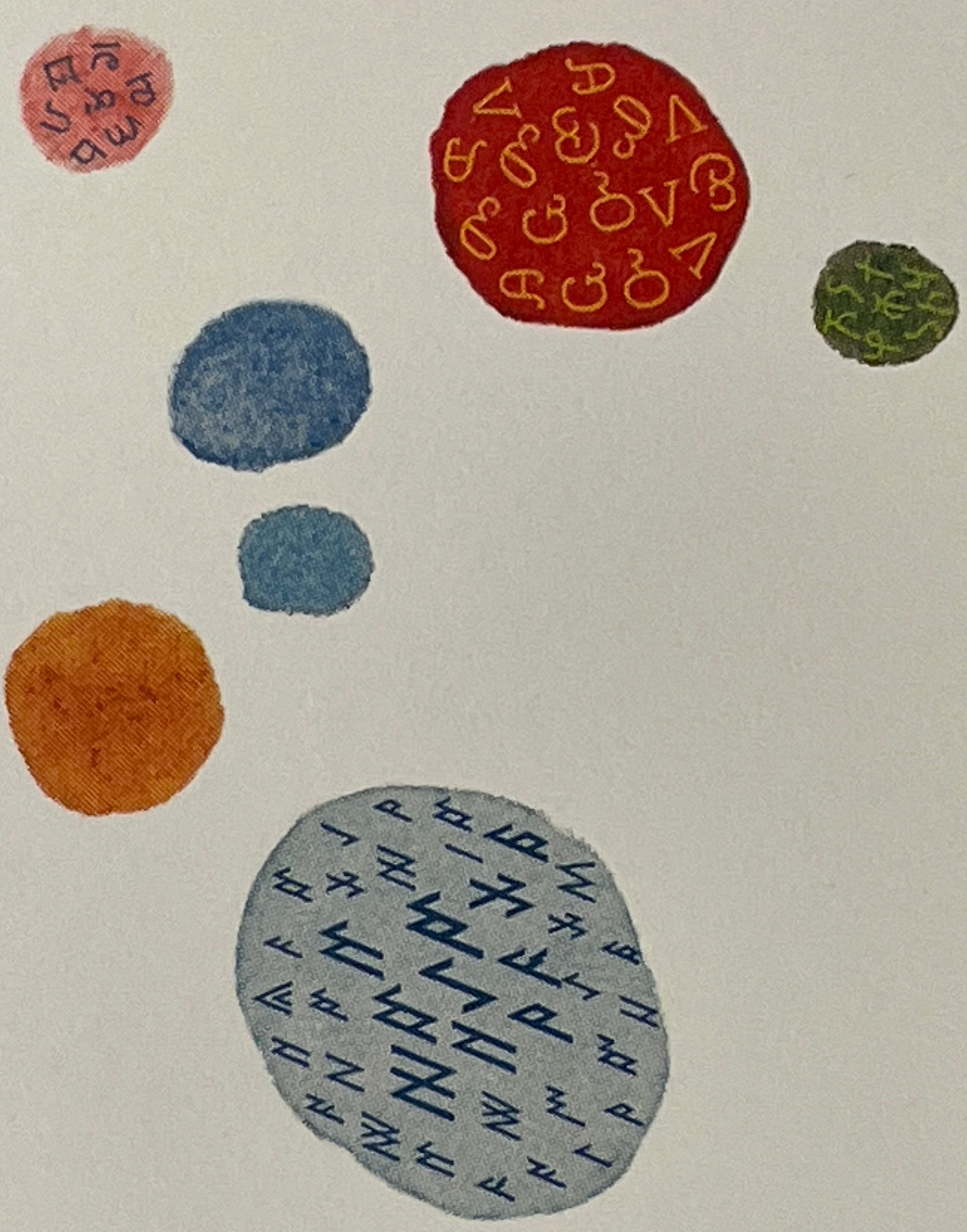
Sometimes you just know that you have read a classic. This is one of those times. Winston and Candlewick Press (Walker Books in the UK) have worked a fresh tale, tone and meaning together with image, color, design and production values to an extraordinary level. Inspired by Tim Brookes’ “Endangered Alphabets Project“, Winston uses the striking shapes of letters and scripts from the Latin, Ogham, Cherokee, Armenian, Hebrew, Tibetan and dozens more alphabets and syllabaries to create the characters in his fable about the story that decides one day that it is the One and Only story.
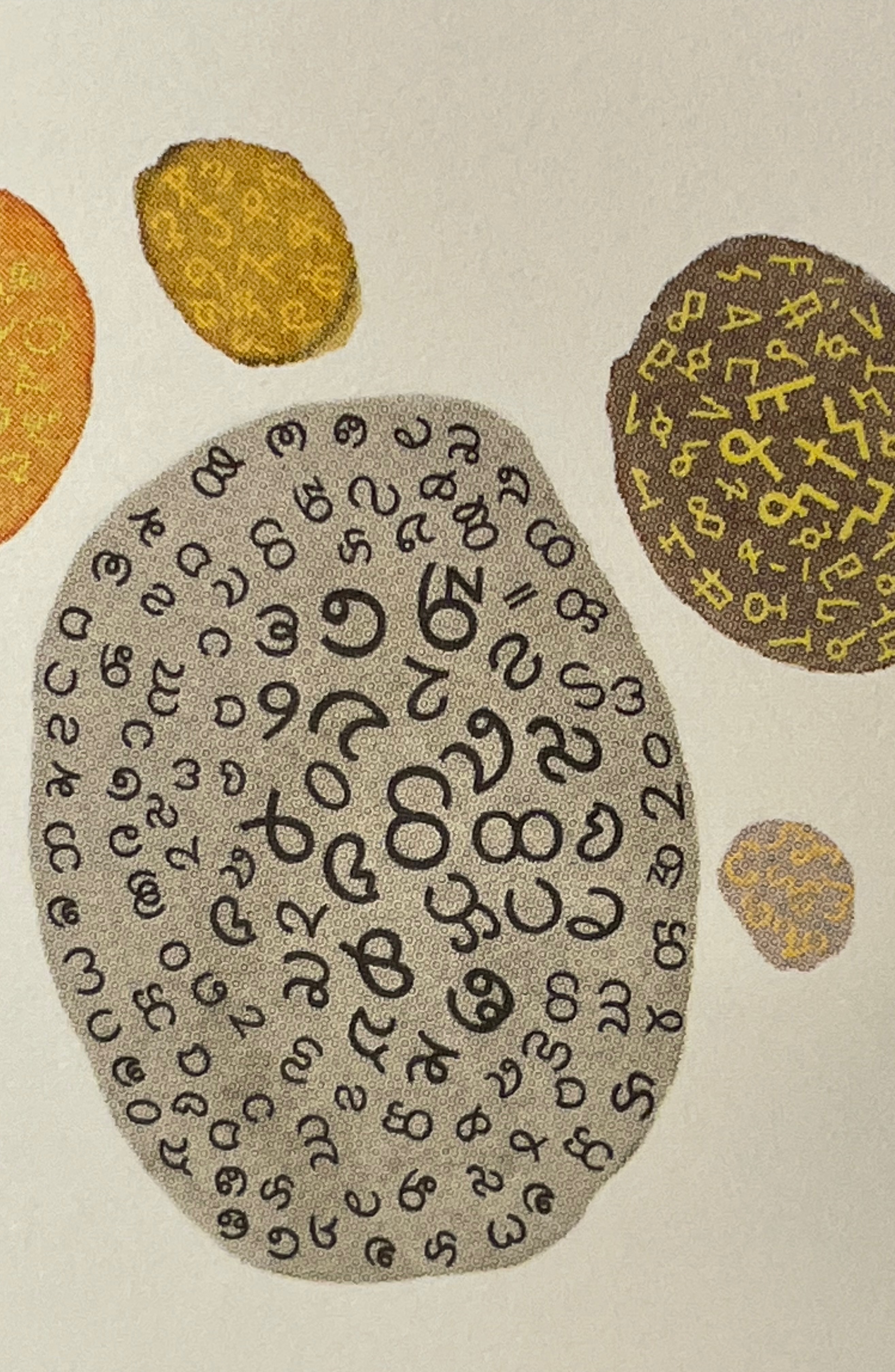
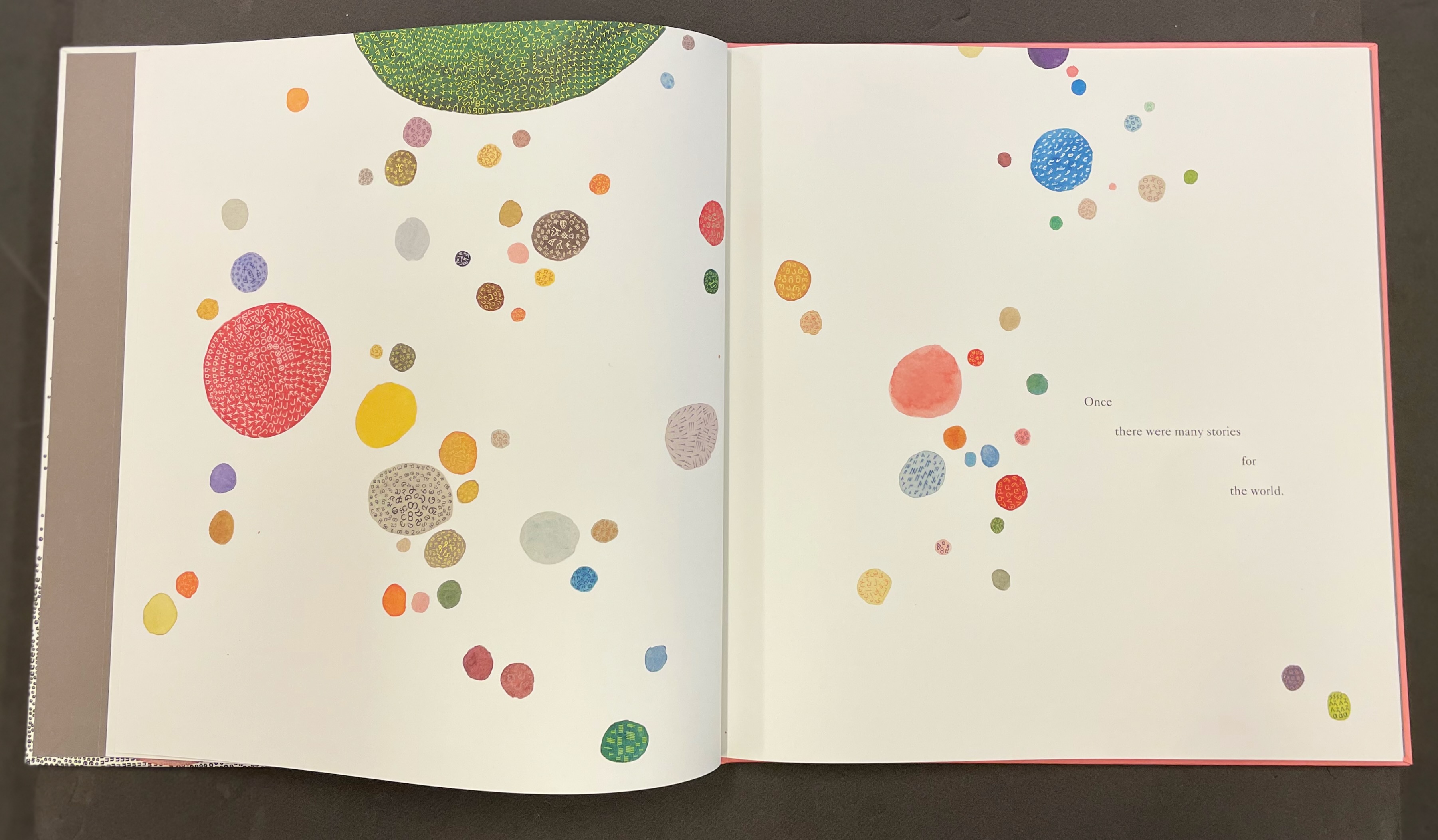
Shapes like single-celled creatures (each filled with a different alphabet) represent the many stories existing before “The One” arrives.
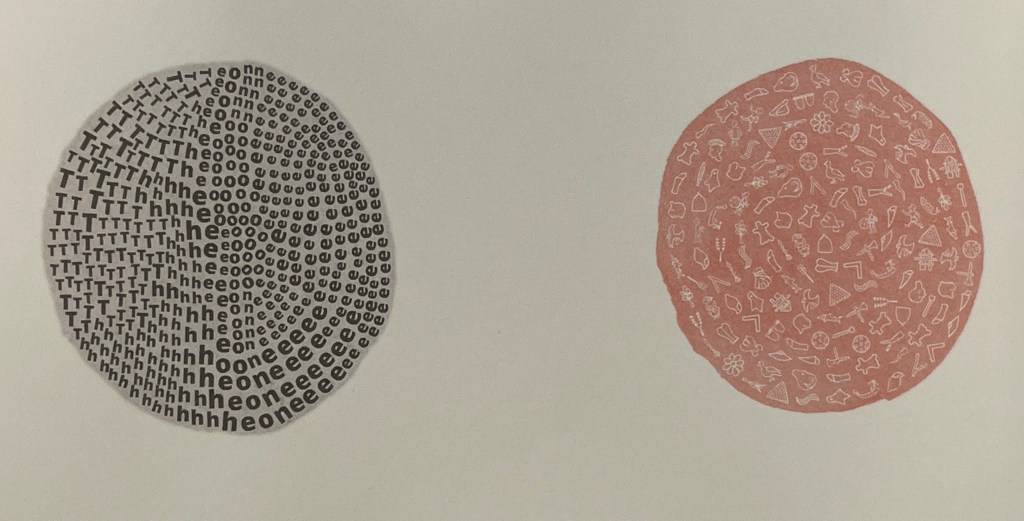
“The One” is made of the English (i.e., Latin or Roman) alphabet. Will it listen to and make sense of all these other stories?

The fable of One & Everything does more than support the notion that alphabets and languages can be endangered. Implicit in the fate of the “One & Everything” story” is the message that Babel was more of a blessing than a curse.

Readers familiar with Winston’s A Dictionary Story and his collaboration with Oliver Jeffers in A Child of Books (both below) will recognize a growing refinement and, now, breadth and depth in Winston’s storytelling. The youngest audience and beginning readers will be held by the shapes, colors and simplicity of the story. Older readers will easily grasp its underlying meanings and be intrigued by the variety of letters and scripts and the idea that languages and alphabets can die. Still older readers and teachers will appreciate the helpful resources following the story’s ending invitation. At all levels, the audience will delight in Winston’s creation of his characterful abstractions with letters from the alphabets and scripts identified in those resources. Those with an eye for such artistry will appreciate Winston’s extension of a tradition embraced by Paul Cox, Roberto de Vicq de Cumptich, Sharon Forss and Nicolas McDowall.

A Child of Books (2019)

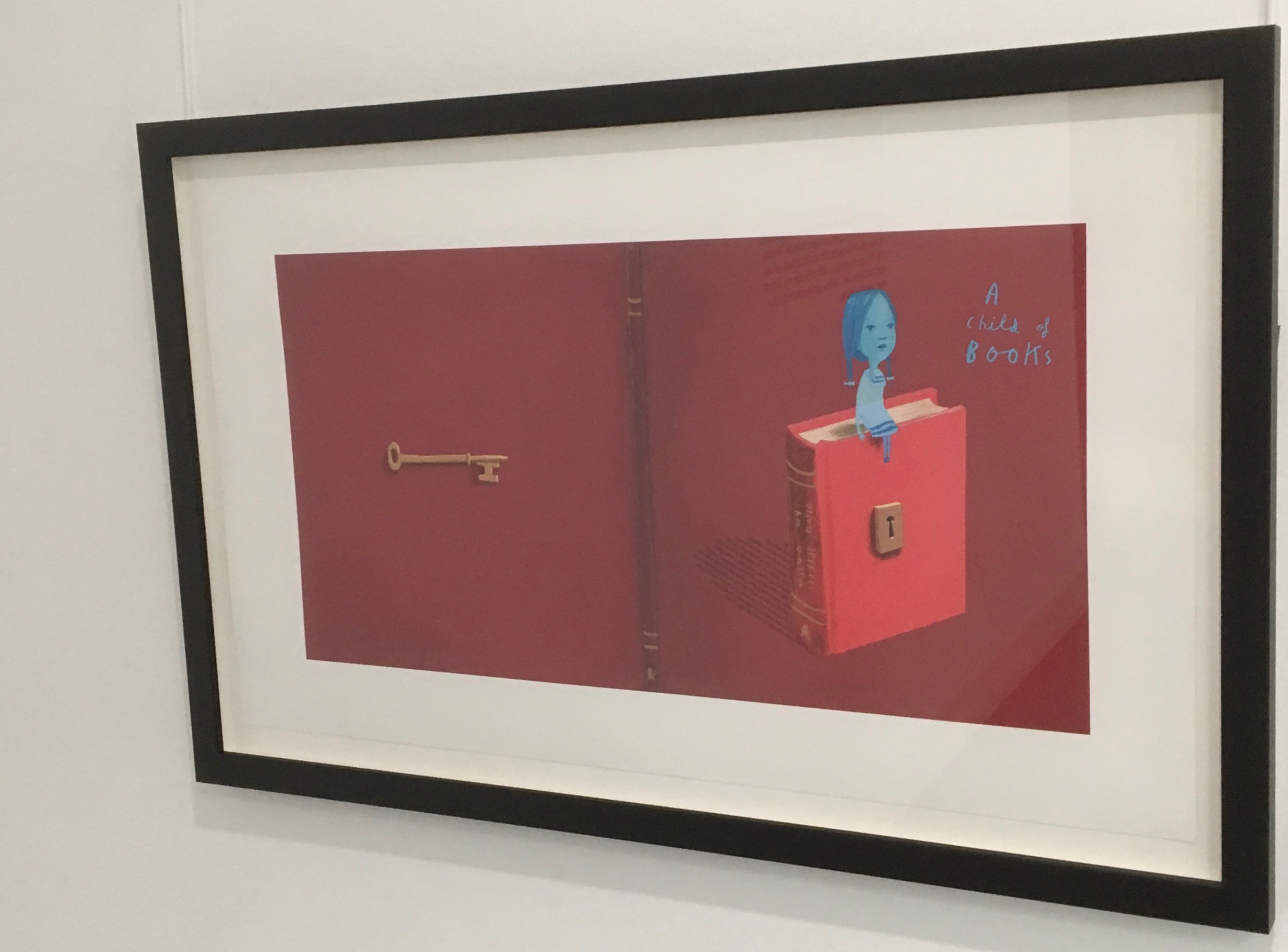
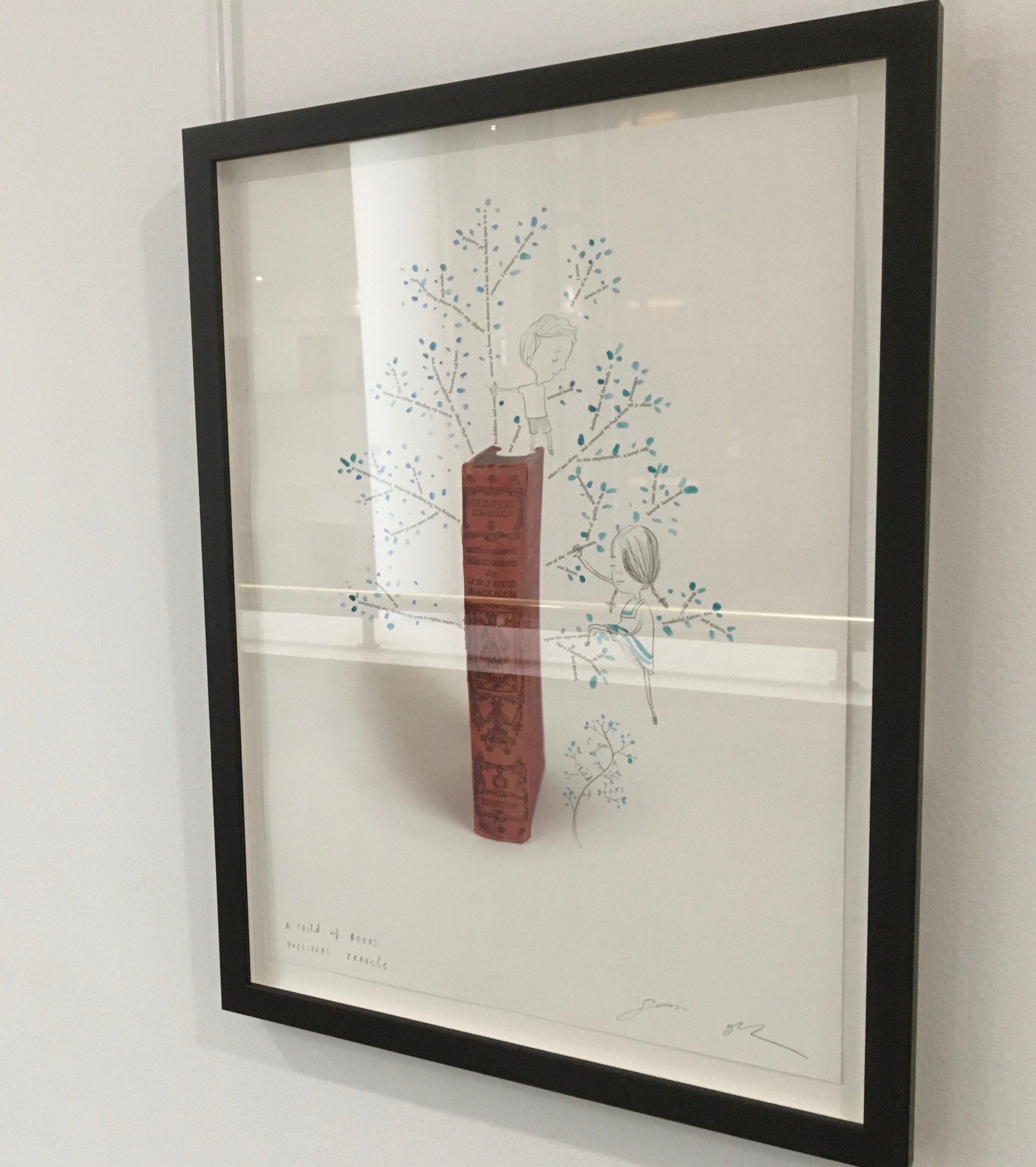
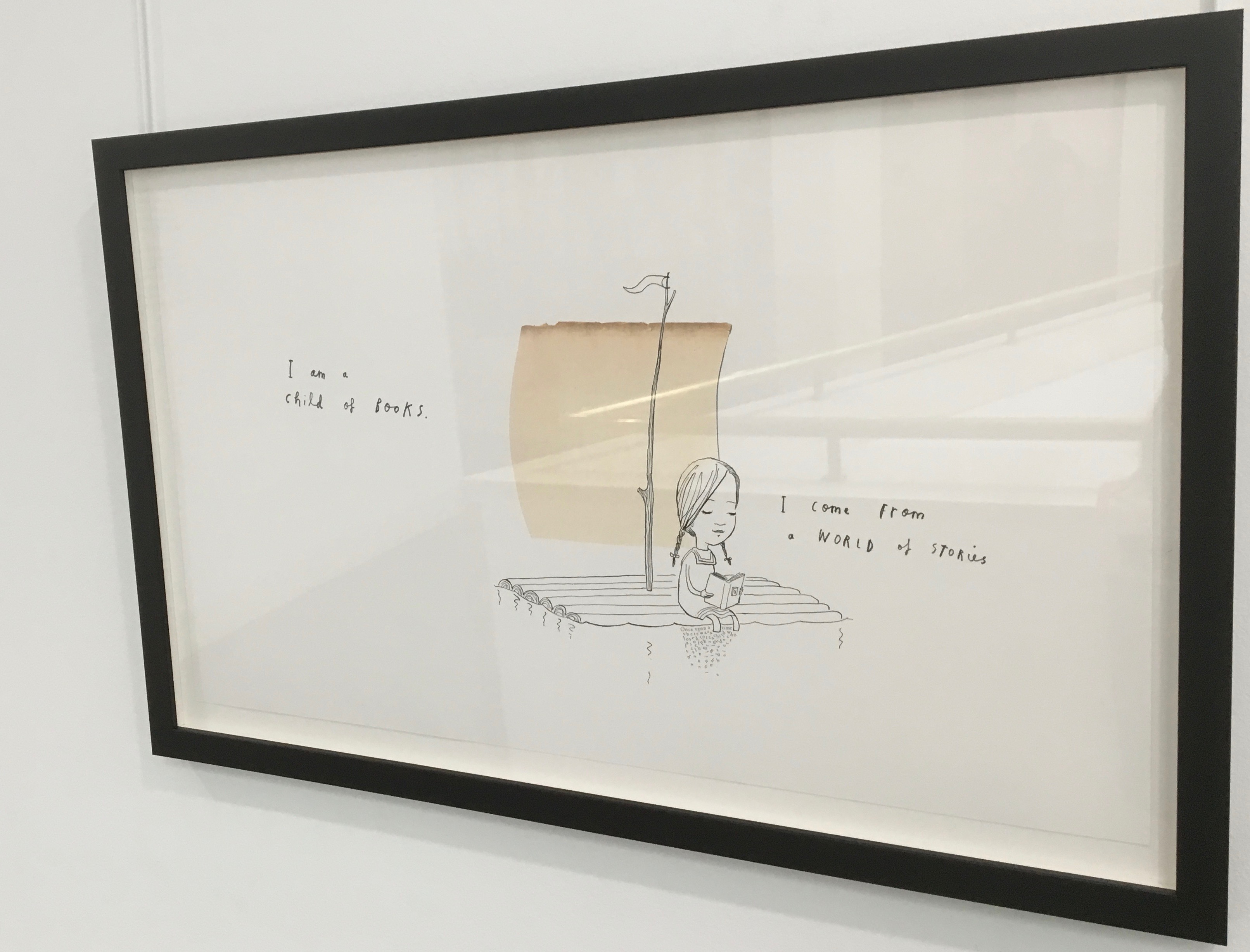
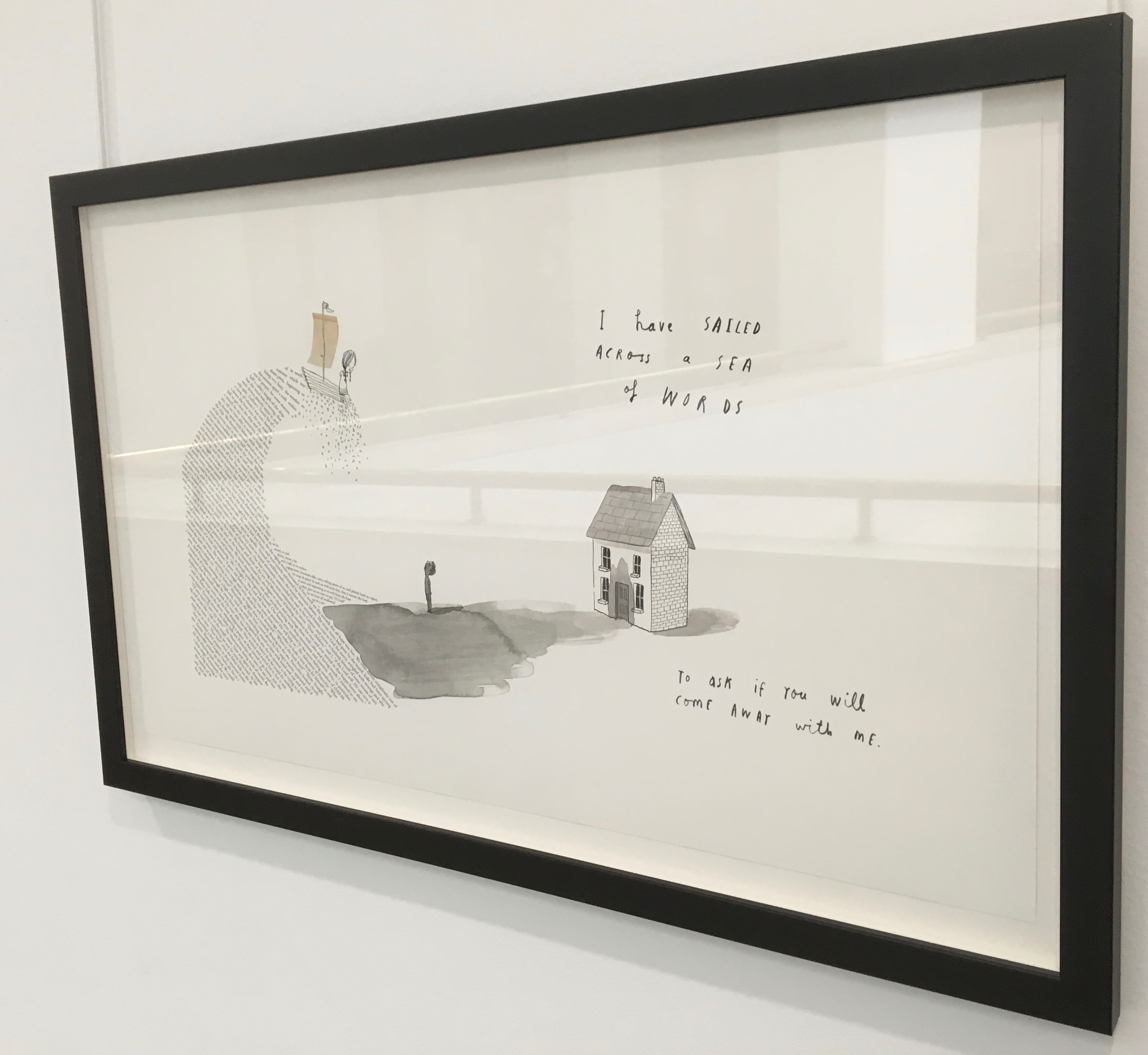
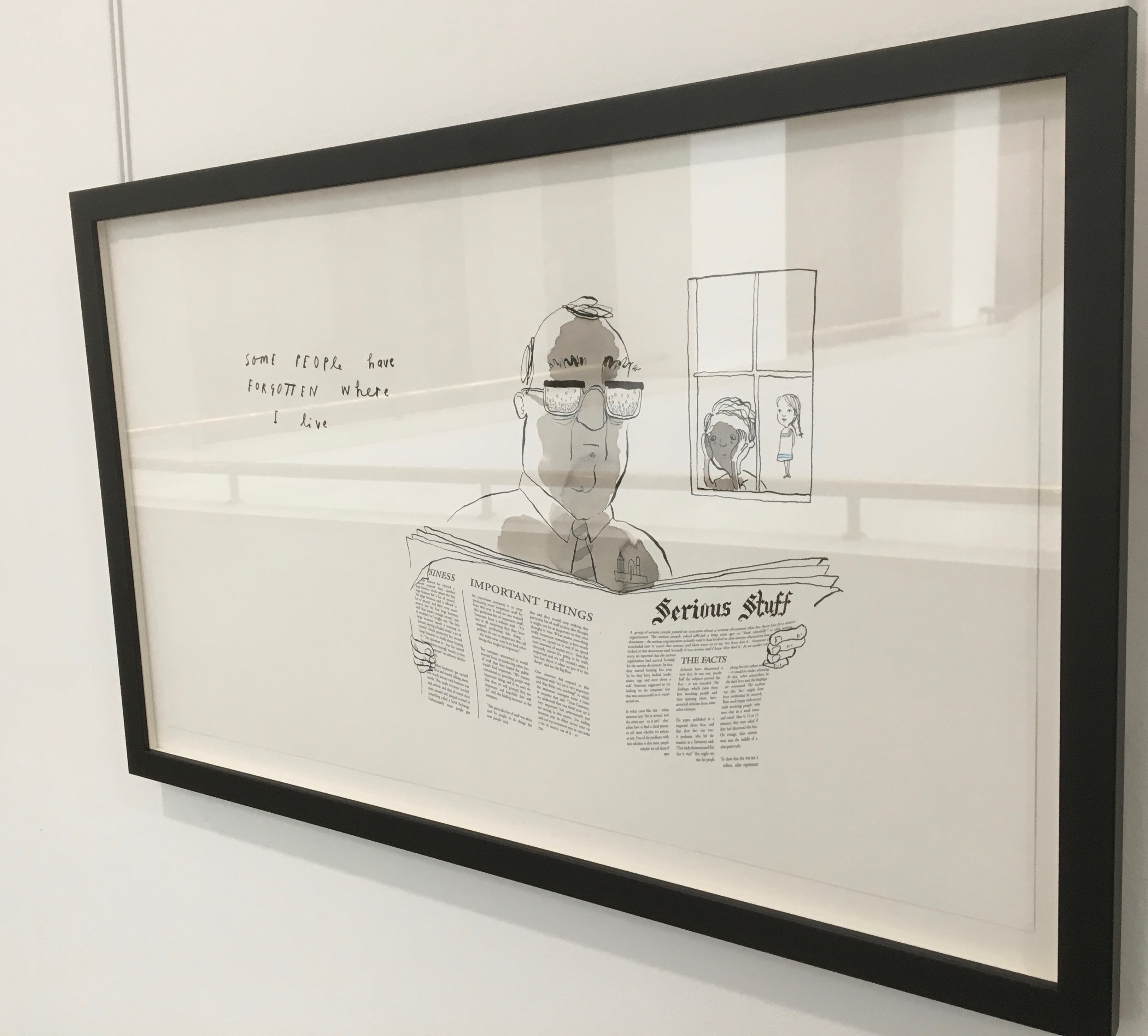
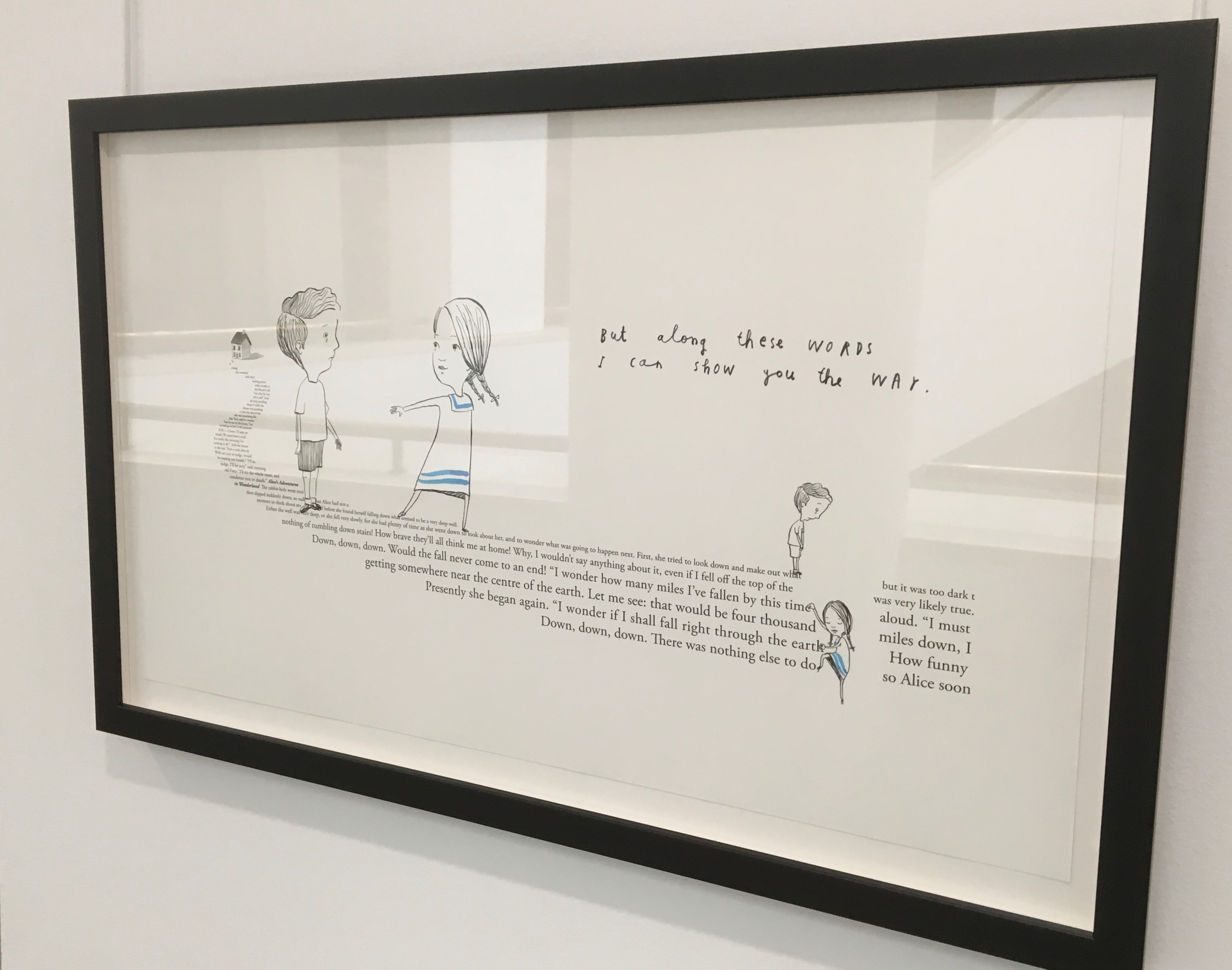
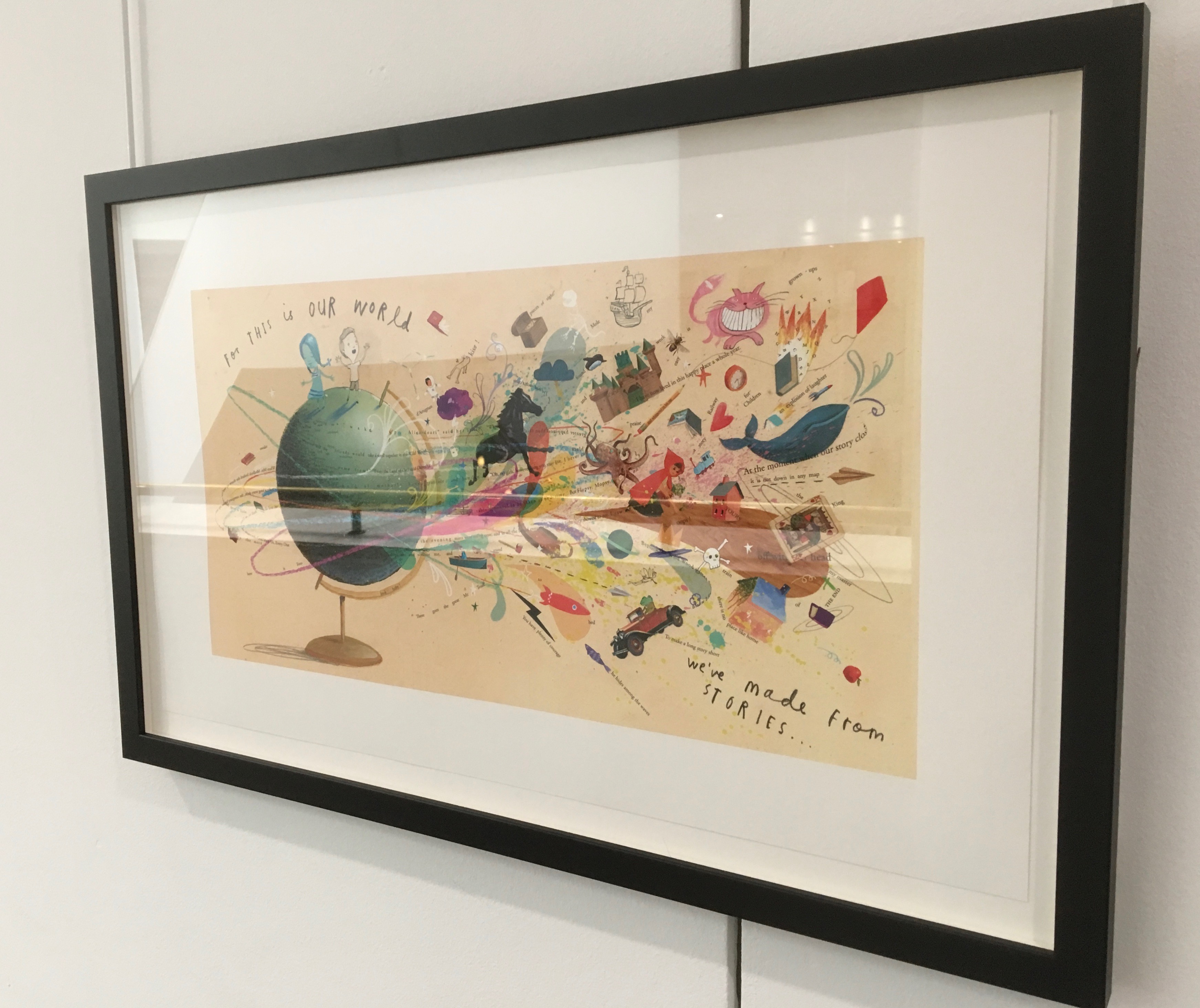
A forest made of fore-edges. A raft made of spines and its sail a book page. A wave and a path made of excerpts from books. In this fabulous world made from the features of books, the simpatico imaginations of Oliver Jeffers and Sam Winston deliver a heroine and an invitation that are hard to resist.
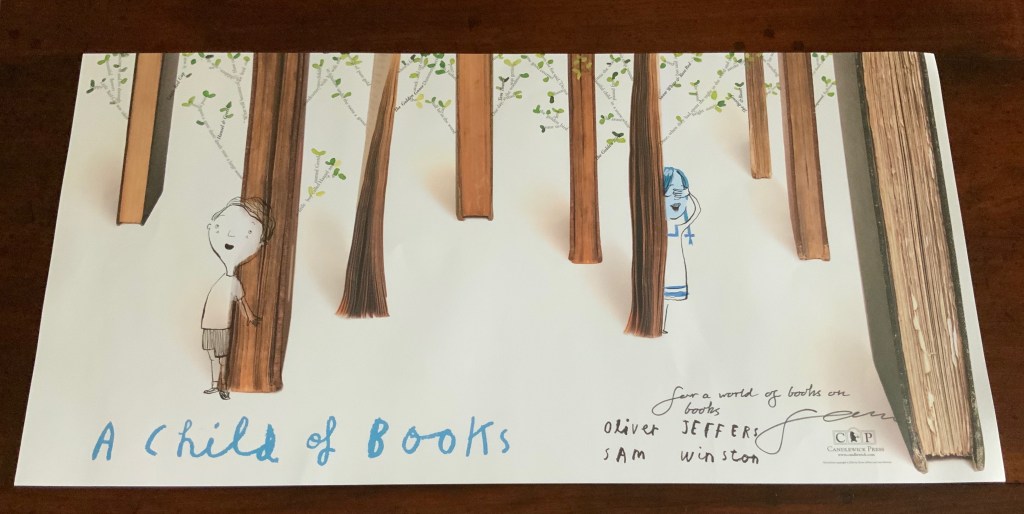
Promotional poster. Displayed with permission of Sam Winston.

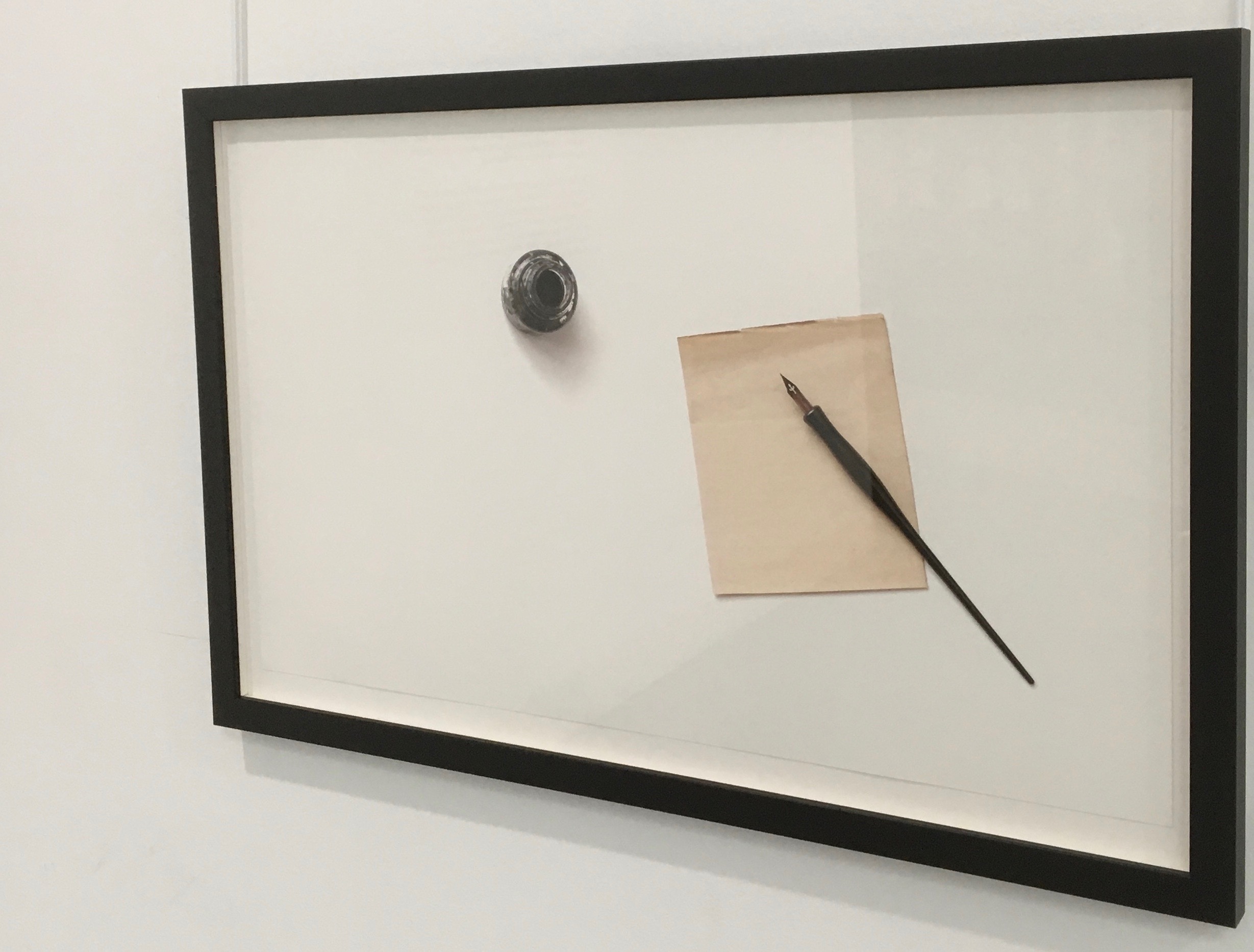
In addition to the poster above and the trade book it promotes, Winston created an artist’s book edition celebrated by this hallway gallery below mounted by the British Library shortly after its appearance.
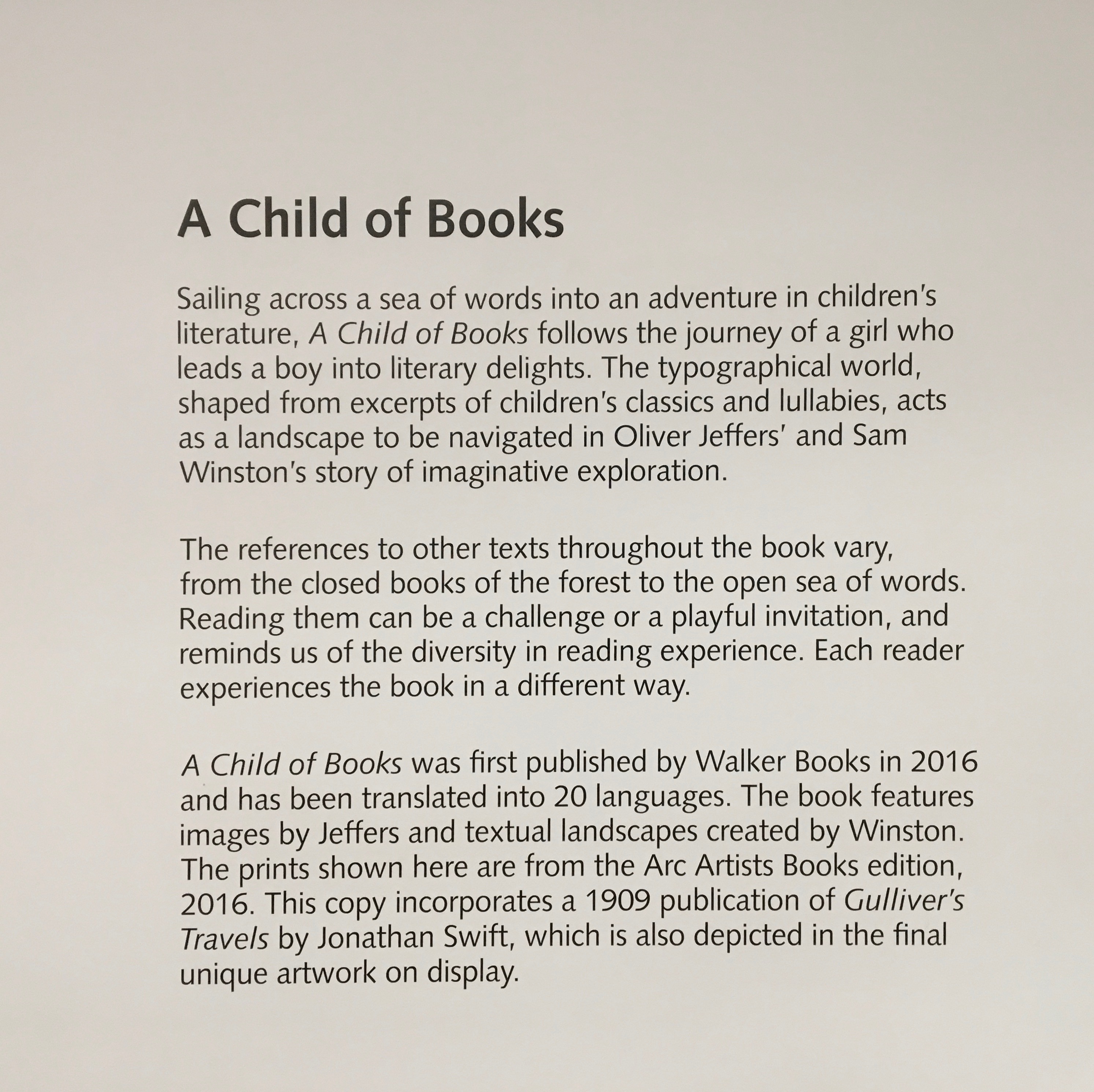
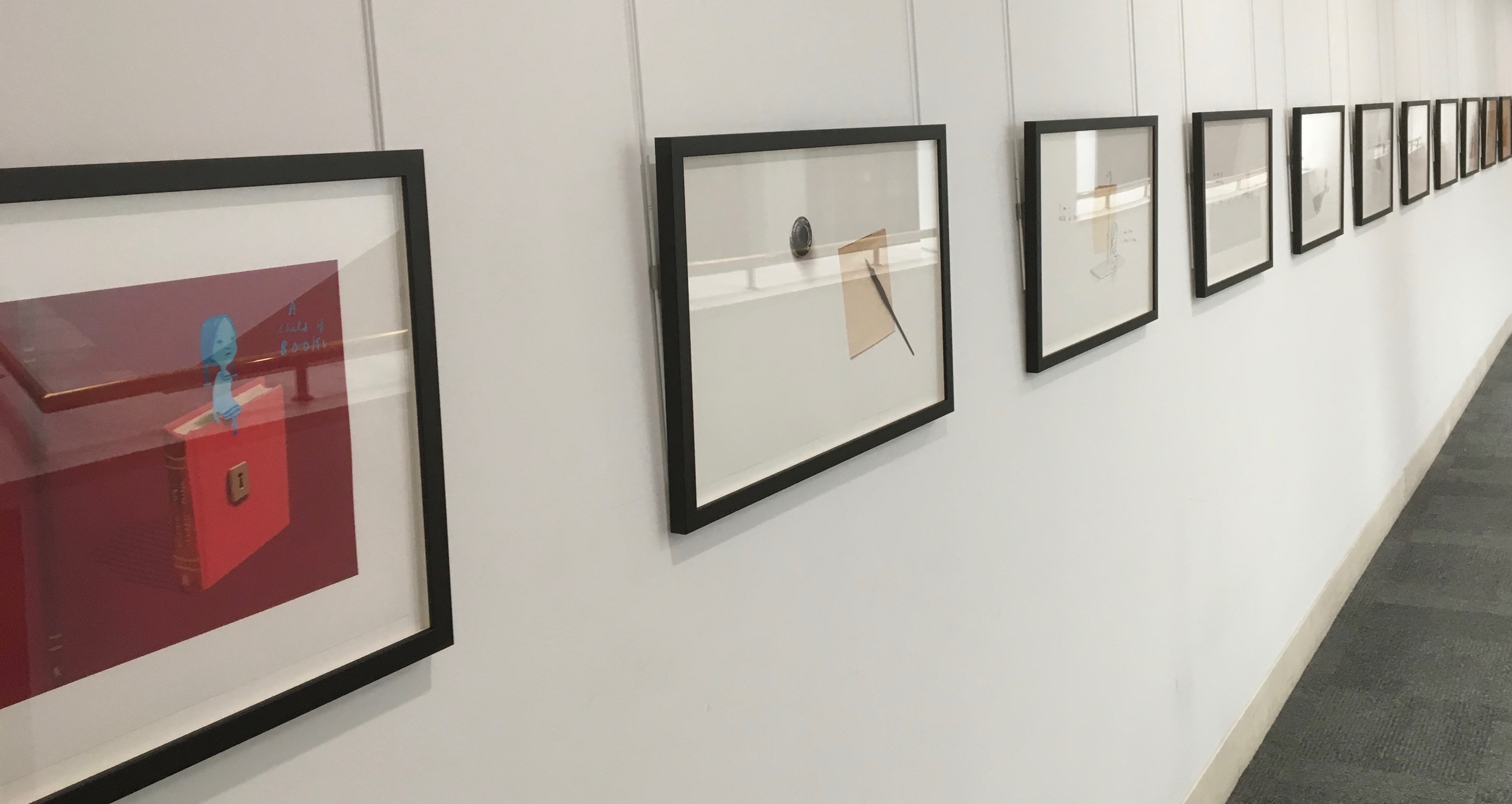
A Child of Books prints displayed at the British Library, 9 August – 27 September 2019.

Winston’s abiding love of letters, words and stories shines through in A Child of Books. Arguably, it has its origins in an earlier work whose story is told by his invention of a very different “child of books”.

A Dictionary Story (2001 – 2020)

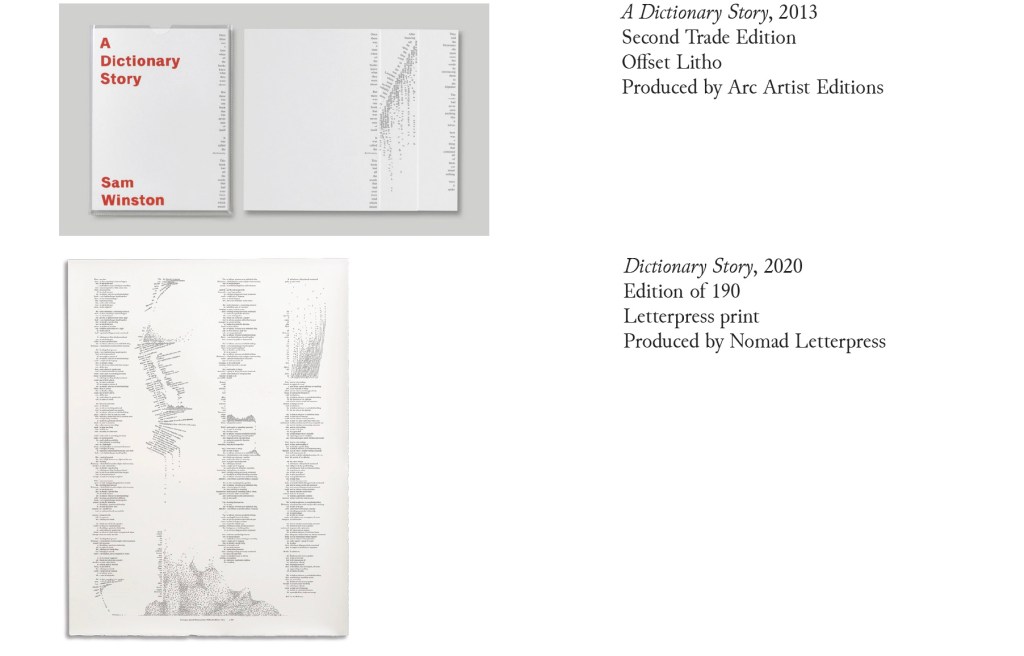
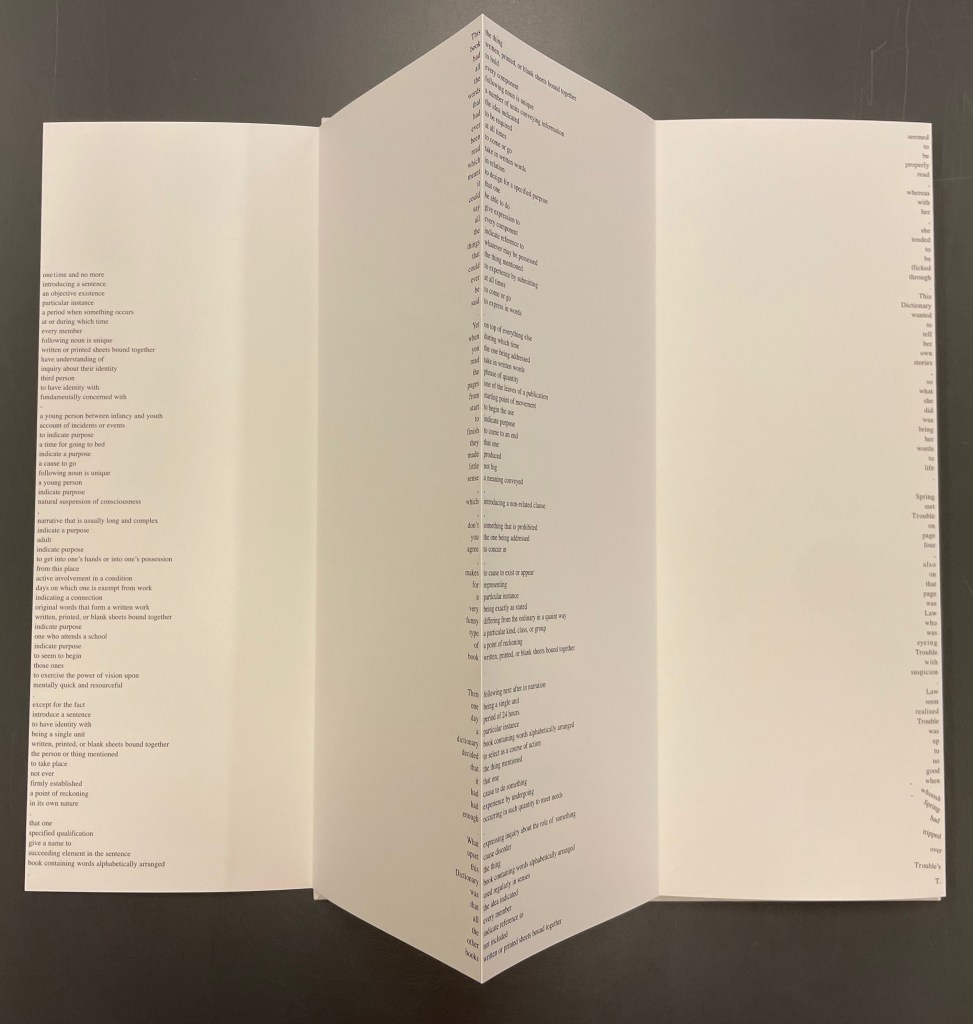
Since its origin as a student project in 2001, A Dictionary Story has appeared in an accordion book form as a fine press edition and two trade editions and as single-sheet prints. The Books On Books Collection holds the fine press edition and the second trade edition, both of which have in common a vertical flush-right single-word column that tells the story and the immediately adjacent vertical flush-left column of definitions of the words in the story. In the fine press edition, the two columns meet at each mountain peaks of the accordion fold.

A Dictionary Story (2006)
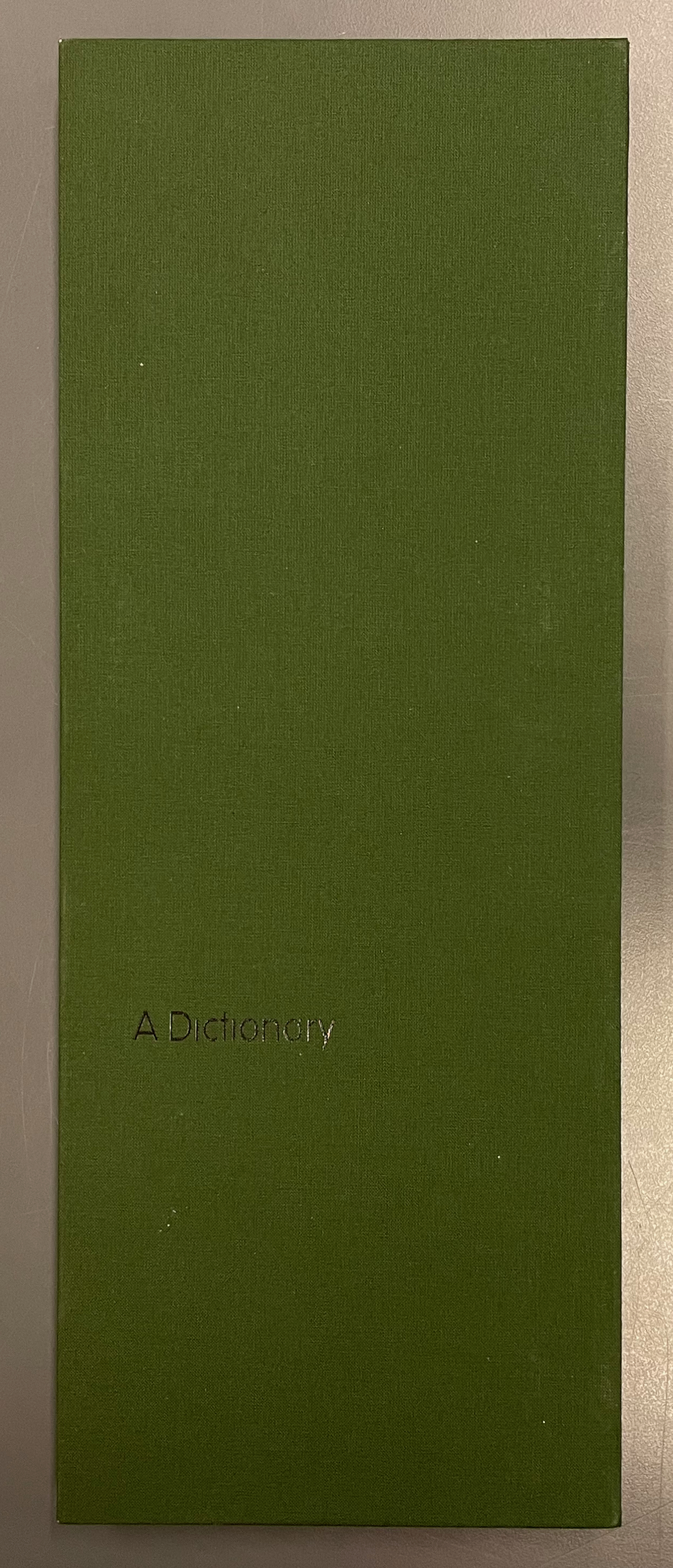
A Dictionary Story (2006)
Sam Winston
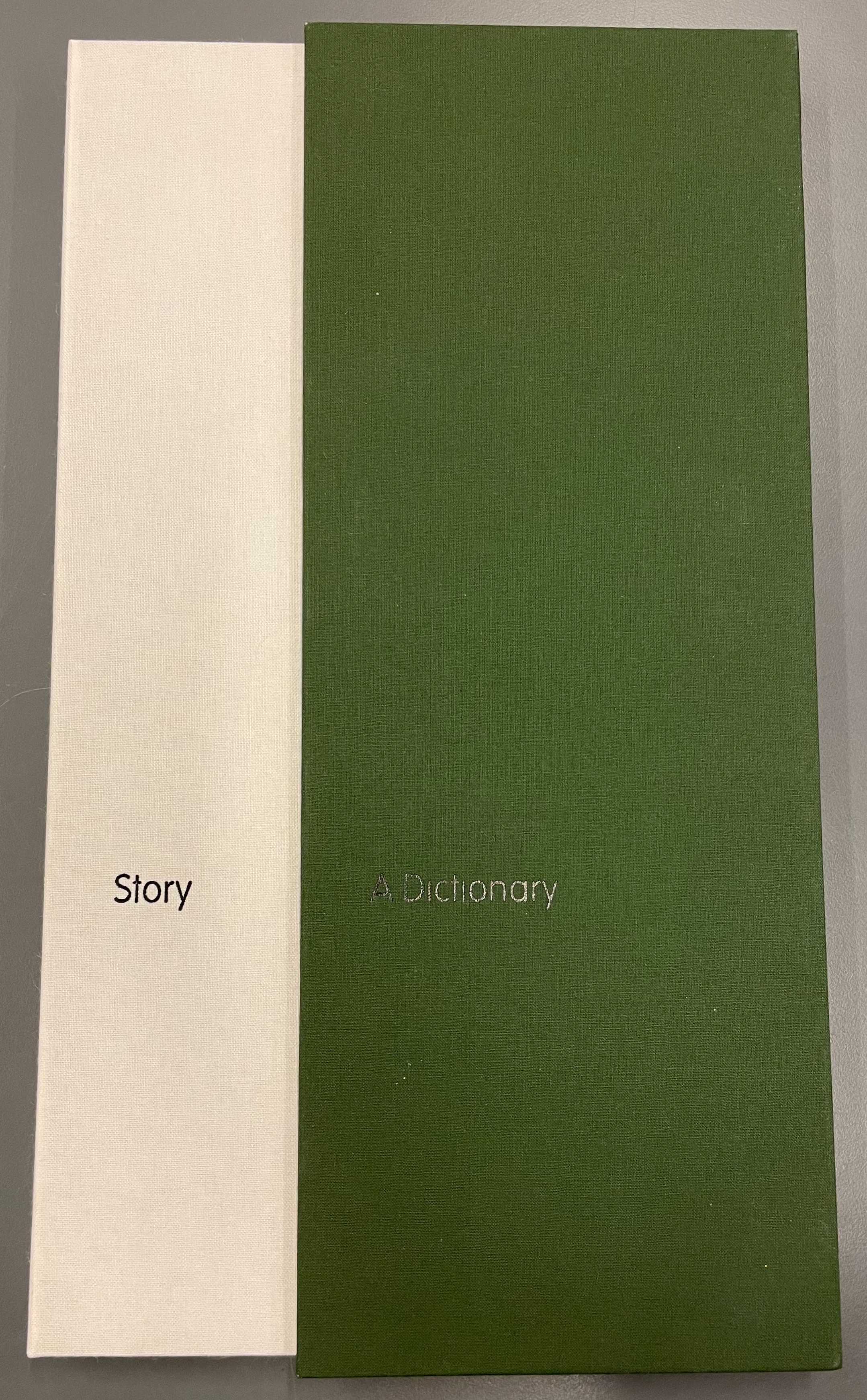
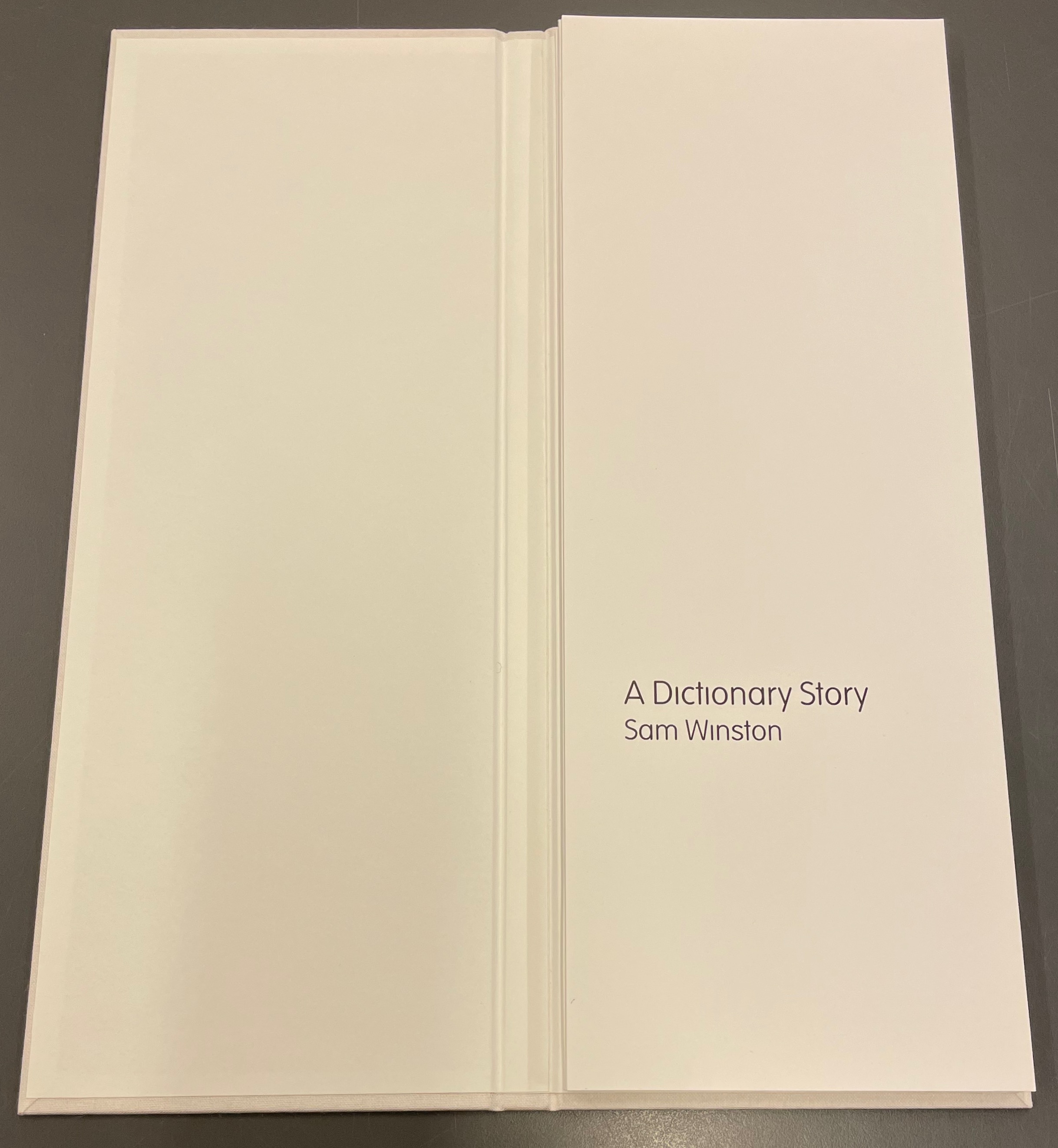
Slipcased leporello between cloth-covered boards.H360 x W140 mm, 25 panels. Story text set in 9 point Times Roman by Sam Winston. Book designed by Richard Bonner-Morgan and Sam Winston. Printed by David Holyday at Trichrom Limited. Bound at Quality Art Reproductions, England. Published by Circle Press. Edition of 100, of which this is #68. Acquired from the artist, 30 May 2018.
Photos: Books On Books Collection. Displayed with artist’s permission.

“Once there was a time when all the books knew what they were about. But there was one book that was never sure of itself.”
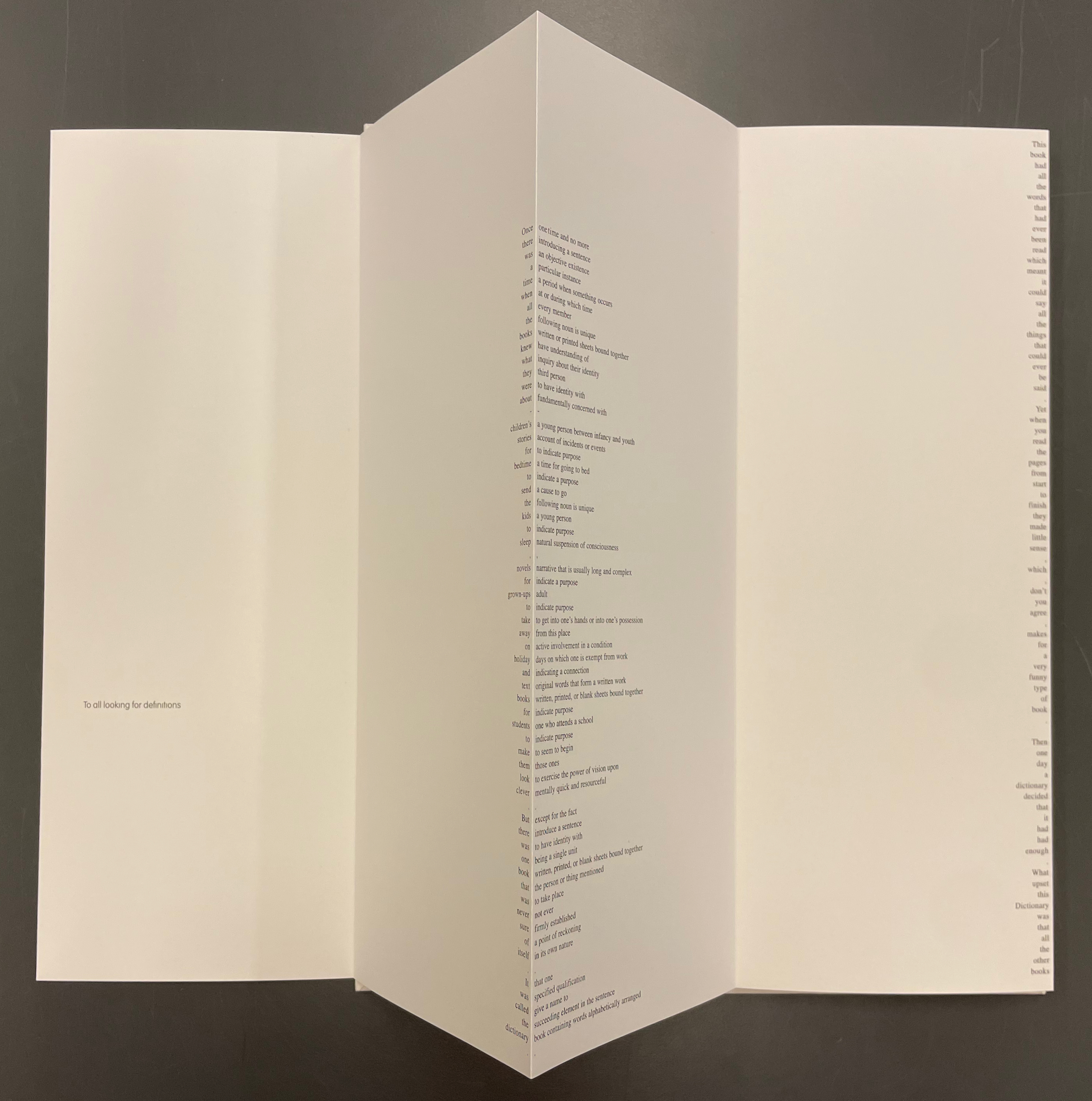
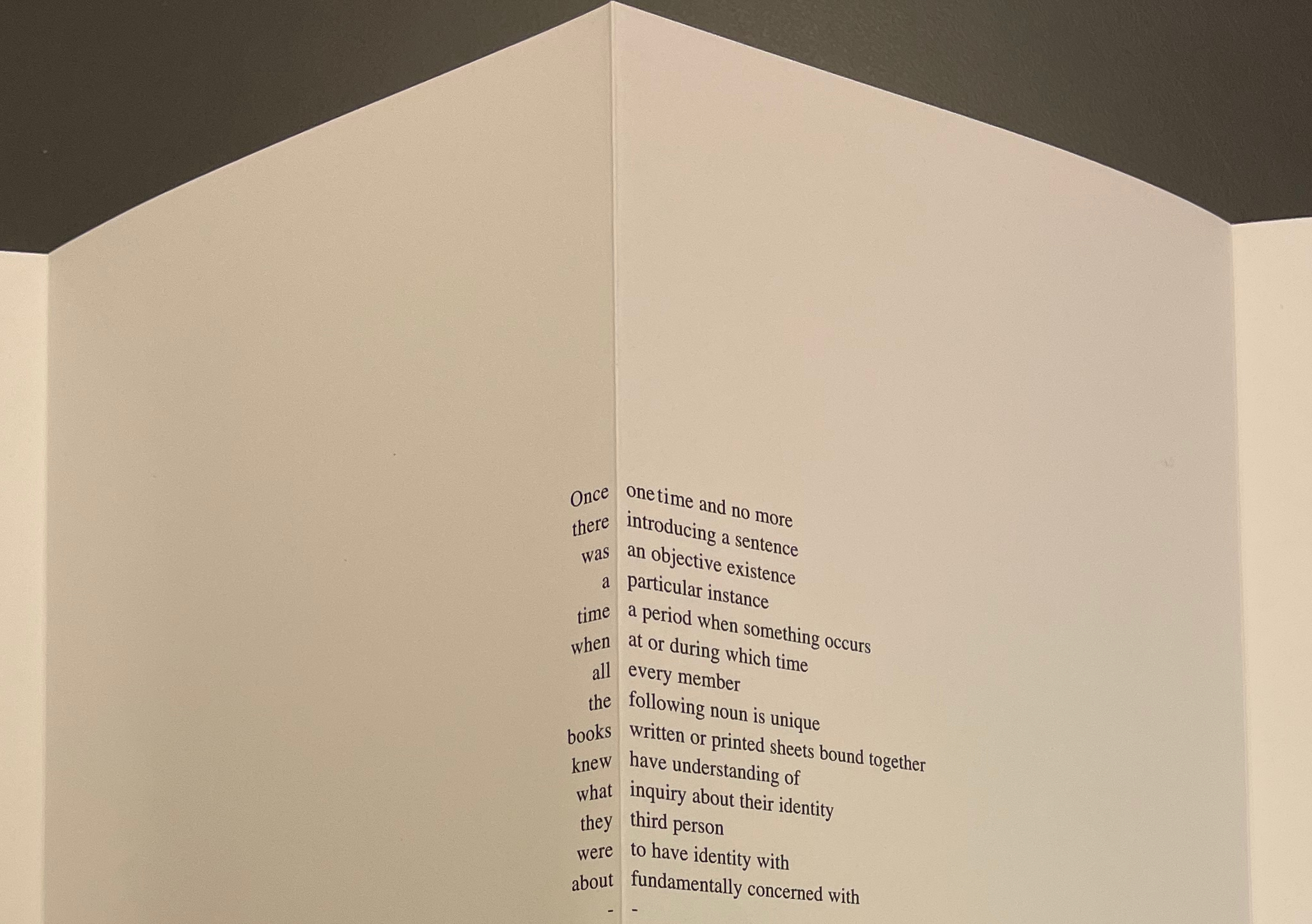
Panels 2-5 from the fine press edition; detail of panels 2-3.

So begins Winston’s tale about this uncertain book. The book never sure of itself is the Dictionary, which of course it must be, otherwise the tale would not be called “A Dictionary Story”. The Dictionary is jealous of all the other books because they are “properly read”, whereas she is just flicked through from time to time. A bit like the “One” in One and Everything, the Dictionary seems to think she contains all the stories imaginable, because she contain all the words — just not in the right order. So she decides to bring her words to life as characters to see what will happen. Words and letters fly about, enacting the story as if in a concrete poem. A meaningful tussle between text and image is a frequent feature for artists’ books as well as visual poetry.
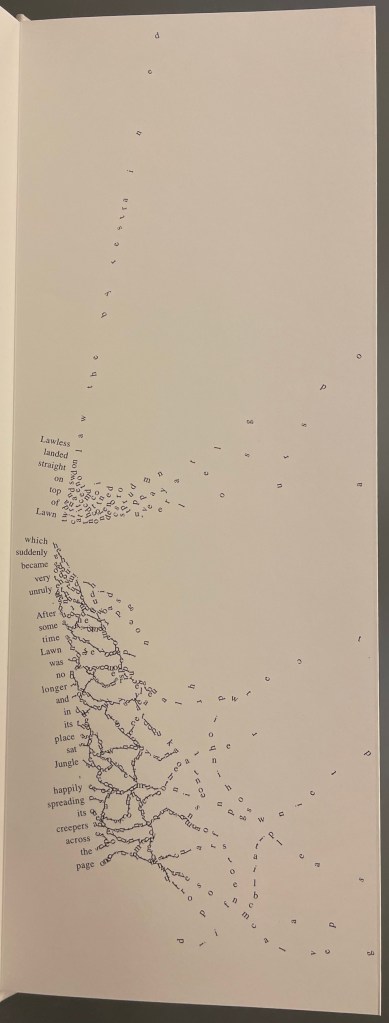
Another defining aspect of book art is its self-referential nature. In an interview with Typeroom, Winston captures this in his response to the question “What is Dictionary Story all about?”:

Dictionary Story is a playful way of exploring some of our presumptions around the printed word. Or you could say that it looks towards a tool we are given at a very young age – the Dictionary – and invites us to actually think about how that works. Here’s a device that is designed to explain a word’s meaning by offering further words in its place – to me that is remarkable. This is a type of knowledge that can only explain itself through referencing itself. As a visual person the image that comes to mind is a giant, never ending, Möbius strip of language twisting back on itself.

Of course for less visual persons, the Dictionary’s whim engenders chaos, which Winston, a dyslexic, can appreciate. So he brings onstage (or “onpage”) the Books, of whom the Dictionary was jealous, to remonstrate that if words become disconnected from their definitions, how will they the Books know what they are about? Insisting that she tame her words, they have the Dictionary’s Introduction introduce her bewildered words to the character “Alphabet”.
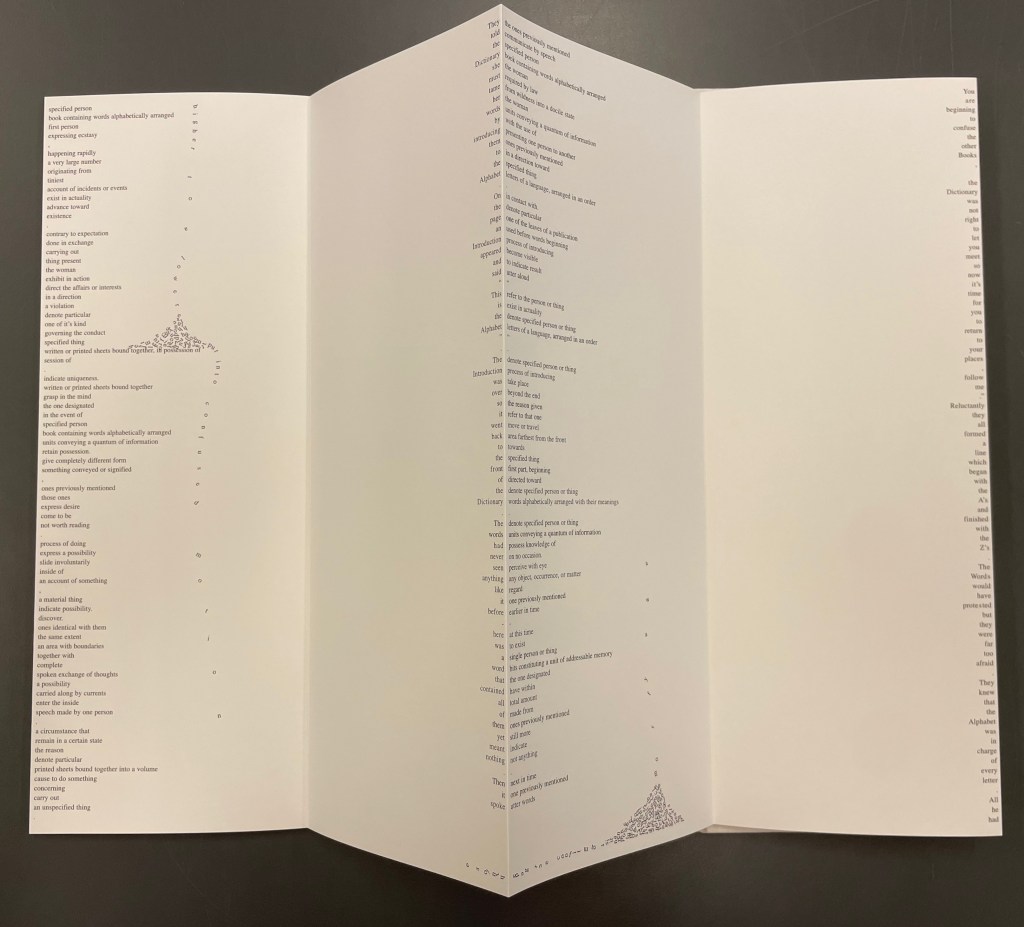
Making the journey over the hills and valleys of A Dictionary Story is satisfying, and re-making it is even more satisfying and delightful each time. The making and re-making of A Dictionary Story must also have been satisfying and delightful for Sam Winston; he has done it so many times.

A Dictionary Story (2013)
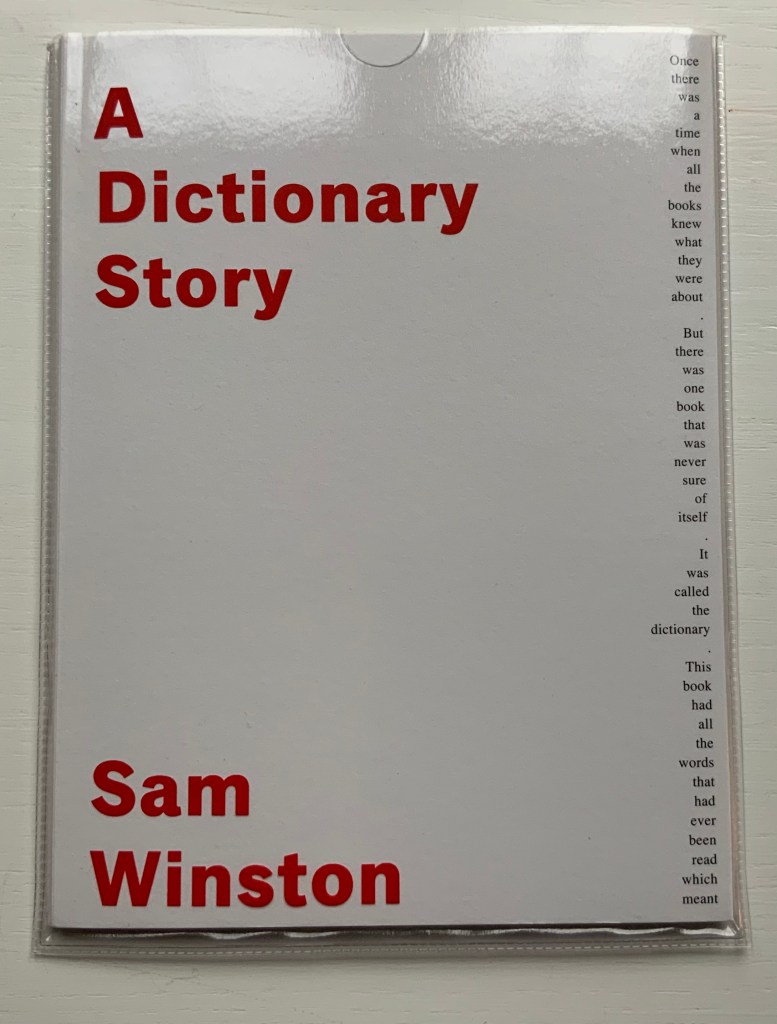
A Dictionary Story (2013)
Sam Winston
Three five-panel accordion folded sections in a plastic sleeve cover. Second trade edition. Sleeve: H205 x W160 mm. Sections: H200 x W150 mm, 15 panels. Acquired from the artist, 13 December 2020.
Photos: Books On Books Collection.

Watching the artist adjust the typography of A Dictionary Story to changing dimensions is like watching a star tennis player who is also a star basketball player and star soccer (football) player. There’s always a ball, there’s always a net, there’s always genius.
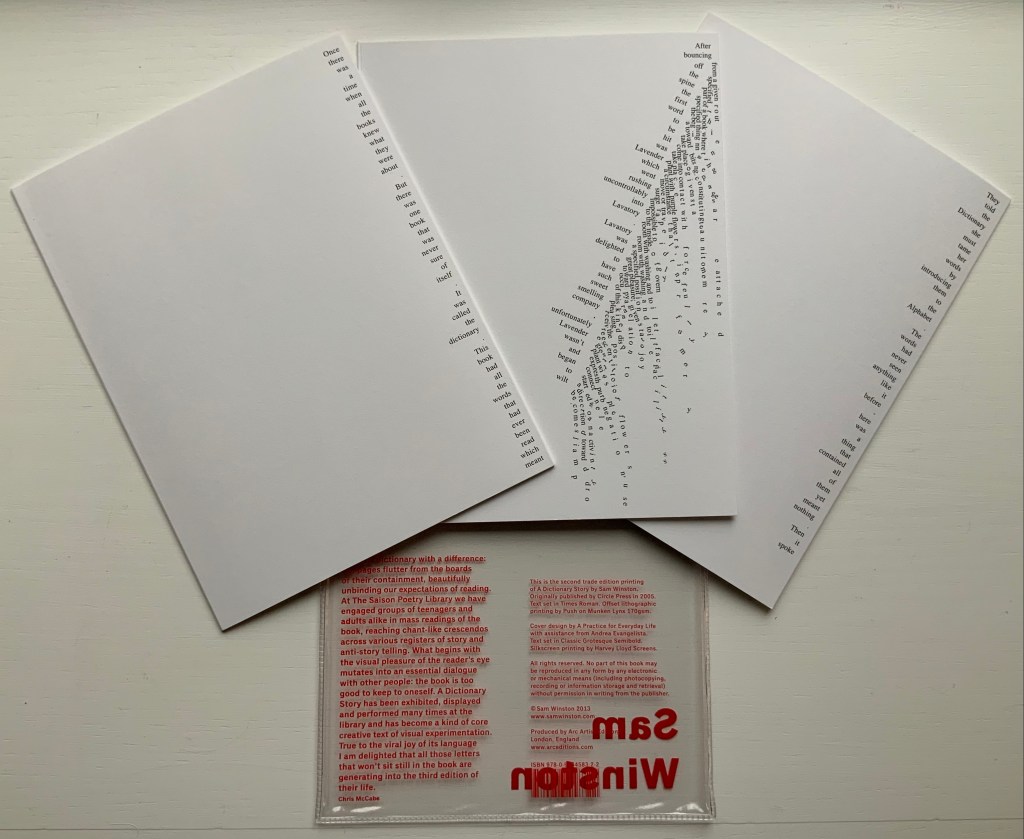
The trade edition splits the fine press edition into three less narrow leporellos and nudges some of the two columns (story/definition) into the valley fold. Below, in the trade edition across panels 3 and 4 is where the Dictionary decides to bring her words to life, and on the right side of the fourth panel, the words begin to slip away from the fold.
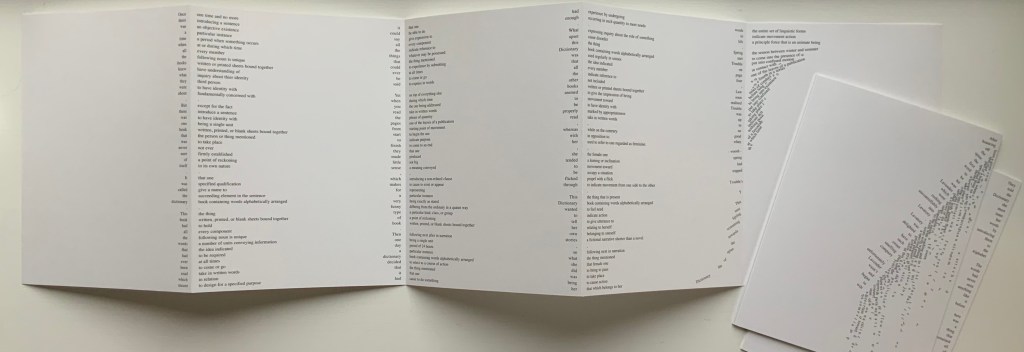
The same part of the story in the fine press edition occurs on the fourth panel below, and the words tilt against the fold.
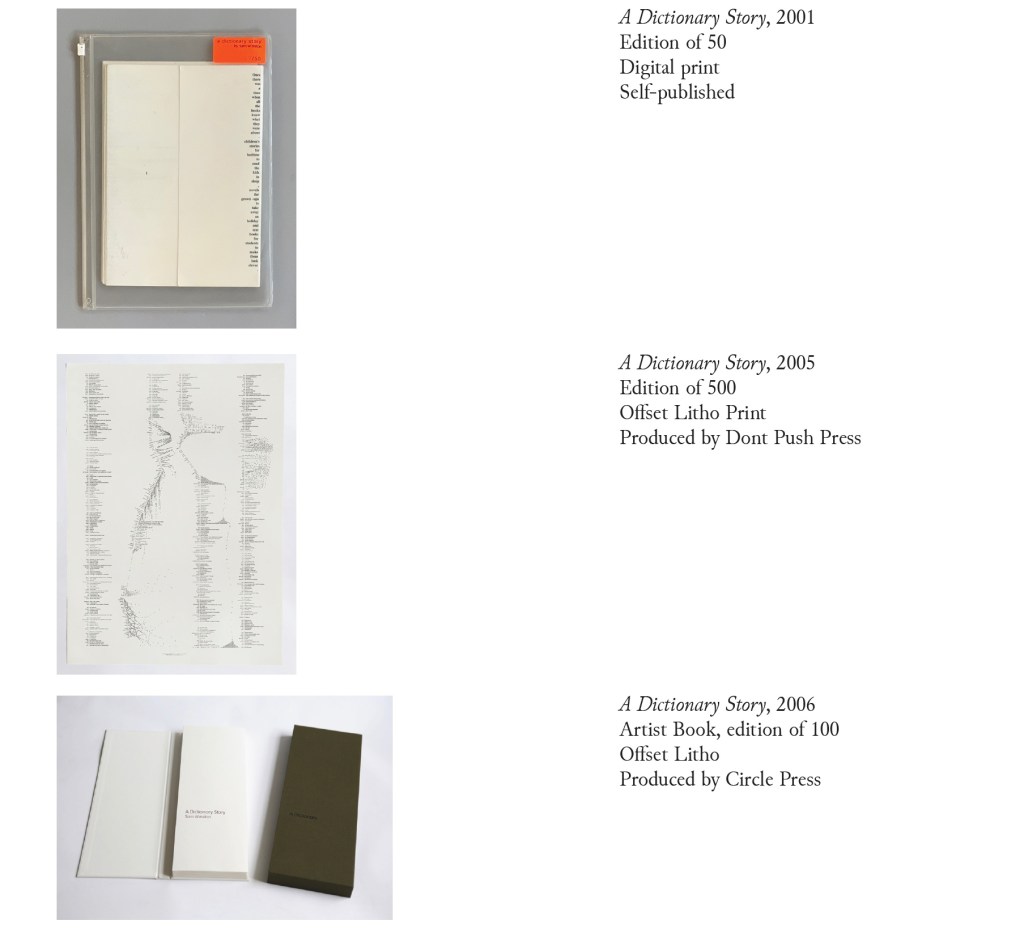
These variations create subtly different narrative paces and visual impressions in the two editions. Not one better than the other, just different. The poster variations, however, subordinate narrative pace entirely to visual impression. At present, the posters are not in the collection, but the images below help to make the point. As with movie goers, some will like the prints more than the books, others the books more than the prints, and still others will marvel at the genius in all of them.

Further Reading

“‘Darkness Visible’, Sam Winston’s performative installation”. Books On Books, 30 December 2017.

Sam Winston”. Bookmarking Book Art. 22 June 2013.

Howard, Alex. 16 February 2015. “Sam Winston – Art as a Spiritual Practice“. Conscious Life. Interview.

Jeffers, Oliver, and Sam Winston. 31 August 2016. “A Child of Books“. Entry at Picturebook Makers. Ed. dPictus. Accessed 30 July 2023.

Lambert, Léopold. 9 February 2011. # Fine Arts /// Dictionary Story by Sam Winston“. The Funambulist. Accessed 20 April 2018. Brief note.

Perkins, Stephen. 11 March 2021. “Sam Winston, A Dictionary Story, Arc Artist Editions, London, 2005/2013“. Accordion Publications. Accessed 26 March 2023.

Russell, Lindsay Rose. “Dictionary, Shaped: Artists’ Books and Lexicography”. Dictionaries: Journal of the Dictionary Society of North America, Volume 41, Issue 2, 2020, pp. 115-146

Sant’Ana Pereira, Felipe. 27 August 2020. “The World’s 5 Most Beautiful Alphabets You’ll Never Learn To Read“. Matador Network. Accessed 26 March 2023. Re One and Everything.

Sperling, Matthew. 28 November 2013. “Open Book“. Apollo Magazine. Mention of Folded Dictionary. Accessed 20 April 2018. Re Folded Dictionary.

Valentino, Andrea. 21 January 2020. “The alphabets at risk of extinction“. BBC Future. Accessed 26 March 2023. Re One and Everything.

Typeroom. 15 July 2016. “An interview with Sam Winston“. Typeroom. Accessed 17 September 2017. Accessed 20 April 2018.

Typeroom. 25 November 2020. “Dictionary Story: Sam Winston’s letterpress classic typographic tale just got upgraded“. Typeroom. Accessed 1 December 2020.

Wood, Heloise. 15 February 2017. “A Child of Books wins Bologna Ragazzi Award for fiction“. The Bookseller. Accessed 2o April 2018.

Yin, Maryann. 26 May 2016. “Book Trailer Unveiled for ‘A Child of Books”. GalleyCat, Adweek. Accessed 20 April 2018.
Images: Courtesy of the artist.
Books On Books Collection – Arial Robinson

The Modern Day Black Alphabet (2020)

The Modern Day Black Alphabet (2020)
Arial Robinson
Casebound. Paper over boards. H290 x W220 mm. 64 pages. Acquired from Amazon, 24 June 2021.
Photos of the book: Books On Books Collection. Displayed with artist’s permission.

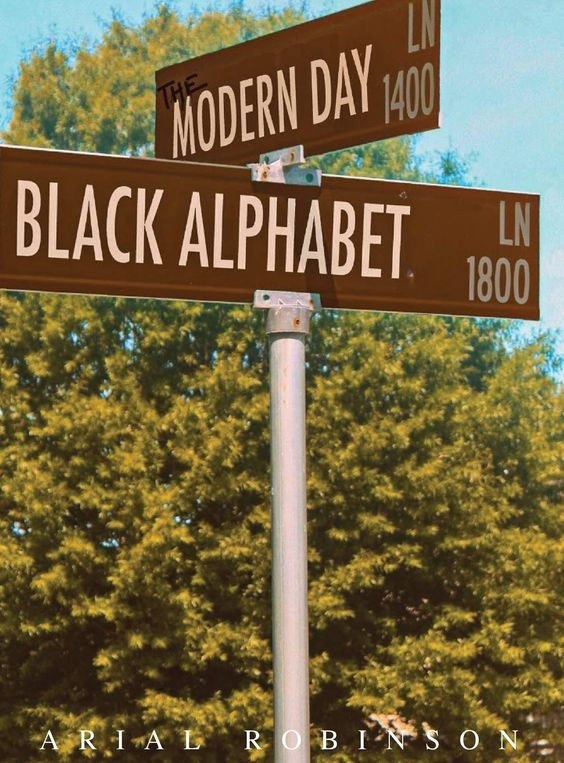
Arial Robinson is a multidisciplinary artist based in North Carolina. Her photography captures the air, sky, suburban streets and heat of the state, and her book captures its Black community in a way that pushes through any “White gaze” that it encounters.

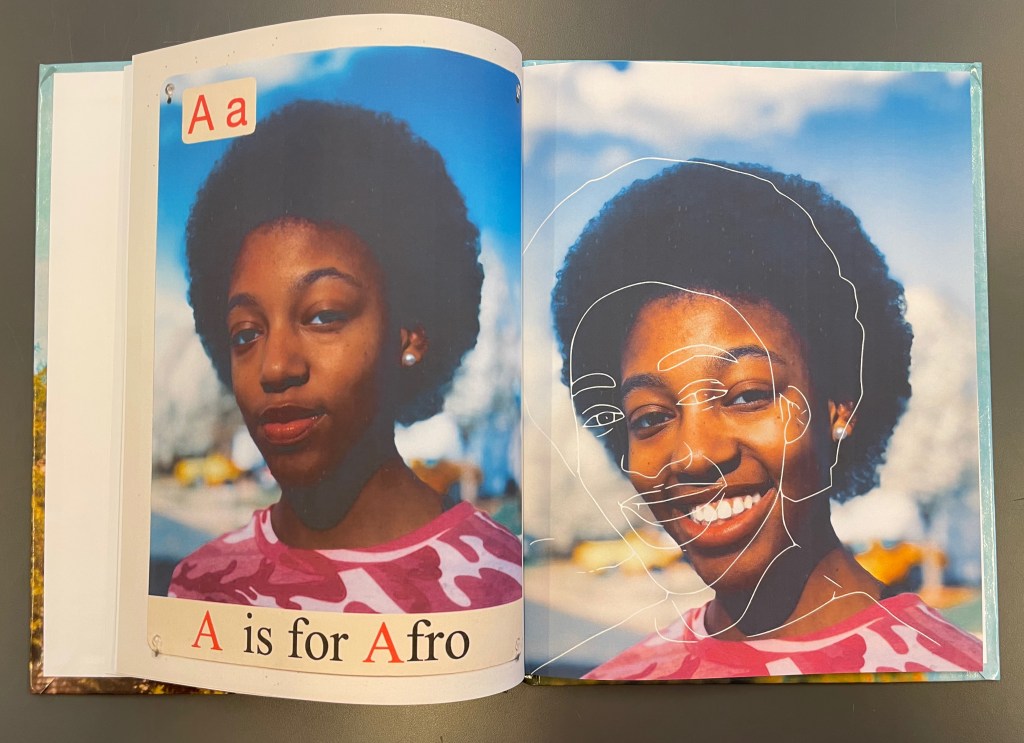
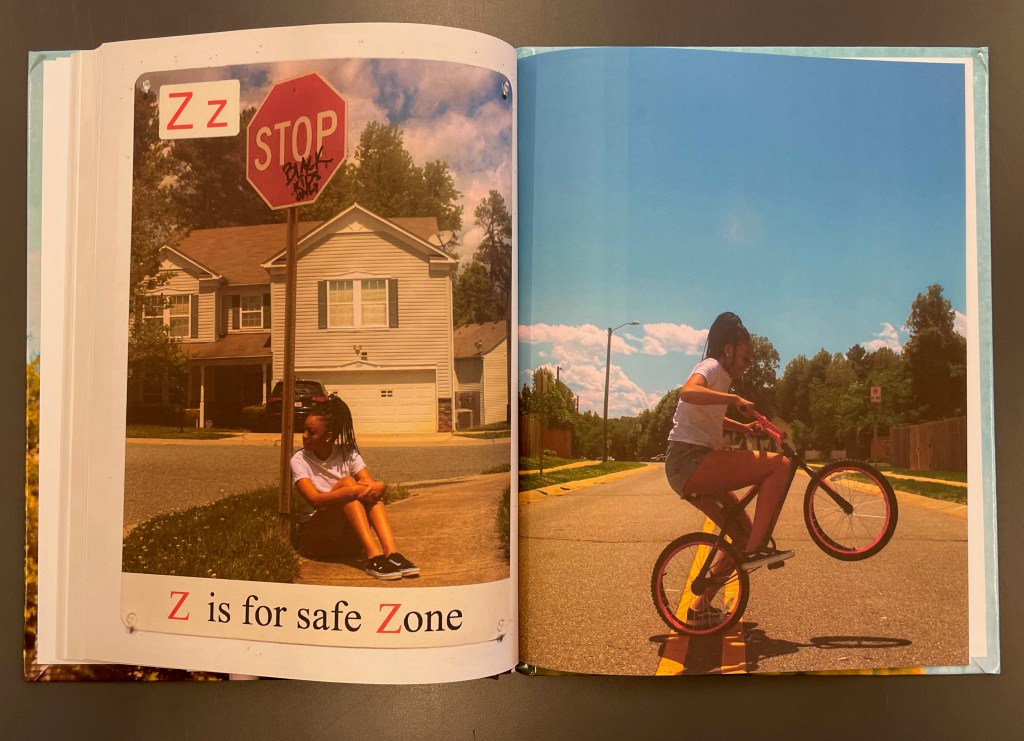
Letter A’s pair of looks — one coolly appraising its viewer and the other warmly smiling but outlined off center in white ink — begins the push with subtlety. The dual images of “Z is for safe Zone”– addressing the viewer with a Stop sign graffitied “Black Kids Only” and a young girl forming a letter Z with her bike, occupying the whole street under a Carolina blue sky — end it more directly.

Between A and Z, The Modern Day Black Alphabet primarily addresses young Black readers, celebrates them eating a popsicle, studying, cooking or drinking from a spigot and takes pride in taking care of appearances — especially hair and dress. Throughout, most of the double-page spreads have an edginess. Sometimes it’s an edgy, out-loud humor, as in “O is for Outside” with its can of “air freshener” labeled “You Smell like Outside”. Sometimes it’s the loud-quiet edginess of “X is for eXcellence” which juxtaposes a pile of certificates of accomplishment with a black-jacketed self-portrait and lapel pin that reads “We Call BS”. Always it’s the edginess of an artist in control of technique, material and vision directing her gaze on herself and her world.

Further Reading

Abecedaries I (in progress)“. Books On Books Collection.

Tia Blassingame“. 17 August 2022. Books On Books Collection.

Wendy Ewald“. 15 May 2023. Books On Books Collection.

Ursula Hochuli-Gamma“. 18 November 2022. Books On Books Collection.

Tupoka Ogette“. 15 May 2023. Books On Books Collection.

Clarissa Sligh“. 2 September 2020. Books On Books Collection.

Allah, Saladin. 21 February 2021. “Animation Series: The Modern Day Black Alphabet“. Accessed 1 April 2023.

Books On Books Collection – Wendy Ewald

Wendy Ewald: American Alphabets (2005)

American Alphabets (2005)
Wendy Ewald
Casebound with white headbands and colored doublures. H305 x W260 mm. 168 pages. Acquired from Judd Books, 17 September 2022.
Photos of book: Books On Books Collection. Displayed with artist’s permission.

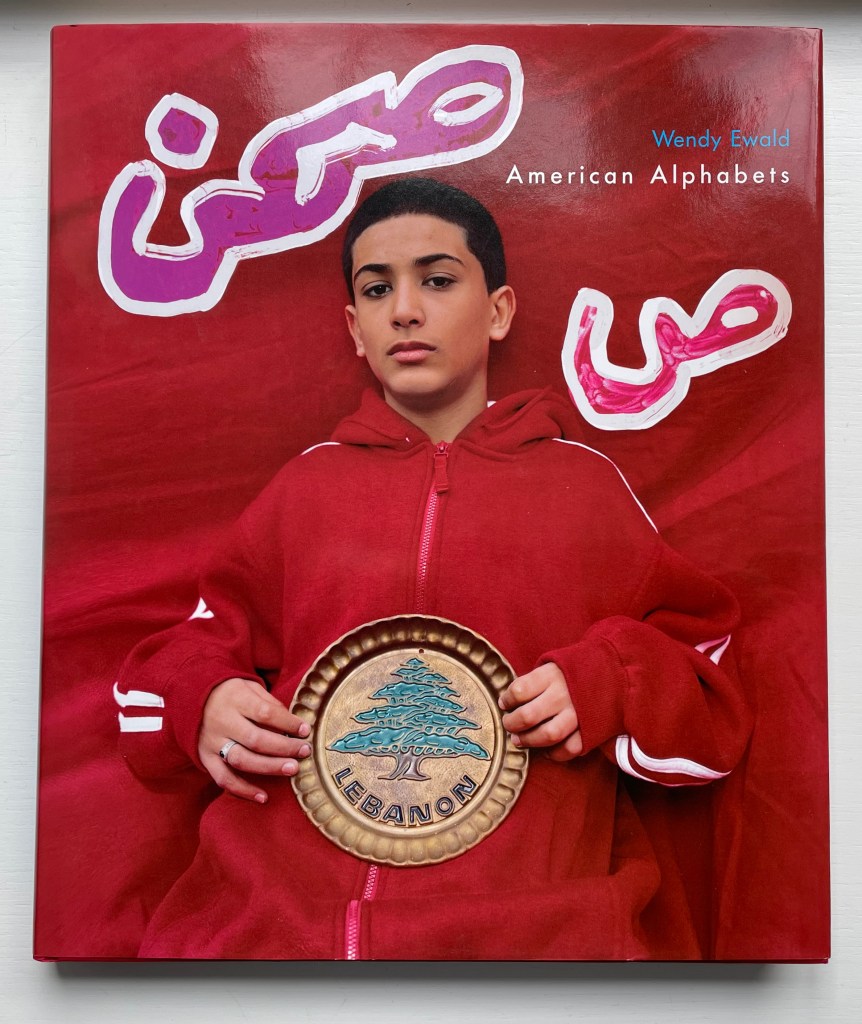
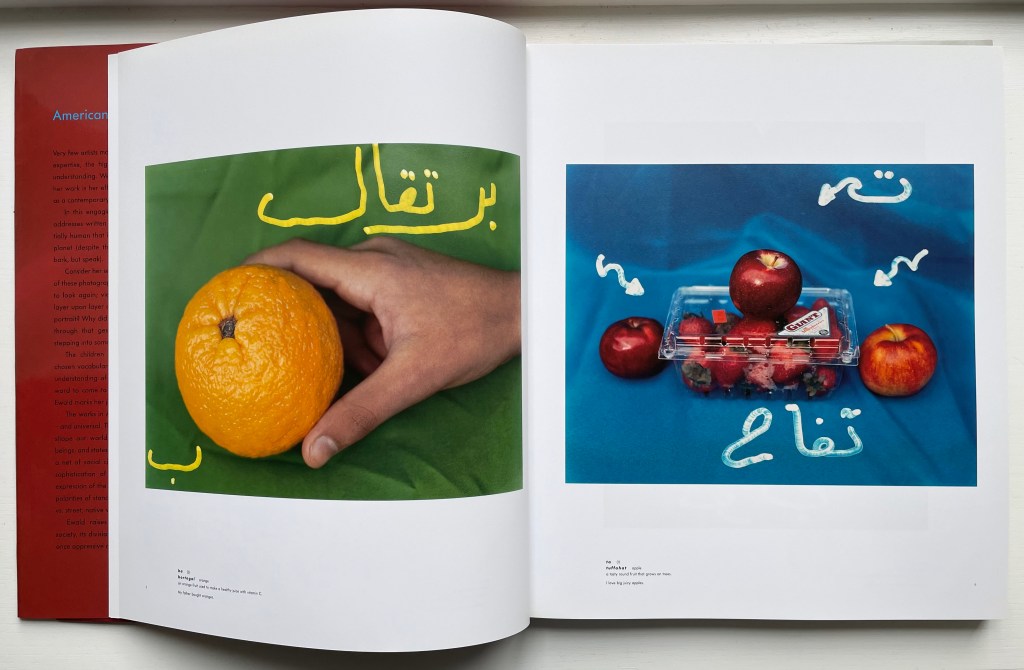
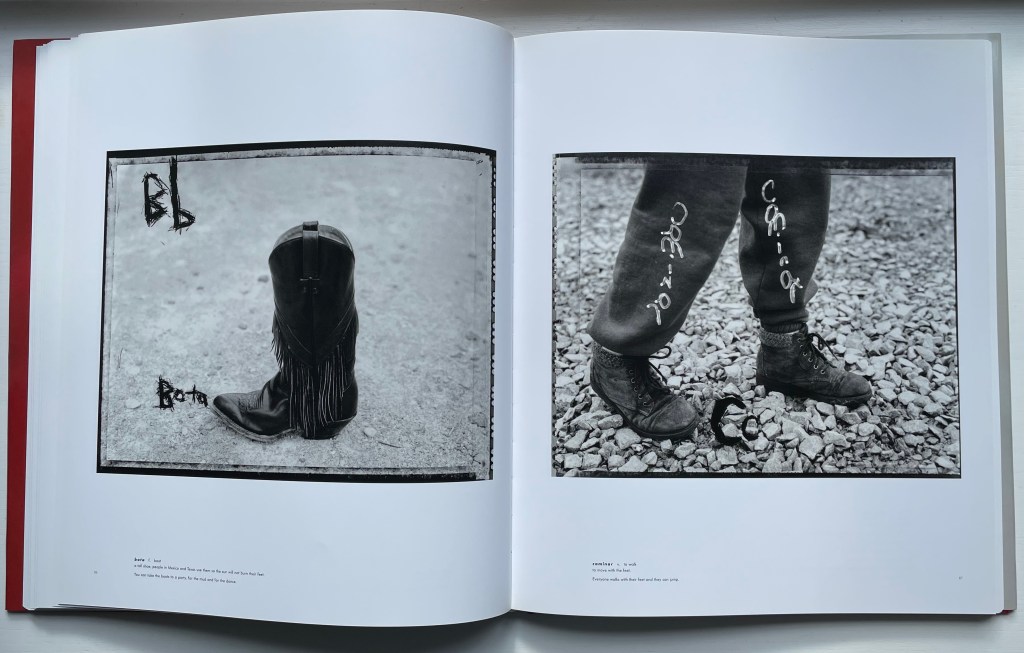
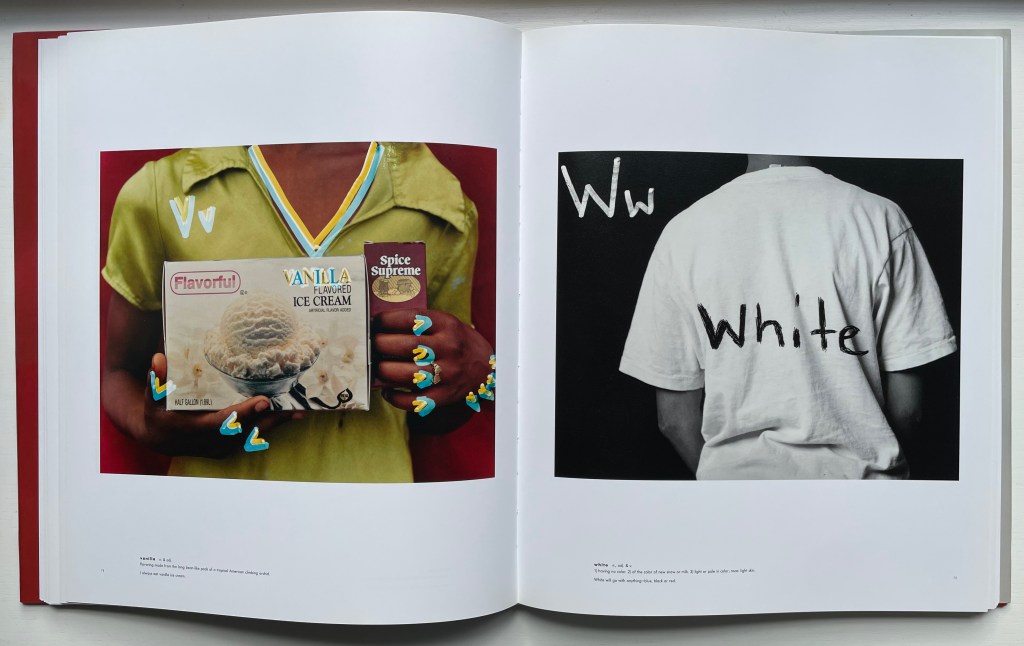
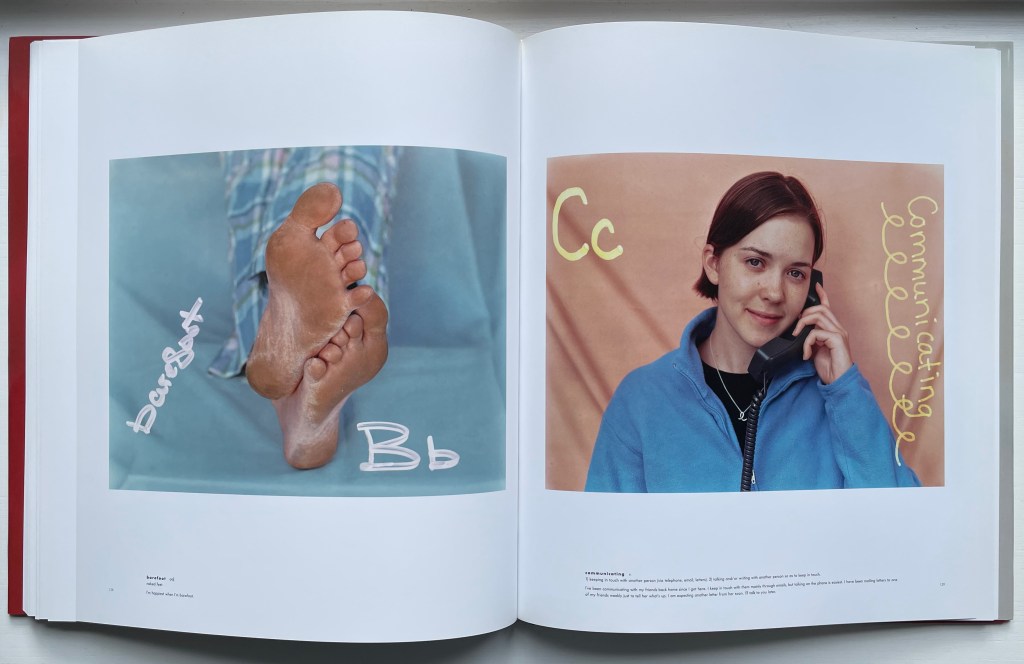
As seen throughout the Books On Books Collection, book art is more often than not a collaborative effort — even if only in the final stages of printing and binding. Ewald’s works, however, depend from the start on collaboration with her subjects — the children. Another recurrent aspect — perhaps the core aspect — in book art is the interaction of the visual and verbal. So, too, in Ewald’s art. In American Alphabets, she brings the collaborative and visual/verbal aspects of book art together at the elemental level of the alphabet. It is the children who pick the letters, words and their illustrative objects to be photographed. In the book’s “Afterword”, Ewald writes:

Like most everyone I know, I first encountered written language in children’s alphabet primers. Looking back, I now see that the words and visual examples used to represent letters reinforced the world view of the middle-class white girl I happened to be. … Putting together these various alphabets — each of them at once American and foreign — taught me a lot about written language, especially about how we have come to take this sophisticated and fundamental medium for granted. … The shape of letters mimicked the objects for which they were named. The letter R, for example, came from the Egyptian hieroglyphic for head or chief: resh. … When Woroud, one of my students from Queens, chose the word raas, or “head,” to represent the letter R, it seemed natural enough. I was startled, though, when she insisted that her head be photographed in profile, just as in the drawing of the ancient letter.

An abiding aim of Ewald’s art is to elicit or allow her collaborators’ voices and world views to create communities that overcome differences by celebrating differences. The reduced, screen-bound images here do not do justice to her four alphabets in one volume or her portraiture and photographic artistry. They may, however, convey the breadth and racial inclusivity of her vision. Arab-American, Latinx-American, White American and Black American are the American alphabets that Ewald aims to capture in this volume.

Another of Ewald’s projects ripe for an artist’s book — or rather artists’ book — is Black Self/White Self (1994-1997). Imagine the book she might create from her young collaborators’ efforts if they were brought to Penland, Women’s Studio Workshop or Art Metropole. Here is the North Carolina-based project in her own words:

When I began working in Durham’s inner city, more and more of the white population had moved to the suburbs and the public schools became segregated along city-county lines. Proposals to merge the school systems were stymied by objections from both sides.

In 1994, after the Durham school systems were finally merged, I designed a collaborative project that looked directly at the issue of race. I asked children to write about themselves, then to write another version, this time imagining themselves as members of another race.

This was greeted first with silence, then laughter, and finally with an enthusiastic barrage of questions.

Once the children had completed their written portraits, I photographed them posing as their “black” and “white” selves, using props they had brought from home. I gave them the large-format negatives to alter or write on, in keeping with ideas from their written portraits, so they could further describe the characters they had imagined themselves to be.

Extraordinary.

Further Reading

Abecedaries I (in progress)“. Books On Books Collection.

Tia Blassingame“. 17 August 2022. Books On Books Collection.

Global Afrikan Congress“. 15 May 2023. Books On Books Collection.

Tupoka Ogette“. 15 May 2023. Books On Books Collection

Arial Robinson“. 15 May 2023. Books On Books Collection.

Ewald, Wendy. 2002. The Best Part of Me : Children Talk About Their Bodies in Pictures and Words.Boston: Little Brown. Fifteen subjects decide what part of their bodies will be photographed and then described in their own words.

Ewald, Wendy, Adam D Weinberg and Urs Stahel. 2000. Secret Games : Collaborative Works with Children 1969-1999. Zurich: Scalo.

Books On Books Collection – Global Afrikan Congress

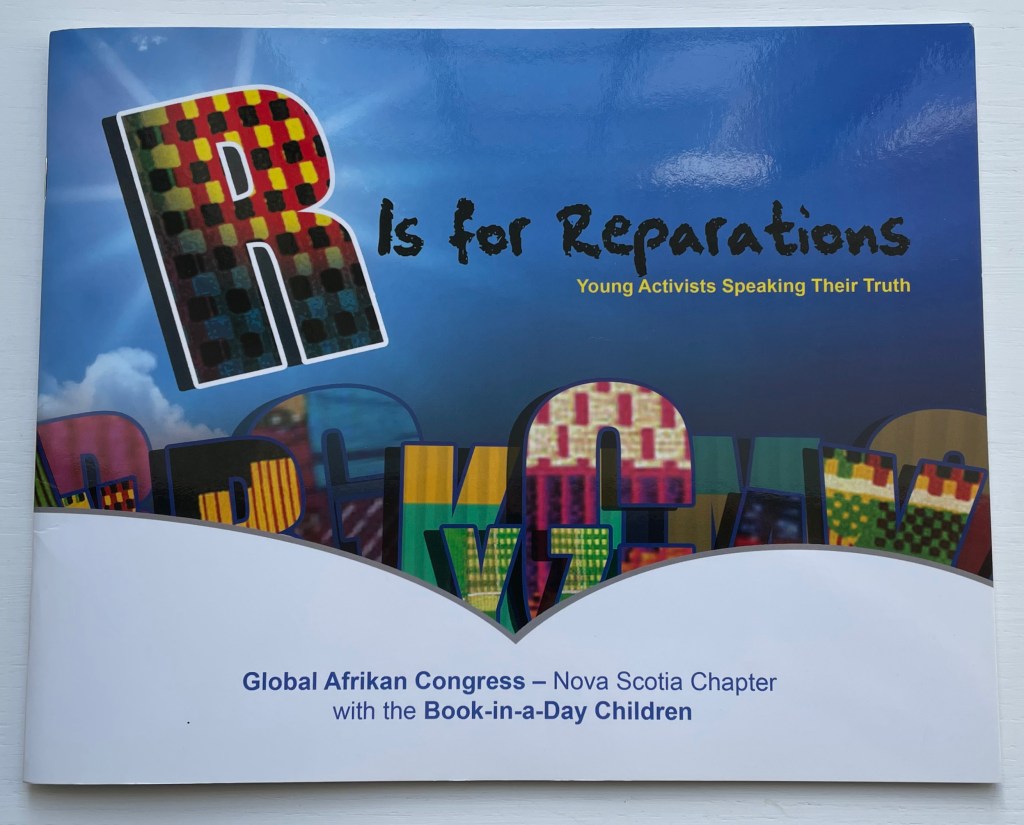
R is for Reparations (2019)

R is for Reparations (2019)
Global Afrikan Congress (Nova Scotia Chapter)
Denise Gillard, ed.
Paperback saddlestitched with staples. H260 x W210 mm. 40 pages. Acquired from the Book Depository, 1 March 2023.
Photos of the book: Books On Books Collection.

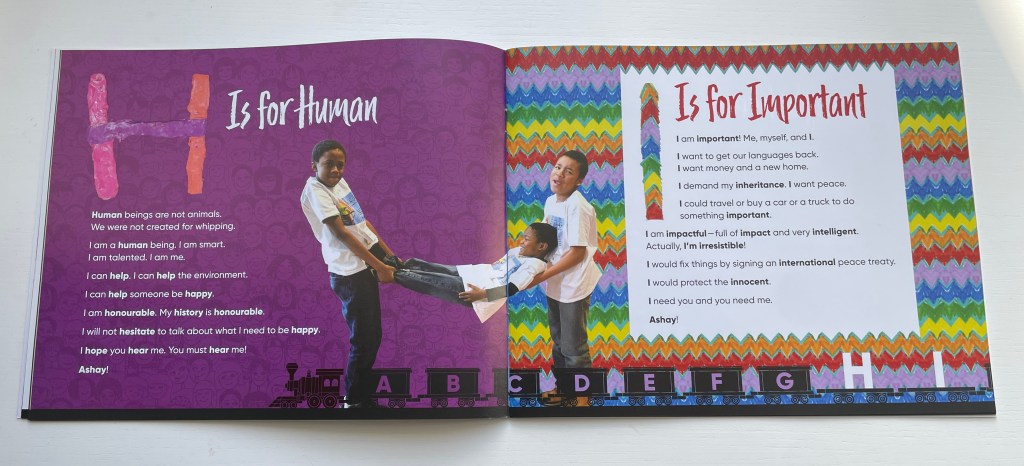
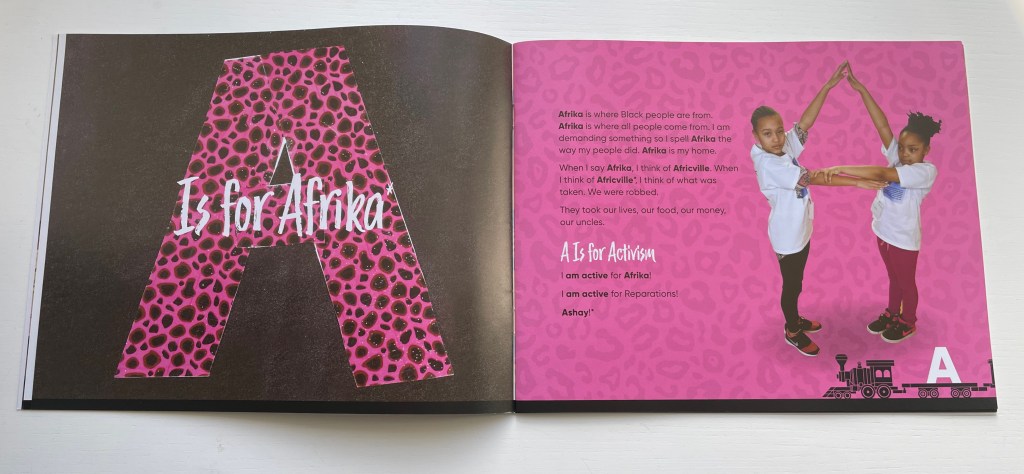
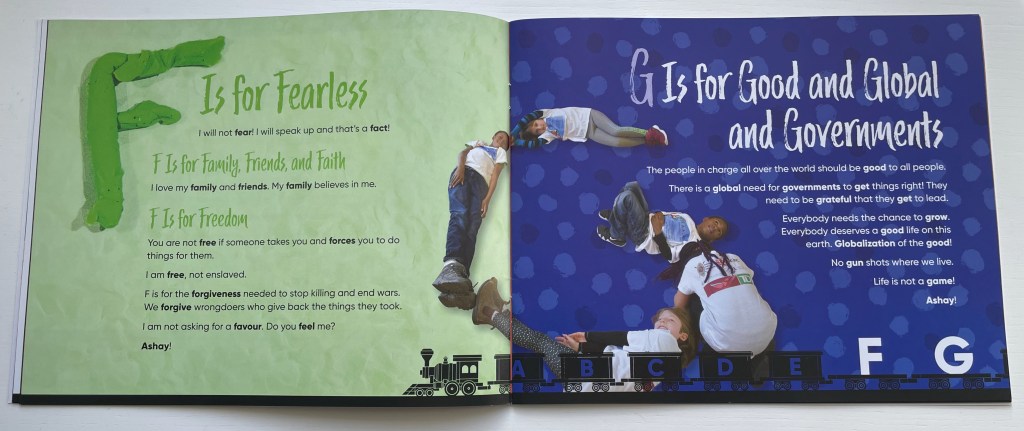
If all alphabets have a world view, can an alphabet be bent and arranged into a new world view? In 2018, the Nova Scotia Chapter of the Global Afrikan Congress facilitated a “book-in-a-day” event to help the children of Halifax create an alphabet book that answers that question. Bending and arranging the human body to make letters has a long tradition in book illustration. Drawing on that tradition, the participating children gave voice and body to create R is for Reparations, an alphabet book calling for a new world view on reparations for the damage and legacy of the Atlantic Slave Trade.

The Reparations Movement has a long history, and Halifax, Nova Scotia has played a part. In 2010, the City of Halifax issued a formal apology and $5 million in general compensation for the razing of the Black community Africville in the 1960s (see Further Reading).

Anticipating it final report in July 2023 to the state legislature, the Californian Task Force to Study and Develop Reparation Proposals for African Americans called for significant financial compensation. The governor issued a tepid if not cool response, which may be unsurprising even in the wake of his earlier signing and endorsing of legislation returning Bruce’s Beach to the Black family from whom the government appropriated it in 1924 (see Further Reading). It is an emotionally and politically complicated issue for some.

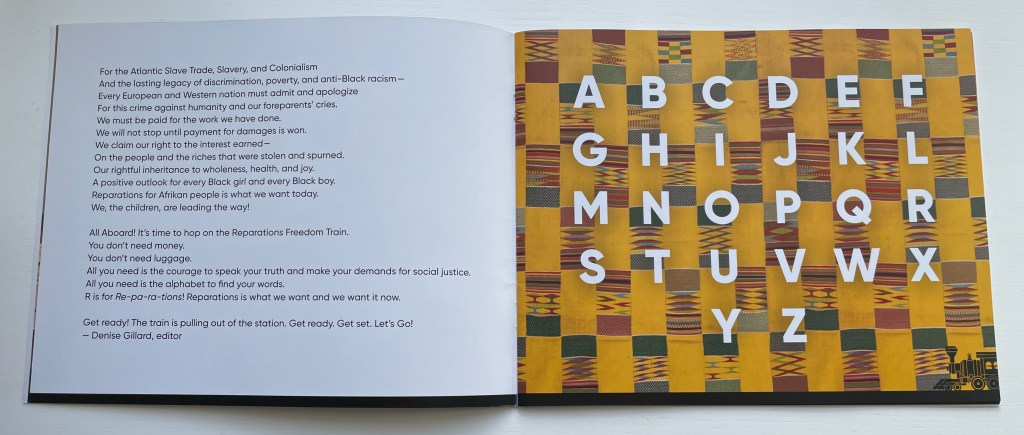
The foreword by Denise Gillard takes a less complicated view as might be expected in a children’s book, and as R is for Reparations addresses primarily Afrikans and Afrikan Descendants both on the Afrikan Continent and in the Diaspora, that view is strong and forceful. It is the sort of children’s book that would be banned in some US school libraries, but as the voices and bodies of its multi-racial cast of participants imply, it is the sort of book that those schools’ children could fearlessly manage.

Not every page is as strong as the next, but the influence of Amos Paul Kennedy Jr., Master Printer, who attended to support the children in making posters for the book launch, is evident in the colors, collage and overprinting. The book deserves comparison and contrast with the Books On Books Collection’s related holdings (see Further Reading).

Further Reading

Abecedaries I (in progress)“. Books On Books Collection.

Tia Blassingame“. 17 August 2022. Books On Books Collection.

Wendy Ewald“. 15 May 2023. Books On Books Collection.

Tupoka Ogette“. 15 May 2023. Books On Books Collection. For an alphabet addressed primarily to White Europeans.

Arial Robinson“. 15 May 2023. Books On Books Collection.

Clarissa Sligh“. 2 September 2020. Books On Books Collection.

McRae, Matthew. Posted 23 February 2017, Updated 26 April 2023. “The Story of Africville“. Canadian Museum for Human Rights. Accessed 1 May 2023.

Lockhart, P.R. 26 December 2021. “Calls for reparations are as old as emancipation. Will global powers finally listen?NBC News. Accessed 1 May 2023.

Smith, Erika. 8 January 2023. “Bruce’s Beach was a win for reparations. Why it matters that Black people lost it“. Los Angeles Times. Accessed 1 May 2023.

Task Force to Study and Develop Reparation Proposals for African Americans. 1 June 2022. Reparations Report. State of California Department of Justice. Accessed 1 May 2023.

Books On Books Collection – Yevhen Berdnikov

While working on the “Alphabets Alive!” exhibition with the Bodleian to open in July 2023, I came across this project site page by Yevhen Berdnikov, a calligrapher based in Kyiv, Ukraine.

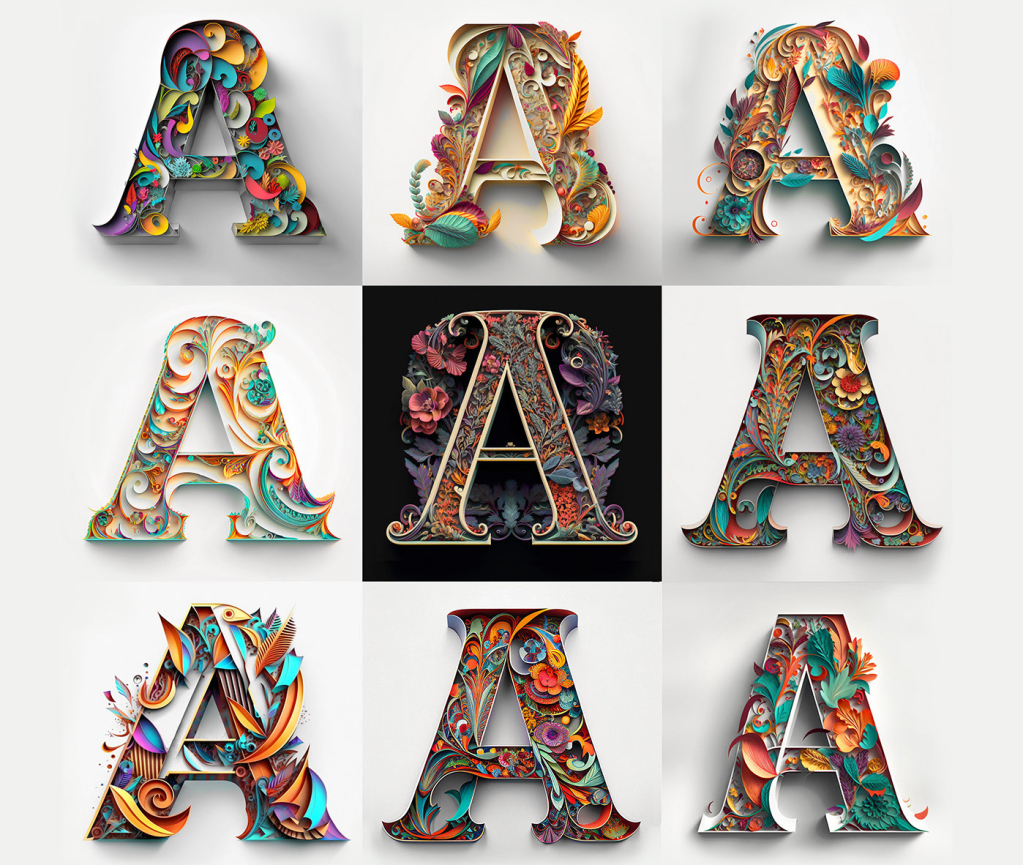
Since “Alphabets Alive!” would primarily concern the creative relationship of artists’ books with alphabets and other writing systems, an AI-generated rendition of the alphabet (humankind’s second-greatest invention, language being the first) was a natural for inclusion. Given the short notice, the artist’s lack of bookmaking experience and — oh yes — the ongoing Russian invasion of Ukraine and attacks on Kyiv, a book was out of the question. Still, with one of the exhibition’s display cases being devoted to artists’ books driven by calligraphy and another to ones driven by color, some way of including these letter images prompted by Yevhen Berdnikov and generated by the text-to-image AI Midjourney from the company of the same name begged to be found.

Paper Cut Alphabet (2023)

Paper Cut Alphabet (2023)
Yevhen Berdnikov
Poster. H x W. Acquired from Yevhen Berdnikov, 8 March 2023.
Images courtesy of Yevhen Berdnikov and reproduced with permission.

When the digital file for the poster first arrived, the treatment of letter Z was a surprise. Even without its current caption, the implication of the treatment was obvious to anyone who knew Berdnikov’s nationality and had seen news images of Russian tanks and military vehicles with Z painted on them. An AI-generated letter Z exists in the Paper Cut Alphabet Project’s files, but, in preparing the poster for a public exhibition, Berdnikov could not bring himself to prompt the AI to generate a symbol that had become intolerable and particularly loathsome on the anniversary of the invasion.

Chance is a well-known muse to many artists. Midjourney, the application, requires an extensive amount of “prompting” — detailed text describing the image it will create. As Berdnikov notes above, the same text can generate different results, which implies an element of randomization at work in the application. But how could a randomizing function yield a meaningful absence of image in response to prompting text? How could machine learning enable Midjourney on its own to compile this version of the alphabet without that particular and human creative intervention?

Even while acknowledging his intervention in Paper Cut Alphabet, Berdnikov insists that he is not the artist, but isn’t his use of Midjourney analogous to Vermeer’s presumed use of a camera obscura to achieve the detail and perspective we see in his paintings? If he did use that technology, does it warrant calling his paintings “device-generated”? Even so, this viewer “feels” the human artists behind View of Houses in Delft (c. 1658) and Paper Cut Alphabet (2023).

Berdnikov’s comments above and his demurrer at being named the “artist” of Paper Cut Alphabet reflect an inquisitive, open and thoughtful mind. Whatever its undetermined implications, the result of his wielding this new artist’s tool is decidedly art.

Further Reading

Abecedaries I (in progress)“. Books On Books Collection.

Kees Baart, Dick Berendes, Henk Francino and Gerard Post van der Molen“. 2 November 2022. Books On Books Collection.

Yevhen Berdnikov“. 4 May 2023. Books On Books Collection.

Bård Ionson“. 9 July 20223. Books On Books Collection.

Karen Roehr“. 26 December 2022. Books On Books Collection.

Connie Stricks“. 9 July 20223. Books On Books Collection.

Ashley Thayer“. 26 December 2022. Books On Books Collection.

Andrew White Tuer“. 26 December 2022. Books On Books Collection.

Bodleian Libraries. 7 July 2023. “Alphabets Alive! 19 July 2023 – 21 January 2024, Treasury, Weston Library“. Accessed 7 July 2023.

Du Sautoy, Marcus. 2019. The Creativity Code : Art and Innovation in the Age of AI. Cambridge Massachusetts: Belknap Press of Harvard University Press.

Miller, Arthur I. 2019. The Artist in the Machine : Inside the New World of Machine-Created Art , Literature and Music. Cambridge Massachusetts: MIT Press.

Tarasenko, Oleg, and Saulė Tolstych. 14 March 2023. “Widespread Anger Ensues Online Over This Viral Instagram Account Whose Photo Portraits Are Discovered To Be Generated By Midjourney“. Bored Panda. Accessed 18 April 2023.

Whiddingdon, Richard.  17 April 2023. “A Photographer Submitted an A.I.-Generated Image to a Prestigious Art Competition to Be ‘Cheeky.’ It Won a Top Prize Anyway“. Artnet News. Accessed 17 April 2023..

Books On Books Collection – Roberto Beretta

The quick brown fox jumps over a lazy dog (2008)

The quick brown fox jumps over a lazy dog (2008)
Roberto Beretta
Hardcover. H180 xW125 mm. 52 pages. Acquired from Amazon.fr. 18 September 2022.
Photos: Books On books Collection.

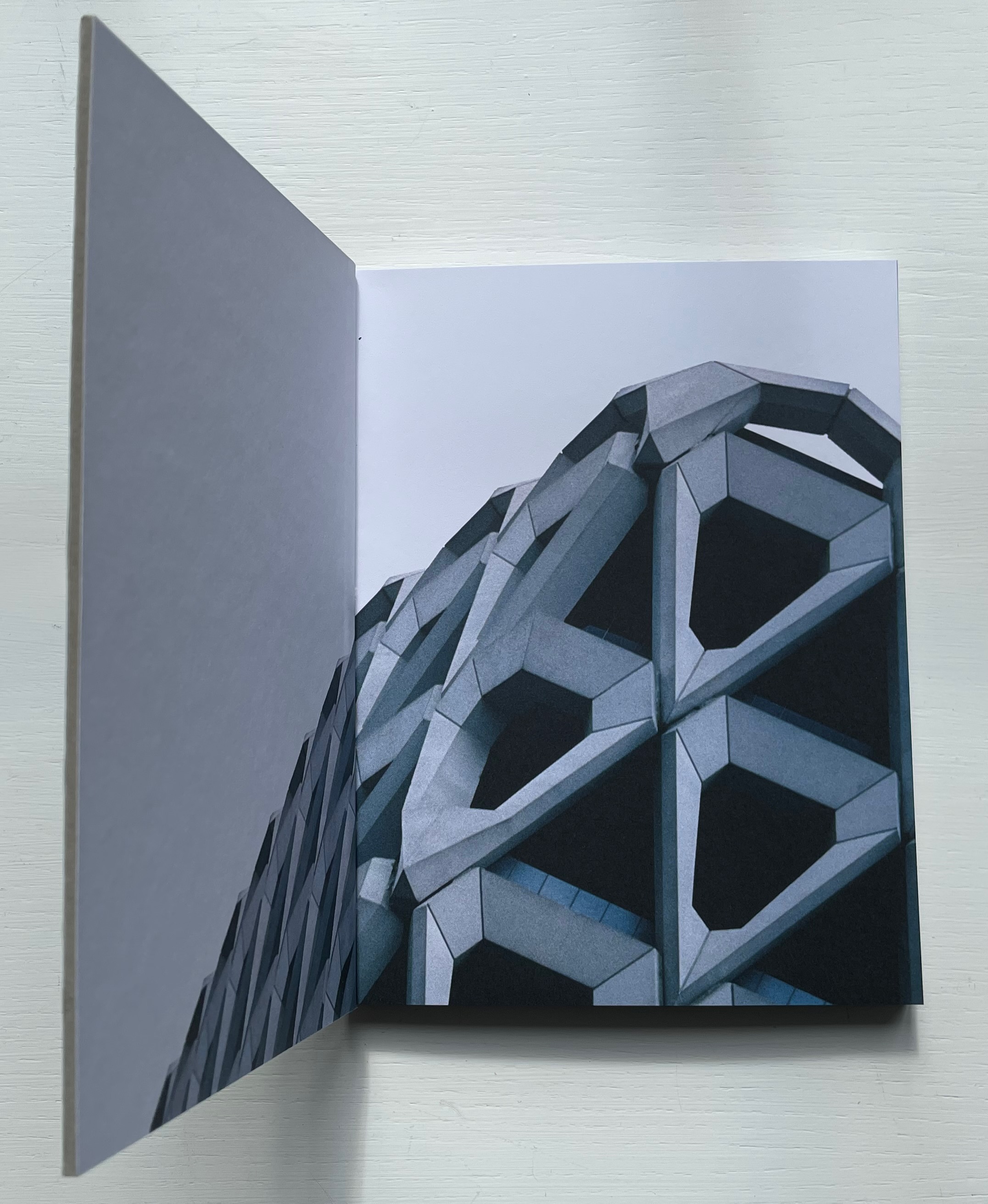
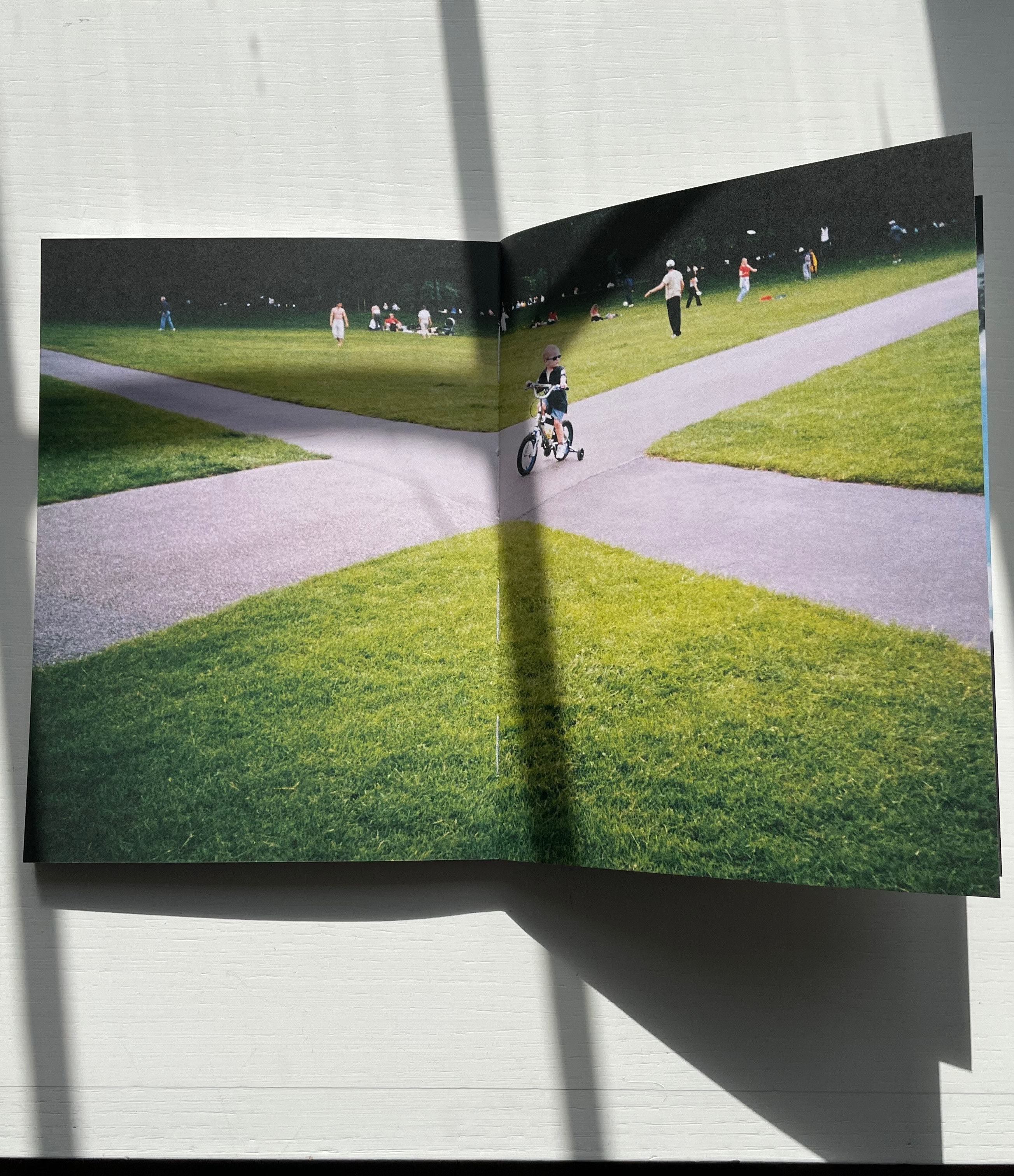
The title of designer Robert Beretta’s alphabet artist’s book is a pangram; it contains all the letters in the alphabet. His photos demonstrate that a sharp look all around will find them, too. Beretta’s selection for the letters B and C reflect recurrent themes that cross paths in the Books On Books Collection: the alphabet and architecture. Further Reading provides examples of works in those categories.

The observation of the alphabet all around us, not just in architecture, was well-captured by the novelist Victor Hugo. In a letter to his wife, he wrote, “Human society, the world, man in his entirety is in the alphabet. … The alphabet is a source” (Hardacre). Hugo saw letters everywhere, not just in what humankind creates but in nature as well. Throughout his alphabet and in particular with the letters XYZ, Beretta neatly captures that.

Further Reading

Abecedaries I (in progress)“. Books On Books Collection.

Architecture“. 12 November 2018. Books on Books Collection.

Federico Babina“. 20 April 2021. Books On Books Collection.

Antonio Basoli“. 20 April 2021. Books On Books Collection.

Lanore Cady“. 16 December 2022. Books On Books Collection.

Nerma Prnjavorac Cridge“. 14 February 2021. Books On Books Collection.

Francesco Dondina“. 16 December 2022. Books On Books Collection.

Kenneth Hardacre“. 18 February 2023. Books On Books Collection.

Elliott Kaufman“. 21 January 2023. Books On Books Collection.

Jeffrey Morin & Steven Ferlauto“. 23 April 2021. Books On Books Collection.

Richard Niessen“. 20 April 2021. Books On Books Collection.

Paul Noble“. 23 April 2021. Books On Books Collection.

Antonio & Giovanni Battista de Pian“. 20 April 2021. Books On Books Collection.

Johann David Steingruber“. 23 April 2021. Books On Books Collection.

Edward Andrew Zega & Bernd H. Dams“. 23 April 2021. Books On Books Collection.

Côme, Tony. “The Typotectural Suites“, The Palace of Typographic Masonry. Accessed 5 April 2021.

De Looze, Laurence. 2018. The Letter and the Cosmos: How the Alphabet Has Shaped the Western View of the World. Toronto: University of Toronto Press.

Holl, Steven. 1980. The alphabetical city. New York: Princeton Architectural Press.

Hugo, Victor, and Jessie Haynes, trans. 1831 (1902). Nôtre Dame de Paris. New York: D. Appleton & Co.

Hugo, Victor, and Nathan Haskell Dole, trans. 1890 (1895). Victor Hugo’s Letters to His Wife and Others (The Alps and the Pyrenees). Boston, MA: Estes and Lauriat.

Macken, Marian. 2018. Binding Space: The Book as Spatial Practice. London and New York: Routledge.

McEwen, Hugh. Polyglot Buildings. 12 January 2012. Issuu. Accessed 13 March 2021.

Niessen, Richard. 2018. The Palace of Typographic Masonry. Leipzig: Spector Books.

Noble, Paul, and Georgina Starr. “N is for Nobson“, ARTtube, 21 October 2018. Accessed 13 March 2021.

Polano, Sergio. January 2019. “Architectural Abecedari“, Casabella, 893, pp. 62-75 + 100-101 (eng.). Milan.

Tsimourdagkas, Chrysostomos. 2014. Typotecture: Histories, Theories and Digital Futures of Typographic Elements in Architectural Design. Doctoral dissertation, Royal College of Art, London. Accessed 13 March 2021.

Books On Books Collection – Elliott Kaufman

Alphabet Everywhere (2012)

Alphabet Everywhere (2012)
Elliott Kaufman
Casebound, paper over board, cutout cover. 235 x 235 mm. 62 pages. Published by Abbeville Press. Acquired from Amazon, 22 September 2022.
Photos: Books On Books Collection. Displayed with permission of the artist.

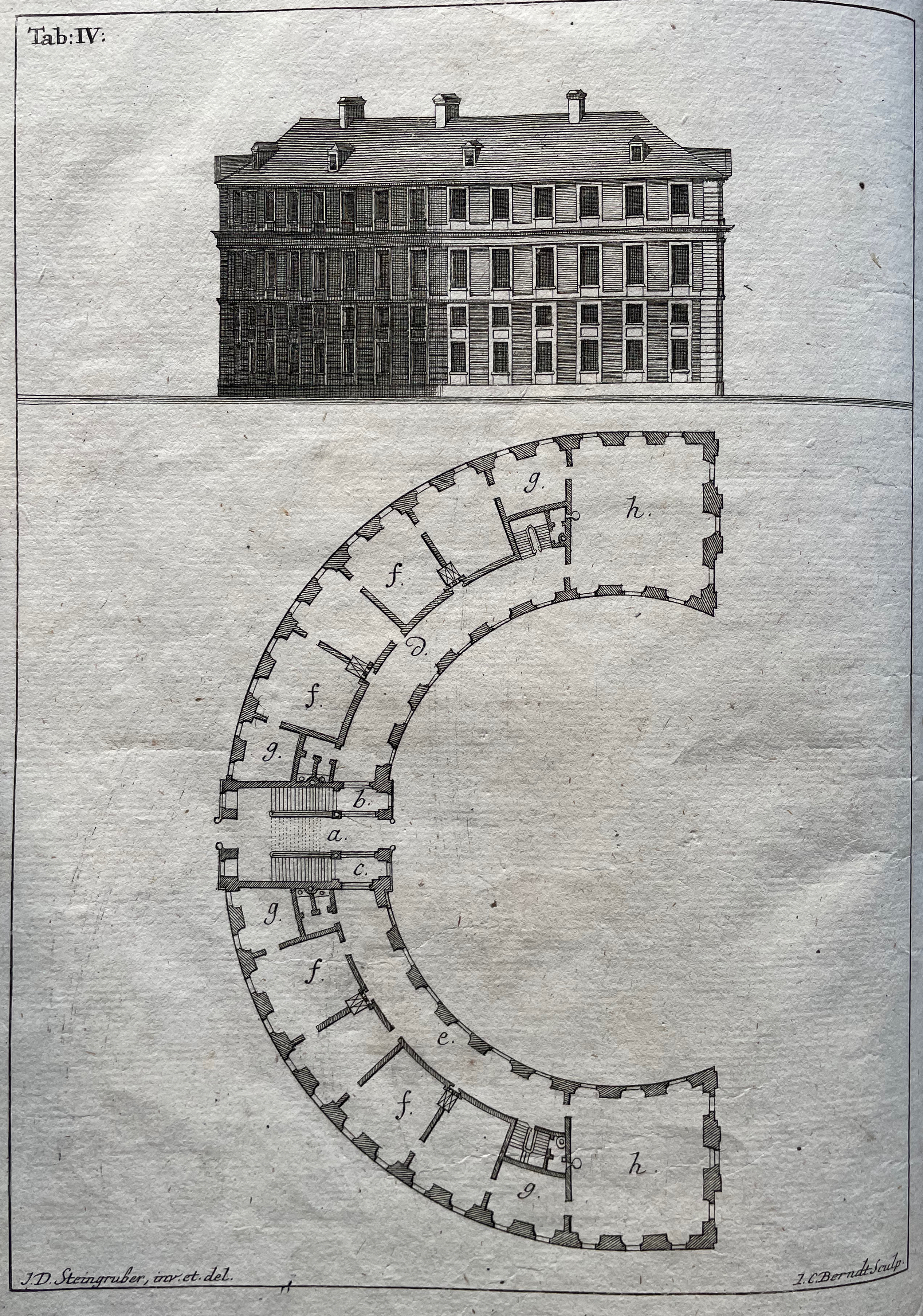
Evident across the images in his alphabet book and website, Elliott Kaufman’s work revolves around architectural motives. The Books On Books collection has found a recurrent theme in architectural alphabets. Would that Johann David Steingruber’s designs for palaces in the shape of the letters from A to Z had actually been built so that Kaufman could photograph them.


Architectonisches Alphabeth (1773)
bestehend aus dreyßig Rissen wovon Jeder Buchstab nach seiner kenntlichen Anlage auf eine ansehnliche und geräumige Fürstliche Wohnung, dann auf alle Religionen, Schloß-Capellen und ein Buchstab gänzlich zu einen Closter, übrigens aber der mehreste Theil nach teutscher Landes-Art mit Einheiz-Stätte auf Oefen und nur theils mit Camins eingerichtet, wobey auch Nach den mehrest irregulairen Grund-Anlagen vielerley Arten der Haupt- und Neben-Stiegen vorgefallen, dergleichen sonsten in Architectonischen Rissen nicht gefunden werden, zu welchen auch Die Façaden mit merklich abwechslender Architectur aufgezogen sind.
Johann David Steingruber
Casebound. H395 x W240 mm. 71 folios. Acquired at auction from Kiefer Buch- und Kunstauktionen, 15 December 2022.
Photos: Books On Books Collection.

More Romantic than romantic, Victor Hugo wrote to his wife while traveling that the alphabet is all around us in nature. Kaufman has a different view. Kaufman’s several images per letter prove the point of his book’s title but in keeping with his architectural slant: our constructions distribute our oldest construction all around us.

Ironically if inadvertently, Kaufman gives the Romantic another tweak of the nose. In his Hunchback of Nôtre Dame, Hugo has his character Archdeacon Claude Frollo point to a book in his hand and then to the cathedral outside and say, “This will kill that”, by which he meant among other things that the book’s permanence of replicability will outlast the building’s permanence of stone. If by fictional time travel we could put Kaufman’s book in the archdeacon’s hand, we could point to the cathedral and retort: “But Venerable Sir, look here how ‘that’ foretells the building blocks of ‘this’.”

Further Reading

Abecedaries I (in progress)“. Books On Books Collection.

Architecture“. 12 November 2018. Books on Books Collection.

Federico Babina“. 20 April 2021. Books On Books Collection.

Antonio Basoli“. 20 April 2021. Books On Books Collection.

Robert Beretta“. 18 February 2023. Books On Books Collection.

Lanore Cady“. 16 December 2022. Books On Books Collection.

Nerma Prnjavorac Cridge“. 14 February 2021. Books On Books Collection.

Francesco Dondina“. 16 December 2022. Books On Books Collection.

Kenneth Hardacre“. 18 February 2023. Books On Books Collection.

Jeffrey Morin & Steven Ferlauto“. 23 April 2021. Books On Books Collection.

Richard Niessen“. 20 April 2021. Books On Books Collection.

Paul Noble“. 23 April 2021. Books On Books Collection.

Antonio & Giovanni Battista de Pian“. 20 April 2021. Books On Books Collection.

Johann David Steingruber“. 23 April 2021. Books On Books Collection.

Edward Andrew Zega & Bernd H. Dams“. 23 April 2021. Books On Books Collection.

Côme, Tony. “The Typotectural Suites“, The Palace of Typographic Masonry. Accessed 5 April 2021.

De Looze, Laurence. 2018. The Letter and the Cosmos: How the Alphabet Has Shaped the Western View of the World. Toronto: University of Toronto Press.

Holl, Steven. 1980. The alphabetical city. New York: Princeton Architectural Press.

Hugo, Victor, and Jessie Haynes, trans. 1831 (1902). Nôtre Dame de Paris. New York: D. Appleton & Co.

Hugo, Victor, and Nathan Haskell Dole, trans. 1890 (1895). Victor Hugo’s Letters to His Wife and Others (The Alps and the Pyrenees). Boston, MA: Estes and Lauriat.

Macken, Marian. 2018. Binding Space: The Book as Spatial Practice. London and New York: Routledge.

McEwen, Hugh. Polyglot Buildings. 12 January 2012. Issuu. Accessed 13 March 2021.

Niessen, Richard. 2018. The Palace of Typographic Masonry. Leipzig: Spector Books.

Noble, Paul, and Georgina Starr. “N is for Nobson“, ARTtube, 21 October 2018. Accessed 13 March 2021.

Polano, Sergio. January 2019. “Architectural Abecedari“, Casabella, 893, pp. 62-75 + 100-101 (eng.). Milan.

Tsimourdagkas, Chrysostomos. 2014. Typotecture: Histories, Theories and Digital Futures of Typographic Elements in Architectural Design. Doctoral dissertation, Royal College of Art, London. Accessed 13 March 2021.

Books On Books Collection – Michael Snow

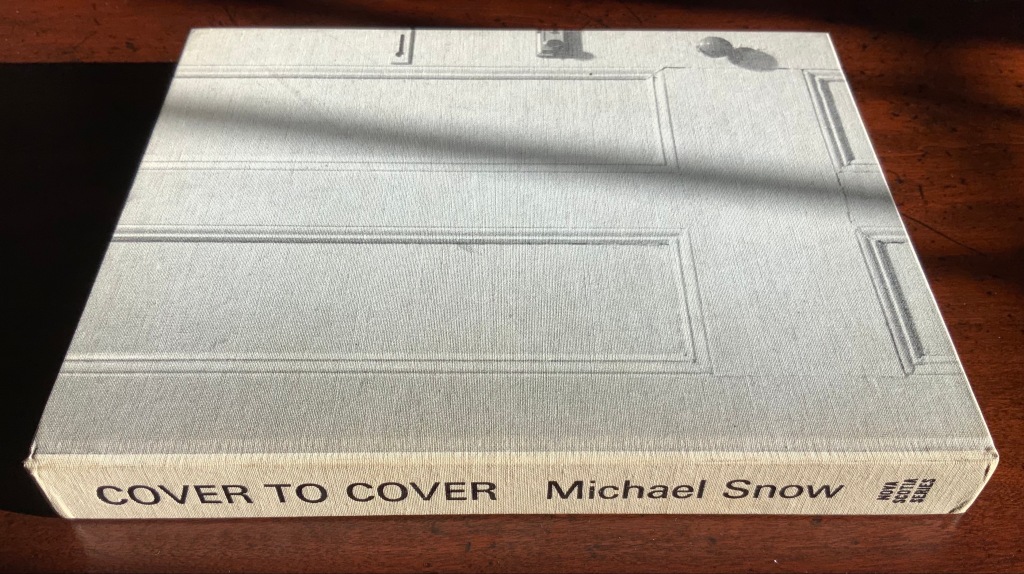
I tried to “define the book” when I designed (one of my books) Cover to Cover hoping that the “reader” would have a multi-sensory experience of the nature of what she/he held in her/his hands. (from The Book: 101 Definitions)

Cover to Cover (1975)

Cover to Cover (1975)
Michael Snow
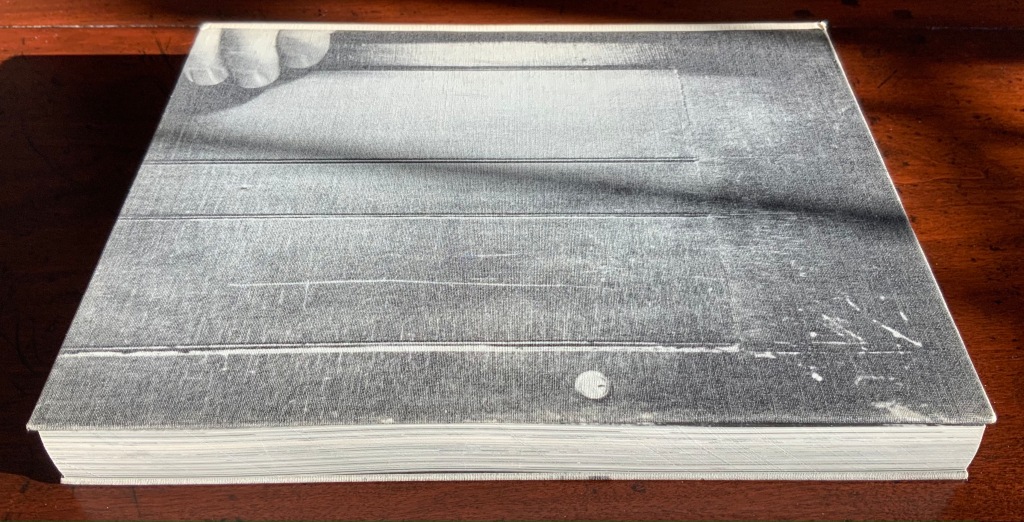
Cloth on board, sewn and casebound. H230 x W180 mm. 310 unnumbered pages. Published by Nova Scotia College of Art and Design. Unnumbered edition of 300. Acquired from Mast Books, 10 December 2020. Photos of the work: Books On Books Collection.

After a long search since first sight of it in 2016 at Washington, D.C.’s now defunct Corcoran Gallery library, the original hardback edition of Michael Snow’s Cover to Cover (1975) finally joins the Books On Books Collection. Thanks to Philip Zimmermann, more readers/viewers have the chance to experience Cover to Cover — if only through the screen — than the original’s 300 copies and Primary Information’s 1000 facsimile paperback copies will allow.

Amaranth Borsuk describes the work and experience of it in The Book (2018), as do Martha Langford in Michael Snow (2014), Marian Macken in Binding Spaces (2017) and Zimmermann in his comments for the exhibition “Book Show: Fifty Years of Photographic Books, 1968–2018” (for all, see links below). Like Chinese Whispers by Telfer Stokes and Helen Douglas and Theme and Permutation by Marlene MacCallum, Michael Snow’s Cover to Cover evokes an urge to articulate what is going, how the bookwork is re-imagining visual narrative, how it is making us look, and how it makes us think about our interaction with our environs and the structure of the book.

The already existing commentary about Cover to Cover sets a high hurdle for worthwhile additional words. One thing going on in the book, though, seems to have gone unremarked. Some critics have asserted that, other than its title on the spine, the book has no text. There is text, however. It occurs within what I would call the preliminaries, and they show us how to read the book.

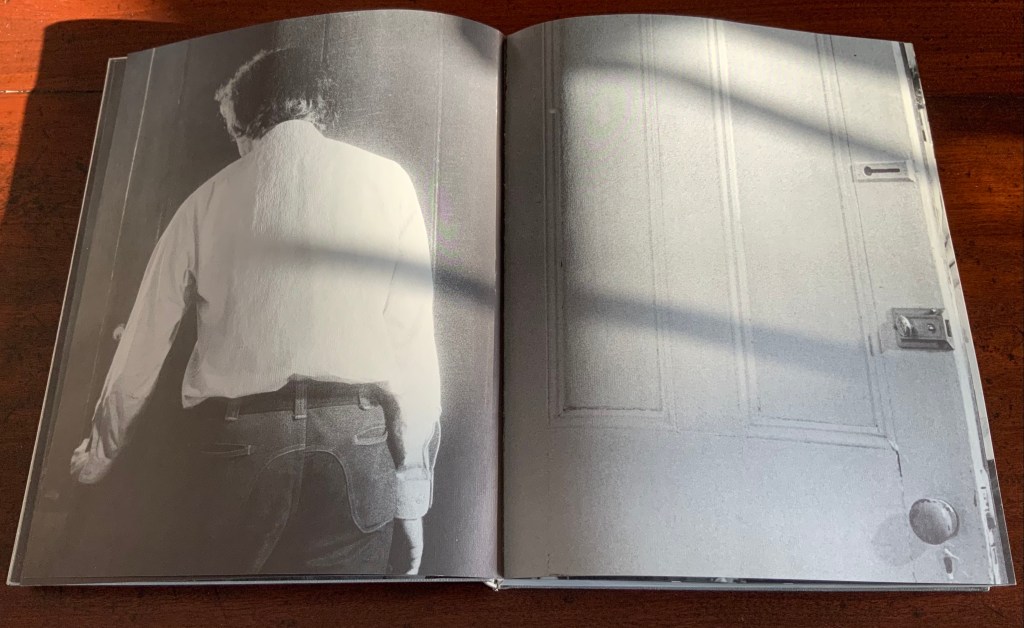
On the front cover, we see a door from the inside. Then, on its pastedown endpaper, the author outside the door with his back to us.

Front cover; pastedown end paper and page “1”.

On turning the “inside door” (page “1” of the preliminaries), we see in small type a copyright assertion and the Library of Congress catalogue number appearing vertically along the gutter of pages “2-3” (a tiny clue as to what is going on).

Pages “2-3”

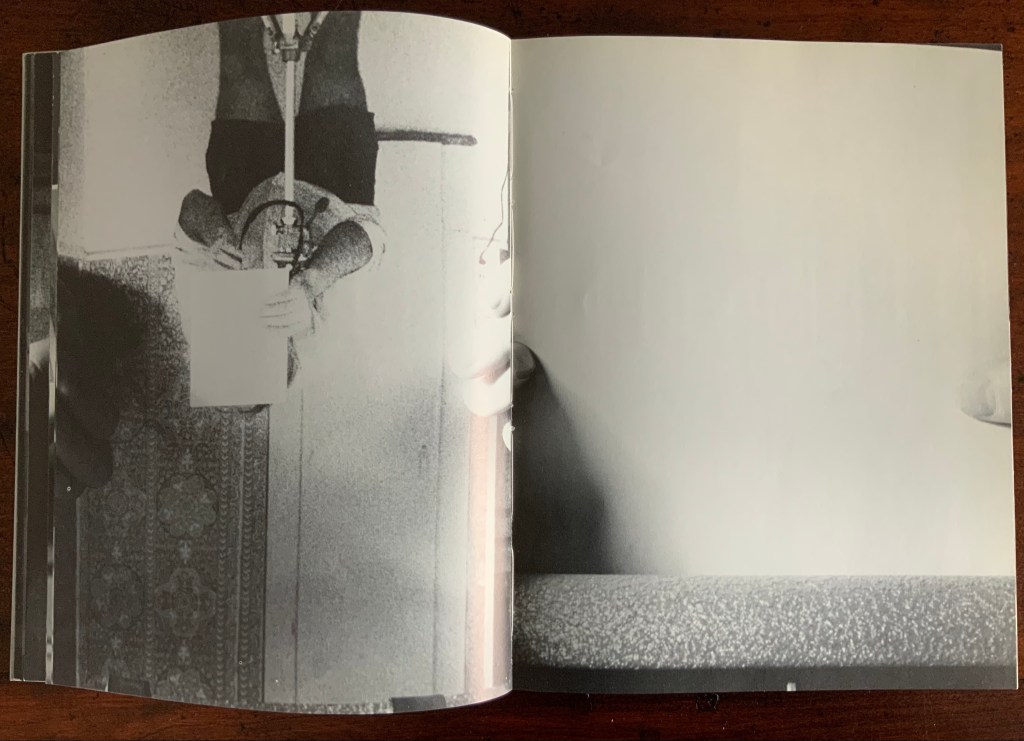
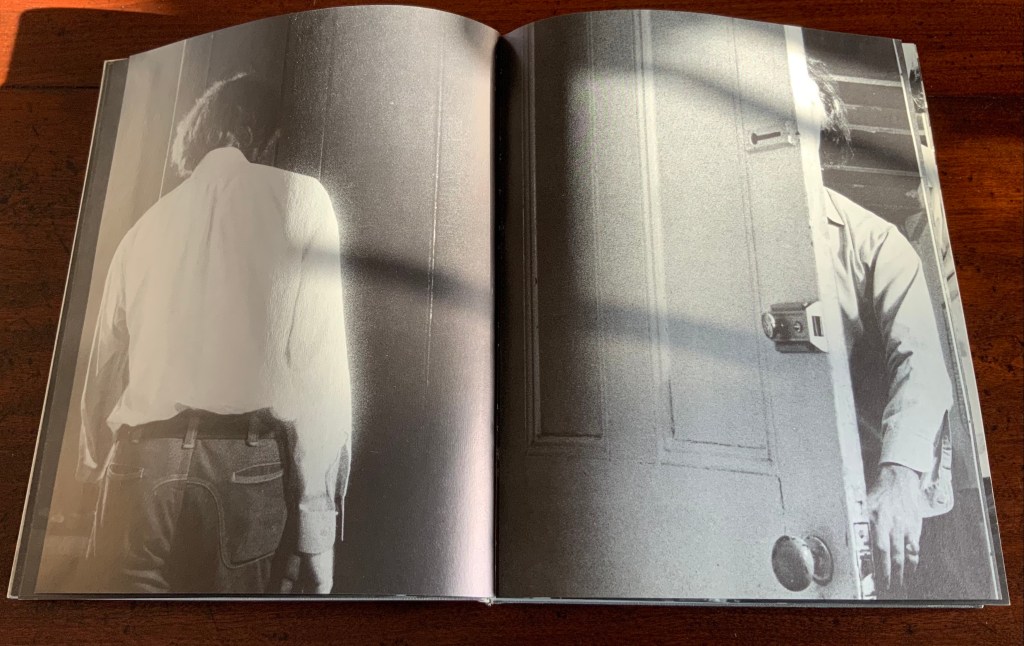
Over pages “4” through “14” from the same alternating viewpoints, the author reaches for the door handle, the door is seen opening from the inside, and the artist is seen walking through the door (from the outside) and into the room (from the inside). But who is recording these views?

Pages “10-11”, “12-13”, “14-15”

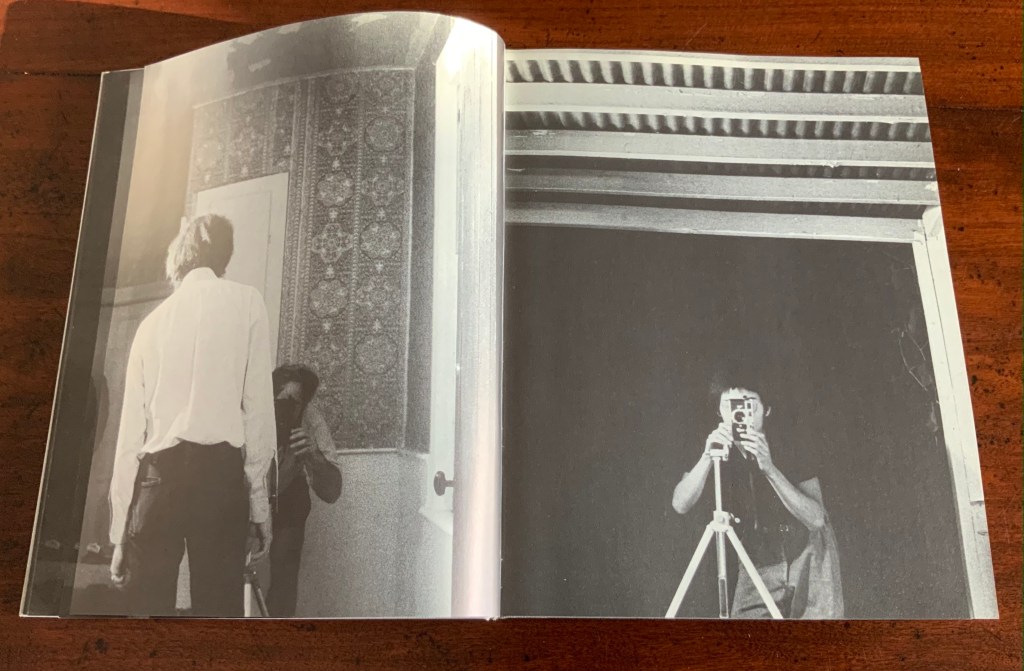
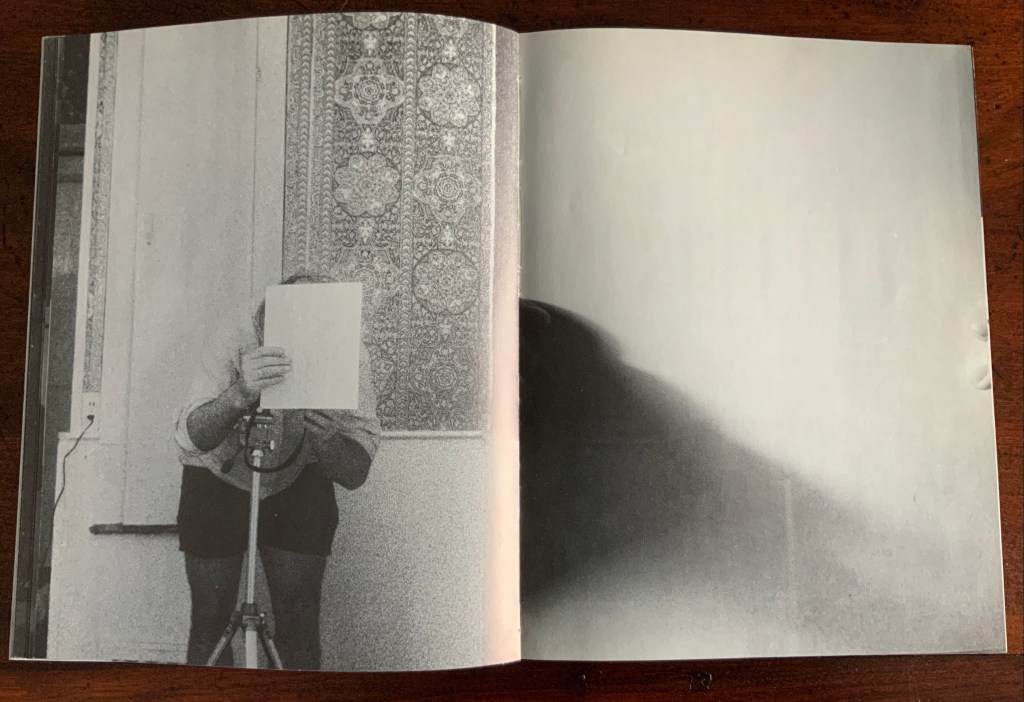
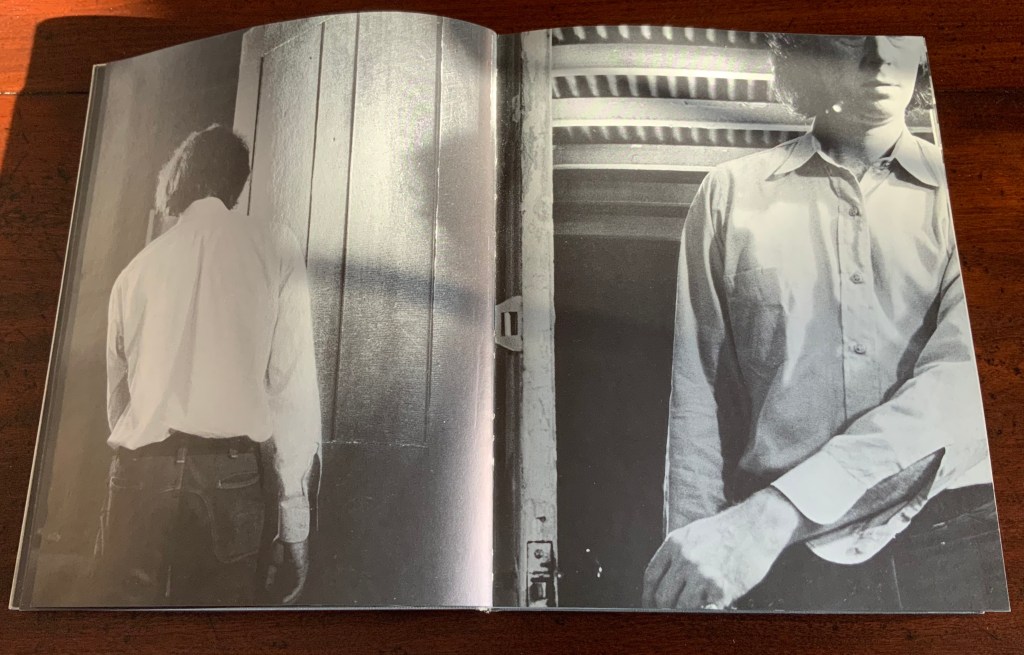
Over pages “16” through “24”, two photographers appear. Facing us, they are bent over their cameras — the one outside, clean shaven and wearing a short-sleeved shirt, is behind the author, and the one inside, bearded and wearing shorts, is in front of the author. As the author moves out of the frame, we see that the photographer inside is holding a piece of paper in his right hand. All of this occurs through the same alternating viewpoints. At page “21”, the corner of that paper descends into the frame of the inside photographer’s view of the outside photographer, and after the next switch in viewpoint that confirms what the inside photographer is doing, we see a completely white page “23”, presumably the blank sheet that is blocking the inside photographer’s camera aperture. Page “24” is the outside photographer’s view of the inside photographer whose face and camera are blocked by the piece of paper.

Pages “16-17”, pages “20-21” and pages “24-25”

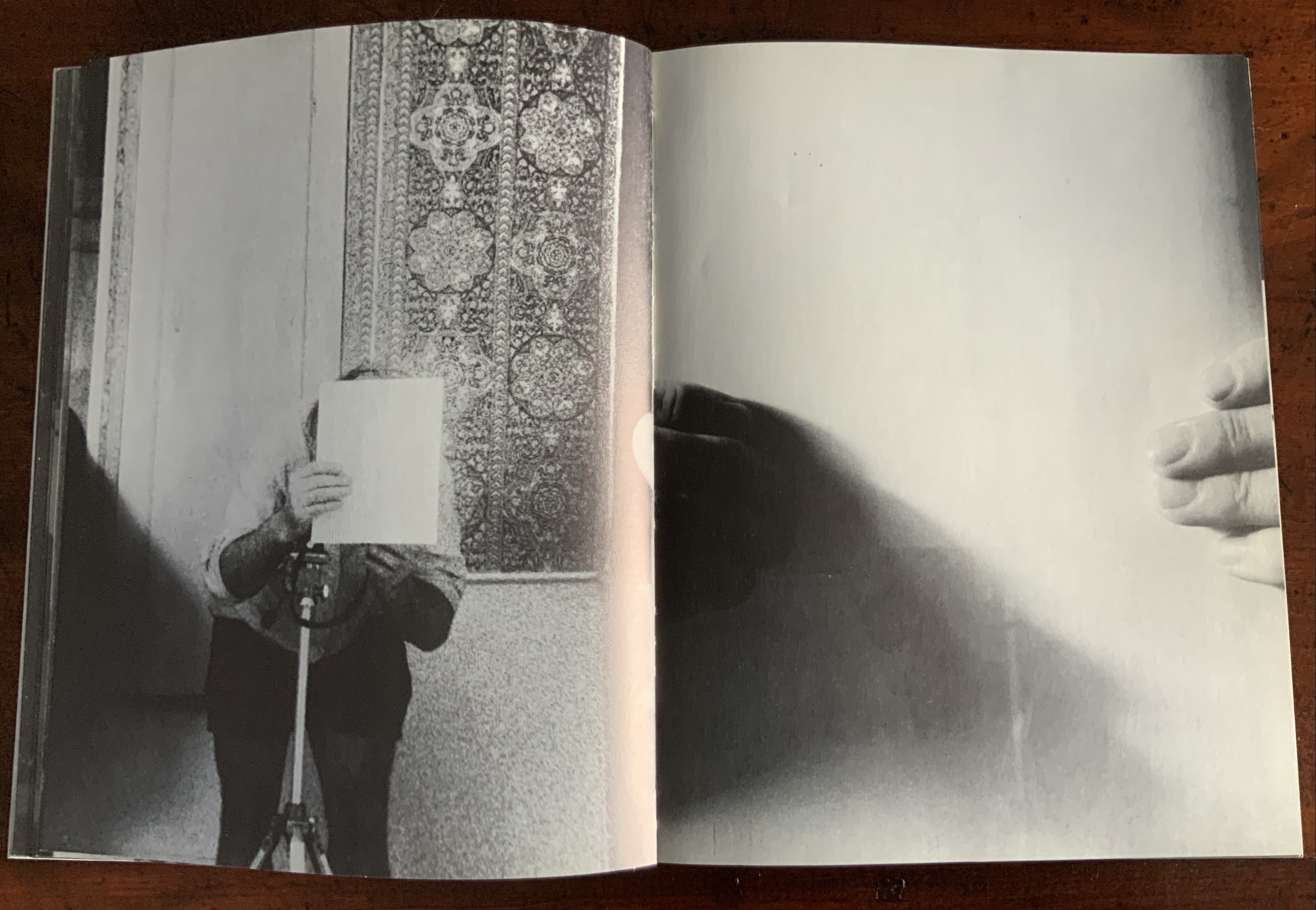
After the sequence above, something stranger still happens: on the left, a photo of the inside photographer holding the blank paper in front of his face appears. We can tell it is a photo by the tip of the thumb holding it (look in the gutter) between pages “26 and 27”. It is the developed photo the outside photographer just took of the inside photographer with his face and camera hidden by the sheet of paper. The image on page “27” is the reverse of that photograph. We can tell by the fingers on the right holding it.

Pages “26-27”

We are looking at images of images. But on pages “30-31”, whose fingers are holding the image of images?

Pages “30-31”

From there on, we see images of this piece of paper being manipulated by one pair of hands. The thumbs appear on the verso (the view from the outside photographer’s perspective), the fingers on the recto (the view seen by the inside photographer). By page “34”, it has been flipped upside down (the inside photographer is standing on his head), and on page “35”, we see a close up of the blank reverse side of the paper being held between the two photographers. By page “37”, we can see the blank side of the photo paper being fed into a manual typewriter. The pair of hands feeding the paper into the typewriter cannot belong to one of the photographers. Who is the typist — the author?

For both pages “42” and “43”, the perspective is that of a typist advancing the photo paper and typing the title page of the book. On both pages, we can see the ribbon holder in the same position. As it progresses, more and more of the outside photographer’s camera appears above the typed page. Page “45” presents itself as the full text of the book’s title page, curling away from the typist and revealing the inside photographer on the other side of the typewriter. Page “46” shows the upside-down view of the title page as it moves toward the inside photographer and reveals the outside photographer on the other side of the typewriter. Not only are we seeing images of images, we are witnessing the making of the book’s preliminaries.

From page “48” through page “54”, the photographers alternate views of blank paper advancing through the typewriter. By pages “55” and “56”, the typewriter has moved out of the frame. Look carefully at page “56”, however, and you can see the impression of the typewriter’s rubber holders on the paper. As a book’s preliminaries come to a close, there is often a blank verso page before the start of the book. If Cover to Cover is following that tradition, page “56” is that blank page at the end of the preliminaries, and page “57”, showing a record player, is the start of the book.

Pages “56-57”.

Zimmermann notes that, at somewhere near the book’s midpoint, the images turn upside down, and that readers who then happen to “flip the book over and start paging from the back soon realize that they are looking at images of images produced by the two-sided system, and indeed the very book that they are holding in their hands”. He notes this as another mind-bender added to the puzzlement of the two-sided system with which the book begins. Yet the long set of preliminaries foretold us that the upside-downness, back-to-frontness and self-reflexivity of images of images were on their way. Without doubt, Cover to Cover is an iconic work of book art.

Further Reading

Afterimage (1970). No. 11, 1982/83. On the occasion of an exhibition of his films at Canada House in London, an entire issue on Snow’s work.

… Cover to Cover is the result of another distanced use of self in the course of art-making. Snow is subject/participant as he and his actions are observed and analyzed by two 35 mm cameras… simulataneously recording front and back, the images then placed recto-verso on the page… Snow is subject observed in the book at the same time that he is also choosing and making decisions about images. Cover to Cover in 360 pages, [sic] becomes a full circle — front door to back door or the reverse. The book is designed so that it can be read front to back and in such a way that one is forced to turn it around at its centre in order to carry on. Regina Cornwell in Snow Seen and “Posting Snow”, Luzern catalogue.

Borsuk, Amaranth. The Book (Cambridge, MA: MIT Press, 2018).

Borsuk, Amaranth, ed. 2021. The Book : 101 Definitions. First edition. Montreal: Centre for Expanded Poetics : Anteism Books.

Hayles, N. Katherine. 2002. Writing Machines. Cambridge, Mass.: MIT Press. See p. 68.

Ellen Lanyon“. 25 June 2024. Books On Books Collection. For comparison of Cover to Cover with Transformations I (1977).

Langford, Martha. Michael Snow: Life & Work (Toronto: Art Canada Institute, 2014).

Macken, Marian. Binding Space: The Book as Spatial Practice (London: Taylor and Francis, 2017).

Michelson, Annette, and Kenneth White. Michael Snow (Cambridge, MA: MIT Press, 2019).

Zimmermann, Philip. “Book Show: Fifty Years of Photographic Books, 1968–2018“, Spaceheater Editions Blog, 3 February 2019. Accessed 16 December 2020.

But as the scene “progresses,” an action is not completed within the spread, but loops back in the next one, so that the minimal “progress” extracted from reading left to right is systematically stalled each time a page is turned, and the verso page recapitulates the photographic event printed on the recto side from the opposite angle. This is the disorienting part: to be denied “progress” as one turns the page seems oddly like flashback, which it patently is not; it might be called “extreme simultaneity.” Two versions of the same thing (two sides of the story) are happening at the same time. Zimmerman.

Books On Books Collection – Jacobus Oudyn (I)

A Prayer in Hell (2018)

A Prayer in Hell (2018)
Jacobus Oudyn
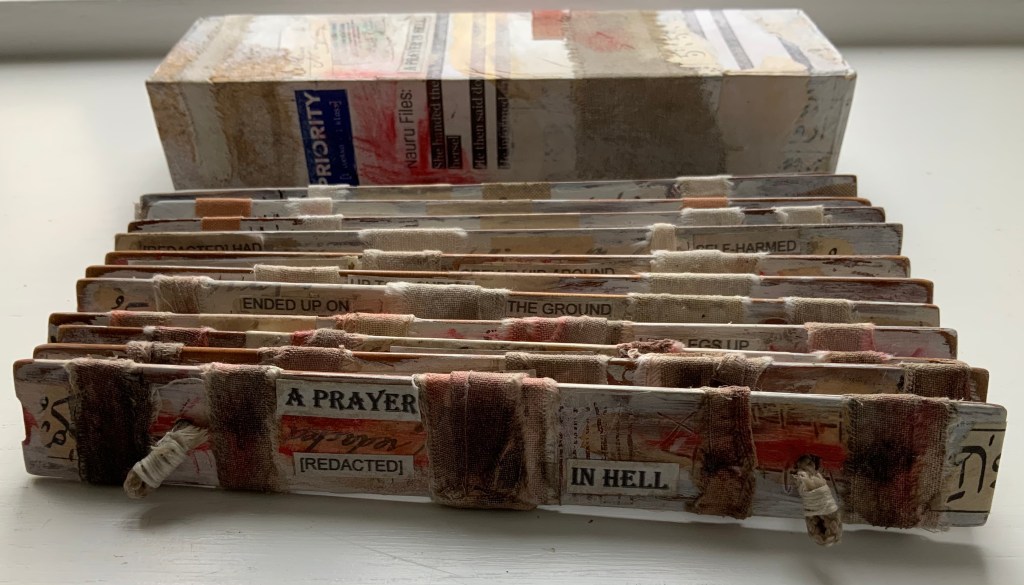
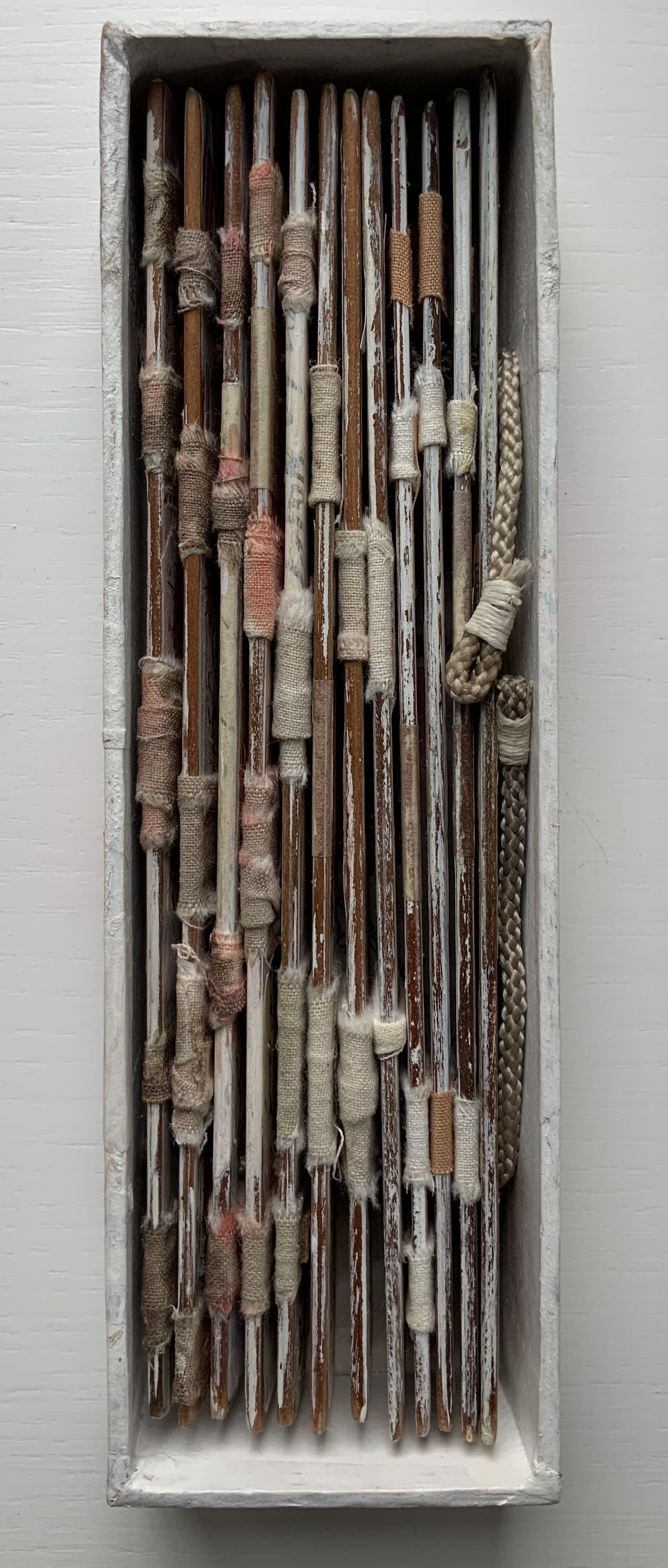
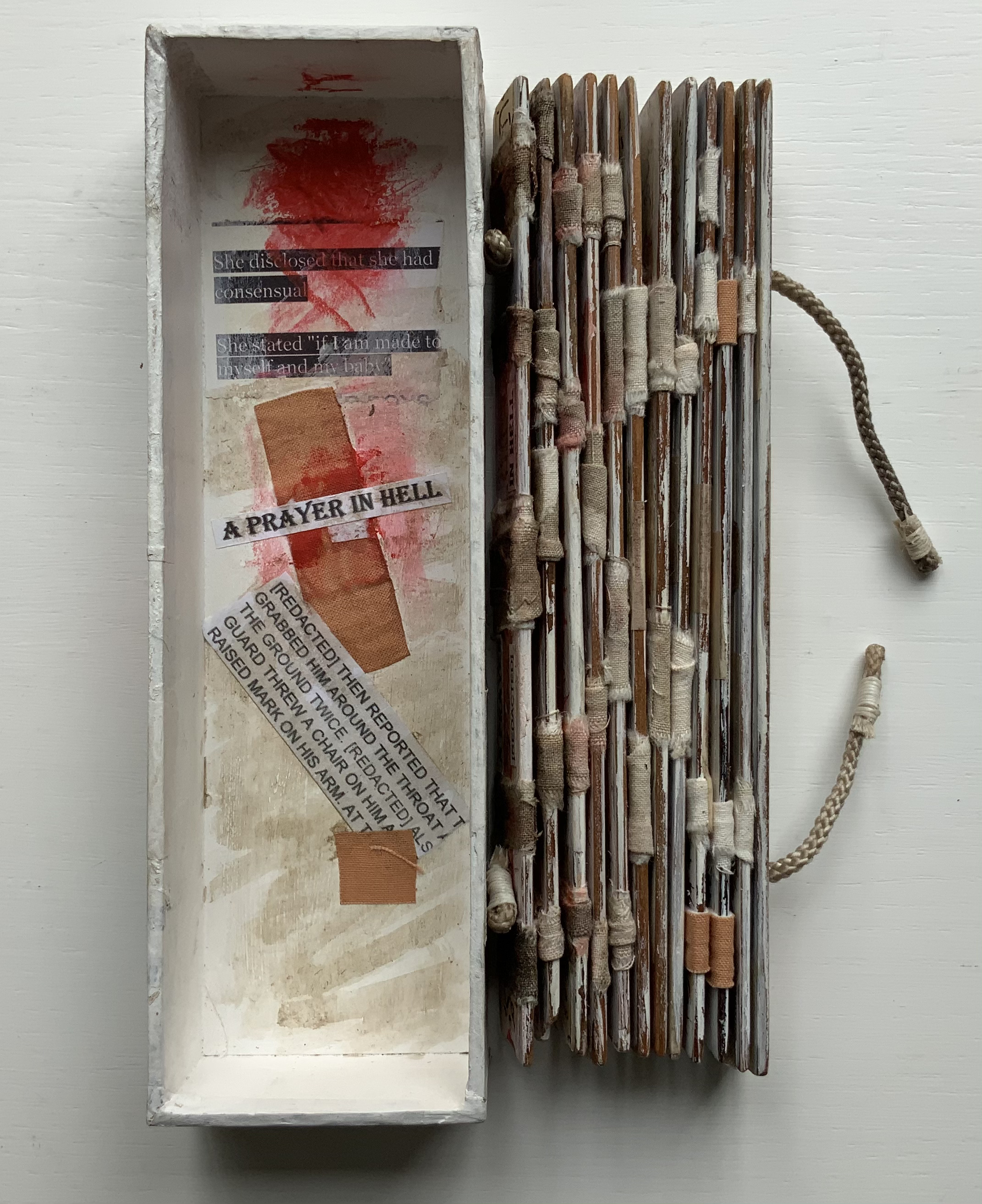
Palm leaf prayer book format of 12 timber slats with double-sided collages materials and images made with pomegranate ink on antique paper, water soluble crayon calico, wound dressings and PVA adhesive. Text from Nauru Files — Guardian Newspaper and Islamic prayer book. Open: H195 x W130 mm. Closed: H195 x W 55 x D35 mm. Slip case: 2 mm card with collage, H202 x W60 x D38 mm, to be displayed with the book. Unique. Acquired from the artist, 4 January 2020. Photos: Books On Books Collection, displayed with permission of the artist.

A Prayer in Hell is one of Jack Oudyn’s larger works. works refer to the Australian experience of the world’s refugee crisis (perhaps the largest diaspora in history), A Prayer in Hell is the most scorching of them all.

Materially, the work embodies the refugees and their experience in many ways — its palm-leaf prayer book pages even consist of “stressed and recycled timber slats”. The binding cords penetrate drawings of eyes on each slat, creating the effect of the faceless staring through bars. Although the work’s title alludes to the English expression “not a hope in hell”, the work itself nods toward hope appears in how the wound dressings, wound round the slat pages, gradually become cleaner. Under and over the dressings, strips of English and Arabic text are collaged alongside handwritten extracts from Islamic prayer books and reports of events and conditions in Australian detention centers. Complete with redactions, the English text refers to the scandals associated with the centers at Nauru, Papua New Guinea, Christmas and Manu islands.

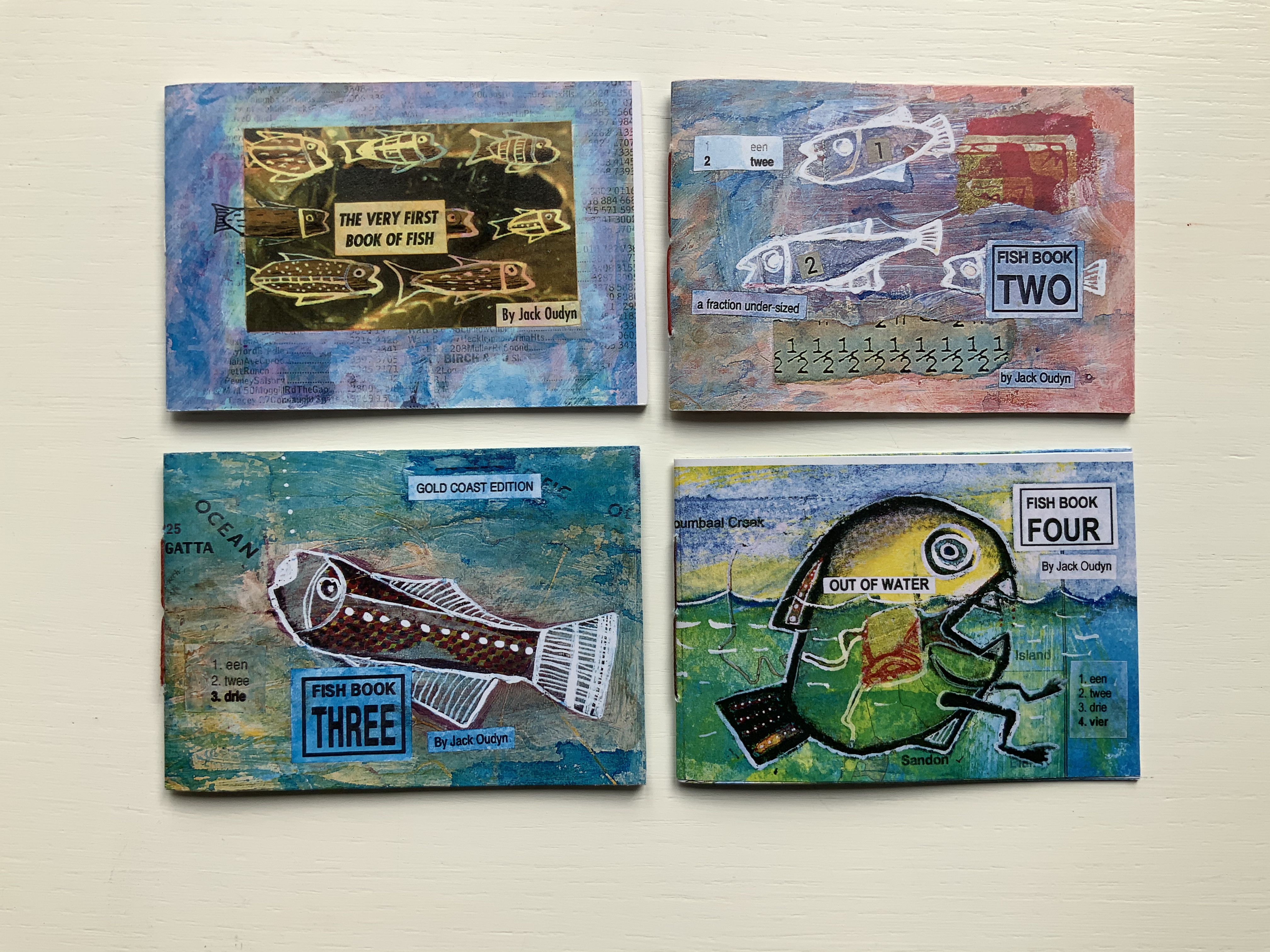
Fish Books One, Two, Three and Four (1999 – 2001)

All acquired from the artist, 4 January 2020. Photos: Books On Books Collection, displayed with permission of the artist.
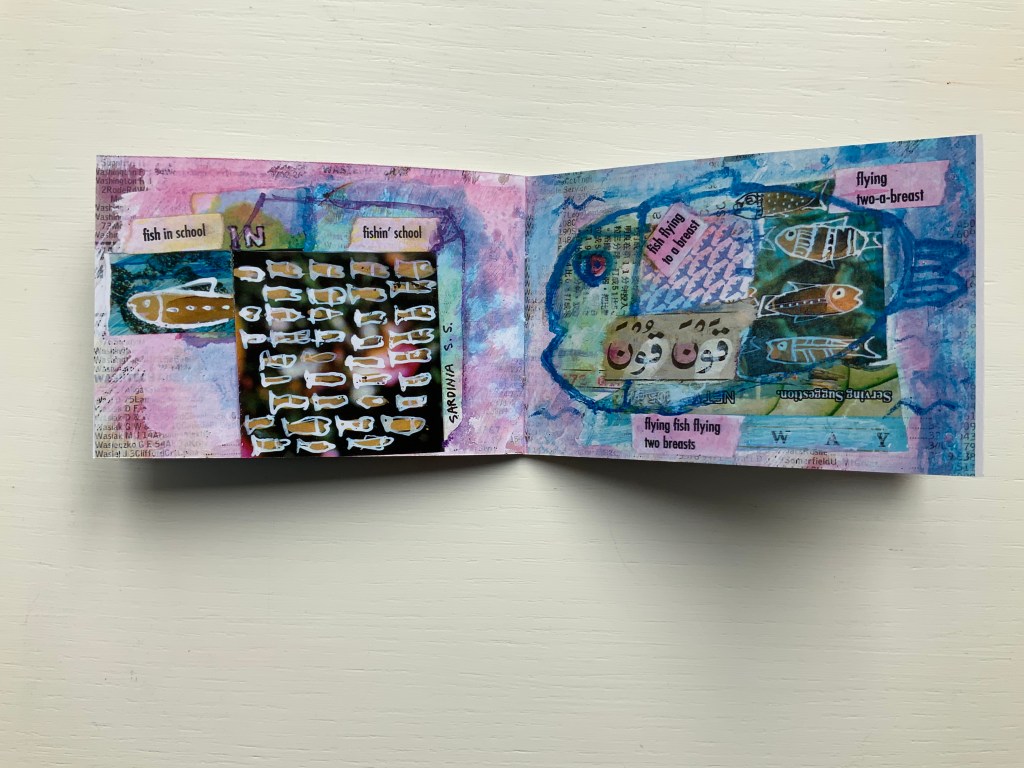
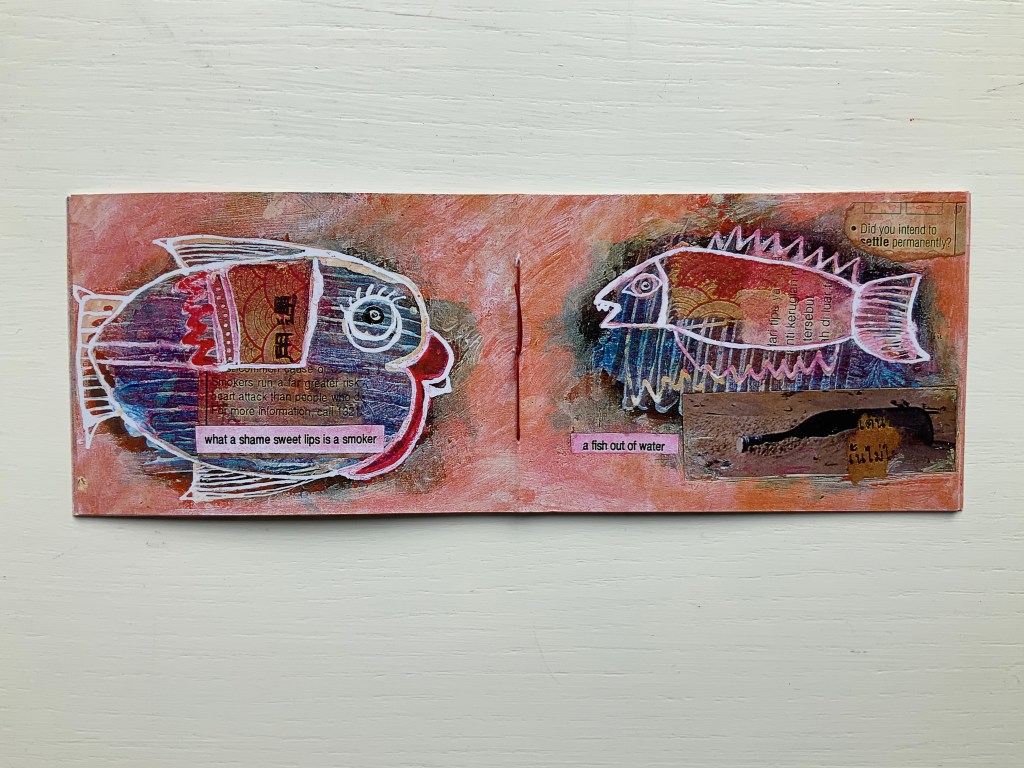
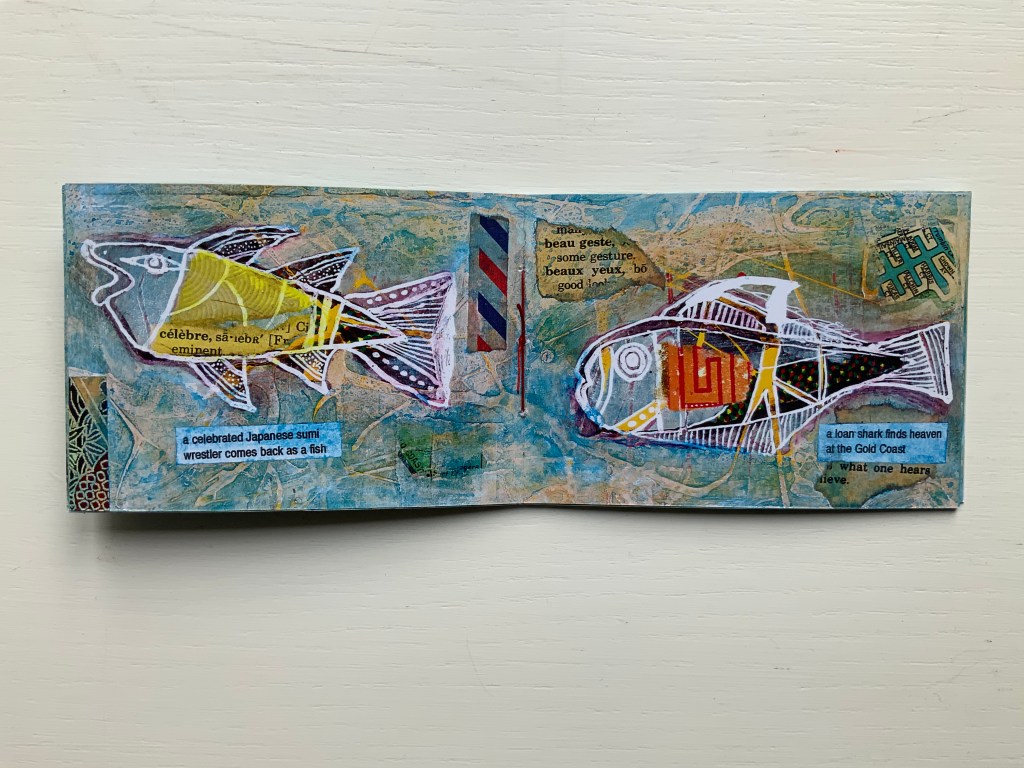
This complete set of his fish books represents Oudyn’s Micro Press imprint well. Many of the small works are playful with language, form, and material and, often, socially satirical or critical. More hook-in-mouth than tongue-in-cheek, the fish books have provided the artist with ground for playing with collage and printing techniques. In imagery, they are reminiscent of Ric Haynes, Breughel and Bosch. In text, they encapsulate the punsterdom of book art (albeit without the usual book-related self-referencing, though “fish wrapper” would have been good for their covers); reveal the artist’s Dutch heritage in their numbering; and revel in Australia’s odd common fishnames (dart, flattie, stargazer, sweetlips, etc.). By Fish Book Four (2001), however, a socially sharper tone emerges. The dates of publication, which vary from those in the WorldCat links for each title, are taken from the artist’s website.

The Very First Book of Fish (1999)
Jack Oudyn
Booklet made of 200 gsm digital paper, sewn with single white waxed thread, 16 pages. Color laser print of mixed media drawings; ink, paint, collage on pages from telephone directory. H70 x W105 mm, 16 pages. Edition of 50, of which this is #27. Photos: Books On Books Collection, displayed with permission of the artist.

Fish Book Two (1999)
Same format as first, except sewn with single red waxed thread; #49 of 50.

Fish Book Three (2000)
Same format as the second; #25 of 50.

Fish Book Four (2001)
Same format as third, except sewn with single dark gray waxed thread: #13 of 50.

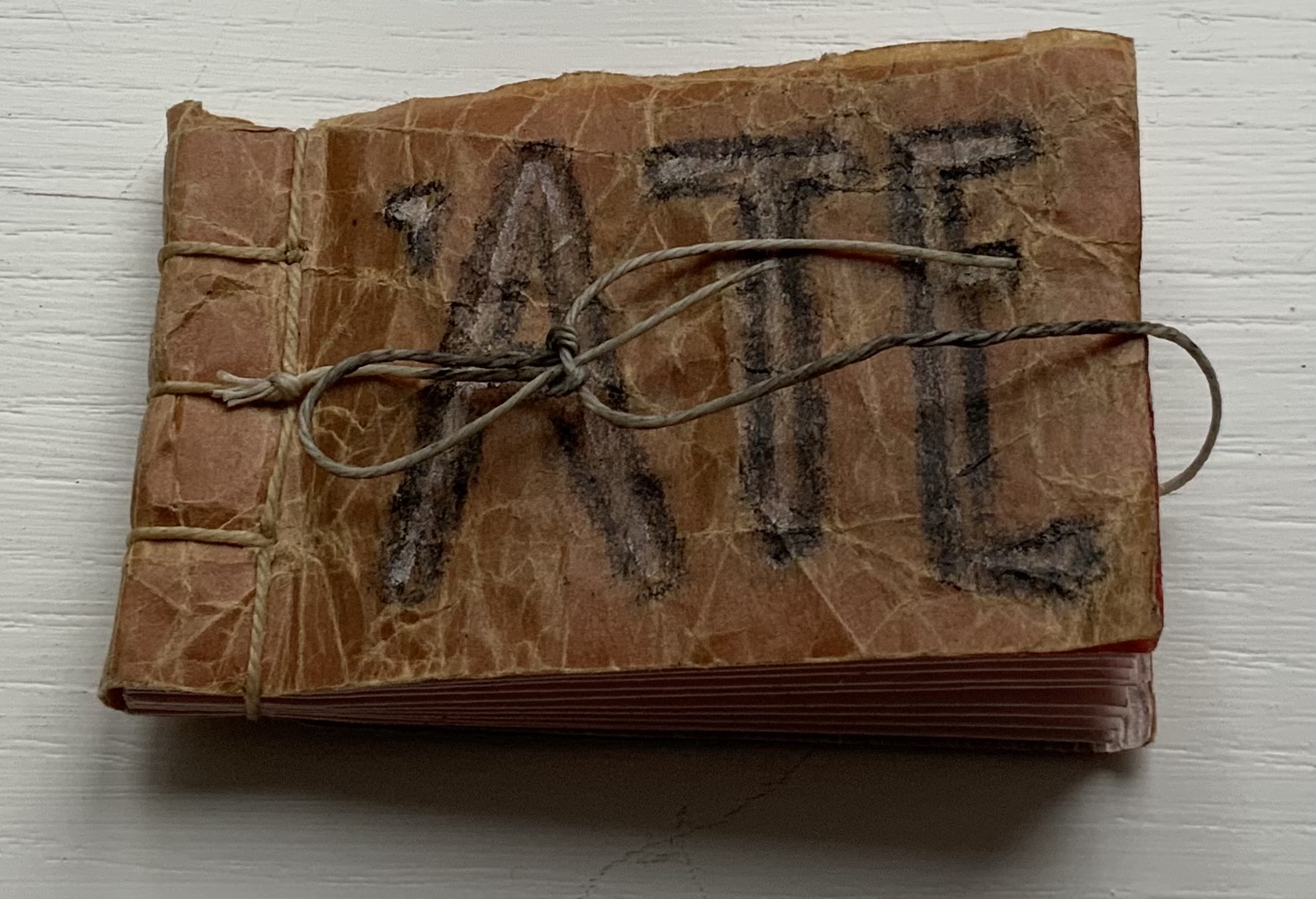
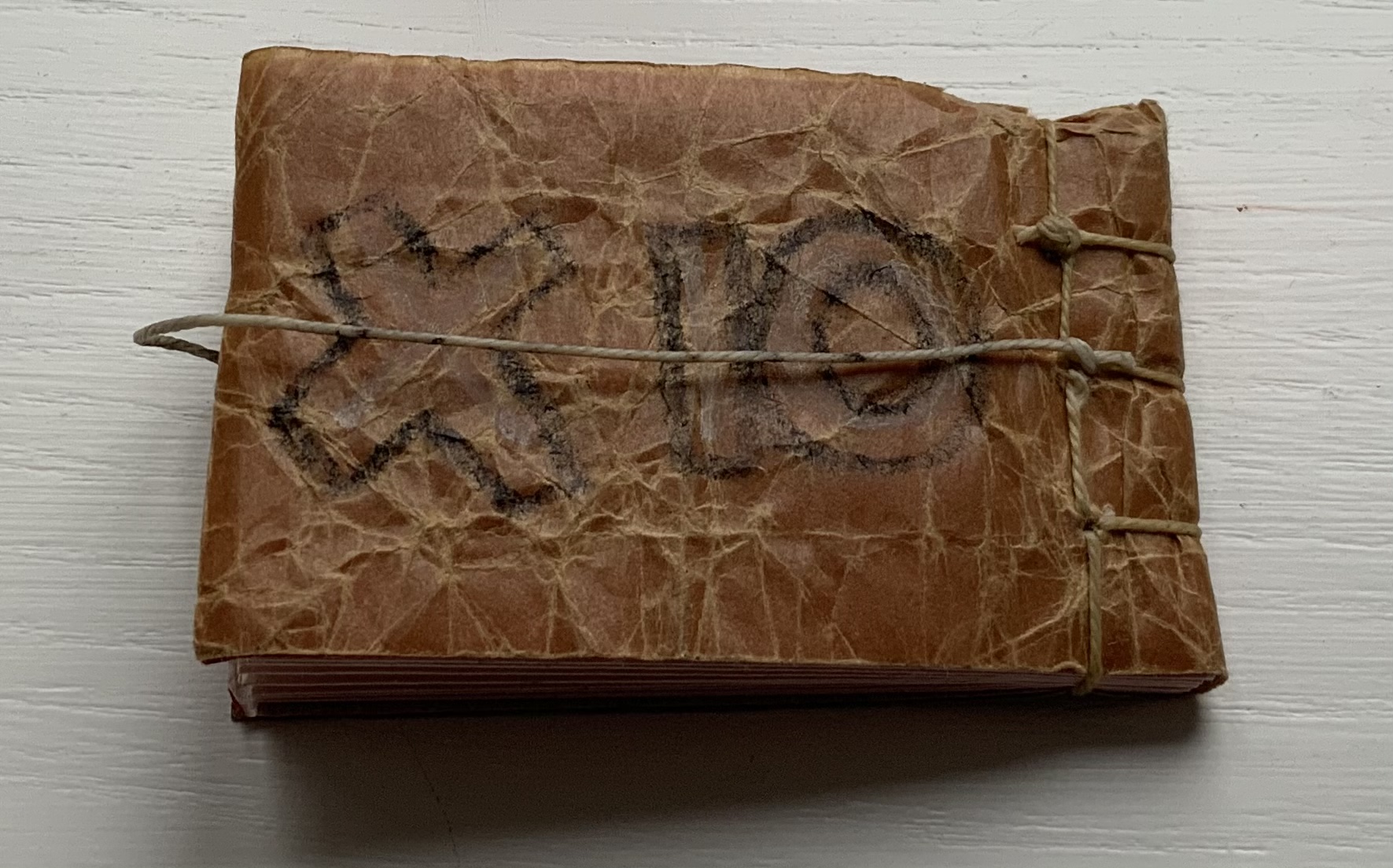
‘ATE (2011)

‘ATE X 10 (2011)
Jack Oudyn
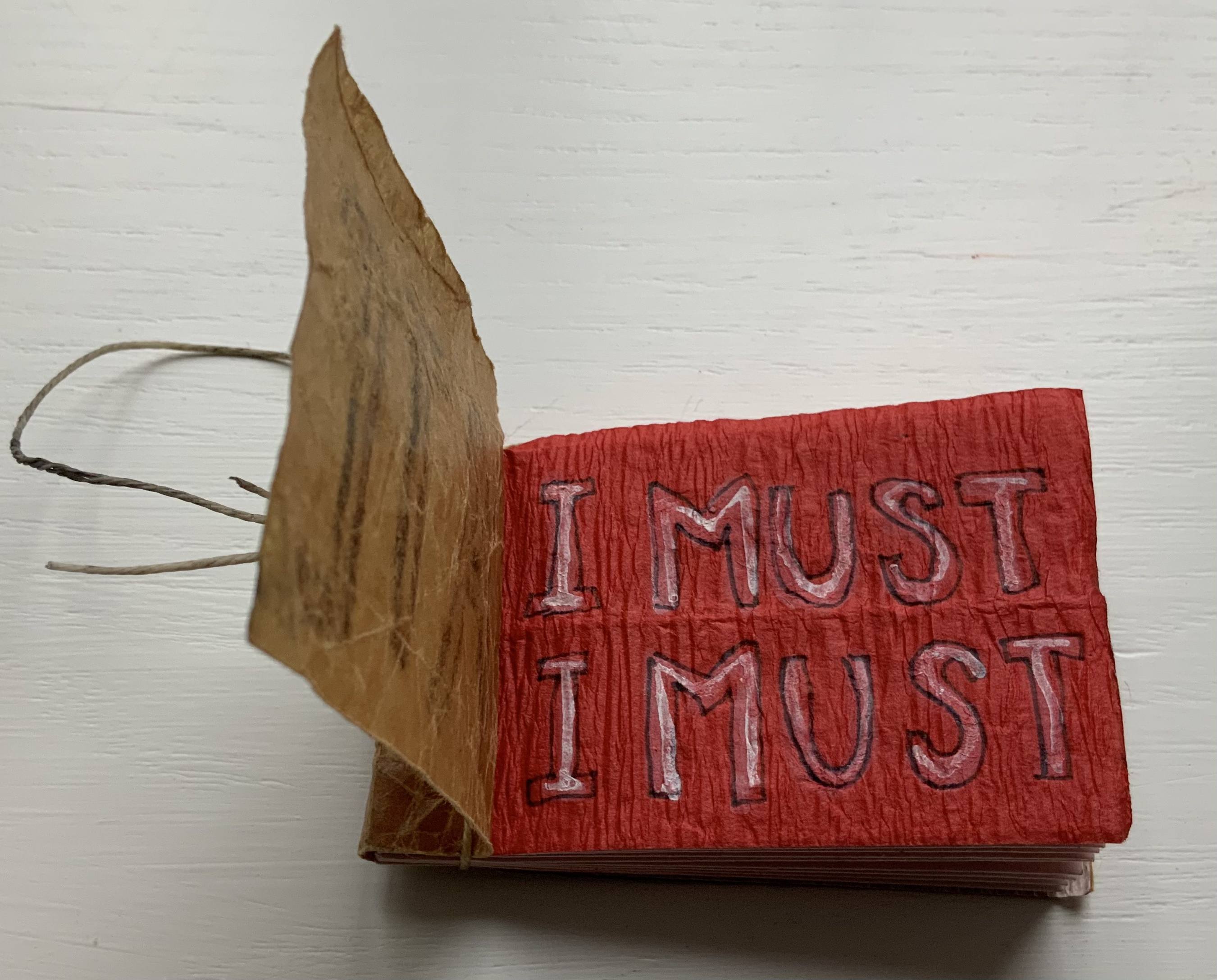
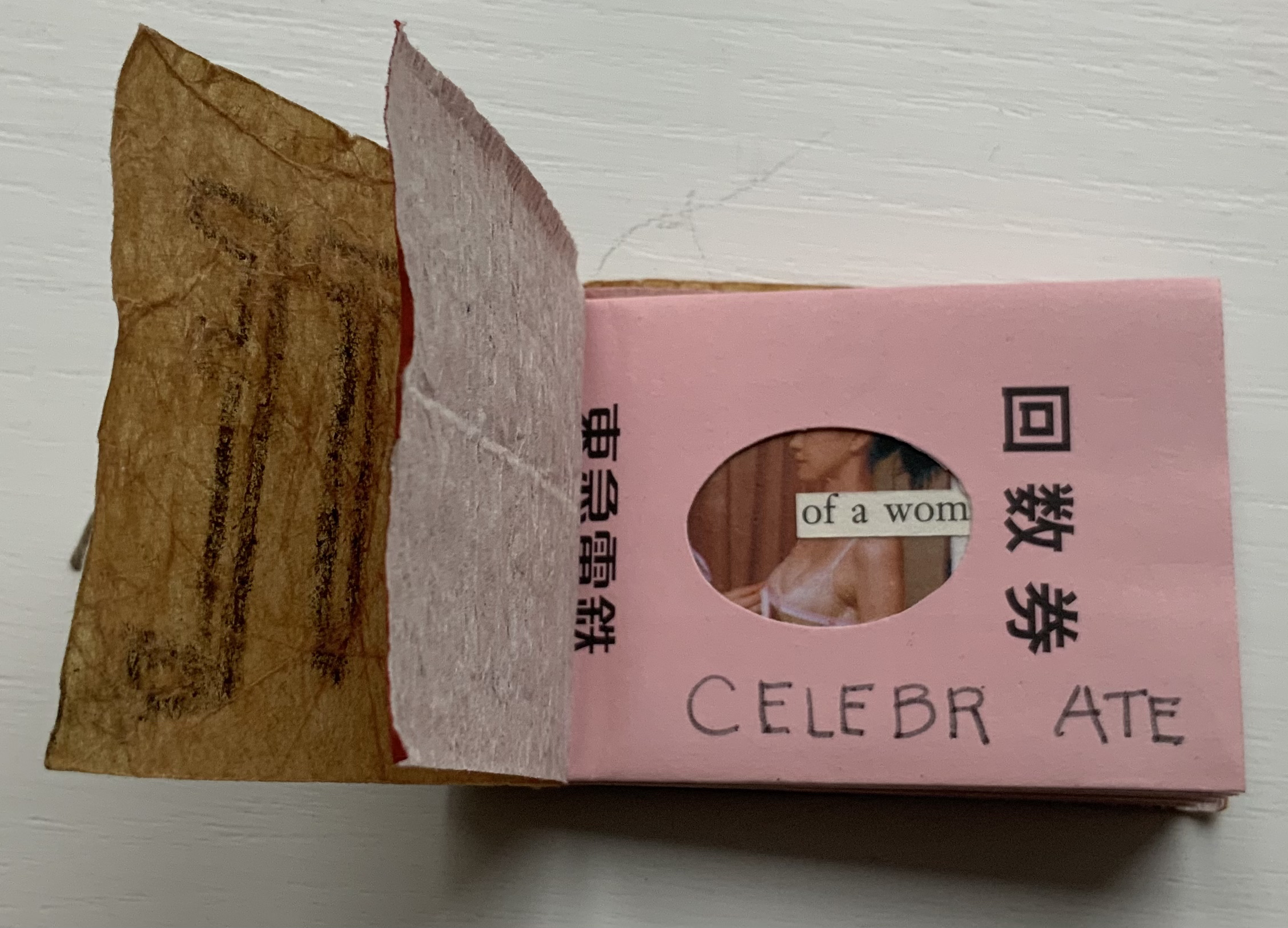
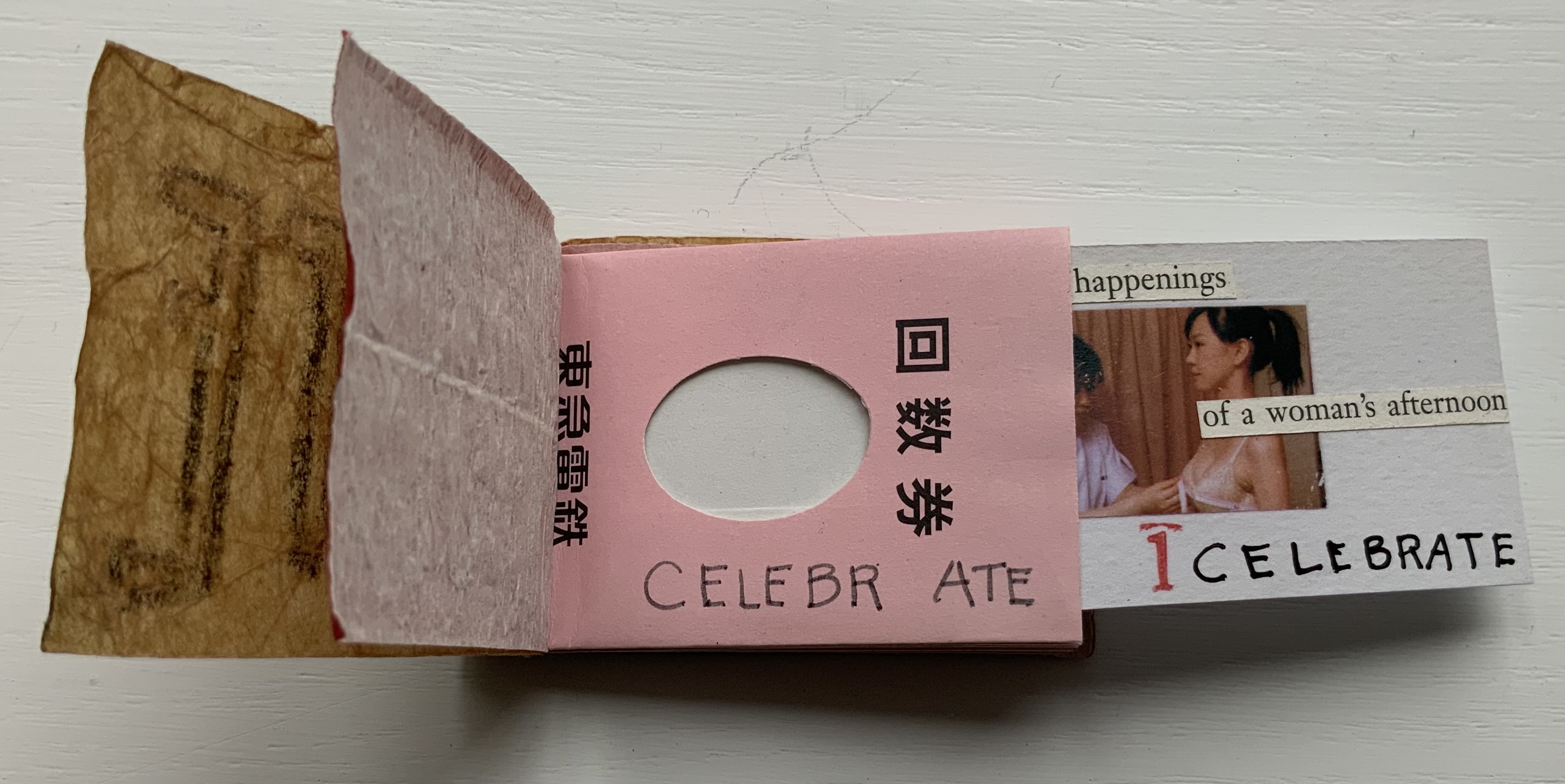
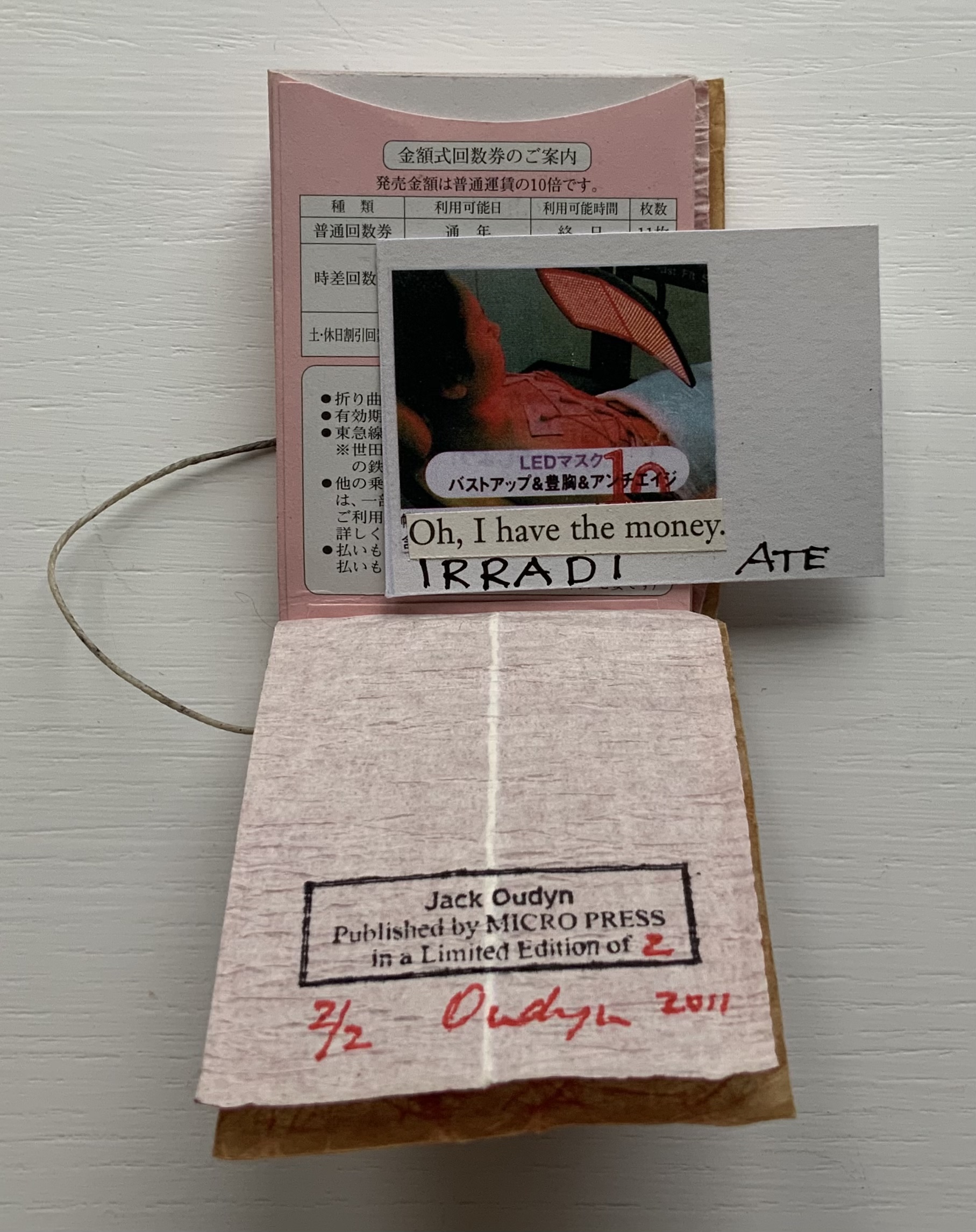
Japanese stab-bound booklet, with wax paper cover and Momigami fly leaves. H54 x W74 mm, 10 train ticket sleeves holding 10 small numbered cards collaged with advertising brochure photos. Edition of 2, of which this is #2. Photos: Books On Books Collection, displayed with permission of the artist.

ATE X 10 demonstrates Oudyn’s wont to play language, form and material off image and vice versa. Bound in a Japanese stab binding by waxed thread and wax paper from the fish markets at Tsukiji in Tokyo, the book begins with a front fly leaf page bearing a tag line from the breast exercise mantra; on the same Momigami paper, the end fly leaf bears the colophon. The pages are made of Japanese train ticket sleeves containing numbered cards collaged with small photos from advertising brochures found near railway stations. As the fly leaf hints, the modest photos come from ads for breast enhancement services, an 8 x 10 promise relative to the images presented.

The works in the Micro Press imprint also reflect Oudyn’s interest (and presence) in mail art. He has been a member of the International Union of Mail Artists, and a section on his site is devoted to mail art.

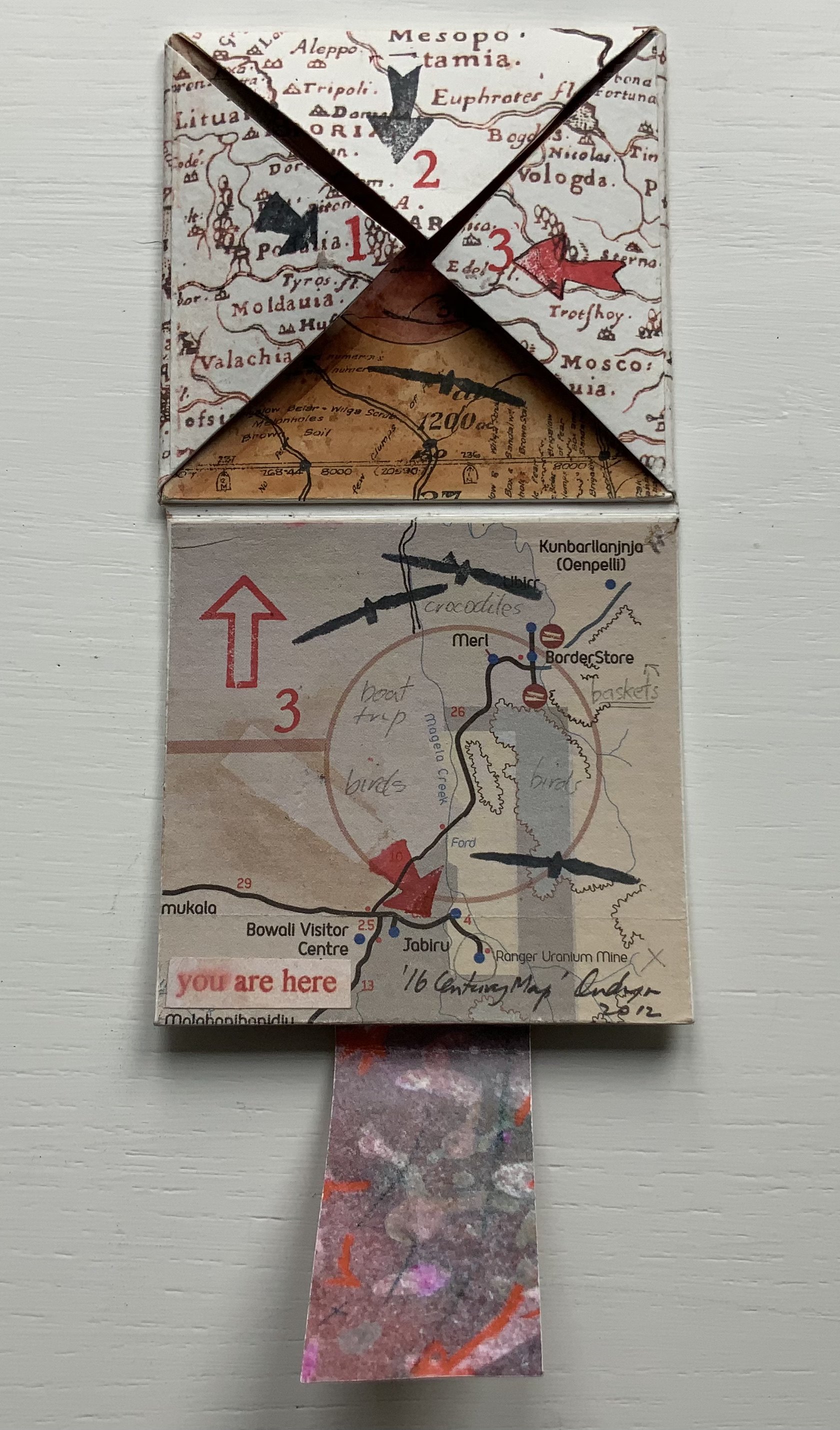
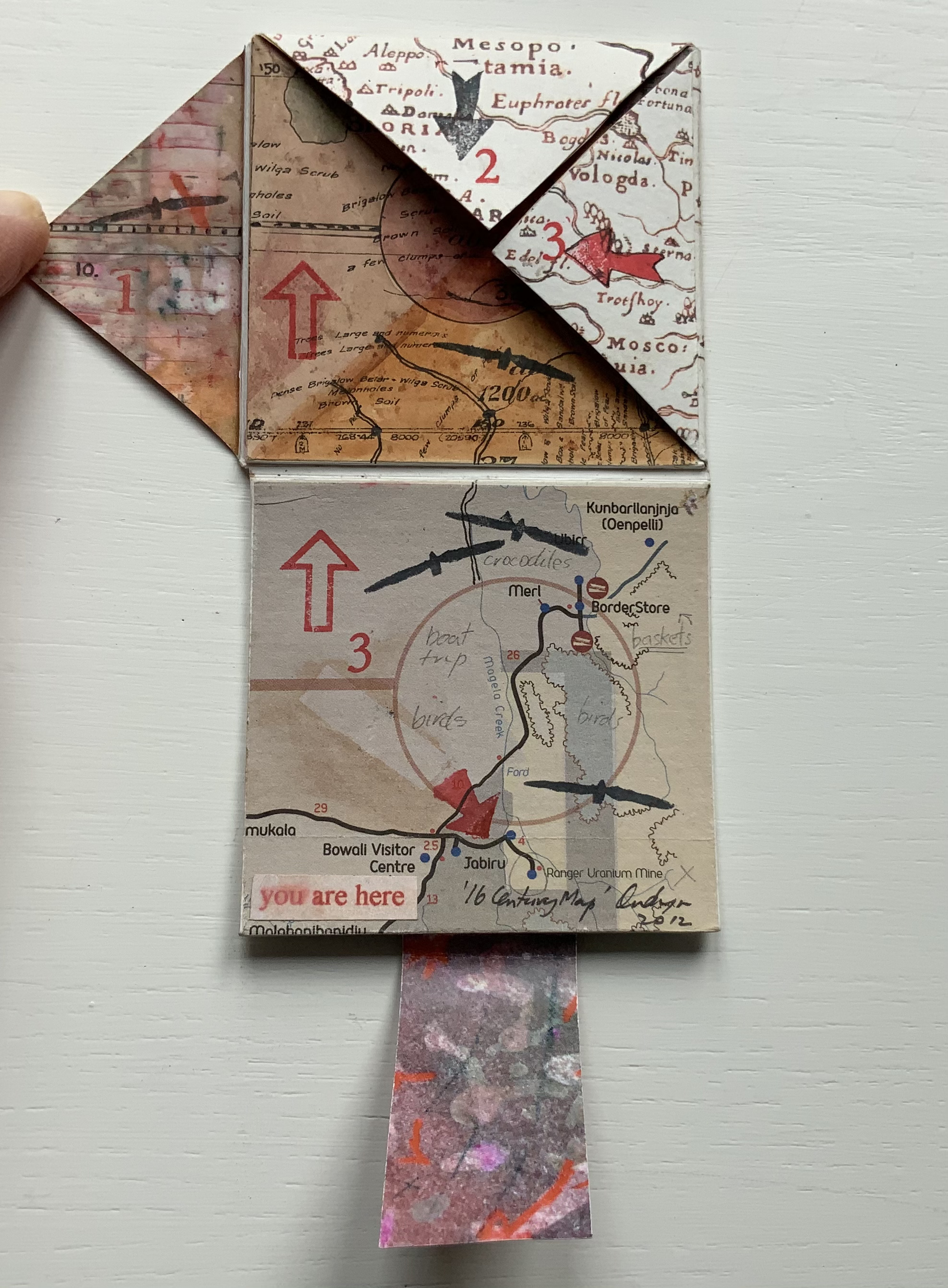
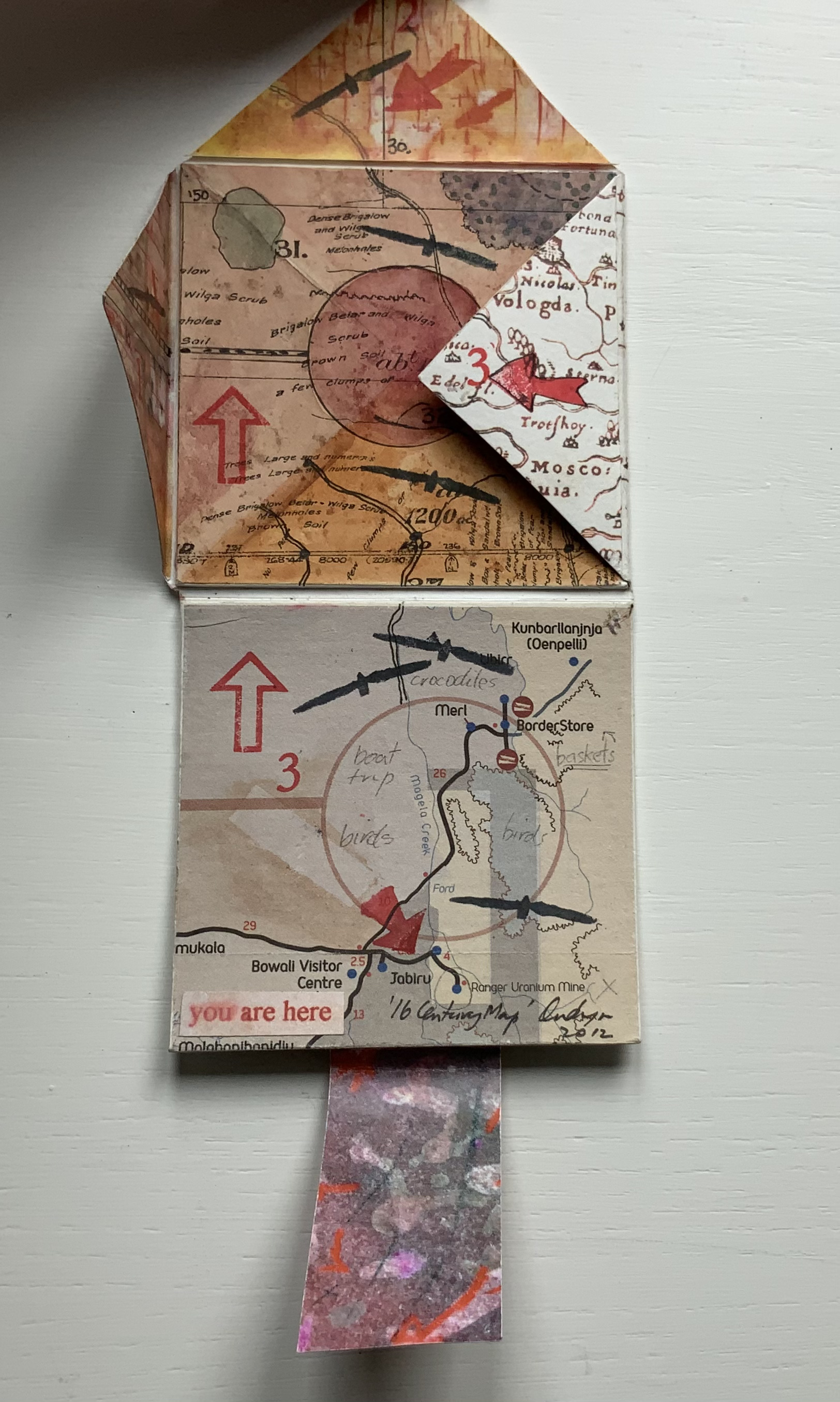
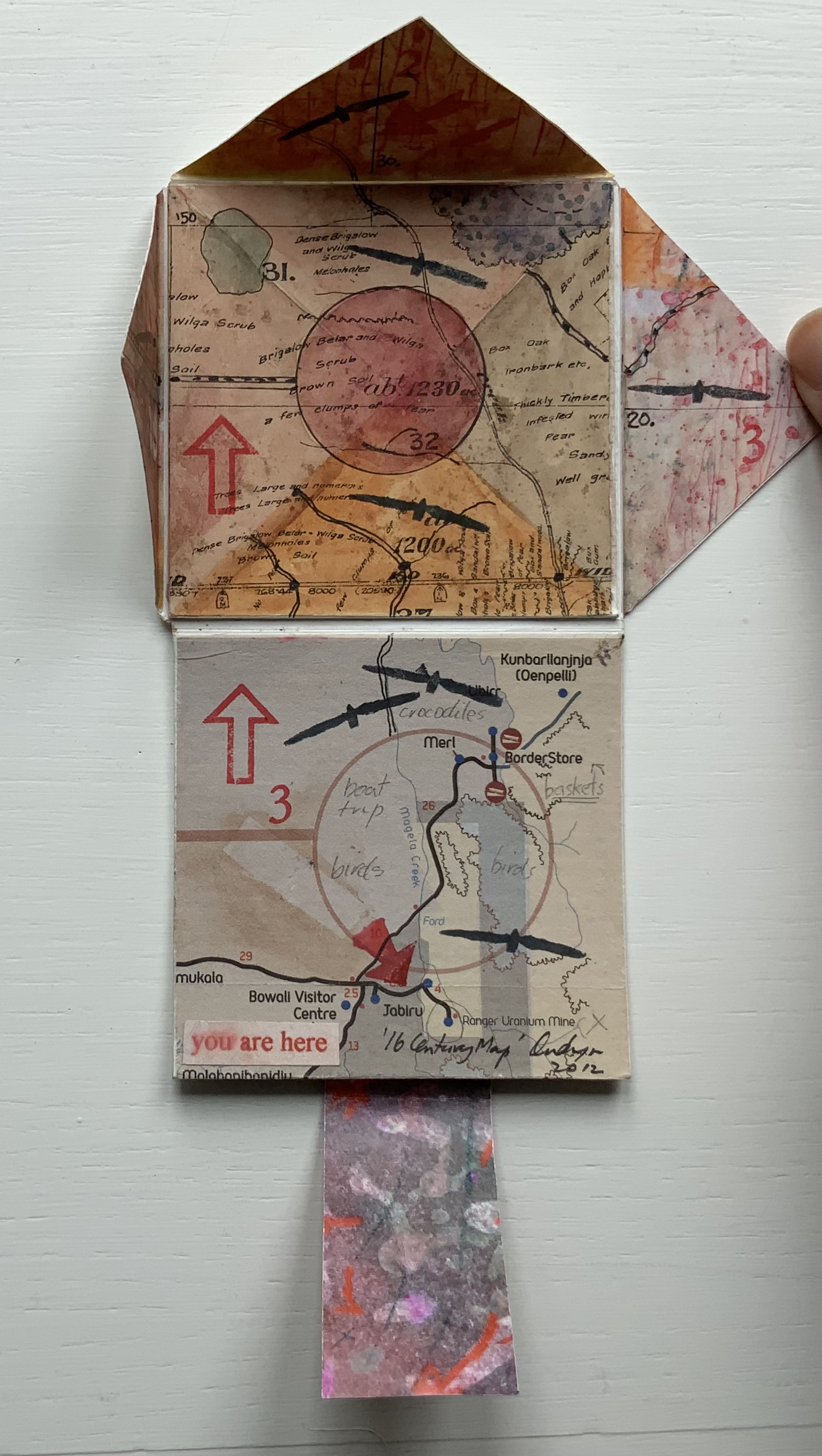
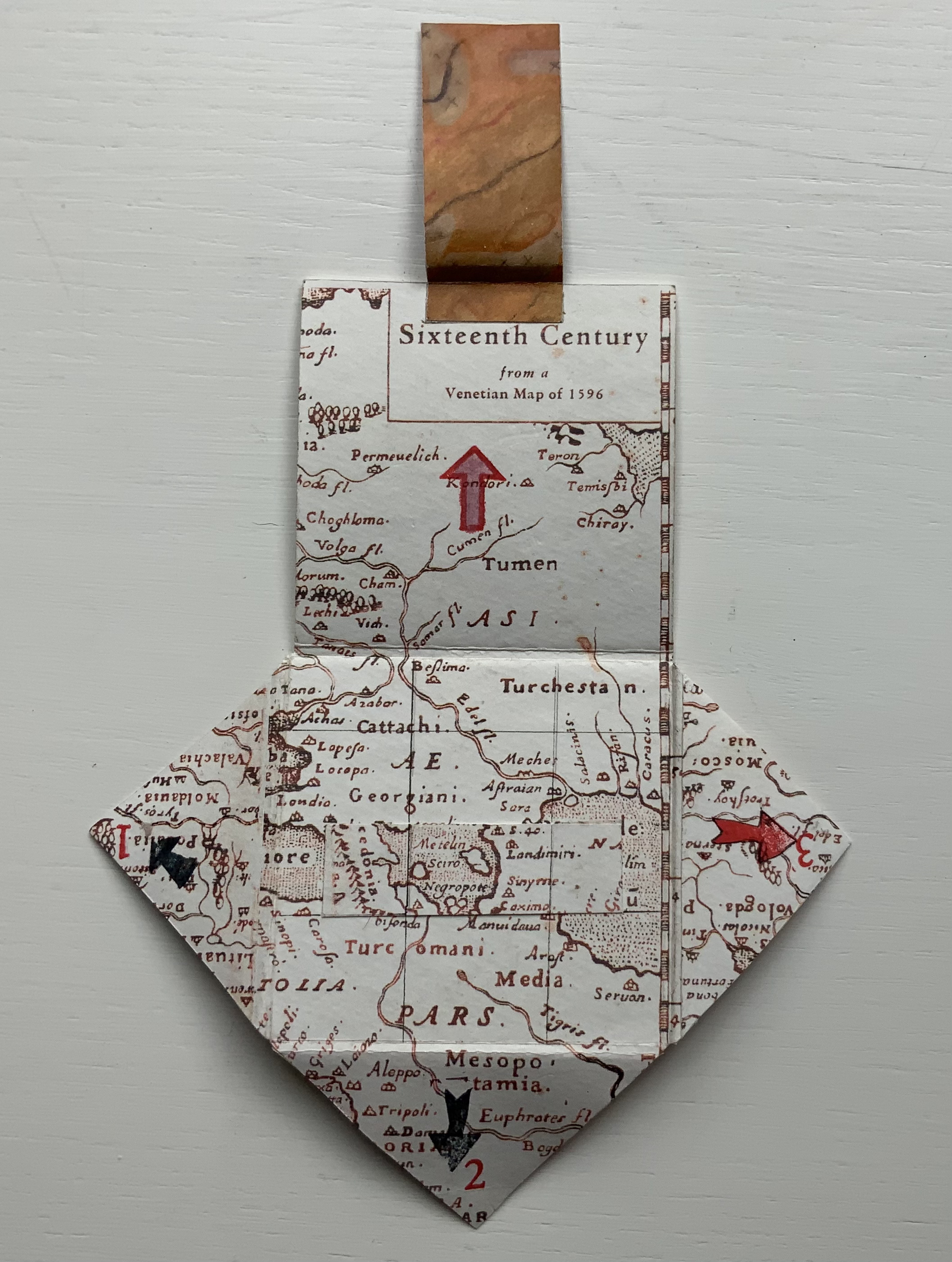
’16 Century Map’ (2012)

’16 Century Map’ (2012) Jack Oudyn
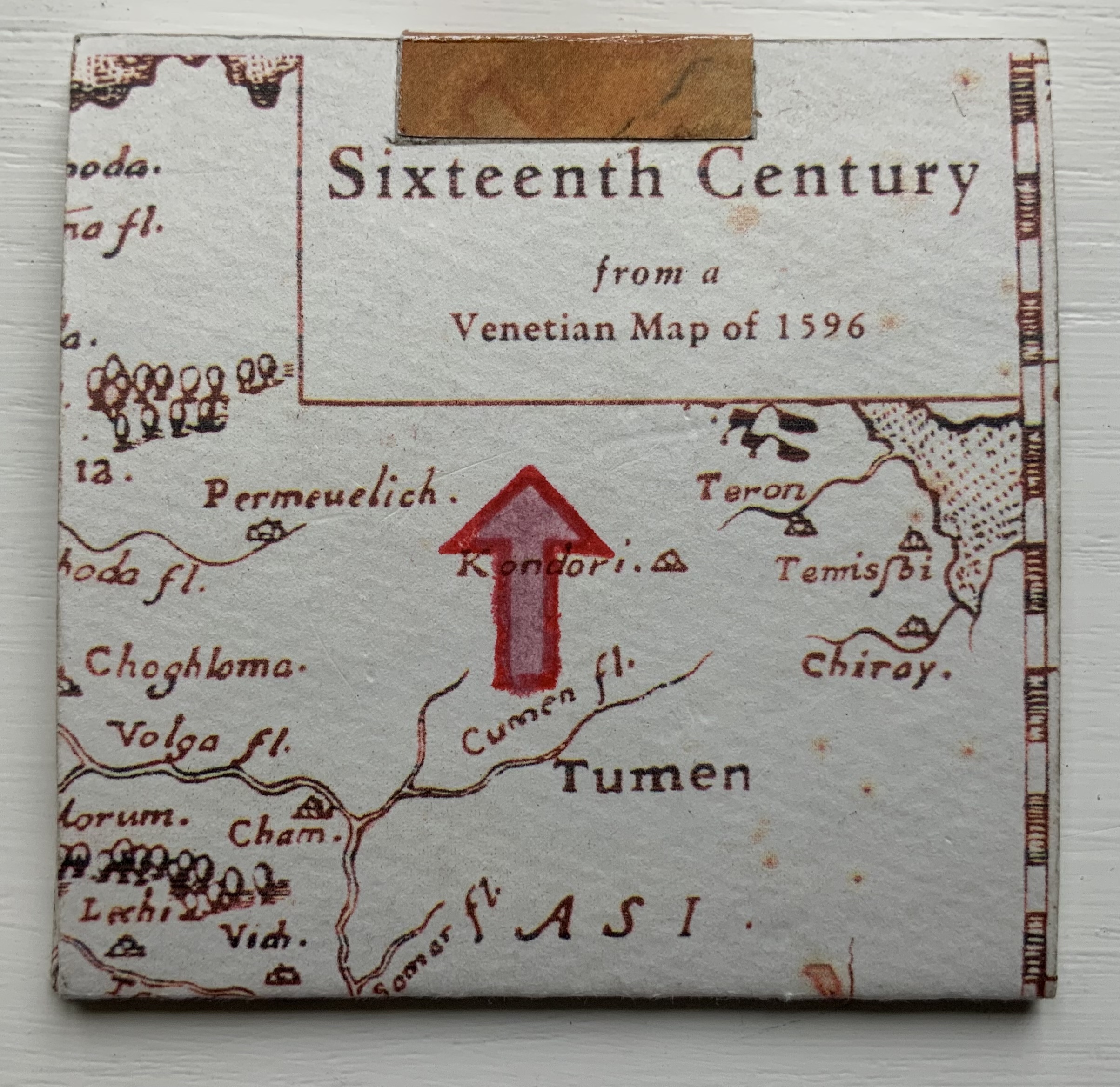
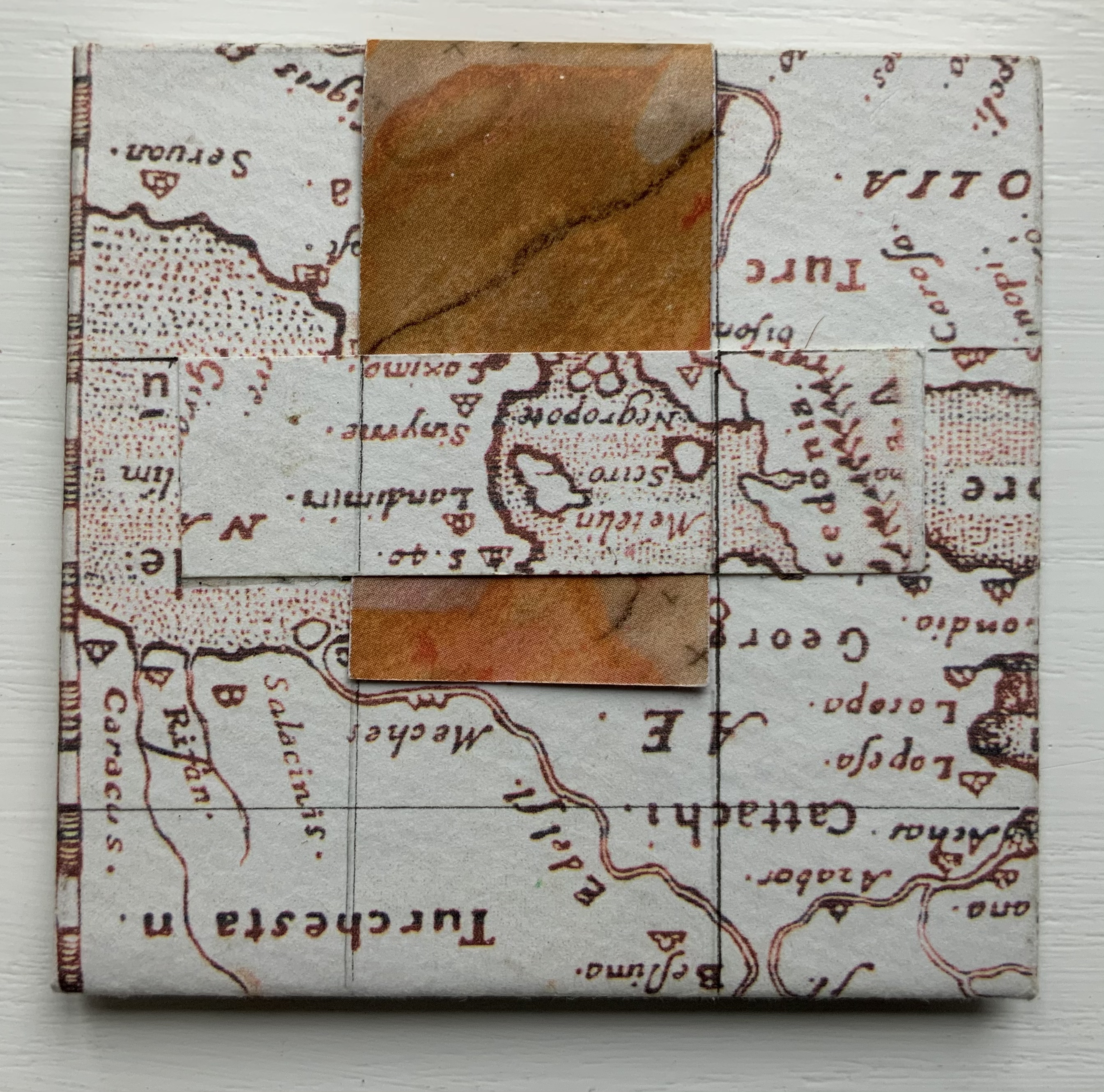
Tab/slot-bound, single-fold, map paper on board, covering three outward-opening triangular cut tabs over center map paper on board; ink-stamped and drawn, with “you are here” sticker in lower left corner. H70 x W72 mm (closed). Unique. Acquired from the artist, 4 January 2020. Photos: Books On Books Collection, displayed with permission of the artist.

This small unique work — and those that follow — lie outside the Micro Press imprint. As the artist writes on his blog, this is a trial attempt at juxtaposing the exterior old European map (showing Mesopotamia and the Euphrates, the Northern hemisphere’s cradle of civilization) with the interior Australian map of the Kakadu National Park to get at the concept of Tjukurpa, by which Australia’s Anangu refer to the creation period.

It is not strictly a Turkish-fold map, but the way the tab with indigenous colors snugly closes ’16 Century Map’ is just as mechanically satisfying.

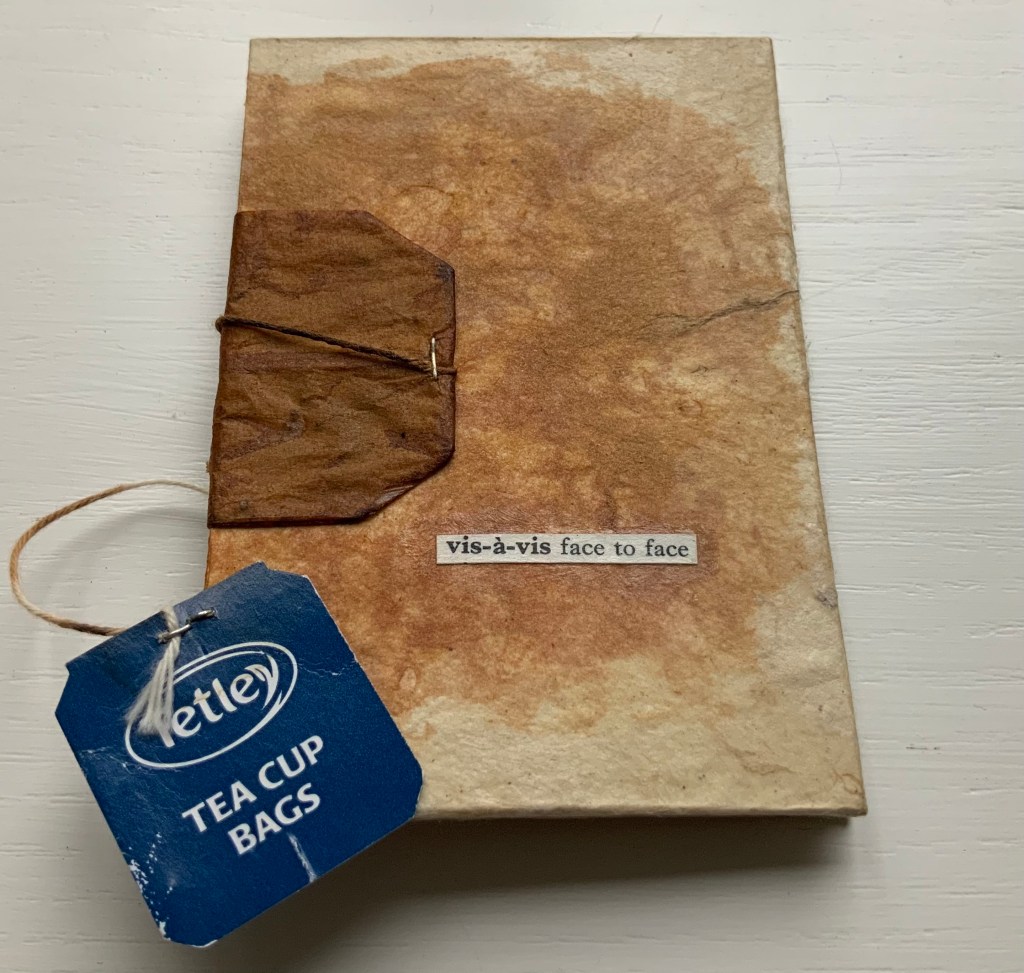
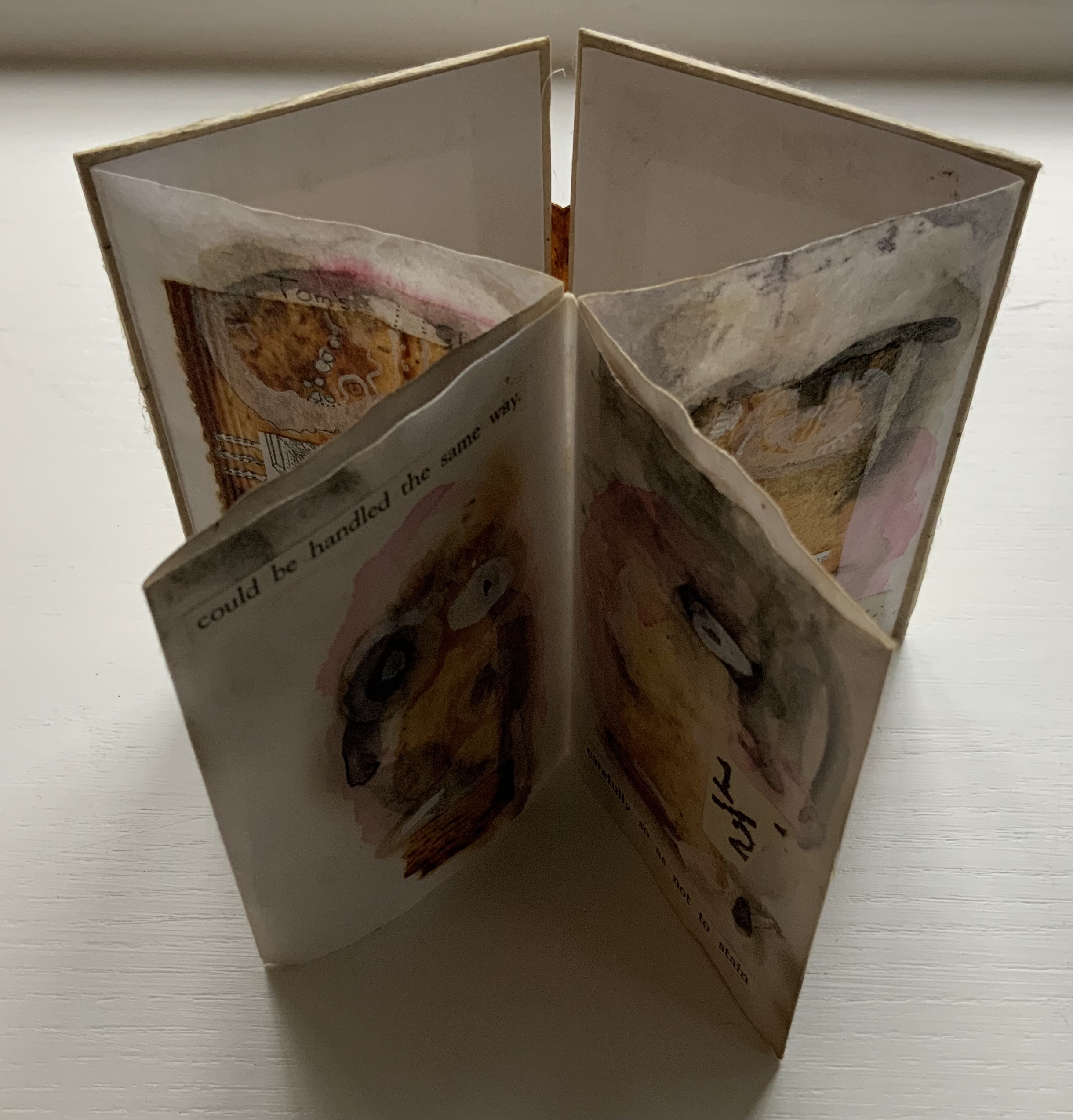
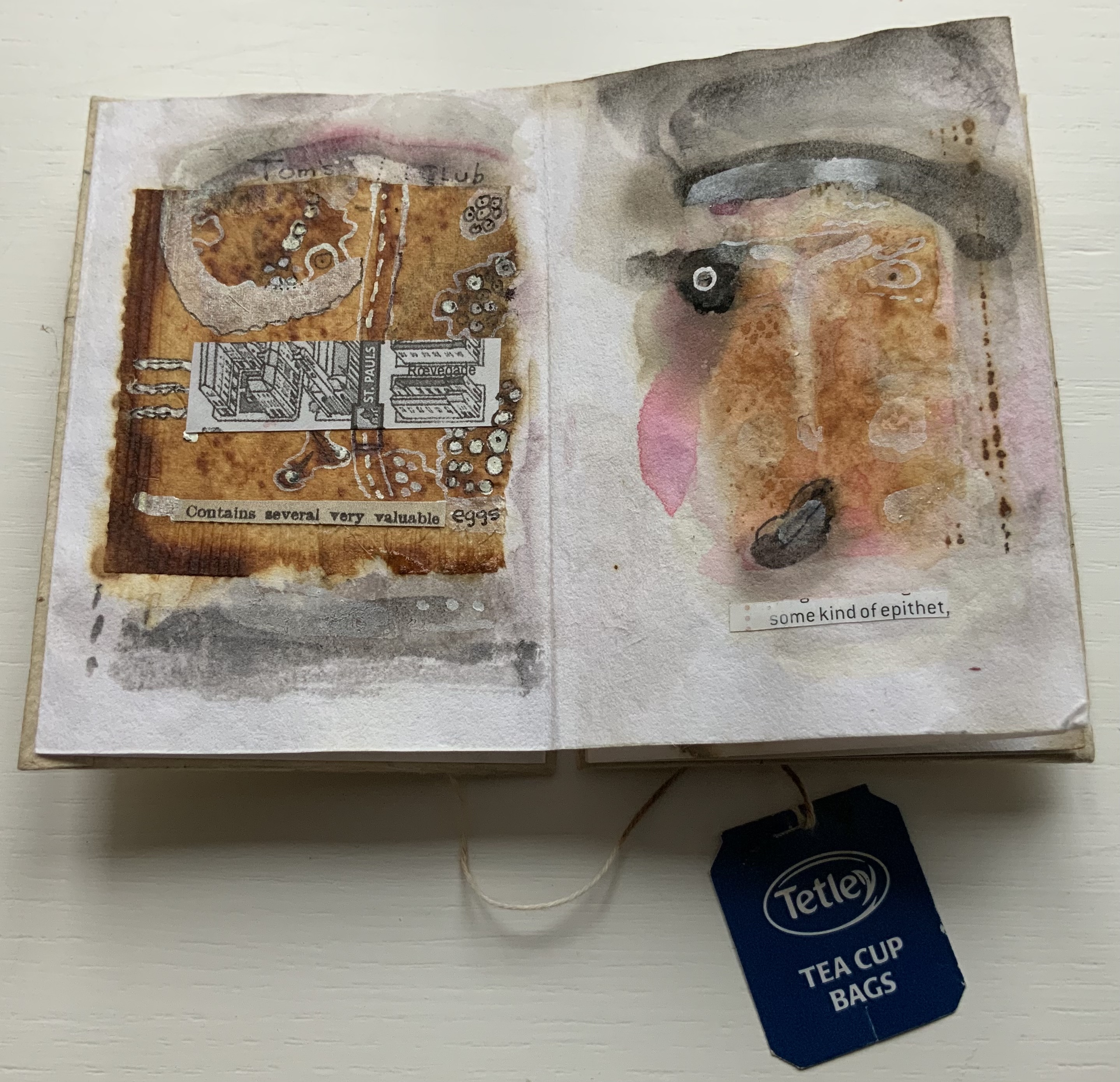
vis-à-vis | face to face (2014)

vis-à-vis | face to face (2014) Jack Oudyn
Blizzard-fold booklet, mixed media and collage with tea bag paper. H100 x W70 mm, six panels. Unique. Acquired from the artist, 4 January 2020. Photos: Books On Books Collection, displayed with permission of the artist.
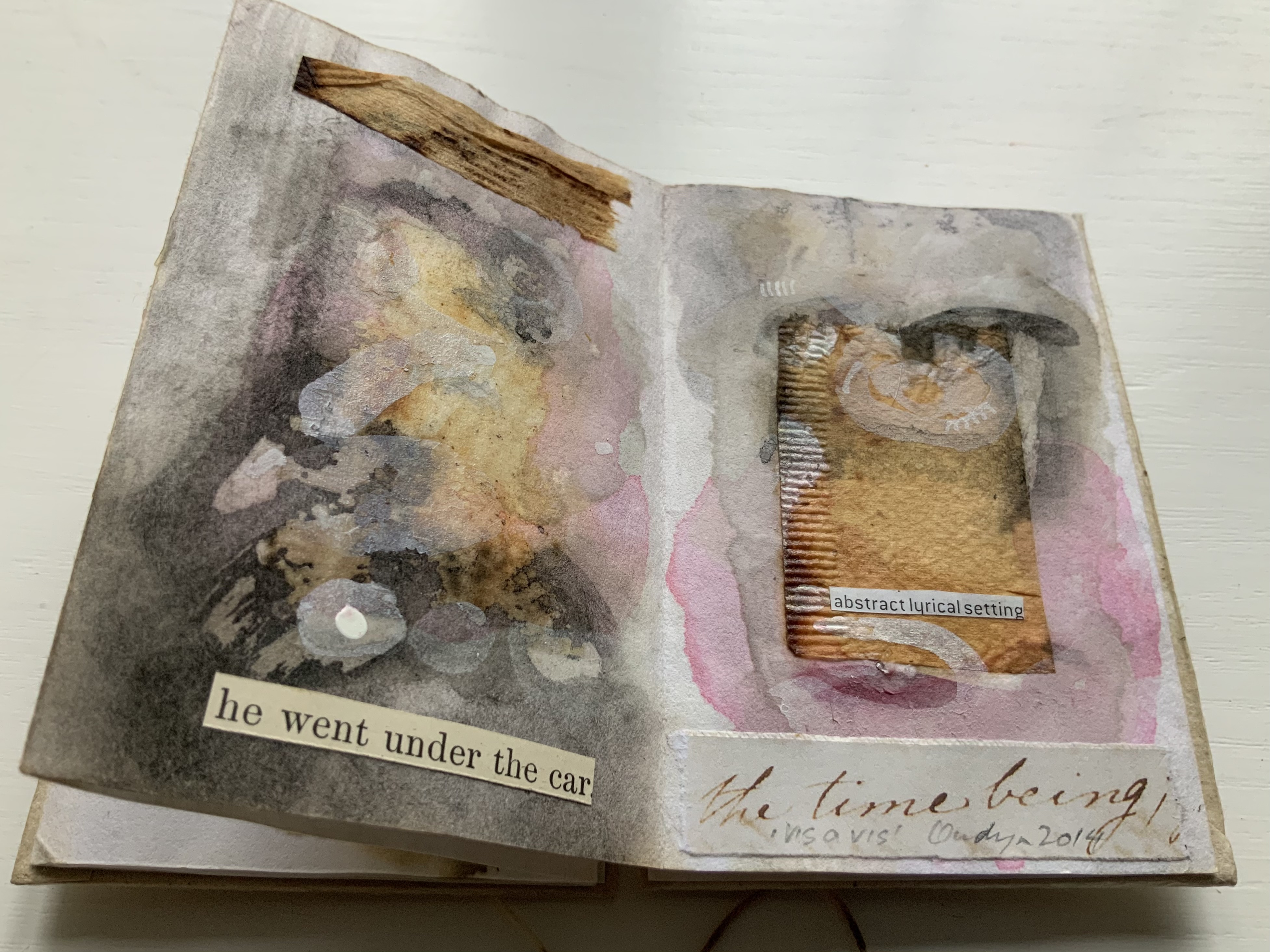
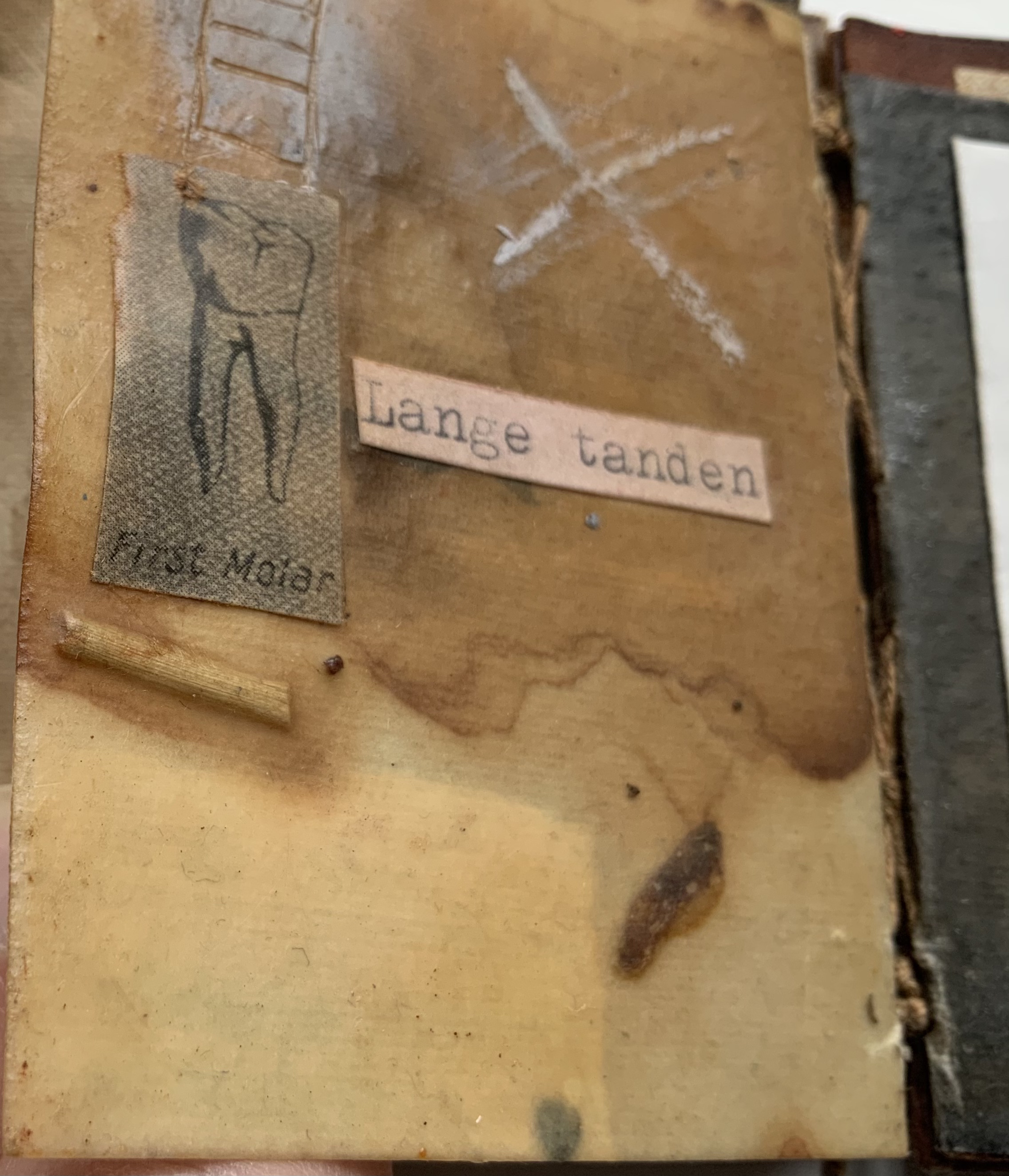
A heavily stained, empty teabag glued across the two boards, whose opening is closed with the teabag string wrapped around a wooden button, serves for this booklet’s binding. A conversation between two people struggling for words, hence the near random use of found text, occupies the six panels. The abstract faces profiles are characteristic of Oudyn’s work, as is the use of acrylic medium as a block out or resist. Or perhaps it is egg yolk, which would be in keeping with the reference to eggs and, with the tea stains, in keeping with a breakfast-table conversation.

Age Marks (2014)

Age Marks (2014)
Jack Oudyn
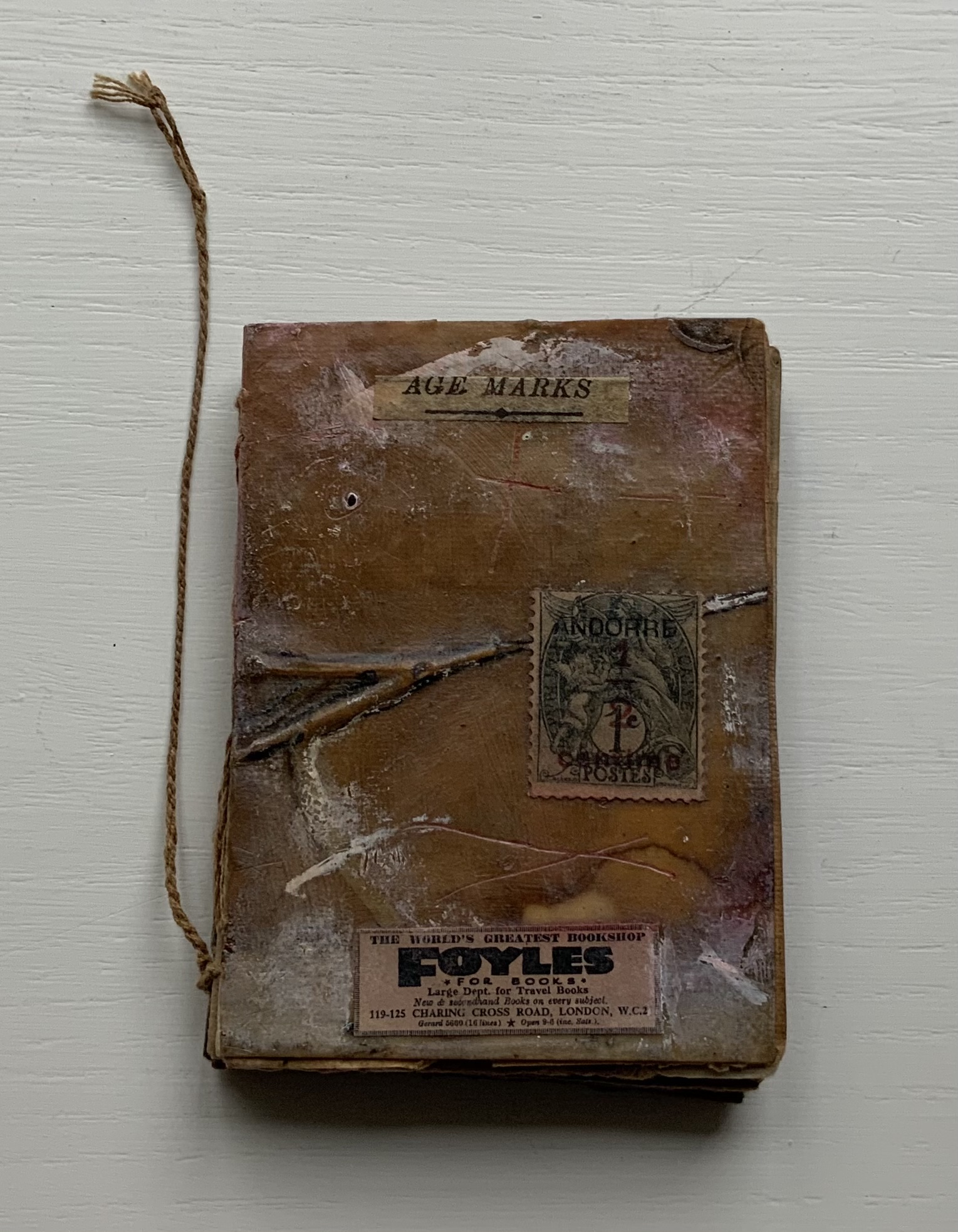
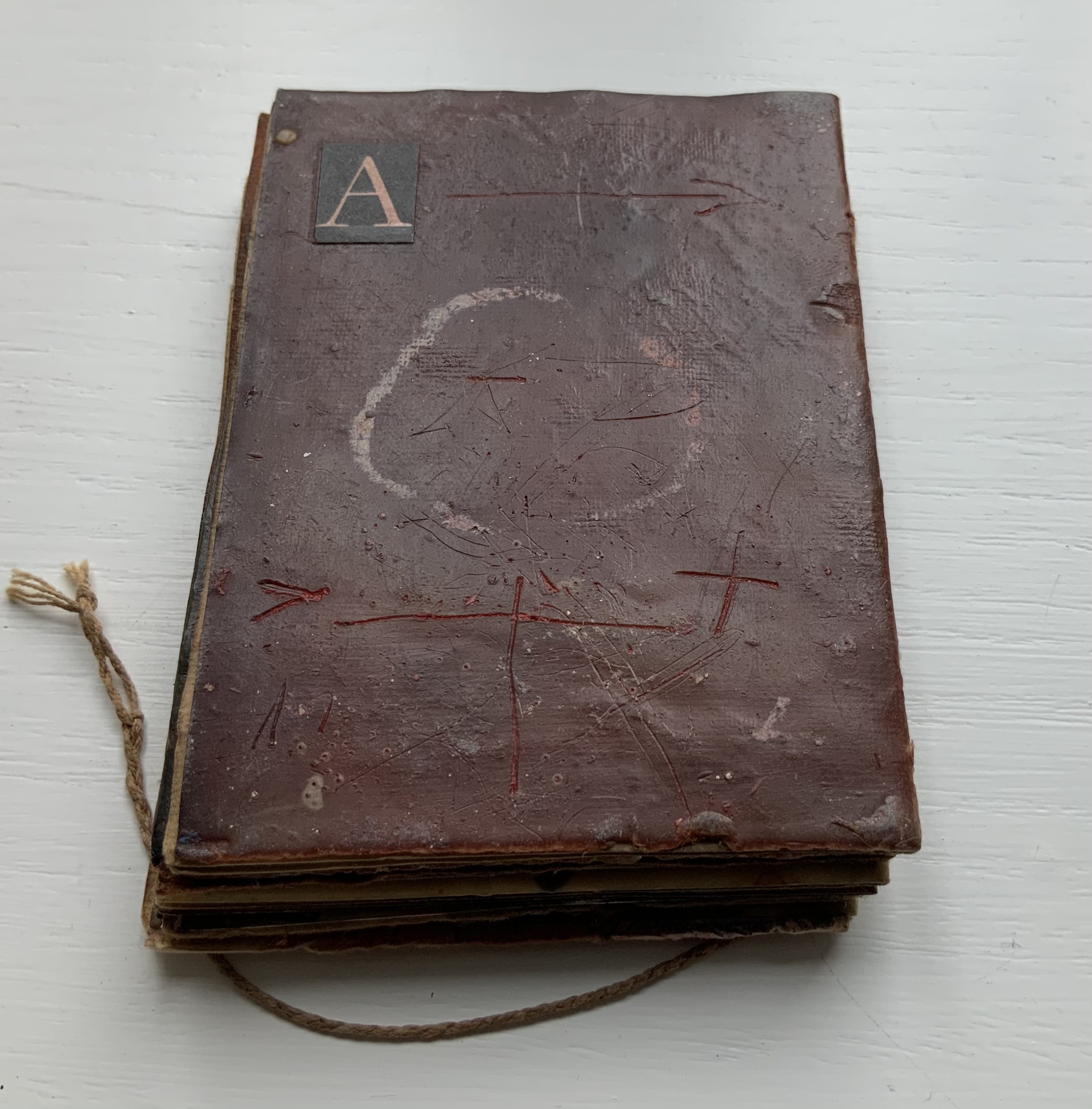
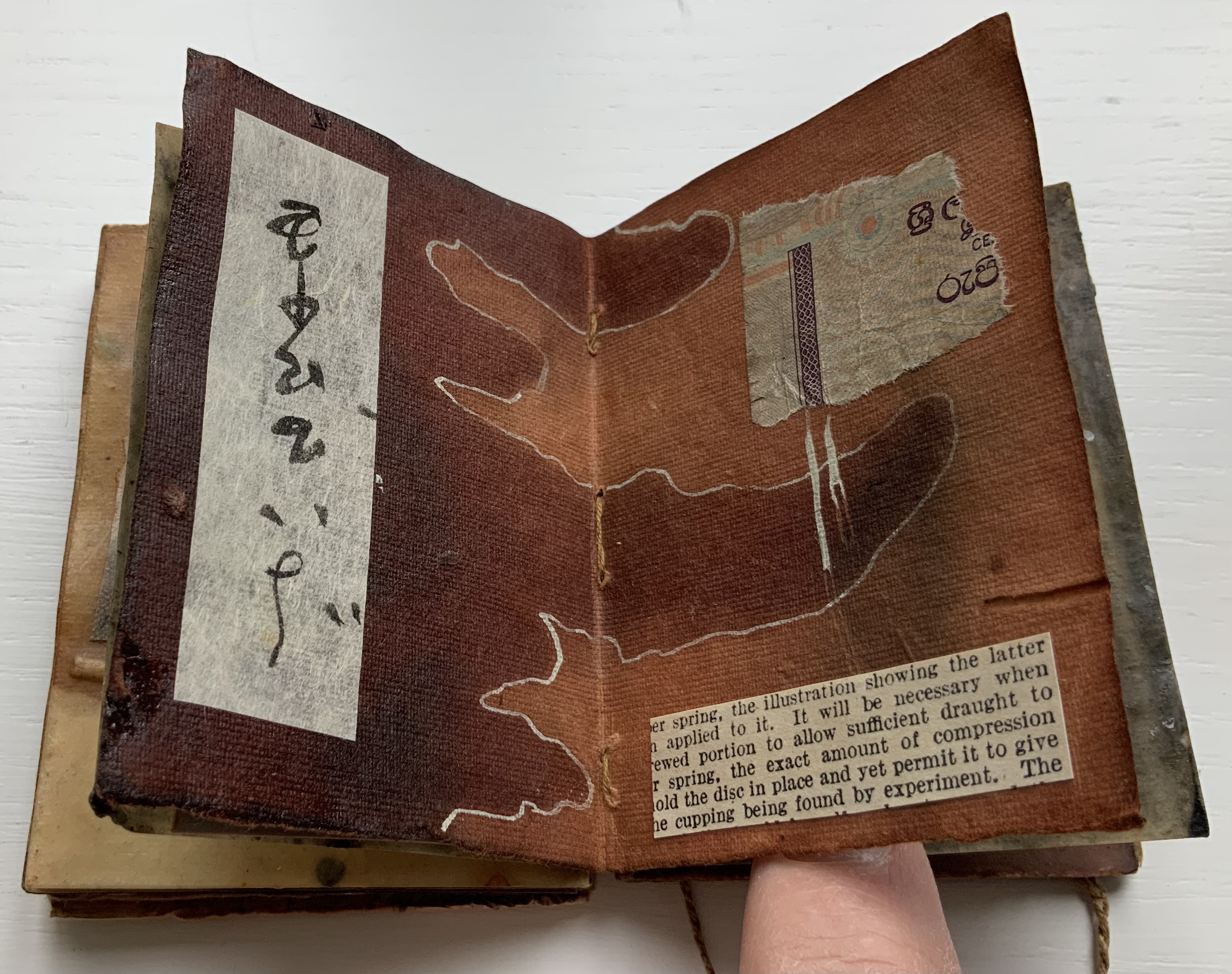
Handmade waxed and stained paper book by Trace Willans. Mixed media and collage on paper. H85 x W65 x D10 mm, 44 pages. Unique. Acquired from the artist, 4 January 2020. Photos: Books On Books Collection, displayed with permission of the artist.
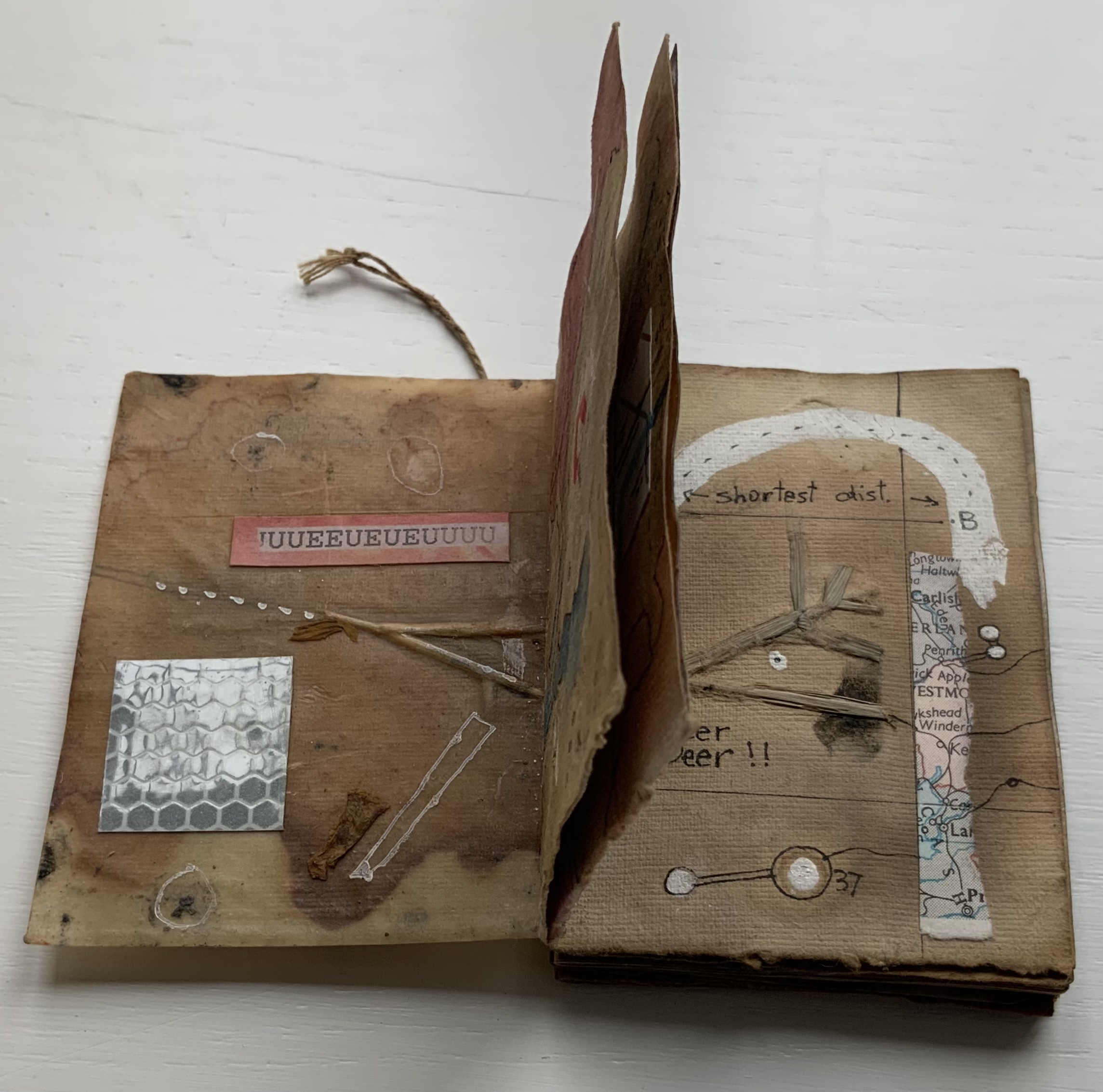
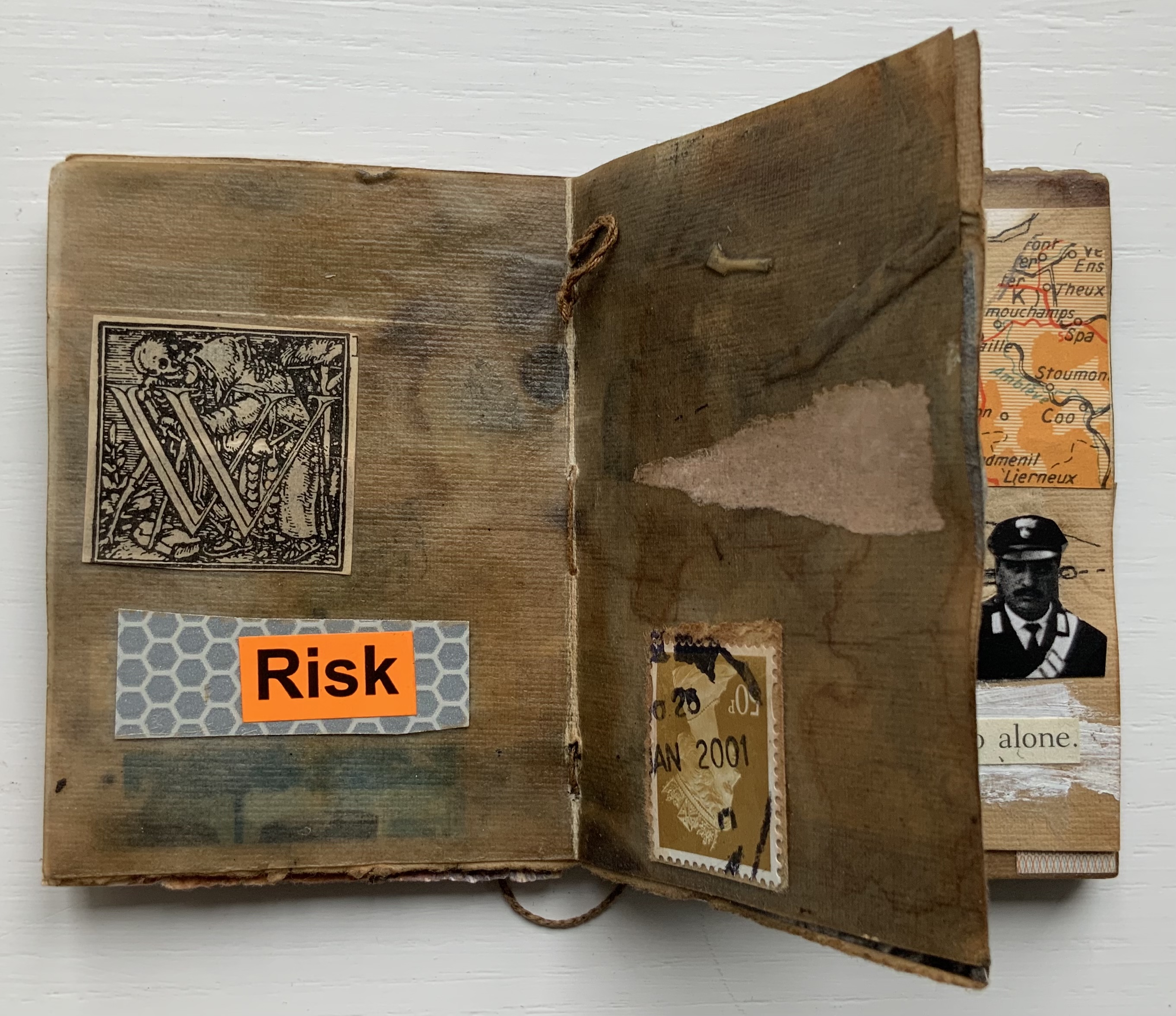
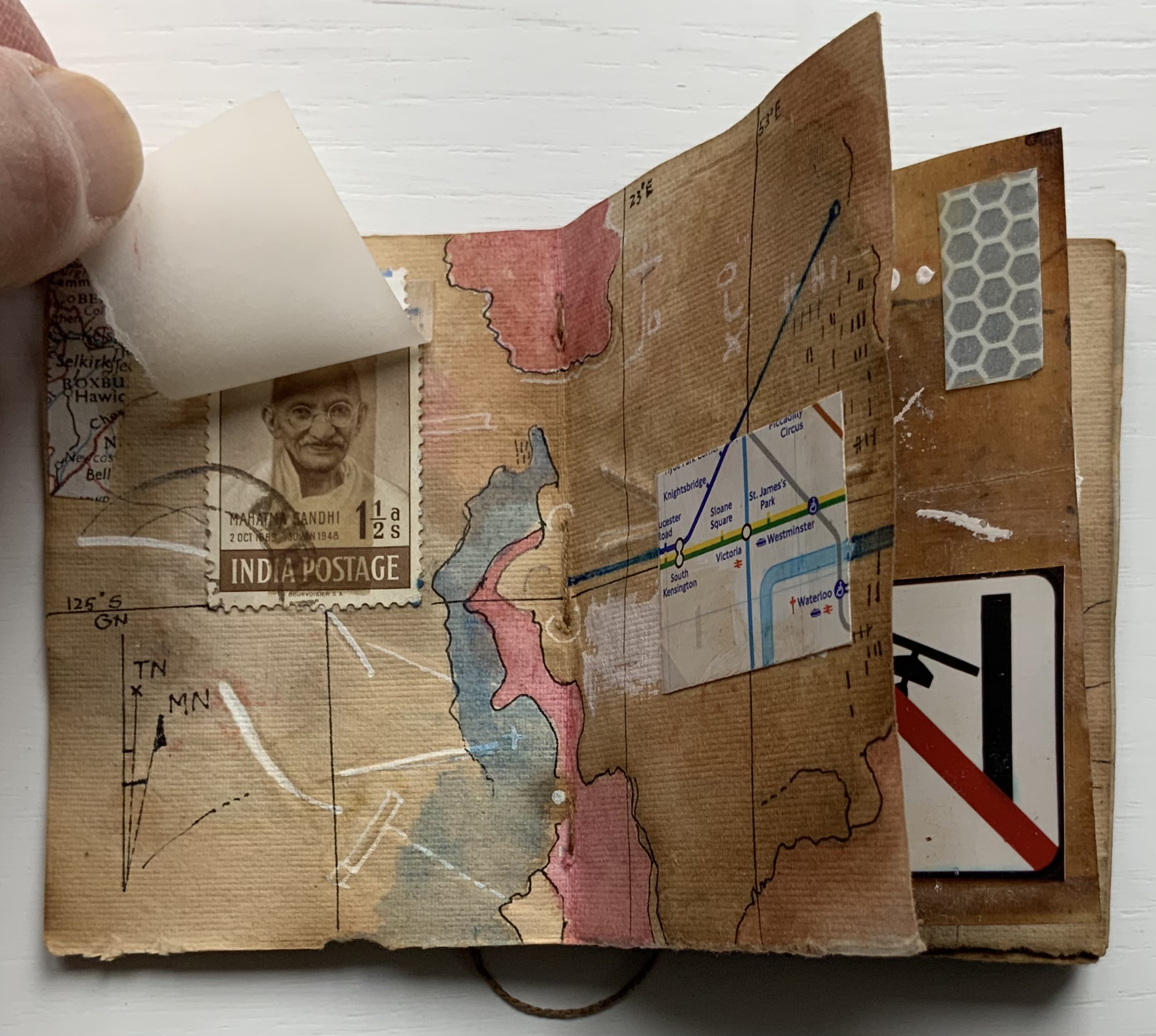
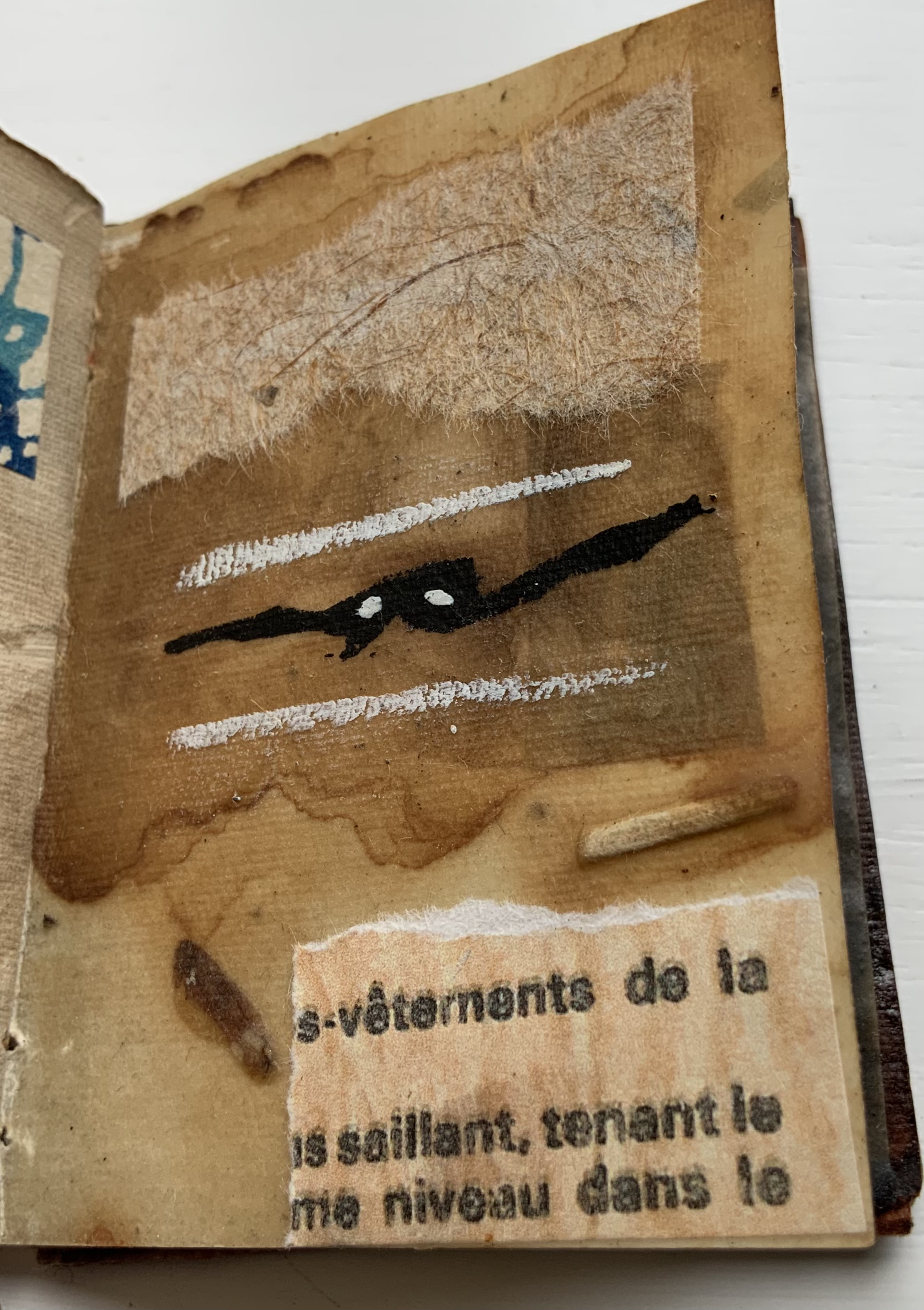
Trace Willans makes blank books from organic, sustainable media. Age Marks began as one of these blanks, its pages consisting of lightly textured machine-made lightweight paper (ca. 100 gsm), some stained and waxed. The result is not exactly an inscribed blank notebook, not exactly an altered book. Oudyn’s use of mixed media of different hand-made papers, tracing paper, found text, wax, reflective road tape, postage stamps, white acrylic ink, gouache and pigment creates a unique record of the aging process of mark making. Marks made by conversation, observation, inscription, printing, writing, drawing, collation, lifts and reveals, cutting, tearing, pasting, weaving, binding — all filtered through aging.

Small as it is, Age Marks is one of the most varied haptic experiences in the collection.

The Future of an Illusion (2017)

The Future of an Illusion (2017)
Helen Malone and Jack Oudyn
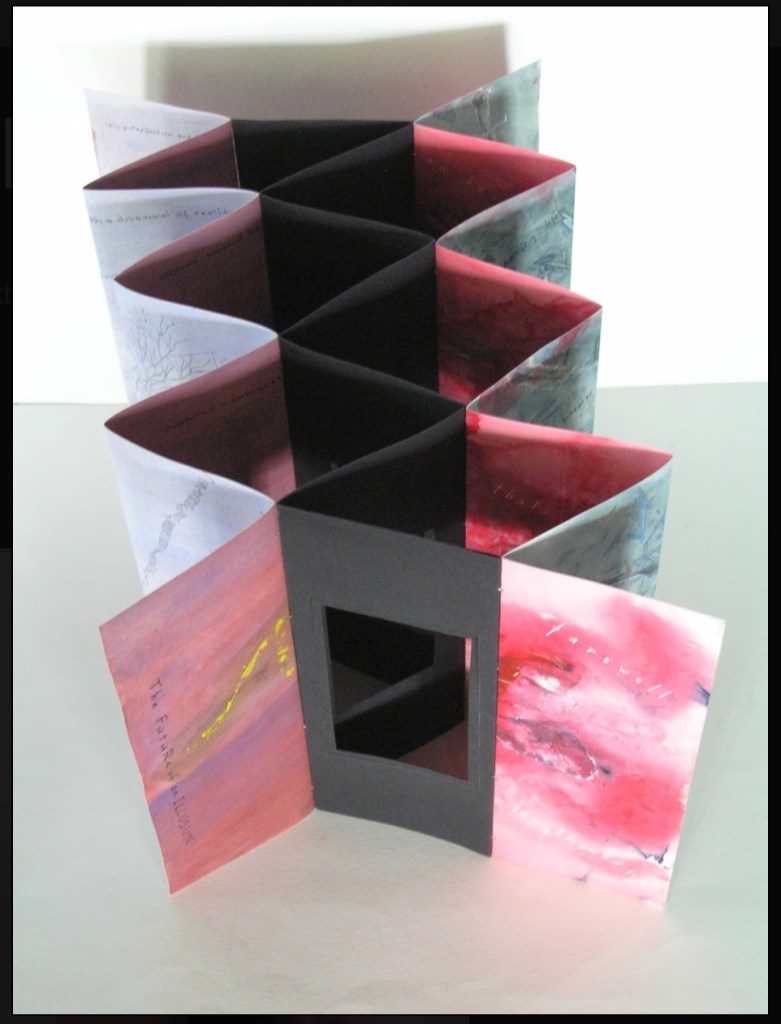
Sculptural tunnel book structure (three joined four-fold leporellos) enclosed in a folder and protective boxin a box,. Box made with Lamali handmade paper, suede paper (lining) and Somerset Black 280 gsm; Folder: Canson black 200gsm, skull button and waxed thread; Leporellos: center leporello made of Canson black 200 gsm, linen thread adjoining two leporellos made of Arches watercolour paper 185 gsm with acrylic, soluble carbon, gouache and transfer ink jet images. Box: H275 x W313 x D34 mm; Folder: H258 x W295 x D21 mm; Book: H250 x W290 x D16 mm closed, D410 mm open. One of an unnumbered, signed edition of 4. Acquired from Helen Malone, 12 September 2017.

Click here for additional images and comments.

Roughly Asemic (2020)

Roughly Asemic (2020)
Jack Oudyn
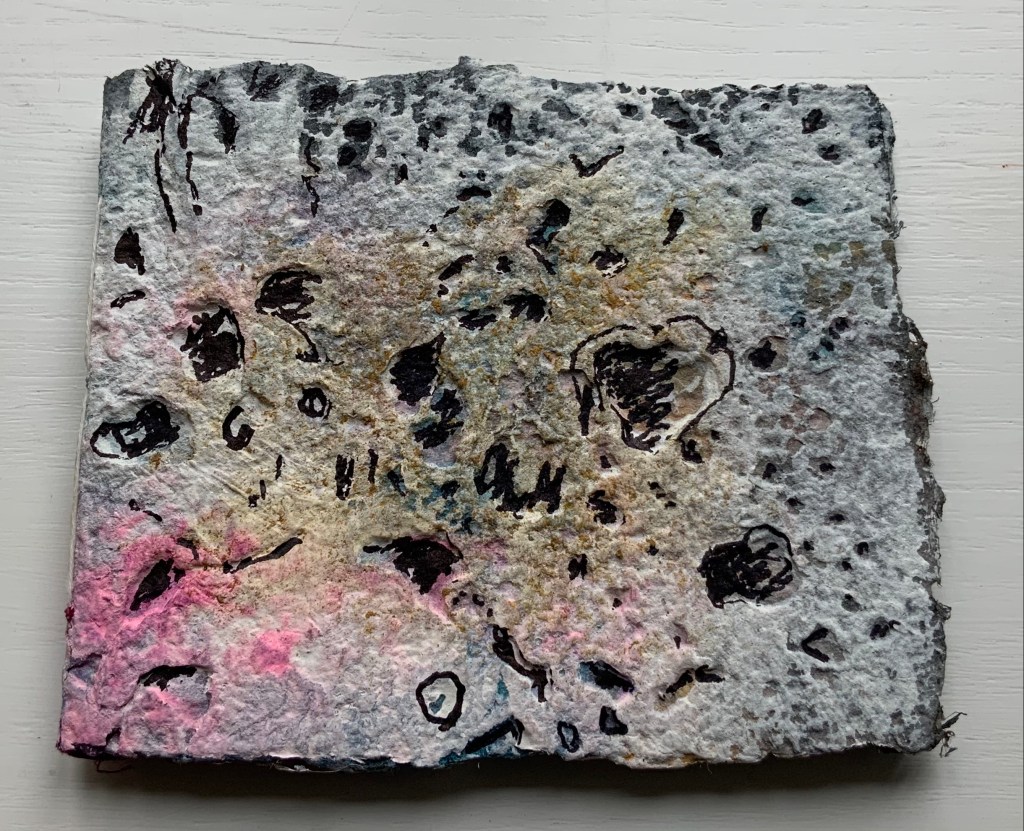
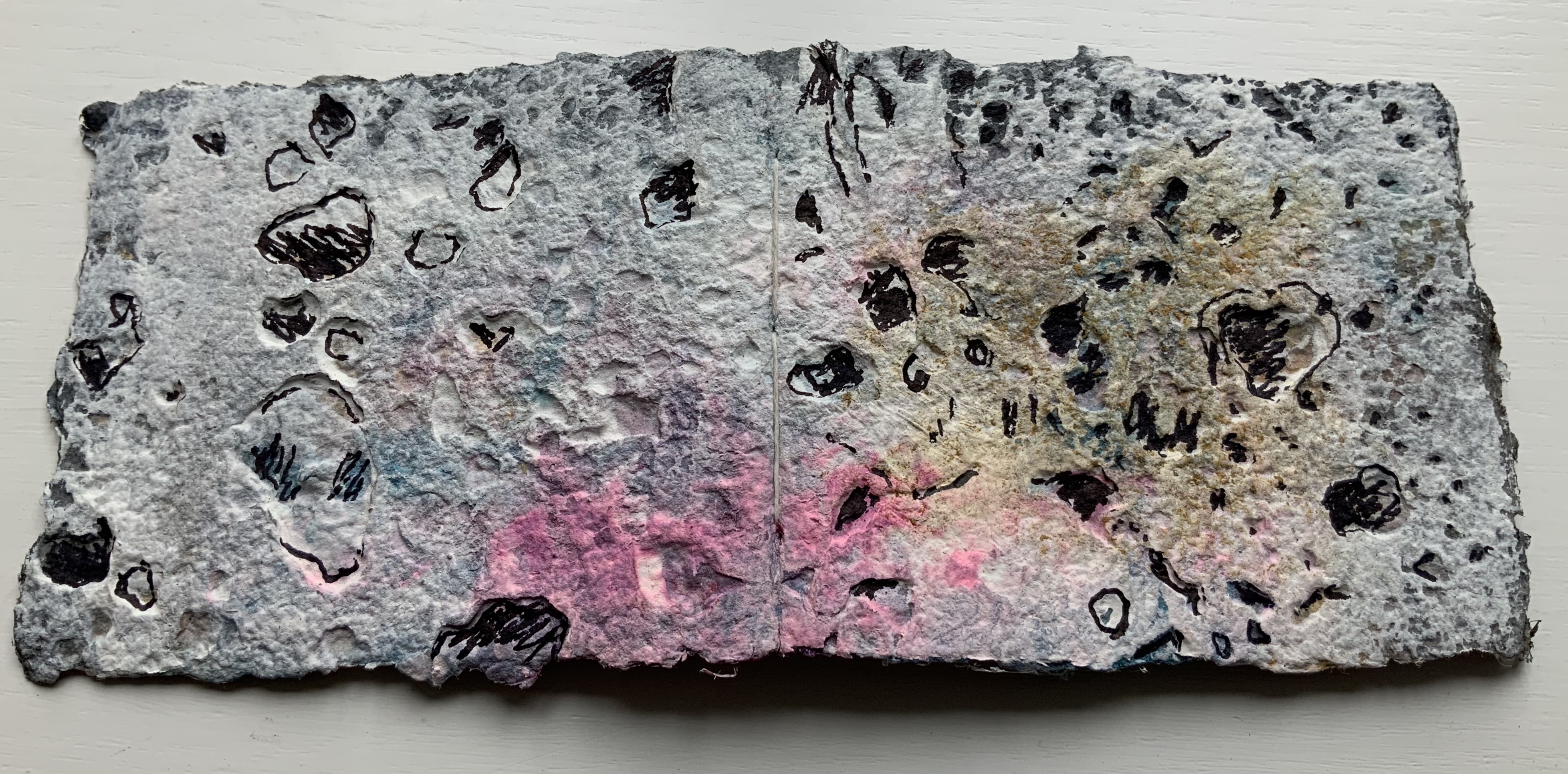
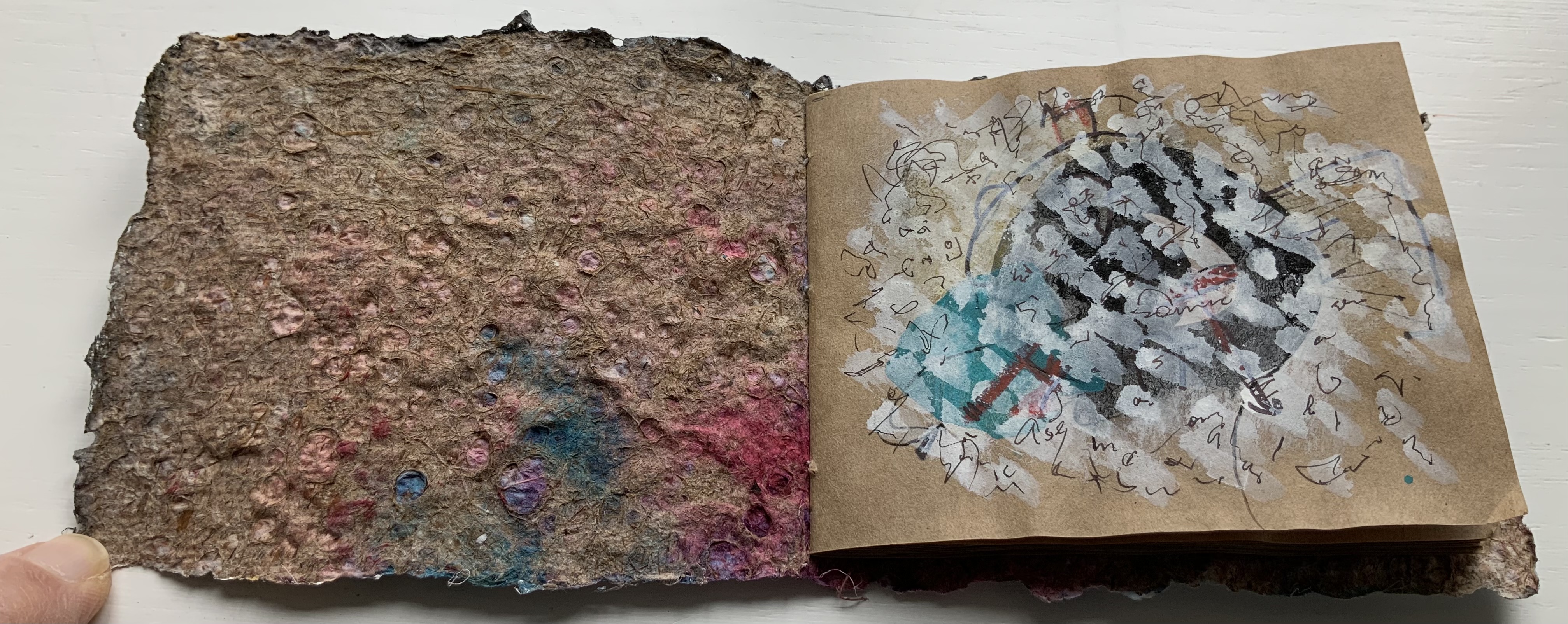
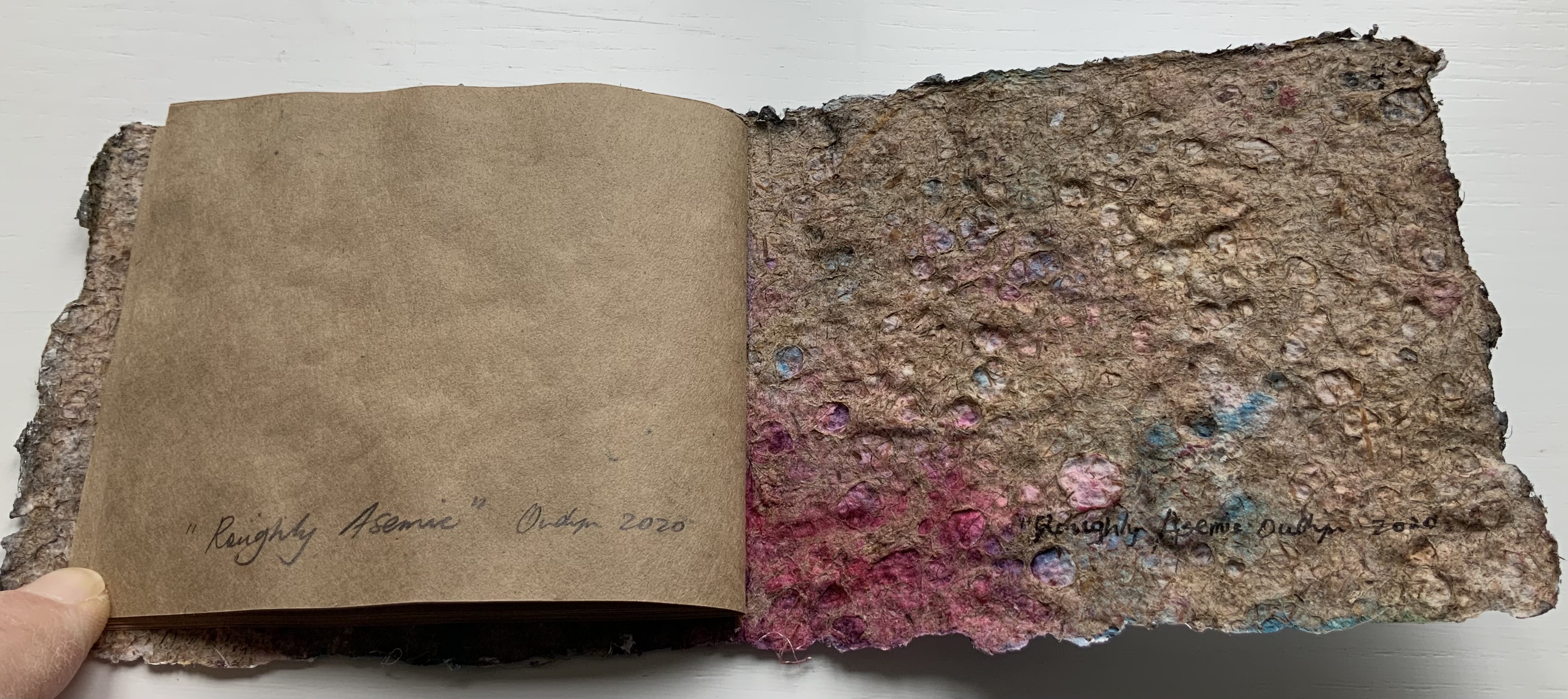
Booklet, single-thread stitched, handmade paper cover, painted and inked, over brown Kraft paper folios illustrated with drawings and markings in paint and ink. H105 X W123 mm, 7 leaves, folded in half making 28 unnumbered pages, 14 of which bear drawings and markings, 13 of which are left blank, and the last page bears the title, signature and year. Unique. Acquired from the artist, 4 January 2020. Photos: Books On Books Collection, displayed with permission of the artist.

This work’s title could not be more apropos. It is a scratchy thing to hold, its pages stiff and crackling as they turn. Patterns, images and letters struggle to emerge, only to be submerged by each other on the same or next page, which goes to show how difficult it must be to achieve entirely asemic markings. “Roughly asemic” might be the best hoped for.

Further Reading

Jacobus Oudyn (II)“. 3 November 2023. Books On Books Collection.

Jacobus Oudyn (III)“. 10 August 2024. Books On Books Collection.

Cooper, Victoria. 2017. “Liminal Moments At The Edges: Reading Montage Narratives in Artists’ Books“. In Bodman, Sarah (ed.). 2017. Artist’s Book Yearbook 2018-2019. Bristol: Impact Press, UWE.

Foster, Robin. “Feature Artist – Jack Oudyn“, Personal Histories, International Artist Book Exhibition, Redland Museum, UNSW, Canberra. 11 March 2014. Accessed 19 October 2020.

Oudyn, Jacobus (Jack). Blog entry, 4 February 2013. Accessed 19 October 2020.

Oudyn, Jacobus (Jack). Micro Press. Artist’s site. Accessed variously from 1 September 2017 to 16 January 2021.

Helen Malone and Jack Oudyn“, Books On Books Collection. 5 December 2017.

Books On Books Collection – Daniel E. Kelm

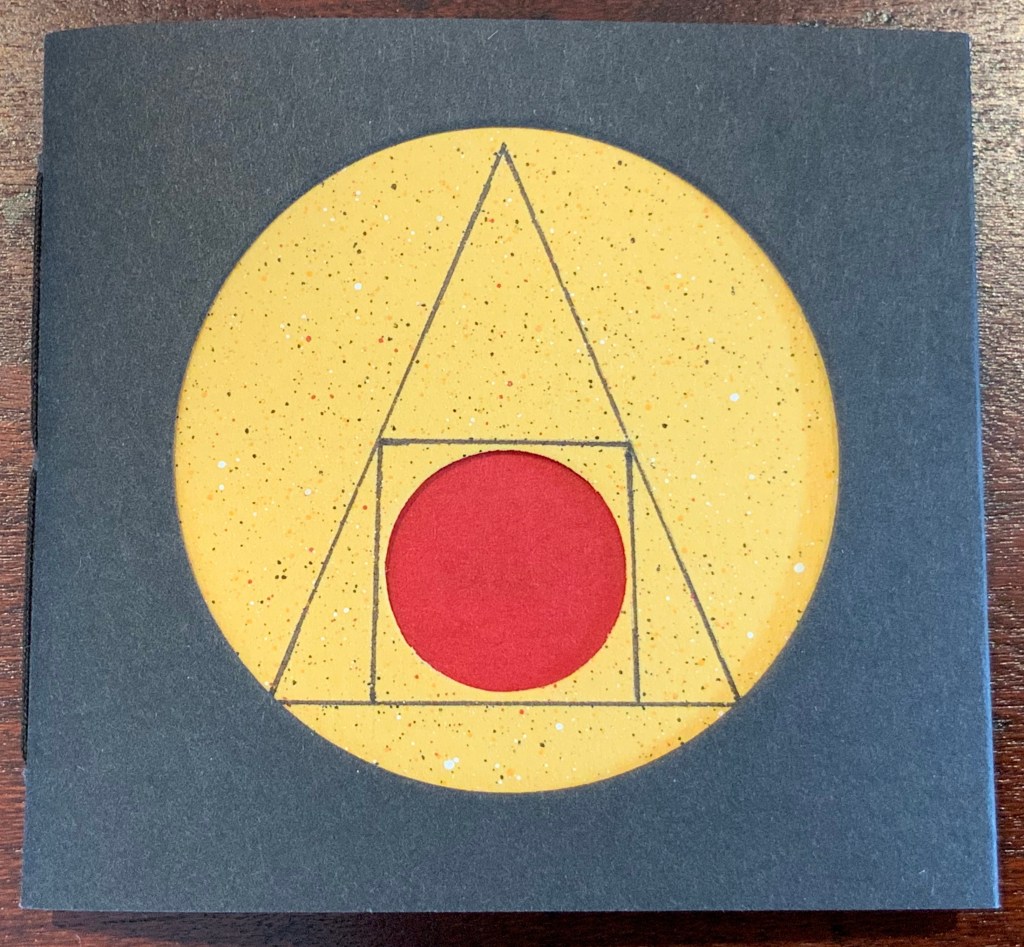
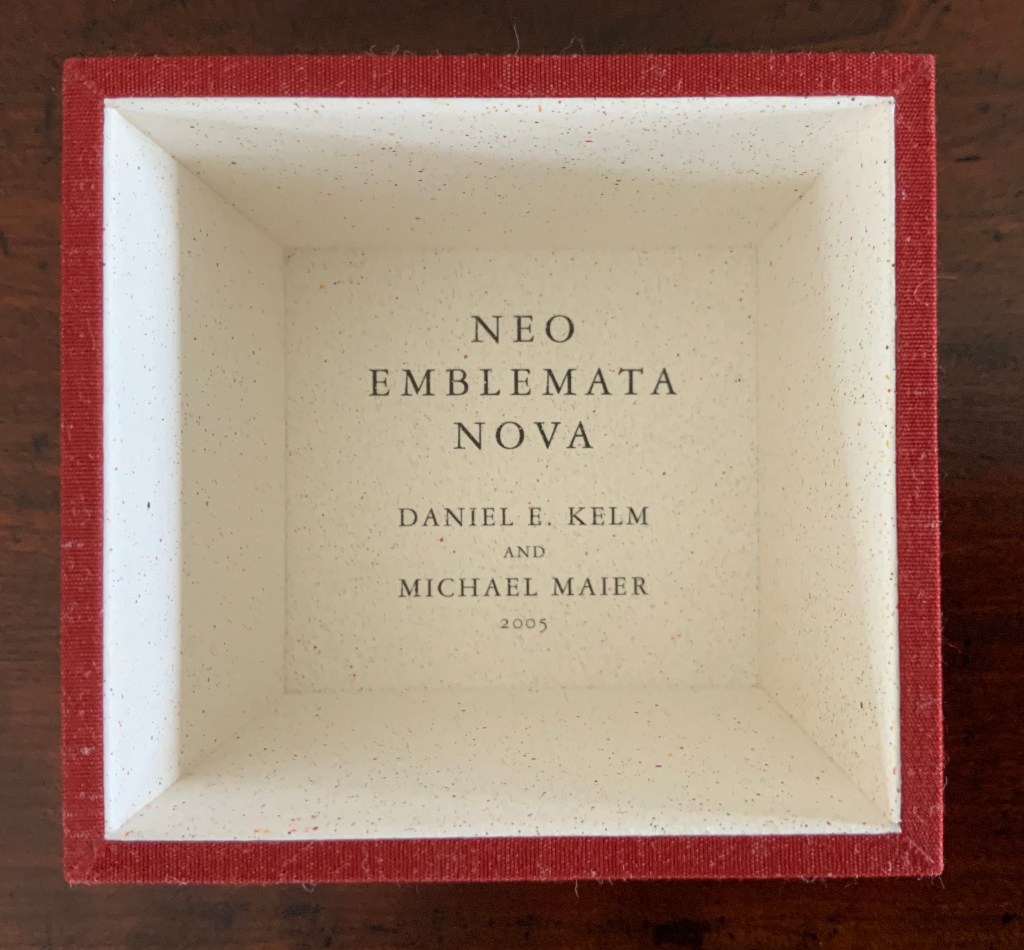
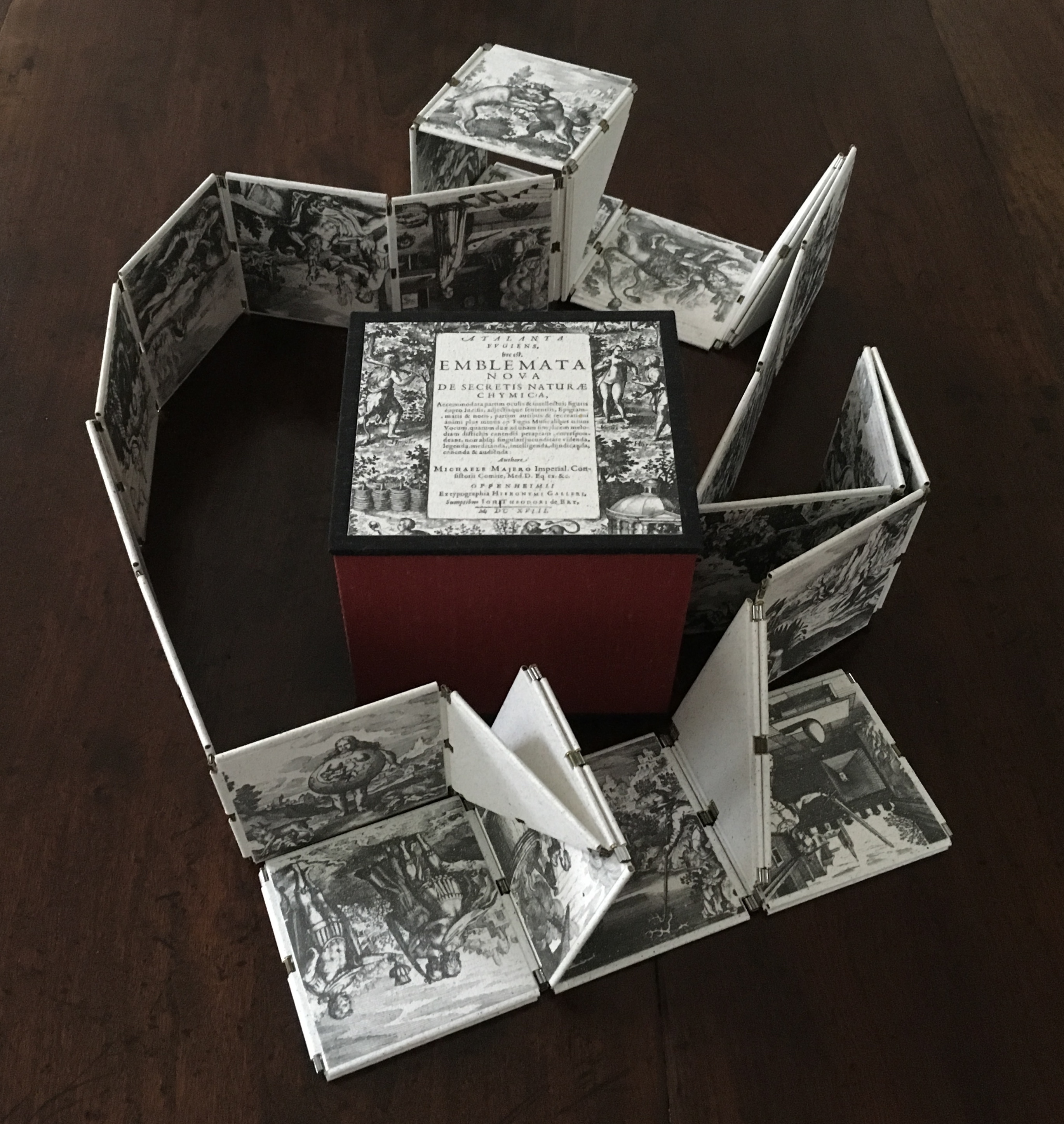
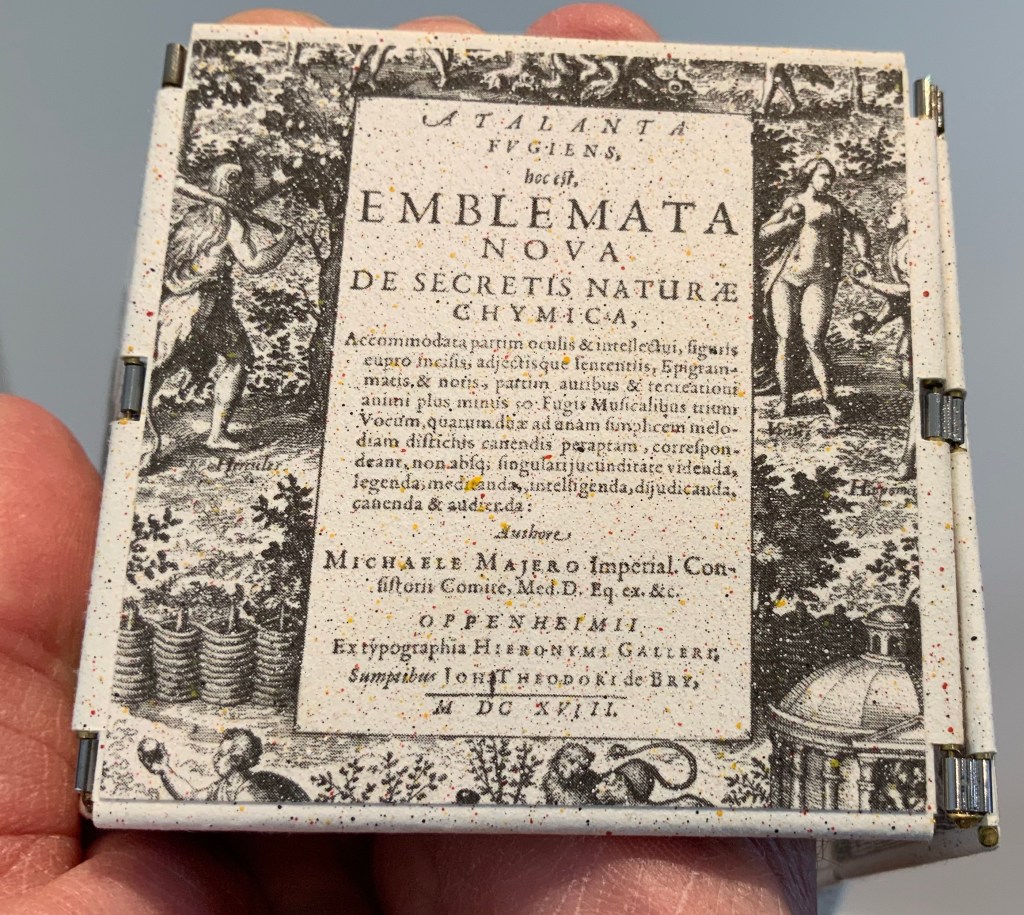
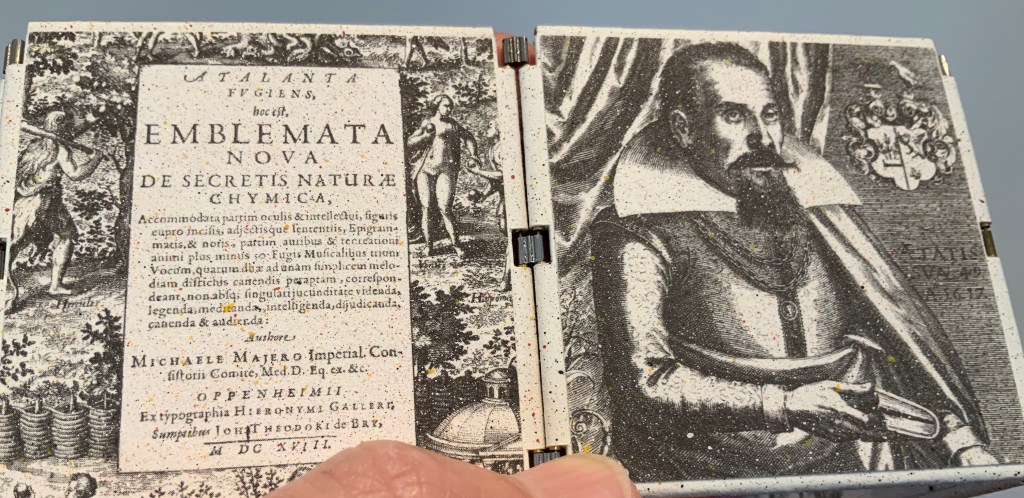
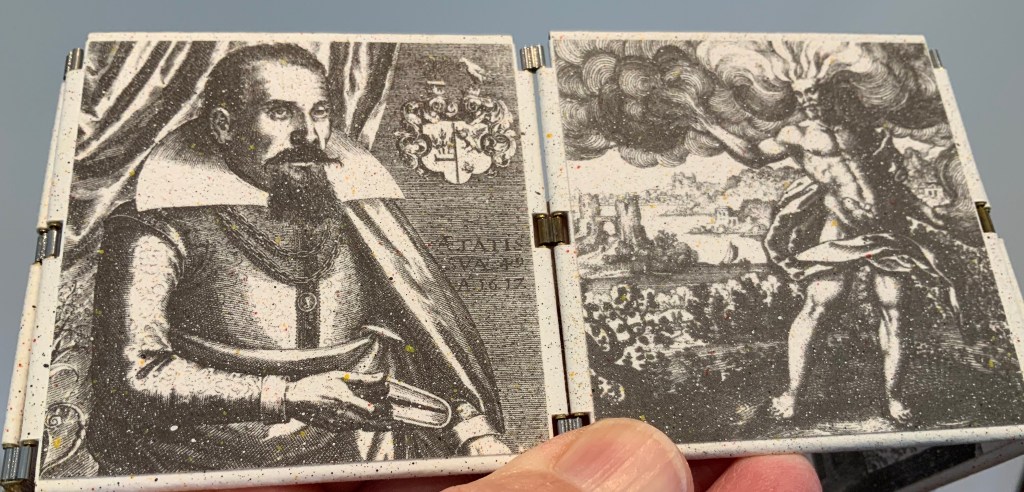
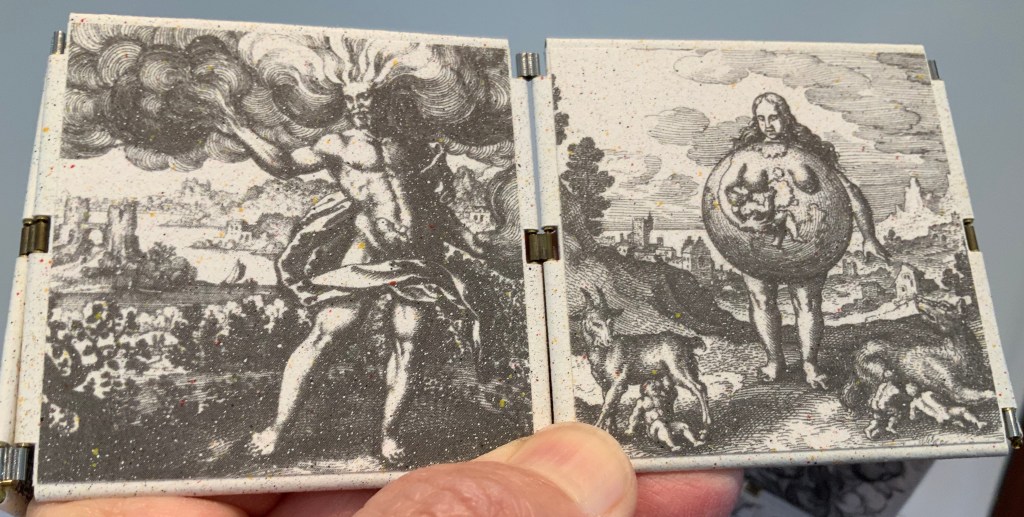
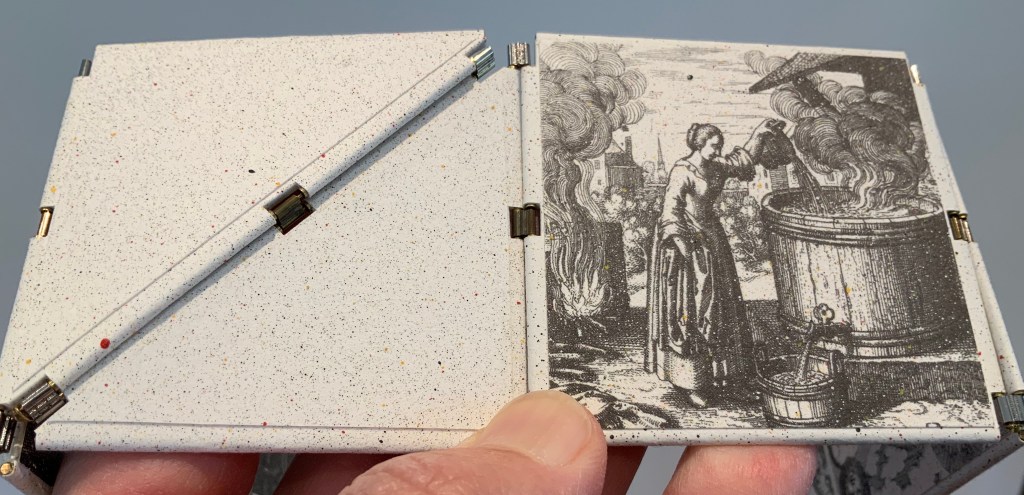
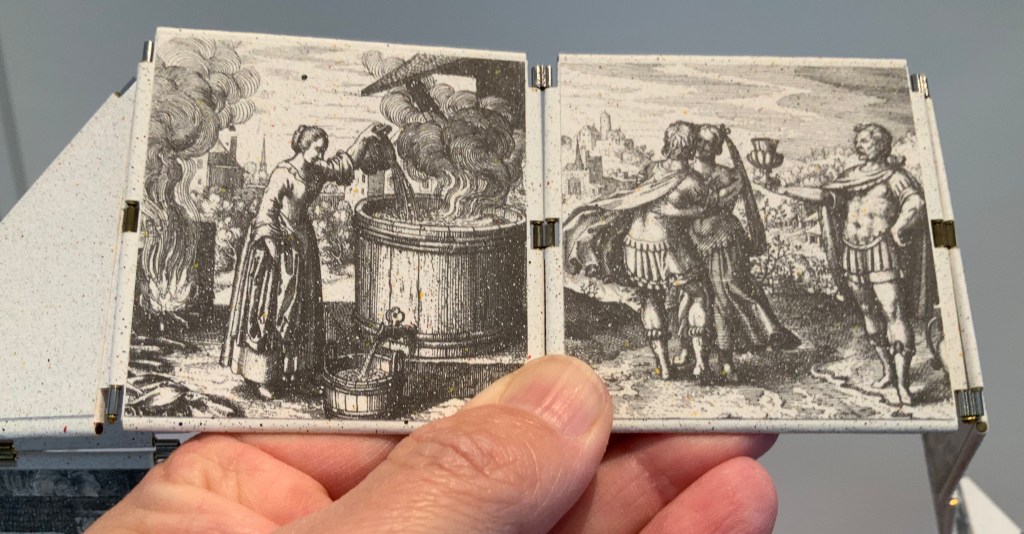
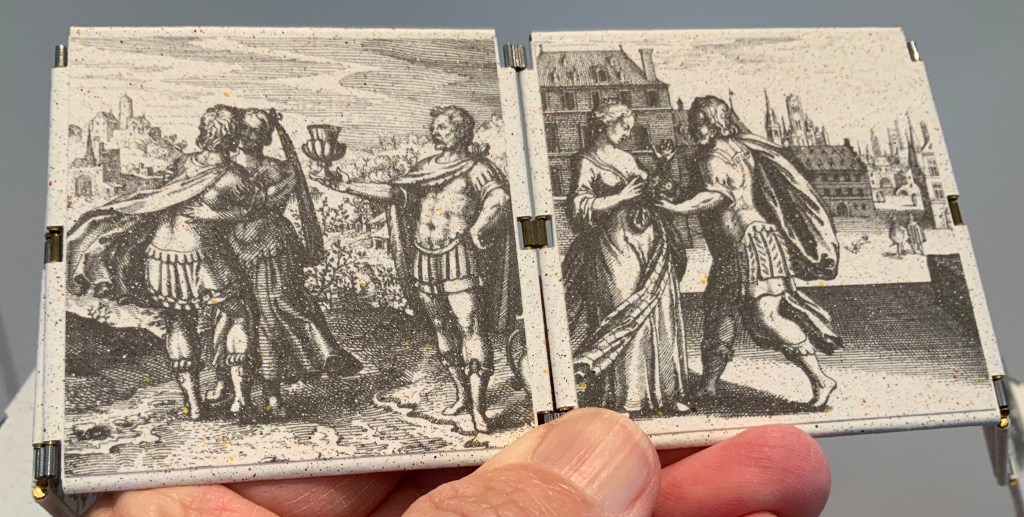
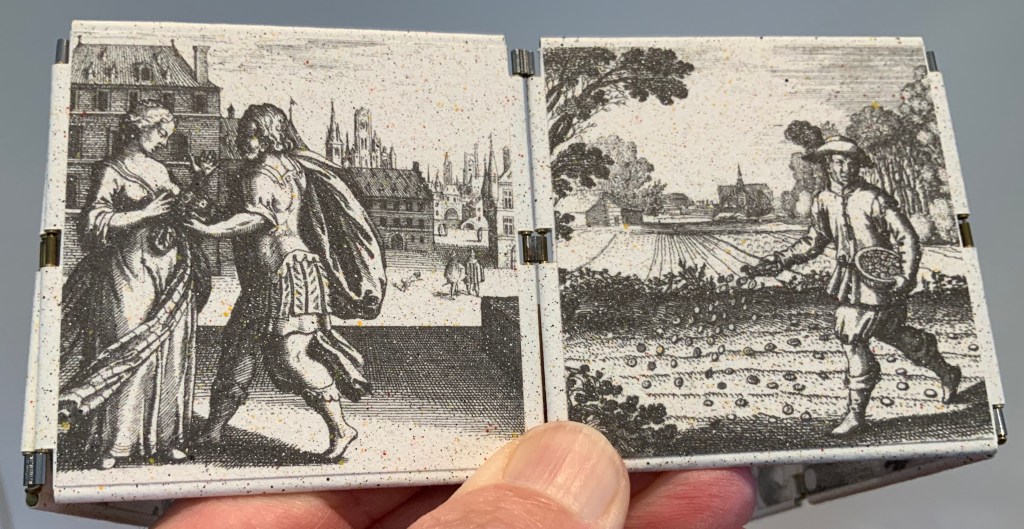
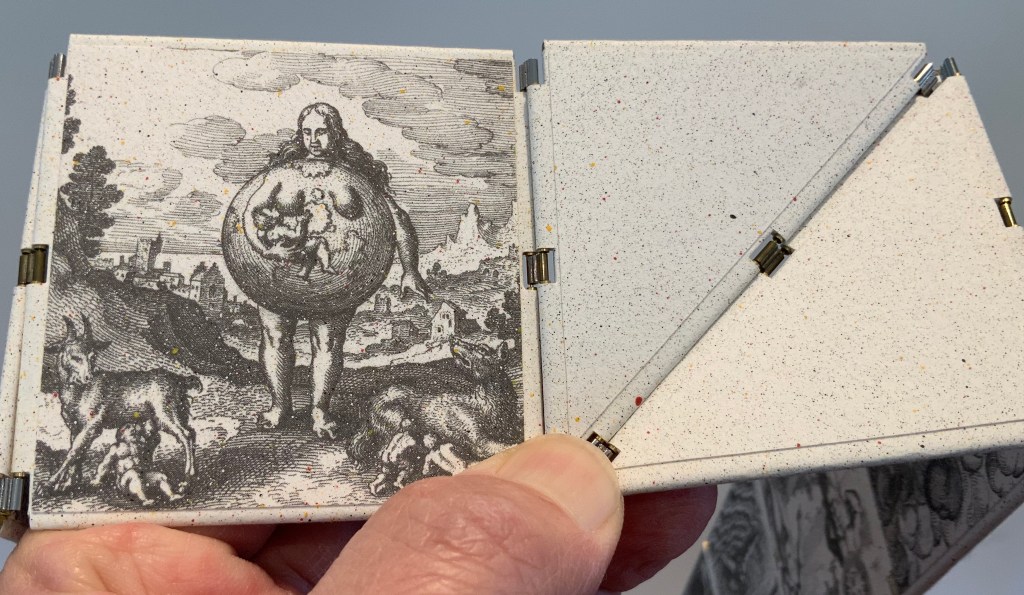
Neo Emblemata Nova (2005)

Neo Emblemata Nova (2005)
Daniel E. Kelm
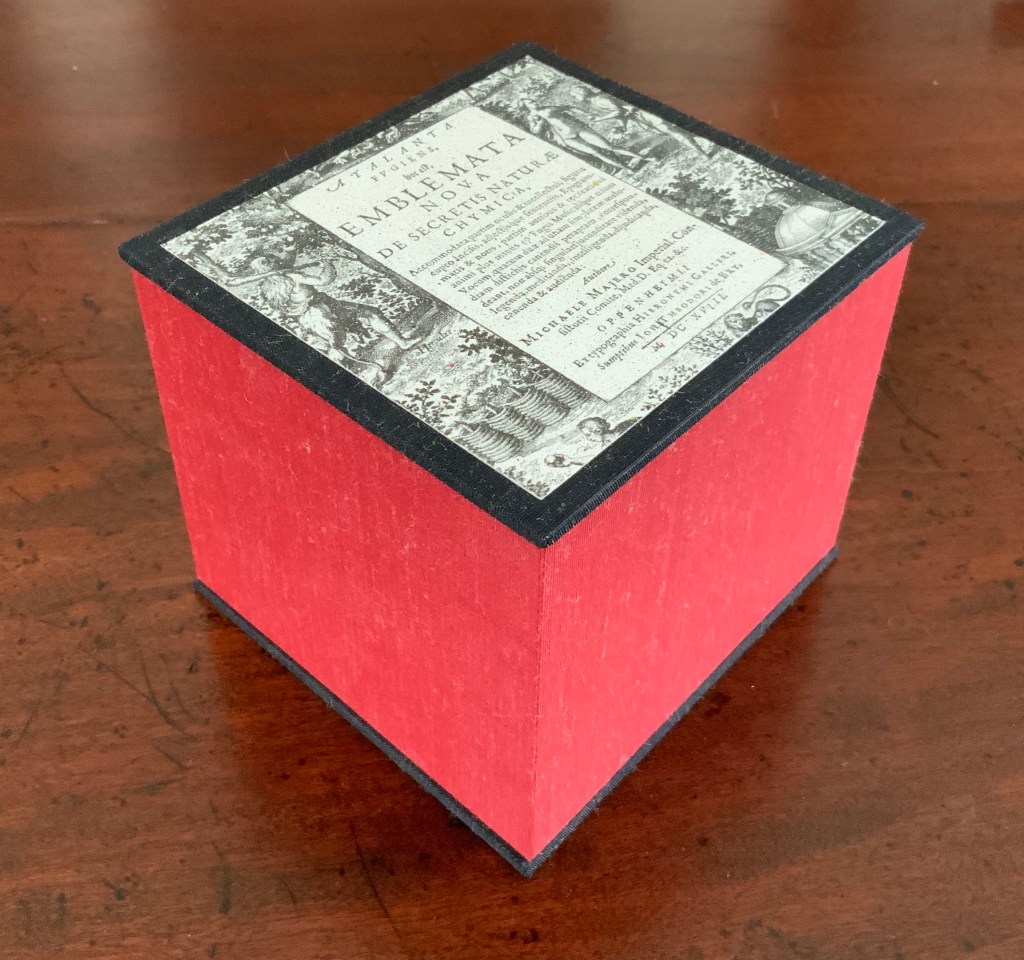
Box: H96 x W109 x D102 mm closed.
Booklet cover: H72 x W79 mm closed, H72 x W224 mm open.
Booklet: H72 x W78 mm.
Möbius strip: each tile is H70 x W70 mm; the strip extended is 1000 mm.
Edition of twenty-one, of which this is #18.
Acquired from the artist, 20 October 2018.

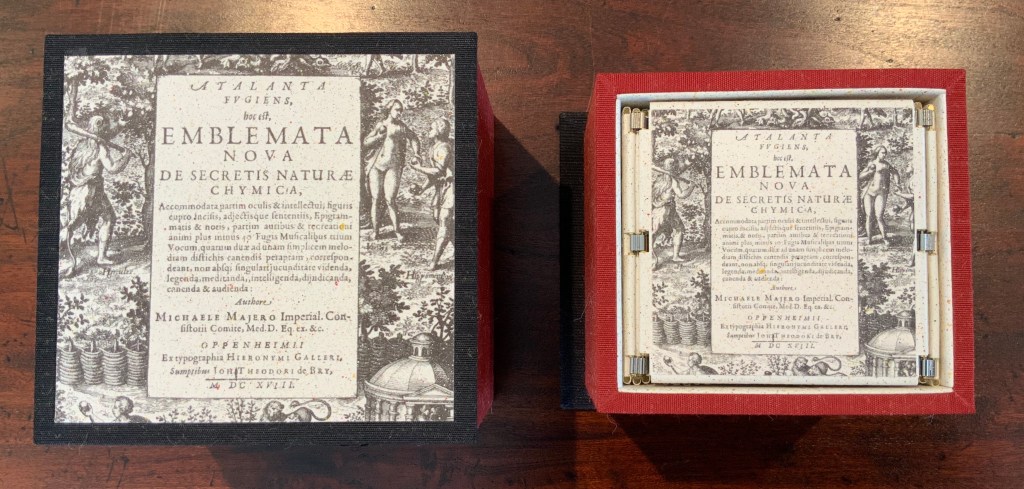
Opening the work.

Booklet about the work and its creation.

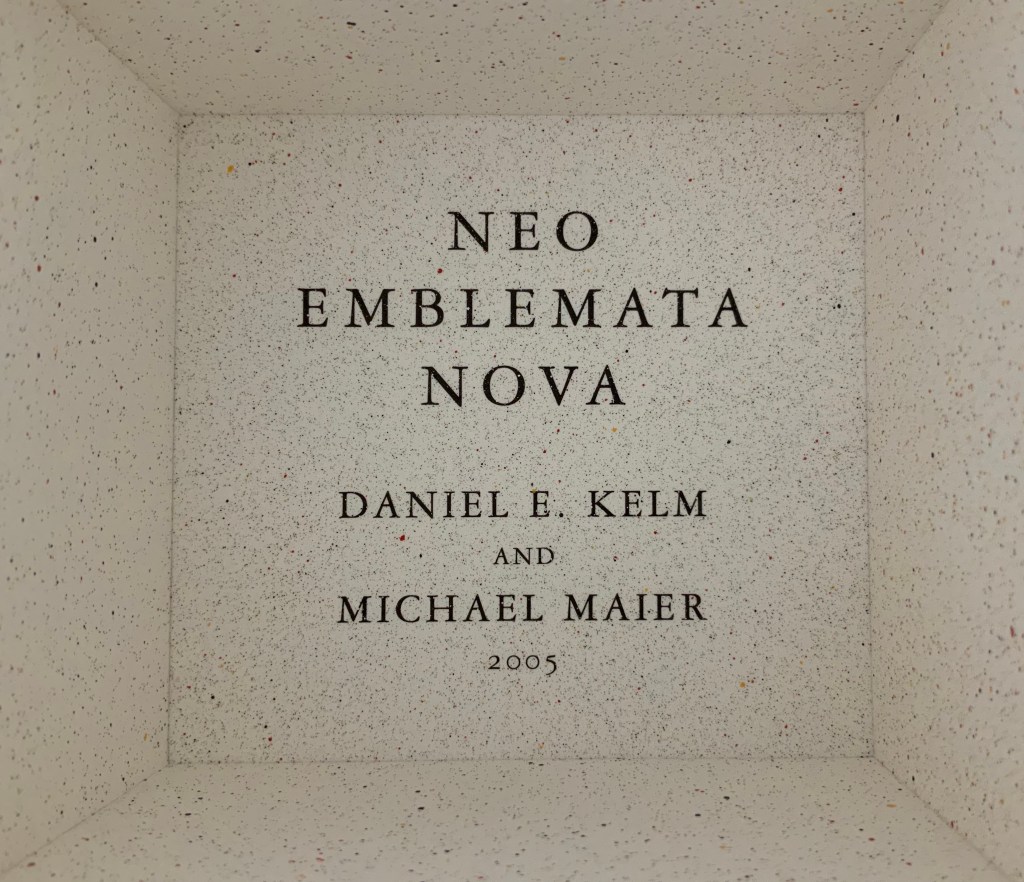
Inside the top of the box.

View of Neo Emblemata Nova and case

Closing and returning the Möbius strip to its box requires considerably more dexterity than reading; so much so that the booklet included provides instructions.

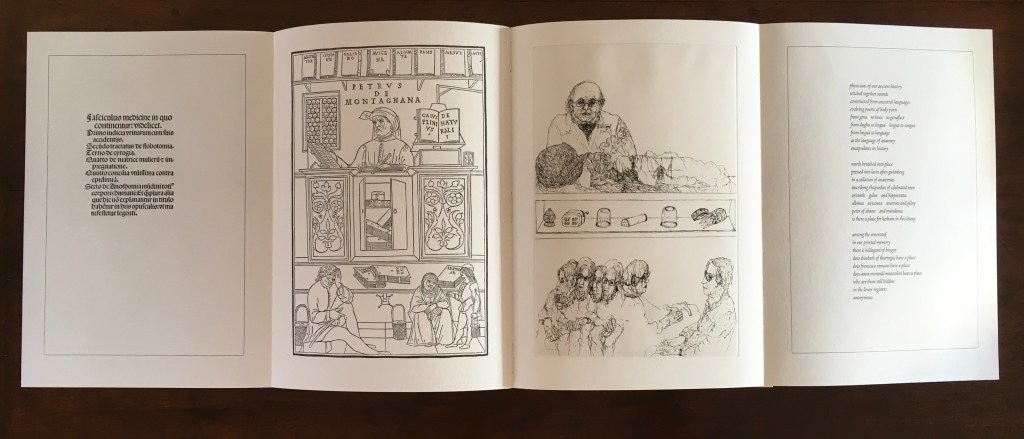
The Anatomy Lesson (2004)

The Anatomy Lesson (2004)
Joyce Cutler-Shaw
Middletown, CT: Robin Price, Publisher, 2004)
Limited edition of 50, of which this signed copy is the binder’s copy (Daniel E. Kelm). Acquired from the binder, 20 October 2018.

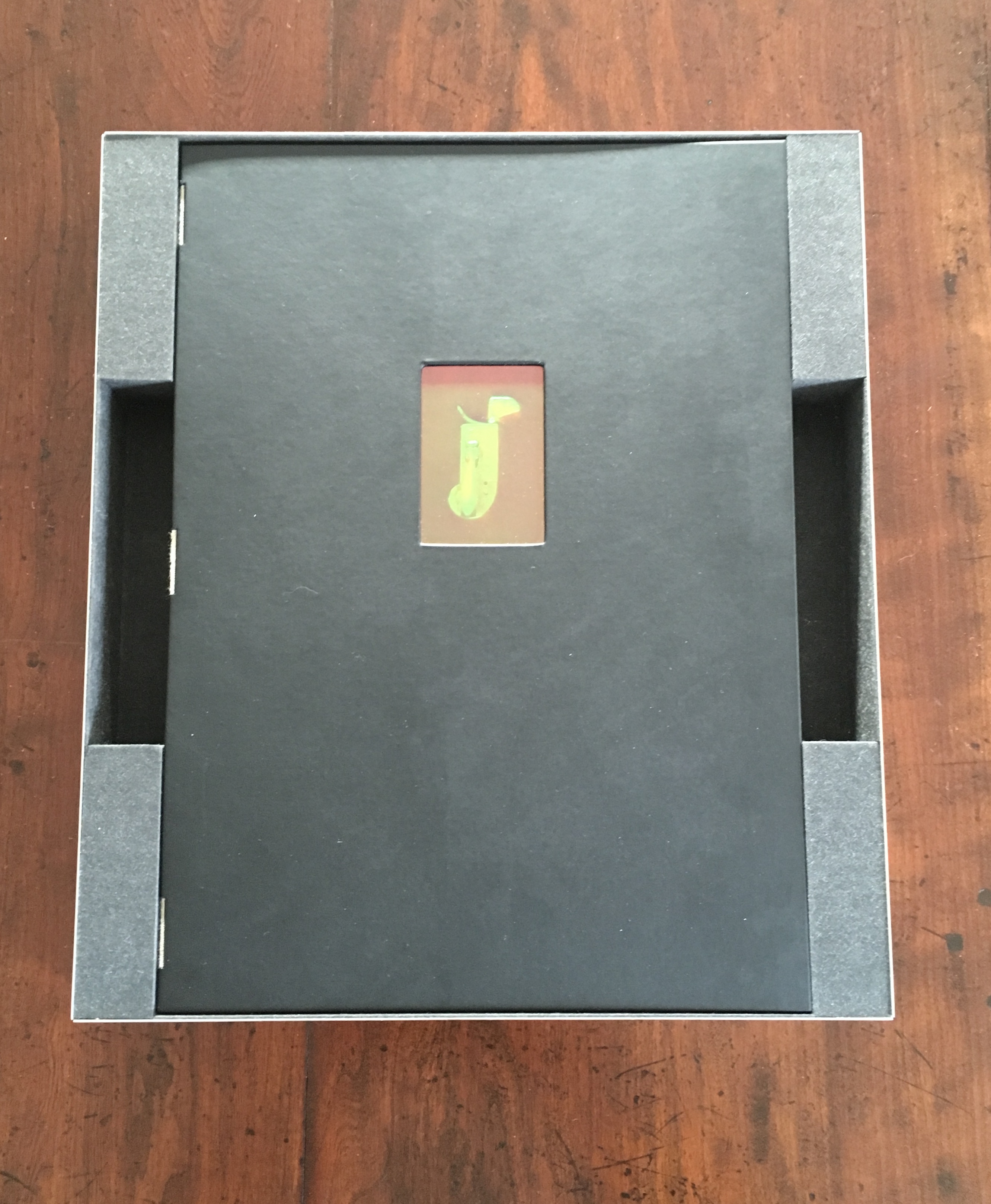
Top of case removed to show book with embedded hologram on cover

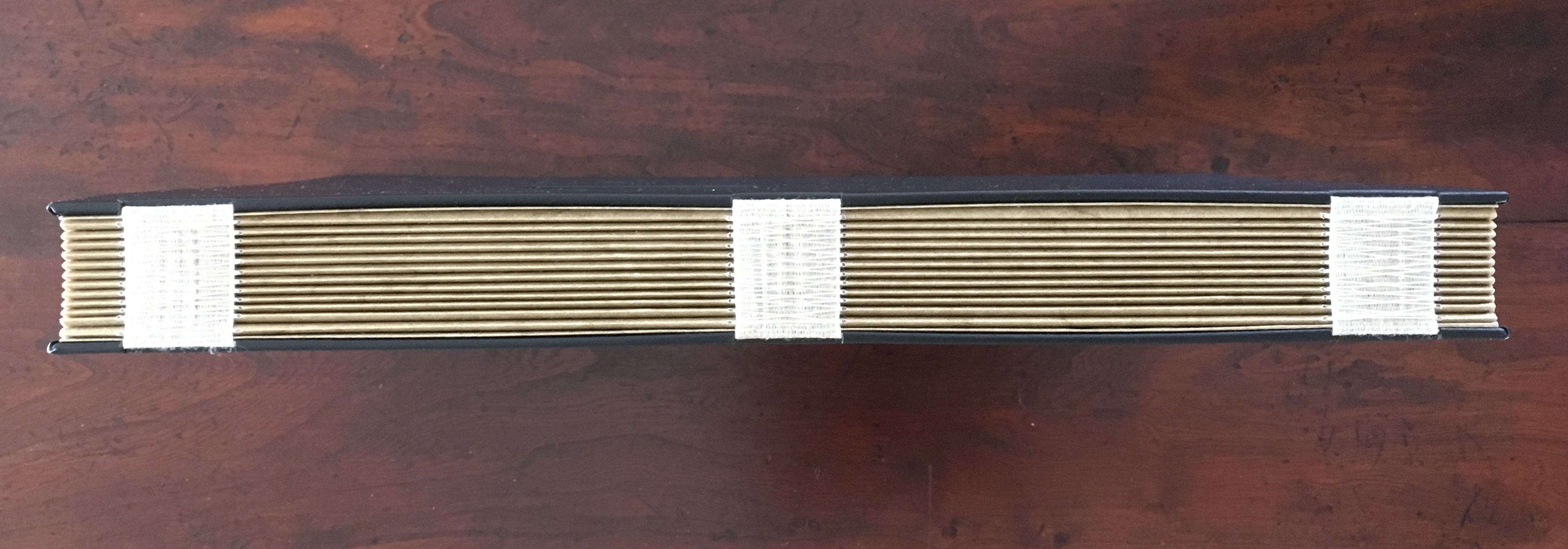
Twelve signatures of handmade cotton text paper, the central ten signatures each made up of one sheet H356 x W514 mm and one sheet H356 x W500 mm glued to the 14 mm margin of the first sheet, for a total of ninety-six pages, each measuring H356 x W253 mm.
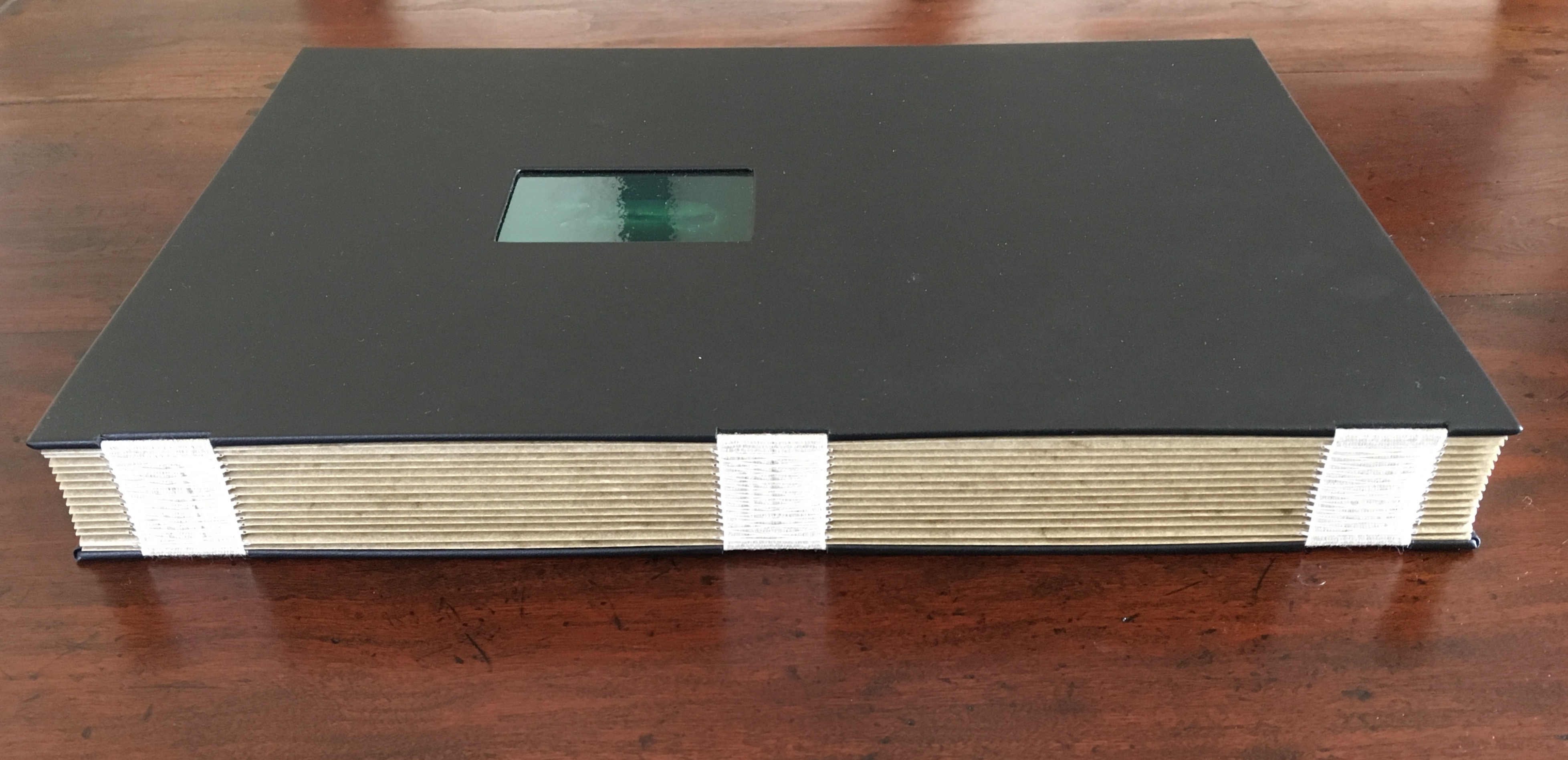
Binding of leather covered boards (a hologram embedded in front cover) with an open spine, taped and sewn into a reinforcing concertina structure: H361 X W259 mm.
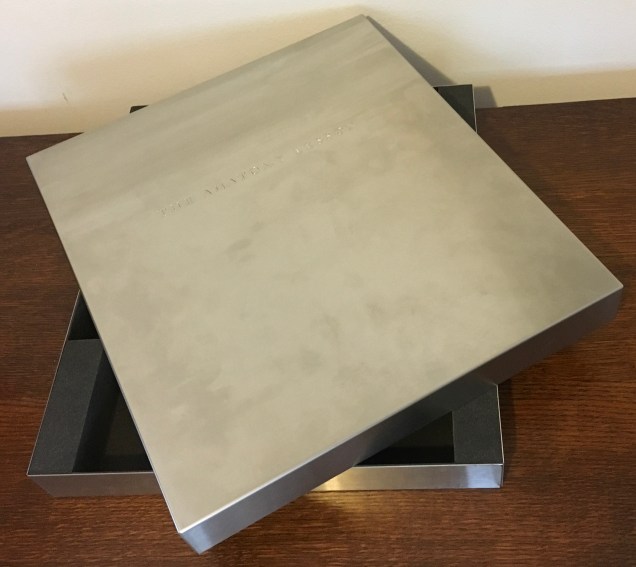
Contained in engraved steel box: H370 x W326 x D44 mm.

Book removed from case, viewed horizontally, spine showing

Detail of sewing and internal view of reinforcing accordion structure. For a description of this type of structure, see Hedi Kyle’s The Art of the Fold (London: Laurence King, 2018), pp. 82-85.

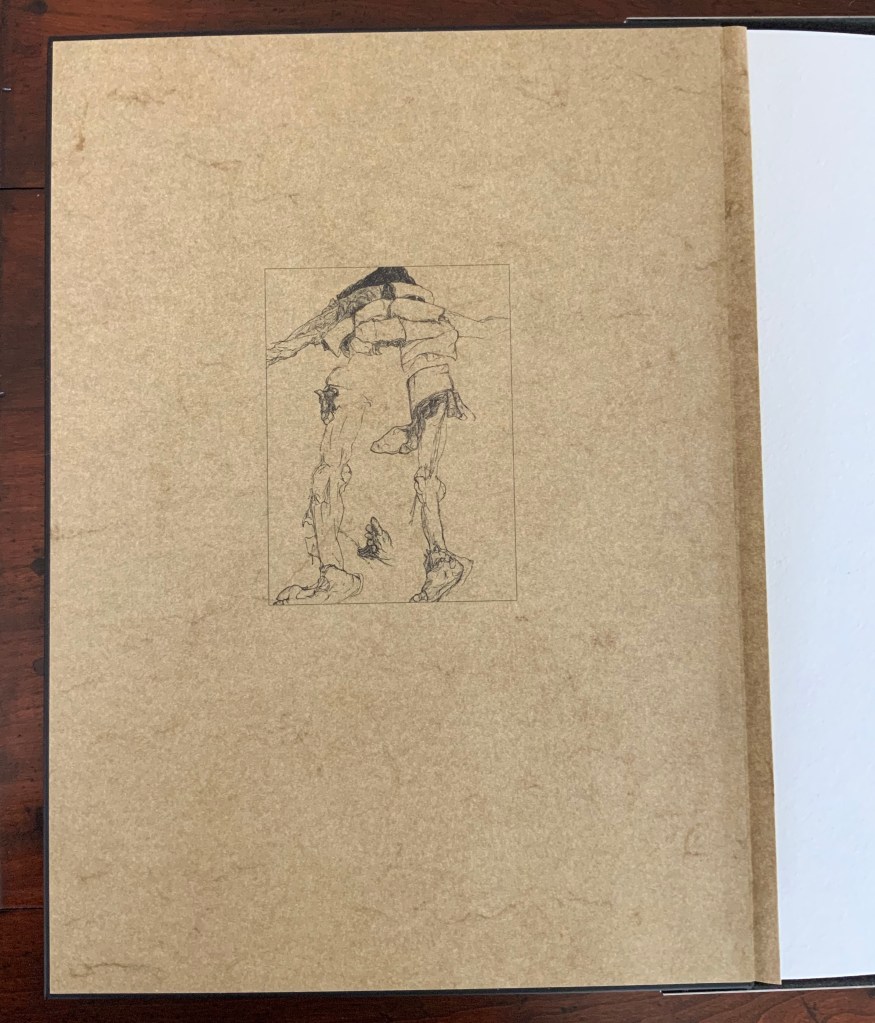
View of the doublure, which is part of the reinforcing concertina structure.

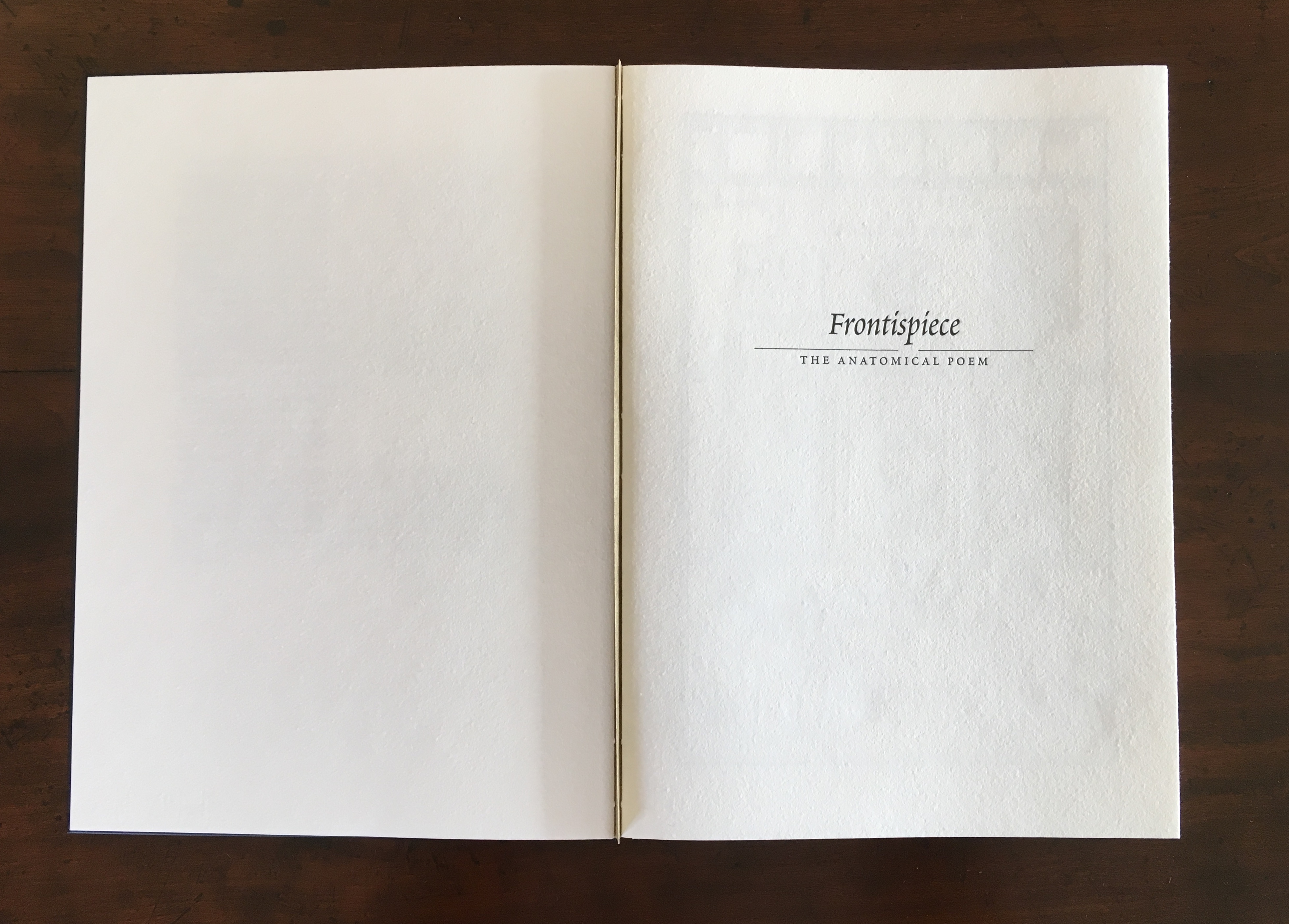
Frontispiece double page spread

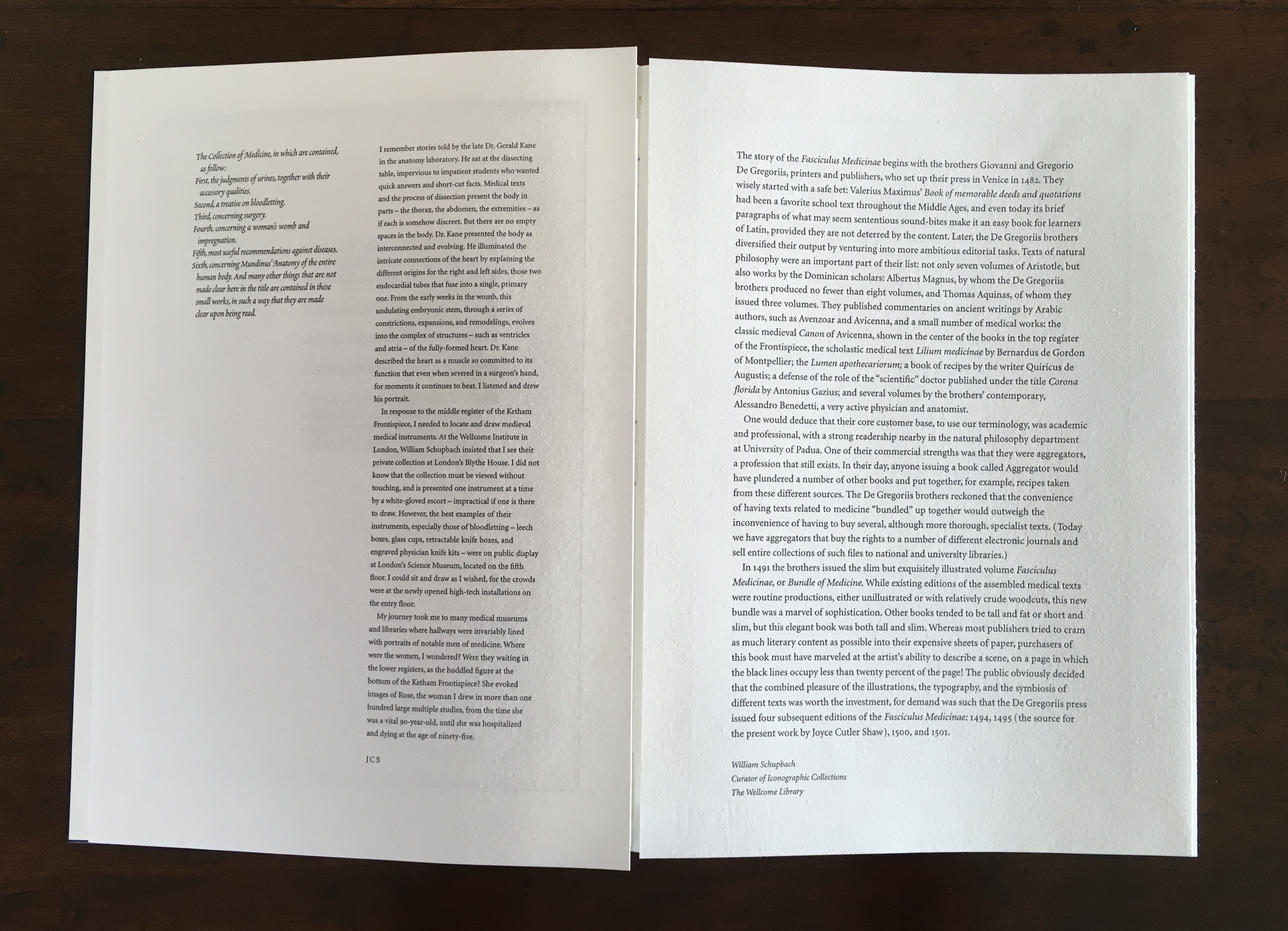
Cover page of second signature.

French fold of the frontispiece

Second signature open to double-page spread.

Second signature open to four-page spread.

Further Reading

“Bieler Press”, in Book Art Object, ed. David Jury (Berkeley, CA: Codex Foundation, 2008), pp. 116-17.

Chizhov, Stepan. “Daniel Kelm and Book Arts: Asking Questions, Playing, and Having Fun“. iBookBinding, 3 June 2022. Accessed 4 June 2022. Kelm offers a useful distinction between “sculptural books” and “book sculptures”.

Exhibition: Getting Physical: the Significance of Making Books by Hand, October-December 2015”, Smith College Libraries, 28 October 2015. Accessed 6 September 2019.

“Indulgence Press”, in Book Art Object, ed. David Jury (Berkeley, CA: Codex Foundation, 2008), pp. 198-99.

Poetic Science: Bookworks by Daniel E. Kelm, 12 October 2007 – 10 February 2008“, Smith College Museum of Art. Accessed 6 September 2019. One of the few book art exhibitions that makes an effort to demonstrate the movement and articulation of the works. (Requires Adobe Flash Player)
Miller, Steve. “Daniel Kelm”, Book Arts Podcasts, School of Library and Information Studies, University of Alabama, 22 July 2012. Accessed 6 September 2019.

Reed, Marcia. “Handling a Cosmic Book Object”, The Irish 15 October 2018. Accessed 6 September 2019.