Books On Books Collection – David A. Carter

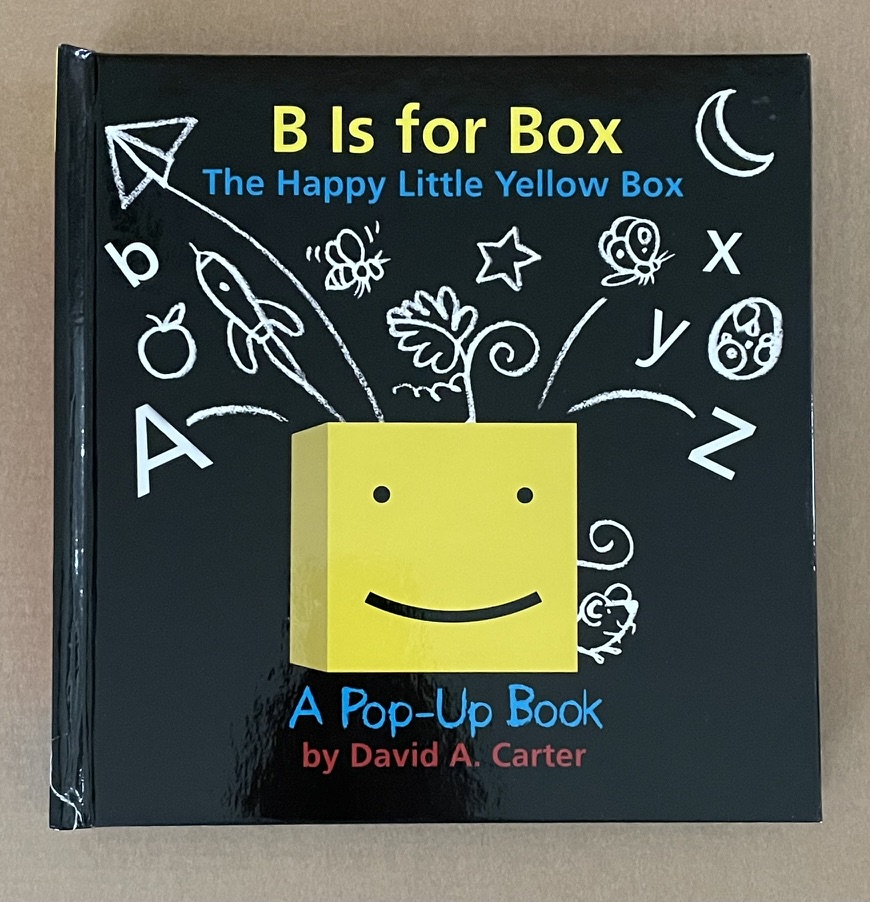
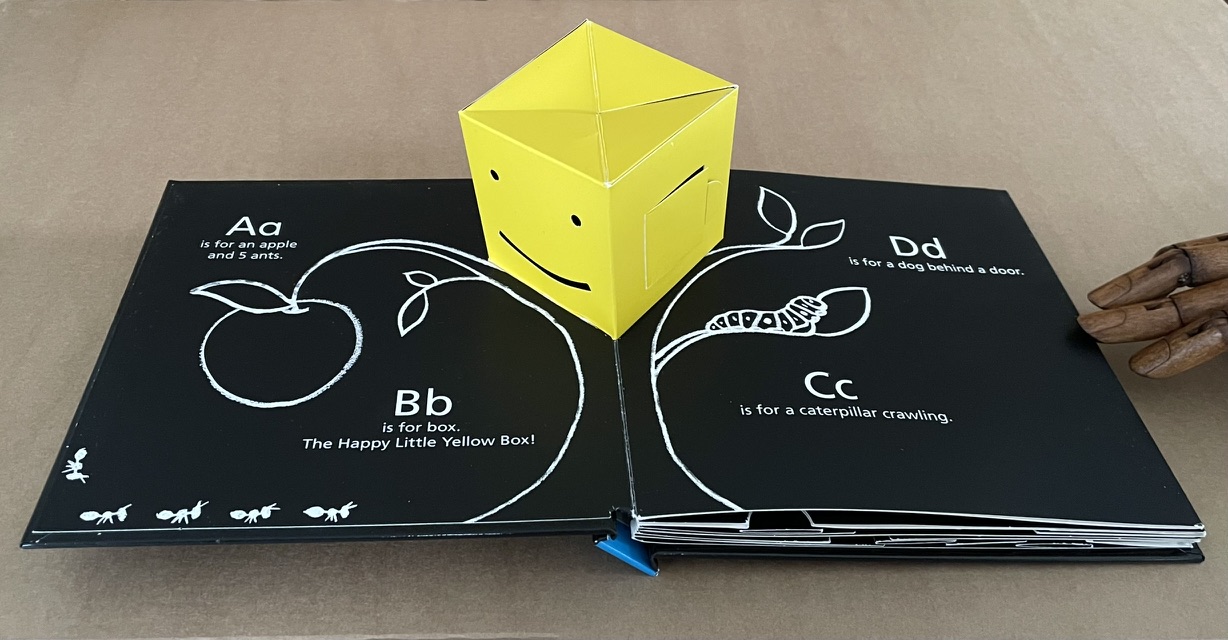
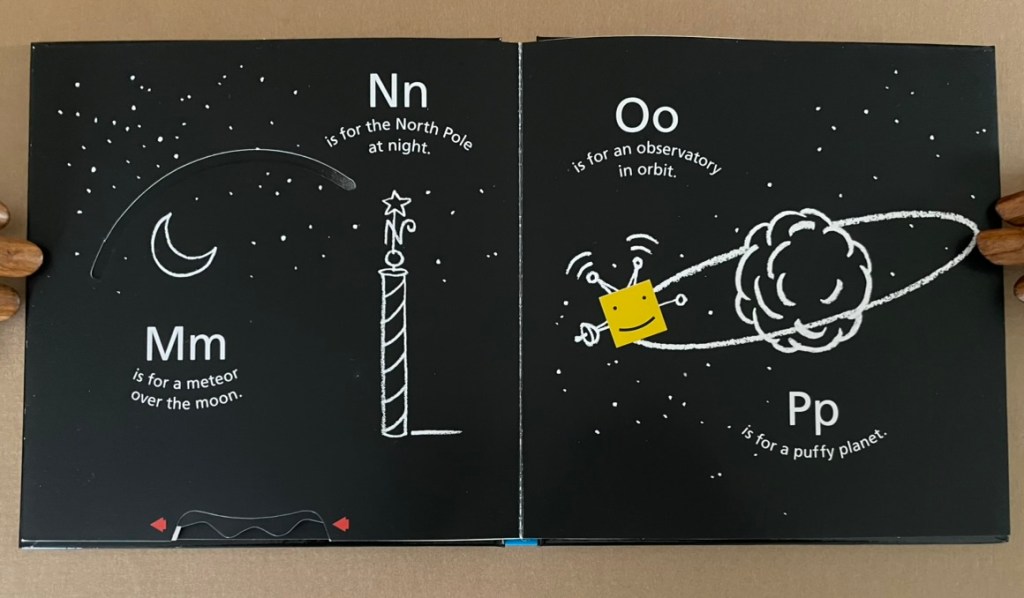
B is for Box (2014)

B is for Box (2014)
David A. Carter
Pop-up book, printed paper over boards. H187 x W184 x D28 mm. [14] pages. Acquired from Type Punch Matrix, 17 September 2024.
Photos: Books On Books Collection.

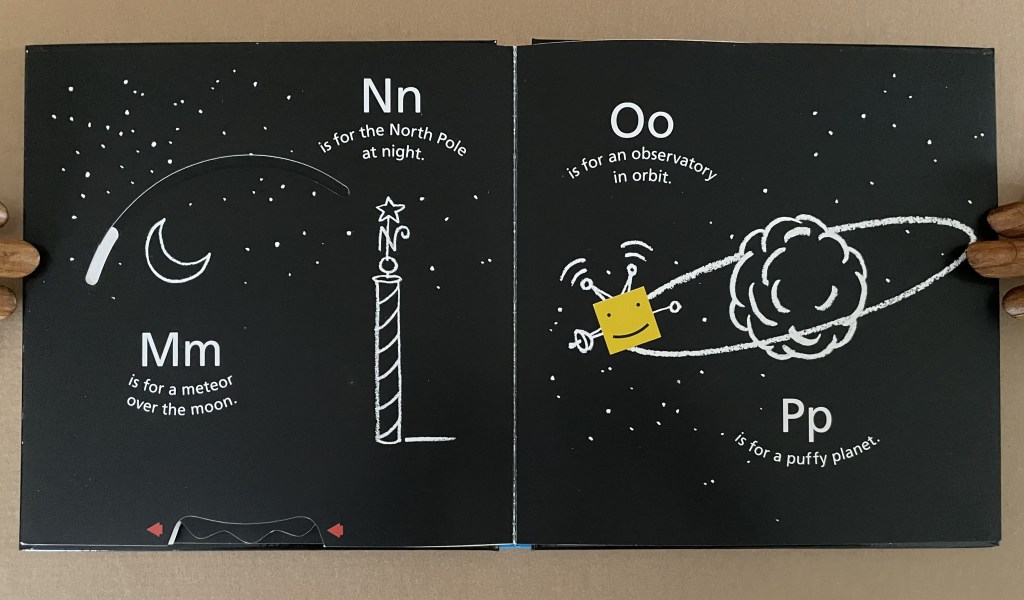
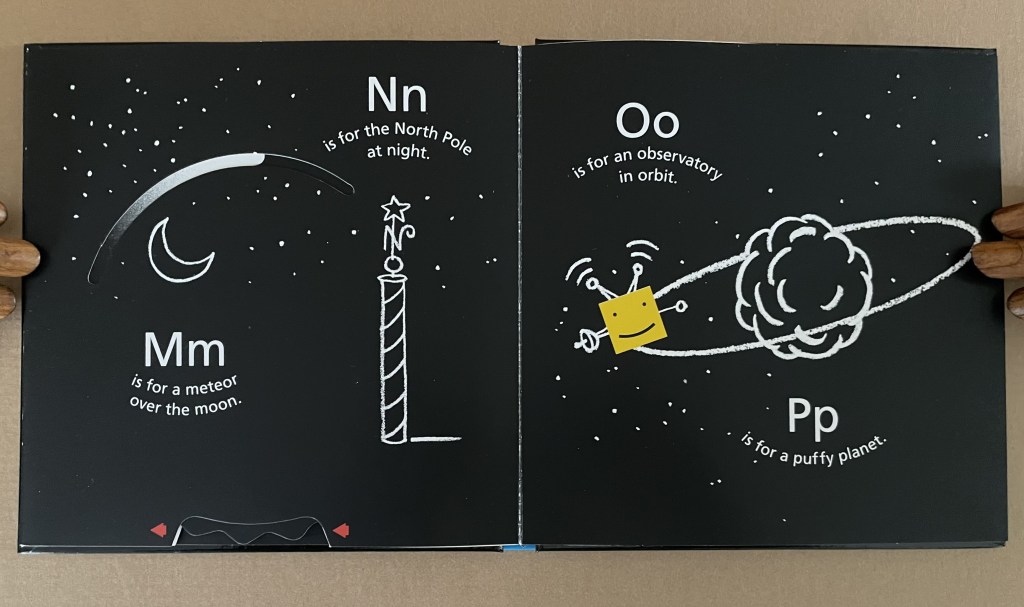
“The Happy Little Yellow Box” was first introduced in a pop-up book of opposites by that name in 2012. For the Books On Books Collection, the box’s return in this pop-up alphabet makes it the one to add to all the other abecedaries here. The box is also a happy reminder of the items under Further Reading (below).
Le sculture da viaggio di Munari (2019)

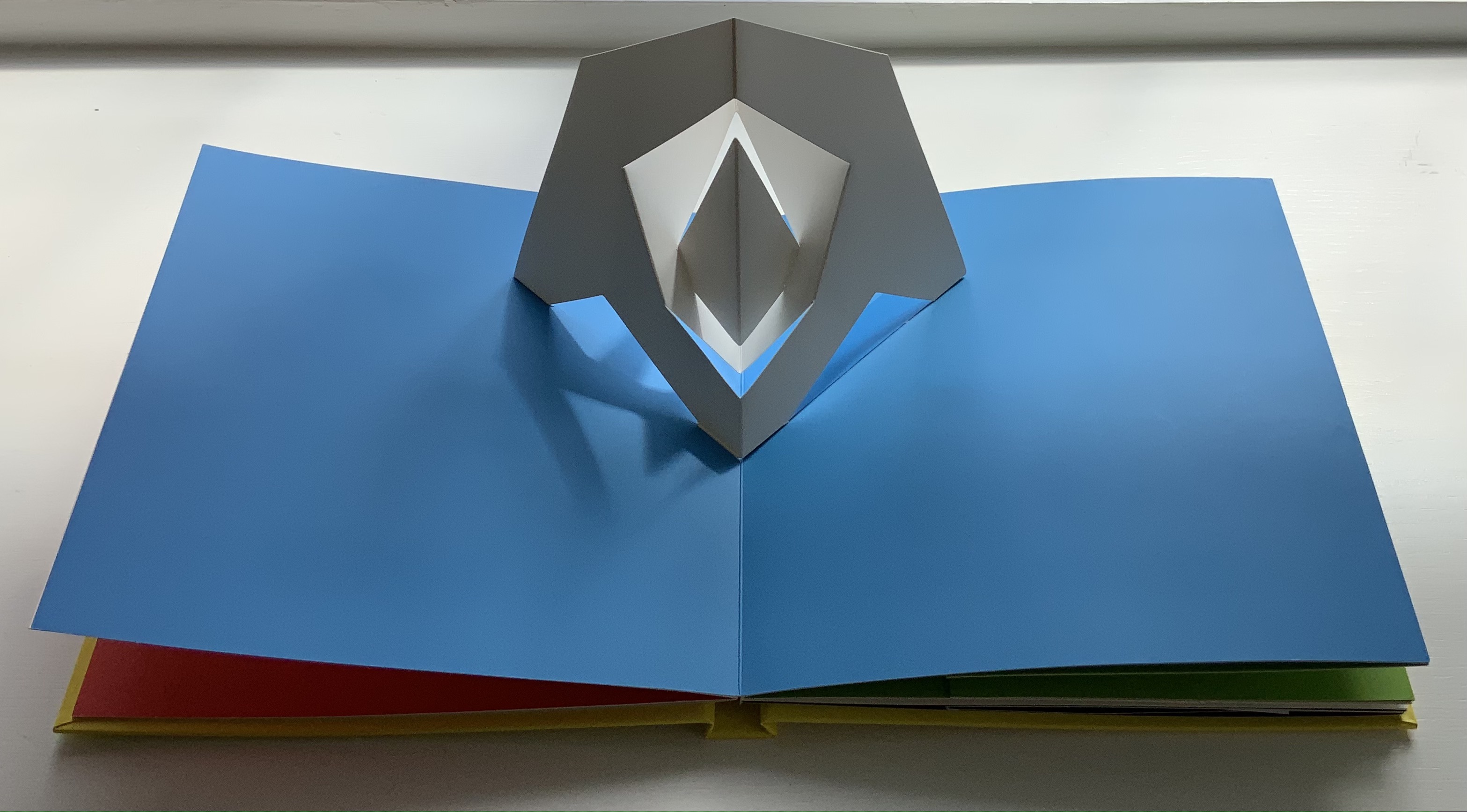
Carter’s Le sculture da viaggio di Munari brings the spirit of Munari’s “travel sculptures” into the collection. His homage carries the blessing of Corraini Edizioni, further justifying its inclusion.
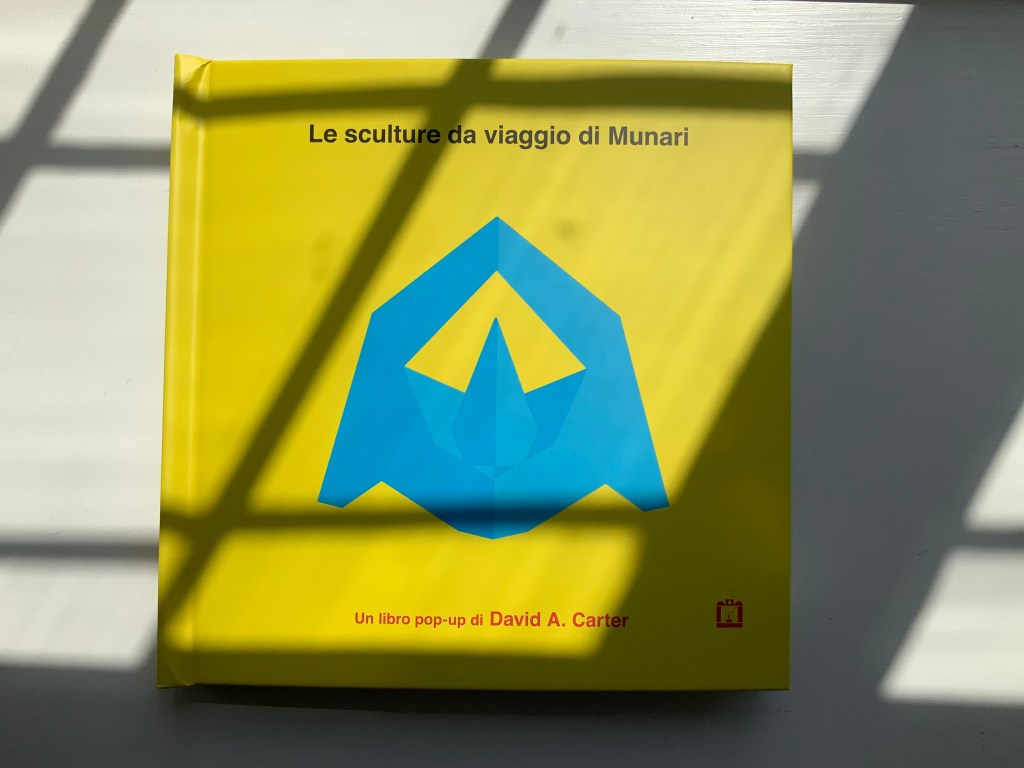
Le sculture da viaggio di Munari (2019)
David A. Carter
Pop-up book. H210 x W210, 10 constructions over 5 spreads, 2 with fold-out leaves. Acquired from Corraini, 4 August 2020.
Photos of the work: Books On Books Collection. Displayed with permission of  Corraini Edizioni. © Bruno Munari. All rights reserved to Maurizio Corraini s.r.l.

Travel sculptures started off as small sculptures (some even pocket-sized) to carry with you, so you could take part of your own culture to an anonymous hotel room. Later they were turned into ‘travel sculptures’, five or six metres tall and made of steel. One of these was seen for a few months in Cesenatico, another one in Naples. Others are sleeping among huge trees in the Alto Adige region.’ This is how Italian designer Bruno Munari (1907-1998) described his ‘travel sculptures’, which in turn inspired American illustrator and designer David A. Carter for this pop-up book. –Corraini Edizioni website. Accessed 3 August 2021.
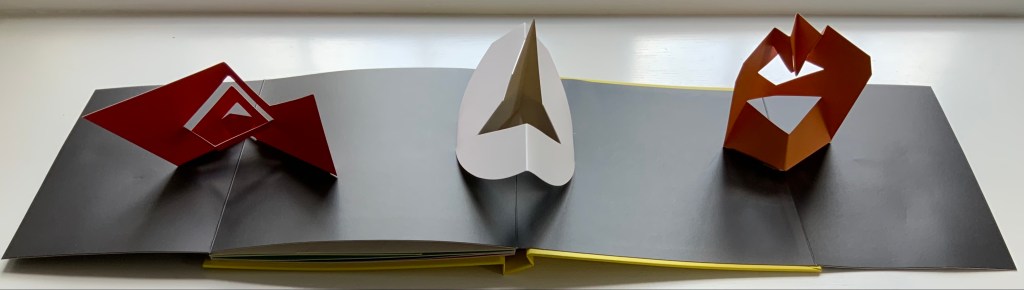
Munari’s travel sculptures also recall works in the collection like Cumer’s scultura da viaggio dipinta n.2 (2017), Komagata’s「Ichigu」(2015) and, albeit less portable, Ioana Stoian’s Nous Sommes (2015).

Further Reading

A to Z: Marvels in Paper Engineering“. 29 March 2020. Books On Books Collection.

Alphabets Alive! – The ABCs of Form and Structure“. 19 July 2023. Books On Books Collection.

Ed Hutchins“. 20 September 2018. Books On Books Collection.

Katsumi Komagata (I)“. 22 March 2020. Books On Books Collection.

Movables Now and Then“. 31 August 2024. Books On Books Collection.

Bruno Munari“. 19 August 2021. Books On Books Collection.

Ioanna Stoian“. 27 April 2020. Books On Books Collection.

Borje Svensson & James Diaz“. 9 September 2021. Books On Books Collection.

Carter, David A., and James Diaz. 1999. The Elements of Pop-Up, A Pop-Up Book for Aspiring Paper Engineers. New York: Little Simon.

Carter, David A., and James Diaz. 2021. The Complexities of Pop-up : A Pop-up Book for Aspiring Paper Engineers. [Allen, TX], [Westminster, CO]: Blossom Books ; Poposition Press.

Haining, Peter. 1979. Movable Books : An Illustrated History. London: New English Library.

Library of Congress. 2014. Origins & Variety of Movable Structures in the Book Format.

Movable Book Society.

The Newberry Collection. n.d. Movable Books.

Reid-Walsh, Jacqueline. 2014. “What are Movable Books?” in Learning as Play: An Animated, Interactive Archive of 17th- to 19th- Century Narrative Media for and by Children. Philadelphia, PA: University of Pennsylvania.

Rubin, Ellen. 2019. Ellen Rubin – The Popuplady. For her definition of the “spider web” form of pop up (Within a circle, a spiral is cut either by hand or laser. A ribbon or pull is attached to the center area. When pulled up, a ‘spider web’ pop-up is created.), Rubin illustrates it with an example from Carter.
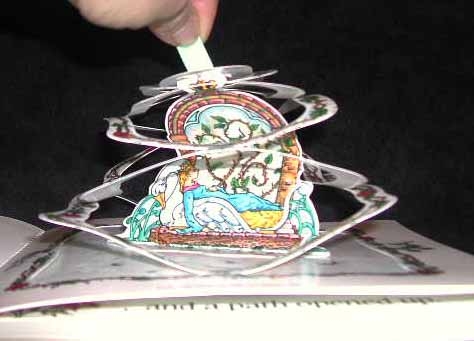
Spider mechanism by David A. Carter

Schmidt, Suzanne Karr. 2024. Movable Mayhem: Pop-up Books through the Ages.Seattle, WA: Book Club of Washington.
Books On Books Collection – Michael J. Winkler

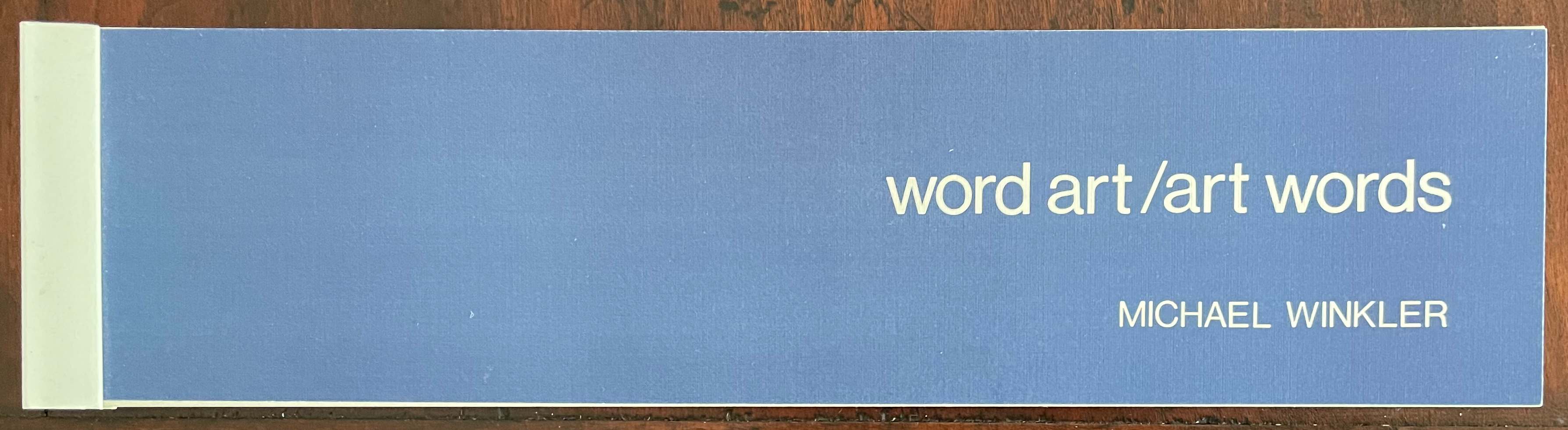
word art/art words (1985)

Word Art/Art Words (1985)
Michael Winkler
Booklet of 29 folios, including front and back covers, held in a white plastic clip. H73 x W288 mm. 27 folios, printed on recto only. Edition of 500. Acquired from Printed Matter, Inc., 23 September 2022.
Photos: Books On Books Collection. Displayed with artist’s permission.
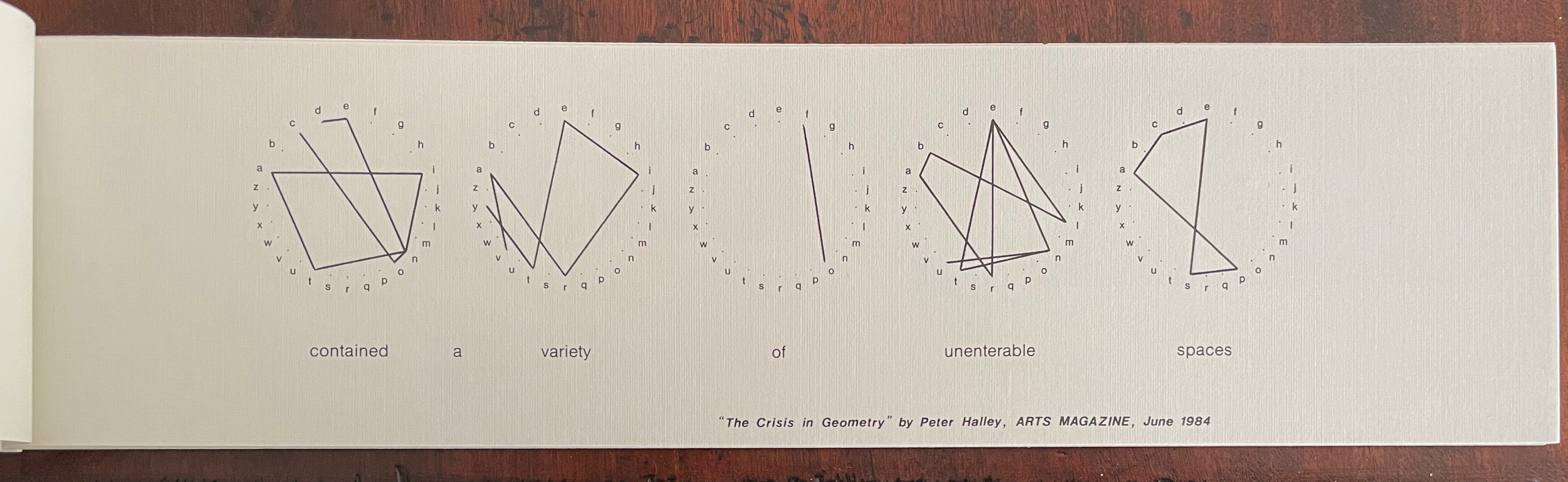
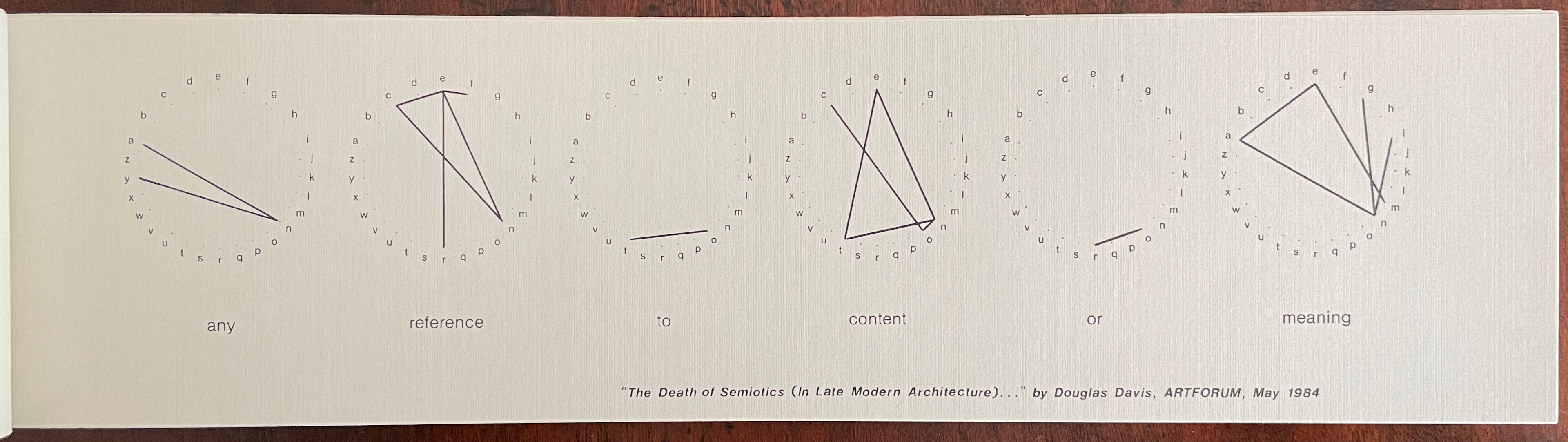
Among all the works of book art related to the notion of alphabets and signs in the Books On Books Collection, Michael Winkler’s word art/art words is one of the more unusual. Winkler’s view of the alphabet varies from traditional linguistic and semiotic theories that families of language arose from ur-languages and that letters evolved from pictographs into increasingly abstract abstractions arbitrarily associated with sounds by social convention. Winkler celebrates a different mystery.
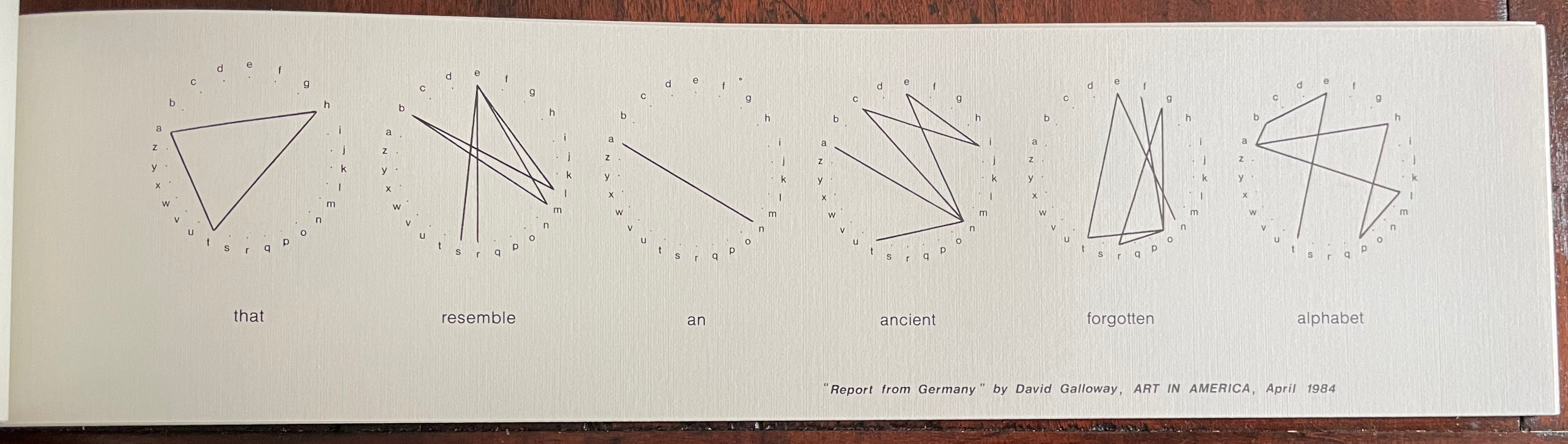
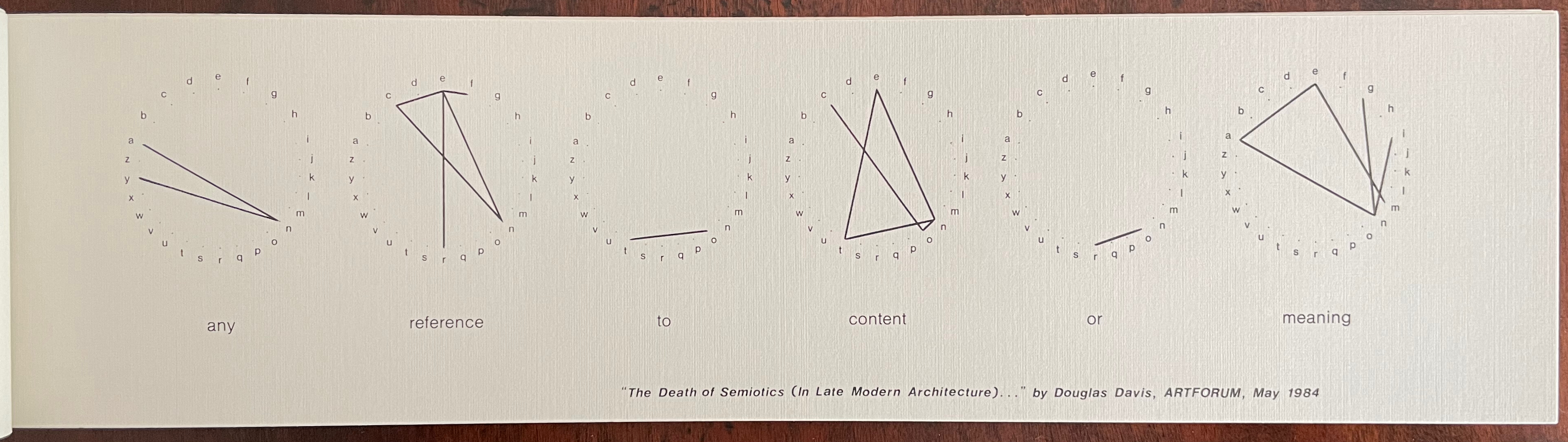
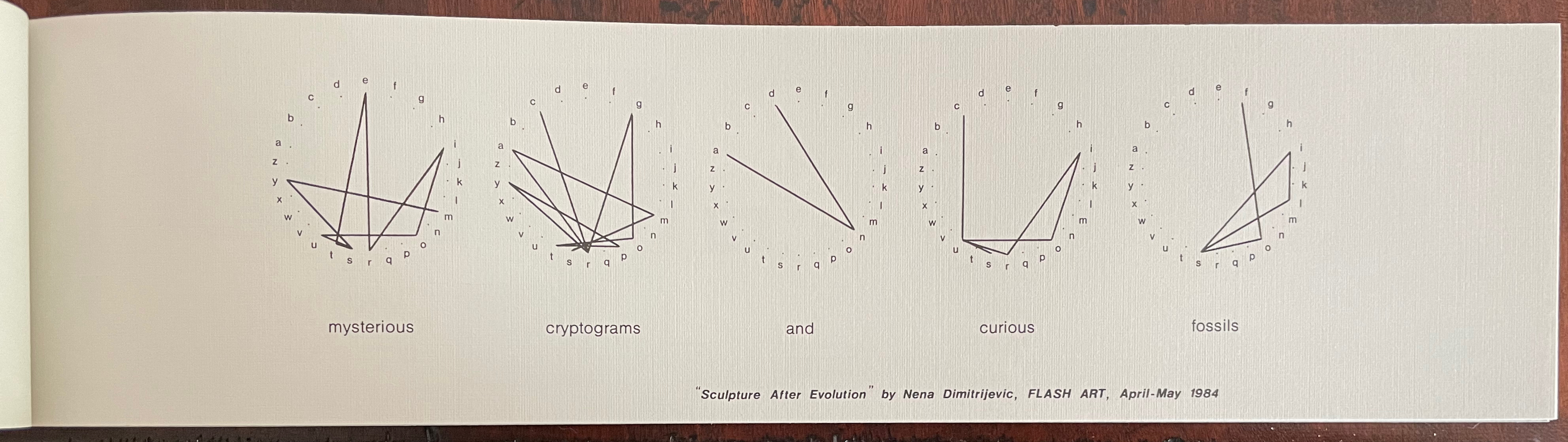
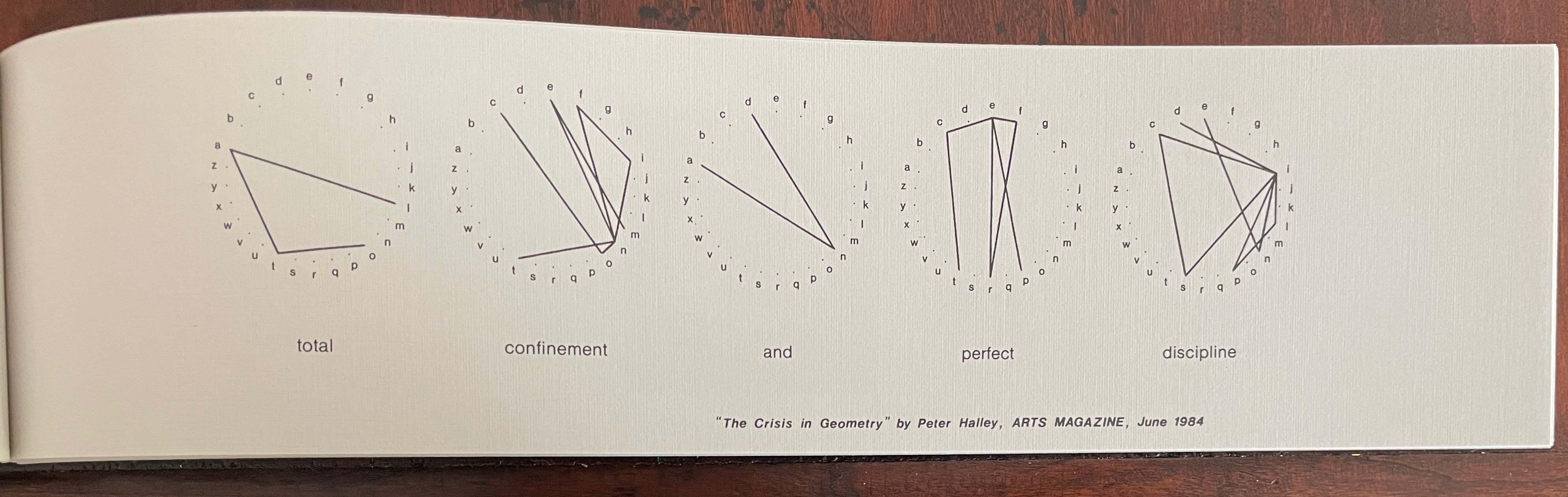
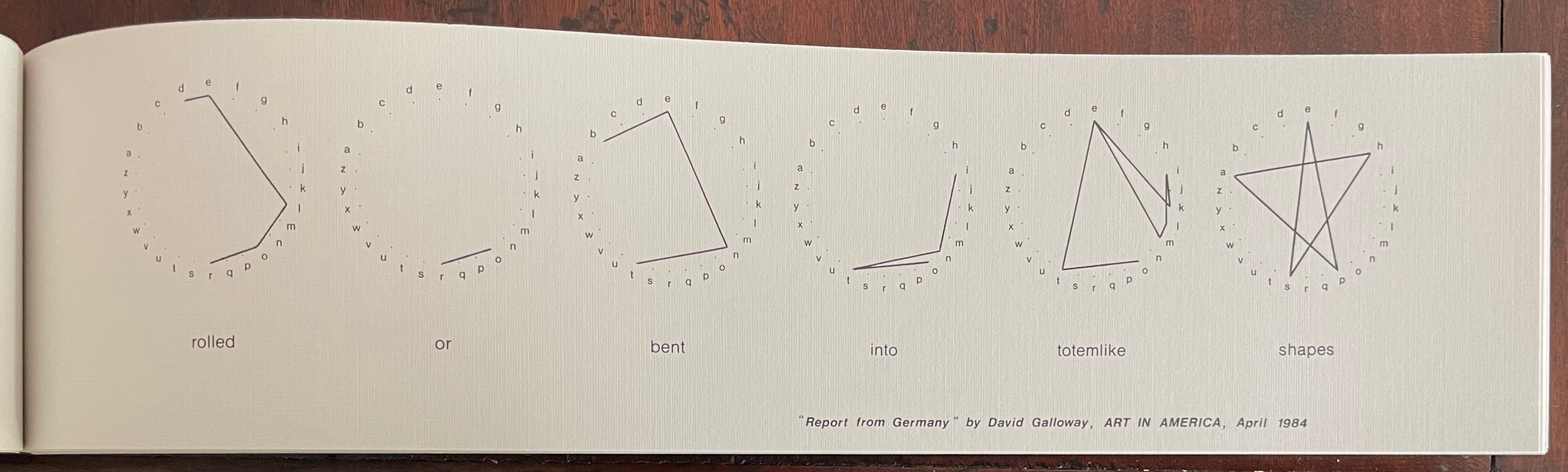
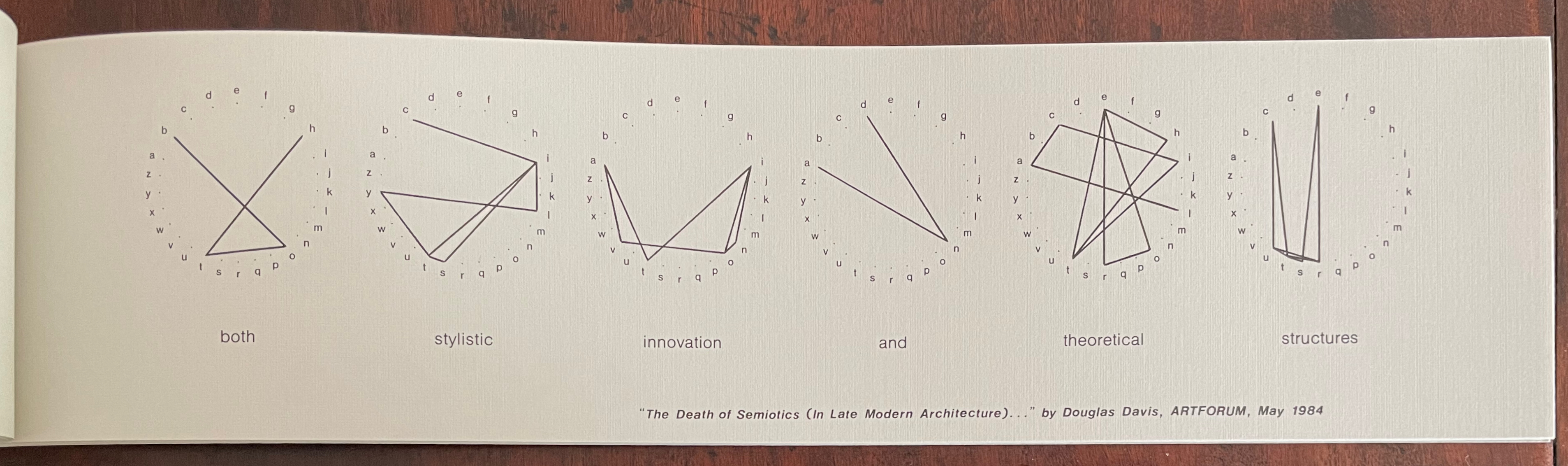
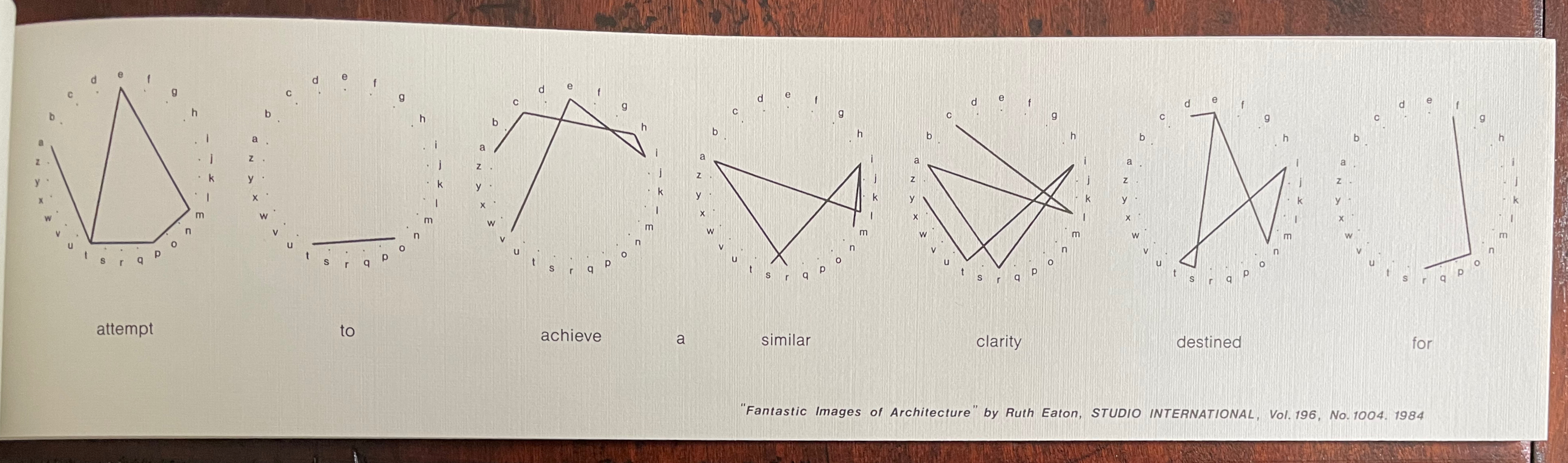
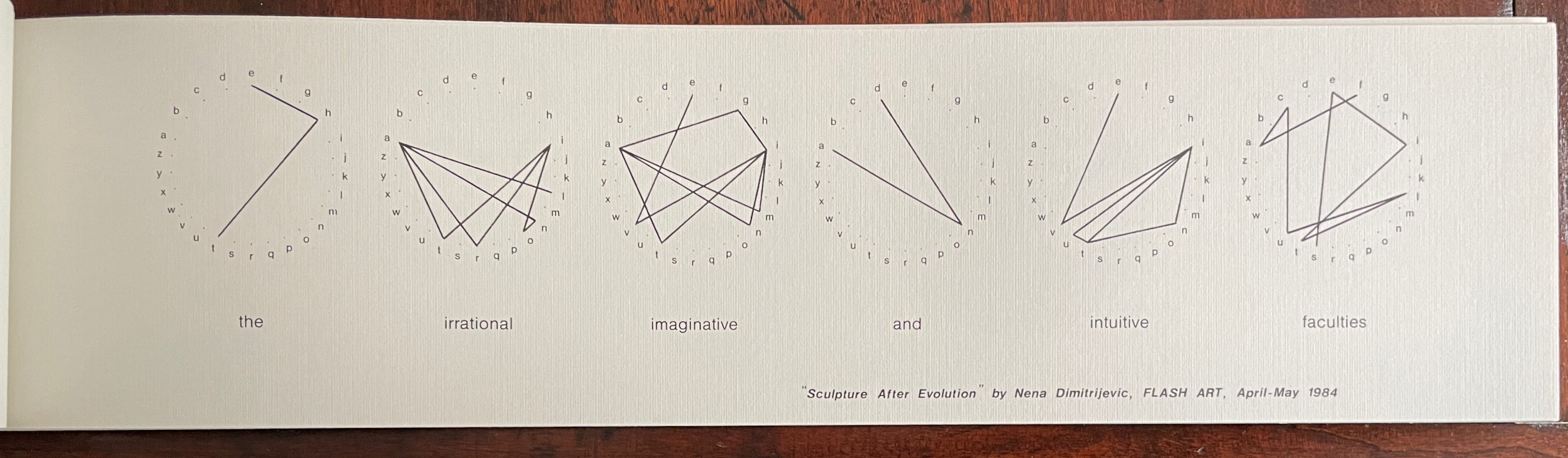
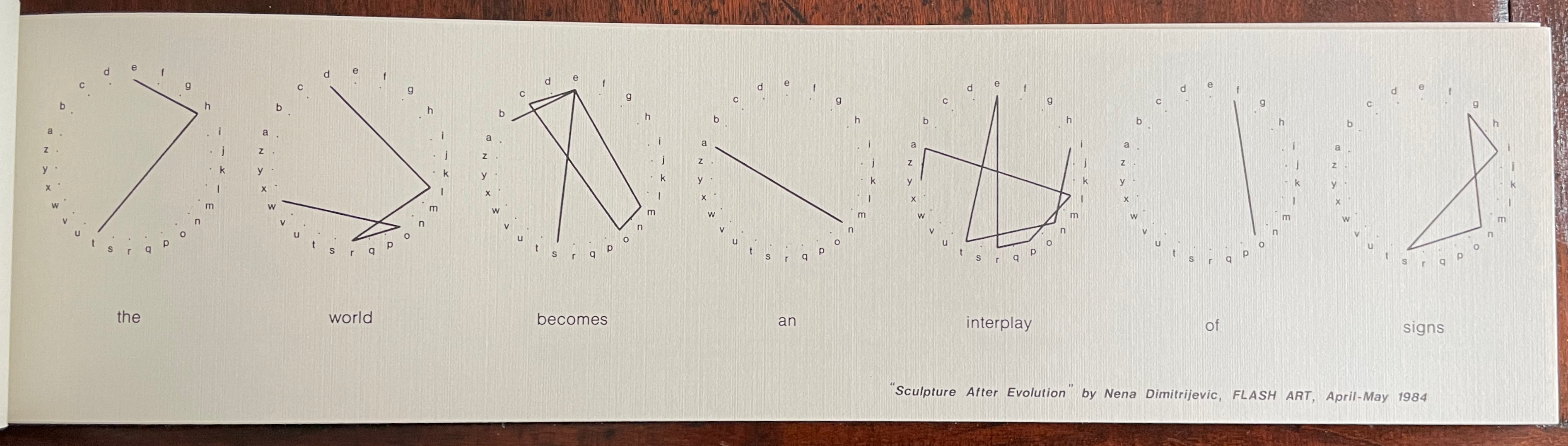
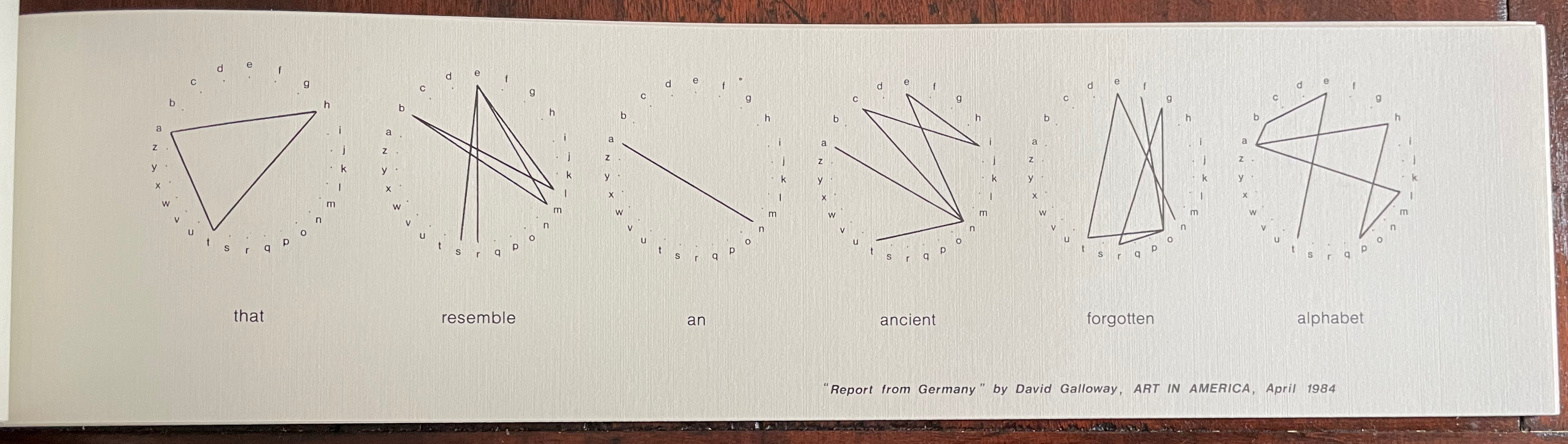
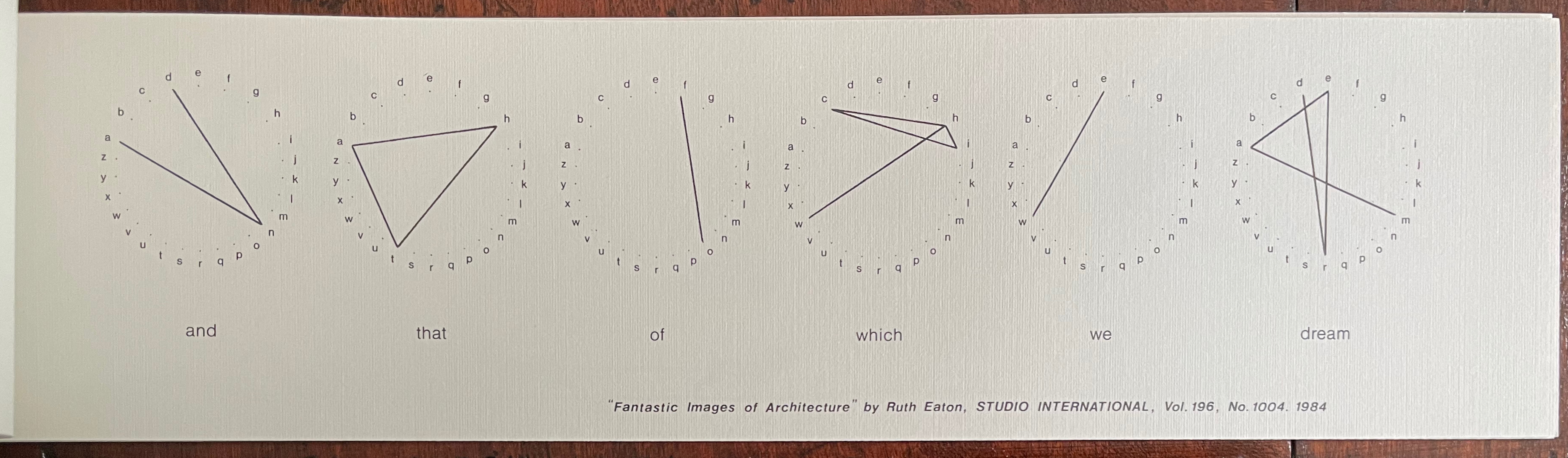
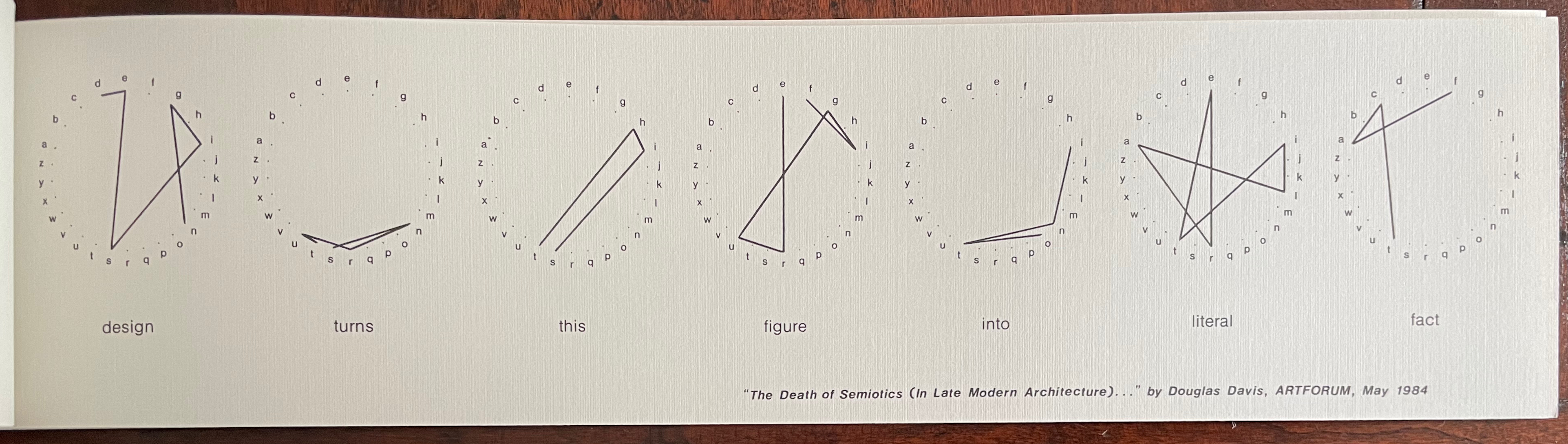
Each of twelve folios has a phrase taken out of context from an art review or essay about art and printed on one side. Above each word, Winkler presents the word’s transformation into an image by drawing lines from letterpoint to letterpoint in a circularly displayed alphabet. Here is the first folio that performs that transformation:

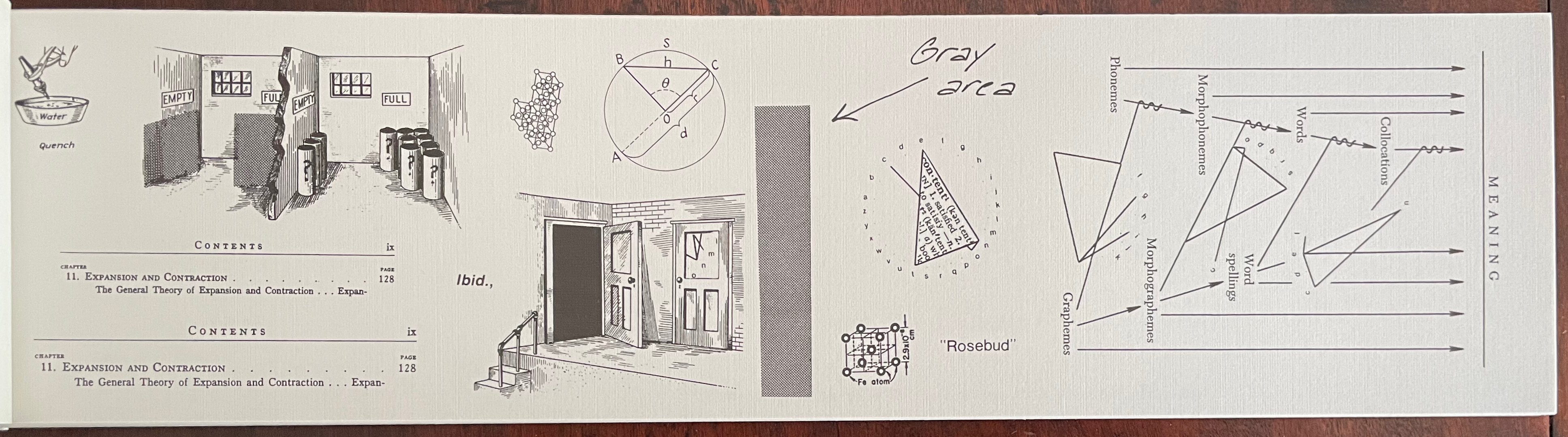
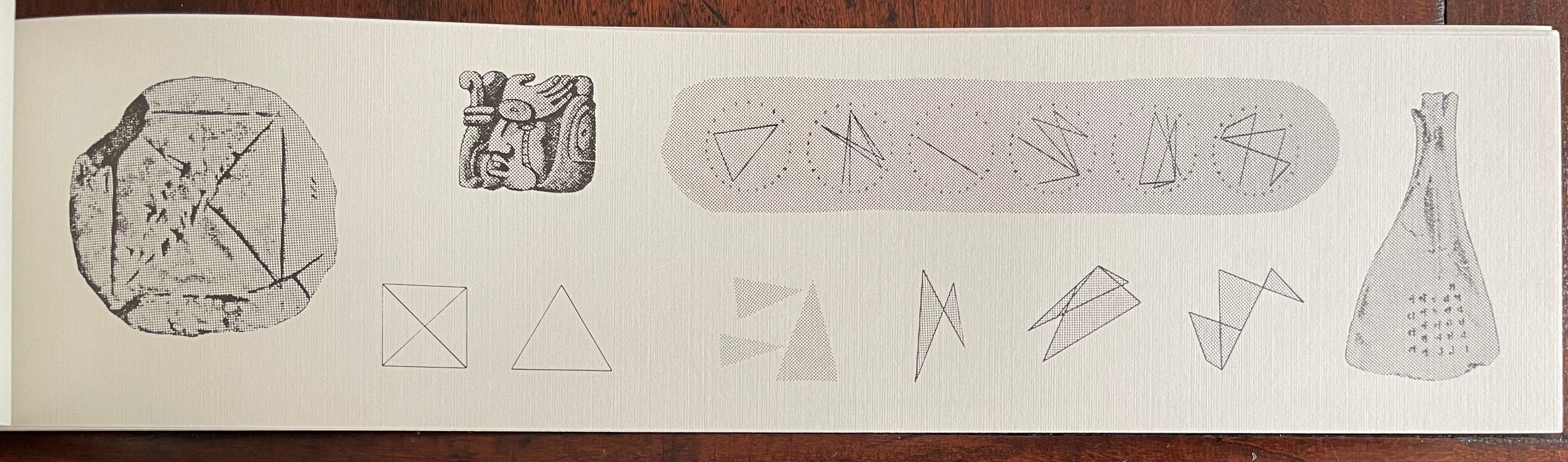
After each of these word-image folios, Winkler adds another folio with various images “based on the visual aspects of, or the implications of the meanings inherent in,” the preceding folio’s sequence of word/images. Below is the folio that follows the word/images above:

Notice that, just under the label “gray area”, the word/image for “content” is reproduced from the preceding folio but with the dictionary-definition of “content” (as meaning “satisfied”) collaged into the triangular space of the image. Text generates image, image captures text. To the left of the gray block, the lower arc of the image for “meaning” appears within the rectangular window of the doorframe. If we miss the point that geometric representation of text and meaning is linked to geometric definition and measurement of shape, there is the traditional image of circle, circumference, diameter, radius, segment and chord displayed just above the doorframe to remind us. If we miss the point that the “content” referenced by a circle can be empty or full of meaning, there are the closed and open portals as well as a cross section of rooms labeled “empty” and “full” to remind us. The ambiguity of the word “content” shows up in the section of a Table of Contents, whose reference to the paired opposites of expansion and contraction is reinforced by the metaphorical equation set up by ibid. (the “same source”) between the twice-repeated Contents section on the one hand and the open and closed portals on the other. The manifoldness of “meaning” as well is represented by the semantic diagram on the right.

And so it goes, folio after folio, which are otherwise loose but bound only by virtue of the plastic clip and meaningfulness of sequence. The plastic clip, the loose folios and the oblong shape contrary to expectations for a codex — they obliquely reprise Winkler’s suggestion of what meaning/making (or making meaning) is about. Circularly represented, the loose letters of the alphabet nevertheless combine in words and linear images in which meaning inheres.

But isn’t meaning associated with words arbitrary (as hinted at by the allusion to the mysterious Wellesian “Rosebud” from Citizen Kane)? Winkler’s circular word-decoder (or rather image-encoder) implies that it only seems so. The mystery doesn’t lie in arbitrariness, rather it lies in Nature. In Winkler’s view, language is a product of a Nature that is meaningfully patterned. If consciousness and language are products of Nature, the associations that he finds between the abstract linear images and external figurative images argue for an inherent meaningfulness perhaps resident in some “ancient forgotten alphabet”.

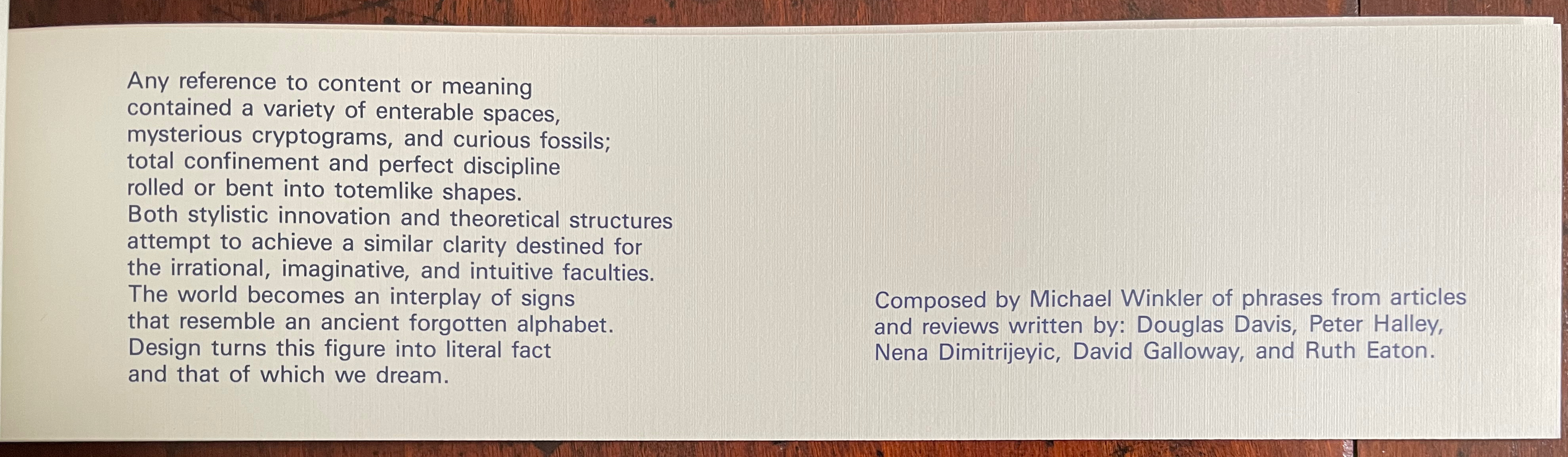
Although the preface to word art/art words signals the clinching argument that Winkler presents, it has to be experienced from front to back and back to front to appreciate it. The final page compiles all of the previous twelve phrases into a single paragraph of four sentences: a sort of textual collage that presents a syntactically and semantically coherent manifesto.

The seamlessness of the collaged paragraph implies a vision just waiting for discovery through application of the artist’s word/image technique. Albeit out of context and somewhat disparately sourced, though, the phrases were selected and combined to produce that articulate statement of artistic vision. The artistry in doing so is what celebrates the mystery of language and representation that Winkler finds in Nature.

Further Reading

Alphabets Alive!“. 19 July 2023. Books On Books Collection.

Alberto Blanco“. Books On Books Collection. In process.

Karen Shaw“. Books On Books Collection. In process.

Winkler, Michael Joseph. 2021. The Image of Language : An Artist’s Memoir. [North East, NY]: Artists Books Edition.Download the chapter “A Major Challenge“.

Winkler, Michael Joseph. 2018. Matters of Context. [Millerton, New York]: SignalGlyph Media.

Winkler, Michael Joseph. 1989. Extreme Measures. New York: [Michael Winkler].

Winkler, Michael Joseph. 1987. Equivalents. New York: M. Winkler.

Four of Winkler’s works can be found at Printed Matter, Inc.

Books On Books Collection – Alberto Blanco

In this ode to the letter X, Mexico and language itself, Alberto Blanco and Nacho Gallardo Larrea brilliantly show how the artist’s book can translate word and image from one to the other and back and, at the same time, soar over the challenge of translating poetry.

Book of X (2012)

Book of Equis (2012)
© Alberto Blanco and Nacho Gallardo Larrea (“El Nacho”).
Slipcase paper-covered spine and edges, and leather Intagrafía insignia on cover panel; enclosing a casebound hardback, monotype over boards, and black doublures. H15 x W7.5 in. [18] pages. Letterpress printed with Bembo Roman and Bembo Roman Italic types. Printed on Rives BFK paper. Bilingual text of Spanish and English. Edition of 50 plus 15 artists’ proofs (P.A. 1-15), of which this is #11; 5 binding workshop copies (P.T. 1-5); and 3 print proofs (P.I. 1-3).
Photos: Books On Books Collection. Displayed with permission of Alberto Blanco.

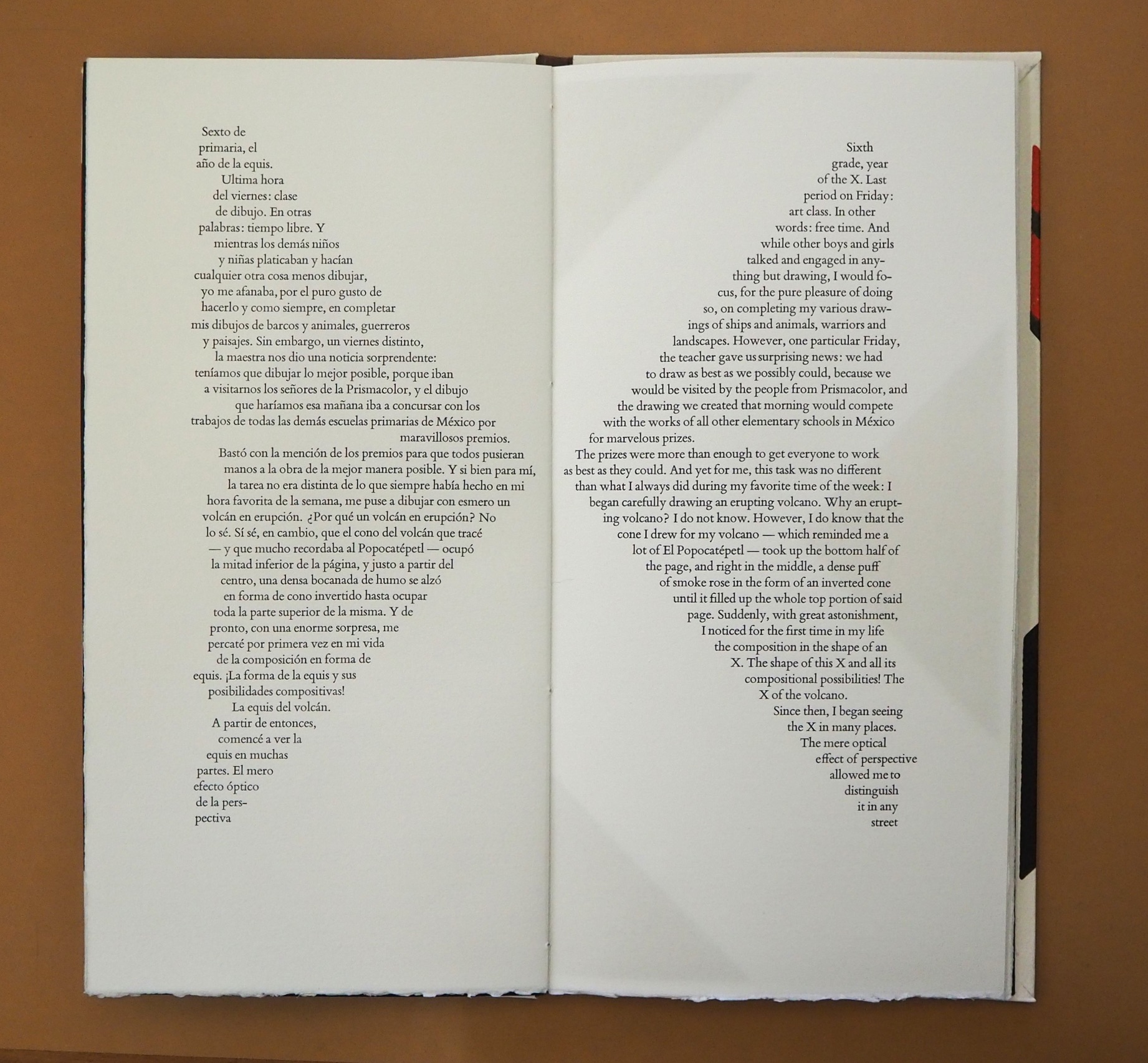
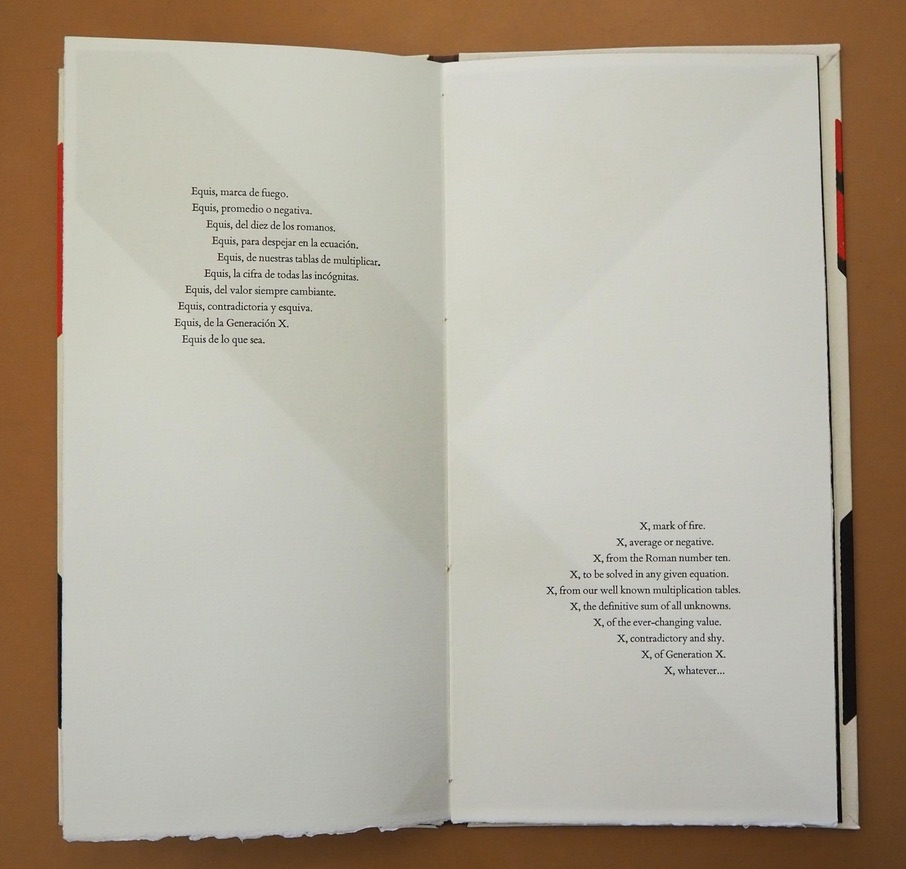
The Spanish and English versions of Blanco’s text shape, and are shaped by, the bilateral symmetry of the letter X and the codex form of the book. Spanish on the left, English on the right: the imposition of type and the ghostly images of the X play with one another. The two texts delight in the crossover between similarity and difference, knowingly in the white space at the exact center of the X in the double-page spread below. How better to use the notion that, for all letterforms, space counts as much as line?

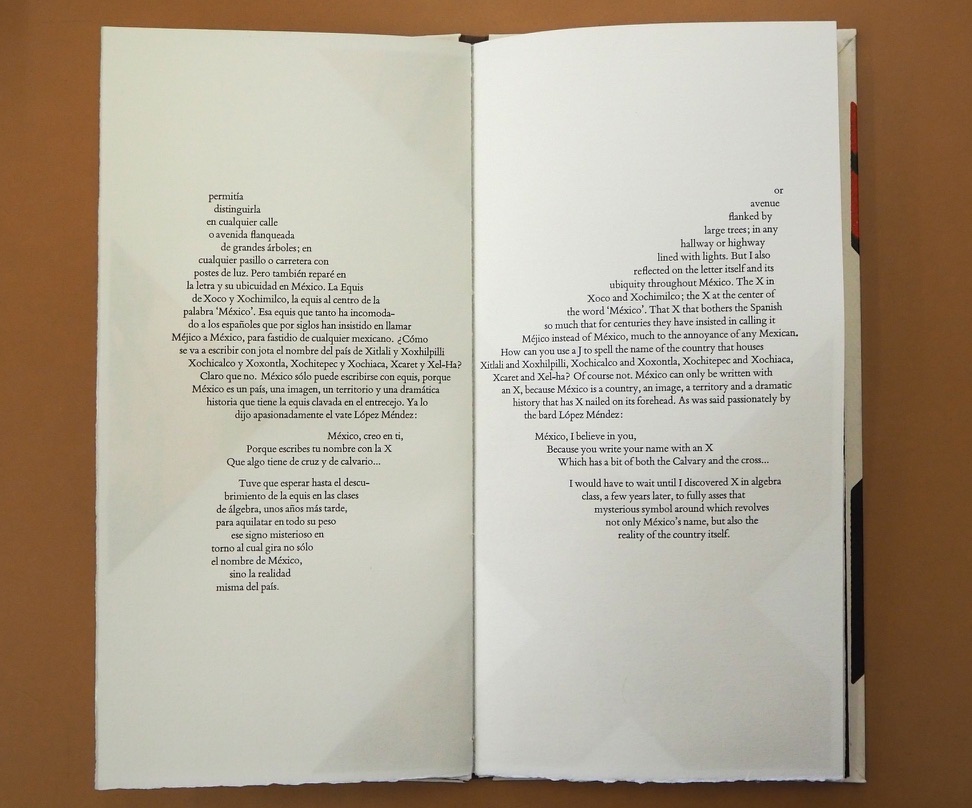
Sometimes the language on one side completes a thought or expression before the language on the other side can do so, a natural phenomenon in translation in which one language needs fewer or more words than the other. See above, for example, the passages beginning “La equis del volcán” and “X of the volcano” that do not quite align in the legs of the X. The Spanish sentence trails off in a fragment to be completed on the following verso page, but the English sentence is already half way there on the recto page above.

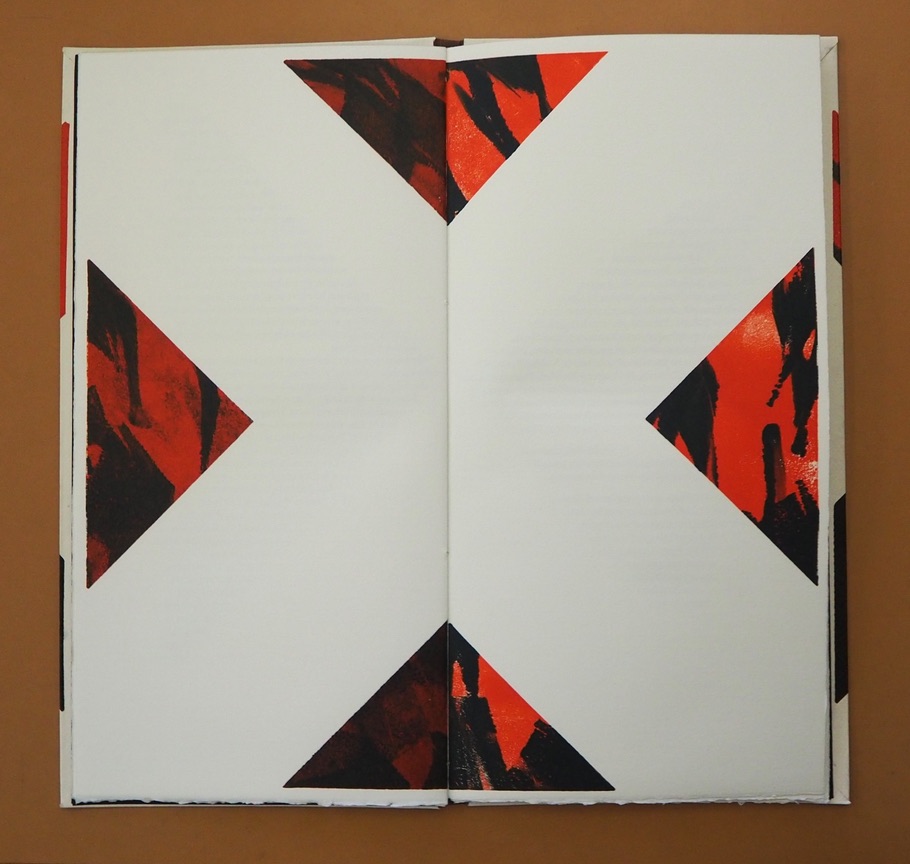
As the shaped poem continues in the pages below, and the number of words in one language exceeds those on the other creating lines asymmetrical to one another, the poet and artist use the X shape in whole and parts and the diametrical placement of text in the last double-page spread to reflect the crossing dance of similarity and difference, asymmetry and symmetry, that they find in X across languages, generations and country.

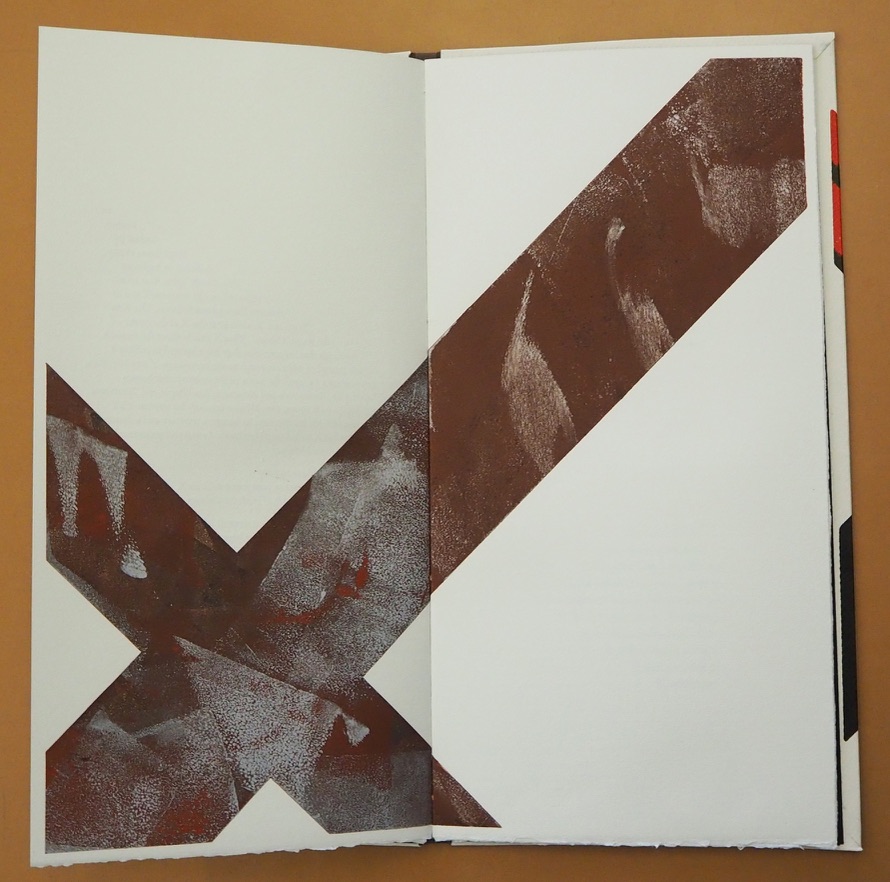
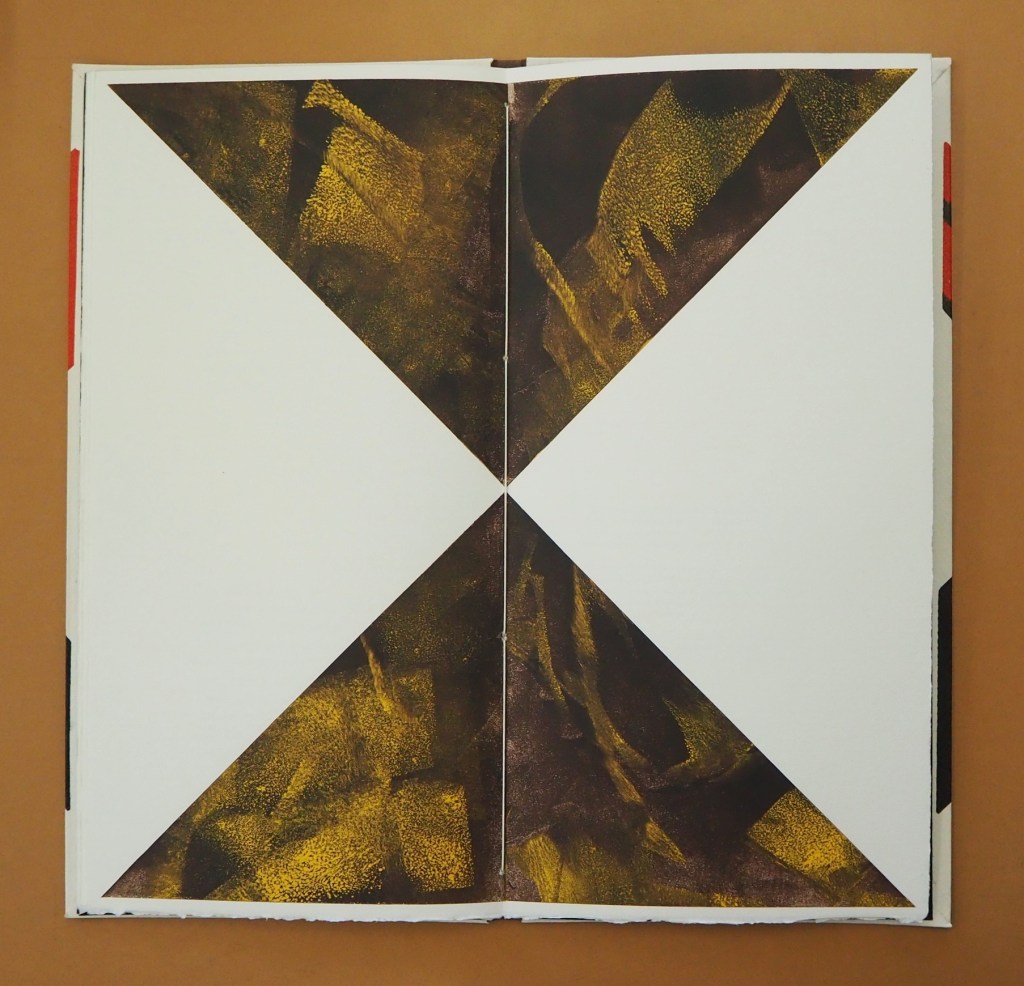
Interpersed between the pages of text, the late El Nacho’s monotypes make color, shape and space play with one another to mirror — not merely illustrate — the thrust of the language. If ever there were a collaborative work that distinguishes the artist’s book from a livre d’artiste, this is it. Alberto Blanco has also created solo artist’s books, which enjoyed an exhibition at the Athenaeum Music & Arts Library, La Jolla, California, February 19-March 26, 2011. Stylistically they are distinct from The Book of Equis, which underscores its collaborative originality.

Colophon: The Book of Equis was designed and printed in Intagrafía, located in San Jose del Cabo under the direction of Peter Rutledge Koch, with monotypes created by El Nacho. Printed under the supervision of Lenin Andujo Fajardo by Ivonne Rivas.”

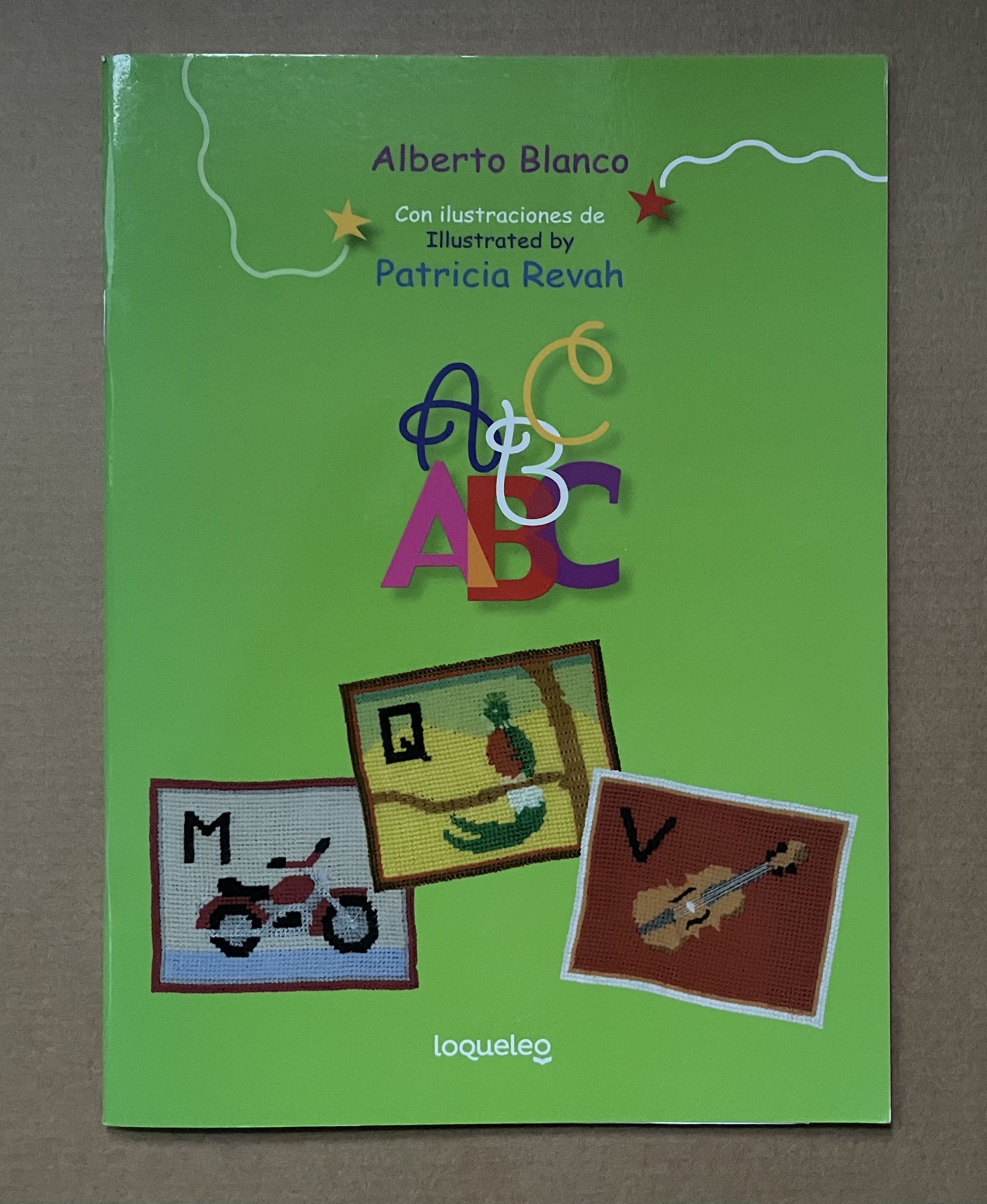
ABC (2008)

ABC (2008)
©Alberto Blanco and Patricia Revah
Softcover, saddle stitched H230 x W170 mm. 32 pages. Acquired from The Book Depository, 11 July 2021.
Photos: Books On Books Collection. Displayed with permission of Alberto Blanco.

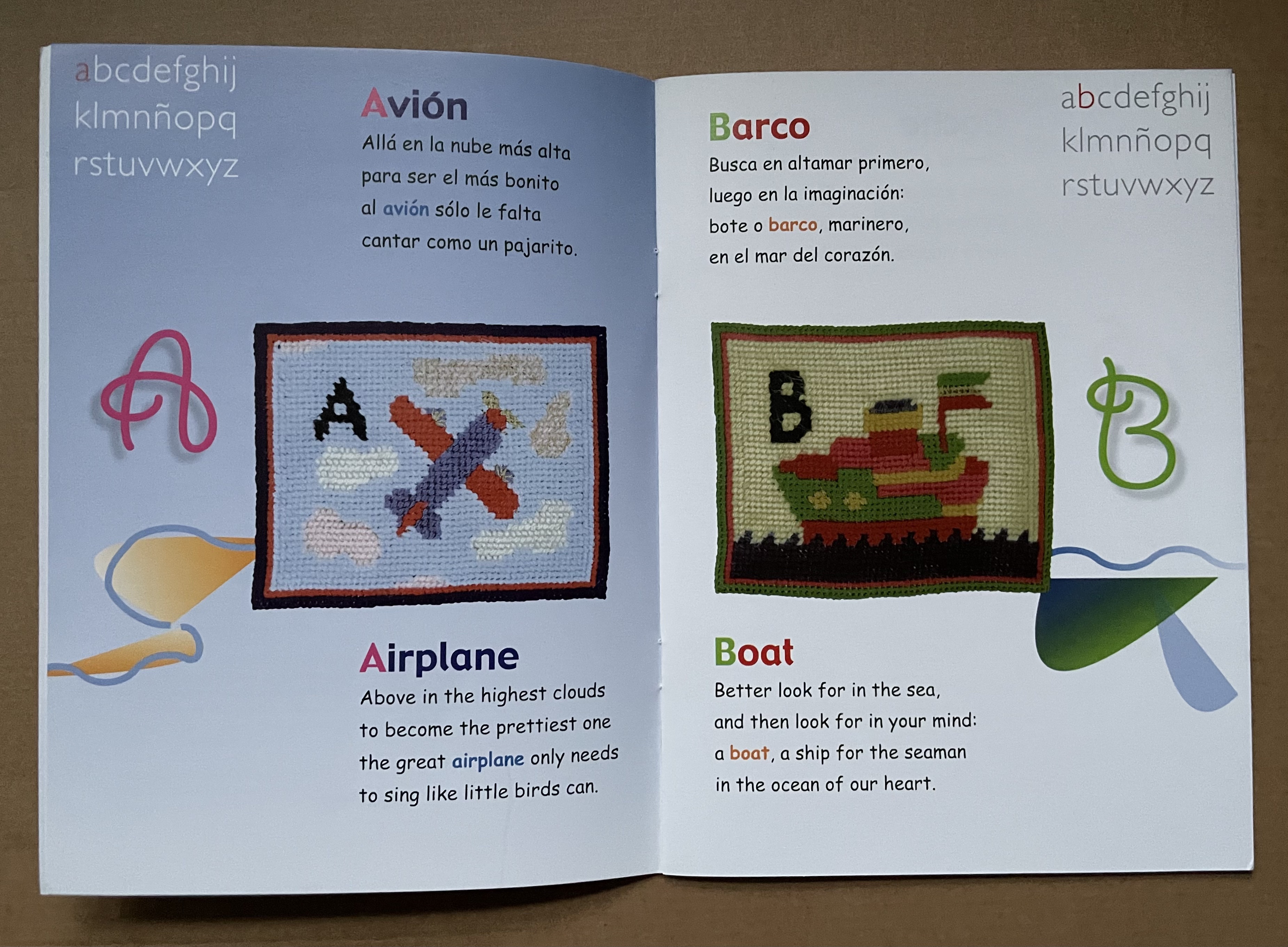
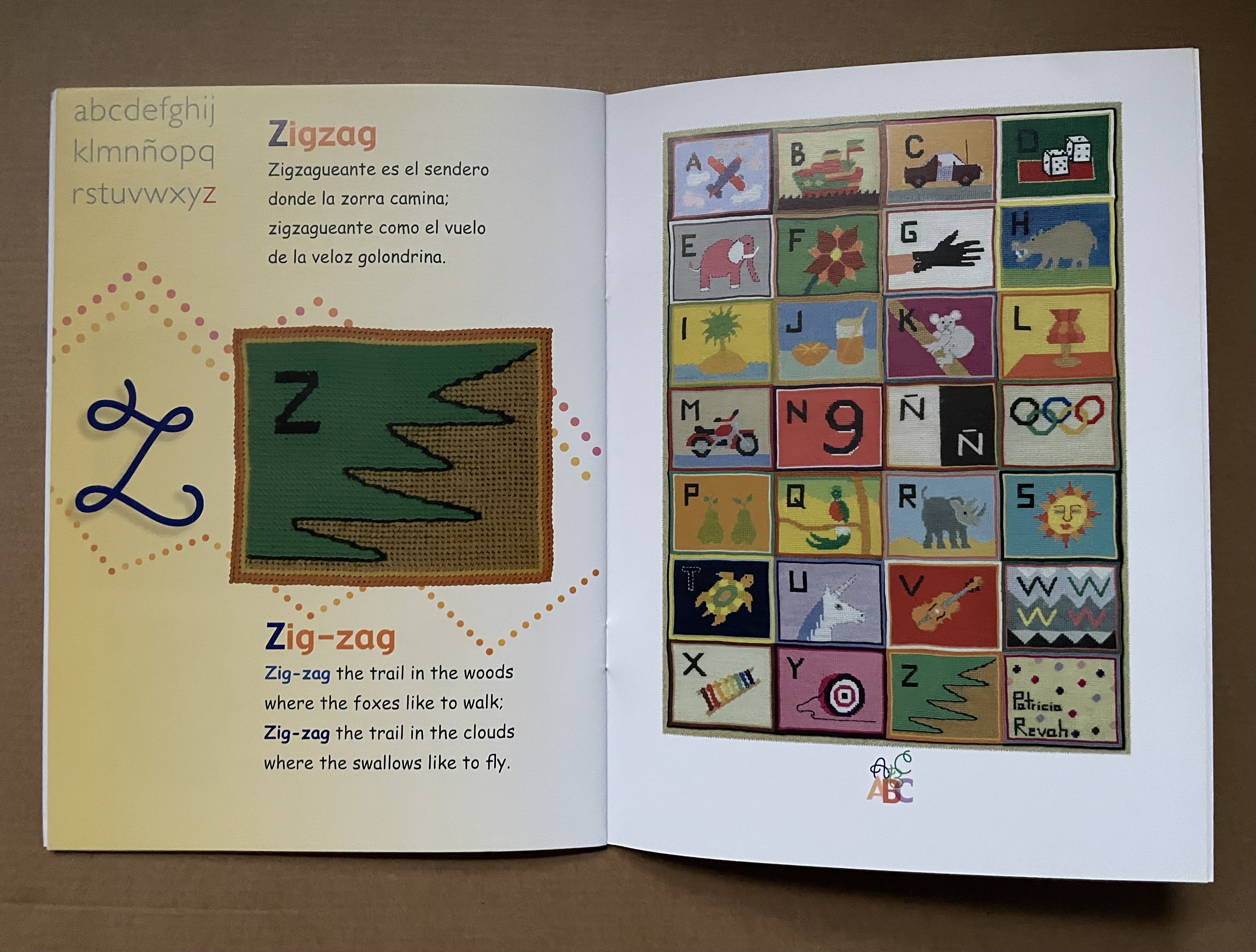
Rhyming poetry often raises the already high bar to translation. The literal English translations that follow Alberto Blanco’s charming abab Spanish poems do not attempt to substitute suitable rhymes. The textile art in this abecedary, however, wraps a comforting quilt around the challenge of translating poetry in a way that appeals to children.

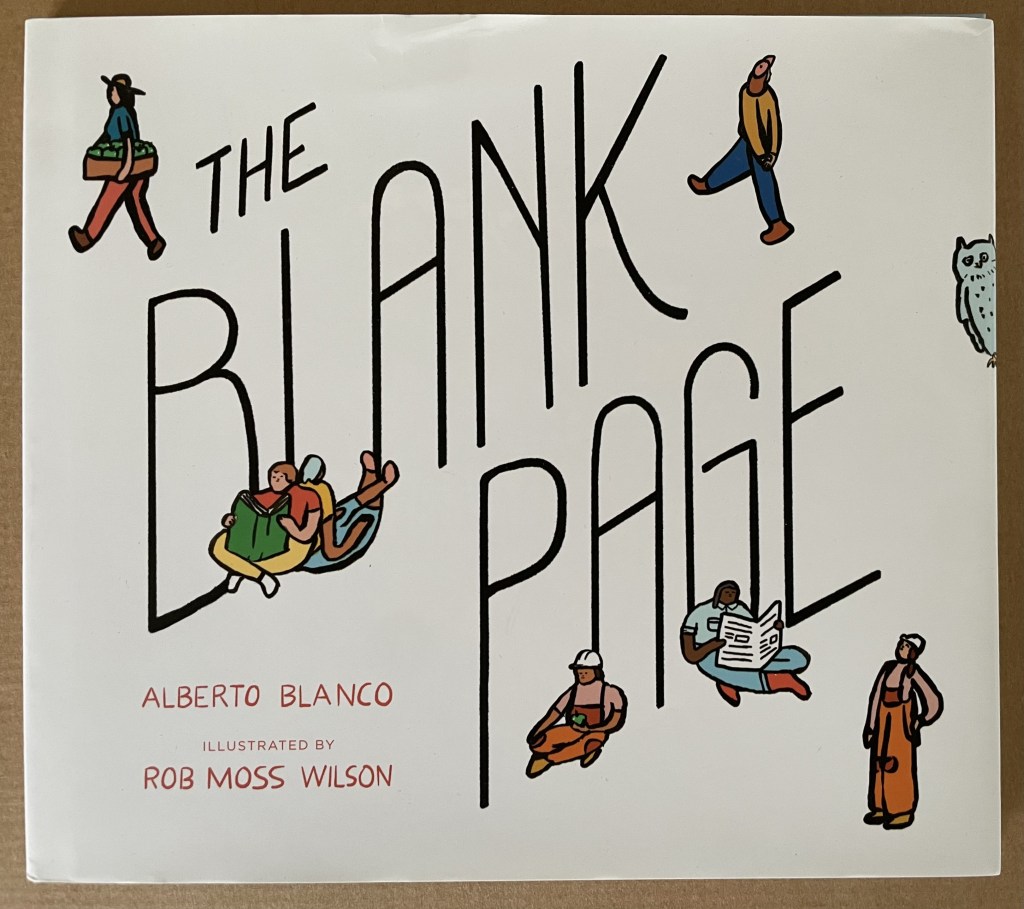
The Blank Page (2020)

The Blank Page (2020)
©Alberto Blanco and Rob Moss Wilson
Jacketed, casebound, illustrated paper over boards. H224 x W252 mm. 32 pages. Acquired from The Monster Bookshop, 1 July 2021 1 Jul 2021.
Photos: Books On Books Collection. Displayed with permission of Alberto Blanco.

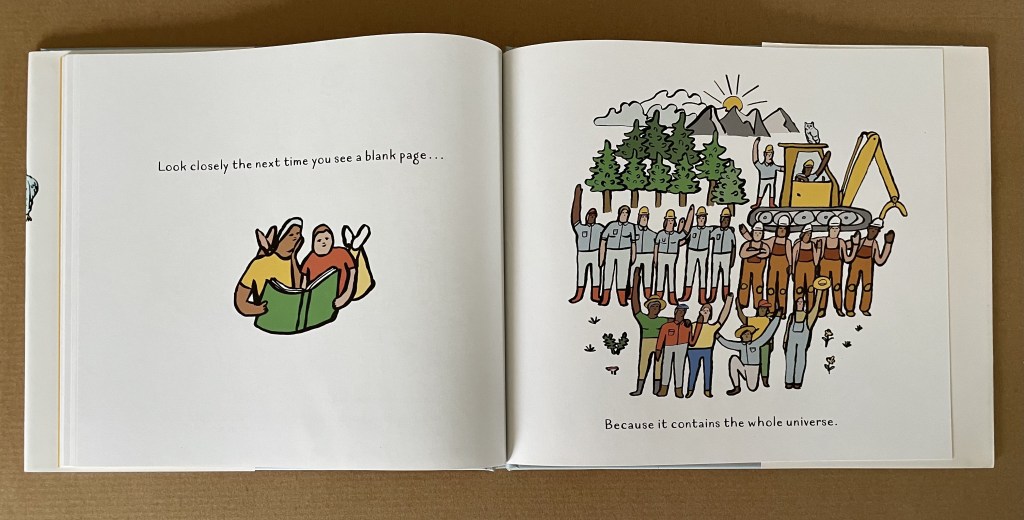
Who would think it possible to introduce children to the ideas of Stéphane Mallarmé? Alberto Blanco for one, albeit without mentioning the French poet.

Further Reading

Abecedaries I (in progress)“. Books On Books Collection.

Alphabets Alive!” 19 July 2023. Books On Books Collection.

‘Un Coup de Dés Jamais N’Abolira l’Appropriation’— An Online Exhibition“. 1 May 2022. Books On Books Collection.

Blanco, Alberto. 2011. Visual Poetry/Poesía Visual. La Jolla, Calif.: The Athenaeum Music & Arts Library.

Blanco, Alberto. 1995. Dawn of the Senses : Selected Poems of Alberto Blanco. San Francisco: City Lights Books.

Blanco, Alberto. 2007. A Cage of Transparent Words : A Selection of Poems = Una Jaula de Palabras Transparentes. First edition. Fayetteville, N.Y.: Bitter Oleander Press.

Books On Books – Thomas A. Clark and Diane Howse

A Slow Air (2016)

A Slow Air (2016)
Thomas A. Clark and Diane Howse
Perfect bound softcover. H200 x W150 mm. 64 pages. Edition of 750. Acquired at the Small Publishers Book Fair, London, in 2018.
Photos of the work: Books On Books Collection.

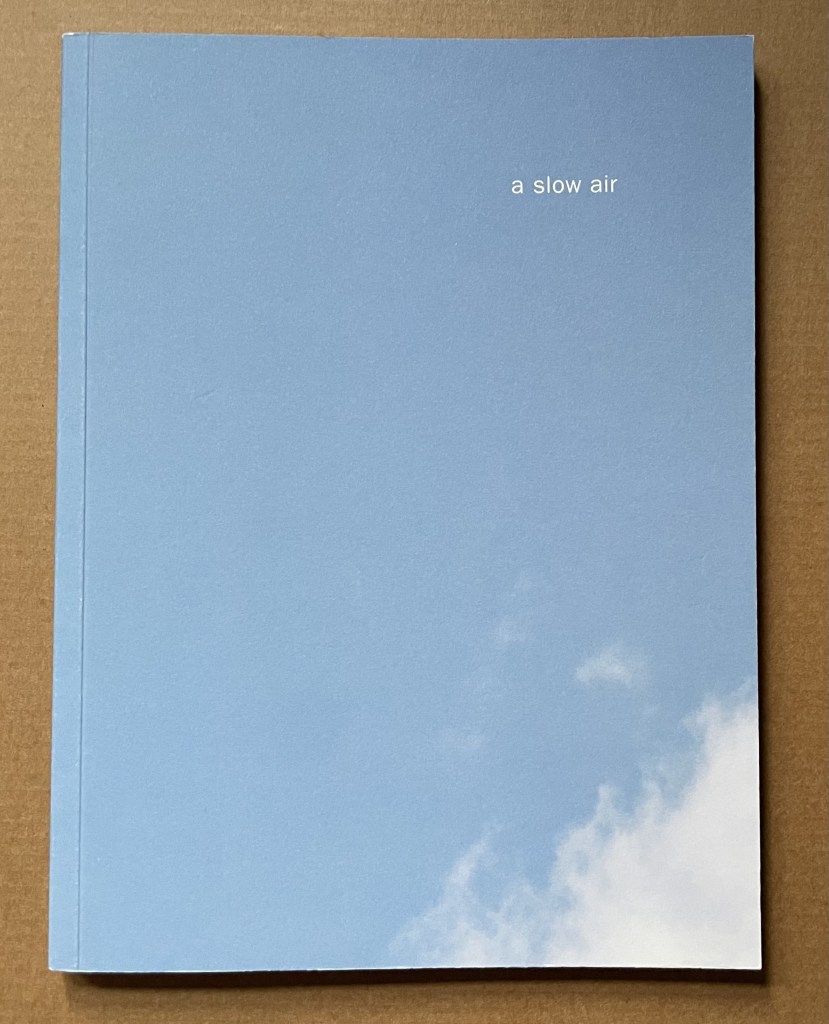
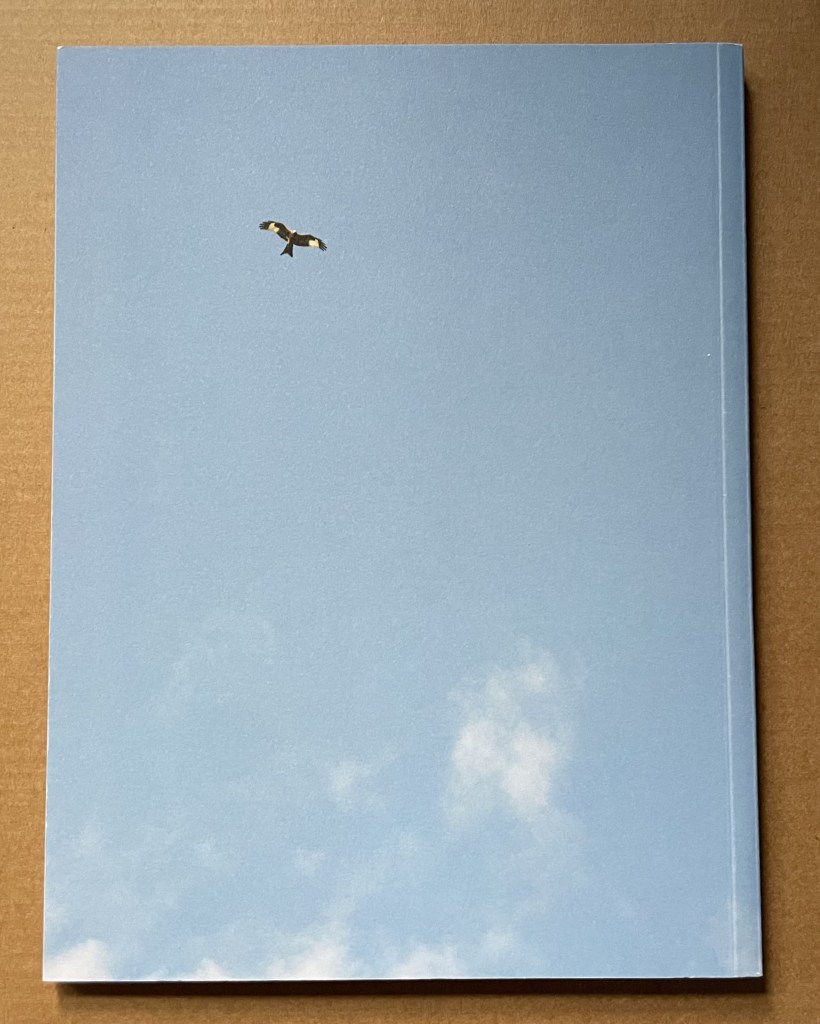
If you live where red kites thrive, you will see them most often singly, in pairs or threes. If you are lucky, you may see as many as eight or ten at a time. Near Harewood House in West Yorkshire where red kites were reintroduced in 1999, there are hundreds. In 2016, photographer/artist Diane Howse (Countess of Harewood) and poet/artist Thomas A. Clark collaborated on an exhibition at Harewood House: the grove of delight.  Using objects, words and images, the exhibition turned the house’s Terrace Gallery into a symbolic grove; also displayed was a series of 15 photographs by Howse of red kites over Harewood. For the exhibition and under the direction of Peter Foolen, the diligent Dutch publisher of herman de vries, Peter Liversidge and others, A Slow Air (the book) was produced and published by Harewood House. Foolen and the artists have assembled and manipulated the photos in a sequence of color and image that exerts a forward movement like a film or narrative. Like a real sighting of these birds circling and banking as if to a slow musical air, the book mesmerizes.

Continue reading

Books On Books Collection – Heidi Zednik

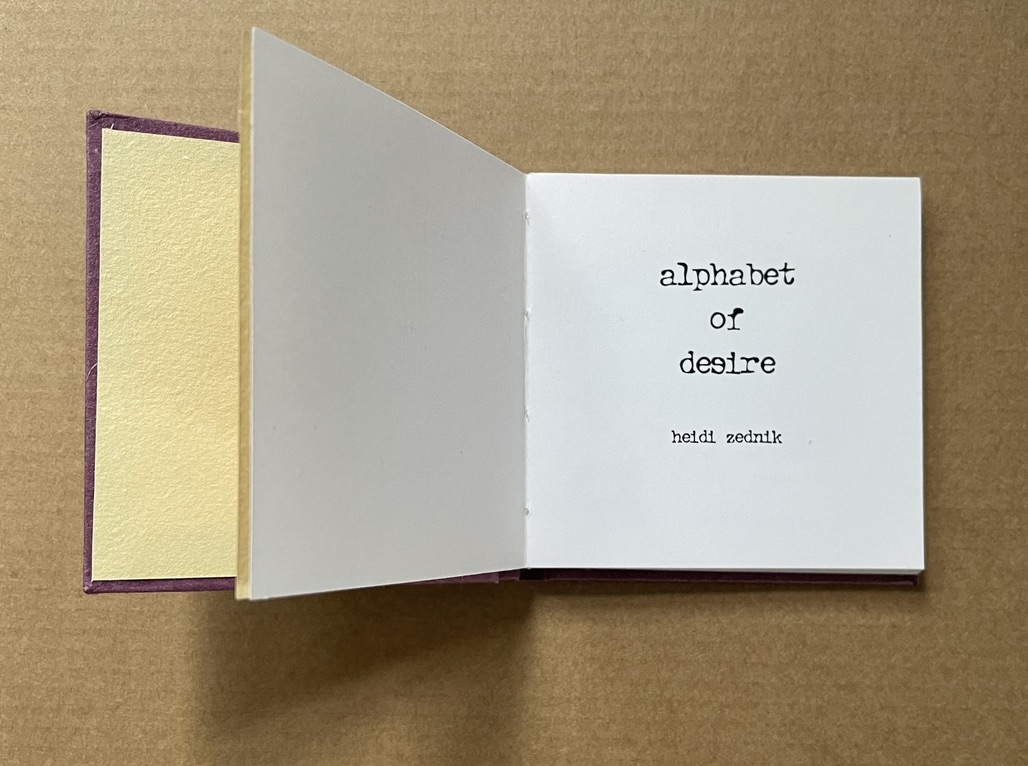
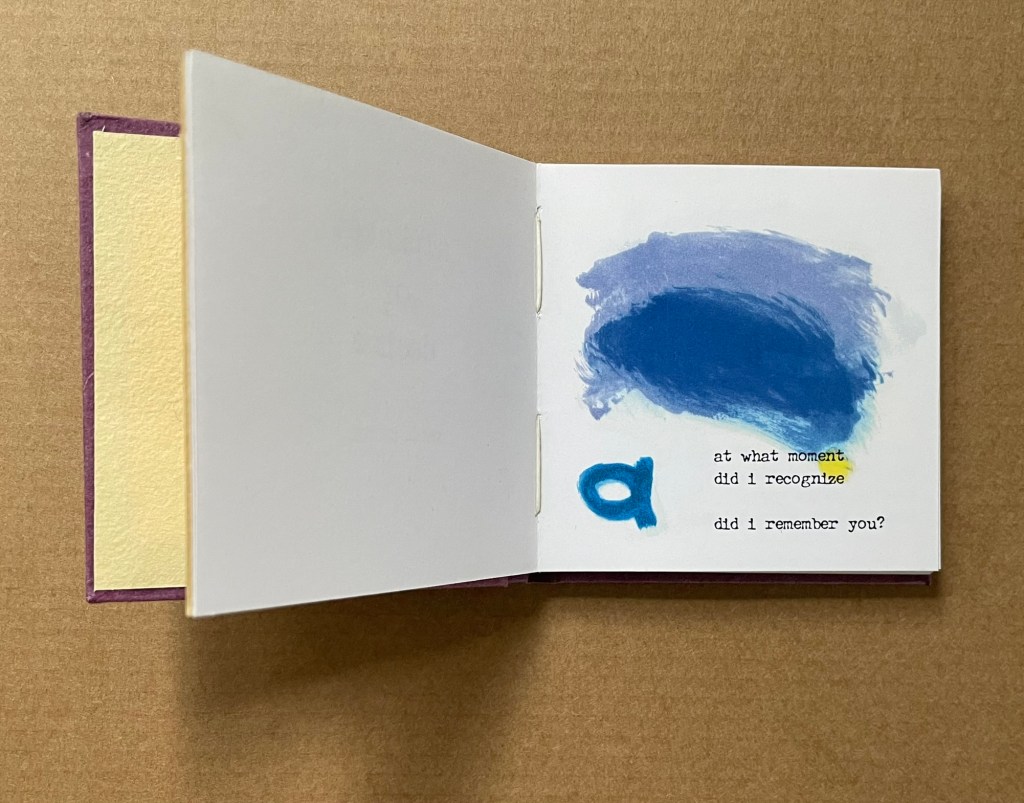
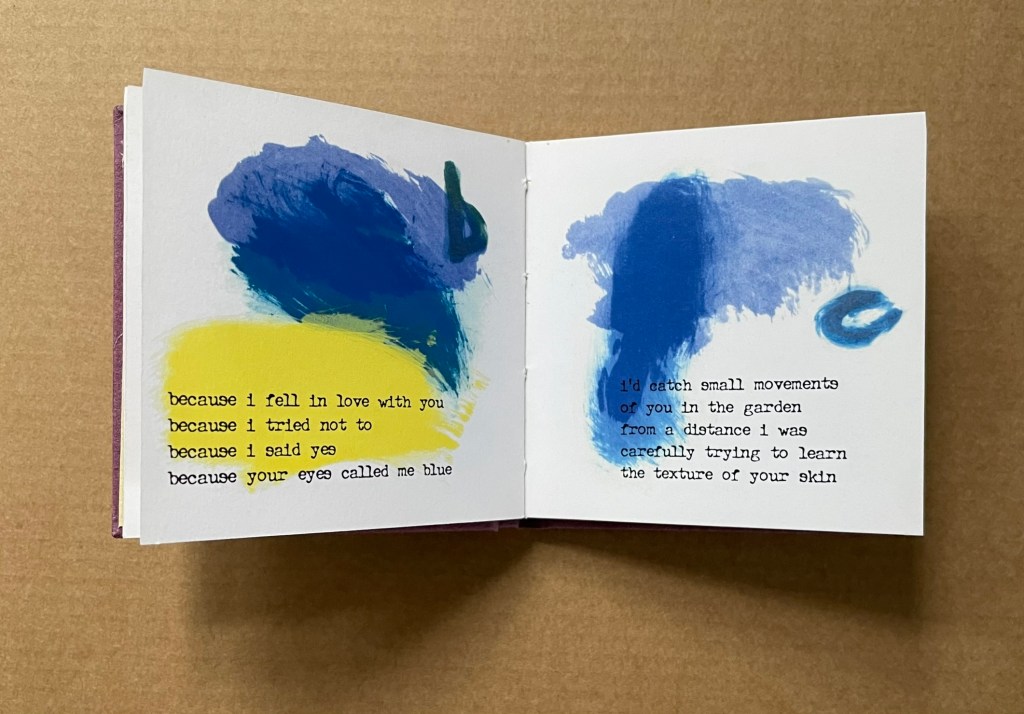
Alphabet of Desire (2006)

Alphabet of Desire (2006)
Heidi Zednik (text and images) and Alicia Bailey (design)
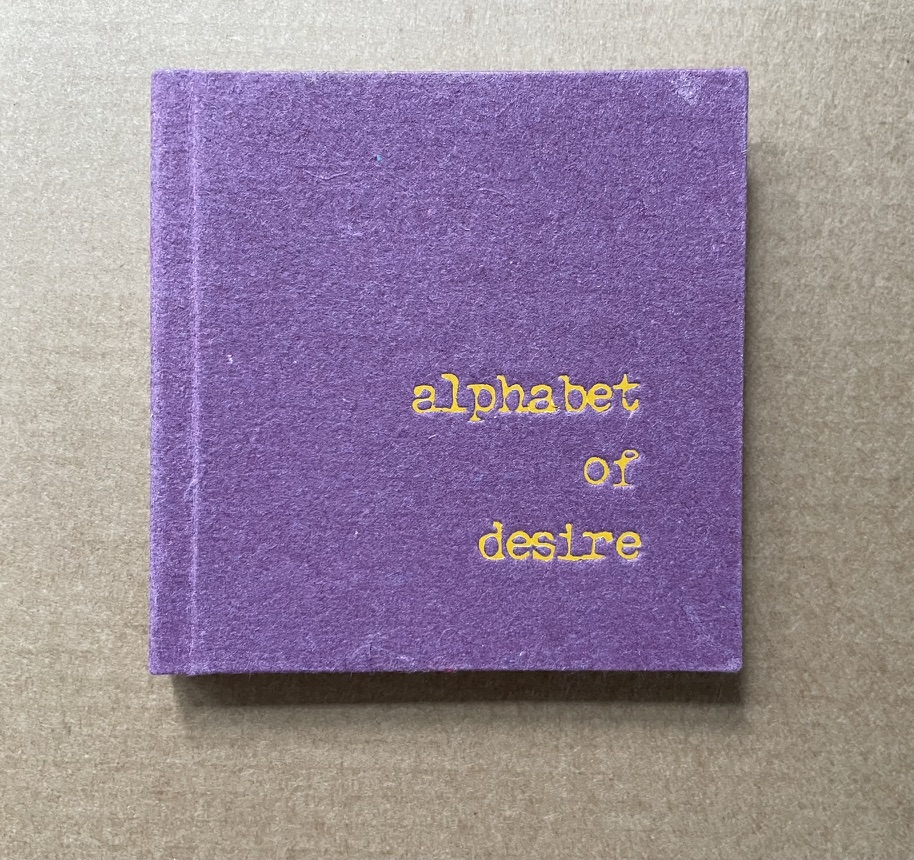
Miniature hardback, casebound, handmade paper overboard, foil-stamped front cover, plain doublures, sewn. 70 x 70 mm. 32 pages. Edition of 100, of which this is #42. Acquired from Alicia Bailey, 26 October 2023.
Photos: Books On Books Collection.

A larger version (171 x 171 mm) of this work was published as a portfolio. The miniature uses the same text and imagery and is digitally produced rather than hand printed.

The abstract use of colors and painted letters surpasses the text. In its miniature form, it offers an aperitif to Zednik’s artistry with color and shape, which can be found on her site.

Books On Books Collection – F. Gene Wilson

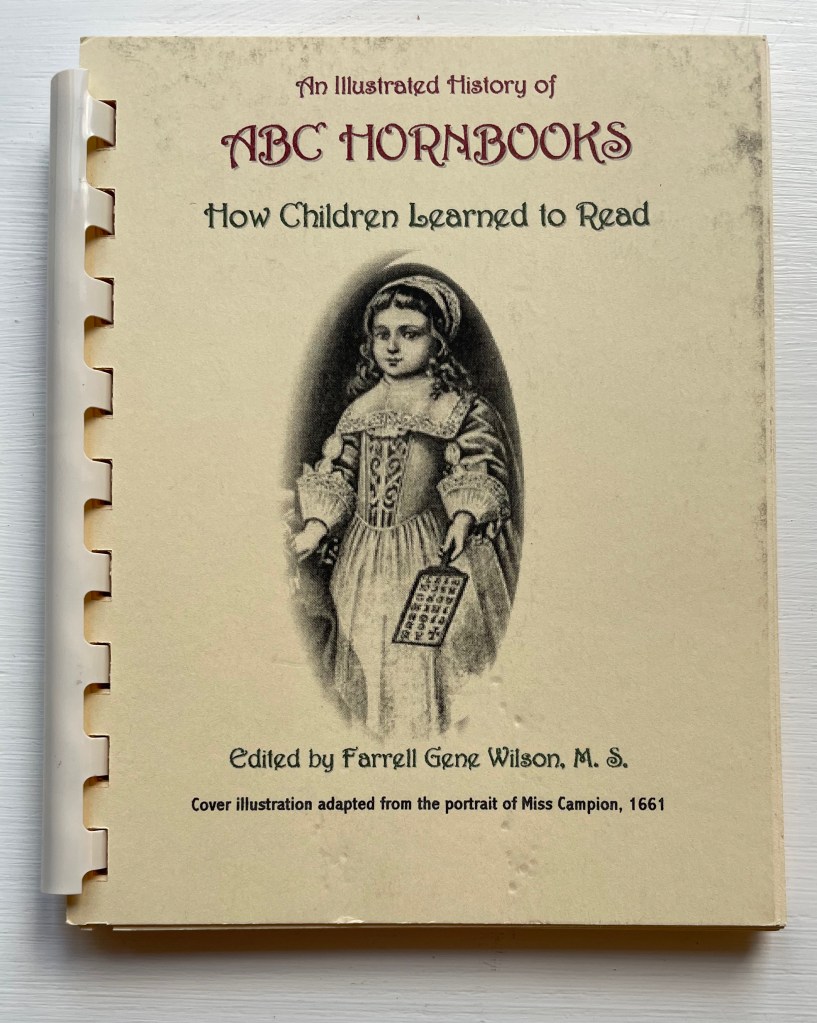
The Illustrated History of ABC Hornbooks (2008)
F. Gene Wilson
Plastic comb binding. Wood and horn. Booklet: H140 x W113 mm. Hornbook #1: H154 x W80 mm. Hornbook #2: H95 x W47 mm. 60 pages. Acquired from F. Gene Wilson, 1 November 2022.
Photos: Books On Books Collection.

Further Reading

Drukwerk in de Marge“. 2 November 2022. Books On Books Collection.

Bård Ionson“. 9 July 2023. Books On Books Collection.

Margo Klass“. 9 July 2023. Books On Books Collection.

Karen Roehr“. 26 December 2022. Books On Books Collection.

Connie Stricks“. 9 July 2023. Books On Books Collection.

Ashley Rose Thayer“. 9 July 2023. Books On Books Collection.

Andrew White Tuer“. 26 December 2022. Books On Books Collection.

Books On Books Collection – Jonathan Safran Foer

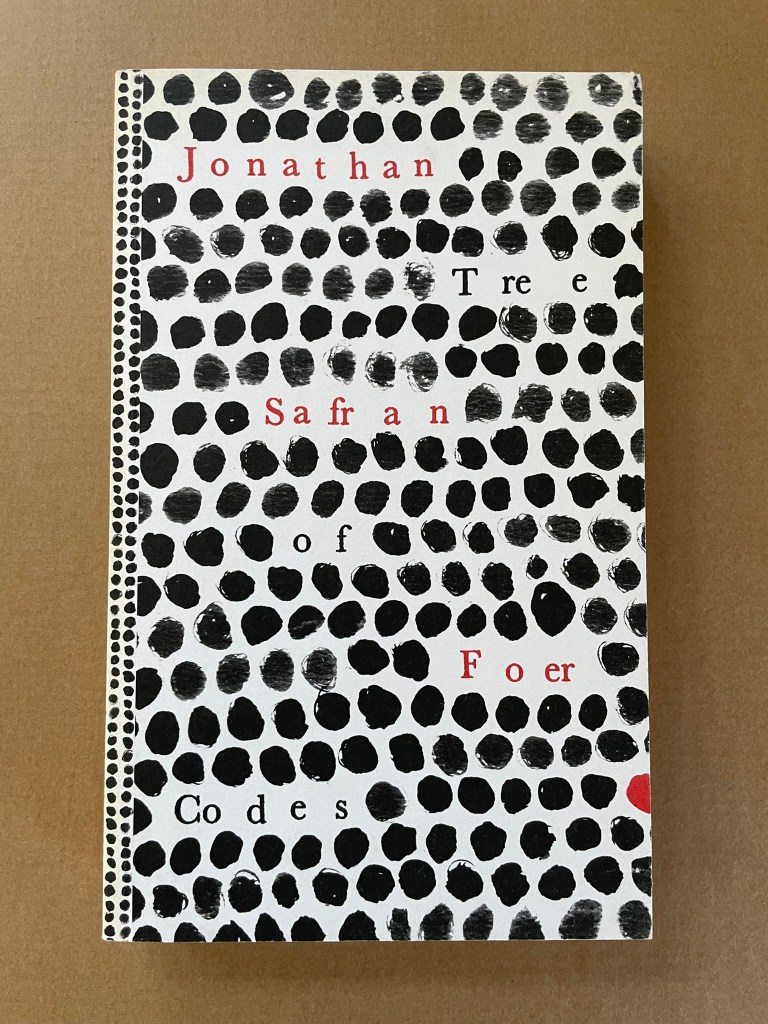
Tree of Codes (2010)

Tree of Codes (2010)
Jonathan Safran Foer
Perfect bound paperback of die-cut pages. H220 x W135 mm. 284 pages. Acquired from Visual Editions, 30 January 2014.
Photos: Books On Books Collection.

The artist’s book “tradition” of excising words from the page goes back at least to Marcel Broodthaers’ and Mario Diacono’s renderings of Un Coup de Dés Jamais N’Abolira le Hasard by Stéphane Mallarmé. Jonathan Safran Foer’s Tree of Codes (2010) takes that tradition to the more complex plane that Tom Phillips reached with A Humument (1980-2016). In the hands of Foer and his publisher Visual Editions, the treatment becomes simultaneously more personal and mechanical. The more personal aspect is best expressed in Foer’s afterword (see below). The mechanical aspect is the use of die cutting for production and the reader’s use of a blank sheet to enable reading the text left over from Bruno Schulz’s The Street of Crocodiles (1934, trans. 1963) that forms the new narrative of Tree of Codes.

Continue reading

Books On Books Collection – Helen Yentus

On Such a Full Sea (2013)

On Such a Full Sea (2013)
Chang-rae Lee
Jacket and slipcase design
Helen Yentus
Book in slipcase. H23o x W150 mm; slipcase only, W110 mm. 368 pages. Edition of 500, of which this is #178. Acquired 1 October 2018.
Photo: Riverhead Books and AIGA.

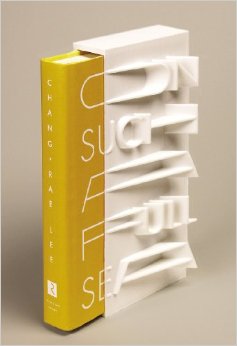
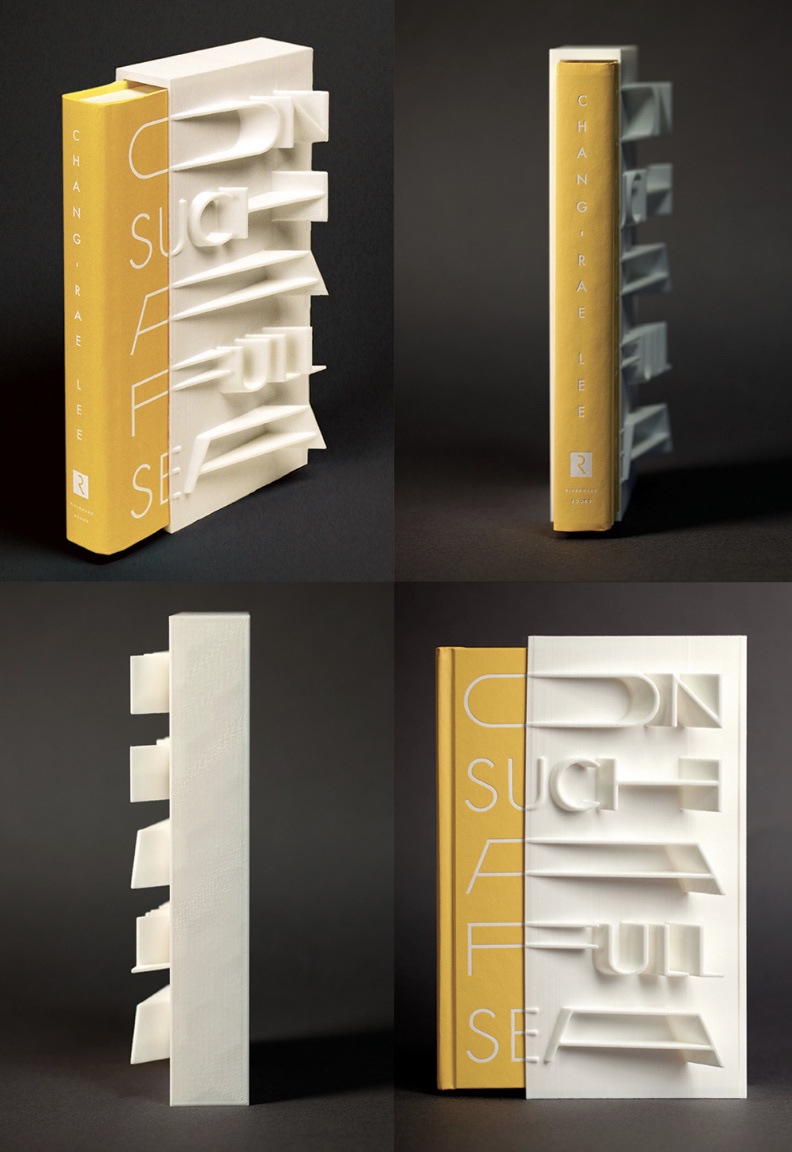
Riverhead art director Helen Yentus and members of the MakerBot team designed this slipcase for Lee’s novel. An edition of 500, made with the MakerBot® Replicator® 2 Desktop 3D Printer with MakerBot PLA filament, a bioplastic made of corn and fabricated by MakerBot in Brooklyn, New York, appeared in 2013 just before the trade edition in 2014.

Continue reading

Books On Books – Marlene MacCallum (II)

Marlene MacCallum’s latest artist’s books remind me of Claude Monet’s two series of paintings of the Rouen Cathedral’s façade and a field of haystacks. The series were influenced by Japanese ukiyo-e prints (“pictures of the floating world”). Rather than changing vantage points on Mt. Fuji, Monet used one perspective on one façade and sought to capture the instants of light and atmosphere on its surface at several different hours of the day. He rendered his vision of them with thick layers of paint, brushstrokes, and colors. MacCallum, too, has chosen a fixed-viewpoint: in her case, of Lake Ontario. She, too, follows different hours and, also, different seasons as Monet did with his haystacks. She, however, renders her vision with an intricate verbal-visual dance of metaphor, book structure, registration, photographic filters, print technique and paper.

sleep walk (2023)

Continue reading

Bookmarking Book Art – Movables Now and Then

In July this year, a video was posted as if in response to the conclusion of Kyle Olmon’s “Movable Book Artists” in Parenthesis 31 (2020):

There is little in the way of scholarship and criticism in regard to pop-up and movable books. Part of this is the stigma of being represented as a commercial novelty product or kiddie book by twentieth-century publishers. The explosion of artists’ books in the 1970’s gave rise to a subset of book artists that moved beyond the standard textblock to explore the book form in ways that surpassed commercial novelty publishing efforts. To date there is no consensus within the community on the classification of the types of book formats or even the terminology used when describing pop-up and movable elements in a work. Hopefully this will change when articles about pop-up artists’ books appear with more frequency and more scholarship is undertaken.

The Newberry Library’s Curator of Rare Books and Manuscripts Suzanne Karr Schmidt gave the Book Club of Washington a reprise of her 2023 exhibition “Pop-Up Books through the Ages”:

Continue reading