Books On Books Collection – David McLimans

Gone Wild (2016)

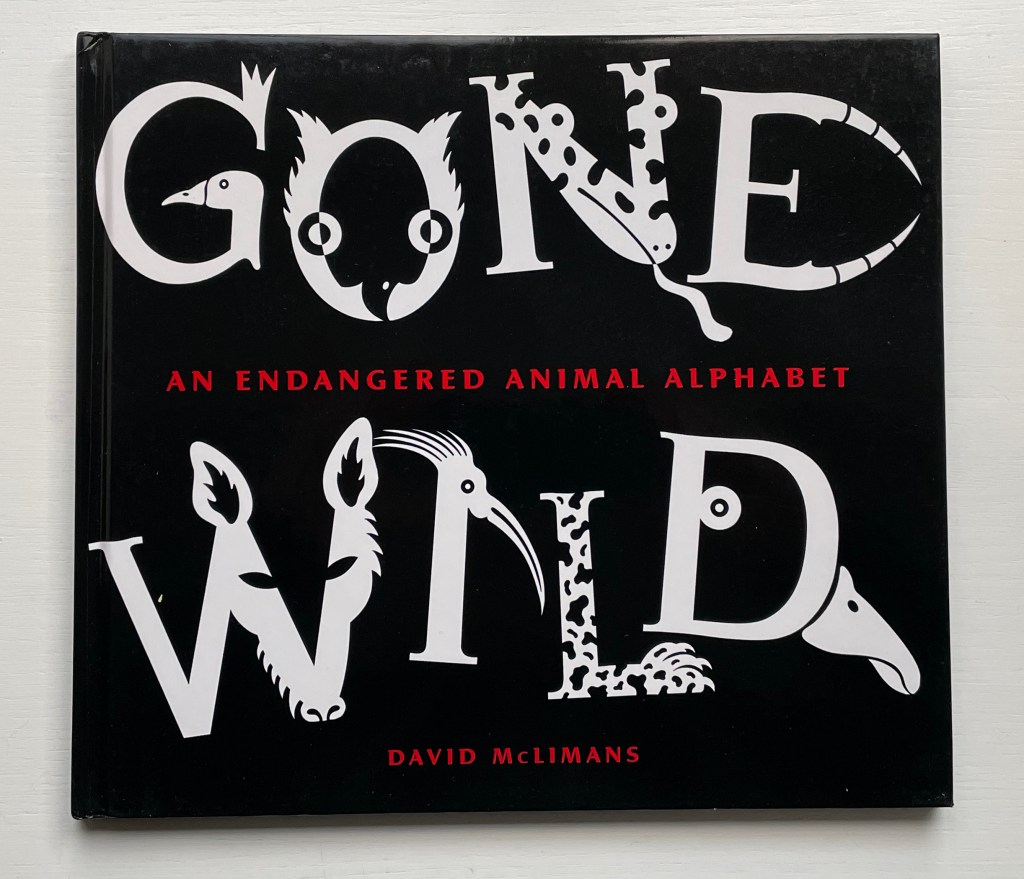
Gone Wild: An Endangered Animal Alphabet (2016)
David McLimans
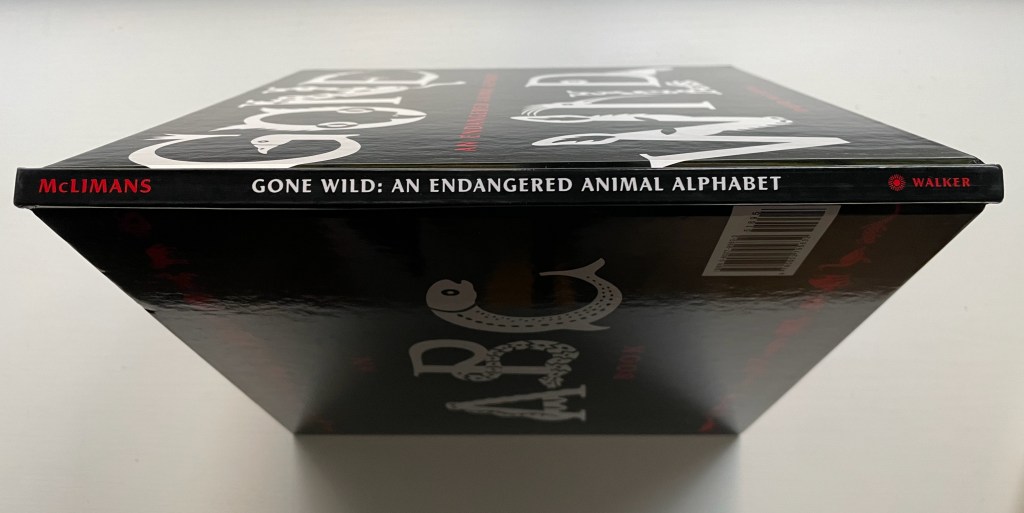
Casebound, illustrated paper over boards, illustrated doublures, sewn book block. Illustrated, debossed glossy paper dustjacket. H255 x W285 mm. 36 unnumbered pages. Acquired from Gargoyle Books, 25 August 2022.
Photos: Books On Books Collection.

In the history of children’s books, the alphabet looms large, and among alphabet books, animal alphabets make up the largest category. But why animals?

For learning and teaching letters, they are easily recognized and mnemonically effective. Illustrators can wrap them around letters, make them twist themselves into letters or hide them behind letters. Designers can hide them on tabs behind letters, make them pop out, parade them across leporellos (accordion books), let them lurk in tunnel books or put them on a paper disk to appear and disappear in a volvelle’s window. Writers can weave stories with animals and letters, put animals and letters together in puns and surprising scenarios or use alliteration and rhyme with them to reinforce letter recognition and reading. For authors more paleographically and philosophically inclined, the answer to “Why animals?” might be sought in the origins of the alphabet’s first letter as James Rumford does in There’s a Monster in the Alphabet (2002) and Don Robb and Anne Smith do in Ox, House, Stick (2007).

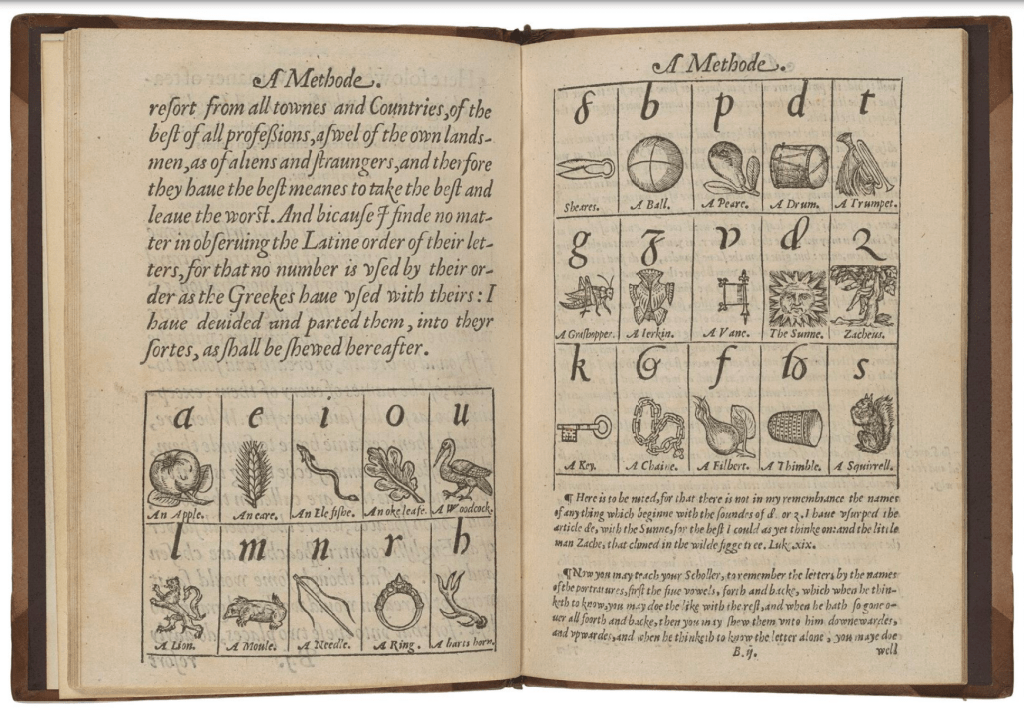
A Methode or Comfortable Beginning for All Vnlearned Whereby They May Be Taught to Read English : In a Very Short Time Vvith Pleasure: So Profitable As Straunge Put in Light by I.h. Chester Heralt (1750)
John Hart
Image from Folger Shakespeare Library

Whatever the cause, ever since John Hart’s A Methode, or Comfortable Beginning for All Unlearned (1570), which appears to be the first example of teaching the English alphabet with illustrations, we have had an explosion of imagination and wit choosing, finding or making up animals, birds, fish, insects and reptiles with which to decorate the letters, to make from letters (or make letters with), to be disguised with abstractions or to be hidden, revealed or popped out from behind letters. Now, in reverse over four centuries later, the alphabet has been mustered for teaching the endangered state of those creatures.

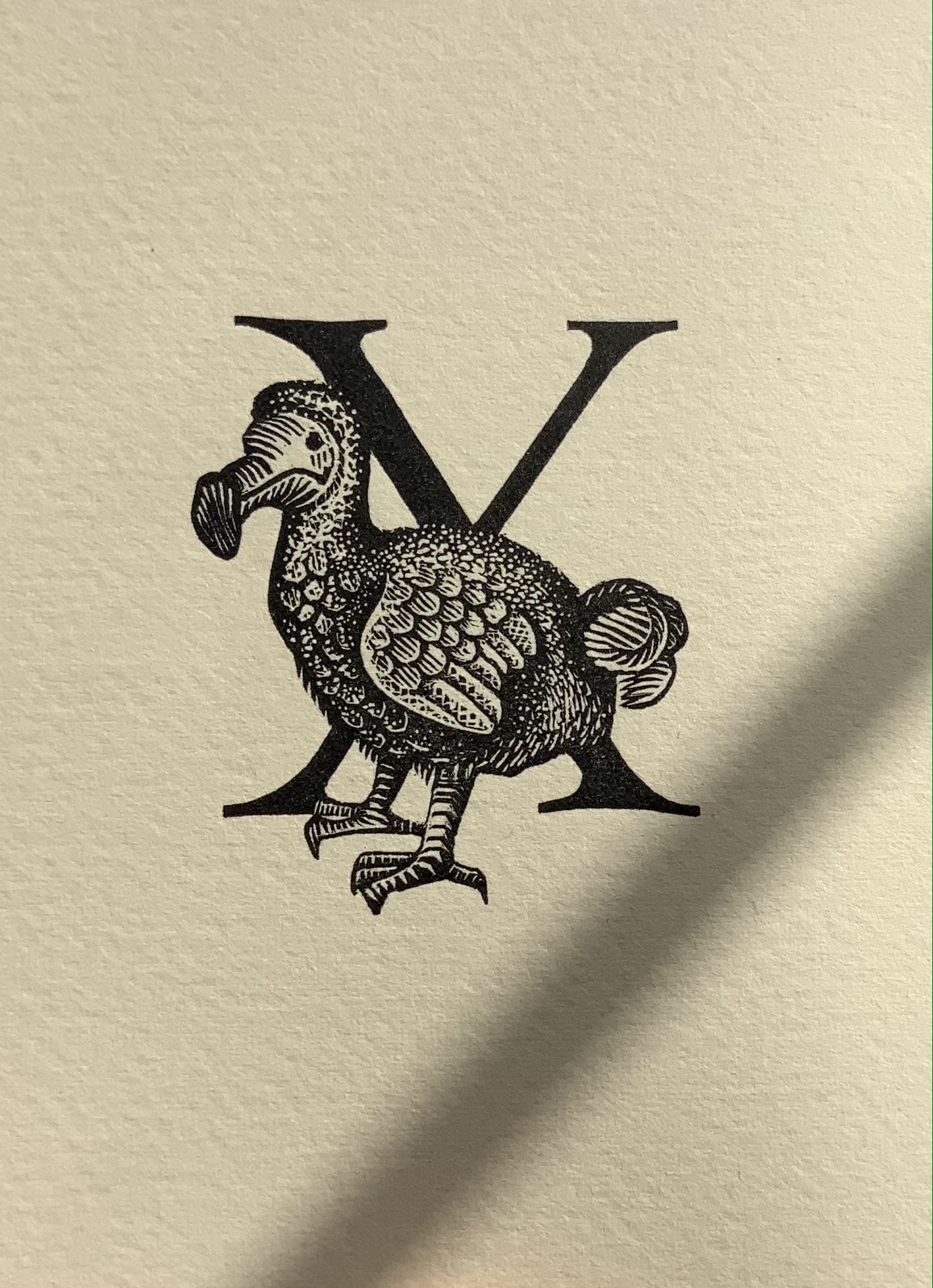
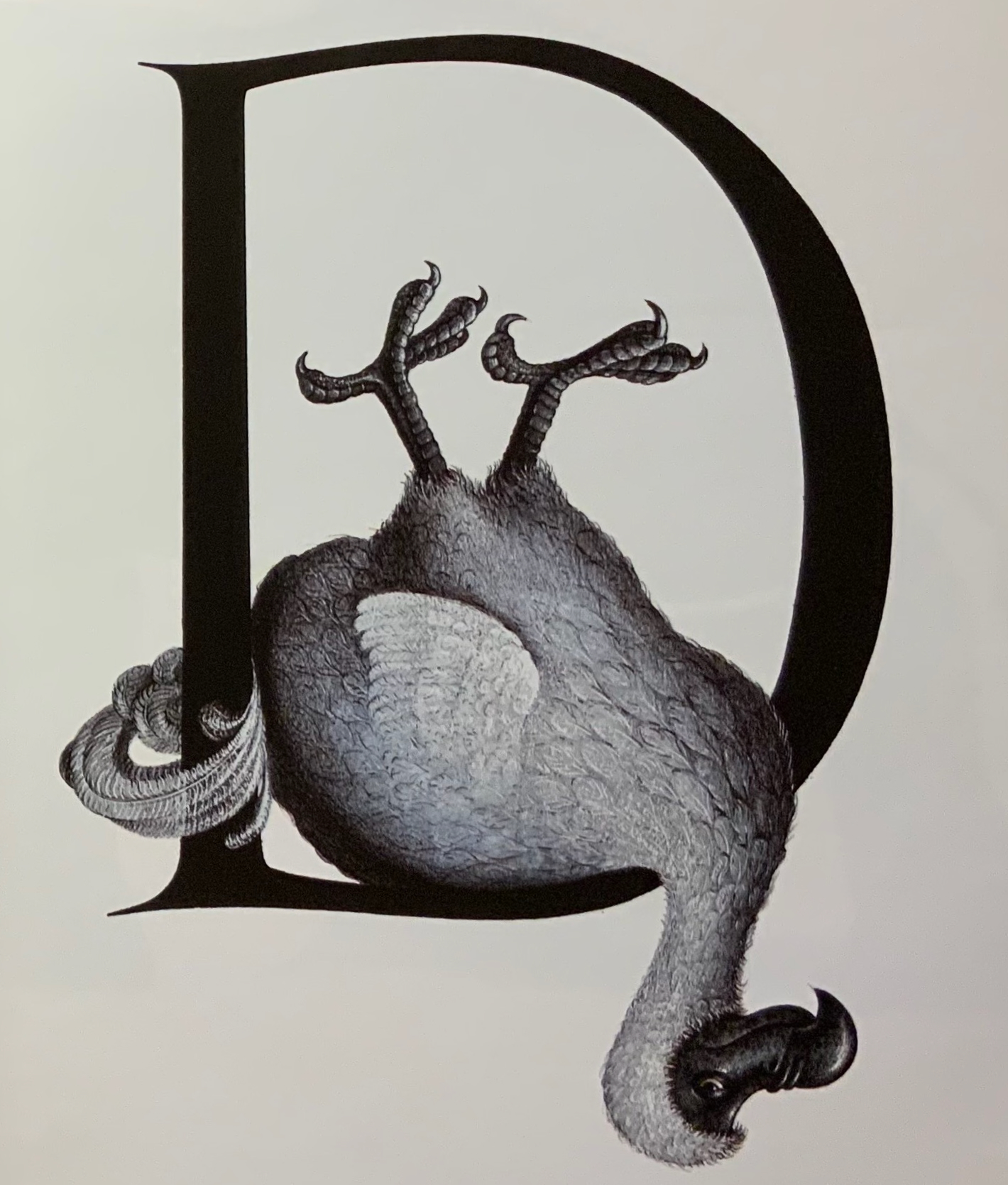
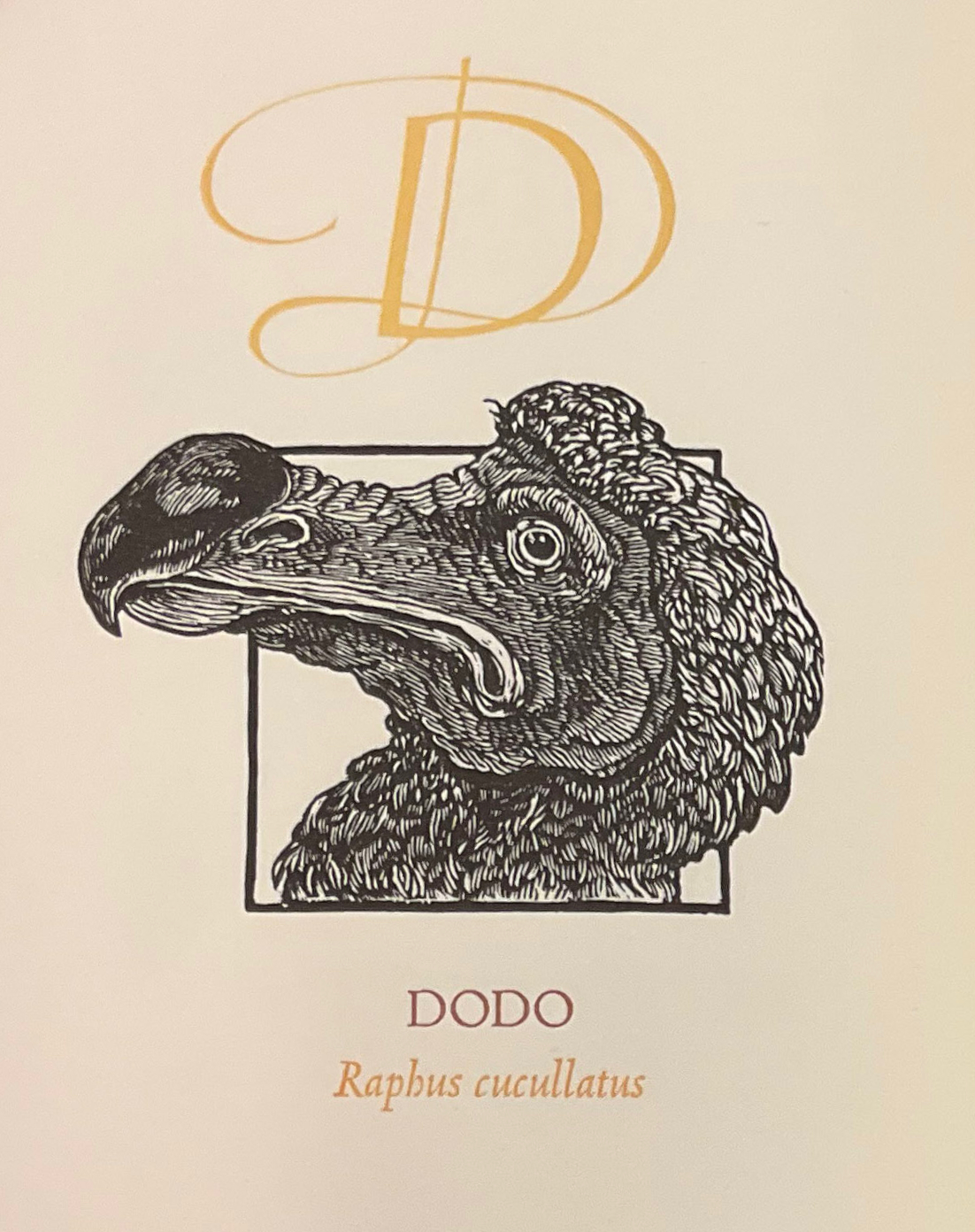
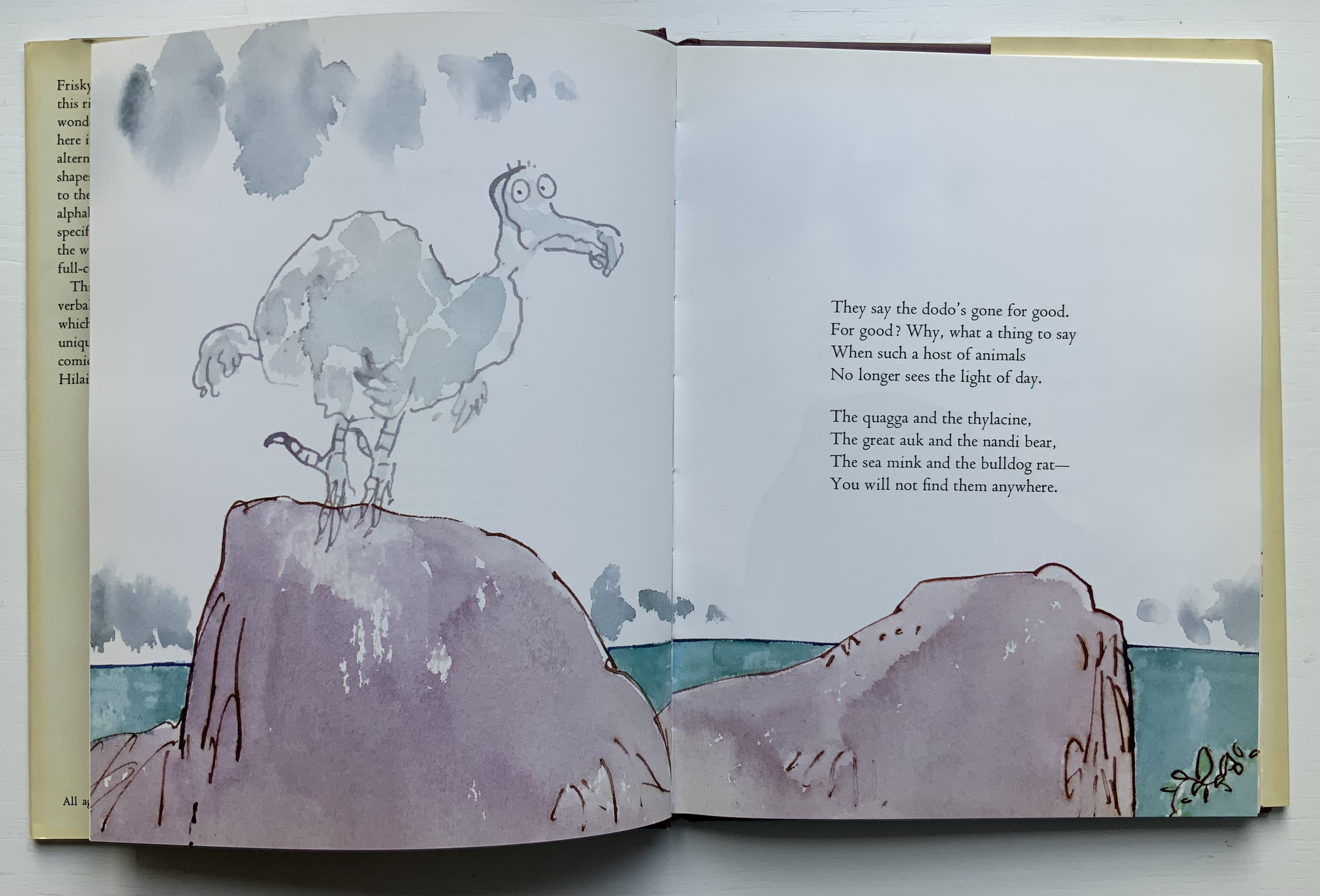
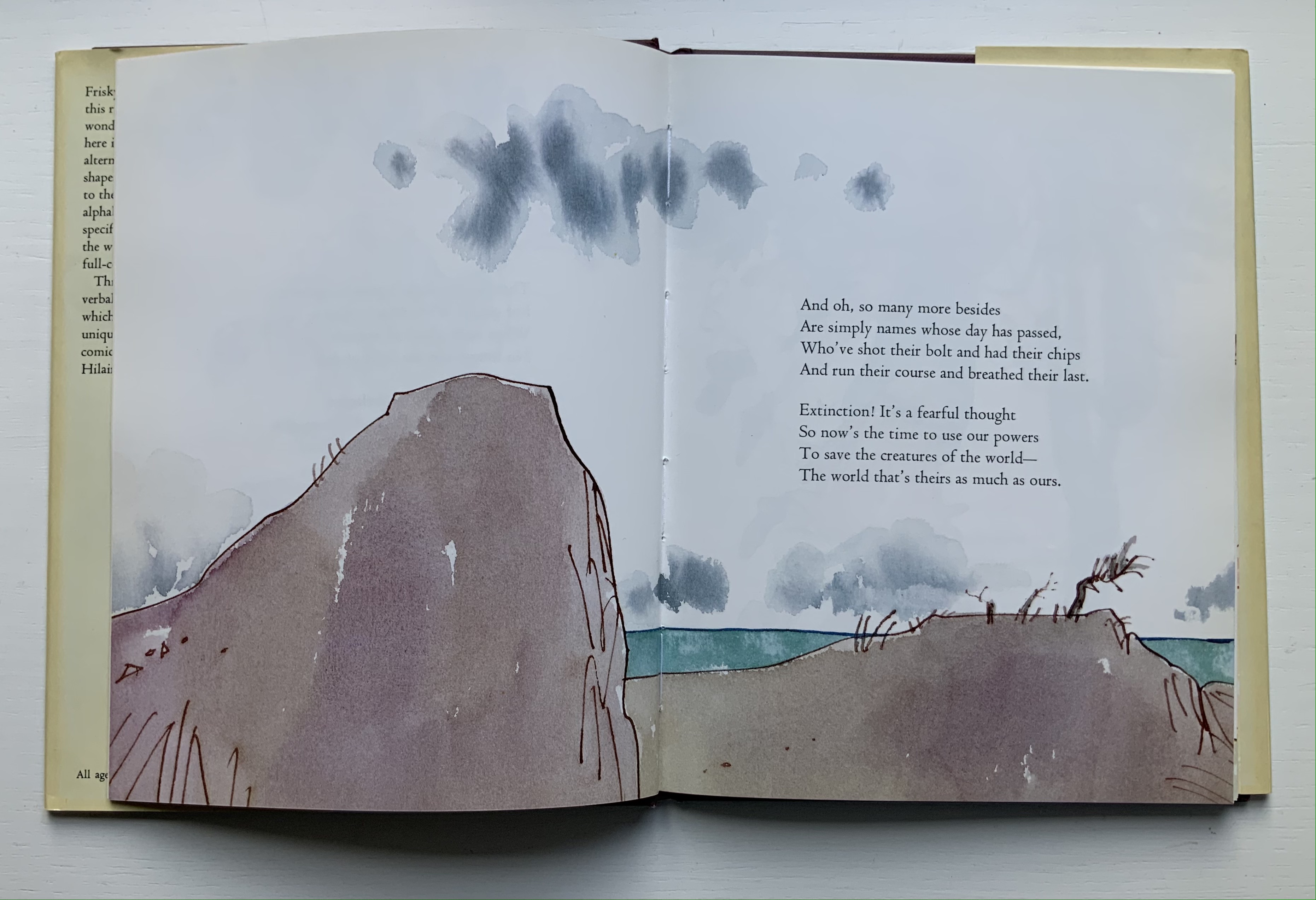
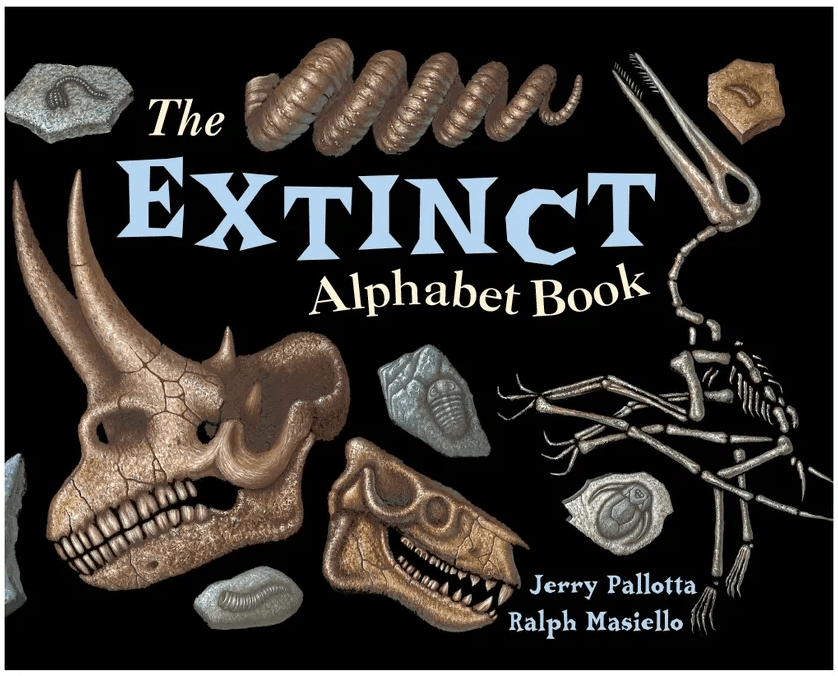
While E.N. Ellis, Bert Kitchen, the team of Alan Robinson and Suzanne Moore all allot only one letter and the dodo to make the point, Dick King-Smith and Quentin Blake together devote almost all of their Alphabeasts (1990) to examples of extinction, as do Jerry Pallotta and Ralph Masiello in The Extinction Alphabet Book (1993).

Left to right: from E.N. Ellis’s An Alphabet; Bert Kitchen’s Animal Alphabet; Alan Robinson and Suzanne Moore’s A Fowl Alphabet.

Quentin Blake’s page-by-page visual narrative married to Dick King-Smith’s opening verses in Alphabeasts.

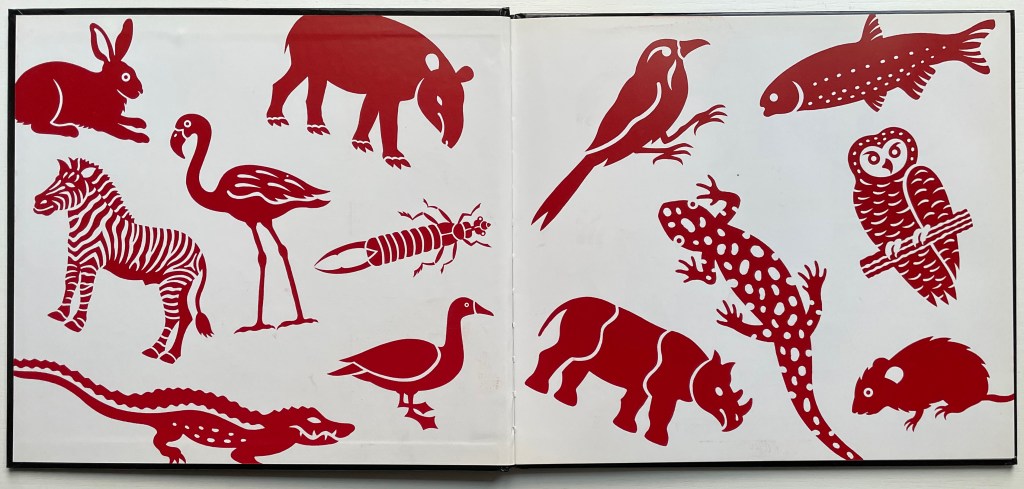
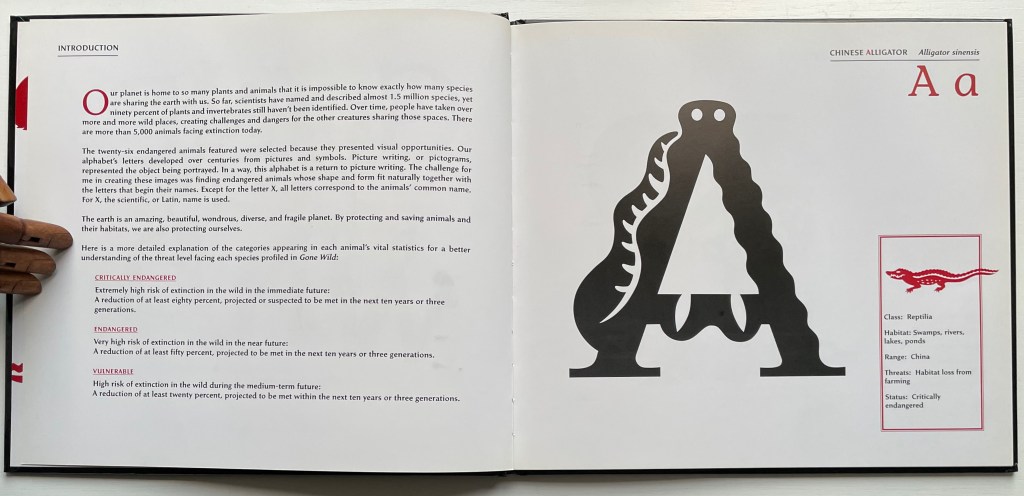
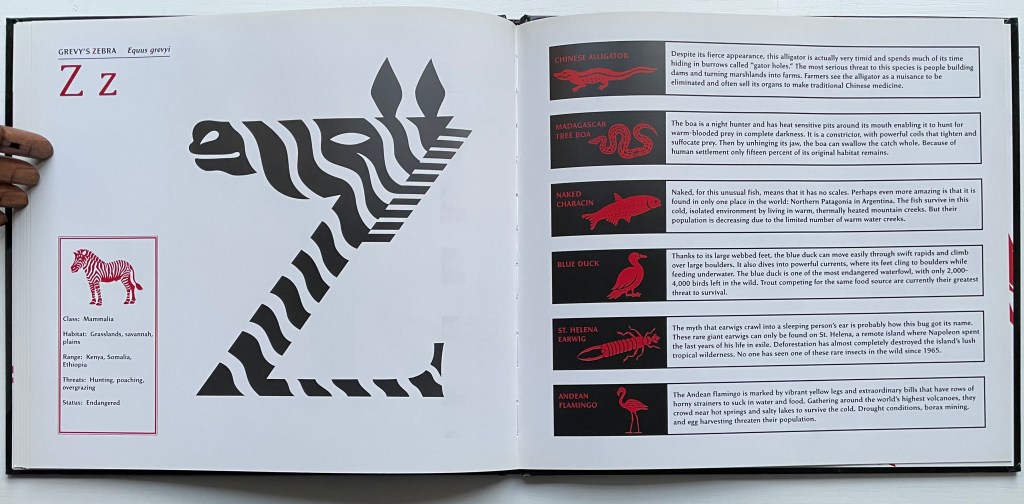
With Gone Wild, David McLimans adds a complex and subtle device to the explosion. The book is not so much about learning the alphabet with animals as learning about animals with the alphabet — or rather with “alphabetic art”. Wielding computer, pencil, pen, brush and India ink on bristol board, David McLimans redraws the alphabet’s capital letters to look like animals not yet extinct but on the Red List of the International Union for Conservation of Nature. Even the design of the traditional alphabet book subtly serves as a teaching tool about these animals. Notice how McLimans and John Candell, the book’s designer, turn the traditional presentation of uppercase and lowercase letters into a kind of running head that underscores the common and scientific names of each animal. Even the list of facts on each species — their habitats, geographic ranges, threats to survival and statuses — receives meaningful thematic design touches from the use of two-color printing — blood red and extinction black.

After the brief red-on-black thumbnails and descriptions following Grevy’s Zebra, McLimans provides further reading (online and in print). You have to go beyond a quick dive into the address he provides for the IUCN to find the Red List (see address above). There you will learn how up to the minute this book was in 2016 — and, unfortunately, still is.

Further Reading

Abecedaries I (in progress)“. Books On Books Collection.

Marie Angel“. 18 June 2021. Books On Books Collection. For letters decorated with animals.

Paul Cox“. 18 October 2021. Books On Books Collection. For an abstract animal alphabet.

E.N. Ellis“. 30 October 2022. Books On Books Collection. For letters decorated with animals other than the dodo.

Dick King-Smith and Quentin Blake“. In progress. Books On Books Collection. For letters in aid of animals rather than vice versa.

Miarko“. 27 August 2023. Books On Books Collection.

Suzanne Moore“. 14 January 2020. Books On Books Collection. For letters associated with other birds besides the dodo.

Don Robb and Anne Smith“. 26 March 2023. Books On Books Collection. For the animal-related origin of the alphabet.

James Rumford“. 21 November 2022. Books On Books Collection. For the animal-related origin of the alphabet.

Sharon Werner and Sharon Forss“. 30 December 2022. Books On Books Collection. For animals made from letters.

Chinese Alligator (Alligator sinensis Fauvel 1879)“. Encyclopedia of Life. Accessed 17 February 2023.

Grevy’s Zebra Equus grevyi Oustalet 1882“. Encyclopedia of Life. Accessed 17 February 2023.

Cossins, Jennifer. 2017. A-Z of Endangered Animals. Sydney N.S.W: Lothian Children’s Books. For letters in aid of animals rather than vice versa.

Haines, Mike. 2010. Wild Alphabet : An A to Zoo Pop-Up Book. New York NY: Kingfisher Books. For animals popping out from behind letters.

Hunt, Peter, and Butts, Dennis. 1995. Children’s Literature : An Illustrated History. Oxford: Oxford University Press. See, in particular, pp. 6-7.

Kitchen, Bert. 1991. Animal Alphabet. London: Walker Books. For letters decorated with animals other than the dodo.

Mackey, Bonnie and Hedy Schiller Watson. 2017. Alphabet Books : The K-12 Educators’ Power Tool. Santa Barbara California: Libraries Unlimited. For a brief history and extended categorization of alphabet books.

Markle, Sandra; Markle, William; and Dávalos, Felipe. 1998. Gone Forever! : An Alphabet of Extinct Animals. 1st ed. New York N.Y: Atheneum Books for Young Readers. For letters in aid of animals rather than vice versa.

Mullins, Patricia. 1995/1993. V For Vanishing : An Alphabet of Endangered Animals. Sydney N.S.W: Margaret Hamilton Books. For letters in aid of animals rather than vice versa.

Pallotta, Jerry, and Masiello, Ralph. 1993. The Extinct Alphabet Book. Watertown Mass: Charlesbridge. For letters in aid of animals rather than vice versa.

Twinem Neecy. 1994. Aye-Ayes Bears and Condors : An Abc of Endangered Animals and Their Babies. New York: W.H. Freeman.

Wakefield, D. R. 2009. An Alphabet of Extinct Mammals. Goole: Chevington Press. For letters in aid of animals rather than vice versa.

Wakefield D. R. 2010. Alphabet of Endangered Mammals : A Collection of Etchings Depicting Animals Considered Extinct in the Wild 2050. Goole: Chevington Press. For letters in aid of animals rather than vice versa.

Books On Books Collection – Gerald Lange

The Neolithic Adventures of Taffi-Mai Metallu-Mai (1997)

The Neolithic Adventures of Taffi-Mai Metallu-Mai (1997)
Gerald Lange and Rudyard Kipling
H216 x W260 mm. 55 pages with 17 additional illustrated page inserts. Edition of 150, of which this is #149. Acquired from the artist, 11 Febuary 2023.
Photos: Books On Books Collection. Displayed with the artist’s permission.

Gerald Lange’s choice of “How the First Letter Was Written” and “How the Alphabet Was Made” from Rudyard Kipling’s Just So Stories (1902) for this elaborate, delicate but robust edition was fitting. By 1997, he had founded the Bieler Press (1975), co-founded the Alliance for Contemporary Book Arts (1987) and edited its journal AbraCadaBrA for seven years, had been the Master Printer at USC Fine Arts Press and selected as the first recipient of the prestigious Carl Hertzog Award for Excellence in Book Design (1991) and was about to publish the first edition of his Printing Digital Type on the Hand-Operated Flatbed Cylinder Press (now in its fifth edition, 2018). In keeping with his interests leading up to this work, Lange letterpress-printed it from handset Monotype Pastonchi and a digitally altered version of Berthold Post Antiqua. More to the point, as he noted on the Bieler Press site, he chose the stories for “their affinity with subjects related to the lettering arts”. If that affinity is not clear enough from the text, Lange’s treatment underscores it in subtly ingenious ways.

Kipling attributes the drawings throughout to his heroine, Taffi and her father. Where others like Macmillan Children’s Books have rendered them boldly, Lange prints the primitive petroglyph-like images on separate Gampi sheets inserted between the folded Kitakata text leaves of the tortoise shell edge-sewn binding. Those text leaves are individually water colored on their reverse sides (urazaiki manner based on nihonga painting) so that the pictographs beneath reveal themselves through a striated layer. The color and striations are reminiscent of cave paintings. Additional Asian papers (Kasuiri and Chirizome for end sheets, Cogan Grass for covers) increase the work’s tactility — simultaneously soft and rough, flimsy and tough — and contribute a grassy smell redolent of the stories’ physical setting.

The quality and rightness of choices in structure, material and process have placed several of Lange’s works in The British Library, University of California (various), Columbia University, Harvard University, University of Minnesota, New York Public Library, Princeton University, Stanford University, Victoria and Albert Museum, Yale University and others. The initial reason bringing this particular work into the Books On Books collection was its representation of book art inspired by the alphabet. That Robin Price, several of whose works are also in the Books On Books collection, assisted with the design came as a bonus. That this is one of the last bound copies of The Neolithic Adventures of Taffi-Mai Metallu-Mai makes it a treasure.

Further Reading

Abecedaries I (in progress)“. Books On Books Collection.

Lyn Davies“. 7 August 2022. Books On Books Collection. Reference and fine print.

Timothy Donaldson“. 1 February 2023. Books On Books Collection. Reference.

Cari Ferraro“. Books On Books Collection. Artist’s book.

David J. Goldman“. Books On Books Collection. Reference.

Rudyard Kipling and Chloë Cheese“. 15 February 2023. Books On Books Collection. Illustrated children’s book.

James Rumford. 21 November 2022. Books On Books Collection. Illustrated children’s books.

Tommy Thompson“. 21 August 2022. Books On Books Collection. Reference.

Drucker, Johanna. 1999. The alphabetic labyrinth: the letters in history and imagination. New York, N.Y.: Thames and Hudson. Reference.

Ege, Otto. 1921/1998. The Story of the Alphabet, Its Evolution and Development… Embellished Typographically with Printer’s Flowers Arranged by Richard J. Hoffman. Van Nuys, CA: Richard J. Hoffman. A miniature. The type ornaments chosen by Hoffman are arranged chronologically by designer (Garamond, Granjon, Rogers) and printed in color.

Firmage, Richard A. 2001. The alphabet. London: Bloomsbury. Reference.

Fischer, Steven Roger. 2008. A history of writing. London: Reaktion Books. Reference.

Jackson, Donald. 1997. The story of writing. Monmouth, England: Calligraphy Centre. Reference.

Lange Gerald. 2018. Printing Digital Type on the Hand-Operated Flatbed Cylinder Press. Fifth edition, revised, updated & expanded ed. Seattle: Chatwin Books.

Robb, Don, and Anne Smith. 2010. Ox, house, stick: the history of our alphabet. Watertown, MA: Charlesbridge. Children’s book.

Robinson, Andrew. 1995. The story of writing. London: Thames and Hudson. Reference.

Rosen, Michael. 2014. Alphabetical: how every letter tells a story. London: John Murray. Reference.

Sacks, David. 2003. Language visible unraveling the mystery of the alphabet from A to Z. New York: Broadway Books. Reference.

Samoyault, Tiphaine. 1996, 1998 trans. Alphabetical order: how the alphabet began. New York: Viking. Reference and illustrated children’s book.

Books On Books Collection – Don Robb and Anne Smith

Ox, House, Stick (2007)

Ox, House, Stick: The History of Our Alphabet (2007)
Don Robb (text) and Anne Smith (ills)
Casebound, illustrated paper over boards. H280 x W217 mm. 48 pages.Acquired from The Saint Bookstore, 14 August 2022. Photos: Books On Books Collection.
Text copyright © 2007 by Donald Robb. Illustrations copyright © 2007 by Anne Smith/Lilla Rogers Studio.
Used with permission by Charlesbridge Publishing, Inc. 9 Galen Street, Suite 220, Watertown, MA 02472. (617)-926 0329  

A fair number of fiction and non-fiction children’s books on the history of the alphabet have made their way into the Books On Books Collection.

Of the fiction variety, there is Rudyard Kipling’s “Just So Story” of the alphabet’s invention: How the Alphabet Was Made (1983), illustrated by Chloe Cheese. Another fiction entry is James Rumford’s retelling of Cadmus’ visit to Crete in There’s a Monster in the Alphabet (2002) and William Joyce’s inventive The Numberlys (2014).

In the non-fiction category are William Dugan’s How Our Alphabet Grew (1972), Tiphaine Samoyault’s Alphabetical Order (1998), Renzo Rossi’s The Revolution of the Alphabet (2009) and the entry here: Don Robb’s and Anne Smith’s Ox, House, Stick.

Ox, House, Stick is scheduled to appear as part of an exhibition at the Bodleian Libraries in Oxford (opening 15 July 2023). “A is for Ox” designates the display case devoted to the question: Where did the alphabet come from? It’s not just a question for archaeologists, historians, linguists and paleographers — or children’s book authors and illustrators. It’s one generating repeated inspiration for book artists as shown by Abe Kuipers’ Letters (1971), Lanore Cady’s Houses & Letters (1977), another rendition of the Kipling tale by Gerald Lange in The Neolithic Adventures of Taffi-Mai Metallu-Mai (1997), designed by Gerald Lange and produced with Robin Price, Dave Wood’s Alphabetica (2002), Cari Ferraro’s The First Writing (2004), and Helen Malone’s Alphabetic Codes (2005).

Artists’ books share much with children’s books in general. They both play with form and structure. They play with words and images, sometimes images without words and sometimes just shapes. Almost always an attention to all the senses. Children’s alphabet books in particular display features that appeal to book artists: play with animals, the Babel of languages, bodies, calligraphy, colors, design (of letters, page and book) and, as above, alphabet origin stories. Viewing and exploring alphabet books and artist’s books side by side heightens the enjoyment and appreciation of both.

Further Reading

Abecedaries I (in progress)“. Books On Books Collection.

Lanore Cady“. 16 December 2022. Books On Books Collection. Artist’s book.

William Dugan“. 10 July 2023. Books On Books Collection.

Cari Ferraro“. 1 February 2023. Books On Books Collection. Artist’s book.

William Joyce“. 18 June 2021. Books On Books Collection.Illustrated children’s book.

Rudyard Kipling and Chloë Cheese“. 15 February 2023. Books On Books Collection. Illustrated children’s book.

Rudyard Kipling and Gerald Lange“. 16 April 2023. Books On Books Collection. Artist’s book.

Abe Kuipers“. 15 February 2023. Books On Books Collection. Artist’s book.

Helen Malone“. 23 July 2020. Books On Books Collection. Artist’s book.

Renzo Rossi“. 10 July 2023. Books On Books Collection.  Illustrated children’s book. [In progress]

James Rumford. 21 November 2022. Books On Books Collection. Illustrated children’s book.

Tiphaine Samoyault“. 10 July 2023. Books On Books Collection. Illustrated children’s book. [In progress]

Animal alphabets & artists’ books

Marie Angel, An Animated Alphabet (1996)

Leonard Baskin, Hosie’s Alphabet (1972)

Paul Cox, Abstract Alphabet: A Book of Animals (2001)

E.N. Ellis, An Alphabet (1985)

C.B. Falls, ABC Book (1957)

David L. Kulhavy & Charles D. Jones, A Forest Insect Alphabet (2013)

Enid Marx, Marco’s Animal Alphabet (2000)

Carol Schwartzott, ABC of Birds (2020)

Borje Svensson & James Diaz, Animals (1982)

John Norris Wood, An Alphabet in Praise of Toads & Frogs (2002)

Babel, alphabets & artists’ books

Golnar Adili, Father Gave Water/Baabaa Aab Daad (2022)

Islam Aly, 28 Letters (2013)

Brynja Baldursdottír, Fuþorc (1992)

Ellen Heck, A is for Bee (2022)

Tatyana Mavrina, Сказочная Азбука / Skazochnaia Azbuka / A Fairy Tale Alphabet (1969)

Claire Jeanine Satin, Alphabook (1998/99)

Ben Shahn, The Alphabet of Creation (1954)

Jana Sim, Both but between (2021)

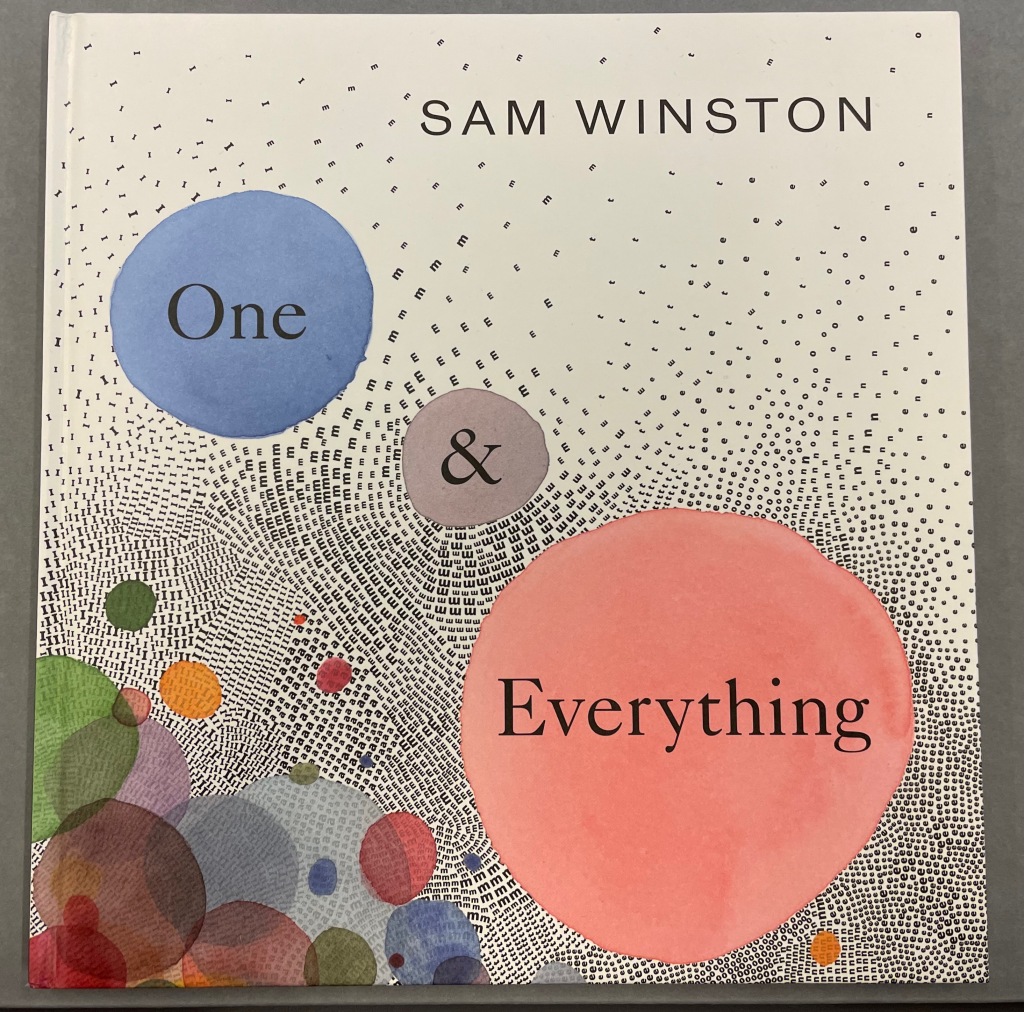
Sam Winston, One and Everything (2022)

Bodies & artists’ books

Anthon Beeke, Alphabet (1970)

Anthon Beeke & René Knip, Body Type (2011)

Edward Gorey, Figbash Acrobate (1994) In progress

Toshifumi Kawahara, Dancing Alphabet (1991)

Françoise and Douglas Kirkland, Physical Poetry Alphabet (2018)

Marie Lancelin, Gestes Alphabétiques (2014)

Lisa Merkin, Bodies of Language (2021)

Annette Messager, Mes Enluminaires (1988) [In progress]

Vítězslav Nezval, Abeceda/Alphabet (1926/2001)

Rowland Scherman, Love Letters (1975) [In progress]

Calligraphy, alphabets and artists’ books

Mari Angel, Marie Angel’s Exotic Alphabet (1992)

Tauba Auerbach, How to Spell the Alphabet (2007)

Rebecca Bingham, Lady Letters (1986)

Rebecca Bingham, Alphabet Salmagundi (1988)

Carol DuBosch, Alphabet of Calligraphic Tricks (2014)

Carol DuBosch, Embossed Alphabet Gallery (2019)

Francesca Lohmann, An Alphabetical Accumulation (2017)

Suzanne Moore, A Blind Alphabet (1986)

Edward Andrew Zega & Bernd H. Dams, An Architectural Alphabet : ABC (2008)

Colors, alphabets and artists’ books

Rebecca Bingham, Golden Alphabet (1986)

Rebecca Bingham, Defining the Rainbow (2018)

Sonia Delaunay, Alphabet (1972)

Carol DuBosch, Rainbow Alphabet Snowflake (2013)

Ursula Hochuli-Gamma, 26 farbige Buchstaben (1986)

Karen Hanmer, The Spectrum (2003)

Amy Lapidow, Spiralbet (1998)

Lisa McGarry, Be Amazed (and other words to live by) (2013)

Kveta Pacovská, A l’infini (2007)

Design (of letters), alphabets & artists’ books

Anne Bertier, Anne Dessine-moi une lettre(2004)

Roberto de Vicq de Cumptich, Bembo’s Zoo: An Animal ABC Book (2000)

Felice Feliciano & Jason Dewinetz, Alphabetum Romanum: The Letterforms of Felice Feliciano (c. 1460, 2010)

Jeff Morin and Steven Ferlauto, The Sacred Abecedarium (1999)

Andrew Morrison, Two Wood Press A-Z (2020

David Pelletier, The Graphic Alphabet (1996)

Bruce Rogers, Champ rosé (1933)

Kevin Steele, The Movable Book of Letterforms(2009)

Sharon Werner & Sharon Forss, Alphabeasties (2009)

Structures, alphabets & artist’s books

Kathleen Amt, Kaleidoscopic ABC’s (1991)

Matsumasa Anno, Anno’s Magical Alphabet (1981)

Marion Bataille, ABC3D (2008)

John Crombie, ABC in a maze (1987)

Carol DuBosch, Rainbow Alphabet Snowflake (2013)

Carol DuBosch, Embossed Alphabet Gallery (2019)

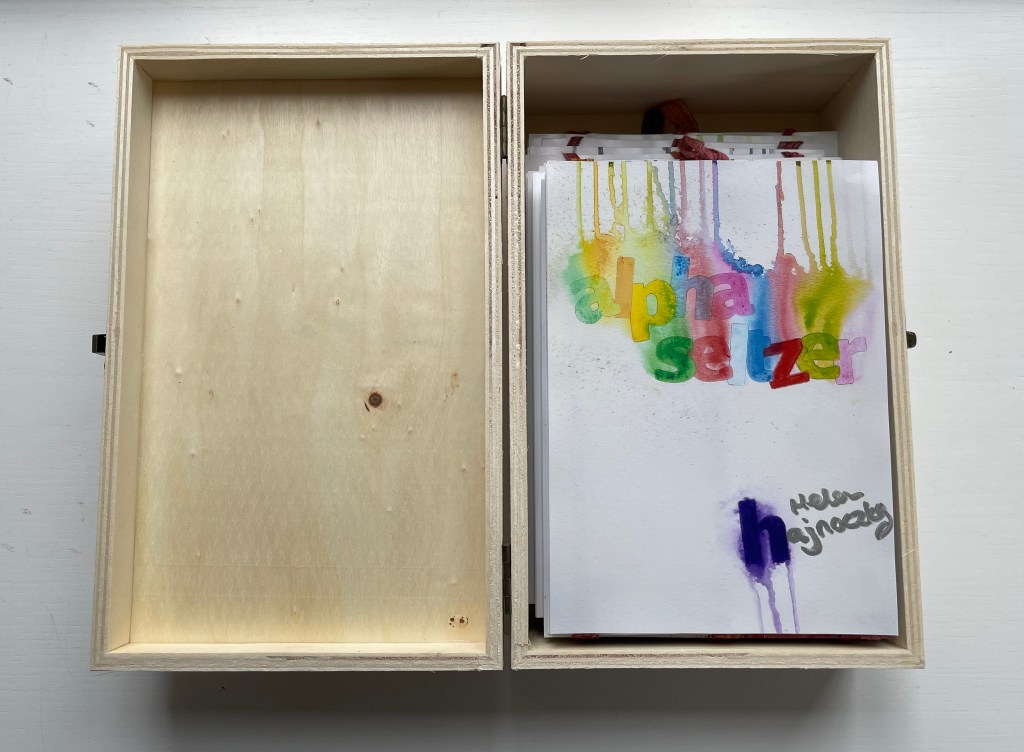
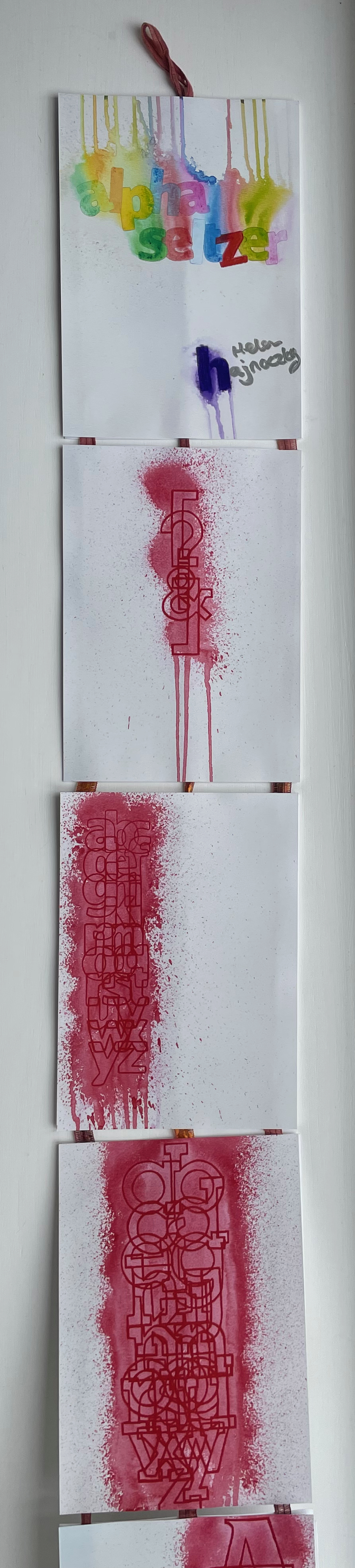
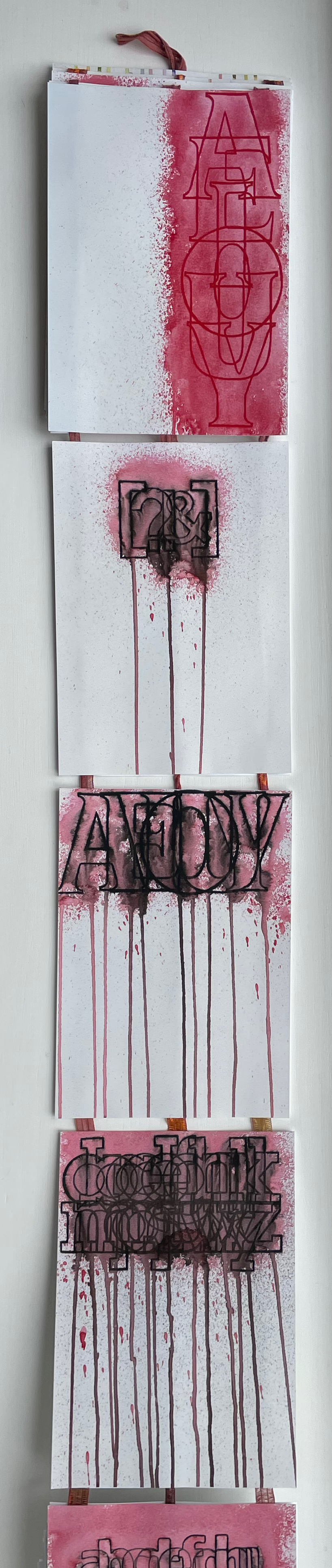
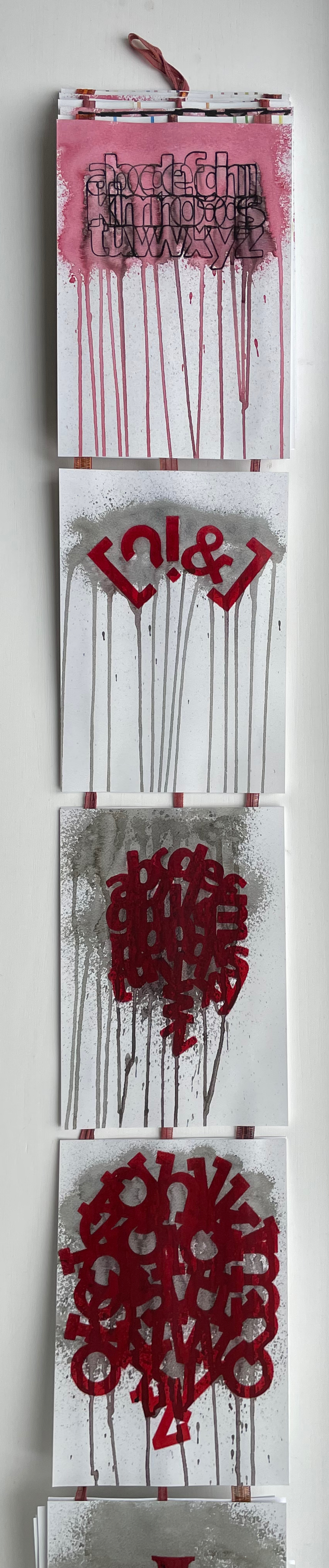
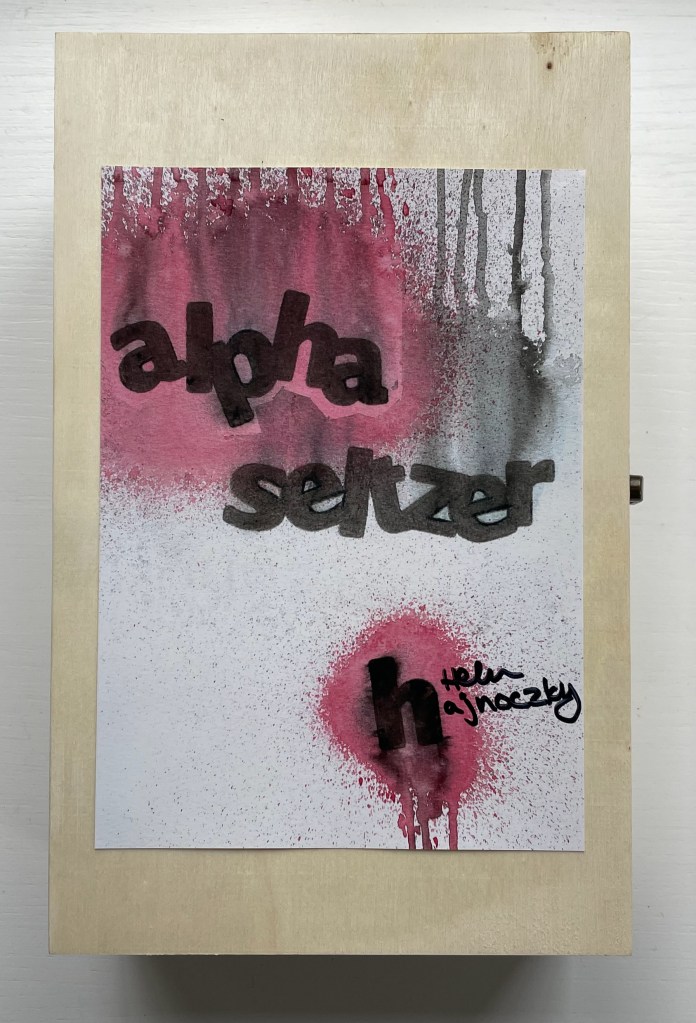
Helen Hajnoczky, alpha seltzer (2023)
Karen Hanmer, A2Z (2013)

Karen Hanmer, The Spectrum (2003)

Helen Hiebert, Alpha Beta (2010)

Ron King, Alphabeta Concertina majuscule (2007)

Ron King, alphabeta concertina miniscule (2007)

Ron King, The White Alphabet (1984) In progress

Ron King, ABC Paperweights (nd)

Amy Lapidow, Spiralbet (1998)

Scott McCarney, Alphabook 3 (1986)

Scott McCarney, Alphabook 10 (2015)

Scott McCarney, Alphabook 13 (1991)

Lisa McGarry, Twenty-six/Fragments (2012)

Patrice Miller (Edward Gorey), The Eclectic Abecedarium (2022)

Patrice Miller (Edward Gorey), Figbash Acrobate (2023)

Jeff Morin and Steven Ferlauto, The Sacred Abecedarium (1999)

Jeff Morin and Steven Ferlauto, Sacred Space (2003)

Moveable Book Society, A to Z Marvels in Paper Engineering (2018)

Bruno Munari, ABC con fantasia (2008)

Bruno Riboulot, ABCD’Air (2005)

Merrill Shatzman, Calligrafitti #3 (2011)

Borje Svensson & James Diaz, Letters (1982)

Emmett Williams, abcdefghijklmnopqrstuvwxyz (1963) In progress

Books On Books Collection – John Norris Wood

An Alphabet in Praise of Frogs and Toads (2002)

 An Alphabet in Praise of Frogs and Toads (2002)
John Norris Wood
Quarter red morocco over illustrated paper boards, lettered in gilt to spine, housed in black cloth and brown paper slipcase. Slipcase: H245 x W217 x D 20 mm. Book: H235 x W215 mm. 40 pages. Edition of 360, of which this is No. XXI of XXXVI, hand colored by Sylvia Stokeld under the artist’s supervision. Acquired from Sophie Schneideman Rare Books & Prints, 30 March 2022.
Photos: Books On Books Collection.

A passionate lover of animals, [John Norris Wood] opened his home to them (literally: he converted a bedroom to ‘jungle’ conditions, to support tree frogs and snakes, and housed something approaching a private zoo in his extended garden) and maintained an unexpected aviary on the the top floor of the 1960s Brutalist Royal College of Art building. He also undertook natural history expeditions around the world. Writing and broadcasting for television on a number of natural history subjects, he acted as a consultant to the iconic 1979 BBC television series presented by David Attenborough, Life on Earth. Also a committed conservationist, he supported environmental campaigners including Friends of the Earth, the World Land Trust, Fauna and Flora International, the Programme for Belize, the Egyptian Tortoise Appeal and the Environmental Investigation Agency. [Royal College of Art]

Among the subgenres of alphabet books, the animal abecedary reigns. From the animal kingdom, though, frogs and toads are not the highest ranking of the sub-subgenres. Among artists’ books from fine presses, however, this counts among the finest in the Books On Books Collection. Norris Wood drew from life, but it is hard to credit that all 26 of these creatures inhabited his bedroom!

Further Reading and Viewing

Abecedaries I (in progress)“. Books On Books Collection.

Pick, Xavier. 25 July 2021. “In Conversation with the late John Norris Wood (2012)“. Video.

Books On Books Collection – Serena Smith

Ekphrasis (2020)

Ekphrasis (2020)
Serena Smith
Case bound with letterpress printed cloth cover H700 x W460 x D20 mm. 23 folios: 2 end leaves, 1 title, 10 hand-colored images printed on to 225gsm Simili Japon, 10 bronzed text printed onto translucent paper. Edition of 5, of which this is #5. Acquired from the artist, 5 January 2023.
Photos: Books On Books Collection. Photos and videos: Courtesy of the artist. Displayed with permission of the artist.

The word ekphrasis refers to the literary practice of verbally representing a visual representation. Think of the poets Keats, Auden and Jarrell using words to “recreate”, re-present, evoke or respond to works of art — an antique urn, a painting by Brueghel, or Donatello’s sculpture of David. Novelists, too. Think of Henry James’ The Ambassadors in which the narrator Lambert Strether describes an imagined stroll through a landscape painting he’s viewing.

Serena Smith has a different point of departure for Ekphrasis. Her dwelling and studio back onto a Leicestershire country park — “part arboretum and part community”. Highlighted with maple, Tibetan cherry and Himalayan birch, the planted woodland of ash and beech with its defined paths offers up “artefact of living trees” as much a constructed work of visual art as any urn, painting or sculpture.

In this bookwork, ten pages of text printed on translucent paper overlay ten images printed from stone. The text reflects on the “wandering, watching and thinking that happens in the parkland”, but then it turns internally to the studio, the ephemera collected from the woodland, and the stage before the images come into being. The process of making becomes an object of the ekphrastic text: smoothing the stone, using a tool to guide the pencil, sharpening the pencil. And gradually the work reveals itself as a self-reflexive meditation on natural and artificial creation, on word and image, and on trace lines of growth and decay.

The translucent pages of text create a palimpsest-like effect over the folios of images. Until the translucent folio turns, the text is indecipherable. As the pages turn, the textual and pictorial play off one another.

Close-up of text

Single-page view of first lithograph

The lithographic image divides into three parts. The jigsaw-like lines around the image of bark come from a stencil tool, and the result chimes with planning lines of landscape architecture, feeding insects’ tracks in the bast, the shape of lichen and ultimately the Ogham runes mentioned in the text and depicted at the end.

First of three-part close-up of the first lithograph

Second of three-part close-up of the first lithograph

Third of three-part close-up of the first lithograph

Glossary

The following ekphrastic words bring the lithographic process to life. Taken together, the glossary, Smith’s descriptive text, and its ekphrastic focus on the lithographic process transform her stone into a kind of Ogham stone itself.

As the drawing progresses I wonder if the hands of Celtic scribes also tired, whilst scoring the lines of Ogham script into fragments of wood. Cutting short repeated grooves against the grain an effort would have been felt, different to that which allowed the tool to willingly travel along the pathways of growth. Perhaps they too made use of a device to control the errant gesture, and aid inscription of measured lines of written text. This can only be speculated.

What the remaining Ogham stones do tacitly share are ciphered incisions that scale their lichen clad faces with a purposeful regularity that resists embellishment. Contouring the edges, the cut lines navigate uneven corners without detour, and prompt me to ask if these scribes, flesh pressed into stone, also briefly held their breath while negotiating the changes in direction prescribed by the matrix.

A version of the text and all of the images can be found in Smith’s brief essay published by IMPACT Printmaking Journal (Spring 2020) and in the following slide show (courtesy of the artist).

Ekphrasis pp. 34,35 detail

Further Reading

Abecedaries I (in progress)“. Books On Books Collection.

Brynja Baldursdottír“. 10 March 2023. Books On Books Collection.

Notes on “Inverse Ekphrasis” as a way into book art“. 16 June 2022. Bookmarking Book Art.

Ager, Simon. “Ogham“. Omniglot: The Online Encyclopedia of Writing Systems and Languages. Accessed 10 February 2023.

Tompkins, Willis W. 1960. Ogham : A Brief Account of the Language and Its Alphabets, Usages by the Druids, and Some Applications in Cryptology ; the Whole Compiled from Various Sources, Edited, Arranged and Furnished with Examples of Alphabets Engraved on Wood. New York: Ogham.

Graves, Robert, and Eileen Hogan. 1978. Ogham : Each Letter of the Alphabet Is Presented with a Colour and Bird All Three Beginning with the Same Initial ; the Whole Alphabet Forms a Calendar of Seasonal Bardic Lore Based on an Interpretation by Robert Graves of the Cyphers Used in the Book of Ballymote. London: Burnt Wood Press.

Books On Books Collection – Brynja Baldursdottír

Fuþorc (1992)

Fuþorc (1992)
Brynja Baldursdottír
Casebound in brushed and inked 1.6 mm zinc plate cover. Decorated doublures. Closed: H290 x W160 mm. Open: 320 mm. 32 folios. Edition of 144, of which this is #98. Acquired from the artist, 15 November 2021.
Photos of the work: Books On Books Collection. Displayed with permission of the artist.

Fuþorc, the name of Brynja Baldursdottír’s artist’s book, is the word made from the first six runes of the Runic alphabet, much as alphabet derives from the first two Greek letters alpha and beta. The shield-like covers, laid face down, display all twenty-four runes of the fuþorc. Over time and geography, the runes have changed in number, spelling and meaning, reflected in the explanatory and interpretive Norwegian, Icelandic and Anglo-Saxon versions of the “Rune Poem”. Baldursdottír’s version is “The Old English Rune Poem”, translated by Marijane Osborn and Stella Longland, which is we have the Old English fuþorc rather than the Scandinavian fuþark.

The Runic alphabet divides into three equal parts or ættir (pl. of ætt). In Fuþorc, Baldursdottír signals the beginning of each ætt with a double-page spread in which the eight runes of the ætt arc over a central image containing the ætt’s first letter. Different attributes attach to the ættir and each of the runes they embrace. Using layout of the text and imagery embedded in or surrounding the rune, Baldursdottír has evoked these attributes.

So, for the Ætt of Feoh, figures dance around the Maypole-like rune feoh, which is the first letter of Freyr and Freya who rule over this ætt associating it with agriculture, fertility and sexuality. Although Baldursdottír has Thor ruling over the Ætt of Haegl, it is the Watcher god and goddess Heimdall and Mordgud who rule over it. The seacliff-dwelling goat refers to Heimdall’s usual watch post. The snake to the left of the goat may be Jörmungandr, for which Thor goes fishing in the Prose Edda, which explains the presence of Thor’s hammer in the upper right of the image. Haegl means “hail”, and Heimdall is associated with the kind of disruptive weather threatening the ship at the foot of the image. For the Ætt of Tir, the arrowhead or spear shape of the rune evokes Tyr, the god of war, who rules over this ætt. By shaping each ætt with one of the fundamental geometric shapes of square, circle and triangle, Baldursdottír highlights the elemental nature of the Runic alphabet.

Ætt of Feoh, Ætt of Haegl, Ætt of Tir

In displaying each rune, it is as if Baldursdottír invites the viewer to peer through a rune-shaped stencil to that other world of associated attributes, but as with most divination, the images are partial and ambiguous. Is that a horse or a dragon behind feoh? Hail descending and melting behind haegl? A warship’s prow behind tir?

The runes feoh, haegl and tir

No doubt, more familiarity with the lore of runes would increase the reward of close attention to each image. But many are easily accessible. The image of horses shows well enough through the rune eh (or ehwaz), which means horse, horses or transport, but if there is any doubt, the explanatory text is laid out like reins and a bridle.
The book closes with the Valknut, sometimes called Odin’s knot, at the center of the Acknowledgments. Although runes and symbols such as this may be susceptible to misappropriation, the Acknowlegments themselves serve the Books On Books Collection as a welcome reminder that Fuþorc was first seen among other treasures at Ron King’s home.
Further Reading

Abecedaries I (in progress)“. Books On Books Collection.
Ron King“. 1 March 2021. Books On Books Collection.

Serena Smith“. 10 March 2023. Books On Books Collection.

King, Bernard. 2000. Runes : An Introductory Guide to Interpreting the Ancient Wisdom of the Runes. Rev. ed. Shaftesbury: Element, 2000. New Perspectives (Element).

Looijenga, Tineke. 2003. Texts & Contexts of the Oldest Runic Inscriptions. Leiden: BRILL, 2003.

Osborn Marijane and Stella Longland. 1982. Rune Games. London: Routledge & Kegan Paul.

Books On Books Collection – Peter Criddle

Commend Me to the Ampersand (2018)

Commend Me to the Ampersand (2018)
Peter Criddle
Booklet, sewn saddle-stitch, untrimmed at the head. H110 x W154 mm. 10 folios, untrimmed at the head. Acquired 8 September 2022.
Photos: Books On Books Collection.

Like Andrew Morrison’s Ampersand& (2007), also in the Books On Books Collection, Peter Criddle’s booklet is a design festival of ampersands. In his celebration, Criddle uses metal & wood ampersands (whereas Morrison’s are all wooden) , but his effort’s chief distinction is the revival of an extended piece of doggerel, first presented in Punch Magazine (1869).

He’s never bothered, like A.B.C.
In Index, Guide, and Directorie:
He’s never stuck on a Peeler’s coat,
Nor hung to show where the folks must vote.
No, my nice little Amperzand,
My plump and curly Amperzand,
When I’ve a pen in a listless hand,
I’m always making an Ampersand!

Nothing for him that’s starch or stiff,
Never he’s used in scold or tiff,
State epistles, so dull and grand,
Mustn’t contain the shortened and.
No, my nice little Amperzand,
You’re good for those who’re jolly and bland,
In days when letters were dried with sand
Old frumps wouldn’t use my Amperzand!

But he is dear in old friendship’s call,
Or when love is laughing through lady-scrawl:
‘Come & dine, & have bachelor’s fare.’
‘Come & I’ll keep you a Round & Square.’
Yes my nice little Amperzand
Never must into a word expand,
Gentle sign of affection stand,
My kind, familiar Amperzand.

‘Letters Five do form his name:’
His, who Millions doth teach and tame:
If I could not be in that Sacred Band,
I’d be the affable Amperzand.
Yes, my nice little Amperzand,
And when PUNCH is driving his five-in-hand,
I’ll have a velocipede, neatly planned
In the shape of a fly-away Amperzand.

For now, Criddle’s may be “the last word on the ampersand”.

Further Reading

The Last Word on the Ampersand“. 27 June 2020. Books On Books Collection.

Andrew Morrison“. 15 September 2021. Books On Books Collection.

Books On Books Collection – Marie Dern

William Caslon’s Typographic ABC (1991)

William Caslon’s Typographic ABC (1991)
Marie Dern
Double-sided leporello. H11 x W14 mm. 28 panels. Edition of 55, of which this is #1. Acquired from Bromer’s, 5 February 2023.
Photos: Books On Books Collection.

One of the most common precursors to the codex, the leporello, accordion or concertina structure suits this celebration of what is considered the first original English typeface, designed by William Caslon (1692–1766), used to set both the Declaration of Independence and the U.S. Constitution, and so dominant a font since the 18th century that it prompted its own dicta: “When in doubt, use Caslon”. In Marie Dern’s hands, though, the accordion structure is anything but common. Rather than zigzag folding a long strip of paper, she has attached her panels to two parallel strips of linen tape and left just enough space between the pairs of panels to have the hinged leporello fold down into a precise oblong shape.

Caslon has featured in such outstanding books as Oliver Byrne’s The First Six Books of the Elements of Euclid: In Which Coloured Diagrams and Symbols Are Used Instead of Letters (1847), nearly an artist’s book in its own right. Dern might have been more immediately inspired, however, by Chris Van Allsburg’s whimsical children’s book The Z was Zapped: A Play in Twenty-six Acts, Performed by the Caslon Players (1987). From the start, bending the alphabet full circle to the ampersand, Dern’s own whimsy extends beyond the letters themselves.

L: from Byrne’s The First Six Books. Typeroom, 23 January 2020. Accessed 8 March 2023.
R: from Van Allsburg’s The Z was Zapped. Photo: Books On Books Collection.

Given its age and dignity, Caslon attracted a fair amount of rock throwing from designers (especially in the 20th century). While Dern may have her own whimsical fun with Caslon, she doesn’t let the rock-throwers off scot free. Her Caslon’s G puts Frederic Goudy on notice that size does matter, and the Caslon S reminds Eric Gill of the emperor’s new clothes.

Other alphabetical typeface celebrations in the Books On Books Collection include Nicolas McDowall’s A Bodoni Charade (1995), Roberto de Vicq de Cumptich’s Bembo’s Zoo (2000) and Sharon Werner & Sharon Forss’ Alphabeasties and Other Amazing Types (2009).

Further Reading

Abecedaries I (in progress)“. Books On Books Collection.

Roberto de Vicq de Cumptich“. 12 February 2021. Books On Books Collection.

Sharon Werner & Sharon Forss“. 20 December 2022. Books On Books Collection.

Nicolas McDowall”. 10 December 2022. Books On Books Collection.

Nicholas Rougeux“. 19 November 2022. Books On Books Collection.

Chris Van Allsburg“. 12 December 2022. Books On Books Collection.

Byrne, Oliver, and William Pickering. 1847. The First Six Books of the Elements of Euclid: In Which Coloured Diagrams and Symbols Are Used Instead of Letters. London: W. Pickering.

Morison Stanley. 1997. Letter Forms : Typographic and Scriptorial : Two Essays on Their Classification History and Bibliography. Point Roberts WA: Hartley & Marks. See pp. 27-28 for the first stones cast in 1937.

Morison, Stanley. 1999. A Tally of Types New ed. [3rd ed.] ed. Boston: D.R. Godine. Caslon is not even included in Morison’s “tally” of seventeen typefaces. It appears on pages 24-27 in his introduction “revised & amplified” by Phyllis M. Handover. Even there they enlist Bruce Rogers, Emery Walker and William Morris to chuck additional rocks in Caslon’s direction on pages 37-38.

Books On Books Collection – Lisa McGuirk

If Rocks Could Sing: A Discovered Alphabet (2011)

If Rocks Could Sing: A Discovered Alphabet (2011)
Leslie McGuirk
Casebound, glossy paper over board, illustrated doublures. H21 x W24 mm. 48 pages. Acquired from Paper Cavalier, 2023.
Photos of the book: Books On Books Collection, displayed with permission of artist. © 2011 by Leslie McGuirk. Photos in the book by Denise Ritchie.

Along the Victor Hugo-esque theme of “alphabets all around”, here is a beachcomber’s eye for rock shapes with which to construct not only a complete alphabet but also the images necessary for an abecedary.

Not only a b-shaped stone, but also one shaped like a bird. Likewise a c-shaped stone, but this time a miniature sofa to accommodate the resident stone with a shape to complete the phrase.

McGuirk has spotted stones for verbs as well as adjectives and nouns — all equally astonishing in their serendipity, humor and insight. Perhaps the last is best: the match of the z-shaped stone with a word beginning with z that matches a numeral-shaped stone that, arguably, reproduces the concept at its eroded center.

Further Reading

Abecedaries I (in progress)“. Books On Books Collection.

Robert Beretta“. 18 February 2023. Books On Books Collection.

Kenneth Hardacre“. 18 February 2023. Books On Books Collection.

Elliott Kaufman“. 21 January 2023. Books On Books Collection.

Ellen Sollod“. 29 December 2022. Books On Books Collection.

De Looze, Laurence. 2018. The Letter and the Cosmos: How the Alphabet Has Shaped the Western View of the World. Toronto: University of Toronto Press.

Hugo, Victor, and Nathan Haskell Dole, trans. 1890 (1895). Victor Hugo’s Letters to His Wife and Others (The Alps and the Pyrenees). Boston, MA: Estes and Lauriat.

Books On Books Collection – Maywan Shen Krach and Hongbin Zhang

D is for Doufu: An Alphabet Book of Chinese Culture (1997)
Maywan Shen Krach and Hongbin Zhang
Dustjacket, cased and perfect bound with decorative doublures. H305 x W 258 mm. 32 pages. Acquired from Ultimate Treasures, 9 November 2022.
Photos: Books On Books Collection.
Text copyright © 1997 by Maywan Shen Krach. Illustrations copyright © 1997 by Hongbin Zhang. Permission arranged with Shen’s Books, an imprint of LEE & LOW BOOKS Inc., New York, NY 10016. All rights reserved.
Learn more at leeandlow.com/d-is-for-doufu.

Shen’s Books, founded as a retailer in San Francisco by Maywan Shen in 1985, published D is for Doufu in 1997 as one of its first books in a line of works introducing children to the cultures of Asia and emphasizing cultural diversity and tolerance. That Chinese is, of course, a non-alphabetic writing system presents a challenge and artistic opportunity. D is for Doufu imaginatively and colorfully seized them. Transliteration into Pinyin gave the author Maywan Shen Krach the alphabetic opening, and Hongbin Zhang exploited it by illustrating her twenty-three (no I, U or V in Chinese) words and phrases with their calligraphic representation and his distinctive artwork in handmade papers, brocades and mineral paints.

With its text and art for “Z for zhōng guó” (China), this late 20th century book now has an unintended wistfulness in the context of the minority Uighurs’ plight and the economic and welfare devastation of Covid.

Further Reading

Abecedaries I (in progress)“. Books On Books Collection.

Tsu, Jing. 2023. Kingdom of Characters: A Tale of Language Obsession and Genius in Modern China. London: Penguin Books.