Books On Books Collection – Lucas Blalock

Making Memeries (2016)

Making Memeries (2016)
Lucas Blalock
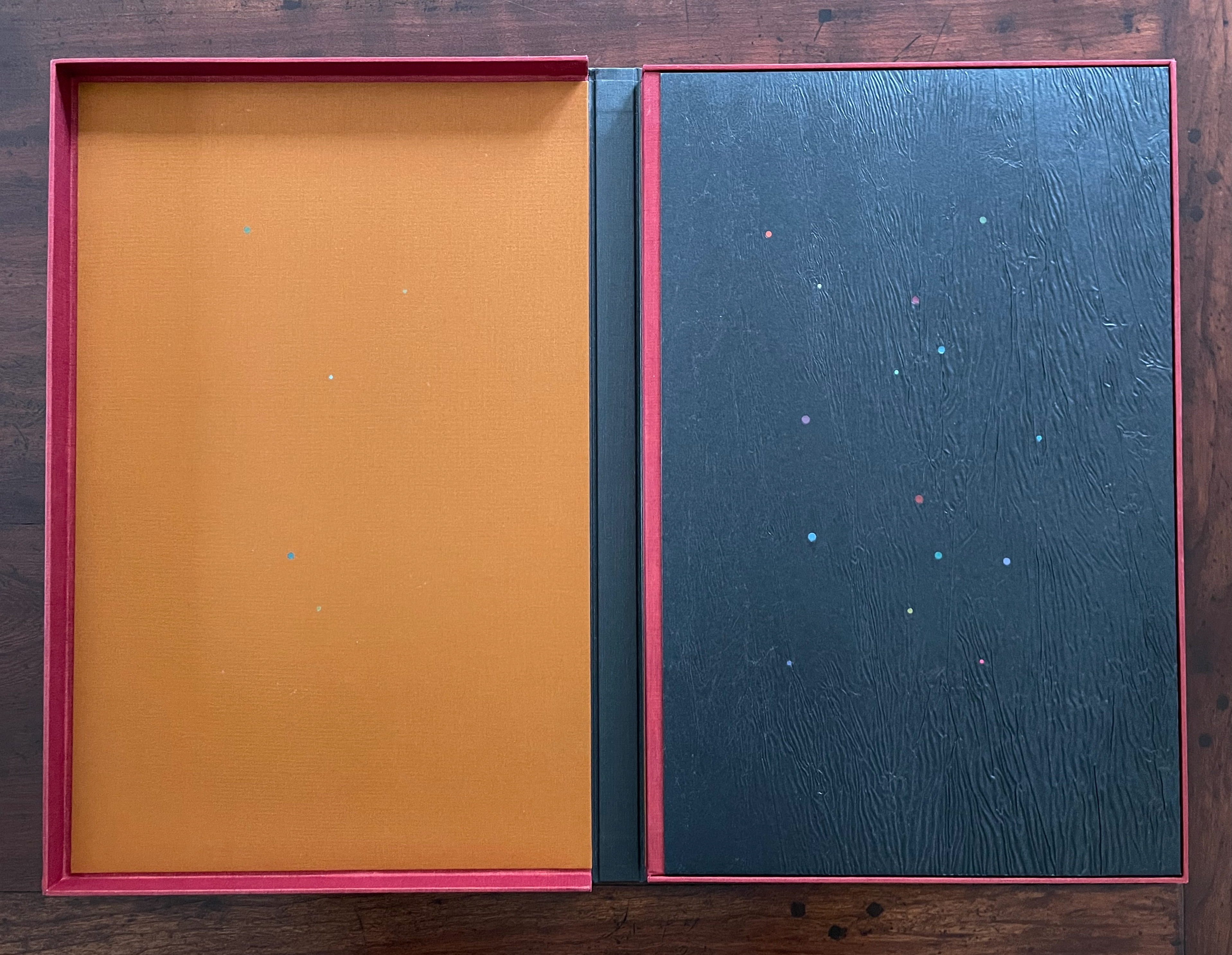
Board book consisting of nine 3mm thick card leaves with 8 double-page large colour photos, all of which interact with a down-loadable app. H330 x W210 x D28 mm. [18] pages. Edition of 500. Acquired from David Bunnett Books, 31 July 2023.
Photos of the work: Books On Books Collection.

How do we respond to an artwork of collage or assemblage that is missing a piece — assuming that we can tell ? And if all of the elements are ephemera, does it matter to our appreciation of it? Do we keep returning in annoyance to the gap — like a tongue to a missing tooth? Do we give up on it — like the purchaser of a secondhand jigsaw puzzle missing a piece or two? Or do we sigh and suppose appreciatively that the disappearance of an element of ephemera from a collage or assemblage of ephemera proves the artwork’s point?

Lucas Blalock is an artist of augmented realities. With the right device and app pointed at his artwork, we should be able to see images floating and moving over its surface or seemingly in the surface among its images or transforming them. According to the back cover, we can download this app from the iTunes App Store to interact with the book’s images. The app, however, was removed from the App Store in July 2023. Using the WayBack Machine, we can find the publisher’s announcement of the Making Memeries installation with Blalock in the Tate Modern’s Turbine Hall:

The London-based curatorial project Self Publish, Be Happy presents a programme of events that explore the blurring boundaries surrounding on/offline existence and distribution of photographs. The event, titled Making Memeries, will take place at Tate Modern during this year’s Offprint London art book fair from 20-22 May.

Artist Lucas Blalock has created an installation for the middle of the Tate Modern’s Turbine Hall that functions as a staging area for workshops and performances. The installation consists of a set of eight movable panels that display a new suite of photographs by Blalock. The elements of the installation, conceived of specifically for this project, can be further activated via this app, Making Memeries.

The audience will be able to immerse themselves in, and interact with the work through the app, which uses your camera to produce a digitally augmented reality. Blalock’s work has long been interested in the cohabitation of the worldly and the virtual behind the photographic surface, and this project has allowed the artist to picture this cohabitation on both sides of that plane. Blalock has collaborated with REIFY, the augmented reality (AR) creative studio, to build an experience that blurs traditional boundaries and challenges one’s expectations of viewership.

Photos from old website of Self Publish, Be Happy. Accessed 26 October 2025.

Among the performances facilitated by the installation was Anouk Kruithof’s Connection, which also contributed to the aim of blurring the boundaries of the physical and digital.

Photos from Connection, installation by Anouk Kruithof. Accessed 26 October 2025.

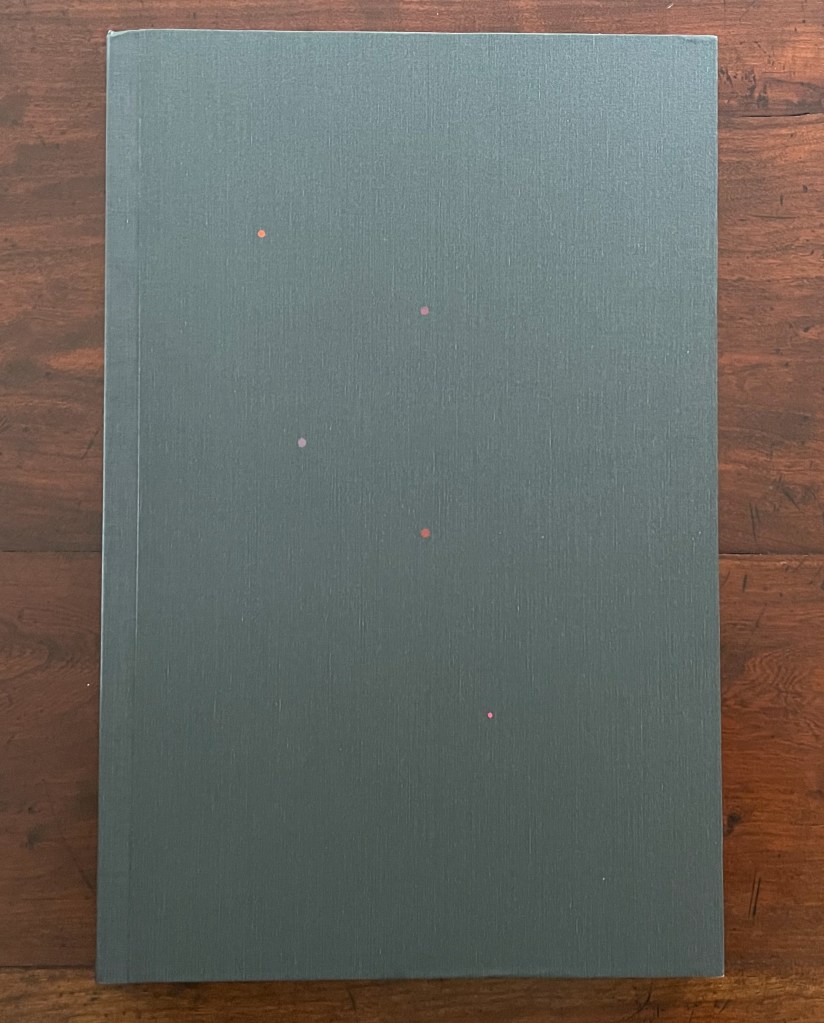
But without the app or memory of the installation, we have a gap like that missing tooth. We can bridge the gap somewhat with online links and the book’s collaged imagery of mixed media and photographs to recognize that Making Memeries is also about how we perceive surfaces and what lies beneath — and what might come between. Consider the earplugs alongside the telephone below. Then there’s the pair of spectacles in the shape of fingers that would cover the wearer’s eyes. Now look back to the cover, and we find the view from behind those finger-spectacles.

Photo of the work: Books On Books Collection.

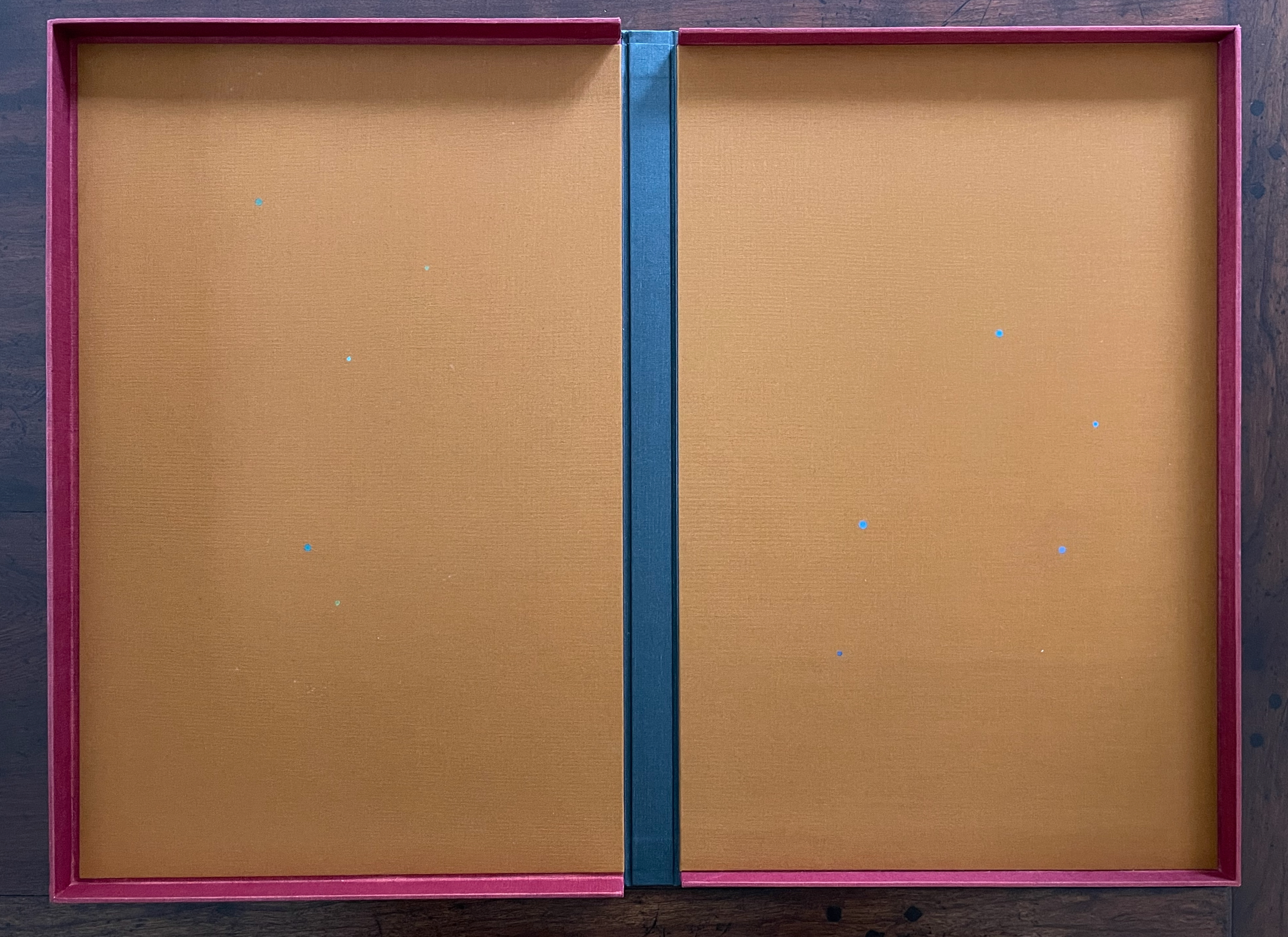
Or consider the images of the model of the epidermis with which the book opens and closes. ortunately, we have a YouTube link and Olga Yatskevich’s review to let us know that the “augmented reality radically changes the experience, making the image active rather than static – the app brings rounded depth to the model, shows blood running through the vessels, and allows us to explore the space around the object, its sides and the top”.

First and last double-page spreads. Photos: Books On Books Collection.

There’s something childlike, playful but serious conveyed in all this. Physically Making Memeries presents itself as an oversized children’s board book (or perhaps a board book for undersized adults). The use of the board book to make this cross-over can also be found in other artists’ books — Colleen (Ellis) Comerford’s ABCing and Phil Zimmermann’s Sonorensis, for example.

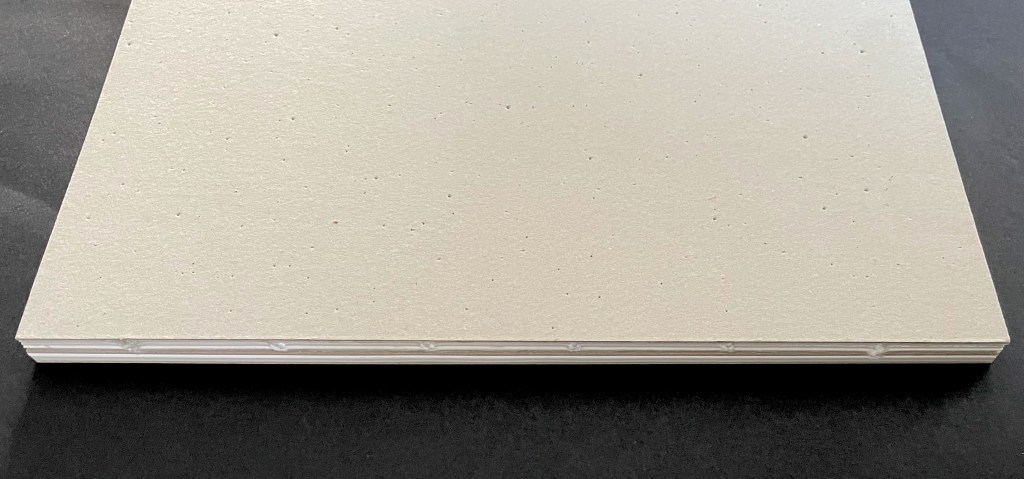
Fore edge of Making Memeries.

What the board book only partially conveys with the Connection link in hand, so to speak, is the intent expressed on the back cover and in the Tate’s announcement:

Making Memeries is set in a time when everyone has become a lifestyle photographer. It is still your life but the image production is decidedly public; and in that case temporary, verging on fleeting, because these public channels have so many content providers and, along with our attention spans, are in a perpetual state of refresh. [back cover]

Before the advent of the Internet the act of taking a photo was often intended to make memories; to store and preserve our past in still, printed images. In today’s digital age the act of taking photos can be enough for the photograph-taker. The act is exhausted by the process.  This can be seen in the way a mobile phone camera offers immediate satisfaction — producing a file that may never be looked at again. Today a photo has a different claim to time, being much more in the “now” than in the “this has been” of its 19th and 20th century pre-internet forbearers. We, in turn, live in a culture of the perpetual present, in a meme-driven world where photos can effortlessly be shared, but where they most often disappear into digital oblivion. [Tate Modern announcement]

It feels ironic that Making Memeries‘s “missing tooth” is digital. The same year of Blalock’s installation at the Tate, Pokémon Go arrived, and people began wandering into traffic to capture Pokémon figures that their cameras projected onto the streets around them. Nine years later, the company owning the app has sold for $3.5 billion, and the world’s richest country is governed by meme. Is art miming life, or life miming art?

Further Reading

Colleen Ellis“. 7 March 2024. Books On Books Collection.

Anouk Kruithof“. 19 July 2021. Books On Books Collection.

Philip Zimmermann“. 14 January 2020. Books On Books Collection.

Art21. 11 September 2015. “Lucas Blalock’s Digital Toolkit“. Art21 “New York Close Up”. Accessed 26 October 2025.

Blalock, Lucas. 13 April 2020. “On Amusement Parks, Torture, and Making Photographs Look the Way the World Feels“. Zolo Press. Accessed 23 October 2025.

ICA LA Production. 27 June 2019. “Lucas Blalock: An Enormous Oar“. Los Angeles: Institute of Contemporary Art.

Yatskevich, Olga. 22 November 2016. “Lucas Blalock, Making Memeries“. Collector Daily.

Books On Books Collection – Hans Witte

ABC of Advertising (2024)

Cover of the book 'ABC of Advertising' by Hans Witte, featuring vibrant collages of colors and typography, highlighting the title and the author's name.

ABC of Advertising (2024)
Hans Witte
Casebound, cloth spine and paper over boards, sewn to doublures. H150 x W105 mm. [40] pages. Acquired from Redfoxpress, 2024.
Photos: Books On Books Collection.

The ABC of Advertising is No. 205 in the RedFoxPress “c’est mon dada” series. The series name comes from the French expression meaning “it’s my thing”. Dada is also a colloquial child’s expression for “horsie” or “hobbyhorse”. So, of course, the French adopted it as the name for one of the avant garde movement of the early 20th century. Although you might think from The ABC of Advertising that wood type and letter press are Hans Witte’s “hobbyhorse”, it’s clear from his artist’s books, children’s books, and book object installations that he has a herd of them.

Continue reading

Books On Books Collection – William Wondriska

A Long Piece of String (2010 [1963])

Cover of 'A Long Piece of String' by William Wondriska, featuring an illustration of a red elephant and a piece of string.

A Long Piece of String (2010 [1963])
William Wondriska
Casebound, illustrated paper over boards, illustrated pasteboards. H185 x W290 mm. [44] pages. Acquired from Thrift Books, 25 May 2025.
Photos: Books On Books Collection.

Continue reading
Books On Books Collection – Marlene MacCallum and The Shadow Quartet*

Two artist's books titled 'Shadow Canto One: Still Life' and 'Still Life', featuring unique textured covers with a blend of greens and a window-like design.

Marlene MacCallum achieves distinctive results by painting with photography and sculpting with book structure in her artist’s books. Her painting with photography has involved not only collage work but pinhole cameras, digital cameras, digital layering and masking as well as a variety of transfer processes — digital and analogue photogravure, lithography, digital pigment printing, and digital inkjet printing. Sculpting with book structure mainly includes varying the binding as in the accordion with fold-out of Obvert (1997), the tunnel book structure of Do Not Enter (1998), the gatefold of Domestic Arcana (1999), the tile format fold-outs of pink story (2004-05), the accordion of Quadrifid (2009), the dos-à-dos of Glaze: Reveal and Veiled (2013), and the Miura fold of Rise (2020). It also includes altering books as in Withdrawn (2010) and varying the substrate as in the lace paper, Moriki, double matte Mylar, Lanaquarelle, and embossed leather of Townsite House (2006) and the etched copperplate and Tyvek of Trompe l’Oreille (2011).

Continue reading
Books On Books Collection – Zhang Xiaodong*

Diamond Sutra in 32 zhuan (seal) fonts (2017)
Zhang Xiaodong
Scroll in dragon scale binding. 152 x 382 x 160 mm. Edition of 300, of which this #197. Acquired from Sin Sin Fine Arts (Hong Kong), 31 October 2019. Photos: Books On Books Collection.

In 1900, in China’s Dunhuang province, the Diamond Sutra (868 CE), the world’s earliest complete and dated printed book, was discovered in a cave along with 40,000 scrolls. One of those other scrolls — Or.8210/S.6349 — was possibly just as important for the book arts as the Diamond Sutra was for the history of printing. Like the Diamond Sutra, Or.8210/S.6349 resides in the British Library and is “the only known example of whirlwind binding in the Stein collection of the British Library” (Chinnery). The structure is also known as dragon scale binding, although distinctions between the two have been debated (Song). It came into use in the late Tang dynasty (618-907 CE) then fell away in the face of the easier to handle butterfly and wrapped-back bindings. Besides Or.8210/S.6349, there are few surviving examples of original whirlwind or dragon scale bindings.

Chinnery, 2007.

Continue reading

Books On Books Collection – Barbara Hocker

Watercourse I (2022)

Watercourse I (2022)
Barbara Hocker
Scroll in variant dragon scale binding. L152 cm (variable) x W12 cm. 64 panels. Unique. Acquired from the artist, 10 February 2024.
Photos: Books On Books Collection.

Works evocative of water often invoke a sense of meditative stillness, but Barbara Hocker’s Watercourse I prompts a sense of meditative activity. You can’t stop moving it about. Or if you’re not moving it, you find yourself moving around it to contemplate it. It is the layering of watercolor, sumi ink, photographic prints with archival inks on washi paper, and the ancient Chinese method of bookbinding called dragon scale (sometimes called “whirlwind” or “fish scale” binding) that achieves this. Traditionally, the binding method involves a long scroll of paper to which successively shorter folios are attached at one end, often secured with a bamboo rod. Hocker has modified this structure by attaching folios of the same size with hinges to the underlying long scroll at intervals allowing one folio to overlap the next and so on. In each case, the effect of the overlapping folios creates the appearance of dragon scales.

Continue reading
Books On Books Collection – Suzanne Moore (III)

Dreamings (2023)

Dreamings (2023)
Suzanne Moore
Artist’s manuscript. Softcover, handsewn. Cloth-covered box with handwritten and painted title pastedown on the spine. H368 x W178 mm. 17 pages. A unique edition. Acquired from the artist, 15 April 2024.
Photos: Books On Books Collection and artist.

Dreamings (2023) follows the artist’s Question Series, begun in 2008 considering questions of life and art while exploring the letter Q – “that quirky letter of distinct design” as Moore calls it. Other works in the series include:

Thirteen Questions  (2008), drawn from Pablo Neruda’s The Book of Questions (1991) [Libro de las preguntas (1974)], unknown location.*

Studies in Love the Question (2016), now at the Letterform Archive.

Inquiry (2019), unknown location.*

Seeing Red: Seven Questions (2019), unknown location.*

Trust (2019), now at the Boston Athenaeum.

The Question (2021), drawn from Rainer Maria Rilke’s Letters to a Young Poet. Now at Baylor University.

Your Question, Please (2022), unknown location.*

Rescuing Q (2023), now at the Bodleian Libraries.

Continue reading

Books On Books Collection – Julien Nédélec

Because he works with so many different materials, it is hard to classify Julien Nédélec as an artist: A polyfabricant? With language play being a more or less constant theme: A polywright? His website labels him a plasticien, the perfect French word that captures more of the media in which he works than its usual translation “visual artist” does. In Zéro2, Antoine Marchand writes:

Everything, with him, is subject to manipulation, appropriation, and diversion, at times in the most trivial and basic way imaginable. His work is based on permanent mischief, a desire to destabilize the viewer, and be forever creating a slight discrepancy, which barely ruffles the reading of the work—well removed from the showiness of many present-day productions. He bypasses the daily round and takes us towards somewhere else that is not that far away, but all the more joyful. … What should incidentally be underscored in this young artist’s praxis is his ability to move from one medium to another, without the slightest bother or apprehension. It is impossible to pigeonhole Julien Nédélec’s praxis in any one particular medium.

Several of his works have been hosted on the Greek island of Anafi by the Association Phenomenon and the Collection Kerenidis Pepe, whose website also notes that his

practice can take many forms, from sculpture to drawing, through books and photography, with a predilection for the paper, that he uses not only as a support, but also as a material that he bends, cuts, colors, stacks or crumples. His works are the result of linguistic and formal games that reveal the artist’s fascination with the potentialities of language, with a malice that places him as an heir apparent of the Oulipo, while his taste for geometric and serial shapes brings him closer to the tradition of minimalism.

With paper as a favorite medium, there are a handful of artist’s book among the many other forms. Taken together, his artist’s books almost make up an anthology of homage to book artists from the 1960s to the present. He also belongs to the school of appropriators embracing forerunners like Bruce Nauman, Richard Prince, and Richard Pettibone and contemporaries like Michalis Pichler, Antoine Lefebvre, and Jérémie Bennequin, all of whom have embraced the self-reflexive artist’s book as an appropriate medium for appropriation. No wonder Galaad Prigent’s Zédélé Éditions, the French publisher that hosts Anne Moeglin-Delcroix and Clive Phillpot’s Reprint Series of artists’ books, is so fond of his bookworks.

TER (2021)

TER (2021)
Julien Nédélec
Softcover, saddle stitch with staples. H240 W165 mm. [36] pages. Acquired from Zédélé Éditions, 21 September 2024.
Photos: Books On Books Collection. Displayed with the artist’s permission.

“Tout”

The sentences to be deciphered from these full-page-bleed letters are Tout a été redit. Tout a été refait, which, in English, would be “Everything has been said. Everything has been done.” But it also has the echoes of a French children’s song, “Tout ce que je fais“:

Continue reading
Books On Books Collection – Daniel Essig, Graeme Priddle, and Melissa Engler

Ammonite (2015)

Ammonite (2015)
Daniel Essig, Graeme Priddle, and Melissa Engler
Ethiopian and Coptic bound book, sewn with waxed black linen thread, walnut-dyed handmade flax and Ingres Antique black papers, with carved front and back covers of maple, each with a bisected ammonite fossil embedded beneath a mica sheet, fixed with 1/8 brass brads. H127 x W90 x D63 mm. [384] pages. Unique. Acquired from the artists, 30 May 2025.
Photos: Books On Books Collection.

Even a cursory glance through the Books On Books Collection confirms the variety of choices book artists face when creating an artist’s book. In Ammonite (2015), the book block and its binding are the site and material of Daniel Essig, Graeme Priddle, and Melissa Engler’s sculptural art. In their collaboration, Essig drilled and prepped the wooden covers, Priddle carved the ammonite surface, Engler painted the covers, and then Essig added the mica window with ammonite fossil, prepped the book block, and bound the book.

Continue reading
Books On Books Collection – Peter & Donna Thomas (II)

Goodbye Bonita Lagoon (2023)

Goodbye Bonita Lagoon: A Papermaker’s Elegy (2023)
Peter and Donna Thomas and Guy Van Cleave.
Tri-fold binding with 2 leather spines and sewn accordion binding structure, cloth over boards, light green linen cloth letterpress printed with three color linocut print on front cover, and title blind stamped on spine in brown foil. H300 x W225 mm. 80 pages. Edition of 30, of which this is #27. Acquired from the artists, 5 February 2024.
Photos: Books On Books Collection.

To read Goodbye Bonita Lagoon properly, you must read its text, its images, and its handmade papers as a whole. To do that, you need to let the binding structure guide you. The Thomases call the structure an accordion pleat spine stab-sewn book and have described and illustrated it in More Making Books by Hand (2004). Although the basics are the same –stab-sewing two single sheets of handmade paper and a single plant-paper folio to the recto or ascent side of each mountain fold in the accordion pleat spine — Goodbye Bonita Lagoon extends like a flag book, and as each gathering is turned to the left, the accordion pulls the left hand side of the book toward the right, tucking itself atop the previously turned sheets and folios. Below are the fully extended book, the extended book with the first five gatherings turned to the left, and the extended book with all the gatherings except the last turned. As the book progresses, the width of the extension narrows.

The photos below show the accordion pleat spine’s functioning end on.

Turning the next to last gathering (blackberry paper folio and single sheets) to show the spine’s function end on. Note how the right-hand edge of the light green accordion pleat is fixed to the inside back cover. As the gatherings turn to the left, the accumulated accordion has to move rightwards.

Like the extended width’s narrowing as the book comes to its close, Bonita Lagoon, too, has been collapsing. Elegiacally, each of the plant-paper folios is made from a plant gathered from the lagoon in the past. Inside each of the plant-paper folios, a single sheet insert carries a linocut of the plant and its name printed with wood type. On the back of each plant-paper folio, a single sheet insert bears text about Bonita Lagoon.

That descriptive text begins at the end of the book’s preliminary gathering, which opens with the book’s only multicolored text, a sort of epigraph from Guy Van Cleave (Professor of Biology, Glendale Community College), extolling the attractions of lagoons. Displayed on the book’s only foldout, the text continues on the reverse with more of Van Cleave’s observations but also a preview paragraph from Peter Thomas. The preview describes the sourcing and processing of the plant-paper folios and the circumstances in which the book was written. When you turn the foldout to read the text on its reverse side, the accordion spine also pulls into view this gathering’s final sheet presenting the book’s formal opening text.

Here’s the opening sequence without extending the book:

Left: The text on the reverse side of the extended foldout. Right: The preliminary gathering’s final sheet with the book’s formal opening text.

It feels a bit awkward to have the final bit of the prelim text hanging out as the book begins, so there’s the urge to tuck it away and take in the expanse of the plant-paper folios, while still carrying in the back of the mind a curiosity about the prediction that the prelim text teases.

Donna Thomas’s linocuts printed over the names of the plants in wood type vary in orientation. Impressed on cotton rag paper handmade by Peter, they memorialize the plants harvested long ago and emphasize by contrast the texture of the plant-paper folios embracing them.

Folio of Pampas Grass paper with single sheet linocut by Donna Thomas over wood type.

Extended book open to folio of Kahili Ginger paper; single sheet linocut turned 90º.

Folio of New Zealand flax.

Folio of Wild Radish.

Folio of Century Plant.

Folio of Bird of Paradise.

Folio of Tule.

Folio of Blackberry.

The book’s formal elegy concludes on the Tule gathering’s end sheet. Here we find the prediction teased in the prelims. Due to construction along the coast, the lagoon has become a marsh and tiny pool that dries out in the summer. Without restoration, Bonita Lagoon is on its way to becoming Bonita Beach.

The prediction on the Tule gathering’s end sheet.

All along, the text set in Neuland has appeared over the print of a map. Not until after the prediction above and the turning of the Blackberry gathering is it revealed in the colophon that the map is from the 1853 coastal survey mentioned at the beginning. With a sort of unwritten coda, the book ends with a single sheet made from clippings from the Thomases’ otherwise unmanicured lawn next to Bonita Lagoon.

Colophon.

1,000 Artists’ Books (2012)

1,000 Artists’ Books: Exploring the Book as Art (2012)
Sandra Salamony and Peter & Donna Thomas
Softcover, casebound in illustrated paper over flexible card, patterned doublures, headbands. H235 x W235 mm. 320 pages. Acquired from Brendan McSherry, 20 October 2023.
Photos: Books On Books Collection.

Besides their prolific artistic output, much of which (up to 2005) can be viewed in the University of Wisconsin-Milwaukee Libraries Special Collections, the Thomases have also published several instructional and reference works on papermaking and the book as an art form. This one with Sandra Salomony covers various aspects of hand-crafted books: covers, bindings, scrolls, folded and origami structures, books made from found objects, altered books, and book installations, as well as books created from a variety of printing processes. Its taxonomy is useful when exploring new works and examining collections.

Further Reading

The First Seven Books of the Rijswijk Paper Biennial“. 10 October 2019. Books On Books Collection.

Taller Leñateros“. 19 November 2020. Books on Books Collection.

Lu Jingren, Amanda Degener, and Peng Wu“. In progress. Books On Books Collection.

Timothy Mosely“. 23 August 2024. Books on Books Collection.

Maureen Richardson“. 28 September 2019. Books on Books Collection.

Fred Siegenthaler“. 10 January 2021. Books On Books Collection.

Peter & Donna Thomas (I)“. 20 May 2023. Books On Books Collection.

Claire Van Vliet (II)“. 28 May 2025. Books on Books Collection.

Hedi Kyle’s The Art of the Fold: How to Make Innovative Books and Paper Structures (2018)“. 24 September 2018. Bookmarking Book Art.

Blum, André, and Harry Miller Lydenberg. 1934. On the origin of paper. New York: R.R. Bowker Company.

Chen, Julie. 2013. 500 Handmade Books. Volume 2. New York: Lark. Pp. 87 (Not Paper), 258 (The Alder).

Hamady, Walter; Samuel Haatoum; and Hermann Zapf. 1982. Papermaking by Hand : A Book of Suspicions. Perry Township, Dane County, Wisconsin, USA: Perishable Press Limited.

Hiebert, Helen. 2000. The papermaker’s companion: the ultimate guide to making and using handmade paper. North Adams, MA: Storey Pub.

Hunter, Dard. 1987. Papermaking: the history and technique of an ancient craft. New York: Dover.

Jury, David, and Peter Rutledge Koch (eds.) 2013. Book Art Object 2 : Second Catalogue of the Codex Foundation Biennial International Book Exhibition and Symposium, Berkeley, 2011. Berkeley, CA; Stanford, CA: Codex Foundation; Stanford University Libraries. Pp. 409 (Yellowstone), 410 (The History of the Accordion Book).

Jury, David, and Peter Rutledge Koch (eds.) 2008. Book Art Object. Edited by David Jury. Berkeley, California: Codex Foundation. Pp. 323 (Believe in the Beauty), 324 (The History of Papermaking in the Philippines), 325 (An Excerpt from John Steinbeck’s Cannery Row).

Kurlansky, Mark. 2016. Paper: paging through history. New York, NY: W.W. Norton.

Miller, Steve. 2008. 500 Handmade Books : Inspiring Interpretations of a Timeless Form. Edited by Suzanne J. E. Tourtillott. New York: Lark Crafts. Pp. 77 (Paper from Plants), 225 (Ukulele Series Book #4 The Ukulele Bookshelf), 254 (Ukulele Series Book #9, The Letterpress Ukulele), 291 (Y2K3MS: Ukulele Series Book #2, Ukulele Accordion).

Müller, Lothar. 2015. White magic: the age of paper. Cambridge, UK: Polity Press.

Richardson, Maureen. 1999. Grow your own paper : recipes for creating unique handmade papers . N.P.: Diane Pub Co.

Salamony, Sandra, and Peter and Donna Thomas. 2012. 1,000 Artists’ Books : Exploring the Book as Art. Minneapolis: Quarto Publishing Group USA. Pp. 26 (Ukelele Series Book #14 Old Ukes), 31 (The Pencil), 187 (The Real Accordion Book), 201 (The Mystical Quality of Handiwork), 205 (California Dreaming).

Sansom, Ian. 2012. Paper: an elegy. New York, NY: Wm. Morrow.

Thomas, Peter, and Donna Thomas. 2004. More Making Books by Hand : Exploring Miniature Books, Alternative Structures, and Found Objects. Gloucester, Massachusetts: Quarry Books.

Thomas, Peter, and Donna Thomas. 1999. Paper from Plants. Santa Cruz, Calif: Verf. You can find images of this and others by the artists online in the Special Collections website of the University of Wisconsin-Milwaukee Libraries.

Weber, Therese. 2008. The language of paper: a history of 2000 years. Bangkok, Thailand: Orchid Press.