Books On Books Collection – Don Robb and Anne Smith

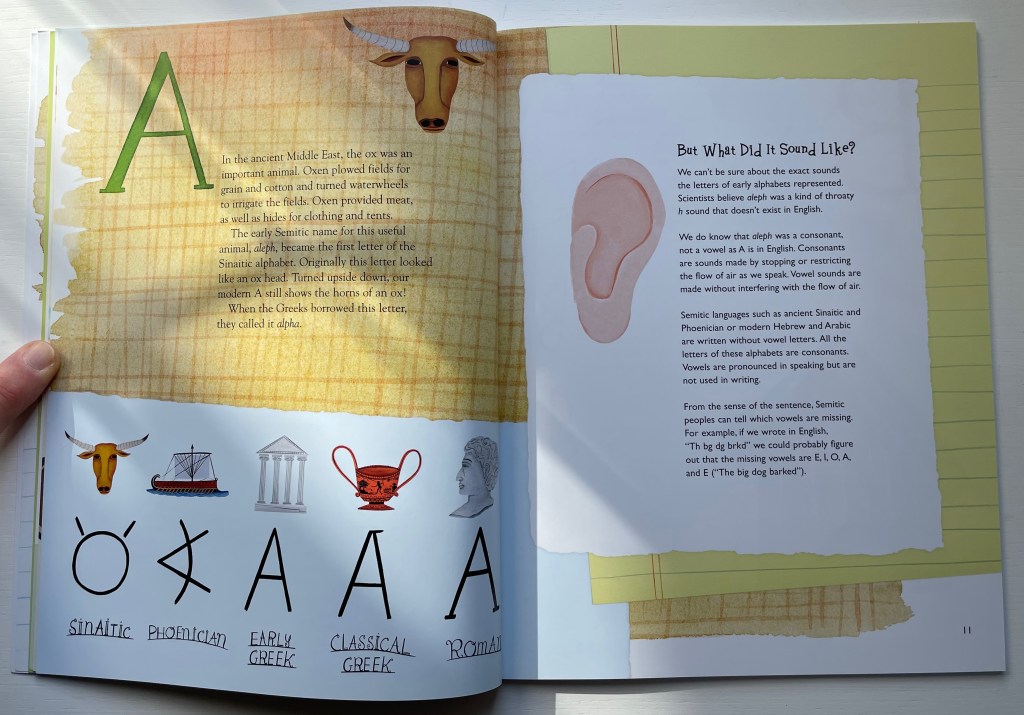
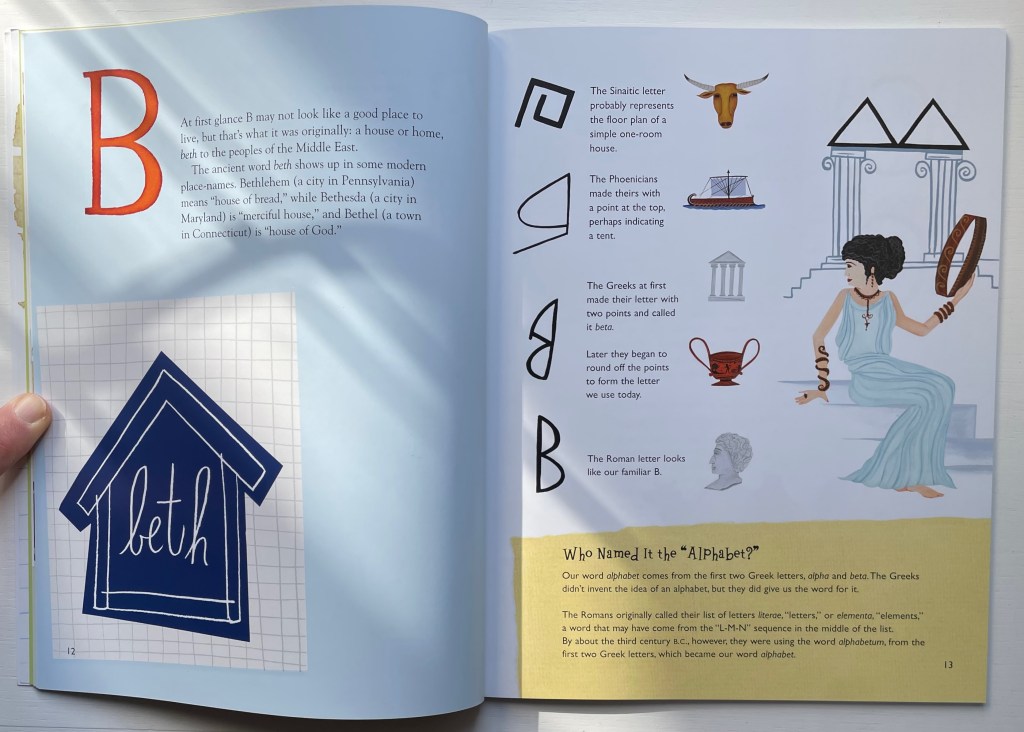
Ox, House, Stick (2007)

Ox, House, Stick: The History of Our Alphabet (2007)
Don Robb (text) and Anne Smith (ills)
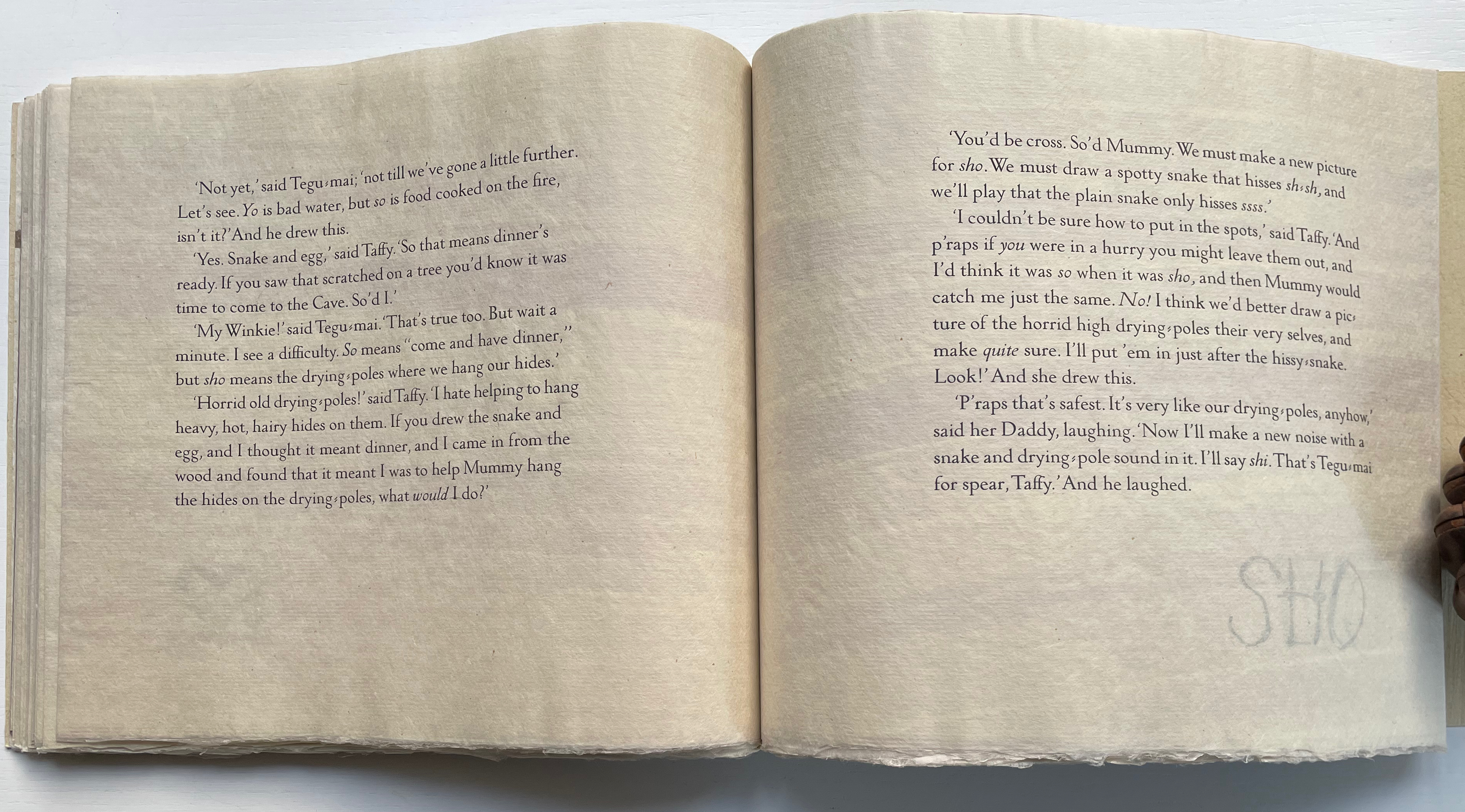
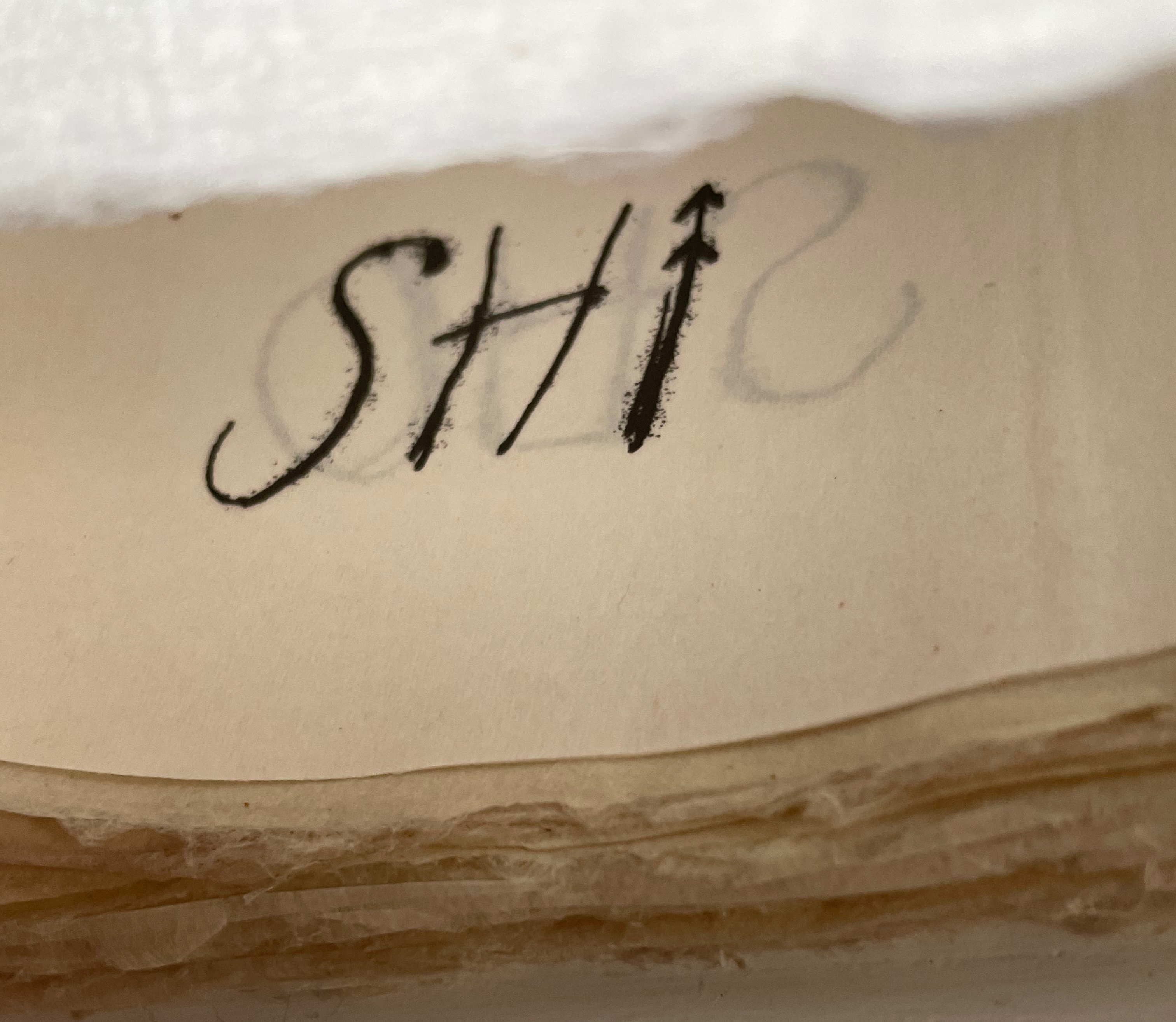
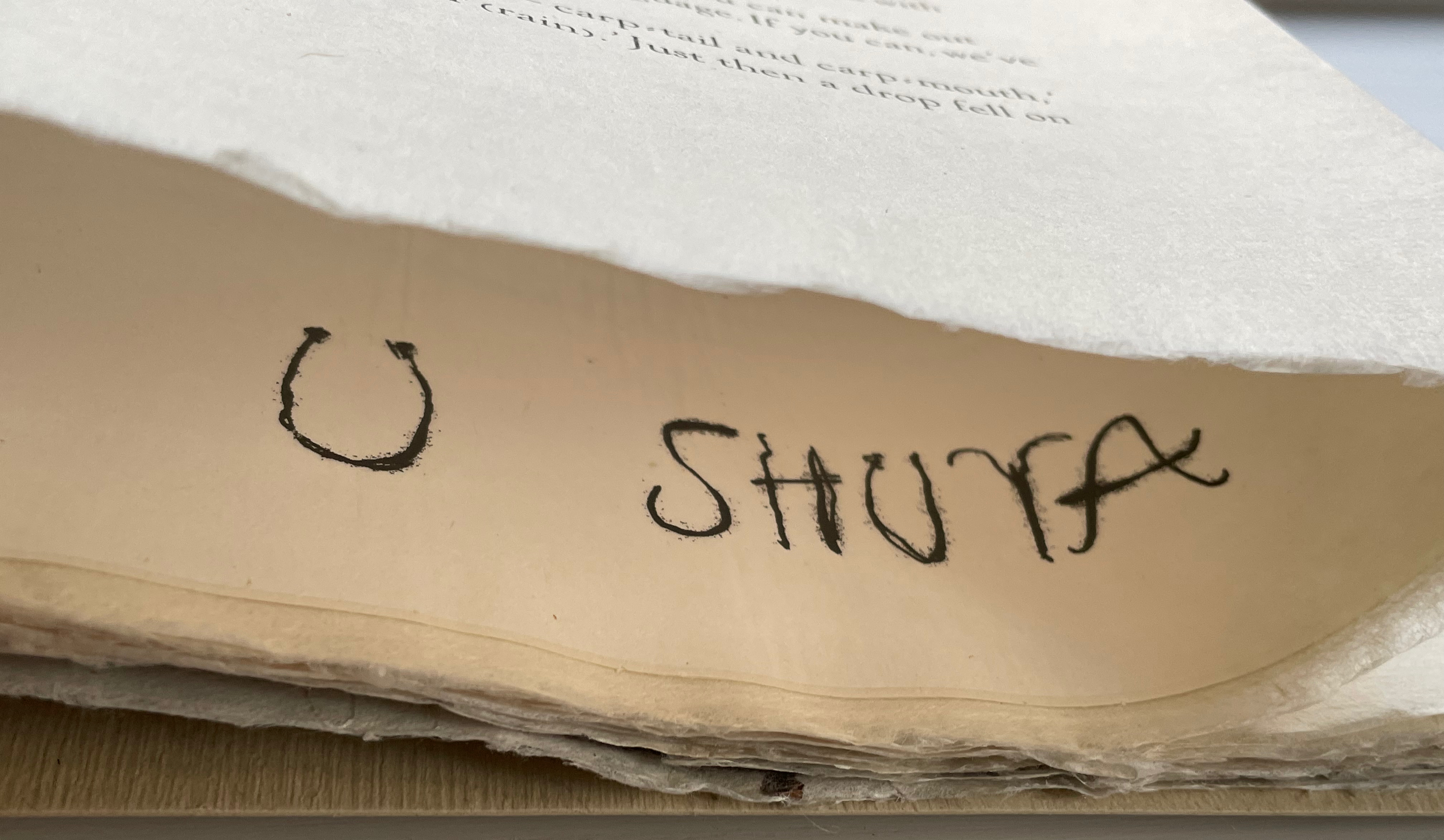
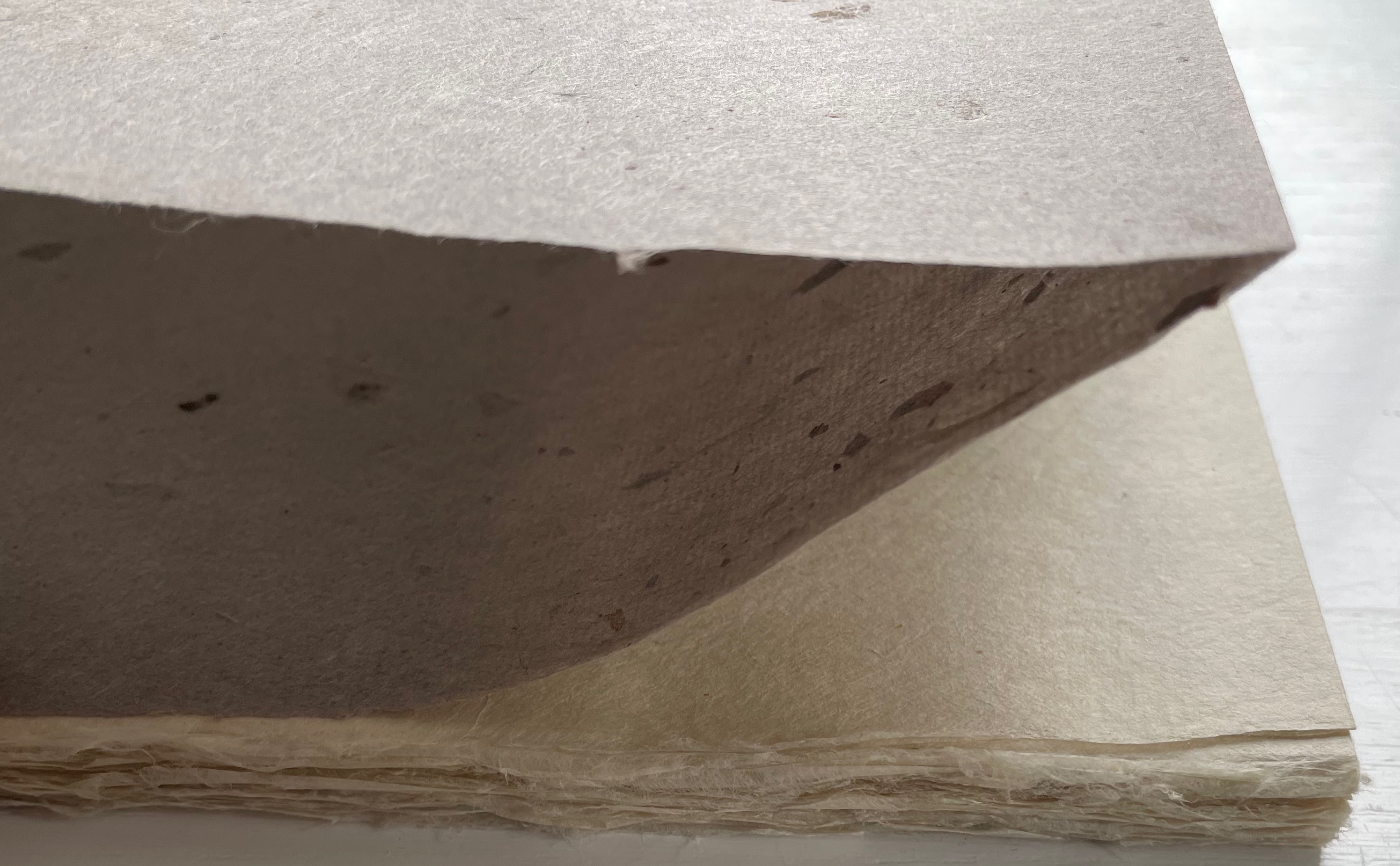
Casebound, illustrated paper over boards. H280 x W217 mm. 48 pages.Acquired from The Saint Bookstore, 14 August 2022. Photos: Books On Books Collection.
Text copyright © 2007 by Donald Robb. Illustrations copyright © 2007 by Anne Smith/Lilla Rogers Studio.
Used with permission by Charlesbridge Publishing, Inc. 9 Galen Street, Suite 220, Watertown, MA 02472. (617)-926 0329  

A fair number of fiction and non-fiction children’s books on the history of the alphabet have made their way into the Books On Books Collection.

Of the fiction variety, there is Rudyard Kipling’s “Just So Story” of the alphabet’s invention: How the Alphabet Was Made (1983), illustrated by Chloe Cheese. Another fiction entry is James Rumford’s retelling of Cadmus’ visit to Crete in There’s a Monster in the Alphabet (2002) and William Joyce’s inventive The Numberlys (2014).

In the non-fiction category are William Dugan’s How Our Alphabet Grew (1972), Tiphaine Samoyault’s Alphabetical Order (1998), Renzo Rossi’s The Revolution of the Alphabet (2009) and the entry here: Don Robb’s and Anne Smith’s Ox, House, Stick.

Ox, House, Stick is scheduled to appear as part of an exhibition at the Bodleian Libraries in Oxford (opening 15 July 2023). “A is for Ox” designates the display case devoted to the question: Where did the alphabet come from? It’s not just a question for archaeologists, historians, linguists and paleographers — or children’s book authors and illustrators. It’s one generating repeated inspiration for book artists as shown by Abe Kuipers’ Letters (1971), Lanore Cady’s Houses & Letters (1977), another rendition of the Kipling tale by Gerald Lange in The Neolithic Adventures of Taffi-Mai Metallu-Mai (1997), designed by Gerald Lange and produced with Robin Price, Dave Wood’s Alphabetica (2002), Cari Ferraro’s The First Writing (2004), and Helen Malone’s Alphabetic Codes (2005).

Artists’ books share much with children’s books in general. They both play with form and structure. They play with words and images, sometimes images without words and sometimes just shapes. Almost always an attention to all the senses. Children’s alphabet books in particular display features that appeal to book artists: play with animals, the Babel of languages, bodies, calligraphy, colors, design (of letters, page and book) and, as above, alphabet origin stories. Viewing and exploring alphabet books and artist’s books side by side heightens the enjoyment and appreciation of both.

Further Reading

Abecedaries I (in progress)“. Books On Books Collection.

Lanore Cady“. 16 December 2022. Books On Books Collection. Artist’s book.

William Dugan“. 10 July 2023. Books On Books Collection.

Cari Ferraro“. 1 February 2023. Books On Books Collection. Artist’s book.

William Joyce“. 18 June 2021. Books On Books Collection.Illustrated children’s book.
Rudyard Kipling and Chloë Cheese“. 15 February 2023. Books On Books Collection. Illustrated children’s book.
Rudyard Kipling and Gerald Lange“. 16 April 2023. Books On Books Collection. Artist’s book.

Abe Kuipers“. 15 February 2023. Books On Books Collection. Artist’s book.

Helen Malone“. 23 July 2020. Books On Books Collection. Artist’s book.

Renzo Rossi“. 10 July 2023. Books On Books Collection.  Illustrated children’s book. [In progress]
James Rumford. 21 November 2022. Books On Books Collection. Illustrated children’s book.

Tiphaine Samoyault“. 10 July 2023. Books On Books Collection. Illustrated children’s book. [In progress]
Animal alphabets & artists’ books

Marie Angel, An Animated Alphabet (1996)

Leonard Baskin, Hosie’s Alphabet (1972)

Paul Cox, Abstract Alphabet: A Book of Animals (2001)

E.N. Ellis, An Alphabet (1985)

C.B. Falls, ABC Book (1957)

David L. Kulhavy & Charles D. Jones, A Forest Insect Alphabet (2013)

Enid Marx, Marco’s Animal Alphabet (2000)

Carol Schwartzott, ABC of Birds (2020)

Borje Svensson & James Diaz, Animals (1982)

John Norris Wood, An Alphabet in Praise of Toads & Frogs (2002)

Babel, alphabets & artists’ books

Golnar Adili, Father Gave Water/Baabaa Aab Daad (2022)

Islam Aly, 28 Letters (2013)

Brynja Baldursdottír, Fuþorc (1992)

Ellen Heck, A is for Bee (2022)

Tatyana Mavrina, Сказочная Азбука / Skazochnaia Azbuka / A Fairy Tale Alphabet (1969)

Claire Jeanine Satin, Alphabook (1998/99)

Ben Shahn, The Alphabet of Creation (1954)

Jana Sim, Both but between (2021)

Sam Winston, One and Everything (2022)

Bodies & artists’ books

Anthon Beeke, Alphabet (1970)

Anthon Beeke & René Knip, Body Type (2011)

Edward Gorey, Figbash Acrobate (1994) In progress

Toshifumi Kawahara, Dancing Alphabet (1991)

Françoise and Douglas Kirkland, Physical Poetry Alphabet (2018)

Marie Lancelin, Gestes Alphabétiques (2014)

Lisa Merkin, Bodies of Language (2021)

Annette Messager, Mes Enluminaires (1988) [In progress]

Vítězslav Nezval, Abeceda/Alphabet (1926/2001)

Rowland Scherman, Love Letters (1975) [In progress]

Calligraphy, alphabets and artists’ books

Mari Angel, Marie Angel’s Exotic Alphabet (1992)

Tauba Auerbach, How to Spell the Alphabet (2007)

Rebecca Bingham, Lady Letters (1986)

Rebecca Bingham, Alphabet Salmagundi (1988)

Carol DuBosch, Alphabet of Calligraphic Tricks (2014)

Carol DuBosch, Embossed Alphabet Gallery (2019)

Francesca Lohmann, An Alphabetical Accumulation (2017)

Suzanne Moore, A Blind Alphabet (1986)

Edward Andrew Zega & Bernd H. Dams, An Architectural Alphabet : ABC (2008)

Colors, alphabets and artists’ books

Rebecca Bingham, Golden Alphabet (1986)

Rebecca Bingham, Defining the Rainbow (2018)

Sonia Delaunay, Alphabet (1972)

Carol DuBosch, Rainbow Alphabet Snowflake (2013)

Ursula Hochuli-Gamma, 26 farbige Buchstaben (1986)

Karen Hanmer, The Spectrum (2003)

Amy Lapidow, Spiralbet (1998)

Lisa McGarry, Be Amazed (and other words to live by) (2013)

Kveta Pacovská, A l’infini (2007)

Design (of letters), alphabets & artists’ books

Anne Bertier, Anne Dessine-moi une lettre(2004)

Roberto de Vicq de Cumptich, Bembo’s Zoo: An Animal ABC Book (2000)

Felice Feliciano & Jason Dewinetz, Alphabetum Romanum: The Letterforms of Felice Feliciano (c. 1460, 2010)

Jeff Morin and Steven Ferlauto, The Sacred Abecedarium (1999)

Andrew Morrison, Two Wood Press A-Z (2020

David Pelletier, The Graphic Alphabet (1996)

Bruce Rogers, Champ rosé (1933)

Kevin Steele, The Movable Book of Letterforms(2009)

Sharon Werner & Sharon Forss, Alphabeasties (2009)

Structures, alphabets & artist’s books

Kathleen Amt, Kaleidoscopic ABC’s (1991)

Matsumasa Anno, Anno’s Magical Alphabet (1981)

Marion Bataille, ABC3D (2008)

John Crombie, ABC in a maze (1987)

Carol DuBosch, Rainbow Alphabet Snowflake (2013)

Carol DuBosch, Embossed Alphabet Gallery (2019)

Helen Hajnoczky, alpha seltzer (2023)

Karen Hanmer, A2Z (2013)

Karen Hanmer, The Spectrum (2003)

Helen Hiebert, Alpha Beta (2010)

Ron King, Alphabeta Concertina majuscule (2007)

Ron King, alphabeta concertina miniscule (2007)

Ron King, The White Alphabet (1984) In progress

Ron King, ABC Paperweights (nd)

Amy Lapidow, Spiralbet (1998)

Scott McCarney, Alphabook 3 (1986)

Scott McCarney, Alphabook 10 (2015)

Scott McCarney, Alphabook 13 (1991)

Lisa McGarry, Twenty-six/Fragments (2012)

Patrice Miller (Edward Gorey), The Eclectic Abecedarium (2022)

Patrice Miller (Edward Gorey), Figbash Acrobate (2023)

Jeff Morin and Steven Ferlauto, The Sacred Abecedarium (1999)

Jeff Morin and Steven Ferlauto, Sacred Space (2003)

Moveable Book Society, A to Z Marvels in Paper Engineering (2018)

Bruno Munari, ABC con fantasia (2008)

Bruno Riboulot, ABCD’Air (2005)

Merrill Shatzman, Calligrafitti #3 (2011)

Borje Svensson & James Diaz, Letters (1982)

Emmett Williams, abcdefghijklmnopqrstuvwxyz (1963) In progress

Books On Books Collection – Brynja Baldursdottír

Fuþorc (1992)

Fuþorc (1992)
Brynja Baldursdottír
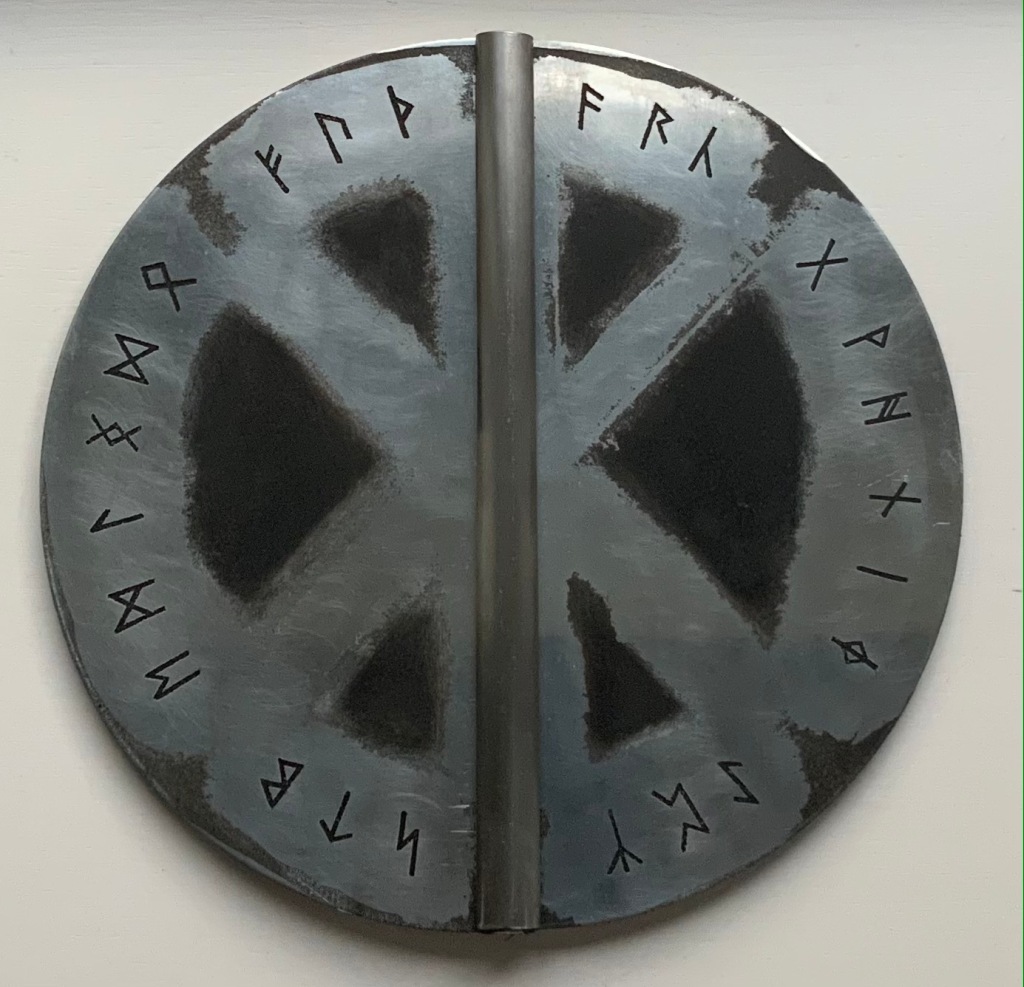
Casebound in brushed and inked 1.6 mm zinc plate cover. Decorated doublures. Closed: H290 x W160 mm. Open: 320 mm. 32 folios. Edition of 144, of which this is #98. Acquired from the artist, 15 November 2021.
Photos of the work: Books On Books Collection. Displayed with permission of the artist.

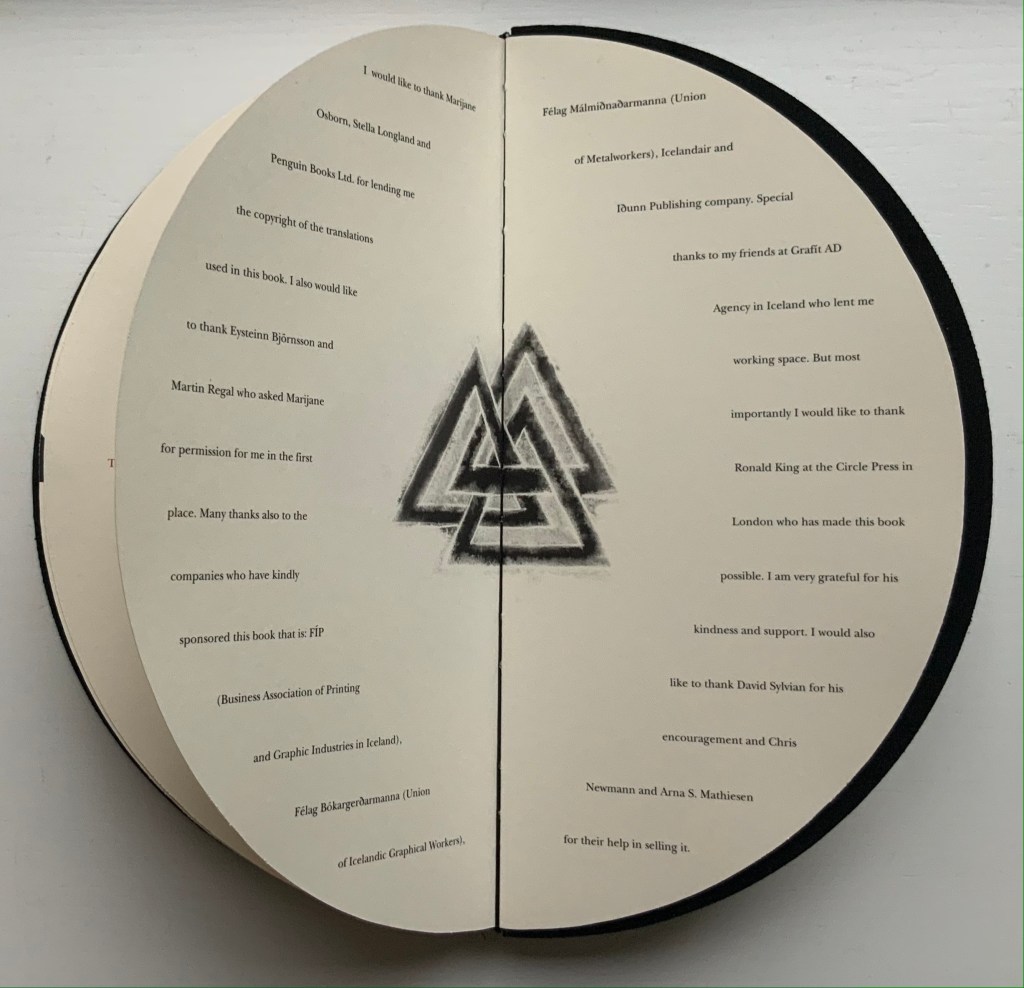
Fuþorc, the name of Brynja Baldursdottír’s artist’s book, is the word made from the first six runes of the Runic alphabet, much as alphabet derives from the first two Greek letters alpha and beta. The shield-like covers, laid face down, display all twenty-four runes of the fuþorc. Over time and geography, the runes have changed in number, spelling and meaning, reflected in the explanatory and interpretive Norwegian, Icelandic and Anglo-Saxon versions of the “Rune Poem”. Baldursdottír’s version is “The Old English Rune Poem”, translated by Marijane Osborn and Stella Longland, which is we have the Old English fuþorc rather than the Scandinavian fuþark.

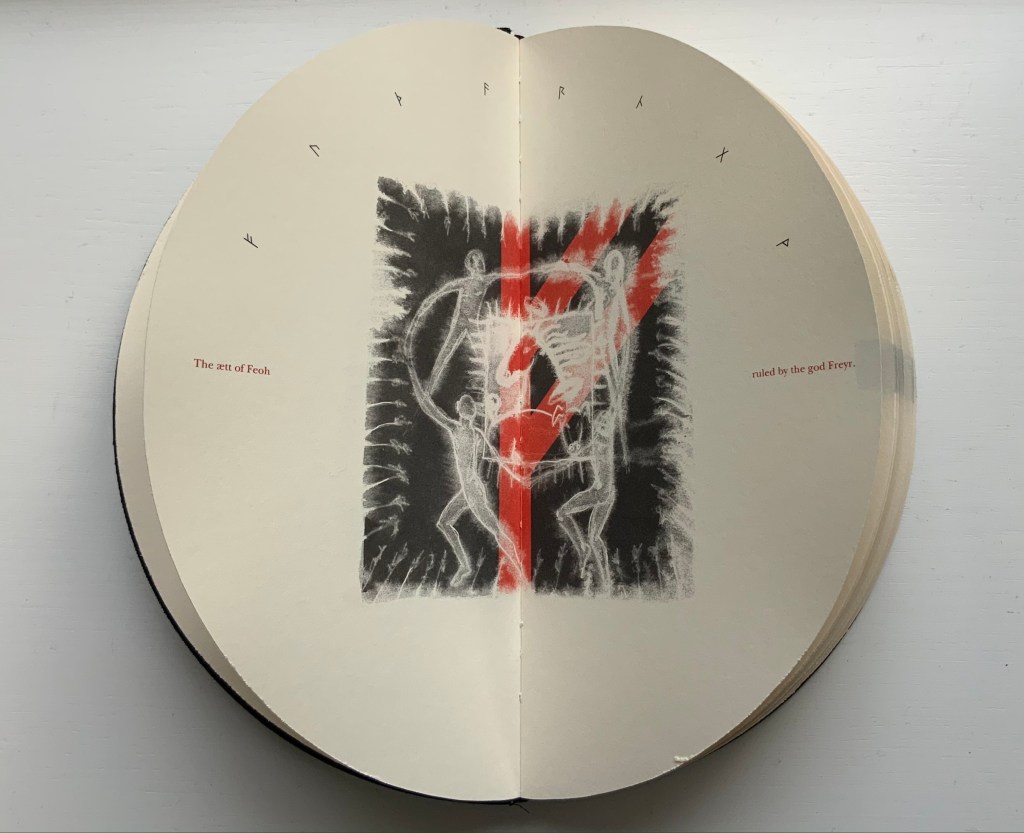
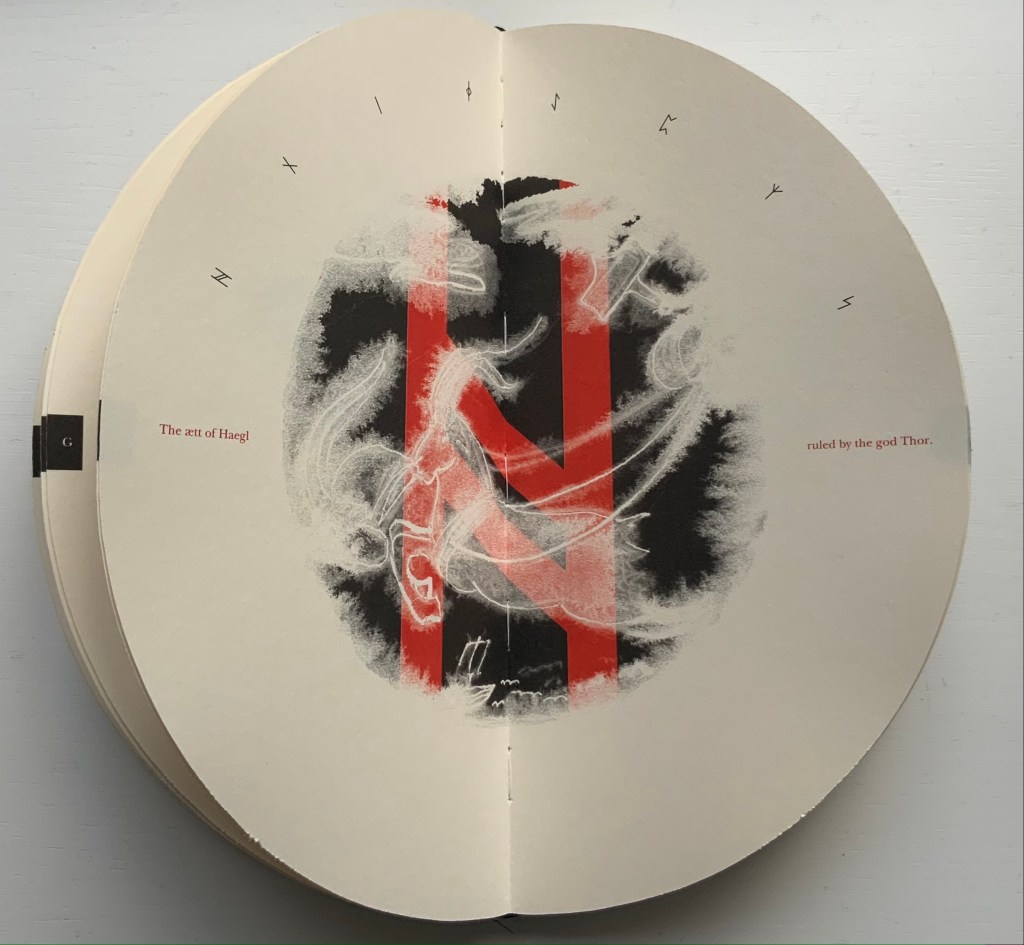
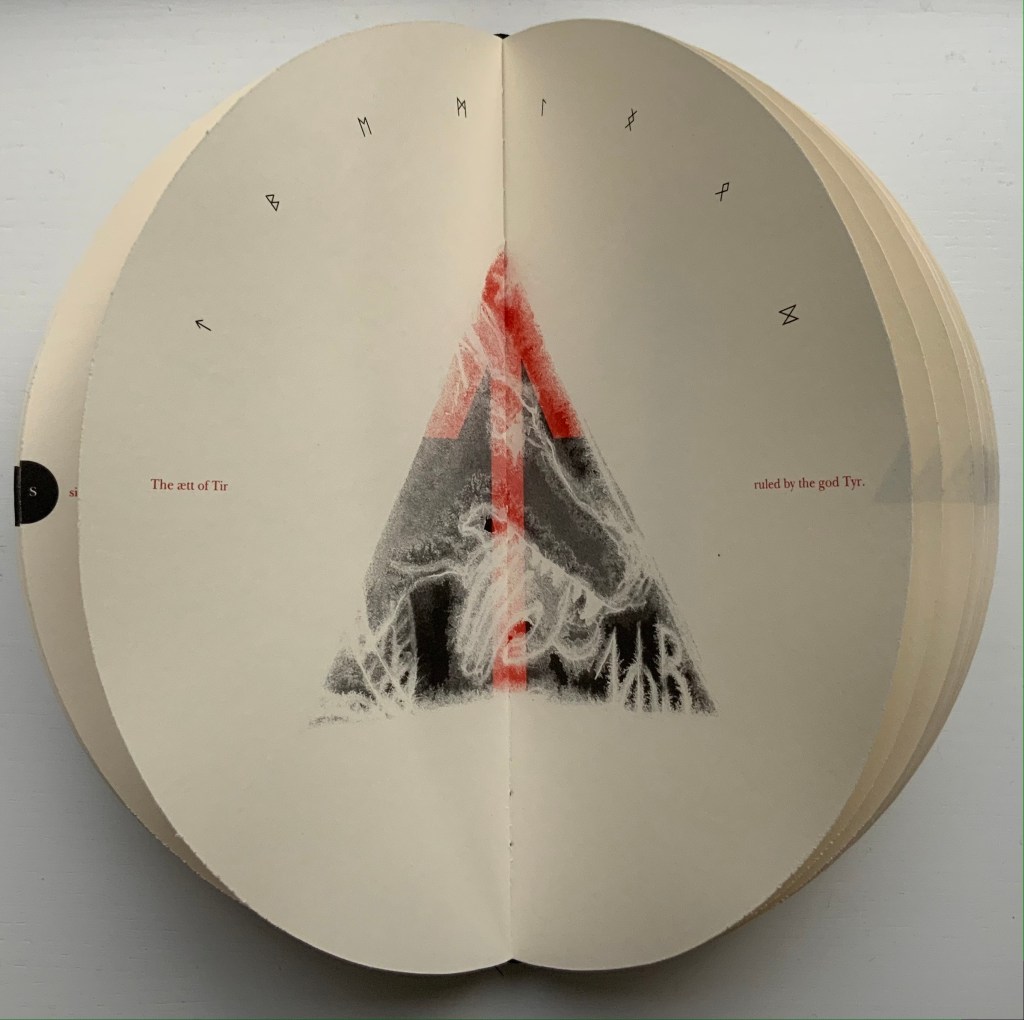
The Runic alphabet divides into three equal parts or ættir (pl. of ætt). In Fuþorc, Baldursdottír signals the beginning of each ætt with a double-page spread in which the eight runes of the ætt arc over a central image containing the ætt’s first letter. Different attributes attach to the ættir and each of the runes they embrace. Using layout of the text and imagery embedded in or surrounding the rune, Baldursdottír has evoked these attributes.

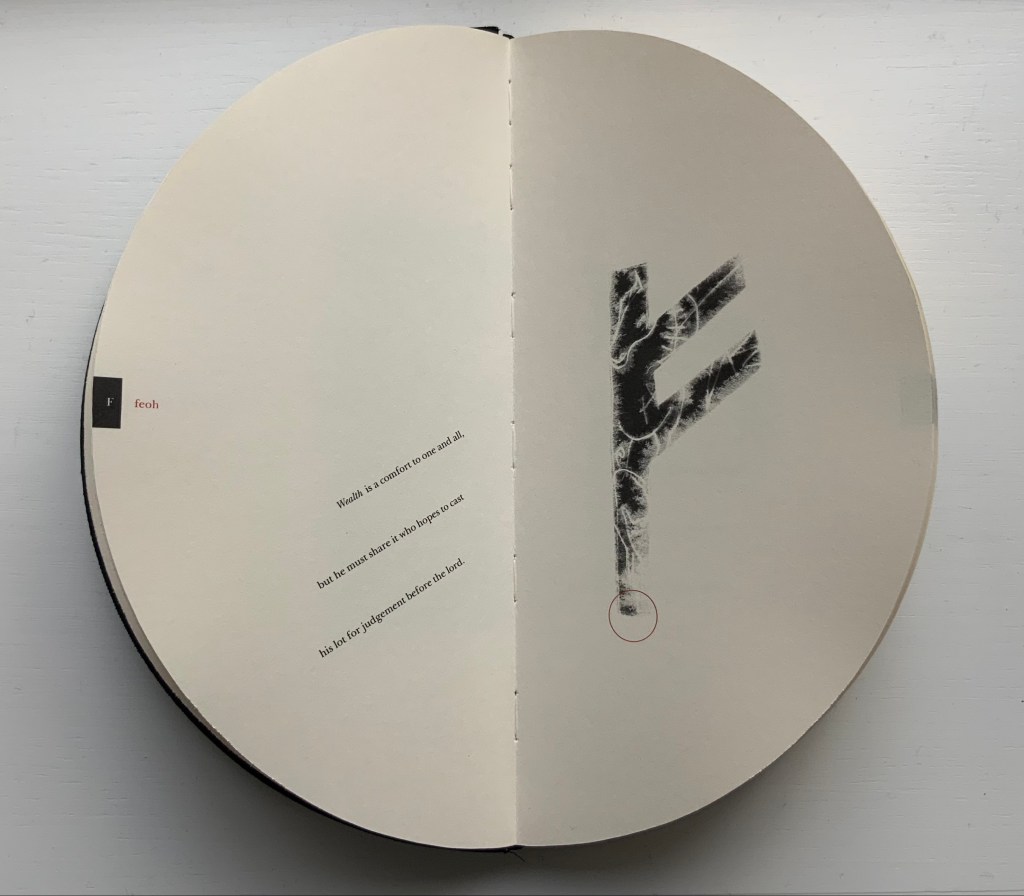
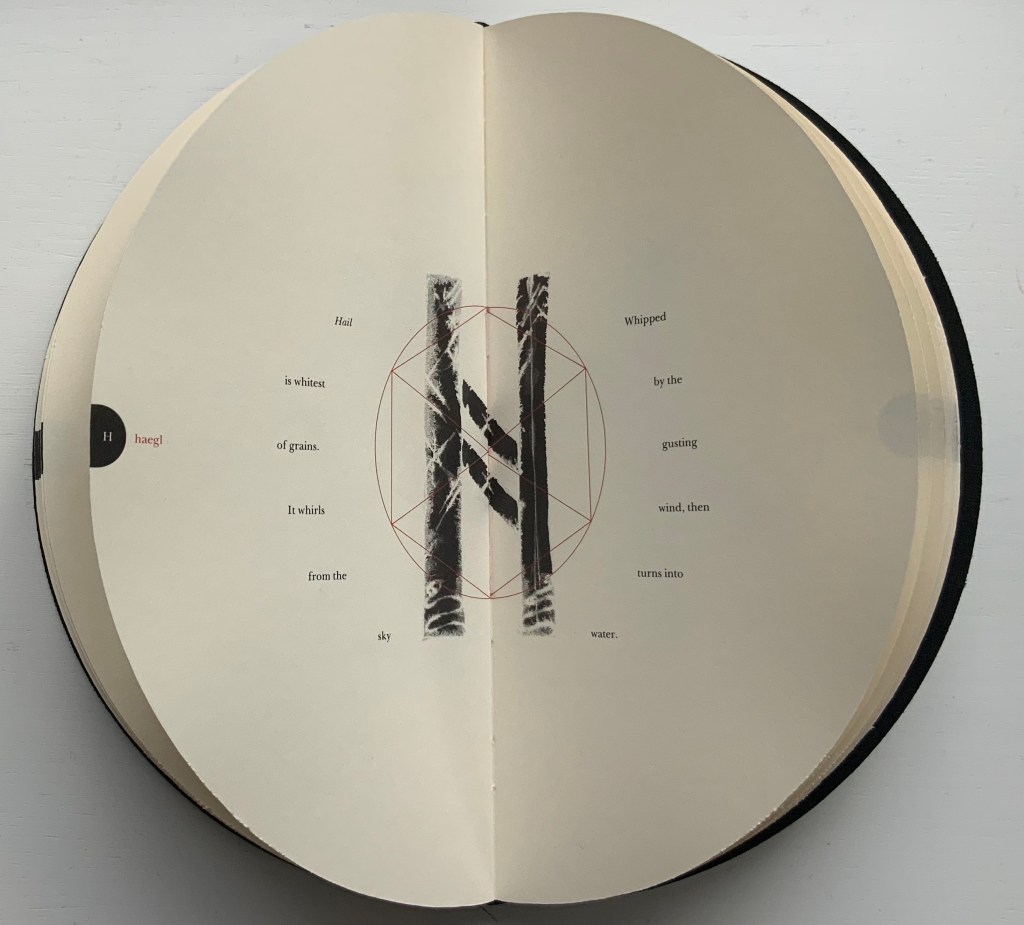
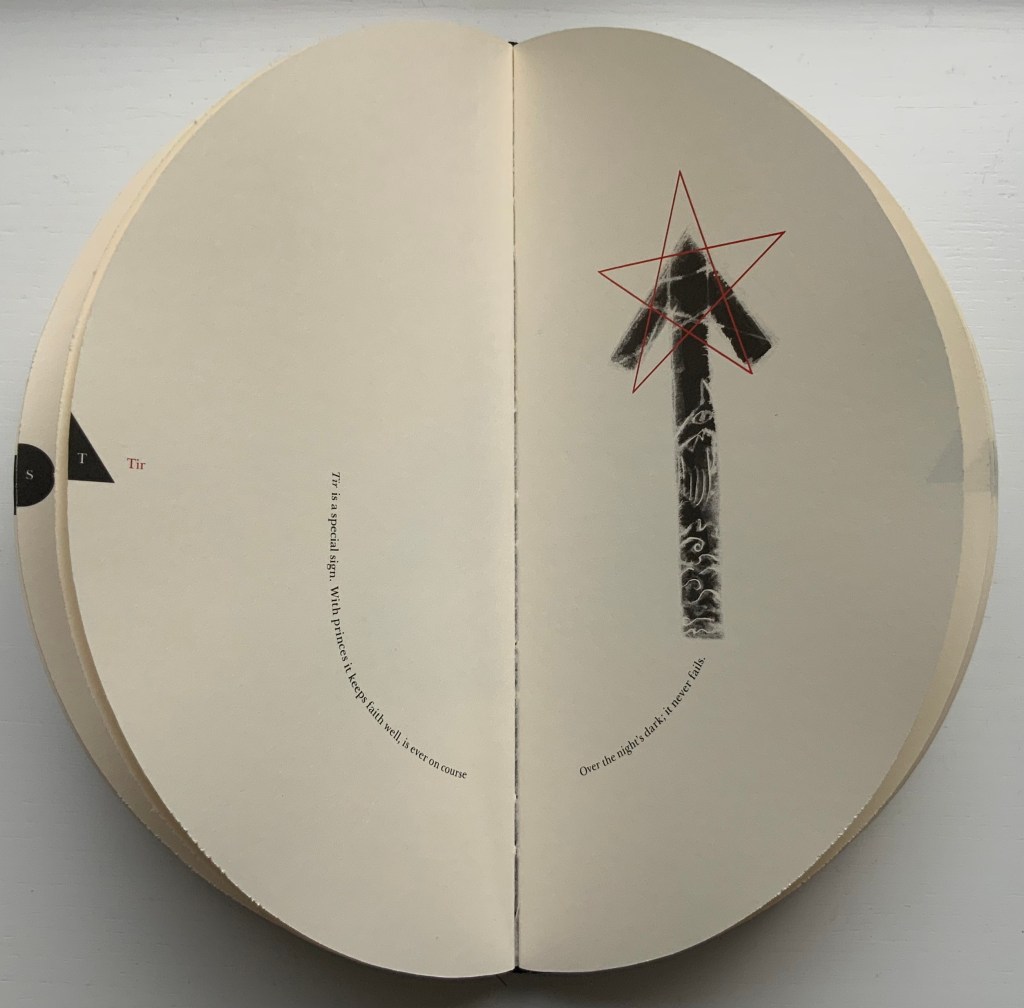
So, for the Ætt of Feoh, figures dance around the Maypole-like rune feoh, which is the first letter of Freyr and Freya who rule over this ætt associating it with agriculture, fertility and sexuality. Although Baldursdottír has Thor ruling over the Ætt of Haegl, it is the Watcher god and goddess Heimdall and Mordgud who rule over it. The seacliff-dwelling goat refers to Heimdall’s usual watch post. The snake to the left of the goat may be Jörmungandr, for which Thor goes fishing in the Prose Edda, which explains the presence of Thor’s hammer in the upper right of the image. Haegl means “hail”, and Heimdall is associated with the kind of disruptive weather threatening the ship at the foot of the image. For the Ætt of Tir, the arrowhead or spear shape of the rune evokes Tyr, the god of war, who rules over this ætt. By shaping each ætt with one of the fundamental geometric shapes of square, circle and triangle, Baldursdottír highlights the elemental nature of the Runic alphabet.

Ætt of Feoh, Ætt of Haegl, Ætt of Tir

In displaying each rune, it is as if Baldursdottír invites the viewer to peer through a rune-shaped stencil to that other world of associated attributes, but as with most divination, the images are partial and ambiguous. Is that a horse or a dragon behind feoh? Hail descending and melting behind haegl? A warship’s prow behind tir?

The runes feoh, haegl and tir

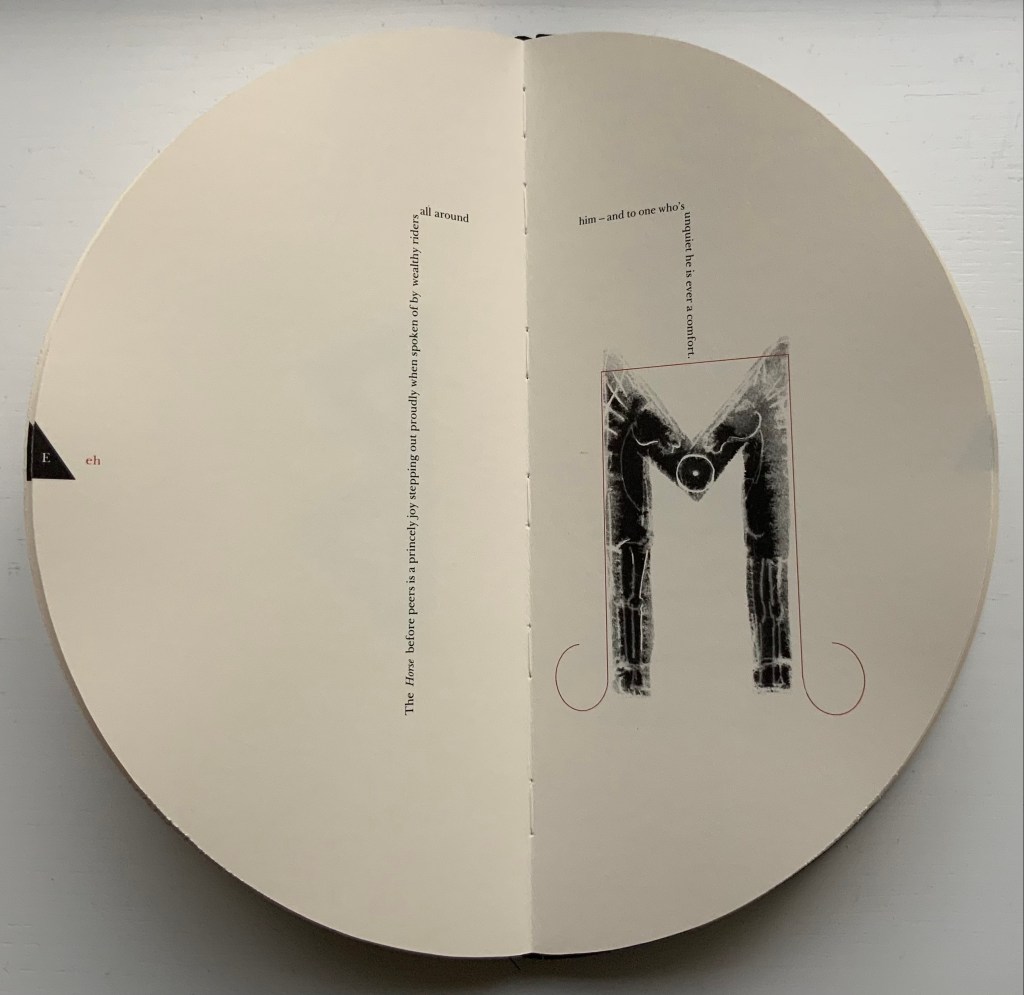
No doubt, more familiarity with the lore of runes would increase the reward of close attention to each image. But many are easily accessible. The image of horses shows well enough through the rune eh (or ehwaz), which means horse, horses or transport, but if there is any doubt, the explanatory text is laid out like reins and a bridle.

The book closes with the Valknut, sometimes called Odin’s knot, at the center of the Acknowledgments. Although runes and symbols such as this may be susceptible to misappropriation, the Acknowlegments themselves serve the Books On Books Collection as a welcome reminder that Fuþorc was first seen among other treasures at Ron King’s home.

Further Reading

Abecedaries I (in progress)“. Books On Books Collection.

Ron King“. 1 March 2021. Books On Books Collection.

Serena Smith“. 10 March 2023. Books On Books Collection.

King, Bernard. 2000. Runes : An Introductory Guide to Interpreting the Ancient Wisdom of the Runes. Rev. ed. Shaftesbury: Element, 2000. New Perspectives (Element).

Looijenga, Tineke. 2003. Texts & Contexts of the Oldest Runic Inscriptions. Leiden: BRILL, 2003.

Osborn Marijane and Stella Longland. 1982. Rune Games. London: Routledge & Kegan Paul.

Books On Books Collection – Serena Smith

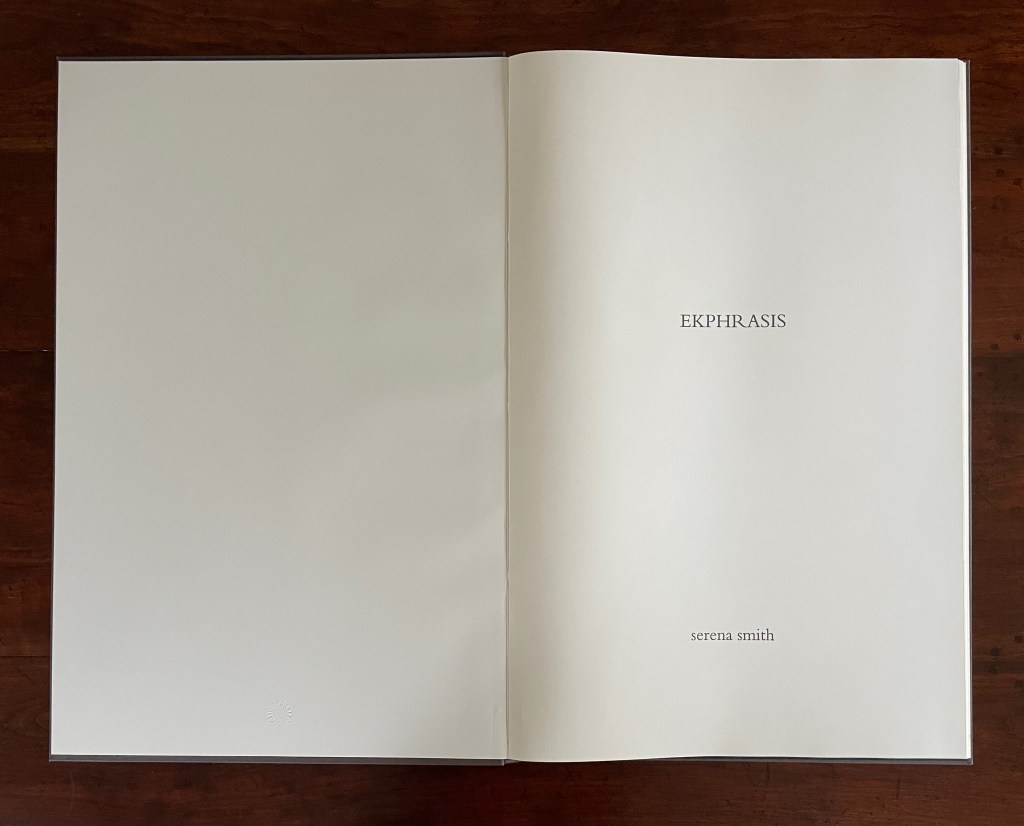
Ekphrasis (2020)

Ekphrasis (2020)
Serena Smith
Case bound with letterpress printed cloth cover H700 x W460 x D20 mm. 23 folios: 2 end leaves, 1 title, 10 hand-colored images printed on to 225gsm Simili Japon, 10 bronzed text printed onto translucent paper. Edition of 5, of which this is #5. Acquired from the artist, 5 January 2023.
Photos: Books On Books Collection. Photos and videos: Courtesy of the artist. Displayed with permission of the artist.

The word ekphrasis refers to the literary practice of verbally representing a visual representation. Think of the poets Keats, Auden and Jarrell using words to “recreate”, re-present, evoke or respond to works of art — an antique urn, a painting by Brueghel, or Donatello’s sculpture of David. Novelists, too. Think of Henry James’ The Ambassadors in which the narrator Lambert Strether describes an imagined stroll through a landscape painting he’s viewing.

Serena Smith has a different point of departure for Ekphrasis. Her dwelling and studio back onto a Leicestershire country park — “part arboretum and part community”. Highlighted with maple, Tibetan cherry and Himalayan birch, the planted woodland of ash and beech with its defined paths offers up “artefact of living trees” as much a constructed work of visual art as any urn, painting or sculpture.

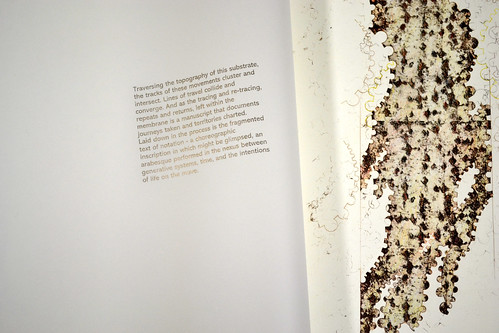
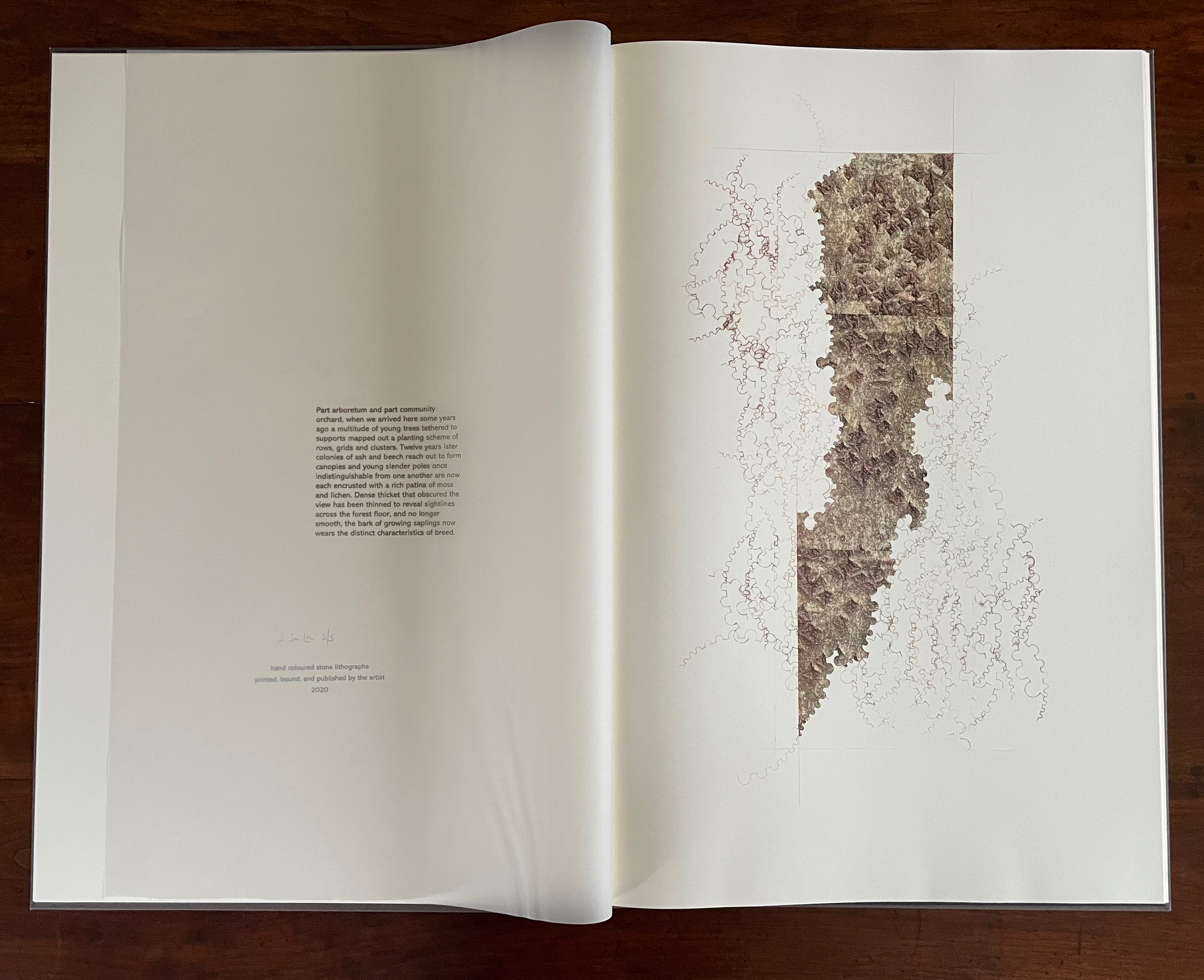
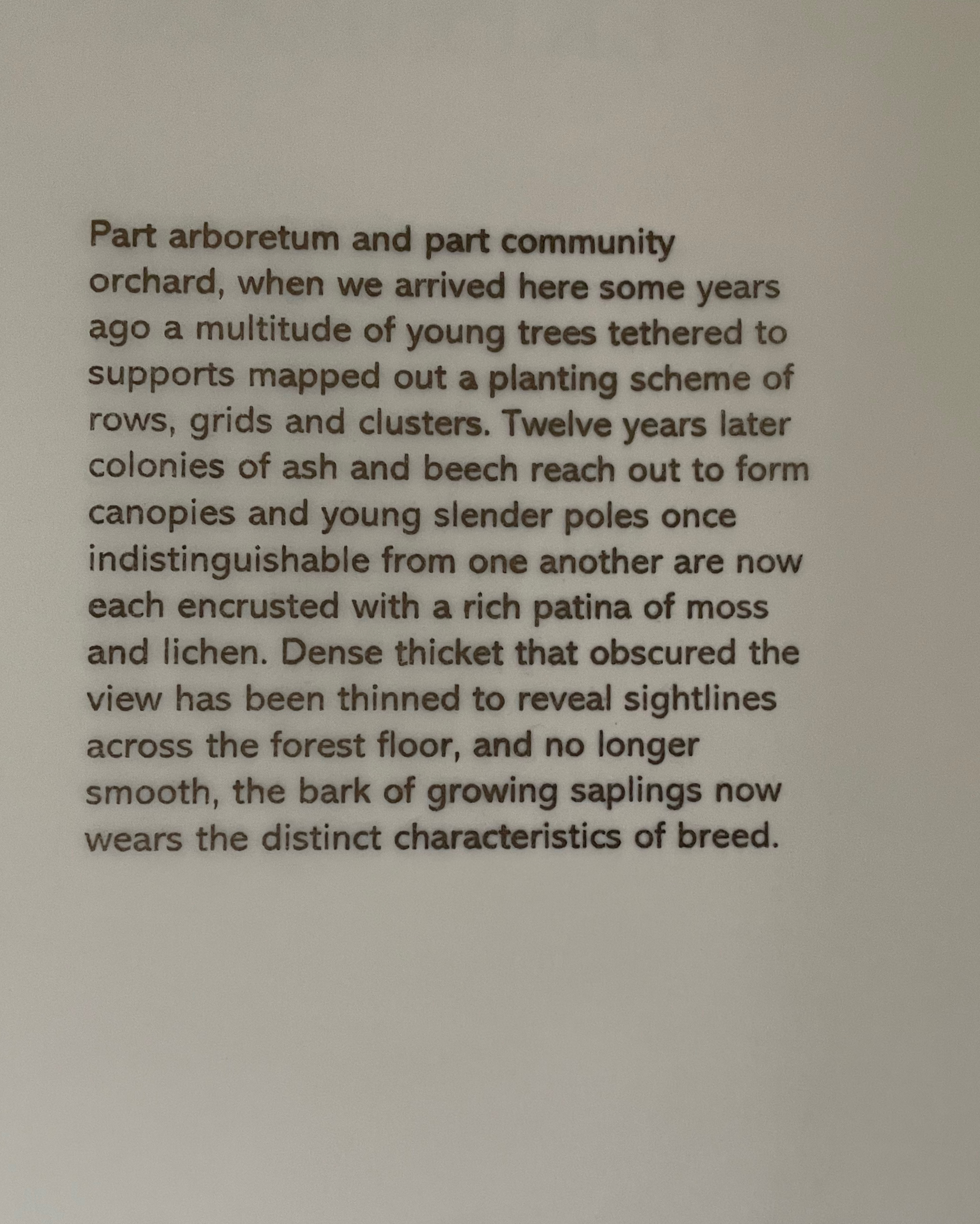
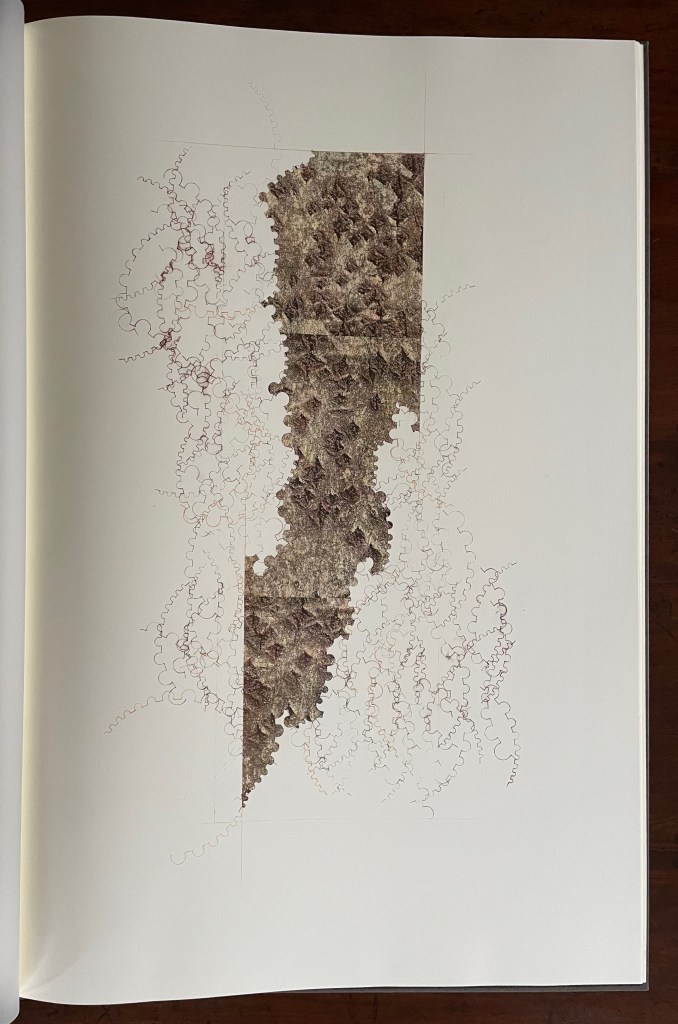
In this bookwork, ten pages of text printed on translucent paper overlay ten images printed from stone. The text reflects on the “wandering, watching and thinking that happens in the parkland”, but then it turns internally to the studio, the ephemera collected from the woodland, and the stage before the images come into being. The process of making becomes an object of the ekphrastic text: smoothing the stone, using a tool to guide the pencil, sharpening the pencil. And gradually the work reveals itself as a self-reflexive meditation on natural and artificial creation, on word and image, and on trace lines of growth and decay.

The translucent pages of text create a palimpsest-like effect over the folios of images. Until the translucent folio turns, the text is indecipherable. As the pages turn, the textual and pictorial play off one another.

Close-up of text

Single-page view of first lithograph

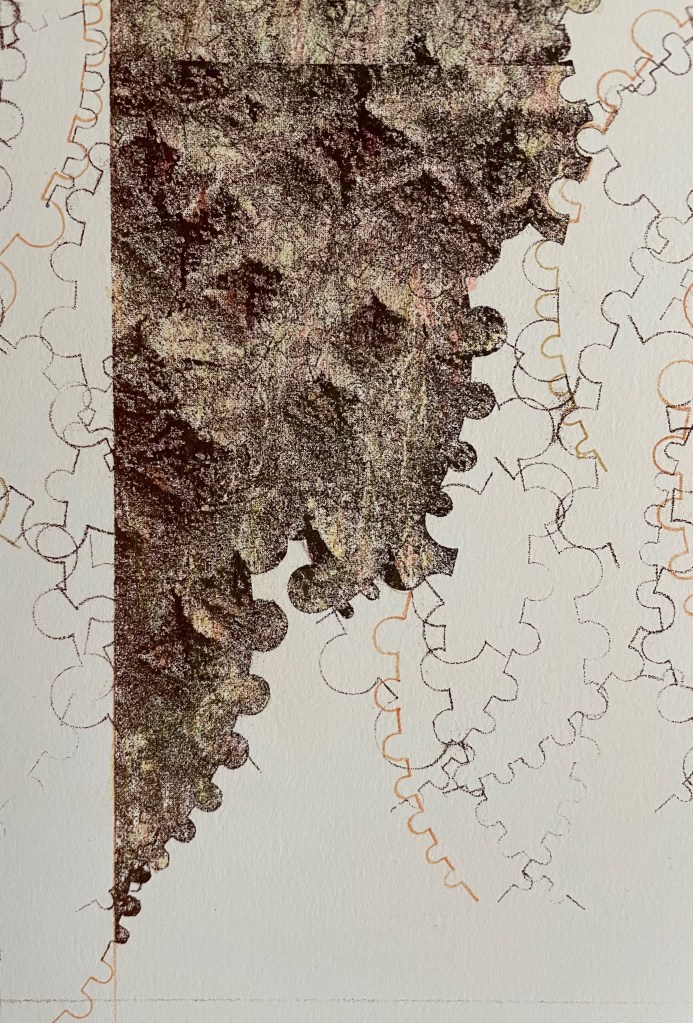
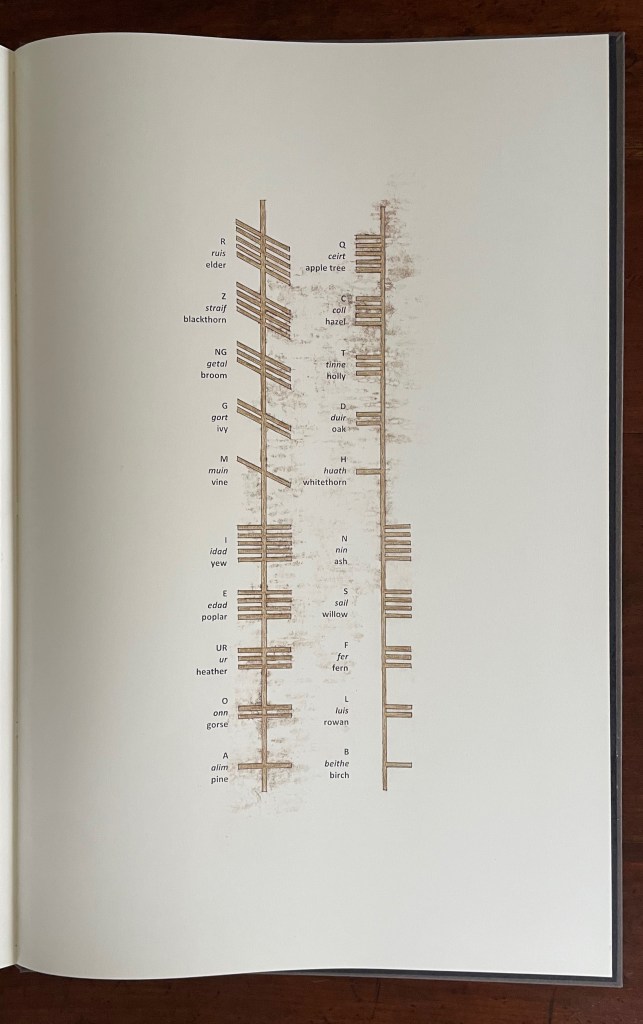
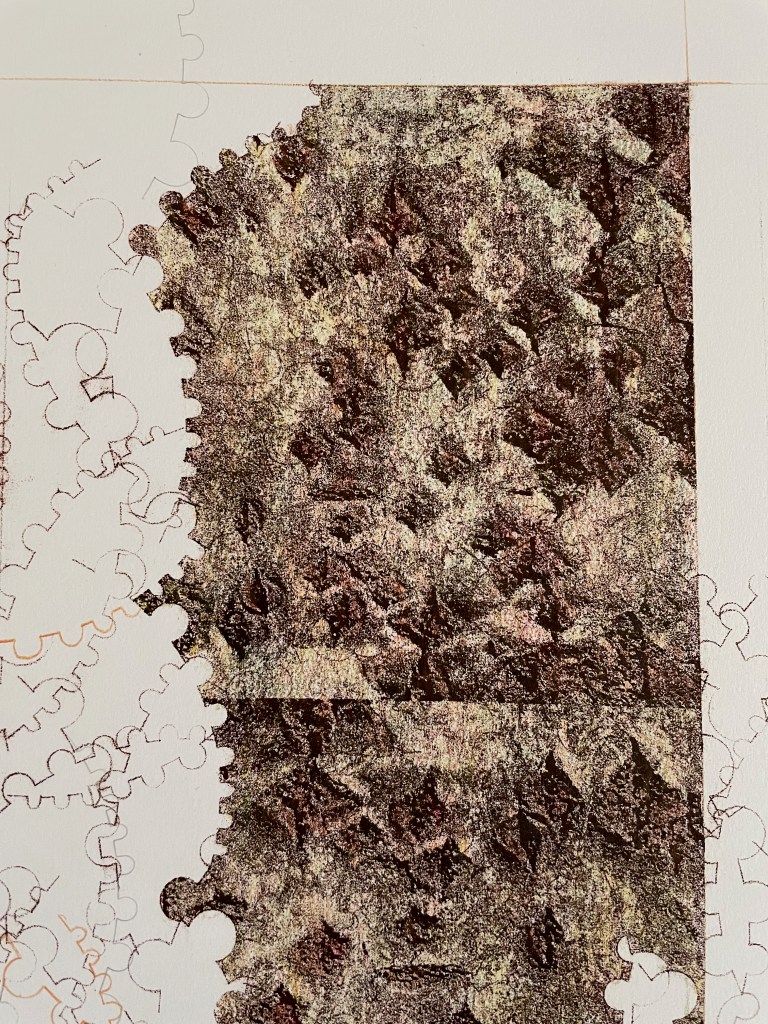
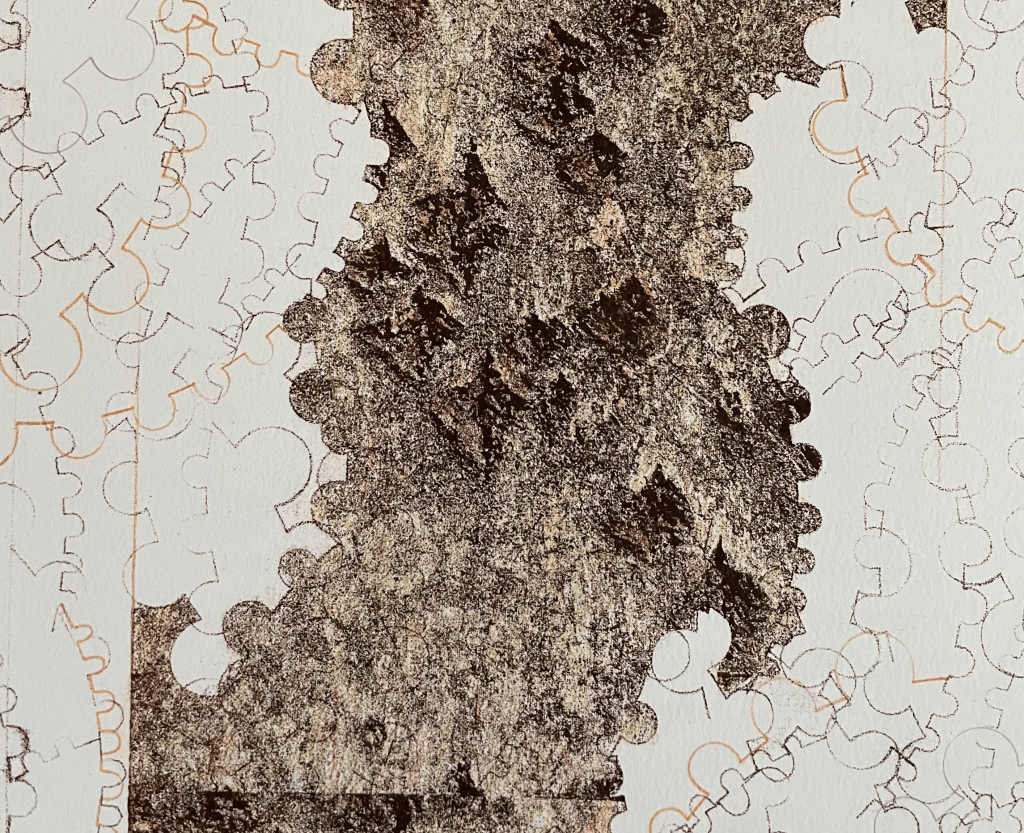
The lithographic image divides into three parts. The jigsaw-like lines around the image of bark come from a stencil tool, and the result chimes with planning lines of landscape architecture, feeding insects’ tracks in the bast, the shape of lichen and ultimately the Ogham runes mentioned in the text and depicted at the end.

First of three-part close-up of the first lithograph

Second of three-part close-up of the first lithograph

Third of three-part close-up of the first lithograph

Glossary

The following ekphrastic words bring the lithographic process to life. Taken together, the glossary, Smith’s descriptive text, and its ekphrastic focus on the lithographic process transform her stone into a kind of Ogham stone itself.

As the drawing progresses I wonder if the hands of Celtic scribes also tired, whilst scoring the lines of Ogham script into fragments of wood. Cutting short repeated grooves against the grain an effort would have been felt, different to that which allowed the tool to willingly travel along the pathways of growth. Perhaps they too made use of a device to control the errant gesture, and aid inscription of measured lines of written text. This can only be speculated.

What the remaining Ogham stones do tacitly share are ciphered incisions that scale their lichen clad faces with a purposeful regularity that resists embellishment. Contouring the edges, the cut lines navigate uneven corners without detour, and prompt me to ask if these scribes, flesh pressed into stone, also briefly held their breath while negotiating the changes in direction prescribed by the matrix.

A version of the text and all of the images can be found in Smith’s brief essay published by IMPACT Printmaking Journal (Spring 2020) and in the following slide show (courtesy of the artist).

Ekphrasis pp. 34,35 detail

Further Reading

Abecedaries I (in progress)“. Books On Books Collection.

Brynja Baldursdottír“. 10 March 2023. Books On Books Collection.

Notes on “Inverse Ekphrasis” as a way into book art“. 16 June 2022. Bookmarking Book Art.

Ager, Simon. “Ogham“. Omniglot: The Online Encyclopedia of Writing Systems and Languages. Accessed 10 February 2023.

Tompkins, Willis W. 1960. Ogham : A Brief Account of the Language and Its Alphabets, Usages by the Druids, and Some Applications in Cryptology ; the Whole Compiled from Various Sources, Edited, Arranged and Furnished with Examples of Alphabets Engraved on Wood. New York: Ogham.

Graves, Robert, and Eileen Hogan. 1978. Ogham : Each Letter of the Alphabet Is Presented with a Colour and Bird All Three Beginning with the Same Initial ; the Whole Alphabet Forms a Calendar of Seasonal Bardic Lore Based on an Interpretation by Robert Graves of the Cyphers Used in the Book of Ballymote. London: Burnt Wood Press.

Books On Books Collection – Peter Criddle

Commend Me to the Ampersand (2018)

Commend Me to the Ampersand (2018)
Peter Criddle
Booklet, sewn saddle-stitch, untrimmed at the head. H110 x W154 mm. 10 folios, untrimmed at the head. Acquired 8 September 2022.
Photos: Books On Books Collection.

Like Andrew Morrison’s Ampersand& (2007), also in the Books On Books Collection, Peter Criddle’s booklet is a design festival of ampersands. In his celebration, Criddle uses metal & wood ampersands (whereas Morrison’s are all wooden) , but his effort’s chief distinction is the revival of an extended piece of doggerel, first presented in Punch Magazine (1869).

He’s never bothered, like A.B.C.
In Index, Guide, and Directorie:
He’s never stuck on a Peeler’s coat,
Nor hung to show where the folks must vote.
No, my nice little Amperzand,
My plump and curly Amperzand,
When I’ve a pen in a listless hand,
I’m always making an Ampersand!

Nothing for him that’s starch or stiff,
Never he’s used in scold or tiff,
State epistles, so dull and grand,
Mustn’t contain the shortened and.
No, my nice little Amperzand,
You’re good for those who’re jolly and bland,
In days when letters were dried with sand
Old frumps wouldn’t use my Amperzand!

But he is dear in old friendship’s call,
Or when love is laughing through lady-scrawl:
‘Come & dine, & have bachelor’s fare.’
‘Come & I’ll keep you a Round & Square.’
Yes my nice little Amperzand
Never must into a word expand,
Gentle sign of affection stand,
My kind, familiar Amperzand.

‘Letters Five do form his name:’
His, who Millions doth teach and tame:
If I could not be in that Sacred Band,
I’d be the affable Amperzand.
Yes, my nice little Amperzand,
And when PUNCH is driving his five-in-hand,
I’ll have a velocipede, neatly planned
In the shape of a fly-away Amperzand.

For now, Criddle’s may be “the last word on the ampersand”.

Further Reading

The Last Word on the Ampersand“. 27 June 2020. Books On Books Collection.

Andrew Morrison“. 15 September 2021. Books On Books Collection.

Books On Books Collection – Marie Dern

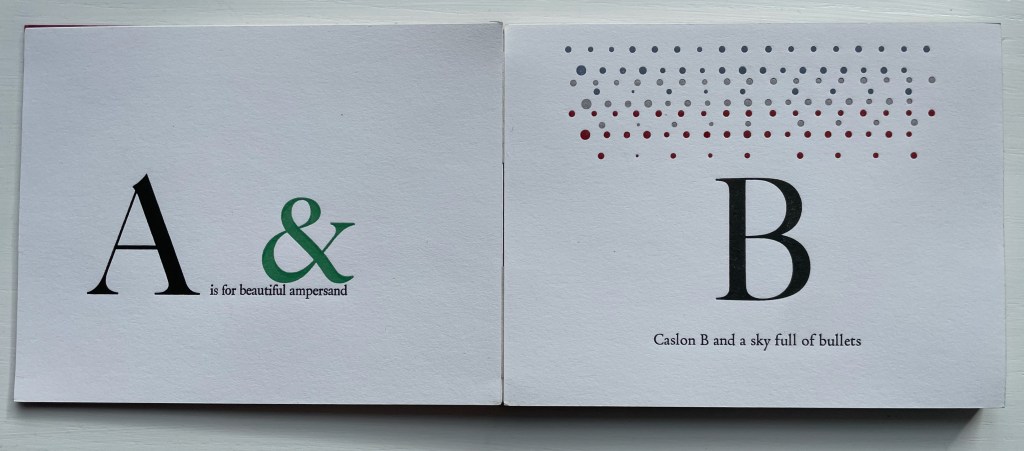
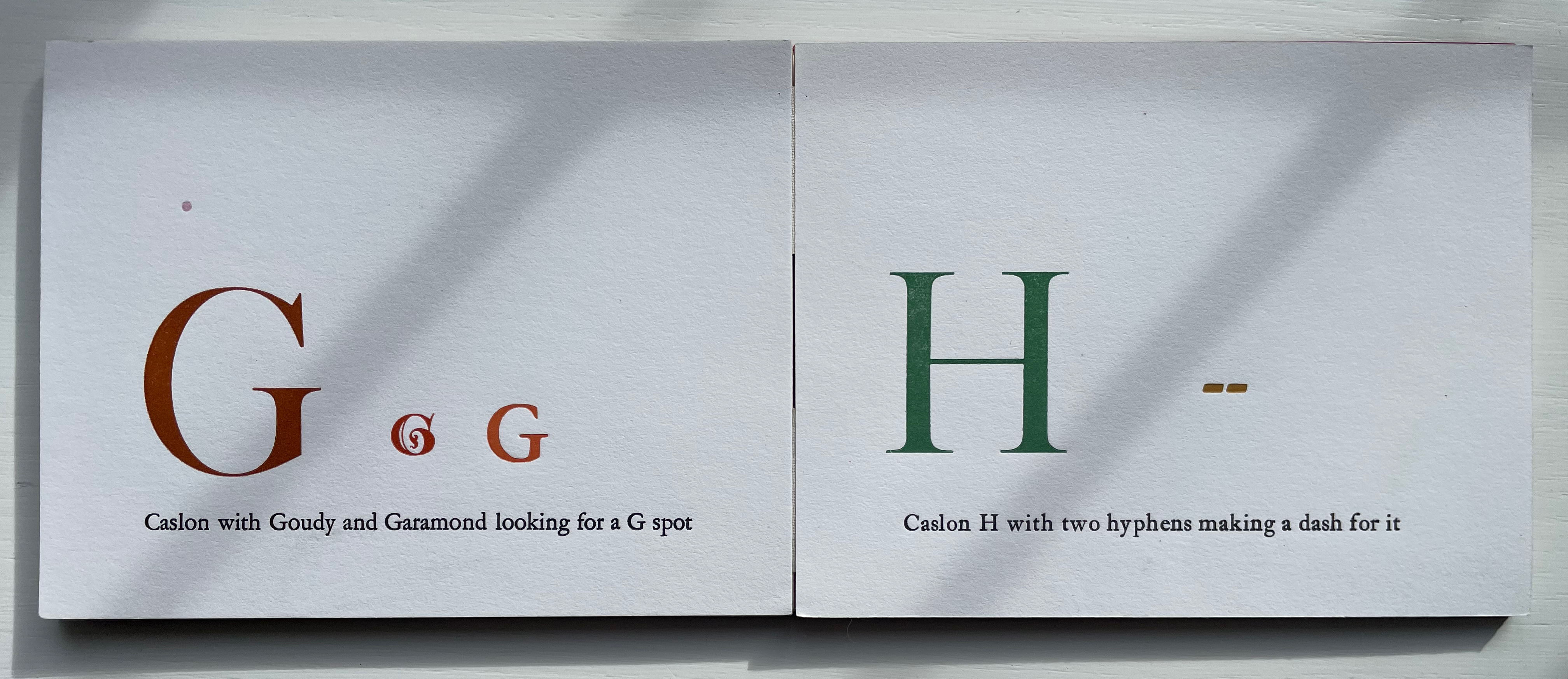
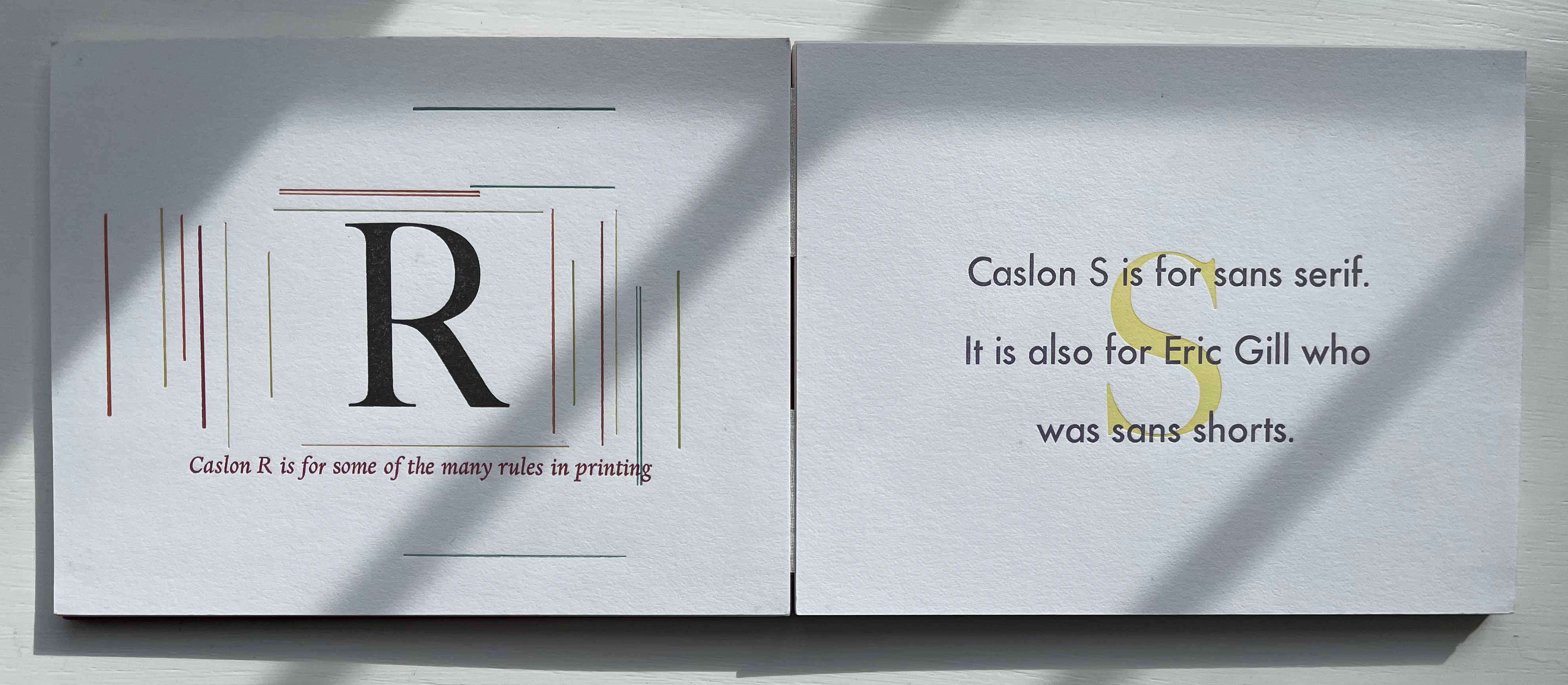
William Caslon’s Typographic ABC (1991)

William Caslon’s Typographic ABC (1991)
Marie Dern
Double-sided leporello. H11 x W14 mm. 28 panels. Edition of 55, of which this is #1. Acquired from Bromer’s, 5 February 2023.
Photos: Books On Books Collection.

One of the most common precursors to the codex, the leporello, accordion or concertina structure suits this celebration of what is considered the first original English typeface, designed by William Caslon (1692–1766), used to set both the Declaration of Independence and the U.S. Constitution, and so dominant a font since the 18th century that it prompted its own dicta: “When in doubt, use Caslon”. In Marie Dern’s hands, though, the accordion structure is anything but common. Rather than zigzag folding a long strip of paper, she has attached her panels to two parallel strips of linen tape and left just enough space between the pairs of panels to have the hinged leporello fold down into a precise oblong shape.

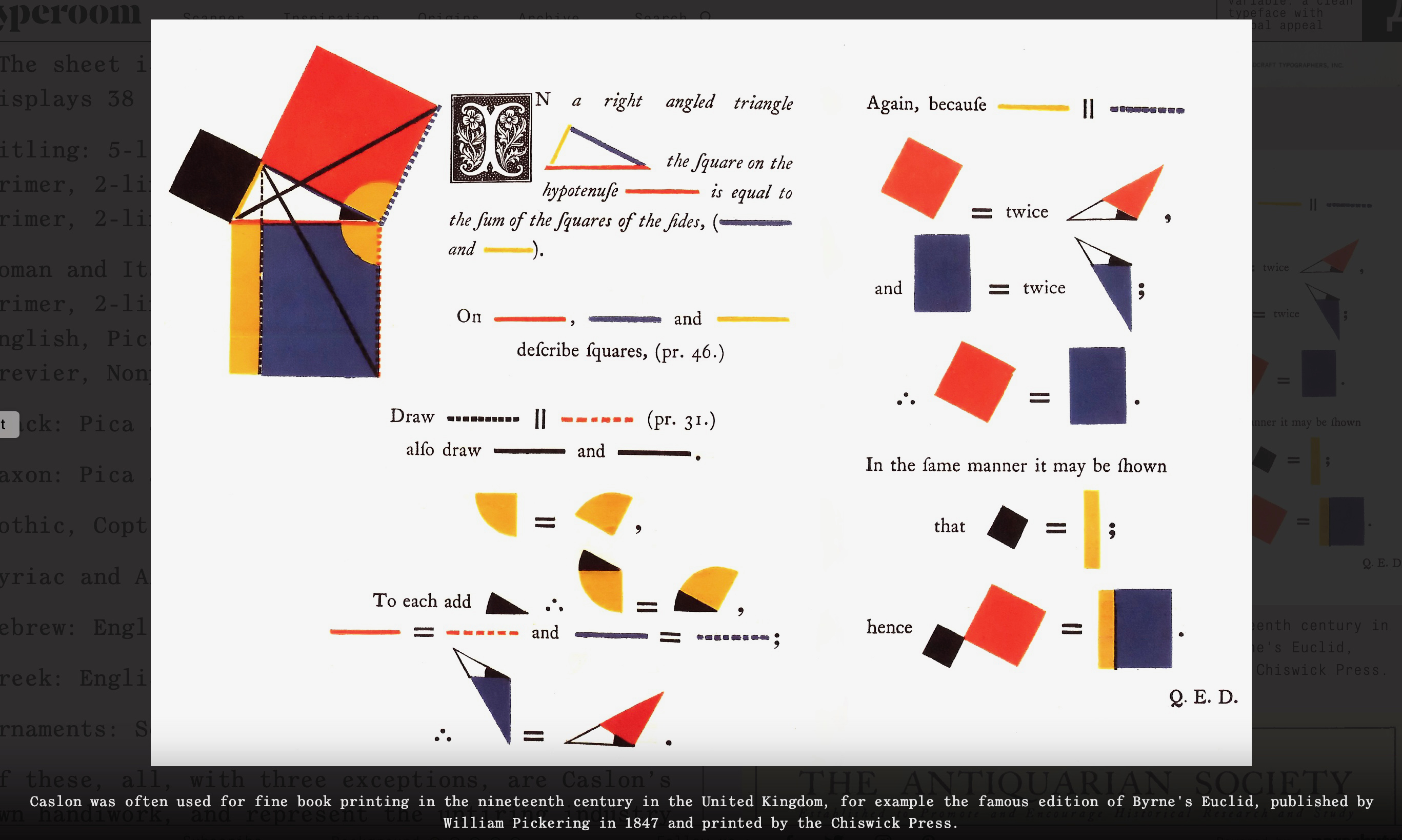
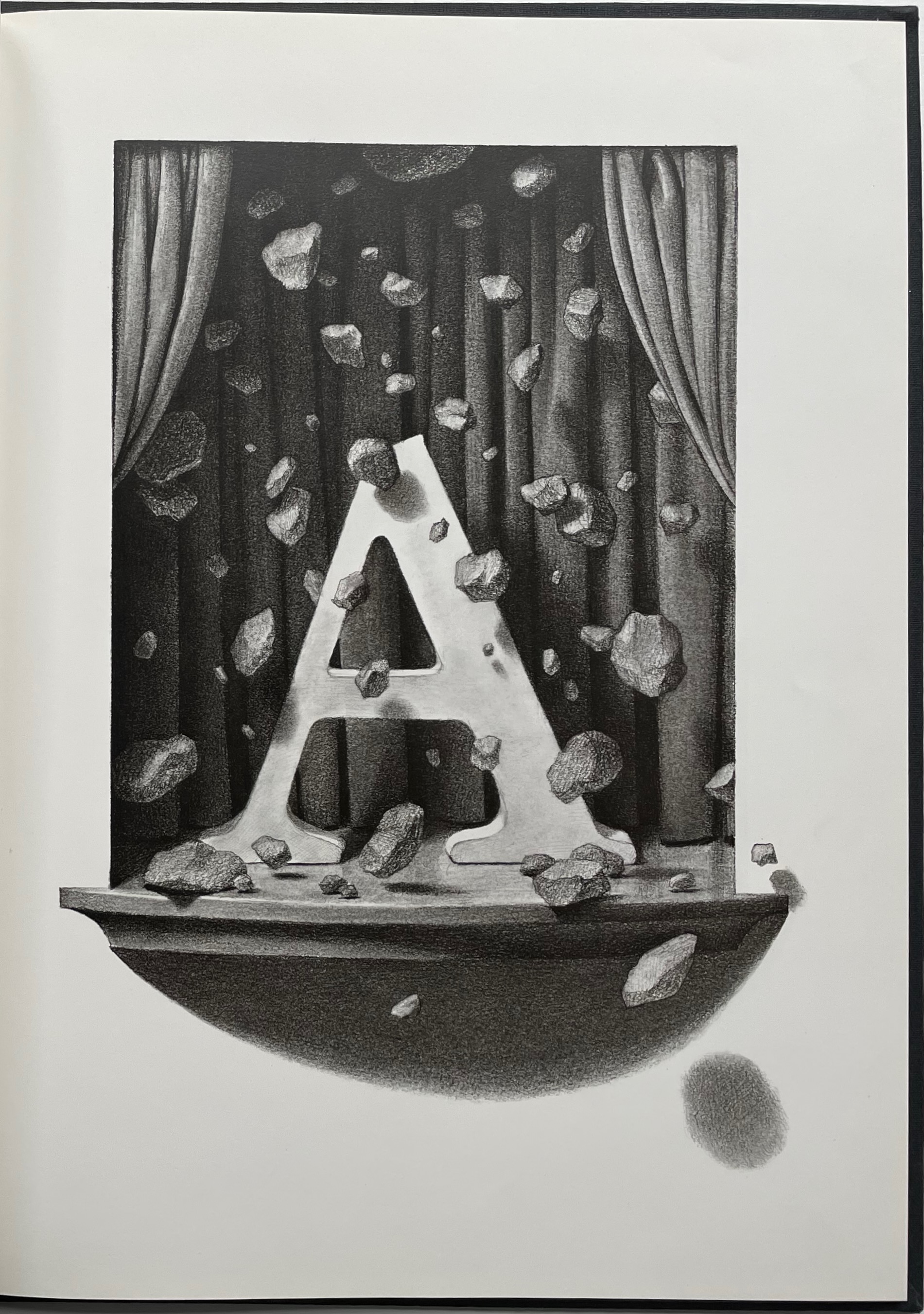
Caslon has featured in such outstanding books as Oliver Byrne’s The First Six Books of the Elements of Euclid: In Which Coloured Diagrams and Symbols Are Used Instead of Letters (1847), nearly an artist’s book in its own right. Dern might have been more immediately inspired, however, by Chris Van Allsburg’s whimsical children’s book The Z was Zapped: A Play in Twenty-six Acts, Performed by the Caslon Players (1987). From the start, bending the alphabet full circle to the ampersand, Dern’s own whimsy extends beyond the letters themselves.

L: from Byrne’s The First Six Books. Typeroom, 23 January 2020. Accessed 8 March 2023.
R: from Van Allsburg’s The Z was Zapped. Photo: Books On Books Collection.

Given its age and dignity, Caslon attracted a fair amount of rock throwing from designers (especially in the 20th century). While Dern may have her own whimsical fun with Caslon, she doesn’t let the rock-throwers off scot free. Her Caslon’s G puts Frederic Goudy on notice that size does matter, and the Caslon S reminds Eric Gill of the emperor’s new clothes.

Other alphabetical typeface celebrations in the Books On Books Collection include Nicolas McDowall’s A Bodoni Charade (1995), Roberto de Vicq de Cumptich’s Bembo’s Zoo (2000) and Sharon Werner & Sharon Forss’ Alphabeasties and Other Amazing Types (2009).

Further Reading

Abecedaries I (in progress)“. Books On Books Collection.

Roberto de Vicq de Cumptich“. 12 February 2021. Books On Books Collection.

Sharon Werner & Sharon Forss“. 20 December 2022. Books On Books Collection.

Nicolas McDowall”. 10 December 2022. Books On Books Collection.

Nicholas Rougeux“. 19 November 2022. Books On Books Collection.

Chris Van Allsburg“. 12 December 2022. Books On Books Collection.

Byrne, Oliver, and William Pickering. 1847. The First Six Books of the Elements of Euclid: In Which Coloured Diagrams and Symbols Are Used Instead of Letters. London: W. Pickering.

Morison Stanley. 1997. Letter Forms : Typographic and Scriptorial : Two Essays on Their Classification History and Bibliography. Point Roberts WA: Hartley & Marks. See pp. 27-28 for the first stones cast in 1937.

Morison, Stanley. 1999. A Tally of Types New ed. [3rd ed.] ed. Boston: D.R. Godine. Caslon is not even included in Morison’s “tally” of seventeen typefaces. It appears on pages 24-27 in his introduction “revised & amplified” by Phyllis M. Handover. Even there they enlist Bruce Rogers, Emery Walker and William Morris to chuck additional rocks in Caslon’s direction on pages 37-38.

Books On Books Collection – Cari Ferraro

The First Writing (2004)

The First Writing (2004)
Cari Ferraro
Leporello attached to front board; leather thong and bead closure.. H178 x W127 mm (7 x 5 in) closed; W1245 mm open (49 in). 10 panels. Edition of 50, of which this is #40. Purchased from Vamp&Tramp, 4 January 2022.
Photos: Books On Books Collection.

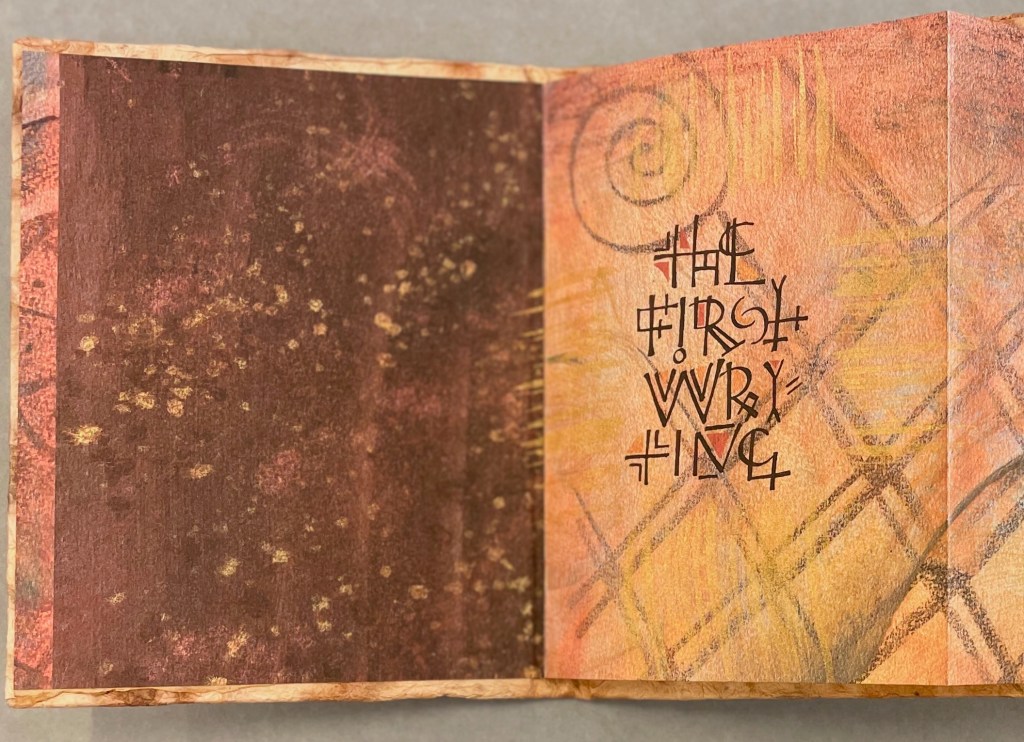
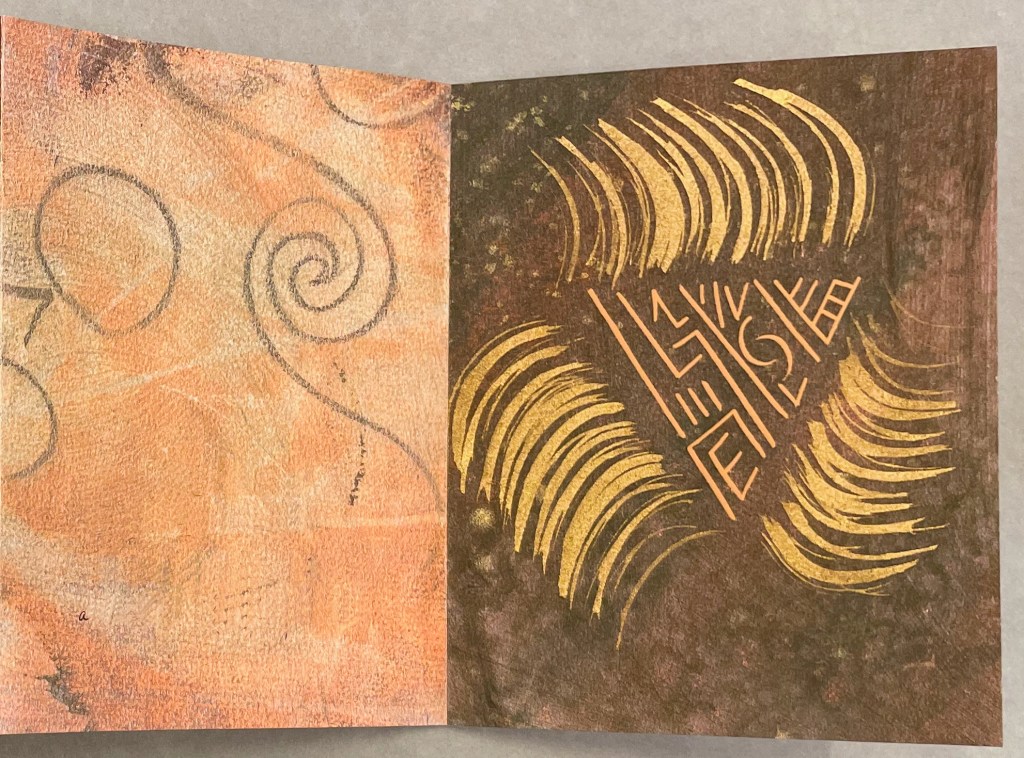
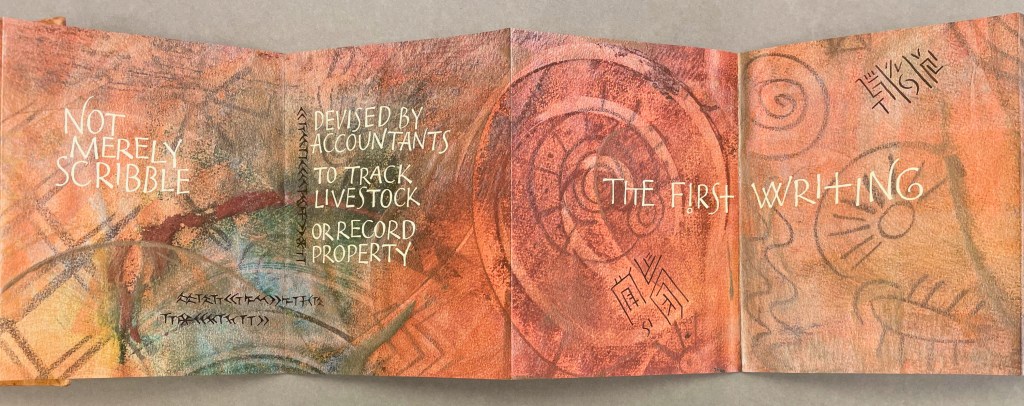
Strange as it sounds to the Western ear, writing came before the alphabet. And like the alphabet, that ancient writing has inspired artists’ books. Two of them in the Books On Books collection are Helen Malone’s Alphabetic Codes (2005) and Cari Ferraro’s The First Writing (2004).

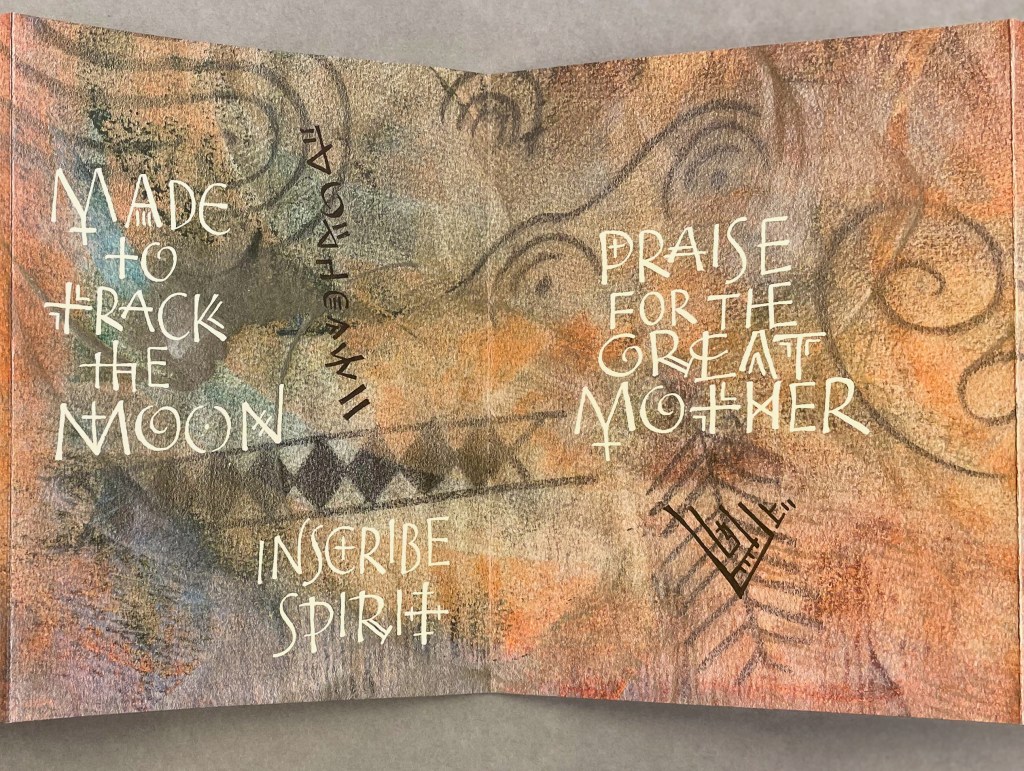
Crumpled Lokta paper dyed to resemble old leather and decorated with a crescent moon in gold metallic ink covers the boards of The First Writing. Just as much as old leather — and along with the interior — it evokes a painted cave wall to conjure up the archeologist Marija Gimbutas’s theory “that the first writing actually predated Sumerian businessmen by a few thousand years, and instead grew out of symbolic marks on ritual objects made to venerate the Great Mother in Old Europe”. Inspired by the archaelogist’s catalogue of marks in her book The Civilization of the Goddess, the glyphs and stylized alphabet round out Ferraro’s poetic invocation of the theory against the background of undeciphered symbols found in the 5000-year-old circular passage tombs at Knowth and Newgrange in Ireland (both described by Gimbutas). A link to Ferraro’s excellent essay on Gimbutas’s work can be found below under Further Reading.

Further Reading

Abecedaries I (in progress)“. Books On Books Collection.

Lanore Cady“. 16 December 2022. Books On Books Collection. Artist’s book.

Lyn Davies“. 7 August 2022. Books On Books Collection. Reference and fine print.

Timothy Donaldson“. 1 February 2023. Books On Books Collection. Reference.

Rudyard Kipling and Chloë Cheese“. 15 February 2023. Books On Books Collection. Illustrated children’s book.
Abe Kuipers“. Books On Books Collection. Artist’s book. [In progress]

Helen Malone“. 23 July 2020. Books On Books Collection. Sculpture book.

Don Robb and Anne Smith“. 26 March 2023. Books On Books Collection. Illustrated children’s book. [In progress]
James Rumford. 21 November 2022. Books On Books Collection. Illustrated children’s book.
Tiphaine Samoyault“. 10 July 2023. Books On Books Collection. Illustrated children’s book.
Ben Shahn“. 20 July 2022. Books On Books Collection. Artist’s book.
Pat Sweet“. 18 January 2023. Books On Books Collection. Artist’s miniature book.

Tommy Thompson“. 21 August 2022. Books On Books Collection. Reference.

Dave Wood“. 5 June 2023. Books On Books Collection. Artist’s book.
Clodd, Edward. 1913. The Story of the Alphabet. London: Hodder and Stoughton. 1913. Superseded by several later works, but is freely available online with line illustrations and some black and white photos.

Diringer, David, and Reinhold Regensburger. 1968. The alphabet: a key to the history of mankind. London: Hutchinson. A standard, beginning to be challenged by late 20th and early 21st century archaeological findings and palaeographical studies.

Drucker, Johanna. 1999. The alphabetic labyrinth: the letters in history and imagination. New York, N.Y.: Thames and Hudson.

Ege, Otto. 1921/1998. The Story of the Alphabet, Its Evolution and Development… Embellished Typographically with Printer’s Flowers Arranged by Richard J. Hoffman. Van Nuys, CA: Richard J. Hoffman. A miniature. The type ornaments chosen by Hoffman are arranged chronologically by designer (Garamond, Granjon, Rogers) and printed in color.

Ferraro, Cari. 2010. “Sacred Script: Ancient Marks from Old Europe“. Cari Ferraro: Prose & Letters. Accessed 4 January 2022. Also published in Alphabet : the journal of the Friends of Calligraphy. Volume 35.3. San Francisco Friends of Calligraphy.

Firmage, Richard A. 2001. The alphabet. London: Bloomsbury.

Fischer, Steven Roger. 2008. A history of writing. London: Reaktion Books.

Gimbutas Marija. 1991. The Civilization of the Goddess. San Francisco Calif: HarperSanFrancisco.

Jackson, Donald. 1997. The story of writing. Monmouth, England: Calligraphy Centre.

Pflughaupt, Laurent. 2008. Letter by letter: an alphabetical miscellany. New York: Princeton Architectural Press.

Robinson, Andrew. 1995. The story of writing. London: Thames and Hudson.

Rosen, Michael. 2014. Alphabetical: how every letter tells a story. London: John Murray.

Sacks, David. 2003. Language visible unraveling the mystery of the alphabet from A to Z. New York: Broadway Books.

Thompson, Tommy. 1952. The ABC of our alphabet. London: Studio Publications. Not a fine press publication, but its layout, illustrations and use of two colors bear comparison with the Davies book. It too is out of print and unfortunately more rare.
Books On Books Collection – Marie Lancelin

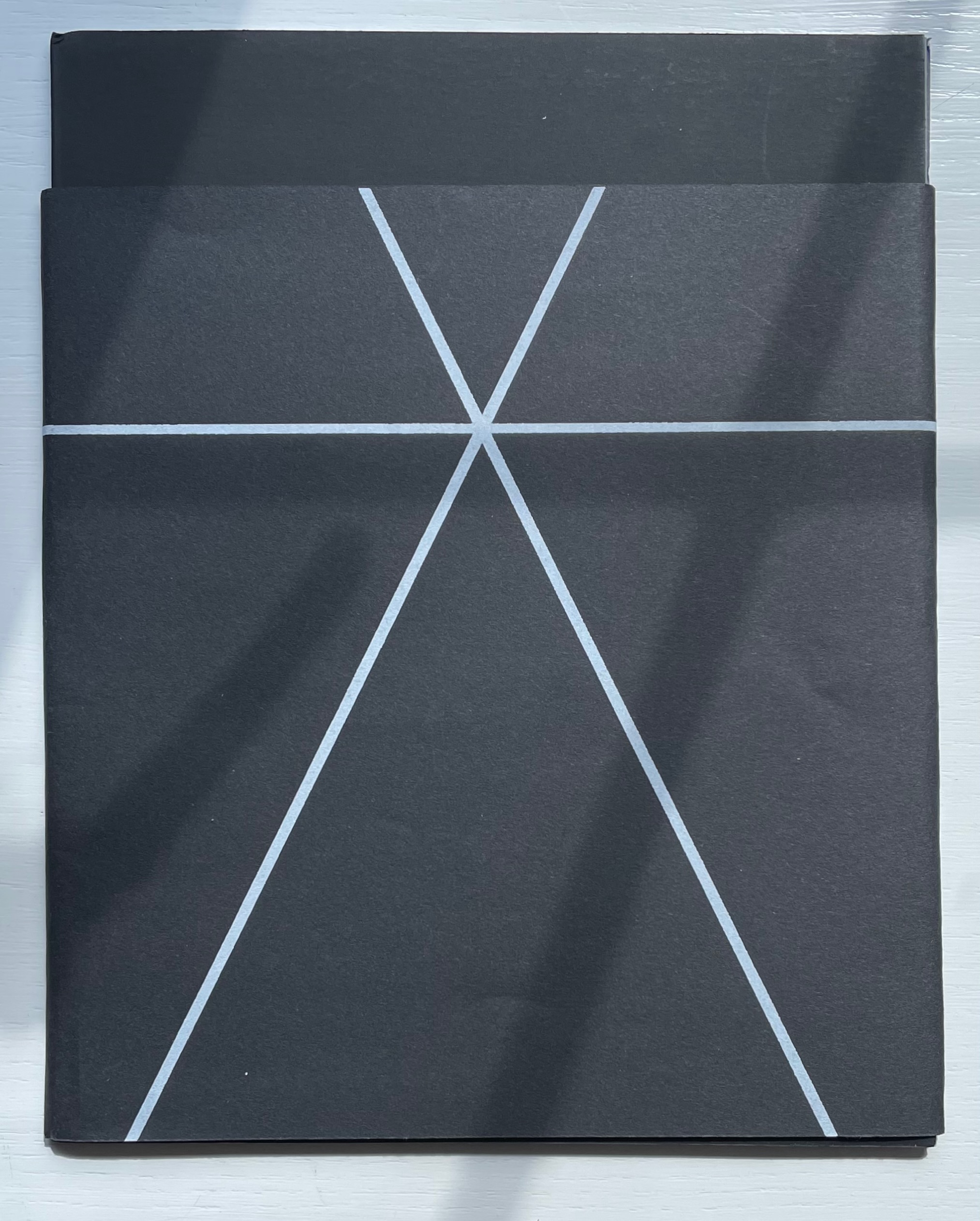
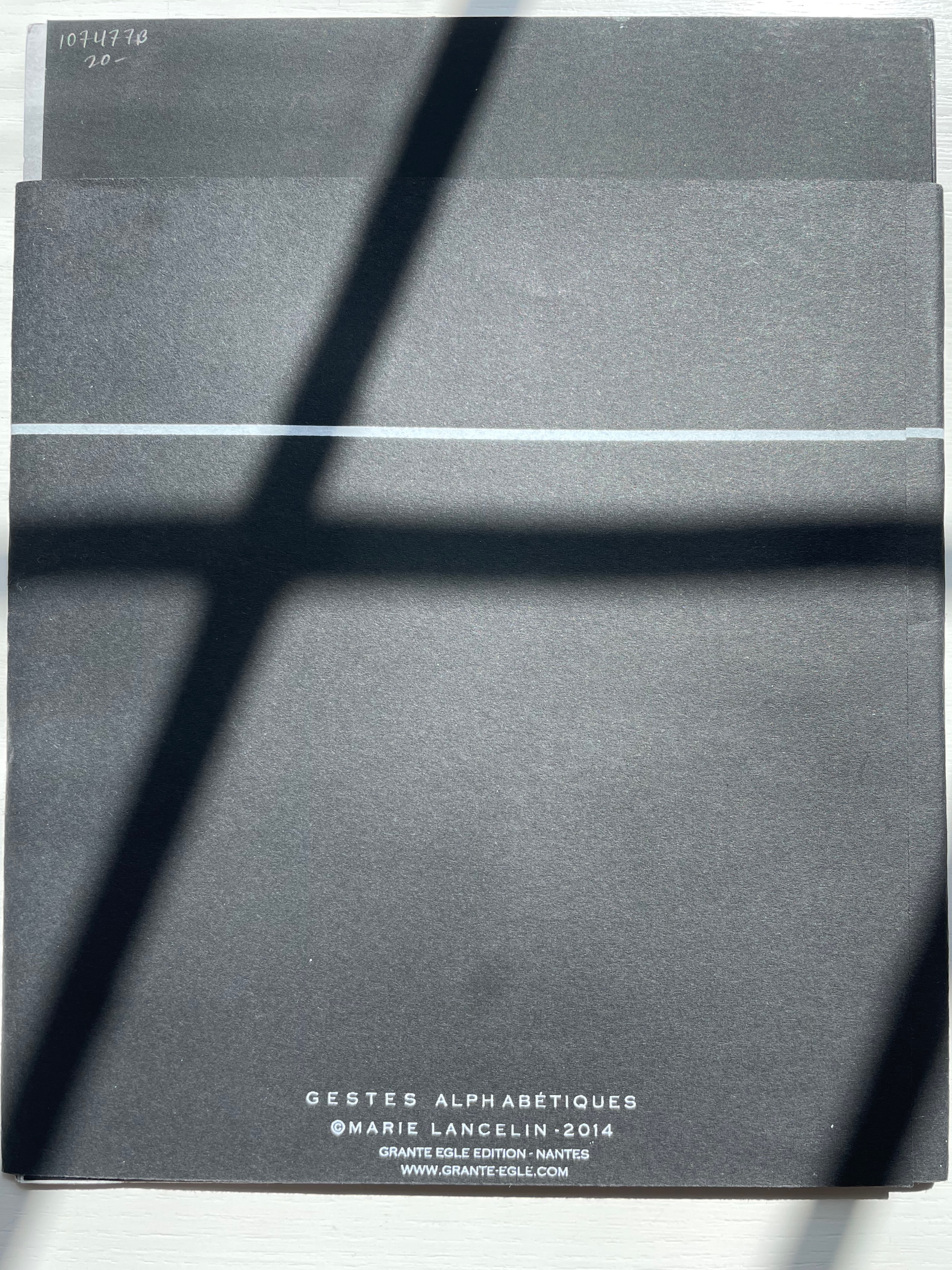
Gestes Alphabétiques (2014)

Gestes Alphabétiques (2014)
Marie Lancelin
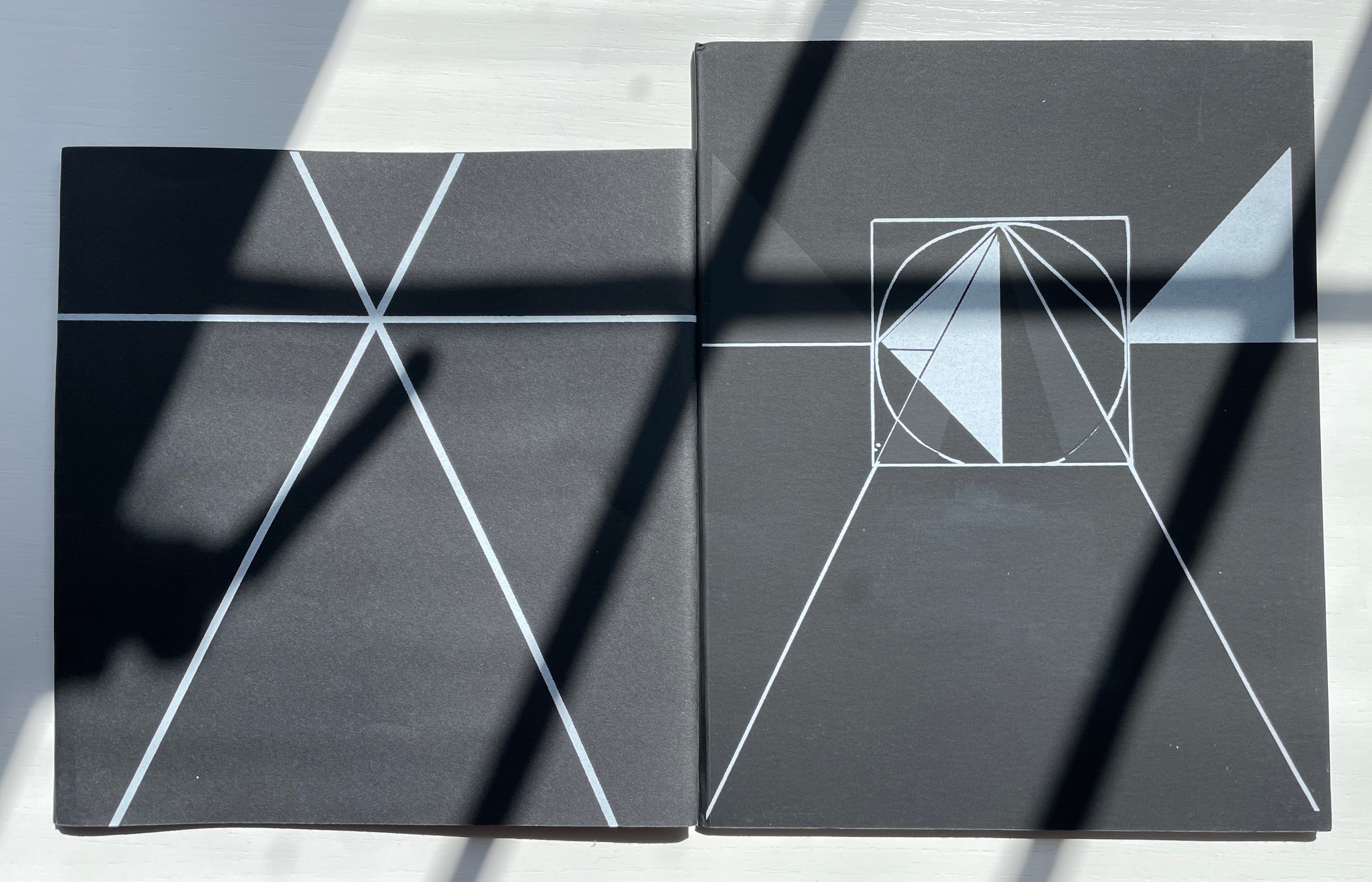
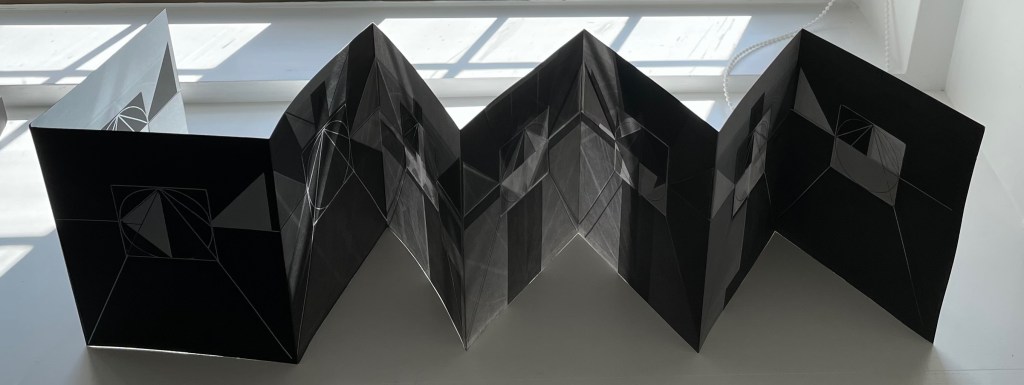
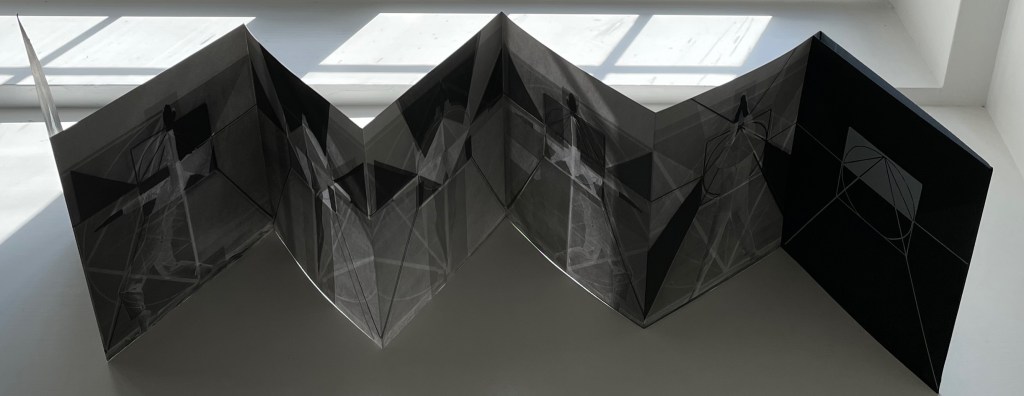
Double-sided leporello with sleeve. H200 x W170 mm (closed). 14 panels. Laser-printed, screen print. Interior: offset on Arcoset Extra White 170 gsm. Cover and band: serigraphy on Curious Skin 270 gsm. Edition of 100. Acquired from Printed Matter, Inc., 31 July 2022.
Photos: Books On Books Collection. Displayed with permission of the publisher, Grante Ègle (Nantes, France).

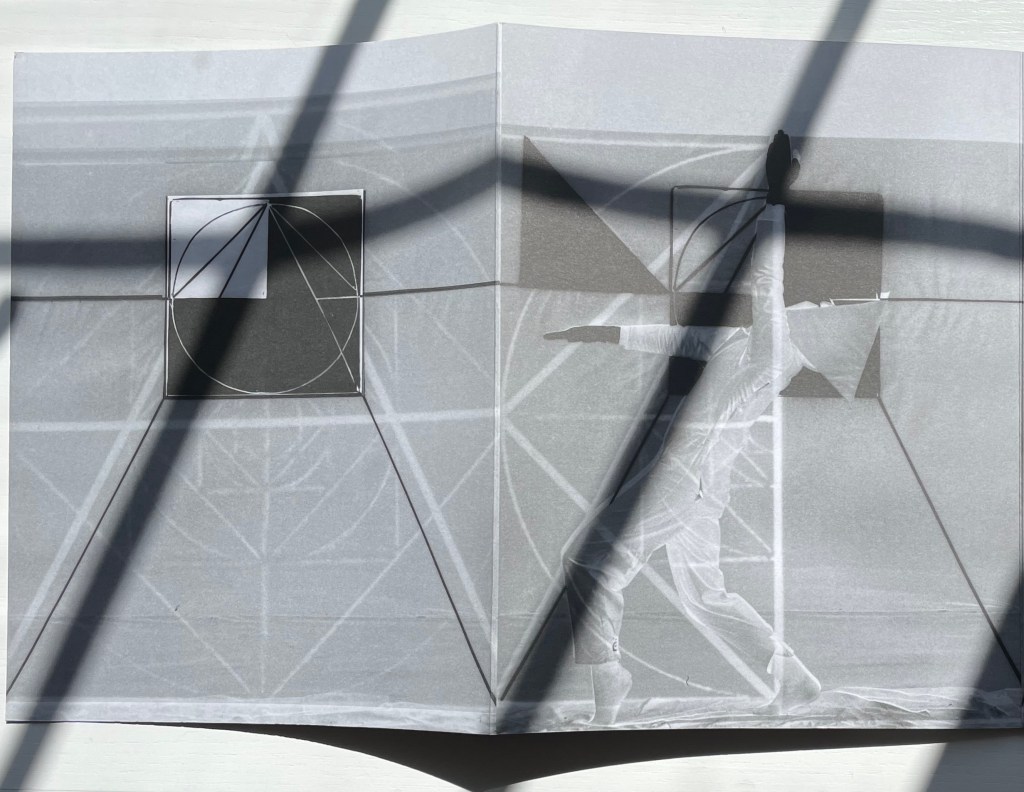
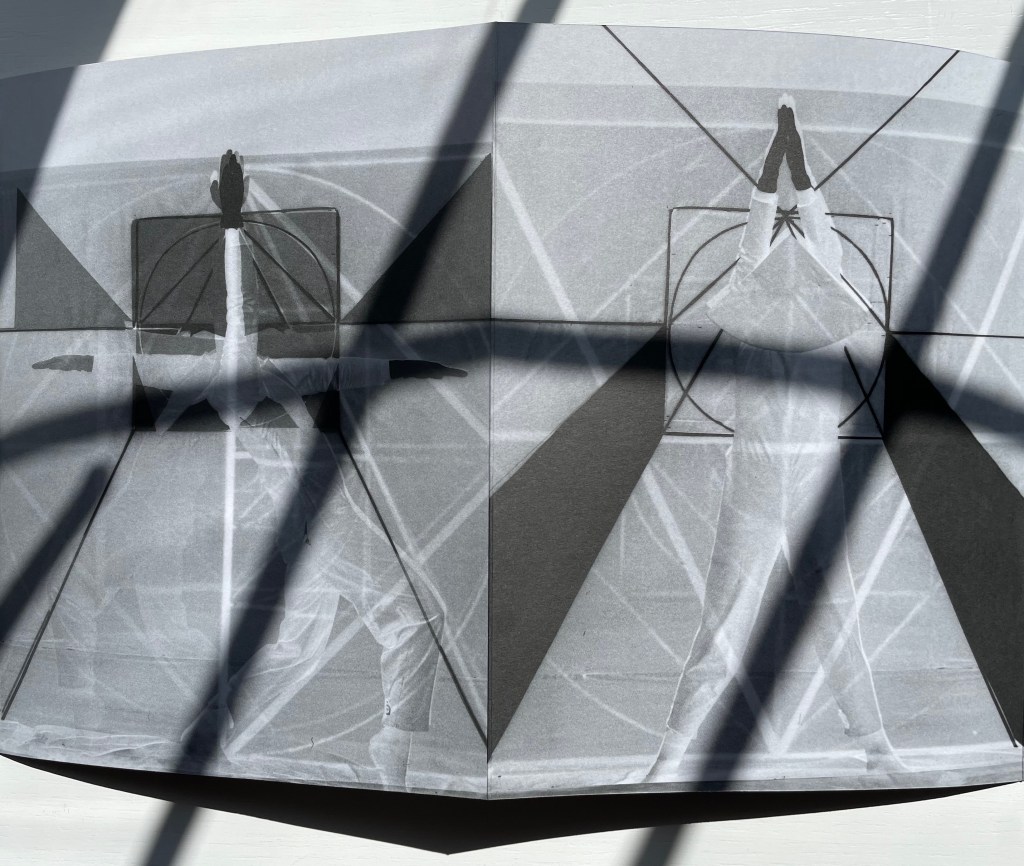
There is a long-standing tradition of “dancing the alphabet”. In his satyr play Amphiaraus, Sophocles brings in an actor dancing the letters. A more extended instance comes from 5th century Greek dramatist Kallias; his entire play Grammatike Theoria (“ABC Show” or “The ABC Tragedy“) presents the alphabet and pronunciation exercises. Apparently in acting out the letters psi and omega, the chorus member’s performance tended to the erotic, a phenomenon still to be found in Erté’s alphabet suite (1927/1978) and Anthon Beeke’s Alphabet (1970). Less suggestive are Vítězslav Nezval’s Abeceda (1926), Toshifumi Kawahara’s Dancing Alphabets (1991) and, most recently, Marie Lancelin’s Gestes Alphabétiques (its publisher issued two editions of 100 copies each in 2008 and 2014).

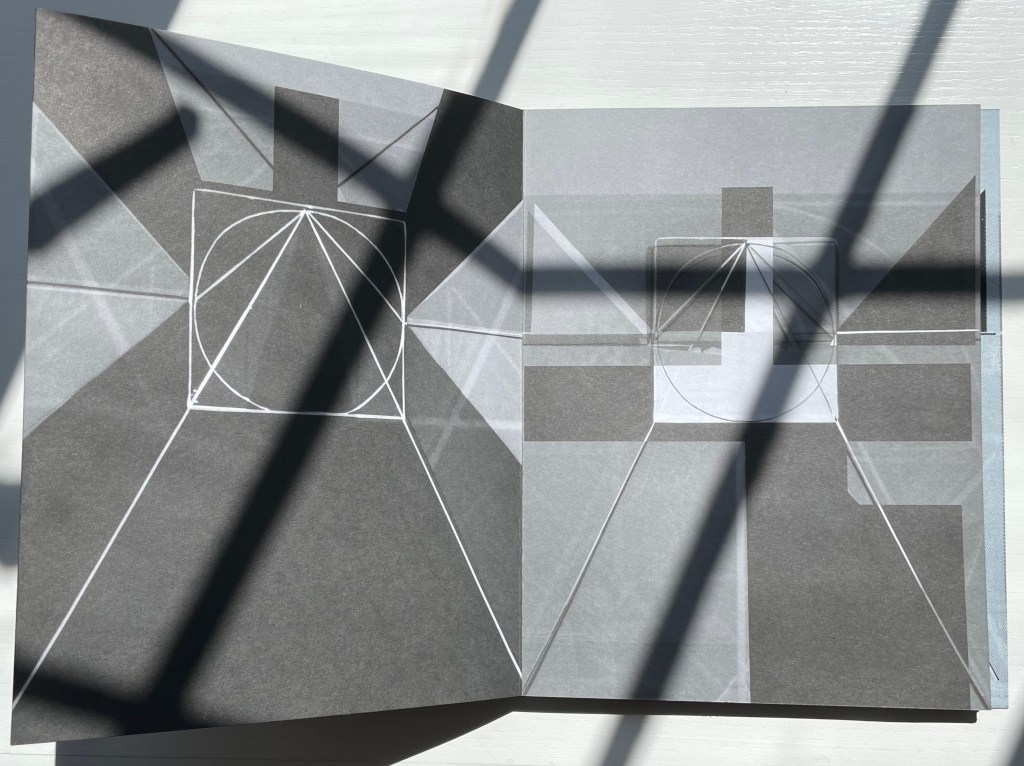
All the media and techniques that Lancelin engaged to make Gestes Alphabétiques — photograms, photomontage, laser printing, serigraphy, staging, lighting, drawing, printing — take her gestures beyond the alphabet and geometric abstractions we can easily see. Also apparent is her grounding in filming; the overlaying of the model’s poses transform that side of the leporello into a dance sequence. With the combined techniques, the ink and paper create the effect of displaying the dance through transparencies or glass or within some black and white computer graphic setting.

Fundamentally, through these media, techniques and the double-sided leporello form, Lancelin translates gesture, symbol, shape and light into one another and back again, offering the viewer the opportunity to see the artist explore the making of meaning.

Further Reading

Abecedaries I (in progress)“. 31 March 2020. Books On Books Collection.

Anthon Beeke“. 21 June 2021. Books On Books Collection.

Toshifumi Kawahara“. 29 December 2022. Books On Books Collection.

Vítězslav Nezval“. 16 July 2021. Books On Books Collection.

Brooke, Olivia, and Julian Deghy. N.d. Naked Alphabet. Website. Accessed 7 June 2021.

Erté. 1978. Erté graphics: five complete suites reproduced in full color – the seasons, the alphabet, the numerals, the aces, the precious stones. New York: Dover.

Gagné, Renaud. 2013. “Dancing Letters: The Alphabetic Tragedy of Kallias”. In Choral Mediations in Greek Tragedy, ed. R. Gagné and M. Hopman, Cambridge University Press 282-307.

Goetz, Sair. “Letterforms / Humanforms“. 11 June 2020. Letterform Archive. Accessed 7 June 2021.

Lancelin, Marie. 29 October – 19 December 2015. “My Models“. Exhibition. In Extenso. Accessed 1 January 2023.

Lawler, Lillian. April 1941. “The Dance of the Alphabet”. The Classical Outlook, 18: 7, pp. 69-71.

Wise, Jennifer. 1998. Dionysus Writes : The Invention of Theatre in Ancient Greece. Ithaca ; London: Cornell UP.

Books On Books Collection – Brian D. Cohen

The Bird Book (2013)

The Bird Book (2013)
Brian D. Cohen & Holiday Eames
Case bound hardback, paper over boards with doublures. H260 x W210 mm. 56 unnumbered pages. Acquired from The Saint Bookstore, 17 September 2022.
Photos: Books On Books Collection. Displayed with the artist’s permission.

Brian Cohen’s inclusion of the following statement makes examining The Bird Book again and again a rewarding effort:

The printmaking technique … used for this book was originally developed by William Blake in 1788. The printing plates for the book were created with acids and engraving on metal (zinc) plates as in traditional etching techniques. The plates were then printed by carefully rolling a thin layer of ink over the surface of the plate, exactly the way a woodblock (relief print) is made. Because the technique combines both etching to create the plates and relief printing, it is termed relief etching. After printing, each individual sheet was hand-colored by brush with watercolor by the artist.

The artist has also encouraged close viewing of each relief etching by hiding its letter in the background, middle ground or foreground — or even the body of the bird.

Further Reading

Abecedaries I (in progress)“. Books On Books Collection.

Shelli Ogilvy“. 28 December 2022. Books On Books Collection.

Carol Schwartzott“. 28 December 2022. Books On Books Collection.

Gascoigne Bamber. 2017. How to Identify Prints : A Complete Guide to Manual and Mechanical Processes from Woodcut to Inkjet. 2nd ed. London: Thames & Hudson. pp. 7-8.

Books On Books Collection – Carol Schwartzott

ABC of Birds (2020)

ABC of Birds (2020)
Carol Schwartzott
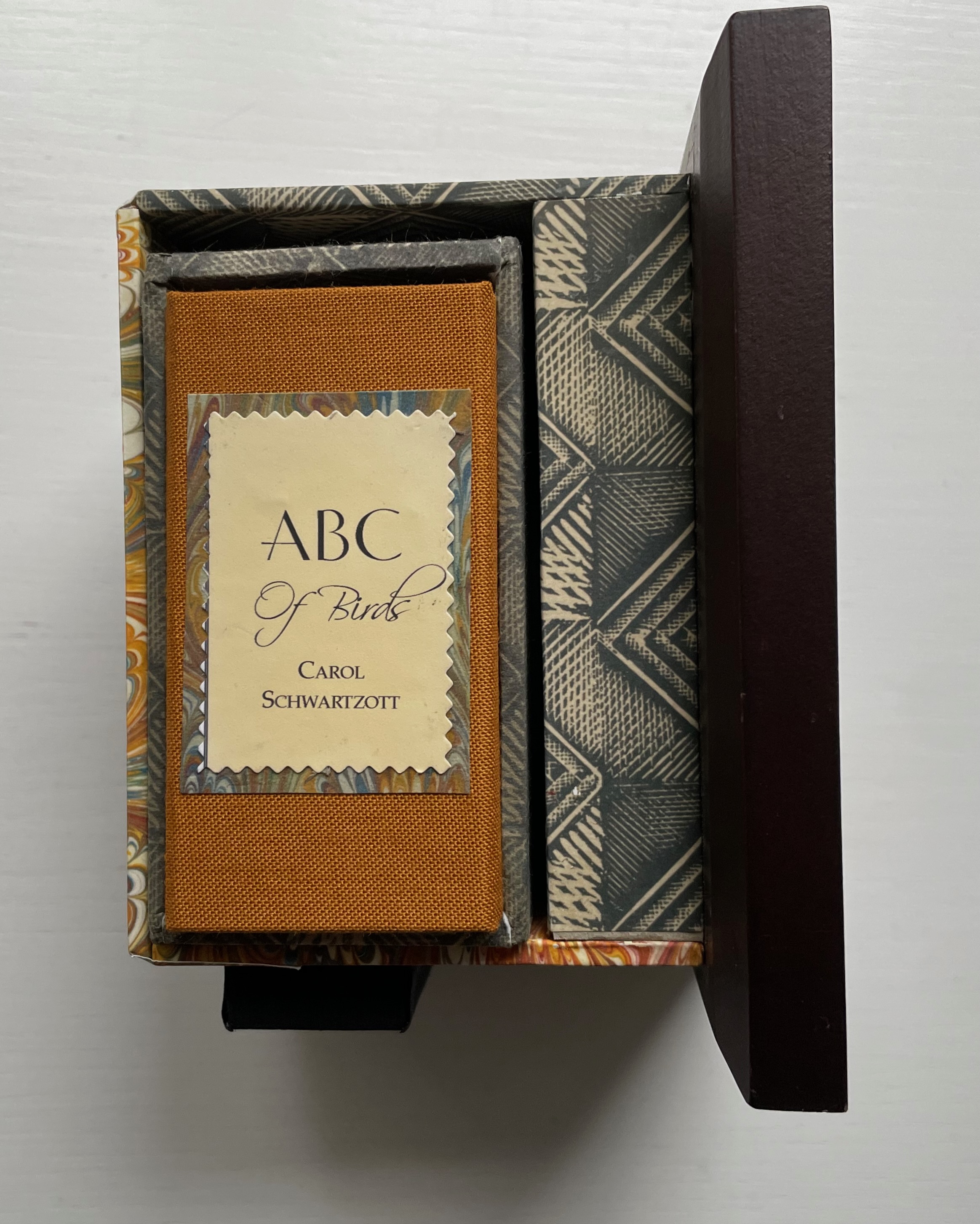
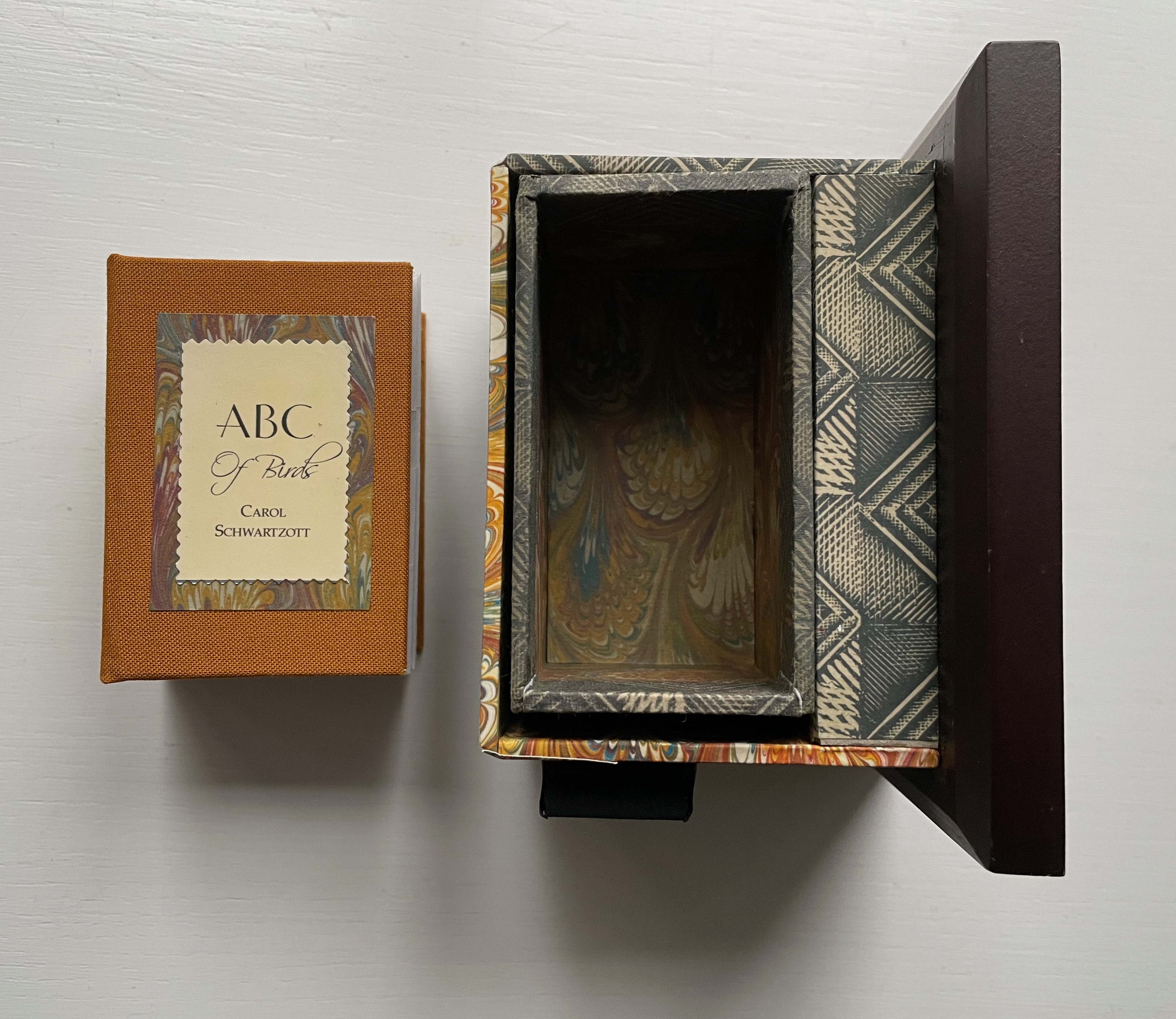
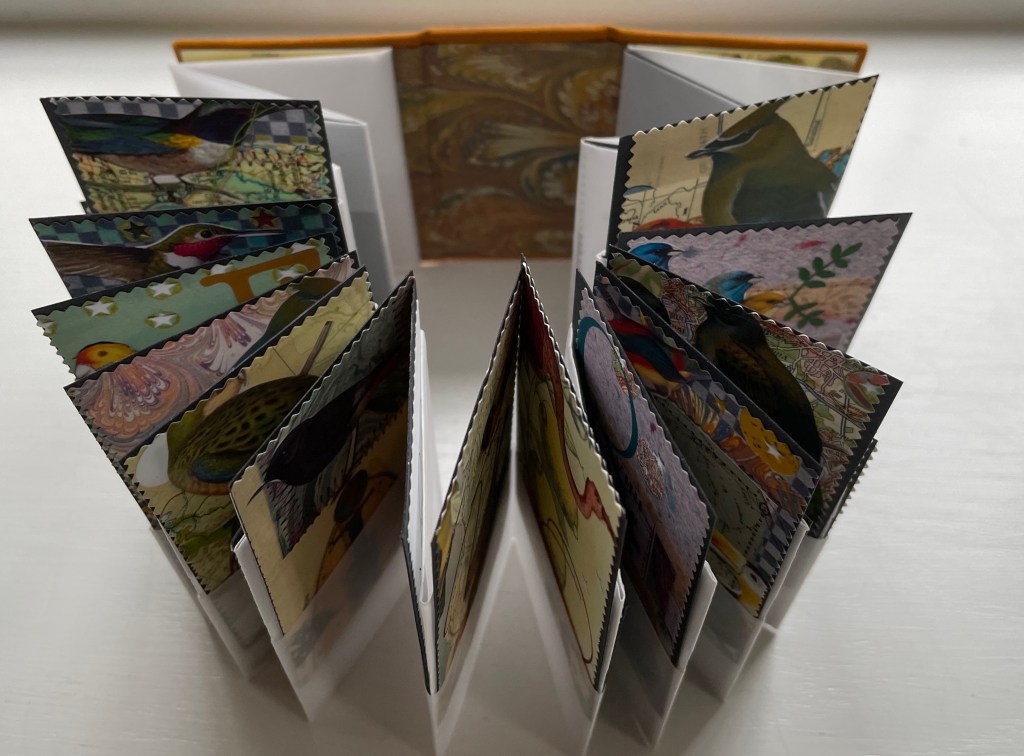
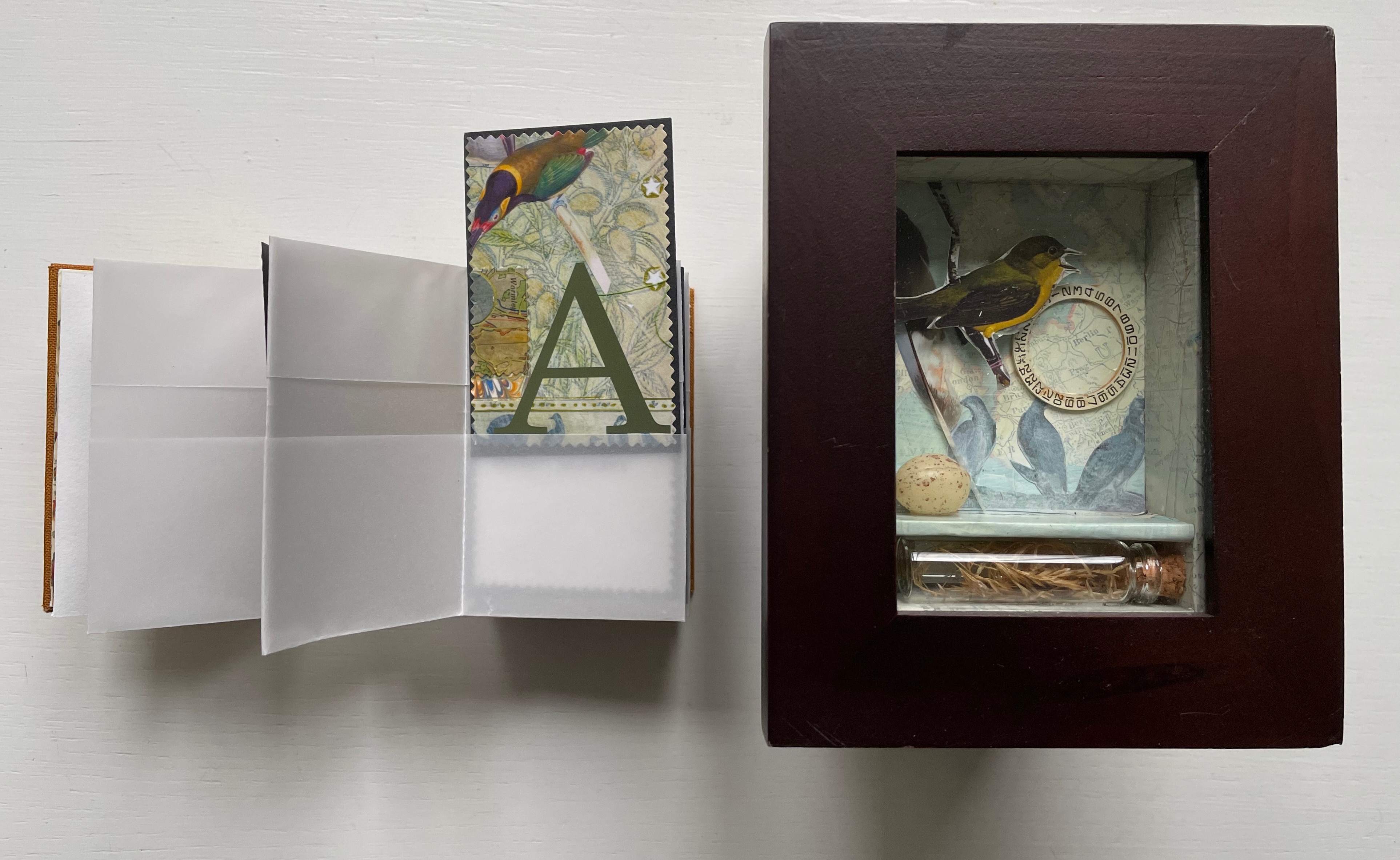
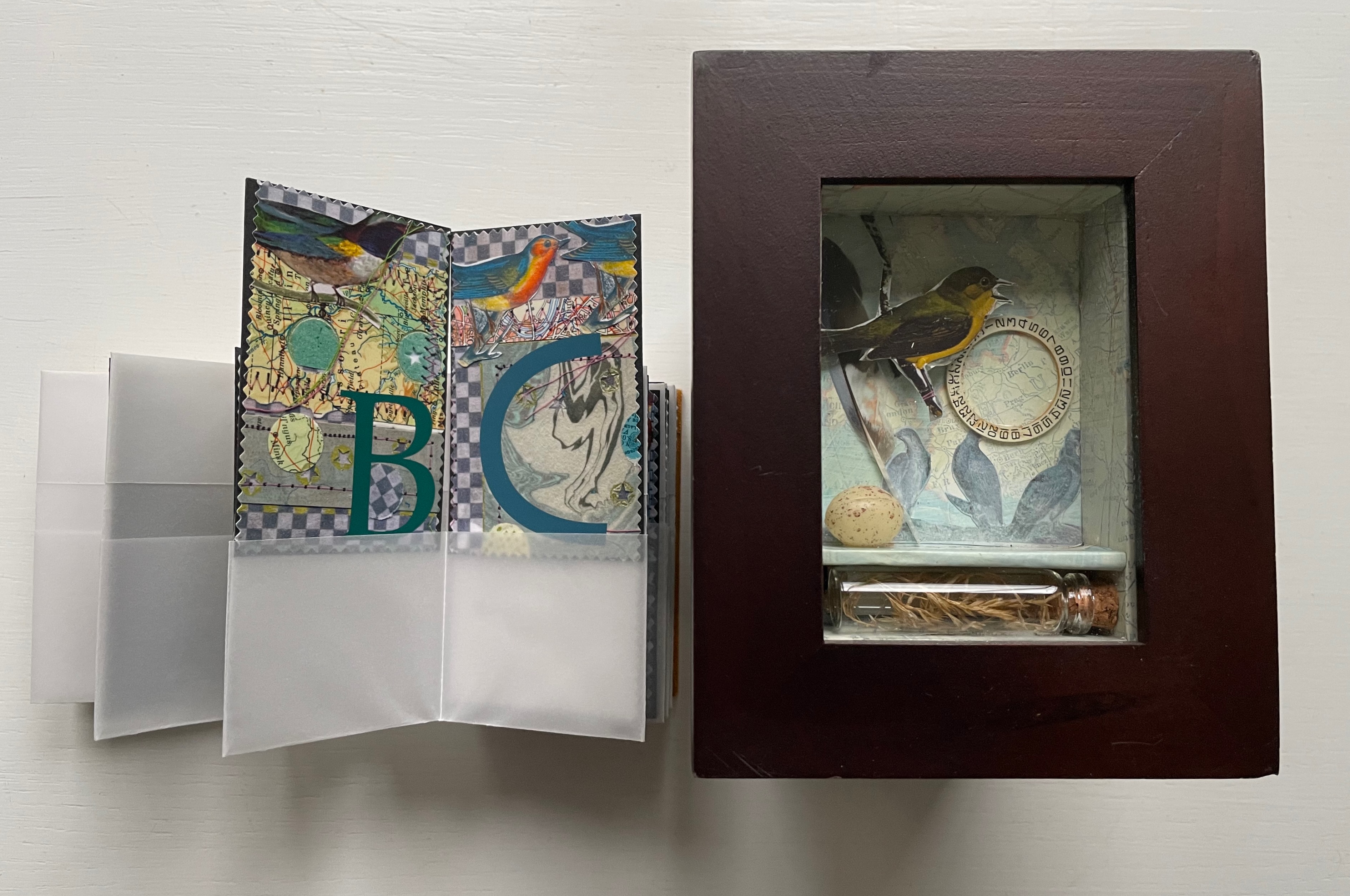
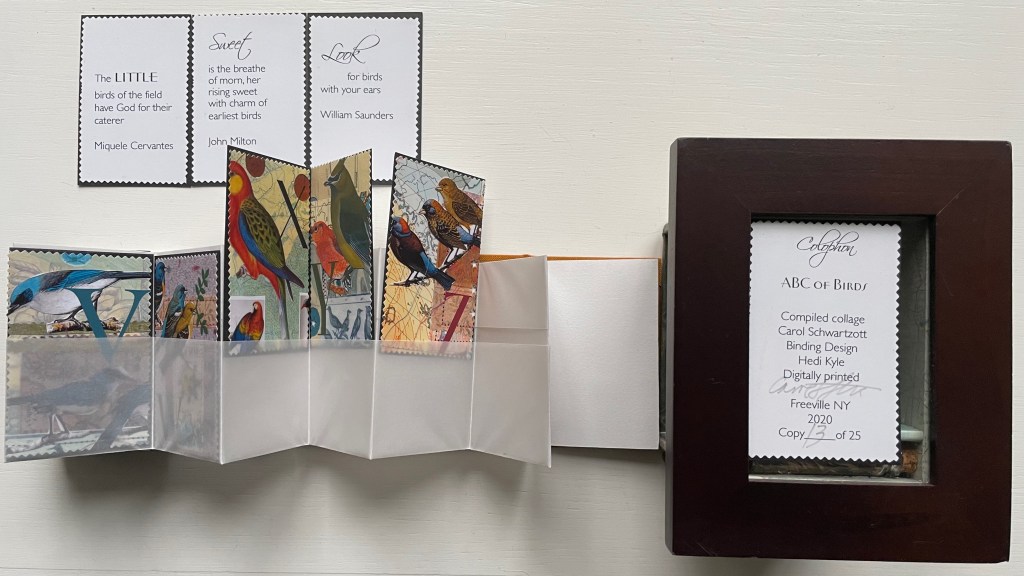
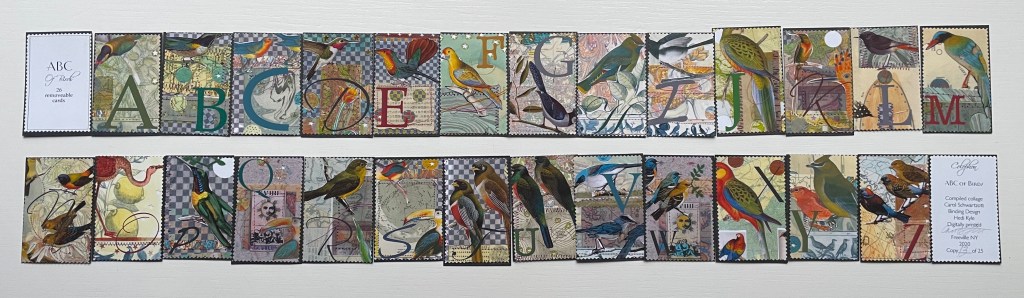
Cabinet of curiosity housing a miniature book in paste paper slipcase; double-sided leporello of transparent vellum pockets holding collaged cards. Book measures 2 x 3 x 1.5 inches. 28 pocket pages (collages, title page and colophon). Book in edition of 25, of which this is #13. “Cabinet of Curiosity” is one of five. Acquired from Vamp & Tramp, 4 January 2022.
Photos: Books On Books Collection. Displayed with artist’s permission.

The cabinet of curosity recalls Joseph Cornell’s box constructions, and while the cards’ collages may extend that influence, they differ from it sufficiently in intensity of color (having been scanned for printing and “touched up” with pencils or over colored), incorporation of an abecedary and use of an unusual variant on the leporello to distinguish the work as Schwartzott’s. She writes:

The collages themselves were done as original art, each 4 x 6″ centered on a larger sheet of Rives BFK. There are 26 of these. All are reduced to miniature format, and a graphic letter in an interesting font completes the image. Each of these little cards can be removed from the book.
The trimmed edges of the cards give them the appearance of oversized postage stamps, appropriate for the album-style binding and their removability for philatelic-like examination.

Further Reading

Abecedaries I (in progress)“. Books On Books Collection.

Brian D. Cohen“. 28 December 2022. Books On Books Collection.

Shelli Ogilvy“. 28 December 2022. Books On Books Collection.

Kyle, Hedi, and Ulla Warchol. 2018. The Art of the Fold How to Make Innovative Books and Paper Structures. London: Laurence King Publishing. To explore the pocket variant on the leporello. See review here.

Books On Books Collection – Shelli Ogilvy

Alphabet Bird Collection (2009)

Alphabet Bird Collection (2009)
Shelli Ogilvy
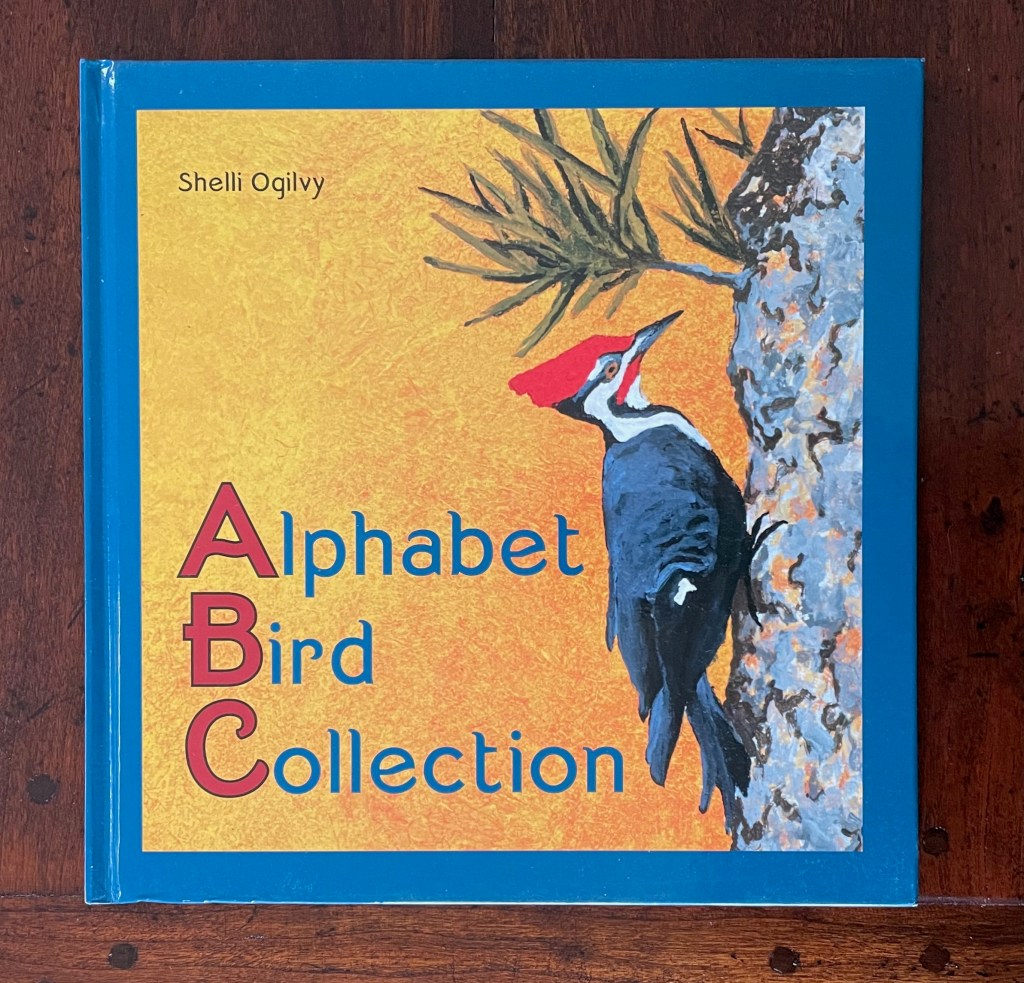
Dustjacket, casebound paper over board, sewn, single-color doublures. H215 x W215 mm. 56 unnumbered pages. Acquired from Hay-on-Wye Booksellers, 16 December 2022.
Photos: Books on Books Collection. Displayed with permission of the artist.

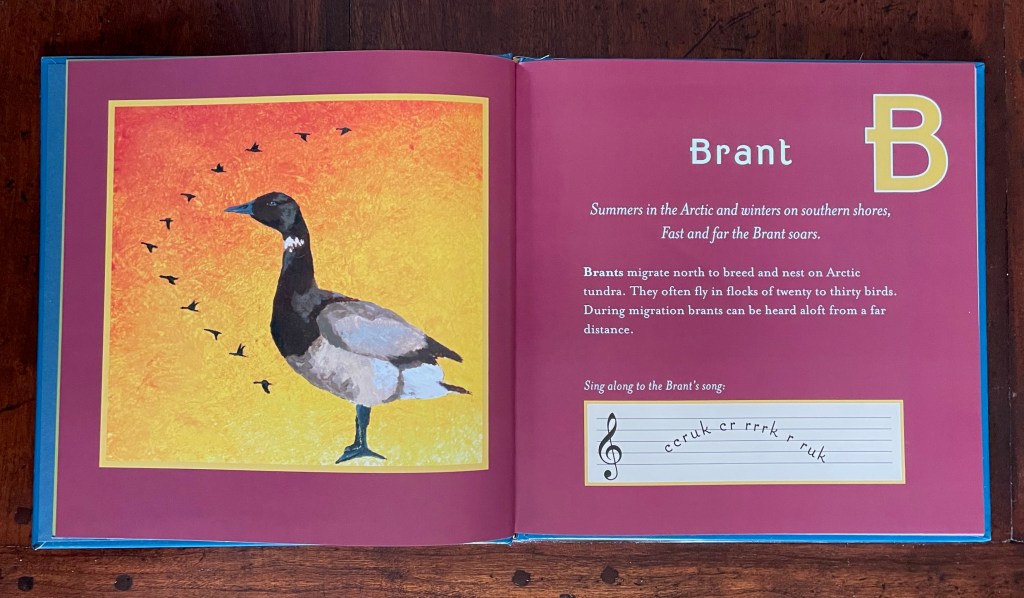
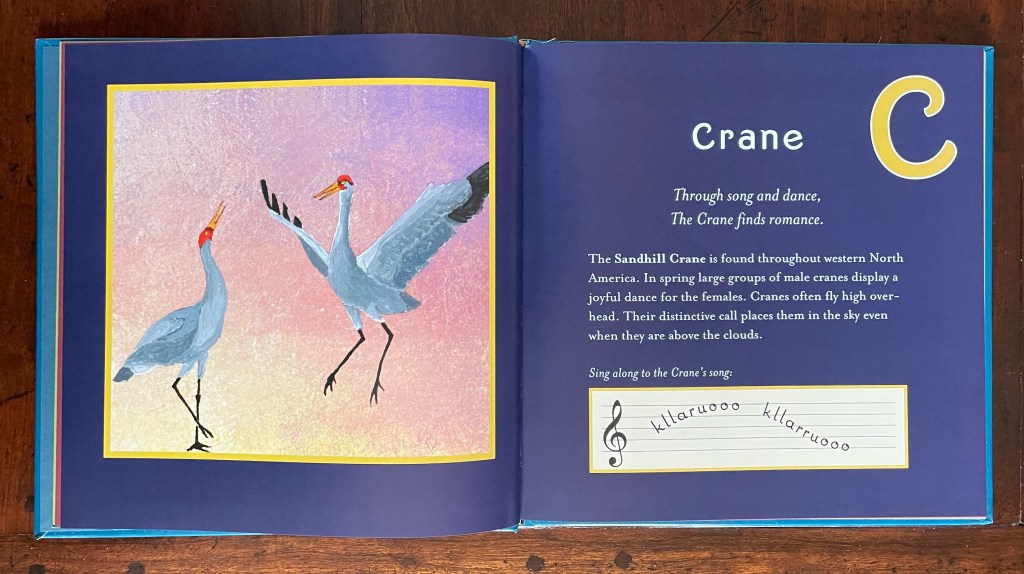
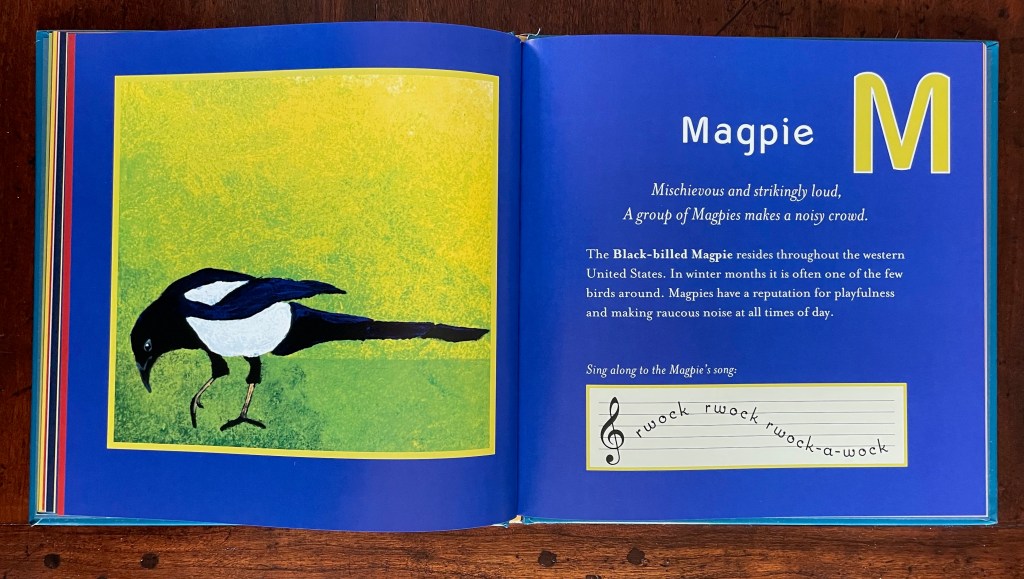
In Alphabet Bird Collection, each double-page spread features the letter of the alphabet, a bird representing it, a couplet followed by prose to describe the bird’s distinctive behavior and habitat, and, beneath, a musical staff with an attempt to represent a sample of each bird’s song or call. Unifying each double-page spread is its own full-bleed background color. The primary distinguishing feature of this abecedary, however, is Shelli Ogilvy’s artwork — original paintings of each bird. Ogilvy works primarily with acrylic on canvas or paper, sometimes combining mediums of chalk, ink, and spray paint into her work.
Instead of concluding with XYZ as with other abecedaries, this entry concludes with a favorite bird.
For another instance of magpie obsession, see Nick Wonham’s The Charm of Magpies (2018).

Further Reading

Abecedaries I (in progress)“. Books On Books Collection.

Brian D. Cohen“. 28 December 2022. Books On Books Collection.

Carol Schwartzott“. 28 December 2022. Books On Books Collection.