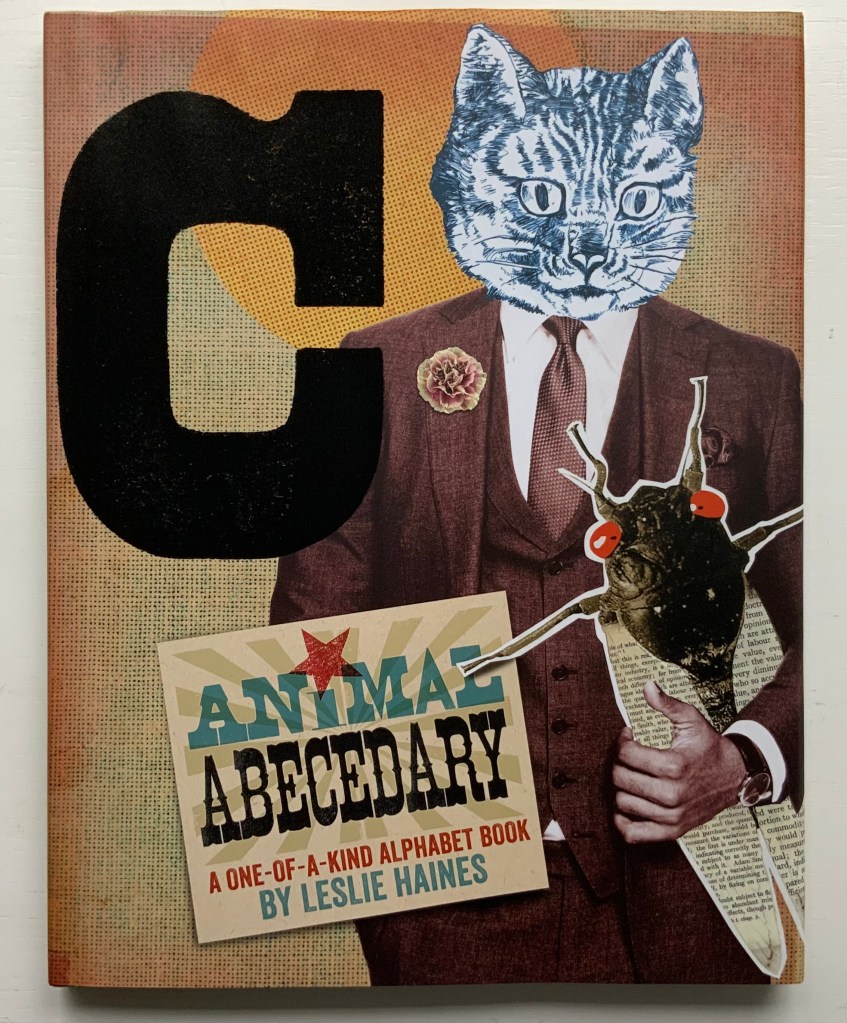
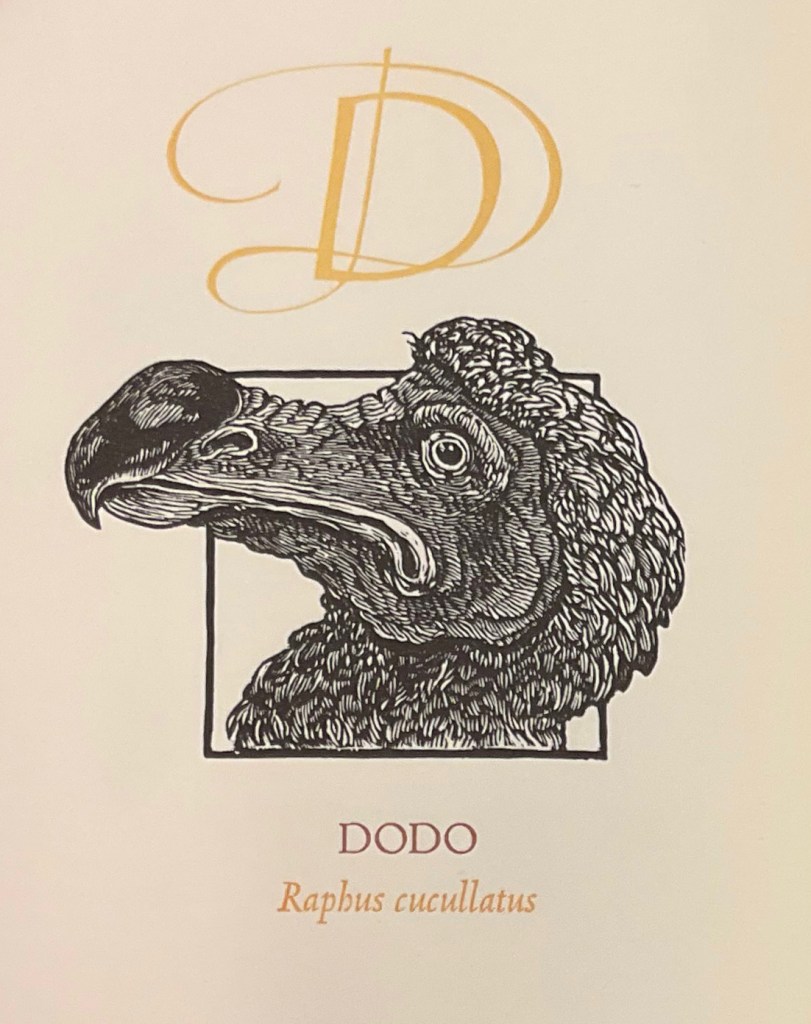
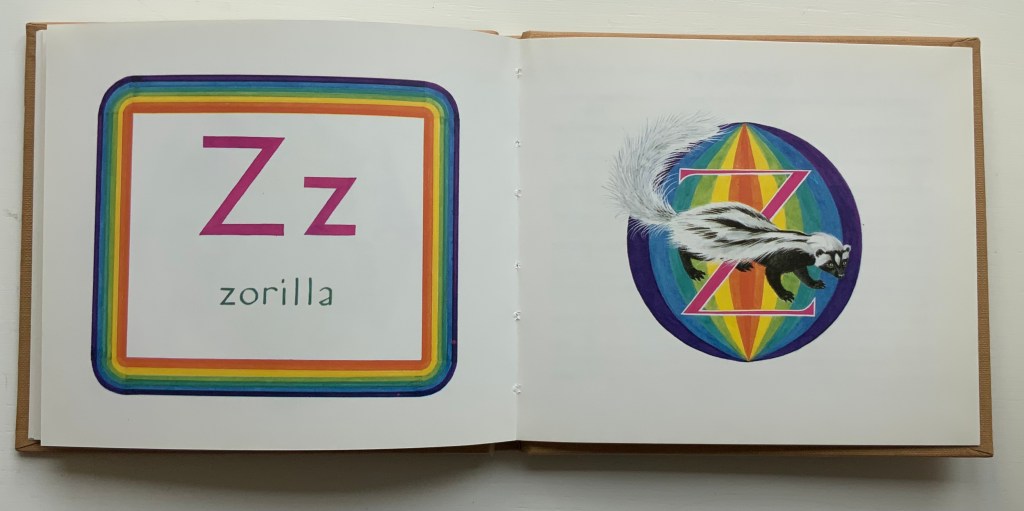
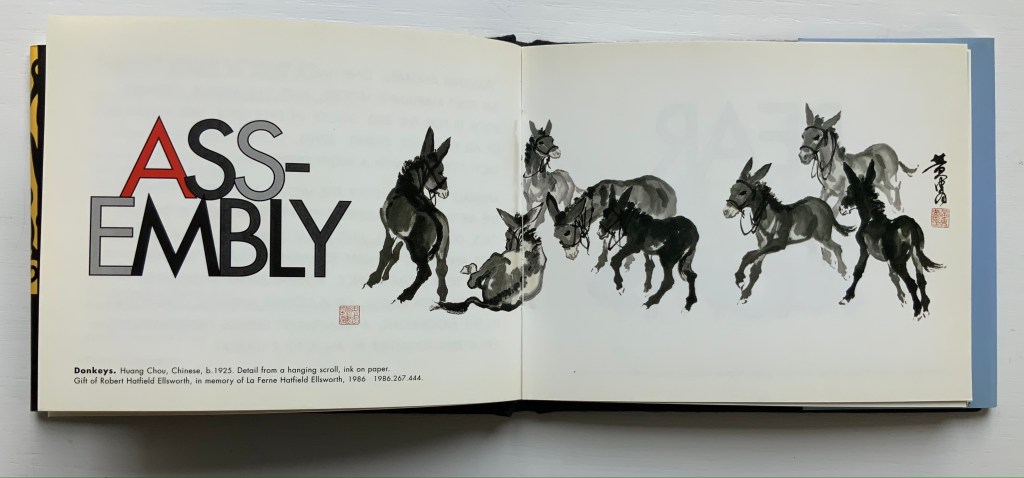
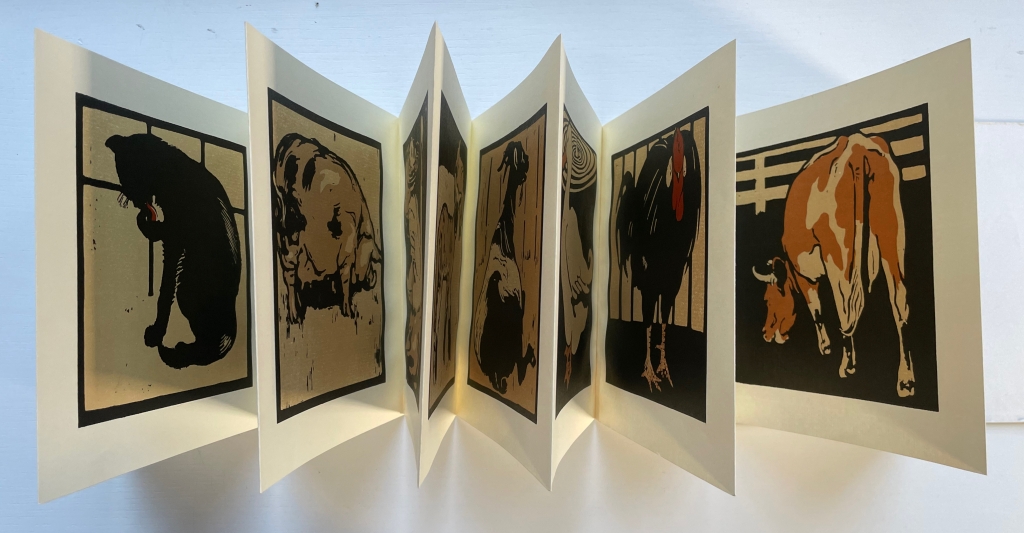
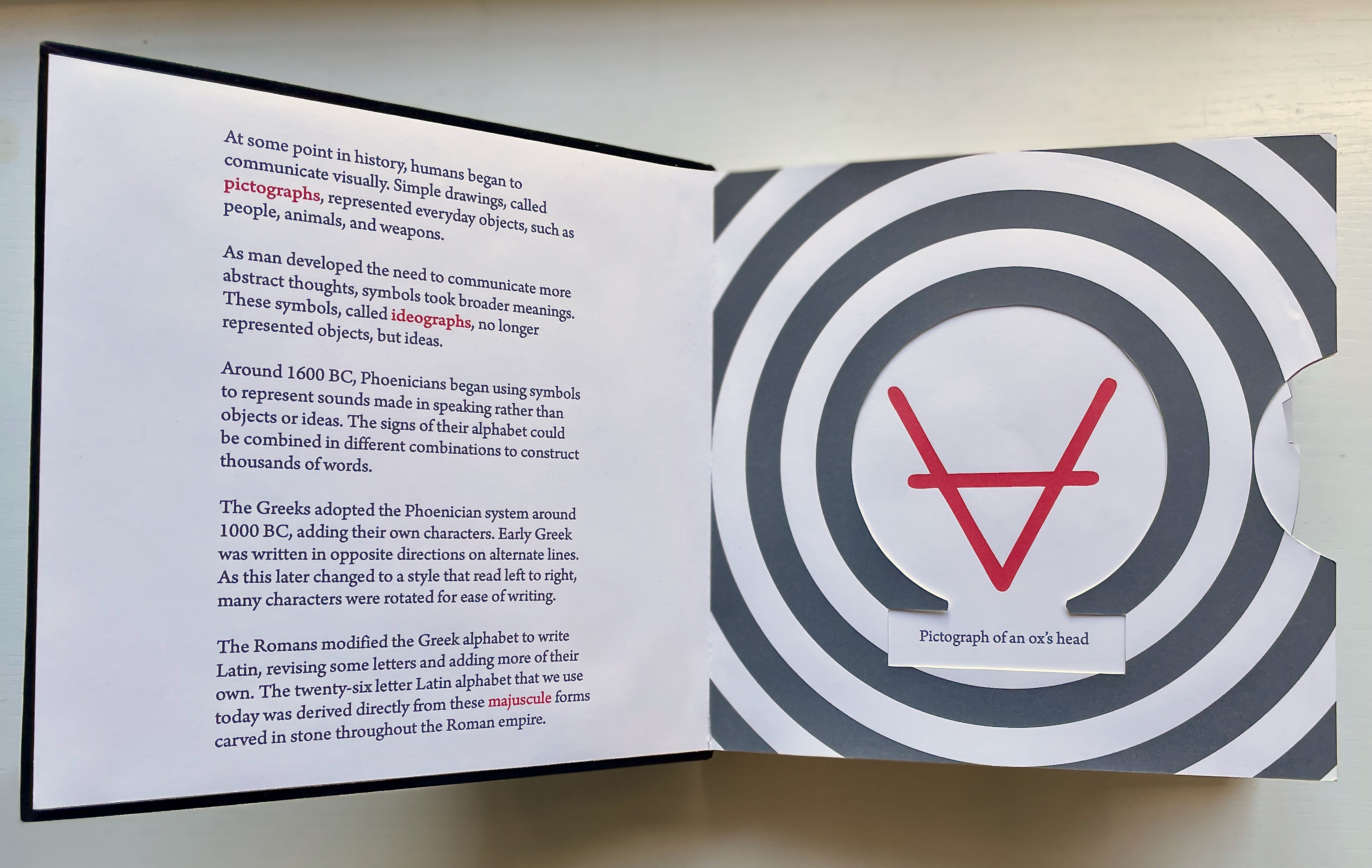
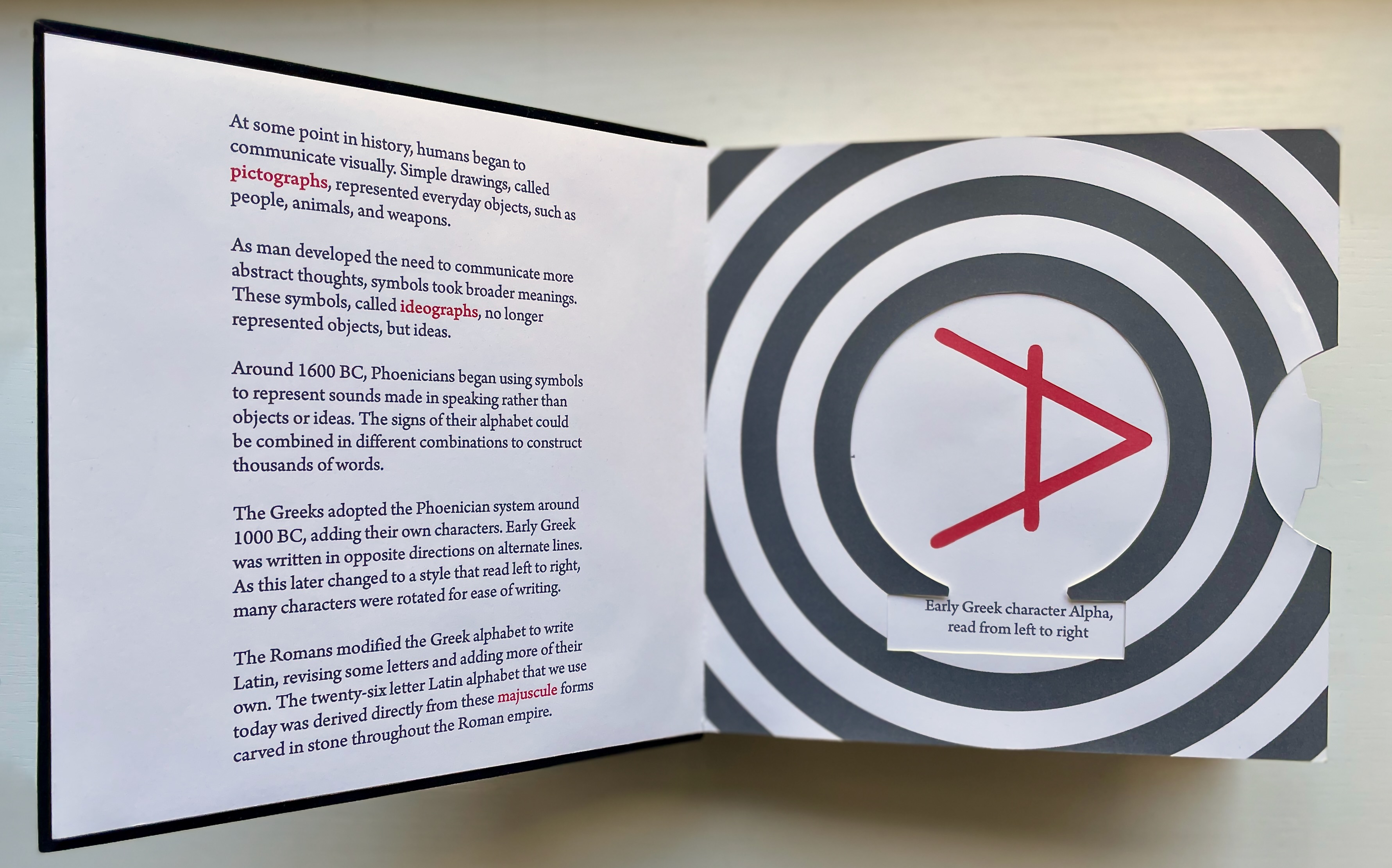
Animal alphabet books hum with imagination and wit. Animals, birds, fish, insects, even dinosaurs, decorate and transform letters, or might be created from the letters themselves. Sometimes, the animals come in disguise, or hide, only to pop out and surprise you. Perhaps the alphabet’s pictographic origin explains this animal obsession. The letter ‘A’ comes from the word ‘aleph’ meaning cow or ox, and its early letterform resembled an ox’s head and horns. [Links in the captions will take you to more images and details.]
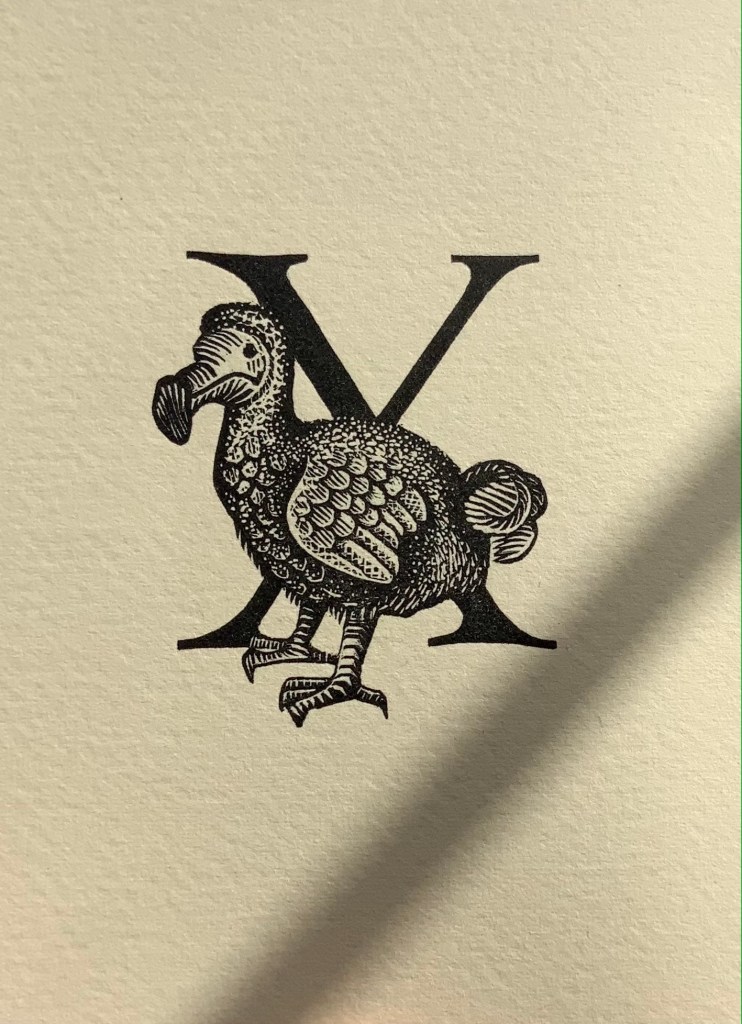
E.N. Ellis, An Alphabet (1985).* The letters Q and X always present challenges in finding suitably named animals. Ellis’s solution with X is as elegant as her engraving.
C.B. Falls, ABC Book (1923). Almost a quarter century after William Nicholson’s successful A Square Book of Animals, Falls applied his successful poster designing to this larger format.
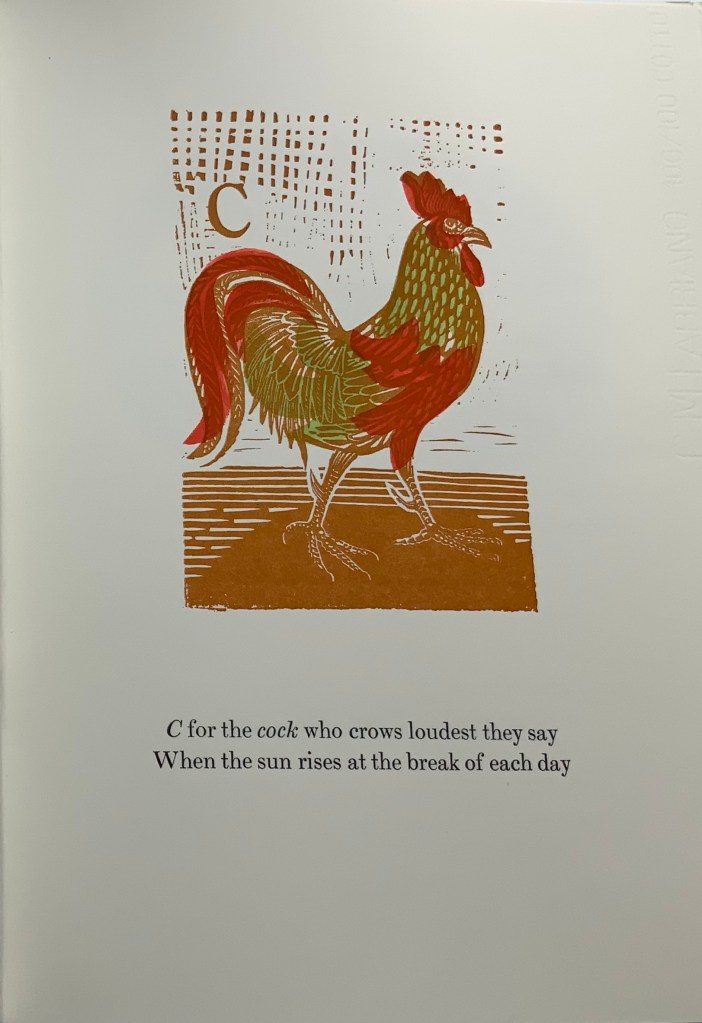
Enid Marx,Marco’s Animal Alphabet (2000). Bringing together the talents of the engraver (Enid “Marco” Marx), “pochoir-ist” (Peter Allen) and letterpress printer (Graham Moss), this large-scale portfolio treads the boundary of fine press and artist’s book.
[Alphabet Leporello of dressed animals] (Paris, c. 1851) Opie T 407. The Books On Books Collection’s concentration on alphabet books falls primarily over the 20th and 21st centuries and extends the pre-1950s focus of the Opie Collection of children’s books. Together, the two collections offer a broad and deep source for exploring the links between artists’ books and children’s alphabet books as well as studying topics such as children’s literature and literacy.
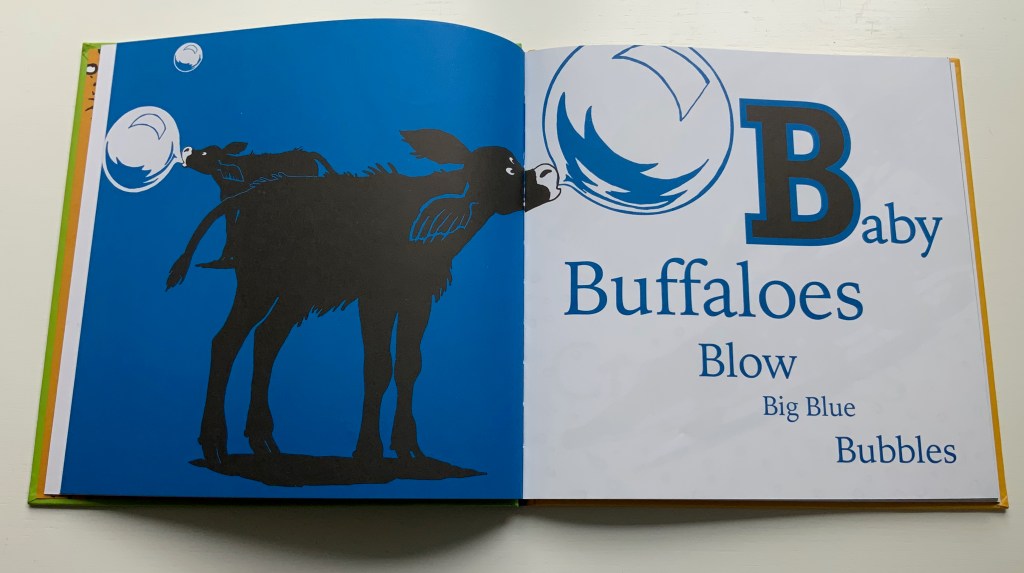
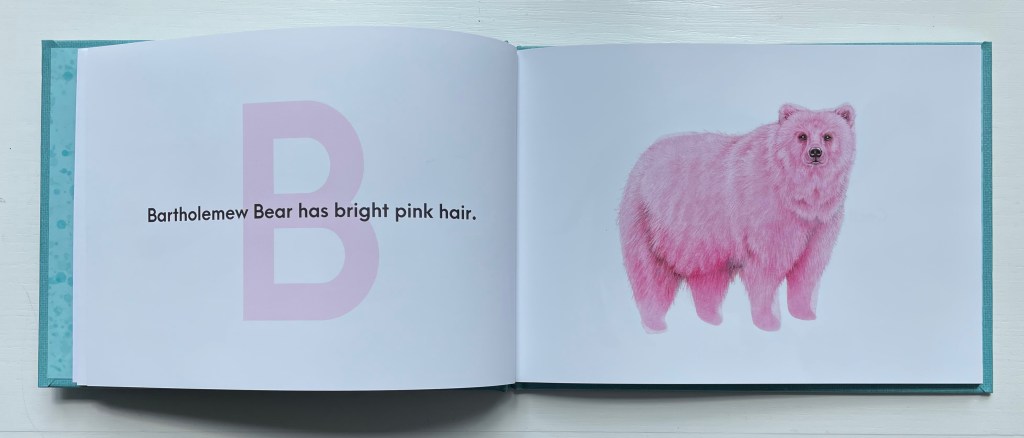
Christiane Pieper & Anushka Ravishankar, Alphabets Are Amazing Animals (2003).* Alliteration is almost as frequent a feature of alphabet books as animal association.
Alan James Robinson and Suzanne Moore, A Fowl Alphabet (1986).* A superb collaboration between an engraver (Robinson) and calligrapher (Moore).
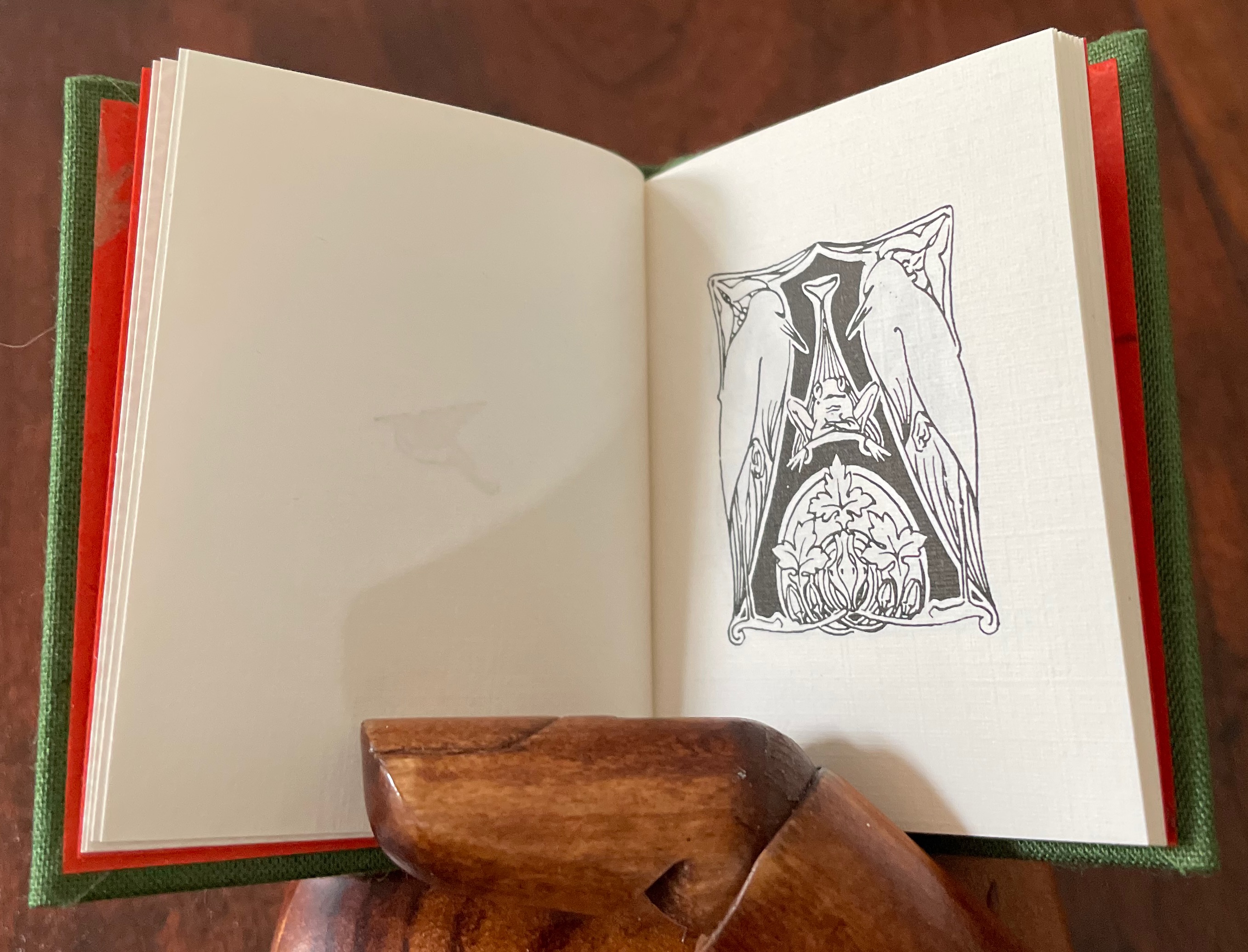
John Norris Wood, An Alphabet of Toads & Frogs (2002).* Sometimes past art abroad catches up with present American fauna of political celebrity.
Leonard Baskin, Hosie’s Alphabet (1972). Son Hosie and father Leonard unite their rites of passage: learning the alphabet and creating an artist’s alphabet book.
Michele Durkson Clise, Animal Alphabet: Folding Screen (1992) wrongfoots the reader with animal images that do not align with the expected alphabet letter or the letters of the first words in the leporello’s rhyming couplets. If the image does at least align with a word in the couplet (e.g., “whale”), that word’s first letter does not align with the alphabet letter expected for that panel.
Brian D. Cohen & Holiday Eames, The Bird Book (2013). Cohen’s engravings are finer in detail than most.
In Abstract Alphabet: A Book of Animals(2001), Paul Cox turns the alphabet on its evolutionary head. The letter A started out with the pictogram of an ox’s head and then developed into the abstract shape we associate with the sound /a/. Here, we have to work back from 26 different abstract shapes (each assigned to a letter on a fold-out flap) to figure out the name of the animal being spelled. The reversal conjures up the challenge that letters, objects and phonics present to children, and in their resemblance to a Hans Arp painting, the shapes challenge the reader to a renewed connection with art.
Roberto de Vicq de Cumptich, Bembo’s Zoo: An Animal ABC Book (2000). Where Sharon Forss and Sarah Werner use several type faces to shape their animals, De Vicq de Cumptich restricts his to Bembo.
David L. Kulhavy & Charles D. Jones,A Forest Insect Alphabet(2013). Extraordinary woodcuts by Jones, worth comparing with Cohen, Grieshaber, Marx and Robinson.
Metropolitan Museum of Art, Animalphabet (1996). Curators’ puns and wordplay with favorites from the Met.
William Nicholson, A Square Book of Animals (1900). Nicholson followed his successful An Alphabet with this book, but it was Scolar Press in 1979 that redesigned and re-originated it in this well-chosen leporello format.
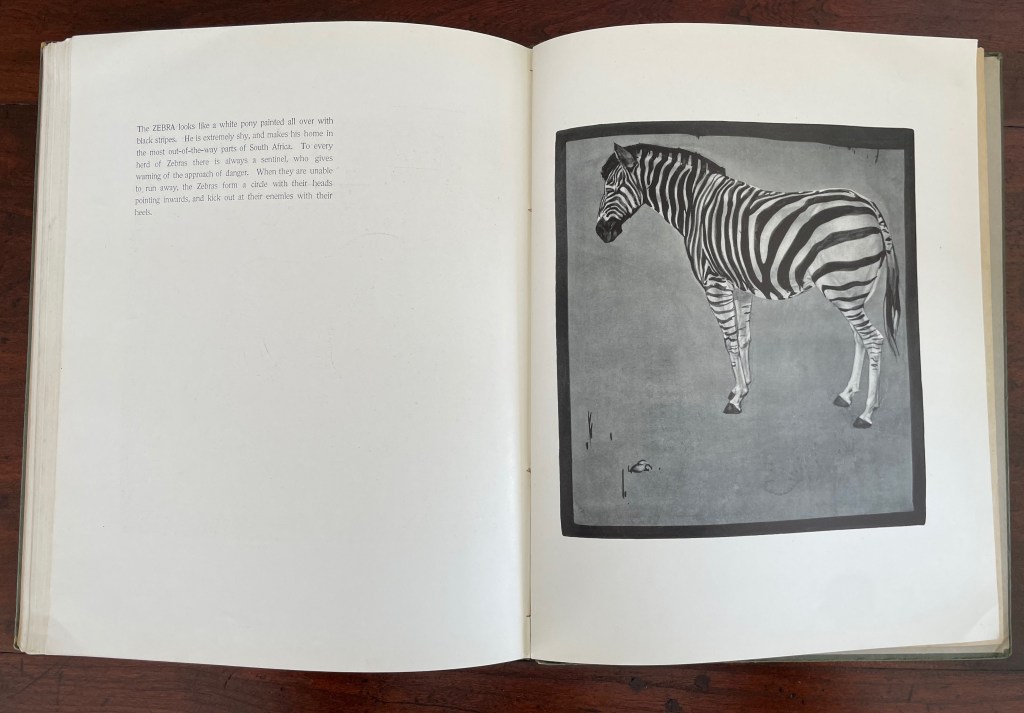
Carton Moore Park, An Alphabet of Animals (1899). Unusual for its grisaille technique and restriction of color to the cloth cover.
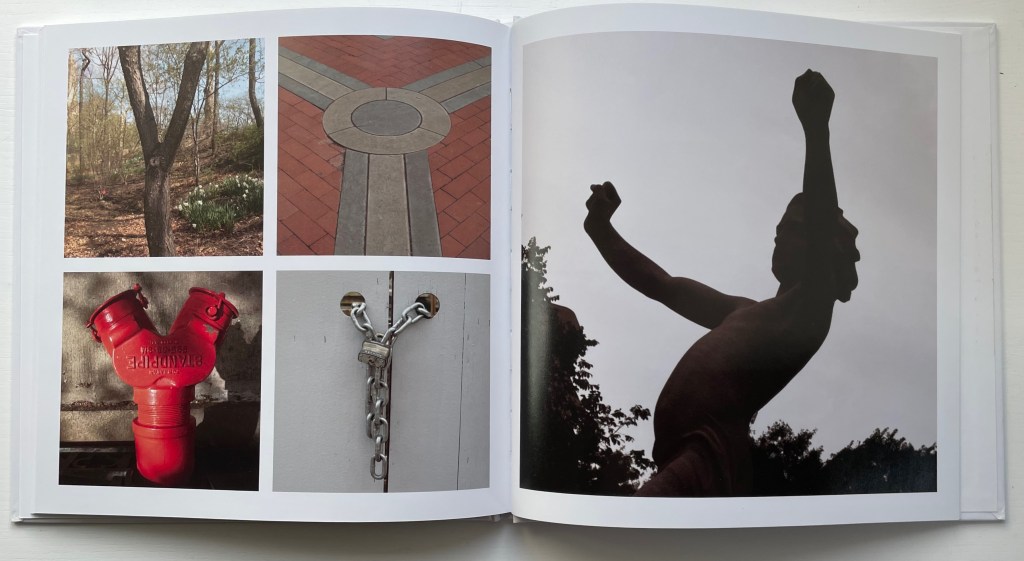
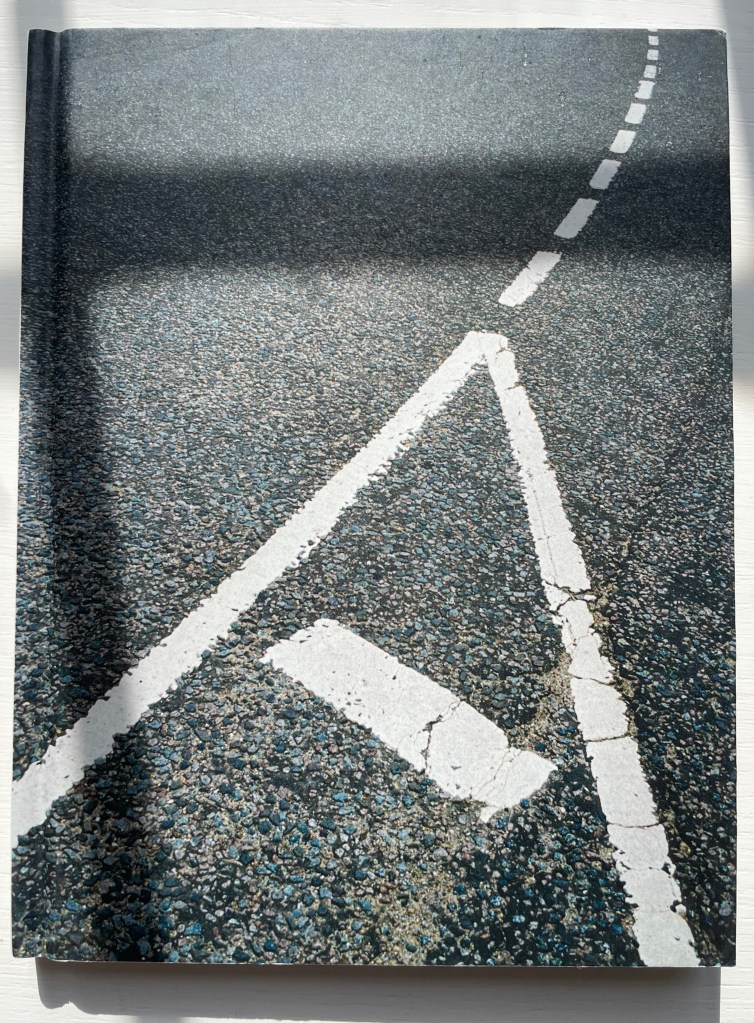
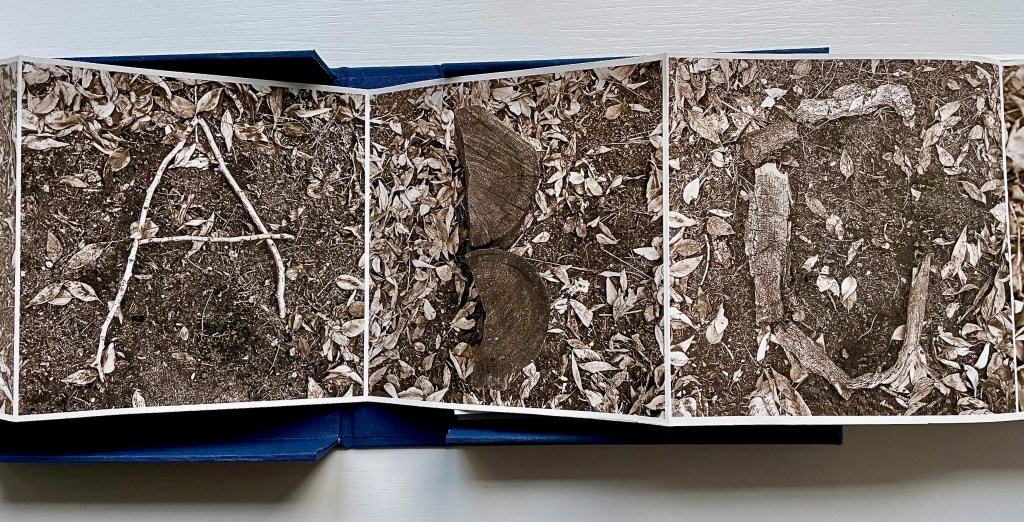
Where do letters go when they’re not making words? Book artists know that they hide everywhere – often in plain sight – in landscapes, roadworks and signs, tree branches, rocks, flags, and even in a cup of coffee. [Links in the captions will take you to more images and details.]
À l’infini(2007) Květa Pacovská Softcover with protective Mylar attached, exposed spine, sewn with multicolored threads. 270 x 270 x 29 mm. 128 pages. Acquired from Rakuten, 25 November 2022. Photos: Books On Books Collection.
The Buzz Lightyear character of Toy Story and his catchphrase “To infinity and beyond” arrived in 1995. While it seems unlikely that the catchphrase influenced Květa Pacovská, the audience for Á l’infini (2007) and that for Toy Story definitely overlap. In her invitation below, Pacovská explicitly addresses the youngest of her audience: Tu peux regarder chaque lettre, toucher chaque lettre, considérer chaque lettre de façon formelle ou lire chaque lettre à haute voix. Chaque lettre a son propre son, sa propre forme et sa propre couleur. Note leurs différences quand tu les prononces, quand tu écoutes le son de ta voix. [You can look at each letter, touch each letter, consider each letter formally, or read each letter aloud. Each letter has its own sound, shape and color. Note their differences when you pronounce them, when you listen to the sound of your voice.] Above all — literally at the top of the page — she urges the reader: Dis la lettre <<A>> à haute voix jusqu’à ce qu’elle heurte les murs qui l’entourent. [Say the letter “A” out loud until it knocks down the walls surrounding it.], which is what the cut-out A plays outs.
For Pacovská, letters are “the architecture of pleasure”, and À l’infini invites us to play with them in “her city of paper”. Her invitation notes alternative approaches to the book, but the suggestion to walk through it as a paper sculpture is the best and appeal to the child in everyone.
With its collage of cut-outs, pop-ups, spot varnishes, reflective silver ink, letters and, later in the book, numbers, À l’infini is a joyful visual city. Pacovská received the Hans Christian Andersen Award in 1992 for her illustration.
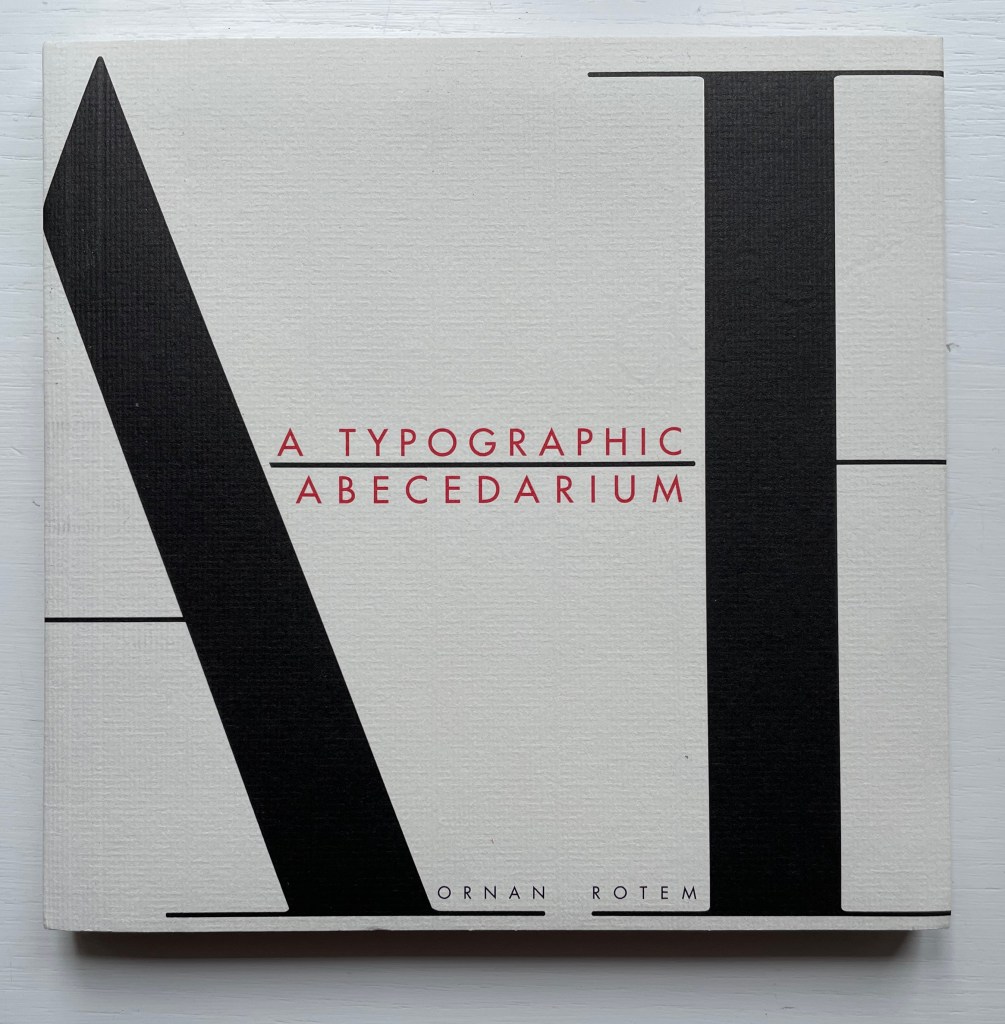
A Typographic Abecedarium(2015) Ornan Rotem Perfect bound in a softcover case. H174 x W176 mm. 136 pages 1 poster (64 x 48 cm, folded to 16 x 16 cm). Acquired from Devils in the Detail Ltd, 14 March 2023. Photos of the book: Books On Books Collection. Displayed with permission of the artist.
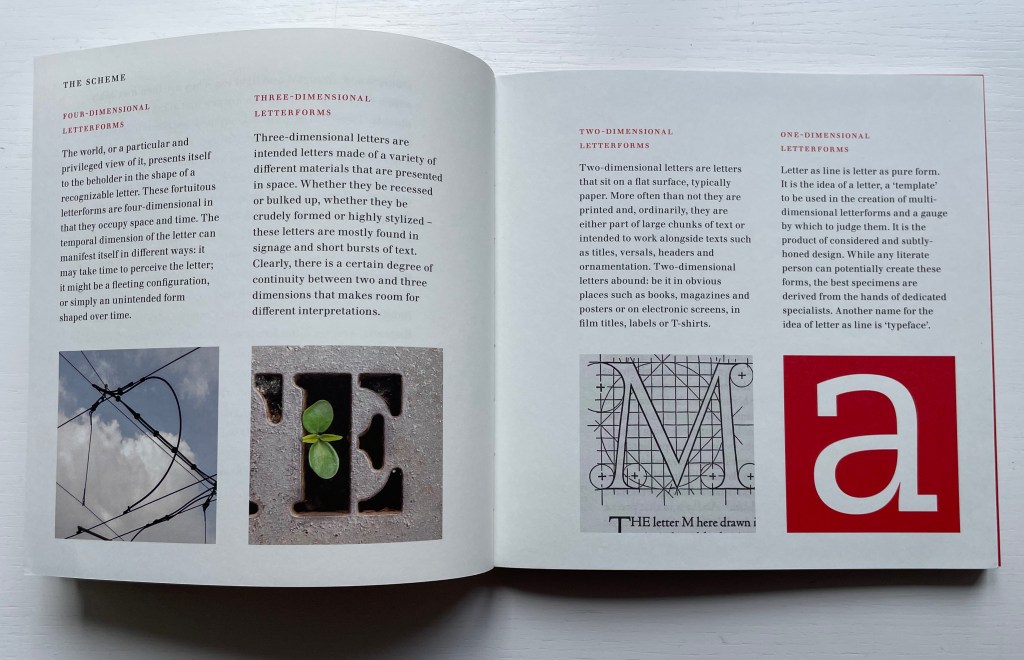
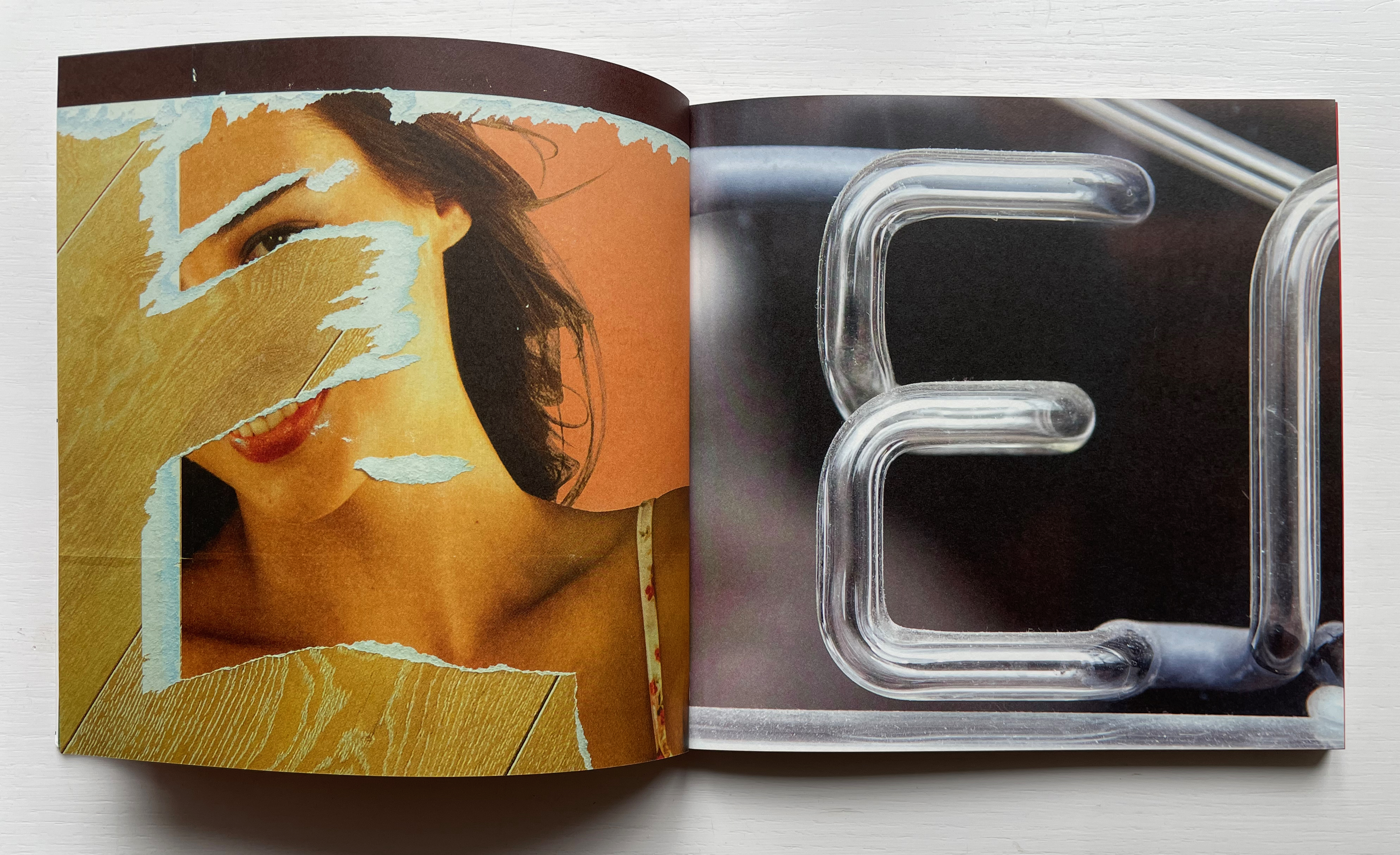
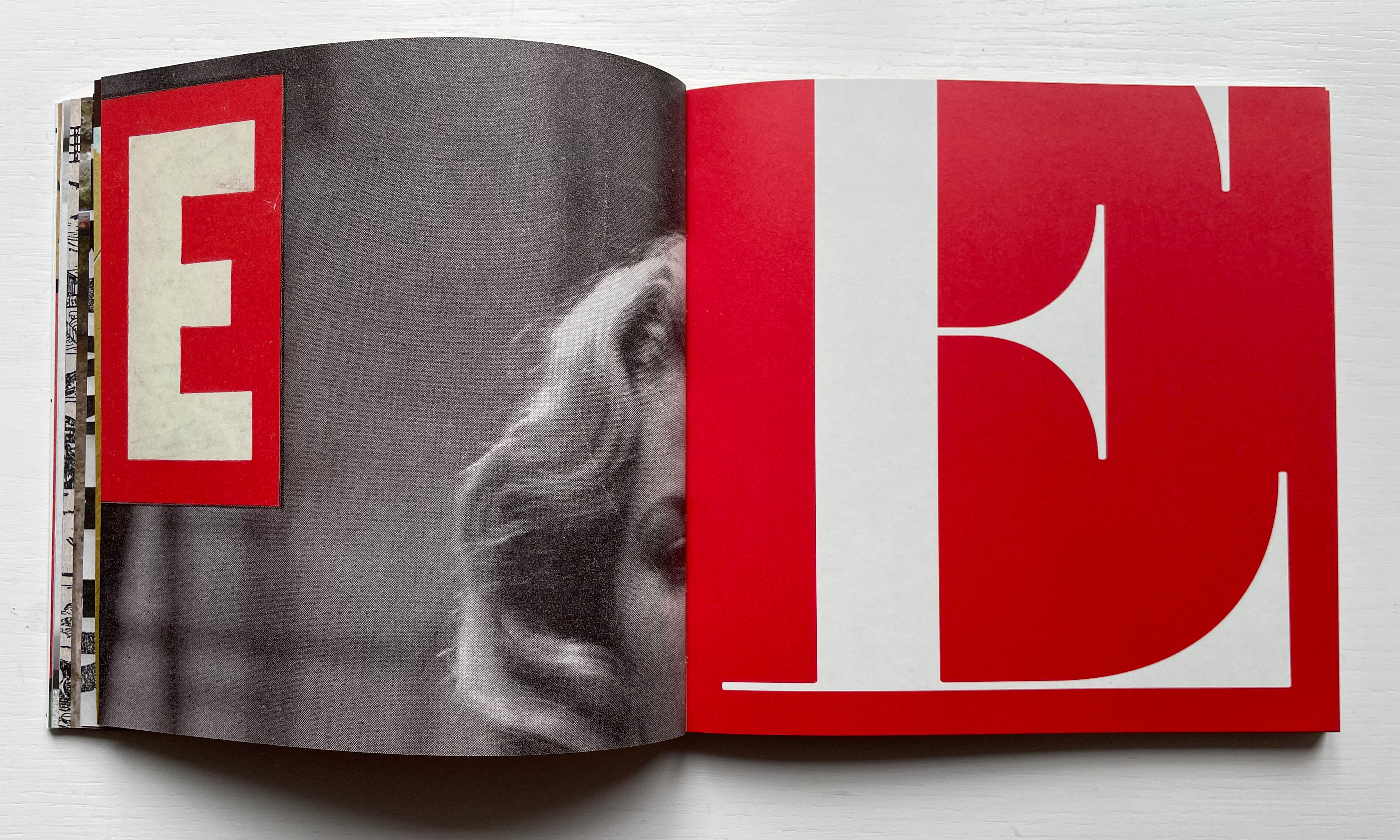
Ornan Rotem calls his book a “photo-typographic essay … a meditation … [e]xploring the relationship between typography and the visual world around us ….” As shown in the double-page spread below, his meditation is shaped across a four dimensional views of the letterform: the four-dimensional, three-dimensional, two-dimensional and the one-dimensional. At the end of the essay, there are 26 miniature essays that will send the reader back to enjoy each letter’s four dimensional entries again.
Everywhere you look you can see an E smiling at you (just saying it induces a smile). In 1969, Georges Perec, whose own name has four Es, tried exorcising the E by writing an esoteric 300-page novel, La disparition, without ever using one. I wonder how he would have felt had he come across this E — which was shot in Paris — when he was writing the novel. ¶ If you want to endow letters with character, then I suppose E would be the lively sort, hence the printed form comes from a 1948 cover of LIFE magazine.
Much is packed into these miniature essays. Naturally for an artist’s book celebrating type, there are the necessary self-referential typographic puns in the one above: character and sort. In all, there is the evidence of the long, multi-place, multi-source contemplative gestation of the work. In the example above, the allusion to Perec’s novel leads to the 1969 photo in Paris (or was it vice versa?). The typographic puns lead to a search for an E from a LIFE cover (again, or was it vice versa?). This circular connectedness over time, text and image highlights the self-referentiality of the genre of the artist’s book.
While the dense allusiveness might suggest that this is a work limited to an adult audience, A Typographic Abecedarium does find favor with a younger audience — no doubt because it speaks to the phenomenon of seeing letters everywhere and in multiple dimensions.
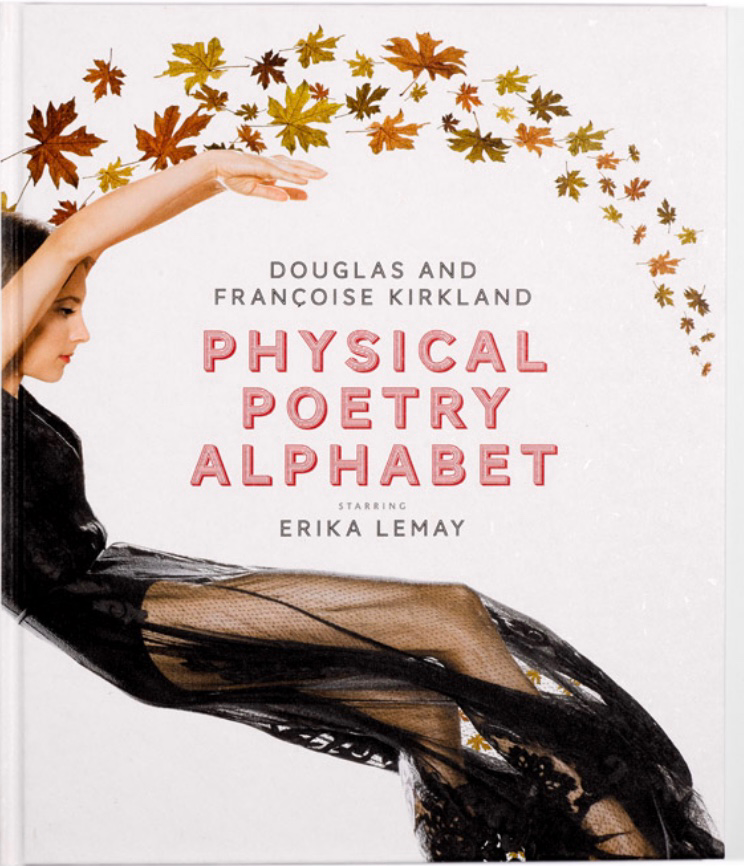
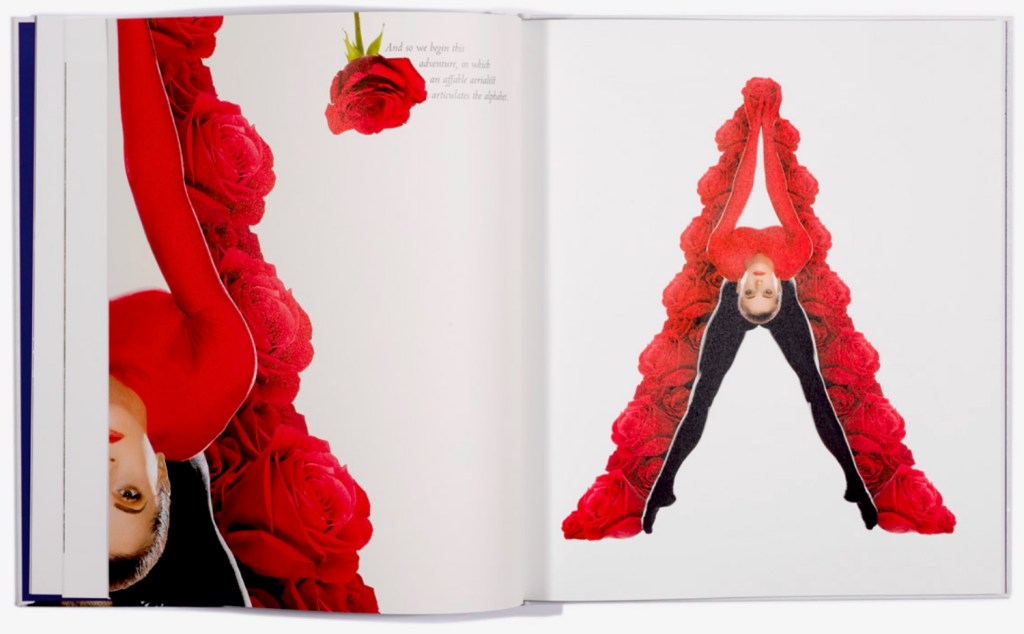
Physical Poetry Alphabet (2018) is a curious work. The Thames & Hudson-style production values combined with the knowledgeable essay in it by Ornan Rotem makes one think of Andrew Robinson’s The Story of Writing, an actual Thames & Hudson book. While the acrobatics of Erika Lemay echo the longstanding tradition of modeling the letters with the human body, followed by Erté, Vítězslav Nezval, Anthon Beeke and Rowland Scherman and so ingeniously summarized by Lisa Merkin, Lemay’s elaborate costumes and the scene design echo the traditions of Hollywood, Las Vegas and the fashion industry, which is not surprising given the involvement of Douglas Kirkland, portrait photographer to the stars. A Typographic Abecedarium strikes its singular target of “photo-typographic essay”. Having too many targets, Physical Poetry Alphabet perhaps misses its several bull’s eyes, but to follow along with its mixed metaphors, it undeniably delivers a shop full of eye candy.
If ever the dictum “Less is more” applied, it applies here — with miniaturized tongue in cheek, of course. [Links in the captions will take you to more images and details.]
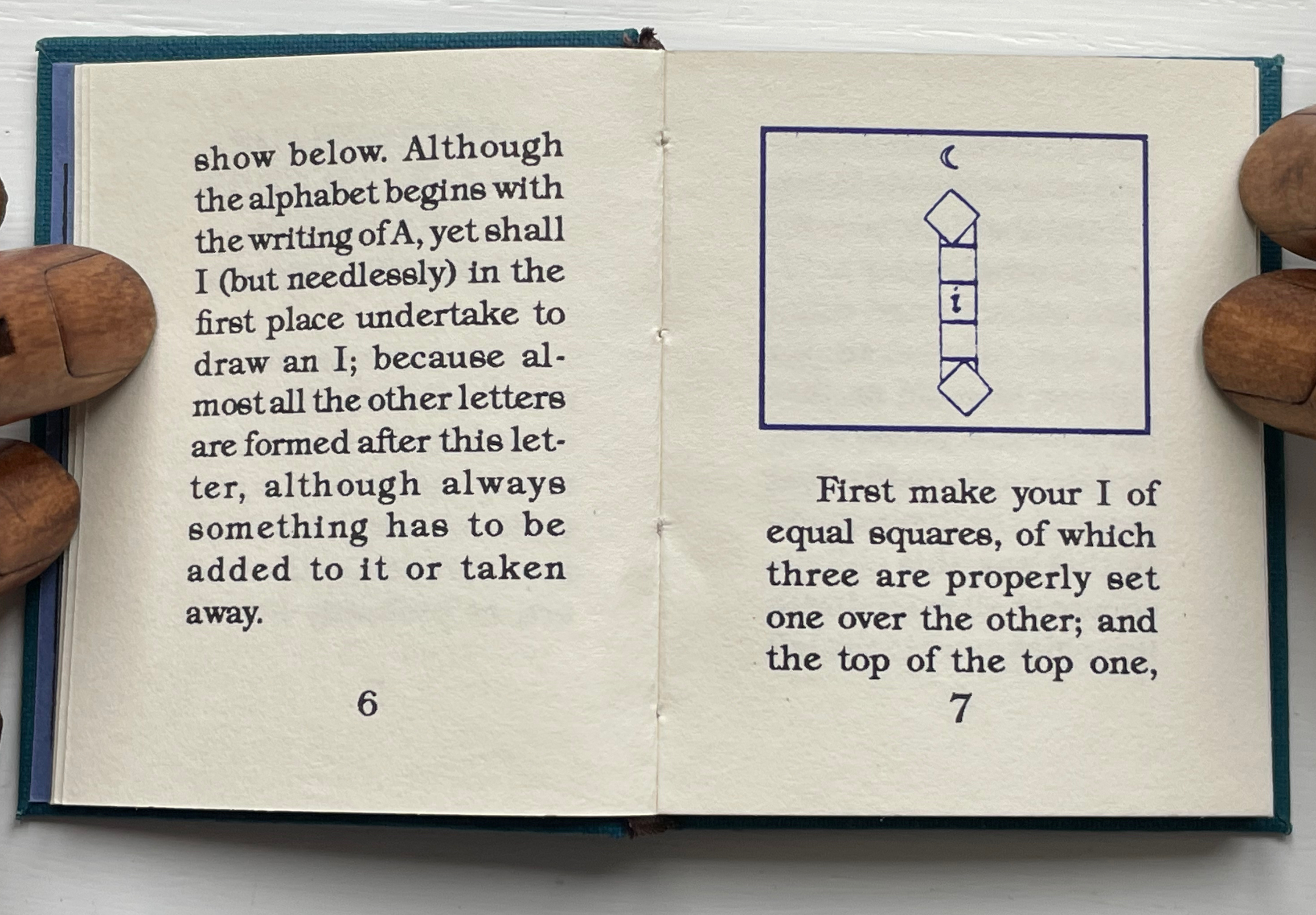
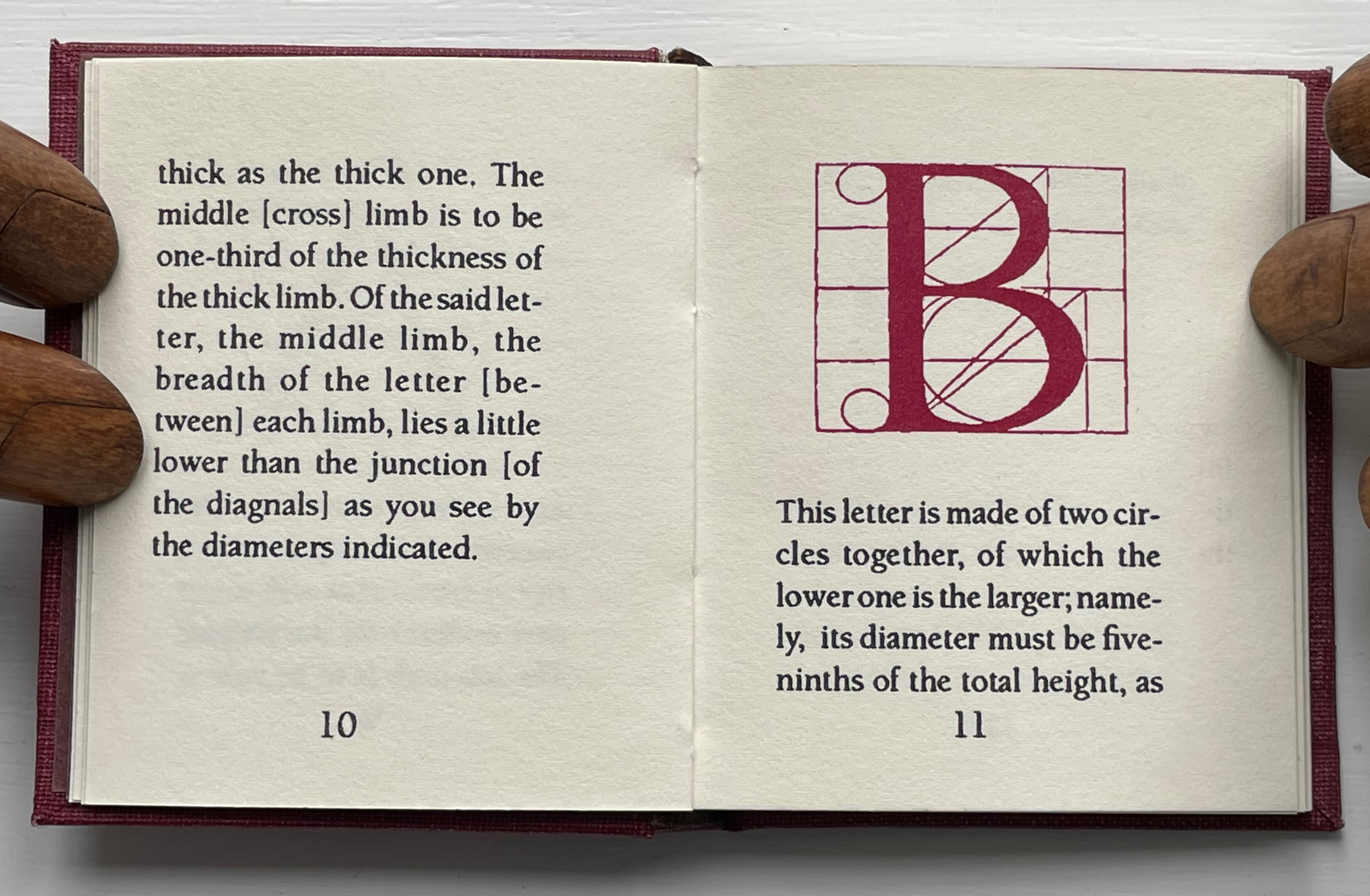
These two miniatures — Albrecht Dürer’s Directions for the Construction of the Text or Quadrate Letters (1993) and Fra Luca de Pacioli’s The Divine Alphabet (1993) — were produced by Tabula Rasa Press for a three-volume set, including Ben Shahn’s The Alphabet of Creation (1954). Although the miniature edition of Shahn remains elusive, the original edition can be seen here.
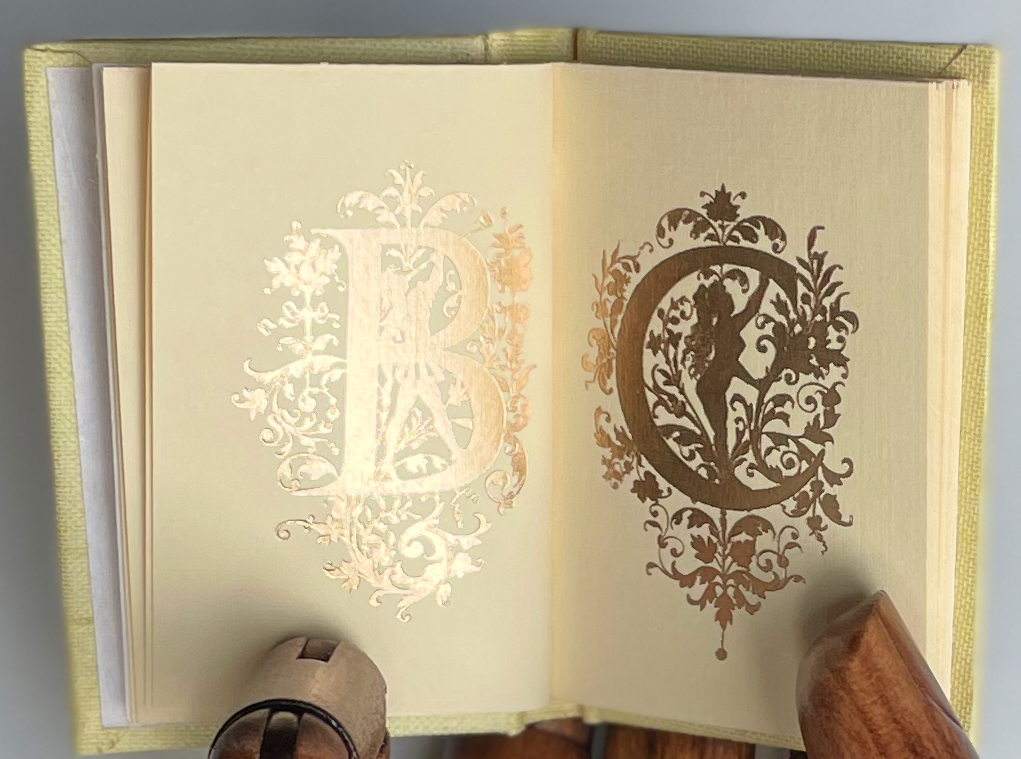
Mark Van Stone, The Evolution of the Medieval Decorated Letter(1985) In the spirit of medieval illuminators, Van Stone has imitated the hand of twenty-three of what he calls the “semi-precious jewels” of “‘minor’ illumination that usually receives little attention in the Art-History books”.
Carol DuBosch, Embossed Alphabet Gallery (2019).* This gallery structure combines elements of the flag-book and leporello to create a freestanding sculptural book to be read “in the round” — although in the Bodleian exhibition it was fixed in a wall case that allowed 180º view.
Claire Van Vliet, Tumbling Blocks for Pris and Bruce (1996).* A meander-fold book hinged to keep the cube unfolding, refolding and unfolding as it falls from hand to hand.
Carol Cunningham, Alphabet Alfresco(1985). One of several gems created by the founder of the Miniature Book Society (1983).
William Cheney, ABC for Tiny Schools ( 1975). Along with “A was an archer”, the “A was an apple pie” was among the earliest themes for secular alphabet books.
Alphabet Salmagundi(1988) and Golden Alphabet (1986) demonstrate the breadth of Rebecca Bingham’s interest in various periods and techniques of calligraphy.
Another Tabula Rasa Press production, Arthur Maquarie, The Uffizi ABC: a facsimile reproduction in miniature (1992)
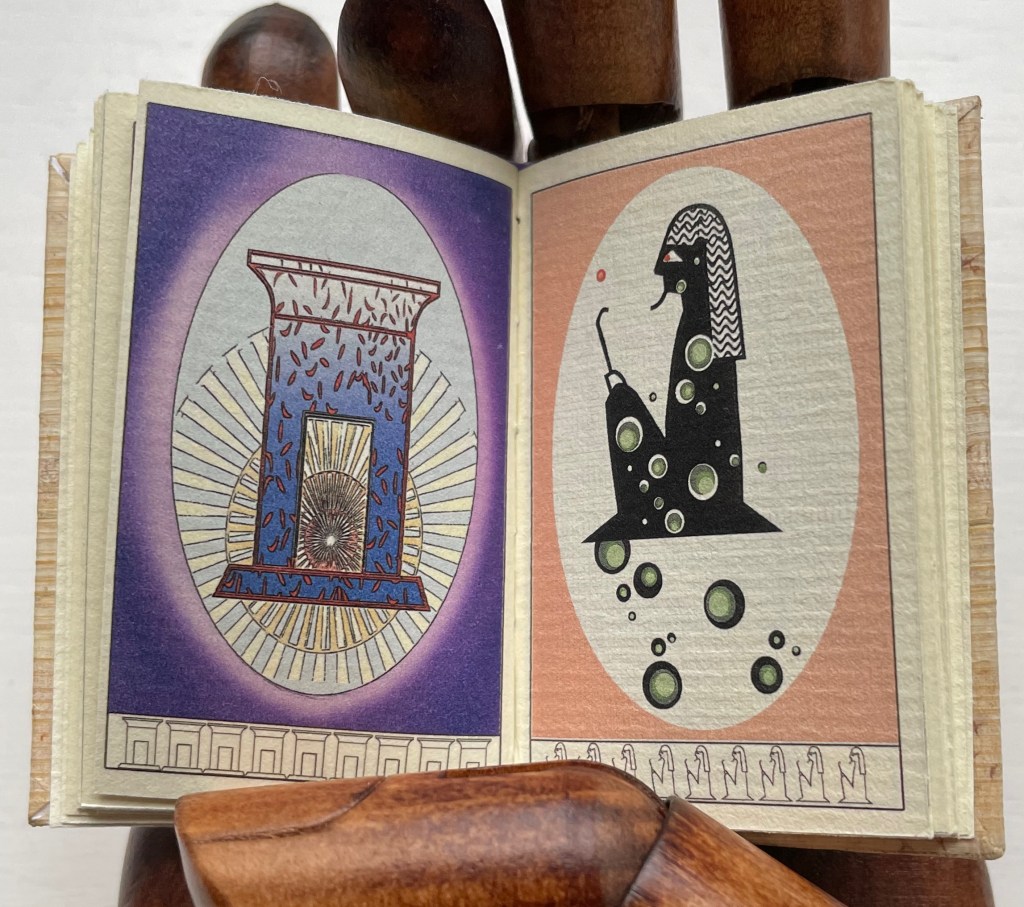
Pat Sweet’s wit led her to fill the ancient Egyptians’ previously unperceived need for an alphabet book with Hieroglyphs (2009).
June Sidwell, Lady Letters (1986). Another production by Rebecca Bingham, which also led to a miniature nod to another alphabetist — Erté.
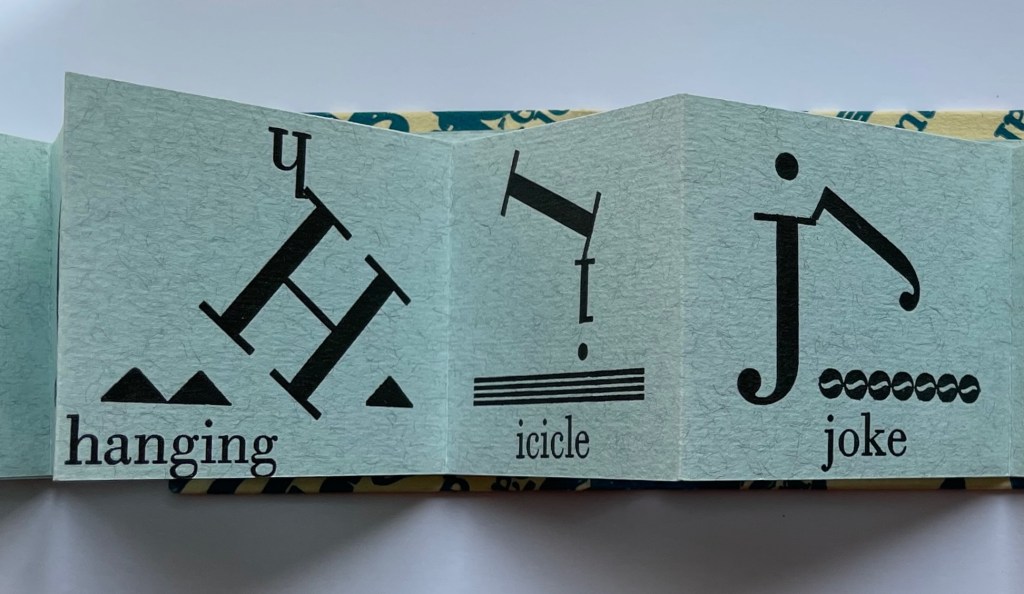
Nicolas McDowall, A Bodoni Charade (1995). Don’t let delight in the verbal/visual punnery distract you from wondering at the skill with type and letterpress needed to pull this off.
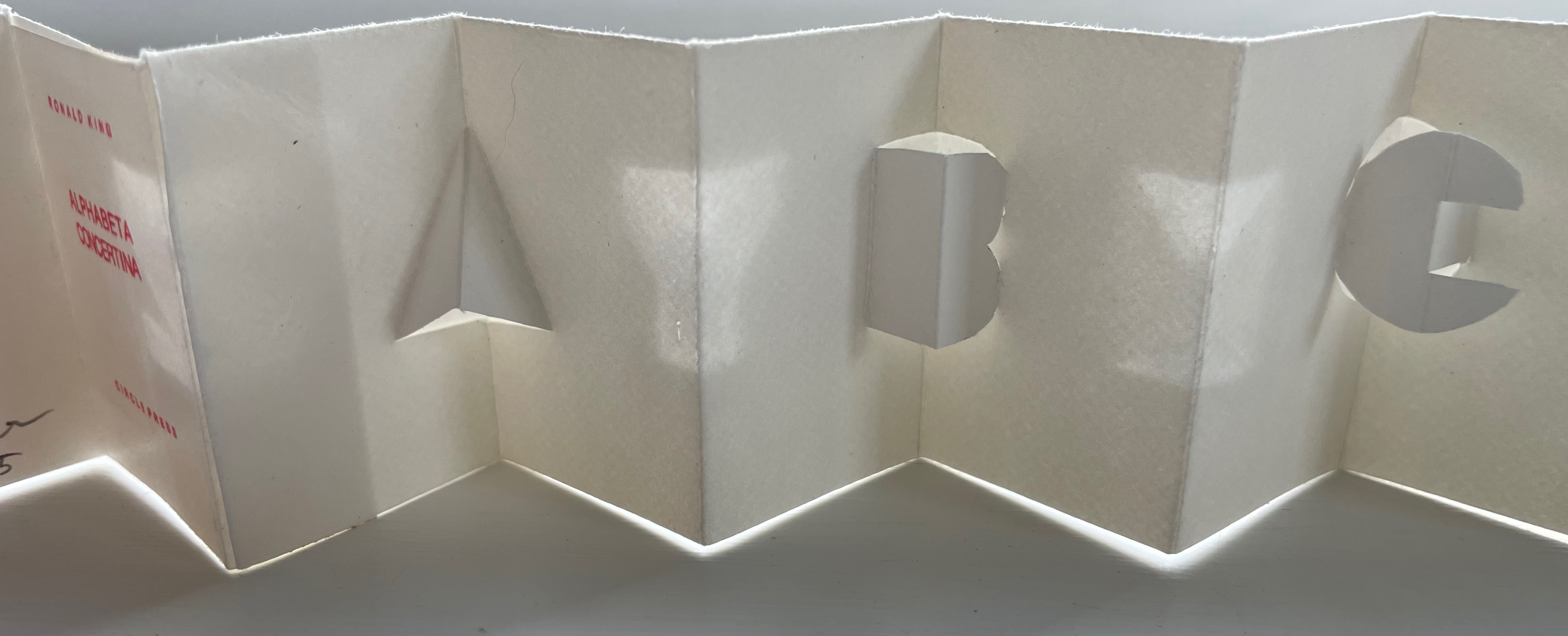
Erwin Huebner and Ron King, Alphabeta Concertina Majuscule (2015) and alphabeta concertina miniscule (2022). Miniaturist and microbiologist, Huebner obtained Ron King’s permission to reproduce King’s two signature pop-up alphabets with extraordinary results.
Juniper Von Phitzer, An Alphabet Coloring Book by Theodore Menten (1997). Lloyd L. Neilson compiled the name of his Juniper Von Phitzer Press from the names of his three cats. Theodore Menten had produced a coloring book called The Illuminated Alphabet in 1971 for Dover Publications. Obviously Juniper Von Phitzer could not fail to pounce.
Online Exhibition Bonus!
Many of the ABC books in the collection use the accordion, concertina or leporello structure, but none but Maria G. Pisano’s XYZ (2002) combine fine beaten abaca in two colors and the watermark technique to achieve their effect.
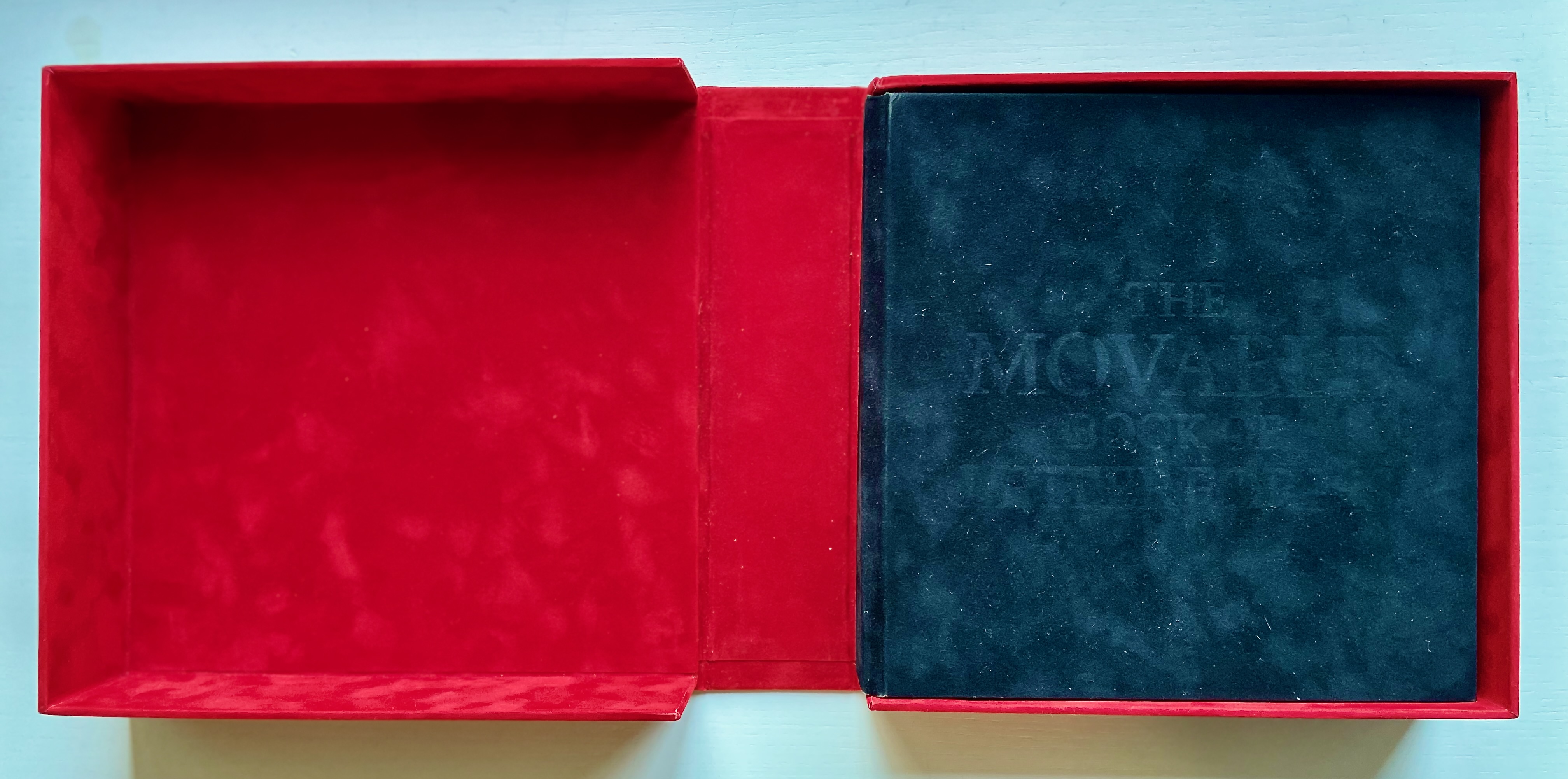
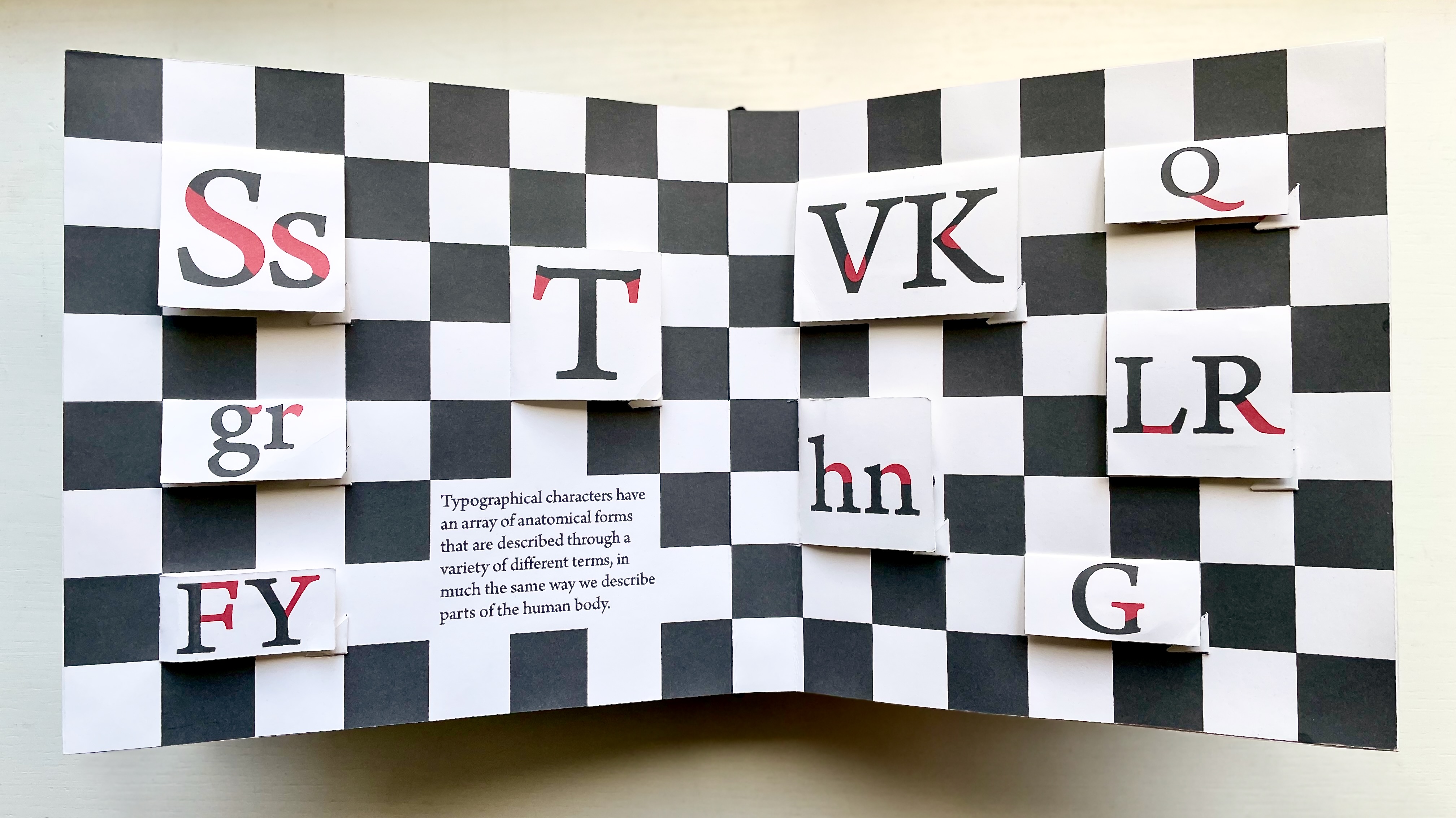
The Movable Book of Letterforms (2009) Kevin M. Steele Pop-up book. 210 x 210 mm. 22 pages. Edition of 3. Acquired from the artist, November 2022. Photos: Books On Books Collection. Displayed with permission of the artist.
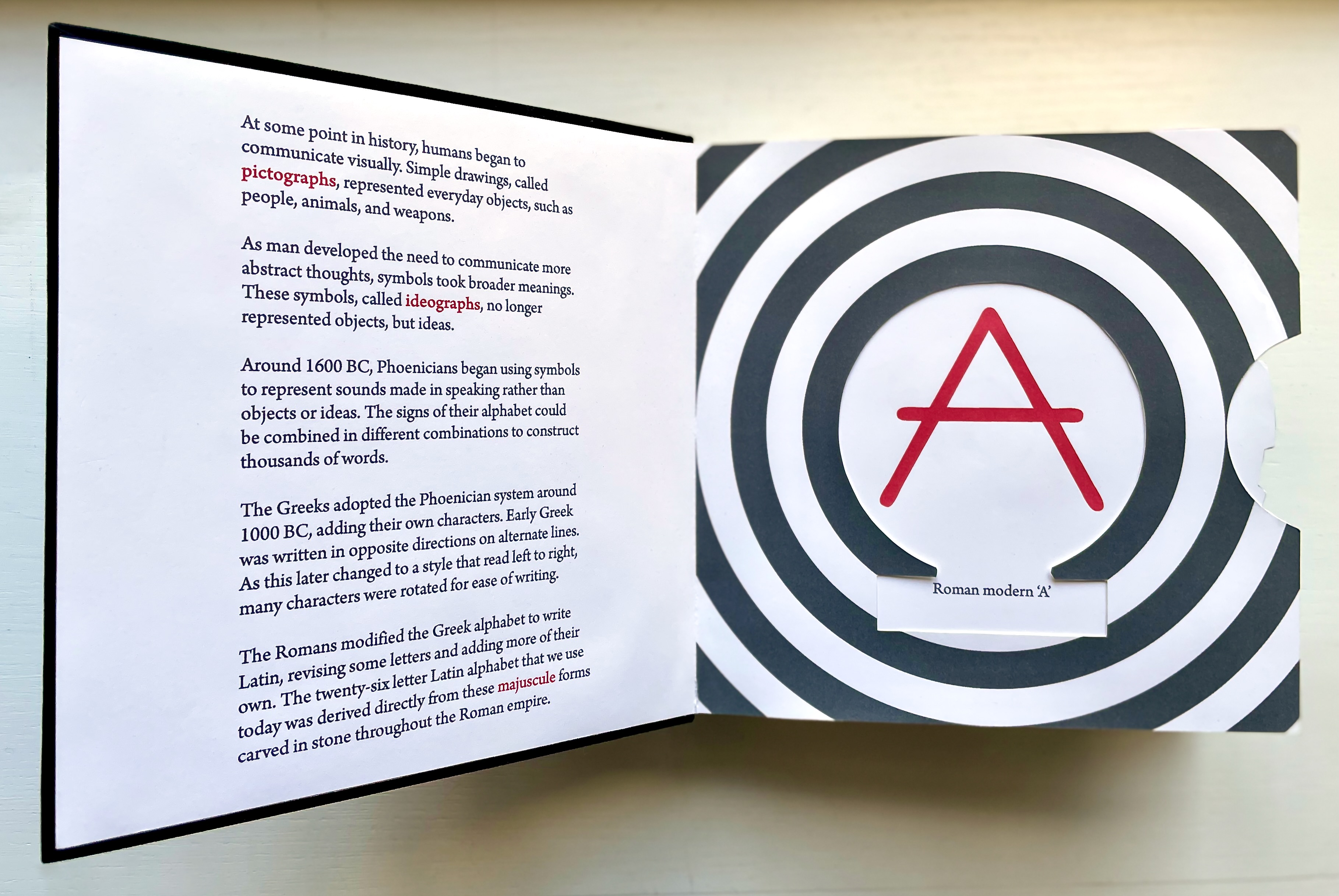
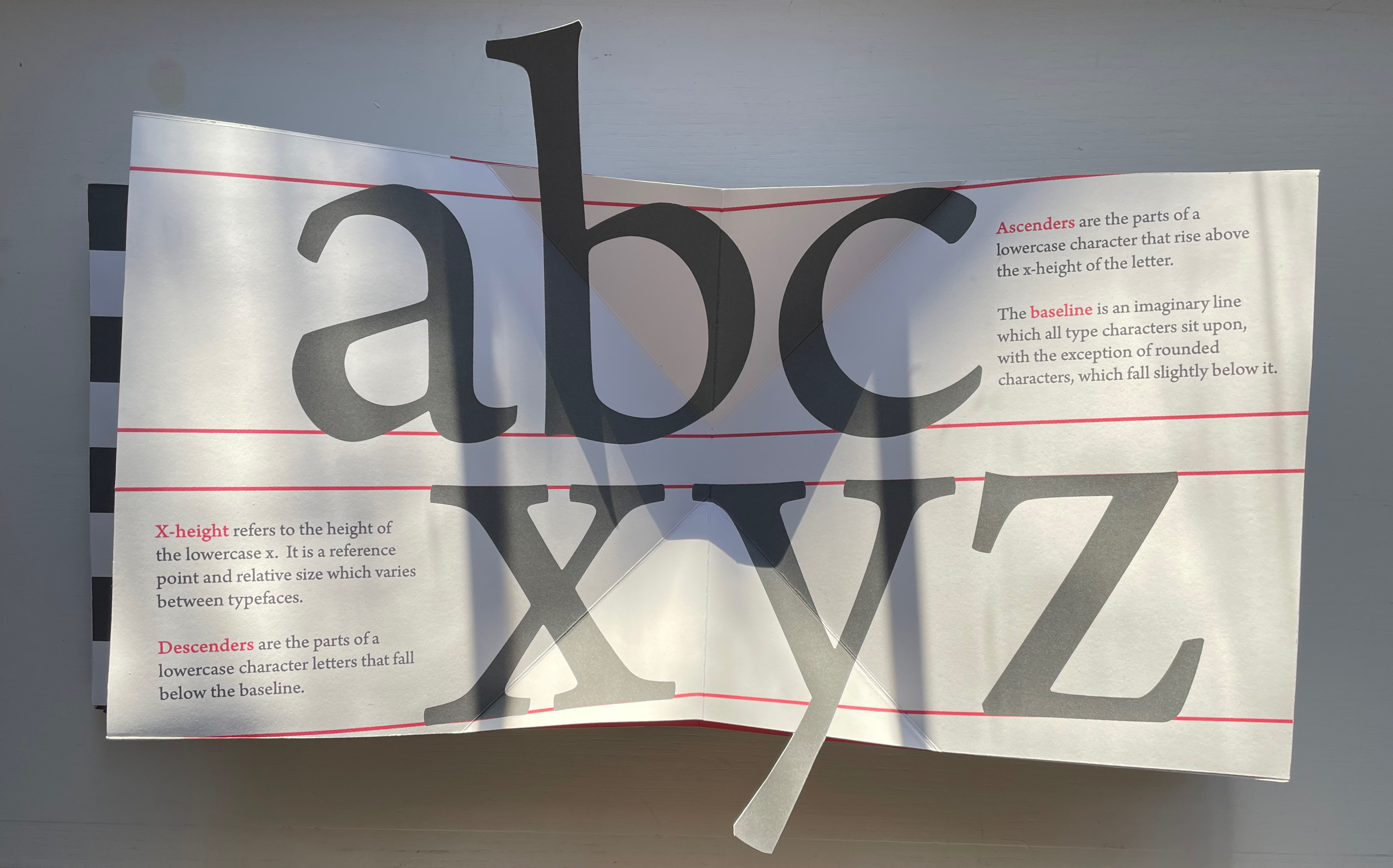
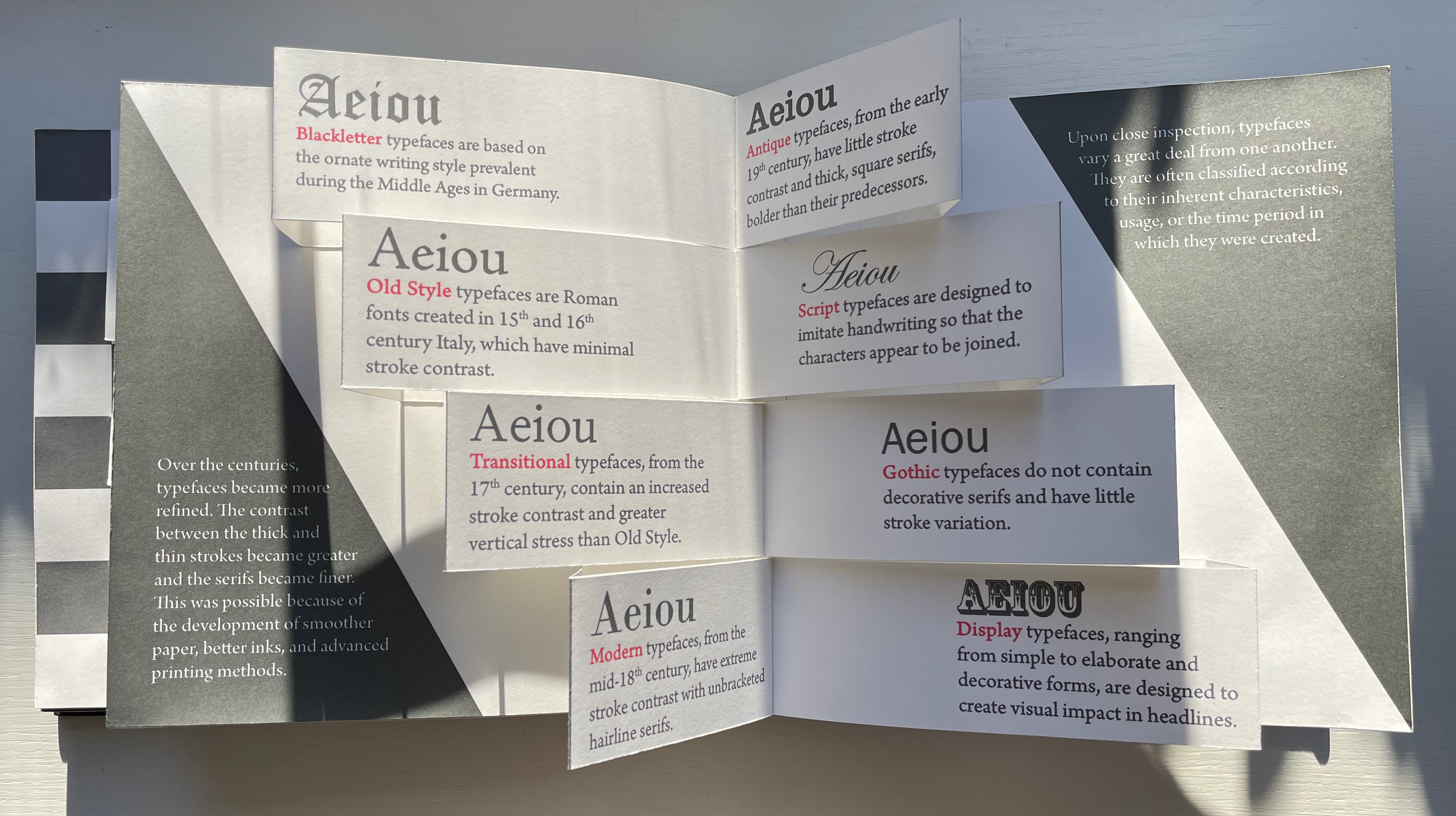
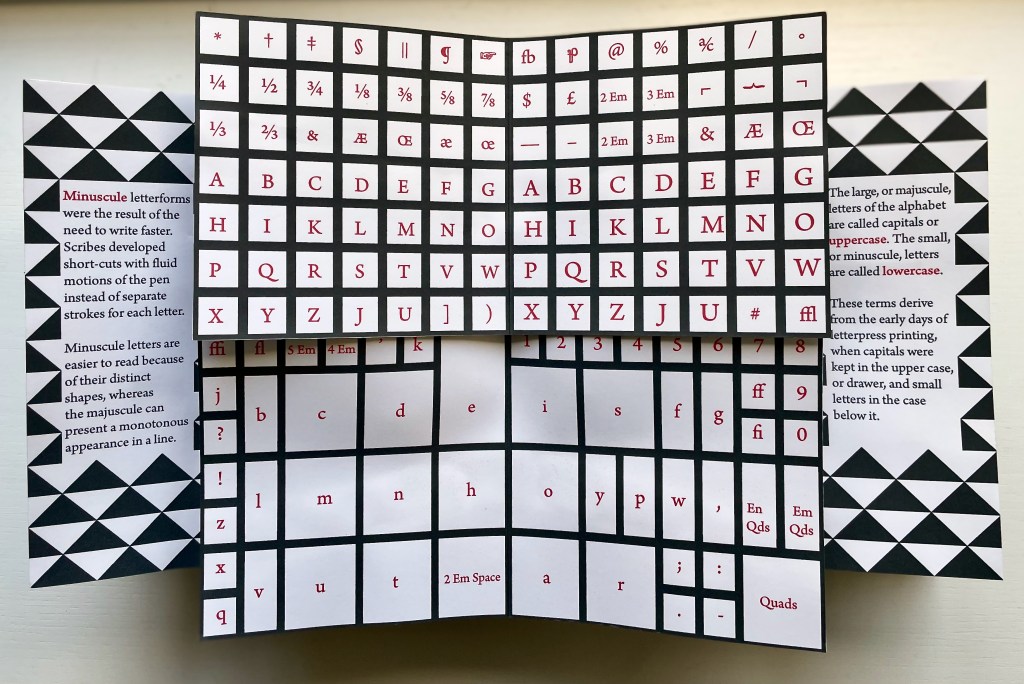
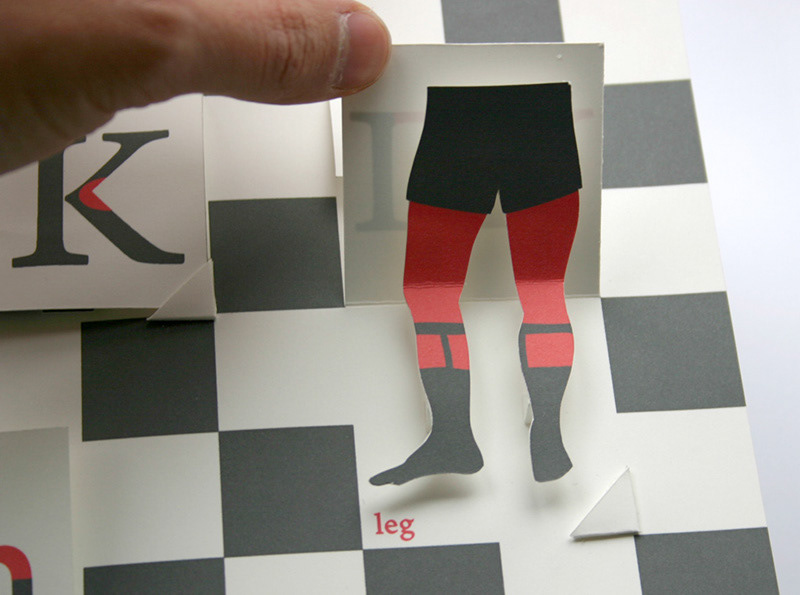
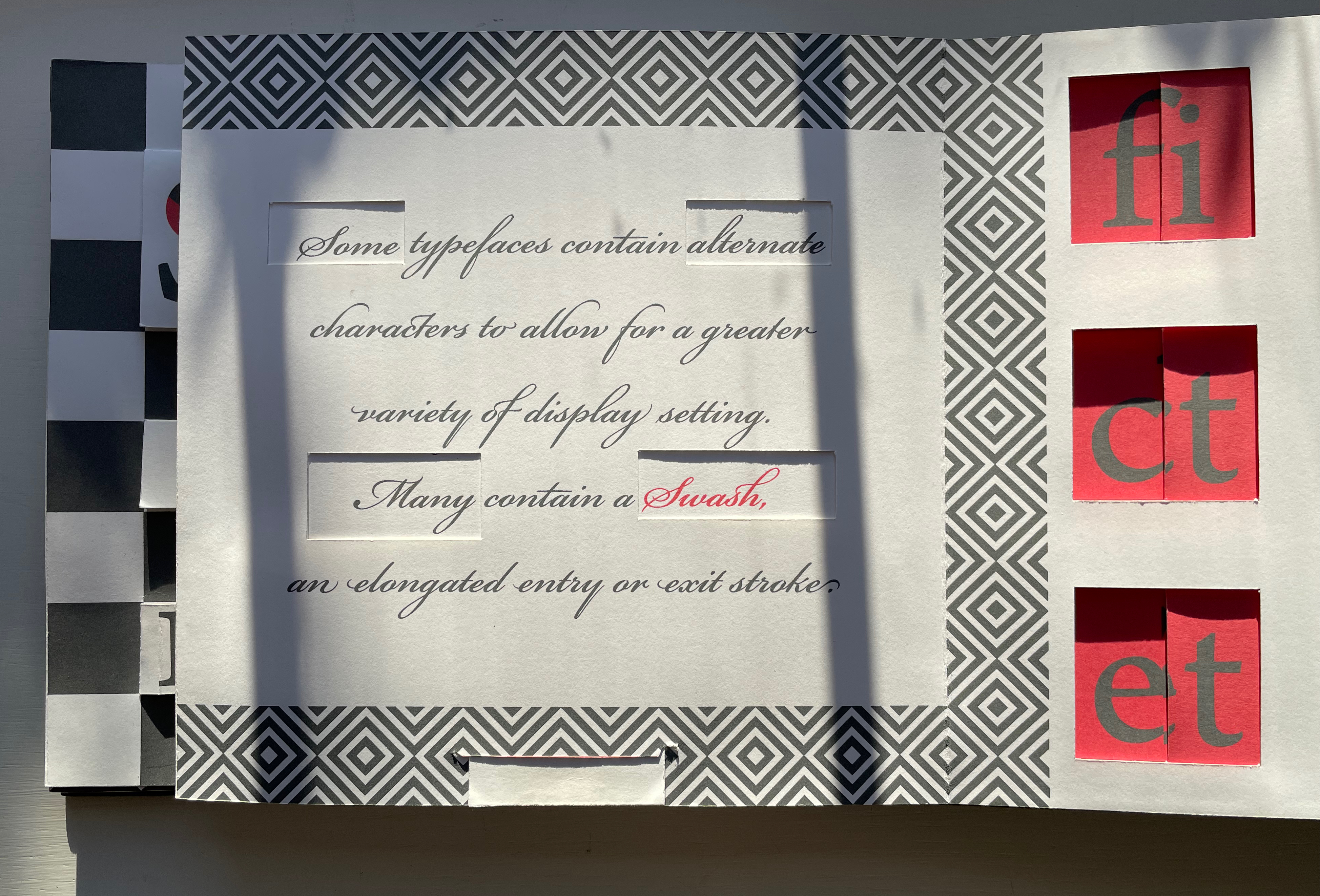
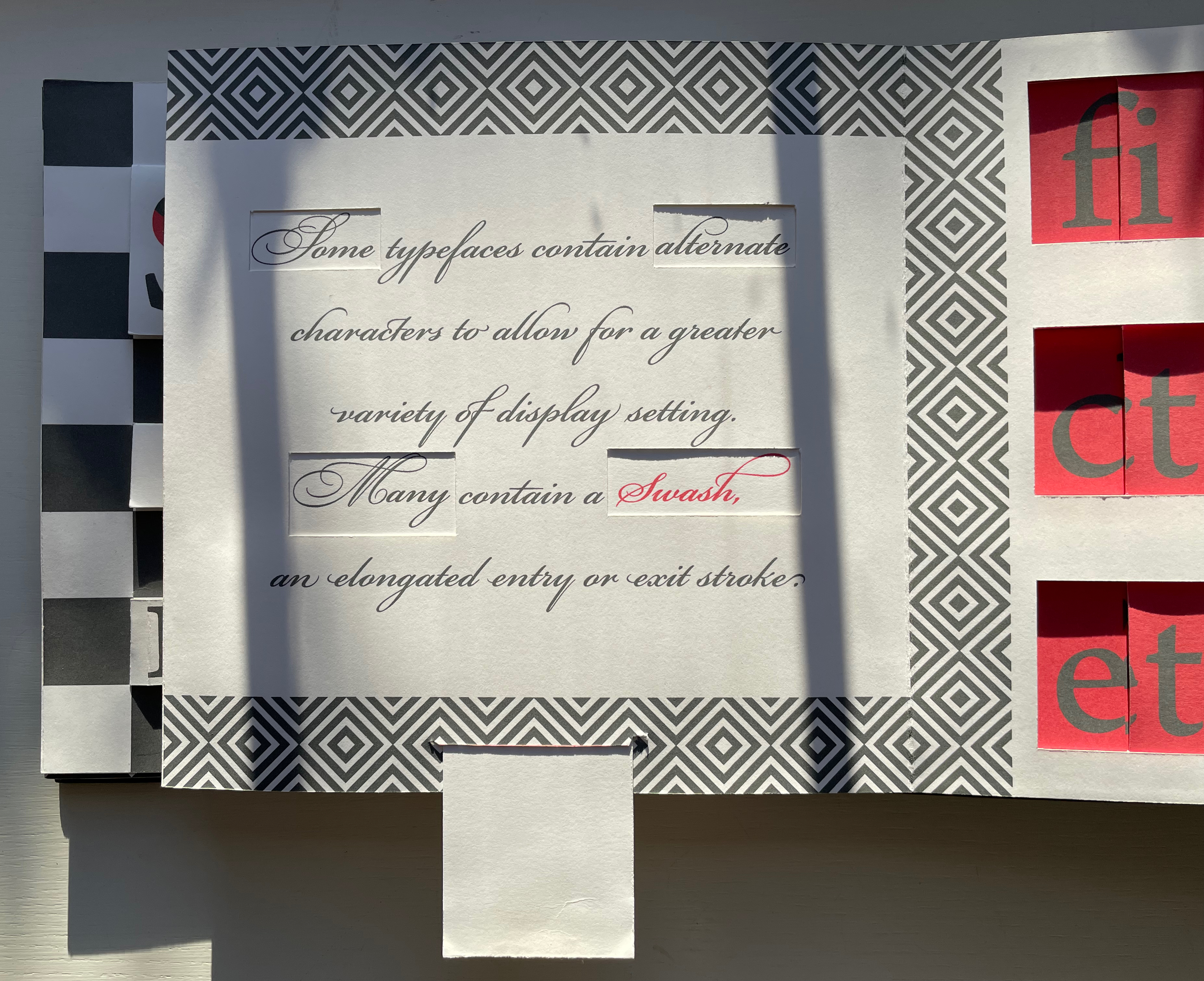
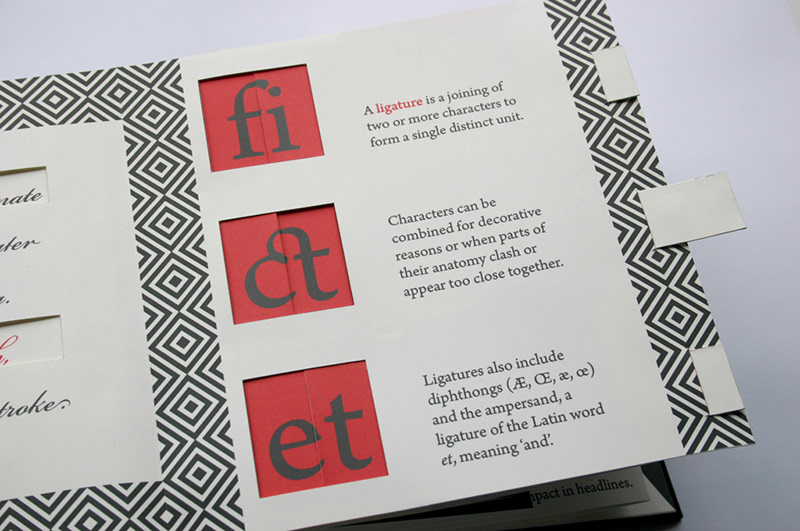
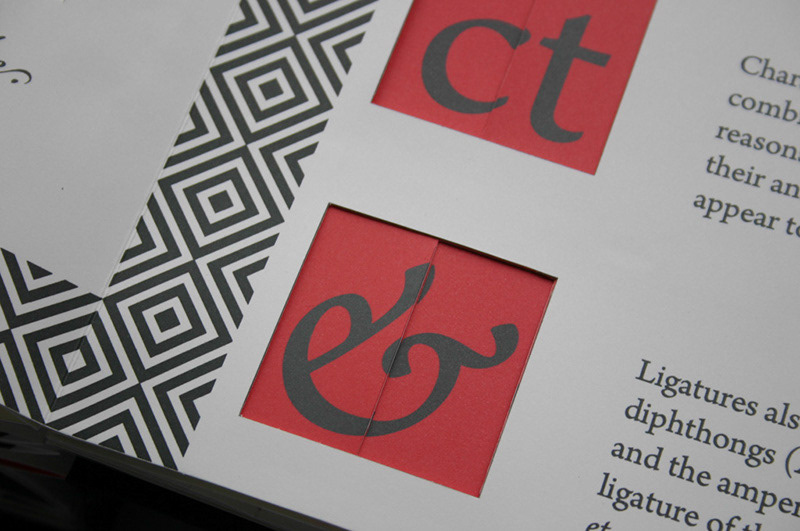
Letterforms have a tangibility that exceeds their two-dimensional representation on paper and even on screen. How better to educate the viewer to their tactility and three-dimensionality than with movable book techniques such as the volvelle, pop-ups, flaps and tab pulls?
The Movable Book of Letterforms (2009) is a work of art that does just that: it enacts a basic introduction to the origins and unique characteristics of letterforms. A limited edition of three, all of its movable parts have been cut and assembled by hand. The printing is digital on Mohawk Superfine 80lb, and the box and book are covered in Laval velour bookcloth debossed with polymer plate. The only element the artifact is missing is metal.
For a monumental display of Steele’s book and paper engineering, a visit in the UK to the National Maritime Museum in Greenwich is urged. It can also be found in the following collections:
Metropolitan Museum of Art, New York Wits Art Museum, Johannesburg University of Iowa, Iowa City Indiana University, Bloomington Western Michigan University, Kalamazoo Michigan State University, East Lansing
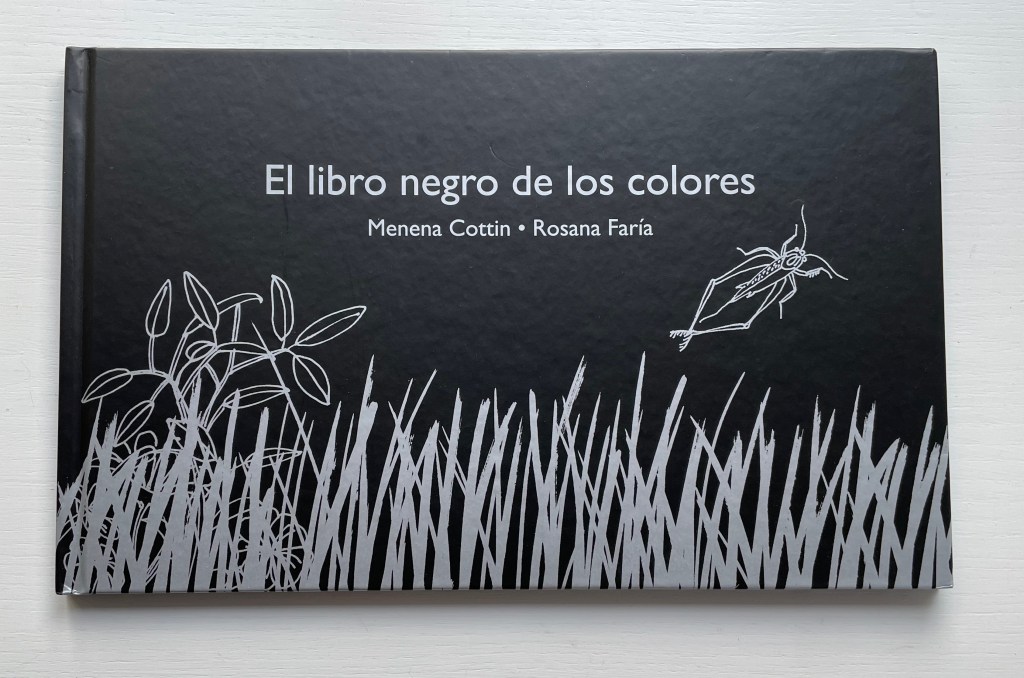
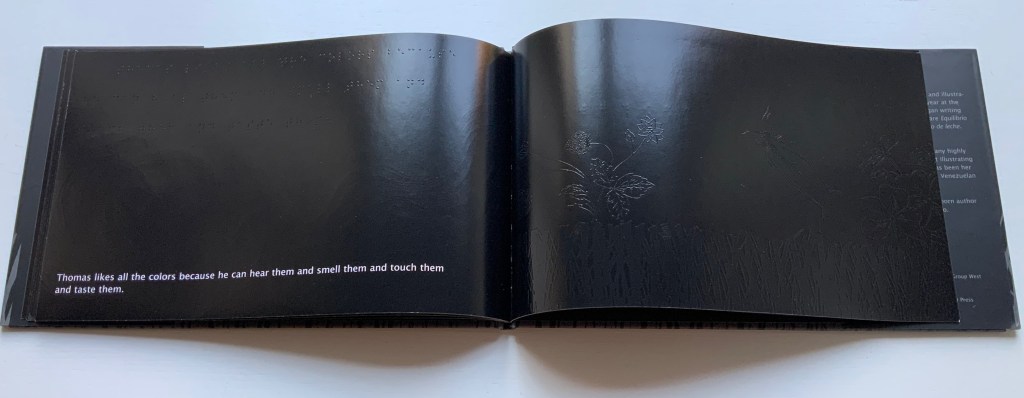
Menena Cottin refers to her works as “concept books”, and there are multiple concepts at work in The Black Book of Colors. Generically, it is a children’s book introducing the reader to colors — but by the absence of color. In white on black, it addresses sighted readers. In Braille, it addresses unsighted readers. With Thomas, who “likes all the colors because he can hear them and smell them and touch and taste them”, the book introduces to sighted and unsighted readers who are not synesthetic the concept of synesthesia and, through it, a new sense of empathy and imagination. The sighted encounter someone with a sensory anomaly, not a disadvantage. In the company of their imagined unsighted co-readers, the sighted may come to empathize with those with sensory differences. The unsighted encounter someone whose sensory anomaly is an advantage. especially as the book favors their own heightened sense of touch.
Thomas says that yellow tastes like mustard, but is as soft as a baby chick’s feathers.
Thomas likes all the colors because he can hear them and smell them and touch and taste them.
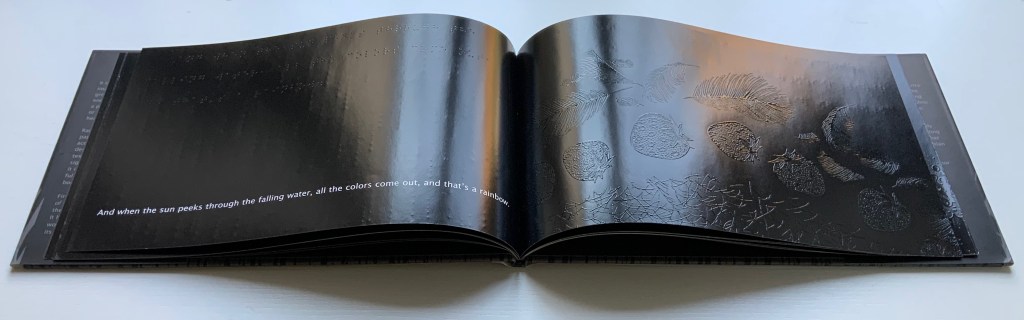
Breaking boundaries in ways similar to those employed by book artists, Cottin manipulates character and narration, also the picturebook’s genres of color recognition and letter recognition (Braille in this case) as well as some of the basic elements of the book (layout, printing in reverse-out and debossed printing). In one of the most sophisticated examples of this, double-page spreads fuse concepts by turning a rainbow into a gathering of raised images of the synaesthetic objects with which colors have already been associated in the book (chick’s feathers, strawberries, leaves).
And when the sun peeks through the falling water, all the colors come out, and that’s a rainbow.
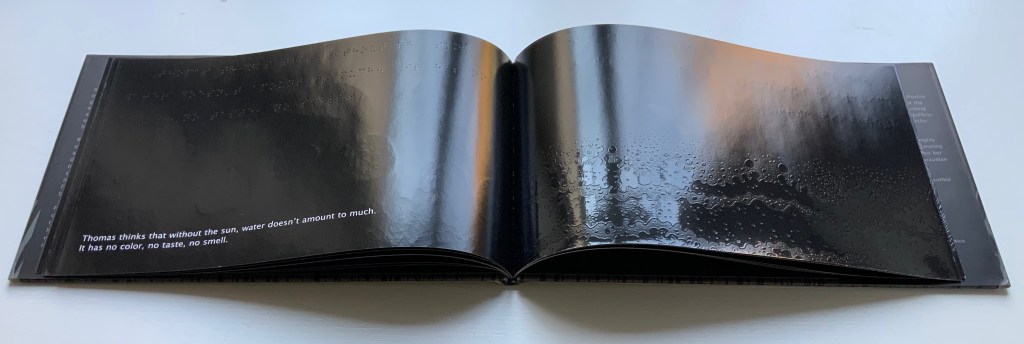
The Black Book uses synesthesia to go beyond the color recognition genre to introduce more complex concepts: the nature of light and water’s lack of color, taste and smell. This stepping outside the genre is another example of the boundary-breaking that artists’ books often perform.
Thomas thinks that without the sun, water doesn’t amount to much. It has no color, no taste, no smell.
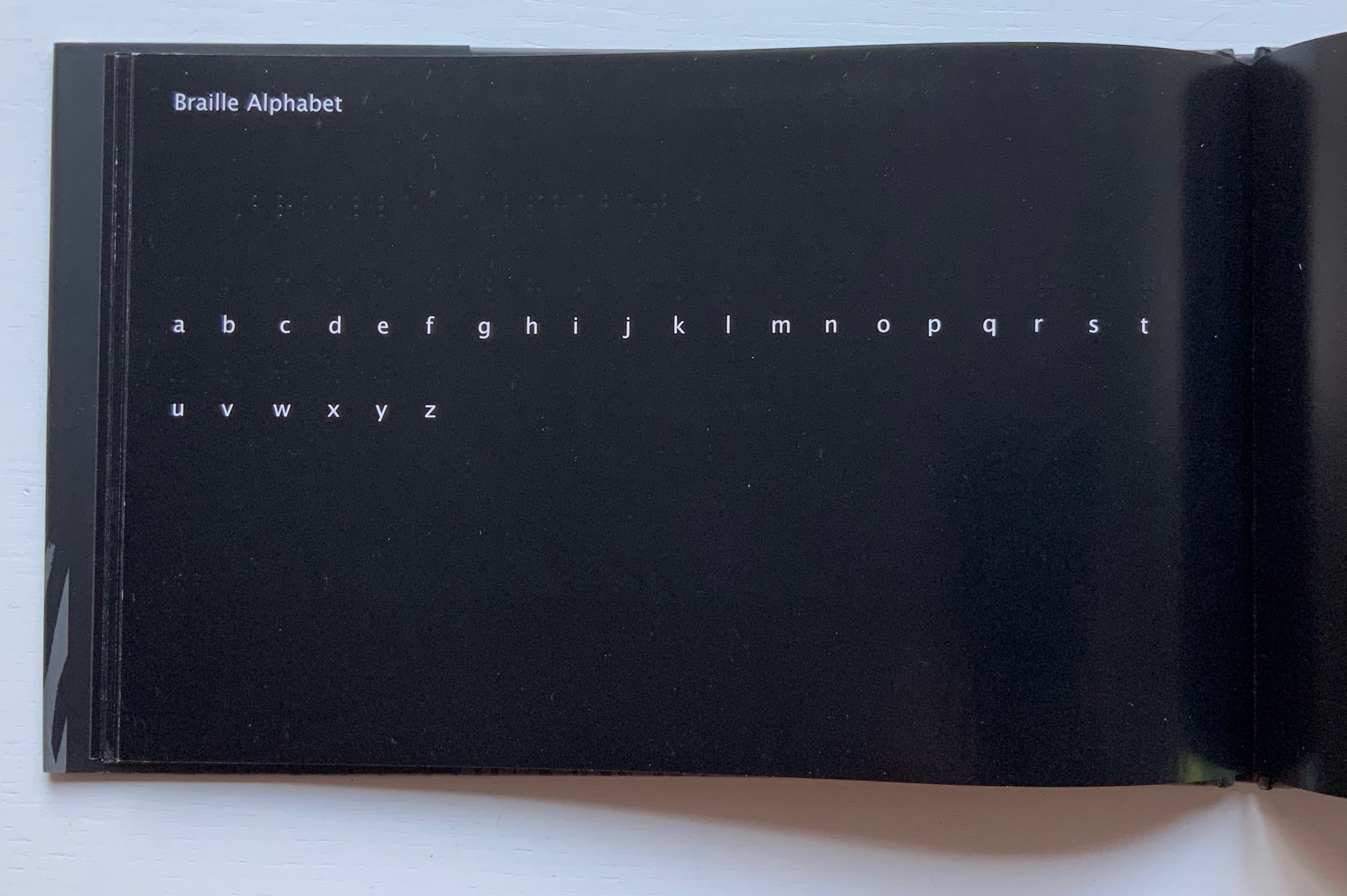
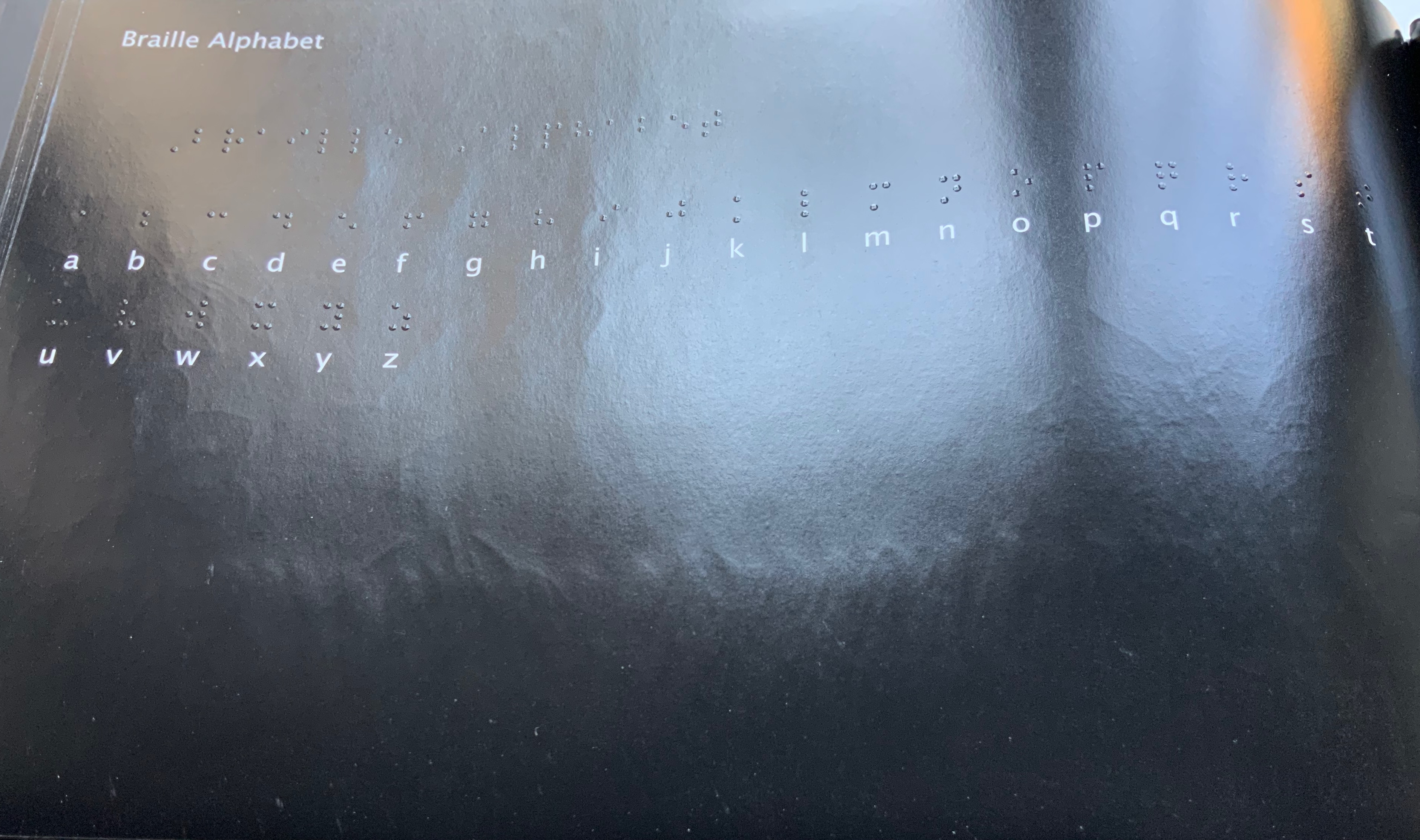
The book ends by asserting its membership in the alphabet book genre by presenting the alphabet in lowercase white on black and in Braille. Across from this verso page, there is no set of raised images on the recto page as there has been so far throughout the book. Knowing from touch that this is the end of the book and noting the absence of any image, sighted and unsighted readers might find this coda a prompt to return to the beginning and “re-read” the images with a greater reliance on touch.
Other books in the Books On Books Collection worth comparing with The Black Book of Colors are
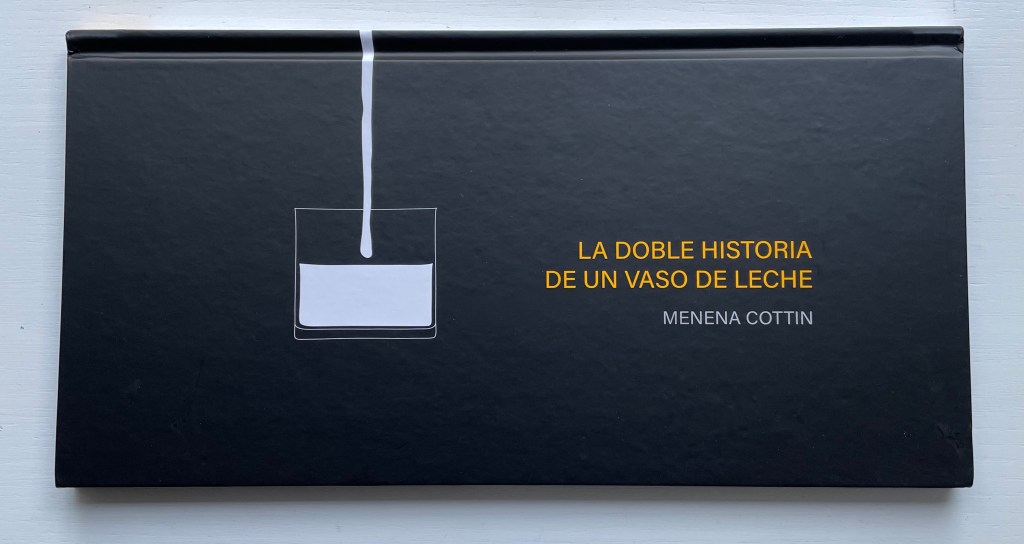
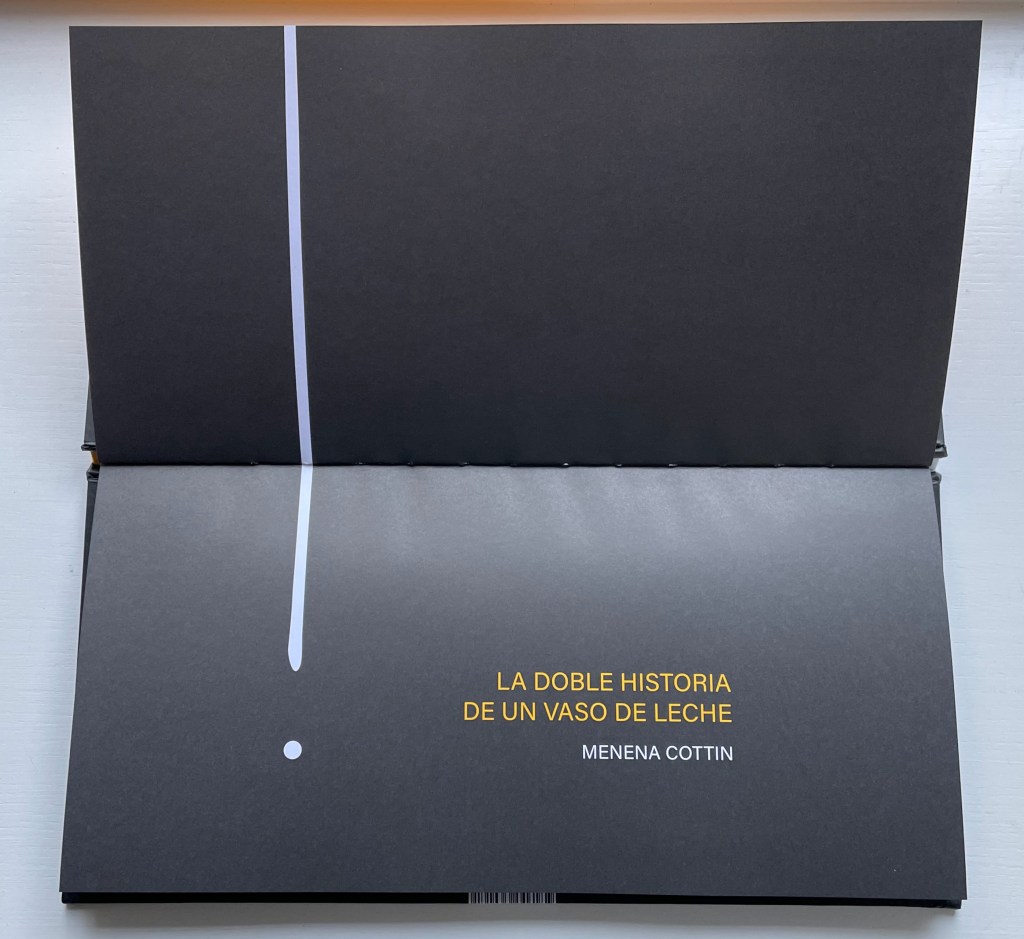
La Doble Historia de un Vaso de Leche(2019) Menena Cottin Casebound landscape, paper over boards, with orange-yellow doublures, sewn. H160 x W310 mm. 24 unnumbered pages. Acquired from the artist, 2022. Photos: Books On Books Collection.
The Double Story of a Glass of Milk opens and closes with a line that echoes the start of William Carlos Williams’ “The Red Wheelbarrow” but is at once more straightforward and just as surprising — as the visual story spills out.
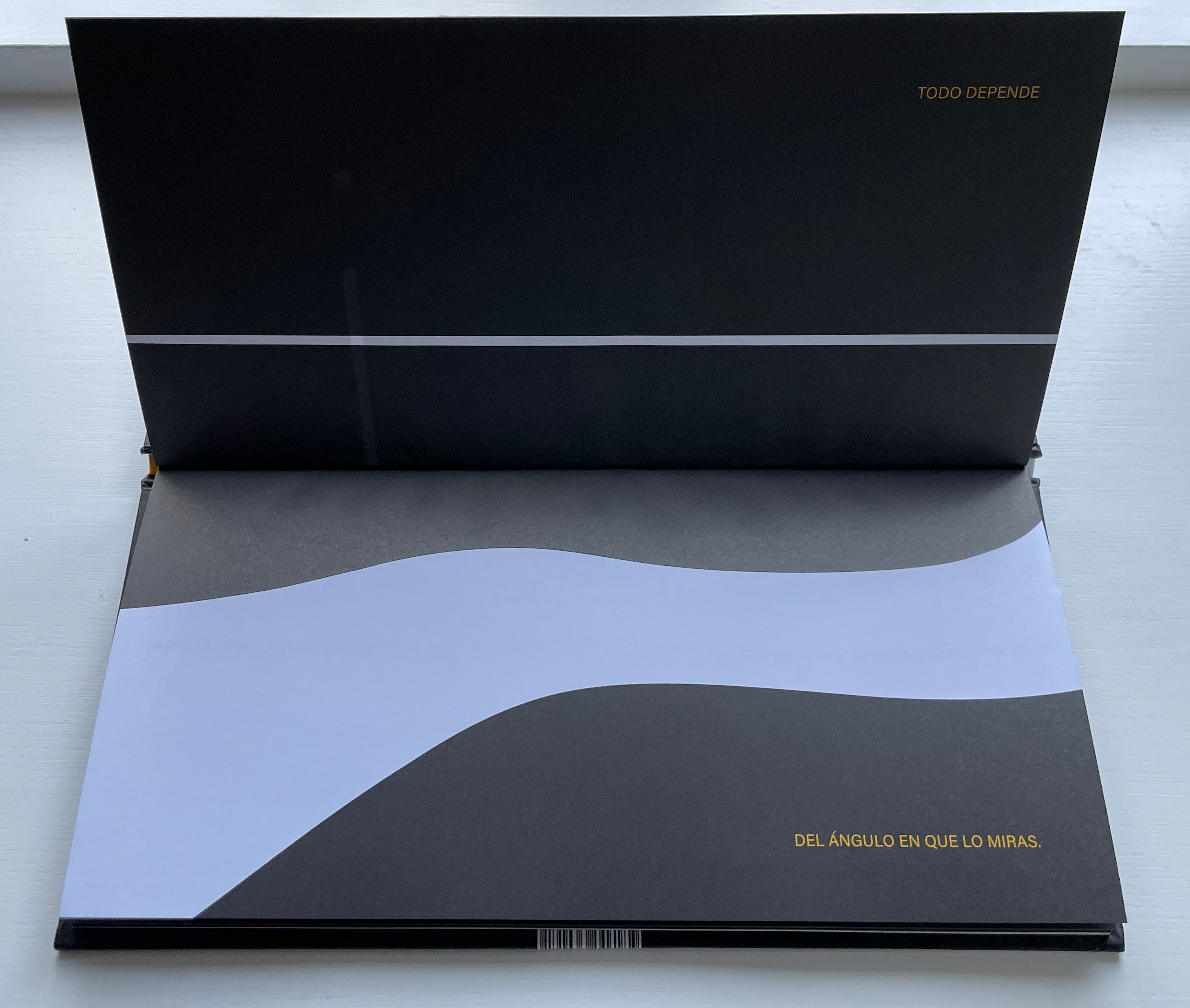
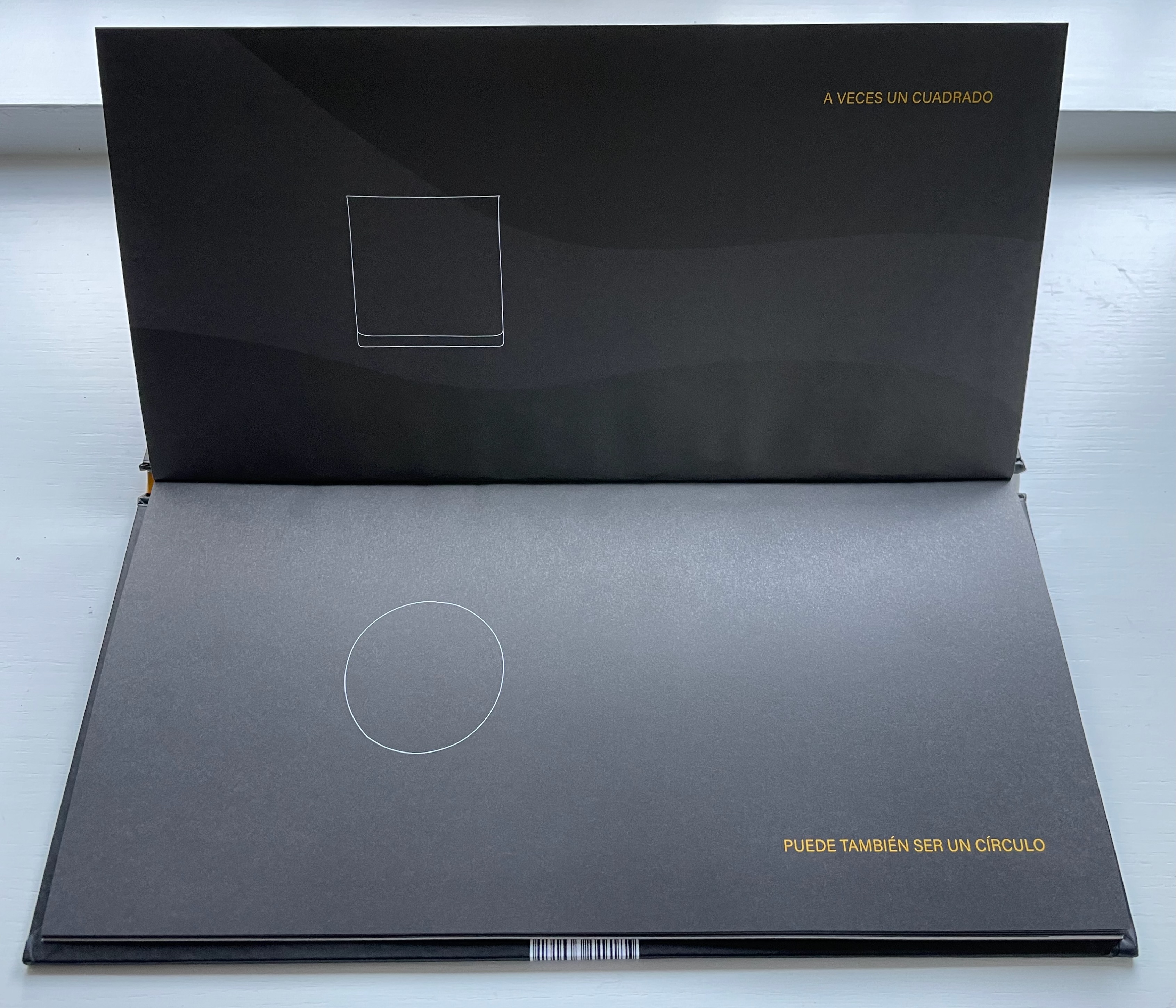
Todo depende del ángulo en que lo miras. A veces un cuadrado puede también ser un circulo y una larga linéa luce como un punto y algo que está solo a medias parece que está lleno. Un mismo cuerpo tiene diferentes caras per a veces te confunde mostrándote una misma forma. Solo si miras a su alrededor descubres que … eso que de frente parece tan discreto desde arriba luce muy escandaloso. Todo depende del ángulo en que lo miras.
“Everything depends on the angle from which you look at it. Sometimes a square can also be a circle and a long line looks like a dot and something only half full looks full. The same body has different faces but sometimes it confuses you by showing you a different shape. Only if you look you discover that … what from the side looks so innocent looks shocking from above. Everything depends on the angle from which you look at it.”
Equilibrio (2019)
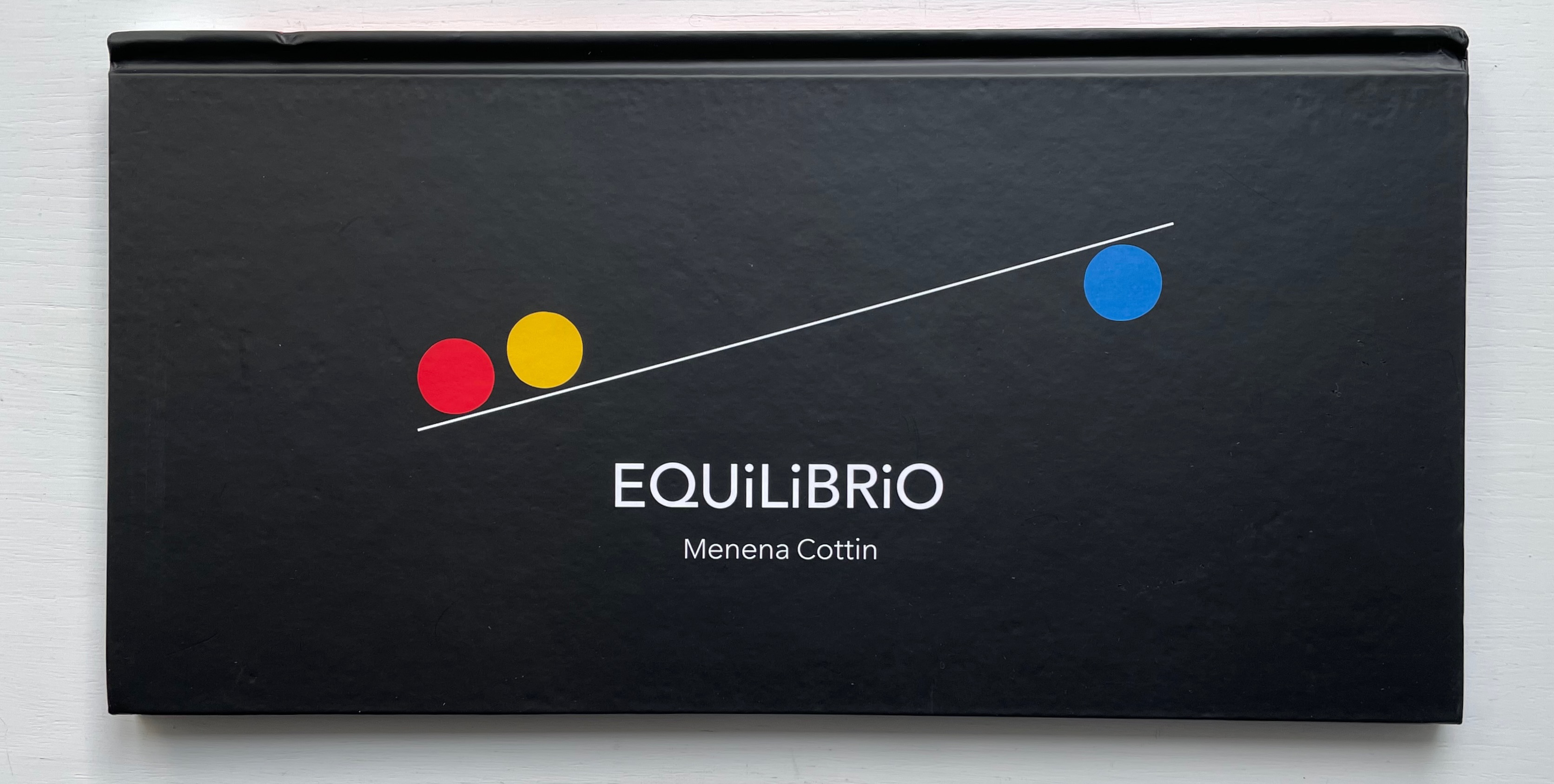
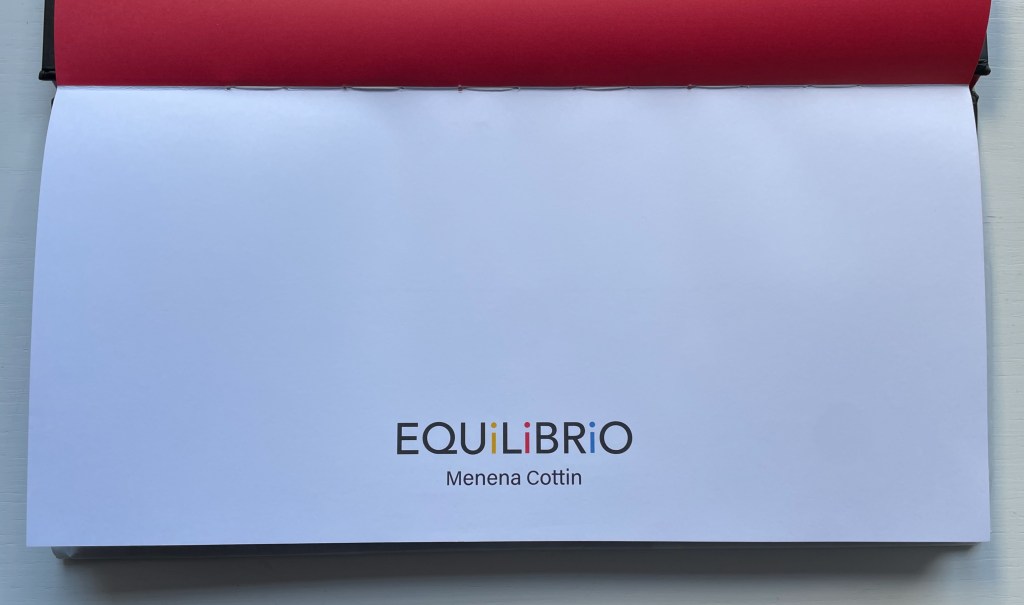
Equilibrio(2019) Menena Cottin Casebound landscape, paper over boards, with red doublures, sewn. H160 x W310 mm. 25 unnumbered pages, last page on inside of flyleaf. Acquired from the artist, 23 August 2022. Photos: Books On Books Collection. Displayed with the author’s permission.
The three colored balls on the cover give their colors to the three i’s in Equilibrio on the title page, announcing the statement to come: El equilibrio es cuestión de balance (“Equilibrium is a question of balance”).
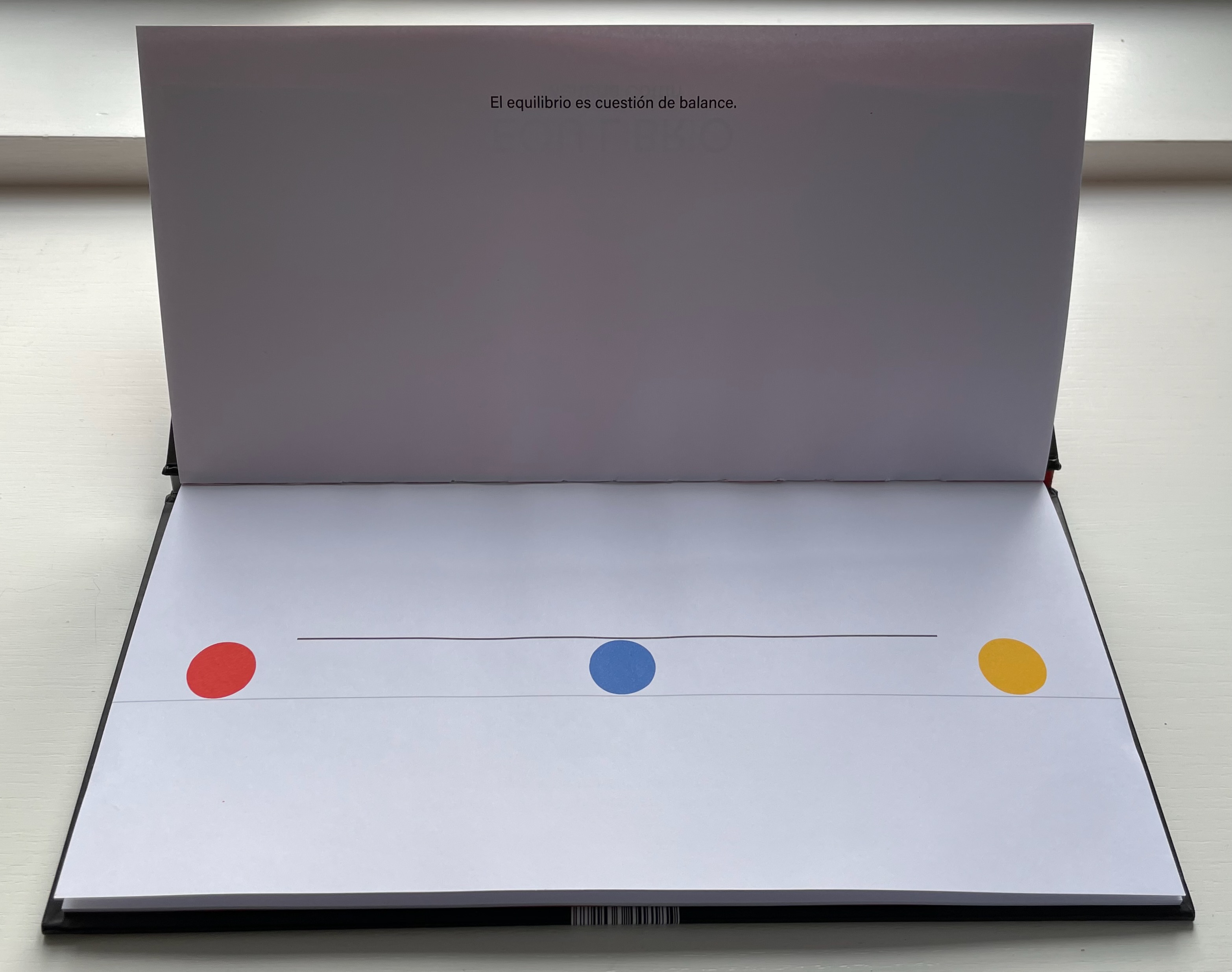
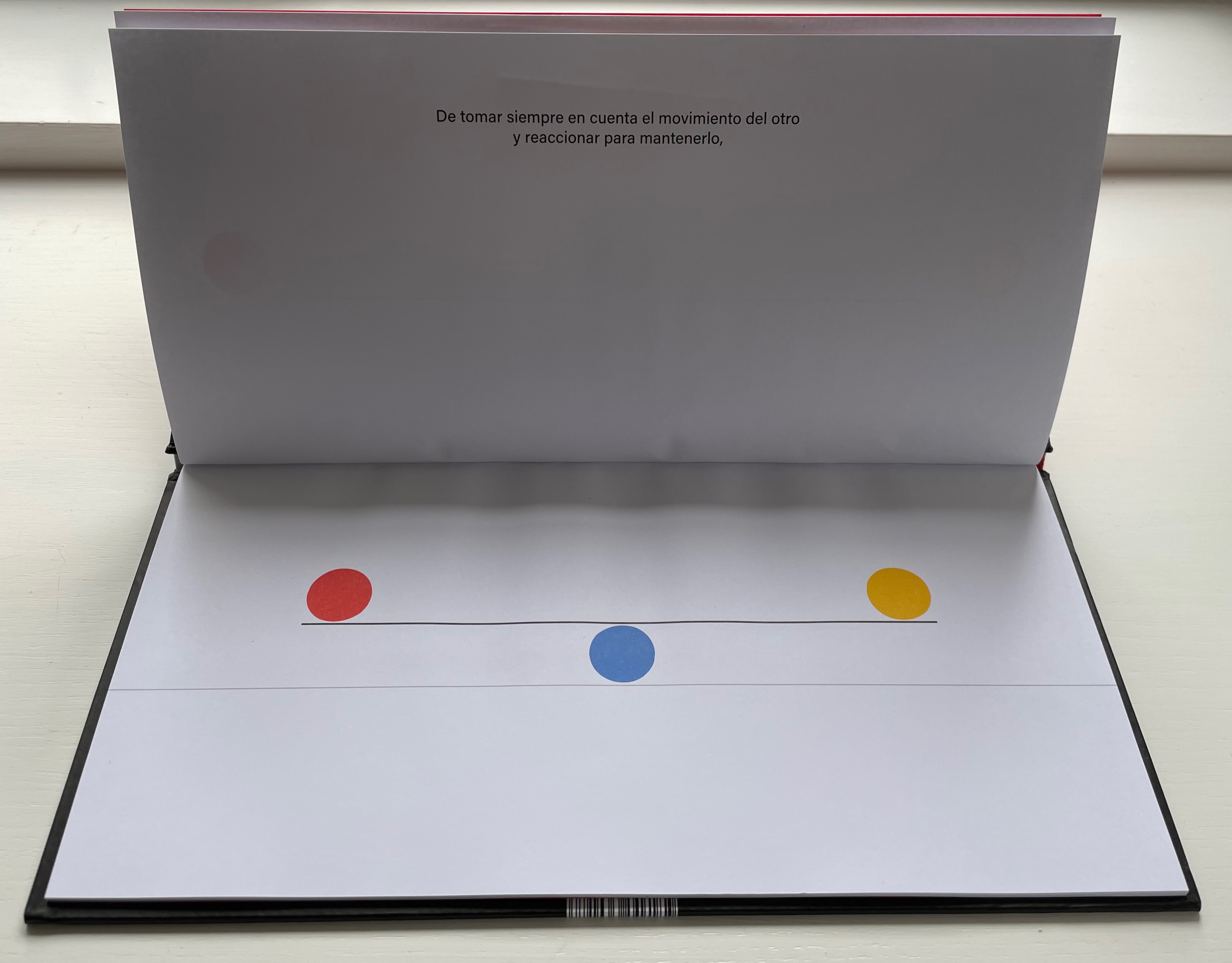
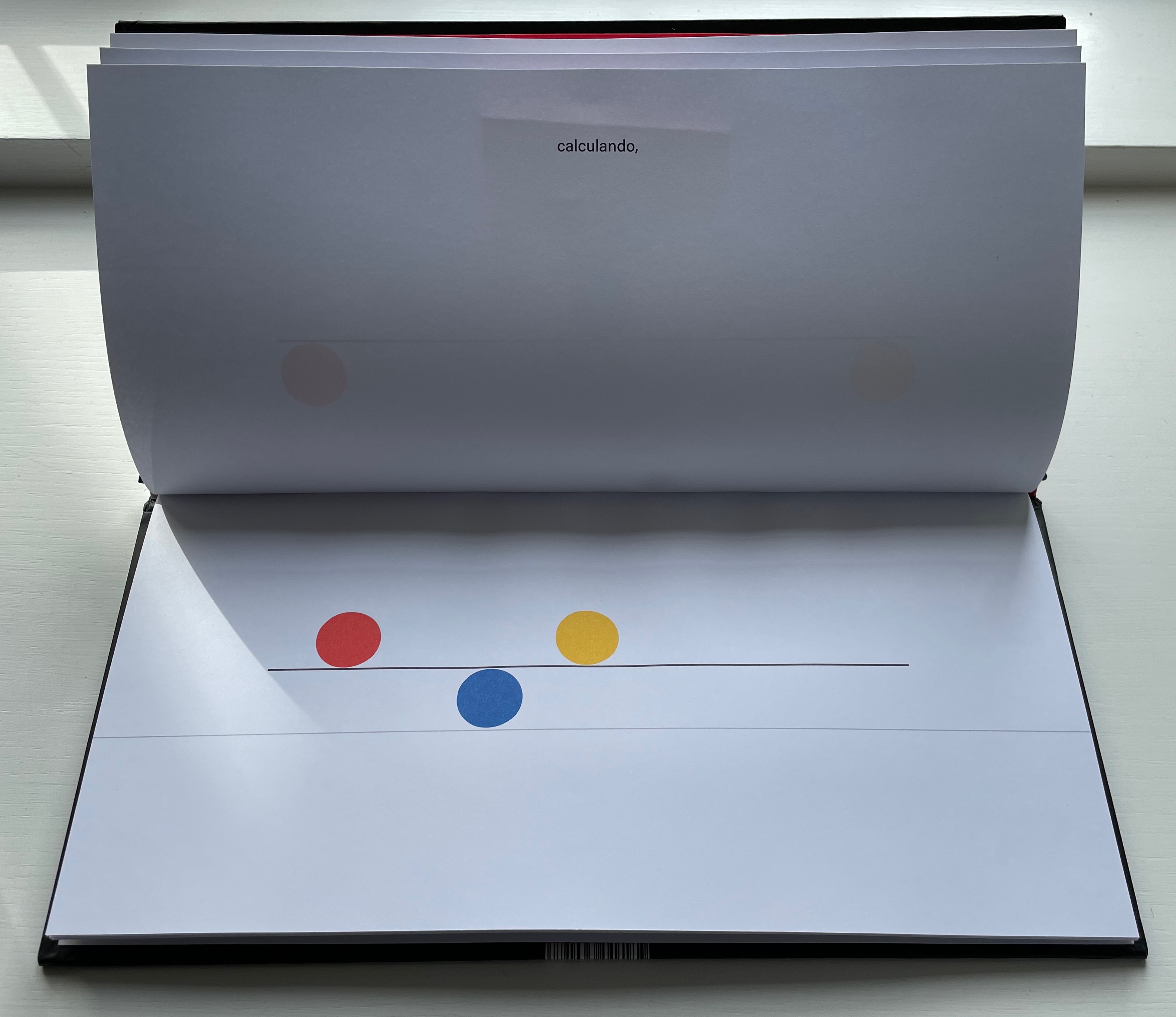
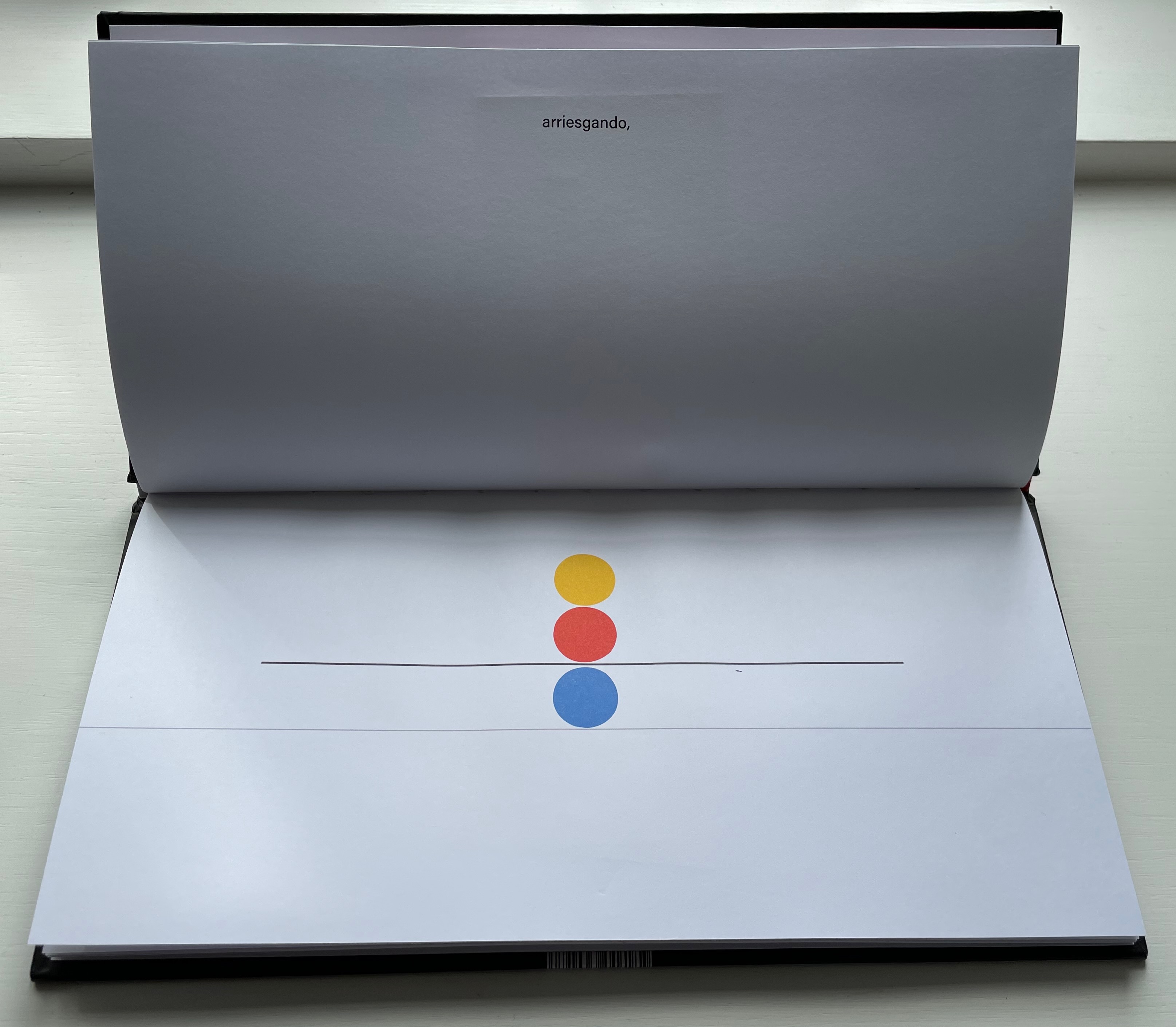
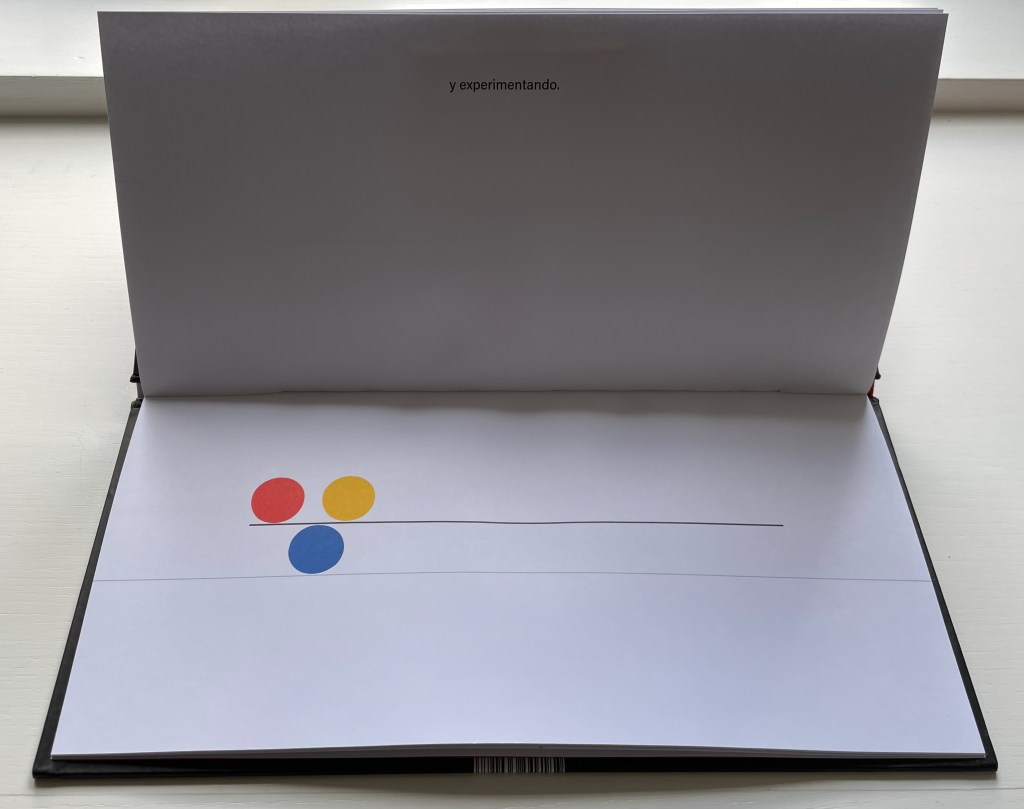
El equilibrio es cuestión de balance. De tomar siempre en cuenta el movimiento del otro y reaccionar para mantenerlo, calculando, arriesgando, y experimentado. Algunos se ponen a jugar sin pensar en las consecuencias entonces se rompe el equilibrio y cada quien hace lo que quiere … pero luego sienten deseos de regresar y cada quien busca su lugar.
“Equilbrium is a question of balance. Of always taking into account the movement of the other and reacting to maintain it, calculating, risking, and experimenting. Some people start to play without thinking about the consequences, then the balance is broken and everyone does what they want … but then they feel the desire to return and everyone looks for their place.”.
As in The Black Book of Colors, there is more than one concept at play, the lesson of equilibrium coming with lessons in community and relationships.
El Tiempo (2018)
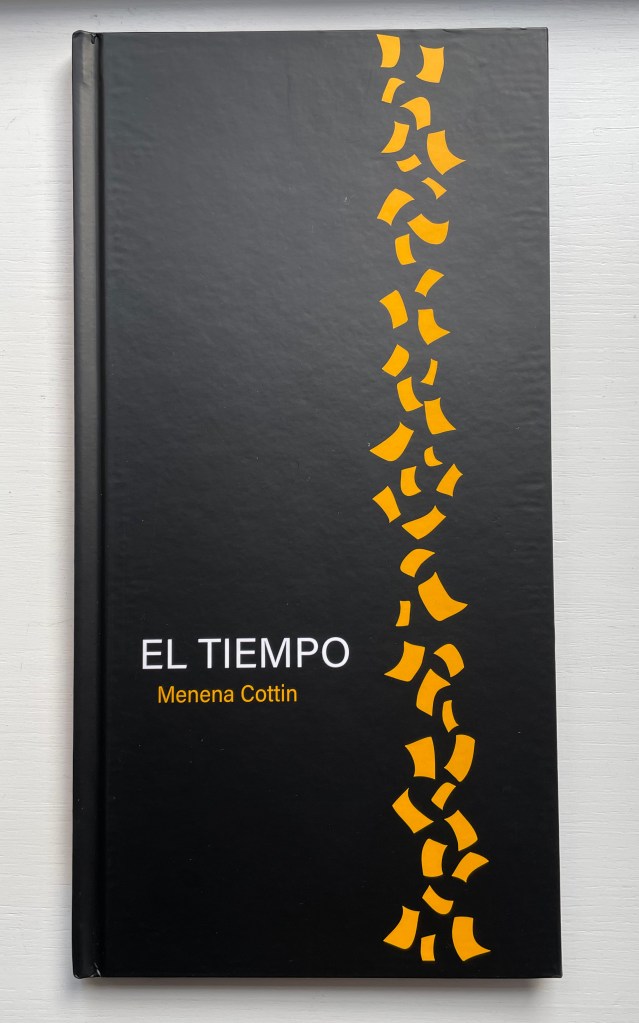
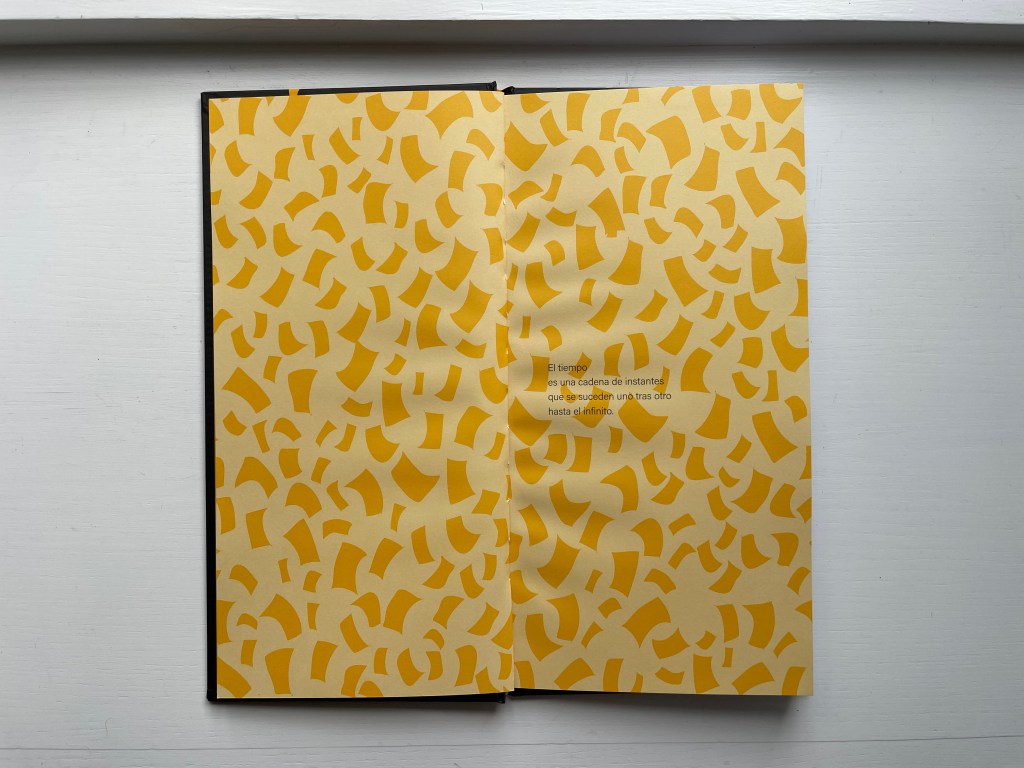
El Tiempo (2018) Menena Cottin Casebound portrait, paper over boards, with orange-yellow doublure at front, orange-yellow/black at back, sewn. H310 x W160 mm. 24 unnumbered pages. Acquired from the artist, 23 August 2022. Photos: Books On Books Collection. Displayed with author’s permission.
Cottin introduces the concept of Time with two metaphors — one verbal, one visual.
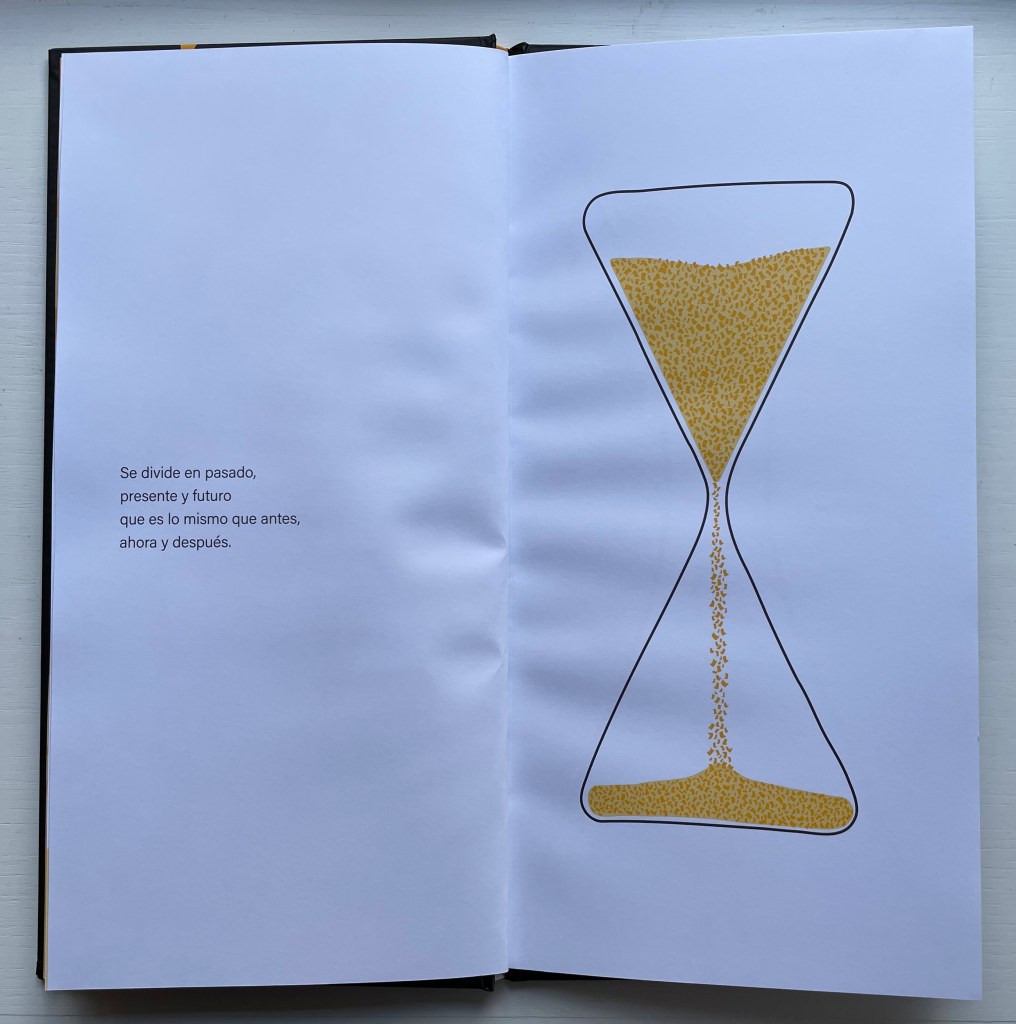
Verbally: El tiempo es una cadena de instantes que se suceden uno tras otro hasta el infinito. [Time is a chain of instants one following another until infinity.] Visually: Instants of time are like pages, pages from a diary.
Even in an hour glass, the instants of time are golden pages — Se divide en pasado, presente y futuro que es lo mismo que antes, ahora y después. — [dividing the past, present and future which is the same as before, now and after].
When the future runs out, that is of course when the pages run out, visually and tactilely.
Ana con A, Otto con O (2015)
Ana con A, Otto con O (2015) [Ana with an A, Otto with an O] Menena Cottin Bradel binding with cloth spine, paper over boards, yellow doublures, leaves in Chinese fold. H85 x W260 mm. 42 unnumbered pages. Acquired from the artist, 23 August 2022. Photos: Books On Books Collection. Displayed with author’s permission.
With this little book, Menena Cottin has secured a place among the Oulipians. Where Georges Perec wrote a novel without the letter E, Cottin has written and created an artist’s book in which the characters have a somewhat opposite challenge.
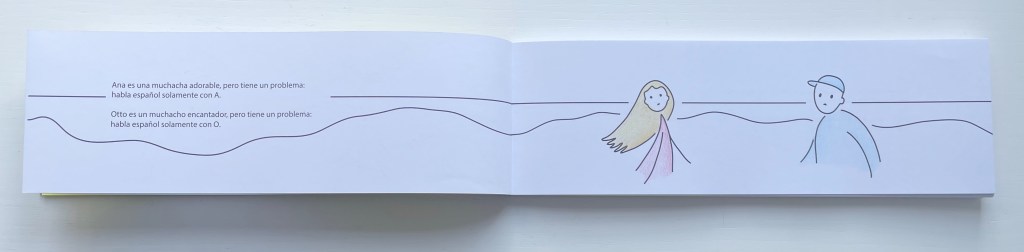
Ana es una muchacha adorable, pero tiene un problema: habla español solamente con A. Otto es un muchacho encantado, pero tiene un problema: habla español solamente con O. Un domingo por la mañana, en isla de Margarita, Ana sale a caminar por la playa. Otto sale a caminar por la playa. De repente, Ana se tropieza con alguien … –Aah! –Oh!
[Ana is a lovely girl, but she has a problem: she speaks Spanish only with words that have an A. Otto is a lovely boy, but he has a problem: he speaks Spanish only with words that have an O. One Sunday morning, on Margarita Island, Ana goes for a walk on the beach. Otto goes for a walk on the beach. Suddenly, Ana bumps into someone … –Aah! –Oh!]
When they make small talk about the weather, Ana says, Clara mañana [Clear tomorrow] with which Otto agrees, Con sol [With sun]. Ana tries again with a leading Gran playa, la mar calmada … agradar andar acá. [Great beach, calm sea… it’s nice to walk here.], but Otto can only come up with ¡Como, no! [Of course!].
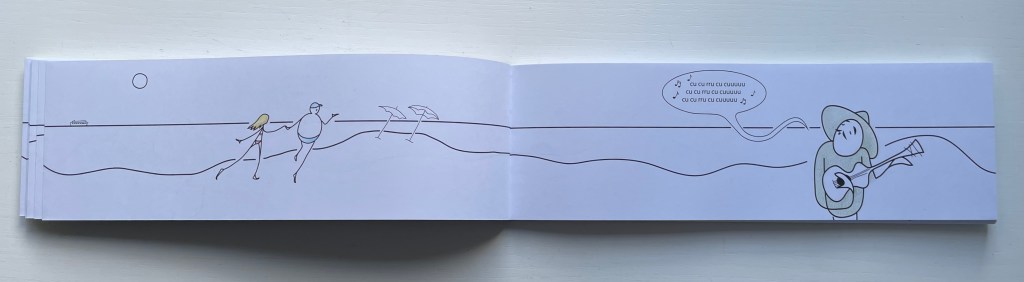
Eventually Otto catches on and proposes they go for a swim. After, as they walk along the beach being serenaded by a guitar-playing singer whose nonsense refrain is with syllables that have only U, Otto invites Ana to lunch at the beachside restaurant El Pez [The Fish]. There they meet the friendly waiter Pepe, who likewise has a problem: he speaks Spanish only with words that have an E. When their meal ends and Otto sees the bill, he grows pale, suspiciously throws himself to the ground, cries out he’s been poisoned, and then runs off with Pepe in pursuit of payment. Poor Ana wanders back down the beach, but bumps into another character, more handsomely drawn and simpatico: Allan with an A. Colorín colorado, as the Spanish say [And that’s the end of this story], but not until the last page where the character who has been lounging in a beach chair all along now stands, revealing her name on her chair — Iris — and holding a sign that reads Fin.
The rule-abiding dialogue strings the reader along as effectively as the horizon line that runs from page to page over the Chinese folded folios from the beginning to the end. It is a design feature that will be much easier to reproduce than will a translation into English or any other non-Romance language that is as delightful as — or as “consonant” with — Ana, Pepe, Iris, Otto and the singer singing
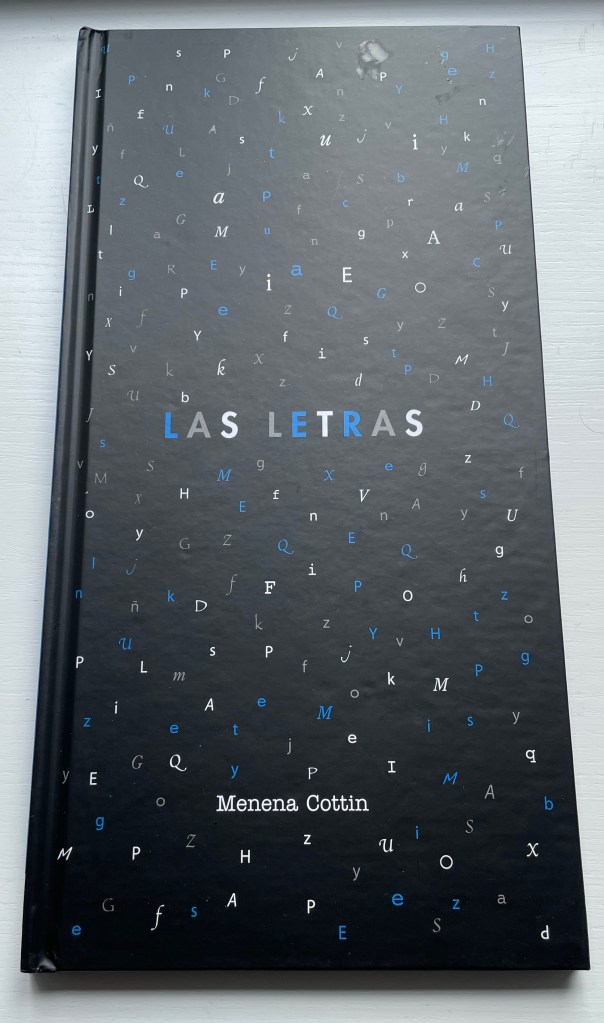
Las Letras (2008/2018)
Las Letras (2018) [Letters] Menena Cottin Casebound portrait, illustrated paper over boards, endpapers. H200 x W205 mm. 24 unnumbered. Acquired from the artist, 23 August 2022. Photos: Books On Books Collection. Displayed with author’s permission.
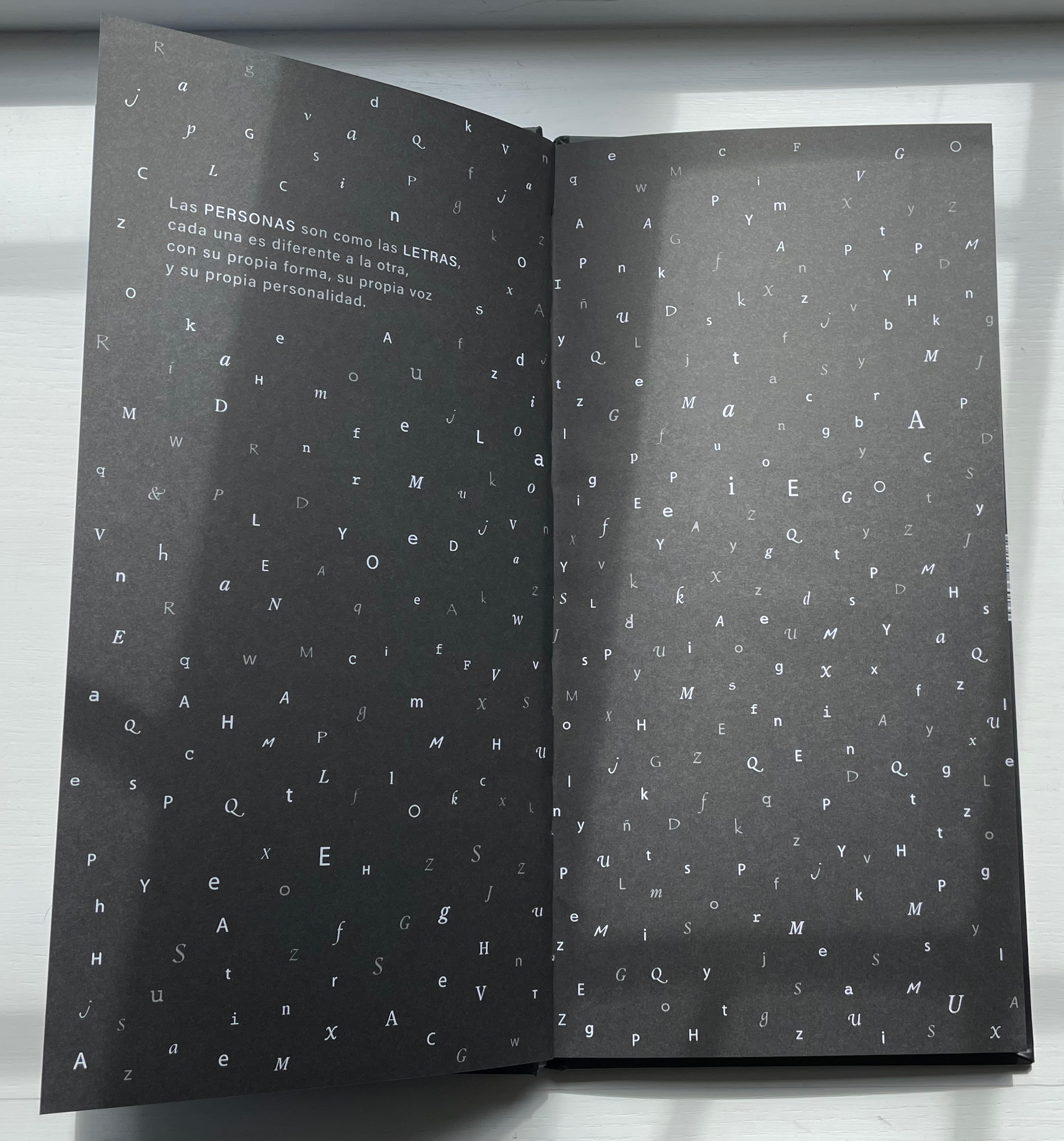
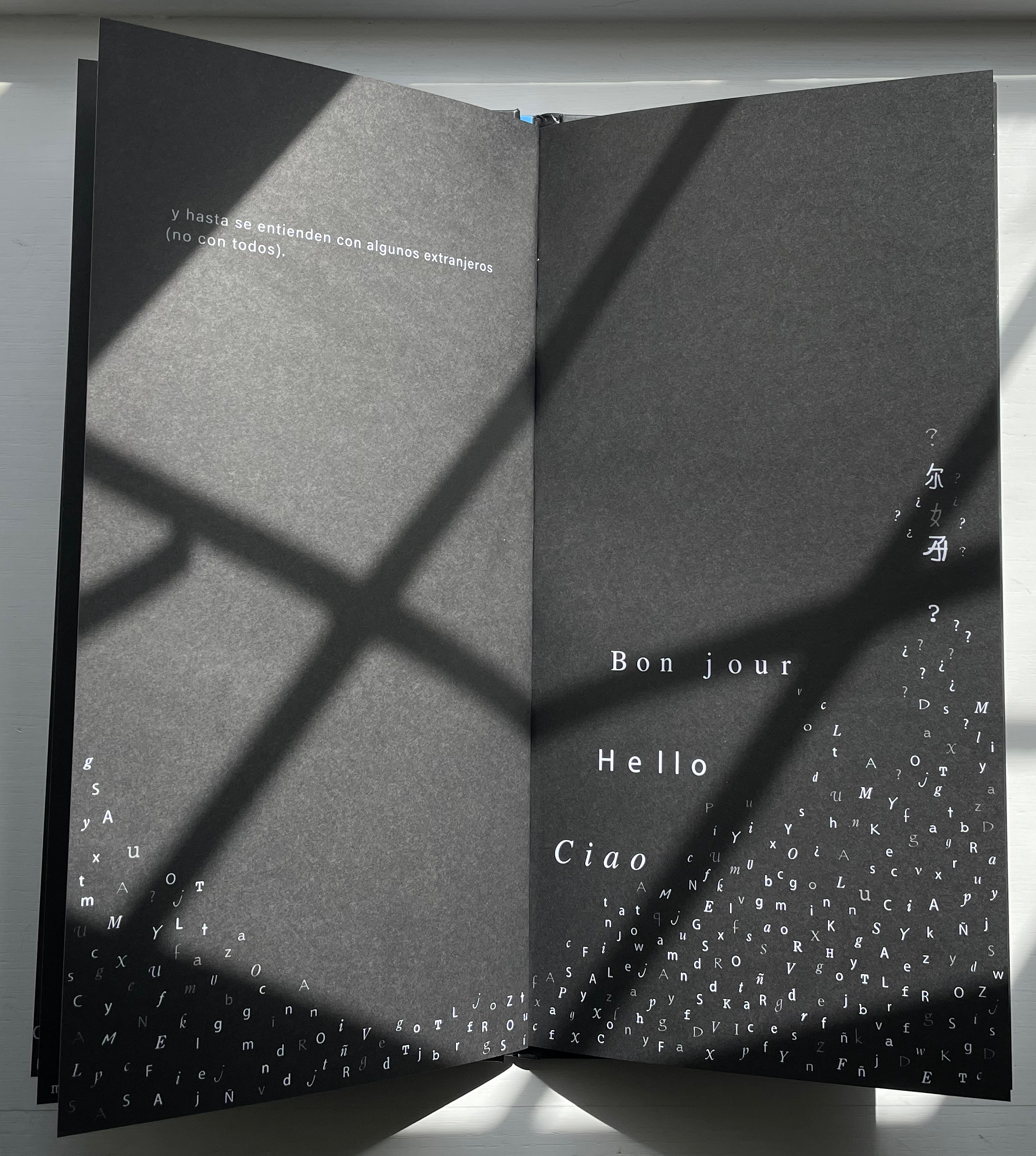
Las Letras has appeared in two editions (2008 and 2018). There are slight grammatical differences, but the meaning remains unchanged. As in Equilbrio, where Cottin finds in an abstract concept a metaphor for interdependence in human relationships, in Las Letras Cottin finds a metaphor for tolerance and communication in the alphabet. Even letters themselves celebrate our differences.
Las personas son como las letras, cada una es diferente a la otra, con su propia forma, su propia forma, su propia voz y su personalidad. Pueden ser gordas, flacas, sencillas o complicados. Algunas son muy populares y se les ve por todas partes, en cambio, a las más tímidas les gusta salir poco. …
[People are like letters, each one is different from the other, with its own form, its own shape, its own voice and its own personality. They can be fat, skinny, simple or complicated. Some are very popular and are seen everywhere, while the shyer ones don’t like to go out much. …]
Other children’s/artists’ books in the Books On Books Collection worth comparing with Las Letras are:
Nikolajeva, Maria, and Carole Scott. 2007. How picturebooks work. New York: Routledge Taylor & Francis Group.
Outlaw, Christopher. 17 April 2017. “FILBo 2017“. The Bogotá Post. Accessed 30 October 2011.
Scott, Carole. 2014. “Artists’ books, Altered books, and Picturebooks”. In: B. Kümmerling‐Meibauer, ed.,Picturebooks: Representation and Narration. London, New York: Routledge.
With 260 illustrated books to his name and 90 of them authored by him, Leonard Everett Fisher would have been remiss not to have contributed works to the category of alphabets and artists’ books.
Leonard Everett Fisher offers thirteen non-English languages — Arabic, Cherokee, Chinese, Cyrillic, Eskimo, Gaelic, German, Greek, Hebrew, Japanese, Sanskrit, Thai and Tibetan — each with an illustrative image alongside a page of background text followed by a double-page spread of hand-drawn characters of the writing system. Unlike Tommy Thompson’s The ABC of Our Alphabet (1952) and William Dugan’s How Our Alphabet Grew (1972), Fisher’s book does not focus on the development of the Latin alphabet, but unusually aims instead to interest the children’s market in the variety of non-Latin alphabets. In this, it is a precursor to Sam Winston’s One & Everything (2022).
The book has no bibliography or indication of sources, and the background text’s few slightly off-center assertions (e.g., that the Chinese writing system is a syllabary) create a slight unease about the accuracy of the character sets. Nevertheless, for calligraphic inspiration, the double-page presentation of consistent hand-drawn character sets delivers strong impressions of the differences in the look and feel among the languages’ writing systems.
The ABC Exhibit (1991)
The ABC Exhibit(1991) Leonard Everett Fisher Dustjacket. Casebound, one-eighth cloth and paper over board. Doublures. Sewn binding. H287 x W225 mm. 32 pages. Acquired from Books End, 28 August 2022. Photos: Books On Books Collection.
The ABC Exhibit emphasizes image more than letter or text. Forgoing other usual features of a children’s alphabet book (such as presenting upper and lowercase letters), the book steers more toward an artist’s book or catalogue of the artist’s style of illustration and art. The colophon even specifies that the original artwork was prepared as acrylics on board. While the image of the elephant and several others can be easily imagined in a children’s book, the rendering of the Brooklyn Bridge in fog stands out as do a sailboat in motion and a still life of oranges.
The book features around the 24′ mark in this interview with the Hennepin County Library in 1991.
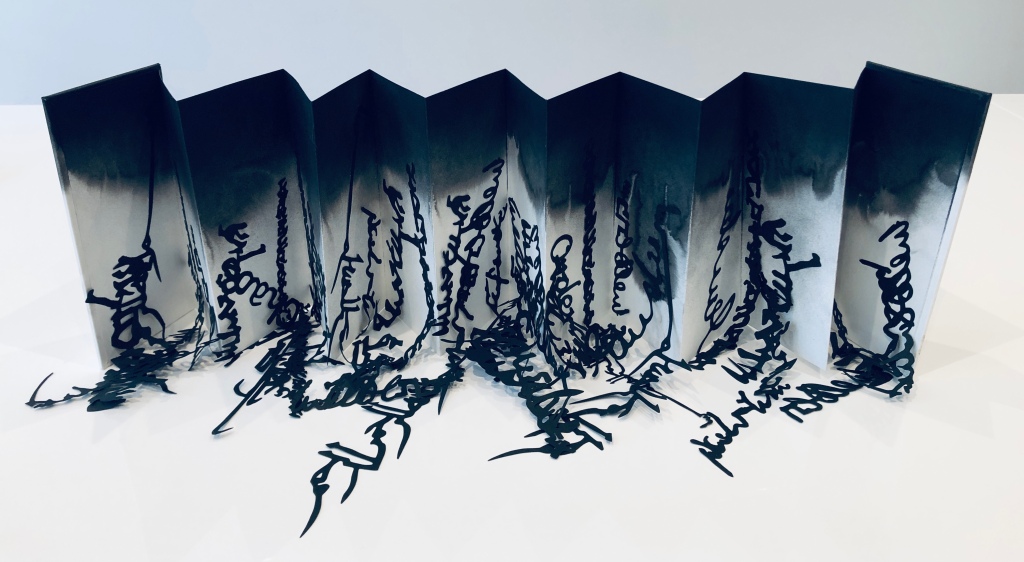
Babel(2019) Lizzie Brewer Box: H278 x W158 mm. Leporello: Closed H195 x W97 mm. Open 825 mm. 14 panels. Unique edition. Acquired from the artist, 14 February 2023. Photos: Books On Books Collection and courtesy of the artist.
Inspired by a 2019 exhibition at the Scuola Internazionale di Grafica in Venice, Lizzie Brewer created this work that sculpturally explores the border between image and letters. The laser-cut letters and words in black calligraphy from various languages (Farsi, Chinese, Kufic, Arabic, English, Greek, Japanese, etc.) seem to pour off the pages of a white leporello. Recalling the tower with which the Babylonians dared to reach heaven (Genesis 11:9), the multiple languages and randomness of the script accentuate the disorder visited on humankind when God decided they were being blasphemous.
Whatever Ur language preceded those languages is lost in the blackness of the cloud of ink from which the texts seem to rain. And perhaps the blackness also implies the punitive nature of the Old Testament deity. The leporello and calligraphy should certainly remind us of the pre-codex and pre-typesetting time of the story.
Some of the letters and words, all made from 150gms black Canford paper, are attached to the white 220gms cartridge panels, some are left free to be leaned against the panels or puddled in front, adding to the watery effect of the thinning black India ink in the background.
Library of Babel (2019)
Library of Babel (2019) Lizzie Brewer Leaflet. H210 x W105 mm. Acquired from the artist, 14 February 2023. Photos: Books On Books Collection. Displayed with artist’s permission.
With its hand-printed title, gold leaf mark and insert, this folded leaflet of hand-made paper made its appearance in an exhibition at the Westminster Reference Library in 2019. The quotation in the insert comes from the “The Library of Babel” by Jorge Luis Borges, and the phrase “[t]his set of works” refers to several of Brewer’s striking sculptures in homage to the story. These works are not in the Books On Books Collection (yet?), but these images (courtesy of the artist) are too complementary to the works above to be overlooked.
Hexagon (2019) “The Universe (which others call the library) is composed of an indefinite, perhaps infinite number of hexagonal galleries” — Borges “The Library of Babel”
410 pages (2019) and detail “Each book contains four hundred and ten pages.” — Borges, “The Library of Babel”
Lead Page (2019)
Untitled [Labyrinth] (2019)
Further Reading
“Sean Kernan“. 23 February 2013. Books On Books Collection. For another homage to Borges.
“Ines von Ketelhodt“. 1 February 2021. Books On Books Collection. For another homage to Borges.
“Peter Malutzki“. Books On Books Collection. For another homage to Borges.
“Aurélie Noury“. 9 November 2020. Books On Books Collection. For another homage to Borges.
“Hanna Piotrowska (Dyrcz)“. 13 December 2019. Books On Books Collection. For another homage to Borges.
“Benjamin Shaykin“. 3 December 2022. Books On Books Collection. For another homage to Borges.
“Rachel Smith“. In progress. Books On Books Collection. For another homage to Borges.
“Sam Winston“. 18 May 2023. Books On Books Collection. For another related alphabet work.
Frate, Kathryn Shank. 2019. “Tower of Babel Exhibit“. Scuola Internazionale di Grafica, Venice. Accessed 28 June 2023.
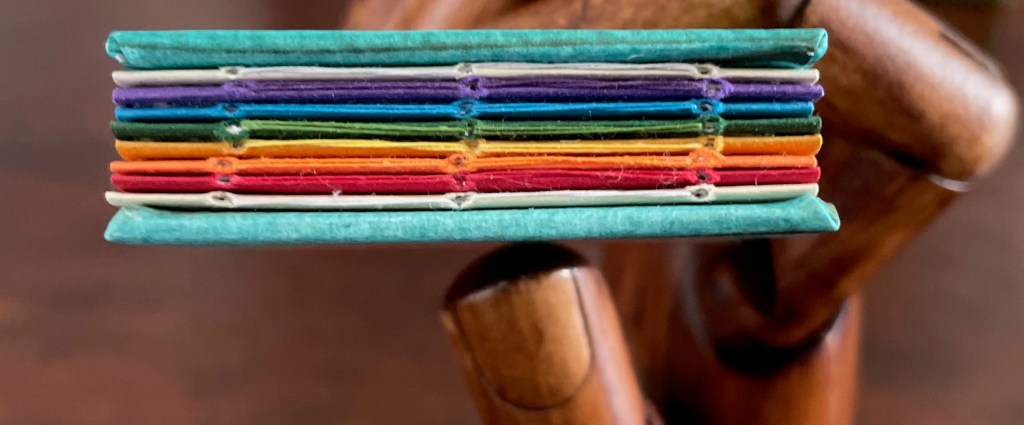
John Crombie formed Kickshaws in 1979 in Paris. Joined by Sheila Bourne, they published over 150 works. Apparent as the esoteric influence of visual poetry and the Oulipo movement may be, their works have the combined smell of the printer and typesetter’s workshop and artist’s studio that distinguish them from that crowd.
ABC in a maze (1987)
ABC in a maze (1987) John Crombie Spiral bound on four sides, double gate fold. H95 xW95 mm, 17 leaves. Edition of 300 (150 in English, 150 in French), of which this is Letter of 26 numbered A-Z. Acquired from Librairie Jean-Étienne Huret, 17 March 2022. Photos: Books On Books Collection.
The cover of this work hides its title, just as the proper order of the pages hides in the reiterations of the alphabet across 17 leaves of this double gatefold puzzle and book.
The French title ABC Dédale carries more freight than the English. Not only does it convey the idea of the maze by reference to its inventor Daedulus, it refers to Cadmus, the Phoenician prince who brought the alphabet to Greece while on his quest to find his sister Europa, mother by Zeus to the Minotaur — the “monster in the alphabet”. If that seems a far-fetched allusion, then consider the additional hint in the name of the chosen typeface: Hélios, the Greek god and personification of the sun, to which Daedulus’ son Icarus flew too close in their escape from Crete.
Portrait évolutif du typographe “Evolving portrait of the typographer” (1988)
If a selection of works from the Books On Books Collection were made based on the theme of “artists’ books and color”, this small work would have to make the cut. Moving from five small splashes of color in the first pass, subsequent passes build up a multi-colored cartoon image of the typographer in a head-on eyeless gaze. At the seventh pass, however, the colors begin to fade; in the ninth, the features of the portrait begin to erode, and by the twelfth, only streaks of gray and the faintest impression of the outline remain.
A close look at the title reveals that same faint impression of the portrait’s outline. Were it not for its reference to the three primary colors, the title would have to be amended to a baker’s dozen of passes in collaboration with the press.