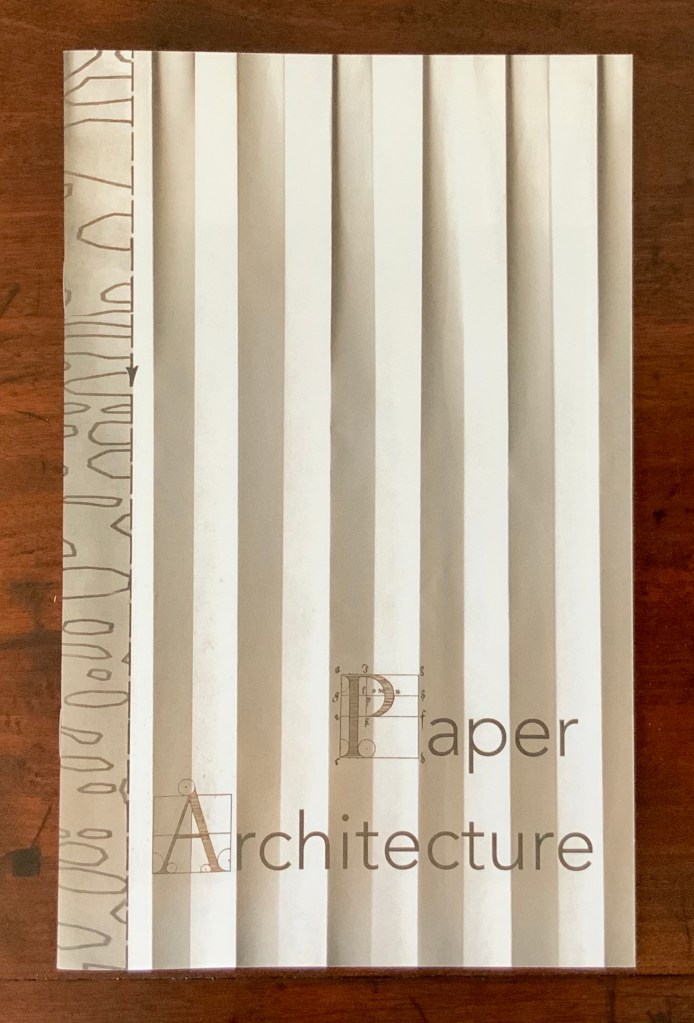
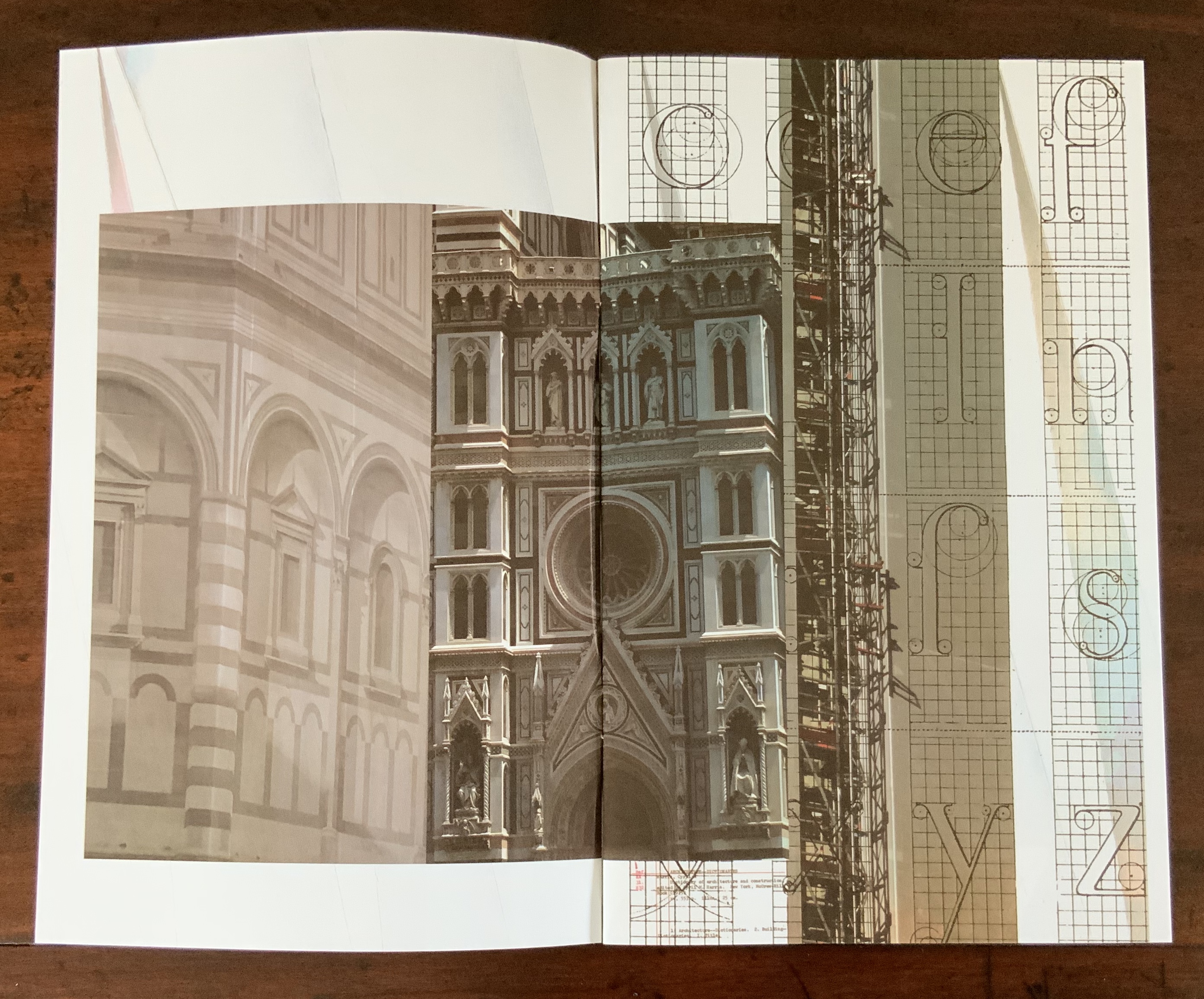
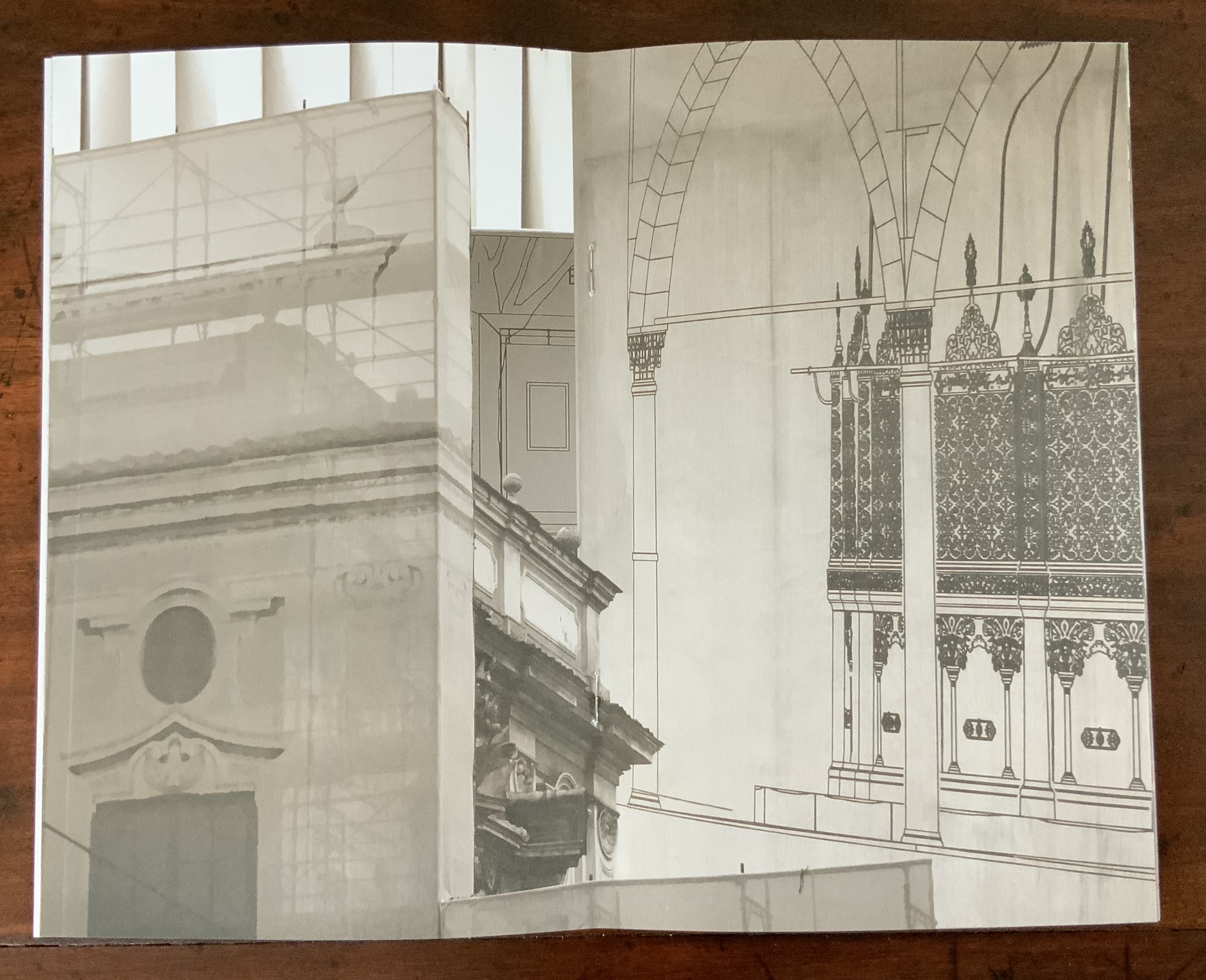
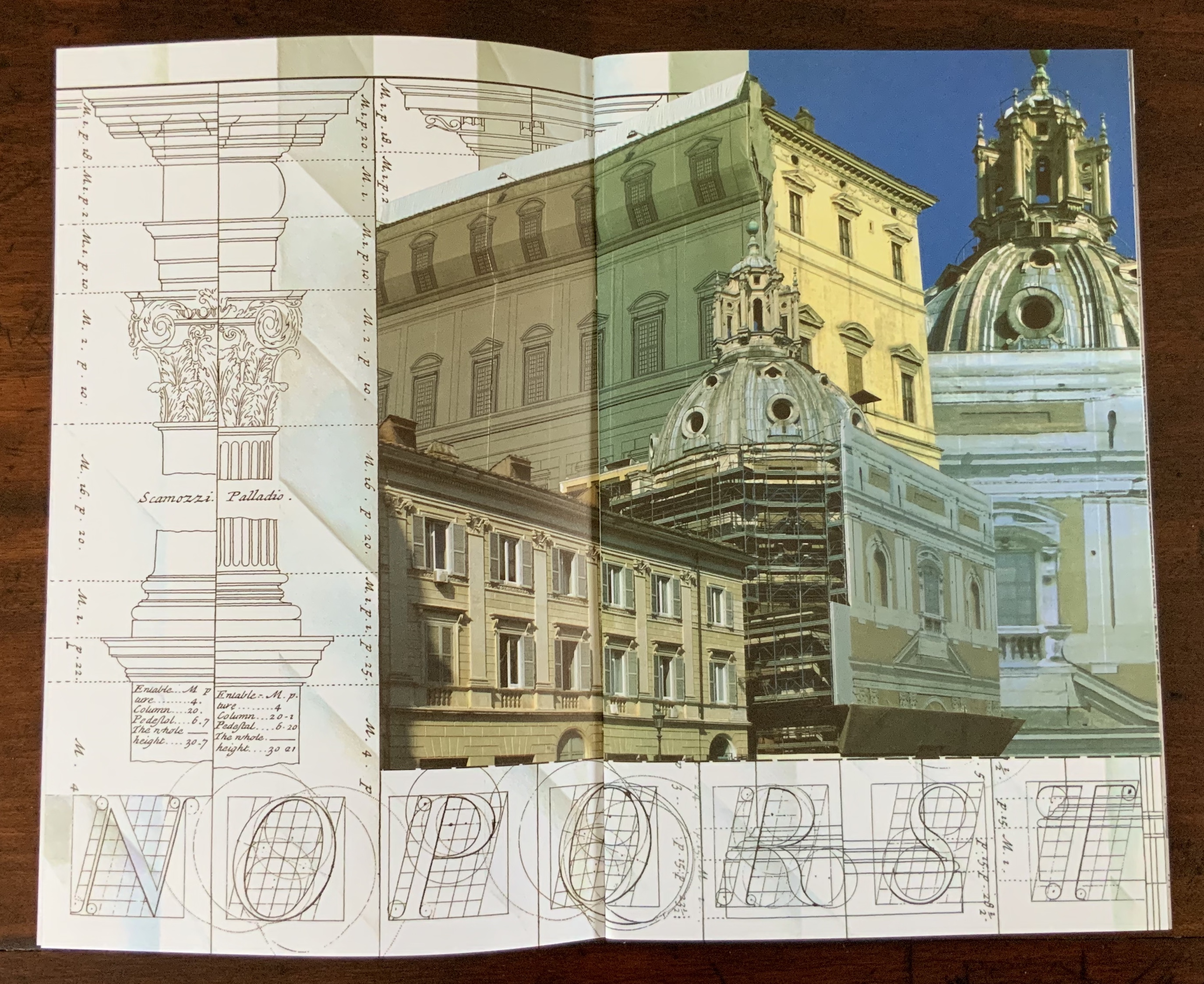
Photographic images by Karen Wirth from Ayvalik, Amsterdam, Florence, Istanbul, New York City, Rome, San Diego and Venice. The photos are collaged, and the work is based on an architectural installation at the Minnesota College for Art and Design that included a large-scale book. Photos of the book: Books On Books Collection.
Architecture has long played an inspirational role in Karen Wirth’s portfolio. In 2000, she designed the Open Book Gail See Staircase at the Minnesota Center for Book Arts and stations for the Hiawatha Light Rail, both in Minneapolis. In 2008, she produced Archidrawings, a series of collaged altered pages from the booklet, Architectural Drawings in the Bodleian Library.
More recent is Archabet: An Architectural Abecedarium (2025) on display in the Outlook Gallery, Minnesota Center for Book Arts, 12 April – 8 June 2025. A 6-foot high drum leaf bound book, its collage of digital photographs of building façades taken over 20 years of travel, showing details and structures that mimic letter forms, surrounds extracts from Johann David Steingruber’s Architectonisches Alphabet (1773). This alphabet book of cityscapes takes up the gallery’s street-level window inviting the viewer into the space of the book.
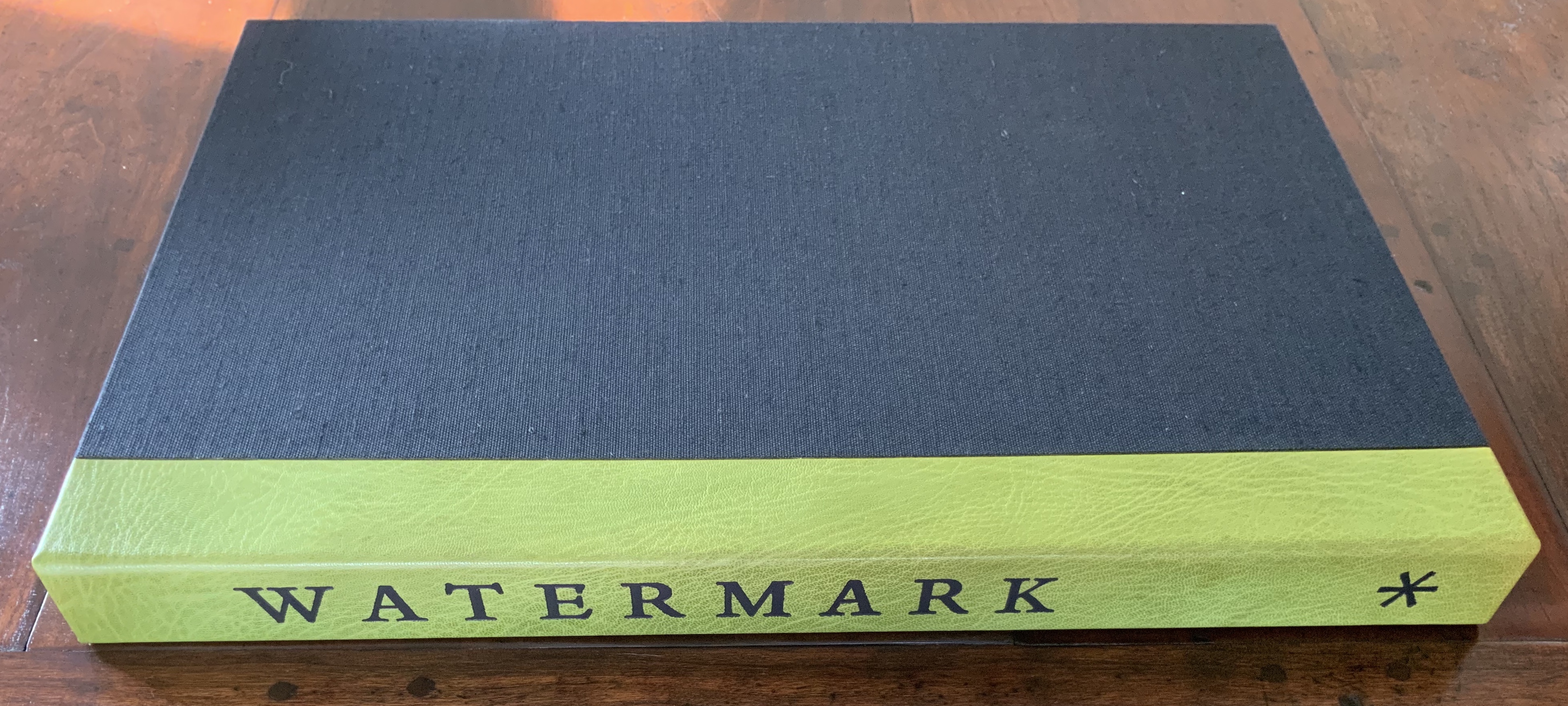
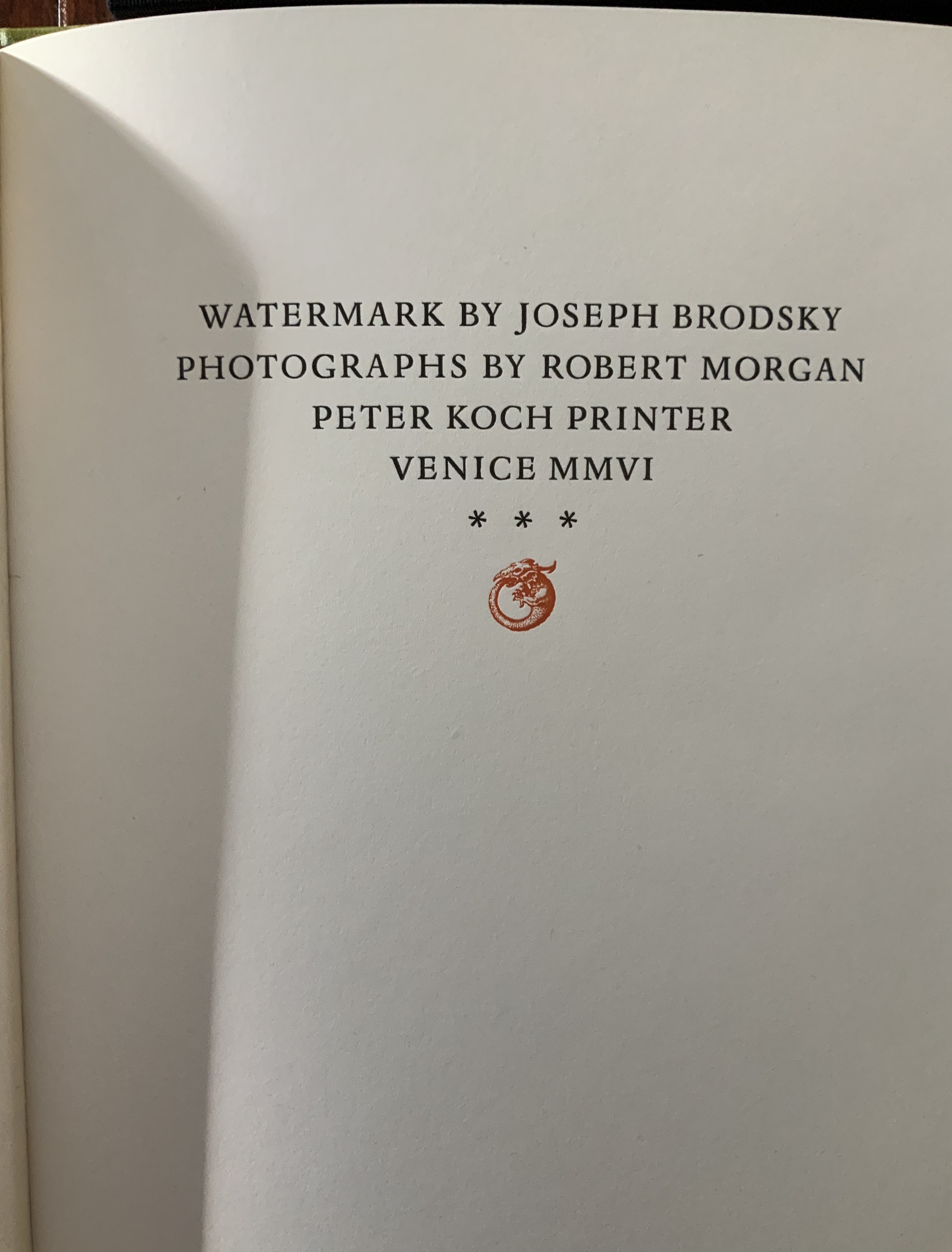
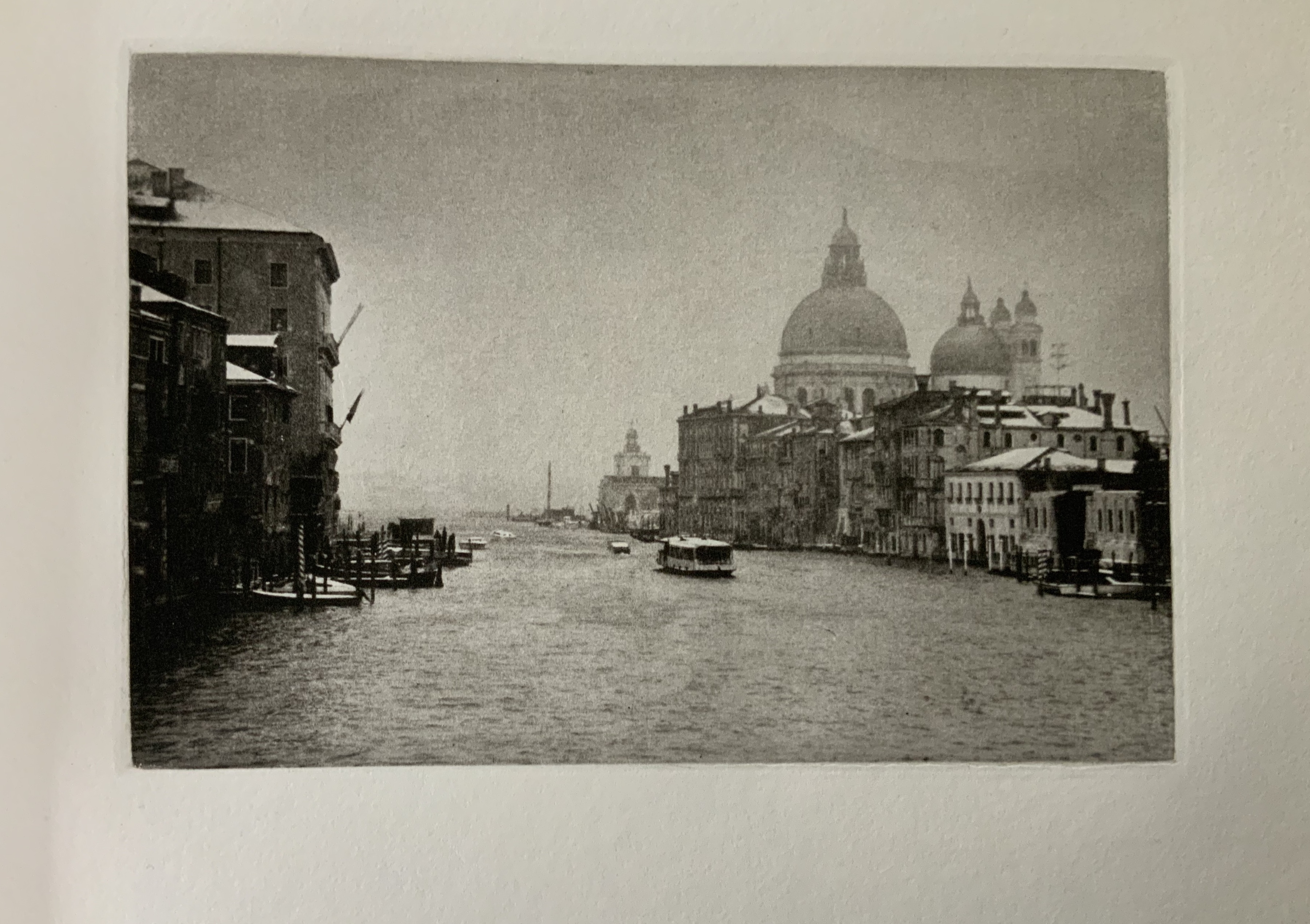
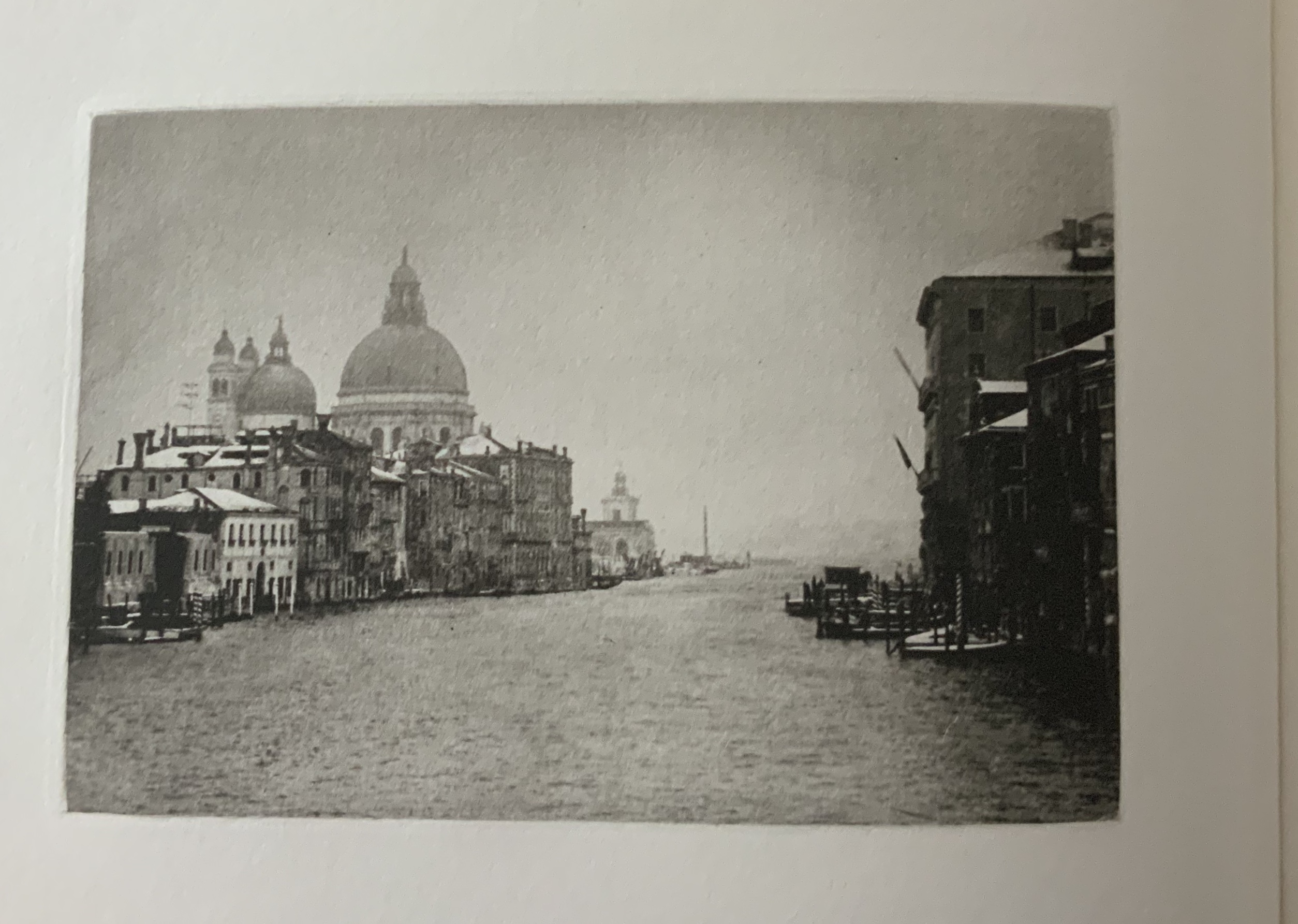
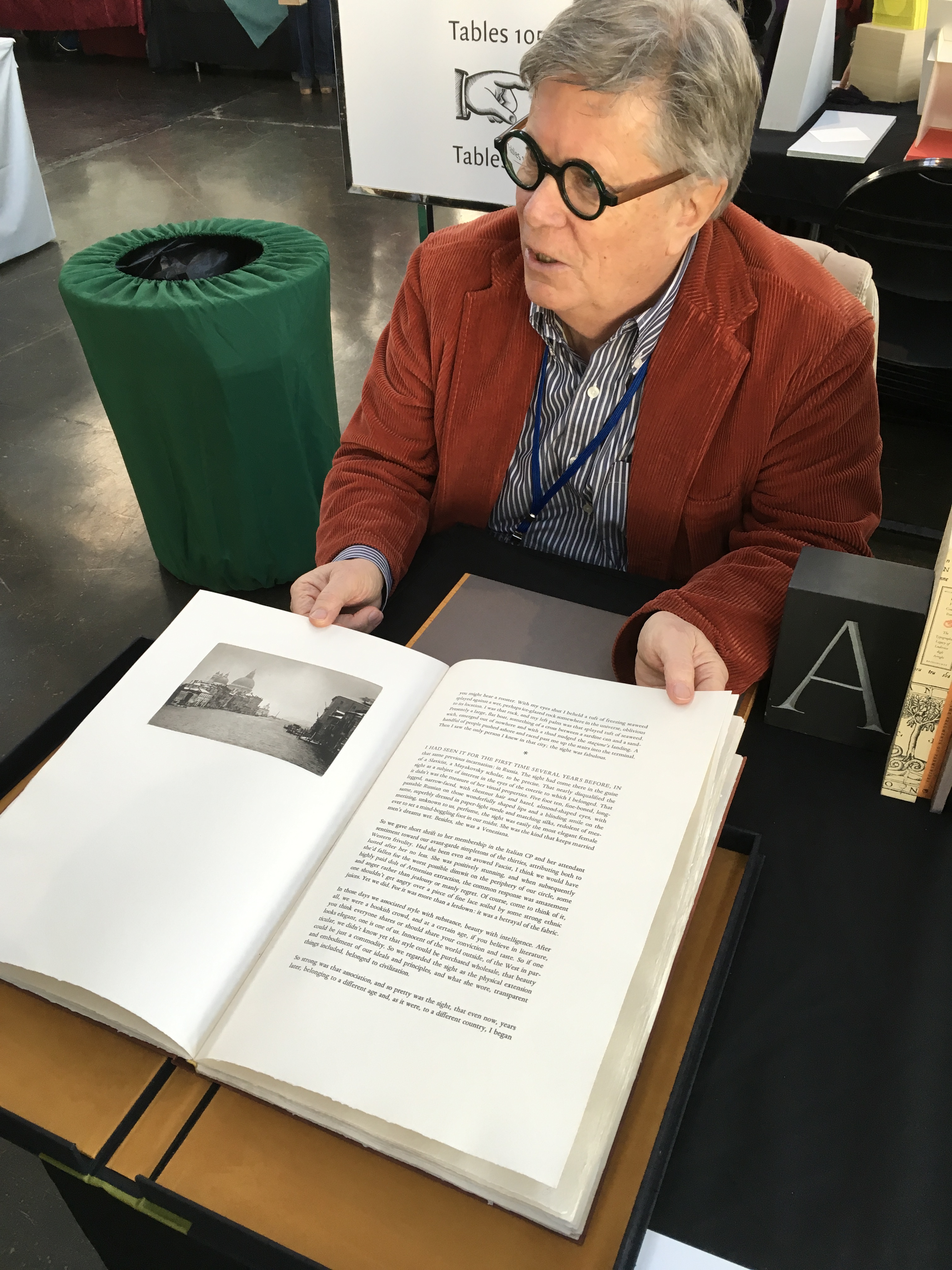
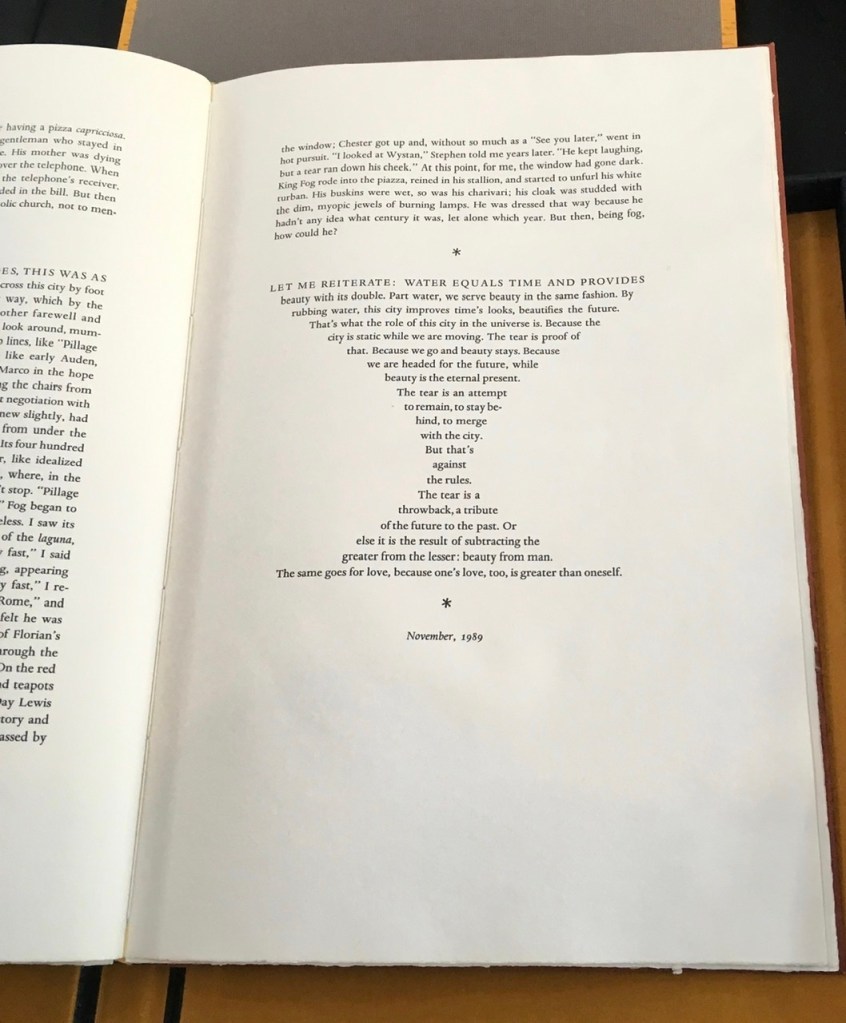
Joseph Brodsky dedicated Watermark to his friend the American painter, Robert Morgan who has lived in Venice for more than 30 years. Koch celebrates Brodsky’s evocative text with this artist’s book, illustrated with 14 photogravures made from Morgan’s original photographs.
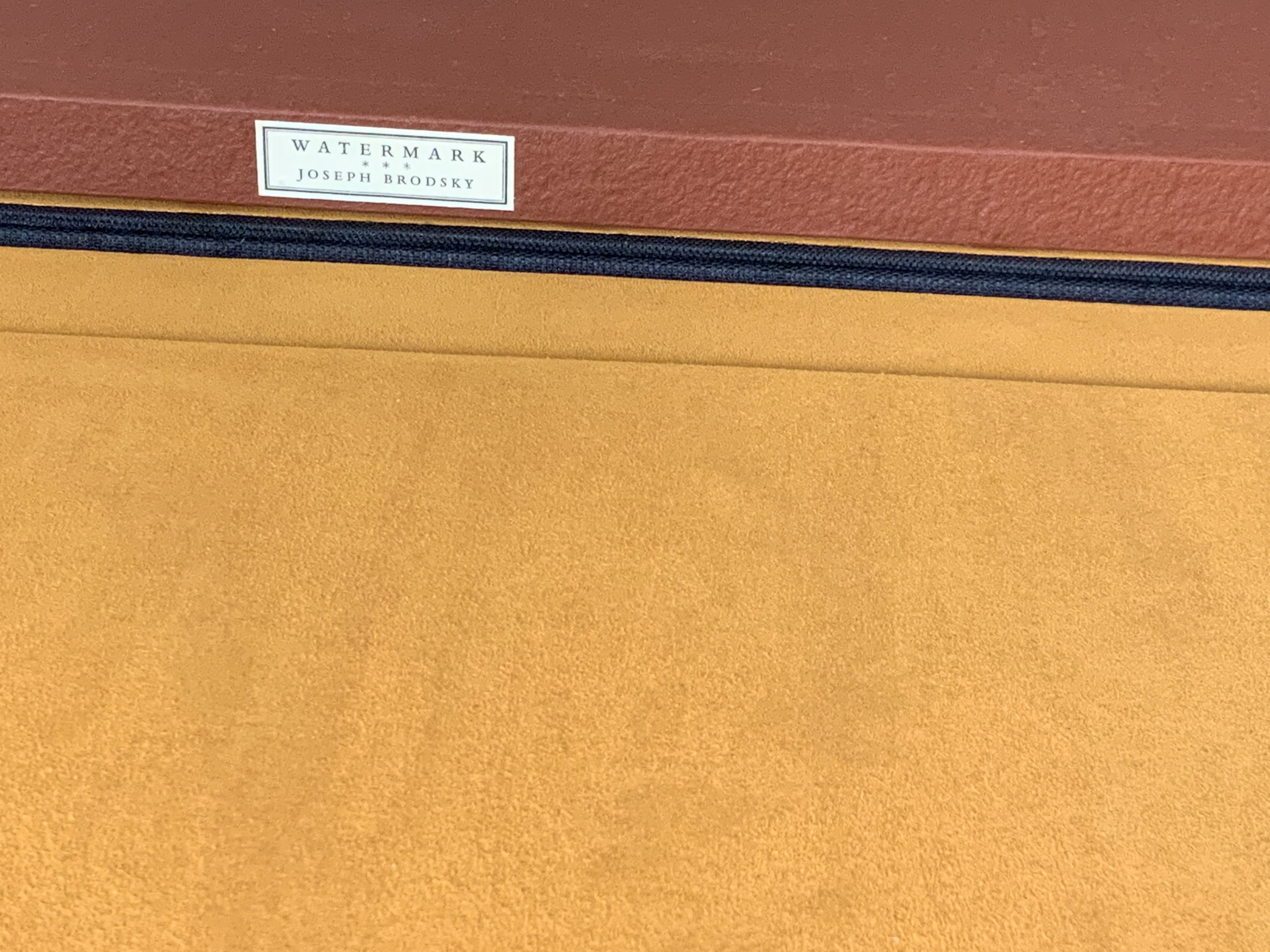
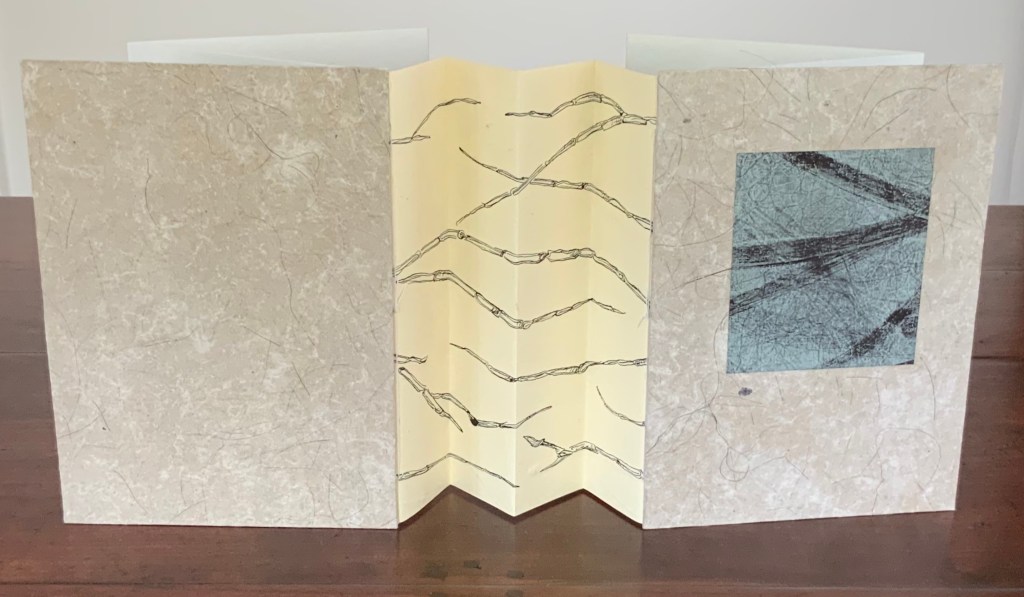
While Koch was artist-in-residence at the Scuola Internazionale di Grafica Venezia, a printing press was imported from the Tipoteca Italiana Fondazione printing museum to produce this work. The paper is Twinrocker “Da Vinci” handmade, with the Koch firm’s watermark designed by Christopher Stinehour and Susan Filter. The edition is limited to fifty copies. Copies numbered 1 to 30 are bound Venetian-red hand made papers and housed in a clamshell box. This copy was acquired 31 July 2019.
Donald Farnsworth digitally reconfigured Morgan’s photographs and printed them at his Magnolia Editions in Oakland, California from photogravure plates made by Unai San Martin. The printed sheets were then shipped to Venice.
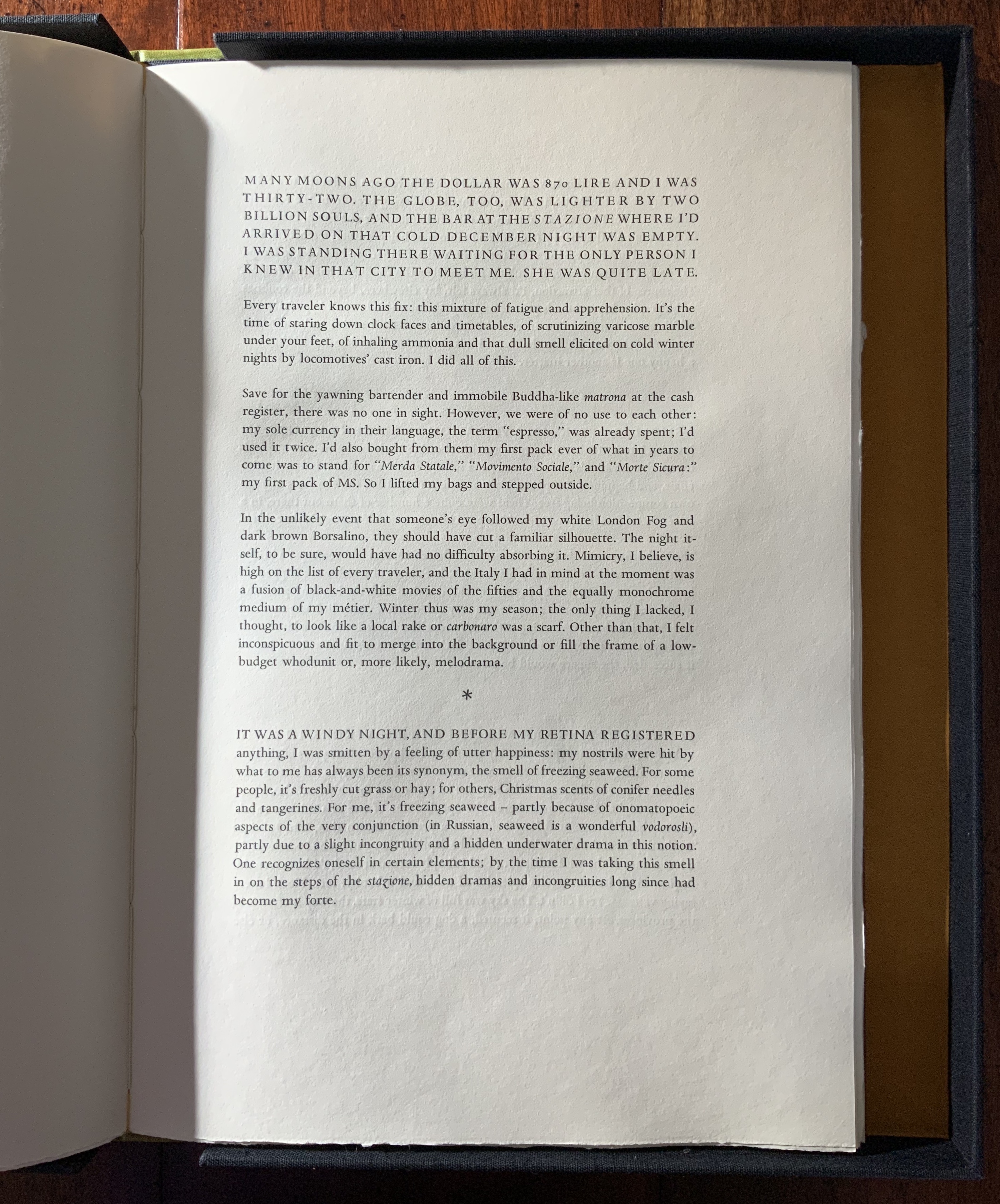
The text was set in Monotype Dante types cast in lead at the Olivieri Typefoundry in Milano. Once the printing at the Scuola Internazionale di Grafica Venezia was completed, the sheets were shipped to Koch’s studio in Berkeley where the book was bound in richly pigmented papers made by hand at Cave Papers in Minneapolis, MN.
Koch, Peter Rutledge, Michael A. Keller, Roberto G. Trujillo, Mark G. Dimunation, Timothy Murray, Nina M. Schneider, Rick Newby, et al. Peter Koch printer: embodied language and the form of the book (Stanford, CA: Stanford University Libraries, 2017).
Universal Sample Edition of 4, all copies signed by Diane Stemper. The book consists of etchings and letterpress on Rives BFK paper, and monotype print (accordion / concertina spine) on Arches Cover. Universal Sampleis part of a larger series of artist books and prints inspired by Charles Darwin, science and evolution, and specifically by historic specimens found in the Huntarian Museum at the Royal College of Surgeons in London. Universal Sample presents a progression from early life forms to a final molecular disintegration. The first image shows an undefined form, teeming with nascent life. The second image features a frog dispersing a multitude of eggs. The images then move to ‘chance order’ – a slight nod to religion and the Christian notion of the Trinity – and to ‘moment decay’ depicting asplayed life form, hinting at its inevitable death. The final images, ‘vestigial,’ depict decomposition and a return to a vague molecular presence. All of the forms are placed within a universal space that is beyond the earthly space that we inhabit. Universal Samplewas printed at the Dayton Printmakers Cooperative and bound at Plat 21 Studio.
Compendium of FactSeries
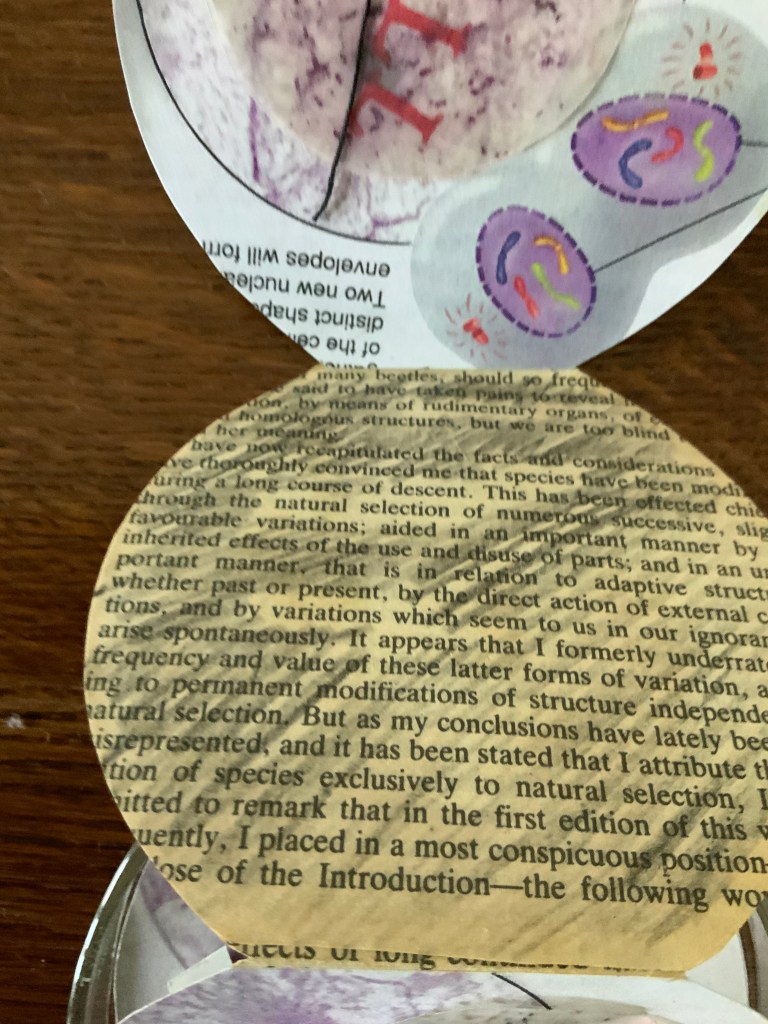
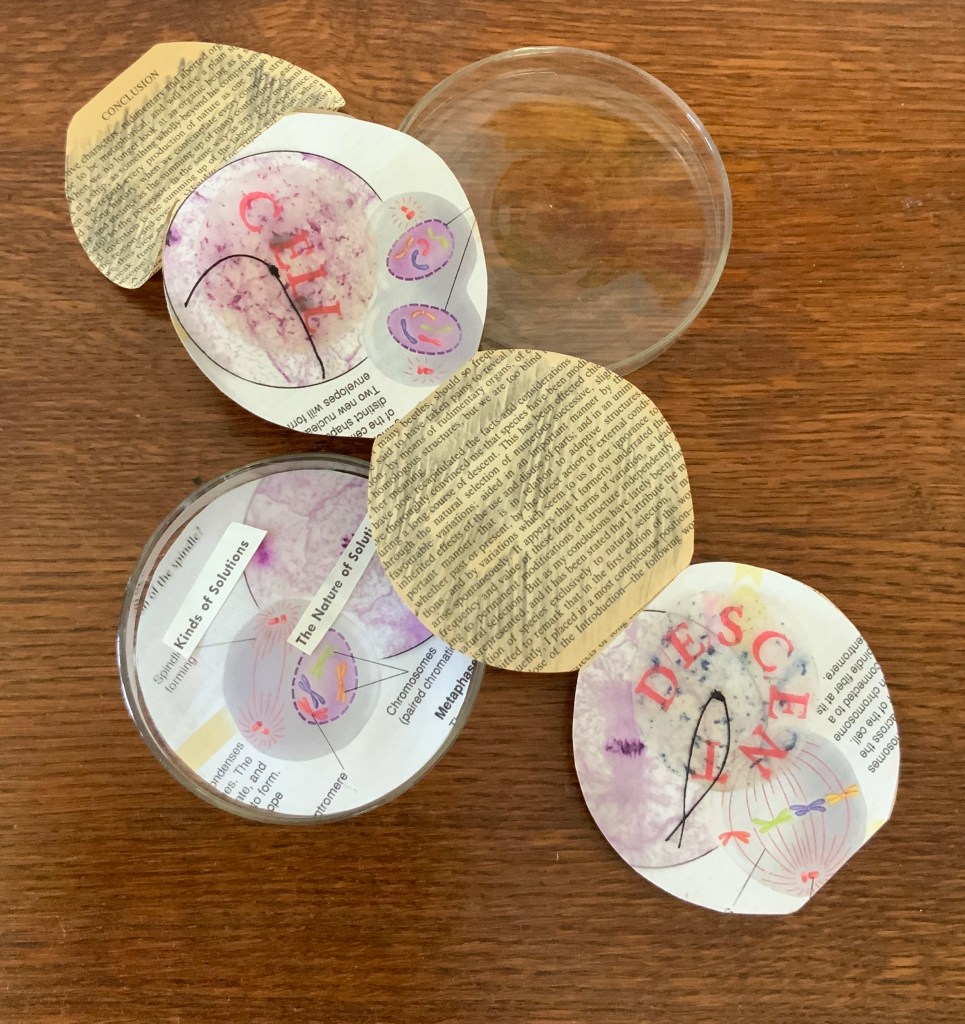
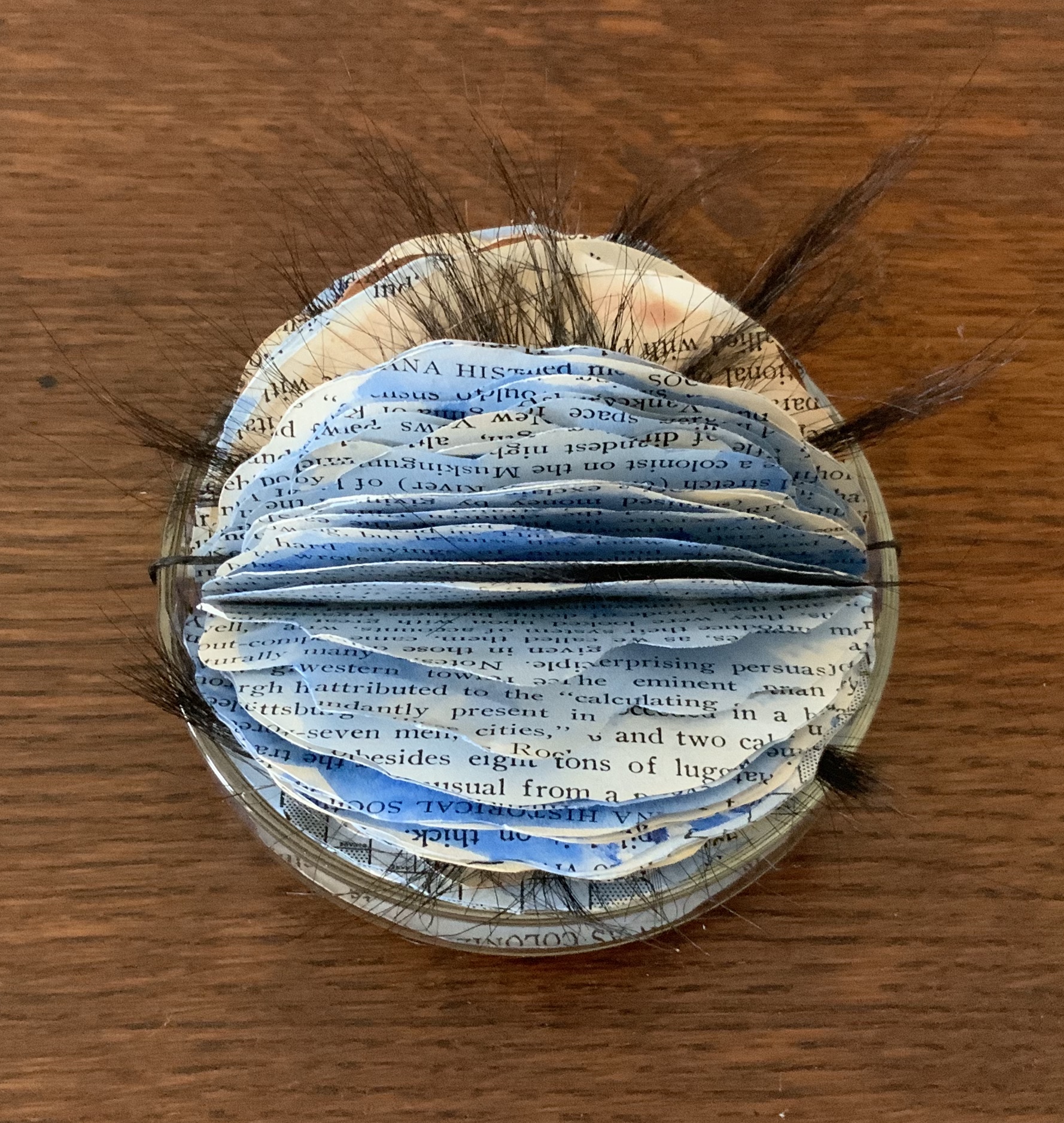
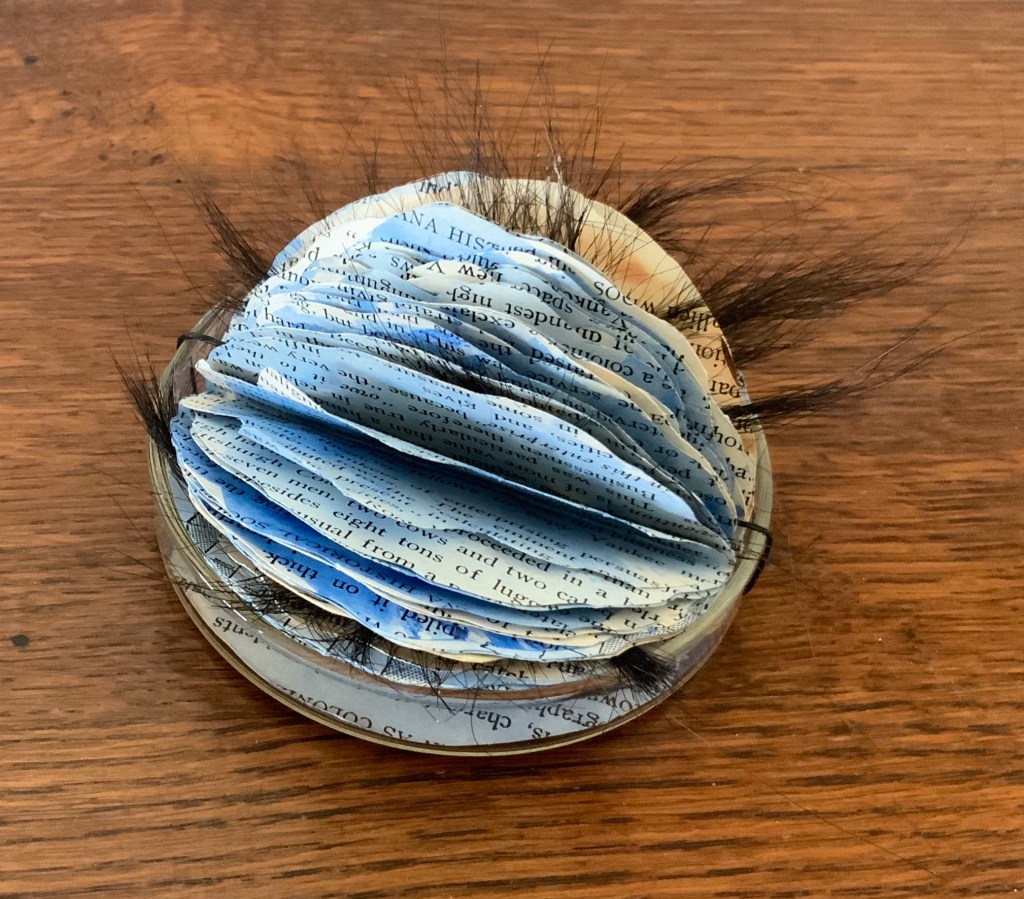
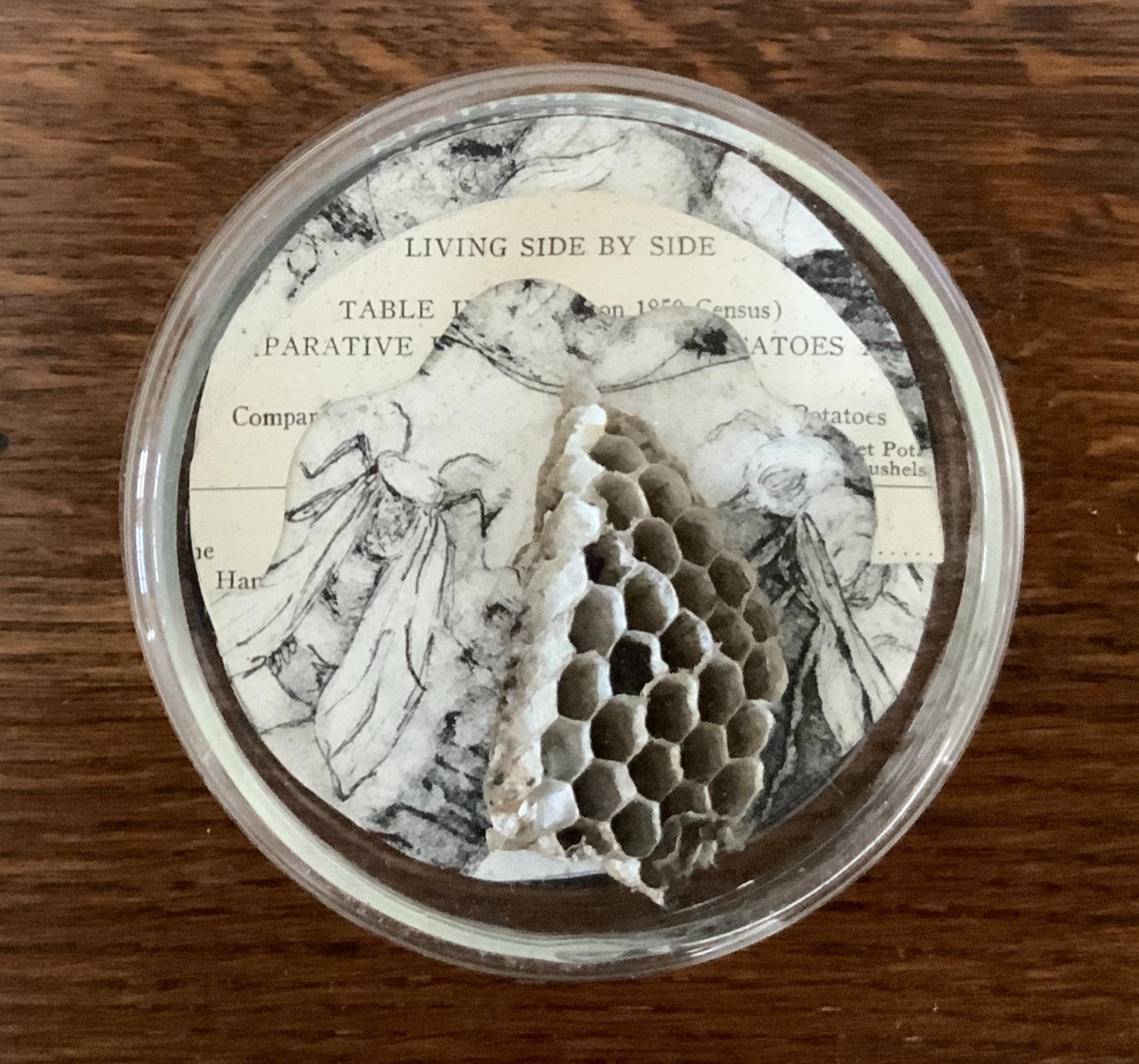
Cell, Original Cell One-of-a-kind signed by Diane Stemper. An accordion book made with found text from On the Origin of Species by Charles Darwin, and from discarded classroom science texts. Compendium of Fact: Cell, Original Cellis the first in a series of what is now (2019) approximately 100 Cell books created for Compendium of Fact. In 2009, it was part of an installation of 25 Cell books celebrating Charles Darwin’s two hundredth birthday. Cell, Original Cell comments on the notion of heredity, evolution and the structure of living things and how they came to be.Cell #40 One-of-a-kind signed by Diane Stemper. Repurposed text and pages from a paperback version of On the Origin of Species by Charles Darwin. Reshaped pages hand colored with watercolor, horse hair and housed in a petri dish. Perfect binding onto linen tapes. Signed and numbered on back. Cell #40 is part of larger series of artist books built into petri dishes entitled Compendium of Fact inspired by Charles Darwin’s 200th birthday and the cultural conversation surrounding evolution.Bee Ripe Collecting / Cell #7 One-of-a-kind signed by Diane Stemper. Discarded science text, intaglio print, portion of a dried natural wasp nest housed in a petri dish. Bee Ripe Collecting / Cell #7is part of a grouping of seven petri dish books and is part of the larger series Compendium of Fact. Bee Ripe Collecting was inspired by an old, large Linden tree located on Stemper’s property. Each June hundreds of bees visit the tree as it flowers. Stemper made Bee Ripe Collecting to honor the hard-working bee and the tree that brings bees together each summer. The wasp nest alludes to a bee’s hive and was used in the work for its hexagonal form.
The 20th century poet Ezra Pound espoused the view that the best way to understand and critique literature was by juxtaposition of works from different periods. Here is an attempt at that approach applied to the art of Jukhee Kwon and John Latham, but the critic might have better selected Kwon’s Libro Libero (2013) to make the point about “releasing … energy and celebrating freedom”. Kwon’s own thoughts about Libro Libero lead in a different direction though.
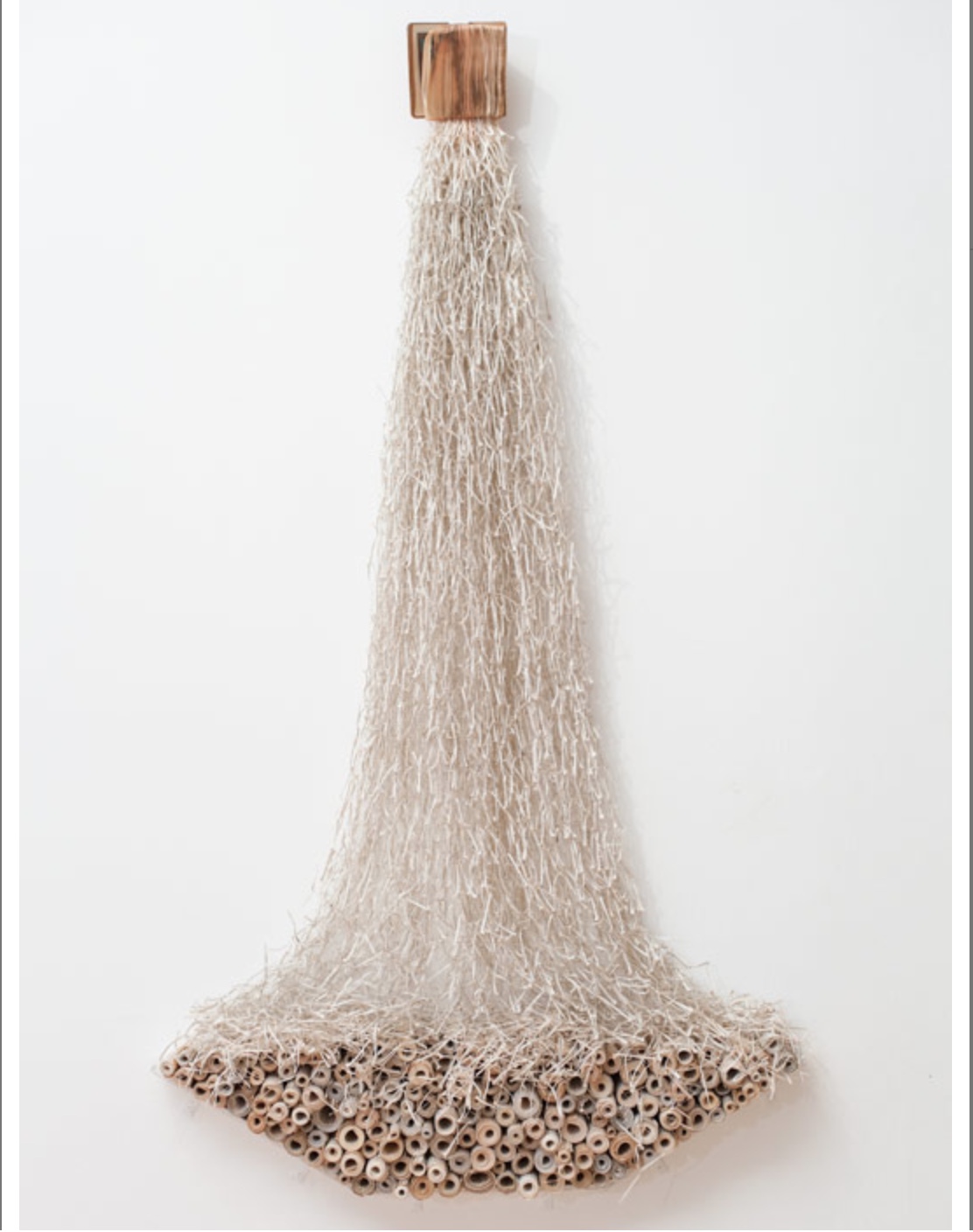
Libro Libero (2013) Jukhee Kwon Photo: Jonathan Greet
The work of Libro Libero was done with a Christian nun’s book. I am not so religious a person, but I understand that religion is about life. How we come and how we live and how we die. And every belief has a strong link with something invisible and oneself visible … (we live in the body) … you can say the connection between the soul and body.
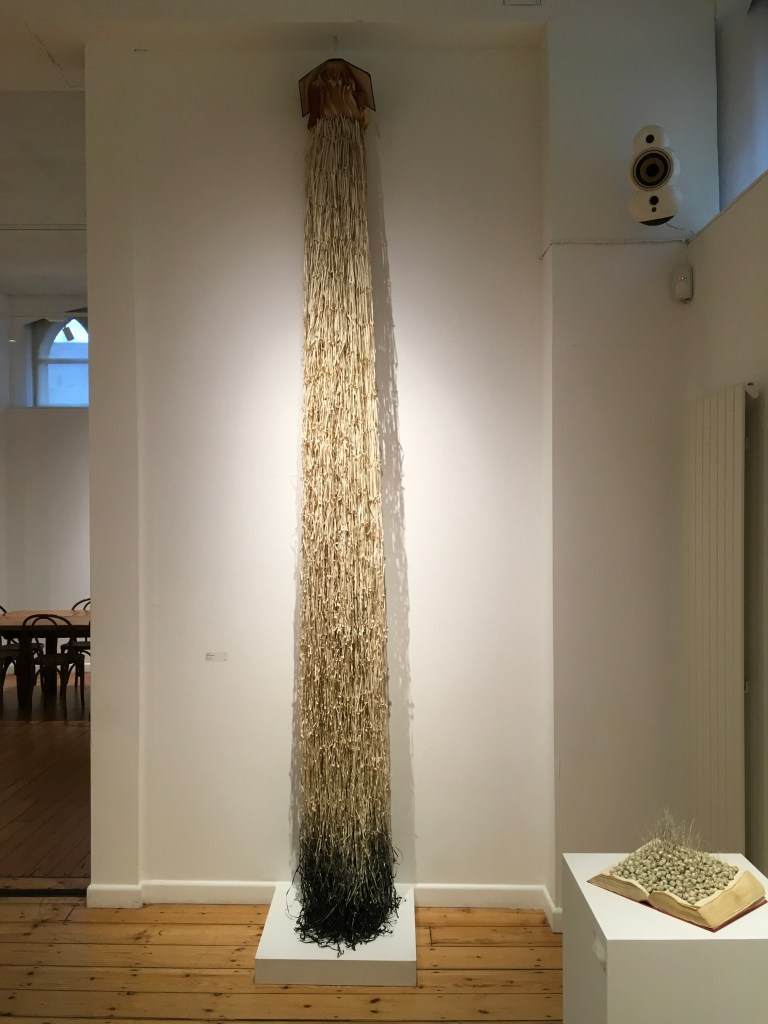
So I made the bookwork to be producer and receiver. Pages are coming out (producer) and the scrolled papers are below them (receiver). The shredded paper is falling and settling on the scrolled paper boat (it looks like a boat or if you will a bowl). The falling paper is fragile but in the boat or bowl it becomes solid and safe.
Email to author, 26 September 2018, edited for brevity.
At the October Gallery in London in January 2019, I had the chance to see a similar bookwork. The difference drives home the use of the book as material — like clay or stone for sculpture, oils or watercolour for painting. But it is freighted, manifold material.
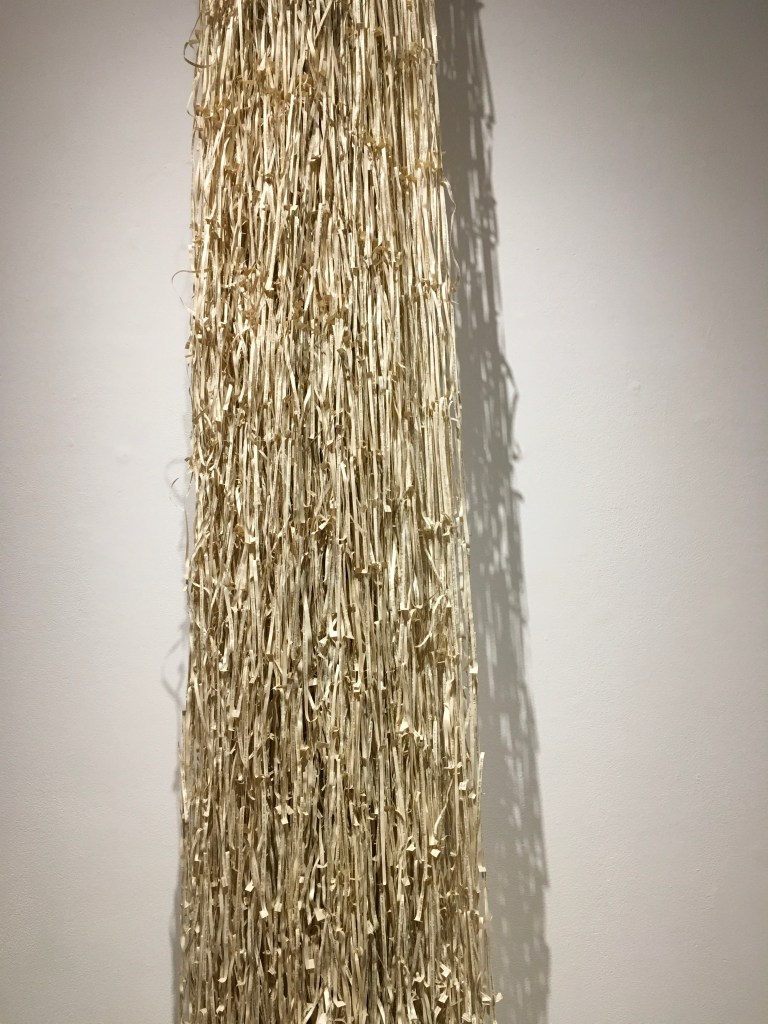
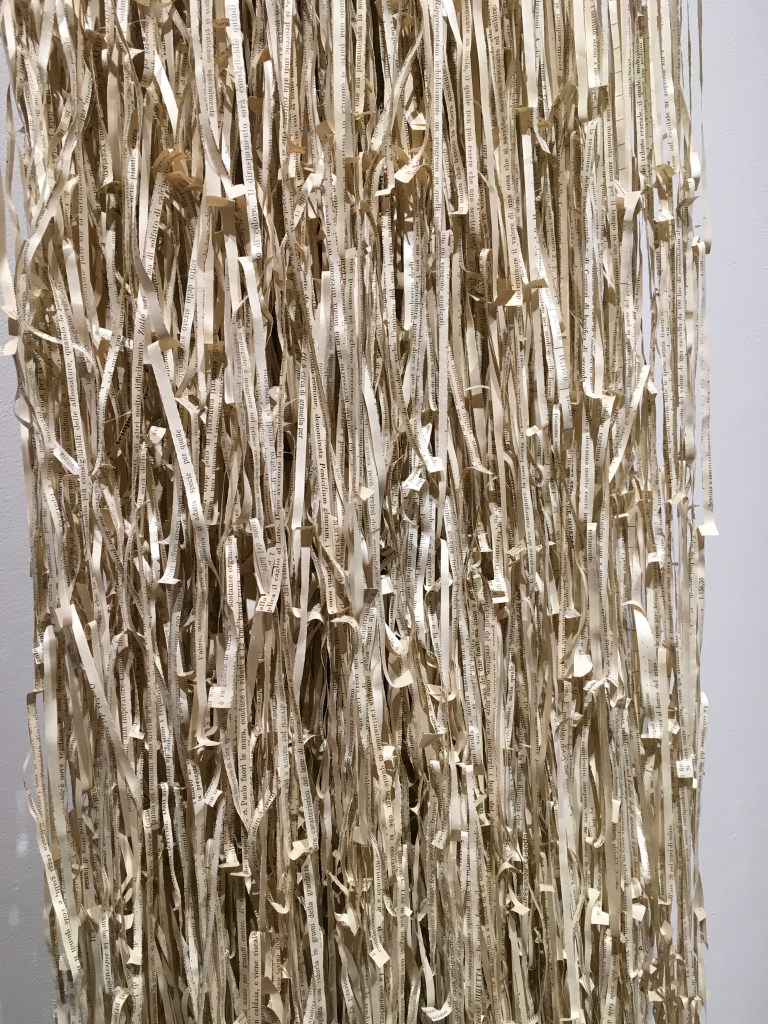
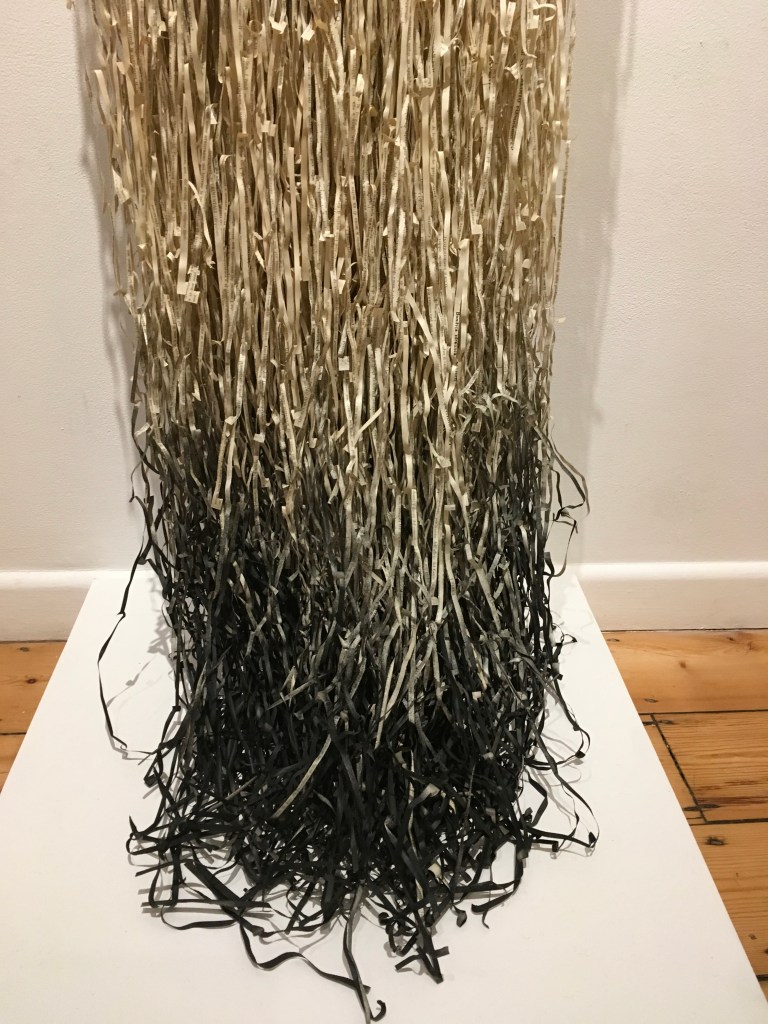
Dipping into Darkness (2013) Jukhee Kwon Photos: Books On Books
It brings paper, cloth or leather, and ink; it brings content. As in Libro Libero, Kwon turns another book into an active composite — the covers opened to spill out pages, cut and braided into ribbons, the last of which have been dipped into ink. Or, per the title, is it the covers opening, the pages unravelling and braiding, the ink of the words draining into a pool of darkness into which the ribbons are dipping? Rather than the lighter spiritual association suggested by the former’s title, shape and action, Dipping into Darkness implies a blacker interpretation. Or perhaps that is too Western a perspective. Is the breviary at the pinnacle of the work the result of the brush-like shape’s dipping into the ink of contemplation?
If the chance to view and contemplate Kwon’s art arises, take it.
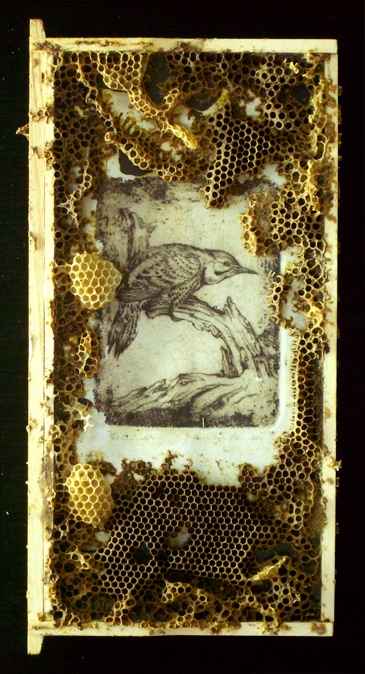
Chance and necessity are the twin foundations of Darwinian evolution – the ultimate creativity. What artist doesn’t aspire to working with divine and cosmic forces – with the bedrock of evolution or creation? Things happen as they must – as the dance of the DNA dictates and as pure raw survival cements into place. You set up your experiment and the immutable laws of causality are set into motion.
You see before you my two interests combined: The etchings are made in the usual way, but then I insert them into the hive for bees to add the next layer. Sometimes they chew up my artwork and pitch it out of the hive alongside their excrement and dead. At other times they join forces with me to co-create. If I cover my work with a thin translucent layer of melted bee’s wax, it smells familiar and they tend to accept it. If I attach some burr comb, they seem to like that even better and often initiate work right there – adding to it or recycling it and moving it around. Let them go long enough and they’ll cover it all with capped honeycomb or perhaps they’ll chew it all up. Take it out at just the right moment and the results can be an unpredictable collaboration of sublime beauty.
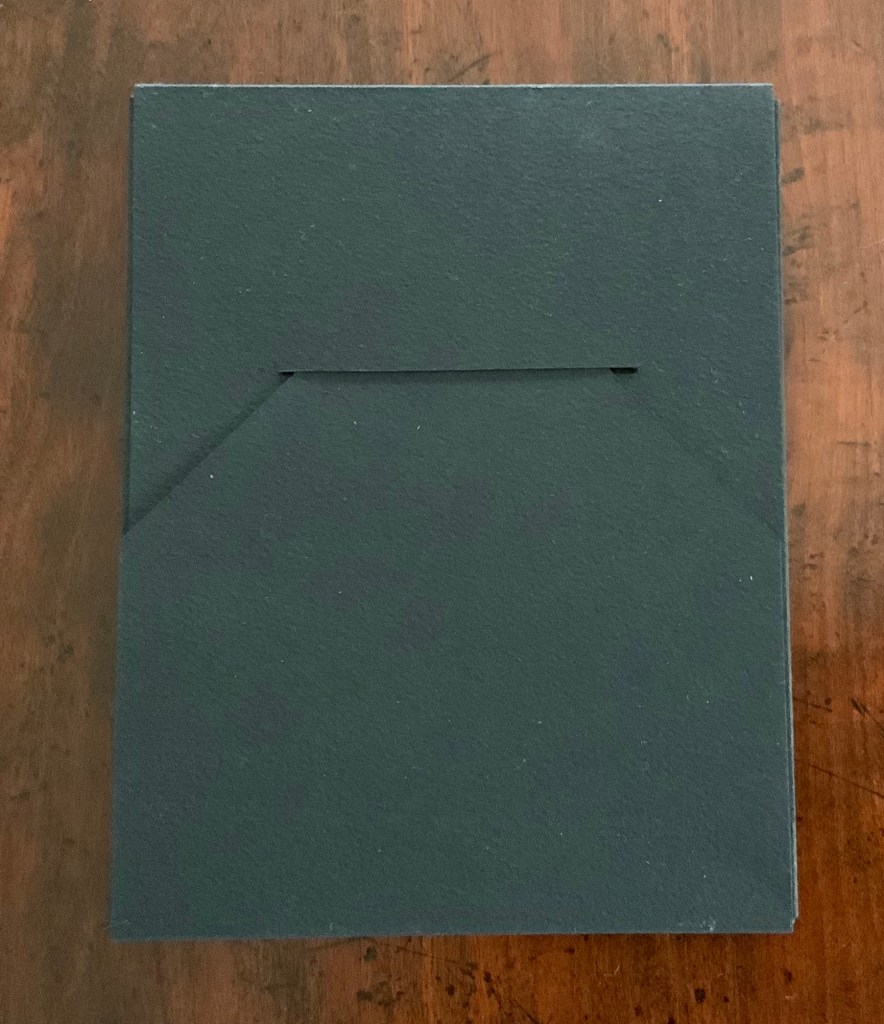
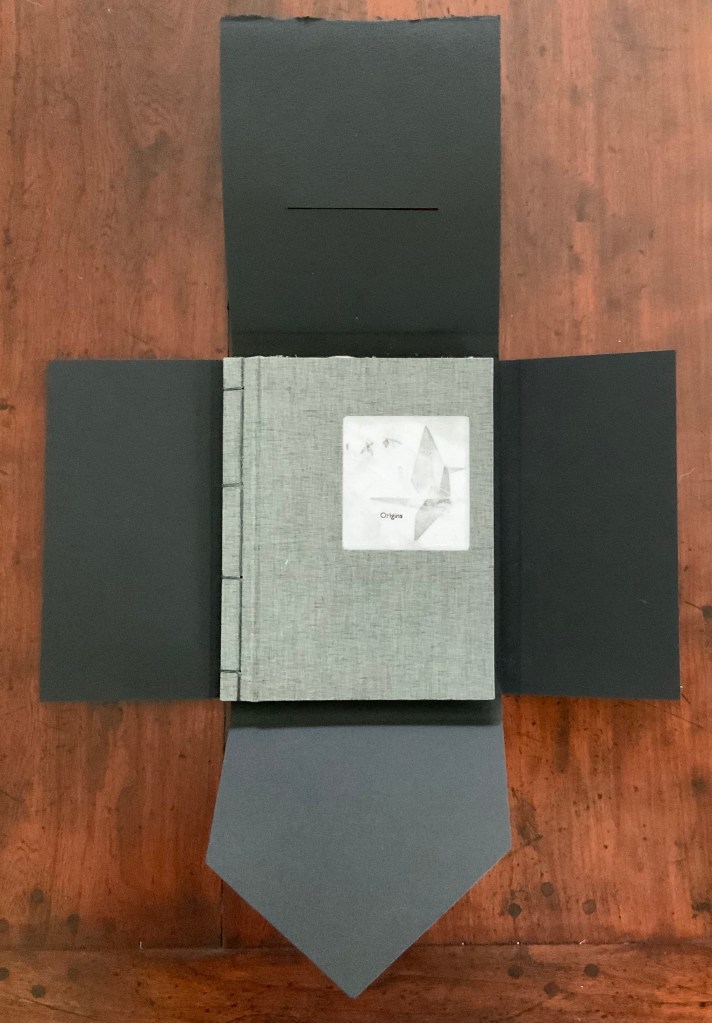
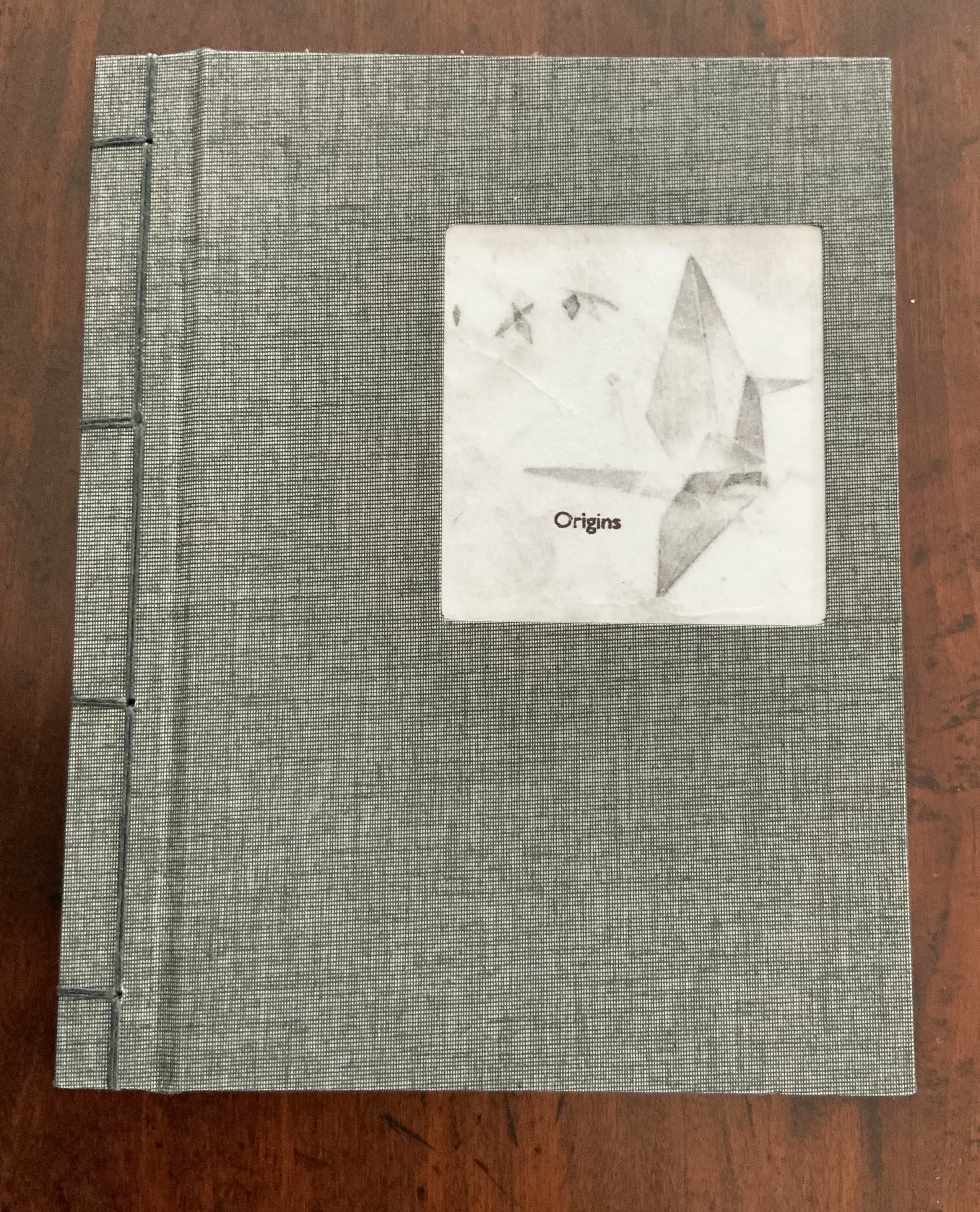
Printed and bound in an edition of 7 copies, of which this is No. 4 and signed. Carbon paper pressure prints from collograph plates, pochoir and silkscreen on Kozo. Bound in four-hole Japanese stab binding covered in black/white Duo cloth with doublures of Arches Cover Black. Encased in Arches Cover Black, two pieces glued perpendicularly, one trimmed to form a slot and tab closing. Encasement H197 x W153 mm. Book H193 x W152 mm closed and H193 x 1007 mm open.
The British Library and Maggs Bros Ltd (with Designer Bookbinders) have separately delivered a profusion of book arts and book art events for the month of May: from the BL, talks associated with the exhibition “Writing: Making Your Mark” and the series “Artists’ Books Now”; from Maggs Bros and DB, workshops and displays associated with London Craft Week (8-12 May).
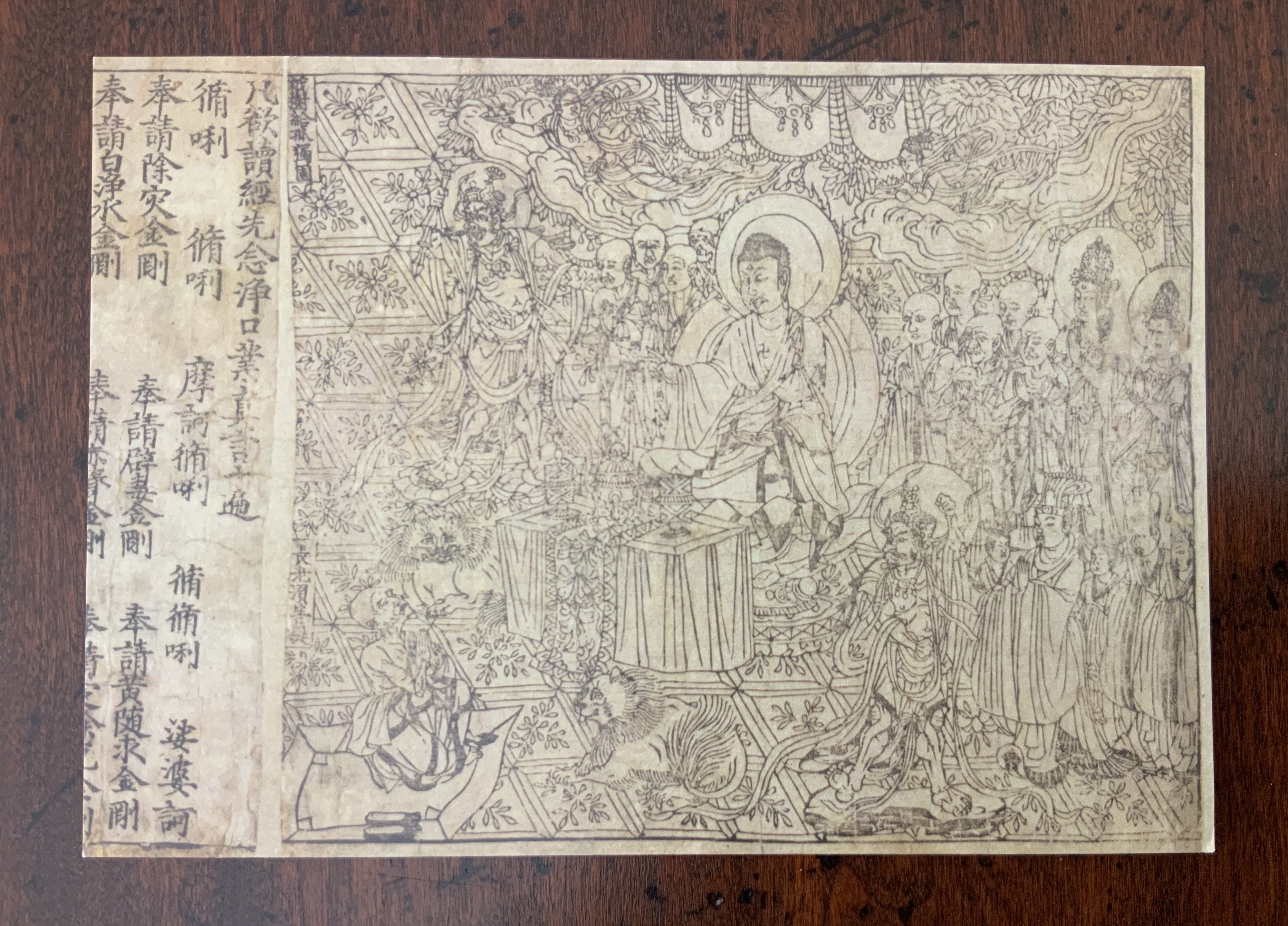
At the British Library, I peered through the glass at the Diamond Sutra (868 AD). The distinctiveness of the portraits and the density of the carving rival that of 15th century Renaissance frescoes and Durer’s prints. Even if photography had been allowed, the vitrine and lighting would not permit my camera to capture the details, and reduced in size from the original, the postcard below barely does. Alternatively, a visit to the BL’s website yields a zoomable image by which you can judge the distinctiveness and density yourself.
Postcard. The British Library. Diamond Sutra (868), 2009.
If, counting from the time of Lucy in the Olduvai Gorge, the 5000 years of writing and reading makes for only a tiny sliver of the anthropocene, the era of reading books represents so far a sliver of that sliver. Belinda Jack, a Fellow and Tutor at Christ Church, Oxford, talked for a brief hour about the history of the reading “half” of the equation. Jack’s Reading: A Very Short Introduction is built on the premise that, unlike the writing half with its artefacts of bone, rope, clay, bamboo, stone, paper and screens, this other half’s history proceeds only through indirect evidence of what we do with the written, by speculation about our reaction to it.
9 May 2019
Although she did not mention making art in, with or from books, it was impossible not to think of the “glass free and photos allowed” exhibit of bookbinding and book art at Maggs Bros Ltd, Bedford Square, only 20 minutes’ walk from the BL.
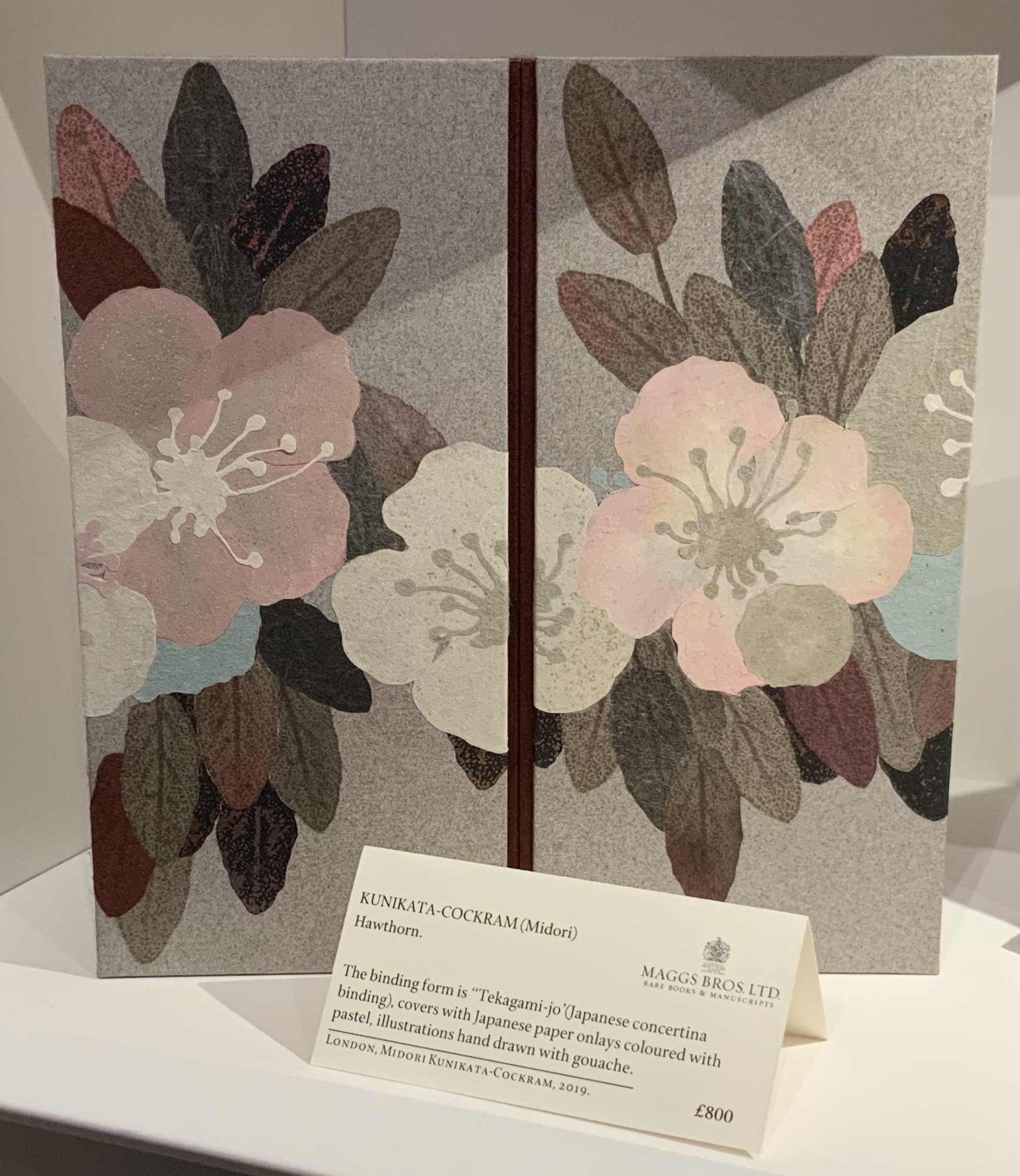
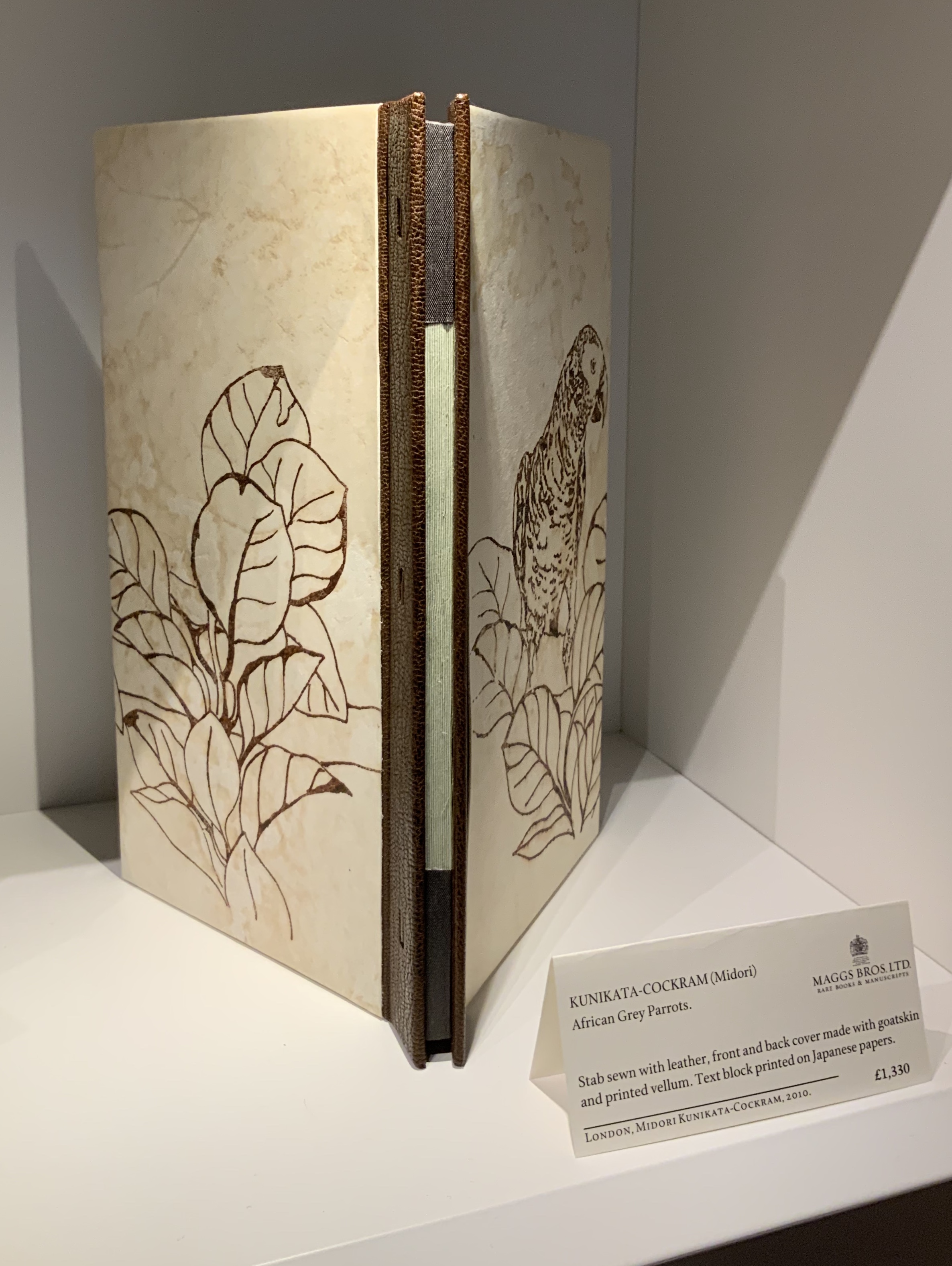
Two works by Midori Kunikata-Cockram were on display: Hawthorn (2019) and African Grey Parrots (2010). You can find other examples of her bindings in the British Library’s Database of Bookbindings. The two examples shown here, however, could be pulled from the shelf, opened, closed and examined. If you zoom in on the left-hand panel above, you might see that one of the stamens of the hawthorn blossom floats above the petal. That kind of attention to detail makes this work of otherwise muted colours a vibrant thing you can feel with your eyes.
Meeting Mark Cockram at the exhibit was welcome serendipity. Not only did he tell me about African Grey Parrots’ being Kunikata-Cockram’s response to their keeping a parrot during a friend’s vacation, he pointed out the meticulous registration within pages and across the recto to verso pages. The feel and appearance of the cover’s vellum is just as breathcatching.
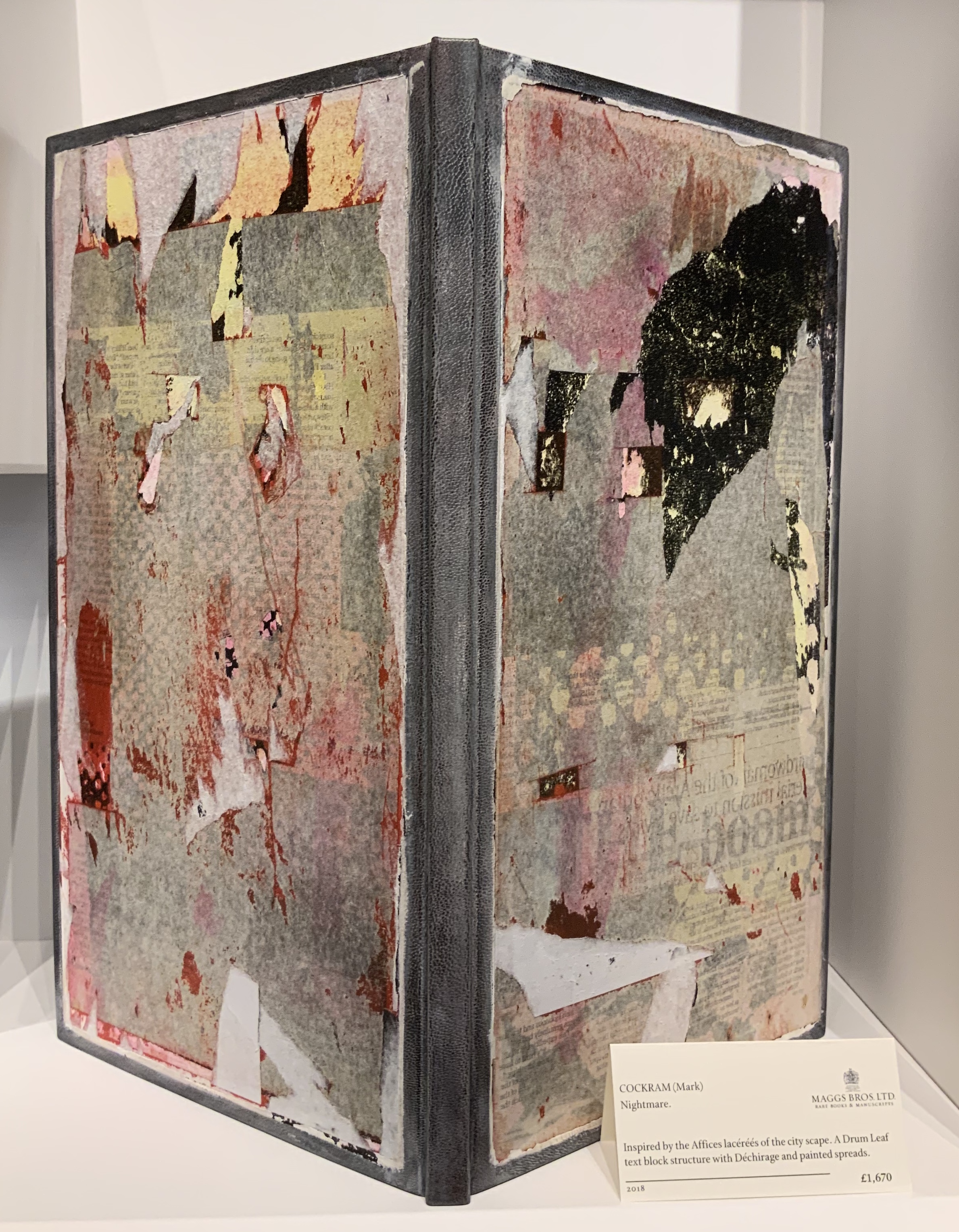
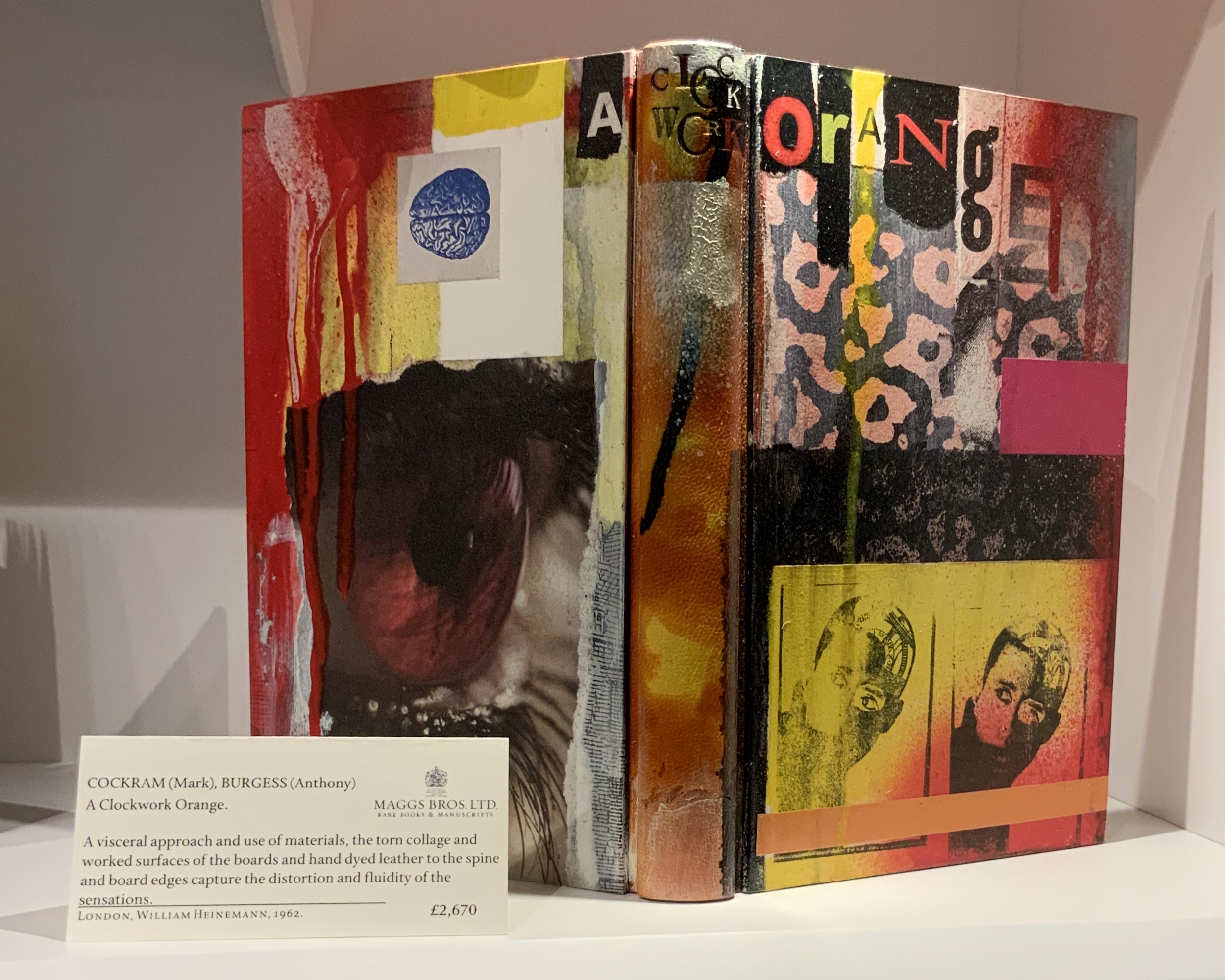
The pages of Cockram’s oversized contribution to “psycho-geography” feels like they had been pulled off hoardings to be bound in the sidewalk-grey leather. At a more textual end of the spectrum is his on-spec binding of this edition of A Clockwork Orange, signed by Anthony Burgess. The way the title spreads across the back cover, spine and front cover almost forces a handling of the book — turning it over from front to back then back to front — and, in the process, feeling the collaged textures of the boards bound to the spine.
A Clockwork Orange (1962) Anthony Burgess Binding, Mark Cockram
The weight of the garish boards holds the book open for a comfortable reading of the 1960s text block — as if they were saying, “Viddy well, little brother. Viddy well”.
The BL’s exhibition continues through 28 August. Exhibitions at Maggs Bros Ltd are shorter lived but can be spotted by following them on Instagram.
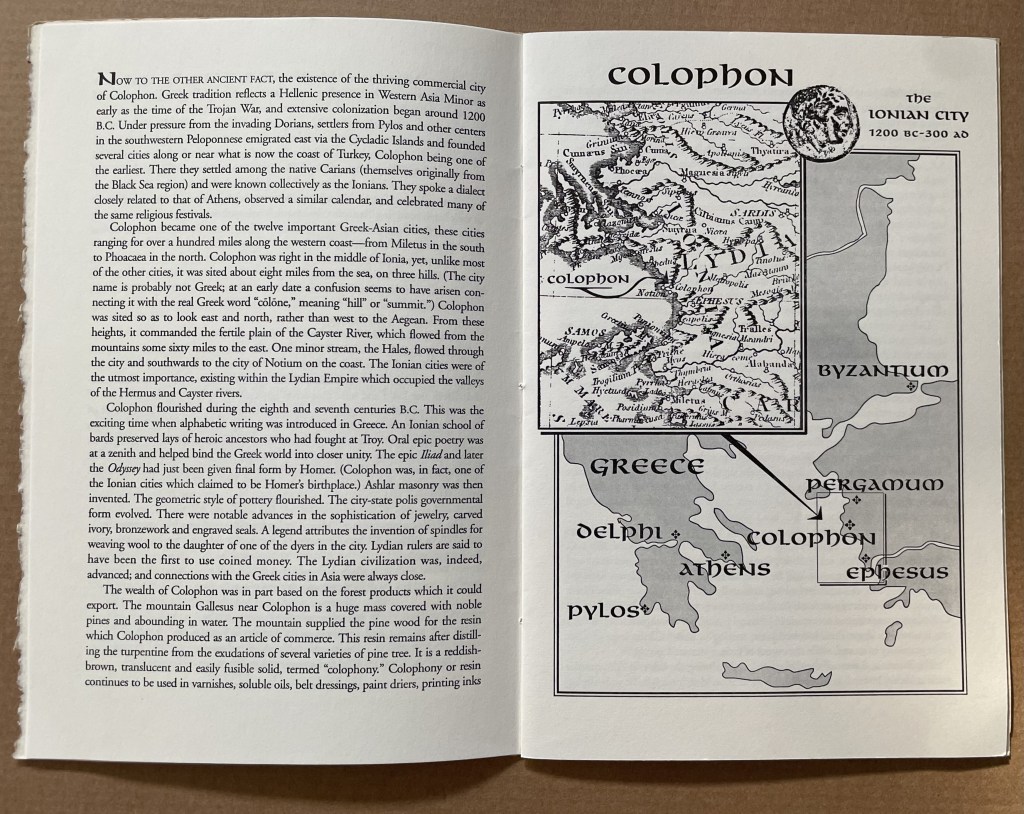
This tale comes from J. S. Kennard’s short 1901 tome on the colophon — that last page at the end of a manuscript or book. The colophon has served many purposes: giving the title of the work, identifying the scribe or printer, naming the place and date of completion or imprint, thanking and praising the patron, bragging, blaming, apologizing, entreating, praying and much more. Examples can be traced back to clay tablets and forward to websites.
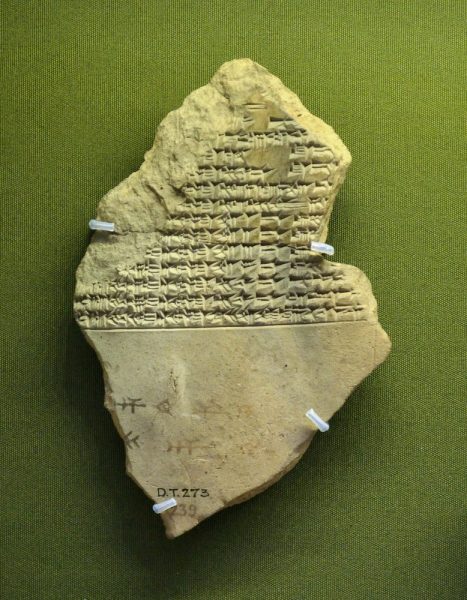
Cuneiform tablet from the Library of Ashurbanipal, British Museum. Interesting that the colophon was added in ink after the clay had dried.
Its presence on websites may be one of those decried skeuomorphic hangovers from book publishing, but perhaps the colophon has an underlying value or purpose to serve in both the analogue and digital worlds. The late Bill Hill, who wrote the 1999 Microsoft white paper “The Magic of Reading” and was an early contributor to online typography, suggested making colophons a compulsory standard for website design and asked:
Why not introduce the venerable concept of the colophon to the Web? Could it be used to drive a new business model for fonts which would benefit the font industry, web developers and designers – and the people who visit their sites? [Sadly this page at the Bill Hill’s site is no longer available.]
Fanciful? Perhaps, but not much more fanciful than Erasmus’ proffered explanation of the word “colophon”. His expanded edition of Adagia printed by Manutius in 1508 includes this adage:
Colophonemaddidit He added the colophon. This came to be used when the finishing touch is added to something, or when some addition is made without which a piece of business cannot be concluded. The origin of the adage is pointed out by Strabo in … his Geography, …
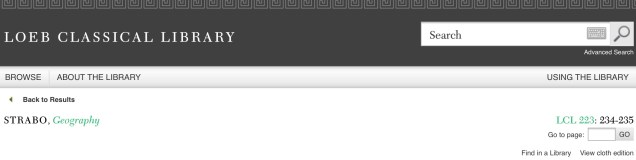
And here is Strabo from the Loeb Classical Library online; scroll down to paragraph 28:
As venerable a publishing custom as the colophon may be, it is more honoured in the breach than the observance. Book artists tend to be more observant, but not religiously so, and of course some works of book art might be disfigured by a colophon. Still, there are sound reasons why book artists should bother themselves with a colophon — even if it stands apart from the work. In her review of Book Artists and Artists Who Make Books (2017), India Johnson gives one of those sound reasons:
It’s probably impossible to include every detail of production in a colophon—but some give it their best stab, exhaustively listing everyone that took part in a project. More concise colophons recap only the most relevant details of making—perhaps those the primary creator feels will factor saliently into making meaning of the book.
The convention of the colophon in our field exposes an assumption that the meaning of an artwork is informed not only by the finished product, but by the specifics of artistic labor. “Book Artists and Artists Who Make Books“, CBAA, 1 October 2018. Accessed 3 October 2018.
If craft does figure in a work’s meaning, then the more we can see how it figures, the greater our ability to appreciate and understand the work. For conveying insight — what materials and from what sources, what processes, what tools, who contributed, where and when the work occurred — the colophon stands ready. But where does it stand?
A contemporary of Kennard, A.W. Pollard declared that, to be a proper colophon, it had to appear at the conclusion or summit of the work. Artful as are some of the manuscripts and books that Kennard and Pollard cite, none push the envelope in the manner that works of contemporary book art do. Which brings us to another reason for book artists to consider the colophon: inspiration from history or tradition.
The last page of the codex may be a rightful spot for placing the codex, but what if the bookwork’s shape is challenging or musing about the shape of the book? Finishing touches might go anywhere. Think of Van Eyck’s self-portrait hidden in a reflection in The Arnolfini Portrait, or that of Vélazquez in Las Meninas.
Historians’ diligent cataloging of the “hands” of the scribes has enriched the self-identifications in colophons and connected those craftspersons with additional manuscripts. Book artists who use calligraphy or involve calligraphers should ponder the implications of this tool historians use to identify scribes by the style of their “hands”.
What potential, meaningful “tells” in a work’s colophon might the book artist or calligrapher leave to enrich the work — and provide insights for historians and connoisseurs poring over the finishing touch?
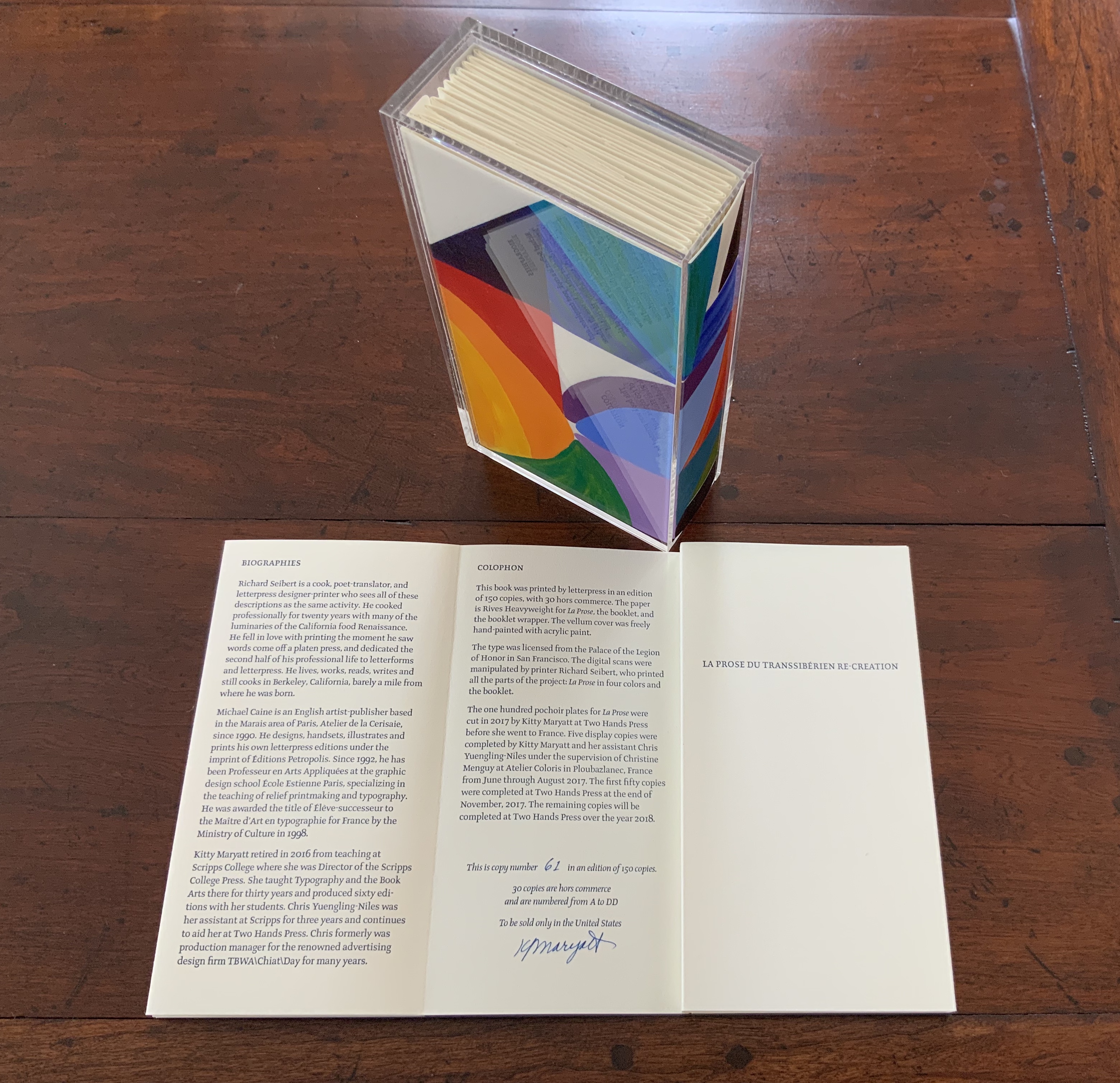
The colophon’s underlying value or purpose warrants book artists’ thinking about recording it offline and online, though this might be stretching the definition of the colophon. Our enjoyment of Kitty Maryatt’s 2018 reconstruction of La prose du Transsibérien et de la Petite Jehanne de France (1913) by Blaise Cendrars and Sonia Delaunay is certainly enhanced by the “colophonic” booklet she included with the work and the “About” page online.
Perhaps the story of the little “i” left over – the colophon – will prod the future historians of book art to examine bookworks and their artists’ websites for those finishing touches and stir artists to bestow that last finishing touch for the sake of the work’s soul if not their own.
A Prospect of Colophons
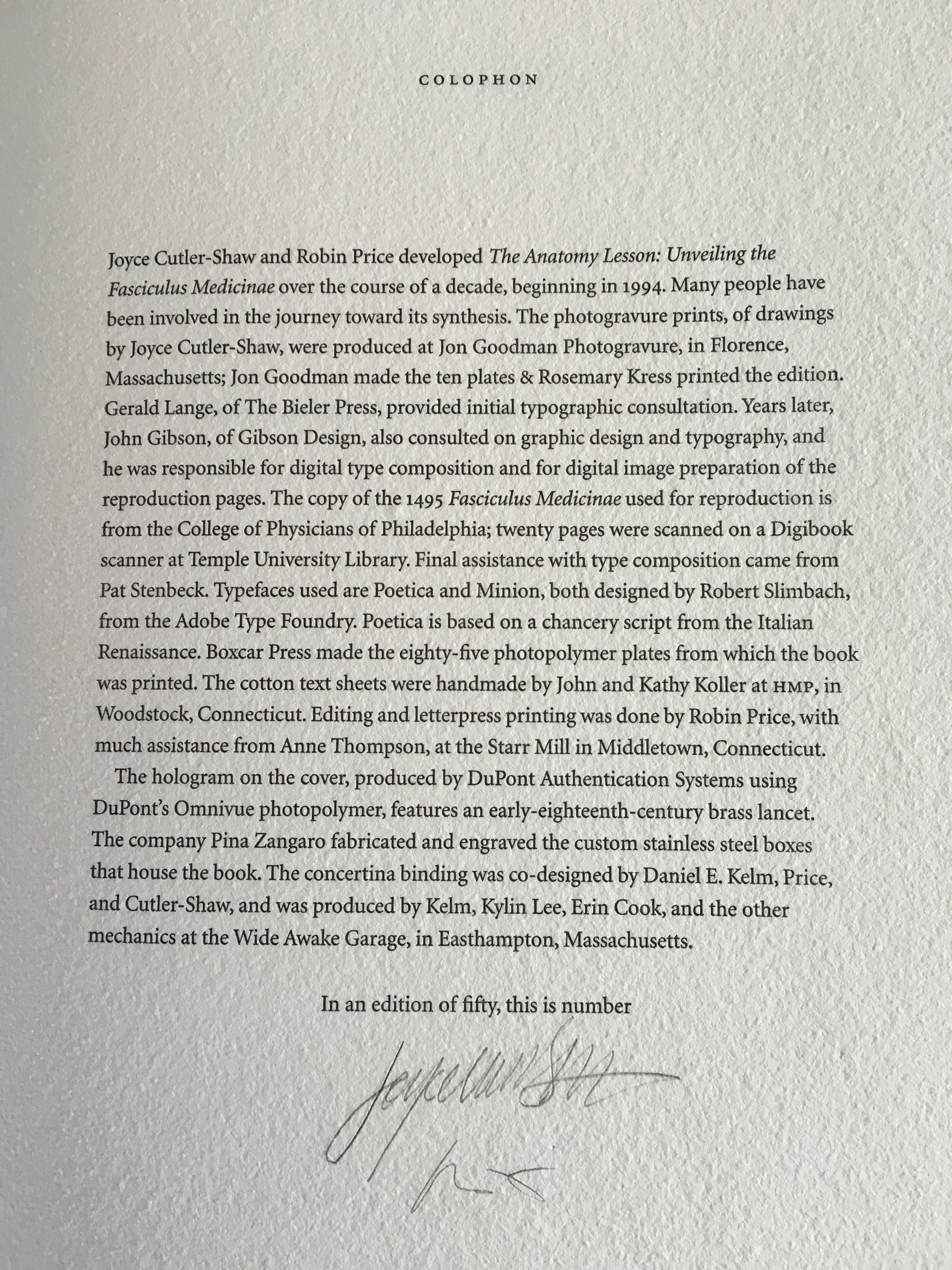
The Anatomy Lesson: Unveiling the Fasciculus Medicinae (2004) Joyce Cutler-Shaw The careful reader will notice that the edition number is missing. This instance of the work is one of the binder’s signed but unnumbered copies, having been acquired directly from Daniel E. Kelm.
Lyn Dillin, The Ballad of the Self Same Thing (2019) Can this be the first rhyming colophon?
Finding Home (2016) Louise Levergneux This may not be the first bilingual colophon I have seen, but its being inside the top of the box enclosing the work makes it the first to occupy the physical summit a work.
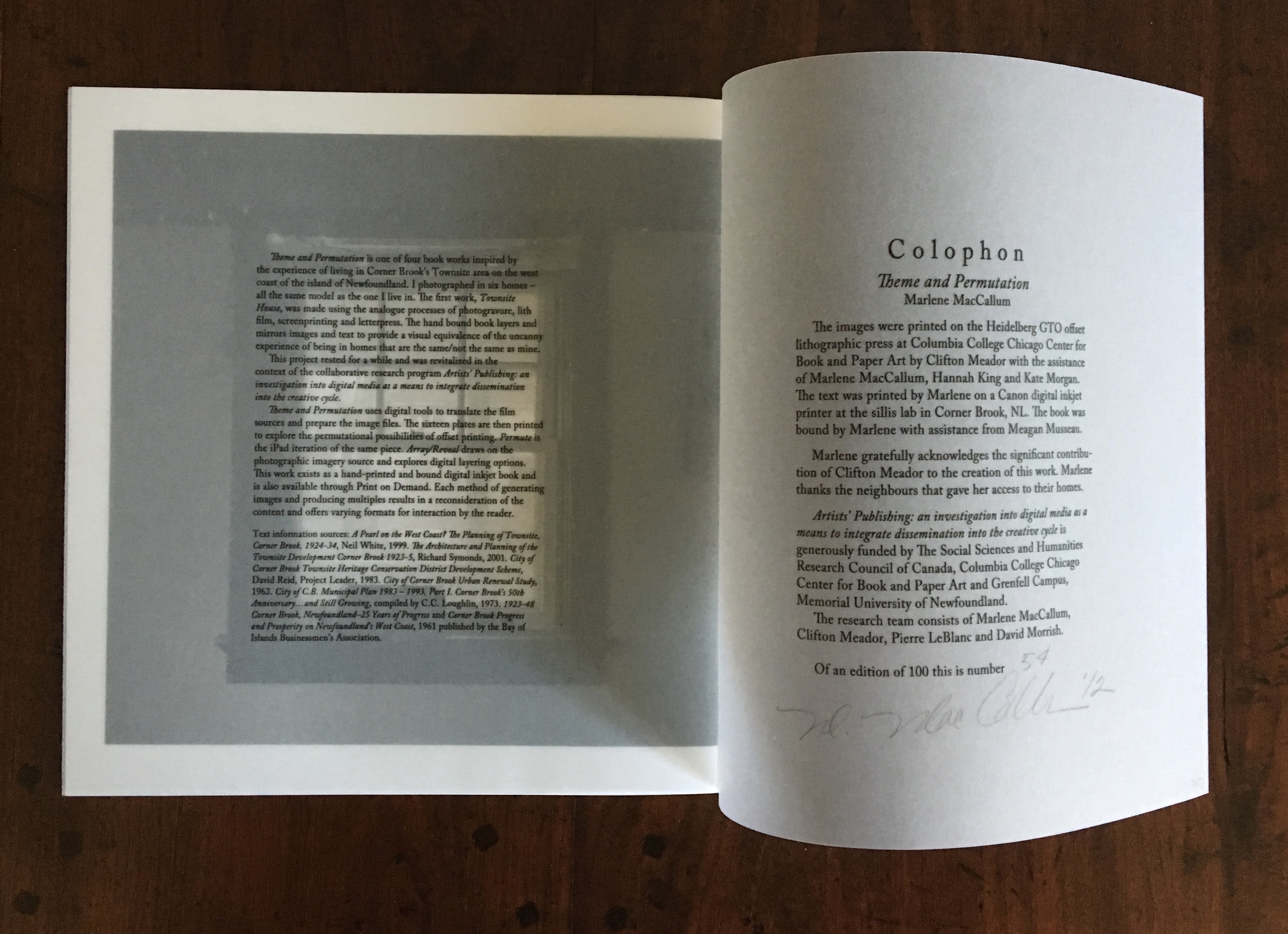
Theme and Permutation (2012) Marlene MacCallum This double-page spread reveals process information about the work that adds to the reader/viewer’s appreciation of the themes and permutations occurring in the pages.
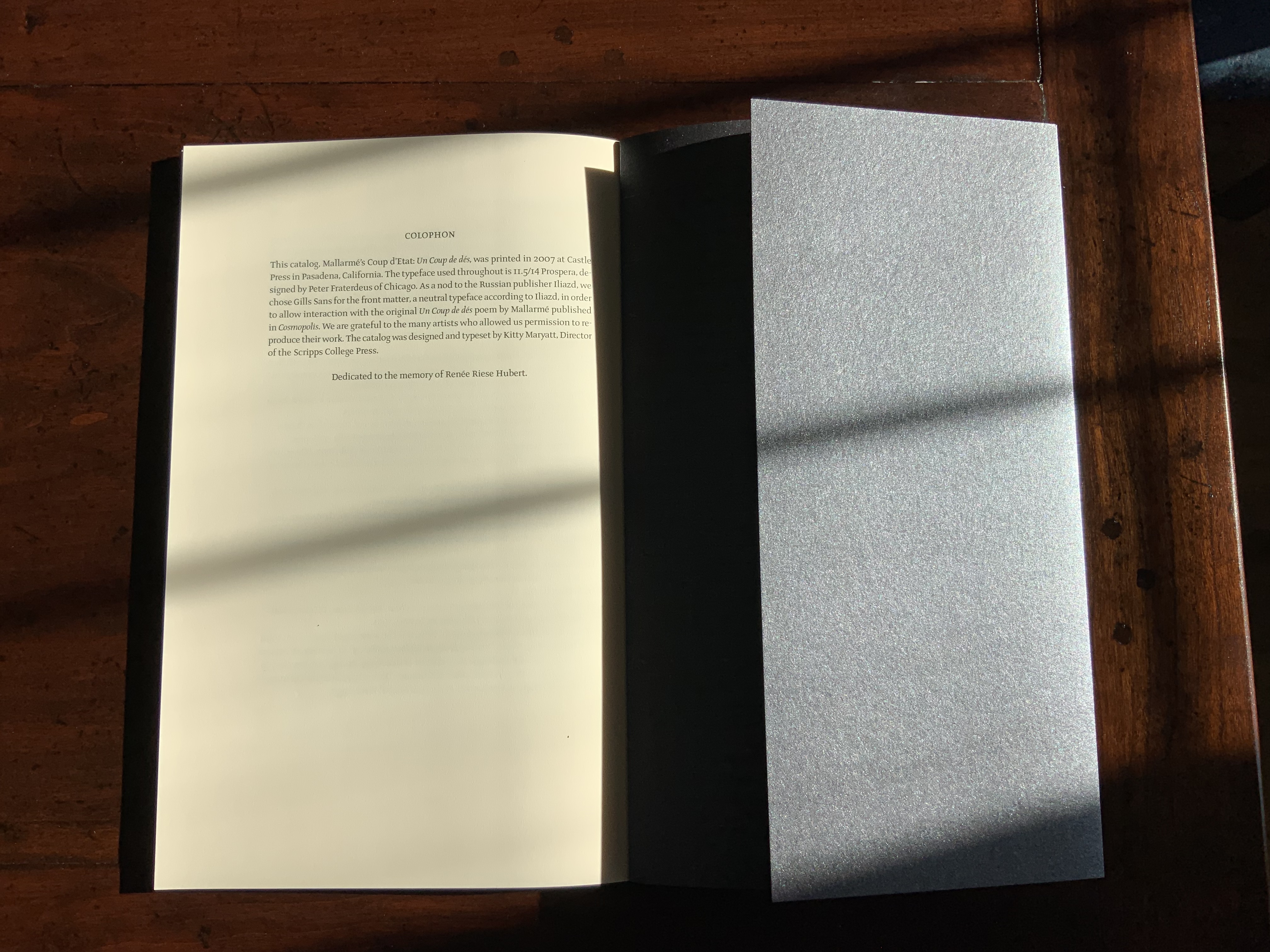
Mallarmé’s Coup d’État (2007) Kitty Maryatt The colophon’s nod to Iliazd sends the reader/viewer back to the start of this catalogue that is a bookwork in its own right.
La prose du Transsibérien Re-Creation (2019) Kitty Maryatt A “colophon within a colophon”. The booklet providing details about the original work and Maryatt’s re-creation has an accordion structure and collapses into its own tri-fold wallet, which fits within the cover of the main work, seen here in its acetate holder.
L is for Lettering (2011) Cathryn Miller This hilarious and touching abecedary parades as a marked work handed in for a course, a portrait of the artist within a contemplation of the past and future of typography and letterpress. This colophon embodies the finishing touch.
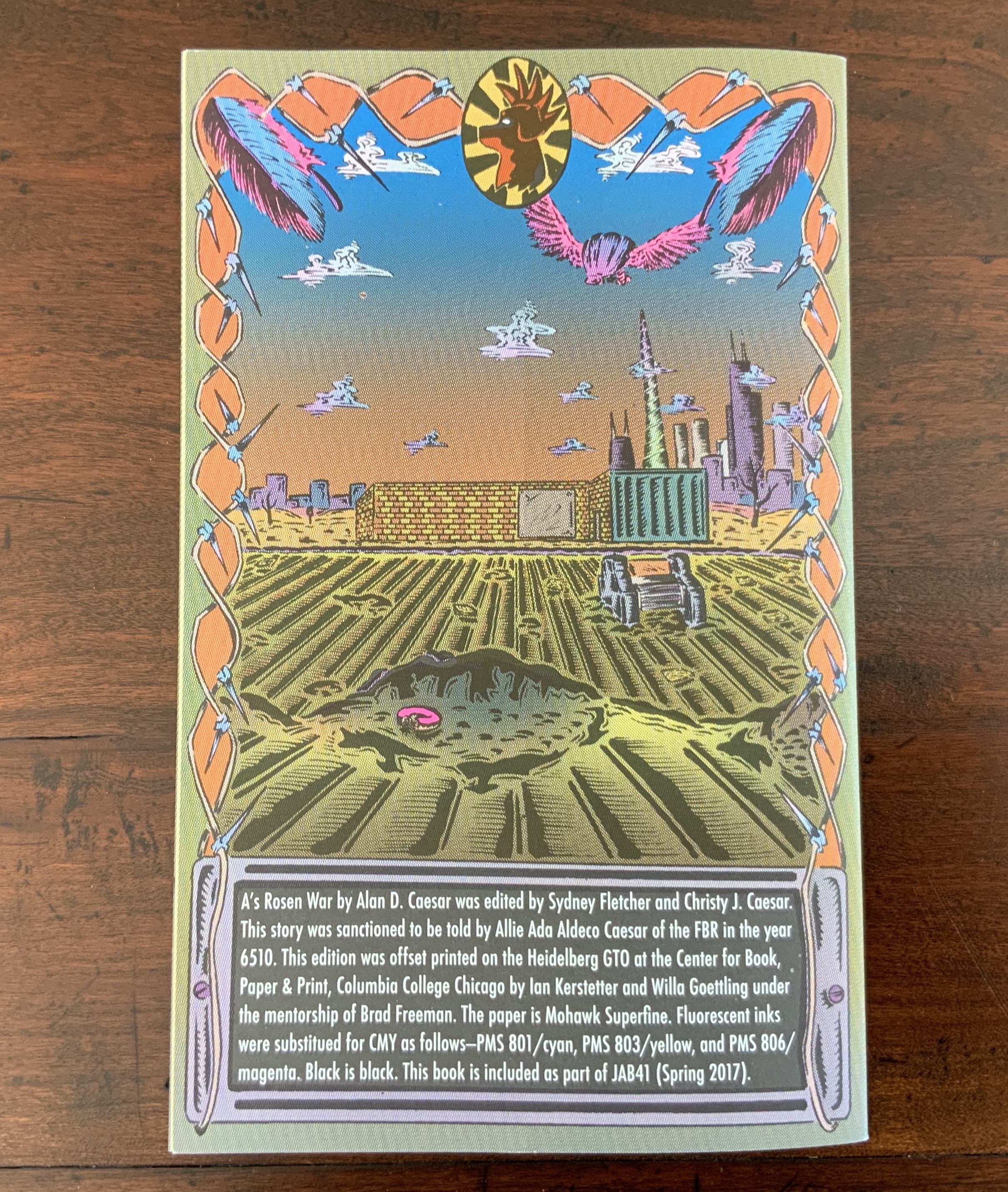
A’s Rosen War (2017) Alan Caesar This colophon continues the premised date with which this work of science fiction book art begins.
Richard Gameson. The Scribe Speaks? Colophons in Early English Manuscripts. Cambridge: Cambridge University Press, 2001. (See for the human interest: “I, Aelfric, wrote this book in the monastery of Bath”; “Pray for Wigbald”; “Just as the port is welcome to sailors, so is the final verse to scribes”.)
Hurtig, Alain. “Les colophons“. L’outil typographique. Accessed 26 January 2022. (Seventeen brilliantly designed and shaped colophons.)
Joseph Spencer Kennard. Some early printers and their colophons. Philadelphia : G.W. Jacobs and Co., 1902. (Less academic but just as interesting and typographically more fun than Gameson.)
Ming-Sun Poon, “The Printer’s Colophon in Sung China, 960-1279”, The Library Quarterly,43:1 (January 1973). (See for the 34 calligraphic inscriptions and the colophon to the Diamond Sutra: “On the 15th of the 4th moon of the 9th year of Hsien-t’ung [May 11, 868], Wang Chiek on behalf of his two parents reverently made this for universal free distribution.”)
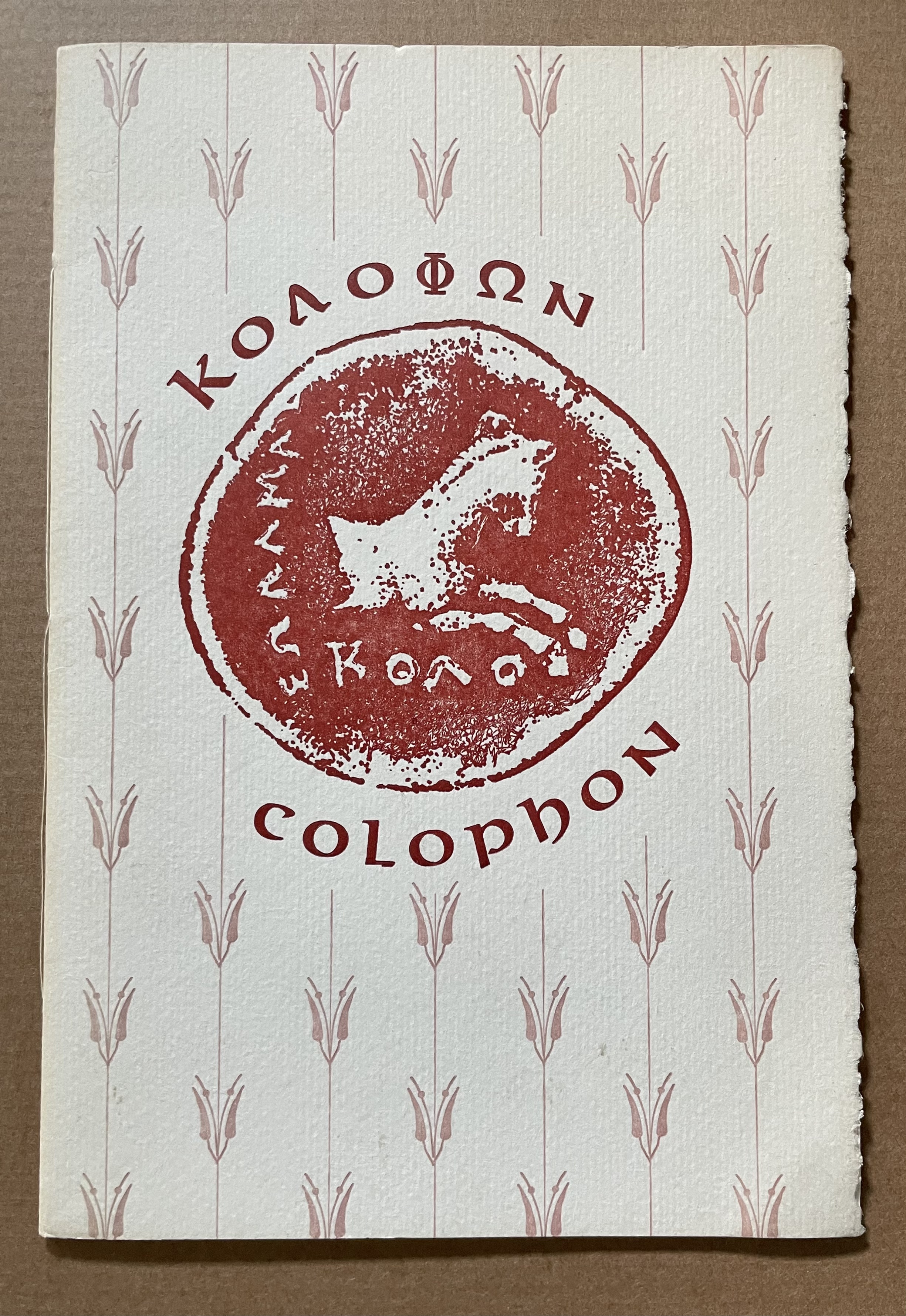
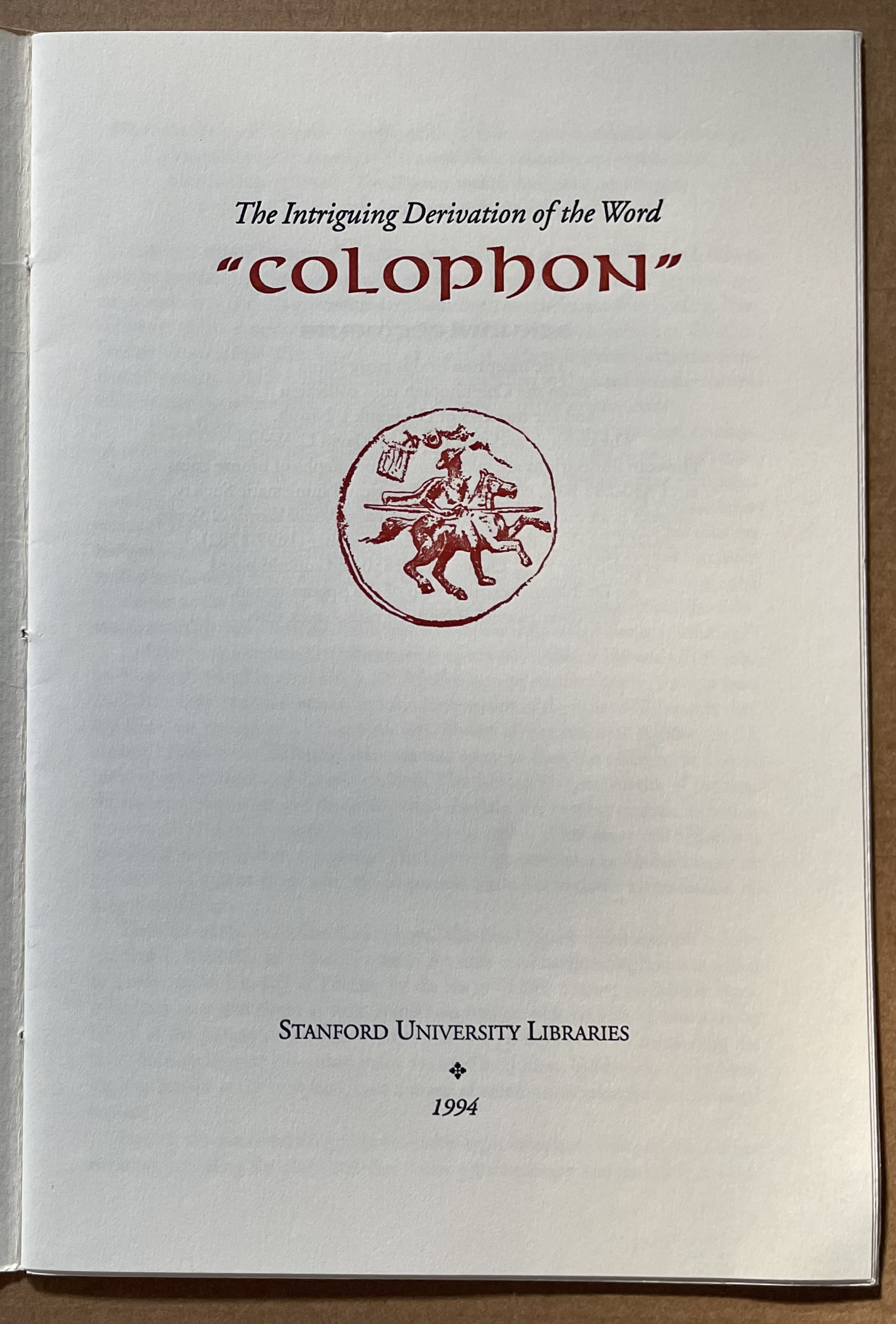
The intriguing derivation of the word “Colophon” (1994) David C. Weber Sewn booklet. H230 x W155 mm. [16] pages. Acquired from Cotswold Internet Books, 7 May 2023. Photos: Books On Books Collection.
Pollard, Alfred W. Last Words on the History of the Title-Page, with Notes on Some Colophons and Twenty-Seven Fac-Similes of Title-Pages. Burt Franklin Research & Source Works Series, 668. B. Franklin, 1971. Pollard, Alfred W. 1859-1944. Last Words on the History of the Title-Page, with Notes on Some Colophons and Twenty-Seven Fac-Similes of Title-Pages, by Alfred W. Pollard. J.C. Nimmo, 1891. Pollard, Alfred W. 1859-1944. An Essay on Colophons, with Specimens and Translations, by Alfred W. Pollard, and an Introduction by Richard Garnett. The Caxton Club, 1905. Pollard, Alfred W., and Richard Garnett. An Essay on Colophons : With Specimens and Translations. Burt Franklin Bibliography and Reference Series ; #142. Burt Franklin, 1968. Van Elverdinghe, Emmanuel. “Modèles et Copies : Étude d’une Formule Des Colophons de Manuscrits Arméniens (VIIIe – XVIIIe Siècles).” Dissertation, 2017.
A day’s visit with one hundred exhibitors hosted at the Arnolfini in Bristol leaves me reeling like a drunken sailor — drunk on colour, texture, light, line, shapes, words and artistry. Appropriate given the Arnolfini’s location on Narrow Quay in Bristol’s floating harbour.
Colour
Lucy May Schofield talked to me about her “search for the indigo that is infinity”. The Distance of Us is only one of several pieces demonstrating how close she is coming. The Longest Day on her site is one among many by which to enjoy her progress.
The Distance of Us Lucy May Schofield Photo: Books On Books
Mick Welbourn took time to explain how his search among inks, paper and geometric shapes kept leading him from a unique work (oil-based) to multiples and back to uniques. These colours reminded me of the work of Sonia Delaunay.
Mick Welbourn Photo: Books On Books
Texture
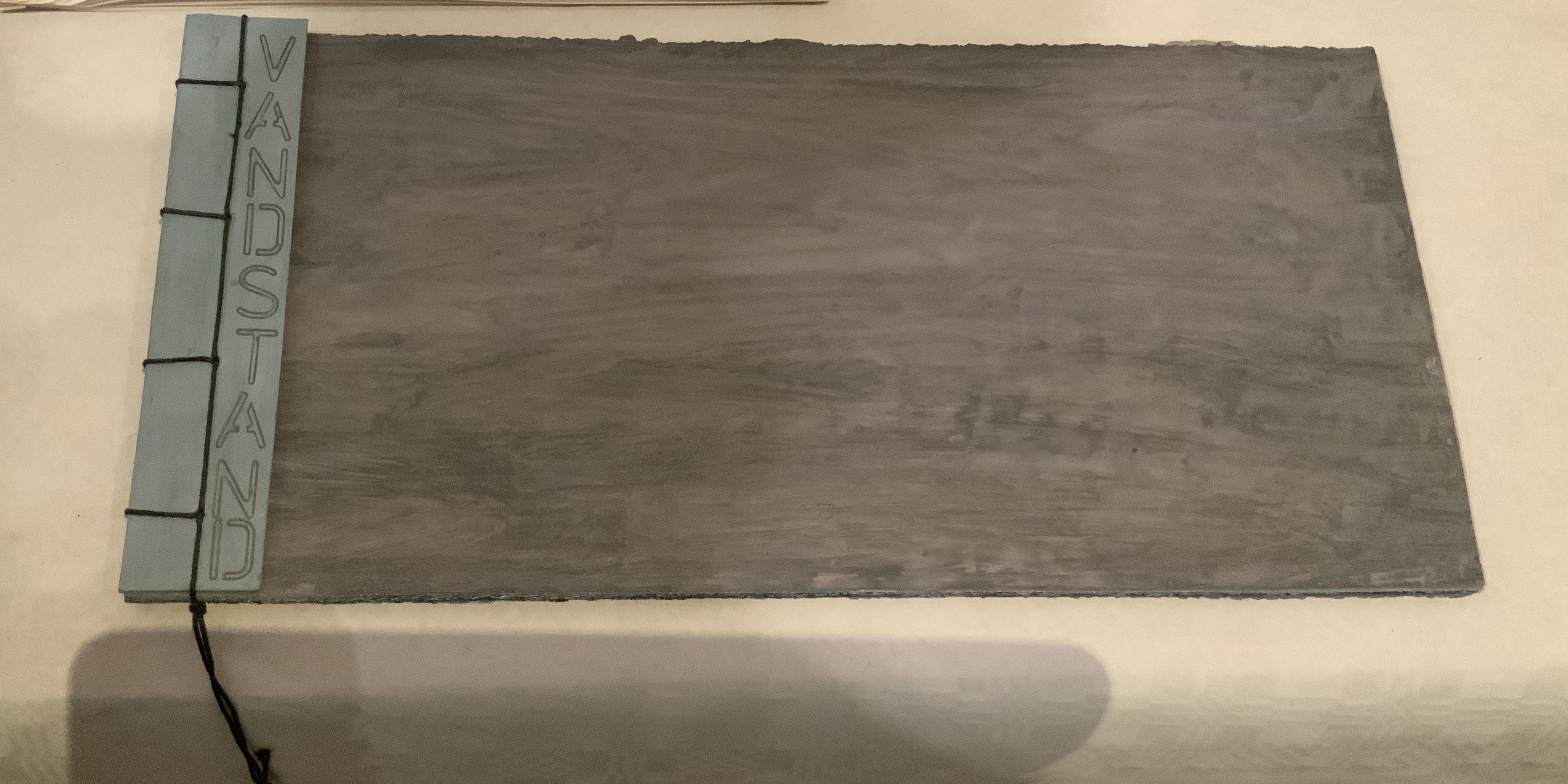
Bodil Rosenberg, a member of the Danish collective CNG (Anna Lindgren, Bertine Knudsen, Birgit Dalum, Pia Fonnesbech, Susanne Helweg), appeared delighted that I was surprised by the colour and texture of Vandstand (“water level”). Somehow after the saturation of the paper with layer upon layer of paint, each page has a supple leather- or cloth-like feel — a coolness to the touch. I think Ken Campbell would relish Vandstand.
Vandstand Bodil Rosenberg Photo: Books On Books
Vandstand Bodil Rosenberg Photo: Books On Books
Caroline Penn’s works comprised by Notes from Chesil Beach made me reach out to pick up one of the pebbles on the page. The trompe l’oeil effect of turnable pages in the photos is enhanced in one variation by inclusion of an actual small gathering of pages. The role of trompe l’oeil in book art is one worth investigating.
Notes from Chesil Beach Caroline Penn Photo: Books On Books
Light
Eileen White’s Haptic Narratives and her lumen prints for Printed Matter made a nice segue from texture to ghostly light. Printed Matter also looks forward to the “artistry” section here as book’s images are un-fixed and eventually fade away. To use the book form — the traditional form of permanent record — to present a language and reminder of material ephemerality: that is artistry.
Eileen White Photo: Books On Books
Haptic Narratives Eileen White Photo: Eileen White
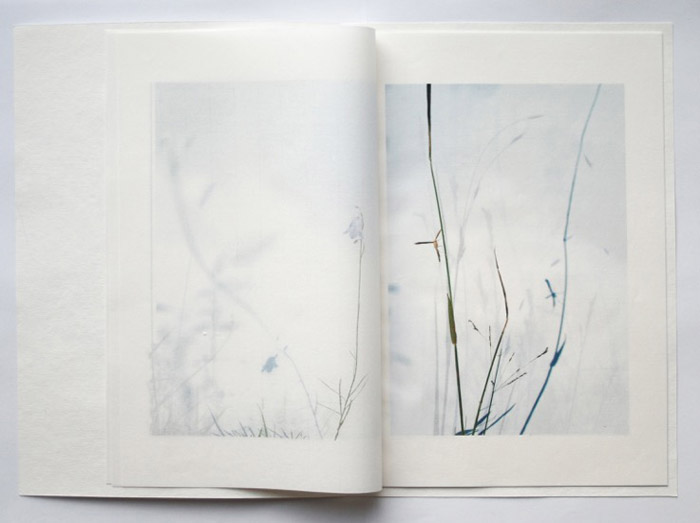
Helen Douglas (Weproductions), fresh from exhibitions at Printed Matter in New York and Fruitmarket Gallery in Edinburgh, was displaying her 2017/2018 series Field Works as well as a new book Summer Alight. The photographic effects, the visual narrative and structure achieved in Douglas’s works define artistry.
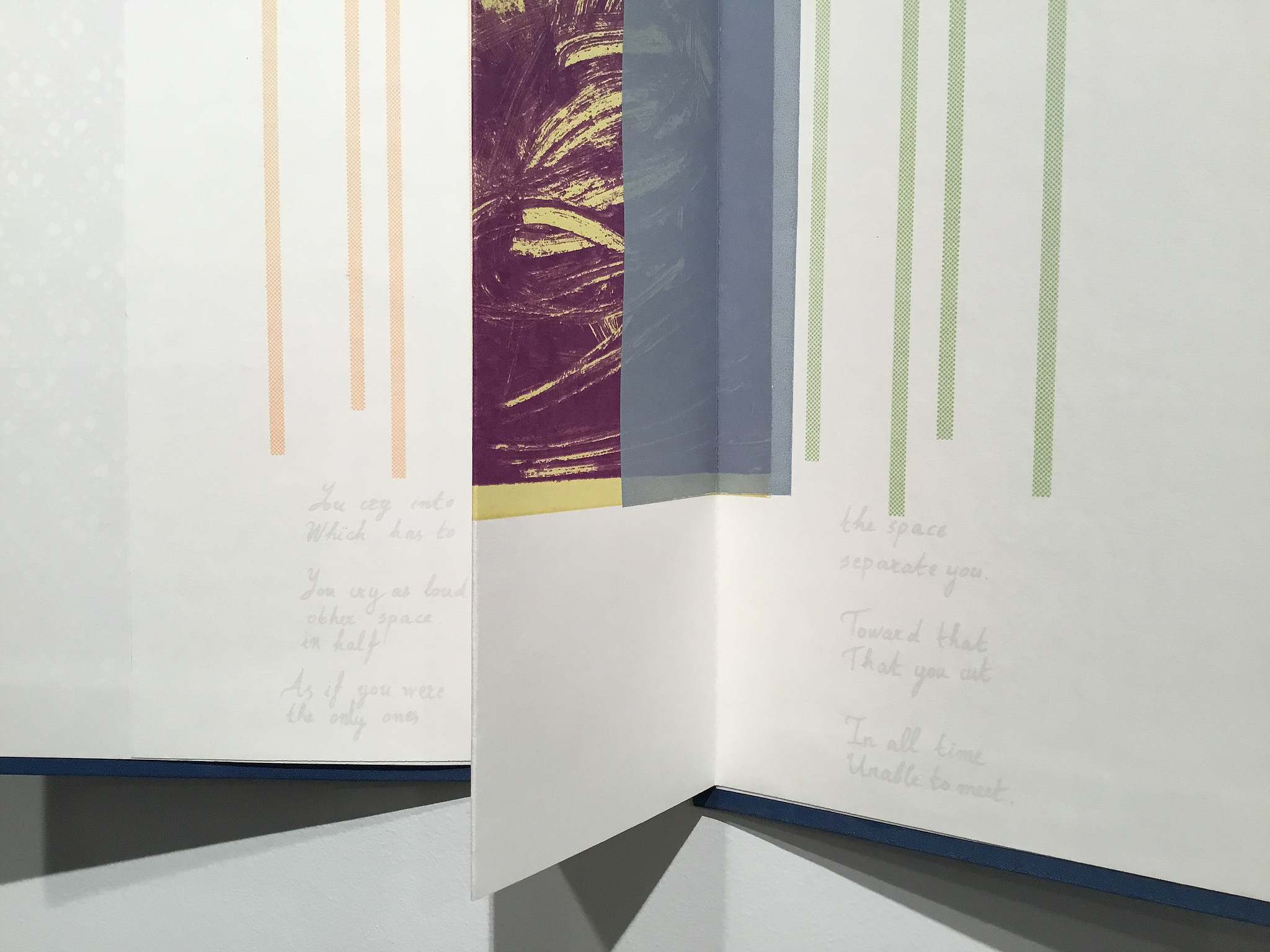
Elena Zeppou’s Parallels first caught my eye because of its size, but closer inspection yielded appreciation of line — vertical as well as horizontal — and its union with text and form. Note how the lines of poetry read across the accordion.
Parallels Elena Zeppou Photo: Books On BooksParallels Elena Zeppou Photo: Zitrone PrintmakingParallels Elena Zeppou Photo: Zitrone Printmaking
Shapes
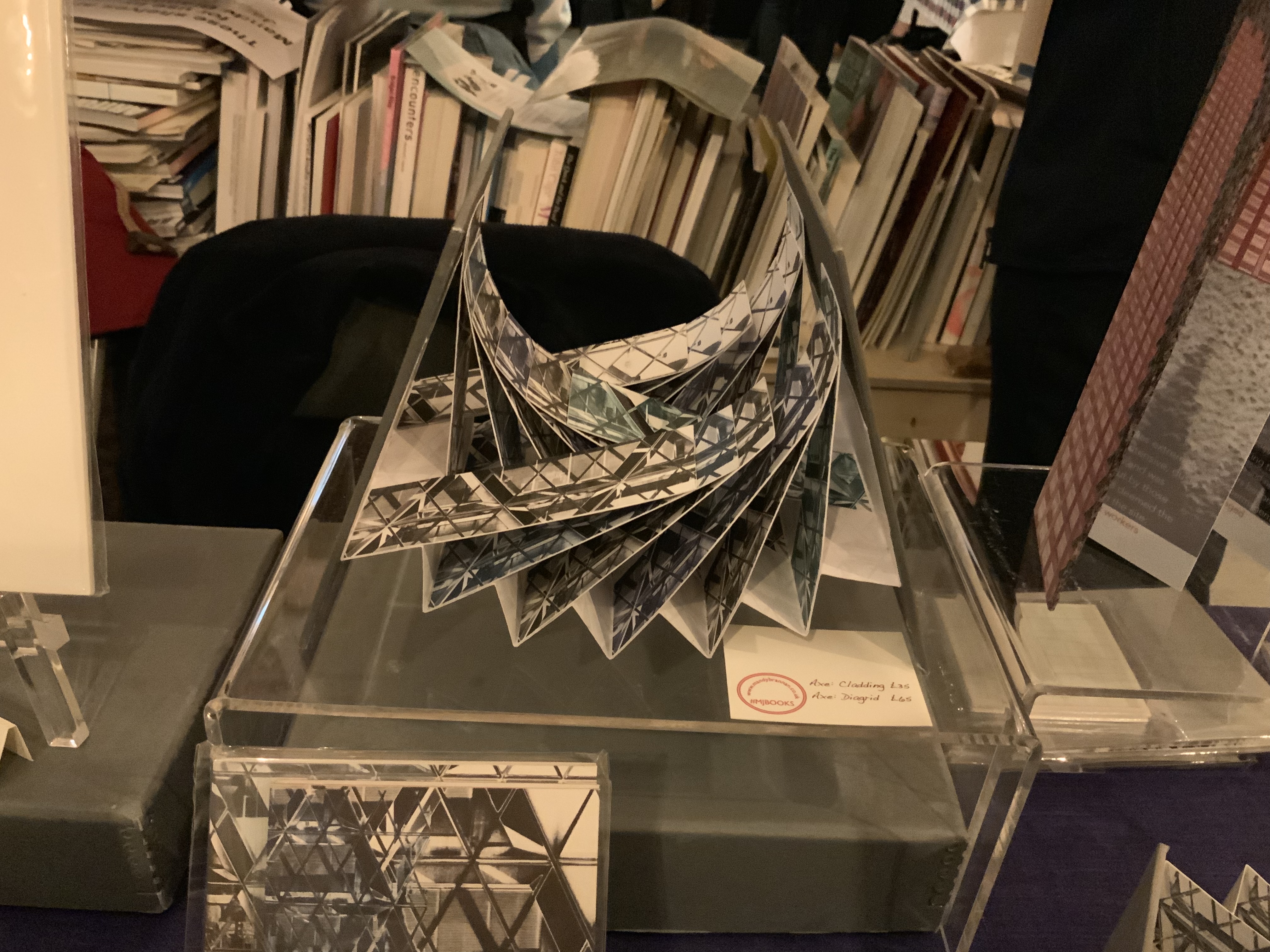
Listening to Mandy Brannan talk about custom papers, French fold books and modified flag books is almost as good as handling them. The work30 St Marys Axe (inspired by the building fondly known as the “Gherkin”) was what first drew me to her table. It has two variations — Diagrid and Cladding — which reward repeated handling as well as regarding.
30 St Marys Axe: Diagrid Mandy Brannan Photo: Books On Books
At the ArtistBooksOnline table, the shape-changer Inside/Outside by Susie Wilson kept me as busy as if it were a Rubik’s cube or paper puzzle with a medical mystery inside — or outside.
Inside/Outside Susie Wilson Photo: Books On BooksInside/Outside Susie Wilson Photo: Books On Books
Words
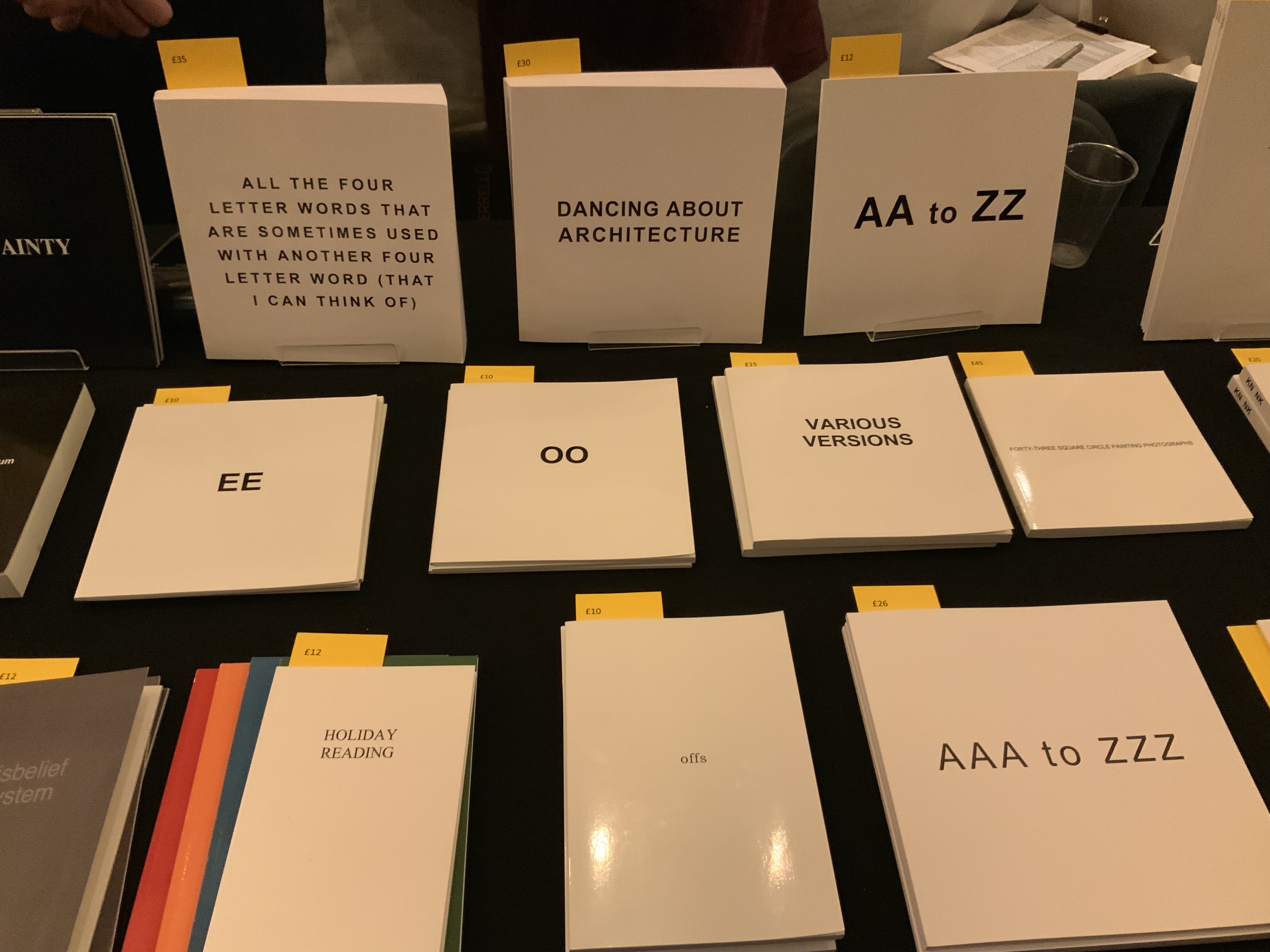
Puns, slippery words and slipperier concepts seemed to explode from Guy Bigland‘s table.
My inner metaphysician of Structuralism, Post-Structuralism, Deconstruction and Post-Deconstruction found its element(s) at the Atlas Press.
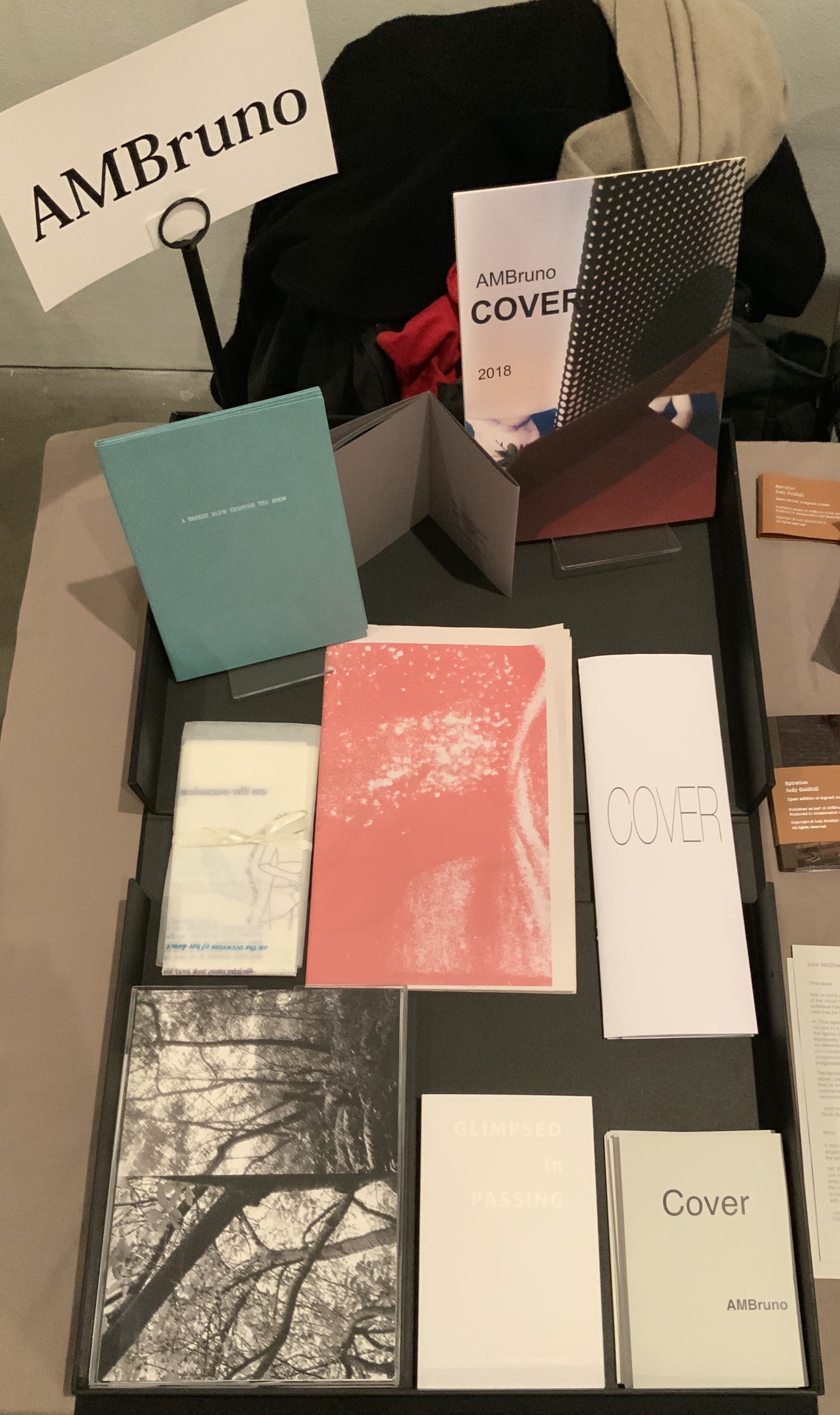
AM Bruno, run by Sophie Loss, and of which John McDowall is a founding member, is always a rich vein of artistry. The works from the 2018 theme-driven project, Cover, appear in the box below but warrant a closer inspection at the link behind the word. John McDowall had a new book on hand: Time-lapses. As I turned the brilliantly white pages, each segmented into squares like a comic-book page but only one square in each page holding an old black-and-white photo, the title began to sink home. And then came the idea that all the meaning that could possibly explain any one photo, its relation to the other squares or to other photos or to the author or to the reader/viewer — all of it — has to take place in the empty spaces between.
Janet Allsebrook displayed a Duchampian box with the Delaunay-esque title Nichoir. Although the drift of this work (“waste time making your own useless nest box”) is echoed in her other works, the echo reverberates with a deeper tone — often political or philosophical. The variety of book forms is impressive.
Nichoir Janet Allsebrook Photo: Books On Books
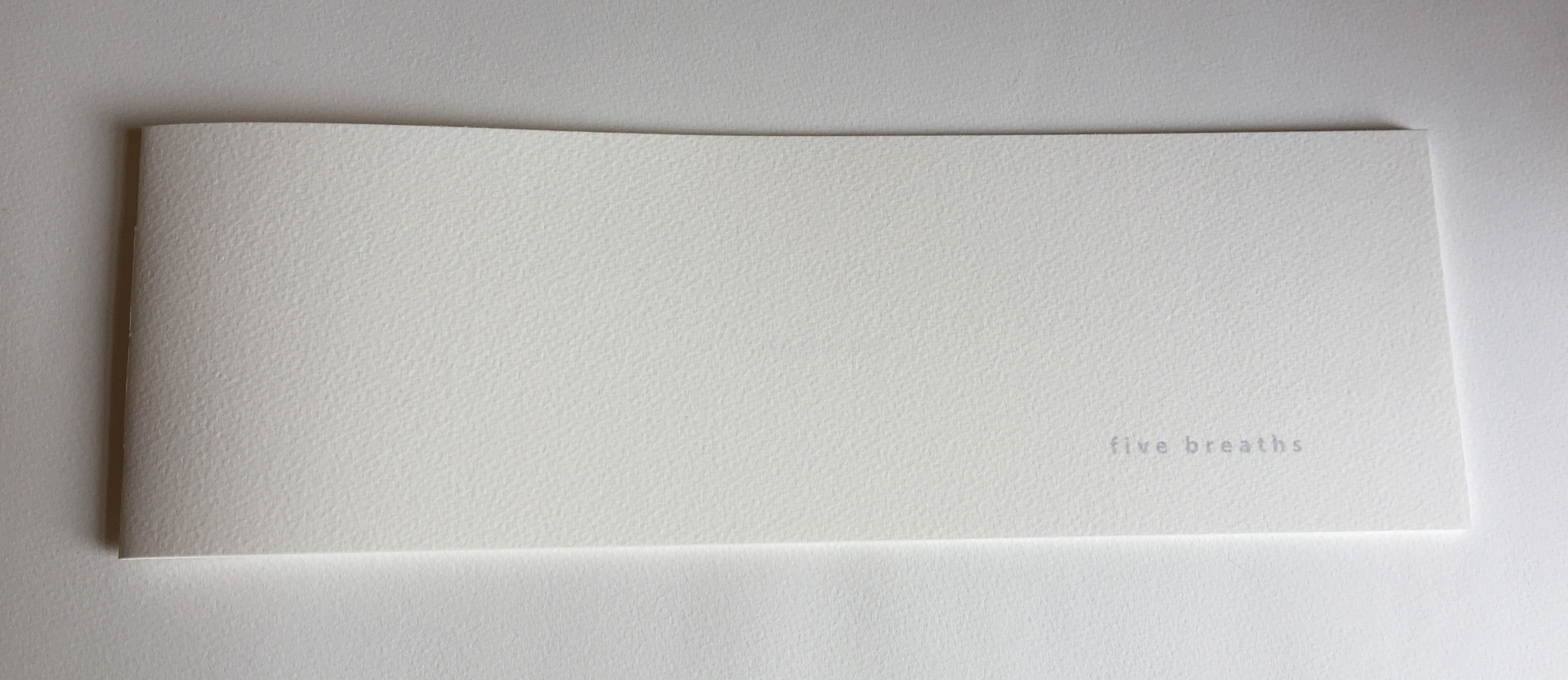
Next door was the artist of Zen book art — Julie Johnstone – Essence Press. In addition to extensions of her percentage tint series, she had on hand several explorations of breath, print and paper: each breath, a page; quietly breathing; five breaths; and ten breaths. Wherever they are, her books make a Zen garden.
Sarah Bodman and Arnolfini brought together a rich collection of talent and should be thanked for doing so and encouraged to repeat it in 2021. And to the artists mentioned — and those not — who took the time to share their thoughts on colour, texture, light, line, shapes, words and artistry: Encore!



























 Books On Books