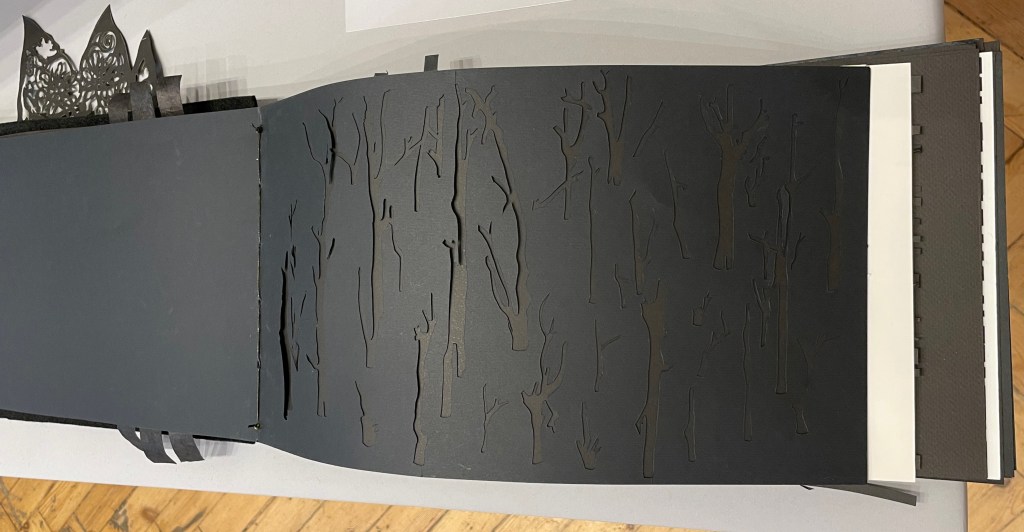
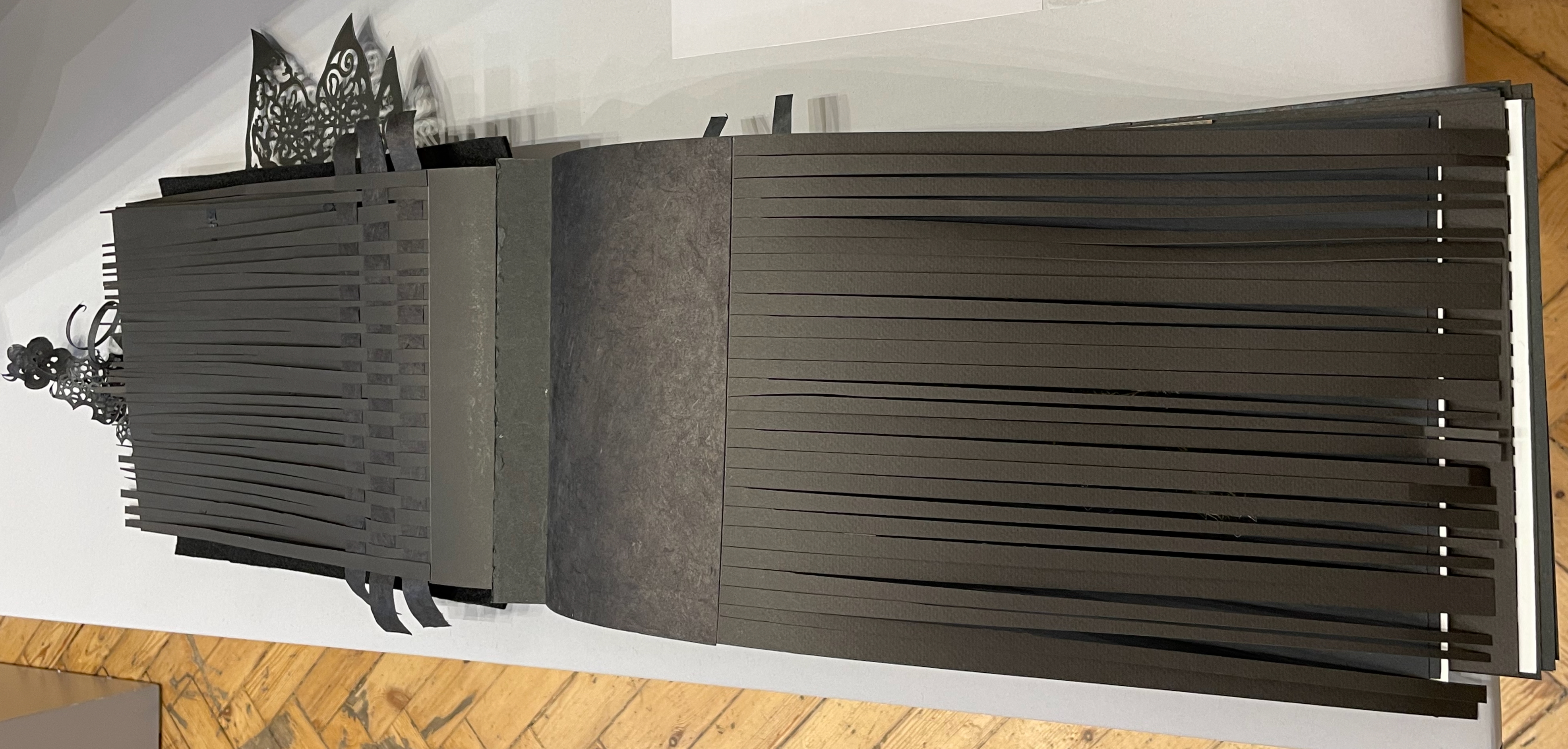
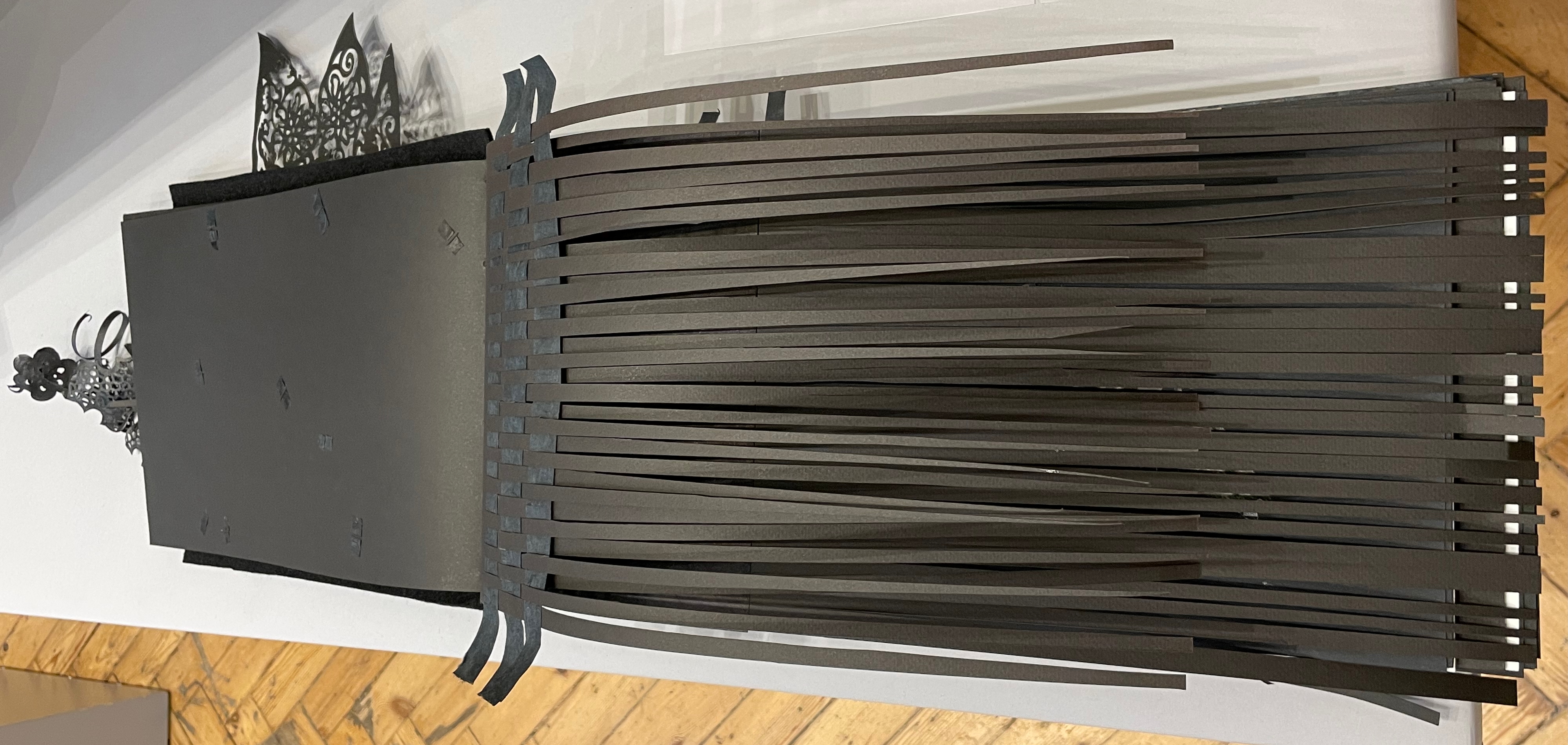
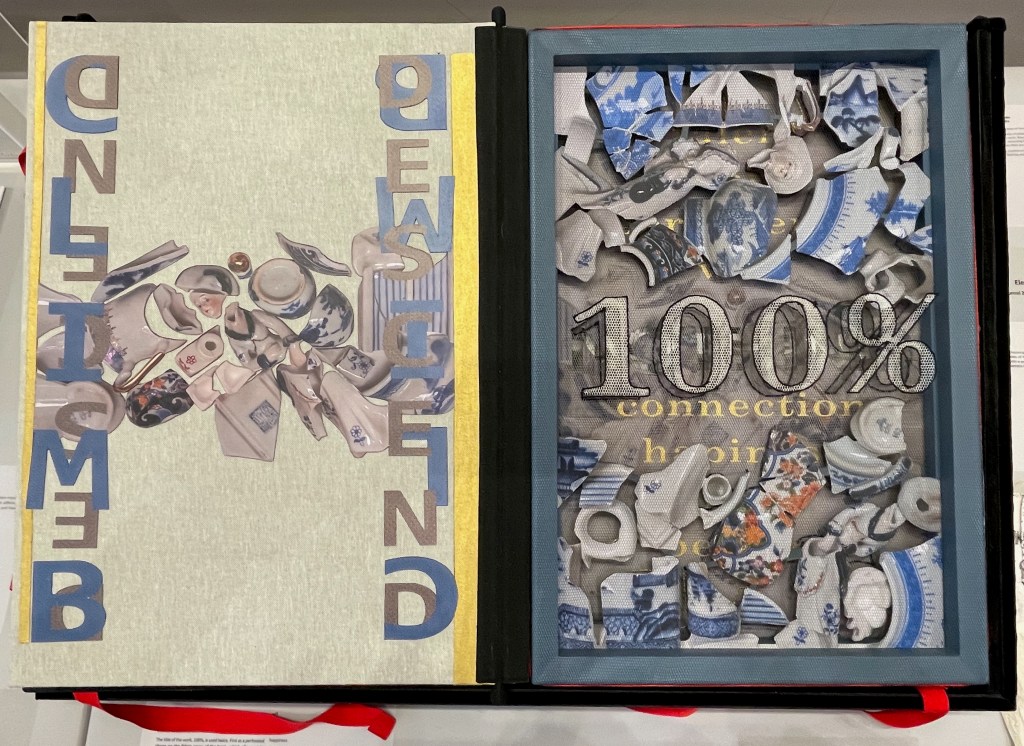
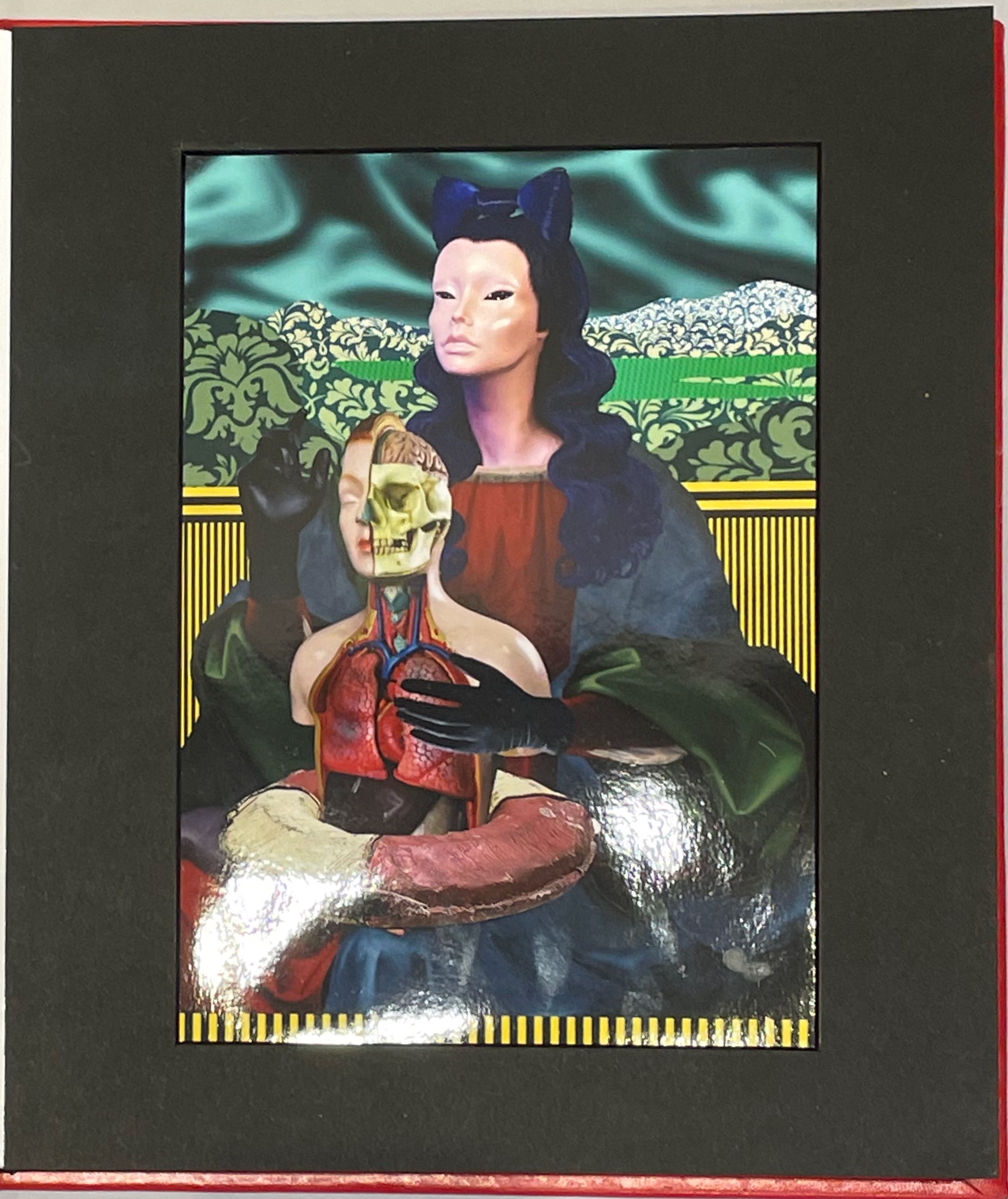
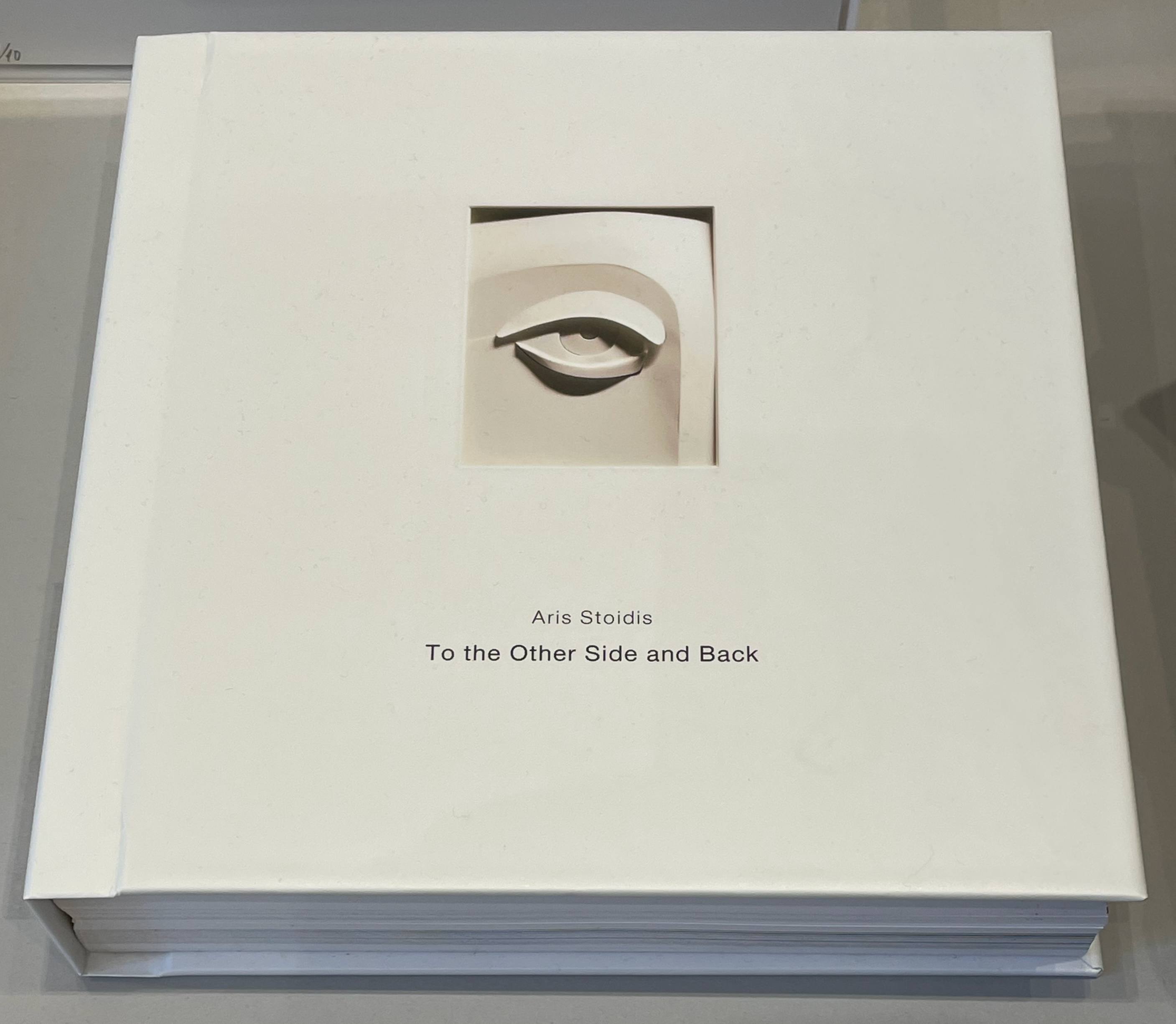
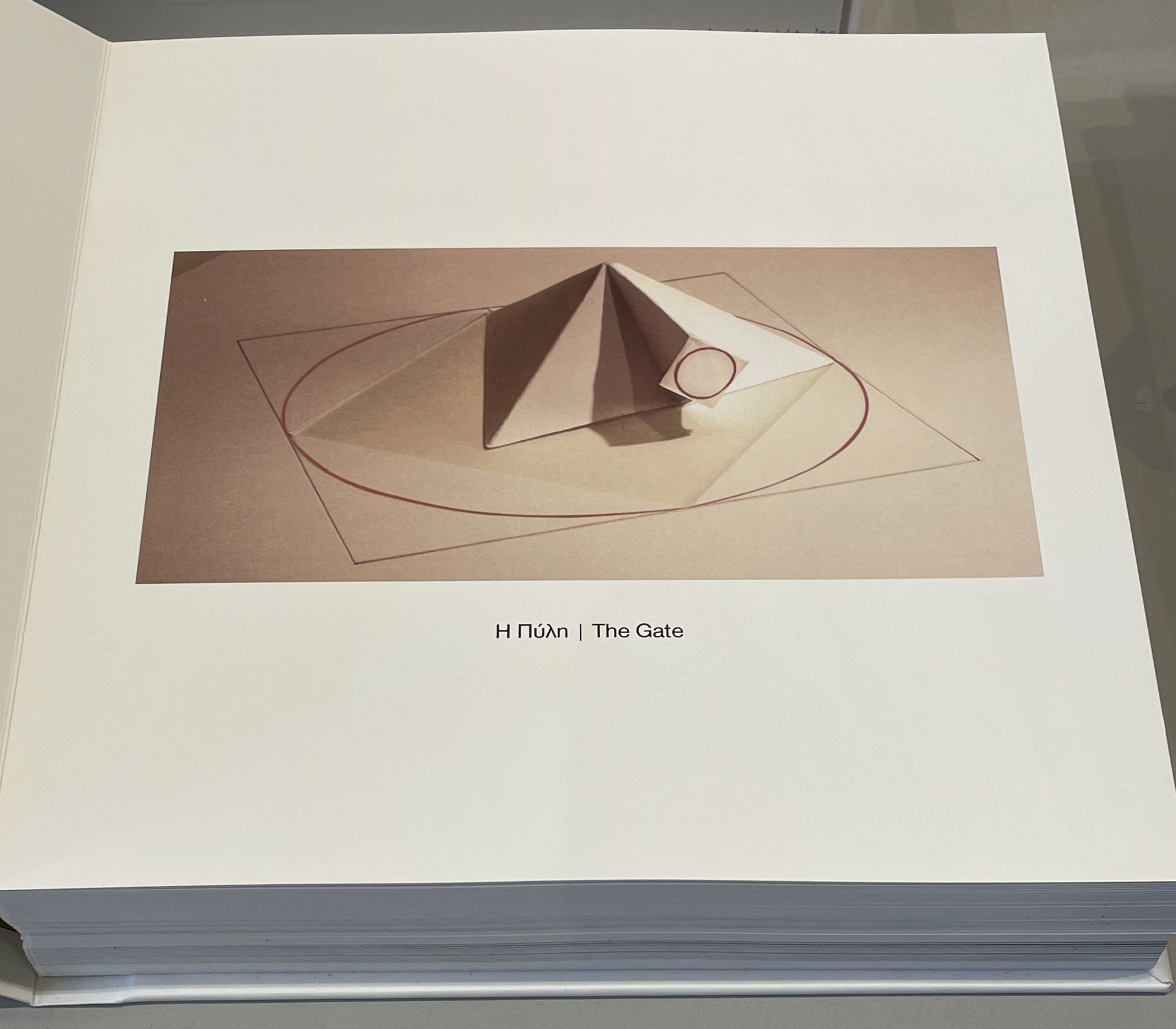
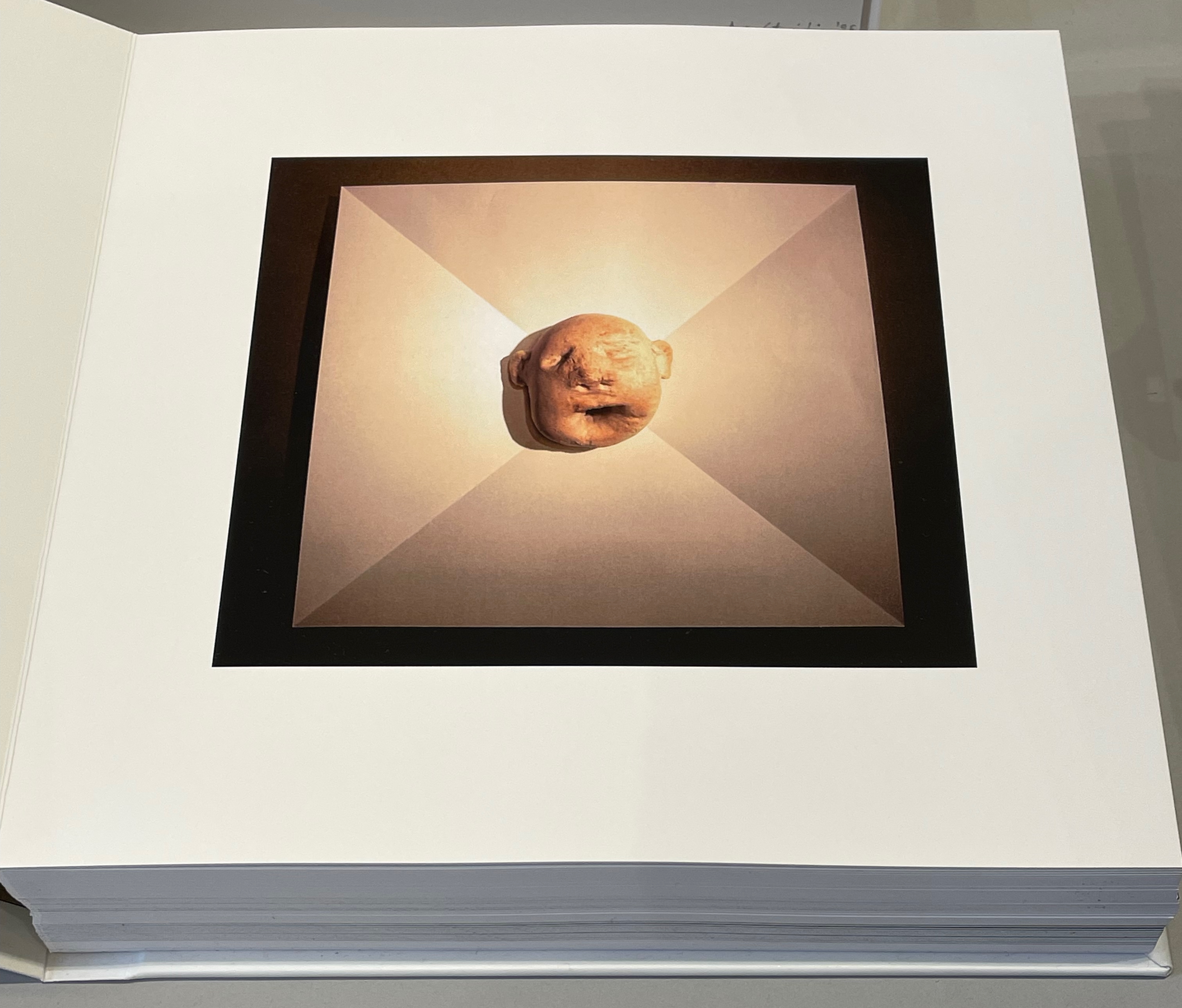
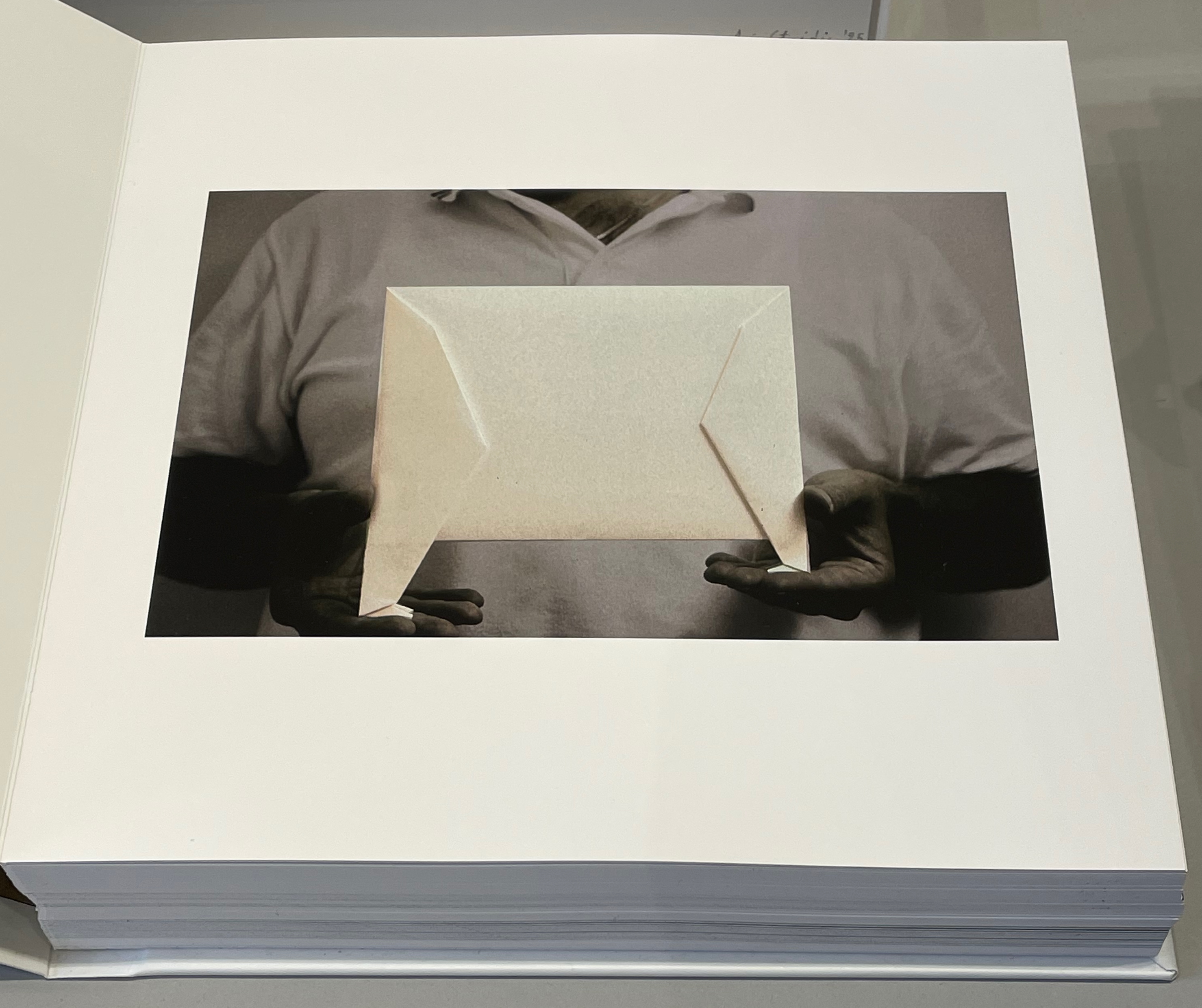
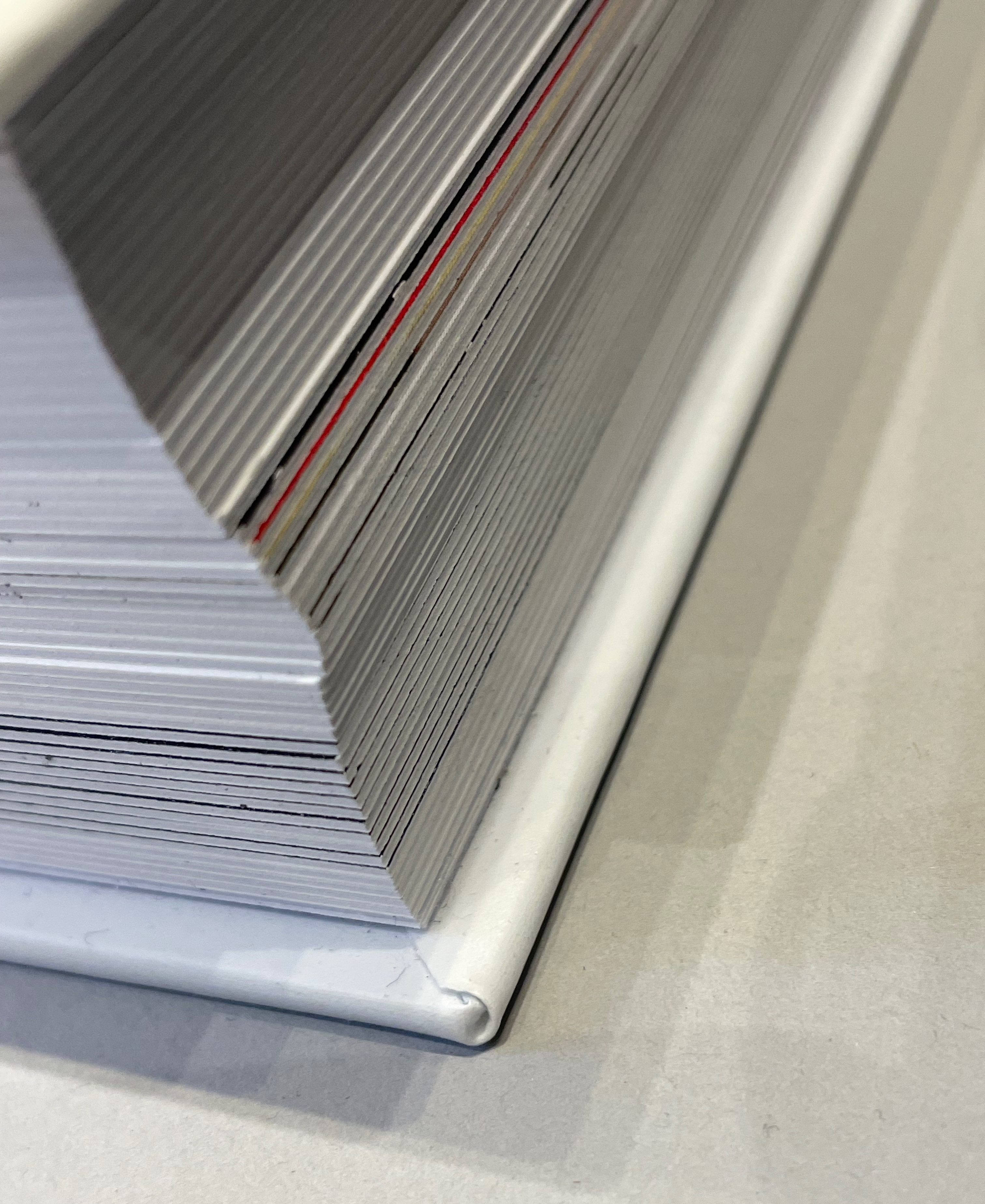
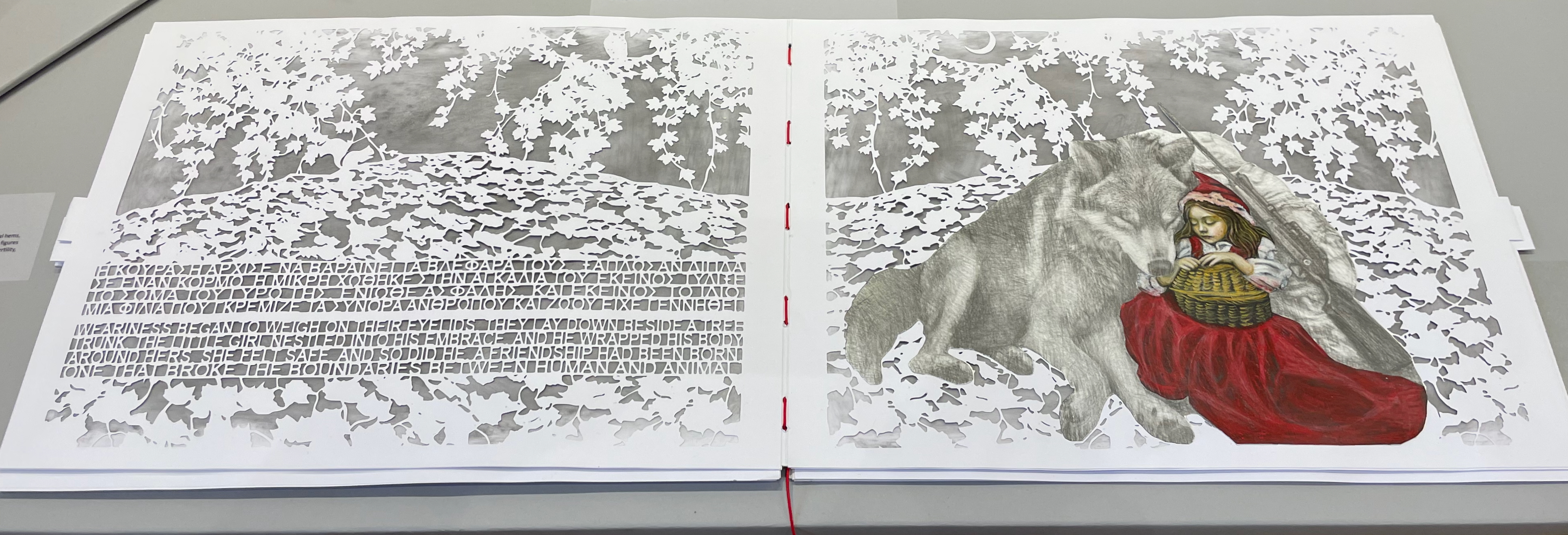
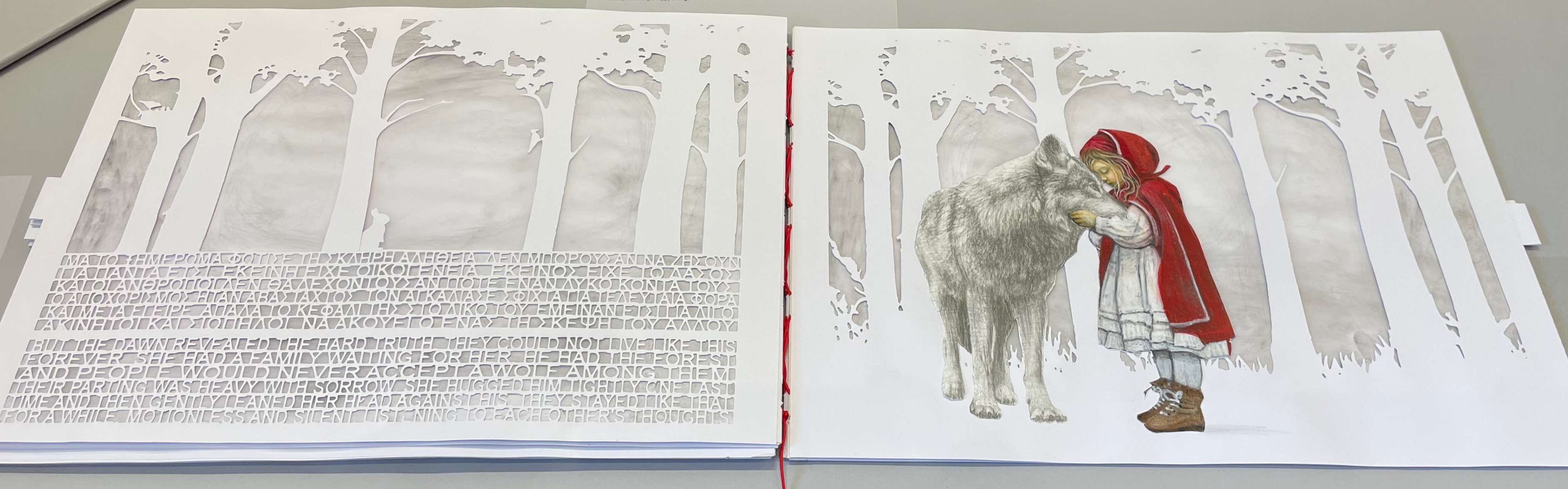
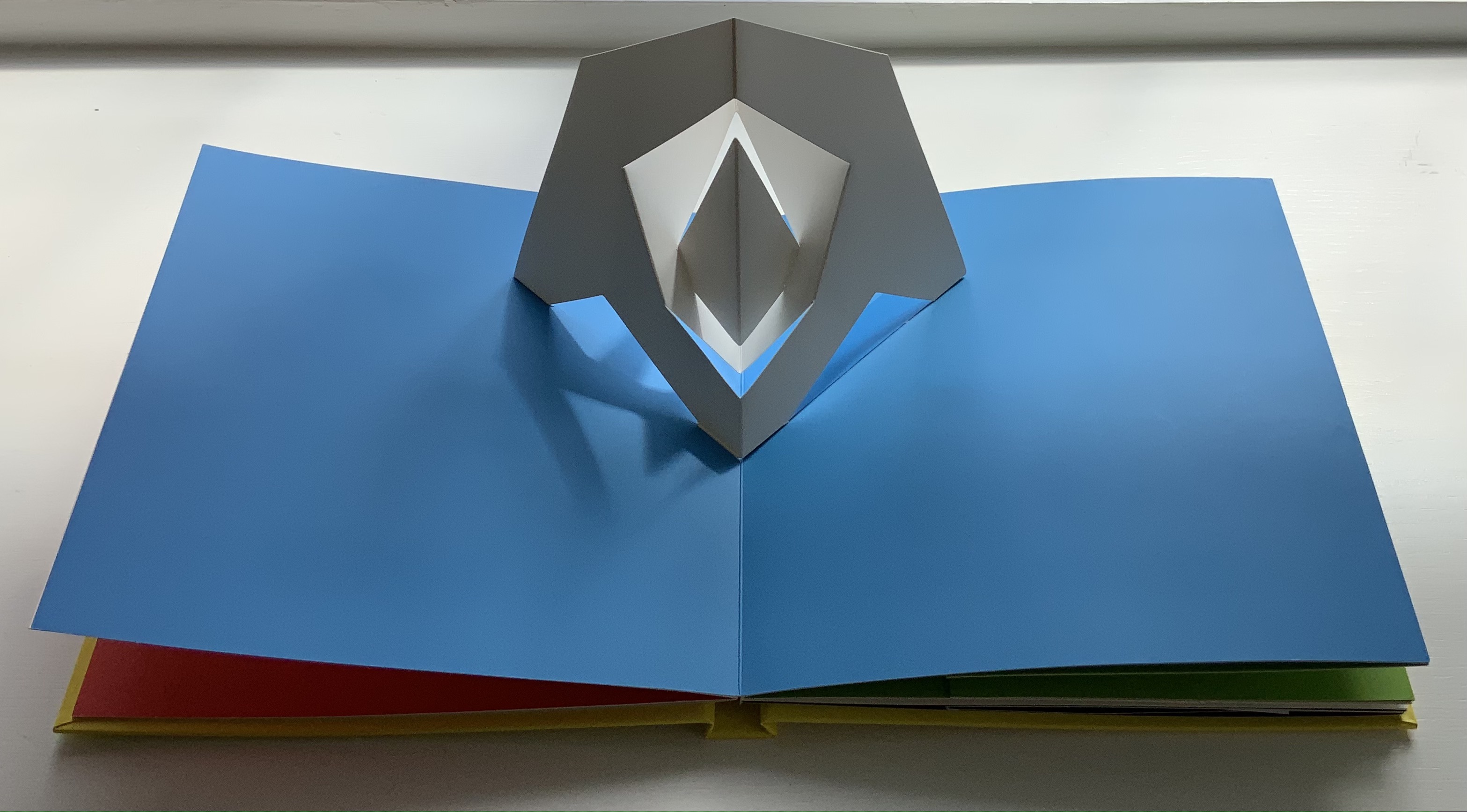
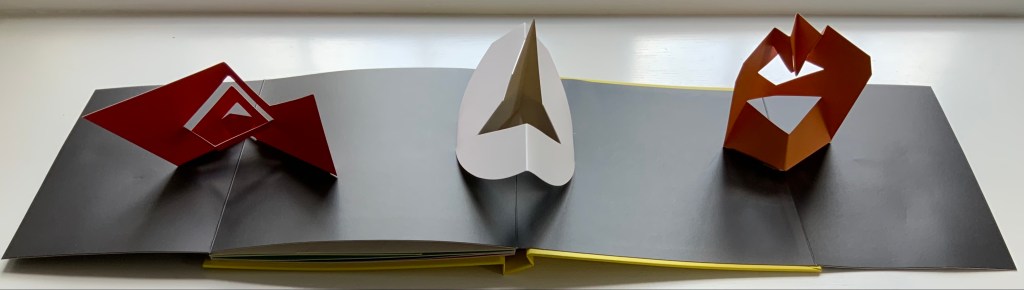
Because he works with so many different materials, it is hard to classify Julien Nédélec as an artist: A polyfabricant? With language play being a more or less constant theme: A polywright? His website labels him a plasticien, the perfect French word that captures more of the media in which he works than its usual translation “visual artist” does. In Zéro2, Antoine Marchand writes:
Everything, with him, is subject to manipulation, appropriation, and diversion, at times in the most trivial and basic way imaginable. His work is based on permanent mischief, a desire to destabilize the viewer, and be forever creating a slight discrepancy, which barely ruffles the reading of the work—well removed from the showiness of many present-day productions. He bypasses the daily round and takes us towards somewhere else that is not that far away, but all the more joyful. … What should incidentally be underscored in this young artist’s praxis is his ability to move from one medium to another, without the slightest bother or apprehension. It is impossible to pigeonhole Julien Nédélec’s praxis in any one particular medium.
Several of his works have been hosted on the Greek island of Anafi by the Association Phenomenon and the Collection Kerenidis Pepe, whose website also notes that his
practice can take many forms, from sculpture to drawing, through books and photography, with a predilection for the paper, that he uses not only as a support, but also as a material that he bends, cuts, colors, stacks or crumples. His works are the result of linguistic and formal games that reveal the artist’s fascination with the potentialities of language, with a malice that places him as an heir apparent of the Oulipo, while his taste for geometric and serial shapes brings him closer to the tradition of minimalism.
With paper as a favorite medium, there are a handful of artist’s book among the many other forms. Taken together, his artist’s books almost make up an anthology of homage to book artists from the 1960s to the present. He also belongs to the school of appropriators embracing forerunners like Bruce Nauman, Richard Prince, and Richard Pettibone and contemporaries like Michalis Pichler, Antoine Lefebvre, and Jérémie Bennequin, all of whom have embraced the self-reflexive artist’s book as an appropriate medium for appropriation. No wonder Galaad Prigent’s Zédélé Éditions, the French publisher that hosts Anne Moeglin-Delcroix and Clive Phillpot’s Reprint Series of artists’ books, is so fond of his bookworks.
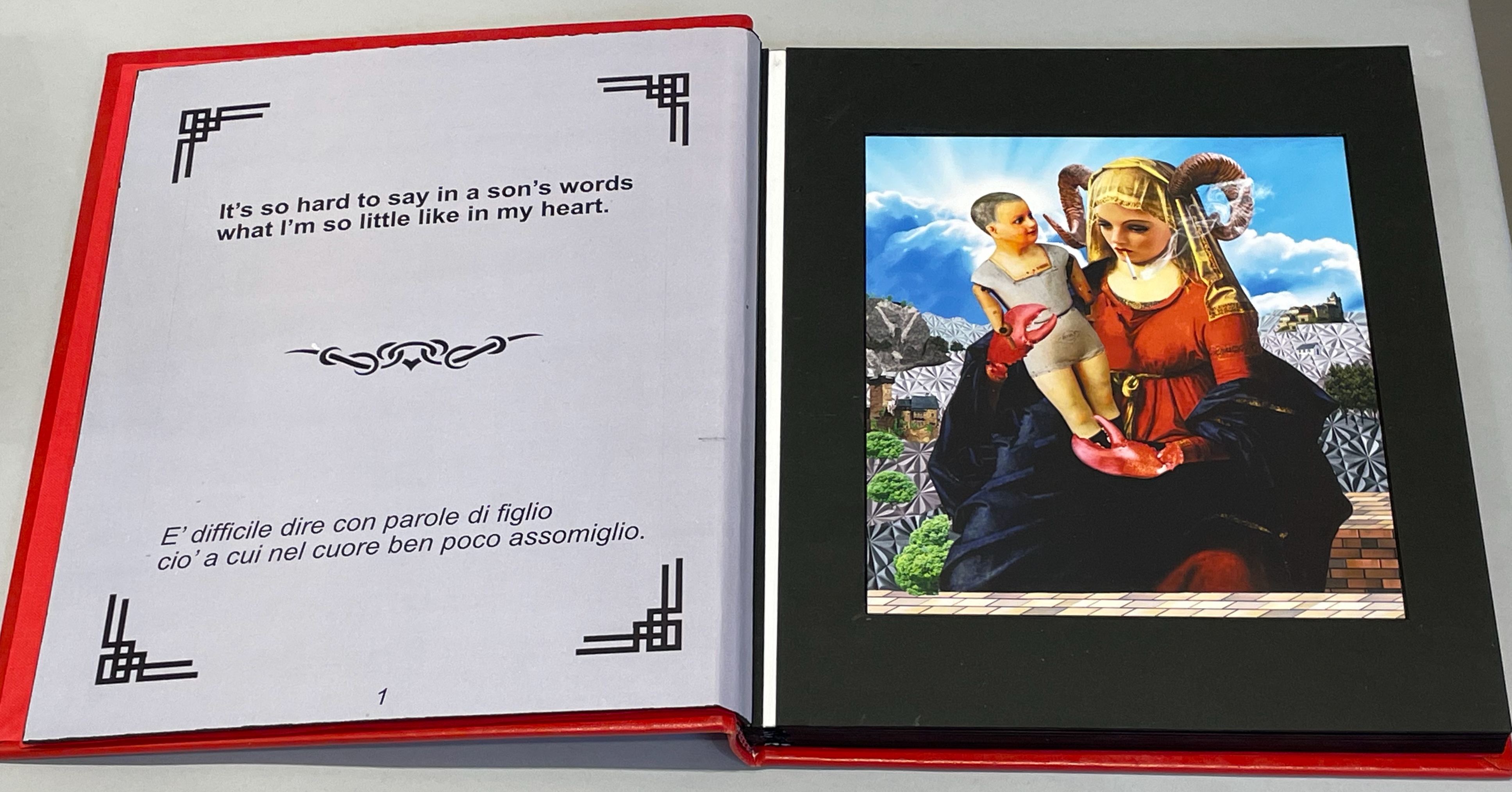
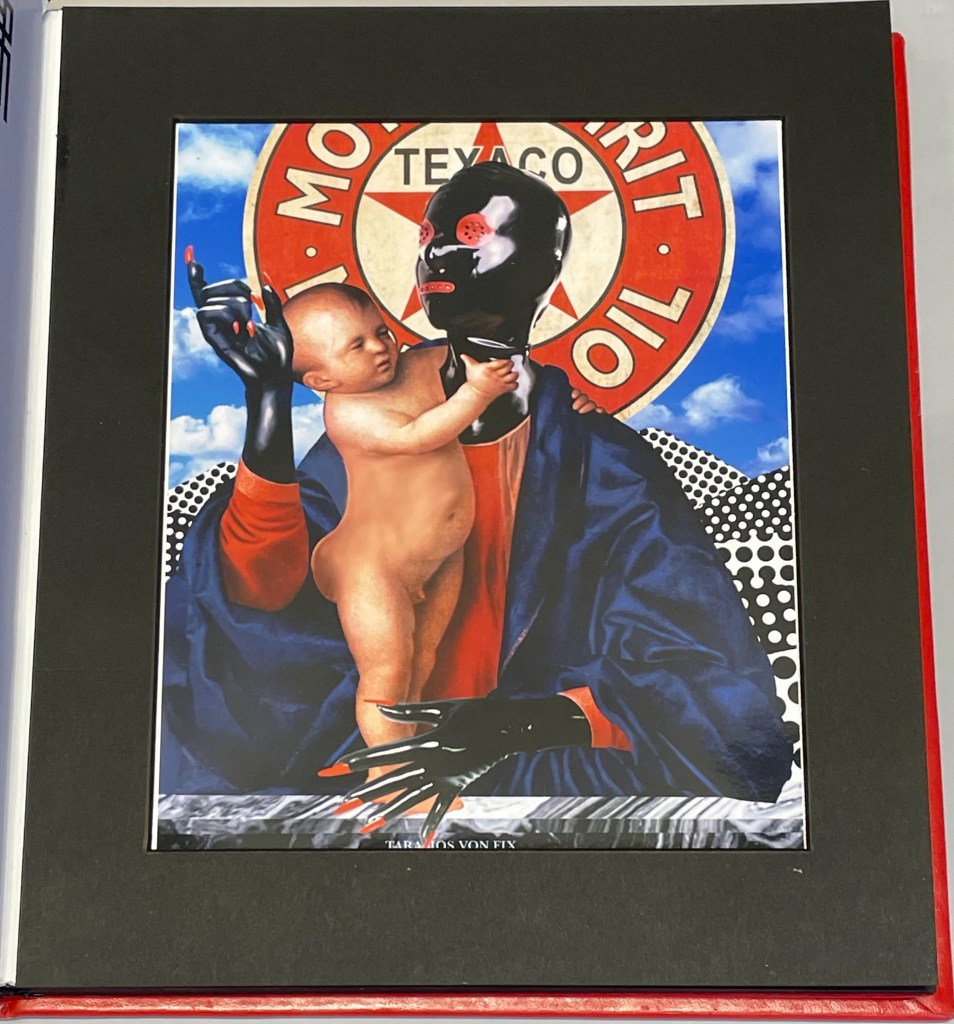
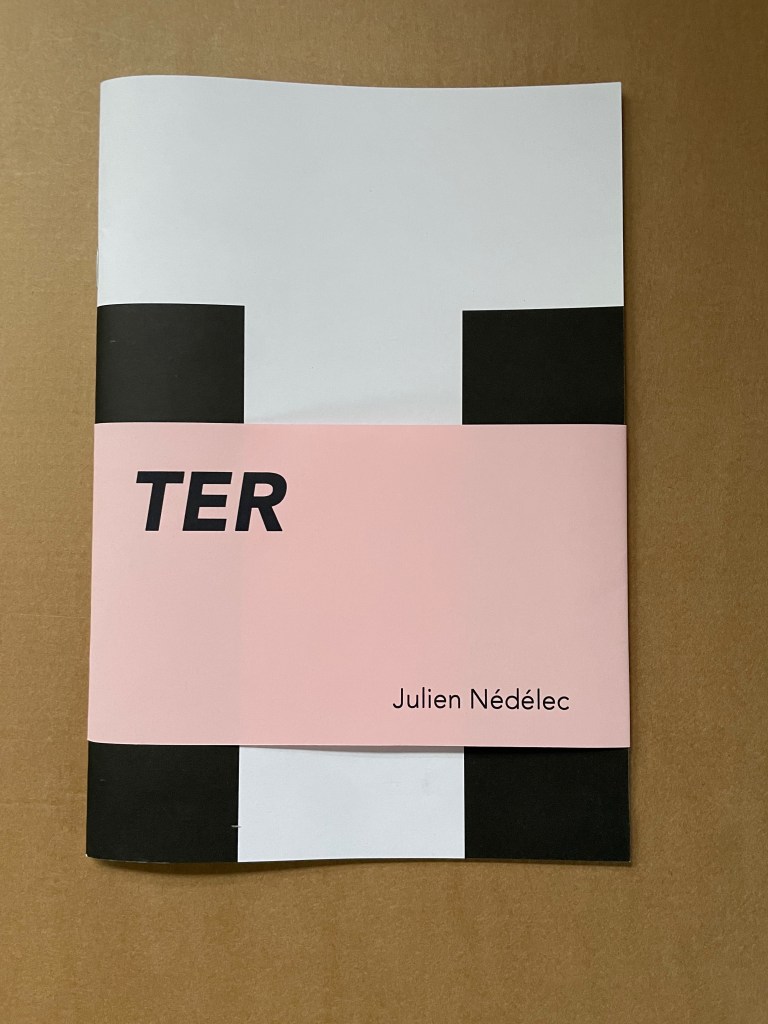
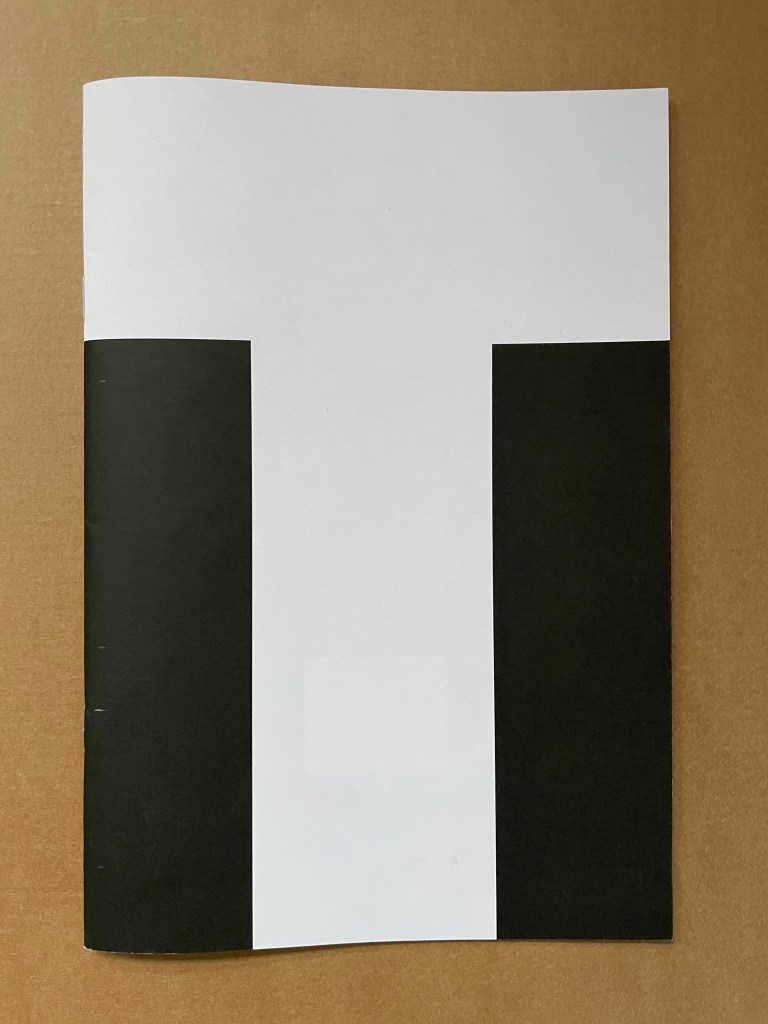
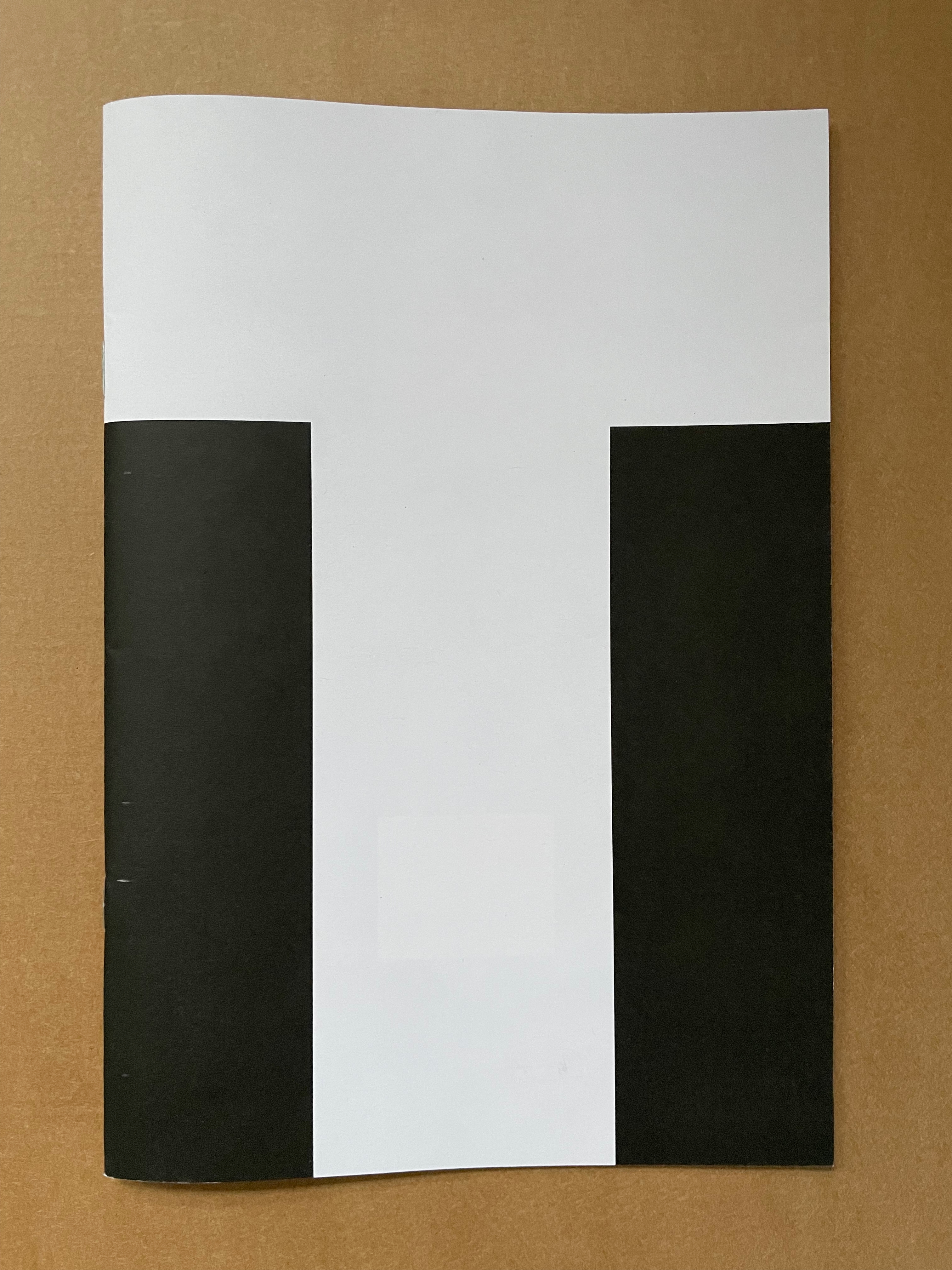
TER (2021)
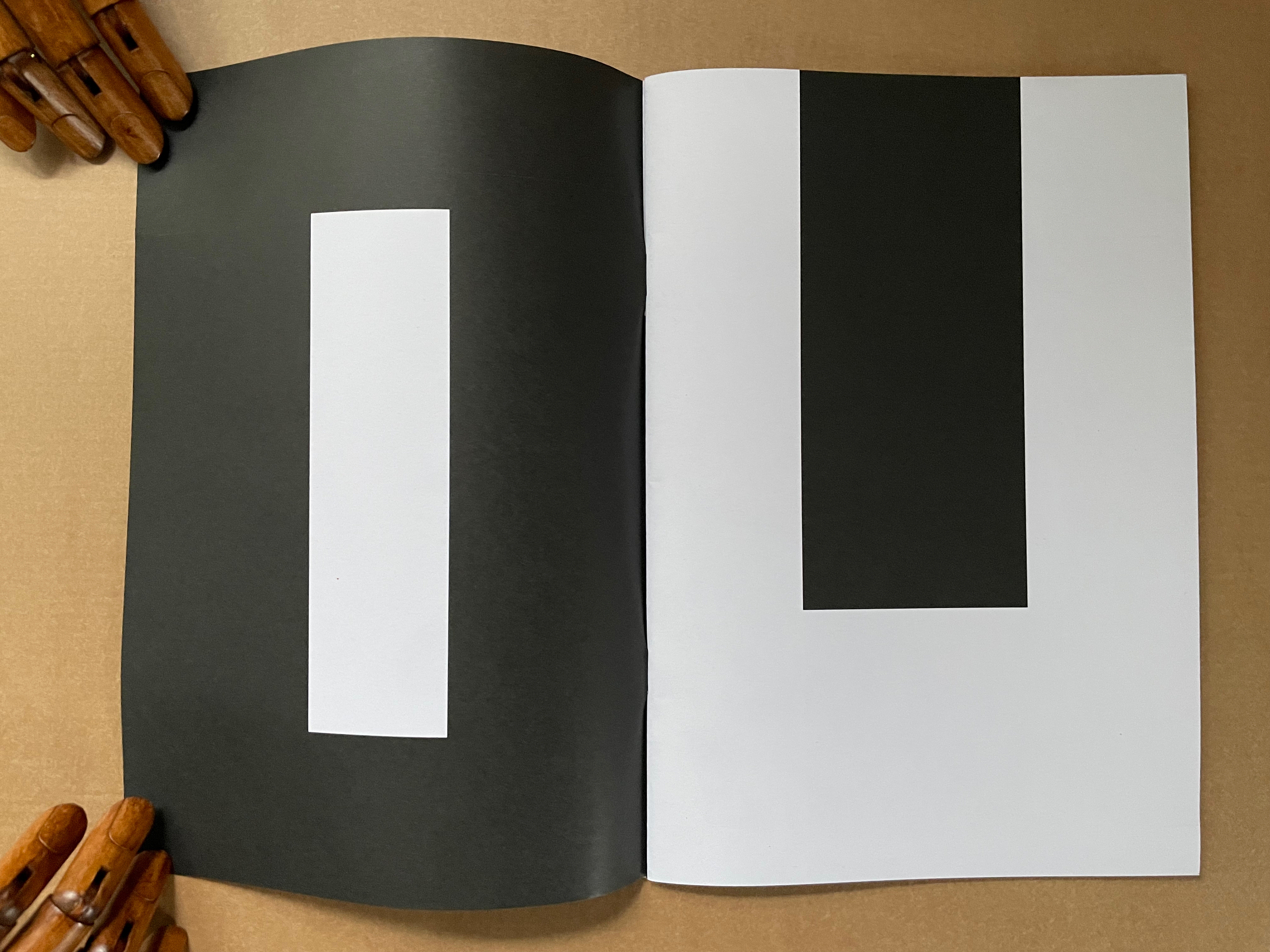
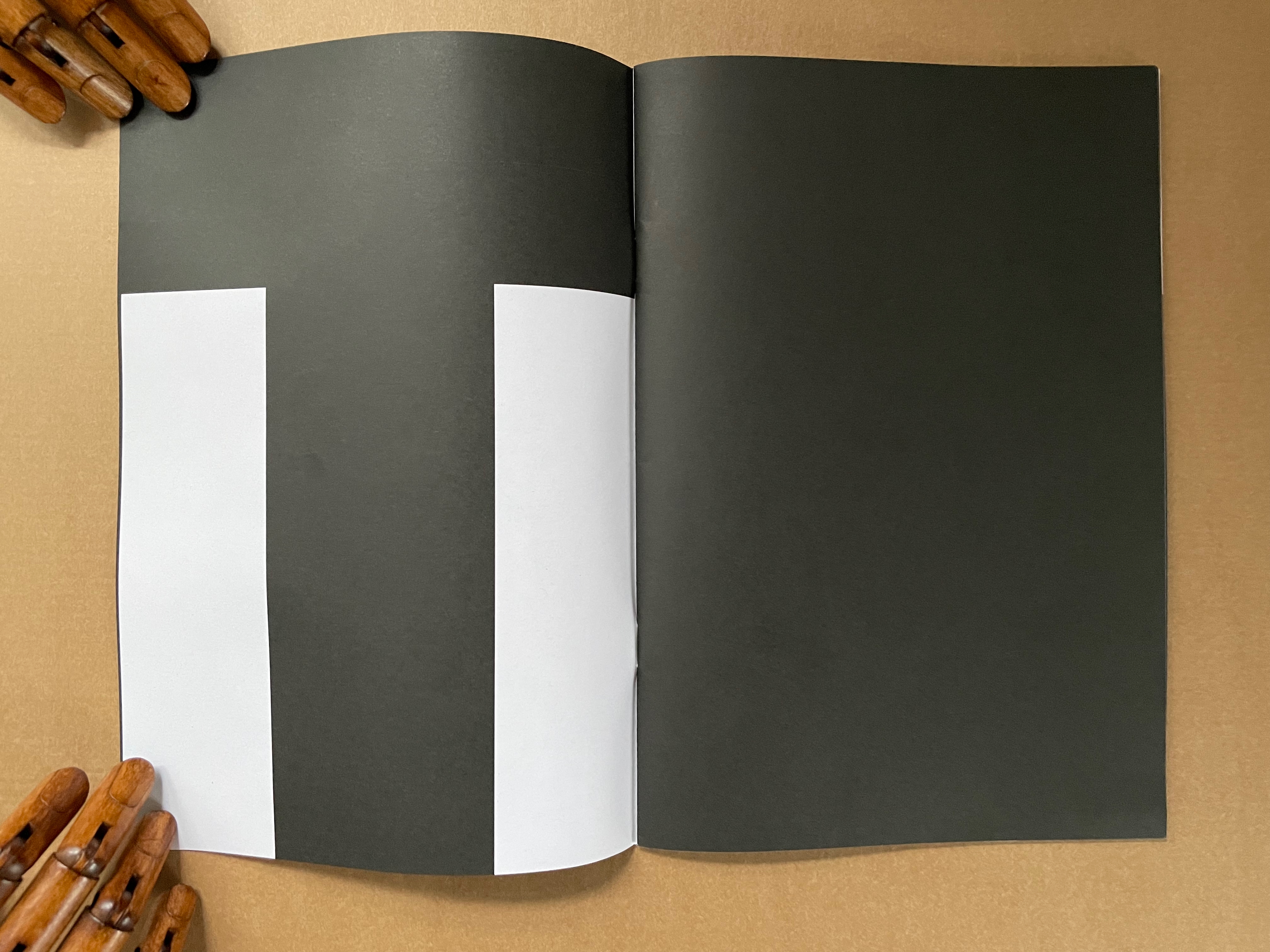
TER (2021) Julien Nédélec Softcover, saddle stitch with staples. H240 W165 mm. [36] pages. Acquired from Zédélé Éditions, 21 September 2024. Photos: Books On Books Collection. Displayed with the artist’s permission.
“Tout”
The sentences to be deciphered from these full-page-bleed letters are Tout a été redit. Tout a été refait, which, in English, would be “Everything has been said. Everything has been done.” But it also has the echoes of a French children’s song, “Tout ce que je fais“:
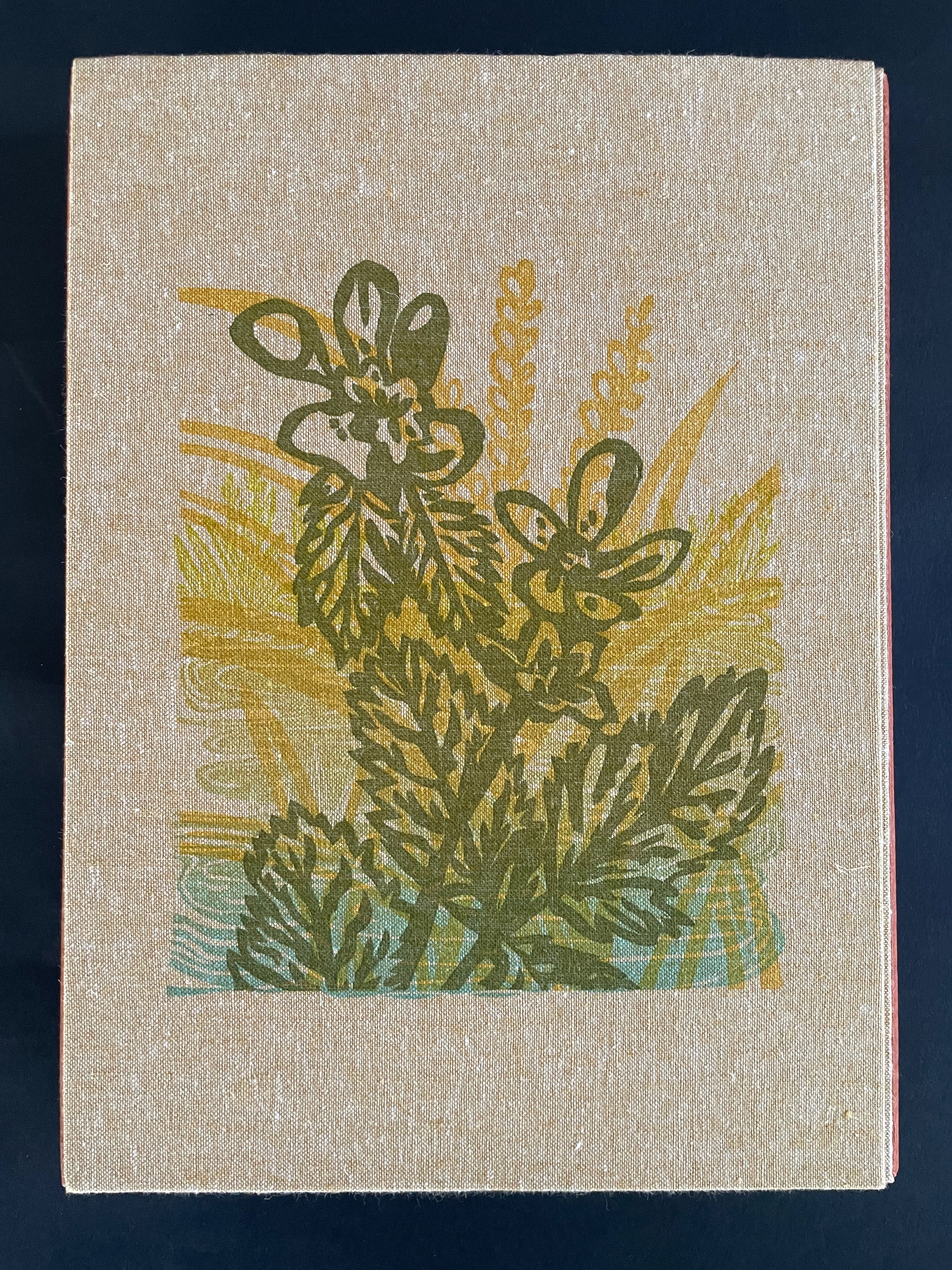
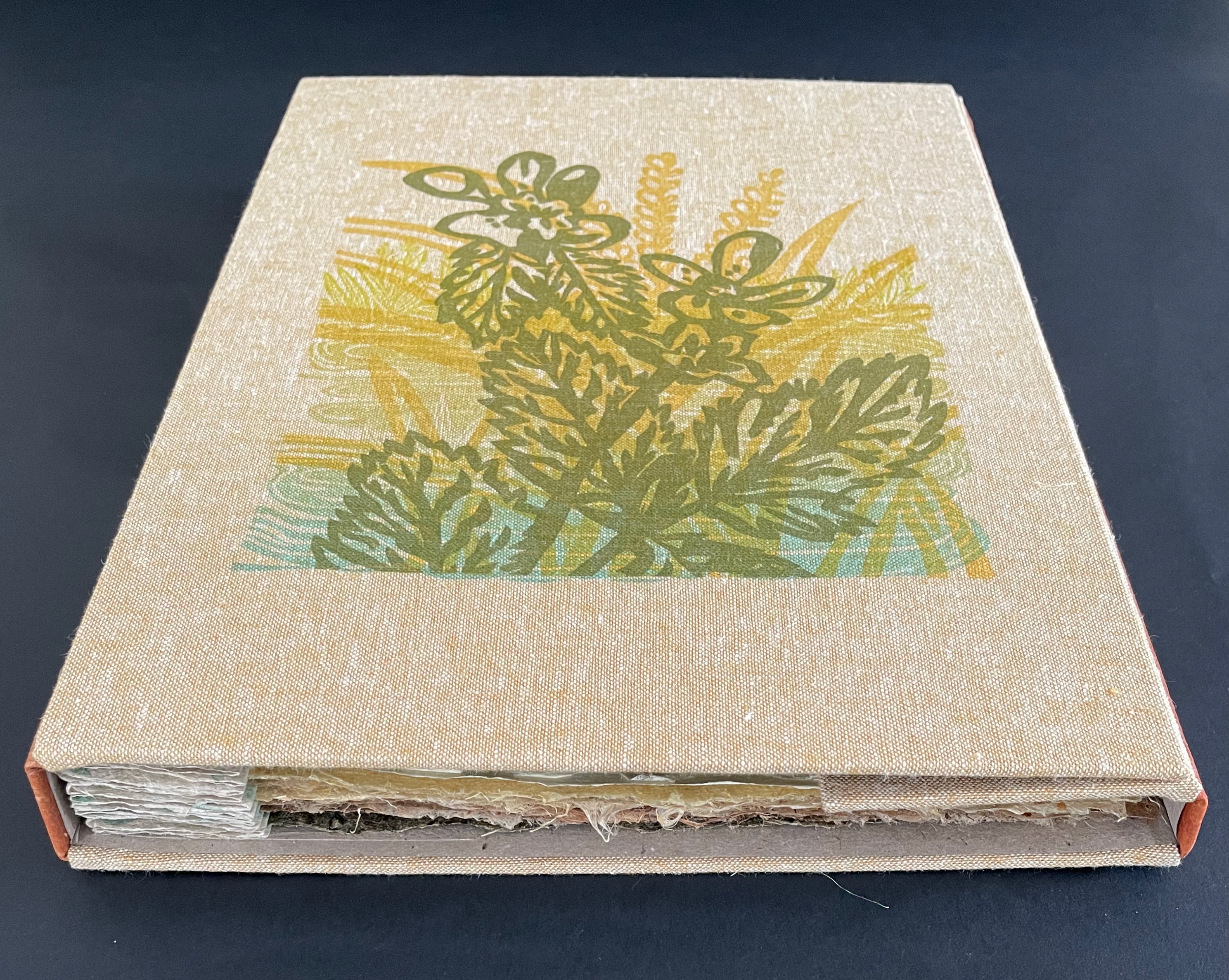
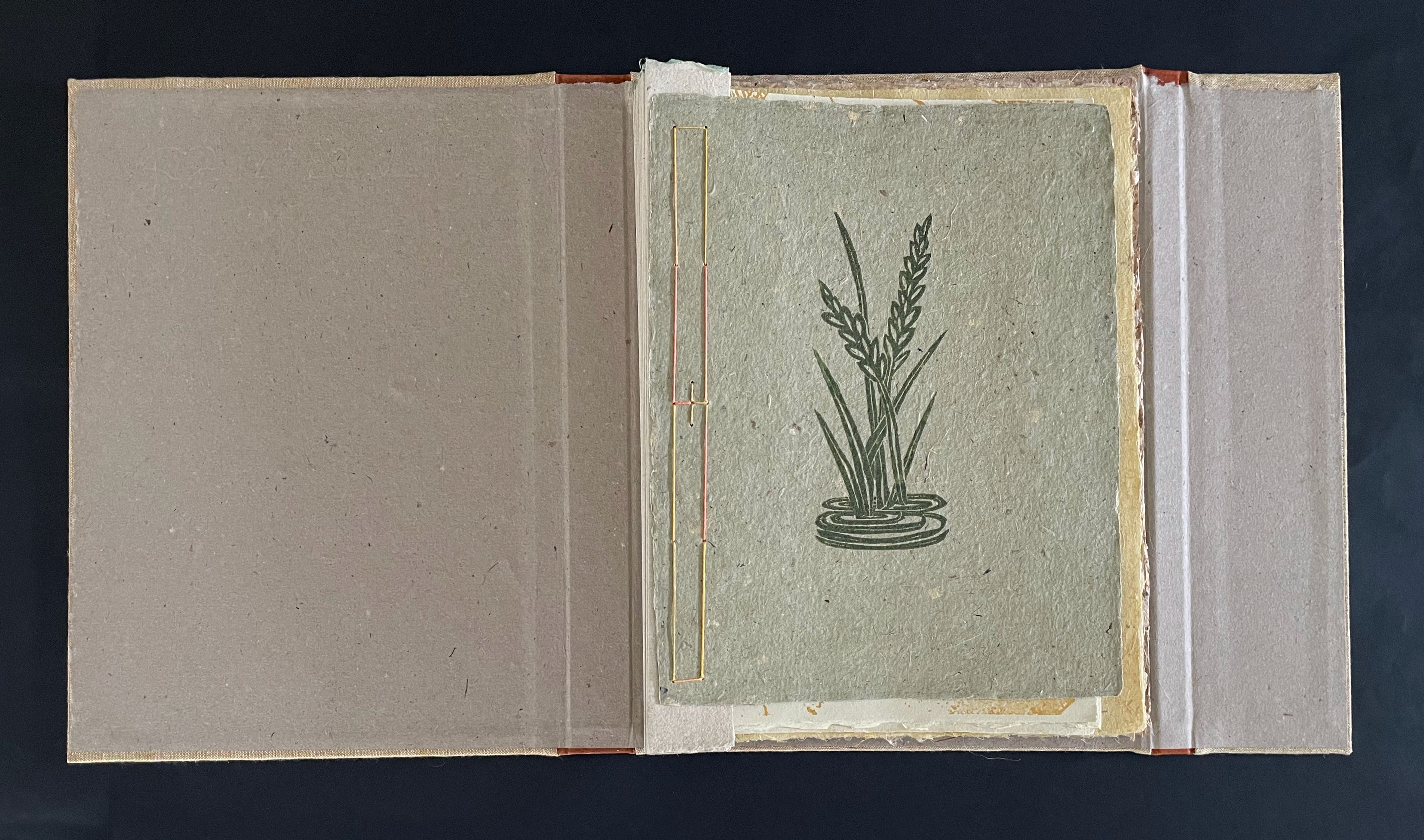
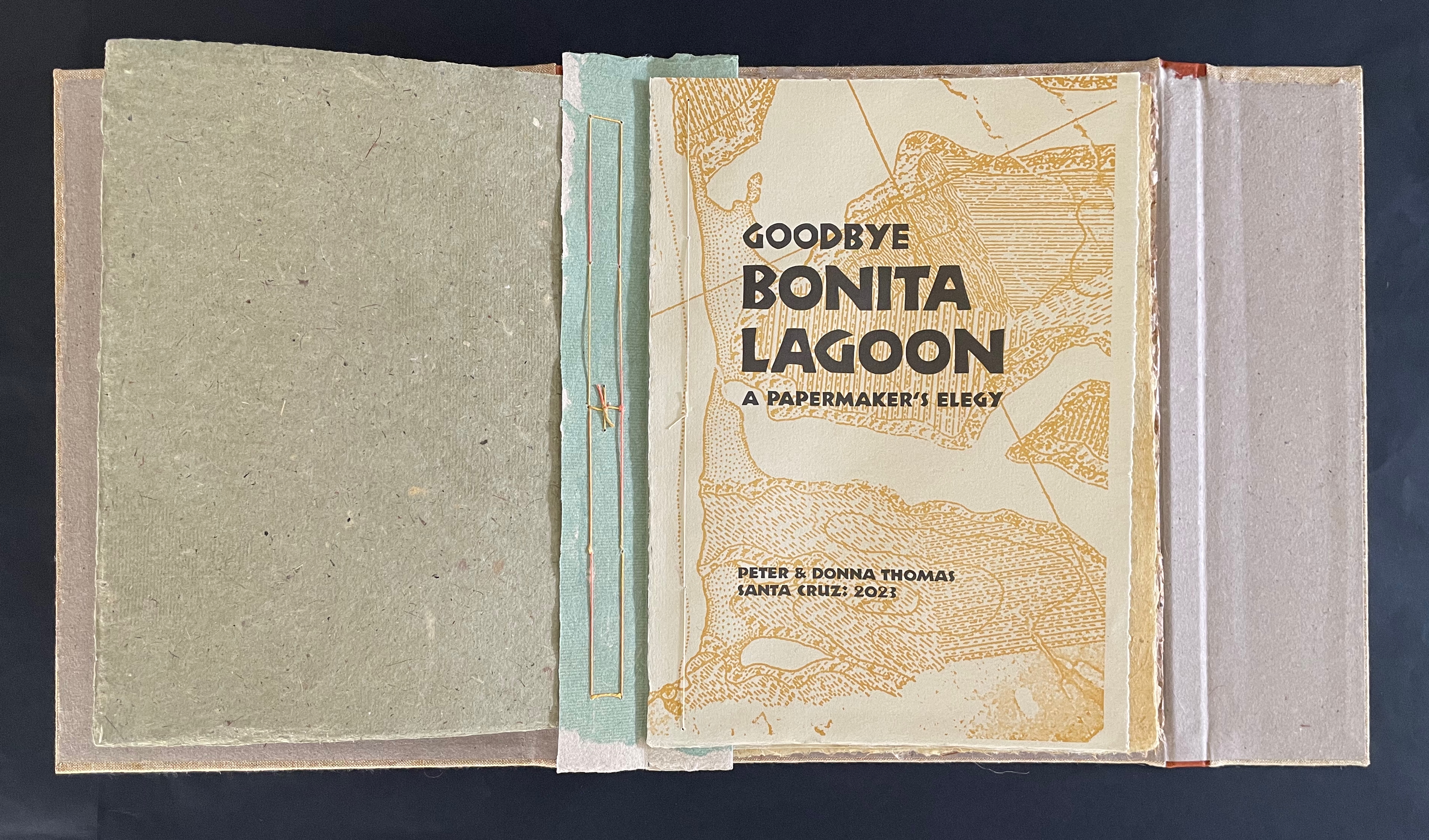
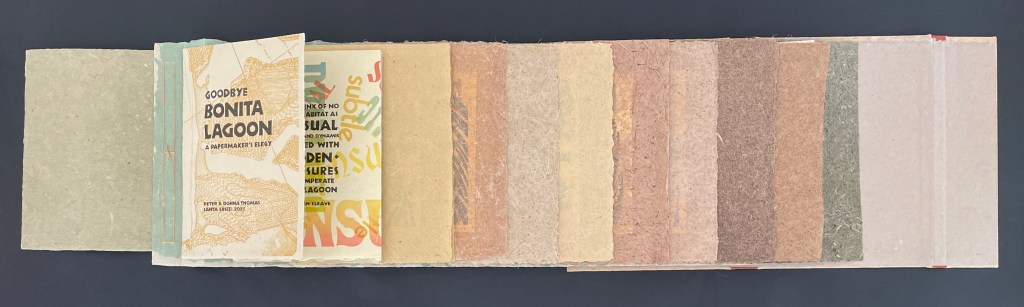
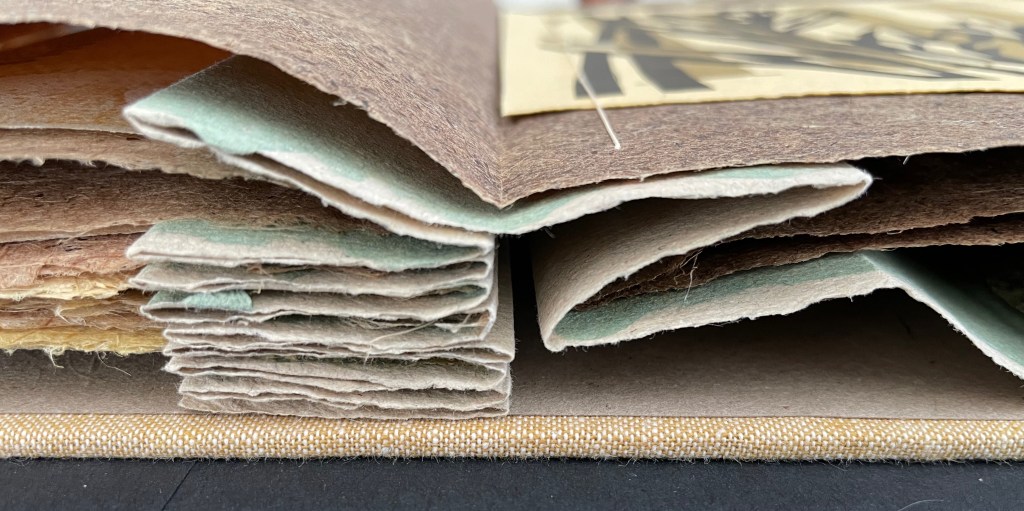
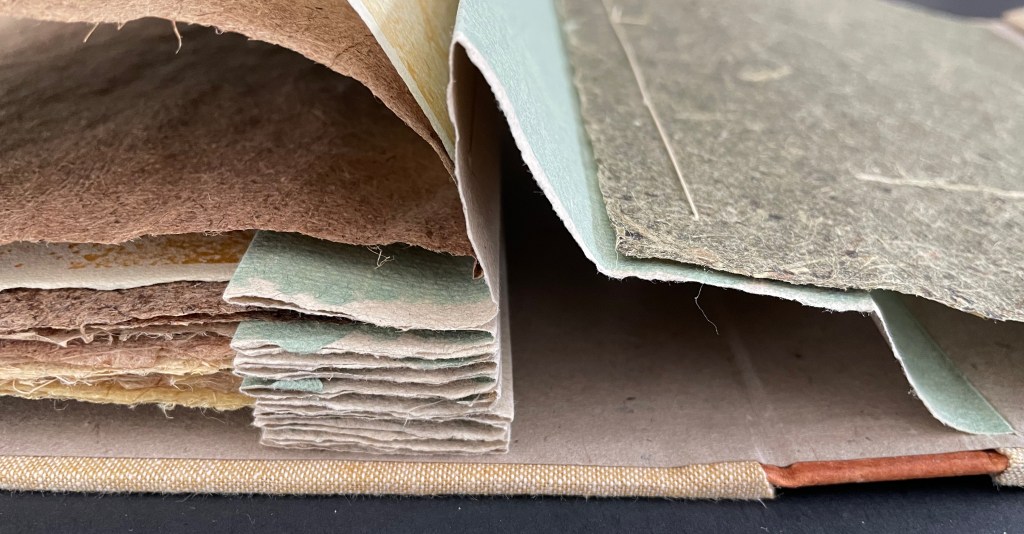
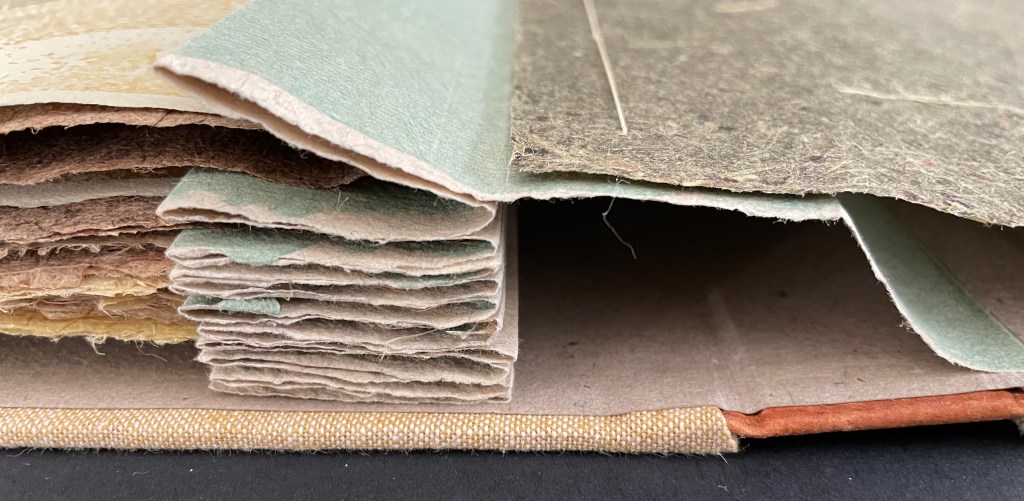
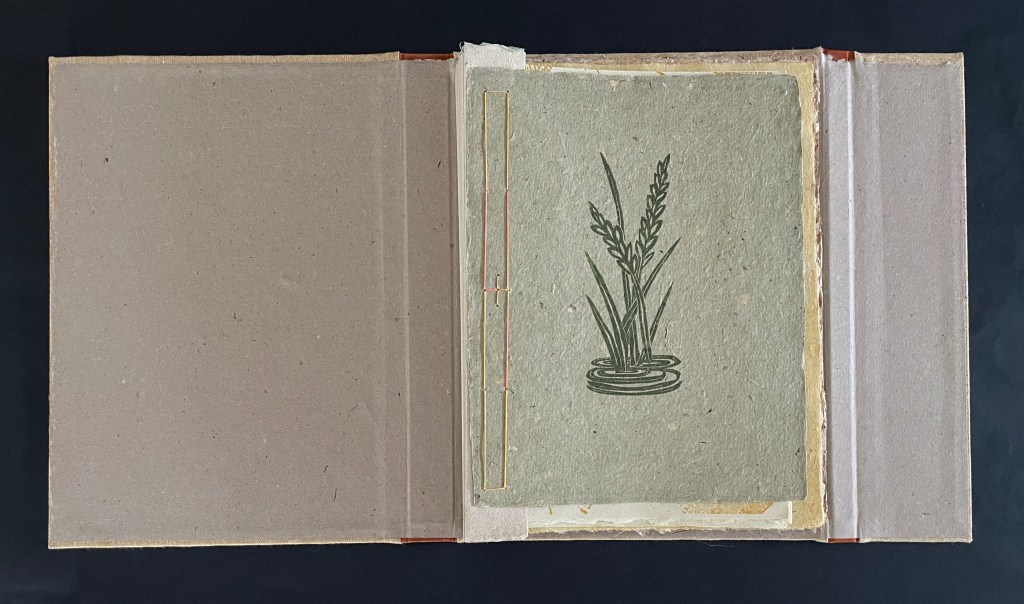
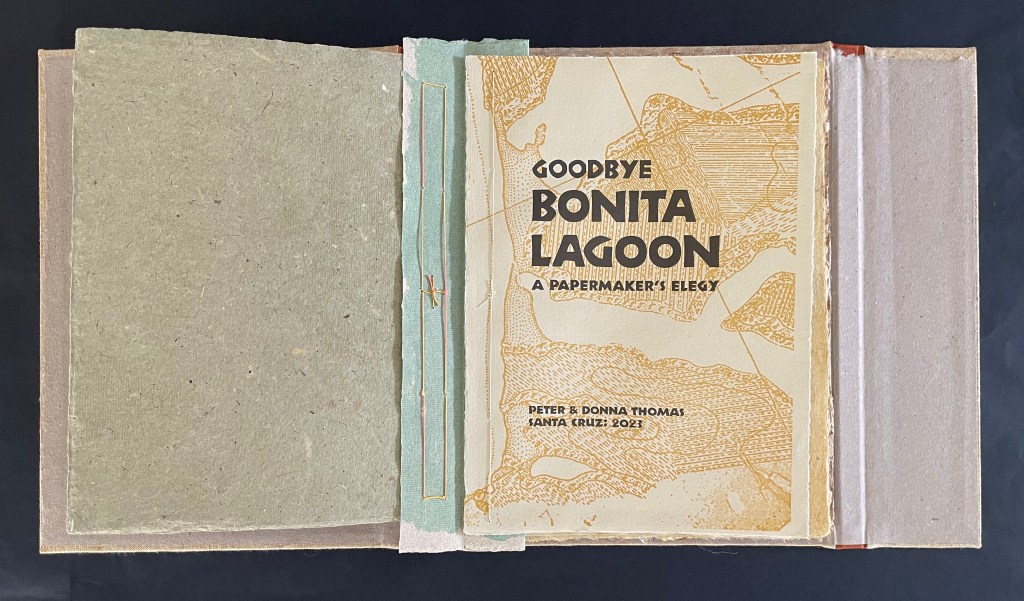
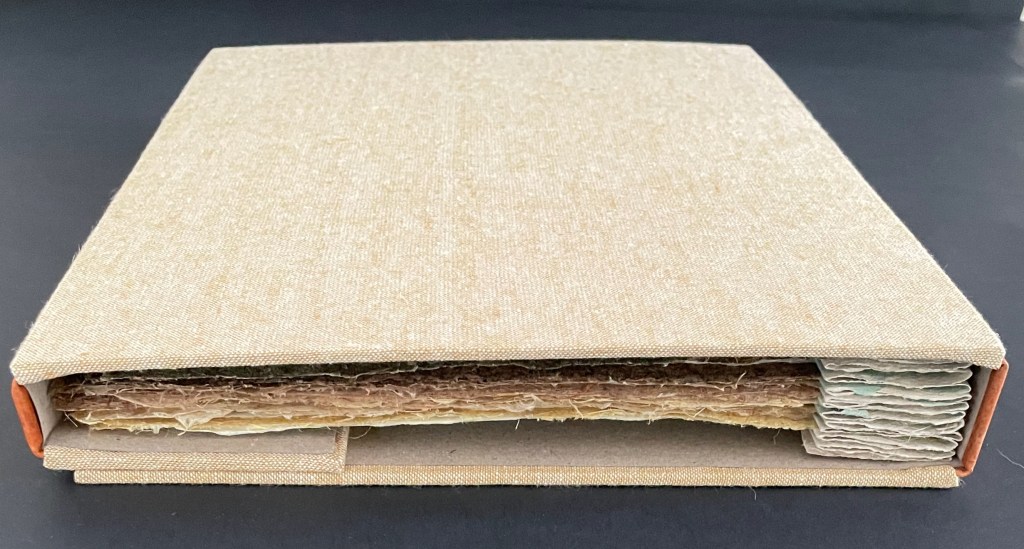
Goodbye Bonita Lagoon: A Papermaker’s Elegy(2023) Peter and Donna Thomas and Guy Van Cleave. Tri-fold binding with 2 leather spines and sewn accordion binding structure, cloth over boards, light green linen cloth letterpress printed with three color linocut print on front cover, and title blind stamped on spine in brown foil. H300 x W225 mm. 80 pages. Edition of 30, of which this is #27. Acquired from the artists, 5 February 2024. Photos: Books On Books Collection.
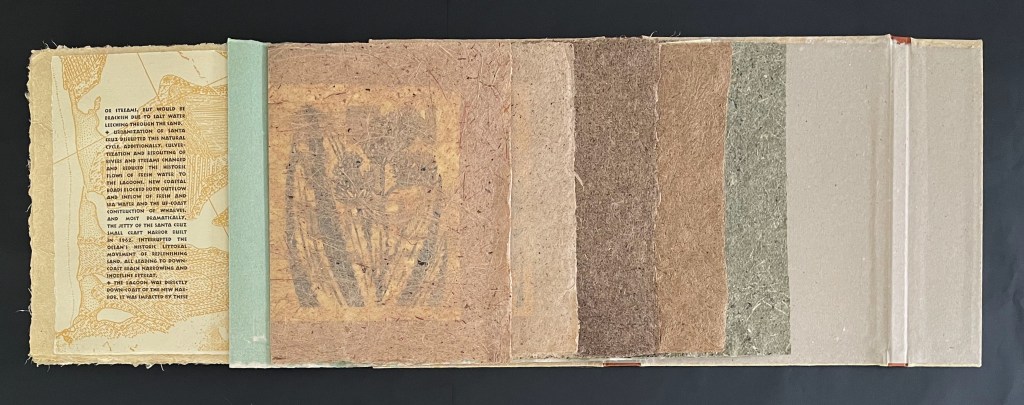
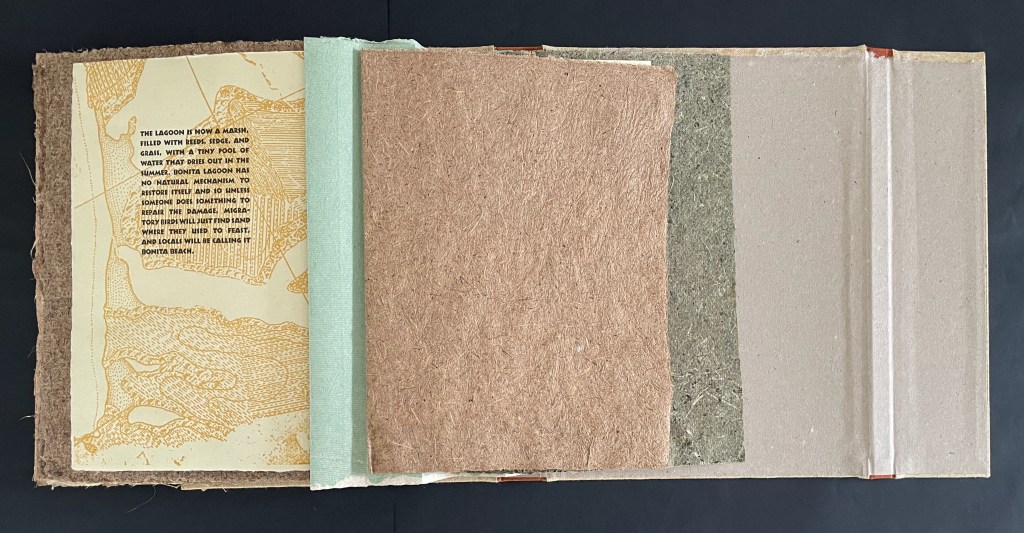
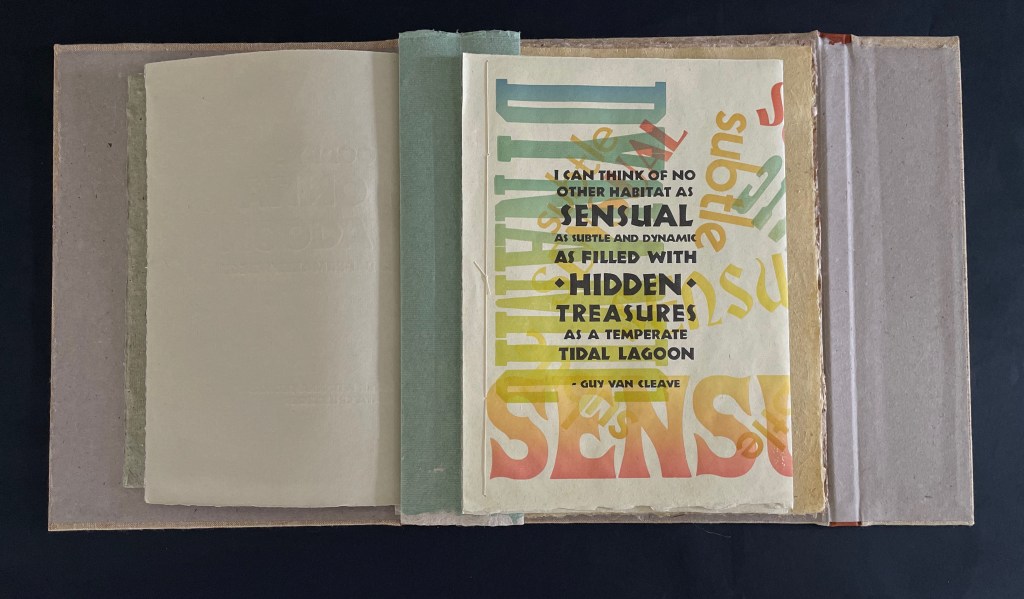
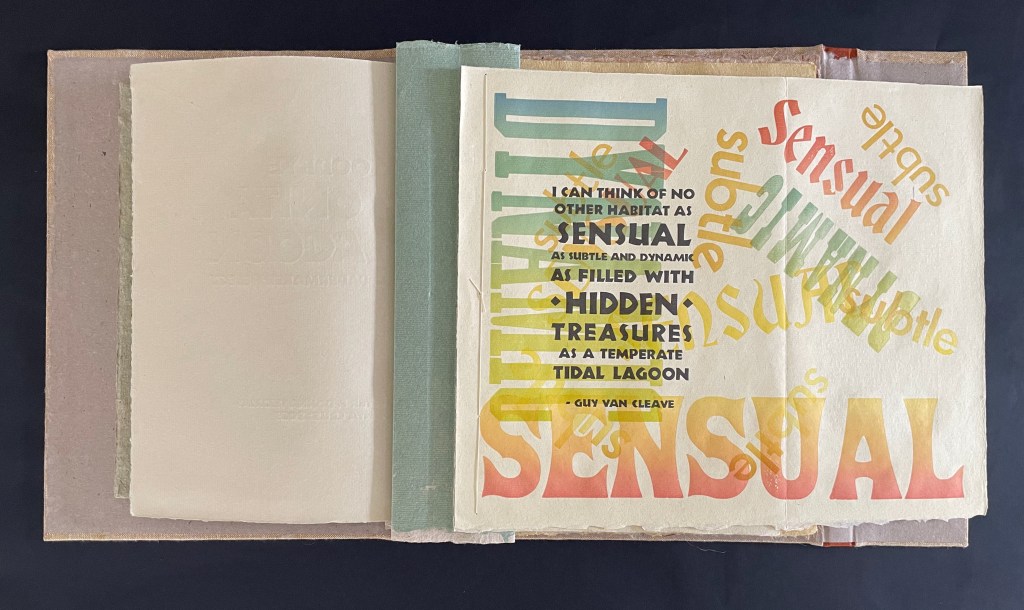
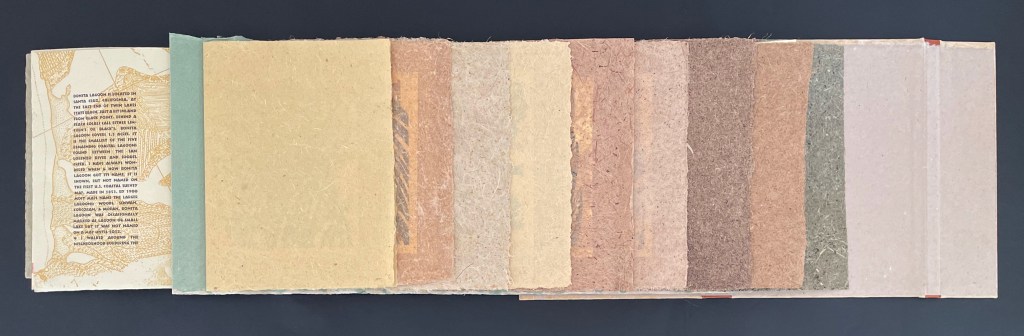
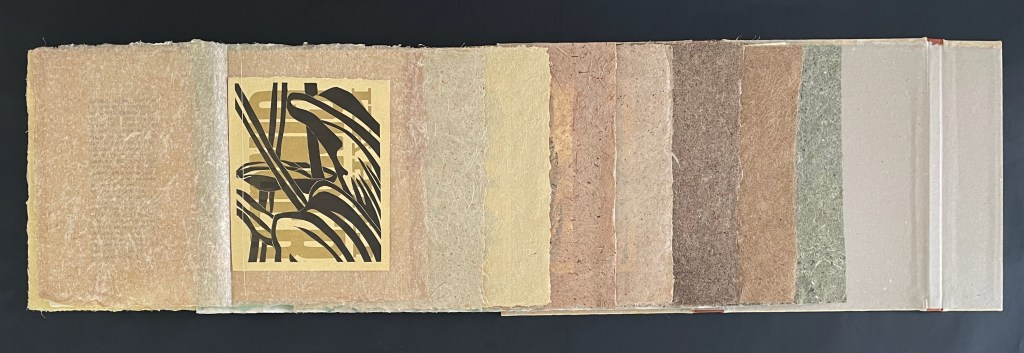
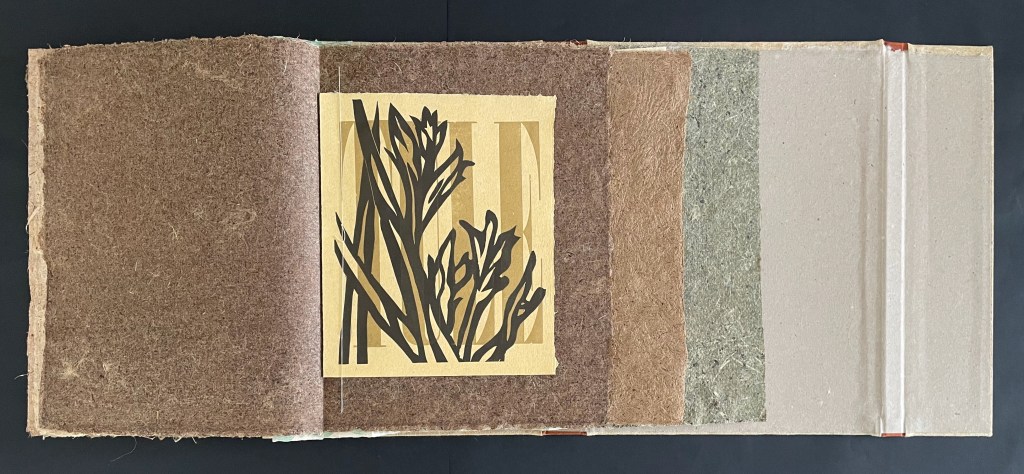
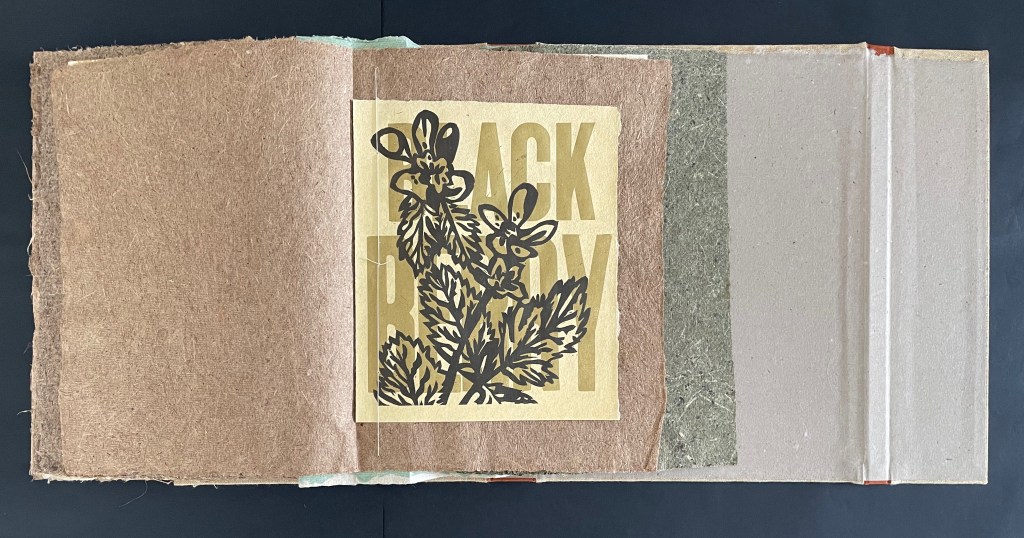
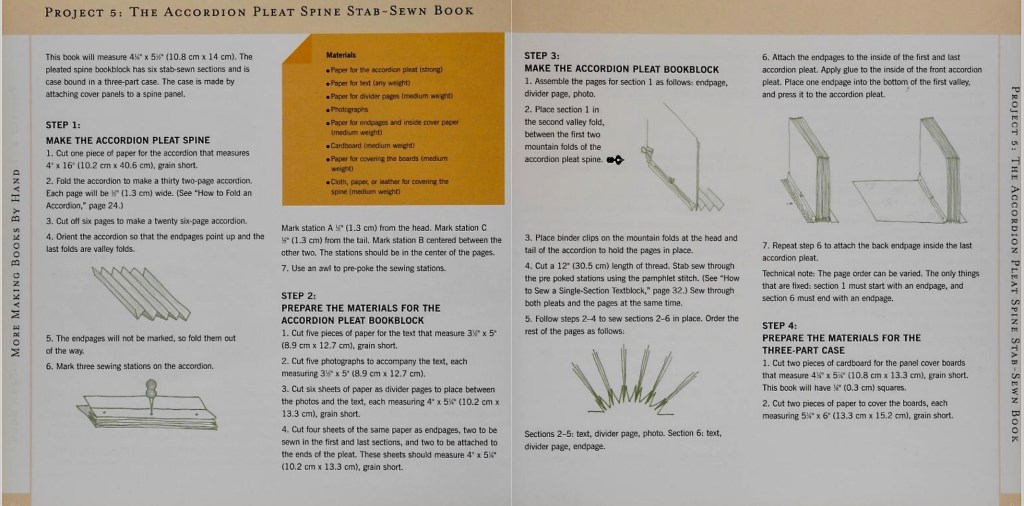
To read Goodbye Bonita Lagoon properly, you must read its text, its images, and its handmade papers as a whole. To do that, you need to let the binding structure guide you. The Thomases call the structure an accordion pleat spine stab-sewn book and have described and illustrated it in More Making Books by Hand (2004). Although the basics are the same –stab-sewing two single sheets of handmade paper and a single plant-paper folio to the recto or ascent side of each mountain fold in the accordion pleat spine — Goodbye Bonita Lagoon extends like a flag book, and as each gathering is turned to the left, the accordion pulls the left hand side of the book toward the right, tucking itself atop the previously turned sheets and folios. Below are the fully extended book, the extended book with the first five gatherings turned to the left, and the extended book with all the gatherings except the last turned. As the book progresses, the width of the extension narrows.
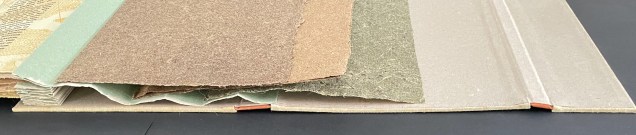
The photos below show the accordion pleat spine’s functioning end on.
Turning the next to last gathering (blackberry paper folio and single sheets) to show the spine’s function end on. Note how the right-hand edge of the light green accordion pleat is fixed to the inside back cover. As the gatherings turn to the left, the accumulated accordion has to move rightwards.
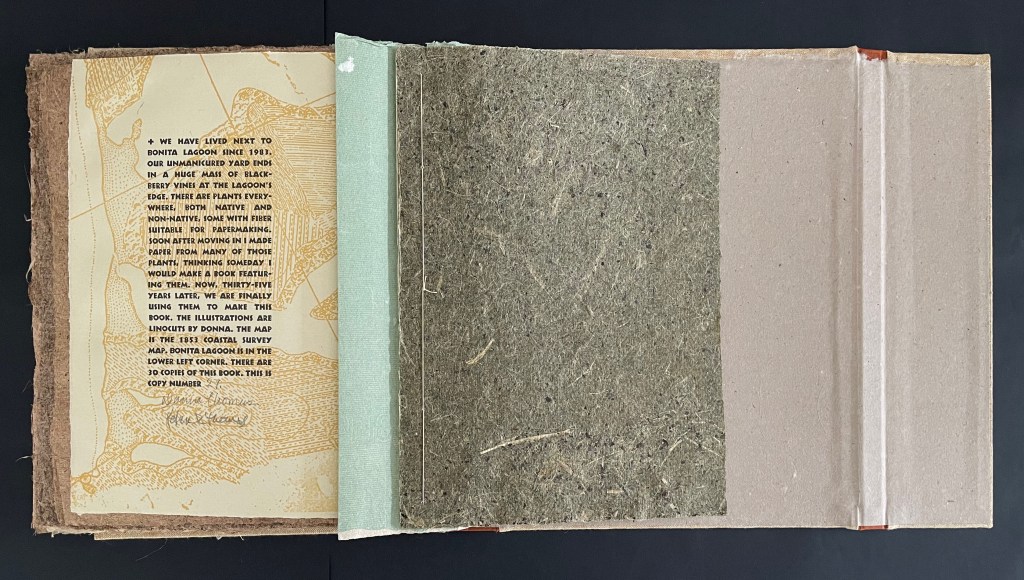
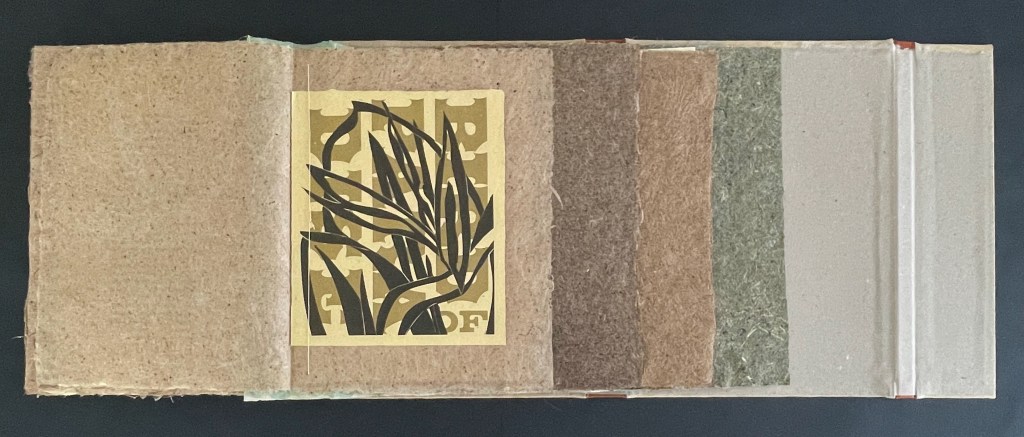
Like the extended width’s narrowing as the book comes to its close, Bonita Lagoon, too, has been collapsing. Elegiacally, each of the plant-paper folios is made from a plant gathered from the lagoon in the past. Inside each of the plant-paper folios, a single sheet insert carries a linocut of the plant and its name printed with wood type. On the back of each plant-paper folio, a single sheet insert bears text about Bonita Lagoon.
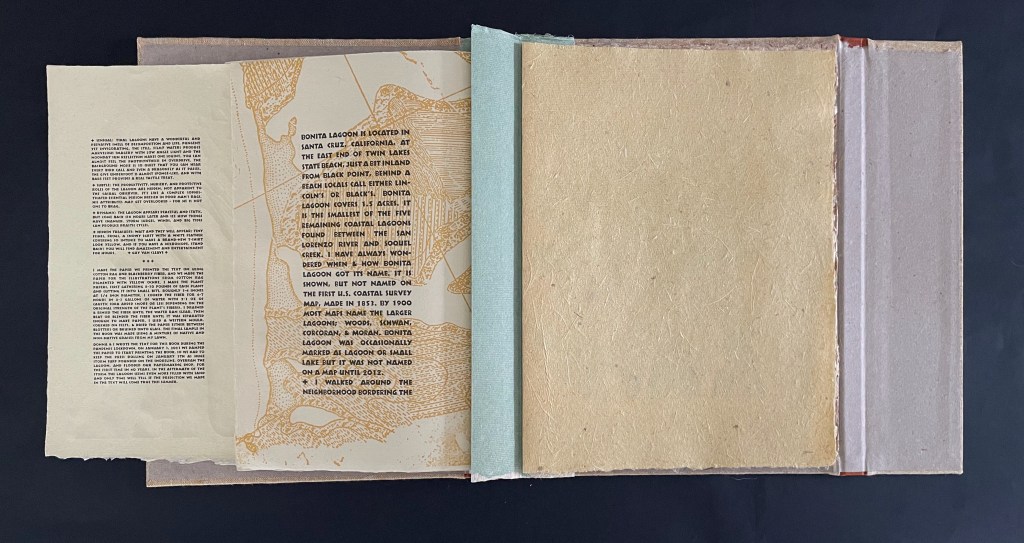
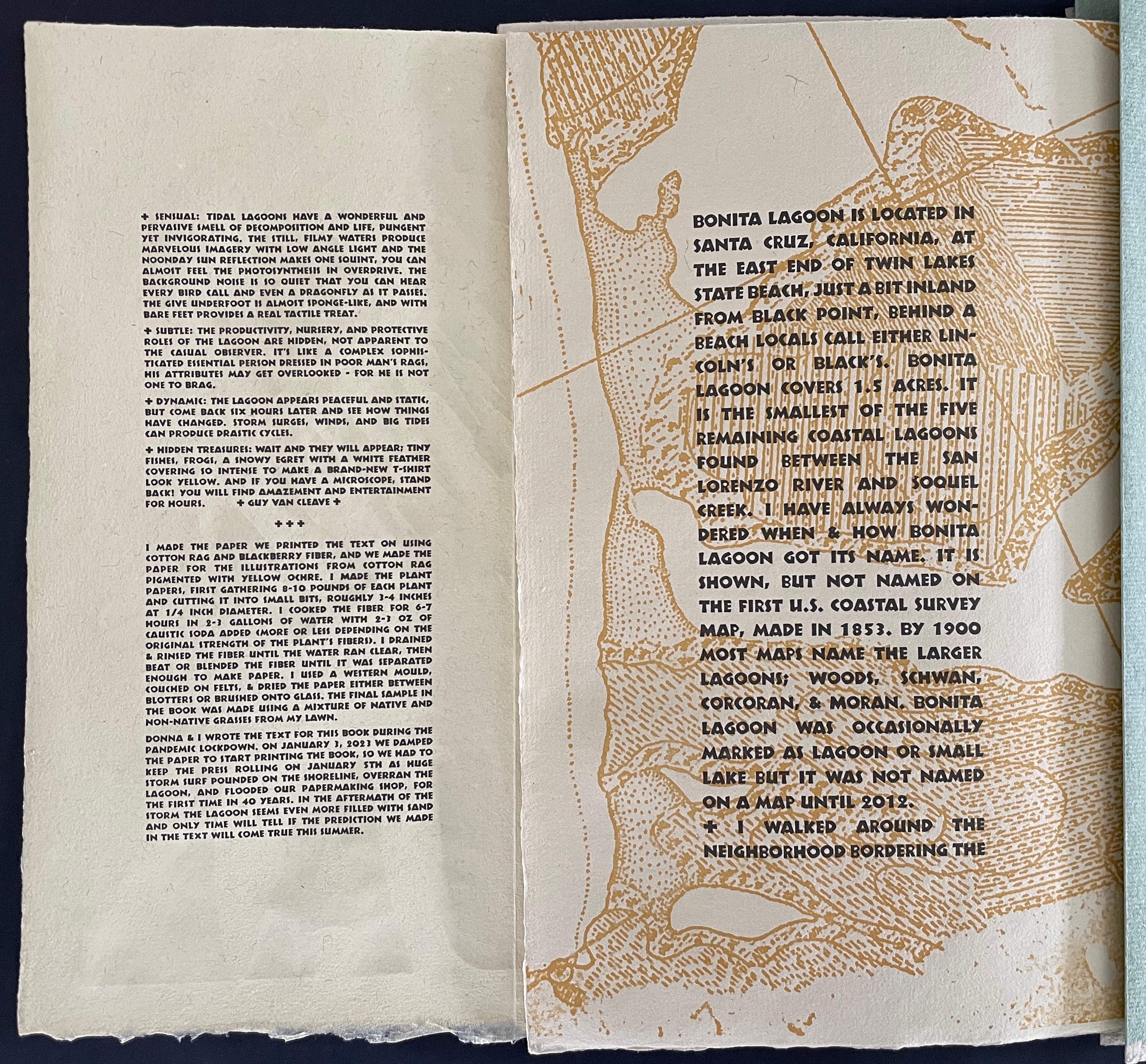
That descriptive text begins at the end of the book’s preliminary gathering, which opens with the book’s only multicolored text, a sort of epigraph from Guy Van Cleave (Professor of Biology, Glendale Community College), extolling the attractions of lagoons. Displayed on the book’s only foldout, the text continues on the reverse with more of Van Cleave’s observations but also a preview paragraph from Peter Thomas. The preview describes the sourcing and processing of the plant-paper folios and the circumstances in which the book was written. When you turn the foldout to read the text on its reverse side, the accordion spine also pulls into view this gathering’s final sheet presenting the book’s formal opening text.
Here’s the opening sequence without extending the book:
Left: The text on the reverse side of the extended foldout. Right: The preliminary gathering’s final sheet with the book’s formal opening text.
It feels a bit awkward to have the final bit of the prelim text hanging out as the book begins, so there’s the urge to tuck it away and take in the expanse of the plant-paper folios, while still carrying in the back of the mind a curiosity about the prediction that the prelim text teases.
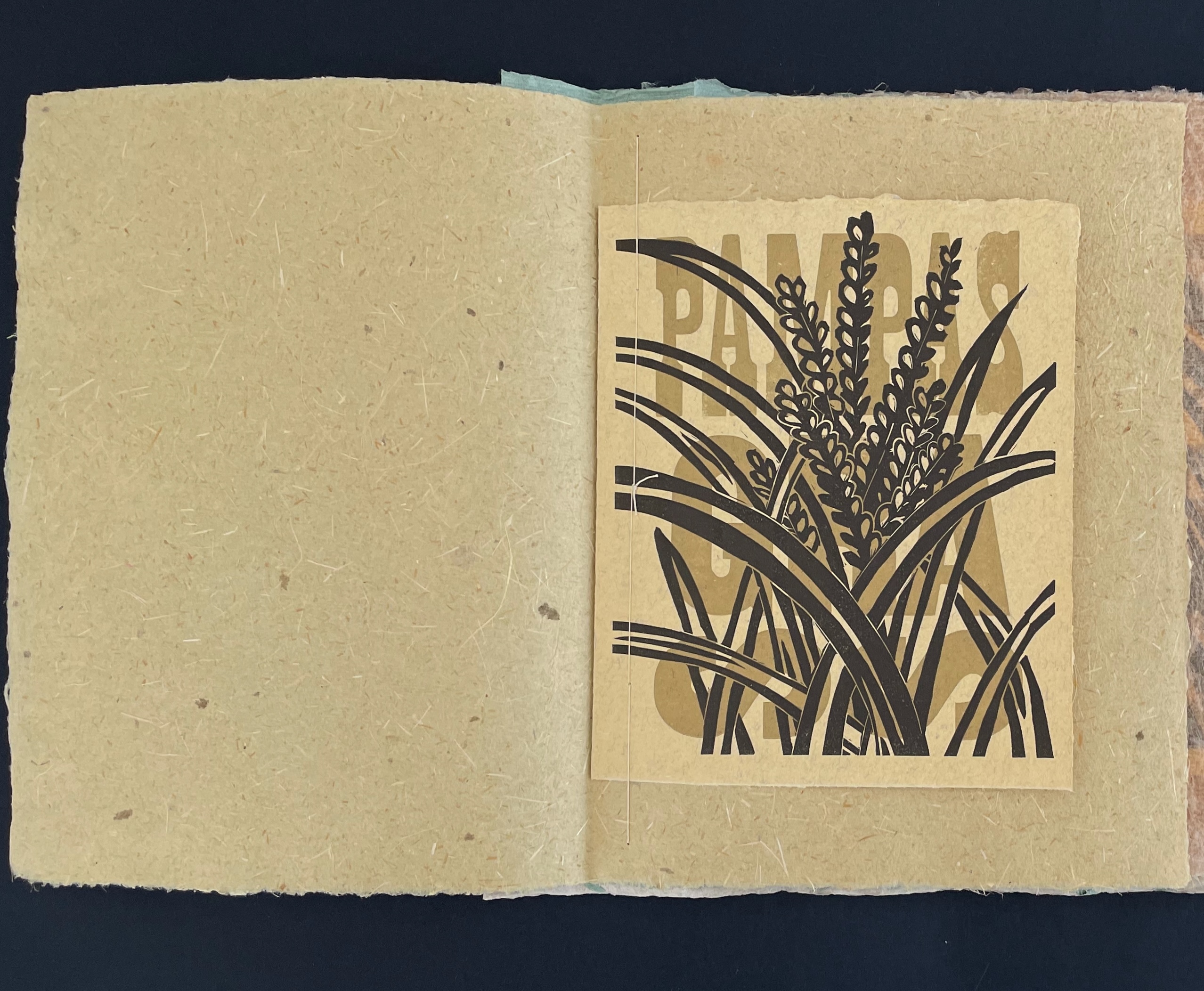
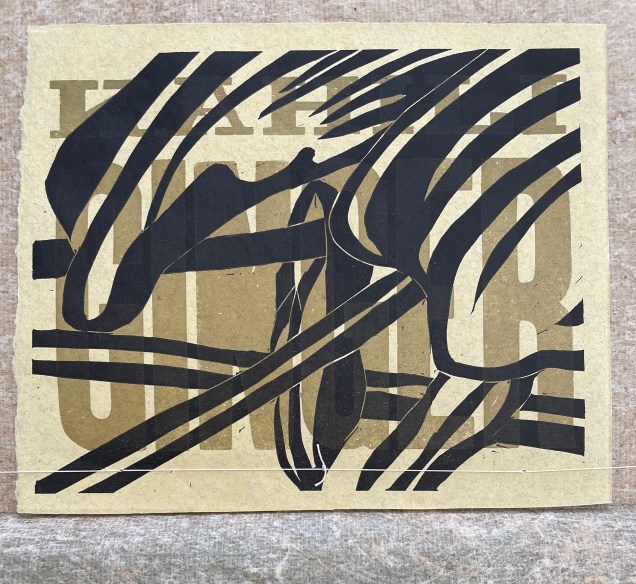
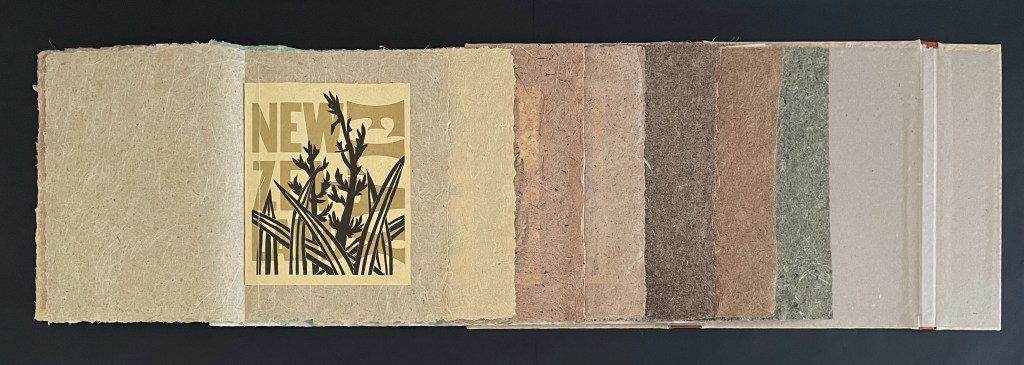
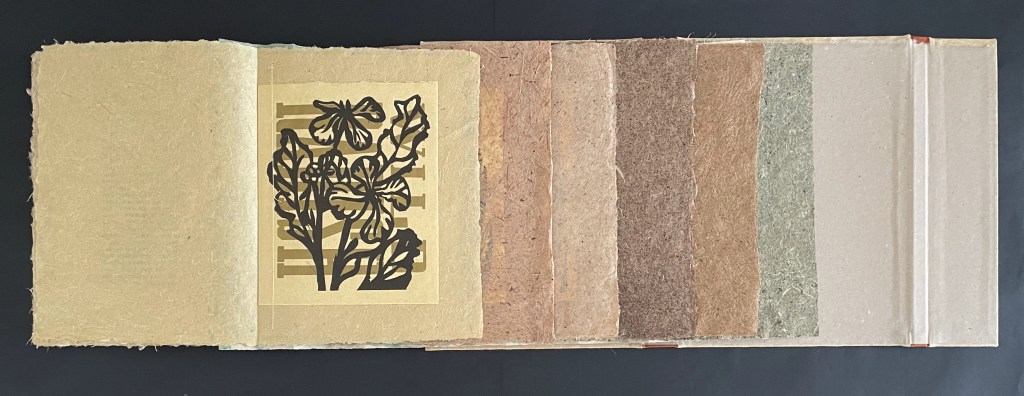
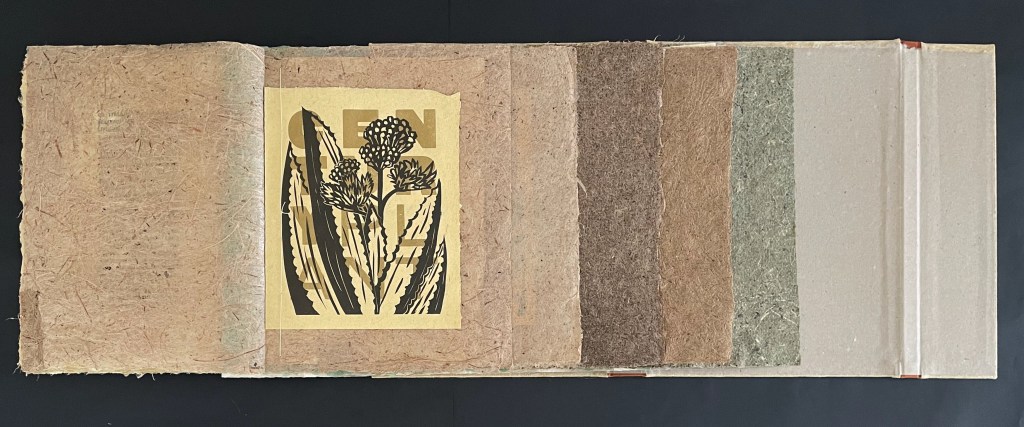
Donna Thomas’s linocuts printed over the names of the plants in wood type vary in orientation. Impressed on cotton rag paper handmade by Peter, they memorialize the plants harvested long ago and emphasize by contrast the texture of the plant-paper folios embracing them.
Folio of Pampas Grass paper with single sheet linocut by Donna Thomas over wood type.
Extended book open to folio of Kahili Ginger paper; single sheet linocut turned 90º.
Folio of New Zealand flax.
Folio of Wild Radish.
Folio of Century Plant.
Folio of Bird of Paradise.
Folio of Tule.
Folio of Blackberry.
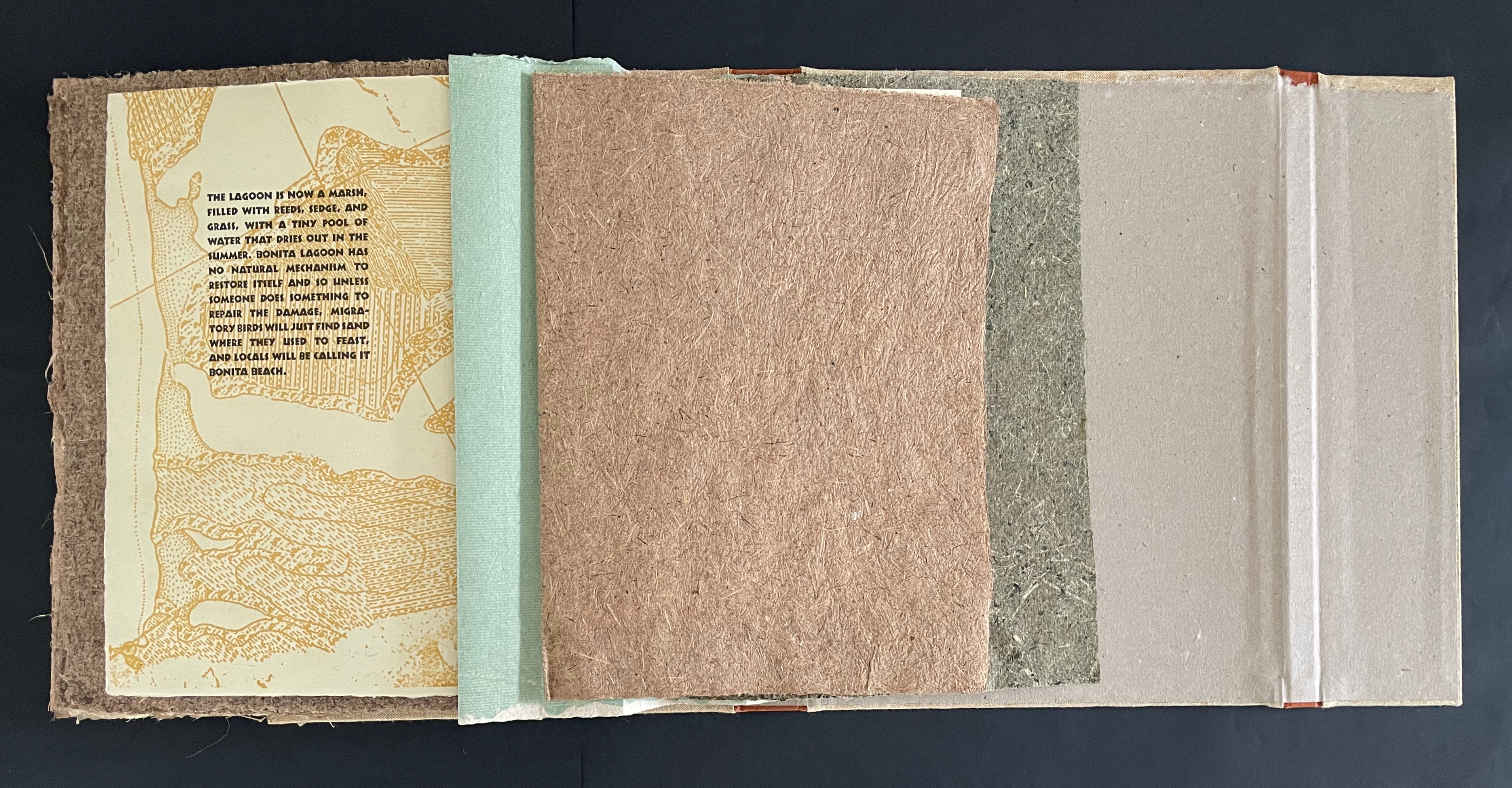
The book’s formal elegy concludes on the Tule gathering’s end sheet. Here we find the prediction teased in the prelims. Due to construction along the coast, the lagoon has become a marsh and tiny pool that dries out in the summer. Without restoration, Bonita Lagoon is on its way to becoming Bonita Beach.
The prediction on the Tule gathering’s end sheet.
All along, the text set in Neuland has appeared over the print of a map. Not until after the prediction above and the turning of the Blackberry gathering is it revealed in the colophon that the map is from the 1853 coastal survey mentioned at the beginning. With a sort of unwritten coda, the book ends with a single sheet made from clippings from the Thomases’ otherwise unmanicured lawn next to Bonita Lagoon.
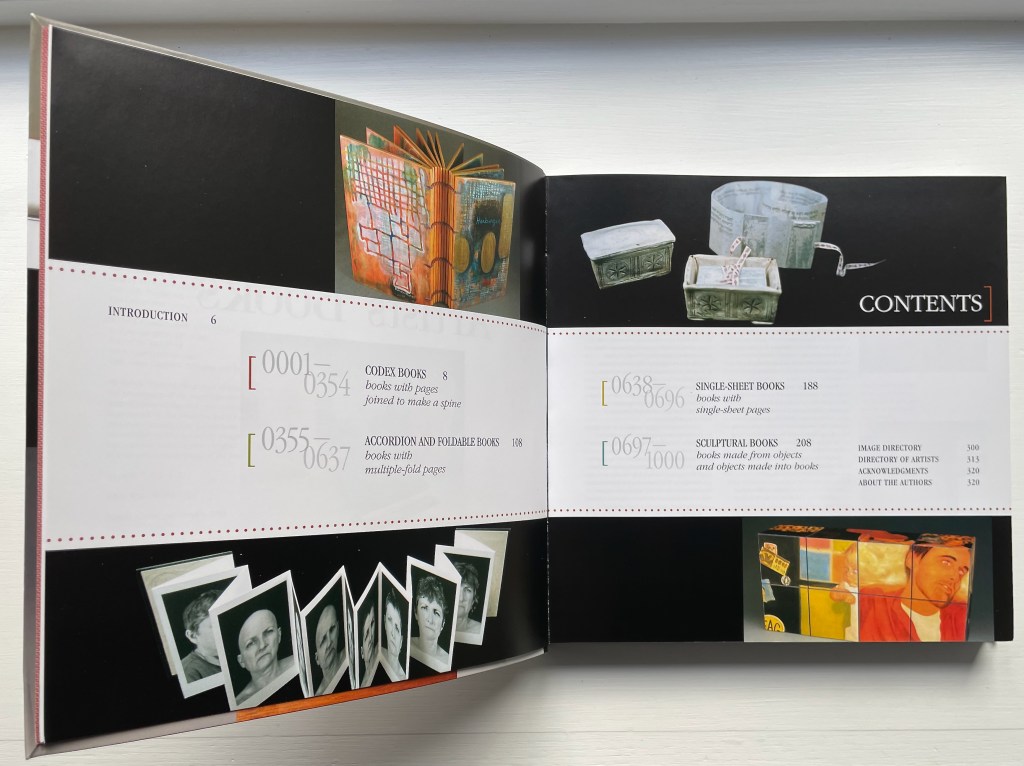
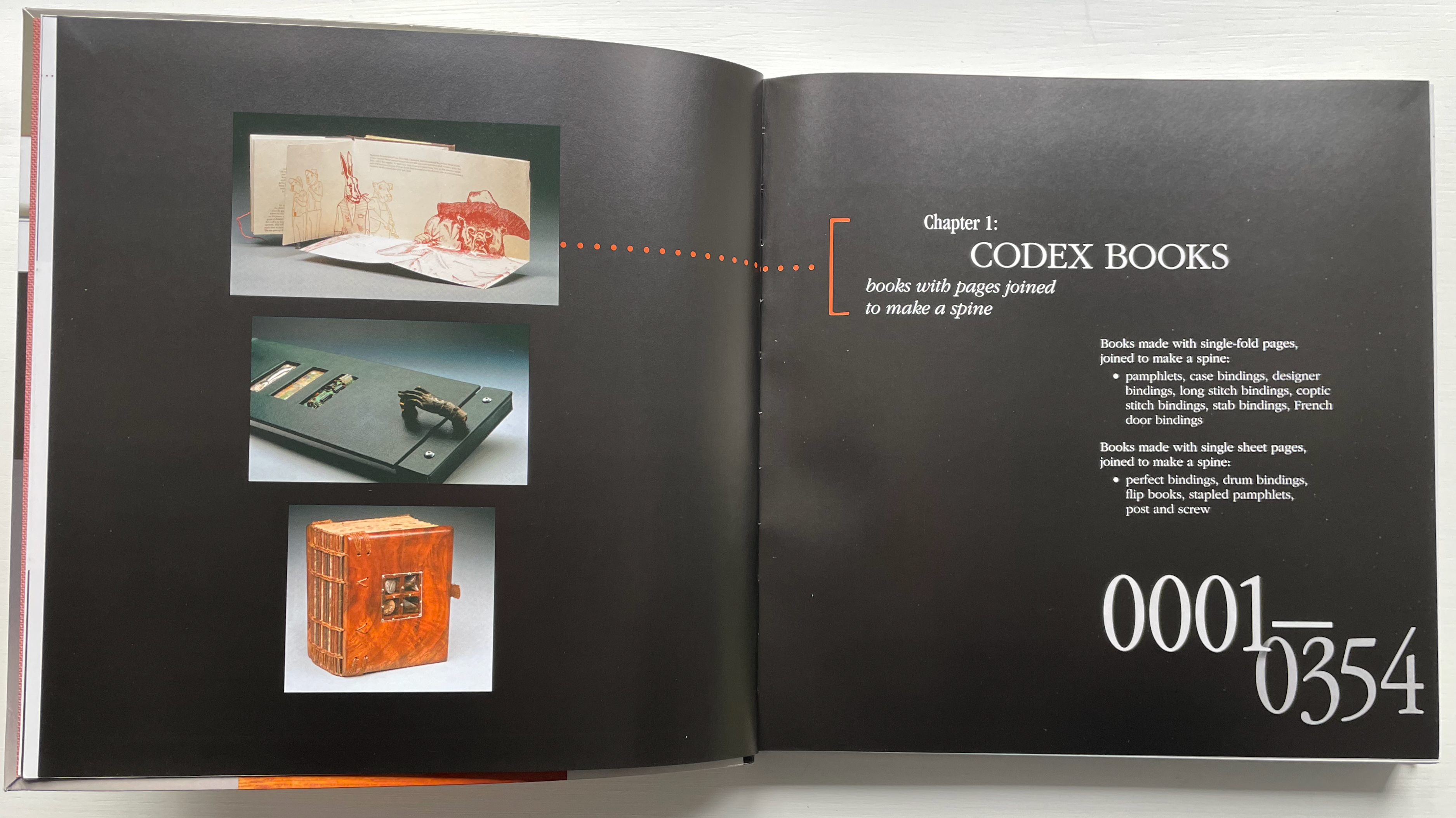
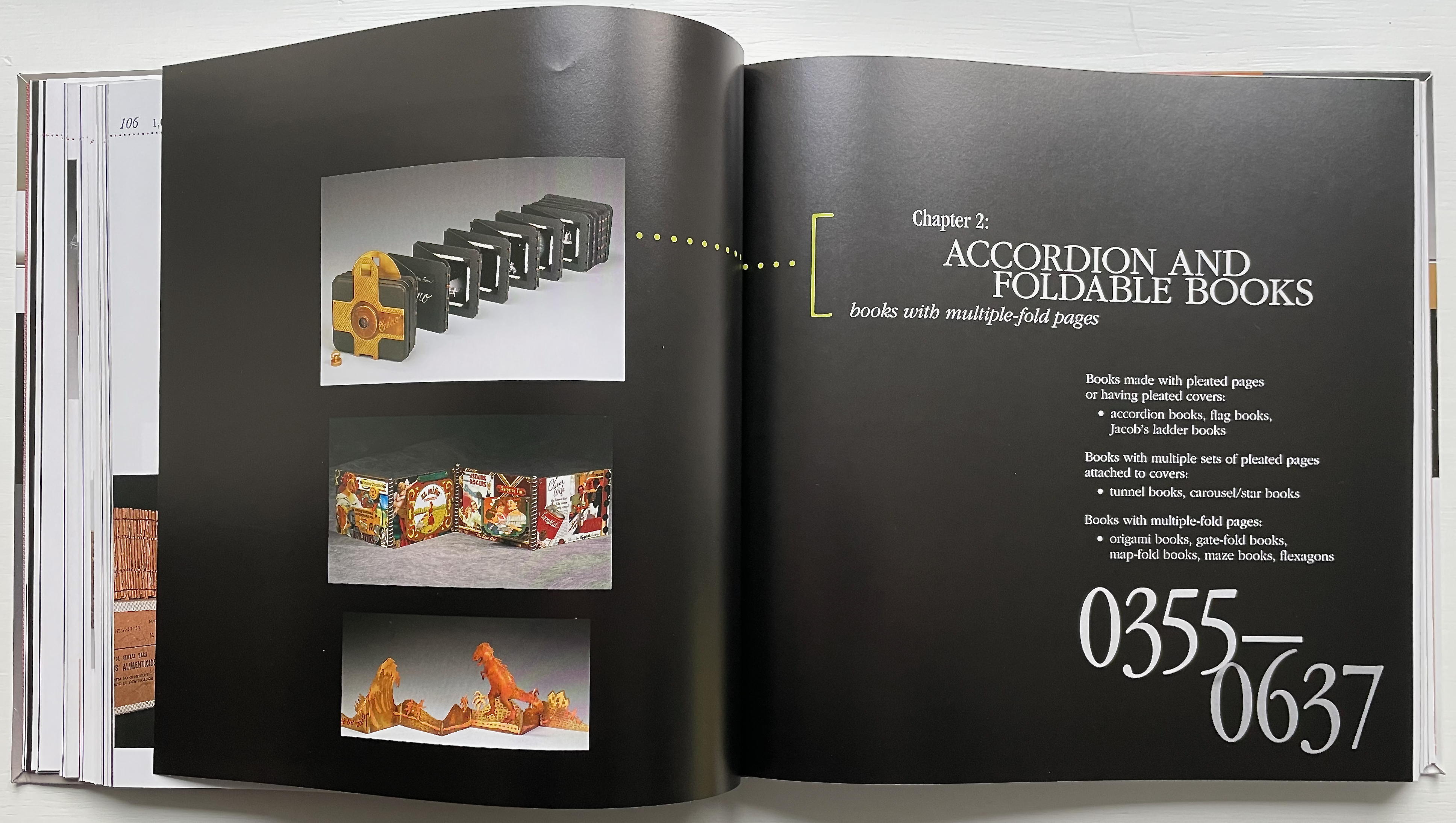
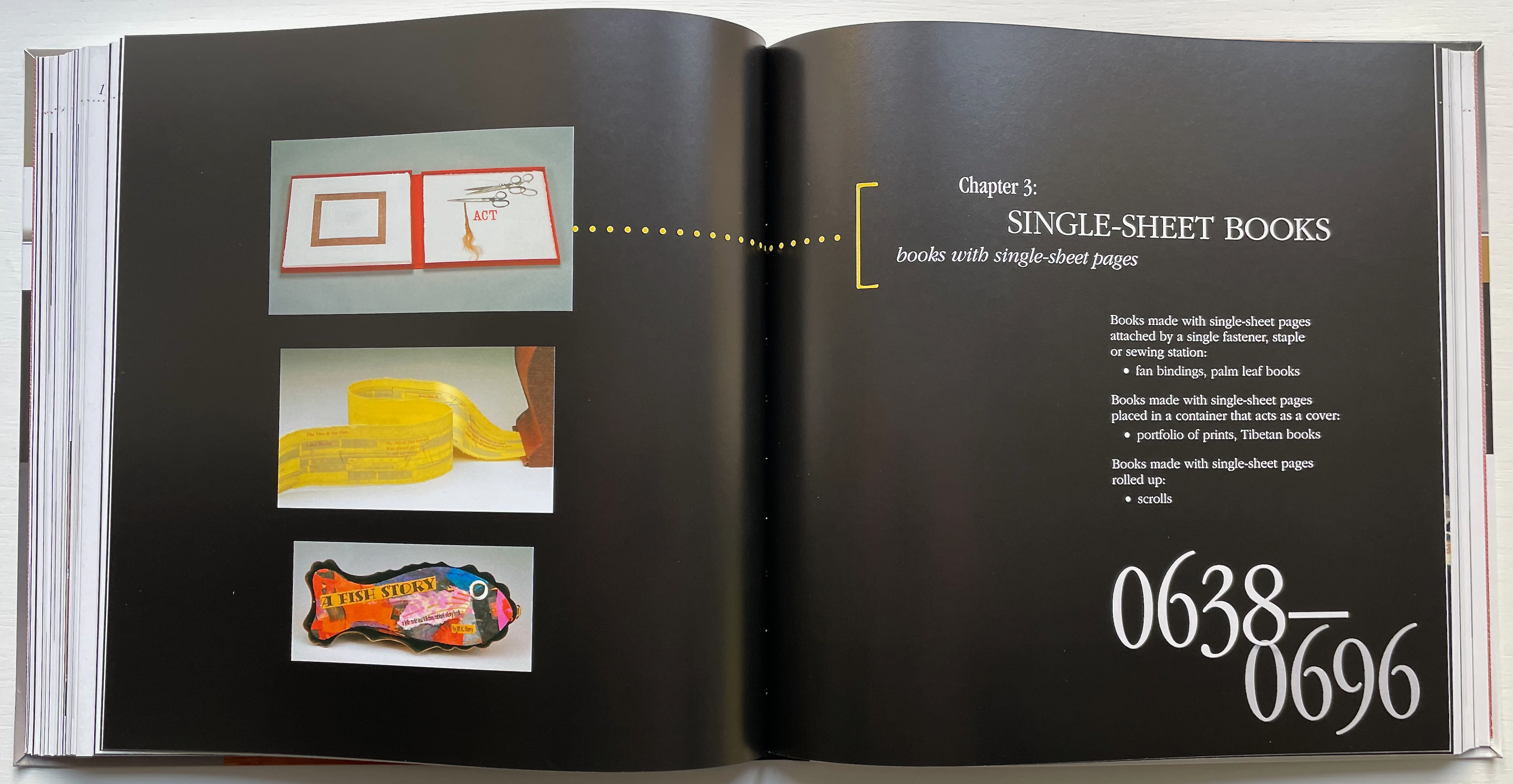
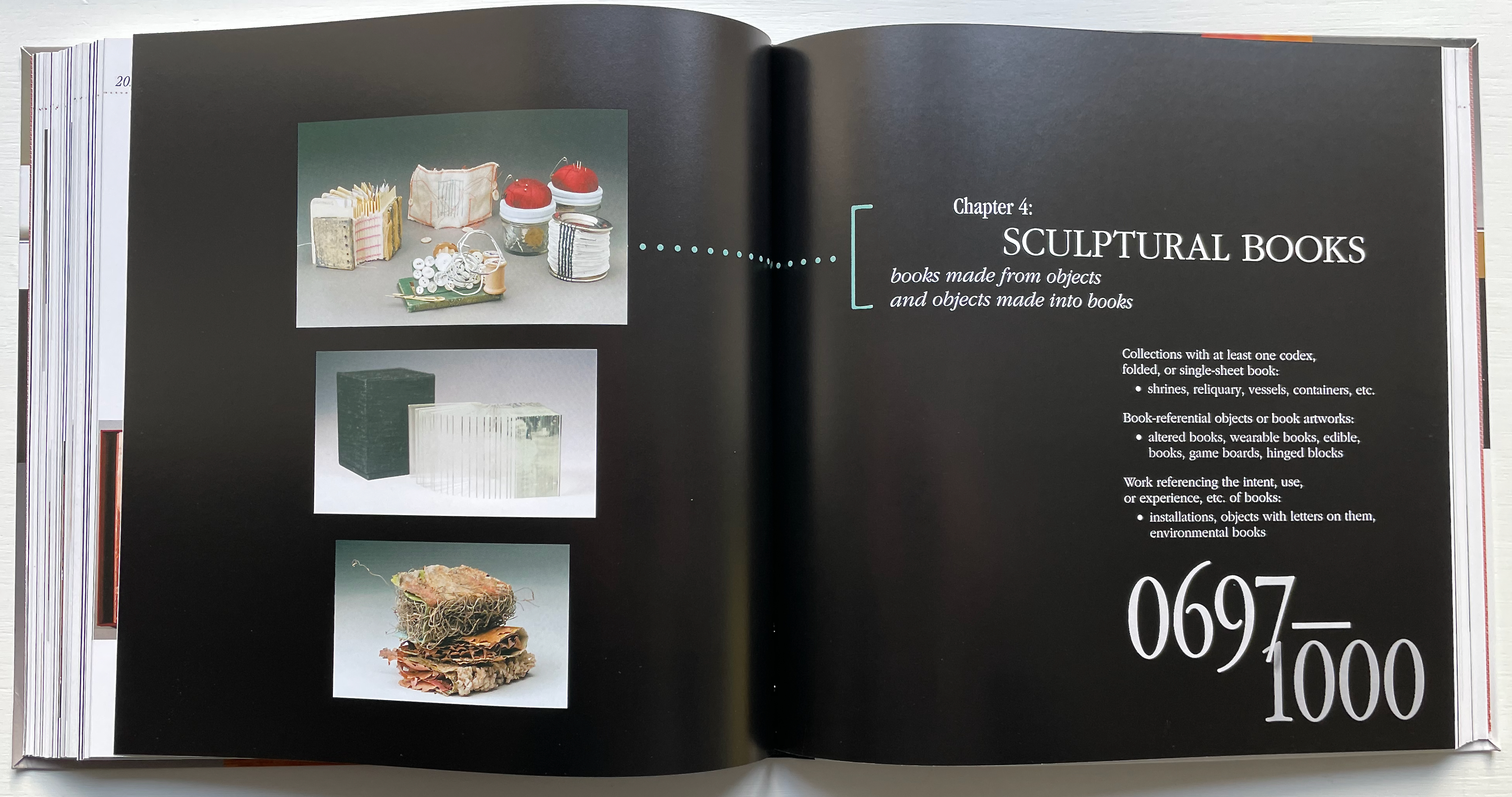
Besides their prolific artistic output, much of which (up to 2005) can be viewed in the University of Wisconsin-Milwaukee Libraries Special Collections, the Thomases have also published several instructional and reference works on papermaking and the book as an art form. This one with Sandra Salomony covers various aspects of hand-crafted books: covers, bindings, scrolls, folded and origami structures, books made from found objects, altered books, and book installations, as well as books created from a variety of printing processes. Its taxonomy is useful when exploring new works and examining collections.
Further Reading
“Amanda Degener“. In process. Books On Books Collection.
Blum, André, and Harry Miller Lydenberg. 1934. On the origin of paper. New York: R.R. Bowker Company.
Chen, Julie. 2013. 500 Handmade Books. Volume 2. New York: Lark. Pp. 87 (Not Paper), 258 (The Alder).
Hamady, Walter; Samuel Haatoum; and Hermann Zapf. 1982. Papermaking by Hand : A Book of Suspicions. Perry Township, Dane County, Wisconsin, USA: Perishable Press Limited.
Jury, David, and Peter Rutledge Koch (eds.) 2008. Book Art Object. Edited by David Jury. Berkeley, California: Codex Foundation. Pp. 323 (Believe in the Beauty), 324 (The History of Papermaking in the Philippines), 325 (An Excerpt from John Steinbeck’s Cannery Row).
Miller, Steve. 2008. 500 Handmade Books : Inspiring Interpretations of a Timeless Form. Edited by Suzanne J. E. Tourtillott. New York: Lark Crafts. Pp. 77 (Paper from Plants), 225 (Ukulele Series Book #4 The Ukulele Bookshelf), 254 (Ukulele Series Book #9, The Letterpress Ukulele), 291 (Y2K3MS: Ukulele Series Book #2, Ukulele Accordion).
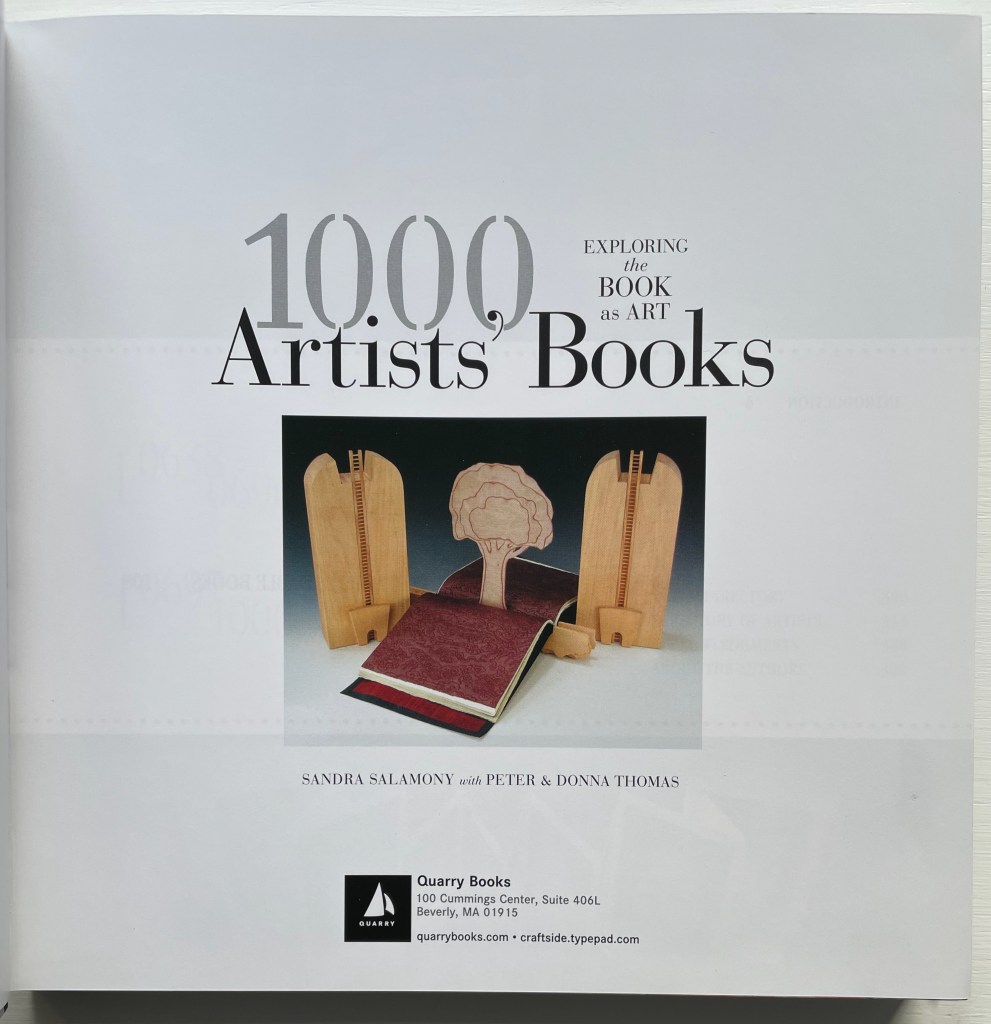
Salamony, Sandra, and Peter and Donna Thomas. 2012. 1,000 Artists’ Books : Exploring the Book as Art. Minneapolis: Quarto Publishing Group USA. Pp. 26 (Ukelele Series Book #14 Old Ukes), 31 (The Pencil), 187 (The Real Accordion Book), 201 (The Mystical Quality of Handiwork), 205 (California Dreaming).
Sansom, Ian. 2012. Paper: an elegy. New York, NY: Wm. Morrow.
Thomas, Peter, and Donna Thomas. 1999. Paper from Plants. Santa Cruz, Calif: Verf. You can find images of this and others by the artists online in the Special Collections website of the University of Wisconsin-Milwaukee Libraries.
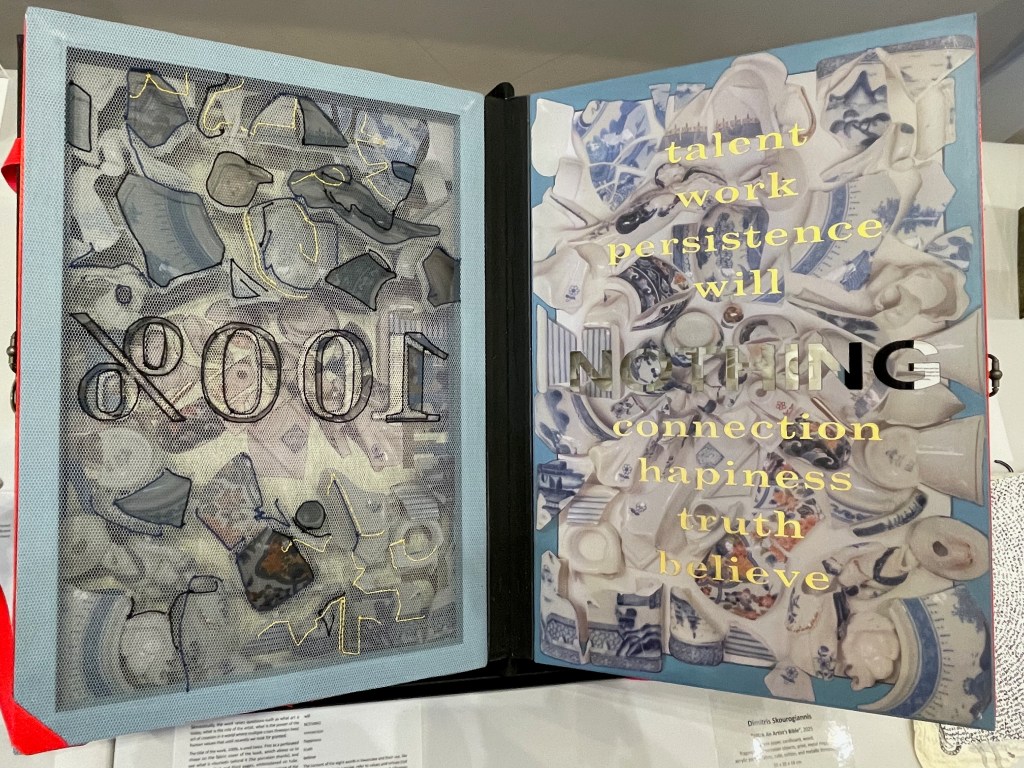
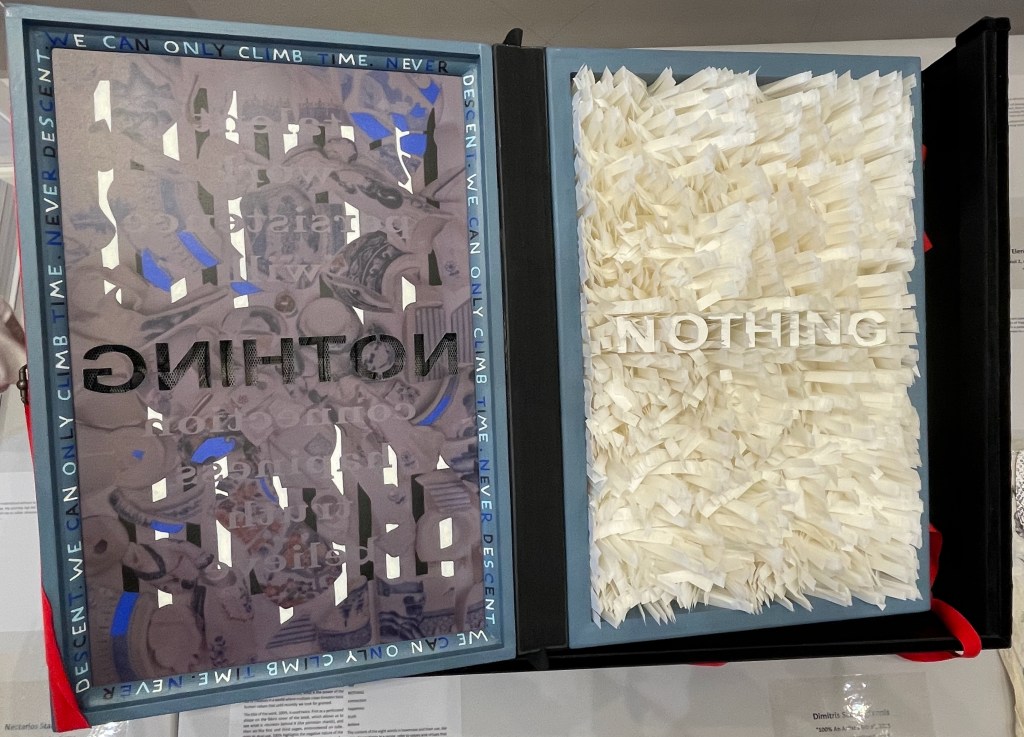
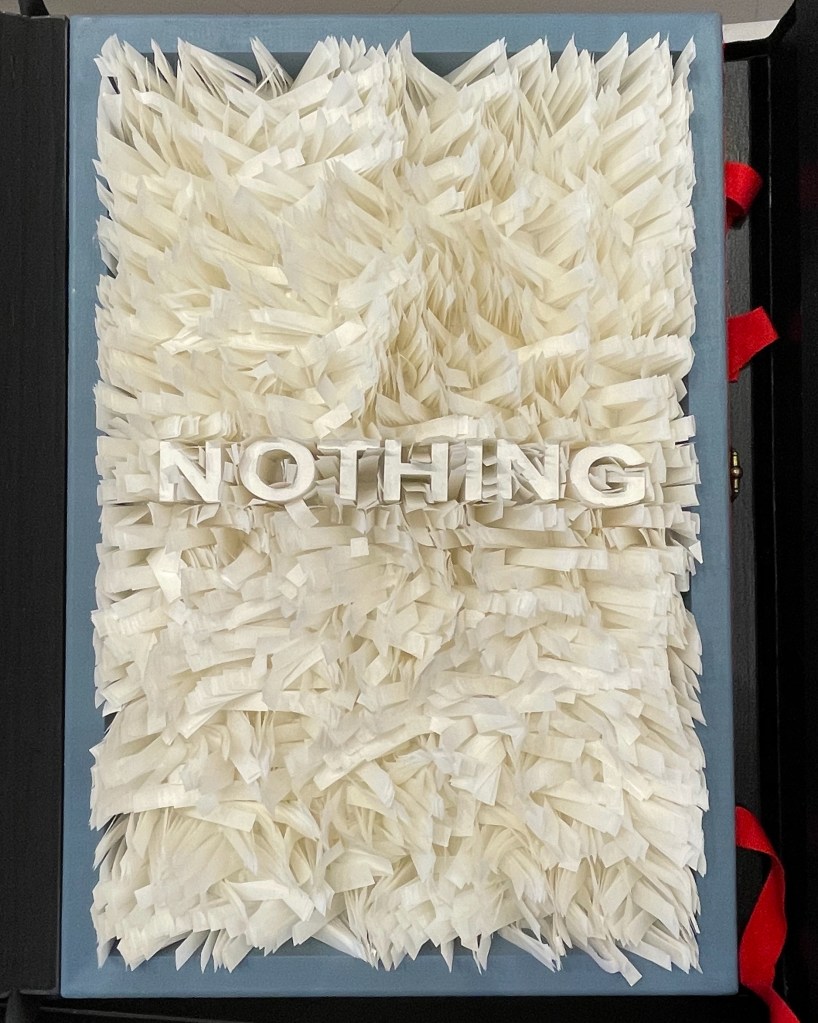
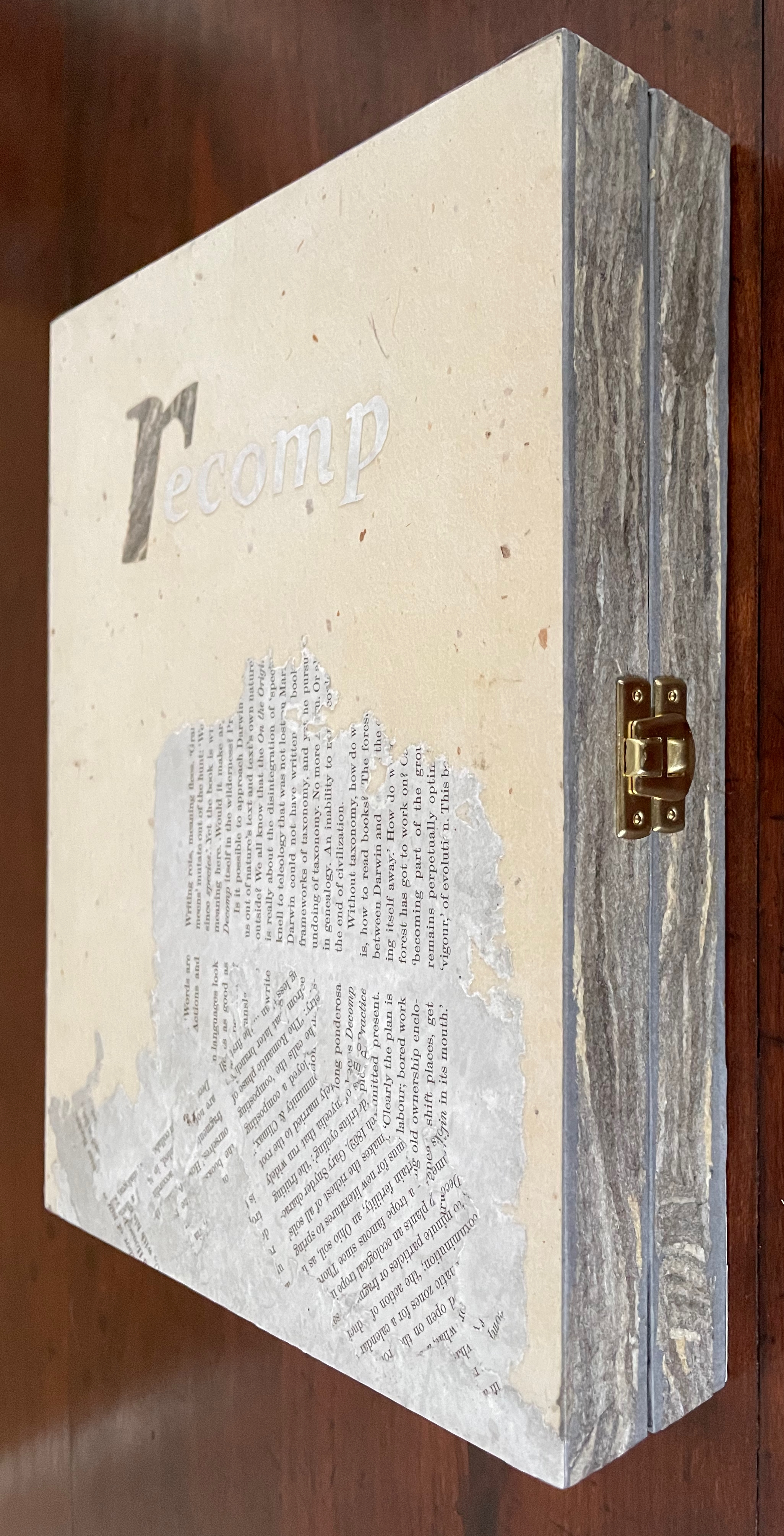
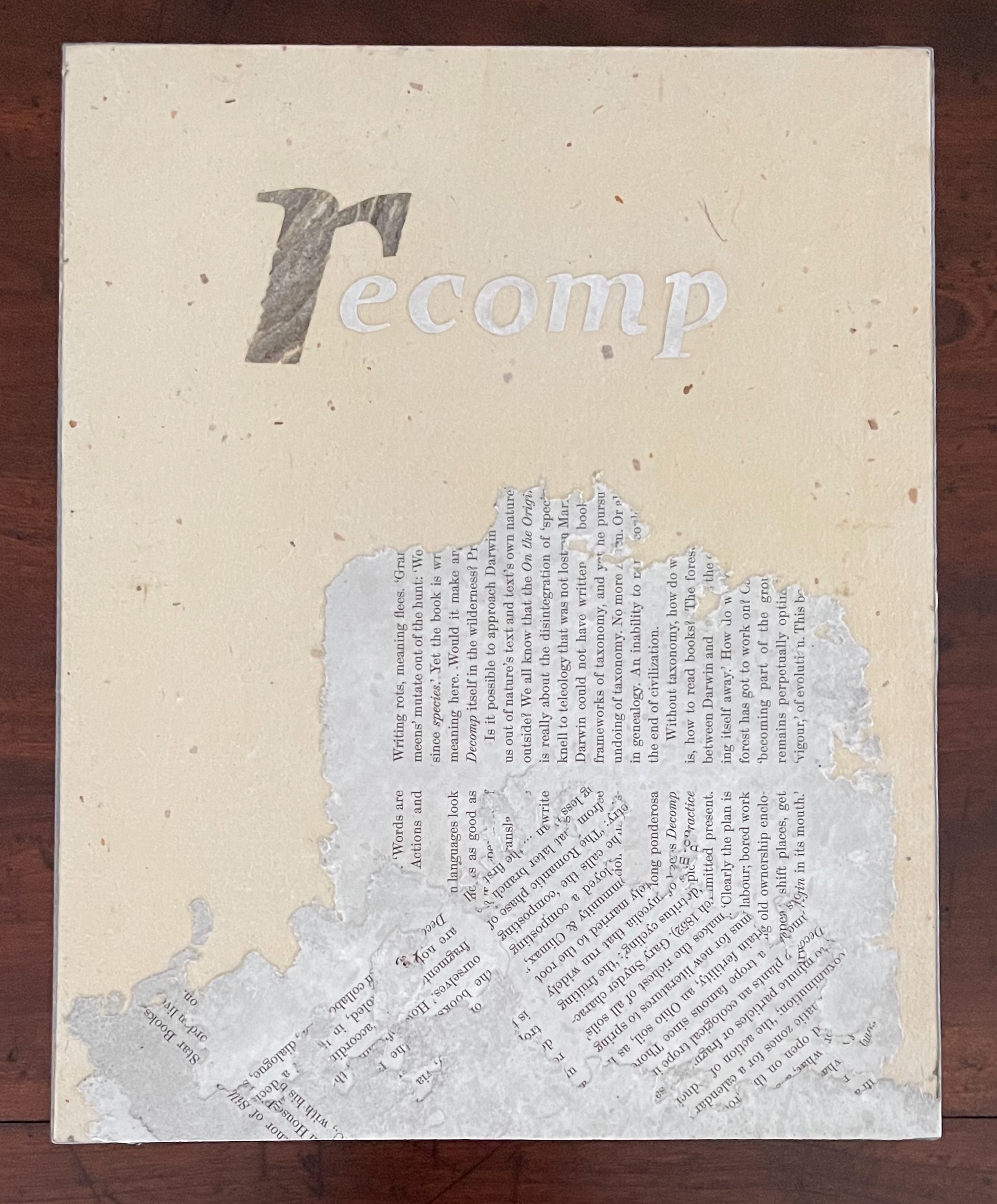
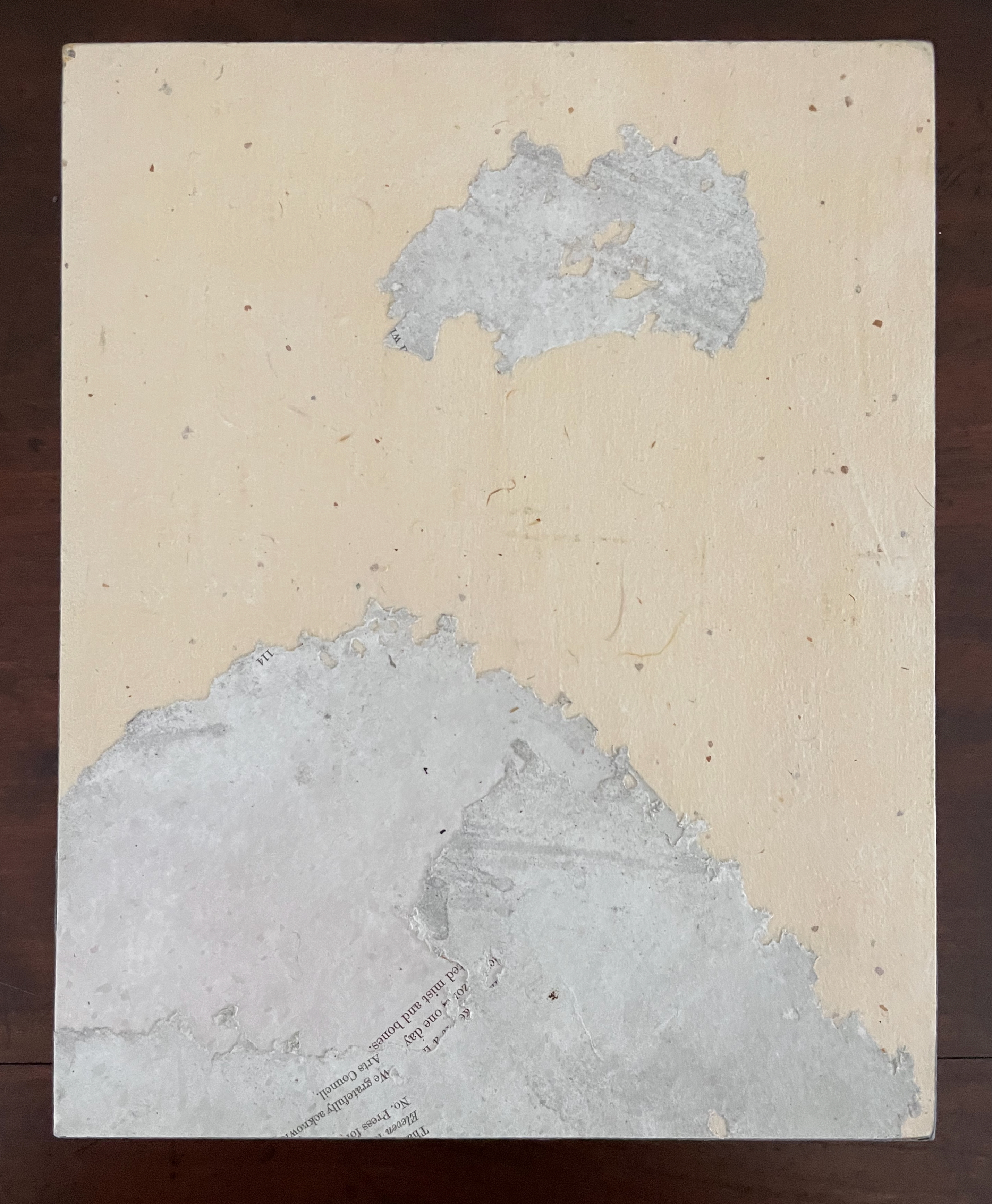
recomp (2013-23) Cathryn Miller Hinged and clasped diptych, housing an altered book, explanatory booklet, and loose colophon. Unique. Acquired from Vamp & Tramp Booksellers, 2025. Photos: Books On Books Collection.
Recomp (2013-2023) is a collaboration with a colony of bald-faced hornets. Having reviewed Stephen Collis and Jordan Scott’s decomp (2013), their artists’ book devised by exposing several copies of Darwin’s On the Origin of Species to the elements, Cathryn Miller followed suit and hung her reviewer’s copy of decomp in a tree. Over time, the wind, rain, and snow sent the book to the forest floor where it fell apart. Hornets had done their part in its decomposition, nibbling away at its edges and weakening the structure. Their conversion of the book into cellulose for their nest was also the start of their artistic partnership with Miller. Eventually the nest, too, became prey to the elements or marauders and fell and broke apart on the ground. Miller and photographer husband David recorded all this and gathered up the book fragments and broken nest.
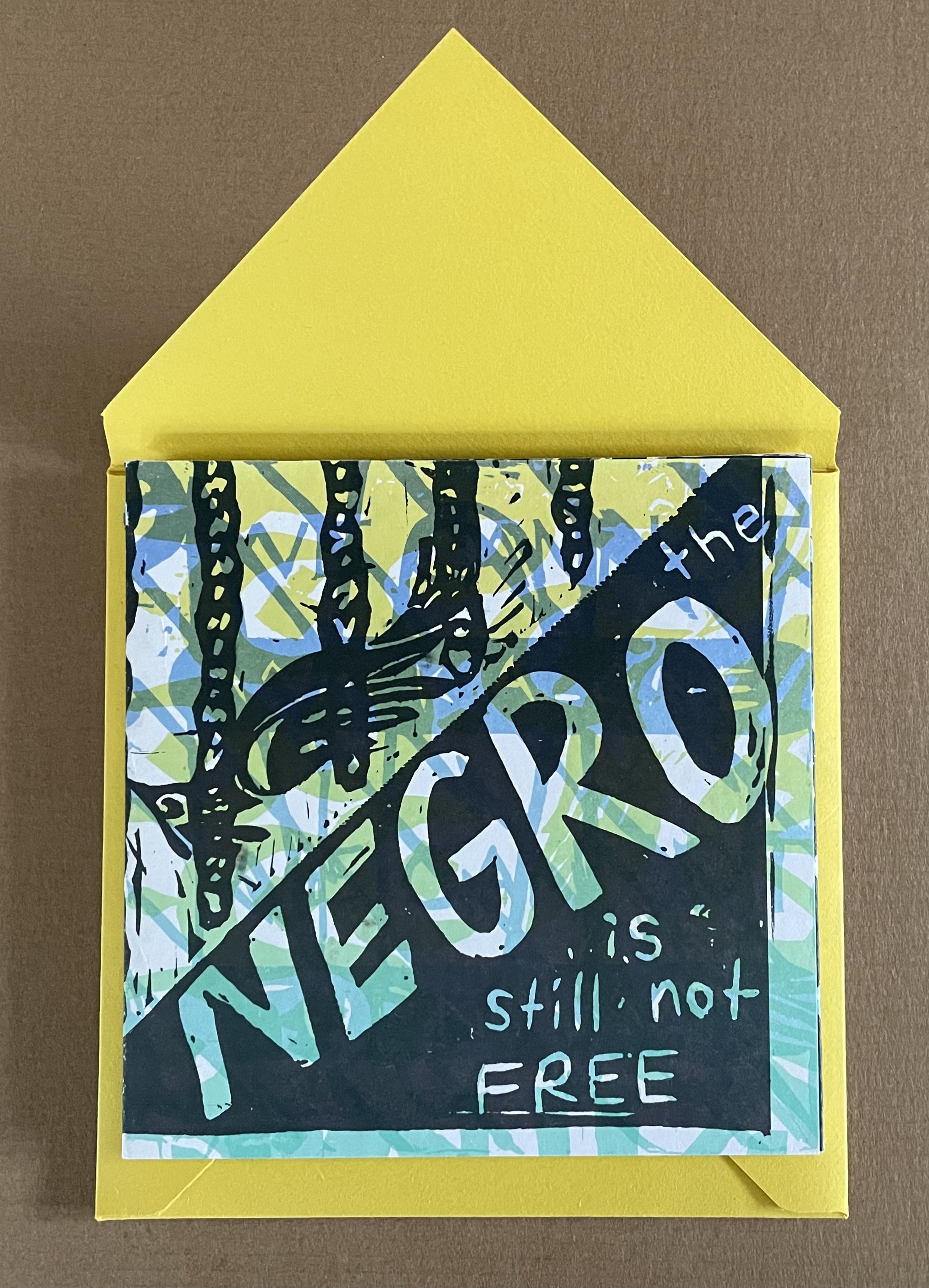
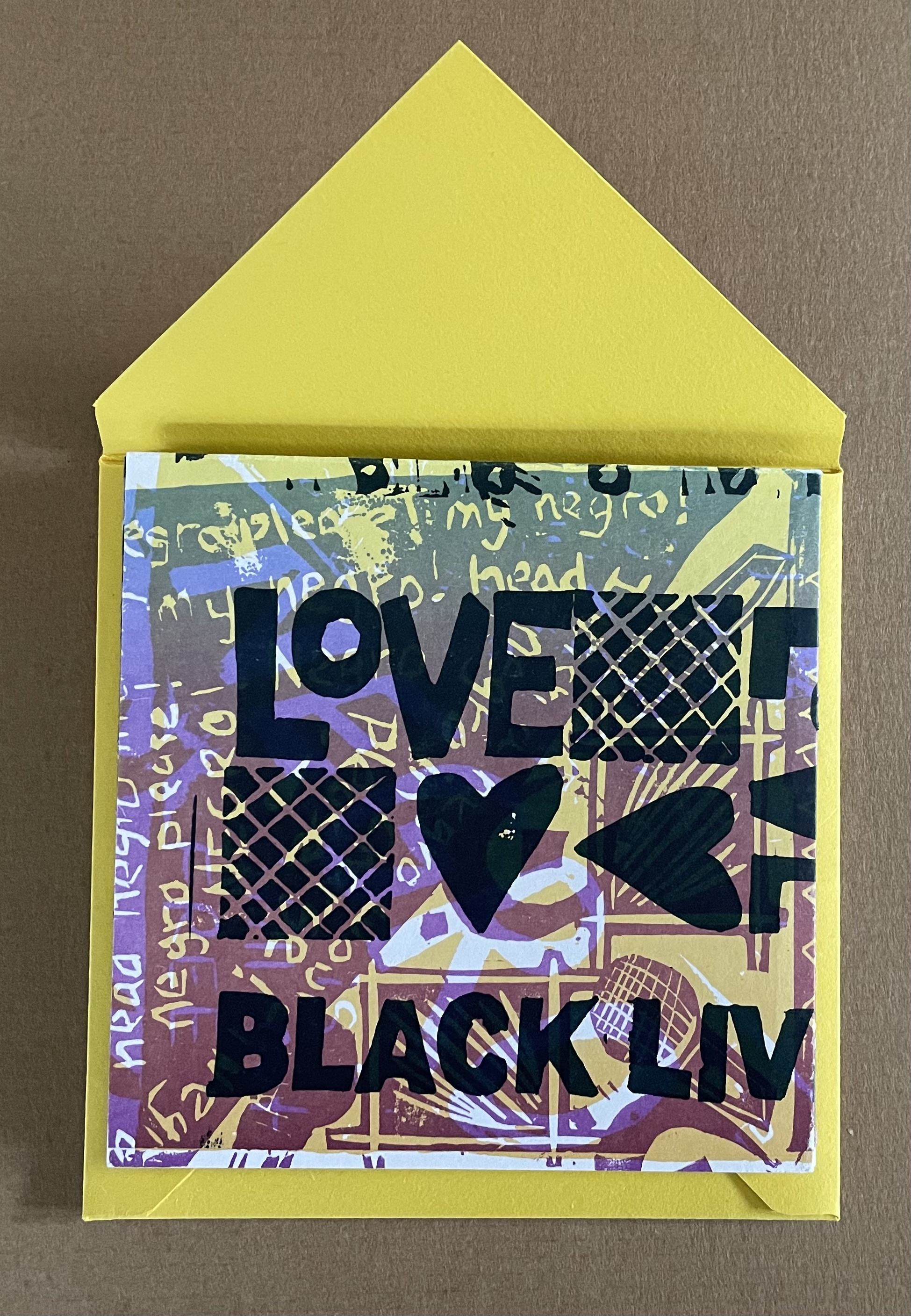
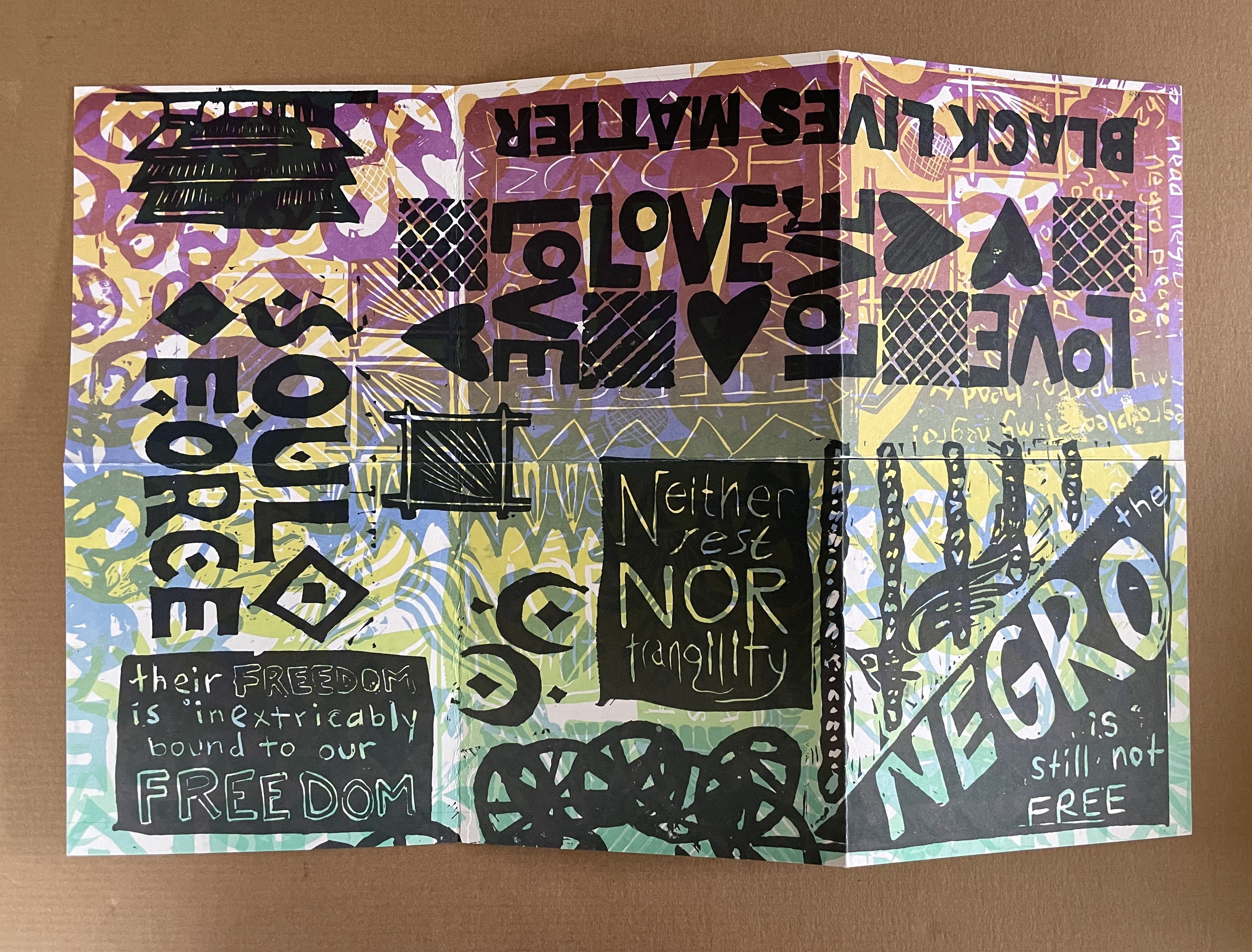
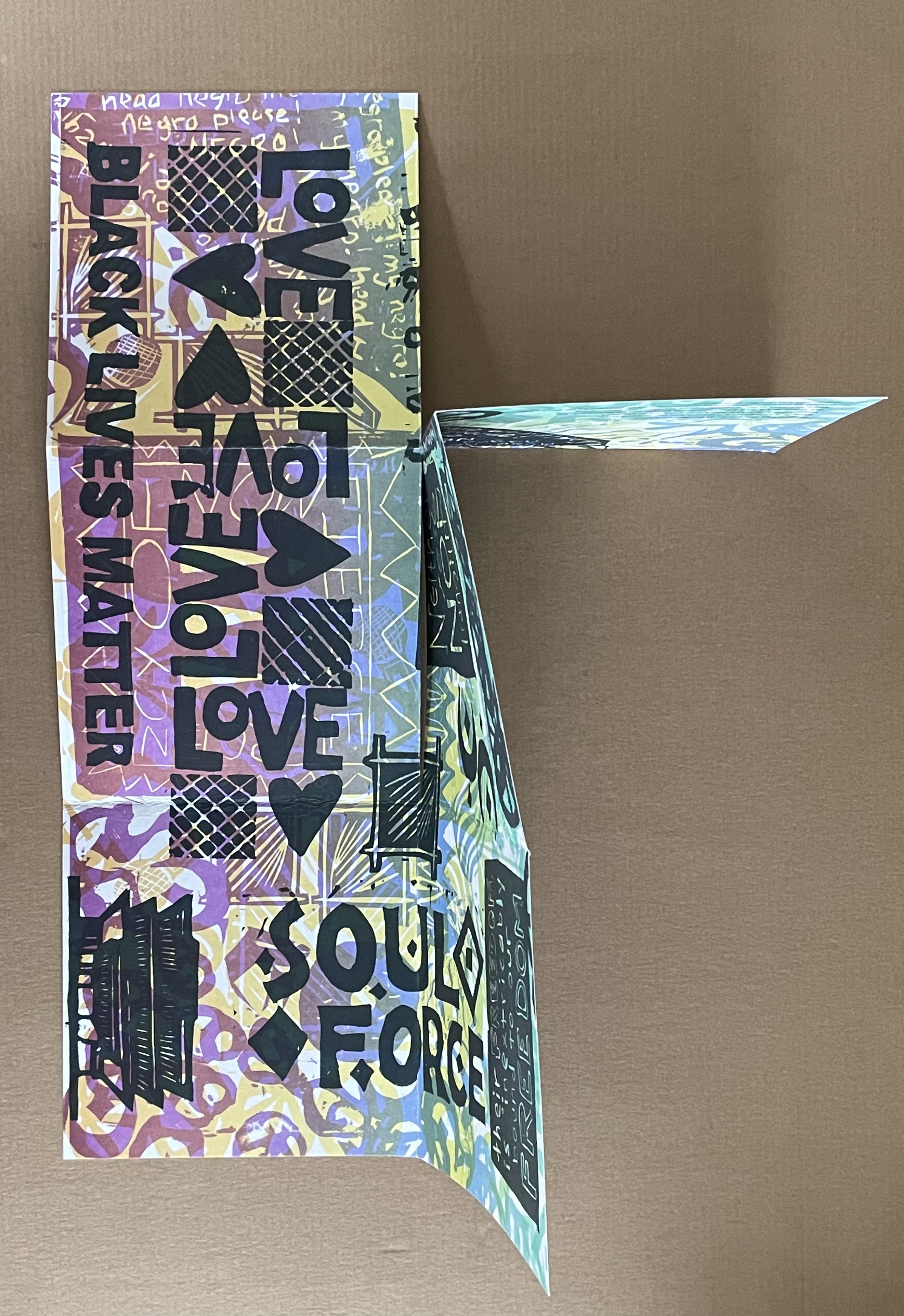
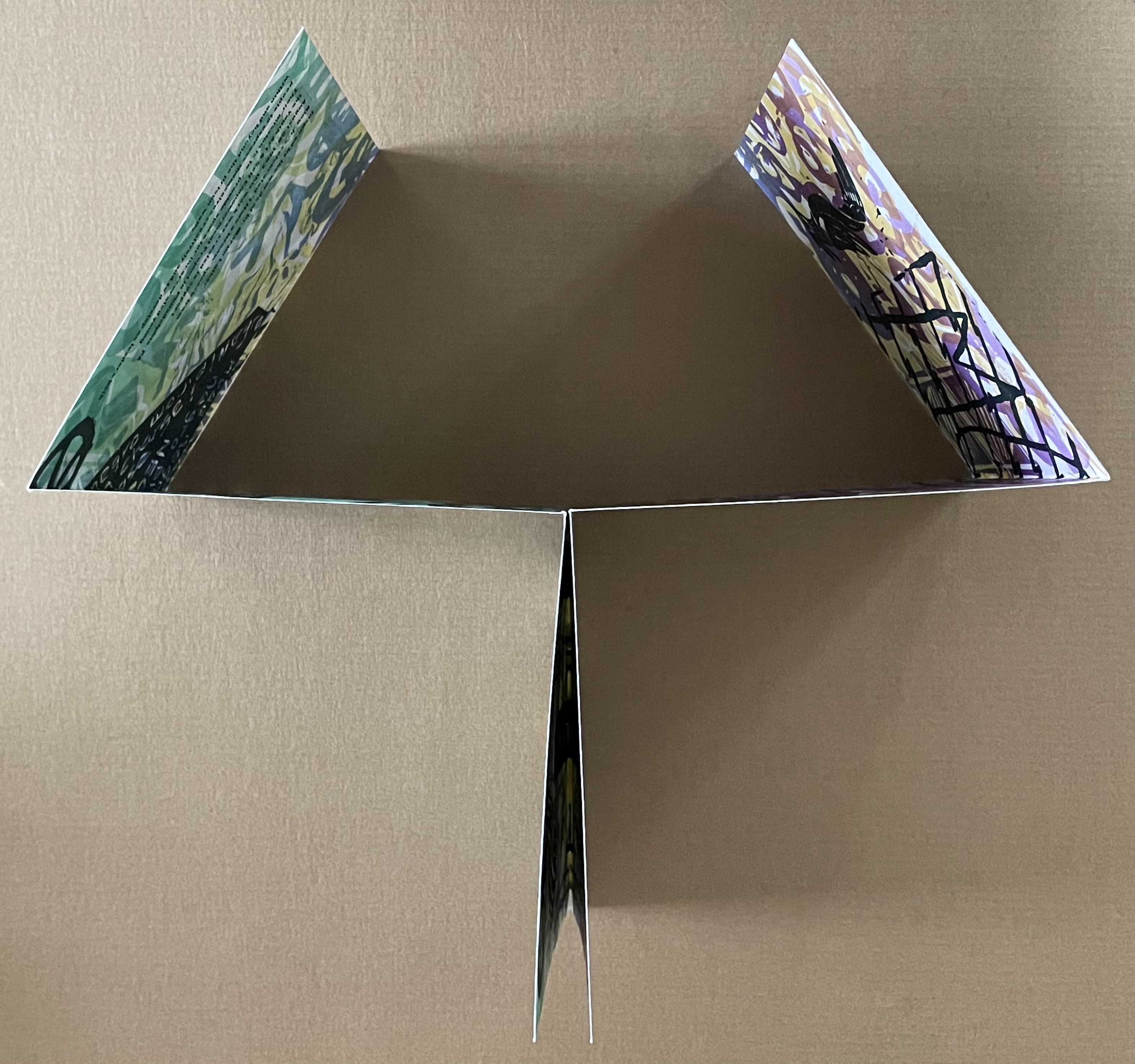
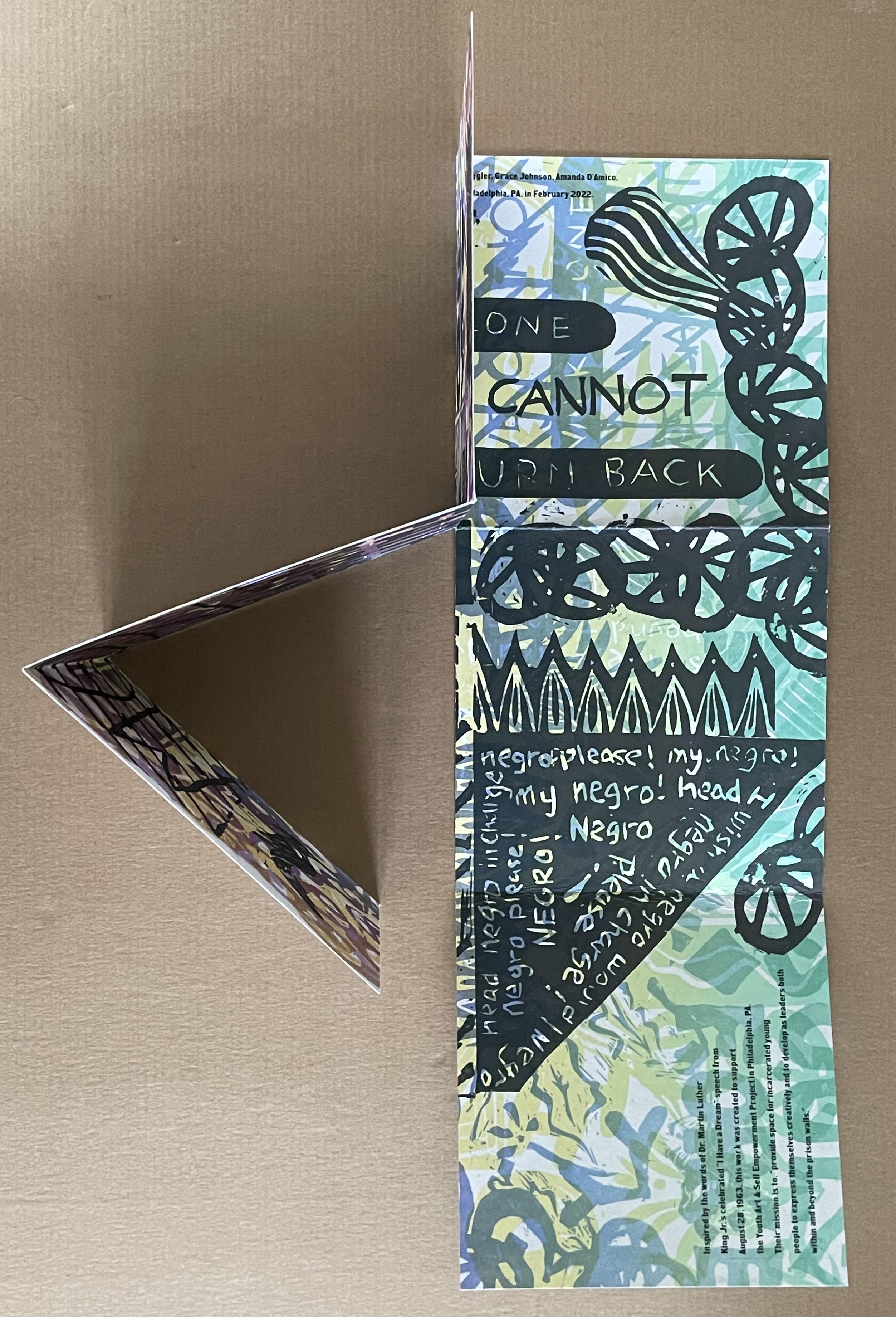
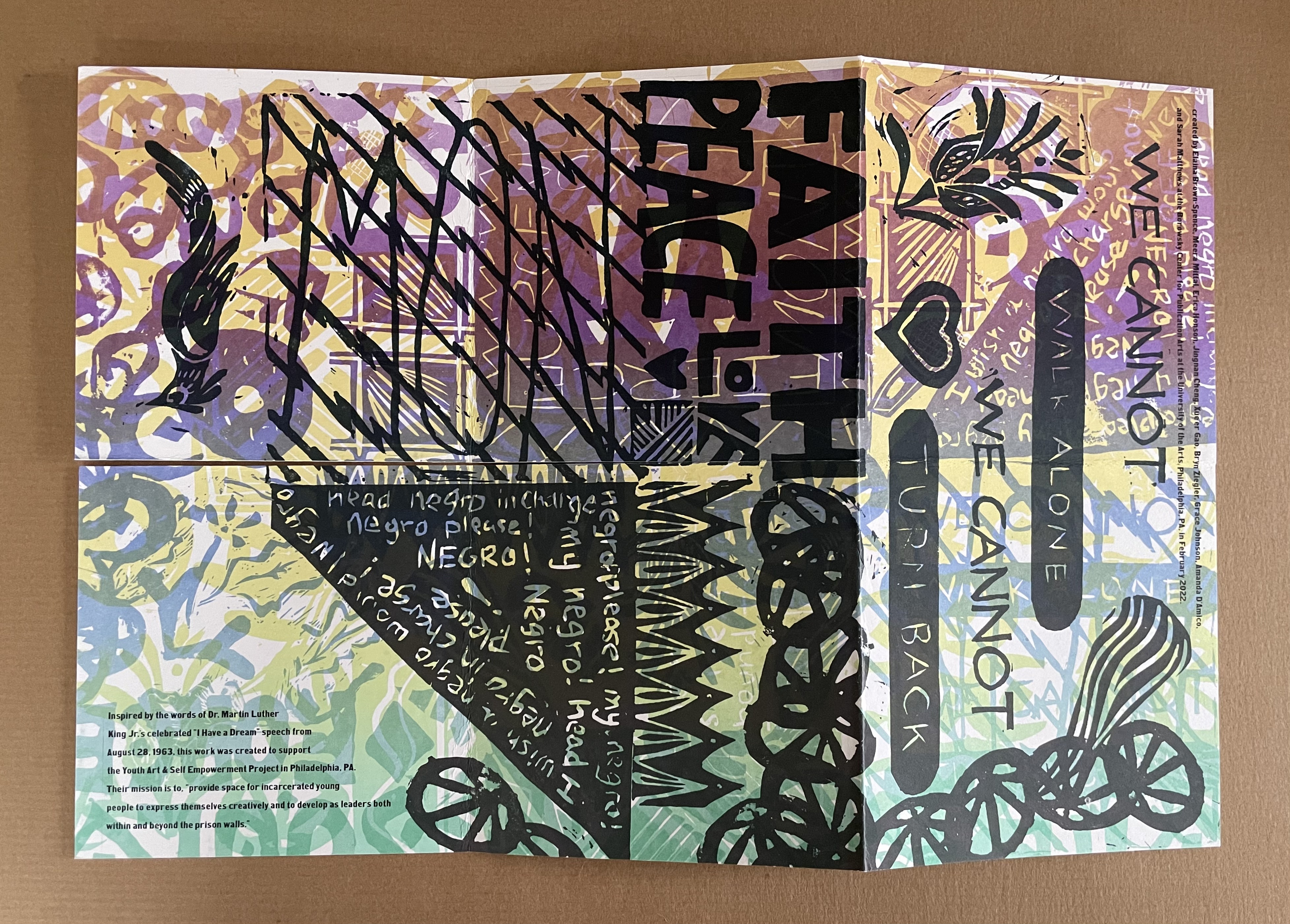
The Negro Is Still Not Free (2022) Elaina Brown-Spence, Meera Mittari, Erica Honson, Jingnan Cheng, Xue’er Goo, Bryn Ziegler, Grace Johnson, Amanda D’Amico, and Sarah Matthews Double-sided single-page book in a pants fold. 152 x 152 mm. Acquired from Sarah Mathews, 6 August 2024. Photos: Books On Books Collection
The Negro is Still Not Free was created by Elaina Brown-Spence, Meera Mittari, Erica Honson, Jingnan Cheng, Xue’er Goo, Bryn Ziegler, Grace Johnson, Amanda D’Amico, and Sarah Matthews at the Borowsky Center for Publication Arts at the University of Arts in Philadelphia, PA during the month of February 2022. In its color and style, it reflects the influence of Amos Paul Kennedy, Jr. Its double-sided single-sheet pants-fold book structure, cleverly fuses the traditions of poster and book (or zine).
Inspired by the words of Dr. Martin Luther King, Jr’s celebrated “I Have A Dream” speech from August 28, 1963, the work was created to support the Youth Art & Self Empowerment Project in Philadelphia, PA. Their mission is to “provide space for incarcerated young people to express themselves creatively and to develop as leaders both within and beyond prison walls.”
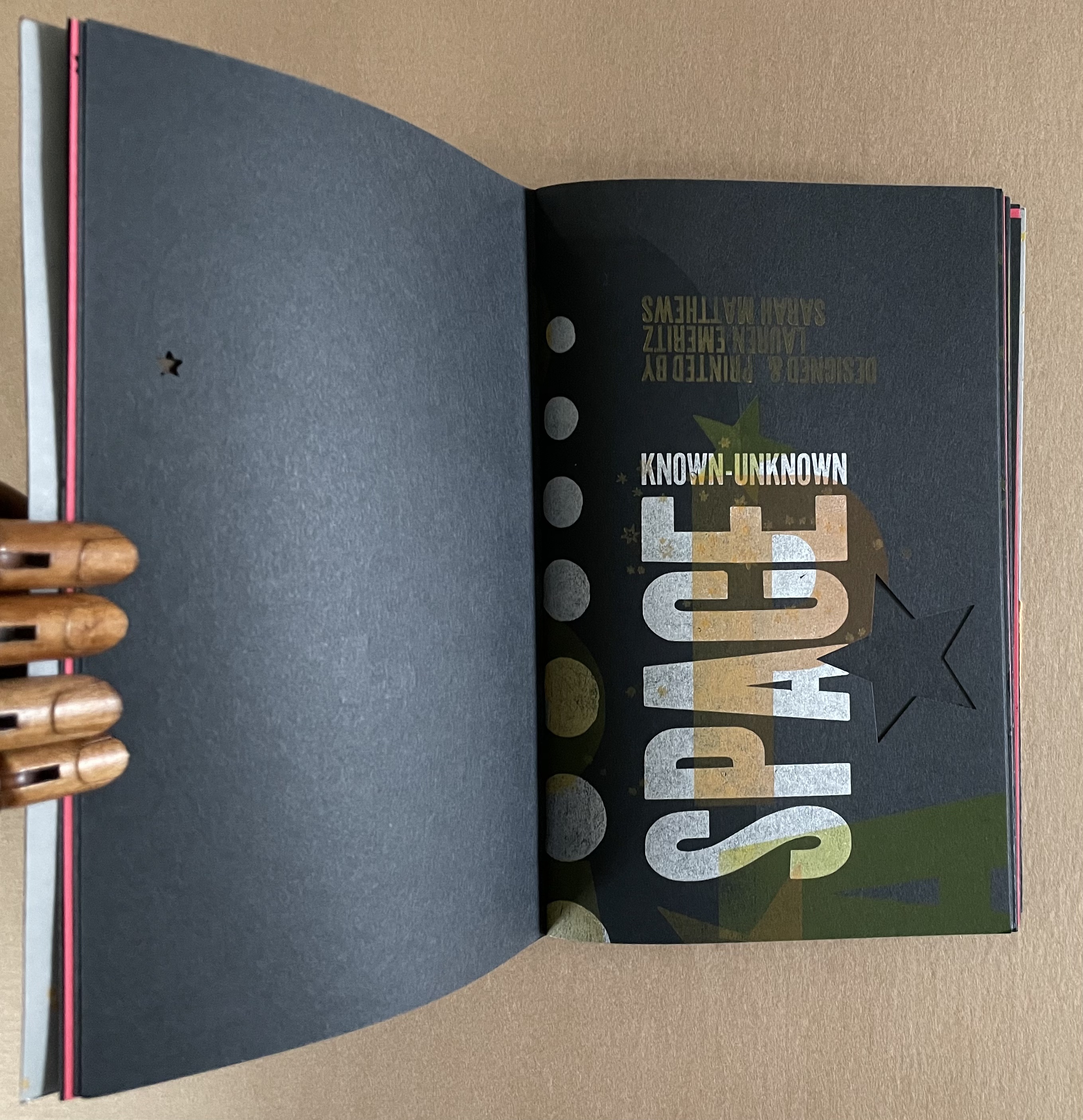
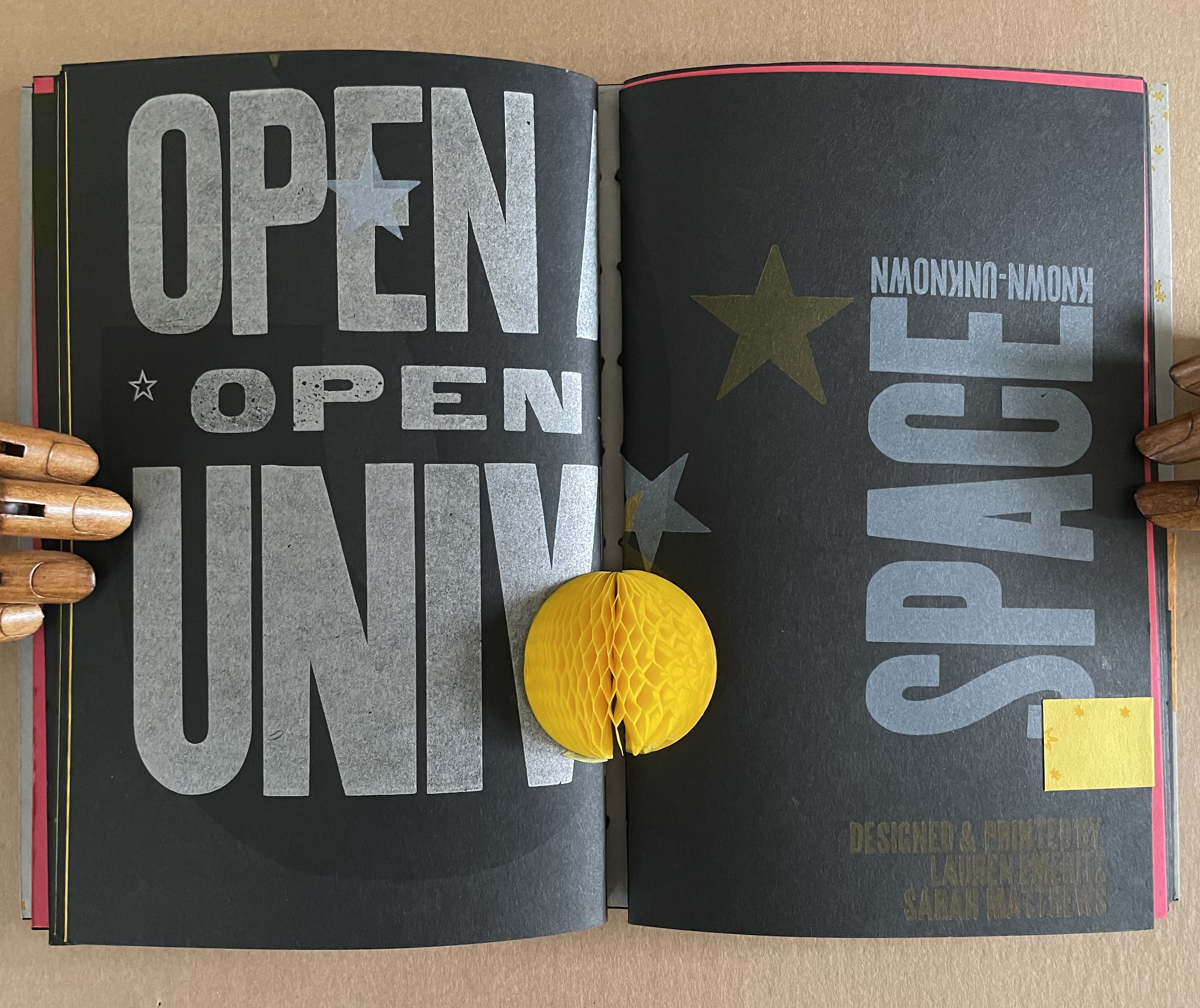
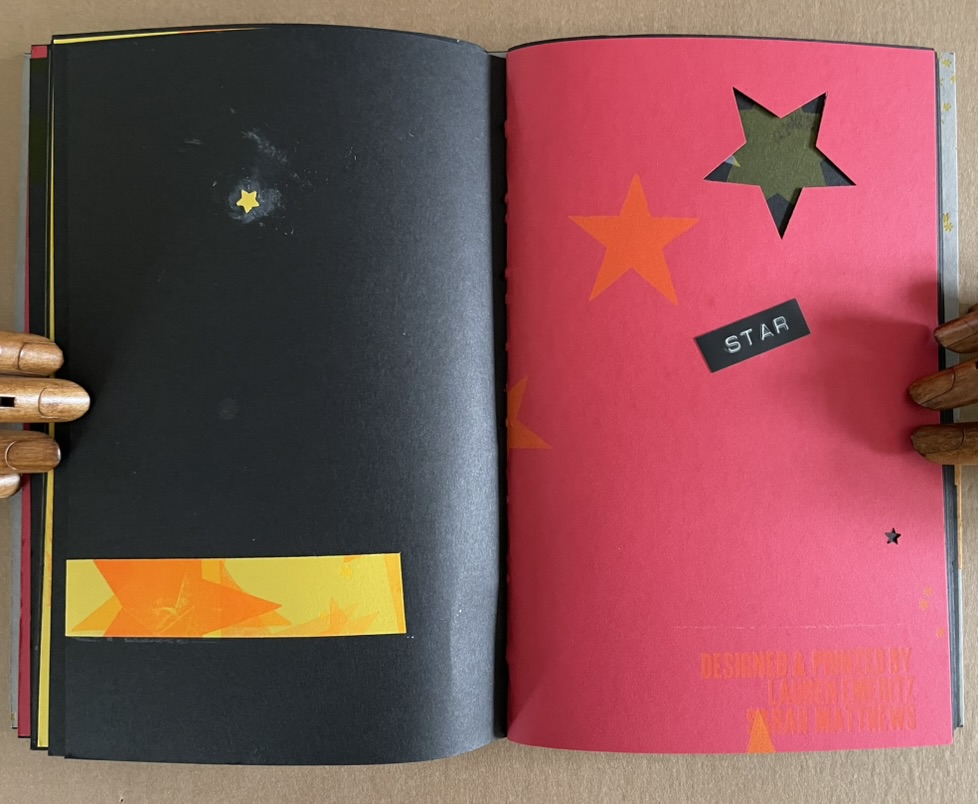
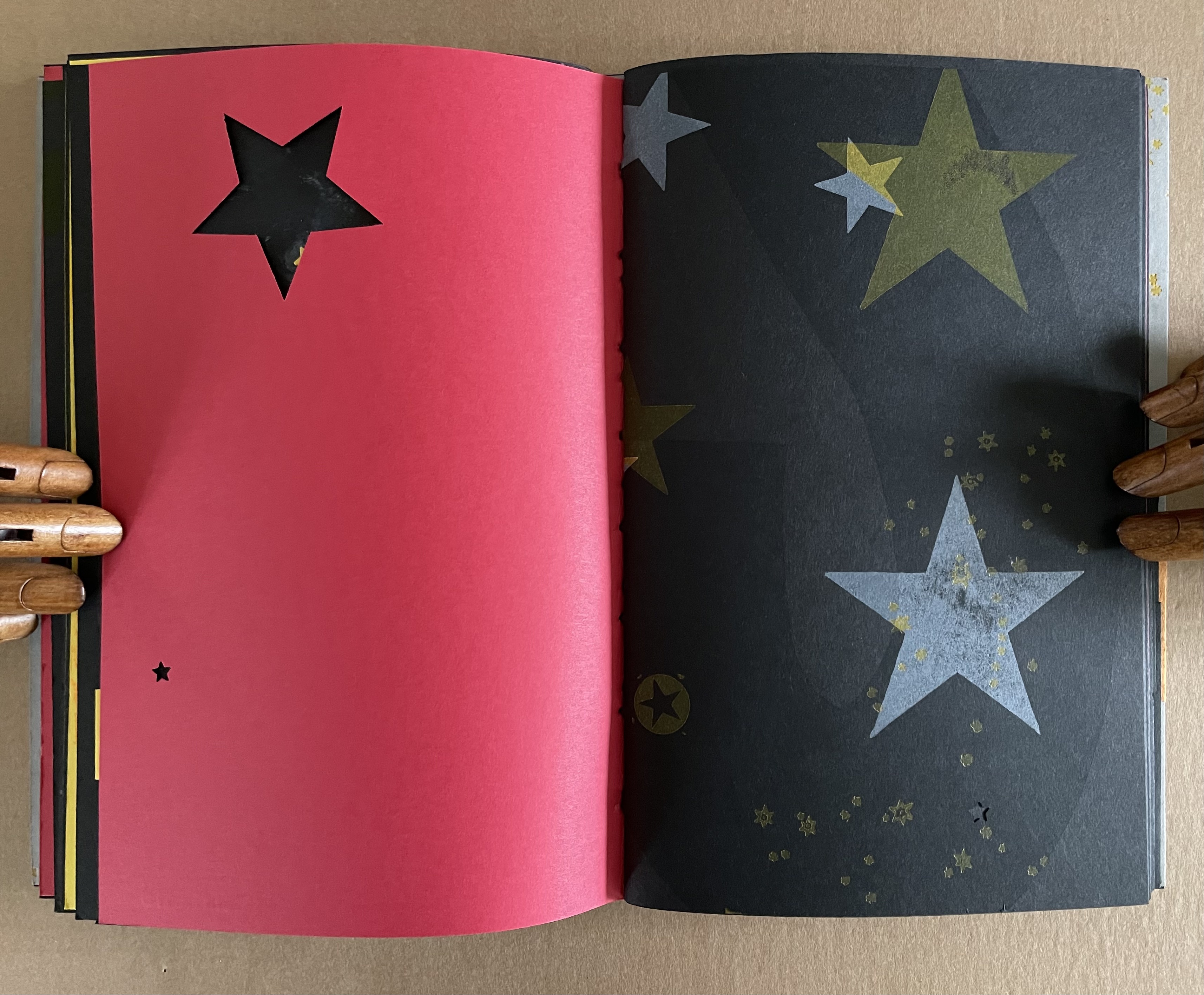
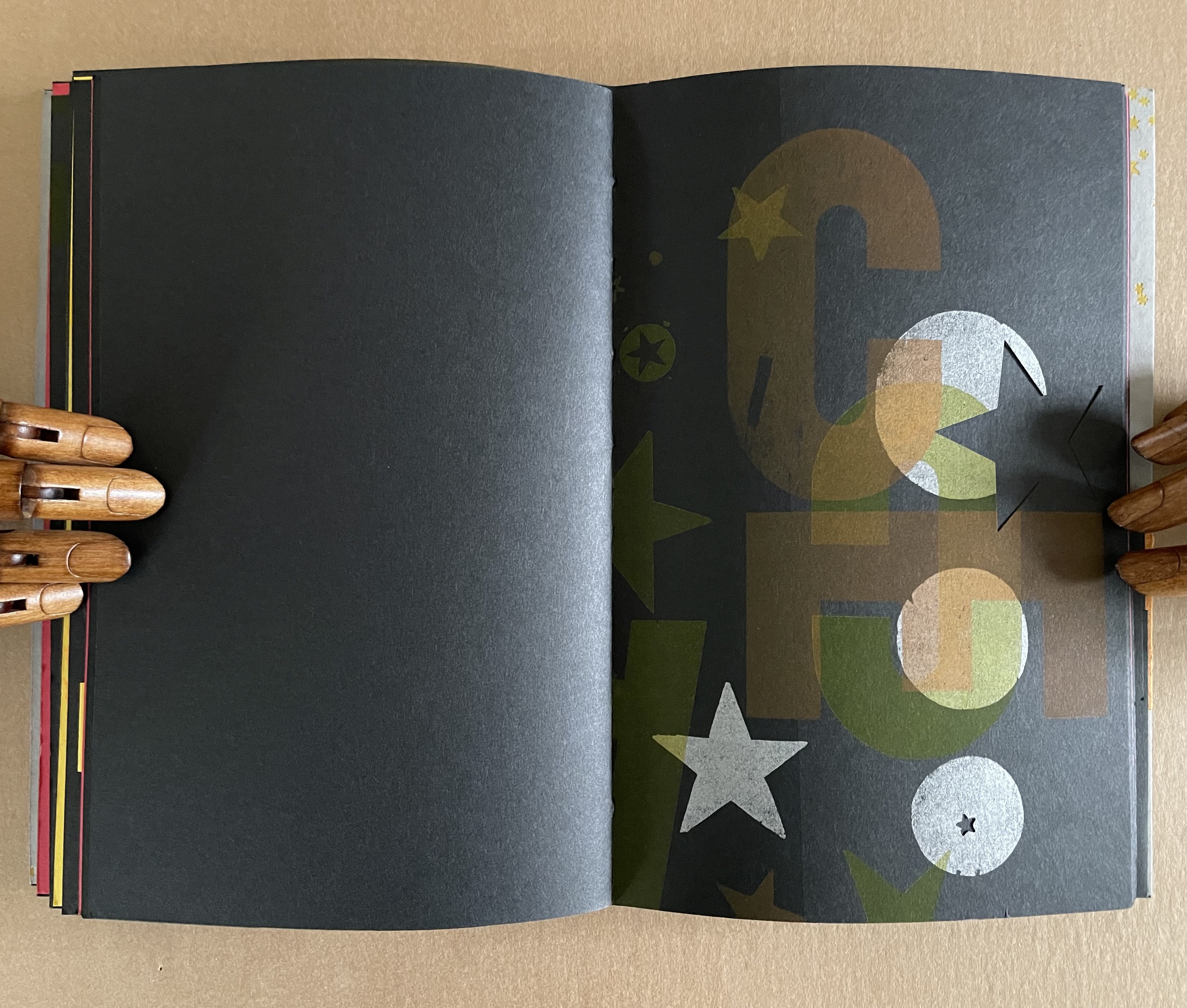
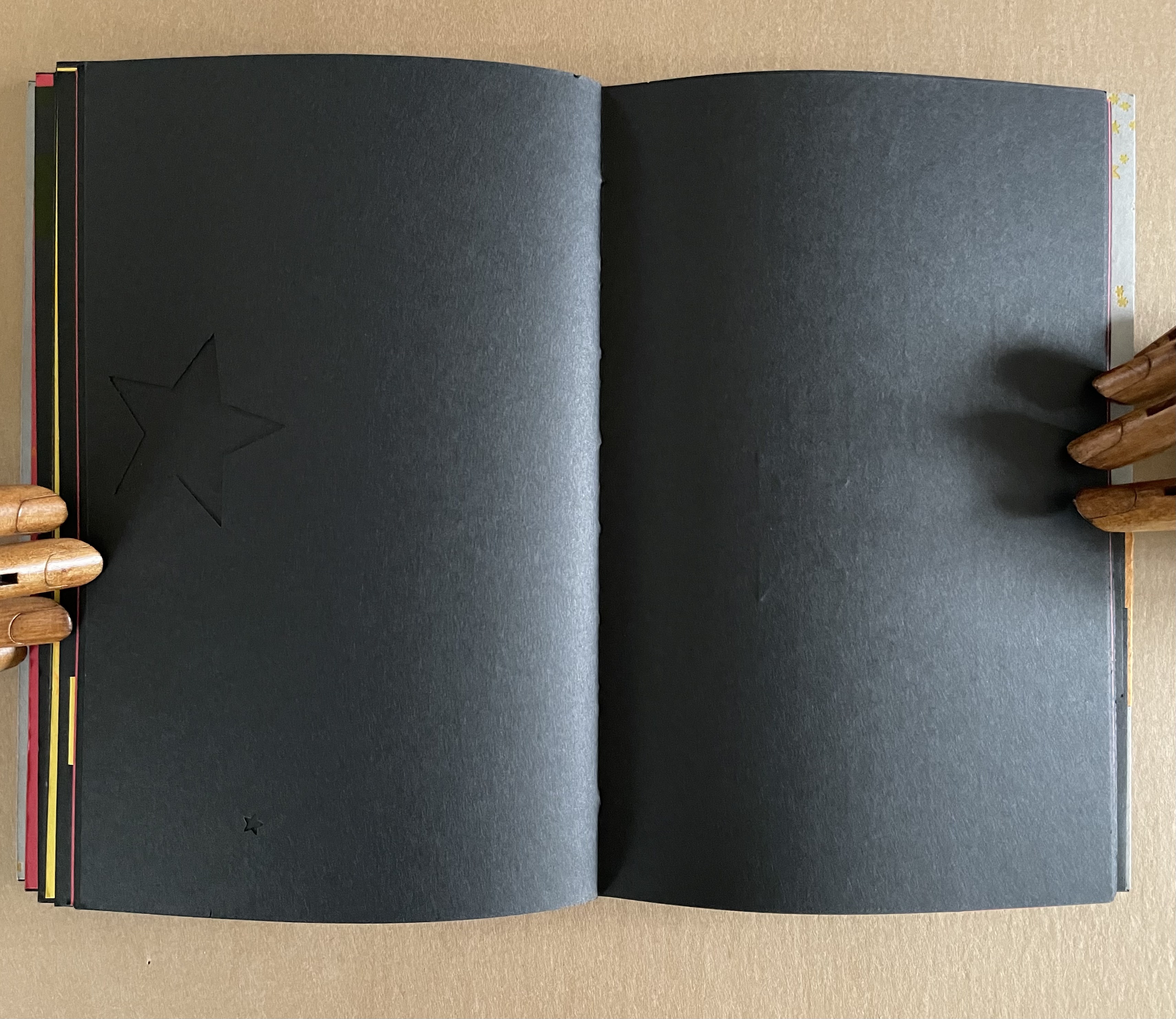
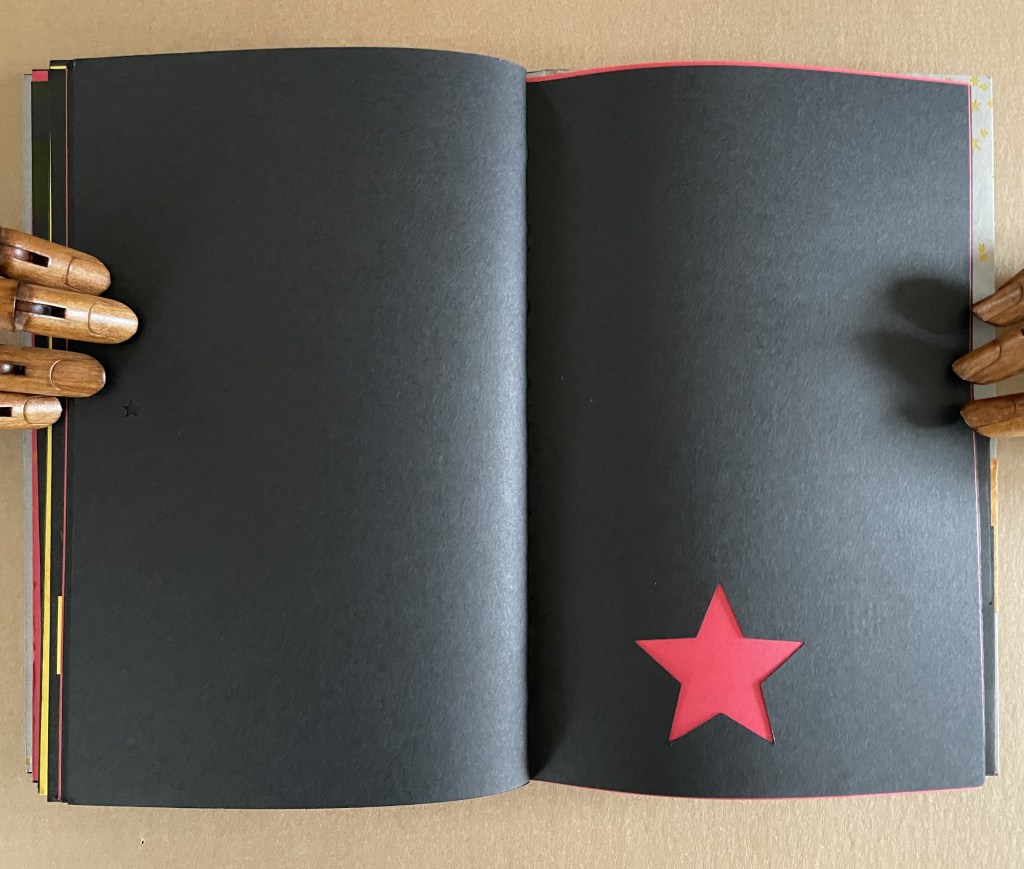
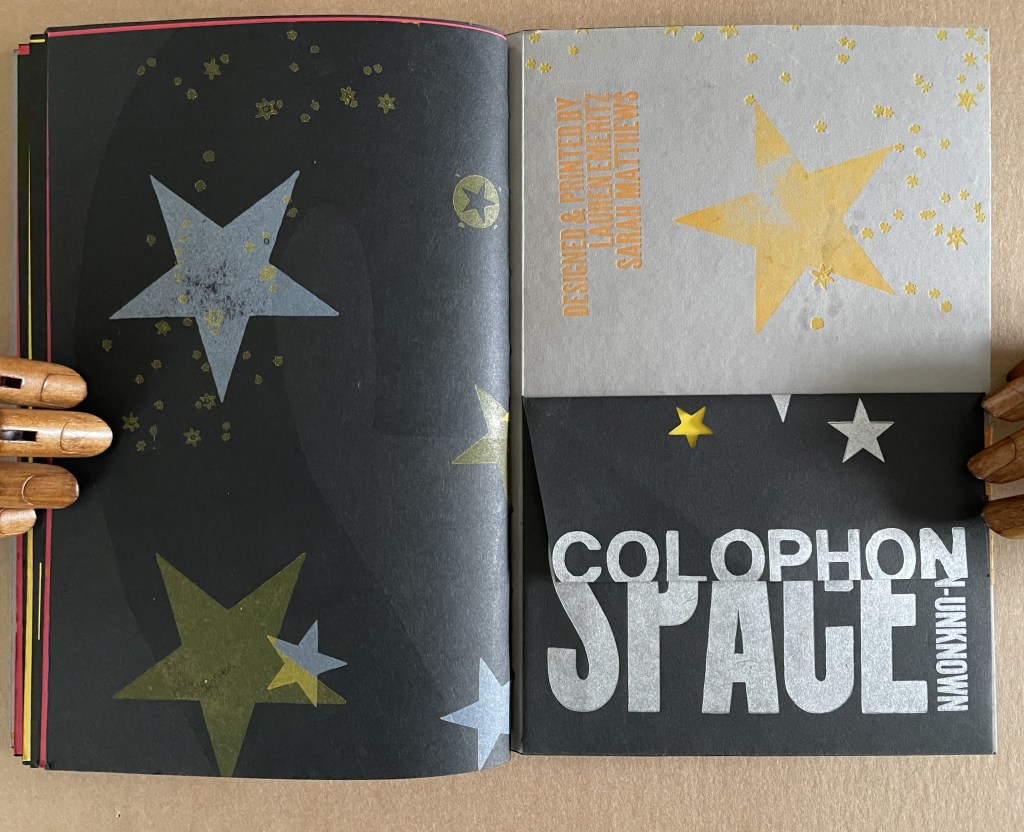
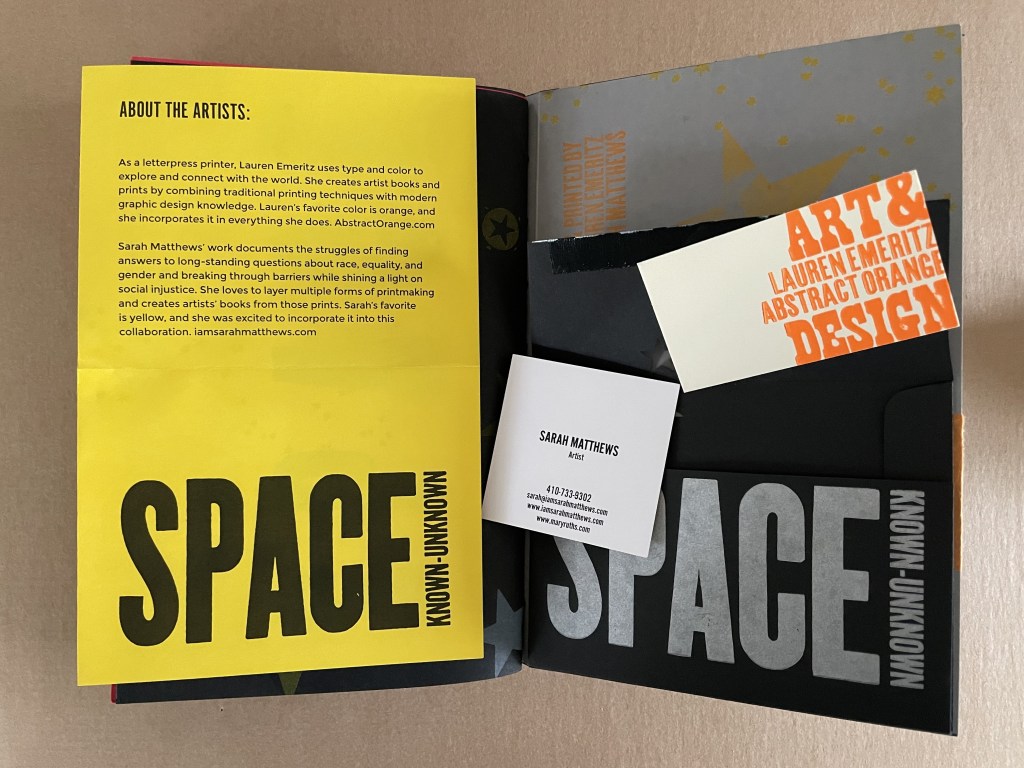
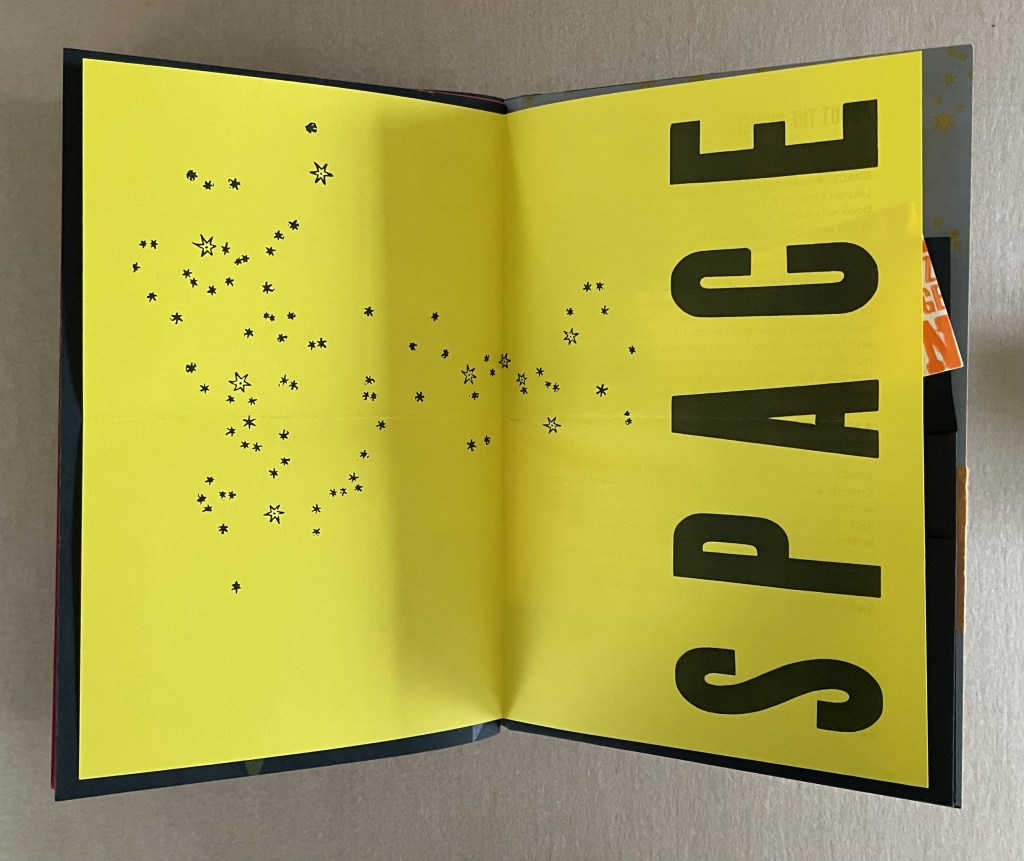
SPACE: Known/Unknown (2022)
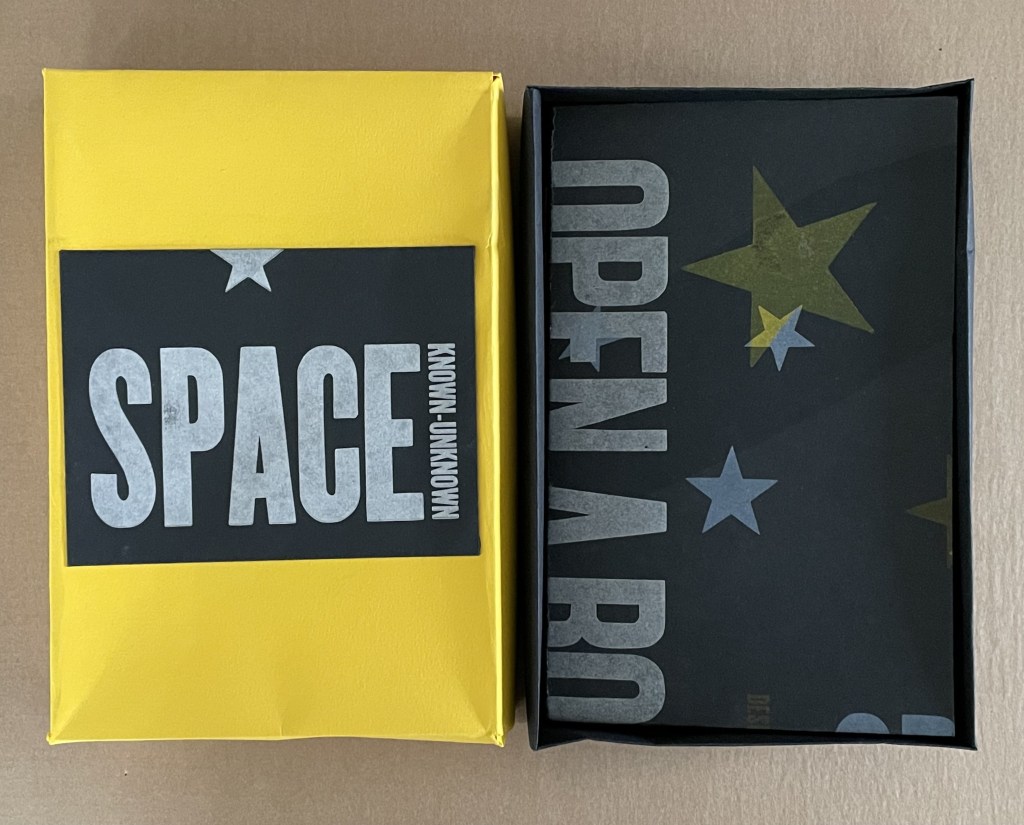
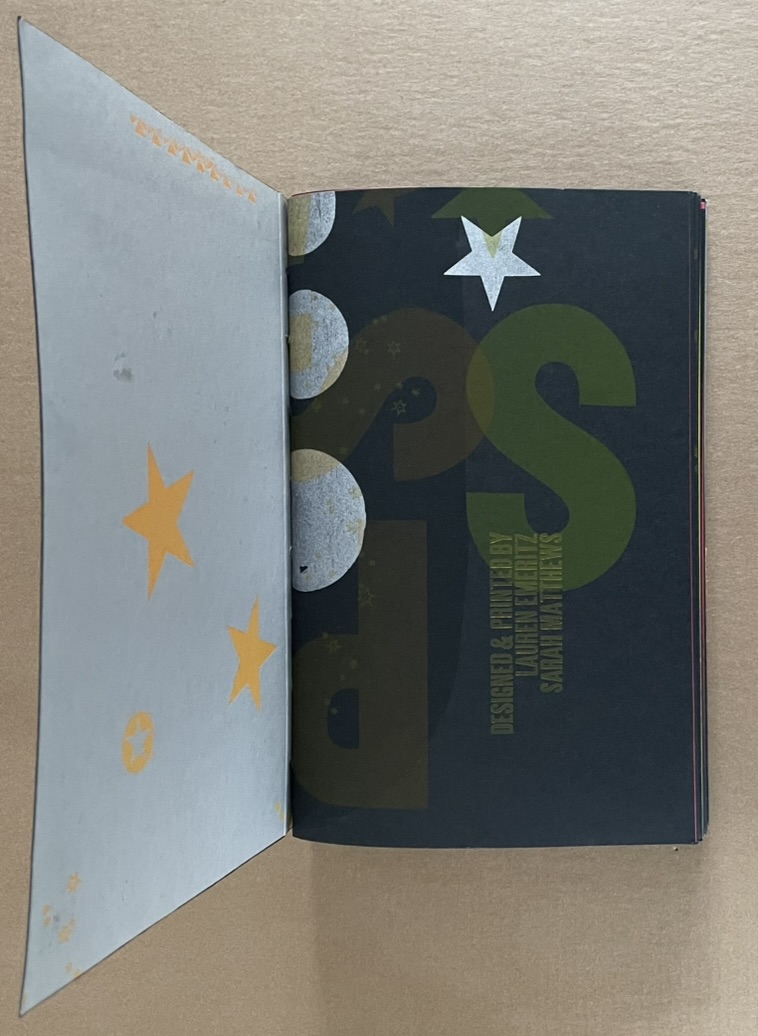
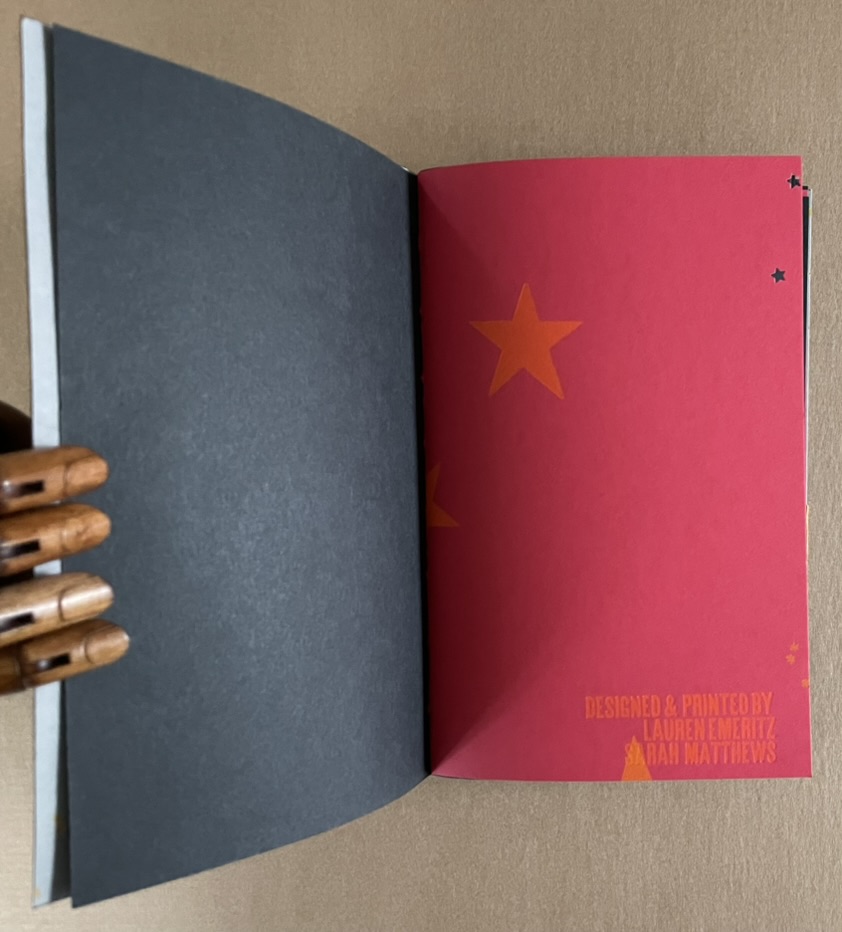
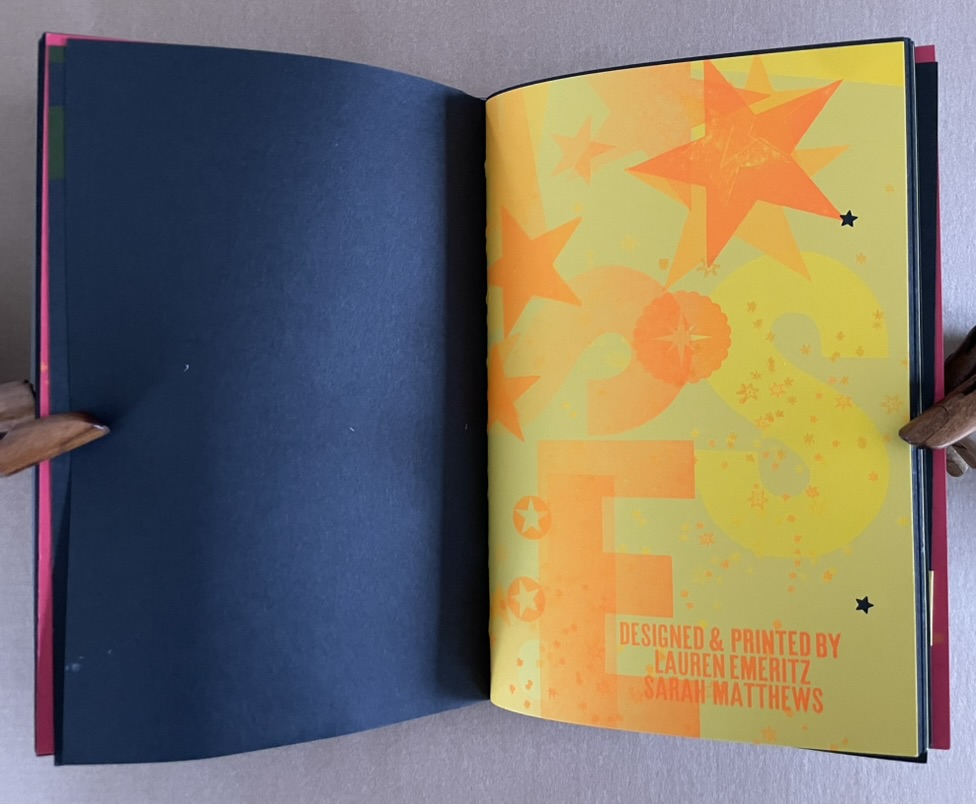
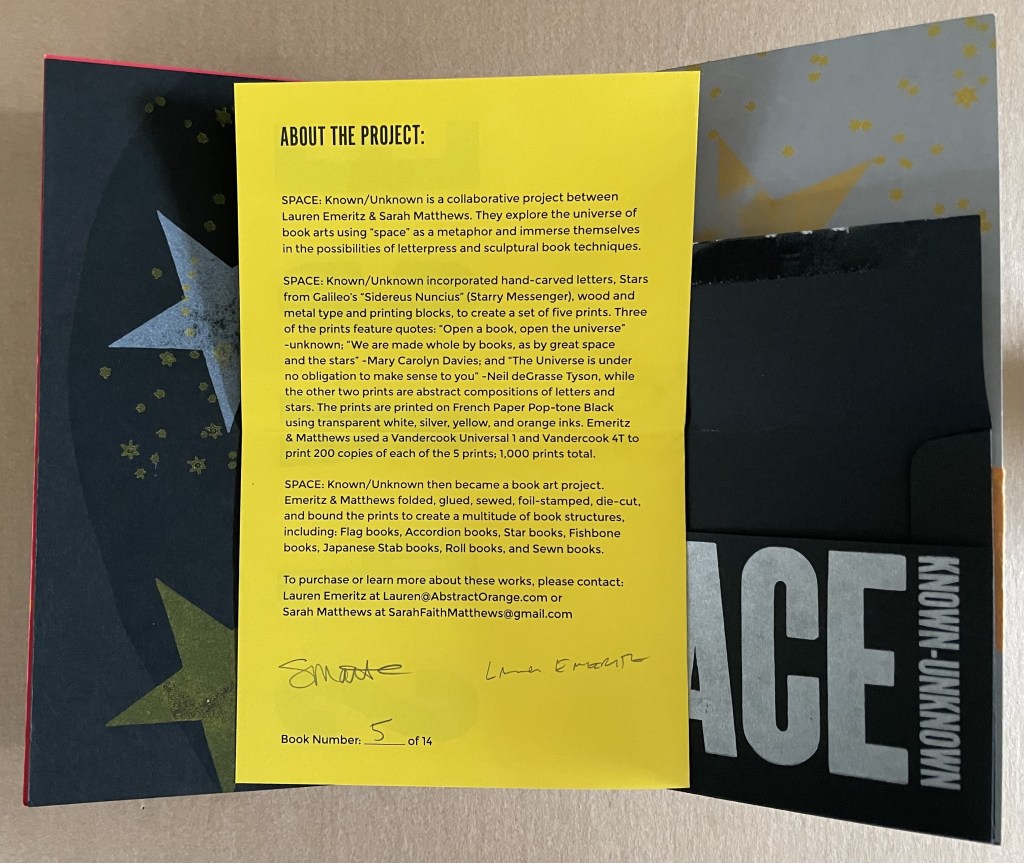
SPACE: Known / Unknown Lauren Emeritz & Sarah Matthews Box with pastedown title enclosing softcover book. Box: 237 x W157 x D50 mm. Book: H230 x W150 x D25 mm. 48 pages and loose 4-page colophon in envelope attached to inside back cover. Edition of 15, of which this is #5. Acquired from Sarah Mathews, 6 August 2024. Photos: Books On Books Collection.
A collaborative project between Lauren Emeritz & Sarah Matthews, SPACE: Known/Unknown features three telling quotations:
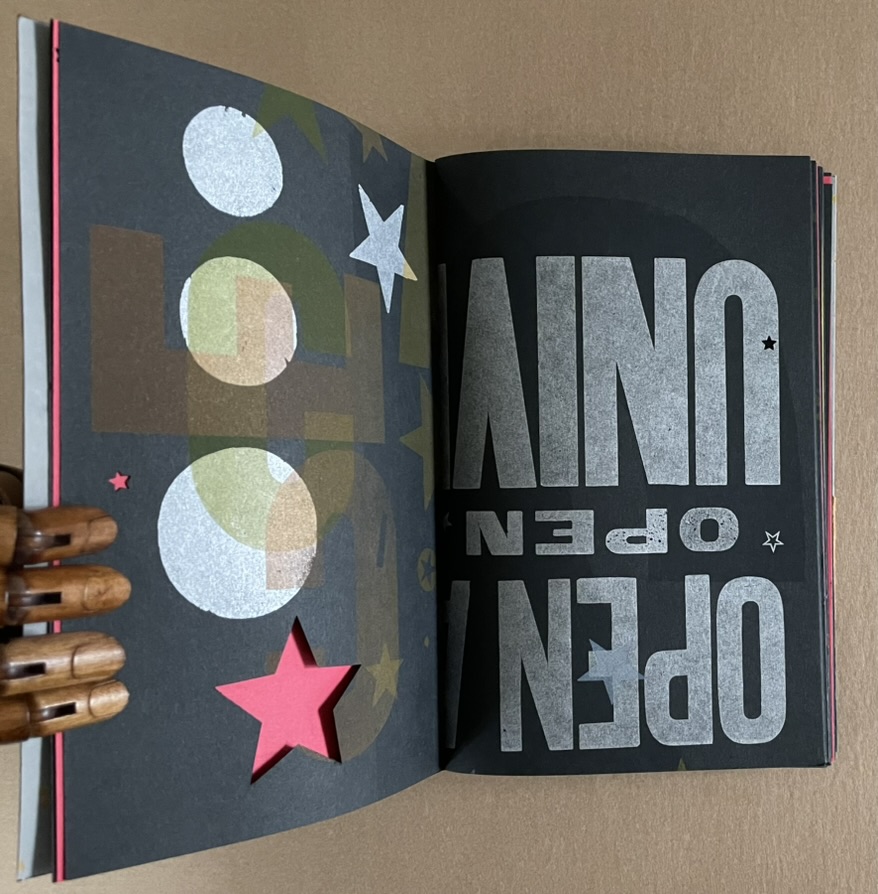
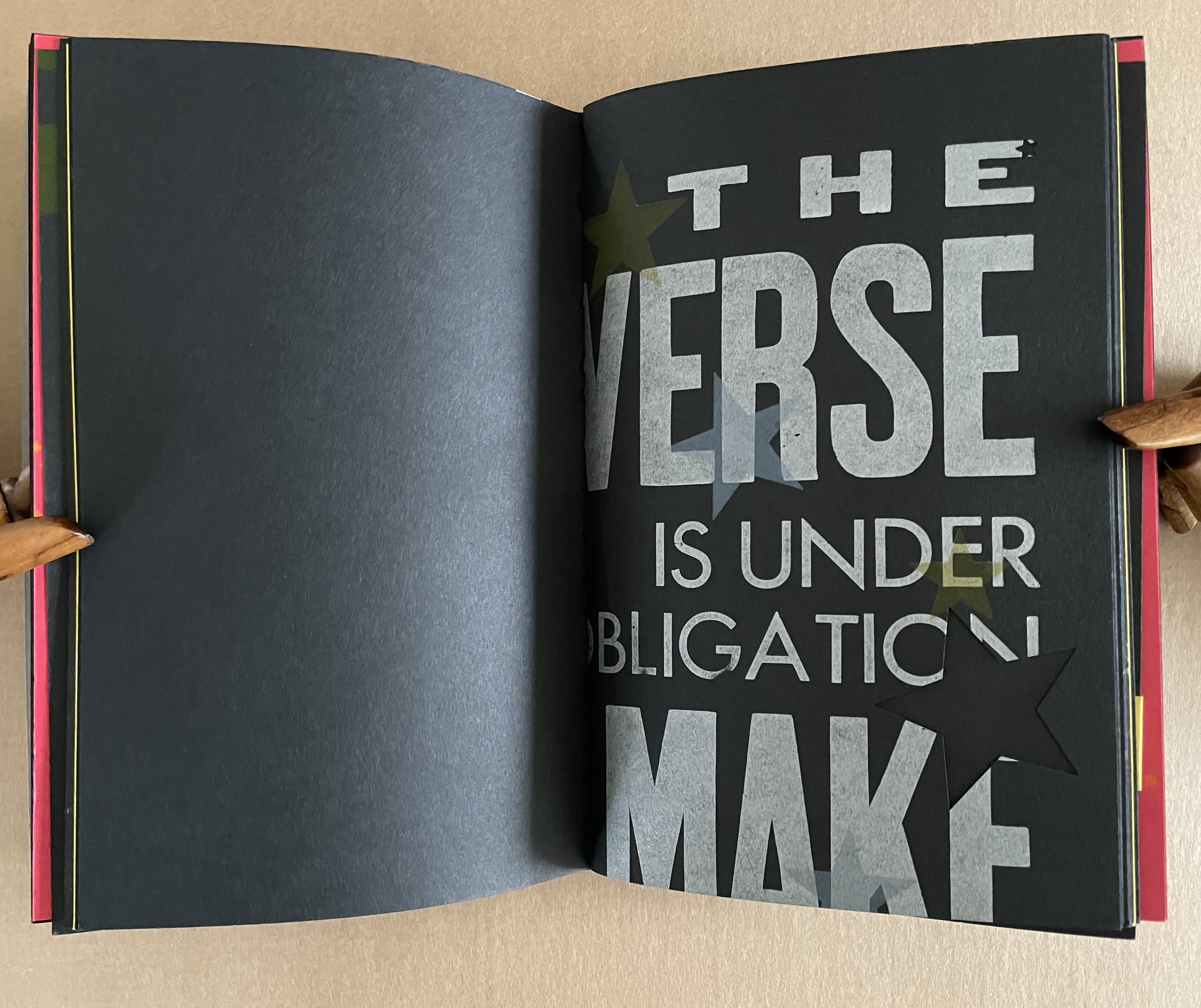
“Open a book, open the universe”– Unknown “We are made whole by books, as by great space and the stars” — Mary Carolyn Davies “The Universe is under no obligation to make sense to you” — Neil deGrasse Tyson
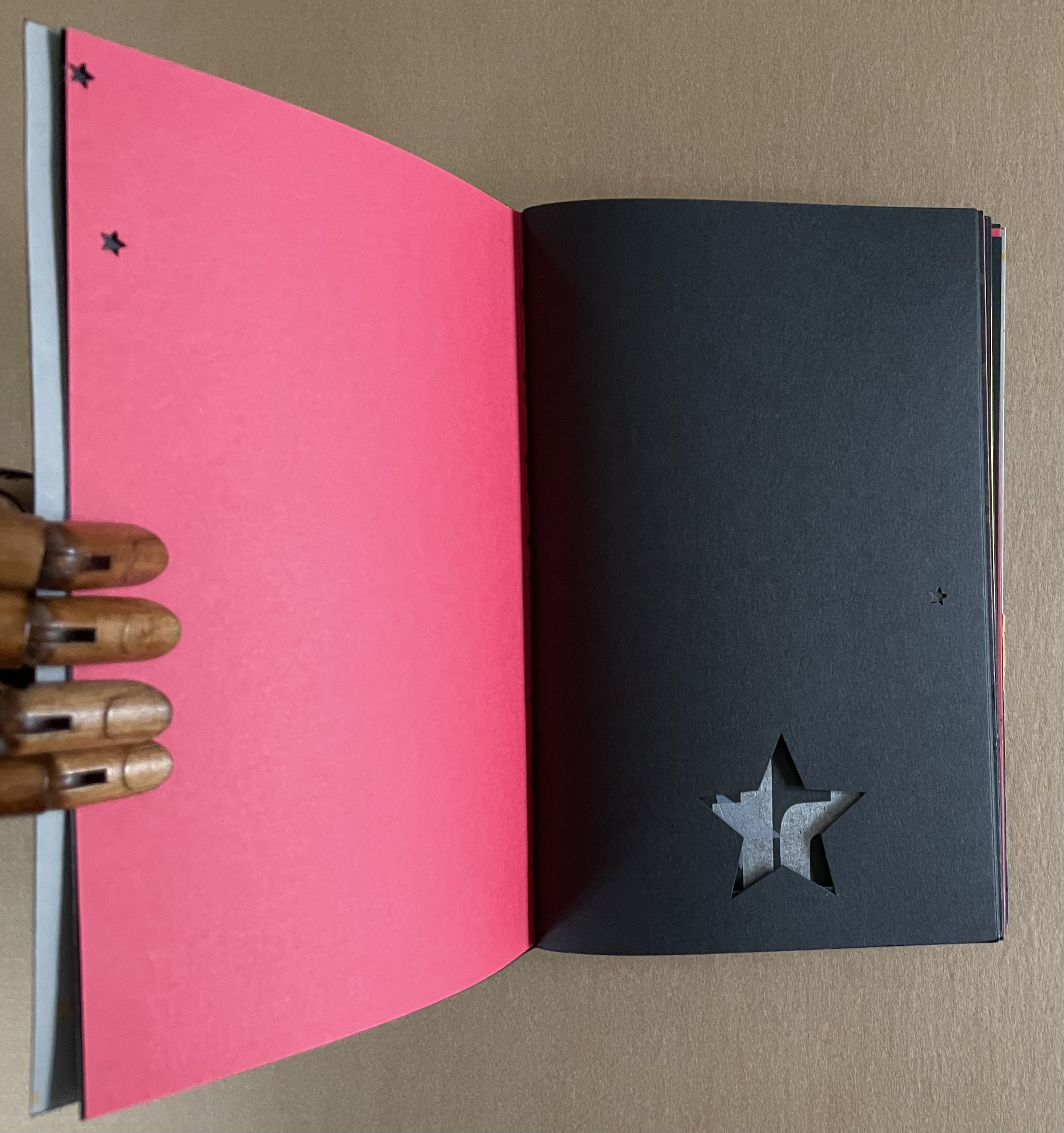
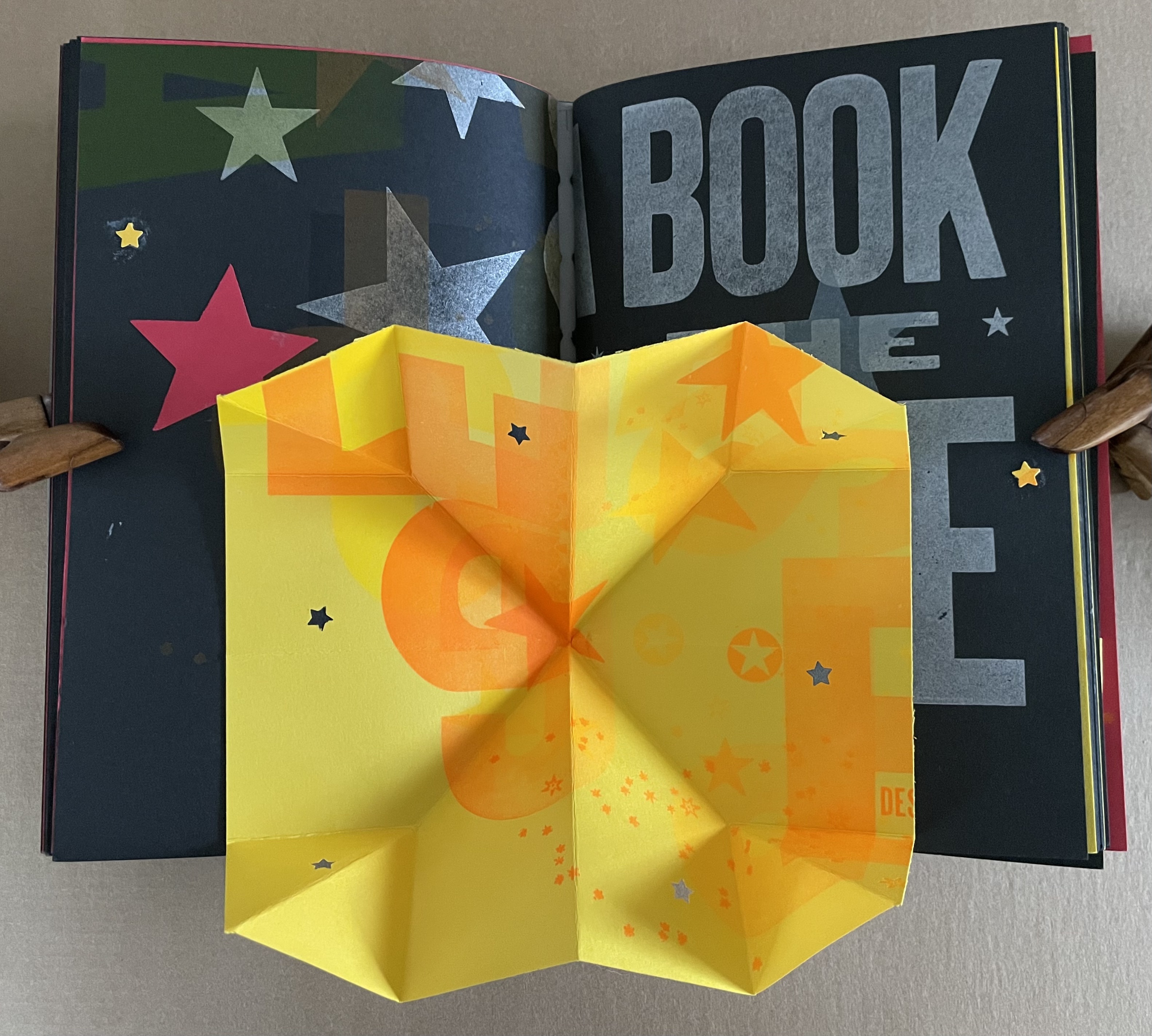
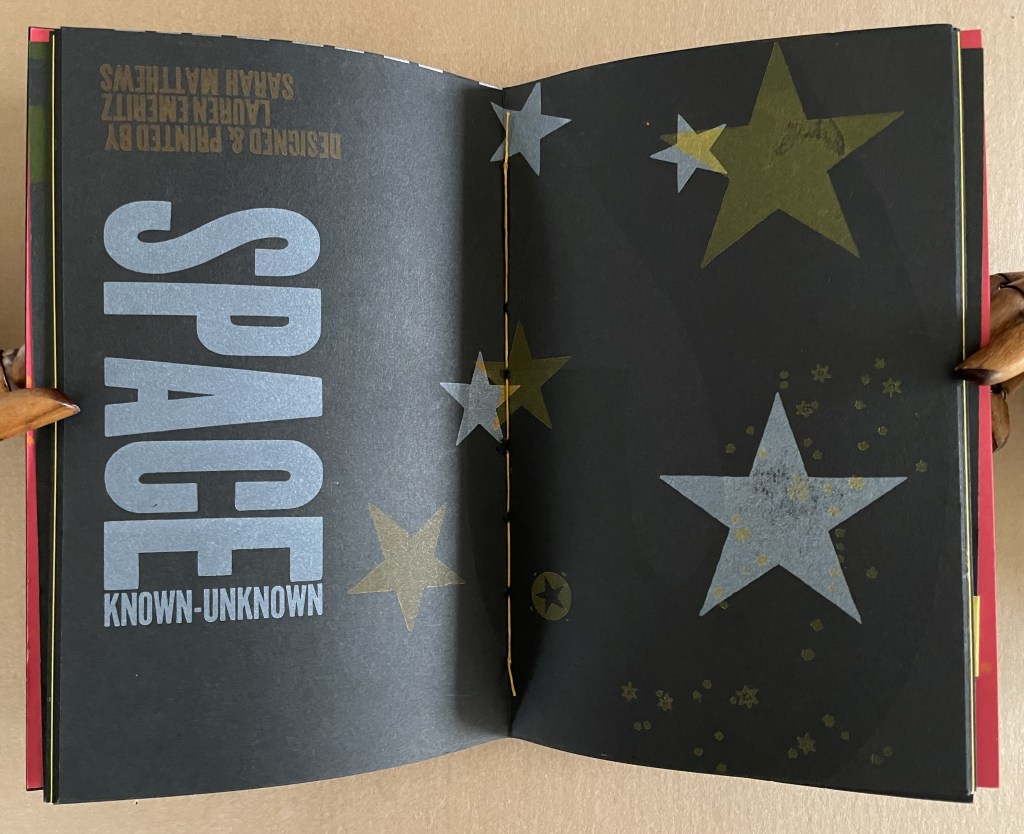
The universe of this artist’s book is that of letterpress, handcarved letters, wood and metal type, embossed printer labels, multiple inks and foil stamping, die cuts, paper engineering, and multiple binding structures. This and its crazy quilt imposition make it a lively universe to explore, and it certainly lives up to deGrasse Tyson’s quip.
Does this book subscribe to the “argument by design” made by Socrates and St. Thomas Aquinas?
A universe in which page layout turns one way and then another is under no obligation to make sense.
A Turkish fold of constellations.
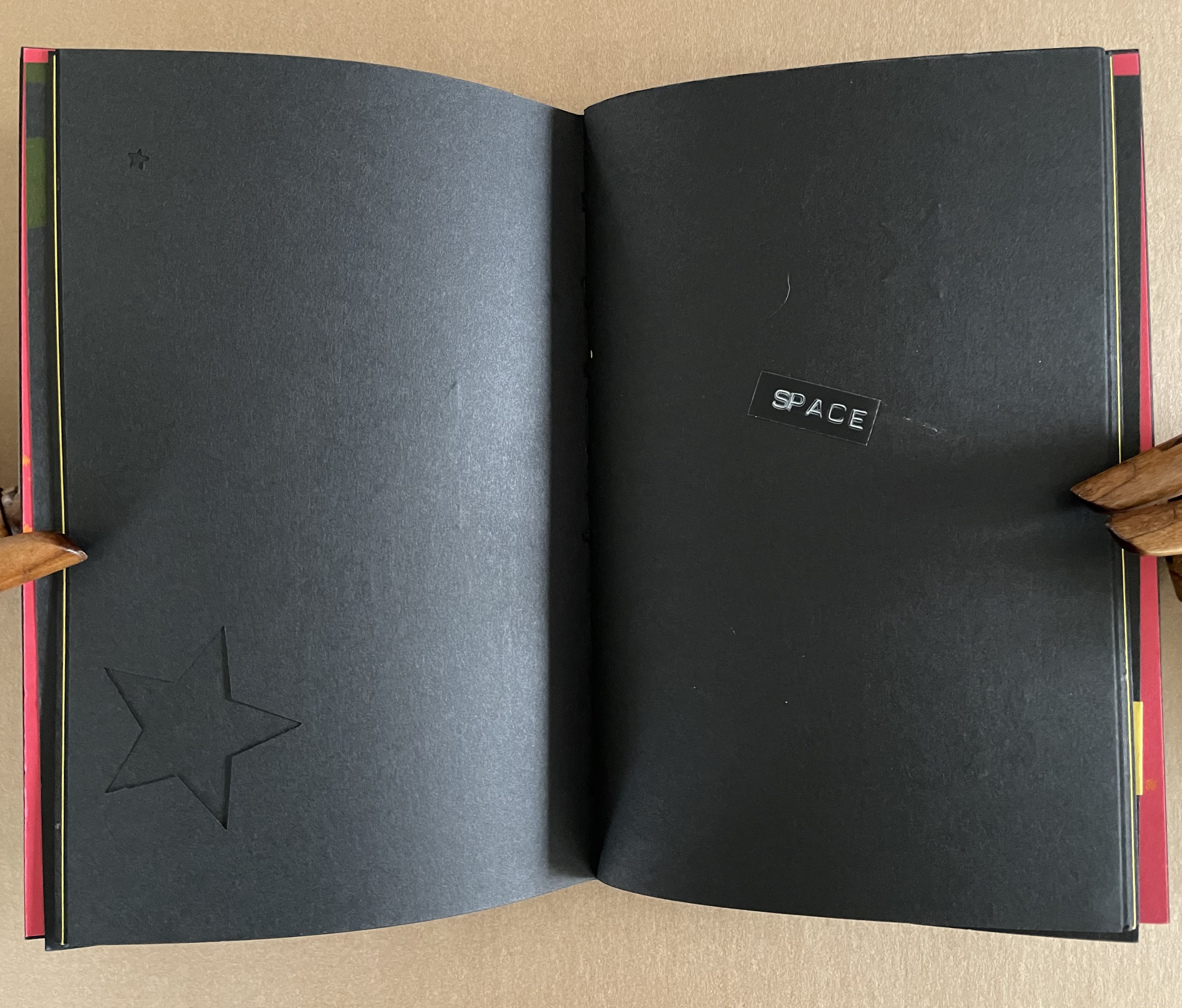
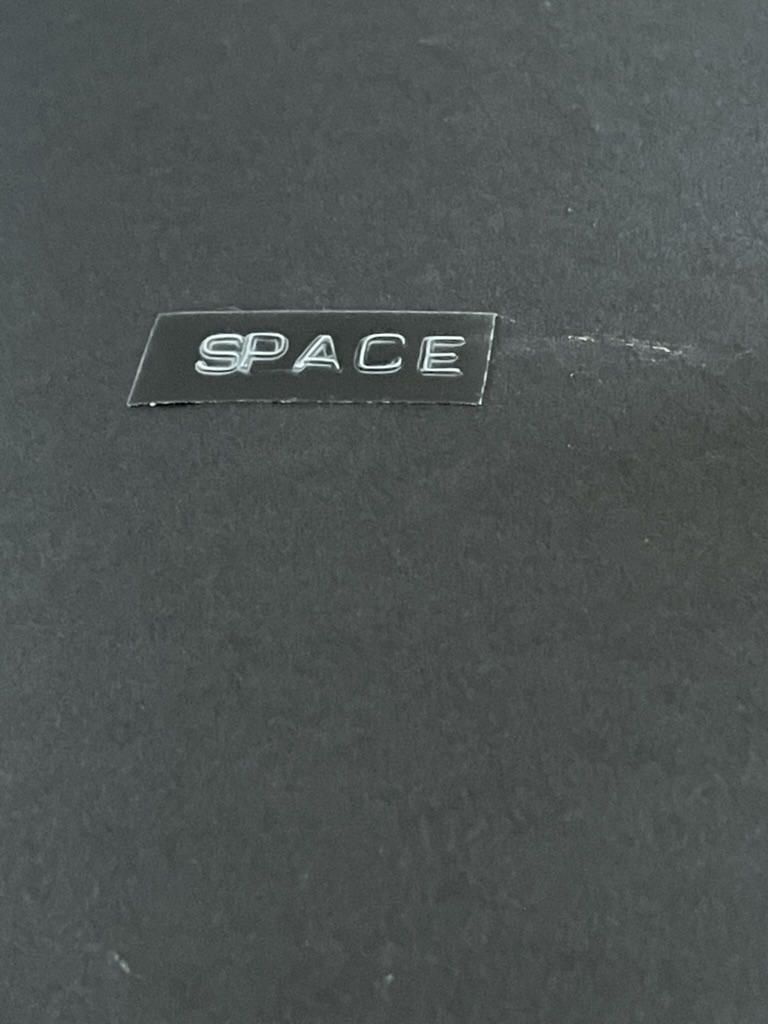
The artists must have traveled back in time to include one of these embossed sticky labels.
The universe and title page can appear in multiple places — even in the middle.
A sunburst — and then star label in case we missed it?
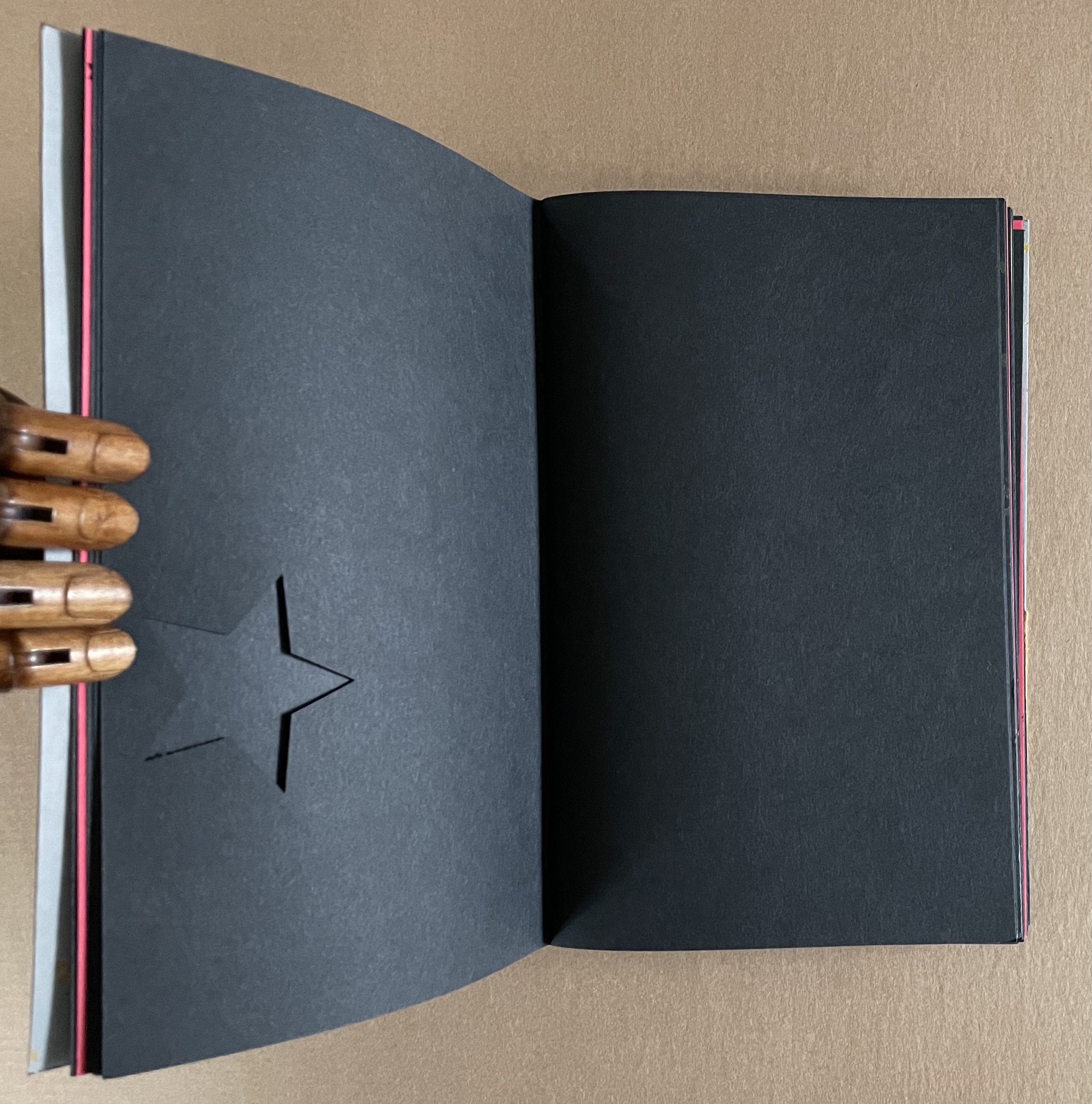
A multi-color galaxy of ink leads to die-cut black stars (or holes?).
Not exactly a dwarf red star, but it’s the artists’ universe, they get to decide.
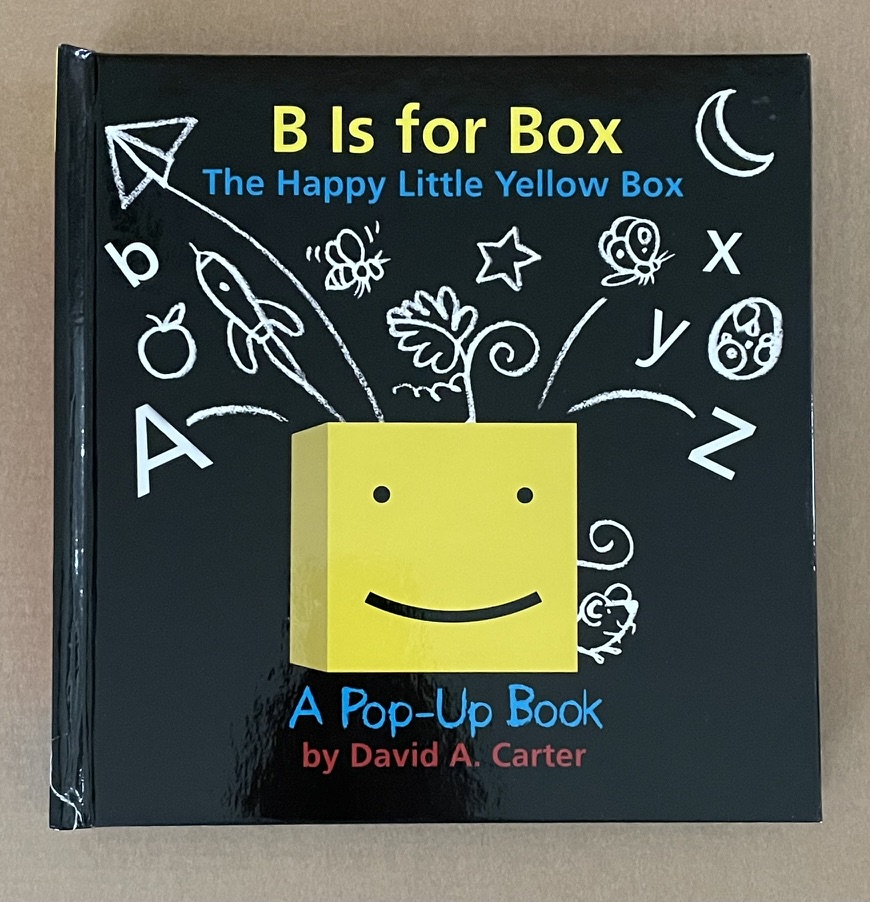
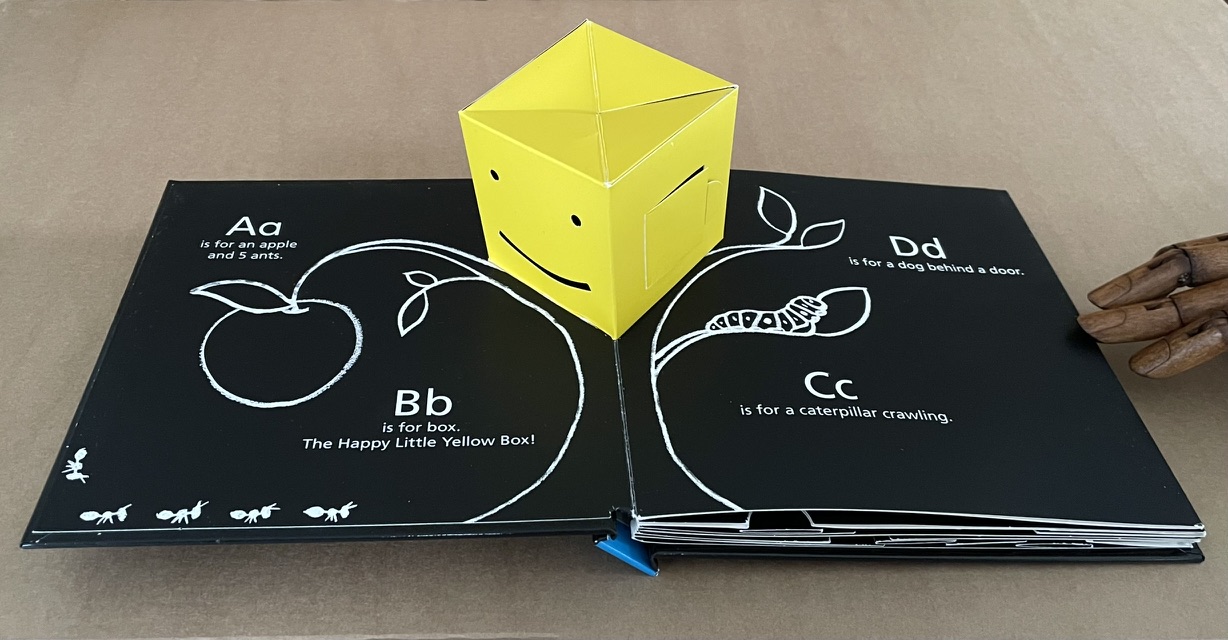
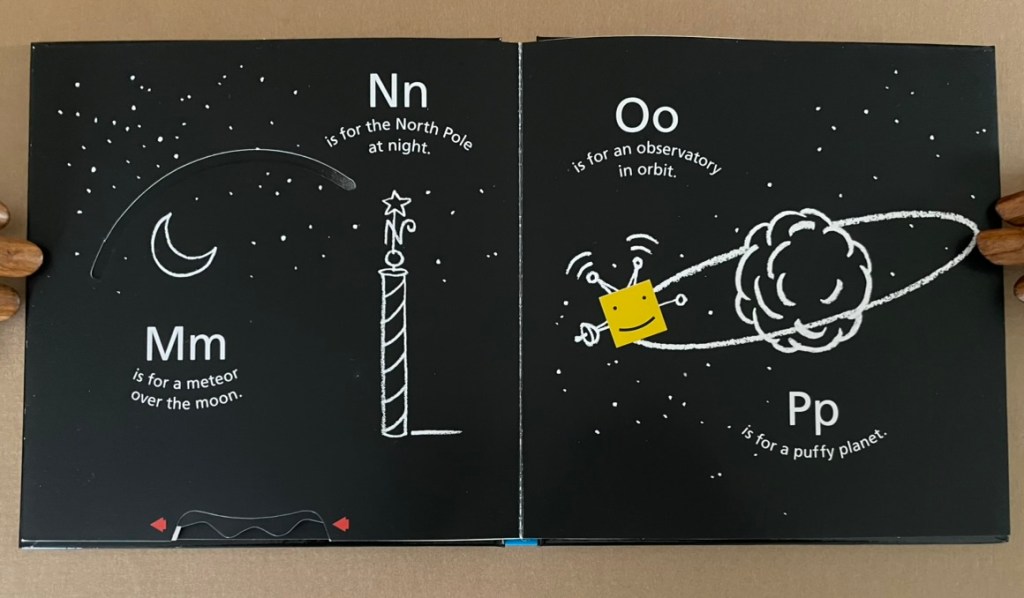
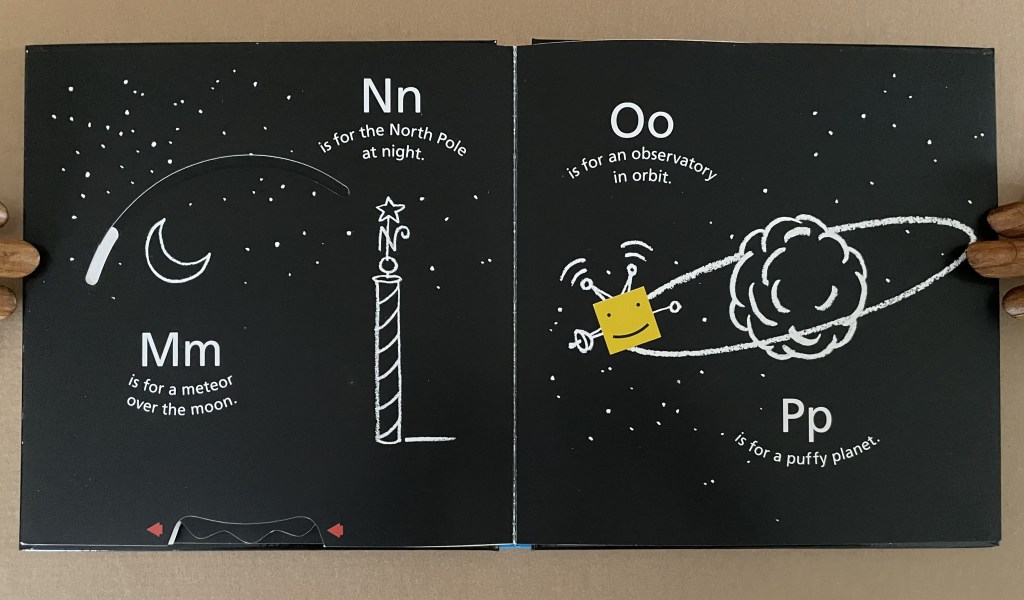
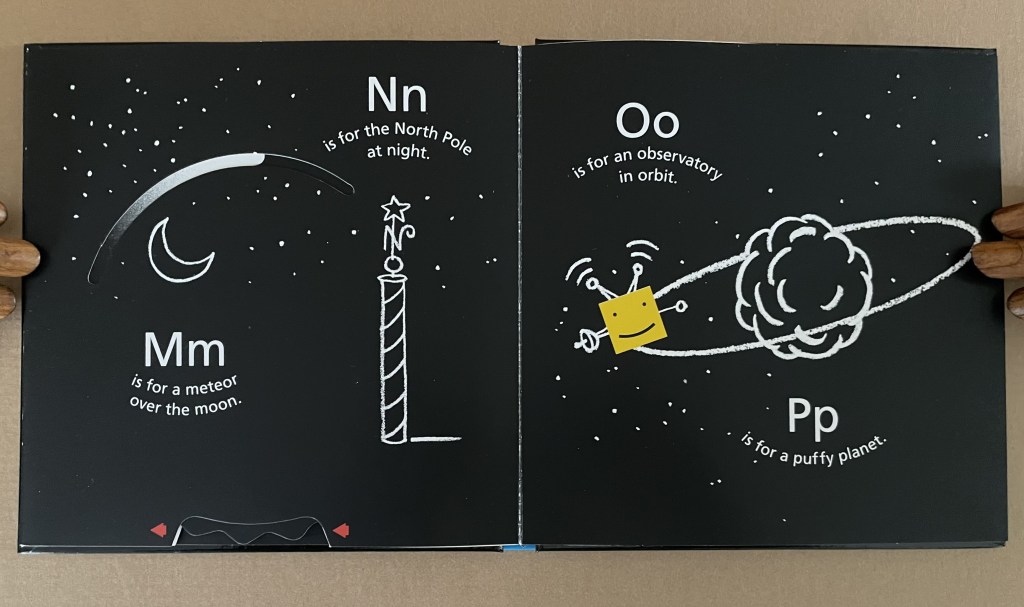
B is for Box (2014) David A. Carter Pop-up book, printed paper over boards. H187 x W184 x D28 mm. [14] pages. Acquired from Type Punch Matrix, 17 September 2024. Photos: Books On Books Collection.
“The Happy Little Yellow Box” was first introduced in a pop-up book of opposites by that name in 2012. For the Books On Books Collection, the box’s return in this pop-up alphabet makes it the one to add to all the other abecedaries here. The box is also a happy reminder of the items under Further Reading (below).
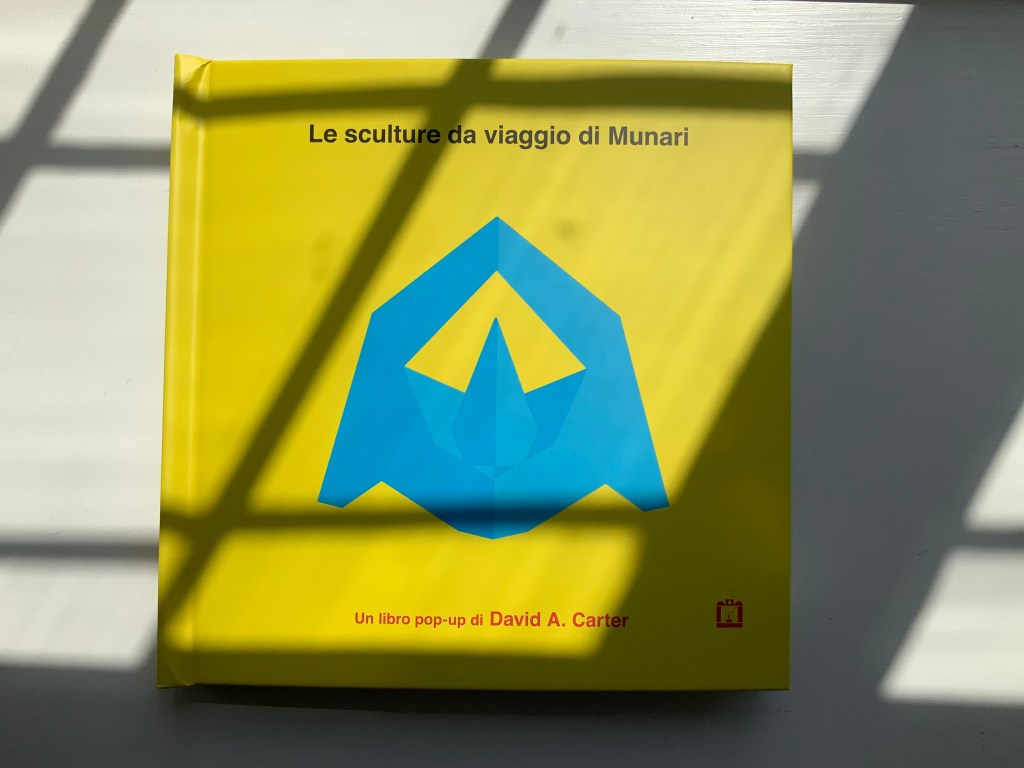
Le sculture da viaggio di Munari (2019)
Carter’s Le sculture da viaggio di Munari brings the spirit of Munari’s “travel sculptures” into the collection. His homage carries the blessing of Corraini Edizioni, further justifying its inclusion.
Travel sculptures started off as small sculptures (some even pocket-sized) to carry with you, so you could take part of your own culture to an anonymous hotel room. Later they were turned into ‘travel sculptures’, five or six metres tall and made of steel. One of these was seen for a few months in Cesenatico, another one in Naples. Others are sleeping among huge trees in the Alto Adige region.’ This is how Italian designer Bruno Munari (1907-1998) described his ‘travel sculptures’, which in turn inspired American illustrator and designer David A. Carter for this pop-up book. –Corraini Edizioni website. Accessed 3 August 2021.
Munari’s travel sculptures also recall works in the collection like Cumer’s scultura da viaggio dipinta n.2(2017), Komagata’s「Ichigu」(2015) and, albeit less portable, Ioana Stoian’s Nous Sommes (2015).
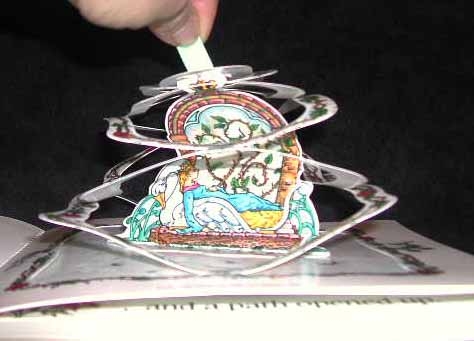
Rubin, Ellen. 2019. Ellen Rubin – The Popuplady. For her definition of the “spider web” form of pop up (Within a circle, a spiral is cut either by hand or laser. A ribbon or pull is attached to the center area. When pulled up, a ‘spider web’ pop-up is created.), Rubin illustrates it with an example from Carter.
In July this year, a video was posted as if in response to the conclusion of Kyle Olmon’s “Movable Book Artists” in Parenthesis 31 (2020):
There is little in the way of scholarship and criticism in regard to pop-up and movable books. Part of this is the stigma of being represented as a commercial novelty product or kiddie book by twentieth-century publishers. The explosion of artists’ books in the 1970’s gave rise to a subset of book artists that moved beyond the standard textblock to explore the book form in ways that surpassed commercial novelty publishing efforts. To date there is no consensus within the community on the classification of the types of book formats or even the terminology used when describing pop-up and movable elements in a work. Hopefully this will change when articles about pop-up artists’ books appear with more frequency and more scholarship is undertaken.
The Newberry Library’s Curator of Rare Books and Manuscripts Suzanne Karr Schmidt gave the Book Club of Washington a reprise of her 2023 exhibition “Pop-Up Books through the Ages”:
Plunge (2010) Chisato Tamabayashi Casebound, cloth over boards. Pop-up book. H193 x W152 mm. [12] pages. Collinge & Clark, 6 August 2024. Photos: Books On Books Collection. Displayed with permission from Chisato Tamabayashi.
“This book begins with a dive into the sea, down into the deep and back again, encountering various creatures on the way. The pages are designed to be held and angled in different ways so that the reader can explore the depths and the two sides of the sea’s surface.”–Artist’s statement
It is a pleasure to touch and turn the pages forming the surface and bed of the sea on which the pop-ups and movable elements rise, fall and move. The screen printing with TW graphics ink (pigment ink) enrich the book’s freshness and vibrancy. These photos and very brief video further below do little justice to Plunge and only hint at the sheer fun of manipulating it.
Pages: Simili Japon paper 225gsm. Pop-ups, hand cut by scalpel from Murano pastel paper 160gsm and Colorplan paper 175gsm.
As the double-page spread below shows, Tamabayashi thinks and crafts “in the round” to position his paper sculpture to suggest a sea turtle’s motion through the water.
The Paris-based publishers Les Trois Ourses announced that Katsumi Komagata died on 29 March 2024. Although the Bologna Children’s Book Fair responded quickly with a memorial on 8 April, it is strange that no significant obituary has yet appeared for such a major figure in the book arts, children’s books and artists’ books. Fortunately there is extensive biographical information on the site of his publishing firm One Stroke.
Piece of Mind (2022), one of his last limited edition works, becomes all the more treasured.
Piece of Mind (2022) Katsumi Komagata Casebound, card around perfect bound block of lighter card stock. H300 x W196 mm. [30] pages. Edition of 100, of which this #67. Acquired from One Stroke, 7 August 2023. Photos: Books On Books Collection.
Land Forms and Air Currents (2014) Carol Barton Leporello (with 11 pop-ups) fixed to inside cover of case, cloth over board, debossed with fitted, pastedown artwork on front cover and spine. Cover: H292 x W192 x D50 mm. Leporello: H275 x W175 mm. 37 panels. Edition of 25, of which this is #21. Acquired from the artist, 27 October 2023. Photos: Books On Books Collection. Displayed with artist’s permission.
Carol Barton’s reputation for paper-engineering, supported by her well-received multi-volume The Pocket Paper Engineer, should not overshadow appreciation of her talents with watercolor and words. With its poems of free verse, scanned watercolors and pop-up structures all by the same author/artist, Land Forms and Air Currents (2014) qualifies as a champion of the Blakean tradition in artists’ books.
ABC of Bugs and Plants in a Northern Garden (2012)
ABC of Bugs and Plants in a Northern Garden(2012) Judy Fairclough Sgantas and Claire Van Vliet Clamshell box, softcover, open spine, paper-tab-sewn binding. Box: H188 x W192 x D65 mm. Book: H167 x W171 x D35 mm. 27 f&gs, 1 folded pastedown at end. Edition of 120, of which this is #45. Acquired from Vamp & Tramp, 15 September 2023. Photos: Books On Books Collection. Displayed with artists’ permission.