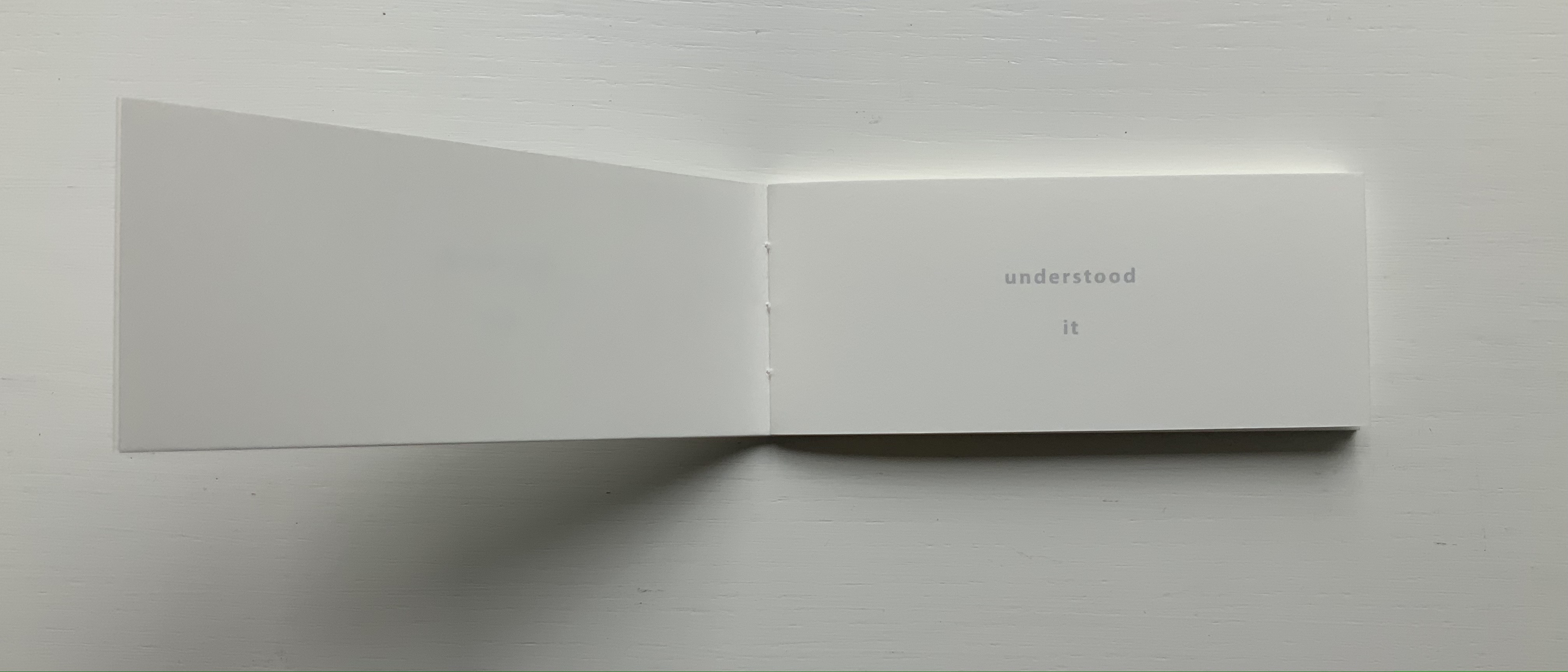
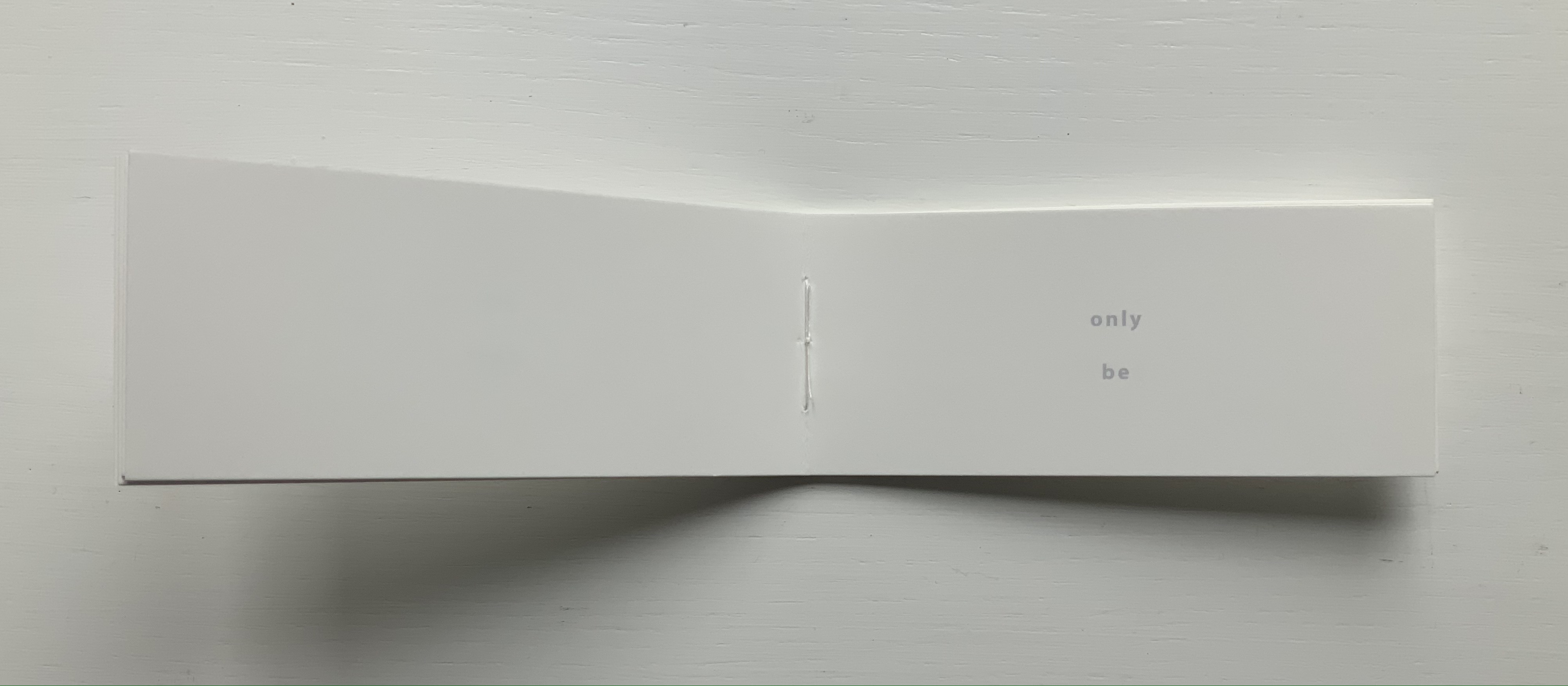
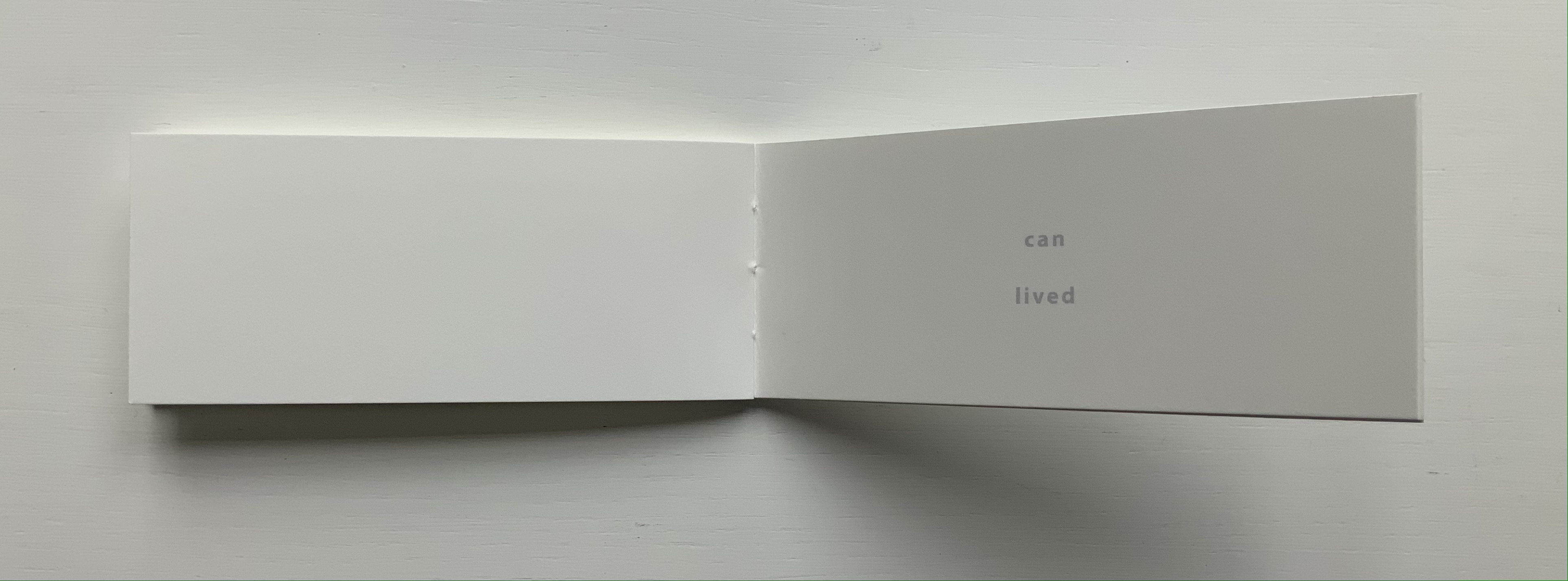
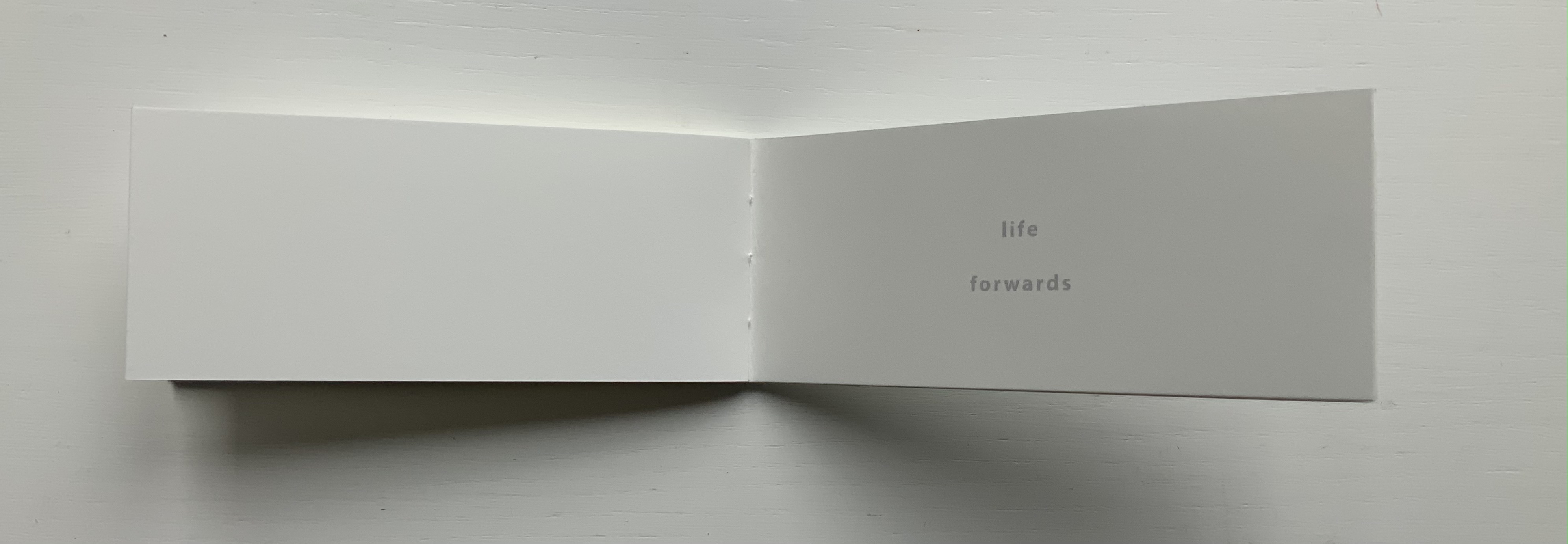
Books On Books Collection – Benjamin Lord

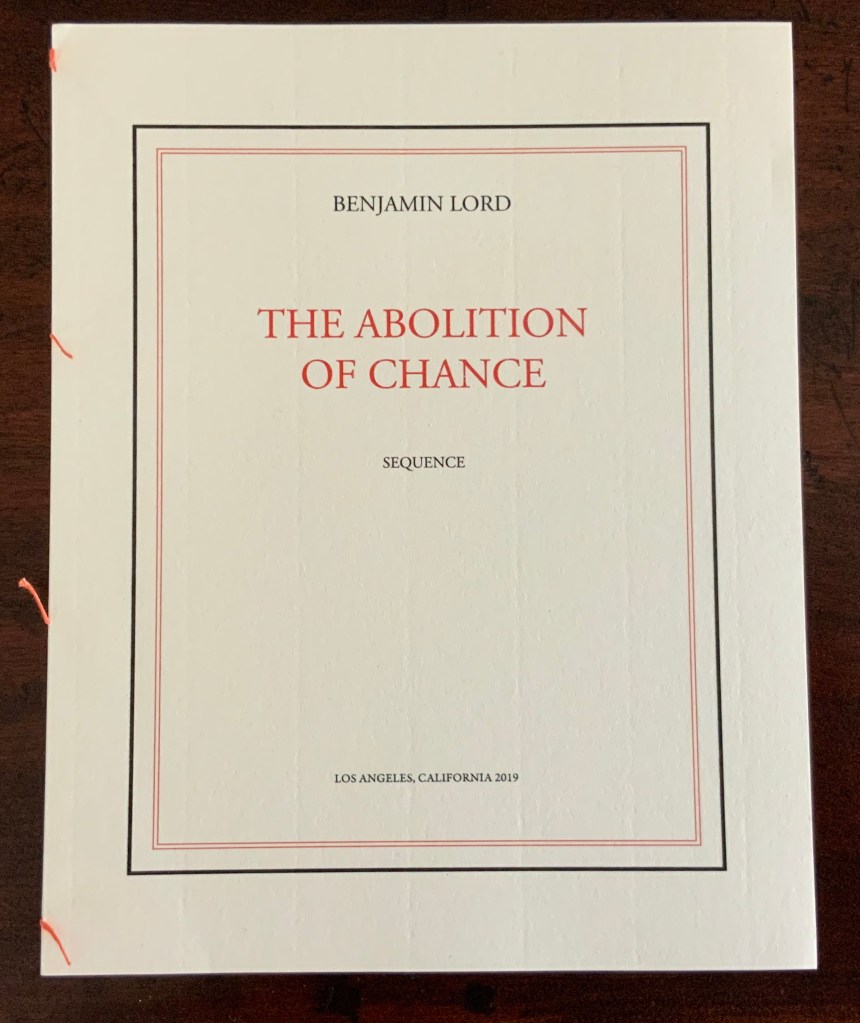
The Abolition of Chance: Sequence (2019)
The Abolition of Chance: Sequence (2019)
Benjamin Lord
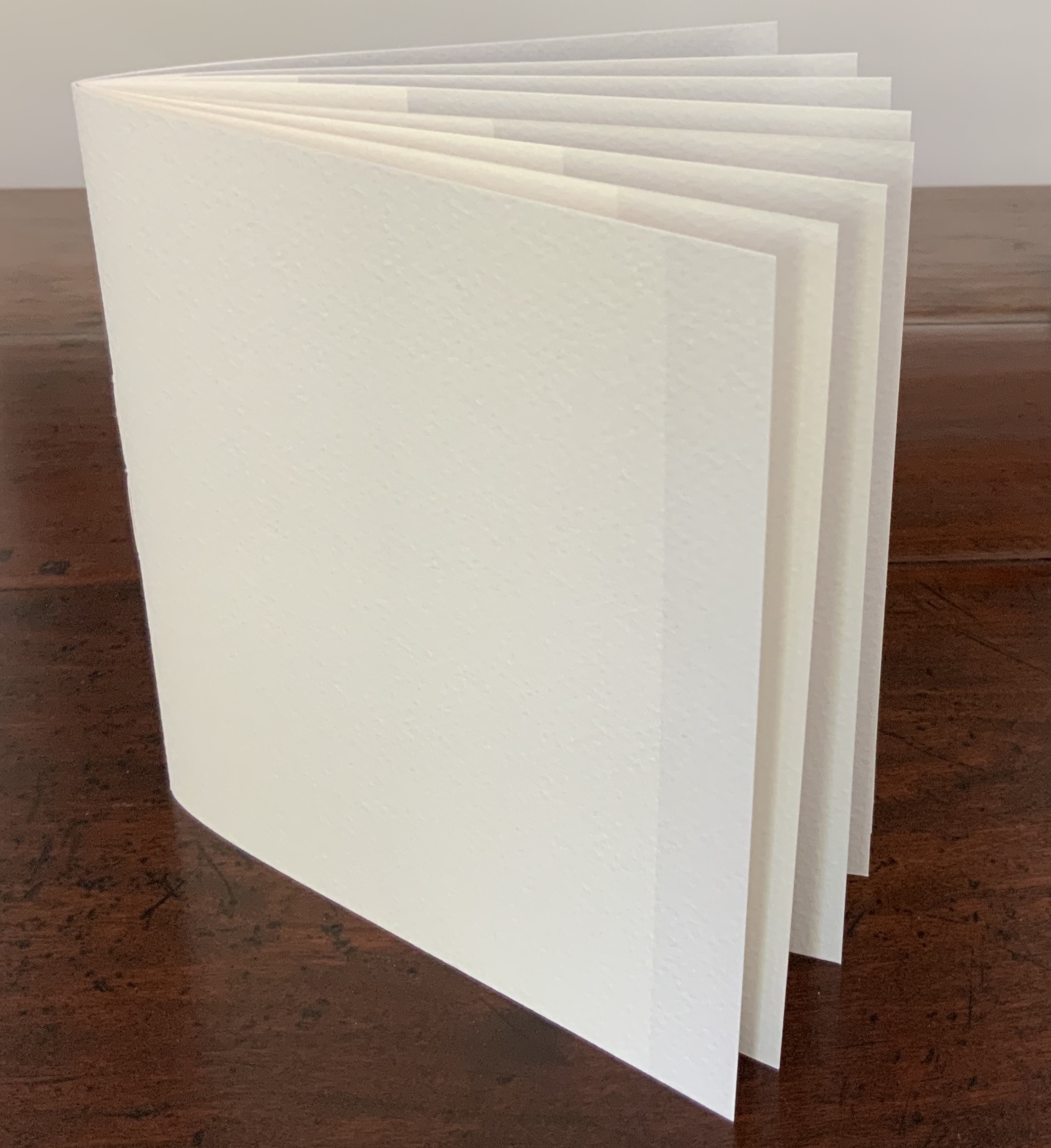
Laid finish card cover; hand-assembled perfect binding with inlaid red linen thread;
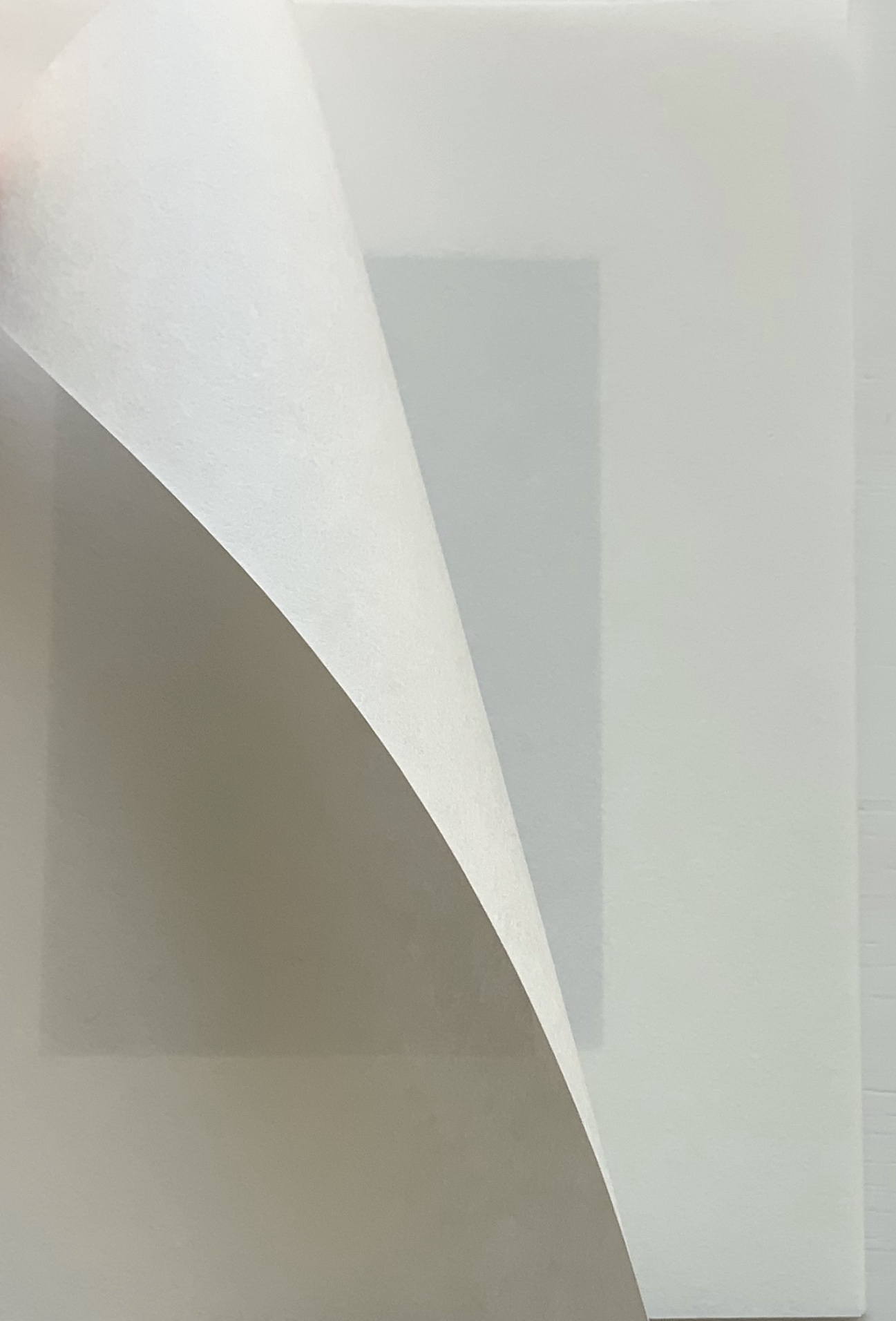
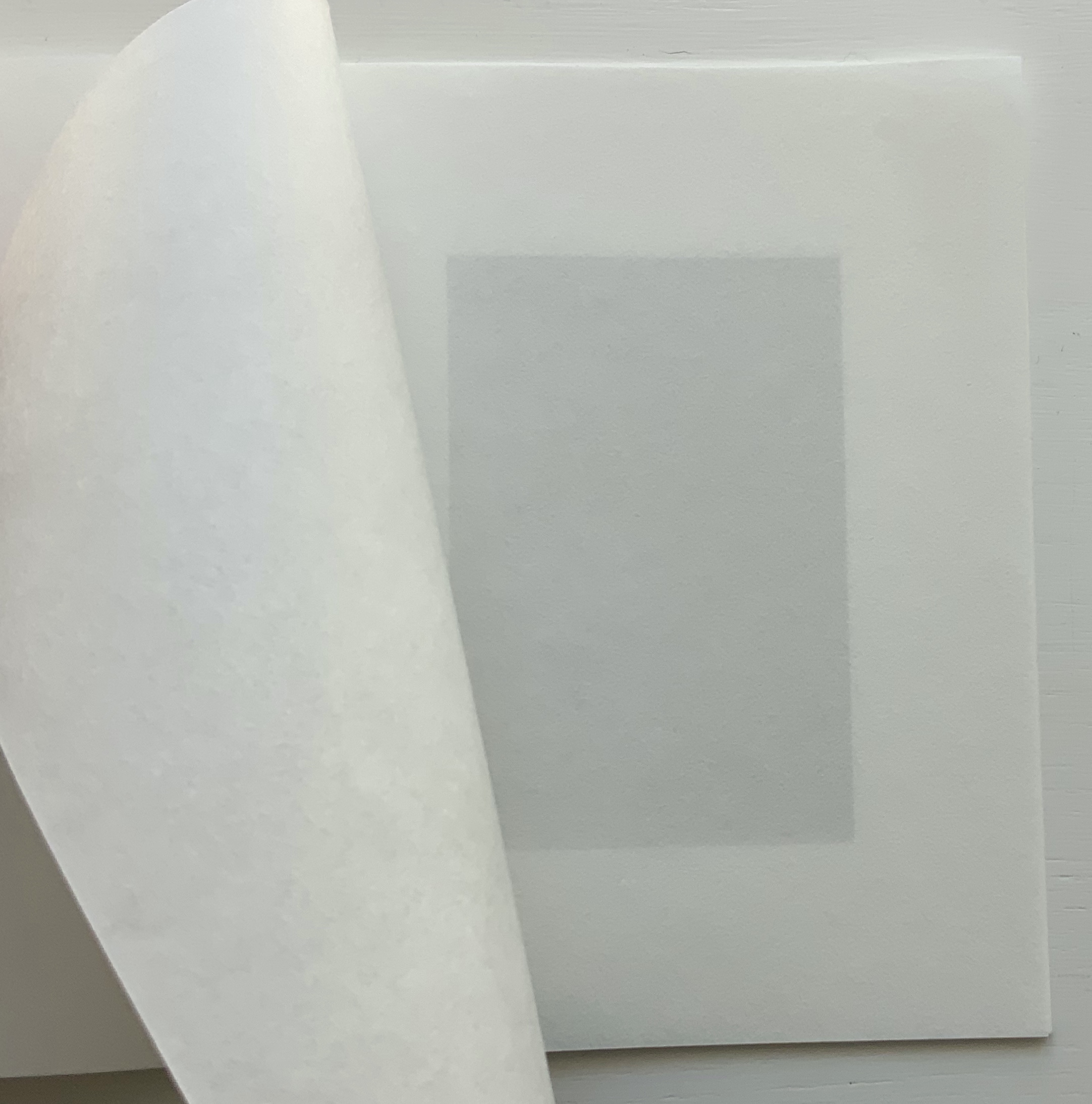
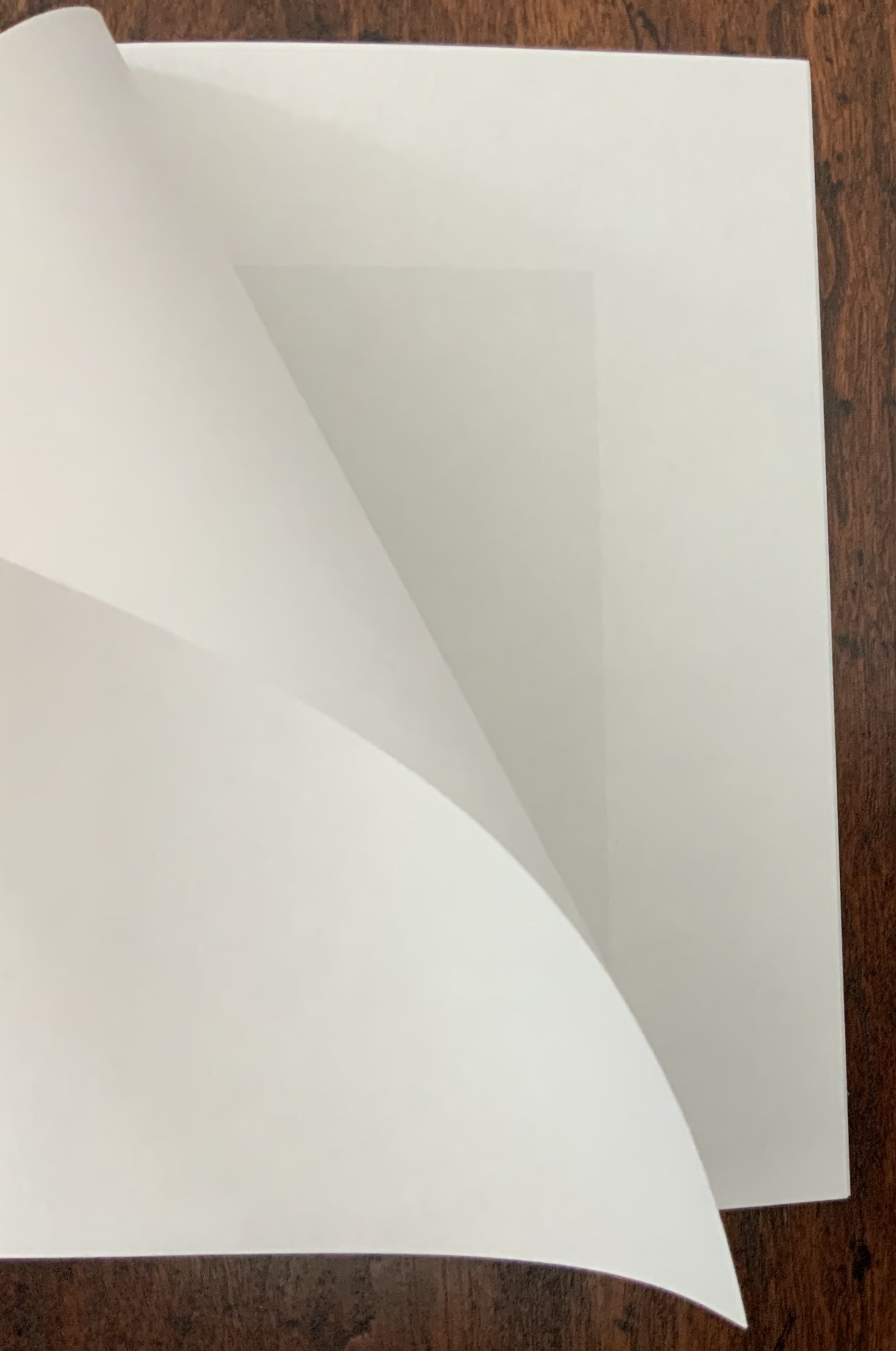
70 pages printed on translucent cellulose paper. H10 1/2″ x W8 1/4.
Edition of 50, unnumbered. Acquired from the artist, 24 April 2020. Photos: Books On Books Collection.
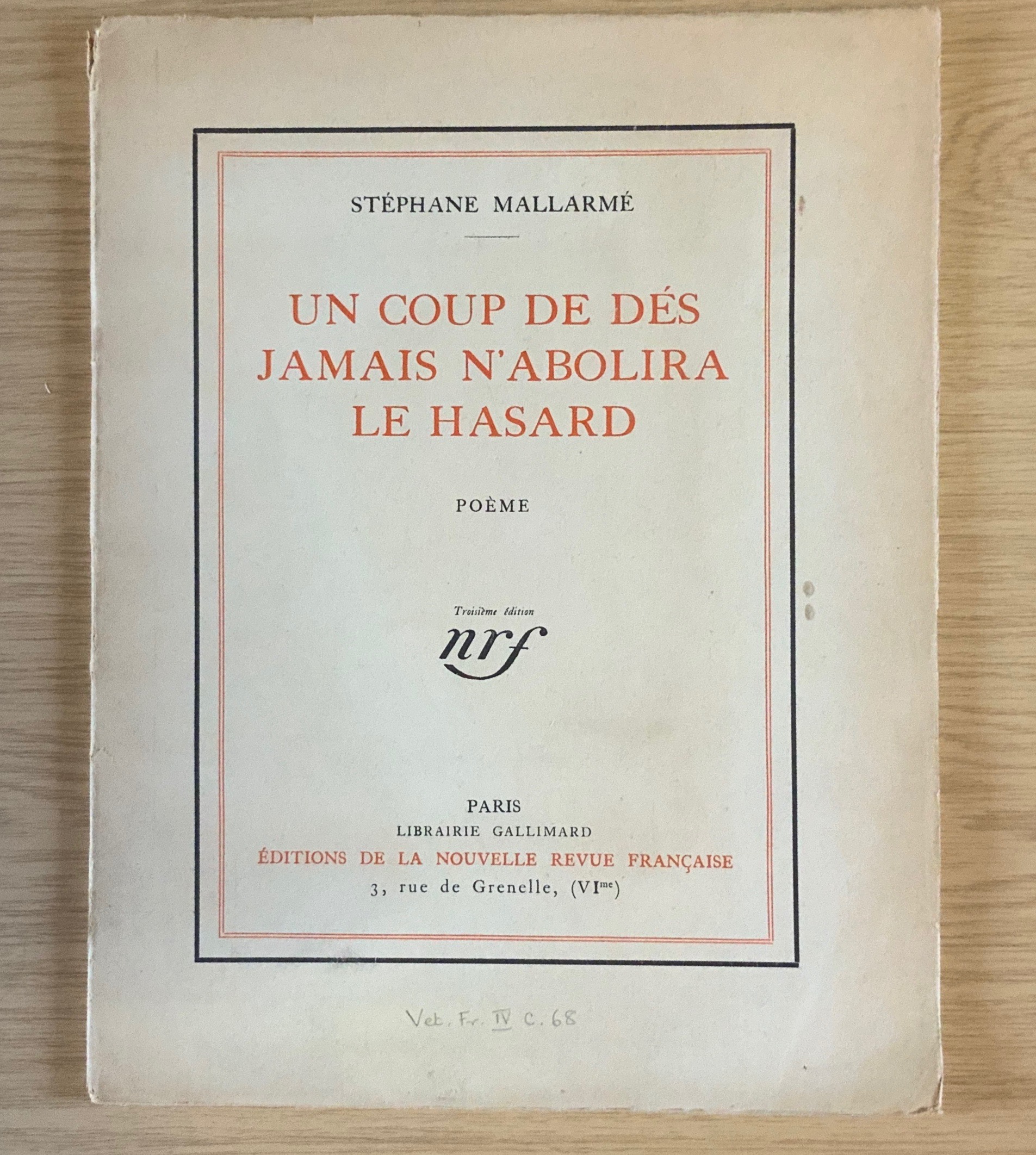
The title of Benjamin Lord’s book names what Mallarmé’s Un Coup de Dés declares can never be accomplished by a throw of the dice: the abolition of chance. Taking the predicate of Mallarmé’s title (its verb and object), elevating it to the title position, substituting the word “sequence” for the subtitle Poéme, and placing it in a cover layout reminiscent of the 1913 NRF edition of Mallarmé’s book, Lord’s cover raises expectations and questions. Perhaps chance can be abolished? Perhaps by a certain sequence — of words?

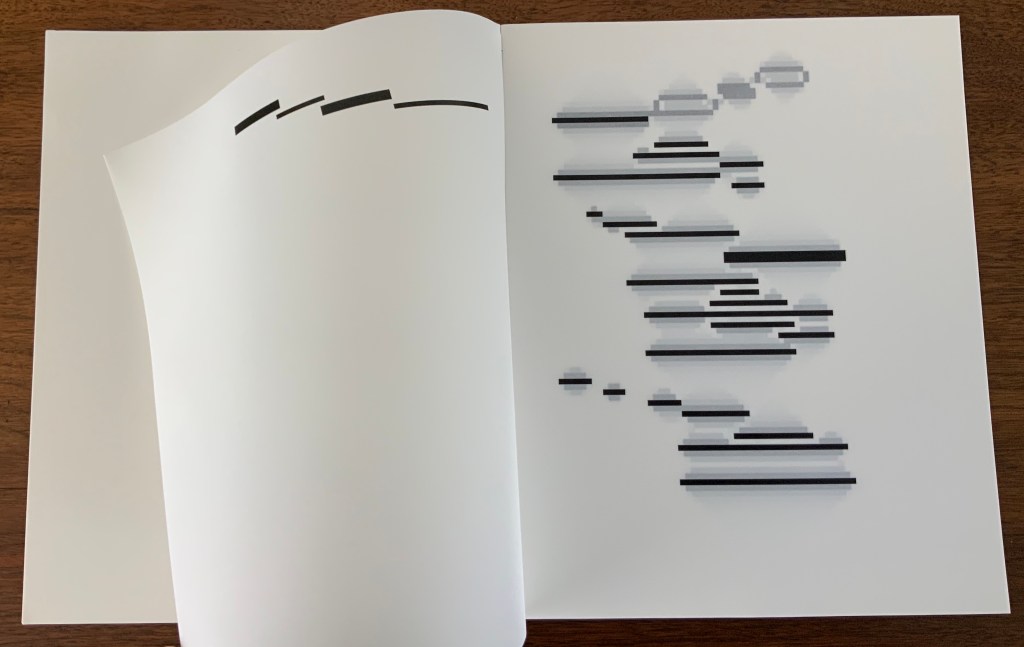
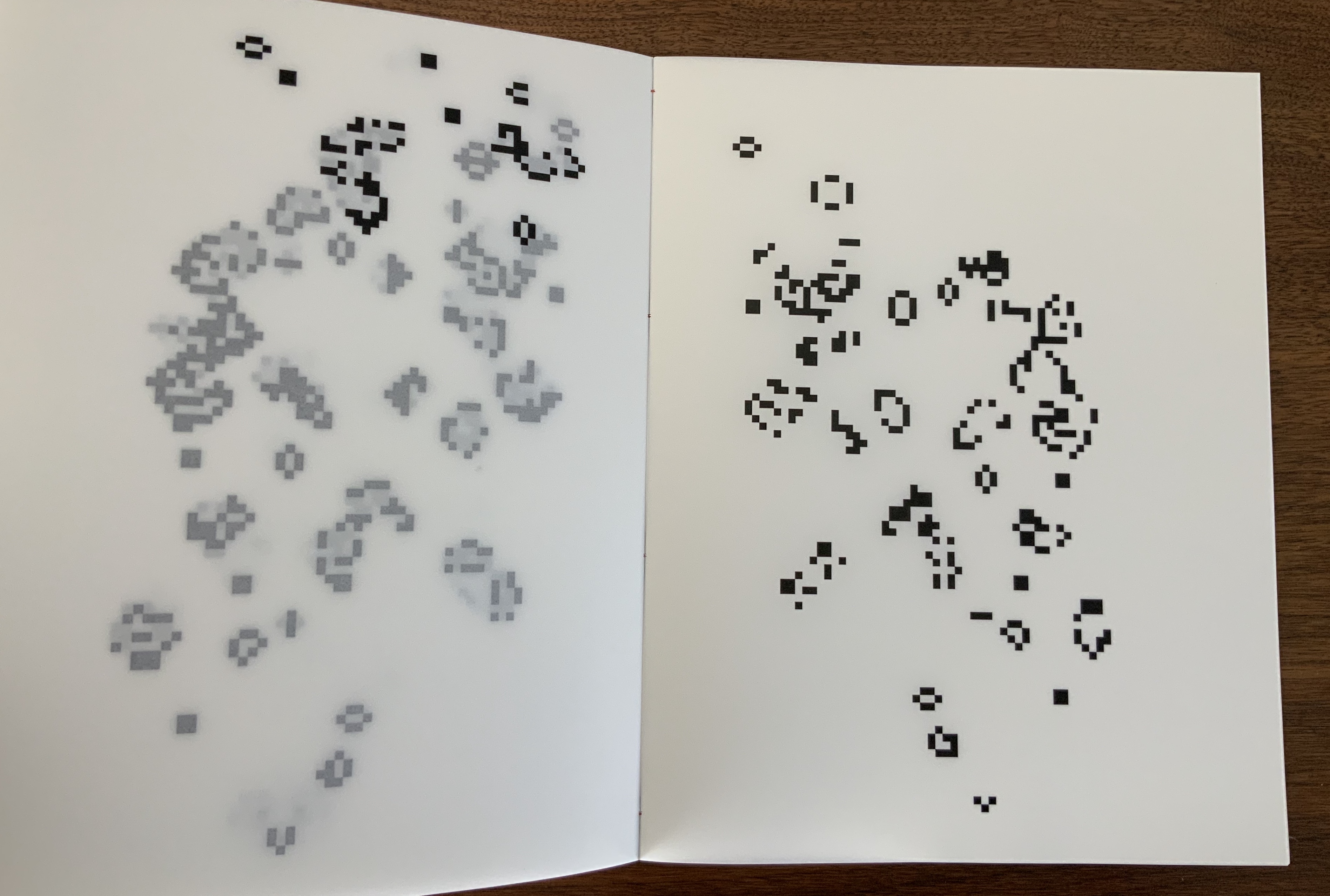
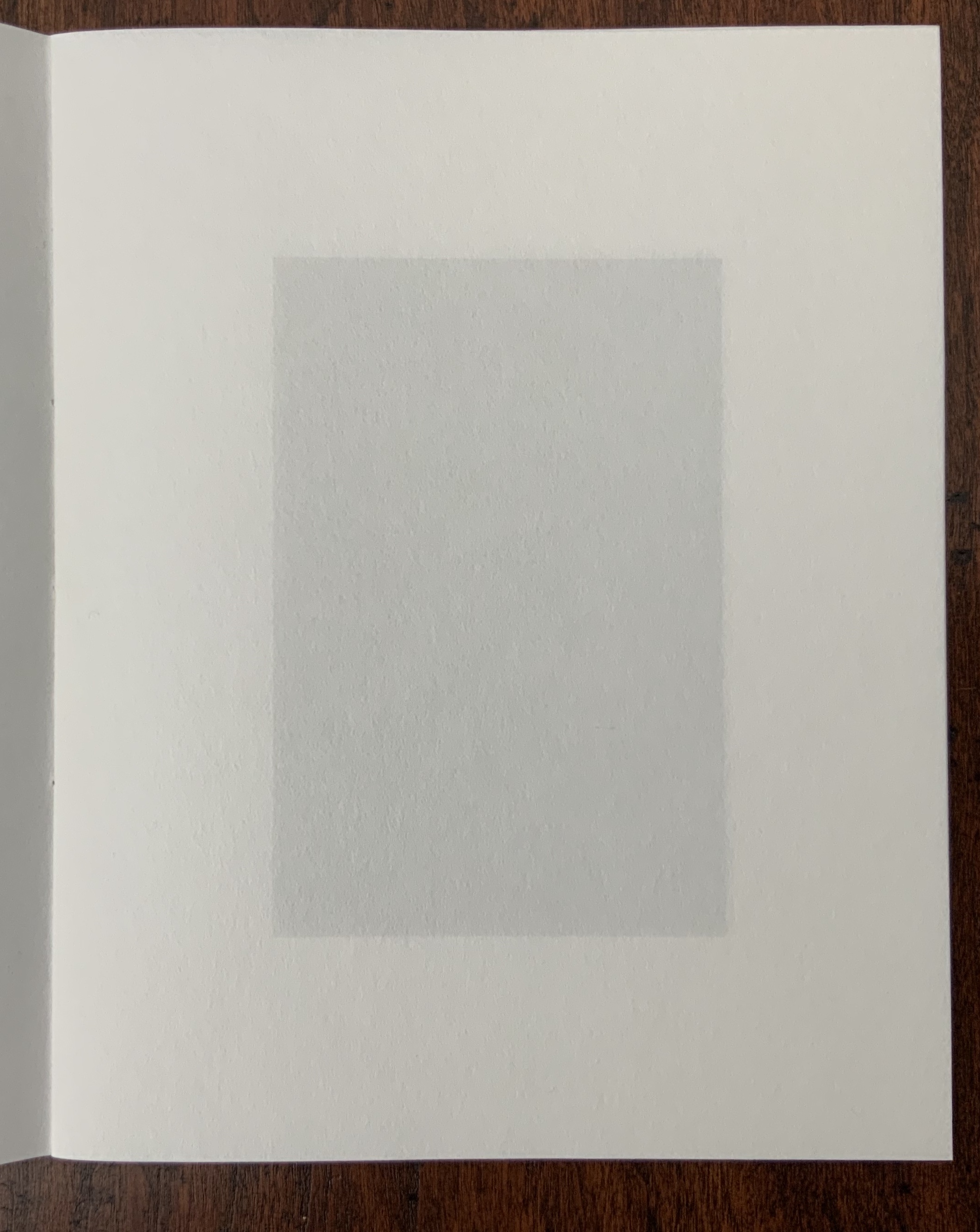
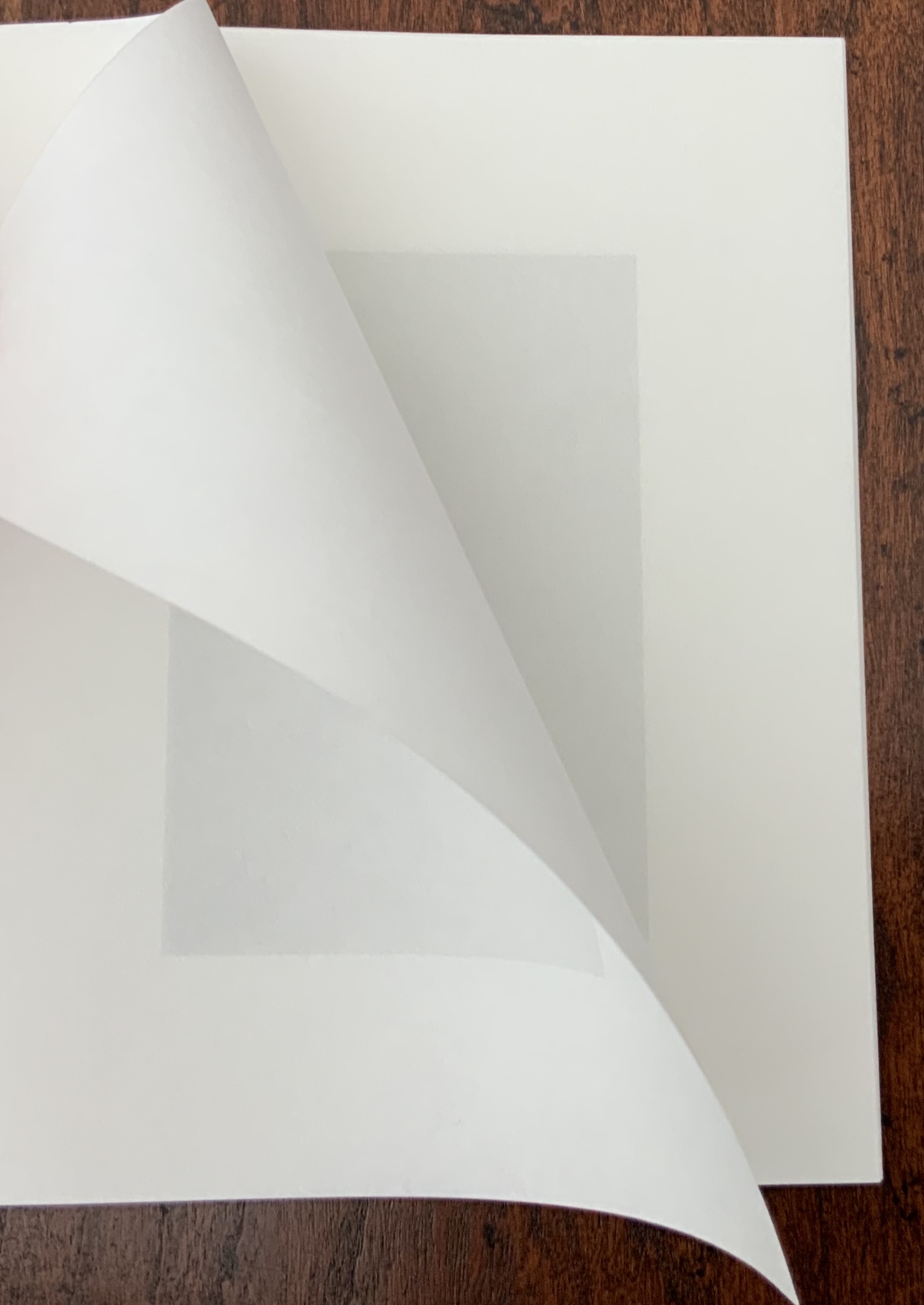
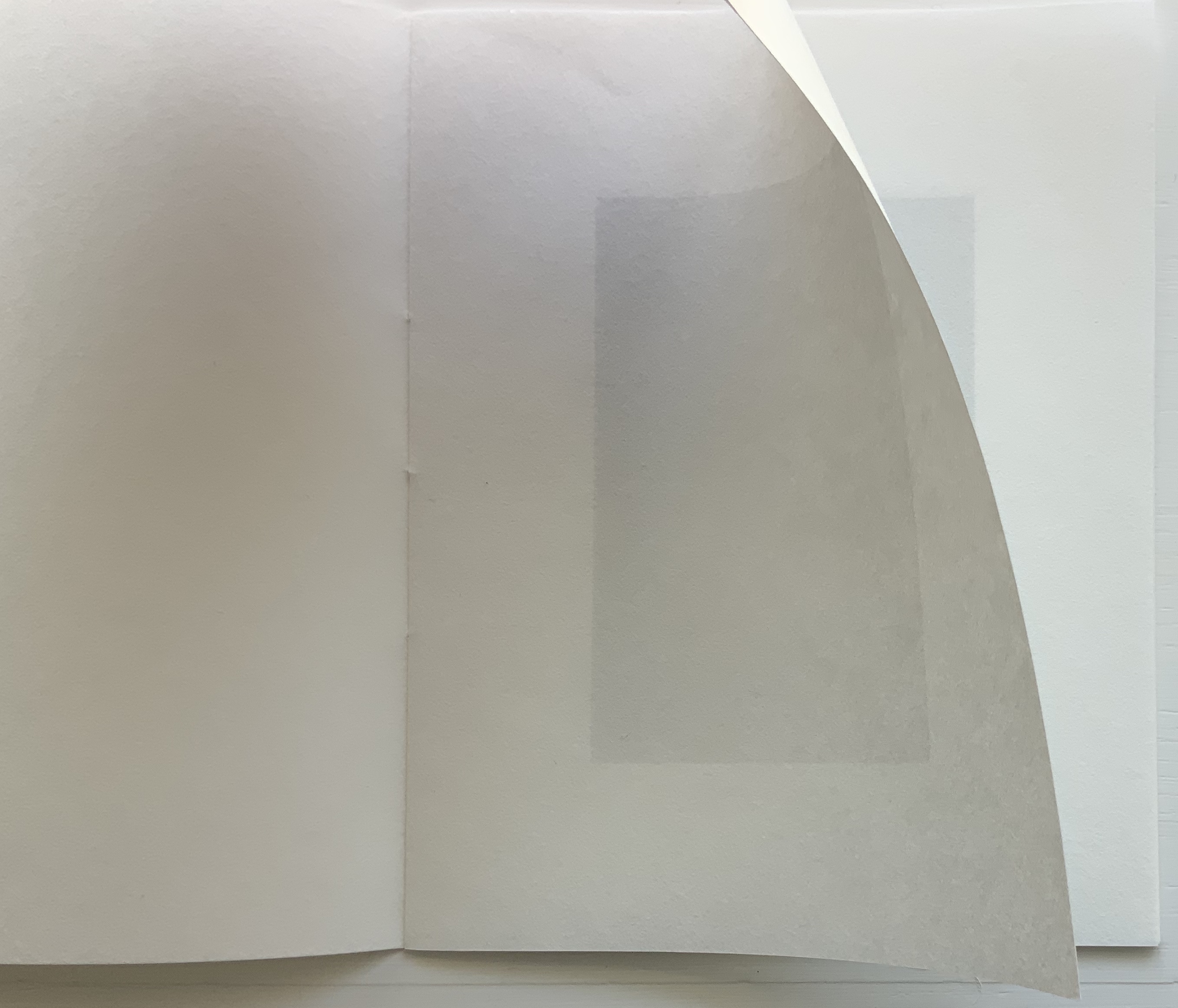
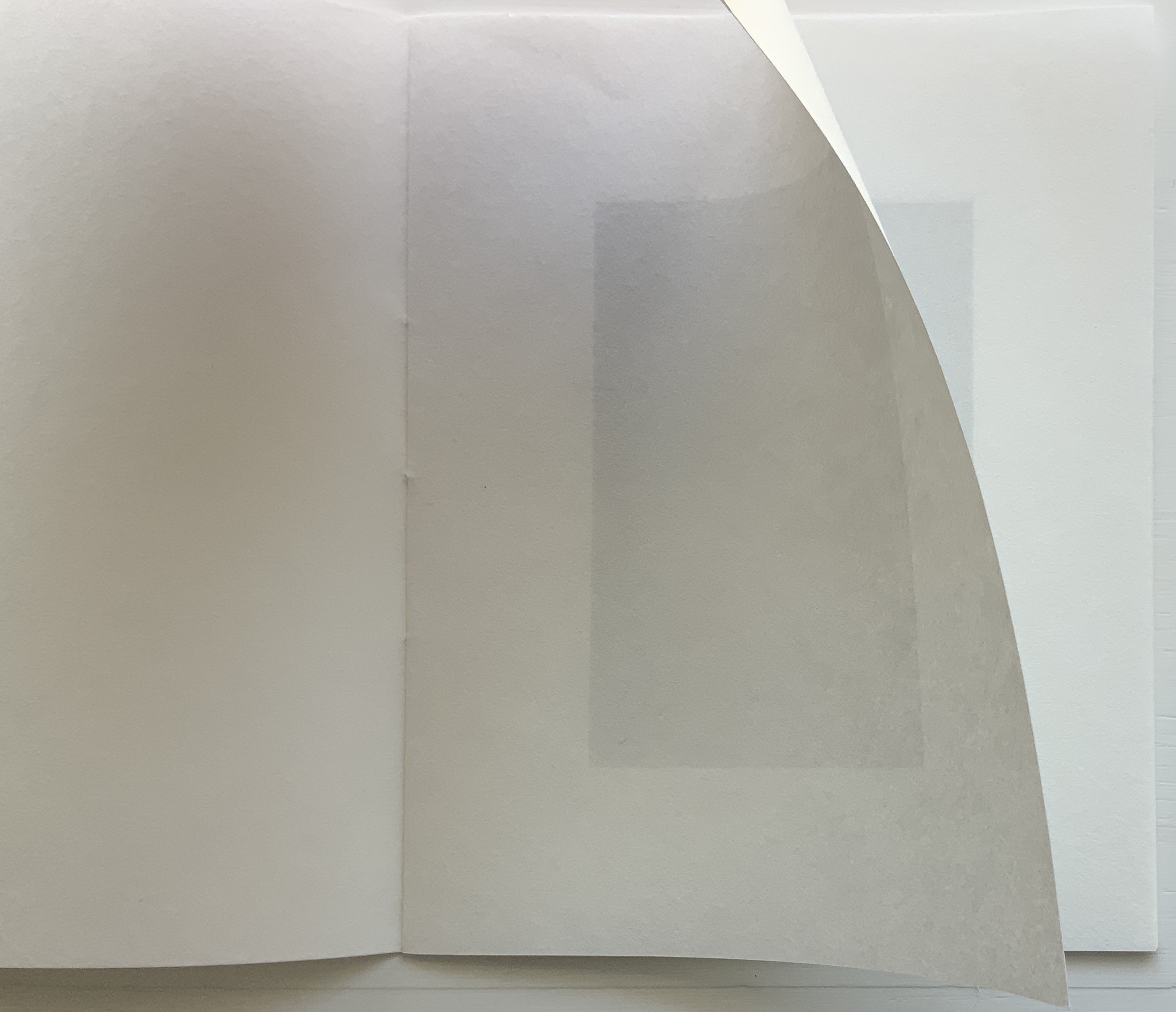
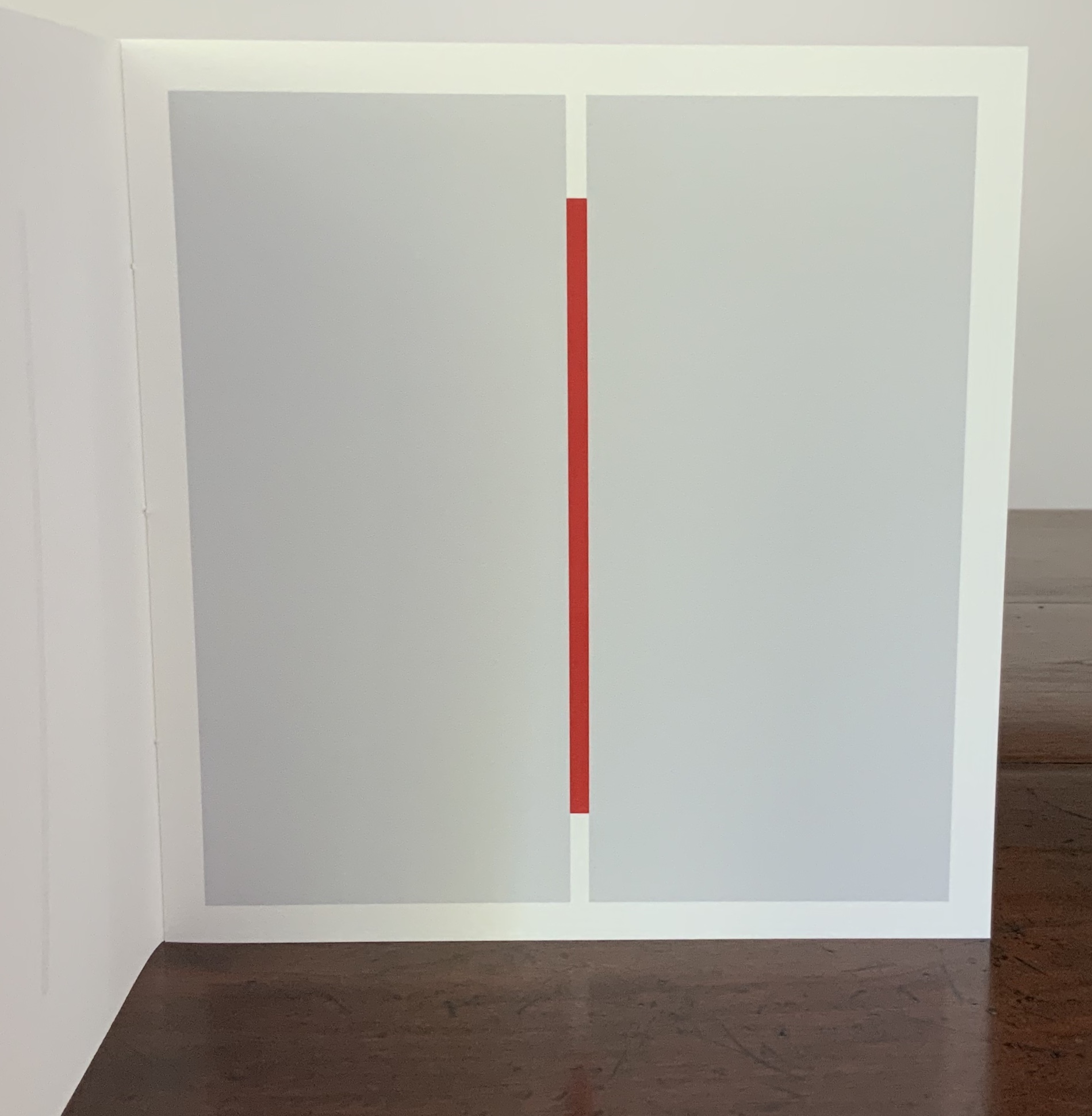
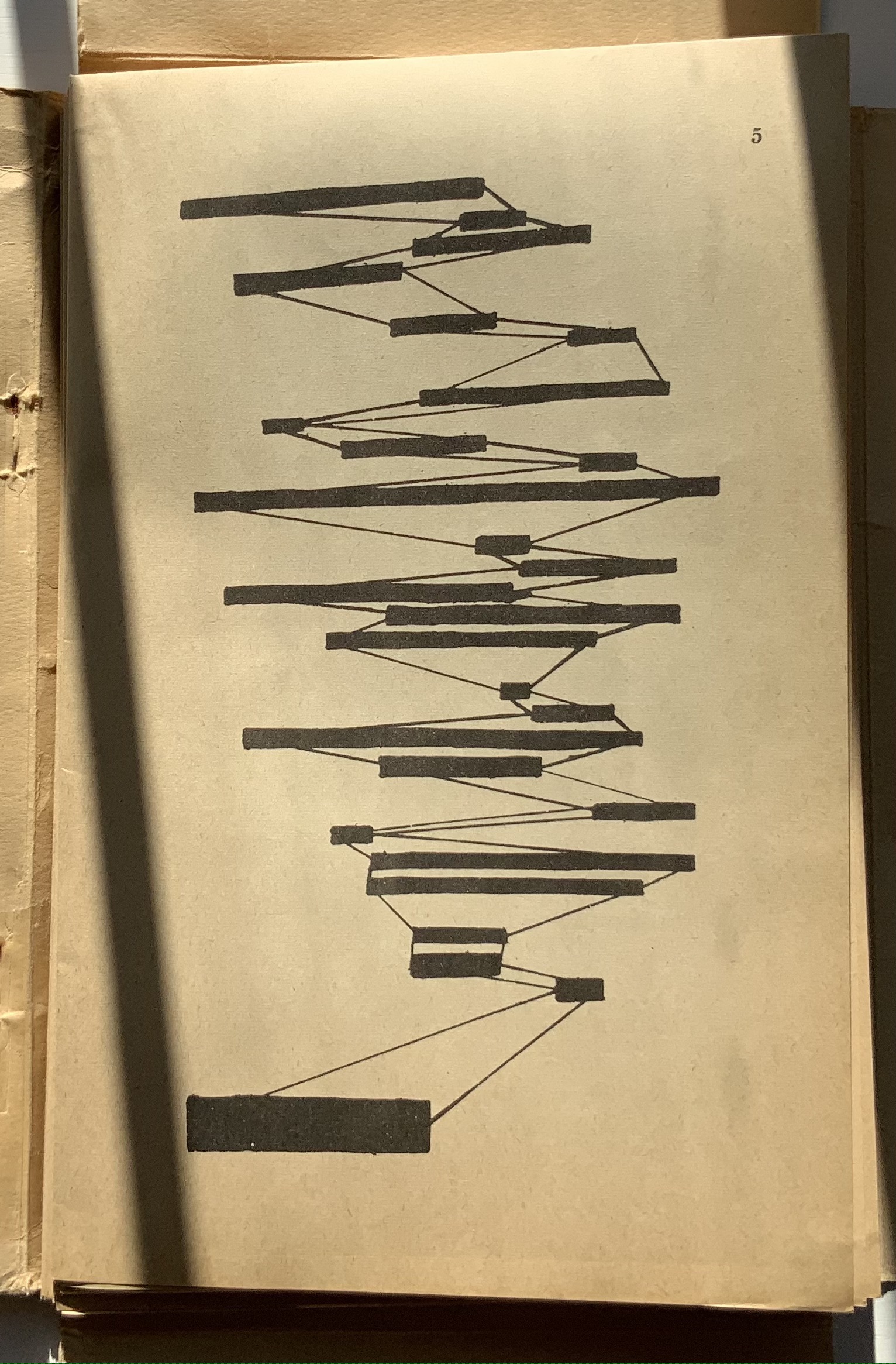
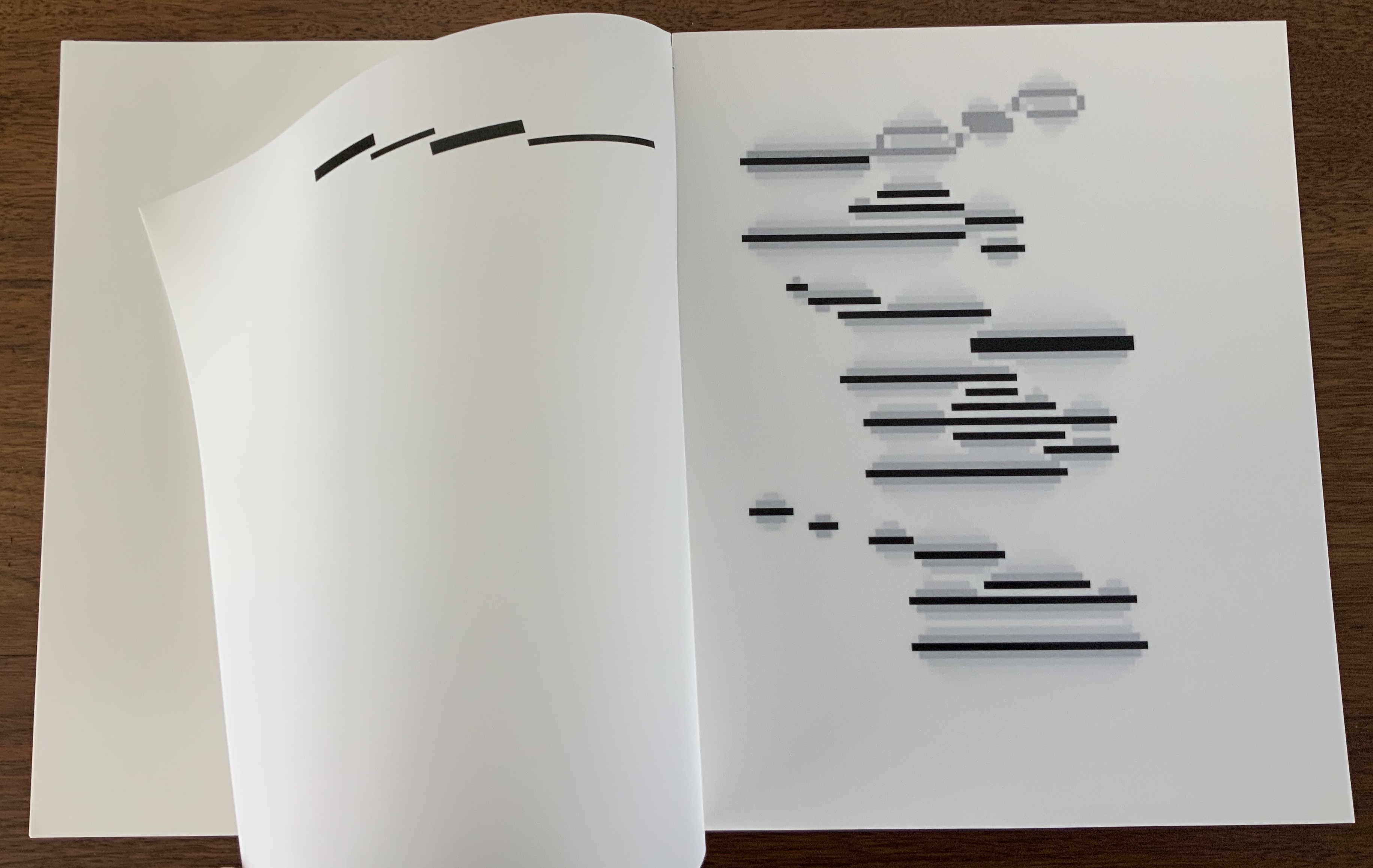
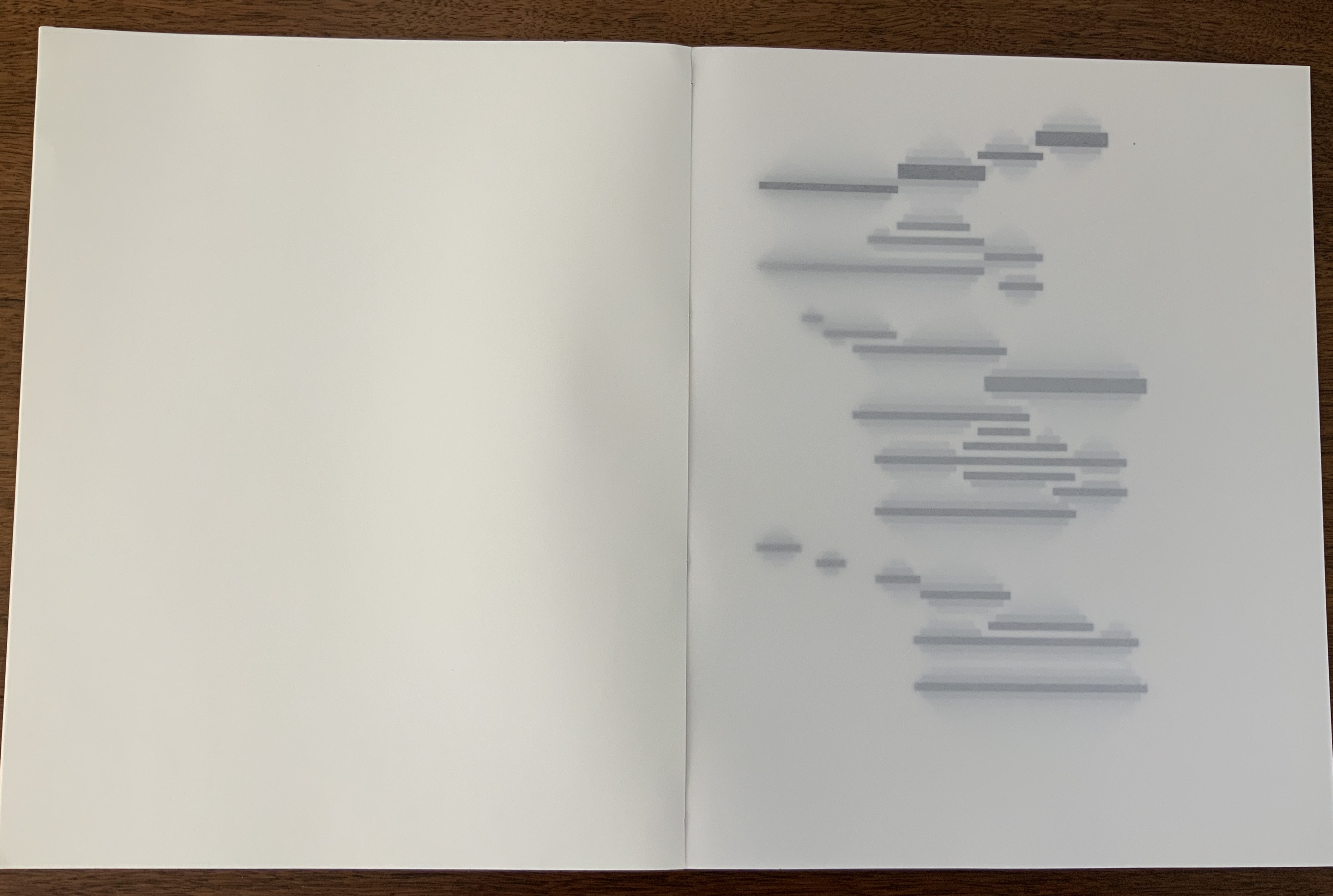
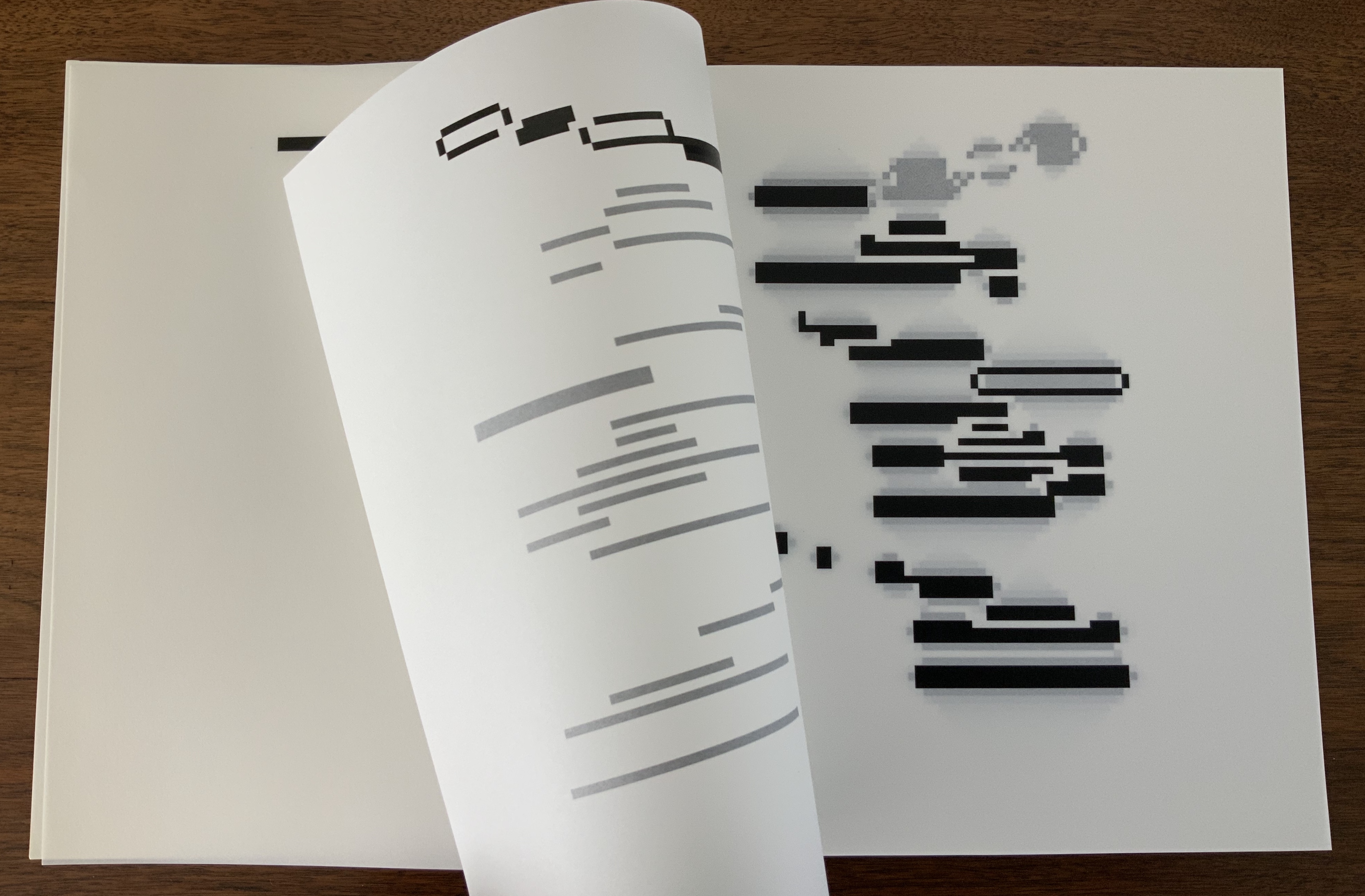
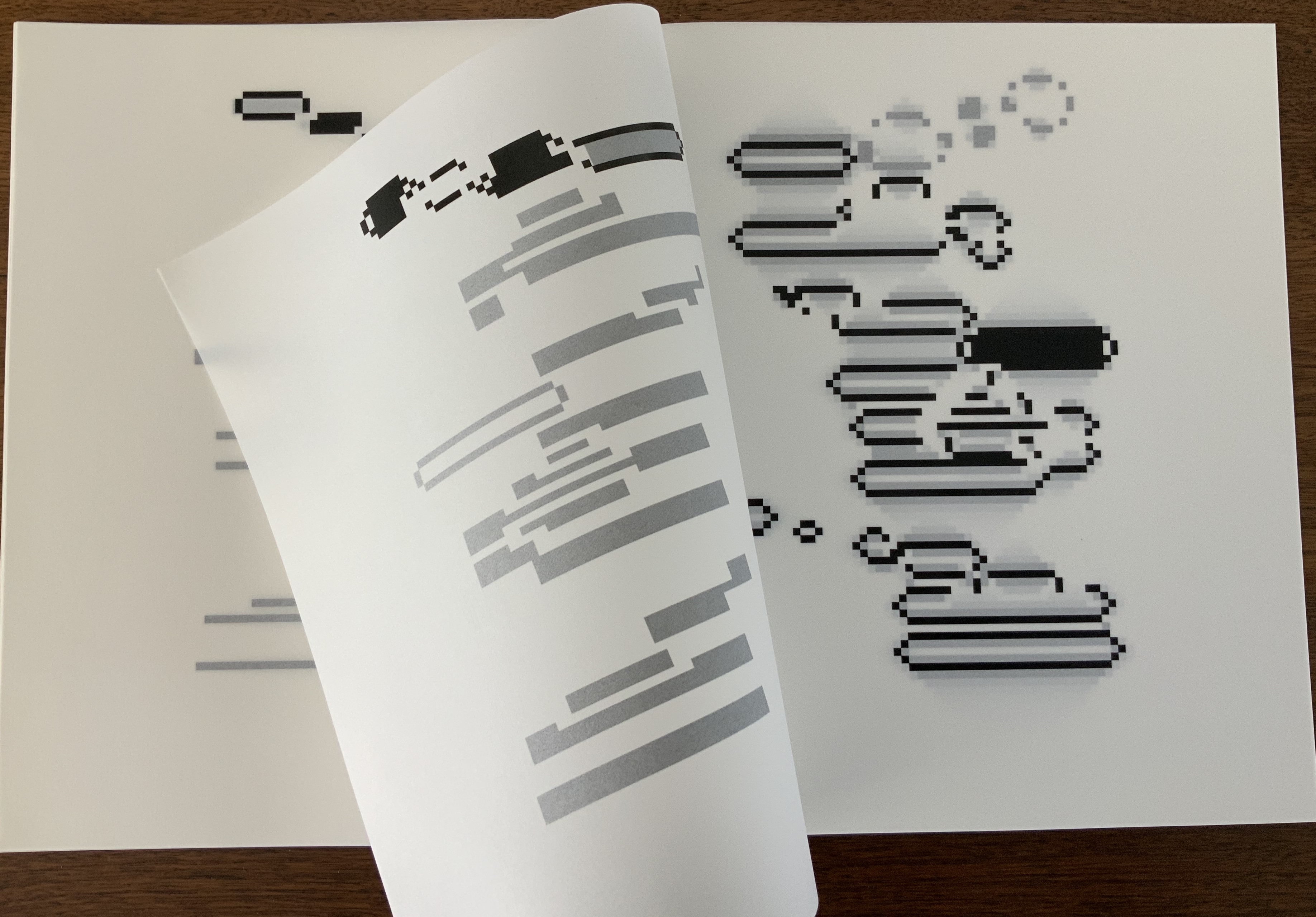
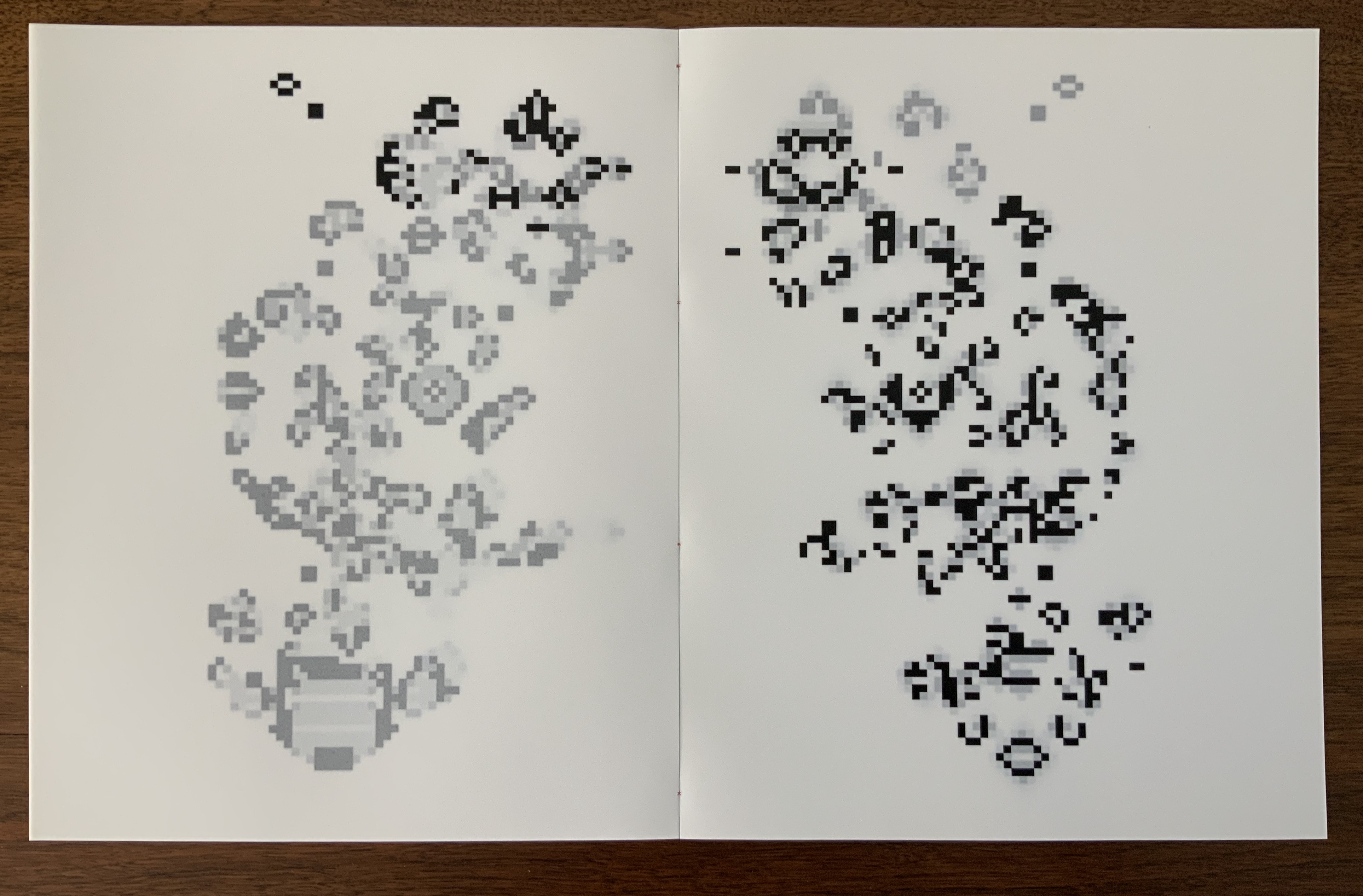
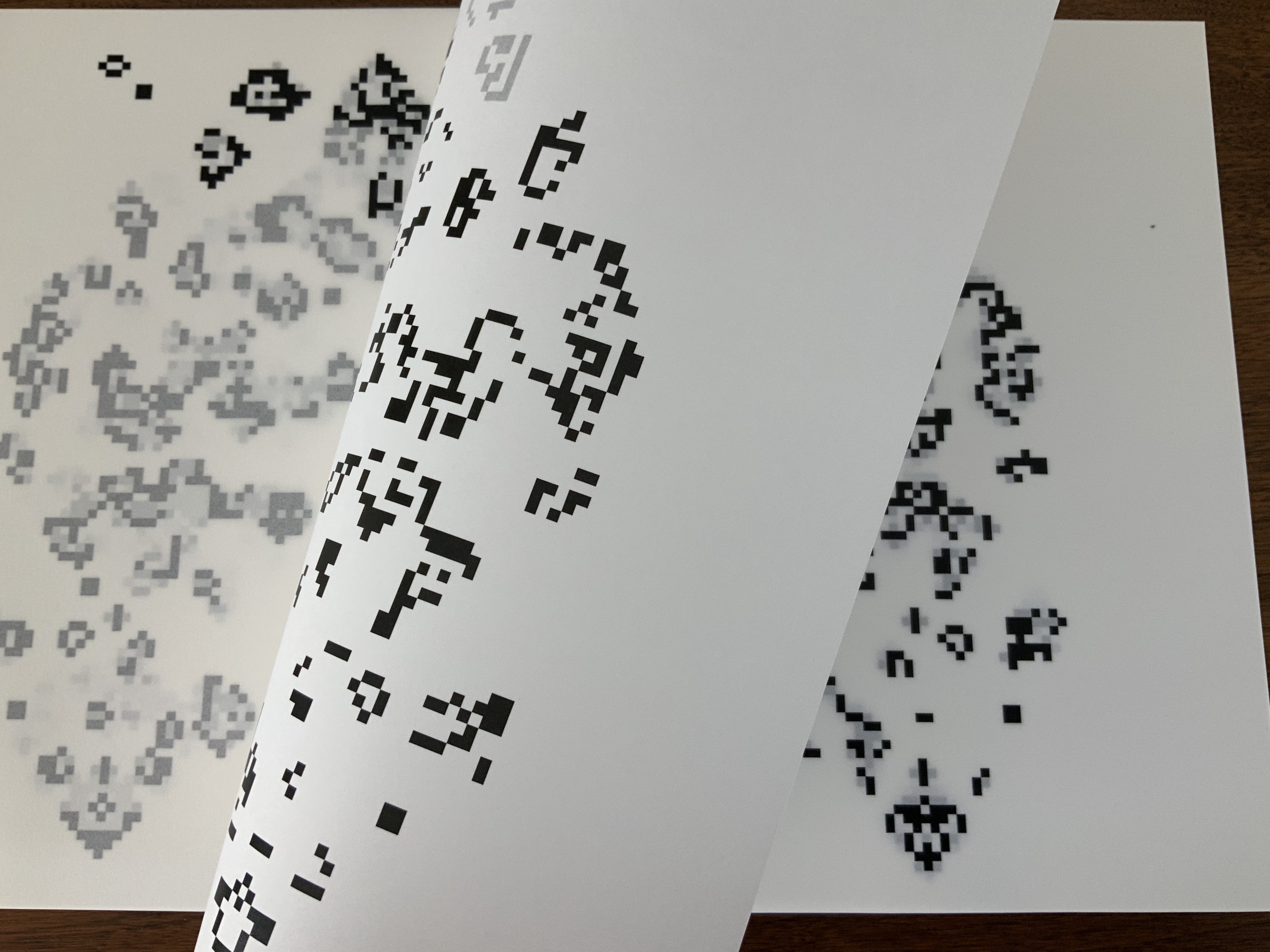
Bowling over the textual expectations raised by the cover, the interior pages offer only images — images that gradually shift from linearly arranged black rectangles to what seem to be digitally generated Rorschach tests, shifting QR codes or snapshots of a bitmap computer game, all blurred by the turning of the translucent paper. The translucency and images add another layer to each page and double-spread of images and also add another set of expectations and questions. What determined the starting point of those arranged rectangles? What drives the sequence of their change?

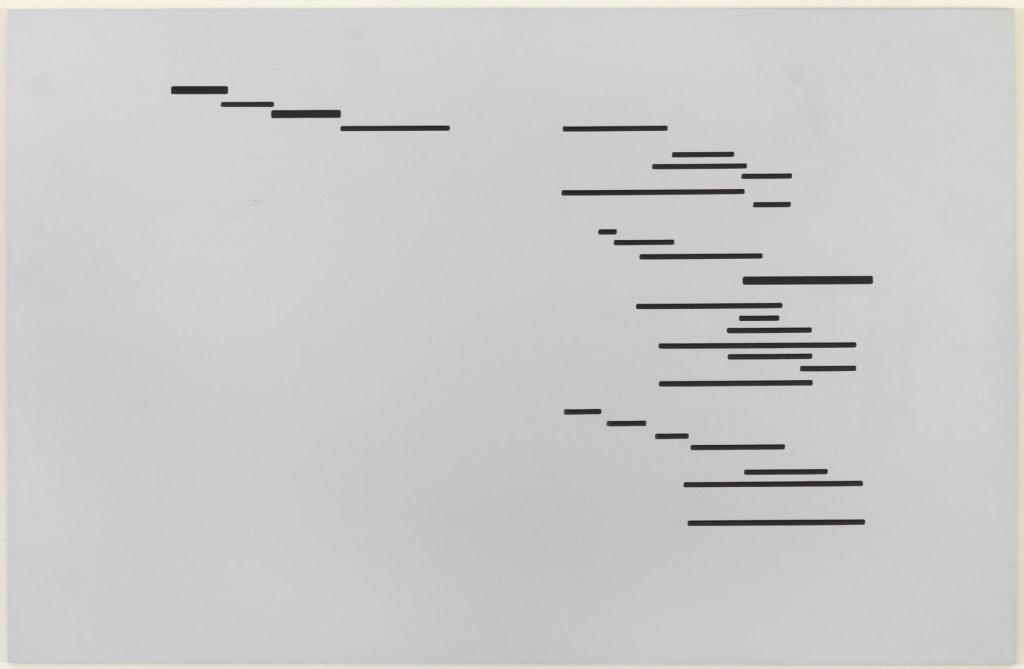
Without Lord’s own description of the work, a highly developed form of art-historical, science-historical visual genius is required to answer those questions. A genius with the visual recall to recognize that “The first spread of the book copies the last spread of Marcel Broodthaer’s book Un coup de dés jamais n’abolira le hasard (A throw of the dice will never abolish chance), made in 1969.” A genius that can recognize the sequence as being “generated using a simple mathematical formula known as the Game of Life, originally devised by the mathematician John Conway, also in the year 1969.

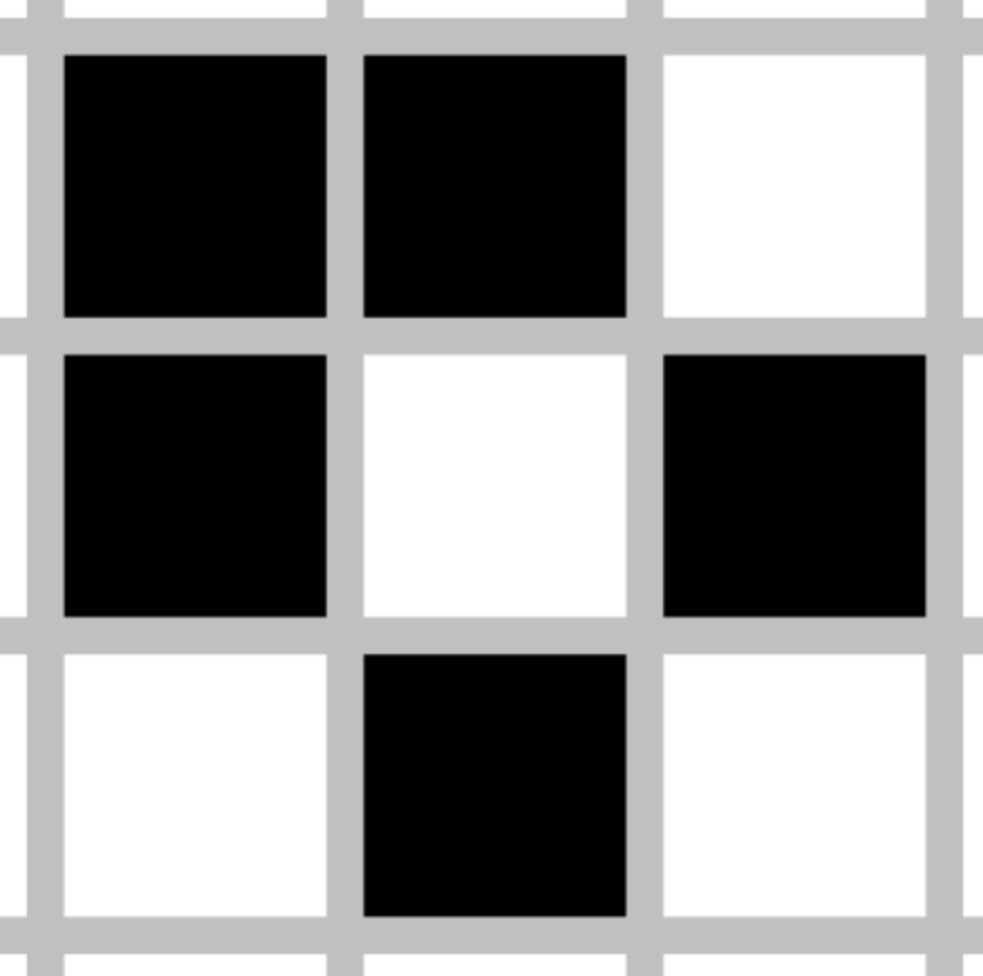
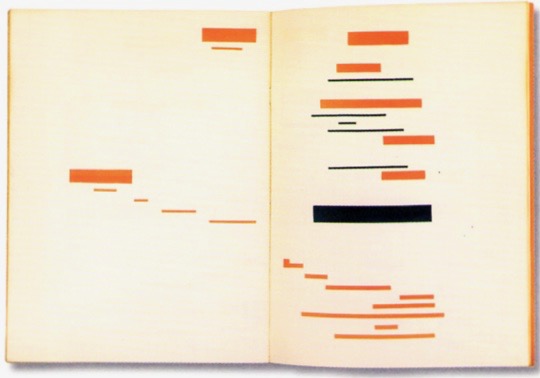
Blocking out Mallarmé’s words with black bars of varying sizes corresponding to the poem’s typography and turning Poème into Image, Broodthaers’s homage has provided the starting point to several works of visual homage: Derek Beaulieu, Jérémie Bennequin, Klaus Detjen, Sammy Engramer, Cerith Wyn Evans, Rainier Lericolais, Alexandra Leykauf, Michael Maranda, Guido Molinari, Michalis Pichler and Eric Zboya. To their common starting point, each brings to bear his or her own approach. For Lord’s approach, the term “starting point” is more properly “seed”. In Conway’s Game of Life, a seed is any pattern of square cells, some filled (“live”), some unfilled (“dead”). Here are two basic patterns:

On the left is a “still-life” seed known as “Boat”; on the right is “Gosper’s glider gun”, an obviously more complicated pattern named after its creator, Bill Gosper. A forerunner of simulation games, Conway’s game poses a set of simple rules to be played out within an infinite grid:

  1. Any live cell with fewer than two live neighbours dies, as if by underpopulation.
  2. Any live cell with two or three live neighbours lives on to the next generation.
  3. Any live cell with more than three live neighbours dies, as if by overpopulation.
  4. Any dead cell with exactly three live neighbours becomes a live cell, as if by reproduction.

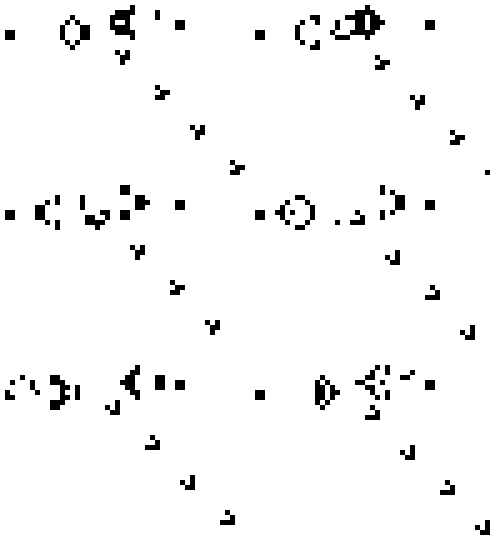
Here is Gosper’s glider gun, activated by the Game of Life’s rules encoded in a GIF:

Lord’s seed is the image of the last double-page spread in Broodthaers’ version of Un Coup de Dés.

Like a more complex glider gun, it generates the subsequent double-page spread images, each image being the seed for the next image. As Lord puts it,

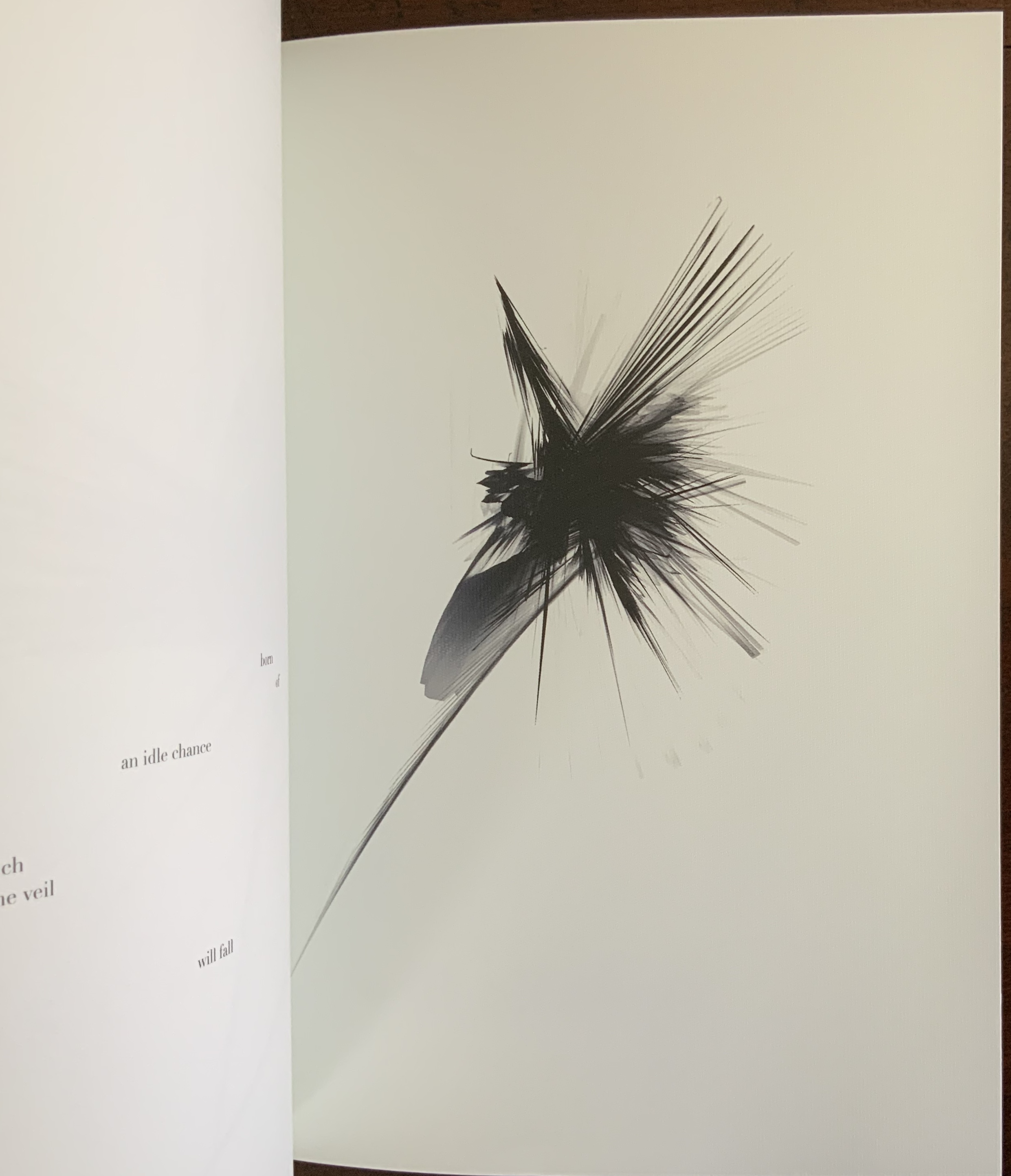
The lines of Mallarmé’s poem inflate into balloons which expand and then pop into nothingness, or collide with each other to generate debris, or collapse into thicker bars. The image fragments into a vibratory bitmap constellation of expansions and contractions, in which interactions between forms continuously generate new forms, in a way that is neither random nor intuitive.

This 21st century American artist turning with a 20th century paintbrush dipped into the words of a 19th century French poet via a 20th century Belgian artist calls to mind The Education of Henry Adams. Throughout, Adams refers to himself in the third person. Post-Broodthaers, there is something “third-person-ish” — of being at two removes — in Lord’s homage and those of Beaulieu et al. above. But there is more to the recollection than grammar. Consider this passage from The Education in which “one” writes,

Historians undertake to arrange sequences,–called stories, or histories–assuming in silence a relation of cause and effect. These assumptions, hidden in the depths of dusty libraries, have been astounding, but commonly unconscious and childlike; so much so, that if any captious critic were to drag them to light, historians would probably reply, with one voice, that they had never supposed themselves required to know what they were talking about. Adams, for one, had toiled in vain to find out what he meant….he insisted on a relation of sequence, and if he could not reach it by one method, he would try as many methods as science knew. Satisfied that the sequence of men led to nothing and that the sequence of their society could lead no further, while the mere sequence of time was artificial, and the sequence of thought was chaos, he turned at last to the sequence of force; and thus it happened that, after ten years’ pursuit, he found himself lying in the Gallery of Machines at the Great Exposition of 1900, his historical neck broken by the sudden irruption of forces totally new. Chapter XXV

Adams and his third-person self were in Paris in May 1897, when Un Coup de Dés first appeared in the quarterly Cosmopolis. Despite their proximity, a common interest in quarterlies and the popular press, and a near obsession with the electrical forces of the dynamo, the men’s two paths did not cross. Adams mentions Mallarmé in a letter only in passing.

Sartre called Mallarmé the poet of nothingness. Its title and Lord’s description of The Abolition of Chance as a “constellation of expansions and contractions, in which interactions between forms continuously generate new forms, in a way that is neither random nor intuitive” suggest an alternative to nothingness. The final double-page spread does present a pattern of live cells. Lord, perhaps like his fellow American, responds to nothingness with a type of Buddhist repose, if not affirmation, much as Adams responded to the memorial for his wife that he had commissioned from Augustus St. Gaudens:

His first step, on returning to Washington, took him out to the cemetery known as Rock Creek, to see the bronze figure which St. Gaudens had made for him in his absence. Naturally every detail interested him; every line; every touch of the artist; every change of light and shade; every point of relation; every possible doubt of St. Gaudens’s correctness of taste or feeling; so that, as the spring approached, he was apt to stop there often to see what the figure had to tell him that was new; but, in all that it had to say, he never once thought of questioning what it meant. … From the Egyptian Sphinx to the Kamakura Daibuts; from Prometheus to Christ; from Michael Angelo to Shelley, art had wrought on this eternal figure almost as though it had nothing else to say. The interest of the figure was not in its meaning, but in the response of the observer. Chapter XXI

Solution of the Cosmological Idea of the Totality of the Composition of the Appearances of a Cosmic Whole (2010)

Solution of the Cosmological Idea of the Totality of the Composition of the Appearances of a Cosmic Whole (2010)
Benjamin Lord
Perfect bound softcover. H203 x W164 mm [68] pages. Acquired from Veatch’s, 11 June 2021.
Photos: Books On Books Collection.

Further Reading

Derek Beaulieu”, Books On Books Collection, 19 June 2020.

Jérémie Bennequin“, Books On Books Collection, 11 April 2020.

Sammy Engramer”, Books On Books Collection, 1 June 2020.

Cerith Wyn Evans”, Books On Books Collection, 16 April 2020.

Michaud, François. Alexandra Leykauf: Chateau de Bagatelle (Nürnberg: Verlag fur moderne Kunst Nürnberg, 2010)

Guido Molinari”, Books On Books Collection, 13 April 2020.

Eric Zboya“, Books On Books Collection, 1 June 2020.

Books On Books Collection – Caroline Penn

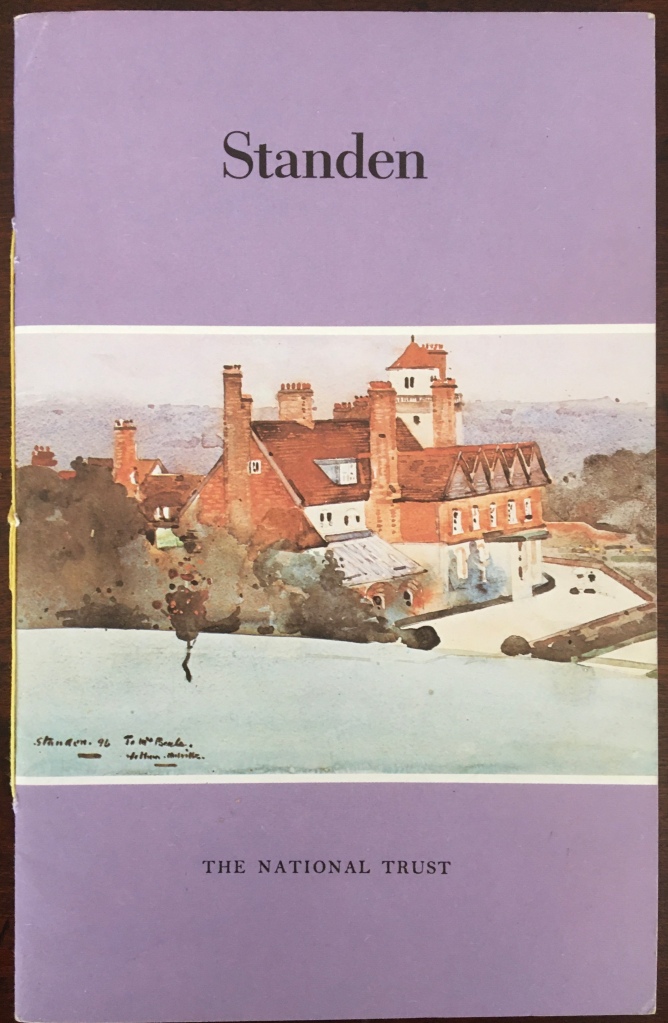
Standen (2014)

Standen (2014)
Caroline Penn
Altered book, overprinted digitally, cut with a scalpel and rebound with thread. H210 x W140. Acquired from the artist, 9 June 2020. Photos: Books On Books Collection.
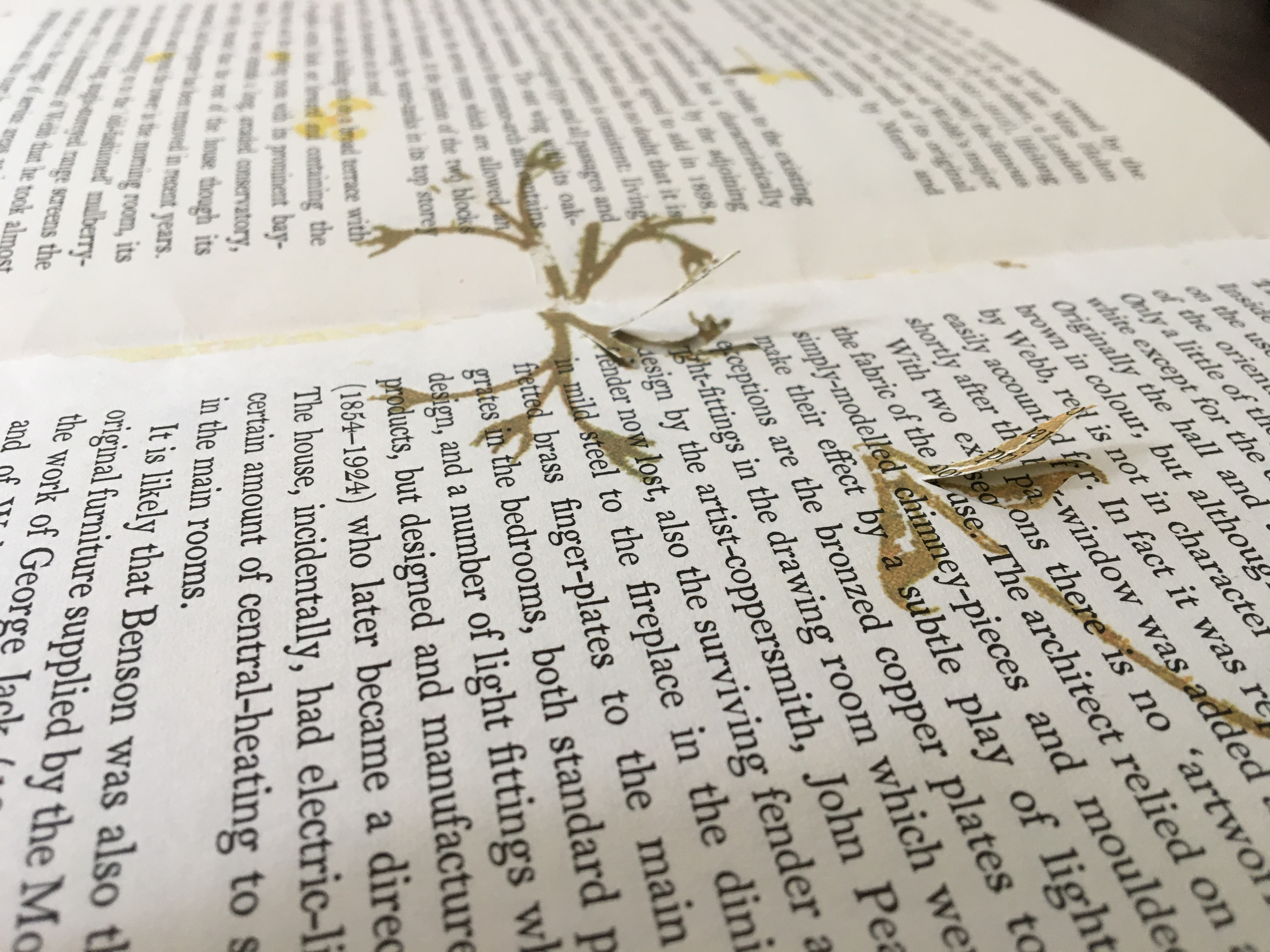
The William Morris wallpapers in Standen House, an Arts & Crafts home in Sussex, and the memory of Charlotte Perkins Gilman’s story “The Yellow Wallpaper” inspired the creation of this altered book. The work altered is a 1979 National Trust publication on Standen House. In Gilman’s story, the main character, who has a mental breakdown from being forced into domestic seclusion, gradually claws away the yellow wallpaper in the room where she is locked away. In correspondence, Penn writes that she unbound the original booklet, ran the pages through a digital printer, performed the cutting and then rebound it. In a clever reversal, by the end, the wallpaper print and its excision have taken over the walls of the book of Standen House.

Photo: Courtesy of the artist.

By coincidence, American book artist Harriet Bart co-curated an intriguing exhibition called “Wallpaper“. Bart’s entry, too, was inspired by the Gilman story.

fieldwork (2017)

fieldwork (2017)
Caroline Penn
Digitally printed concertina.
Cover: H126 x W90 mm; pages, H125 x W88 mm.
Edition of 20, of which this is #8.
Acquired from the artist, 6 February 2020. Photos: Books On Books Collection.
A book within a book, fieldwork offers an entrancing visual narrative. A small white book unfolds from nothing to small pebbles, larger pebbles, more pebbles to fewer, and finally to one pebble in the center. Is it the reverse of the process of erosion? Is it categorization by the human eye and hand striving with nature’s agglomeration?

The artist has embedded the visual narrative here in an innovation on the framing device to be found in Helen Douglas’s Wild Wood and A Venetian Brocade. As with the latter works, fieldwork encourages us to touch with our eyes. It is a stunning piece of trompe l’oeil. On glimpsing any double-page spread, the reader/viewer is tempted to pick up one of the pebbles apparently resting on that white piece of paper open on a photo of a shingle beach. Visitors to Kettle’s Yard will recognise the temptation.

Project C: Destination Unknown (2020)

Organised by Pauline Lamont-Fisher, Project C is the result of a collaborative effort among 14 artists:

This project is about intersemiotic translation between images to words and from words to images and the paths that form between them. Roman Jakobson in Linguistic Aspects of Translation suggests the idea of intersemiotic translation as the translation from one sign system to another: i.e. interpretation of verbal signs by means of signs of non-verbal sign systems. So every novel adaptation into film, constitutes a translation. The illustrations in a book act as translations of text into images. Every time you watch Tchaikovsky’s Nutcracker, you watch an intersemiotic translation from narrated story into ballet.

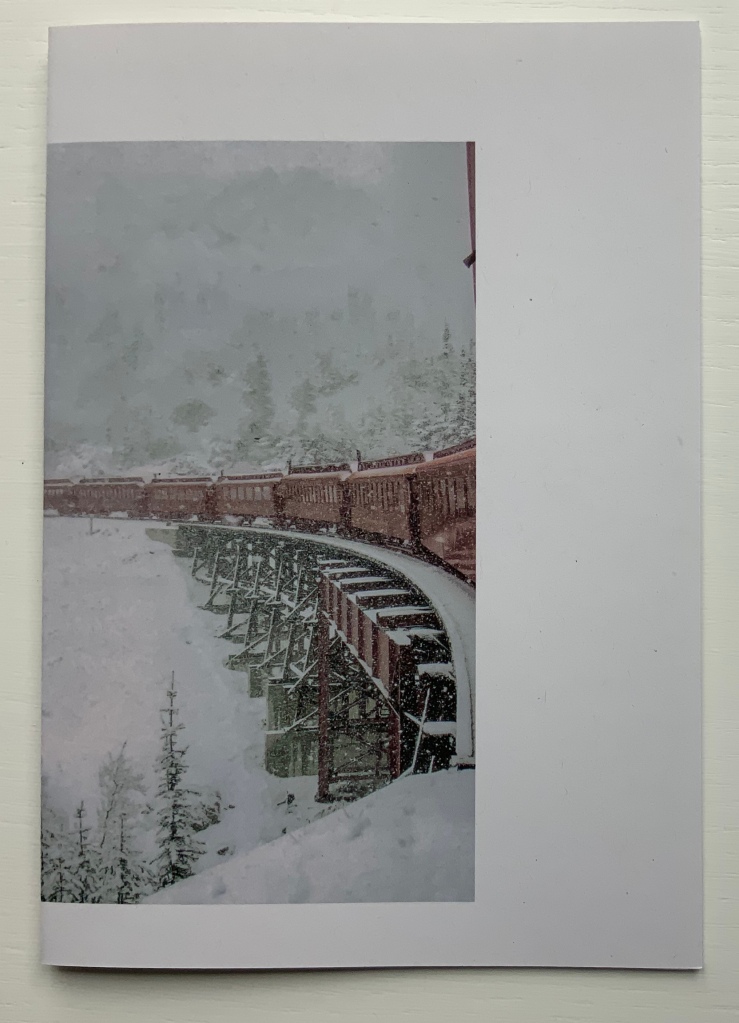
The artists were given a set of anonymised covers of Italy Calvino’s If on a winter’s night a traveler and asked to choose one and, keeping in mind Jakobson’s notions of intersemiotic translation, produce a folio or pamphlet in response. Caroline Penn’s contribution uses text, typography, structure, choice of paper, density of ink and a pattern of hole punches to translate or evoke not only the image below but the substance of Calvino’s novella — or at least a key element of the substance susceptible to translation to an artist’s book of translucent Bible paper and pergamenata.

Project C: Destination Unknown (2019)
Caroline Penn
Digitally printed on Offenbach bible paper stitched to pergamenata. Concertina, H186 x W130 mm. Edition of 30. Acquired from whnicPRESS, 7 March 2020. Photos: Books On Books Collection.
The contrasting whites of the Bible paper and the translucent paper that comes uncannily close to animal parchment mirror the different colors of snow in the cover.

The dispersed positioning of the letters of the word “vapour” mimic the falling snow. The series of darker inked phrases set below, separated from each other by hyphens and staggered downwards across the panels echoes the rail track and cars in the cover.

The body of light gray likewise sloping down from left to right recalls the declining mountain gap crossed by those train tracks.

Across the foot of the page, the holes punched in a lowercase letter “o” and separated by two unpunched uppercase “O’s” also evoke the rail tracks and cars. In a nod to the Oulipo pattern-driven nature of Calvino’s work, the noughts of the “O’s” are answered in the crosses of the “X’s” supporting the text that crawls across the panels, finally turns the corner of the last panel and fades into the gray word “invisibility” on the reverse of the last panel.

A tour de force of book art — making text, image, ink, papers, layout, structure and impression work, mean and become a thing independent of the inspiring constraint.

Books On Books Collection – Elisabeth Tonnard

One of the most literary and conceptualist of book artists, Elisabeth Tonnard fuses the textual and visual in ways that consistently demand and reward close attention and even meditation. The works so far in the collection do not yet represent the breadth of her techniques (missing, for example, is the digest of 15 literary works through Microsoft’s auto-summary function to create Speak! eyes — En zie!), but in their individual ways, they do represent all of her works’ ability to make constraints yield surprise.

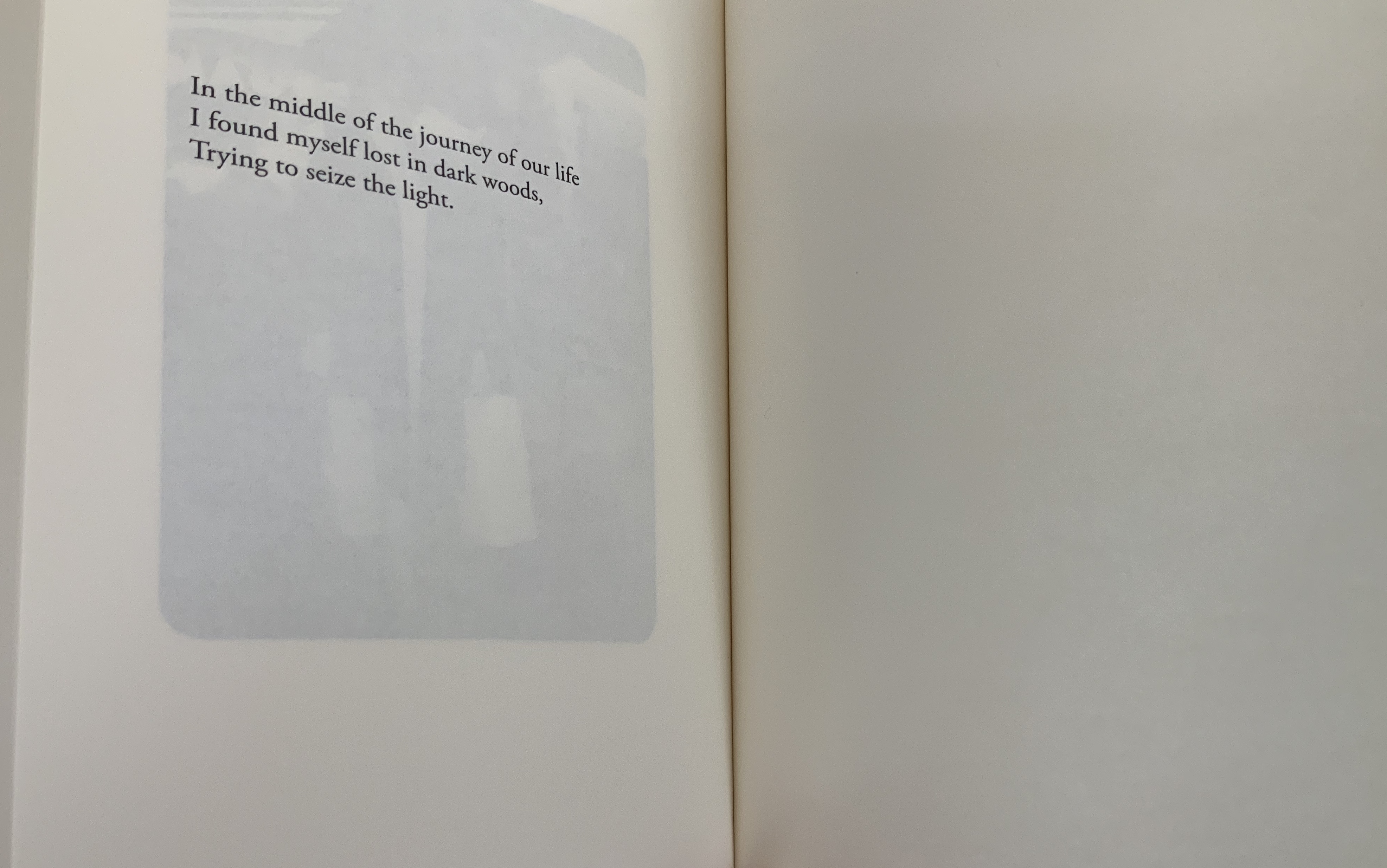
In this Dark Wood (2008)

In this Dark Wood (2008) Elisabeth Tonnard, perfect bound, 196 pages, 90 halftones on recto pages. Acquired from the artist, 5 March 2018.

Tonnard pairs images of 90 solitary people walking alone in nighttime city streets with 90 different English translations of the first lines of Dante’s Inferno. The images come from the Joseph Selle collection at the Visual Studies Workshop, which contains over a million negatives from a company of street photographers working in San Francisco from the 40’s to the 70’s. Male or female, Caucasian or Asian or African-American or Latino, the images are, as she puts it, “re-expressions of each other”. Likewise, the various translations are re-expressions of “Nel mezzo del cammin di nostra vita mi ritrovai per una selva oscura ché la diritta via era smarrita.”

In this video, Tonnard speaks of the work at the 21’25” mark.

The double-page spreads blur after a while of gazing on each face and reading the translation facing it. At the very start, though, the image has no facing text on the verso, and at the end, the last page of text has no facing image on the recto. Faced with this exception to the constraint of the double-page spread, the audience is torn between being reader/gazer and gazer/reader — precisely the thrust of Tonnard’s book artistry.

The Library (2015)

The Library (2015) Elisabeth Tonnard, exposed sewing, digital print, 56 pages. H105 x W148 mm. Edition of 150 copies. Acquired from the artist, 5 March 2018.

In the days before and after the end of World War II (May 1945), two fires in a flak tower broke out, destroying most of the Kaiser-Friedrich-Museum’s Gemäldegalerie artwork stored there. Starting in 1995, a multi-volume catalogue Dokumentation der Verluste recorded and illustrated as many of the losses as possible. The website of the National Gallery of Art in Washington, DC, has drawn from its pre-war images collection and posted authenticated images of over 100 of the more than 700 works lost. Tonnard’s work of book art memorializes the loss in a different way.

In the colophon, she calls her little book of images “a library”. The images are details from paintings, and each displays one or more books — sitting on a shelf, held in a hand or lying on a lap — and indecipherable. The illustrations from which Tonnard has taken the details are those of the paintings lost in the fires. Her book’s colophon ends: “Out of the smoke we think up this library of unknown books.”

Tonnard has also created a series of eight prints in archival ink of the details. More images from the book can be found here, and an image of the prints, here.

A Dialogue in Useful Phrases (2010)

A Dialogue in Useful Phrases (2010) Elisabeth Tonnard, softcover with blind embossing, 7.25 x 7.25 inches, digital print, 178 pages. Edition of 250, of which this is #94. Acquired from the artist, 5 March 2018.

They had no conversation properly speaking. They made use of the spoken word in much the same way as the guard of a train makes use of his flags, or of his lantern.” Samuel Beckett, Malone Dies

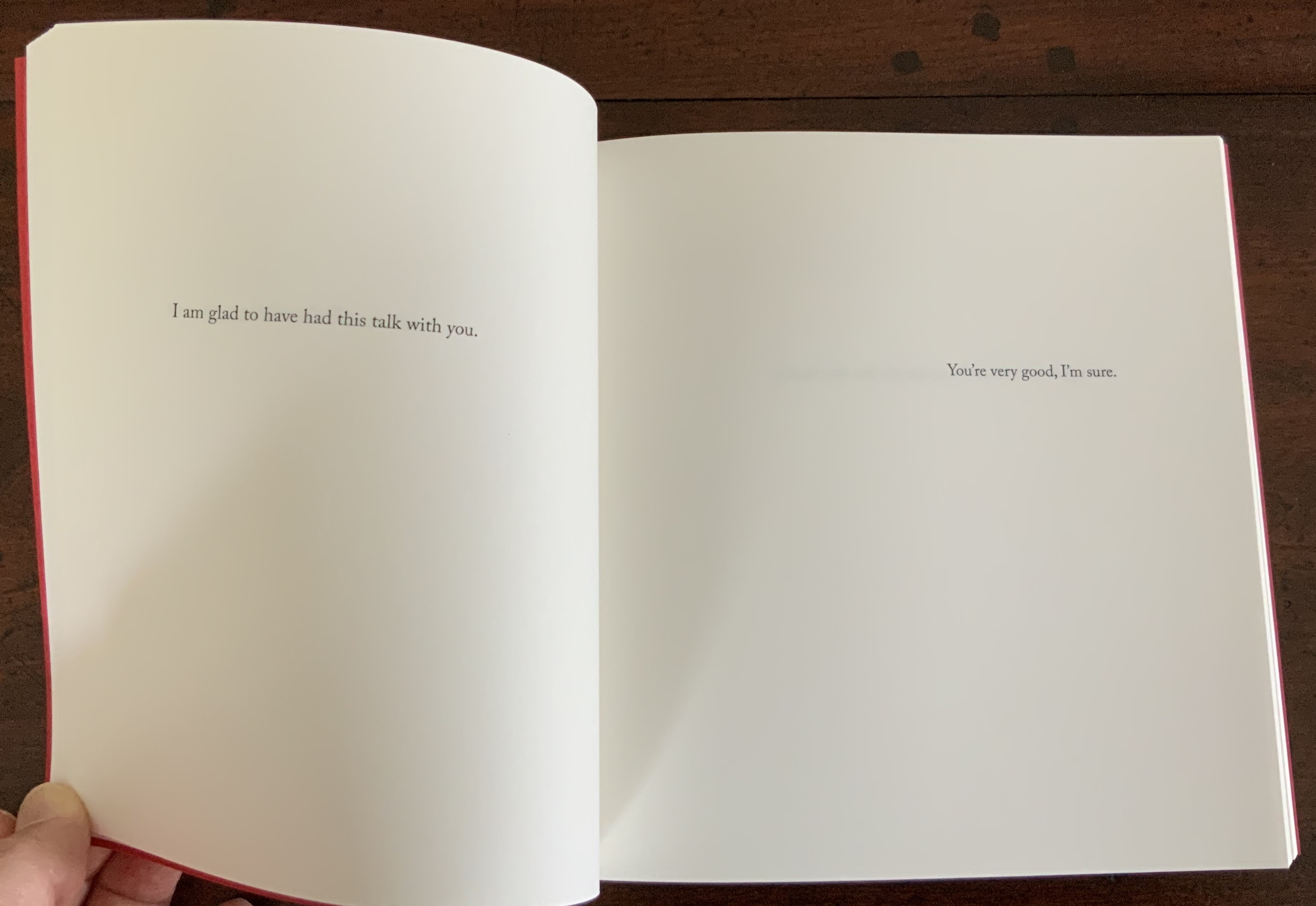
Whether by Microsoft’s adjustable auto-summary function, by juxtaposition of photos and text or by compiling a library of lost indecipherable volumes, Tonnard probes at the nature of making and making meaning. A Dialogue in Useful Phrases probes both by generating text and structure under several constraints. One constraint restricts the author to “conversational phrases” found in Grenville Kleiser’s Fifteen Thousand Useful Phrases (1917), or “felicitous expressions for enriching the vocabulary.” A second constraint comes with the dialogic structure of “I” then “You”. The third constraint comes from alphabetizing the utterances of “I” down the verso pages.

By title and comment, Tonnard emphasizes that we are following “a” dialogue, not a series of dialogues: “A dialogue is formed from the random meetings of these phrases. It is a dialogue in the purest sense, a dialogue that expresses nothing other than itself.” Likewise, with a prefatory quotation from Malone Dies and the book’s “empty-room” square format, Tonnard pointedly places “I” and “You” in the tradition of Samuel Beckett’s dramatic dialogues. Going a step further in that direction, she has put together Project Gutenberg’s anonymous volunteers’ recordings of Kleiser’s book and staged audio installations in venues such as the Meermanno Museum in The Hague and the Sheffield International Artist’s Book Fair 2011. In this video, she speaks of the work at the 9’10” mark.

Further Reading

In order of the entries above:

Ladd, Jeffrey. “In this Dark Wood by Elisabeth Tonnard“, 5B4|Photography and Books, 14 November 2009. Accessed 3 June 2020.

Slade, George. “Book Review: In this Dark Wood“, Photo-Eye Blog, 6 March 2014. Accessed 3 June 2020.

Bodman, Sarah. “Artists’ Books #4: The Library by Elisabeth Tonnard“, A-N, 7 January 2016. Accessed 2 June 2020.

Elisabeth Tonnard: A Dialogue in Useful Phrases“, Bank Street Arts, 13 November 2010. Accessed 3 June 2020.

Partington, Gill. “What is Reading?“, London Review of Books, 11 December 2017. Accessed 3 June 2020.

Other works by Elisabeth Tonnard:

Recounted : after Edward Ruscha (1968). This was made as part of the ABCED project realized by ABC Artists’ Books Cooperative in celebration of Ed Ruscha’s 75th birthday in 2012. It was available for one year only, until December 2013, when Ed Ruscha turned 76. It “recounts Nine Swimming Pools and a Broken Glass by Edward Ruscha in textual snapshots. The snapshots are taken from modern American literature predating 1968 (they may even be imagined to have influenced Ruscha). They can be read but they can also be looked at: the words are objects in disguise”. — Artist’s website. Accessed 13 July 2021.

Books On Books Collection – Julie Johnstone

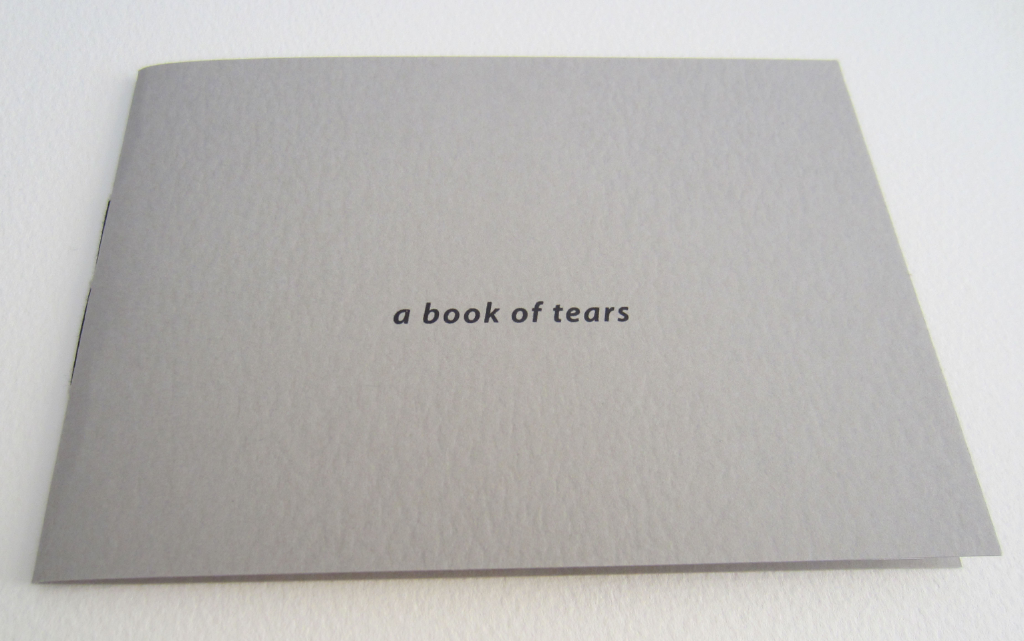
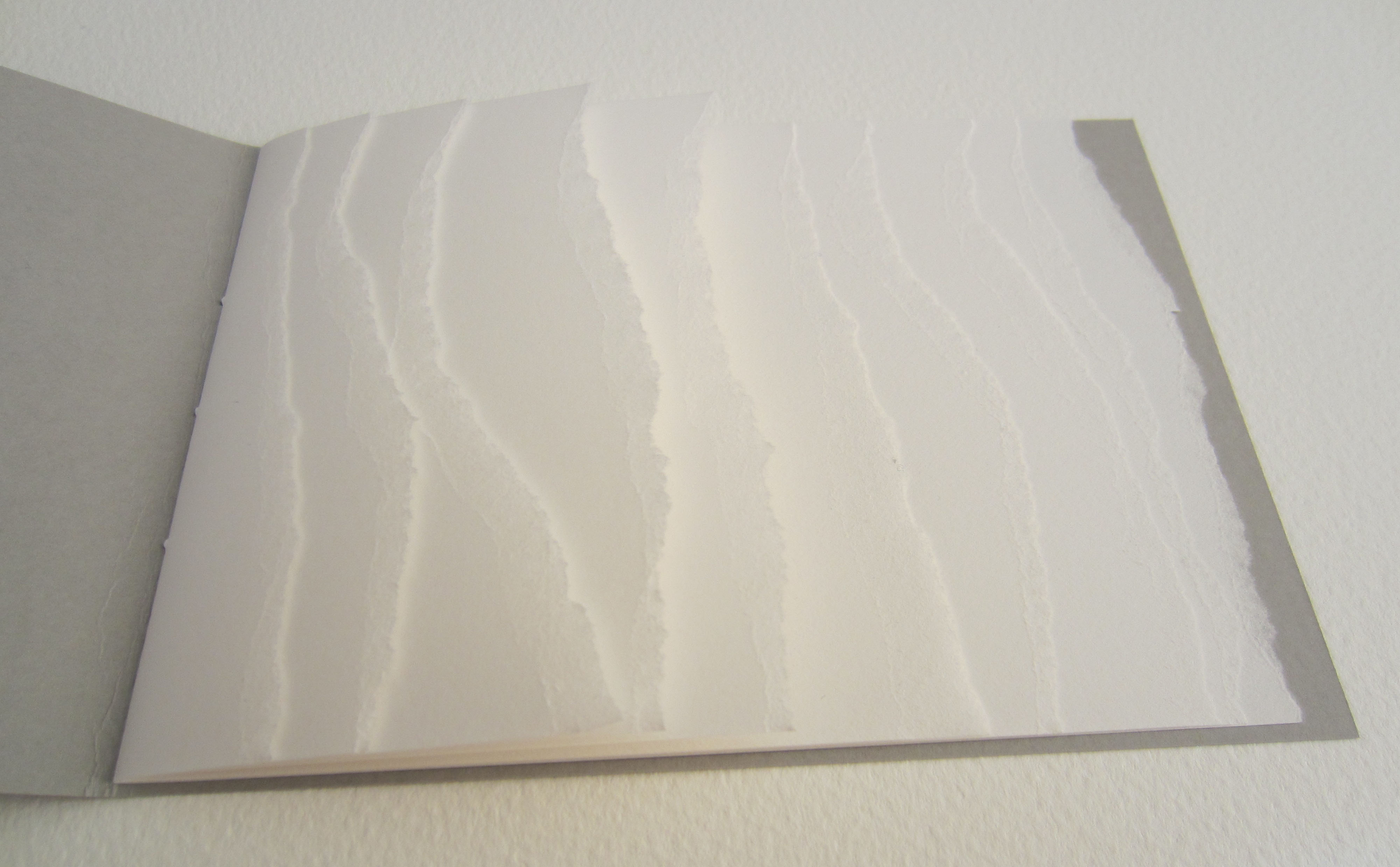
a book of tears (2006)

a book of tears (2006)
Julie Johnstone
Handbound with black linen thread, 5 sheets torn at both ends, card cover printed inkjet. Acquired from the artist, 12 December 2015. Photos: Courtesy of the artist.

a book of tears, Material | Immaterial and Point of View were the first of three Julie Johnstone bookworks in the Books On Books Collection. Like much book art, they depend on the interaction of verbal and visual puns.

Material | Immaterial (2012)

Material | Immaterial (2012)
Julie Johnstone
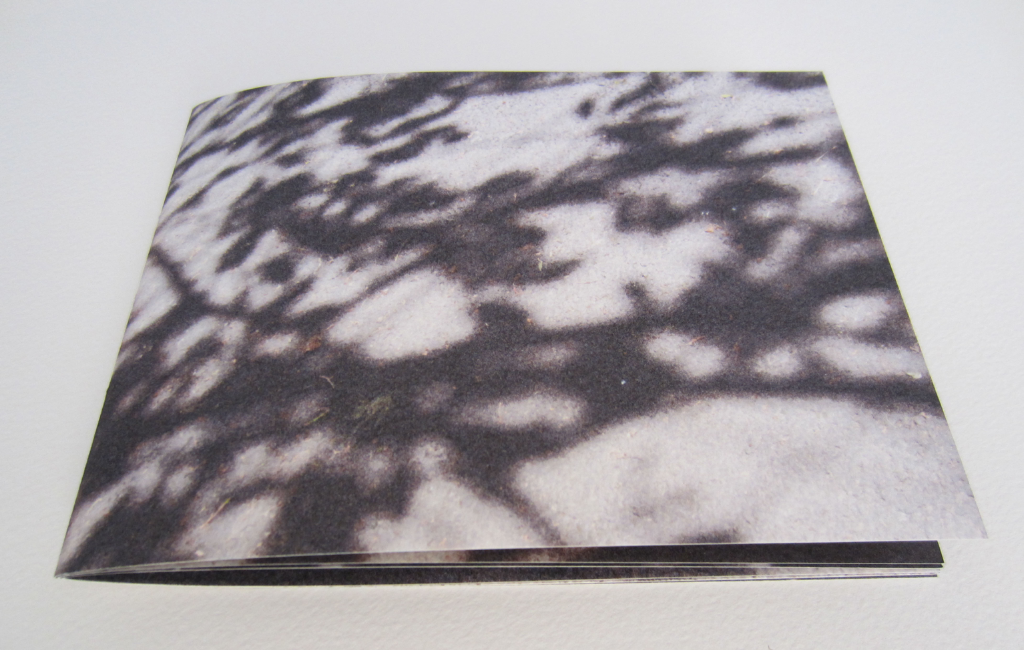
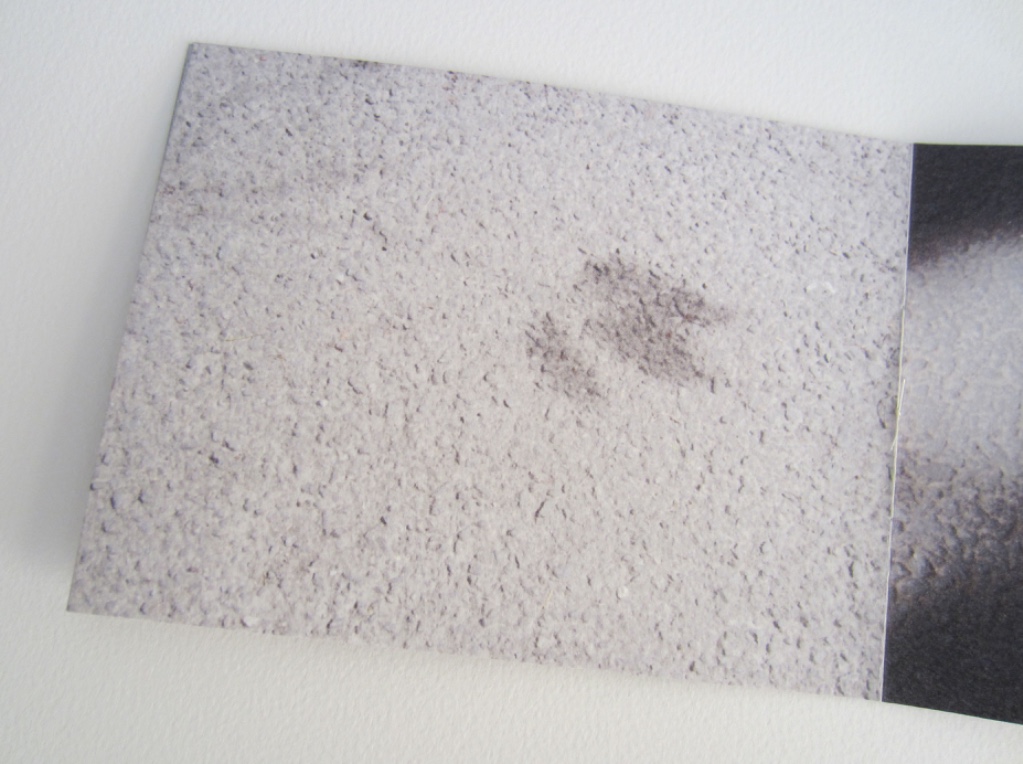
Handbound with linen thread, 12 pages, including cover. Eleven images, photographs of the shadows of trees and shrubs on city paving taken during the summer of 2012 and
printed inkjet on Bockingford watercolour paper 300gsm. H130mm x w175mm. Acquired from the artist, 12 December 2015. Photos: Courtesy of the artist.

Johnstone’s tint-based works (see further below) evoke a half-tone world so much that it is strange that Material | Immaterial was one of her few (only?) photograph-based bookworks up until 2020 when the series Marks on a Surface arrives.

Point of View: skyline tideline (2012)

Point of View: skyline tideline (2012)
Julie Johnstone
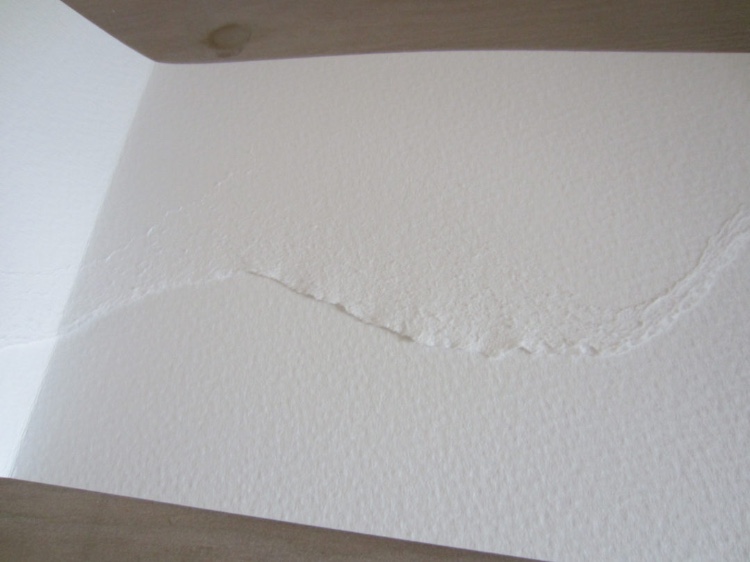
Single folded book designed to be read forwards and then upside down and backwards; made from two pieces of card, inner sheet of card torn to create wavy line. skyline: front cover title in cyan blue; tideline: back cover title in cyan blue. Printed inkjet on Bockingford watercolour paper 300gsm. Closed: H120 x W190 mm; open: H120 x W380 mm. Edition of 35, of which this is #35. Acquired from the artist, 12 December 2015.
Photos: Courtesy of the artist.

The shadows cast by the meticulous tears recall the larger-scale works to be found in the Rijswijk Papier Biënnale and Coda Apeldoorn. What happens with and within the physical space of this small book form is the meeting of metaphor and material, which is art.

1-16% (2013)

1-16% (2013)
Julie Johnstone
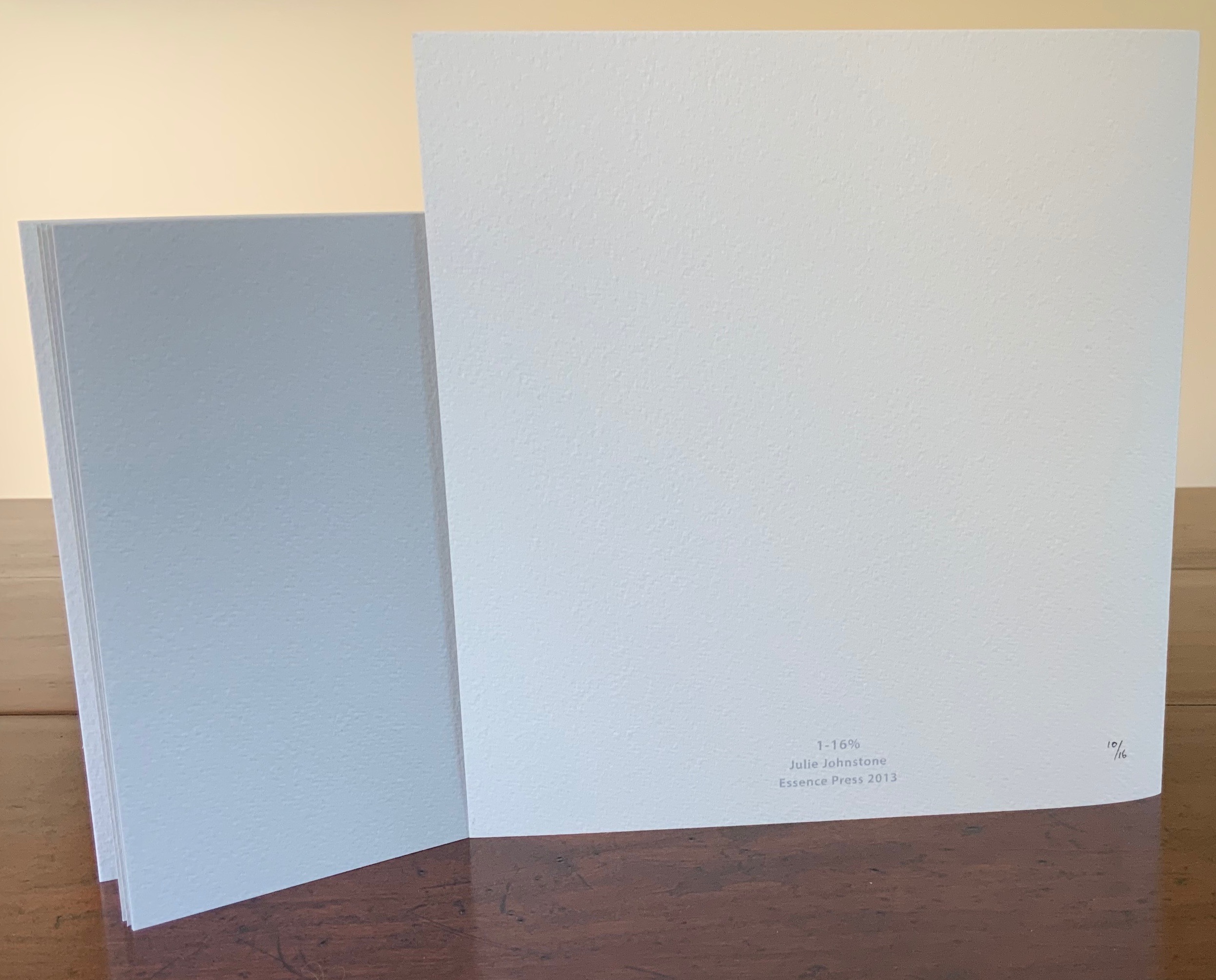
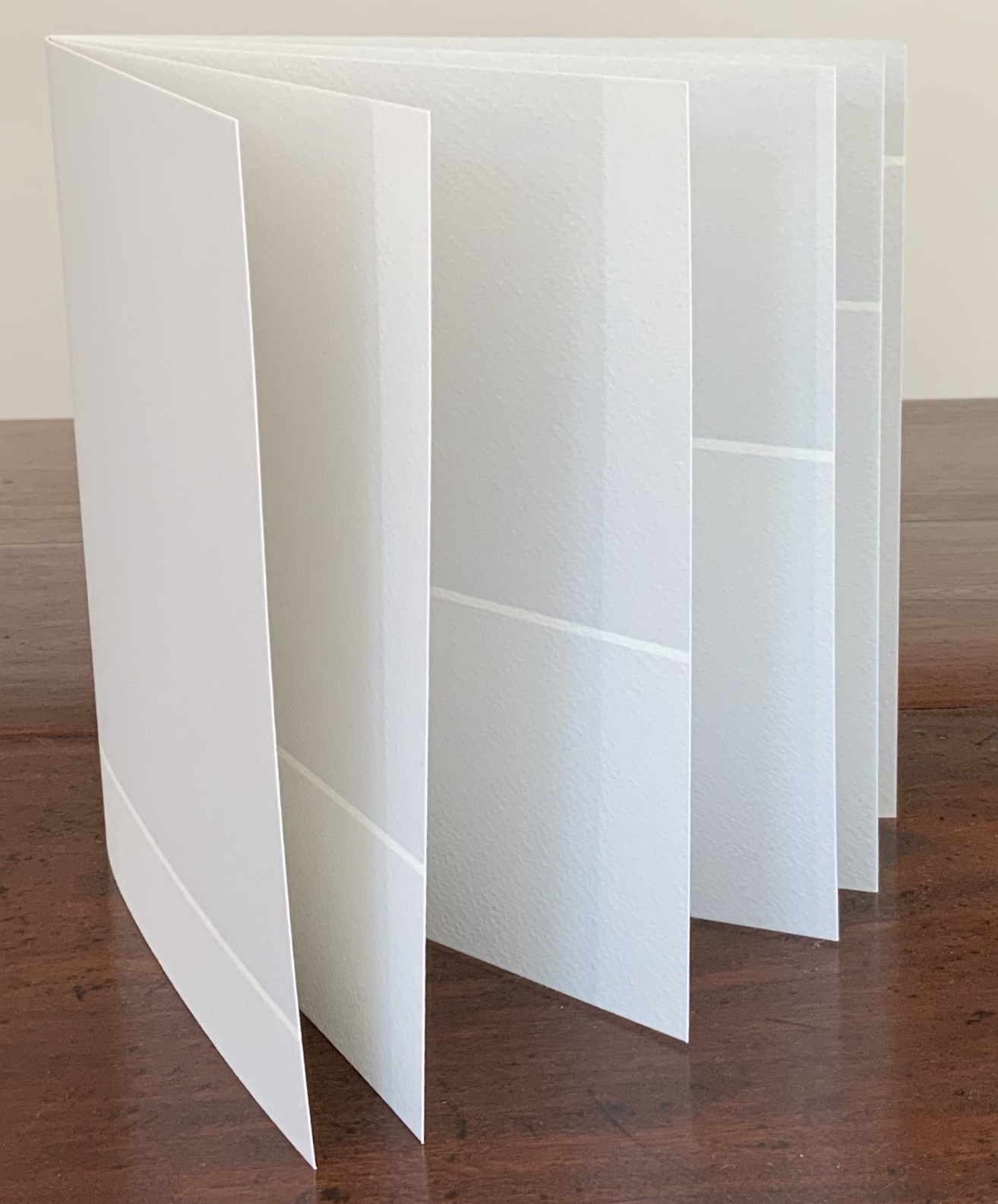
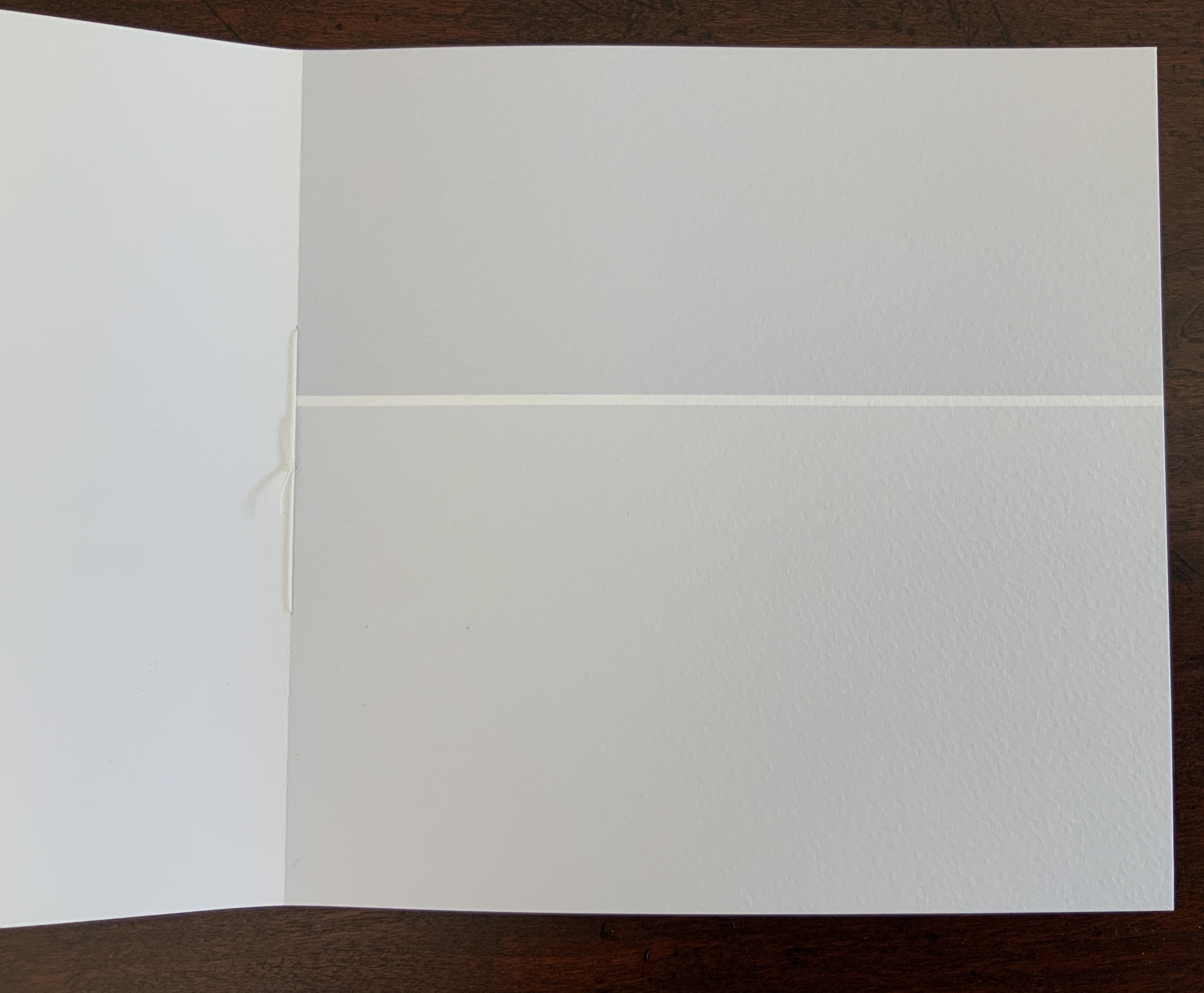
Handbound with linen thread, 16 pages, including cover; each page printed to edge with a tint of black, starting on the front cover with 1% and increasing by 1% with each page, through to 16% on the back cover; Bockingford watercolor paper 300gsm. H160 x W170 mm. Edition of 16, of which this is #10. Acquired from the artist, 26 September 2017. Photos: Books On Books Collection.
In the collection, this is the first work to use progression of tint, Johnstone’s signature technique. The space allocated to the tint remains constant. So that nothing distracts from this, a larger single-fold sheet is used as a loose jacket and for the colophon.

10%|15% (2013)

10%|15% (2013)
Julie Johnstone
Created for the AMBruno Lines project on the occasion of the Whitechapel Art Book Fair 2013. Handbound with linen thread, 12 pages, including covers; each facing page, including cover, printed to edge with two blocks of a tint of black, one 10% and the other 15%. The size of blocks changes progressively as the pages turn, moving the unprinted ‘line’ up the page in 2.5 cm increments. Printed inkjet on Bockingford watercolor paper 300gsm. H190 x W180 mm. Edition of 25, of which this is #20. Acquired from the artist, 26 September 2017. Photos: Books On Books Collection.

In this work, the tints hold steady, and the technique of progression shifts to changing the print area. The unprinted line that rises up the page recalls Bodil Rosenberg’s Vandstand (2019), where the water level in acrylic rises page after page. Vandstand and 10%|15% display well together.

2-20%|20-2CM (2014)

2-20%|20-2CM (2014)
Julie Johnstone
Handbound with linen thread, 20 pages, including the cover; printed inkjet on Bockingford watercolor paper 300gsm. H240 x W280 mm. Edition of 10, of which this is #5. Acquired from the artist, 26 September 2017. Photos: Books On Books Collection.

With this work, the technique becomes one of dual progression — both tint and printing area. Starting with the front cover, the tint is 2% black in a block of 20cm height. With each recto page, the tint increases by 2%, and the height reduces by 2cm. On the last recto page, the block of 2% black is 2cm in height.

With each new work varying tint and/or print space, Johnstone recalls the creative approaches of the OuLiPo movement. Its authors such as Italo Calvino, Raymond Queneau and Georges Perec set themselves strange writing constraints, such as write a novel without the letter “e”. Johnstone may rightly claim the visual artist’s crown in the movement (still ongoing) with this next work.

3% [1-5] (2015)

3% [1-5] (2015)
Julie Johnstone
Set of 5 booklets in folder; each booklet handbound with linen thread, 16 pages including cover, printed inkjet on Hahnemuhle Sumi-e paper 80gsm. H150 x W120 mm. Edition of 20, of which this is #10. Acquired from the artist, 26 September 2017. Photos: Books On Books Collection.

As noted above, this work recalls the “simple complexity” of the wordplay in Samuel Menashe’s short poem. Just as the pouring pot “fulfills” its spout, so Johnstone’s working of tint and semi-transparent paper fills and fools the hungry eye.

3% [1]
Photos: Books On Books Collection

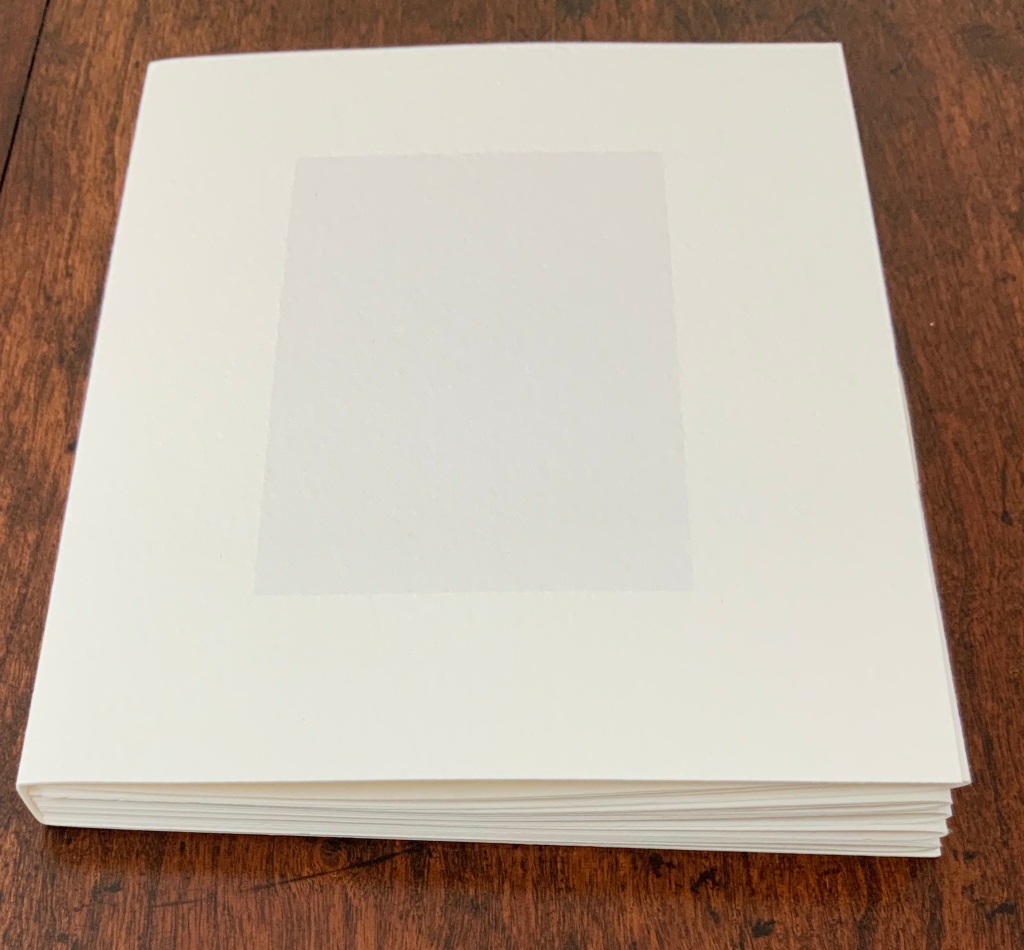
Booklet [1] serves as the baseline for the other four booklets. Each facing page (excluding cover and next page) is printed with a 3% black tinted rectangle (90 x 60 mm). As the semi-transparent page turns, the tint seems to vary. The precision of registration and sureness of touch across the pages amazes.

3% [1]
The effect changes with the light. Photos: Books On Books Collection

At first, Booklet [2] seems not to vary from [1], encouraging careful reading and looking to discover that every other page is blank in Booklet [2]. The choice of paper and tint as well as the “persistence of vision” combine to create the illusion that pages are printed when they are not.

3% [2]
Photos: Books On Books Collection

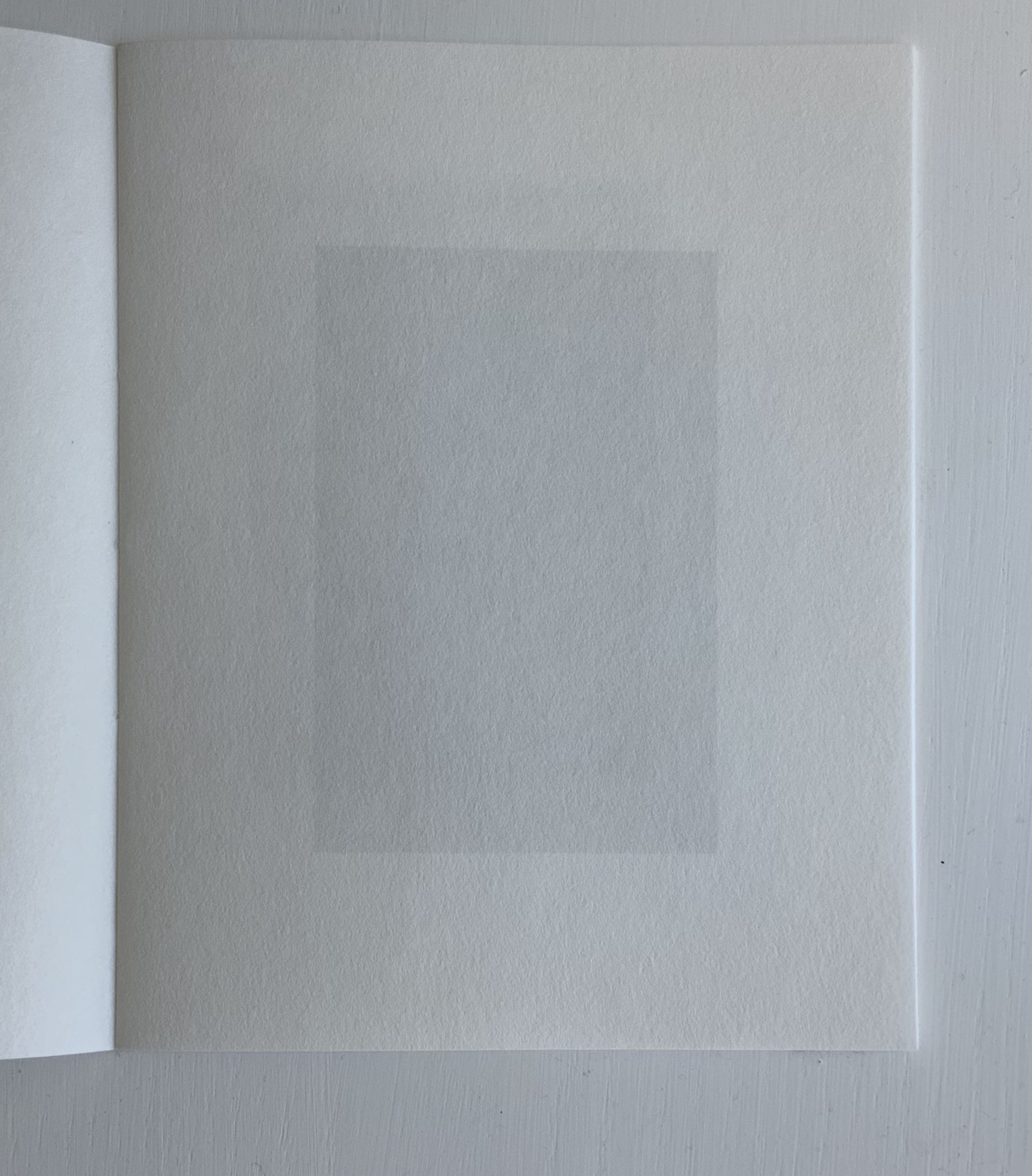
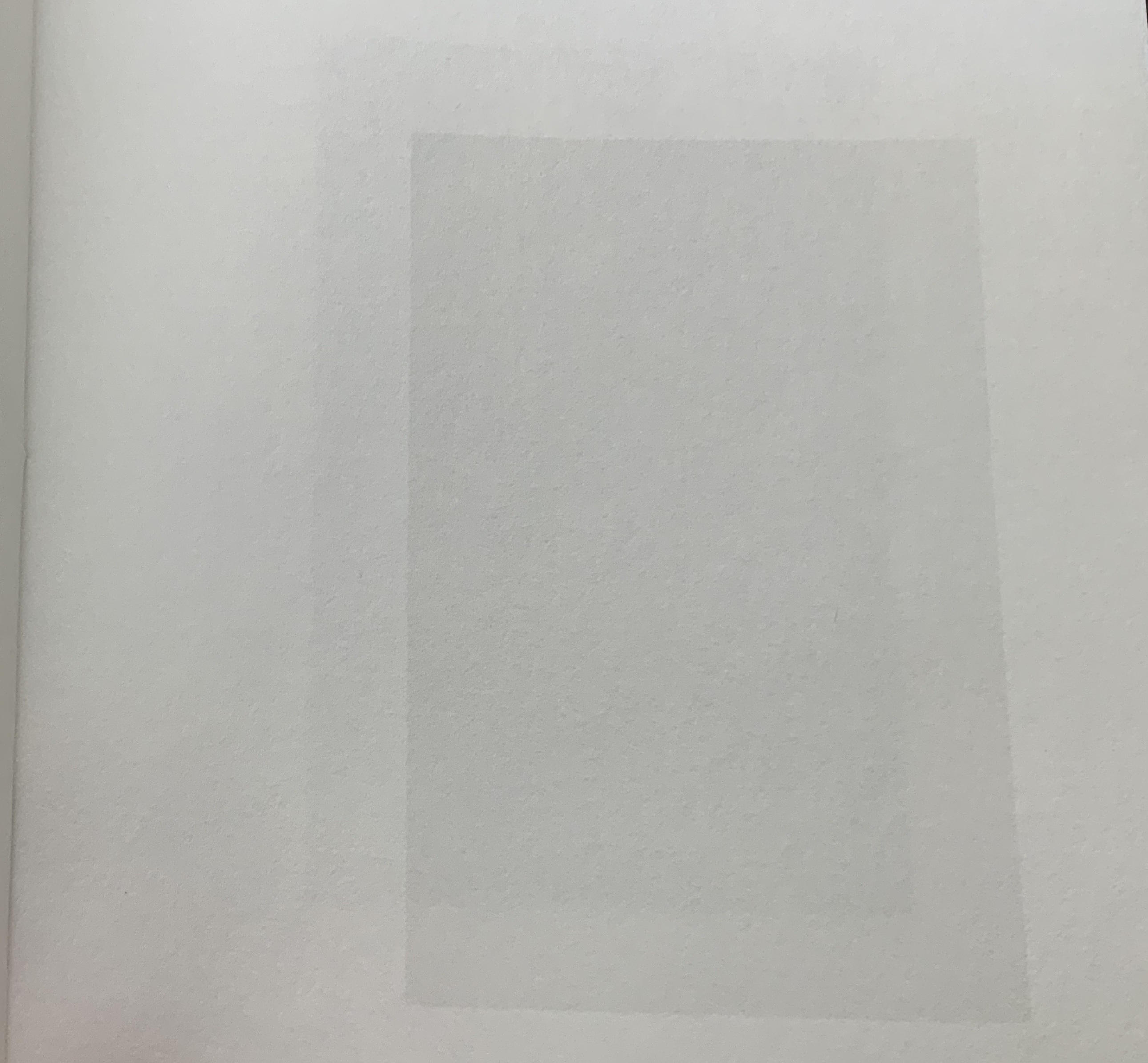
Booklet [3] extends the play of book [2] with an empty 3pt frame printed in 3% black on every other page to create the illusion that the next page’s block appears to fill it. Booklet [4] also extends the play of book [2] with a half block printed in 3% black on every other page to create the illusion of a darker or lighter block next to it due to show-through. This play within the boundary of the 90 x 60 mm rectangle takes a leap in Booklet [5].

3% [5]
The slight curving in the rectangles is due to how the booklet is being held. Photos: Books On Books.

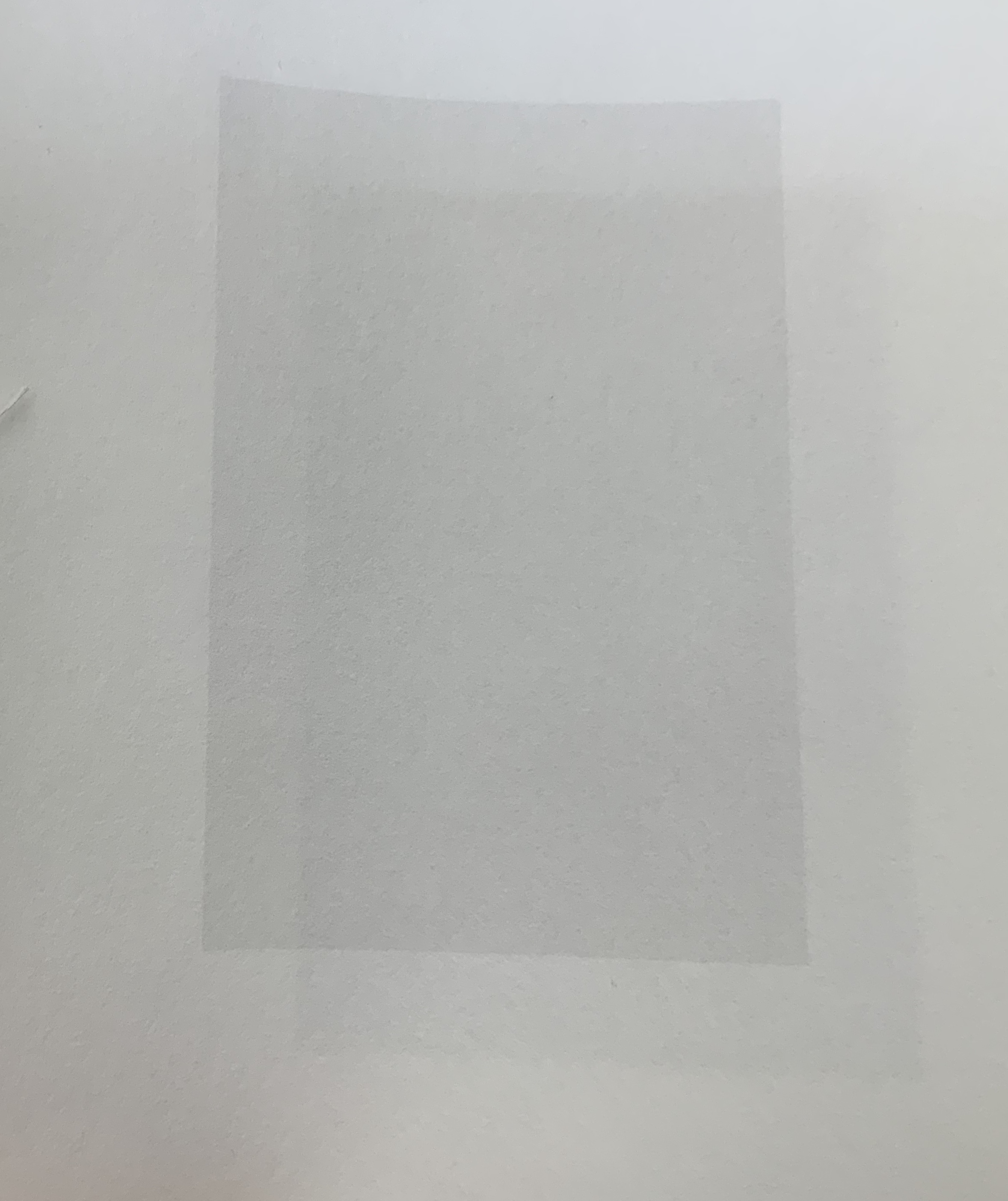
Here in Booklet [5], the 3% block appears once on each facing page but shifts diagonally by 1cm either to the top and left or to the bottom and right. Now the eye is fooled into perceiving two differently tinted blocks printed off center one over the other. The pleasure in these works of book art lies in contemplating each page and the movement from page to page, back and forth.

Field (2014)

Field (2014)
Julie Johnstone
Handbound with linen thread, 16 pages, including cover, printed inkjet on Bockingford watercolor paper 300gsm.
H160 x W160 mm. Edition of 25, of which this is #14. Acquired from the artist, 26 September 2017. Photos: Books On Books Collection.

Like 10%|15% and 2-20%|20-2CM, this work proceeds by dual progression, but the print area changes horizontally rather than vertically. Each facing page (including cover) is printed with a tint of black in a block flush along its fore-edge. The tint begins on the cover at 2% in a 2cm block. On each page after, the tint increases by 2% and the block by 2cm. The final page presents a 16% tint and 16cm block.

red (2015)

red (2015)
Julie Johnstone
Created for the AMBruno RED project. Handbound with linen thread, two sheets printed with three images (including cover image); printed inkjet on Bockingford inkjet watercolor paper 190gsm. H190 x W180 mm. Acquired from the artist, 26 September 2017. Photos: Books On Books Collection.

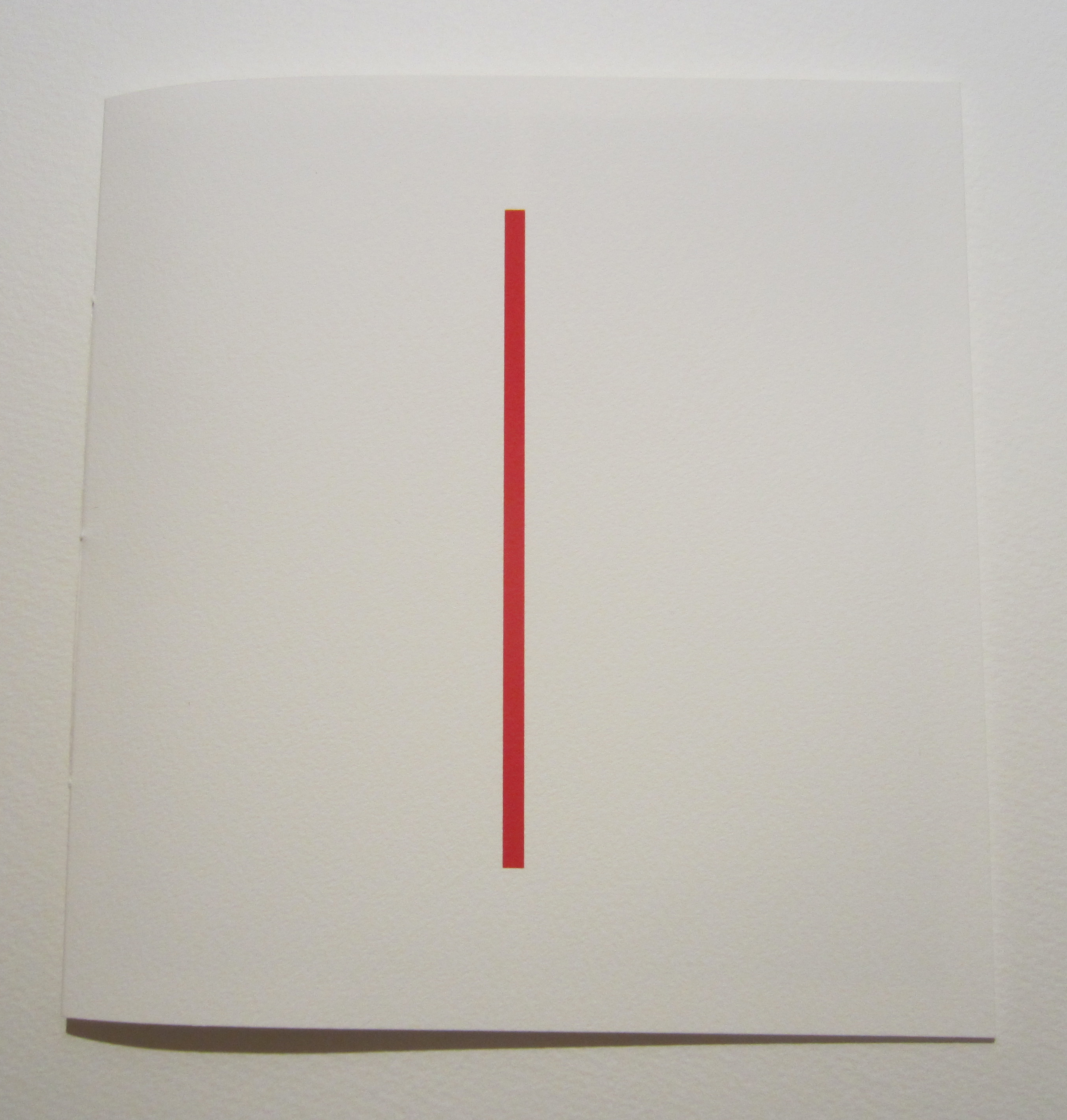
In most of Johnstone’s work, the color blue appears most frequently as the alternative to tints of black. This work, created for an AMBruno project, proves the exception, albeit continuing with the technique of dual progression — here, around the still point of a vertical red bar. The barely perceptible tint of black on the cover deepens on the first facing page to such an extent that the red bar seems to shorten (it doesn’t). Then on the next facing page, the tint remains the same, but the blocks turn perpendicular to the red bar and do truncate it.

LIFE (2018)

LIFE (2018)
Julie Johnstone (after Kierkegaard)
Handsewn booklet; cover in Bockingford watercolor paper 300gsm. H60 x W140 mm, 12 pages. Acquired from Essence Press, 10 April 2021.
Photos: Books On Books Collection.
This small work is another elegant demonstration of Johnstone’s artistic play with imposition and the act of reading, touching, looking and thinking.

barely audible | a book of quiet (2021)

barely audible | a book of quiet (2021)
Julie Johnstone
Handsewn booklet. H120 x W370mm, 20 pages. Acquired from Julie Johnstone, 28 January 2022.
Photos: Books On Books Collection. Video: AMBruno.

This is Johnstone’s response to the AM Bruno 2021 call for works on the theme volume that capture “one, or a combination of these definitions: (i) a book forming part of a work or series; (ii) the amount of space that a substance or object occupies; and (iii) the quantity or power of sound'” (from the brief by John McDowall).

To paraphrase from her book Zen and the art of artists’ books: “To read Julie Johnstone’s artist books is to become attentive”.

Less (2009 ~), a journal

Johnstone calls Less “a minimalist and minimal journal”. Her un-improvable selection of Samuel Menashe to inaugurate her Less series in 2009 made that work a required item for the Books On Books Collection. Samuel Menashe was unmistakeable — in speech and on the page. Having heard his recorded poems, I knew the voice from the sofa behind me at the West Chester conference in 2006 was his. I can hear that voice every time these white, black, black-threaded, and black on white pages open.

1: Samuel Menashe (2009)

1: Samuel Menashe (2009), Less [1]
Julie Johnstone; text © Samuel Menashe
Handbound with linen thread, 6 sheets, white cover with black lettering, black card sheet, white center sheet with poem in black lettering on recto, printed inkjet. H180 x W150mm. Acquired from the artist, 26 September 2017.
Photo: Books On Books Collection.

The wordplay in Menashe’s poem is more complex than it seems at first glance — something which may have influenced Johnstone’s later visual play with tints, for example, 3% (2015).

8: Richard Price (2011), Less [1]

8: Richard Price (2011), Less [1]
Julie Johnstone; text © Richard Price.
Handbound with black linen thread, 6 sheets, white cover with black lettering, black card sheet, white center sheet with poem in black lettering on recto, printed inkjet. H180 x W150mm. Acquired from the artist, 22 October 2022.
Photo: Books On Books Collection.

The eighth issue in the first series is Richard Price’s eight-line poem. The stanzas have the kind of interesting arithmetical progression that Johnstone’s own works pursue by non-verbal means: two lines, then two plus one, then one line, then one plus one.

Little torn-offs, kept, gummed, and a bill window: large small
change in matt grey and bronze. “Are these your medals, Dad?”

A list of do-it-ourselves in feet and inches. Half-hollow plastic
letters, red red, blue blue. They won’t, can’t, endure an open
word. Grr — consonant consensus.

A single staple, not yet folded, in self-assembly dust.

Up beyond the children this old drawer, laden (can stick).
Easy with it. Extract and show.

Essence Press

Less [1] ran from 2009 to 2012. Less [2] begins in 2022. Where the first series applied a single format to all 12 issues, the second aims to arrive at formats through collaboration. The long gap underlines Johnstone’s characterization of the journal as an occasional series, but it belies the continuity of collaboration in her creativity and publishing. She has worked with numerous artists and poets outside the series but still under the Essence Press imprint. With Johnstone, collaboration rises to the levels of role model and even artform.

Digital (2018)

Digital (2018)
Richard Price
Booklet with rounded corners in Bockingford watercolour paper 300gsm. H150 x w W75mm, 36 pages. Acquired from Essence Press, 22 October 2021.
Photo: Books On Books Collection.

The urge to add this work and 8: Richard Price to the Books On Books Collection stemmed not only from the subversiveness of the former and the evocativeness of the latter but also from Price’s collaborative appearance with Ron King in the collection.

Alphabet Book | Alphabet Week (2010)

Alphabet Book | Alphabet Week (2010)
Maria White
Two hand-bound booklets; covers in Bockingford watercolor paper 300gsm. H140 x W70 mm, 5 unnumbered leaves; H70 xW70 mm, 7 unnumbered leaves. Acquired from Essence Press, 19 March 2022.
Photos: Courtesy of Essence Press.

The alphabet and artists’ books constitute a recurrent theme in the Books On Books Collection. Alphabet Book and Alphabet Week are playful reminders of the arbitrariness of the alphabet and every other means we pursue to bring order to our worlds.

Two Leaves (2018)

Two Leaves (2018)
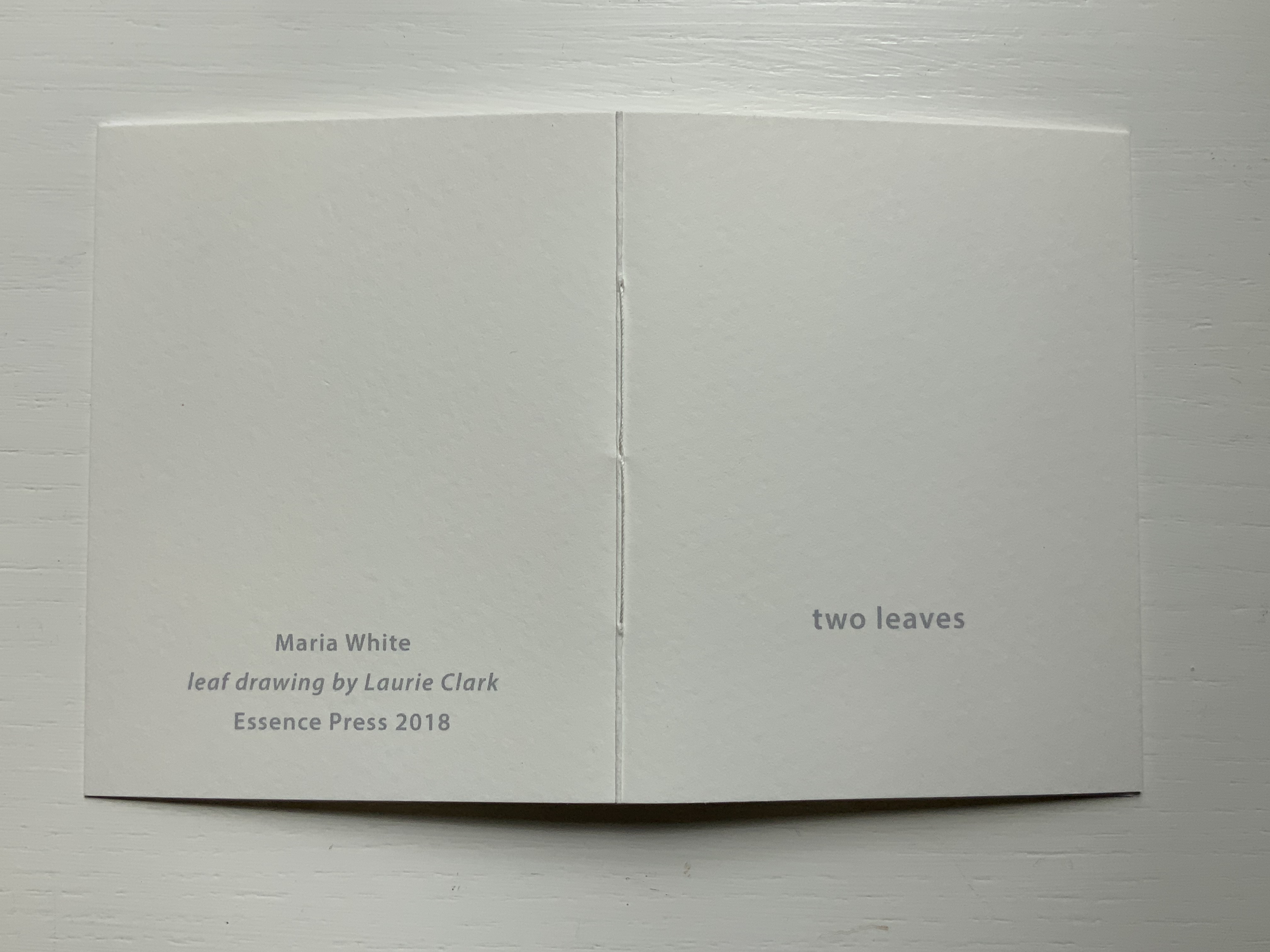
Maria White (leaf drawing, Laurie Clark)
Handsewn booklet; cover in Bockingford watercolor paper 300gsm. H100 x W80 mm, 4 pages (2 leaves). Acquired from Essence Press, 10 April 2021.
Photos: Books On Books Collection.
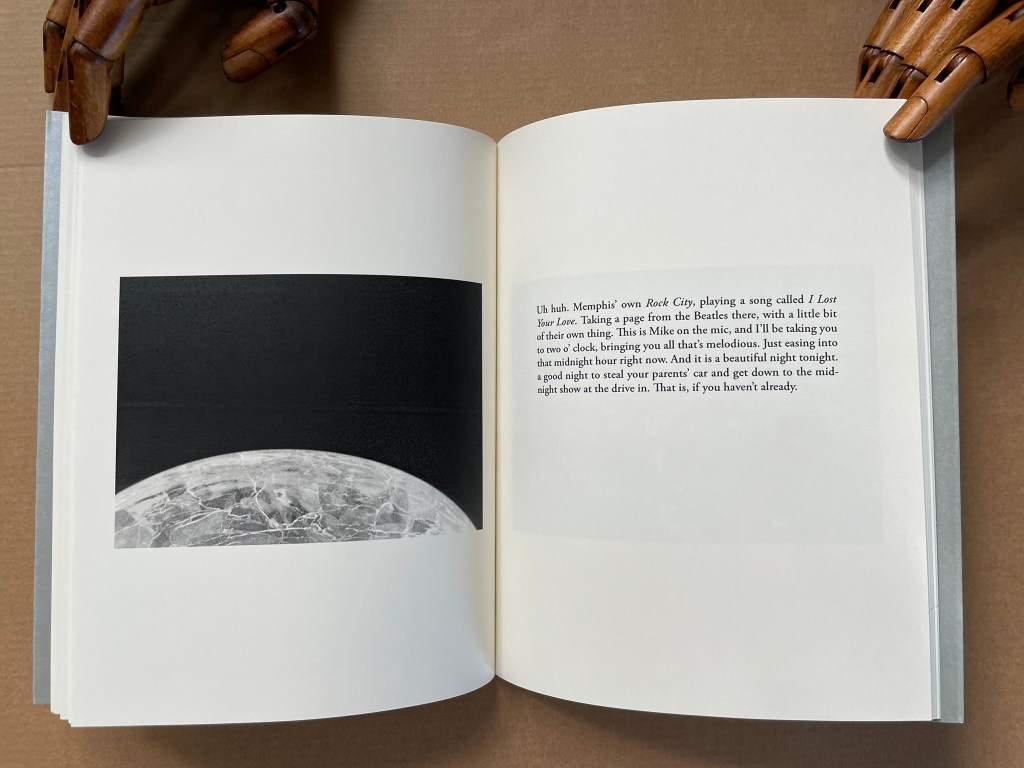
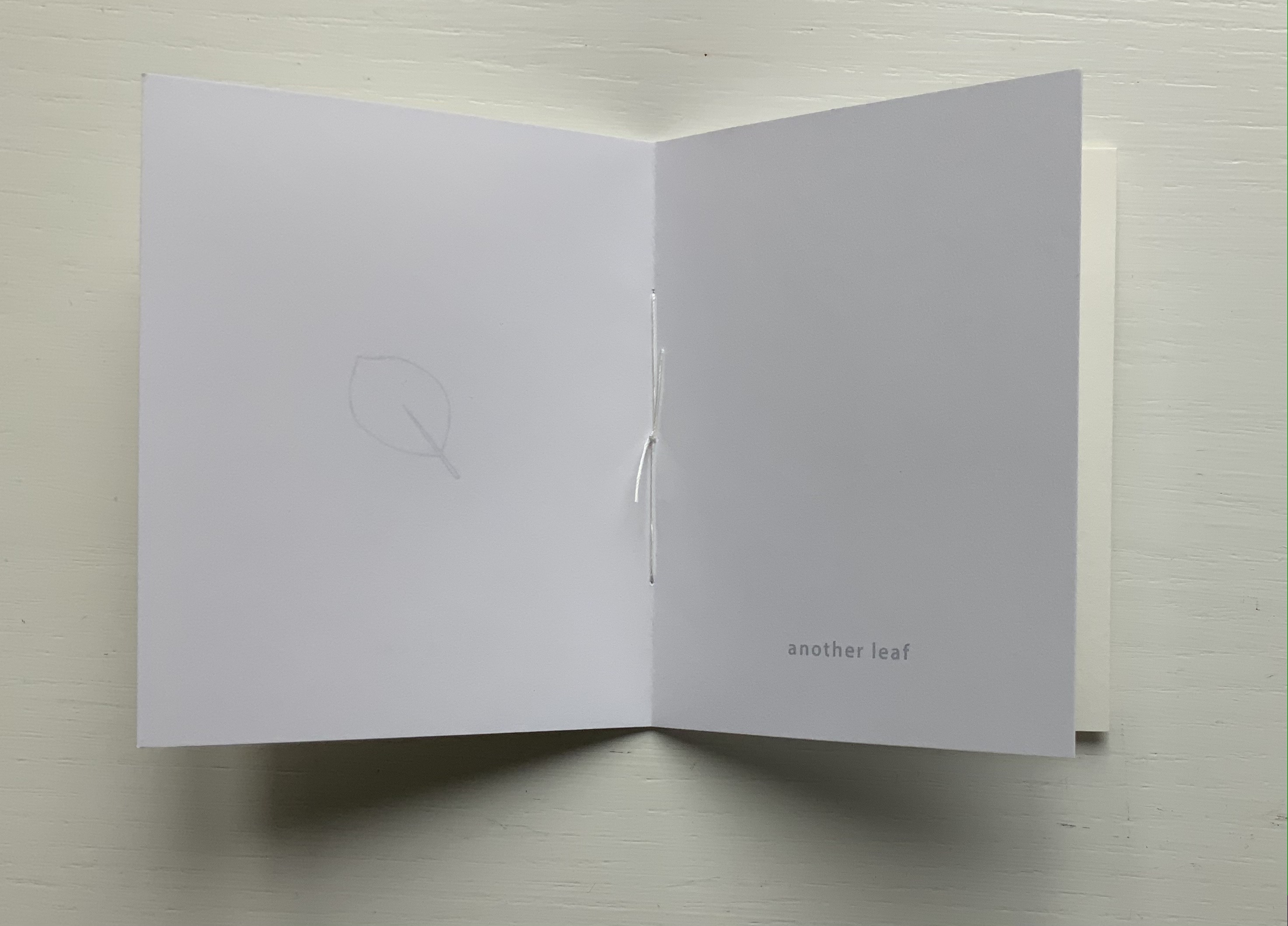
This last (for now) little book in the collection underscores Johnstone’s celebration of collaboration and highlights her own production values. It is all well and good that Maria White describes herself as a librarian. So much of “bookness” is packed into this small space: word, image, page, leaf/folio and word/image/play.

Further Reading

Bodman, Sarah. “Artists’ Books #34: The Book of the Sky – An Infinity of Pages“, A-N, 10 October 2018. Accessed 10 June 2020.

Flanders, Judith. A Place for Everything : The Curious History of Alphabetical Order (London: Picador, 2021).

Johnstone, Julie. “Formations: A research residency in artists’ books at the Edinburgh College of Art Library“, The Blue Notebook, Volume 9, No.1, October 2014.

Johnstone, Julie. Zen and the art of artists’ books (Edinburgh: Essence Press, 2017).

Widger, Eleanore. “Julie Johnstone“, Scottish Poetry Library, 2019. Accessed 10 June 2020.

Books On Book Collection – Sammy Engramer

Un Coup de Dés Jamais N’abolira le Hasard: Onde/Wave (2009)

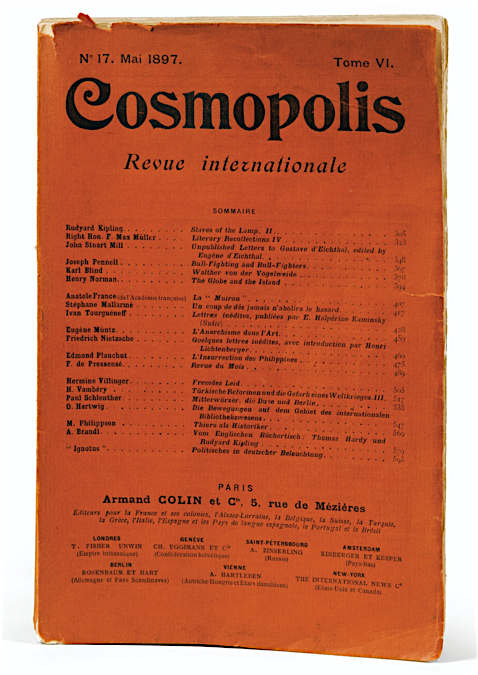
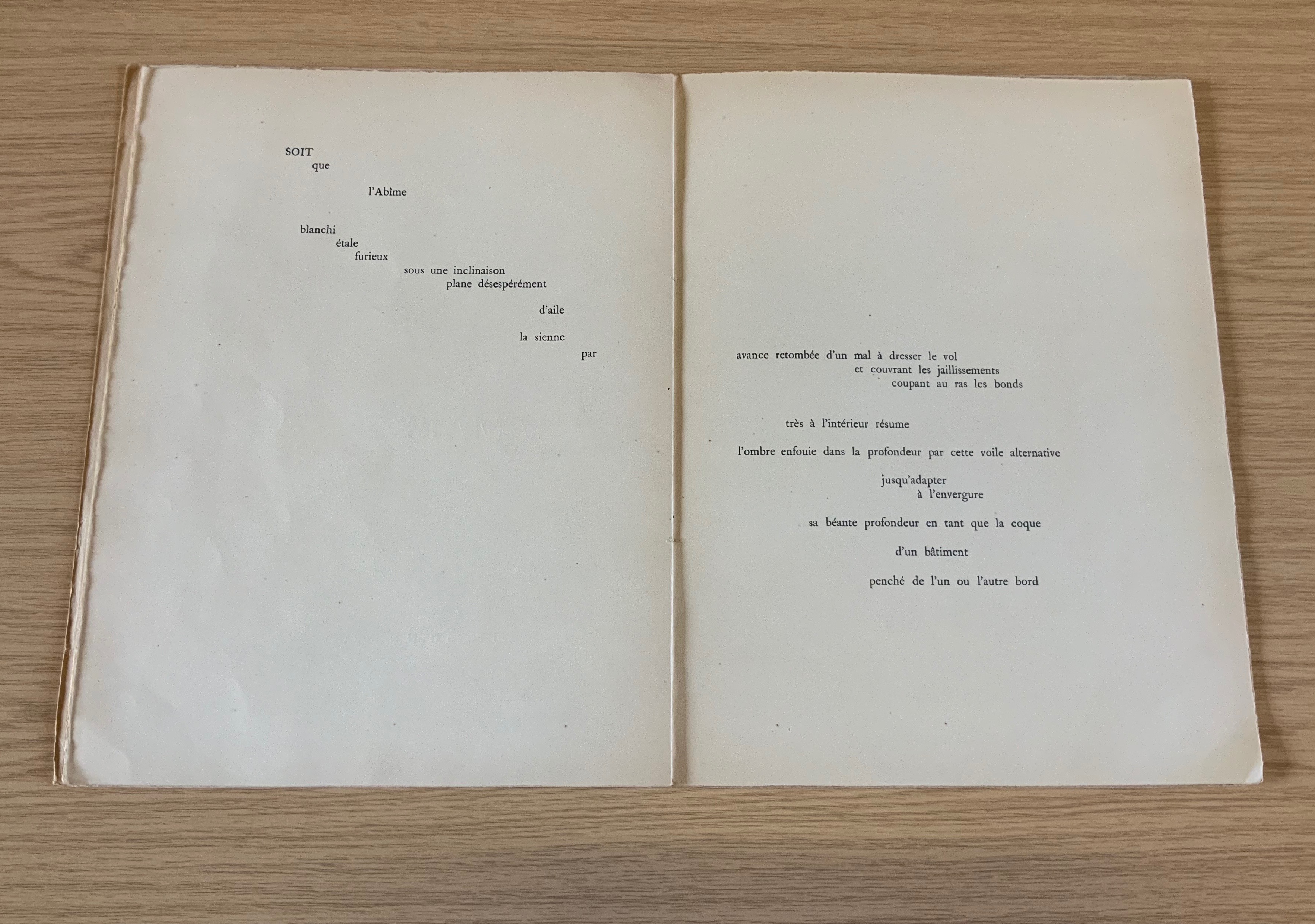
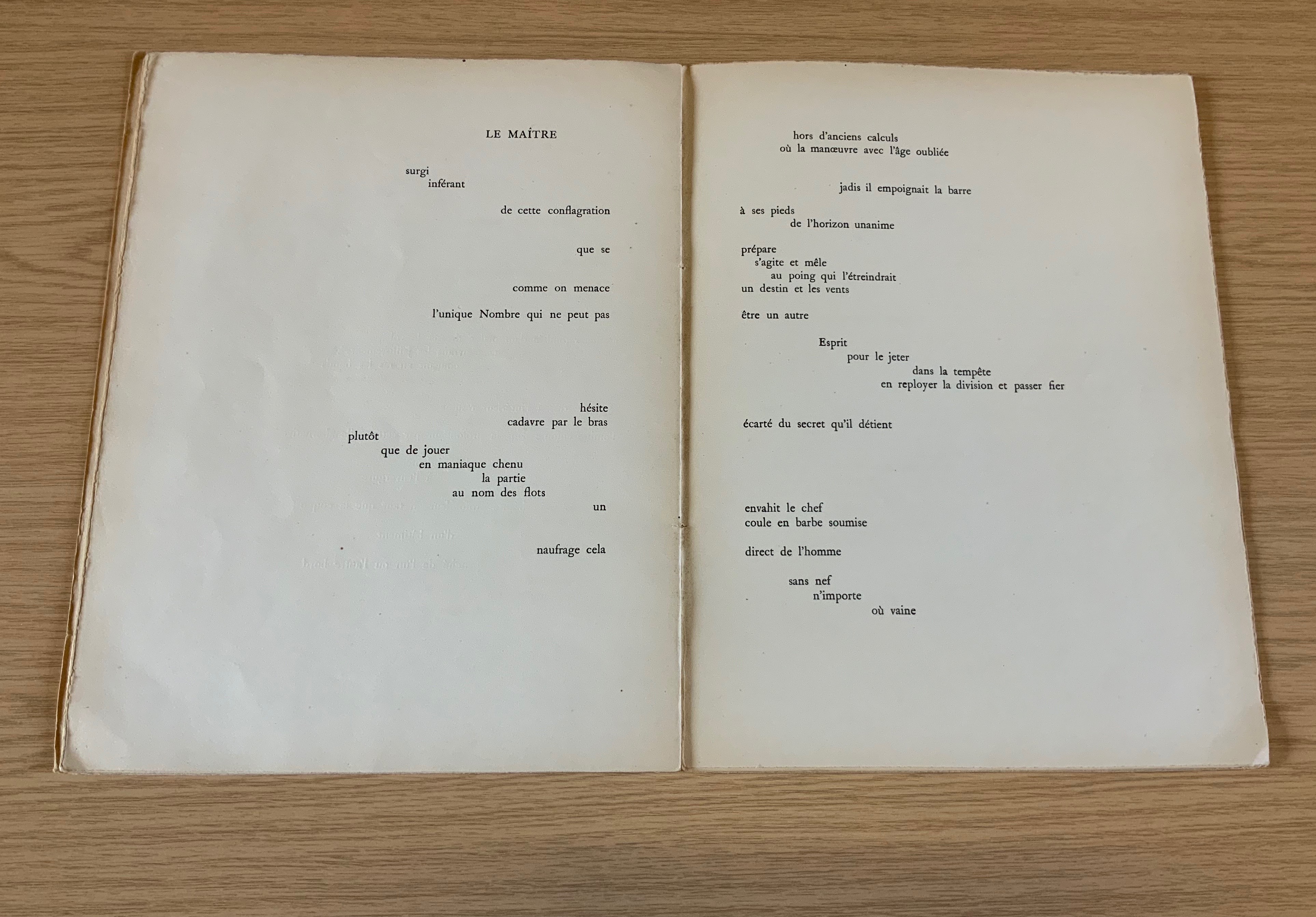
Mallarmé’s strange poem, first published in the London-based journal Cosmopolis in 1897, had to wait until 1914 before appearing in a format close to the one Stéphane Mallarmé envisioned with the gallerist and publisher Ambroise Vollard.

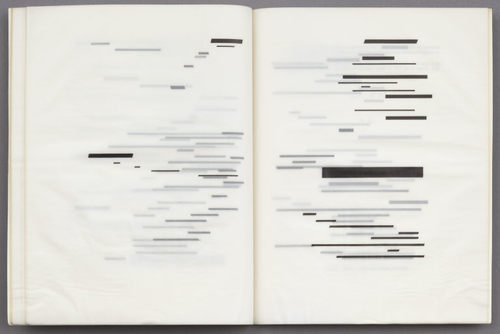
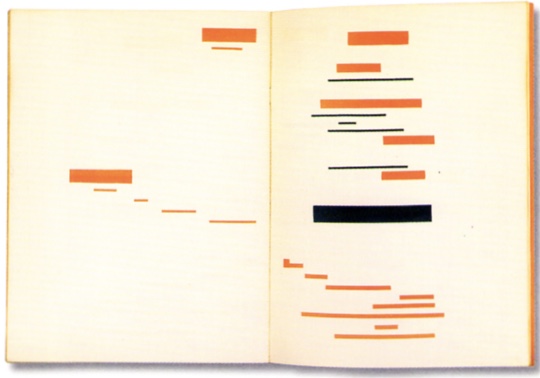
Taking the poem’s self-referential line about its words appearing as a constellation, first Ernest Fraenkel, then Mario Diacono and Marcel Broodthaers transformed the poem into a series of images by substituting solid blocks of ink in place of the poem’s lines of verse.

From left to right: Ernest Fraenkel, Les dessins trans-conscients de Stéphane Mallarmé, à propos de la typographie de Un coup de dés. Avant-propos par Étienne Souriau, avec 68 planches en hors-textes (1960); Mario Diacono, a MeTrica n’ABOOlira (1968/69); Marcel Broodthaers, Un coup de dés jamais n’abolira le hasard: Image (1969).

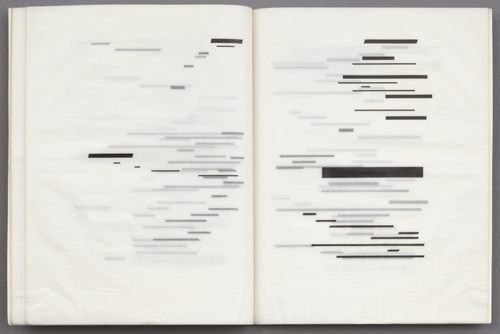
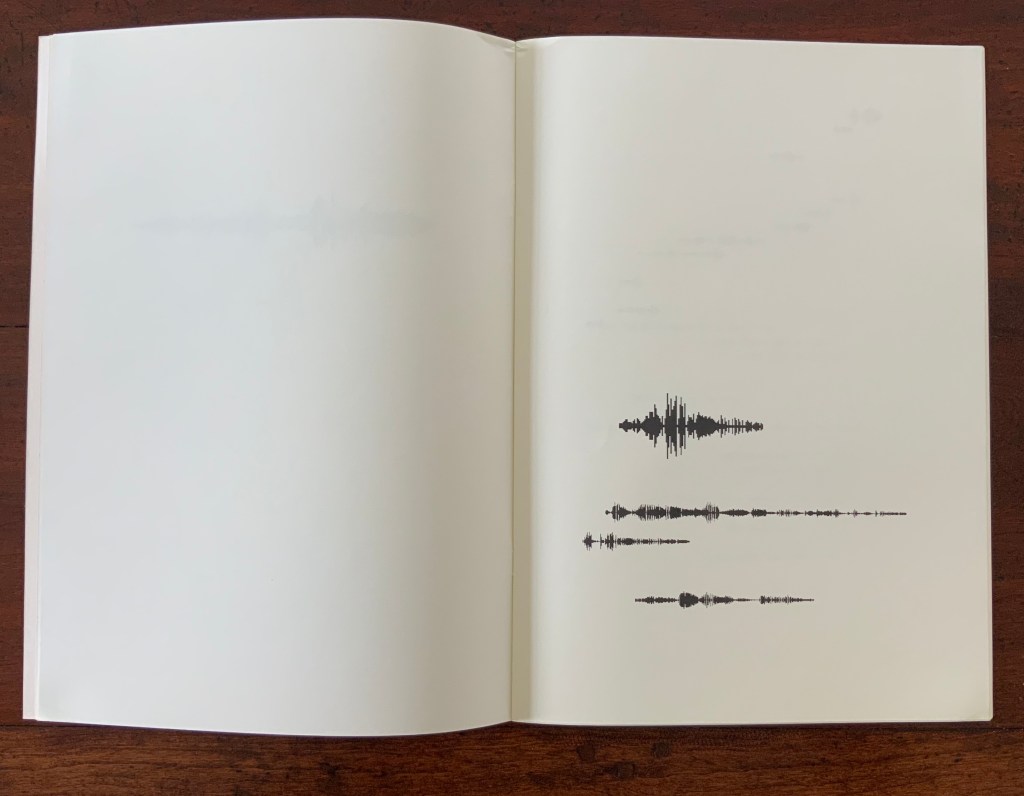
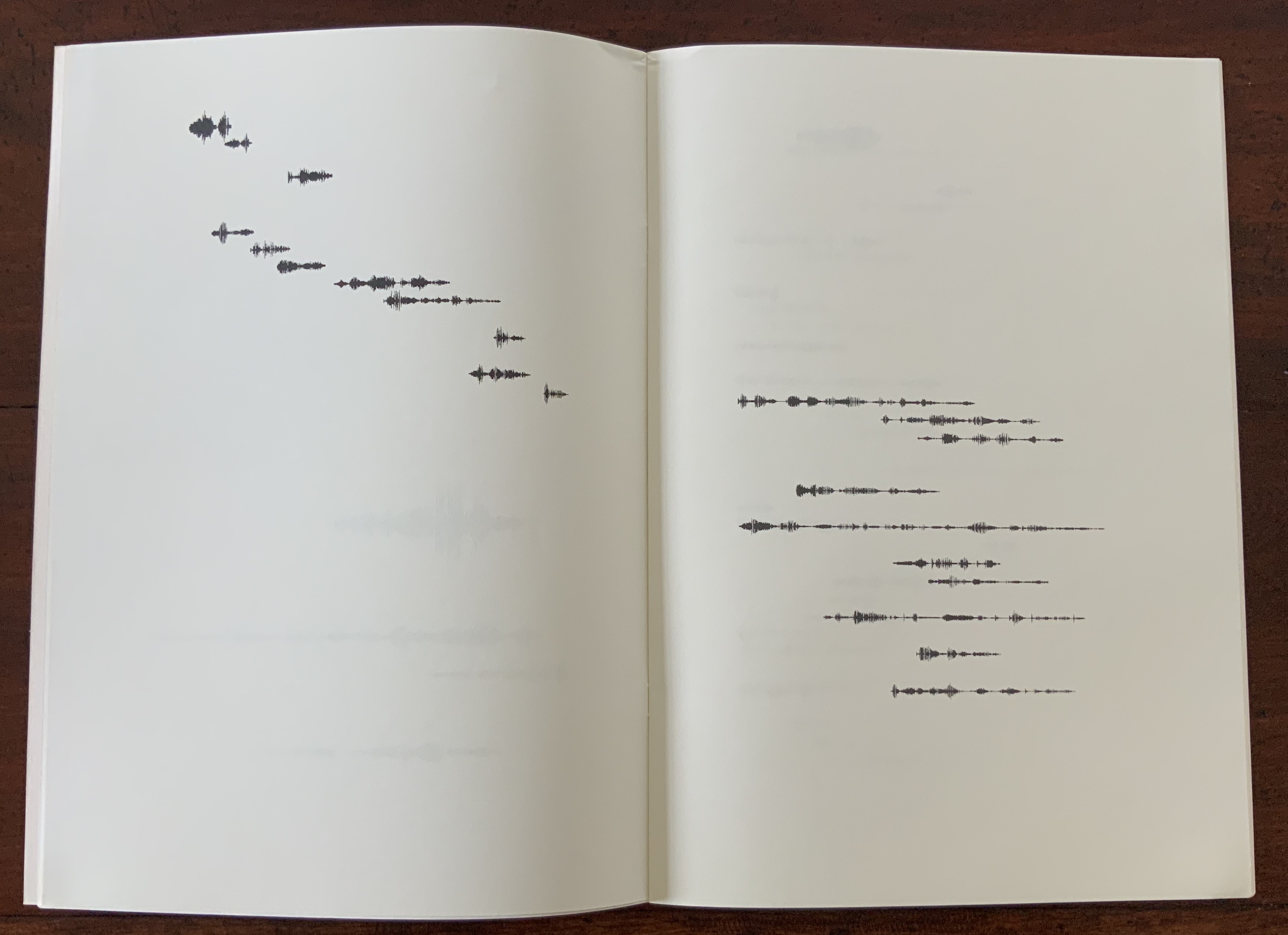
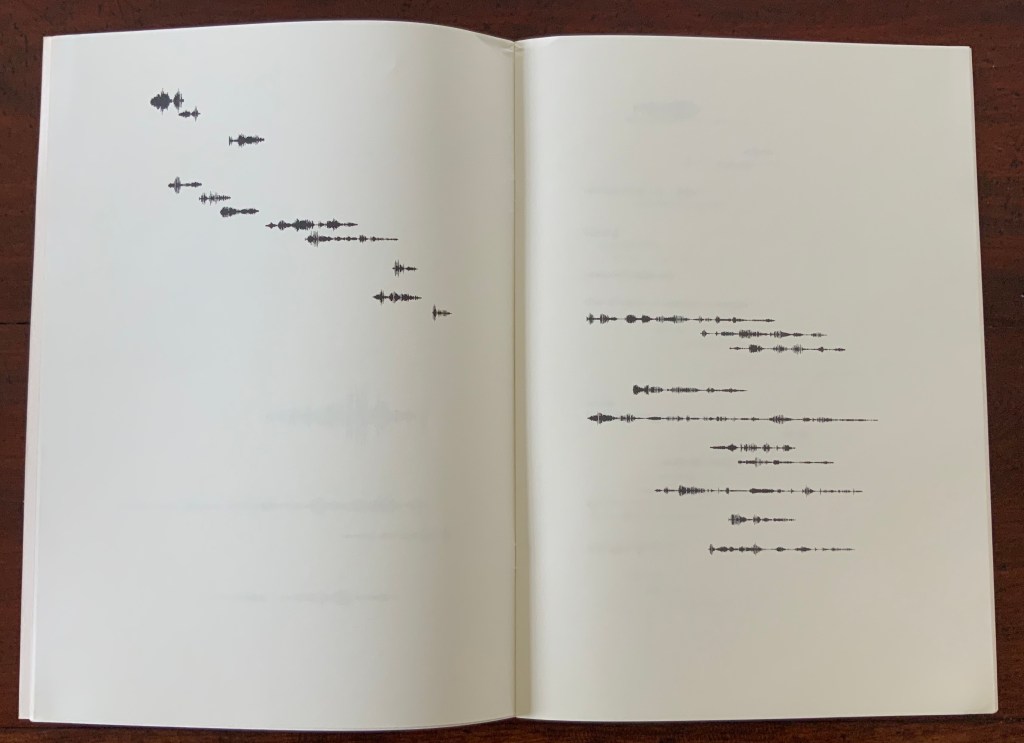
Subsequently, dual homages to Mallarmé and Broodthaers arose. One of them is Engramer’s. Where Fraenkel, Diacono and Broodthaers focused on layout, size and space to generate their visual translations, Engramer added a sonic element, albeit by visual display. Recording his own reading aloud of the poem, Engramer then ran the recording through sonographic equipment. The rendering of each line’s soundwave became his graphic substitute for Mallarmé’s line of verse and, by extension, each black block that Broodthaers used to displace Mallarmé’s text.

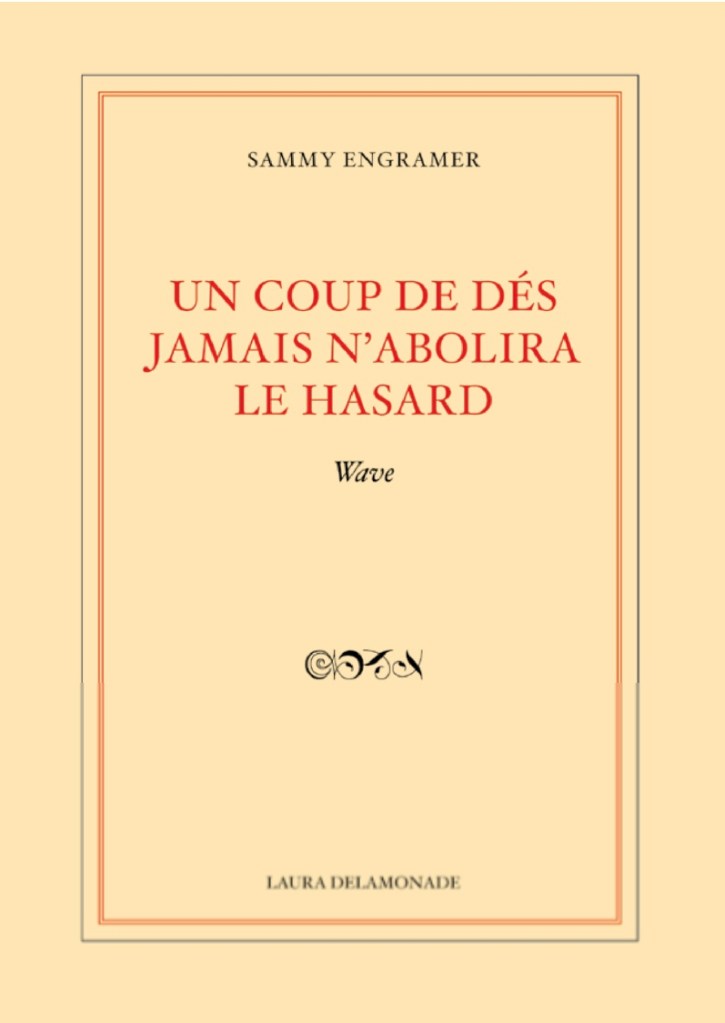
Un Coup de Dés Jamais N’Abolira le Hasard: Wave (2009)
Sammy Engramer
H340 x W240 mm, 32 pages. Acquired from Florence Loewy, Paris, 27 March 2019.

In 2010, Engramer took his inspiration one step further and put together an exhibition called “JAMAIS”. As soon as the idea or sensation of visualizing the sound of a poem is mooted, the choice of ink, type, brush, paint, surface, chisel, mold, material, camera, computer and, again, surface opens up. In JAMAIS, Engramer chooses a multiplicity of tools and media (or they choose him): sound recording, computer output, ink, printed book, mold and plastic, camera and animation.

In the video below, pages of the book undulate in a wave along the wall to which they are loosely attached. Alongside them are eighteen 3D PVC renderings of the sonograms. At the end of the hall, a large screen shows a 3D animation of a rolling die whose dots spell out hasard in Braille. The juxtaposition of fluttering pages of sonographs, the physical instantiation of the sonograms and the animated Braille die that cannot be read by touch generates a confounding conundrum for the senses. Text has become sound, sound has become image, and image has become object and animation.

Video: Courtesy of the artist.

Since, according to the artist, his recording of the poem was not played in the exhibition, the conundrum focuses on perception of sound through the eyes. Whether listening/hearing can be performed by seeing a visual or physical representation of what has been listened to/or heard (or is being listened to/or heard) is a neurological question. Rendered in ink and plastic, Engramer’s sonographic images and objects are metaphoric assertions: “hear with your eyes the words no longer printed or carved before you, hear through your eyes the decibels increasing or attenuating according to an unheard recording of those words spoken”.

Further Reading

Eric Zboya“, Books On Books Collection, 1 June 2020.
Boglione, Riccardo. 22 September 2010. “Dadi illeggibili. il Mallarme cancellato di Mario Diacono e Marcel Broodthaers“. The Free Library. Accessed 1 May 2020.

Halliday, Sam. Sonic Modernity: Representing Sound in Literature, Culture and the Arts: Representing Sound in Literature, Culture and the Arts (Edinburgh: Edinburgh University Press, 2015).

Dick Higgins, Hannah Higgins, “Intermedia”, Leonardo, Volume 34, Number 1, February 2001, pp. 49-54.

Pichler, Michalis. Un Coup de Dés Jamais N’Abolira le Hasard: Sculpture (Berlin: “Greatest Hits”, 2008).

Rasula, Jed. Modernism and Poetic Inspiration: The Shadow Mouth (New York: Palgrave Macmillan, 2009).

Schaffner, Anna Katharina and Kim Knowles, Ulrich Weger and Andrew Michael Roberts, “Reading Space in Visual Poetry: New Cognitive Perspectives“, Writing Technologies, vol. 4 (2012), 75-106.

Books On Books Collection – Eric Zboya

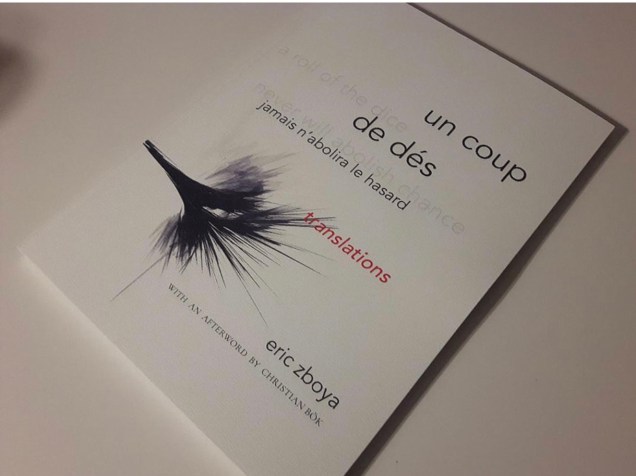
un coup de dés jamais n’abolira le hasard: translations (2018)

un coup de dés jamais n’abolira le hasard: translations (2018)
Eric Zboya
Perfect bound; 60 pages printed on Rives Design 170 gsm Brilliant White.
H280 x W204 x D85 mm. Edition of 120 of which this is #42 and signed. Acquired from the artist, 1 April 2019.

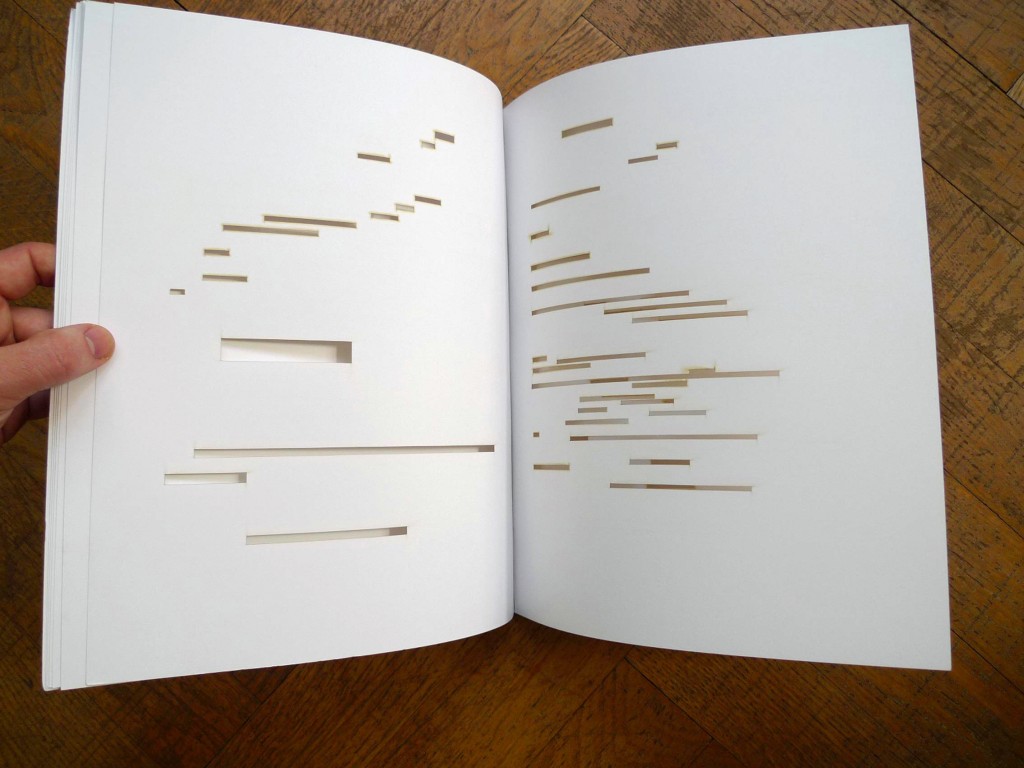
Eric Zboya is poet, writer and artist. Years before this book, he wrote for Ubu Web about the dialogues between Mallarmé’s groundbreaking poem and artists such as Marcel Broodthaers, Guido Molinari and Michalis Pichler, who explore “the higher-dimensional characteristics of the poem”. Broodthaers’ and Molinari’s solid-colored horizontal blocks take the place of lines of text and, reflecting its typographic size, deliver the poem’s page-oriented image(s) without its words. Pichler goes a sculptural step further and excises the lines altogether.

In one sense, Zboya returns to the traditional “collaborative” livre d’artiste, where the artist’s images illustrate the author’s text. But Zboya’s process for generating the images and his handling of the text are anything but traditional.

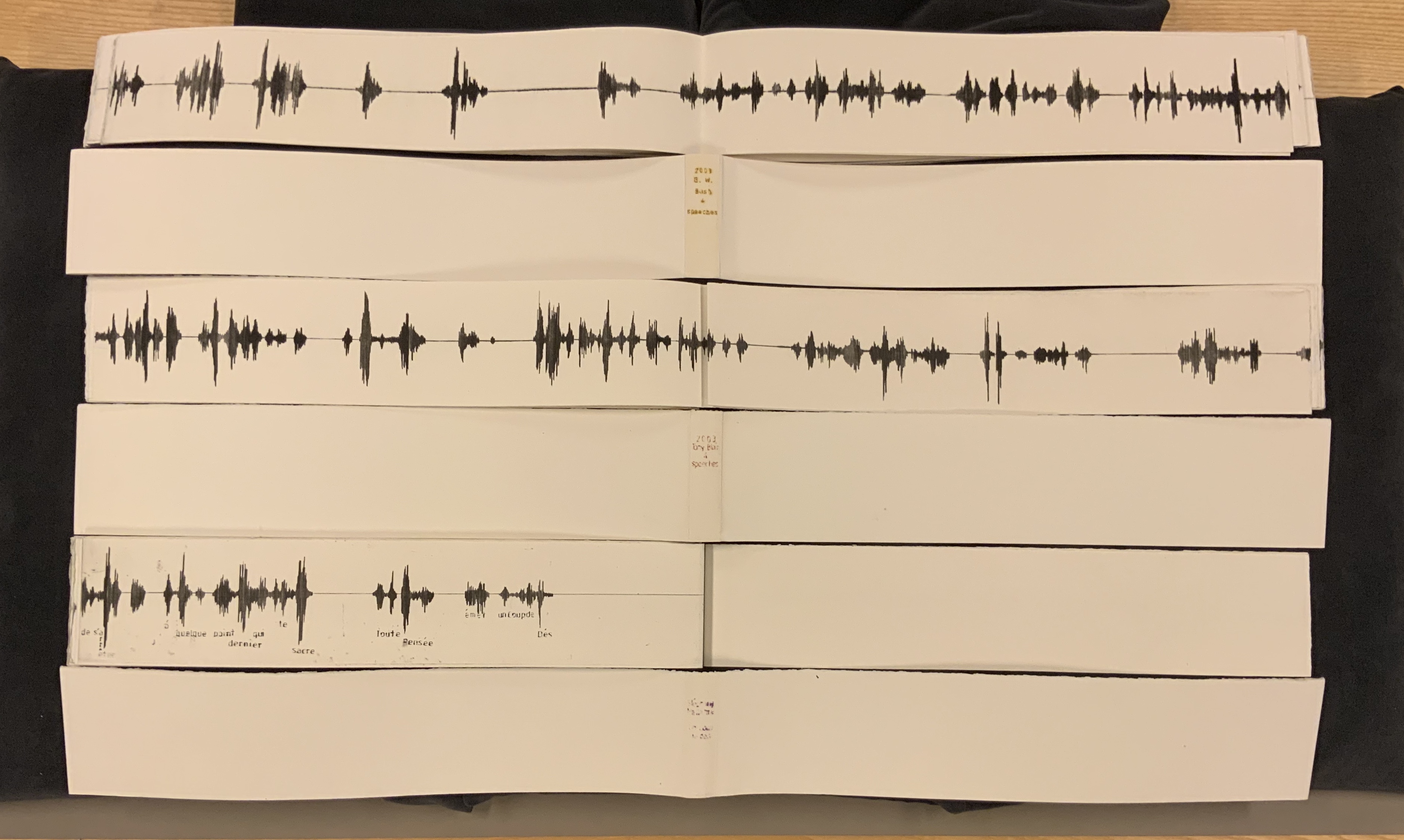
Just as Mario Diacono runs parallel to Broodthaers, so too do Didier Mutel (2003) and Sammy Engramer (2009) to Zboya. His Ubu Web essay appeared in 2011. While similar, the three artists’ approaches to images differ far more from one another than those of Diacono and Broodthaers differ. Mutel’s sonographs come from recordings of three different speeches. Engramer’s come from the recording of his reading of Un Coup de Dés. Although Zboya’s images come from the translated text of Un Coup de Dés, they do not come from sound recordings.

Un Coup de Dés Jamais N’Abolira le Hasard: Poème (2005)
Didier Mutel
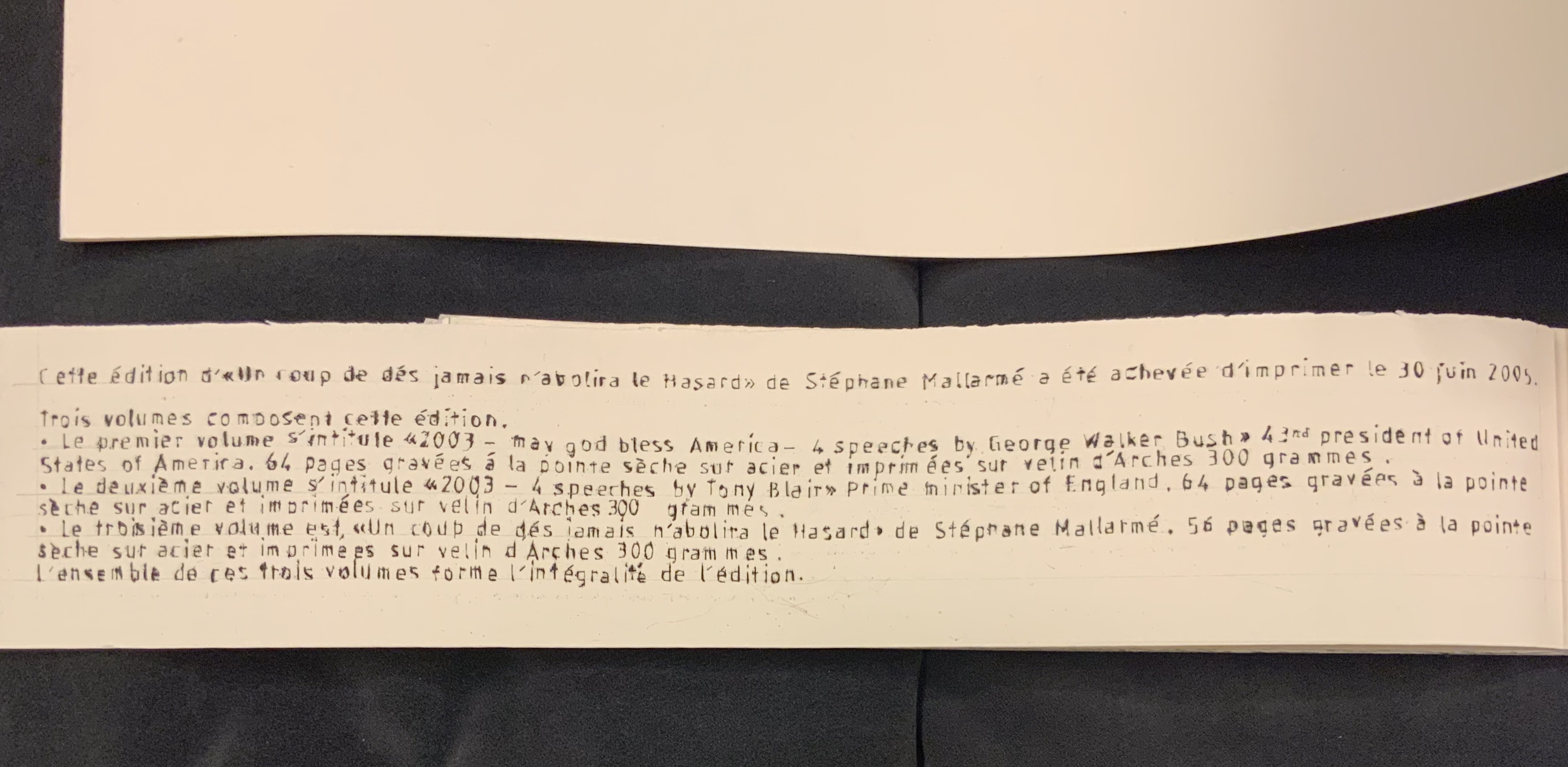
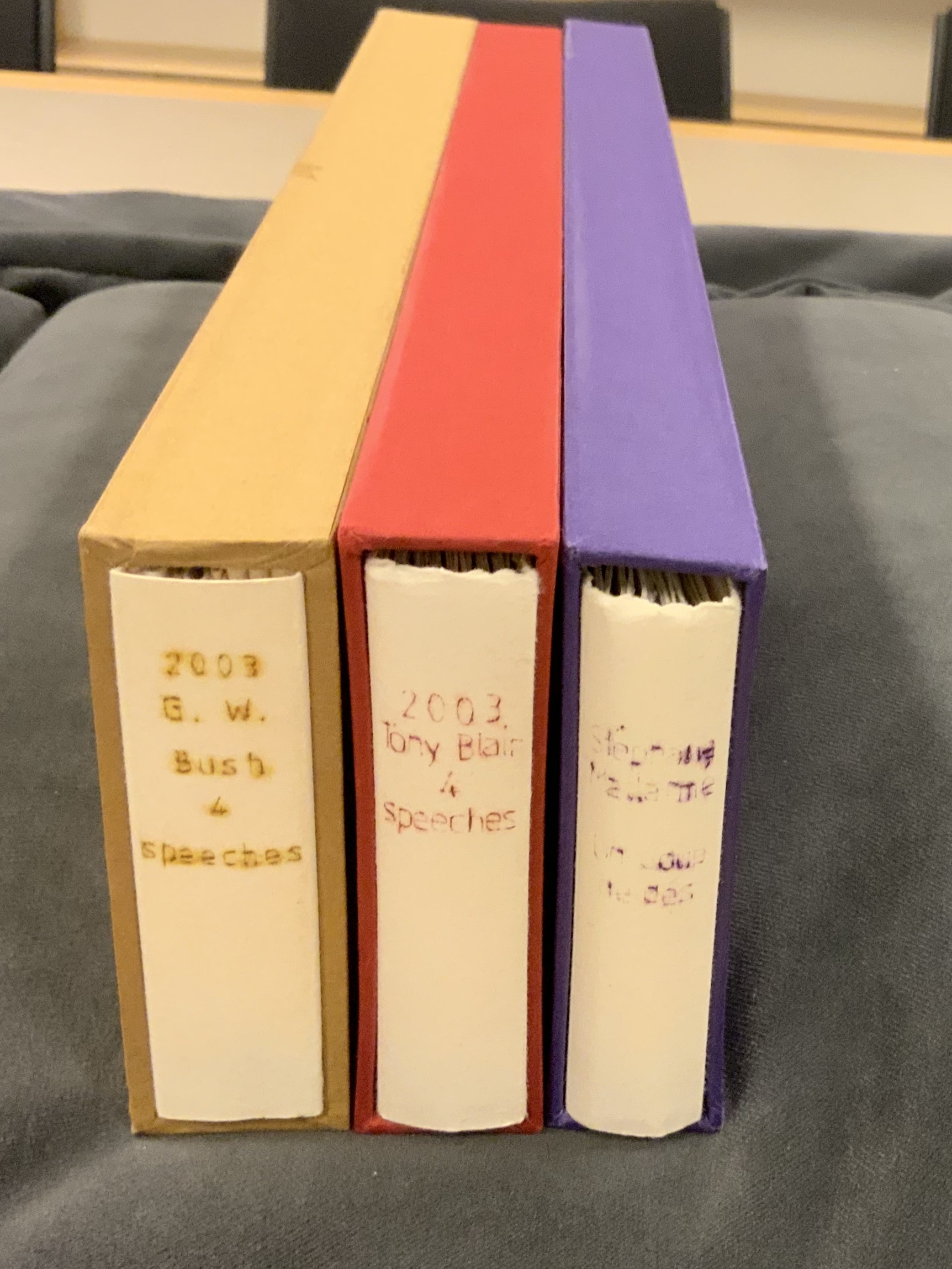
Consists of three volumes: the first entitled “2003 — may god bless america — 4 speeches by George Walker Bush”; the second, “2003 — 4 speeches by Tony Blair”; the third, “Un coup de dés jamais n’abolira le hasard”. Each engraved in drypoint on steel and printed on Velin Arches 300 gsm.

Un Coup de Dés Jamais N’Abolira le Hasard: Wave (2009)
Sammy Engramer
H340 x W240 mm, 32 pages.
Recording his own reading aloud of the poem, Engramer then ran the recording through sonographic equipment. The rendering of each line’s soundwave became his graphic substitute for Mallarmé’s line of verse and, by extension, each black block that Broodthaers used to displace Mallarmé’s text.

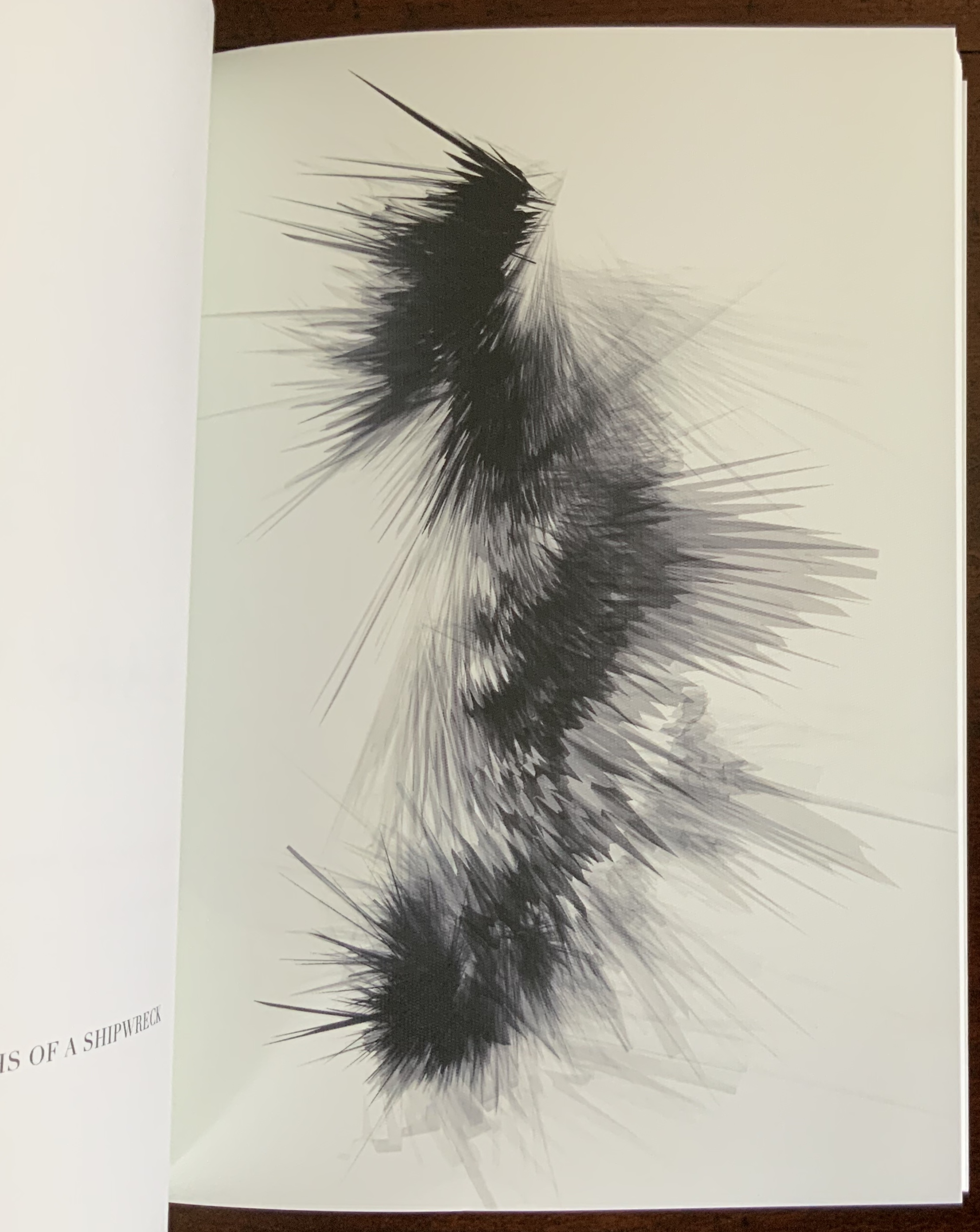
Zboya uses graphic imaging software to transform each letter, mark of punctuation and pixel into an abstract image based upon the original topographical placement of the type on the space of the page. Text mutates into a graphic, nonlinear entity. Zboya calls this Algorithmic Translation. Due to a randomization function, the program never yields the same image from the same input. In keeping both with the title (Un Coup de Dés Jamais N’Abolira le Hasard) and the poem’s last line (Toute pensée émet un Coup de Dés), no run of the program ever abolishes chance, and every input (thought) generates a roll of the dice.

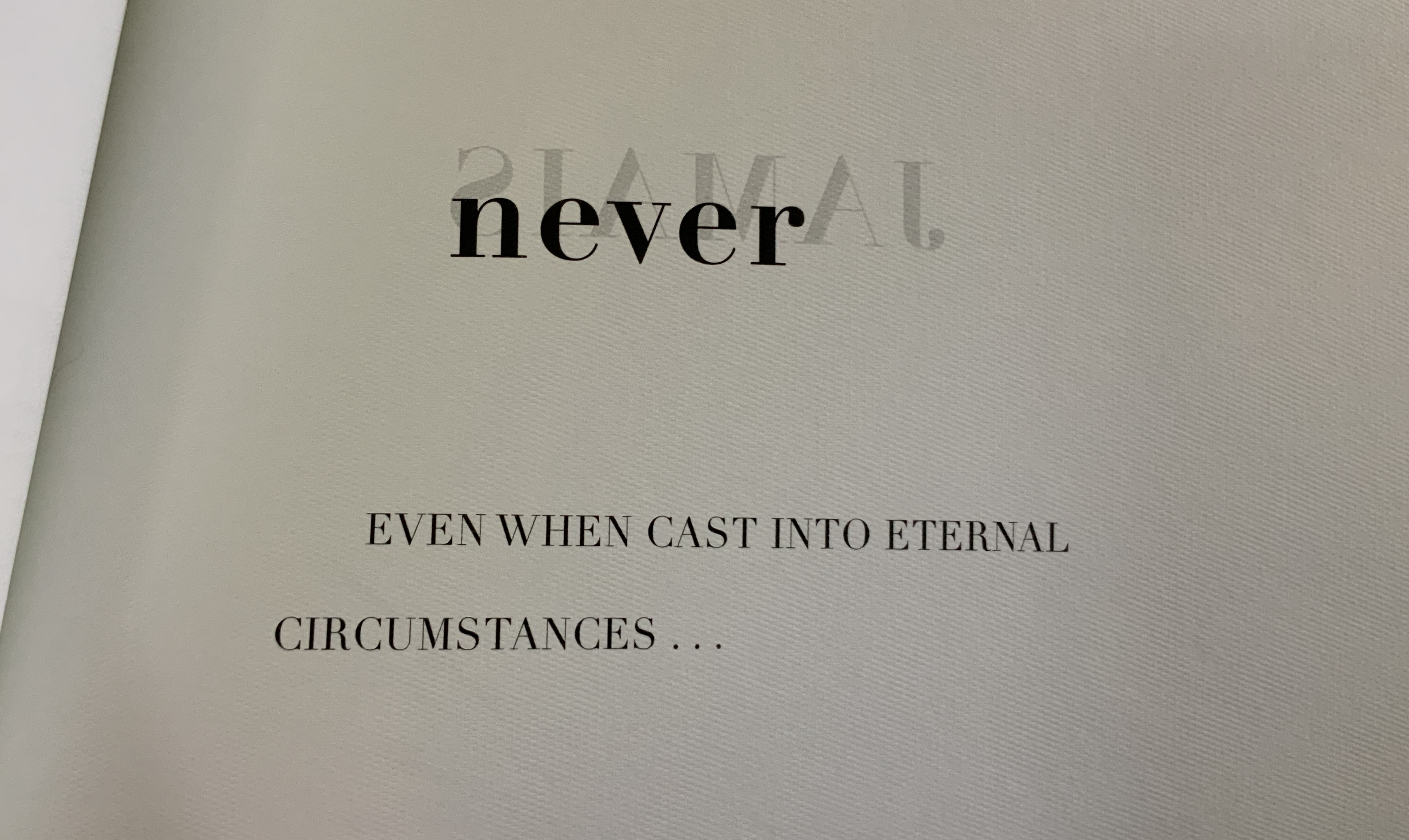
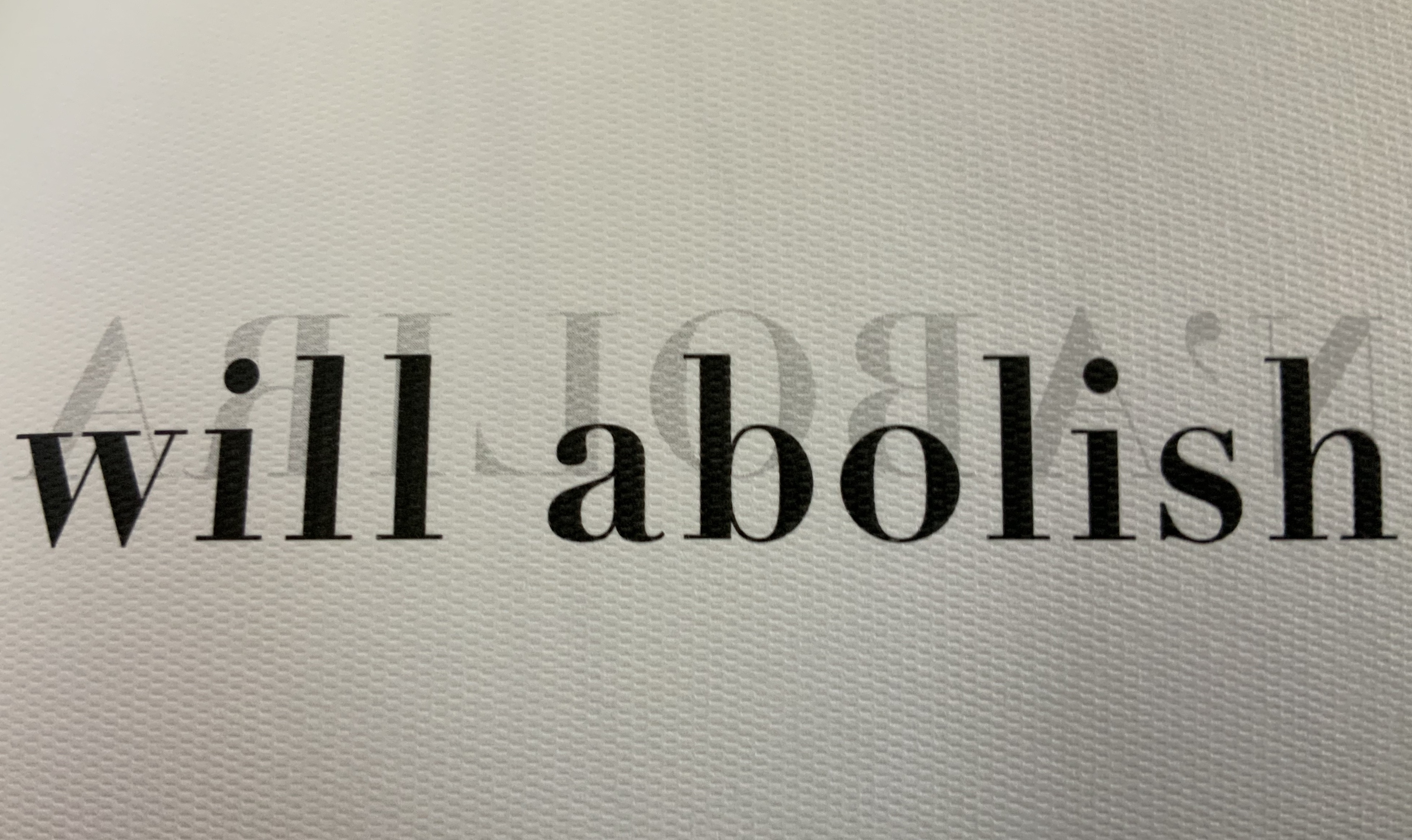
Zboya’s artist book presents more than these graphic, constellation-like translations of the text. Literally shadowing the right-reading English translation of the title is the French text set in reverse. Drawing the reader closer to the synaesthesia promoted by Mallarmé, Valéry and, before them, Baudelaire, the contrast of black (English) and gray (hcnerF) echoes the tonality of the algorithmically translated images; the reversed letters of the French emphasize the physical reversing that occurs when printing text; and the movement from the original hcnerF to the translated English urges the “mind’s ear” to play along with the mind’s eye. The choice to print everything on the same highly textured Rives Design, Brilliant White, enlists hand and eye in support of a synaesthetic equation of text, page and image.

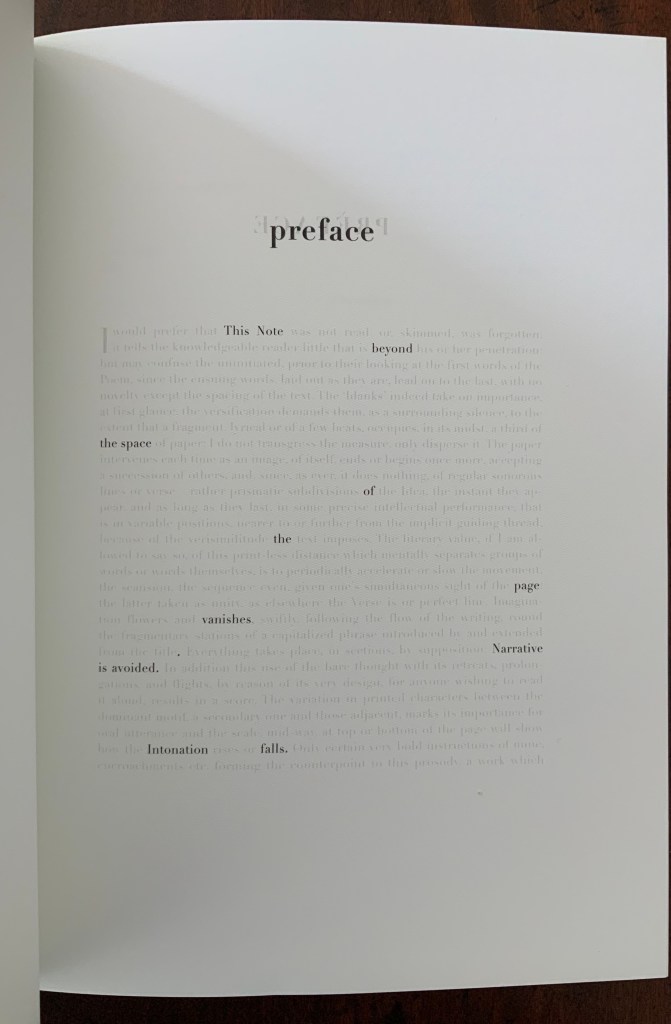
Just as important in another dimension is Zboya’s creative manipulation of the poem’s English translation by Basil Cleveland and preface by Charles Bernstein. The preface is the first clue. Only words selected by Zboya appear in black, left in their original position on the page and creating an envoi to Zboya’s book:

This Note beyond the space of the page vanishes. Narrative is avoided. Intonation falls. Courageous Poem, open a few eyes to this unforeseen symphony.

Zboya has done the same with the text of the translated poem. He erases certain lines and leaves those not erased in their topographical position as close to Mallarmé’s intention as interpreted by Zboya’s numerous predecessors (Broodthaers in 1969, Pichler in 2008, Meillassoux in 2012, Bononno and Clark in 2015, Bloch in 2017 among others). In this way, Zboya’s appropriation occurs across multiple dimensions.

By “erasing” text to select text that syntactically creates new content, Zboya is also following in the footsteps of Tom Phillips (A Humument, 1966-2016), but the effect and result of doing so differs distinctively from Phillips’ work, which is decidedly narrative. The concept of translation in Zboya’s book is closer to Ezra Pound’s approach in Personae (1926). The fragments and sentences created by the “translated” words are close but not the same as those in the source. In Pound’s case, not the same sentences as those of the troubadours. In Zboya’s case, not the same as Mallarmé’s, Cleveland’s, Bernstein’s, etc. The appropriation/translations make something new.

Occurring in its several dimensions, Zboya’s manipulation of text, image and surface recalls Valéry’s description of reading and looking at the worksheets for the book version of Un Coup de Dés:

It seemed to me that I was looking at the form and pattern of a thought, placed for the first time in a finite space. Here space itself truly spoke, dreamed, and gave birth to temporal forms. Expectancy, doubt, concentration, all were visible things. With my own eye I could see silences that had assumed bodily shapes. Inappreciable instants became clearly visible: the fraction of a second during which an idea flashes into being and dies away; atoms of time that serve as the germs of infinite consequences lasting through psychological centuries — at last these appeared as beings, each surrounded with a palpable emptiness…. there in the same void with them, like some new form of matter arranged in systems or masses or trailing lines, coexisted the Word! — Paul Valéry, Collected Works of Paul Valery, Volume 8: Leonardo, Poe, Mallarmé (1972).

That is the effect of reading and looking at Zboya’s work of book art.

Further Reading

Bibliography: Synaesthesia in Art and Science”, Leonardo Online, updated 26 July 2012. Accessed 22 May 2020.

Sammy Engramer”, Books On Books Collection, 1 June 2020.
Fraenkel, Ernest. Les dessins trans-conscients de Stéphane Mallarmé : a propos de la typographie de Un coup de dés (Paris: Nizet, 1960). An earlier example of blacking out the text of Un Coup de Dés.

Funkhouser, C.T. Prehistoric Digital Poetry: An Archaeology of Forms, 1959-1995 (Tuscaloosa: University of Alabama Press, 2007).

Higgins, Dick and Hannah Higgins, “Intermedia”, Leonardo, Volume 34, Number 1, February 2001, pp. 49-54.

Pichler, Michalis. Un Coup de Dés Jamais N’Abolira le Hasard: Sculpture (Berlin: “Greatest Hits”, 2008).

Rasula, Jed. Modernism and Poetic Inspiration: The Shadow Mouth (New York: Palgrave Macmillan, 2009).

Schaffner, Anna Katharina and Kim Knowles, Ulrich Weger and Andrew Michael Roberts, “Reading Space in Visual Poetry: New Cognitive Perspectives“, Writing Technologies, vol. 4 (2012), 75-106.

Zboya, Eric. 2011. Un Coup de Dés Jamais N’Abolira le Hasard: Translations in Higher Dimensions. Visual Writing 003. Ubu Editions. Accessed 1 February 2019.

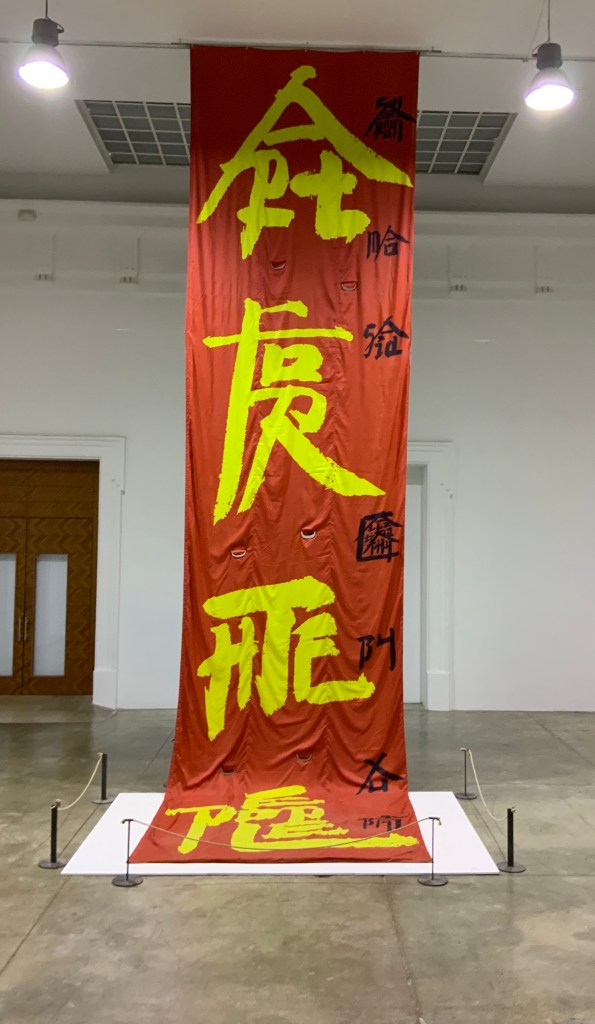
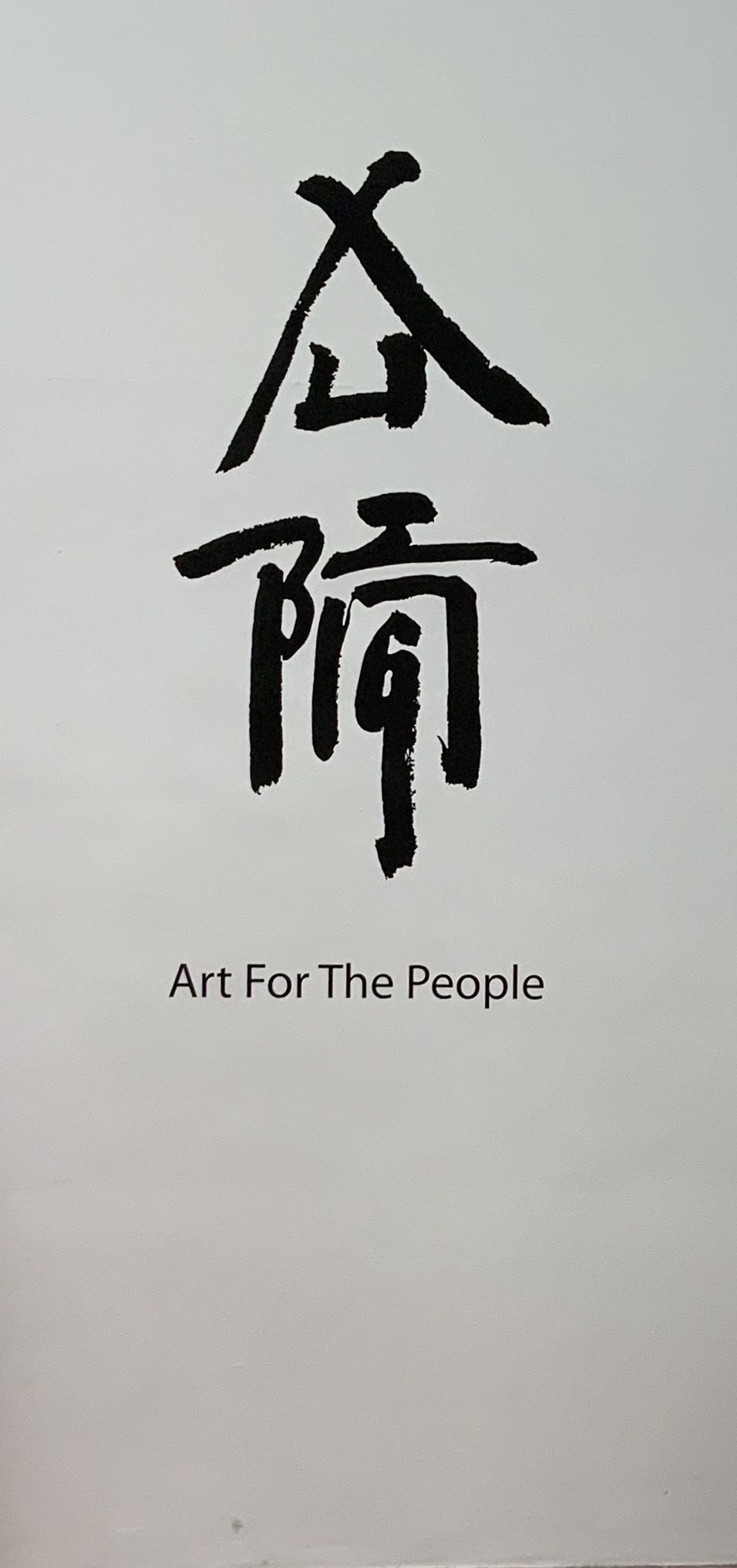
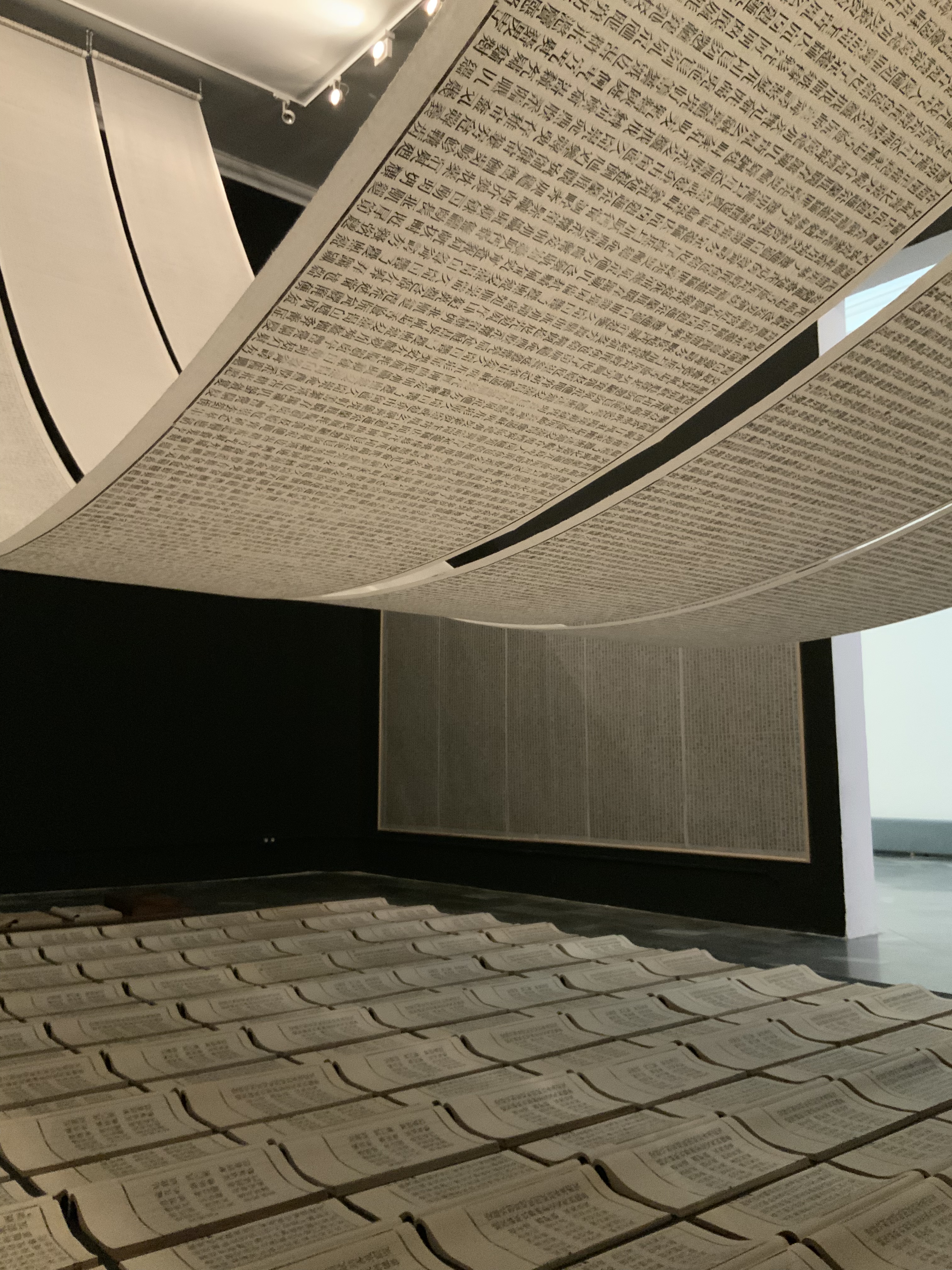
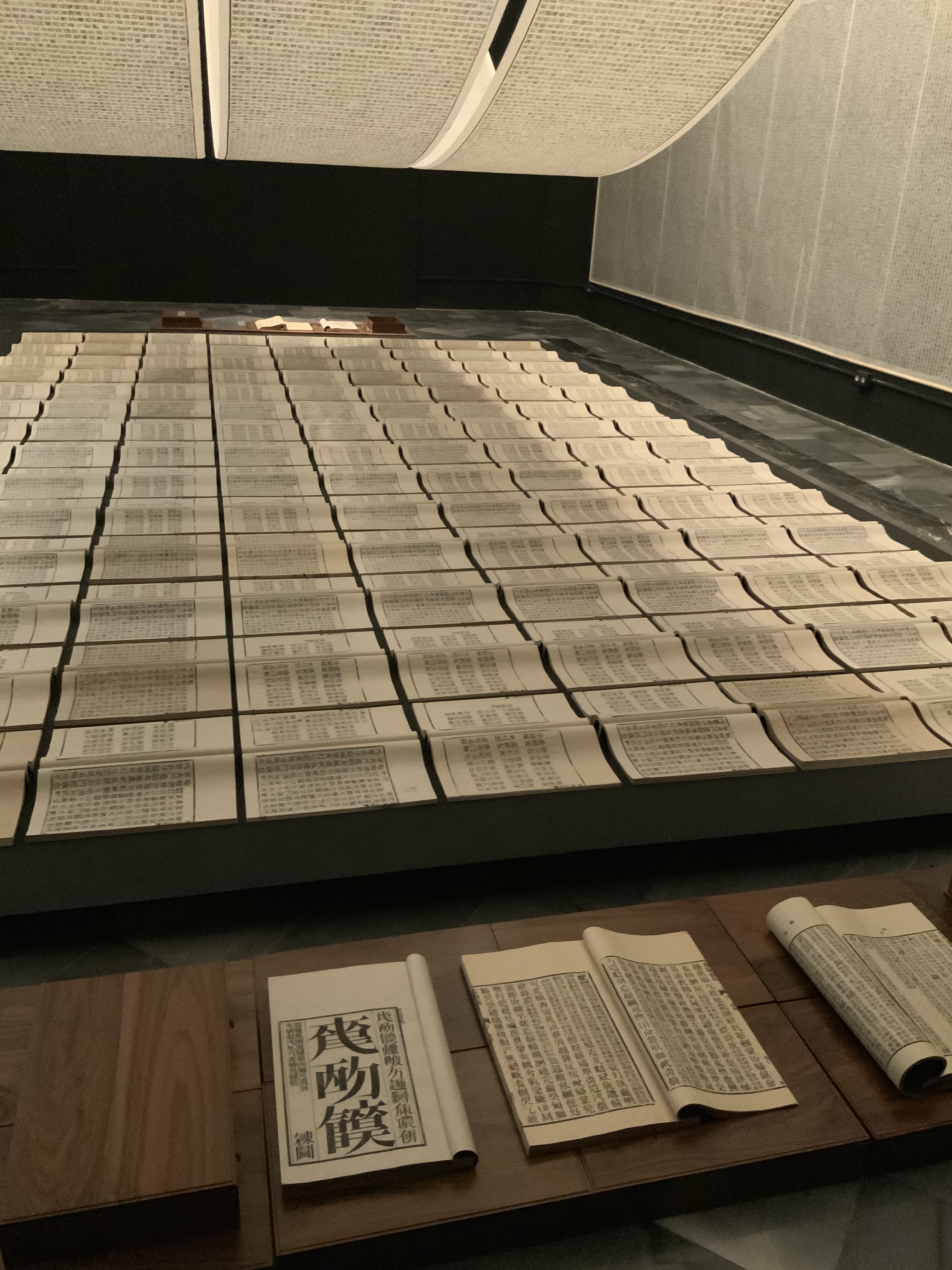
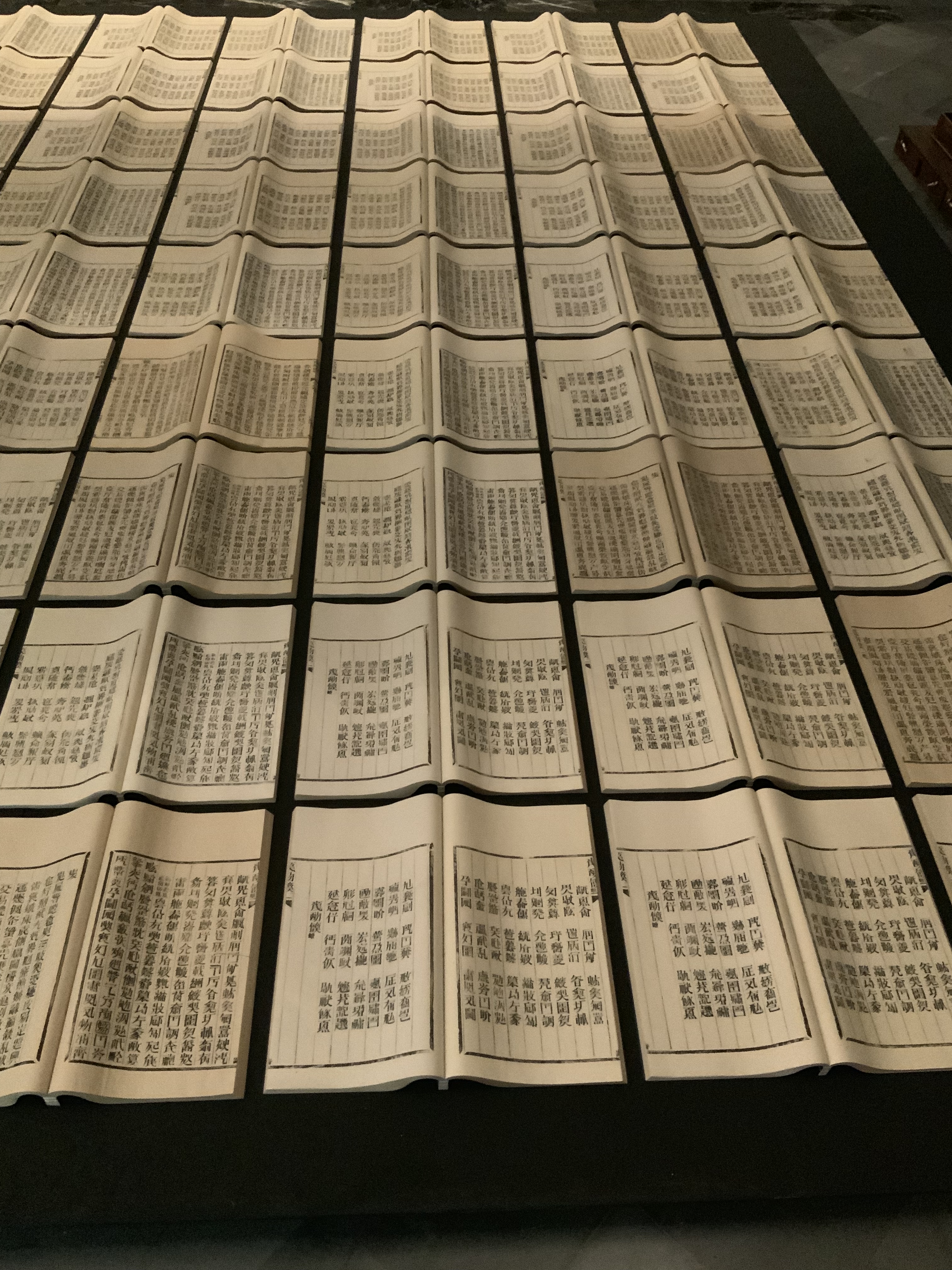
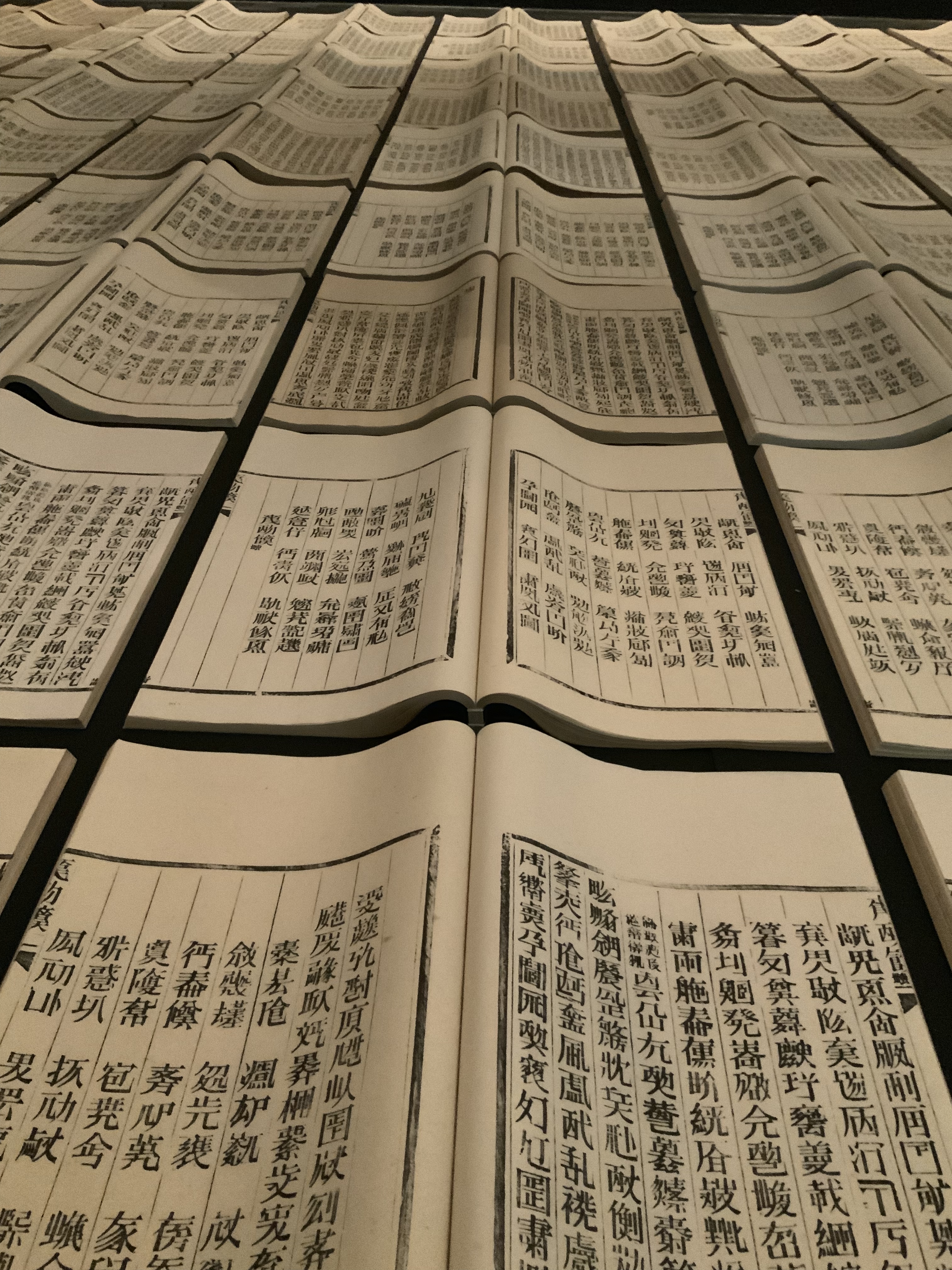
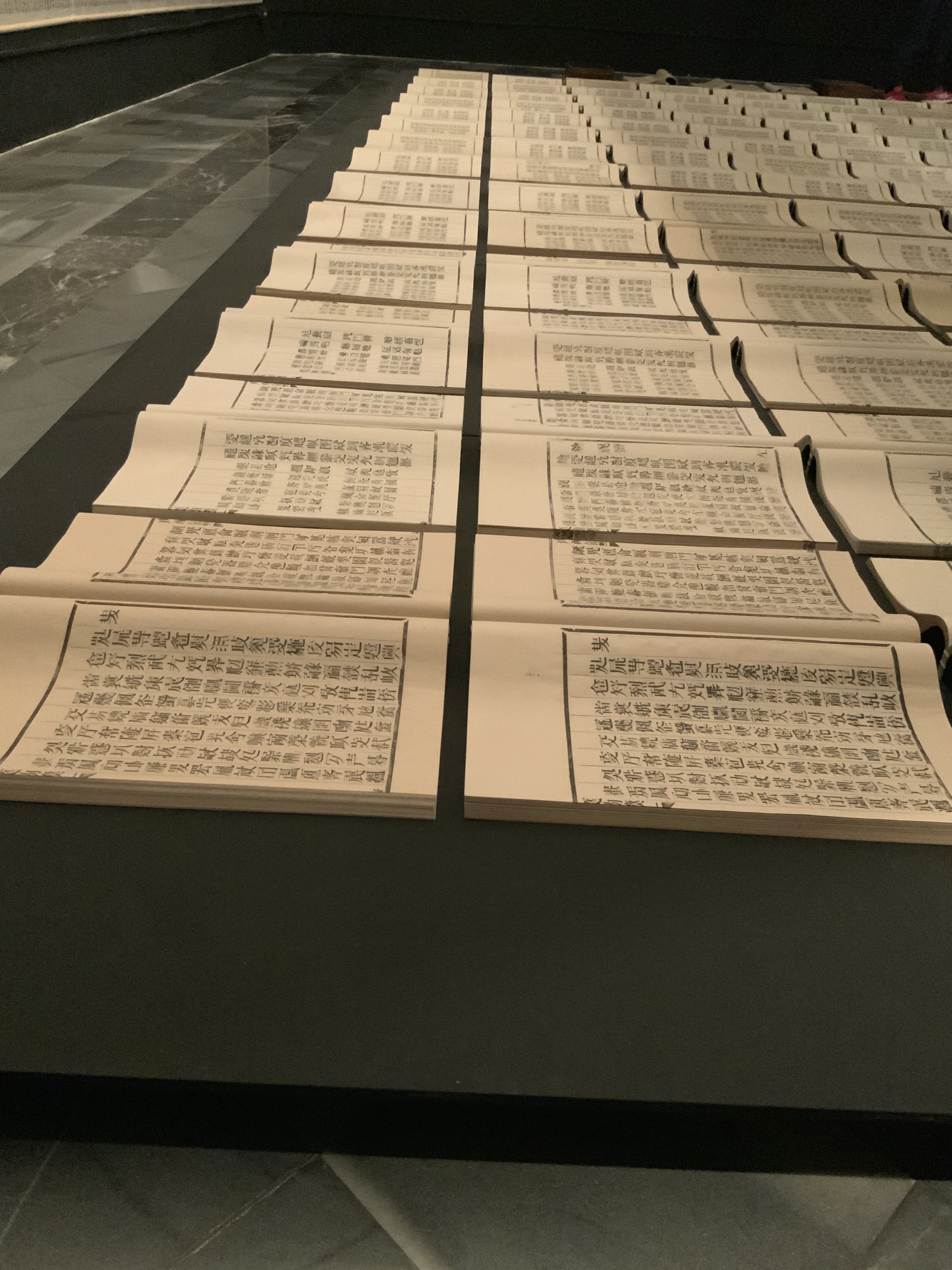
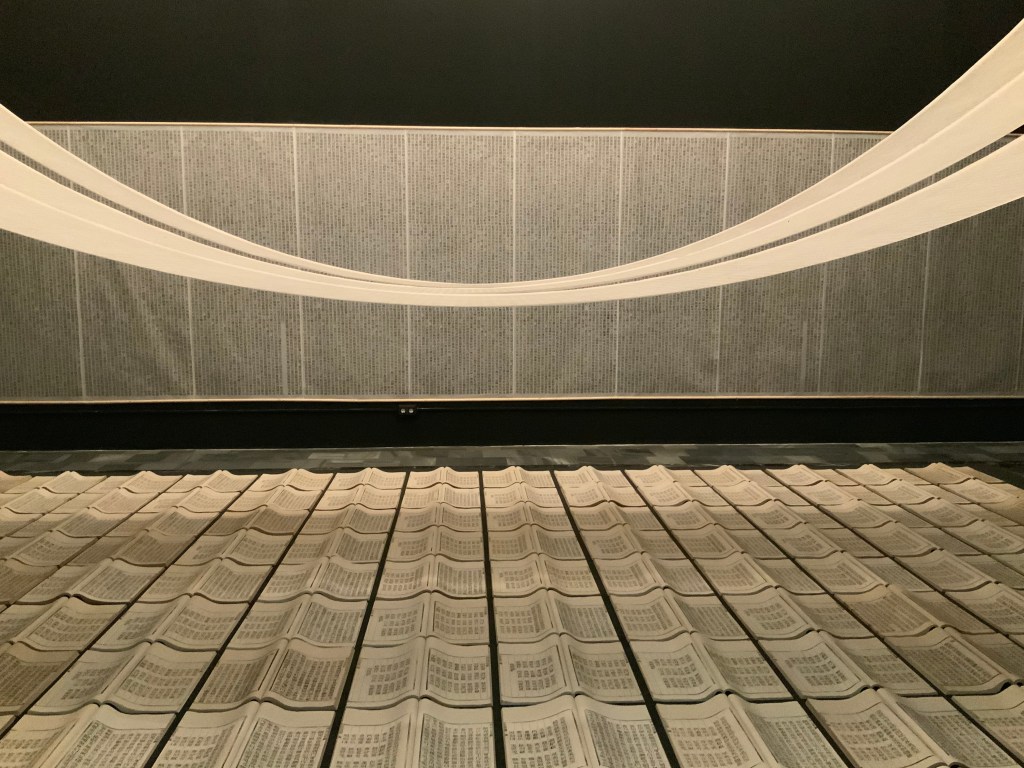
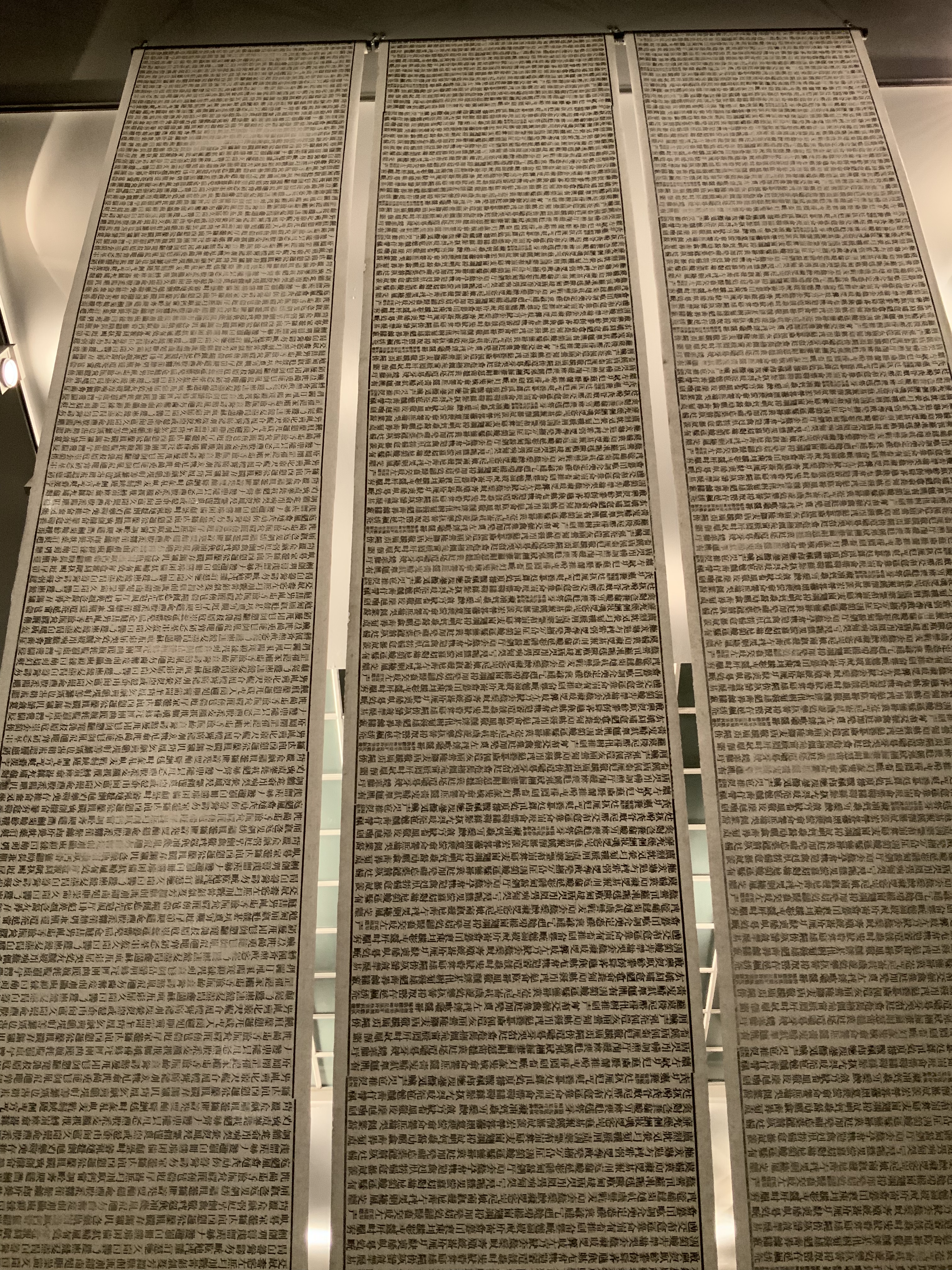
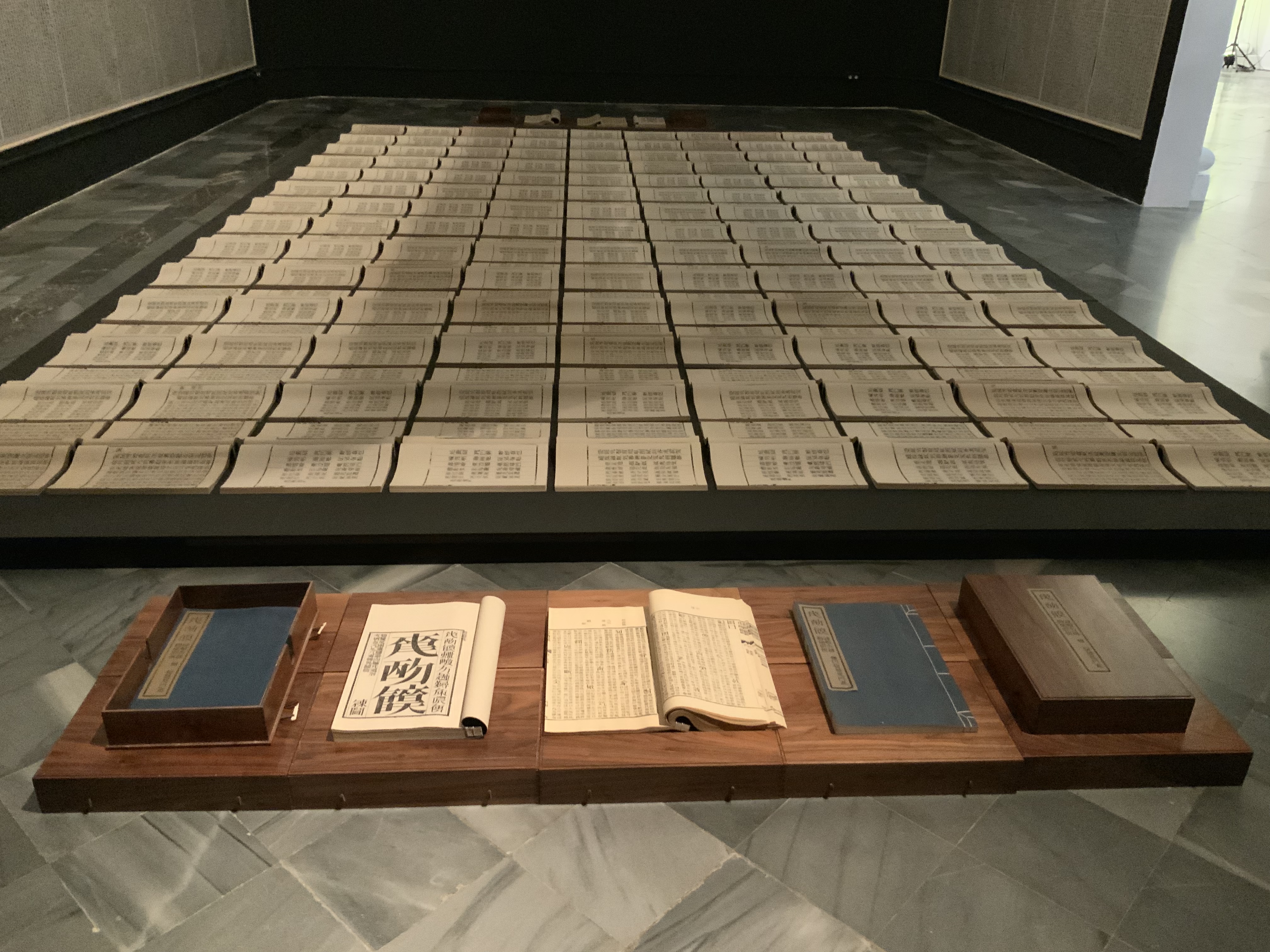
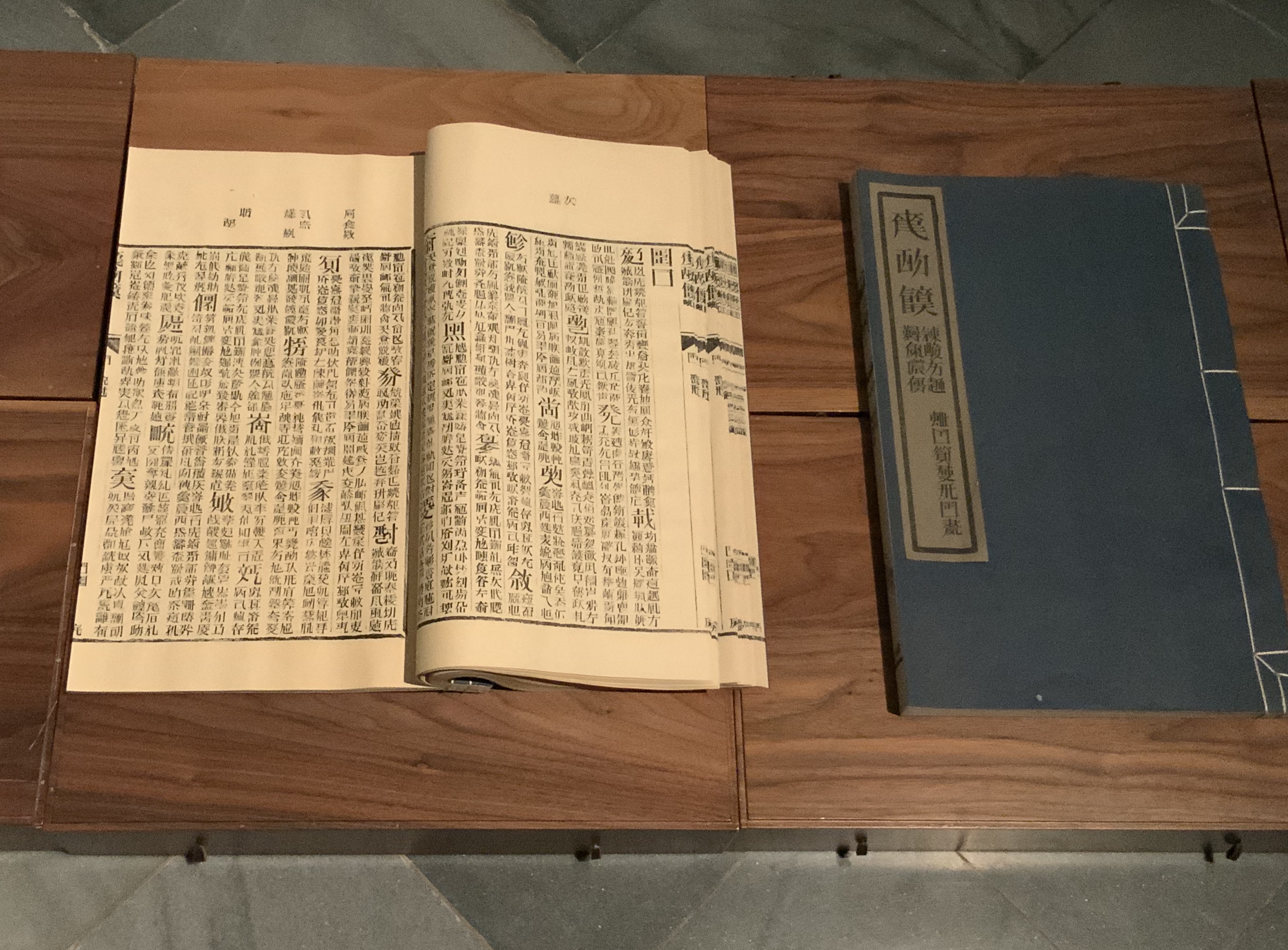
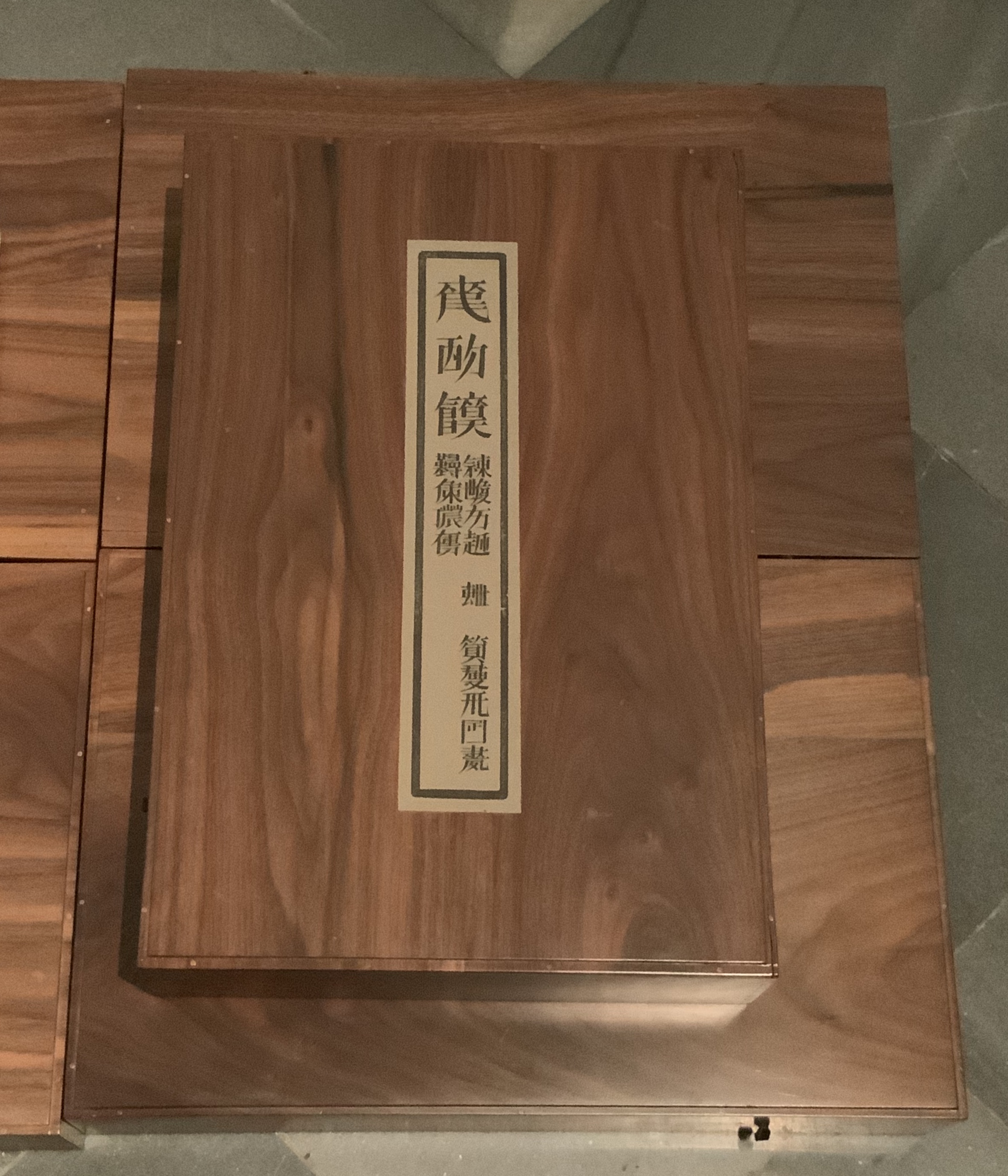
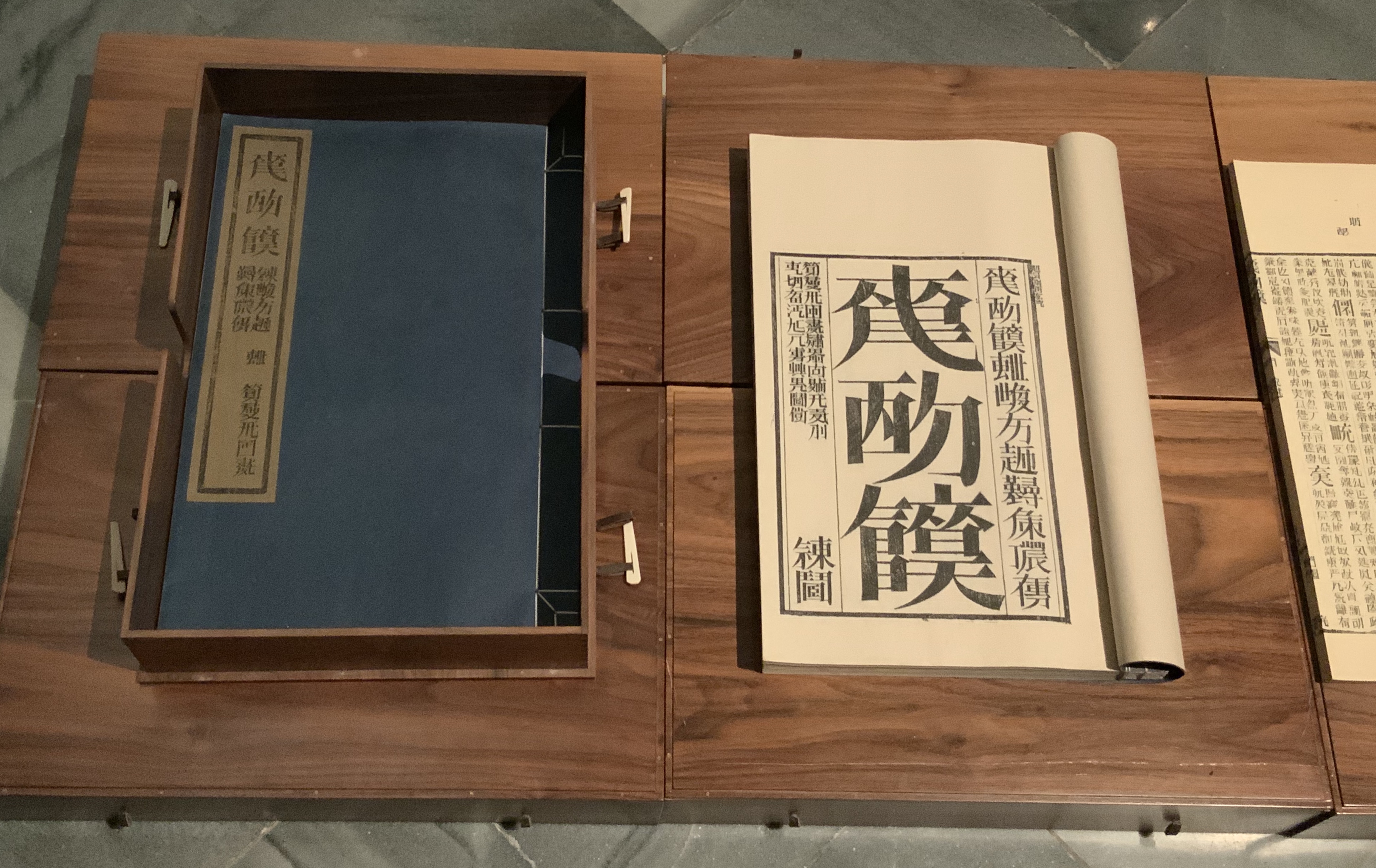
Bookmarking Book Art – From a Visit to “Art for the People”, Xu Bing (Centro del Carme, Valencia, Spain, 2019)

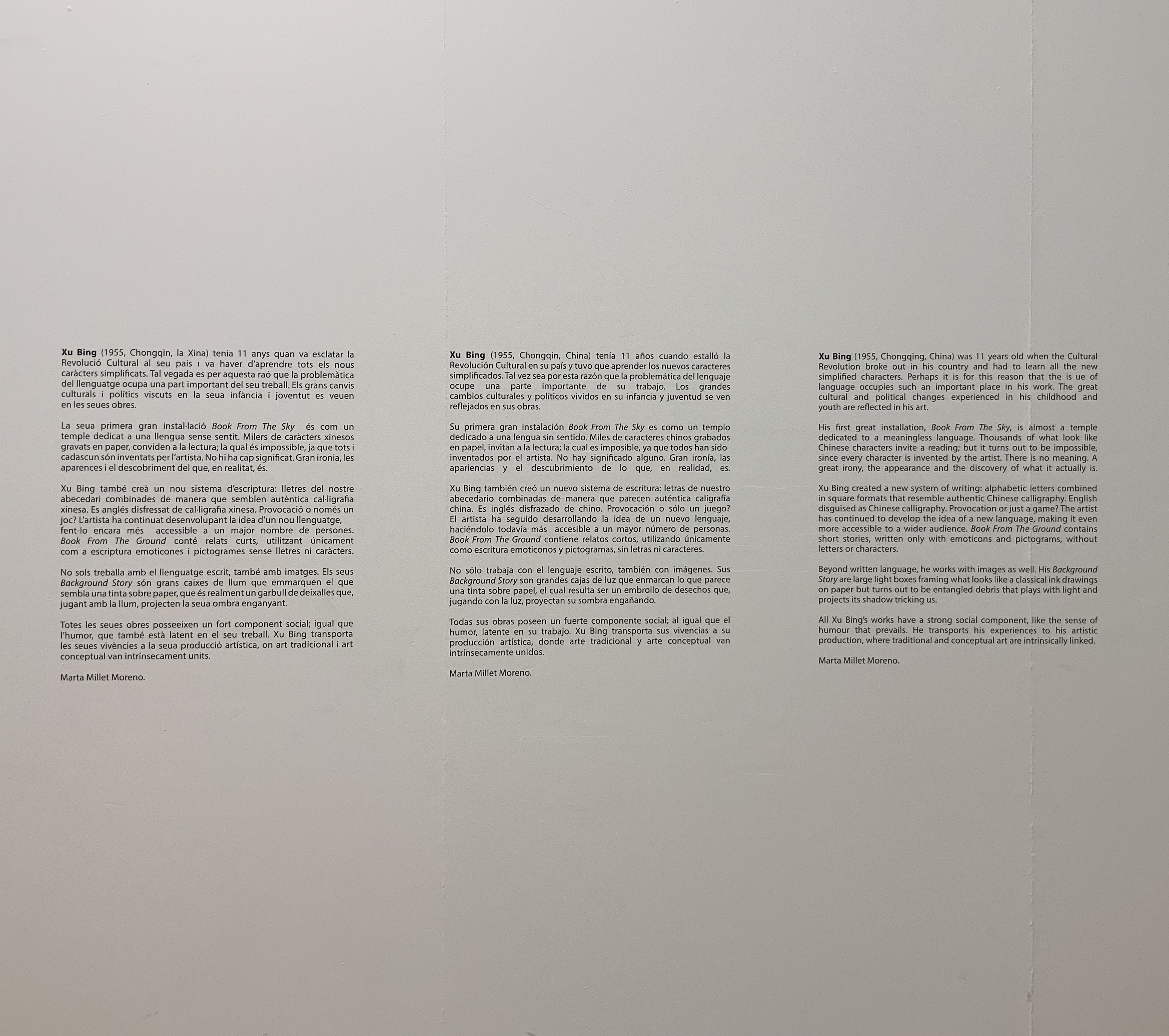
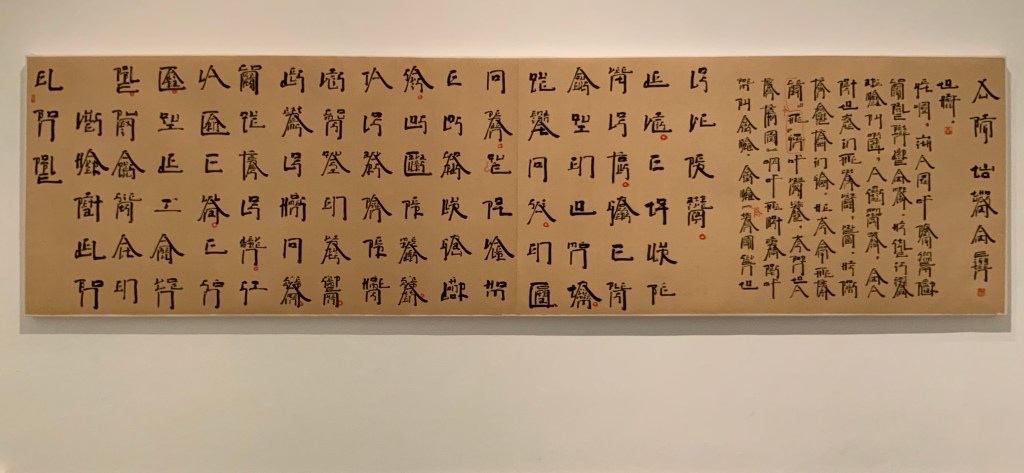
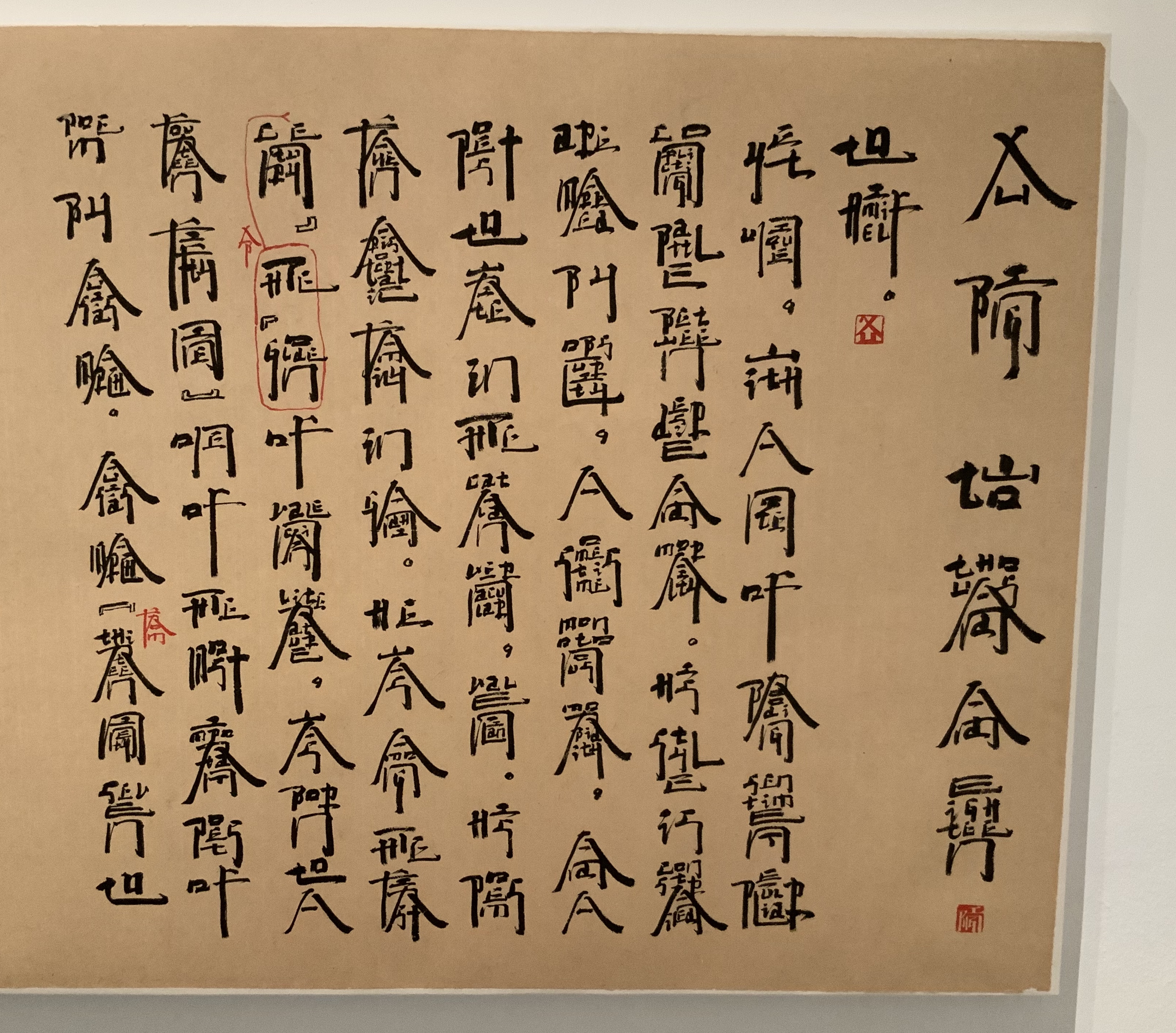
This exhibition showcases a selection of Xu Bing’s most important works including Art For the People, Book from the Sky, Book from the Ground, Square Word Calligraphy, Background Story, and The Character of Characters. Xu also wrote a new piece of Square Word Calligraphy of an ancient Valencian poem El bon poble. As the curator Marta Millet Moreno says, “Xu’s interest in language and texts originates from his personal background and he transports these experiences to his art, where traditional art and conceptual art, Eastern and Western cultures, are intrinsically connected.” — Marta Millet Moreno, Centre del Carm

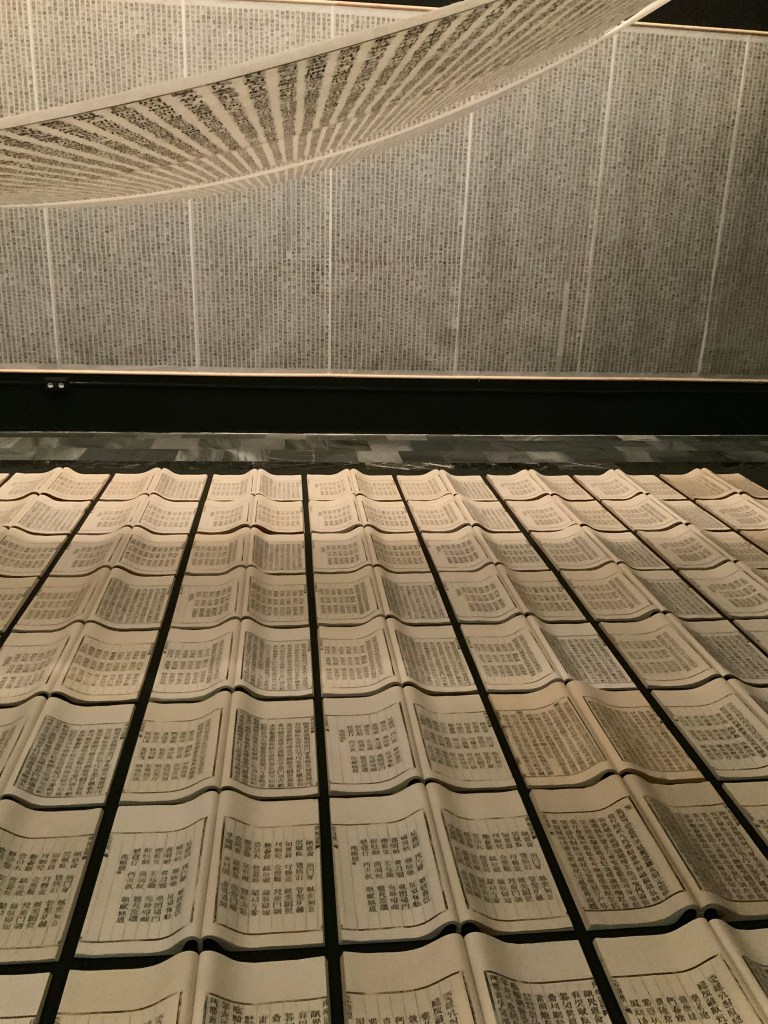
At least two days should be allowed to visit this kind of exhibition. The videos shown below are merely clips; the photos shown are but a handful of those taken. Not every room has been covered here; missing are the Square Word Calligraphy practice room and the room of Xu Bing-related publications. For the latter, a visit to the Xu Bing website page does not substitute for the experience of sitting down with the books, many of which are out of print and for which there are no online images. The lengthy amount of time needed to enjoy this abbreviated version of the 2018 largest Xu Bing (Beijing) exhibition is due to looking from every angle allowed, thinking, comparing and contrasting from one room to the next, watching all the videos, taking instruction in Square Word Calligraphy, leafing through the books, going back to the beginning, interrupting that flow to compare/contrast one room with another outside the sequence and, again, thinking.

Book from the Sky (1987-1991) © Xu Bing

Book from the Sky (1987-1991) © Xu Bing

Book from the Sky (1987-1991) © Xu Bing

Book from the Sky (1987-1991) © Xu Bing

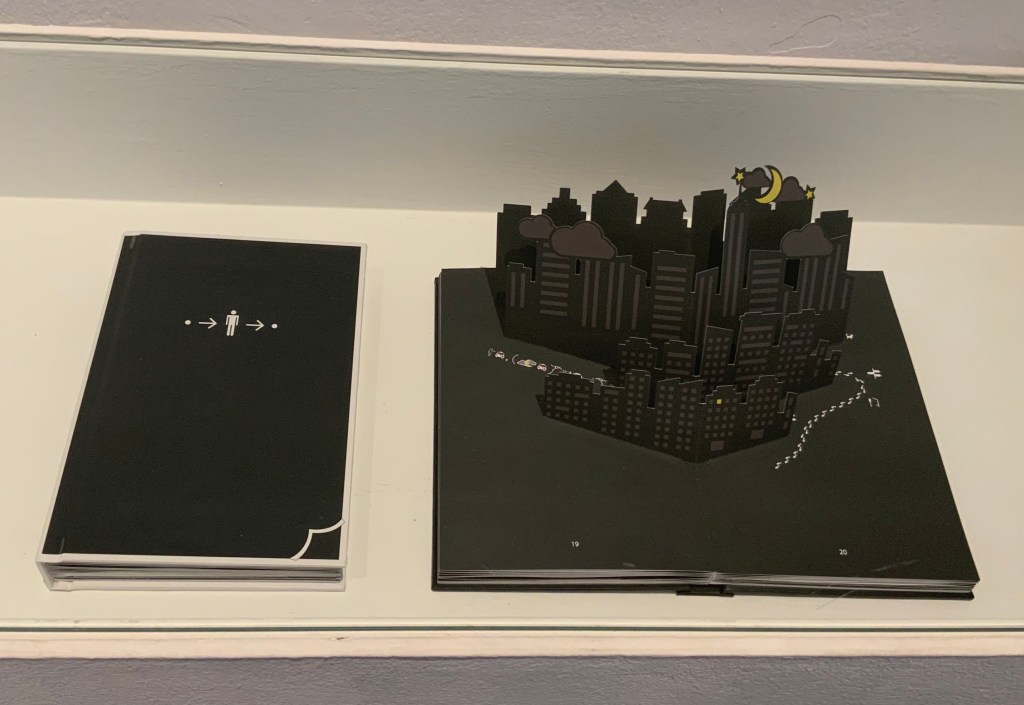
Book from the Ground Pop-up Book – Night (2016) © Xu Bing

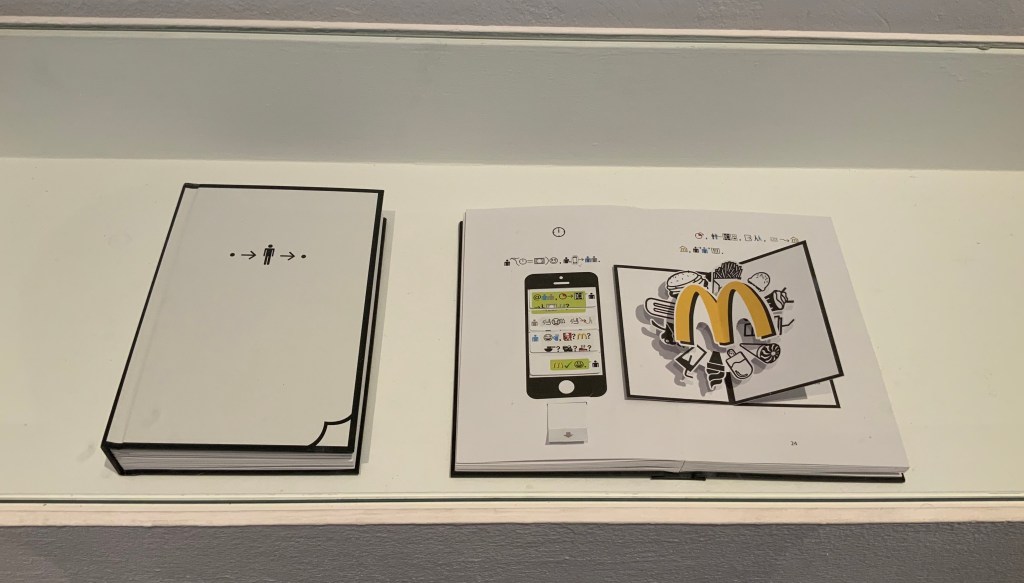
Book from the Ground Pop-up Book – Day (2015) © Xu Bing

Video clip of Book from the Ground Pop-up Book – Day © Xu Bing

Installation of workshop for creation of Book from the Ground © Xu Bing

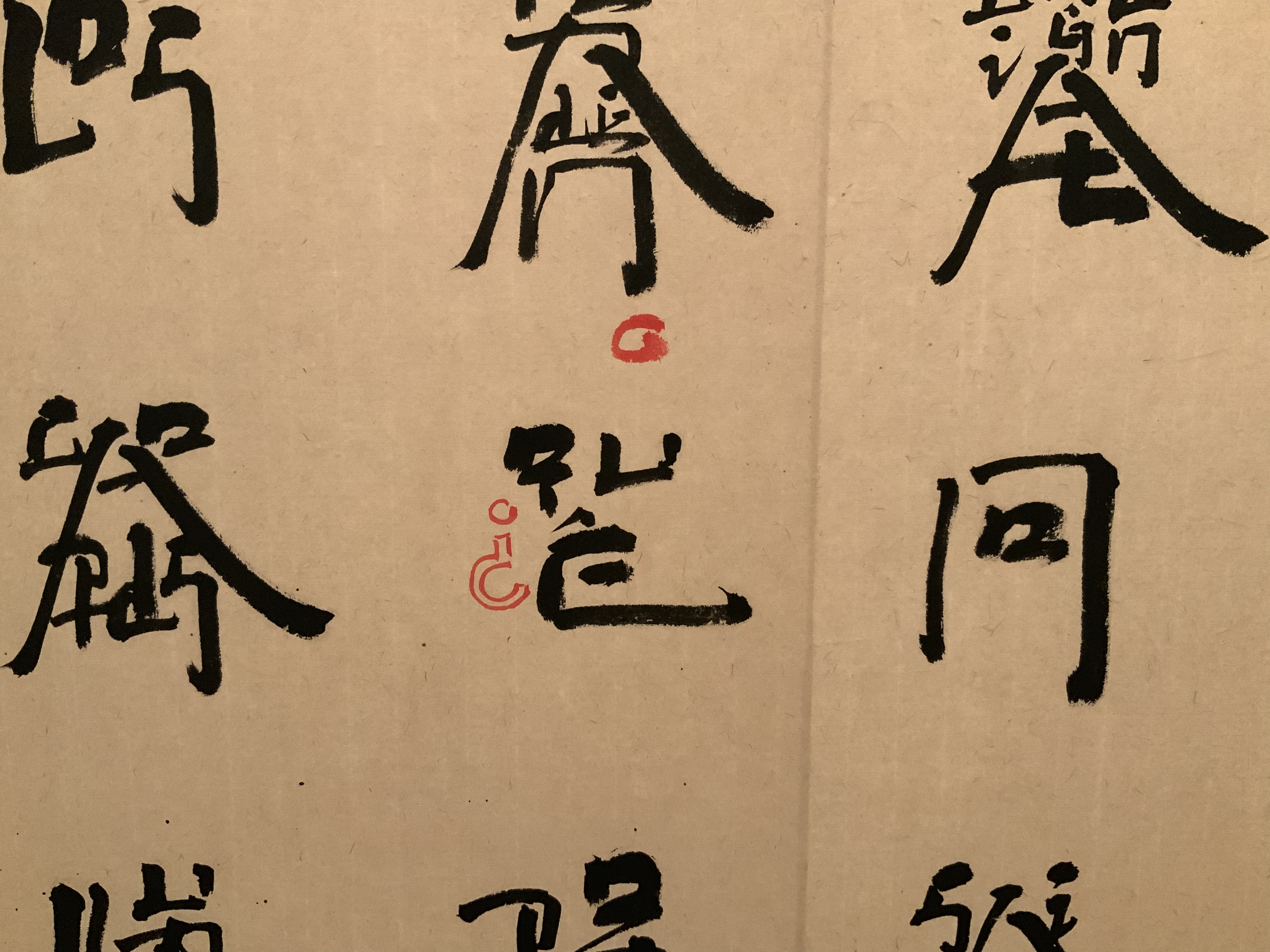
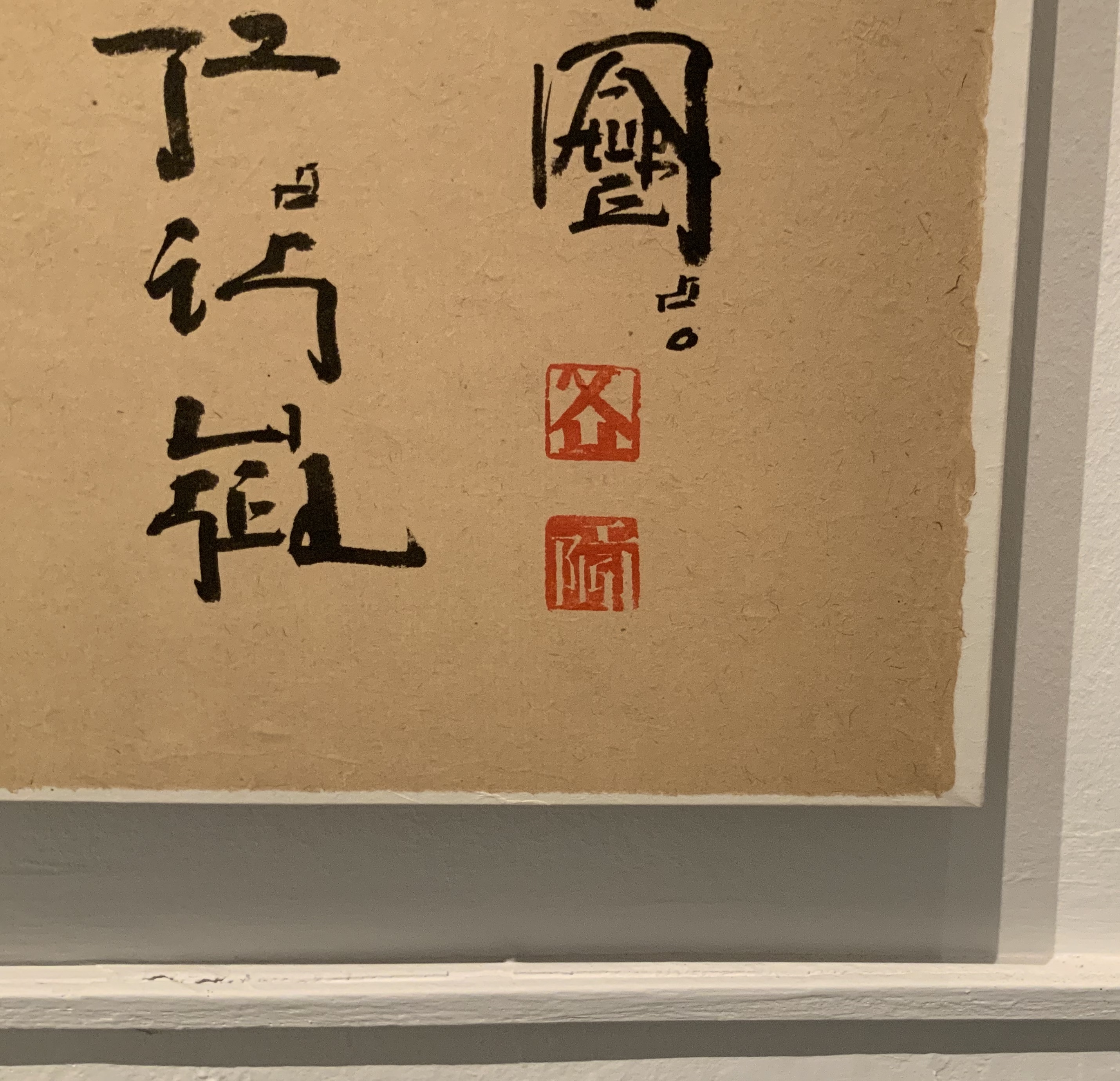
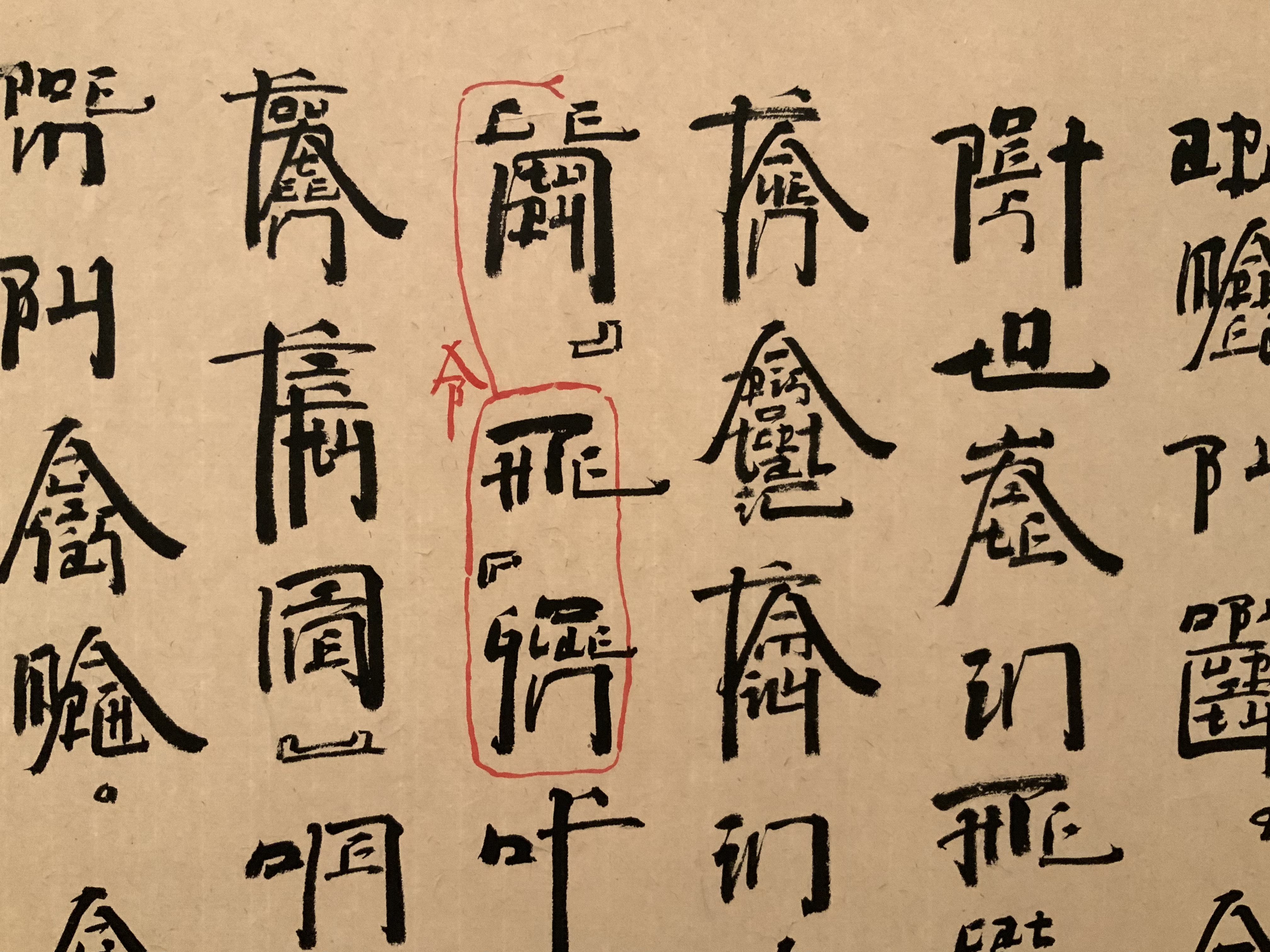
“Proof” of translation of “El bon poble” by Ausiàs March, medieval Valencian poet, into square word calligraphy (2019) © Xu Bing. Created especially for this exhibition.

Details © Xu Bing

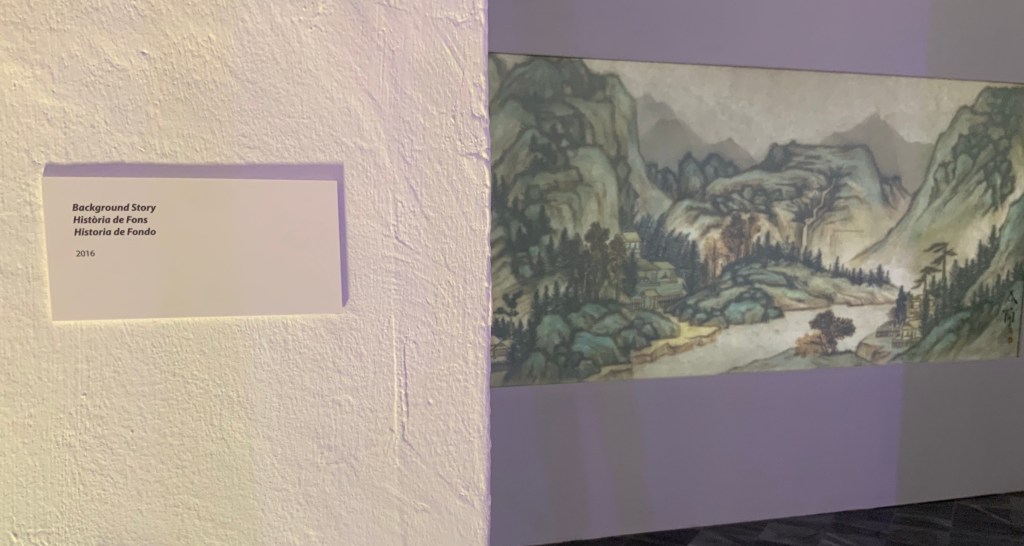
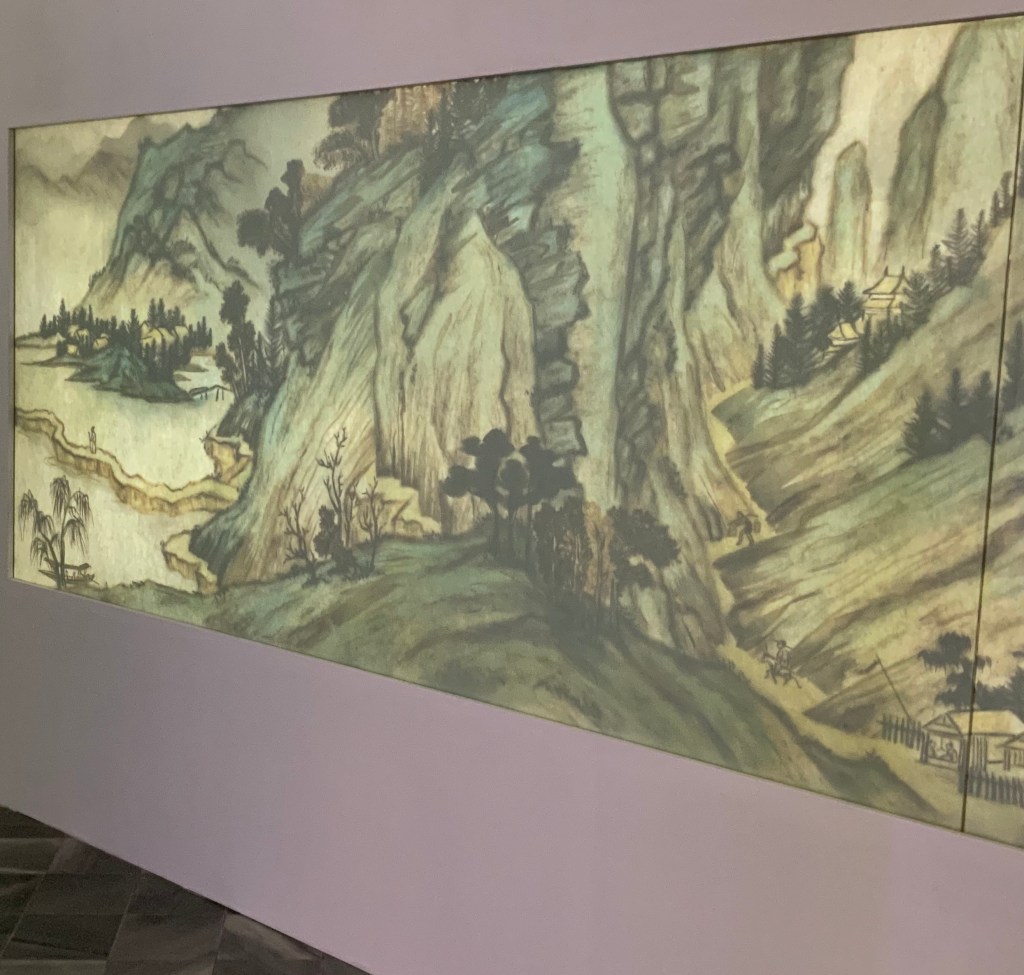
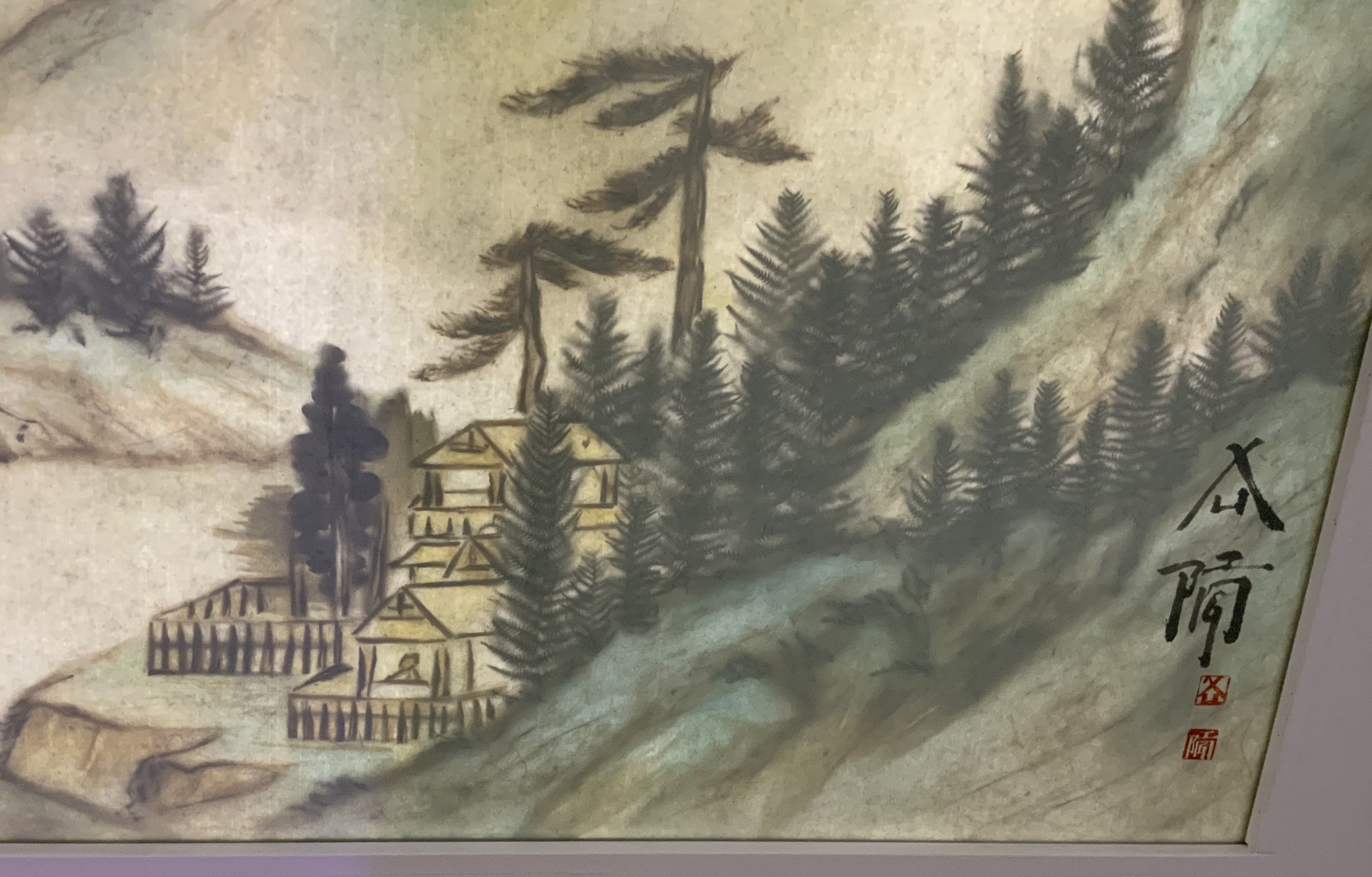
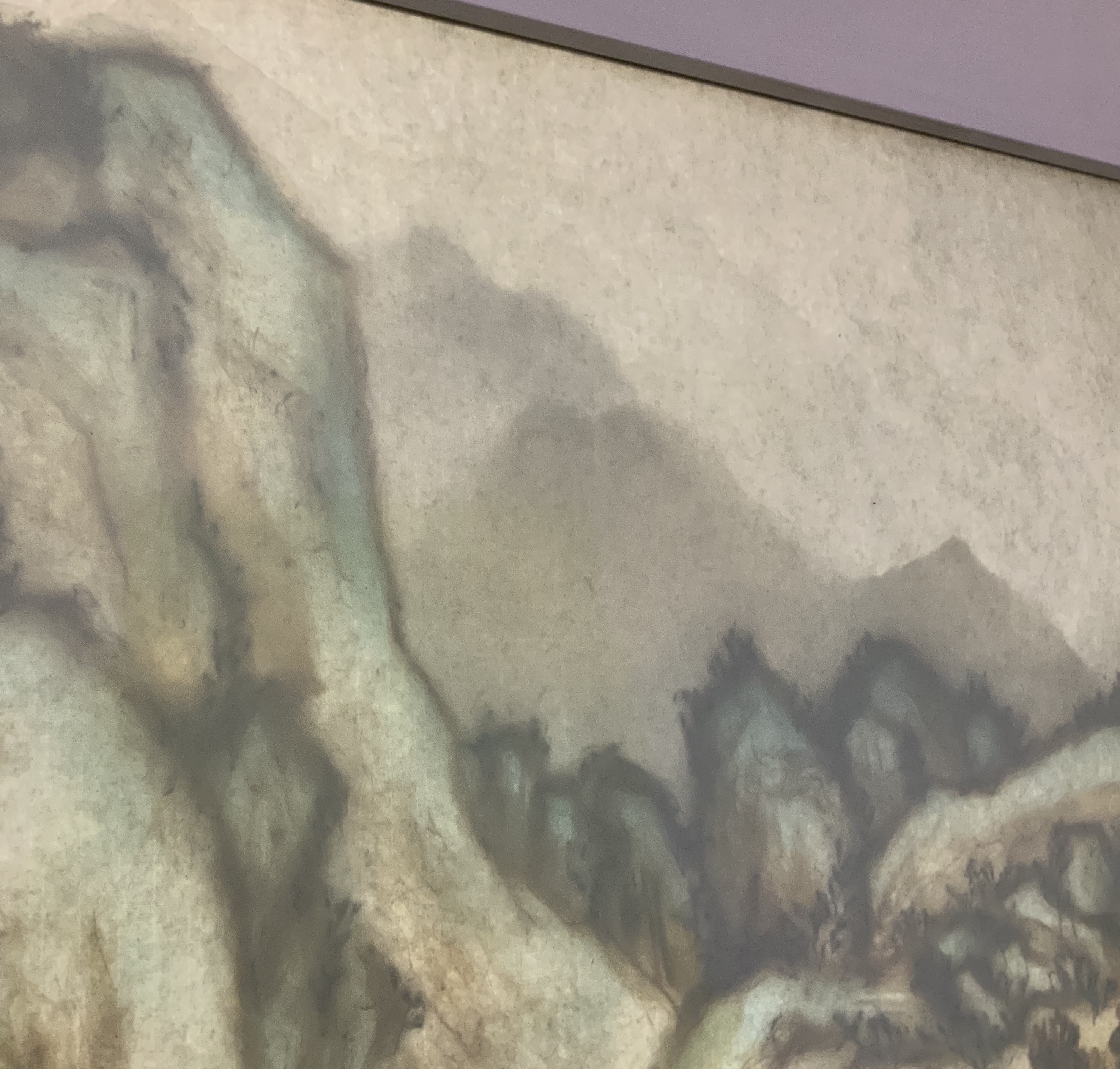
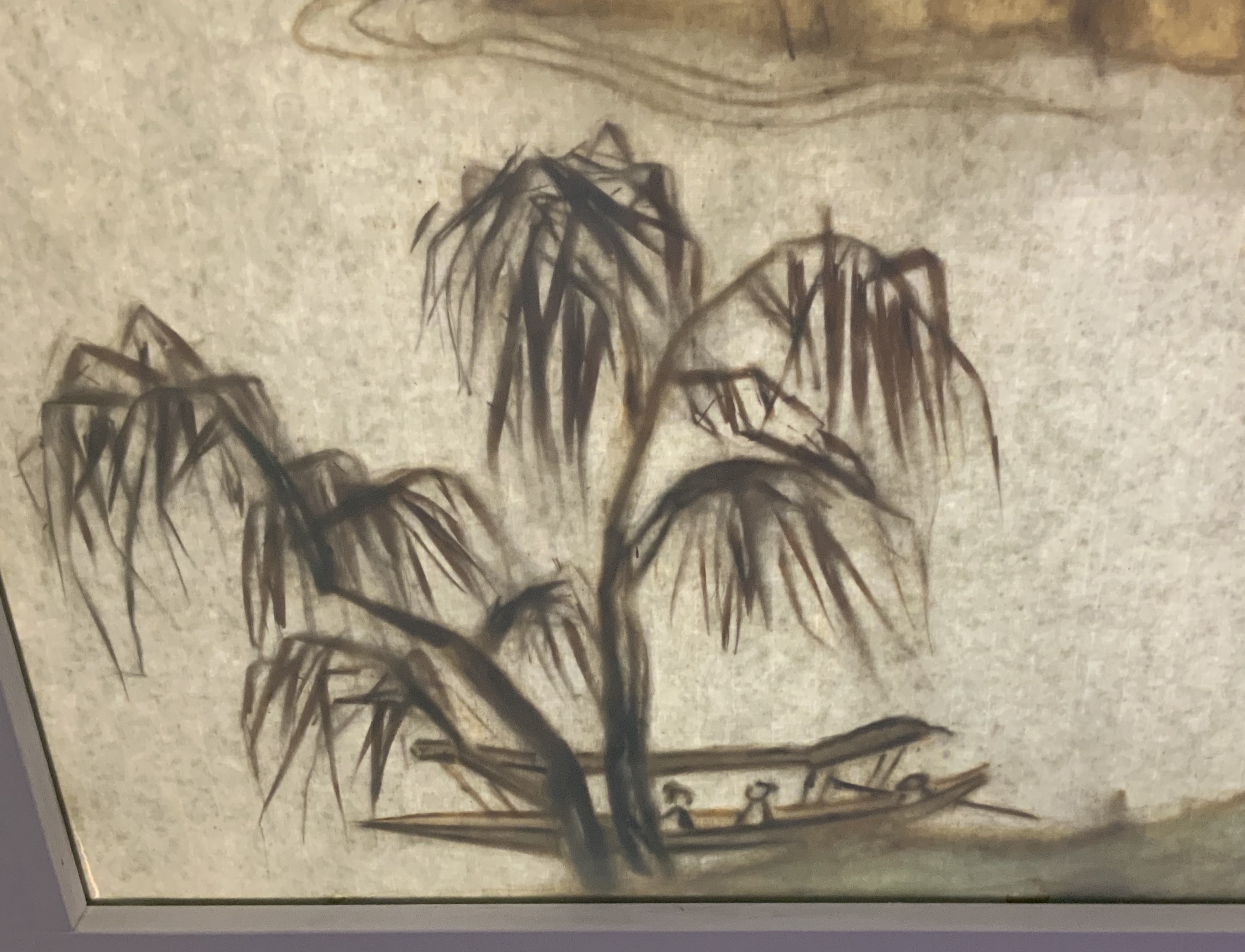
Left half: Background Story: Shangfang Temple Scroll (2016) © Xu Bing
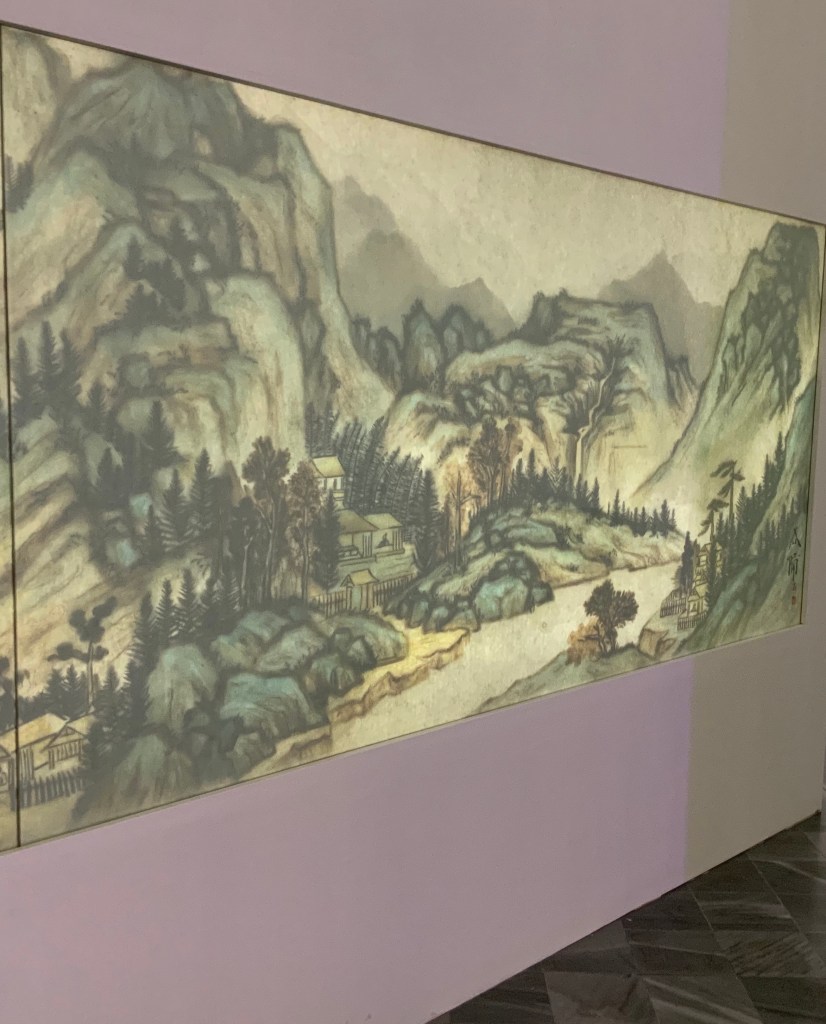
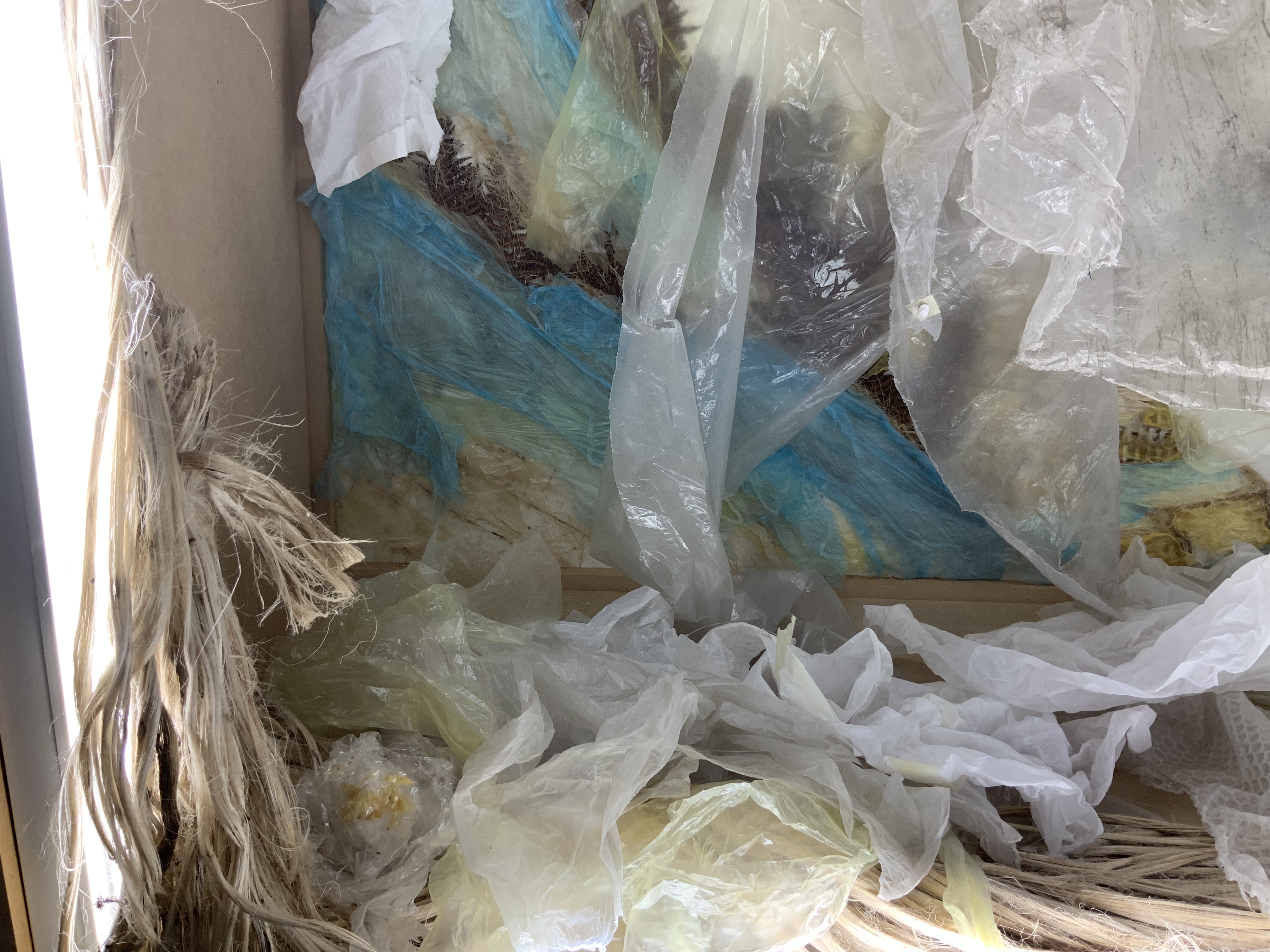
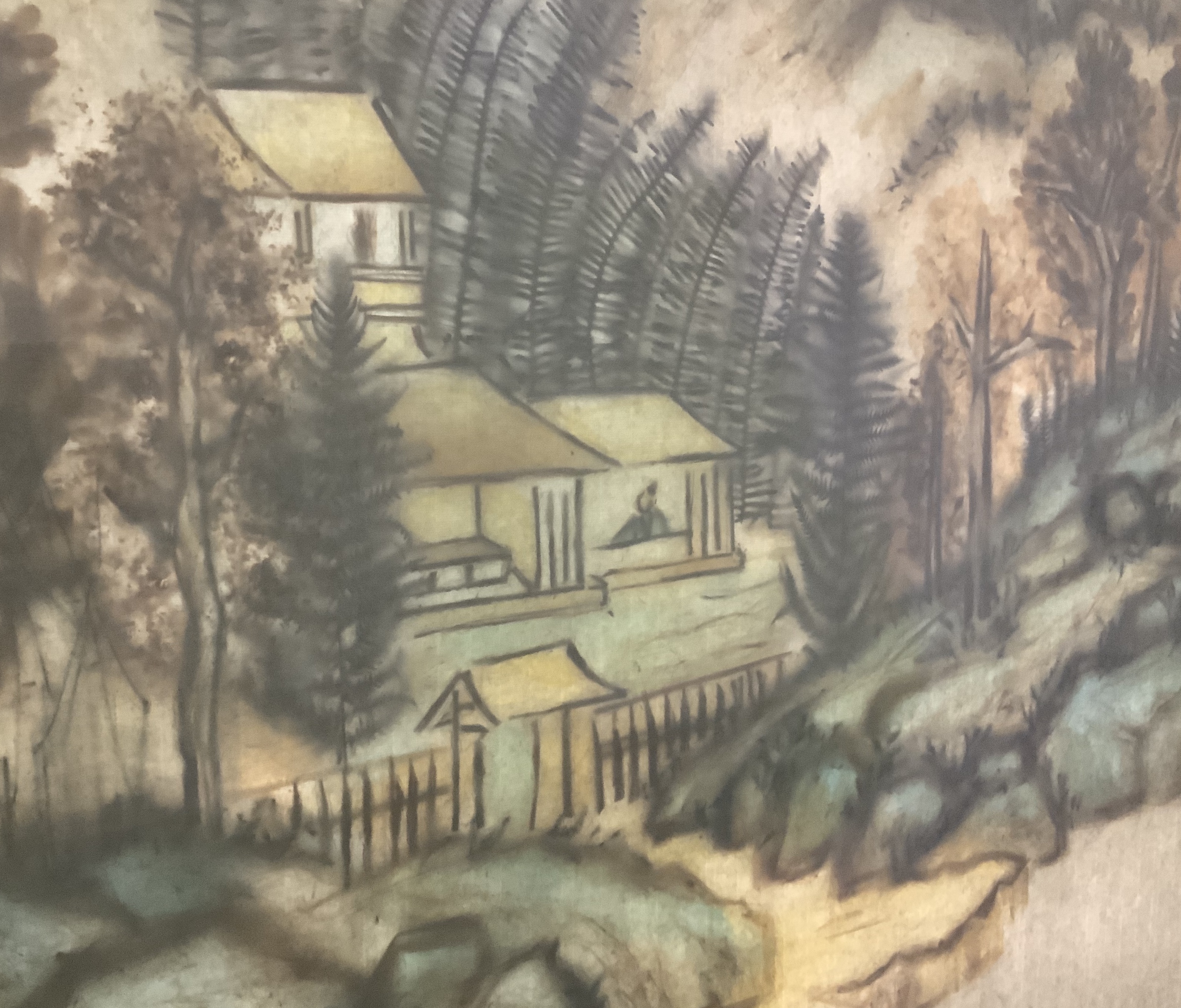
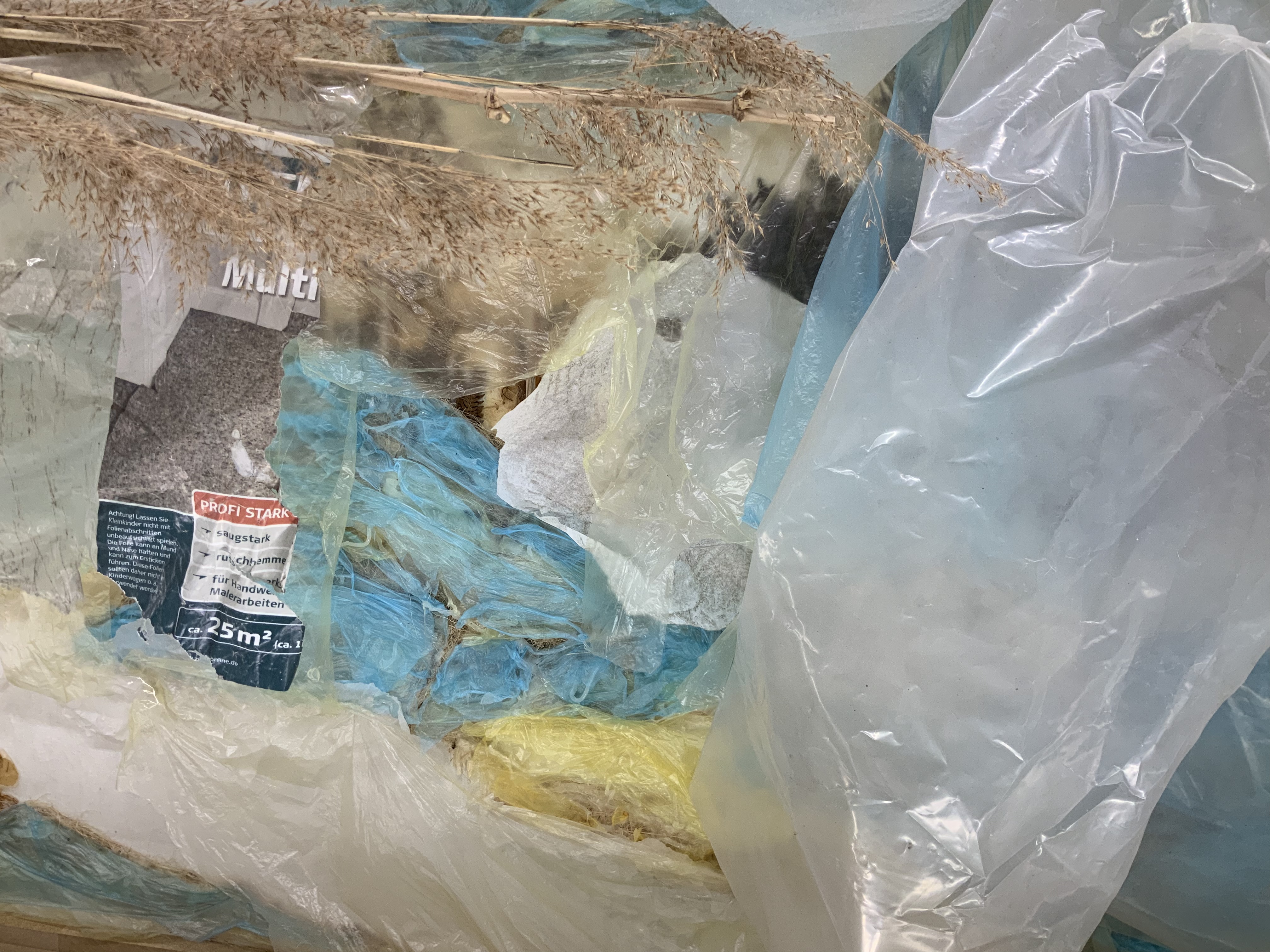
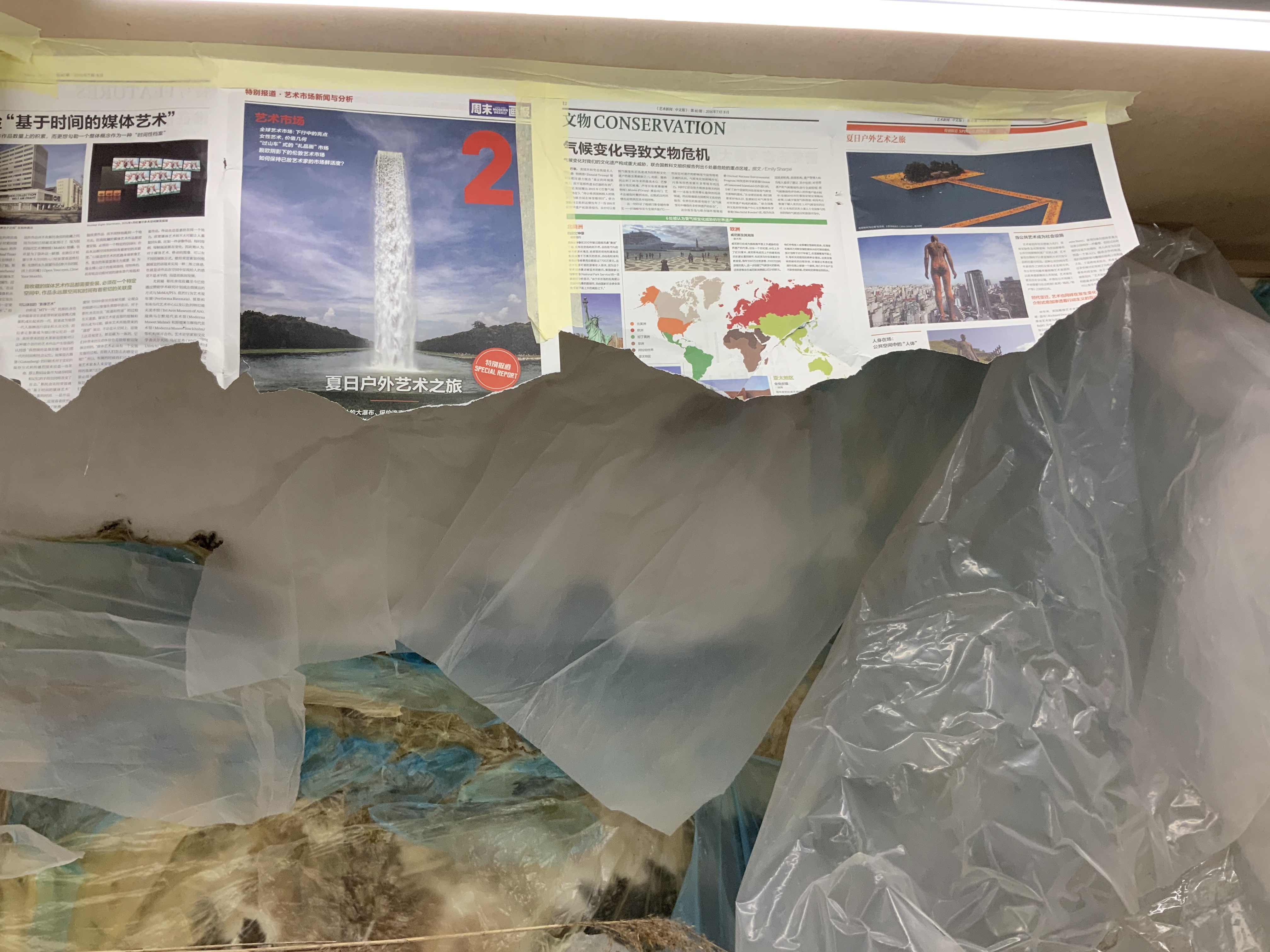
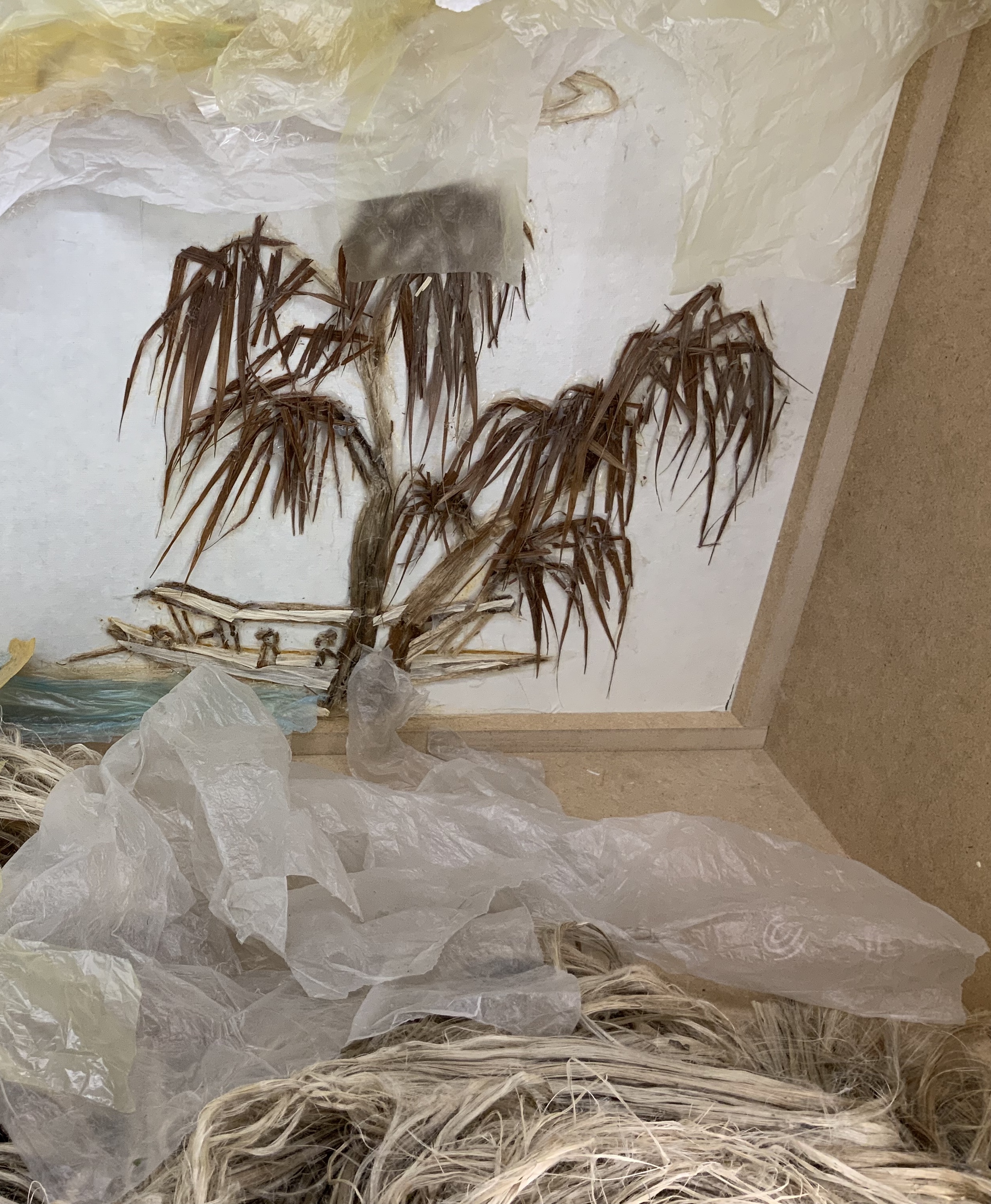
The images and colors appearing on the frosted glass screen are created by positioning various objects, materials and detritus behind the backlit screen. Xu Bing has dubbed this as “painting with light”.

Right half: Background Story: Shangfang Temple Scroll (2016) © Xu Bing

Detail, front and back view. © Xu Bing

Detail, front and back view. © Xu Bing

Detail, front and back view © Xu Bing

Detail, front and back view © Xu Bing

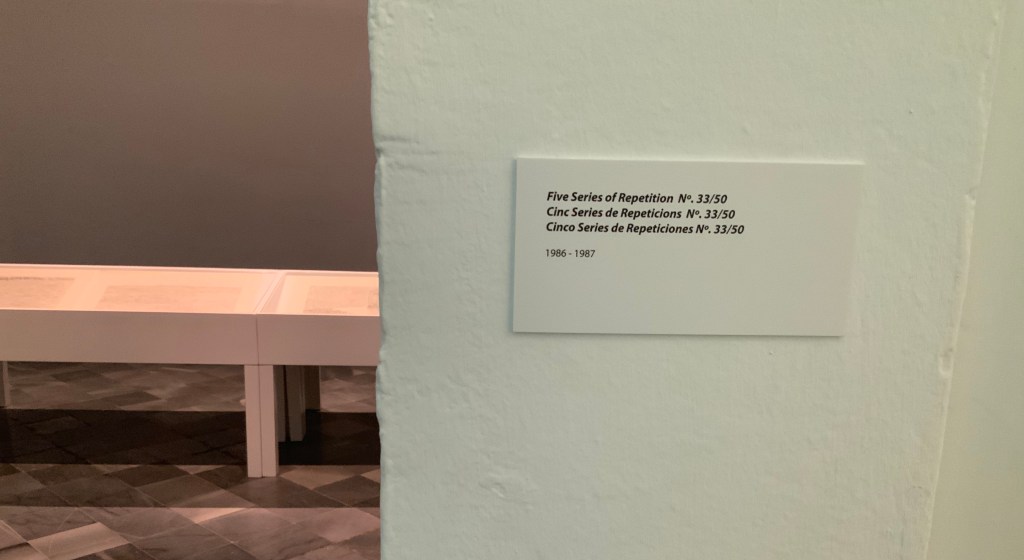
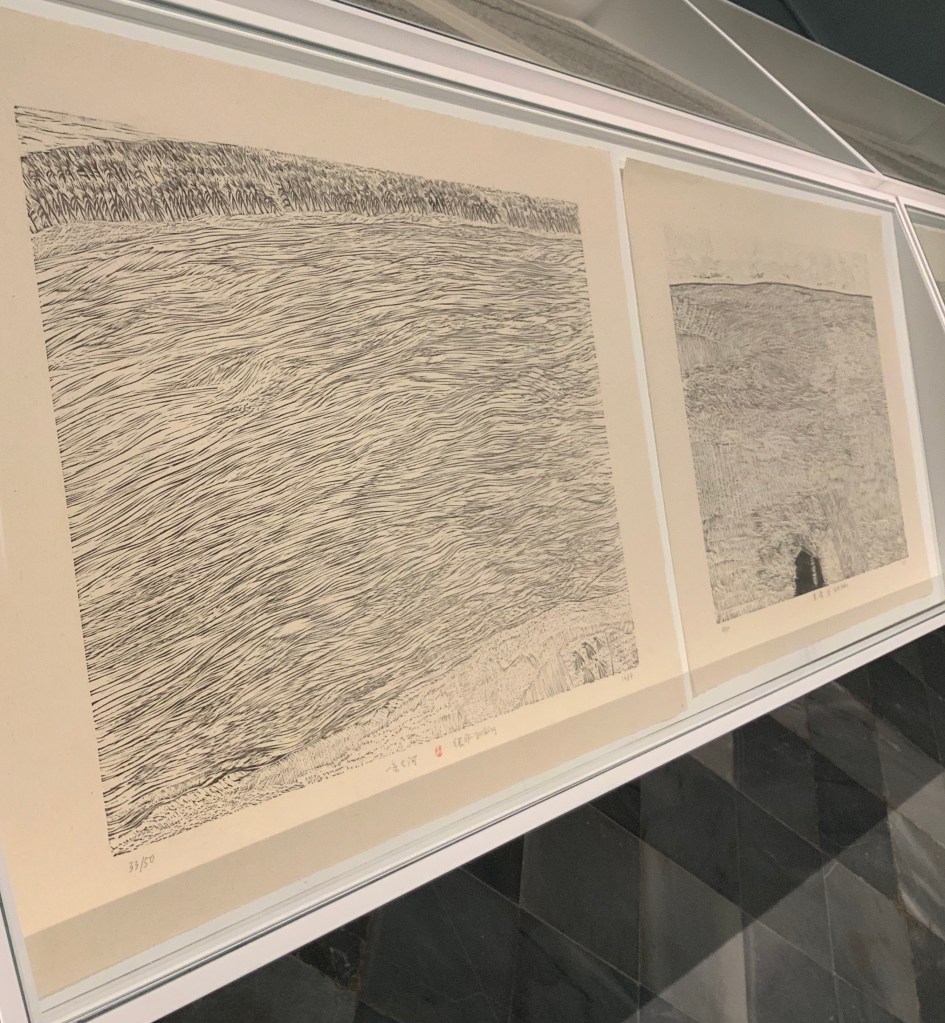
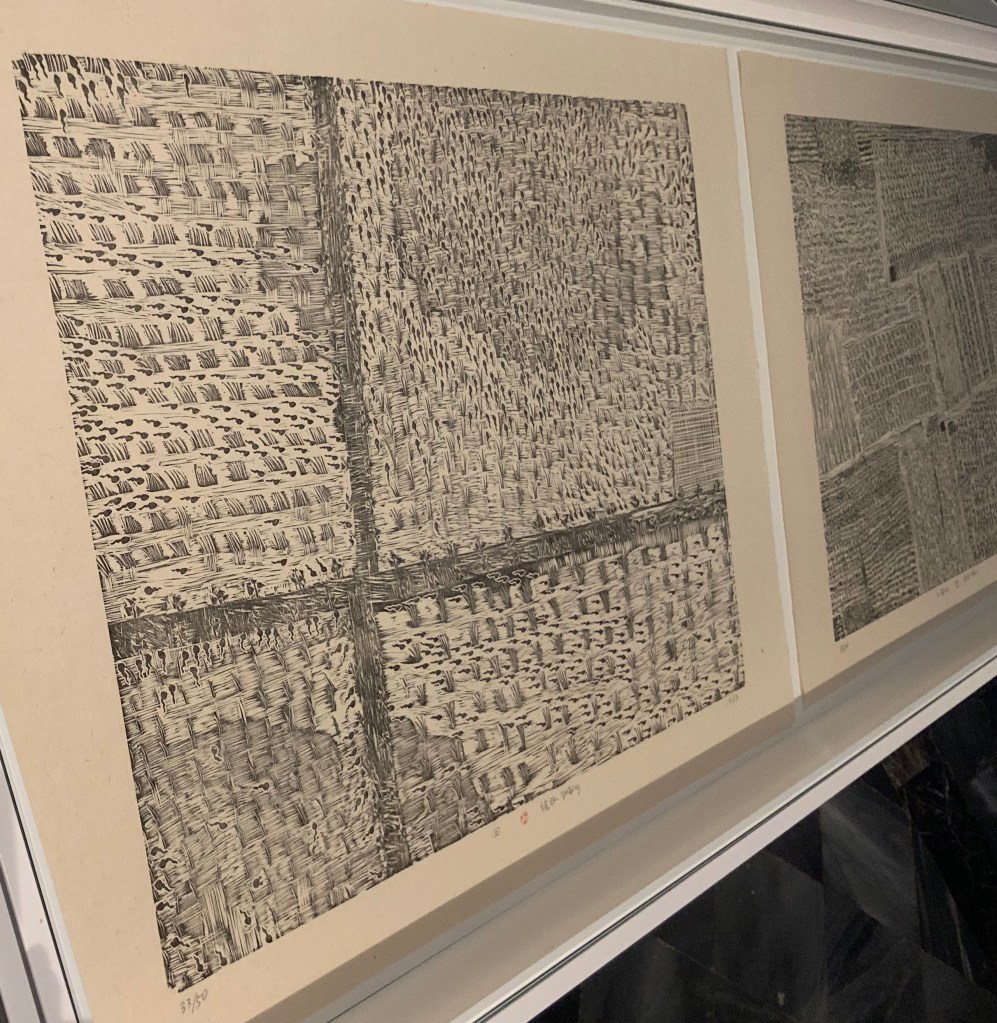
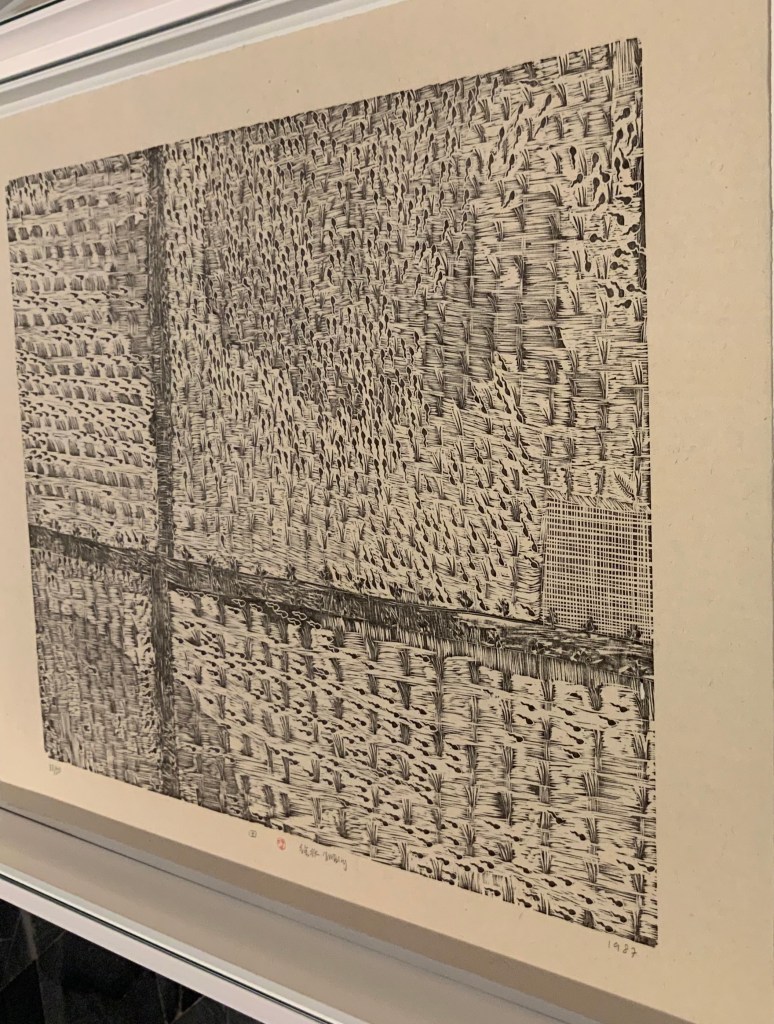
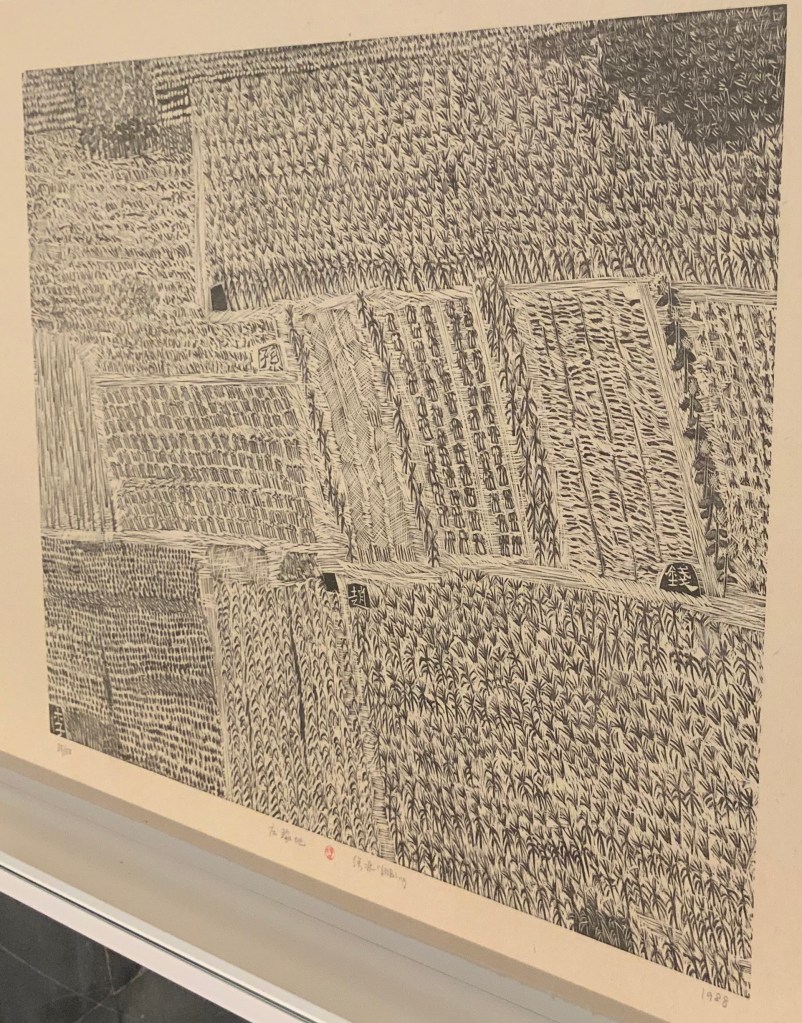
Five Series of Repetition: A Big River (1987); Black Pond (1987) © Xu Bing

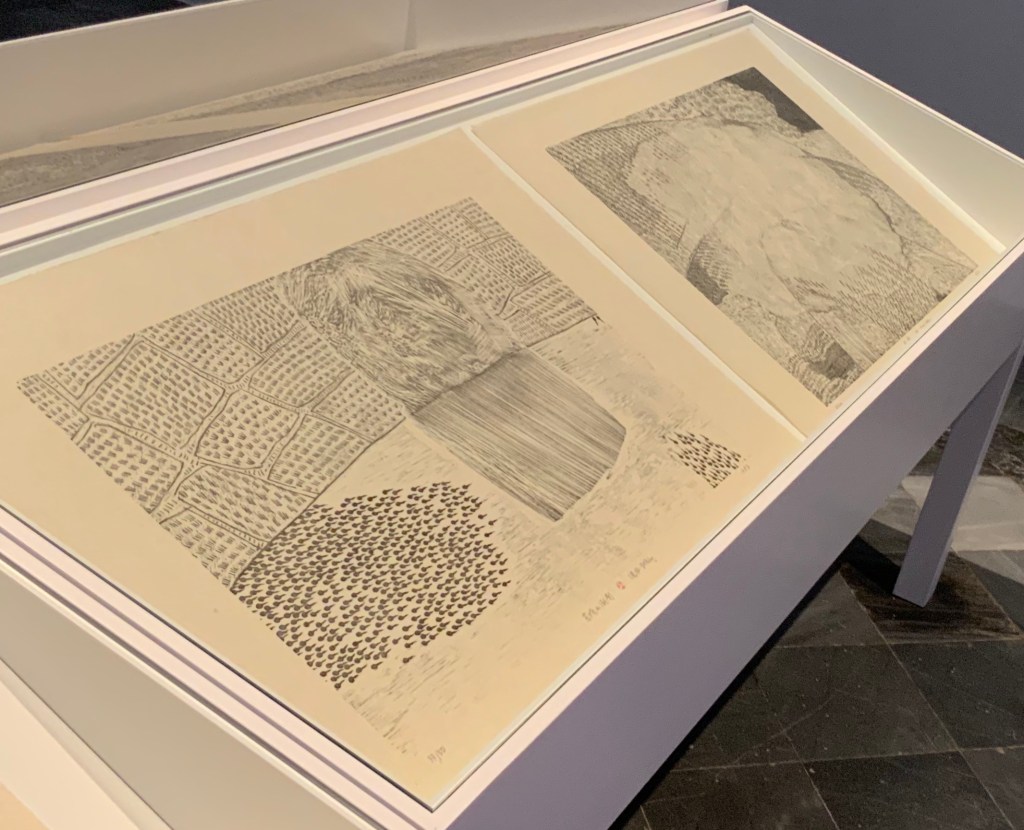
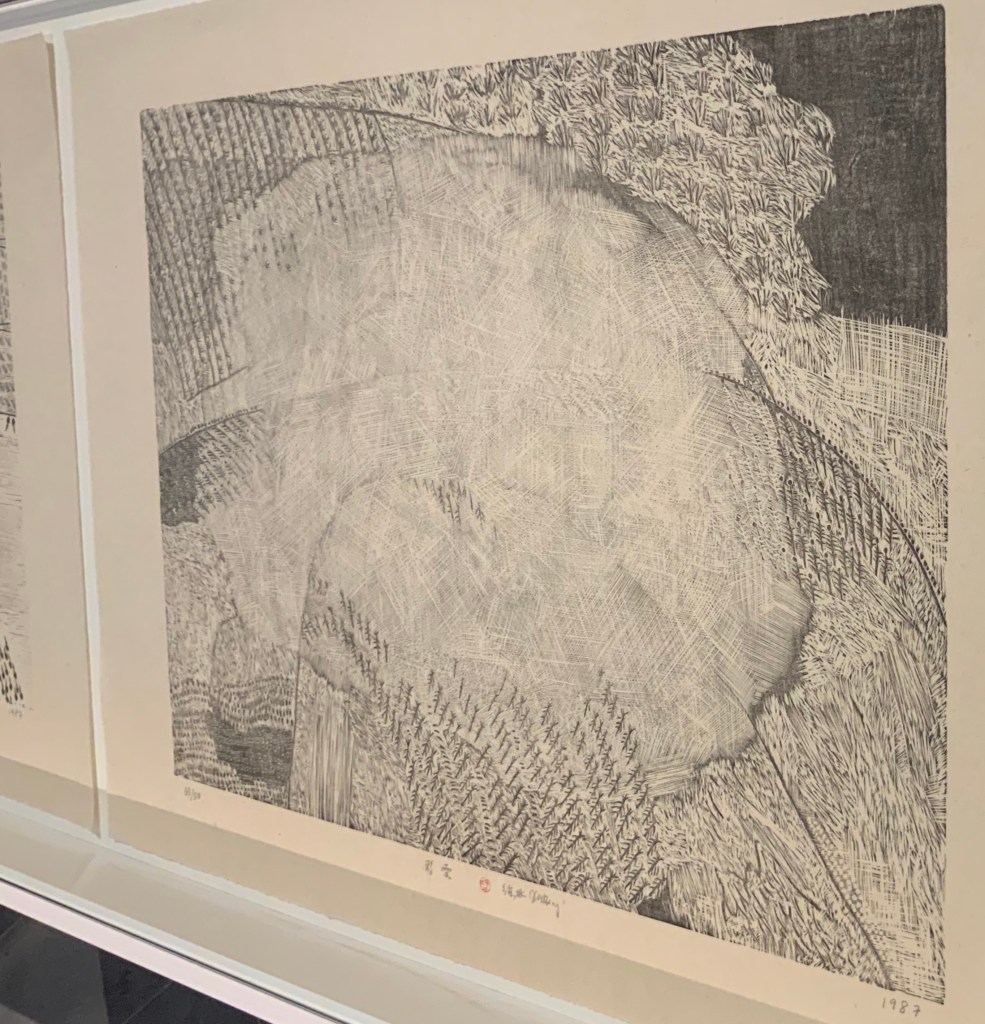
Five Series of Repetition: Haystack Reflection (1987); Moving Cloud (1987); © Xu Bing

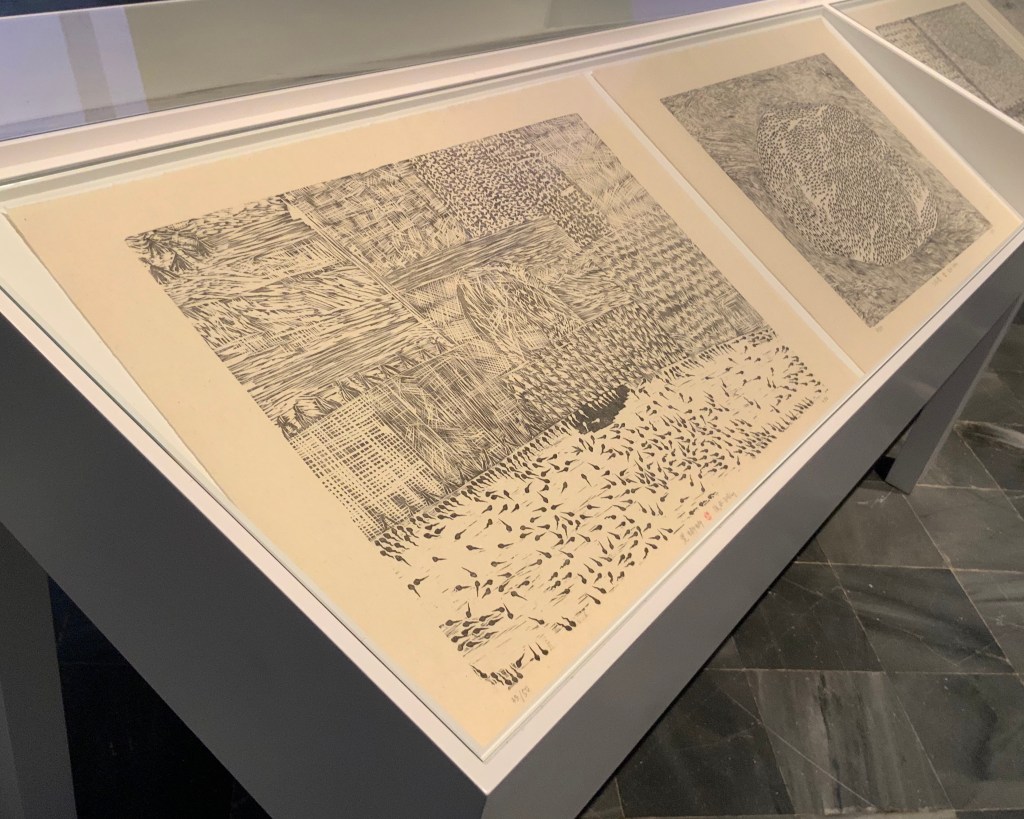
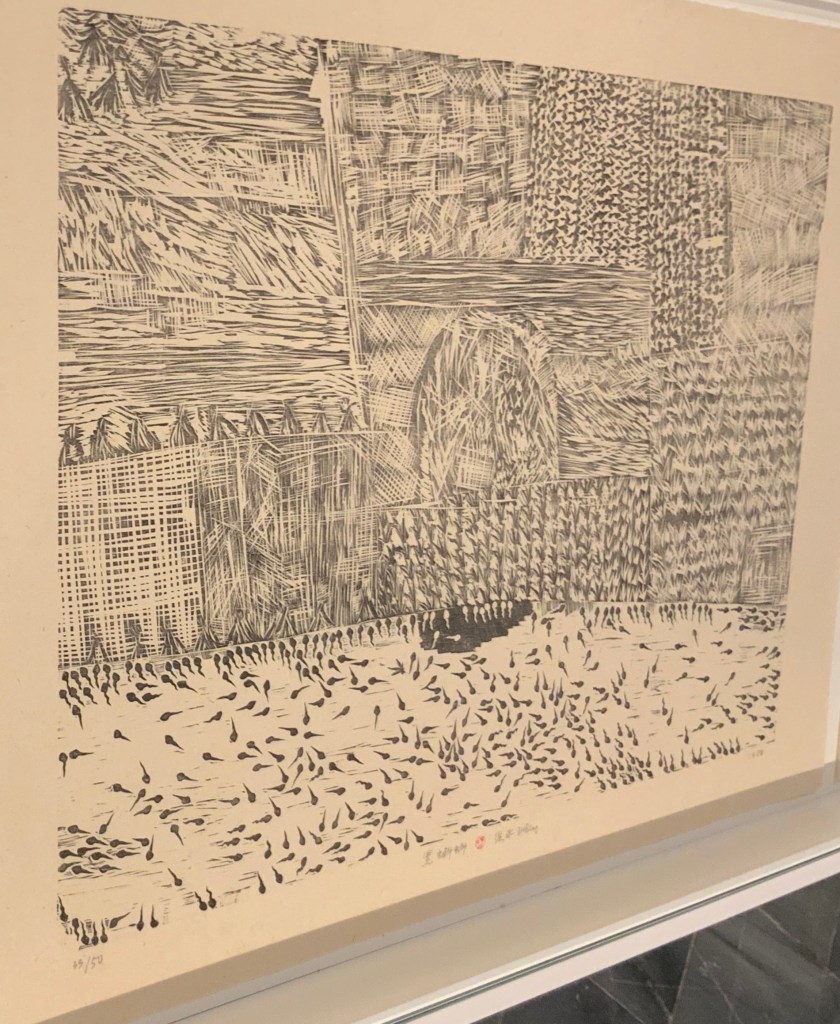
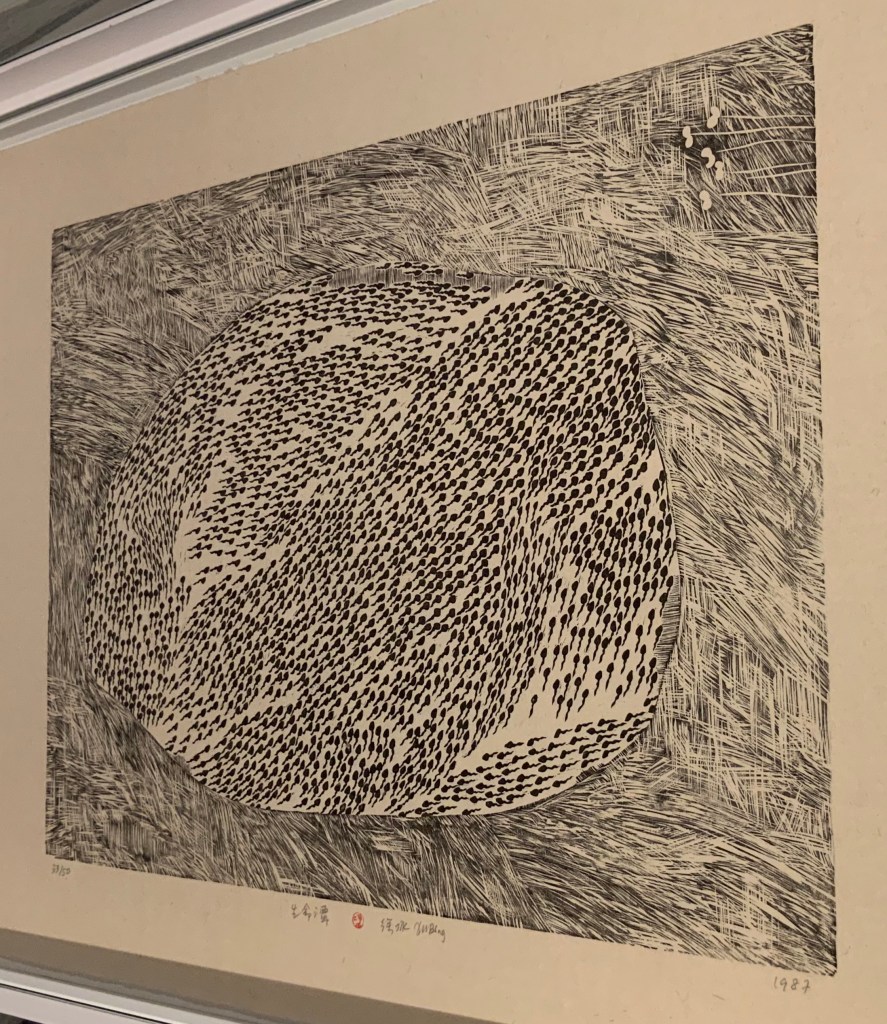
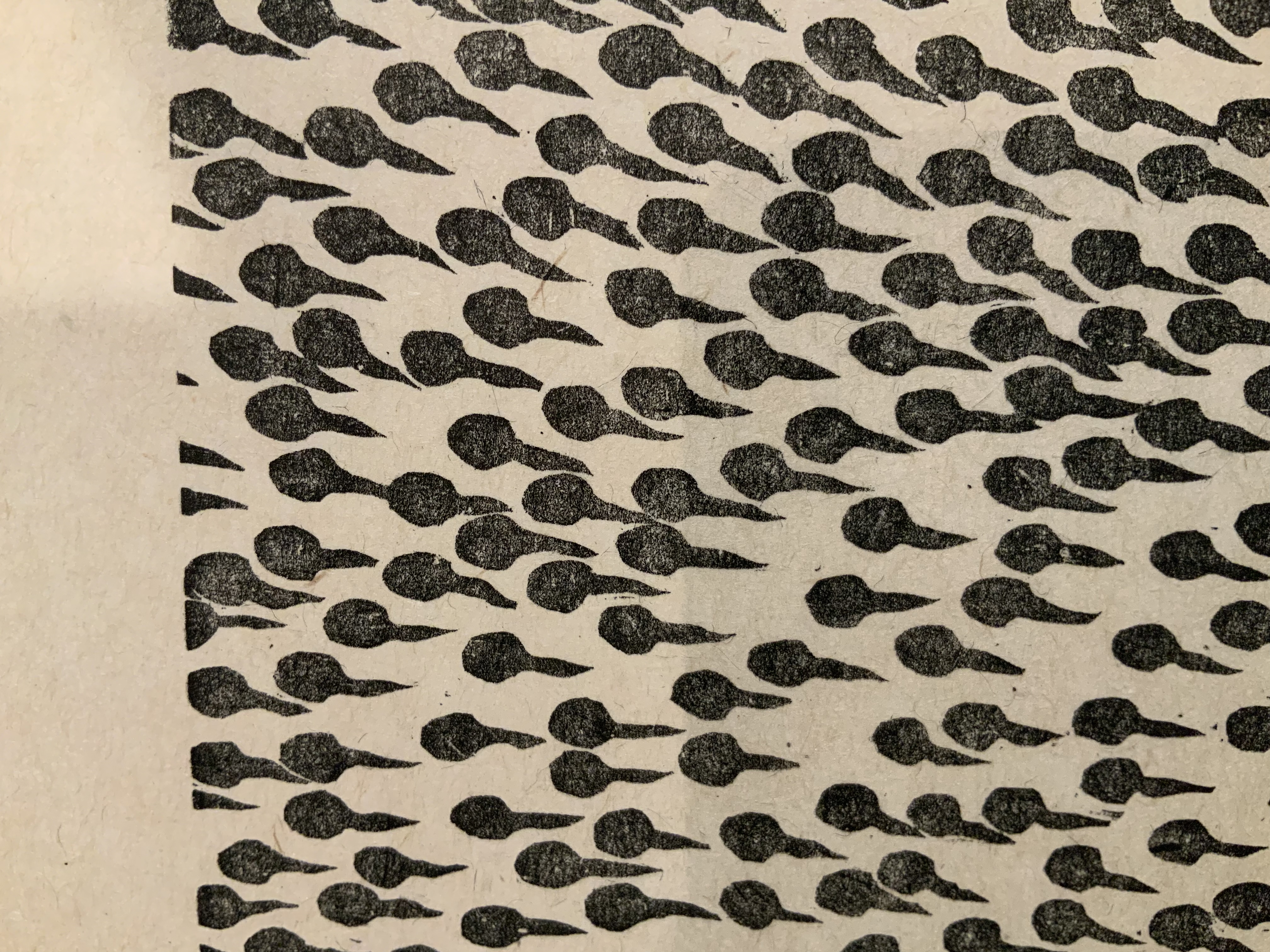
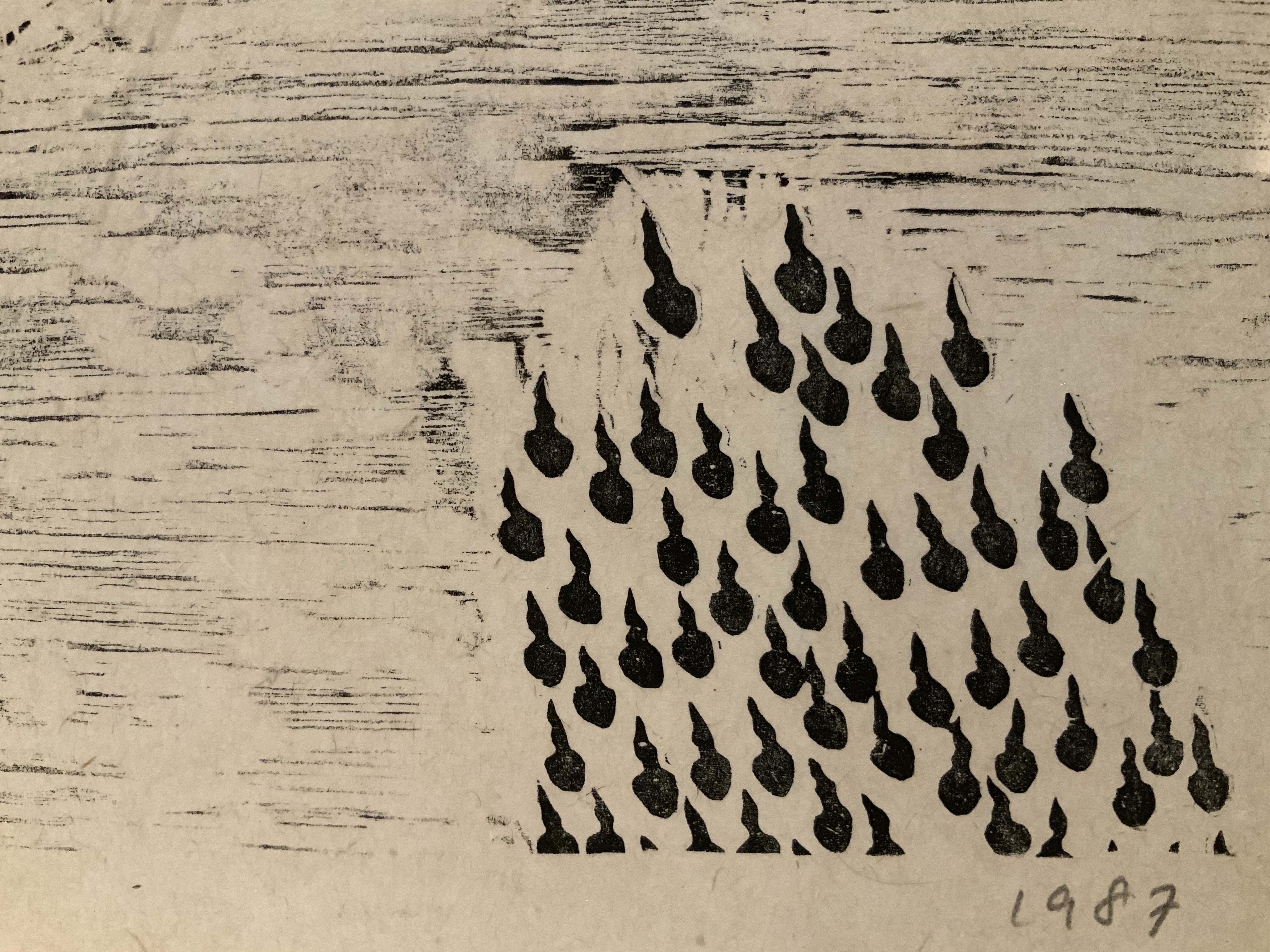
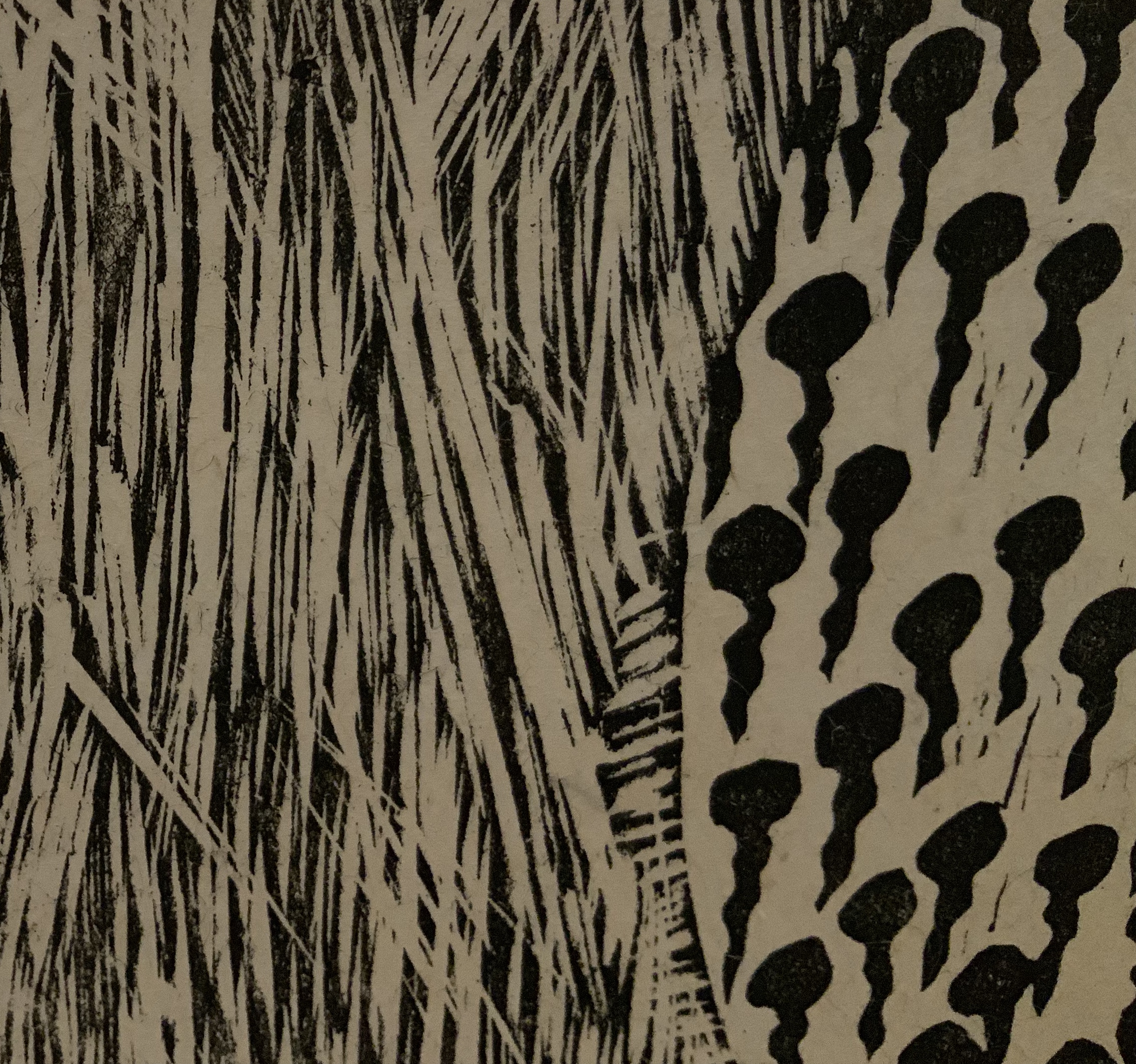
Five Series of Repetition: Black Tadpole (1987); Living Pond (1986); © Xu Bing

Five Series of Repetition: Field (1987); Family Plots (1988); © Xu Bing

Moving Cloud (1987) © Xu Bing

Black Tadpole (1987) © Xu Bing

Living Pond (1986) © Xu Bing

Field (1987) © Xu Bing

Family Plots (1988) © Xu Bing

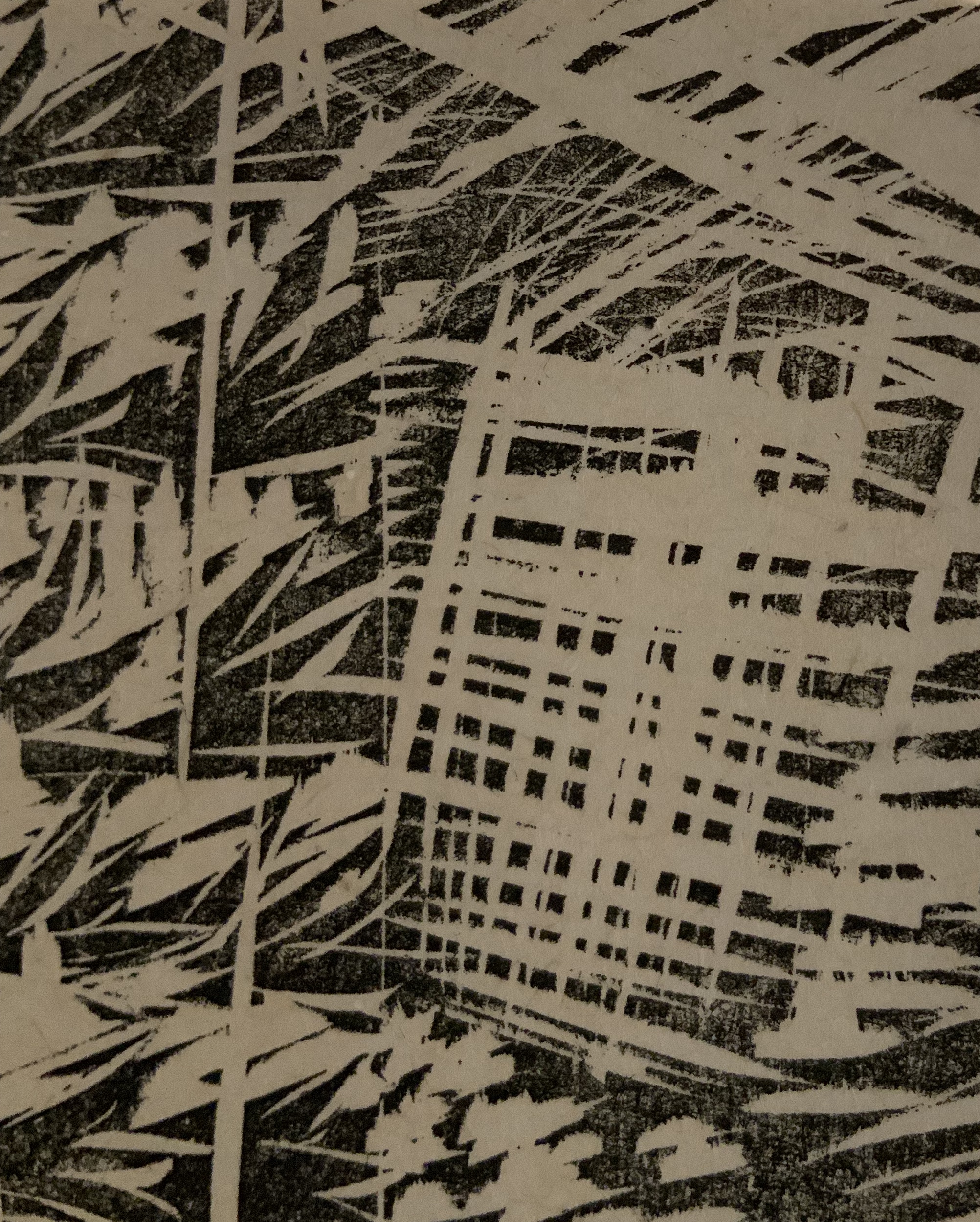
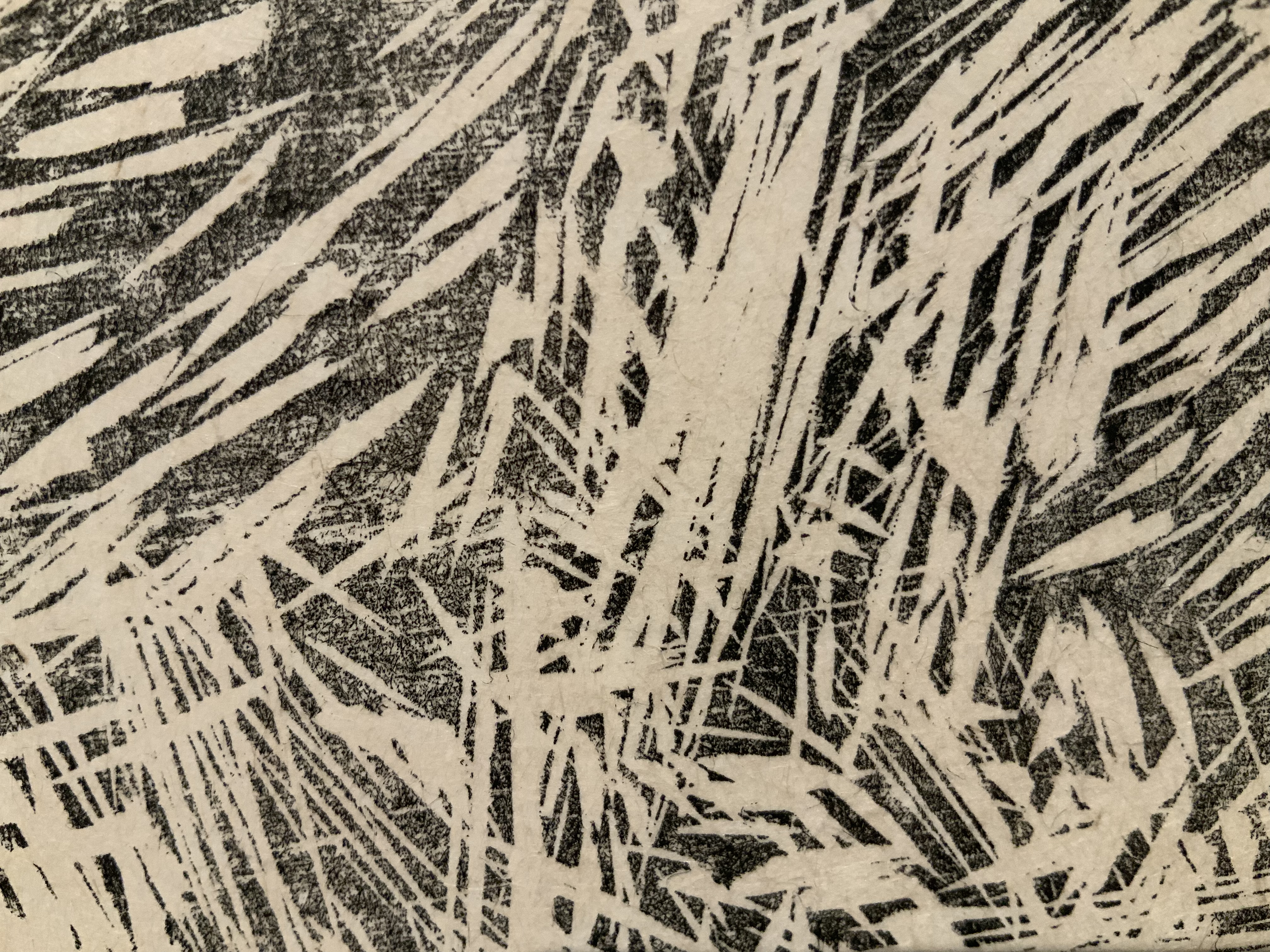
Details © Xu Bing

Details © Xu Bing

Video clip of Xu Bing: Phoenix © Xu Bing
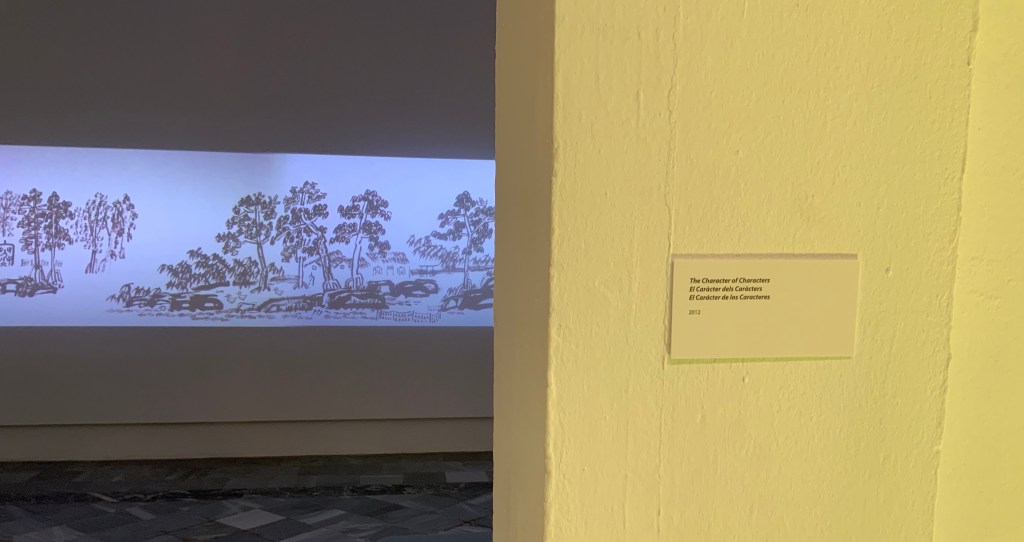
Video clip of The Character of Characters © Xu Bing

Further Reading

Xu Bing in ‘Beijing’: Art in the Twenty-First Century“, Art21, 25 September 2020.
Book from the Sky to Book from the Ground by Xu Bing (2020), Books On Books Collection, 21 January 2021.

Appreciating Xu Bing“, Books On Books, 31 December 2018.

“Farewell Our Globalism”, Xu Bing and the Guggenheim, Books On Books, 9 December 2017.

Xu Bing“, Books On Books, 28 February 2016.

Wan Kong, “The Character of Characters: Xu Bing’s Exploration of Chinese and Their Language“, UnFramed/LACMA, 23 June 2015.

Locations of works

Book from the Sky

Book from the Ground

An Introduction to Square Word Calligraphy

Five Series of Repetition

Background Story

Phoenix

The Character of Characters

Books On Books Collection – Nicolas Guyot

POÉME: UN COUP DE DÉS JAMAIS N’ABOLIRA LE HASARD par STÉPHANE MALLARMÉ (2019)

Poème: Un coup dés jamais n’abolira le hasard (2019)
Nicolas Guyot
Unique cover with silver bromide printed image on Wenzhou paper mounted on handcrafted canvas. H150 x W200 mm, 16 leaves, 11 pages of text with silver bromide printed images on 160 gm drawing paper. Edition of 76, of which this is #16 and signed by the artist.

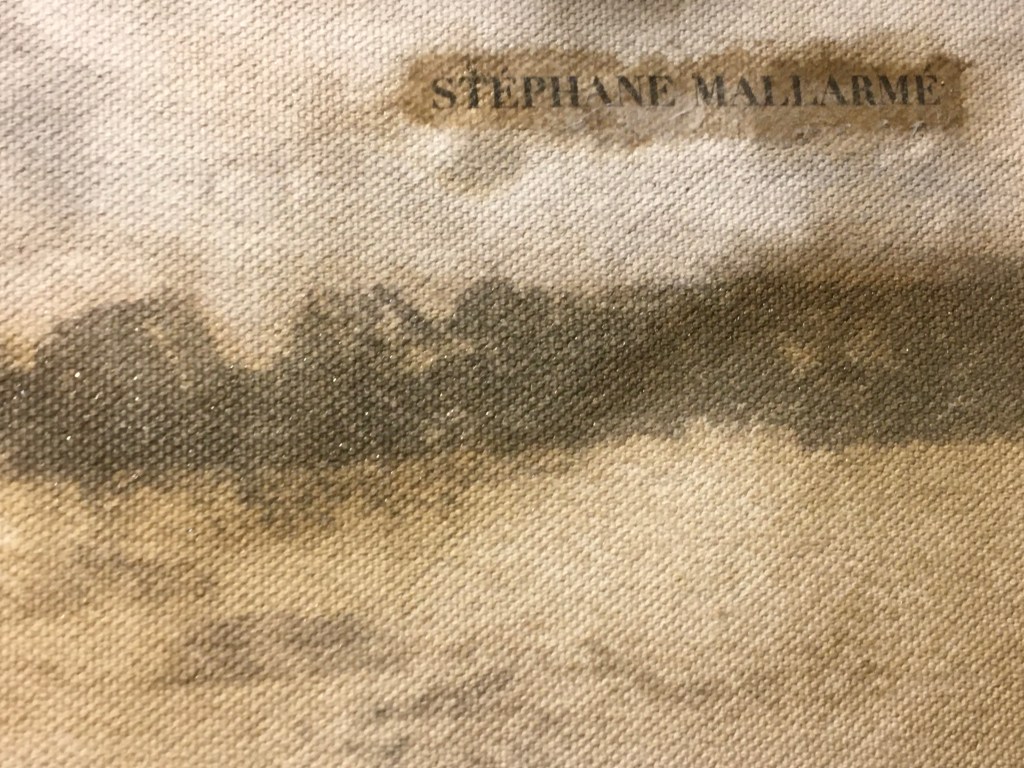
Detail of front cover © Nicholas Guyot

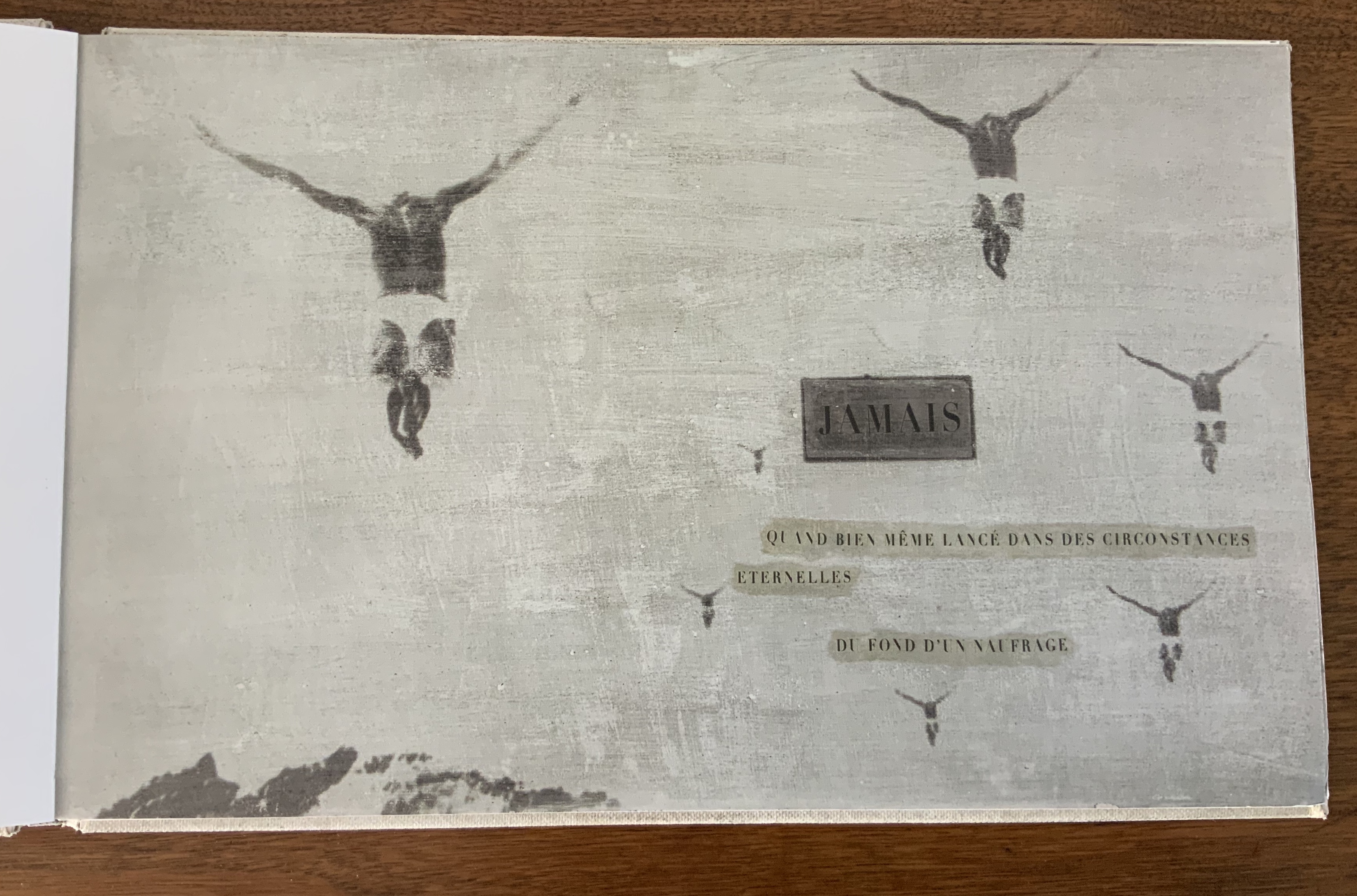
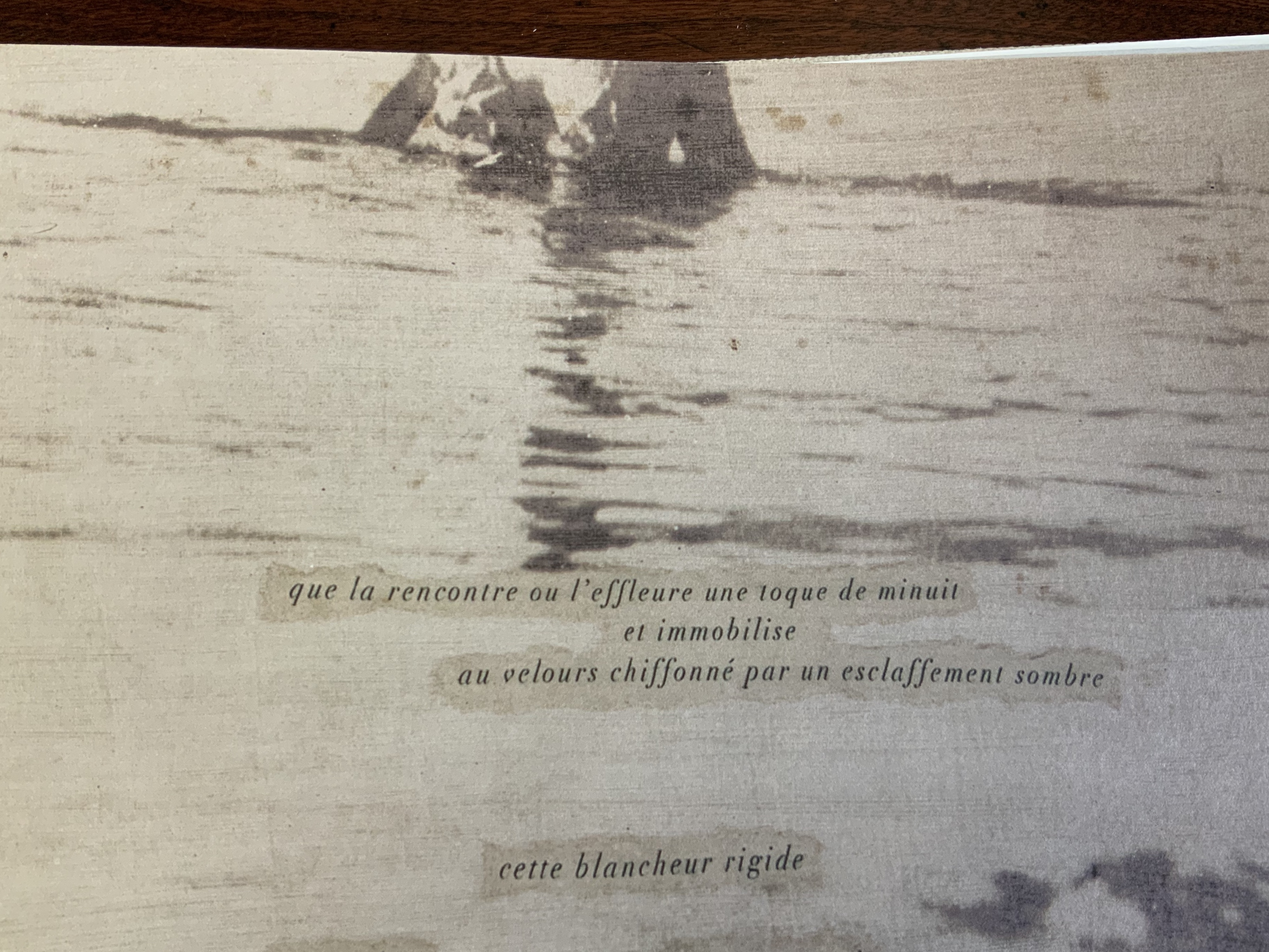
Details of pages © Nicholas Guyot

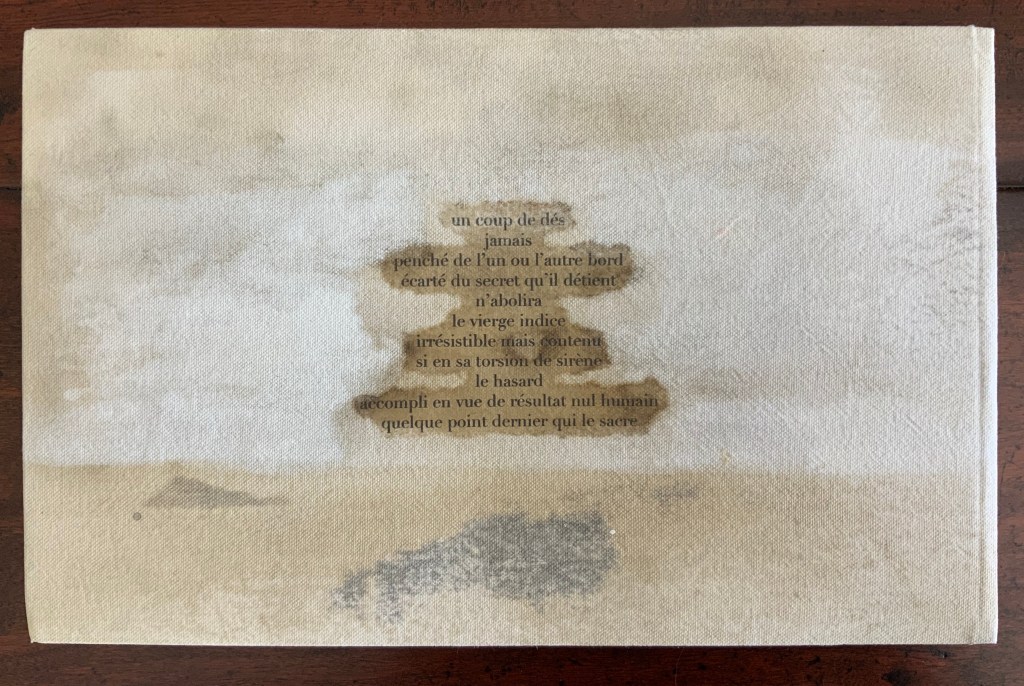
Back cover © Nicholas Guyot.

Guyot’s livre d’artiste sits self-assuredly in a long line of works inspired by Stéphane Mallarmé’s seminal 1897 poem Un Coup de Dés. Unlike Ellsworth Kelly (1992) but like Christiane Vielle (1989) and others, Guyot integrates his images with the text. In print technique, his silver bromide echoes the silver gelatine of Ian Wallace (1979), but Guyot’s unique cover prints and hand binding distinguish his work from any other in the long line. His technique and layout evoke a feeling of the late 19th century, the contemporary images respond creatively to the original poem’s own cryptic imagery, and altogether the effect is a simultaneity across time, poet and artist.

Guyot writes that Alain Badiou’s Petit manuel d’inethéstique (Éditions du Seuil, 1998) and Quentin Mellaissoux’s Le nombre et la siréne (Éditions Fayard, 2014) were particularly inspiring for this work (correspondence, 21 April 2020). In addition to the artist’s book, Guyot created several paintings (H39 x W65 cm) inspired by the poem and these philosophical reflections.

Further Reading

Badiou, Alain. Petit manuel d’inesthétique (Éditions du Seuil, 1998). Available in translation: Handbook of Inaesthetics (Stanford, CA: Stanford University Press, 2006).

Meillassoux, Quentin. Le nombre et la sirène : un déchiffrage du Coup de dés de Mallarmé (Paris: Éditions Fayard, 2014). Available in translation: The Number and the Siren: A Decipherment of Mallarmé’s Coup de Dés (New York: Sequence Press, 2012).

Books On Books Collection – Moussa Kone

I first came across the artist Moussa Kone after subscribing to Harpune Verlag’s Moby-Dick “Filets”. Each filet is a section or chapter of Herman Melville’s Moby-Dick, The Whale (1851), which has been assigned to, or claimed by, an artist for illustration. About the time the subscription package arrived, the Bodleian Bibliographical Press announced the upcoming exhibition “Very Like a Whale”, for which artists were invited to create a print work in response to one of the eighty quotations making up the section “Extracts” prefacing Moby-Dick (1851). The Moby-Dick ”Filets” piqued the nearby Bodleian curators’ curiosity, so a loan was offered before I had opened and sorted through the catch. Moussa Kone’s handling of “Etymology”, which happens to precede “Extracts” in the novel, was selected and displayed prominently. And that is how I discovered this catch within the catch.

“Etymology”, Moby-Dick “Filets” (2012)

“Etymology”, Moby-Dick ”Filets” (Harpune Verlag, 2012)
Illustrated by Moussa Kone
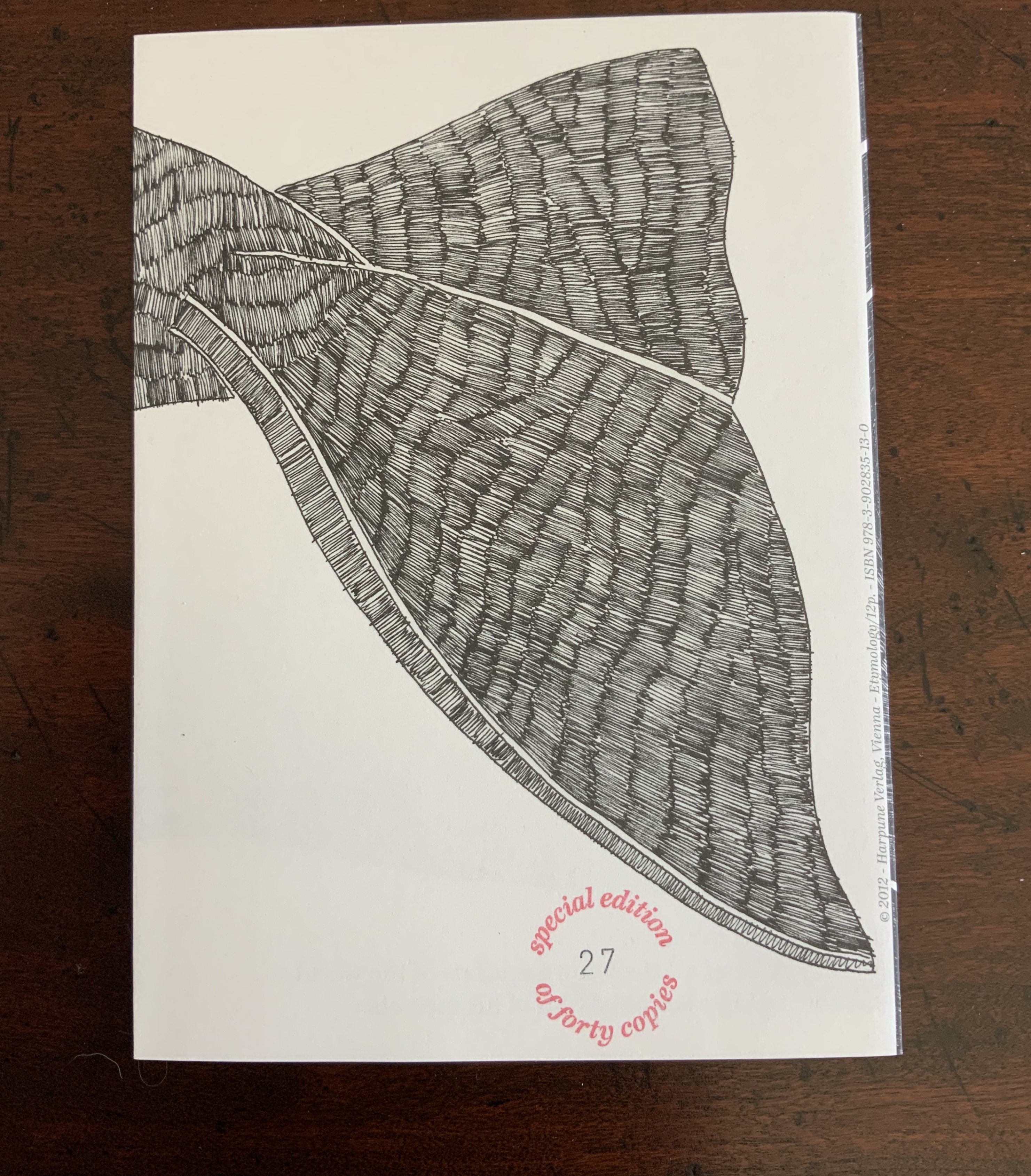
Leporello in an edition of 460 numbered copies. Special edition of 40, of which this is #27, signed by the artist and including parts of the original drawing. Closed: H200 x W150 mm; open: H200 x W710 mm; 16 panels. Acquired from the artist, 11 December 2019.

Note the reflections of the whaler Pequod, Ahab’s chase boat, Ahab himself and the descending harpoon all caught in the corner of the whale’s eye. Being on the front cover, they are the most prominent of several telling details, two others being the selection of ocean-blue ink for the etymological terms through which the whale swims and the whale’s length extending over both sides of the leporello. The inventiveness to which the accordion, concertina or leporello structure lends itself seems endless.

The Abecedarium of the Artist’s Death: 26 Dangers for Your Career (2014)

The Abecedarium of the Artist’s Death: 26 Dangers for Your Career (Verlag für moderne Kunst, 2014)
Moussa Kone
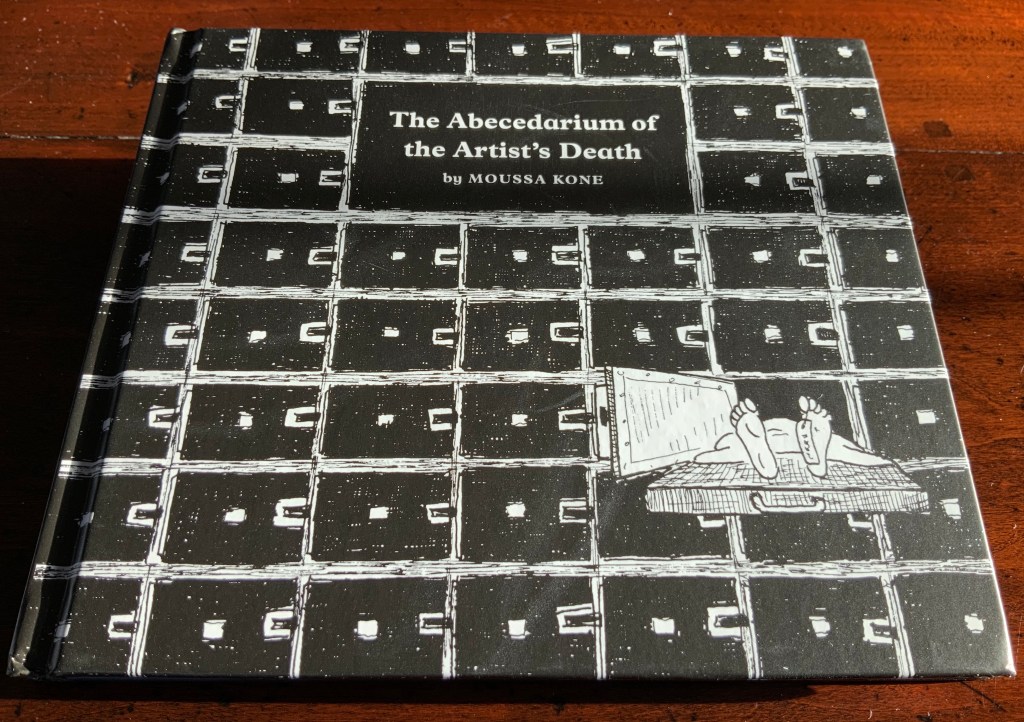
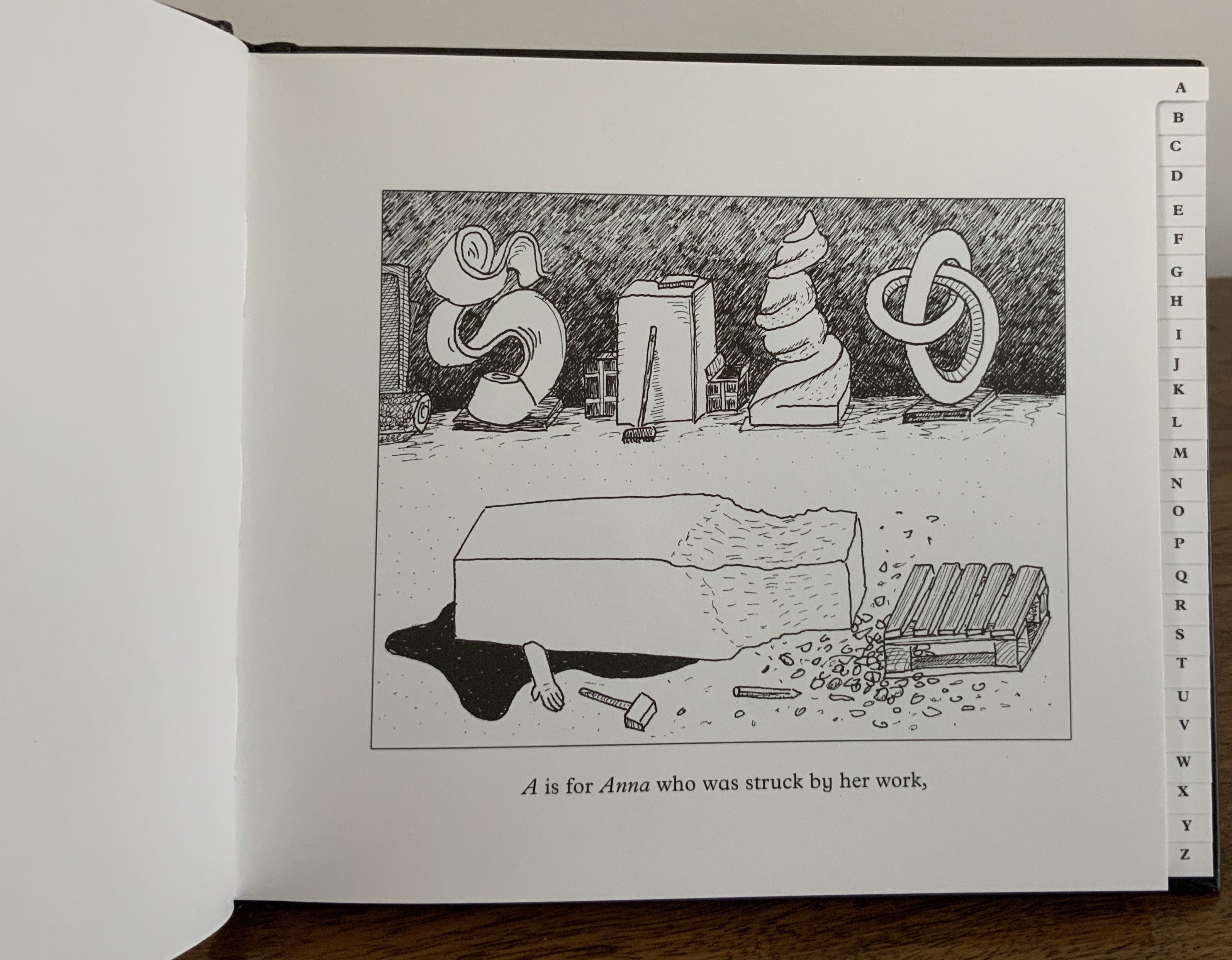
Hardcover, thread-bound, register-cut; layout by Martin Wunderer; 56 pages, 26 illustrations by Moussa Kone.
H145 x W170 mm. Acquired from the artist, 11 December 2019.

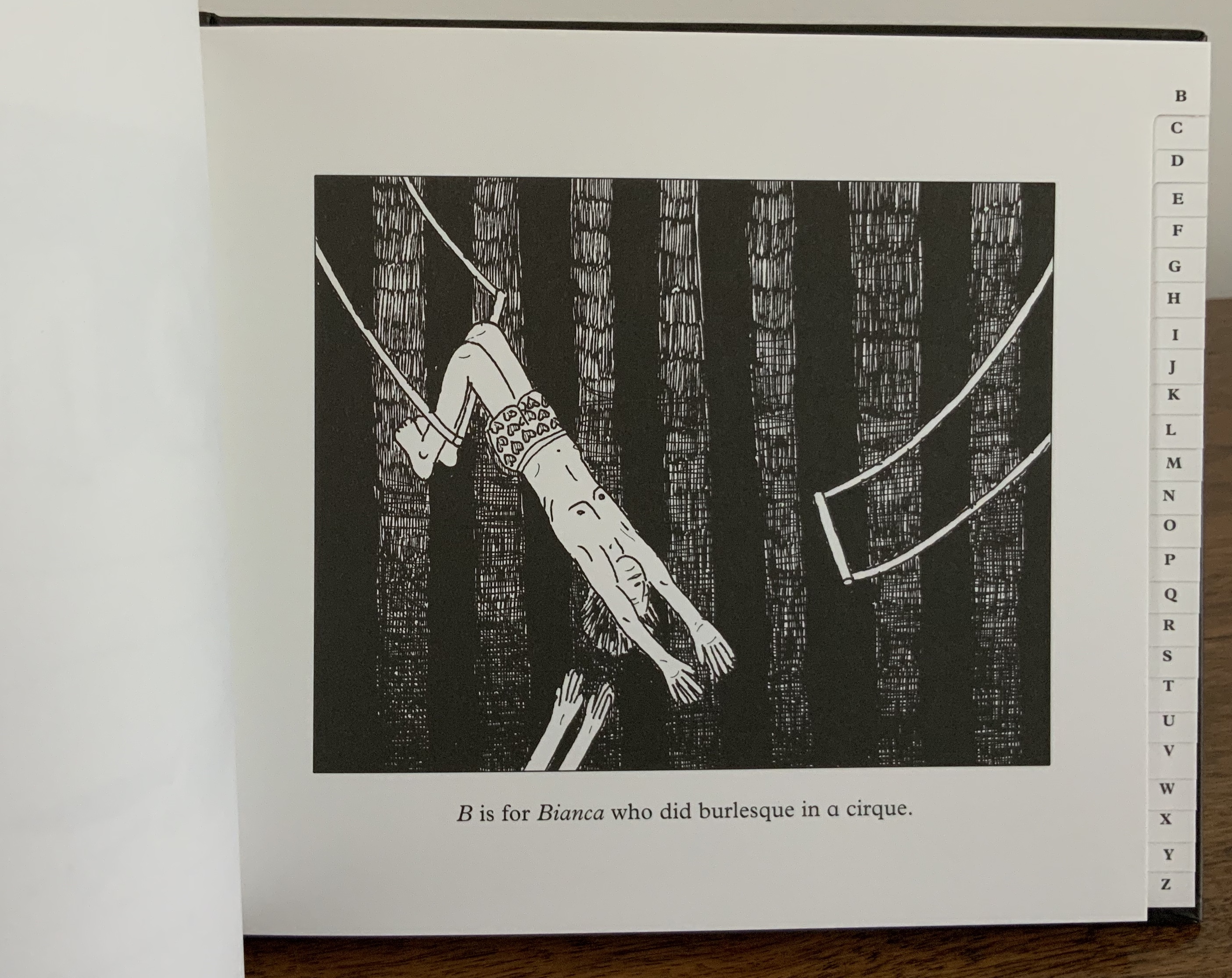
An abecedary seems to be de rigueur for book artists. The usual accompanying humor and puns of book art manifest themselves here not only in the illustrations paying homage to Edward Gorey’s The Gashlycrumb Tinies but also in the structure of the little black address book and its alphabetic tabs.

Nowhere Land (2017)

Nowhere Land (2017)
Moussa Kone
Map, offset printed on both sides. H152 x W112 cm. Acquired from the artist, 11 December 2019.

Nowhere Land follows on from The Abecedarium deeper into the realm of the outré. It was shown in the group exhibition Constructing Paradise, curated by Dieter Buchhart and Mathias Kessler at the Austrian Cultural Forum in New York (ACFNY), 31 January – 24 April 2017. The ACFNY’s announcement reads:

Constructing Paradise exhibits contemporary reinterpretations of notions of the “exotic” by artists based in Austria or the United States. Taking iconic artworks such as Paul Gauguin’s Noa Noa and Oskar Kokoschka’s Tiger Cat as starting points, the show assembles a diverse range of work from early contemporary to more recent artistic responses to the modernist imprint of desire and fantasy on contemporary culture. Particularly when juxta­posed with hyperbolized images of modern-day advertising, the exhibition explores the psychological impacts of the modernist image on image culture and the Western psyche. 

Photo: Courtesy of the artist.

Moussa Kone’s entry took the form of a Panoramic Map for tourists and was distributed among the exhibition visitors. The artist’s description is too arch and funny to paraphrase:

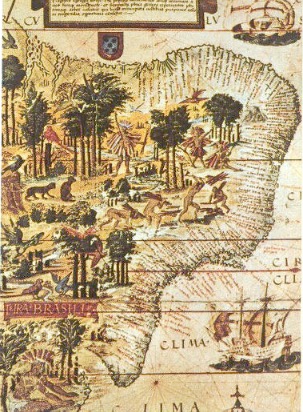
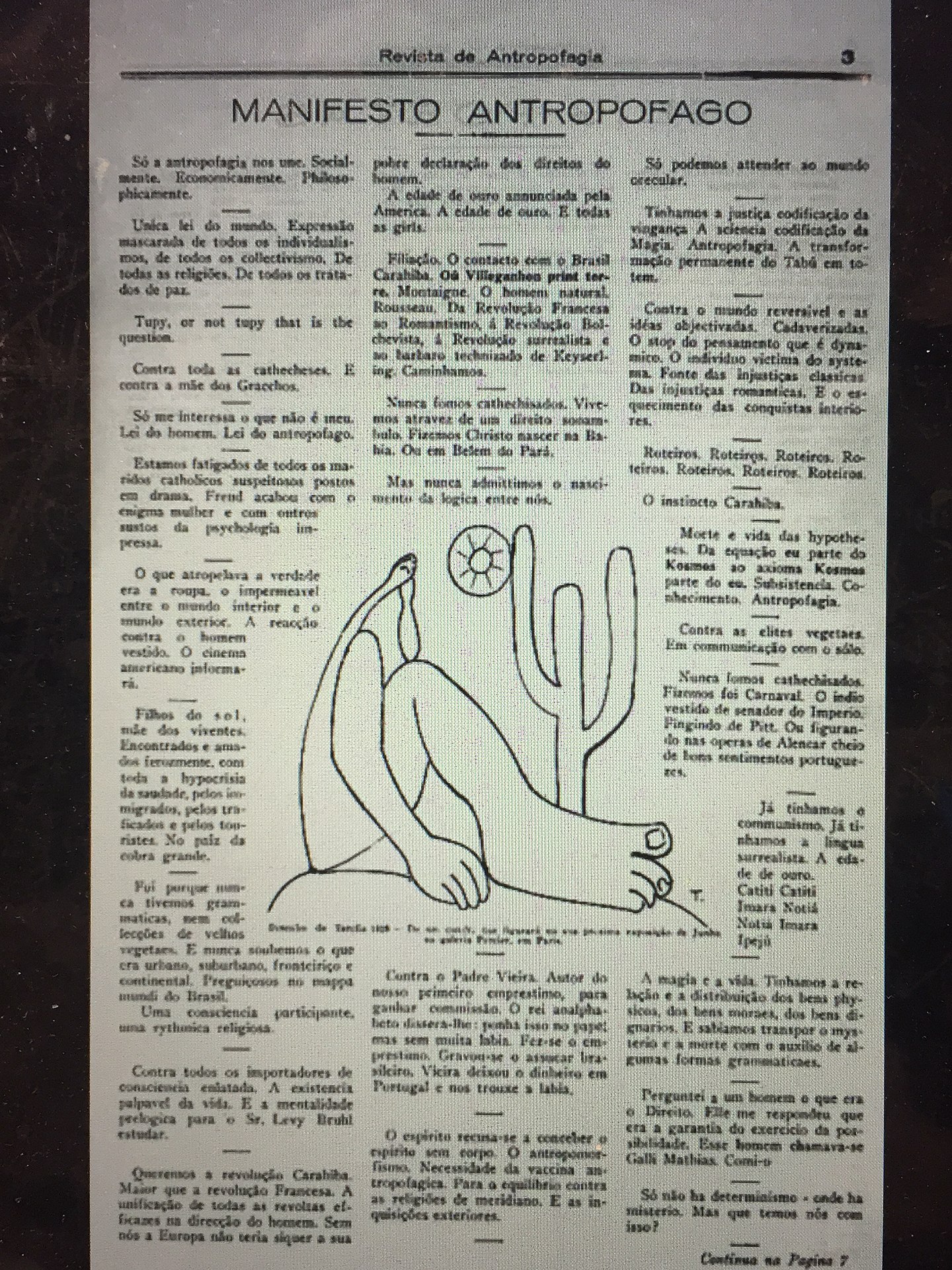
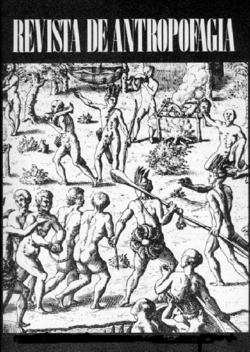
A nautical chart leads the reader to an island, where art historic images of the Brazilian Tupi people are combined with stills from 1980s Italian cannibal movies. It was the poet Oswald de Andrade, who declared in 1928 in his famous “Manifesto Antropófago” (Cannibal Manifest) a strategy of getting rid of the colonizer’s culture in Brazil through an exotic practice that was long attributed to the indigenous people. 

Left: Image of the Brazilian coastline from Maranhão to the Rio de Prata, from the “Miller Atlas,” created in 1519 and currently in the French National Library in Paris. — Brazil: Five Centuries of Change (Brown University, 2010~). Accessed 14 May 2020. Center: Oswald de Andrade, “Manifesto Antropófago”, Revista de Antropofagia, 1928, p. 3. Accessed 17 May 2020. Right: cover, Revista de Antropofagia, Ubuweb. Accessed 17 May 2020.

The map‘s exuberance shares more with the satire of De Andrade and Swift than with the gratuitous violence of Ruggero Deodato’s cannibal films or that of their 21st century offspring.

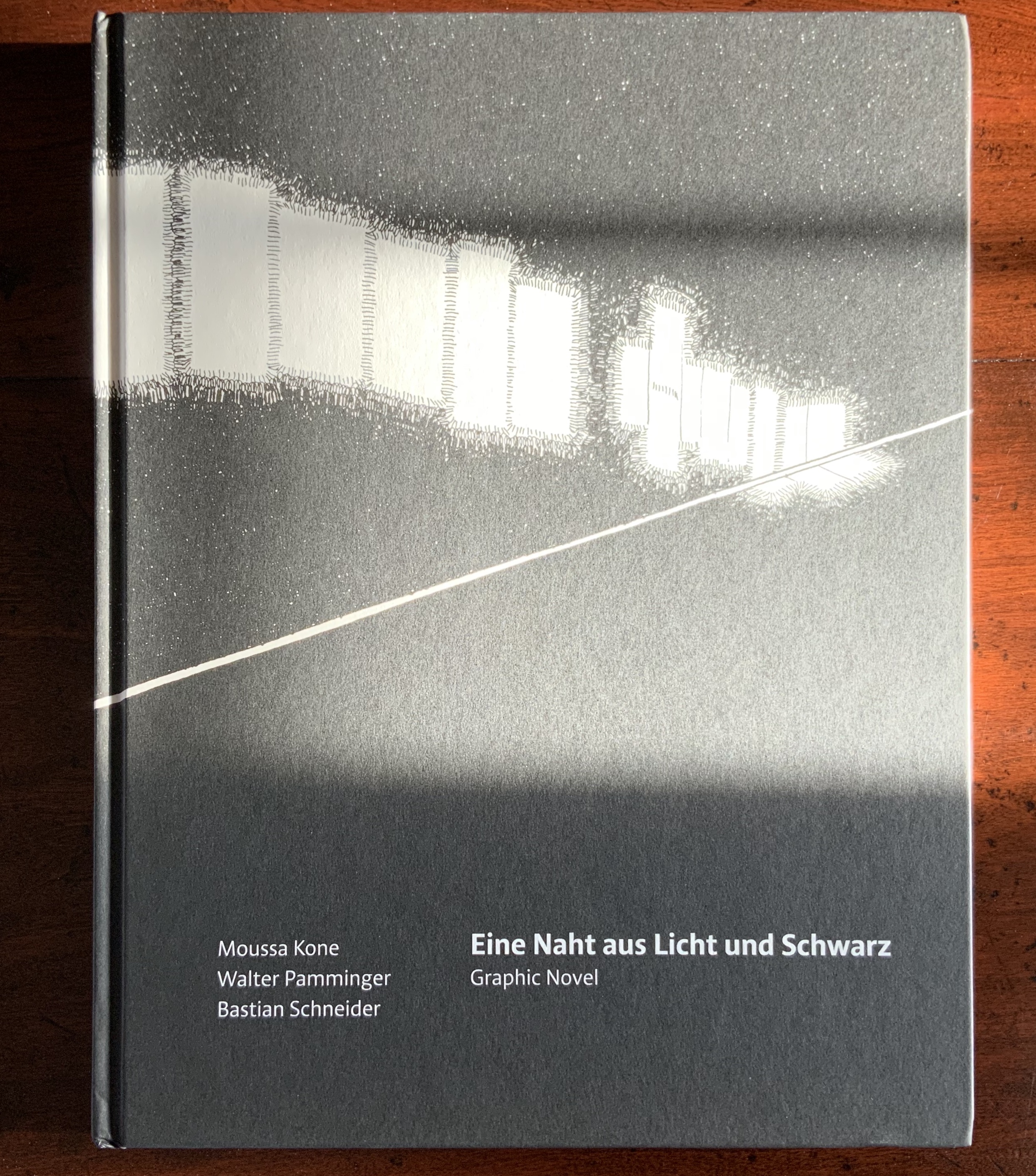
Eine Naht aus Licht und Schwarz (2018)

Eine Naht aus Licht und Schwarz (Sonderzahl Verlagsgesellschaft, 2018)
Moussa Kone, illustrations; Walter Pamminger, concept; Bastian Schneider, text; Wolfgang Homola, graphic design. Hardcover, sewn; 96 pages, 176 illustrations.
H303 x W235 mm. Acquired from the artist, 11 December 2019.

Although the creation of Eine Naht aus Licht und Schwarz (“A Seam of Light and Black”) was a collaborative effort, it originates in Kone’s experience working at the Albertina Museum in Vienna. He writes:

I was working there mainly at night and responsible for events, which took place in the rented Habsburg State Rooms and the exhibition halls. The entire book concept with its order of the drawings in this form was developed by Walter Pamminger, the texts are written by author Bastian Schneider. Image 1 to image 176 show a typical closing tour through the museum at 3 a.m. After all the party people, the catering staff and guards were gone, I had to make my final round through the empty building. Lights were turned off partly, and I was alone in the Viennese palace, with the art, and the history of the spot. That’s the story of the book: a view on the Albertina museum, which started as a private collection of drawings; a view from the worker’s perspective, the lowest one in the hierarchy of the institution, and the unseen labour, which is a hidden part of the art world. — Moussa Kone, correspondence, 18 December 2019.

But Eine Naht is more than that.

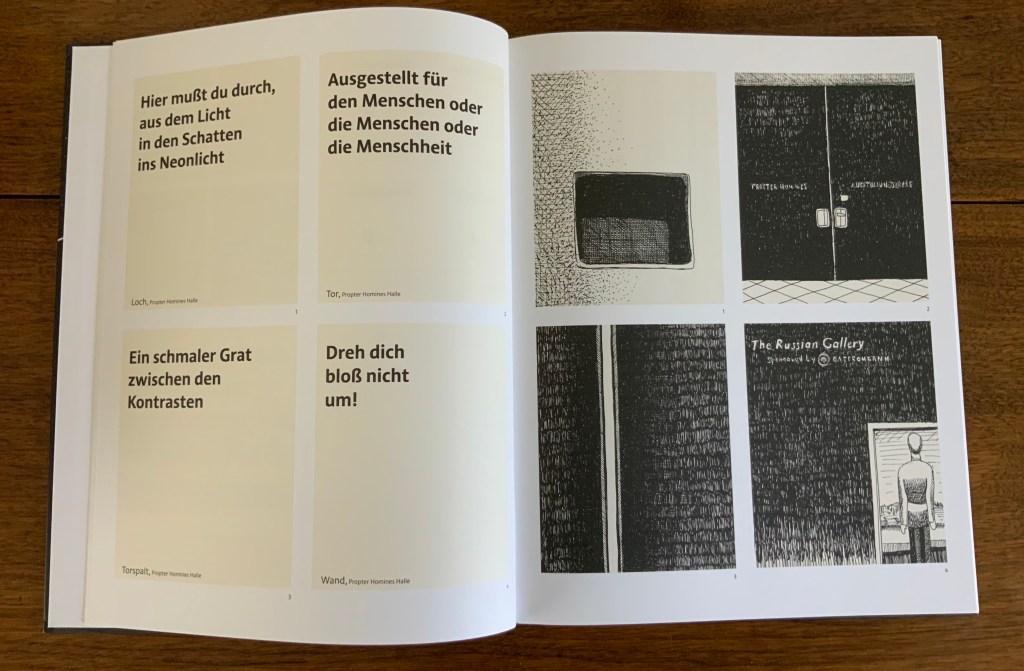
Text and image are arranged in a fluid grid of panels. The recto page above displays the starting pattern that appears and changes across the novel’s subsequent double-page spreads, challenging us in classic book-art fashion to re-learn how to read a book.

Panels 1-4 follow the opening diagram; four panels of text on the verso, with four panels of images correspondingly numbered on the recto.

On the verso, panels 5 and 6 shift to text then image; on the recto, the image in panel 5 corresponds to the text in panel 5 on the verso, and likewise the text in panel 6 on the recto corresponds to the image in panel 6 on the verso. Panels 7 and 8 follow the same pattern.

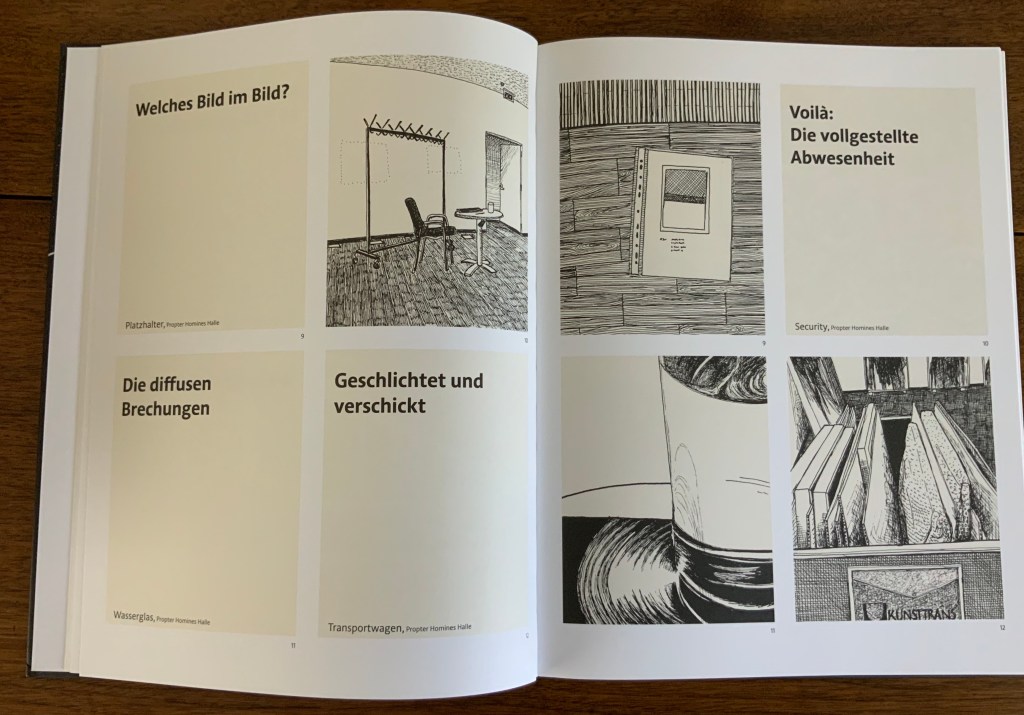
Here on the verso, panels 9 and 10 show text then image; on the recto, their corresponding panels run image then text. But panels 11 and 12 on the verso are both text; their corresponding panels of images appear across the gutter on the recto.

Again the pattern changes, with panels 13 and 14 both containing images, 15 and 16 containing text, and their matching panels of text and images mirrored on the recto.

The strong tendency to read a single page from left to right and downwards relents after a few sets of double-page spreads, but the change-ability of the back-and-forth between verso and recto requires a longer adjustment. Completely fluent adjustment would be hard to credit, but disorientation and the effort to concentrate, look harder and dwell on the relation between image and text becomes part of the atmosphere of the book. A partial translation into English exists online, which conveys the effect.

Kone’s range — from the intricacy of “Etymology” to the slapstick of The Abecedarium and Nowhere Land to a blend of conceptualism, self-reflexive book art and a twilight melancholy atmosphere in Eine Naht — makes his work an welcome addition to the collection.

Further Reading

“ABCs”, Books On Books, 29 November 2015.

“‘Very Like a Whale’ — The Bodleian Bibliographical Press’s Exhibition”, Books On Books, 24 November 2019.

Kone, Moussa and Walter Pamminger and Bastian Schneider. Trans. Verena Aschbacher. “A Seam of Light and Black“, Words Without Borders: An Online Magazine for International Literature, February 2020. Accessed 17 May 2020.
Bookmarking Book Art – The calligraffiti of eL Seed (updated)

If we were looking for a “Banksy” version of Rachid Koraïchi, we need look no further than eL Seed.

Perception, 2016
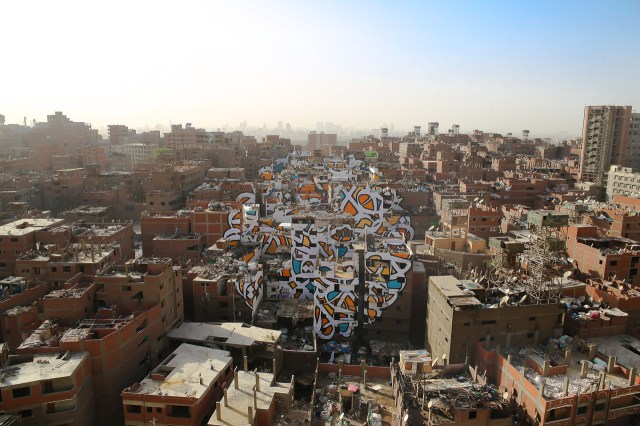
Manshiyat Nasr in Cairo, viewed from Moqattam Mountain

In my new project ‘Perception’ I am questioning the level of judgment and misconception society can unconsciously have upon a community based on their differences.

In the neighborhood of Manshiyat Nasr in Cairo, the Coptic community of Zaraeeb collects the trash of the city for decades and developed the most efficient and highly profitable recycling system on a global level. Still, the place is perceived as dirty, marginalized and segregated.

To bring light on this community, with my team and the help of the local community, I created an anamorphic piece that covers almost 50 buildings only visible from a certain point of the Moqattam Mountain. The piece of art uses the words of Saint Athanasius of Alexandria, a Coptic Bishop from the 3rd century …. el Seed 

The words of Saint Athanasius referred to above are

‘إن أراد أحد أن يبصر نور الشمس، فإن عليه أن يمسح عينيه’

“Anyone who wants to see the sunlight clearly needs to wipe his eye first.”

As with Camus, Algerian sunlight is strong in eL Seed’s work.  As it also is in Koraïchi’s Lettres d’ Argile (Letters of Clay) and other ceramic works and arguably in the copperplates for  Les Sept Dormants. As with Koraïchi’s work, humanism, poetry and bridging cultures are strong in eL Seed’s work.

The pseudonymous artist has created more “straightforward” street art installations in Tunisia, New York, Rio de Janeiro and Paris, all marked by the curvilinear linking of word and image that so often characterizes inspired book art. This reverse ekphrasis that book art frequently plays upon literature is heightened by calligraphy’s tight binding of art and craft to text. Perception‘s anamorphic enhancement of this binding is brilliant.

The relationship between word and image is “antagonistic sympathy”, according to the English book artist Telfer Stokes (“The Why and How I Make Books“, JAB 3, Spring 1995). In the hands and eyes of Koraïchi and eL Seed, the relationship — if it is a struggle, an agon — becomes more that of sunlight on water, or wind through a wheat field.

In addition to the installations and his book Lost Walls chronicling his painting of 24 walls in 4 weeks during a journey through Tunisia, eL Seed has produced a colorful body of lithographs and sculpture.

In this sculptural work inspired by a poem from Nizar Qabbani, el Seed says his intention is to invite the viewer to walk through a “conversation between the poem, the language, the form and me”. This may remind you of the influence that northern Africa had on the Finnish architect Juhani Pallasmaa, and how it led to his meditative exhortation to architects in The Eyes of the Skin to pursue a visual experience that offers a tactile and haptic quality, that also appeals to the realms of hearing, smell and taste and yet does not neglect the conceptual and rational. That, too, characterizes inspired book art.

Likewise it is interesting how this lithograph and the “calligraffiti” appearing on those broken walls and buildings touch eloquently on another theme characteristic of much book art — how the passage of time touches us, how we try to touch the passage of time. 

Further Reading, Listening and Viewing

eL Seed: Calligraffitti in Cambridge”, Canvas, 10 February 2018. Accessed 15 May 2020.

eL Seed: Can The Beauty Of Arabic Calligraphy Shift Perspectives?”, NPR, 10 November 2017. Accessed 16 May 2020.

eL Seed: The Art of Calligraffiti”, Poptech, 17 November 2011. Accessed 15 May 2020.

eL Seed, “A project of peace, painted across 50 buildings”, TED Talks, June 2016.

eL Seed. Lost Walls: A Calligraffiti Journey through Tunisia (Berlin: From Here to Fame Publishing, 2014).

eL Seed with foreword by Glenn Lowry. Perception (Milan: Point à Ligne, 2018).

See also the work of Merrill Shatzman, Kalaam and Islam Aly.